



Hans Birkeland
-
Posts
458 -
Joined
-
Days Won
1
Content Type
Profiles
News
Minnesota Twins Videos
2026 Minnesota Twins Top Prospects Ranking
2022 Minnesota Twins Draft Picks
Minnesota Twins Free Agent & Trade Rumors, Notes, & Tidbits
Guides & Resources
2023 Minnesota Twins Draft Picks
The Minnesota Twins Players Project
2024 Minnesota Twins Draft Picks
2025 Minnesota Twins Draft Pick Tracker
2026 Minnesota Twins Draft Tracker: Picks & Bonuses
Forums
Blogs
Events
Store
Downloads
Gallery
Everything posted by Hans Birkeland
-
Flipping the Curse Narrative
Hans Birkeland replied to Hans Birkeland's topic in Twins Daily Front Page News
Oh dear, maybe you took too MANY salt tablets!- 11 replies
-
- 1
-

-
- carlos correa
- jose miranda
- (and 1 more)
-
Flipping the Curse Narrative
Hans Birkeland replied to Hans Birkeland's topic in Twins Daily Front Page News
-
The Twins are leaving New York City with a 10-6 record and bad taste in their mouths after dropping the last two of what began as a promising series against their arch-rivals. They scored only one run combined on Saturday and Sunday, and never truly felt like they were a threat to win either game. So why on earth would I pen anything as ridiculous as the title of this story? Image courtesy of © Wendell Cruz-USA TODAY Sports The Twins are leaving New York City with a 10-6 record and bad taste in their mouths after dropping the last two of what began as a promising series against their arch-rivals. They scored only one run combined on Saturday and Sunday, and never truly felt like they were a threat to win either game. So why on earth would I pen anything as ridiculous as the title of this story? First of all, splitting a series at Yankee stadium has to be seen as a W for any American League team that operates in a city with normal zoning laws. Factor in the Twins .250 win percentage against the Yankees in the past quarter decade and you have yourself something resembling a miracle. The Twins’ unique struggles against the Yankees have been well documented, a tragic comedy for the East Coast to enjoy as they prepare to face “real teams” like the Red Sox and Blue Jays. Observe this pitious tweet from Jon Heyman last September: The Minnesota sports media market isn’t the poster child market for “acting like you’ve been there before.” Maybe that’s part of their issue against the Yankees and in the playoffs. I’ve had a few theories myself about those struggles, but the one I’ve settled on is that the Twins have historically forced a certain aesthetic involving hitting singles, going the other way, and pitching to contact. For decades starting in the 80s under Tom Kelly, they adhered to this philosophy, but as time went on it became less a commitment to “fundamentals” and more an excuse to spend less on payroll. We called it “The Twins Way™,” and it sucked. However, it can and has worked in the AL Central, where being above-average can win you a division; the Guardians proved that last year. Teams like the Yankees, however, who will always supplement their roster with in-their-prime free agents and big-ticket trade acquisitions, can exploit this. Accustomed to pitching against lineups that run eight to nine deep in the AL East, they are happy to pitch around the one or two stars the Twins employ and attack the Jason Tyners and Mark Contrerases of the world. Meanwhile, Twins pitchers, used to throwing in the zone and letting Detroit Tigers hitters get themselves out, are vexed when every pitch means something and just throwing strikes isn’t good enough. The other teams in the AL Central had various reasons for not experiencing the same fate against New York, but they mainly involve developing the kind of pitching (Mark Buehrle, Corey Kluber, C.C. Sabathia, Justin Verlander, Max Scherzer, Zack Greinke, Shane Bieber, Chris Sale) that the Twins just haven’t (outside of one exception we all know and love): © Jeffrey Becker-USA TODAY Sports Hey. Chicago and Detroit have also spent significant money when their teams are in contention, while Cleveland has had the smartest front office in the division for decades. As for the Royals, they haven’t been great against the Yankees, either, but not remarkably so. That didn’t use to be the case, as they were getting bounced in the ALCS by New York three straight years in the late 70s, before sweeping New York in the 1980 ALCS. Confidence and lack thereof, is a thing, and it stacks when things don’t go well. In other words, there is a fine line between the psychological feeling of playing with house money, and feeling like “here we go again” as soon as anything goes wrong. All the Royals had to do, to go from the Yankees owning them, to just losing an appropriate amount owing to actually existing talent disparities, was win that one playoff series. Or maybe it was just one home run: Could it be that Carlos Correa’s double in the eighth on Friday will have the same effect? Maybe, but the Yankees are a good team, and will continue to be a good team. Rebuilds are unnecessary for them given their resources, so over time they will likely maintain winning records against most teams. The only other team in the American League to operate that way, the Red Sox, also have a strong record against the Twins the past few decades. The difference between winning 45% of the time against these big-spending teams, and 25% of the time, is simply turning the tables a bit, getting lucky, or making a statement. Put the pressure on them, and don’t fall into narratives. The Yankees play in a high pressure media market and when things go south, the heat gets turned up quickly. Heck they booed their beloved Aaron Judge in the playoffs last year as he delivered his worst nine-game stretch of the season. They have also built rosters pretty shoddily since their last World Series appearance and win in 2009, often being forced into portioning huge amounts of their payroll or prospect capital into players they “have to” keep, or that they “have to” trade for. Think of 31 year-old Judge signing for nine years and trading real prospects for the black hole that has become Frankie Montas. Carlos Rodon already feels like an albatross, similar to Jacoby Ellsbury. That leads to less spending elsewhere, resulting in roster spots for folks like Willie Calhoun, Franchy Cordero and Aaron Hicks. The first two could have been signed by any team, and Hicks might be out of baseball if not for that unfortunate extension he signed five years ago. Last year the Twins were still less than serious, particularly after Chris Paddack and Bailey Ober went down with injuries. Relying on Chris Archer and Dylan Bundy to provide stability to a rotation was an act of an unserious team, the sort of team that could get lucky and win the AL Central, only to get exposed in the playoffs, or to act as a willing victim for a Yankees team that loves to beat up on overmatched/over-the-hill pitching. Without the avalanche of injuries, it could have been different, and we saw signs that a seriousness was forming. Now, with the current hitting prospects they have in the upper minors, an elite closer, two lineup superstars, and their deepest, if not best, rotation since 1991, this Twins team is for real. Plus, it has the heliumized prospect capital (David Festa, Brooks Lee, Emmanuel Rodriguez) to make a huge move if needed at the deadline. If Pablo Lopez has truly taken his game to the next level, their ceiling goes even higher. That has been evident in this series, regardless of the Twins’ lack of hitting in the last two games. The Yankees averaged 3.25 runs per game; that’s beatable for a lineup that expects a functional Byron Buxton and Jorge Polanco to return shortly. Now, winning the first game in this series in lopsided fashion was pretty fluky. Currently injured center-fielder Harrison Bader may have caught a few of the Twins doubles and ended the first inning before it spiraled, and the Yankees’ rookie starter was throwing high sinkers right into the Twins’ swing planes. He was also due for a clunker. The second game was more significant. The Yankees thought they had the game won, put in their “best” reliever and saw him give it up in the eighth. Yankees fans were already worried about Clay Holmes and his 5.81 ERA since last summer, and the Twins validated those concerns. This was also the game the Twins were punting; fill-in Louis Varland was starting against All-Star Nestor Cortes Jr. That’s how you end a narrative in baseball. Yankees fans were horrified on Sunday that if Gerrit Cole gave up a baserunner in the ninth, that Holmes would be brought in with the tying run on. Putting the fear on the other side is new. I’m not saying the Twins are a better team, or that the second two games of the series weren’t convincing wins for New York. As currently constructed, the Yankees have serious flaws in their lineup and pitching depth, but they’ll get healthier in their rotation, trade for a bat at the deadline, and almost certainly make the playoffs. They’ll be a real team come August. Real teams don’t always win playoff series, or even make the playoffs in some instances. There is a good chance one of the Rays, Blue Jays, Mariners or Yankees are on the outside looking in come October, despite the wealth of talent on their teams, but it doesn’t mean they aren’t good. It is without question that they each pose a real test to other good teams and stand a chance to win almost any game they play. Not only can the Twins now say the same, but they know when the Yankees come to town next week, nothing is assured. That may not end this curse, streak, or whatever you call it, but it’s certainly an improvement. View full article
-
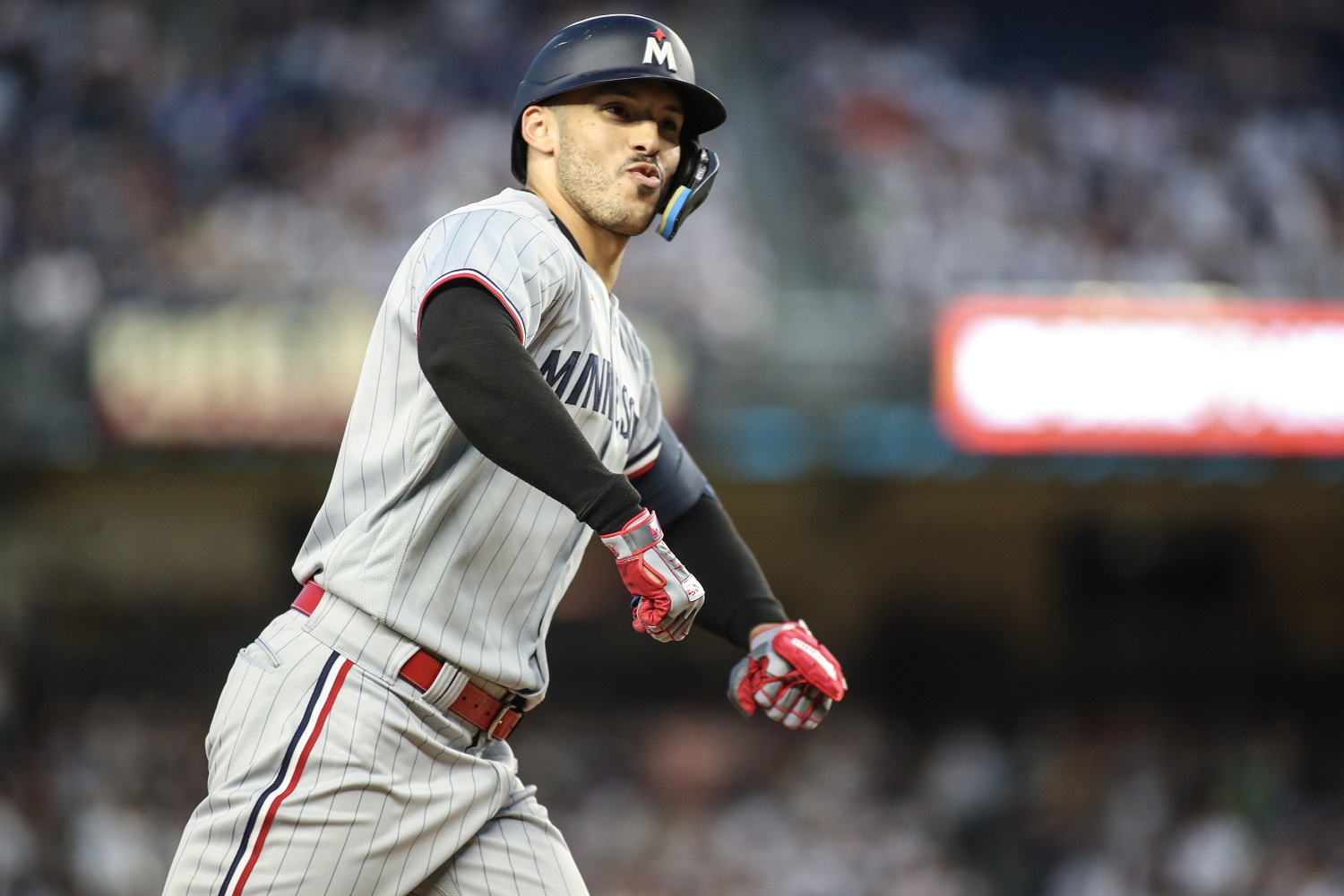 First of all, splitting a series at Yankee stadium has to be seen as a W for any American League team that operates in a city with normal zoning laws. Factor in the Twins .250 win percentage against the Yankees in the past quarter decade and you have yourself something resembling a miracle. The Twins’ unique struggles against the Yankees have been well documented, a tragic comedy for the East Coast to enjoy as they prepare to face “real teams” like the Red Sox and Blue Jays. Observe this pitious tweet from Jon Heyman last September: The Minnesota sports media market isn’t the poster child market for “acting like you’ve been there before.” Maybe that’s part of their issue against the Yankees and in the playoffs. I’ve had a few theories myself about those struggles, but the one I’ve settled on is that the Twins have historically forced a certain aesthetic involving hitting singles, going the other way, and pitching to contact. For decades starting in the 80s under Tom Kelly, they adhered to this philosophy, but as time went on it became less a commitment to “fundamentals” and more an excuse to spend less on payroll. We called it “The Twins Way™,” and it sucked. However, it can and has worked in the AL Central, where being above-average can win you a division; the Guardians proved that last year. Teams like the Yankees, however, who will always supplement their roster with in-their-prime free agents and big-ticket trade acquisitions, can exploit this. Accustomed to pitching against lineups that run eight to nine deep in the AL East, they are happy to pitch around the one or two stars the Twins employ and attack the Jason Tyners and Mark Contrerases of the world. Meanwhile, Twins pitchers, used to throwing in the zone and letting Detroit Tigers hitters get themselves out, are vexed when every pitch means something and just throwing strikes isn’t good enough. The other teams in the AL Central had various reasons for not experiencing the same fate against New York, but they mainly involve developing the kind of pitching (Mark Buehrle, Corey Kluber, C.C. Sabathia, Justin Verlander, Max Scherzer, Zack Greinke, Shane Bieber, Chris Sale) that the Twins just haven’t (outside of one exception we all know and love): © Jeffrey Becker-USA TODAY Sports Hey. Chicago and Detroit have also spent significant money when their teams are in contention, while Cleveland has had the smartest front office in the division for decades. As for the Royals, they haven’t been great against the Yankees, either, but not remarkably so. That didn’t use to be the case, as they were getting bounced in the ALCS by New York three straight years in the late 70s, before sweeping New York in the 1980 ALCS. Confidence and lack thereof, is a thing, and it stacks when things don’t go well. In other words, there is a fine line between the psychological feeling of playing with house money, and feeling like “here we go again” as soon as anything goes wrong. All the Royals had to do, to go from the Yankees owning them, to just losing an appropriate amount owing to actually existing talent disparities, was win that one playoff series. Or maybe it was just one home run: Could it be that Carlos Correa’s double in the eighth on Friday will have the same effect? Maybe, but the Yankees are a good team, and will continue to be a good team. Rebuilds are unnecessary for them given their resources, so over time they will likely maintain winning records against most teams. The only other team in the American League to operate that way, the Red Sox, also have a strong record against the Twins the past few decades. The difference between winning 45% of the time against these big-spending teams, and 25% of the time, is simply turning the tables a bit, getting lucky, or making a statement. Put the pressure on them, and don’t fall into narratives. The Yankees play in a high pressure media market and when things go south, the heat gets turned up quickly. Heck they booed their beloved Aaron Judge in the playoffs last year as he delivered his worst nine-game stretch of the season. They have also built rosters pretty shoddily since their last World Series appearance and win in 2009, often being forced into portioning huge amounts of their payroll or prospect capital into players they “have to” keep, or that they “have to” trade for. Think of 31 year-old Judge signing for nine years and trading real prospects for the black hole that has become Frankie Montas. Carlos Rodon already feels like an albatross, similar to Jacoby Ellsbury. That leads to less spending elsewhere, resulting in roster spots for folks like Willie Calhoun, Franchy Cordero and Aaron Hicks. The first two could have been signed by any team, and Hicks might be out of baseball if not for that unfortunate extension he signed five years ago. Last year the Twins were still less than serious, particularly after Chris Paddack and Bailey Ober went down with injuries. Relying on Chris Archer and Dylan Bundy to provide stability to a rotation was an act of an unserious team, the sort of team that could get lucky and win the AL Central, only to get exposed in the playoffs, or to act as a willing victim for a Yankees team that loves to beat up on overmatched/over-the-hill pitching. Without the avalanche of injuries, it could have been different, and we saw signs that a seriousness was forming. Now, with the current hitting prospects they have in the upper minors, an elite closer, two lineup superstars, and their deepest, if not best, rotation since 1991, this Twins team is for real. Plus, it has the heliumized prospect capital (David Festa, Brooks Lee, Emmanuel Rodriguez) to make a huge move if needed at the deadline. If Pablo Lopez has truly taken his game to the next level, their ceiling goes even higher. That has been evident in this series, regardless of the Twins’ lack of hitting in the last two games. The Yankees averaged 3.25 runs per game; that’s beatable for a lineup that expects a functional Byron Buxton and Jorge Polanco to return shortly. Now, winning the first game in this series in lopsided fashion was pretty fluky. Currently injured center-fielder Harrison Bader may have caught a few of the Twins doubles and ended the first inning before it spiraled, and the Yankees’ rookie starter was throwing high sinkers right into the Twins’ swing planes. He was also due for a clunker. The second game was more significant. The Yankees thought they had the game won, put in their “best” reliever and saw him give it up in the eighth. Yankees fans were already worried about Clay Holmes and his 5.81 ERA since last summer, and the Twins validated those concerns. This was also the game the Twins were punting; fill-in Louis Varland was starting against All-Star Nestor Cortes Jr. That’s how you end a narrative in baseball. Yankees fans were horrified on Sunday that if Gerrit Cole gave up a baserunner in the ninth, that Holmes would be brought in with the tying run on. Putting the fear on the other side is new. I’m not saying the Twins are a better team, or that the second two games of the series weren’t convincing wins for New York. As currently constructed, the Yankees have serious flaws in their lineup and pitching depth, but they’ll get healthier in their rotation, trade for a bat at the deadline, and almost certainly make the playoffs. They’ll be a real team come August. Real teams don’t always win playoff series, or even make the playoffs in some instances. There is a good chance one of the Rays, Blue Jays, Mariners or Yankees are on the outside looking in come October, despite the wealth of talent on their teams, but it doesn’t mean they aren’t good. It is without question that they each pose a real test to other good teams and stand a chance to win almost any game they play. Not only can the Twins now say the same, but they know when the Yankees come to town next week, nothing is assured. That may not end this curse, streak, or whatever you call it, but it’s certainly an improvement.
- 11 comments
-
- 3
-

-
- carlos correa
- jose miranda
- (and 1 more)
-
The Twins winning streak came to an end on Saturday in New York. So did the Twins streak of starters completing five innings. And, there was plenty of controversy, and a Baldelli ejection to boot. Image courtesy of Wendell Cruz, USA Today The Twins winning streak came to an end on Saturday in New York. So did the Twins streak of starters completing five innings. And, there was plenty of controversy, and a Baldelli ejection to boot. Box Score SP: Tyler Mahle: 4.1 IP, 4 H, 4 R, 2 ER, 2 BB, 3 K, 90 pitches, 53 strikes (58.9%) Home Runs: None Top 3 WPA: Carlos Correa (-0.70), Eduoard Julien (-0.68) Jorge Alcalá (-0.37) Win Probability Chart (via Fangraphs): Can the Twins run of quality starting pitching continue? Tyler Mahle took the mound for the Twins and his stuff was good throughout his start, generating numerous swings and misses on his split changeup and fourteen whiffs total. His control was a little off however, missing with his fastball in the zone. His error in the second, misplaying a dribbler that allowed Franchy Cordero to reach, put a runner on base for Kyle Higashioka who pulverized an elevated fastball to put the Twins behind two zero. He continued to fall behind hitters and give up hard contact and after giving up a blistered double to Aaron Judge, it became apparent he would be the first Twins starter to fall short of completing five innings this year. It was a good run. Domingo German dominant, but suspicious Thought to represent the soft underbelly of the Yankees pitching staff along with Clarke Schmidt, German instead was sharp with his command, throwing riding fastballs up in the zone and pairing it with a sharp slider and changeup. He was perfect the first time through the order, striking out six. This aroused at least some suspicion from the umpires, who conferred before the start of the fourth regarding some sticky stuff on German's glove. German was allowed to stay after removing a substance, prompting Rocco Baldelli to protest and eventually be ejected from the game. Umpire James Hoye could be seen telling German, who previously was suspended for violating the league's domestic abuse policy, "I told you to wipe it off!" The league was supposed to be cracking down harder on the foreign substance issue this year, following the crackdown mid-2021 and then a gradual relaxation following. Hoye’s exclamation would seem to indicate that German was told to remove a substance but did not comply. His spin rate decreased significantly afterward. Conspiratorial baseball fans will note the Yankees being implicated for sign stealing during the Astros investigation, as well as sample balls from Yankees games being shown to have more bounce to them during the 2022 season, as compared to sample balls from other games. Boom or bust offense continues Twins hitters swung over German’s changeup and underneath his fastball all day. The hitters that chose to be aggressive were rolling over pitches and grounding out quickly, while the hitters that tried to work the count fell behind and let German dictate the at-bat. Whether that was due to some unlawful pitching aid or not, the Twins hitters were not in command of the game. Trevor Larnach and Jose Miranda doubled in the seventh for the Twins’ first run, but Max Kepler grounded into an inning-ending double-play to end the threat. Morán shows improvement Taking over for Mahle in the fifth, Jovani Morán inherited runners on the corners and only one out. He induced a groundout to Cabrera, which Jose Miranda made a nice play on, nailing LeMahieu trying to score. Morán then got Cordero to tap out to end the threat. He then had a one two three sixth inning, although his control was wobbly, getting a few charitable strike three calls from the home plate umpire. Jorge Alcalá was a different story, however, following Morán for the seventh and hitting LeMahieu, walking Judge and allowing a sharp double on a middle-middle slider to Giancarlo Stanton which plated two more runs. He did settle down in his next inning outside of an Anthony Volpe single (and two stolen bases). What’s Next: Pablo Lopez (1-0, 1.35 ERA) will look to continue his run of dominance, going up against Gerrit Cole (3-0, 1.40 ERA) in the series finale. Cole was very effective against the Twins last September, but they did pop five home runs against him at Target field last June. Postgame Interviews Bullpen Usage Chart TUE WED THU FRI SAT TOT Alcalá 0 15 0 0 44 59 Durán 24 15 0 10 0 49 López 0 12 0 15 0 27 Morán 0 0 0 0 26 26 Sands 0 0 23 0 0 23 Jax 8 12 0 0 0 20 Pagán 0 0 0 12 0 12 Thielbar 4 0 0 0 0 4 View full article
- 37 replies
-
- 1
-
-
- tyler mahle
- jovani moran
- (and 3 more)
-
Yankees 6, Twins 1: German Hands Twins Loss in Suspicious Fashion
Hans Birkeland posted an article in Twins
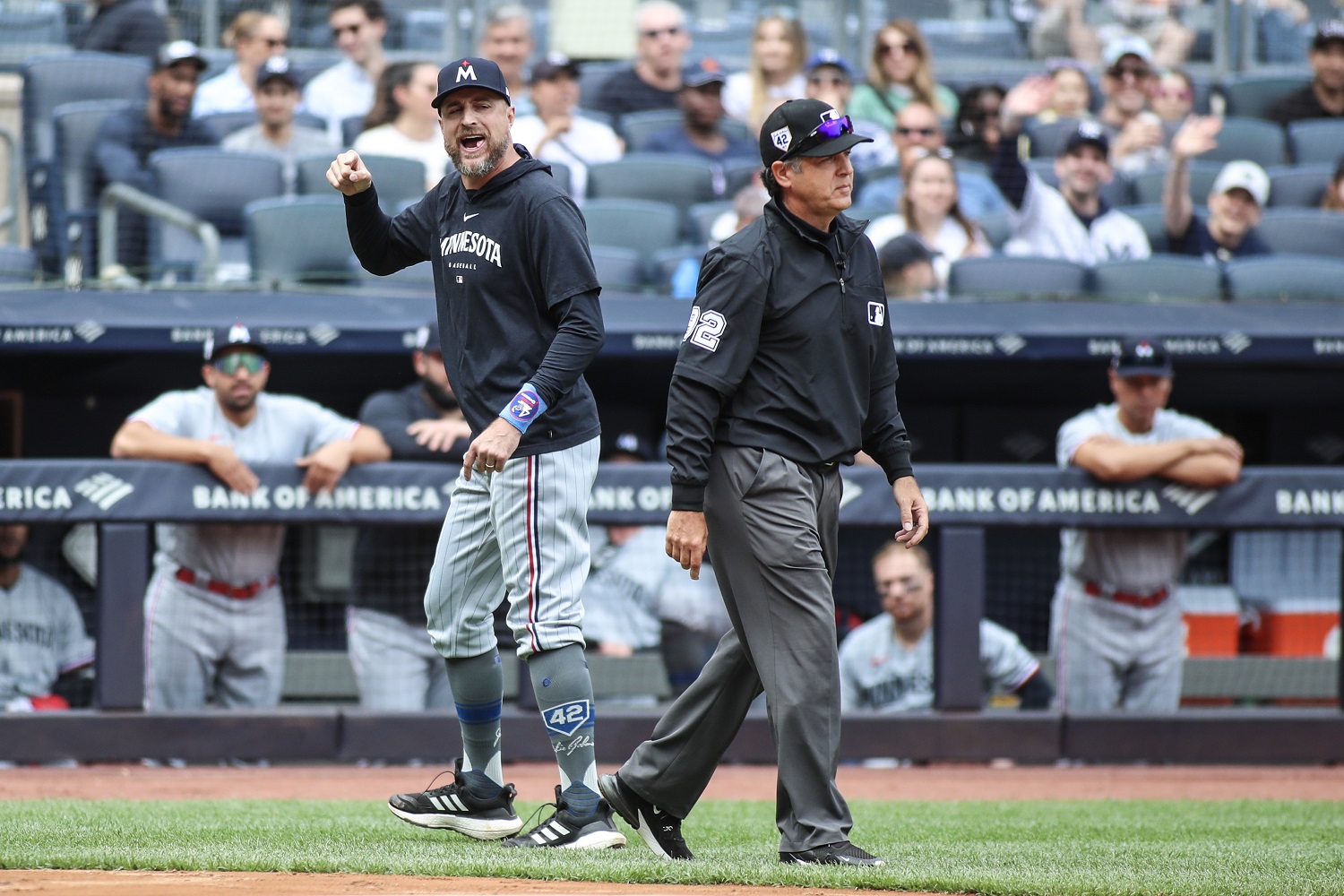 Box Score SP: Tyler Mahle: 4.1 IP, 4 H, 4 R, 2 ER, 2 BB, 3 K, 90 pitches, 53 strikes (58.9%) Home Runs: None Top 3 WPA: Carlos Correa (-0.70), Eduoard Julien (-0.68) Jorge Alcalá (-0.37) Win Probability Chart (via Fangraphs): Can the Twins run of quality starting pitching continue? Tyler Mahle took the mound for the Twins and his stuff was good throughout his start, generating numerous swings and misses on his split changeup and fourteen whiffs total. His control was a little off however, missing with his fastball in the zone. His error in the second, misplaying a dribbler that allowed Franchy Cordero to reach, put a runner on base for Kyle Higashioka who pulverized an elevated fastball to put the Twins behind two zero. He continued to fall behind hitters and give up hard contact and after giving up a blistered double to Aaron Judge, it became apparent he would be the first Twins starter to fall short of completing five innings this year. It was a good run. Domingo German dominant, but suspicious Thought to represent the soft underbelly of the Yankees pitching staff along with Clarke Schmidt, German instead was sharp with his command, throwing riding fastballs up in the zone and pairing it with a sharp slider and changeup. He was perfect the first time through the order, striking out six. This aroused at least some suspicion from the umpires, who conferred before the start of the fourth regarding some sticky stuff on German's glove. German was allowed to stay after removing a substance, prompting Rocco Baldelli to protest and eventually be ejected from the game. Umpire James Hoye could be seen telling German, who previously was suspended for violating the league's domestic abuse policy, "I told you to wipe it off!" The league was supposed to be cracking down harder on the foreign substance issue this year, following the crackdown mid-2021 and then a gradual relaxation following. Hoye’s exclamation would seem to indicate that German was told to remove a substance but did not comply. His spin rate decreased significantly afterward. Conspiratorial baseball fans will note the Yankees being implicated for sign stealing during the Astros investigation, as well as sample balls from Yankees games being shown to have more bounce to them during the 2022 season, as compared to sample balls from other games. Boom or bust offense continues Twins hitters swung over German’s changeup and underneath his fastball all day. The hitters that chose to be aggressive were rolling over pitches and grounding out quickly, while the hitters that tried to work the count fell behind and let German dictate the at-bat. Whether that was due to some unlawful pitching aid or not, the Twins hitters were not in command of the game. Trevor Larnach and Jose Miranda doubled in the seventh for the Twins’ first run, but Max Kepler grounded into an inning-ending double-play to end the threat. Morán shows improvement Taking over for Mahle in the fifth, Jovani Morán inherited runners on the corners and only one out. He induced a groundout to Cabrera, which Jose Miranda made a nice play on, nailing LeMahieu trying to score. Morán then got Cordero to tap out to end the threat. He then had a one two three sixth inning, although his control was wobbly, getting a few charitable strike three calls from the home plate umpire. Jorge Alcalá was a different story, however, following Morán for the seventh and hitting LeMahieu, walking Judge and allowing a sharp double on a middle-middle slider to Giancarlo Stanton which plated two more runs. He did settle down in his next inning outside of an Anthony Volpe single (and two stolen bases). What’s Next: Pablo Lopez (1-0, 1.35 ERA) will look to continue his run of dominance, going up against Gerrit Cole (3-0, 1.40 ERA) in the series finale. Cole was very effective against the Twins last September, but they did pop five home runs against him at Target field last June. Postgame Interviews Bullpen Usage Chart TUE WED THU FRI SAT TOT Alcalá 0 15 0 0 44 59 Durán 24 15 0 10 0 49 López 0 12 0 15 0 27 Morán 0 0 0 0 26 26 Sands 0 0 23 0 0 23 Jax 8 12 0 0 0 20 Pagán 0 0 0 12 0 12 Thielbar 4 0 0 0 0 4
- 37 comments
-
- 3
-
-
- tyler mahle
- jovani moran
- (and 3 more)
-
The Twins got a strong start, and the bullpen came through as the Twins outslugged the defending champions on Saturday afternoon at Target Field. On Sunday, they'll look for the sweep. Image courtesy of Jeffrey Becker-USA TODAY Sports The Twins got a strong start, and the bullpen came through as the Twins outslugged the defending champions on Saturday afternoon at Target Field. On Sunday, they'll look for the sweep. The bats come alive and the pitching holds it together an impressive win over the Astros. Box Score: SP: Joe Ryan: 6 IP, 3 H, 4 ER, 1 BB, 10K (81 pitches, 53 strikes, 65.4%) Home Runs: Kyle Farmer (1), Byron Buxton (1) Top 3 WPA: Farmer (.222), Christian Vázquez (.176), Griffin Jax (.116) Win Probability Chart (via Fangraphs): Joe Ryan's new secondary pitches vs. Defending Champs Coming off of an impressive six-inning, one-run start in Kansas City, Joe Ryan started out where he left off, relying heavily on his fastball the first time through the lineup, sitting 93-94 MPH and in good locations. After the Twins scored four runs in the second, Ryan started to lose a little velocity on his fastball and couldn’t throw his secondary pitches for strikes. After a long flyout by Jake Meyers to start the third, Ryan appeared to windmill his right arm before giving up sharp singles to Martin Maldonado and Chas McCormick. Alex Bregman spit on several non-competitive offspeed pitches before drawing a walk, and Yordan Alvarez teed off on the first fastball he saw, a 91 MPH fastball in the heart of the plate, leaving the yard at an absurd 116 MPH, tying the game at four. data:image/gif;base64,R0lGODlhAQABAPABAP///wAAACH5BAEKAAAALAAAAAABAAEAAAICRAEAOw== The next inning was a struggle, as well, but a struggling Houston lineup bailed him out. Jeremy Pena took five straight offspeed pitches and then struck out looking on an 89 MPH fastball below the zone. David Hensley then struck out on a better-looking 92 MPH fastball at the top of the zone, but Meyers then ripped a 104 MPH lineout to Gordon in left. Ryan’s velocity and command seemed to return after that, and he was able to throw his offspeed, particularly his split-change, for strike one. He finished with ten strikeouts and besides the home run to Alvarez, didn’t give up an inordinate amount of damage. Twin lefty mashers come through against right-handed Houston pitchers With Max Kepler and Joey Gallo unavailable due to injury, that meant starting assignments for Donovan Solano and Kyle Farmer. Both were part of the initial rally against Garcia, with Farmer obliterating a change-up fading right into his swing path for a three-run home run. data:image/gif;base64,R0lGODlhAQABAPABAP///wAAACH5BAEKAAAALAAAAAABAAEAAAICRAEAOw== Solano later walked against Garcia, and Farmer started the Twins sixth inning rally with an opposite-field double off of Seth Martinez. With Wallner now in the fold, it will be interesting to note if he sees much action with Solano and Farmer continuing to swing hot bats. Abreu strikes out on pitch clock violation The second inning started in odd fashion, with veteran Jose Abreu striking out due to a pitch clock violation. He didn’t argue the call, but the Houston bench did get warned for chirping in the sixth inning. For good measure, Ryan struck out Abreu in legitimate fashion twice more in his outing, saving his best-located fastballs for the long-time White Sox star. Buxton finally gets his home run After being stifled by some careful and effective pitching by Houston pitchers in tandem with Martin Maldonado, Buxton got a middle-middle fastball in the eighth and did not miss it, turning a nail-biter into a comfortable win against a tough team. Garcia struggles in second start with new windup Luis Garcia, whose elaborate windup was deemed illegal with MLB’s new rules, had an up-and-down outing against the Twins. After an uneventful first inning, he started giving up hard contact to the middle of the Twins lineup in the second. Nick Gordon and Donovan Solano ripped singles on cutters up in the zone, and Kyle Farmer launched a change-up for his big home run. After a Christian Vázquez walk, Michael A. Taylor and Buxton nearly hit home runs, Correa doubled and Larnach drove a cutter up the gut for a four-nothing lead. The Twins then got the first two men on in the 3rd, leading to the Astros bullpen getting warm, but from then it appeared that Martin Maldonado changed the game plan and focused on fastballs up and in to the Twins righties to pair with cutters and sliders away. Buxton in particular seemed to be looking for pitches out over the plate and struck out on hard stuff up and in. But the damage was done by that point and Garcia was done after four innings. Christian Vázquez with two big hits against his former team After looking lost at the plate during Friday’s home opener, Vázquez delivered run-scoring singles to left in the sixth and eighth innings, giving the Twins bullpen a lead they would not relinquish. Twins bullpen impresses As the bullpen hierarchy comes into clearer focus, it was Jorge López again getting the seventh inning, with Griffin Jax taking the eighth inning assignment. López was dominant in his frame, dotting the corners with hard stuff and striking out the side. Facing the 9-1-2 portion of Houston’s lineup, Jax took care of business, striking out Maldonado and Bregman on sliders to complete a perfect inning. Jovani Moran had some struggles in the ninth, including giving up a two-run home run for the second straight appearance. However, Jhoan Duran came on and needed just three pitches to end the game with a strikeout. TUE WED THU FRI SAT TOT Morán 15 0 0 0 20 35 Jax 0 9 0 13 12 34 Pagán 26 0 0 0 0 26 López 0 0 0 8 14 22 Durán 0 0 0 19 3 22 Thielbar 0 13 0 0 0 13 Sands 0 0 0 0 0 0 Alcalá 0 0 0 0 0 0 What’s Next: Tyler Mahle will make his second start of the year, facing the talented Hunter Brown as the series with the Astros wraps up. Postgame Interviews View full article
- 47 replies
-
- 1
-
-
- kyle farmer
- byron buxton
- (and 1 more)
-
Twins 9, Astros 6: Twins Top Astros Thanks to 3-Run Homers
Hans Birkeland posted an article in Twins
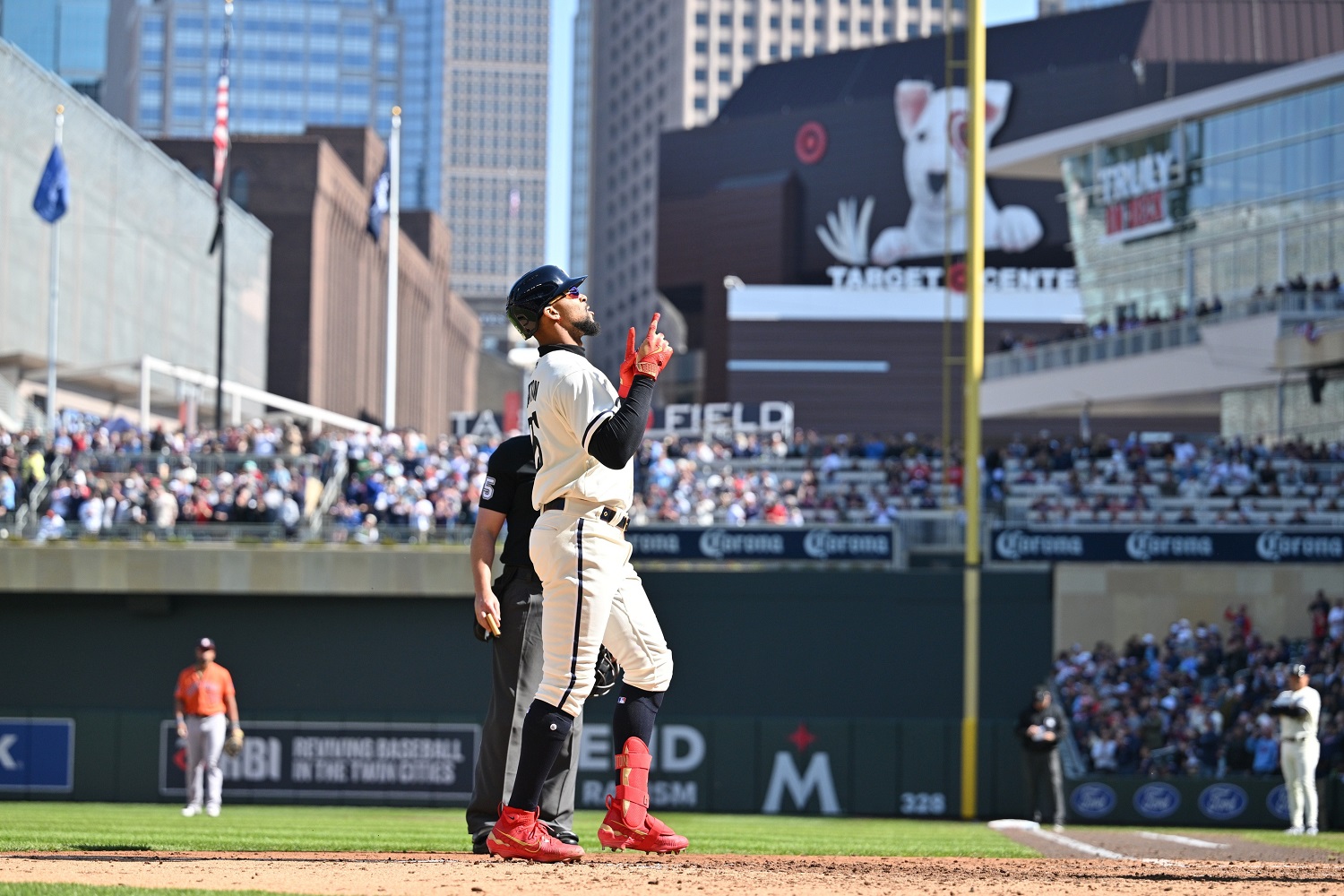 The bats come alive and the pitching holds it together an impressive win over the Astros. Box Score: SP: Joe Ryan: 6 IP, 3 H, 4 ER, 1 BB, 10K (81 pitches, 53 strikes, 65.4%) Home Runs: Kyle Farmer (1), Byron Buxton (1) Top 3 WPA: Farmer (.222), Christian Vázquez (.176), Griffin Jax (.116) Win Probability Chart (via Fangraphs): Joe Ryan's new secondary pitches vs. Defending Champs Coming off of an impressive six-inning, one-run start in Kansas City, Joe Ryan started out where he left off, relying heavily on his fastball the first time through the lineup, sitting 93-94 MPH and in good locations. After the Twins scored four runs in the second, Ryan started to lose a little velocity on his fastball and couldn’t throw his secondary pitches for strikes. After a long flyout by Jake Meyers to start the third, Ryan appeared to windmill his right arm before giving up sharp singles to Martin Maldonado and Chas McCormick. Alex Bregman spit on several non-competitive offspeed pitches before drawing a walk, and Yordan Alvarez teed off on the first fastball he saw, a 91 MPH fastball in the heart of the plate, leaving the yard at an absurd 116 MPH, tying the game at four. data:image/gif;base64,R0lGODlhAQABAPABAP///wAAACH5BAEKAAAALAAAAAABAAEAAAICRAEAOw== The next inning was a struggle, as well, but a struggling Houston lineup bailed him out. Jeremy Pena took five straight offspeed pitches and then struck out looking on an 89 MPH fastball below the zone. David Hensley then struck out on a better-looking 92 MPH fastball at the top of the zone, but Meyers then ripped a 104 MPH lineout to Gordon in left. Ryan’s velocity and command seemed to return after that, and he was able to throw his offspeed, particularly his split-change, for strike one. He finished with ten strikeouts and besides the home run to Alvarez, didn’t give up an inordinate amount of damage. Twin lefty mashers come through against right-handed Houston pitchers With Max Kepler and Joey Gallo unavailable due to injury, that meant starting assignments for Donovan Solano and Kyle Farmer. Both were part of the initial rally against Garcia, with Farmer obliterating a change-up fading right into his swing path for a three-run home run. data:image/gif;base64,R0lGODlhAQABAPABAP///wAAACH5BAEKAAAALAAAAAABAAEAAAICRAEAOw== Solano later walked against Garcia, and Farmer started the Twins sixth inning rally with an opposite-field double off of Seth Martinez. With Wallner now in the fold, it will be interesting to note if he sees much action with Solano and Farmer continuing to swing hot bats. Abreu strikes out on pitch clock violation The second inning started in odd fashion, with veteran Jose Abreu striking out due to a pitch clock violation. He didn’t argue the call, but the Houston bench did get warned for chirping in the sixth inning. For good measure, Ryan struck out Abreu in legitimate fashion twice more in his outing, saving his best-located fastballs for the long-time White Sox star. Buxton finally gets his home run After being stifled by some careful and effective pitching by Houston pitchers in tandem with Martin Maldonado, Buxton got a middle-middle fastball in the eighth and did not miss it, turning a nail-biter into a comfortable win against a tough team. Garcia struggles in second start with new windup Luis Garcia, whose elaborate windup was deemed illegal with MLB’s new rules, had an up-and-down outing against the Twins. After an uneventful first inning, he started giving up hard contact to the middle of the Twins lineup in the second. Nick Gordon and Donovan Solano ripped singles on cutters up in the zone, and Kyle Farmer launched a change-up for his big home run. After a Christian Vázquez walk, Michael A. Taylor and Buxton nearly hit home runs, Correa doubled and Larnach drove a cutter up the gut for a four-nothing lead. The Twins then got the first two men on in the 3rd, leading to the Astros bullpen getting warm, but from then it appeared that Martin Maldonado changed the game plan and focused on fastballs up and in to the Twins righties to pair with cutters and sliders away. Buxton in particular seemed to be looking for pitches out over the plate and struck out on hard stuff up and in. But the damage was done by that point and Garcia was done after four innings. Christian Vázquez with two big hits against his former team After looking lost at the plate during Friday’s home opener, Vázquez delivered run-scoring singles to left in the sixth and eighth innings, giving the Twins bullpen a lead they would not relinquish. Twins bullpen impresses As the bullpen hierarchy comes into clearer focus, it was Jorge López again getting the seventh inning, with Griffin Jax taking the eighth inning assignment. López was dominant in his frame, dotting the corners with hard stuff and striking out the side. Facing the 9-1-2 portion of Houston’s lineup, Jax took care of business, striking out Maldonado and Bregman on sliders to complete a perfect inning. Jovani Moran had some struggles in the ninth, including giving up a two-run home run for the second straight appearance. However, Jhoan Duran came on and needed just three pitches to end the game with a strikeout. TUE WED THU FRI SAT TOT Morán 15 0 0 0 20 35 Jax 0 9 0 13 12 34 Pagán 26 0 0 0 0 26 López 0 0 0 8 14 22 Durán 0 0 0 19 3 22 Thielbar 0 13 0 0 0 13 Sands 0 0 0 0 0 0 Alcalá 0 0 0 0 0 0 What’s Next: Tyler Mahle will make his second start of the year, facing the talented Hunter Brown as the series with the Astros wraps up. Postgame Interviews
- 47 comments
-
- 5
-
-
- kyle farmer
- byron buxton
- (and 1 more)
-
Let's look at the scenarios. Image courtesy of © Mitch Stringer-USA TODAY Sports Let's look at the scenarios. After a four-and-two start to the season, the Twins employ two lefty-swinging outfielders off to encouraging starts in Trevor Larnach and Joey Gallo. Nick Gordon and Max Kepler have had tougher starts and Kepler is already questionable to play with knee tendinitis. Meanwhile, the team has presumed lineup regulars Jorge Polanco and Alex Kirilloff returning from injury, hopefully sometime during April. With the way the lineup has looked thus far, those additions are sorely needed. Both players returning in short order is no sure thing, but when they do, the Twins will have some serious roster decisions to make. Let’s run through some of the scenarios. Polanco and Kirilloff both return and Trevor Larnach has continued to hit On the surface, the return of a first and second baseman shouldn’t threaten the roster status of a corner outfielder, but it is widely believed that Kirilloff beginning the year on the IL is what opened a spot for Larnach to make the team, while Polanco’s delayed start opened a spot for Willi Castro. Castro figures to be the first to be sent down (he still has options) in any scenario. But if Larnach is still productive, especially in the cleanup spot, the team will have to decide among a bevy of important players as to who remove from the active roster. Larnach can be sent down, but the other outfield options are all post-arbitration veterans. Cutting bait on Gallo or Taylor this early would be foolish, so the choice is then between keeping Kirilloff at Triple-A to prove his health, sending Larnach down, or making a trade. One of Polanco or Kirilloff is ready to return, but the other isn’t Probably the most likely scenario, as Polanco’s injury has had eight months to heal and hasn’t (although he started a rehab assignment this week), while Kirilloff still isn’t feeling one hundred percent after having a bone shaved down. It sounded like Kirilloff is closer since he played in minor-league games in spring training, but now it’s Polanco on playing in the minors. If only one of the two can go, then Castro will depart. Both return with Larnach slumping Larnach is probably sent down in this scenario, and at age 26, things can get complicated, like they did in Texas with Will Calhoun. Calhoun, formerly a stud hitting prospect of the Rangers acquired in the Yu Darvish deal, had a similar situation play out last year when after 44 unproductive April at-bats he was sent to Triple-A. The 27-year-old asked for a trade which the Rangers had no incentive to act upon since he was only in his third year of team control. They eventually did trade Calhoun to the Giants who released him after nine plate appearances. He is currently in the Yankees minor league system with a good shot to contribute this year, given that luminaries Aaron Hicks and Franchy Cordero are the ones ahead of him on the depth chart. Larnach has a better recent track record, but Calhoun has had a twenty home run season in the majors, so if things go south, the Twins may feel they are better off with Matt Wallner on the active roster. Twins fans should certainly hope not, since Larnach has been the team’s best hitter in the early going. Polanco and Kirilloff return with an injury in the infield Polanco and Kirilloff would slide right in, provided the injury isn’t to Correa, and Gallo would move to the outfield with Castro going to Triple-A. If Gallo and Larnach are outproducing Kepler at that point, you would figure that Kepler would start to lose at-bats and be more of a bench piece. If Correa is the one hurt, Kyle Farmer would take his place, with Gordon losing the most at-bats. They return with an injury in the outfield If the injury is to Gallo, Kirilloff replaces him at first and Polanco takes over for Gordon and Farmer, who resume being valuable bench pieces. If the injury is to Kepler or one of the center fielders, Gallo slides in, leaving Kirilloff and Donovan Solano to man first. There are two injuries The old 2022 special. This would probably need to be the case if one wishes to see Edouard Julien before June. The tricky part about a team with a lot of veteran depth is that yes, injuries and underperformance are more easily managed, but if most everyone is available, it's tougher to find spots for your best prospects to get their feet wet, since vets need to be kept on the active roster. Looking ahead to the summer, imagine a scenario where three of Austin Martin, Royce Lewis, Brooks Lee, Julien and Wallner are healthy and playing well. It would likely take three significant injuries for one of them to get a real shot, and while that's a good problem to have, it could pose an issue for Wallner in particular, who at 25 is older than the other prospects, and looking up at five players on the active roster who play outfield and hit left-handed as he does. Of those, only Gallo (and maybe Kepler, who has a team option) figures to not be a part of the team next year. The main takeaway here is that if everyone is available, this team has fourteen position players for thirteen spots. That is why it was presumed Larnach was the odd man out at the start of spring. But as we’ve seen over the first few games, the lineup figures to be a bigger question mark than the rotation and it looks very much as if Larnach is going to be needed if this team plans to contend. The old adage is that injuries have a way of sorting out these types of issues, but it's more complicated when there are five good-to-great minor-league hitting prospects knocking on the door. How the front office manages that potential logjam could have a big impact on whether the team contends for the entire Correa-Buxton window or if a few years from now we’re asking whether those two will waive their no-trade clauses. For now, the team likes its depth and it likes players with options. So don’t be horrified to see Kirilloff optioned to the minor leagues rather than joining the big league roster when and if he is ready. View full article
-
1500.jpg.48ad5ea4638de669bcd94d2c80a6caf9.jpg) After a four-and-two start to the season, the Twins employ two lefty-swinging outfielders off to encouraging starts in Trevor Larnach and Joey Gallo. Nick Gordon and Max Kepler have had tougher starts and Kepler is already questionable to play with knee tendinitis. Meanwhile, the team has presumed lineup regulars Jorge Polanco and Alex Kirilloff returning from injury, hopefully sometime during April. With the way the lineup has looked thus far, those additions are sorely needed. Both players returning in short order is no sure thing, but when they do, the Twins will have some serious roster decisions to make. Let’s run through some of the scenarios. Polanco and Kirilloff both return and Trevor Larnach has continued to hit On the surface, the return of a first and second baseman shouldn’t threaten the roster status of a corner outfielder, but it is widely believed that Kirilloff beginning the year on the IL is what opened a spot for Larnach to make the team, while Polanco’s delayed start opened a spot for Willi Castro. Castro figures to be the first to be sent down (he still has options) in any scenario. But if Larnach is still productive, especially in the cleanup spot, the team will have to decide among a bevy of important players as to who remove from the active roster. Larnach can be sent down, but the other outfield options are all post-arbitration veterans. Cutting bait on Gallo or Taylor this early would be foolish, so the choice is then between keeping Kirilloff at Triple-A to prove his health, sending Larnach down, or making a trade. One of Polanco or Kirilloff is ready to return, but the other isn’t Probably the most likely scenario, as Polanco’s injury has had eight months to heal and hasn’t (although he started a rehab assignment this week), while Kirilloff still isn’t feeling one hundred percent after having a bone shaved down. It sounded like Kirilloff is closer since he played in minor-league games in spring training, but now it’s Polanco on playing in the minors. If only one of the two can go, then Castro will depart. Both return with Larnach slumping Larnach is probably sent down in this scenario, and at age 26, things can get complicated, like they did in Texas with Will Calhoun. Calhoun, formerly a stud hitting prospect of the Rangers acquired in the Yu Darvish deal, had a similar situation play out last year when after 44 unproductive April at-bats he was sent to Triple-A. The 27-year-old asked for a trade which the Rangers had no incentive to act upon since he was only in his third year of team control. They eventually did trade Calhoun to the Giants who released him after nine plate appearances. He is currently in the Yankees minor league system with a good shot to contribute this year, given that luminaries Aaron Hicks and Franchy Cordero are the ones ahead of him on the depth chart. Larnach has a better recent track record, but Calhoun has had a twenty home run season in the majors, so if things go south, the Twins may feel they are better off with Matt Wallner on the active roster. Twins fans should certainly hope not, since Larnach has been the team’s best hitter in the early going. Polanco and Kirilloff return with an injury in the infield Polanco and Kirilloff would slide right in, provided the injury isn’t to Correa, and Gallo would move to the outfield with Castro going to Triple-A. If Gallo and Larnach are outproducing Kepler at that point, you would figure that Kepler would start to lose at-bats and be more of a bench piece. If Correa is the one hurt, Kyle Farmer would take his place, with Gordon losing the most at-bats. They return with an injury in the outfield If the injury is to Gallo, Kirilloff replaces him at first and Polanco takes over for Gordon and Farmer, who resume being valuable bench pieces. If the injury is to Kepler or one of the center fielders, Gallo slides in, leaving Kirilloff and Donovan Solano to man first. There are two injuries The old 2022 special. This would probably need to be the case if one wishes to see Edouard Julien before June. The tricky part about a team with a lot of veteran depth is that yes, injuries and underperformance are more easily managed, but if most everyone is available, it's tougher to find spots for your best prospects to get their feet wet, since vets need to be kept on the active roster. Looking ahead to the summer, imagine a scenario where three of Austin Martin, Royce Lewis, Brooks Lee, Julien and Wallner are healthy and playing well. It would likely take three significant injuries for one of them to get a real shot, and while that's a good problem to have, it could pose an issue for Wallner in particular, who at 25 is older than the other prospects, and looking up at five players on the active roster who play outfield and hit left-handed as he does. Of those, only Gallo (and maybe Kepler, who has a team option) figures to not be a part of the team next year. The main takeaway here is that if everyone is available, this team has fourteen position players for thirteen spots. That is why it was presumed Larnach was the odd man out at the start of spring. But as we’ve seen over the first few games, the lineup figures to be a bigger question mark than the rotation and it looks very much as if Larnach is going to be needed if this team plans to contend. The old adage is that injuries have a way of sorting out these types of issues, but it's more complicated when there are five good-to-great minor-league hitting prospects knocking on the door. How the front office manages that potential logjam could have a big impact on whether the team contends for the entire Correa-Buxton window or if a few years from now we’re asking whether those two will waive their no-trade clauses. For now, the team likes its depth and it likes players with options. So don’t be horrified to see Kirilloff optioned to the minor leagues rather than joining the big league roster when and if he is ready.
After a four-and-two start to the season, the Twins employ two lefty-swinging outfielders off to encouraging starts in Trevor Larnach and Joey Gallo. Nick Gordon and Max Kepler have had tougher starts and Kepler is already questionable to play with knee tendinitis. Meanwhile, the team has presumed lineup regulars Jorge Polanco and Alex Kirilloff returning from injury, hopefully sometime during April. With the way the lineup has looked thus far, those additions are sorely needed. Both players returning in short order is no sure thing, but when they do, the Twins will have some serious roster decisions to make. Let’s run through some of the scenarios. Polanco and Kirilloff both return and Trevor Larnach has continued to hit On the surface, the return of a first and second baseman shouldn’t threaten the roster status of a corner outfielder, but it is widely believed that Kirilloff beginning the year on the IL is what opened a spot for Larnach to make the team, while Polanco’s delayed start opened a spot for Willi Castro. Castro figures to be the first to be sent down (he still has options) in any scenario. But if Larnach is still productive, especially in the cleanup spot, the team will have to decide among a bevy of important players as to who remove from the active roster. Larnach can be sent down, but the other outfield options are all post-arbitration veterans. Cutting bait on Gallo or Taylor this early would be foolish, so the choice is then between keeping Kirilloff at Triple-A to prove his health, sending Larnach down, or making a trade. One of Polanco or Kirilloff is ready to return, but the other isn’t Probably the most likely scenario, as Polanco’s injury has had eight months to heal and hasn’t (although he started a rehab assignment this week), while Kirilloff still isn’t feeling one hundred percent after having a bone shaved down. It sounded like Kirilloff is closer since he played in minor-league games in spring training, but now it’s Polanco on playing in the minors. If only one of the two can go, then Castro will depart. Both return with Larnach slumping Larnach is probably sent down in this scenario, and at age 26, things can get complicated, like they did in Texas with Will Calhoun. Calhoun, formerly a stud hitting prospect of the Rangers acquired in the Yu Darvish deal, had a similar situation play out last year when after 44 unproductive April at-bats he was sent to Triple-A. The 27-year-old asked for a trade which the Rangers had no incentive to act upon since he was only in his third year of team control. They eventually did trade Calhoun to the Giants who released him after nine plate appearances. He is currently in the Yankees minor league system with a good shot to contribute this year, given that luminaries Aaron Hicks and Franchy Cordero are the ones ahead of him on the depth chart. Larnach has a better recent track record, but Calhoun has had a twenty home run season in the majors, so if things go south, the Twins may feel they are better off with Matt Wallner on the active roster. Twins fans should certainly hope not, since Larnach has been the team’s best hitter in the early going. Polanco and Kirilloff return with an injury in the infield Polanco and Kirilloff would slide right in, provided the injury isn’t to Correa, and Gallo would move to the outfield with Castro going to Triple-A. If Gallo and Larnach are outproducing Kepler at that point, you would figure that Kepler would start to lose at-bats and be more of a bench piece. If Correa is the one hurt, Kyle Farmer would take his place, with Gordon losing the most at-bats. They return with an injury in the outfield If the injury is to Gallo, Kirilloff replaces him at first and Polanco takes over for Gordon and Farmer, who resume being valuable bench pieces. If the injury is to Kepler or one of the center fielders, Gallo slides in, leaving Kirilloff and Donovan Solano to man first. There are two injuries The old 2022 special. This would probably need to be the case if one wishes to see Edouard Julien before June. The tricky part about a team with a lot of veteran depth is that yes, injuries and underperformance are more easily managed, but if most everyone is available, it's tougher to find spots for your best prospects to get their feet wet, since vets need to be kept on the active roster. Looking ahead to the summer, imagine a scenario where three of Austin Martin, Royce Lewis, Brooks Lee, Julien and Wallner are healthy and playing well. It would likely take three significant injuries for one of them to get a real shot, and while that's a good problem to have, it could pose an issue for Wallner in particular, who at 25 is older than the other prospects, and looking up at five players on the active roster who play outfield and hit left-handed as he does. Of those, only Gallo (and maybe Kepler, who has a team option) figures to not be a part of the team next year. The main takeaway here is that if everyone is available, this team has fourteen position players for thirteen spots. That is why it was presumed Larnach was the odd man out at the start of spring. But as we’ve seen over the first few games, the lineup figures to be a bigger question mark than the rotation and it looks very much as if Larnach is going to be needed if this team plans to contend. The old adage is that injuries have a way of sorting out these types of issues, but it's more complicated when there are five good-to-great minor-league hitting prospects knocking on the door. How the front office manages that potential logjam could have a big impact on whether the team contends for the entire Correa-Buxton window or if a few years from now we’re asking whether those two will waive their no-trade clauses. For now, the team likes its depth and it likes players with options. So don’t be horrified to see Kirilloff optioned to the minor leagues rather than joining the big league roster when and if he is ready. -
Scouting the Mental Game: What Are Current Analytics Missing?
Hans Birkeland posted an article in Twins
 "Scouting the stat line" is a pejorative nowadays, meaning you evaluate a player strictly on their baseball-reference page. But not too long ago, it was a pretty smart thing for a front office to do. In 2002, all you had to do was look at David Justice’s on-base percentage to determine that he might have something left in the tank late in his career. A decade or so later, we started caring less about raw rate stats and focusing more on who was the least lucky player, using expected stats. xFIP and xSLG came into fashion as ways to measure what a player should have done given a luck-neutral environment. Then came batted ball data, and everyone rushed to figure out who hit the ball the hardest and whose slider had the most spin. If a player’s performance was subpar but the ball data told a different story, you may have a bargain on your hands. We now know that someone with a good OBP can be pretty useless if they lack power or defensive value. We also, arguably, are starting to realize that expected rate stats, while useful in predicting who might be good next year, don't offer much for tomorrow’s game. The Limitations of Current Baseball Analytics Batted ball data, while useful, offers even less in player evaluation, because it doesn’t truly factor in, for instance, a feel for hitting. Luis Arraez has looked terrible under the lens of batted ball data, but would the Marlins prefer anyone else at the plate when all you need is a base hit to swing the game in the late innings? His mindset as a hitter is elite, and evaluating that could usher in a new wave of analysis. I always go back to the debate over clutch stats. It’s true that over a big enough sample, players will hit and pitch at the same level in clutch situations as they do normally. But I like to imagine myself, in eighth-grade Babe Ruth League, up at the plate with the game on the line. I hit scared. Not of the ball, but of striking out, especially when the team needed me to perform. I would flail at everything and could usually put a ball in play, weakly, given that I had three shots at it. I was also kind of fast, the opposing defense was usually poor and I probably went one-for-four in close and late situations. My approach was terrible. My thought process was terrible. The moment felt too big for me. I made bad swing decisions. My season average? .250. The stats didn’t say I was a bad clutch hitter, but in my mind, I knew that I was. How do you think David Ortiz in his Red Sox heyday felt with the game on the line? He knew the opposing pitcher’s tendencies and their plan of attack. He knew what pitches he did well against. He’d done it before. A mixture of confidence and savvy is a great combination. I don’t even doubt that we can find a way to measure both of those variables. We’ll start park-adjusting it and call it SAVCON+. It’ll weigh chase percentage, exit velocity in close and late situations, number of pitchers/hitters faced, number of teammates weddings he attended on a rate basis, and mold it all into a two-digit percentile in which 100 is average. But tongue in cheek or not, the deeper we go into which stats can predict with higher probability what a player will be going forward, and in certain situations, the more players will succumb to their own analysis. Because once guys start thinking about why their expected performance is so good, the confidence game resets. Why a Results-Driven Mindset Matters Once a player hears about a stat and which extreme he falls on, the possibility arises where he says to himself, “I’ve been a groomsman for six different guys on this team and was an usher in four,” or in more realistic terms, “My exit velocity is good, so I don’t need to make any adjustments.” He’s broken the glass. Showing somebody an impression you do of them has the same effect. The joke is less funny, more mean, and you probably won’t do it as much. Then trying to perform it under pressure is a recipe for disaster. This ties into the cat-and-mouse game between the pitcher and hitter. If either side is in his own head thinking about how he needs to make swing or pitch decisions based on attaining better expected or batted ball stats, the opponent has a huge advantage. Every year, we hear about how Max Kepler is going to adjust and start posting a higher average on balls in play, but the self-described tinkerer hasn’t been valuable as a hitter outside of 2019, when Rawlings was producing superballs. Sometimes Kepler tries to lift the ball more, sometimes he tries to go the other way more. He’s a pretty smart, introspective guy, but he lets pitchers not named Trevor Bauer carve him up on a routine basis. For all we know, the pitchers are Lisa Simpson playing rock paper scissors with Bart, thinking to themselves, “Poor predictable Max, always picks rock.” To which Max thinks, “Good ol’ rock, nothing beats that!” Measuring the Mental Game Despite our efforts, we can’t know the truth of what goes on in players’ heads, but it's clear some guys are better at the mental game than others. You can call this sought-after ability character, intangibles, baseball IQ, BALLPAYER™, or Derek Jeter-like. An overemphasis on it by front offices leads to the type of teams that got lapped in the mid-2000s by teams with a basic analytical understanding. An under-emphasis can lead to performance that falls well below a team’s talent level, like the 2022 White Sox (although injuries and Tony La Russa played a big part, as well). Do the Twins have these kinds of guys? I have no idea. I rely on beat reporters and league insiders to provide me the occasional morsel of information on a bi-annual basis, such as the revelation that Tyler Mahle didn’t do shoulder-strengthening exercises last year after his injury and then went straight to Driveline after the season concluded to work on his slider. Otherwise, all I have is the eye test. Joe Ryan looked confident last year, but he definitely seemed to lose a lot of battles, especially against tougher opponents. Did he rely on his fastball too much deep in counts? Will he trust his new offspeed pitches enough to go to them in more high-leverage situations? Jose Miranda looked pretty excitable at the plate and in the field in his rookie year but also had a lot of big hits. Can he be more selective and let the game come to him in his follow-up campaign? (The opening series was a promising indicator, with Miranda drawing three walks in three games.) Is Gilberto Celestino a mistake-prone head case or was he a young player pushed into action before he was ready and trying too hard to keep his roster spot? It’s the front office’s job to figure out these answers, and if the conclusion is a clear negative, it behooves them to try and trade the player to a team that overvalues his statistical output. That could be the new market inefficiency for teams to capitalize on. In Moneyball, old-timey scouts were mocked by Billy Beane for saying guys “looked like a ballplayer,” or that they might not be confident players based on the women they dated. That kind of analysis is still pretty gauche, but in a world where everything a player does has a metric assigned to it, and every team has access to all of that data beyond even what the public does, perhaps effectively evaluating a player’s mind is a way to win Moneyball 3.0.
 -
We should be past the point of treating analytics in baseball like a boogeyman. At the same time, the curiosity that drives this pursuit should recognize its current limitations. Image courtesy of Peter Aiken–USA TODAY Sports We should be past the point of treating analytics in baseball like a boogeyman. At the same time, the curiosity that drives this pursuit should recognize its current limitations. "Scouting the stat line" is a pejorative nowadays, meaning you evaluate a player strictly on their baseball-reference page. But not too long ago, it was a pretty smart thing for a front office to do. In 2002, all you had to do was look at David Justice’s on-base percentage to determine that he might have something left in the tank late in his career. A decade or so later, we started caring less about raw rate stats and focusing more on who was the least lucky player, using expected stats. xFIP and xSLG came into fashion as ways to measure what a player should have done given a luck-neutral environment. Then came batted ball data, and everyone rushed to figure out who hit the ball the hardest and whose slider had the most spin. If a player’s performance was subpar but the ball data told a different story, you may have a bargain on your hands. We now know that someone with a good OBP can be pretty useless if they lack power or defensive value. We also, arguably, are starting to realize that expected rate stats, while useful in predicting who might be good next year, don't offer much for tomorrow’s game. The Limitations of Current Baseball Analytics Batted ball data, while useful, offers even less in player evaluation, because it doesn’t truly factor in, for instance, a feel for hitting. Luis Arraez has looked terrible under the lens of batted ball data, but would the Marlins prefer anyone else at the plate when all you need is a base hit to swing the game in the late innings? His mindset as a hitter is elite, and evaluating that could usher in a new wave of analysis. I always go back to the debate over clutch stats. It’s true that over a big enough sample, players will hit and pitch at the same level in clutch situations as they do normally. But I like to imagine myself, in eighth-grade Babe Ruth League, up at the plate with the game on the line. I hit scared. Not of the ball, but of striking out, especially when the team needed me to perform. I would flail at everything and could usually put a ball in play, weakly, given that I had three shots at it. I was also kind of fast, the opposing defense was usually poor and I probably went one-for-four in close and late situations. My approach was terrible. My thought process was terrible. The moment felt too big for me. I made bad swing decisions. My season average? .250. The stats didn’t say I was a bad clutch hitter, but in my mind, I knew that I was. How do you think David Ortiz in his Red Sox heyday felt with the game on the line? He knew the opposing pitcher’s tendencies and their plan of attack. He knew what pitches he did well against. He’d done it before. A mixture of confidence and savvy is a great combination. I don’t even doubt that we can find a way to measure both of those variables. We’ll start park-adjusting it and call it SAVCON+. It’ll weigh chase percentage, exit velocity in close and late situations, number of pitchers/hitters faced, number of teammates weddings he attended on a rate basis, and mold it all into a two-digit percentile in which 100 is average. But tongue in cheek or not, the deeper we go into which stats can predict with higher probability what a player will be going forward, and in certain situations, the more players will succumb to their own analysis. Because once guys start thinking about why their expected performance is so good, the confidence game resets. Why a Results-Driven Mindset Matters Once a player hears about a stat and which extreme he falls on, the possibility arises where he says to himself, “I’ve been a groomsman for six different guys on this team and was an usher in four,” or in more realistic terms, “My exit velocity is good, so I don’t need to make any adjustments.” He’s broken the glass. Showing somebody an impression you do of them has the same effect. The joke is less funny, more mean, and you probably won’t do it as much. Then trying to perform it under pressure is a recipe for disaster. This ties into the cat-and-mouse game between the pitcher and hitter. If either side is in his own head thinking about how he needs to make swing or pitch decisions based on attaining better expected or batted ball stats, the opponent has a huge advantage. Every year, we hear about how Max Kepler is going to adjust and start posting a higher average on balls in play, but the self-described tinkerer hasn’t been valuable as a hitter outside of 2019, when Rawlings was producing superballs. Sometimes Kepler tries to lift the ball more, sometimes he tries to go the other way more. He’s a pretty smart, introspective guy, but he lets pitchers not named Trevor Bauer carve him up on a routine basis. For all we know, the pitchers are Lisa Simpson playing rock paper scissors with Bart, thinking to themselves, “Poor predictable Max, always picks rock.” To which Max thinks, “Good ol’ rock, nothing beats that!” Measuring the Mental Game Despite our efforts, we can’t know the truth of what goes on in players’ heads, but it's clear some guys are better at the mental game than others. You can call this sought-after ability character, intangibles, baseball IQ, BALLPAYER™, or Derek Jeter-like. An overemphasis on it by front offices leads to the type of teams that got lapped in the mid-2000s by teams with a basic analytical understanding. An under-emphasis can lead to performance that falls well below a team’s talent level, like the 2022 White Sox (although injuries and Tony La Russa played a big part, as well). Do the Twins have these kinds of guys? I have no idea. I rely on beat reporters and league insiders to provide me the occasional morsel of information on a bi-annual basis, such as the revelation that Tyler Mahle didn’t do shoulder-strengthening exercises last year after his injury and then went straight to Driveline after the season concluded to work on his slider. Otherwise, all I have is the eye test. Joe Ryan looked confident last year, but he definitely seemed to lose a lot of battles, especially against tougher opponents. Did he rely on his fastball too much deep in counts? Will he trust his new offspeed pitches enough to go to them in more high-leverage situations? Jose Miranda looked pretty excitable at the plate and in the field in his rookie year but also had a lot of big hits. Can he be more selective and let the game come to him in his follow-up campaign? (The opening series was a promising indicator, with Miranda drawing three walks in three games.) Is Gilberto Celestino a mistake-prone head case or was he a young player pushed into action before he was ready and trying too hard to keep his roster spot? It’s the front office’s job to figure out these answers, and if the conclusion is a clear negative, it behooves them to try and trade the player to a team that overvalues his statistical output. That could be the new market inefficiency for teams to capitalize on. In Moneyball, old-timey scouts were mocked by Billy Beane for saying guys “looked like a ballplayer,” or that they might not be confident players based on the women they dated. That kind of analysis is still pretty gauche, but in a world where everything a player does has a metric assigned to it, and every team has access to all of that data beyond even what the public does, perhaps effectively evaluating a player’s mind is a way to win Moneyball 3.0. View full article
-
Twins 2, Royals 0: Twins Pitchers Toss Second Straight Shutout
Hans Birkeland posted an article in Twins
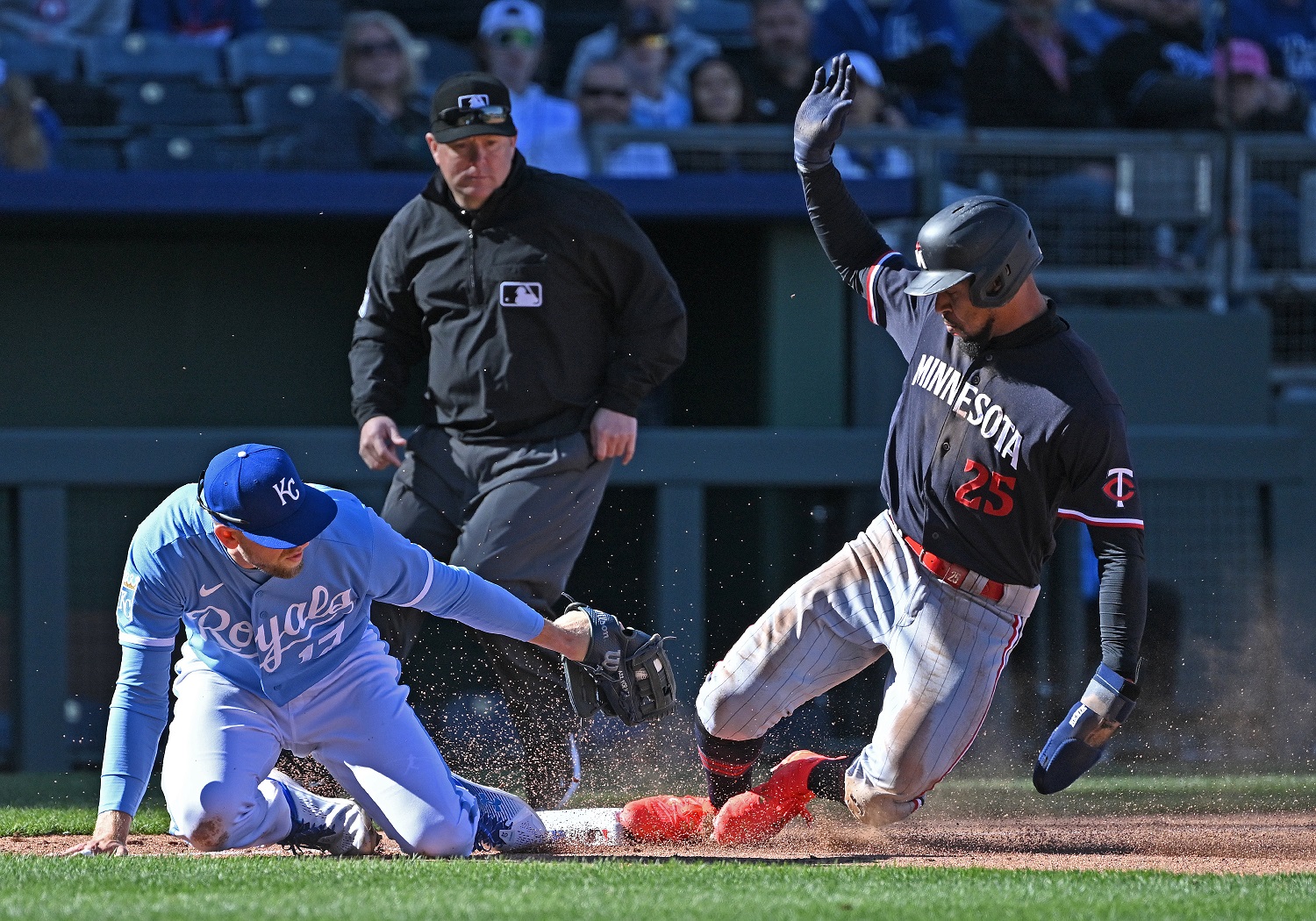 Box Score SP: Sonny Gray: 5 IP, 3 H, 0 ER, 4 BB, 1 K (83 pitches, 52 strikes (62.7%) Home Runs: None Top 3 WPA: Sonny Gray (0.306), Jose Miranda (0.120), Jorge Lopez (0.092) Win Probability Chart (via FanGraphs) Gray’s Shaky Shutout Coming off a headline-grabbing quote in which Sonny Gray expressed frustration with the leash afforded to Twins starters last year, the veteran was surprisingly shaky on a cool, windy day in Kansas City. He lacked fastball command, although his velocity was hitting 93 MPH regularly. In fact, his velocity ranged between 92.1 and 93.7 the whole game. Gray countered this by throwing his full assortment of breaking pitches, many of which were left up in the zone with the Royals frequently making hard contact. Some key double plays and solid defense bailed Gray out. He was replaced to start the sixth inning, and although he likely did not appreciate that, Rocco probably did his ERA a favor in the end with the decision. Twins not taking advantage of opportunities against Lyles Jordan Lyles is the definition of a journeyman starting pitcher, pitching for his ninth organization in Kansas City. His career ERA+ is a deflated 83, meaning 17% below average. His only above-average stint was with Milwaukee in 2019, which tallied a total of 11 starts. Twins batters bailed Lyles out, chasing in hitters' counts and making mistakes on the bases. Thankfully, Byron Buxton was playing in this game. Buxton’s Scare in 1st Inning After roping a line drive down the left field line in his first at-bat, Buxton raced for second and slid into the bag with a double. He slid awkwardly and was lucky to avoid injury. It was not only the impact of the belly flop at his top speed but of his helmet hitting his face on the ricochet and the throw from left field nearly beaning him, for good measure. Two games in, sales for blood pressure medication in Minnesota figures to spike. He stayed in the game and scored on a Jose Miranda single to center. Just as he was yesterday, Buxton was in the middle of the first two scoring chances for the Twins. In the fifth inning, he used his high baseball IQ (or, shhhh… really bat baserunning but great luck, and speed?) to create a second run. After reaching on a single, Buxton advanced to second base on a wild pitch. He advanced to third base on a very risky play. On a ground ball to shortstop Bobby Witt Jr., Buxton took off for third, a cardinal sin in baseball. Fortunately, for the Twins Witt appeared to panic. He rushed his throw to third, short-arming the throw and allowing Buxton to be safe. Kyle Farmer came in to face a lefty reliever. He hit a fly ball to center field. It wasn’t deep and no one should try to score on that ball. But Buxton casually walked back to third base, took a few half-speed steps toward home, and then he took off. Vinnie Pasquantino cut off the ball, either thinking that Buxton wouldn’t tag, or because Jose Miranda had returned to first and faked a tag to second base. Regardless, Buxton and his speed scored again. At the end of the day, Buxton scored both of the Twins runs on Saturday after he scored one of the two Twins runs on Thursday. His impact on this team has already been witnessed. Jorge Alcala Returns Making his first appearance in nearly a year, Alcala relieved Gray to start the sixth inning and walked the now very un-imposing Franmil Reyes. Relying heavily on his slider, Alcala was fortunate to avoid damage when Hunter Dozier lined out and Kyle Isbel hit the ball hard but right to Nick Gordon who teamed with the strong-armed Carlos Correa to convert an excellent double play. Not the most encouraging performance, but he kept the Royals scoreless. Thielbar gets the 8th Inning Nursing a two run lead, the Twins turned to veteran Caleb Thielbar in the eighth inning, after using Griffin Jax in the same situation on opening day. Jax worked a perfect seventh t and pitched well to the 8-9-1 hitters. Thielbar gave up a single to Salvador Perez but followed that with swinging strikeouts on his fastball to Pasquintino and Reyes. He looked dominant, and it will be interesting to see who the Twins turn to in the eight going forward. Lopez gets the 9th Inning and the Save In a mild surprise Jorge López pitched the ninth, perhaps since the Royals 6-7-8 hitters were coming up. He looked to be at his best. He threw strikes and induced a weak pop-up to Hunter Dozier. Then he struck out Kyle Isbel and got a soft line-out to pinch hitter Michael Massey. What’s Next? On Sunday, the Twins will send Joe Ryan to the mound for the third and final game of the series against Brad Keller. The Twins will be hoping to score more than two runs and complete the sweep in Kansas City. The game starts at 1:10 central time. Postgame Interviews Bullpen Usage Spreadsheet TUE WED THU FRI SAT TOT Thielbar 0 0 11 0 18 29 Jax 0 0 9 0 11 20 Duran 0 0 16 0 0 16 López 0 0 5 0 8 13 Alcala 0 0 0 0 12 12 Sands 0 0 0 0 0 0 Moran 0 0 0 0 0 0 Pagán 0 0 0 0 0 0
- 46 comments
-
- 5
-
-
- byron buxton
- jorge lopez
- (and 2 more)
-
It’s almost hard to believe, but on Saturday, the Minnesota Twins beat the Kansas City Royals 2-0. The team is now 2-0 with both wins being by a score of 2-0. Find out more in our Game Recap below. Image courtesy of Peter Aiken-USA TODAY Sports It’s almost hard to believe, but on Saturday, the Minnesota Twins beat the Kansas City Royals 2-0. The team is now 2-0 with both wins being by a score of 2-0. Find out more in our Game Recap below. Box Score SP: Sonny Gray: 5 IP, 3 H, 0 ER, 4 BB, 1 K (83 pitches, 52 strikes (62.7%) Home Runs: None Top 3 WPA: Sonny Gray (0.306), Jose Miranda (0.120), Jorge Lopez (0.092) Win Probability Chart (via FanGraphs) Gray’s Shaky Shutout Coming off a headline-grabbing quote in which Sonny Gray expressed frustration with the leash afforded to Twins starters last year, the veteran was surprisingly shaky on a cool, windy day in Kansas City. He lacked fastball command, although his velocity was hitting 93 MPH regularly. In fact, his velocity ranged between 92.1 and 93.7 the whole game. Gray countered this by throwing his full assortment of breaking pitches, many of which were left up in the zone with the Royals frequently making hard contact. Some key double plays and solid defense bailed Gray out. He was replaced to start the sixth inning, and although he likely did not appreciate that, Rocco probably did his ERA a favor in the end with the decision. Twins not taking advantage of opportunities against Lyles Jordan Lyles is the definition of a journeyman starting pitcher, pitching for his ninth organization in Kansas City. His career ERA+ is a deflated 83, meaning 17% below average. His only above-average stint was with Milwaukee in 2019, which tallied a total of 11 starts. Twins batters bailed Lyles out, chasing in hitters' counts and making mistakes on the bases. Thankfully, Byron Buxton was playing in this game. Buxton’s Scare in 1st Inning After roping a line drive down the left field line in his first at-bat, Buxton raced for second and slid into the bag with a double. He slid awkwardly and was lucky to avoid injury. It was not only the impact of the belly flop at his top speed but of his helmet hitting his face on the ricochet and the throw from left field nearly beaning him, for good measure. Two games in, sales for blood pressure medication in Minnesota figures to spike. He stayed in the game and scored on a Jose Miranda single to center. Just as he was yesterday, Buxton was in the middle of the first two scoring chances for the Twins. In the fifth inning, he used his high baseball IQ (or, shhhh… really bat baserunning but great luck, and speed?) to create a second run. After reaching on a single, Buxton advanced to second base on a wild pitch. He advanced to third base on a very risky play. On a ground ball to shortstop Bobby Witt Jr., Buxton took off for third, a cardinal sin in baseball. Fortunately, for the Twins Witt appeared to panic. He rushed his throw to third, short-arming the throw and allowing Buxton to be safe. Kyle Farmer came in to face a lefty reliever. He hit a fly ball to center field. It wasn’t deep and no one should try to score on that ball. But Buxton casually walked back to third base, took a few half-speed steps toward home, and then he took off. Vinnie Pasquantino cut off the ball, either thinking that Buxton wouldn’t tag, or because Jose Miranda had returned to first and faked a tag to second base. Regardless, Buxton and his speed scored again. At the end of the day, Buxton scored both of the Twins runs on Saturday after he scored one of the two Twins runs on Thursday. His impact on this team has already been witnessed. Jorge Alcala Returns Making his first appearance in nearly a year, Alcala relieved Gray to start the sixth inning and walked the now very un-imposing Franmil Reyes. Relying heavily on his slider, Alcala was fortunate to avoid damage when Hunter Dozier lined out and Kyle Isbel hit the ball hard but right to Nick Gordon who teamed with the strong-armed Carlos Correa to convert an excellent double play. Not the most encouraging performance, but he kept the Royals scoreless. Thielbar gets the 8th Inning Nursing a two run lead, the Twins turned to veteran Caleb Thielbar in the eighth inning, after using Griffin Jax in the same situation on opening day. Jax worked a perfect seventh t and pitched well to the 8-9-1 hitters. Thielbar gave up a single to Salvador Perez but followed that with swinging strikeouts on his fastball to Pasquintino and Reyes. He looked dominant, and it will be interesting to see who the Twins turn to in the eight going forward. Lopez gets the 9th Inning and the Save In a mild surprise Jorge López pitched the ninth, perhaps since the Royals 6-7-8 hitters were coming up. He looked to be at his best. He threw strikes and induced a weak pop-up to Hunter Dozier. Then he struck out Kyle Isbel and got a soft line-out to pinch hitter Michael Massey. What’s Next? On Sunday, the Twins will send Joe Ryan to the mound for the third and final game of the series against Brad Keller. The Twins will be hoping to score more than two runs and complete the sweep in Kansas City. The game starts at 1:10 central time. Postgame Interviews Bullpen Usage Spreadsheet TUE WED THU FRI SAT TOT Thielbar 0 0 11 0 18 29 Jax 0 0 9 0 11 20 Duran 0 0 16 0 0 16 López 0 0 5 0 8 13 Alcala 0 0 0 0 12 12 Sands 0 0 0 0 0 0 Moran 0 0 0 0 0 0 Pagán 0 0 0 0 0 0 View full article
-
On Trading Caleb Thielbar and 70s Game Shows
Hans Birkeland replied to Hans Birkeland's topic in Twins Daily Front Page News
You got to know what's coming up behind any player you trade. With Polanco, we have four top prospects who all profile at 2nd base (Lee is more of a 3b but still). After 2021 we had Arraez also as a 2b. It's tricky and you can make the right value play and still have everything go wrong. The Twins won the Arraez trade but if PabLo gets hurt and Arraez hits .315 again we're viewing it differently. Thielbar's metrics are so good he should command roughly the kind of value the Orioles got back for Jorge López (Cade Povich is a very good prospect and some are putting him in the top 100). But probably at the deadline and only if the reinforcements, Moran, Alcala and maybe one of the long relievers, look good. You can do rebuilds or you can make trades that hurt emotionally. Unless you're Steve Cohen, you can't pick neither. -
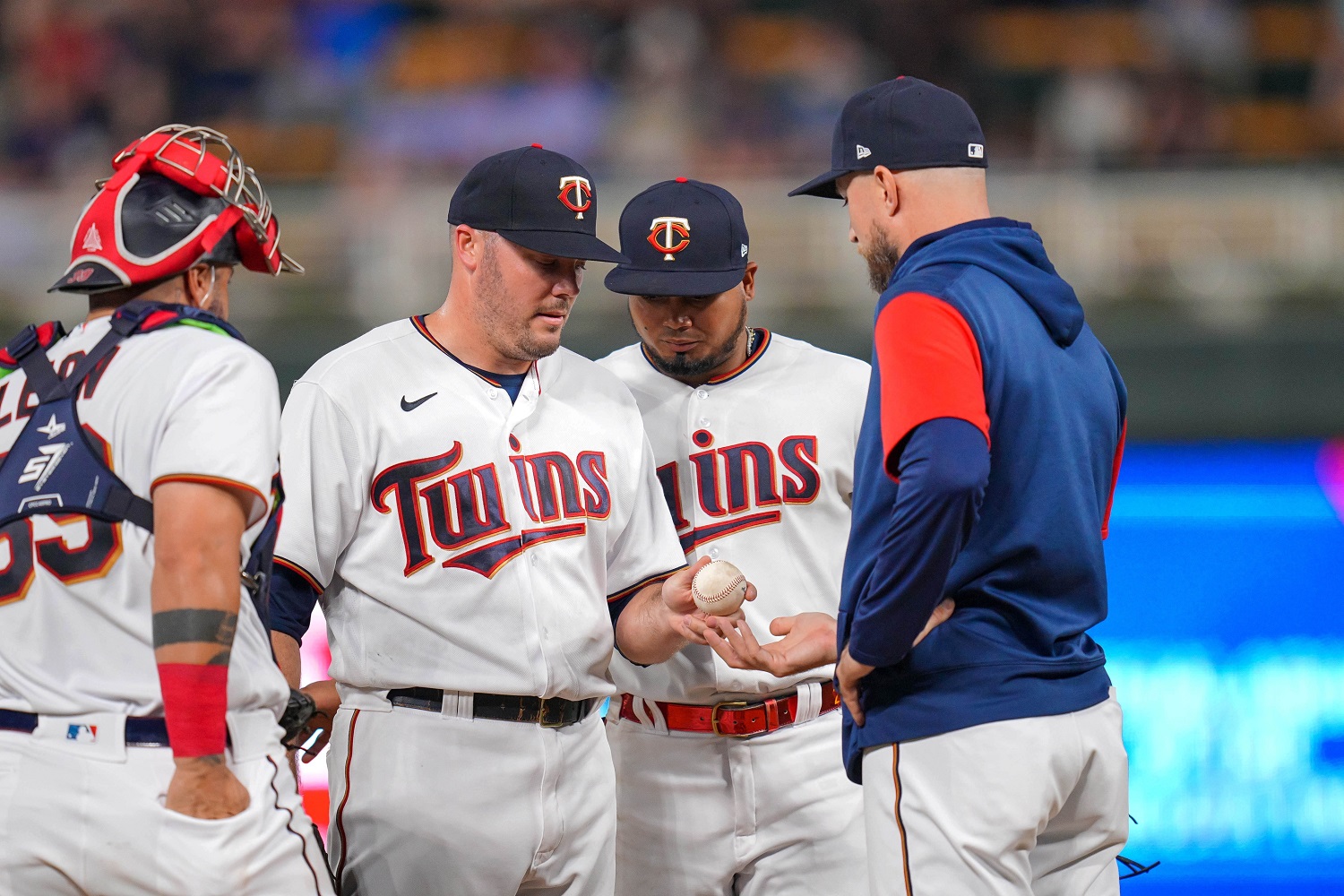 The Monty Hall problem is a brain teaser loosely based on a segment of the gameshow “Let's Make a Deal.” On the show, there is a game in which a contestant must choose one of three doors that has a prize behind it. After picking a door, the host will open one of the doors that does not contain the prize. The contestant is then asked if they would like to stick with their original door, or switch to the other remaining door. Instinctually, the contestant thinks that this is a 50/50 proposition, but the reality is that when they picked the first door, they had a 33% chance of picking the prize. That doesn’t change simply by virtue of a door being eliminated. Switching doors, by contrast, results in a 66% chance of picking the prize, because there is now more information (an eliminated door) available to the contestant. I was thinking of the Monty Hall problem because I was thinking about the Royals (For whatever reason). I was thinking about how they have played Ryan O’Hearn, a lumbering first baseman with a 83 career OPS+, in each of the past five seasons. They’ve also given Brad Keller five shots to prove himself. Heck, they’ve played Adalberto Mondesi in seven. At some point, some team was likely interested in all three of those guys given that the Royals have not contended since 2016, and at the peak of their value, they each could have netted multiple prospects who would project as regulars. Instead, all three have disintegrated in value. Like a door being removed from consideration, we now know that O’Hearn doesn’t come close to hitting enough to make up for his place on the bottom of the defensive spectrum. We know now that Mondesi is injury prone, and even if he wasn’t he doesn’t control the strike zone well enough to be a franchise shortstop. Keller is hittable and also gives up a ton of walks (bad combo). It was too late to trade any of these guys years ago. Case in point: Mondesi was traded this offseason, and all the Royals received in return was fungible left-handed reliever, Josh Taylor. The Royals made plenty of bad decisions following their World Series run, but being too precious about their prospects is a big reason they are undergoing a rebuild of their failed rebuild from four years ago. It’s just difficult to build a competitive team on a budget when you fall in love with every hot twenty-game stretch you see. If that all seems pretty foolish, it is, although the analytic counterpoint isn’t perfect, either. The knowledge that flipping a well-known player with two to three years of team control is the correct probability play can also have a negative impact on a clubhouse full of human beings. Smart teams can either spend money on free agents to supplement their value trades, or get their players to buy into why they conduct so many trades. The Tampa Bay Rays, for instance, aren’t just successful because they understand the basics of the Monty Hall problem, but because they place such a focus on getting their players to buy into their philosophy. Ryan Thompson, the Rays reliever who made minor headlines detailing the arbitration process in depth from the player’s perspective, is a good example. He lost his arbitration case, but in his extensive Twitter thread, he didn’t opine the experience because the Rays were cutthroat or penny-pinching, he was mad at the arbitrators for not knowing ball and letting the Rays fill their small brains with ideas about how a player should get paid based on the timing of when he gets injured. Through it all, Thompson espoused respect for what the Rays were doing and why they were doing it, praising their communication and transparency in a later MLBtraderumors chat. Where do the Twins fall in this regard? In terms of trading Luis Arraez at peak value while signing Carlos Correa, who didn’t cost any prospect capital and is highly skilled at getting his teammates to buy into analytics, they’ve done well since the new year. In the recent past, however, they could have traded Jorge Polanco after his 2021 season where he was healthy, hit 33 home runs and played a solid second base. He also would have come with an extremely team-friendly contract. Starting in 2022, he would have been owed thirteen million over two years, with a vesting option for 2024 based on plate appearances and a team option for 2025. Polanco also is a switch hitter who can fake it at shortstop in an emergency. Everyone loves Polo, and its hard to find anyone on the Twins I would more like to be at-bat in a clutch situation, but the value he carried going into 2022 was immense. The Dodgers could have inquired knowing they had Gavin Lux to step in at short and were going to lose Corey Seager. The Red Sox would have likely preferred paying Polanco 36M over four years at most, as opposed to paying Trevor Story 140M over six. The price tag could have been, depending on market factors, multiple top 50 global prospects based on Polanco’s age, bat, and contract. Or, he could have commanded a younger prospect in addition to short-term, impact pitching help, And now it looks like Polanco’s knees still hurt. That window of excellent trade value could be gone forever, regardless of any 2023 bounce-back. In terms of capital for future trades, the Twins have only five players; Jorge López, Pablo López, Kyle Farmer, Jorge Alcala and Caleb Thielbar, with between two and three years of team control, the usual sweet spot for maximizing trade value. The first three of that group were just acquired via trade, and Alcala is trying to prove he is healthy following elbow surgery. That would leave Thielbar as the best trade candidate on the roster. He’s 36 and had the best hard-hit rate of any reliever in baseball last year. Given his age, he could also fall off a cliff at any moment. Getting value before that happens is what separates the good teams from the Royals, Rockies and the 2011 Twins. Switch the doors.
 -
The wise know what to do with a closed door. Image courtesy of © Brad Rempel-USA TODAY Sports The wise know what to do with a closed door. The Monty Hall problem is a brain teaser loosely based on a segment of the gameshow “Let's Make a Deal.” On the show, there is a game in which a contestant must choose one of three doors that has a prize behind it. After picking a door, the host will open one of the doors that does not contain the prize. The contestant is then asked if they would like to stick with their original door, or switch to the other remaining door. Instinctually, the contestant thinks that this is a 50/50 proposition, but the reality is that when they picked the first door, they had a 33% chance of picking the prize. That doesn’t change simply by virtue of a door being eliminated. Switching doors, by contrast, results in a 66% chance of picking the prize, because there is now more information (an eliminated door) available to the contestant. I was thinking of the Monty Hall problem because I was thinking about the Royals (For whatever reason). I was thinking about how they have played Ryan O’Hearn, a lumbering first baseman with a 83 career OPS+, in each of the past five seasons. They’ve also given Brad Keller five shots to prove himself. Heck, they’ve played Adalberto Mondesi in seven. At some point, some team was likely interested in all three of those guys given that the Royals have not contended since 2016, and at the peak of their value, they each could have netted multiple prospects who would project as regulars. Instead, all three have disintegrated in value. Like a door being removed from consideration, we now know that O’Hearn doesn’t come close to hitting enough to make up for his place on the bottom of the defensive spectrum. We know now that Mondesi is injury prone, and even if he wasn’t he doesn’t control the strike zone well enough to be a franchise shortstop. Keller is hittable and also gives up a ton of walks (bad combo). It was too late to trade any of these guys years ago. Case in point: Mondesi was traded this offseason, and all the Royals received in return was fungible left-handed reliever, Josh Taylor. The Royals made plenty of bad decisions following their World Series run, but being too precious about their prospects is a big reason they are undergoing a rebuild of their failed rebuild from four years ago. It’s just difficult to build a competitive team on a budget when you fall in love with every hot twenty-game stretch you see. If that all seems pretty foolish, it is, although the analytic counterpoint isn’t perfect, either. The knowledge that flipping a well-known player with two to three years of team control is the correct probability play can also have a negative impact on a clubhouse full of human beings. Smart teams can either spend money on free agents to supplement their value trades, or get their players to buy into why they conduct so many trades. The Tampa Bay Rays, for instance, aren’t just successful because they understand the basics of the Monty Hall problem, but because they place such a focus on getting their players to buy into their philosophy. Ryan Thompson, the Rays reliever who made minor headlines detailing the arbitration process in depth from the player’s perspective, is a good example. He lost his arbitration case, but in his extensive Twitter thread, he didn’t opine the experience because the Rays were cutthroat or penny-pinching, he was mad at the arbitrators for not knowing ball and letting the Rays fill their small brains with ideas about how a player should get paid based on the timing of when he gets injured. Through it all, Thompson espoused respect for what the Rays were doing and why they were doing it, praising their communication and transparency in a later MLBtraderumors chat. Where do the Twins fall in this regard? In terms of trading Luis Arraez at peak value while signing Carlos Correa, who didn’t cost any prospect capital and is highly skilled at getting his teammates to buy into analytics, they’ve done well since the new year. In the recent past, however, they could have traded Jorge Polanco after his 2021 season where he was healthy, hit 33 home runs and played a solid second base. He also would have come with an extremely team-friendly contract. Starting in 2022, he would have been owed thirteen million over two years, with a vesting option for 2024 based on plate appearances and a team option for 2025. Polanco also is a switch hitter who can fake it at shortstop in an emergency. Everyone loves Polo, and its hard to find anyone on the Twins I would more like to be at-bat in a clutch situation, but the value he carried going into 2022 was immense. The Dodgers could have inquired knowing they had Gavin Lux to step in at short and were going to lose Corey Seager. The Red Sox would have likely preferred paying Polanco 36M over four years at most, as opposed to paying Trevor Story 140M over six. The price tag could have been, depending on market factors, multiple top 50 global prospects based on Polanco’s age, bat, and contract. Or, he could have commanded a younger prospect in addition to short-term, impact pitching help, And now it looks like Polanco’s knees still hurt. That window of excellent trade value could be gone forever, regardless of any 2023 bounce-back. In terms of capital for future trades, the Twins have only five players; Jorge López, Pablo López, Kyle Farmer, Jorge Alcala and Caleb Thielbar, with between two and three years of team control, the usual sweet spot for maximizing trade value. The first three of that group were just acquired via trade, and Alcala is trying to prove he is healthy following elbow surgery. That would leave Thielbar as the best trade candidate on the roster. He’s 36 and had the best hard-hit rate of any reliever in baseball last year. Given his age, he could also fall off a cliff at any moment. Getting value before that happens is what separates the good teams from the Royals, Rockies and the 2011 Twins. Switch the doors. View full article
-
First judge the rankings. Then let us know where the 2023 rotation should slot in. Image courtesy of © Jerry Lai-USA TODAY Sports First judge the rankings. Then let us know where the 2023 rotation should slot in. With this year’s rotation looking promising and, so far, healthy, let’s rank the past 25 years of Twins rotations. Fangraphs WAR will feature prominently in the rankings, but contextual factors are considered, as well. I also included AL rankings. As a point of comparison, the number one team in fWAR for their rotation in a given year is usually around nineteen to twenty. For instance, the 2001 Diamondbacks with Curt Schilling and Randy Johnson had 19.6 fWAR; the 2022 Astros had 19.4. The 2023 Twins staff … well, let’s talk about them at the end. Let’s get started! 1. 2004- 15.9 fWAR (2nd): The top four starters all threw in 33 or more starts, with Johan Santana winning the Cy Young, Brad Radke posting the lowest ERA of his career, and Carlos Silva and Kyle Lohse contributing above-average seasons. In July, Radke, Santana, and Lohse pitched consecutive shutouts. This rotation had top-end talent, depth, and health. 2. 2020- 16.2 fWAR (2nd) (projected to 162 games): Kenta Maeda was a revelation, Rich Hill was decent, Jose Berrios and Michael Pineda were their usual selves and the team used openers and peak Randy Dobnak to post the third-best starting pitcher fWAR in baseball. Imagine if Jake Odorizzi had been available. I would rank them first but in a 60 game season, there isn’t much of a test of depth. 3. 2006- 12.5 fWAR (6th): Prior to Francisco Liriano getting hurt, this team had the best rotation of any listed here. But in addition to Liriano needing Tommy John, Radke famously couldn’t brush his teeth due to a total lack of rotator cuff and Boof Bonser ended up starting game two of the ALDS as a result. Johan Santana had perhaps his best year, it should be noted. 4. 2005- 15 fWAR (4th): Santana was electric again with 7.1 fWAR. Radke, Lohse and Silva were solid. Unfortunately, this team couldn’t hit and the team missed the playoffs despite ranking seventh in MLB in rotation fWAR. 5. 2019- 16.4 fWAR (4th): By fWAR, this is the best rotation on this list, led by excellent seasons from Berrios and Odorizzi. However, Martin Perez and Kyle Gibson fell apart down the stretch and Pineda was suspended, leading to Dobnak starting a playoff game. 6. 2010- 14.5 fWAR (5th): Liriano finally recaptured some of his old magic this year with 5.6 fWAR and Carl Pavano, Scott Baker and Kevin Slowey were pretty good wingmen. Another bat would have helped. 7. 2015- 13.5 fWAR (5th): Seven guys contributed over 1 fWAR in the team’s return to contention led by Gibson, while Mike Pelfrey had his best Twins year. Tyler Duffey almost pitched the team to the playoffs with a 3.10 ERA down the stretch. 8. 2002- 11.2 fWAR (9th): This staff had decent depth with five starters accumulating over 1.4 fWAR, but Radke only started 21 games due to injury. Johan Santana made his first contribution, ranking third among starters in fWAR despite only fourteen starts. 9. 2003- 12.2 fWAR (6th): Joe Mays fell off a cliff this year, but Kenny Rogers, Lohse and Radke were solid (combined 8.1 fWAR) and Johan Santana sealed his rotation status (finally), posting a strikeout percentage 9.8% better than any of his rotation-mates in 110.1 innings. 10. 2014- 11.7 fWAR (7th): This was the inexplicable and record-setting Phil Hughes year, as well as the first full Gibson year where he posted 2.7 fWAR. Ricky Nolasco was supposed to stabilize the rotation but instead started his decline phase in rapid fashion. 11. 2007- 11.7 fWAR (9th): Baker emerged for 2.7 fWAR in only 23 starts. Silva and Bonser were decent while prospects Matt Garza and Slowey showed promise. 12. 2001- 10.1 fWAR (8th): This was a wasted year of peak Radke and Milton (6.7 fWAR) along with Mays’ best year. Coming off a promising 2000 season, Mark Redman was traded while Rick Reed was acquired for twelve bad starts and Matt Lawton. 13. 2009- 10.7 fWAR (10th): Baker and Blackburn were solid, and Pavano was acquired for a playoff push and contributed 1.6 fWAR in twelve starts. Brian Duensing was the savior, throwing big games down the stretch with a 2.73 ERA. He was no match for the Yankees, however. 14. 2008- 11 fWAR (9th): Another good Baker year, Nick Blackburn was the best version of himself (1.9 fWAR) as was Slowey (2.6 fWAR). Livan Hernandez barely held it together. 15. 2011- 8.5 fWAR (13th): Baker and Pavano were decent but the rest of the staff was a mess. The offense was even worse with only 4.3 combined fWAR. 16. 2018- 8.8 fWAR (8th): Gibson reemerged with 2.6 fWAR and Berrios cemented his place at the top of the rotation. Odorizzi contributed 32 solid starts. If only the fully formed Texas/Chicago Lance Lynn were pitching and not the one with a thirteen percent walk rate. 17. 1998- 11.5 fWAR (8th): Radke followed up his twenty win season with 4.2 fWAR and Bob Tewksbury threw good enough slop to post a league-average year. Mike Morgan was excellent until he was flipped at the deadline. Eric Milton got his feet wet. 18. 2022- 8.2 fWAR (10th): The team addressed its issues from 2021 and acquired Sonny Gray, Chris Paddack, Chris Archer, Dylan Bundy and Tyler Mahle. Gray was pretty good. 19. 2000- 9.9 fWAR (10th): Redman gave the team 24 solid starts, Radke and Milton held serve, and Sean Bergman made his (impressively bad) mark. 20. 1999- 10 fWAR (11th): Radke and Milton were solid again (combined 7.3 fWAR), Joe Mays contributed twenty decent starts, and this was, mercifully, the last year of the LaTroy Hawkins starter experience. 21. 2017- 7.1 fWAR (11th): Berrios emerged as a solid number two starter and Ervin Santana was good again. This was the Bartolo Colon year, and that speaks to the lack of talent. The wild-card loss to the Yankees also was an indicator. 22. 2013- 5.5 fWAR (Last): Mike Pelfrey and Kevin Correia were newcomers and as advertised, combining for 3.8 fWAR in 338 innings. This was the era of peak Sam Deduno, as well as the horrifying Vance Worley experiment. 23. 2021- 5 fWAR (14th): This is the year the team realized Griffin Jax was best suited for the bullpen. Except they had no other options and threw him out there for fourteen brutal starts. Berrios was traded, while Maeda and Pineda broke down physically. At least there was Bailey Ober. 24. 2016- 7.6 fWAR (13th): The year everything went wrong. Nolasco, Gibson, Duffey, Hughes, Tommy Millone, newcomer Berrios and Hector Santiago were all nearly unplayable and all had ten or more starts. Ervin Santana was good. 25. 2012- 3.4 fWAR (Last): This was as low as a starting staff can go, and it could have been even worse if Scott Diamond hadn’t come out of nowhere to post 2.4 fWAR in 27 starts. Cole DeVries, P.J. Walters, and Jason Marquis featured prominently. The 2023 rotation is projected for 11.9 fWAR, if you were wondering. None of these staffs had the depth this year’s crew figures to have, but the Radke and Santana-led rotations were stronger at the top. Where would you rank the 2023 rotation? View full article
-
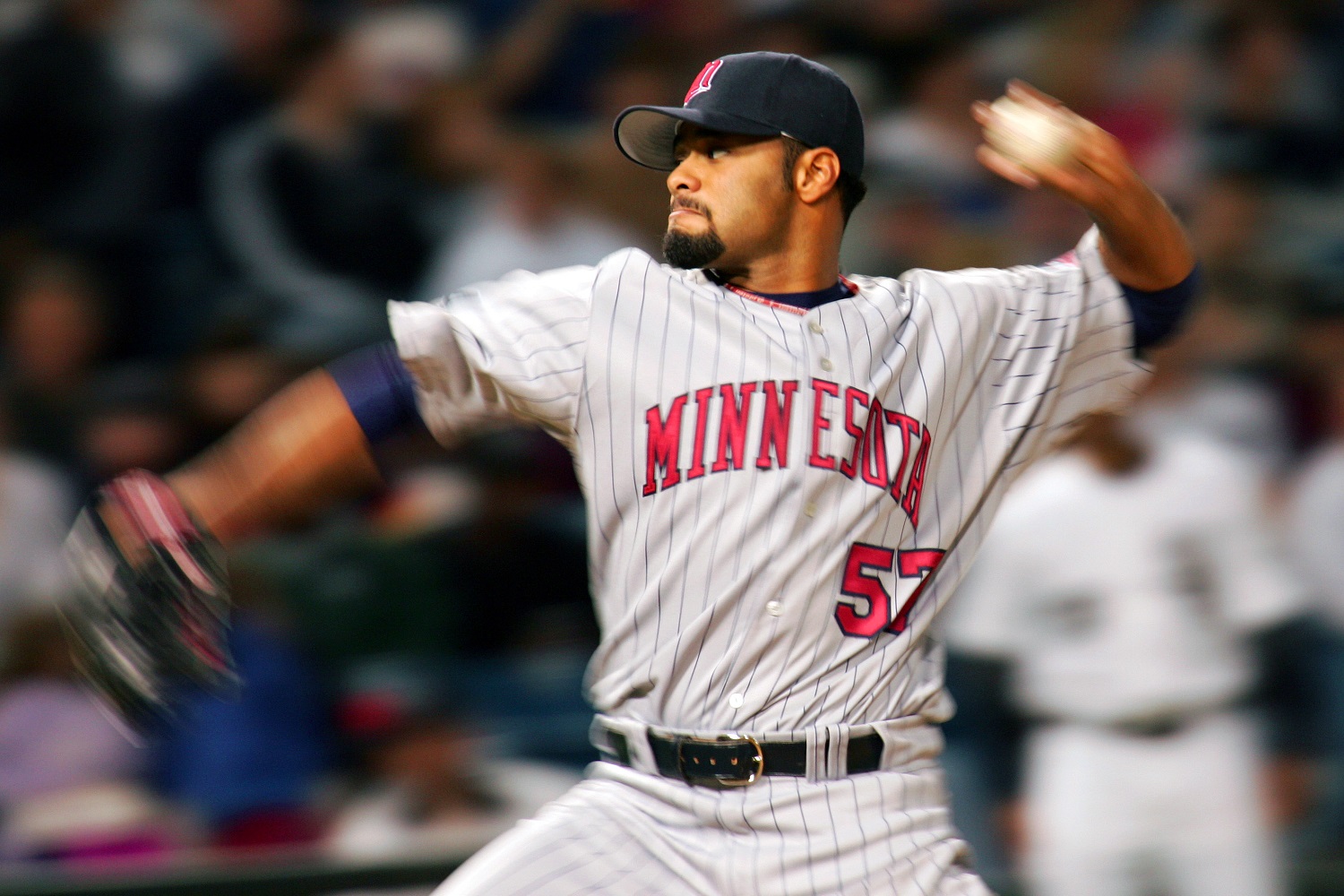 With this year’s rotation looking promising and, so far, healthy, let’s rank the past 25 years of Twins rotations. Fangraphs WAR will feature prominently in the rankings, but contextual factors are considered, as well. I also included AL rankings. As a point of comparison, the number one team in fWAR for their rotation in a given year is usually around nineteen to twenty. For instance, the 2001 Diamondbacks with Curt Schilling and Randy Johnson had 19.6 fWAR; the 2022 Astros had 19.4. The 2023 Twins staff … well, let’s talk about them at the end. Let’s get started! 1. 2004- 15.9 fWAR (2nd): The top four starters all threw in 33 or more starts, with Johan Santana winning the Cy Young, Brad Radke posting the lowest ERA of his career, and Carlos Silva and Kyle Lohse contributing above-average seasons. In July, Radke, Santana, and Lohse pitched consecutive shutouts. This rotation had top-end talent, depth, and health. 2. 2020- 16.2 fWAR (2nd) (projected to 162 games): Kenta Maeda was a revelation, Rich Hill was decent, Jose Berrios and Michael Pineda were their usual selves and the team used openers and peak Randy Dobnak to post the third-best starting pitcher fWAR in baseball. Imagine if Jake Odorizzi had been available. I would rank them first but in a 60 game season, there isn’t much of a test of depth. 3. 2006- 12.5 fWAR (6th): Prior to Francisco Liriano getting hurt, this team had the best rotation of any listed here. But in addition to Liriano needing Tommy John, Radke famously couldn’t brush his teeth due to a total lack of rotator cuff and Boof Bonser ended up starting game two of the ALDS as a result. Johan Santana had perhaps his best year, it should be noted. 4. 2005- 15 fWAR (4th): Santana was electric again with 7.1 fWAR. Radke, Lohse and Silva were solid. Unfortunately, this team couldn’t hit and the team missed the playoffs despite ranking seventh in MLB in rotation fWAR. 5. 2019- 16.4 fWAR (4th): By fWAR, this is the best rotation on this list, led by excellent seasons from Berrios and Odorizzi. However, Martin Perez and Kyle Gibson fell apart down the stretch and Pineda was suspended, leading to Dobnak starting a playoff game. 6. 2010- 14.5 fWAR (5th): Liriano finally recaptured some of his old magic this year with 5.6 fWAR and Carl Pavano, Scott Baker and Kevin Slowey were pretty good wingmen. Another bat would have helped. 7. 2015- 13.5 fWAR (5th): Seven guys contributed over 1 fWAR in the team’s return to contention led by Gibson, while Mike Pelfrey had his best Twins year. Tyler Duffey almost pitched the team to the playoffs with a 3.10 ERA down the stretch. 8. 2002- 11.2 fWAR (9th): This staff had decent depth with five starters accumulating over 1.4 fWAR, but Radke only started 21 games due to injury. Johan Santana made his first contribution, ranking third among starters in fWAR despite only fourteen starts. 9. 2003- 12.2 fWAR (6th): Joe Mays fell off a cliff this year, but Kenny Rogers, Lohse and Radke were solid (combined 8.1 fWAR) and Johan Santana sealed his rotation status (finally), posting a strikeout percentage 9.8% better than any of his rotation-mates in 110.1 innings. 10. 2014- 11.7 fWAR (7th): This was the inexplicable and record-setting Phil Hughes year, as well as the first full Gibson year where he posted 2.7 fWAR. Ricky Nolasco was supposed to stabilize the rotation but instead started his decline phase in rapid fashion. 11. 2007- 11.7 fWAR (9th): Baker emerged for 2.7 fWAR in only 23 starts. Silva and Bonser were decent while prospects Matt Garza and Slowey showed promise. 12. 2001- 10.1 fWAR (8th): This was a wasted year of peak Radke and Milton (6.7 fWAR) along with Mays’ best year. Coming off a promising 2000 season, Mark Redman was traded while Rick Reed was acquired for twelve bad starts and Matt Lawton. 13. 2009- 10.7 fWAR (10th): Baker and Blackburn were solid, and Pavano was acquired for a playoff push and contributed 1.6 fWAR in twelve starts. Brian Duensing was the savior, throwing big games down the stretch with a 2.73 ERA. He was no match for the Yankees, however. 14. 2008- 11 fWAR (9th): Another good Baker year, Nick Blackburn was the best version of himself (1.9 fWAR) as was Slowey (2.6 fWAR). Livan Hernandez barely held it together. 15. 2011- 8.5 fWAR (13th): Baker and Pavano were decent but the rest of the staff was a mess. The offense was even worse with only 4.3 combined fWAR. 16. 2018- 8.8 fWAR (8th): Gibson reemerged with 2.6 fWAR and Berrios cemented his place at the top of the rotation. Odorizzi contributed 32 solid starts. If only the fully formed Texas/Chicago Lance Lynn were pitching and not the one with a thirteen percent walk rate. 17. 1998- 11.5 fWAR (8th): Radke followed up his twenty win season with 4.2 fWAR and Bob Tewksbury threw good enough slop to post a league-average year. Mike Morgan was excellent until he was flipped at the deadline. Eric Milton got his feet wet. 18. 2022- 8.2 fWAR (10th): The team addressed its issues from 2021 and acquired Sonny Gray, Chris Paddack, Chris Archer, Dylan Bundy and Tyler Mahle. Gray was pretty good. 19. 2000- 9.9 fWAR (10th): Redman gave the team 24 solid starts, Radke and Milton held serve, and Sean Bergman made his (impressively bad) mark. 20. 1999- 10 fWAR (11th): Radke and Milton were solid again (combined 7.3 fWAR), Joe Mays contributed twenty decent starts, and this was, mercifully, the last year of the LaTroy Hawkins starter experience. 21. 2017- 7.1 fWAR (11th): Berrios emerged as a solid number two starter and Ervin Santana was good again. This was the Bartolo Colon year, and that speaks to the lack of talent. The wild-card loss to the Yankees also was an indicator. 22. 2013- 5.5 fWAR (Last): Mike Pelfrey and Kevin Correia were newcomers and as advertised, combining for 3.8 fWAR in 338 innings. This was the era of peak Sam Deduno, as well as the horrifying Vance Worley experiment. 23. 2021- 5 fWAR (14th): This is the year the team realized Griffin Jax was best suited for the bullpen. Except they had no other options and threw him out there for fourteen brutal starts. Berrios was traded, while Maeda and Pineda broke down physically. At least there was Bailey Ober. 24. 2016- 7.6 fWAR (13th): The year everything went wrong. Nolasco, Gibson, Duffey, Hughes, Tommy Millone, newcomer Berrios and Hector Santiago were all nearly unplayable and all had ten or more starts. Ervin Santana was good. 25. 2012- 3.4 fWAR (Last): This was as low as a starting staff can go, and it could have been even worse if Scott Diamond hadn’t come out of nowhere to post 2.4 fWAR in 27 starts. Cole DeVries, P.J. Walters, and Jason Marquis featured prominently. The 2023 rotation is projected for 11.9 fWAR, if you were wondering. None of these staffs had the depth this year’s crew figures to have, but the Radke and Santana-led rotations were stronger at the top. Where would you rank the 2023 rotation?
- 10 comments
-
- 2
-
-
- johan santana
- brad radke
- (and 3 more)
-
Don't overhype the defending division champs coming off a season where they were gifted incredibly good health and a Twins second-half collapse. Image courtesy of Bruce Kluckhohn, USA Today Sports Don't overhype the defending division champs coming off a season where they were gifted incredibly good health and a Twins second-half collapse. Over at Fangraphs, Dan Syzmborski has released his 2023 ZiPS projections, putting the Twins at 80 wins. They are a high variance team without question, and could have looked at adding another bullpen piece, but given the overall success of the offseason, that feels a bit low. I guess having a low floor is not appreciated by ZiPS and as we saw last year, the Twins’ floor isn’t pretty. Same goes for the White Sox who are projected for only 74 wins. Cleveland comes in at 83 wins, and some projections have them closer to 90. They’re new and interesting and clearly on the rise. But are they really that good? The title of this article will tell you what I think, although it should be noted that the Guardians played excellent ball all year in 2022 and bulldozed the Twins and White Sox in September in legitimate fashion on their way to some fun playoff moments. They were also really healthy, but more on that later. The most surprising reason Cleveland may take a step back this year is that their starting pitching has (momentarily) dried up. Shane Bieber and Triston McKenzie are both legit and the ace argument could be made for either one, but overall this is a rotation built more on reputation than actual merit, with its combined 2022 bWAR of 12.0 ranking fourteenth in baseball, tied with the White Sox. As another point of comparison from a different era, the top four starters for the 2000 Twins posted 15.6 bWAR en route to a 69-win season. The top two on Cleveland’s staff are amazing and better than anyone the Twins have had since Johan Santana, so don’t confuse my point. But Cal Quantrill is merely a solid number three and was a liability in the playoffs. Aaron Civale and Zach Plesac, who both looked like building blocks just a few years ago, have regressed significantly. “But Cleveland always finds pitching.” Yeah we’ve all heard that. But if Civale and Plesac are injured or ineffective, expect to see a lot of Konnor Pilkington, Cody Morris and Xzavion Curry to start the year. Morris looked pretty good last year, and they have good prospects coming, led by Daniel Espino and Gavin Williams. But Espino has already sustained a shoulder injury (not his first) and is doubtful to see the majors this year, while a promotion of Williams would be very aggressive. Morris is also battling an injury. In short, there seems to be a gap between what’s here at the big league level and what’s coming in 2024-2025, which is likely why both ZiPS and ESPN rank Cleveland’s starting rotation below the Twins and White Sox for 2023. Yes, you read that right. As far as the lineup is concerned, the Guardians made a name for themselves last year by spraying the ball around, stealing bases and doing “the little things.” Steven Kwan, Amed Rosario, José Ramírez, Josh Naylor, Óscar González and Andrés Giménez represent a solid top six, but they aren’t particularly imposing. They did add a couple of bats this offseason in Mike Zunino and Josh Bell. Bell can hit, and Zunino has a good defensive reputation and impressive power, hitting 31 home runs as recently as 2021. But Bell is also streaky, and Zunino is recovering from thoracic outlet syndrome, which has killed more careers than torn UCLs lately. The team hit for a 99 wRC+ last year, so I don’t anticipate this turning into some elite offense even if Bell and Zunino have nice seasons. Frankly, I don’t expect the pitching to do as well, either, even if Zach Plesac is visited by three ghosts and posts a 3.20 ERA in thirty starts. The reason?. Injuries. Injuries happen to teams. There hasn’t been a team or person in history that has been able to figure out baseball injury prevention, and I don’t think the Guardians are the first. You wouldn’t know it, though. Here’s their injury report for 2022: Plesac fractured his pinkie punching the mound, missing a month. González missed a month with a strained abdomen. Franmil Reyes missed a month with a strained hamstring. Naylor missed two weeks coming back from his ankle injury in 2021. James Karinchak missed the first few months coming back from a shoulder injury. Luke Maile missed the first couple weeks of the season with a strained hamstring. Austin Hedges missed two weeks with a concussion. Civale did miss three separate months with various maladies. He was able to return and make a start in their elimination game against the Yankees, but that didn’t go great. All of the above were available for the playoffs, even if Civale wishes he wasn’t. The only one who wasn’t was reliever Anthony Gose, who needed Tommy John surgery. His was the only season ending injury. That is also the only carryover injury certain to affect a player’s 2023 status. That’s it. Cleveland losing Gose was not a major issue for them, as he was a converted outfielder with 27 career innings. By contrast, the Twins fell out of the AL Central race while losing nineteen players to season ending injury. Not all of them were crucial, but too many were. To be clear, Cleveland’s training staff isn’t nineteen times better than the Twins’, and their players aren’t nineteen times less injury prone. They also aren’t nineteen times better at playing through injury, despite what miserable Phil Mackey stans on Twitter might have you believe. Cleveland was projected for 79 wins last year, but being abnormally healthy has a way of beating projection models. Other highly healthy teams in recent memory? The 2022 Orioles and Mariners, as well as the 2021 Red Sox. Any cinderella-type team usually is accompanied by a lack of IL stints, but as the 2022 Red Sox can attest, that good fortune needs to be supplemented with additional talent or things can go south in a hurry. That’s asking a lot of Bell and Zunino. As a baseball fan, I hope Cleveland is just as healthy in 2023, because they’re a good product for the sport and their manager is a lovable legend. But a team having its entire squad available minus one fungible reliever in October is unrepeatable, a scenario about as likely as throwing two perfect games. The Twins didn’t have enough depth last year and it cost them dearly. But they still somehow came into September tied for first. There is year to year variance and then there is one of the most charmed teams in decades winning the lottery and everyone thinking they earned it. As fun as they are and as good as they look in the long-term, Cleveland will be an afterthought while Minnesota and Chicago battle for the division this year. View full article
-
Here's Why the Cleveland Guardians Will Take a Step Back in 2023
Hans Birkeland posted an article in Twins
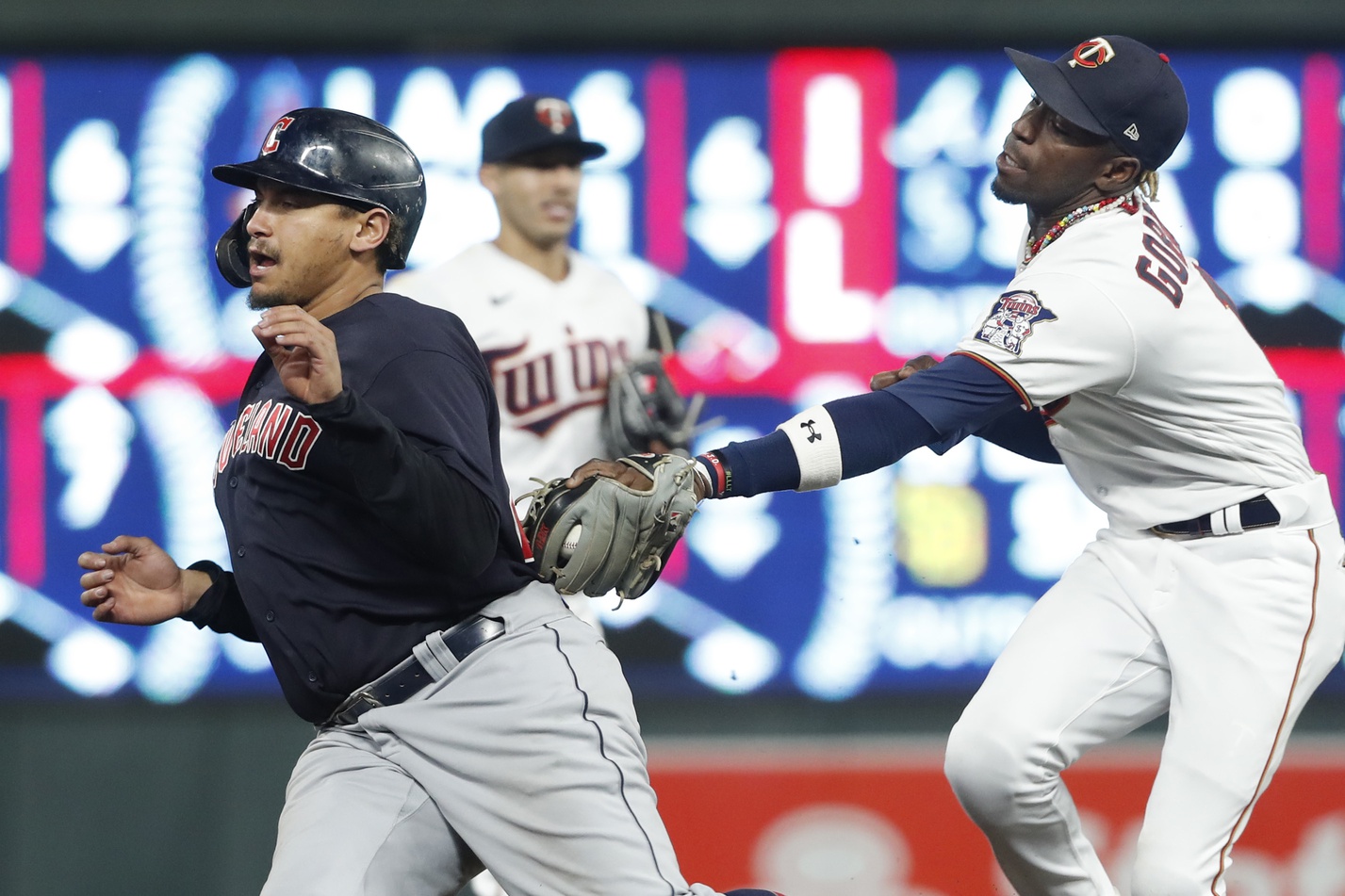 Over at Fangraphs, Dan Syzmborski has released his 2023 ZiPS projections, putting the Twins at 80 wins. They are a high variance team without question, and could have looked at adding another bullpen piece, but given the overall success of the offseason, that feels a bit low. I guess having a low floor is not appreciated by ZiPS and as we saw last year, the Twins’ floor isn’t pretty. Same goes for the White Sox who are projected for only 74 wins. Cleveland comes in at 83 wins, and some projections have them closer to 90. They’re new and interesting and clearly on the rise. But are they really that good? The title of this article will tell you what I think, although it should be noted that the Guardians played excellent ball all year in 2022 and bulldozed the Twins and White Sox in September in legitimate fashion on their way to some fun playoff moments. They were also really healthy, but more on that later. The most surprising reason Cleveland may take a step back this year is that their starting pitching has (momentarily) dried up. Shane Bieber and Triston McKenzie are both legit and the ace argument could be made for either one, but overall this is a rotation built more on reputation than actual merit, with its combined 2022 bWAR of 12.0 ranking fourteenth in baseball, tied with the White Sox. As another point of comparison from a different era, the top four starters for the 2000 Twins posted 15.6 bWAR en route to a 69-win season. The top two on Cleveland’s staff are amazing and better than anyone the Twins have had since Johan Santana, so don’t confuse my point. But Cal Quantrill is merely a solid number three and was a liability in the playoffs. Aaron Civale and Zach Plesac, who both looked like building blocks just a few years ago, have regressed significantly. “But Cleveland always finds pitching.” Yeah we’ve all heard that. But if Civale and Plesac are injured or ineffective, expect to see a lot of Konnor Pilkington, Cody Morris and Xzavion Curry to start the year. Morris looked pretty good last year, and they have good prospects coming, led by Daniel Espino and Gavin Williams. But Espino has already sustained a shoulder injury (not his first) and is doubtful to see the majors this year, while a promotion of Williams would be very aggressive. Morris is also battling an injury. In short, there seems to be a gap between what’s here at the big league level and what’s coming in 2024-2025, which is likely why both ZiPS and ESPN rank Cleveland’s starting rotation below the Twins and White Sox for 2023. Yes, you read that right. As far as the lineup is concerned, the Guardians made a name for themselves last year by spraying the ball around, stealing bases and doing “the little things.” Steven Kwan, Amed Rosario, José Ramírez, Josh Naylor, Óscar González and Andrés Giménez represent a solid top six, but they aren’t particularly imposing. They did add a couple of bats this offseason in Mike Zunino and Josh Bell. Bell can hit, and Zunino has a good defensive reputation and impressive power, hitting 31 home runs as recently as 2021. But Bell is also streaky, and Zunino is recovering from thoracic outlet syndrome, which has killed more careers than torn UCLs lately. The team hit for a 99 wRC+ last year, so I don’t anticipate this turning into some elite offense even if Bell and Zunino have nice seasons. Frankly, I don’t expect the pitching to do as well, either, even if Zach Plesac is visited by three ghosts and posts a 3.20 ERA in thirty starts. The reason?. Injuries. Injuries happen to teams. There hasn’t been a team or person in history that has been able to figure out baseball injury prevention, and I don’t think the Guardians are the first. You wouldn’t know it, though. Here’s their injury report for 2022: Plesac fractured his pinkie punching the mound, missing a month. González missed a month with a strained abdomen. Franmil Reyes missed a month with a strained hamstring. Naylor missed two weeks coming back from his ankle injury in 2021. James Karinchak missed the first few months coming back from a shoulder injury. Luke Maile missed the first couple weeks of the season with a strained hamstring. Austin Hedges missed two weeks with a concussion. Civale did miss three separate months with various maladies. He was able to return and make a start in their elimination game against the Yankees, but that didn’t go great. All of the above were available for the playoffs, even if Civale wishes he wasn’t. The only one who wasn’t was reliever Anthony Gose, who needed Tommy John surgery. His was the only season ending injury. That is also the only carryover injury certain to affect a player’s 2023 status. That’s it. Cleveland losing Gose was not a major issue for them, as he was a converted outfielder with 27 career innings. By contrast, the Twins fell out of the AL Central race while losing nineteen players to season ending injury. Not all of them were crucial, but too many were. To be clear, Cleveland’s training staff isn’t nineteen times better than the Twins’, and their players aren’t nineteen times less injury prone. They also aren’t nineteen times better at playing through injury, despite what miserable Phil Mackey stans on Twitter might have you believe. Cleveland was projected for 79 wins last year, but being abnormally healthy has a way of beating projection models. Other highly healthy teams in recent memory? The 2022 Orioles and Mariners, as well as the 2021 Red Sox. Any cinderella-type team usually is accompanied by a lack of IL stints, but as the 2022 Red Sox can attest, that good fortune needs to be supplemented with additional talent or things can go south in a hurry. That’s asking a lot of Bell and Zunino. As a baseball fan, I hope Cleveland is just as healthy in 2023, because they’re a good product for the sport and their manager is a lovable legend. But a team having its entire squad available minus one fungible reliever in October is unrepeatable, a scenario about as likely as throwing two perfect games. The Twins didn’t have enough depth last year and it cost them dearly. But they still somehow came into September tied for first. There is year to year variance and then there is one of the most charmed teams in decades winning the lottery and everyone thinking they earned it. As fun as they are and as good as they look in the long-term, Cleveland will be an afterthought while Minnesota and Chicago battle for the division this year.
 -
The team control is what makes them more valuable but you're right, there is more present day value with Maeda Mahle an Gray. Next year is a different story but hopefully Paddack recovers well and Ober can get established.
-
You said it, you gotta have a little luck. Would you say the last ace pitcher the Twins drafted and developed was Radke, Erickson or Viola?
-
To be fair, Chase Petty had a pretty good year for the Reds, playing the year at age 19 and holding his own against much older competition. Spencer Steer looks like he has a floor of a good utility man, and made his debut last year. Christian Encarnacion-Strand looks like he almost certainly will hit, even if he ends up a 1B/DH type. He'll likely see time at the MLB level this year. Steven Hajjar was a second round pick in 2021 who has looked great thus far. He hurt his shoulder after the trade, however. Brusdar Graterol is a quality reliever at minimum. That's three MLB players and two young pitchers with upside and decent prospect pedigree. Maybe not the sexiest collection of players but still extremely valuable.
-
Boy, If Milwaukee only wants Ober Wallner and Martin I am all in. I would imagine Lewis, Lee and Rodriguez would need to be involved to realistically get it done.
1500.jpg.48ad5ea4638de669bcd94d2c80a6caf9.jpg)

