


Twins Video
FanGraphs released its annual ZiPS projections for the Twins this week, giving Twins fans their first broad statistical snapshot of what the 2026 season could look like. ZiPS, created by Dan Szymborski, is a projection system that blends recent performance, aging curves, historical comps, and a healthy dose of probabilistic modeling to estimate future value. It is not a prediction set in stone, but it does offer a valuable lens for identifying strengths, weaknesses, and areas where upside may be hiding.
For the Twins, ZiPS paints a picture that feels familiar. There are clear problem areas, a few positions of relative strength, and a farm system that still drives significant optimism.
Problem Positions
Shortstop and left field stand out as the thinnest areas on the roster. Brooks Lee is projected as the primary shortstop, and while ZiPS sees him as playable, it does not treat the position as a strength. Lee’s bat (83 OPS+) profiles better than his defense (-5 Def), and the overall projection reflects a player who can hold his own but may not elevate the lineup.
Left field is even murkier, with a combined 0.8 fWAR. The current mix of Austin Martin, Trevor Larnach, James Outman, and Alan Roden projects as serviceable but uninspiring. ZiPS does not see a clear above-average regular in that group. Minnesota does have high-end prospects who could eventually change the picture (see below), but most of that help is more realistic for the second half of the season, rather than Opening Day.
Top Positions
At the top of the list is Byron Buxton, who is coming off arguably the best season of his career. ZiPS still likes his overall impact (119 OPS+, 3.0 WAR), but the ever-present health concerns naturally cap expectations for his playing time (473 PA). The hope is that he can come close to repeating last season’s All-Star and Silver Slugger-level production, though nothing about Buxton has ever come with guarantees, especially as he gets further into his 30s.
Second base checks in as the Twins’ second-strongest position. Luke Keaschall is projected to handle the bulk of the workload and comes in with a 106 OPS+ and 1.8 fWAR. Edouard Julien is projected for 1.2 fWAR, a number that feels optimistic after his uneven 2025 campaign, but ZiPS continues to believe in the underlying offensive skill set. Minnesota has talked about Keaschall getting time in the outfield, so that might help the team’s glaring hole in left field.
Top Prospects Get Mixed Reviews
ZiPS is particularly bullish on Kaelen Culpepper, projecting him for 1.9 fWAR in 510 PA. That raises an interesting question about how aggressively the Twins plan to push him, given that he finished last season at Double-A Wichita. The Twins are comfortable letting Lee ride at shortstop for now, and it seems more likely for Culpepper to get 200 PA or fewer in 2026. Injuries could always impact that number, but there is no reason to rush one of their top prospects.
The system also sees potential in Emmanuel Rodriguez, assuming health cooperates. ZiPS projects a 98 OPS+ and 1.3 fWAR, ranking in the team’s top 10 in position-player WAR. There is a scenario where he could claim left field quickly if things break right. Walker Jenkins, on the other hand, receives a more cautious outlook with a 93 three-year OPS+, signaling some uncertainty about how soon his elite tools will fully translate.
Starting Pitching for Days
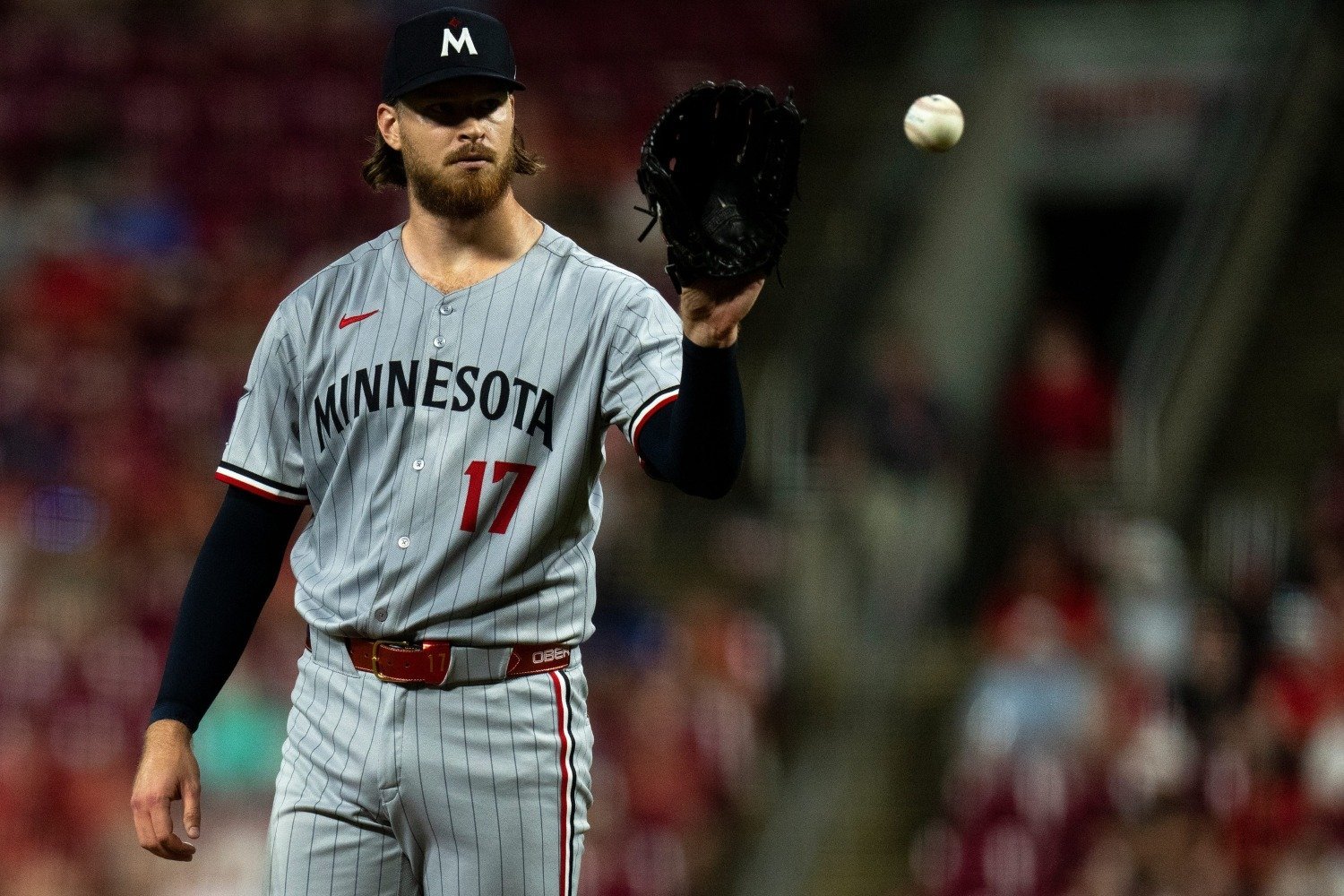
Where ZiPS really lights up is the rotation. Bailey Ober’s projection leans more on his broader track record than his 2025 struggles, viewing him as a solid middle-of-the-rotation arm (102 ERA+, 4.20 FIP). ZiPS is also enthusiastic about Zebby Matthews, projecting a 110 ERA+. Simeon Woods Richardson at 104 ERA+, Taj Bradley at 101 ERA+, and Mick Abel at 97 ERA+ all come in as valuable contributors. The common thread is depth, as the system clearly likes the organization’s pitching inventory across the majors and upper minors.
Minnesota’s bullpen carries far more uncertainty than the rotation. ZiPS views Cole Sands, Justin Topa, Kody Funderburk, and Eric Orze as capable setup caliber options rather than true late-inning anchors. Sands stands out with the third-best projected ERA+ on the roster, a sign that ZiPS is buying into the adjustments he made over the second half. Topa, Funderburk, and Orze all land at a 107 ERA+, suggesting steady but unspectacular production. The hope is that the Twins supplement this group with additional veteran arms while continuing to lean on the front office’s recent success in turning Triple-A depth into usable bullpen contributors.
In the end, ZiPS offers a reminder not to let frustration define expectations. As Szymborski put it, “The easiest thing for people to do is set this past season as a baseline and understand that this team isn’t going to be much better in 2026. But using last season’s record as a baseline is generally a poor idea, as there’s a good argument that a lot of the 2025 Twins underperformed their actual ability.”
His perspective neatly sums up the tension surrounding this roster. The ZiPS projections are not screaming contender, with a win total estimated between 78 and 84, but they are not confirming a lost cause either. There are obvious holes, particularly on the left side of the defense and in the corner outfield, yet there is also enough pitching depth and prospect-driven upside to envision a better outcome if a few things break right.
For a Twins team trying to reset expectations after a disappointing year, ZiPS offers something closer to cautious encouragement than cold reality, and that may be exactly what this fan base needs heading into the spring.
What stands out about Minnesota’s ZiPS projections? Leave a comment and start the discussion.







Recommended Comments
Create an account or sign in to comment
You need to be a member in order to leave a comment
Create an account
Sign up for a new account in our community. It's easy!
Register a new accountSign in
Already have an account? Sign in here.
Sign In Now