


Twins Video
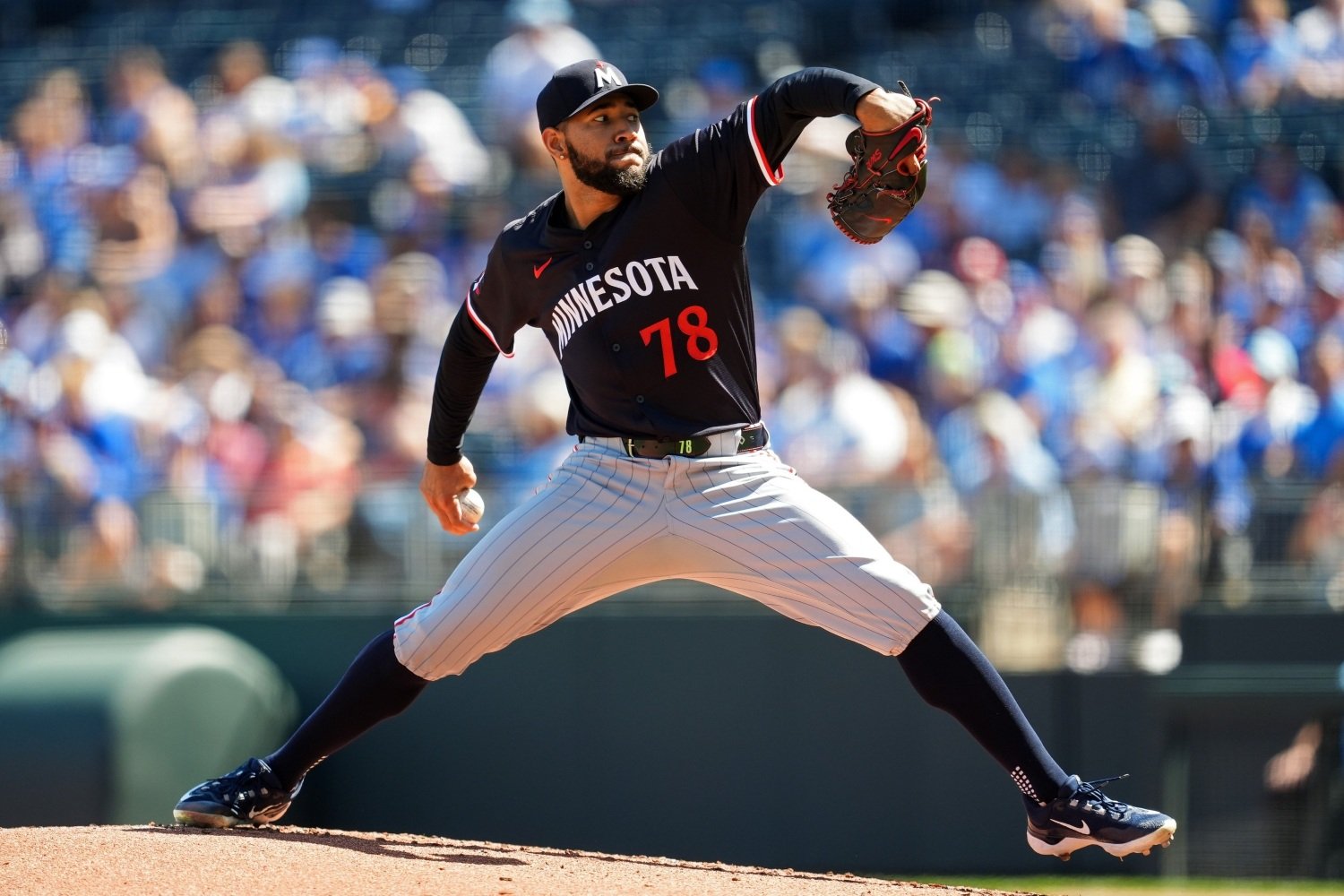
Here’s a simple question I asked myself the other day: How could we analyze Simeon Woods Richardson’s season in the context of his age? His year was fine—133 ⅔ innings with a 4.17 ERA is non-descript, even in today’s age of suppressed starting pitcher usage—but how should we consider relative youth? Does it make his play more impressive, and if so, just how much? And, critically, to whom can we compare him historically?
The first thing I did was tab a writer with a Stathead subscription for a simple query: give me a list of pitchers in their age-23 season. (Thanks, @Cody Christie.) He narrowed it down to the Wild Card era, which felt like a good call. It’s as arbitrary a cutoff as any, but we should probably observe a modern context; the days of a guy like Bert Blyleven entering 23 with over 1,000 MLB innings already under his belt are Roman Empire levels of ancient. I then ranked the list by innings that season, discovered that Mark Buerhle threw 239 frames as a 23-year-old—they really don’t build them like that anymore—and searched for similar hurlers.
We’re again dealing with arbitrariness here. I outlined “similar” as seasons within 10 innings of Woods Richardson's total, in which a player pitched to an ERA+ five points north or south of our subject. That felt reasonable, but I could see an argument for different parameters. This way, though, we have seven comps: Jordan Lyles, David Price, Kerry Wood, Gerrit Cole, Kris Bubic, Marcus Stroman, and Taj Bradley.
(There’s some Alanis Morisette irony at play here, considering Woods Richardson’s first franchise swap was part of the Mets acquiring Stroman. Time is a flat circle.)
Ok! That’s a fun list of names. There are two Cy Young winners, 15 All-Star selections, and Kris Bubic. (My apologies to Mr. Bubic, who makes my father roar in laughter when he hears his name.) What’s striking to me is that there’s no real bust here. Lyles is probably the worst pitcher of the bunch, but even then, he’s gobbled over 1,500 frames in an MLB career that started during Obama’s first term. You could do far worse than that.
For our purposes, I think Bubic and Stroman are the most useful of these players. Wood, Price, and Cole were outlier power pitchers, and as much as I would like to recklessly comp Woods Richardson to them, they aren’t particularly useful subjects. Lyles pitched his age-23 season in Coors, which (again) isn't useful, and Bradley just pitched his, so there’s no future data on him to analyze.
Bubic’s relatively successful 2021 season portended a meager 2022, and he’s dealt with injury issues ever since. However, the Royals intend to stretch him out as a starter again in 2025, so his career is far from over. Stroman also ran into injury issues immediately following his breakout in 2014, tearing his ACL the next spring training, but he quickly morphed into one of the most reliable starters in the game.
Both hurlers present a very real path for Woods Richardson. Player development isn’t linear; it’s jagged and seemingly illogical, often throwing its target way off the beaten path before eventually ushering them where they need to go. This is especially true for pitchers, who mature later than hitters. Long-term, Woods Richardson’s prospects look great, but there’s a lot of snarl and thistle that can muck up his evolution. It’s all part of a plan, hopefully.
Now, are there any specific adjustments I can recommend? Well, I doubt that the team can squeeze any more velocity out of Woods Richardson. That he sustained a 93-MPH heater in 2024 already blew away all expectations. It's perfectly possible that he could hold onto his best stuff all the way through a season better than he did in 2024, though. He'll know what the feeling of managing effort and workload over a season is like, and he did impressively hold his velocity within games this year.

His next step will likely be figuring out how to best maximize his pitch mix. Two things stand out to me: his changeup—once a plus pitch, maybe only average now—far underperformed his batted-ball data. Upping its usage could help make him more unpredictable. Then there’s the curveball. We know now that those big overhand breakers don’t earn whiffs as much as you might expect, but they can be powerful tools to steal a strike when behind in the count. Woods Richardson allowed an xwOBA of .460 in 1-0 counts when he threw his fastball, slider, or changeup, but that number dropped all the way to .278 when he flashed the curve—which he only did 16 times, sometimes going nearly a month between 1-0 curveball usages. That number needs to go way up if he wants to improve.
Here’s the skinny: Simeon Woods Richardson’s 2024 season was ordinary in terms of pitching seasons, but given his age, even meager success is a building block. He has experience. He’s been there, perhaps even done that. Recent history suggests that good things are on the way for the youngster, but it might take some time to realize the potential. No worries, though. He’s still just 24, after all.
Do you approve of Twins ownership?

Follow Twins Daily For Minnesota Twins News & Analysis



- Mia Bednar, DocBauer, Fatbat and 2 others
-
 5
5


Recommended Comments
Create an account or sign in to comment
You need to be a member in order to leave a comment
Create an account
Sign up for a new account in our community. It's easy!
Register a new accountSign in
Already have an account? Sign in here.
Sign In Now