


Twins Video
One of the more consistent patterns during the Derek Falvey regime has been a reluctance to spend prospect capital on short-term solutions. The idea is solid—it can be risky to trade away over a half-decade of a prospect’s career for just a few months of a veteran’s services. It becomes even more risky if two, three, or even four prospects are leaving the organization.
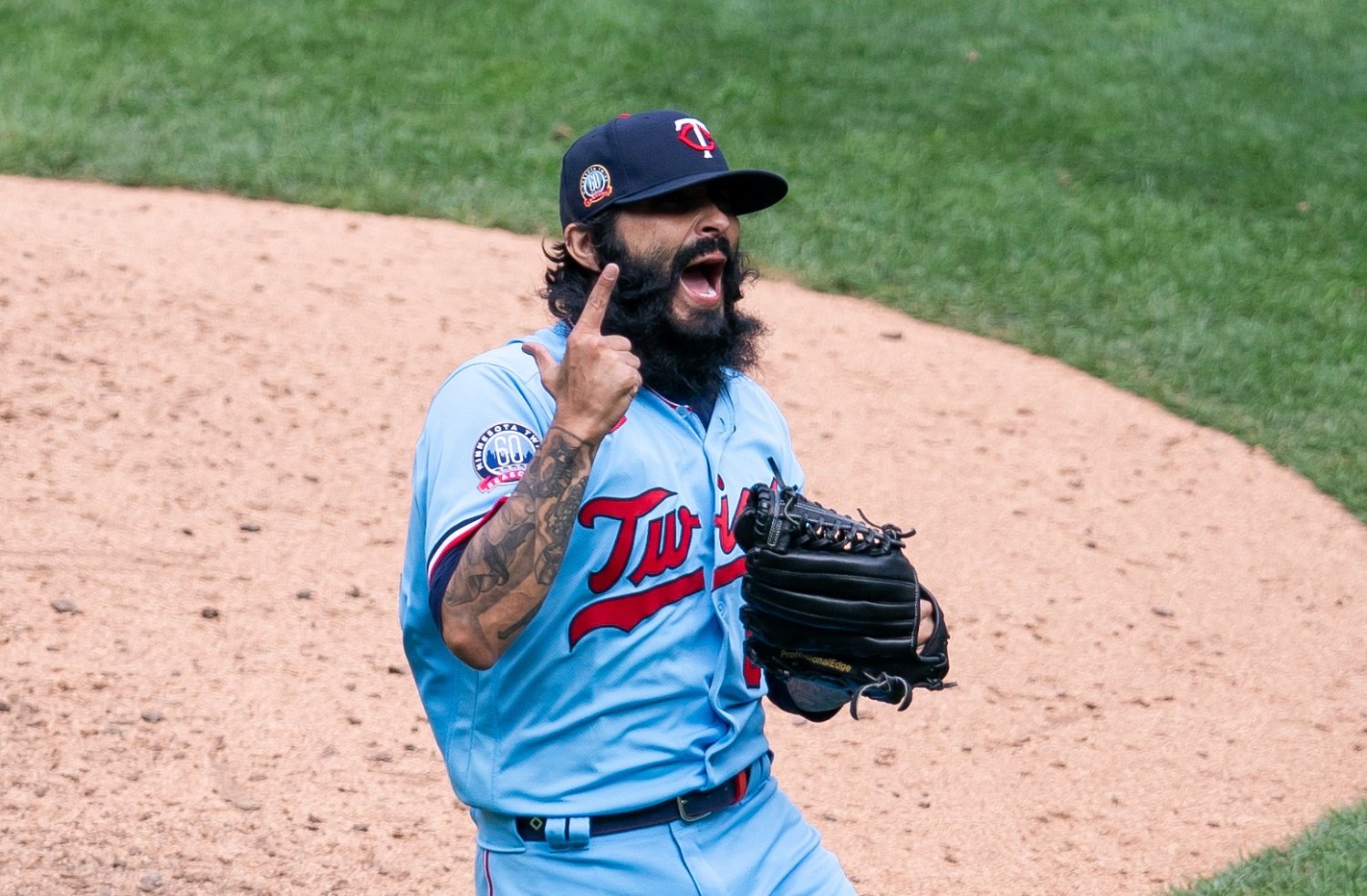
As such, many of the players the Twins have acquired with a year or less of team control remaining have been lower-end filler like Sandy León, Dylan Floro, or Jaime Garcia. Michael Fulmer and Sergio Romo were setup men acquired at the deadline with only a few months left on their contracts. Gary Sánchez, Anthony DeSclafani, and Michael A. Taylor were acquired to fill temporary holes at catcher/DH, starting pitcher, and center field, respectively, with a full season of control ahead.
That’s it. Really. Those are all the expiring contracts the Twins have brought on since 2016. Every other trade that they’ve made has been for someone with multiple years of control, like Kenta Maeda, Pablo López, or Jake Odorizzi. Even players like Sam Dyson and Gio Urshela, who only played one year as a Twin, had multiple years of theoretical team control when they were acquired. Manuel Margot, for example, has an option for 2025, albeit one almost sure to be declined.
The Twins’ emphasis on sustained success—not selling out for a single year, even at a juncture when another team might—has been consistent, but 2024 presents a situation that might make acquiring a short-term piece worthwhile. Not only is the team working with a high floor, but they also have prospect capital and are facing payroll constraints next year.
First, the Twins do not have a glaring need. This is not to say they don’t need another playoff arm or something along those lines; it’s that there are pieces in place already that are at least competent. A player in the 2019 Sergio Romo or 2023 Michael A. Taylor range doesn’t really move the needle. A player who moves quality bats down in the lineup or quality arms down in the rotation or bullpen would be the standard to meet to compel a trade.
Those types of players, for multiple years, are expensive. That might not be a gambit that the Twins are interested in, especially with the number of quality options already on or near the big-league team. There might be space in the outfield in future years, but Trevor Larnach, Austin Martin, Matt Wallner, Emmanuel Rodriguez, Willi Castro, and Alex Kirilloff are options there. After Carlos Santana departs, Edouard Julien, José Miranda and/or Kirilloff could be options. The starting rotation is already filled with names for next year, and additional options like Louie Varland, David Festa, and Zebby Matthews provide it with depth.
Some of those names aren’t world-beaters, but there’s not an abject feeling of dread or an urgent need around those positions in the near future. Given that, the need for long-term talent is diminished, and the bar for an acquisition is high: a recipe for a high-end expiring contract.
That point works in another direction—it lowers the need to hold onto prospects. If there were no other options to replace Max Kepler in 2025, someone like Wallner would be less expendable. Someone a little further down the system and a few years younger would also be less expendable. But right now, the Twins have seven players who have landed on some top-100 prospect list—Walker Jenkins, Brooks Lee, Rodriguez, Festa, Matthews, Gabriel Gonzalez, and Luke Keaschall—and there are exciting lower-tier prospects providing an exciting pool of potential trade chips, because they aren't absolutely necessary for the team's future.
Combining those points, the Twins have a high bar to clear, less need to bring in a core building block, and prospect capital to make it happen. Those are theoretical and organizational reasons that can make them more likely to splurge on a team-altering expiring contract. However, there’s a pragmatic reason above all of this: payroll.
Back in the offseason, Peter Labuza wrote a great story outlining the Twins’ impending payroll increase in 2025. Key players will see bumps in their contracts and reach or continue arbitration while a few notable veteran contracts expire. The projected payroll is already greater for 2025 than now, and there are no indications that spending will rise to 2023 levels.
When bringing on new contracts in trade, that might be an issue. Although contracts are prorated, and the team would only need to take on the player’s remaining salary for 2024, they would still be on the hook for the player’s future salary in 2025 and beyond. A team may even be talked into retaining some of that salary for 2024, but good luck next year.
Take someone like Vladimir Guerrero Jr., a common trade target among fans. Guerrero is making approximately $20 million this season. If he were traded on Jul. 31, his new team would be responsible for about $7 million. The Blue Jays could cover some of the money, for the right prospect, leaving the Twins owing $3 million, which might be palatable for ownership.
However, in arbitration ahead of 2025, Guerrero might receive $24 million, or even more. The Twins would either have to pay him that, trade him again, or non-tender him in the offseason, making him a free agent (and Toronto wouldn’t give Falvey a discount for not employing him in 2025). There’s no winning there, given ownership’s payroll constraints.
So, an uncharacteristic rental makes all the sense in the world this season, and the Twins should try to take advantage of a mercenary who can raise the floor and ceiling of this 2024 team without worrying about the future. It increases the risk of a trade backfiring, but it might be the best move.








Recommended Comments
Create an account or sign in to comment
You need to be a member in order to leave a comment
Create an account
Sign up for a new account in our community. It's easy!
Register a new accountSign in
Already have an account? Sign in here.
Sign In Now