


Twins Video
As part of the Twins’ 2026 Home Opener, Twins owner Tom Pohlad sat down with the media and discussed the outlook for the upcoming season. Naturally, the conversation turned toward the organization’s young talent and how to keep that group invested long term.
“I think, again, what we’ve done from a culture standpoint, the relationships we’re building in the clubhouse, the leadership changes that you’ve seen, particularly with Derek Shelton at the helm, I think those things matter and as we go throughout the year here, there’s going to be more and more opportunities for us to put words into action and ultimately I think that’s what will make the Luke Keaschalls of the world and everybody else want to be a Twin for a lot longer.”
When pressed about whether the organization had already approached players about extensions, Pohlad kept things close to the vest.
“I’m not going to get into what we have or haven’t done.”
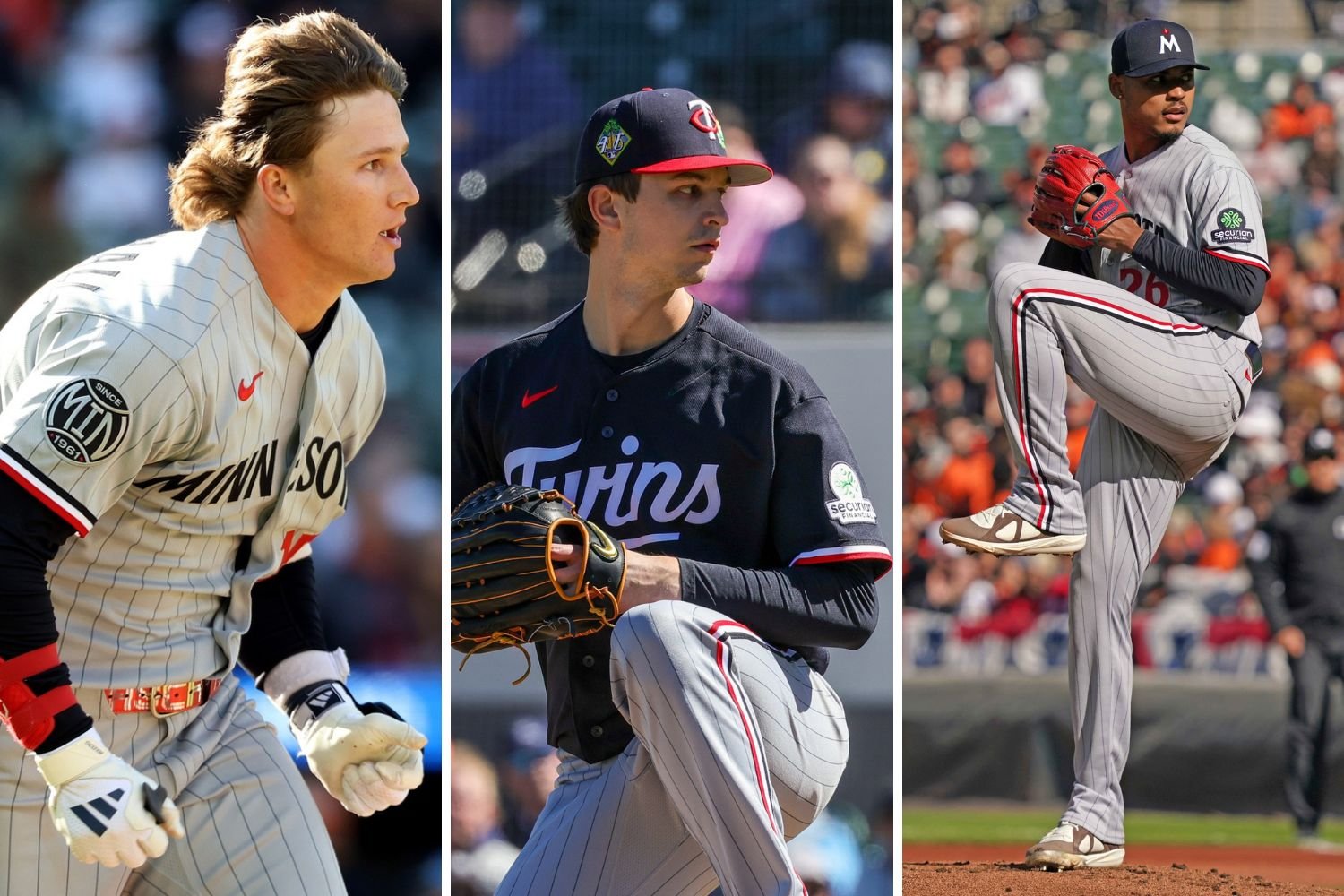
Still, he tipped his hand just enough by naming Taj Bradley, Luke Keaschall, and Mick Abel as players the Twins would like to keep around for the long haul. That trio represents three very different extension cases, and each comes with its own set of risks and rewards.
Taj Bradley: Electric Arm, Uneven Track Record
Bradley has looked like the best pitcher on the roster through the first couple turns of the rotation. The raw stuff has always been there, but now it is jumping off the page. He even became the first Twins pitcher in the pitch tracking era to reach triple digits on a fastball, a milestone that speaks to just how loud his arsenal can be.
The Twins believe they unlocked something after acquiring him at last year’s trade deadline. Mechanical tweaks and pitch usage changes appear to be paying early dividends. If that version of Bradley is real, then locking him up before arbitration gets expensive could be a savvy move.
But this is where things get tricky. Bradley already has nearly 400 big league innings under his belt, and the results have been inconsistent. A 4.75 ERA paired with a 4.32 FIP, along with a 25.0 K% and an 8.7 BB%, paints the picture of a pitcher who has flashed but not sustained success. Committing long-term to that profile requires a strong belief that the recent changes are permanent, not just a short-term spike.
An extension here would be a bet on development. The upside is a frontline starter at a discounted rate. The downside is paying for a version of Bradley that has not consistently existed yet.
Luke Keaschall: Dynamic Bat, Lingering Questions
Keaschall might be the most exciting player of the bunch right now. He has been electric at the big-league level, showing the ability to hit for average, tap into power, and impact the game on the bases. Early returns in 2026 suggest his bat speed has taken another step forward, which could unlock even more pop. That kind of offensive profile is exactly what teams look to build around.
From a team control standpoint, there is less urgency. Keaschall is under control through 2031, which gives the Twins plenty of runway. However, that also creates an opportunity. If the organization truly believes he is a foundational bat, extending him early could buy out arbitration years at a lower cost and potentially secure a few free agent seasons.
The hesitation comes from durability and defensive uncertainty. Keaschall has already dealt with multiple injuries, including Tommy John surgery and a broken arm. That is not something to ignore, especially for a player whose value is tied to athleticism and bat speed. There is also the question of where he ultimately plays. He has been a below-average second baseman, and while versatility can be valuable, not having a clear defensive home complicates long-term projections.
Extending Keaschall would be a bet on the bat carrying the profile regardless of position. If he hits like a middle-of-the-order threat, it works. If injuries linger or the defensive fit never settles, it becomes more complicated.
Mick Abel: High Ceiling, Wide Range of Outcomes
Abel might be the most fascinating case of the three. He earned the fifth starter role out of spring training, beating out Zebby Matthews after an impressive camp. The biggest development was improved control, something that had eluded him at times in the upper-minors (10. BB% in 2025). Pair that with his ability to miss bats, and you start to see why the Twins dream on him as a potential front-of-the-rotation arm.
That is the version of Abel that makes an extension enticing. If everything clicks, the Twins could be looking at a cost-controlled starter with top-of-the-rotation upside. Those are the types of players organizations try to lock up early, before the price tag reflects the ceiling.
But there is a reason he was available in the first place. The Phillies were willing to move Abel in the deal that brought Jhoan Duran to Philadelphia, and part of that calculus was risk. Abel’s control has been inconsistent, and there is still a real possibility that he settles in as more of a back-end starter rather than an ace. The gap between those outcomes is significant, both in value and in how an extension would age.
For the Twins, it comes down to confidence in their player development. If they believe the control gains are real, extending Abel early could look brilliant. If not, it is another example of paying for projection rather than production.
The Bigger Picture
What Pohlad said without saying it is that the Twins are at a crossroads with their young core. Extending players early can be a powerful tool. It builds goodwill, creates cost certainty, and can lock in cornerstone talent before prices escalate. It also comes with risk, especially when the players involved have not fully established themselves.
Bradley, Keaschall, and Abel each represent a different version of that gamble. One has electric stuff but an uneven résumé. One looks like a budding star but carries injury and positional questions. One offers frontline upside with a wide range of outcomes.
The Twins do not need to rush. But if they are serious about turning words into action, these are exactly the types of decisions that will define what this next competitive window looks like.
Which player makes the most sense for an extension? Leave a comment and start the discussion.
Are you optimistic about the Twins right now?

Follow Twins Daily For Minnesota Twins News & Analysis



- Patzky and thelanges5
-
 2
2


Recommended Comments
Create an account or sign in to comment
You need to be a member in order to leave a comment
Create an account
Sign up for a new account in our community. It's easy!
Register a new accountSign in
Already have an account? Sign in here.
Sign In Now