


Twins Video
There was a time when the leadoff hitter had a very specific job description. Get on base. Run. Put pressure on the defense. Speed was often the defining characteristic. If a player could hit .280, steal 30 bases and create havoc on the basepaths, he was a natural fit for the top of the lineup.
Then the game changed. On-base percentage became more important. Teams wanted their leadoff hitters to grind out at-bats, take walks and consistently put themselves in scoring position. Eventually, another philosophy emerged: Why not put one of your best hitters at the top?
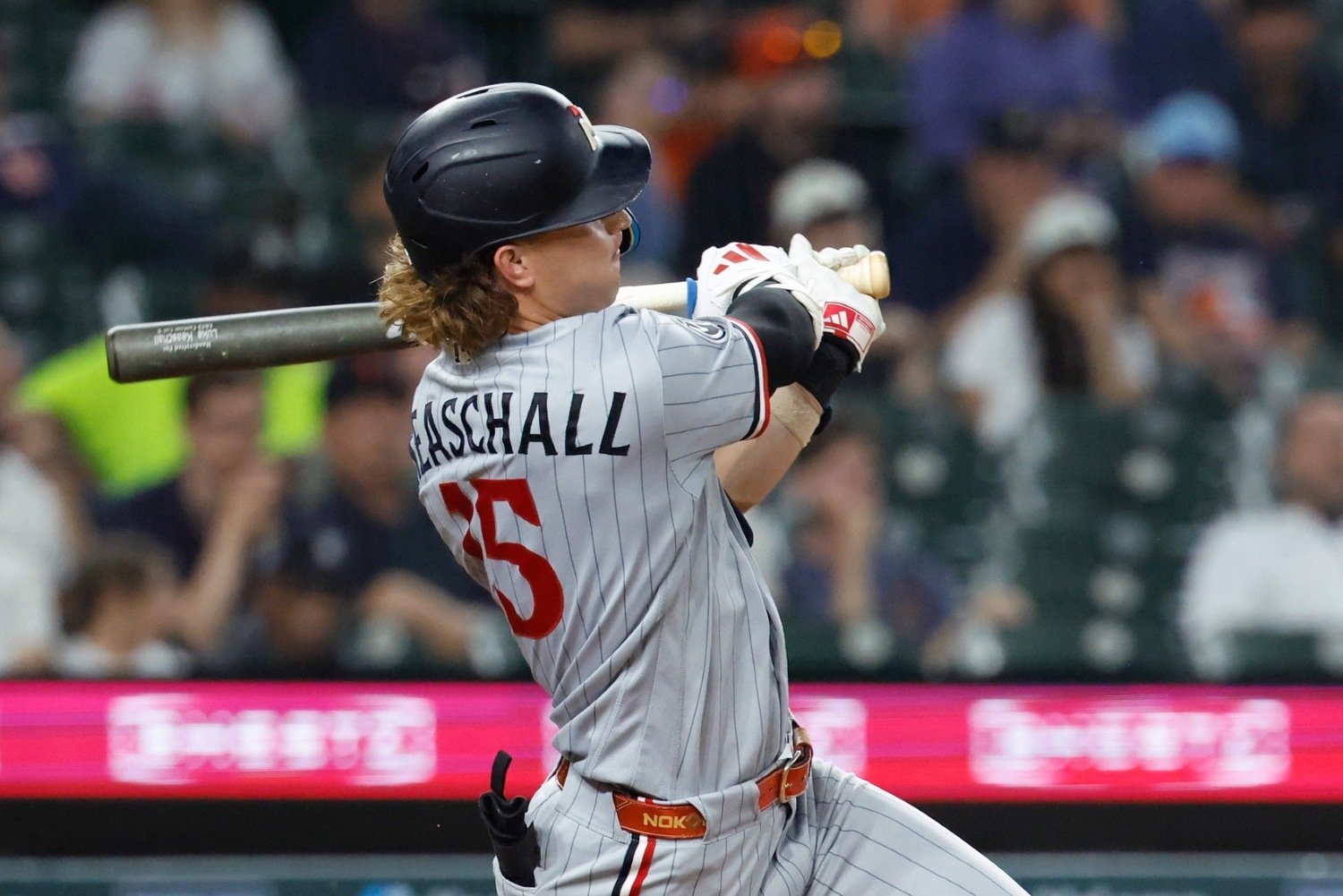
More plate appearances meant more opportunities for the best offensive player on the roster. The Minnesota Twins appear to have found someone who can fit that final description. Luke Keaschall should be the Twins' leadoff hitter. Not just for the rest of 2026, but for years to come.
It wasn't a surprise that Keaschall entered the 2026 season as a candidate for the leadoff role. His rookie season gave the Twins plenty of reasons to believe he could handle it. In 42 games, Keaschall posted a 130 OPS+ while stealing 14 bases. He showed the ability to impact a game with his bat and legs, but perhaps more importantly, he demonstrated the kind of all-around offensive game that fits naturally at the top of a lineup.
There was no obvious reason he couldn't be the player responsible for starting Minnesota's offensive machine. Then the season began. And things went sideways.
Keaschall hit just .217/.267/.275 (.542) over his first 131 plate appearances, striking out 21 times. The Twins eventually moved him down in the batting order, allowing him to work through his struggles without the added pressure that comes with being the first hitter in the lineup. That decision made sense at the time. But what has happened since then has made the original idea look pretty good.
Keaschall's season can't be evaluated solely by those ugly early-season numbers. Since July 1, he's been one of the better offensive players in the American League. Over 43 games, Keaschall is hitting .326/.426/.514 with a .940 OPS. He's collected 47 hits, scored 20 runs, driven in 16 runs and been hit by a pitch 11 times.
His strikeout rate has also remained manageable at 15.3%, while his walk rate sits at 9.6%. That isn't simply a hot stretch built around batting average. Keaschall is getting on base. He's limiting strikeouts. He's hitting for power. He's doing the things teams want their best hitters to do.
The result is an offensive profile that looks increasingly difficult to keep anywhere other than the top of the lineup.
The most interesting part of Keaschall's resurgence might be how it compares to the rest of the American League. Since the beginning of July, among qualified American League hitters, Keaschall ranks:
- .326 batting average — fifth
- .426 OBP — second
- .940 OPS — third
- .415 wOBA — fifth
- 166 wRC+ — fourth
- 11 HBP — first
Those numbers put him in some impressive company. The American League leaders in these categories include players such as Yordan Alvarez, Pete Alonso, and Steven Kwan.
Keaschall belongs in the conversation. And that matters when considering his spot in the batting order. If a player is producing at that level, there is a pretty simple argument for giving him as many plate appearances as possible. Put him at the top. Let him hit.
The Twins finally put Keaschall back in the leadoff spot on August 17. The results have been exactly what Minnesota hoped to see. Since being inserted into the No. 1 spot, Keaschall has gone 12-for-35 and has reached base safely in all seven games.
That's a .343 batting average, but the more important part might be the consistency. The Twins aren't asking Keaschall to simply collect hits. They're asking him to begin games by giving the offense an opportunity. He's doing that.
And unlike some traditional leadoff hitters, Keaschall doesn't need to rely on his speed to make the position valuable. He can beat teams with his bat. He can work counts. He can get hit by pitches. He can draw walks. He can hit for extra bases. And, yes, he can run.
The most exciting part of Keaschall's recent production isn't necessarily what it means for the final month of 2026. It's what it could mean for the next five years.
The Twins have spent considerable time trying to determine what their next competitive roster will look like. Young players are going to play increasingly important roles, and the organization needs some of those players to establish themselves as foundational pieces.
Keaschall has an opportunity to become one of them. A player who can hit near the top of the lineup, get on base at a high rate, provide some power and steal bases is incredibly valuable. And he's doing it at an age when there should still be considerable room for growth.
The early-season struggles were real. So is the turnaround. Keaschall didn't simply avoid the problem. He made adjustments, continued working and has turned himself into one of Minnesota's most productive hitters over the past two months.
There will always be debates about lineup construction. Should the best hitter bat first? Should the fastest player bat first? Should a team's highest-OBP player lead off? There isn't one universal answer. But Keaschall checks enough boxes to make the decision pretty easy. And, perhaps most importantly, he is currently producing like one of the American League's best offensive players.
Can Keaschall stick in the leadoff spot for the next three to five years? Leave a comment and start the discussion.







Recommended Comments
Create an account or sign in to comment
You need to be a member in order to leave a comment
Create an account
Sign up for a new account in our community. It's easy!
Register a new accountSign in
Already have an account? Sign in here.
Sign In Now