Jump to content
Twins Daily
  • Create Account

Recommended Posts

Twins Daily Contributor
Posted
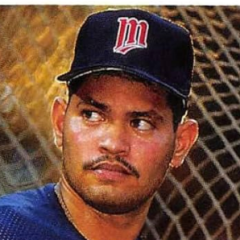
Image courtesy of Linwood Ferguson, Captive Photos (Buxton, Lewis), Rob Thompson, St. Paul Saints (Kirilloff)

Over the last decade, the Minnesota Twins have experienced multiple waves of highly ranked prospects moving through the organization. At different points, the farm system was considered one of baseball’s best. Those rankings fostered optimism about the future and helped define the franchise's direction during periods of rebuilding and transition.

Some of those prospects eventually became core contributors at the big-league level. Others stalled in development or never fully translated their talent to the majors. Looking back at the last 10 years shows how each wave shaped the roster in different ways, and how prospect rankings tell only part of the story.

2015-2016 Wave
The Twins entered the 2015 season with one of the strongest farm systems in baseball, ranked third overall by MLB Pipeline. That group stayed near the top of the rankings for multiple evaluations, sitting at fifth during the 2015 midseason update and again entering the 2016 season.

Minnesota had spent the previous half-decade near the bottom of the AL standings, which gave the organization access to multiple high draft picks. Those selections created a prospect pipeline filled with high-end talent and national attention.

At the top of the list was Byron Buxton, who entered 2015 as the number one overall prospect in baseball. His presence alone helped elevate the system’s national profile. The Twins also had several other prospects ranked inside the top-100. Miguel Sanó was 11th overall, Alex Meyer came in at 29th, José Berríos ranked 32nd, Nick Gordon sat at 33rd, and Kohl Stewart was 36th. The organization had both high-end talent and depth across several levels of the minor leagues.

The system continued to evolve heading into 2016. Max Kepler broke out in the minors and climbed to 44th overall on the prospect rankings. Tyler Jay entered the list at 60th, while Jorge Polanco also cracked the top 100 at 97th.

When looking back, this wave is most closely tied to the Twins' record-breaking 2019 season. That team won more than 100 games and set the major league record for home runs in a single season. Several players from that prospect class became important parts of the lineup, including Buxton, Kepler, and Polanco.

Those same players also remained important contributors when the Twins ended their two-decade playoff losing streak in 2023. While the position players from this group found success, the pitching prospects told a different story. Meyer, Stewart, and several others never developed into consistent big league starters despite the early expectations.

2018-2020 Wave
As the previous group began graduating to the major leagues, Minnesota briefly slipped out of the top ten farm system rankings. However, the organization quickly rebuilt the pipeline and returned to the back half of the top ten from 2018 through 2020. By the middle of the 2018 season, the Twins had climbed into the top five again. The system eventually settled around eighth overall throughout much of the 2019 campaign.

The centerpiece of this group was Royce Lewis, the number one overall pick in the 2017 draft. He entered the 2018 season ranked as the 20th overall prospect in baseball and quickly became one of the most exciting young players in the organization. Other names also appeared on the rankings. Fernando Romero was listed at 68th overall, with Stephen Gonsalves at 78th and Nick Gordon at 80th.

The system’s star power grew even more heading into 2019. Lewis rose to become a top-five prospect in baseball while Alex Kirilloff joined him inside the top ten. Brusdar Graterol also appeared on the list as the 68th-ranked prospect and, at that time, was still viewed as a potential starting pitcher. The Twins continued adding depth over the next year. Trevor Larnach ranked 81st entering 2020, while Jordan Balazovic appeared at 85th.

This wave helped sustain the Twins' competitive window. Players from this group contributed to division titles in both 2020 and 2023, though the paths were different from what was originally expected.

Once again, the pitching prospects struggled to reach their projected ceilings. Romero, Gonsalves, and Balazovic never developed into reliable major league options. Graterol eventually moved to the bullpen and was traded to the Los Angeles Dodgers in the deal that brought Kenta Maeda to Minnesota.

Injuries also reshaped the outcome for some of the system’s most talented hitters. Kirilloff battled persistent health issues that ultimately forced him to retire earlier than expected. Lewis and Larnach enter the 2026 season still trying to establish themselves as long-term roster pieces.

Prospect rankings often create the impression that success at the major league level is inevitable. The Twins' experience over the past decade shows how unpredictable that process can be.

Both waves of talent produced impact players who helped the organization win division titles and break a historic postseason drought. At the same time, several highly ranked prospects never reached their projected potential due to injuries, stalled development, or changing roles.

Even so, those highly ranked farm systems played an important role in shaping the modern Twins roster. They provided the core position players who powered the 2019 lineup and helped the team remain competitive in the years that followed.

As new prospects continue to move through the system, the next wave will aim to deliver what previous groups could not. Ins have repeatedly shown they can build highly ranked pipelines. The challenge moving forward is turning that prospect promise into long-term success at the major league level.

What stands out about the previous waves of top prospects? Leave a comment and start the discussion.


View full article

Verified Member
Posted

I thought you were going to finish the article with parallels to the current wave of prospects about to land and talk about pitching development.  

What wave of prospects was Over a part of?  We had some pitching development.  Jax, Duran.....

Verified Member
Posted

I'm old enough to remember the dark days of 1982, when the Twins went 60-1`02. If it is darkest before the dawn, they played the kids and took their lumps. Laudner (24), Hrbek (22), Gaetti (23), Brunansky (21), and Viola (22) were all classified as rookies that year. They improved to 70-92 the next year and 81-81 in 1984, when Kirby Puckett was a 24 year old rookie.  That became the nucleus for two World Series winners.

Posted
2 hours ago, arby58 said:

I'm old enough to remember the dark days of 1982, when the Twins went 60-1`02. If it is darkest before the dawn, they played the kids and took their lumps. Laudner (24), Hrbek (22), Gaetti (23), Brunansky (21), and Viola (22) were all classified as rookies that year. They improved to 70-92 the next year and 81-81 in 1984, when Kirby Puckett was a 24 year old rookie.  That became the nucleus for two World Series winners.

They will not win 60 this year.

Verified Member
Posted

It's kinda telling that two of the most impactful pitching prospects in the past 10 years in this organization have been Brusdar Graterol and Chase Petty, because we were able to flip them for Maeda and Gray.

Verified Member
Posted
2 hours ago, Parfigliano said:

They will not win 60 this year.

I would take that bet. 

Posted
6 hours ago, Danchat said:

It's kinda telling that two of the most impactful pitching prospects in the past 10 years in this organization have been Brusdar Graterol and Chase Petty, because we were able to flip them for Maeda and Gray.

10 years is a long time to not have any impactful pitching prospects drafted. OK, Graterol is a good reliever, but he ain't a Twin any more and neither is Maeda.

Verified Member
Posted
20 hours ago, Danchat said:

It's kinda telling that two of the most impactful pitching prospects in the past 10 years in this organization have been Brusdar Graterol and Chase Petty, because we were able to flip them for Maeda and Gray.

Well, I wouldn't consider Maeda more impactful than, say, Joe Ryan (who was the Twins #4 prospect according to MLB.com in 2022) or Jhoan Duran (#5 in both 2020 and 2021). 

Verified Member
Posted
3 hours ago, arby58 said:

Well, I wouldn't consider Maeda more impactful than, say, Joe Ryan (who was the Twins #4 prospect according to MLB.com in 2022) or Jhoan Duran (#5 in both 2020 and 2021). 

Sure, but after that it's Bailey Ober... and then you move onto relievers. Not really sure how much I consider Ryan part of the "farm" system since he was ready to go almost right away, but that's an argument for another time.

Verified Member
Posted
1 hour ago, Danchat said:

Sure, but after that it's Bailey Ober... and then you move onto relievers. Not really sure how much I consider Ryan part of the "farm" system since he was ready to go almost right away, but that's an argument for another time.

No, befeore Ober it is Jose Berrios, who accumulated 13.1 WAR between 2017-2021 (Ober is at 9.2). As it relates to Ryan, he was the Twins #4 prospect in 2022, according to MLB.com - don't know how you can 'undefine' him a 'not prospect.' It's pretty clear the Rays didn't think that highly of him, or they wouldn't have traded him for a couple months of Nelson Cruz. 

FWIW, how can you consider Chase Petty a Twins pitching prospect when he pitched a total of 5 minor league innings for them? 

Verified Member
Posted
17 hours ago, arby58 said:

No, befeore Ober it is Jose Berrios, who accumulated 13.1 WAR between 2017-2021 (Ober is at 9.2). As it relates to Ryan, he was the Twins #4 prospect in 2022, according to MLB.com - don't know how you can 'undefine' him a 'not prospect.' It's pretty clear the Rays didn't think that highly of him, or they wouldn't have traded him for a couple months of Nelson Cruz. 

FWIW, how can you consider Chase Petty a Twins pitching prospect when he pitched a total of 5 minor league innings for them? 

Berrios is on the edge of qualifying for the last 10 years which is why I didn't include him, looks like he didn't pitch in the minors in 2016. He was a prospect during the Terry Ryan 2.0 days, but hit his stride in the majors in the Falvine era.

It's not that Ryan wasn't a rankable prospect, it's that he mostly a product of Tampa's farm system and not ours. I don't mean to say that the Twins organization doesn't deserve credit in developing him, just that this process happened almost entirely in the majors and didn't happen in our minor leagues / farm system.  And yeah, clearly the Rays didn't value him or Strotman because trading both for Cruz was a huge risk for them, even without hindsight that seemed like a lopsided trade in our favor.

I was referring to how Petty alone was able to get the team two affordable years of Sonny Gray, essentially cashing in a draft pick for a near top-of-the-line starter was one of the best moves Falvey made. Especially seeing the success rate of his pitching prospects, it was a prudent move.

In conclusion, Falvey's pitching staffs in the majors did a good job with what they had. The farm system, however, did not see very many pitching prospects fulfill their "hype" and the Graterol + Petty trades showed that they were better off trading them for MLB players rather than continuing their development. Povich and Hajjar were traded too and while their returns failed, they still commanded a bit of value. Though I should note Povich still may develop into something.

Create an account or sign in to comment

You need to be a member in order to leave a comment

Create an account

Sign up for a new account in our community. It's easy!

Register a new account

Sign in

Already have an account? Sign in here.

Sign In Now
The Twins Daily Caretaker Fund

You all care about this site. The next step is caring for it. We’re asking you to caretake this site so it can remain the premier Twins community on the internet.

×
×
  • Create New...