



Jamie Cameron
-
Posts
1,341 -
Joined
-
Last visited
-
Days Won
4
Content Type
Profiles
News
Minnesota Twins Videos
2026 Minnesota Twins Top Prospects Ranking
2022 Minnesota Twins Draft Picks
Minnesota Twins Free Agent & Trade Rumors, Notes, & Tidbits
Guides & Resources
2023 Minnesota Twins Draft Picks
The Minnesota Twins Players Project
2024 Minnesota Twins Draft Picks
2025 Minnesota Twins Draft Pick Tracker
2026 Minnesota Twins Draft Tracker: Picks & Bonuses
Forums
Blogs
Events
Store
Downloads
Gallery
Everything posted by Jamie Cameron
-
Posting this for folks who are interested. Here's the Cubs version of this article (pick 13) and the Brewers version (pick 18). Some overlap of prospects written up, but this will get you through 6-8 more if you're looking for more info on potential first rounders. Really appreciate all the engagement from the 'Draft Nerds' lol. My favorite sub-community of Twins Daily
-
I have nothing against Wilson. I just personally feel that the Twins are in a unique position in a pretty unique draft talent wise with pretty unique financial muscle. Wilson has one skillset, elite bat to ball skills that drives the whole offensive profile. I'm sure he'll be a really good player and maybe I'm wrong and he develops power (he doesn't hit the ball that hard though), I'd just rather take a bigger swing on a potentially team altering prospect, as opposed to someone who might be a solid regular.
-
110 mph is his 90th percentile EV. Max is over 114, average is 90.1. All elite numbers.
-
Needed this this AM. Agree with all that, well, reasoned, makes a ton of sense. We haven't dug into this much yet, but as you point out, I could make a more compelling case for 3-5 college hitters slightly under slot at 5 than for Gonzalez or Wilson. I also think it's true that the Twins are usually pretty tight lipped about everything. Usually, in FA for example, when the news hits is when we know. It's so rare to have a clear top 5 like this. To illustrate the gap, Clark's average ranking on my board is 4.8, Gonzalez (who is currently consensus 5, is 9.5), that's a monumental difference that early on the board. Take any of those top five players and I'll be thrilled. No complaints.
-
In the coming weeks, we’ll spend some time going in-depth on players who the Twins could target with their first pick at number five. We’ll start by profiling some hitters, before looking at pitchers next week. For each installment, we’ll use the positions of players on the Consensus Board as a proxy for who they might take, as opposed to trying to predict what each team will actually do. The goal is to give a flavor of the kind of talent and options that might be around when that pick hits, as we all know trying to predict the draft is perilous at best. Image courtesy of Brock Beauchamp Wyatt Langford Position: OF, Age: 21, School: Florida, Height: 6’1, Weight: 225, B/T: R/R, Rank: 2 Why would I do this? Why even entertain the idea of a prospect who would ordinarily be under consideration for the number one overall pick being there at number five? Because stranger things have happened. What were the odds Kumar Rocker and Cade Horton were selected in the top seven in 2022? So, let’s complete our due diligence. Langford is an incredibly complete college hitter. His balanced offensive profile points to that of an elite hitter at the next level. Langford erupted out of nowhere at Florida for a then-record 26 home runs as a sophomore after not playing much his freshman year. Langford has a great approach at the plate and a smooth swing. In 2022, he put up a 90th percentile Average Exit Velocity of over 110mph, the best in the nation. This, combined with limited strikeouts, a great BB%, and some of the better contact rates in the class make him as safe a bat as there is not named Dylan Crews. Langford’s other tools can get lost in the shuffle with the noise his offensive profile created. It’s plus speed and at least above-average defense with an above-average arm. He should start his pro career in center field and although he might move to a corner eventually, he’ll likely be a plus defender there. At the time of writing, Langford owns a .395/.524/.814 line with 16 home runs in 49 games. If Langford is on the board at five, the Twins would be elated. Walker Jenkins Position: OF, Age: 18, School: South Brunswick HS, NC, Height: 6’3, Weight: 210, B/T: L/R, Rank: 4 Jenkins is now the top prep prospect in the draft and has been creeping up boards and mock drafts (futile though they are) all spring. Jenkins and Max Clark have similar overall ceilings but are a slightly different flavor of prospect, depending on your preference. Jenkins' carrying offensive tool is currently power, but the hit tool is at least average, maybe above, with a chance to be plus. He’s already showing plenty of in-game power, to both the pull side and opposite field, manufactured by an aesthetically pleasing, loft-heavy swing. Jenkins has posted plus run times but will likely slow some as he continues to fill out and access his power. Even so, he’ll be at least an average runner with a plus arm. Long term, he’s got a good chance to crush 30 home runs in a corner spot. Jenkins has earned rave reviews for his makeup and work ethic. He’s currently committed to North Carolina. Max Clark Position: OF, Age: 18, School: Franklin Community High School, IN, Height: 6’1, Weight: 190, B/T: L/L, Rank: 5 Clark has been a consensus top-five prospect wire to wire. While Indiana isn’t known for being a hotbed of prep talent, Clark is as toolsy as they come. A compact left-handed swing in which the barrel stays through the zone for a long time combined with excellent contact rates combines for an exciting all-around offensive profile. Prior to 2023, Clark was largely a line-drive hitter, spraying barrels all around the field. In the offseason, he tweaked his swing to add more loft and the results have been impressive. Clark should continue to unlock more in-game power as he has good rotation and bat speed to boot. Defensively, he’s a plus center fielder and will easily handle the position in pro ball, already taking effective routes to fly balls. Clark has a plus hit tool (tough for a prep prospect), plus arm, plus defense, and maybe double-plus speed. Combine that with an outstanding work ethic and there’s a Grady Sizemore-like upside. Clark is currently committed to Vanderbilt but will likely be among the first handful of picks in July. Jacob Gonzalez Position: SS, Age: 21, School: Ole Miss, Height: 6’2, Weight: 200, B/T: L/R, Rank: 6 Gonzalez was part of a core handful of players at the top of most draft boards at the beginning of the college season, before falling a little, mostly due to the ascension of other players. Gonzalez is also a storied college prospect, having earned National Freshman of the Year honors, before helping guide Ole Miss to the College World Series in 2022. At the plate, it’s an offensive profile carried by his hit tool. There are some similarities to Brooks Lee in that Gonzalez brings exceptional bat-to-ball skills to the table. Combine that with a strong approach at the plate and you have a plus hit tool. Gonzalez has average power that a team may be able to get him into more. Currently, it’s predominantly to the pull side. The two dings you can give his offense are a lack of loft generated on batted balls and a significant drop-off in Exit Velocity for batted ball events the other way. His combination of offensive profile is going to give a team a strong floor to work with and should move fast through the minor leagues. Defensively, I don’t think he’s a shortstop long-term. Although he has an above-average arm and good defensive actions, he’s not quick and may eventually move to second or third base. Gonzalez makes sense as a ‘Twins type’, a high-floored college hitter, he should move quickly but lacks the ceiling I’d want in a number five pick. At the time of writing, Gonzalez has put together a .327/.435/.564 line with 10 home runs. Kyle Teel Position: C, Age: 21, School: Virginia, Height: 6’1, Weight: 190, B/T: L/R, Rank: 10 A strategy I’m starting to entertain more for the Twins is they take a player outside the consensus top five with their first pick. There are a few compelling reasons they might do this, not least because of their preference for college bats with a high floor and their propensity to pick players who they think can move quickly through the minor leagues. Teel checks both of those boxes and then some. Few players have done more to help themselves in the 2023 college season than Kyle Teel. A dearth of catching talent (both college and prep) and Teel’s impressive offensive breakout have him primed to be a top 15 pick, possibly top 10. Offensively, Teel projects to have above-average hit and power tools, although the former is the carrying tool currently. He has good bat speed and plenty of analytically friendly outputs of his approach at the plate. His in zone contact rates are excellent, and despite some swing and miss, Teel spoils plenty of pitches outside the zone such that he’s a tough out. Defensively, there’s work to do but he should stick behind the plate. He’s one of the best athletes in the entire college class and his excellent movement skills should help him improve quickly defensively (in addition to the ‘at least’ plus arm). Teel has put up a monster 2023. At the time of writing, he owns a .414/.480/.668 line with 11 home runs in 55 games. Also considered: Enrique Bradfield, OF (8), Arjen Nimmala, SS (9), Jacob Wilson (11), Tommy Troy, 2B (12), Chase Davis, OF (26) Which of the players profiled do you like best as a fit for the Twins? Is there anyone you’ve read about or watched who you think is missing? Draft speculation is the best speculation, so join the discussion in the comments. View full article
-
 Wyatt Langford Position: OF, Age: 21, School: Florida, Height: 6’1, Weight: 225, B/T: R/R, Rank: 2 Why would I do this? Why even entertain the idea of a prospect who would ordinarily be under consideration for the number one overall pick being there at number five? Because stranger things have happened. What were the odds Kumar Rocker and Cade Horton were selected in the top seven in 2022? So, let’s complete our due diligence. Langford is an incredibly complete college hitter. His balanced offensive profile points to that of an elite hitter at the next level. Langford erupted out of nowhere at Florida for a then-record 26 home runs as a sophomore after not playing much his freshman year. Langford has a great approach at the plate and a smooth swing. In 2022, he put up a 90th percentile Average Exit Velocity of over 110mph, the best in the nation. This, combined with limited strikeouts, a great BB%, and some of the better contact rates in the class make him as safe a bat as there is not named Dylan Crews. Langford’s other tools can get lost in the shuffle with the noise his offensive profile created. It’s plus speed and at least above-average defense with an above-average arm. He should start his pro career in center field and although he might move to a corner eventually, he’ll likely be a plus defender there. At the time of writing, Langford owns a .395/.524/.814 line with 16 home runs in 49 games. If Langford is on the board at five, the Twins would be elated. Walker Jenkins Position: OF, Age: 18, School: South Brunswick HS, NC, Height: 6’3, Weight: 210, B/T: L/R, Rank: 4 Jenkins is now the top prep prospect in the draft and has been creeping up boards and mock drafts (futile though they are) all spring. Jenkins and Max Clark have similar overall ceilings but are a slightly different flavor of prospect, depending on your preference. Jenkins' carrying offensive tool is currently power, but the hit tool is at least average, maybe above, with a chance to be plus. He’s already showing plenty of in-game power, to both the pull side and opposite field, manufactured by an aesthetically pleasing, loft-heavy swing. Jenkins has posted plus run times but will likely slow some as he continues to fill out and access his power. Even so, he’ll be at least an average runner with a plus arm. Long term, he’s got a good chance to crush 30 home runs in a corner spot. Jenkins has earned rave reviews for his makeup and work ethic. He’s currently committed to North Carolina. Max Clark Position: OF, Age: 18, School: Franklin Community High School, IN, Height: 6’1, Weight: 190, B/T: L/L, Rank: 5 Clark has been a consensus top-five prospect wire to wire. While Indiana isn’t known for being a hotbed of prep talent, Clark is as toolsy as they come. A compact left-handed swing in which the barrel stays through the zone for a long time combined with excellent contact rates combines for an exciting all-around offensive profile. Prior to 2023, Clark was largely a line-drive hitter, spraying barrels all around the field. In the offseason, he tweaked his swing to add more loft and the results have been impressive. Clark should continue to unlock more in-game power as he has good rotation and bat speed to boot. Defensively, he’s a plus center fielder and will easily handle the position in pro ball, already taking effective routes to fly balls. Clark has a plus hit tool (tough for a prep prospect), plus arm, plus defense, and maybe double-plus speed. Combine that with an outstanding work ethic and there’s a Grady Sizemore-like upside. Clark is currently committed to Vanderbilt but will likely be among the first handful of picks in July. Jacob Gonzalez Position: SS, Age: 21, School: Ole Miss, Height: 6’2, Weight: 200, B/T: L/R, Rank: 6 Gonzalez was part of a core handful of players at the top of most draft boards at the beginning of the college season, before falling a little, mostly due to the ascension of other players. Gonzalez is also a storied college prospect, having earned National Freshman of the Year honors, before helping guide Ole Miss to the College World Series in 2022. At the plate, it’s an offensive profile carried by his hit tool. There are some similarities to Brooks Lee in that Gonzalez brings exceptional bat-to-ball skills to the table. Combine that with a strong approach at the plate and you have a plus hit tool. Gonzalez has average power that a team may be able to get him into more. Currently, it’s predominantly to the pull side. The two dings you can give his offense are a lack of loft generated on batted balls and a significant drop-off in Exit Velocity for batted ball events the other way. His combination of offensive profile is going to give a team a strong floor to work with and should move fast through the minor leagues. Defensively, I don’t think he’s a shortstop long-term. Although he has an above-average arm and good defensive actions, he’s not quick and may eventually move to second or third base. Gonzalez makes sense as a ‘Twins type’, a high-floored college hitter, he should move quickly but lacks the ceiling I’d want in a number five pick. At the time of writing, Gonzalez has put together a .327/.435/.564 line with 10 home runs. Kyle Teel Position: C, Age: 21, School: Virginia, Height: 6’1, Weight: 190, B/T: L/R, Rank: 10 A strategy I’m starting to entertain more for the Twins is they take a player outside the consensus top five with their first pick. There are a few compelling reasons they might do this, not least because of their preference for college bats with a high floor and their propensity to pick players who they think can move quickly through the minor leagues. Teel checks both of those boxes and then some. Few players have done more to help themselves in the 2023 college season than Kyle Teel. A dearth of catching talent (both college and prep) and Teel’s impressive offensive breakout have him primed to be a top 15 pick, possibly top 10. Offensively, Teel projects to have above-average hit and power tools, although the former is the carrying tool currently. He has good bat speed and plenty of analytically friendly outputs of his approach at the plate. His in zone contact rates are excellent, and despite some swing and miss, Teel spoils plenty of pitches outside the zone such that he’s a tough out. Defensively, there’s work to do but he should stick behind the plate. He’s one of the best athletes in the entire college class and his excellent movement skills should help him improve quickly defensively (in addition to the ‘at least’ plus arm). Teel has put up a monster 2023. At the time of writing, he owns a .414/.480/.668 line with 11 home runs in 55 games. Also considered: Enrique Bradfield, OF (8), Arjen Nimmala, SS (9), Jacob Wilson (11), Tommy Troy, 2B (12), Chase Davis, OF (26) Which of the players profiled do you like best as a fit for the Twins? Is there anyone you’ve read about or watched who you think is missing? Draft speculation is the best speculation, so join the discussion in the comments.
 -
That board hasn't been updated since March-ish (maybe some guys have been added). Almost every other board has moved Taylor down (regression of in-zone contact numbers). Still think he has a really good profile to succeed.
-
Thanks for the kind words. I also, have no clue who is going to go where lol. I DO think though, given the list of names you mentioned, that someone of really good value will likely be around at 34.
-
Horvath is so interesting to me. Consistently rated outside top 100 but produced like a top 50 guy.
-
Seen quite a few threads on Dollander that suggest his issues are more mechanical than anything else. I'm anti-pitching with a top 5 pick in general unless it's a truly outstanding prospect, and i think only Skenes fits that bill.
-
Great point about the comp pick and I love the targets you picked out. I think Davis will be a top 15 pick but the ones you mention are great 'Twinsy' profiles.
-
I think Teel is going to make it a top 6 when it's all said and done. The bar for producing value is so much lower there and the fact that he can run too (doesn't steal a lot but is fast) adds more. I'm expecting chaos when we finally get to July. This time last year, we were all talking about how one of the consensus top 6 wouldn't get to the Twins and they ended up with a choice of Lee, Parada, or Collier lol
-
Northside Baseball, Cubs!
-
The Twins are in a great position ahead of the 2023 MLB Draft. They hold four top 100 picks (5, 34, 49, and 82) and have the fourth most money to spend ($14,345,600) despite having the thirteenth worst record in MLB in 2022. Plus, 2023 is one of the deeper draft classes in recent years. Let's take a look at some of the prospects available to teams in July. Image courtesy of Brock Beauchamp How to Use This Tool This is hopefully easy to navigate. For a full explainer on the what, why, and how, here’s the explainer for V1. For each ranked player, you’ll see position, age, ranking, school, first name, last name, height, weight, handedness (S=switch), future value (not yet), and writeup. Every top 100 player has a writeup, if you hover over the report icon for that player, it’ll give you notes on players tools, strengths, areas of growth, and recent performance. What’s New for V2? Here’s some brief notes about V2 of the Consensus Board: The rankings are based on a consensus from 10 draft boards that provide a range of evaluations from well-known industry standard boards, to more data-driven boards. I DID NOT update writeups for the players who remained in the top 100 from the beginning of May. I’ll update them a final time on a rolling basis between June and July. I added ten more writeups for prospects who moved into the consensus top 100 since the beginning of May. If you see a prospect outside the top 100 with a writeup, it means they’ve fallen out (I’m not adding new reports outside the top 100). Finally, I color coded the top 75 players to track risers and fallers between V1 and V2. Specifically: Light green - moved up 5-9 spots Dark green - moved up 10+ spots Light red - moved down 5-9 spots Dark red - moved down 10+ spots What’s Next? The Consensus Board will get one more big update, to be published at the beginning of July. Additionally, there will be updates to the notes of the most significant prospects, accounting for their end of season performance (particularly for college players), in addition to future value grades added for prospects in the final version of the board. The final rankings will also be published as articles at all three sites. I recognize that some folks may prefer to consume rankings as an article, so I’ll publish them with write ups as part of a 2 or 3 part series in the final week leading up to the draft, working to get players highlights added to those pieces. If you have questions or feedback about the process or generation of the board, please use the comments. I want readers at all three sites to feel well-informed and excited about the draft and the influx of talent to their favorite teams. Whether it's an idea to make the rankings better, catching a mistake (I’m sure there are some), or a comment on who you want your team to draft, we’d love to hear from you. Jeremy Nygaard and I will be working to provide y’all with comprehensive draft coverage as July gets closer, so let’s chop it up! 2023 Consensus MLB Draft Board V2 View full article
-
 How to Use This Tool This is hopefully easy to navigate. For a full explainer on the what, why, and how, here’s the explainer for V1. For each ranked player, you’ll see position, age, ranking, school, first name, last name, height, weight, handedness (S=switch), future value (not yet), and writeup. Every top 100 player has a writeup, if you hover over the report icon for that player, it’ll give you notes on players tools, strengths, areas of growth, and recent performance. What’s New for V2? Here’s some brief notes about V2 of the Consensus Board: The rankings are based on a consensus from 10 draft boards that provide a range of evaluations from well-known industry standard boards, to more data-driven boards. I DID NOT update writeups for the players who remained in the top 100 from the beginning of May. I’ll update them a final time on a rolling basis between June and July. I added ten more writeups for prospects who moved into the consensus top 100 since the beginning of May. If you see a prospect outside the top 100 with a writeup, it means they’ve fallen out (I’m not adding new reports outside the top 100). Finally, I color coded the top 75 players to track risers and fallers between V1 and V2. Specifically: Light green - moved up 5-9 spots Dark green - moved up 10+ spots Light red - moved down 5-9 spots Dark red - moved down 10+ spots What’s Next? The Consensus Board will get one more big update, to be published at the beginning of July. Additionally, there will be updates to the notes of the most significant prospects, accounting for their end of season performance (particularly for college players), in addition to future value grades added for prospects in the final version of the board. The final rankings will also be published as articles at all three sites. I recognize that some folks may prefer to consume rankings as an article, so I’ll publish them with write ups as part of a 2 or 3 part series in the final week leading up to the draft, working to get players highlights added to those pieces. If you have questions or feedback about the process or generation of the board, please use the comments. I want readers at all three sites to feel well-informed and excited about the draft and the influx of talent to their favorite teams. Whether it's an idea to make the rankings better, catching a mistake (I’m sure there are some), or a comment on who you want your team to draft, we’d love to hear from you. Jeremy Nygaard and I will be working to provide y’all with comprehensive draft coverage as July gets closer, so let’s chop it up! 2023 Consensus MLB Draft Board V2
 -
 As a reminder, here’s a link to the board that was published at the end of April. 2023 Consensus MLB Draft Board V1 A Consensus Top Five I’ve been tracking the draft boards since an initial Top 30 in February. With recent updates, it’s clear that there’s currently a consensus top five players, split into tiers. Dylan Crews is in a world by himself. He’s ranked number one by every board that I use for the Consensus Board. Wyatt Langford and Paul Skenes are two and three (although I think Skenes may go number two overall), followed by outfielders Walker Jenkins and Max Clark. Long the top prep player in the draft, Clark has recently been surpassed by Jenkins, with most outlets weighing a higher hit/power ceiling in Jenkins’ favor. College Bats on the Rise I’ve written for a while that this draft is well stocked with excellent college bats. That has become more evident in the last month, with several surging up the Consensus Board. Here are some notes on a few favorites. Tommy Troy (2B Stanford) is up from 20th in February all the way to 13th currently. Troy is putting up a .669 SLG with an improved 13 BB% in the PAC 12. Kyle Teel (C, Virginia) was 22nd in March and is up to 12th overall, aided by a lack of top-end catching talent. Colton Ledbetter (OF Mississippi State) was 52nd overall in March and is now 29th. I think he’s firmly a first round talent, and he has the analytical profile to match. Jack Hurley (OF, Virginia Tech) is up from 38th in March to 25th currently One of the most aggressive hitters in the draft, he’s putting up a .781 SLG in the ACC. Chase Davis (OF, Arizona) is perhaps the most improved hitter in college baseball in 2023. He has moved up from 49th in March to 34th currently. He’s cut his strikeouts from 28 K% to 16 K% with matching contact rate improvements and is crushing the ball. I think he'll continue to rise quickly up the rankings through May and June. I think he’ll go no later than the teens if he has a strong end to the season. College Pitchers Stock Falling College starting pitching has been disappointing and a lot of it has fallen pretty sharply on the board. My current working board for June has 214 prospects on it. Outside the top handful of top college arms (Skenes, Hurston Waldrep, Rhett Lowder, Chase Dollander), there are five more college arms in the current Top 50. All but one have fallen in the past two months, mostly due to uneven production or uncertainties around health. There’s still plenty of college arm talent available though, particularly for teams picking between 35 and 50 overall. Juaron Watts-Brown (RHP, Oklahoma State), Cade Kuehler (RHP, Campbell), Tanner Witt (RHP, Texas), Hunter Owen (LHP, Vanderbilt), and Will Sanders (RHP, South Carolina) are all in or around that range, with massive UCLA righty Alonzo Treadwell lurking just outside. Depth in the Top 50 There’s a great variety of prospects and prospect depth in the Top 50 this season. There’s something to fit your profile or flavor, pretty much regardless of what that might be. With the exception of catching, which is a position of weakness at the top end, you can land great talent throughout. Which prospects are you interested in your team targeting with their first round pick? In the top 50? Join the discussion in the comments below.
 -
Good Q and thanks for reading, Cory. Don't know that there a ton of candidates that fit the bill for a move like that so far, kinda depends on how later versions of the board shake out, maybe Eldridge, but he's getting top 12 buzz now. Tbh, a lot of the prospects I'm most interested in who fit in the top 50 are college bats. My best case scenario as currently constructed would be Clark or Jenkins, followed by two college bats or college bat and best arm you like. I don't think Teel is going to go that much under slot as he's starting to get 'third best college bat' behind Crews and Langford type of descriptors thrown around. Overall, too early to say.
-
Typo. Thanks so much for catching that. Fixed on the board.
-
He's listed as an outfielder by SDSU. Additionally, most national outlets position him as a SS or OF. Maybe a team drafts him with a view to him being a C but that's certainly not how the majority of evaluators seems to see him currently.
-
Wilson is an interesting one. Agree the hit tool is amazing. The main reason I think he's dinged is he's not going to be a shortstop long term. He might play there, but he first step is too slow imo. If he's not a SS, I wonder where his defensive home is and where ever that might be (3B?) his power-lacking offensive profile doesn't really match.
-
Thanks for the kind words. Been working on it since February lol. Agree with pretty much everything you said. I think you can include Langford as a top 3 lock. I prefer Jenkins to Clark but I like both. Wouldn't b a huge fan of a Jacob Gonzalez pick, just a little safe and vanilla for me but seen him linked a lot. Teel has a good shot at a top 10 pick. Tommy Troy is Brian Dozier 2.0 so I think those are both good shouts for under slot guys if they decide to go that route.
-
I'll say this about Teel. I think he's got a decent chance to go top 10, now. Carrigg for sure not a catcher. I think you'll see in the June version there are some more college catchers coming into the mix. Carico is an interesting name to watch in that sub-population
-
 Last year, I published the first ever ‘Consensus Draft Board’, at Twins Daily. I also wrote, after the fact, about some commitments to making it better for 2023, and I think I’m delivering on those. So what is a Consensus Board? What’s new for 2023? What? I love drafts in sports, always have, always will. As data, information, and the availability of information to the public has transformed so has our understanding of the draft process. Nowhere is this more true than the NFL. While I’d argue that MLB leads all sports in its use of data to inform player development and performance, there is so much less data publicly available for the draft and amateur prospects, in addition to less draft-related content. The MLB Draft is always inherently unpredictable, with wildly discrepant rankings depending on what evaluators value. The Consensus Board (inspired by Arif Hasan’s NFL Consensus Board), takes as many inputs as I have available to me, and creates a consensus ranking for prospects. Last year, I took rankings from Baseball America, Prospects Live, MLB, The Athletic, and ESPN and created a consensus top 56 players for the 2022 MLB Draft. They were published at Twins Daily in two articles. You can find part one of that series here, and part two here. The results were encouraging. After Day 1 in 2022 (through 80 picks), 63 of our top 70 players had been drafted, with three more heading to college. Not bad. How to Use This Tool This is hopefully easy to navigate. For each ranked player, you’ll see position, age, ranking, school, first name, last name, height, weight, handedness (S=switch), future value (not yet), and writeup. Every top 100 player has a writeup, if you hover over the report icon for that player, it’ll give you notes on players tools, strengths, areas of growth, and recent performance. What are the Strengths and Flaws of This Approach? There’s inherently some value in consensus. The MLB Draft is so much more complicated than other sports. Combining rankings into a consensus can eliminate some of the noise and outliers from different evaluators models and processes. In year one, there were two major challenges: Consensus rankings with a relatively small number of inputs can lead to missing a great evaluation of a prospect that someone else has noticed or caught onto. The rankings lag significantly behind current performance. Because major outlets (like MLB dot com) only update their rankings twice or three times from December to July, there’s often a disagreement in early versions of the board between consensus ranking and production (i.e. some players are higher than they should be, and some lower). I’d offer that the final version (July) of the board has the most value and will (hopefully) offer the most accuracy. What Next? The chances are, unless you’re a draft junkie, this version of the board won’t be that relevant to you. However, as we get closer to the draft, it will become more so. The Consensus Board will get two further updates, to be published at the beginning of June, and the beginning of July. Readers will be able to see all three sets of rankings side by side to notice how prospects have moved up and down in the rankings as we approach the draft. Additionally, there will be updates to the notes of the most significant prospects, accounting for their end of season performance (particularly for college players), in addition to future value grades added for prospects in the final version of the board. Finally, the final rankings will also be published as articles at all three sites. I recognize that some folks may prefer to consume rankings as an article, so I’ll publish them with write ups as part of a 2 or 3 part series in the final week leading up to the draft, working to get players highlights added to those pieces. If you have questions or feedback about the process or generation of the board, please use the comments. I want readers at all three sites to feel well-informed and excited about the draft and the influx of talent to their favorite teams. Whether it's an idea to make the rankings better, catching a mistake (I’m sure there are some), or a comment on who you want your team to draft, we’d love to hear from you. Jeremy Nygaard and I will be working to provide y’all with comprehensive draft coverage as July gets closer, so let’s chop it up! 2023 Consensus MLB Draft Board V1 (May 2023)
 -
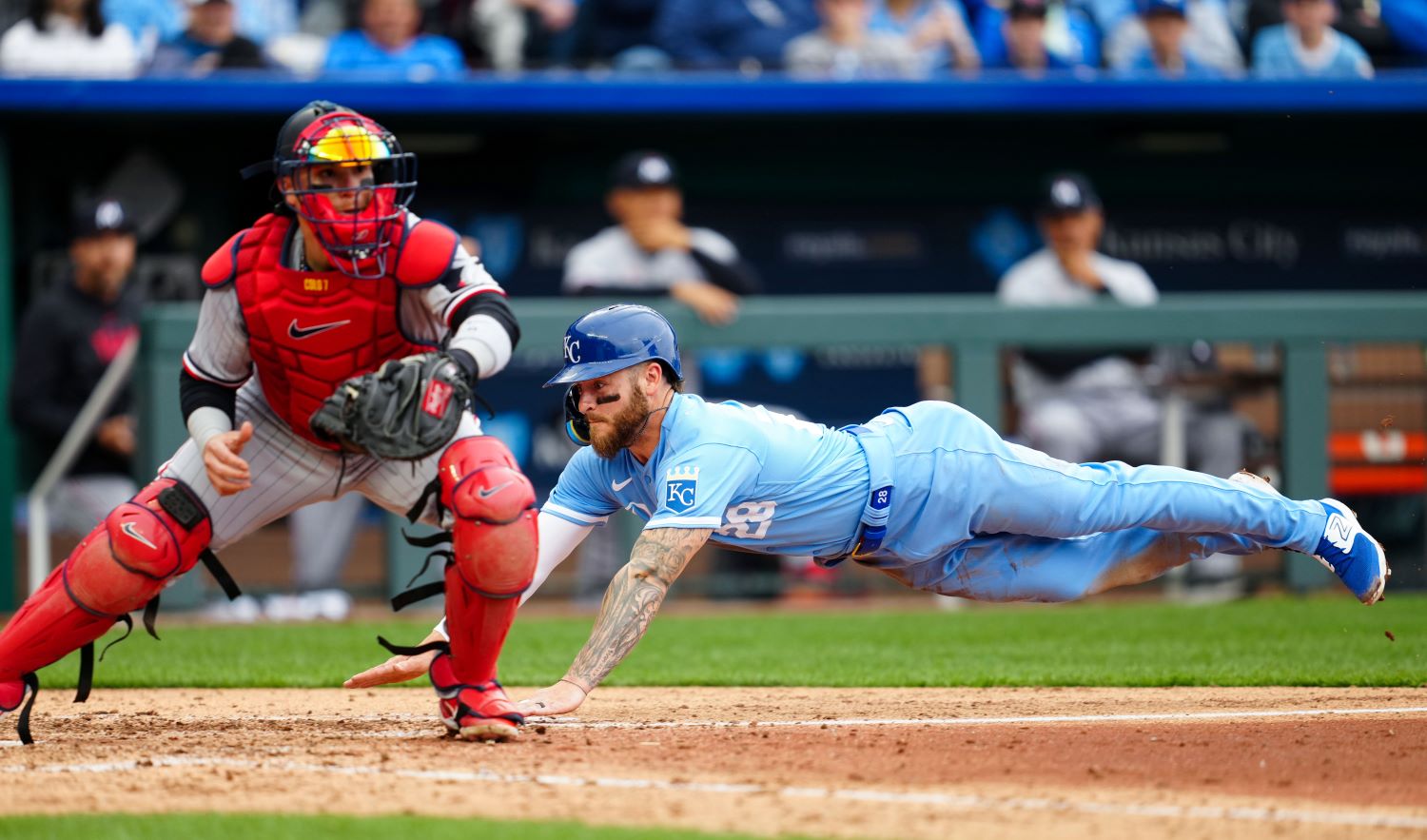 The Twins are off to a great start, underpinned by an excellent rotation and strong bullpen. Rotation upgrades, including a now-healthy Kenta Maeda, Tyler Mahle, and newly-acquired Pablo López have been discussed in depth. An improved catching battery, less so. The Twins signed Christian Vázquez to a $30 million contract in December. What will his impact be defensively? Statcast recently released additional catching metrics with new leaderboards for framing and blocking. While catching performance is some of the most complex to assess (see how a catcher calls a game), the additional data provides us with a clearer picture of how the Twins stack up defensively. Let’s dig in. Pop Time Let’s start with an established metric, pop time. A combination of exchange and arm-strength, this measures the time from the ball hitting the catcher's mitt to the receiving point at the center of the base they are throwing to. Ryan Jeffers struggled to control the running game in 2022. He threw out just 18% of prospective base runners, an issue the Twins were keen to curb with Vázquez with steal attempts up due to larger bases in 2023. Vázquez has thrown out 34% of would-be base stealers in his career, about 10% above average. Among qualified catchers (minimum 15 attempts), Vázquez has the 15th best pop time (1.94) out of 59 qualified players. Vázquez has the fourth best exchange in the majors (0.67), with an arm ranking 37th (80.4 mph). Jeffers, meanwhile, has a slow exchange (0.74, good for 42nd), and a slightly better arm than Vázquez (82.4 mph, good for 24th). This is a good illustration that arm strength is one of several factors in controlling the running game. Headlines: Overall, Vázquez checks in as 14th best in pop time, Jeffers 32nd (out of 59). Eric Haase is the best of the rest in the AL Central, checking in at 19th in pop time. Maybe the Twins should be stealing more? Framing Framing is the art of receiving the ball. For catchers, there’s value to be added in receiving the ball in such a way the umpire calls borderline pitches as strikes instead of balls. The Statcast metric gives an overall output (Catcher Framing Runs) describing the number of runs a catcher saved via framing. Additionally, the metric affords us a breakdown of particular zones around the strike zone that catchers are most successful in framing. Here’s the breakdown. Jeffers is a good, not great framer, coming in at 2 CFR (Catcher Framing Runs), good for 22nd out of 60 qualified catchers in 2022. Vázquez checks in at 1 CFR, 24th overall. Both Jeffers and Vázquez are particularly successful in framing directly above the strike zone (zone 12). The White Sox are the class of the AL Central in this category, with both Yasmani Grandal and Seby Zavala accumulating 4 CFR each in 2022. Headlines: The Twins are good at improving catcher framing. Between 2021-2022, Gary Sanchez improved from -6 CFR (56th overall) to 1 CFR (25th overall). Jeffers and Vázquez both have a solid platform here that would make them the second best tandem in the AL Central, assuming they repeat their 2022 production. Blocking Blocks Above Average expresses catcher effectiveness at preventing wild pitches and passed balls. Each block converts to approximately 0.25 runs saved. Here, we see a significant discrepancy between Vázquez and Jeffers. Vázquez checks in 15th among qualified catchers at 6 BAA, Jeffers -3 (good for 51st out of 66 qualified catchers). Jeffers has a significant weakness in blocking pitches thrown to his left. For additional context, the majority of AL Central catchers are poor blockers. Mike Zunino (-8), Eric Haase (-11), Yasmani Grandal (-11), and MJ Melendez (-25) occupy four of the bottom five spots on the MLB leaderboard. Headlines: Blocking is a tough skill. Jeffers has a clear, discernable weakness moving to his left. It will be interesting to examine how the Twins try to improve this throughout the season. Bottom Lines: A deep dive into defensive metrics for catchers confirms some of what we already knew. Christian Vázquez is above average to good at all measurable defensive aspect of catching. Combine this with a 96 wRC+ over his last four seasons and it’s easy to see what the Twins prioritized him in free agency. As with many areas of their roster, barring injury, the Twins have one of the highest floor tandems in the American League. What are your thought on the new catching leaderboards? How do you feel the Twins tandem stacks up against other teams in the AL Central?
 -
The Twins signed Christian Vázquez to a three-year, $30 million contract in mid-December. The move, in line with so many the Twins made this off-season, pushed a player who previously started (in this case Ryan Jeffers) to a backup role. Vázquez provides an upgrade at a position of need for the Twins. What will his impact be defensively? Image courtesy of Kyle Isbel, USA Today Sports The Twins are off to a great start, underpinned by an excellent rotation and strong bullpen. Rotation upgrades, including a now-healthy Kenta Maeda, Tyler Mahle, and newly-acquired Pablo López have been discussed in depth. An improved catching battery, less so. The Twins signed Christian Vázquez to a $30 million contract in December. What will his impact be defensively? Statcast recently released additional catching metrics with new leaderboards for framing and blocking. While catching performance is some of the most complex to assess (see how a catcher calls a game), the additional data provides us with a clearer picture of how the Twins stack up defensively. Let’s dig in. Pop Time Let’s start with an established metric, pop time. A combination of exchange and arm-strength, this measures the time from the ball hitting the catcher's mitt to the receiving point at the center of the base they are throwing to. Ryan Jeffers struggled to control the running game in 2022. He threw out just 18% of prospective base runners, an issue the Twins were keen to curb with Vázquez with steal attempts up due to larger bases in 2023. Vázquez has thrown out 34% of would-be base stealers in his career, about 10% above average. Among qualified catchers (minimum 15 attempts), Vázquez has the 15th best pop time (1.94) out of 59 qualified players. Vázquez has the fourth best exchange in the majors (0.67), with an arm ranking 37th (80.4 mph). Jeffers, meanwhile, has a slow exchange (0.74, good for 42nd), and a slightly better arm than Vázquez (82.4 mph, good for 24th). This is a good illustration that arm strength is one of several factors in controlling the running game. Headlines: Overall, Vázquez checks in as 14th best in pop time, Jeffers 32nd (out of 59). Eric Haase is the best of the rest in the AL Central, checking in at 19th in pop time. Maybe the Twins should be stealing more? Framing Framing is the art of receiving the ball. For catchers, there’s value to be added in receiving the ball in such a way the umpire calls borderline pitches as strikes instead of balls. The Statcast metric gives an overall output (Catcher Framing Runs) describing the number of runs a catcher saved via framing. Additionally, the metric affords us a breakdown of particular zones around the strike zone that catchers are most successful in framing. Here’s the breakdown. Jeffers is a good, not great framer, coming in at 2 CFR (Catcher Framing Runs), good for 22nd out of 60 qualified catchers in 2022. Vázquez checks in at 1 CFR, 24th overall. Both Jeffers and Vázquez are particularly successful in framing directly above the strike zone (zone 12). The White Sox are the class of the AL Central in this category, with both Yasmani Grandal and Seby Zavala accumulating 4 CFR each in 2022. Headlines: The Twins are good at improving catcher framing. Between 2021-2022, Gary Sanchez improved from -6 CFR (56th overall) to 1 CFR (25th overall). Jeffers and Vázquez both have a solid platform here that would make them the second best tandem in the AL Central, assuming they repeat their 2022 production. Blocking Blocks Above Average expresses catcher effectiveness at preventing wild pitches and passed balls. Each block converts to approximately 0.25 runs saved. Here, we see a significant discrepancy between Vázquez and Jeffers. Vázquez checks in 15th among qualified catchers at 6 BAA, Jeffers -3 (good for 51st out of 66 qualified catchers). Jeffers has a significant weakness in blocking pitches thrown to his left. For additional context, the majority of AL Central catchers are poor blockers. Mike Zunino (-8), Eric Haase (-11), Yasmani Grandal (-11), and MJ Melendez (-25) occupy four of the bottom five spots on the MLB leaderboard. Headlines: Blocking is a tough skill. Jeffers has a clear, discernable weakness moving to his left. It will be interesting to examine how the Twins try to improve this throughout the season. Bottom Lines: A deep dive into defensive metrics for catchers confirms some of what we already knew. Christian Vázquez is above average to good at all measurable defensive aspect of catching. Combine this with a 96 wRC+ over his last four seasons and it’s easy to see what the Twins prioritized him in free agency. As with many areas of their roster, barring injury, the Twins have one of the highest floor tandems in the American League. What are your thought on the new catching leaderboards? How do you feel the Twins tandem stacks up against other teams in the AL Central? View full article


