



Jamie Cameron
-
Posts
1,341 -
Joined
-
Last visited
-
Days Won
4
Content Type
Profiles
News
Minnesota Twins Videos
2026 Minnesota Twins Top Prospects Ranking
2022 Minnesota Twins Draft Picks
Minnesota Twins Free Agent & Trade Rumors, Notes, & Tidbits
Guides & Resources
2023 Minnesota Twins Draft Picks
The Minnesota Twins Players Project
2024 Minnesota Twins Draft Picks
2025 Minnesota Twins Draft Pick Tracker
2026 Minnesota Twins Draft Tracker: Picks & Bonuses
Forums
Blogs
Events
Store
Downloads
Gallery
Everything posted by Jamie Cameron
-
[PT] The Strong Bond Between Minnesota Native Players and the Twins
Jamie Cameron commented on Twinternationals's blog entry in Twinternationals
Came here to comment for a couple of reasons based on what has been said before: This is awesome and I personally welcome and am energized by folks writing about the Twins in languages other than English. I don't speak Portuguese, but the fact that someone is writing about the team in Portuguese and Spanish at TD is a beautiful thing. If your first reaction to this is 'translate it into English', I'd encourage you to consider the possibility that this isn't for you, and that's OK, great, even. Looking forward to more entries to this blog, which I will be down to support tirelessly, whether I can read them or not. Keep up the great work and please know that this content is valuable, and a welcome part of this community. -
2024 Prospect Previews: Luke Keaschall
Jamie Cameron replied to Jamie Cameron's topic in Twins Minor League Talk
Thanks to anybody who gave this your time and eyes. A few thoughts on defense. When I'm writing up someone for the draft or MiLB, I usually stay away from commenting too much on defense, for a couple of reasons: 1) I don't have access to good data on it, conversely, I do for hitting 2) It's much more difficult to get and access footage of defensive reps so it's harder to feel confident about looks when there haven't been too many. I DO think Keaschall is a good fit at 2B, but I also agree with folks who are saying he could play all over the place. -
 With the 49th overall pick in the 2023 draft, the Twins selected Luke Keaschall, an infield prospect who played his 2023 season at Arizona State University after transferring from the University of San Francisco. Keaschall was ranked as the 63rd overall prospect on our Consensus Draft Board. He was an obvious fit for the Twins, such that I first mentioned him as a possible target at the end of May, as he fit so many Twins predilections in the 2nd-4th round range. What can Twins fans expect in 2024? Let’s dig in. Scouting and Signing Keaschall was easy to overlook as a draft prospect. He falls into a ‘tweener’ profile: a good-to-great college hitter who thrived after a step up in competition, a good athlete, and someone who isn’t likely to play a premium defensive position as a professional. The Twins love this profile, especially combined with one more interesting wrinkle: a big power breakout in 2023. After transferring, Keaschall really put it together in the second half of his final college season. Keashcall managed a .353/.443/.725 line with 18 home runs and 18 stolen bases, which he supplemented with back-to-back strong performances in the Cape Cod League. 2023 Performance Thanks to new tools to which we have access via our friends at TruMedia, we can shed some light on Keaschall’s 2023 debut beyond his baseball card numbers. There’s plenty to be excited about. Keaschall quickly saw three levels in a brief, 31-game debut, slashing a combined .288/.414/.477, with three home runs and 11 stolen bases. The majority of this sample was 20 games at Fort Myers, so this is where we’ll focus analysis. Keaschall walked a lot (13.3 BB%), didn’t strike out much (18 K%), and maintained a healthy average exit velocity, just south of 90 mph. Digging deeper into his plate discipline and batted-ball data, Keaschall also maintained a low Chase rate (22.9%) and made contact at a strong rate of 79.3% on swings. Finally, Keaschall had a strong 23.1 Barrel% (TruMedia defines a barrel as a ball hit between 10-35 degrees, with an exit velocity of 95 mph or higher). To put those numbers into some level-wide context, Keaschall’s exit velocity was in the top 30 for hitters with at least 50 plate appearances at Low A, with a contact rate almost 10% above the average for the level and a SwStr% almost 5% below average. Keaschall showed a finely-tuned balance of solid plate discipline, good bat-to-ball skills, and enough pop to make for a well-rounded offensive profile--certainly more than he was given credit for pre-draft. 2024 Outlook The takeaway, for me, is that Keaschall passed his first test, comfortably. Coming from a strong performance in one of the top five college conferences in the country, I’d expect him to do well at Low A. As Twins fans have seen with Tanner Schobel (a player with a similar profile), moving up a level can make all the difference in players suddenly encountering a roadblock. I’d expect Keaschall to start 2024 at High-A Cedar Rapids. Expect more peaks and valleys in 2024, but still, there’s a little more to his offensive profile than meet the eye. What did you think of the Luke Keaschall pick? Has his strong start changed or altered your outlook on him as a prospect. Research assistance provided by TruMedia.
 -
The Twins selected Luke Keaschall with the 49th overall pick in the 2023 Draft. After a strong pro debut, what should Twins fans expect from him in 2024? Let's dig in. Image courtesy of Thieres Rabelo With the 49th overall pick in the 2023 draft, the Twins selected Luke Keaschall, an infield prospect who played his 2023 season at Arizona State University after transferring from the University of San Francisco. Keaschall was ranked as the 63rd overall prospect on our Consensus Draft Board. He was an obvious fit for the Twins, such that I first mentioned him as a possible target at the end of May, as he fit so many Twins predilections in the 2nd-4th round range. What can Twins fans expect in 2024? Let’s dig in. Scouting and Signing Keaschall was easy to overlook as a draft prospect. He falls into a ‘tweener’ profile: a good-to-great college hitter who thrived after a step up in competition, a good athlete, and someone who isn’t likely to play a premium defensive position as a professional. The Twins love this profile, especially combined with one more interesting wrinkle: a big power breakout in 2023. After transferring, Keaschall really put it together in the second half of his final college season. Keashcall managed a .353/.443/.725 line with 18 home runs and 18 stolen bases, which he supplemented with back-to-back strong performances in the Cape Cod League. 2023 Performance Thanks to new tools to which we have access via our friends at TruMedia, we can shed some light on Keaschall’s 2023 debut beyond his baseball card numbers. There’s plenty to be excited about. Keaschall quickly saw three levels in a brief, 31-game debut, slashing a combined .288/.414/.477, with three home runs and 11 stolen bases. The majority of this sample was 20 games at Fort Myers, so this is where we’ll focus analysis. Keaschall walked a lot (13.3 BB%), didn’t strike out much (18 K%), and maintained a healthy average exit velocity, just south of 90 mph. Digging deeper into his plate discipline and batted-ball data, Keaschall also maintained a low Chase rate (22.9%) and made contact at a strong rate of 79.3% on swings. Finally, Keaschall had a strong 23.1 Barrel% (TruMedia defines a barrel as a ball hit between 10-35 degrees, with an exit velocity of 95 mph or higher). To put those numbers into some level-wide context, Keaschall’s exit velocity was in the top 30 for hitters with at least 50 plate appearances at Low A, with a contact rate almost 10% above the average for the level and a SwStr% almost 5% below average. Keaschall showed a finely-tuned balance of solid plate discipline, good bat-to-ball skills, and enough pop to make for a well-rounded offensive profile--certainly more than he was given credit for pre-draft. 2024 Outlook The takeaway, for me, is that Keaschall passed his first test, comfortably. Coming from a strong performance in one of the top five college conferences in the country, I’d expect him to do well at Low A. As Twins fans have seen with Tanner Schobel (a player with a similar profile), moving up a level can make all the difference in players suddenly encountering a roadblock. I’d expect Keaschall to start 2024 at High-A Cedar Rapids. Expect more peaks and valleys in 2024, but still, there’s a little more to his offensive profile than meet the eye. What did you think of the Luke Keaschall pick? Has his strong start changed or altered your outlook on him as a prospect. Research assistance provided by TruMedia. View full article
-
Kind of agree with this. I'd expect a D1 pitcher out of a top 2-3 conference (SEC/ACC) to perform well at A and A+. Matthews pitched in Conference USA and Morris for Colorado Mesa (a DII) school prior to his one year at Texas Tech. All that to say, I think there's a little more nuance there. To have 4 guys from small schools or DII backgrounds thriving to the degree they did in 2023 is, I think, a little unusual, based on my MiLB/Draft writings and research.
-
Appreciate you reading and the feedback, that's fair. In each case, it's a balance of trying to pick out what's relevant and interesting without going long, but agreed, that was a miss. Matthews fastball velo: 4 seam average: 93.1 (90th percentile 94.9) 2 seam average: 94 (90th percentile 95.3)
-
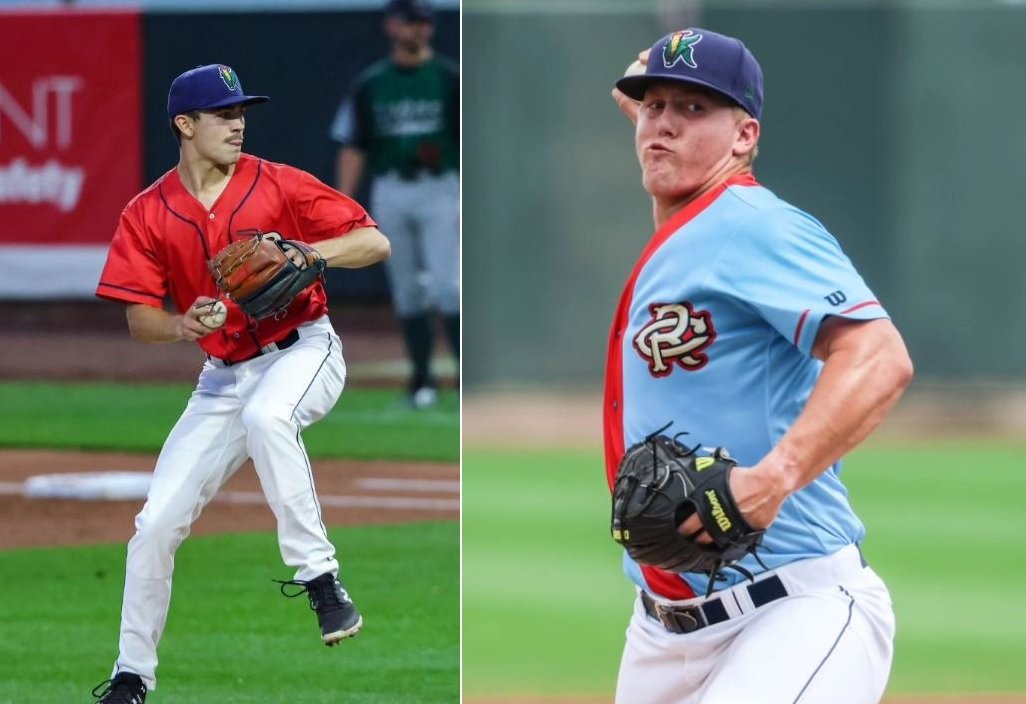 For whatever the reason, Andrew Morris may be the Twins pitcher from the 2022 draft to fly most impressively under the radar, despite being their fourth round pick out of Texas Tech. Morris signed for $500,000 but missed some time early in 2023 through injury. A smaller built starter at 6 '0, 195 pounds, Morris put together impressive showings at Fort Myers and Cedar Rapids in 2023. In 84 1/3 innings, he managed a 2.88 ERA, with 79 strikeouts and 19 walks. What are his strengths and areas of opportunity? Let’s dive in. Morris’ arsenal is headlined by his fastball. His four seamer has an average velocity of 93.5 mph and a 90th percentile velocity of 95.6 mph, which underpins some of it’s other characteristics and Morris’ other pitching traits that help the pitch succeed. Morris get’s good induced vertical break on his fastball (averaging 15.6 inches, but up to 23 inches in 2023). He also has a unique and deceptive release point. Morris’ arm slot features a high, vertical release. The combination of good carry and a unique release led the pitch to limit damage to the tune of a 3.45 FIP in 2023. Morris’ fastball is a picture of consistency month by month in 2023. Velocity, spin, movement are all incredibly consistent, although Morris seemed to unlock more consistent induced vertical break in July (2 inches more on average). Morris’ fastball performed better against LHH in 2023 than RHH, but that could be because he demonstrated significantly better control of the pitch to LHH. Even though the pitch didn’t get a ton of whiffs (12.7% SwStr% compared to the A+ average of 13.6 SwStr%), it’s a good platform for Morris to work from and has enough to continue to be effective. Morris’ slider is his most frequently used breaking pitch, a pitch more vertical than horizontal movement that looks on his movement plot like a hybrid slider/cutter.. It features an average separation of around eight mph from his fastball and had promising results in 2023. Opposing hitters weren’t able to hit it in the air much, or hit it hard much (8.8 Barrel%). The pitch gave up a FIP of 0.97 in 2023. Like his fastball, it doesn’t get a ton of whiffs (27.8 Chase% and 13.8 SwStr% in 2023). Again, much like his fastball, Morris’ slider is a good breaking ball with an opportunity for more. Morris’ final two offerings are a curveball and a changeup. The curveball is a softer pitch (averaging 75.8 mph in 2023), that produced good results in a limited sample despite giving up a lot of contact, and not generating much swing and miss from hitters. Conversely, Morris’ changeup was given a fringy/below average grade from draft evaluators, but offers the best platform for an effective tertiary pitch for Morris. He throws the pitch pretty hard (88.5 mph average velocity in 2023). In 2023 Morris was able to develop more tumble and fade to his changeup month by month, and the results bore this out. The pitch generated a 15.6 SwStr% in June, and a 34.8% SwStr% in July, while decreasing contact from 68.2% to 38.5%. I’d argue that for Morris, the next developmental foci in 2024 are tweaking his slider to generate an established swing and miss breaking pitch, and continuing to develop the consistency of his changeup as a tertiary offering. Playing off the strengths off his fastball, there’s the ceiling of a back-end starting pitcher in the big leagues here. Zebby Matthews The Twins signed Zebby Matthews as an under-slot eighth round pick in 2022 out of Western Carolina. Initially known post-draft as a strike thrower with excellent command, the Twins waved their magic velocity wand and helped Matthews’ stuff trend up in 2023, where, like Morris, he split time between Fort Myers and Cedar Rapids. A prototypical starting pitchers’ body at 6 '5, 225 pounds, Matthews enjoyed an excellent 2023. In 108 1/3 innings across two levels he managed a 3.84 ERA, with 112 strikeouts and just 15 walks. Matthews struggled more at Cedar Rapids, developing a bit of a home run problem. Let’s look under the hood at some of his strengths in 2023, and opportunities for 2024. Matthews throws from a more typical, three quarter arm slot than Morris. More typical arm angles at release tend to create more typical (read ineffective) fastball shapes. Matthews, however, has good carry on his fastball (17.8 IndVertBrk) and good run on his sinker (13.5 HorzBrk) for his arm slot, which he combines with another significant strength, control and command. Matthews throws his fastball for strikes 70% of the time (compared to the A ball average of 63.3% in 2024). Matthews’ carry and run on his two fastballs means they plays well up and in when thrown to right handed hitters. Looking at a heat map of his fastball location in 2023, his outstanding command allows him to maximize this opportunity. All of that adds up to a 13.1 K/9 on his fastball from the data we have available via Tru Media, a pitch generating around 10% less contact than the A ball average and generating about 7% more swinging strikes than average, that’s a strong platform for success. Zooming in on Matthews’ other pitches points the way for his next opportunity in 2024, developing more unique shapes on his secondary pitches. Matthews throws a slider that looks like it has the characteristics of a sweeper (more horizontal, less vertical movement). Looking at the green dots in the graphic, you’ll notice that there’s a fairly diverse spread here. I’d guess that’s indicative of the Twins and Matthews messing with cues and grips and working to improve the consistency of the pitch. While the slider had good results on the data we have available, it’s clearly a pitch still in development. The same can be said of Matthews changeup. Again referring to his movement chart, there’s a blur of Matthews four seam fastball (blue dots), and changeup (purple dots). You’d like to see more of a difference vertically here (look at Morris’ movement chart for a more clear distinction). Like the slider, Matthews’ changeup got good results, likely from the differential in velocity from his fastball (approximately 8 mph in our data set). With a SwStr of just 4.4%, better hitters are going to treat the changeup as a slow fastball, so it won’t maintain effectiveness as he moves through MiLB levels unless the pitch continues to develop more distinctive characteristics. All of these data are small samples, and with the speed and success of player development, it’s likely these pitching prospects have already outgained some of these observations. The Twins continue to do an impressive job with both identifying mid-late round pitching talents, and developing them throughout their minor-league journeys. What did you make of Andrew Morris and Zebby Matthews in 2023? What are your expectations for the pair in 2024 Research assistance provided by TruMedia
 -
 In addition to having the good fortune to move up eight spots in the inaugural MLB Draft lottery, the Minnesota Twins had a Competitive Balance Round A pick at their disposal in the 2023 event. With the 34th pick, they took Charlee Soto, a right-handed pitcher out of Reborn Christian Academy in Florida, who was committed to the University of Central Florida. Scouting and Signing Soto held his own in the eyes of evaluators in an excellent 2023 prep class, finishing as the consensus 36th-best prospect in the draft with little-to-no modulation in that ranking during the pre-draft process. A converted shortstop, Soto is relatively new to pitching. He was the fourth prep arm taken in the draft, after Noble Meyer, Thomas White, and Josh Knoth, (we’ll set Bryce Eldridge aside, as a two-way player). Soto signed for slot at $2.48 million, one of the largest bonuses the Twins have ever given to a prep pitcher. Soto has the type of body and physicality you’d expect out of a mid-rotation starting pitching prospect. Shooting up another two inches throughout the draft process, he now stands 6-foot-5 and is an imposing figure on the mound. Soto experienced a significant velocity jump as a senior in high school. His fastball went from low-90s to mid-90s, and the pitch can touch 98 mph. I wouldn’t be surprised if Soto is already touching triple digits with the pitch, and he certainly will after he finishes growing and spends some time with Twins development staff. Soto has a compact delivery with a relatively short arm stroke, albeit with some effort at release. At present, his fastball lacks the type of shape that will play up in the strike zone. The Twins may tinker with the shape of this pitch, or consider adding a sinker to mitigate the problem. Soto’s best secondary offering is a changeup that he throws with conviction, and that displays tumble and fade. This pitch was one of the better examples in the 2023 draft class (college or prep). He also has a hard slider he throws in the upper 80s. It’s already above-average, having improved significantly in the spring ahead of the draft, with a chance for more. As with many prep prospects, one of the factors governing Soto’s ceiling will be his ability to command his repertoire, which will likely be a work in progress as his development plan is put in place. 2023 Performance and 2024 Expectations Like many of the pitchers the Twins selected in the draft, Soto did not debut in 2023. He spent time at instructs with other prospects. He’ll make his professional debut in 2024, likely at Fort Myers. Soto was just 17 on draft day, one of the youngest prospects in the entire class. I’d expect the Twins to move him along slowly and be creative with his usage. It’s notable that Marco Raya was largely used two times through the order in 2023; the Twins could use a similar approach with Soto. It’s also worth tempering expectations for his debut. Prospects all have developmental goals from the organization, and those often work at odds with performance and outcomes in the minor leagues. Take Soto’s initial outcomes with a grain of salt, be they encouraging or disappointing. Soto will no doubt be an exciting prospect to track and the kind of talent I’d target with a top-40 pick. It’s an exceptionally quick arm, an arsenal that shows real promise, and a level of physicality and athleticism that offers more projection. The Twins have some exciting clay to mold. What are your expectations for Charlee Soto in 2024? Where do you think he will start the season? Join the conversation with a comment below.
 -
A group of four pitchers made waves for the Twins farm system in 2023. Cory Lewis, C.J. Culpepper, Andrew Morris, and Zebby Matthews all enjoyed success at both Fort Myers and Cedar Rapids. What are some of the attributes and numbers behind their success? Let's dig in. Image courtesy of Jean Pfiefer (aka, go4twinkies on Instagram) photos of Andrew Morris, Zebby Matthews For whatever the reason, Andrew Morris may be the Twins pitcher from the 2022 draft to fly most impressively under the radar, despite being their fourth round pick out of Texas Tech. Morris signed for $500,000 but missed some time early in 2023 through injury. A smaller built starter at 6 '0, 195 lbs, Morris put together impressive showings at Fort Myers and Cedar Rapids in 2023. In 84.1 innings, he managed a 2.88 ERA, with 79 strikeouts and 19 walks. What are his strengths and areas of opportunity? Let’s dive in. Morris’ arsenal is headlined by his fastball. His four seamer has an average velocity of 93.5 mph and a 90th percentile velocity of 95.6 mph, which underpins some of it’s other characteristics and Morris’ other pitching traits that help the pitch succeed. Morris get’s good induced vertical break on his fastball (averaging 15.6 inches, but up to 23 inches in 2023). He also has a unique and deceptive release point. Morris’ arm slot features a high, vertical release. The combination of good carry and a unique release led the pitch to limit damage to the tune of a 3.45 FIP in 2023. Morris’ fastball is a picture of consistency month by month in 2023. Velocity, spin, movement are all incredibly consistent, although Morris seemed to unlock more consistent induced vertical break in July (2 inches more on average). Morris’ fastball performed better against LHH in 2023 than RHH, but that could be because he demonstrated significantly better control of the pitch to LHH. Even though the pitch didn’t get a ton of whiffs (12.7% SwStr% compared to the A+ average of 13.6 SwStr%), it’s a good platform for Morris to work from and has enough to continue to be effective. Morris’ slider is his most frequently used breaking pitch, a pitch more vertical than horizontal movement that looks on his movement plot like a hybrid slider/cutter.. It features an average separation of around 8 mph from his fastball and had promising results in 2023. Opposing hitters weren’t able to hit it in the air much, or hit it hard much (8.8 Barrel%). The pitch gave up a FIP of 0.97 in 2023. Like his fastball, it doesn’t get a ton of whiffs (27.8 Chase% and 13.8 SwStr% in 2023). Again, much like his fastball, Morris’ slider is a good breaking ball with an opportunity for more. Morris’ final two offerings are a curveball and a changeup. The curveball is a softer pitch (averaging 75.8 mph in 2023), that produced good results in a limited sample despite giving up a lot of contact, and not generating much swing and miss from hitters. Conversely, Morris’ changeup was given a fringy/below average grade from draft evaluators, but offers the best platform for an effective tertiary pitch for Morris. He throws the pitch pretty hard (88.5 mph average velocity in 2023). In 2023 Morris was able to develop more tumble and fade to his changeup month by month, and the results bore this out. The pitch generated a 15.6 SwStr% in June, and a 34.8% SwStr% in July, while decreasing contact from 68.2% to 38.5%. I’d argue that for Morris, the next developmental foci in 2024 are tweaking his slider to generate an established swing and miss breaking pitch, and continuing to develop the consistency of his changeup as a tertiary offering. Playing off the strengths off his fastball, there’s the ceiling of a back-end starting pitcher in the big leagues here. Zebby Matthews The Twins signed Zebby Matthews as an under-slot eighth round pick in 2022 out of Western Carolina. Initially known post-draft as a strike thrower with excellent command, the Twins waved their magic velocity wand and helped Matthews’ stuff trend up in 2023, where, like Morris, he split time between Fort Myers and Cedar Rapids. A prototypical starting pitchers’ body at 6 '5, 225 lbs, Matthews enjoyed an excellent 2023. In 108.1 innings across two levels he managed a 3.84 ERA, with 112 strikeouts and just 15 walks. Matthews struggled more at Cedar Rapids, developing a bit of a home run problem. Let’s look under the hood at some of his strengths in 2023, and opportunities for 2024. Matthews throws from a more typical, three quarter arm slot than Morris. More typical arm angles at release tend to create more typical (read ineffective) fastball shapes. Matthews, however, has good carry on his fastball (17.8 IndVertBrk) and good run on his sinker (13.5 HorzBrk) for his arm slot, which he combines with another significant strength, control and command. Matthews throws his fastball for strikes 70% of the time (compared to the A ball average of 63.3% in 2024). Matthews’ carry and run on his two fastballs means they plays well up and in when thrown to right handed hitters. Looking at a heat map of his fastball location in 2023, his outstanding command allows him to maximize this opportunity. All of that adds up to a 13.09 K/9 on his fastball from the data we have available via Tru Media, a pitch generating around 10% less contact than the A ball average and generating about 7% more swinging strikes than average, that’s a strong platform for success. Zooming in on Matthews’ other pitches points the way for his next opportunity in 2024, developing more unique shapes on his secondary pitches. Matthews throws a slider that looks like it has the characteristics of a sweeper (more horizontal, less vertical movement). Looking at the green dots in the graphic, you’ll notice that there’s a fairly diverse spread here. I’d guess that’s indicative of the Twins and Matthews messing with cues and grips and working to improve the consistency of the pitch. While the slider had good results on the data we have available, it’s clearly a pitch still in development. The same can be said of Matthews changeup. Again referring to his movement chart, there’s a blur of Matthews four seam fastball (blue dots), and changeup (purple dots). You’d like to see more of a difference vertically here (look at Morris’ movement chart for a more clear distinction). Like the slider, Matthews’ changeup got good results, likely from the differential in velocity from his fastball (approximately 8 mph in our data set). With a SwStr of just 4.4%, better hitters are going to treat the changeup as a slow fastball, so it won’t maintain effectiveness as he moves through MiLB levels unless the pitch continues to develop more distinctive characteristics. All of these data are small samples, and with the speed and success of player development, it’s likely these pitching prospects have already outgained some of these noticings. The Twins continue to do an impressive job with both identifying mid-late round pitching talents, and developing them throughout their MiLB journeys. What did you make of Andrew Morris and Zebby Matthews in 2023? What are your expectations for the pair in 2024 Research assistance provided by TruMedia View full article
-
If there's one starting pitcher J.D. Cameron wants added to the Twins rotation, it's Logan Gilbert. He has not only one, but two trade proposals for what the Twins could do to bring the man with the best arm extension in baseball to the Twin Cities.
-
If there's one starting pitcher J.D. Cameron wants added to the Twins rotation, it's Logan Gilbert. He has not only one, but two trade proposals for what the Twins could do to bring the man with the best arm extension in baseball to the Twin Cities. View full video
-
Destination: The Show. Episode 20
Jamie Cameron replied to Jeremy Nygaard's topic in Twins Minor League Talk
We actually just launched our own page! https://www.youtube.com/@DestinationTheShow -
The Twins selected a high octane high school arm with the 34th overall pick in the 2023 draft. What should we expect from Charlee Soto in 2024? Image courtesy of Thieres Rabelo In addition to having the good fortune to move up eight spots in the inaugural MLB draft lottery, the Minnesota Twins had a Comp A pick at their disposal in the 2023 draft. With the 34th pick in the draft, they took Charlee Soto, a right-handed pitcher out of Reborn Christian Academy in Florida, who was committed to the University of Central Florida. Scouting and Signing Soto held his own in the minds of evaluators in an excellent 2023 prep class, finishing as the consensus 36th best prospect in the draft with little to no modulation in that ranking in the pre-draft process. A converted shortstop, Soto is relatively new to pitching. Soto was the fourth prep arm taken in the draft after Noble Meyer, Thomas White, and Josh Knoth, (we’ll set Bryce Eldridge aside as a two-way player). Soto signed for slot at $2.48 million, one of the largest bonuses the Twins have ever given a prep pitcher. Soto has the type of body and physicality you’d expect out of a mid-rotation starting pitching prospect. Shooting up another two inches throughout the draft process, he now stands 6’5 and is an imposing figure on the mound. Soto experienced a significant velocity jump as a senior in high school. His fastball went from low 90s to mid 90s, and the pitch can grab 98mph. I wouldn’t be surprised if Soto is already touching triple digits with the pitch and he certainly will after he stops growing and spends some time with Twins development staff. Soto has a compact delivery with a relatively short arm stroke, albeit with some effort at release. At present, his fastball lacks the type of shape that will play up in the strike zone. The Twins may tinker with the shape of this pitch, or consider adding a sinker to mitigate this. Soto’s best secondary offering is a changeup he throws with conviction that displays tumble and fade. This pitch was one of the better examples in the 2023 draft class (college or prep). He also has a hard slider he throws in the upper 80s that’s already above average, having improved significantly in the spring ahead of the draft, with a chance for more. As with many prep prospects, one of the factors governing Soto’s ceiling will be his ability to command his pitches which will likely be a work in progress and his development plan is put in place. 2023 Performance and 2024 Expectations Like many of the pitchers the Twins selected in the draft, Soto did not debut in 2023. He spent time at instructs with other prospects. He’ll make his professional debut in 2024, likely at Fort Myers. Soto was just 17 on draft day and one of the youngest prospects in the entire class. I’d expect the Twins to move him along slowly and be creative with his usage. It’s notable that Marco Raya was largely used two times through the order in 2023, the Twins could use a similar approach with Soto. It’s also worth tempering expectations for his debut. Prospects all have developmental goals from the organization that often work at odds with performance and outcomes in the minor leagues, so take Soto’s initial outcomes with a grain of salt, be they encouraging or disappointing. Soto will no doubt be an exciting prospect to track and the kind of talent I’d target with a Comp A pick. It’s an exceptionally quick arm, an arsenal that shows real promise, and a level of physicality and athleticism that offers more projection. The Twins have some exciting clay to mold. What are your expectations for Charlee Soto in 2024? Where do you think he will start the season? Join the conversation with a comment below. View full article
-
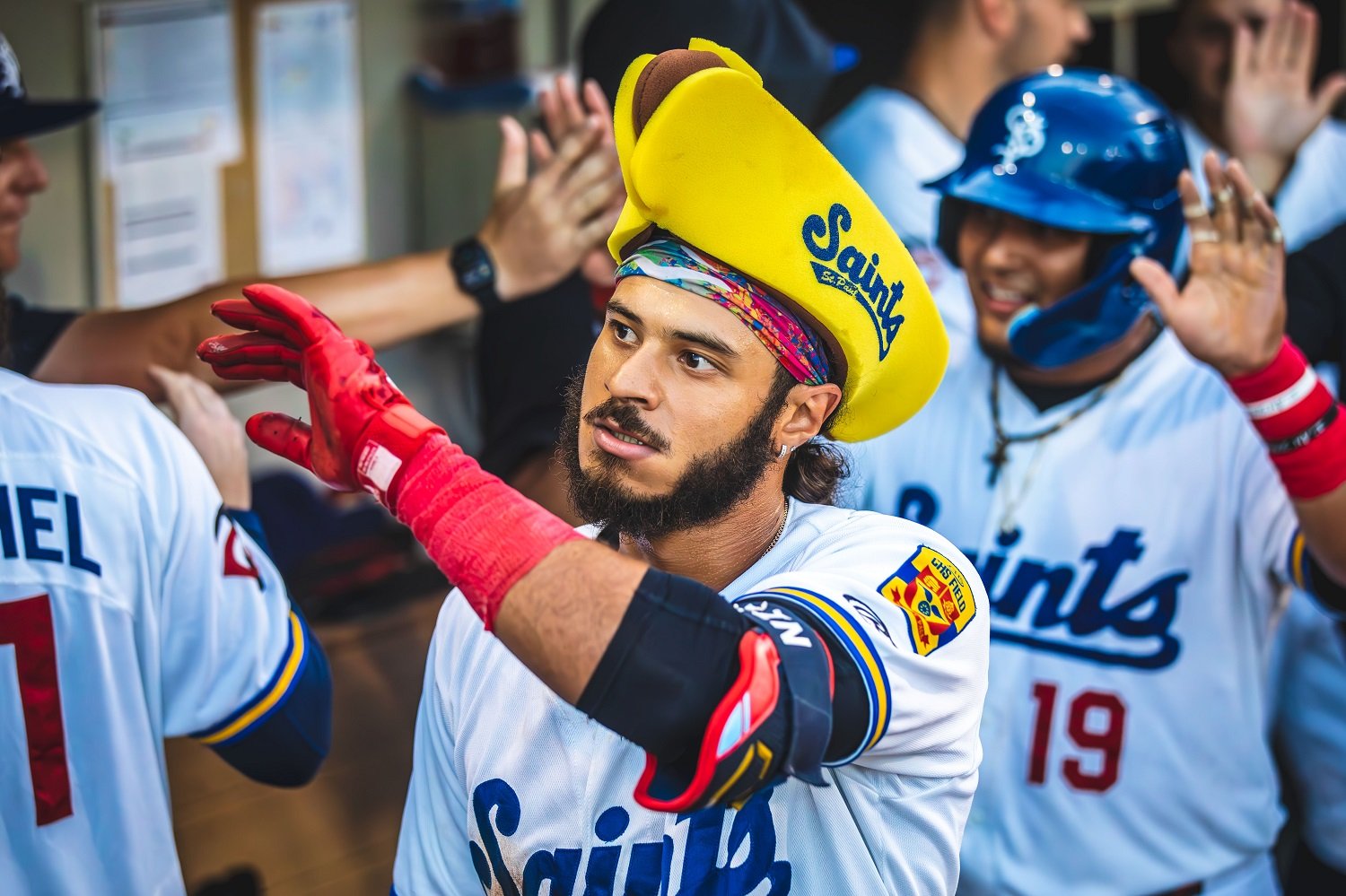 Austin Martin has become an interesting centerpiece of Twins-related offseason discussion. The ongoing TV ordeal has rendered a typically patient front office immobile, stifling momentum after an exciting 2023 campaign. Beyond the Twins' most glaring need (a pitcher capable of starting a playoff game), there remains the issue of center field depth. Harrison Bader and Kevin Keirmaier are off the board. While Michael A. Taylor is still available, Martin finds himself on the doorstep of the majors. Whether he can be more than a fringy role player in the big leagues is about to become an important question, so let's try to answer it. Let’s start with the basics of Martin’s 2023 season. After overcoming injury and the Twins' failed attempts to get him to tap into more power and loft, Martin returned to form in the second half of the season. A .254/.373/.384 line with 6 home runs and 17 stolen bases (while getting increasing time in the outfield) leave Martin at the front of the queue for playing time, particularly if the Twins trade for starting pitching. Despite having minimal power, Martin has a unique blend of skills that bring offensive value. In 2023, Martin saw an average number of pitches per plate appearance (3.9). His plate discipline is anchored by an exceptional 14.9% Chase%. This is approaching Edouard Julien territory; Julien led MLB in this category in 2023 at 14.3%. Martin couples this with a strong 82% contact rate on swings, much better than Julien’s 73% (and the MLB average of 75.1%). Not chasing pitches outside the zone and making contact with pitches in the zone is a strong platform, but what about the quality of that contact? This is where we see a significant divergence between the two players. In 2023, Julien hit the ball at 95 miles per hour or harder at a 44% clip. For Martin, it was 29.5%. That’s a difference of about 24 hard-hti balls per 500 plate appearances. If we look at Barrel%, we see a similar story. TruMedia defines Barrel% as ball hit >95 mph between 10 and 35 degrees (as opposed to Baseball Savant, where they are derived empirically and the baseline rate for them is much lower). Julien’s Barrel% was 23.8% in 2023, to 14.2% for Martin, a difference of 18 Barrels per 500 plate appearances. But we already knew this. The comparison to Julien is useful when looking at plate discipline, but not batted ball events. Martin’s average exit velocity in 2023 was 85.1 mph. That would rank him 196th in MLB, out of 212 hitters with at least 500 plate appearances. Martin has never hit the ball particularly hard, but can we point to examples of hitters with similar plate discipline who don’t hit the ball hard having significant offensive value in MLB? Yes, but it’s a narrow path to success. Steven Kwan, Andres Gimenez, and Jeff McNeil all share the characteristics of low exit velocity and high contact rates, and all are hitters who make an offensive impact. Martin’s excellent contact skills are consistent throughout the strike zone. As this heat map of his contact% below shows, there aren’t a ton of holes in his swing, with the exception of balls dotted on the bottom outside corner of the plate. Where Martin will do damage, occasionally, is on pitches inside. All of his six home runs in 2023 went to the pull side. The graphical representation of his slugging average reinforces this. Five of Martin’s six Triple-A home runs were on sliders that stayed too far up. Indeed, Martin had a .532 SLG on sliders in 2023, and barreled them up at a 32.1% rate. A lot of the rest of Martin’s contact is to the opposite field. The spray chart below displays his batted-ball events in 2023 (removing all those confined to the infield). We can see a skew toward the opposite field, which is magnified when looking at fastballs. As is true of most hitters, Martin pulls most of his grounders, so that skews the data a bit, but this still paints an important and accurate picture of his game. The previous hitters mentioned (Kwan, Giménez, McNeil), to varying extents, gain value from their defense. We don’t know much about Martin’s defensive effectiveness in the outfield, yet. Good speed (and rule changes) should benefit him, as he stole bases at an 81% clip in 2023. A fringy arm may be an impediment. How effective his defense is will go a long way to determining the overall value he brings--particularly in 2024, as he adjusts to MLB pitching. Martin’s 14.3% walk rate would be top-20 in MLB, if it transferred intact to the highest level. The strong on-base numbers should translate, albeit to a lesser extent, with an automated (and squeezed) strike zone amplifying the offensive environment in Triple A in 2023. If Martin’s long-term defensive home is in center field, his plate discipline, on-base skills, speed, and defensive potential should provide good value. At minimum, he’ll be a solid utility player who brings on-base value at the bottom of the lineup, with a chance for more. What do you think Austin Martin’s offensive ceiling is in MLB? What are your expectations when he makes his MLB debut? Share your thoughts with a comment below. Research assistance provided by TruMedia
 -
The Twins' self-imposed payroll restrictions have moved Austin Martin closer to an MLB debut in 2024. What value can he offer? Will his offensive game translate the the big leagues? Let's dig in. Image courtesy of Rob Thompson, St. Paul Saints Austin Martin has become an interesting centerpiece of Twins-related offseason discussion. The ongoing TV ordeal has rendered a typically patient front office immobile, stifling momentum after an exciting 2023 campaign. Beyond the Twins' most glaring need (a pitcher capable of starting a playoff game), there remains the issue of center field depth. Harrison Bader and Kevin Keirmaier are off the board. While Michael A. Taylor is still available, Martin finds himself on the doorstep of the majors. Whether he can be more than a fringy role player in the big leagues is about to become an important question, so let's try to answer it. Let’s start with the basics of Martin’s 2023 season. After overcoming injury and the Twins' failed attempts to get him to tap into more power and loft, Martin returned to form in the second half of the season. A .254/.373/.384 line with 6 home runs and 17 stolen bases (while getting increasing time in the outfield) leave Martin at the front of the queue for playing time, particularly if the Twins trade for starting pitching. Despite having minimal power, Martin has a unique blend of skills that bring offensive value. In 2023, Martin saw an average number of pitches per plate appearance (3.9). His plate discipline is anchored by an exceptional 14.9% Chase%. This is approaching Edouard Julien territory; Julien led MLB in this category in 2023 at 14.3%. Martin couples this with a strong 82% contact rate on swings, much better than Julien’s 73% (and the MLB average of 75.1%). Not chasing pitches outside the zone and making contact with pitches in the zone is a strong platform, but what about the quality of that contact? This is where we see a significant divergence between the two players. In 2023, Julien hit the ball at 95 miles per hour or harder at a 44% clip. For Martin, it was 29.5%. That’s a difference of about 24 hard-hti balls per 500 plate appearances. If we look at Barrel%, we see a similar story. TruMedia defines Barrel% as ball hit >95 mph between 10 and 35 degrees (as opposed to Baseball Savant, where they are derived empirically and the baseline rate for them is much lower). Julien’s Barrel% was 23.8% in 2023, to 14.2% for Martin, a difference of 18 Barrels per 500 plate appearances. But we already knew this. The comparison to Julien is useful when looking at plate discipline, but not batted ball events. Martin’s average exit velocity in 2023 was 85.1 mph. That would rank him 196th in MLB, out of 212 hitters with at least 500 plate appearances. Martin has never hit the ball particularly hard, but can we point to examples of hitters with similar plate discipline who don’t hit the ball hard having significant offensive value in MLB? Yes, but it’s a narrow path to success. Steven Kwan, Andres Gimenez, and Jeff McNeil all share the characteristics of low exit velocity and high contact rates, and all are hitters who make an offensive impact. Martin’s excellent contact skills are consistent throughout the strike zone. As this heat map of his contact% below shows, there aren’t a ton of holes in his swing, with the exception of balls dotted on the bottom outside corner of the plate. Where Martin will do damage, occasionally, is on pitches inside. All of his six home runs in 2023 went to the pull side. The graphical representation of his slugging average reinforces this. Five of Martin’s six Triple-A home runs were on sliders that stayed too far up. Indeed, Martin had a .532 SLG on sliders in 2023, and barreled them up at a 32.1% rate. A lot of the rest of Martin’s contact is to the opposite field. The spray chart below displays his batted-ball events in 2023 (removing all those confined to the infield). We can see a skew toward the opposite field, which is magnified when looking at fastballs. As is true of most hitters, Martin pulls most of his grounders, so that skews the data a bit, but this still paints an important and accurate picture of his game. The previous hitters mentioned (Kwan, Giménez, McNeil), to varying extents, gain value from their defense. We don’t know much about Martin’s defensive effectiveness in the outfield, yet. Good speed (and rule changes) should benefit him, as he stole bases at an 81% clip in 2023. A fringy arm may be an impediment. How effective his defense is will go a long way to determining the overall value he brings--particularly in 2024, as he adjusts to MLB pitching. Martin’s 14.3% walk rate would be top-20 in MLB, if it transferred intact to the highest level. The strong on-base numbers should translate, albeit to a lesser extent, with an automated (and squeezed) strike zone amplifying the offensive environment in Triple A in 2023. If Martin’s long-term defensive home is in center field, his plate discipline, on-base skills, speed, and defensive potential should provide good value. At minimum, he’ll be a solid utility player who brings on-base value at the bottom of the lineup, with a chance for more. What do you think Austin Martin’s offensive ceiling is in MLB? What are your expectations when he makes his MLB debut? Share your thoughts with a comment below. Research assistance provided by TruMedia View full article
-
Great read, Lucas
-
Emmanuel Rodriguez and the Range of Outcomes
Jamie Cameron replied to Nick Nelson's topic in Twins Daily Front Page News
Enjoyed this piece a ton. Came to mention that I think the tension in E-Rod's skill set is best summed up a question: Assuming he can become more aggressive earlier in counts, can he improve his contact%? In 2023 it was around 68%, which, I think is indicative that there's a/some holes in his swing (especially as he hasn't played at AA yet). If he can improve contact, even marginally, It'd be much easier to forecast good to great future value. Big season ahead for sure.- 48 replies
-
- 7
-

-
- emmanuel rodriguez
- eddie rosario
- (and 1 more)
-
As I said in the piece and the comments, this isn't really about the trade being realistic, that's why I didn't propose a package, it's more about exploring the Twins relationship with extension.
- 44 replies
-
- 2
-
-
- pablo lopez
- bailey ober
- (and 2 more)
-
I was hoping Parker might wade into this conversation! Would add this, to his point, Pablo added to his pretty significantly last season when compared to his time with the Marlins.
-
Thanks Cory, That's a great question. Most of the other guys most often talked about (Keller, Luzardo, etc.) have around league average extension so wouldn't see much of a bump/benefit even if the Twins could make mechanical adjustments to improve it. Gilbert is a true outlier in this one, specific advantage (league wide, not just of potential trade candidates).
- 44 replies
-
- 1
-
-
- pablo lopez
- bailey ober
- (and 2 more)
-
I'll get ahead of this. I actually DONT think the Mariners would be interested in trading Gilbert unless it was for a ridiculous price. I just got interested with the analytical fit, but, if someone can propose a price they think is fair, I'd love to hear it. I think Lee and Wallner is too little. Thank you all for reading and commenting if you chose to :)
- 44 replies
-
- 5
-
-
- pablo lopez
- bailey ober
- (and 2 more)
-
It's likely that the Twins make a trade to address the front of their rotation prior to spring training. Let's try to say who would be the best fit, based on a pitching trait the Twins' most recent trade for a starting pitcher demonstrates that they value--elite extension. Image courtesy of © Steven Bisig-USA TODAY Sports As we have discussed at length, the Twins have repeatedly traded to upgrade their starting pitching. They acquired Joe Ryan in a great value deal for a few months' worth of Nelson Cruz. Pablo López was the return for Luis Arráez, in one of the most balanced 'challenge' trades in recent memory. Chris Paddack was acquired right as the Twins were starting the 2022 season, in a trade that may pay enormous dividends for Minnesota. In Bailey Ober and Louie Varland, the Twins have drafted and developed a further contingent of starting pitching contributors. It's also often noted that the Twins' development staff consistently add velocity to pitchers as they develop. Pierson Ohl is an excellent example of this. When drafted as a 14th-rounder out of Grand Canyon University, Ohl's fastball was around 88 mph. Fast-forward a few years, and it's sitting at 93-95 mph, while he's one of the better-performing pitchers in all of Double-A ball. Suppose we stitch the starters acquired by trade and the homegrown rotation members together. In that case, we can identify two facets of pitching development the Twins repeatedly tap into: outstanding extension and effective velocity. Extension quantifies how close the pitcher's release point is to home plate. Typically, taller pitchers have better extension, as longer levers allow them to cover more ground coming down the mound before releasing the ball. The advantage is straightforward: the longer the extension, the shorter the distance the ball travels to cross home plate, and thus, the less time a hitter has to react, making the pitch velocity appear greater. You won't be surprised to know there's a helpful metric that sums up this phenomenon. Effective Velocity estimates the speed the hitter faces by adjusting raw velocity for the difference between the pitcher's extension and the league average in that category. The greater the extension, the greater the differential between effective and release velocity, which we'll call added velocity. Let's look at the Twins rotation members' extension and effective velocity to identify some organizational preferences, in addition to helping us find the starting pitching trade target that best suits them. Pitcher Fastball Velocity (mph) Extension (ft) EffectVel (mph) Joe Ryan 92.3 6.55 92.7 (+0.4) Louie Varland 95.1 6.83 96 (+0.9) Chris Paddack 95.4 6.92 96.5 (+1.1) Pablo López 94.9 7.19 96.5 (+1.6) Bailey Ober 91.4 7.3 93.1 (+1.7) Joe Ryan is a helpful starting point for our discussion, as he has almost precisely average extension. Ryan doesn't benefit much from his extension. As detailed extensively elsewhere, his fastball has unique traits underpinned by a low release point and the 'rising' effect tied to spin efficiency. Ryan is a solid baseline for extension and effective velocity in the Twins' rotation. Below, you'll see a side-view representation of Ryan's release point and a good representation of his extension (and his low release). The rest of the group can be categorized as good (Varland and Paddack) and great (López and Ober) when gaining an extra tick on their fastball through extension. Varland and Paddack, on average, gain one mile per hour on their fastball through their comfortably above-average extension. That brings Paddack to 96.5 mph, on a pitch that has been inconsistent throughout his career. In Pablo López and Bailey Ober, the Twins have two starters with exceptional extension (7.2 and 7.3 feet, on average). Respectively, this adds 1.6 mph and 1.7 mph to their fastballs, if we look at their Effective Velocity. Ober is likely the most significant beneficiary here, as the difference between 91.4 and 93.1 mph is substantial. But what are the tangible impacts of outstanding extension? For every full tick of increase in Added Velocity, modeling suggests a pitcher will gain approximately 0.3 runs per 100 pitches thrown. If we apply that to the number of fastballs each highlighted pitcher threw in 2023, we see the cumulative impact of a rotation with good-to-great extension. (We'll remove Chris Paddack from the following graphic, as his sample size was too small in 2023 to be meaningful.) Pitcher Fastballs Thrown Added Velo Runs Gained Joe Ryan 1558 +0.4 +1.87 Louie Varland 1100 +0.9 +2.97 Pablo López 1043 +1.6 +5 Bailey Ober 1241 +1.7 +6.32 Here, we clearly illustrate the impact of average-plus extension, versus elite extension. López and Ober gained 5 and 6.3 runs throughout a season, just from their fastball's Effective Velocity, through outstanding extension and releasing the ball closer to home plate. You can see why this is an organizational preference. The Twins have repeatedly shown the ability to add velocity through the development of young players. Elite extension is a way to add velocity without adding velocity, particularly for players you are targeting or acquiring via trade, as we see from the side-view of Ober's extension below, which is noticeably closer to home plate than Ryan's. With all of this in mind, it is time to turn our attention to a Twins trade candidate, Logan Gilbert. Gilbert has the best extension in baseball (7.5 feet on average in 2023). He's in a different category from Ober's initial fastball velocity (95.7 mph on average). Gilbert gains a whopping 2.2 mph in added velocity per fastball thrown, leading to approximately eight runs gained on his fastball per season (using his 2023 numbers as a proxy for 2024). Pitcher Fastball Velocity (mph) Extension (ft) EffectVel (mph) Bailey Ober 91.4 7.3 93.1 (+1.7) Logan Gilbert 95.7 7.53 97.9 (+2.2) Here, we can see from the side just how far Gilbert gets towards home plate when he releases the baseball. Pitcher Fastballs Thrown Added Velocity Runs Gained Bailey Ober 1241 +1.7 +6.32 Logan Gilbert 1224 +2.2 +8.07 There are plenty of reasons the Twins won't trade for Gilbert. Given that he isn't a free agent until 2028, the price would be astronomical, and more than the Twins will want to pay. Acquiring starting pitching is risky and challenging, which is a good reminder that Derek Falvey deserves credit for his success doing it during his tenure as Twins POBO. If the Twins are going to engage in a big trade this offseason, give me the guy who makes 95 mph look like 98. What would you give up to land Gilbert? Let's talk about pitching in the comments. Research assistance provided by TruMedia View full article
-
Twins Trade Candidates: Targeting Extension and Effective Velocity
Jamie Cameron posted an article in Twins
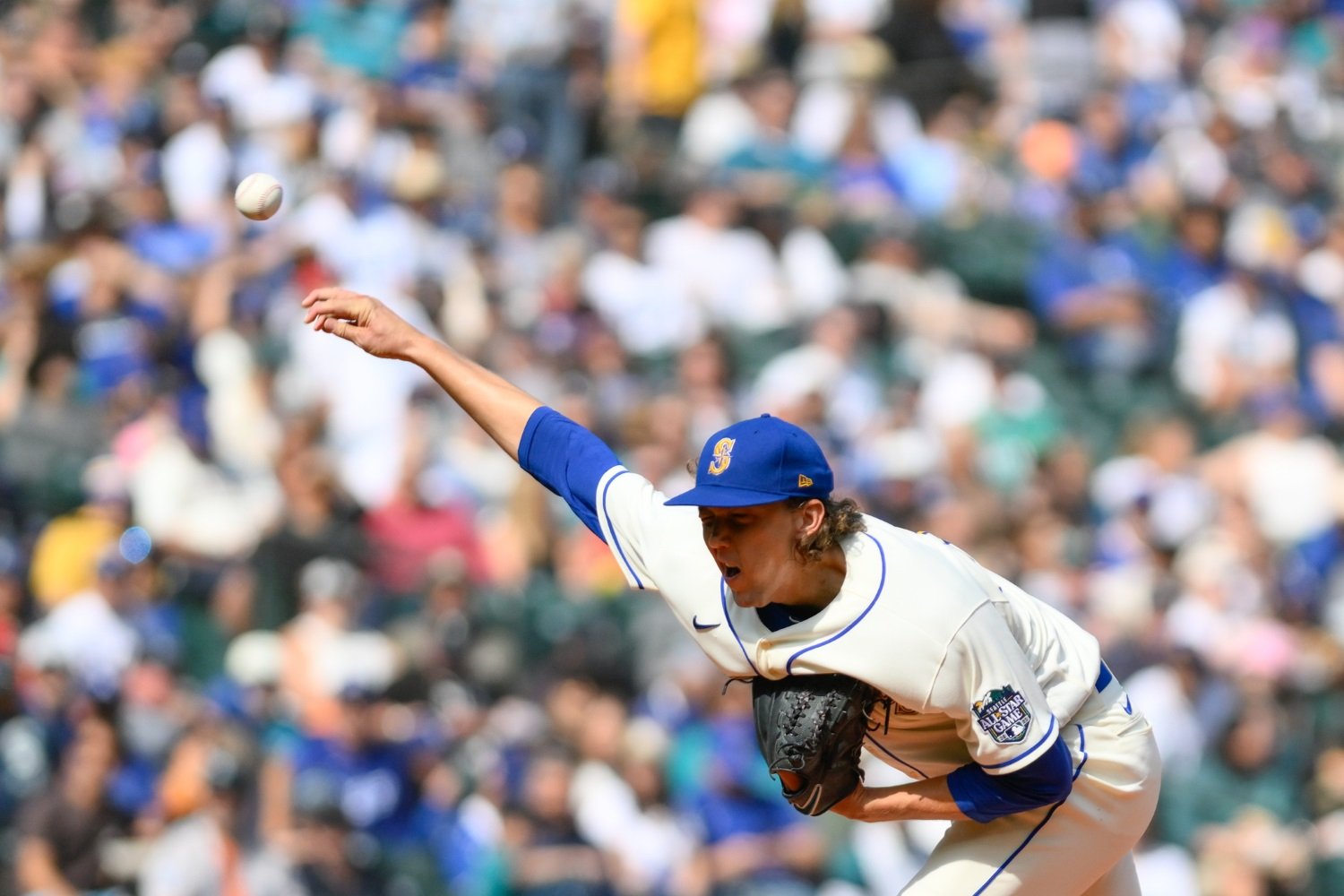 As we have discussed at length, the Twins have repeatedly traded to upgrade their starting pitching. They acquired Joe Ryan in a great value deal for a few months' worth of Nelson Cruz. Pablo López was the return for Luis Arráez, in one of the most balanced 'challenge' trades in recent memory. Chris Paddack was acquired right as the Twins were starting the 2022 season, in a trade that may pay enormous dividends for Minnesota. In Bailey Ober and Louie Varland, the Twins have drafted and developed a further contingent of starting pitching contributors. It's also often noted that the Twins' development staff consistently add velocity to pitchers as they develop. Pierson Ohl is an excellent example of this. When drafted as a 14th-rounder out of Grand Canyon University, Ohl's fastball was around 88 mph. Fast-forward a few years, and it's sitting at 93-95 mph, while he's one of the better-performing pitchers in all of Double-A ball. Suppose we stitch the starters acquired by trade and the homegrown rotation members together. In that case, we can identify two facets of pitching development the Twins repeatedly tap into: outstanding extension and effective velocity. Extension quantifies how close the pitcher's release point is to home plate. Typically, taller pitchers have better extension, as longer levers allow them to cover more ground coming down the mound before releasing the ball. The advantage is straightforward: the longer the extension, the shorter the distance the ball travels to cross home plate, and thus, the less time a hitter has to react, making the pitch velocity appear greater. You won't be surprised to know there's a helpful metric that sums up this phenomenon. Effective Velocity estimates the speed the hitter faces by adjusting raw velocity for the difference between the pitcher's extension and the league average in that category. The greater the extension, the greater the differential between effective and release velocity, which we'll call added velocity. Let's look at the Twins rotation members' extension and effective velocity to identify some organizational preferences, in addition to helping us find the starting pitching trade target that best suits them. Pitcher Fastball Velocity (mph) Extension (ft) EffectVel (mph) Joe Ryan 92.3 6.55 92.7 (+0.4) Louie Varland 95.1 6.83 96 (+0.9) Chris Paddack 95.4 6.92 96.5 (+1.1) Pablo López 94.9 7.19 96.5 (+1.6) Bailey Ober 91.4 7.3 93.1 (+1.7) Joe Ryan is a helpful starting point for our discussion, as he has almost precisely average extension. Ryan doesn't benefit much from his extension. As detailed extensively elsewhere, his fastball has unique traits underpinned by a low release point and the 'rising' effect tied to spin efficiency. Ryan is a solid baseline for extension and effective velocity in the Twins' rotation. Below, you'll see a side-view representation of Ryan's release point and a good representation of his extension (and his low release). The rest of the group can be categorized as good (Varland and Paddack) and great (López and Ober) when gaining an extra tick on their fastball through extension. Varland and Paddack, on average, gain one mile per hour on their fastball through their comfortably above-average extension. That brings Paddack to 96.5 mph, on a pitch that has been inconsistent throughout his career. In Pablo López and Bailey Ober, the Twins have two starters with exceptional extension (7.2 and 7.3 feet, on average). Respectively, this adds 1.6 mph and 1.7 mph to their fastballs, if we look at their Effective Velocity. Ober is likely the most significant beneficiary here, as the difference between 91.4 and 93.1 mph is substantial. But what are the tangible impacts of outstanding extension? For every full tick of increase in Added Velocity, modeling suggests a pitcher will gain approximately 0.3 runs per 100 pitches thrown. If we apply that to the number of fastballs each highlighted pitcher threw in 2023, we see the cumulative impact of a rotation with good-to-great extension. (We'll remove Chris Paddack from the following graphic, as his sample size was too small in 2023 to be meaningful.) Pitcher Fastballs Thrown Added Velo Runs Gained Joe Ryan 1558 +0.4 +1.87 Louie Varland 1100 +0.9 +2.97 Pablo López 1043 +1.6 +5 Bailey Ober 1241 +1.7 +6.32 Here, we clearly illustrate the impact of average-plus extension, versus elite extension. López and Ober gained 5 and 6.3 runs throughout a season, just from their fastball's Effective Velocity, through outstanding extension and releasing the ball closer to home plate. You can see why this is an organizational preference. The Twins have repeatedly shown the ability to add velocity through the development of young players. Elite extension is a way to add velocity without adding velocity, particularly for players you are targeting or acquiring via trade, as we see from the side-view of Ober's extension below, which is noticeably closer to home plate than Ryan's. With all of this in mind, it is time to turn our attention to a Twins trade candidate, Logan Gilbert. Gilbert has the best extension in baseball (7.5 feet on average in 2023). He's in a different category from Ober's initial fastball velocity (95.7 mph on average). Gilbert gains a whopping 2.2 mph in added velocity per fastball thrown, leading to approximately eight runs gained on his fastball per season (using his 2023 numbers as a proxy for 2024). Pitcher Fastball Velocity (mph) Extension (ft) EffectVel (mph) Bailey Ober 91.4 7.3 93.1 (+1.7) Logan Gilbert 95.7 7.53 97.9 (+2.2) Here, we can see from the side just how far Gilbert gets towards home plate when he releases the baseball. Pitcher Fastballs Thrown Added Velocity Runs Gained Bailey Ober 1241 +1.7 +6.32 Logan Gilbert 1224 +2.2 +8.07 There are plenty of reasons the Twins won't trade for Gilbert. Given that he isn't a free agent until 2028, the price would be astronomical, and more than the Twins will want to pay. Acquiring starting pitching is risky and challenging, which is a good reminder that Derek Falvey deserves credit for his success doing it during his tenure as Twins POBO. If the Twins are going to engage in a big trade this offseason, give me the guy who makes 95 mph look like 98. What would you give up to land Gilbert? Let's talk about pitching in the comments. Research assistance provided by TruMedia
- 44 comments
-
- 6
-
-

-
- pablo lopez
- bailey ober
- (and 2 more)
-
Thanks for reading, appreciate it. There will be a part two next week sometime.
-
Destination: The Show. Episode 19
Jamie Cameron replied to Jamie Cameron's topic in Twins Daily Front Page News
That's up to @Jeremy Nygaard

