



Jamie Cameron
-
Posts
1,349 -
Joined
-
Last visited
-
Days Won
4
Content Type
Profiles
News
Minnesota Twins Videos
2026 Minnesota Twins Top Prospects Ranking
2022 Minnesota Twins Draft Picks
Minnesota Twins Free Agent & Trade Rumors, Notes, & Tidbits
Guides & Resources
2023 Minnesota Twins Draft Picks
The Minnesota Twins Players Project
2024 Minnesota Twins Draft Picks
2025 Minnesota Twins Draft Pick Tracker
2026 Minnesota Twins Draft Tracker: Picks & Bonuses
Forums
Blogs
Events
Store
Downloads
Gallery
Everything posted by Jamie Cameron
-
Draft tandem Jeremy Nygaard and JD Cameron team up for a podcast to discuss prospects on their way to the big leagues and the MLB draft, produced by Theo Tollefson. Image courtesy of Thieres Rabelo Draft tandem Jeremy Nygaard and JD Cameron team up for a podcast to discuss prospects on their way to the big leagues and the MLB draft, produced by Theo Tollefson. In episode 45 of Destination: The Show, Jeremy and Jamie review the 2024 MLB Draft classes for the Cubs, Brewers, and Twins. They talk through day one hauls in depth before digging into best value picks, under-the-radar names from day two and three, and their overall impressions of each class. The guys dig into some possible signability concerns for the Brewers, ask if the Twins class was underwhelming, and evaluate how the Cubs leveraged minimal picks and money from their bonus pool. Finally, they preview forthcoming content, including some final wrap up on the 2024 draft cycle, the looming trade deadline, and digging back into MiLB baseball. 0:00 Intro 9:17 Cubs Draft Review 23:40 Brewers Draft Review 39:09 Twins Draft Review 56:00 Listener Questions You can support the show by downloading it from wherever you get your podcasts, including iTunes and Spotify. If you enjoy the content, consider leaving us a five-star rating and review in addition to sharing or retweeting DTS-related content. You can follow us on Twitter @DTS_POD1, @Jeremynygaard, @J_D_Cameron, and @TheodoreTollef1. You can also find full episodes and clips of our shows on our YouTube page @DestinationTheShow. View full article
-
Using the pick received for losing Sonny Gray, the Twins add another college infielder. View full video
-
Using the pick received for losing Sonny Gray, the Twins add another college infielder.
-
The Twins finally draft a pitcher in Dasan Hill, a tall, skinny southpaw.
-
The Twins finally draft a pitcher in Dasan Hill, a tall, skinny southpaw. View full video
-
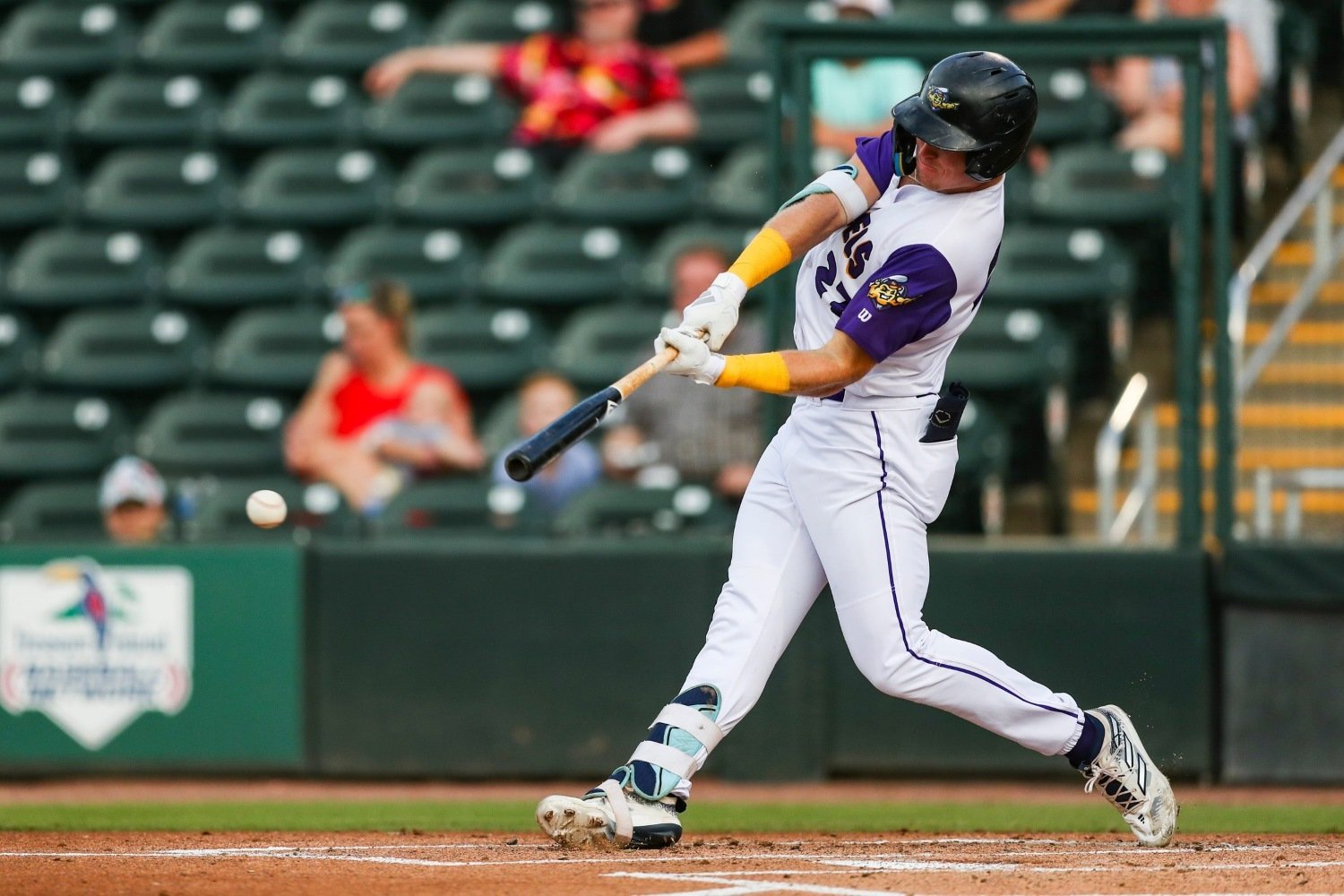 Walker Jenkins’s 2024 season has been full of interruptions. A hamstring strain sustained in his first game of the season sidelined him for six weeks, after just one at-bat. Even the Florida weather hasn’t cooperated. Jenkins has been back and playing since early June, though, so it’s time to dig into his 2024 data. What is he doing well? What’s left to work on? Let’s take a peek. Jenkins came roaring out of the blocks in 2023, making short work of the Florida Complex League and earning an end-of-season stint in the Florida State League. He continued to impress, hitting .392/.446/.608 in a tiny 12-game sample there. Jenkins hit everything in that short debut, posting an 82% contact rate and an absurd 9.5% in-zone whiff rate. He struck out just 10.7% of the time, but only walked 7.2% of the time. It was plenty to whet the appetites of Twins fans heading into 2024. Despite the setbacks, he's done everything in his power this year to deliver on that tantalizing promise. His counting stats look fairly ordinary. In 26 games, he’s hit .260/.385/.365, with 2 home runs. That line might be uninspiring, but there’s a lot going on under the hood that suggests Jenkins is on his way to becoming an elite professional hitter. We’ll start with his approach. I mentioned Jenkins’s excellent bat-to-ball skills in reviewing his 2023 debut. It was also noteworthy that he didn’t walk much, but then, you don’t need to walk much when you can hit everything. This year, his frequency of free passes has ballooned from 7.2% to 17.1% (around 6% above average for the level). His strikeout rate has remained excellent, at 12.8% (around 12% better than average for the level). Jenkins is patient in his approach. He swings slightly less than his peers overall, but slightly more within the zone. His chase rate (21.6%) is more than five percentage points better than the league average. This is indicative of a hitter who combines a great eye for the strike zone with great swing decisions, going into his at-bats with a clear plan of attack. What of Jenkins’s bat-to-ball skills? They’re still exceptional. Jenkins has improved on his contact rate from his short 2023 debut, up to 86%. That’s 16% above average for the level, folks. Within the zone, specifically, he's less than half as likely to whiff when he swings (9.7%) than the average FSL batter (20.8%). The closest MLB comparison to Jenkins’ combination of bat-to-ball skills, in-zone contact, and chase rate? Mookie Betts. After such an unfair comparison, let’s dial it back and examine how this stacks up against other hitters at the same rung on the ladder of pro baseball. Jenkins’s contact skills rank fourth in Low-A ball, among players with at least 50 plate appearances). The only other prospect of note on his level is Tigers standout infielder Kevin McGonigle. Jenkins can get his bat to anything. Additionally, he’s now operating with an uncommon level of patience that will serve him well as he progresses through the middle and upper levels of minor-league ball. Many of Jenkins’s pre-draft scouting reports made note of his potential for plus hitting ability and plus power. The power hasn’t shown up much. Is that a cause for concern? In short, no. It’s true that there’s been little in the way of home-run power or extra-base hits for Jenkins in 2024, but the underlying markers suggest more power is on the way. Jenkins’s 90th-percentile exit velocity on the season is 101.7 mph, right around average for the level (102.1 mph). He’ll grow into more of that. Players typically add more than 2 mph to their 90th-percentile exit velocity between the ages of 19 and 21. Additionally, Jenkins is hitting the ball 95 mph or harder 35.4% of the time, slightly better than the 32.1% league average, and hitting the ball between 10-30 degrees 29.3% of the time (28.2% league average). In other words, he’s hitting the ball hard consistently, on trajectories that will consistently lead to extra-base impact, all at a very early age. It’s also worth noting how complete a hitter Jenkins appears to be early in 2024. He doesn’t have stark splits by handedness, and seems to pick up spin and offspeed pitches well out of the pitcher's hand, as demonstrated by the consistency of his contact, and chase rates when broken down by pitcher handedness and pitch type. Swing% Contact% InZoneWhiff% Chase% LHP 41% 82.8% 16.7% 21.7% RHP 50% 86.6% 8.2% 21.6% FourSeam 47.5% 91.2% 7.2% 25.8% TwoSeam 42.2% 82.6% 12.5% 11.3% Slider 36.8% 81.3% 5% 25% Curveball 30.4% 83.7% 0% 21.4% Changeup 45% 86.1% 16% 22.4% Jenkins utilizes the whole field well, as we can see from a scatter of his batted ball events. My conjecture is that his ability to hit the ball the other way (in tandem with his growing but not-yet-maxed power) is what’s leading to a relatively low slugging average so far. A lot of his batted-ball events are longish fly ball outs to the opposite field. The tide will turn on those soon, as he continues to add strength (or starts to pull the ball a little more). For me, health is the only concern. Jenkins combines outstanding bat-to-ball skills and swing decisions with indications that he’ll continue to add offensive impact, in terms of extra-base hits. Don’t let the baseball card stats fool you; this 19-year-old is a global top-10 prospect in baseball Research assistance provided by TruMedia Sports
 -
In his first full season as a professional, the Twins' top prospect's surface-level numbers look fairly pedestrian. Under the hood, though, where the batted-ball and pitch-by-pitch data sit, it's a different story. Image courtesy of © Jonah Hinebaugh/Naples Daily News/USA Today Network-Florida / USA TODAY NETWORK In his first full season as a professional, the Twins' top prospect's surface-level numbers look fairly pedestrian. Under the hood, though, where the batted-ball and pitch-by-pitch data sit, it's a different story. Walker Jenkins’s 2024 season has been full of interruptions. A hamstring strain sustained in his first game of the season sidelined him for six weeks, after just one at-bat. Even the Florida weather hasn’t cooperated. Jenkins has been back and playing since early June, though, so it’s time to dig into his 2024 data. What is he doing well? What’s left to work on? Let’s take a peek. Jenkins came roaring out of the blocks in 2023, making short work of the Florida Complex League and earning an end-of-season stint in the Florida State League. He continued to impress, hitting .392/.446/.608 in a tiny 12-game sample there. Jenkins hit everything in that short debut, posting an 82% contact rate and an absurd 9.5% in-zone whiff rate. He struck out just 10.7% of the time, but only walked 7.2% of the time. It was plenty to whet the appetites of Twins fans heading into 2024. Despite the setbacks, he's done everything in his power this year to deliver on that tantalizing promise. His counting stats look fairly ordinary. In 26 games, he’s hit .260/.385/.365, with 2 home runs. That line might be uninspiring, but there’s a lot going on under the hood that suggests Jenkins is on his way to becoming an elite professional hitter. We’ll start with his approach. I mentioned Jenkins’s excellent bat-to-ball skills in reviewing his 2023 debut. It was also noteworthy that he didn’t walk much, but then, you don’t need to walk much when you can hit everything. This year, his frequency of free passes has ballooned from 7.2% to 17.1% (around 6% above average for the level). His strikeout rate has remained excellent, at 12.8% (around 12% better than average for the level). Jenkins is patient in his approach. He swings slightly less than his peers overall, but slightly more within the zone. His chase rate (21.6%) is more than five percentage points better than the league average. This is indicative of a hitter who combines a great eye for the strike zone with great swing decisions, going into his at-bats with a clear plan of attack. What of Jenkins’s bat-to-ball skills? They’re still exceptional. Jenkins has improved on his contact rate from his short 2023 debut, up to 86%. That’s 16% above average for the level, folks. Within the zone, specifically, he's less than half as likely to whiff when he swings (9.7%) than the average FSL batter (20.8%). The closest MLB comparison to Jenkins’ combination of bat-to-ball skills, in-zone contact, and chase rate? Mookie Betts. After such an unfair comparison, let’s dial it back and examine how this stacks up against other hitters at the same rung on the ladder of pro baseball. Jenkins’s contact skills rank fourth in Low-A ball, among players with at least 50 plate appearances). The only other prospect of note on his level is Tigers standout infielder Kevin McGonigle. Jenkins can get his bat to anything. Additionally, he’s now operating with an uncommon level of patience that will serve him well as he progresses through the middle and upper levels of minor-league ball. Many of Jenkins’s pre-draft scouting reports made note of his potential for plus hitting ability and plus power. The power hasn’t shown up much. Is that a cause for concern? In short, no. It’s true that there’s been little in the way of home-run power or extra-base hits for Jenkins in 2024, but the underlying markers suggest more power is on the way. Jenkins’s 90th-percentile exit velocity on the season is 101.7 mph, right around average for the level (102.1 mph). He’ll grow into more of that. Players typically add more than 2 mph to their 90th-percentile exit velocity between the ages of 19 and 21. Additionally, Jenkins is hitting the ball 95 mph or harder 35.4% of the time, slightly better than the 32.1% league average, and hitting the ball between 10-30 degrees 29.3% of the time (28.2% league average). In other words, he’s hitting the ball hard consistently, on trajectories that will consistently lead to extra-base impact, all at a very early age. It’s also worth noting how complete a hitter Jenkins appears to be early in 2024. He doesn’t have stark splits by handedness, and seems to pick up spin and offspeed pitches well out of the pitcher's hand, as demonstrated by the consistency of his contact, and chase rates when broken down by pitcher handedness and pitch type. Swing% Contact% InZoneWhiff% Chase% LHP 41% 82.8% 16.7% 21.7% RHP 50% 86.6% 8.2% 21.6% FourSeam 47.5% 91.2% 7.2% 25.8% TwoSeam 42.2% 82.6% 12.5% 11.3% Slider 36.8% 81.3% 5% 25% Curveball 30.4% 83.7% 0% 21.4% Changeup 45% 86.1% 16% 22.4% Jenkins utilizes the whole field well, as we can see from a scatter of his batted ball events. My conjecture is that his ability to hit the ball the other way (in tandem with his growing but not-yet-maxed power) is what’s leading to a relatively low slugging average so far. A lot of his batted-ball events are longish fly ball outs to the opposite field. The tide will turn on those soon, as he continues to add strength (or starts to pull the ball a little more). For me, health is the only concern. Jenkins combines outstanding bat-to-ball skills and swing decisions with indications that he’ll continue to add offensive impact, in terms of extra-base hits. Don’t let the baseball card stats fool you; this 19-year-old is a global top-10 prospect in baseball Research assistance provided by TruMedia Sports View full article
-
JD Cameron breaks down some of Zebby Matthews 2024 numbers, improvements he’s made to his pitch mix, and his remarkable season in the Twins organization. View full video
-
JD Cameron breaks down some of Zebby Matthews 2024 numbers, improvements he’s made to his pitch mix, and his remarkable season in the Twins organization.
-
I won't play guessing games on bonus demands, but Hill was committed to Dallas Baptist, he'll sign.
-
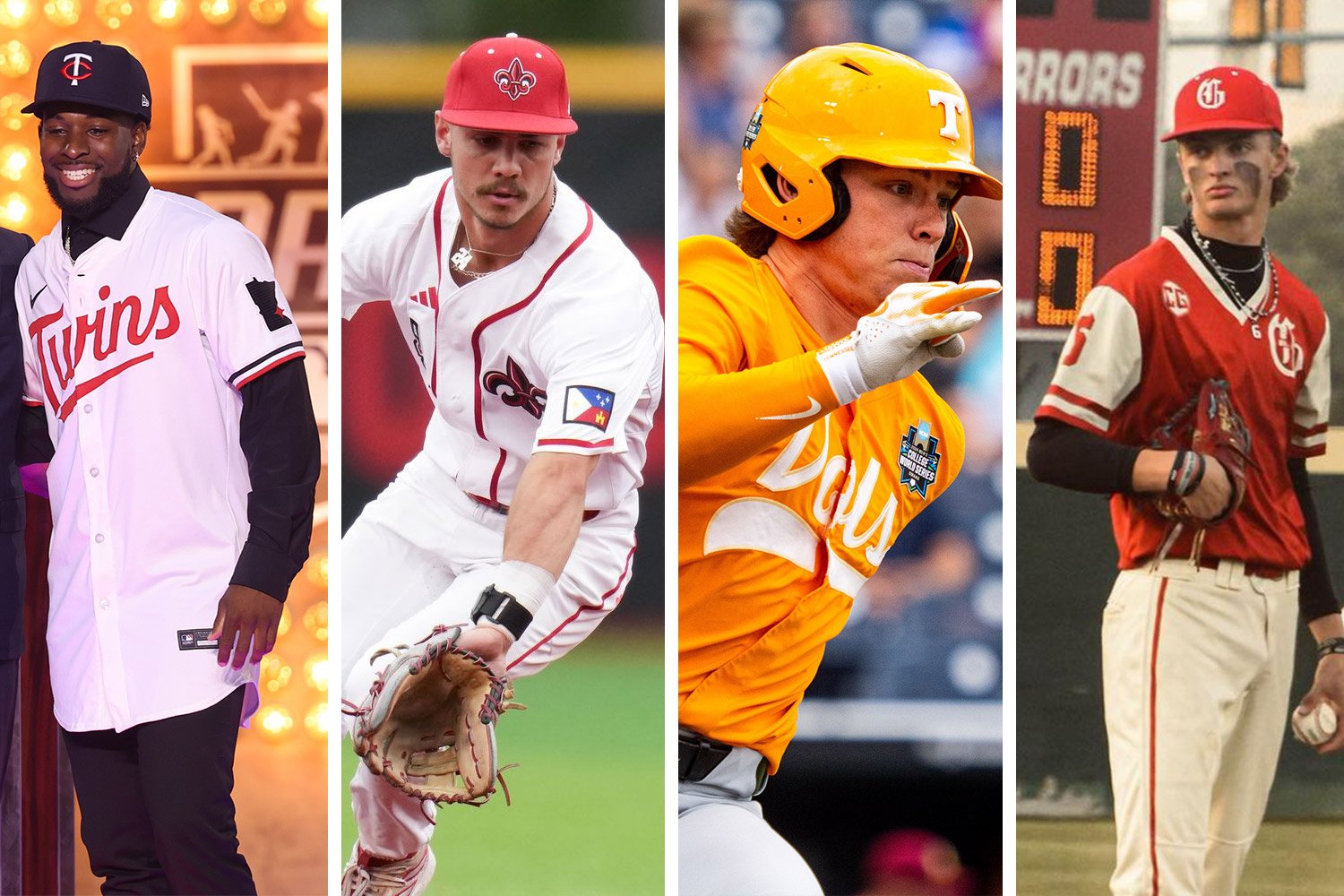 Day One of the 2024 MLB Draft is in the books. Prior to the 2023 draft, Twins Vice President of Amateur Scouting Sean Johnson conducted an annual interview with Darren Wolfson at Target Field. In his comments, he noted, "We want to lean into the strength of the draft." That played out in 2023 with a strong prep class, and it’s true again in 2024, with a strong collection of college bats in the top 75 or so players. What can we make of the Twins' four Day One selections? What are their strengths and opportunities for improvement, as they begin their journey in pro baseball? Let’s dig in. For each pick, you'll find their position, age, school, height, weight, handedness, and position on our consensus board listed under their name. Kaelen Culpepper, 21st Overall Pick SS, 21 Kansas State, 6’0, 190, R/R (35) Culpepper (insert DJ Khaled ‘another one’ gif) had a productive 2024 season at Kansas State, sliding over from third base to shortstop and handling the transition well. He buoyed what is a thin crop of college shortstops, typically a coveted demographic. Culpepper had a productive 2024 season, slashing .328/.419/.574 with 11 home runs, 35 walks, and 41 strikeouts in 61 games for Kansas State. Culpepper has a simple, direct right-handed swing and manipulates the barrel of the bat well. He hits the ball hard often, maintaining a good average exit velocity without reaching upper-echelon watermarks that mark some of the other first-round college bats. Culpepper pulls his fly balls less than an average hitter (41st percentile), and much of his hard contact is to the opposite field. I think the Twins will feel that tapping into more pulled fly fly-ball batted ball events can unlock more power for Culpepper. While the power may never be plus, it should be average, giving him a 50 grade or better on every tool. Culpepper’s biggest opportunity is to rein in an overly aggressive approach at the plate. He chased 27% of the time in 2024, and has a particular tendency to go after breaking pitches. This habit seems to be more rooted in an aggressive approach than a challenge picking up spin. Defensively, the arm, actions, and athleticism will play at shortstop. I think Culpepper has a good chance to stick there. It will all play somewhere else on the dirt as an above-average defender, if he doesn’t. Culpepper profiles as a relatively low-variance college bat who should accrue consistently solid value--if he can tamp down the overly aggressive approach at the plate. Kyle DeBarge, 33rd Overall Pick SS, 21, Louisiana-Lafayette, 5’9, 175, R/R (50) DeBarge is an undersized college shortstop who had a major power breakout in 2024, hitting .356/.418/.699 with 21 home runs (43 XBH), 24 walks and 30 strikeouts in 60 games. DeBarge posts good bat speed and his swing, in combination with his athleticism, give him some of the best bat to ball skills in the entire draft class, with an in zone contact rate north of 90%. I don’t think DeBarge’s power breakout is going to translate to professional baseball. He has already maximized his ability to pull the ball, with a pulled fly ball rate that outstripped the average in college baseball in 2024. He profiles as a line drive, doubles hitter as a pro, and a challenging out for pitchers with plus speed to boot. Defensively, while DeBarge doesn’t have the best arm, he makes up for it with excellent twitch and athleticism that allowed him to handle shortstop well in college. It’s good actions and range at the position. He might slide to second base ultimately. Big picture, the Twins first two picks give some indicators about on field preferences for hitters. They value swings they think can be effective, and strong bat-to-ball skills. Other aspects of offensive profiles (like a high chase rate) they believe they can reign in and help prospects improve. These tendencies won’t ever apply to every prospect drafted (see Amick below) but the Twins first two picks indicate that solving for poor contact ability is a challenging developmental hurdle. Billy Amick, 60th Overall Pick 3B, 21, Tennessee, 6’0, 210, R/R (40) Unlike the Twins first two picks, Amick doesn’t fit the trend of valuing strong contact skills. It’s a power over hit profile here. Amick was ranked 40th on the consensus board and had been mocked to the Twins in the first round. I didn’t love it at 21, but it’s great value at 60. Amick played third base for the national champion Tennessee Volunteers, helping anchor the most prolific offense in the country. He hit .306/.387/.639 (1.026) with 23 home runs (38 XBH), 29 walks and 53 strikeouts in 65 games. Power is the calling card here. Amick has easy raw power and was 97th percentile in 90th percentile exit velocity in college baseball this year (just south of 110 mph). Amick is a machine in terms of pulling fly balls. He is a perfect fit for how the Twins want hitters to deploy power. There’s certainly warts with Amick’s profile, though, specifically his hit tool. Amick’s bat to ball skills are the first potential challenge here. His overall contact rate in 2024 was 70% (81% in zone). Both of those figures are on the low end for college baseball. Amick also chases a ton (over 30% in 2024). That’s potentially a dangerous combination and he’ll have to improve one of those two aspects of his offensive profile to be a viable MLB bat. Amick handled third base decently in 2024. For me, he’s a strong value play at 60. He’ll certainly be fun to watch when he debuts. Dasan Hill, 69th Overall Pick LHP, 18, Grapevine HS, TX, 6’5, 175, L/L (58) Dasan Hill profiles as the Twins most intriguing day one pick. It’s a fool's errand to speculate on bonus demands, but I think it’s likely the Twins saved some money with their first two picks, so a prep arm felt like it was coming. Hill is the ultimate projection arm you can dream on. He’s listed at 6’5, 175 pounds, and the fastball is already up to 97 mph. Even if he’s not maintaining that type of velocity through the end of starts, it’s easy to imagine where the fastball might get to with added weight, strength, and given the Twins ability to add a few ticks. Hill throws two distinct breaking pitches (slider and a curveball) with both generally being deemed above average. There’s also a changeup with good fade in his arsenal. Fangraphs scouting report on Hill (their number 24 prospect) describes him as having ‘a feel for location uncommonly good for a pitcher his size and age’. That feels extremely relevant. If we can highlight a Twins tendency when drafting pitchers, it’s drafting strike throwers whose stuff they can augment. Zebby Matthews and Andrew Morris are recently drafted examples. Mapping that principle onto a 6’5 lefty who has a four-pitch mix with a fastball that’s been up to 97 mph is compelling, to say the least. What did you make of the Twins day one picks? Who are you excited to see debut in pro ball? Join in the discussion with a comment below.
 -
What can we make of the Twins' four Day One selections in Sunday night's draft? What are their strengths and opportunities, as they transition into professional baseball? Let’s dig in. Image courtesy of © Dylan Widger-USA TODAY Sports What can we make of the Twins' four Day One selections in Sunday night's draft? What are their strengths and opportunities, as they transition into professional baseball? Let’s dig in. Day One of the 2024 MLB Draft is in the books. Prior to the 2023 draft, Twins Vice President of Amateur Scouting Sean Johnson conducted an annual interview with Darren Wolfson at Target Field. In his comments, he noted, "We want to lean into the strength of the draft." That played out in 2023 with a strong prep class, and it’s true again in 2024, with a strong collection of college bats in the top 75 or so players. What can we make of the Twins' four Day One selections? What are their strengths and opportunities for improvement, as they begin their journey in pro baseball? Let’s dig in. For each pick, you'll find their position, age, school, height, weight, handedness, and position on our consensus board listed under their name. Kaelen Culpepper, 21st Overall Pick SS, 21 Kansas State, 6’0, 190, R/R (35) Culpepper (insert DJ Khaled ‘another one’ gif) had a productive 2024 season at Kansas State, sliding over from third base to shortstop and handling the transition well. He buoyed what is a thin crop of college shortstops, typically a coveted demographic. Culpepper had a productive 2024 season, slashing .328/.419/.574 with 11 home runs, 35 walks, and 41 strikeouts in 61 games for Kansas State. Culpepper has a simple, direct right-handed swing and manipulates the barrel of the bat well. He hits the ball hard often, maintaining a good average exit velocity without reaching upper-echelon watermarks that mark some of the other first-round college bats. Culpepper pulls his fly balls less than an average hitter (41st percentile), and much of his hard contact is to the opposite field. I think the Twins will feel that tapping into more pulled fly fly-ball batted ball events can unlock more power for Culpepper. While the power may never be plus, it should be average, giving him a 50 grade or better on every tool. Culpepper’s biggest opportunity is to rein in an overly aggressive approach at the plate. He chased 27% of the time in 2024, and has a particular tendency to go after breaking pitches. This habit seems to be more rooted in an aggressive approach than a challenge picking up spin. Defensively, the arm, actions, and athleticism will play at shortstop. I think Culpepper has a good chance to stick there. It will all play somewhere else on the dirt as an above-average defender, if he doesn’t. Culpepper profiles as a relatively low-variance college bat who should accrue consistently solid value--if he can tamp down the overly aggressive approach at the plate. Kyle DeBarge, 33rd Overall Pick SS, 21, Louisiana-Lafayette, 5’9, 175, R/R (50) DeBarge is an undersized college shortstop who had a major power breakout in 2024, hitting .356/.418/.699 with 21 home runs (43 XBH), 24 walks and 30 strikeouts in 60 games. DeBarge posts good bat speed and his swing, in combination with his athleticism, give him some of the best bat to ball skills in the entire draft class, with an in zone contact rate north of 90%. I don’t think DeBarge’s power breakout is going to translate to professional baseball. He has already maximized his ability to pull the ball, with a pulled fly ball rate that outstripped the average in college baseball in 2024. He profiles as a line drive, doubles hitter as a pro, and a challenging out for pitchers with plus speed to boot. Defensively, while DeBarge doesn’t have the best arm, he makes up for it with excellent twitch and athleticism that allowed him to handle shortstop well in college. It’s good actions and range at the position. He might slide to second base ultimately. Big picture, the Twins first two picks give some indicators about on field preferences for hitters. They value swings they think can be effective, and strong bat-to-ball skills. Other aspects of offensive profiles (like a high chase rate) they believe they can reign in and help prospects improve. These tendencies won’t ever apply to every prospect drafted (see Amick below) but the Twins first two picks indicate that solving for poor contact ability is a challenging developmental hurdle. Billy Amick, 60th Overall Pick 3B, 21, Tennessee, 6’0, 210, R/R (40) Unlike the Twins first two picks, Amick doesn’t fit the trend of valuing strong contact skills. It’s a power over hit profile here. Amick was ranked 40th on the consensus board and had been mocked to the Twins in the first round. I didn’t love it at 21, but it’s great value at 60. Amick played third base for the national champion Tennessee Volunteers, helping anchor the most prolific offense in the country. He hit .306/.387/.639 (1.026) with 23 home runs (38 XBH), 29 walks and 53 strikeouts in 65 games. Power is the calling card here. Amick has easy raw power and was 97th percentile in 90th percentile exit velocity in college baseball this year (just south of 110 mph). Amick is a machine in terms of pulling fly balls. He is a perfect fit for how the Twins want hitters to deploy power. There’s certainly warts with Amick’s profile, though, specifically his hit tool. Amick’s bat to ball skills are the first potential challenge here. His overall contact rate in 2024 was 70% (81% in zone). Both of those figures are on the low end for college baseball. Amick also chases a ton (over 30% in 2024). That’s potentially a dangerous combination and he’ll have to improve one of those two aspects of his offensive profile to be a viable MLB bat. Amick handled third base decently in 2024. For me, he’s a strong value play at 60. He’ll certainly be fun to watch when he debuts. Dasan Hill, 69th Overall Pick LHP, 18, Grapevine HS, TX, 6’5, 175, L/L (58) Dasan Hill profiles as the Twins most intriguing day one pick. It’s a fool's errand to speculate on bonus demands, but I think it’s likely the Twins saved some money with their first two picks, so a prep arm felt like it was coming. Hill is the ultimate projection arm you can dream on. He’s listed at 6’5, 175 pounds, and the fastball is already up to 97 mph. Even if he’s not maintaining that type of velocity through the end of starts, it’s easy to imagine where the fastball might get to with added weight, strength, and given the Twins ability to add a few ticks. Hill throws two distinct breaking pitches (slider and a curveball) with both generally being deemed above average. There’s also a changeup with good fade in his arsenal. Fangraphs scouting report on Hill (their number 24 prospect) describes him as having ‘a feel for location uncommonly good for a pitcher his size and age’. That feels extremely relevant. If we can highlight a Twins tendency when drafting pitchers, it’s drafting strike throwers whose stuff they can augment. Zebby Matthews and Andrew Morris are recently drafted examples. Mapping that principle onto a 6’5 lefty who has a four-pitch mix with a fastball that’s been up to 97 mph is compelling, to say the least. What did you make of the Twins day one picks? Who are you excited to see debut in pro ball? Join in the discussion with a comment below. View full article
-
The 2024 MLB Draft is just over a week away. Let’s step back and take stock of the class as a whole, and dig into some under-the-radar profiles to know ahead of Jul. 14. Image courtesy of © Nicole Mullen/The Republic / USA TODAY NETWORK The 2024 MLB Draft is just over a week away. Let’s step back and take stock of the class as a whole, and dig into some under-the-radar profiles to know ahead of Jul. 14. We’re about a week away from the opening night of the 2024 MLB Draft. The Consensus Board will go through a ton of updates by then, as everyone seems to like to release a very ‘last-minute’ version of their boards. The overall constitution won’t change much, though. It’s shuffling at this stage. So, what can we make of this class? How does it compare to last year? Who are some favorites further down the board? Let’s dig in. However a class is initially labeled, usually, that impression sticks. In this case, we might sum up that first take as, ‘It's a poor class.’ There’s truth to that. This is most evidenced by the shortstop and prep bat demographics. In 2023, there were 22 shortstops with top-100 profiles on the consensus board. In 2024, that’s just 14, with a number likely to move off the position. Looking at prep bats in general, there were 28 in the top 100 in 2023, compared to 20 this year. There’s a solid crop of college bats in this year's class through pick 65, so I’d expect model-based teams (those who use quantifiable inputs and empirical modeling to pick their targets) to load up on bats early. The lack of shortstops bolsters the infield crop this year. There’s 17 college infield profiles (1B, 2B, 3B) in the top 100 this year, compared to 11 last year. Move to the top of the board, and that becomes more stark, with two first base-only defensive profiles (Caglianone, Kurtz) in the top 10. That’s not my flavor of risk profile. Overall, there’s a lack of premium, up-the-middle defense. Instead of thinking about what demographics of a class are strong, I find it more helpful to mine which demographics are strong in a particular area of the board. While prep bats are not a strong demographic, there are five prep shortstops in the 30-40 range (Gillen, Sanford, Johnson, Lewis, and Lindsey). Catching is an improved demographic from 2023, with three profiles (Moore, Janek, and Lomavita) sitting in the 20-30 range, and two more (Cozart and Bazzell) in the 40-60 range. So, what is the strength of this class? After the college bats in the first half of the top 100, it’s pitching depth, both college and prep. Forty-three of the top 100 profiles in this class are pitchers, evenly split between college (21) and prep (22). There are even a healthy number of lefties: 15, compared to just eight last year. There’s diversity in the profiles, too: power, spin, control, it’s all represented. I suspect in five to seven years, when we look back on this class, organizations who did well will have had good processes and good luck with their pitching selections. What about some under-the-radar player profiles? As usual, in our coverage on DTS and this site, we’re drawn towards profiles linked to the teams we cover. Who are some profiles I’m bullish on heading into the draft? I detailed some below, along with some information on each profile and their current consensus board position. With these picks, I worked to stay away from players ranked in the top 35 on the consensus board, to shine a light on some prospects further down the board. Tyson Lewis, SS, L/R, Millard West HS, NE (38) Headline: Prep shortstop with a chance for speed and power Lewis is a left-handed hitting prep shortstop prospect, in a class in which that demographic is a significant weakness. The Arkansas commit has gained a ton of strength in the last year, which has translated into better bat speed and more power. Lewis has a quick swing (supported by lightning-fast hands) that, at present profiles as a line drive machine. While some don't love his high hand placement, it's been working well for Lewis. His athletic frame offers plenty more in the tank in terms of future power if he's able to get to his newfound bat speed with more consistency. Defensively, Lewis has plus speed and great quickness, which aids his defense at shortstop. Solid actions and an above-average arm give him a good chance to stick there as a pro. This is a potential power/speed combination that won't remain on the board for long. Joey Oakie, RHP, R/R, Ankeny Centennial HS, IA (46) Headline: Lower launch prep arm with potent fastball/slider combination Throwing from a lower launch and lower three-quarter slot, prep righty Joey Oakie has some of the best stuff of any high-school pitcher in the 2024 class. A long, athletic frame with projection left and a quick, whippy arm indicate that there is likely more in the tank for Oakie, velocity-wise. On the mound, he throws a fastball that's been up to 97 mph with a ton of run. It's one of the most movement-heavy fastballs in the class. One wonders, given his release, if he might add a four-seamer to play up in the zone further down his development path. For secondaries, Oakie has a nasty slider. It has downward bite and a ton of sweep and has generated upwards of 20 inches of horizontal movement, with gaudy spin rates to match. Oakie also has a changeup, that is a fringy, developmental pitch (that he hasn't needed much). Kyle DeBarge, SS, R/R, Louisiana-Lafayette (59) Headline: Undersized, spark plug infielder who does everything well DeBarge is one of the better contact hitters in the entire draft class. In the box, it's a quiet operation with a short, compact swing aided by lightning-fast hands. DeBarge has excellent bat-to-ball skills and rarely chases. He doesn't strike out much but doesn't walk much either. There's some sneaky power to the pull side. Through the end of his 2024 season, DeBarge hit .356/.418/.699 (1.117) with 21 home runs (43 XBH), 24 walks, and 34 strikeouts in 60 games played. That's a significant step forward in almost every offensive category. DeBarge can impact the game with his other tools, too. He has plus speed with good instincts on the bases and a plus arm (he used to play catcher). While he might not be the smoothest operator at shortstop, his arm and lateral quickness aid his range, and he has a decent shot of sticking there as a professional. Chris Levonas, RHP, R/R, Christian Brothers Academy, NJ (66) Headline: Prep righty with improved stuff, an affinity for spin, and projection left Levonas is a gangly right-handed prep pitcher currently committed to Wake Forest. He has a package of interesting traits and skills on the mound. His fastball has taken a significant velocity jump this spring, up from the 90-92 mph range, now sitting 93-95 mph and touching 98 mph. It's an offering with good spin that is likely to be a plus pitch if it isn't already. Levonas has also shown great proficiency in spinning the baseball, with a slider/curveball breaker pairing that carries spin rates between 2800-3000 rpms, in addition to some feel for a changeup. Levonas commands and moves these pitches around the zone well, in addition to getting good extension at release. A loose, quick arm, with a four-pitch arsenal he commands well, a proclivity to spin the baseball, and plenty of projection. It's an up arrow for this profile heading into July. Aidan May, RHP, R/R, Oregon State (78) Headline: College righty with a devastating sweeper, tweener starter/relief profile May has long been an arm watched by evaluators. After stops in JUCO and at Arizona, he settled at Oregon State in 2024 after injuries and inconsistency hampered his first few years of college baseball. Throwing from a three-quarters slot, May throws a sinker in the 92-94 mph range that has been as high as 97 mph and is a solid above-average offering. It's paired with a sweeping slider that is already a plus pitch. May can generate north of 3,000 rpms on the pitch and can move it around the zone. There's also a changeup there with some fade, that could use greater velocity separation from his fastball. While some have already penciled May into a relief role, I think it's likely a drafting organization will give him a shot to start. There's an injury track record, but there are enough traits and enough of an arsenal to stick at starter as a pro. Cole Mathis, INF, R/R, College of Charleston (79) Headline: Data darling with great batted ball metrics and otherworldly Cape performance Mathis plays for a smaller school at College of Charleston but has forced himself into the day-one conversation through a combination of outstanding batted ball metrics in 2023 and an otherworldly Cape performance in 2023. He smacked 11 home runs in his summer stint, in addition to posting consistently strong exit velocities in his 2023 college season, up there with some of the best in the nation. There's plenty to like about his approach and swing as he walks more than he strikes out, leading to a strong on-base platform. As you might expect, Mathis has excellent bat speed and punishes pitches in the zone with consistency. He'd previously been a two-way player, up to 97 mph on the bump but is focused on hitting in 2024. He warmed up after a little bit of a slow start. His final line in 2024 was .335/.472/.650 (1.122) with 14 home runs (33 XBH), 46 walks, and just 32 strikeouts in 52 games. Gage Miller, 2B/3B, R/R, Alabama (91) Headline: JUCO transfer who mashed in the SEC with uncertain defensive home After spending some time dominating JUCO competition in Alabama, Gage Miller has made a seamless transition to SEC play in a loud breakout season that could see him end up a day-one pick. Miller finds the barrel of the bat plenty and has a good approach at the plate, not chasing too much out of the zone. There's good bat speed and that, combined with his natural strength, gives him some pull-side power. In his first 50 games for the Crimson Tide in 2024 he has 19 home runs, 26 walks, and just 23 strikeouts, buoying an impressive offensive output. He'll have to hit well as there's only fringy to average other tools. There's not much speed and it's an average arm and glove at best that might transition Miller to a corner outfield spot eventually. Still, putting up the kind of offensive season he has transitioning to the SEC is an impressive feat. Miller finished 2024 with a .381/.474/.702 (1.176) line with 18 home runs (32 XBH), 27 walks, and 24 strikeouts in 55 games for the Crimson Tide. That’s outstanding production against a leap in competition. Peyton Stovall, 2B, L/R, Arkansas (94) Headline: Potentially plus hitter with better underlying numbers than his solid 2024 production Stovall is a really good hitter whose offensive profile is underpinned by a picaresque left-handed swing. It's line drive power all over the field, he can pull a home run. The power tool projects to be average at best. Stovall fits best as a second baseman professionally, with a solid glove and arm, and above-avera speed. Coming off surgery in the back half of 2023 to repair his labrum, Stovall has finally had a clean bill of health and the opportunity to show what he can do over a full season in 2024. He ended the season with a .340/.409/.535 (.944) line with 9 home runs (19 XBH), 20 walks, and 42 strikeouts in 48 games for the Razorbacks. There's plenty to like here in an offensive profile headlined by a potentially great hit tool. Daniel Eagen, RHP, R/R, Presbyterian (118) Headline: Large-framed right hander from a small school who dominated the competition in 2024. Eagen's fastball took a velocity jump this spring after he moved into the rotation full time. It sits 93-94 mph but can get up to 96 mph with some carry, thrown from a high slot. Eagen throws a pair of breakers, a downer curveball in the low 80s, and a slider, both of which have been good bat missers in 2024. There's also a changeup in the arsenal, but it's seldom been used and needs more velocity separation from his fastball. Eagen had a great 2024 season. In 77.2 innings of work, he posted a 2.67 ERA, walking 28 and striking out 121. Eagen has taken a step forward in strike throwing in 2024. The combination of size, a little projection left from added strength, and the current arsenal give him a good chance to stick as a starter at the next level. Ryan Campos, C, L/R, Arizona State (148) Headline: Work-in-progress catcher with excellent track record of collegiate offensive production Campos is a left-handed hitting backstop who has gotten better and better at everything in his time at Arizona State. It's a very hitterish profile, with a strong approach at the plate. He walks plenty, doesn't strike out much, and has good bat to ball skills. Additionally, Campos has been getting to more impact in 2024, with 36 XBH, compared to 16 in 2023. Campos is a work in progress behind the plate. It's an average arm and the supplementary skills (blocking, receiving etc.) need some work. He draws rave reviews for his baseball IQ, character, and work ethic however, qualities that should give him the best shot at getting to average or fringe average defense. If Campos can't stick behind the plate, the bat has enough about it that other positions, such as first base and corner outfield, are a possibility. Campos finished 2024 with a .364/.461/.610 (1.072) line with 11 home runs (36 XBH), 40 walks and 25 strikeouts in 48 games. Sean Keys, 3B, L/R, Bucknell (188) Headline: Extra-base hit machine with good power and bat-to-ball skills Keys has one of the more analytically trendy profiles in the college hitting demographic this cycle and is coming off a monster season at Bucknell, with a Cape performance track record to back it up. A strong lower half anchors a violent swing which has done serious damage in 2024. Keys pairs this with an excellent approach at the plate, and impressive bat to ball skills (14% InZoneWhiff% in 2024). There's some question about the viability of Key's defensive profile at third base. If he can stick there, it'll be a significant value add, such that he could wind up a top 100 pick. If not, the offensive profile will play at first base. In 2024, Keys put together a .405/.535/.798 (1.333) line with 35 extra base hits (13 home runs), 35 walks and 25 strikeouts in 46 games. LP Langevin, RHP, R/R, Louisiana (199) Headline: Some of the best fastball traits in the class led to a whopping K% in 2024. Langevin is a JUCO transfer who made his way to Louisiana-Lafayette and put up staggering strikeout numbers, thanks to one of the best fastballs in the draft class. Hailing from Quebec, Langevin throws his fastball in the 92-94 mph range (top 97 mph). He throws from a lower slot, generates a ton of spin and produces plenty of ride from a low launch, a combination that produced a miss rate north of 45% on his fastball in 2024. Langevin has an average slider and a lagging changeup. He sometimes worked as a starter in college ball, but the future is likely as a reliever after putting up 15.2 K/9 in 2024. Who are your favorite under the radar prospects for the 2024 draft? Join the discussion with a comment below. View full article
-
12 Undervalued Draft Prospects Outside the Consensus Top 35
Jamie Cameron posted an article in MLB Draft
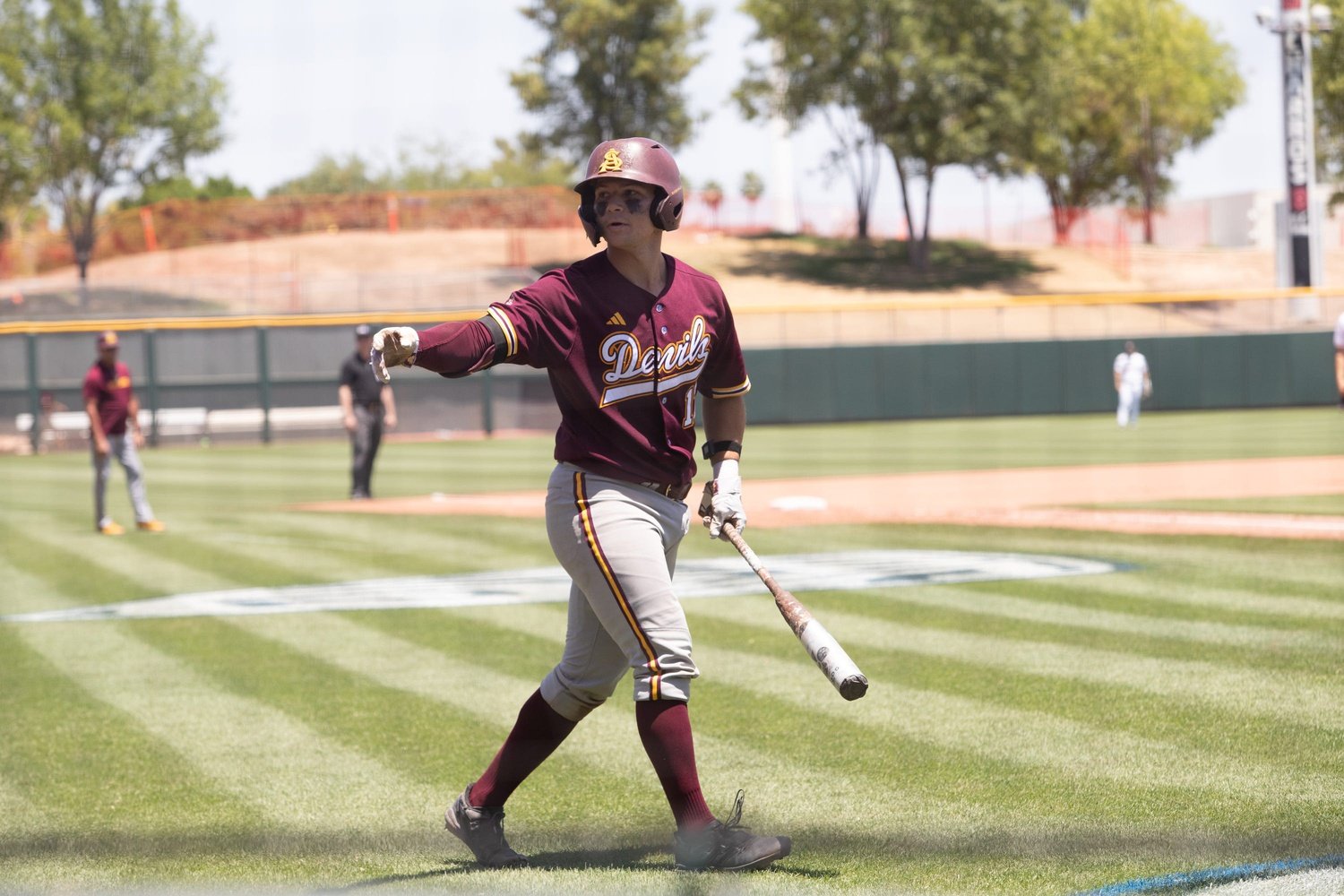 We’re about a week away from the opening night of the 2024 MLB Draft. The Consensus Board will go through a ton of updates by then, as everyone seems to like to release a very ‘last-minute’ version of their boards. The overall constitution won’t change much, though. It’s shuffling at this stage. So, what can we make of this class? How does it compare to last year? Who are some favorites further down the board? Let’s dig in. However a class is initially labeled, usually, that impression sticks. In this case, we might sum up that first take as, ‘It's a poor class.’ There’s truth to that. This is most evidenced by the shortstop and prep bat demographics. In 2023, there were 22 shortstops with top-100 profiles on the consensus board. In 2024, that’s just 14, with a number likely to move off the position. Looking at prep bats in general, there were 28 in the top 100 in 2023, compared to 20 this year. There’s a solid crop of college bats in this year's class through pick 65, so I’d expect model-based teams (those who use quantifiable inputs and empirical modeling to pick their targets) to load up on bats early. The lack of shortstops bolsters the infield crop this year. There’s 17 college infield profiles (1B, 2B, 3B) in the top 100 this year, compared to 11 last year. Move to the top of the board, and that becomes more stark, with two first base-only defensive profiles (Caglianone, Kurtz) in the top 10. That’s not my flavor of risk profile. Overall, there’s a lack of premium, up-the-middle defense. Instead of thinking about what demographics of a class are strong, I find it more helpful to mine which demographics are strong in a particular area of the board. While prep bats are not a strong demographic, there are five prep shortstops in the 30-40 range (Gillen, Sanford, Johnson, Lewis, and Lindsey). Catching is an improved demographic from 2023, with three profiles (Moore, Janek, and Lomavita) sitting in the 20-30 range, and two more (Cozart and Bazzell) in the 40-60 range. So, what is the strength of this class? After the college bats in the first half of the top 100, it’s pitching depth, both college and prep. Forty-three of the top 100 profiles in this class are pitchers, evenly split between college (21) and prep (22). There are even a healthy number of lefties: 15, compared to just eight last year. There’s diversity in the profiles, too: power, spin, control, it’s all represented. I suspect in five to seven years, when we look back on this class, organizations who did well will have had good processes and good luck with their pitching selections. What about some under-the-radar player profiles? As usual, in our coverage on DTS and this site, we’re drawn towards profiles linked to the teams we cover. Who are some profiles I’m bullish on heading into the draft? I detailed some below, along with some information on each profile and their current consensus board position. With these picks, I worked to stay away from players ranked in the top 35 on the consensus board, to shine a light on some prospects further down the board. Tyson Lewis, SS, L/R, Millard West HS, NE (38) Headline: Prep shortstop with a chance for speed and power Lewis is a left-handed hitting prep shortstop prospect, in a class in which that demographic is a significant weakness. The Arkansas commit has gained a ton of strength in the last year, which has translated into better bat speed and more power. Lewis has a quick swing (supported by lightning-fast hands) that, at present profiles as a line drive machine. While some don't love his high hand placement, it's been working well for Lewis. His athletic frame offers plenty more in the tank in terms of future power if he's able to get to his newfound bat speed with more consistency. Defensively, Lewis has plus speed and great quickness, which aids his defense at shortstop. Solid actions and an above-average arm give him a good chance to stick there as a pro. This is a potential power/speed combination that won't remain on the board for long. Joey Oakie, RHP, R/R, Ankeny Centennial HS, IA (46) Headline: Lower launch prep arm with potent fastball/slider combination Throwing from a lower launch and lower three-quarter slot, prep righty Joey Oakie has some of the best stuff of any high-school pitcher in the 2024 class. A long, athletic frame with projection left and a quick, whippy arm indicate that there is likely more in the tank for Oakie, velocity-wise. On the mound, he throws a fastball that's been up to 97 mph with a ton of run. It's one of the most movement-heavy fastballs in the class. One wonders, given his release, if he might add a four-seamer to play up in the zone further down his development path. For secondaries, Oakie has a nasty slider. It has downward bite and a ton of sweep and has generated upwards of 20 inches of horizontal movement, with gaudy spin rates to match. Oakie also has a changeup, that is a fringy, developmental pitch (that he hasn't needed much). Kyle DeBarge, SS, R/R, Louisiana-Lafayette (59) Headline: Undersized, spark plug infielder who does everything well DeBarge is one of the better contact hitters in the entire draft class. In the box, it's a quiet operation with a short, compact swing aided by lightning-fast hands. DeBarge has excellent bat-to-ball skills and rarely chases. He doesn't strike out much but doesn't walk much either. There's some sneaky power to the pull side. Through the end of his 2024 season, DeBarge hit .356/.418/.699 (1.117) with 21 home runs (43 XBH), 24 walks, and 34 strikeouts in 60 games played. That's a significant step forward in almost every offensive category. DeBarge can impact the game with his other tools, too. He has plus speed with good instincts on the bases and a plus arm (he used to play catcher). While he might not be the smoothest operator at shortstop, his arm and lateral quickness aid his range, and he has a decent shot of sticking there as a professional. Chris Levonas, RHP, R/R, Christian Brothers Academy, NJ (66) Headline: Prep righty with improved stuff, an affinity for spin, and projection left Levonas is a gangly right-handed prep pitcher currently committed to Wake Forest. He has a package of interesting traits and skills on the mound. His fastball has taken a significant velocity jump this spring, up from the 90-92 mph range, now sitting 93-95 mph and touching 98 mph. It's an offering with good spin that is likely to be a plus pitch if it isn't already. Levonas has also shown great proficiency in spinning the baseball, with a slider/curveball breaker pairing that carries spin rates between 2800-3000 rpms, in addition to some feel for a changeup. Levonas commands and moves these pitches around the zone well, in addition to getting good extension at release. A loose, quick arm, with a four-pitch arsenal he commands well, a proclivity to spin the baseball, and plenty of projection. It's an up arrow for this profile heading into July. Aidan May, RHP, R/R, Oregon State (78) Headline: College righty with a devastating sweeper, tweener starter/relief profile May has long been an arm watched by evaluators. After stops in JUCO and at Arizona, he settled at Oregon State in 2024 after injuries and inconsistency hampered his first few years of college baseball. Throwing from a three-quarters slot, May throws a sinker in the 92-94 mph range that has been as high as 97 mph and is a solid above-average offering. It's paired with a sweeping slider that is already a plus pitch. May can generate north of 3,000 rpms on the pitch and can move it around the zone. There's also a changeup there with some fade, that could use greater velocity separation from his fastball. While some have already penciled May into a relief role, I think it's likely a drafting organization will give him a shot to start. There's an injury track record, but there are enough traits and enough of an arsenal to stick at starter as a pro. Cole Mathis, INF, R/R, College of Charleston (79) Headline: Data darling with great batted ball metrics and otherworldly Cape performance Mathis plays for a smaller school at College of Charleston but has forced himself into the day-one conversation through a combination of outstanding batted ball metrics in 2023 and an otherworldly Cape performance in 2023. He smacked 11 home runs in his summer stint, in addition to posting consistently strong exit velocities in his 2023 college season, up there with some of the best in the nation. There's plenty to like about his approach and swing as he walks more than he strikes out, leading to a strong on-base platform. As you might expect, Mathis has excellent bat speed and punishes pitches in the zone with consistency. He'd previously been a two-way player, up to 97 mph on the bump but is focused on hitting in 2024. He warmed up after a little bit of a slow start. His final line in 2024 was .335/.472/.650 (1.122) with 14 home runs (33 XBH), 46 walks, and just 32 strikeouts in 52 games. Gage Miller, 2B/3B, R/R, Alabama (91) Headline: JUCO transfer who mashed in the SEC with uncertain defensive home After spending some time dominating JUCO competition in Alabama, Gage Miller has made a seamless transition to SEC play in a loud breakout season that could see him end up a day-one pick. Miller finds the barrel of the bat plenty and has a good approach at the plate, not chasing too much out of the zone. There's good bat speed and that, combined with his natural strength, gives him some pull-side power. In his first 50 games for the Crimson Tide in 2024 he has 19 home runs, 26 walks, and just 23 strikeouts, buoying an impressive offensive output. He'll have to hit well as there's only fringy to average other tools. There's not much speed and it's an average arm and glove at best that might transition Miller to a corner outfield spot eventually. Still, putting up the kind of offensive season he has transitioning to the SEC is an impressive feat. Miller finished 2024 with a .381/.474/.702 (1.176) line with 18 home runs (32 XBH), 27 walks, and 24 strikeouts in 55 games for the Crimson Tide. That’s outstanding production against a leap in competition. Peyton Stovall, 2B, L/R, Arkansas (94) Headline: Potentially plus hitter with better underlying numbers than his solid 2024 production Stovall is a really good hitter whose offensive profile is underpinned by a picaresque left-handed swing. It's line drive power all over the field, he can pull a home run. The power tool projects to be average at best. Stovall fits best as a second baseman professionally, with a solid glove and arm, and above-avera speed. Coming off surgery in the back half of 2023 to repair his labrum, Stovall has finally had a clean bill of health and the opportunity to show what he can do over a full season in 2024. He ended the season with a .340/.409/.535 (.944) line with 9 home runs (19 XBH), 20 walks, and 42 strikeouts in 48 games for the Razorbacks. There's plenty to like here in an offensive profile headlined by a potentially great hit tool. Daniel Eagen, RHP, R/R, Presbyterian (118) Headline: Large-framed right hander from a small school who dominated the competition in 2024. Eagen's fastball took a velocity jump this spring after he moved into the rotation full time. It sits 93-94 mph but can get up to 96 mph with some carry, thrown from a high slot. Eagen throws a pair of breakers, a downer curveball in the low 80s, and a slider, both of which have been good bat missers in 2024. There's also a changeup in the arsenal, but it's seldom been used and needs more velocity separation from his fastball. Eagen had a great 2024 season. In 77.2 innings of work, he posted a 2.67 ERA, walking 28 and striking out 121. Eagen has taken a step forward in strike throwing in 2024. The combination of size, a little projection left from added strength, and the current arsenal give him a good chance to stick as a starter at the next level. Ryan Campos, C, L/R, Arizona State (148) Headline: Work-in-progress catcher with excellent track record of collegiate offensive production Campos is a left-handed hitting backstop who has gotten better and better at everything in his time at Arizona State. It's a very hitterish profile, with a strong approach at the plate. He walks plenty, doesn't strike out much, and has good bat to ball skills. Additionally, Campos has been getting to more impact in 2024, with 36 XBH, compared to 16 in 2023. Campos is a work in progress behind the plate. It's an average arm and the supplementary skills (blocking, receiving etc.) need some work. He draws rave reviews for his baseball IQ, character, and work ethic however, qualities that should give him the best shot at getting to average or fringe average defense. If Campos can't stick behind the plate, the bat has enough about it that other positions, such as first base and corner outfield, are a possibility. Campos finished 2024 with a .364/.461/.610 (1.072) line with 11 home runs (36 XBH), 40 walks and 25 strikeouts in 48 games. Sean Keys, 3B, L/R, Bucknell (188) Headline: Extra-base hit machine with good power and bat-to-ball skills Keys has one of the more analytically trendy profiles in the college hitting demographic this cycle and is coming off a monster season at Bucknell, with a Cape performance track record to back it up. A strong lower half anchors a violent swing which has done serious damage in 2024. Keys pairs this with an excellent approach at the plate, and impressive bat to ball skills (14% InZoneWhiff% in 2024). There's some question about the viability of Key's defensive profile at third base. If he can stick there, it'll be a significant value add, such that he could wind up a top 100 pick. If not, the offensive profile will play at first base. In 2024, Keys put together a .405/.535/.798 (1.333) line with 35 extra base hits (13 home runs), 35 walks and 25 strikeouts in 46 games. LP Langevin, RHP, R/R, Louisiana (199) Headline: Some of the best fastball traits in the class led to a whopping K% in 2024. Langevin is a JUCO transfer who made his way to Louisiana-Lafayette and put up staggering strikeout numbers, thanks to one of the best fastballs in the draft class. Hailing from Quebec, Langevin throws his fastball in the 92-94 mph range (top 97 mph). He throws from a lower slot, generates a ton of spin and produces plenty of ride from a low launch, a combination that produced a miss rate north of 45% on his fastball in 2024. Langevin has an average slider and a lagging changeup. He sometimes worked as a starter in college ball, but the future is likely as a reliever after putting up 15.2 K/9 in 2024. Who are your favorite under the radar prospects for the 2024 draft? Join the discussion with a comment below.
 -
Draft tandem Jeremy Nygaard and JD Cameron team up for a podcast to discuss prospects on their way to the big leagues and the MLB draft, produced by Theo Tollefson. Image courtesy of Thieres Rabelo Draft tandem Jeremy Nygaard and JD Cameron team up for a podcast to discuss prospects on their way to the big leagues and the MLB draft, produced by Theo Tollefson. In episode 43 of Destination: The Show, Jeremy and Jamie talk through the pitching demographic of the forthcoming 2024 MLB Draft. The two talk through both the college and the prep ranks, highlighting the depth and diversity of arms available within the top 100 prospects overall. The guys speculate about the Cubs recent tendency to draft power arms, and possible prep fits for the Twins and Brewers given their luxury of picks and bonus pool money. Draft prospects discussed include Brody Brecht, Trey Yesavage, Ben Hess, Luke Holman, Ryan Johnson, Gage Jump, Ryan Prager, Braylon Doughty, Joey Oakie, Chris Levonas, Dasan Hill and David Shields. 4:08 Housekeeping Notes 9:20 Pitching, Pitching, Pitching 20:52 College Pitching Depth 38:41 Prep Pitching 55:30 Closing and reminders You can support the show by downloading it from wherever you get your podcasts, including iTunes and Spotify. If you enjoy the content, consider leaving us a five-star rating and review in addition to sharing or retweeting DTS-related content. You can follow us on Twitter @DTS_POD1, @Jeremynygaard, @J_D_Cameron, and @TheodoreTollef1. You can also find full episodes and clips of our shows on our YouTube page @DestinationTheShow. View full article
-
 In episode 43 of Destination: The Show, Jeremy and Jamie talk through the pitching demographic of the forthcoming 2024 MLB Draft. The two talk through both the college and the prep ranks, highlighting the depth and diversity of arms available within the top 100 prospects overall. The guys speculate about the Cubs recent tendency to draft power arms, and possible prep fits for the Twins and Brewers given their luxury of picks and bonus pool money. Draft prospects discussed include Brody Brecht, Trey Yesavage, Ben Hess, Luke Holman, Ryan Johnson, Gage Jump, Ryan Prager, Braylon Doughty, Joey Oakie, Chris Levonas, Dasan Hill and David Shields. 4:08 Housekeeping Notes 9:20 Pitching, Pitching, Pitching 20:52 College Pitching Depth 38:41 Prep Pitching 55:30 Closing and reminders You can support the show by downloading it from wherever you get your podcasts, including iTunes and Spotify. If you enjoy the content, consider leaving us a five-star rating and review in addition to sharing or retweeting DTS-related content. You can follow us on Twitter @DTS_POD1, @Jeremynygaard, @J_D_Cameron, and @TheodoreTollef1. You can also find full episodes and clips of our shows on our YouTube page @DestinationTheShow.
 -
Agree with all of that. Glad you mentioned Sanford. I like him too and I was kinda worried guys will just label him as Noah Miller. Sounds like his bat has come a long way this year.
-
I like Janek a lot too, although I have a theory Twins think they can get solid catching value down the board (which will be tested as they're linked to Moore and Lomavita too, at least by the draft media). I like a guy at catcher for the Twins named Ryan Campos, in the 150 range on the board.
-
The 2024 MLB Draft is only a few weeks away. Whom might the Twins focus on with the 21st overall pick? We dig in on five great options. Image courtesy of Brock Beauchamp The 2024 MLB Draft is only a few weeks away. Whom might the Twins focus on with the 21st overall pick? We dig in on five great options. It’s time to get weird. We’re only a couple of weeks out from the 2024 MLB Draft, so we’re going to highlight some potential targets for the Twins at pick No. 21 overall. This is a tough exercise at the best of times. This year, it might be impossible. After the first 10 picks, the first round promises to be an inscrutable mess. We could make an argument for many more players than we have time to cover. Let’s do our best, anyway. Instead of looking at these articles as predictive in any way, I’d rather folks view them as a talent barometer. Here’s an overview of the caliber of talent (and some of the names) the Twins might target at pick 21. It should go without saying that there’s a cluster of names I’m going to assume are gone by the time we get to pick 21. If James Tibbs, Seaver King, or Cam Smith are still on the board, I’d expect them to be in play for the Twins. I regard that as unlikely, though. Here are some names they might consider at 21, listed in order of their current ranking on the MLB Draft Consensus Board. Carson Benge, OF, Oklahoma State (15) Benge played as a two-way player at Oklahoma State, but will be drafted as an outfielder. Benge has an exciting offensive toolkit, led by good bat speed that produces consistently high exit velocities. This is paired with a chase rate under 20% and a contact rate over 80%, a potent combination. The thorn in Benge's side in 2023 was a very high ground-ball rate that he'll need to clean up in order to properly leverage the rest of his offensive skills. Benge has average speed, a plus arm, and an above-average glove that should lend itself to a really solid right-field profile defensively. It's been a strong 2024, offensively. Benge hit .335/.444/.665, with 18 home runs, 24 doubles, 49 walks and 51 strikeouts through 61 games. He's firmly a middle of the first round prospect, for me. Brody Brecht, RHP, Iowa (18) Brecht is an exceptional athlete with an incredibly quick arm who has added some deception to his delivery by shortening his arm stroke in his time at Iowa. The stuff is "Skenesian," headlined by a fastball that averaged 97.5 mph in 2023. He cranks it up to 101, but it sits in the high 90s in games, with plenty of run. Brecht's best secondary offering is a diabolical slider that he throws with two different shapes: one with more bite, and the other with more sweep. It has the potential to be a plus-plus pitch and generates a ton of whiffs. Brecht has also added a splitter, which is newer in his arsenal, and thrown a curve, although much less frequently than the FB/SL one-two punch. Entering 2024, Brecht's Achilles heel was control and command, with consistent strike throwing having proven a challenge. He walked 61 in 77 innings in 2023 for the Hawkeyes, and there's significant reliever risk to the profile unless that improves in 2024. Brecht did reduce the number of free passes in 2024, going from 7.1 BB/9 to 5.6. It's tantalizing arm talent, but also feels like one of the widest potential ranges of outcomes of any first-round pick. Slade Caldwell, OF, Valley View HS, AR (20) Caldwell was the Arkansas player of the year in 2023. At 5-foot-9 and 175 pounds, he's an undersized player who will naturally draw comparisons to Jett Williams, a first-round selection in 2022. While Caldwell is small, he's an explosive athlete. A sweet, quick left-handed swing generates sneaky-good bat speed, and he sprays line drives, able to find value in all parts of the ballpark. Caldwell has fringe-average power, and while that is unlikely to transform into plus pop, he can hurt you a ton of different ways. A double-plus runner, he's a problem on the base paths. This is augmented by his discerning approach at the plate; he has a great eye and feel for the strike zone. Defensively, he has the speed and athleticism to easily stick in center field as a pro, although a below-average throwing arm lessens the appeal slightly. At worst, he'll be a plus defender in left who gets on base a ton and steals plenty of bases. There's a bit of a Corbin Carroll profile here, minus some of the power. Even so, it's plenty to get excited about for a drafting team. Walker Janek, C, Sam Houston State (25) After back-to-back solid seasons for Sam Houston State, Walker Janek broke out in a major way in 2024 to strengthen an already interesting college catching demographic. Simply put, Janek has a solid all-around profile in both his offensive and defensive game. At the plate, he has good bat speed and finds the barrel often. There's present pull-side power and good bat-to-ball skills. Although Janek does have a tendency to chase (especially against secondaries), there's a good shot that it's an above-average hit and average power tool when he's done developing, which would play well at catcher. Defensively, he has one of the better arms in the catcher class, taking down a solid number of would-be base stealers with good pop and release times behind the plate. All the other prerequisites needed to be solid defensively are present. Janek moves laterally and blocks well, has solid ability to frame, and while his receiving needs some work, there's plenty to work with. Janek put together a .364/.476/.709 line, with 17 home runs, 40 walks, and 45 strikeouts in 58 games in 2024, building on a solid Cape stint in 2023. Janek is my pick for the best catcher in the class. It's the strongest defensive profile, and there are above-average offensive tools across the board. Theo Gillen, SS, Westlake HS, TX (28) Gillen moved up draft boards after a loud 2024 season in which his offensive impact is beginning to match his enormous potential and athleticism. After returning from shoulder surgery in 2022, he's grown a ton, now standing 6-foot-3 and weighing 200 pounds. There might still be more in that frame, too. At the plate, Gillen starts in an upright stance, with a bat tip straight behind his left shoulder. A small stride gets him moving forward into his compact left-handed swing. Gillen's offensive profile is underpinned by excellent bat-to-ball skills. While his profile used to feature more line drive power, he's begun to develop more home run juice, particularly to the pull side, with a frame that suggests that more in the tank. Defensively, Gillen is a good mover, with a quick first step and smooth actions. He might move off shortstop as he continues to grow. Additionally, much will depend on his throwing arm, which has been the suspect body part in some of his injuries. Gillen has shown plus speed, so there are plenty of defensive homes available (second base, or even center field). All of this likely won't matter too much, as Gillen has one of the best offensive profiles in the prep infield class. Honorable Mentions: Malcolm Moore, C, Stanford (22), Caleb Lomavita, C, Cal (26), Wyatt Sanford, SS, Independence HS, TX (33) Who do you want to see the Twins take at 21st overall? Join the discussion with a comment below. View full article
-
5 Options for the Twins with the 21st Pick in the 2024 MLB Draft
Jamie Cameron posted an article in MLB Draft
 It’s time to get weird. We’re only a couple of weeks out from the 2024 MLB Draft, so we’re going to highlight some potential targets for the Twins at pick No. 21 overall. This is a tough exercise at the best of times. This year, it might be impossible. After the first 10 picks, the first round promises to be an inscrutable mess. We could make an argument for many more players than we have time to cover. Let’s do our best, anyway. Instead of looking at these articles as predictive in any way, I’d rather folks view them as a talent barometer. Here’s an overview of the caliber of talent (and some of the names) the Twins might target at pick 21. It should go without saying that there’s a cluster of names I’m going to assume are gone by the time we get to pick 21. If James Tibbs, Seaver King, or Cam Smith are still on the board, I’d expect them to be in play for the Twins. I regard that as unlikely, though. Here are some names they might consider at 21, listed in order of their current ranking on the MLB Draft Consensus Board. Carson Benge, OF, Oklahoma State (15) Benge played as a two-way player at Oklahoma State, but will be drafted as an outfielder. Benge has an exciting offensive toolkit, led by good bat speed that produces consistently high exit velocities. This is paired with a chase rate under 20% and a contact rate over 80%, a potent combination. The thorn in Benge's side in 2023 was a very high ground-ball rate that he'll need to clean up in order to properly leverage the rest of his offensive skills. Benge has average speed, a plus arm, and an above-average glove that should lend itself to a really solid right-field profile defensively. It's been a strong 2024, offensively. Benge hit .335/.444/.665, with 18 home runs, 24 doubles, 49 walks and 51 strikeouts through 61 games. He's firmly a middle of the first round prospect, for me. Brody Brecht, RHP, Iowa (18) Brecht is an exceptional athlete with an incredibly quick arm who has added some deception to his delivery by shortening his arm stroke in his time at Iowa. The stuff is "Skenesian," headlined by a fastball that averaged 97.5 mph in 2023. He cranks it up to 101, but it sits in the high 90s in games, with plenty of run. Brecht's best secondary offering is a diabolical slider that he throws with two different shapes: one with more bite, and the other with more sweep. It has the potential to be a plus-plus pitch and generates a ton of whiffs. Brecht has also added a splitter, which is newer in his arsenal, and thrown a curve, although much less frequently than the FB/SL one-two punch. Entering 2024, Brecht's Achilles heel was control and command, with consistent strike throwing having proven a challenge. He walked 61 in 77 innings in 2023 for the Hawkeyes, and there's significant reliever risk to the profile unless that improves in 2024. Brecht did reduce the number of free passes in 2024, going from 7.1 BB/9 to 5.6. It's tantalizing arm talent, but also feels like one of the widest potential ranges of outcomes of any first-round pick. Slade Caldwell, OF, Valley View HS, AR (20) Caldwell was the Arkansas player of the year in 2023. At 5-foot-9 and 175 pounds, he's an undersized player who will naturally draw comparisons to Jett Williams, a first-round selection in 2022. While Caldwell is small, he's an explosive athlete. A sweet, quick left-handed swing generates sneaky-good bat speed, and he sprays line drives, able to find value in all parts of the ballpark. Caldwell has fringe-average power, and while that is unlikely to transform into plus pop, he can hurt you a ton of different ways. A double-plus runner, he's a problem on the base paths. This is augmented by his discerning approach at the plate; he has a great eye and feel for the strike zone. Defensively, he has the speed and athleticism to easily stick in center field as a pro, although a below-average throwing arm lessens the appeal slightly. At worst, he'll be a plus defender in left who gets on base a ton and steals plenty of bases. There's a bit of a Corbin Carroll profile here, minus some of the power. Even so, it's plenty to get excited about for a drafting team. Walker Janek, C, Sam Houston State (25) After back-to-back solid seasons for Sam Houston State, Walker Janek broke out in a major way in 2024 to strengthen an already interesting college catching demographic. Simply put, Janek has a solid all-around profile in both his offensive and defensive game. At the plate, he has good bat speed and finds the barrel often. There's present pull-side power and good bat-to-ball skills. Although Janek does have a tendency to chase (especially against secondaries), there's a good shot that it's an above-average hit and average power tool when he's done developing, which would play well at catcher. Defensively, he has one of the better arms in the catcher class, taking down a solid number of would-be base stealers with good pop and release times behind the plate. All the other prerequisites needed to be solid defensively are present. Janek moves laterally and blocks well, has solid ability to frame, and while his receiving needs some work, there's plenty to work with. Janek put together a .364/.476/.709 line, with 17 home runs, 40 walks, and 45 strikeouts in 58 games in 2024, building on a solid Cape stint in 2023. Janek is my pick for the best catcher in the class. It's the strongest defensive profile, and there are above-average offensive tools across the board. Theo Gillen, SS, Westlake HS, TX (28) Gillen moved up draft boards after a loud 2024 season in which his offensive impact is beginning to match his enormous potential and athleticism. After returning from shoulder surgery in 2022, he's grown a ton, now standing 6-foot-3 and weighing 200 pounds. There might still be more in that frame, too. At the plate, Gillen starts in an upright stance, with a bat tip straight behind his left shoulder. A small stride gets him moving forward into his compact left-handed swing. Gillen's offensive profile is underpinned by excellent bat-to-ball skills. While his profile used to feature more line drive power, he's begun to develop more home run juice, particularly to the pull side, with a frame that suggests that more in the tank. Defensively, Gillen is a good mover, with a quick first step and smooth actions. He might move off shortstop as he continues to grow. Additionally, much will depend on his throwing arm, which has been the suspect body part in some of his injuries. Gillen has shown plus speed, so there are plenty of defensive homes available (second base, or even center field). All of this likely won't matter too much, as Gillen has one of the best offensive profiles in the prep infield class. Honorable Mentions: Malcolm Moore, C, Stanford (22), Caleb Lomavita, C, Cal (26), Wyatt Sanford, SS, Independence HS, TX (33) Who do you want to see the Twins take at 21st overall? Join the discussion with a comment below.
 -
David Festa is getting the call for the Twins, taking the ball for his MLB debut Thursday. What should we expect from the top pitching prospect in the organization? What's his current pitch mix? How long might he be a fixture in the Twins rotation? Image courtesy of Rob Thompson / St. Paul Saints David Festa is getting the call for the Twins, taking the ball for his MLB debut Thursday. What should we expect from the top pitching prospect in the organization? What's his current pitch mix? How long might he be a fixture in the Twins rotation? In the middle of May, I penned a piece for Twins Daily, arguing not only that David Festa is a top-100 overall prospect in the sport, but also that he’s MLB-ready. This week, he’ll make his debut for the Twins, seemingly affirming that the team feels the same way. Now that he’s here, what should we expect from Festa? What is his pitch mix? How long might he be expected to hold down a rotation spot? Let’s dig in. David Festa is a 24-year old right-handed starter. He was drafted out of Seton Hall in the 13th round of the 2021 draft (399th overall), and signed for $125,000. Festa has been a well-decorated prospect. He was part of a combined Fort Myers no-hitter, pitched for the Twins in the Futures Game, and was recently named to MLB Pipeline’s Top 100 Prospects Lists. Festa has impressed in 2024, pitching entirely for the St. Paul Saints. He’s thrown 59 2/3 innings, producing a 3.77 ERA, 3.66 FIP, and 2.94 xFIP, while sporting a gaudy 35.1 K% (best in Triple-A for any starter north of 50 innings) and an improving 9.7 BB%, an impressive return for a first full season using the teeny-tiny technology-augmented strike zone. So what can you expect from Festa on the mound? He’s primarily a three-pitch, fly-ball pitcher, with an affinity for spin. Here’s the breakdown of his Triple-A numbers to date. Festa’s four-seam fastball has a 90th-percentile velocity of 96.4 MPH (averaging 95.2); his hard slider averages 86.9; and his changeup sits at 87.9. Festa is an incredibly athletic, long-limbed, large-framed power pitcher. He achieved a significant velocity bump throughout his collegiate career, and he’s shown an increasing reliance on his slider and changeup, even month by month this season. 4Seam% Slider% Change% Curve% versus LHH 32.8% 21.3% 40.9% 5% versus RHH 33.3% 48.7% 17.8% 0.2% Having noted the subtle fluctuations in pitch mix, it’s worth calling out the effectiveness of each pitch thus far in 2024. His slider and changeup are by far his most effective pitches. While his fastball has some exciting traits, it’s typically where damage against him originates. Miss% Chase% xSLG 4Seam 25.8% 22.9% .438 So, what’s new for Festa in 2024? There are a few trends to mine here, starting with his fastball. Festa is getting more induced vertical break (IVB) on his fastball in 2024 (19 inches on average) versus 2023 (17.1). Festa has a high release (roughly 77 inches), but this is still an increase that will help Festa’s fastball do well at the top of the strike zone. Additionally, Festa is generating more release extension in 2024 (6.9 feet), giving his fastball an average effective velocity of 96.3 mph. In other words, because he’s getting down the mound so well, Festa’s fastball is playing up more than its velocity at release would imply. Festa’s command of his slider and changeup are arguably the most important developments from 2023 to 2024. Here’s a look at his slider location from 2023 to 2024, and his changeup location from 2023 to 2024. In both cases the command has improved significantly, he’s consistently burying his slider down and away from right handers and his changeup down and away from left handers. The results, for Festa’s slider in particular, speak for themselves. Miss% Chase% xSLG Slider 44.8% 32% .253 Changeup 41.2% 37.3% .301 So how long might we expect Festa to stay in the rotation? It’s notable that the Twins have stretched him out recently at Triple-A, compared to his staccato starts at the beginning of the season. Festa has averaged 84 pitches per appearance in June, versus 64 per appearance in April. Festa has been generally healthy throughout his pro career to date. He threw 103 2/3 innings in 2022, followed by 92 1/3 innings in 2023. Currently at 59.2 in 2024, I’d imagine there is a soft benchmark on Festa’s innings for this season, perhaps in the 115-130 range, but that’s purely conjecture on my part. Even on the more conservative side (100 inning cap), Festa has some leeway at the MLB level if he performs well. Assuming five innings per start, he’d have somewhere between 8 and 11 MLB starts before getting to the higher end of what the Twins might feel comfortable. As with any prospect in their first experience in MLB, I’d expect an adjustment curve, with some ups and downs. Festa is an exceptional athlete with good arm talent, and has worked to maximize the effectiveness of his pitch mix and mechanics. I’d currently consider him a relatively high-variance starter. His control and command can waiver from start to start, and he gives up relatively hard contact, particularly on his fastball. If and when he’s on, however, he has the chance to be a long-term rotation arm for the Twins, closer to the top of the starter hierarchy than to the bottom. As Twins Player Development Director Drew McPhail put it in an interview with MLB Pipeline; "There’s a world where David Festa is pitching in October, if everything goes ideally for the Twins and David." This week, we're one step closer to that world. View full article
-
David Festa Gets the Call to the Big Leagues, Maybe For Good
Jamie Cameron posted an article in Twins
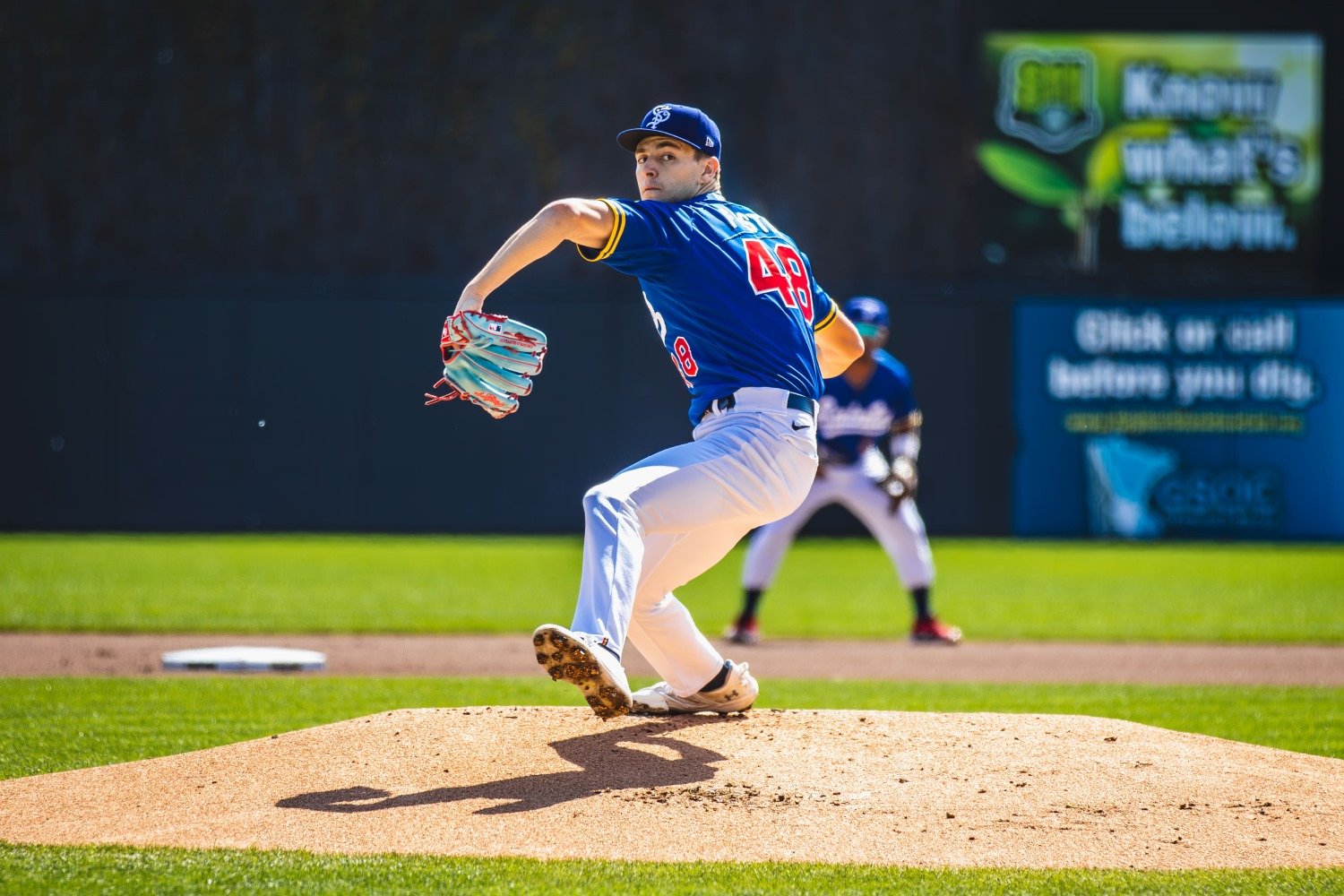 In the middle of May, I penned a piece for Twins Daily, arguing not only that David Festa is a top-100 overall prospect in the sport, but also that he’s MLB-ready. This week, he’ll make his debut for the Twins, seemingly affirming that the team feels the same way. Now that he’s here, what should we expect from Festa? What is his pitch mix? How long might he be expected to hold down a rotation spot? Let’s dig in. David Festa is a 24-year old right-handed starter. He was drafted out of Seton Hall in the 13th round of the 2021 draft (399th overall), and signed for $125,000. Festa has been a well-decorated prospect. He was part of a combined Fort Myers no-hitter, pitched for the Twins in the Futures Game, and was recently named to MLB Pipeline’s Top 100 Prospects Lists. Festa has impressed in 2024, pitching entirely for the St. Paul Saints. He’s thrown 59 2/3 innings, producing a 3.77 ERA, 3.66 FIP, and 2.94 xFIP, while sporting a gaudy 35.1 K% (best in Triple-A for any starter north of 50 innings) and an improving 9.7 BB%, an impressive return for a first full season using the teeny-tiny technology-augmented strike zone. So what can you expect from Festa on the mound? He’s primarily a three-pitch, fly-ball pitcher, with an affinity for spin. Here’s the breakdown of his Triple-A numbers to date. Festa’s four-seam fastball has a 90th-percentile velocity of 96.4 MPH (averaging 95.2); his hard slider averages 86.9; and his changeup sits at 87.9. Festa is an incredibly athletic, long-limbed, large-framed power pitcher. He achieved a significant velocity bump throughout his collegiate career, and he’s shown an increasing reliance on his slider and changeup, even month by month this season. 4Seam% Slider% Change% Curve% versus LHH 32.8% 21.3% 40.9% 5% versus RHH 33.3% 48.7% 17.8% 0.2% Having noted the subtle fluctuations in pitch mix, it’s worth calling out the effectiveness of each pitch thus far in 2024. His slider and changeup are by far his most effective pitches. While his fastball has some exciting traits, it’s typically where damage against him originates. Miss% Chase% xSLG 4Seam 25.8% 22.9% .438 So, what’s new for Festa in 2024? There are a few trends to mine here, starting with his fastball. Festa is getting more induced vertical break (IVB) on his fastball in 2024 (19 inches on average) versus 2023 (17.1). Festa has a high release (roughly 77 inches), but this is still an increase that will help Festa’s fastball do well at the top of the strike zone. Additionally, Festa is generating more release extension in 2024 (6.9 feet), giving his fastball an average effective velocity of 96.3 mph. In other words, because he’s getting down the mound so well, Festa’s fastball is playing up more than its velocity at release would imply. Festa’s command of his slider and changeup are arguably the most important developments from 2023 to 2024. Here’s a look at his slider location from 2023 to 2024, and his changeup location from 2023 to 2024. In both cases the command has improved significantly, he’s consistently burying his slider down and away from right handers and his changeup down and away from left handers. The results, for Festa’s slider in particular, speak for themselves. Miss% Chase% xSLG Slider 44.8% 32% .253 Changeup 41.2% 37.3% .301 So how long might we expect Festa to stay in the rotation? It’s notable that the Twins have stretched him out recently at Triple-A, compared to his staccato starts at the beginning of the season. Festa has averaged 84 pitches per appearance in June, versus 64 per appearance in April. Festa has been generally healthy throughout his pro career to date. He threw 103 2/3 innings in 2022, followed by 92 1/3 innings in 2023. Currently at 59.2 in 2024, I’d imagine there is a soft benchmark on Festa’s innings for this season, perhaps in the 115-130 range, but that’s purely conjecture on my part. Even on the more conservative side (100 inning cap), Festa has some leeway at the MLB level if he performs well. Assuming five innings per start, he’d have somewhere between 8 and 11 MLB starts before getting to the higher end of what the Twins might feel comfortable. As with any prospect in their first experience in MLB, I’d expect an adjustment curve, with some ups and downs. Festa is an exceptional athlete with good arm talent, and has worked to maximize the effectiveness of his pitch mix and mechanics. I’d currently consider him a relatively high-variance starter. His control and command can waiver from start to start, and he gives up relatively hard contact, particularly on his fastball. If and when he’s on, however, he has the chance to be a long-term rotation arm for the Twins, closer to the top of the starter hierarchy than to the bottom. As Twins Player Development Director Drew McPhail put it in an interview with MLB Pipeline; "There’s a world where David Festa is pitching in October, if everything goes ideally for the Twins and David." This week, we're one step closer to that world.
 -
Jaylen Nowlin has quietly impressed at Double-A Wichita in 2024. What's his story? What's he working on? How is his season going to date? Get to know the Twins lefty flying under the radar. Image courtesy of Ed Bailey, Wichita Wind Surge Jaylen Nowlin has quietly impressed at Double-A Wichita in 2024. What's his story? What's he working on? How is his season going to date? Get to know the Twins lefty flying under the radar. If you’re a 19th-round pick in the MLB Draft, the odds are long that you’ll make an impact at the MLB level. The Twins selected left-handed pitcher Jaylen Nowlin in the 19th round in 2021, 579th overall. He signed for $160,000, and has gone almost unnoticed in a Twins system increasingly deep with intriguing arms. Yet, Nowlin has continued to defy the odds in his young career. Now pitching in Double-A, Nowlin is starting to look the part of an arm who could have an impact for the Twins' major-league team in time. "Great human, he just wants to go out and dominate on his day," said Wichita pitching coach DJ Engle of Nowlin, "He’s a hard worker who’s built himself up physically, especially over the last couple of years, and he’s seeing good results." While there have been ups and downs to Nowlin’s development and performance throughout his professional career, he’s consistently posted effectively at every minor-league stop on his pathway to date. Nowlin picked up baseball from an early age, and grew up playing pretty much any sport you can name. He competed with and against a ton of talent in baseball-rich Georgia, including active big-leaguers Lawrence Butler, Taj Bradley, and Michael Harris II. "I didn’t have to go far to see a lot of talent," Nowlin said, in an interview with Twins Daily's Seth Stohs. Those experiences, in addition to his time at Chipola College, helped shape Nowlin’s development curve significantly. Iron sharpens iron, after all. Fast-forward to 2022, and Nowlin is in his first full season as a professional pitcher. He began to turn heads when he put up dominant strikeout numbers at Fort Myers, racking up 89 strikeouts in 56 2/3 innings pitched, and sporting a 3.65 ERA as a 21-year-old. He ended the year with a brief stint at High-A Cedar Rapids, before returning to Iowa for the majority of the 2023 season. While there was an adjustment curve in his time at Cedar Rapids, it was enough to earn him a late look at Double-A Wichita, before returning to the Texas League from the outset of the 2024 season. So what’s in Nowlin’s arsenal? What has he been working on? How has he been doing for the Wind Surge? Let’s dig in. Nowlin throws left-handed from a high three-quarter slot, relying most heavily on his fastball and slider, which play well in tandem. Nowlin’s heater has been as high as 95 miles per hour in 2024. His slider is his best secondary pitch. "He has a good feel for putting power behind his breaking ball," Engle said. Indeed, Nowlin’s slider has been as high as 88-89 mph this season, while typically sitting 85-86 mph. Nowlin also throws a changeup in the 84-87 mph range, and will mix in a slower curveball at times. So what is Nowlin working on this year? "The big thing this year has been his slider velocity," Engle said. "Also throwing all the pitches in his mix within the strike zone. The strike zone is the biggest focus." Nowlin himself expounded on this. "I want to pound the zone with all my pitches to allow me to go deeper into games," he said. "I’m also working on my mechanics, to maximize my velocity." The results have been impressive. Through 57 innings pitched in 2024, Nowlin is sporting a 3.63 ERA, 4.01 FIP, and limiting opposing hitters to an OPS against of just .629. He’s throwing more strikes, too. His strike percentage is up around 5% since the beginning of the season, and his walk rate has decreased from 12.1% in April, to 9.1% in June. Nowlin’s personal goal of going deeper into games has been realized. His surge was underscored by the best outing of his professional career on Jun. 16, in which he threw eight innings of one-hit baseball, striking out four, without walking a batter. Relaxed, hungry, humble. Those three words stand out when listening to Nowlin talk about his craft and desire to succeed, or his coaches talking about his work ethic. What does he want Twins fans to know about him? "Every time I step on the mound, I want to win more than anything. I am giving it everything I have on my day." The odds might be long for a 19th-round pick, but I wouldn’t bet against Nowlin, he continues to defy them on his journey through the minors. View full article
-
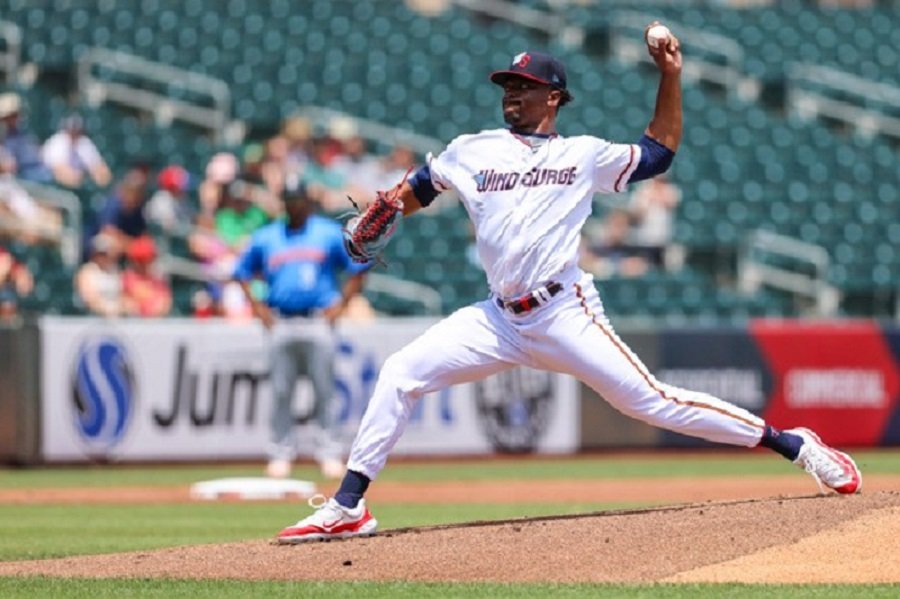 If you’re a 19th-round pick in the MLB Draft, the odds are long that you’ll make an impact at the MLB level. The Twins selected left-handed pitcher Jaylen Nowlin in the 19th round in 2021, 579th overall. He signed for $160,000, and has gone almost unnoticed in a Twins system increasingly deep with intriguing arms. Yet, Nowlin has continued to defy the odds in his young career. Now pitching in Double-A, Nowlin is starting to look the part of an arm who could have an impact for the Twins' major-league team in time. "Great human, he just wants to go out and dominate on his day," said Wichita pitching coach DJ Engle of Nowlin, "He’s a hard worker who’s built himself up physically, especially over the last couple of years, and he’s seeing good results." While there have been ups and downs to Nowlin’s development and performance throughout his professional career, he’s consistently posted effectively at every minor-league stop on his pathway to date. Nowlin picked up baseball from an early age, and grew up playing pretty much any sport you can name. He competed with and against a ton of talent in baseball-rich Georgia, including active big-leaguers Lawrence Butler, Taj Bradley, and Michael Harris II. "I didn’t have to go far to see a lot of talent," Nowlin said, in an interview with Twins Daily's Seth Stohs. Those experiences, in addition to his time at Chipola College, helped shape Nowlin’s development curve significantly. Iron sharpens iron, after all. Fast-forward to 2022, and Nowlin is in his first full season as a professional pitcher. He began to turn heads when he put up dominant strikeout numbers at Fort Myers, racking up 89 strikeouts in 56 2/3 innings pitched, and sporting a 3.65 ERA as a 21-year-old. He ended the year with a brief stint at High-A Cedar Rapids, before returning to Iowa for the majority of the 2023 season. While there was an adjustment curve in his time at Cedar Rapids, it was enough to earn him a late look at Double-A Wichita, before returning to the Texas League from the outset of the 2024 season. So what’s in Nowlin’s arsenal? What has he been working on? How has he been doing for the Wind Surge? Let’s dig in. Nowlin throws left-handed from a high three-quarter slot, relying most heavily on his fastball and slider, which play well in tandem. Nowlin’s heater has been as high as 95 miles per hour in 2024. His slider is his best secondary pitch. "He has a good feel for putting power behind his breaking ball," Engle said. Indeed, Nowlin’s slider has been as high as 88-89 mph this season, while typically sitting 85-86 mph. Nowlin also throws a changeup in the 84-87 mph range, and will mix in a slower curveball at times. So what is Nowlin working on this year? "The big thing this year has been his slider velocity," Engle said. "Also throwing all the pitches in his mix within the strike zone. The strike zone is the biggest focus." Nowlin himself expounded on this. "I want to pound the zone with all my pitches to allow me to go deeper into games," he said. "I’m also working on my mechanics, to maximize my velocity." The results have been impressive. Through 57 innings pitched in 2024, Nowlin is sporting a 3.63 ERA, 4.01 FIP, and limiting opposing hitters to an OPS against of just .629. He’s throwing more strikes, too. His strike percentage is up around 5% since the beginning of the season, and his walk rate has decreased from 12.1% in April, to 9.1% in June. Nowlin’s personal goal of going deeper into games has been realized. His surge was underscored by the best outing of his professional career on Jun. 16, in which he threw eight innings of one-hit baseball, striking out four, without walking a batter. Relaxed, hungry, humble. Those three words stand out when listening to Nowlin talk about his craft and desire to succeed, or his coaches talking about his work ethic. What does he want Twins fans to know about him? "Every time I step on the mound, I want to win more than anything. I am giving it everything I have on my day." The odds might be long for a 19th-round pick, but I wouldn’t bet against Nowlin, he continues to defy them on his journey through the minors.


