



Jamie Cameron
-
Posts
1,349 -
Joined
-
Last visited
-
Days Won
4
Content Type
Profiles
News
Minnesota Twins Videos
2026 Minnesota Twins Top Prospects Ranking
2022 Minnesota Twins Draft Picks
Minnesota Twins Free Agent & Trade Rumors, Notes, & Tidbits
Guides & Resources
2023 Minnesota Twins Draft Picks
The Minnesota Twins Players Project
2024 Minnesota Twins Draft Picks
2025 Minnesota Twins Draft Pick Tracker
2026 Minnesota Twins Draft Tracker: Picks & Bonuses
Forums
Blogs
Events
Store
Downloads
Gallery
Everything posted by Jamie Cameron
-
his week's crowd-sourcing question asks Twins, Brewers and Cubs fans; what is your dream offseason move? (realistic) and what’s a move (signing, trade, etc.) you’d be happy with? Hear what listeners had to say here.
-
The MLB Draft Lottery is in its third season at the Winter Meetings. Jamie answers all the questions on what the purpose behind it is as many baseball fans are still learning about the structure of it.
-
The MLB Draft Lottery is in its third season at the Winter Meetings. Jamie answers all the questions on what the purpose behind it is as many baseball fans are still learning about the structure of it. View full video
-
Draft tandem Jeremy Nygaard and JD Cameron team up for a podcast to discuss prospects on their way to the big leagues and the MLB draft, produced by Theo Tollefson. Image courtesy of Thieres Rabelo Draft tandem Jeremy Nygaard and JD Cameron team up for a podcast to discuss prospects on their way to the big leagues and the MLB draft, produced by Theo Tollefson. In episode 60 of Destination: The Show, Jeremy and Jamie talk through some of the major signings of the MLB offseason so far. Should we be frustrated at the Dodgers for their accumulation of talent, or the 29 other teams for not spending more? Do we underestimate the value of back of the rotation pitching after deals inked by Matt Boyd and Frankie Montas. The guys then preview the forthcoming MLB Draft Lottery. They dig into the ‘why’ behind the lottery, how it works and the chances the Cubs and Twins have of moving up, staying put, or moving down. Finally they end with great answers to our crowdsourcing question of the week, in which we asked listeners to detail free agent signings or trades they want to see their team pull off in advance of 2025. 0:00 Intro 1:45 Blake Snell to the Dodgers 4:15 Boyd to the Cubs; Montas to the Mets 17:30 Draft Lottery Preview 19:23 What is the Purpose of the Lottery? 24:40 Do Teams Actually Move Up? 26:26 How Does it all work? 27:56 What are the Wrinkles? 34:40 What are the chances the Brewers, Cubs and Twins move up? 44:14 Reveal of Comp Picks at the Lottery too. 46:56 Crowdsourcing 55:43 Outro You can support the show by downloading it from wherever you get your podcasts, including iTunes and Spotify. If you enjoy the content, consider leaving us a five-star rating and review in addition to sharing or retweeting DTS-related content. You can follow us on Twitter @DTS_POD1, @Jeremynygaard, @J_D_Cameron, and @TheodoreTollef1. We’re now on Bluesky @destinationtheshow.bsky.social. You can also find full episodes and clips of our shows on our YouTube page @DestinationTheShow. View full article
-
Destination: The Show. Episode 60. 2025 MLB Draft Lottery Preview
Jamie Cameron posted an article in Podcasts
 In episode 60 of Destination: The Show, Jeremy and Jamie talk through some of the major signings of the MLB offseason so far. Should we be frustrated at the Dodgers for their accumulation of talent, or the 29 other teams for not spending more? Do we underestimate the value of back of the rotation pitching after deals inked by Matt Boyd and Frankie Montas. The guys then preview the forthcoming MLB Draft Lottery. They dig into the ‘why’ behind the lottery, how it works and the chances the Cubs and Twins have of moving up, staying put, or moving down. Finally they end with great answers to our crowdsourcing question of the week, in which we asked listeners to detail free agent signings or trades they want to see their team pull off in advance of 2025. 0:00 Intro 1:45 Blake Snell to the Dodgers 4:15 Boyd to the Cubs; Montas to the Mets 17:30 Draft Lottery Preview 19:23 What is the Purpose of the Lottery? 24:40 Do Teams Actually Move Up? 26:26 How Does it all work? 27:56 What are the Wrinkles? 34:40 What are the chances the Brewers, Cubs and Twins move up? 44:14 Reveal of Comp Picks at the Lottery too. 46:56 Crowdsourcing 55:43 Outro You can support the show by downloading it from wherever you get your podcasts, including iTunes and Spotify. If you enjoy the content, consider leaving us a five-star rating and review in addition to sharing or retweeting DTS-related content. You can follow us on Twitter @DTS_POD1, @Jeremynygaard, @J_D_Cameron, and @TheodoreTollef1. We’re now on Bluesky @destinationtheshow.bsky.social. You can also find full episodes and clips of our shows on our YouTube page @DestinationTheShow.
 -
Destination the Show is now doing crowd-sourcing questions every week, the first cover why the Twins seem to struggle to fill Target Field consistently post-pandemic. Listen to what Jeremy and Jamie believe are the reasons behind the Twins' lack of attendance.
-
Destination the Show is now doing crowd-sourcing questions every week, the first cover why the Twins seem to struggle to fill Target Field consistently post-pandemic. Listen to what Jeremy and Jamie believe are the reasons behind the Twins' lack of attendance. View full video
-
This is a hard question to answer currently. Prep is better than 2024, College is probably a little worse. Overall, I think this draft is maybe closer to 2024 than 2023, which was unusually good. That said, my read (early, too early etc.) is this draft is getting dinged a little for less depth. I like the group at the top quite a bit (something for everyone) and I felt last years top of the class should have been dinged more for a lack of premium defensive positions (too many 1B types, not many good SS)
-
This is why TD folks are the best. They are percentage chances of number one pick. Rockies got accidentally cut off. Editing shortly @IndianaTwin
-
The 2025 MLB Draft Lottery is coming up next week, on Dec. 10. Let’s dig into how the lottery works, the wrinkles for 2025, and the Twins' chances of moving up. Image courtesy of © Kyle Schwab - Imagn Images The 2025 MLB Draft Lottery is coming up next week, on Dec. 10. Let’s dig into how the lottery works, the wrinkles for 2025, and the Twins' chances of moving up. When is the Lottery? Tues., Dec. 10, at 5:30 PM ET. The 2025 MLB Draft Lottery will be broadcast live on MLB Network from the Winter Meetings, and can be streamed live on MLB.com. What is the Purpose of the Lottery? Introduced as part of the 2022 CBA ahead of the 2023 draft cycle, the first six picks of a given draft cycle are now determined by lottery to discourage tanking and give a passive reward to teams who made a valiant effort but missed the postseason. (We, of course, wouldn't know any of those.) Do Teams Actually Move Up? Famously, yes. The Twins jumped from 13th to fifth in the inaugural draft lottery for the 2023 cycle, which allowed them to draft Walker Jenkins near the top of an exceptional class. In 2024, the Guardians jumped all the way to first overall, despite having just 2.0% odds of doing so. Their jump allowed them to select Travis Bazzana, in addition to stocking up on tons of prep talent with their bloated bonus pool. How does it work? Any team that didn’t make the postseason is eligible for the lottery, with odds decreasing for teams with superior win/loss records. The lottery is actually held before the broadcast, which serves as a results show for a process completed by an independent auditor earlier the same day. Picks 1-6 are awarded in that order by a draw that spits out ping-pong balls, with a four-number combination that corresponds to a given team. The worse your 2024 record, the more number combinations you have in the draw. Picks 7-18 are in accordance with pre-lottery odds for non-playoff teams. Finally, playoff teams' order are determined by their elimination from postseason play (not their regular season records). Picks awarded by the lottery are only adjusted for round one. The order for the rest of the rounds is in accordance with their regular season record. What are the Wrinkles? The largest is the fact that there are teams who can’t pick inside the top ten, as they are ineligible. Any payor club (read; large market) is ineligible to receive a lottery pick in two consecutive draft cycles. As such, the Chicago White Sox will pick 10th in 2025, despite a 41-121 record. Additionally, revenue sharing-receiving teams are ineligible to receive a lottery pick in three consecutive cycles. As such, the Oakland West Sacramento Athletics will pick 11th in 2025. The Mets, Yankees, and Dodgers will likely receive a ten-pick penalty for being in the luxury tax, but since each made the playoffs, that won't affect the Twins. What are the Twins' chances of Moving Up? I’m not going to lie to you: it’s extremely unlikely. You can find teams' current odds of landing the top pick listed below: 22.45 -- Rockies (.377) 22.45 -- Marlins (.383) 17.96 -- Angels (.389) 10.20 -- Nationals (.438) 7.48 -- Blue Jays (.457) 5.31 -- Pirates (.469) 3.67 -- Reds (.475) 2.45 -- Rangers (.481) 1.90 -- Giants (.494) 1.50 -- Rays (.494) 1.22 -- Red Sox (.500) 1.09 -- Twins (.506) 0.82 -- Cardinals (.512) 0.68 -- Cubs (.512) 0.53 -- Mariners (.525) 0.27 -- D-backs (.549) 0.0 -- White Sox (.253 – ineligible for lottery pick) 0.0 -- A’s (.426 – ineligible for lottery pick) Moving up has an outsized impact for payor clubs. Teams like the Cubs and Red Sox do not benefit from compensation picks in Competitive-Balance Rounds A or B, which act to bolster the farm systems of small-market teams. This limits their reach in the draft in terms of both picks and bonus pool. However the lottery shakes out, it’s worth paying attention to. At the least, a team that moves from the middle of the first round to a lottery spot has a good chance to add a top-50 global prospect to their system. If the Twins move up, we’ll have all the details here at Twins Daily. View full article
-
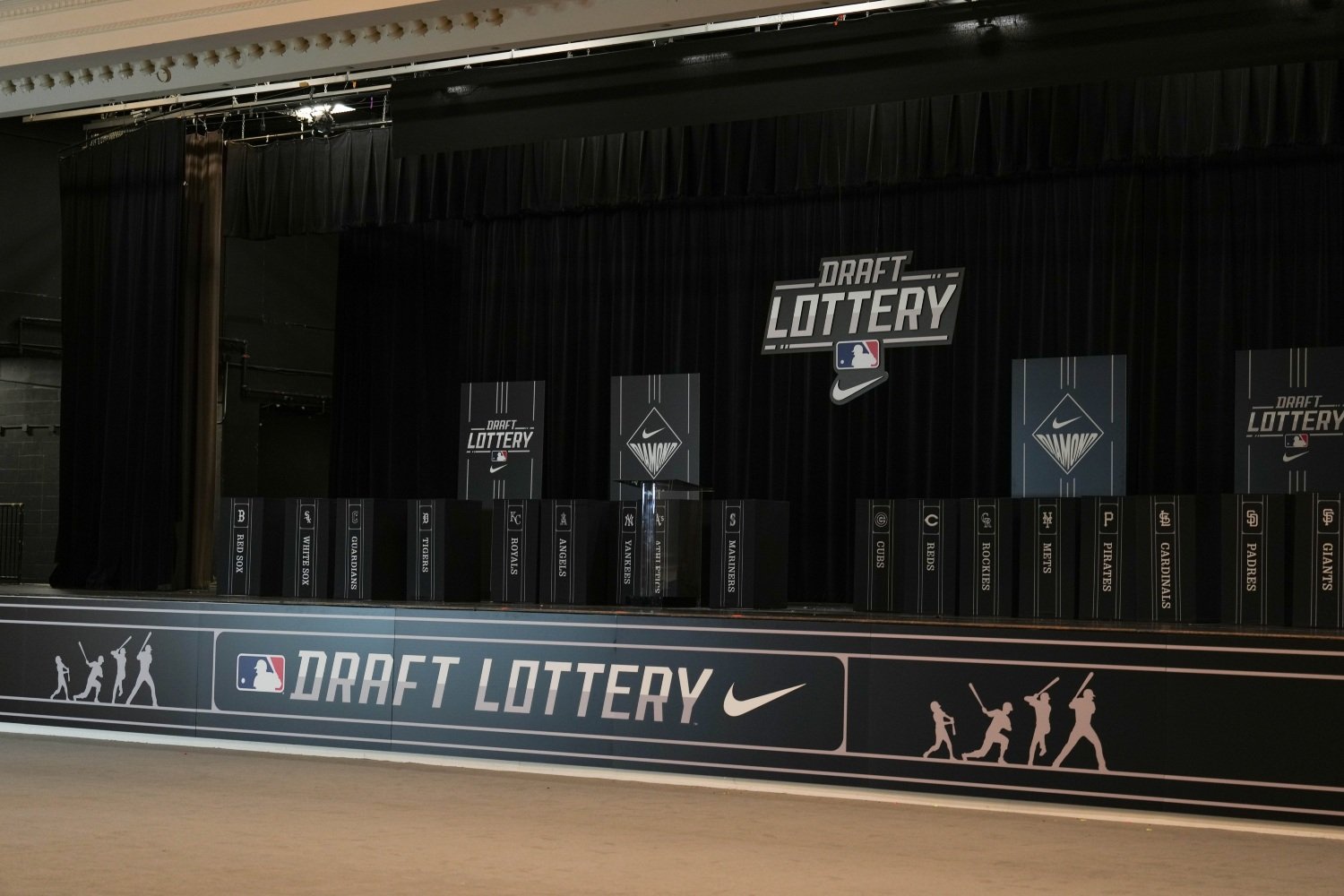 When is the Lottery? Tues., Dec. 10, at 5:30 PM ET. The 2025 MLB Draft Lottery will be broadcast live on MLB Network from the Winter Meetings, and can be streamed live on MLB.com. What is the Purpose of the Lottery? Introduced as part of the 2022 CBA ahead of the 2023 draft cycle, the first six picks of a given draft cycle are now determined by lottery to discourage tanking and give a passive reward to teams who made a valiant effort but missed the postseason. (We, of course, wouldn't know any of those.) Do Teams Actually Move Up? Famously, yes. The Twins jumped from 13th to fifth in the inaugural draft lottery for the 2023 cycle, which allowed them to draft Walker Jenkins near the top of an exceptional class. In 2024, the Guardians jumped all the way to first overall, despite having just 2.0% odds of doing so. Their jump allowed them to select Travis Bazzana, in addition to stocking up on tons of prep talent with their bloated bonus pool. How does it work? Any team that didn’t make the postseason is eligible for the lottery, with odds decreasing for teams with superior win/loss records. The lottery is actually held before the broadcast, which serves as a results show for a process completed by an independent auditor earlier the same day. Picks 1-6 are awarded in that order by a draw that spits out ping-pong balls, with a four-number combination that corresponds to a given team. The worse your 2024 record, the more number combinations you have in the draw. Picks 7-18 are in accordance with pre-lottery odds for non-playoff teams. Finally, playoff teams' order are determined by their elimination from postseason play (not their regular season records). Picks awarded by the lottery are only adjusted for round one. The order for the rest of the rounds is in accordance with their regular season record. What are the Wrinkles? The largest is the fact that there are teams who can’t pick inside the top ten, as they are ineligible. Any payor club (read; large market) is ineligible to receive a lottery pick in two consecutive draft cycles. As such, the Chicago White Sox will pick 10th in 2025, despite a 41-121 record. Additionally, revenue sharing-receiving teams are ineligible to receive a lottery pick in three consecutive cycles. As such, the Oakland West Sacramento Athletics will pick 11th in 2025. The Mets, Yankees, and Dodgers will likely receive a ten-pick penalty for being in the luxury tax, but since each made the playoffs, that won't affect the Twins. What are the Twins' chances of Moving Up? I’m not going to lie to you: it’s extremely unlikely. You can find teams' current odds of landing the top pick listed below: 22.45 -- Rockies (.377) 22.45 -- Marlins (.383) 17.96 -- Angels (.389) 10.20 -- Nationals (.438) 7.48 -- Blue Jays (.457) 5.31 -- Pirates (.469) 3.67 -- Reds (.475) 2.45 -- Rangers (.481) 1.90 -- Giants (.494) 1.50 -- Rays (.494) 1.22 -- Red Sox (.500) 1.09 -- Twins (.506) 0.82 -- Cardinals (.512) 0.68 -- Cubs (.512) 0.53 -- Mariners (.525) 0.27 -- D-backs (.549) 0.0 -- White Sox (.253 – ineligible for lottery pick) 0.0 -- A’s (.426 – ineligible for lottery pick) Moving up has an outsized impact for payor clubs. Teams like the Cubs and Red Sox do not benefit from compensation picks in Competitive-Balance Rounds A or B, which act to bolster the farm systems of small-market teams. This limits their reach in the draft in terms of both picks and bonus pool. However the lottery shakes out, it’s worth paying attention to. At the least, a team that moves from the middle of the first round to a lottery spot has a good chance to add a top-50 global prospect to their system. If the Twins move up, we’ll have all the details here at Twins Daily.
 -
It came as no surprise that Marco Raya was added to the Twins 40-man ahead of the Rule 5 Draft. The question is more a matter of when, not if he makes his MLB debut in 2025. Where does he sit in the Twins starting rotation pecking order to get his debut in 2025?
-
It came as no surprise that Marco Raya was added to the Twins 40-man ahead of the Rule 5 Draft. The question is more a matter of when, not if he makes his MLB debut in 2025. Where does he sit in the Twins starting rotation pecking order to get his debut in 2025? View full video
-
After a two-week hiatus, Jamie and Jeremy are back to catch up on Twins news. They look at the return of Matt Borgschulte to the org as the Twins' new hitting coach and where David Popkins has gone after his dismissal.
-
After a two-week hiatus, Jamie and Jeremy are back to catch up on Twins news. They look at the return of Matt Borgschulte to the org as the Twins' new hitting coach and where David Popkins has gone after his dismissal. View full video
-
Walker Jenkins had an excellent 2024 season, seeing three levels of Minor League Baseball. A strong offensive profile and consistent production have catapulted him to top-10 global prospect status. Image courtesy of Ed Bailey, Wichita Wind Surge Walker Jenkins had an excellent 2024 season, seeing three levels of Minor League Baseball. A strong offensive profile and consistent production have catapulted him to top-10 global prospect status. Age: 19 (DOB: 2/19/2005) 2024 Stats (Low-A, High-A, Double-A): 102 G, .282/.394/.439 (.883), 22 2B, 6 HR, 17 SB, 56 BB, 47 K ETA: 2026 National Top 100 Rankings BA: 6 | MLB: 2 | ATH: 9 | BP: 6 The Twins' good fortune in the 2023 MLB Draft Lottery cannot be overstated. Not only did they move up to the fifth overall pick despite having the 13th-worst record, they did so in an outstanding draft class. The additional bonus pool money allowed the Twins to lean into an excellent prep class, taking Charlee Soto, Brandon Winokur, and Dylan Questad. Additionally, it allowed them a crack at a player from a consensus top-five cluster of elite prospects. After Paul Skenes, Dylan Crews, Max Clark, and Wyatt Langford were selected with the first four picks, the Twins selected Walker Jenkins, an outfielder out of South Brunswick High School, North Carolina. How has he performed so far? What’s left to work on? What might we expect in 2025? Let’s dig in. What’s to Like? Jenkins is an impressive athlete, at 6-foot-3, 210 pounds. A sweet-swinging left-handed hitter, he made short work of two levels of pro ball in his 2023 post-draft debut. In 14 games in the Florida Complex League, Jenkins managed a .927 OPS, before bettering it for Fort Myers. In a 12-game Florida State League debut, Jenkins mashed his way to a 1.054 OPS, vaulting his name into the mix for a late-season call-up to Cedar Rapids. That call was not forthcoming, however. Jenkins returned to Fort Myers for the beginning of the 2024 season and suffered a hamstring strain after one at-bat, which kept him sidelined for two months, until Jun. 4. Jenkins had a relatively slow start in his second pass at Low A, but heated up to the tune of an .817 OPS in 33 games, earning a promotion to Cedar Rapids at the end of July. Jenkins was even better at High-A, managing an .863 OPS in 34 games. When the Kernels' season ended, he was called up to Double-A Wichita for the final two weeks of their season. Not bad for your age-19 season. There’s lots to like that underpins Jenkins’ strong 2024 performance. The approach and swing decisions are strong. He held a 13.6 K% and 14.5 BB% over three minor-league levels. The bat-to-ball skills are good, too. Jenkins had an excellent 82.2% Contact% in 2024, while maintaining an aggressive approach to pitches in the zone, a below-average chase rate, and an excellent in-zone whiff percentage (just 9.9% at Fort Myers). All of that adds up a strong offensive platform and a well-rounded profile, so what’s left to work on? What Left to Work on? The most frequent criticism leveled at Jenkins’ profile thus far in his pro career has been a lack of power production, so let’s dig in there. In 2024, he managed a .426 SLG, with 19 doubles, three triples, and six home runs. Jenkins’s 90th-percentile exit velocity in 2024 for games in which we have data (Low A) is 101.7 mph, right around average for the level (102.1 mph). Some industry folks have dinged him for this. My opinion is he’ll continue to grow into more power. Players typically add more than 2 mph to their 90th-percentile exit velocity between the ages of 19 and 21. Additionally, Jenkins was hitting the ball 95 mph or harder 35.4% of the time (again, numbers from Fort Myers), slightly better than the 32.1% league average, and was hitting the ball at a launch angle between 10 and 30 degrees 29.3% of the time (28.2% league average). In other words, he’s hitting the ball hard consistently, on trajectories that will consistently lead to extra-base impact, all at a very early age. If you want to knock Jenkins for a lack of power in a season and a half of pro ball, you can, it’s just too early for that take from my perspective. What’s Next? Hopefully, a run of clean health and a long runway at Double-A in 2025. Jenkins's most likely MLB arrival date is 2026. This season seems unlikely, barring an incandescent first few months of the season. While Jenkins's supplementary tools aren’t spectacular, they’re average at worst. He’ll likely end up an average runner, but he’s a tick above that now, with a solid glove and a strong arm that should enable him to stick in center field for the short and medium term. Long-term, right field might be the most likely destination, but that shouldn’t impact his value adversely, given the richness of his offensive profile. Jenkins's on-base skills shelter him somewhat from matchups. He didn’t show unmanageable platoon disadvantages or extreme susceptibility to certain pitch types, yet. The swing decisions, approach, and bat-to-ball skills give me confidence that Jenkins is one of the better prospects in baseball entering 2025. The continued development of his power stroke can elevate him to superstar prospect status. Next season will speak volumes on how likely that outcome is. View full article
-
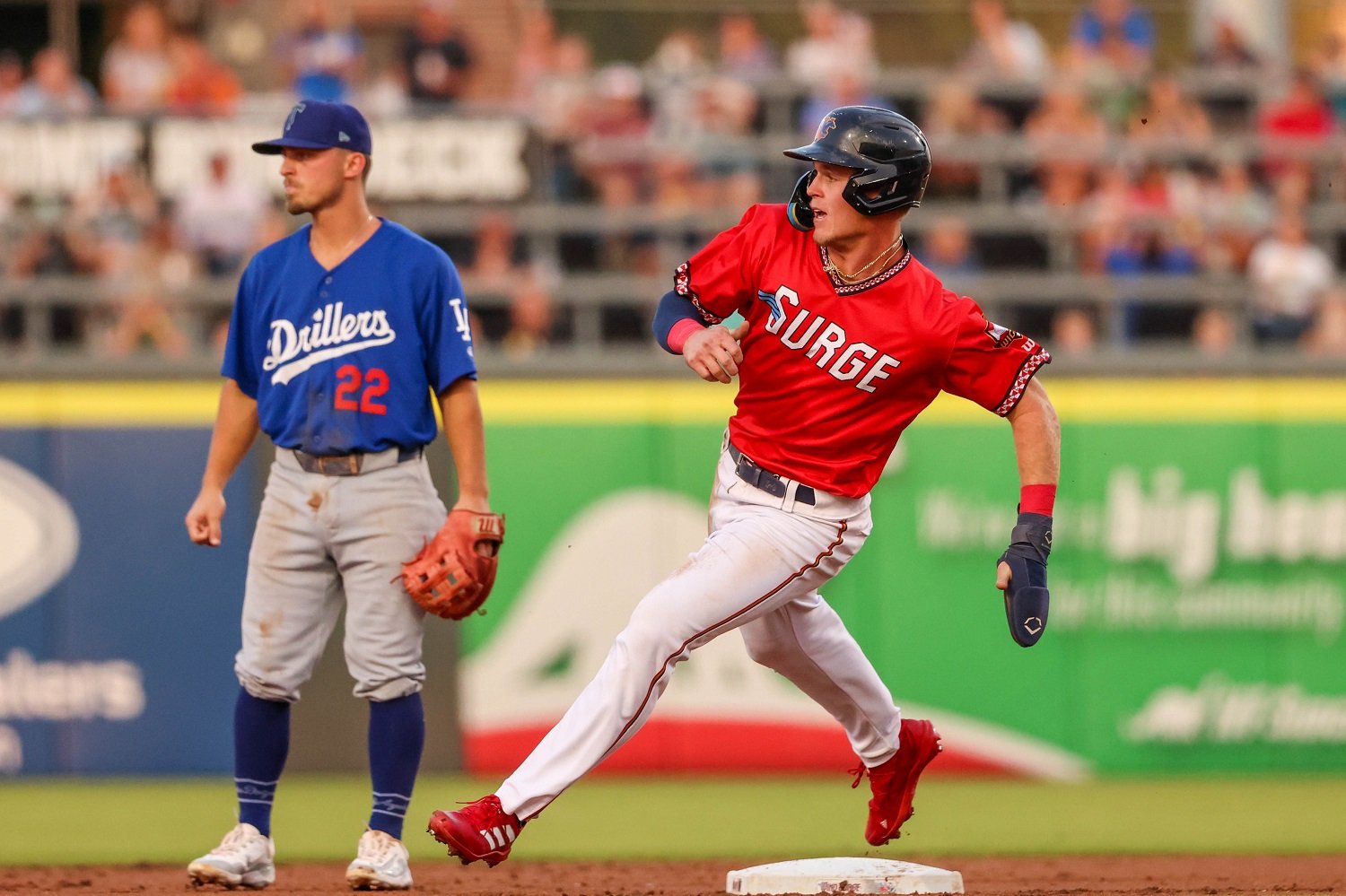 Age: 19 (DOB: 2/19/2005) 2024 Stats (Low-A, High-A, Double-A): 102 G, .282/.394/.439 (.883), 22 2B, 6 HR, 17 SB, 56 BB, 47 K ETA: 2026 National Top 100 Rankings BA: 6 | MLB: 2 | ATH: 9 | BP: 6 The Twins' good fortune in the 2023 MLB Draft Lottery cannot be overstated. Not only did they move up to the fifth overall pick despite having the 13th-worst record, they did so in an outstanding draft class. The additional bonus pool money allowed the Twins to lean into an excellent prep class, taking Charlee Soto, Brandon Winokur, and Dylan Questad. Additionally, it allowed them a crack at a player from a consensus top-five cluster of elite prospects. After Paul Skenes, Dylan Crews, Max Clark, and Wyatt Langford were selected with the first four picks, the Twins selected Walker Jenkins, an outfielder out of South Brunswick High School, North Carolina. How has he performed so far? What’s left to work on? What might we expect in 2025? Let’s dig in. What’s to Like? Jenkins is an impressive athlete, at 6-foot-3, 210 pounds. A sweet-swinging left-handed hitter, he made short work of two levels of pro ball in his 2023 post-draft debut. In 14 games in the Florida Complex League, Jenkins managed a .927 OPS, before bettering it for Fort Myers. In a 12-game Florida State League debut, Jenkins mashed his way to a 1.054 OPS, vaulting his name into the mix for a late-season call-up to Cedar Rapids. That call was not forthcoming, however. Jenkins returned to Fort Myers for the beginning of the 2024 season and suffered a hamstring strain after one at-bat, which kept him sidelined for two months, until Jun. 4. Jenkins had a relatively slow start in his second pass at Low A, but heated up to the tune of an .817 OPS in 33 games, earning a promotion to Cedar Rapids at the end of July. Jenkins was even better at High-A, managing an .863 OPS in 34 games. When the Kernels' season ended, he was called up to Double-A Wichita for the final two weeks of their season. Not bad for your age-19 season. There’s lots to like that underpins Jenkins’ strong 2024 performance. The approach and swing decisions are strong. He held a 13.6 K% and 14.5 BB% over three minor-league levels. The bat-to-ball skills are good, too. Jenkins had an excellent 82.2% Contact% in 2024, while maintaining an aggressive approach to pitches in the zone, a below-average chase rate, and an excellent in-zone whiff percentage (just 9.9% at Fort Myers). All of that adds up a strong offensive platform and a well-rounded profile, so what’s left to work on? What Left to Work on? The most frequent criticism leveled at Jenkins’ profile thus far in his pro career has been a lack of power production, so let’s dig in there. In 2024, he managed a .426 SLG, with 19 doubles, three triples, and six home runs. Jenkins’s 90th-percentile exit velocity in 2024 for games in which we have data (Low A) is 101.7 mph, right around average for the level (102.1 mph). Some industry folks have dinged him for this. My opinion is he’ll continue to grow into more power. Players typically add more than 2 mph to their 90th-percentile exit velocity between the ages of 19 and 21. Additionally, Jenkins was hitting the ball 95 mph or harder 35.4% of the time (again, numbers from Fort Myers), slightly better than the 32.1% league average, and was hitting the ball at a launch angle between 10 and 30 degrees 29.3% of the time (28.2% league average). In other words, he’s hitting the ball hard consistently, on trajectories that will consistently lead to extra-base impact, all at a very early age. If you want to knock Jenkins for a lack of power in a season and a half of pro ball, you can, it’s just too early for that take from my perspective. What’s Next? Hopefully, a run of clean health and a long runway at Double-A in 2025. Jenkins's most likely MLB arrival date is 2026. This season seems unlikely, barring an incandescent first few months of the season. While Jenkins's supplementary tools aren’t spectacular, they’re average at worst. He’ll likely end up an average runner, but he’s a tick above that now, with a solid glove and a strong arm that should enable him to stick in center field for the short and medium term. Long-term, right field might be the most likely destination, but that shouldn’t impact his value adversely, given the richness of his offensive profile. Jenkins's on-base skills shelter him somewhat from matchups. He didn’t show unmanageable platoon disadvantages or extreme susceptibility to certain pitch types, yet. The swing decisions, approach, and bat-to-ball skills give me confidence that Jenkins is one of the better prospects in baseball entering 2025. The continued development of his power stroke can elevate him to superstar prospect status. Next season will speak volumes on how likely that outcome is.
 -
I hear that. The way it was written was a design choice, made with Nat. I think it's safe to think of the article as a summary of the orgs approach at a high level.
-
Thanks for reading and saying so, same for me!
-
Why Don't We See Recently Drafted Pitchers Throw in Affiliated Games?
Jamie Cameron posted an article in Twins
 After a prospect signs, their first stop will be the Twins complex in Fort Myers, Florida. While our orientation as fans is to want to see a prospect in game action as soon as possible, that’s not the priority of the organization—nor should it be. The focus of the org is on building pitchers' arms up to game readiness in as safe a fashion as possible. The first step is finding out how much drafted pitchers have been throwing. Teams have access to information from high school and college programs as a baseline here, but they’ll line this information up against reporting from prospects themselves. There are no shortcuts in initial programming, and no deviations from programming designed by the team. If a prospect is excelling or throwing really effectively, they’re sticking to the plan no matter what, because there’s nothing worth compromising the health of a pitching prospect for. Before we dig into how teams construct these programs, it’s worth pointing out a cultural and lifestyle shift that being drafted brings for so many players–especially prep arms. Players are moving to an unfamiliar place at the behest of their new (and often first) employer. As such, you can think of post-draft camp as an onboarding or job training. Let’s liken it to you starting a new job. Do you jump straight into the nuts and bolts of everyday work? No. You learn the tools, systems and structures that will support your work, you complete your phishing alert training, etc. The same is true for recently drafted baseball players. Pitching prospects get introduced to the culture of the organization, in addition to some basic analytical principles. In their first full season (i.e. the following season), the org will start to tweak their pitch mixes, work more aggressively in pursuit of velocity and command goals, but not yet. Post-draft camp is the time to build the knowledge foundation on which this future work relies. The second major undertaking is engaging in the org’s throwing program. This is designed by pitching coordinators and executed under the aegis of the complex pitching coaches. Want to know how likely you are to see a recently drafted pitching prospect in game action? You can directly map it backward from their college or high-school pitching workload. When they begin to engage in organizational throwing programs, prospects are bucketed into groups depending on how long it will take them to be ready for professional game action. Let’s take two examples to illustrate this. First: a prep pitcher who has thrown comparatively little in a high-school season that ended in early June. The MLB Draft moving back to the end of July means a prospect in this scenario may not have been engaged in coordinated throwing programming for 4-6 weeks. There’s simply not enough time to ramp up their programming to the extent needed to get into pro games. That doesn’t mean they’re not facing hitters. Live BP, intrasquad games and the like are part of their routines, but affiliated games are a different environment and a different stressor for which, for many pitchers, there is not enough time to prepare. The opposite track is a college pitcher whose team had a good season and made a deep postseason run. After completing their season, they have been throwing consistently in a summer league like the Cape or Northwoods. Those are the kind of arms you’ll likely see in sanctioned games during the same season they are drafted. Drafted prospects go into the offseason with throwing programs and guidance from the team, in accordance and with respect to MLB rules, and come back for their first full professional season with (hopefully) a number of important boxes checked: They’ve onboarded to the culture and development philosophies of the drafting organization. They’ve engaged in some basic education around analytical and pitching development concepts. They’ve engaged in a throwing program to build their arms up for professional game action. Central to this approach is an unwavering focus on process, safety, and arm health. Don’t expect to see the newly drafted prep pitcher you can't contain your excitement for, but understand the ‘why’: that when he gets to that game mound in live action, hopefully, it’s for the long haul.
- 19 comments
-
- 14
-

-
Have you ever wondered what happens after a pitching prospect is drafted? Where do they go, and what do they do? Why do we see many pitchers shut things down for the summer after the draft? Twins Daily had a chance to chat with Twins Assistant Pitching Coordinator Nat Ballenberg to find out. Let’s dig in. Image courtesy of Nathan Ray Seebeck-Imagn Images Have you ever wondered what happens after a pitching prospect is drafted? Where do they go, and what do they do? Why do we see many pitchers shut things down for the summer after the draft? Twins Daily had a chance to chat with Twins Assistant Pitching Coordinator Nat Ballenberg to find out. Let’s dig in. After a prospect signs, their first stop will be the Twins complex in Fort Myers, Florida. While our orientation as fans is to want to see a prospect in game action as soon as possible, that’s not the priority of the organization—nor should it be. The focus of the org is on building pitchers' arms up to game readiness in as safe a fashion as possible. The first step is finding out how much drafted pitchers have been throwing. Teams have access to information from high school and college programs as a baseline here, but they’ll line this information up against reporting from prospects themselves. There are no shortcuts in initial programming, and no deviations from programming designed by the team. If a prospect is excelling or throwing really effectively, they’re sticking to the plan no matter what, because there’s nothing worth compromising the health of a pitching prospect for. Before we dig into how teams construct these programs, it’s worth pointing out a cultural and lifestyle shift that being drafted brings for so many players–especially prep arms. Players are moving to an unfamiliar place at the behest of their new (and often first) employer. As such, you can think of post-draft camp as an onboarding or job training. Let’s liken it to you starting a new job. Do you jump straight into the nuts and bolts of everyday work? No. You learn the tools, systems and structures that will support your work, you complete your phishing alert training, etc. The same is true for recently drafted baseball players. Pitching prospects get introduced to the culture of the organization, in addition to some basic analytical principles. In their first full season (i.e. the following season), the org will start to tweak their pitch mixes, work more aggressively in pursuit of velocity and command goals, but not yet. Post-draft camp is the time to build the knowledge foundation on which this future work relies. The second major undertaking is engaging in the org’s throwing program. This is designed by pitching coordinators and executed under the aegis of the complex pitching coaches. Want to know how likely you are to see a recently drafted pitching prospect in game action? You can directly map it backward from their college or high-school pitching workload. When they begin to engage in organizational throwing programs, prospects are bucketed into groups depending on how long it will take them to be ready for professional game action. Let’s take two examples to illustrate this. First: a prep pitcher who has thrown comparatively little in a high-school season that ended in early June. The MLB Draft moving back to the end of July means a prospect in this scenario may not have been engaged in coordinated throwing programming for 4-6 weeks. There’s simply not enough time to ramp up their programming to the extent needed to get into pro games. That doesn’t mean they’re not facing hitters. Live BP, intrasquad games and the like are part of their routines, but affiliated games are a different environment and a different stressor for which, for many pitchers, there is not enough time to prepare. The opposite track is a college pitcher whose team had a good season and made a deep postseason run. After completing their season, they have been throwing consistently in a summer league like the Cape or Northwoods. Those are the kind of arms you’ll likely see in sanctioned games during the same season they are drafted. Drafted prospects go into the offseason with throwing programs and guidance from the team, in accordance and with respect to MLB rules, and come back for their first full professional season with (hopefully) a number of important boxes checked: They’ve onboarded to the culture and development philosophies of the drafting organization. They’ve engaged in some basic education around analytical and pitching development concepts. They’ve engaged in a throwing program to build their arms up for professional game action. Central to this approach is an unwavering focus on process, safety, and arm health. Don’t expect to see the newly drafted prep pitcher you can't contain your excitement for, but understand the ‘why’: that when he gets to that game mound in live action, hopefully, it’s for the long haul. View full article
-
Twins Daily's Top 20 Minnesota Twins Prospects: #9 Cory Lewis
Jamie Cameron posted an article in Minor Leagues
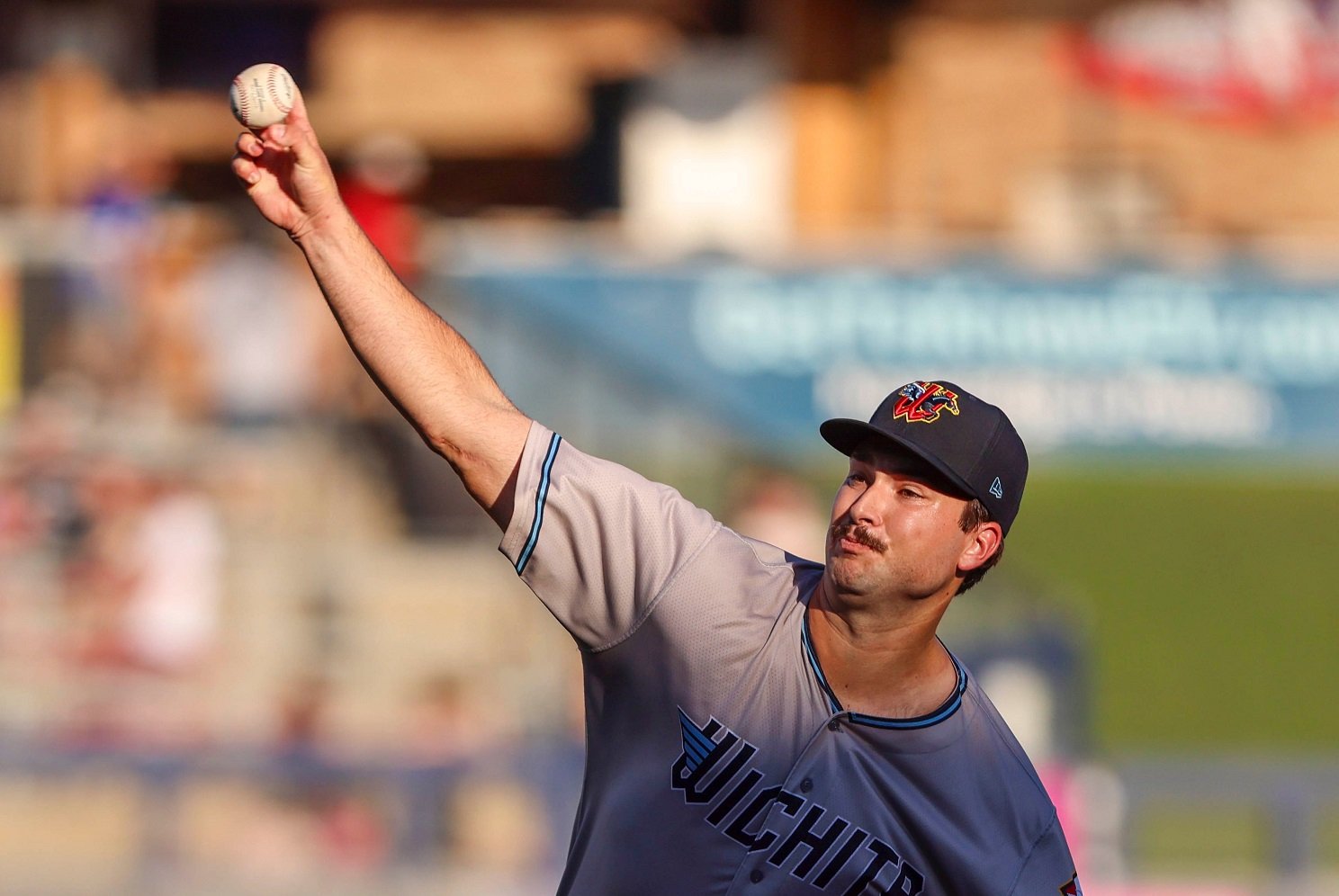 The Twins 2022 draft class has a chance to be one of their best in recent memory. After taking Brooks Lee and Connor Prielipp at the top of the class, Minnesota followed a now routine paradigm; stock up on college arms in the mid and late rounds and let their player development staff go to work. From the cluster of eight college pitchers the Twins picked between rounds four and 20, a quartet has emerged tied together by an unusual level of early success in the minors. Andrew Morris (round 4), Zebby Matthews (round 8), Cory Lewis (round 9), and C.J. Culpepper (round 13) have all reached the upper minors with at least a chance to start. That’s an outcome you’d sign up for every time. Lewis was drafted out of UC Santa Barbara 264th overall and signed for a little under slot at $140,000. In 2023, his first full season as a professional, Lewis saw both levels of A ball, posting a 2.49 ERA in 101 innings, striking out 118 in the process, setting Lewis up for a AA debut in 2024. Unfortunately, the start of his season was delayed by a shoulder strain. He ultimately debuted in Wichita on June 12th. Lewis continued the excellent start to his pro career, managing a 2.55 ERA in 79 innings while striking out 27% of hitters and walking 12.2%. He finished the season with a five inning debut in AAA for St. Paul, putting his name in the mix for a 2025 debut with the Twins. What’s to Like? Lewis stands at 6’5, 220 pounds and has the frame to handle the workload of a starting pitcher. He moves well on the mound and has a relatively effortless delivery with good extension, releasing the ball from a vertical slot. Lewis’ fastball has strengths and limitations that balance each other out. It’s light on velocity, hitting a maximum of 92.3 mph in his lone start for the Saints. Conversely, it has exceptional carry, averaging 19.7 inches of induced vertical break, helping it to generate plenty of miss when he locates it at the top of the zone. For secondary offerings, Lewis has a downer curveball, a sharp slider, and a changeup that has both vertical and horizontal action, but lacks the suddenness you might want to see it generate in its movement. None of those secondary pitches are plus, although the slider is the closest. Finally, Lewis has a legitimate knuckleball. Good enough to stand on its own, Lewis’ iteration averages ~400 rpms. He throws it hard, with a 90th percentile velocity of ~86 mph. There are two levels of deception here, both the knuckling action, and the velocity. While Lewis has an unusual pitch-mix and combination of traits, it’s hard to argue with the track record he’s established in his two full minor league seasons to date. What’s Left to Work On? There are three primary areas of focus for Lewis in 2025. First and foremost, fastball velocity. If Lewis can live in the 92-93 mph range with his fastball, it has the traits to be an above average pitch on which he can rely at the major league level. If it’s operating in the 89-91 mph range, I’m not sure that’s the case. Additionally, developing the effectiveness and consistency of one of his secondary offerings (beyond his knuckleball) is key. His slider is likely his best shot at an above average breaking ball. Continuing to hone this pitch gives him a chance at three above average pitches and a chance to continue to start. Finally, strike throwing. Lewis threw 62.9% strikes in 2024. While he may never be an elite strike thrower like Andrew Morris or Zebby Matthews, he has to continue to be able to get into leveraged counts against hitters, particularly as a pitcher who leans more towards pitchability than elite raw stuff. Throwing more strikes (~65-66%) will allow him to rely on his best pitches in counts and locations in which they make the most sense to attack with. What’s Next? Hopefully, a run of clean health and a nice long runway at AAA. After being named Twins minor league pitcher of the year in 2023, Lewis missed valuable time at the beginning of 2024, to the point he flew under the radar due to the ascent of Zebby Matthews and Andrew Morris. Lewis should have plenty of time to develop and adjust at AAA before he makes his major league debut sometime in 2025. His future roles likely oscillate between being an up and down arm, and a back end starter. Putting his shoulder troubles in the rearview mirror will give him the best chance at reaching his ceiling.
 -
Our journey through the Minnesota Twins top prospects continues with number 9. This entry features the Twins minor league pitcher of the year from 2023. Image courtesy of Ed Bailey, Wichita Wind Surge Our journey through the Minnesota Twins top prospects continues with number 9. This entry features the Twins minor league pitcher of the year from 2023. The Twins 2022 draft class has a chance to be one of their best in recent memory. After taking Brooks Lee and Connor Prielipp at the top of the class, Minnesota followed a now routine paradigm; stock up on college arms in the mid and late rounds and let their player development staff go to work. From the cluster of eight college pitchers the Twins picked between rounds four and 20, a quartet has emerged tied together by an unusual level of early success in the minors. Andrew Morris (round 4), Zebby Matthews (round 8), Cory Lewis (round 9), and C.J. Culpepper (round 13) have all reached the upper minors with at least a chance to start. That’s an outcome you’d sign up for every time. Lewis was drafted out of UC Santa Barbara 264th overall and signed for a little under slot at $140,000. In 2023, his first full season as a professional, Lewis saw both levels of A ball, posting a 2.49 ERA in 101 innings, striking out 118 in the process, setting Lewis up for a AA debut in 2024. Unfortunately, the start of his season was delayed by a shoulder strain. He ultimately debuted in Wichita on June 12th. Lewis continued the excellent start to his pro career, managing a 2.55 ERA in 79 innings while striking out 27% of hitters and walking 12.2%. He finished the season with a five inning debut in AAA for St. Paul, putting his name in the mix for a 2025 debut with the Twins. What’s to Like? Lewis stands at 6’5, 220 pounds and has the frame to handle the workload of a starting pitcher. He moves well on the mound and has a relatively effortless delivery with good extension, releasing the ball from a vertical slot. Lewis’ fastball has strengths and limitations that balance each other out. It’s light on velocity, hitting a maximum of 92.3 mph in his lone start for the Saints. Conversely, it has exceptional carry, averaging 19.7 inches of induced vertical break, helping it to generate plenty of miss when he locates it at the top of the zone. For secondary offerings, Lewis has a downer curveball, a sharp slider, and a changeup that has both vertical and horizontal action, but lacks the suddenness you might want to see it generate in its movement. None of those secondary pitches are plus, although the slider is the closest. Finally, Lewis has a legitimate knuckleball. Good enough to stand on its own, Lewis’ iteration averages ~400 rpms. He throws it hard, with a 90th percentile velocity of ~86 mph. There are two levels of deception here, both the knuckling action, and the velocity. While Lewis has an unusual pitch-mix and combination of traits, it’s hard to argue with the track record he’s established in his two full minor league seasons to date. What’s Left to Work On? There are three primary areas of focus for Lewis in 2025. First and foremost, fastball velocity. If Lewis can live in the 92-93 mph range with his fastball, it has the traits to be an above average pitch on which he can rely at the major league level. If it’s operating in the 89-91 mph range, I’m not sure that’s the case. Additionally, developing the effectiveness and consistency of one of his secondary offerings (beyond his knuckleball) is key. His slider is likely his best shot at an above average breaking ball. Continuing to hone this pitch gives him a chance at three above average pitches and a chance to continue to start. Finally, strike throwing. Lewis threw 62.9% strikes in 2024. While he may never be an elite strike thrower like Andrew Morris or Zebby Matthews, he has to continue to be able to get into leveraged counts against hitters, particularly as a pitcher who leans more towards pitchability than elite raw stuff. Throwing more strikes (~65-66%) will allow him to rely on his best pitches in counts and locations in which they make the most sense to attack with. What’s Next? Hopefully, a run of clean health and a nice long runway at AAA. After being named Twins minor league pitcher of the year in 2023, Lewis missed valuable time at the beginning of 2024, to the point he flew under the radar due to the ascent of Zebby Matthews and Andrew Morris. Lewis should have plenty of time to develop and adjust at AAA before he makes his major league debut sometime in 2025. His future roles likely oscillate between being an up and down arm, and a back end starter. Putting his shoulder troubles in the rearview mirror will give him the best chance at reaching his ceiling. View full article
-
Not necessarily usage, but composition a little imo. Need a guy who can pitch 4 out of 5 days, if needed. Don't know if the Twins have that currently.
-
I really appreciate this thought a lot. I think we tend to think inflexibly about these things, but there are times of the season when starters get arm fatigue/dead arm when it might make sense to flex to something like this for two turns through the rotation.

