



Jamie Cameron
-
Posts
1,349 -
Joined
-
Last visited
-
Days Won
4
Content Type
Profiles
News
Minnesota Twins Videos
2026 Minnesota Twins Top Prospects Ranking
2022 Minnesota Twins Draft Picks
Minnesota Twins Free Agent & Trade Rumors, Notes, & Tidbits
Guides & Resources
2023 Minnesota Twins Draft Picks
The Minnesota Twins Players Project
2024 Minnesota Twins Draft Picks
2025 Minnesota Twins Draft Pick Tracker
2026 Minnesota Twins Draft Tracker: Picks & Bonuses
Forums
Blogs
Events
Store
Downloads
Gallery
Everything posted by Jamie Cameron
-
Draft tandem Jeremy Nygaard and JD Cameron team up for a podcast to discuss prospects on their way to the big leagues and the MLB draft, produced by Theo Tollefson. Image courtesy of Thieres Rabelo Draft tandem Jeremy Nygaard and JD Cameron team up for a podcast to discuss prospects on their way to the big leagues and the MLB draft, produced by Theo Tollefson. In episode 72 of Destination: The Show, Jeremy and Jamie reflect on spring training. After catching up on Jamie’s trip to Fort Myers, they walk through Twins injuries, including the latest for Royce Lewis and a season ender for Matt Canterino. The guys preview who they think will earn the majority of the playing time at third base and the implications for other roster battles. The guys then dig into a mailbag. They talk through Twins prospects outside the top 30 on most industry lists who are likely to feature in the near future and when Twins fans could expect to see Emmanuel Rodriguez in Minneapolis. Finally, they dig into 2025 draft content for the first time, talking through some pitching options around the Twins pick at 16, in addition to a prospect previously drafted by the organization who is having an amazing college season. 0:00 Intro/recap of where we've been 6:34 Housekeeping 7:45 Player Updates -- Matt Canterino, Royce Lewis, Bullpen 27:23 Mailbag 28:02 Minor League Questions 45:21 Draft Questions You can support the show by downloading it from wherever you get your podcasts, including iTunes and Spotify. If you enjoy the content, consider leaving us a five-star rating and review in addition to sharing or retweeting DTS-related content. You can follow us on Twitter @DTS_POD1, @Jeremynygaard, @J_D_Cameron, and @TheodoreTollef1. We’re now on Bluesky @destinationtheshow.bsky.social. You can also find full episodes and clips of our shows on our YouTube page @DestinationTheShow. View full article
-
Draft tandem Jeremy Nygaard and JD Cameron team up for a podcast to discuss prospects on their way to the big leagues and the MLB draft, produced by Theo Tollefson. Image courtesy of Thieres Rabelo Draft tandem Jeremy Nygaard and JD Cameron team up for a podcast to discuss prospects on their way to the big leagues and the MLB draft, produced by Theo Tollefson. In episode 71 of Destination: The Show, Jamie, and Theo are joined by Twins right-handed pitching prospect Ty Langenberg. After a successful first full professional season in which he say time at Fort Myers and Cedar Rapids, Ty reflects on his development and what made his 2024 successful. The guys dig into his draft experience, his strengths and opportunities as a pitcher, and what he hopes to accomplish in 2025. You can support the show by downloading it from wherever you get your podcasts, including iTunes and Spotify. If you enjoy the content, consider leaving us a five-star rating and review in addition to sharing or retweeting DTS-related content. You can follow us on Twitter @DTS_POD1, @Jeremynygaard, @J_D_Cameron, and @TheodoreTollef1. We’re now on Bluesky @destinationtheshow.bsky.social. You can also find full episodes and clips of our shows on our YouTube page @DestinationTheShow. View full article
-
 In episode 71 of Destination: The Show, Jamie, and Theo are joined by Twins right-handed pitching prospect Ty Langenberg. After a successful first full professional season in which he say time at Fort Myers and Cedar Rapids, Ty reflects on his development and what made his 2024 successful. The guys dig into his draft experience, his strengths and opportunities as a pitcher, and what he hopes to accomplish in 2025. You can support the show by downloading it from wherever you get your podcasts, including iTunes and Spotify. If you enjoy the content, consider leaving us a five-star rating and review in addition to sharing or retweeting DTS-related content. You can follow us on Twitter @DTS_POD1, @Jeremynygaard, @J_D_Cameron, and @TheodoreTollef1. We’re now on Bluesky @destinationtheshow.bsky.social. You can also find full episodes and clips of our shows on our YouTube page @DestinationTheShow.
 -
I agree, don't think I anointed him as a success though. Merely discussed what would constitute success.
- 41 replies
-
- 2
-

-
- michael a taylor
- ty france
- (and 1 more)
-
The Twins have relied on low-wattage offensive additions in recent seasons. Is playing the waiting game and plucking the diamond from the rough a skill for this front office—or is their success with that model a mirage? Image courtesy of © Chris Tilley-Imagn Images The Twins have relied on low-wattage offensive additions in recent seasons. Is playing the waiting game and plucking the diamond from the rough a skill for this front office—or is their success with that model a mirage? The last few Twins offseason have hardly been flush with excitement. In fact, they've been downright slow. External additions have been few and underwhelming. Twins fans have an increasingly rancorous relationship with an ownership group who want to sell the club, anyway. Curtailed spending has necessitated creativity from the front office in rounding out the roster. While there will always be a focus on roster additions that didn’t work out, the Twins have quietly established a solid track record in a contextually important aspect of roster building; low-cost veteran bats. The Twins are a pitching organization. As the pitching development and performance goes, so go the fortunes of the major-league team. Recent spending constraints necessitated that the Twins hit on some of their offensive additions, most of whom have been acquired at minimal expense. They have! With the Twins projected to have a high-variance lineup in 2025, let’s look at some recent under-the-radar additions who outperformed expectations and provided a strong return on investment, and examine the 2025 candidate to fill this role on the roster. 2023: Michael A Taylor, OF In 2023, the low-wattage addition was Michael A. Taylor, acquired from the Royals in exchange for Evan Sisk and Steven Cruz. Taylor was brought in as a legitimate backup and insurance policy for Byron Buxton. The Twins paid Taylor $4.5 million in 2023, for 2.0 fWAR in 129 games. While the bat was around average (95 wRC+), that came with a career-high 21 home runs, at least putting a dent in the void left by the oft-injured Buxton. Defensively, Taylor was worth 9 Outs Above Average, good for 14th among outfielders that year—and an improvement on the 5 OAA he accrued for the Royals in 2022. 2024: Carlos Santana, 1B Santana is easily the most famous of this group, and has had (easily) the best career. He’ll go into his age-39 season with Cleveland in 2025, for what will be his 15th major-league season. The Twins signed Santana to a one-year, $5.25-million deal for 2024, and it couldn’t have worked out better. Santana accrued 3.0 fWAR in 2024, his most since 2019 with Cleveland (4.8 fWAR) and his third-highest single-season total ever. In 2024, Santana outgained his fWAR from his previous four seasons combined, logging 150 games and a 114 wRC+ in the process. Additionally, he won his first Gold Glove. While that award is hardly a reliable indicator of defensive excellence, consider this: Santana was worth 2 OAA in 2023 (146 games), good for 11th among qualified first basemen. In 2024, he was worth 14 OAA, tops in baseball among first basemen, ahead of Christian Walker. 2025: Ty France, 1B This brings us to this season’s version of this move, Ty France. This feels like the final boss. France was the cheapest of these moves, at just $1 million. Unlike Taylor and Santana, there’s no established track record of defensive excellence. France ranked 40th (out of 40) in OAA in 2024, at -12. Not great, but we know he was playing through a significant heel injury. How about 2023? 16th at -1 OAA; much better. There’s no hiding from the fact that France was bad offensively in 2024. He managed a .670 OPS, good for just a 93 wRC+. We are talking about a hitter who has a track record of significant MLB success. In his previous four seasons, France averaged a 123 wRC+. Is that a reasonable expectation for 2025? I don’t think so. If the Twins got an average bat and an average glove, it would represent a significant win, given the roster-building constraints this offseason and the timing of the move. Not even mentioned, here, is Donovan Solano, who arguably had an impact similar to that of Taylor for the 2023 club. What are the lessons learned here? Is this a beat Derek Falvey has sniffed out exceptionally well? Possibly. I think there’s also credence to the idea that they don’t care to allocate significant resources to first base, at least not given the current context and confines of their payroll. As the pitching goes, so will the Twins go in 2025, but maybe they’ll continue to bubble up some value from unexpected sources. View full article
- 41 replies
-
- 1
-
-
- michael a taylor
- ty france
- (and 1 more)
-
Twins Front Office Finding a Sweet Spot with Low-Wattage Free-Agent Bats
Jamie Cameron posted an article in Twins
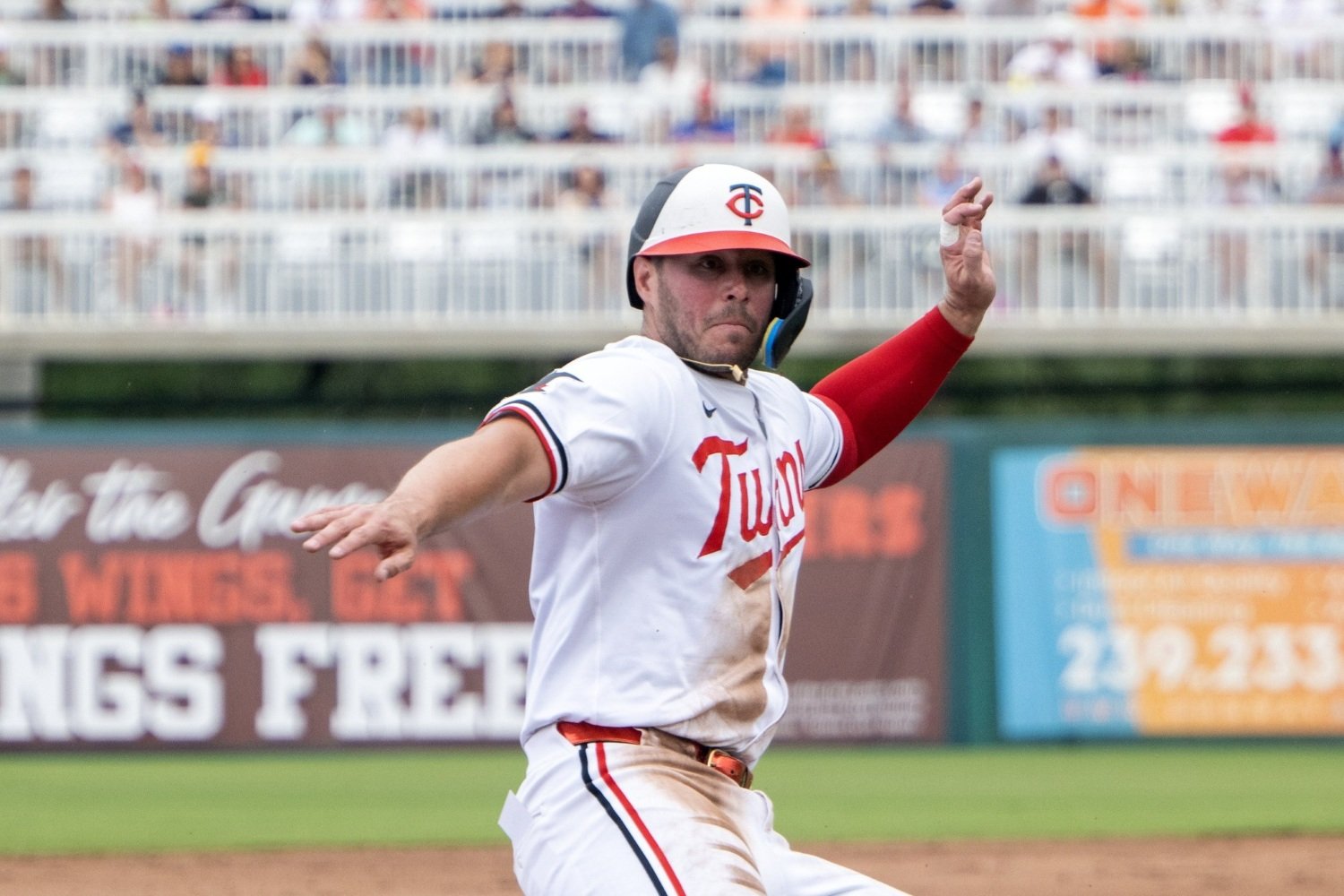 The last few Twins offseason have hardly been flush with excitement. In fact, they've been downright slow. External additions have been few and underwhelming. Twins fans have an increasingly rancorous relationship with an ownership group who want to sell the club, anyway. Curtailed spending has necessitated creativity from the front office in rounding out the roster. While there will always be a focus on roster additions that didn’t work out, the Twins have quietly established a solid track record in a contextually important aspect of roster building; low-cost veteran bats. The Twins are a pitching organization. As the pitching development and performance goes, so go the fortunes of the major-league team. Recent spending constraints necessitated that the Twins hit on some of their offensive additions, most of whom have been acquired at minimal expense. They have! With the Twins projected to have a high-variance lineup in 2025, let’s look at some recent under-the-radar additions who outperformed expectations and provided a strong return on investment, and examine the 2025 candidate to fill this role on the roster. 2023: Michael A Taylor, OF In 2023, the low-wattage addition was Michael A. Taylor, acquired from the Royals in exchange for Evan Sisk and Steven Cruz. Taylor was brought in as a legitimate backup and insurance policy for Byron Buxton. The Twins paid Taylor $4.5 million in 2023, for 2.0 fWAR in 129 games. While the bat was around average (95 wRC+), that came with a career-high 21 home runs, at least putting a dent in the void left by the oft-injured Buxton. Defensively, Taylor was worth 9 Outs Above Average, good for 14th among outfielders that year—and an improvement on the 5 OAA he accrued for the Royals in 2022. 2024: Carlos Santana, 1B Santana is easily the most famous of this group, and has had (easily) the best career. He’ll go into his age-39 season with Cleveland in 2025, for what will be his 15th major-league season. The Twins signed Santana to a one-year, $5.25-million deal for 2024, and it couldn’t have worked out better. Santana accrued 3.0 fWAR in 2024, his most since 2019 with Cleveland (4.8 fWAR) and his third-highest single-season total ever. In 2024, Santana outgained his fWAR from his previous four seasons combined, logging 150 games and a 114 wRC+ in the process. Additionally, he won his first Gold Glove. While that award is hardly a reliable indicator of defensive excellence, consider this: Santana was worth 2 OAA in 2023 (146 games), good for 11th among qualified first basemen. In 2024, he was worth 14 OAA, tops in baseball among first basemen, ahead of Christian Walker. 2025: Ty France, 1B This brings us to this season’s version of this move, Ty France. This feels like the final boss. France was the cheapest of these moves, at just $1 million. Unlike Taylor and Santana, there’s no established track record of defensive excellence. France ranked 40th (out of 40) in OAA in 2024, at -12. Not great, but we know he was playing through a significant heel injury. How about 2023? 16th at -1 OAA; much better. There’s no hiding from the fact that France was bad offensively in 2024. He managed a .670 OPS, good for just a 93 wRC+. We are talking about a hitter who has a track record of significant MLB success. In his previous four seasons, France averaged a 123 wRC+. Is that a reasonable expectation for 2025? I don’t think so. If the Twins got an average bat and an average glove, it would represent a significant win, given the roster-building constraints this offseason and the timing of the move. Not even mentioned, here, is Donovan Solano, who arguably had an impact similar to that of Taylor for the 2023 club. What are the lessons learned here? Is this a beat Derek Falvey has sniffed out exceptionally well? Possibly. I think there’s also credence to the idea that they don’t care to allocate significant resources to first base, at least not given the current context and confines of their payroll. As the pitching goes, so will the Twins go in 2025, but maybe they’ll continue to bubble up some value from unexpected sources.
- 41 comments
-
- 5
-
-
- michael a taylor
- ty france
- (and 1 more)
-
Third baseman Billy Amick was the Twins second round pick in 2024 coming off a massive season with the National Champion Tennessee Volunteers. What are his strengths and opportunities? What does 2025 have in store for him? View full video
-
Third baseman Billy Amick was the Twins second round pick in 2024 coming off a massive season with the National Champion Tennessee Volunteers. What are his strengths and opportunities? What does 2025 have in store for him?
-
Infielder Kyle DeBarge was the 33rd pick in the 2024 draft. After showcasing a solid approach and good bat-to-ball skills in his pro debut, what does 2025 have in store for him? View full video
-
Infielder Kyle DeBarge was the 33rd pick in the 2024 draft. After showcasing a solid approach and good bat-to-ball skills in his pro debut, what does 2025 have in store for him?
-
Yeah Lewis' knuckleball is an indisputably great pitch. I think the fastball and the rest of the mix is going to determine his future big league role, though.
-
Love Prielipp. I had to leave out a guy or two for the hitter and pitching version of this (Culpepper on hitting side). For Prielipp, just the health piece this year. Long term, I think it's a role questions (SP or RP) but he should be locked into pretty small pitch counts this year so the role from the jump (at AA) will be start and pitch 2-4 innings.
-
20 Questions for 20 Twins Pitching Prospects in 2025
Jamie Cameron posted an article in Minor Leagues
.png.885da12669d7a40710b7fbcd10f3faef.png) Now that spring training is here, it’s a good time to take a look at some of the Twins' notable prospects, and a question facing each of them ahead of the 2025 season. In the first part of this series, we looked at hitters. Today, it's pitchers. Some of these development steps will seem obvious. Others will be less so. For ease of navigation, prospects have been listed alphabetically. Kyle Bischoff (RHP) Will an opportunity present itself in the MLB bullpen? Bischoff is a name you need to have on your radar. He’s a 6-foot-2, 25-year-old right-handed pitcher who has a real shot to make the big-league club in a relief role. It’s a sinker, cutter, slider, changeup profile, and he throws hard (sinker up to 97 mph in 2024). He moved all the way from Cedar Rapids to St. Paul last season, throwing 61 1/3 innings and maintaining a stingy 3.09 FIP. Bischoff struck out 30% of the hitters he faced in 2024, although his walk rate is a touch higher than you’d like to see (10%). It’s an MLB-caliber arm. It’s just a matter of opportunity and continued consistent performance matching up. Adrian Bohorquez (RHP) Can he improve his strike-throwing? Bohorquez is now a trendy low-minors arm (thanks, Cody Schoenmann). He has plenty of starter traits. His fastball has good shape, and he can really spin it. He struck out 31% of hitters in a short debut at Fort Myers in 2024, but also walked almost 15% of batters. Despite this, he maintained a 3.23 ERA (3.53 FIP) across the Florida Complex League and Low A. He’ll need to get his strike rate up from the low 60s to 65% or higher in order to keep starting, though. Matt Canterino (RHP) Will he get a clean run of health? This could have been the question for 10-15 different Twins prospects, but it’s most salient for Canterino. He’s now 27, and he hasn’t been able to make his big-league (or even Triple-A) debut due to a miserable run of injuries. Looking at Canterino’s minor-league numbers from 2022 (his last run of health) invites hype: 37 innings, 1.95 ERA, 35% strikeout rate. I’d leverage Canterino strictly as a reliever at this point. He enters 2025 healthy, at least, and should start the season at St. Paul Michael Carpenter (LHP) Will he become the next Twins breakout pitching prospect? You don’t take a pitcher in the 11th round and pay them high 5th-round money ($500,000) unless you are convicted on their ability. Carpenter was the NJCAA Pitcher of the Year, striking out 111 in 78 ⅔ innings. Pre-draft, his arsenal consisted of a low-90s fastball; a curveball with ample depth; and a changeup with good fade. Stop me if you’ve heard this before, but he also offers plus control. I’d expect him to be in the mid-90s by the time he debuts. He’s a breakout pick for me in 2025. CJ Culpepper (RHP) Can he sustain his velocity deeper into starts? After recovering from a forearm strain that delayed the beginning of his season, Culpepper thrived. Across 58 ⅓ innings in 2024, he managed a 3.09 FIP, striking out nearly 27% of hitters and walking 7.5%. Culpepper, however, has a challenge to overcome: sustaining his velocity throughout his starts. To this point in his career, he's consistently a few ticks on every pitch when he goes through the order multiple times. It’s a problem he’ll need to solve if he’s going to continue to start. Jack Dougherty (RHP) Can he log a healthy season? You’d be forgiven for not knowing who Jack Dougherty is. He missed all of 2024 due to injury. Before he went down, however, he was throwing 96-mph cheese in live bullpens at spring training. Dougherty was drafted in the 9th round in 2023 out of Ole Miss. He’s 6-foot-4 and had a college résumé light on results but heavy on stuff and strikeouts. He’s another candidate to move quickly through the lower levels if he can return to good health. Ross Dunn (LHP) Can he continue his improved strike-throwing? Dunn was an atypical Twins draft pick, in that he showed a stuff-over-strikes profile in college at Arizona State. The left-hander had a patchy 2024. He didn’t generate enough whiffs (21.2% strikeout rate), and continued to walk too many (10.6% of opposing batters), although his strike-throwing was significantly improved from his junior year of college. His xFIP (4.46) was much better than his ERA (6.46). He’ll need to continue to shore up his control when he moves to Cedar Rapids. David Festa (RHP) Will he add a consistently usable fourth pitch? This question has already been answered for us, kinda, sorta. Festa added a sinker this offseason, hoping to work right-handed hitters inside. After some classification hiccups, he threw a few in his spring debut. Globally, Festa seems to be throwing from a lower, three-quarters arm slot in 2025, so it’ll be worth monitoring all of his pitch shapes. Adding a consistently usable fourth offering and forcing righties to cover a bigger zone moves Festa closer to the middle of the great stuff-wide arsenal continuum. Tanner Hall (LHP) Will he recover his command? The scouting report on Hall (4th round in 2023) said that he was an elite strike-thrower with an outstanding changeup. Hall walked an average of 5% of batters in college. In his first professional season, that almost doubled (9.6%). Hall has a very east-west movement profile (more unusual stuff for the Twins), and has a fastball light on velocity, so he’ll have to add a few ticks, regain his elite control, or both to thrive in 2025. Dasan Hill (LHP) Will he have a healthy, effective first full professional season? Prospect-loving Twins fans got their first look at Hill in spring training and went into a minor frenzy. The 6-foot-5 19-year-old is already up to 98 mph with his fastball, with an above-average slider and an improving changeup. It’s easy to dream of the vast potential here. The reality is, the Twins can and should take it slow with HIll in his first professional season. Throwing strikes and missing bats are the key indices, but as was true of Charlee Soto last season, the main goal for Year One with Hill is to get through a full professional season with his health intact and his confidence on the rise. Ty Langenberg (RHP) Can he find more consistent velocity with his arsenal? Langenberg was the Twins' 11th-round pick in 2023 out of Iowa and is one of the more likely players to make a significant jump forward in 2025. In his first pro season, he pitched 108 innings, holding a 3.28 FIP, striking out 25% of hitters and walking just 6.6%. That's really solid. Langenberg had some fluctuations in his velocity from start to start in the minors. The Twins will want to see consistency in a season in which he should spend the bulk of his time at Double A. Langenberg could be yet another back-end rotation option for the Twins in 2026. Cory Lewis (RHP) Does his fastball tick back up to pre-injury velocity? Lewis missed a bunch of time at the beginning of 2024 with a shoulder impingement and became a little lost in the shuffle amid the ascendance of Zebby Matthews and Andrew Morris. Lewis’s fastball has good shape, but it sat at 89 mph in his lone Triple-A start (likely due to being worn down at the end of a long season). He’ll need to live in the 92-94 mph range to factor as a starter in the big leagues. He sat around 89 again in his first Statcast-tracked outing of the spring, but that leaves plenty of time for him to ramp up into the low 90s. Christian MacLeod (LHP) Can he add a few ticks to his fastball? The Twins are excellent at helping pitchers add velocity, and they have several arms who could use a little more. Christian MacLeod is a 6-foot-4 left-handed starter with a Clayton Kershaw pitch mix and an outlier fastball shape. He got a smattering of Triple-A innings, in which his fastball sat at 89 mph. He’s an intriguing arm with good deception and some starter-type traits, but he’ll need a few more ticks on the fastball to have a big impact in the bigs. Zebby Matthews (RHP) Can he tighten up command of his secondary offerings and learn when to leave the zone? Matthews looked good in his first start of spring, with his fastball sitting around 97 mph. He's an elite strike-thrower, but doesn’t yet have elite command—that ability to locate the ball precisely and to achieve consistent movement patterns. Improved spotting of his secondary offerings is important. Knowing when, how, and where to leave the strike zone and induce batters to chase can help him maximize his diverse arsenal of pitches and become a lock in the Twins rotation for the next half-decade. Andrew Morris (RHP) Will a new pitch open up the outer third of the plate to right-handed hitters? Morris added a sinker this offseason (Hunter Brown, here we come). Similarly to David Festa, he wants something to establish the inner half of the plate against right-handed hitters. Morris and the Twins will be betting that this can help Morris generate more swing-and-miss with the stuff that breaks away from those righties. He’ll need to up the 19.6% K rate from Triple A to thrive when he gets a chance with the Twins—which could come this year. Jaylen Nowlin (LHP) Can he transition smoothly enough to become a bullpen weapon? I’ve bucketed Nowlin as a relief pitcher at this point. An 11.8 K-BB% isn’t going to work for a starter. Nowlin has plenty going for him, though. A good fastball that sits 93-94 mph and has touched 97 mph fronts the mix, augmented by a great power slider that sits in the low 90s from the left side. He’s probably organizational lefty relief pitcher No. 3, after Danny Coulombe and Kody Funderburk. Pierson Ohl (RHP) Can he generate more whiffs in Triple A? Before Matthews took off so marvelously last year, Ohl was the most remarkable strike-throwing Twins prospect. In three professional seasons, he’s never posted a walk rate higher than 4%. Ohl is a little light on velocity and struggles to generate the amount of swing-and-miss you want to see in a starting pitching prospect. He’ll start 2025 at Triple A, since he already has 189 innings under his belt at Double A. He’ll need to up the strikeout rate to factor into the Twins' plans. Dylan Questad (RHP) Can he find some consistency in the low minors? Questad, 20, was an Arkansas-committed right-handed prep pick out of Waterford (Wis.) High School. In the Complex last year, he generated plenty of strikeouts (26%) but had real control problems. He walked 29 batters in 28 1/3 innings. His professional career is in its infancy; look for strike-throwing progress in 2025. Marco Raya (RHP) Will he thrive the third time through the order? Raya has been in Fort Myers preparing for 2025 since early January. He talked early in spring training about expanding his arsenal to six pitches and working extensively on his changeup to combat platoon issues from left-handed hitters. The Twins will have to ease off the handbrake a little in 2025 and let Raya get after it the third time through the order. How will his frame and stuff handle an increased workload? Charlee Soto (RHP) Can we get a repeat order of 2024, please? The Twins' competitive-balance pick from 2023 is now receiving Top-100 prospect buzz. Soto was much better than his 5.23 ERA last season (3.23 FIP). He still has some work to do on control and command, but the fastball has been up to 100 mph early in spring training. Soto added a sinker and cutter in 2024. I’d take him running back similar results at Cedar Rapids in 2025, 100 times out of 100. Which Twins pitching prospects are you most excited to see this offseason? What are other questions facing Twins prospects this season? Feel free to add your own in the comments.
Now that spring training is here, it’s a good time to take a look at some of the Twins' notable prospects, and a question facing each of them ahead of the 2025 season. In the first part of this series, we looked at hitters. Today, it's pitchers. Some of these development steps will seem obvious. Others will be less so. For ease of navigation, prospects have been listed alphabetically. Kyle Bischoff (RHP) Will an opportunity present itself in the MLB bullpen? Bischoff is a name you need to have on your radar. He’s a 6-foot-2, 25-year-old right-handed pitcher who has a real shot to make the big-league club in a relief role. It’s a sinker, cutter, slider, changeup profile, and he throws hard (sinker up to 97 mph in 2024). He moved all the way from Cedar Rapids to St. Paul last season, throwing 61 1/3 innings and maintaining a stingy 3.09 FIP. Bischoff struck out 30% of the hitters he faced in 2024, although his walk rate is a touch higher than you’d like to see (10%). It’s an MLB-caliber arm. It’s just a matter of opportunity and continued consistent performance matching up. Adrian Bohorquez (RHP) Can he improve his strike-throwing? Bohorquez is now a trendy low-minors arm (thanks, Cody Schoenmann). He has plenty of starter traits. His fastball has good shape, and he can really spin it. He struck out 31% of hitters in a short debut at Fort Myers in 2024, but also walked almost 15% of batters. Despite this, he maintained a 3.23 ERA (3.53 FIP) across the Florida Complex League and Low A. He’ll need to get his strike rate up from the low 60s to 65% or higher in order to keep starting, though. Matt Canterino (RHP) Will he get a clean run of health? This could have been the question for 10-15 different Twins prospects, but it’s most salient for Canterino. He’s now 27, and he hasn’t been able to make his big-league (or even Triple-A) debut due to a miserable run of injuries. Looking at Canterino’s minor-league numbers from 2022 (his last run of health) invites hype: 37 innings, 1.95 ERA, 35% strikeout rate. I’d leverage Canterino strictly as a reliever at this point. He enters 2025 healthy, at least, and should start the season at St. Paul Michael Carpenter (LHP) Will he become the next Twins breakout pitching prospect? You don’t take a pitcher in the 11th round and pay them high 5th-round money ($500,000) unless you are convicted on their ability. Carpenter was the NJCAA Pitcher of the Year, striking out 111 in 78 ⅔ innings. Pre-draft, his arsenal consisted of a low-90s fastball; a curveball with ample depth; and a changeup with good fade. Stop me if you’ve heard this before, but he also offers plus control. I’d expect him to be in the mid-90s by the time he debuts. He’s a breakout pick for me in 2025. CJ Culpepper (RHP) Can he sustain his velocity deeper into starts? After recovering from a forearm strain that delayed the beginning of his season, Culpepper thrived. Across 58 ⅓ innings in 2024, he managed a 3.09 FIP, striking out nearly 27% of hitters and walking 7.5%. Culpepper, however, has a challenge to overcome: sustaining his velocity throughout his starts. To this point in his career, he's consistently a few ticks on every pitch when he goes through the order multiple times. It’s a problem he’ll need to solve if he’s going to continue to start. Jack Dougherty (RHP) Can he log a healthy season? You’d be forgiven for not knowing who Jack Dougherty is. He missed all of 2024 due to injury. Before he went down, however, he was throwing 96-mph cheese in live bullpens at spring training. Dougherty was drafted in the 9th round in 2023 out of Ole Miss. He’s 6-foot-4 and had a college résumé light on results but heavy on stuff and strikeouts. He’s another candidate to move quickly through the lower levels if he can return to good health. Ross Dunn (LHP) Can he continue his improved strike-throwing? Dunn was an atypical Twins draft pick, in that he showed a stuff-over-strikes profile in college at Arizona State. The left-hander had a patchy 2024. He didn’t generate enough whiffs (21.2% strikeout rate), and continued to walk too many (10.6% of opposing batters), although his strike-throwing was significantly improved from his junior year of college. His xFIP (4.46) was much better than his ERA (6.46). He’ll need to continue to shore up his control when he moves to Cedar Rapids. David Festa (RHP) Will he add a consistently usable fourth pitch? This question has already been answered for us, kinda, sorta. Festa added a sinker this offseason, hoping to work right-handed hitters inside. After some classification hiccups, he threw a few in his spring debut. Globally, Festa seems to be throwing from a lower, three-quarters arm slot in 2025, so it’ll be worth monitoring all of his pitch shapes. Adding a consistently usable fourth offering and forcing righties to cover a bigger zone moves Festa closer to the middle of the great stuff-wide arsenal continuum. Tanner Hall (LHP) Will he recover his command? The scouting report on Hall (4th round in 2023) said that he was an elite strike-thrower with an outstanding changeup. Hall walked an average of 5% of batters in college. In his first professional season, that almost doubled (9.6%). Hall has a very east-west movement profile (more unusual stuff for the Twins), and has a fastball light on velocity, so he’ll have to add a few ticks, regain his elite control, or both to thrive in 2025. Dasan Hill (LHP) Will he have a healthy, effective first full professional season? Prospect-loving Twins fans got their first look at Hill in spring training and went into a minor frenzy. The 6-foot-5 19-year-old is already up to 98 mph with his fastball, with an above-average slider and an improving changeup. It’s easy to dream of the vast potential here. The reality is, the Twins can and should take it slow with HIll in his first professional season. Throwing strikes and missing bats are the key indices, but as was true of Charlee Soto last season, the main goal for Year One with Hill is to get through a full professional season with his health intact and his confidence on the rise. Ty Langenberg (RHP) Can he find more consistent velocity with his arsenal? Langenberg was the Twins' 11th-round pick in 2023 out of Iowa and is one of the more likely players to make a significant jump forward in 2025. In his first pro season, he pitched 108 innings, holding a 3.28 FIP, striking out 25% of hitters and walking just 6.6%. That's really solid. Langenberg had some fluctuations in his velocity from start to start in the minors. The Twins will want to see consistency in a season in which he should spend the bulk of his time at Double A. Langenberg could be yet another back-end rotation option for the Twins in 2026. Cory Lewis (RHP) Does his fastball tick back up to pre-injury velocity? Lewis missed a bunch of time at the beginning of 2024 with a shoulder impingement and became a little lost in the shuffle amid the ascendance of Zebby Matthews and Andrew Morris. Lewis’s fastball has good shape, but it sat at 89 mph in his lone Triple-A start (likely due to being worn down at the end of a long season). He’ll need to live in the 92-94 mph range to factor as a starter in the big leagues. He sat around 89 again in his first Statcast-tracked outing of the spring, but that leaves plenty of time for him to ramp up into the low 90s. Christian MacLeod (LHP) Can he add a few ticks to his fastball? The Twins are excellent at helping pitchers add velocity, and they have several arms who could use a little more. Christian MacLeod is a 6-foot-4 left-handed starter with a Clayton Kershaw pitch mix and an outlier fastball shape. He got a smattering of Triple-A innings, in which his fastball sat at 89 mph. He’s an intriguing arm with good deception and some starter-type traits, but he’ll need a few more ticks on the fastball to have a big impact in the bigs. Zebby Matthews (RHP) Can he tighten up command of his secondary offerings and learn when to leave the zone? Matthews looked good in his first start of spring, with his fastball sitting around 97 mph. He's an elite strike-thrower, but doesn’t yet have elite command—that ability to locate the ball precisely and to achieve consistent movement patterns. Improved spotting of his secondary offerings is important. Knowing when, how, and where to leave the strike zone and induce batters to chase can help him maximize his diverse arsenal of pitches and become a lock in the Twins rotation for the next half-decade. Andrew Morris (RHP) Will a new pitch open up the outer third of the plate to right-handed hitters? Morris added a sinker this offseason (Hunter Brown, here we come). Similarly to David Festa, he wants something to establish the inner half of the plate against right-handed hitters. Morris and the Twins will be betting that this can help Morris generate more swing-and-miss with the stuff that breaks away from those righties. He’ll need to up the 19.6% K rate from Triple A to thrive when he gets a chance with the Twins—which could come this year. Jaylen Nowlin (LHP) Can he transition smoothly enough to become a bullpen weapon? I’ve bucketed Nowlin as a relief pitcher at this point. An 11.8 K-BB% isn’t going to work for a starter. Nowlin has plenty going for him, though. A good fastball that sits 93-94 mph and has touched 97 mph fronts the mix, augmented by a great power slider that sits in the low 90s from the left side. He’s probably organizational lefty relief pitcher No. 3, after Danny Coulombe and Kody Funderburk. Pierson Ohl (RHP) Can he generate more whiffs in Triple A? Before Matthews took off so marvelously last year, Ohl was the most remarkable strike-throwing Twins prospect. In three professional seasons, he’s never posted a walk rate higher than 4%. Ohl is a little light on velocity and struggles to generate the amount of swing-and-miss you want to see in a starting pitching prospect. He’ll start 2025 at Triple A, since he already has 189 innings under his belt at Double A. He’ll need to up the strikeout rate to factor into the Twins' plans. Dylan Questad (RHP) Can he find some consistency in the low minors? Questad, 20, was an Arkansas-committed right-handed prep pick out of Waterford (Wis.) High School. In the Complex last year, he generated plenty of strikeouts (26%) but had real control problems. He walked 29 batters in 28 1/3 innings. His professional career is in its infancy; look for strike-throwing progress in 2025. Marco Raya (RHP) Will he thrive the third time through the order? Raya has been in Fort Myers preparing for 2025 since early January. He talked early in spring training about expanding his arsenal to six pitches and working extensively on his changeup to combat platoon issues from left-handed hitters. The Twins will have to ease off the handbrake a little in 2025 and let Raya get after it the third time through the order. How will his frame and stuff handle an increased workload? Charlee Soto (RHP) Can we get a repeat order of 2024, please? The Twins' competitive-balance pick from 2023 is now receiving Top-100 prospect buzz. Soto was much better than his 5.23 ERA last season (3.23 FIP). He still has some work to do on control and command, but the fastball has been up to 100 mph early in spring training. Soto added a sinker and cutter in 2024. I’d take him running back similar results at Cedar Rapids in 2025, 100 times out of 100. Which Twins pitching prospects are you most excited to see this offseason? What are other questions facing Twins prospects this season? Feel free to add your own in the comments.- 32 comments
-
- 18
-

-
-
Is Andrew Morris bigger than a bread box? Image courtesy of © Chris Tilley-Imagn Images Is Andrew Morris bigger than a bread box? Now that spring training is here, it’s a good time to take a look at some of the Twins' notable prospects, and a question facing each of them ahead of the 2025 season. In the first part of this series, we looked at hitters. Today, it's pitchers. Some of these development steps will seem obvious. Others will be less so. For ease of navigation, prospects have been listed alphabetically. Kyle Bischoff (RHP) Will an opportunity present itself in the MLB bullpen? Bischoff is a name you need to have on your radar. He’s a 6-foot-2, 25-year-old right-handed pitcher who has a real shot to make the big-league club in a relief role. It’s a sinker, cutter, slider, changeup profile, and he throws hard (sinker up to 97 mph in 2024). He moved all the way from Cedar Rapids to St. Paul last season, throwing 61 1/3 innings and maintaining a stingy 3.09 FIP. Bischoff struck out 30% of the hitters he faced in 2024, although his walk rate is a touch higher than you’d like to see (10%). It’s an MLB-caliber arm. It’s just a matter of opportunity and continued consistent performance matching up. Adrian Bohorquez (RHP) Can he improve his strike-throwing? Bohorquez is now a trendy low-minors arm (thanks, Cody Schoenmann). He has plenty of starter traits. His fastball has good shape, and he can really spin it. He struck out 31% of hitters in a short debut at Fort Myers in 2024, but also walked almost 15% of batters. Despite this, he maintained a 3.23 ERA (3.53 FIP) across the Florida Complex League and Low A. He’ll need to get his strike rate up from the low 60s to 65% or higher in order to keep starting, though. Matt Canterino (RHP) Will he get a clean run of health? This could have been the question for 10-15 different Twins prospects, but it’s most salient for Canterino. He’s now 27, and he hasn’t been able to make his big-league (or even Triple-A) debut due to a miserable run of injuries. Looking at Canterino’s minor-league numbers from 2022 (his last run of health) invites hype: 37 innings, 1.95 ERA, 35% strikeout rate. I’d leverage Canterino strictly as a reliever at this point. He enters 2025 healthy, at least, and should start the season at St. Paul Michael Carpenter (LHP) Will he become the next Twins breakout pitching prospect? You don’t take a pitcher in the 11th round and pay them high 5th-round money ($500,000) unless you are convicted on their ability. Carpenter was the NJCAA Pitcher of the Year, striking out 111 in 78 ⅔ innings. Pre-draft, his arsenal consisted of a low-90s fastball; a curveball with ample depth; and a changeup with good fade. Stop me if you’ve heard this before, but he also offers plus control. I’d expect him to be in the mid-90s by the time he debuts. He’s a breakout pick for me in 2025. CJ Culpepper (RHP) Can he sustain his velocity deeper into starts? After recovering from a forearm strain that delayed the beginning of his season, Culpepper thrived. Across 58 ⅓ innings in 2024, he managed a 3.09 FIP, striking out nearly 27% of hitters and walking 7.5%. Culpepper, however, has a challenge to overcome: sustaining his velocity throughout his starts. To this point in his career, he's consistently a few ticks on every pitch when he goes through the order multiple times. It’s a problem he’ll need to solve if he’s going to continue to start. Jack Dougherty (RHP) Can he log a healthy season? You’d be forgiven for not knowing who Jack Dougherty is. He missed all of 2024 due to injury. Before he went down, however, he was throwing 96-mph cheese in live bullpens at spring training. Dougherty was drafted in the 9th round in 2023 out of Ole Miss. He’s 6-foot-4 and had a college résumé light on results but heavy on stuff and strikeouts. He’s another candidate to move quickly through the lower levels if he can return to good health. Ross Dunn (LHP) Can he continue his improved strike-throwing? Dunn was an atypical Twins draft pick, in that he showed a stuff-over-strikes profile in college at Arizona State. The left-hander had a patchy 2024. He didn’t generate enough whiffs (21.2% strikeout rate), and continued to walk too many (10.6% of opposing batters), although his strike-throwing was significantly improved from his junior year of college. His xFIP (4.46) was much better than his ERA (6.46). He’ll need to continue to shore up his control when he moves to Cedar Rapids. David Festa (RHP) Will he add a consistently usable fourth pitch? This question has already been answered for us, kinda, sorta. Festa added a sinker this offseason, hoping to work right-handed hitters inside. After some classification hiccups, he threw a few in his spring debut. Globally, Festa seems to be throwing from a lower, three-quarters arm slot in 2025, so it’ll be worth monitoring all of his pitch shapes. Adding a consistently usable fourth offering and forcing righties to cover a bigger zone moves Festa closer to the middle of the great stuff-wide arsenal continuum. Tanner Hall (LHP) Will he recover his command? The scouting report on Hall (4th round in 2023) said that he was an elite strike-thrower with an outstanding changeup. Hall walked an average of 5% of batters in college. In his first professional season, that almost doubled (9.6%). Hall has a very east-west movement profile (more unusual stuff for the Twins), and has a fastball light on velocity, so he’ll have to add a few ticks, regain his elite control, or both to thrive in 2025. Dasan Hill (LHP) Will he have a healthy, effective first full professional season? Prospect-loving Twins fans got their first look at Hill in spring training and went into a minor frenzy. The 6-foot-5 19-year-old is already up to 98 mph with his fastball, with an above-average slider and an improving changeup. It’s easy to dream of the vast potential here. The reality is, the Twins can and should take it slow with HIll in his first professional season. Throwing strikes and missing bats are the key indices, but as was true of Charlee Soto last season, the main goal for Year One with Hill is to get through a full professional season with his health intact and his confidence on the rise. Ty Langenberg (RHP) Can he find more consistent velocity with his arsenal? Langenberg was the Twins' 11th-round pick in 2023 out of Iowa and is one of the more likely players to make a significant jump forward in 2025. In his first pro season, he pitched 108 innings, holding a 3.28 FIP, striking out 25% of hitters and walking just 6.6%. That's really solid. Langenberg had some fluctuations in his velocity from start to start in the minors. The Twins will want to see consistency in a season in which he should spend the bulk of his time at Double A. Langenberg could be yet another back-end rotation option for the Twins in 2026. Cory Lewis (RHP) Does his fastball tick back up to pre-injury velocity? Lewis missed a bunch of time at the beginning of 2024 with a shoulder impingement and became a little lost in the shuffle amid the ascendance of Zebby Matthews and Andrew Morris. Lewis’s fastball has good shape, but it sat at 89 mph in his lone Triple-A start (likely due to being worn down at the end of a long season). He’ll need to live in the 92-94 mph range to factor as a starter in the big leagues. He sat around 89 again in his first Statcast-tracked outing of the spring, but that leaves plenty of time for him to ramp up into the low 90s. Christian MacLeod (LHP) Can he add a few ticks to his fastball? The Twins are excellent at helping pitchers add velocity, and they have several arms who could use a little more. Christian MacLeod is a 6-foot-4 left-handed starter with a Clayton Kershaw pitch mix and an outlier fastball shape. He got a smattering of Triple-A innings, in which his fastball sat at 89 mph. He’s an intriguing arm with good deception and some starter-type traits, but he’ll need a few more ticks on the fastball to have a big impact in the bigs. Zebby Matthews (RHP) Can he tighten up command of his secondary offerings and learn when to leave the zone? Matthews looked good in his first start of spring, with his fastball sitting around 97 mph. He's an elite strike-thrower, but doesn’t yet have elite command—that ability to locate the ball precisely and to achieve consistent movement patterns. Improved spotting of his secondary offerings is important. Knowing when, how, and where to leave the strike zone and induce batters to chase can help him maximize his diverse arsenal of pitches and become a lock in the Twins rotation for the next half-decade. Andrew Morris (RHP) Will a new pitch open up the outer third of the plate to right-handed hitters? Morris added a sinker this offseason (Hunter Brown, here we come). Similarly to David Festa, he wants something to establish the inner half of the plate against right-handed hitters. Morris and the Twins will be betting that this can help Morris generate more swing-and-miss with the stuff that breaks away from those righties. He’ll need to up the 19.6% K rate from Triple A to thrive when he gets a chance with the Twins—which could come this year. Jaylen Nowlin (LHP) Can he transition smoothly enough to become a bullpen weapon? I’ve bucketed Nowlin as a relief pitcher at this point. An 11.8 K-BB% isn’t going to work for a starter. Nowlin has plenty going for him, though. A good fastball that sits 93-94 mph and has touched 97 mph fronts the mix, augmented by a great power slider that sits in the low 90s from the left side. He’s probably organizational lefty relief pitcher No. 3, after Danny Coulombe and Kody Funderburk. Pierson Ohl (RHP) Can he generate more whiffs in Triple A? Before Matthews took off so marvelously last year, Ohl was the most remarkable strike-throwing Twins prospect. In three professional seasons, he’s never posted a walk rate higher than 4%. Ohl is a little light on velocity and struggles to generate the amount of swing-and-miss you want to see in a starting pitching prospect. He’ll start 2025 at Triple A, since he already has 189 innings under his belt at Double A. He’ll need to up the strikeout rate to factor into the Twins' plans. Dylan Questad (RHP) Can he find some consistency in the low minors? Questad, 20, was an Arkansas-committed right-handed prep pick out of Waterford (Wis.) High School. In the Complex last year, he generated plenty of strikeouts (26%) but had real control problems. He walked 29 batters in 28 1/3 innings. His professional career is in its infancy; look for strike-throwing progress in 2025. Marco Raya (RHP) Will he thrive the third time through the order? Raya has been in Fort Myers preparing for 2025 since early January. He talked early in spring training about expanding his arsenal to six pitches and working extensively on his changeup to combat platoon issues from left-handed hitters. The Twins will have to ease off the handbrake a little in 2025 and let Raya get after it the third time through the order. How will his frame and stuff handle an increased workload? Charlee Soto (RHP) Can we get a repeat order of 2024, please? The Twins' competitive-balance pick from 2023 is now receiving Top-100 prospect buzz. Soto was much better than his 5.23 ERA last season (3.23 FIP). He still has some work to do on control and command, but the fastball has been up to 100 mph early in spring training. Soto added a sinker and cutter in 2024. I’d take him running back similar results at Cedar Rapids in 2025, 100 times out of 100. Which Twins pitching prospects are you most excited to see this offseason? What are other questions facing Twins prospects this season? Feel free to add your own in the comments. View full article
-
Appreciate the response. This is where i feel like pre-draft scouting reports can be a little murky (although they're getting more data driven). I think Lee's pure bat-to-ball skills mased some of his warts (I still think he'll be a good player), Keaschall hasn't yet had a weakness surface (so cue a billion to come up in 2025 lol).
-
Totally fine (and I appreciate) the healthy skepticism, but Keaschall has skills that Lee has never demonstrated consistently. Specifically, Lee has always chased a lot, and as a consequence, never shown much consistent ability to walk beyond the lower levels.
-
Draft tandem Jeremy Nygaard and JD Cameron team up for a podcast to discuss prospects on their way to the big leagues and the MLB draft, produced by Theo Tollefson. Image courtesy of Thieres Rabelo Draft tandem Jeremy Nygaard and JD Cameron team up for a podcast to discuss prospects on their way to the big leagues and the MLB draft, produced by Theo Tollefson. In episode 70 of Destination: The Show, Jeremy, Jamie, and Theo dig into a slew of MLB preseason predictions. After breaking down a first look at left-handed pitcher Dasan Hill, the guys spend time predicting the winners of each MLB division, before predicting wild card winners and ultimate World Series Champions. The guys then jump into individual awards. They walk through MVP candidates, rookie of the year candidates, and Cy Young options in each league before making their picks. You can support the show by downloading it from wherever you get your podcasts, including iTunes and Spotify. If you enjoy the content, consider leaving us a five-star rating and review in addition to sharing or retweeting DTS-related content. You can follow us on Twitter @DTS_POD1, @Jeremynygaard, @J_D_Cameron, and @TheodoreTollef1. We’re now on Bluesky @destinationtheshow.bsky.social. You can also find full episodes and clips of our shows on our YouTube page @DestinationTheShow. View full article
-
 In episode 70 of Destination: The Show, Jeremy, Jamie, and Theo dig into a slew of MLB preseason predictions. After breaking down a first look at left-handed pitcher Dasan Hill, the guys spend time predicting the winners of each MLB division, before predicting wild card winners and ultimate World Series Champions. The guys then jump into individual awards. They walk through MVP candidates, rookie of the year candidates, and Cy Young options in each league before making their picks. You can support the show by downloading it from wherever you get your podcasts, including iTunes and Spotify. If you enjoy the content, consider leaving us a five-star rating and review in addition to sharing or retweeting DTS-related content. You can follow us on Twitter @DTS_POD1, @Jeremynygaard, @J_D_Cameron, and @TheodoreTollef1. We’re now on Bluesky @destinationtheshow.bsky.social. You can also find full episodes and clips of our shows on our YouTube page @DestinationTheShow.
 -
After two successful (if incomplete) professional seasons, he's on the cusp of contributing at the major-league level. How has the Twins' 2023 draftee become a consensus top-75 prospect in baseball? What does it tell us about the Twins' player development strengths? Image courtesy of © Chris Tilley-Imagn Images After two successful (if incomplete) professional seasons, he's on the cusp of contributing at the major-league level. How has the Twins' 2023 draftee become a consensus top-75 prospect in baseball? What does it tell us about the Twins' player development strengths? "We’re shooting for somewhere between March 17th and 24th," Luke Keaschall said. That’s the window in which the Twins prospect expects to return to playing the field, in comments shared with reporters in the Twins' spring training clubhouse on Tuesday. He has an idea of where he'll be when that happens, too. "I’ll probably start at second base, as it’s easiest on the arm," Keaschall said. "Throughout spring training, we’ll build up to the outfield and everything else." Keaschall’s long-term defensive home is one of the few questions remaining in the polished profile of the Twins' 2023 second-rounder, who spent a significant amount of his 2024 season at DH while managing the elbow injury that was eventually fixed surgically. "I had good days and bad days, but you learn to manage it and find a way to help the team win," he said. Indeed, Keaschall contributed plenty in 2024, in stops at High-A Cedar Rapids and Double-A Wichita. He and the organization had already co-authored a plan to play every day and manage his injury for the majority of the year, before scheduling surgery to ensure a clear on-ramp to his 2025 season. When asked about the impact of his injury on his day-to-day ability to play, Keaschall kept it simple. "It helps you focus on what you can do well." What the 22-year-old right-handed hitter did well in 2024, was pretty much everything. Keschall was otherworldly at Cedar Rapids, hitting .335/.457/.544, with 19 extra-base hits in 44 games, good for a 181 wRC+. He wasn’t quite as incandescent at Double A, managing a .281/.392/.439 line with 8 home runs in 58 games before being shut down for surgery (138 wRC+). He was 23-for-29 in stolen base attempts across both levels, though. With the minor exception of a major but well-managed injury, it’s hard to imagine a better first two professional seasons for Keaschall, who will likely start 2025 at Triple-A St. Paul and has a shot to contribute to the big-league roster. I liked Keashcall as an option for the Twins before the 2023 MLB Draft, but turning a second-round pick into a consensus top-75 global prospect in under 18 months is an outcome the Twins couldn’t even have conceived of. So, how did we get here? What does it tell us about the Twins' player development strengths? What can we expect from Keaschall in 2025? Keaschall has one of the better approaches at the plate of any prospect I’ve written up. For ease of use, we’ll hone in on three important aspects of his skill set and nestle them in an MLB context. Extreme (and Improved) Patience Keaschall has made a significant reduction in his swing rate since college. In his junior year at Arizona State, he swung around 50% of the time (extremely aggressive). With the Twins, his swing rate was 38%. If we want an MLB comparison, only Juan Soto had a lower swing rate (among qualified hitters) in 2024 (36.9%). Simply not swinging as much isn’t necessarily a strength on its own, but in combination with Keaschall’s other skills, it becomes a major asset. This improvement speaks to the Twins' ability to coax better swing decisions from their players, and is an indicator of why they don’t shy away from drafting or trading for prospects with a high chase rate. Rarely Expanding the Strike Zone Speaking of chase rate. Keaschall’s overall chase rate was around 15% in 2024. That would be close to the best in the majors. That’s Lars Nootbar or Soto territory. Keaschall himself reflected on pitch selection as an important factor within his locus of control while playing through his injury. "If I swing at good pitches, I can stay productive," he said. "If I waste a swing on a bad pitch, I know it’s going to hurt." Can we assume a stable chase rate as Keaschall continues to progress to Triple A and the majors? No. However, the example is useful for contextualizing the degree of excellence in Keaschall’s approach. Bat-to-Ball Skill and Hitting the Ball in the Air with Consistency So Keaschall doesn’t swing much overall, and almost never swings at pitches outside the strike zone. What about when he does swing? Does he make contact? Where does that contact end up? Keaschall has great bat-to-ball skills. His contact rate of 81% in 2024 would put him in the top 30 in the bigs, next to names like Marcus Semien and Jackson Merrill. When he does make contact, it’s consistently in the air. Keaschall maintained a ground-ball rate of just 35% in 2024. That would be in the best 25 in MLB. Most hitters at the top of that list are monsters (Francisco Lindor, Yordan Alvarez, Mookie Betts, et al.) These MLB comparisons are crude at best, so let’s stitch this profile together. You have a prospect who doesn’t swing much, and rarely swings out of the zone. When he does swing, he makes contact at a good rate, and when he makes contact, it’s usually in the air. That’s a recipe for success, especially when you throw in average power and the ability to steal 20 bases. Keaschall’s approach yielded a 13% walk rate and 17% strikeout rate in 2024. More in a similar vein should be on the way in 2025. So, what should we expect from Keaschall in 2025? It’s likely that he makes his MLB debut. It’s likely that he adjusts relatively quickly. It’s likely that, in time, he’s a good enough hitter for his defensive position not to matter much. Keaschall should be about as low-variance a prospect as you can get, given his approach, his bat-to-ball skills, and the fact that he’s already proven it in the middle levels of the minors (with a torn UCL and all). As much as you can feel confident in prospect prognostication, Keaschall should be a low-risk, productive (2-3 win) everyday player, and soon. Keaschall himself said it best when asked where he sees his best defensive position, and perhaps about where he'll spend his time this year, geographically. "Wherever they want me to play, I like to hit." Twins Daily’s John Bonnes contributed reporting to this story. View full article
-
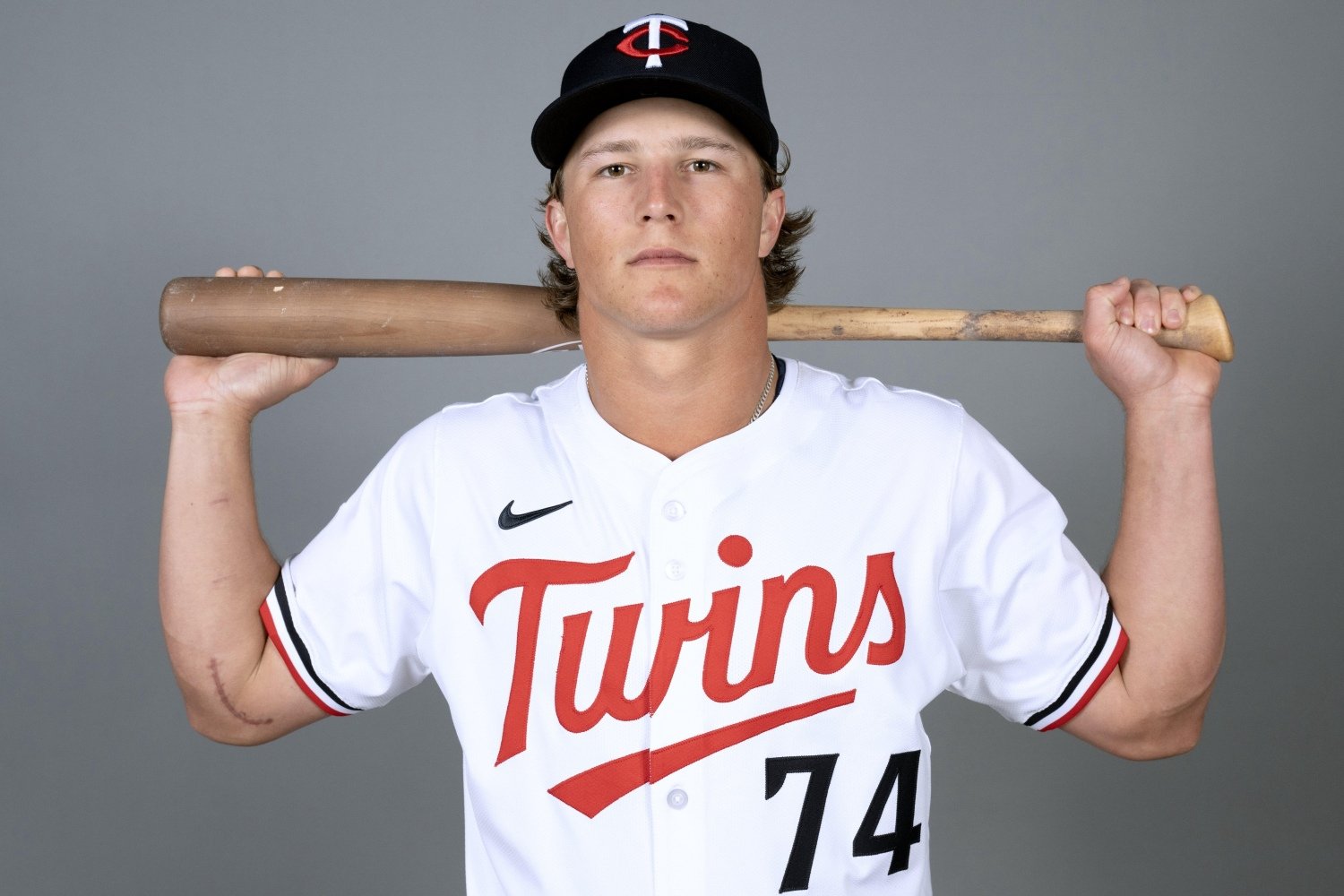 "We’re shooting for somewhere between March 17th and 24th," Luke Keaschall said. That’s the window in which the Twins prospect expects to return to playing the field, in comments shared with reporters in the Twins' spring training clubhouse on Tuesday. He has an idea of where he'll be when that happens, too. "I’ll probably start at second base, as it’s easiest on the arm," Keaschall said. "Throughout spring training, we’ll build up to the outfield and everything else." Keaschall’s long-term defensive home is one of the few questions remaining in the polished profile of the Twins' 2023 second-rounder, who spent a significant amount of his 2024 season at DH while managing the elbow injury that was eventually fixed surgically. "I had good days and bad days, but you learn to manage it and find a way to help the team win," he said. Indeed, Keaschall contributed plenty in 2024, in stops at High-A Cedar Rapids and Double-A Wichita. He and the organization had already co-authored a plan to play every day and manage his injury for the majority of the year, before scheduling surgery to ensure a clear on-ramp to his 2025 season. When asked about the impact of his injury on his day-to-day ability to play, Keaschall kept it simple. "It helps you focus on what you can do well." What the 22-year-old right-handed hitter did well in 2024, was pretty much everything. Keschall was otherworldly at Cedar Rapids, hitting .335/.457/.544, with 19 extra-base hits in 44 games, good for a 181 wRC+. He wasn’t quite as incandescent at Double A, managing a .281/.392/.439 line with 8 home runs in 58 games before being shut down for surgery (138 wRC+). He was 23-for-29 in stolen base attempts across both levels, though. With the minor exception of a major but well-managed injury, it’s hard to imagine a better first two professional seasons for Keaschall, who will likely start 2025 at Triple-A St. Paul and has a shot to contribute to the big-league roster. I liked Keashcall as an option for the Twins before the 2023 MLB Draft, but turning a second-round pick into a consensus top-75 global prospect in under 18 months is an outcome the Twins couldn’t even have conceived of. So, how did we get here? What does it tell us about the Twins' player development strengths? What can we expect from Keaschall in 2025? Keaschall has one of the better approaches at the plate of any prospect I’ve written up. For ease of use, we’ll hone in on three important aspects of his skill set and nestle them in an MLB context. Extreme (and Improved) Patience Keaschall has made a significant reduction in his swing rate since college. In his junior year at Arizona State, he swung around 50% of the time (extremely aggressive). With the Twins, his swing rate was 38%. If we want an MLB comparison, only Juan Soto had a lower swing rate (among qualified hitters) in 2024 (36.9%). Simply not swinging as much isn’t necessarily a strength on its own, but in combination with Keaschall’s other skills, it becomes a major asset. This improvement speaks to the Twins' ability to coax better swing decisions from their players, and is an indicator of why they don’t shy away from drafting or trading for prospects with a high chase rate. Rarely Expanding the Strike Zone Speaking of chase rate. Keaschall’s overall chase rate was around 15% in 2024. That would be close to the best in the majors. That’s Lars Nootbar or Soto territory. Keaschall himself reflected on pitch selection as an important factor within his locus of control while playing through his injury. "If I swing at good pitches, I can stay productive," he said. "If I waste a swing on a bad pitch, I know it’s going to hurt." Can we assume a stable chase rate as Keaschall continues to progress to Triple A and the majors? No. However, the example is useful for contextualizing the degree of excellence in Keaschall’s approach. Bat-to-Ball Skill and Hitting the Ball in the Air with Consistency So Keaschall doesn’t swing much overall, and almost never swings at pitches outside the strike zone. What about when he does swing? Does he make contact? Where does that contact end up? Keaschall has great bat-to-ball skills. His contact rate of 81% in 2024 would put him in the top 30 in the bigs, next to names like Marcus Semien and Jackson Merrill. When he does make contact, it’s consistently in the air. Keaschall maintained a ground-ball rate of just 35% in 2024. That would be in the best 25 in MLB. Most hitters at the top of that list are monsters (Francisco Lindor, Yordan Alvarez, Mookie Betts, et al.) These MLB comparisons are crude at best, so let’s stitch this profile together. You have a prospect who doesn’t swing much, and rarely swings out of the zone. When he does swing, he makes contact at a good rate, and when he makes contact, it’s usually in the air. That’s a recipe for success, especially when you throw in average power and the ability to steal 20 bases. Keaschall’s approach yielded a 13% walk rate and 17% strikeout rate in 2024. More in a similar vein should be on the way in 2025. So, what should we expect from Keaschall in 2025? It’s likely that he makes his MLB debut. It’s likely that he adjusts relatively quickly. It’s likely that, in time, he’s a good enough hitter for his defensive position not to matter much. Keaschall should be about as low-variance a prospect as you can get, given his approach, his bat-to-ball skills, and the fact that he’s already proven it in the middle levels of the minors (with a torn UCL and all). As much as you can feel confident in prospect prognostication, Keaschall should be a low-risk, productive (2-3 win) everyday player, and soon. Keaschall himself said it best when asked where he sees his best defensive position, and perhaps about where he'll spend his time this year, geographically. "Wherever they want me to play, I like to hit." Twins Daily’s John Bonnes contributed reporting to this story.
 -
Minnesota Twins 2025 Prospect Previews: Dasan Hill
Jamie Cameron replied to Jamie Cameron's topic in Twins Minor League Talk
I'm going to Fort Myers next week so need a brief hiatus from these. But Carpenter is really intriguing. Maybe I can get some video of him in person... -
Let's continue our review of the Twins' 2024 MLB Draft class. If there's a player in the group who has the ability to see their stock skyrocket this year, it might be their second-round pick. Image courtesy of © Jonah Hinebaugh/Naples Daily News/USA Today Network-Florida / USA TODAY NETWORK via Imagn Images Let's continue our review of the Twins' 2024 MLB Draft class. If there's a player in the group who has the ability to see their stock skyrocket this year, it might be their second-round pick. Draft Context, Scouting and Signing We finally got our first look at Dasan Hill, the Twins' Compensation Round B pick from the 2024 MLB Draft (69th overall), in a video shared via the Twins Player Development account on Twitter last weekend, and boy, did he look impressive. The Twins had a healthy bonus pool ahead of the 2024 Draft. After the 21st overall pick, they had a compensation pick (33rd) for Sonny Gray turning down the qualifying offer and signing with the St. Louis Cardinals. Additionally, they had their second-round pick (60th) and a competitive-balance round pick (69th), to give them four in the top 70. After they selected college bats in Kaelen Culpepper, Kyle DeBarge, and Billy Amick with their first three picks, it felt inevitable that the Twins would turn to a prep player, and they did, with left-handed pitcher Dasan Hill. The Twins tend to choose their spots when leaning into left-handed pitching, and it seems they were very convicted on Hill. The pre-draft reports on the southpaw out of Grapevine, Tex. focused on how much Hill’s velocity popped the spring before the draft, his fastball ticking up from the low 90s to the 92-95 mph range. His pre-draft arsenal included a pair of breaking balls, with the slider sitting 78-83 mph and an upper-70s changeup. Some reports also focused on his projection. Hill clocked in a 6-foot-5, 170 pounds at the MLB Combine. Throw those ingredients together, and you have a fascinating arm. Fangraphs's Eric Longenhagen had Hill as one of the best prep pitchers in the class (24th overall), citing a ‘feel for location uncommonly good for a pitcher his size and age’. Ultimately, Hill had a wide range of pre-draft rankings, from 24th to 99th in the boards we track as part of our draft process at Twins Daily. That’s normal for a prep pitcher. He ultimately ranked 59th on our board. The Twins selected him at 69th overall and paid $2,000,000 to sign him away from his Dallas Baptist commitment (well above the $1,168,000 slot). In the first video we’ve seen of Hill since he signed, his fastball is now up to 98 mph. The changeup has added velocity; we get some looks in the video of it sitting around 85 mph. His slider, already considered an above-average pitch, is getting some silly swings in the clip. It’s tough to say (without any open-side view), but it looks like Hill gets down the mound well, too, and could have good extension, another trait that will help the arsenal play up. Expectations for 2025 Hill will be one of the Twins arms I’m most excited to follow this year. He’ll be 19 for the entire season, and Minnesota will likely take it slow with him—as they should. There’s a sneakily good crop of left-handed pitchers in the lower and middle levels of the minors for the Twins now, with Michael Carpenter also likely to make his professional debut in 2025. I’ll be monitoring three variables for Hill in 2025. First (and most importantly): can he stay healthy? This dwarfs the rest and is the only truly meaningful outcome for this season. Does he throw strikes consistently (or with improving consistency)? Does he show the ability to miss bats? If Hill can show even flashes of the latter two starter traits, he’s going to be an incredibly exciting follow in 2025. If you don’t believe in the Twins' pitching development pipeline yet, I don’t know what’s going to change your mind. View full article
-
 Draft Context, Scouting and Signing We finally got our first look at Dasan Hill, the Twins' Compensation Round B pick from the 2024 MLB Draft (69th overall), in a video shared via the Twins Player Development account on Twitter last weekend, and boy, did he look impressive. The Twins had a healthy bonus pool ahead of the 2024 Draft. After the 21st overall pick, they had a compensation pick (33rd) for Sonny Gray turning down the qualifying offer and signing with the St. Louis Cardinals. Additionally, they had their second-round pick (60th) and a competitive-balance round pick (69th), to give them four in the top 70. After they selected college bats in Kaelen Culpepper, Kyle DeBarge, and Billy Amick with their first three picks, it felt inevitable that the Twins would turn to a prep player, and they did, with left-handed pitcher Dasan Hill. The Twins tend to choose their spots when leaning into left-handed pitching, and it seems they were very convicted on Hill. The pre-draft reports on the southpaw out of Grapevine, Tex. focused on how much Hill’s velocity popped the spring before the draft, his fastball ticking up from the low 90s to the 92-95 mph range. His pre-draft arsenal included a pair of breaking balls, with the slider sitting 78-83 mph and an upper-70s changeup. Some reports also focused on his projection. Hill clocked in a 6-foot-5, 170 pounds at the MLB Combine. Throw those ingredients together, and you have a fascinating arm. Fangraphs's Eric Longenhagen had Hill as one of the best prep pitchers in the class (24th overall), citing a ‘feel for location uncommonly good for a pitcher his size and age’. Ultimately, Hill had a wide range of pre-draft rankings, from 24th to 99th in the boards we track as part of our draft process at Twins Daily. That’s normal for a prep pitcher. He ultimately ranked 59th on our board. The Twins selected him at 69th overall and paid $2,000,000 to sign him away from his Dallas Baptist commitment (well above the $1,168,000 slot). In the first video we’ve seen of Hill since he signed, his fastball is now up to 98 mph. The changeup has added velocity; we get some looks in the video of it sitting around 85 mph. His slider, already considered an above-average pitch, is getting some silly swings in the clip. It’s tough to say (without any open-side view), but it looks like Hill gets down the mound well, too, and could have good extension, another trait that will help the arsenal play up. Expectations for 2025 Hill will be one of the Twins arms I’m most excited to follow this year. He’ll be 19 for the entire season, and Minnesota will likely take it slow with him—as they should. There’s a sneakily good crop of left-handed pitchers in the lower and middle levels of the minors for the Twins now, with Michael Carpenter also likely to make his professional debut in 2025. I’ll be monitoring three variables for Hill in 2025. First (and most importantly): can he stay healthy? This dwarfs the rest and is the only truly meaningful outcome for this season. Does he throw strikes consistently (or with improving consistency)? Does he show the ability to miss bats? If Hill can show even flashes of the latter two starter traits, he’s going to be an incredibly exciting follow in 2025. If you don’t believe in the Twins' pitching development pipeline yet, I don’t know what’s going to change your mind.
 -
We got our first look at Twins left-handed prospect Dasan Hill this week. His stuff looked incredibly exciting. What should we expect in 2025? View full video
-
We got our first look at Twins left-handed prospect Dasan Hill this week. His stuff looked incredibly exciting. What should we expect in 2025?
.png.885da12669d7a40710b7fbcd10f3faef.png)
