



Jamie Cameron
-
Posts
1,349 -
Joined
-
Last visited
-
Days Won
4
Content Type
Profiles
News
Minnesota Twins Videos
2026 Minnesota Twins Top Prospects Ranking
2022 Minnesota Twins Draft Picks
Minnesota Twins Free Agent & Trade Rumors, Notes, & Tidbits
Guides & Resources
2023 Minnesota Twins Draft Picks
The Minnesota Twins Players Project
2024 Minnesota Twins Draft Picks
2025 Minnesota Twins Draft Pick Tracker
2026 Minnesota Twins Draft Tracker: Picks & Bonuses
Forums
Blogs
Events
Store
Downloads
Gallery
Everything posted by Jamie Cameron
-
A blustery, cloudy morning gave way to a warm, sunny spring afternoon in St. Paul, as the Saints crushed Indianapolis on Tuesday, running out 16-4 winners in their series opener. Here are notes, observations, and analysis from my live looks in St. Paul. Image courtesy of © Chris Tilley-Imagn Images A blustery, cloudy morning gave way to a warm, sunny spring afternoon in St. Paul, as the Saints crushed Indianapolis on Tuesday, running out 16-4 winners in their series opener. Here are notes, observations, and analysis from my live looks in St. Paul. Zebby Matthews Tuesday was easily Zebby Matthews’s worst start of the young 2025 season. After getting pushed back from starting in Iowa via rainout, the righthander didn’t have his best stuff or his best command. Matthews was pulled in the top of the fourth inning, ending the day with a line of 3 2/3 IP, 7 H, 1 R, 0 ER, 1 BB, 4 K. Matthews managed 67% strikes on 80 pitches and only gave up two hard-hit balls, though, so ‘worst’ is a relative term here. Matthews's velocity wasn’t at its best on Tuesday. His fastball topped out at 97.4 mph, after he touched 99.5 mph in his previous start. He didn’t seem to have great command of his fastball, either, and struggled with location in general. Many of his pitches were just off the strike zone, and he labored a little to get into good counts—usually a key area of strength. Matthews dialed back the usage of his fastball a little, in favor of a roughly even split between four-seamers, cutters, and sliders. All of his pitches were still up, velo-wise, from his 2024 numbers. He managed 10 whiffs, including a 40% whiff rate on his slider. While it wasn’t his sharpest outing, the velocity, stuff, and strike-throwing are all consistently in place through four Triple-A starts. He’s close to ready. Carson McCusker McCusker continues to defy the odds with his performance at Triple A. The 2023 free-agent signing out of independent ball strikes an imposing figure in the batter's box. Seriously, the bat looks like a matchstick in his hands. He looks every bit of his listed size, 6-foot-8, 250 pounds. He crushed a grand slam off Carson Fulmer in a low-effort swing, an easy 103 mph off the bat. He also lined out in the bottom of the 8th at 106 mph. While it’s too early to say he deserves some run in the majors, McCusker is making a case for himself. Through 16 games in 2025, he’s hitting .298/.385/.684 with 6 home runs. He’s walking plenty (10.6%) and striking out a ton (31.8%). It’s close to top-of-the-scale power, with a maximum exit velocity of 114.2 mph and an unbelievable hard-hit rate of over 60%. All that adds up to a 175 wRC+. It’s a little bit reminiscent of Matt Wallner’s profile, from the right side—though, crucially, without the pedigree, track record, and supplementary tools. McCusker’s swing rate is down 10% overall in 2025. He’s clearly going into plate appearances with a better plan. His contact (especially in-zone contact) numbers are a little worrisome, and he’s in his age-27 season, but if he continues to mash, he’s going to be hard to ignore. I wonder if he’ll get any run at first base at St. Paul eventually. Emmanuel Rodriguez Emmanuel Rodriguez has had a slow start to 2025. Entering Tuesday’s tilt, he was hitting .228/.362/.281, with just three extra-base hits (all doubles). What’s been surprising is the lack of extra-base production (.053 ISO, compared to .253 in Triple A in 2024). There’s not much in his quality of contact to suggest there’s anything to worry about just yet. Entering Tuesday, his 42.4% Hard-Hit% is in line with 2024, with a similar Max EV of 113.6 mph. Looking at his plate discipline, Rodriguez has been more aggressive in 2025 (his swing percentage is up about 9%). Despite this, he’s still incredibly patient. He’s actually making more contact overall, and more in-zone contact than in 2024. The challenge, currently, is out-of-zone contact. In a very small sample, Rodriguez is chasing more in 2024. It’s resulting in some weaker contact outside the zone. I think there’s some calibration and adjustment to be done here, as the Twins want him to be more aggressive within the zone. After a couple of ugly initial at-bats, Rodriguez hit the ball hard, twice. A 107-mph single was followed up with a 112-mph single. The approach, patience, and quality of contact are all still there. The extra-base power should be coming soon. Michael Tonkin In his first rehab outing at St. Paul, Michael Tonkin was hit hard. He gave up two long home runs and three earned runs in an inning of work, needing 27 pitches to do so. Tonkin’s velocity was down, particularly on his sinker (-3.8 mph compared to 2024), and he left a lot of soft stuff over the heart of the plate. Still, he has time left in his rehab and the Twins bullpen does not have a pressing need for another arm in the immediate future. Diego Cartaya I was curious to see Cartaya, whom the Twins acquired in a trade with the Dodgers. It would be helpful to the Twins if either he or Jair Carmago emerged as a capable backup for 2026 and beyond. Cartaya looked clueless at the plate, though, striking out in four of his five trips. He’s running a strikeout rate in the sixties and I wouldn’t be surprised if he’s dumped from the 40-man roster if and when the Twins need a spot. Lastly, a request for folks who enjoy minor-league content at Twins Daily. This is a new and different format for prospect content, combining analysis with live looks. If you enjoyed it, please let us know. There’s certainly room to do more, if there’s an audience and an appetite for it. Feel free to leave feedback, too. View full article
- 20 replies
-
- 1
-

-
- zebby matthews
- carson mccusker
- (and 1 more)
-
K. I'm all set here. Thanks for reading/commenting. Enjoy your day.
-
What's your source for stuff+ and the translation of the model you're using to grades for each pitch?
-
There's been a huge uptick in Stuff+ from last year. Hit MLB debut Stuff+ was 99 (TJ Stats), this season has been 109-111. Fastball has gone from around 100 to 115-117. All of his pitches have improved. Only his cutter is around average per Stuff+, depending on what model you're using.
-
We’ll see Zebby Matthews with the big-league team soon. Let’s take stock of his early season performance in AAA and dig in on some of those tangible improvements. Image courtesy of Dave Nelson-Imagn Images We’ll see Zebby Matthews with the big-league team soon. Let’s take stock of his early season performance in AAA and dig in on some of those tangible improvements. For many Twins fans, it was perhaps a surprise when David Festa got the call to the Twins rotation over Zebby Matthews. After all, Zebby was lined up to take Pablo’s day in the rotation. Matthews has also made tangible performance gains in 2025. The move made sense, though. Festa is MLB-ready in his own right. He has more experience at Triple-A. His promotion allowed the Twins to build up some extra rest for a rotation that has rounded into form. We’ll see Zebby Matthews with the big league team soon. Let’s take stock of his early-season performance in the minors and dig in on some of those tangible improvements. Matthews has made three starts in AAA thus far in 2025, most recently against the Iowa Cubs, probably the best Triple-A lineup in baseball. In those three starts he’s thrown 15 innings and managed a 1.28 FIP, posting a 32.7 K-BB% in the process. That’s dominant. One inescapable truth, and one that underpinned folks clamoring for Zebby to be promoted to the big leagues to replace Pablo Lopez, is a significant uptick in velocity across the board. In 2024, a year in which Matthews saw three different MiLB levels (and a brief, challenging stint in the majors), his fastball averaged 95.6 mph. Through 15 innings in 2025, he's averaging 97.2 mph, he's touched 99.5 mph, and he’s using it more (45%, up from 37% in 2024). It’s not just the fastball. The velocity is up across the board. vFA vFC vSL vCU vCH 2024 (MiLB) 95.6 mph 90.8 mph 85.9 mph 80.2 mph 85.4 mph 2025 (MiLB) 97.2 mph 92.9 mph 89 mph 84.8 mph 87.3 mph To put this in context: 97.2 mph would have been the fastest average fastball for a starter in the majors in 2024, ahead of Dylan Cease (96.9 mph) and Tarik Skubal (96.8 mph). His slider would be the second hardest, on average. While we’ve been astounded by Matthew’s velocity gains in 2025, it still feels like we’re underselling it. So, what’s the impact of velocity gains? It’s giving him significantly more margin for error with his one remaining area of opportunity, command, (more on that later). The amount of contact opposing hitters are making in the strike zone is way down, from 88.7% in AAA in 2024, to 78.8% in Triple-A this year. His CSW% (called + swinging strike percent) is up from 28.6% in AAA in 2024, to 34.6% in AAA in 2025. These are not small improvements. If you’re a stuff nerd, that's taken a step forward. Please consult your preferred stuff plus model of choice. This is trending towards becoming one of the better arsenals out there, aided by new found elite velocity. So, what are the opportunities for Matthews? One aspect of his performance we should continue to pick apart is control versus command. The two are often conflated. He’s elite at one, while the other is a work in progress. Considered in its simplest form ‘control’ is the ability to throw strikes, ‘command’ your ability to manipulate those strikes throughout the strike zone. The latter is much more complicated. After all, you have to consider the relative strengths and weaknesses of a particular hitter, the sequencing of your pitches, and so on. Matthews threw ~70% strikes in his 2024 season. His 1.9 BB% in his MiLB innings would easily be the best in the majors (George Kirby led the league at 3%). Matthews is throwing slightly less strikes in 2025 (68%). I’d contend that’s a net positive. Knowing how, when, and where to leave the strike zone is an important skill in learning to deploy your arsenal, particularly when it features a fastball you can run up to 100 mph. To put it bluntly; how can you make a batter chase if you are never out of the strike zone? Let’s address the command directly. Location+ is a count and pitch type adjusted stat that serves as a measure of the pitcher’s ability to put the ball in the right place. While that’s not perfect, it tells an interesting story. In his brief MLB debut in 2024, Matthews had a Location+ of 97. If he was qualified, that would have ranked 52nd out of 58 starting pitchers in the league. Matthews’ Location+ was worst on his fastball and cutter, two pitches that account for ~60% of the pitches he throws. To be direct, he was outstanding at throwing strikes, not yet outstanding at putting those strikes in the right places. The remaining area of opportunity for Matthews is training command: spotting his pitches where they are called, reducing his miss rate, and ensuring misses don’t leak over the heart of the plate. This is where his velocity creates increased margin for error, but command metrics are the aspect of Matthews’ performance I’ll be paying closest attention to when he gets the call. One final aspect of development we should mention is a pitch tweak. Matthews adjusted his changeup this offseason. Primarily for use against left handed hitters, he’s worked on executing it over the plate to ensure they can’t sit on a cut fastball or breaking pitch inside. You can see an example below of how these were executed against Owen Caissie after getting to 0-2 against him in his most recent start (both changeups in this at-bat were swinging strikes). Matthews is more equipped to handle MLB hitters in a second stint with the Twins, whenever that may come. It’s now elite velocity, elite strike throwing, and a diverse arsenal that should beget success at the highest level. If he can continue to improve his command, he has a chance to be a playoff caliber starting pitcher. View full article
-
Zebby Matthews and the Next Frontier of Pitching Development
Jamie Cameron posted an article in Minor Leagues
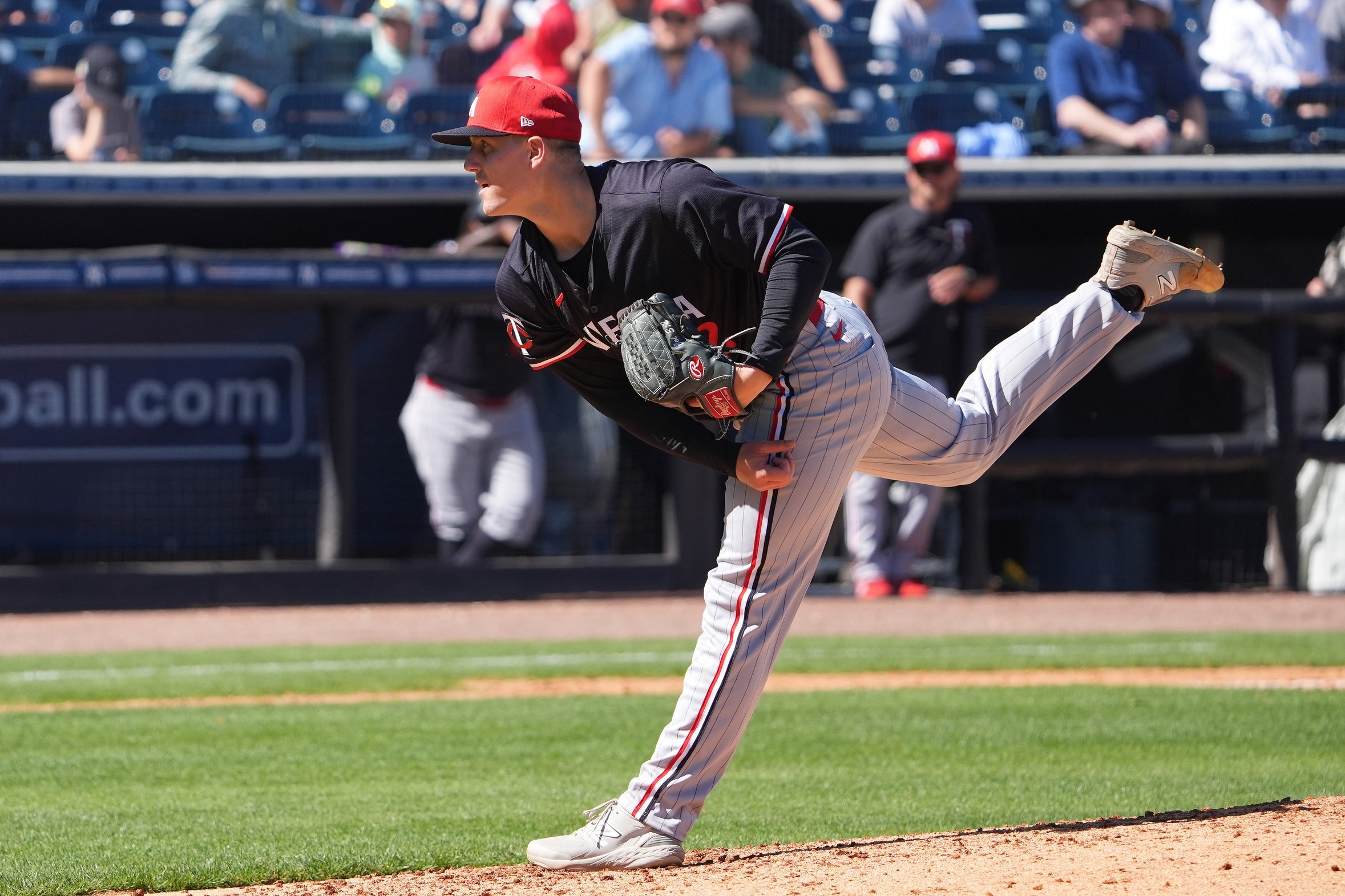 For many Twins fans, it was perhaps a surprise when David Festa got the call to the Twins rotation over Zebby Matthews. After all, Zebby was lined up to take Pablo’s day in the rotation. Matthews has also made tangible performance gains in 2025. The move made sense, though. Festa is MLB-ready in his own right. He has more experience at Triple-A. His promotion allowed the Twins to build up some extra rest for a rotation that has rounded into form. We’ll see Zebby Matthews with the big league team soon. Let’s take stock of his early-season performance in the minors and dig in on some of those tangible improvements. Matthews has made three starts in AAA thus far in 2025, most recently against the Iowa Cubs, probably the best Triple-A lineup in baseball. In those three starts he’s thrown 15 innings and managed a 1.28 FIP, posting a 32.7 K-BB% in the process. That’s dominant. One inescapable truth, and one that underpinned folks clamoring for Zebby to be promoted to the big leagues to replace Pablo Lopez, is a significant uptick in velocity across the board. In 2024, a year in which Matthews saw three different MiLB levels (and a brief, challenging stint in the majors), his fastball averaged 95.6 mph. Through 15 innings in 2025, he's averaging 97.2 mph, he's touched 99.5 mph, and he’s using it more (45%, up from 37% in 2024). It’s not just the fastball. The velocity is up across the board. vFA vFC vSL vCU vCH 2024 (MiLB) 95.6 mph 90.8 mph 85.9 mph 80.2 mph 85.4 mph 2025 (MiLB) 97.2 mph 92.9 mph 89 mph 84.8 mph 87.3 mph To put this in context: 97.2 mph would have been the fastest average fastball for a starter in the majors in 2024, ahead of Dylan Cease (96.9 mph) and Tarik Skubal (96.8 mph). His slider would be the second hardest, on average. While we’ve been astounded by Matthew’s velocity gains in 2025, it still feels like we’re underselling it. So, what’s the impact of velocity gains? It’s giving him significantly more margin for error with his one remaining area of opportunity, command, (more on that later). The amount of contact opposing hitters are making in the strike zone is way down, from 88.7% in AAA in 2024, to 78.8% in Triple-A this year. His CSW% (called + swinging strike percent) is up from 28.6% in AAA in 2024, to 34.6% in AAA in 2025. These are not small improvements. If you’re a stuff nerd, that's taken a step forward. Please consult your preferred stuff plus model of choice. This is trending towards becoming one of the better arsenals out there, aided by new found elite velocity. So, what are the opportunities for Matthews? One aspect of his performance we should continue to pick apart is control versus command. The two are often conflated. He’s elite at one, while the other is a work in progress. Considered in its simplest form ‘control’ is the ability to throw strikes, ‘command’ your ability to manipulate those strikes throughout the strike zone. The latter is much more complicated. After all, you have to consider the relative strengths and weaknesses of a particular hitter, the sequencing of your pitches, and so on. Matthews threw ~70% strikes in his 2024 season. His 1.9 BB% in his MiLB innings would easily be the best in the majors (George Kirby led the league at 3%). Matthews is throwing slightly less strikes in 2025 (68%). I’d contend that’s a net positive. Knowing how, when, and where to leave the strike zone is an important skill in learning to deploy your arsenal, particularly when it features a fastball you can run up to 100 mph. To put it bluntly; how can you make a batter chase if you are never out of the strike zone? Let’s address the command directly. Location+ is a count and pitch type adjusted stat that serves as a measure of the pitcher’s ability to put the ball in the right place. While that’s not perfect, it tells an interesting story. In his brief MLB debut in 2024, Matthews had a Location+ of 97. If he was qualified, that would have ranked 52nd out of 58 starting pitchers in the league. Matthews’ Location+ was worst on his fastball and cutter, two pitches that account for ~60% of the pitches he throws. To be direct, he was outstanding at throwing strikes, not yet outstanding at putting those strikes in the right places. The remaining area of opportunity for Matthews is training command: spotting his pitches where they are called, reducing his miss rate, and ensuring misses don’t leak over the heart of the plate. This is where his velocity creates increased margin for error, but command metrics are the aspect of Matthews’ performance I’ll be paying closest attention to when he gets the call. One final aspect of development we should mention is a pitch tweak. Matthews adjusted his changeup this offseason. Primarily for use against left handed hitters, he’s worked on executing it over the plate to ensure they can’t sit on a cut fastball or breaking pitch inside. You can see an example below of how these were executed against Owen Caissie after getting to 0-2 against him in his most recent start (both changeups in this at-bat were swinging strikes). Matthews is more equipped to handle MLB hitters in a second stint with the Twins, whenever that may come. It’s now elite velocity, elite strike throwing, and a diverse arsenal that should beget success at the highest level. If he can continue to improve his command, he has a chance to be a playoff caliber starting pitcher.
 -
He’s here, folks. Luke Keaschall got the call. He’ll join the Twins Friday in Atlanta, after a rash of injuries to position players left the Twins roster thin on both quality and depth. What should we expect from Keaschall? How might he be deployed? Let’s dig in. Image courtesy of © Chris Tilley-Imagn Images He’s here, folks. Luke Keaschall got the call. He’ll join the Twins Friday in Atlanta, after a rash of injuries to position players left the Twins roster thin on both quality and depth. What should we expect from Keaschall? How might he be deployed? Let’s dig in. This is one of those moments where it’s good to get excited. A homegrown prospect drafted a mere two years ago is making his debut in the majors. That, in itself, is a huge developmental win—for the organization, for the player development team, and for Keaschall himself. This spring, I wrote about the completeness of Keaschall as a hitter. To summarize: he makes great swing decisions, and he has excellent bat-to-ball skills. He maximizes his average power by displaying increasing skill at pulling the ball in the air. That’s a great combination for a high-floored, everyday regular. I think, though, it would be prudent for us to keep our expectations of Keaschall in check during his first taste of big-league action. Let’s dig into why. The first question that crops up is, "Where is he going to play?" Keaschall is newly recovered from scheduled Tommy John surgery last August, which cut short an exceptional season in which he managed a .903 OPS (158 wRC+) at High-A Cedar Rapids and Double-A Wichita. In 14 games at Triple-A St. Paul in 2025, Keaschall has been deployed at DH in seven and at second base in seven. In the games he started in the field, he was usually replaced in the middle or late innings. When we consider that the Twins are easing him back in on defense after surgery, I think it’s fair to assume playing the outfield is out of the question. (That’s still a medium- to long-term possibility, though.) I’d imagine he’ll play some combination of second base against left-handed pitching (you get Chris Sale on Saturday, good luck), and DH. Not to be a downer, but it’s also a distinct possibility that he spends a good amount of time on the bench. Another reality is that Keaschall probably had an equal chance of starting 2025 at Wichita or St. Paul. The Twins chose the latter (correctly, from this seat), but he’s had a 14-game stint at St. Paul after a 58-game stretch in Wichita to end 2024. It is unreasonable to expect him to come roaring out of the gates in the majors. Keaschall has been solid in his limited Triple-A debut. In 14 games, he’s hit .261/.379/.348, with a home run, a double, and four stolen bases. That adds up to a 107 wRC+. Look, it’s been cold, wet, and the Saints have suffered from a highly disrupted schedule early on, but it’s been a transition punctuated by adjustments. The biggest difference between Keaschall’s 2024 and early 2025 numbers is erosion in his quality of contact. He’s not hitting the ball very hard. His ISO is a full .100 lower than in 2024. That’s what I’d expect for a player jumping a level. Just don’t expect Keaschall to set the world on fire immediately. That’s not reasonable, or fair. If Keaschall is going to be successful in his first stint in the majors, it’ll be underpinned by excellent swing decisions. In the early going, he’s walking 15.5% of the time (even better than his 13.4% mark in 2024). He’s striking out 19% of the time—exactly the rate he managed at Wichita in 2024. His overall contact rate (81.4%) would be in the upper third of major-league hitters, while his in-zone contact rate of 89.7% would put him in a similar range. Strong swing decisions and bat-to-ball skills provide Keaschall a sturdy platform for success. One unintended outcome of the skillset, now that the difficulty mode is being cranked up, might be pitchers frequently getting to leveraged counts against him due to his patience. That could lead to weak contact, as he battles to stay in at-bats. I think a fully-formed Keaschall is a 2- or 3-win player. Most projection systems see him as a 1.5-win player in the short term. He has the athleticism, skillset, and track record to support long-term success. Don’t expect him to save the Twins offense in the short term, though. We’re not quite there yet. View full article
-
What Should we Expect from Luke Keaschall in the Big Leagues?
Jamie Cameron posted an article in Twins
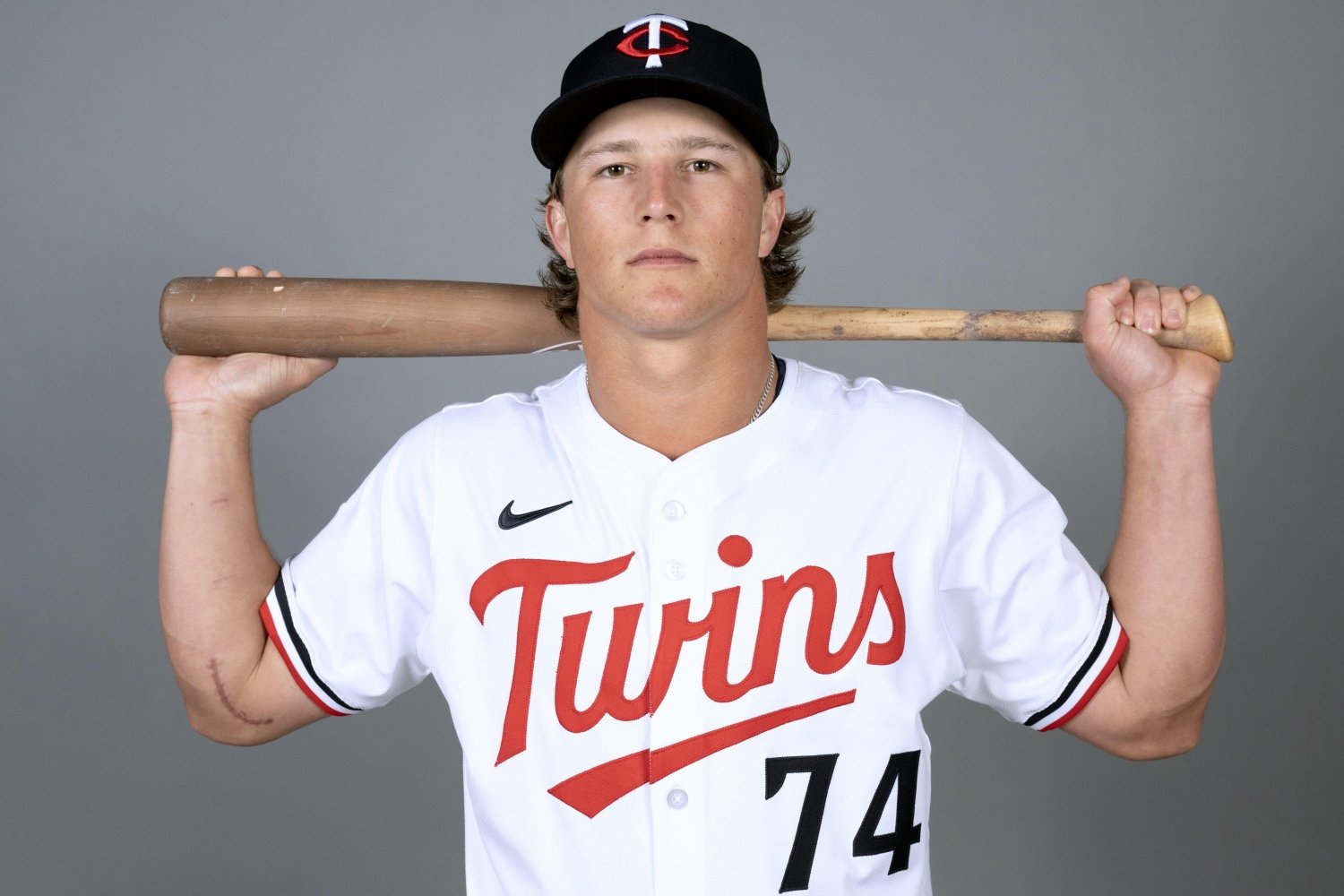 This is one of those moments where it’s good to get excited. A homegrown prospect drafted a mere two years ago is making his debut in the majors. That, in itself, is a huge developmental win—for the organization, for the player development team, and for Keaschall himself. This spring, I wrote about the completeness of Keaschall as a hitter. To summarize: he makes great swing decisions, and he has excellent bat-to-ball skills. He maximizes his average power by displaying increasing skill at pulling the ball in the air. That’s a great combination for a high-floored, everyday regular. I think, though, it would be prudent for us to keep our expectations of Keaschall in check during his first taste of big-league action. Let’s dig into why. The first question that crops up is, "Where is he going to play?" Keaschall is newly recovered from scheduled Tommy John surgery last August, which cut short an exceptional season in which he managed a .903 OPS (158 wRC+) at High-A Cedar Rapids and Double-A Wichita. In 14 games at Triple-A St. Paul in 2025, Keaschall has been deployed at DH in seven and at second base in seven. In the games he started in the field, he was usually replaced in the middle or late innings. When we consider that the Twins are easing him back in on defense after surgery, I think it’s fair to assume playing the outfield is out of the question. (That’s still a medium- to long-term possibility, though.) I’d imagine he’ll play some combination of second base against left-handed pitching (you get Chris Sale on Saturday, good luck), and DH. Not to be a downer, but it’s also a distinct possibility that he spends a good amount of time on the bench. Another reality is that Keaschall probably had an equal chance of starting 2025 at Wichita or St. Paul. The Twins chose the latter (correctly, from this seat), but he’s had a 14-game stint at St. Paul after a 58-game stretch in Wichita to end 2024. It is unreasonable to expect him to come roaring out of the gates in the majors. Keaschall has been solid in his limited Triple-A debut. In 14 games, he’s hit .261/.379/.348, with a home run, a double, and four stolen bases. That adds up to a 107 wRC+. Look, it’s been cold, wet, and the Saints have suffered from a highly disrupted schedule early on, but it’s been a transition punctuated by adjustments. The biggest difference between Keaschall’s 2024 and early 2025 numbers is erosion in his quality of contact. He’s not hitting the ball very hard. His ISO is a full .100 lower than in 2024. That’s what I’d expect for a player jumping a level. Just don’t expect Keaschall to set the world on fire immediately. That’s not reasonable, or fair. If Keaschall is going to be successful in his first stint in the majors, it’ll be underpinned by excellent swing decisions. In the early going, he’s walking 15.5% of the time (even better than his 13.4% mark in 2024). He’s striking out 19% of the time—exactly the rate he managed at Wichita in 2024. His overall contact rate (81.4%) would be in the upper third of major-league hitters, while his in-zone contact rate of 89.7% would put him in a similar range. Strong swing decisions and bat-to-ball skills provide Keaschall a sturdy platform for success. One unintended outcome of the skillset, now that the difficulty mode is being cranked up, might be pitchers frequently getting to leveraged counts against him due to his patience. That could lead to weak contact, as he battles to stay in at-bats. I think a fully-formed Keaschall is a 2- or 3-win player. Most projection systems see him as a 1.5-win player in the short term. He has the athleticism, skillset, and track record to support long-term success. Don’t expect him to save the Twins offense in the short term, though. We’re not quite there yet.
 -
According to Aaron Gleeman of The Athletic, the Twins are calling up their third-ranked prospect, Luke Keaschall, amid a flurry of injuries to position players. Image courtesy of © Chris Tilley-Imagn Images According to Aaron Gleeman of The Athletic, the Twins are calling up their third-ranked prospect, Luke Keaschall, amid a flurry of injuries to position players. Luke Keaschall, a consensus top-100 global prospect, is coming to the big leagues. The availability of Carlos Correa (wrist) and Willi Castro (oblique) is unknown, after each had to leave games during the Twins' recent series with the Mets. Jose Miranda (hand) and Austin Martin (hamstring) are both on the injured list for St. Paul, further eroding the team's position-player depth. Keaschall was the Twins' second-round pick out of Arizona State in 2023, the same draft that netted the Twins Walker Jenkins and Charlee Soto. He adjusted quickly to professional baseball. In his first full season in 2024, he hit .303/.420/.483, with 15 home runs (37 extra-base hits) and 23 stolen bases across 102 games at High A and Double A. Keaschall thrived on a combination of excellent swing decisions and strong bat-to-ball skills. He walked 13.4% of the time in 2024 against a strikeout rate of just 17.2%. A contact rate of 82.4% underpinned consistently strong production at the plate, with more pull-side power than you might expect. Keaschall's season was cut short in August by scheduled Tommy John surgery. His injury impacted both his swing and his throwing, with one of the most pressing questions against a safe profile being where he might fit defensively. Indeed, in the early going at St. Paul, Keaschall has mostly played DH, while easing back into limited defensive duties at second base. He's an outstanding athlete though. Assuming his throwing arm is fully recovered, he would make sense as an option in the outfield. Keaschall was off to a solid start at St. Paul, hitting .261/.379/.348 with a home run and a double in 14 games, good for a 107 wRC+. While this debut might be sooner than anticipated, or is ideal, a top prospect making their major league debut will undoubtedly excite a fan base in search of good news. Keaschall will join the team in Atlanta on Friday. More to come. View full article
-
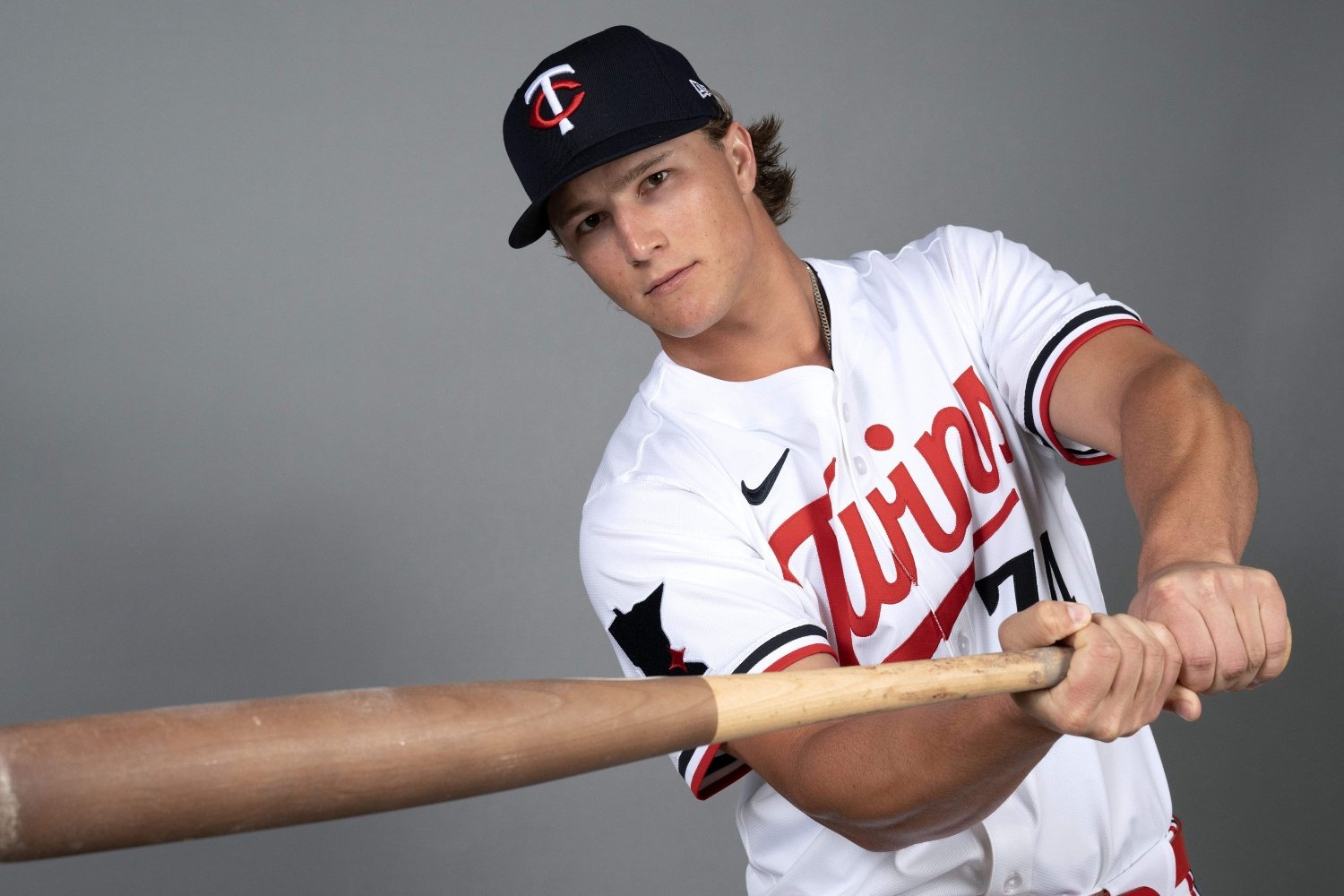 Luke Keaschall, a consensus top-100 global prospect, is coming to the big leagues. The availability of Carlos Correa (wrist) and Willi Castro (oblique) is unknown, after each had to leave games during the Twins' recent series with the Mets. Jose Miranda (hand) and Austin Martin (hamstring) are both on the injured list for St. Paul, further eroding the team's position-player depth. Keaschall was the Twins' second-round pick out of Arizona State in 2023, the same draft that netted the Twins Walker Jenkins and Charlee Soto. He adjusted quickly to professional baseball. In his first full season in 2024, he hit .303/.420/.483, with 15 home runs (37 extra-base hits) and 23 stolen bases across 102 games at High A and Double A. Keaschall thrived on a combination of excellent swing decisions and strong bat-to-ball skills. He walked 13.4% of the time in 2024 against a strikeout rate of just 17.2%. A contact rate of 82.4% underpinned consistently strong production at the plate, with more pull-side power than you might expect. Keaschall's season was cut short in August by scheduled Tommy John surgery. His injury impacted both his swing and his throwing, with one of the most pressing questions against a safe profile being where he might fit defensively. Indeed, in the early going at St. Paul, Keaschall has mostly played DH, while easing back into limited defensive duties at second base. He's an outstanding athlete though. Assuming his throwing arm is fully recovered, he would make sense as an option in the outfield. Keaschall was off to a solid start at St. Paul, hitting .261/.379/.348 with a home run and a double in 14 games, good for a 107 wRC+. While this debut might be sooner than anticipated, or is ideal, a top prospect making their major league debut will undoubtedly excite a fan base in search of good news. Keaschall will join the team in Atlanta on Friday. More to come.
- 56 comments
-
- 12
-
-

-
 In episode 75 of Destination: The Show, Jeremy and Jamie dig into the trade that brought Quinn Priester to the Brewers in exchange for Yophery Rodriguez, a PTBNL, and the 33rd pick in the 2025 MLB draft. The guys go on to dig into the hot starts of several Twins MiLB prospects. The talk velocity gains for Zebby Matthews and Andrew Morris before digging in on Charlee Soto, Dasan Hill, and improved plate discipline for Billy Amick. The guys then complete a 16 pick mini mock draft leveraging 2025 eligible prospects. With alternating picks, Jeremy and Jamie have to select a team of 8 players, with at least one pitcher and at least two prep picks. Weigh in on who selected the best squad. 0:00 Intro 1:20 Brewers Make Trade 8:57 Zebby and Morris and velo 16:23 Charlee Soto and Dasan Hill 21:15 Billy Amick and other notes 24:24 Mini Mock Draft - Jeremy and Jamie alternate taking picks, each making eight selection. They each have to take one pitcher (or more) and two or more prep players. 56:30 Listener Question You can support the show by downloading it from wherever you get your podcasts, including iTunes and Spotify. If you enjoy the content, consider leaving us a five-star rating and review in addition to sharing or retweeting DTS-related content. You can follow us on Twitter @DTS_POD1, @Jeremynygaard, @J_D_Cameron, and @TheodoreTollef1. We’re now on Bluesky @destinationtheshow.bsky.social. You can also find full episodes and clips of our shows on our YouTube page @DestinationTheShow.
- 1 comment
-
- 2
-
-
- zebby matthews
- charlee soto
- (and 1 more)
-
Draft tandem Jeremy Nygaard and JD Cameron team up for a podcast to discuss prospects on their way to the big leagues and the MLB draft, produced by Theo Tollefson. Image courtesy of Thieres Rabelo Draft tandem Jeremy Nygaard and JD Cameron team up for a podcast to discuss prospects on their way to the big leagues and the MLB draft, produced by Theo Tollefson. In episode 75 of Destination: The Show, Jeremy and Jamie dig into the trade that brought Quinn Priester to the Brewers in exchange for Yophery Rodriguez, a PTBNL, and the 33rd pick in the 2025 MLB draft. The guys go on to dig into the hot starts of several Twins MiLB prospects. The talk velocity gains for Zebby Matthews and Andrew Morris before digging in on Charlee Soto, Dasan Hill, and improved plate discipline for Billy Amick. The guys then complete a 16 pick mini mock draft leveraging 2025 eligible prospects. With alternating picks, Jeremy and Jamie have to select a team of 8 players, with at least one pitcher and at least two prep picks. Weigh in on who selected the best squad. 0:00 Intro 1:20 Brewers Make Trade 8:57 Zebby and Morris and velo 16:23 Charlee Soto and Dasan Hill 21:15 Billy Amick and other notes 24:24 Mini Mock Draft - Jeremy and Jamie alternate taking picks, each making eight selection. They each have to take one pitcher (or more) and two or more prep players. 56:30 Listener Question You can support the show by downloading it from wherever you get your podcasts, including iTunes and Spotify. If you enjoy the content, consider leaving us a five-star rating and review in addition to sharing or retweeting DTS-related content. You can follow us on Twitter @DTS_POD1, @Jeremynygaard, @J_D_Cameron, and @TheodoreTollef1. We’re now on Bluesky @destinationtheshow.bsky.social. You can also find full episodes and clips of our shows on our YouTube page @DestinationTheShow. View full article
-
 In episode 74 of Destination: The Show, Jeremy and Jamie dig into the Twins uneven start to the 2025 season. They talk through surprising player performances and whether there’s cause for concern for the Twins rotation. The guys then move onto an exciting St. Paul Saints roster, digging in on their starting pitchers and the velocity gains made by Zebby Matthews in the early going. The guys then dig into each MiLB roster in turn, moving through St. Paul, Wichita, Cedar Rapids, and Fort Myers. For each, they talk through notable prospects and dig into which players have something to prove and which are likely to impress. Finally they end with some draft chatter. 0:00 Intro 5:30 Housekeeping 6:18 Twins Start 14:20 Zebby Matthews 22:58 St Paul Saints Roster Preview 35:20 Wichita Wind Surge Roster Preview 47:37 Cedar Rapids Kernels 57:48 Fort Myers Mighty Mussels 1:10:58 Update on Draft You can support the show by downloading it from wherever you get your podcasts, including iTunes and Spotify. If you enjoy the content, consider leaving us a five-star rating and review in addition to sharing or retweeting DTS-related content. You can follow us on Twitter @DTS_POD1, @Jeremynygaard, @J_D_Cameron, and @TheodoreTollef1. We’re now on Bluesky @destinationtheshow.bsky.social. You can also find full episodes and clips of our shows on our YouTube page @DestinationTheShow.
 -
Draft tandem Jeremy Nygaard and JD Cameron team up for a podcast to discuss prospects on their way to the big leagues and the MLB draft, produced by Theo Tollefson. Image courtesy of Thieres Rabelo Draft tandem Jeremy Nygaard and JD Cameron team up for a podcast to discuss prospects on their way to the big leagues and the MLB draft, produced by Theo Tollefson. In episode 74 of Destination: The Show, Jeremy and Jamie dig into the Twins uneven start to the 2025 season. They talk through surprising player performances and whether there’s cause for concern for the Twins rotation. The guys then move onto an exciting St. Paul Saints roster, digging in on their starting pitchers and the velocity gains made by Zebby Matthews in the early going. The guys then dig into each MiLB roster in turn, moving through St. Paul, Wichita, Cedar Rapids, and Fort Myers. For each, they talk through notable prospects and dig into which players have something to prove and which are likely to impress. Finally they end with some draft chatter. 0:00 Intro 5:30 Housekeeping 6:18 Twins Start 14:20 Zebby Matthews 22:58 St Paul Saints Roster Preview 35:20 Wichita Wind Surge Roster Preview 47:37 Cedar Rapids Kernels 57:48 Fort Myers Mighty Mussels 1:10:58 Update on Draft You can support the show by downloading it from wherever you get your podcasts, including iTunes and Spotify. If you enjoy the content, consider leaving us a five-star rating and review in addition to sharing or retweeting DTS-related content. You can follow us on Twitter @DTS_POD1, @Jeremynygaard, @J_D_Cameron, and @TheodoreTollef1. We’re now on Bluesky @destinationtheshow.bsky.social. You can also find full episodes and clips of our shows on our YouTube page @DestinationTheShow. View full article
-
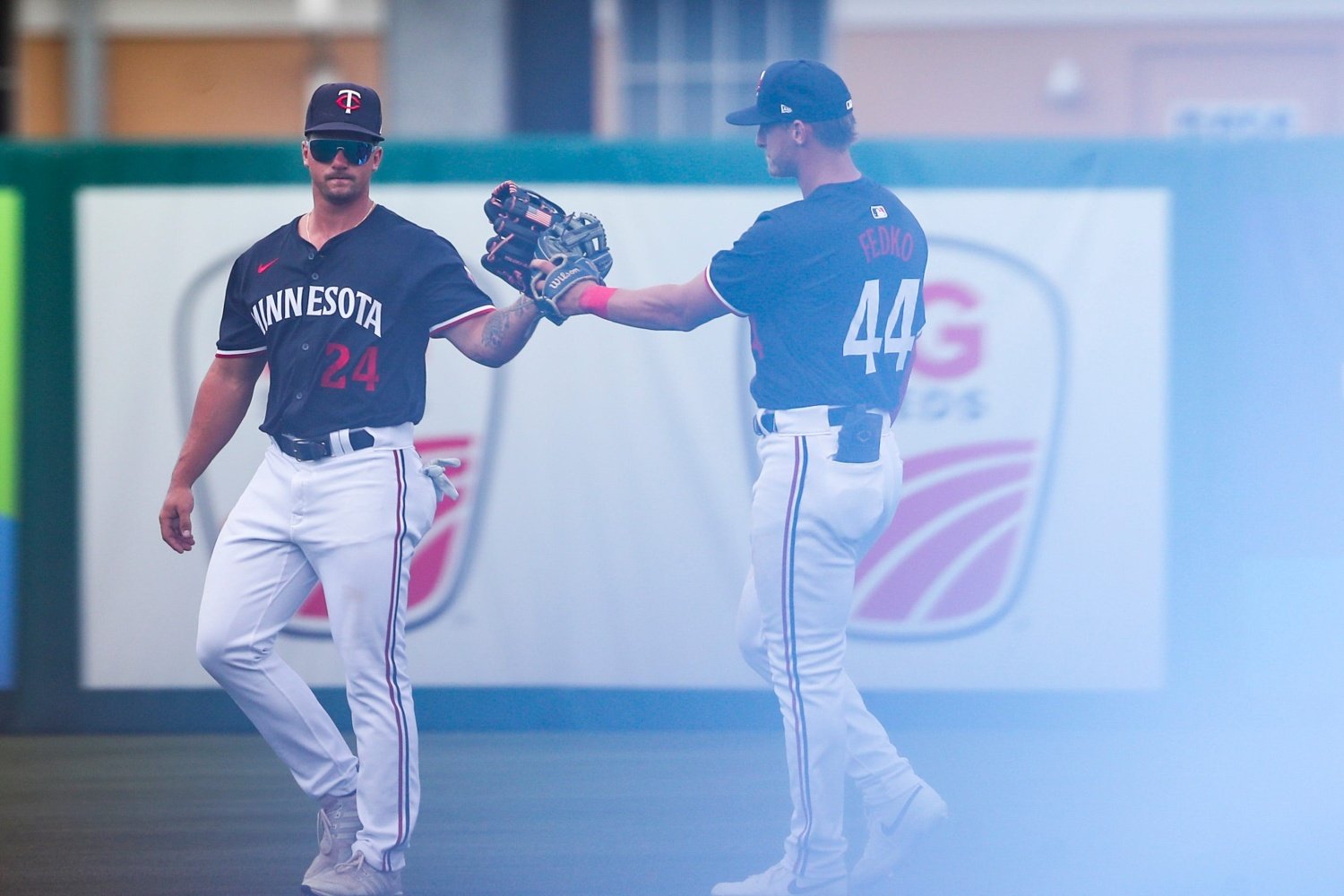 Round 3: Khadim Diaw, C, Loyola-Marymount Diaw is an outstanding athlete who, if he pans out, will be a prospect who flew under the radar in draft circles due to significant injuries. In his freshman season, he suffered a back fracture, missing most of the season. After a good sophomore season (.896 OPS), he suffered a broken thumb and a sprained wrist that limited him to 20 games. So, what can you expect? You’re going to see a good approach. Diaw controls the strike zone well. He walked almost as much (11.1%) as he struck out (14.1%) in 2024. Additionally, you’ll see good bat-to-ball skills. Diaw has a direct swing, and there’s raw power there, but he hasn’t tapped into it much in games. He more than held his own in a 24-game debut at Fort Myers (114 wRC+). There’s a lot of development needed behind the plate. His arm strength is fringy, though, and everything is a little raw. The positive is that if he doesn’t work out behind the plate, he could be a viable outfielder, particularly if the power develops. He’ll be half the catching tandem at Cedar Rapids to start the season. Round 4: Jaime Ferrer, OF, Florida State Ferrer was drafted by the Twins in the fourth round, after three solid years of production for Florida State. A converted outfielder (he used to be a catcher), he’s a fascinating development conundrum for the Twins. Ferrer is an aggressive hitter. He swings often, and will expand the zone. In college, he never walked more than 9.2% of the time, and that figure was just 6.5% in his brief pro debut. He makes contact both often and dangerously. Ferrer crushed 22 home runs in his junior year. My guess is the Twins will target swing decisions with him. Currently, he’s a 'tweener profile whose production could take a huge leap if he improves his approach. He’ll start the season at Cedar Rapids. Round 5: Caden Kendle, OF, UC-Irvine It’s right around this point that I expected the Twins to start transitioning to college pitching. After the draft, Sean Johnson shared that the bats on the Twins' board held up a little longer than expected. Kendle was an under-the-radar sleeper pick for this draft from an excellent college program. He was a senior signee with a track record of production and a profile led by an excellent hit tool. In three seasons as a starter at Irvine, he never posted a wRC+ lower than 143. He carried over the strong bat-to-ball skills to his Twins debut, walking 10.5% of the time and striking out just 10.5% of the time in 22 games (118 wRC+). He’ll start the season in the outfield mix at Cedar Rapids. Round 6: Derek Bender, C, Coastal Carolina I don’t have anything to add to the Derek Bender conversation, other than that the whole situation was extremely unfortunate. If you missed the story, you can find it here. The short version is, he gave away the pitches his pitchers were throwing to opposing batters. Bender is no longer with the Twins organization. Round 7: Eli Jones, RHP, South Carolina OK, it’s time for a bold prediction. Eli Jones is a 2025 breakout pick for Twins arms drafted in 2024. The Twins often lean into a more north/south movement profile with their arms, Jones a more east/west profile. Pitching as the Friday night starter for South Carolina in 2024, he managed a 3.51 FIP that outshone his 5.24 ERA, throwing plenty of strikes and generating ground balls at a high clip (58% in 2024). Coming out of the draft, Jones’s primary arsenal was a sinker sitting at 92 mph; a slider; and a changeup. He’s turned heads in spring training, mostly for significant velocity gains. Jones’s fastball now sits at 95 mph and has touched 96 mph. He’ll start the season at Fort Myers, and will be a good follow for the 2025 season. Rounds 8 and 9: Jakob Hall, RHP, Oral Roberts, Jason Doktorcyzk, RHP Nevada The Twins took a pair of right-handed pitchers in rounds 8 and 9, in Jakob Hall out of Oral Roberts and Jason Doktorcyzk out of Nevada. Hall pitched 107 innings in college last year, posting a 3.89 FIP, striking out 24.3% of batters and walking just 4.6%. He’ll rely on a fastball that he’s run up to 94 mph (but will sit 91-93 mph) and an effective slider. Doktorcyzk had a tough debut in the Twins' Spring Breakout game. Coming out of Nevada, he was another effective strike thrower who punched out his fair share of hitters. He relied on a fastball up to 95 mph and an effective sweeper. Both Hall and Doktorcyzk will start 2025 at Fort Myers. Round 10: Peyton Carr, 3B, High Point Carr was a money-saving signing for the Twins as a 10th-round senior. Even so, there’s plenty of intrigue around his profile, albeit a raw one. Carr missed significant time at High Point in his final two seasons through persistent injuries. When he played, he mashed. The calling card is plus raw power. In 27 games in 2024, he hit 13 home runs (214 wRC+), walking close to 15% of the time. Carr hasn’t seen a ton of pitching of the highest caliber or quality, so it’ll be interesting to see how he adjusts to his first full season at Fort Myers in 2025.
- 4 comments
-
- 4
-
-
- eli jones
- khadim diaw
- (and 2 more)
-
The minor-league season is upon us. Throughout spring training, we published in-depth looks at some of the prospects the Twins selected in the 2024 MLB Draft. Today, we’re looking at players drafted in rounds three through ten. Image courtesy of © Jonah Hinebaugh/The News-Press/USA Today Network-Florida / USA TODAY NETWORK via Imagn Images The minor-league season is upon us. Throughout spring training, we published in-depth looks at some of the prospects the Twins selected in the 2024 MLB Draft. Today, we’re looking at players drafted in rounds three through ten. Round 3: Khadim Diaw, C, Loyola-Marymount Diaw is an outstanding athlete who, if he pans out, will be a prospect who flew under the radar in draft circles due to significant injuries. In his freshman season, he suffered a back fracture, missing most of the season. After a good sophomore season (.896 OPS), he suffered a broken thumb and a sprained wrist that limited him to 20 games. So, what can you expect? You’re going to see a good approach. Diaw controls the strike zone well. He walked almost as much (11.1%) as he struck out (14.1%) in 2024. Additionally, you’ll see good bat-to-ball skills. Diaw has a direct swing, and there’s raw power there, but he hasn’t tapped into it much in games. He more than held his own in a 24-game debut at Fort Myers (114 wRC+). There’s a lot of development needed behind the plate. His arm strength is fringy, though, and everything is a little raw. The positive is that if he doesn’t work out behind the plate, he could be a viable outfielder, particularly if the power develops. He’ll be half the catching tandem at Cedar Rapids to start the season. Round 4: Jaime Ferrer, OF, Florida State Ferrer was drafted by the Twins in the fourth round, after three solid years of production for Florida State. A converted outfielder (he used to be a catcher), he’s a fascinating development conundrum for the Twins. Ferrer is an aggressive hitter. He swings often, and will expand the zone. In college, he never walked more than 9.2% of the time, and that figure was just 6.5% in his brief pro debut. He makes contact both often and dangerously. Ferrer crushed 22 home runs in his junior year. My guess is the Twins will target swing decisions with him. Currently, he’s a 'tweener profile whose production could take a huge leap if he improves his approach. He’ll start the season at Cedar Rapids. Round 5: Caden Kendle, OF, UC-Irvine It’s right around this point that I expected the Twins to start transitioning to college pitching. After the draft, Sean Johnson shared that the bats on the Twins' board held up a little longer than expected. Kendle was an under-the-radar sleeper pick for this draft from an excellent college program. He was a senior signee with a track record of production and a profile led by an excellent hit tool. In three seasons as a starter at Irvine, he never posted a wRC+ lower than 143. He carried over the strong bat-to-ball skills to his Twins debut, walking 10.5% of the time and striking out just 10.5% of the time in 22 games (118 wRC+). He’ll start the season in the outfield mix at Cedar Rapids. Round 6: Derek Bender, C, Coastal Carolina I don’t have anything to add to the Derek Bender conversation, other than that the whole situation was extremely unfortunate. If you missed the story, you can find it here. The short version is, he gave away the pitches his pitchers were throwing to opposing batters. Bender is no longer with the Twins organization. Round 7: Eli Jones, RHP, South Carolina OK, it’s time for a bold prediction. Eli Jones is a 2025 breakout pick for Twins arms drafted in 2024. The Twins often lean into a more north/south movement profile with their arms, Jones a more east/west profile. Pitching as the Friday night starter for South Carolina in 2024, he managed a 3.51 FIP that outshone his 5.24 ERA, throwing plenty of strikes and generating ground balls at a high clip (58% in 2024). Coming out of the draft, Jones’s primary arsenal was a sinker sitting at 92 mph; a slider; and a changeup. He’s turned heads in spring training, mostly for significant velocity gains. Jones’s fastball now sits at 95 mph and has touched 96 mph. He’ll start the season at Fort Myers, and will be a good follow for the 2025 season. Rounds 8 and 9: Jakob Hall, RHP, Oral Roberts, Jason Doktorcyzk, RHP Nevada The Twins took a pair of right-handed pitchers in rounds 8 and 9, in Jakob Hall out of Oral Roberts and Jason Doktorcyzk out of Nevada. Hall pitched 107 innings in college last year, posting a 3.89 FIP, striking out 24.3% of batters and walking just 4.6%. He’ll rely on a fastball that he’s run up to 94 mph (but will sit 91-93 mph) and an effective slider. Doktorcyzk had a tough debut in the Twins' Spring Breakout game. Coming out of Nevada, he was another effective strike thrower who punched out his fair share of hitters. He relied on a fastball up to 95 mph and an effective sweeper. Both Hall and Doktorcyzk will start 2025 at Fort Myers. Round 10: Peyton Carr, 3B, High Point Carr was a money-saving signing for the Twins as a 10th-round senior. Even so, there’s plenty of intrigue around his profile, albeit a raw one. Carr missed significant time at High Point in his final two seasons through persistent injuries. When he played, he mashed. The calling card is plus raw power. In 27 games in 2024, he hit 13 home runs (214 wRC+), walking close to 15% of the time. Carr hasn’t seen a ton of pitching of the highest caliber or quality, so it’ll be interesting to see how he adjusts to his first full season at Fort Myers in 2025. View full article
-
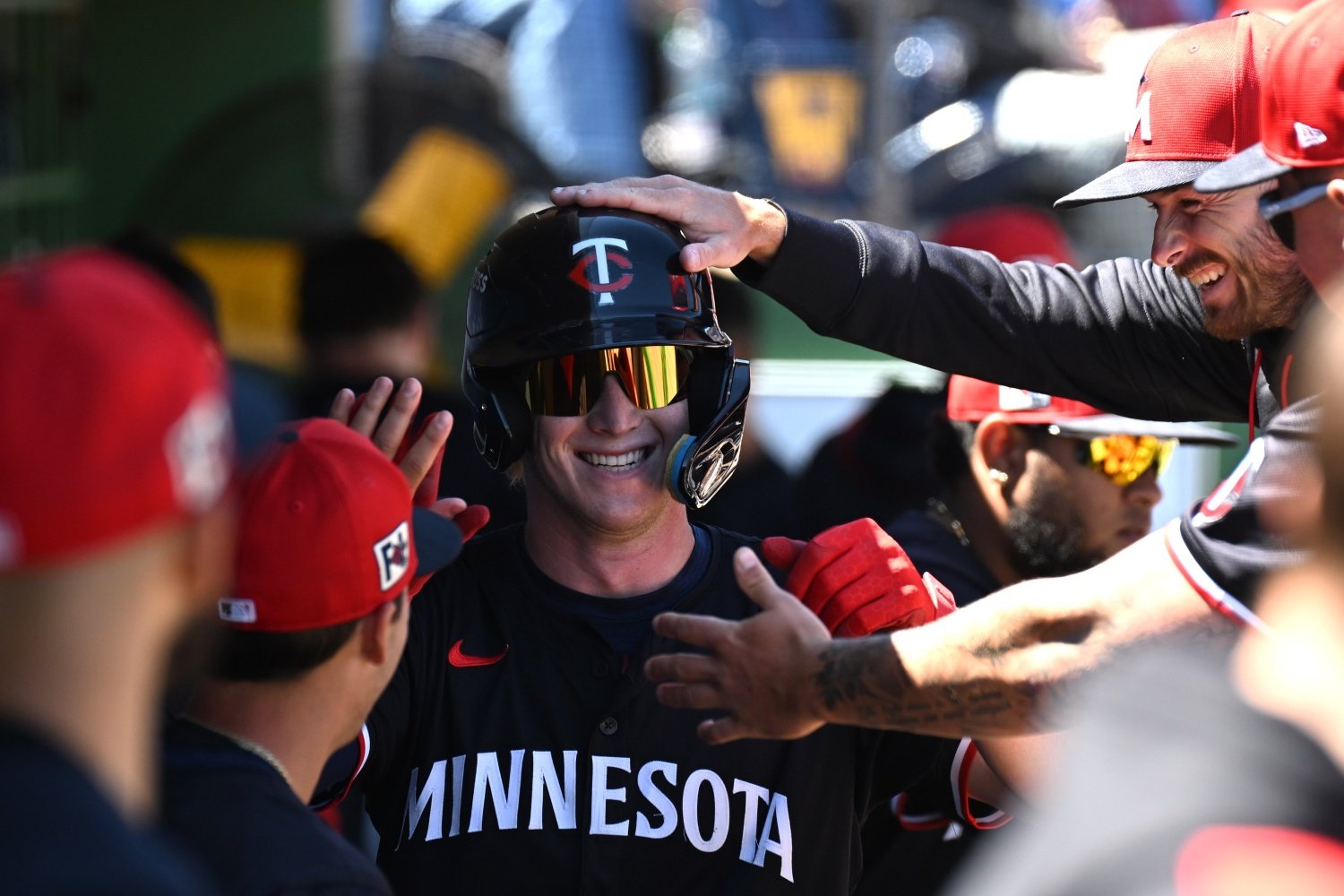 Coaching Staff: The Cedar Rapids Kernels coaching staff for 2025 includes both returning and familiar faces. Manager Brian Meyer will be with the Kernels for his first season there, replacing Brian Dinkelman, who managed them for the past five seasons. Joining him are newcomers at pitching coach (Hunter Townsend), hitting and development coach (Julian Gonzalez), lead athletic trainer (Taylor Carpenter), assistant athletic trainer (Morgan Leichtenberger) and baseball technology fellow (Marcus Hill). Pitching coach Argenis (AJ) Angulo and hitting coach CJ Baker return for their second seasons in Cedar Rapids, while strength and conditioning coach Blake Kretovics is back for his third campaign. Pitchers: Spencer Bengard, Ross Dunn, Tanner Hall, Alejandro Hidalgo, Ty Langenberg, Jeremy Lee, Juan Mendez, Juan Mercedes, Jack Noble, Jose Olivares, Paulshawn Pasqualotto, Samuel Perez, Wilker Reyes, Charlee Soto, Jacob Wosinski, Gabriel Yanez. There’s plenty of talented pitching on the Kernels' roster. The rotation will be composed of Charlee Soto, Alejandro Hidalgo, Tanner Hall, Jose Olivares, Ty Langenberg and Ross Dunn. Of that crop, Soto will garner the most attention. He’s a fringe top-100 prospect now, and touched 100 mph in spring training after a solid debut season in Fort Myers. Langenberg went to the post consistently in 2024. In 108 innings across Fort Myers and Cedar Rapids, he managed a 3.28 FIP, an 18.9 K-BB% and added velocity across his arsenal. Dunn and Hall will look to take a step forward after peaks and valleys in 2024, while Olivares, just 22, performed well in Fort Myers in 2024, striking out 23.2% of hitters while managing a 2.82 FIP in 46 innings. Catchers: Nate Baez, Khadim Diaw Diaw is the headliner for the Kernels catching crop. The Twins' third-round selection from the 2024 MLB Draft, he got off to a solid start for Fort Myers at the end of last season, managing a 114 wRC+ and walking almost as much as he struck out in a 24-game professional debut. Baez will return to Cedar Rapids after finishing the 2024 season with the Kernels. The Twins' 2022 12th-rounder hit well in 2024, managing a 117 wRC+ in 82 games at High A in a more slug-reliant offensive profile. Infielders: Billy Amick, Kaelen Culpepper, Danny De Andrade, Kyle DeBarge, Rayne Doncon, Brandon Winokur On paper, the infield group is undoubtedly the strength of the Kernels roster. The Twins' first three picks from the 2024 draft are represented, in Kaelen Culpepper, Kyle DeBarge, and Billy Amick. Culpepper demolished pitching at Fort Myers before slowing down in a brief Midwest League debut in 2024. DeBarge showed signs of a good approach at the plate, but suffered from an elevated ground ball rate in the early going at Fort Myers. Amick started slowly, but heated up over the final two weeks of the season, finishing with a 121 wRC+ and showing an impressive 15.6% walk rate. Doncon returns to Cedar Rapids after 56 games there in 2024. He held his own in his first stint at High A, managing a .730 OPS and showing solid defense at third base, while looking a little limited at shortstop. De Andrade played just 29 games due to injury in 2024. One of the better defensive shortstops in the Twins system, he’ll be looking to make up for lost time. Finally, one of the prospects who excited Twins fans the most this spring, Brandon Winokur, will likely split time between shortstop and the outfield in 2025. A gifted athlete, he managed a 116 wRC+ in a full 94-game season at Fort Myers as a 19-year-old, mashing 14 home runs on the way. He’ll remain one of the most fun Twins prospects to follow in 2025, due to the massive upside his profile provides. Outfielders: Jaime Ferrer, Gabriel Gonzalez, Kyle Hess, Caden Kendle, Misael Urbina. The Kernels outfield features a pair of 2024 draftees, in Jaime Ferrer and Caden Kendle. Ferrer looked strong in his debut at Fort Myers, managing a .748 OPS and 122 wRC+ in a 24-game sample, while Kendle quietly demonstrated excellent bat-to-ball skills, striking out just 10.5% of the time. Gonzalez will be looking for a bounce-back season in 2025. Acquired in the Jorge Polanco trade, he was limited to just 82 games in 2024 through injury. Injured List: Miguelangel Boadas (60 Day IL), Matt Gabbert (7 Day IL), Xander Hamilton (60 Day IL), Rafael Marcano (7 Day IL), Nolan Santos (60 Day IL), Jose Salas, INF (7 Day IL). The Cedar Rapids roster will be a fun follow in 2025. A particularly talented infield composed primarily of the top of the Twins' 2024 draft class is supplemented by high-upside prospects in Soto and Winokur. I’ll be interested to see which pitchers from this group take a step forward in 2025. I’d expect Langenberg and Dunn to pitch effectively, based on reports from Twins spring training. Who are you most excited to see in Cedar Rapids in 2025? Who's being overrated? Weigh in by leaving a comment.
- 11 comments
-
- 11
-
-
-
- kaelen culpepper
- brandon winokur
- (and 5 more)
-
The Cedar Rapids Kernels start their season on Friday, April 4th, in a three-game set at the Wisconsin Timber Rattlers. Let’s take a look at an exciting 2025 Kernels roster. Image courtesy of © Jonathan Dyer-Imagn Images The Cedar Rapids Kernels start their season on Friday, April 4th, in a three-game set at the Wisconsin Timber Rattlers. Let’s take a look at an exciting 2025 Kernels roster. Coaching Staff: The Cedar Rapids Kernels coaching staff for 2025 includes both returning and familiar faces. Manager Brian Meyer will be with the Kernels for his first season there, replacing Brian Dinkelman, who managed them for the past five seasons. Joining him are newcomers at pitching coach (Hunter Townsend), hitting and development coach (Julian Gonzalez), lead athletic trainer (Taylor Carpenter), assistant athletic trainer (Morgan Leichtenberger) and baseball technology fellow (Marcus Hill). Pitching coach Argenis (AJ) Angulo and hitting coach CJ Baker return for their second seasons in Cedar Rapids, while strength and conditioning coach Blake Kretovics is back for his third campaign. Pitchers: Spencer Bengard, Ross Dunn, Tanner Hall, Alejandro Hidalgo, Ty Langenberg, Jeremy Lee, Juan Mendez, Juan Mercedes, Jack Noble, Jose Olivares, Paulshawn Pasqualotto, Samuel Perez, Wilker Reyes, Charlee Soto, Jacob Wosinski, Gabriel Yanez. There’s plenty of talented pitching on the Kernels' roster. The rotation will be composed of Charlee Soto, Alejandro Hidalgo, Tanner Hall, Jose Olivares, Ty Langenberg and Ross Dunn. Of that crop, Soto will garner the most attention. He’s a fringe top-100 prospect now, and touched 100 mph in spring training after a solid debut season in Fort Myers. Langenberg went to the post consistently in 2024. In 108 innings across Fort Myers and Cedar Rapids, he managed a 3.28 FIP, an 18.9 K-BB% and added velocity across his arsenal. Dunn and Hall will look to take a step forward after peaks and valleys in 2024, while Olivares, just 22, performed well in Fort Myers in 2024, striking out 23.2% of hitters while managing a 2.82 FIP in 46 innings. Catchers: Nate Baez, Khadim Diaw Diaw is the headliner for the Kernels catching crop. The Twins' third-round selection from the 2024 MLB Draft, he got off to a solid start for Fort Myers at the end of last season, managing a 114 wRC+ and walking almost as much as he struck out in a 24-game professional debut. Baez will return to Cedar Rapids after finishing the 2024 season with the Kernels. The Twins' 2022 12th-rounder hit well in 2024, managing a 117 wRC+ in 82 games at High A in a more slug-reliant offensive profile. Infielders: Billy Amick, Kaelen Culpepper, Danny De Andrade, Kyle DeBarge, Rayne Doncon, Brandon Winokur On paper, the infield group is undoubtedly the strength of the Kernels roster. The Twins' first three picks from the 2024 draft are represented, in Kaelen Culpepper, Kyle DeBarge, and Billy Amick. Culpepper demolished pitching at Fort Myers before slowing down in a brief Midwest League debut in 2024. DeBarge showed signs of a good approach at the plate, but suffered from an elevated ground ball rate in the early going at Fort Myers. Amick started slowly, but heated up over the final two weeks of the season, finishing with a 121 wRC+ and showing an impressive 15.6% walk rate. Doncon returns to Cedar Rapids after 56 games there in 2024. He held his own in his first stint at High A, managing a .730 OPS and showing solid defense at third base, while looking a little limited at shortstop. De Andrade played just 29 games due to injury in 2024. One of the better defensive shortstops in the Twins system, he’ll be looking to make up for lost time. Finally, one of the prospects who excited Twins fans the most this spring, Brandon Winokur, will likely split time between shortstop and the outfield in 2025. A gifted athlete, he managed a 116 wRC+ in a full 94-game season at Fort Myers as a 19-year-old, mashing 14 home runs on the way. He’ll remain one of the most fun Twins prospects to follow in 2025, due to the massive upside his profile provides. Outfielders: Jaime Ferrer, Gabriel Gonzalez, Kyle Hess, Caden Kendle, Misael Urbina. The Kernels outfield features a pair of 2024 draftees, in Jaime Ferrer and Caden Kendle. Ferrer looked strong in his debut at Fort Myers, managing a .748 OPS and 122 wRC+ in a 24-game sample, while Kendle quietly demonstrated excellent bat-to-ball skills, striking out just 10.5% of the time. Gonzalez will be looking for a bounce-back season in 2025. Acquired in the Jorge Polanco trade, he was limited to just 82 games in 2024 through injury. Injured List: Miguelangel Boadas (60 Day IL), Matt Gabbert (7 Day IL), Xander Hamilton (60 Day IL), Rafael Marcano (7 Day IL), Nolan Santos (60 Day IL), Jose Salas, INF (7 Day IL). The Cedar Rapids roster will be a fun follow in 2025. A particularly talented infield composed primarily of the top of the Twins' 2024 draft class is supplemented by high-upside prospects in Soto and Winokur. I’ll be interested to see which pitchers from this group take a step forward in 2025. I’d expect Langenberg and Dunn to pitch effectively, based on reports from Twins spring training. Who are you most excited to see in Cedar Rapids in 2025? Who's being overrated? Weigh in by leaving a comment. View full article
- 11 replies
-
- 2
-
-
- kaelen culpepper
- brandon winokur
- (and 5 more)
-
The Twins signed left-handed pitcher Michael Carpenter in the 11th round of the 2024 MLB Draft to an over slot deal. Reports from spring training indicate he's added velocity and diversified his arsenal. He's an under-the-radar breakout pitching prospect in the Twins system for 2025.
-
The Twins signed left-handed pitcher Michael Carpenter in the 11th round of the 2024 MLB Draft to an over slot deal. Reports from spring training indicate he's added velocity and diversified his arsenal. He's an under-the-radar breakout pitching prospect in the Twins system for 2025. View full video
-
 In episode 73 of Destination: The Show, Jeremy and Jamie catch up on the latest from the Twins messy sale process. They ask if the Twins are an attractive asset for a potential buyer, and how the ownership situation impacts the long term future of the organization. The guys move on to talking through the final Twins roster spots won by Mickey Gasper, DaShawn Keirsey, and Randy Dobnak. The guys then dig into the first draft overview of the 2025 cycle and the case for 1:1. They start with pre-season favorites Ethan Holliday and Jace Laviolette, before digging into college and prep candidates that might be a threat to be picked first overall in a messy, murky class. Finally, the guys dig into some of the Twins draft preferences for hitters and pitchers from a pair of listener questions. 0:00 Intro 1:58 Attendance and optimism 4:55 Twins Ownership? 19:08 Twins Opening Day Roster 31:46 2025 MLB Draft 34:37 The Preseason Favorites 41:57 The Pitchers 47:49 The Other Pitchers 50:40 Other Prep Players 57:00 One More College Name 1:00:04 Listener Questions 1:07:41 Outro You can support the show by downloading it from wherever you get your podcasts, including iTunes and Spotify. If you enjoy the content, consider leaving us a five-star rating and review in addition to sharing or retweeting DTS-related content. You can follow us on Twitter @DTS_POD1, @Jeremynygaard, @J_D_Cameron, and @TheodoreTollef1. We’re now on Bluesky @destinationtheshow.bsky.social. You can also find full episodes and clips of our shows on our YouTube page @DestinationTheShow.
 -
Draft tandem Jeremy Nygaard and JD Cameron team up for a podcast to discuss prospects on their way to the big leagues and the MLB draft, produced by Theo Tollefson. Image courtesy of Thieres Rabelo Draft tandem Jeremy Nygaard and JD Cameron team up for a podcast to discuss prospects on their way to the big leagues and the MLB draft, produced by Theo Tollefson. In episode 73 of Destination: The Show, Jeremy and Jamie catch up on the latest from the Twins messy sale process. They ask if the Twins are an attractive asset for a potential buyer, and how the ownership situation impacts the long term future of the organization. The guys move on to talking through the final Twins roster spots won by Mickey Gasper, DaShawn Keirsey, and Randy Dobnak. The guys then dig into the first draft overview of the 2025 cycle and the case for 1:1. They start with pre-season favorites Ethan Holliday and Jace Laviolette, before digging into college and prep candidates that might be a threat to be picked first overall in a messy, murky class. Finally, the guys dig into some of the Twins draft preferences for hitters and pitchers from a pair of listener questions. 0:00 Intro 1:58 Attendance and optimism 4:55 Twins Ownership? 19:08 Twins Opening Day Roster 31:46 2025 MLB Draft 34:37 The Preseason Favorites 41:57 The Pitchers 47:49 The Other Pitchers 50:40 Other Prep Players 57:00 One More College Name 1:00:04 Listener Questions 1:07:41 Outro You can support the show by downloading it from wherever you get your podcasts, including iTunes and Spotify. If you enjoy the content, consider leaving us a five-star rating and review in addition to sharing or retweeting DTS-related content. You can follow us on Twitter @DTS_POD1, @Jeremynygaard, @J_D_Cameron, and @TheodoreTollef1. We’re now on Bluesky @destinationtheshow.bsky.social. You can also find full episodes and clips of our shows on our YouTube page @DestinationTheShow. View full article
-
The Twins' 26-man roster took a significant step toward clarity on Sunday morning. Their Rule 5 draftee was informed that he won't make the club, while two key contributors will start on the injured list. Let’s dig into some implications for the Twins infield and bullpen as spring training draws to a close. Image courtesy of © Kim Klement Neitzel-Imagn Images The Twins' 26-man roster took a significant step toward clarity on Sunday morning. Their Rule 5 draftee was informed that he won't make the club, while two key contributors will start on the injured list. Let’s dig into some implications for the Twins infield and bullpen as spring training draws to a close. We still have to wonder about who will occupy a couple of the final roster spots for the Twins come Thursday, but after a report from The Athletic's Dan Hayes Sunday, we know for sure about a few players who won't make the trip north. Eiberson Castellano, whom the team selected in the Rule 5 Draft in December from the Phillies, will not make the team (and thus, will not stay in the organization), while reliever Brock Stewart and infielder Brooks Lee will each begin the season on the injured list. Brooks Lee and the Infield Alignment Lee was scratched from Thursday’s spring training lineup with what was described by the team as back tightness. While we can’t be sure of his prognosis, this likely feels ominous to Twins fans. Lee missed the first two months of the 2024 season with a herniated disc in his back. Lee’s injury, combined with that of Royce Lewis, significantly weakens the team's infield defense. After Lewis’s hamstring strain last week, Lee seemed the logical defensive replacement at third base, with the Twins seemingly more confident in his glove than that of Jose Miranda. Despite the uneven offensive production he’s shown in the infancy of his big-league career, he offers defensive stability across second base and third base. This figures to leave Edouard Julien, Miranda, and Willi Castro covering second and third base defensively—hardly an inspiring group. Mickey Gasper is likely winning a job as a bench bat. The final roster spot seemingly comes down to Austin Martin versus DaShawn Keirsey. Keirsey is by far the better defender, but Martin is right-handed, and therefore a better matchup fit for this team's bench. Brock Stewart, Eiberson Castellano, and Bullpen Implications Stewart being down to start the season is hardly a surprise, as he reportedly came into camp behind other arms. While it’s perilous to speculate on health, this seems like more of a building-up priority as opposed to a long-term concern given that Stewart pitched in a minor-league game on Saturday. Castellano walked 19.2% of the hitters he faced this spring in 10 2/3 innings, typically throwing strikes at a 50-55% clip. Not good enough. It remains to be seen what his future holds. With Castellano cut and Tonkin on the IL, the Twins need a rubber-armed reliever who can pitch multiple innings and/or back-to-back days. Scott Blewett seems a possible internal pick. He’s managed a 3.39 FIP this spring. He’s shown the Twins he can be, at the very least, a serviceable bullpen arm for the major-league team. There's every chance, though, that the team will scoop up one or more players who shake loose from other rosters in the coming days. [Ed. note: Manuel Margot was released by the Brewers, but signed quickly with the Tigers. So, you're safe, for now.] View full article
-
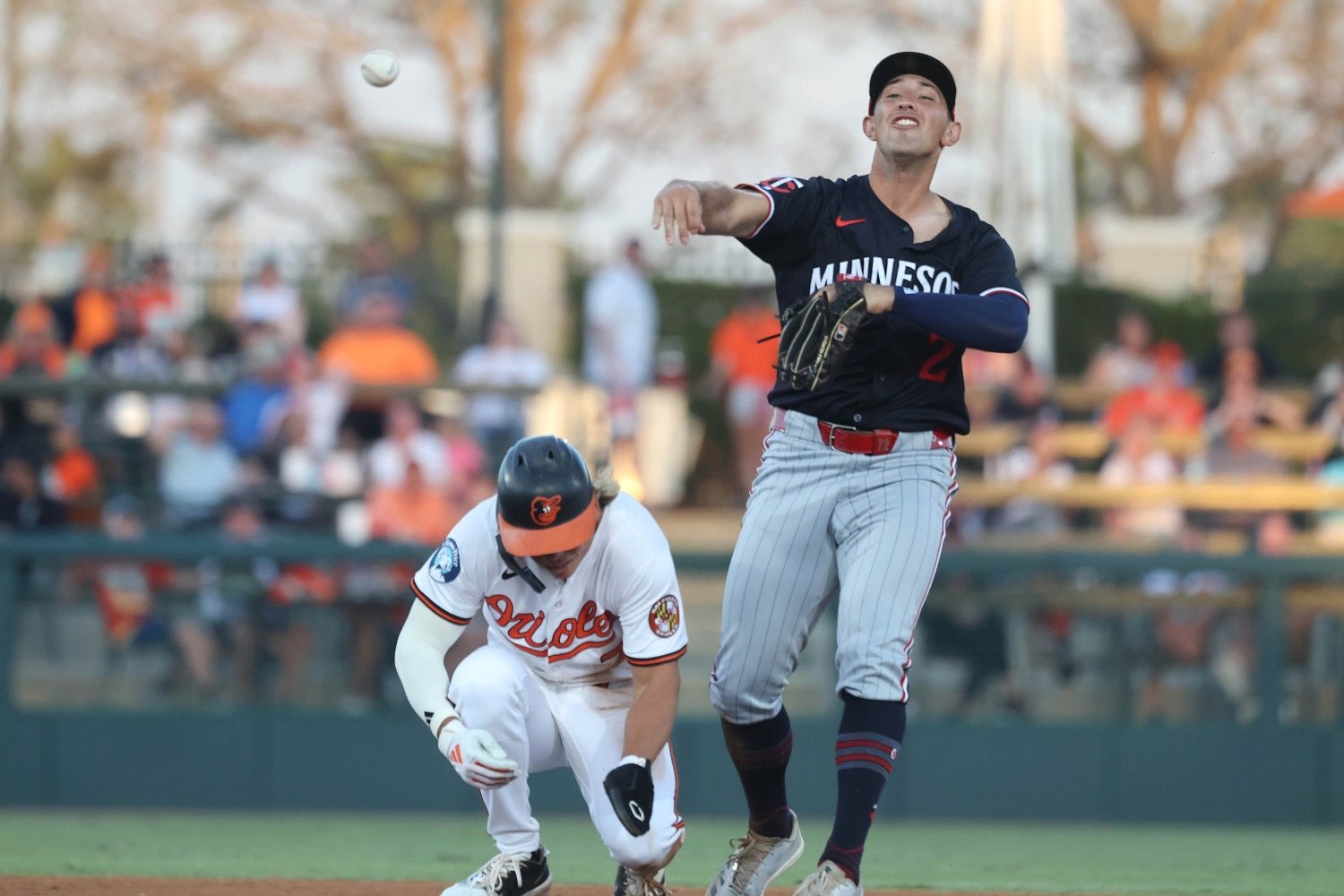 We still have to wonder about who will occupy a couple of the final roster spots for the Twins come Thursday, but after a report from The Athletic's Dan Hayes Sunday, we know for sure about a few players who won't make the trip north. Eiberson Castellano, whom the team selected in the Rule 5 Draft in December from the Phillies, will not make the team (and thus, will not stay in the organization), while reliever Brock Stewart and infielder Brooks Lee will each begin the season on the injured list. Brooks Lee and the Infield Alignment Lee was scratched from Thursday’s spring training lineup with what was described by the team as back tightness. While we can’t be sure of his prognosis, this likely feels ominous to Twins fans. Lee missed the first two months of the 2024 season with a herniated disc in his back. Lee’s injury, combined with that of Royce Lewis, significantly weakens the team's infield defense. After Lewis’s hamstring strain last week, Lee seemed the logical defensive replacement at third base, with the Twins seemingly more confident in his glove than that of Jose Miranda. Despite the uneven offensive production he’s shown in the infancy of his big-league career, he offers defensive stability across second base and third base. This figures to leave Edouard Julien, Miranda, and Willi Castro covering second and third base defensively—hardly an inspiring group. Mickey Gasper is likely winning a job as a bench bat. The final roster spot seemingly comes down to Austin Martin versus DaShawn Keirsey. Keirsey is by far the better defender, but Martin is right-handed, and therefore a better matchup fit for this team's bench. Brock Stewart, Eiberson Castellano, and Bullpen Implications Stewart being down to start the season is hardly a surprise, as he reportedly came into camp behind other arms. While it’s perilous to speculate on health, this seems like more of a building-up priority as opposed to a long-term concern given that Stewart pitched in a minor-league game on Saturday. Castellano walked 19.2% of the hitters he faced this spring in 10 2/3 innings, typically throwing strikes at a 50-55% clip. Not good enough. It remains to be seen what his future holds. With Castellano cut and Tonkin on the IL, the Twins need a rubber-armed reliever who can pitch multiple innings and/or back-to-back days. Scott Blewett seems a possible internal pick. He’s managed a 3.39 FIP this spring. He’s shown the Twins he can be, at the very least, a serviceable bullpen arm for the major-league team. There's every chance, though, that the team will scoop up one or more players who shake loose from other rosters in the coming days. [Ed. note: Manuel Margot was released by the Brewers, but signed quickly with the Tigers. So, you're safe, for now.]
- 79 comments
-
- 9
-
-
- eiberson castellano
- brooks lee
- (and 1 more)
-
 In episode 72 of Destination: The Show, Jeremy and Jamie reflect on spring training. After catching up on Jamie’s trip to Fort Myers, they walk through Twins injuries, including the latest for Royce Lewis and a season ender for Matt Canterino. The guys preview who they think will earn the majority of the playing time at third base and the implications for other roster battles. The guys then dig into a mailbag. They talk through Twins prospects outside the top 30 on most industry lists who are likely to feature in the near future and when Twins fans could expect to see Emmanuel Rodriguez in Minneapolis. Finally, they dig into 2025 draft content for the first time, talking through some pitching options around the Twins pick at 16, in addition to a prospect previously drafted by the organization who is having an amazing college season. 0:00 Intro/recap of where we've been 6:34 Housekeeping 7:45 Player Updates -- Matt Canterino, Royce Lewis, Bullpen 27:23 Mailbag 28:02 Minor League Questions 45:21 Draft Questions You can support the show by downloading it from wherever you get your podcasts, including iTunes and Spotify. If you enjoy the content, consider leaving us a five-star rating and review in addition to sharing or retweeting DTS-related content. You can follow us on Twitter @DTS_POD1, @Jeremynygaard, @J_D_Cameron, and @TheodoreTollef1. We’re now on Bluesky @destinationtheshow.bsky.social. You can also find full episodes and clips of our shows on our YouTube page @DestinationTheShow.
-
- 1
-
-
- royce lewis
- matt canterino
- (and 1 more)
