



Jamie Cameron
-
Posts
1,341 -
Joined
-
Last visited
-
Days Won
4
Content Type
Profiles
News
Minnesota Twins Videos
2026 Minnesota Twins Top Prospects Ranking
2022 Minnesota Twins Draft Picks
Minnesota Twins Free Agent & Trade Rumors, Notes, & Tidbits
Guides & Resources
2023 Minnesota Twins Draft Picks
The Minnesota Twins Players Project
2024 Minnesota Twins Draft Picks
2025 Minnesota Twins Draft Pick Tracker
2026 Minnesota Twins Draft Tracker: Picks & Bonuses
Forums
Blogs
Events
Store
Downloads
Gallery
Everything posted by Jamie Cameron
-
Image courtesy of © Angelina Alcantar/News Sentinel / USA TODAY NETWORK via Imagn Images This draft cycle, we’re going to try something new. Every few weeks, I’ll be posting an article here listing out who the Twins would select based on their position on the consensus draft board. As the consensus board is updated, the players in those spots will be adjusted and I’ll post another update. This is not a mock draft. Rather, I’m hoping it’ll give readers an idea of the caliber of talent in each of the team’s first few picks. Additionally, it should help readers who want to dig into draft coverage a bit more get familiar with the class. Here would be the Twins first three picks by consensus draft ranking as of 05.16.25 1st Round (16th Overall): Brendan Summerhill, OF, Arizona In a draft class that lacks high impact college bats, Brendan Summerhill might be a sweet spot where, skill, track record, and draft spot meet. Summerhill is a left-handed hitting outfielder who was productive in 2024. He posted a .950 OPS to go with 8 home runs (32 extra base hits) in addition to 31 walks and 36 strikeouts in 58 games. He backed this up with a strong summer on the Cape (.798 OPS). Summerhill has a well-rounded offensive skillset. His EV90 (104 mph) and Max EV (110 mph) were both around 75th percentile in D1 baseball, and he's already maximizing pulled batted ball events. Summerhill backs up solid impact with strong bat-to-ball skills. A 86% contact rate and 83rd percentile in zone whiff percentage are further buoyed by excellent out of zone contact, and the fact that Summerhill doesn't chase too much (64th percentile). The remaining questions ahead of 2025 were the efficacy of Summerhill as a defensive center fielder as a pro and how much power he can get to, as there seems to be more in the tank than he produced in 2024. Injury has prevented him from answering those questions definitively. Importantly, he’s back playing down the stretch for the Wildcats. He's one of only a few college bats where hit and power might be above average in tandem. If a team can layer a little extra power onto his profile, he’ll be a complete hitter. Comp A (36th Overall): Andrew Fischer, CI, Tennessee Andrew Fischer is one of the more complete college hitting profiles in this class, having established a track record of performance and consistent improvement in both the ACC and SEC. A transfer from Ole' Miss to Tennessee, Fischer has a physical frame at 6'1, 200 and an approach that's consistently improved throughout his time in college ball. He takes his walks, and strikes out an acceptable amount. There's a ton of bat speed and juice in the profile, Fisher had a 113 mph Max EV and a EV90 north of 106 mph in 2024. Fischer has answered some questions about his hit tool so far in 2025. He's become more selective at the plate and cut into his strikeout rate significantly (14% versus 21% in 2024). He has an above average arm, but the speed and defense are lacking. Being able to show he has a chance to stick at third base in 2025 would aid his draft stock, but the emerging hit power combo should have him in the top 40 range regardless. 2nd Round (54th Overall): Marcus Phillips, RHP, Tennessee Marcus Phillips worked primarily as a reliever in his first two seasons at Tennessee before transitioning into a starting role in 2025. The fastball is tough. He can get a run and ride heater up to 100 mph, sitting at 97 mph with good extension from a lower release height. His breaking pitch is a power slider, with good horizontal break, that he throws in the 88-92 mph range, something that pro teams will covet. There's also the makings of a good changeup, with a ton of horizontal break, but he throws it incredibly hard (92 mph) and there might not be enough velo separation from the fastball there yet. Through his first 13 starts he's impressed. He's striking out more hitters (28.5%) and walking less (8.5%). The strike throwing had been a little spotty entering 2025. If he continues to shove through the rest of the SEC slate, he has an argument for some of the best pure stuff of any college arm. View full article
-
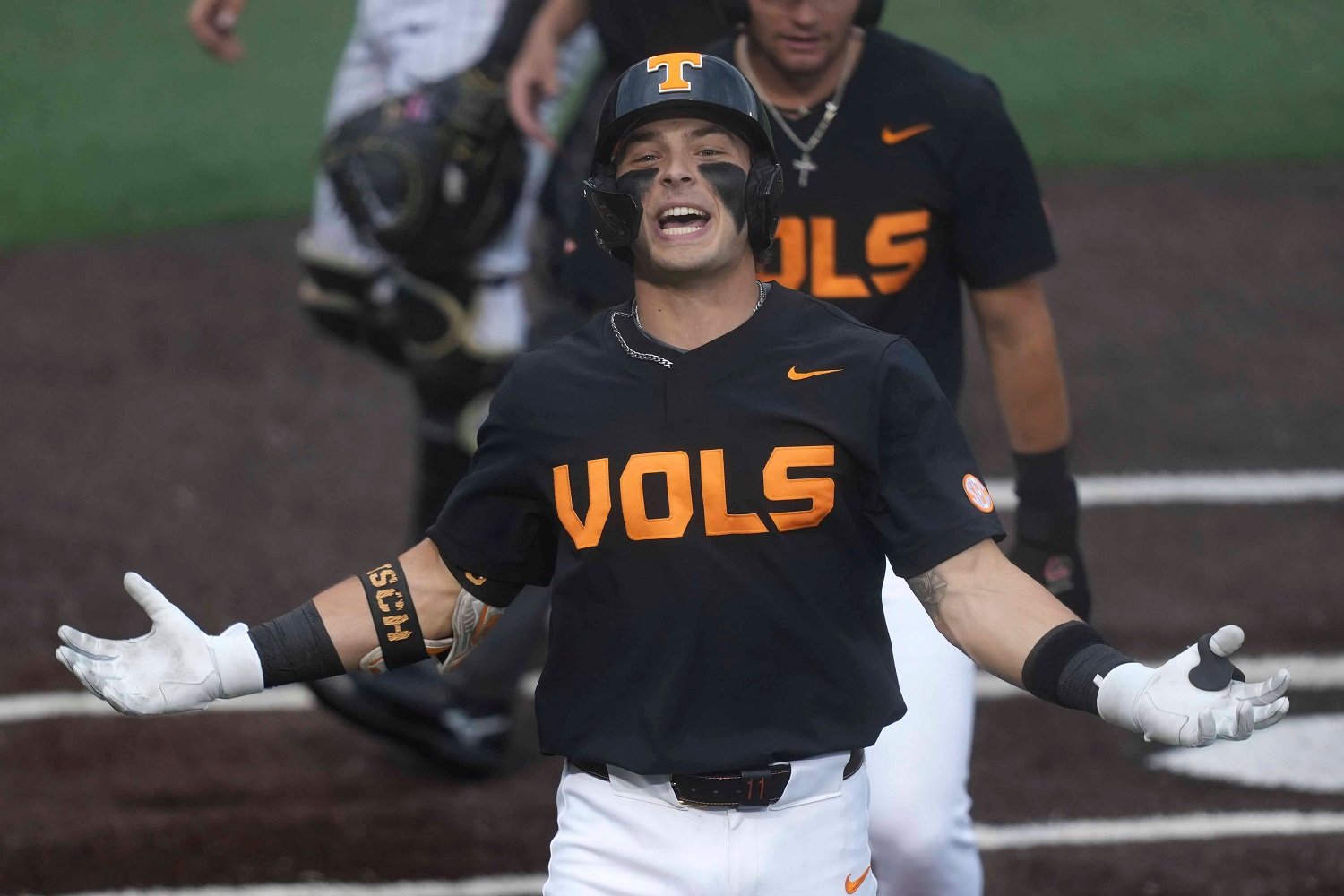 This draft cycle, we’re going to try something new. Every few weeks, I’ll be posting an article here listing out who the Twins would select based on their position on the consensus draft board. As the consensus board is updated, the players in those spots will be adjusted and I’ll post another update. This is not a mock draft. Rather, I’m hoping it’ll give readers an idea of the caliber of talent in each of the team’s first few picks. Additionally, it should help readers who want to dig into draft coverage a bit more get familiar with the class. Here would be the Twins first three picks by consensus draft ranking as of 05.16.25 1st Round (16th Overall): Brendan Summerhill, OF, Arizona In a draft class that lacks high impact college bats, Brendan Summerhill might be a sweet spot where, skill, track record, and draft spot meet. Summerhill is a left-handed hitting outfielder who was productive in 2024. He posted a .950 OPS to go with 8 home runs (32 extra base hits) in addition to 31 walks and 36 strikeouts in 58 games. He backed this up with a strong summer on the Cape (.798 OPS). Summerhill has a well-rounded offensive skillset. His EV90 (104 mph) and Max EV (110 mph) were both around 75th percentile in D1 baseball, and he's already maximizing pulled batted ball events. Summerhill backs up solid impact with strong bat-to-ball skills. A 86% contact rate and 83rd percentile in zone whiff percentage are further buoyed by excellent out of zone contact, and the fact that Summerhill doesn't chase too much (64th percentile). The remaining questions ahead of 2025 were the efficacy of Summerhill as a defensive center fielder as a pro and how much power he can get to, as there seems to be more in the tank than he produced in 2024. Injury has prevented him from answering those questions definitively. Importantly, he’s back playing down the stretch for the Wildcats. He's one of only a few college bats where hit and power might be above average in tandem. If a team can layer a little extra power onto his profile, he’ll be a complete hitter. Comp A (36th Overall): Andrew Fischer, CI, Tennessee Andrew Fischer is one of the more complete college hitting profiles in this class, having established a track record of performance and consistent improvement in both the ACC and SEC. A transfer from Ole' Miss to Tennessee, Fischer has a physical frame at 6'1, 200 and an approach that's consistently improved throughout his time in college ball. He takes his walks, and strikes out an acceptable amount. There's a ton of bat speed and juice in the profile, Fisher had a 113 mph Max EV and a EV90 north of 106 mph in 2024. Fischer has answered some questions about his hit tool so far in 2025. He's become more selective at the plate and cut into his strikeout rate significantly (14% versus 21% in 2024). He has an above average arm, but the speed and defense are lacking. Being able to show he has a chance to stick at third base in 2025 would aid his draft stock, but the emerging hit power combo should have him in the top 40 range regardless. 2nd Round (54th Overall): Marcus Phillips, RHP, Tennessee Marcus Phillips worked primarily as a reliever in his first two seasons at Tennessee before transitioning into a starting role in 2025. The fastball is tough. He can get a run and ride heater up to 100 mph, sitting at 97 mph with good extension from a lower release height. His breaking pitch is a power slider, with good horizontal break, that he throws in the 88-92 mph range, something that pro teams will covet. There's also the makings of a good changeup, with a ton of horizontal break, but he throws it incredibly hard (92 mph) and there might not be enough velo separation from the fastball there yet. Through his first 13 starts he's impressed. He's striking out more hitters (28.5%) and walking less (8.5%). The strike throwing had been a little spotty entering 2025. If he continues to shove through the rest of the SEC slate, he has an argument for some of the best pure stuff of any college arm.
 -
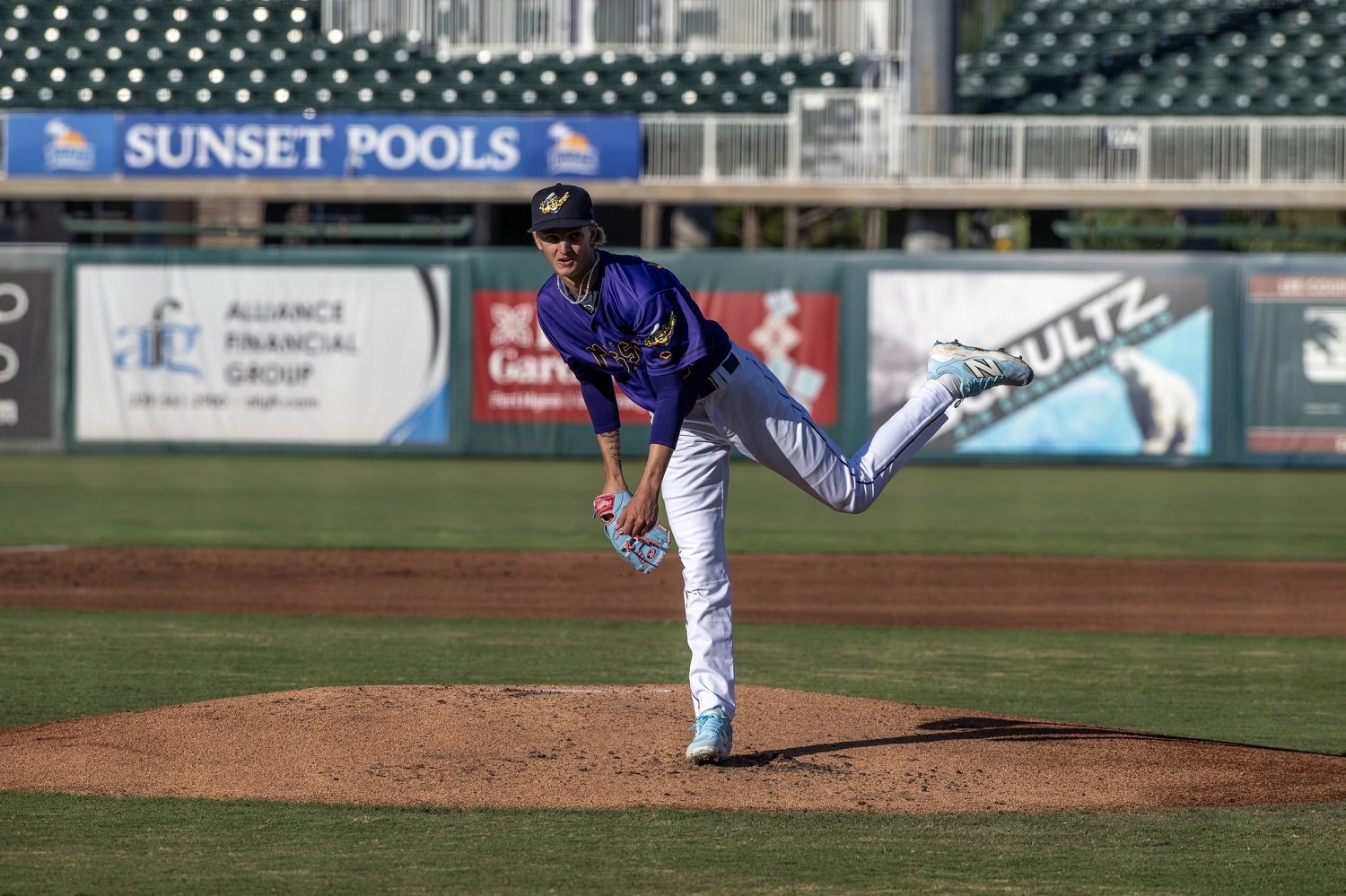 That didn’t take long. Just ten months after being drafted by the Minnesota Twins with the very nice 69th overall pick, Dasan Hill was named the 85th best global prospect by Baseball America. That feels aggressive for someone who, at the time of writing, has thrown 12 professional innings. Let’s talk about it. Before we dig into strengths and opportunities from Hill’s early showing, it’s worth digging into the aggressiveness of the ranking. Here’s my working hypothesis. In general, the industry is trending towards a more frequent and more aggressive ranking of prospects. Why? Two reasons; with increasing prospect-based content, there’s pressure to be ‘first’ (or close to it) on a guy. That’s not a criticism of BA. I’m a paid, very happy subscriber. It’s simply calling out an observation. Secondly, and more relevantly; prospect numbers 70-125 are fairly interchangeable. So what about Hill, eh? How has he looked? How is he performing? What do the first glimpses of his arsenal tell us about him? There are some clues in his signing of how bullish the Twins were on Hill. They signed him for $2 million to forgo his commitment to DBU. That’s towards the upper end of prep bonuses outside the first round of the 2024 draft. Next, the frame. He’s listed at 6’5, 160 pounds. He’s definitely put on some good weight since being drafted, but it’s easy to see the vision here. A prospect whose velo popped into the mid-90s pre-draft with a premium projectable frame. The early returns have been encouraging. Hill has made four appearances, the most recent of which he was removed from after 1.1 innings with back tightness. He’s been pretty dominant so far in his age-19 season. 12 innings pitched, a 2.84 FIP, a 43.8 K%, and a 10.4 BB%. Insert your own small sample size caveat here, but that’s an encouraging start. I’ve caught most of Hill’s starts this season and there are two tangible takeaways; no one at Low-A can touch his breaking/off-speed stuff, and the strikes can come and go. I’d expect the latter to be true for a prep draftee in their first professional season. Hill has thrown 60% strikes in 2025 (dragged down by his most recent appearance). He’ll need to be closer to 70% when it’s all said and done. Hill throws from a higher three quarter slot. There’s some deception in the delivery with a little crossfire there. He keeps the ball hidden well behind his head through his delivery. Hill doesn’t have much extension, a trait the Twins seem to like in their pitchers (Ober, Pablo, Paddack etc.) Hill has two fastball shapes, a four seamer and a two seamer, the latter being what he is relying on more heavily early in his pro career. Hill’s fastballs are probably his least interesting pitch currently. It’s the one that’s potentially going to get damaged by right-handed hitters as, against righties specifically, he’s leaving it over the heart of the plate significantly more (~15%) than against lefties. Still, we should note the wins too. Hill has added velo since joining the Twins. In his spring training outings, his fastball was up to 99 mph. So far in game action, it’s touched 98 mph. That’s going to create some margin for error. Hill’s secondary pitches are where he separates himself for a pitcher so young. He has three offerings, a slider, curveball, and changeup, all of which look strong in the early going. Hill’s slider averages 81.7 mph. I’d expect that to firm up through his pro career. It has two plane movement, both sweep and drop and through those first 12 innings, is generating a whiff rate north of 60%. It looks like a nightmare for Low-A hitters. The curveball looks similar, just with around 9 inches more drop than the slider. This pitch sits at 79.2 mph on average (this will need to creep up, too). While it’s not as good a pitch as the slider, what’s been impressive is Hill’s ability to command it. He can consistently place it on the bottom right corner of the strike zone against right-handed hitters, rendering anyone unable to do much with it. Finally, Hill’s changeup. This will be a crucial pitch in helping to neutralize right-handed hitters. This might be his best pitch. It gets a ton of late fade and is averaging over 15 inches of horizontal break, thrown around 84 mph on average, close to an ideal velocity separation from his fastballs. There’s plenty to work on here and we’re taking a peak at very small sample sizes with Hill in his pro debut. What I would say stand out early on, are the quality of depth of the pitches in his arsenal, in addition to his ability to command some of his off-speed and breaking pitches effectively. That’s not a combination you often see in a prep draftee in their first pro season. Let’s hope we get to see plenty more in 2025.
- 16 comments
-
- 13
-

-

-
Image courtesy of William Parmeter (photo of Dasan Hill) That didn’t take long. Just ten months after being drafted by the Minnesota Twins with the very nice 69th overall pick, Dasan Hill was named the 85th best global prospect by Baseball America. That feels aggressive for someone who, at the time of writing, has thrown 12 professional innings. Let’s talk about it. Before we dig into strengths and opportunities from Hill’s early showing, it’s worth digging into the aggressiveness of the ranking. Here’s my working hypothesis. In general, the industry is trending towards a more frequent and more aggressive ranking of prospects. Why? Two reasons; with increasing prospect-based content, there’s pressure to be ‘first’ (or close to it) on a guy. That’s not a criticism of BA. I’m a paid, very happy subscriber. It’s simply calling out an observation. Secondly, and more relevantly; prospect numbers 70-125 are fairly interchangeable. So what about Hill, eh? How has he looked? How is he performing? What do the first glimpses of his arsenal tell us about him? There are some clues in his signing of how bullish the Twins were on Hill. They signed him for $2 million to forgo his commitment to DBU. That’s towards the upper end of prep bonuses outside the first round of the 2024 draft. Next, the frame. He’s listed at 6’5, 160 pounds. He’s definitely put on some good weight since being drafted, but it’s easy to see the vision here. A prospect whose velo popped into the mid-90s pre-draft with a premium projectable frame. The early returns have been encouraging. Hill has made four appearances, the most recent of which he was removed from after 1.1 innings with back tightness. He’s been pretty dominant so far in his age-19 season. 12 innings pitched, a 2.84 FIP, a 43.8 K%, and a 10.4 BB%. Insert your own small sample size caveat here, but that’s an encouraging start. I’ve caught most of Hill’s starts this season and there are two tangible takeaways; no one at Low-A can touch his breaking/off-speed stuff, and the strikes can come and go. I’d expect the latter to be true for a prep draftee in their first professional season. Hill has thrown 60% strikes in 2025 (dragged down by his most recent appearance). He’ll need to be closer to 70% when it’s all said and done. Hill throws from a higher three quarter slot. There’s some deception in the delivery with a little crossfire there. He keeps the ball hidden well behind his head through his delivery. Hill doesn’t have much extension, a trait the Twins seem to like in their pitchers (Ober, Pablo, Paddack etc.) Hill has two fastball shapes, a four seamer and a two seamer, the latter being what he is relying on more heavily early in his pro career. Hill’s fastballs are probably his least interesting pitch currently. It’s the one that’s potentially going to get damaged by right-handed hitters as, against righties specifically, he’s leaving it over the heart of the plate significantly more (~15%) than against lefties. Still, we should note the wins too. Hill has added velo since joining the Twins. In his spring training outings, his fastball was up to 99 mph. So far in game action, it’s touched 98 mph. That’s going to create some margin for error. Hill’s secondary pitches are where he separates himself for a pitcher so young. He has three offerings, a slider, curveball, and changeup, all of which look strong in the early going. Hill’s slider averages 81.7 mph. I’d expect that to firm up through his pro career. It has two plane movement, both sweep and drop and through those first 12 innings, is generating a whiff rate north of 60%. It looks like a nightmare for Low-A hitters. The curveball looks similar, just with around 9 inches more drop than the slider. This pitch sits at 79.2 mph on average (this will need to creep up, too). While it’s not as good a pitch as the slider, what’s been impressive is Hill’s ability to command it. He can consistently place it on the bottom right corner of the strike zone against right-handed hitters, rendering anyone unable to do much with it. Finally, Hill’s changeup. This will be a crucial pitch in helping to neutralize right-handed hitters. This might be his best pitch. It gets a ton of late fade and is averaging over 15 inches of horizontal break, thrown around 84 mph on average, close to an ideal velocity separation from his fastballs. There’s plenty to work on here and we’re taking a peak at very small sample sizes with Hill in his pro debut. What I would say stand out early on, are the quality of depth of the pitches in his arsenal, in addition to his ability to command some of his off-speed and breaking pitches effectively. That’s not a combination you often see in a prep draftee in their first pro season. Let’s hope we get to see plenty more in 2025. View full article
-
Image courtesy of Thieres Rabelo In episode 78 of Destination: The Show, Jeremy and Jamie start by recapping the Brewers finalizing the Quinn Priester trade by sending John Holobetz to the Red Sox as the player to be named later. Then they dig into the impact of a two day draft in July versus the three day event it has been the last several years. The guys go on to discuss Twins prospects off to good/tough starts at each MiLB level focusing on prospects who are less famous within the Twins system. Finally, they answer questions about flipping tires, cooking omelets, and relocating the Twins to a MiLB stadium. 0:00 Intro 4:00 Preister trade finalized 7:22 Changes to the MLB Draft 10:43 Affiliate check ins 22:57 Cedar Rapids Check In 33:20 Wichita Check In 41:12 St. Paul Check In 56:58 Listener Questions You can support the show by downloading it from wherever you get your podcasts, including iTunes and Spotify. If you enjoy the content, consider leaving us a five-star rating and review in addition to sharing or retweeting DTS-related content. You can follow us on Twitter @DTS_POD1, @Jeremynygaard, @J_D_Cameron, and @TheodoreTollef1. We’re now on Bluesky @destinationtheshow.bsky.social. You can also find full episodes and clips of our shows on our YouTube page @DestinationTheShow. View full article
-
 In episode 78 of Destination: The Show, Jeremy and Jamie start by recapping the Brewers finalizing the Quinn Priester trade by sending John Holobetz to the Red Sox as the player to be named later. Then they dig into the impact of a two day draft in July versus the three day event it has been the last several years. The guys go on to discuss Twins prospects off to good/tough starts at each MiLB level focusing on prospects who are less famous within the Twins system. Finally, they answer questions about flipping tires, cooking omelets, and relocating the Twins to a MiLB stadium. 0:00 Intro 4:00 Preister trade finalized 7:22 Changes to the MLB Draft 10:43 Affiliate check ins 22:57 Cedar Rapids Check In 33:20 Wichita Check In 41:12 St. Paul Check In 56:58 Listener Questions You can support the show by downloading it from wherever you get your podcasts, including iTunes and Spotify. If you enjoy the content, consider leaving us a five-star rating and review in addition to sharing or retweeting DTS-related content. You can follow us on Twitter @DTS_POD1, @Jeremynygaard, @J_D_Cameron, and @TheodoreTollef1. We’re now on Bluesky @destinationtheshow.bsky.social. You can also find full episodes and clips of our shows on our YouTube page @DestinationTheShow.
 -
Image courtesy of Thieres Rabelo In episode 77 of Destination: The Show, Jeremy and Jamie start with a slew of injuries to notable Twins prospects, including Luke Keaschall, Walker Jenkins, and Charlee Soto. The guys then give an overview of the bonus pool system in MLB, detailing how the different rounds of the draft work. They go on to dig into the bonus pools of the Brewers, Twins, Red Sox, Cubs, and Padres. Finally, they spend some time reacting to the most recent BA staff draft, digging into whether the picks made might make sense for the Padres, Jays, Cubs, Brewers, and Twins. 0:00 Intro 5:55 Housekeeping 6:37 Twins Prospect Injuries 14:59 Draft Bonus Pools 17:55 Brewers Bonus Pool 20:40 Twins Bonus Pool 23:31 Red Sox Bonus Pool 27:10 Cubs Bonus Pool 30:02 Padres Bonus Pool 35:58 Bouncing around the first round You can support the show by downloading it from wherever you get your podcasts, including iTunes and Spotify. If you enjoy the content, consider leaving us a five-star rating and review in addition to sharing or retweeting DTS-related content. You can follow us on Twitter @DTS_POD1, @Jeremynygaard, @J_D_Cameron, and @TheodoreTollef1. We’re now on Bluesky @destinationtheshow.bsky.social. You can also find full episodes and clips of our shows on our YouTube page @DestinationTheShow. View full article
-
 In episode 77 of Destination: The Show, Jeremy and Jamie start with a slew of injuries to notable Twins prospects, including Luke Keaschall, Walker Jenkins, and Charlee Soto. The guys then give an overview of the bonus pool system in MLB, detailing how the different rounds of the draft work. They go on to dig into the bonus pools of the Brewers, Twins, Red Sox, Cubs, and Padres. Finally, they spend some time reacting to the most recent BA staff draft, digging into whether the picks made might make sense for the Padres, Jays, Cubs, Brewers, and Twins. 0:00 Intro 5:55 Housekeeping 6:37 Twins Prospect Injuries 14:59 Draft Bonus Pools 17:55 Brewers Bonus Pool 20:40 Twins Bonus Pool 23:31 Red Sox Bonus Pool 27:10 Cubs Bonus Pool 30:02 Padres Bonus Pool 35:58 Bouncing around the first round You can support the show by downloading it from wherever you get your podcasts, including iTunes and Spotify. If you enjoy the content, consider leaving us a five-star rating and review in addition to sharing or retweeting DTS-related content. You can follow us on Twitter @DTS_POD1, @Jeremynygaard, @J_D_Cameron, and @TheodoreTollef1. We’re now on Bluesky @destinationtheshow.bsky.social. You can also find full episodes and clips of our shows on our YouTube page @DestinationTheShow.
 -
Questad has been GREAT. Good call. Still want to see more consistency with the strike throwing but he is absolutely worthy of a shoutout.
-
Adams I have a hard time with. He's pitched really well. Good strike thrower. However, he really doesn't miss enough bats. Not sure how he's going to carve out a role for himself.
-
We’re a full month into the MiLB season. Let’s take stock of some notable performances from Twins prospects in the month of April. Image courtesy of © William Glasheen / USA TODAY NETWORK via Imagn Images This will be a (roughly) monthly update on the Twins farm system. The goal here is simple: shine a light on some great performances throughout the Twins system, outside of their most famous or top-100 prospects. Some of those folks will be featured here, of course, but there are so many good performances to mine in a deep system. Here are some guys who caught my attention in April (listed alphabetically). Billy Amick, CI, Cedar Rapids One critical question facing Amick coming into 2025 was whether he would be able to maintain an elevated walk rate from Fort Myers. He has. Through his first 90 plate appearances, Amick is walking 15.6% of the time. That’s going to offset some of the swing-and-miss (65.7% contact rate) nicely. The home run power hasn’t shown up for Amick just yet, but he’s mashing extra-base hits. A .919 OPS and 168 wRC+ are strong indicators that he’s going to perform well at High A. I’d guess Double A, where pitchers can fill up the strike zone more effectively, will give us our first indication of how much of a challenge Amick’s bat-to-ball skills will prove to be, long-term. Kyle DeBarge, INF, Cedar Rapids DeBarge had a major ground ball problem in a small sample at Fort Myers in 2024. He’s been as advertised in 2025. His ground-ball rate is down about 15%, and he’s pulling the ball around 13% more in the early going. All of that adds up to a .358 OBP and 123 wRC+ through his first 19 games. He’s also 11/11 in stolen base attempts. Kyler Fedko, INF, Wichita Fedko is easily the most fun, pleasant surprise in the Twins system in April. After posting an 85 wRC+ in Double A in 2024 (76 games), he seems to have made some meaningful changes to his approach. He’s swinging 8% less, and his line-drive rate is through the roof. Fedko had a solid approach, anyway, but he’s walking 18.2% of the time in the early going for Wichita. His BABIP is .361, so let’s see how May goes, but that 184 wRC+ deserves an April shoutout. Carson McCusker, OF, St. Paul At 6-foot-8, 250 pounds, he has a 167 wRC+ at Triple A. I have to admit, I doubted McCusker could replicate his Double-A performance in 2025, but he’s tearing the cover off the ball. The power is real (110.6 mph 90th-percentile exit velocity, second-best at the level), and he’s being way more selective at the plate in 2025. His bat-to-ball numbers hold up. If he gets a shot with the big-league club will determine if he can play a role with the team long-term. I’d be interested in seeing what he looks like at first base, personally. Ricardo Olivar, C/OF, Wichita Olivar has hit everywhere he’s been—until he stalled out in his first go-around at Double A in 2024. He’s not a catcher (or much of a fielder) at all, so he needs to rake to find a role. He’s looking much improved in the early going. It’s a .308/.375/.401 start, with an improved line-drive rate and solid bat-to-ball metrics. He’s off to a much better start. Dasan Hill, LHP, Fort Myers It’s only been three appearances for Dasan Hill, but no one is touching him at Fort Myers thus far. The 6-foot-5 lefty in his age-19 season has shown dominant stuff in his first 10-plus innings of pro ball. It’s a small sample, but no one is touching his stuff. He’s put up a 2.29 FIP, with a 50% K% and 9.5% BB%. That’s utterly dominant. Opposing hitters are making contact with his stuff just 58.1% of the time, too. He has four above-average pitches, with the fastball having touched 98 mph already. When guys are starting their pro careers, I only look at a few factors: Can they throw strikes? Can they miss bats? Can they stay healthy? There’s work to do on the strikes (62.5%), but Hill has checked all the boxes and then some in the early going. He’s been impressive. Jose Olivares, RHP, Cedar Rapids Olivares is a 22-year-old right-handed pitcher at Cedar Rapids who has largely flown under the radar, but has always had good raw stuff. It’s a fastball that’s been up to 98 mph in 2025. In his first 10 2/3 innings, he’s yet to allow a run (2.02 FIP) and is striking out 37.8% of hitters. He’s running close to a 58% ground-ball rate. Like Hill, there’s work to do on the strike-throwing, but it’s been solid so far in 2025. Olivares is an up-arrow name for me. Cody Peschl, RHP, Fort Myers One of the most fun aspects of each minor-league season is seeing which arms emerge from the previous draft class to make their way onto our collective radar. Peschl was the Twins' 15th-round pick out of Campbell University in 2024. In 14 innings at Fort Myers, the 22-year-old is yet to allow an earned run (2.24 FIP). He’s definitely had an unsustainable strand rate, but he’s pitching extremely well. It’s a 33.3 K% and 7 BB% and near-elite strike throwing (68%). Peschl is getting a ton of misses in the strike zone. He’s a name to keep an eye on. Connor Prielipp, LHP, Wichita Prielipp’s back-of-the-baseball-card 4.22 ERA at Double A might look discouraging, but he’s been much better than that number suggests. He’s managed a 2.84 FIP while maintaining his usual dominant stuff. He’s managed a 37.8 K%, which has barely eroded from High A. The strike-throwing has continued to be strong (67.5%), and his walk rate is down from 7.7% to 4.4%. Opposing hitters are making more contact against Prielipp in 2025, but it’s all poor contact. He’s running a 56.5% ground-ball rate through his first three appearances. From a performance and stuff perspective, Prielipp is ready for Triple A. Feel free to join the discussion on a prospect who intrigues you in the comments. If you have notes or updates for other prospects, feel free to leave those in the comments too. View full article
-
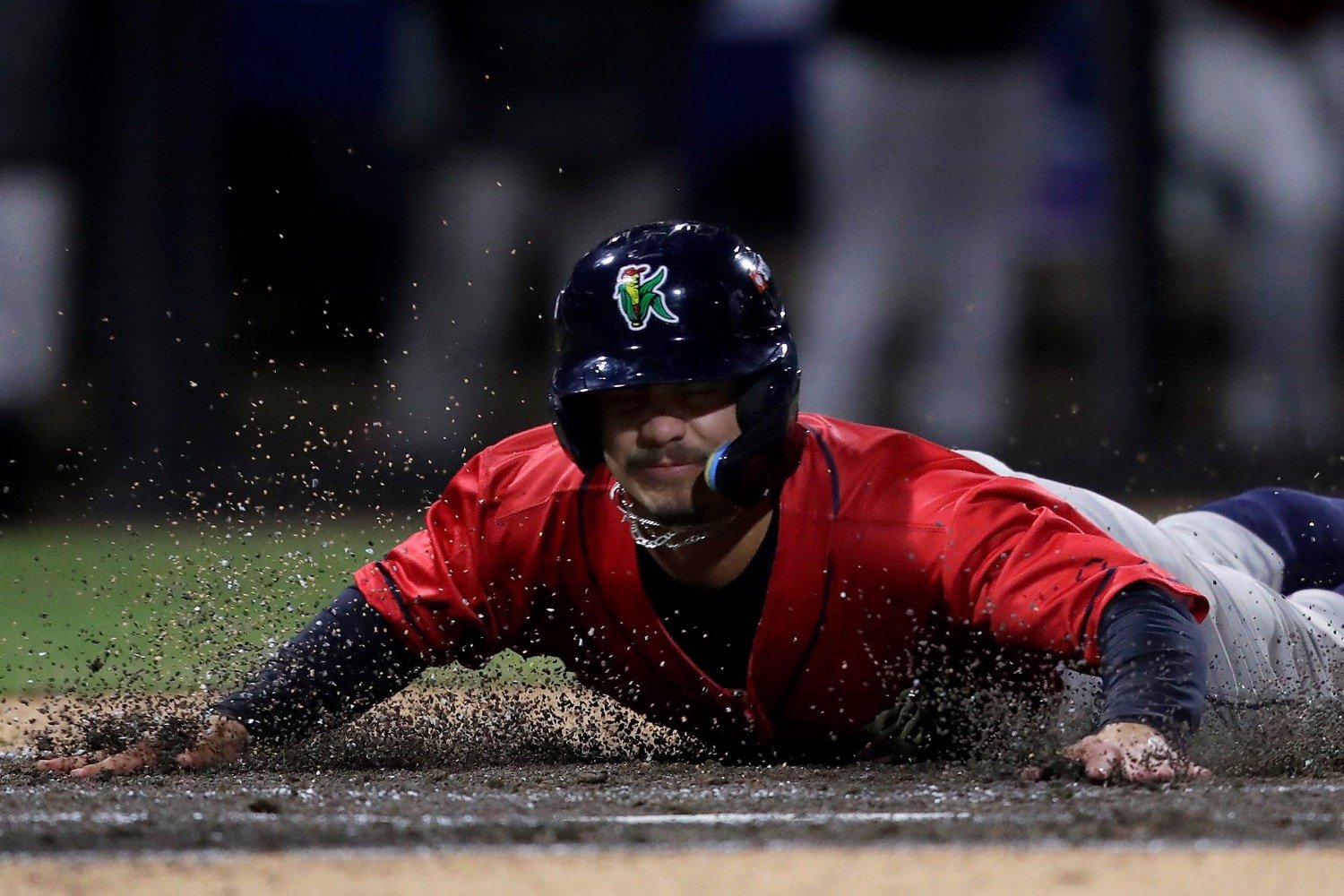 This will be a (roughly) monthly update on the Twins farm system. The goal here is simple: shine a light on some great performances throughout the Twins system, outside of their most famous or top-100 prospects. Some of those folks will be featured here, of course, but there are so many good performances to mine in a deep system. Here are some guys who caught my attention in April (listed alphabetically). Billy Amick, CI, Cedar Rapids One critical question facing Amick coming into 2025 was whether he would be able to maintain an elevated walk rate from Fort Myers. He has. Through his first 90 plate appearances, Amick is walking 15.6% of the time. That’s going to offset some of the swing-and-miss (65.7% contact rate) nicely. The home run power hasn’t shown up for Amick just yet, but he’s mashing extra-base hits. A .919 OPS and 168 wRC+ are strong indicators that he’s going to perform well at High A. I’d guess Double A, where pitchers can fill up the strike zone more effectively, will give us our first indication of how much of a challenge Amick’s bat-to-ball skills will prove to be, long-term. Kyle DeBarge, INF, Cedar Rapids DeBarge had a major ground ball problem in a small sample at Fort Myers in 2024. He’s been as advertised in 2025. His ground-ball rate is down about 15%, and he’s pulling the ball around 13% more in the early going. All of that adds up to a .358 OBP and 123 wRC+ through his first 19 games. He’s also 11/11 in stolen base attempts. Kyler Fedko, INF, Wichita Fedko is easily the most fun, pleasant surprise in the Twins system in April. After posting an 85 wRC+ in Double A in 2024 (76 games), he seems to have made some meaningful changes to his approach. He’s swinging 8% less, and his line-drive rate is through the roof. Fedko had a solid approach, anyway, but he’s walking 18.2% of the time in the early going for Wichita. His BABIP is .361, so let’s see how May goes, but that 184 wRC+ deserves an April shoutout. Carson McCusker, OF, St. Paul At 6-foot-8, 250 pounds, he has a 167 wRC+ at Triple A. I have to admit, I doubted McCusker could replicate his Double-A performance in 2025, but he’s tearing the cover off the ball. The power is real (110.6 mph 90th-percentile exit velocity, second-best at the level), and he’s being way more selective at the plate in 2025. His bat-to-ball numbers hold up. If he gets a shot with the big-league club will determine if he can play a role with the team long-term. I’d be interested in seeing what he looks like at first base, personally. Ricardo Olivar, C/OF, Wichita Olivar has hit everywhere he’s been—until he stalled out in his first go-around at Double A in 2024. He’s not a catcher (or much of a fielder) at all, so he needs to rake to find a role. He’s looking much improved in the early going. It’s a .308/.375/.401 start, with an improved line-drive rate and solid bat-to-ball metrics. He’s off to a much better start. Dasan Hill, LHP, Fort Myers It’s only been three appearances for Dasan Hill, but no one is touching him at Fort Myers thus far. The 6-foot-5 lefty in his age-19 season has shown dominant stuff in his first 10-plus innings of pro ball. It’s a small sample, but no one is touching his stuff. He’s put up a 2.29 FIP, with a 50% K% and 9.5% BB%. That’s utterly dominant. Opposing hitters are making contact with his stuff just 58.1% of the time, too. He has four above-average pitches, with the fastball having touched 98 mph already. When guys are starting their pro careers, I only look at a few factors: Can they throw strikes? Can they miss bats? Can they stay healthy? There’s work to do on the strikes (62.5%), but Hill has checked all the boxes and then some in the early going. He’s been impressive. Jose Olivares, RHP, Cedar Rapids Olivares is a 22-year-old right-handed pitcher at Cedar Rapids who has largely flown under the radar, but has always had good raw stuff. It’s a fastball that’s been up to 98 mph in 2025. In his first 10 2/3 innings, he’s yet to allow a run (2.02 FIP) and is striking out 37.8% of hitters. He’s running close to a 58% ground-ball rate. Like Hill, there’s work to do on the strike-throwing, but it’s been solid so far in 2025. Olivares is an up-arrow name for me. Cody Peschl, RHP, Fort Myers One of the most fun aspects of each minor-league season is seeing which arms emerge from the previous draft class to make their way onto our collective radar. Peschl was the Twins' 15th-round pick out of Campbell University in 2024. In 14 innings at Fort Myers, the 22-year-old is yet to allow an earned run (2.24 FIP). He’s definitely had an unsustainable strand rate, but he’s pitching extremely well. It’s a 33.3 K% and 7 BB% and near-elite strike throwing (68%). Peschl is getting a ton of misses in the strike zone. He’s a name to keep an eye on. Connor Prielipp, LHP, Wichita Prielipp’s back-of-the-baseball-card 4.22 ERA at Double A might look discouraging, but he’s been much better than that number suggests. He’s managed a 2.84 FIP while maintaining his usual dominant stuff. He’s managed a 37.8 K%, which has barely eroded from High A. The strike-throwing has continued to be strong (67.5%), and his walk rate is down from 7.7% to 4.4%. Opposing hitters are making more contact against Prielipp in 2025, but it’s all poor contact. He’s running a 56.5% ground-ball rate through his first three appearances. From a performance and stuff perspective, Prielipp is ready for Triple A. Feel free to join the discussion on a prospect who intrigues you in the comments. If you have notes or updates for other prospects, feel free to leave those in the comments too.
- 16 comments
-
- 12
-
-
-
- dasan hill
- jose olivares
- (and 1 more)
-
For sure! Couple things on that note: 1. Twins will always been in that top two quadrants of team with the most money to spend, so opportunities should be ample. 2. We're still in a bit of a crossover time between the old international admin and the new. Some of the bigger agreements will still have been made pre Barinas/Goldstein. Appreciate you reading!
-
Doesn't sound crazy at all. I think 16 is a solid spot. You can see how your board plays out, likely pick a player who is in your top 14 (because there is always surprises) and you still have a premium Comp pick at 36. I'd expect them to tap into the prep class in some way, which is always fun.
-
Destination: The Show, Episode 76. MiLB and MLB Draft Mailbox
Jamie Cameron posted an article in Podcasts
 In episode 76 of Destination: The Show, Jeremy and Jamie dig into the MLB debuts of Logan Henderson and Luke Keaschall, discussing how each made such a positive first impression in limited MLB action. The guys then dig into a Twins-Centric mailbag, answering questions on Keaschall, Carson McCusker, Gabriel Gonzalez, Billy Amick and the Twins potential selection at number 16 in the 2025 MLB Draft. 0:00 Intro 5:22 Housekeeping 6:00 Opening Topics 11:49 Mailbag 12:00 Which Twins prospect will ‘Save the Season?’ 28:20 How long with Keaschall stay up? 31:29 Will Festa stay in the rotation? 34:42 What are your thoughts on Gabriel Gonzalez? 41:07 Why do the Twins never develop any 1B prospects? 48:36 If Carson McCusker and Payton Eeles had each other's arms instead of their own, which could adapt better and continue to play ball at a high level? 52:20 When will the Twins take the reins off Marco Raya? 56:39 When will we see some of their prospects off the IL? 1:01:00 Billy Amick - when is he going to AA? 1:04:26 After which round do high profile high schoolers with strong commitments end up not signing? 1:09:20 Any unicorn profiles in the top 3 rounds (e.g. switch pitchers, left handed catcher). Any fun 80 grade names? 1:11:10 First Round prediction You can support the show by downloading it from wherever you get your podcasts, including iTunes and Spotify. If you enjoy the content, consider leaving us a five-star rating and review in addition to sharing or retweeting DTS-related content. You can follow us on Twitter @DTS_POD1, @Jeremynygaard, @J_D_Cameron, and @TheodoreTollef1. We’re now on Bluesky @destinationtheshow.bsky.social. You can also find full episodes and clips of our shows on our YouTube page @DestinationTheShow.
 -
Draft tandem Jeremy Nygaard and JD Cameron team up for a podcast to discuss prospects on their way to the big leagues and the MLB draft, produced by Theo Tollefson. Image courtesy of Thieres Rabelo In episode 76 of Destination: The Show, Jeremy and Jamie dig into the MLB debuts of Logan Henderson and Luke Keaschall, discussing how each made such a positive first impression in limited MLB action. The guys then dig into a Twins-Centric mailbag, answering questions on Keaschall, Carson McCusker, Gabriel Gonzalez, Billy Amick and the Twins potential selection at number 16 in the 2025 MLB Draft. 0:00 Intro 5:22 Housekeeping 6:00 Opening Topics 11:49 Mailbag 12:00 Which Twins prospect will ‘Save the Season?’ 28:20 How long with Keaschall stay up? 31:29 Will Festa stay in the rotation? 34:42 What are your thoughts on Gabriel Gonzalez? 41:07 Why do the Twins never develop any 1B prospects? 48:36 If Carson McCusker and Payton Eeles had each other's arms instead of their own, which could adapt better and continue to play ball at a high level? 52:20 When will the Twins take the reins off Marco Raya? 56:39 When will we see some of their prospects off the IL? 1:01:00 Billy Amick - when is he going to AA? 1:04:26 After which round do high profile high schoolers with strong commitments end up not signing? 1:09:20 Any unicorn profiles in the top 3 rounds (e.g. switch pitchers, left handed catcher). Any fun 80 grade names? 1:11:10 First Round prediction You can support the show by downloading it from wherever you get your podcasts, including iTunes and Spotify. If you enjoy the content, consider leaving us a five-star rating and review in addition to sharing or retweeting DTS-related content. You can follow us on Twitter @DTS_POD1, @Jeremynygaard, @J_D_Cameron, and @TheodoreTollef1. We’re now on Bluesky @destinationtheshow.bsky.social. You can also find full episodes and clips of our shows on our YouTube page @DestinationTheShow. View full article
-
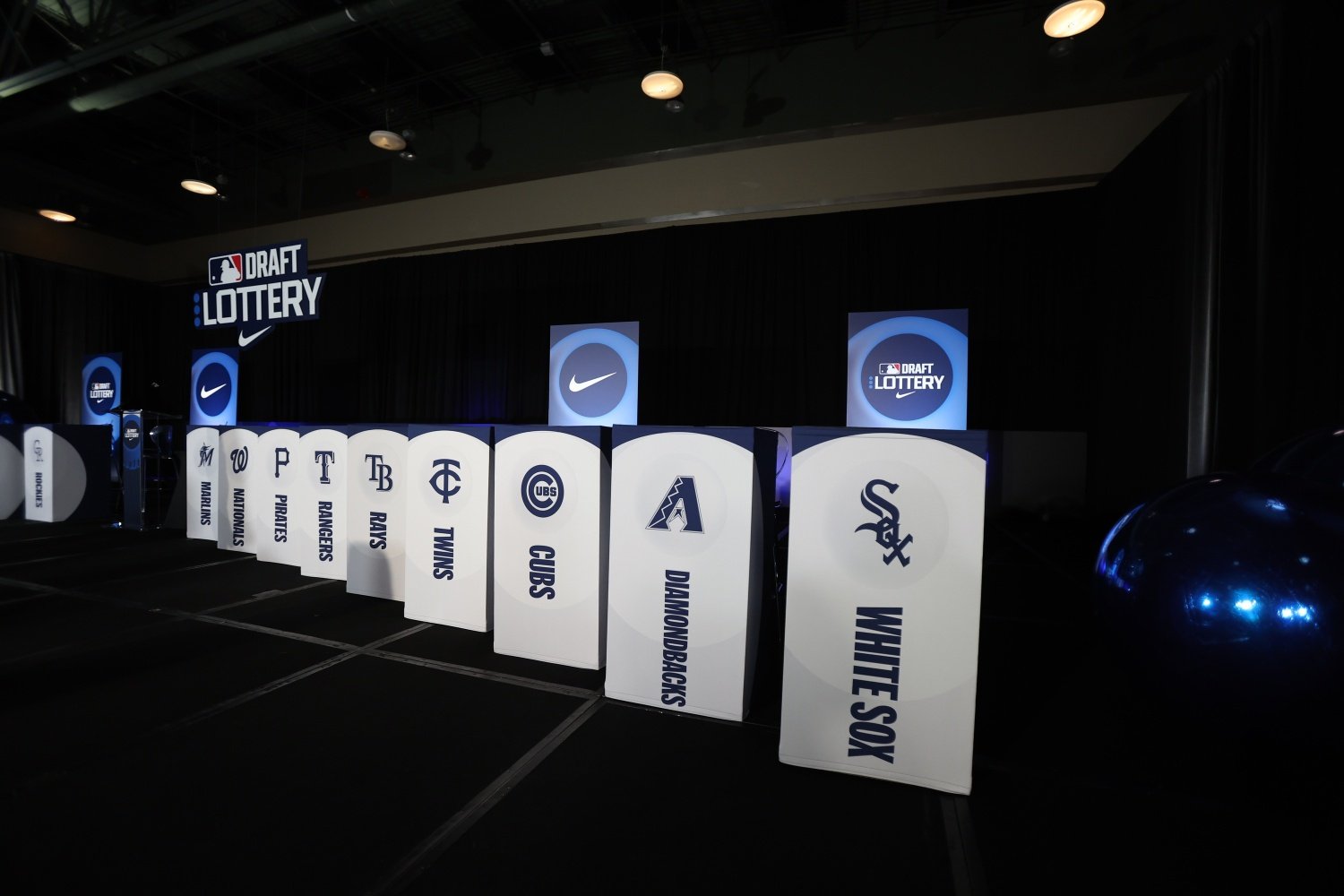 Despite finishing with the 14th-worst record in 2024, the Twins will pick 16th in the first round of the 2025 MLB Draft, courtesy of falling two spots in the MLB Draft Lottery. They will revert to picking 14th in all subsequent rounds. They have the 12th-largest bonus pool overall, at $12,653,000 (marginally more than 2024). This is primarily a function of their Competitive Balance Round A pick, 36th overall, which revenue-sharing recipient teams garner in either Comp Round A or Comp Round B on an annual rotation. The Twins' top-100 picks and slot values are as follows: Slot value for pick 16: $4,929,600 Slot value for pick 36: $2,692,200 Slot value for pick 54: $1,761,600 Slot value for pick 88: $893,000 This combination of financial and pick flexibility puts the Twins in a strong position to work with a draft class shaping up to be uncertain in terms of top-tier talent, but with plenty of depth through around 75 picks—and interesting prep bats, in particular. Reminders on Draft Financials Organizations are allowed to spend up to 5% more than their total pool without incurring a penalty, a choice most teams take advantage of. The Twins and the Rockies are the only MLB teams who have never spent any overage on their bonus pool. Any amount up to 5% over the pool is met with a 75% tax on the overage. If a team spends between 5-10% more than their pool, the penalty is 75% tax on the overage and loss of a future first-rounder. Any team who exceeds their bonus pool by more than 10% up to 15% pays 100% tax on the overage and will lose a first- and a second-round future pick. Any team who exceeds their bonus pool by more than 15% loses two future first-round picks, in addition to paying 100% tax on the overage. Rounds 11-20 work differently from the first half of the draft. These picks do not come with an assigned slot value. Teams can spend up to $150,000 per pick without that spending coming out of their bonus pool. If they spend over that amount, any overage will be deducted from their bonus pool. For example, an 11th-round pick signing for $250,000 will result in $100,000 being subtracted from that team's bonus pool. MLB Announces 2026 International Bonus Pools MLB announced bonus pools for the 2026 international signing period, too. The 2026 signing window opens on Jan. 15th, 2026 and runs through Dec. 15th, 2026. The Twins are in a group of eight teams (which also includes the Tigers) who have the joint second-largest bonus pools. The Twins can spend $7,357,100 in the 2026 international signing window.
 -
This week, the league office released bonus pool allocations and pick values for the 2025 MLB Draft. Additionally, MLB released international signing bonus pools for the 2026 signing period. Image courtesy of © Tim Heitman-Imagn Images Despite finishing with the 14th-worst record in 2024, the Twins will pick 16th in the first round of the 2025 MLB Draft, courtesy of falling two spots in the MLB Draft Lottery. They will revert to picking 14th in all subsequent rounds. They have the 12th-largest bonus pool overall, at $12,653,000 (marginally more than 2024). This is primarily a function of their Competitive Balance Round A pick, 36th overall, which revenue-sharing recipient teams garner in either Comp Round A or Comp Round B on an annual rotation. The Twins' top-100 picks and slot values are as follows: Slot value for pick 16: $4,929,600 Slot value for pick 36: $2,692,200 Slot value for pick 54: $1,761,600 Slot value for pick 88: $893,000 This combination of financial and pick flexibility puts the Twins in a strong position to work with a draft class shaping up to be uncertain in terms of top-tier talent, but with plenty of depth through around 75 picks—and interesting prep bats, in particular. Reminders on Draft Financials Organizations are allowed to spend up to 5% more than their total pool without incurring a penalty, a choice most teams take advantage of. The Twins and the Rockies are the only MLB teams who have never spent any overage on their bonus pool. Any amount up to 5% over the pool is met with a 75% tax on the overage. If a team spends between 5-10% more than their pool, the penalty is 75% tax on the overage and loss of a future first-rounder. Any team who exceeds their bonus pool by more than 10% up to 15% pays 100% tax on the overage and will lose a first- and a second-round future pick. Any team who exceeds their bonus pool by more than 15% loses two future first-round picks, in addition to paying 100% tax on the overage. Rounds 11-20 work differently from the first half of the draft. These picks do not come with an assigned slot value. Teams can spend up to $150,000 per pick without that spending coming out of their bonus pool. If they spend over that amount, any overage will be deducted from their bonus pool. For example, an 11th-round pick signing for $250,000 will result in $100,000 being subtracted from that team's bonus pool. MLB Announces 2026 International Bonus Pools MLB announced bonus pools for the 2026 international signing period, too. The 2026 signing window opens on Jan. 15th, 2026 and runs through Dec. 15th, 2026. The Twins are in a group of eight teams (which also includes the Tigers) who have the joint second-largest bonus pools. The Twins can spend $7,357,100 in the 2026 international signing window. View full article
-
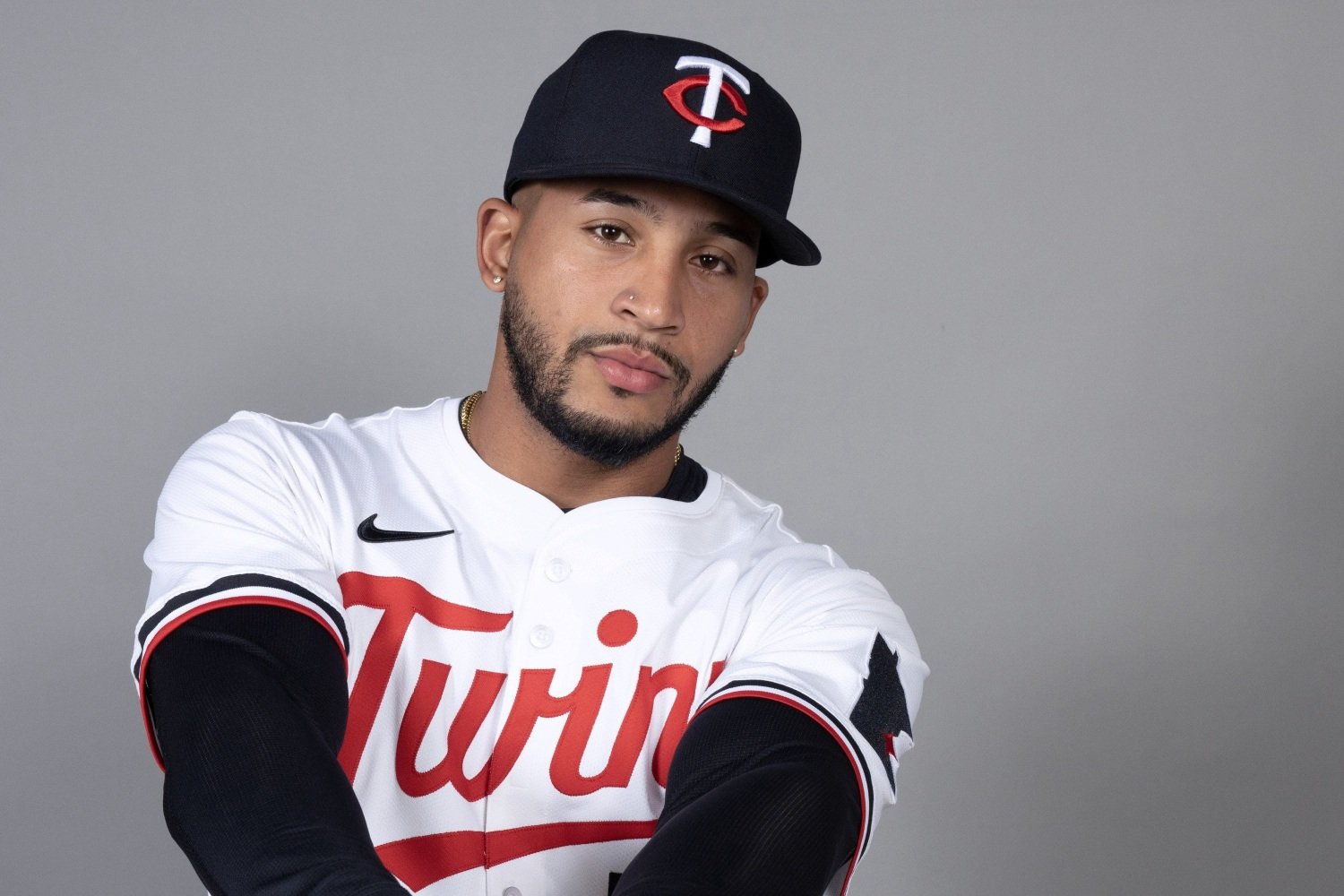 Zebby Matthews Tuesday was easily Zebby Matthews’s worst start of the young 2025 season. After getting pushed back from starting in Iowa via rainout, the righthander didn’t have his best stuff or his best command. Matthews was pulled in the top of the fourth inning, ending the day with a line of 3 2/3 IP, 7 H, 1 R, 0 ER, 1 BB, 4 K. Matthews managed 67% strikes on 80 pitches and only gave up two hard-hit balls, though, so ‘worst’ is a relative term here. Matthews's velocity wasn’t at its best on Tuesday. His fastball topped out at 97.4 mph, after he touched 99.5 mph in his previous start. He didn’t seem to have great command of his fastball, either, and struggled with location in general. Many of his pitches were just off the strike zone, and he labored a little to get into good counts—usually a key area of strength. Matthews dialed back the usage of his fastball a little, in favor of a roughly even split between four-seamers, cutters, and sliders. All of his pitches were still up, velo-wise, from his 2024 numbers. He managed 10 whiffs, including a 40% whiff rate on his slider. While it wasn’t his sharpest outing, the velocity, stuff, and strike-throwing are all consistently in place through four Triple-A starts. He’s close to ready. Carson McCusker McCusker continues to defy the odds with his performance at Triple A. The 2023 free-agent signing out of independent ball strikes an imposing figure in the batter's box. Seriously, the bat looks like a matchstick in his hands. He looks every bit of his listed size, 6-foot-8, 250 pounds. He crushed a grand slam off Carson Fulmer in a low-effort swing, an easy 103 mph off the bat. He also lined out in the bottom of the 8th at 106 mph. While it’s too early to say he deserves some run in the majors, McCusker is making a case for himself. Through 16 games in 2025, he’s hitting .298/.385/.684 with 6 home runs. He’s walking plenty (10.6%) and striking out a ton (31.8%). It’s close to top-of-the-scale power, with a maximum exit velocity of 114.2 mph and an unbelievable hard-hit rate of over 60%. All that adds up to a 175 wRC+. It’s a little bit reminiscent of Matt Wallner’s profile, from the right side—though, crucially, without the pedigree, track record, and supplementary tools. McCusker’s swing rate is down 10% overall in 2025. He’s clearly going into plate appearances with a better plan. His contact (especially in-zone contact) numbers are a little worrisome, and he’s in his age-27 season, but if he continues to mash, he’s going to be hard to ignore. I wonder if he’ll get any run at first base at St. Paul eventually. Emmanuel Rodriguez Emmanuel Rodriguez has had a slow start to 2025. Entering Tuesday’s tilt, he was hitting .228/.362/.281, with just three extra-base hits (all doubles). What’s been surprising is the lack of extra-base production (.053 ISO, compared to .253 in Triple A in 2024). There’s not much in his quality of contact to suggest there’s anything to worry about just yet. Entering Tuesday, his 42.4% Hard-Hit% is in line with 2024, with a similar Max EV of 113.6 mph. Looking at his plate discipline, Rodriguez has been more aggressive in 2025 (his swing percentage is up about 9%). Despite this, he’s still incredibly patient. He’s actually making more contact overall, and more in-zone contact than in 2024. The challenge, currently, is out-of-zone contact. In a very small sample, Rodriguez is chasing more in 2024. It’s resulting in some weaker contact outside the zone. I think there’s some calibration and adjustment to be done here, as the Twins want him to be more aggressive within the zone. After a couple of ugly initial at-bats, Rodriguez hit the ball hard, twice. A 107-mph single was followed up with a 112-mph single. The approach, patience, and quality of contact are all still there. The extra-base power should be coming soon. Michael Tonkin In his first rehab outing at St. Paul, Michael Tonkin was hit hard. He gave up two long home runs and three earned runs in an inning of work, needing 27 pitches to do so. Tonkin’s velocity was down, particularly on his sinker (-3.8 mph compared to 2024), and he left a lot of soft stuff over the heart of the plate. Still, he has time left in his rehab and the Twins bullpen does not have a pressing need for another arm in the immediate future. Diego Cartaya I was curious to see Cartaya, whom the Twins acquired in a trade with the Dodgers. It would be helpful to the Twins if either he or Jair Carmago emerged as a capable backup for 2026 and beyond. Cartaya looked clueless at the plate, though, striking out in four of his five trips. He’s running a strikeout rate in the sixties and I wouldn’t be surprised if he’s dumped from the 40-man roster if and when the Twins need a spot. Lastly, a request for folks who enjoy minor-league content at Twins Daily. This is a new and different format for prospect content, combining analysis with live looks. If you enjoyed it, please let us know. There’s certainly room to do more, if there’s an audience and an appetite for it. Feel free to leave feedback, too.
- 20 comments
-
- 15
-
-
- zebby matthews
- carson mccusker
- (and 1 more)
-
A blustery, cloudy morning gave way to a warm, sunny spring afternoon in St. Paul, as the Saints crushed Indianapolis on Tuesday, running out 16-4 winners in their series opener. Here are notes, observations, and analysis from my live looks in St. Paul. Image courtesy of © Chris Tilley-Imagn Images Zebby Matthews Tuesday was easily Zebby Matthews’s worst start of the young 2025 season. After getting pushed back from starting in Iowa via rainout, the righthander didn’t have his best stuff or his best command. Matthews was pulled in the top of the fourth inning, ending the day with a line of 3 2/3 IP, 7 H, 1 R, 0 ER, 1 BB, 4 K. Matthews managed 67% strikes on 80 pitches and only gave up two hard-hit balls, though, so ‘worst’ is a relative term here. Matthews's velocity wasn’t at its best on Tuesday. His fastball topped out at 97.4 mph, after he touched 99.5 mph in his previous start. He didn’t seem to have great command of his fastball, either, and struggled with location in general. Many of his pitches were just off the strike zone, and he labored a little to get into good counts—usually a key area of strength. Matthews dialed back the usage of his fastball a little, in favor of a roughly even split between four-seamers, cutters, and sliders. All of his pitches were still up, velo-wise, from his 2024 numbers. He managed 10 whiffs, including a 40% whiff rate on his slider. While it wasn’t his sharpest outing, the velocity, stuff, and strike-throwing are all consistently in place through four Triple-A starts. He’s close to ready. Carson McCusker McCusker continues to defy the odds with his performance at Triple A. The 2023 free-agent signing out of independent ball strikes an imposing figure in the batter's box. Seriously, the bat looks like a matchstick in his hands. He looks every bit of his listed size, 6-foot-8, 250 pounds. He crushed a grand slam off Carson Fulmer in a low-effort swing, an easy 103 mph off the bat. He also lined out in the bottom of the 8th at 106 mph. While it’s too early to say he deserves some run in the majors, McCusker is making a case for himself. Through 16 games in 2025, he’s hitting .298/.385/.684 with 6 home runs. He’s walking plenty (10.6%) and striking out a ton (31.8%). It’s close to top-of-the-scale power, with a maximum exit velocity of 114.2 mph and an unbelievable hard-hit rate of over 60%. All that adds up to a 175 wRC+. It’s a little bit reminiscent of Matt Wallner’s profile, from the right side—though, crucially, without the pedigree, track record, and supplementary tools. McCusker’s swing rate is down 10% overall in 2025. He’s clearly going into plate appearances with a better plan. His contact (especially in-zone contact) numbers are a little worrisome, and he’s in his age-27 season, but if he continues to mash, he’s going to be hard to ignore. I wonder if he’ll get any run at first base at St. Paul eventually. Emmanuel Rodriguez Emmanuel Rodriguez has had a slow start to 2025. Entering Tuesday’s tilt, he was hitting .228/.362/.281, with just three extra-base hits (all doubles). What’s been surprising is the lack of extra-base production (.053 ISO, compared to .253 in Triple A in 2024). There’s not much in his quality of contact to suggest there’s anything to worry about just yet. Entering Tuesday, his 42.4% Hard-Hit% is in line with 2024, with a similar Max EV of 113.6 mph. Looking at his plate discipline, Rodriguez has been more aggressive in 2025 (his swing percentage is up about 9%). Despite this, he’s still incredibly patient. He’s actually making more contact overall, and more in-zone contact than in 2024. The challenge, currently, is out-of-zone contact. In a very small sample, Rodriguez is chasing more in 2024. It’s resulting in some weaker contact outside the zone. I think there’s some calibration and adjustment to be done here, as the Twins want him to be more aggressive within the zone. After a couple of ugly initial at-bats, Rodriguez hit the ball hard, twice. A 107-mph single was followed up with a 112-mph single. The approach, patience, and quality of contact are all still there. The extra-base power should be coming soon. Michael Tonkin In his first rehab outing at St. Paul, Michael Tonkin was hit hard. He gave up two long home runs and three earned runs in an inning of work, needing 27 pitches to do so. Tonkin’s velocity was down, particularly on his sinker (-3.8 mph compared to 2024), and he left a lot of soft stuff over the heart of the plate. Still, he has time left in his rehab and the Twins bullpen does not have a pressing need for another arm in the immediate future. Diego Cartaya I was curious to see Cartaya, whom the Twins acquired in a trade with the Dodgers. It would be helpful to the Twins if either he or Jair Carmago emerged as a capable backup for 2026 and beyond. Cartaya looked clueless at the plate, though, striking out in four of his five trips. He’s running a strikeout rate in the sixties and I wouldn’t be surprised if he’s dumped from the 40-man roster if and when the Twins need a spot. Lastly, a request for folks who enjoy minor-league content at Twins Daily. This is a new and different format for prospect content, combining analysis with live looks. If you enjoyed it, please let us know. There’s certainly room to do more, if there’s an audience and an appetite for it. Feel free to leave feedback, too. View full article
- 20 replies
-
- 1
-
-
- zebby matthews
- carson mccusker
- (and 1 more)
-
K. I'm all set here. Thanks for reading/commenting. Enjoy your day.
-
What's your source for stuff+ and the translation of the model you're using to grades for each pitch?
-
There's been a huge uptick in Stuff+ from last year. Hit MLB debut Stuff+ was 99 (TJ Stats), this season has been 109-111. Fastball has gone from around 100 to 115-117. All of his pitches have improved. Only his cutter is around average per Stuff+, depending on what model you're using.
-
We’ll see Zebby Matthews with the big-league team soon. Let’s take stock of his early season performance in AAA and dig in on some of those tangible improvements. Image courtesy of Dave Nelson-Imagn Images For many Twins fans, it was perhaps a surprise when David Festa got the call to the Twins rotation over Zebby Matthews. After all, Zebby was lined up to take Pablo’s day in the rotation. Matthews has also made tangible performance gains in 2025. The move made sense, though. Festa is MLB-ready in his own right. He has more experience at Triple-A. His promotion allowed the Twins to build up some extra rest for a rotation that has rounded into form. We’ll see Zebby Matthews with the big league team soon. Let’s take stock of his early-season performance in the minors and dig in on some of those tangible improvements. Matthews has made three starts in AAA thus far in 2025, most recently against the Iowa Cubs, probably the best Triple-A lineup in baseball. In those three starts he’s thrown 15 innings and managed a 1.28 FIP, posting a 32.7 K-BB% in the process. That’s dominant. One inescapable truth, and one that underpinned folks clamoring for Zebby to be promoted to the big leagues to replace Pablo Lopez, is a significant uptick in velocity across the board. In 2024, a year in which Matthews saw three different MiLB levels (and a brief, challenging stint in the majors), his fastball averaged 95.6 mph. Through 15 innings in 2025, he's averaging 97.2 mph, he's touched 99.5 mph, and he’s using it more (45%, up from 37% in 2024). It’s not just the fastball. The velocity is up across the board. vFA vFC vSL vCU vCH 2024 (MiLB) 95.6 mph 90.8 mph 85.9 mph 80.2 mph 85.4 mph 2025 (MiLB) 97.2 mph 92.9 mph 89 mph 84.8 mph 87.3 mph To put this in context: 97.2 mph would have been the fastest average fastball for a starter in the majors in 2024, ahead of Dylan Cease (96.9 mph) and Tarik Skubal (96.8 mph). His slider would be the second hardest, on average. While we’ve been astounded by Matthew’s velocity gains in 2025, it still feels like we’re underselling it. So, what’s the impact of velocity gains? It’s giving him significantly more margin for error with his one remaining area of opportunity, command, (more on that later). The amount of contact opposing hitters are making in the strike zone is way down, from 88.7% in AAA in 2024, to 78.8% in Triple-A this year. His CSW% (called + swinging strike percent) is up from 28.6% in AAA in 2024, to 34.6% in AAA in 2025. These are not small improvements. If you’re a stuff nerd, that's taken a step forward. Please consult your preferred stuff plus model of choice. This is trending towards becoming one of the better arsenals out there, aided by new found elite velocity. So, what are the opportunities for Matthews? One aspect of his performance we should continue to pick apart is control versus command. The two are often conflated. He’s elite at one, while the other is a work in progress. Considered in its simplest form ‘control’ is the ability to throw strikes, ‘command’ your ability to manipulate those strikes throughout the strike zone. The latter is much more complicated. After all, you have to consider the relative strengths and weaknesses of a particular hitter, the sequencing of your pitches, and so on. Matthews threw ~70% strikes in his 2024 season. His 1.9 BB% in his MiLB innings would easily be the best in the majors (George Kirby led the league at 3%). Matthews is throwing slightly less strikes in 2025 (68%). I’d contend that’s a net positive. Knowing how, when, and where to leave the strike zone is an important skill in learning to deploy your arsenal, particularly when it features a fastball you can run up to 100 mph. To put it bluntly; how can you make a batter chase if you are never out of the strike zone? Let’s address the command directly. Location+ is a count and pitch type adjusted stat that serves as a measure of the pitcher’s ability to put the ball in the right place. While that’s not perfect, it tells an interesting story. In his brief MLB debut in 2024, Matthews had a Location+ of 97. If he was qualified, that would have ranked 52nd out of 58 starting pitchers in the league. Matthews’ Location+ was worst on his fastball and cutter, two pitches that account for ~60% of the pitches he throws. To be direct, he was outstanding at throwing strikes, not yet outstanding at putting those strikes in the right places. The remaining area of opportunity for Matthews is training command: spotting his pitches where they are called, reducing his miss rate, and ensuring misses don’t leak over the heart of the plate. This is where his velocity creates increased margin for error, but command metrics are the aspect of Matthews’ performance I’ll be paying closest attention to when he gets the call. One final aspect of development we should mention is a pitch tweak. Matthews adjusted his changeup this offseason. Primarily for use against left handed hitters, he’s worked on executing it over the plate to ensure they can’t sit on a cut fastball or breaking pitch inside. You can see an example below of how these were executed against Owen Caissie after getting to 0-2 against him in his most recent start (both changeups in this at-bat were swinging strikes). Matthews is more equipped to handle MLB hitters in a second stint with the Twins, whenever that may come. It’s now elite velocity, elite strike throwing, and a diverse arsenal that should beget success at the highest level. If he can continue to improve his command, he has a chance to be a playoff caliber starting pitcher. View full article
-
Zebby Matthews and the Next Frontier of Pitching Development
Jamie Cameron posted an article in Minor Leagues
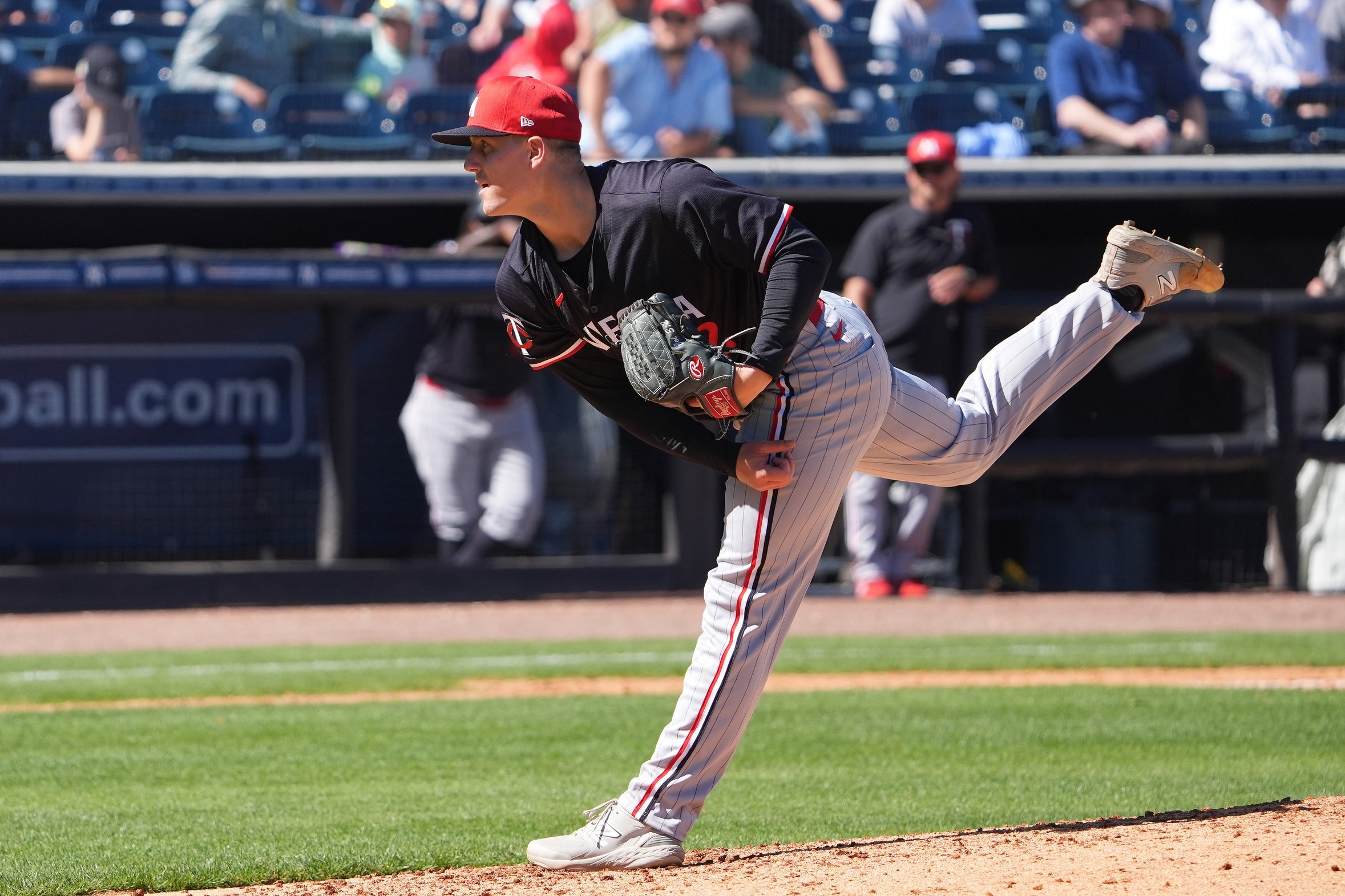 For many Twins fans, it was perhaps a surprise when David Festa got the call to the Twins rotation over Zebby Matthews. After all, Zebby was lined up to take Pablo’s day in the rotation. Matthews has also made tangible performance gains in 2025. The move made sense, though. Festa is MLB-ready in his own right. He has more experience at Triple-A. His promotion allowed the Twins to build up some extra rest for a rotation that has rounded into form. We’ll see Zebby Matthews with the big league team soon. Let’s take stock of his early-season performance in the minors and dig in on some of those tangible improvements. Matthews has made three starts in AAA thus far in 2025, most recently against the Iowa Cubs, probably the best Triple-A lineup in baseball. In those three starts he’s thrown 15 innings and managed a 1.28 FIP, posting a 32.7 K-BB% in the process. That’s dominant. One inescapable truth, and one that underpinned folks clamoring for Zebby to be promoted to the big leagues to replace Pablo Lopez, is a significant uptick in velocity across the board. In 2024, a year in which Matthews saw three different MiLB levels (and a brief, challenging stint in the majors), his fastball averaged 95.6 mph. Through 15 innings in 2025, he's averaging 97.2 mph, he's touched 99.5 mph, and he’s using it more (45%, up from 37% in 2024). It’s not just the fastball. The velocity is up across the board. vFA vFC vSL vCU vCH 2024 (MiLB) 95.6 mph 90.8 mph 85.9 mph 80.2 mph 85.4 mph 2025 (MiLB) 97.2 mph 92.9 mph 89 mph 84.8 mph 87.3 mph To put this in context: 97.2 mph would have been the fastest average fastball for a starter in the majors in 2024, ahead of Dylan Cease (96.9 mph) and Tarik Skubal (96.8 mph). His slider would be the second hardest, on average. While we’ve been astounded by Matthew’s velocity gains in 2025, it still feels like we’re underselling it. So, what’s the impact of velocity gains? It’s giving him significantly more margin for error with his one remaining area of opportunity, command, (more on that later). The amount of contact opposing hitters are making in the strike zone is way down, from 88.7% in AAA in 2024, to 78.8% in Triple-A this year. His CSW% (called + swinging strike percent) is up from 28.6% in AAA in 2024, to 34.6% in AAA in 2025. These are not small improvements. If you’re a stuff nerd, that's taken a step forward. Please consult your preferred stuff plus model of choice. This is trending towards becoming one of the better arsenals out there, aided by new found elite velocity. So, what are the opportunities for Matthews? One aspect of his performance we should continue to pick apart is control versus command. The two are often conflated. He’s elite at one, while the other is a work in progress. Considered in its simplest form ‘control’ is the ability to throw strikes, ‘command’ your ability to manipulate those strikes throughout the strike zone. The latter is much more complicated. After all, you have to consider the relative strengths and weaknesses of a particular hitter, the sequencing of your pitches, and so on. Matthews threw ~70% strikes in his 2024 season. His 1.9 BB% in his MiLB innings would easily be the best in the majors (George Kirby led the league at 3%). Matthews is throwing slightly less strikes in 2025 (68%). I’d contend that’s a net positive. Knowing how, when, and where to leave the strike zone is an important skill in learning to deploy your arsenal, particularly when it features a fastball you can run up to 100 mph. To put it bluntly; how can you make a batter chase if you are never out of the strike zone? Let’s address the command directly. Location+ is a count and pitch type adjusted stat that serves as a measure of the pitcher’s ability to put the ball in the right place. While that’s not perfect, it tells an interesting story. In his brief MLB debut in 2024, Matthews had a Location+ of 97. If he was qualified, that would have ranked 52nd out of 58 starting pitchers in the league. Matthews’ Location+ was worst on his fastball and cutter, two pitches that account for ~60% of the pitches he throws. To be direct, he was outstanding at throwing strikes, not yet outstanding at putting those strikes in the right places. The remaining area of opportunity for Matthews is training command: spotting his pitches where they are called, reducing his miss rate, and ensuring misses don’t leak over the heart of the plate. This is where his velocity creates increased margin for error, but command metrics are the aspect of Matthews’ performance I’ll be paying closest attention to when he gets the call. One final aspect of development we should mention is a pitch tweak. Matthews adjusted his changeup this offseason. Primarily for use against left handed hitters, he’s worked on executing it over the plate to ensure they can’t sit on a cut fastball or breaking pitch inside. You can see an example below of how these were executed against Owen Caissie after getting to 0-2 against him in his most recent start (both changeups in this at-bat were swinging strikes). Matthews is more equipped to handle MLB hitters in a second stint with the Twins, whenever that may come. It’s now elite velocity, elite strike throwing, and a diverse arsenal that should beget success at the highest level. If he can continue to improve his command, he has a chance to be a playoff caliber starting pitcher.
