



Jamie Cameron
-
Posts
1,349 -
Joined
-
Last visited
-
Days Won
4
Content Type
Profiles
News
Minnesota Twins Videos
2026 Minnesota Twins Top Prospects Ranking
2022 Minnesota Twins Draft Picks
Minnesota Twins Free Agent & Trade Rumors, Notes, & Tidbits
Guides & Resources
2023 Minnesota Twins Draft Picks
The Minnesota Twins Players Project
2024 Minnesota Twins Draft Picks
2025 Minnesota Twins Draft Pick Tracker
2026 Minnesota Twins Draft Tracker: Picks & Bonuses
Forums
Blogs
Events
Store
Downloads
Gallery
Everything posted by Jamie Cameron
-
Twins 2025 Prospect Previews: Kaelen Culpepper
Jamie Cameron replied to Jamie Cameron's topic in Twins Minor League Talk
Thanks kindly for saying so. DeBarge is imminent. -
Twins 2025 Prospect Previews: Kaelen Culpepper
Jamie Cameron replied to Jamie Cameron's topic in Twins Minor League Talk
Appreciate the kind words and the comments. Thanks for reading. -
Twins 2025 Prospect Previews: Kaelen Culpepper
Jamie Cameron replied to Jamie Cameron's topic in Twins Minor League Talk
I'm glad multiple people brought this up. I didn't discuss it in much depth in the article, but in college, the SS opportunity only presented itself in his junior season (he started at 3B). He's always had the arm, but I think that context is helpful. The actions, internal clock will all take some more time at the pro level. I was impressed with what I saw defensively when he debuted, though. -
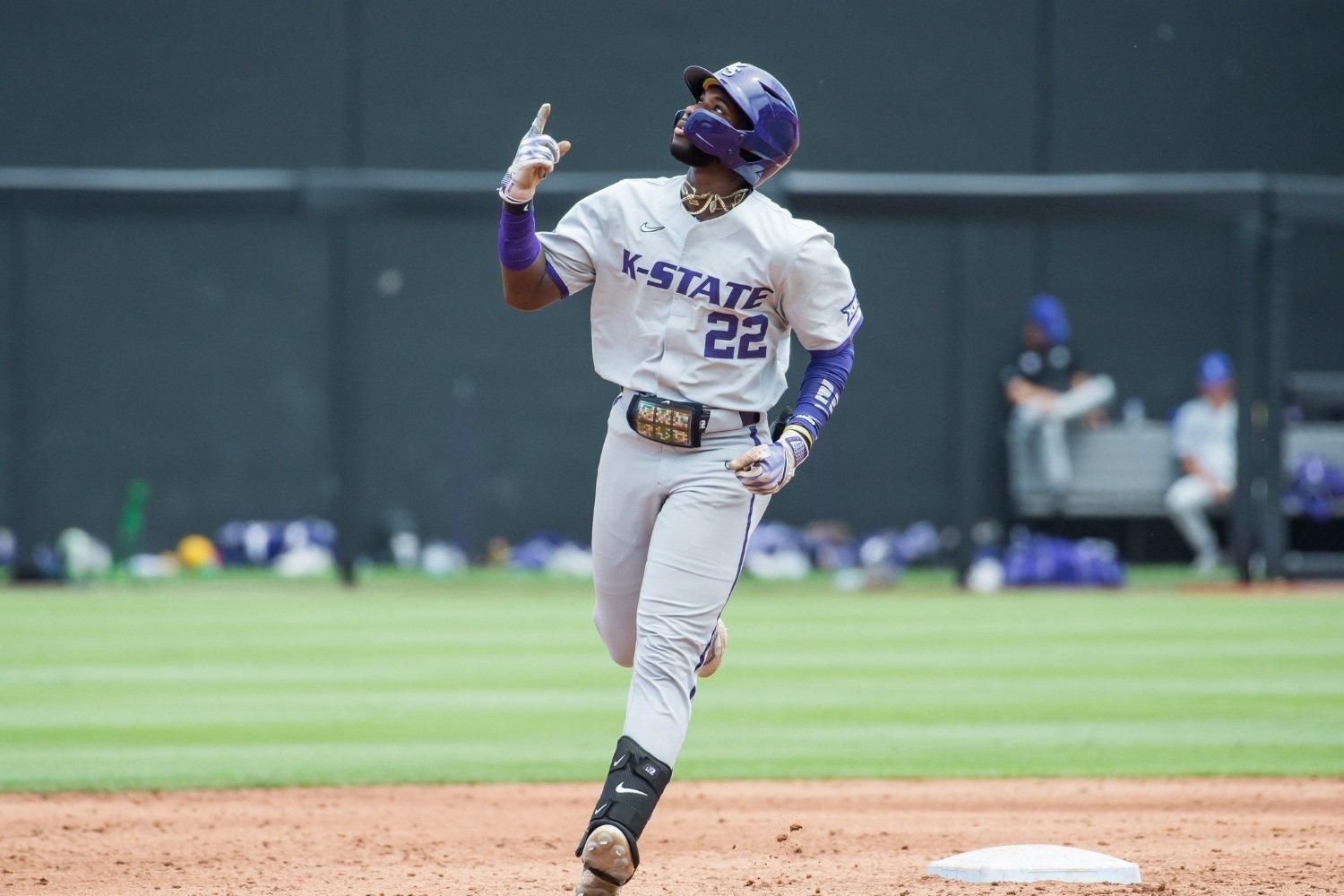 Draft Context, Scouting and Signing Kaelen Culpepper sat in the late first-round range on most industry draft boards throughout the 2024 MLB Draft cycle, and he fits a Twins draft archetype: high-character middle infielders with good athleticism and a track record of college production. Culpepper’s swing is one of beautiful simplicity. He’s upright and quiet. He drifts, rather than kicks into a swing underpinned by good bat speed and rotational acceleration. Despite above-average speed, Culpepper hasn’t been much of a baserunning threat (yet). His arm is plus, and he has good range in the infield. Culpepper should be a lock to stick at shortstop, at least in the medium term, despite starting there for only one of his collegiate seasons. It’s possible he slides over to third base at some point in his career. The Twins were in on Culpepper heavily from the beginning of the year with Kansas State (and well before that, in fact). He finished his junior season with a bang, hitting for the cycle and launching a three-run home run off Hagen Smith at Regionals in the NCAA postseason. The Twins took Culpepper 21st overall (his exact spot on our Consensus Draft Board) and signed him to exactly the slot-prescribed bonus of $3,934,400. 2024 Pro Debut: Strengths and Opportunities 2024 Stats (A and A+): 26 games (112 PA), .242/.330/.394, 3 HR (8 XBH), 11 BB, 15 K, 4 SB Culpepper has a well-rounded skill set at the plate. He doesn’t strike out much (13.4% across two minor-league levels in 2024) and put up strong pitch-by-pitch metrics (82.1% Contact%). He’ll punish mistakes, too, Culpepper didn’t swing and miss at a single pitch in the zone in a nine-game debut at Low-A Fort Myers, which resulted in a .907 OPS and a quick promotion to High-A Cedar Rapids. There are some orange flags in his profile. Despite excellent plate coverage, Culpepper has been exposed a bit by spin, and a 33% chase rate could be problematic as he rises through the ranks of the Twins system. I think there’s a good chance Culpepper can get to solid-average power, to go with an above-average hit tool. While his chase rate is high, the Twins do not shy away from that, and will likely emphasize aggressive swing decisions in key parts of the strike zone to help Culpepper do plenty of damage on contact. Expectations for 2025 I’d expect Culpepper to start 2025 at Cedar Rapids. He had a good start to his pro career, despite slowing down a little at the end of the season. The Twins will be hoping he follows the trail blazed by Luke Keaschall in his first full pro season, in which he made light work of High-A ball on the way to thriving at Double A, before injury cut short his season. In a best-case scenario for Culpepper, a strong 2025 ends in the upper minors and sets the stage for a 2026 debut with the big-league team.
 -
Spring training is around the corner. It’s time to get reacquainted with the Twins' 2024 draft class ahead of their first full season of professional baseball in 2025. First up: the team's first-rounder. Image courtesy of © Brett Rojo-Imagn Images Spring training is around the corner. It’s time to get reacquainted with the Twins' 2024 draft class ahead of their first full season of professional baseball in 2025. First up: the team's first-rounder. Draft Context, Scouting and Signing Kaelen Culpepper sat in the late first-round range on most industry draft boards throughout the 2024 MLB Draft cycle, and he fits a Twins draft archetype: high-character middle infielders with good athleticism and a track record of college production. Culpepper’s swing is one of beautiful simplicity. He’s upright and quiet. He drifts, rather than kicks into a swing underpinned by good bat speed and rotational acceleration. Despite above-average speed, Culpepper hasn’t been much of a baserunning threat (yet). His arm is plus, and he has good range in the infield. Culpepper should be a lock to stick at shortstop, at least in the medium term, despite starting there for only one of his collegiate seasons. It’s possible he slides over to third base at some point in his career. The Twins were in on Culpepper heavily from the beginning of the year with Kansas State (and well before that, in fact). He finished his junior season with a bang, hitting for the cycle and launching a three-run home run off Hagen Smith at Regionals in the NCAA postseason. The Twins took Culpepper 21st overall (his exact spot on our Consensus Draft Board) and signed him to exactly the slot-prescribed bonus of $3,934,400. 2024 Pro Debut: Strengths and Opportunities 2024 Stats (A and A+): 26 games (112 PA), .242/.330/.394, 3 HR (8 XBH), 11 BB, 15 K, 4 SB Culpepper has a well-rounded skill set at the plate. He doesn’t strike out much (13.4% across two minor-league levels in 2024) and put up strong pitch-by-pitch metrics (82.1% Contact%). He’ll punish mistakes, too, Culpepper didn’t swing and miss at a single pitch in the zone in a nine-game debut at Low-A Fort Myers, which resulted in a .907 OPS and a quick promotion to High-A Cedar Rapids. There are some orange flags in his profile. Despite excellent plate coverage, Culpepper has been exposed a bit by spin, and a 33% chase rate could be problematic as he rises through the ranks of the Twins system. I think there’s a good chance Culpepper can get to solid-average power, to go with an above-average hit tool. While his chase rate is high, the Twins do not shy away from that, and will likely emphasize aggressive swing decisions in key parts of the strike zone to help Culpepper do plenty of damage on contact. Expectations for 2025 I’d expect Culpepper to start 2025 at Cedar Rapids. He had a good start to his pro career, despite slowing down a little at the end of the season. The Twins will be hoping he follows the trail blazed by Luke Keaschall in his first full pro season, in which he made light work of High-A ball on the way to thriving at Double A, before injury cut short his season. In a best-case scenario for Culpepper, a strong 2025 ends in the upper minors and sets the stage for a 2026 debut with the big-league team. View full article
-
Draft tandem Jeremy Nygaard and JD Cameron team up for a podcast to discuss prospects on their way to the big leagues and the MLB draft, produced by Theo Tollefson. Image courtesy of Thieres Rabelo Draft tandem Jeremy Nygaard and JD Cameron team up for a podcast to discuss prospects on their way to the big leagues and the MLB draft, produced by Theo Tollefson. In episode 67 of Destination: The Show, Jeremy and Jamie work through a busy week of news and notes from the offseason. They start with the Jays signing Max Scherzer, who will provide a boost to the back end of their rotation. How will he perform? Will he end the season in Toronto, or elsewhere? The guys then turn their attention to the Twins who made multiple moves this week after being frozen in carbonite for most of the offseason. Hear their thoughts on the Twins adding Danny Coulombe and Harrison Bader and asking what are the implications for other players on the fringes of the roster. The guys then jump into a round of FrankenProspect. The concept is simple; using the Brewers, Cubs, and Twins farm systems, draft tools to build the best hitter and pitcher possible. They take turns drafting hit, power, defense, arm, and run tools for hitters and fastball, changeup, slider, curveball and control tools for pitchers. Who came out on top? 0:00 Intro 4:00 Housekeeping 5:20 Moves in the MLB 11:00 Twins Sign Coloumbe 16:40 Twins Sign Bader 26:20 Build a Franken-Prospect You can support the show by downloading it from wherever you get your podcasts, including iTunes and Spotify. If you enjoy the content, consider leaving us a five-star rating and review in addition to sharing or retweeting DTS-related content. You can follow us on Twitter @DTS_POD1, @Jeremynygaard, @J_D_Cameron, and @TheodoreTollef1. We’re now on Bluesky @destinationtheshow.bsky.social. You can also find full episodes and clips of our shows on our YouTube page @DestinationTheShow. View full article
-
 In episode 67 of Destination: The Show, Jeremy and Jamie work through a busy week of news and notes from the offseason. They start with the Jays signing Max Scherzer, who will provide a boost to the back end of their rotation. How will he perform? Will he end the season in Toronto, or elsewhere? The guys then turn their attention to the Twins who made multiple moves this week after being frozen in carbonite for most of the offseason. Hear their thoughts on the Twins adding Danny Coulombe and Harrison Bader and asking what are the implications for other players on the fringes of the roster. The guys then jump into a round of FrankenProspect. The concept is simple; using the Brewers, Cubs, and Twins farm systems, draft tools to build the best hitter and pitcher possible. They take turns drafting hit, power, defense, arm, and run tools for hitters and fastball, changeup, slider, curveball and control tools for pitchers. Who came out on top? 0:00 Intro 4:00 Housekeeping 5:20 Moves in the MLB 11:00 Twins Sign Coloumbe 16:40 Twins Sign Bader 26:20 Build a Franken-Prospect You can support the show by downloading it from wherever you get your podcasts, including iTunes and Spotify. If you enjoy the content, consider leaving us a five-star rating and review in addition to sharing or retweeting DTS-related content. You can follow us on Twitter @DTS_POD1, @Jeremynygaard, @J_D_Cameron, and @TheodoreTollef1. We’re now on Bluesky @destinationtheshow.bsky.social. You can also find full episodes and clips of our shows on our YouTube page @DestinationTheShow.
 -
"Evaluating catchers is really hard, and I don’t think anyone has gotten it right yet," said Ryan Jeffers, in a recent interview at Twins Daily’s Winter Meltdown. What did he mean? How hard is it to untangle catcher performance? What can we make of what the Twins have asked Jeffers to emphasize in supporting his batterymates? Image courtesy of © John Hefti-Imagn Images "Evaluating catchers is really hard, and I don’t think anyone has gotten it right yet," said Ryan Jeffers, in a recent interview at Twins Daily’s Winter Meltdown. What did he mean? How hard is it to untangle catcher performance? What can we make of what the Twins have asked Jeffers to emphasize in supporting his batterymates? We’ll start by digging into how the Twins' approach to positioning behind the plate has changed in the last five years. If you go back to 2021, Ryan Jeffers was 72nd percentile in MLB in framing (stealing strikes for pitchers by subtly bringing the ball back toward the middle of the zone to blur the edges of the strike zone for umpires). Jeffers has since regressed significantly in that metric. In 2023, he fell to the 25th percentile; in 2024, to the 5th percentile. Zoinks! Did Jeffers suddenly lose his ability to frame? Not so fast. There’s a more reasonable explanation. As of 2022, the Twins started asking Jeffers to set up middle-middle, particularly in 0-0 counts. The premise here is setting a clear target for the pitcher within the borders of the strike zone. That might sound counterintuitive. I can hear an annoyed Bert Blyleven on a Twins telecast: "The catcher wanted the pitch down, but he left it middle-middle." But let’s pump the brakes. Why does this ‘targeting’ approach make sense? First, let’s make some distinctions. I’ve led you off the path a bit by presenting framing and targeting as antithetical approaches to catching, they’re not. The Twins still emphasize framing. It’s just more of a challenge when you set up middle-middle. Why? Because your receiving arm is doing more of the heavy lifting. Your body position is removed as part of the disguise for umpires. Let’s dig into why the middle-middle setup may be beneficial, some of the nuances, and the potential pitfalls. The emphasis on a more centralized setup comes from an intertwining of the Twins' pitching and evolving catching philosophies. Get ahead with strike one (that’s the catching part), and be nasty in the strike zone (the pitching part). Leveraged counts are important in baseball. There’s an enormous difference in run expectancy between a 1-0 count and an 0-1 count. If you set up a target down, up, inside, or outside, you’re less likely to get ahead, because your pitcher will be aiming for the edges of the zone. It’s also worth noting that there’s much more complexity to the middle-middle approach than I’ve described so far. Often, a catcher will position their body middle-middle, flash the pitcher's target elsewhere in the strike zone with a glove snap, then bring their mitt back to the center of the plate. To get back to some of the more obvious conclusions. If the middle-middle catcher setup promotes leveraged counts (getting ahead), this should increase strikeouts and decrease walks for pitchers, but conversely, it can increase hard contact (for pitches that hit their target and are left in an undesirable quadrant of the strike zone). At this point, we should dig into miss rate as a relevant stat. There’s a general mythology in baseball (it’s mostly romanticism and nostalgia) that most pitchers' command is better than it really is. Here’s a mind-blowing stat: An average MLB fastball misses its target by 12-13 inches. Wow! Home plate is just 17 inches wide. If you’re wondering about other pitch types, the general range is somewhere from 11-13 inches on average. As stuff and velocity increase, those numbers may also increase, because the mechanical factors that beget high-end spin and speed also tend to exaggerate the magnitude of errors. For me, it added a completely new lens through which to view control and command, but also, how, where, and why a catcher sets up in a particular fashion. If an average miss is roughly 70% the width of home plate (even understanding that some of that miss is vertical, and some horizontal), setting up middle-middle feels more comfortable. Before digging into some numbers for the Twins to contextualize this discussion, I want to plant a seed. Perhaps considering balls and strikes is too simplistic a binary for viewing battery performance. Instead, I’ll offer this modification: strikes, good misses, and bad misses. In this alternate reality of pitch classification, what we think of as ‘balls’ have been further subdivided into two categories; ‘good misses’ that batters cannot make quality contact with, and ‘bad misses’, the type of pitch that ends up earning air miles. Let’s start with some high-level numbers centering on Twins pitching. They ranked first in MLB in Location+ in 2024. That’s a count- and pitch type-adjusted stat that measures how well the pitcher can put the ball in the right place. It’s also worth noting that the Twins were second in MLB in 2024 in pitches thrown over the heart of the plate (27.5%), but 11th in xwOBA for those pitches, which speaks to their ability to be nasty in the zone. Promising, globally, but let’s get a little more specific. Are Twins pitchers throwing more pitches in the middle of the zone since their change in catcher positioning? Simply put: yes. Let’s compare the number and percentage of pitches thrown in the Heart zones (not just in the zone, but well within it, where strikes are certain but damage lurks) in 0-0 counts by the Twins rotation when the setup was more geared toward framing to what they've done since the change. In 2021, Twins starters totaled 647 pitches (6.5% of all first pitches) in the Heart zones in 0-0 counts. In 2024, that number was up to 978 pitches (8.5%). Did this result in more strikes? Of course. In 2021, the Twins rotation accrued 324 called strikes over the heart of the plate in 0-0 counts. Last year, it was up to 444 called strikes. More pitches over the heart of the plate, more called strikes, more pitcher-friendly counts. Seems compelling. Does an increased number of pitches in the Heart zones (particularly in 0-0 counts) result in more contact? Just as predictably, yes. In 2021, pitches thrown by Twins starters in 0-0 counts in the Heart zones resulted in 48 hits, as opposed to 75 hits in 2024, with a more catcher middle-middle setup. (Pablo López was a big part of that problem.) That’s a significant difference. If we can draw a high-level conclusion here, the Twins are walking the tightrope of being more in the zone (and the middle of the zone, especially) early in counts, and living with the tradeoff of significantly more contact by doing so. Before we dig into another layer of data, though, I’ll caveat our discussion thus far as (at best) overly simplistic. The above numbers assume a wholly middle-middle setup in 2024 and the opposite in 2021. That’s obviously not the case, but these data are (at the very least) interesting kernels. We can see how a pitcher performs in different portions of the plate by run value. Those numbers paint a rosy picture for Twins starters. Using Bailey Ober and Joe Ryan (the two starters consistent across both 2021 and 2024), we can see Ryan improved from a zero run value over the heart of the plate in 2021, to +2 runs in 2024. For Ober, it was even more compelling, increasing from +5 runs over the heart of the plate to +9. That’s a 6-run improvement over two pitchers, and I’d posit that the Twins' focus is on scaling improvement (by as many pitchers as possible) as opposed to focusing on catcher performance. Jeffers's framing has regressed to the effect of about 10 lost runs from 2021 to 2024, but we’ve seen 60% of that deficit made up by the improved performances of Ober and Ryan in the strike zone. The challenge that Jeffers alluded to (evaluating catcher performance) is a moving target, because we’re trying to isolate one aspect of a symbiotic relationship, each of the elements of which can’t exist or thrive without the other. Consider the myriad variables we haven’t discussed: how catcher positioning might vary based on pitch type (movement and velocity); the offensive tendencies of the batter; the list is endless. It’s impossible to pick apart the impact of each side of the battery. What we can see, though, is that the Twins and other organizations are getting more value (in the form of leveraged counts) from middle-middle catcher positioning than they're losing; the approach is advantageous to the battery in certain counts and situations. While I don’t feel confident we can be perfectly certain that the setup is leading to better misses from pitchers, I think we can infer that teams are paying attention to the quality of misses from their pitching staffs. View full article
-
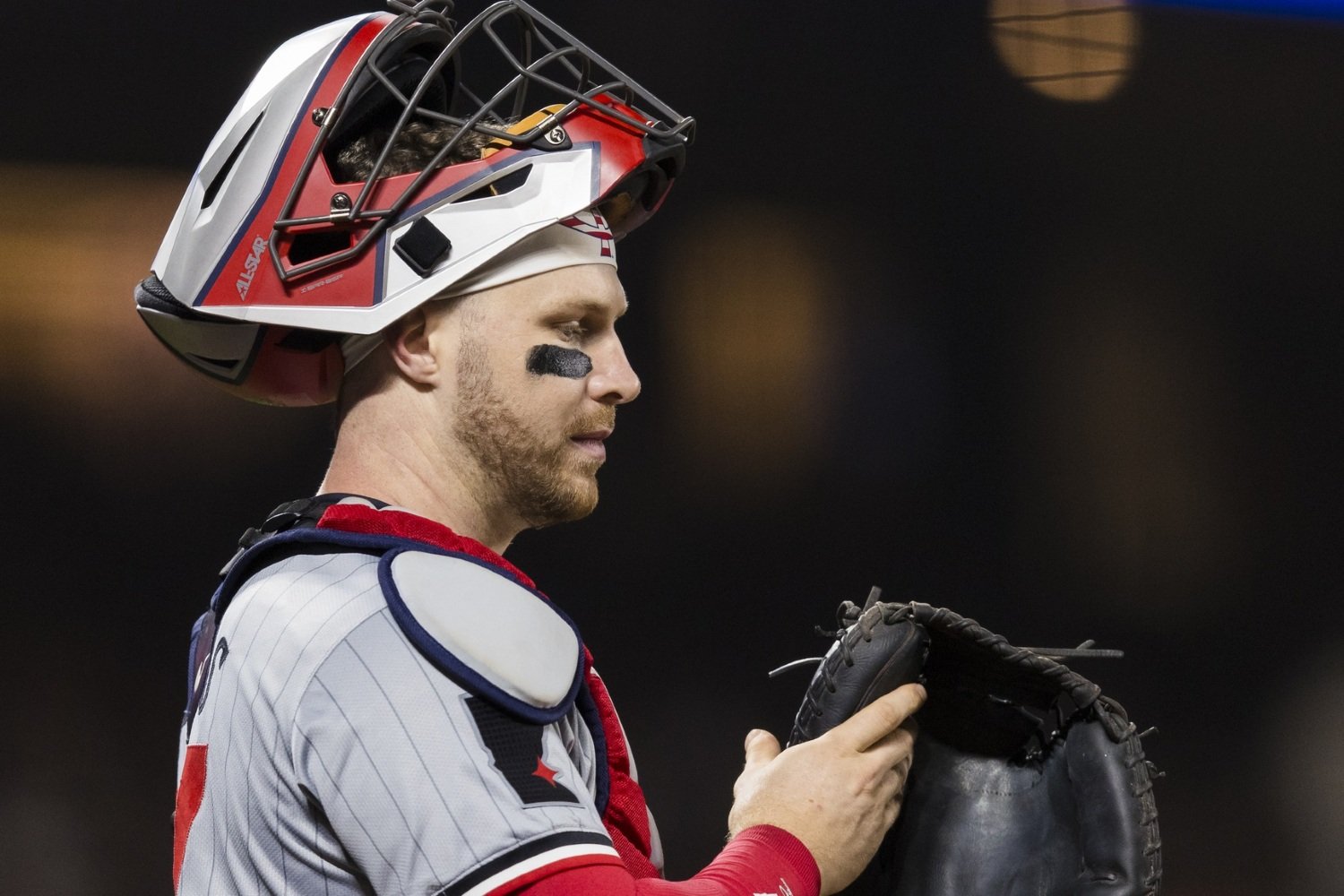 We’ll start by digging into how the Twins' approach to positioning behind the plate has changed in the last five years. If you go back to 2021, Ryan Jeffers was 72nd percentile in MLB in framing (stealing strikes for pitchers by subtly bringing the ball back toward the middle of the zone to blur the edges of the strike zone for umpires). Jeffers has since regressed significantly in that metric. In 2023, he fell to the 25th percentile; in 2024, to the 5th percentile. Zoinks! Did Jeffers suddenly lose his ability to frame? Not so fast. There’s a more reasonable explanation. As of 2022, the Twins started asking Jeffers to set up middle-middle, particularly in 0-0 counts. The premise here is setting a clear target for the pitcher within the borders of the strike zone. That might sound counterintuitive. I can hear an annoyed Bert Blyleven on a Twins telecast: "The catcher wanted the pitch down, but he left it middle-middle." But let’s pump the brakes. Why does this ‘targeting’ approach make sense? First, let’s make some distinctions. I’ve led you off the path a bit by presenting framing and targeting as antithetical approaches to catching, they’re not. The Twins still emphasize framing. It’s just more of a challenge when you set up middle-middle. Why? Because your receiving arm is doing more of the heavy lifting. Your body position is removed as part of the disguise for umpires. Let’s dig into why the middle-middle setup may be beneficial, some of the nuances, and the potential pitfalls. The emphasis on a more centralized setup comes from an intertwining of the Twins' pitching and evolving catching philosophies. Get ahead with strike one (that’s the catching part), and be nasty in the strike zone (the pitching part). Leveraged counts are important in baseball. There’s an enormous difference in run expectancy between a 1-0 count and an 0-1 count. If you set up a target down, up, inside, or outside, you’re less likely to get ahead, because your pitcher will be aiming for the edges of the zone. It’s also worth noting that there’s much more complexity to the middle-middle approach than I’ve described so far. Often, a catcher will position their body middle-middle, flash the pitcher's target elsewhere in the strike zone with a glove snap, then bring their mitt back to the center of the plate. To get back to some of the more obvious conclusions. If the middle-middle catcher setup promotes leveraged counts (getting ahead), this should increase strikeouts and decrease walks for pitchers, but conversely, it can increase hard contact (for pitches that hit their target and are left in an undesirable quadrant of the strike zone). At this point, we should dig into miss rate as a relevant stat. There’s a general mythology in baseball (it’s mostly romanticism and nostalgia) that most pitchers' command is better than it really is. Here’s a mind-blowing stat: An average MLB fastball misses its target by 12-13 inches. Wow! Home plate is just 17 inches wide. If you’re wondering about other pitch types, the general range is somewhere from 11-13 inches on average. As stuff and velocity increase, those numbers may also increase, because the mechanical factors that beget high-end spin and speed also tend to exaggerate the magnitude of errors. For me, it added a completely new lens through which to view control and command, but also, how, where, and why a catcher sets up in a particular fashion. If an average miss is roughly 70% the width of home plate (even understanding that some of that miss is vertical, and some horizontal), setting up middle-middle feels more comfortable. Before digging into some numbers for the Twins to contextualize this discussion, I want to plant a seed. Perhaps considering balls and strikes is too simplistic a binary for viewing battery performance. Instead, I’ll offer this modification: strikes, good misses, and bad misses. In this alternate reality of pitch classification, what we think of as ‘balls’ have been further subdivided into two categories; ‘good misses’ that batters cannot make quality contact with, and ‘bad misses’, the type of pitch that ends up earning air miles. Let’s start with some high-level numbers centering on Twins pitching. They ranked first in MLB in Location+ in 2024. That’s a count- and pitch type-adjusted stat that measures how well the pitcher can put the ball in the right place. It’s also worth noting that the Twins were second in MLB in 2024 in pitches thrown over the heart of the plate (27.5%), but 11th in xwOBA for those pitches, which speaks to their ability to be nasty in the zone. Promising, globally, but let’s get a little more specific. Are Twins pitchers throwing more pitches in the middle of the zone since their change in catcher positioning? Simply put: yes. Let’s compare the number and percentage of pitches thrown in the Heart zones (not just in the zone, but well within it, where strikes are certain but damage lurks) in 0-0 counts by the Twins rotation when the setup was more geared toward framing to what they've done since the change. In 2021, Twins starters totaled 647 pitches (6.5% of all first pitches) in the Heart zones in 0-0 counts. In 2024, that number was up to 978 pitches (8.5%). Did this result in more strikes? Of course. In 2021, the Twins rotation accrued 324 called strikes over the heart of the plate in 0-0 counts. Last year, it was up to 444 called strikes. More pitches over the heart of the plate, more called strikes, more pitcher-friendly counts. Seems compelling. Does an increased number of pitches in the Heart zones (particularly in 0-0 counts) result in more contact? Just as predictably, yes. In 2021, pitches thrown by Twins starters in 0-0 counts in the Heart zones resulted in 48 hits, as opposed to 75 hits in 2024, with a more catcher middle-middle setup. (Pablo López was a big part of that problem.) That’s a significant difference. If we can draw a high-level conclusion here, the Twins are walking the tightrope of being more in the zone (and the middle of the zone, especially) early in counts, and living with the tradeoff of significantly more contact by doing so. Before we dig into another layer of data, though, I’ll caveat our discussion thus far as (at best) overly simplistic. The above numbers assume a wholly middle-middle setup in 2024 and the opposite in 2021. That’s obviously not the case, but these data are (at the very least) interesting kernels. We can see how a pitcher performs in different portions of the plate by run value. Those numbers paint a rosy picture for Twins starters. Using Bailey Ober and Joe Ryan (the two starters consistent across both 2021 and 2024), we can see Ryan improved from a zero run value over the heart of the plate in 2021, to +2 runs in 2024. For Ober, it was even more compelling, increasing from +5 runs over the heart of the plate to +9. That’s a 6-run improvement over two pitchers, and I’d posit that the Twins' focus is on scaling improvement (by as many pitchers as possible) as opposed to focusing on catcher performance. Jeffers's framing has regressed to the effect of about 10 lost runs from 2021 to 2024, but we’ve seen 60% of that deficit made up by the improved performances of Ober and Ryan in the strike zone. The challenge that Jeffers alluded to (evaluating catcher performance) is a moving target, because we’re trying to isolate one aspect of a symbiotic relationship, each of the elements of which can’t exist or thrive without the other. Consider the myriad variables we haven’t discussed: how catcher positioning might vary based on pitch type (movement and velocity); the offensive tendencies of the batter; the list is endless. It’s impossible to pick apart the impact of each side of the battery. What we can see, though, is that the Twins and other organizations are getting more value (in the form of leveraged counts) from middle-middle catcher positioning than they're losing; the approach is advantageous to the battery in certain counts and situations. While I don’t feel confident we can be perfectly certain that the setup is leading to better misses from pitchers, I think we can infer that teams are paying attention to the quality of misses from their pitching staffs.
- 12 comments
-
- 5
-

-
- ryan jeffers
- bailey ober
- (and 1 more)
-
Draft tandem Jeremy Nygaard and JD Cameron team up for a podcast to discuss prospects on their way to the big leagues and the MLB draft, produced by Theo Tollefson. Image courtesy of Thieres Rabelo Draft tandem Jeremy Nygaard and JD Cameron team up for a podcast to discuss prospects on their way to the big leagues and the MLB draft, produced by Theo Tollefson. In episode 66 of Destination: The Show, Jeremy and Jamie work through news and notes from the offseason. They start by digging into rumors that the Twins were interested in trading with the Padres for Dylan Cease, before discussing whether an addition to a strong rotation feels likely. Next they dig into Charlee Soto, fresh off being minted as a new Top 100 prospect by Kiley McDaniel. The guys then dig into the Cubs acquisition of Ryan Pressly, and whether they should pursue another starter, specifically Michael King. The guys then banter over dueling top ten Cubs prospect lists. Who do they have as number one on their list? Who rounds out the back half of the top ten after the top prospects are ranked? Finally, they end with a mailbag question on the kickoff of the college baseball season. 0:00 Intro 2:31 Twins Notes 17:10 Cubs Notes 22:45 Cubs Top 10 26:00 Cubs #2 Prospect 30:35 A Disagreement at #3 41:37 Sharing the rest of our top 10s 1:01:00 Listener Questions You can support the show by downloading it from wherever you get your podcasts, including iTunes and Spotify. If you enjoy the content, consider leaving us a five-star rating and review in addition to sharing or retweeting DTS-related content. You can follow us on Twitter @DTS_POD1, @Jeremynygaard, @J_D_Cameron, and @TheodoreTollef1. We’re now on Bluesky @destinationtheshow.bsky.social. You can also find full episodes and clips of our shows on our YouTube page @DestinationTheShow. View full article
-
 In episode 66 of Destination: The Show, Jeremy and Jamie work through news and notes from the offseason. They start by digging into rumors that the Twins were interested in trading with the Padres for Dylan Cease, before discussing whether an addition to a strong rotation feels likely. Next they dig into Charlee Soto, fresh off being minted as a new Top 100 prospect by Kiley McDaniel. The guys then dig into the Cubs acquisition of Ryan Pressly, and whether they should pursue another starter, specifically Michael King. The guys then banter over dueling top ten Cubs prospect lists. Who do they have as number one on their list? Who rounds out the back half of the top ten after the top prospects are ranked? Finally, they end with a mailbag question on the kickoff of the college baseball season. 0:00 Intro 2:31 Twins Notes 17:10 Cubs Notes 22:45 Cubs Top 10 26:00 Cubs #2 Prospect 30:35 A Disagreement at #3 41:37 Sharing the rest of our top 10s 1:01:00 Listener Questions You can support the show by downloading it from wherever you get your podcasts, including iTunes and Spotify. If you enjoy the content, consider leaving us a five-star rating and review in addition to sharing or retweeting DTS-related content. You can follow us on Twitter @DTS_POD1, @Jeremynygaard, @J_D_Cameron, and @TheodoreTollef1. We’re now on Bluesky @destinationtheshow.bsky.social. You can also find full episodes and clips of our shows on our YouTube page @DestinationTheShow.
 -
Luke Keaschall has hit everywhere he’s gone is his brief MiLB career. Can he impact the Twins this season? Where might he fit in defensively? How do projection systems like him for 2025?
-
Luke Keaschall has hit everywhere he’s gone is his brief MiLB career. Can he impact the Twins this season? Where might he fit in defensively? How do projection systems like him for 2025? View full video
-
A new blog post from Tom Tango illustrated that bat speed falls precipitously after age 31. Does 31-year-old Byron Buxton have anything to worry about? Let's dig in. Image courtesy of © Matt Blewett-Imagn Images A new blog post from Tom Tango illustrated that bat speed falls precipitously after age 31. Does 31-year-old Byron Buxton have anything to worry about? Let's dig in. We’re a full year into bat speed metrics being publicly available via Baseball Savant. Prior to a second full year of data, now seems like a logical time to take stock of what to expect from Twins hitters in 2025. Recently, MLB’s Tom Tango released a blog post describing the relationship between aging and bat speed. While this is grounded in only one full season of data, there are some cromulent TwinsCentric conclusions to draw that may be relevant in 2025. Here’s the headline: between ages 22-31, bat the aging curve of bat speed is very flat (dropping ~0.02 mph per year). From age 31 onwards, it decreases sharply (0.31 mph per year). Which Twin just turned 31? Byron Buxton. How could his bat speed be impacted by his age? In turn, could his overall offensive production be hurt by an age-related decrease in bat speed? Let’s dig in. Before getting player specific, let’s reground in some league-wide bat speed context. League average bat speed is 72 mph. ‘A fast swing’ is 75 mph. Why is the 75 mph threshold important? 75 mph of swing speed is where you see per-swing offensive production reach league average. The drop off in per-swing production below 75 mph is considerable. In other words, swing hard, ball go far. How does Byron Buxton fit into all these bat speed metrics? Pretty dang well, thank you very much. Buxton ranked third on the Twins in average swing speed (74.3 mph), coming in only behind Carlos Correa (74.5 mph) and Matt Wallner, who is in a league of his own (77.3 mph). How about fast swing rate? Same story. Buxton ranked third on the Twins, with 41.8% of his swings exceeding the 75 mph threshold (league average 22.6%). Place that in league wide context, and Buxton looks good, ranking 43rd out of 268 major league hitters in fast swing rate (minimum 500 swings in 2024). If a typical player loses about 1 mph of bat speed every three years after age 31, we might look at Buxton’s average swing speed (2.3 mph above league average) and make the argument that this is an open and shut case of something we shouldn’t be too worried about. Buxton has some cushion with how fast his swing is, sure, but is there anything else to consider here? As is the case with most baseball questions, the answer is, ‘maybe’? Let’s throw some other variables in the mix. Starting with a visual of where Buxton does the majority of his damage. We can see that Buxton squares up the majority of his batted balls on pitches on the outer third of the plate. It’s also worth noting Buxton’s swing length, here. At 8.1 feet, it’s a long swing, significantly longer than league average (7.3 feet). It’s worth wondering what the impact of declining bat speed would be for Buxton, given the context of a long swing which thrives on the outer third of the plate? Buxton is also a hitter whose swing is rather stiff and whose output heavily relies on power, so is it possible the swing speed aging curve impacts a profile like his more acutely than a player with a more balanced offensive profile? Given Buxton’s swing speed and fast swing percentage cushion (compared to league average), it seems unlikely his offensive production is in immediate danger. Still, Buxton will be an interesting profile to track as he ages given his combination of swing length, the part of the plate he does damage in, and the lack of malleability of his swing. View full article
- 19 replies
-
- 1
-
-
- byron buxton
- matt wallner
- (and 1 more)
-
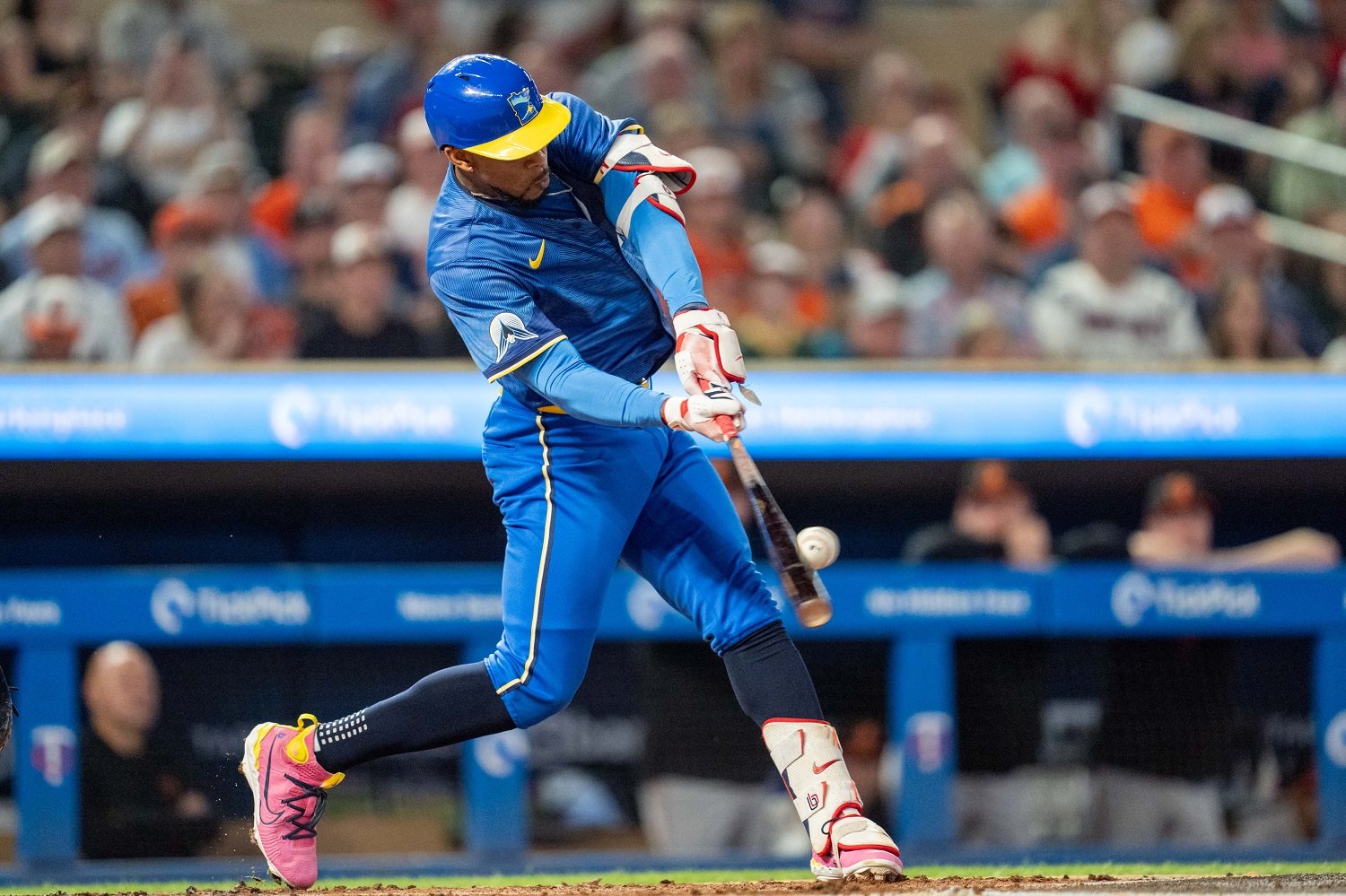 We’re a full year into bat speed metrics being publicly available via Baseball Savant. Prior to a second full year of data, now seems like a logical time to take stock of what to expect from Twins hitters in 2025. Recently, MLB’s Tom Tango released a blog post describing the relationship between aging and bat speed. While this is grounded in only one full season of data, there are some cromulent TwinsCentric conclusions to draw that may be relevant in 2025. Here’s the headline: between ages 22-31, bat the aging curve of bat speed is very flat (dropping ~0.02 mph per year). From age 31 onwards, it decreases sharply (0.31 mph per year). Which Twin just turned 31? Byron Buxton. How could his bat speed be impacted by his age? In turn, could his overall offensive production be hurt by an age-related decrease in bat speed? Let’s dig in. Before getting player specific, let’s reground in some league-wide bat speed context. League average bat speed is 72 mph. ‘A fast swing’ is 75 mph. Why is the 75 mph threshold important? 75 mph of swing speed is where you see per-swing offensive production reach league average. The drop off in per-swing production below 75 mph is considerable. In other words, swing hard, ball go far. How does Byron Buxton fit into all these bat speed metrics? Pretty dang well, thank you very much. Buxton ranked third on the Twins in average swing speed (74.3 mph), coming in only behind Carlos Correa (74.5 mph) and Matt Wallner, who is in a league of his own (77.3 mph). How about fast swing rate? Same story. Buxton ranked third on the Twins, with 41.8% of his swings exceeding the 75 mph threshold (league average 22.6%). Place that in league wide context, and Buxton looks good, ranking 43rd out of 268 major league hitters in fast swing rate (minimum 500 swings in 2024). If a typical player loses about 1 mph of bat speed every three years after age 31, we might look at Buxton’s average swing speed (2.3 mph above league average) and make the argument that this is an open and shut case of something we shouldn’t be too worried about. Buxton has some cushion with how fast his swing is, sure, but is there anything else to consider here? As is the case with most baseball questions, the answer is, ‘maybe’? Let’s throw some other variables in the mix. Starting with a visual of where Buxton does the majority of his damage. We can see that Buxton squares up the majority of his batted balls on pitches on the outer third of the plate. It’s also worth noting Buxton’s swing length, here. At 8.1 feet, it’s a long swing, significantly longer than league average (7.3 feet). It’s worth wondering what the impact of declining bat speed would be for Buxton, given the context of a long swing which thrives on the outer third of the plate? Buxton is also a hitter whose swing is rather stiff and whose output heavily relies on power, so is it possible the swing speed aging curve impacts a profile like his more acutely than a player with a more balanced offensive profile? Given Buxton’s swing speed and fast swing percentage cushion (compared to league average), it seems unlikely his offensive production is in immediate danger. Still, Buxton will be an interesting profile to track as he ages given his combination of swing length, the part of the plate he does damage in, and the lack of malleability of his swing.
- 19 comments
-
- 4
-
-
- byron buxton
- matt wallner
- (and 1 more)
-
Draft tandem Jeremy Nygaard and JD Cameron team up for a podcast to discuss prospects on their way to the big leagues and the MLB draft, produced by Theo Tollefson. Image courtesy of Thieres Rabelo Draft tandem Jeremy Nygaard and JD Cameron team up for a podcast to discuss prospects on their way to the big leagues and the MLB draft, produced by Theo Tollefson. In episode 65 of Destination: The Show, Jeremy and Jamie work through news and notes from the offseason. They start by digging into the Jays signing Anthony Santander, asking if that is enough, or if more moves are on the way for Toronto. The guys dig into the Cubs missing out on Tanner Scott and whether that might be a blessing in disguise given the terms of his contract with the Dodgers. They provide updates on the Twins ownership situation with Justin Ishbia said to be a ‘very, very serious’ potential option. The guys then dig into dueling top ten Brewers prospect lists. Who do they have as number one on their list? Who rounds out the top ten after the four clear cut top prospects are ranked? Finally, they end with a mailbag question on Twins left-handed pitching prospect Michael Carpenter. 0:00 Intro 2:00 Baseball! 2:25 Roki Sasaki 5:25 Sasaki Fallout 8:04 Tanner Scott to the Dodgers 13:18 Twins Ownership Updates 16:15 Brewers Top 10 Prospects 1:03:15 Listener Question 1:07:30 Housekeeping You can support the show by downloading it from wherever you get your podcasts, including iTunes and Spotify. If you enjoy the content, consider leaving us a five-star rating and review in addition to sharing or retweeting DTS-related content. You can follow us on Twitter @DTS_POD1, @Jeremynygaard, @J_D_Cameron, and @TheodoreTollef1. We’re now on Bluesky @destinationtheshow.bsky.social. You can also find full episodes and clips of our shows on our YouTube page @DestinationTheShow. View full article
-
 In episode 65 of Destination: The Show, Jeremy and Jamie work through news and notes from the offseason. They start by digging into the Jays signing Anthony Santander, asking if that is enough, or if more moves are on the way for Toronto. The guys dig into the Cubs missing out on Tanner Scott and whether that might be a blessing in disguise given the terms of his contract with the Dodgers. They provide updates on the Twins ownership situation with Justin Ishbia said to be a ‘very, very serious’ potential option. The guys then dig into dueling top ten Brewers prospect lists. Who do they have as number one on their list? Who rounds out the top ten after the four clear cut top prospects are ranked? Finally, they end with a mailbag question on Twins left-handed pitching prospect Michael Carpenter. 0:00 Intro 2:00 Baseball! 2:25 Roki Sasaki 5:25 Sasaki Fallout 8:04 Tanner Scott to the Dodgers 13:18 Twins Ownership Updates 16:15 Brewers Top 10 Prospects 1:03:15 Listener Question 1:07:30 Housekeeping You can support the show by downloading it from wherever you get your podcasts, including iTunes and Spotify. If you enjoy the content, consider leaving us a five-star rating and review in addition to sharing or retweeting DTS-related content. You can follow us on Twitter @DTS_POD1, @Jeremynygaard, @J_D_Cameron, and @TheodoreTollef1. We’re now on Bluesky @destinationtheshow.bsky.social. You can also find full episodes and clips of our shows on our YouTube page @DestinationTheShow.
 -
There's always a new frontier in pitching stats. This one happens to be pretty flattering for your friendly neighborhood sophomore starter. Image courtesy of © Brad Rempel-Imagn Images There's always a new frontier in pitching stats. This one happens to be pretty flattering for your friendly neighborhood sophomore starter. Last week, Baseball Prospectus released a slew of new arsenal metrics to add to their suite of pitching numbers. The aim of arsenal-based metrics, in general, is to overcome the limitations of pitch models, which largely measure the effect of each pitch in isolation. The advantages of having a diverse arsenal that Stephen Sutton Brown and BP focused on are twofold: Having more pitches one throws fairly regularly reduces the likelihood that a batter will become familiar with a particular offering from a pitcher Having pitches that appear similar in flight (before spin- and seam-induced movement take hold) increases the difficulty of judging where and when a pitch will cross home plate, increasing the challenge of making effective swing decisions. BP’s model identifies four new metrics, which require a rudimentary summary before we apply them to help contextualize the Twins pitching staff. For each, there’s a high-level definition, along with some general takeaways for their application. Pitch Type Probability: The likelihood a batter can identify the pitch type given the release point and trajectory, until a swing decision is made and given the count it was thrown in. Headlines: Not only is having a wide array of pitches useful, this helps us understand that consistent vertical and horizontal release points, arm angles etc. can be advantageous to pitchers. Pitchers can create maximum confusion for hitters by combining clustered release points with varied ranges of movement and velocity. Movement Spread: The size of the variation in possible pitch movement, assuming the probability the pitch is any of those in the pitcher’s repertoire and considering the movement profiles of those pitches. Headlines: More obvious, perhaps, than Pitch Type Probability. A greater movement spread increases the pitcher’s ability to deceive a hitter. Velocity Spread: As above, for velocity instead of movement. Headlines: As above for Movement Spread. Surprise Factor: How unexpected the pitch movement was based on the distribution of possible pitch movements via the Movement Spread. Headlines: Essentially, this is a measure of the density of distributions for a given pitch's observed movement. To distill this down. How confident can a batter be that the pitch they think is coming, is in fact coming? The higher the surprise factor, the tougher time they will have guessing what pitch is coming and where it will cross the plate. As with any new metrics or models, the fun comes from working to contextualize them within your team of interest. In this case, that’s the Twins, and specifically the back end of the rotation. We know the heart of the Twins’ rotation is strong. Anchored by Pablo López, Joe Ryan, and Bailey Ober, ZiPS projects that trio to accumulate roughly 9 fWAR in 2025. But what of the back end of the rotation? There are a number of candidates for consideration, all with their own strengths and limitations. Can these new arsenal metrics help us understand who is best positioned to start 2025 in the rotation? Who needs work at Triple A? Who shouldn’t be part of the picture at all? View full article
-
.png.3bab25a01f7c50b96cb11b5153885b8e.png) Last week, Baseball Prospectus released a slew of new arsenal metrics to add to their suite of pitching numbers. The aim of arsenal-based metrics, in general, is to overcome the limitations of pitch models, which largely measure the effect of each pitch in isolation. The advantages of having a diverse arsenal that Stephen Sutton Brown and BP focused on are twofold: Having more pitches one throws fairly regularly reduces the likelihood that a batter will become familiar with a particular offering from a pitcher Having pitches that appear similar in flight (before spin- and seam-induced movement take hold) increases the difficulty of judging where and when a pitch will cross home plate, increasing the challenge of making effective swing decisions. BP’s model identifies four new metrics, which require a rudimentary summary before we apply them to help contextualize the Twins pitching staff. For each, there’s a high-level definition, along with some general takeaways for their application. Pitch Type Probability: The likelihood a batter can identify the pitch type given the release point and trajectory, until a swing decision is made and given the count it was thrown in. Headlines: Not only is having a wide array of pitches useful, this helps us understand that consistent vertical and horizontal release points, arm angles etc. can be advantageous to pitchers. Pitchers can create maximum confusion for hitters by combining clustered release points with varied ranges of movement and velocity. Movement Spread: The size of the variation in possible pitch movement, assuming the probability the pitch is any of those in the pitcher’s repertoire and considering the movement profiles of those pitches. Headlines: More obvious, perhaps, than Pitch Type Probability. A greater movement spread increases the pitcher’s ability to deceive a hitter. Velocity Spread: As above, for velocity instead of movement. Headlines: As above for Movement Spread. Surprise Factor: How unexpected the pitch movement was based on the distribution of possible pitch movements via the Movement Spread. Headlines: Essentially, this is a measure of the density of distributions for a given pitch's observed movement. To distill this down. How confident can a batter be that the pitch they think is coming, is in fact coming? The higher the surprise factor, the tougher time they will have guessing what pitch is coming and where it will cross the plate. As with any new metrics or models, the fun comes from working to contextualize them within your team of interest. In this case, that’s the Twins, and specifically the back end of the rotation. We know the heart of the Twins’ rotation is strong. Anchored by Pablo López, Joe Ryan, and Bailey Ober, ZiPS projects that trio to accumulate roughly 9 fWAR in 2025. But what of the back end of the rotation? There are a number of candidates for consideration, all with their own strengths and limitations. Can these new arsenal metrics help us understand who is best positioned to start 2025 in the rotation? Who needs work at Triple A? Who shouldn’t be part of the picture at all?
Last week, Baseball Prospectus released a slew of new arsenal metrics to add to their suite of pitching numbers. The aim of arsenal-based metrics, in general, is to overcome the limitations of pitch models, which largely measure the effect of each pitch in isolation. The advantages of having a diverse arsenal that Stephen Sutton Brown and BP focused on are twofold: Having more pitches one throws fairly regularly reduces the likelihood that a batter will become familiar with a particular offering from a pitcher Having pitches that appear similar in flight (before spin- and seam-induced movement take hold) increases the difficulty of judging where and when a pitch will cross home plate, increasing the challenge of making effective swing decisions. BP’s model identifies four new metrics, which require a rudimentary summary before we apply them to help contextualize the Twins pitching staff. For each, there’s a high-level definition, along with some general takeaways for their application. Pitch Type Probability: The likelihood a batter can identify the pitch type given the release point and trajectory, until a swing decision is made and given the count it was thrown in. Headlines: Not only is having a wide array of pitches useful, this helps us understand that consistent vertical and horizontal release points, arm angles etc. can be advantageous to pitchers. Pitchers can create maximum confusion for hitters by combining clustered release points with varied ranges of movement and velocity. Movement Spread: The size of the variation in possible pitch movement, assuming the probability the pitch is any of those in the pitcher’s repertoire and considering the movement profiles of those pitches. Headlines: More obvious, perhaps, than Pitch Type Probability. A greater movement spread increases the pitcher’s ability to deceive a hitter. Velocity Spread: As above, for velocity instead of movement. Headlines: As above for Movement Spread. Surprise Factor: How unexpected the pitch movement was based on the distribution of possible pitch movements via the Movement Spread. Headlines: Essentially, this is a measure of the density of distributions for a given pitch's observed movement. To distill this down. How confident can a batter be that the pitch they think is coming, is in fact coming? The higher the surprise factor, the tougher time they will have guessing what pitch is coming and where it will cross the plate. As with any new metrics or models, the fun comes from working to contextualize them within your team of interest. In this case, that’s the Twins, and specifically the back end of the rotation. We know the heart of the Twins’ rotation is strong. Anchored by Pablo López, Joe Ryan, and Bailey Ober, ZiPS projects that trio to accumulate roughly 9 fWAR in 2025. But what of the back end of the rotation? There are a number of candidates for consideration, all with their own strengths and limitations. Can these new arsenal metrics help us understand who is best positioned to start 2025 in the rotation? Who needs work at Triple A? Who shouldn’t be part of the picture at all?- 6 comments
-
- 2
-
-
- simeon woods richardson
- chris paddack
- (and 2 more)
-
Not saying you're wrong, but I'd not rely too heavily on ANY biographical information from any website.
- 31 replies
-
- 1
-
-
- santiago castellanos
- carlos taveras
- (and 5 more)
-
Great suggestion. I'm not sure. FWIW, while I think it's worth monitoring, there's no explicit signs he's been flipped somewhere else, all his SM is still connected to the Twins
-
A few people have asked that. Class wise, I think it's about typical. I think we're doing a bit better of a job of telling the stories of the prospects now. Pitching wise, usually don't hear much about them as they are smaller bonus guys. Hear you on the catchers. Pay attention to Salazar, he's a guy worth monitoring from this class.
- 31 replies
-
- 3
-
-

-
- santiago castellanos
- carlos taveras
- (and 5 more)
-
Thanks for reading it!
-
The Twins were active and aggressive early in the international free agent signing period, flipping two prospects from other organizations. Read up on their class with bonus news, scouting reports, and thoughts on their approach. Image courtesy of Twins Player Development (@TwinsPlayerDev) on X/Twitter The Twins were active and aggressive early in the international free agent signing period, flipping two prospects from other organizations. Read up on their class with bonus news, scouting reports, and thoughts on their approach. The signing period for International Free Agency opened on January 15th, 2025. The Twins are one of eight teams that will have the joint largest bonus pool of $7,555,500. Now that we’re a couple of days in, it’s time for a more full-throated roundup of the Twins class. This update is especially relevant since Minnesota’s class has been added to since our preview article a week or so ago. Listed below, you’ll find the players in the class (to date), followed by their position and country of origin (if known). If they have a bonus reported, that’s listed in parentheses too. I’d take these with a grain of salt. You can find an approximate ‘total pool spent’ figure at the bottom of the player pool. Daniel De La Valle, C, Colombia Aaron Salazar, C, Venezuela Pablo Castillo, C Santiago Castellanos, RHP, Venezuela Juan Quiñones, LHP, Venezuela Eliezer Lucena, RHP, Venezuela Rainer Marin, RHP, Venezuela Eli Urena, RHP, Dominican Republic Angel Castillo, P Juan Figaro, P Brandy Ceballos, P Jensi Infante, P Carlos Taveras, OF, Dominican Republic ($1,200,000), signing reported by Francys Romero on 02.11.25 Teilon Serrano, OF, Dominican Republic ($1,000,000) Joyner Perez, OF, Dominican Republic Jhomnardo Reyes, OF, Dominican Republic Cristian Bonifacio, OF, Dominican Republic Yovani Duran, OF Christian Bonifacio, OF Santiago Leon, SS, Venezuela ($1,000,000) Haritzon Castillo, SS, Venezuela ($950,000) Jose Barrios, SS, Venezuela ($850,000) Dencer Diaz, IF, Dominican Republic ($400,000) Darwin Almanzar, SS, Dominican Republic ($200,000) Jamesson Val, 3B, Haiti Confirmed Bonus Total Spent: ~$5,600,000 As alluded earlier, there has been significant movement in the Twins class since last week. They’ve flipped two prospects from other organizations, one due to the fallout from the Roki Sasaki waiting game. The Twins added OF Teilon Serrano out of the DR, stacking a few hundred thousand atop his previous bonus from the LA Dodgers, who remain in Roki limbo. The Twins also flipped IF Dencer Diaz from Atlanta for a $400,000 bonus. You can find more in depth scouting reports for the Twins major signings at the bottom of this article. Other Notes From the Class Santiago Castellanos is the prospect easiest to get excited about in this class. The Venezuelan right-handed pitcher has popped in recent months, and has been up to 97 mph with his fastball, with a feel for spin. Jose Barrios (not to be confused with Berríos) is another top one hundred bonus prospect, a solid all around skillset at shortstop with line drive power. If he makes the majors, Jamesson Val would make history. He’d be the first baseball player from Haiti ever to make the majors, so he’ll be a prospect who's easy to root for. Joyner Perez is a stocky right-handed outfielder who shows an ability to hit the ball hard with consistency, despite a lack of premium athleticism. Jhomnardo Reyes is the opposite, already 6’1 with a ton of power from the left side of the plate. Look out for Venezuelan catcher Aaron Salazar and Dominican shortstop Darwin Almanzar as two dark horse prospects to click this summer. Teilon Serrano, OF, Dominican Republic Serrano was previously set to sign with the Dodgers, who seem to be attempting to convince their prospects to wait to sign, or to sign next year. Serrano opted not to wait. A left-handed hitter who currently stands at 6’1, Serrano has good athleticism and a well-rounded offensive profile. The hit tool overshadows power currently, with excellent bat-to-ball skills headlining the skill set. Serrano was previously a shortstop who recently switched to the outfield. That will undoubtedly be a learning curve, but plus speed gives him a chance to stick in centerfield. Dencer Diaz, IF, Dominican Republic I haven’t been able to find good reports on Diaz yet, but he’s another flip for the Twins. Originally, he had a deal with the Braves, but he reentered the market after they signed Raudy Reyez (a 16-year-old pitcher who has allegedly been up to 100 mph). Diaz will sign with the Twins for $400,000. Santiago Leon, SS, Venezuela The Twins boast a strong Venezuelan class in 2025, headlined by Santiago Leon, a 16-year old shortstop and son of longtime Twins scout Jose Leon. Santiago is a right-handed hitting prospect already standing 6’1 with an offensive skill set headlined by a patient approach at the plate. Scouts are complimentary of both Leon’s bat-to-ball skills, in addition to his selectivity at the plate. While Leon doesn’t have explosive athleticism, he has good hands and moves well defensively, which, combined with an above average arm, gives him a chance to stick at shortstop. Leon is expected to sign the 20th-largest bonus for an international prospect in the 2025 signing period, per Baseball America. He signed for ~$1 million. Carlos Taveras, OF, Dominican Republic Carlos Taveras, a 16-year old outfielder out of the DR, is already an imposing physical presence and an impressive athlete. Standing at 6’1, he’s a left-handed hitter with good bat speed and the potential to boast serious raw power as he develops. There’s some swing and miss to his offensive game, but there’s plenty of other tools to like, too. Taveras is an above average runner with an above average arm, a combination that should allow him to play centerfield, at least early in his professional career. He’s one of the youngest players in the international class this year. Taveras is expected to sign the 39th-largest bonus for an international prospect in the 2025 signing period, per Baseball America. His expected signing bonus is ~$1.2 million. After a delay of almost a month, Francys Romero is reporting that Taveras signed for the Twins on 02.11.25, shortly after turning 16. Haritzon Castillo, SS, Venezuela Haritzon Castillo is a switch hitting 16-year-old shortstop prospect out of Venezuela. Castillo doesn’t have a standout tool, and offensively, it’s a profile more similar to Leon’s, than Taveras’. Castillo is currently a hit-over-power offensive profile, with a good approach and direct swings from both sides of the plate. Defensively, Castillo might profile as a prospect who moves around the infield, with the versatility to become a positionally flexible infielder. Castillo is expected to sign the 47th largest bonus for an international prospect in the 2025 signing period, per Baseball America. He signed for ~$950,000 How do we tie all of this in a bow? This is a fun class. It’s balanced, both geographically, positionally, and in terms of skill-sets acquired. The Twins were aggressive in the market, flipping two prospects who had deals in place with other, high performing organizations. The reality is, many of these deals were made by the Fred Guerrero led Twins international scouting department, rather than current leadership. Still, as always, this class will be a fun follow in summer ball. View full article
- 31 replies
-
- 1
-
-
- santiago castellanos
- carlos taveras
- (and 5 more)
-
A Comprehensive Review of the Twins International Free Agent Class
Jamie Cameron posted an article in Minor Leagues
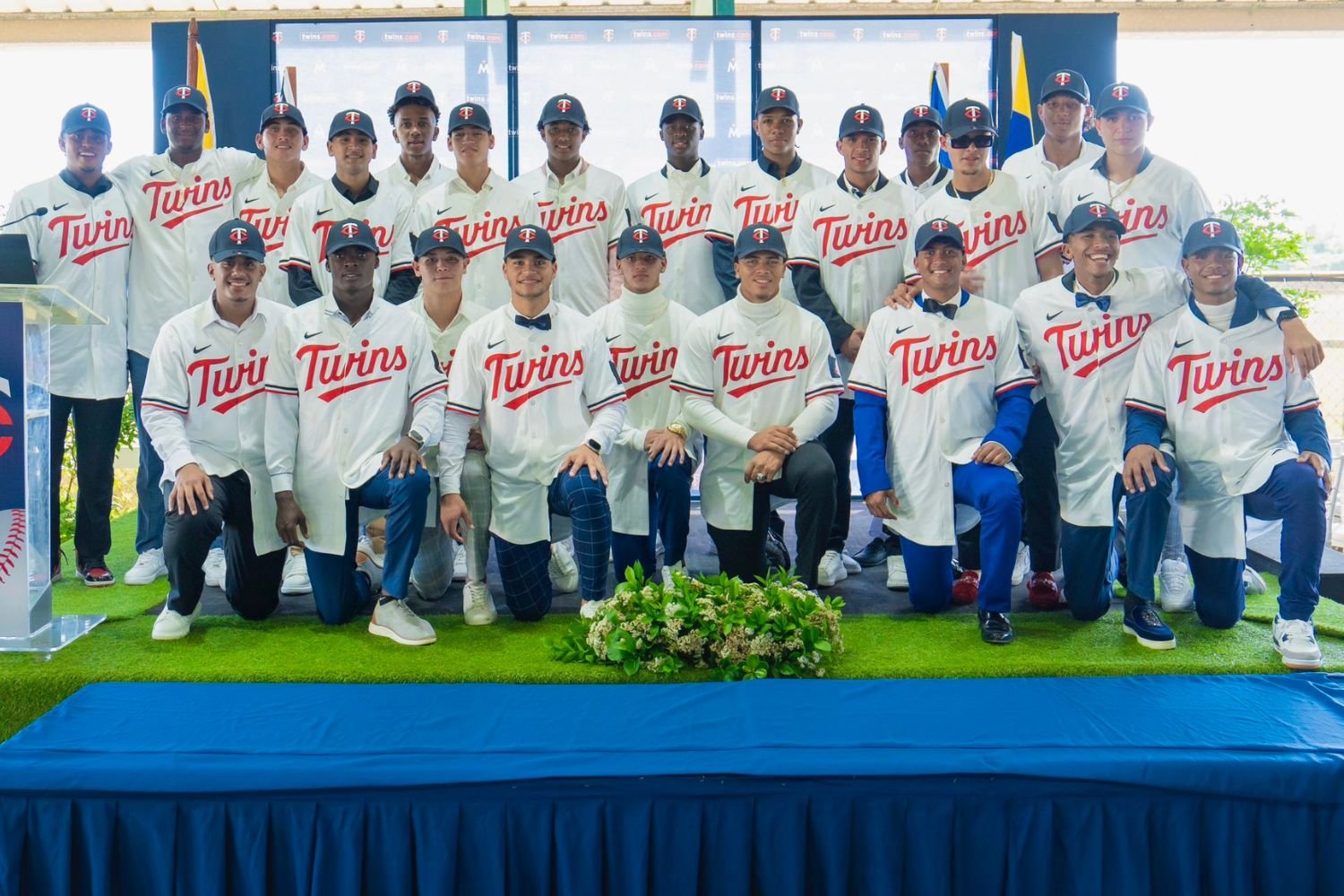 The signing period for International Free Agency opened on January 15th, 2025. The Twins are one of eight teams that will have the joint largest bonus pool of $7,555,500. Now that we’re a couple of days in, it’s time for a more full-throated roundup of the Twins class. This update is especially relevant since Minnesota’s class has been added to since our preview article a week or so ago. Listed below, you’ll find the players in the class (to date), followed by their position and country of origin (if known). If they have a bonus reported, that’s listed in parentheses too. I’d take these with a grain of salt. You can find an approximate ‘total pool spent’ figure at the bottom of the player pool. Daniel De La Valle, C, Colombia Aaron Salazar, C, Venezuela Pablo Castillo, C Santiago Castellanos, RHP, Venezuela Juan Quiñones, LHP, Venezuela Eliezer Lucena, RHP, Venezuela Rainer Marin, RHP, Venezuela Eli Urena, RHP, Dominican Republic Angel Castillo, P Juan Figaro, P Brandy Ceballos, P Jensi Infante, P Carlos Taveras, OF, Dominican Republic ($1,200,000), signing reported by Francys Romero on 02.11.25 Teilon Serrano, OF, Dominican Republic ($1,000,000) Joyner Perez, OF, Dominican Republic Jhomnardo Reyes, OF, Dominican Republic Cristian Bonifacio, OF, Dominican Republic Yovani Duran, OF Christian Bonifacio, OF Santiago Leon, SS, Venezuela ($1,000,000) Haritzon Castillo, SS, Venezuela ($950,000) Jose Barrios, SS, Venezuela ($850,000) Dencer Diaz, IF, Dominican Republic ($400,000) Darwin Almanzar, SS, Dominican Republic ($200,000) Jamesson Val, 3B, Haiti Confirmed Bonus Total Spent: ~$5,600,000 As alluded earlier, there has been significant movement in the Twins class since last week. They’ve flipped two prospects from other organizations, one due to the fallout from the Roki Sasaki waiting game. The Twins added OF Teilon Serrano out of the DR, stacking a few hundred thousand atop his previous bonus from the LA Dodgers, who remain in Roki limbo. The Twins also flipped IF Dencer Diaz from Atlanta for a $400,000 bonus. You can find more in depth scouting reports for the Twins major signings at the bottom of this article. Other Notes From the Class Santiago Castellanos is the prospect easiest to get excited about in this class. The Venezuelan right-handed pitcher has popped in recent months, and has been up to 97 mph with his fastball, with a feel for spin. Jose Barrios (not to be confused with Berríos) is another top one hundred bonus prospect, a solid all around skillset at shortstop with line drive power. If he makes the majors, Jamesson Val would make history. He’d be the first baseball player from Haiti ever to make the majors, so he’ll be a prospect who's easy to root for. Joyner Perez is a stocky right-handed outfielder who shows an ability to hit the ball hard with consistency, despite a lack of premium athleticism. Jhomnardo Reyes is the opposite, already 6’1 with a ton of power from the left side of the plate. Look out for Venezuelan catcher Aaron Salazar and Dominican shortstop Darwin Almanzar as two dark horse prospects to click this summer. Teilon Serrano, OF, Dominican Republic Serrano was previously set to sign with the Dodgers, who seem to be attempting to convince their prospects to wait to sign, or to sign next year. Serrano opted not to wait. A left-handed hitter who currently stands at 6’1, Serrano has good athleticism and a well-rounded offensive profile. The hit tool overshadows power currently, with excellent bat-to-ball skills headlining the skill set. Serrano was previously a shortstop who recently switched to the outfield. That will undoubtedly be a learning curve, but plus speed gives him a chance to stick in centerfield. Dencer Diaz, IF, Dominican Republic I haven’t been able to find good reports on Diaz yet, but he’s another flip for the Twins. Originally, he had a deal with the Braves, but he reentered the market after they signed Raudy Reyez (a 16-year-old pitcher who has allegedly been up to 100 mph). Diaz will sign with the Twins for $400,000. Santiago Leon, SS, Venezuela The Twins boast a strong Venezuelan class in 2025, headlined by Santiago Leon, a 16-year old shortstop and son of longtime Twins scout Jose Leon. Santiago is a right-handed hitting prospect already standing 6’1 with an offensive skill set headlined by a patient approach at the plate. Scouts are complimentary of both Leon’s bat-to-ball skills, in addition to his selectivity at the plate. While Leon doesn’t have explosive athleticism, he has good hands and moves well defensively, which, combined with an above average arm, gives him a chance to stick at shortstop. Leon is expected to sign the 20th-largest bonus for an international prospect in the 2025 signing period, per Baseball America. He signed for ~$1 million. Carlos Taveras, OF, Dominican Republic Carlos Taveras, a 16-year old outfielder out of the DR, is already an imposing physical presence and an impressive athlete. Standing at 6’1, he’s a left-handed hitter with good bat speed and the potential to boast serious raw power as he develops. There’s some swing and miss to his offensive game, but there’s plenty of other tools to like, too. Taveras is an above average runner with an above average arm, a combination that should allow him to play centerfield, at least early in his professional career. He’s one of the youngest players in the international class this year. Taveras is expected to sign the 39th-largest bonus for an international prospect in the 2025 signing period, per Baseball America. His expected signing bonus is ~$1.2 million. After a delay of almost a month, Francys Romero is reporting that Taveras signed for the Twins on 02.11.25, shortly after turning 16. Haritzon Castillo, SS, Venezuela Haritzon Castillo is a switch hitting 16-year-old shortstop prospect out of Venezuela. Castillo doesn’t have a standout tool, and offensively, it’s a profile more similar to Leon’s, than Taveras’. Castillo is currently a hit-over-power offensive profile, with a good approach and direct swings from both sides of the plate. Defensively, Castillo might profile as a prospect who moves around the infield, with the versatility to become a positionally flexible infielder. Castillo is expected to sign the 47th largest bonus for an international prospect in the 2025 signing period, per Baseball America. He signed for ~$950,000 How do we tie all of this in a bow? This is a fun class. It’s balanced, both geographically, positionally, and in terms of skill-sets acquired. The Twins were aggressive in the market, flipping two prospects who had deals in place with other, high performing organizations. The reality is, many of these deals were made by the Fred Guerrero led Twins international scouting department, rather than current leadership. Still, as always, this class will be a fun follow in summer ball.
- 31 comments
-
- 11
-
-
-
- santiago castellanos
- carlos taveras
- (and 5 more)
.png.3bab25a01f7c50b96cb11b5153885b8e.png)
