



Jamie Cameron
-
Posts
1,349 -
Joined
-
Last visited
-
Days Won
4
Content Type
Profiles
News
Minnesota Twins Videos
2026 Minnesota Twins Top Prospects Ranking
2022 Minnesota Twins Draft Picks
Minnesota Twins Free Agent & Trade Rumors, Notes, & Tidbits
Guides & Resources
2023 Minnesota Twins Draft Picks
The Minnesota Twins Players Project
2024 Minnesota Twins Draft Picks
2025 Minnesota Twins Draft Pick Tracker
2026 Minnesota Twins Draft Tracker: Picks & Bonuses
Forums
Blogs
Events
Store
Downloads
Gallery
Everything posted by Jamie Cameron
-
It's not your father's starting rotation. No one is making 40 starts in a season anymore. Should anyone even plan to make 30? Image courtesy of © Brian Bradshaw Sevald-Imagn Images It's not your father's starting rotation. No one is making 40 starts in a season anymore. Should anyone even plan to make 30? Welcome to the 2025 Offseason Handbook! This year, we’re offering the format online only through our Caretakers program. The Offseason Handbook is a comprehensive look at what challenges the Twins face in the coming winter to field a competitive team in 2025. To become a Caretaker, visit this page. On top of receiving exclusive access to the Offseason Handbook, Caretakers also receive in-depth analysis from national writers you cannot find anywhere else. You will also receive exclusive access to events and an ad-free browsing option. In celebration of the Offseason Handbook’s release, we’re offering 20% off all Caretaker programs for the next week. Use the code HANDBOOK at checkout to receive 20% off your purchase! During the 2024 Twins’ late-season swoon, there were so many overlapping strands of misfortune that it became difficult to unearth the root of the struggles. One of their greatest was an untested rotation, composed largely of three rookies. Simeon Woods-Richardson, easily the team’s rookie of the year, wore down. David Festa showed flashes of dominance, but they were interspersed with inconsistency and challenges with the long ball. Zebby Matthews, though still promising in the long run, didn't look ready for what was meant to be more than a late-season audition. All of this resulted in each September contest playing out like a playoff game: short starts, heavy bullpen involvement and taxation. That’s not a recipe for success over a six-week span, let alone the six-month marathon. Could a six-man rotation be an answer to the Twins' rotation erosion in 2025? Let’s dig in. Let’s start with the most basic benefit, from the jump. A six man rotation limits individual pitcher workload. The Twins have been relatively lucky, in their last two seasons, to have a solid run of clean health from most of their starting pitchers. Even so, we should highlight the challenges. Chris Paddack missed the majority of 2024, logging just 88 innings and calling into question (via health and performance) whether he is a viable MLB starter. Joe Ryan was limited to just 135 innings in 2024, missing the entire stretch run when the Twins were in dire need of quality innings. So, how much impact could this really have? Well, annoyingly, it’s tough to quantify, with noisy data and a lack of extended examples on which to rely, but we can overlay some additional context and variables on the idea of a six-man rotation which can help us consider the concept with more nuance. We’ll do this through the form of asking and answering some questions. I’m arguing that the questions below serve as a barometer of the viability of a six-man rotation for a given MLB organization. The more we can answer affirmatively, the stronger the case for considering six starters. View full article
-
.png.e340a64b0b0f171f1fe9f733c10ccc49.png) Welcome to the 2025 Offseason Handbook! This year, we’re offering the format online only through our Caretakers program. The Offseason Handbook is a comprehensive look at what challenges the Twins face in the coming winter to field a competitive team in 2025. To become a Caretaker, visit this page. On top of receiving exclusive access to the Offseason Handbook, Caretakers also receive in-depth analysis from national writers you cannot find anywhere else. You will also receive exclusive access to events and an ad-free browsing option. In celebration of the Offseason Handbook’s release, we’re offering 20% off all Caretaker programs for the next week. Use the code HANDBOOK at checkout to receive 20% off your purchase! During the 2024 Twins’ late-season swoon, there were so many overlapping strands of misfortune that it became difficult to unearth the root of the struggles. One of their greatest was an untested rotation, composed largely of three rookies. Simeon Woods-Richardson, easily the team’s rookie of the year, wore down. David Festa showed flashes of dominance, but they were interspersed with inconsistency and challenges with the long ball. Zebby Matthews, though still promising in the long run, didn't look ready for what was meant to be more than a late-season audition. All of this resulted in each September contest playing out like a playoff game: short starts, heavy bullpen involvement and taxation. That’s not a recipe for success over a six-week span, let alone the six-month marathon. Could a six-man rotation be an answer to the Twins' rotation erosion in 2025? Let’s dig in. Let’s start with the most basic benefit, from the jump. A six man rotation limits individual pitcher workload. The Twins have been relatively lucky, in their last two seasons, to have a solid run of clean health from most of their starting pitchers. Even so, we should highlight the challenges. Chris Paddack missed the majority of 2024, logging just 88 innings and calling into question (via health and performance) whether he is a viable MLB starter. Joe Ryan was limited to just 135 innings in 2024, missing the entire stretch run when the Twins were in dire need of quality innings. So, how much impact could this really have? Well, annoyingly, it’s tough to quantify, with noisy data and a lack of extended examples on which to rely, but we can overlay some additional context and variables on the idea of a six-man rotation which can help us consider the concept with more nuance. We’ll do this through the form of asking and answering some questions. I’m arguing that the questions below serve as a barometer of the viability of a six-man rotation for a given MLB organization. The more we can answer affirmatively, the stronger the case for considering six starters.
Welcome to the 2025 Offseason Handbook! This year, we’re offering the format online only through our Caretakers program. The Offseason Handbook is a comprehensive look at what challenges the Twins face in the coming winter to field a competitive team in 2025. To become a Caretaker, visit this page. On top of receiving exclusive access to the Offseason Handbook, Caretakers also receive in-depth analysis from national writers you cannot find anywhere else. You will also receive exclusive access to events and an ad-free browsing option. In celebration of the Offseason Handbook’s release, we’re offering 20% off all Caretaker programs for the next week. Use the code HANDBOOK at checkout to receive 20% off your purchase! During the 2024 Twins’ late-season swoon, there were so many overlapping strands of misfortune that it became difficult to unearth the root of the struggles. One of their greatest was an untested rotation, composed largely of three rookies. Simeon Woods-Richardson, easily the team’s rookie of the year, wore down. David Festa showed flashes of dominance, but they were interspersed with inconsistency and challenges with the long ball. Zebby Matthews, though still promising in the long run, didn't look ready for what was meant to be more than a late-season audition. All of this resulted in each September contest playing out like a playoff game: short starts, heavy bullpen involvement and taxation. That’s not a recipe for success over a six-week span, let alone the six-month marathon. Could a six-man rotation be an answer to the Twins' rotation erosion in 2025? Let’s dig in. Let’s start with the most basic benefit, from the jump. A six man rotation limits individual pitcher workload. The Twins have been relatively lucky, in their last two seasons, to have a solid run of clean health from most of their starting pitchers. Even so, we should highlight the challenges. Chris Paddack missed the majority of 2024, logging just 88 innings and calling into question (via health and performance) whether he is a viable MLB starter. Joe Ryan was limited to just 135 innings in 2024, missing the entire stretch run when the Twins were in dire need of quality innings. So, how much impact could this really have? Well, annoyingly, it’s tough to quantify, with noisy data and a lack of extended examples on which to rely, but we can overlay some additional context and variables on the idea of a six-man rotation which can help us consider the concept with more nuance. We’ll do this through the form of asking and answering some questions. I’m arguing that the questions below serve as a barometer of the viability of a six-man rotation for a given MLB organization. The more we can answer affirmatively, the stronger the case for considering six starters.- 12 comments
-
- 3
-

-
- pablo lopez
- joe ryan
- (and 5 more)
-
Connor Prielipp was finally healthy enough to throw in Minor League games during the final third of the 2024 season. Having spent most of his time in Cedar Rapids, Prielipp left a strong impression on his pitching coach Jonas Lovin. Hear what Lovin has to say about how impressed he was with the young lefty. View full video
-
Connor Prielipp was finally healthy enough to throw in Minor League games during the final third of the 2024 season. Having spent most of his time in Cedar Rapids, Prielipp left a strong impression on his pitching coach Jonas Lovin. Hear what Lovin has to say about how impressed he was with the young lefty.
-
 In episode 57 of Destination: The Show, Jeremy and Jamie are joined by Cedar Rapids Pitching Coach Jonas Lovin to recap the 2024 seasons of several Twins pitching prospects. The guys talk through how year two in the organization differs from year one, before digging into some of the current trends and possible next trends in pitching development. We walk through several prospects who graduated from Cedar Rapids, including Zebby Matthews, Andrew Morris, C.J. Culpepper, and Cory Lewis, digging into their 2024 season and previewing what the next developmental hurdles are in 2025. Finally, the guys dig into prospects who ended the season at Cedar Rapids, including Connor Prielipp, Tanner Hall, Ty Langenberg, Spencer Bengard, and Nolan Santos. 1:00 Jonas Lovin 2:15 Jonas on Nebraska football 5:16 Jonas on his experience as a pitching coach 9:40 Jonas on the changes in pitching development 12:51 Jonas on winning vs player development 15:21 Jonas on the 2022 draftees (Zebby, Morris, Culpepper, Lewis) 31:11 Jonas on Connor Prielipp 36:15 Jonas on Tanner Hall 38:21 Jonas on a few other CR pitchers 48:00 Jonas on development plans 51:58 Jonas on under-the-radar pitching prospects You can support the show by downloading it from wherever you get your podcasts, including iTunes and Spotify. If you enjoy the content, consider leaving us a five-star rating and review in addition to sharing or retweeting DTS-related content. You can follow us on Twitter @DTS_POD1, @Jeremynygaard, @J_D_Cameron, and @TheodoreTollef1. You can also find full episodes and clips of our shows on our YouTube page @DestinationTheShow.
 -
Draft tandem Jeremy Nygaard and JD Cameron team up for a podcast to discuss prospects on their way to the big leagues and the MLB draft, produced by Theo Tollefson. Image courtesy of Thieres Rabelo Draft tandem Jeremy Nygaard and JD Cameron team up for a podcast to discuss prospects on their way to the big leagues and the MLB draft, produced by Theo Tollefson. In episode 57 of Destination: The Show, Jeremy and Jamie are joined by Cedar Rapids Pitching Coach Jonas Lovin to recap the 2024 seasons of several Twins pitching prospects. The guys talk through how year two in the organization differs from year one, before digging into some of the current trends and possible next trends in pitching development. We walk through several prospects who graduated from Cedar Rapids, including Zebby Matthews, Andrew Morris, C.J. Culpepper, and Cory Lewis, digging into their 2024 season and previewing what the next developmental hurdles are in 2025. Finally, the guys dig into prospects who ended the season at Cedar Rapids, including Connor Prielipp, Tanner Hall, Ty Langenberg, Spencer Bengard, and Nolan Santos. 1:00 Jonas Lovin 2:15 Jonas on Nebraska football 5:16 Jonas on his experience as a pitching coach 9:40 Jonas on the changes in pitching development 12:51 Jonas on winning vs player development 15:21 Jonas on the 2022 draftees (Zebby, Morris, Culpepper, Lewis) 31:11 Jonas on Connor Prielipp 36:15 Jonas on Tanner Hall 38:21 Jonas on a few other CR pitchers 48:00 Jonas on development plans 51:58 Jonas on under-the-radar pitching prospects You can support the show by downloading it from wherever you get your podcasts, including iTunes and Spotify. If you enjoy the content, consider leaving us a five-star rating and review in addition to sharing or retweeting DTS-related content. You can follow us on Twitter @DTS_POD1, @Jeremynygaard, @J_D_Cameron, and @TheodoreTollef1. You can also find full episodes and clips of our shows on our YouTube page @DestinationTheShow. View full article
-
Dasan Hill was the only Twins 2024 Draft Pick to not make his pro-debut this season. Like Charlee Soto last year, the Twins are taking their time to start Hill's career as to not rush him and cause an injury at too young an age. Could Hill end up performing similar to Soto this season, or will he benefit from this extended time off before making his debut in the Minor Leagues? View full video
-
Dasan Hill was the only Twins 2024 Draft Pick to not make his pro-debut this season. Like Charlee Soto last year, the Twins are taking their time to start Hill's career as to not rush him and cause an injury at too young an age. Could Hill end up performing similar to Soto this season, or will he benefit from this extended time off before making his debut in the Minor Leagues?
-
 In episode 56 of Destination: The Show, Jeremy and Jamie are joined by Twins content creator Tom Froemming to recap the year that was for Minnesota. They start by picking apart the disappointing collapse at the end of last season before digging into whether the prospect of new ownership is good news, and what to expect this offseason. The guys wade into Tom’s top 50 prospect rankings, talking through key prospects, how to balance current level versus upside, and arriving at some disagreements along the way. Finally, they talk about 2025; who are candidates to break out next season? Who are the next Twins prospects most likely to break into industry top 100 lists? Who would they each sell high on this offseason? 1:23 Tom Froemming 3:30 State of the Organization 6:17 Owners exploring sale 8:35 Thoughts on MiLB System 11:18 Prospects to Watch 19:10 How do you weigh level vs. upside? 21:30 How to view DSL players? 28:00 Why are you so high on Charlee Soto? 32:41 Dasan Hill 37:28 Why does Tom hate DeBarge and Amick? 43:44 Payton Eeles 50:00 Who is going to take the biggest jump in 2025? 1:04:32 Can Raya be the next Festa with the big innings jump? 1:17:30 Which prospect would you sell high on? 1:27:24 Tom's work You can support the show by downloading it from wherever you get your podcasts, including iTunes and Spotify. If you enjoy the content, consider leaving us a five-star rating and review in addition to sharing or retweeting DTS-related content. You can follow us on Twitter @DTS_POD1, @Jeremynygaard, @J_D_Cameron, and @TheodoreTollef1. You can also find full episodes and clips of our shows on our YouTube page @DestinationTheShow.
 -
Draft tandem Jeremy Nygaard and JD Cameron team up for a podcast to discuss prospects on their way to the big leagues and the MLB draft, produced by Theo Tollefson. Image courtesy of Thieres Rabelo Draft tandem Jeremy Nygaard and JD Cameron team up for a podcast to discuss prospects on their way to the big leagues and the MLB draft, produced by Theo Tollefson. In episode 56 of Destination: The Show, Jeremy and Jamie are joined by Twins content creator Tom Froemming to recap the year that was for Minnesota. They start by picking apart the disappointing collapse at the end of last season before digging into whether the prospect of new ownership is good news, and what to expect this offseason. The guys wade into Tom’s top 50 prospect rankings, talking through key prospects, how to balance current level versus upside, and arriving at some disagreements along the way. Finally, they talk about 2025; who are candidates to break out next season? Who are the next Twins prospects most likely to break into industry top 100 lists? Who would they each sell high on this offseason? 1:23 Tom Froemming 3:30 State of the Organization 6:17 Owners exploring sale 8:35 Thoughts on MiLB System 11:18 Prospects to Watch 19:10 How do you weigh level vs. upside? 21:30 How to view DSL players? 28:00 Why are you so high on Charlee Soto? 32:41 Dasan Hill 37:28 Why does Tom hate DeBarge and Amick? 43:44 Payton Eeles 50:00 Who is going to take the biggest jump in 2025? 1:04:32 Can Raya be the next Festa with the big innings jump? 1:17:30 Which prospect would you sell high on? 1:27:24 Tom's work You can support the show by downloading it from wherever you get your podcasts, including iTunes and Spotify. If you enjoy the content, consider leaving us a five-star rating and review in addition to sharing or retweeting DTS-related content. You can follow us on Twitter @DTS_POD1, @Jeremynygaard, @J_D_Cameron, and @TheodoreTollef1. You can also find full episodes and clips of our shows on our YouTube page @DestinationTheShow. View full article
-
Daiber De Los Santos and Edouardo Beltre were the standout prospects for the Twins in the Dominican Summer League this season. It's likely they'll start playing stateside in 2025, but how will they adjust to living in a new country and the customs here as they try to repeat their success from this summer?
-
Daiber De Los Santos and Edouardo Beltre were the standout prospects for the Twins in the Dominican Summer League this season. It's likely they'll start playing stateside in 2025, but how will they adjust to living in a new country and the customs here as they try to repeat their success from this summer? View full video
-
Draft tandem Jeremy Nygaard and JD Cameron team up for a podcast to discuss prospects on their way to the big leagues and the MLB draft, produced by Theo Tollefson. Image courtesy of Thieres Rabelo Draft tandem Jeremy Nygaard and JD Cameron team up for a podcast to discuss prospects on their way to the big leagues and the MLB draft, produced by Theo Tollefson. In episode 55 of Destination: The Show, Jeremy and Jamie start by breaking down the news that the Pohlad family is exploring the sale of the Minnesota Twins. Is this news a surprise? Why the strange timing? Are the Twins an attractive proposition to a prospective buyer? The guys then complete the final part of the Twins MiLB system year in review. After talking about recently drafted slugger Billy Amick, they turn their attention to Ricardo Olivar and Peyton Eeeles, before digging into guys lower in the system like Dameury Pena, Adrian Bohroquez, Daiber De Los Santos, and Eduardo Beltre. Finally, the episode finished with listener questions, and a preview of forthcoming guests. 0:00 Intro -- Lynx, Twins sale 11:23 Billy Amick 19:16 Ricardo Olivar 26:18 Payton Eeles 37:48 Damuery Pena and Adrian Bohroquez 49:05 Daiber De Los Santos and Eduardo Beltre 56:31 Listener Question You can support the show by downloading it from wherever you get your podcasts, including iTunes and Spotify. If you enjoy the content, consider leaving us a five-star rating and review in addition to sharing or retweeting DTS-related content. You can follow us on Twitter @DTS_POD1, @Jeremynygaard, @J_D_Cameron, and @TheodoreTollef1. You can also find full episodes and clips of our shows on our YouTube page @DestinationTheShow. View full article
-
Destination: The Show. Episode 55. Twins Farm System Review Part 4.
Jamie Cameron posted an article in Podcasts
 In episode 55 of Destination: The Show, Jeremy and Jamie start by breaking down the news that the Pohlad family is exploring the sale of the Minnesota Twins. Is this news a surprise? Why the strange timing? Are the Twins an attractive proposition to a prospective buyer? The guys then complete the final part of the Twins MiLB system year in review. After talking about recently drafted slugger Billy Amick, they turn their attention to Ricardo Olivar and Peyton Eeeles, before digging into guys lower in the system like Dameury Pena, Adrian Bohroquez, Daiber De Los Santos, and Eduardo Beltre. Finally, the episode finished with listener questions, and a preview of forthcoming guests. 0:00 Intro -- Lynx, Twins sale 11:23 Billy Amick 19:16 Ricardo Olivar 26:18 Payton Eeles 37:48 Damuery Pena and Adrian Bohroquez 49:05 Daiber De Los Santos and Eduardo Beltre 56:31 Listener Question You can support the show by downloading it from wherever you get your podcasts, including iTunes and Spotify. If you enjoy the content, consider leaving us a five-star rating and review in addition to sharing or retweeting DTS-related content. You can follow us on Twitter @DTS_POD1, @Jeremynygaard, @J_D_Cameron, and @TheodoreTollef1. You can also find full episodes and clips of our shows on our YouTube page @DestinationTheShow.
 -
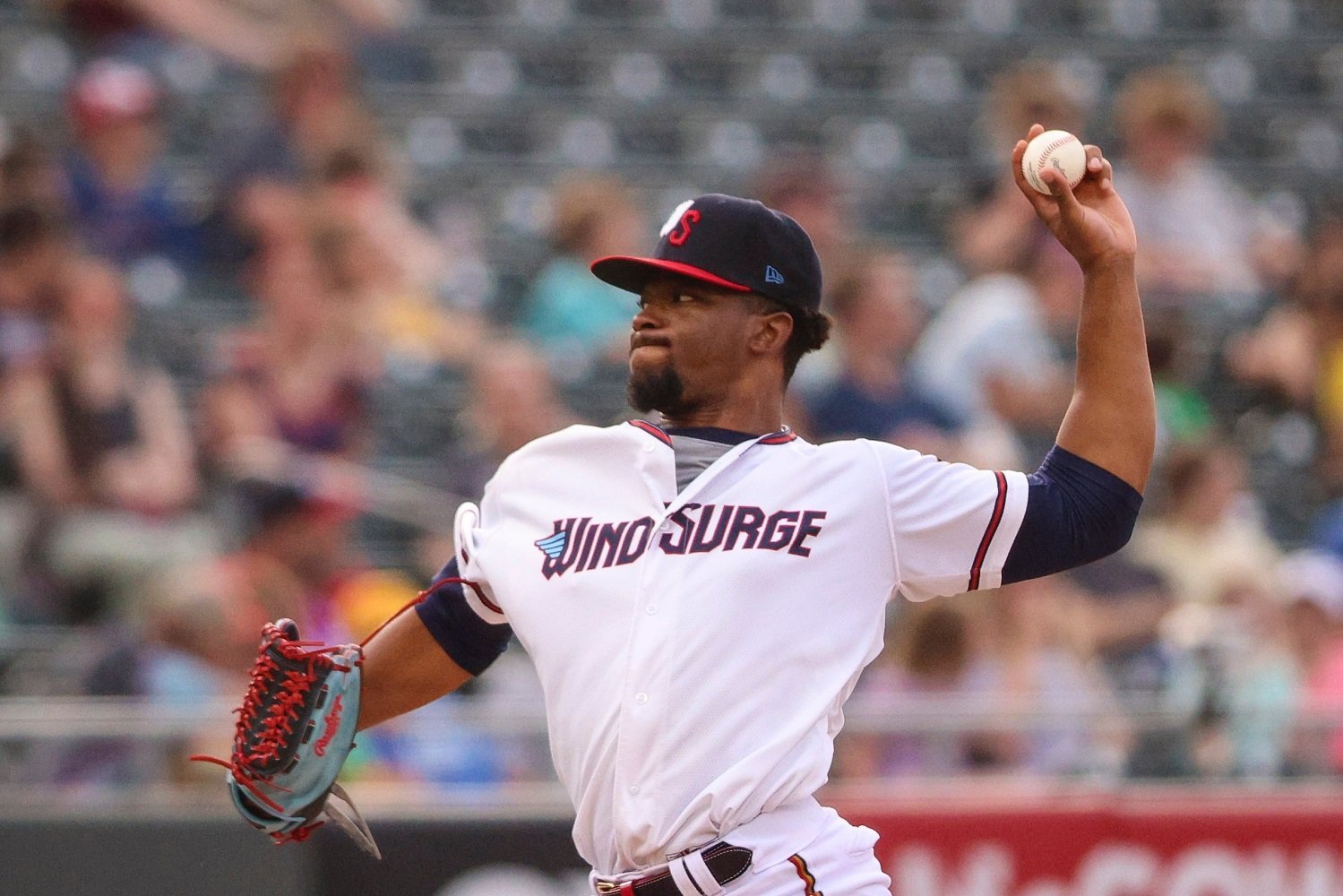
By the end of their prolonged stumble and fall to close 2024, the Twins bullpen was sorely lacking for reinforcements. There should a strong core in place for 2025, but who are the under-discussed prospects who could factor into the MLB bullpen next season? Let's profile four of them. Image courtesy of Ed Bailey, Wichita Wind Surge By the end of their prolonged stumble and fall to close 2024, the Twins bullpen was sorely lacking for reinforcements. There should a strong core in place for 2025, but who are the under-discussed prospects who could factor into the MLB bullpen next season? Let's profile four of them. The Twins bullpen was hanging on by a thread at the end of 2024. Overly taxed by the added workload from a rotation relying disproportionately on rookies, they cracked under the burden. Brock Stewart missed the majority of the season. Caleb Thielbar wasn’t trustworthy. Justin Topa may as well have been Keyser Soze, until he managed two appearances when the Twins' playoff odds had already disappeared. . Fortune may well smile more kindly on the relief corps in 2025. A foundation of Griffin Jax, Jhoan Durán, Stewart, Cole Sands, and Topa should be viewed with optimism, but we know more arms are likely needed. Jovani Morán, Ronny Henriquez, and Matt Canterino are on the fringes of the mix, but who are the team's most likely internal relief candidates? Let’s dig in. Jaylen Nowlin, LHP, St Paul Left-handed relief options were a significant challenge for the 2024 Twins. Thielbar looks as if his best days are behind him. Steven Okert’s best moment of the season was tipping the bullpen cart driver at Nationals Park, and Kody Funderburk missed the majority of the year through injury. Nowlin has quietly crept his way to St. Paul as a 23-year old, and worked in relief after he moved up in September. A 19th-round pick in 2021, it’s little surprise just how little fanfare Nowlin has received thus far in his minor-league career, but there are some interesting ingredients here. Nowlin’s fastball hit 95 mph and his sinker 96 mph in a short Saints debut. This pairs with a power slider he throws as hard as 88 mph. Nowlin still has work to do finishing off hitters and issuing fewer free passes (11.1 BB% in 2024). Good arm talent from the left side is a commodity, however, so don’t bet against him getting a chance at some point. Connor Prielipp, LHP, Cedar Rapids Prielipp may seem like a long shot, based on current level and injury history, but he makes particular sense as a late-season call-up option. His separator is the quality of his stuff (we recently profiled him as one of the most likely names to break into industry-wide top-100 prospect lists from the Twins organization). Prielipp's history of arm trouble and his three-pitch mix make him an ideal relief option. His fastball would likely play up to 97 mph or above in a late-inning role. This, in addition to a slider that spins its way up to 3,000 rpm and a changeup averaging 16 inches of horizontal break from the left side, stack up as a formidable set of traits for opposing hitters to manage. Left-handed hitters managed just a .462 OPS against Prielipp in 2024. If he can stay healthy, I think he’ll be in the mix by the end of 2025. Kyle Bischoff, RHP, St Paul Bischoff is the latest in a long line of intriguing minor-league free-agent signings for the Twins, who seem to accrue significant value around those margins (see Payton Eeeles and Carson McCusker). Already 25 years old, Bischoff is an older prospect who saw time at three MiLB levels in 2024 on his way to a late season call-up to the Saints. In 61 1/3 innings pitched, Bischoff managed a 3.23 ERA, 2.84 FIP, and 3.48 xFIP, striking out an impressive 29.9% of hitters and walking slightly too many at 10%. So what’s the arsenal underpinning those impressive numbers? Bischoff's is a sinker/slider profile. His sinker gets up to 96 mph, with good horizontal action. There’s also a cutter, gyro slider, and changeup, although his Triple-A sample size is so small that I don’t feel complete confidence in his mix just yet. Regardless, it’s solid stuff in a profile that would add more of an east/west element to the Twins' bullpen (along with Topa). Giving teams varied looks out of the pen is all the rage, and Bischoff can help do that. Travis Adams, RHP, St Paul Travis Adams is probably the Twins pitching prospect I’ve heard the least chatter about, and he’s been shortchanged, for my money. A 6th-round pick in 2021, Adams struck out 109 hitters in 108 innings of work at Double A (3.67 ERA) in 2024 before getting 19 Triple-A innings that were more of a challenge. Adams has a deep, diverse pitch mix consisting of a four-seam fastball, two-seam fastball, cutter, slider, curveball, and changeup. So, why would he be an option for the bullpen? A ton of competition and a lack of elite starter traits. My guess is he’ll get a long runway in the very deep starting rotation mix at St. Paul in 2024. He’ll find a more direct path as a reliever than through the pack of starting pitching prospects with slightly better stuff. Maybe an extended apprenticeship as a long reliever will help him tap into something, the way it seemed to do for Sands. Honorable Mentions There are, of course, plenty of other names who could position themselves in the mix here. There’s a high likelihood that the glut of young starters at St. Paul doesn't all remain starters. Names like Cory Lewis and Marco Raya could end up in relief roles next year, if not permanently. There are also names further down the organization, who could take a more significant leap. Who do you think are the most likely internal candidates to impact the Twins bullpen in 2025? Make your case in the comments. View full article
-
Next Man Up: 4 Pitchers Who Could Help the Twins Bullpen in 2025
Jamie Cameron posted an article in Minor Leagues
 The Twins bullpen was hanging on by a thread at the end of 2024. Overly taxed by the added workload from a rotation relying disproportionately on rookies, they cracked under the burden. Brock Stewart missed the majority of the season. Caleb Thielbar wasn’t trustworthy. Justin Topa may as well have been Keyser Soze, until he managed two appearances when the Twins' playoff odds had already disappeared. . Fortune may well smile more kindly on the relief corps in 2025. A foundation of Griffin Jax, Jhoan Durán, Stewart, Cole Sands, and Topa should be viewed with optimism, but we know more arms are likely needed. Jovani Morán, Ronny Henriquez, and Matt Canterino are on the fringes of the mix, but who are the team's most likely internal relief candidates? Let’s dig in. Jaylen Nowlin, LHP, St Paul Left-handed relief options were a significant challenge for the 2024 Twins. Thielbar looks as if his best days are behind him. Steven Okert’s best moment of the season was tipping the bullpen cart driver at Nationals Park, and Kody Funderburk missed the majority of the year through injury. Nowlin has quietly crept his way to St. Paul as a 23-year old, and worked in relief after he moved up in September. A 19th-round pick in 2021, it’s little surprise just how little fanfare Nowlin has received thus far in his minor-league career, but there are some interesting ingredients here. Nowlin’s fastball hit 95 mph and his sinker 96 mph in a short Saints debut. This pairs with a power slider he throws as hard as 88 mph. Nowlin still has work to do finishing off hitters and issuing fewer free passes (11.1 BB% in 2024). Good arm talent from the left side is a commodity, however, so don’t bet against him getting a chance at some point. Connor Prielipp, LHP, Cedar Rapids Prielipp may seem like a long shot, based on current level and injury history, but he makes particular sense as a late-season call-up option. His separator is the quality of his stuff (we recently profiled him as one of the most likely names to break into industry-wide top-100 prospect lists from the Twins organization). Prielipp's history of arm trouble and his three-pitch mix make him an ideal relief option. His fastball would likely play up to 97 mph or above in a late-inning role. This, in addition to a slider that spins its way up to 3,000 rpm and a changeup averaging 16 inches of horizontal break from the left side, stack up as a formidable set of traits for opposing hitters to manage. Left-handed hitters managed just a .462 OPS against Prielipp in 2024. If he can stay healthy, I think he’ll be in the mix by the end of 2025. Kyle Bischoff, RHP, St Paul Bischoff is the latest in a long line of intriguing minor-league free-agent signings for the Twins, who seem to accrue significant value around those margins (see Payton Eeeles and Carson McCusker). Already 25 years old, Bischoff is an older prospect who saw time at three MiLB levels in 2024 on his way to a late season call-up to the Saints. In 61 1/3 innings pitched, Bischoff managed a 3.23 ERA, 2.84 FIP, and 3.48 xFIP, striking out an impressive 29.9% of hitters and walking slightly too many at 10%. So what’s the arsenal underpinning those impressive numbers? Bischoff's is a sinker/slider profile. His sinker gets up to 96 mph, with good horizontal action. There’s also a cutter, gyro slider, and changeup, although his Triple-A sample size is so small that I don’t feel complete confidence in his mix just yet. Regardless, it’s solid stuff in a profile that would add more of an east/west element to the Twins' bullpen (along with Topa). Giving teams varied looks out of the pen is all the rage, and Bischoff can help do that. Travis Adams, RHP, St Paul Travis Adams is probably the Twins pitching prospect I’ve heard the least chatter about, and he’s been shortchanged, for my money. A 6th-round pick in 2021, Adams struck out 109 hitters in 108 innings of work at Double A (3.67 ERA) in 2024 before getting 19 Triple-A innings that were more of a challenge. Adams has a deep, diverse pitch mix consisting of a four-seam fastball, two-seam fastball, cutter, slider, curveball, and changeup. So, why would he be an option for the bullpen? A ton of competition and a lack of elite starter traits. My guess is he’ll get a long runway in the very deep starting rotation mix at St. Paul in 2024. He’ll find a more direct path as a reliever than through the pack of starting pitching prospects with slightly better stuff. Maybe an extended apprenticeship as a long reliever will help him tap into something, the way it seemed to do for Sands. Honorable Mentions There are, of course, plenty of other names who could position themselves in the mix here. There’s a high likelihood that the glut of young starters at St. Paul doesn't all remain starters. Names like Cory Lewis and Marco Raya could end up in relief roles next year, if not permanently. There are also names further down the organization, who could take a more significant leap. Who do you think are the most likely internal candidates to impact the Twins bullpen in 2025? Make your case in the comments.
- 28 comments
-
- 12
-
-
- jaylen nowlin
- connor prielipp
- (and 2 more)
-
Connor Prielipp was finally healthy for the final months of the Minor League season, pitching in 9 games and posting a solid 2.70 ERA in 23 1/3 innings. Even with the limited playing time in 2024, there's a good chance he begins 2025 in Double-A and if he can remain healthy, what results can he show to being a solid pitching prospect for the Twins? View full video
-
Connor Prielipp was finally healthy for the final months of the Minor League season, pitching in 9 games and posting a solid 2.70 ERA in 23 1/3 innings. Even with the limited playing time in 2024, there's a good chance he begins 2025 in Double-A and if he can remain healthy, what results can he show to being a solid pitching prospect for the Twins?
-
:) Stand by what I said in the write up. Of course he's a risky add, but he's the caliber of arm talent that makes industry lists (assuming health and strong performance).
-
Age and being a sure fire reliever are why I didn't consider him, which is not to say he can't make a big impact, because he sure can if he can stay healthy.
-
Agree with all of that, and, we know injuries, trades, and unexpected things will happen. No one would have called SWR pitching an entire season in MLB in 2024, for instance.
- 32 replies
-
- 2
-
-

-
- connor prielipp
- kaelen culpepper
- (and 2 more)
-
So I agree with you, he's the most likely candidate. The reason I left him off was he's close to debut. Figured he might debut before folks catch up and rank him in that 75-99 chunk of players (which is what almost happened to Festa). Good shout though!
- 32 replies
-
- 4
-
-
- connor prielipp
- kaelen culpepper
- (and 2 more)
-
Who Will Be the Next Top-100 Prospect for the Minnesota Twins?
Jamie Cameron posted an article in Minor Leagues
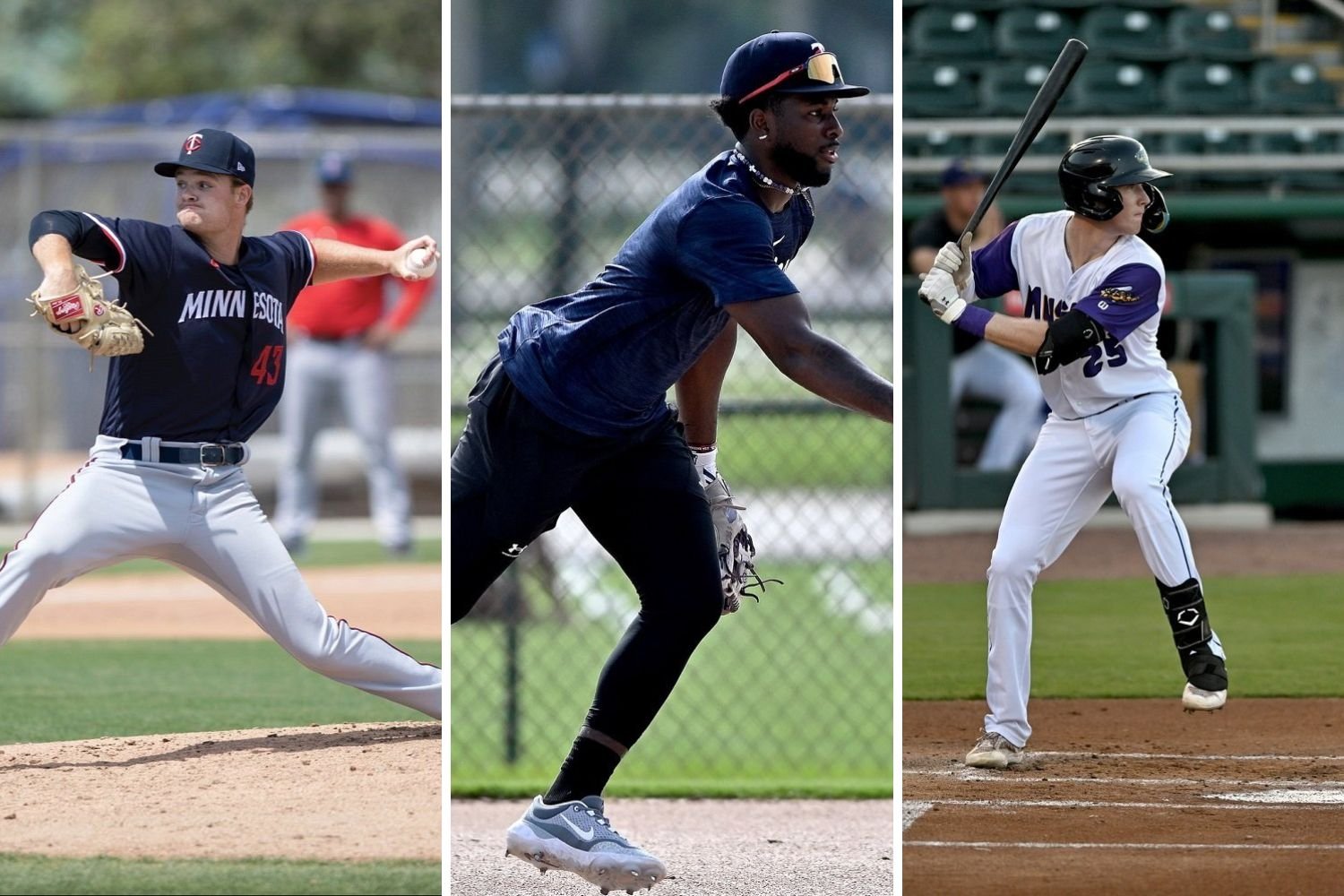 The Twins farm system had remarkable success in 2024. For a drafting and development organization, prospects taking significant leaps forward in their development is crucial to sustain minor-league depth and buoy a MLB roster trying to compete for the playoffs. Three Twins prospects ascended to Top 100 global prospect status with their 2024 performances. David Festa (who was likely a top 125 name entering 2024) entered and graduated. Zebby Matthews’ remarkable MiLB season started in Cedar Rapids and ended on the Twins roster. Finally Luke Keaschall, the Twins second round pick in 2023, hit his way into a top 75 spot on most industry lists. Who are the next most likely candidates to take a step forward and become Top 100 prospects? Let’s dig in. Connor Prielipp, LHP, 23, High A Cedar Rapids Prielipp worked his way back from his second TJ surgery in 2024. While health has been a question mark, his stuff has not. In eight starts (on strict pitch counts) in 2024, he struck out 42.2% of hitters at Cedar Rapids (14.77 per 9) and walked just 8.4% (2.95 per 9). Prielipp relied on a fastball up to 96 mph, a diabolical slider that he routinely generates more than 3,000rpms on, and an under-discussed changeup that has a ton of horizontal break (16.1 average in the very small samples size we have access to). All this while learning to pitch all over again. Prielipp will likely start in 2025 at Double-A. There will be peaks and valleys as he continues to build his pitch count. It’s possible he might need to add a fourth pitch down the line to continue to start. Prielipp has some of the best stuff in the Twins organization. A clean bill of health may result in him rocketing up rankings in 2025. Kaelen Culpepper, SS, 21, High A Cedar Rapids If you were handicapping this race, Culpepper is probably the safest pick. A college bat with a solid track record from a good conference who checked the initial boxes in professional baseball. Culpepper made short work of Fort Myers. He didn’t swing and miss at a pitch once in nine games at Fort Myers, hitting .297/.366/.541 (.907) with five extra base hits in his stint in the Florida State League. Culpepper slowed down significantly at Cedar Rapids, which I’m putting down to the grind of his longest ever baseball season. Twins personnel raved about his defense and preparation. He’ll start 2025 at Cedar Rapids with a chance, like Luke Keaschall before him, to kick on to Wichita with a strong opening to the season. Dasan Hill, LHP, 18, Yet to Debut This is a bold take, admittedly, for a player who hasn’t thrown a pitch in professional baseball. Clearly, with prep arms, risk is extreme and variance is the range of possible outcomes is wide, but you can connect the dots here. The Twins selected Hill 69th overall in 2024 in a class deep with diverse prep arms. He’s been up to 97 mph with his fastball. In his slider and curveball, he has two distinct breaking pitches (breakers often blur together in prep arms), and he’s shown feel for a changeup. In their pre-draft scouting report, FanGraphs described Hill as having "a feel for location uncommonly good for a pitcher his size and age." Incidentally, they ranked him as the 24th best prospect in the entire class. All of this is packed into a frame that’s 6’5" and 175 pounds. This is a profile that’s easy to dream on. Brandon Winokur, 19, Low A Fort Myers Winokur was the ultimate lottery ticket when the Twins drafted him in the third round in 2023. A ridiculous frame (6’6", 210) and level of athleticism, also incredibly raw. In spite of this, he held his own in the FCL in his age-19 season in 2024, hitting .249/.327/.434 (.761) while popping 14 home runs. There’s plenty of warts to Winokur’s profile; contact issues and a lot of chase, so the hit tool is going to be the question. It’s hard not to have your interest piqued by a 90th percentile exit velocity of 104.6 mph, though (fifth-best among qualified hitters in A-ball). Winokur excelled at the end of the season, hitting .277/.327/.543 in August with 12 extra base hits in 24 games. He’ll likely start 2025 at Cedar Rapids as a 20-year old. Honorable Mentions There are so many other intriguing prospects in the Twins system, I’d be remiss not to mention some additional names in the ‘honorable mentions’ category. Any of the college bats (DeBarge, Amick) drafted early are solid candidates if they take off. Charlee Soto has age and incredible stuff on his side. If you want longer shot lottery tickets, Yasser Mercedes, Eduardo Beltre, and Daiber De Los Santos are worth a flier, all tools, athleticism (and good performances) with a long road ahead. There’s also the most likely outcome, it’s a name I didn’t mention here (CJ Culpepper?), so submit your guesses and rationale in the comments.
- 32 comments
-
- 6
-
-
-
- connor prielipp
- kaelen culpepper
- (and 2 more)
-
The Twins had three prospects ascend industry Top 100 lists in 2024, giving a huge boost to their minor league system. Who are the next candidates to ascend to top 100 prospect status? Image courtesy of John Vittas (Connor Prielipp) & William Parmeter (Kaelen Culpepper, Brandon Winokur) The Twins had three prospects ascend industry Top 100 lists in 2024, giving a huge boost to their minor league system. Who are the next candidates to ascend to top 100 prospect status? The Twins farm system had remarkable success in 2024. For a drafting and development organization, prospects taking significant leaps forward in their development is crucial to sustain minor-league depth and buoy a MLB roster trying to compete for the playoffs. Three Twins prospects ascended to Top 100 global prospect status with their 2024 performances. David Festa (who was likely a top 125 name entering 2024) entered and graduated. Zebby Matthews’ remarkable MiLB season started in Cedar Rapids and ended on the Twins roster. Finally Luke Keaschall, the Twins second round pick in 2023, hit his way into a top 75 spot on most industry lists. Who are the next most likely candidates to take a step forward and become Top 100 prospects? Let’s dig in. Connor Prielipp, LHP, 23, High A Cedar Rapids Prielipp worked his way back from his second TJ surgery in 2024. While health has been a question mark, his stuff has not. In eight starts (on strict pitch counts) in 2024, he struck out 42.2% of hitters at Cedar Rapids (14.77 per 9) and walked just 8.4% (2.95 per 9). Prielipp relied on a fastball up to 96 mph, a diabolical slider that he routinely generates more than 3,000rpms on, and an under-discussed changeup that has a ton of horizontal break (16.1 average in the very small samples size we have access to). All this while learning to pitch all over again. Prielipp will likely start in 2025 at Double-A. There will be peaks and valleys as he continues to build his pitch count. It’s possible he might need to add a fourth pitch down the line to continue to start. Prielipp has some of the best stuff in the Twins organization. A clean bill of health may result in him rocketing up rankings in 2025. Kaelen Culpepper, SS, 21, High A Cedar Rapids If you were handicapping this race, Culpepper is probably the safest pick. A college bat with a solid track record from a good conference who checked the initial boxes in professional baseball. Culpepper made short work of Fort Myers. He didn’t swing and miss at a pitch once in nine games at Fort Myers, hitting .297/.366/.541 (.907) with five extra base hits in his stint in the Florida State League. Culpepper slowed down significantly at Cedar Rapids, which I’m putting down to the grind of his longest ever baseball season. Twins personnel raved about his defense and preparation. He’ll start 2025 at Cedar Rapids with a chance, like Luke Keaschall before him, to kick on to Wichita with a strong opening to the season. Dasan Hill, LHP, 18, Yet to Debut This is a bold take, admittedly, for a player who hasn’t thrown a pitch in professional baseball. Clearly, with prep arms, risk is extreme and variance is the range of possible outcomes is wide, but you can connect the dots here. The Twins selected Hill 69th overall in 2024 in a class deep with diverse prep arms. He’s been up to 97 mph with his fastball. In his slider and curveball, he has two distinct breaking pitches (breakers often blur together in prep arms), and he’s shown feel for a changeup. In their pre-draft scouting report, FanGraphs described Hill as having "a feel for location uncommonly good for a pitcher his size and age." Incidentally, they ranked him as the 24th best prospect in the entire class. All of this is packed into a frame that’s 6’5" and 175 pounds. This is a profile that’s easy to dream on. Brandon Winokur, 19, Low A Fort Myers Winokur was the ultimate lottery ticket when the Twins drafted him in the third round in 2023. A ridiculous frame (6’6", 210) and level of athleticism, also incredibly raw. In spite of this, he held his own in the FCL in his age-19 season in 2024, hitting .249/.327/.434 (.761) while popping 14 home runs. There’s plenty of warts to Winokur’s profile; contact issues and a lot of chase, so the hit tool is going to be the question. It’s hard not to have your interest piqued by a 90th percentile exit velocity of 104.6 mph, though (fifth-best among qualified hitters in A-ball). Winokur excelled at the end of the season, hitting .277/.327/.543 in August with 12 extra base hits in 24 games. He’ll likely start 2025 at Cedar Rapids as a 20-year old. Honorable Mentions There are so many other intriguing prospects in the Twins system, I’d be remiss not to mention some additional names in the ‘honorable mentions’ category. Any of the college bats (DeBarge, Amick) drafted early are solid candidates if they take off. Charlee Soto has age and incredible stuff on his side. If you want longer shot lottery tickets, Yasser Mercedes, Eduardo Beltre, and Daiber De Los Santos are worth a flier, all tools, athleticism (and good performances) with a long road ahead. There’s also the most likely outcome, it’s a name I didn’t mention here (CJ Culpepper?), so submit your guesses and rationale in the comments. View full article
-
Danny De Andrade hasn't played since May 15 as he went down in a game for High-A Cedar Rapids with a shin injury. The Arizona Fall League will provide him opportunities to make up for some, but not all of his lost playing time, so how can one of the best defensive infielders in the Twins organization take advantage of the short AFL season to prove himself great for 2025.
.png.e340a64b0b0f171f1fe9f733c10ccc49.png)
