



Eric Blonigen
-
Posts
377 -
Joined
-
Last visited
-
Days Won
1
Content Type
Profiles
News
Minnesota Twins Videos
2026 Minnesota Twins Top Prospects Ranking
2022 Minnesota Twins Draft Picks
Minnesota Twins Free Agent & Trade Rumors, Notes, & Tidbits
Guides & Resources
2023 Minnesota Twins Draft Picks
The Minnesota Twins Players Project
2024 Minnesota Twins Draft Picks
2025 Minnesota Twins Draft Pick Tracker
2026 Minnesota Twins Draft Tracker: Picks & Bonuses
Forums
Blogs
Events
Store
Downloads
Gallery
Everything posted by Eric Blonigen
-
What went wrong for David Festa? David Festa —AKA The Slim Reaper — has had a lot of prospect helium over the past season and a half. Since being drafted in the 13th round in 2021, he has added a few MPH to his fastball, and greatly improved his secondary pitches to the point that he is now the 89th best prospect in baseball, according to MLB.com. He put up video game numbers in St Paul, setting strikeout records. He briefly walked too many guys, but seemed to solve that problem after a few starts, and his results suggested he was ready to join the Twins rotation permanently. However, he was optioned back to St Paul following two sub-par starts, in which he gave up 12 runs in 10 innings. He allowed 4 home runs, had a WHIP of 1.7, an ERA+ of just 39, and was worth -.5 WAR. Even his FIP doesn’t look much better, at 7.07. Is this a case of a talented rookie feeling some nerves, or a sign that there’s still some developmental work to do before his next callup? Was he approaching things differently than he did in his time at St Paul? Let’s take a look at some underlying data. First, let’s look at his stuff, beginning with his fastball. From a velocity standpoint, he was better than average, grading out in the 75th percentile. His extension is in the 93rd percentile, giving the illusion of even more velocity. His fastball spin averaged 2349 RPM, which is average. However, his heater has MUCH less movement than typical. His 4-seam drops 12” as it crosses the plate, compared to a 15” league average. That part is fine. It also approaches hitters on a very straight trajectory, moving in just 2 inches compared to a 7” average. Major league hitters can crush straight fastballs, regardless of how hard they are thrown, and his fastball results bear that out. He gave up a .385 BA and a .615 slugging on that pitch, turning every hitter he faced into Aaron Judge. Not great. How about his off-speed pitches? His slider and changeup both had above-average velo, and typical spin rates. Similar to his heater, he did not get the movement required to be successful at the Major-league level. His slider moved away from same-sided hitters just two inches, compared to a league-average 6 inches. His changeup dropped just 25” compared to a 32” league average. That said, his changeup is his only pitch that showed up as average-ish, with just a .318 xWOBA and a 33% whiff rate, but a .500 expected slugging percentage. While Festa limited free passes at a much-better-than-average rate, pounded the zone, and hit his spots at the edges of the zone, he did not show swing and miss stuff, generating just 21% whiffs. And, hitters barreled his pitches at MORE THAN DOUBLE the league average. Part of this can be attributed to location, as he left too many pitches over the heart of the plate. Despite all this, he did find success his first time through the order, allowing just a .5 WHIP through the first two innings of both starts. After that, the wheels fell off, with a 3.0 WHIP in innings 3 and 4. He also struggled to get the third out, regardless of inning, giving up a 3.3 WHIP with two outs. Interestingly, his two-out and second time through the order struggles were true of his time at AAA as well, which doesn’t bode well for the future. It’s just not possible to be successful at this level without either swing and miss stuff, or elite command and control. This story this tells is that Festa likely has some work to do to increase spin, movement, or locating his pitches. Or, perhaps he would find better results out of the bullpen where he would be less exposed, and could dial up the velocity even a bit further. What do you think? Is Festa destined to be a AAAA-type pitcher? Are there mechanical changes that can improve the movement of his pitches? Should he adjust his pitch mix, or his sequencing? Should he move to the bullpen? Or is all this a case of nerves? Comment below!
-

Tigers (Maeda) vs Twins (Ober): 7/4/24, 12:10pm
Eric Blonigen replied to Brock Beauchamp's topic in Archived Game Threads
You are right about Vasquez, but I would be curious to understand what you expect out of a catcher if you think Jeffers isn’t major-league caliber. His defense has been a slight positive on the season, and he’s been one of the best-hitting catchers in the AL. He’s on pace to be worth over 3 fFAR, and has generated the 5th most WPA on the team so far this season. Who would be available that’s a meaningful upgrade? -
Great article Lou, as per usual.
-
Jordan Balazovic Heading to Korea
Eric Blonigen replied to Seth Stohs's topic in Twins Minor League Talk
Interesting. I somehow missed him being released. There were a few years where I was convinced Jordy Blaze would be a frontline starter for us. It’s a shame he never put it all together. Hopefully he does well in Korea and can still eke out a baseball career. -
I think this is pretty close. There are just a couple things that stand out to me. From a payroll standpoint, next year Pablo starts to get expensive, and since it sounds like this year’s payroll may be the new normal, I assume they do what they can to cut expenses. I assume they do not extend the QO to Kepler, and I assume they try to get out from the last year of Vasquez’ contract, and will likely be willing to give away a prospect or two to even out the salary someone else will take on. So, Camargo likely gets the call as backup catcher. I also think they will sign at least one veteran to challenge the young guys, similar to Santana. I think it’s more likely it’s an outfielder than an infielder. The question will be if it’s a Manny Margot type, or if it’s a $10M pillow deal for someone that has upside. It’ll be interesting to see since there are so many somewhat-proven, cost-controlled hitters on the team. Maybe I’m wrong on signing a veteran hitter, and maybe all dollars will go to signing another pitcher.
- 65 replies
-
- 1
-

-
- byron buxton
- carlos correa
- (and 5 more)
-
First half MOST valuable players by win probability
Eric Blonigen posted a blog entry in Eric’s deep dive corner
In my last article, we looked at the bottom-5 performers by WPA at the halfway point. Today, we will look at the top performers. We will also take a look at some signature moments that led to this WPA. As a reminder, as with any stat, WPA is not perfect. It’s not predictive, and doesn’t really measure skill level. However, it’s a great shorthand to evaluate players relative value to the team through their performance when it matters most. To oversimplify things greatly, being worth .5 WPA is roughly equivalent to a win. Read on to see if there are any surprises! In this group, there were two names that surprised me. Sometimes being clutch is sneaky! Let's start with the player who has increased the team's chances to win by more than any other player this season. Carlos Correa - SS (1.45 WPA) In case you were wondering, it did not surprise me that Correa is leading the team - he has been on fire for most of the season. His OPS+ is second-highest of his career, and for the past month, has been one of the strongest hitters in baseball, and he has been clutch. It’s a testament to his consistency that he has had four separate games in which he increased the team’s win probability by at least 25%. His signature moment so far happened on 5/30 against the Royals. Correa batted in the 5th with the bases loaded and the game tied at 4. Cut to a bases-clearing triple, and the bullpen saved the game for a key win against a divisional foe. Correa increased the chances for a Twins victory by 40% in that game, almost an entire win. Jhoan Duran - RP (1.19 WPA) This one surprised me quite a bit. As I have previously written about, Duran has been shaky this year (at least compared to his talent level and the past couple years). His velocity has been down, he hasn’t been locating his pitches in an optimal way, and he has blown saves at a higher rate than in years past. His bWAR is also negative on the year, and tied for worst on the team at -.3. However, situationally, he has still gotten it done more than it might seem. His best moment this season happened on 6/14. Duran came into a tie game in the 9th and increased the Twins’ chances to win by 45% when he pitched a scoreless 9th - and 10th - sending the As down in order to win the game. Simeon Woods Richardson - SP (1.19 WPA) SWR has been good, and this is backed up by his WPA. He has increased the team’s chances to win in 10/13 starts so far. His best game was on 5/6, when he threw 6 strong innings against the Mariners, giving up just a single hit and one walk, while striking out 8. The team won 3-1, and SWR increased their odds by 36%. Not bad for a rookie’s fourth start, and against one of the best teams in the AL! Willi Castro - UTIL (1.18 WPA) No surprises here. Castro has been playing out of his mind this season and is leading the team in bWAR at 2.9. He could be in line for his first All-star bid. Interestingly, Castro has only had one big WPA game this season, and it didn’t result in a Twins win. On 6/21, Castro batted in the 7th with the Twins down 2 runs, and hit a 3-run bomb to take the lead. Unfortunately, the bullpen immediate gave up the lead. Ryan Jeffers - C (1.09 WPA) Jeffers, while slumping for the past month, has still been one of the best-hitting catchers in the league. He has had many clutch moments, including 4/12 against the Tigers, where he increased the chances of a Twins victory by a whopping 73%. He hit a homer to tie the game in the 7th, then knocked in Carlos Santana an inning later to take the lead. Later, he reached on an error when the game was re-tied, then came around to score for the lead once again. This was the Ryan Jeffers game. What do you think? Did any of these players surprise you? Will any of the top performers cool off? Comment below to start the discussion!-
- 1
-
-
- carlos correa
- simeon woods richardson
- (and 3 more)
-
Twins Promote Top Prospect Brooks Lee!
Eric Blonigen replied to Cody Christie's topic in Twins Daily Front Page News
I hate this Lee’s promotion comes due to another Lewis injury. It would be great seeing the two of them playing together with the resurgent Miranda, and the on-fire Buxton and Correa, but such is baseball. I’m excited to see what he can do over the next couple weeks (at least). If he looks ready offensively and defensively, maybe that opens leadership up to trading Farmer at the deadline? Anyway, let’s go Lee! -
Yes. As others have mentioned, half the SS that got long-term deals have been a bust so far. Correa is one of the few that has played well. He’s leading the team in WAR and WPA, not to mention his clubhouse leadership. He has been a great signing so far, and I would expect he continues to play well for at least the next three or four seasons.
- 29 replies
-
- 1
-
-
- carlos correa
- corey seager
- (and 4 more)
-
First half LEAST valuable players by win probability added
Eric Blonigen commented on Eric Blonigen's blog entry in Eric’s deep dive corner
As it turns out, none of them were close to the worst this season by WPA. While they also haven't been GOOD, Kirilloff has actually contributed a +.26 WPA, Wallner has been just slightly negative, at -.12 WPA, and Julien has been the worst at -.36 WPA but has been the 10th worst on the team. The others have been middle of the pack. Totally get what you are saying though.- 6 comments
-
- 4
-
-
- steven okert
- kyle farmer
- (and 3 more)
-
First half LEAST valuable players by win probability added
Eric Blonigen posted a blog entry in Eric’s deep dive corner
As we have recently crossed the halfway point of the 2024 season, my next two posts will be taking a look at our most (and least) valuable players by win probability added (or subtracted). We will also take a look at some signature moments that led to this WPA. As with any stat, WPA is not perfect. It’s not predictive, and doesn’t really measure skill level. However, it’s a great shorthand to evaluate players relative value to the team through their performance when it matters most. To oversimplify things greatly, being worth .5 WPA is roughly equivalent to a win. Read on to see if there are any surprises! We will begin by looking at the five least valuable players of the first half. Nothing here surprised me based on the eye test, or looking at their WAR. Without further ado, we will start with the player who has helped the team the least so far this season. Christian Vazquez - C - (-1.75 WPA) Vasquez has not been good, by any measuring tool. He’s been the worst hitter by WAR, and it’s not close. In fact, his OPS+ has been historically bad. Think Drew Butera territory, then lose another 50 points of OPS and you are in the ball park. Somewhat interestingly, he hasn’t even really had any individual good games. His best single game increased the team’s chances to win by just 11%. Most of his games have been negative. To compound things, he has come up to bat in some key moments. Spoiler: he generally has not come through. And, by WPA, he has cost the team three and a half wins so far. Steven Okert - RP (-.78 WPA) Okert hasn’t been great, but he also has been very un-clutch. So far this season, in limited action, he has had four bad games. The worst was on 5/6, when he decreased their chances to win by 44% - almost an entire loss on his shoulders. Okert came into the game against the Mariners with the Twins up 4-2 and the bases loaded. It began as Jay Jackson’s mess, but Okert immediately gave up a grand slam and the Twins went on to lose. Louis Varland - SP (-.76 WPA) It’s telling that despite Varland’s last two spot starts being solid or better, he is still very negative in WPA on the season. His first starts of April prior to his demotion were just that bad. Consider the following: in three of his four April starts, he cost the team at least a 25% likelihood to win the game. The worst was on 4/15 against the Orioles, when his WPA was -.34 due to allowing 11 hits, 2 HR, and 4 runs over 5 innings. Tough to win against a good team in that situation. Of course, he was demoted immediately following this start, and may be figuring out his form again after his stint at STP. Kyle Farmer - IF (-.66 WPA) Team leader? Yes. Versatile? Sure. A good hitter? Maybe not any more. Similar to Vazquez, the problem is he just hasn’t had many good games to balance the bad ones. His worst, in limited action, was on 4/13 against the Tigers. While the Twins won, it was no thanks to Farmer’s performance. He struck out with the bases loaded in the top of the 12th inning. Luckily, the rest of the team showed up to batting practice and the Twins scored 7 runs in the 12th for the win. His playing time has slumped along with his performance, and the end may be near for him. Manny Margot - OF (-.63 WPA) Yes, Manny Margot has been much better for the past month. However, it will take him a couple more months at this level just to reach a neutral WPA. He was just that bad for April and May. Funnily enough, his worst game was the same as Farmer’s. He went 0-fer and left runners on base multiple times. Stay tuned for tomorrow, and the recap of our top-5 WPA leaders in the first half. What do you think? Did any of these players surprise you? Will any of the bottom performers turn it around in the second half? Comment below to start the discussion!- 6 comments
-
- 4
-
-

-
- steven okert
- kyle farmer
- (and 3 more)
-
In just over three weeks, Joe Mauer will be inducted into the baseball Hall of Fame in Cooperstown. He’s the first BBWAA-voted player to go in representing the Twins since Bert Blyleven in 2011. Best case scenario, it’ll be 15 years before we have another Twins player be enshrined, unless we see the veterans committee do some work like they did for Tony Oliva and Jim Kaat in 2022. It’s pretty rare in this era to see a player spend his entire career with one team - especially the team he grew up rooting for. This is all to say that seeing a player as special to an organization as Mauer be enshrined is something that doesn’t happen all that often, and seeing it in person may be a pretty unique experience. I’ll be making the trek to see the festivities. Who else is going to represent the hometown kid? Anyone have any tips for great things to do in the Cooperstown area?
-
Twins fans of a certain age still bear the wounds of Terry Ryan non-tendering David Ortiz prior to the 2003 season prior to his first year of arbitration. Ryan was infamous for this — saving ownership money even when he didn’t have that specific mandate. After the non-tender, Ortiz, of course, went on to become Big Papi. He led the Red Sox to multiple World Series titles. Over his career, he was a 10x All-Star, and won Silver Slugger at DH no fewer than 6 times. He’s in the Hall of Fame, and went on to accumulate over 50 bWAR. This article is not about David Ortiz, however. It’s about another player who was non-tendered, and this time, the Twins were the beneficiary. We are, of course, talking about Willi Castro. As you read on, you will see a direct side-by-side comparison of the two players who found themselves in similar situations, for similar reasons, two decades apart. To be clear, Ortiz and Castro are not similar players. One was a hulking slugger with a great eye at the plate, and the other is a toolsy, speedy utility player. As such, we won’t be looking at hitting profiles or batted ball data. What we will be looking at are some commonalities in the value they provided (and in Castro’s case, continue to provide) their respective teams. First, let’s look at Ortiz’ last season with the Twins, and the first two seasons after the Red Sox signed him. Next, here’s the same time window for Castro - his last season with the Tigers, and his first season and change with the Twins. Looking just at this data, a few things stand out. The bWAR they produced over the three year stretch is strikingly similar. Ortiz was slightly more valuable over that stretch, but it’s close. If Castro continues his production for the first half of this season, he is set to outpace Ortiz’ first All-Star season in 2004, during which he won Silver Slugger and received down ballot MVP votes. The teams’ winning percentages are also almost identical when they are playing. Again, Castro has a very slight edge over Ortiz. Castro is a year younger than Ortiz was in his second season with the Red Sox, and Castro is just hitting his prime. Castro, of course, has also been much cheaper - this season, he’s making maybe a third of what Ortiz was making, adjusted for inflation, in 2004. After unpacking all of this, it seems that Willi Castro is deserving of a new nickname - Little Papi. Will he have a HOF-worthy career like Big Papi, or is this the best he has to offer? Realistically, the latter is more realistic. However, it’s great to be the recipient of another team’s self-scouting error, and it helps the Twins’ changes for a deep postseason run when they can find this kind of surplus value - and in general, when they can sign a borderline All-Star for next to nothing. He has been one of the Twins’ most consistent - and valuable - players over the past year of a half, and his style of play brings a different dynamic than many of their other players. He has also brought tremendous defensive flexibility, playing every position so far this season except 1B and C. Should my Little Papi nickname stick? Is it a fun comparison? What do you think about the surplus value he has added with his bat, speed, and versatility? Comment below with your thoughts!
- 1 comment
-
- 1
-
-
- willi castro
- david ortiz
- (and 1 more)
-
Is Royce Lewis for real? If you were to survey every Twins fan around their favorite current player, Royce Lewis would likely be near the top - and for good reason. So far this season, Royce Lewis has been doing very Royce Lewis things - being a spark plug for the offense, hitting a ton of bombs, and generally doing everything right. On a nearly daily basis, he is being recognized on the TV and radio broadcasts for doing things that just aren’t done. For example, he’s been hitting HRs at a higher rate than Barry Bonds. He’s one of just a handful of hitters to hit 10 HR in their first 16 games of a season. He’s been worth 1.6 bWAR in 16 games. You can go on an on. But, is he for real? Can he keep this up? No. At least, probably not. Regression will come eventually. However, the drop-off may not be as big as you would think. Looking at his batted ball data on Baseball Savant, there are a few things that stand out. First, check out all the red. Makes sense, since he’s been crushing. However, he’s also walking at an elite level, and striking out at an elite level too. He’s barreling up in the 100th percentile, and his bat speed is great. Second, this isn’t a case of a young player being thrown a bunch of prove-it fastballs. Royce has been crushing pitches of EVERY type. As you can see, his expected batting average is over .300 across the board, and his actually performing the WORST against heaters. That’s unusual, and it’s a sign of his maturity at the plate, his pitch recognition, and his quick hands. Third, his homers have not been wall-scrapers. Of his 10 homers so far this season, 70% have been no-doubters, and the others would have been out in most ballparks. Fourth, looking at his year over year progress, we can see that this is a case of a young player, not yet hitting his prime, showing real improvement year over year, across the board. He’s swinging less outside the zone, he’s ambushing pitchers, and he’s optimizing his launch angle. In short, he’s got a sweet swing. Finally, let’s take one gratuitous look at some player comps. Yes, this is a VERY small sample size. But, the comps on this list are also the short list of MVP favorites. Looking at the batted ball data, and combining in with the eye test, what do you think? Is Lewis the best player on the team? Does he have MVPs in his future? Or will he fall back down to Earth? Start the discussion below!
-
Last Friday, the Twins were the last team to unveil their City Connect jerseys. You’ve probably seen them by now - at least if you are able to watch games on TV. The Ripple Effect draws inspiration from the state’s 10,000 lakes and the loon. The new look has been polarizing, to say the least, as most City Connect offerings have been. I for one am a fan, as I get some serious Fallout Vault Dweller vibes from the bright blue and yellow combination. My only suggestion would be to have white pants to contrast the bright blue. Otherwise, solid. This article is going to be an entirely subjective breakdown of every team’s City Connect looks. I will be dividing them into three different categories, and commenting on each choice. 1) Cool looks, and MAYBE even an improvement over their traditional home jersey 2) Fine, I guess, but I probably wouldn’t buy one 3) Oof. This category indicates that either the team may not have changed much, or the I personally find this look cringey. To be clear, I am in no way qualified to be a fashion critic. I’m a sneakerhead and collect hats, but otherwise am not particularly fashion-forward. However, I thought this would be a fun alternative to some of the rankings national outlets have put out. So, let’s dig in! Cool looks, and MAYBE even an improvement over their traditional home jersey Diamondbacks This one is great. The “Serpientes” branding is awesome. At the same time, it’s classy, modern, old-school, and evocative of the team. The creamy gold coloring is great. Keeping the hat logo so similar to the current team logo makes sense so there’s no confusion. Overall, the team designers did a really nice job here. Blue Jays The Toronto skyline imagery is cool, and the red lettering and outlines on the jersey numbers really works. The hats are cool too Mariners Trident? Check. Callback to the old Seattle Pilots? Check. They look like Fallout Vault Dweller suits? Also check. These might be better than their traditional home jerseys. Brewers Brew Crew. Fun nickname, and it’s fun that the designers incorporated as many elements of what makes the Brewers a fun team to visit. The baseball grill on the sleeve calls back to the team being just one of three Major League ballparks that has tailgating in the main lots (along with Kauffman Stadium in KC and Dodgers Stadium in LA). The baby blue calls back to when some of the greats like Robin Yount, Rollie Fingers, and Paul Molitor wore those same baby blues. Angels Really, really solid. These feel vintage and modern at the same time. Do they innovate in a serious way? Nope. Do they stick the landing with the overall vibe? Sure do. In fact, these should maybe just be their normal home uniforms. Too bad the team isn't as good as the uniforms. Aside from that, no notes. Rockies This feels like Colorado. The Rockies silhouette, the deep forest green, and the contrast between that green and white just works. The arm patch with the black diamonds also calls out the numerous ski resorts Colorado is home to. The hat is great too. If I was a Rockies fan (I’m not one of the four, sorry…) I would totally buy one. Royals Living in KC, I feel like these capture the city pretty well. The fountain styling captures the “City of Fountains” that Kansas City is known for, and call back to the fountains at Kauffman Stadium. And, the QT arm patches reference the fact that you can’t go more than about four blocks in the greater KC area without coming across one of their gas stations. Have you been? The buffalo chicken rollers are shockingly good for gas station food. Anyway, good jersey. Astros These are pretty neat. The Space City styling has serious NASA vibes, which makes sense. The gridding on the sleeves is a nice touch, the the bright orange really pops on the deep blue. The orbi around the Astros A is evocative of satellites or rockets that might launch into orbit out of Kennedy. I think this look might be better than their regular home look. Nationals LOVE THESE. The cherry blossoms are so DC, it’s perfect. The grey and pink color combo is perfect, and the jersey has cool styling without being busy or overwhelming. Marlins These are pretty good. I love the baby blue accents on the bright red tops, and on the helmet. The pinstripes are a nice touch, and the spacing on the pinstripes is fun. This could be an upgrade over their traditional jerseys as well. 2) Fine, I guess, but I probably wouldn’t buy one Guardians The sides of the jerseys have tri-color banding that looks like weird suspenders, and for that reason, I’m out. Aside from that, these are pretty cool. Nice contrast from the blue tops to white pants, and the serifs on the CLE have the added touch of being home plates. Phillies The hats are great, with the liberty bell logo. The ombre jerseys are interesting, but not really my jam. It looks more like a soccer kit than a baseball jersey. It’s fine. Padres This is another one I have mixed feeling on. If this was the Miami jersey, I would be so on board, as it fits the art deco, neon and pastel combo that defines the Miami Beach area. There’s only one problem. Petco Park is 2,653 miles away from Miami. Maybe someone from San Diego can explain this one to me. Cubs This one is fine. I love the Wrigleyville branding. It’s a cool neighborhood, and is the heart of the Cubs day game experience. The thing that keeps this in the middle category is how much of a deviation this is from the traditional Cubbies stying. I do like the hat a lot though. Red Sox Ok, I’m conflicted on this one. Yes, I understand that this is meant to evoke imagery from the Boston Marathon. I’ve been to the marathon. It’s cool. It doesn’t REALLY have anything to do with baseball though. This jersey, in a vacuum, is also cool. However, it doesn’t really scream “Red Sox” and with a historic team like the Red Sox, that might be important. Also, bright yellow is a choice. Reds The C on the hat and sleeve is neat. I like the lines. The traced Cincy on the chest is ok. This is an example of a jersey I might buy, but then wear and feel self-conscious the entire time. Braves I’m going to contrast these with the Angels City Connect. While the Angels improve on their current jerseys in every way, the Braves don’t do it quite as well. These feel very vintage, with “The A” being the only modernization. The jersey front also feels a little busy, without unifying themes to tie everything together. 3) Oof. This category indicates that either the team may not have changed much, or the I personally find this look cringey. Tigers Ok. These incorporate their nickname of Motor City Kitties, but the tire-tread aesthetic is not particularly interesting. The colorway also doesn’t really call back to Detroit’s legacy or add interesting elements. Pass. Rays Not a fan. The neon green doesn’t quite work. I’ve been to Tampa a couple times, and this doesn’t remind me of anything I have seen there. The Rays do a lot really well. Designing sweet jerseys isn’t one of them. Baltimore The multi-colored sleeve rings are a choice. A definite choice. Would I wear these? Nope. Aside from that, the jersey looks like a throwback to old-timey baseball, which is sort of cool. Rangers There are parts of this that I like, and parts that I really don’t. The color combo of the off-white and the navy are solid. For some reason, the rest of the look feels cluttered. The numbering is a VERY different font than the lettering, and they clash horribly. Also, the font would look right at home on a Tigers jersey, which I am not a fan of either. Dodgers I dunno. Adding “Los” to the traditional Dodgers stylings is maybe the simplest way to incorporate the city’s roots. However, I could have designed this and that’s saying something. Giants I like the red and white G logo, and the golden gate bridge design on the arms is a nice touch that calls back to the city’s biggest landmark. The all-white jerseys look kind of empty though. A different color choice may have made more sense. White Sox Ugh. As a lifelong Twins fan, I really REALLY dislike anything to do with the White Sox. About the only thing they could do to annoy me more is to make their jerseys look more like the Tigers, with the weird Olde English font Mets This one looks like what would happen if I designed a Yankees jersey. The pinstripes, the gray, the old-school lettering. There’s only one problem with that - I am not qualified to design jerseys, and also, these are the METS jerseys. Cardinals Yeah, this is just sort of lazy. Living in Kansas City, I know a ton of people that are from St Louis. I’ve been to St Louis a half-dozen times. I know several Cardinals fans. Yet, I have never heard anyone refer to STL as “The Lou”. Do they? Maybe. However, this really looks like a typical Cardinals jersey that someone made a few tweaks to. And the tweaks are uninspired. Pirates The colors are very Pittsburgh-traditional. Aside from the PGH styling on the chest and hat, there’s really nothing new or interesting to this. Yankees Too cool for school, huh? No facial hair, no cool jerseys, no fun. Sounds like the Yankees. Athletics Too…cheap (?) for school? Their city hates them for threatening to leave for a decade? They don't know what city they will be calling home? I dunno. They maybe should have given the few A's fans left SOMETHING to be interested in, even if it’s just a new jersey. What do you all think? Would you move any of my decisions up or down? What do you think about the Twins City Connect look? Comment below!
-
Jhoan Duran's pitching effectiveness - a deep dive
Eric Blonigen posted a blog entry in Eric’s deep dive corner
A month ago, Cody Christie wrote a great article around Jhoan Duran’s decreased velocity, and how that has impacted his pitch mix changes. A couple findings from that article were that: His velocity is down roughly 1.2 MPH on every pitch compared to 2023, through mid-May. He’s been throwing his heater much less, and relying on his off-speed offerings more. At that time, he had decreased his fastball usage from 45% last year, to 34.3% this year through mid-May. Well, this trend has continued, and his results have gotten worse. Duran has not found his missing velo, and his fastball usage reduction has become even more extreme. Here are his past three games: Last night, when pitching in back to back games, he only threw two 4-seam fastballs out of 10 pitches, and barely broke 100, at 100.1 and 100.4. The night before, Duran had a bit more gas, breaking 100 on all four fastballs (out of 15 pitches), with fastballs at 101.8, 101.1, 101.1, and 100.2. On Sunday, Duran threw fastballs four times, and failed to break 100 on two of them. What this tells us is that recently, his fastball usage is down to around 25%, and his velocity is down even more. While Cody’s article focused on velo and pitch mix, this article is going to take a deep dive into his pitch effectiveness and some pitch characteristics. To start that discussion, let’s take a look at his xwOBA throughout the season. When Cody wrote his article, Duran’s xwOBA was sitting at .237, on a league average of just over .300. Today, his xwOBA is sitting at .281. That’s still better than league average, but it’s not world-beating any longer. But why? Looking at Statcast and Baseball Savant data, so far this season, Duran has had only one effective pitch - his splinker. Throughout ’24, that is still a consistently great pitch for him. However, his fastball and his curve have both been much worse than typical for him, and rank poorly overall. So, what has changed since last season, aside from his velocity dip? Last year, each of his offerings were good, and his splinker was GREAT. Digging deeper, we can see that this year, his overall chase rate is down almost 4%, and his whiff rate is down 4.6%. His strikeout rate is 2.3% less than last year (but his walk rate is down slightly as well. Batters are hitting him less hard, but they are also elevating the ball more, as evidenced by his ground ball rate dropping 5.5%. Overall, his xBA is up almost 30 points year over year. But why? Let’s look at his fastball and curveball separately. We will start either his fastball., Fastball This year, Duran'is fastball has lost some vertical drop compared to the average fastball, so it’s likely that hitters are perceiving the pitch as more crushable. Location has also been a factor for his fastball success. See his heat map for last year - a lot of pitches up, leading to a lot of swing and miss. This year however, his fastball is generally going much lower, and it’s resulting in a roughly .800 xOPS - not what you want to see out of one of the best pitchers in baseball. Curveball We can see that his curveball used to be a putaway pitch, but now isn’t. Here, we can see that his spin rate is down on his curveball, losing about 100 RPM since last year. His splinker and fastball have both lost a little spin as well, but its not drastic. We can also see that his extension is down slightly, so that likely accounts for some perceived velocity loss in addition to the actual loss. His pitch location also may be impacting his results. See these comparisons: Here we can see that last year, Duran threw a lot of curveballs that missed just low, leading to more whiffs. This year, his curves are tending to miss VERY low, which helps to explain his decrease in effectiveness. If a batter know’s it’s a ball, they won’t swing, and there’s a pretty good chance that with some of these locations, they just know. Overall, the story this all tells is that Duran is a great pitcher who is struggling with some mechanics, and locating his pitches where they are most effective. Even when throwing a little slower, he still ranks near the 100% percentile in velocity. His stuff will play. Here’s to hoping that he and the coaching staff can get the mechanics and the command back on track. What do you think? Are better days ahead for the flamethrower?- 3 comments
-
- 4
-
-
- duran
- deep dive research
- (and 1 more)
-
The guys the Twins drafted but didn't sign - a deep dive
Eric Blonigen commented on Eric Blonigen's blog entry in Eric’s deep dive corner
You are correct on Unser. When I was doing my research, I got that wrong somehow. It was before my time. On the Boone entry, you are very correct that Knoblach was better during his prime. I was trying to say that Boone would have been better than Rivas, but NOT Knoblach, but I don’t think that was clear. Appreciate your notes! -
The guys the Twins drafted but didn't sign - a deep dive
Eric Blonigen commented on Eric Blonigen's blog entry in Eric’s deep dive corner
Nice catch. Thanks! -
The guys the Twins drafted but didn't sign - a deep dive
Eric Blonigen commented on Eric Blonigen's blog entry in Eric’s deep dive corner
Oh really? I completely forgot that. Good call! -
The guys the Twins drafted but didn't sign - a deep dive
Eric Blonigen posted a blog entry in Eric’s deep dive corner
We are now less than a month from the Rule-4 draft. National and local writers have started publishing deep-dives of mock drafts, player profiles, and general prognostication. This article is not that. Instead, we will be doing a deep-dive into drafts past. The Twins, like any pro baseball team, have had their share of swings and misses in the draft. As fans, we feel great about guys like Royce Lewis, Brooks Lee, and Walker Jenkins. At the same time, we lament guys like Keoni Cavaco, Aaron Sabato, Tyler Jay, and more. Much ink has been spilled on all those guys right here on Twinsdaily. But how about the guys we drafted and DIDN’T sign? That’s what we are digging into today. I examined every draft class since the Twins moved from Washington in 1965, and looked at every player we didn’t sign. Then, I eliminated anyone who didn’t sign that accumulated less than 5 career bWAR. I will be breaking unsigned draft picks into a few tiers: What could have been? These guys could potentially have altered the franchise had they signed. Solid. These guys could have had roles on some good teams, and could have made some bad teams better. Just a guy. These players may have been fun or may have displaced someone who had no business on a Major League roster. Some had one good year, while others were role players for a long time. Notoriety. These guys may not have had a good or long career, but they went on to do something else in baseball that’s worth talking about. Spoiler: in both cases, they were involved in the Astros cheating scandal. Before we dig in, I do understand that EVERY team consistently attempts to sign HS players who are planning on going to College. Every team’s fans could build a list just like this one. However, what is baseball if not a chance to think about what could be? As a lifelong Twins fan, sometimes that dreaming is what keeps the fandom palatable. Read on for the deep dive! Tier One - What could have been? These guys could have done a lot for the team, potentially altering the shape of the franchise, or leading to different outcomes some years. George Springer - He was originally drafted by the Twins out of high school in the 48th round of the 2008 draft. Supposedly, Springer strongly considered signing with the Twins, but felt he wasn’t ready for pro baseball yet. He went to college, and was drafted by Houston in the 1st round of the 2011 draft. He finished 8th for AL ROY in 2014. He has won a Silver Slugger twice, in 2017 and 2019. He has received MVP votes in 2017, 2019, and 2020. Across his career, he has been 25% above league average as a hitter, has been worth 36.4 bWAR, and has a good shot to at least make it to the theoretical “Hall of Very Good”. His impact bat would have been felt in some of the late Terry Ryan years, and it would have made the Bomba Squad even better. He would have been a clear upgrade over guys like Eddie Rosario, Trevor Larnach, Nick Gordon, and Robbie Grossman. J.D. Martinez - The Twins drafted Martinez in the 36th round of the 2006 draft. He didn’t sign, and the Astros drafted and signed him in 2009. Martinez has been worth 30.7 bWAR so far in his career even though he has been limited to COF and DH. He won the 2018 WS with the Red Sox. He has been a 3x Silver Slugger, in 2015 and 2018 (at two different positions). He has received MVP votes in three different seasons - 2015, 2018, 2019. He has also been a 6x All-star. Over his career, he has had an OPS+ of 132. Obviously, if the Twins would have signed (and kept) him, the opportunity cost would likely have been NOT signing other marquee players such as Nelson Cruz, Byron Buxton, or Carlos Correa. However, it’s fun to think about him manning LF or DH over the past several seasons. J.J. Putz - The Twins drafted Putz in the 17th round of the 1998 draft. He eventually signed with Seattle in the 6th round of the 1999 draft. As a reliever, I hesitate to put him in this group. However, he was quite good for the majority of his career, and would have given a late-inning boost to a lot of Twins teams. He was an All-star in 2013, and received down-ballot MVP votes. He finished his career with a 138 ERA+, and was worth 13.1 bWAR as a relief pitcher. He would have looked really good in a Twins uniform alongside all-time great closers Joe Nathan and Glen Perkins, and he would have immediately supplanted guys like Jon Rauch and Matt Capps as closer, and would have eliminated the impact of the trades the Twins made to get them. He also could have helped some playoff Twins teams advance (or at least not get swept out). Steve Garvey - He was drafted by the Twins in 1966, in the 3rd round. Two years later, the Dodgers drafted him in the 1st round and he signed. He played 19 seasons, 14 with the Dodgers, then 5 with the Padres. Over his career, he was a 10x All-star, a 4x Gold Glove winner, and 1974 MVP. He also received down ballot MVP votes 8 additional times, and won a World Series with the ’81 Dodgers. He also had 6 seasons with 200 or more hits, finishing his career with 2599.His peak was from 1974-1980. Who played the corner infield for the Twins? Guys like Ron Jackson and Mike Cubbage. I wasn’t alive for those teams, but it seems like a pretty clear upgrade. Bret Boone - Remember Bret Boone? The Twins did eventually sign him in 2005, where he had 58 sub-replacement PAs and then was released and subsequently retired. But before that? He was very good for a very long time, accumulating 22.8 bWAR. The Twins drafted him way back in 1987, in the 28th round. Three years later, Seattle drafted him in the 5th and signed him. Bret was a 3x All-star, in 1998, 2001, and 2003. He also won Gold Glove 4 times, in 1998, 2001, 2002, and 2003 and Silver Slugger in 2001 and 2003. He received down ballot MPV votes in 1994, 2001, and 2003. Who manned second base during his peak? Chuck Knoblach for the first handful of years, who was great. After he was traded to NY, Luis Rivas took over and Boone would have been a clear upgrade. Jason Varitek - Going back to 1993, the Twins drafted Varitek in the 1st round. A Boras client, he was advised to go back to college for his senior year in order to find a more favorable situation. Seattle drafted and signed him the following year, and he (eventually) went on to help the Red Sox break the curse of the Bambino. Over the course of his catching career, he was a 3x All-star, twice won the World Series, won a Gold Glove, a Silver Slugger, and was one of only four team captains in Red Sox history. He was worth 24 bWAR. In hindsight, even when thinking about a player of Varitek’s caliber, his catching career overlapped guys like Terry Steinbach, A.J. Pierzynski, and Joe Mauer. Somewhat strangely, his value very closely matched theirs year by year. Tier Two - Solid. These guys were regulars, and would have been better options than some the Twins were fielding on a nightly basis. Tim Belcher - Drafted by the Twins 1st overall in 1983, he failed to sign. Oof. He signed, again in the 1st round, a year later by the Yankees. The SP won a World Series with the ’88 Dodgers, and accumulated 26 bWAR, and would have beat out other middling pitchers like Mark Guthrie, Joe Niekro, Pat Mahomes, Freddie Tolivar, Carlos Pulido, and (starter) Eddie Guardado. He was involved in multiple altercations - once with a cameraman, once with Chan-Ho Park. He went on to become a special assistant to the Cleveland front office Del Unser - The Twins 2nd round pick in 1965, he signed a year later with the (new) Washington Senators and went on to win a World Series with the Phillies in 1980. He accumulated 16.7 bWAR. At CF and 1B, he scattered three good seasons in the late ‘60s and early ‘70s, but was otherwise forgettable. He would likely have lost his starting job halfway through his career. Kolten Wong - Drafted by the Twins in the 16th round in 2008, he signed after college, going in the first round to STL. He finished third in the 2014 AL ROY voting. Wong has been a 2x Gold Glove winner. The 2nd baseman has been worth 22 bWAR so far, and would have been a valuable player, but would have interfered with some combo of Brian Dozier, Trevor Plouffe, and Eduardo Escobar in his path to playing time. Aaron Sele - Sele was drafted in ’88 in the 37th round, signing with the Red Sox after being drafted in the 1st round in ’91. He finished 3rd in AL RoY balloting in 1993, was a 2x AS in 1998 and 2000, and finished 5th for the AL Cy Young in 1999. Across a 15 year career, he was an exactly league average pitcher, although he was solidly above average for the first half of his career. He accumulated 20.1 bWAR and would have beaten out guys like Frankie Rodriguez, Mike Morgan, Mike Lincoln, and Sean Bergman. Remember any of them? Me neither. They were largely replacement level or worse as members of the Twins rotation. Tyler Anderson - The Twins drafted Anderson in 2008 in the 50th round. Three years later, Colorado took him in the 1st. He made the 2022 All-star team with the Dodgers. He has amassed 15.3 bWAR so far, and pitched to a 106 ERA+. While not a frontline arm, Anderson would have prevented some innings from such luminaries as Matt Shoemaker. Rick Burleson - He was drafted in the 8th round of the summer draft in 1970, then taken months later in the supplemental winter draft in the 1st round by Boston. As a shortstop, he finished 4th in the 1974 ROY balloting, received MVP votes in 4 different seasons, was a 4x All-star, and won the Silver Slugger in 1981. He also won a gold glove in 1979 at SS. In his career, he was worth 22.9 bWAR. He would have been clearly better than Ron Washington and Danny Thompson, but his career also intersected with Roy Smalley and Greg Gagne, so had he signed with the Twins, it might have been complicated, or he may have needed to shift positions. Al Hrabosky - Drafted by the Twins in 1967 in the 11th round, and signing two years later in the 1st round with the Cardinals. Al went by the moniker “The Mad Hungarian” due to his eccentric pitching routines designed to intimidate batters. As a relief pitcher, Al received both down-ballot Cy Young and MVP votes in 1974 and 1975, during the latter of which he was the NL Saves leader. During his peak, the Twins fielded largely middling teams, so he would not have moved the needle. However, he would have added some fun. He has been a color commentator for the Cardinals since 1985. Tier Three - Just guys. These guys typically had long major-league careers, but they weren’t necessarily better than other in house options. Might they have changed some outcomes? Sure. Travis Lee - He was the 2nd overall pick of the ’96 draft, but failed to sign a contract within 15 days so he became a free agent. Arizona signed him to a 4/$10M deal. He was worth 7.3 bWAR. Steve Pearce - Drafted in the 45th round of the 2003 draft, he signed with Boston in the 10th a year later. He had one All-Star caliber season in 2014, but was not an All-star that year. In 2018, he won a WS with Boston, and was the WS MVP. Overall, he was just a guy, worth 9.8 bWAR. His competition throughout his peak would have been guys like Mauer, Escobar, Rosario, and Dozier, all of whom were better. Adam Lind - Drafted by the Twins in 2002 and signed by the Blue Jays in 2004, he was the 2009 Silver Slugger and Edgar Martinez award winner. He was worth 12.7 bWAR Jerry Reed - This one is a rare case of a player failing to sign out of high school, then being drafted LOWER after college, dropping from the 11th round in 1973, to signing in the 22nd with the Phillies in 1977. He pitched in 238 major-league games, mostly in relief, and retired worth 5 bWAR. Pete Falcone - He was a back-of-the-rotation SP who finished his career with a 91 ERA+, and retired worth 8.9 bWAR. Drafted by the Twins in 1972 and signed a year later by the Giants. Yonder Alonso - Drafted in the 16th round in 2005, he went 7th overall in 2008 to the Reds. He finished 6th in the 2012 AL ROY voting. He was a 2017 AS with Oakland. He has hit as a 103 OPS+ player. Signing him wouldn’t have worked out, as he would have blocked Joe Mauer's transition to 1B, and Mauer was clearly better. He has been worth 8.1 bWAR. Paul Maholm - Just a guy. He was a back-of-the-rotation SP who finished his career with a 95 ERA+, accumulating11.9 bWAR. After failing to sign in the 17th round in 2000, Pittsburgh signed him in 2003 in the 1st round Brian Anderson - Drafted in the 20th round in 2011, and signed by Miami in the 3rd in 2014. He finished 4th in the 2018 AL ROY balloting He’s been a roughly league-average hitter, with a 101 OPS+ across his career so far, although he’s trending downwards. He has been worth 9.8 bWAR so far. If the Twins had signed him, it may have made the Josh Donaldson signing unnecessary, and he also could have filled Gio Urshela’s shoes. Eric Show - Drafted by the Twins in 1974, he signed four years later by the Padres. While Eric holds the Padres’ record for most career wins, with 100, his career was up and down, with a slightly-below-average 99 ERA+, and was worth 15.6 bWAR. He was a solid #2 starter for a while, but went through some personal problems, and he died of a drug overdose at 37. Gary Mathews Jr - Drafted in the 38th round in 1992, he signed in 1993 with the Padres after being drafted in the 13th round. He played 12 years in the majors, with below-average offense, but solid defense. He accumulated 14.2 bWAR, and was implicated in the Mitchell Report on steroid use in baseball. I guess if the Twins had signed him, he might have supplanted Terry Tiffee at the end of his career, but otherwise, was largely worse than the options the Twins had available to them. Brian Lawrence - The Twins drafted him in 1994, in the 39th round. In 1998, the Padres signed him in the 17th round. He was a starting pitcher, with a 93 OPS+ over his career. Whatever. Chase Anderson - The Twins drafted and failed to sign him TWICE, in 2006 and 2007. He had one good season in 2017, but otherwise, has generally been a back of the rotation arm with middling stuff. To date, he has accumulated 8.1 bWAR, and is still active. He might have prevented some desperation starts for guys like Matt Shoemaker, Chris Archer, JA Happ, Randy Dobnak, et al., but would not have moved the needle for us. Jason Vargas - Miami signed him in 2004 after the Twins failed to a year earlier. He finished his career with a 93 OPS+. He pitched for a long time, but has been a back of the rotation guy most of the time. He might have prevented some starts for the same guys as Chase Anderson. Tier Four - Notorious - these guys weren’t good players, but they are forever imprinted on baseball’s collective consciousness. Alex Cora - Drafted by the Twins in the 1993 12th round and signed by the Dodgers in the 3rd of the 1996 draft, Alex was a marginal player as a catcher, worth 7 bWAR over his career. However, his career has transcended beyond just playing, and he has found success at multiple levels. He won the 2007 World Series with Boston as a player, and, won the 2017 World Series with Houston as bench coach, and ALSO won the 2018 World Series as the Manager of the Red Sox. As a Manager, he has a .540 winning percentage. He was involved in the 2019 trashcan scandal and was banned for a year. A.J. Hinch - The Twins drafted him in 2003, and he signed a year later with Oakland. Both drafts, he was selected in the third round. Played for four teams across part of 7 years. While he was a replacement-level player across his career, he did achieve a place in baseball notoriety. He was the Manager for the 2019 Astros World Series-losing team who was later fired for his role in the trash can cheating scandal. He also led the 2017 Astros to a World Series victory, but I’ll put an asterisk on that. So, what do you think? Any guys you are sad we couldn’t sign? Comment below!- 9 comments
-
- 1
-
-
- draft pick
- signing
- (and 1 more)
-
A deep dive into umpire accuracy and our standings
Eric Blonigen posted a blog entry in Eric’s deep dive corner
Every sports fan is likely to believe the umps are biased against their team, but there have been several games lately that make it seem like the fates are working against the Twins. Let's look at some examples. In last night's game against the Pirates, assistant hitting coach Derek Shomon was ejected for arguing balls and strikes. As it turns out, he was right to be frustrated, as HP ump Paul Clemons called a pitch to Correa a strike when it was a ball. Later in the inning, with bases loaded, a ball to Kepler was called a strike, impacting the shape of the plate appearance, the inning, and the game, as the Twins were unable to score a run. After the game, the folks at umpirescorecards.com released their scorecard, and Pittsburgh was awarded 1.17 runs in their favor. During the Yankees series, there were several questionable calls and most seemed to go against the Twins. That seems to be a trend on the season. Let's take a deeper dive into the data So far this season, if all pitches had been called correctly, the Twins should have scored an additional 5.22 runs. Their main divisional opponent, the Guardians, should have scored 17.82 FEWER runs than they have. Overall, that 23 run differential means that the two teams should be much closer in the standings than they are. However, not all runs are created equal. So, I looked at the ump scorecards for each game that was decided by two of fewer runs to understand exactly what impact the umpires have had on the two teams results. For starters, there have been two head-to-head games that went Cleveland's favor that actually should have been Twins victories. Here are the scorecards for the 4/6 and 5/17 games. There have been other examples of Twins losses that the outcome should have been wins, or at least may have ended differently. On 4/14 against the Tigers, the final score was 3-4 Tigers, but they scored 1.32 additional runs due to ball and strike calls. On 4/19, also against the Tigers, the 4-5 loss was in part decided by the extra .88 runs awarded to the Tigers. That's four losses directly attributed to incorrect ball and strike calls. There was also a single example of the Twins recording a win that they may not have earned. On 4/23, against the White Sox, the 6-5 score was aided by an extra run in our favor. Net-net, this likely means we should have at least three more wins than we actually do. Earlier, I mentioned Cleveland's 17.82 surplus runs. According to umpirescorecards.com, they lead all of baseball in favorable calls. How has this impacted their win total? In addition to the two-game swing based on the head-to-head matchups discussed earlier, they have had several one-run victories where they scored a half-run due to ball and strike calls. While these may still have ended in Cleveland wins, the outcome may have been different on 4/18, 5/6, 6/1, and 6/7. Perhaps more importantly for Cleveland, they have only had a single game this season that calls went against them in a meaningful way - 4/13 against the Yankees. With a final score of 3-2 Yankees, the evil empire was granted an extra .55 runs. . Assuming that Cleveland would have won half those games anyway, it's fair to think their actual win total should be four wins less than reality. What's the impact of all this? Well, entering play on 6/8/24, Cleveland is 40-22 and the Twins are 33-30. Based on expected win totals were balls and strikes called accurately and consistently, the ACTUAL win/loss records should be Cleveland at 36-26, and the Twins at...36-27. That reality would feel much different for fans than the one we are living. The good news is we are well-positioned the rest of the way, with one of the easiest remaining schedules in baseball. Cleveland has one of the hardest. With some fair umpires, we just might be able to run away with the division. Thoughts? -
Every sports fan is likely to believe the umps are biased against their team, but there have been several games lately that make it seem like the fates are working against the Twins. Let's look at some examples. In last night's game against the Pirates, assistant hitting coach Derek Shomon was ejected for arguing balls and strikes. As it turns out, he was right to be frustrated, as HP ump Paul Clemons called a pitch to Correa a strike when it was a ball. Later in the inning, with bases loaded, a ball to Kepler was called a strike, impacting the shape of the plate appearance, the inning, and the game, as the Twins were unable to score a run. After the game, the folks at umpirescorecards.com released their scorecard, and Pittsburgh was awarded 1.17 runs in their favor. During the Yankees series, there were several questionable calls and most seemed to go against the Twins. That seems to be a trend on the season. Let's take a deeper dive into the data So far this season, if all pitches had been called correctly, the Twins should have scored an additional 5.22 runs. Their main divisional opponent, the Guardians, should have scored 17.82 FEWER runs than they have. Overall, that 23 run differential means that the two teams should be much closer in the standings than they are. However, not all runs are created equal. So, I looked at the ump scorecards for each game that was decided by two of fewer runs to understand exactly what impact the umpires have had on the two teams results. For starters, there have been two head-to-head games that went Cleveland's favor that actually should have been Twins victories. Here are the scorecards for the 4/6 and 5/17 games. There have been other examples of Twins losses that the outcome should have been wins, or at least may have ended differently. On 4/14 against the Tigers, the final score was 3-4 Tigers, but they scored 1.32 additional runs due to ball and strike calls. On 4/19, also against the Tigers, the 4-5 loss was in part decided by the extra .88 runs awarded to the Tigers. That's four losses directly attributed to incorrect ball and strike calls. There was also a single example of the Twins recording a win that they may not have earned. On 4/23, against the White Sox, the 6-5 score was aided by an extra run in our favor. Net-net, this likely means we should have at least three more wins than we actually do. Earlier, I mentioned Cleveland's 17.82 surplus runs. According to umpirescorecards.com, they lead all of baseball in favorable calls. How has this impacted their win total? In addition to the two-game swing based on the head-to-head matchups discussed earlier, they have had several one-run victories where they scored a half-run due to ball and strike calls. While these may still have ended in Cleveland wins, the outcome may have been different on 4/18, 5/6, 6/1, and 6/7. Perhaps more importantly for Cleveland, they have only had a single game this season that calls went against them in a meaningful way - 4/13 against the Yankees. With a final score of 3-2 Yankees, the evil empire was granted an extra .55 runs. . Assuming that Cleveland would have won half those games anyway, it's fair to think their actual win total should be four wins less than reality. What's the impact of all this? Well, entering play on 6/8/24, Cleveland is 40-22 and the Twins are 33-30. Based on expected win totals were balls and strikes called accurately and consistently, the ACTUAL win/loss records should be Cleveland at 36-26, and the Twins at...36-27. That reality would feel much different for fans than the one we are living. The good news is we are well-positioned the rest of the way, with one of the easiest remaining schedules in baseball. Cleveland has one of the hardest. With some fair umpires, we just might be able to run away with the division. Thoughts?
-
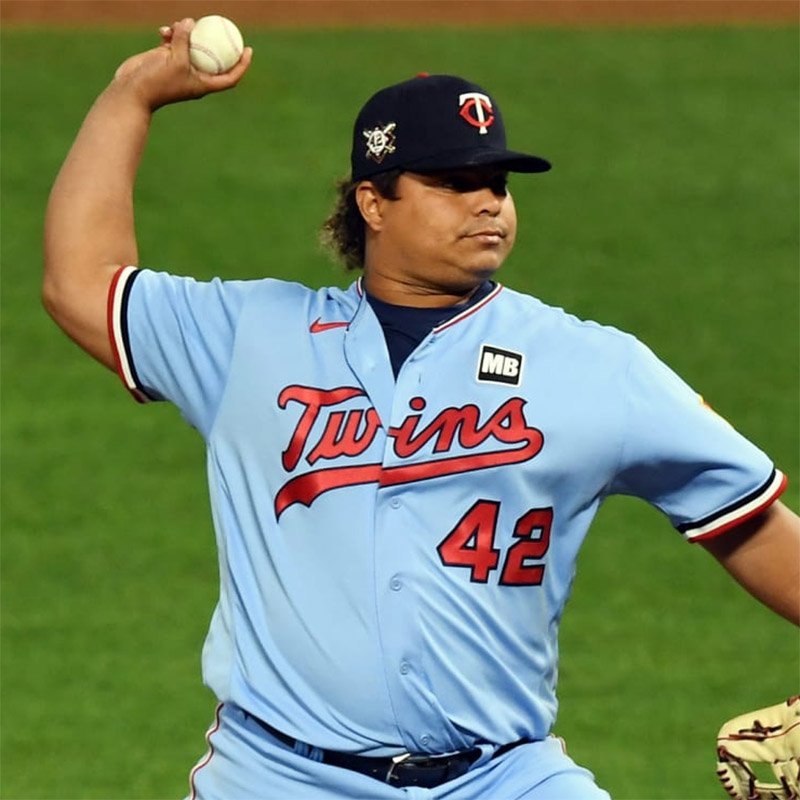 Two-way player. International superstar. Contact savant. Turtle. Astudillo signed with the Phillies as a 16-year-old out of Venezuela. He made it to high-A in his final year of team control, then signed minor league deals with Atlanta, Arizona, and eventually Minnesota. He signed a minor league deal with the Twins in 2017 and spent the season in Rochester. He made his major league debut in 2018, when he was called up to replace an injured Taylor Motter (remember him?), primarily playing catcher but bouncing around the field. In his rookie season, he was worth almost one fWAR in fewer than 100 plate appearances, although he was a sub-replacement-level player for the remainder of his MLB career. This performance drop off primarily came as a result of the quality of his contact. Despite rarely striking out or walking, he made a lot of swings at pitches in locations he could not drive, leading to a low OPS. However, his positional flexibility kept him with the team. As a member of the Twins, he played every position except shortstop, and made a number of pitching appearances in a mop-up capacity. He amused fans with his 35-45 mile Eephus pitch, wowing local media members. Postgame, when asked about his velocity, Astudillo responded “gasolina, papi!”, inspiring a local t-shirt company to release merch in his honor. In addition to his positional flexibility, Astudillo was known for his clubhouse chemistry, sense of humor, making contact at a higher rate than basically anyone else in baseball history, and losing his helmet on the basepaths, a-la Eddie Rosario. After the 2021 season, the Twins waived him and Miami signed him to a minor-league deal. He played in a limited capacity and at the end of the year, he signed a one-year deal with the Fukoaka SoftBank Hawks of the NPB League. A year later, he signed with the Saraperos de Saltillo in the Mexican League.
 -
Two-way player. International superstar. Contact savant. Turtle. Astudillo signed with the Phillies as a 16-year-old out of Venezuela. He made it to high-A in his final year of team control, then signed minor league deals with Atlanta, Arizona, and eventually Minnesota. He signed a minor league deal with the Twins in 2017 and spent the season in Rochester. He made his major league debut in 2018, when he was called up to replace an injured Taylor Motter (remember him?), primarily playing catcher but bouncing around the field. In his rookie season, he was worth almost one fWAR in fewer than 100 plate appearances, although he was a sub-replacement-level player for the remainder of his MLB career. This performance drop off primarily came as a result of the quality of his contact. Despite rarely striking out or walking, he made a lot of swings at pitches in locations he could not drive, leading to a low OPS. However, his positional flexibility kept him with the team. As a member of the Twins, he played every position except shortstop, and made a number of pitching appearances in a mop-up capacity. He amused fans with his 35-45 mile Eephus pitch, wowing local media members. Postgame, when asked about his velocity, Astudillo responded “gasolina, papi!”, inspiring a local t-shirt company to release merch in his honor. In addition to his positional flexibility, Astudillo was known for his clubhouse chemistry, sense of humor, making contact at a higher rate than basically anyone else in baseball history, and losing his helmet on the basepaths, a-la Eddie Rosario. After the 2021 season, the Twins waived him and Miami signed him to a minor-league deal. He played in a limited capacity and at the end of the year, he signed a one-year deal with the Fukoaka SoftBank Hawks of the NPB League. A year later, he signed with the Saraperos de Saltillo in the Mexican League. View full player
- 1 reply
-
- 2
-
-
Kepler has had two great seasons - 2019 and 2023. He demonstrated the same approach both seasons. And, in the second half of 2023, he APPEARED to be having the most fun of his career. There were multiple times he showboated a HR or a double off the wall. He also seemed happier, with multiple clips of him smiling and laughing with his teammates rather than being as stoic as he has normally been. As a pending free agent, I’ll bet he continues with what will potentially get him a $100M contract as opposed to trying to be the player he would like to be, stylistically. I’m a believer for this year and beyond (for another team).
-
I’m a big believer in AK’s bat. When healthy, he’s been an above-average hitter, and that’s been true from the low minors through his limited healthy time in the majors. Will he be a good - or even serviceable - 1B? Who knows. But, the Santana signing takes some pressure off him and sets him up to build defensive skill in a backup capacity while still getting him consistent ABs. I think there’s a real chance that as the regular DH, he might put up an .850 OPS which would definitely play. Is DH the future any of us hoped for? Probably not. But, he can still make a big impact.


