Eric Blonigen
-
Posts
377 -
Joined
-
Last visited
-
Days Won
1
Content Type
Profiles
News
Minnesota Twins Videos
2026 Minnesota Twins Top Prospects Ranking
2022 Minnesota Twins Draft Picks
Minnesota Twins Free Agent & Trade Rumors, Notes, & Tidbits
Guides & Resources
2023 Minnesota Twins Draft Picks
The Minnesota Twins Players Project
2024 Minnesota Twins Draft Picks
2025 Minnesota Twins Draft Pick Tracker
2026 Minnesota Twins Draft Tracker: Picks & Bonuses
Forums
Blogs
Events
Store
Downloads
Gallery
Everything posted by Eric Blonigen
-

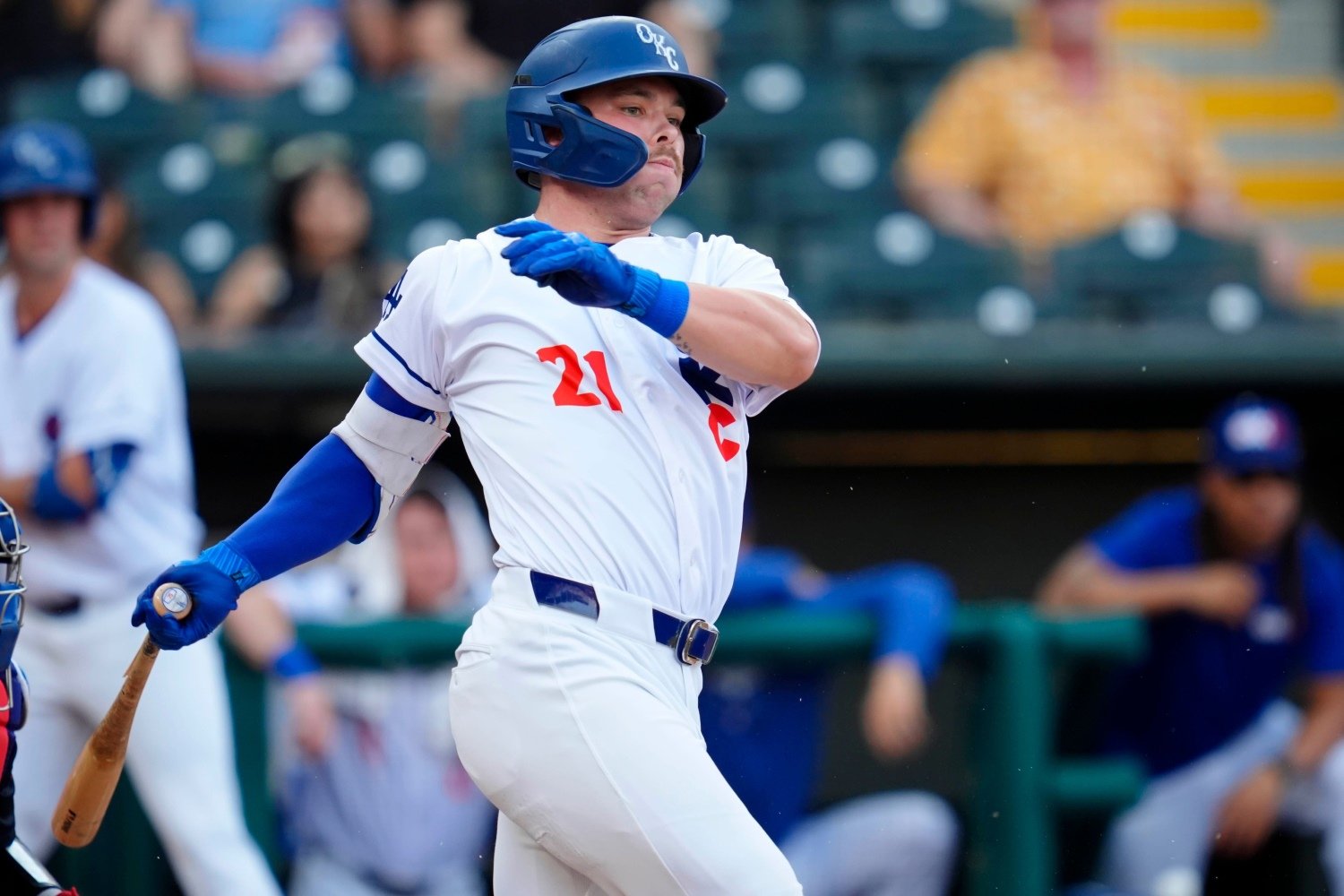 Over the next three weeks, baseball's front offices will be abuzz with activity. Options will be picked up or declined, players on the 60-day IL will need to be reactivated, and young players must be added to teams’ 40-man rosters to protect them from the Rule 5 Draft. Plus, teams will need to make decisions on whether to tender contracts to players who are arbitration-eligible. This leads to many teams experiencing a roster crunch. It’s always an exciting time of year, because it gives us a glimpse into teams’ strategies and their views on their players. Often, blocked prospects are put on the trade market to maximize rosters and even out gaps. Enter the Dodgers and Dalton Rushing. The Dodgers’ top prospect, Rushing is a consensus top-100 player, ranked as high as 27th nationally by Baseball Prospectus. The Dodgers drafted him 40th overall in the 2022 MLB Draft out of Louisville, and since then, he’s been hitting: walking more than average, striking out less than average, and showing legit power. And, he’s done it at the toughest, most offense-starved position. So why would the Dodgers even consider trading their top prospect? Well, two reasons, really. Their names are Will Smith and Diego Cartaya. Smith is one of the best catchers in baseball, under control for nine more seasons after signing a long-term deal with the team. If he can develop his hit tool just a bit more, Cartaya could also be a potential future franchise catcher. MLB.com talks about Cartaya’s “plus arm strength, in-game planning, leadership skills, and overall makeup. He finished 2024 with Triple-A Oklahoma City, and figures to be ready in 2025. So, in all likelihood, the catching tandem of Smith and Cartaya is one of the best in baseball over the next half-decade. And, in case you were wondering, they also have rookie catcher Hunter Feduccia on their 40-man, and he has also hit above average since being drafted in 2018. This August, the Dodgers instructed their Triple-A club to get Rushing reps in the outfield to try to find a place for him, because it won’t be at catcher. However, a catcher that hits is more valuable than a left fielder who hits equally well, and is also much harder to find. It’s also not clear the Dodgers really need another outfielder, unless they feel like they can significantly upgrade. Their second-best prospect, Josue De Paula, is ready for the high minors, and is more of a prototypical outfielder than Rushing. They also have Mookie Betts locked into right field; rookie Andy Pages, who can play all three outfield spots; and Tommy Edman, who seems best utilized in the grass. Because of these factors, the Dodgers might be incentivized to explore a trade while Rushing’s value is high. They don’t really have any clear-cut needs, with one of the best rotations in baseball, and several good-to-great position players in Mookie Betts, Freddie Freeman, Max Muncy, and (of course) Shohei Ohtani. Without clear holes, they may prefer additional good hitters with some flexibility. Or, they may want to add to an already strong farm system. Conveniently, the Twins have a number of solid-or-better hitters who are not better fits at catcher. Perhaps the two teams can line up in a mutually beneficial trade. What could that look like? Using Baseball Trade Values (it’s certainly not a perfect tool, but can be instructive to determine approximate value), Rushing is worth around $31 million in surplus value. What options do the Twins have to provide equivalent value without hamstringing the team? Luke Keaschall is largely ready for the majors, can play several positions, and is worth $23 million in surplus value. Keaschall has a profile similar to those of Chris Taylor and Enrique Hernández, whose age and contract statuses are nudging them toward the exit from a roster to whom they've been crucial over the years. Could he and someone like Andrew Morris or CJ Culpepper, with a lottery ticket thrown in from the Twins, get the job done? Or, would the Dodgers prefer a major leaguer come their way? If so, maybe a move centered on Rushing for Trevor Larnach, Jhoan Durán, or Griffin Jax would be more to their liking. Either of these options would bolster the Twins without removing any true core players, and make it easier to get out from under Vázquez’s contract. The Twins have a wealth of talent in their system, and using some of it in a challenge trade like this could be a win-win for both teams. Dalton Rushing could become the Twins’ franchise catcher, in a system devoid of high-end catching talent, and the Dodgers could add additional, more usable depth to their system. What are your thoughts? Would you be thrilled to see a trade for Rushing? Do you believe one of the proposed packages would be fair? Share your comments below!
- 43 comments
-
- 5
-

-
- ryan jeffers
- christian vazquez
- (and 1 more)
-
The Twins are facing a catching dilemma. Christian Vasquez is under contract for one more season, but he’s expensive, and Ryan Jeffers has been inconsistent from year to year—and even month to month. Neither of them is a complete player, and the Twins would benefit from an upgrade. Can Derek Falvey make a trade this offseason to solve this problem? Image courtesy of © BRYAN TERRY/THE OKLAHOMAN / USA TODAY NETWORK The Twins are facing a catching dilemma. Christian Vasquez is under contract for one more season, but he’s expensive, and Ryan Jeffers has been inconsistent from year to year—and even month to month. Neither of them is a complete player, and the Twins would benefit from an upgrade. Can Derek Falvey make a trade this offseason to solve this problem? Over the next three weeks, baseball's front offices will be abuzz with activity. Options will be picked up or declined, players on the 60-day IL will need to be reactivated, and young players must be added to teams’ 40-man rosters to protect them from the Rule 5 Draft. Plus, teams will need to make decisions on whether to tender contracts to players who are arbitration-eligible. This leads to many teams experiencing a roster crunch. It’s always an exciting time of year, because it gives us a glimpse into teams’ strategies and their views on their players. Often, blocked prospects are put on the trade market to maximize rosters and even out gaps. Enter the Dodgers and Dalton Rushing. The Dodgers’ top prospect, Rushing is a consensus top-100 player, ranked as high as 27th nationally by Baseball Prospectus. The Dodgers drafted him 40th overall in the 2022 MLB Draft out of Louisville, and since then, he’s been hitting: walking more than average, striking out less than average, and showing legit power. And, he’s done it at the toughest, most offense-starved position. So why would the Dodgers even consider trading their top prospect? Well, two reasons, really. Their names are Will Smith and Diego Cartaya. Smith is one of the best catchers in baseball, under control for nine more seasons after signing a long-term deal with the team. If he can develop his hit tool just a bit more, Cartaya could also be a potential future franchise catcher. MLB.com talks about Cartaya’s “plus arm strength, in-game planning, leadership skills, and overall makeup. He finished 2024 with Triple-A Oklahoma City, and figures to be ready in 2025. So, in all likelihood, the catching tandem of Smith and Cartaya is one of the best in baseball over the next half-decade. And, in case you were wondering, they also have rookie catcher Hunter Feduccia on their 40-man, and he has also hit above average since being drafted in 2018. This August, the Dodgers instructed their Triple-A club to get Rushing reps in the outfield to try to find a place for him, because it won’t be at catcher. However, a catcher that hits is more valuable than a left fielder who hits equally well, and is also much harder to find. It’s also not clear the Dodgers really need another outfielder, unless they feel like they can significantly upgrade. Their second-best prospect, Josue De Paula, is ready for the high minors, and is more of a prototypical outfielder than Rushing. They also have Mookie Betts locked into right field; rookie Andy Pages, who can play all three outfield spots; and Tommy Edman, who seems best utilized in the grass. Because of these factors, the Dodgers might be incentivized to explore a trade while Rushing’s value is high. They don’t really have any clear-cut needs, with one of the best rotations in baseball, and several good-to-great position players in Mookie Betts, Freddie Freeman, Max Muncy, and (of course) Shohei Ohtani. Without clear holes, they may prefer additional good hitters with some flexibility. Or, they may want to add to an already strong farm system. Conveniently, the Twins have a number of solid-or-better hitters who are not better fits at catcher. Perhaps the two teams can line up in a mutually beneficial trade. What could that look like? Using Baseball Trade Values (it’s certainly not a perfect tool, but can be instructive to determine approximate value), Rushing is worth around $31 million in surplus value. What options do the Twins have to provide equivalent value without hamstringing the team? Luke Keaschall is largely ready for the majors, can play several positions, and is worth $23 million in surplus value. Keaschall has a profile similar to those of Chris Taylor and Enrique Hernández, whose age and contract statuses are nudging them toward the exit from a roster to whom they've been crucial over the years. Could he and someone like Andrew Morris or CJ Culpepper, with a lottery ticket thrown in from the Twins, get the job done? Or, would the Dodgers prefer a major leaguer come their way? If so, maybe a move centered on Rushing for Trevor Larnach, Jhoan Durán, or Griffin Jax would be more to their liking. Either of these options would bolster the Twins without removing any true core players, and make it easier to get out from under Vázquez’s contract. The Twins have a wealth of talent in their system, and using some of it in a challenge trade like this could be a win-win for both teams. Dalton Rushing could become the Twins’ franchise catcher, in a system devoid of high-end catching talent, and the Dodgers could add additional, more usable depth to their system. What are your thoughts? Would you be thrilled to see a trade for Rushing? Do you believe one of the proposed packages would be fair? Share your comments below! View full article
-
Offseason Primer: The Guardians Have Some Question Marks Headed Into 2025
Eric Blonigen posted an article in Twins
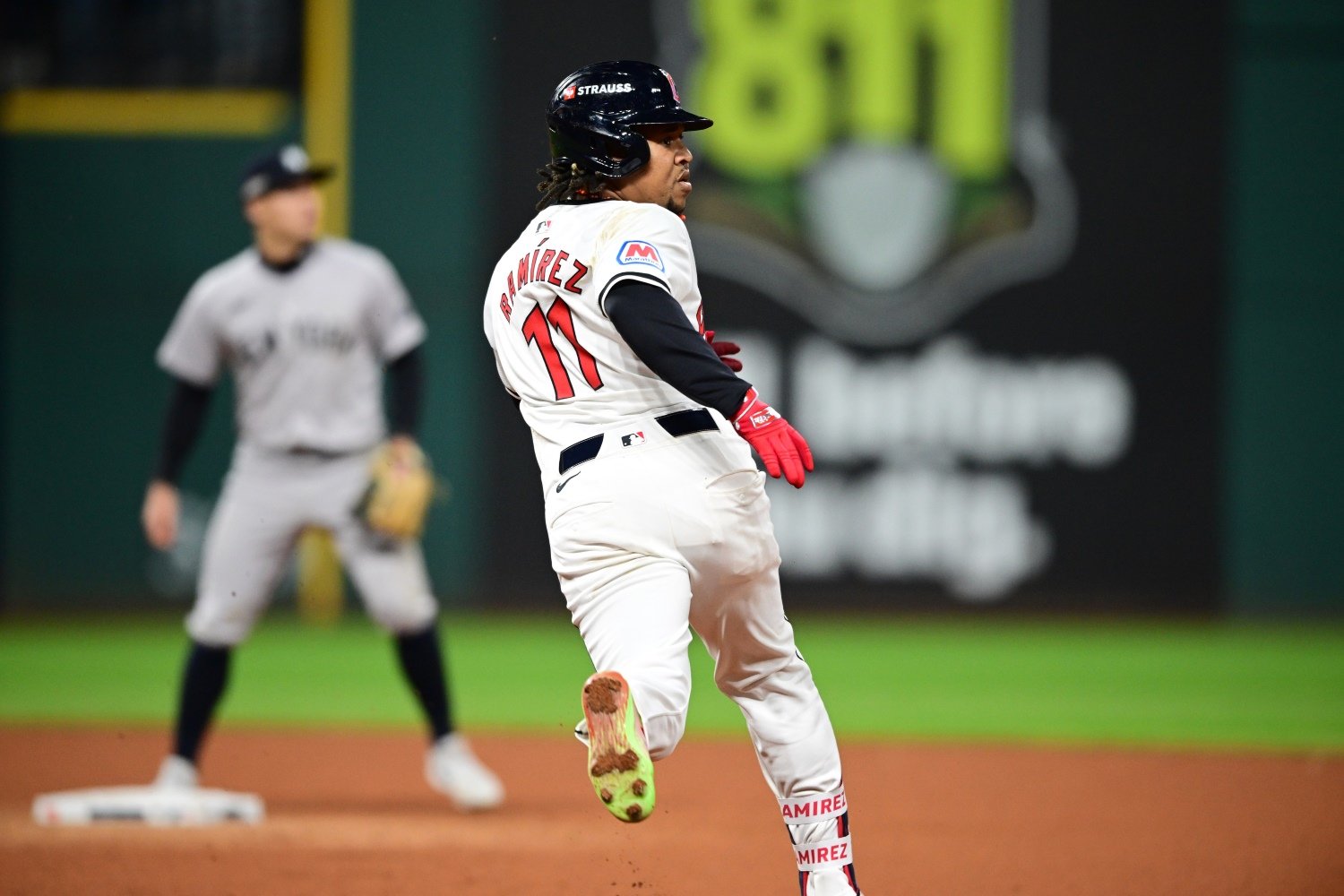 The fact that the Guardians made it to late October is a bit surprising, given the underlying numbers they put up over the course of the season. Their hitters were 17th in baseball in wOBA and had an exactly-average 100 wRC+. They got negative value from baserunning. They were 13th in position player WAR. They walked less than an average team, though they also struck out at one of the lowest rates in the league. Beyond their hitting core of José Ramírez, Steven Kwan, Andrés Giménez, and Josh Naylor, their offense was a bit stagnant. Overall, they were clutch, and won perhaps 10 more regular-season games than their offense suggests they should have, based on batted-ball data and hit clustering. The Guardians came into the season expecting more pitching dominance from Shane Bieber, Triston McKenzie, Tanner Bibee, Logan Allen, and Gavin Williams. That didn’t go according to plan. Bieber’s season was over after 12 innings. Williams went 3-10 in 16 starts, pitching to a 4.86 ERA (4.12 xFIP). McKenzie was a trainwreck, demoted to Triple A in June after giving up 19 home runs in 16 starts. He had an ERA north of 5.00, and his peripherals suggest even that was lucky. Allen was also demoted after a long stretch of shaky outings. Bibee was the only bright spot, worth 3.3 WAR while throwing 173 innings of 3.47 ERA ball. To compensate for their lackluster starting pitching, the Guardians signed Matthew Boyd and traded for Alex Cobb at the deadline. Their relievers, however, were historic in their brilliance, with Emmanuel Clasé being perhaps the best closer in baseball and some great setup options behind him in Cade Smith and Hunter Gaddis. Overall, on the pitching front, Cleveland was 19th in pitching WAR, but that undersells them significantly. Their standout skill, as a team, was defense, where they ranked eighth in baseball. That's usually the sign of a young team, which they are, but it's rarely the sign of a team that can run it back and have identical success. What does the offseason look like for them? Let’s dig into payroll and roster decisions, team needs, and question marks. Payroll One of the biggest factors in the Guardians' offseason plans will be payroll. Like the Twins (and a number of other teams), the Guardians are impacted by the Diamond Sports RSN fiasco. In 2023, they made around $55 million from their TV deal. Also like the Twins, they re-upped on a worse, one-year deal for 2024. In 2025, their broadcasts will be distributed and produced by MLB. According to some napkin math on a recent Gleeman and the Geek episode, this may mean they will receive TV revenues of less than $10 million. Unlike the Twins, the Guardians will take in well over $10 million in playoff revenue, and it could be significantly higher based on the number of playoff games played. How much of that will be reinvested into next year's club, though, is an open question. In 2024, the Guardians will finish with a $106-million payroll. In 2025, they'll have $43 million tied up in five players: Ramírez, Giménez, Clasé, Trevor Stephan, and Myles Straw. Should they keep all arbitration-eligible players, that will add about $36 million. Pre-arbitration salaries will add another $10 million. So, should they keep their payroll at a similar level, they may only have around $14 million to work with, but it’s unclear what figure they will target. They could pretty easily loosen up more money by non-tendering a few players, but the organization rarely makes big financial splashes in free agency, anyway. Arbitration Decisions With all that in mind, let's review the players who are arbitration-eligible: Josh Naylor ($12 million in estimated earnings, according to MLB Trade Rumors), Lane Thomas ($8.3 million), James Karinchack ($1.9 million), McKenzie ($2.4 million), Sam Hentges ($1.4 million), Nick Sandlin ($1.6M million), Eli Morgan ($1 million), Kwan ($4.3 million), and Ben Lively ($3.2 million). Of these, only Naylor and Thomas are expensive. Cleveland needs offense, so keeping both likely makes sense. Both would also likely command more on the open market, so it’s possible they tender them and trade one or the other for surplus value. With Kyle Manzardo waiting in the wings at first base, trading Naylor might be the move. Of course, it’s not out of the question they non-tender even some of their cheaper guys, with marginal expected salaries but even more marginal utility. McKenzie and Hentges jump out as possibilities. Free Agents The Guardians are set to lose four players to free agency: Bieber, Cobb, Boyd, and catcher Austin Hedges. There is mutual interest in re-signing Bieber, though much might depend on how robust a market he finds coming off his surgery. Clear Team Needs Starting pitching will likely be the priority. With Bieber, Cobb, and Boyd all set to become free agents this offseason and shaky play from most of their internal options, the Guardians have to be feeling some nerves around building an effective rotation in 2025. While they have a strong farm system, their top prospects are nearly all hitters. Trading from those stores for pitching help might be necessary, though it would go against their usual grain. At least one good left-handed hitter has to join the mix. In 2024, the Guardians put up a collective .685 against righties. That’s not great against the strong side. Manzardo figures to have a much larger role than he did this season, but that could come at the expense of Naylor--and even if not, there's room for upgrades from left-handed outfield options Daniel Schneeman and Will Brennan. They'll need a center fielder, if they don't tender and keep Thomas. They could solve that problem from within, but gambling with what seems like a winning window and hoping prospects plug holes would seem a bit too conservative. Other Question Marks Will Manzardo, Brayan Rocchio, and Jhonkensy Noel take a step forward? Will the league adjust to them, and can they realize their potential? This year's first overall pick, Travis Bazzana, is expected to move quickly up the system. Upon being drafted, there was some thought that he could reach the majors within a full season. His initial showing was strong, but will he continue to prove it? Do the Guardians have faith in any of their pitchers who struggled this season? Have they identified injury or mechanical concerns with McKenzie, Allen, or Williams that they believe they can fix? The Guardians have a lot of question marks. They need better starting pitching, they need to hit better, and they have an uncertain payroll picture. It’s possible they are forced to cut costs due to the TV situation. If so, anything is possible--even a sudden plunge back into mediocrity. Then again, they are the Guardians, and getting production out of guys you haven’t heard of is sort of their calling card. We'll soon see how real and foundational they think this semi-magical campaign was, based on how they behave once the World Series wraps.
- 30 comments
-
- 1
-
-
- jose ramirez
- josh naylor
- (and 2 more)
-
The Guardians' season has come to an end, after a deep playoff run. What should Twins fans expect from this divisional rival during the offseason, and should Cleveland be seen as a legitimate threat to retain the division crown in 2025? Image courtesy of © David Dermer-Imagn Images The Guardians' season has come to an end, after a deep playoff run. What should Twins fans expect from this divisional rival during the offseason, and should Cleveland be seen as a legitimate threat to retain the division crown in 2025? The fact that the Guardians made it to late October is a bit surprising, given the underlying numbers they put up over the course of the season. Their hitters were 17th in baseball in wOBA and had an exactly-average 100 wRC+. They got negative value from baserunning. They were 13th in position player WAR. They walked less than an average team, though they also struck out at one of the lowest rates in the league. Beyond their hitting core of José Ramírez, Steven Kwan, Andrés Giménez, and Josh Naylor, their offense was a bit stagnant. Overall, they were clutch, and won perhaps 10 more regular-season games than their offense suggests they should have, based on batted-ball data and hit clustering. The Guardians came into the season expecting more pitching dominance from Shane Bieber, Triston McKenzie, Tanner Bibee, Logan Allen, and Gavin Williams. That didn’t go according to plan. Bieber’s season was over after 12 innings. Williams went 3-10 in 16 starts, pitching to a 4.86 ERA (4.12 xFIP). McKenzie was a trainwreck, demoted to Triple A in June after giving up 19 home runs in 16 starts. He had an ERA north of 5.00, and his peripherals suggest even that was lucky. Allen was also demoted after a long stretch of shaky outings. Bibee was the only bright spot, worth 3.3 WAR while throwing 173 innings of 3.47 ERA ball. To compensate for their lackluster starting pitching, the Guardians signed Matthew Boyd and traded for Alex Cobb at the deadline. Their relievers, however, were historic in their brilliance, with Emmanuel Clasé being perhaps the best closer in baseball and some great setup options behind him in Cade Smith and Hunter Gaddis. Overall, on the pitching front, Cleveland was 19th in pitching WAR, but that undersells them significantly. Their standout skill, as a team, was defense, where they ranked eighth in baseball. That's usually the sign of a young team, which they are, but it's rarely the sign of a team that can run it back and have identical success. What does the offseason look like for them? Let’s dig into payroll and roster decisions, team needs, and question marks. Payroll One of the biggest factors in the Guardians' offseason plans will be payroll. Like the Twins (and a number of other teams), the Guardians are impacted by the Diamond Sports RSN fiasco. In 2023, they made around $55 million from their TV deal. Also like the Twins, they re-upped on a worse, one-year deal for 2024. In 2025, their broadcasts will be distributed and produced by MLB. According to some napkin math on a recent Gleeman and the Geek episode, this may mean they will receive TV revenues of less than $10 million. Unlike the Twins, the Guardians will take in well over $10 million in playoff revenue, and it could be significantly higher based on the number of playoff games played. How much of that will be reinvested into next year's club, though, is an open question. In 2024, the Guardians will finish with a $106-million payroll. In 2025, they'll have $43 million tied up in five players: Ramírez, Giménez, Clasé, Trevor Stephan, and Myles Straw. Should they keep all arbitration-eligible players, that will add about $36 million. Pre-arbitration salaries will add another $10 million. So, should they keep their payroll at a similar level, they may only have around $14 million to work with, but it’s unclear what figure they will target. They could pretty easily loosen up more money by non-tendering a few players, but the organization rarely makes big financial splashes in free agency, anyway. Arbitration Decisions With all that in mind, let's review the players who are arbitration-eligible: Josh Naylor ($12 million in estimated earnings, according to MLB Trade Rumors), Lane Thomas ($8.3 million), James Karinchack ($1.9 million), McKenzie ($2.4 million), Sam Hentges ($1.4 million), Nick Sandlin ($1.6M million), Eli Morgan ($1 million), Kwan ($4.3 million), and Ben Lively ($3.2 million). Of these, only Naylor and Thomas are expensive. Cleveland needs offense, so keeping both likely makes sense. Both would also likely command more on the open market, so it’s possible they tender them and trade one or the other for surplus value. With Kyle Manzardo waiting in the wings at first base, trading Naylor might be the move. Of course, it’s not out of the question they non-tender even some of their cheaper guys, with marginal expected salaries but even more marginal utility. McKenzie and Hentges jump out as possibilities. Free Agents The Guardians are set to lose four players to free agency: Bieber, Cobb, Boyd, and catcher Austin Hedges. There is mutual interest in re-signing Bieber, though much might depend on how robust a market he finds coming off his surgery. Clear Team Needs Starting pitching will likely be the priority. With Bieber, Cobb, and Boyd all set to become free agents this offseason and shaky play from most of their internal options, the Guardians have to be feeling some nerves around building an effective rotation in 2025. While they have a strong farm system, their top prospects are nearly all hitters. Trading from those stores for pitching help might be necessary, though it would go against their usual grain. At least one good left-handed hitter has to join the mix. In 2024, the Guardians put up a collective .685 against righties. That’s not great against the strong side. Manzardo figures to have a much larger role than he did this season, but that could come at the expense of Naylor--and even if not, there's room for upgrades from left-handed outfield options Daniel Schneeman and Will Brennan. They'll need a center fielder, if they don't tender and keep Thomas. They could solve that problem from within, but gambling with what seems like a winning window and hoping prospects plug holes would seem a bit too conservative. Other Question Marks Will Manzardo, Brayan Rocchio, and Jhonkensy Noel take a step forward? Will the league adjust to them, and can they realize their potential? This year's first overall pick, Travis Bazzana, is expected to move quickly up the system. Upon being drafted, there was some thought that he could reach the majors within a full season. His initial showing was strong, but will he continue to prove it? Do the Guardians have faith in any of their pitchers who struggled this season? Have they identified injury or mechanical concerns with McKenzie, Allen, or Williams that they believe they can fix? The Guardians have a lot of question marks. They need better starting pitching, they need to hit better, and they have an uncertain payroll picture. It’s possible they are forced to cut costs due to the TV situation. If so, anything is possible--even a sudden plunge back into mediocrity. Then again, they are the Guardians, and getting production out of guys you haven’t heard of is sort of their calling card. We'll soon see how real and foundational they think this semi-magical campaign was, based on how they behave once the World Series wraps. View full article
-
The Kansas City Royals lost 106 games in 2023. They followed that up by making a number of free agent moves and trades, and made the playoffs after increasing their 2024 win total by 30 full games. Now that their surprising season has come to an end at the hands of the Yankees, let’s look at some likely offseason priorities for this divisional rival. Image courtesy of Denny Medley-Imagn Images The Kansas City Royals lost 106 games in 2023. They followed that up by making a number of free agent moves and trades, and made the playoffs after increasing their 2024 win total by 30 full games. Now that their surprising season has come to an end at the hands of the Yankees, let’s look at some likely offseason priorities for this divisional rival. Let’s begin by addressing a huge team priority. The Royals have been playing games at Kauffman Stadium since 1973, making it the fifth-oldest stadium still in use. It’s undergone multiple refurbishments throughout the years, and is still a solid place to see games. The tailgating is great, the stadium is open and airy, and it doesn’t feel 50 years old. That said, the Royals have been exploring potential sites for a new ballpark in both Kansas and Missouri. Part of their sales pitch to local governments and to the fans that live in the various jurisdictions has been the team’s desire to stay in Kansas City long-term, and a commitment to winning. That’s likely at least part of the reason they decided to push their chips in prior to the 2024 season. Off the heels of a 2024 ALDS appearance with no stadium deal in place, I believe it’s likely the Royals will try to go all-in this offseason in order to show their dedication to the city and the fan base. What are the factors that will impact this over the next several months? Payroll and Contract Decisions Heading into the 2024 season, owner John Sherman pushed payroll to $122M, the highest in several years. In 2025, they don’t have a ton of committed money – just over $44M guaranteed to Salvador Perez, Seth Lugo, Bobby Witt. There are three players with Player Options – the net result is there’s likely $12M more hitting the 2025 books. Chris Stratton has an option at $4.5M (his likely free agent value is 1/$4.8M). He could go either way, but I’m guessing he stays. Hunter Renfroe has an option at $7.6M (his likely free agent value is a 2/$11M deal). Because the AAV is higher on his option, he likely opts in. Michael Wacha has a $16M option (his likely free agent value is a 3/$60M deal). He likely opts out and signs a multi-year deal with someone. Adam Frazier also has an $8.5M mutual option, but his likely market value is a 1/$1.2M deal. The Royals will decline the option. They will have arbitration decisions on a number of players: Josh Taylor ($1.1M), Hunter Harvey ($3.9M), Brady Singer ($8.8M), Kris Bubic ($2.8M), Kyle Wright ($1.8M), John Schreiber ($2M), Carlos Hernandez ($1.2M), Kyle Isbel ($1.7M), MJ Melendez ($2.5M), Daniel Lynch ($1.1M). Of those players, just Singer and Harvey are set to make more than $3M, and both factor into their 2025 plans. Assuming they choose to tender everyone, that adds $28M onto their 2025 books. With all of this in mind, the Royals are sitting around a $95M payroll so far, with some holes to fill. Let’s look at their offseason needs. Offseason Needs They have eight players hitting free agency, in Will Smith, Michael Lorenzen, Paul DeJong, Tommy Pham, Garrett Hampson, Robbie Grossman, Yuli Gurriel, and Dan Altavilla. That creates some holes on the roster, and there isn’t much high-end depth even close to ready on the farm. Third base coverage becomes thin. Maikel Garcia is the primary fielder at the position, and he doesn’t hit much, with a .614 OPS in 2024. The Royals finished the season with the 11th-worst bullpen ERA in baseball. They traded for Lucas Erceg and Hunter Harvey, but likely need at least one more arm capable of pitching in the late innings. Their outfielders didn’t hit a lick in 2024, and the Royals would benefit from at least one big bat playing in the grass, and two would be better. With Gurriel departing, the Royals will need to decide whether Salvador Perez is their everyday first baseman, or if they need him to catch alongside Freddy Fermin. They will need to acquire a decent player at either first base or catcher. They will also need at least one starting pitcher to replace Michael Wacha’s likely departure. Cole Ragans, Seth Lugo, and Brady Singer set up the front of the rotation, and Kyle Wright probably holds down the fifth spot, but the Royals will likely want to aim for another mid-rotation starter, and possibly two to combat uncertainty and provide additional depth. TV Deal The Royals are yet another team impacted by the Diamond Sports Group’s bankruptcy proceedings and stated goal of only broadcasting Atlanta. Similar to the Twins, they could choose to re-up on a worse deal, or they could choose to use MLB to broadcast their games. Either option would almost certainly carry a large financial hit compared to their current TV deal, and that figures to impact their payroll goals. How will the Royals square up the need to compete in order to secure a stadium deal with the significant loss of revenue? And will it affect their ability to sign impact players? Will they pursue the trade route to save payroll? If so, they may need to empty their farm system which is not strong to begin with. In many ways, the 2025 Royals offseason could look a lot like the 2024 Twins — they have a couple star players, some young talent, but some real needs and no easy way to fill them unless they are either comfortable operating at a loss, or willing to push all their chips in to win now. For Twins fans, one can hope that the Royals 2025 season looks like the 2024 Twins season as well. View full article
-
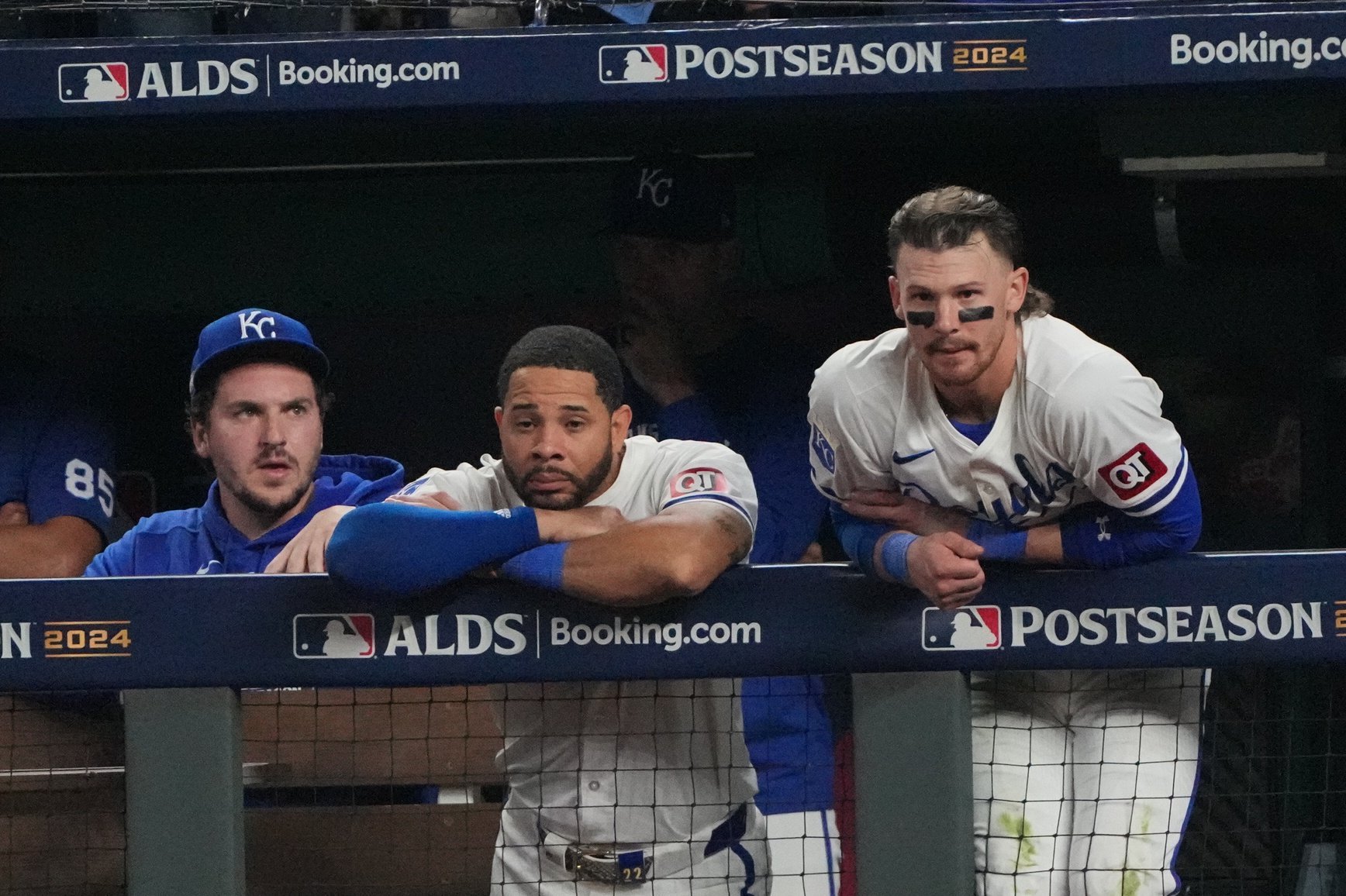 Let’s begin by addressing a huge team priority. The Royals have been playing games at Kauffman Stadium since 1973, making it the fifth-oldest stadium still in use. It’s undergone multiple refurbishments throughout the years, and is still a solid place to see games. The tailgating is great, the stadium is open and airy, and it doesn’t feel 50 years old. That said, the Royals have been exploring potential sites for a new ballpark in both Kansas and Missouri. Part of their sales pitch to local governments and to the fans that live in the various jurisdictions has been the team’s desire to stay in Kansas City long-term, and a commitment to winning. That’s likely at least part of the reason they decided to push their chips in prior to the 2024 season. Off the heels of a 2024 ALDS appearance with no stadium deal in place, I believe it’s likely the Royals will try to go all-in this offseason in order to show their dedication to the city and the fan base. What are the factors that will impact this over the next several months? Payroll and Contract Decisions Heading into the 2024 season, owner John Sherman pushed payroll to $122M, the highest in several years. In 2025, they don’t have a ton of committed money – just over $44M guaranteed to Salvador Perez, Seth Lugo, Bobby Witt. There are three players with Player Options – the net result is there’s likely $12M more hitting the 2025 books. Chris Stratton has an option at $4.5M (his likely free agent value is 1/$4.8M). He could go either way, but I’m guessing he stays. Hunter Renfroe has an option at $7.6M (his likely free agent value is a 2/$11M deal). Because the AAV is higher on his option, he likely opts in. Michael Wacha has a $16M option (his likely free agent value is a 3/$60M deal). He likely opts out and signs a multi-year deal with someone. Adam Frazier also has an $8.5M mutual option, but his likely market value is a 1/$1.2M deal. The Royals will decline the option. They will have arbitration decisions on a number of players: Josh Taylor ($1.1M), Hunter Harvey ($3.9M), Brady Singer ($8.8M), Kris Bubic ($2.8M), Kyle Wright ($1.8M), John Schreiber ($2M), Carlos Hernandez ($1.2M), Kyle Isbel ($1.7M), MJ Melendez ($2.5M), Daniel Lynch ($1.1M). Of those players, just Singer and Harvey are set to make more than $3M, and both factor into their 2025 plans. Assuming they choose to tender everyone, that adds $28M onto their 2025 books. With all of this in mind, the Royals are sitting around a $95M payroll so far, with some holes to fill. Let’s look at their offseason needs. Offseason Needs They have eight players hitting free agency, in Will Smith, Michael Lorenzen, Paul DeJong, Tommy Pham, Garrett Hampson, Robbie Grossman, Yuli Gurriel, and Dan Altavilla. That creates some holes on the roster, and there isn’t much high-end depth even close to ready on the farm. Third base coverage becomes thin. Maikel Garcia is the primary fielder at the position, and he doesn’t hit much, with a .614 OPS in 2024. The Royals finished the season with the 11th-worst bullpen ERA in baseball. They traded for Lucas Erceg and Hunter Harvey, but likely need at least one more arm capable of pitching in the late innings. Their outfielders didn’t hit a lick in 2024, and the Royals would benefit from at least one big bat playing in the grass, and two would be better. With Gurriel departing, the Royals will need to decide whether Salvador Perez is their everyday first baseman, or if they need him to catch alongside Freddy Fermin. They will need to acquire a decent player at either first base or catcher. They will also need at least one starting pitcher to replace Michael Wacha’s likely departure. Cole Ragans, Seth Lugo, and Brady Singer set up the front of the rotation, and Kyle Wright probably holds down the fifth spot, but the Royals will likely want to aim for another mid-rotation starter, and possibly two to combat uncertainty and provide additional depth. TV Deal The Royals are yet another team impacted by the Diamond Sports Group’s bankruptcy proceedings and stated goal of only broadcasting Atlanta. Similar to the Twins, they could choose to re-up on a worse deal, or they could choose to use MLB to broadcast their games. Either option would almost certainly carry a large financial hit compared to their current TV deal, and that figures to impact their payroll goals. How will the Royals square up the need to compete in order to secure a stadium deal with the significant loss of revenue? And will it affect their ability to sign impact players? Will they pursue the trade route to save payroll? If so, they may need to empty their farm system which is not strong to begin with. In many ways, the 2025 Royals offseason could look a lot like the 2024 Twins — they have a couple star players, some young talent, but some real needs and no easy way to fill them unless they are either comfortable operating at a loss, or willing to push all their chips in to win now. For Twins fans, one can hope that the Royals 2025 season looks like the 2024 Twins season as well.
 -
By now, it’s old news: the guy with the inflammatory sign is getting his wish, and the Pohlad family is working to sell the team. While it’s tough to predict how a new owner will attempt to make their mark on the Twins franchise, there are certainly a few wish-list items that any owner would hopefully bring to the table. Image courtesy of Jordan Johnson-Imagn Images By now, it’s old news: the guy with the inflammatory sign is getting his wish, and the Pohlad family is working to sell the team. While it’s tough to predict how a new owner will attempt to make their mark on the Twins franchise, there are certainly a few wish-list items that any owner would hopefully bring to the table. As Matt Lenz wrote in his recent piece, the last several ownership changes across baseball have produced a mixed outcome. While there are owners like Steve Cohen who act like fans, willing to lose substantial money to win, there are multiple other examples of new ownership groups running their team more like a business. It’s currently impossible to predict which way the winds blow for the Twins, but I will attempt to provide a realistic wish list that any owner could — and should — execute on in order to restore fan morale and build the competitive team this community clamors for. In a perfect world, the next owner will be an actual fan of the club. There are three main areas of opportunity — payroll, fan engagement, and creative marketing — that any owner should take an interest in evolving. Let’s dig in. Payroll Look, the Twins probably aren’t going to wind up with a $200 million payroll in the next couple of years – and that’s ok. As a firmly mid-market team, the expectation should be spending in a manner commensurate with media market size and contention window. The Twin Cities is the definition of an average media market – 15th among metropolitan areas that have a baseball club. In the Venn diagram of wishes and reality, the sweet spot in the middle is probably to average an average payroll. During periods of contention, ramp up by $10-20M. During rebuilding or otherwise non-competitive windows, by all means cut $30-40M and restock the farm. So what does "average" look like? According to Spotrac, in 2024, the team with the 15th-highest payroll was the Padres, at $171M. Now, that’s not quite a fair representation as their owner gave the go-ahead to spend a little recklessly in an attempt to win now. Dropping down to the 16th-highest payroll, we have the Mariners at $148M. That is a good, realistic target for the Twins’ new owner to aim at. To be clear, if the Twins had the extra $20M to work with this past season, they almost certainly would have walked into the playoffs. With the RSN media landscape crumbling, ownership and the business side will need to explore additional revenue streams to make this realistic, and a lot of this can be bucketed into fan engagement and creative marketing. Fan Engagement A good business owner understands that creating happy customers is the key to a sustainable, healthy business. Furthermore, new customer acquisition is the key to growth. Over the past several years, the Pohlads and the business side of the organization demonstrated an inability to do either. The new owner will need to solve this problem, in order to prevent a downward spiral of fan morale, attendance, and the quality of the team on the field. How should they go about this? There are several options here. Low-hanging fruit would be to extend TwinsFest, lengthen the winter caravan, or do more community engagement across greater Minnesota. The Twins do some nice things with their Twitter account, which expresses a fun personality and engages in various ways with the denizens of “Twins Twitter.” There have been some impressive efforts to create high-quality content and multimedia, such as their behind-the-scenes “The Diamond” series on YouTube. The Twins could absolutely lean harder into these frontiers to reach digitally-minded fans, who will have greater access to games via DTC streaming broadcasts. The Twins could also do things to bring people from the community in on off-days or through lunch time on night games. At Target Field, there’s a thing called “Creator’s Corner” – local vendors that sell products like pottery and furniture. They could choose to expand this program in order to draw the community in. Perhaps they could air classic games on the big scoreboard on off days and sell concessions and merch. FanHQ currently handles most player meet-and-greets and signing events. The Twins could choose to hold similar events in-house before games to draw additional fans. Beyond that, there could be opportunity for pop-up events, such as having a concession stand devoted to various guest chefs and concepts, and local brewery takeovers. That might give fans a reason to go out for dinner at the ballpark and also catch a game while they are there. The possibilities are endless — all it will take is a little creativity, and a real desire to draw fans in. Creative Marketing There are a number of ways to increase fan interest and juice ticket sales: through creative promotions, flash sales, better concessions deals, or season ticket incentives; the sale of jersey patches; initiating new brand partnerships; or creative marketing. Historically, the Twins haven’t done a great job with “of the moment” marketing. While both Carlos Correa and Byron Buxton were on the IL, advertising talked about coming to a game to watch them play. That’s just not effective. More effective? Invite people to a game to watch a streak continue. Play up rivalries. Celebrate star players from the visiting team. When Shohei Ohtani, Aaron Judge, or Bobby Witt are in town, use that. If a pitching matchup is a battle of aces, reference that to sell tickets. Do “the weather isn’t great today” flash sales and push it on Twitter and TikTok. Give fans a free ticket on their birthday. There’s also an opportunity to involve social media influencers to increase interest among younger fans, and to otherwise use non-traditional media to create awareness and interest. Conclusion Whoever ends up purchasing the Twins will benefit from several built-in things: a great stadium, a good team with a young core, a deep farm system that also has a lot of high-end talent, and a fanbase that’s (finally) able to watch games without blackout restrictions. They will have the rare opportunity to create immediate goodwill among fans by saying they want to win a World Series, and backing it up with action. If they engage the fanbase and show even a modicum of creativity, they have the ability to create a virtuous cycle that is capable of solidifying and strengthening the fan base, and fielding a perpetually competitive team at the same time. What do you think? Is this wish list reasonable? Is anything missing? What would you wish for? Comment below! View full article
-
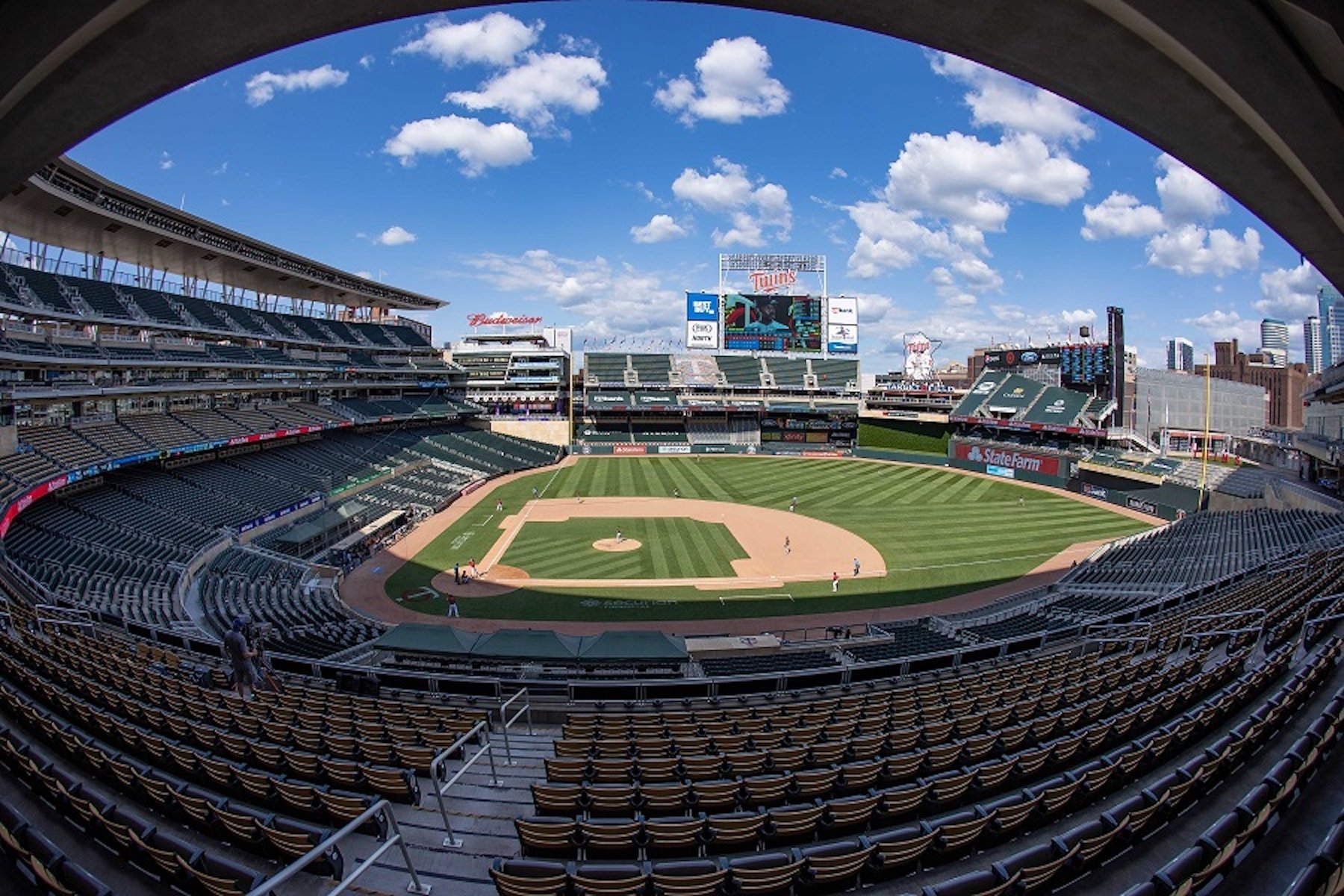 As Matt Lenz wrote in his recent piece, the last several ownership changes across baseball have produced a mixed outcome. While there are owners like Steve Cohen who act like fans, willing to lose substantial money to win, there are multiple other examples of new ownership groups running their team more like a business. It’s currently impossible to predict which way the winds blow for the Twins, but I will attempt to provide a realistic wish list that any owner could — and should — execute on in order to restore fan morale and build the competitive team this community clamors for. In a perfect world, the next owner will be an actual fan of the club. There are three main areas of opportunity — payroll, fan engagement, and creative marketing — that any owner should take an interest in evolving. Let’s dig in. Payroll Look, the Twins probably aren’t going to wind up with a $200 million payroll in the next couple of years – and that’s ok. As a firmly mid-market team, the expectation should be spending in a manner commensurate with media market size and contention window. The Twin Cities is the definition of an average media market – 15th among metropolitan areas that have a baseball club. In the Venn diagram of wishes and reality, the sweet spot in the middle is probably to average an average payroll. During periods of contention, ramp up by $10-20M. During rebuilding or otherwise non-competitive windows, by all means cut $30-40M and restock the farm. So what does "average" look like? According to Spotrac, in 2024, the team with the 15th-highest payroll was the Padres, at $171M. Now, that’s not quite a fair representation as their owner gave the go-ahead to spend a little recklessly in an attempt to win now. Dropping down to the 16th-highest payroll, we have the Mariners at $148M. That is a good, realistic target for the Twins’ new owner to aim at. To be clear, if the Twins had the extra $20M to work with this past season, they almost certainly would have walked into the playoffs. With the RSN media landscape crumbling, ownership and the business side will need to explore additional revenue streams to make this realistic, and a lot of this can be bucketed into fan engagement and creative marketing. Fan Engagement A good business owner understands that creating happy customers is the key to a sustainable, healthy business. Furthermore, new customer acquisition is the key to growth. Over the past several years, the Pohlads and the business side of the organization demonstrated an inability to do either. The new owner will need to solve this problem, in order to prevent a downward spiral of fan morale, attendance, and the quality of the team on the field. How should they go about this? There are several options here. Low-hanging fruit would be to extend TwinsFest, lengthen the winter caravan, or do more community engagement across greater Minnesota. The Twins do some nice things with their Twitter account, which expresses a fun personality and engages in various ways with the denizens of “Twins Twitter.” There have been some impressive efforts to create high-quality content and multimedia, such as their behind-the-scenes “The Diamond” series on YouTube. The Twins could absolutely lean harder into these frontiers to reach digitally-minded fans, who will have greater access to games via DTC streaming broadcasts. The Twins could also do things to bring people from the community in on off-days or through lunch time on night games. At Target Field, there’s a thing called “Creator’s Corner” – local vendors that sell products like pottery and furniture. They could choose to expand this program in order to draw the community in. Perhaps they could air classic games on the big scoreboard on off days and sell concessions and merch. FanHQ currently handles most player meet-and-greets and signing events. The Twins could choose to hold similar events in-house before games to draw additional fans. Beyond that, there could be opportunity for pop-up events, such as having a concession stand devoted to various guest chefs and concepts, and local brewery takeovers. That might give fans a reason to go out for dinner at the ballpark and also catch a game while they are there. The possibilities are endless — all it will take is a little creativity, and a real desire to draw fans in. Creative Marketing There are a number of ways to increase fan interest and juice ticket sales: through creative promotions, flash sales, better concessions deals, or season ticket incentives; the sale of jersey patches; initiating new brand partnerships; or creative marketing. Historically, the Twins haven’t done a great job with “of the moment” marketing. While both Carlos Correa and Byron Buxton were on the IL, advertising talked about coming to a game to watch them play. That’s just not effective. More effective? Invite people to a game to watch a streak continue. Play up rivalries. Celebrate star players from the visiting team. When Shohei Ohtani, Aaron Judge, or Bobby Witt are in town, use that. If a pitching matchup is a battle of aces, reference that to sell tickets. Do “the weather isn’t great today” flash sales and push it on Twitter and TikTok. Give fans a free ticket on their birthday. There’s also an opportunity to involve social media influencers to increase interest among younger fans, and to otherwise use non-traditional media to create awareness and interest. Conclusion Whoever ends up purchasing the Twins will benefit from several built-in things: a great stadium, a good team with a young core, a deep farm system that also has a lot of high-end talent, and a fanbase that’s (finally) able to watch games without blackout restrictions. They will have the rare opportunity to create immediate goodwill among fans by saying they want to win a World Series, and backing it up with action. If they engage the fanbase and show even a modicum of creativity, they have the ability to create a virtuous cycle that is capable of solidifying and strengthening the fan base, and fielding a perpetually competitive team at the same time. What do you think? Is this wish list reasonable? Is anything missing? What would you wish for? Comment below!
 -
To make the 2025 team better, one of the Twins' starting catching duo is likely to be traded. But which one? Image courtesy of © Brian Fluharty-Imagn Images To make the 2025 team better, one of the Twins' starting catching duo is likely to be traded. But which one? Following the collapse of the 2024 Twins, everyone involved--from ownership down--agreed on one thing: the 2025 team will be better. That said, there are two facts that make this endeavor more easily said than done. First, the Twins will face similar payroll constraints to the 2024 season. Second, their in-house players are set to consume virtually all of the budgeted payroll, with no fewer than 13 guys set for raises through arbitration. To square these challenges with Joe Pohlad’s promise of improvement, some tough decisions will need to be made. One such decision is around the Twins’ catching tandem, as it seems almost certain that one of Ryan Jeffers or Christian Vázquez will be traded to improve the team, through freeing up cash or trading for value. A club paying $36 million to its shortstop, $21 million to its ace starter and $15 million to its center fielder can also pay $15 million for its catchers, but only if they're willing to carry a total payroll in excess of $160 million. Since it looks like the Twins will be at least $25 million shy of that mark, they need to make a move. The Case for Trading Christian Vázquez The defense-first Vázquez is entering the final season of his three-year, $30-million free-agent deal. As a backup catcher, he’s been good. Trading him would make sense purely from a cost-cutting angle, as he’s set to be the fourth-highest-paid guy on the team, behind Carlos Correa, Pablo López, and Byron Buxton. That’s tough to justify when there are multiple holes on the roster that need filling. It’s unlikely a team would take his contract on in full, without some other enticement. Baseball Trade Values has him worth -$7.8 million compared to his contract. As a result, moving on would require the Twins to include at least one prospect to even the books. If they can swallow that bitter pill, the newfound flexibility could help the team accomplish any number of free-agent signings. They could add a couple legitimate weapons to the bullpen, sign a real first baseman or DH, or sign a mid-rotation starter with some yellow flags to their name. Should the Twins trade Vázquez, they would likely need to sign another defensive-minded catcher to a cheap, one-year deal, but there's good depth in that class of backstop on the market this winter. The Case for Trading Ryan Jeffers Offense-first Jeffers is hitting arbitration for the second time, and MLB Trade Rumors has him set to earn around $4.7 million. For a typical team with a typical payroll, this would be a drop in the bucket and well worth the expenditure. For the Twins, having an extra $5 million could translate into a legitimate role player elsewhere on the field--for example, it could be enough to re-sign Carlos Santana. The player they would find instead of Jeffers would almost certainly carry a higher workload than the 218 games and 800 plate appearances Jeffers has amassed over the last two years. Beyond the payroll re-allocation, Jeffers would carry some real surplus value, too. Baseball Trade Values has him worth $13.1 million beyond his likely arbitration salaries the next two seasons, so he would net legitimate prospects or be a significant piece toward acquiring a contributing major leaguer. He could be bundled with prospects toward a cost-controlled frontline starting pitcher or impact bat. Another benefit to trading him could be the (relative) predictability associated with a less streaky player. Should the Twins decide to trade Jeffers, they would either need to sign or trade for a bat-first catcher to complement Vázquez, or decide to forego offense from the catcher position and sign a defensively-minded backup catcher on the cheap. Which option will the Twins take? Which option should they take? Will they focus on cost-cutting, or upside? Prioritize offense, or defense? It likely comes down to the relative offers, and how the front office prioritizes roster construction once the Pohlads issue their payroll edict for the season. View full article
-
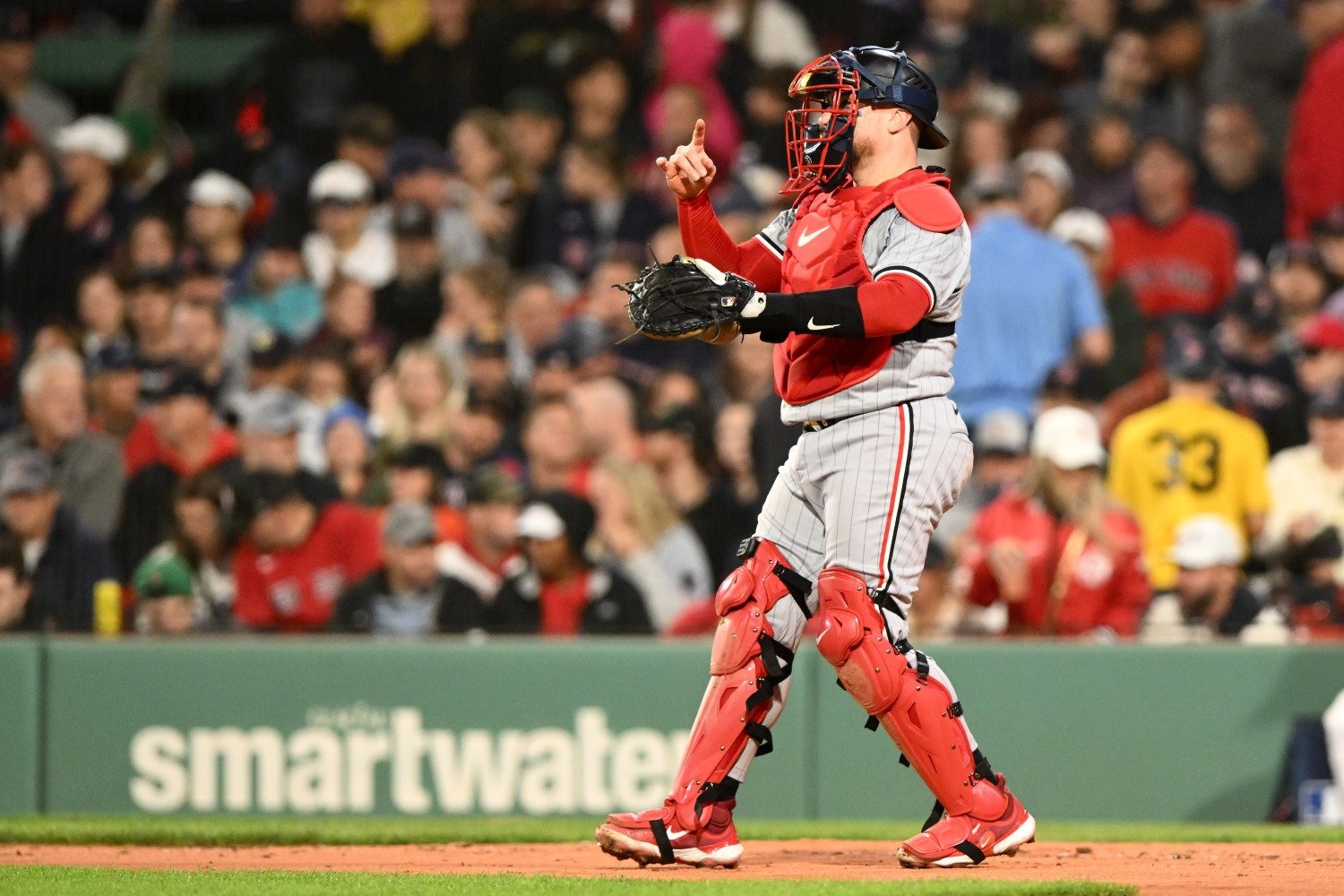 Following the collapse of the 2024 Twins, everyone involved--from ownership down--agreed on one thing: the 2025 team will be better. That said, there are two facts that make this endeavor more easily said than done. First, the Twins will face similar payroll constraints to the 2024 season. Second, their in-house players are set to consume virtually all of the budgeted payroll, with no fewer than 13 guys set for raises through arbitration. To square these challenges with Joe Pohlad’s promise of improvement, some tough decisions will need to be made. One such decision is around the Twins’ catching tandem, as it seems almost certain that one of Ryan Jeffers or Christian Vázquez will be traded to improve the team, through freeing up cash or trading for value. A club paying $36 million to its shortstop, $21 million to its ace starter and $15 million to its center fielder can also pay $15 million for its catchers, but only if they're willing to carry a total payroll in excess of $160 million. Since it looks like the Twins will be at least $25 million shy of that mark, they need to make a move. The Case for Trading Christian Vázquez The defense-first Vázquez is entering the final season of his three-year, $30-million free-agent deal. As a backup catcher, he’s been good. Trading him would make sense purely from a cost-cutting angle, as he’s set to be the fourth-highest-paid guy on the team, behind Carlos Correa, Pablo López, and Byron Buxton. That’s tough to justify when there are multiple holes on the roster that need filling. It’s unlikely a team would take his contract on in full, without some other enticement. Baseball Trade Values has him worth -$7.8 million compared to his contract. As a result, moving on would require the Twins to include at least one prospect to even the books. If they can swallow that bitter pill, the newfound flexibility could help the team accomplish any number of free-agent signings. They could add a couple legitimate weapons to the bullpen, sign a real first baseman or DH, or sign a mid-rotation starter with some yellow flags to their name. Should the Twins trade Vázquez, they would likely need to sign another defensive-minded catcher to a cheap, one-year deal, but there's good depth in that class of backstop on the market this winter. The Case for Trading Ryan Jeffers Offense-first Jeffers is hitting arbitration for the second time, and MLB Trade Rumors has him set to earn around $4.7 million. For a typical team with a typical payroll, this would be a drop in the bucket and well worth the expenditure. For the Twins, having an extra $5 million could translate into a legitimate role player elsewhere on the field--for example, it could be enough to re-sign Carlos Santana. The player they would find instead of Jeffers would almost certainly carry a higher workload than the 218 games and 800 plate appearances Jeffers has amassed over the last two years. Beyond the payroll re-allocation, Jeffers would carry some real surplus value, too. Baseball Trade Values has him worth $13.1 million beyond his likely arbitration salaries the next two seasons, so he would net legitimate prospects or be a significant piece toward acquiring a contributing major leaguer. He could be bundled with prospects toward a cost-controlled frontline starting pitcher or impact bat. Another benefit to trading him could be the (relative) predictability associated with a less streaky player. Should the Twins decide to trade Jeffers, they would either need to sign or trade for a bat-first catcher to complement Vázquez, or decide to forego offense from the catcher position and sign a defensively-minded backup catcher on the cheap. Which option will the Twins take? Which option should they take? Will they focus on cost-cutting, or upside? Prioritize offense, or defense? It likely comes down to the relative offers, and how the front office prioritizes roster construction once the Pohlads issue their payroll edict for the season.
 -
As silly as this might sound, this team might never have been good enough to collapse, but for the rookie who stood the gap when things threatened to blow up right away in the spring. Image courtesy of © Jay Biggerstaff-Imagn Images As silly as this might sound, this team might never have been good enough to collapse, but for the rookie who stood the gap when things threatened to blow up right away in the spring. What does it mean to be the most valuable player? Do they have to be worth the most WAR on the team? Should they be the highest-paid? Maybe the clubhouse leader is the most valuable. Some say availability is the best ability, so should the MVP be the team iron man? There are many different ways to define value. The 2024 season was somewhat unique, in that there wasn’t a clear-cut team MVP. Because of that, I would argue that Simeon Woods Richardson was the most valuable to the team’s success. To begin with, let’s look at some of the more conventional choices. If Carlos Correa were healthy all season, he certainly looked the part, with his typical great defense and solid hitting. However, he missed two months when it mattered most. Willi Castro had the inside track, for a while, as did Byron Buxton. Alas, the former was a non-factor in the second half, and the latter also missed time right when the team could least afford it. Bailey Ober shoved for the majority of his starts, but laid some eggs as well. Sometimes, in the absence of a clear-cut choice, it’s helpful to really break it down. Value connotes getting more than you expect, more than you are paying. Through this lens, who was most instrumental to the team’s success? To be clear, Simeon Woods Richardson was not the best Twins player this season, by any measure. Overall fWAR? That goes to Correa. bWAR? Same deal. Pitcher fWAR? Pablo Lopez. Wins? Still Pablo. Win Probability Added? Griffin Jax. All of those point to measurable statistical value. However, sometimes your most valuable player is the one who provides unexpected stability and fills a vital role without letting the team miss a beat, and Woods Richardson checks that box. While the 2024 season was an immense letdown to everyone with a last name other than Pohlad, it’s important to recognize the fact that the Twins were in position to make the playoffs until the last few games of the season. And, that’s despite both the Royals and Tigers dramatically outperforming their preseason projections. If not for Woods Richardson, the Twins' season would have ceased being competitive probably a month sooner than it did. The main argument for Woods Richardson as team MVP is the depth behind him. No other position would have experienced as big a drop-off as starting pitcher. Looking at the options, David Festa entered the season nearly ready for a promotion to the Twins. But, the Twins needed more depth than just one more pitcher, and that depth just wasn’t there. When Anthony DeSclafani blew out his elbow in camp and Louie Varland blew out his rotation spot in April, Woods Richardson was there to fill the hole that had been gashed into Minnesota's starting rotation. Behind Festa, the options weren’t great. Zebby Matthews got shelled in his first season in the majors. That makes sense, considering that if things had gone according to plan, he probably wouldn’t have gotten called up until midseason next year. After Matthews would have been Andrew Morris (even less ready); Randy Dobnak, who’s just not a major-league starter; or a Quad-A guy like Caleb Boushley. Any of those pitchers would likely have led to an additional four or five losses over the course of the season, when compared to the generally competitive starts made by Woods Richardson. Going from an almost-afterthought headed into the season, when Woods Richardson got his chance, he never looked back. Despite running out of gas after surpassing his career high in innings in late August, Woods Richardson pitched to a 4.17 ERA and was worth 1.8 fWAR. Overall, that’s good fourth starter territory. Before tiring, his results were very solidly mid-rotation, to the point that he was set to be an assumed playoff starter after Joe Ryan went down for the year. Through his Aug. 21 start — the last before he reaching his prior innings maximum — he threw 112 innings of 3.69 ERA ball, while allowing a wOBA of just .287. Aside from his results, his velocity was up, as was his strikeout rate. His walk rate was down. His WHIP was just 1.18. He was reliable, not missing a start. Despite being a rookie, he demonstrated a calm presence on the mound. He had three pitches with positive run values (but don’t look at his changeup). This is despite not having a single functional pitch in his previous limited experience with the Twins in 2022 and 2023. All of that is very, very promising. Look, is Woods Richardson an ace? No. Can he get there? No, probably not. But, he doesn’t need to be. Giving the Twins nearly a full season of solid, mid-rotation results when called upon was the most unexpectedly valuable thing that happened this season, and he is the Twins’ 2024 most valuable player as a result. As we roll out our year-end awards this week, Twins Daily writers will be making the cases for their favorite candidates for Twins MVP. Do you buy Woods RIchardson's case for the honor? Who would be your choice, if not? Weigh in. View full article
-
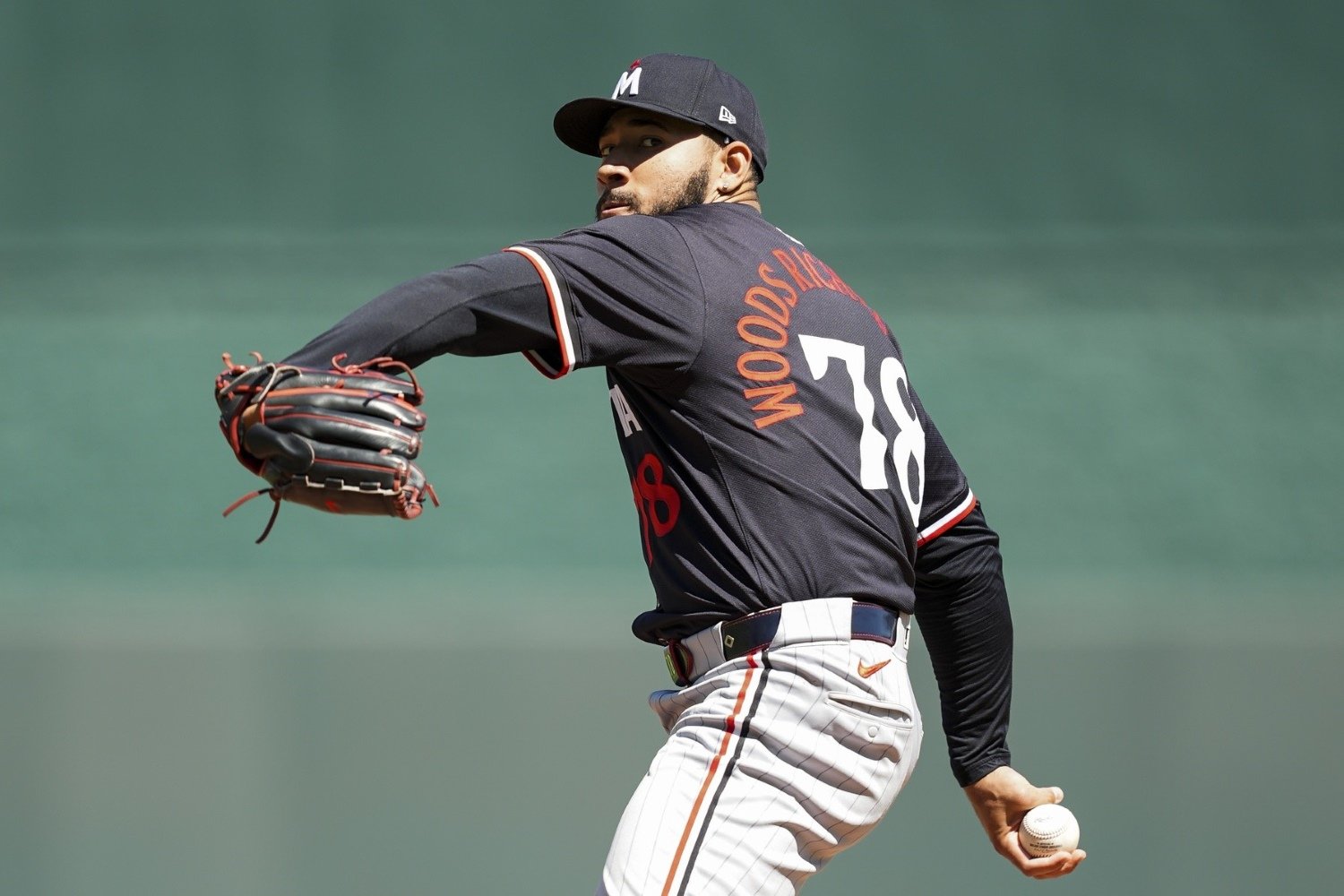 What does it mean to be the most valuable player? Do they have to be worth the most WAR on the team? Should they be the highest-paid? Maybe the clubhouse leader is the most valuable. Some say availability is the best ability, so should the MVP be the team iron man? There are many different ways to define value. The 2024 season was somewhat unique, in that there wasn’t a clear-cut team MVP. Because of that, I would argue that Simeon Woods Richardson was the most valuable to the team’s success. To begin with, let’s look at some of the more conventional choices. If Carlos Correa were healthy all season, he certainly looked the part, with his typical great defense and solid hitting. However, he missed two months when it mattered most. Willi Castro had the inside track, for a while, as did Byron Buxton. Alas, the former was a non-factor in the second half, and the latter also missed time right when the team could least afford it. Bailey Ober shoved for the majority of his starts, but laid some eggs as well. Sometimes, in the absence of a clear-cut choice, it’s helpful to really break it down. Value connotes getting more than you expect, more than you are paying. Through this lens, who was most instrumental to the team’s success? To be clear, Simeon Woods Richardson was not the best Twins player this season, by any measure. Overall fWAR? That goes to Correa. bWAR? Same deal. Pitcher fWAR? Pablo Lopez. Wins? Still Pablo. Win Probability Added? Griffin Jax. All of those point to measurable statistical value. However, sometimes your most valuable player is the one who provides unexpected stability and fills a vital role without letting the team miss a beat, and Woods Richardson checks that box. While the 2024 season was an immense letdown to everyone with a last name other than Pohlad, it’s important to recognize the fact that the Twins were in position to make the playoffs until the last few games of the season. And, that’s despite both the Royals and Tigers dramatically outperforming their preseason projections. If not for Woods Richardson, the Twins' season would have ceased being competitive probably a month sooner than it did. The main argument for Woods Richardson as team MVP is the depth behind him. No other position would have experienced as big a drop-off as starting pitcher. Looking at the options, David Festa entered the season nearly ready for a promotion to the Twins. But, the Twins needed more depth than just one more pitcher, and that depth just wasn’t there. When Anthony DeSclafani blew out his elbow in camp and Louie Varland blew out his rotation spot in April, Woods Richardson was there to fill the hole that had been gashed into Minnesota's starting rotation. Behind Festa, the options weren’t great. Zebby Matthews got shelled in his first season in the majors. That makes sense, considering that if things had gone according to plan, he probably wouldn’t have gotten called up until midseason next year. After Matthews would have been Andrew Morris (even less ready); Randy Dobnak, who’s just not a major-league starter; or a Quad-A guy like Caleb Boushley. Any of those pitchers would likely have led to an additional four or five losses over the course of the season, when compared to the generally competitive starts made by Woods Richardson. Going from an almost-afterthought headed into the season, when Woods Richardson got his chance, he never looked back. Despite running out of gas after surpassing his career high in innings in late August, Woods Richardson pitched to a 4.17 ERA and was worth 1.8 fWAR. Overall, that’s good fourth starter territory. Before tiring, his results were very solidly mid-rotation, to the point that he was set to be an assumed playoff starter after Joe Ryan went down for the year. Through his Aug. 21 start — the last before he reaching his prior innings maximum — he threw 112 innings of 3.69 ERA ball, while allowing a wOBA of just .287. Aside from his results, his velocity was up, as was his strikeout rate. His walk rate was down. His WHIP was just 1.18. He was reliable, not missing a start. Despite being a rookie, he demonstrated a calm presence on the mound. He had three pitches with positive run values (but don’t look at his changeup). This is despite not having a single functional pitch in his previous limited experience with the Twins in 2022 and 2023. All of that is very, very promising. Look, is Woods Richardson an ace? No. Can he get there? No, probably not. But, he doesn’t need to be. Giving the Twins nearly a full season of solid, mid-rotation results when called upon was the most unexpectedly valuable thing that happened this season, and he is the Twins’ 2024 most valuable player as a result. As we roll out our year-end awards this week, Twins Daily writers will be making the cases for their favorite candidates for Twins MVP. Do you buy Woods RIchardson's case for the honor? Who would be your choice, if not? Weigh in.
 -
While the baseball media landscape has been shifting over the past few seasons, the Twins’ response to this has been tone-deaf and ineffective. That's led to a downward spiral in the quality of the on-the-field product, and in fan interest. In short, the business side of the team is largely to blame for both fan morale and the Twins' elimination from playoff contention. Image courtesy of © Jesse Johnson-Imagn Images While the baseball media landscape has been shifting over the past few seasons, the Twins’ response to this has been tone-deaf and ineffective. That's led to a downward spiral in the quality of the on-the-field product, and in fan interest. In short, the business side of the team is largely to blame for both fan morale and the Twins' elimination from playoff contention. This is the second in a series of articles about the factors that contributed to the Twins' devastating collapse at the end of this season, and how they interact with and influence each other. With fan interest comes attendance. With attendance comes added payroll flexibility. Both are the responsibility of the business side of the Twins organization. Dave St. Peter's organization failed the team, and fans. Let’s dig into some factors that illustrate the cause for this blame, starting with the TV situation. What to Do When the Bubble Pops Baseball broadcast rights have been a slow-moving trainwreck over the past few seasons. With Diamond Sports Group defaulting on their contracts with multiple teams (including the Twins) and then beginning bankruptcy proceedings, the writing has been on the wall for some time: owners' broadcast revenue was unavoidably shrinking. For many organizations, this has been a hang-up, but only a minor one. For the Twins, it's been a huge deal. Their business team seemed to be caught flat-footed, and made a series of questionable decisions that showed a lack of situational awareness or general savvy. Headed into the 2023-2024 offseason, the business group signaled an understanding that no broadcast partner would pay anywhere near the $60 million in annual fees that Diamond Sports Group had been paying. That factored into their offseason comments around “right-sizing” the payroll. For a moment, it seemed as though the Twins would prioritize the fan experience, while making the best of a bad situation. They telegraphed this to the point that new TV play-by-play announcer Cory Provus said the following in an interview: Of course, fans know how that played out. Rather than following through with this promise, the team took the cynical approach of re-upping the same basic deal they had, but with a lower payout--and more importantly, without securing streaming rights that would actually allow more fans to watch the games regardless of location or cable subscription status. And, despite what amounted to a bailout reengagement, the team didn't reevaluate their payroll. Following the deal, St. Peter said: An uncharitable (but perhaps accurate) read of this would be that the team chose the highest bidder, regardless of the implications for fans. St. Peter followed up by saying: Sure. Then, there was the carriage dispute preventing cable subscribers paying for Bally Sports North from watching games. Starting on May 1, Bally Sports North went dark for Comcast and Midco customers, and subscribers were unable to watch games for three full months. The Twins' statement on the matter? These factors combined to wither fan interest, right as the team was heating up after a rough start to the season. Fan Attendance The business side of the organization is also responsible for strategies to put butts in seats. The Twins hit their highwater mark in attendance in 2010, the year that Target Field opened, with 3.2 million fans visiting the ballpark. In 2023, attendance did not crack 2 million. Attendance typically lags behind performance, though. On the heels of breaking the playoff curse and the window of contention being wide-open, it would be reasonable to assume that attendance would increase, perhaps substantially. However, on the heels of the team's payroll reduction, apathy set in. With declining attendance, savvy business units might try creative strategies to entice fans to spend their time and money going to games. Knowing that many fans were unable to watch games, a deft team may have leaned into non-traditional media or giveaways to drive attendance. That didn’t happen. Instead, they featured such giveaways as the Twins Rubik’s Cube. Perhaps they wanted fans to puzzle out just why they went to the ballpark that day? The Twins did jump on the “Bark at the Park” bandwagon and held a fair number of typical promotions, but they didn’t get creative with flash sales, bundle discounts, actually intriguing giveaways, or attempts to draw in North Loop residents. Other Decisions Beyond broadcast rights and ticket sales issues, you have questionable decisions such as raising the price of playoff ticket strips and including a non-refundable $60 fee. Yes, fans who bought strips for the chance to see playoff baseball are out $60, even though the Twins missed the playoffs. That is another business decision that is penny-wise and pound-foolish. On the penultimate game of the 2024 season, a fan brought an anti-Pohlad sign to the game. Yes, it was hostile and inflammatory. However, the reaction was perhaps disproportionate: that fan is allegedly banned from Target Field for a year. Finally, the Twins were one of just seven teams who chose not to sell advertising in the form of uniform patches. Don’t get me wrong; these patches can be perceived as tacky. I would personally prefer they didn’t exist. But, they are a source of revenue. The value of this advertising is not publicly available and varies pretty widely, but for a team crying poor, the decision to not take advantage of every possible stream doesn’t make much sense--especially when the team “didn’t have the money” for even a legitimate reliever at the trade deadline (sorry, Trevor Richards). Takeaways Because team revenues (driven by broadcast rights, advertising, and fan attendance) directly factor into team payroll allocations, it’s fair to say that the business side of the Twins is responsible for the quality of the product fans watched, listened to, or ignored down the stretch. At the end of the day, the result of all of this is that the team missed the playoffs (and the $10 million or more they would have gotten from the playoff bonus pool), and will likely lose untold additional revenue through an angry and apathetic fan base that will go to fewer games next season, buy less merchandise, and watch or listen less than they otherwise might. Between the broadcast situation (and the disparity between words and actions), the inability to understand fan motivation and to bring people to the ballpark, and tone-deaf business decisions, the overall message to fans is that the business side of the Twins leadership team thought that they could cut costs, pocket profits, and that fan goodwill would exist just because of the 2023 team advancing in the playoffs. Hopefully, this fall's hostility disabuses them of this belief, and hopefully, this will lead to a group that better seeks to improve the fan experience for their customers and true believers. This team can have an incredibly bright future, if only those in charge don’t get in the way of that. View full article
-
 This is the second in a series of articles about the factors that contributed to the Twins' devastating collapse at the end of this season, and how they interact with and influence each other. With fan interest comes attendance. With attendance comes added payroll flexibility. Both are the responsibility of the business side of the Twins organization. Dave St. Peter's organization failed the team, and fans. Let’s dig into some factors that illustrate the cause for this blame, starting with the TV situation. What to Do When the Bubble Pops Baseball broadcast rights have been a slow-moving trainwreck over the past few seasons. With Diamond Sports Group defaulting on their contracts with multiple teams (including the Twins) and then beginning bankruptcy proceedings, the writing has been on the wall for some time: owners' broadcast revenue was unavoidably shrinking. For many organizations, this has been a hang-up, but only a minor one. For the Twins, it's been a huge deal. Their business team seemed to be caught flat-footed, and made a series of questionable decisions that showed a lack of situational awareness or general savvy. Headed into the 2023-2024 offseason, the business group signaled an understanding that no broadcast partner would pay anywhere near the $60 million in annual fees that Diamond Sports Group had been paying. That factored into their offseason comments around “right-sizing” the payroll. For a moment, it seemed as though the Twins would prioritize the fan experience, while making the best of a bad situation. They telegraphed this to the point that new TV play-by-play announcer Cory Provus said the following in an interview: Of course, fans know how that played out. Rather than following through with this promise, the team took the cynical approach of re-upping the same basic deal they had, but with a lower payout--and more importantly, without securing streaming rights that would actually allow more fans to watch the games regardless of location or cable subscription status. And, despite what amounted to a bailout reengagement, the team didn't reevaluate their payroll. Following the deal, St. Peter said: An uncharitable (but perhaps accurate) read of this would be that the team chose the highest bidder, regardless of the implications for fans. St. Peter followed up by saying: Sure. Then, there was the carriage dispute preventing cable subscribers paying for Bally Sports North from watching games. Starting on May 1, Bally Sports North went dark for Comcast and Midco customers, and subscribers were unable to watch games for three full months. The Twins' statement on the matter? These factors combined to wither fan interest, right as the team was heating up after a rough start to the season. Fan Attendance The business side of the organization is also responsible for strategies to put butts in seats. The Twins hit their highwater mark in attendance in 2010, the year that Target Field opened, with 3.2 million fans visiting the ballpark. In 2023, attendance did not crack 2 million. Attendance typically lags behind performance, though. On the heels of breaking the playoff curse and the window of contention being wide-open, it would be reasonable to assume that attendance would increase, perhaps substantially. However, on the heels of the team's payroll reduction, apathy set in. With declining attendance, savvy business units might try creative strategies to entice fans to spend their time and money going to games. Knowing that many fans were unable to watch games, a deft team may have leaned into non-traditional media or giveaways to drive attendance. That didn’t happen. Instead, they featured such giveaways as the Twins Rubik’s Cube. Perhaps they wanted fans to puzzle out just why they went to the ballpark that day? The Twins did jump on the “Bark at the Park” bandwagon and held a fair number of typical promotions, but they didn’t get creative with flash sales, bundle discounts, actually intriguing giveaways, or attempts to draw in North Loop residents. Other Decisions Beyond broadcast rights and ticket sales issues, you have questionable decisions such as raising the price of playoff ticket strips and including a non-refundable $60 fee. Yes, fans who bought strips for the chance to see playoff baseball are out $60, even though the Twins missed the playoffs. That is another business decision that is penny-wise and pound-foolish. On the penultimate game of the 2024 season, a fan brought an anti-Pohlad sign to the game. Yes, it was hostile and inflammatory. However, the reaction was perhaps disproportionate: that fan is allegedly banned from Target Field for a year. Finally, the Twins were one of just seven teams who chose not to sell advertising in the form of uniform patches. Don’t get me wrong; these patches can be perceived as tacky. I would personally prefer they didn’t exist. But, they are a source of revenue. The value of this advertising is not publicly available and varies pretty widely, but for a team crying poor, the decision to not take advantage of every possible stream doesn’t make much sense--especially when the team “didn’t have the money” for even a legitimate reliever at the trade deadline (sorry, Trevor Richards). Takeaways Because team revenues (driven by broadcast rights, advertising, and fan attendance) directly factor into team payroll allocations, it’s fair to say that the business side of the Twins is responsible for the quality of the product fans watched, listened to, or ignored down the stretch. At the end of the day, the result of all of this is that the team missed the playoffs (and the $10 million or more they would have gotten from the playoff bonus pool), and will likely lose untold additional revenue through an angry and apathetic fan base that will go to fewer games next season, buy less merchandise, and watch or listen less than they otherwise might. Between the broadcast situation (and the disparity between words and actions), the inability to understand fan motivation and to bring people to the ballpark, and tone-deaf business decisions, the overall message to fans is that the business side of the Twins leadership team thought that they could cut costs, pocket profits, and that fan goodwill would exist just because of the 2023 team advancing in the playoffs. Hopefully, this fall's hostility disabuses them of this belief, and hopefully, this will lead to a group that better seeks to improve the fan experience for their customers and true believers. This team can have an incredibly bright future, if only those in charge don’t get in the way of that.
 -
The 2024 season featured a number of pitching success stories all throughout the system that validate the Falvey pitching pipeline is alive and well. While it can be difficult to select just a few to spotlight, here are the best of the best, as voted on by the Twins Daily writers. Image courtesy of Rob Thompson, St. Paul Saints The 2024 season featured a number of pitching success stories all throughout the system that validate the Falvey pitching pipeline is alive and well. While it can be difficult to select just a few to spotlight, here are the best of the best, as voted on by the Twins Daily writers. Derek Falvey was hired, in part, to bring the Cleveland pitching scouting and development process to Minnesota. Coming off a “total system failure” it took a while to see the fruits of that labor. In 2023, we watched pitchers like Bailey Ober, Joe Ryan, and Louie Varland take significant steps forward despite their inauspicious draft positions and prospect pedigrees. In 2024, we saw the next wave of talent rapidly progress through the system, indicating that the future is bright on the pitching front. Before digging into this year’s top vote getters, let’s look at the past few years’ winners. 2023: Cory Lewis 2022: Louie Varland 2021: Louie Varland 2020: No Season 2019: Randy Dobnak 2018 winner - Tyler Wells 2017 winner - Stephen Gonsalves 2016 winner - Stephen Gonsalves 2015 winner - Jose Berrios 2014 winner - Jose Berrios 2013 winner - Taylor Rogers 2012 winner - BJ Hermsen Now, without further ado, here’s the countdown to the Twins Daily Minor League Pitcher of the Year. Honorable mentions Travis Adams, 24 years old Double-A Wichita: 22 games (19 starts), 108 innings pitched, 5-7, 3.67 ERA, 109 K, 28 BB, 1.13 WHIP Triple-A Saint Paul: 4 games (3 starts), 0-2, 19 innings pitched, 5.21 ERA, 9 K, 7 BB, 1.26 WHIP Ty Langenberg, 22 years old Low-A Fort Myers: 9 games (9 starts), 48 innings pitched, 5-2, 3.38 ERA, 56 K,12 BB, 1.21 WHIP High-A Cedar Rapids: 12 games (11 starts), 60 innings pitched, 3-3, 3.9 ERA, 60 K, 18 BB, 1.3 WHIP The Top Four T-3 Cory Lewis, 23 years old 19 games (17 starts), 79 innings pitched, 3-6, 2.51 ERA, 92 K, 40 BB, 1.32 WHIP Cory Lewis fits the mold of many other late-round pitchers taken by the Twins. He’s tall (6’5”) and has an interesting characteristic (throws a knuckleball). The Twins took him in the 9th round in 2022. In 2023, he pitched his way to High-A and led all organizational starting pitchers in ERA, BAA, and strikeout rate. After being named the Twins minor-league pitcher of the year in 2023, he began 2024 on the IL with a shoulder impingement, and spent most of the season at Double-A Wichita, where he was over a year younger than average. He did get promoted to the Saints after the Double-A season concluded. Aside from one blowup game, Lewis did not give up more than two runs in any start this season. He throws an ok fastball that he throws up in the zone. Because he has good extension, he gets a lot of whiffs. He also throws a 12-6 curve, and of course, that knuckleball. Unlike most knuckleballers who don’t have other good pitches, Lewis has solid stuff. He also has good command. If he’s able to add a bit more velocity to his fastball (currently averaging 92) he could grow into a mid-rotation starter. If he can’t, he may end up in the bullpen. T-3 David Festa, 24 years old Triple-A Saint Paul: 15 games (15 starts), 60-1/3 innings pitched, 3-3, 4.03 ERA, 89 K, 26 BB, 1.36 WHIP Twins: 13 games (12 starts), 60 innings pitched, 2-6, 4.80 ERA (3.91 FIP), 72 K, 22 BB, 1.28 WHIP The Twins took Festa in the 13th round of the 2021 draft out of Seton Hall. At that time, he was still relatively new to pitching as he had been a shortstop until his senior year of high school. That year, he got promoted to low-A and has moved through the system quickly. In 2022, he spent time back at Fort Myers and then was promoted to Cedar Rapids. In 2023, he split time between Double-A Wichita and Saint Paul. Prior to the 2024 season, he found his way onto some top-100 prospect lists, and was also ranked the Twins’ best pitching prospect. He started the 2024 season at St Paul where he became the first Saints pitcher to ever pitch multiple games with at least 10 strikeouts despite being three years younger than average. On June 27, he received his first call-up. It didn’t go great as he allowed 12 runs over 10 innings, including giving up four homers. He was sent back down for three weeks after which he was called up for the remainder of the season. In his second stint he was much better, pitching to a 3.81 ERA (3.15 FIP) and a .289 wOBA. Those are some great results for a rookie drafted in the 13th round. Despite having just a three pitch mix, with the Twins, Festa is striking out almost 11 guys per nine innings, best among Twins starters. He has elite extension, and his slider is a true putaway pitch. His four seam fastball and changeup have both gotten hit pretty hard, but his expected numbers on both pitches are better than his actuals. Festa’s fastball doesn’t have much movement on it, and he walks a few too many guys. If he can improve either of those even a bit, he’s got real upside as a number two starter. #2: Andrew Morris - 23 years old 26 games (24 starts), 133 innings pitched, 10-5, 2.37 ERA, 133 K, 32 BB, 1.08 WHIP The Twins drafted Morris in the 4th round of the 2022 draft out of Colorado Mesa University. He got a single game in that season. In 2023, he split his season between Low-A Fort Myers and High-A Cedar Rapids and threw 84-1/3 innings of 3.63 ERA ball, 8.4 strikeouts per nine innings and a solid walk rate. True to typical Twins fashion, they have helped Morris increase his velocity from the low-90s to the point that he can now touch 97. He has also improved his command to the point that it’s now borderline-elite. He has a four pitch mix and a somewhat deceptive overhead delivery that adds to his effectiveness. He also has a plus slider and average curve. His changeup is serviceable. He began 2024 back in Cedar Rapids, but was promoted twice, ending up with the Saints for his final seven starts of the season. With Saint Paul, he didn’t miss enough bats and walked a few too many guys as he faced advanced hitting for the first time. This led to a 4.28 FIP. He’s likely to begin the 2025 season in Saint Paul where he will need to work on refining his command. Assuming health, he should make his Twins debut next year. He’s also got a chance to be on some top-100 prospect lists this offseason. And the Twins Daily Minor League Pitcher of the Year is…Zebby Matthews, 24 years old High-A, Double-A, Triple A: 18 games (17 starts), 97 innings pitched, 6-3, 114 K, 7 BB, 0.87 WHIP Twins: 8 games (8 starts), 34-2/3 innings pitched, 1-3, 5.71 ERA (5.21 FIP), 38 K, 8 BB, 1.5 WHIP Zebby. Where to begin. Perhaps where he began: Cedar Rapids. That’s right. He began the season at High-A, and it took him all of four months to make his major league debut. How did he get here, and what stands out about his season? The Twins drafted him in the 8th round in 2022 out of Western Carolina. Similar to Festa, Morris, and countless others, their player development staff has helped him add three ticks to his fastball, and he now touches 97. Across three minor-league levels this season, Zebby Matthews put up video game numbers. You almost have to to get promoted three times in four months. He has always had pinpoint control and command and it’s worked for him. This led to him becoming a top-100 prospect on the midseason MLB Pipeline list. He was called up on August 8th for his debut just two years after being drafted. The season hasn’t gone according to plan, but that’s to be expected from almost any rookie pitcher — particularly one who under ordinary circumstances wouldn’t have debuted until next season. A large part of this can be tracked to his process. He has attacked major league hitters the same way he did guys in the minors. Unfortunately for him, when he leaves too many pitches in the zone, hitters at this level can crush. He is working through the process of learning to pitch differently, to nibble, and to focus on striking guys out outside the zone. Currently, he gets a lot of whiffs on his slider, which he throws to both lefties and righties. However, his other four pitches all have an xwOBA of .330 or higher. Opposing hitters have slugged over .600 on his cutter and curve, and .593 against his fastball. He will almost certainly start next season as depth with the Saints, but will be one of the first call-ups when the need arises. Even though he has not been dominant — and in fact, has gotten hit hard, he is hopefully proud of the development he did across the 2024 season. Now he will have time to reflect, reset, and work on becoming a pitcher that’s ready to impact the next time the opportunity presents itself. What do you think? Would you rank any of these pitchers differently? Comment below! View full article
-
Twins Minor League Starting Pitcher of the Year - 2024
Eric Blonigen posted an article in Minor Leagues
 Derek Falvey was hired, in part, to bring the Cleveland pitching scouting and development process to Minnesota. Coming off a “total system failure” it took a while to see the fruits of that labor. In 2023, we watched pitchers like Bailey Ober, Joe Ryan, and Louie Varland take significant steps forward despite their inauspicious draft positions and prospect pedigrees. In 2024, we saw the next wave of talent rapidly progress through the system, indicating that the future is bright on the pitching front. Before digging into this year’s top vote getters, let’s look at the past few years’ winners. 2023: Cory Lewis 2022: Louie Varland 2021: Louie Varland 2020: No Season 2019: Randy Dobnak 2018 winner - Tyler Wells 2017 winner - Stephen Gonsalves 2016 winner - Stephen Gonsalves 2015 winner - Jose Berrios 2014 winner - Jose Berrios 2013 winner - Taylor Rogers 2012 winner - BJ Hermsen Now, without further ado, here’s the countdown to the Twins Daily Minor League Pitcher of the Year. Honorable mentions Travis Adams, 24 years old Double-A Wichita: 22 games (19 starts), 108 innings pitched, 5-7, 3.67 ERA, 109 K, 28 BB, 1.13 WHIP Triple-A Saint Paul: 4 games (3 starts), 0-2, 19 innings pitched, 5.21 ERA, 9 K, 7 BB, 1.26 WHIP Ty Langenberg, 22 years old Low-A Fort Myers: 9 games (9 starts), 48 innings pitched, 5-2, 3.38 ERA, 56 K,12 BB, 1.21 WHIP High-A Cedar Rapids: 12 games (11 starts), 60 innings pitched, 3-3, 3.9 ERA, 60 K, 18 BB, 1.3 WHIP The Top Four T-3 Cory Lewis, 23 years old 19 games (17 starts), 79 innings pitched, 3-6, 2.51 ERA, 92 K, 40 BB, 1.32 WHIP Cory Lewis fits the mold of many other late-round pitchers taken by the Twins. He’s tall (6’5”) and has an interesting characteristic (throws a knuckleball). The Twins took him in the 9th round in 2022. In 2023, he pitched his way to High-A and led all organizational starting pitchers in ERA, BAA, and strikeout rate. After being named the Twins minor-league pitcher of the year in 2023, he began 2024 on the IL with a shoulder impingement, and spent most of the season at Double-A Wichita, where he was over a year younger than average. He did get promoted to the Saints after the Double-A season concluded. Aside from one blowup game, Lewis did not give up more than two runs in any start this season. He throws an ok fastball that he throws up in the zone. Because he has good extension, he gets a lot of whiffs. He also throws a 12-6 curve, and of course, that knuckleball. Unlike most knuckleballers who don’t have other good pitches, Lewis has solid stuff. He also has good command. If he’s able to add a bit more velocity to his fastball (currently averaging 92) he could grow into a mid-rotation starter. If he can’t, he may end up in the bullpen. T-3 David Festa, 24 years old Triple-A Saint Paul: 15 games (15 starts), 60-1/3 innings pitched, 3-3, 4.03 ERA, 89 K, 26 BB, 1.36 WHIP Twins: 13 games (12 starts), 60 innings pitched, 2-6, 4.80 ERA (3.91 FIP), 72 K, 22 BB, 1.28 WHIP The Twins took Festa in the 13th round of the 2021 draft out of Seton Hall. At that time, he was still relatively new to pitching as he had been a shortstop until his senior year of high school. That year, he got promoted to low-A and has moved through the system quickly. In 2022, he spent time back at Fort Myers and then was promoted to Cedar Rapids. In 2023, he split time between Double-A Wichita and Saint Paul. Prior to the 2024 season, he found his way onto some top-100 prospect lists, and was also ranked the Twins’ best pitching prospect. He started the 2024 season at St Paul where he became the first Saints pitcher to ever pitch multiple games with at least 10 strikeouts despite being three years younger than average. On June 27, he received his first call-up. It didn’t go great as he allowed 12 runs over 10 innings, including giving up four homers. He was sent back down for three weeks after which he was called up for the remainder of the season. In his second stint he was much better, pitching to a 3.81 ERA (3.15 FIP) and a .289 wOBA. Those are some great results for a rookie drafted in the 13th round. Despite having just a three pitch mix, with the Twins, Festa is striking out almost 11 guys per nine innings, best among Twins starters. He has elite extension, and his slider is a true putaway pitch. His four seam fastball and changeup have both gotten hit pretty hard, but his expected numbers on both pitches are better than his actuals. Festa’s fastball doesn’t have much movement on it, and he walks a few too many guys. If he can improve either of those even a bit, he’s got real upside as a number two starter. #2: Andrew Morris - 23 years old 26 games (24 starts), 133 innings pitched, 10-5, 2.37 ERA, 133 K, 32 BB, 1.08 WHIP The Twins drafted Morris in the 4th round of the 2022 draft out of Colorado Mesa University. He got a single game in that season. In 2023, he split his season between Low-A Fort Myers and High-A Cedar Rapids and threw 84-1/3 innings of 3.63 ERA ball, 8.4 strikeouts per nine innings and a solid walk rate. True to typical Twins fashion, they have helped Morris increase his velocity from the low-90s to the point that he can now touch 97. He has also improved his command to the point that it’s now borderline-elite. He has a four pitch mix and a somewhat deceptive overhead delivery that adds to his effectiveness. He also has a plus slider and average curve. His changeup is serviceable. He began 2024 back in Cedar Rapids, but was promoted twice, ending up with the Saints for his final seven starts of the season. With Saint Paul, he didn’t miss enough bats and walked a few too many guys as he faced advanced hitting for the first time. This led to a 4.28 FIP. He’s likely to begin the 2025 season in Saint Paul where he will need to work on refining his command. Assuming health, he should make his Twins debut next year. He’s also got a chance to be on some top-100 prospect lists this offseason. And the Twins Daily Minor League Pitcher of the Year is…Zebby Matthews, 24 years old High-A, Double-A, Triple A: 18 games (17 starts), 97 innings pitched, 6-3, 114 K, 7 BB, 0.87 WHIP Twins: 8 games (8 starts), 34-2/3 innings pitched, 1-3, 5.71 ERA (5.21 FIP), 38 K, 8 BB, 1.5 WHIP Zebby. Where to begin. Perhaps where he began: Cedar Rapids. That’s right. He began the season at High-A, and it took him all of four months to make his major league debut. How did he get here, and what stands out about his season? The Twins drafted him in the 8th round in 2022 out of Western Carolina. Similar to Festa, Morris, and countless others, their player development staff has helped him add three ticks to his fastball, and he now touches 97. Across three minor-league levels this season, Zebby Matthews put up video game numbers. You almost have to to get promoted three times in four months. He has always had pinpoint control and command and it’s worked for him. This led to him becoming a top-100 prospect on the midseason MLB Pipeline list. He was called up on August 8th for his debut just two years after being drafted. The season hasn’t gone according to plan, but that’s to be expected from almost any rookie pitcher — particularly one who under ordinary circumstances wouldn’t have debuted until next season. A large part of this can be tracked to his process. He has attacked major league hitters the same way he did guys in the minors. Unfortunately for him, when he leaves too many pitches in the zone, hitters at this level can crush. He is working through the process of learning to pitch differently, to nibble, and to focus on striking guys out outside the zone. Currently, he gets a lot of whiffs on his slider, which he throws to both lefties and righties. However, his other four pitches all have an xwOBA of .330 or higher. Opposing hitters have slugged over .600 on his cutter and curve, and .593 against his fastball. He will almost certainly start next season as depth with the Saints, but will be one of the first call-ups when the need arises. Even though he has not been dominant — and in fact, has gotten hit hard, he is hopefully proud of the development he did across the 2024 season. Now he will have time to reflect, reset, and work on becoming a pitcher that’s ready to impact the next time the opportunity presents itself. What do you think? Would you rank any of these pitchers differently? Comment below!
- 12 comments
-
- 4
-
-
- zebby matthews
- andrew morris
- (and 4 more)
-
It is interesting how he flat out said the product will be better, isn’t it?
-
Personally, I would say that even $20M more this season would have easily been the difference. That would have allowed for a couple of higher-wattage reliever signings than Jay Jackson and Josh Staumont, and would have allowed the front office to make some real trades at the deadline to address positions of need. Realistically, we are talking about needing four more wins, and $20M probably would have gotten the Twins there.
-
On the final day of the 2024 season, President of Baseball Operations Derek Falvey confirmed that Manager Rocco Baldelli will return for the 2025 season--and ownership, in turn, confirmed Falvey will do so. Image courtesy of © Eric Canha-Imagn Images On the final day of the 2024 season, President of Baseball Operations Derek Falvey confirmed that Manager Rocco Baldelli will return for the 2025 season--and ownership, in turn, confirmed Falvey will do so. Minutes before team executive chairman Joe Pohlad confirmed that Derek Falvey will return as the Twins' chief baseball decision-maker next season, Falvey affirmed that manager Rocco Baldelli had the same job security. Baldelli was hired as a 37-year-old first-time manager after the 2018 season. In his first year, he led the Bomba Squad to a 101-win season, the largest year-over-year improvement in the American League, and a new baseball record for home runs hit, at 307. Following the season, he won Manager of the Year, and spoke to the value of creating relationships, clubhouse vibes, rest, and communication. Those priorities have largely worked. Over his six seasons managing the Twins, Baldelli has a .526 winning percentage—best of any Twins Manager over the past 50 years. Over that span, he has led the Twins to the AL Central title three times, in 2019, 2020, and 2023. That last squad broke the Twins’ playoff curse, advancing to the ALDS where they lost to the Houston Astros. Because of the Twins' late-season collapse, fans have questioned which prominent figures might take the blame. Most of the time, someone takes the fall when expectations go unmet in such dramatic fashion. Often, this starts with members of the coaching staff. The manager goes next, and eventually the front office. The Twins have demonstrated this process in the last decade during the “Total System Failure” years. The Twins are typically tight-lipped about the contract status of non-player personnel. This led to recent deliberation around whether wholesale changes could be coming to the front office, as there was uncertainty around whether Derek Falvey and Thad Levine were still under contract beyond 2024. That said, we do know that Baldelli is under contract through at least the 2025 season, and the implication has been that the team at least holds an option for his services in 2026. Based on this alone, given the Twins payroll situation, it was always unlikely the front office would choose to pay two managers for a season. That said, there are two reasons that Baldelli may have been let go following the disappointing finish to the season. First, the manager is the most visible target when things break down. He gives the postgame interviews, is theoretically responsible for energizing the team, and makes the lineup decisions. When a team loses consistently, it’s possible it’s on the manager. It was, and remains, uncertain how the front office viewed the reasons for the collapse, and more broadly, how they have felt about the job Baldelli has been doing overall. Second, a portion of the fanbase believes that Baldelli only manages by spreadsheet and doesn’t understand the game. Over the past six weeks, there has been speculation that Baldelli has lost the clubhouse, and that that’s why the team has faltered. During recent games, fans led chants of “fire Rocco”. However, a number of players (including Carlos Correa, Bailey Ober, Pablo Lopez, and Kyle Farmer) have placed the blame for poor play squarely on themselves. That reflects at least some measure of veteran support for the skipper within the clubhouse. For now, it’s entirely possible we will see the most likely outcome of some changes on the coaching staff, and it may be necessary. It just won't extend as far up the leadership ladder as some fans might have wanted or expected. “This will bother me forever, there will be no way around that," Baldelli said after the team was eliminated Friday night. "I will think about it a lot and I will use it to motivate myself in a lot of different ways going forward, because I never want to experience that again.” With today’s news, Baldelli will have at least one more chance to prove it, by once again leading the team to the postseason. Meanwhile, his boss will undertake the work of remaking the roster with a bit better depth and durability. View full article
-
Rocco Baldelli, Derek Falvey Will Return in Their Roles with Twins in 2025
Eric Blonigen posted an article in Twins
 Minutes before team executive chairman Joe Pohlad confirmed that Derek Falvey will return as the Twins' chief baseball decision-maker next season, Falvey affirmed that manager Rocco Baldelli had the same job security. Baldelli was hired as a 37-year-old first-time manager after the 2018 season. In his first year, he led the Bomba Squad to a 101-win season, the largest year-over-year improvement in the American League, and a new baseball record for home runs hit, at 307. Following the season, he won Manager of the Year, and spoke to the value of creating relationships, clubhouse vibes, rest, and communication. Those priorities have largely worked. Over his six seasons managing the Twins, Baldelli has a .526 winning percentage—best of any Twins Manager over the past 50 years. Over that span, he has led the Twins to the AL Central title three times, in 2019, 2020, and 2023. That last squad broke the Twins’ playoff curse, advancing to the ALDS where they lost to the Houston Astros. Because of the Twins' late-season collapse, fans have questioned which prominent figures might take the blame. Most of the time, someone takes the fall when expectations go unmet in such dramatic fashion. Often, this starts with members of the coaching staff. The manager goes next, and eventually the front office. The Twins have demonstrated this process in the last decade during the “Total System Failure” years. The Twins are typically tight-lipped about the contract status of non-player personnel. This led to recent deliberation around whether wholesale changes could be coming to the front office, as there was uncertainty around whether Derek Falvey and Thad Levine were still under contract beyond 2024. That said, we do know that Baldelli is under contract through at least the 2025 season, and the implication has been that the team at least holds an option for his services in 2026. Based on this alone, given the Twins payroll situation, it was always unlikely the front office would choose to pay two managers for a season. That said, there are two reasons that Baldelli may have been let go following the disappointing finish to the season. First, the manager is the most visible target when things break down. He gives the postgame interviews, is theoretically responsible for energizing the team, and makes the lineup decisions. When a team loses consistently, it’s possible it’s on the manager. It was, and remains, uncertain how the front office viewed the reasons for the collapse, and more broadly, how they have felt about the job Baldelli has been doing overall. Second, a portion of the fanbase believes that Baldelli only manages by spreadsheet and doesn’t understand the game. Over the past six weeks, there has been speculation that Baldelli has lost the clubhouse, and that that’s why the team has faltered. During recent games, fans led chants of “fire Rocco”. However, a number of players (including Carlos Correa, Bailey Ober, Pablo Lopez, and Kyle Farmer) have placed the blame for poor play squarely on themselves. That reflects at least some measure of veteran support for the skipper within the clubhouse. For now, it’s entirely possible we will see the most likely outcome of some changes on the coaching staff, and it may be necessary. It just won't extend as far up the leadership ladder as some fans might have wanted or expected. “This will bother me forever, there will be no way around that," Baldelli said after the team was eliminated Friday night. "I will think about it a lot and I will use it to motivate myself in a lot of different ways going forward, because I never want to experience that again.” With today’s news, Baldelli will have at least one more chance to prove it, by once again leading the team to the postseason. Meanwhile, his boss will undertake the work of remaking the roster with a bit better depth and durability.
 -
Better Late Than Never: Justin Topa Arrives, Locks Down Twins Win
Eric Blonigen posted an article in Twins
 The Twins announced a flurry of roster moves ahead of Wednesday night's game against the Marlins. One of them was activating Justin Topa for the final five games of the season. In January, the Twins traded fan-favorite second baseman Jorge Polanco to the Seattle Mariners in a five-player swap that also netted them Anthony DeSclafani, Gabriel Gonzalez, Darren Bowen, and enough cash to cover most of DeScalafani's salary for 2024. While the move was panned by those who saw DeSclafani as the prize, the true value was meant to come from Topa and Gonzalez. While Gonzalez has had a middling season at High-A Cedar Rapids, he’s still just 20 and may have a future. Topa, on the other hand, has been injured all season with left patellar tendinitis, suffered covering home plate during a game near the end of spring training. He was close to returning in late July, but that was scuttled by a setback. Only here at the death of the season has he made it all the way back, so many Twins fans are only dimly aware of him. Who is he, why did the Twins trade for him, and what can fans expect? Topa's career has been quite a journey. Drafted twice out of college, in the 33rd and then the 17th rounds, he signed with the Pirates. He was a late bloomer, and injuries wrecked his first shot at pro ball, ultimately forcing him to spend a couple of season and a half in indy ball before the Rangers gave him a second chance. His minor-league deal with them in 2018 didn't lead to glory, but he signed with the Brewers on the eve of Opening Day in 2019. That time, he took off. He debuted in his age-29 season in 2020 and had a good, but brief showing. Over six appearances (7 2/3 innings) he struck out 12, allowed just two earned runs, had a WHIP under 1.00, and carried a FIP of 1.76. The next two seasons were disrupted by a flexor tendon issue that required surgery, so he was limited to just a handful of games in each season. Prior to the 2023 season, the Mariners traded for Topa and he hit his stride in a real way. In his first healthy season, he had a rubber arm, making 75 appearances. That’s Griffin Jax territory. Over 69 innings, he pitched to a 2.61 ERA (3.15 FIP). He walked fewer batters than an average pitcher, and was worth 1.1 fWAR. He was good against both left-handed and right-handed batters, and emerged as a late-inning weapon. That’s the pitcher the Twins hoped they were trading for. Seventy-five innings is a good sample size for a reliever, and the Twins were buying the uncertainty that goes along with a player of Topa’s unusual career arc and injury history, hoping for upside. Controllable through 2026, the intention was for Topa to slot in behind Jhoan Durán, Griffin Jax, and Brock Stewart to form a lethal foursome at the back of the bullpen. Unfortunately, his injury prevented that from taking place. Now that he’s back, he can still impact a bullpen desperate for some stability, as he demonstrated with a scoreless ninth inning Wednesday night. So what does he offer the team? Well, a lot. He has a four-pitch mix, throwing a sinker, slider, cutter, and changeup. The sinker and cutter are both very good, worth 10 runs and one run last year, respectively. He throws the sinker about 45% of the time, and the cutter another 19%. The changeup is so-so, with neutral value, and he throws that rarely, just 7% of the time. The slider is a slight negative, but of course, the Twins do well at helping pitchers develop that pitch. He throws that 30% of the time. The fascinating wrinkle with Topa is his sidearm slot, from a fairly upright posture. It leads to very heavy action on the sinker, and his slider actually appears to rise relative to that pitch, when it's right. While the Twins making the playoffs at this juncture seems unlikely, there’s still value in Topa facing major-league hitters a couple of times this season, and for the Twins, it will be instructive to see how he looks. Being under team control for two more seasons has a ton of value, and although he wasn’t a bullpen building block this season, he could be so next year. The next test is whether he’s truly healthy, and whether his stuff plays at the same level as 2023. If it does, next year's bullpen should be a good one. He pitched for the first time as a member of the Twins in the 9th inning of an 8-3 win. He was efficient, located his pitches, and coaxed a ground out, a pop out, and a strikeout to finish the game. Rocco Baldelli needed 24 outs from his relievers to win that game, and he'll need plenty more from them if the team is going to win enough to sneak into the postseason. Topa gives them a much-needed reliable option, increasing the likelihood that Baldelli will thread the needle. It's a welcome development, though something shy of true salvation.
 -
With the Twins activating Justin Topa Wednesday, they finally got to realize a bit of value from the Jorge Polanco trade. Is it too late, or can he still help the team as they cling desperately to hope? Image courtesy of © Jesse Johnson-Imagn Images With the Twins activating Justin Topa Wednesday, they finally got to realize a bit of value from the Jorge Polanco trade. Is it too late, or can he still help the team as they cling desperately to hope? The Twins announced a flurry of roster moves ahead of Wednesday night's game against the Marlins. One of them was activating Justin Topa for the final five games of the season. In January, the Twins traded fan-favorite second baseman Jorge Polanco to the Seattle Mariners in a five-player swap that also netted them Anthony DeSclafani, Gabriel Gonzalez, Darren Bowen, and enough cash to cover most of DeScalafani's salary for 2024. While the move was panned by those who saw DeSclafani as the prize, the true value was meant to come from Topa and Gonzalez. While Gonzalez has had a middling season at High-A Cedar Rapids, he’s still just 20 and may have a future. Topa, on the other hand, has been injured all season with left patellar tendinitis, suffered covering home plate during a game near the end of spring training. He was close to returning in late July, but that was scuttled by a setback. Only here at the death of the season has he made it all the way back, so many Twins fans are only dimly aware of him. Who is he, why did the Twins trade for him, and what can fans expect? Topa's career has been quite a journey. Drafted twice out of college, in the 33rd and then the 17th rounds, he signed with the Pirates. He was a late bloomer, and injuries wrecked his first shot at pro ball, ultimately forcing him to spend a couple of season and a half in indy ball before the Rangers gave him a second chance. His minor-league deal with them in 2018 didn't lead to glory, but he signed with the Brewers on the eve of Opening Day in 2019. That time, he took off. He debuted in his age-29 season in 2020 and had a good, but brief showing. Over six appearances (7 2/3 innings) he struck out 12, allowed just two earned runs, had a WHIP under 1.00, and carried a FIP of 1.76. The next two seasons were disrupted by a flexor tendon issue that required surgery, so he was limited to just a handful of games in each season. Prior to the 2023 season, the Mariners traded for Topa and he hit his stride in a real way. In his first healthy season, he had a rubber arm, making 75 appearances. That’s Griffin Jax territory. Over 69 innings, he pitched to a 2.61 ERA (3.15 FIP). He walked fewer batters than an average pitcher, and was worth 1.1 fWAR. He was good against both left-handed and right-handed batters, and emerged as a late-inning weapon. That’s the pitcher the Twins hoped they were trading for. Seventy-five innings is a good sample size for a reliever, and the Twins were buying the uncertainty that goes along with a player of Topa’s unusual career arc and injury history, hoping for upside. Controllable through 2026, the intention was for Topa to slot in behind Jhoan Durán, Griffin Jax, and Brock Stewart to form a lethal foursome at the back of the bullpen. Unfortunately, his injury prevented that from taking place. Now that he’s back, he can still impact a bullpen desperate for some stability, as he demonstrated with a scoreless ninth inning Wednesday night. So what does he offer the team? Well, a lot. He has a four-pitch mix, throwing a sinker, slider, cutter, and changeup. The sinker and cutter are both very good, worth 10 runs and one run last year, respectively. He throws the sinker about 45% of the time, and the cutter another 19%. The changeup is so-so, with neutral value, and he throws that rarely, just 7% of the time. The slider is a slight negative, but of course, the Twins do well at helping pitchers develop that pitch. He throws that 30% of the time. The fascinating wrinkle with Topa is his sidearm slot, from a fairly upright posture. It leads to very heavy action on the sinker, and his slider actually appears to rise relative to that pitch, when it's right. While the Twins making the playoffs at this juncture seems unlikely, there’s still value in Topa facing major-league hitters a couple of times this season, and for the Twins, it will be instructive to see how he looks. Being under team control for two more seasons has a ton of value, and although he wasn’t a bullpen building block this season, he could be so next year. The next test is whether he’s truly healthy, and whether his stuff plays at the same level as 2023. If it does, next year's bullpen should be a good one. He pitched for the first time as a member of the Twins in the 9th inning of an 8-3 win. He was efficient, located his pitches, and coaxed a ground out, a pop out, and a strikeout to finish the game. Rocco Baldelli needed 24 outs from his relievers to win that game, and he'll need plenty more from them if the team is going to win enough to sneak into the postseason. Topa gives them a much-needed reliable option, increasing the likelihood that Baldelli will thread the needle. It's a welcome development, though something shy of true salvation. View full article
-
Has Edouard Julien Played His Way Out of the Twins' Future Plans?
Eric Blonigen posted an article in Twins
 Edouard Julien’s 2024 season has not gone how he, the Twins, or fans expected. Sent down twice this season, his current stint on the major-league roster started Aug. 15, and the results haven’t been pretty. He’s played in just one game over the past 10 days, evoking the question: What should fans make of his usage and results, and does he still factor into the Twins' plans in 2025 and beyond? His Journey Julien was drafted in the 18th round in 2019. Thanks to COVID, he made his professional debut in 2021, and fairly quickly, he looked like a patented late-round success story. He crushed in the 2022 Arizona Fall League, leading the league in walks and runs while slugging .683. Two weeks into the 2023 season, he received his first call-up and was a part of a historically good corps of rookies, along with Matt Wallner and Louie Varland. Over the course of 2023, he put up a .263/.381/.459 line, good for a 136 wRC+, third among all second basemen. He had power and patience, regularly spitting on pitches outside the zone. This led to him finishing the season with some Rookie of the Year votes, while being worth 2.8 fWAR. This isn’t to say he didn’t have his warts: his defense at second base wasn’t good (-1 OAA); he had a 31% strikeout rate, driven by in-zone whiffs; he didn’t do well against lefties. Many saw him as a future first baseman or DH, and at worst, a platoon player. Exact role aside, he appeared to be firmly within the Twins' plans in some capacity. During the offseason, he worked on his fielding, and entering the 2024 season, he looked to have claimed second base both offensively and defensively. In April, Julien looked like he had figured it all out. He put up an .861 OPS and seemed confident at second base. Davy Andrews even wrote a song, “Edouard Julien, Are You Gonna Rule Again?”. As it turns out, it was not meant to be - at least this season. His results since the calendar flipped to May have been sub-replacement level. Across 180 plate appearances, he has just a .525 OPS, and that’s actually buoyed by a .320 BABIP. That’s bad for a backup catcher, let alone for a middle infielder or first baseman. To make matters worse, he’s hit just one homer and isn’t barreling the ball much at all—just 5.5% of his plate appearances end that way. Looking at Julien's Savant page, there's a frightening amount of blue. Julien is sporting an unsightly 35% K-rate. Specifically, he’s striking out looking at an unsustainable rate. Even worse, many of those come on pitches down the heart of the plate, where he’s been worth -7 runs. He’s swinging at 19% of pitches just outside the zone, a 5% increase since last year. Overall, he’s swinging at about 30% fewer pitches than the average player. This suggests that his feel at the plate has disappeared, which is further backed up by a 5.7% drop in his walk rate, year over year. His defense at second has also slid once again, and on the season, he’s now worth -3 OAA at second. He’s close to unplayable right now in all parts of his game, and would benefit from a reset. The end of the season isn’t a great time for that, as he will now feel the pressure of fighting for a 26-man roster spot entering 2025. Who’s Behind Him? Julien is capable of playing first, second, or DH. Thinking about the Twins depth chart, second base is likely to be manned by one of Royce Lewis or Brooks Lee for the next several seasons. Luke Keaschall is all but ready for a promotion to Triple-A, and will likely join the Twins at some point in 2025. His best positions are second base or center field, further crowding the infield. Willi Castro plays a lot of infield as well. So, it’ll likely be tough for Julien to crack any of those positions. First base is likely to be an open competition between Jose Miranda (who was in a spot much like the one Julien is in now, a year ago), Alex Kirilloff (if he is still on the roster in 2025) or Julien. But a first baseman needs to hit. There are currently real question marks surrounding all three of those players’ ability to do that well enough for the position. If there were any likelihood of the Twins spending in the offseason, signing a Carlos Santana type would probably be the path of least resistance, and would prevent the Twins from having to decide which option at first is the least suboptimal. Since spending seems unlikely, it’s anyone’s guess. Takeaways Look, it’s possible that after the season ends, Julien will reveal that he’s been playing hurt, as Miranda was in 2023. Maybe he spends his offseason working with Driveline to improve his swing. Or, it’s possible that the league simply adjusted to Julien, and he needs to respond with an aggressive adjustment of his own. Regardless, it’s likely that he remains in the organization, as his potential trade value is severely depressed. Assuming he does, he will probably begin the season with the Saints, and will need to hit his way back onto the roster. Even if he does that, he may have regained more value as a trade chip given his defensive (in)flexibility. It’s up to Julien to figure out what his future holds. Unfortunately, this season raised more questions than it answered.
 -
One young Twins infielder came back from the brink of organizational disinterest this season. Asking it to happen again next year seems like a tall order. Image courtesy of © Nathan Ray Seebeck-Imagn Images One young Twins infielder came back from the brink of organizational disinterest this season. Asking it to happen again next year seems like a tall order. Edouard Julien’s 2024 season has not gone how he, the Twins, or fans expected. Sent down twice this season, his current stint on the major-league roster started Aug. 15, and the results haven’t been pretty. He’s played in just one game over the past 10 days, evoking the question: What should fans make of his usage and results, and does he still factor into the Twins' plans in 2025 and beyond? His Journey Julien was drafted in the 18th round in 2019. Thanks to COVID, he made his professional debut in 2021, and fairly quickly, he looked like a patented late-round success story. He crushed in the 2022 Arizona Fall League, leading the league in walks and runs while slugging .683. Two weeks into the 2023 season, he received his first call-up and was a part of a historically good corps of rookies, along with Matt Wallner and Louie Varland. Over the course of 2023, he put up a .263/.381/.459 line, good for a 136 wRC+, third among all second basemen. He had power and patience, regularly spitting on pitches outside the zone. This led to him finishing the season with some Rookie of the Year votes, while being worth 2.8 fWAR. This isn’t to say he didn’t have his warts: his defense at second base wasn’t good (-1 OAA); he had a 31% strikeout rate, driven by in-zone whiffs; he didn’t do well against lefties. Many saw him as a future first baseman or DH, and at worst, a platoon player. Exact role aside, he appeared to be firmly within the Twins' plans in some capacity. During the offseason, he worked on his fielding, and entering the 2024 season, he looked to have claimed second base both offensively and defensively. In April, Julien looked like he had figured it all out. He put up an .861 OPS and seemed confident at second base. Davy Andrews even wrote a song, “Edouard Julien, Are You Gonna Rule Again?”. As it turns out, it was not meant to be - at least this season. His results since the calendar flipped to May have been sub-replacement level. Across 180 plate appearances, he has just a .525 OPS, and that’s actually buoyed by a .320 BABIP. That’s bad for a backup catcher, let alone for a middle infielder or first baseman. To make matters worse, he’s hit just one homer and isn’t barreling the ball much at all—just 5.5% of his plate appearances end that way. Looking at Julien's Savant page, there's a frightening amount of blue. Julien is sporting an unsightly 35% K-rate. Specifically, he’s striking out looking at an unsustainable rate. Even worse, many of those come on pitches down the heart of the plate, where he’s been worth -7 runs. He’s swinging at 19% of pitches just outside the zone, a 5% increase since last year. Overall, he’s swinging at about 30% fewer pitches than the average player. This suggests that his feel at the plate has disappeared, which is further backed up by a 5.7% drop in his walk rate, year over year. His defense at second has also slid once again, and on the season, he’s now worth -3 OAA at second. He’s close to unplayable right now in all parts of his game, and would benefit from a reset. The end of the season isn’t a great time for that, as he will now feel the pressure of fighting for a 26-man roster spot entering 2025. Who’s Behind Him? Julien is capable of playing first, second, or DH. Thinking about the Twins depth chart, second base is likely to be manned by one of Royce Lewis or Brooks Lee for the next several seasons. Luke Keaschall is all but ready for a promotion to Triple-A, and will likely join the Twins at some point in 2025. His best positions are second base or center field, further crowding the infield. Willi Castro plays a lot of infield as well. So, it’ll likely be tough for Julien to crack any of those positions. First base is likely to be an open competition between Jose Miranda (who was in a spot much like the one Julien is in now, a year ago), Alex Kirilloff (if he is still on the roster in 2025) or Julien. But a first baseman needs to hit. There are currently real question marks surrounding all three of those players’ ability to do that well enough for the position. If there were any likelihood of the Twins spending in the offseason, signing a Carlos Santana type would probably be the path of least resistance, and would prevent the Twins from having to decide which option at first is the least suboptimal. Since spending seems unlikely, it’s anyone’s guess. Takeaways Look, it’s possible that after the season ends, Julien will reveal that he’s been playing hurt, as Miranda was in 2023. Maybe he spends his offseason working with Driveline to improve his swing. Or, it’s possible that the league simply adjusted to Julien, and he needs to respond with an aggressive adjustment of his own. Regardless, it’s likely that he remains in the organization, as his potential trade value is severely depressed. Assuming he does, he will probably begin the season with the Saints, and will need to hit his way back onto the roster. Even if he does that, he may have regained more value as a trade chip given his defensive (in)flexibility. It’s up to Julien to figure out what his future holds. Unfortunately, this season raised more questions than it answered. View full article
-
As of Tuesday morning, the Twins are outsiders looking in at a playoff berth, and will need to up their current level of play if they hope for a Wild Card spot. That said, the Royals are not playing well either, and the Tigers have recently been playing better than their true talent level. So, despite being a game back, the postseason is still well within reach. Should the Twins be playing October baseball, their best path to a deep run is through Houston. Let’s dig into why. Image courtesy of © Thomas Shea-Imagn Images As of Tuesday morning, the Twins are outsiders looking in at a playoff berth, and will need to up their current level of play if they hope for a Wild Card spot. That said, the Royals are not playing well either, and the Tigers have recently been playing better than their true talent level. So, despite being a game back, the postseason is still well within reach. Should the Twins be playing October baseball, their best path to a deep run is through Houston. Let’s dig into why. [Ed. note: In a spasm of optimism, we're kicking off Tuesday with a pair of pieces examining the two most likely candidates to host the Twins in a Wild Card series, should they get there. Check back later this morning to read Matthew Taylor's perspective on why the Orioles would be the more suitable matchup. Here's Eric on why he believes it's Houston.] Look, there’s no guarantee the Twins make the playoffs. The last five weeks have been frustrating to watch. However, it's still a coin toss, and it makes sense to evaluate their competition. As of now, the likely opponent will either be the Orioles or the Astros. While the Orioles haven’t been playing great baseball recently, either (three straight losing months!), they are a fundamentally better team than the Astros. Should the Twins line up against Houston for a three-game series, they actually stack up well, based on results, health, and pitching matchups. We will look at each individually. Results The Twins have done well against the Astros this year, winning four of six tilts while outscoring them 36-27. In the 2023 regular season, the Twins again won four of six, before losing three of four in the ALDS. Including the playoffs, that's a 9-7 record over the past two seasons. Using that small sample size, the Twins have put up a .788 OPS in the regular season, compared to a .689 OPS for the Astros. The Twins had some stinkers in the ALDS last season, but the Astros are not world-beaters offensively, with Kyle Tucker still feeling his way back in the wake of a long absence from the lineup. This season, looking at overall results, even with the Twins' recent offensive collapse, the Astros have a team OPS just .013 better than the Twins, at .743. If you look at Astros Twitter, you will see posts about a lack of clutch hitting that make Twins Twitter look happy by comparison. Advantage: it’s close, but if even a couple Twins hitters start pulling the ball again, I would give the advantage to the Twins. Health While the Twins are not a picture of health, they are not missing marquee players, aside from Joe Ryan and Brock Stewart. They do have a number of players--like Royce Lewis, Trevor Larnach, Carlos Correa, and Byron Buxton--who are banged up, but all are available. The Astros, on the other hand, have lost a number of players for the season, and others may be joining them. Yordan Alvarez is getting imaging on his knee. Outfielder Ben Gamel fractured his fibula last week and will likely be out for the postseason. Outfielder Chas McCormick also hit the IL with a broken hand last week. Reliever Tayler Scott hit the IL on Saturday with a thoracic spine injury. He’s pitched the third-most innings of any Astros reliever and has put up great results for them, with a 2.33 ERA over 68 innings. Justin Verlander is just back from a two-month stint on the IL and hasn’t performed well, to the point where even he doesn’t think he’s going to be a playoff starter this season. Relievers Penn Murfee, Kendall Graveman, and Oliver Ortega are all on the 60-day IL and are done for the season, as are starters JP France, Luis Garcia, Lance McCullers, Cristian Javier, and José Urquidy. This is not the deep, fearsome pitching staff you remember from Houston's several recent runs deep into the playoffs. All of that leaves them a bit short of starting pitching and outfielders. Advantage: Twins. Pitchers The Astros' likely three starters in a best-of-three Wild Card Series would be Framber Valdez, Yusei Kikuchi, and Hunter Brown. How have they fared against the Twins over the past two seasons? Well, sort of mediocre. Their ace, Valdez, has pitched to a 5.34 ERA with a 9:5 strikeout to walk ratio across 11 1/3 innings. Brown has been equally bad, throwing 25 2/3 innings of 5.35 ERA ball with a 30:7 strikeout to walk ratio against Minnesota. Kikuchi has been better, with a 3.41 ERA and a 7:2 strikeout to walk throughout 14 2/3 innings, but that's not many missed bats. Twins hitters have done well against two of their three likely pitching opponents. How have the Twins’ likely starting pitchers performed against the Astros? Pablo López had his shutdown outing against the Astros in Game 2 of the ALDS, and is sitting on 19 strikeouts and four walks across 19 innings of 3.68 ERA ball against them since the start of last year. Bailey Ober’s only appearances against the Astros came in relief during the ALDS, a role Ober isn’t particularly suited to. His results were terrible, with a 12.46 ERA and four homers allowed across 13 outs. Since Ober has taken a step forward this season, however, we can't take much from that. Neither David Festa nor Simeon Woods Richardson, the likely options for a third starter, have faced the Astros in their young careers. This would give them a bit of a leg up, as the Astros would have to rely on reports and video rather than internal comfortability. Based on these factors, the Twins would likely have an edge on the pitching side of things. Advantage: Twins, as long as Ober isn't needed to save the season Sunday. Of course, none of this matters if the Twins don't start hitting over the final handful of games, and if their bullpen can’t protect a lead. Baseball is about hope, so here’s hoping the team can find their midseason form. If they can, and if they match up against the Astros, they have a real chance. Then, all they would have to do is (gulp) beat the Guardians. View full article