



Eric Blonigen
-
Posts
377 -
Joined
-
Last visited
-
Days Won
1
Content Type
Profiles
News
Minnesota Twins Videos
2026 Minnesota Twins Top Prospects Ranking
2022 Minnesota Twins Draft Picks
Minnesota Twins Free Agent & Trade Rumors, Notes, & Tidbits
Guides & Resources
2023 Minnesota Twins Draft Picks
The Minnesota Twins Players Project
2024 Minnesota Twins Draft Picks
2025 Minnesota Twins Draft Pick Tracker
2026 Minnesota Twins Draft Tracker: Picks & Bonuses
Forums
Blogs
Events
Store
Downloads
Gallery
Everything posted by Eric Blonigen
-
 Yes; Dan Hayes reported that at least one buying group who was in it til the end this time was very turned off by the debt on the books. No debt (or less debt) certainly should make the team more attractive should they pursue a sale again.
 -
Agreed, assuming he’s still on the team next season.
-
Correct. The least-vague answer they have given is “since 2020”, which of course would coincide with the commercial real estate market contraction. There’s almost no way they COULD accrue that much baseball debt given TV deals, national money, etc.
-
Image courtesy of © Bruce Kluckhohn-Imagn Images Okay. I’m gonna start this piece with some real talk, because I think it’s important to be very clear about a few things. Wednesday’s news that the Pohlad family was taking the Twins off the market in favor of taking on minority investors was a gut punch. If you are feeling a certain way, I totally get it. My Twins fandom runs deep, and has for decades. I was excited about the possibility of new ownership coming in, opening their pocketbooks, and helping the Twins field a playoff roster through spending at levels commensurate with market size. You know, having at least an average payroll. My emotional reaction to the news was bordering on despair. This jeremiad rang true to me. I went through the five stages of grief yesterday, much like many of you. Reactions on social media have been overwhelmingly negative. Reading through posts and comments on Bluesky and Reddit, there are calls for boycotting the team and organizing stunts to try to force a sale. And you know what? I get all that, too. The news is frustrating. Disheartening. Disappointing. It can portend more of the same letdown we have all experienced over the past 21 months, since the 2023 playoff series win. And yet, having prefaced all that, it may not make sense to be pre-miserable about reverting back to the status quo, for several reasons. Firstly, this is not the status quo. Bringing on two “significant minority partners” does change things. To what degree things change remains to be seen, but there are at least a few things to consider that can be seen as harbingers of hope. The last thing I will tell you is that I am not a Pohlad family apologist—far from it. I have rarely been accused of being Pollyanna in my adult life, and consider myself more of a realist than an optimist. That said, the realist in me sees five aspects of the news that do provide some hope that things can be different, sooner rather than later. 1. With a cash infusion, ownership may not have quite the same payroll limitations This is the biggest one. It’s been well-documented over the past several months that the Twins have taken on over $425 million in (likely leveraged) debt. The Pohlads (probably) borrowed against the team to have more flexibility in their moribund real estate empire. This debt, and the interest payments, have probably taken something in the ballpark of $40 million a year right off the Twins' bottom line. With declining TV revenues and reduced gate sales at Target Field, and without a surfeit of positive cash flow from their other businesses, the Pohlads (by all accounts) have been struggling with cash to fund an appropriate team payroll. The Athletic’s Dan Hayes reported that the two minority investors, whose identities will be revealed once approved by MLB, acquired more than 20% of the club, at a higher valuation than the $1.7 billion the Pohlads were seeking in the sale. To look at some rough numbers, let’s be a bit conservative here. Let’s say the investors acquired 24% of the team, at a $1.8 billion valuation, both of which shouldn’t be too far off the mark. That works out to be $432 million. Worst-case scenario, that should clear out the debt in its entirety, which gives the Pohlads a clean slate to work with. It’s possible (and I mean possible), that this will result in the immediate flexibility to add the $40 million debt payments directly back to the payroll. If they sold more than 24%, or at a higher valuation, there could even be surplus cash. Time will tell what Joe Pohlad does with this. 2. Joe Pohlad actually seems interested in running the team Did you hear that one of the conditions of sale that the Pohlads were pitching to potential ownership groups was that Joe Pohlad wanted to stay involved in the team? Me, too. All indications (including his own words) are that he is a baseball fan, and a Twins fan, specifically. He claims to want to win. The other Pohlads? That’s a little fuzzier. One of the many things we don’t know is how the ownership structure is shared among the various Pohlads. Another thing we don’t know is how many of the Pohlads have wanted to get out from owning a baseball team. It’s possible (again, possible) that the new minority owners will actually also be buying out specific Pohlads' stakes in the team. If team shares are divided among people who are passionate about the team, that can also change the calculus around how winning, the fan experience, and payroll are prioritized in relation to the other family business. 3. With 20%+ sold, it may be easier to sell the rest, down the line Look, even for a billionaire, raising $1.7 billion while maintaining enough cash on hand to still be solvent is a tall order. Most ownership groups would need to work through various minority ownership stakes and financing in order to raise the necessary capital without mortgaging or liquidating other assets. But what about raising 76% of that capital? That’s a little bit easier. It’s possible (yes, once again, possible) that there are future prospective owners who would be all-in on offering $1.3 billion for a 76% stake in a Major League Baseball team. So, it could be easier to sell a couple of years from now, should the Pohlads once again find themselves in need of a significant cash infusion without taking on significant debt. It’s also possible that now that they have broken the seal, it’ll be easier or more palatable to sell off additional slices of the team to the same groups or new ones. 4. The minority owners could bring fresh perspective and new ideas The Pohlads have done a remarkable job of alienating the Twins fanbase over the past few years (and let’s be honest, probably for a lot longer than that). What if the minority owners bring more of a fan or team focus? What if they can help the Pohlads avoid some of the ill-advised and tone-deaf comments, statements and press releases they have given recently? What if they are marketing savants who find ways to make it more attractive to attend games? What if there are clauses in their purchase agreements that stipulate certain payroll levels? To be clear, this is all purely speculation, and could be wishful thinking. But there are real possibilities here, and it’s important to at least consider them. At the very least, hopefully, we won't see more things like this. 5. Byron Buxton is glad to hear the news Byron Buxton went on record saying he is glad the Pohlad family is retaining ownership: “Everybody knows I want to be a Twin. It's good to know that the people that signed me are still in charge. To be able to move forward, it’s exciting,” Buxton said. “Going forward, that makes the conversations a little bit easier knowing that my whole tenure here, I’ve worked under the Pohlads. Just knowing the family a little bit, that’s the special part of being able to have those conversations down the road.” For what it’s worth, Rocco Baldelli also expressed happiness. Now, this could be a case of comfortability and the devil you know being better than the devil you don't know. But, it’s fair to assume that Buxton and Baldelli have at least a bit of information that we are not privy to. Will these hopeful notes come to fruition? I’m not going to pretend to know the answer to that. However, I do think it’s fair to give Joe Pohlad and his new minority partners a fair shake to live up to the claims that he cares, wants to win, and stands with the fans. It’s fair to give the benefit of the doubt that a huge cash infusion will allow him to make different decisions, freed from the constraints of being cash-poor and leveraged to the eyeballs. It’s fair to hope. It’s fair to give the Pohlad family the opportunity to prove our worst assumptions and fears correct. And, it’s fair to allow them to prove us wrong. It’s fair to hope that the Twins still have a bright future. There are few alternatives to explore, as fans, anyway. Your move, Joe. View full article
-
 Okay. I’m gonna start this piece with some real talk, because I think it’s important to be very clear about a few things. Wednesday’s news that the Pohlad family was taking the Twins off the market in favor of taking on minority investors was a gut punch. If you are feeling a certain way, I totally get it. My Twins fandom runs deep, and has for decades. I was excited about the possibility of new ownership coming in, opening their pocketbooks, and helping the Twins field a playoff roster through spending at levels commensurate with market size. You know, having at least an average payroll. My emotional reaction to the news was bordering on despair. This jeremiad rang true to me. I went through the five stages of grief yesterday, much like many of you. Reactions on social media have been overwhelmingly negative. Reading through posts and comments on Bluesky and Reddit, there are calls for boycotting the team and organizing stunts to try to force a sale. And you know what? I get all that, too. The news is frustrating. Disheartening. Disappointing. It can portend more of the same letdown we have all experienced over the past 21 months, since the 2023 playoff series win. And yet, having prefaced all that, it may not make sense to be pre-miserable about reverting back to the status quo, for several reasons. Firstly, this is not the status quo. Bringing on two “significant minority partners” does change things. To what degree things change remains to be seen, but there are at least a few things to consider that can be seen as harbingers of hope. The last thing I will tell you is that I am not a Pohlad family apologist—far from it. I have rarely been accused of being Pollyanna in my adult life, and consider myself more of a realist than an optimist. That said, the realist in me sees five aspects of the news that do provide some hope that things can be different, sooner rather than later. 1. With a cash infusion, ownership may not have quite the same payroll limitations This is the biggest one. It’s been well-documented over the past several months that the Twins have taken on over $425 million in (likely leveraged) debt. The Pohlads (probably) borrowed against the team to have more flexibility in their moribund real estate empire. This debt, and the interest payments, have probably taken something in the ballpark of $40 million a year right off the Twins' bottom line. With declining TV revenues and reduced gate sales at Target Field, and without a surfeit of positive cash flow from their other businesses, the Pohlads (by all accounts) have been struggling with cash to fund an appropriate team payroll. The Athletic’s Dan Hayes reported that the two minority investors, whose identities will be revealed once approved by MLB, acquired more than 20% of the club, at a higher valuation than the $1.7 billion the Pohlads were seeking in the sale. To look at some rough numbers, let’s be a bit conservative here. Let’s say the investors acquired 24% of the team, at a $1.8 billion valuation, both of which shouldn’t be too far off the mark. That works out to be $432 million. Worst-case scenario, that should clear out the debt in its entirety, which gives the Pohlads a clean slate to work with. It’s possible (and I mean possible), that this will result in the immediate flexibility to add the $40 million debt payments directly back to the payroll. If they sold more than 24%, or at a higher valuation, there could even be surplus cash. Time will tell what Joe Pohlad does with this. 2. Joe Pohlad actually seems interested in running the team Did you hear that one of the conditions of sale that the Pohlads were pitching to potential ownership groups was that Joe Pohlad wanted to stay involved in the team? Me, too. All indications (including his own words) are that he is a baseball fan, and a Twins fan, specifically. He claims to want to win. The other Pohlads? That’s a little fuzzier. One of the many things we don’t know is how the ownership structure is shared among the various Pohlads. Another thing we don’t know is how many of the Pohlads have wanted to get out from owning a baseball team. It’s possible (again, possible) that the new minority owners will actually also be buying out specific Pohlads' stakes in the team. If team shares are divided among people who are passionate about the team, that can also change the calculus around how winning, the fan experience, and payroll are prioritized in relation to the other family business. 3. With 20%+ sold, it may be easier to sell the rest, down the line Look, even for a billionaire, raising $1.7 billion while maintaining enough cash on hand to still be solvent is a tall order. Most ownership groups would need to work through various minority ownership stakes and financing in order to raise the necessary capital without mortgaging or liquidating other assets. But what about raising 76% of that capital? That’s a little bit easier. It’s possible (yes, once again, possible) that there are future prospective owners who would be all-in on offering $1.3 billion for a 76% stake in a Major League Baseball team. So, it could be easier to sell a couple of years from now, should the Pohlads once again find themselves in need of a significant cash infusion without taking on significant debt. It’s also possible that now that they have broken the seal, it’ll be easier or more palatable to sell off additional slices of the team to the same groups or new ones. 4. The minority owners could bring fresh perspective and new ideas The Pohlads have done a remarkable job of alienating the Twins fanbase over the past few years (and let’s be honest, probably for a lot longer than that). What if the minority owners bring more of a fan or team focus? What if they can help the Pohlads avoid some of the ill-advised and tone-deaf comments, statements and press releases they have given recently? What if they are marketing savants who find ways to make it more attractive to attend games? What if there are clauses in their purchase agreements that stipulate certain payroll levels? To be clear, this is all purely speculation, and could be wishful thinking. But there are real possibilities here, and it’s important to at least consider them. At the very least, hopefully, we won't see more things like this. 5. Byron Buxton is glad to hear the news Byron Buxton went on record saying he is glad the Pohlad family is retaining ownership: “Everybody knows I want to be a Twin. It's good to know that the people that signed me are still in charge. To be able to move forward, it’s exciting,” Buxton said. “Going forward, that makes the conversations a little bit easier knowing that my whole tenure here, I’ve worked under the Pohlads. Just knowing the family a little bit, that’s the special part of being able to have those conversations down the road.” For what it’s worth, Rocco Baldelli also expressed happiness. Now, this could be a case of comfortability and the devil you know being better than the devil you don't know. But, it’s fair to assume that Buxton and Baldelli have at least a bit of information that we are not privy to. Will these hopeful notes come to fruition? I’m not going to pretend to know the answer to that. However, I do think it’s fair to give Joe Pohlad and his new minority partners a fair shake to live up to the claims that he cares, wants to win, and stands with the fans. It’s fair to give the benefit of the doubt that a huge cash infusion will allow him to make different decisions, freed from the constraints of being cash-poor and leveraged to the eyeballs. It’s fair to hope. It’s fair to give the Pohlad family the opportunity to prove our worst assumptions and fears correct. And, it’s fair to allow them to prove us wrong. It’s fair to hope that the Twins still have a bright future. There are few alternatives to explore, as fans, anyway. Your move, Joe.
 -
 I know, I know. This is months too early. There are still nearly 50 games left in the 2025 season. Free agents will be signed (probably). Trades will happen (almost certainly). Injuries will happen; it’s the Twins, after all. Prospects will emerge between now and then. There will be non-roster invitees who could make the club. And yet, after the front office sold nearly 40% of the 26-man roster at the deadline, it’s time to dream on next season. Is this desperation? A fool’s errand, even? Yeah, maybe. But you know what? I’m not ready to stop caring about baseball for the year. Spring training is a long way off. Really, it’s just time to shift our focus to the future, when once again, anything is possible. This should, at least, be a helpful thought exercise to order our thoughts about the Twins and the changes to come. Anyway, if the season began today, here’s what the roster could look like. Starting Pitching Joe Ryan Pablo Lopez Zebby Matthews Taj Bradley Mick Abel Bullpen David Festa Bailey Ober Simeon Woods Richardson Marco Raya Connor Prielipp Travis Adams Cole Sands Justin Topa Kody Funderburk This group has some real upside. I’m guessing at which starters would actually be starters, and which would be in the bullpen. That’s part of the fun here, after the Twins traded for two more starters at the deadline despite being relatively flush already. This roster features 10 pitchers who are currently starters. Realistically, some of them would remain starters at Triple-A St. Paul. But, it’s fair to wonder if some of them would be better suited to relief. Some (Zebby Matthews, David Festa, Simeon Woods Richardson, Taj Bradley) haven’t demonstrated the consistency or the performance to justify remaining starters. Others have workload or injury concerns (Raya and Prielipp). Certainly, at least a few of them will be converted. Still others (Bailey Ober, looking at you here) may be diminished to the point where relief is the only option to get serviceable results. Lineup C - Ryan Jeffers 1B - Kody Clemens 2B - Luke Keaschall 3B - Royce Lewis SS - Kaelen Culpepper LF - Trevor Larnach CF - Byron Buxton RF - Emmanuel Rodriguez DH - Matt Wallner Now, this is an exciting group of hitters, especially once Walker Jenkins is ready. He would slot into left field, taking over for Trevor Larnach, who has built a career out of being average. The biggest problem with the current core is that so few of the hitters, you know, hit. This group, though? I’m pretty confident that they could do some damage. They offer an intriguing blend of speed, power, athleticism, and versatility. Will they be stars immediately? Almost certainly not. But the talent and upside are there. Bench 4th OF - Alan Roden UTIL IF - Brooks Lee Backup C - Patrick Winkel Backup CF - James Outman This is an exciting group, too. Roden hasn't put it all together yet, but he was considered a solid prospect with the Jays. Lee looks more like a utility player than a starter at this point in his career. Outman is a legitimate center fielder, and an upgrade from DaShawn Keirsey Jr. Winkel can hit a bit, and despite not being a great catcher, he could make some sense as he hits lefty and would complement Jeffers. Next men up: Kendry Rojas - LHP C.J. Culpepper - RHP Andrew Morris - RHP Cory Lewis - RHP Walker Jenkins - OF Gabriel Gonzalez - OF Hendry Mendez - OF Payton Eeles - IF Ricardo Olivar - C There's a mix of high-upside and high-floor guys on that list. Gonzalez isn’t an amazing defender, but he has pop and hits for average. He can play all three outfield positions and would be a natural platoon mate for Larnach. Jenkins, if he can stay healthy, should be ready by mid-season at the latest. As top talent reaches the upper minors, it's a bit of a luxury to have this many more guys who have a chance to be MLB regulars. As a 26-man roster, there are a few things to note. First, that’s a lot of rookies—seven to start the season, with Rojas, Gonzalez, Jenkins, and a pitcher or three likely joining at some point. Any time that happens, there’s going to be a lot of variability. This team probably would be lucky to play .500 ball, and would probably be worse than that, but it would give guys some experience that would set them up for the future. Additionally, several of these guys probably aren’t ready to be handed full-time jobs. But, for this exercise, it is what it is. Second, this roster could invite some interesting piggybacking situations, should the Twins choose to employ that sort of strategy. With so many starters, it’s fair to wonder what they could accomplish if they were going, say, once or even twice through the order. This season, Travis Adams was used in this manner quite frequently with St. Paul. Could the Twins expand that? If nothing else, it would be interesting. Third, you will notice a handful of players left off this roster. I assume that if the Twins are playing for the future, they won’t benefit from seeing more of Edouard Julien, Jose Miranda, Mickey Gasper, and the sort of Quad-A players who have made up the back of the roster over the past couple of seasons. Fourth, I just want to reiterate: the Twins will certainly make some moves in the offseason. I wouldn’t be shocked to see them trade López or Ryan, and with 10 starters, they may actually be able to absorb the loss without a huge drop-off in results. On the hitting side, Larnach or Wallner could be moved, as well. Also, um, the Twins will need to spend some real money on free agents or trading for guys with significant salaries, or they would likely face a grievance from the MLBPA. All that said, I would be kind of excited to see this team play. There’s a ton of talent in the upper minors, and many of them are at least close to being ready. Hopefully, the next core won’t be as much of a letdown as the current one has been.
- 64 comments
-
- 11
-

-
- joe ryan
- pablo lopez
- (and 5 more)
-
Image courtesy of © Rick Osentoski-Imagn Images I know, I know. This is months too early. There are still nearly 50 games left in the 2025 season. Free agents will be signed (probably). Trades will happen (almost certainly). Injuries will happen; it’s the Twins, after all. Prospects will emerge between now and then. There will be non-roster invitees who could make the club. And yet, after the front office sold nearly 40% of the 26-man roster at the deadline, it’s time to dream on next season. Is this desperation? A fool’s errand, even? Yeah, maybe. But you know what? I’m not ready to stop caring about baseball for the year. Spring training is a long way off. Really, it’s just time to shift our focus to the future, when once again, anything is possible. This should, at least, be a helpful thought exercise to order our thoughts about the Twins and the changes to come. Anyway, if the season began today, here’s what the roster could look like. Starting Pitching Joe Ryan Pablo Lopez Zebby Matthews Taj Bradley Mick Abel Bullpen David Festa Bailey Ober Simeon Woods Richardson Marco Raya Connor Prielipp Travis Adams Cole Sands Justin Topa Kody Funderburk This group has some real upside. I’m guessing at which starters would actually be starters, and which would be in the bullpen. That’s part of the fun here, after the Twins traded for two more starters at the deadline despite being relatively flush already. This roster features 10 pitchers who are currently starters. Realistically, some of them would remain starters at Triple-A St. Paul. But, it’s fair to wonder if some of them would be better suited to relief. Some (Zebby Matthews, David Festa, Simeon Woods Richardson, Taj Bradley) haven’t demonstrated the consistency or the performance to justify remaining starters. Others have workload or injury concerns (Raya and Prielipp). Certainly, at least a few of them will be converted. Still others (Bailey Ober, looking at you here) may be diminished to the point where relief is the only option to get serviceable results. Lineup C - Ryan Jeffers 1B - Kody Clemens 2B - Luke Keaschall 3B - Royce Lewis SS - Kaelen Culpepper LF - Trevor Larnach CF - Byron Buxton RF - Emmanuel Rodriguez DH - Matt Wallner Now, this is an exciting group of hitters, especially once Walker Jenkins is ready. He would slot into left field, taking over for Trevor Larnach, who has built a career out of being average. The biggest problem with the current core is that so few of the hitters, you know, hit. This group, though? I’m pretty confident that they could do some damage. They offer an intriguing blend of speed, power, athleticism, and versatility. Will they be stars immediately? Almost certainly not. But the talent and upside are there. Bench 4th OF - Alan Roden UTIL IF - Brooks Lee Backup C - Patrick Winkel Backup CF - James Outman This is an exciting group, too. Roden hasn't put it all together yet, but he was considered a solid prospect with the Jays. Lee looks more like a utility player than a starter at this point in his career. Outman is a legitimate center fielder, and an upgrade from DaShawn Keirsey Jr. Winkel can hit a bit, and despite not being a great catcher, he could make some sense as he hits lefty and would complement Jeffers. Next men up: Kendry Rojas - LHP C.J. Culpepper - RHP Andrew Morris - RHP Cory Lewis - RHP Walker Jenkins - OF Gabriel Gonzalez - OF Hendry Mendez - OF Payton Eeles - IF Ricardo Olivar - C There's a mix of high-upside and high-floor guys on that list. Gonzalez isn’t an amazing defender, but he has pop and hits for average. He can play all three outfield positions and would be a natural platoon mate for Larnach. Jenkins, if he can stay healthy, should be ready by mid-season at the latest. As top talent reaches the upper minors, it's a bit of a luxury to have this many more guys who have a chance to be MLB regulars. As a 26-man roster, there are a few things to note. First, that’s a lot of rookies—seven to start the season, with Rojas, Gonzalez, Jenkins, and a pitcher or three likely joining at some point. Any time that happens, there’s going to be a lot of variability. This team probably would be lucky to play .500 ball, and would probably be worse than that, but it would give guys some experience that would set them up for the future. Additionally, several of these guys probably aren’t ready to be handed full-time jobs. But, for this exercise, it is what it is. Second, this roster could invite some interesting piggybacking situations, should the Twins choose to employ that sort of strategy. With so many starters, it’s fair to wonder what they could accomplish if they were going, say, once or even twice through the order. This season, Travis Adams was used in this manner quite frequently with St. Paul. Could the Twins expand that? If nothing else, it would be interesting. Third, you will notice a handful of players left off this roster. I assume that if the Twins are playing for the future, they won’t benefit from seeing more of Edouard Julien, Jose Miranda, Mickey Gasper, and the sort of Quad-A players who have made up the back of the roster over the past couple of seasons. Fourth, I just want to reiterate: the Twins will certainly make some moves in the offseason. I wouldn’t be shocked to see them trade López or Ryan, and with 10 starters, they may actually be able to absorb the loss without a huge drop-off in results. On the hitting side, Larnach or Wallner could be moved, as well. Also, um, the Twins will need to spend some real money on free agents or trading for guys with significant salaries, or they would likely face a grievance from the MLBPA. All that said, I would be kind of excited to see this team play. There’s a ton of talent in the upper minors, and many of them are at least close to being ready. Hopefully, the next core won’t be as much of a letdown as the current one has been. View full article
- 64 replies
-
- 1
-
-
- joe ryan
- pablo lopez
- (and 5 more)
-
Image courtesy of Brad Rempel-Imagn Images In mid-May, Twins fans were finally shaking off the hangover from the 2024 collapse. A 13-game winning streak had breathed life back into the fanbase, and for a moment it felt like the future was bright again. Well… we all know how it has gone since. It is tempting to write off the season and maybe even the team, but this version of the Twins has been, dare I say… fun? Yes. Fun. No, they are not headed for October baseball. There are still things that can happen over the final seven weeks that would make 2025 matter. Not in terms of wins and losses, but for what it sets up in 2026 and beyond. By my count, here are the five biggest ones. 5) Luke Keaschall, Brooks Lee, and Alan Roden get everyday run Heading into Saturday’s game against the Royals, Keaschall had only 10 big league games under his belt. He has looked like he belongs, and holding his own the rest of the way should lock up a spot on the 2026 Opening Day roster. If he struggles, that is still useful information for the front office when deciding how to spend what resources they have. Brooks Lee’s situation is similar, although a bit more urgent. Nearly a full season in, he has been mediocre on both sides of the ball. Forty-five games at shortstop could reveal whether he is a future everyday player or more of a utility piece. Alan Roden needs to be tested in center field. If he cannot handle the position, he is likely headed for a platoon corner-outfield role. That is a role the Twins already have covered in Trevor Larnach and Matt Wallner. If Roden can hit and defend better than one of them, he could give the front office an offseason trade chip. 4) The Quad-A club gets one last shot Edouard Julien, Jose Miranda, Mickey Gasper, DaShawn Keirsey and perhaps Kody Clemens are in prove-it territory. These players have talent, but the question is whether they will be in the Twins’ 2026 plans or bouncing from camp invite to camp invite. Julien, Miranda and Clemens will be out of options. That means they need to hit now. The at-bats will be there. Clemens looks like the safest bet to stick, but the next seven weeks will decide it. 3) Sorting out the 2026 bullpen After shipping out their five highest-leverage arms at the deadline, the Twins are essentially running open auditions. Pierson Ohl, Travis Adams and Kody Funderburk are in the mix. A few Double-A or Triple-A starters could be converted to relief. Waiver claims Brooks Kriske and Thomas Hatch are also getting looks. Funderburk has not made much of a case yet. Can he string together 20 solid innings? Ohl and Adams are not projected as big-league starters, but could they be effective bulk relievers? Kriske and Hatch are out of options and hitting free agency. Can they show enough to re-sign? Even Justin Topa’s future is in question. After an injury-marred 2024 and a solid but not great 2025, is he worth $1.5 million in arbitration? If three arms emerge from this group, that is three fewer offseason headaches. 2) Buxton and Ryan finish strong and healthy This is more about morale than standings. If Byron Buxton and Joe Ryan can both finish the season without hitting the injured list, it would be the first time in three years that even one of them did. Ryan is on pace to make every start, and Buxton is on pace to play more games than in any season since 2017. That kind of durability would be a very good sign heading into 2026. 1) The Pohlads sell the team Remember the 2023 playoff celebrations with music, beer showers and dancing? If the Front Office Sports reporting is accurate, we could see similar scenes across Twins Territory if a sale happens. Will new owners be great? No one knows. But if someone is willing to spend $1.7 billion on the Twins, it is hard to imagine they would not spend at least at a middle-of-the-pack level. If all five of these boxes get checked, I will happily call 2025 a success. And I will feel a lot better about the offseason. How about you? View full article
-
 In mid-May, Twins fans were finally shaking off the hangover from the 2024 collapse. A 13-game winning streak had breathed life back into the fanbase, and for a moment it felt like the future was bright again. Well… we all know how it has gone since. It is tempting to write off the season and maybe even the team, but this version of the Twins has been, dare I say… fun? Yes. Fun. No, they are not headed for October baseball. There are still things that can happen over the final seven weeks that would make 2025 matter. Not in terms of wins and losses, but for what it sets up in 2026 and beyond. By my count, here are the five biggest ones. 5) Luke Keaschall, Brooks Lee, and Alan Roden get everyday run Heading into Saturday’s game against the Royals, Keaschall had only 10 big league games under his belt. He has looked like he belongs, and holding his own the rest of the way should lock up a spot on the 2026 Opening Day roster. If he struggles, that is still useful information for the front office when deciding how to spend what resources they have. Brooks Lee’s situation is similar, although a bit more urgent. Nearly a full season in, he has been mediocre on both sides of the ball. Forty-five games at shortstop could reveal whether he is a future everyday player or more of a utility piece. Alan Roden needs to be tested in center field. If he cannot handle the position, he is likely headed for a platoon corner-outfield role. That is a role the Twins already have covered in Trevor Larnach and Matt Wallner. If Roden can hit and defend better than one of them, he could give the front office an offseason trade chip. 4) The Quad-A club gets one last shot Edouard Julien, Jose Miranda, Mickey Gasper, DaShawn Keirsey and perhaps Kody Clemens are in prove-it territory. These players have talent, but the question is whether they will be in the Twins’ 2026 plans or bouncing from camp invite to camp invite. Julien, Miranda and Clemens will be out of options. That means they need to hit now. The at-bats will be there. Clemens looks like the safest bet to stick, but the next seven weeks will decide it. 3) Sorting out the 2026 bullpen After shipping out their five highest-leverage arms at the deadline, the Twins are essentially running open auditions. Pierson Ohl, Travis Adams and Kody Funderburk are in the mix. A few Double-A or Triple-A starters could be converted to relief. Waiver claims Brooks Kriske and Thomas Hatch are also getting looks. Funderburk has not made much of a case yet. Can he string together 20 solid innings? Ohl and Adams are not projected as big-league starters, but could they be effective bulk relievers? Kriske and Hatch are out of options and hitting free agency. Can they show enough to re-sign? Even Justin Topa’s future is in question. After an injury-marred 2024 and a solid but not great 2025, is he worth $1.5 million in arbitration? If three arms emerge from this group, that is three fewer offseason headaches. 2) Buxton and Ryan finish strong and healthy This is more about morale than standings. If Byron Buxton and Joe Ryan can both finish the season without hitting the injured list, it would be the first time in three years that even one of them did. Ryan is on pace to make every start, and Buxton is on pace to play more games than in any season since 2017. That kind of durability would be a very good sign heading into 2026. 1) The Pohlads sell the team Remember the 2023 playoff celebrations with music, beer showers and dancing? If the Front Office Sports reporting is accurate, we could see similar scenes across Twins Territory if a sale happens. Will new owners be great? No one knows. But if someone is willing to spend $1.7 billion on the Twins, it is hard to imagine they would not spend at least at a middle-of-the-pack level. If all five of these boxes get checked, I will happily call 2025 a success. And I will feel a lot better about the offseason. How about you?
 -
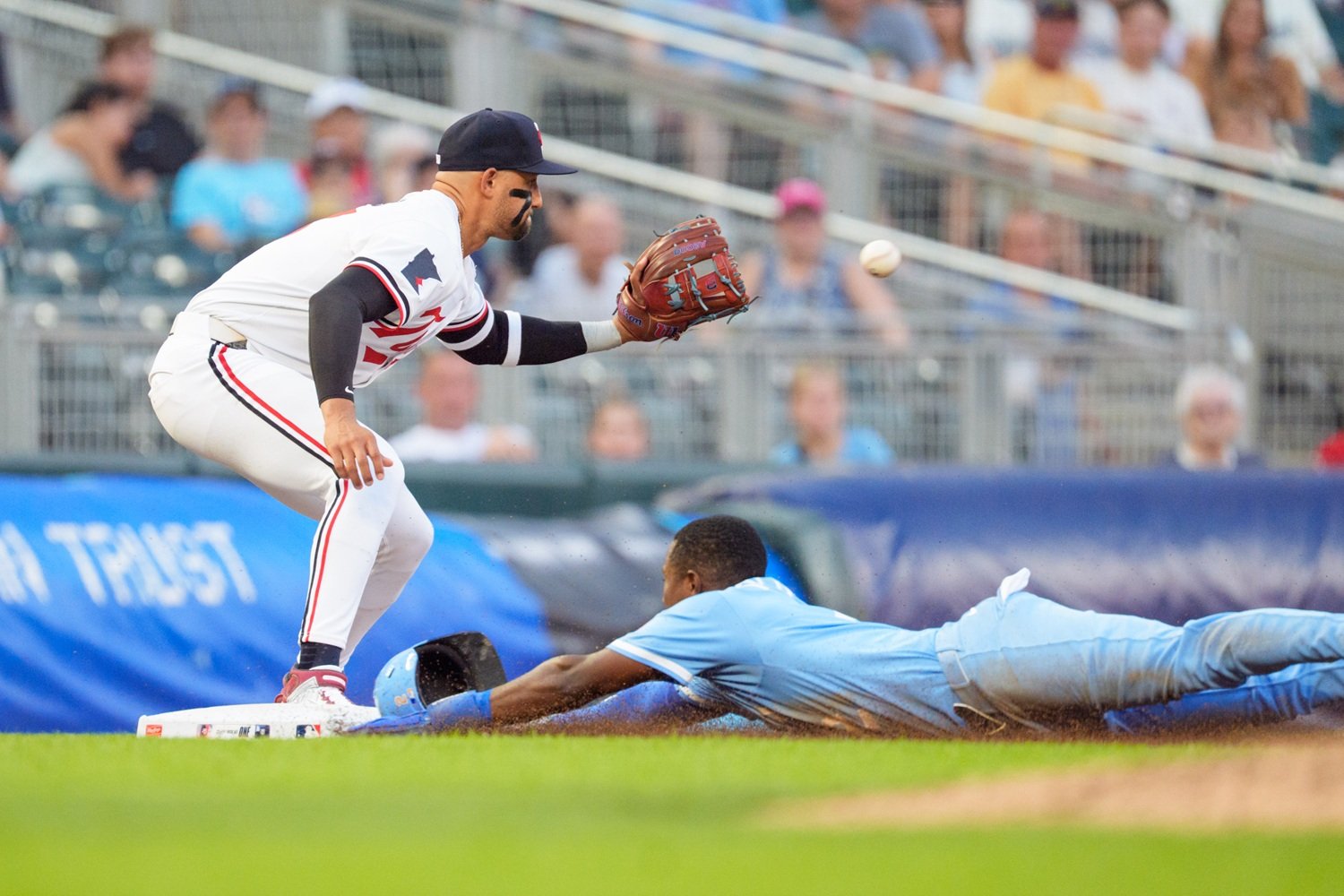
Image courtesy of © Matt Blewett-Imagn Images Box Score Bailey Ober: 6 IP, 4 H, 1 ER, 1 BB, 4 K Home Runs: none, nada, zip, zilch Bottom 3 WPA: Royce Lewis (-.346), Mickey Gasper (-.121), Kody Clemens (-.077) Win Probability Chart (via FanGraphs) The Twins faced the division rival Kansas City Royals for the middle game of a three-game set. The Twins have been playing well of late, winning three straight and having a winning record since the deadline. They looked to extend their winning streak as Bailey Ober faced Noah Cameron. Mission (not) accomplished. The Pitchers Cameron has been a revelation for the Royals and entered Saturday’s game with a 2.68 ERA and a 1.01 WHIP across 87-1/3 innings. He hasn’t struck many out, but he also hasn’t given up many hits due to good command and an ability to limit hard contact. He’s got a plus changeup, a plus cutter, and can locate both. Combine that with a below-average walk rate, and he’s a pitcher that could cause some problems for the Twins for years to come. Ober, looking better than he did prior to his IL stint, hit 93 several times in the first inning. However, he sat 90-91 for the rest of the game. He was hitting his spots, and limited damage. He went six strong innings and generally looked closer to the pitcher he has been for the past couple seasons prior to his injury. He did, however, have just three whiffs on 89 pitches, suggesting his stuff still isn’t fully back. The Game In the 1st inning, Austin Martin hit a leadoff single, then advanced to second on a wild pitch. Ryan Jeffers struck out, Luke Keaschall grounded out to second, and Royce Lewis struck out to end the inning. In the 2nd, McCusker hit a leadoff single down the right field line. Mickey Gasper walked with two outs, but Alan Roden grounded out to end the inning. Third Inning - Royals up 1-0 The Royals struck first in the top of the 3rd. After Ober retired Jonathan India and Nick Loftin on four pitches, he gave up a looping single to Kyle Isbel, then immediately followed that up by giving up a 108 MPH line drive double to Maikel Garcia. The Royals took a 1-0 lead. In the bottom of the 3rd, Martin singled to center, then Jeffers singled to right. Keaschall grounded out, the Lewis hit into a double play to end the inning. In the 4th, Kody Clemens took a leadoff walk, but McCusker flew out to left fielder Randal Grichuk, then Brooks Lee grounded out to first, and Mickey Gasper hit an ineffectual pop-out to second. In the 5th, Roden was hit by pitch to start the inning. Two batters later, Jeffers singled, but again, the Twins failed to score a solitary run. Battle of the bullpens The Twins handed the game to the bullpen in the 7th inning. Michael Tonkin was the first man out, and he immediately walked Randal Grichuk thanks to a little help from home plate umpire Clint Vondrak. Pinch runner Tyler Tolbert stole second, and Jeffers airmailed the throw to Brooks Lee. Yes, this was looking like the early-season travails that led us to this point. After a Jonathan India liner to Roden advanced Tolbert to third, Loftin grounded out as the Royals ran into RISP struggles of their own. In the bottom of the 7th, the Twins again had traffic as Jeffers and Keaschall had back-to-back two-out singles. Royce Lewis, after a brief injury scare after going to a knee on an awkward swing, struck out. In this at bat, he stranded his sixth runner of the game. Justin Topa took the 8th inning, and despite allowing a one-out single to Maikel Garcia, he escaped the inning unscathed. In the bottom of the 8th, facing Lucas Erceg, the Twins brought in Trevor Larnach as a pinch hitter. Larnach has been suffering from side soreness, missing the past few games. He hit a 15-foot grounder to Bobby Witt. Rocco probably should have let McCrusher hit for himself. 9th Inning - Royals up 2-0 In the 9th, the Twins brought in Erasmo Ramiréz. After getting Salvador Perez to line out, he allowed three straight runners to reach, with a single, walk, and single. Royals up 2-0. In the bottom of the 9th, the Twins sent the veritable powerhouse trio of Gasper, Roden, and Martin to the plate. It went about as you might expect: Gasper struck out swinging, Roden popped out to Witt, and Martin was called out on a low heater. Game over, as the Twins were shut out for the seventh time this season. Theme of the game: The Twins fail to hit with runners in scoring position The Twins had some traffic on the bases all game, with eight baserunners in the first five innings, but went 0-10 with runners in scoring position. Despite the Twins playing a much different brand of baseball since the selloff at the deadline, and generally looking energetic and hungry, today’s Twins looked more like the ones from a few weeks ago - listless and unable to hit in the clutch. Flush it. Tomorrow’s a new day. Game Notes Ryan Jeffers has a 12-game hitting streak going. His career high is 14. Can he keep it going? Matt Wallner was out of the lineup as he and his wife welcomed a baby girl this morning. Carson McCusker got his second career callup and was hitting sixth. He singled in his first at-bat. Tonight’s game featured just two players from their opening day lineup On the broadcast, they announced an interesting tidbit about rookie Luke Keaschall. In the past 20 years, there are two players who accomplished the following in their first 10 games in the bigs: a .500 on base percentage or better, 10 or more RBIs, and five or more stolen bases — Luke Keaschall, and…Mike Trout. Keaschall now also has the second longest hitting streak to start a career in Twins history, behind Glenn Williams’ 13. Hopefully Keaschall’s career goes significantly better Austin Martin now has a .795 OPS this season (small sample) after looking thoroughly outmatched last year. Postgame Interviews: Coming Soon! What’s Next? The Twins and Royals will conclude their series, with the vaunted yet always enigmatic TBD (Bullpen game) facing the Royals’ Ryan Bergert, another rookie. Bergert joined the Royals in a trade from the Padres. First pitch is at 12:05 PM. Bullpen Usage Spreadsheet View full article
-
 Box Score Bailey Ober: 6 IP, 4 H, 1 ER, 1 BB, 4 K Home Runs: none, nada, zip, zilch Bottom 3 WPA: Royce Lewis (-.346), Mickey Gasper (-.121), Kody Clemens (-.077) Win Probability Chart (via FanGraphs) The Twins faced the division rival Kansas City Royals for the middle game of a three-game set. The Twins have been playing well of late, winning three straight and having a winning record since the deadline. They looked to extend their winning streak as Bailey Ober faced Noah Cameron. Mission (not) accomplished. The Pitchers Cameron has been a revelation for the Royals and entered Saturday’s game with a 2.68 ERA and a 1.01 WHIP across 87-1/3 innings. He hasn’t struck many out, but he also hasn’t given up many hits due to good command and an ability to limit hard contact. He’s got a plus changeup, a plus cutter, and can locate both. Combine that with a below-average walk rate, and he’s a pitcher that could cause some problems for the Twins for years to come. Ober, looking better than he did prior to his IL stint, hit 93 several times in the first inning. However, he sat 90-91 for the rest of the game. He was hitting his spots, and limited damage. He went six strong innings and generally looked closer to the pitcher he has been for the past couple seasons prior to his injury. He did, however, have just three whiffs on 89 pitches, suggesting his stuff still isn’t fully back. The Game In the 1st inning, Austin Martin hit a leadoff single, then advanced to second on a wild pitch. Ryan Jeffers struck out, Luke Keaschall grounded out to second, and Royce Lewis struck out to end the inning. In the 2nd, McCusker hit a leadoff single down the right field line. Mickey Gasper walked with two outs, but Alan Roden grounded out to end the inning. Third Inning - Royals up 1-0 The Royals struck first in the top of the 3rd. After Ober retired Jonathan India and Nick Loftin on four pitches, he gave up a looping single to Kyle Isbel, then immediately followed that up by giving up a 108 MPH line drive double to Maikel Garcia. The Royals took a 1-0 lead. In the bottom of the 3rd, Martin singled to center, then Jeffers singled to right. Keaschall grounded out, the Lewis hit into a double play to end the inning. In the 4th, Kody Clemens took a leadoff walk, but McCusker flew out to left fielder Randal Grichuk, then Brooks Lee grounded out to first, and Mickey Gasper hit an ineffectual pop-out to second. In the 5th, Roden was hit by pitch to start the inning. Two batters later, Jeffers singled, but again, the Twins failed to score a solitary run. Battle of the bullpens The Twins handed the game to the bullpen in the 7th inning. Michael Tonkin was the first man out, and he immediately walked Randal Grichuk thanks to a little help from home plate umpire Clint Vondrak. Pinch runner Tyler Tolbert stole second, and Jeffers airmailed the throw to Brooks Lee. Yes, this was looking like the early-season travails that led us to this point. After a Jonathan India liner to Roden advanced Tolbert to third, Loftin grounded out as the Royals ran into RISP struggles of their own. In the bottom of the 7th, the Twins again had traffic as Jeffers and Keaschall had back-to-back two-out singles. Royce Lewis, after a brief injury scare after going to a knee on an awkward swing, struck out. In this at bat, he stranded his sixth runner of the game. Justin Topa took the 8th inning, and despite allowing a one-out single to Maikel Garcia, he escaped the inning unscathed. In the bottom of the 8th, facing Lucas Erceg, the Twins brought in Trevor Larnach as a pinch hitter. Larnach has been suffering from side soreness, missing the past few games. He hit a 15-foot grounder to Bobby Witt. Rocco probably should have let McCrusher hit for himself. 9th Inning - Royals up 2-0 In the 9th, the Twins brought in Erasmo Ramiréz. After getting Salvador Perez to line out, he allowed three straight runners to reach, with a single, walk, and single. Royals up 2-0. In the bottom of the 9th, the Twins sent the veritable powerhouse trio of Gasper, Roden, and Martin to the plate. It went about as you might expect: Gasper struck out swinging, Roden popped out to Witt, and Martin was called out on a low heater. Game over, as the Twins were shut out for the seventh time this season. Theme of the game: The Twins fail to hit with runners in scoring position The Twins had some traffic on the bases all game, with eight baserunners in the first five innings, but went 0-10 with runners in scoring position. Despite the Twins playing a much different brand of baseball since the selloff at the deadline, and generally looking energetic and hungry, today’s Twins looked more like the ones from a few weeks ago - listless and unable to hit in the clutch. Flush it. Tomorrow’s a new day. Game Notes Ryan Jeffers has a 12-game hitting streak going. His career high is 14. Can he keep it going? Matt Wallner was out of the lineup as he and his wife welcomed a baby girl this morning. Carson McCusker got his second career callup and was hitting sixth. He singled in his first at-bat. Tonight’s game featured just two players from their opening day lineup On the broadcast, they announced an interesting tidbit about rookie Luke Keaschall. In the past 20 years, there are two players who accomplished the following in their first 10 games in the bigs: a .500 on base percentage or better, 10 or more RBIs, and five or more stolen bases — Luke Keaschall, and…Mike Trout. Keaschall now also has the second longest hitting streak to start a career in Twins history, behind Glenn Williams’ 13. Hopefully Keaschall’s career goes significantly better Austin Martin now has a .795 OPS this season (small sample) after looking thoroughly outmatched last year. Postgame Interviews: Coming Soon! What’s Next? The Twins and Royals will conclude their series, with the vaunted yet always enigmatic TBD (Bullpen game) facing the Royals’ Ryan Bergert, another rookie. Bergert joined the Royals in a trade from the Padres. First pitch is at 12:05 PM. Bullpen Usage Spreadsheet
- 19 comments
-
- 5
-
-

-
- bailey ober
- matt wallner
- (and 3 more)
-
Image courtesy of © Daniel Kucin Jr.-Imagn Images If I told you the Twins just acquired a pitcher who compares to Tyler Glasnow, Yoshinobu Yamamoto, Hunter Brown, and Dylan Cease, would you believe me? Well, Baseball Savant does, at least as it pertains to pitch velocity and movement. After acquiring righty Taj Bradley from the Tampa Bay Rays for bullpen ace Griffin Jax, Derek Falvey called Bradley “One of the best young starting pitchers in the game”. That may be a bit overblown at this point, but the building blocks are there. If you squint just a little bit, you can see your way to the same conclusion; it just may take a little work to get him there. The Rays drafted Bradley in the fifth round of the 2018 draft. He advanced quickly, and was considered a top pitching prospect, reaching the 20 spot on the MLB top-100 list heading into the 2023 season. He made his debut in April of that year, and has shown signs of brilliance, but also frustrating inconsistency. In his rookie season, he struck out 28% of opposing hitters, but walked a too-high 8.5%. Since then, both of these have gotten worse. In any given start, he may either look dominant or get knocked around; there hasn’t been a ton of middle ground. To wit, this season he has given up four or more runs eight times, and two or fewer runs nine times. Now, a former top prospect not being able to put it all together consistently is the recipe for being labeled a bust, and that’s always a possible outcome. There are a few reasons for optimism, however, and if he can take even a small step forward, he has frontline starter potential. Before you tell me “c’mon, there’s no way Tampa Bay would give up a guy capable of being a frontline starter” let me remind you they did this very thing with Joe Ryan. Anyway, let’s dig in. Stuff As I mentioned in my opener, Bradley’s stuff is legit. His fastball averages 96, but he doesn’t miss many bats with it. He’s got a hard splitter he throws to lefties, and a cutter he throws to righties. He’s also got a curve that gets a ton of whiffs due to elite induced vertical break. Both the cutter and curve grade out as above-average pitches. He’s a ground ball pitcher and limits hard contact, but when he does allow hard contact, it leaves the yard a little too frequently. His splitter grades out well, but he has been using it less recently. Early in the season, he was throwing it 20% of the time, but in July, that has dipped to less than 7%. That factored into his demotion to the Rays' Triple-A affiliate in Durham. Bradley spoke to this, saying "I know I need that third ... to get back to where it was last year. I'll just take it as it is and go down there, get back to work, just keep going." To his credit, in his first start with Durham, he seemed to get back on track, with a 7.0 IP, O H, O R, 2 BB, 3 SO line. To me, this suggests some tinkering with his pitch mix or sequencing could increase his whiff and strikeout rate. Or, encouraging him to throw his heater even higher in the zone (and helping him locate consistently) could improve results with that pitch. He has also been incredibly durable, with no professional history of arm or shoulder issues. Home-road splits, and expected numbers There are a couple pieces to note here. The first is the stark nature of his home/road splits. Across ten away games this season, Bradley has a 3.66 FIP, in large part due to his limiting home runs on the road. Additionally, in each of his first two seasons in the league, he gave up three more home runs than expected. In 2025, he’s on pace to do about the same. For his young career, his xFIP is 3.88 — almost a full run better than his actual ERA. That suggests he should be a third or fourth starter already at 24 years old, and there’s still plenty of projectability there. Making 16 starts at Target Field instead of George Steinbrenner Field might be just what the doctor ordered. Twins Pitching Development The Twins pitching machine excels at adding velocity, and optimizing the tools pitchers have. (See: Joe Ryan, Bailey Ober, Pablo Lopez, Zebby Matthews). Bradley already throws heat — what could he do with an extra tick or two on his pitches? Or perhaps they incorporate a sweeper to give hitters yet another look. He will need to work on command and control a bit, but that's not at all uncommon for a 24-year-old pitcher. Sure, I realize that every pitcher has the potential to be great if they strike out more batters and walk fewer, but not every pitcher has Bradley’s stuff. It does seem likely that even if the Twins can’t unlock his true potential, his downside will probably be a high-leverage bullpen arm. You know, like the pitcher with great stuff but inconsistent results, whom the Twins traded to get him. Only, Bradley is much younger, much cheaper, and under control for longer. Look, I get fans being disappointed that Falvey chose to blow up the bullpen, and I understand feeling like the return for Jax is a bit underwhelming. But, reading through Rays Twitter, many of their fans feel like the Rays gave up too much for Jax. Time will tell, of course, but it’s only reasonable to trust the Twins' ability to recognize pitchers they can do more with, even if they might be destined for the bullpen. And honestly? That seems like the absolute worst-case scenario for Bradley. View full article
-
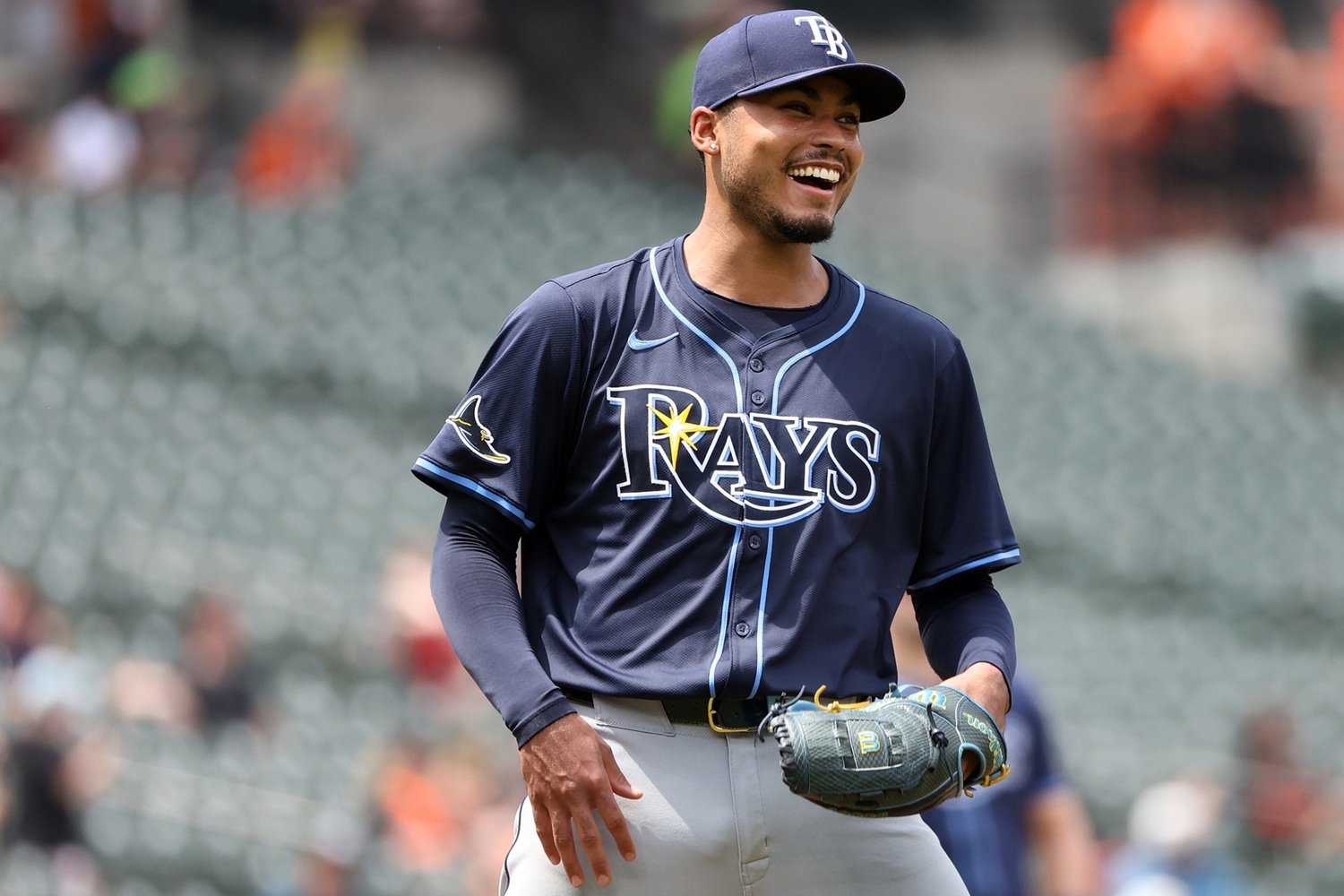 If I told you the Twins just acquired a pitcher who compares to Tyler Glasnow, Yoshinobu Yamamoto, Hunter Brown, and Dylan Cease, would you believe me? Well, Baseball Savant does, at least as it pertains to pitch velocity and movement. After acquiring righty Taj Bradley from the Tampa Bay Rays for bullpen ace Griffin Jax, Derek Falvey called Bradley “One of the best young starting pitchers in the game”. That may be a bit overblown at this point, but the building blocks are there. If you squint just a little bit, you can see your way to the same conclusion; it just may take a little work to get him there. The Rays drafted Bradley in the fifth round of the 2018 draft. He advanced quickly, and was considered a top pitching prospect, reaching the 20 spot on the MLB top-100 list heading into the 2023 season. He made his debut in April of that year, and has shown signs of brilliance, but also frustrating inconsistency. In his rookie season, he struck out 28% of opposing hitters, but walked a too-high 8.5%. Since then, both of these have gotten worse. In any given start, he may either look dominant or get knocked around; there hasn’t been a ton of middle ground. To wit, this season he has given up four or more runs eight times, and two or fewer runs nine times. Now, a former top prospect not being able to put it all together consistently is the recipe for being labeled a bust, and that’s always a possible outcome. There are a few reasons for optimism, however, and if he can take even a small step forward, he has frontline starter potential. Before you tell me “c’mon, there’s no way Tampa Bay would give up a guy capable of being a frontline starter” let me remind you they did this very thing with Joe Ryan. Anyway, let’s dig in. Stuff As I mentioned in my opener, Bradley’s stuff is legit. His fastball averages 96, but he doesn’t miss many bats with it. He’s got a hard splitter he throws to lefties, and a cutter he throws to righties. He’s also got a curve that gets a ton of whiffs due to elite induced vertical break. Both the cutter and curve grade out as above-average pitches. He’s a ground ball pitcher and limits hard contact, but when he does allow hard contact, it leaves the yard a little too frequently. His splitter grades out well, but he has been using it less recently. Early in the season, he was throwing it 20% of the time, but in July, that has dipped to less than 7%. That factored into his demotion to the Rays' Triple-A affiliate in Durham. Bradley spoke to this, saying "I know I need that third ... to get back to where it was last year. I'll just take it as it is and go down there, get back to work, just keep going." To his credit, in his first start with Durham, he seemed to get back on track, with a 7.0 IP, O H, O R, 2 BB, 3 SO line. To me, this suggests some tinkering with his pitch mix or sequencing could increase his whiff and strikeout rate. Or, encouraging him to throw his heater even higher in the zone (and helping him locate consistently) could improve results with that pitch. He has also been incredibly durable, with no professional history of arm or shoulder issues. Home-road splits, and expected numbers There are a couple pieces to note here. The first is the stark nature of his home/road splits. Across ten away games this season, Bradley has a 3.66 FIP, in large part due to his limiting home runs on the road. Additionally, in each of his first two seasons in the league, he gave up three more home runs than expected. In 2025, he’s on pace to do about the same. For his young career, his xFIP is 3.88 — almost a full run better than his actual ERA. That suggests he should be a third or fourth starter already at 24 years old, and there’s still plenty of projectability there. Making 16 starts at Target Field instead of George Steinbrenner Field might be just what the doctor ordered. Twins Pitching Development The Twins pitching machine excels at adding velocity, and optimizing the tools pitchers have. (See: Joe Ryan, Bailey Ober, Pablo Lopez, Zebby Matthews). Bradley already throws heat — what could he do with an extra tick or two on his pitches? Or perhaps they incorporate a sweeper to give hitters yet another look. He will need to work on command and control a bit, but that's not at all uncommon for a 24-year-old pitcher. Sure, I realize that every pitcher has the potential to be great if they strike out more batters and walk fewer, but not every pitcher has Bradley’s stuff. It does seem likely that even if the Twins can’t unlock his true potential, his downside will probably be a high-leverage bullpen arm. You know, like the pitcher with great stuff but inconsistent results, whom the Twins traded to get him. Only, Bradley is much younger, much cheaper, and under control for longer. Look, I get fans being disappointed that Falvey chose to blow up the bullpen, and I understand feeling like the return for Jax is a bit underwhelming. But, reading through Rays Twitter, many of their fans feel like the Rays gave up too much for Jax. Time will tell, of course, but it’s only reasonable to trust the Twins' ability to recognize pitchers they can do more with, even if they might be destined for the bullpen. And honestly? That seems like the absolute worst-case scenario for Bradley.
 -
Image courtesy of © Gary A. Vasquez-Imagn Images On January 11, 2023, the Minnesota Twins signaled a new era and shocked the baseball world by signing star shortstop Carlos Correa to a six-year deal with four additional team options. Correa had enjoyed his initial season in Minnesota prior to his opt-out, and the front office promised Correa that if he chose to re-sign, they would be all-in on fielding a team with World Series aspirations. This message made it to the public, too. In a presser the day of the signing, Derek Falvey said: “What’s clear to us is that adding Carlos back to the mix, [we want to continue to add], We will continue to think about ways to be creative”. Fresh off this signing, morale among the fanbase was at a recent high, and signs were pointing skyward. Later that season, the Twins broke their playoff curse, and after the season ended, they immediately sent a letter to fans promising the best was yet to come. Just 21 months after the fateful playoff series win, the Twins held a fire sale, moving on from their star shortstop less than halfway through his tenure. What were the factors that led us to this point? Ownership kneecapping the ability to field a complete roster Remember Falvey’s promise to field a winner? There’s no reason to doubt his intentions or that he believed he would have payroll flexibility to do so. However, shortly after the 2023 playoff run, team owner Jim Pohlad talked about “rightsizing the payroll”. We all know the impact this made on fan morale, but it also has prevented the Twins from filling canyon-sized holes on their roster. The Twins went into 2024 with basically no money to spend despite needing a starting pitcher, a first baseman, Byron Buxton insurance, and a bullpen arm or two. Falvey was forced to shop in the scrap heap. First he traded away Jorge Polanco and his $10M contract to free up some money. Carlos Santana was a revelation for cheap, but the trio of Manuel Margot, Anthony DeSclafani, and Justin Topa were either dreadful or didn’t play. Then, at the trade deadline, in desperate need for reinforcements as the Twins held an 88% likelihood to make the postseason, the only move was to sign low-end reliever Trevor Richards. The Twins crashed and burned. Coming into 2025, the Twins needed a first baseman and a big bat, but the budget only allowed for signing Ty France. It didn’t go well. Looking forward, a number of players were set to head deeper into arbitration, and would be getting more expensive: Jhoan Duran, Griffin Jax, Joe Ryan, Bailey Ober, Trevor Larnach, Royce Lewis, and Ryan Jeffers. This forced some difficult decisions and ultimately, a dismantling of the roster at the trade deadline. When you are paying one player 30% of your payroll, have Pablo Lopez and Byron Buxton making roughly $37 million combined accounting for another 30%, that just doesn’t leave any margin for signing players that can actually move the team forward. His contract, combined with the Pohlad being richpoor, prevented the Twins from making the moves they needed to. Saving almost $70 million over the next three seasons creates some flexibility and opens possibilities that just haven’t existed for the past two seasons. If only the Pohlads had kept their implicit (and honestly, sort of explicit) promise, things could have gone differently. Injuries and declining production To be clear, when Falvey signed Correa to his mega deal, the front office was almost certainly expecting a different caliber of production and health than what they received. When you spend $35 million a year, you expect a player who is a perennial All-Star. Over the first two and a half seasons of Correa’s deal, the Twins got All-Star play in just one of them. In 2023, Correa suffered from plantar fasciitis in his left foot. He had attempted to play through it for much of the season, and it clearly limited his approach at the plate as he put up a 94 wRC+ in 135 games. 2024 was the sort of season the Twins thought they were signing Correa for, as he was having his best season in years. He hit 55% better than average, while showing his typical stellar defense. He was, however, limited to 86 games as plantar fasciitis limited him heavily. He also suffered an oblique strain. But, by rate, he would have received some MVP votes if he had been healthy. 2025 brought us right back to 2023: Correa’s offensive production was below average, and even his typically strong defense took a step back. Additionally, he developed an alarming propensity for grounding into double plays when it mattered most. He swung at pitches at the highest level of his career, and got torn up by sliders. By WPA, Correa cost the Twins nearly four wins this season. In short, it seems that the Twins (likely correctly) determined that they just wouldn’t get the Correa they were hoping to, and that the contract might hamper them more and more as time passes. To be clear, none of this means Correa is a bad player, or an invaluable one. Even beyond his on-field play, he’s a leader, role model, mentor, and good guy. But, he didn't consistently give the Twins what they needed to contend. If only he could have played at an All-Star clip, and stayed healthy. Maybe things would have ended up differently. Misalignment with Correa’s wishes I won't go into this one deeply, as Cody Christie did so already. I will say that this is obviously tricky, because the Twins didn’t sign Correa to be a third baseman. They couldn’t afford to pay a third baseman that kind of money, especially one that doesn’t have a .900 OPS, and especially when they didn’t have a solid shortstop to replace him. And, Falvey couldn't control ownership's tightening of the purse strings. But, it's clear that misalignment was a clear factor that took this deal across the finish line. If only the Twins had actual roster flexibility rather than theoretical, things could have gone differently. For all of these reasons, the front office determined that they just wouldn’t be able to build a reliably competitive team while the Pohlads and Correa coexisted in the same city. It’s too bad, really, as this is yet another case of what could have been. Thanks, Pohlads. View full article
-
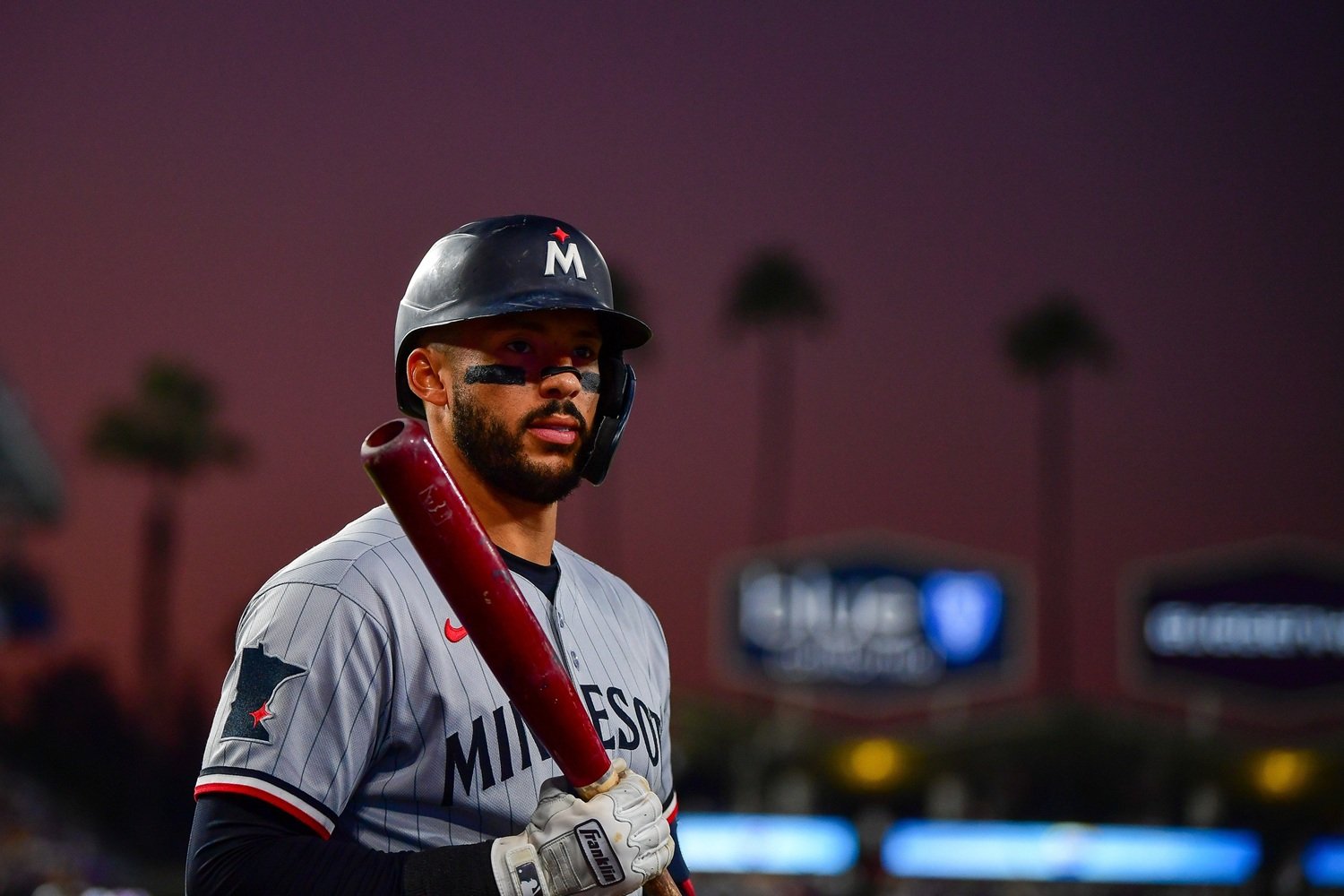 On January 11, 2023, the Minnesota Twins signaled a new era and shocked the baseball world by signing star shortstop Carlos Correa to a six-year deal with four additional team options. Correa had enjoyed his initial season in Minnesota prior to his opt-out, and the front office promised Correa that if he chose to re-sign, they would be all-in on fielding a team with World Series aspirations. This message made it to the public, too. In a presser the day of the signing, Derek Falvey said: “What’s clear to us is that adding Carlos back to the mix, [we want to continue to add], We will continue to think about ways to be creative”. Fresh off this signing, morale among the fanbase was at a recent high, and signs were pointing skyward. Later that season, the Twins broke their playoff curse, and after the season ended, they immediately sent a letter to fans promising the best was yet to come. Just 21 months after the fateful playoff series win, the Twins held a fire sale, moving on from their star shortstop less than halfway through his tenure. What were the factors that led us to this point? Ownership kneecapping the ability to field a complete roster Remember Falvey’s promise to field a winner? There’s no reason to doubt his intentions or that he believed he would have payroll flexibility to do so. However, shortly after the 2023 playoff run, team owner Jim Pohlad talked about “rightsizing the payroll”. We all know the impact this made on fan morale, but it also has prevented the Twins from filling canyon-sized holes on their roster. The Twins went into 2024 with basically no money to spend despite needing a starting pitcher, a first baseman, Byron Buxton insurance, and a bullpen arm or two. Falvey was forced to shop in the scrap heap. First he traded away Jorge Polanco and his $10M contract to free up some money. Carlos Santana was a revelation for cheap, but the trio of Manuel Margot, Anthony DeSclafani, and Justin Topa were either dreadful or didn’t play. Then, at the trade deadline, in desperate need for reinforcements as the Twins held an 88% likelihood to make the postseason, the only move was to sign low-end reliever Trevor Richards. The Twins crashed and burned. Coming into 2025, the Twins needed a first baseman and a big bat, but the budget only allowed for signing Ty France. It didn’t go well. Looking forward, a number of players were set to head deeper into arbitration, and would be getting more expensive: Jhoan Duran, Griffin Jax, Joe Ryan, Bailey Ober, Trevor Larnach, Royce Lewis, and Ryan Jeffers. This forced some difficult decisions and ultimately, a dismantling of the roster at the trade deadline. When you are paying one player 30% of your payroll, have Pablo Lopez and Byron Buxton making roughly $37 million combined accounting for another 30%, that just doesn’t leave any margin for signing players that can actually move the team forward. His contract, combined with the Pohlad being richpoor, prevented the Twins from making the moves they needed to. Saving almost $70 million over the next three seasons creates some flexibility and opens possibilities that just haven’t existed for the past two seasons. If only the Pohlads had kept their implicit (and honestly, sort of explicit) promise, things could have gone differently. Injuries and declining production To be clear, when Falvey signed Correa to his mega deal, the front office was almost certainly expecting a different caliber of production and health than what they received. When you spend $35 million a year, you expect a player who is a perennial All-Star. Over the first two and a half seasons of Correa’s deal, the Twins got All-Star play in just one of them. In 2023, Correa suffered from plantar fasciitis in his left foot. He had attempted to play through it for much of the season, and it clearly limited his approach at the plate as he put up a 94 wRC+ in 135 games. 2024 was the sort of season the Twins thought they were signing Correa for, as he was having his best season in years. He hit 55% better than average, while showing his typical stellar defense. He was, however, limited to 86 games as plantar fasciitis limited him heavily. He also suffered an oblique strain. But, by rate, he would have received some MVP votes if he had been healthy. 2025 brought us right back to 2023: Correa’s offensive production was below average, and even his typically strong defense took a step back. Additionally, he developed an alarming propensity for grounding into double plays when it mattered most. He swung at pitches at the highest level of his career, and got torn up by sliders. By WPA, Correa cost the Twins nearly four wins this season. In short, it seems that the Twins (likely correctly) determined that they just wouldn’t get the Correa they were hoping to, and that the contract might hamper them more and more as time passes. To be clear, none of this means Correa is a bad player, or an invaluable one. Even beyond his on-field play, he’s a leader, role model, mentor, and good guy. But, he didn't consistently give the Twins what they needed to contend. If only he could have played at an All-Star clip, and stayed healthy. Maybe things would have ended up differently. Misalignment with Correa’s wishes I won't go into this one deeply, as Cody Christie did so already. I will say that this is obviously tricky, because the Twins didn’t sign Correa to be a third baseman. They couldn’t afford to pay a third baseman that kind of money, especially one that doesn’t have a .900 OPS, and especially when they didn’t have a solid shortstop to replace him. And, Falvey couldn't control ownership's tightening of the purse strings. But, it's clear that misalignment was a clear factor that took this deal across the finish line. If only the Twins had actual roster flexibility rather than theoretical, things could have gone differently. For all of these reasons, the front office determined that they just wouldn’t be able to build a reliably competitive team while the Pohlads and Correa coexisted in the same city. It’s too bad, really, as this is yet another case of what could have been. Thanks, Pohlads.
 -
Image courtesy of © Nathan Ray Seebeck-Imagn Images In part one of this piece, I looked at each fielding position’s offensive and defensive metrics and overall value, then looked for the intersection of greatest need and shakiest hold on an everyday spot in the lineup. To summarize those analyses: Center field and left field have gotten great production. Shortstop is locked up, even though production could be better. Second and third base are held by young members of the core. At catcher, Ryan Jeffers has been solid. The other positions, though? Could be better. I concluded that the sweet spot for trade targets rests at the bottom of the defensive spectrum: designated hitter, first base, and right field. That's great, because these types of players tend to be significantly cheaper (in both salary and prospect capital) than guys who need defensive prowess to keep their jobs. Here in part two, I will look at the guys who are likely to be available at the deadline. I assume that the Royals and Guardians sell, but won’t trade with the Twins. Same with the White Sox, but they add the wrinkle of not actually having good players. The Rays always make everyone available for the right price. The Diamondbacks have been sort of competitive, but are behind several better teams in the Wild Card standings. The Athletics and Braves have been bad, as have the Pirates, Marlins, Nationals, and Rockies. The Orioles will certainly sell, but only impending free agents and other players who are short-term pieces. The Angels probably think they have a real chance (they probably don’t); I don’t think they sell. The Twins also won’t take on any big contracts, unless significant money is also leaving through trade. So, who does that leave us with? Let’s dig in! First Base / Designated Hitter Ryan O’Hearn - Orioles O’Hearn plays competent defense at both first base and right field, and gives the added bonus of hitting well enough for DH, and being able to roam left field, too. He’s a pure rental, hitting the market after the season ends. He’s in the Twins' price range from a salary standpoint, owed around $3 million for the rest of this season, and likely wouldn’t cost too much prospect capital due to his relatively short run of success at age 31. He has an .834 OPS this season. The Orioles are all but certain to trade him to someone, so why not the Twins? He would be my target for an easy upgrade to the lineup. Josh Naylor - Diamondbacks Remember Naylor beating up on the Twins basically every time they faced the Guardians over the last half-decade? There’s no better way to avoid facing a guy than trading for him. He would be a natural platoon partner for Ty France, and hits well enough to justify trading France for a lottery ticket. He’s a safe bet to put up an OPS that starts with an eight the rest of the way. Yandy Díaz - Rays Díaz has a team option for 2026, so he wouldn’t be a pure rental if the Twins saw a fit. He hits the ball hard, makes contact, accepts his walks, and he would be a clear upgrade over France. He’s due to exit his prime soon, but could be a player written in pen on the lineup cards for at least next season. Historically, the Rays don’t trade guys on team-friendly deals. But, they always deal, and it could work. Marcell Ozuna - Braves Ozuna is a pure DH with an .807 career OPS, and is in his final year of team control. The three-time All-Star hits enough to still be worth 1.0 fWAR so far, even in a down year. The Twins would likely need the Braves to eat part of roughly $6 million in salary he'll earn for the balance of the season, but he would be worth starting daily at DH. Ozuna also has a history of domestic violence, though, for which he was suspended in 2021. For an organization that prides itself on their family-centered culture, it would be hard to reconcile acquiring a player with such a track record. Right Field Ramón Laureano - Orioles The Twins have needed a right-handed corner outfield bat for the past… forever, really. Laureano could be that guy. The right fielder has been a consistently above-average hitter, is owed less than $2 million for the rest of this season, and has a team option for 2026. His 140 wRC+ in 2025 could change the complexion of the lineup against tough lefties, and would give a little wiggle room in the calendar for one of the in-house outfield options to continue to develop. Bonus: a few unlikely options that would reshape the lineup Eugenio Suárez - Diamondbacks - Third Base Yeah, I know. A poor-fielding third baseman. If the Twins were going to make a splash for a bat, though, Suárez would be the guy. His .889 OPS would slot in nicely near the top of the order, and would make the lineup much deeper. He’s got serious power. I don’t think it’ll happen—unless, maybe, the Twins felt that moving Royce Lewis to first or DH makes sense, at least for the balance of the season. He’s owed close to $6 million yet this season. A trade of this caliber would invigorate the fan base, and would significantly improve the Twins’ playoff odds. Sean Murphy - Braves - Catcher Under contract for three more seasons, Murphy would give the Twins possibly the best backstop duo in baseball. Trading for him would allow the Twins to rotate both catchers through DH, upgrading two positions. Looking to the future, it would allow the front office to feel less pressure to overpay to re-sign Jeffers, or even allow them to trade him in return at the deadline, should the market be robust. Murphy is owed $15 million a year for the next three years. That’s a lot in the current budget, but probably less so for a new owner willing to pay $1.7 billion for the team. Ryan McMahon - Rockies - Infield McMahon is owed just over $36 million and is controlled through the 2027 season. He’s elite defensively, and could start at first, second, or third. His offense has been more volatile. Making the constant altitude and atmospheric adjustment at Coors Field and on the road has to be challenging. With a more consistent environment, it’s possible his bat would look a little better. So there you have it. That’s eight guys who could fit the Twins' plans, and names that could be bandied about in the event the Twins decide to be light buyers, or swap a controllable young pitcher from a position of strength to improve their hitting. How would you feel about landing one of these guys? Think it’s likely? And, is there anyone I missed that you see being a likely fit? If so, comment below. View full article
-
If the Twins are Buyers, Part Two: Which Hitters May Be Available?
Eric Blonigen posted an article in Twins
 In part one of this piece, I looked at each fielding position’s offensive and defensive metrics and overall value, then looked for the intersection of greatest need and shakiest hold on an everyday spot in the lineup. To summarize those analyses: Center field and left field have gotten great production. Shortstop is locked up, even though production could be better. Second and third base are held by young members of the core. At catcher, Ryan Jeffers has been solid. The other positions, though? Could be better. I concluded that the sweet spot for trade targets rests at the bottom of the defensive spectrum: designated hitter, first base, and right field. That's great, because these types of players tend to be significantly cheaper (in both salary and prospect capital) than guys who need defensive prowess to keep their jobs. Here in part two, I will look at the guys who are likely to be available at the deadline. I assume that the Royals and Guardians sell, but won’t trade with the Twins. Same with the White Sox, but they add the wrinkle of not actually having good players. The Rays always make everyone available for the right price. The Diamondbacks have been sort of competitive, but are behind several better teams in the Wild Card standings. The Athletics and Braves have been bad, as have the Pirates, Marlins, Nationals, and Rockies. The Orioles will certainly sell, but only impending free agents and other players who are short-term pieces. The Angels probably think they have a real chance (they probably don’t); I don’t think they sell. The Twins also won’t take on any big contracts, unless significant money is also leaving through trade. So, who does that leave us with? Let’s dig in! First Base / Designated Hitter Ryan O’Hearn - Orioles O’Hearn plays competent defense at both first base and right field, and gives the added bonus of hitting well enough for DH, and being able to roam left field, too. He’s a pure rental, hitting the market after the season ends. He’s in the Twins' price range from a salary standpoint, owed around $3 million for the rest of this season, and likely wouldn’t cost too much prospect capital due to his relatively short run of success at age 31. He has an .834 OPS this season. The Orioles are all but certain to trade him to someone, so why not the Twins? He would be my target for an easy upgrade to the lineup. Josh Naylor - Diamondbacks Remember Naylor beating up on the Twins basically every time they faced the Guardians over the last half-decade? There’s no better way to avoid facing a guy than trading for him. He would be a natural platoon partner for Ty France, and hits well enough to justify trading France for a lottery ticket. He’s a safe bet to put up an OPS that starts with an eight the rest of the way. Yandy Díaz - Rays Díaz has a team option for 2026, so he wouldn’t be a pure rental if the Twins saw a fit. He hits the ball hard, makes contact, accepts his walks, and he would be a clear upgrade over France. He’s due to exit his prime soon, but could be a player written in pen on the lineup cards for at least next season. Historically, the Rays don’t trade guys on team-friendly deals. But, they always deal, and it could work. Marcell Ozuna - Braves Ozuna is a pure DH with an .807 career OPS, and is in his final year of team control. The three-time All-Star hits enough to still be worth 1.0 fWAR so far, even in a down year. The Twins would likely need the Braves to eat part of roughly $6 million in salary he'll earn for the balance of the season, but he would be worth starting daily at DH. Ozuna also has a history of domestic violence, though, for which he was suspended in 2021. For an organization that prides itself on their family-centered culture, it would be hard to reconcile acquiring a player with such a track record. Right Field Ramón Laureano - Orioles The Twins have needed a right-handed corner outfield bat for the past… forever, really. Laureano could be that guy. The right fielder has been a consistently above-average hitter, is owed less than $2 million for the rest of this season, and has a team option for 2026. His 140 wRC+ in 2025 could change the complexion of the lineup against tough lefties, and would give a little wiggle room in the calendar for one of the in-house outfield options to continue to develop. Bonus: a few unlikely options that would reshape the lineup Eugenio Suárez - Diamondbacks - Third Base Yeah, I know. A poor-fielding third baseman. If the Twins were going to make a splash for a bat, though, Suárez would be the guy. His .889 OPS would slot in nicely near the top of the order, and would make the lineup much deeper. He’s got serious power. I don’t think it’ll happen—unless, maybe, the Twins felt that moving Royce Lewis to first or DH makes sense, at least for the balance of the season. He’s owed close to $6 million yet this season. A trade of this caliber would invigorate the fan base, and would significantly improve the Twins’ playoff odds. Sean Murphy - Braves - Catcher Under contract for three more seasons, Murphy would give the Twins possibly the best backstop duo in baseball. Trading for him would allow the Twins to rotate both catchers through DH, upgrading two positions. Looking to the future, it would allow the front office to feel less pressure to overpay to re-sign Jeffers, or even allow them to trade him in return at the deadline, should the market be robust. Murphy is owed $15 million a year for the next three years. That’s a lot in the current budget, but probably less so for a new owner willing to pay $1.7 billion for the team. Ryan McMahon - Rockies - Infield McMahon is owed just over $36 million and is controlled through the 2027 season. He’s elite defensively, and could start at first, second, or third. His offense has been more volatile. Making the constant altitude and atmospheric adjustment at Coors Field and on the road has to be challenging. With a more consistent environment, it’s possible his bat would look a little better. So there you have it. That’s eight guys who could fit the Twins' plans, and names that could be bandied about in the event the Twins decide to be light buyers, or swap a controllable young pitcher from a position of strength to improve their hitting. How would you feel about landing one of these guys? Think it’s likely? And, is there anyone I missed that you see being a likely fit? If so, comment below.
- 15 comments
-
- 2
-
-
- ryan ohearn
- yandy díaz
- (and 2 more)
-
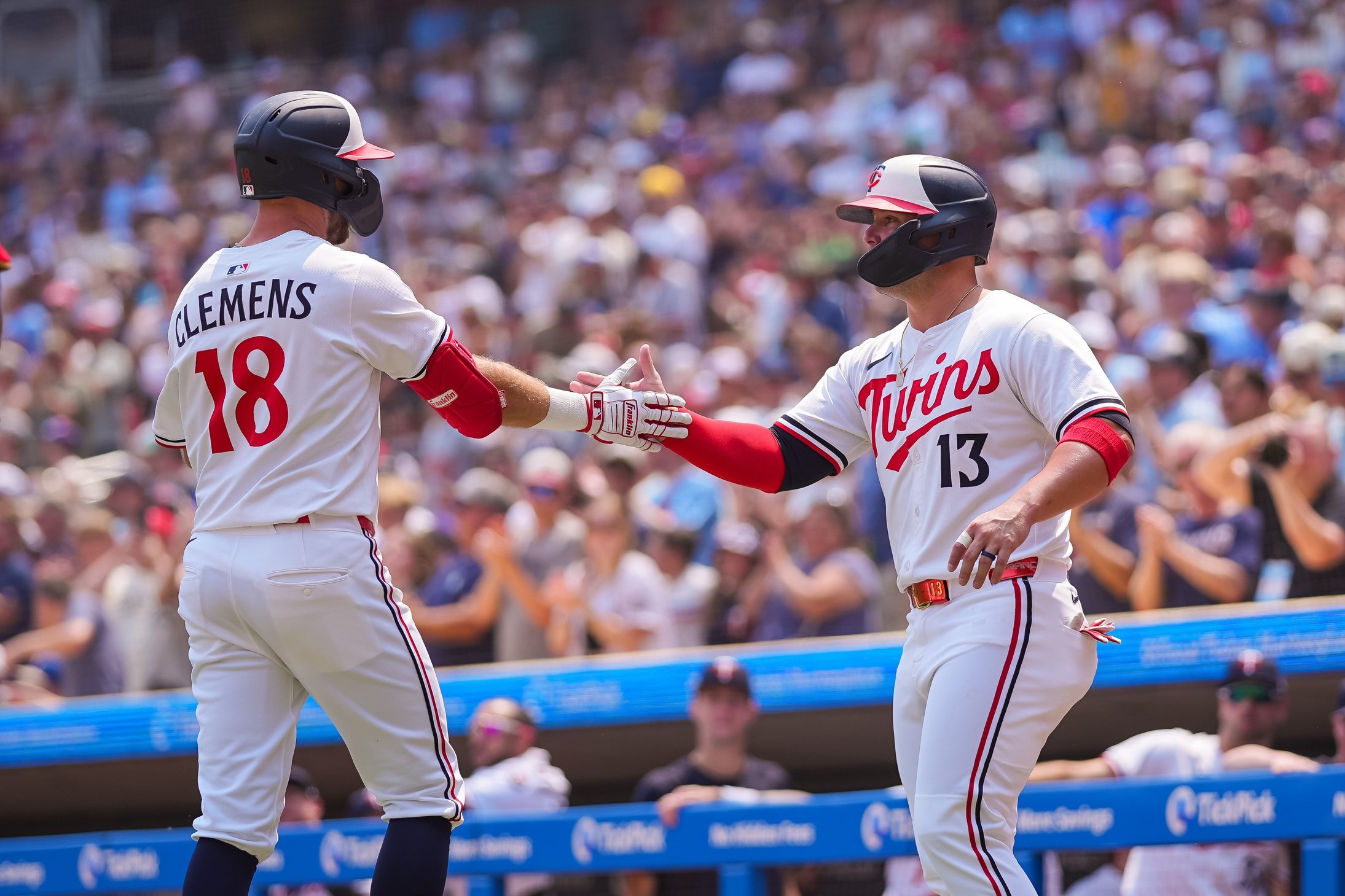 The Minnesota Twins have one of the best pitching staffs in baseball — that is, when the big names are healthy. With Pablo López, Bailey Ober, and Zebby Matthews set to return soon, starting pitching should once again be a strength of the team. The bullpen, aside from a few rocky appearances in June, have been lights out. The hitting, on the other hand? A clear area of opportunity. Coming out of the break, the Twins have the sixth-worst team OPS in the American League. Of the teams behind them, the White Sox and Orioles will almost certainly miss the playoffs. The others — Royals, Rangers, and Guardians — all stake their playoff claim on the backs of their pitchers as well, and the Royals and Guardians are also likely to miss out on the postseason due to mediocre hitting. The best playoff teams feature well-balanced rosters, and it’s clear the Twins will need to upgrade their offense should they feel that October baseball is a real possibility. But, where would it make the most sense to upgrade based on the players currently on the team? Let’s take a look, position by position, and see where the need is the greatest. I’ll rank the positions from lowest need (or least likely to try to upgrade) to greatest need or most likely. Center Field: 3.5 fWAR (2nd in the AL), 136 wRC+ (1st in the AL), +6 FRV (6th in the AL) This one is super easy. Byron Buxton is the best two-way centerfielder in the American League, and it’s not close. His backup, Harrison Bader, would be a starter for probably half the teams in baseball. Both offensively and defensively, the team would be hard-pressed to actually upgrade from either player. Left Field: 2.6 fWAR (3rd in the AL), 103 wRC+ (5th in the AL), +2 FRV (2nd in the AL) Bader has gotten more starts here than anyone else, and that’s unlikely to change, unless the Twins move him at the deadline. He’s got elite defense, and an average bat that plays just fine in left. Willi Castro and Luke Keaschall can both play here too. It’s extremely unlikely they pick up a left field bopper. Shortstop: 0.7 fWAR (12th in the AL), 93 wRC+ (12th in the AL), -12 fielding runs (15th in the AL) Carlos Correa has clearly not been himself this season, and the Twins’ best hope is he can find his stride at the plate and in the field. If, instead, he is experiencing a rapid, age-based decline, they are in trouble for the next few seasons. To be clear though, the Twins will not move on from Correa, nor will they pick up a backup that’s better than both Castro and Brooks Lee. Second Base: 0.2 fWAR (13th in the AL), 106 wRC+ (3rd in the AL), -4 FRV (13th in the AL) Lee is the second baseman of record, but Kody Clemens and Keaschall (when he returns in a couple weeks) slot in well there as well. Could the Twins upgrade here? Maybe. Would it make sense? Probably not. Keaschall probably isn’t as good as he was in his limited action with the Twins prior to breaking his arm on a hit by pitch, but he absolutely looked major-league ready, and the Twins probably don’t need yet another second baseman. Third Base: 0.3 fWAR (12th in the AL), 69 wRC+ (13th in the AL), -2 FRV (11th in the AL) When healthy, Royce Lewis is the starter. Castro and Lee both see plenty of innings there as well. The biggest challenge here is that Lewis has not been healthy, or right at the plate, for the majority of the season. Assuming the Twins still believe in his immense talent and upside, it seems unlikely they would attempt to upgrade the position at the deadline, unless they found a player who is a clear upgrade both offensively and defensively. It seems unlikely. Right Field: 0.5 fWAR (11th in the AL), 88 wRC+ (13th in the AL), -5 FRV (10th in the AL) Right field has been manned primarily by one of Matt Wallner or Trevor Larnach, with Castro also seeing some action here. None of the three are especially good defensively, and the aggregate offensive output at the position have been subpar. Not great, for the lower end of the defensive spectrum. There’s a bit of a logjam here unless the Twins move two of those three at the deadline. That is a possibility, to be certain, and it could be a straightforward move to pick up a slugger rental while recouping value. Catcher: 0.4 fWAR (14th in the AL), 85 wRC+ (10th in the AL), -4 FRV (10th in the AL) This position is trickier. One one hand, Ryan Jeffers has been solid, as he has been basically since his rookie year. He has accounted for 1.1 fWAR himself, and has a 111 wRC+. Christian Vázquez has lost a step defensively, and is a downright offensive liability. Could the Twins trade Vázquez and his expiring contract, replace him with a journeyman for the remainder of the season, and also trade for a good catching prospect? Maybe. They will need a second catcher next season either way, and it’s not clear that one is currently in the organization. First Base: 0.4 fWAR (10th in the AL), 89 wRC+ (11th in the AL), +5 FRV (1st in the AL) Ty France has gotten the majority of reps at first base this season, with Clemens getting a few starts more recently as the Twins have begun platooning the position. France has been good defensively, but despite being a clutch hitter for much of the season is just not a plus hitter at this stage of his career. This may be the single likeliest position to trade for as the position isn’t blocked by anyone who is a key part of the Twins plans. Designated Hitter: 0.6 fWAR (9th in the AL), 103 wRC+ (12th in the AL) The Twins have generally opted to rotate guys through DH to give them a half-day off. On a team with a plus offense, this is a great strategy. With the Twins and their sub-par hitting, the lineup spot that should have the most pop has been rather anemic, with roughly league average hitting from the position that should be perhaps 20% better than average. It makes so much sense to try to upgrade here as it should be cheap to do so. So, summing all this up, it seems clear that the Twins would benefit from seeking to acquire a big bat at the bottom of the defensive spectrum. Typically, this is also the easiest player type to acquire at the deadline, with right fielders, first basemen, and designated hitters on expiring contracts often changing teams for the price of a good reliever or a decent prospect. Should the Twins find themselves light buyers (perhaps the likeliest scenario in my opinion, given the sale of the team is working towards completion), a pitcher-for-hitter swap for a big bat just may be what helps the team live up to the potential they had heading into the season. In part two, I will look at hitters that fit these profiles that just may be available over the next several days.
 -
Image courtesy of Brad Rempel-Imagn Images The Minnesota Twins have one of the best pitching staffs in baseball — that is, when the big names are healthy. With Pablo López, Bailey Ober, and Zebby Matthews set to return soon, starting pitching should once again be a strength of the team. The bullpen, aside from a few rocky appearances in June, have been lights out. The hitting, on the other hand? A clear area of opportunity. Coming out of the break, the Twins have the sixth-worst team OPS in the American League. Of the teams behind them, the White Sox and Orioles will almost certainly miss the playoffs. The others — Royals, Rangers, and Guardians — all stake their playoff claim on the backs of their pitchers as well, and the Royals and Guardians are also likely to miss out on the postseason due to mediocre hitting. The best playoff teams feature well-balanced rosters, and it’s clear the Twins will need to upgrade their offense should they feel that October baseball is a real possibility. But, where would it make the most sense to upgrade based on the players currently on the team? Let’s take a look, position by position, and see where the need is the greatest. I’ll rank the positions from lowest need (or least likely to try to upgrade) to greatest need or most likely. Center Field: 3.5 fWAR (2nd in the AL), 136 wRC+ (1st in the AL), +6 FRV (6th in the AL) This one is super easy. Byron Buxton is the best two-way centerfielder in the American League, and it’s not close. His backup, Harrison Bader, would be a starter for probably half the teams in baseball. Both offensively and defensively, the team would be hard-pressed to actually upgrade from either player. Left Field: 2.6 fWAR (3rd in the AL), 103 wRC+ (5th in the AL), +2 FRV (2nd in the AL) Bader has gotten more starts here than anyone else, and that’s unlikely to change, unless the Twins move him at the deadline. He’s got elite defense, and an average bat that plays just fine in left. Willi Castro and Luke Keaschall can both play here too. It’s extremely unlikely they pick up a left field bopper. Shortstop: 0.7 fWAR (12th in the AL), 93 wRC+ (12th in the AL), -12 fielding runs (15th in the AL) Carlos Correa has clearly not been himself this season, and the Twins’ best hope is he can find his stride at the plate and in the field. If, instead, he is experiencing a rapid, age-based decline, they are in trouble for the next few seasons. To be clear though, the Twins will not move on from Correa, nor will they pick up a backup that’s better than both Castro and Brooks Lee. Second Base: 0.2 fWAR (13th in the AL), 106 wRC+ (3rd in the AL), -4 FRV (13th in the AL) Lee is the second baseman of record, but Kody Clemens and Keaschall (when he returns in a couple weeks) slot in well there as well. Could the Twins upgrade here? Maybe. Would it make sense? Probably not. Keaschall probably isn’t as good as he was in his limited action with the Twins prior to breaking his arm on a hit by pitch, but he absolutely looked major-league ready, and the Twins probably don’t need yet another second baseman. Third Base: 0.3 fWAR (12th in the AL), 69 wRC+ (13th in the AL), -2 FRV (11th in the AL) When healthy, Royce Lewis is the starter. Castro and Lee both see plenty of innings there as well. The biggest challenge here is that Lewis has not been healthy, or right at the plate, for the majority of the season. Assuming the Twins still believe in his immense talent and upside, it seems unlikely they would attempt to upgrade the position at the deadline, unless they found a player who is a clear upgrade both offensively and defensively. It seems unlikely. Right Field: 0.5 fWAR (11th in the AL), 88 wRC+ (13th in the AL), -5 FRV (10th in the AL) Right field has been manned primarily by one of Matt Wallner or Trevor Larnach, with Castro also seeing some action here. None of the three are especially good defensively, and the aggregate offensive output at the position have been subpar. Not great, for the lower end of the defensive spectrum. There’s a bit of a logjam here unless the Twins move two of those three at the deadline. That is a possibility, to be certain, and it could be a straightforward move to pick up a slugger rental while recouping value. Catcher: 0.4 fWAR (14th in the AL), 85 wRC+ (10th in the AL), -4 FRV (10th in the AL) This position is trickier. One one hand, Ryan Jeffers has been solid, as he has been basically since his rookie year. He has accounted for 1.1 fWAR himself, and has a 111 wRC+. Christian Vázquez has lost a step defensively, and is a downright offensive liability. Could the Twins trade Vázquez and his expiring contract, replace him with a journeyman for the remainder of the season, and also trade for a good catching prospect? Maybe. They will need a second catcher next season either way, and it’s not clear that one is currently in the organization. First Base: 0.4 fWAR (10th in the AL), 89 wRC+ (11th in the AL), +5 FRV (1st in the AL) Ty France has gotten the majority of reps at first base this season, with Clemens getting a few starts more recently as the Twins have begun platooning the position. France has been good defensively, but despite being a clutch hitter for much of the season is just not a plus hitter at this stage of his career. This may be the single likeliest position to trade for as the position isn’t blocked by anyone who is a key part of the Twins plans. Designated Hitter: 0.6 fWAR (9th in the AL), 103 wRC+ (12th in the AL) The Twins have generally opted to rotate guys through DH to give them a half-day off. On a team with a plus offense, this is a great strategy. With the Twins and their sub-par hitting, the lineup spot that should have the most pop has been rather anemic, with roughly league average hitting from the position that should be perhaps 20% better than average. It makes so much sense to try to upgrade here as it should be cheap to do so. So, summing all this up, it seems clear that the Twins would benefit from seeking to acquire a big bat at the bottom of the defensive spectrum. Typically, this is also the easiest player type to acquire at the deadline, with right fielders, first basemen, and designated hitters on expiring contracts often changing teams for the price of a good reliever or a decent prospect. Should the Twins find themselves light buyers (perhaps the likeliest scenario in my opinion, given the sale of the team is working towards completion), a pitcher-for-hitter swap for a big bat just may be what helps the team live up to the potential they had heading into the season. In part two, I will look at hitters that fit these profiles that just may be available over the next several days. View full article
-
Image courtesy of Ron Chenoy-Imagn Images Box Score Zebby Matthews: 4.0 IP, 8 H, 5 ER, 1 BB, 6 K Home Runs: None by the Twins. Too many by the Rockies. Bottom 3 WPA: Brock Stewart (-0.157), Matthews (-0.154), Brooks Lee (-0.094) Win Probability Chart (via FanGraphs): The match was set; a pitching duel for the ages. In one corner, Antonio Senzatela, the nine-year veteran with a career 5.10 ERA and a strikeout rate that would make the Terry Ryan era pitching staff look filthy. In the other corner, the not-quite-rookie making his first start since hitting the shelf six weeks ago with a shoulder strain, fresh off of a single rehab game. The Twins, not quite realizing that yesterday’s game wasn’t a scrimmage, showed up to the ballpark ready to resume their quest for October. The weather didn’t get the memo, and a 38-minute rain delay set in. Unfortunately, the exact scenario you would expect happened: the bad pitcher looked decent against a Twins lineup that generally looked ineffectual at the plate, the Twins failed to execute routine plays on multiple occasions, and the Twins failed to close out innings. Another tough loss, in a game that started so promisingly. How did we get here? T-1 The home team, vying for the title of worst team of all time and hoping to relieve the hapless White Sox of the dubious honor after just one season, took the field. Senzatela retired the Twins in order on 11 pitches. This would prove to be one of the themes of the evening. B-1 The visiting Twins, hoping to convince the front office to add rather than subtract 12 days from now, were undeterred. In the bottom of the first, Zebby quickly got two outs on a flyout and strikeout, then found himself in a bit of trouble. Hunter Goodman singled, Jordan Beck walked, then a wild pitch allowed runners to advance to second and third. Zebby reached back for the gas and struck out Ryan McMahon on four pitches, coaxing a swing on a 98 MPH heater up out of the zone. T-2 The Twins remembered they should probably put up some offense against a bad pitcher and did just that. Ryan Jeffers doubled on a 95 MPH fastball that was a little too close to middle-middle. Kody Clemens did Kody Clemens things, hitting a screaming triple 105 MPH to center on another fastball. Three pitches later, Carlos Correa made it 2-0 as he hit a liner to right. After Brooks Lee hit a weak grounder into the ground towards second, Matt Wallner singled to right, scoring Correa. On a fastball. You know? It’s possible that Senzatela’s fastball just…isn’t good. Harrison Bader struck out, then Byron Buxton hit a liner that McMahon needed to leap for — inning over, Twins up 3-0. B-2 Matthews, loving a challenge, allowed some traffic and an early run. After Ezequiel Tovar hit a leadoff single, Zebby struck out the next two hitters swinging, before Ryan Ritter clubbed a meatball off the left-center wall. Twins up 3-1. B-3 After quickly retiring Mickey Moniak on a strikeout, then getting a long warning-track out that required some Byron Buxton gymnastics, the Twins quickly had two outs. Jordan Beck bunted up the third baseline. The ball was rolling foul, but Ryan Jeffers inexplicably fielded it fair when he had no chance and throwing out the runner. Three pitches later, McMahon hit a slider left over the heart of the plate for a two-run homer. Tie game. B-5 Matthews allowed the first two Rockies batters to reach, before being lifted for Brock Stewart. The Beef quickly retired Beck and McMahon, before giving up a first-pitch blast to Tovar that traveled 433 feet deep to center field. Just like that, the Twins were down 3-6. B-6 Justin Topa came in for the bottom of the 6th inning, and it went like this: single, stolen base, sac bunt, double, single, sac groundout, strikeout. Twins losing 3-8. T-8 The Twins did some damage in the bottom of the 8th, loading the bases with one out on a Harrison Bader hit by pitch, a wild pitch by Juan Mejia, and a pair of walks to Willi Castro and Trevor Larnach. After Jeffers struck out swinging, continuing his rough night, Kody Clemens hit a line drive double to center, plating two runs. Carlos Correa struck out to end the inning. Twins down 5-8. B-8 Anthony Misiewicz came in for the bottom of the 8th. He left an 87 MPH changeup right over the heart of the plate, and undeterred by the Twins pretending a comeback was possible, Hunter Goodman blasted a two-run shot to right, plating Moniak who singled in the previous at-bat. Twins losing 5-10, which is the number of players they might trade away at the deadline. T-9 Not content to quietly go into the good night, the Twins attempted to mount one final comeback. After Brooks Lee took a walk against Zach Agnos, Harrison Bader doubled him in. In short order, Buxton grounded out, Castro flew out, and the game was over, 6-10 Rockies. Notes Ryan Jeffers had a rough game in the field. Between his bad call fielding the bunt, airmailing a throw in the 4th inning trying to throw out Ryan Ritter, and striking out with the bases loaded and the game on the line…well, tomorrow is a new day. Zebby was not at his best locating pitches, as he left a few too many in very crushable locations. His stuff, however, was filthy. He got 16 whiffs on his first 60 pitches before running out of gas in the fifth. The Twins, twice, had leadoff hits immediately wiped out by a double play ball. This is a little emblematic of a team struggling to make much happen at the plate for what feels like the 834th consecutive game. Senzatela had consecutive six-pitch frames in the 5th and 6th innings, and his pitch count was at just 77 when he was pulled after seven innings. That should have allowed him to go complete game, if not for Rockies Manager “Quick Hook” Warren Schaeffer remembering that Senzatela isn’t actually a horse, or even a good pitcher, and making the correct decision to preserve the game. Coming into today's game, the Rockies had not won consecutive home games this season. In the past 25 hours, the Rockies achieved fully 14% of their total season wins. Facing the Twins: good for what ails you. Post-Game Interview: What’s Next? The Twins and Rockies will conclude their series, with Joe Ryan facing off against Germán Márquez. The Twins look to avoid being swept against the worst team in baseball, before heading to Los Angeles for a tough series against one of the best teams in baseball. First pitch is at 2:10 PM. View full article
-
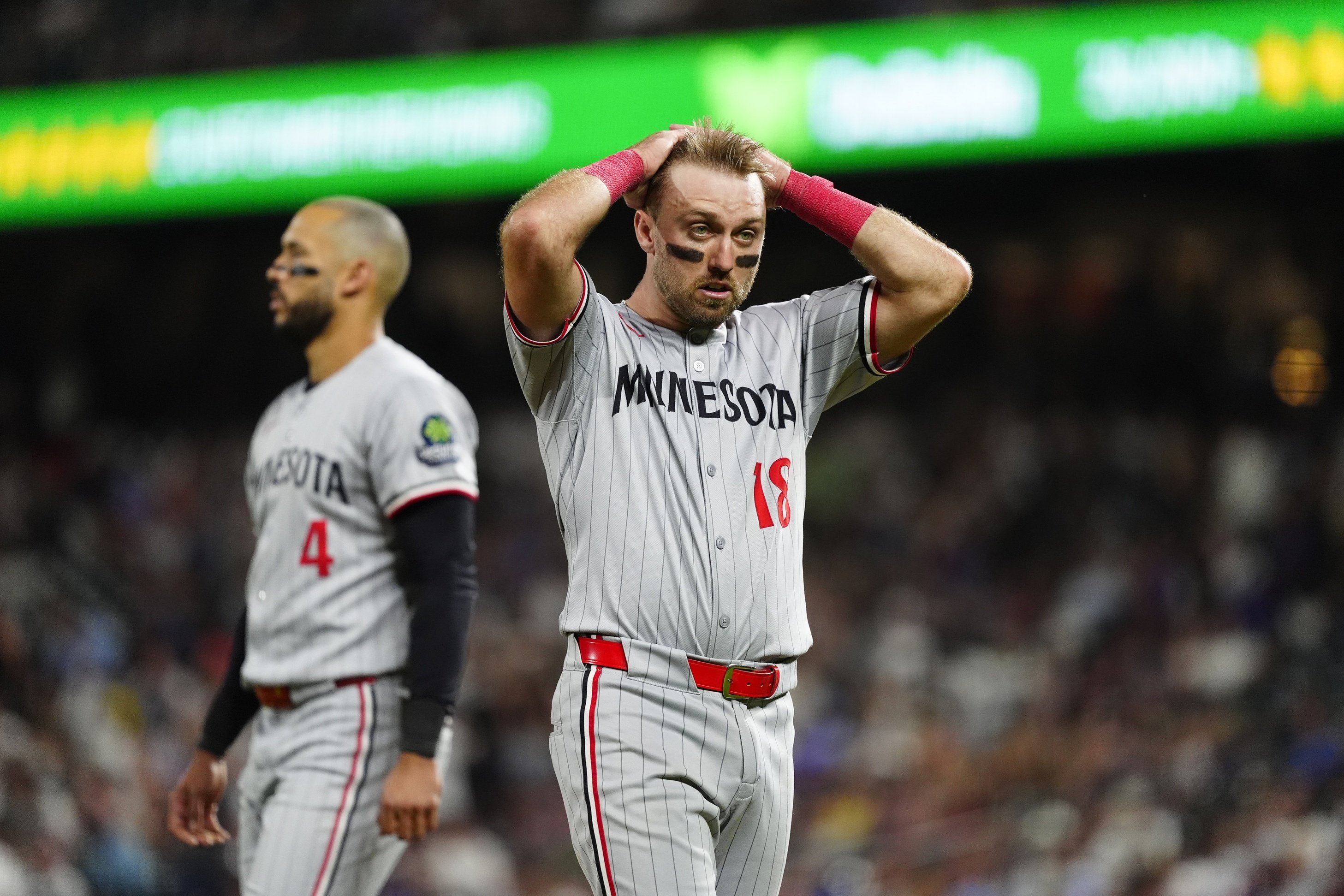 Box Score Zebby Matthews: 4.0 IP, 8 H, 5 ER, 1 BB, 6 K Home Runs: None by the Twins. Too many by the Rockies. Bottom 3 WPA: Brock Stewart (-0.157), Matthews (-0.154), Brooks Lee (-0.094) Win Probability Chart (via FanGraphs): The match was set; a pitching duel for the ages. In one corner, Antonio Senzatela, the nine-year veteran with a career 5.10 ERA and a strikeout rate that would make the Terry Ryan era pitching staff look filthy. In the other corner, the not-quite-rookie making his first start since hitting the shelf six weeks ago with a shoulder strain, fresh off of a single rehab game. The Twins, not quite realizing that yesterday’s game wasn’t a scrimmage, showed up to the ballpark ready to resume their quest for October. The weather didn’t get the memo, and a 38-minute rain delay set in. Unfortunately, the exact scenario you would expect happened: the bad pitcher looked decent against a Twins lineup that generally looked ineffectual at the plate, the Twins failed to execute routine plays on multiple occasions, and the Twins failed to close out innings. Another tough loss, in a game that started so promisingly. How did we get here? T-1 The home team, vying for the title of worst team of all time and hoping to relieve the hapless White Sox of the dubious honor after just one season, took the field. Senzatela retired the Twins in order on 11 pitches. This would prove to be one of the themes of the evening. B-1 The visiting Twins, hoping to convince the front office to add rather than subtract 12 days from now, were undeterred. In the bottom of the first, Zebby quickly got two outs on a flyout and strikeout, then found himself in a bit of trouble. Hunter Goodman singled, Jordan Beck walked, then a wild pitch allowed runners to advance to second and third. Zebby reached back for the gas and struck out Ryan McMahon on four pitches, coaxing a swing on a 98 MPH heater up out of the zone. T-2 The Twins remembered they should probably put up some offense against a bad pitcher and did just that. Ryan Jeffers doubled on a 95 MPH fastball that was a little too close to middle-middle. Kody Clemens did Kody Clemens things, hitting a screaming triple 105 MPH to center on another fastball. Three pitches later, Carlos Correa made it 2-0 as he hit a liner to right. After Brooks Lee hit a weak grounder into the ground towards second, Matt Wallner singled to right, scoring Correa. On a fastball. You know? It’s possible that Senzatela’s fastball just…isn’t good. Harrison Bader struck out, then Byron Buxton hit a liner that McMahon needed to leap for — inning over, Twins up 3-0. B-2 Matthews, loving a challenge, allowed some traffic and an early run. After Ezequiel Tovar hit a leadoff single, Zebby struck out the next two hitters swinging, before Ryan Ritter clubbed a meatball off the left-center wall. Twins up 3-1. B-3 After quickly retiring Mickey Moniak on a strikeout, then getting a long warning-track out that required some Byron Buxton gymnastics, the Twins quickly had two outs. Jordan Beck bunted up the third baseline. The ball was rolling foul, but Ryan Jeffers inexplicably fielded it fair when he had no chance and throwing out the runner. Three pitches later, McMahon hit a slider left over the heart of the plate for a two-run homer. Tie game. B-5 Matthews allowed the first two Rockies batters to reach, before being lifted for Brock Stewart. The Beef quickly retired Beck and McMahon, before giving up a first-pitch blast to Tovar that traveled 433 feet deep to center field. Just like that, the Twins were down 3-6. B-6 Justin Topa came in for the bottom of the 6th inning, and it went like this: single, stolen base, sac bunt, double, single, sac groundout, strikeout. Twins losing 3-8. T-8 The Twins did some damage in the bottom of the 8th, loading the bases with one out on a Harrison Bader hit by pitch, a wild pitch by Juan Mejia, and a pair of walks to Willi Castro and Trevor Larnach. After Jeffers struck out swinging, continuing his rough night, Kody Clemens hit a line drive double to center, plating two runs. Carlos Correa struck out to end the inning. Twins down 5-8. B-8 Anthony Misiewicz came in for the bottom of the 8th. He left an 87 MPH changeup right over the heart of the plate, and undeterred by the Twins pretending a comeback was possible, Hunter Goodman blasted a two-run shot to right, plating Moniak who singled in the previous at-bat. Twins losing 5-10, which is the number of players they might trade away at the deadline. T-9 Not content to quietly go into the good night, the Twins attempted to mount one final comeback. After Brooks Lee took a walk against Zach Agnos, Harrison Bader doubled him in. In short order, Buxton grounded out, Castro flew out, and the game was over, 6-10 Rockies. Notes Ryan Jeffers had a rough game in the field. Between his bad call fielding the bunt, airmailing a throw in the 4th inning trying to throw out Ryan Ritter, and striking out with the bases loaded and the game on the line…well, tomorrow is a new day. Zebby was not at his best locating pitches, as he left a few too many in very crushable locations. His stuff, however, was filthy. He got 16 whiffs on his first 60 pitches before running out of gas in the fifth. The Twins, twice, had leadoff hits immediately wiped out by a double play ball. This is a little emblematic of a team struggling to make much happen at the plate for what feels like the 834th consecutive game. Senzatela had consecutive six-pitch frames in the 5th and 6th innings, and his pitch count was at just 77 when he was pulled after seven innings. That should have allowed him to go complete game, if not for Rockies Manager “Quick Hook” Warren Schaeffer remembering that Senzatela isn’t actually a horse, or even a good pitcher, and making the correct decision to preserve the game. Coming into today's game, the Rockies had not won consecutive home games this season. In the past 25 hours, the Rockies achieved fully 14% of their total season wins. Facing the Twins: good for what ails you. Post-Game Interview: What’s Next? The Twins and Rockies will conclude their series, with Joe Ryan facing off against Germán Márquez. The Twins look to avoid being swept against the worst team in baseball, before heading to Los Angeles for a tough series against one of the best teams in baseball. First pitch is at 2:10 PM.
 -
Image courtesy of Matt Blewett-Imagn Images The first “half” of the 2025 Twins season was an emotional rollercoaster ride for fans. There have been some high highs (the second-longest winning streak in Twins history, the longest scoreless inning streak in team history, and Byron Buxton’s first half); and some low lows (the tough start, the month of June, and injuries to Pablo López, Bailey Ober, and Zebby Matthews). Throughout it all, the Twins enter play on Friday roughly .500, and with reinforcements on the way. While they won’t win the Central division due to the Detroit Tigers being one of the best teams in baseball, they have a real chance of a Wild Card berth based on strength of schedule and the middling nature of the majority of the American League. Let’s take a look. Current Records If the season ended today, the three Wild Card spots would go to the Yankees (53-43), Red Sox (53-45), and Mariners (51-45). The Twins sit four games back of Seattle at 47-49, certainly within striking distance of that final spot. The Rangers and Rays are ahead of the Twins in the standings, and the Angels have the same 47-49 record. The Royals and Guardians sit just a half-game back of the Twins, and the Orioles, Athletics, and White Sox are all but out of the equation. Basically, there are four very good teams in the league, but the last couple wild-card spots are truly that, by record at least, with fully nine teams clamoring for three spots. Playoff Chances There are three primary sites that give playoff odds: FanGraphs, Baseball Reference, and Baseball Prospectus. What do their projections say? Team Baseball Prospectus Fangraphs Baseball Reference Average Yankees 88.3% 88.9% 90.8% 89.3% Mariners 83.2% 72.2% 65.8% 73.7% Red Sox 33.9% 55.1% 67.0% 52.0% Rays 42.9% 37.6% 56.2% 45.6% Rangers 20.7% 17.8% 32.6% 23.7% Twins 28.3% 23.0% 8.8% 20.0% Royals 8.4% 11.8% 5.0% 8.4% Guardians 7.7% 10.1% 4.6% 7.5% Angels 1.7% 3.9% 2.0% 2.5% As you can see, every projection system basically eliminates the Angels from contention. Sorry yet again, Mike Trout. The Guardians and Royals each have less than half the chances of the Twins as well. The Rangers are just ahead of the Twins, and both the Rays and Red Sox have roughly twice the odds of the Twins. You may be wondering why there is so much variation between the different sites. Here are a few things to know. Baseball Reference looks at teams’ current rosters and how each player has performed over the past 100 games, even if those 100 games span multiple seasons. Seasons are then simulated 1000 times to generate average odds. For a team like the Twins, this hurts them due to a handful of their past-100 occurring during last season’s nightmare swoon in September. Their projection systems likes the current Red Sox and Rays rosters, and they receive a playoff boost as a result. Baseball Prospectus uses their PECOTA system to look at teams’ current rosters, evaluates the range of outcomes for each player based on historical comps, and then looks at things like expected playing time shares for each player on the roster to calculate expected OPS and translate that into runs and wins. They factor in expected numbers and regress forward-looking projections accordingly. They run their simulations one million times for a nice big sample. Based on expected numbers, the Rangers should have more wins banked than they do, so their odds are higher. Same with the Rays. The Royals and Guardians on the other hand should have fewer in their win column due to outperforming their Pythag record. FanGraphs does this same work, but also factors in strength of schedule. That’s important, because a team facing, say, the Rockies six more times should have a better chance of picking up excess wins compared to a team that won’t face the Rockies at all. Conversely, a team with a bunch of games remaining against the Tigers will probably win fewer games than their talent level would predict. FanGraphs also simulates each season 10,000 times, so their sample is larger (and theoretically more accurate, as a result) when compared to Baseball-Reference. So, we know the Twins will realistically have to pass the Red Sox, Rays, and Rangers while fending off the Royals and Guardians. That could be a tall order. Before you get disappointed though, let’s circle back to that key factor: strength of schedule remaining. Strength of Schedule Remaining So, knowing that strength of schedule matters, and will almost certainly play a large role in dictating which bubble teams can claw their way into the last wild card spot, how does this look for the Twins? Nice. Based on FanGraphs data, the Twins have the third-easiest schedule remaining, and second-easiest in the American League. In July, they face the hapless Rockies, as well as the Nationals. There are also a number of other series remaining against sub-.500 teams. Among the group of contending teams, just the Royals will have it easier. Looking at the three teams the Twins will need to pass, there’s some great news ahead. The Red Sox have the hardest schedule in baseball, in large part due to playing in the AL East. They also have a ton of games remaining against challenging NL opponents like the Cubs, Dodgers, Phillies, and Padres, all of whom are well over .500. The Rangers also have a tough slog ahead of them, with the sixth-most-challenging schedule. They face the gauntlet that is the AL East, and will also have a couple tough NL series. The Rays, while in the middle of the pack, will still have a tougher go of things than the Twins, and they too play in the AL East. That’s about the best-case scenario for the Twins as they hope to build off of a strong start to the month. While it’s fair to not be excited about a team below .500 heading out of the break, it’s also important to acknowledge that the Twins are very much still in this thing. There’s a lot of baseball still to play, and the Twins actual playoff chances are better than their record indicates. Now, fans just need to hope for a little luck, some health, and for the Twins to pick up where they left off before the break. Starting with a series against the Rockies can only help. Realistically, though, a lot will come down to a crucial six-game road series in late September against the Rangers and the Phillies. With all this information in mind, how confident are you about the Twins' outlook for the second half, which gets underway tonight at Coors Field? View full article
-
 The first “half” of the 2025 Twins season was an emotional rollercoaster ride for fans. There have been some high highs (the second-longest winning streak in Twins history, the longest scoreless inning streak in team history, and Byron Buxton’s first half); and some low lows (the tough start, the month of June, and injuries to Pablo López, Bailey Ober, and Zebby Matthews). Throughout it all, the Twins enter play on Friday roughly .500, and with reinforcements on the way. While they won’t win the Central division due to the Detroit Tigers being one of the best teams in baseball, they have a real chance of a Wild Card berth based on strength of schedule and the middling nature of the majority of the American League. Let’s take a look. Current Records If the season ended today, the three Wild Card spots would go to the Yankees (53-43), Red Sox (53-45), and Mariners (51-45). The Twins sit four games back of Seattle at 47-49, certainly within striking distance of that final spot. The Rangers and Rays are ahead of the Twins in the standings, and the Angels have the same 47-49 record. The Royals and Guardians sit just a half-game back of the Twins, and the Orioles, Athletics, and White Sox are all but out of the equation. Basically, there are four very good teams in the league, but the last couple wild-card spots are truly that, by record at least, with fully nine teams clamoring for three spots. Playoff Chances There are three primary sites that give playoff odds: FanGraphs, Baseball Reference, and Baseball Prospectus. What do their projections say? Team Baseball Prospectus Fangraphs Baseball Reference Average Yankees 88.3% 88.9% 90.8% 89.3% Mariners 83.2% 72.2% 65.8% 73.7% Red Sox 33.9% 55.1% 67.0% 52.0% Rays 42.9% 37.6% 56.2% 45.6% Rangers 20.7% 17.8% 32.6% 23.7% Twins 28.3% 23.0% 8.8% 20.0% Royals 8.4% 11.8% 5.0% 8.4% Guardians 7.7% 10.1% 4.6% 7.5% Angels 1.7% 3.9% 2.0% 2.5% As you can see, every projection system basically eliminates the Angels from contention. Sorry yet again, Mike Trout. The Guardians and Royals each have less than half the chances of the Twins as well. The Rangers are just ahead of the Twins, and both the Rays and Red Sox have roughly twice the odds of the Twins. You may be wondering why there is so much variation between the different sites. Here are a few things to know. Baseball Reference looks at teams’ current rosters and how each player has performed over the past 100 games, even if those 100 games span multiple seasons. Seasons are then simulated 1000 times to generate average odds. For a team like the Twins, this hurts them due to a handful of their past-100 occurring during last season’s nightmare swoon in September. Their projection systems likes the current Red Sox and Rays rosters, and they receive a playoff boost as a result. Baseball Prospectus uses their PECOTA system to look at teams’ current rosters, evaluates the range of outcomes for each player based on historical comps, and then looks at things like expected playing time shares for each player on the roster to calculate expected OPS and translate that into runs and wins. They factor in expected numbers and regress forward-looking projections accordingly. They run their simulations one million times for a nice big sample. Based on expected numbers, the Rangers should have more wins banked than they do, so their odds are higher. Same with the Rays. The Royals and Guardians on the other hand should have fewer in their win column due to outperforming their Pythag record. FanGraphs does this same work, but also factors in strength of schedule. That’s important, because a team facing, say, the Rockies six more times should have a better chance of picking up excess wins compared to a team that won’t face the Rockies at all. Conversely, a team with a bunch of games remaining against the Tigers will probably win fewer games than their talent level would predict. FanGraphs also simulates each season 10,000 times, so their sample is larger (and theoretically more accurate, as a result) when compared to Baseball-Reference. So, we know the Twins will realistically have to pass the Red Sox, Rays, and Rangers while fending off the Royals and Guardians. That could be a tall order. Before you get disappointed though, let’s circle back to that key factor: strength of schedule remaining. Strength of Schedule Remaining So, knowing that strength of schedule matters, and will almost certainly play a large role in dictating which bubble teams can claw their way into the last wild card spot, how does this look for the Twins? Nice. Based on FanGraphs data, the Twins have the third-easiest schedule remaining, and second-easiest in the American League. In July, they face the hapless Rockies, as well as the Nationals. There are also a number of other series remaining against sub-.500 teams. Among the group of contending teams, just the Royals will have it easier. Looking at the three teams the Twins will need to pass, there’s some great news ahead. The Red Sox have the hardest schedule in baseball, in large part due to playing in the AL East. They also have a ton of games remaining against challenging NL opponents like the Cubs, Dodgers, Phillies, and Padres, all of whom are well over .500. The Rangers also have a tough slog ahead of them, with the sixth-most-challenging schedule. They face the gauntlet that is the AL East, and will also have a couple tough NL series. The Rays, while in the middle of the pack, will still have a tougher go of things than the Twins, and they too play in the AL East. That’s about the best-case scenario for the Twins as they hope to build off of a strong start to the month. While it’s fair to not be excited about a team below .500 heading out of the break, it’s also important to acknowledge that the Twins are very much still in this thing. There’s a lot of baseball still to play, and the Twins actual playoff chances are better than their record indicates. Now, fans just need to hope for a little luck, some health, and for the Twins to pick up where they left off before the break. Starting with a series against the Rockies can only help. Realistically, though, a lot will come down to a crucial six-game road series in late September against the Rangers and the Phillies. With all this information in mind, how confident are you about the Twins' outlook for the second half, which gets underway tonight at Coors Field?
 -
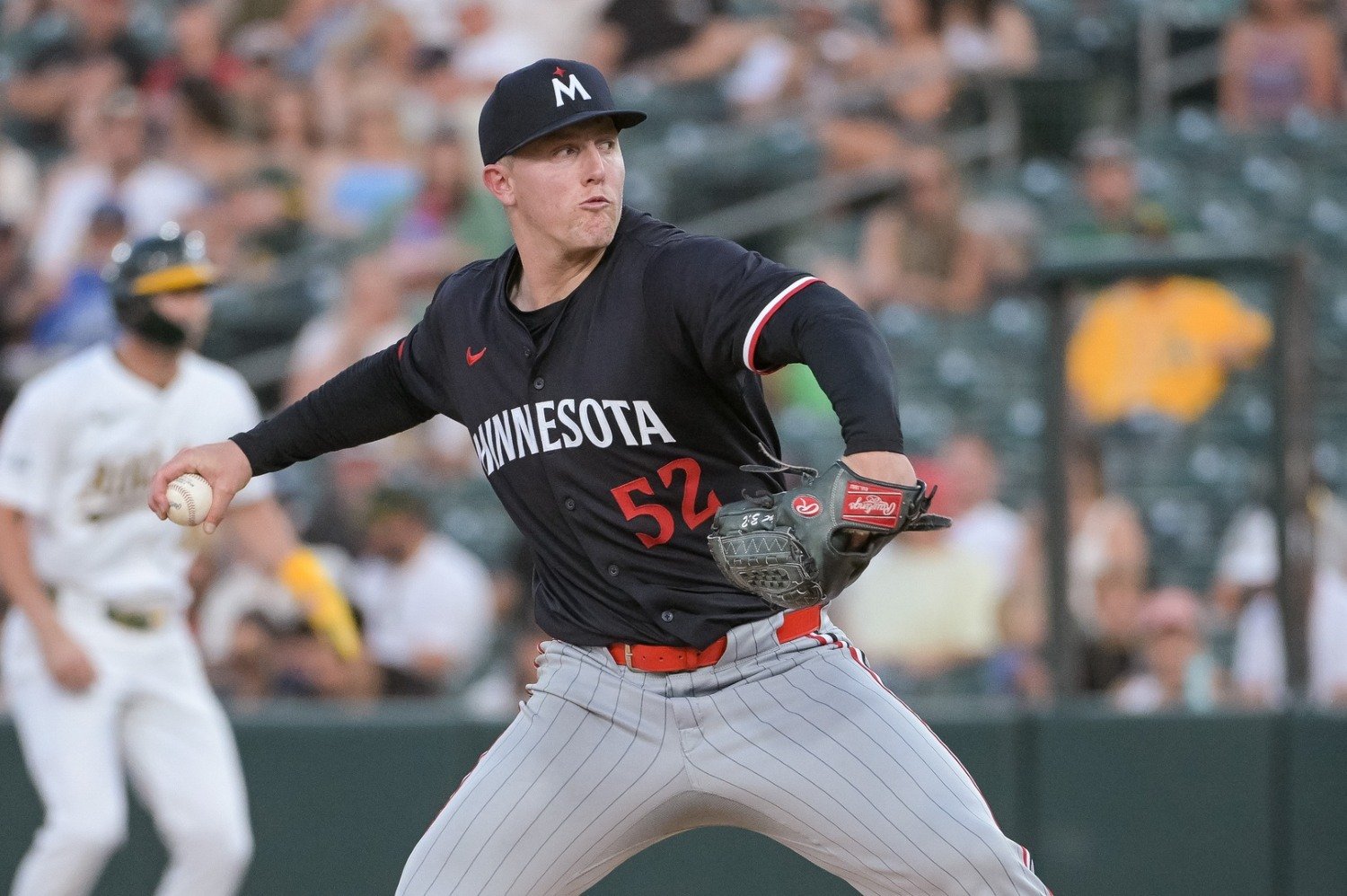 On June 4, Zebby Matthews was making his fourth start of the season after being called up to replace an ineffective Simeon Woods Richardson. Matthews was just starting to find his way with the Twins, but after that day's five strong innings, shoulder discomfort flared for the second time in a week. After imaging, he hit the injured list with a moderate subscapularis strain in his right shoulder on June 8. Early guesses pegged his return in the four- to eight-week window. This was, of course, devastating news: Pablo López had hit the shelf with his own shoulder injury just a few days earlier. Making matters worse, Bailey Ober was clearly not right, dealing with decreased velocity, mechanical issues, and was gritting through his starts ineffectively while playing hurt. Just like that, in the span of a couple of weeks, the Twins lost their ace, fifth, and sixth starters, and couldn’t count on their number three. Many fans began to despair, writing the season off as a lost cause. After all, Joe Ryan, while awesome, just isn’t set up for success when Chris Paddack is next in line and an unproven David Festa is the number three. Fast-forward a month. On Tuesday afternoon, the Twins provided a measure of good news, the likes of which fans have been clamoring for: Zebby Matthews is not far from returning to the Twins. He faced live hitters for the first time since hitting the shelf—including fellow rehabbing rookie Luke Keaschall. Matthews threw roughly 40 pitches across two innings. This is an important step, as he has needed to check several boxes after his rest period—things like long toss, throwing off a flat surface, throwing his breaking pitches, then throwing bullpen sessions. Facing live hitting is different than those prior progressions. “You can try to recreate the bullpen to make it as much like simulated games as possible, but once the hitter gets in the box, it’s always a little different," Matthews said. "Just trying to feel good out there, throw stuff in zone, and from there you can work on, whether it’s sequencing or execution, the finer parts of pitching. Today’s just about feeling good and throwing strikes.” In total, it was a success, though he put a few (simulated) runners on base and allowed some (simulated) hard hits. “Felt good. I feel normal out there,” he said. “Obviously, didn’t quite execute the way [I] needed to, the first time with hitters; [I was] a little excited. But no, it was good.” Speaking about his stuff on the mound, he added: “Ultimately, the first time with hitters, you want to feel good out there—make sure everything feels good out of [your] hand, you’re able to get it in the zone. But it’s always tough. First time, you have the adrenaline back with the hitters, it’s a lot different setting.” Now that he has faced live hitting, what other milestones will the righty need to achieve before rejoining the team? How much longer will fans need to wait before seeing him make another start at Target Field? “We’ll sit down and talk. Kind of had to check this off today, but we’ll sit down and talk, probably some time today, and figure out next steps and go from there,” Matthews said. He indicated that over the next couple days, he expects to hear about a rehab assignment with Saint Paul—the next logical step in his progression. Of course, this depends on his body recovering well over the next couple days, similar to the way it would post-start. Before rejoining the Twins, he will need to get used to several ups and downs, and build back up to being able to throw six innings. “You have to be patient; you can’t rush anything, because that’s when you have setbacks. So you communicate with them on how you’re feeling, and you’re honest with them, and just get back out there when you can.” Fans may expect to see Matthews rejoin the rotation and supplant Travis Adams some time shortly after the All-Star break, if all goes well. While it’s a small sample, Matthews has pitched to a 3.25 FIP across four starts in 2025. He has struck out nearly 12 per nine innings, and if he can pick up where he left off, he will give the rotation a real shot in the arm in the second half. His return will also give fans another fun young player to watch, as the Twins fight for a playoff berth. Here’s hoping the Twins can tread water while waiting for Matthews to bolster the rotation. There's still a lot of baseball left to play in 2025, and he has a big role to play if the Twins are to play meaningful games in September, let alone October. Twins Daily's Matthew Trueblood contributed reporting.
 -
Image courtesy of © Ed Szczepanski-Imagn Images On June 4, Zebby Matthews was making his fourth start of the season after being called up to replace an ineffective Simeon Woods Richardson. Matthews was just starting to find his way with the Twins, but after that day's five strong innings, shoulder discomfort flared for the second time in a week. After imaging, he hit the injured list with a moderate subscapularis strain in his right shoulder on June 8. Early guesses pegged his return in the four- to eight-week window. This was, of course, devastating news: Pablo López had hit the shelf with his own shoulder injury just a few days earlier. Making matters worse, Bailey Ober was clearly not right, dealing with decreased velocity, mechanical issues, and was gritting through his starts ineffectively while playing hurt. Just like that, in the span of a couple of weeks, the Twins lost their ace, fifth, and sixth starters, and couldn’t count on their number three. Many fans began to despair, writing the season off as a lost cause. After all, Joe Ryan, while awesome, just isn’t set up for success when Chris Paddack is next in line and an unproven David Festa is the number three. Fast-forward a month. On Tuesday afternoon, the Twins provided a measure of good news, the likes of which fans have been clamoring for: Zebby Matthews is not far from returning to the Twins. He faced live hitters for the first time since hitting the shelf—including fellow rehabbing rookie Luke Keaschall. Matthews threw roughly 40 pitches across two innings. This is an important step, as he has needed to check several boxes after his rest period—things like long toss, throwing off a flat surface, throwing his breaking pitches, then throwing bullpen sessions. Facing live hitting is different than those prior progressions. “You can try to recreate the bullpen to make it as much like simulated games as possible, but once the hitter gets in the box, it’s always a little different," Matthews said. "Just trying to feel good out there, throw stuff in zone, and from there you can work on, whether it’s sequencing or execution, the finer parts of pitching. Today’s just about feeling good and throwing strikes.” In total, it was a success, though he put a few (simulated) runners on base and allowed some (simulated) hard hits. “Felt good. I feel normal out there,” he said. “Obviously, didn’t quite execute the way [I] needed to, the first time with hitters; [I was] a little excited. But no, it was good.” Speaking about his stuff on the mound, he added: “Ultimately, the first time with hitters, you want to feel good out there—make sure everything feels good out of [your] hand, you’re able to get it in the zone. But it’s always tough. First time, you have the adrenaline back with the hitters, it’s a lot different setting.” Now that he has faced live hitting, what other milestones will the righty need to achieve before rejoining the team? How much longer will fans need to wait before seeing him make another start at Target Field? “We’ll sit down and talk. Kind of had to check this off today, but we’ll sit down and talk, probably some time today, and figure out next steps and go from there,” Matthews said. He indicated that over the next couple days, he expects to hear about a rehab assignment with Saint Paul—the next logical step in his progression. Of course, this depends on his body recovering well over the next couple days, similar to the way it would post-start. Before rejoining the Twins, he will need to get used to several ups and downs, and build back up to being able to throw six innings. “You have to be patient; you can’t rush anything, because that’s when you have setbacks. So you communicate with them on how you’re feeling, and you’re honest with them, and just get back out there when you can.” Fans may expect to see Matthews rejoin the rotation and supplant Travis Adams some time shortly after the All-Star break, if all goes well. While it’s a small sample, Matthews has pitched to a 3.25 FIP across four starts in 2025. He has struck out nearly 12 per nine innings, and if he can pick up where he left off, he will give the rotation a real shot in the arm in the second half. His return will also give fans another fun young player to watch, as the Twins fight for a playoff berth. Here’s hoping the Twins can tread water while waiting for Matthews to bolster the rotation. There's still a lot of baseball left to play in 2025, and he has a big role to play if the Twins are to play meaningful games in September, let alone October. Twins Daily's Matthew Trueblood contributed reporting. View full article

