Eric Blonigen
-
Posts
377 -
Joined
-
Last visited
-
Days Won
1
Content Type
Profiles
News
Minnesota Twins Videos
2026 Minnesota Twins Top Prospects Ranking
2022 Minnesota Twins Draft Picks
Minnesota Twins Free Agent & Trade Rumors, Notes, & Tidbits
Guides & Resources
2023 Minnesota Twins Draft Picks
The Minnesota Twins Players Project
2024 Minnesota Twins Draft Picks
2025 Minnesota Twins Draft Pick Tracker
2026 Minnesota Twins Draft Tracker: Picks & Bonuses
Forums
Blogs
Events
Store
Downloads
Gallery
Everything posted by Eric Blonigen
-

An Ode to Byron Buxton's Best Season Yet
Eric Blonigen posted a topic in Twins Daily Front Page News
Image courtesy of © Matt Krohn-Imagn Images Byron Buxton has officially had the best year of his career in his age-31 season. Perhaps you are among the initiated, and have loved what you have seen from him this season. If so, good on ya, and you probably feel this is stating the obvious. You may be asking yourself, “Why this article, and why now?” Well, it’s simple. After his two-hit performance in the game on Wednesday against the White Sox, Buxton officially hit the high-water mark in his single-season fWAR total. Was it the leadoff triple in the fifth inning that did it? The leadoff double in the ninth? One of the catches he made in center? Tough to say. Regardless, fans who watched another disappointing performance against a bad team got the full Buxton experience, and one that illustrated just how fun a player he is. Throughout his career, Buxton has offered tantalizing glimpses of his talent level as a truly special player. Alas, these glimpses have been punctuated by injury ellipses, some longer than others, that have frustrated many—not, to be clear, because the injuries have indicated any moral failing on Buxton’s part. Rather, the frustration has generally stemmed from the reminder that Twins fans Just. Can’t. Have. Nice. Things. There’s a danger in this mindset; sometimes it makes you miss what’s happening right in front of you. With his performance on Wednesday, Buxton is now at 4.6 fWAR with 23 games remaining. His previous high was 4.4 fWAR, way back in 2017. In that season, Buxton was a sprightly 23 years old, and his game was a fair bit different—based entirely on speed and defense. In 140 games, he was worth 8 runs on the basepaths, and a whopping 25 runs in the field. At the plate, though? Not great, as he was worth -6 runs. All of his contributions came from his 100th-percentile range and sprint speed. He wasn't improving the team on both sides of the ledger. Now, that version of Buxton was fun to watch, because he could change the game with a diving catch that mere mortals had a hard time envisioning. You know, catches like this one. It’s well-documented that hitters typically lose some bat speed in their age-31 season, and yet, this version of Buxton is a beast at the plate. He’s kept his 99th-percentile sprint speed, but he’s added 95th-percentile batting run value. Somehow, he just gets better as he gets older—or rather, his game adjusts as he ages into the sort of high-energy slugger that changes the complexion of games with one swing of the bat, and whose infectious enthusiasm now provides the main remaining source of inspiration and leadership for the 2025 Twins. So, how did Buxton surpass 4.4 fWAR (a lofty mark signifying a very good player) eight years after his breakout season; how did he do it in 34 fewer games; and how did he do it with three weeks remaining in the season? Let’s celebrate some of the building blocks that got us here. First, let’s talk milestones. This season alone, he has: Hit for his first cycle, and on his own bobblehead giveaway day at Target Field Strangely, stolen third base for the first time in his career, while being a perfect 20-for-20 stealing second base Became the first player in baseball history to steal at least 100 bases in their career with a 90% or better success rate Knocked in two runs or more in five consecutive games, tying a team record set by Paul Molitor and Harmon Killebrew Reached a career high in home runs in a season, and still counting Was selected for his first Home Run Derby, and his second All-Star Game Paced himself to become just the second player to have a 25-25 season as a member of the Twins, and the first since Corey Koskie did it in 2001. He is just the eighth in Twins history to join the 20-20 club. Become the frontrunner for the Silver Slugger award, given to the best hitter at each position. By the way, Buxton’s OPS is by far the highest among American League center fielders. Buxton has also been pretty healthy for the second straight season. A player who plays as hard as he does—and who plays a premium defensive position—will always get banged up a bit more than, say, a bopping first baseman. But, since recovering from back-to-back knee surgeries a few years back, Buxton’s maladies have been more of the run-of-the-mill, miss-a-week-or-two type, rather than the severe or lingering sort that plagued him in years past. Buxton has learned to understand and trust his body, and to control what he can control (at least a little bit). On pace to play around 120 games, Buxton has gone a long way to dispel the negative sentiments that critics have lobbed at him on social media. There’s really no reason to suspect he won’t be able to make it three straight 100-game seasons next year. The last thing worth noting is just how much of a class act Buxton is. This has nothing to do with his on-field performance or accumulation of fWAR, but I said this is an ode to Buxton, so I'm saying it anyway. Whether it’s getting baseball cards signed for his kids, donating a bicycle to a child after hitting for the cycle, espousing loyalty to the Pohlads even after their spendthriftiness limits the front office’s ability to field a competitive team around him, or proudly telling the media, over and over (and over some more) that he has no interest in playing anywhere else, one thing is clear: Buxton is a good dude, and one who sets the example for those around him, on and off the field. Byron Buxton, class act and world-class talent, is the player that the Pohlads don’t deserve, and the player Twins fans need. Let’s keep enjoying it, because dudes this special don’t come along that often. The last time a Twins hitter had a better season, it was Brian Dozier in 2017. In baseball years, that’s a lifetime ago. Who knows when it’ll happen again? On to the 25-25 watch. View full article -
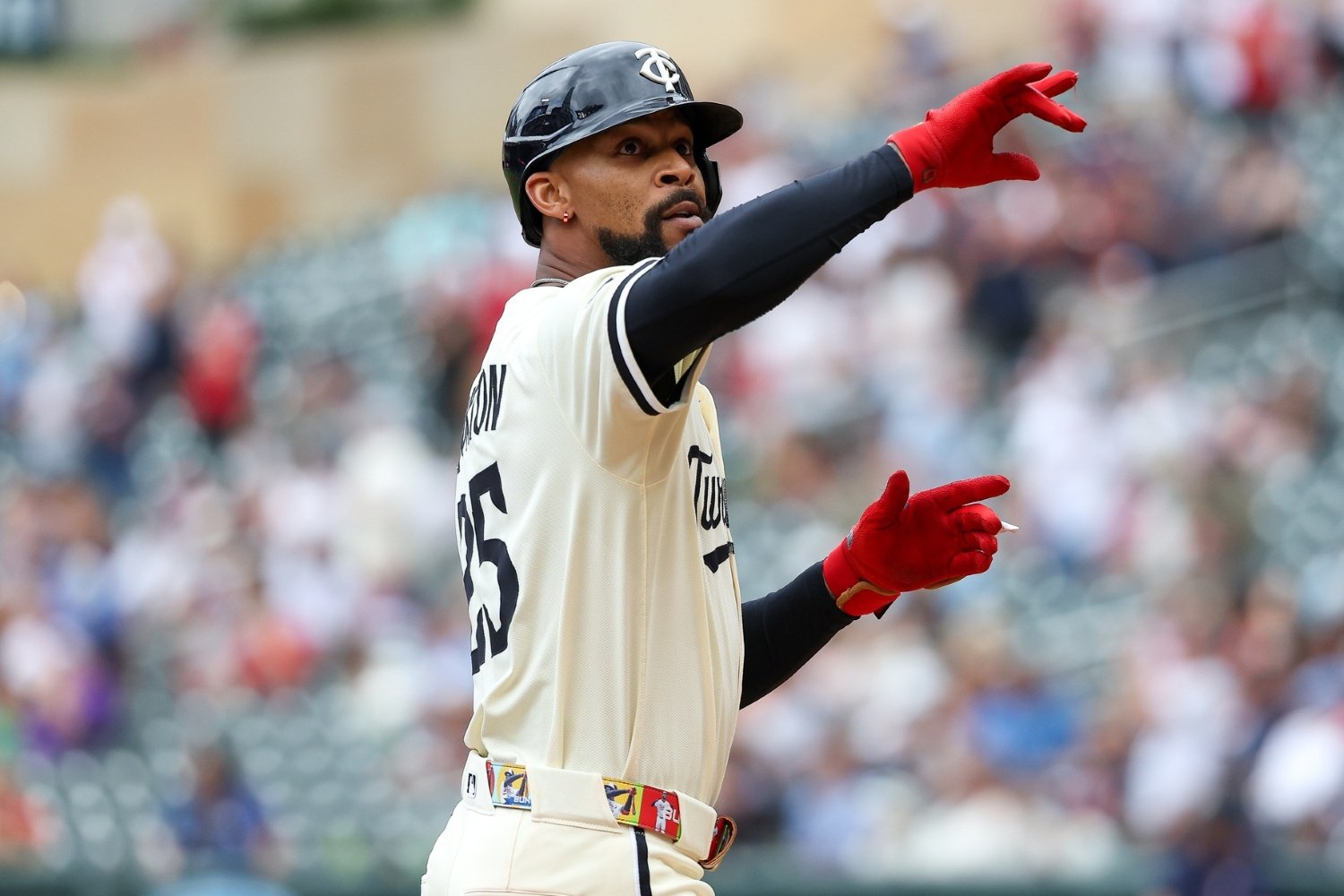 Byron Buxton has officially had the best year of his career in his age-31 season. Perhaps you are among the initiated, and have loved what you have seen from him this season. If so, good on ya, and you probably feel this is stating the obvious. You may be asking yourself, “Why this article, and why now?” Well, it’s simple. After his two-hit performance in the game on Wednesday against the White Sox, Buxton officially hit the high-water mark in his single-season fWAR total. Was it the leadoff triple in the fifth inning that did it? The leadoff double in the ninth? One of the catches he made in center? Tough to say. Regardless, fans who watched another disappointing performance against a bad team got the full Buxton experience, and one that illustrated just how fun a player he is. Throughout his career, Buxton has offered tantalizing glimpses of his talent level as a truly special player. Alas, these glimpses have been punctuated by injury ellipses, some longer than others, that have frustrated many—not, to be clear, because the injuries have indicated any moral failing on Buxton’s part. Rather, the frustration has generally stemmed from the reminder that Twins fans Just. Can’t. Have. Nice. Things. There’s a danger in this mindset; sometimes it makes you miss what’s happening right in front of you. With his performance on Wednesday, Buxton is now at 4.6 fWAR with 23 games remaining. His previous high was 4.4 fWAR, way back in 2017. In that season, Buxton was a sprightly 23 years old, and his game was a fair bit different—based entirely on speed and defense. In 140 games, he was worth 8 runs on the basepaths, and a whopping 25 runs in the field. At the plate, though? Not great, as he was worth -6 runs. All of his contributions came from his 100th-percentile range and sprint speed. He wasn't improving the team on both sides of the ledger. Now, that version of Buxton was fun to watch, because he could change the game with a diving catch that mere mortals had a hard time envisioning. You know, catches like this one. It’s well-documented that hitters typically lose some bat speed in their age-31 season, and yet, this version of Buxton is a beast at the plate. He’s kept his 99th-percentile sprint speed, but he’s added 95th-percentile batting run value. Somehow, he just gets better as he gets older—or rather, his game adjusts as he ages into the sort of high-energy slugger that changes the complexion of games with one swing of the bat, and whose infectious enthusiasm now provides the main remaining source of inspiration and leadership for the 2025 Twins. So, how did Buxton surpass 4.4 fWAR (a lofty mark signifying a very good player) eight years after his breakout season; how did he do it in 34 fewer games; and how did he do it with three weeks remaining in the season? Let’s celebrate some of the building blocks that got us here. First, let’s talk milestones. This season alone, he has: Hit for his first cycle, and on his own bobblehead giveaway day at Target Field Strangely, stolen third base for the first time in his career, while being a perfect 20-for-20 stealing second base Became the first player in baseball history to steal at least 100 bases in their career with a 90% or better success rate Knocked in two runs or more in five consecutive games, tying a team record set by Paul Molitor and Harmon Killebrew Reached a career high in home runs in a season, and still counting Was selected for his first Home Run Derby, and his second All-Star Game Paced himself to become just the second player to have a 25-25 season as a member of the Twins, and the first since Corey Koskie did it in 2001. He is just the eighth in Twins history to join the 20-20 club. Become the frontrunner for the Silver Slugger award, given to the best hitter at each position. By the way, Buxton’s OPS is by far the highest among American League center fielders. Buxton has also been pretty healthy for the second straight season. A player who plays as hard as he does—and who plays a premium defensive position—will always get banged up a bit more than, say, a bopping first baseman. But, since recovering from back-to-back knee surgeries a few years back, Buxton’s maladies have been more of the run-of-the-mill, miss-a-week-or-two type, rather than the severe or lingering sort that plagued him in years past. Buxton has learned to understand and trust his body, and to control what he can control (at least a little bit). On pace to play around 120 games, Buxton has gone a long way to dispel the negative sentiments that critics have lobbed at him on social media. There’s really no reason to suspect he won’t be able to make it three straight 100-game seasons next year. The last thing worth noting is just how much of a class act Buxton is. This has nothing to do with his on-field performance or accumulation of fWAR, but I said this is an ode to Buxton, so I'm saying it anyway. Whether it’s getting baseball cards signed for his kids, donating a bicycle to a child after hitting for the cycle, espousing loyalty to the Pohlads even after their spendthriftiness limits the front office’s ability to field a competitive team around him, or proudly telling the media, over and over (and over some more) that he has no interest in playing anywhere else, one thing is clear: Buxton is a good dude, and one who sets the example for those around him, on and off the field. Byron Buxton, class act and world-class talent, is the player that the Pohlads don’t deserve, and the player Twins fans need. Let’s keep enjoying it, because dudes this special don’t come along that often. The last time a Twins hitter had a better season, it was Brian Dozier in 2017. In baseball years, that’s a lifetime ago. Who knows when it’ll happen again? On to the 25-25 watch.
 -
A major league bat that’s also starting to get a little expensive? If you believe in a retool rather than a rebuild, which I think is completely fair, then a 1:1 swap could make sense. Someone with a 115-120 OPS+ that can play a decent first base could do the trick.
-
Yes. If the Pohlads are now going to pretend to be a small-market team, this is how you succeed. Unless we learn that the minority owners brought in are planning on infusing the team with additional cash, you have to maximize value when you can and operate as a small market team, even if it’s for the lamest reasons.
-
And now it’s time to do it in reverse.
-
Exactly right. With 2027 in doubt, and close to zero chance the front office has the payroll space to even attempt to re-sign them, selling high is about the only hope and will improve the chances of the next core succeeding, because this one just hasn’t.
-
Sure, but that’s the point - if the Pohlads are going to operate with a $100M payroll, and Lopez and Buxton eat up 40% of that between just the two of them, there just isn’t a way to field a competitive roster. There may not be a way to get better next season without freeing up payroll to allocate to other positions of need. Swapping a couple of pitchers for a couple of boppers would help the Twins field a more complete roster, without the glut of Quad-A types we have seen over the past two seasons due to self-imposed payroll restrictions.
-
Image courtesy of Brad Rempel - Imagn Images Before I even get started, I want to tell you that I don’t want this to happen, but it’s what I think should happen for the medium-term health of the Twins as long as the Pohlads don’t spend. That said. It’s beginning to look increasingly clear: the Twins should trade both Pablo Lopez and Joe Ryan this offseason. While this move won’t be popular, it will make the team better when the next contention window opens. Let’s begin by talking dollars and cents. The Athletic’s Dan Hayes has said he won’t be surprised if the Twins set their 2026 payroll around the $100 million mark. If the front office tenders a contract to all arbitration-eligible players and retains everyone under team control for next season, the projected salaries work out to around $95 million. That sure doesn’t give Derek Falvey and Jeremy Zoll much to work with, despite some obvious needs. Lopez and Ryan, between them, figure to eat up about 30% of that theoretical, self-imposed payroll limit. Eliminating $30 million from the books will allow for some interesting pickups to at least be possible. This is important, because 2026 will be a year of transition for the Twins. As it stands, they have virtually nobody they can pencil in at the back end of the bullpen. The hitters, aside from Byron Buxton, Matt Wallner, and Ryan Jeffers, haven’t consistently hit. The hitting corps figures to be bolstered by Walker Jenkins, Emmanuel Rodriguez, and Kaelen Culpepper and Gabriel Gonzalez at some point in 2026, but as Twins fans are well aware, even top prospects sometimes take a while to figure it out at the big league level, and some never do. Because of this, there’s a wide range of outcomes around the offense, and that makes it challenging to even pretend to be all-in next season. Assuming the Twins aren’t planning on competing, it makes almost too much sense to trade both Pablo Lopez and Joe Ryan. With two seasons of team control remaining, and the next window of contention likely beginning in 2027 or maybe even 2028, the Twins should be able to get a haul for the two star pitchers. Ryan, in particular, could fetch a similarly-talented pre-arbitration hitter in a challenge trade, or would net multiple top-100 prospects, and probably a couple of lottery tickets as well should the Twins front office prefer to deepen an already impressive farm system further. Lopez is more expensive, making $21 million next season, so the return there would be a bit less, but still noteworthy. Aside from maximizing the return the Twins would receive in trade, it’s important to acknowledge that the Twins will also have a bit of a starting pitching logjam. With Pablo Lopez, Joe Ryan, and Bailey Ober at the front of the rotation, there’s not a ton of room for the sort of established starters to get consistent run, and there’s no room for the top prospects. Aside from those three, there are fully nine guys that the Twins likely want to give significant innings to, in the short term, five of whom have very little to prove at Triple-A. First, you have the five pitchers with projectability and varying levels of service time. Taj Bradley, Mick Abel, Zebby Matthews, David Festa, and Simeon Woods Richardson could fill a full rotation on their own. Each of those guys, in any given start, could look like an ace, or someone who has no business on a major league roster. To maximize their potential, they need to start, consistently, and with the Twins, until they show they can’t cut it. On the farm, the Twins have four other intriguing hurlers in Connor Prielipp, Andrew Morris, CJ Culpepper, and Marco Raya. Each of these four may be destined for relief, but all still have a puncher’s chance to continue starting games, and all should see action with the Twins in 2026 and beyond. Further away in the pitching pipeline, there are a few guys that currently look to have the potential to be above-average starters. Charlee Soto, Dasan Hill, and Ryan Gallagher (the return for Willi Castro) probably won’t be up before 2027 at the earliest. That’s 12 guys behind Bailey Ober. Now, almost certainly the Twins will convert some — maybe even several — of them into relievers. After all, that’s how the Twins got Jhoan Duran, Griffin Jax, Brock Stewart, Louis Varland, not to mention guys like Glen Perkins, Taylor Rogers, and most other elite relievers in Twins history. However, there’s no reason to feel forced to convert guys just so there’s space for them on the roster. The last thing I want to say is that as a baseball fan, it’ll hurt to see Ryan and Lopez go. Both are excellent pitchers and are fun to watch. Losing them will inarguably make the 2026 Twins team worse. However, with the Pohlads as owners, it’s clear that it’s business as usual, and the only way to field a competitive team on the regular is to also do so on the cheap. When you have two pitchers that are even a little bit replaceable, don’t factor into the long-term plans, and can net you a wealth of talent that can help form the next and hopefully actually successful core, you almost have to make the tough decisions that can help you win long-term. View full article
-
The Twins Should Trade Both Pablo Lopez and Joe Ryan This Offseason
Eric Blonigen posted an article in Twins
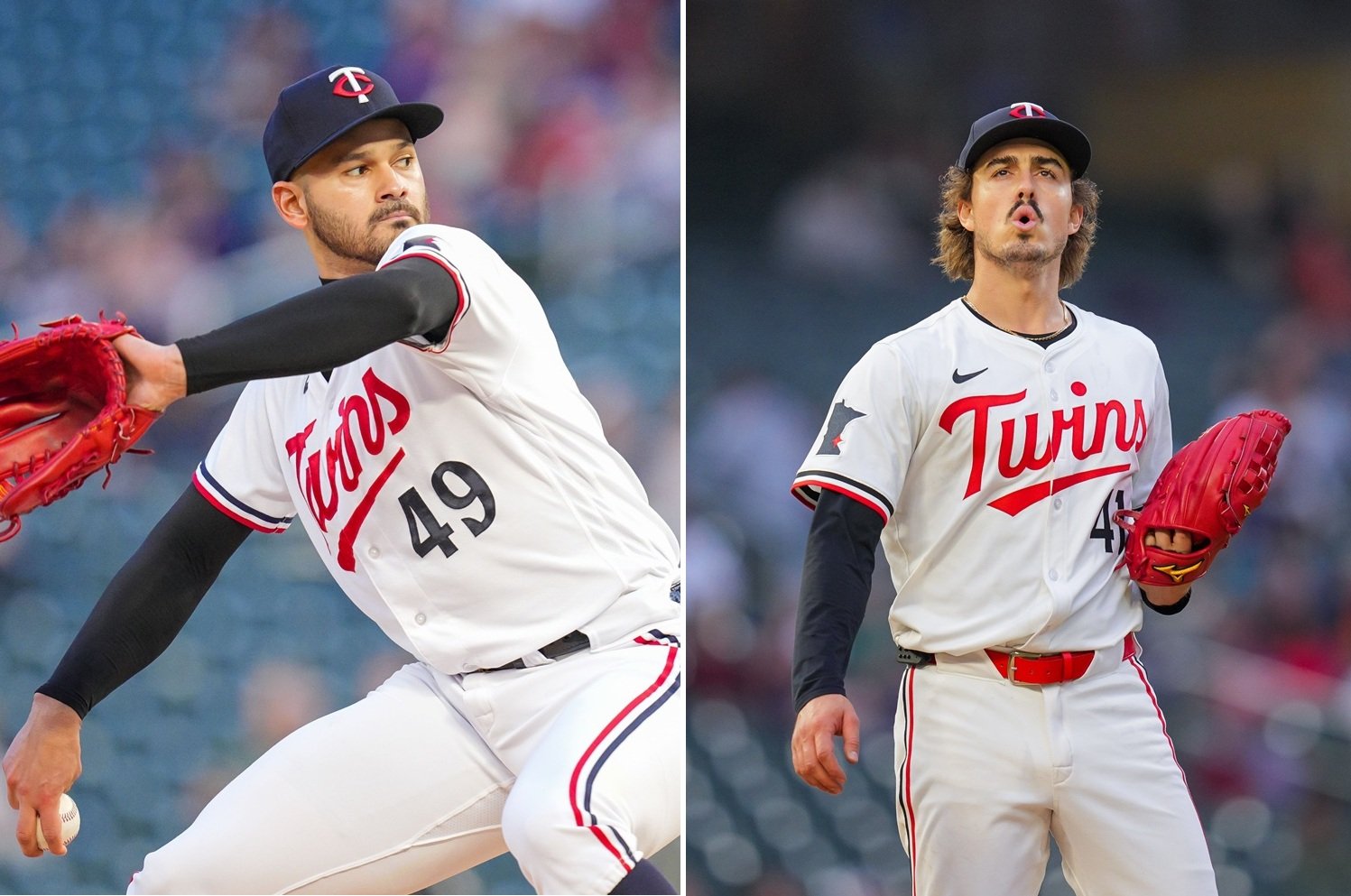 Before I even get started, I want to tell you that I don’t want this to happen, but it’s what I think should happen for the medium-term health of the Twins as long as the Pohlads don’t spend. That said. It’s beginning to look increasingly clear: the Twins should trade both Pablo Lopez and Joe Ryan this offseason. While this move won’t be popular, it will make the team better when the next contention window opens. Let’s begin by talking dollars and cents. The Athletic’s Dan Hayes has said he won’t be surprised if the Twins set their 2026 payroll around the $100 million mark. If the front office tenders a contract to all arbitration-eligible players and retains everyone under team control for next season, the projected salaries work out to around $95 million. That sure doesn’t give Derek Falvey and Jeremy Zoll much to work with, despite some obvious needs. Lopez and Ryan, between them, figure to eat up about 30% of that theoretical, self-imposed payroll limit. Eliminating $30 million from the books will allow for some interesting pickups to at least be possible. This is important, because 2026 will be a year of transition for the Twins. As it stands, they have virtually nobody they can pencil in at the back end of the bullpen. The hitters, aside from Byron Buxton, Matt Wallner, and Ryan Jeffers, haven’t consistently hit. The hitting corps figures to be bolstered by Walker Jenkins, Emmanuel Rodriguez, and Kaelen Culpepper and Gabriel Gonzalez at some point in 2026, but as Twins fans are well aware, even top prospects sometimes take a while to figure it out at the big league level, and some never do. Because of this, there’s a wide range of outcomes around the offense, and that makes it challenging to even pretend to be all-in next season. Assuming the Twins aren’t planning on competing, it makes almost too much sense to trade both Pablo Lopez and Joe Ryan. With two seasons of team control remaining, and the next window of contention likely beginning in 2027 or maybe even 2028, the Twins should be able to get a haul for the two star pitchers. Ryan, in particular, could fetch a similarly-talented pre-arbitration hitter in a challenge trade, or would net multiple top-100 prospects, and probably a couple of lottery tickets as well should the Twins front office prefer to deepen an already impressive farm system further. Lopez is more expensive, making $21 million next season, so the return there would be a bit less, but still noteworthy. Aside from maximizing the return the Twins would receive in trade, it’s important to acknowledge that the Twins will also have a bit of a starting pitching logjam. With Pablo Lopez, Joe Ryan, and Bailey Ober at the front of the rotation, there’s not a ton of room for the sort of established starters to get consistent run, and there’s no room for the top prospects. Aside from those three, there are fully nine guys that the Twins likely want to give significant innings to, in the short term, five of whom have very little to prove at Triple-A. First, you have the five pitchers with projectability and varying levels of service time. Taj Bradley, Mick Abel, Zebby Matthews, David Festa, and Simeon Woods Richardson could fill a full rotation on their own. Each of those guys, in any given start, could look like an ace, or someone who has no business on a major league roster. To maximize their potential, they need to start, consistently, and with the Twins, until they show they can’t cut it. On the farm, the Twins have four other intriguing hurlers in Connor Prielipp, Andrew Morris, CJ Culpepper, and Marco Raya. Each of these four may be destined for relief, but all still have a puncher’s chance to continue starting games, and all should see action with the Twins in 2026 and beyond. Further away in the pitching pipeline, there are a few guys that currently look to have the potential to be above-average starters. Charlee Soto, Dasan Hill, and Ryan Gallagher (the return for Willi Castro) probably won’t be up before 2027 at the earliest. That’s 12 guys behind Bailey Ober. Now, almost certainly the Twins will convert some — maybe even several — of them into relievers. After all, that’s how the Twins got Jhoan Duran, Griffin Jax, Brock Stewart, Louis Varland, not to mention guys like Glen Perkins, Taylor Rogers, and most other elite relievers in Twins history. However, there’s no reason to feel forced to convert guys just so there’s space for them on the roster. The last thing I want to say is that as a baseball fan, it’ll hurt to see Ryan and Lopez go. Both are excellent pitchers and are fun to watch. Losing them will inarguably make the 2026 Twins team worse. However, with the Pohlads as owners, it’s clear that it’s business as usual, and the only way to field a competitive team on the regular is to also do so on the cheap. When you have two pitchers that are even a little bit replaceable, don’t factor into the long-term plans, and can net you a wealth of talent that can help form the next and hopefully actually successful core, you almost have to make the tough decisions that can help you win long-term.
 -
Image courtesy of Bruce Kluckhohn-Imagn Images Box Score Taj Bradley: 5 IP, 1 H, 1 ER, 3 BB, 6 K Home Runs: Byron Buxton (28) Bottom 3 WPA: Mick Abel (-0.613), Matt Wallner (-0.111), Brooks Kriske (-0.089) Win Probability Chart (via FanGraphs): Heartened by yesterday’s exciting win against the very good San Diego Padres, the Twins sought to make it two in a row, and to take their first series in three weeks. They would have gotten away with it, too, if it wasn’t for those pesky Friars (and umps). The Pitchers Taj Bradley took the bump for his second start with the Twins. His first start was…not great. Looking to prove he belongs, he entered his second turn hoping it would go better than the first. The Padres sent staff ace Nick Pivetta to the mound. He has been nails this season, the best year in his nine-year career. Striking out more than a batter per inning, he brought a shiny 13-4 record, and a sparkling 2.90 ERA with a FIP that backs it up. The Game The first six innings were enjoyable. The rest? Not so much. Here were the moments that mattered. 1st Inning The first inning started exactly the way things have gone for the Twins of late. Bradley looked a bit wobbly, walking two of the first three batters he faced. With Fernando Tatis Jr on first, old fiend Luis Arraez hit a sacrifice bunt up out of the zone to advance Tatis to second. Manny Machado also walked, on six pitches. Of course, he should have struck out on pitch five, but the home plate umpire decided that the underdog Padres needed a helping hand. Luckily, Bradley escaped the inning without any damage on a groundout then line out. In the bottom of the first, Luke Keaschall continued his outsized contributions, reaching on a fielder’s choice, then stealing second, but could not come around to score. 3rd Inning In the top of the third, Taj Bradley started to round into form. He got both Tatis and Machado to strike out swinging, with James Outman flashing some leather, diving to catch an Arraez liner. The Twins got on the board first in the bottom of the third, due to their new brand of aggressiveness on the basepaths, and it happened exactly as you would have expected: Outman singled on a curveball that caught the heart of the plate, then stole second. Byron Buxton walked on five pitches, four of which were non-competitive, then Trevor Larnach singled on a sharp dribbler the other way, allowing Outman to not, you know, be out, man. Luke Keaschall and Matt Wallner flew out harmlessly, but the good guys were the lead. 4th Inning In the top half of the fourth, Bradley got both Ryan O’Hearn and Ramon Laureano to whiff out, and Buxton did Buxton things, laying out to catch a sharp liner off the batt of Gavin Sheets to end the inning. 5th Inning In the top of the fifth, Elias Diaz decided he didn’t want the Padres to get shut out, so he hammered a first-pitch mistake that Bradley left center cut. The ball flew approximately to Saint Paul, and just like that, tie game. In the bottom of the fifth, Outman had a nice six-pitch single, and then, Buxton happened. He went opposite field and just knew it was gone as it left his bat. He admired the bomb for a moment, and the Twins were up 3-1. 6th Inning In the top of the sixth, Rocco Baldelli went to his bullpen, and Mick Abel came into the game. Arraez led off the inning and hit a routine grounder to Brooks Lee…except it wasn’t routine, as Lee bobbled the ball and couldn’t get the throw off in time. Machado grounded out, then Abel struck out O’Hearn. Unfortunately, that routine grounder came back to haunt the Twins as Laureano singled in Arraez, then Gavin Sheets singled in Machado to tie the game. Abel ultimately faced three more batters in the inning, throwing 39 pitches, but avoided any further damage. 7th Inning Abel came back out for the seventh, and it didn’t go well. After Tatis and Arraez singled with nobody out, Abel battled back from a 3-0 count to Machado, and should have struck him out. Except, you know, the same happened that happened in the first: he should have struck out, but Alex Tosi called a pitch with six inches to spare a ball. He singled, O’Hearn singled, and Abel’s day was done with the Twins down 5-3. Did I mention there was still nobody out? That’s right. Abel needed 59 pitches to get four outs. Not great, folks. Brooks Kriske came in and promptly allowed another single, this time to Sheets to take the score to 6-3. Two batters later, the nightmare inning continued as James Cronenworth just missed a home run to left by about a foot. Outman misread the ball, and it was ruled a double, and the Twins were down by five. Diaz hit his second homer of the day, and it became a seven-run inning. Kriske then walked Tatis and Arraez, before finally getting Machado to ground out. Woof. Twins down 10-3. Luckily, the Twins came back to score seven to tie it back up in the bottom of the seventh. Just kidding. They went down in order. 8th Inning In the top of the eighth, Genesis Cabrera came in and the bleeding continued. O’Hearn singled, Laureano homered, and Bryce Johnson singled all with nobody out. Cabrera eventually got out of the inning without any further damage, but the game was truly out of hand with the Twins down 12-3. 9th Inning Ryan Fitzgerald came in for the ninth, and retired the side in order. Turns out, a position player was the most effective reliever tonight. In the bottom of the ninth, Mickey Gasper popped out in foul territory, Kody Clemens flew out to the warning track, and Lewis popped out to end the game in just under three hours. Flush it! Game Notes Byron Buxton is now tied for his career-high in home runs, and has an outside chance at a 30-30 season. He will need to steal a base every third game or so the rest of the way. As long as he stays healthy, he’s a virtual lock to at least hit 30 bombs. This game featured a piggyback of likely 2026 starters. Cory Provus clarified in the broadcast that this isn’t a sign that he’s being converted to relief, but rather, the Twins wanted to get him innings on a regular schedule. Aside from his shaky first inning, Bradley looked nasty, and his pitches were working for him. He hit 99 with his heater, and sat 97. His offspeed stuff was working, and he got plenty of swing and miss with 14 whiffs. If this is the version we can see even most of the time, the Twins won the Griffin Jax trade. It took 64 pitches to get through the seventh inning, and 12 batters took their turn. It felt like many, many more. Speed on the base paths continued, with swiped bags by Keaschall and Outman. The Twins have stolen more this month than any other this year. Post-Game Interview: Bullpen Usage Spreadsheet What’s Next? The Twins wrap up their series against the Padres in a day game. Ace Joe Ryan will face the ever-mysterious TBD (likely rookie Kyle Hart) at 12:05, and the Twins are well-positioned to take the series on the pitching matchup alone. View full article
-
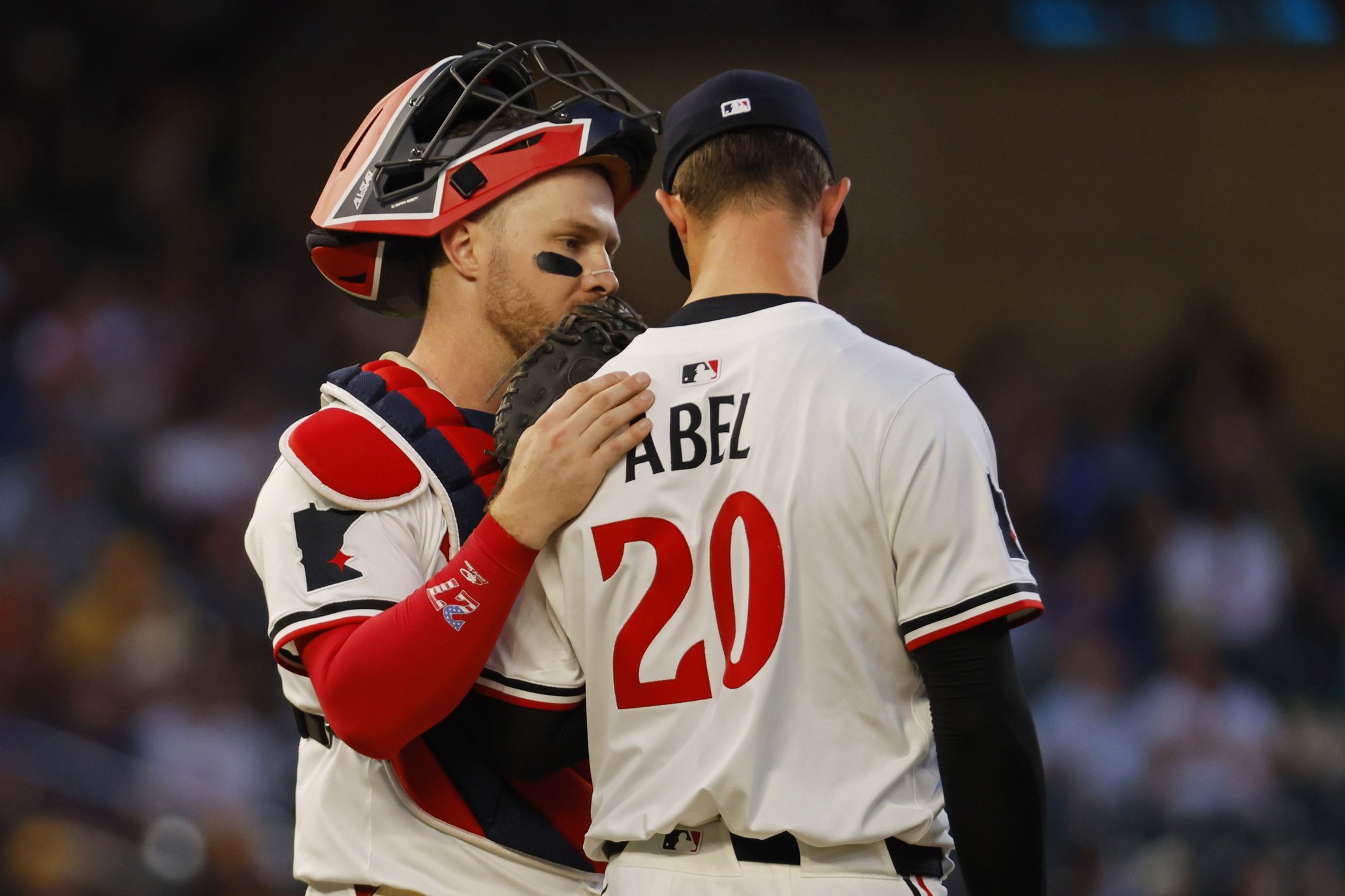 Box Score Taj Bradley: 5 IP, 1 H, 1 ER, 3 BB, 6 K Home Runs: Byron Buxton (28) Bottom 3 WPA: Mick Abel (-0.613), Matt Wallner (-0.111), Brooks Kriske (-0.089) Win Probability Chart (via FanGraphs): Heartened by yesterday’s exciting win against the very good San Diego Padres, the Twins sought to make it two in a row, and to take their first series in three weeks. They would have gotten away with it, too, if it wasn’t for those pesky Friars (and umps). The Pitchers Taj Bradley took the bump for his second start with the Twins. His first start was…not great. Looking to prove he belongs, he entered his second turn hoping it would go better than the first. The Padres sent staff ace Nick Pivetta to the mound. He has been nails this season, the best year in his nine-year career. Striking out more than a batter per inning, he brought a shiny 13-4 record, and a sparkling 2.90 ERA with a FIP that backs it up. The Game The first six innings were enjoyable. The rest? Not so much. Here were the moments that mattered. 1st Inning The first inning started exactly the way things have gone for the Twins of late. Bradley looked a bit wobbly, walking two of the first three batters he faced. With Fernando Tatis Jr on first, old fiend Luis Arraez hit a sacrifice bunt up out of the zone to advance Tatis to second. Manny Machado also walked, on six pitches. Of course, he should have struck out on pitch five, but the home plate umpire decided that the underdog Padres needed a helping hand. Luckily, Bradley escaped the inning without any damage on a groundout then line out. In the bottom of the first, Luke Keaschall continued his outsized contributions, reaching on a fielder’s choice, then stealing second, but could not come around to score. 3rd Inning In the top of the third, Taj Bradley started to round into form. He got both Tatis and Machado to strike out swinging, with James Outman flashing some leather, diving to catch an Arraez liner. The Twins got on the board first in the bottom of the third, due to their new brand of aggressiveness on the basepaths, and it happened exactly as you would have expected: Outman singled on a curveball that caught the heart of the plate, then stole second. Byron Buxton walked on five pitches, four of which were non-competitive, then Trevor Larnach singled on a sharp dribbler the other way, allowing Outman to not, you know, be out, man. Luke Keaschall and Matt Wallner flew out harmlessly, but the good guys were the lead. 4th Inning In the top half of the fourth, Bradley got both Ryan O’Hearn and Ramon Laureano to whiff out, and Buxton did Buxton things, laying out to catch a sharp liner off the batt of Gavin Sheets to end the inning. 5th Inning In the top of the fifth, Elias Diaz decided he didn’t want the Padres to get shut out, so he hammered a first-pitch mistake that Bradley left center cut. The ball flew approximately to Saint Paul, and just like that, tie game. In the bottom of the fifth, Outman had a nice six-pitch single, and then, Buxton happened. He went opposite field and just knew it was gone as it left his bat. He admired the bomb for a moment, and the Twins were up 3-1. 6th Inning In the top of the sixth, Rocco Baldelli went to his bullpen, and Mick Abel came into the game. Arraez led off the inning and hit a routine grounder to Brooks Lee…except it wasn’t routine, as Lee bobbled the ball and couldn’t get the throw off in time. Machado grounded out, then Abel struck out O’Hearn. Unfortunately, that routine grounder came back to haunt the Twins as Laureano singled in Arraez, then Gavin Sheets singled in Machado to tie the game. Abel ultimately faced three more batters in the inning, throwing 39 pitches, but avoided any further damage. 7th Inning Abel came back out for the seventh, and it didn’t go well. After Tatis and Arraez singled with nobody out, Abel battled back from a 3-0 count to Machado, and should have struck him out. Except, you know, the same happened that happened in the first: he should have struck out, but Alex Tosi called a pitch with six inches to spare a ball. He singled, O’Hearn singled, and Abel’s day was done with the Twins down 5-3. Did I mention there was still nobody out? That’s right. Abel needed 59 pitches to get four outs. Not great, folks. Brooks Kriske came in and promptly allowed another single, this time to Sheets to take the score to 6-3. Two batters later, the nightmare inning continued as James Cronenworth just missed a home run to left by about a foot. Outman misread the ball, and it was ruled a double, and the Twins were down by five. Diaz hit his second homer of the day, and it became a seven-run inning. Kriske then walked Tatis and Arraez, before finally getting Machado to ground out. Woof. Twins down 10-3. Luckily, the Twins came back to score seven to tie it back up in the bottom of the seventh. Just kidding. They went down in order. 8th Inning In the top of the eighth, Genesis Cabrera came in and the bleeding continued. O’Hearn singled, Laureano homered, and Bryce Johnson singled all with nobody out. Cabrera eventually got out of the inning without any further damage, but the game was truly out of hand with the Twins down 12-3. 9th Inning Ryan Fitzgerald came in for the ninth, and retired the side in order. Turns out, a position player was the most effective reliever tonight. In the bottom of the ninth, Mickey Gasper popped out in foul territory, Kody Clemens flew out to the warning track, and Lewis popped out to end the game in just under three hours. Flush it! Game Notes Byron Buxton is now tied for his career-high in home runs, and has an outside chance at a 30-30 season. He will need to steal a base every third game or so the rest of the way. As long as he stays healthy, he’s a virtual lock to at least hit 30 bombs. This game featured a piggyback of likely 2026 starters. Cory Provus clarified in the broadcast that this isn’t a sign that he’s being converted to relief, but rather, the Twins wanted to get him innings on a regular schedule. Aside from his shaky first inning, Bradley looked nasty, and his pitches were working for him. He hit 99 with his heater, and sat 97. His offspeed stuff was working, and he got plenty of swing and miss with 14 whiffs. If this is the version we can see even most of the time, the Twins won the Griffin Jax trade. It took 64 pitches to get through the seventh inning, and 12 batters took their turn. It felt like many, many more. Speed on the base paths continued, with swiped bags by Keaschall and Outman. The Twins have stolen more this month than any other this year. Post-Game Interview: Bullpen Usage Spreadsheet What’s Next? The Twins wrap up their series against the Padres in a day game. Ace Joe Ryan will face the ever-mysterious TBD (likely rookie Kyle Hart) at 12:05, and the Twins are well-positioned to take the series on the pitching matchup alone.
 -
I think the author didn't want to single individuals out on this website, which is more than fair. But if you've been reading Wallner does get lumped in with Larnach frequently as a player that Rocco and/or the front office has "failed" to develop. If you read any thread where the topic comes up about the team's inability to develop position players, someone will put Wallner in the same category as Larnach, almost always because of Wallner's high strikeouts or low batting average. Correct. I’m not one to call people out publicly, but I read a LOT of Twins content on this site and elsewhere, and it’s a daily occurrence.
-
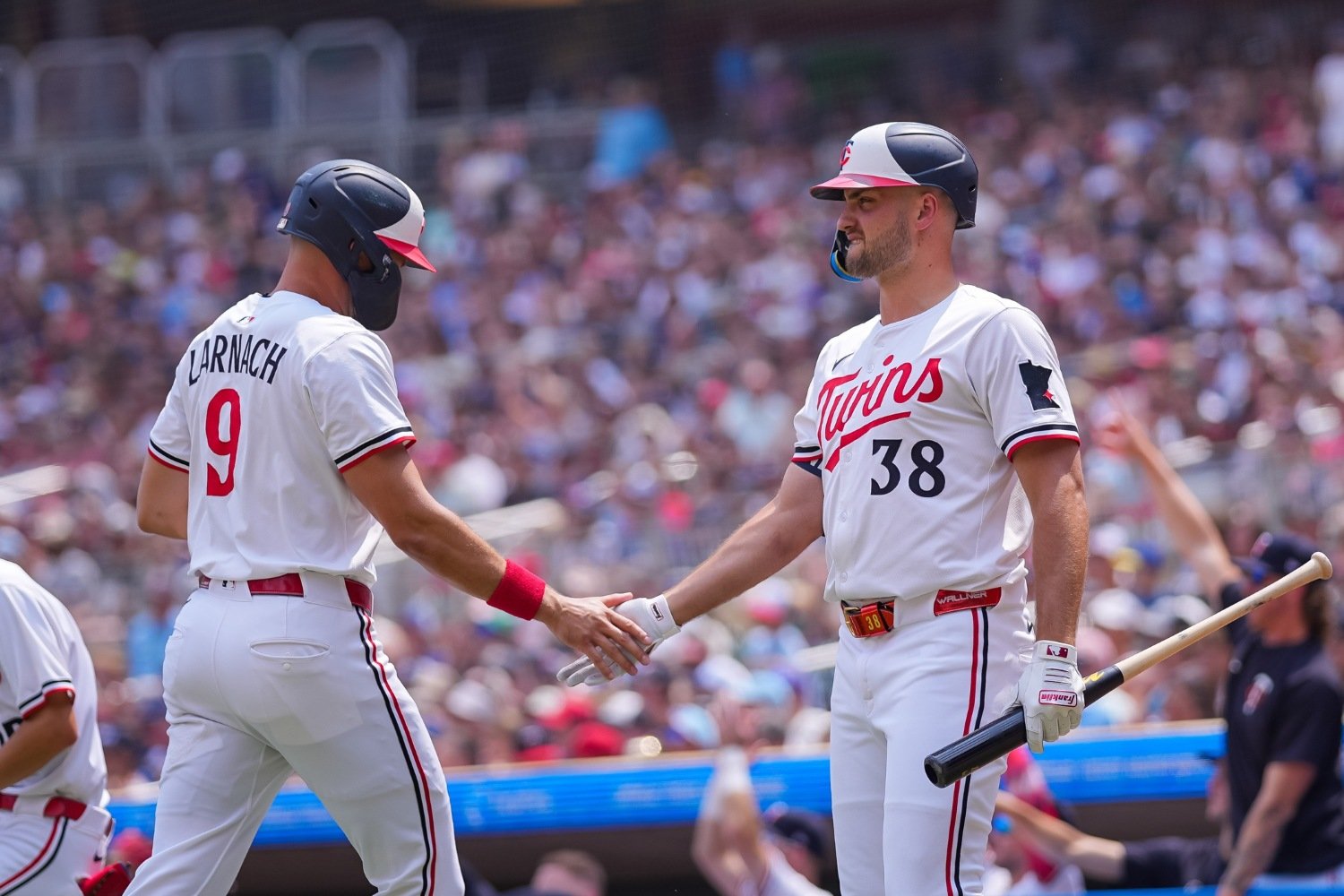 Editor's Note: The below is, suddenly, part of a series amid what seems to be a very passionate ongoing conversation. We had a related piece submitted and a separate, third one proposed within the last week, so I'm creating an impromptu series on the subject of these two Twins outfielders—especially Wallner—and what makes the difference, actually and narratively, between a good-enough corner slugger and an insufficient one. Joing the discussion here, and know that there will be more analysis in this vein coming very soon. A curious thing has happened across Twins Territory. For some reason, many people perceive Matt Wallner and Trevor Larnach to be carbon copies, nigh indistinguishable from each other. Eagle-eyed fans can see this reflected in comments to articles on Twins Daily, tweets (and skeets) from people who filled up on haterade before the game, and others who seem to have never actually visited FanGraphs or Baseball Reference (or, you know, even read the stat lines in their local paper). The most frequent thing I see is people calling for both of them to be designated for assignment or traded this offseason, because in many people’s minds, both are eminently replaceable and thoroughly mediocre. As it turns out, though, the two players have been on wildly different career trajectories, and one of them is pretty dang valuable to the Twins for the next several seasons. On one hand, I sort of get the confusion. After all, it was really hard to watch Twins games in 2023, in a purely logistical sense. Then this year, of course, has been a lost season, and… you know what? No. There’s just no excuse for not understanding the difference between a player who’s likely to be non-tendered in his second year of arbitration, and one who has legitimately been a very good hitter in each season he has played. Anyway, let’s look at the similarities and differences, and you can see for yourself. Let’s start with the similarities. I’m going to tackle this one in bullet point fashion for brevity’s sake. They are both: Left-handed Large humans Drafted by the Twins Mediocre-to-poor fielders who would be better served by being a true DH, all else equal That’s about it. Truly. Now, let’s look at the ways they are different. For starters, let’s look at career OPS, and wRC+. Larnach has a career 104 wRC+, where 100 is average. This is paired with his .725 OPS. For a can’t-field, can’t-run hitter, that’s just not special in any way. Wallner, on the other hand, has a career wRC+ of 138 and a career OPS of .853. Even for a DH, that’s perfectly solid. You know who wins out here. It’s Wallner. Want to see some fancy Baseball Savant percentiles? Coming right up! As you can see here, this season, Wallner has been worth 18 batting runs, which is in the 86th percentile in baseball. His elite bat speed and barrel rate reflect the fact that he can (and often does) clobber the ball, and he walks a ton, too. His baserunning has been neutral, but a tiny bit above average. His fielding has been a negative, worth -2 runs, which is 37th-percentile performance, but this has been buoyed a bit by his cannon arm, which is nearly off the charts. How about Larnach? Yeah. Sort of average. Replacement-level, even. Advantage: Wallner. Is WAR more of your thing? Cool! Let’s see what FanGraphs has to say on the subject. In nearly 1,600 career plate appearances across 419 games, Larnach has been worth 2.7 fWAR. That’s a rate of 0.17 per 100 plate appearances. Wallner, on the other hand, has been worth 5.3 fWAR in roughly 900 plate appearances across 255 games. That’s a rate of 0.58 per 100. That’s nearly 3.5 times the rate for Larnach. Advantage: Wallner. Maybe the argument is they are similarly clutch (or un-clutch). How do they stack up by WPA? Let’s start with Wallner, this time. Across parts of four seasons, he has accumulated 0.25 WPA. Ok, sort of average. Surely, Larnach has outperformed that, right? Wrong. Larnach has been a rally killer. While the last two seasons have been better than his norm, he has been worth -2.08 WPA across parts of five seasons. Advantage: Wallner, once again. Really, by any performance measure, Wallner is the better player—and it’s not remotely close. Next, let’s look at this through the lens of value to the team, and specifically, to a team on a budget. Larnach is likely to make about $5 million in 2026. With built-in arbitration raises, in 2027, he’s set to make somewhere between $8-10 million, and it’s hard to envision a scenario where a team will see the value in that sort of contract. If anything, it is perhaps more likely that he will be signing a minor-league deal similar to the one Willi Castro signed when coming to the Twins. Wallner, on the other hand, will be making the league minimum in 2026, and there’s no reason to think he won’t mash. He will hit arbitration for the first time in 2027, where (almost without a doubt) he will be worth the $2-3 million he will be set to make. Wallner is controllable for four more seasons, and would have legitimate value on the trade market should the Twins want to move on for some reason. Advantage: Wallner. Again. Okay. So to sum all that up, Wallner has consistently hit like a middle-of-the-order bat, is cheap, controllable, is a Minnesota native, has been more clutch, more valuable, and is literally better in every way than Larnach. After writing almost 1,000 words on the subject, if you still aren’t a Wallner fan, that’s completely ok. Maybe you hate strikeouts. Maybe the stretches where he looks lost at the plate for a few weeks frustrate you. Maybe you think the hat-smelling thing is weird. I’m not gonna yum your yuck. But, let’s stop confusing him for a different player who doesn't constitute an apt comparison. As long-suffering Twins fans, we have been conditioned to think that nothing is working and the future is dimly lit. It’s important that we can appreciate the bright spots when they are happening right in front of our faces, and Wallner is one of those bright spots.
 -
Image courtesy of © Brad Rempel-Imagn Images Editor's Note: The below is, suddenly, part of a series amid what seems to be a very passionate ongoing conversation. We had a related piece submitted and a separate, third one proposed within the last week, so I'm creating an impromptu series on the subject of these two Twins outfielders—especially Wallner—and what makes the difference, actually and narratively, between a good-enough corner slugger and an insufficient one. Joing the discussion here, and know that there will be more analysis in this vein coming very soon. A curious thing has happened across Twins Territory. For some reason, many people perceive Matt Wallner and Trevor Larnach to be carbon copies, nigh indistinguishable from each other. Eagle-eyed fans can see this reflected in comments to articles on Twins Daily, tweets (and skeets) from people who filled up on haterade before the game, and others who seem to have never actually visited FanGraphs or Baseball Reference (or, you know, even read the stat lines in their local paper). The most frequent thing I see is people calling for both of them to be designated for assignment or traded this offseason, because in many people’s minds, both are eminently replaceable and thoroughly mediocre. As it turns out, though, the two players have been on wildly different career trajectories, and one of them is pretty dang valuable to the Twins for the next several seasons. On one hand, I sort of get the confusion. After all, it was really hard to watch Twins games in 2023, in a purely logistical sense. Then this year, of course, has been a lost season, and… you know what? No. There’s just no excuse for not understanding the difference between a player who’s likely to be non-tendered in his second year of arbitration, and one who has legitimately been a very good hitter in each season he has played. Anyway, let’s look at the similarities and differences, and you can see for yourself. Let’s start with the similarities. I’m going to tackle this one in bullet point fashion for brevity’s sake. They are both: Left-handed Large humans Drafted by the Twins Mediocre-to-poor fielders who would be better served by being a true DH, all else equal That’s about it. Truly. Now, let’s look at the ways they are different. For starters, let’s look at career OPS, and wRC+. Larnach has a career 104 wRC+, where 100 is average. This is paired with his .725 OPS. For a can’t-field, can’t-run hitter, that’s just not special in any way. Wallner, on the other hand, has a career wRC+ of 138 and a career OPS of .853. Even for a DH, that’s perfectly solid. You know who wins out here. It’s Wallner. Want to see some fancy Baseball Savant percentiles? Coming right up! As you can see here, this season, Wallner has been worth 18 batting runs, which is in the 86th percentile in baseball. His elite bat speed and barrel rate reflect the fact that he can (and often does) clobber the ball, and he walks a ton, too. His baserunning has been neutral, but a tiny bit above average. His fielding has been a negative, worth -2 runs, which is 37th-percentile performance, but this has been buoyed a bit by his cannon arm, which is nearly off the charts. How about Larnach? Yeah. Sort of average. Replacement-level, even. Advantage: Wallner. Is WAR more of your thing? Cool! Let’s see what FanGraphs has to say on the subject. In nearly 1,600 career plate appearances across 419 games, Larnach has been worth 2.7 fWAR. That’s a rate of 0.17 per 100 plate appearances. Wallner, on the other hand, has been worth 5.3 fWAR in roughly 900 plate appearances across 255 games. That’s a rate of 0.58 per 100. That’s nearly 3.5 times the rate for Larnach. Advantage: Wallner. Maybe the argument is they are similarly clutch (or un-clutch). How do they stack up by WPA? Let’s start with Wallner, this time. Across parts of four seasons, he has accumulated 0.25 WPA. Ok, sort of average. Surely, Larnach has outperformed that, right? Wrong. Larnach has been a rally killer. While the last two seasons have been better than his norm, he has been worth -2.08 WPA across parts of five seasons. Advantage: Wallner, once again. Really, by any performance measure, Wallner is the better player—and it’s not remotely close. Next, let’s look at this through the lens of value to the team, and specifically, to a team on a budget. Larnach is likely to make about $5 million in 2026. With built-in arbitration raises, in 2027, he’s set to make somewhere between $8-10 million, and it’s hard to envision a scenario where a team will see the value in that sort of contract. If anything, it is perhaps more likely that he will be signing a minor-league deal similar to the one Willi Castro signed when coming to the Twins. Wallner, on the other hand, will be making the league minimum in 2026, and there’s no reason to think he won’t mash. He will hit arbitration for the first time in 2027, where (almost without a doubt) he will be worth the $2-3 million he will be set to make. Wallner is controllable for four more seasons, and would have legitimate value on the trade market should the Twins want to move on for some reason. Advantage: Wallner. Again. Okay. So to sum all that up, Wallner has consistently hit like a middle-of-the-order bat, is cheap, controllable, is a Minnesota native, has been more clutch, more valuable, and is literally better in every way than Larnach. After writing almost 1,000 words on the subject, if you still aren’t a Wallner fan, that’s completely ok. Maybe you hate strikeouts. Maybe the stretches where he looks lost at the plate for a few weeks frustrate you. Maybe you think the hat-smelling thing is weird. I’m not gonna yum your yuck. But, let’s stop confusing him for a different player who doesn't constitute an apt comparison. As long-suffering Twins fans, we have been conditioned to think that nothing is working and the future is dimly lit. It’s important that we can appreciate the bright spots when they are happening right in front of our faces, and Wallner is one of those bright spots. View full article
-
Image courtesy of © Nick Turchiaro-Imagn Images Box Score Starting Pitcher: Simeon Woods Richardson: 3 2/3 IP, 5 H, 5 ER, 2 BB, 2 K Home Runs: Byron Buxton 2 (27), Luke Keaschall (4), Austin Martin (I’m giving it to him even if the official scorekeeper didn’t), Brooks Lee (14) Bottom 3 WPA: Michael Tonkin (-0.535), Simeon Woods Richardson (-0.357), Genesis Cabrera (-0.148) Win Probability Chart (via FanGraphs) On a somber night in which a mass shooting occurred at a school in Minneapolis, the Twins still had to take the field in Toronto. Tonight’s finale against the Toronto Blue Jays featured everything: a little league home run; not one but two Buck Trucks, a Matt Wallner stolen base; scoring runs by playing small ball; and the return of a starting pitcher from an unpleasant stay on the IL. Tell me more, you say? Buckle up. The Pitchers Simeon Woods Richardson took the bump in his first start back from the IL, where he dealt with an unpleasant parasite that sapped strength and body weight. He only lasted 3 2/3 innings as he gave up too much hard contact including three home runs. It was great to see him back, however. On the human level, I wouldn't wish a parasite on anyone. Regarding baseball, though, this may officially mean the end of the bullpen games fans have been subjected to over the past month or so. The Blue Jays sent lefty Eric Lauer to the mound in Toronto. He came into the game with an 8-2 record on a 3.01 ERA while striking out about a guy an inning. He has pitched like a guy who plans to two-hit the Twins, but luckily for Twins fans, they didn’t follow his game plan. The Game Top-1 - Twins 1-0 The Twins began the game in portentous fashion as Byron Buxton hit a leadoff homer off a cutter to set the tone. After Ryan Jeffers grounded out, Matt Wallner took it the other way for a single to right. He then stole second but couldn’t advance as Luke Keaschall struck out looking and Brooks Lee flied out. An auspicious (and fun) start to the game. Woods Richardson took the bottom of the inning and coaxed a popout, ground out, and flyout to end the inning on seven pitches. In the top of the second, Austin Martin singled and stole second but couldn’t come around to score. Bottom-2 - Tied 1-1 Woods Richardson didn’t look quite as sharp in the second, as he threw a fastball up in the zone that Davis Schneider pulled and hit out at 104.2 miles an hour. Top-3 - Twins 3-1 Byron Buxton one-upped himself in his quest to join the 30-20 club by clubbing a 404-foot leadoff homer to left center for his 27th of the year. Three batters later, with two outs an a one-run lead, Luke Keaschall decided to do Luke Keaschall stuff and hit one out of the park as well. His fifth of the year was hit almost perfectly optimally of a slider that was nearly middle-middle. Brooks Lee gave going back to back the ol’ college try. After fouling off a low change and taking a couple pitches outside the zone, he slammed a slow heater to center. Daulton Varsho needed to range back then make a leaping catch to rob the homer. Inning over. Bottom-3 - Tied 3-3 Woods Richardson struggled mightily with his command and control. This led to the sort of nightmare inning that threatens the best of teams. Tyler Heineman walked on four pitches, although ball four appeared to clip the zone. Andres grounded out, George Springer singled, and after Addison Barger popped out weakly to Luke Keaschall at second, Vladimir Guerrero Jr walked to load the bases. Then, Bo Bichette took a seven-pitch at bat before singling in two runs. Tie game. Top-4 - Twins 6-3 After Kody Clemens struck out and Royce Lewis popped out, more fun ensued. Austin Martin singled sharply, then Edouard Julien doubled him in. And kept running. And running. Running. As Tyler Heineman sailed the throw, and he scored to double the Jays score. Then, Byron Buxton reached after grounding the ball to short where Bichette had an easy play. Until it wasn’t, and he sailed the throw himself which allowed Buxton to reach second. Then, Ryan Jeffers singled to left and Buxton scored before Jeffers was thrown out to end the inning after he attempted to take second. Bottom-4 - Twins 6-5 Because this game was destined to keep being fun, the Blue Jays hit two more home runs of their own to tighten the score. Davis Schneider hit his second of the game off Woods Richardson as he hit the middle of the plate with his curve. A few batters later, Giminez homered as well. Rocco made the call to the pen and Thomas Hatch took over. He allowed a single to Springer, who stole second but Hatch won a battle with Addison Barger by getting a strikeout on the seventh pitch of the at-bat, none of which were near the zone. Top-5 - Twins 8-5 The fun continued for the Twins in the fifth. Brooks Lee decided it had been just a little too long since his last bomb, so he rectified his mistake, hitting his 14th of the year. It’s been great seeing him add a bit of power to his game as his OPS approaches .700. Kody Clemens decided he’s a base stealer now, too, as he took second after singling. Then, Royce Lewis singled to knock in Clemens, then he stole second. The inning ended on a groundout for Martin. Bottom-5 - Twins 8-6 After Hatch walked Schneider, Kody Funderburk came in to give up a single, then a double to Giminez before recording the final two outs of the inning on strikeouts. Bottom-8 - Jays 9-8 Genesis Cabrera was the fourth reliever out of the pen, and he decided to make it interesting after old friend Ty France hit his seventh home run of the year. It was a blast to left center that went 420 feet. After Alejandro Kirk singled, Cabrera was pulled for Michael Tonkin, who immediately walked Springer before narrowly avoiding a home run to Barger. The ball hit the very top of the wall but Springer scored from first, and the Jays took the lead. Tonkin struck out Guerrero, then got Bichette to ground out to end the inning. Top-9 - Twins lose Jeffers attempted to tie the game against Jeff Hoffman with his A-swing, but Myles Straw caught it at the warning track. Yesterday’s hero, Matt Wallner came up and swung for the fences on three straight pitches, but whiffed badly on a third strike. Down to the last batter, Keaschall doubled down the line to keep hope alive, but Lee chopped it to first to end the game. Theme of the game: even bad teams are still worth watching This game featured a bit of slop, a lot of power, and a bunch happening on the basepaths. It wasn’t always pretty, but this is baseball. Game Notes Cole Sands looked filthy as he struck out the side in the 7th tonight. His velocity was up as well. If he’s approaching the dominance of his 2024 season, that’ll signal good news for next year’s bullpen. Every Twins hitter recorded at least one hit tonight Eight years ago today, Byron Buxton hit three home runs in Toronto What’s Next? The Twins have an off day on Thursday before beginning their next homestead when the excellent San Diego Padres come to town. Zebby Matthews will face Nestor Cortes in a down season. First pitch is at 7:10 PM. Postgame Interviews Bullpen Usage Spreadsheet View full article
-
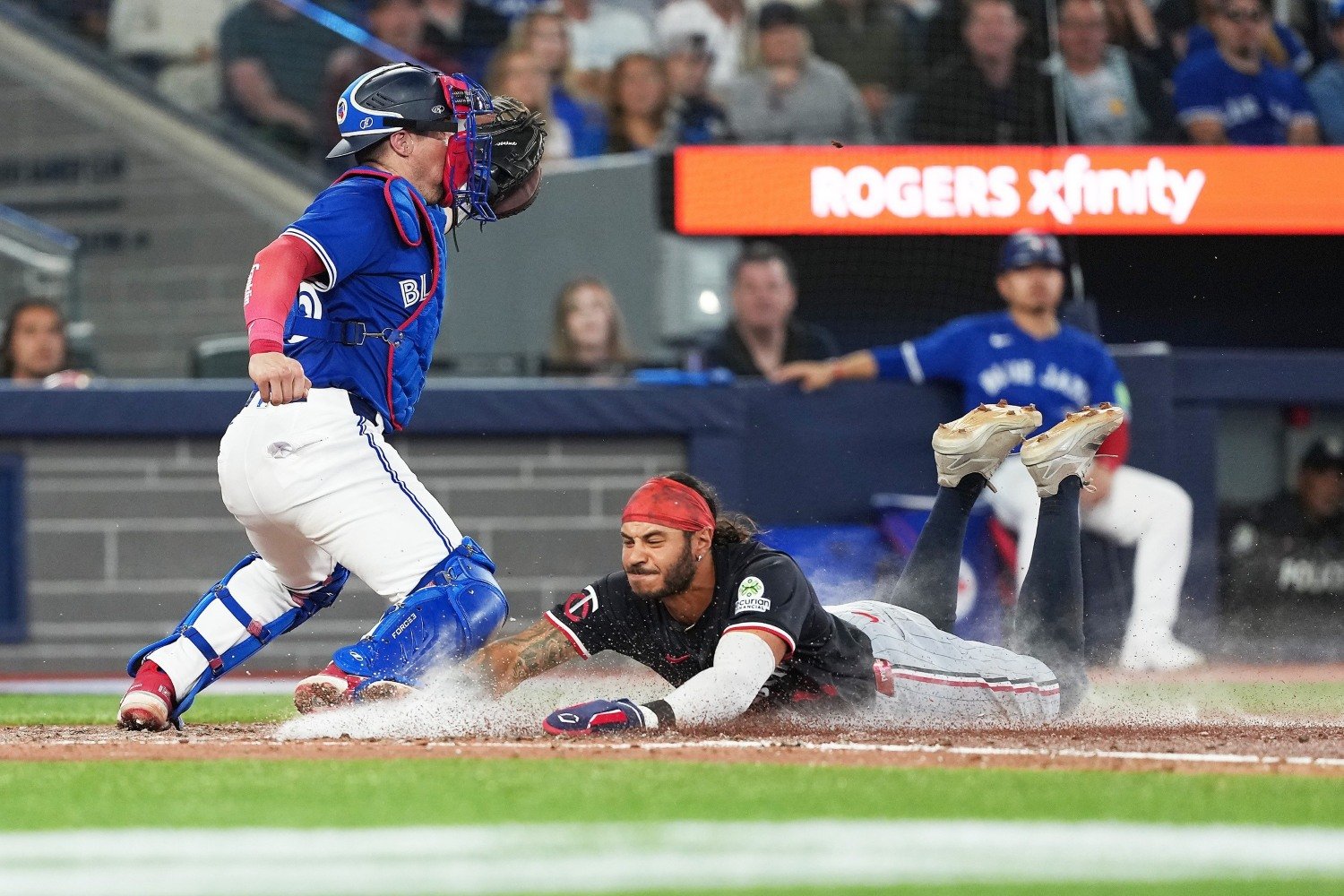 Box Score Starting Pitcher: Simeon Woods Richardson: 3 2/3 IP, 5 H, 5 ER, 2 BB, 2 K Home Runs: Byron Buxton 2 (27), Luke Keaschall (4), Austin Martin (I’m giving it to him even if the official scorekeeper didn’t), Brooks Lee (14) Bottom 3 WPA: Michael Tonkin (-0.535), Simeon Woods Richardson (-0.357), Genesis Cabrera (-0.148) Win Probability Chart (via FanGraphs) On a somber night in which a mass shooting occurred at a school in Minneapolis, the Twins still had to take the field in Toronto. Tonight’s finale against the Toronto Blue Jays featured everything: a little league home run; not one but two Buck Trucks, a Matt Wallner stolen base; scoring runs by playing small ball; and the return of a starting pitcher from an unpleasant stay on the IL. Tell me more, you say? Buckle up. The Pitchers Simeon Woods Richardson took the bump in his first start back from the IL, where he dealt with an unpleasant parasite that sapped strength and body weight. He only lasted 3 2/3 innings as he gave up too much hard contact including three home runs. It was great to see him back, however. On the human level, I wouldn't wish a parasite on anyone. Regarding baseball, though, this may officially mean the end of the bullpen games fans have been subjected to over the past month or so. The Blue Jays sent lefty Eric Lauer to the mound in Toronto. He came into the game with an 8-2 record on a 3.01 ERA while striking out about a guy an inning. He has pitched like a guy who plans to two-hit the Twins, but luckily for Twins fans, they didn’t follow his game plan. The Game Top-1 - Twins 1-0 The Twins began the game in portentous fashion as Byron Buxton hit a leadoff homer off a cutter to set the tone. After Ryan Jeffers grounded out, Matt Wallner took it the other way for a single to right. He then stole second but couldn’t advance as Luke Keaschall struck out looking and Brooks Lee flied out. An auspicious (and fun) start to the game. Woods Richardson took the bottom of the inning and coaxed a popout, ground out, and flyout to end the inning on seven pitches. In the top of the second, Austin Martin singled and stole second but couldn’t come around to score. Bottom-2 - Tied 1-1 Woods Richardson didn’t look quite as sharp in the second, as he threw a fastball up in the zone that Davis Schneider pulled and hit out at 104.2 miles an hour. Top-3 - Twins 3-1 Byron Buxton one-upped himself in his quest to join the 30-20 club by clubbing a 404-foot leadoff homer to left center for his 27th of the year. Three batters later, with two outs an a one-run lead, Luke Keaschall decided to do Luke Keaschall stuff and hit one out of the park as well. His fifth of the year was hit almost perfectly optimally of a slider that was nearly middle-middle. Brooks Lee gave going back to back the ol’ college try. After fouling off a low change and taking a couple pitches outside the zone, he slammed a slow heater to center. Daulton Varsho needed to range back then make a leaping catch to rob the homer. Inning over. Bottom-3 - Tied 3-3 Woods Richardson struggled mightily with his command and control. This led to the sort of nightmare inning that threatens the best of teams. Tyler Heineman walked on four pitches, although ball four appeared to clip the zone. Andres grounded out, George Springer singled, and after Addison Barger popped out weakly to Luke Keaschall at second, Vladimir Guerrero Jr walked to load the bases. Then, Bo Bichette took a seven-pitch at bat before singling in two runs. Tie game. Top-4 - Twins 6-3 After Kody Clemens struck out and Royce Lewis popped out, more fun ensued. Austin Martin singled sharply, then Edouard Julien doubled him in. And kept running. And running. Running. As Tyler Heineman sailed the throw, and he scored to double the Jays score. Then, Byron Buxton reached after grounding the ball to short where Bichette had an easy play. Until it wasn’t, and he sailed the throw himself which allowed Buxton to reach second. Then, Ryan Jeffers singled to left and Buxton scored before Jeffers was thrown out to end the inning after he attempted to take second. Bottom-4 - Twins 6-5 Because this game was destined to keep being fun, the Blue Jays hit two more home runs of their own to tighten the score. Davis Schneider hit his second of the game off Woods Richardson as he hit the middle of the plate with his curve. A few batters later, Giminez homered as well. Rocco made the call to the pen and Thomas Hatch took over. He allowed a single to Springer, who stole second but Hatch won a battle with Addison Barger by getting a strikeout on the seventh pitch of the at-bat, none of which were near the zone. Top-5 - Twins 8-5 The fun continued for the Twins in the fifth. Brooks Lee decided it had been just a little too long since his last bomb, so he rectified his mistake, hitting his 14th of the year. It’s been great seeing him add a bit of power to his game as his OPS approaches .700. Kody Clemens decided he’s a base stealer now, too, as he took second after singling. Then, Royce Lewis singled to knock in Clemens, then he stole second. The inning ended on a groundout for Martin. Bottom-5 - Twins 8-6 After Hatch walked Schneider, Kody Funderburk came in to give up a single, then a double to Giminez before recording the final two outs of the inning on strikeouts. Bottom-8 - Jays 9-8 Genesis Cabrera was the fourth reliever out of the pen, and he decided to make it interesting after old friend Ty France hit his seventh home run of the year. It was a blast to left center that went 420 feet. After Alejandro Kirk singled, Cabrera was pulled for Michael Tonkin, who immediately walked Springer before narrowly avoiding a home run to Barger. The ball hit the very top of the wall but Springer scored from first, and the Jays took the lead. Tonkin struck out Guerrero, then got Bichette to ground out to end the inning. Top-9 - Twins lose Jeffers attempted to tie the game against Jeff Hoffman with his A-swing, but Myles Straw caught it at the warning track. Yesterday’s hero, Matt Wallner came up and swung for the fences on three straight pitches, but whiffed badly on a third strike. Down to the last batter, Keaschall doubled down the line to keep hope alive, but Lee chopped it to first to end the game. Theme of the game: even bad teams are still worth watching This game featured a bit of slop, a lot of power, and a bunch happening on the basepaths. It wasn’t always pretty, but this is baseball. Game Notes Cole Sands looked filthy as he struck out the side in the 7th tonight. His velocity was up as well. If he’s approaching the dominance of his 2024 season, that’ll signal good news for next year’s bullpen. Every Twins hitter recorded at least one hit tonight Eight years ago today, Byron Buxton hit three home runs in Toronto What’s Next? The Twins have an off day on Thursday before beginning their next homestead when the excellent San Diego Padres come to town. Zebby Matthews will face Nestor Cortes in a down season. First pitch is at 7:10 PM. Postgame Interviews Bullpen Usage Spreadsheet
 -
The 2026 Twins figure to be a team in transition, with no bullpen to speak of and an underperforming offense. They do, however, have pitching depth and significant hitting reinforcements on the way. With contending seeming a bit unlikely, the Twins should maximize their return on the two main pitchers they didn’t trade in the deadline fire sale — Joe Ryan and Pablo López. Doing so just might ensure their next competitive window starts in 2027.
-
The 2026 Twins figure to be a team in transition, with no bullpen to speak of and an underperforming offense. They do, however, have pitching depth and significant hitting reinforcements on the way. With contending seeming a bit unlikely, the Twins should maximize their return on the two main pitchers they didn’t trade in the deadline fire sale — Joe Ryan and Pablo López. Doing so just might ensure their next competitive window starts in 2027. View full video
-
Thomas Hatch Could Become Minnesota Twins' Next Willi Castro
Eric Blonigen posted an article in Twins
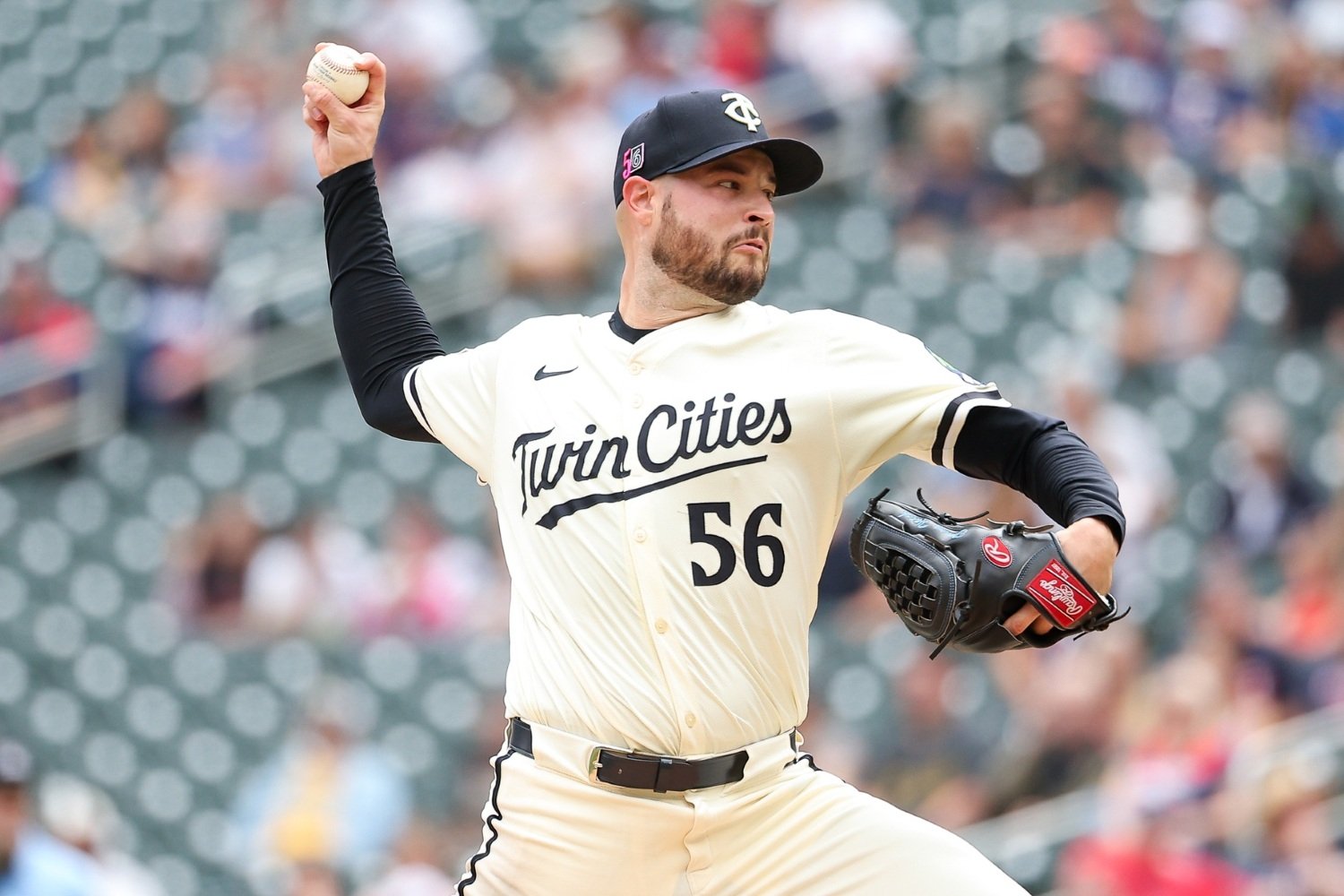 One of the upsides of trading almost half your team at the deadline is that you have space on the roster to try some things. One of the (many) things the Twins have tried is claiming Thomas Hatch (who’s controllable for four more seasons) off waivers. They have done similar things in recent seasons and been rewarded by getting the best versions of players like Willi Castro and Kody Clemens. Will Hatch be next? It’s tough to say. But regardless, he’s an interesting player with an interesting journey. Heading into the 2020 season, while he was a starting pitcher with the Blue Jays' Double-A affiliate, Hatch was their ninth-best prospect. After seeing limited action, almost entirely in relief, the Blue Jays designated him for assignment in 2023 and he was claimed by the Pirates. They cut him after the season, and (although he initially signed to play in Korea) Hatch spent 2024 in Japan, playing for the Hiroshima Carp in NPB. The Carp converted him back to a starter, and worked with him on his pitch mix. He came back Stateside for the 2025 season, where he signed a minor league deal with the Royals. He remained a starter with Triple-A Omaha. He was called up in July, after a stellar month in which he was named the Storm Chasers' pitcher of the month, then cut again at the trade deadline. During his time in Japan, and during spring training, Hatch worked to add pitches. He’s throwing a true cutter and a sweeper for the first time. Hatch felt the year of stretching back out and the time with the Royals organization earlier this year allowed him to bring those projects to fruition. “I used the first half of the year and spring training to work on some stuff, lock in some stuff that I’d wanted to do for a few years as a starter," he said. "I felt like I was in a good spot.” Hatch now has a six-pitch mix. That’s quite unusual for a reliever, but it’s a testament to his pedigree as a starter, and his desire to find a way to stick in the bigs. He’s into baseball tech, and understanding the things that drive success. "Coming back over here [from Japan], it was refreshing to get back in front of TrackMan, Edgertronics, where I could see the ball come out of my hand—pitch tracking, stuff like that,” he said. Hatch has used this tech to develop his pitches, including working on his cutter and changeup. “That’s one of the beauties of technology, is we’ve discovered that even supinators can get the ball to go arm-side. And even honestly, it’s easier than a pronator for the most part. Usually, pronators are good at ‘riding the ball.’ Not seam-shift changeups, but more so spin-based, because they can get to the inside of the ball, whereas [supinators] are using seam shift to get the ball to go arm side. Which we didn’t know prior to Hawkeye, TrackMan.” Using this tech (and being thoughtful in his approach) has helped Hatch dramatically increase the active spin and resulting movement in both pitches. Though he's always used a sinker as his main fastball, working with that technology taught him that he's a natural supinator, meaning that his arm naturally turns in the direction one needs to produce a good breaking ball. To create a changeuo that works for him has required more engineering. In 2023, his change got 6.4 inches of movement, on average. This season, it’s up to 15 inches. Meanwhile, the pitch he used to call his cutter has morphed into a true slider—because he's felt his way to a cutter that better deserves that name. “It was weird: we called it a cutter, previous to me going to Japan, mostly just as a mental thing. It was a slider. But then I was like, ‘You know what? I need something hard going in to lefties.’ Because two-seams from right-handed pitching to left-handed hitters are not exactly the best pitch to throw, so [the cutter] really keeps people off of fastballs," Hatch explained. "That’s been a good thing.” It’s clear that Hatch is a tinkerer. Another example of this is his approach to his changeup, a project he's embraced with gusto. “I think the changeup is a kind of a work in progress at this point. That’s the missing piece, I feel like. We’ve been working on splits, changeups.” If you look at Hatch’s stat line, the results haven’t been pretty. Through three games with the Twins, he has a 5.17 FIP. He walks (sometimes way) too many and doesn’t strike enough batters out to be dominant—but a few of the pieces of a good pitcher are starting to fall into place, even as he nears his 31st birthday. Results aside, the Twins do have a good track record of tinkering with pitch mix and approach to get the most out of pitchers, particularly those who are tinkerers themselves, and those who like to use data. Hatch is certainly that. With six pitches (and working on a seventh, in the splitter), there’s a lot to work with. Hatch may not be well-suited to starting, or performing in a bulk role. Knowing the Twins will be getting Pablo López, Simeon Woods Richardson, and David Festa back before long, and acknowledging that the games really don’t matter down the stretch, it will be interesting to see how they deploy Hatch, and whether they convert him back to one-inning relief. On the other hand, he seems comfortable with this wider mix, and his best future might be as a swingman or back-end innings eater. It’s also been well-documented that the Twins excel at adding velocity. Given Hatch’s slightly below-average pitch speeds, it’s fair to wonder what an extra tick or two could do to his overall effectiveness. Hatch has already shown an ability to limit hard contact (average exit velocity allowed is in the 85th percentile), and with a great ground ball rate, the building blocks are there. Since the Twins need (effectively) a whole new bullpen in 2026, betting on a guy like Hatch to stake a claim just might pan out—particularly since he will be making the minimum for one more season before being arbitration eligible. Twins Daily’s own Matthew Trueblood contributed to the reporting here.
 -
Image courtesy of © Matt Krohn-Imagn Images One of the upsides of trading almost half your team at the deadline is that you have space on the roster to try some things. One of the (many) things the Twins have tried is claiming Thomas Hatch (who’s controllable for four more seasons) off waivers. They have done similar things in recent seasons and been rewarded by getting the best versions of players like Willi Castro and Kody Clemens. Will Hatch be next? It’s tough to say. But regardless, he’s an interesting player with an interesting journey. Heading into the 2020 season, while he was a starting pitcher with the Blue Jays' Double-A affiliate, Hatch was their ninth-best prospect. After seeing limited action, almost entirely in relief, the Blue Jays designated him for assignment in 2023 and he was claimed by the Pirates. They cut him after the season, and (although he initially signed to play in Korea) Hatch spent 2024 in Japan, playing for the Hiroshima Carp in NPB. The Carp converted him back to a starter, and worked with him on his pitch mix. He came back Stateside for the 2025 season, where he signed a minor league deal with the Royals. He remained a starter with Triple-A Omaha. He was called up in July, after a stellar month in which he was named the Storm Chasers' pitcher of the month, then cut again at the trade deadline. During his time in Japan, and during spring training, Hatch worked to add pitches. He’s throwing a true cutter and a sweeper for the first time. Hatch felt the year of stretching back out and the time with the Royals organization earlier this year allowed him to bring those projects to fruition. “I used the first half of the year and spring training to work on some stuff, lock in some stuff that I’d wanted to do for a few years as a starter," he said. "I felt like I was in a good spot.” Hatch now has a six-pitch mix. That’s quite unusual for a reliever, but it’s a testament to his pedigree as a starter, and his desire to find a way to stick in the bigs. He’s into baseball tech, and understanding the things that drive success. "Coming back over here [from Japan], it was refreshing to get back in front of TrackMan, Edgertronics, where I could see the ball come out of my hand—pitch tracking, stuff like that,” he said. Hatch has used this tech to develop his pitches, including working on his cutter and changeup. “That’s one of the beauties of technology, is we’ve discovered that even supinators can get the ball to go arm-side. And even honestly, it’s easier than a pronator for the most part. Usually, pronators are good at ‘riding the ball.’ Not seam-shift changeups, but more so spin-based, because they can get to the inside of the ball, whereas [supinators] are using seam shift to get the ball to go arm side. Which we didn’t know prior to Hawkeye, TrackMan.” Using this tech (and being thoughtful in his approach) has helped Hatch dramatically increase the active spin and resulting movement in both pitches. Though he's always used a sinker as his main fastball, working with that technology taught him that he's a natural supinator, meaning that his arm naturally turns in the direction one needs to produce a good breaking ball. To create a changeuo that works for him has required more engineering. In 2023, his change got 6.4 inches of movement, on average. This season, it’s up to 15 inches. Meanwhile, the pitch he used to call his cutter has morphed into a true slider—because he's felt his way to a cutter that better deserves that name. “It was weird: we called it a cutter, previous to me going to Japan, mostly just as a mental thing. It was a slider. But then I was like, ‘You know what? I need something hard going in to lefties.’ Because two-seams from right-handed pitching to left-handed hitters are not exactly the best pitch to throw, so [the cutter] really keeps people off of fastballs," Hatch explained. "That’s been a good thing.” It’s clear that Hatch is a tinkerer. Another example of this is his approach to his changeup, a project he's embraced with gusto. “I think the changeup is a kind of a work in progress at this point. That’s the missing piece, I feel like. We’ve been working on splits, changeups.” If you look at Hatch’s stat line, the results haven’t been pretty. Through three games with the Twins, he has a 5.17 FIP. He walks (sometimes way) too many and doesn’t strike enough batters out to be dominant—but a few of the pieces of a good pitcher are starting to fall into place, even as he nears his 31st birthday. Results aside, the Twins do have a good track record of tinkering with pitch mix and approach to get the most out of pitchers, particularly those who are tinkerers themselves, and those who like to use data. Hatch is certainly that. With six pitches (and working on a seventh, in the splitter), there’s a lot to work with. Hatch may not be well-suited to starting, or performing in a bulk role. Knowing the Twins will be getting Pablo López, Simeon Woods Richardson, and David Festa back before long, and acknowledging that the games really don’t matter down the stretch, it will be interesting to see how they deploy Hatch, and whether they convert him back to one-inning relief. On the other hand, he seems comfortable with this wider mix, and his best future might be as a swingman or back-end innings eater. It’s also been well-documented that the Twins excel at adding velocity. Given Hatch’s slightly below-average pitch speeds, it’s fair to wonder what an extra tick or two could do to his overall effectiveness. Hatch has already shown an ability to limit hard contact (average exit velocity allowed is in the 85th percentile), and with a great ground ball rate, the building blocks are there. Since the Twins need (effectively) a whole new bullpen in 2026, betting on a guy like Hatch to stake a claim just might pan out—particularly since he will be making the minimum for one more season before being arbitration eligible. Twins Daily’s own Matthew Trueblood contributed to the reporting here. View full article
-
Exactly. Over the past 10 seasons, fully 75% of teams that made it to the World Series were top-10 in payroll that season.
- 65 replies
-
- 2
-

-
- harrison bader
- jhoan duran
- (and 5 more)
-
It certainly doesn’t guarantee a championship, but it absolutely increases the odds fairly dramatically.
- 65 replies
-
- 2
-

-
-
- harrison bader
- jhoan duran
- (and 5 more)
-
Image courtesy of © Geoff Burke-Imagn Images On Friday night, Jhoan Duran was doing normal Jhoan Duran stuff, when he took a screaming comebacker off his foot near the ankle. He was unable to put any weight on the foot in the immediate aftermath of that, and needed to be carted off the field. From a baseball standpoint, this was a brutal moment, as the Phillies' (new) best reliever seemed destined to hit the shelf for at least a while—and maybe the season. From a human standpoint, this was also a tough break, as Duran was very durable during his time in a Twins uniform and is having (arguably) his best big-league season. Luckily for him (and Phillies and Twins fans), X-rays came back negative. He should be back in action sooner, rather than later. It’s good news, too, because he has been on fire since the trade. That prompts the question: how have the rest of the players sent away at the deadline been faring with their new clubs? Who has been hot? Has anyone been a train wreck? Let's check in on all 11 players moved at the deadline. Jhoan Duran It’s only fair to start with him; don’t want to bury the lede. The Twins sent him to Philly set up for success, complete with his usual entrance music and video. He has quickly shown fans how filthy he is. Since becoming a member of the Phillies, he’s come into five games. In four innings, he has four saves, has not allowed a run, hasn’t walked anyone, and has allowed just two hits. I don’t know about you, but I miss having him anchoring the bullpen. At least there's this: Griffin Jax Much like Duran has been doing Duran stuff, Griffin Jax has also been doing Griffin Jax stuff. That is to say: his underlying metrics look good, but man, the results haven’t been pretty. With the Rays, he has come into seven games. In 5 2/3 innings, he has struck out seven, walked two, and has given up just four hits. Despite that, he has given up four runs, taken a loss, and is sitting on a 6.35 ERA with a very mediocre 3.99 FIP. As nasty as he is, and as good as his stuff is, he may just be one of those players whose results are always worse than expected. Brock Stewart Like the guys before him, Beef Stew has been doing the expected with the Dodgers. In his case, that means getting injured. He’s pitched four times, to a 4.91 ERA and a marginally better 3.93 FIP. He has allowed way too many baserunners (including six hits and two walks) across 3 2/3 innings. He hit the shelf with a shoulder injury within a week. You gotta feel for a guy that has had as many injury concerns as he has. Louis Varland Varland has been nails since being traded to the Blue Jays. He has continued his trend of pitching basically every other day, and has struck out fully a third of the hitters he has faced. With a WHIP of 1.00, he has shown himself capable of taking on closer duties, and that just may happen before the year is over. Danny Coulombe Remember just how good Coulombe was for so long with the Twins? Remember when he didn’t allow a run until June? Remember when he was the ultimate fireman, often coming into jams and then wriggling out of them without damage? Well, I have a sneaking suspicion that the Rangers were hoping for that guy when they traded Garrett Horn to the Twins. Instead, since donning a Rangers uniform, Coulombe has given up four runs in 5 2/3 innings, and, well, this sort of speaks for itself: Chris Paddack Conversely, remember that stretch Paddack had in May, where his results were great, despite shaky underlying metrics? You know, when he wasn’t striking anyone out and sort of danced through raindrops? Well, good news. That’s the version the Tigers got. He’s striking even fewer people out for them than for the Twins, yet has pitched to a 3.45 ERA (4.64 FIP). It’s fair to assume he will come back down to Earth and look every bit the fifth starter his current talent level suggests he should pitch like. Meanwhile, Enrique Jimenez, the catcher the Tigers sent the Twins in return for Paddack, has done this: Randy Dobnak The Dobber is languishing in Toledo, playing for the Tigers’ Triple-A affiliate. Okay results, tons of strikeouts, but allowing tons of hits. All the best to him. It’s fair to wonder what may have been if not for the finger injuries on his throwing hand. Hopefully, he will get one more chance to carve out a major-league career for himself. Carlos Correa You… might want to sit down for this one. The Twins signed Correa to play like a superstar for them. In 2024, he did, for the half-season he played. Aside from that, he was just sort of average. To be sure, his time back with the Astros is the very definition of a small sample—just 12 games. But you know what he’s done so far? Played like a superstar. He’s got a .914 OPS and is hitting .340, good for a 158 wRC+. That’s right, he’s been 58% better than an average player. He’s doing it lower down the defensive spectrum, but it’s possible spending his time at the hot corner may have been what he needed. It may be fun to keep track of how he’s doing the rest of the way. Oh, and Astros fans are very excited to have him back. Harrison Bader As a Twins player, Bader hit way better than anyone expected, given his history as a mostly mediocre bat. The Twins signed him for his fielding, and I’m sure they were pleasantly surprised by what they got. The Phillies, on the other hand, got the Harrison Bader from the past several seasons. You know, the one that fields great but doesn’t hit his weight. Across 35 plate appearances, he’s put up a .586 OPS (31% worse than average). He has continued to be a cool vibes guy, as we all would expect. Willi Castro Read what I wrote about Bader, now subtract about .300 points of OPS. He hasn’t walked once, and has one extra-base hit in nine games. He will probably turn it around soon… unless, maybe, just maybe, Willi Castro was destined to only be good as a member of the Twins. He has continued to play all over the field, and I’m sure he's been plenty fun to watch. Ty France France, somewhat surprisingly, has hit like a first baseman since joining the Blue Jays. With an .872 OPS, he has hit for average, walked a bit, and hit for power. He’s been 49% better than average by wRC+ So there you have it. All 11 players the Twins moved. Bader, Castro, Jax, Coulombe, and Stewart have played worse in a small sample than they did for the Twins. Dobnak, Paddack, Varland, and Duran have performed about the same, and Correa and France have played much better. What do you think? Any surprises? View full article
- 65 replies
-
- 1
-
-
- harrison bader
- jhoan duran
- (and 5 more)
-
 On Friday night, Jhoan Duran was doing normal Jhoan Duran stuff, when he took a screaming comebacker off his foot near the ankle. He was unable to put any weight on the foot in the immediate aftermath of that, and needed to be carted off the field. From a baseball standpoint, this was a brutal moment, as the Phillies' (new) best reliever seemed destined to hit the shelf for at least a while—and maybe the season. From a human standpoint, this was also a tough break, as Duran was very durable during his time in a Twins uniform and is having (arguably) his best big-league season. Luckily for him (and Phillies and Twins fans), X-rays came back negative. He should be back in action sooner, rather than later. It’s good news, too, because he has been on fire since the trade. That prompts the question: how have the rest of the players sent away at the deadline been faring with their new clubs? Who has been hot? Has anyone been a train wreck? Let's check in on all 11 players moved at the deadline. Jhoan Duran It’s only fair to start with him; don’t want to bury the lede. The Twins sent him to Philly set up for success, complete with his usual entrance music and video. He has quickly shown fans how filthy he is. Since becoming a member of the Phillies, he’s come into five games. In four innings, he has four saves, has not allowed a run, hasn’t walked anyone, and has allowed just two hits. I don’t know about you, but I miss having him anchoring the bullpen. At least there's this: Griffin Jax Much like Duran has been doing Duran stuff, Griffin Jax has also been doing Griffin Jax stuff. That is to say: his underlying metrics look good, but man, the results haven’t been pretty. With the Rays, he has come into seven games. In 5 2/3 innings, he has struck out seven, walked two, and has given up just four hits. Despite that, he has given up four runs, taken a loss, and is sitting on a 6.35 ERA with a very mediocre 3.99 FIP. As nasty as he is, and as good as his stuff is, he may just be one of those players whose results are always worse than expected. Brock Stewart Like the guys before him, Beef Stew has been doing the expected with the Dodgers. In his case, that means getting injured. He’s pitched four times, to a 4.91 ERA and a marginally better 3.93 FIP. He has allowed way too many baserunners (including six hits and two walks) across 3 2/3 innings. He hit the shelf with a shoulder injury within a week. You gotta feel for a guy that has had as many injury concerns as he has. Louis Varland Varland has been nails since being traded to the Blue Jays. He has continued his trend of pitching basically every other day, and has struck out fully a third of the hitters he has faced. With a WHIP of 1.00, he has shown himself capable of taking on closer duties, and that just may happen before the year is over. Danny Coulombe Remember just how good Coulombe was for so long with the Twins? Remember when he didn’t allow a run until June? Remember when he was the ultimate fireman, often coming into jams and then wriggling out of them without damage? Well, I have a sneaking suspicion that the Rangers were hoping for that guy when they traded Garrett Horn to the Twins. Instead, since donning a Rangers uniform, Coulombe has given up four runs in 5 2/3 innings, and, well, this sort of speaks for itself: Chris Paddack Conversely, remember that stretch Paddack had in May, where his results were great, despite shaky underlying metrics? You know, when he wasn’t striking anyone out and sort of danced through raindrops? Well, good news. That’s the version the Tigers got. He’s striking even fewer people out for them than for the Twins, yet has pitched to a 3.45 ERA (4.64 FIP). It’s fair to assume he will come back down to Earth and look every bit the fifth starter his current talent level suggests he should pitch like. Meanwhile, Enrique Jimenez, the catcher the Tigers sent the Twins in return for Paddack, has done this: Randy Dobnak The Dobber is languishing in Toledo, playing for the Tigers’ Triple-A affiliate. Okay results, tons of strikeouts, but allowing tons of hits. All the best to him. It’s fair to wonder what may have been if not for the finger injuries on his throwing hand. Hopefully, he will get one more chance to carve out a major-league career for himself. Carlos Correa You… might want to sit down for this one. The Twins signed Correa to play like a superstar for them. In 2024, he did, for the half-season he played. Aside from that, he was just sort of average. To be sure, his time back with the Astros is the very definition of a small sample—just 12 games. But you know what he’s done so far? Played like a superstar. He’s got a .914 OPS and is hitting .340, good for a 158 wRC+. That’s right, he’s been 58% better than an average player. He’s doing it lower down the defensive spectrum, but it’s possible spending his time at the hot corner may have been what he needed. It may be fun to keep track of how he’s doing the rest of the way. Oh, and Astros fans are very excited to have him back. Harrison Bader As a Twins player, Bader hit way better than anyone expected, given his history as a mostly mediocre bat. The Twins signed him for his fielding, and I’m sure they were pleasantly surprised by what they got. The Phillies, on the other hand, got the Harrison Bader from the past several seasons. You know, the one that fields great but doesn’t hit his weight. Across 35 plate appearances, he’s put up a .586 OPS (31% worse than average). He has continued to be a cool vibes guy, as we all would expect. Willi Castro Read what I wrote about Bader, now subtract about .300 points of OPS. He hasn’t walked once, and has one extra-base hit in nine games. He will probably turn it around soon… unless, maybe, just maybe, Willi Castro was destined to only be good as a member of the Twins. He has continued to play all over the field, and I’m sure he's been plenty fun to watch. Ty France France, somewhat surprisingly, has hit like a first baseman since joining the Blue Jays. With an .872 OPS, he has hit for average, walked a bit, and hit for power. He’s been 49% better than average by wRC+ So there you have it. All 11 players the Twins moved. Bader, Castro, Jax, Coulombe, and Stewart have played worse in a small sample than they did for the Twins. Dobnak, Paddack, Varland, and Duran have performed about the same, and Correa and France have played much better. What do you think? Any surprises?
- 65 comments
-
- 7
-
-
- harrison bader
- jhoan duran
- (and 5 more)
-
Agreed. If they dump Pablo, Ryan, or Jeffers for prospects in the offseason, then they are who we think they are. Hopefully they stay, or if they are moved, the trades are challenge trades where they are moved for legitimate major league players that can move the offense forward.