



Eric Blonigen
-
Posts
377 -
Joined
-
Last visited
-
Days Won
1
Content Type
Profiles
News
Minnesota Twins Videos
2026 Minnesota Twins Top Prospects Ranking
2022 Minnesota Twins Draft Picks
Minnesota Twins Free Agent & Trade Rumors, Notes, & Tidbits
Guides & Resources
2023 Minnesota Twins Draft Picks
The Minnesota Twins Players Project
2024 Minnesota Twins Draft Picks
2025 Minnesota Twins Draft Pick Tracker
2026 Minnesota Twins Draft Tracker: Picks & Bonuses
Forums
Blogs
Events
Store
Downloads
Gallery
Everything posted by Eric Blonigen
-
 There’s a shiny new data toy on Baseball Savant. What is it; what stories does it tell; and how do some members of the 2025 Minnesota Twins roster measure up? Image courtesy of © Matt Blewett-Imagn Images There’s a shiny new data toy on Baseball Savant. What is it; what stories does it tell; and how do some members of the 2025 Minnesota Twins roster measure up? It’s common baseball knowledge that balls hit hard in the air to the pull side generate the best outcomes. Recently, Baseball Savant introduced a new metric to the public—a stat called AIR%—that quantifies how often players and teams make that kind of contact. From their Batted-Ball Profile leaderboard page: “From 2022-24, while only 17.5% of batted balls were “pulled airballs,” that subset was responsible for 66% of all home runs. Pulled airballs in that time produced a .547 average, 1.227 slugging percentage and .733 wOBA, making them an extremely valuable outcome.” Ok. Makes sense, right? A new stat is really only useful when you start to dig under the hood a bit. Let’s start by looking at what the AIR% actually measures. Basically, this looks at batted-ball data by direction and trajectory, and groups batted balls by whether they were pulled, hit straight, or hit oppo, and whether they were on the ground or in the air. This leads to six different categories of batted-ball events. AIR% combines line drives, fly balls, and popups, without measuring which direction a ball was hit. The true utility comes when breaking this down a bit further, and looking at the aforementioned six classifications of contact. Pull AIR% measures the the rate at which balls are hit in the air to the pull side, which delivers the best outcomes (home runs, doubles off the wall, etc). Straight AIR% is, as it sounds, the rate at which balls are hit in the air up the middle. This can lead to bloop singles, which are fine, but typically, a guy has to really get ahold of one to hit it out to straightaway center. Oppo AIR% is the rate at which a player hits the ball the other way. Again, this can lead to some bloop singles, but unless a guy is in the Miguel Sanó-Joey Gallo-Matt Wallner power club, the ball isn’t going out much at all. Pull GB% measures the worst category of contact, which typically leads to easy groundouts to second base for left-handed hitters. Right-handed hitters fare slightly better on pulled grounders, but it’s still not a great outcome. Across baseball in 2024, hitters put up a .208 batting average when pulling grounders. Straight GB% is better than a pulled grounder, by a wide margin. Grounding up the middle will lead to some hits, but depending on the defensive alignment, this will still lead to a lot of outs. In fact, the only grounders that get consistently good results are those that go the other way, which Baseball Savant classifies as Oppo GB%. These are often the “excuse-me” swings where a hitter’s timing is off, or the ball connects with the end of the bat. These go for hits pretty frequently, but are hard to hit on purpose. So, who are the standouts (and laggards) in some of these categories? Pull AIR% Leaderboard The Twins have two hitters who were top-10 in baseball in Pull Air% last season: Byron Buxton (30.2%) and Royce Lewis (29.1%). This makes sense, as both have 40-homer power in a 162-game season. Wallner, had he qualified for the leaderboard based on plate appearances, would have been top-10 as well, at 29.4%. Carlos Santana was 17th, at 27.4%. Having four guys in the top 20 is a little wild, but it portends good things that three of them are a part of the team again in 2025. In full, the Twins had eight hitters who were above-average in pulling the ball while hitting it in the air. Manuel Margot On the other side of the spectrum, you had Manuel Margot, at 258th overall, with a paltry 11.7 Pull AIR%. Does that surprise you? It shouldn’t. In 2024, Margot was almost completely devoid of pop and looked cooked. When he did pull the ball while elevating it, it rarely left the park. Edouard Julien It’s well-documented that Julien’s 2024 season was a mess, and this new data paints quite the picture. With an 11.6% Pull AIR%, he was 260th of 288 qualified hitters. Unfortunately, looking at the Pull GB% leaderboard, among left-handed hitters, he had the 14th-highest rate, at 24.4%. Finally, his Oppo AIR% was 7th-highest in baseball, at 26.8%. Combining these three data points, one can begin to see part of the problem he faced with his swing in 2024. The quality of his contact was generally not conducive to favorable outcomes, and led to a lot of weak flyouts the opposite way and infield choppers, not to mention all those strikeouts. Trevor Larnach Larnach had the 19th-highest Pull GB% amongst lefties, but he balanced this by having a better-than-average 18.7% Pull AIR rate, and a solid Oppo GB%. Because he hits the ball hard (average exit velocity in the 90th percentile) and squares it up frequently, he was still able to maximize the quality of his Pull AIR% to hit some bombs, and got a decent number of grounder singles the other way. Looking at his spray chart, we can see this in action. Knowing that he was making adjustments to his approach to breaking balls in real time, and that he saw a lower fastball percentage than most, he’s a hitter who could take another step forward in 2025. How do the new Twins hitters profile here, and what might it mean for them this season? Harrison Bader His Pull AIR% is a very healthy 23.6%, and his Oppo GB% is also better than average at 7.0%. You might be getting excited about this. Don’t, as there is another factor at play here, and that’s Bader’s power numbers. Remember what I said about pulling the ball hard in the air? Unfortunately, his swing would lead to good things if his batting profile didn’t look like this. You probably already knew Bader won’t be an offensive force for the Twins. How about the other newcomer? Ty France France is a little tough to pinpoint, coming off two down years. Last season can largely be attributed to a heel injury that lingered, impacting him at the plate. If we look at 2023, we might get a hint of his true current talent level, and it shows him with a solidly above-average 20.6 Pull AIR%, and a slightly above-average Oppo GB%, at 5.7%. His launch angle sweet spot was in the 76th percentile across baseball, so it’s likely safe to count on 15 homers. If the coaching staff can work on his approach even slightly, he could return to form as an above-average bat that can do damage at the plate. They say that what can be measured can be improved. This new data, while likely not new to teams themselves, helps teams, players, writers, and fans better understand the tweaks necessary to optimize the damage hitters can do at the plate. While data can be tortured to tell some interesting stories, this data (combined with hard hit-rates and launch angle statistics) can help explain all the factors at play every time a hitter steps to the plate. As fans, let’s hope that a couple more Twins hitters can find the sweet spot of Pull AIR%, launch angle, and hard-hit rates. If so, the offense could be better than people expect. View full article
 -
 Each year, The Athletic conducts a fan survey to capture the vibes for all 30 teams in baseball. Perhaps unsurprisingly, the White Sox fanbase has the lowest levels of optimism about the franchise of any team, with just 8.7% of respondents expressing hope for 2025. One fan, “Pessimist John”, said of the team: “Rooting for the White Sox is like missing a tooth. Your tongue knows it’ll hurt, but it keeps going back to it again and again. It hurts every time, and you tell your tongue to find somewhere — anywhere — else in your mouth to go, but it keeps coming back to that pit of pain and misery.” Last Year Let’s start by addressing the elephant in the room. The 2024 White Sox lost 21 games in a row, a franchise record, en route to losing 121 games, the most in baseball history. They fired their manager, Pedro Grifol, during the season. After letting Grady Sizemore finish out the campaign as an interim skipper, they then hired Will Venable in his place. They traded away stud starting pitchers Dylan Cease (in March) and Garrett Crochet (in December), as well as Erick Fedde, Michael Kopeck, Eloy Jiménez, and Tommy Pham in July, netting a haul of prospects that help make their farm system the fourth-best in baseball, per Baseball America. Other losses Yoan Moncada - was a free agent following the 2024 season, and is expected to be the Angels' everyday third baseman (er, every day that he's healthy; he's going to start the season on the injured list) Michael Soroka - became a free agent following the 2024 season and signed a one-year, $9-million deal with the Nationals Chris Flexen - signed a minor-league deal with the Cubs Nicky Lopez - was a 3/4-time player last year; signed a minor-league deal with the Cubs but didn't make the team Gavin Sheets - got 501 ABs with the Sox last season and was then designated for assignment; signed a minor-league deal with the Padres and is having a good camp Looking ahead to 2025 PECOTA projects the White Sox to go 61.5-100.5 in 2025. To be clear, projection systems are designed to regress players and teams toward the mean level of performance. Typically, projections are run thousands of times, and the results are averaged. When a team is projected to lose over 100 games, the outcome is often even worse. Will the 2025 White Sox actually challenge their own record from last season? Probably not. But they most assuredly won’t be good. Let’s look at their offseason additions, and remember some guys. Key signings Martín Pérez - the staff ace for the 2025 White Sox, Pérez’s best days are likely behind him, as he has posted just one season with more than 0.7 fWAR over the past five years. After signing him to a $5-million deal, the best-case scenario for the White Sox is probably to hope for a few solid months, then trade him for a mid-level prospect. Austin Slater - a weak-side platoon outfield bat. The White Sox signed him to a one-year, $1.75-million contract. He injured his oblique in spring training, and he likely starts the season on the IL. Mike Tauchman - will likely be an everyday outfielder in 2025, despite his career 5.1 fWAR across seven seasons. Bryse Wilson - signed a one-year, $1.05-million deal. He has been a replacement-level swingman throughout his career, and offers more of the same to a White Sox rotation that fans can’t feel good about. Josh Rojas - was the “big” infielder pickup, signing for $3.5 million this offseason to replace Yoan Moncada; he'll also start the season on the shelf Michael A Taylor - signed a minor-league deal, but is very likely to be pressed into major-league duty despite a down 2024 season. He's been dealing with elbow soreness and has been getting some scans to determine the cause and treatment. The 2025 White Sox roster is collectively forecast for 15.9 fWAR. For perspective, just the pitching side of the projected 2025 Twins 26-man roster figures to generate roughly the same value. Digging in, here’s how the different parts of the roster shake out. Rotation - projected for 5.0 fWAR It’s a good thing there’s virtually no chance the White Sox make the playoffs, as they just don’t have a playoff-caliber starting pitcher on their likely 26-man roster. Pérez was, at one point, maybe, but not now. Jonathan Cannon and surprise Opening Day starter Sean Burke are at least young and carry a bit of projectability, although mid-rotation work is the likely upside for both. This rotation is going to be lousy, and not even in an interesting way. Martín Pérez - 1.2 Jonathan Cannon - 1.1 Davis Martin - 1.3 Sean Burke - 1.0 Bryse Wilson - 0.4 Bullpen - projected for 0.4 fWAR It’s rare for an entire bullpen to be comprised of fungible guys. This group is just that, however, with nary an impact arm among them. There’s probably not much to dig into here, from an analysis standpoint. Just know that the team is planning to deploy former starter and contemptible dude Mike Clevinger as the closer, and you understand all you need to about this unit. Justin Anderson - 0.1 Mike Clevinger - -0.2 Fraser Ellard - 0.1 Gus Garland - 0.0 Cam Booser - 0.0 Tyler Gilbert - 0.0 Penn Murfee - 0.0 Shane Smith - 0.4 Lineup - projected for 10.5 fWAR This group is a mixed bag. For now, at least, Luis Robert Jr. continues to man center. He’s capable of putting up an All-Star season, but is coming off a down year, and will almost certainly be traded once a stretch of health and production leavens his value a bit. Andrew Vaughn has flashed tantalizing potential, but hasn’t put it all together for a full season. Miguel Vargas is fine, but his offense won’t carry a team. Aside from them, there is plenty of youth on the roster that has the potential to take a step forward—but a step forward from what, you have to ask yourself. Catcher - Korey Lee - 0.2 First base - Andrew Vaughn - 1.3 Second Base - Lenyn Sosa - 0.8 Shortstop - Josh Rojas - 1.2 Third Base - Miguel Vargas - 1.7 Left Field - Travis Jankowski - 0.0 Center Field - Luis Robert - 3.0 Right Field - Mike Tauchman - 1.3 DH - Brandon Drury - 0.2 Fourth Outfielder - Michael A. Taylor - 0.4 Utility Infield - Jacob Amaya - 0.1 Backup Catcher - Matt Thaiss - 0.2 26th Man - Nick Maton - 0.1 Prospects likely to debut The White Sox have several top-100 prospects in the high minors, and four of them have the potential to impact the 2025 club. Kyle Teel, the headline in the Crochet return, is probably the best catcher in the White Sox system. With just 28 games at Triple A, he likely benefits from some additional seasoning, but he’s a global top-30 prospect and looks the part of a solid everyday catcher. Colson Montgomery, a top shortstop prospect. He was just optioned and will not begin the season with the White Sox, but will almost certainly be up at some point. Edgar Quero is another strong catching prospect on top-100 lists. He’s ready, putting up strong offensive numbers in the high minors, and at some point in 2025, he likely joins Teel as part of the new catching tandem, replacing both Lee and Thaiss. Hagen Smith was drafted fifth overall in 2024. He has a good starter’s mix, is expected to start the year at Double A, and could reach the majors this season. He has the potential to be the White Sox’s best starting pitcher. Noah Schultz is the team's other top pitching prospect, and also has a chance to spend a chunk of the late summer on the South Side. Recap and Wild Cards The White Sox franchise is in a place reminiscent of the Twins in their Total System Failure years. They will almost certainly be really bad in 2025, but they should see at least a few exciting prospects make their debuts. The wild card is knowing that the Ishbia brothers expanded their minority stake in the team, with the unofficial but apparent intention to purchase the team outright whenever Jerry Reinsdorf or his family decides to sell. It’s safe to assume that the White Sox will be cellar-dwellers for the next couple of seasons, but beyond that, it’s anyone’s guess. The good news for Twins fans is that while the other three teams are looking to compete, there should be plenty of easy wins against the White Sox to go around.
- 11 comments
-
- 3
-

-
- luis robert
- justin ishbia
- (and 1 more)
-
The good thing about hitting rock bottom is there’s only one direction to go. For the Chicago White Sox, this is great news, coming off of the worst season in modern major-league history. What’s their outlook heading into the 2025 season? Image courtesy of © Allan Henry-Imagn Images The good thing about hitting rock bottom is there’s only one direction to go. For the Chicago White Sox, this is great news, coming off of the worst season in modern major-league history. What’s their outlook heading into the 2025 season? Each year, The Athletic conducts a fan survey to capture the vibes for all 30 teams in baseball. Perhaps unsurprisingly, the White Sox fanbase has the lowest levels of optimism about the franchise of any team, with just 8.7% of respondents expressing hope for 2025. One fan, “Pessimist John”, said of the team: “Rooting for the White Sox is like missing a tooth. Your tongue knows it’ll hurt, but it keeps going back to it again and again. It hurts every time, and you tell your tongue to find somewhere — anywhere — else in your mouth to go, but it keeps coming back to that pit of pain and misery.” Last Year Let’s start by addressing the elephant in the room. The 2024 White Sox lost 21 games in a row, a franchise record, en route to losing 121 games, the most in baseball history. They fired their manager, Pedro Grifol, during the season. After letting Grady Sizemore finish out the campaign as an interim skipper, they then hired Will Venable in his place. They traded away stud starting pitchers Dylan Cease (in March) and Garrett Crochet (in December), as well as Erick Fedde, Michael Kopeck, Eloy Jiménez, and Tommy Pham in July, netting a haul of prospects that help make their farm system the fourth-best in baseball, per Baseball America. Other losses Yoan Moncada - was a free agent following the 2024 season, and is expected to be the Angels' everyday third baseman (er, every day that he's healthy; he's going to start the season on the injured list) Michael Soroka - became a free agent following the 2024 season and signed a one-year, $9-million deal with the Nationals Chris Flexen - signed a minor-league deal with the Cubs Nicky Lopez - was a 3/4-time player last year; signed a minor-league deal with the Cubs but didn't make the team Gavin Sheets - got 501 ABs with the Sox last season and was then designated for assignment; signed a minor-league deal with the Padres and is having a good camp Looking ahead to 2025 PECOTA projects the White Sox to go 61.5-100.5 in 2025. To be clear, projection systems are designed to regress players and teams toward the mean level of performance. Typically, projections are run thousands of times, and the results are averaged. When a team is projected to lose over 100 games, the outcome is often even worse. Will the 2025 White Sox actually challenge their own record from last season? Probably not. But they most assuredly won’t be good. Let’s look at their offseason additions, and remember some guys. Key signings Martín Pérez - the staff ace for the 2025 White Sox, Pérez’s best days are likely behind him, as he has posted just one season with more than 0.7 fWAR over the past five years. After signing him to a $5-million deal, the best-case scenario for the White Sox is probably to hope for a few solid months, then trade him for a mid-level prospect. Austin Slater - a weak-side platoon outfield bat. The White Sox signed him to a one-year, $1.75-million contract. He injured his oblique in spring training, and he likely starts the season on the IL. Mike Tauchman - will likely be an everyday outfielder in 2025, despite his career 5.1 fWAR across seven seasons. Bryse Wilson - signed a one-year, $1.05-million deal. He has been a replacement-level swingman throughout his career, and offers more of the same to a White Sox rotation that fans can’t feel good about. Josh Rojas - was the “big” infielder pickup, signing for $3.5 million this offseason to replace Yoan Moncada; he'll also start the season on the shelf Michael A Taylor - signed a minor-league deal, but is very likely to be pressed into major-league duty despite a down 2024 season. He's been dealing with elbow soreness and has been getting some scans to determine the cause and treatment. The 2025 White Sox roster is collectively forecast for 15.9 fWAR. For perspective, just the pitching side of the projected 2025 Twins 26-man roster figures to generate roughly the same value. Digging in, here’s how the different parts of the roster shake out. Rotation - projected for 5.0 fWAR It’s a good thing there’s virtually no chance the White Sox make the playoffs, as they just don’t have a playoff-caliber starting pitcher on their likely 26-man roster. Pérez was, at one point, maybe, but not now. Jonathan Cannon and surprise Opening Day starter Sean Burke are at least young and carry a bit of projectability, although mid-rotation work is the likely upside for both. This rotation is going to be lousy, and not even in an interesting way. Martín Pérez - 1.2 Jonathan Cannon - 1.1 Davis Martin - 1.3 Sean Burke - 1.0 Bryse Wilson - 0.4 Bullpen - projected for 0.4 fWAR It’s rare for an entire bullpen to be comprised of fungible guys. This group is just that, however, with nary an impact arm among them. There’s probably not much to dig into here, from an analysis standpoint. Just know that the team is planning to deploy former starter and contemptible dude Mike Clevinger as the closer, and you understand all you need to about this unit. Justin Anderson - 0.1 Mike Clevinger - -0.2 Fraser Ellard - 0.1 Gus Garland - 0.0 Cam Booser - 0.0 Tyler Gilbert - 0.0 Penn Murfee - 0.0 Shane Smith - 0.4 Lineup - projected for 10.5 fWAR This group is a mixed bag. For now, at least, Luis Robert Jr. continues to man center. He’s capable of putting up an All-Star season, but is coming off a down year, and will almost certainly be traded once a stretch of health and production leavens his value a bit. Andrew Vaughn has flashed tantalizing potential, but hasn’t put it all together for a full season. Miguel Vargas is fine, but his offense won’t carry a team. Aside from them, there is plenty of youth on the roster that has the potential to take a step forward—but a step forward from what, you have to ask yourself. Catcher - Korey Lee - 0.2 First base - Andrew Vaughn - 1.3 Second Base - Lenyn Sosa - 0.8 Shortstop - Josh Rojas - 1.2 Third Base - Miguel Vargas - 1.7 Left Field - Travis Jankowski - 0.0 Center Field - Luis Robert - 3.0 Right Field - Mike Tauchman - 1.3 DH - Brandon Drury - 0.2 Fourth Outfielder - Michael A. Taylor - 0.4 Utility Infield - Jacob Amaya - 0.1 Backup Catcher - Matt Thaiss - 0.2 26th Man - Nick Maton - 0.1 Prospects likely to debut The White Sox have several top-100 prospects in the high minors, and four of them have the potential to impact the 2025 club. Kyle Teel, the headline in the Crochet return, is probably the best catcher in the White Sox system. With just 28 games at Triple A, he likely benefits from some additional seasoning, but he’s a global top-30 prospect and looks the part of a solid everyday catcher. Colson Montgomery, a top shortstop prospect. He was just optioned and will not begin the season with the White Sox, but will almost certainly be up at some point. Edgar Quero is another strong catching prospect on top-100 lists. He’s ready, putting up strong offensive numbers in the high minors, and at some point in 2025, he likely joins Teel as part of the new catching tandem, replacing both Lee and Thaiss. Hagen Smith was drafted fifth overall in 2024. He has a good starter’s mix, is expected to start the year at Double A, and could reach the majors this season. He has the potential to be the White Sox’s best starting pitcher. Noah Schultz is the team's other top pitching prospect, and also has a chance to spend a chunk of the late summer on the South Side. Recap and Wild Cards The White Sox franchise is in a place reminiscent of the Twins in their Total System Failure years. They will almost certainly be really bad in 2025, but they should see at least a few exciting prospects make their debuts. The wild card is knowing that the Ishbia brothers expanded their minority stake in the team, with the unofficial but apparent intention to purchase the team outright whenever Jerry Reinsdorf or his family decides to sell. It’s safe to assume that the White Sox will be cellar-dwellers for the next couple of seasons, but beyond that, it’s anyone’s guess. The good news for Twins fans is that while the other three teams are looking to compete, there should be plenty of easy wins against the White Sox to go around. View full article
-
When you allow the fourth-highest rate of balls in the air in baseball, you need some great outfield defense. The 2024 Twins season was a lesson in what happens when you can’t make the tricky (or not-so-tricky) plays in the grass. Will 2025 be better? Image courtesy of © Chris Tilley-Imagn Images When you allow the fourth-highest rate of balls in the air in baseball, you need some great outfield defense. The 2024 Twins season was a lesson in what happens when you can’t make the tricky (or not-so-tricky) plays in the grass. Will 2025 be better? During Saturday’s spring training game, Byron Buxton made a couple of great catches in center, preventing two would-be extra-base hits by Jarren Duran. Offseason pickup Harrison Bader was cheering him on. In a media scrum following the game, Rocco Baldelli joined that chorus. “Yeah, he's still a great defender. I think everyone in the ballpark really enjoyed watching that today," Baldelli said. "I think Harrison Bader in right field might have enjoyed it more than anyone else … Watching those guys run around out there together, making plays like that will fire the other one up in a lot of ways, and [they] take an exceptional amount of pride in the way that they play defense.” When was the last time the Twins made outfield defense a true priority? It might have been 2017. Let’s get in the time machine. “Nothing falls but raindrops” Back in 2017, the Minnesota Twins outfield consisted mainly of Buxton, Max Kepler, and Eddie Rosario. They liked to say that when they were in the field, nothing fell but raindrops. Buxton and Kepler were, at that moment in their young careers, perhaps the best at each of their positions in the league. Rosario was a bit more erratic, sometimes taking odd routes or getting late breaks, but he had a strong arm and ample enthusiasm. They racked up 28 Defensive Runs Saved as a group that year. Let’s come back to the present. During the 2024 stretch run (collapse), the outfield defense was… not great. All too often, the Twins trotted out some amalgamation of Willi Castro, Austin Martin, Manuel Margot, and Kepler. Collectively, that group saved 23 fewer runs than average fielders would have. Using the sabermetric shorthand that 10 marginal runs gain or lose a marginal win, that quartet cost the Twins a minimum of two wins with lousy leatherwork, and it could be closer to three. Of course, there were also ample innings for both Trevor Larnach and Matt Wallner, and both were average fielders last season, but not even Buxton counterbalanced the poor work of the others. Looking Ahead to 2025 Subtracting Margot and Kepler; with Martin likely to land in Triple A; and with fewer outfield opportunities for Castro, what could 2025 hold from an outfield defense standpoint? Looking at the 2025 roster, we know that Buxton and Bader figure to play a ton. It’s also safe to assume that Matt Wallner and Trevor Larnach will see most of their time in the corners, with limited innings available for others. What can we expect to see from this group? The Regulars These four outfielders are expected to receive the majority of playing time at the three positions. Harrison Bader was worth 10 DRS in center. Getting some play in the corners, he’s a good bet to top his 2024 totals. Byron Buxton contributed 4 DRS in center. Coming into 2025 completely healthy for the first time in what feels like forever, he should also be that good again. Trevor Larnach suffered from turf toe for most of the 2024 season, and it’s reasonable to expect that that impacted his sprint speed (and therefore, his range) in left field. While he will likely never be a plus defender, could he take a small step forward on defense and be worth, say, a couple of runs? Probably. Matt Wallner, if he can stay average, we'll call that a win. On the Farm Emmanuel Rodriguez seems all but certain to make his major-league debut in 2025. To date, he has been almost exclusively a center fielder. FanGraphs has a 60 grade on him as a fielder, and that likely plays up if he’s in a corner spot. If he makes his debut around midseason, he will likely be a positive on defense, although advanced defensive metrics aren’t publicly available for minor-league play. So, it’s tough to quantify exactly what fans can expect from him. Austin Martin will play a role, whether it's right away or not. While 2024 did not go according to plan offensively or (especially) defensively, he has been working on his outfield chops all offseason. “It's been an area of focus for him. It's something that we've spoken with him about at reasonable length," Baldelli said of his young player. "And he knows it's something we want to see out of him, and it’s going to help him become a better, more [well-]rounded ball player. And he has the athleticism for it, and he has the work ethic for it.” On a player with 75th-percentile sprint speed, Baldelli is not wrong to have at least a little optimism. DaShawn Keirsey would be the other outfielder who could see extended play in 2025, and he should be a plus defender, too. There's a chance, if things break right, that the 2025 Twins get 20 DRS or so from their outfield. Compared to 2024, that’s likely to be a four-win swing, on outfield defense alone. In 2024, four wins would have made the difference between making the playoffs, and the offseason of discontent we all experienced. Turning a defensive weakness into a strength in one season is an enticing premise. This 2025 season has a lot to be optimistic about — do you agree that the outfield defense could be one of those things? Comment below! John Bonnes contributed to reporting from spring training. View full article
- 24 replies
-
- 1
-
-
- byron buxton
- harrison bader
- (and 5 more)
-
Will Great Outfield Defense Be a Calling Card of the 2025 Minnesota Twins?
Eric Blonigen posted an article in Twins
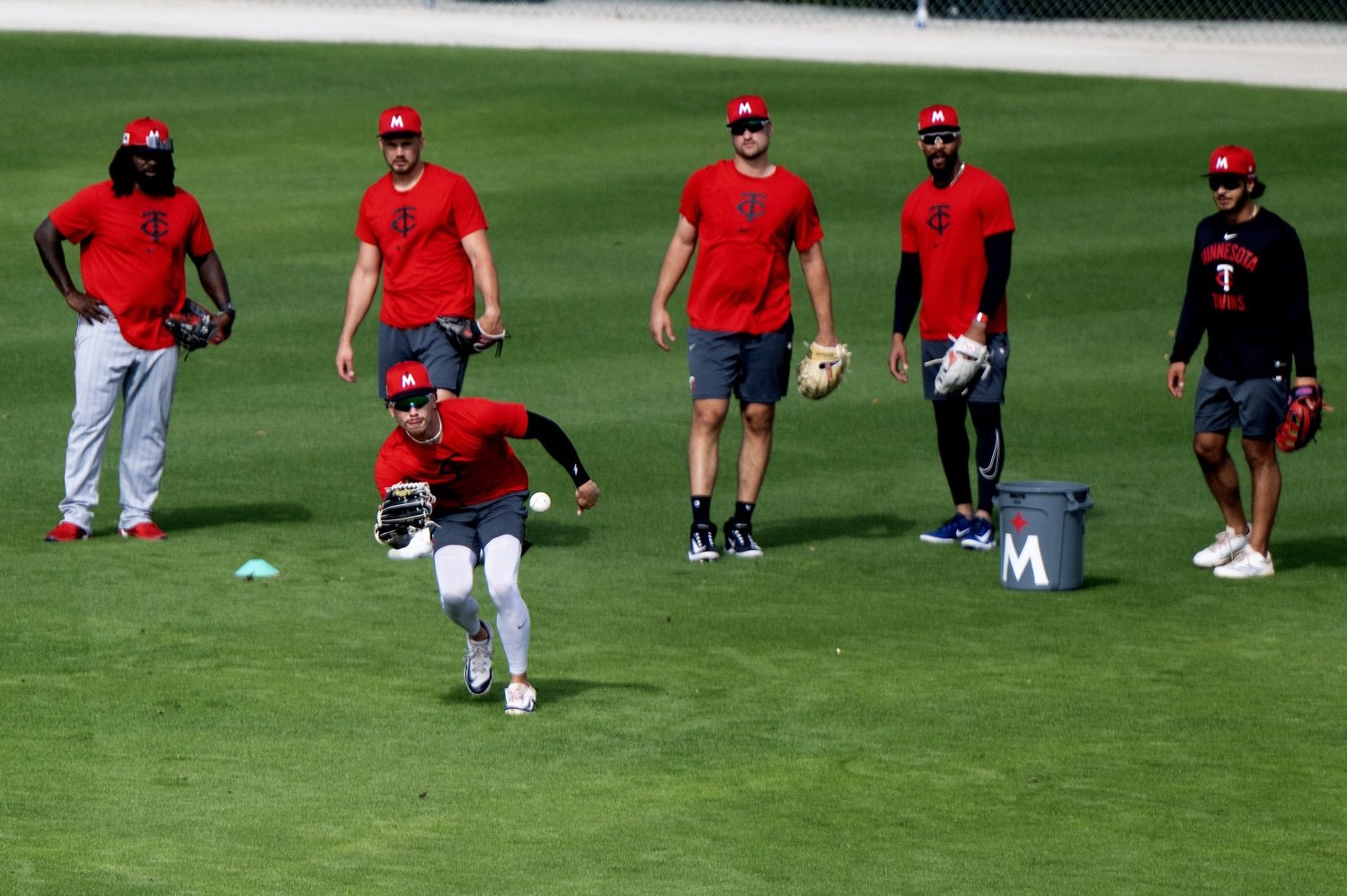 During Saturday’s spring training game, Byron Buxton made a couple of great catches in center, preventing two would-be extra-base hits by Jarren Duran. Offseason pickup Harrison Bader was cheering him on. In a media scrum following the game, Rocco Baldelli joined that chorus. “Yeah, he's still a great defender. I think everyone in the ballpark really enjoyed watching that today," Baldelli said. "I think Harrison Bader in right field might have enjoyed it more than anyone else … Watching those guys run around out there together, making plays like that will fire the other one up in a lot of ways, and [they] take an exceptional amount of pride in the way that they play defense.” When was the last time the Twins made outfield defense a true priority? It might have been 2017. Let’s get in the time machine. “Nothing falls but raindrops” Back in 2017, the Minnesota Twins outfield consisted mainly of Buxton, Max Kepler, and Eddie Rosario. They liked to say that when they were in the field, nothing fell but raindrops. Buxton and Kepler were, at that moment in their young careers, perhaps the best at each of their positions in the league. Rosario was a bit more erratic, sometimes taking odd routes or getting late breaks, but he had a strong arm and ample enthusiasm. They racked up 28 Defensive Runs Saved as a group that year. Let’s come back to the present. During the 2024 stretch run (collapse), the outfield defense was… not great. All too often, the Twins trotted out some amalgamation of Willi Castro, Austin Martin, Manuel Margot, and Kepler. Collectively, that group saved 23 fewer runs than average fielders would have. Using the sabermetric shorthand that 10 marginal runs gain or lose a marginal win, that quartet cost the Twins a minimum of two wins with lousy leatherwork, and it could be closer to three. Of course, there were also ample innings for both Trevor Larnach and Matt Wallner, and both were average fielders last season, but not even Buxton counterbalanced the poor work of the others. Looking Ahead to 2025 Subtracting Margot and Kepler; with Martin likely to land in Triple A; and with fewer outfield opportunities for Castro, what could 2025 hold from an outfield defense standpoint? Looking at the 2025 roster, we know that Buxton and Bader figure to play a ton. It’s also safe to assume that Matt Wallner and Trevor Larnach will see most of their time in the corners, with limited innings available for others. What can we expect to see from this group? The Regulars These four outfielders are expected to receive the majority of playing time at the three positions. Harrison Bader was worth 10 DRS in center. Getting some play in the corners, he’s a good bet to top his 2024 totals. Byron Buxton contributed 4 DRS in center. Coming into 2025 completely healthy for the first time in what feels like forever, he should also be that good again. Trevor Larnach suffered from turf toe for most of the 2024 season, and it’s reasonable to expect that that impacted his sprint speed (and therefore, his range) in left field. While he will likely never be a plus defender, could he take a small step forward on defense and be worth, say, a couple of runs? Probably. Matt Wallner, if he can stay average, we'll call that a win. On the Farm Emmanuel Rodriguez seems all but certain to make his major-league debut in 2025. To date, he has been almost exclusively a center fielder. FanGraphs has a 60 grade on him as a fielder, and that likely plays up if he’s in a corner spot. If he makes his debut around midseason, he will likely be a positive on defense, although advanced defensive metrics aren’t publicly available for minor-league play. So, it’s tough to quantify exactly what fans can expect from him. Austin Martin will play a role, whether it's right away or not. While 2024 did not go according to plan offensively or (especially) defensively, he has been working on his outfield chops all offseason. “It's been an area of focus for him. It's something that we've spoken with him about at reasonable length," Baldelli said of his young player. "And he knows it's something we want to see out of him, and it’s going to help him become a better, more [well-]rounded ball player. And he has the athleticism for it, and he has the work ethic for it.” On a player with 75th-percentile sprint speed, Baldelli is not wrong to have at least a little optimism. DaShawn Keirsey would be the other outfielder who could see extended play in 2025, and he should be a plus defender, too. There's a chance, if things break right, that the 2025 Twins get 20 DRS or so from their outfield. Compared to 2024, that’s likely to be a four-win swing, on outfield defense alone. In 2024, four wins would have made the difference between making the playoffs, and the offseason of discontent we all experienced. Turning a defensive weakness into a strength in one season is an enticing premise. This 2025 season has a lot to be optimistic about — do you agree that the outfield defense could be one of those things? Comment below! John Bonnes contributed to reporting from spring training.
- 24 comments
-
- 5
-
-
- byron buxton
- harrison bader
- (and 5 more)
-
The explosive athleticism is still there, but the version of the Twins' star center fielder we've seen over the last two seasons has utilized his sheer speed less than in the past. Could we see a return to a more active approach on the bases in 2025? Image courtesy of © Jonah Hinebaugh/Naples Daily News/USA Today Network-Florida / USA TODAY NETWORK via Imagn Images The explosive athleticism is still there, but the version of the Twins' star center fielder we've seen over the last two seasons has utilized his sheer speed less than in the past. Could we see a return to a more active approach on the bases in 2025? At age 31, Byron Buxton’s sprint speed is still in the 97th percentile among all big-leaguers. Buxton holds the career all-time stolen base percentage, at 88.57%. To paraphrase ZZ Top, he’s got wheels, and he knows how to use them. Here’s the thing, though: Dating back to 2019, Byron Buxton has stolen nine or fewer bases per season. Looking at his stolen base per 100 plate appearance rate, he has ranged from as high as one stolen bag per roughly 30 plate appearances, to as low as one swipe per 62 plate appearances. This isn’t a bad rate, but it is certainly low for someone with his speed. There are some clear reasons for this. Buxton has often been injured and the hard start and stop (or slide) can exacerbate lingering injuries; he has likely wanted to avoid getting a new injury when he’s been healthy; he does an incredible job going first-to-third or second-to-home on a single, anyway; and as often as not, he’s been hitting bombs. That just doesn’t create the opportunity to steal. Some good reasons, to be sure. And yet… A curious thing has happened this spring. In just 10 spring at-bats, Buxton has stolen two bags—and one of those was third base. Buxton has never stolen third in his big-league career, when the games count. When Twins manager Rocco Baldelli was asked about it postgame, he sounded pleased to see his cornerstone getting more active. “I think that him going makes a lot of sense. It’s something that he hasn’t done a lot of," Baldelli told reporters. "If you’re going to implement it during the season, you might as well break it out. You might bust it out in spring training once or twice, try to get a jump. There’s probably reasons why he hasn’t [stolen third] until now. He’s been excellent at taking second base, one of the best in the game … so adding that into his game is nice. I like that he went.” Baldelli specifically praised Buxton's acceleration, which is the key to stealing effectively—especially stealing third, since one's lead from second is larger but the catcher's throw to the base is also shorter. So what should fans make of this small-sample focus on running? Is Buxton planning on stealing aggressively this season? Twins legend Rod Carew advises it, as Buxton told the Star-Tribune’s Phil Miller. “[Carew] told me, ‘If you don’t steal 60 [bases], I might not speak to you next spring!’,” Buxton said. Of course, the younger man knows the game has changed since Carew was taking the world by storm. He also is aware of—and has been vocally frustrated with—his lengthy injury history. He is cognizant that this is the first spring in a while where he’s fully healthy in camp. In an interview this spring, he expressed the relief and the excitement that brings him. “I didn’t have to go to rehab. As a mental aspect of that, you can go and have a normal offseason. That’s what you expect," he said. "I’m predicting myself to stay healthy. I don’t have too many predictions.” Good health is both a prerequisite for running at all—Buxton didn't attempt a steal in Grapefruit League play in either 2023 or 2024—and a cause for caution. Why risk ruining a good thing, any more often than is necessary? There's one other thing to consider, however. In 2024, the Minnesota Twins had the second-worst collective sprint speed and the fourth-worst home plate-to-first time. They stole fewer bases than any team in baseball, in the easiest environment in which to steal that the game has ever seen. Given the relatively plodding, station-to-station nature of this Twins team, it’s at least worth asking these questions. Should fans expect this stolen base trend to continue into the regular season? Will Buxton have a real shot at swiping, say, 25 bags in 2025? And if so, is it worth the added injury risks to a player who could easily put up a 6-WAR season if he could play 150 healthy-ish games? He's certainly fast and savvy enough to bring this team a dynamic it has long lacked. Yet, the countervailing risks are real. I don’t have the answers to these questions, so I turn the discussion over to you. What do you think? Will Buxton take advantage of his standing green light to run? And more importantly, should he? Share your thoughts below. Twins Daily’s John Bonnes contributed to reporting live from spring training. View full article
-
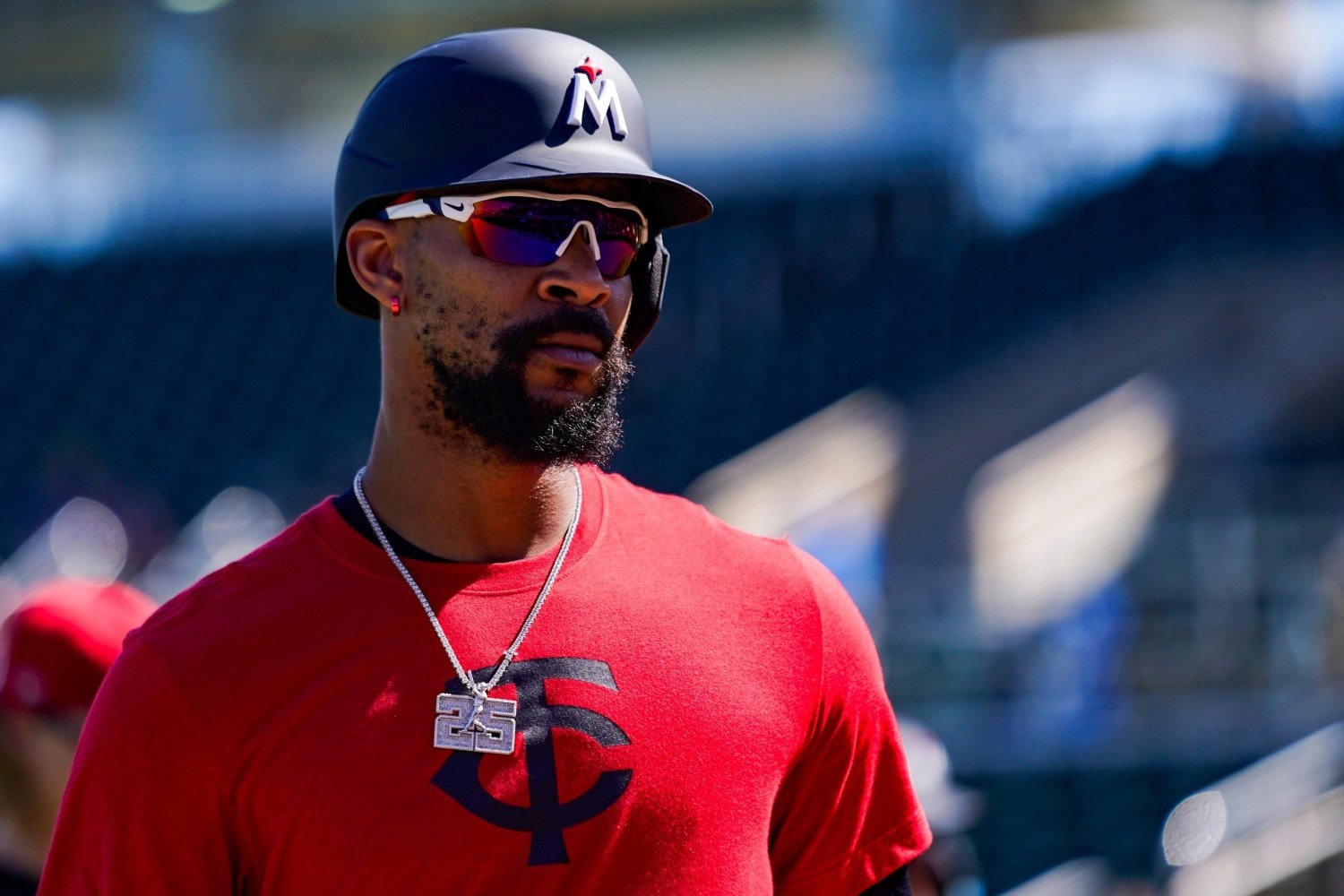 At age 31, Byron Buxton’s sprint speed is still in the 97th percentile among all big-leaguers. Buxton holds the career all-time stolen base percentage, at 88.57%. To paraphrase ZZ Top, he’s got wheels, and he knows how to use them. Here’s the thing, though: Dating back to 2019, Byron Buxton has stolen nine or fewer bases per season. Looking at his stolen base per 100 plate appearance rate, he has ranged from as high as one stolen bag per roughly 30 plate appearances, to as low as one swipe per 62 plate appearances. This isn’t a bad rate, but it is certainly low for someone with his speed. There are some clear reasons for this. Buxton has often been injured and the hard start and stop (or slide) can exacerbate lingering injuries; he has likely wanted to avoid getting a new injury when he’s been healthy; he does an incredible job going first-to-third or second-to-home on a single, anyway; and as often as not, he’s been hitting bombs. That just doesn’t create the opportunity to steal. Some good reasons, to be sure. And yet… A curious thing has happened this spring. In just 10 spring at-bats, Buxton has stolen two bags—and one of those was third base. Buxton has never stolen third in his big-league career, when the games count. When Twins manager Rocco Baldelli was asked about it postgame, he sounded pleased to see his cornerstone getting more active. “I think that him going makes a lot of sense. It’s something that he hasn’t done a lot of," Baldelli told reporters. "If you’re going to implement it during the season, you might as well break it out. You might bust it out in spring training once or twice, try to get a jump. There’s probably reasons why he hasn’t [stolen third] until now. He’s been excellent at taking second base, one of the best in the game … so adding that into his game is nice. I like that he went.” Baldelli specifically praised Buxton's acceleration, which is the key to stealing effectively—especially stealing third, since one's lead from second is larger but the catcher's throw to the base is also shorter. So what should fans make of this small-sample focus on running? Is Buxton planning on stealing aggressively this season? Twins legend Rod Carew advises it, as Buxton told the Star-Tribune’s Phil Miller. “[Carew] told me, ‘If you don’t steal 60 [bases], I might not speak to you next spring!’,” Buxton said. Of course, the younger man knows the game has changed since Carew was taking the world by storm. He also is aware of—and has been vocally frustrated with—his lengthy injury history. He is cognizant that this is the first spring in a while where he’s fully healthy in camp. In an interview this spring, he expressed the relief and the excitement that brings him. “I didn’t have to go to rehab. As a mental aspect of that, you can go and have a normal offseason. That’s what you expect," he said. "I’m predicting myself to stay healthy. I don’t have too many predictions.” Good health is both a prerequisite for running at all—Buxton didn't attempt a steal in Grapefruit League play in either 2023 or 2024—and a cause for caution. Why risk ruining a good thing, any more often than is necessary? There's one other thing to consider, however. In 2024, the Minnesota Twins had the second-worst collective sprint speed and the fourth-worst home plate-to-first time. They stole fewer bases than any team in baseball, in the easiest environment in which to steal that the game has ever seen. Given the relatively plodding, station-to-station nature of this Twins team, it’s at least worth asking these questions. Should fans expect this stolen base trend to continue into the regular season? Will Buxton have a real shot at swiping, say, 25 bags in 2025? And if so, is it worth the added injury risks to a player who could easily put up a 6-WAR season if he could play 150 healthy-ish games? He's certainly fast and savvy enough to bring this team a dynamic it has long lacked. Yet, the countervailing risks are real. I don’t have the answers to these questions, so I turn the discussion over to you. What do you think? Will Buxton take advantage of his standing green light to run? And more importantly, should he? Share your thoughts below. Twins Daily’s John Bonnes contributed to reporting live from spring training.
 -
Despite the offseason buzz surrounding potential trades involving the veteran catcher, he remains a member of the Twins. Could the team's newly-acquired former top prospect be his heir apparent? What would he have to do to make that possibility a reality? Image courtesy of Image courtesy of William Parmeter Despite the offseason buzz surrounding potential trades involving the veteran catcher, he remains a member of the Twins. Could the team's newly-acquired former top prospect be his heir apparent? What would he have to do to make that possibility a reality? As recently as 2023, Diego Cartaya was seen as a can’t-miss prospect, heading the Dodgers’ prospect chart, and ranking 14th overall on MLB.com's top-100 prospect list. At the time, the scouting report compared him to Salvador Perez. MLB.com said of him: “Cartaya is built to hit for power with a quick right-handed stroke … his pop plays to all parts of the ballpark … while [he] has the ingredients to stand out on defense as well, that part of his game needs more polish. Though his arm strength earns well above-average grades … his receiving, framing, and blocking are works in progress.” Fast-forward to 2025, and his skills have reversed, to an extent. His arm strength is still considered above-average, and he has a good pop time, but the rest of his defensive skills have taken a step forward, as well. His blocking, framing, and receiving have all improved to at least an acceptable place, and he’s considered to both call a good game and to have strong relationships with his pitching staff. Here’s the thing, though: his hitting has regressed a fair bit. Cartaya, for his first three minor-league seasons, hit great. Upon hitting the upper minors in 2023, however, pitchers challenged him with better off-speed stuff. His strikeout rate crept up, his walk rate dipped, and he was a below-average hitter for the first time in his career. Last season represented a minor rebound, as he spent the first half of the season repeating Double-A. He hit well enough to receive his first promotion to Triple-A, and his offense fell back off a cliff; he posted just a 60 wRC+. As we know, this inconsistency (and a stacked system) led to Cartaya dropping down the Dodgers' depth chart, being designated for assignment, and (eventually) being traded to the Twins. It’s easy to dismiss minor trades as tinkering around the fringes of the 40-man roster, especially when the price tag is a low-minors prospect not on any lists. Often, that’s all it is. However, before you write Cartaya off due to some recent offensive woes, let’s be real here: defensive chops and calling a good game are about all you need from a backup catcher. Much of the time, being able to hit one’s weight as a backstop is an added bonus. Furthermore, the Twins aren’t exactly bursting at the seams with high-end catching prospects. Looking at their 2024 (non-)usage of Jair Camargo, there’s a clear need for a competent catcher in the upper minors who can step up to join the big-league club when the time is right. For additional perspective, do you know what Christian Vázquez’s wRC+ was in 2024? It was 60—exactly the same as Cartaya's, albeit at a higher level of competition. Sold yet? If not, let’s look to some spring training quotes for guidance. “He’s got a good mind and has been very open to everything we’ve thrown at him," said Twins manager Rocco Baldelli in a chat with reporters over the weekend. "He’s taken it in, and he looks like he’s making good adjustments. "There’s a potential for well-roundedness with him, which is exciting, because you’re not relying on one thing to carry him." So, it sounds as though he’s coachable, and he's motivated. We know he’s hit in the past. It seems as though his defense has come a long way over the past few seasons. To me, that sure sounds like a future major-league receiver. It probably won’t be this season (barring an injury), but it seems likely that he will take a step forward. If things break right, he will probably be on the Opening Day roster in 2026, replacing Vázquez. If he’s not, that’ll mean the Twins either made another, bigger trade for their catcher of the future, or overpaid on the free-agent market this offseason. My money is on them going the Cartaya route. How about you? Now, let’s get truly optimistic. If he can find his form even a little bit, compared to the past couple of seasons, then he’s probably in the conversation to be the heir apparent to Ryan Jeffers, rather than to Vázquez. How realistic is that? Well, a few things will need to happen. First, in 2024, he swung and missed—a lot. He’s got solid game power when he connects, so one key will be to make more contact in the zone. Baseball America charted him as one of 30 global prospects facing make-or-break seasons, and identified that Cartaya's swing path is longer than would be ideal, given his bat speed. Perhaps there will be stance or swing adjustments he can make to improve the amount of contact he makes. Finally, Cartaya has shown good plate discipline throughout his career, walking 11.8% of the time last season. Could he improve this even a bit more? If so, he could be a true on-base machine, and that could be a path to value. What do you think? Could Cartaya catch 70 games for the Twins in 2026? Twins Daily’s own John Bonnes contributed to reporting live from spring training. View full article
-
Is New Twins Catcher Diego Cartaya the Heir Apparent to Christian Vazquez?
Eric Blonigen posted an article in Twins
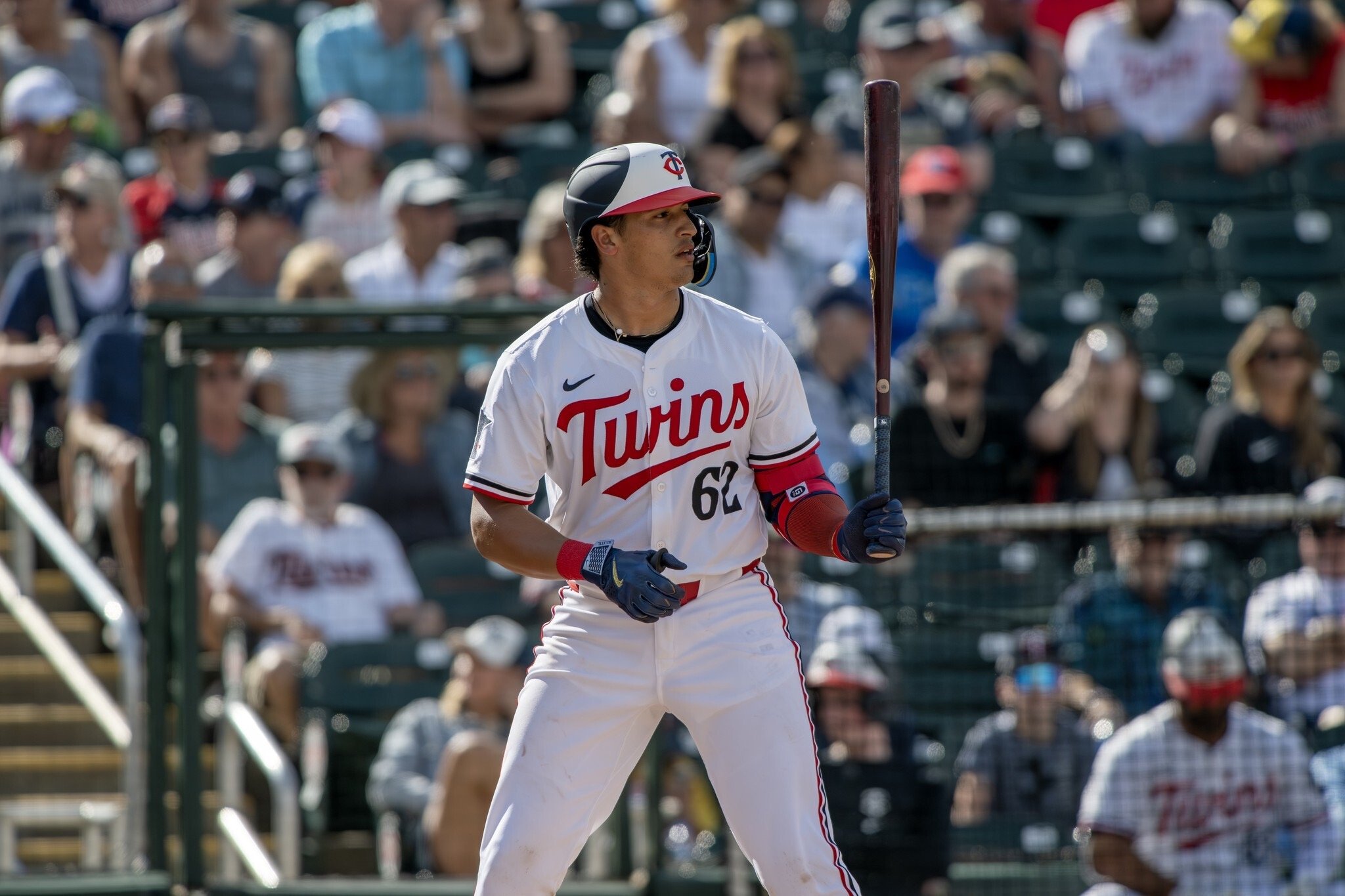 As recently as 2023, Diego Cartaya was seen as a can’t-miss prospect, heading the Dodgers’ prospect chart, and ranking 14th overall on MLB.com's top-100 prospect list. At the time, the scouting report compared him to Salvador Perez. MLB.com said of him: “Cartaya is built to hit for power with a quick right-handed stroke … his pop plays to all parts of the ballpark … while [he] has the ingredients to stand out on defense as well, that part of his game needs more polish. Though his arm strength earns well above-average grades … his receiving, framing, and blocking are works in progress.” Fast-forward to 2025, and his skills have reversed, to an extent. His arm strength is still considered above-average, and he has a good pop time, but the rest of his defensive skills have taken a step forward, as well. His blocking, framing, and receiving have all improved to at least an acceptable place, and he’s considered to both call a good game and to have strong relationships with his pitching staff. Here’s the thing, though: his hitting has regressed a fair bit. Cartaya, for his first three minor-league seasons, hit great. Upon hitting the upper minors in 2023, however, pitchers challenged him with better off-speed stuff. His strikeout rate crept up, his walk rate dipped, and he was a below-average hitter for the first time in his career. Last season represented a minor rebound, as he spent the first half of the season repeating Double-A. He hit well enough to receive his first promotion to Triple-A, and his offense fell back off a cliff; he posted just a 60 wRC+. As we know, this inconsistency (and a stacked system) led to Cartaya dropping down the Dodgers' depth chart, being designated for assignment, and (eventually) being traded to the Twins. It’s easy to dismiss minor trades as tinkering around the fringes of the 40-man roster, especially when the price tag is a low-minors prospect not on any lists. Often, that’s all it is. However, before you write Cartaya off due to some recent offensive woes, let’s be real here: defensive chops and calling a good game are about all you need from a backup catcher. Much of the time, being able to hit one’s weight as a backstop is an added bonus. Furthermore, the Twins aren’t exactly bursting at the seams with high-end catching prospects. Looking at their 2024 (non-)usage of Jair Camargo, there’s a clear need for a competent catcher in the upper minors who can step up to join the big-league club when the time is right. For additional perspective, do you know what Christian Vázquez’s wRC+ was in 2024? It was 60—exactly the same as Cartaya's, albeit at a higher level of competition. Sold yet? If not, let’s look to some spring training quotes for guidance. “He’s got a good mind and has been very open to everything we’ve thrown at him," said Twins manager Rocco Baldelli in a chat with reporters over the weekend. "He’s taken it in, and he looks like he’s making good adjustments. "There’s a potential for well-roundedness with him, which is exciting, because you’re not relying on one thing to carry him." So, it sounds as though he’s coachable, and he's motivated. We know he’s hit in the past. It seems as though his defense has come a long way over the past few seasons. To me, that sure sounds like a future major-league receiver. It probably won’t be this season (barring an injury), but it seems likely that he will take a step forward. If things break right, he will probably be on the Opening Day roster in 2026, replacing Vázquez. If he’s not, that’ll mean the Twins either made another, bigger trade for their catcher of the future, or overpaid on the free-agent market this offseason. My money is on them going the Cartaya route. How about you? Now, let’s get truly optimistic. If he can find his form even a little bit, compared to the past couple of seasons, then he’s probably in the conversation to be the heir apparent to Ryan Jeffers, rather than to Vázquez. How realistic is that? Well, a few things will need to happen. First, in 2024, he swung and missed—a lot. He’s got solid game power when he connects, so one key will be to make more contact in the zone. Baseball America charted him as one of 30 global prospects facing make-or-break seasons, and identified that Cartaya's swing path is longer than would be ideal, given his bat speed. Perhaps there will be stance or swing adjustments he can make to improve the amount of contact he makes. Finally, Cartaya has shown good plate discipline throughout his career, walking 11.8% of the time last season. Could he improve this even a bit more? If so, he could be a true on-base machine, and that could be a path to value. What do you think? Could Cartaya catch 70 games for the Twins in 2026? Twins Daily’s own John Bonnes contributed to reporting live from spring training.
- 29 comments
-
- 12
-
-

-
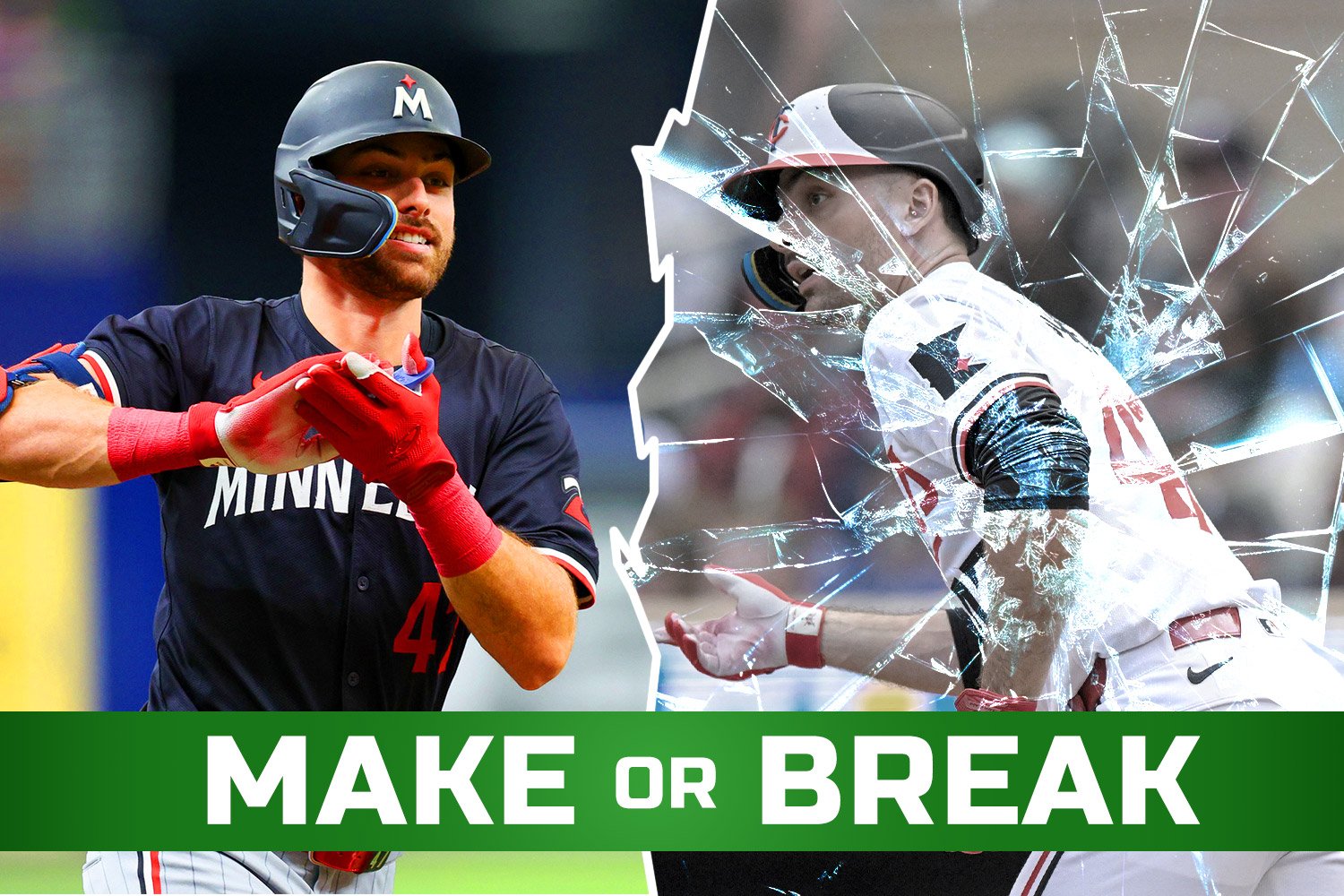 2025 will be a pivotal year for Twins infielder Edouard Julien. Nine months from now, he will either have cemented himself as a key part of the Twins’ plans, or he will likely be out of the organization as he will be out of options and behind a number of other players on the depth chart. Coming from an impressive rookie season in 2023 to an eminently-forgettable sophomore slump in 2024. Let’s dig into what went wrong last year, and how he can get back on track. What Went Wrong In 2024? Unfortunately, this can be summed up by a single word: everything. Let’s start with the elephant in the room — Eddie Julien’s extreme patience at the plate transcended fully into passivity, and opposing pitchers learned they could get an easy called third strike by throwing the ball almost anywhere over the plate except middle-up. That’s…a problem. In fact, Julien led the majors in backwards Ks, despite taking fewer plate appearances than the next-worst player. Have I mentioned... that’s bad? Unpacking the rest of the mess, Julien swung at more non-competitive pitches outside the zone, laid off pitches on the edge but in zone, and as a result, his otherworldly 15.7% walk rate in 2023 dropped to a still-very-good 11%. Similarly, his brutal 31.4% strikeout rate in 2023 rose to a Miguel Sano-esque 33.9% in 2024. That’s just not tenable unless you have 35 homer power, and Julien does not have that. As if that’s not enough, the quality of Julien’s contact, when he made it, also decreased. In fact, he was roughly 20% worse than an average hitter, which isn’t great for a 25 year old with limited defensive chops. His hard hit percentage dropped by seven points. He lost 1.7 MPH of average swing speed. His barrel rate dropped by 3.3%. Data has shown that pulling the ball while hitting an optimal launch angle range leads to the best outcomes for doubles and home runs, and Julien stopped pulling the ball as much, while also getting well under the ball more frequently. In short, based on his swing data, Julien just wasn’t setting himself up for good at bats. What Can Go Right In 2025? Well, this can also be answered in a pithy way, because it would be hard to not improve across the board. Yes, Julien was that lost last season. You want a more nuanced take? Let’s get specific. First, Julien will need to get more aggressive at the plate, while also improving his pitch selection. He needs to fix his timing to cut down on the pop outs and fly ball outs. He will probably need to work with the training and coaching staffs to work on his biomechanics in order to improve his bat speed back to 2023 levels. Now for the good news. After being sent down to Triple-A three different times, Julien worked on his approach at the plate. He was recalled on August 15th due to necessity, and looked much better for at least a few weeks. He was striking out less, hit significantly more line drives, and looked closer to the 2023 version of himself. That’s a small sample size, to be sure. With any luck, his month-long stretch in August and September was a harbinger of a rediscovered approach, because if so, that will mean some things for the Twins. When he’s right at the plate, he’s capable of putting up an .800 OPS, and should make opposing pitchers work to get him out. When he’s right, he’s an on-base machine with moderate power. When he’s right, he’s capable of being one of the Twins’ best hitters, and a lineup building block. He just needs to prove it again. With a full offseason to work on his approach, hopefully his 2025 will look closer to his 2023 than his 2024. And, this is certainly possible. According to Julien himself, he is currently focusing on squaring up, using the whole field, and working on his approach to pitches down in the zone. How Will This Impact The Twins? Rocco Baldelli gave a quote to Twins Daily’s John Bonnes, specifically relating to Jose Miranda, but it likely also applies to Julien: “It’s a healthy thing for an organization have motivated guys that are going out there and want to earn their spot and their opportunities and their at-bats. The hungrier players are, a lot of times the better version of them you get.” Based on that quote, It’s only fair to assume that the Twins are not counting on Julien as a lock to improve, or they likely wouldn’t have added Ty France at first base, which might be Julien’s best defensive position (even though he has little time there). They likely wouldn’t have brought options like Mickey Gasper and Mike Ford, both of whom also play first base. At second, there is similar logjam, with Brooks Lee, Willi Castro, and eventually Luke Keaschall all slotting in well there. That said, if Julien can find his 2023 form, and even take a small step forward, he will have forced the Twins hand from a playing time standpoint, and the Twins will probably be running away with the division. It will also probably mean that there’s a bit of a roster crunch that could make some things interesting at the trade deadline. Longer-term, that will also mean that the Twins can pencil Julien in as an everyday player at an affordable, pre-arbitration rate for a couple of years. That will create some additional flexibility down the road, and make it easier to trade a young infielder, if necessary, to fill another need. If, however, Julien can’t adjust, then it will be a case of an unheralded, late-round draft pick catching lightning in a bottle for two minor league seasons and his debut MLB season and briefly becoming a fan favorite, only for the bottom to drop out. It happens all the time, and would almost certainly lead to him being non-tendered after using his final option year in 2025. It’ll be up to Julien to show he can make adjustments, get more aggressive at the plate, and show he’s a Major League player. Do you think he can do it? Comment below!
 -
Edouard Julien, every Twins fan’s favorite current French-Canadian player, is an enigma wrapped in a mystery wrapped in a bunch of confusion. What does 2025 have in store for him? Image courtesy of © Nathan Ray Seebeck-Imagn Images / © Nick Wosika-Imagn Images Edouard Julien, every Twins fan’s favorite current French-Canadian player, is an enigma wrapped in a mystery wrapped in a bunch of confusion. What does 2025 have in store for him? 2025 will be a pivotal year for Twins infielder Edouard Julien. Nine months from now, he will either have cemented himself as a key part of the Twins’ plans, or he will likely be out of the organization as he will be out of options and behind a number of other players on the depth chart. Coming from an impressive rookie season in 2023 to an eminently-forgettable sophomore slump in 2024. Let’s dig into what went wrong last year, and how he can get back on track. What Went Wrong In 2024? Unfortunately, this can be summed up by a single word: everything. Let’s start with the elephant in the room — Eddie Julien’s extreme patience at the plate transcended fully into passivity, and opposing pitchers learned they could get an easy called third strike by throwing the ball almost anywhere over the plate except middle-up. That’s…a problem. In fact, Julien led the majors in backwards Ks, despite taking fewer plate appearances than the next-worst player. Have I mentioned... that’s bad? Unpacking the rest of the mess, Julien swung at more non-competitive pitches outside the zone, laid off pitches on the edge but in zone, and as a result, his otherworldly 15.7% walk rate in 2023 dropped to a still-very-good 11%. Similarly, his brutal 31.4% strikeout rate in 2023 rose to a Miguel Sano-esque 33.9% in 2024. That’s just not tenable unless you have 35 homer power, and Julien does not have that. As if that’s not enough, the quality of Julien’s contact, when he made it, also decreased. In fact, he was roughly 20% worse than an average hitter, which isn’t great for a 25 year old with limited defensive chops. His hard hit percentage dropped by seven points. He lost 1.7 MPH of average swing speed. His barrel rate dropped by 3.3%. Data has shown that pulling the ball while hitting an optimal launch angle range leads to the best outcomes for doubles and home runs, and Julien stopped pulling the ball as much, while also getting well under the ball more frequently. In short, based on his swing data, Julien just wasn’t setting himself up for good at bats. What Can Go Right In 2025? Well, this can also be answered in a pithy way, because it would be hard to not improve across the board. Yes, Julien was that lost last season. You want a more nuanced take? Let’s get specific. First, Julien will need to get more aggressive at the plate, while also improving his pitch selection. He needs to fix his timing to cut down on the pop outs and fly ball outs. He will probably need to work with the training and coaching staffs to work on his biomechanics in order to improve his bat speed back to 2023 levels. Now for the good news. After being sent down to Triple-A three different times, Julien worked on his approach at the plate. He was recalled on August 15th due to necessity, and looked much better for at least a few weeks. He was striking out less, hit significantly more line drives, and looked closer to the 2023 version of himself. That’s a small sample size, to be sure. With any luck, his month-long stretch in August and September was a harbinger of a rediscovered approach, because if so, that will mean some things for the Twins. When he’s right at the plate, he’s capable of putting up an .800 OPS, and should make opposing pitchers work to get him out. When he’s right, he’s an on-base machine with moderate power. When he’s right, he’s capable of being one of the Twins’ best hitters, and a lineup building block. He just needs to prove it again. With a full offseason to work on his approach, hopefully his 2025 will look closer to his 2023 than his 2024. And, this is certainly possible. According to Julien himself, he is currently focusing on squaring up, using the whole field, and working on his approach to pitches down in the zone. How Will This Impact The Twins? Rocco Baldelli gave a quote to Twins Daily’s John Bonnes, specifically relating to Jose Miranda, but it likely also applies to Julien: “It’s a healthy thing for an organization have motivated guys that are going out there and want to earn their spot and their opportunities and their at-bats. The hungrier players are, a lot of times the better version of them you get.” Based on that quote, It’s only fair to assume that the Twins are not counting on Julien as a lock to improve, or they likely wouldn’t have added Ty France at first base, which might be Julien’s best defensive position (even though he has little time there). They likely wouldn’t have brought options like Mickey Gasper and Mike Ford, both of whom also play first base. At second, there is similar logjam, with Brooks Lee, Willi Castro, and eventually Luke Keaschall all slotting in well there. That said, if Julien can find his 2023 form, and even take a small step forward, he will have forced the Twins hand from a playing time standpoint, and the Twins will probably be running away with the division. It will also probably mean that there’s a bit of a roster crunch that could make some things interesting at the trade deadline. Longer-term, that will also mean that the Twins can pencil Julien in as an everyday player at an affordable, pre-arbitration rate for a couple of years. That will create some additional flexibility down the road, and make it easier to trade a young infielder, if necessary, to fill another need. If, however, Julien can’t adjust, then it will be a case of an unheralded, late-round draft pick catching lightning in a bottle for two minor league seasons and his debut MLB season and briefly becoming a fan favorite, only for the bottom to drop out. It happens all the time, and would almost certainly lead to him being non-tendered after using his final option year in 2025. It’ll be up to Julien to show he can make adjustments, get more aggressive at the plate, and show he’s a Major League player. Do you think he can do it? Comment below! View full article
-
Minnesota Twins Manager Rocco Baldelli: Newly-Minted Taskmaster?
Eric Blonigen posted an article in Twins
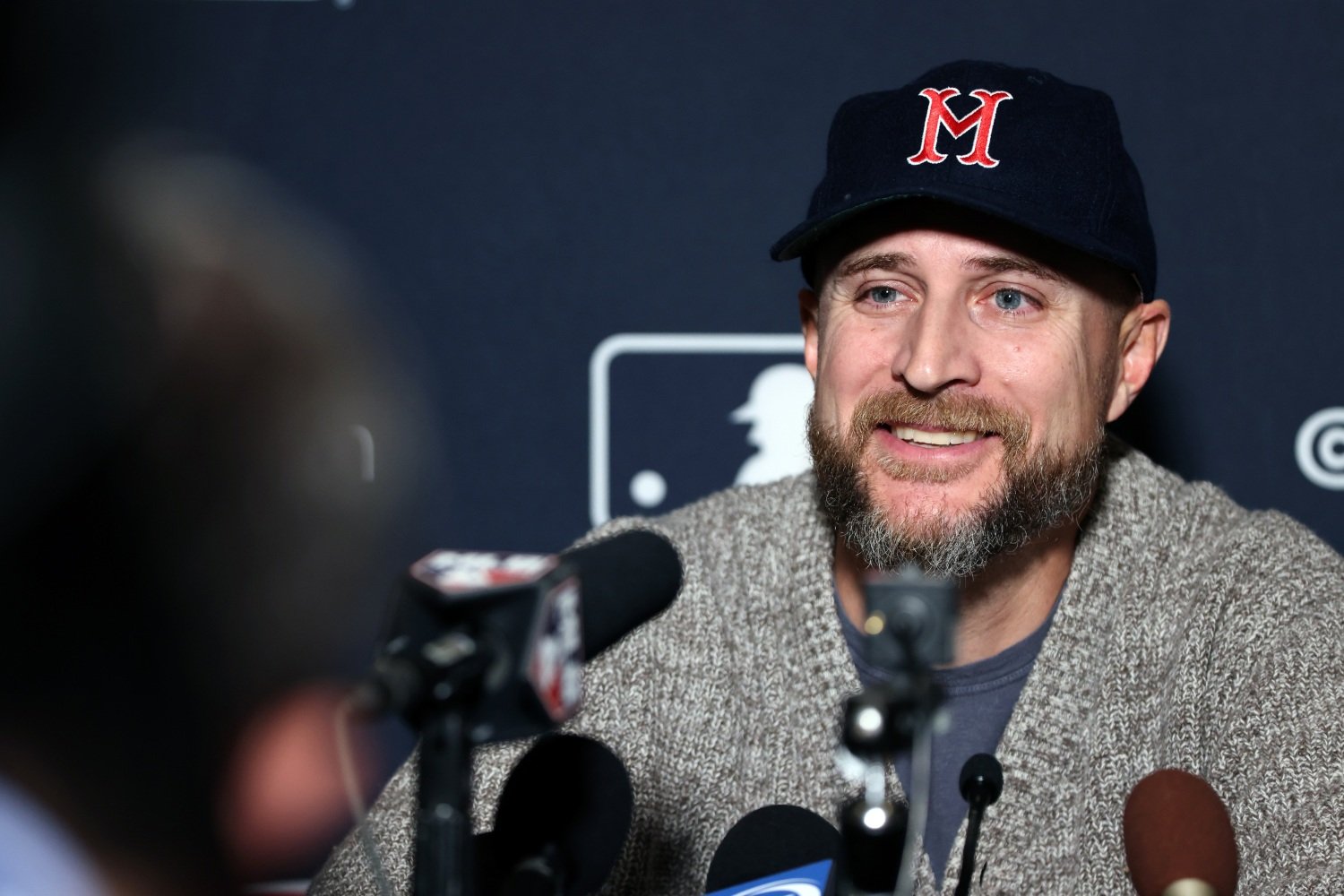 Twins Manager Rocco Baldelli has taken a lot of flak over the years around a couple of themes: heavily leaning into analytics, and mollycoddling players. The first point is largely unfounded, as analytics are here to stay, and lead to teams like the Rays and Guardians outperforming expectations year after year. That second point, though? That’s a little more nuanced. Caring for players, keeping them healthy, and ensuring they feel supported and set up for success is part of a manager’s role—but it’s complicated. If you have been hoping for a different approach from Baldelli, there is some reason to think that change is afoot. In a media availability attended by Twins Daily’s own John Bonnes, Baldelli shared some intriguing comments that suggest he and the coaching staff will be focusing more on fundamentals in spring training, and beyond. Let’s look at a couple quotes, then discuss the implications for both the process, and the results fans might expect to see this season. What Baldelli Said First, the big one, speaking about the team approach for 2025: “I wanted to return more to taking it back to our roots, and I think that helps guys focus on what they really need to do … it’s easy when you know what your actual goal is, and we’ve said it pretty clear.” Next, on team drills: “It’s about getting out there on the baseball field and preparing for the game … the guys have been taking to all the drills and getting outside for batting practice. There’s probably a little less work in the cage and a little more under the sun” Carlos Correa expanded, saying: “Everybody has to be taking ground balls with the team. Everybody has to run every day, because it pushes everybody. That’s exactly what we need on this team … It just brings everybody closer … it’s beautiful to watch, and I’m glad we are doing it this year … it was tough to watch us crumble towards the end of the season … we are correcting those mistakes.” When asked if he is becoming more of a taskmaster, Baldelli responded: “I wouldn’t go that far, but maybe a part of me is, and that’s ok. It feels good.” Finally, when addressing the Twins’ hitting approach: “Some of it’s kind of bringing it back to the way we have probably thought about hitting for a long time. It really comes down to swinging at the right pitches consistently and hitting line drives. I think we’ve probably, at times, made it a more complicated task than it is. It’s not easy. We all know it’s not easy. Very challenging, especially at this level, but when you can shorten that stroke more at-bats than not and really your goal is to hit a line drive and that line drive in the middle of the field becomes valuable to you again, I think you become productive as a team and you become a very difficult team to pitch to.” Ok, there’s a lot there, and you could probably spend days unpacking all of this. Some of these things are tough to quantify, such as the team togetherness concepts. For the purposes of this article, I’ll let you do your own analysis on that front. That said, you might be asking yourself what you might expect to see differently in 2025 stylistically, as well as what you might look for from a results standpoint. Here are a few thoughts. Plate Discipline In 2024, Twins hitters averaged 3.81 pitches per plate appearance, slightly below the league average. They also walked at a 7.7% clip, 0.4% lower than average. One of the things Correa referenced was players giving each other help with their approach at the plate during batting practice. If this holds throughout the season, I would expect to see this reflected by an increase in the average number of pitches batters see, and perhaps an uptick in walk rate. A bit more of an emphasis on on-base skills would almost certainly change the outcome of at least a couple of games for the better. Line Drives vs Bombas In 2024, a frustrating number of at-bats ended with hitters trying to do too much, swinging for the fences in key spots and flying out shy of the warning track. Taken at face value, these quotes suggest that when watching games this season, one might notice less of the all-or-nothing approach the team has adopted since the 2019 Bomba Squad. This makes sense, considering the current makeup of the roster. Aside from a few boppers, striving for line drives is a great way to play to the hitters’ skill sets. Digging into the data, in 2024, 24.4% of the Twins’ batted balls were classified as line drives, and 28.4% were fly balls. Based on Baldelli’s remarks about line drive swings, fans might see a shift in hitters’ spray charts, and an overall reduction in average launch angle. Results-wise, I would expect to see the number of doubles the team hits increase, perhaps significantly, in exchange for a modest reduction in home runs. I would also look at the same rate data throughout the season. Will we see the above numbers reversed at the end of the season? If so, that should lead to an increase in runs scored from players without a ton of home run power. Infield Defense Nick Nelson recently wrote about the infield defense potentially being a bit scary, with some combination of Ty France (-12 OAA), Edouard Julien (-4 OAA), Jose Miranda (-7 OAA), Brooks Lee (-3 OAA), Royce Lewis (1 OAA), and Willi Castro (1 OAA) manning everywhere in the dirt except shortstop. For those counting along at home, that’s -24 OAA collectively in 2024 by your 2025 Twins infielders. Converting that to FRV and run prevention, the group was about two full wins worse than average fielders last season. By making fielding practice mandatory, one might expect to see fielders’ OAA improve year over year, through a focus on getting off better throws, turning double plays more consistently, better positioning on the dirt, and all the other things that go into fielding effectively. Will consistent practice reps be enough to take the aforementioned bunch from butcher-ish to average-ish? Well, it sure can’t hurt. If it works, picking up two additional wins on fielding alone could make a significant impact come late September. The proof, they say, is in the pudding. With a little discipline, team drills, a shift in hitting approach, a little more esprit de corps, and a bit more fire from Baldelli, the younger Twins hitters just might become more complete players, and lead to a handful of additional wins in the process. If you are among the fans who have been calling for stylistic changes to the Twins’ game, or have bemoaned Baldelli’s approach to managing, how are you feeling about these changes? Comment below with your thoughts.
 -
Sometimes, you are just getting on with your day, and you read a series of quotes from Twins manager Rocco Baldelli that make the world around you emit that record-scratch noise you see in movies. Has the Twins' famously player-friendly skipper turned into a martinet this spring? Image courtesy of © Tim Heitman-Imagn Images Sometimes, you are just getting on with your day, and you read a series of quotes from Twins manager Rocco Baldelli that make the world around you emit that record-scratch noise you see in movies. Has the Twins' famously player-friendly skipper turned into a martinet this spring? Twins Manager Rocco Baldelli has taken a lot of flak over the years around a couple of themes: heavily leaning into analytics, and mollycoddling players. The first point is largely unfounded, as analytics are here to stay, and lead to teams like the Rays and Guardians outperforming expectations year after year. That second point, though? That’s a little more nuanced. Caring for players, keeping them healthy, and ensuring they feel supported and set up for success is part of a manager’s role—but it’s complicated. If you have been hoping for a different approach from Baldelli, there is some reason to think that change is afoot. In a media availability attended by Twins Daily’s own John Bonnes, Baldelli shared some intriguing comments that suggest he and the coaching staff will be focusing more on fundamentals in spring training, and beyond. Let’s look at a couple quotes, then discuss the implications for both the process, and the results fans might expect to see this season. What Baldelli Said First, the big one, speaking about the team approach for 2025: “I wanted to return more to taking it back to our roots, and I think that helps guys focus on what they really need to do … it’s easy when you know what your actual goal is, and we’ve said it pretty clear.” Next, on team drills: “It’s about getting out there on the baseball field and preparing for the game … the guys have been taking to all the drills and getting outside for batting practice. There’s probably a little less work in the cage and a little more under the sun” Carlos Correa expanded, saying: “Everybody has to be taking ground balls with the team. Everybody has to run every day, because it pushes everybody. That’s exactly what we need on this team … It just brings everybody closer … it’s beautiful to watch, and I’m glad we are doing it this year … it was tough to watch us crumble towards the end of the season … we are correcting those mistakes.” When asked if he is becoming more of a taskmaster, Baldelli responded: “I wouldn’t go that far, but maybe a part of me is, and that’s ok. It feels good.” Finally, when addressing the Twins’ hitting approach: “Some of it’s kind of bringing it back to the way we have probably thought about hitting for a long time. It really comes down to swinging at the right pitches consistently and hitting line drives. I think we’ve probably, at times, made it a more complicated task than it is. It’s not easy. We all know it’s not easy. Very challenging, especially at this level, but when you can shorten that stroke more at-bats than not and really your goal is to hit a line drive and that line drive in the middle of the field becomes valuable to you again, I think you become productive as a team and you become a very difficult team to pitch to.” Ok, there’s a lot there, and you could probably spend days unpacking all of this. Some of these things are tough to quantify, such as the team togetherness concepts. For the purposes of this article, I’ll let you do your own analysis on that front. That said, you might be asking yourself what you might expect to see differently in 2025 stylistically, as well as what you might look for from a results standpoint. Here are a few thoughts. Plate Discipline In 2024, Twins hitters averaged 3.81 pitches per plate appearance, slightly below the league average. They also walked at a 7.7% clip, 0.4% lower than average. One of the things Correa referenced was players giving each other help with their approach at the plate during batting practice. If this holds throughout the season, I would expect to see this reflected by an increase in the average number of pitches batters see, and perhaps an uptick in walk rate. A bit more of an emphasis on on-base skills would almost certainly change the outcome of at least a couple of games for the better. Line Drives vs Bombas In 2024, a frustrating number of at-bats ended with hitters trying to do too much, swinging for the fences in key spots and flying out shy of the warning track. Taken at face value, these quotes suggest that when watching games this season, one might notice less of the all-or-nothing approach the team has adopted since the 2019 Bomba Squad. This makes sense, considering the current makeup of the roster. Aside from a few boppers, striving for line drives is a great way to play to the hitters’ skill sets. Digging into the data, in 2024, 24.4% of the Twins’ batted balls were classified as line drives, and 28.4% were fly balls. Based on Baldelli’s remarks about line drive swings, fans might see a shift in hitters’ spray charts, and an overall reduction in average launch angle. Results-wise, I would expect to see the number of doubles the team hits increase, perhaps significantly, in exchange for a modest reduction in home runs. I would also look at the same rate data throughout the season. Will we see the above numbers reversed at the end of the season? If so, that should lead to an increase in runs scored from players without a ton of home run power. Infield Defense Nick Nelson recently wrote about the infield defense potentially being a bit scary, with some combination of Ty France (-12 OAA), Edouard Julien (-4 OAA), Jose Miranda (-7 OAA), Brooks Lee (-3 OAA), Royce Lewis (1 OAA), and Willi Castro (1 OAA) manning everywhere in the dirt except shortstop. For those counting along at home, that’s -24 OAA collectively in 2024 by your 2025 Twins infielders. Converting that to FRV and run prevention, the group was about two full wins worse than average fielders last season. By making fielding practice mandatory, one might expect to see fielders’ OAA improve year over year, through a focus on getting off better throws, turning double plays more consistently, better positioning on the dirt, and all the other things that go into fielding effectively. Will consistent practice reps be enough to take the aforementioned bunch from butcher-ish to average-ish? Well, it sure can’t hurt. If it works, picking up two additional wins on fielding alone could make a significant impact come late September. The proof, they say, is in the pudding. With a little discipline, team drills, a shift in hitting approach, a little more esprit de corps, and a bit more fire from Baldelli, the younger Twins hitters just might become more complete players, and lead to a handful of additional wins in the process. If you are among the fans who have been calling for stylistic changes to the Twins’ game, or have bemoaned Baldelli’s approach to managing, how are you feeling about these changes? Comment below with your thoughts. View full article
-
It’s easier to go complete game when you throw 82 miles an hour and are facing guys without data-driven workout routines, batting plans, and visualizations designed to optimize swing paths for maximum damage. The game today is pitch 6 great innings and that’s a good day at the office.
-
But, that’s the point. When healthy, on a per-start basis, Joe Ryan’s results are in the general vicinity of that group. Agreed on the bevy of good arms point though, it takes both high-end pitching and good depth.
-
Great question, Mark. October is about reality, and as a Twins fan…you get it. Unfortunately that doesn’t always work in our favor as fans. In Spring though, it’s World Series or bust!
-
Correct. At this point, the guys getting the quick hook are either unproven rookies being eased into Major League action, or guys who have shown us repeatedly that they can’t produce decent results the third time through. In both of those cases, pulling them early is almost certainly the right move.
-
This is exactly right. I know it’s easy sometimes to compare today’s best pitchers to those from 20, 30, or 40 years ago, but the game has changed. Pitchers throw significantly harder, and throw pitches that are hard on the arm. There’s also significant data that shows decreasing effectiveness third and fourth times through the order. Sometimes, an ace is still an ace even if he doesn’t go deep. It’s about what they do with their innings, and consistency that defines an ace today.
-
 The Joe Ryan of 2025 barely resembles the soft-tossing, funky-delivery former water polo player the Twins traded for. He has added significant velocity, changed his pitch mix, and blossomed into a borderline elite player. The one thing he hasn’t been able to accomplish thus far is to stay healthy for a full, 33-start season. If he can add that this season, how far would he be from an ace?. This piece will dig into Ryan’s performance and, more importantly, his health outlook as we enter the most exciting time of year: spring training. Past Performance In 2023, Ryan made 15 healthy starts, then injured his groin warming up prior to his June 27th start. He pitched injured (and poorly) for seven starts before announcing his injury, went on the shelf for a month, and showed some after-effects of his groin strain upon his return. For the purposes of this analysis, we will only look at and extrapolate the first 15 starts. Yes, this is fuzzy math, and yes, I’m ok with that. Across those 15 starts, he averaged 5.8 innings per start, with a 27.3% strikeout rate, walked 4.1% of the batters he faced, had a 2.77 FIP, and a WHIP of just 0.91. That’s all fantastic. Across a full season, with those same rates, that would have been the best in the league in WHIP and FIP, tied for sixth in strikeout rate and fourth in walk rate. Sound like an ace to you? Yeah. Me too. 2024 is a bit easier to project, as Ryan didn’t pitch injured for a long stretch as he did in 2023. Last season, Joe Ryan made 23 starts prior to going on the shelf with a grade two Teres Major strain. Over those 23 starts, he pitched 135 innings of 3.44 FIP ball. That’s just short of a six-inning average start. He struck out 27.3% of opposing batters, walked just 4.3%, had a WHIP under 1.0, and from the eye test, he just looked filthy, more often than not. Comparing those results to the league leaders and extrapolated across a full season, here’s how he would have stacked up to the rest of his American League cohort: fourth in innings pitched, fourth in WHIP, seventh in K-rate, third in BB-rate, ninth in FIP, and fifth in pitcher fWAR. I don’t know about you, but I call that ace caliber. So, we know Ryan is a great pitcher when healthy. As it stands, he has added velocity in each major league season, has tinkered with his pitch mix, and maintained his funky-yet-repeatable delivery. It’s possible he adds another tick of velocity, and if he does, it’s anyone’s guess just how high his ceiling could be. But is it reasonable to expect health across 30+ starts? Let’s look for clues. Current Health In a spring training media session, Rocco Baldelli said of Joe Ryan: “Joe’s treated himself really well this offseason. He looks good and strong and mobile like he always is. I think he’s looking to come back this year and put together …a full season’s worth of innings and produce the way he did or even better than last year. He had an awesome year going last year before he suffered the issue but he’s come in fully healed and looked great.” Look, a guy being in the “best shape of his life” is a well-worn cliche across baseball. It’s easy to treat Rocco’s remarks as throwaway platitudes used to fill space in a scrum. But is that what they are? Based on interviews from the past several seasons, it’s become clear that Rocco prefers not to talk about players’ health, likely based on his own playing career and how personal debilitating injuries can feel. Detailing Ryan’s health and preparation is a good sign. Ryan’s injuries, and the prognosis for them Ryan’s injuries in each of the past two seasons were isolated in nature, and neither were related to his elbow or rotator cuff, both of which would be causes for concern. What do we know about the outlook for players suffering the injuries Ryan has encountered? Well, first the good news: Teres Major injuries tend to be “one and done” based on the limited data surrounding this relatively uncommon baseball injury. The prognosis, according to the NIH, is a full recovery without future risk. Groin strains, on the other hand, are both common among athletes, and are more likely to reoccur. However, medical guidance suggests that deliberate strength and conditioning routines can significantly limit risks. So, it’s probably safe to assume that the Twins training and medical teams have worked with Ryan to ensure there’s a routine in place, especially because it did not reoccur last year. So, to wrap this all up neatly, Ryan’s conditioning is on point, he is unlikely to suffer the effects of his prior injuries, and he may just be lined up to give the Twins 180 innings of low-three ERA ball. If he does, the Twins' top three starters should be among the best in baseball, and fans should gear up for some October baseball. Just in case you don’t believe me, check out the other names on this list. It’s good company to be in. Don’t worry, I’m knocking on some wood, but baseball is back, and this is the time of year to be an eternal optimist. What do you predict from Joe Ryan this season? Comment below!
 -
Joe Ryan has, in each of the past two seasons, been the Twins best starting pitcher for long stretches until derailed by injuries. If fully healthy, can he be an ace in 2025? Image courtesy of © John Hefti-Imagn Images Joe Ryan has, in each of the past two seasons, been the Twins best starting pitcher for long stretches until derailed by injuries. If fully healthy, can he be an ace in 2025? The Joe Ryan of 2025 barely resembles the soft-tossing, funky-delivery former water polo player the Twins traded for. He has added significant velocity, changed his pitch mix, and blossomed into a borderline elite player. The one thing he hasn’t been able to accomplish thus far is to stay healthy for a full, 33-start season. If he can add that this season, how far would he be from an ace?. This piece will dig into Ryan’s performance and, more importantly, his health outlook as we enter the most exciting time of year: spring training. Past Performance In 2023, Ryan made 15 healthy starts, then injured his groin warming up prior to his June 27th start. He pitched injured (and poorly) for seven starts before announcing his injury, went on the shelf for a month, and showed some after-effects of his groin strain upon his return. For the purposes of this analysis, we will only look at and extrapolate the first 15 starts. Yes, this is fuzzy math, and yes, I’m ok with that. Across those 15 starts, he averaged 5.8 innings per start, with a 27.3% strikeout rate, walked 4.1% of the batters he faced, had a 2.77 FIP, and a WHIP of just 0.91. That’s all fantastic. Across a full season, with those same rates, that would have been the best in the league in WHIP and FIP, tied for sixth in strikeout rate and fourth in walk rate. Sound like an ace to you? Yeah. Me too. 2024 is a bit easier to project, as Ryan didn’t pitch injured for a long stretch as he did in 2023. Last season, Joe Ryan made 23 starts prior to going on the shelf with a grade two Teres Major strain. Over those 23 starts, he pitched 135 innings of 3.44 FIP ball. That’s just short of a six-inning average start. He struck out 27.3% of opposing batters, walked just 4.3%, had a WHIP under 1.0, and from the eye test, he just looked filthy, more often than not. Comparing those results to the league leaders and extrapolated across a full season, here’s how he would have stacked up to the rest of his American League cohort: fourth in innings pitched, fourth in WHIP, seventh in K-rate, third in BB-rate, ninth in FIP, and fifth in pitcher fWAR. I don’t know about you, but I call that ace caliber. So, we know Ryan is a great pitcher when healthy. As it stands, he has added velocity in each major league season, has tinkered with his pitch mix, and maintained his funky-yet-repeatable delivery. It’s possible he adds another tick of velocity, and if he does, it’s anyone’s guess just how high his ceiling could be. But is it reasonable to expect health across 30+ starts? Let’s look for clues. Current Health In a spring training media session, Rocco Baldelli said of Joe Ryan: “Joe’s treated himself really well this offseason. He looks good and strong and mobile like he always is. I think he’s looking to come back this year and put together …a full season’s worth of innings and produce the way he did or even better than last year. He had an awesome year going last year before he suffered the issue but he’s come in fully healed and looked great.” Look, a guy being in the “best shape of his life” is a well-worn cliche across baseball. It’s easy to treat Rocco’s remarks as throwaway platitudes used to fill space in a scrum. But is that what they are? Based on interviews from the past several seasons, it’s become clear that Rocco prefers not to talk about players’ health, likely based on his own playing career and how personal debilitating injuries can feel. Detailing Ryan’s health and preparation is a good sign. Ryan’s injuries, and the prognosis for them Ryan’s injuries in each of the past two seasons were isolated in nature, and neither were related to his elbow or rotator cuff, both of which would be causes for concern. What do we know about the outlook for players suffering the injuries Ryan has encountered? Well, first the good news: Teres Major injuries tend to be “one and done” based on the limited data surrounding this relatively uncommon baseball injury. The prognosis, according to the NIH, is a full recovery without future risk. Groin strains, on the other hand, are both common among athletes, and are more likely to reoccur. However, medical guidance suggests that deliberate strength and conditioning routines can significantly limit risks. So, it’s probably safe to assume that the Twins training and medical teams have worked with Ryan to ensure there’s a routine in place, especially because it did not reoccur last year. So, to wrap this all up neatly, Ryan’s conditioning is on point, he is unlikely to suffer the effects of his prior injuries, and he may just be lined up to give the Twins 180 innings of low-three ERA ball. If he does, the Twins' top three starters should be among the best in baseball, and fans should gear up for some October baseball. Just in case you don’t believe me, check out the other names on this list. It’s good company to be in. Don’t worry, I’m knocking on some wood, but baseball is back, and this is the time of year to be an eternal optimist. What do you predict from Joe Ryan this season? Comment below! View full article
-
Spoiler alert? Because it almost makes too much sense to not at least try. Image courtesy of © David Frerker-Imagn Images Spoiler alert? Because it almost makes too much sense to not at least try. A week or so ago, Dan Hayes wrote that the Padres were interested in Christian Vázquez, and added (almost as an afterthought) that the Twins were also discussing trading for Dylan Cease. For many fans, this was a confusing notion. After all, the Twins have three playoff-caliber starters already, incredible pitching depth and clear needs elsewhere on the roster. While trading for Cease remains somewhat unlikely, there are some reasons why it could be a shrewd move, steeped in a clear-eyed understanding of the needle the Twins must thread in an attempt to make a deep playoff run in 2025. Let’s start with the easy stuff. Dylan Cease is a Dude. An ace. A legitimate frontline starter. According to FanGraphs’s Steamer projections, he’ll be worth the 12th-most pitcher WAR in baseball. He’s a workhorse. He’s relatively cost-effective. Those are all the reasons 28 other teams in baseball would probably love to have him taking the bump for them every fifth day. More specifically for the Twins, though: Cease fits the team's style; his addition would make the 2025 rotation much better; and he would give them the proven, quality rotation depth that makes many other things possible. I’ll be digging into the arguments for those last three points, and in doing so, will hopefully convince you that this one move could carry the Twins deep into October, with just a little luck and health on the hitting side. A Philosophical Match Have you ever noticed that when it comes to starting pitchers, the Twins have a type? It's guys who rack up strikeouts like they are high-leverage relievers. Guys who don’t give up too many free passes. Guys with great vertical movement, a rising four-seam shape on the fastball and good depth on a breaking ball. You know who checks those boxes, and more? That’s right, it's Dylan Cease. His slider is elite, he pumps gas with his heater, he's got better-than-average vertical movement on his fastball, curve, and slider, and on any given night, he’s capable of doing this: Boosting the October Rotation Look, this is the easiest argument to make. There’s been a refrain from fans on Twins Daily and elsewhere, ever since the Twins traded for Pablo López: “But he’s not an ace.” First of all, you can make a case that López is, anyway, but let's grant the lamenters' premise for now. You know who is an ace? Cease. He would instantly slot in as the Twins' best pitcher, even if it’s just for a season. The byproduct of that is as follows: López instantly enters the conversation for best (non-Dodgers) number two starter in baseball; nobody outside of the Dodgers would have a better number three than Joe Ryan; Bailey Ober, the presumptive fourth starter, would be some teams’ staff ace; and Simeon Woods Richardson would be a downright luxury at the back of the rotation. Now, let’s consider the other implications of this. All offseason, there’s been buzz around moving on from Chris Paddack and his contract. There have also been murmurs that the Twins may prefer to have a fourth veteran in the rotation to begin the season. Adding Cease would solve that, and remove the last remaining justification for Paddack to be on the 2025 roster. Trading for Cease would certainly cost them one of Louie Varland, David Festa, Zebby Matthews, Andrew Morris, and Marco Raya, and quite possibly two of them, as part of a package. but whoever stuck around would be free either or convert to the bullpen or to continue refining their craft in St Paul. Consider that for a moment: Marco Raya, one of the Twins’ best prospects, would be their likely eighth option. Name one other team with that combination of high-end pitching on the big-league club, and four additional legit starting prospects at Triple A. I bet you can’t do it, and the Twins wouldn't even be especially likely to need all that depth. Durability and Its Implications Cease is incredibly durable, and durably incredible. Over the past three seasons, he has averaged over 183 innings per season (10th in MLB), has made at least 32 starts per year (3rd in MLB), and has done it while putting up roughly 4.3 fWAR per season (5th in MLB). In his five-and-a-half-season career, he has never missed a start. Over the past few seasons, the Twins have lost significant time from pitchers they were counting on to take them to the October promised land. Tyler Mahle was injured for basically his entire season and a half with the Twins. Kenta Maeda needed Tommy John surgery at the end of 2021 and was out for the 2022 season. In 2024, the Twins lost Joe Ryan when it mattered most. Some sports wonks say the best ability is availability. I might quibble with that a bit, but for all intents and purposes, the 2024 Twins season ended with Ryan’s teres major strain. Yes, there were a ton of factors that led to the Twins' epic collapse, but losing a playoff-caliber starter is tough to come back from when you aren’t firing on all cylinders as a team. Adding Cease would give the Twins four clearly playoff-caliber veteran starters, which would make it easier to absorb the loss of one while still hoping to make a deep playoff run. Crucially, too, putting him in the mix would reduce the probability of losing one—or at least multiple—of those guys. To sum all this up, there’s a lot of upside to trading for Cease, and no good reason not to, as long as the Twins don’t need to give up Walker Jenkins or Emmanuel Rodríguez (which, presumably, they wouldn't even consider, anyway). They'd have to move money, in the form of Paddack and Vázquez, but it would be worth the hoop-jumping. What do you think? Are you convinced? I’d love to hear your thoughts on the matter. Comment below! View full article
-
Why on Earth Would the Minnesota Twins Trade For Dylan Cease?
Eric Blonigen posted an article in Twins
 A week or so ago, Dan Hayes wrote that the Padres were interested in Christian Vázquez, and added (almost as an afterthought) that the Twins were also discussing trading for Dylan Cease. For many fans, this was a confusing notion. After all, the Twins have three playoff-caliber starters already, incredible pitching depth and clear needs elsewhere on the roster. While trading for Cease remains somewhat unlikely, there are some reasons why it could be a shrewd move, steeped in a clear-eyed understanding of the needle the Twins must thread in an attempt to make a deep playoff run in 2025. Let’s start with the easy stuff. Dylan Cease is a Dude. An ace. A legitimate frontline starter. According to FanGraphs’s Steamer projections, he’ll be worth the 12th-most pitcher WAR in baseball. He’s a workhorse. He’s relatively cost-effective. Those are all the reasons 28 other teams in baseball would probably love to have him taking the bump for them every fifth day. More specifically for the Twins, though: Cease fits the team's style; his addition would make the 2025 rotation much better; and he would give them the proven, quality rotation depth that makes many other things possible. I’ll be digging into the arguments for those last three points, and in doing so, will hopefully convince you that this one move could carry the Twins deep into October, with just a little luck and health on the hitting side. A Philosophical Match Have you ever noticed that when it comes to starting pitchers, the Twins have a type? It's guys who rack up strikeouts like they are high-leverage relievers. Guys who don’t give up too many free passes. Guys with great vertical movement, a rising four-seam shape on the fastball and good depth on a breaking ball. You know who checks those boxes, and more? That’s right, it's Dylan Cease. His slider is elite, he pumps gas with his heater, he's got better-than-average vertical movement on his fastball, curve, and slider, and on any given night, he’s capable of doing this: Boosting the October Rotation Look, this is the easiest argument to make. There’s been a refrain from fans on Twins Daily and elsewhere, ever since the Twins traded for Pablo López: “But he’s not an ace.” First of all, you can make a case that López is, anyway, but let's grant the lamenters' premise for now. You know who is an ace? Cease. He would instantly slot in as the Twins' best pitcher, even if it’s just for a season. The byproduct of that is as follows: López instantly enters the conversation for best (non-Dodgers) number two starter in baseball; nobody outside of the Dodgers would have a better number three than Joe Ryan; Bailey Ober, the presumptive fourth starter, would be some teams’ staff ace; and Simeon Woods Richardson would be a downright luxury at the back of the rotation. Now, let’s consider the other implications of this. All offseason, there’s been buzz around moving on from Chris Paddack and his contract. There have also been murmurs that the Twins may prefer to have a fourth veteran in the rotation to begin the season. Adding Cease would solve that, and remove the last remaining justification for Paddack to be on the 2025 roster. Trading for Cease would certainly cost them one of Louie Varland, David Festa, Zebby Matthews, Andrew Morris, and Marco Raya, and quite possibly two of them, as part of a package. but whoever stuck around would be free either or convert to the bullpen or to continue refining their craft in St Paul. Consider that for a moment: Marco Raya, one of the Twins’ best prospects, would be their likely eighth option. Name one other team with that combination of high-end pitching on the big-league club, and four additional legit starting prospects at Triple A. I bet you can’t do it, and the Twins wouldn't even be especially likely to need all that depth. Durability and Its Implications Cease is incredibly durable, and durably incredible. Over the past three seasons, he has averaged over 183 innings per season (10th in MLB), has made at least 32 starts per year (3rd in MLB), and has done it while putting up roughly 4.3 fWAR per season (5th in MLB). In his five-and-a-half-season career, he has never missed a start. Over the past few seasons, the Twins have lost significant time from pitchers they were counting on to take them to the October promised land. Tyler Mahle was injured for basically his entire season and a half with the Twins. Kenta Maeda needed Tommy John surgery at the end of 2021 and was out for the 2022 season. In 2024, the Twins lost Joe Ryan when it mattered most. Some sports wonks say the best ability is availability. I might quibble with that a bit, but for all intents and purposes, the 2024 Twins season ended with Ryan’s teres major strain. Yes, there were a ton of factors that led to the Twins' epic collapse, but losing a playoff-caliber starter is tough to come back from when you aren’t firing on all cylinders as a team. Adding Cease would give the Twins four clearly playoff-caliber veteran starters, which would make it easier to absorb the loss of one while still hoping to make a deep playoff run. Crucially, too, putting him in the mix would reduce the probability of losing one—or at least multiple—of those guys. To sum all this up, there’s a lot of upside to trading for Cease, and no good reason not to, as long as the Twins don’t need to give up Walker Jenkins or Emmanuel Rodríguez (which, presumably, they wouldn't even consider, anyway). They'd have to move money, in the form of Paddack and Vázquez, but it would be worth the hoop-jumping. What do you think? Are you convinced? I’d love to hear your thoughts on the matter. Comment below!
 -
Over the span of perhaps 18 months, Simeon Woods Richardson went from top prospect, to organizational depth, to next man up, to good backend starter. In 2025, he just might cement his status as a legitimate mid-rotation weapon. All it’ll take is one of several tweaks. Image courtesy of © Orlando Ramirez-Imagn Images Over the span of perhaps 18 months, Simeon Woods Richardson went from top prospect, to organizational depth, to next man up, to good backend starter. In 2025, he just might cement his status as a legitimate mid-rotation weapon. All it’ll take is one of several tweaks. In 2023, Simeon Woods Richardson tumbled down prospect lists—both national and Twins-specific—due to a drop in already underwhelming velocity. He was getting shelled even at Triple-A St. Paul. Entering 2024, Woods Richardson had a lot to prove in order to get his career back on track. The good news? He rose to the occasion. He had one of the largest year-over-year upticks in velocity of any player in baseball, averaging 93 and hitting 97 on his heater after struggling to average even 90 the year before. He worked on his curveball, and blew past his career high in innings. Cody Christie wrote a great piece in June, breaking down the mechanical tweaks that led to this breakout. Based on these improvements, for two-thirds of the season, Woods Richardson put up mid-rotation results, with a 3.69 ERA through his first 22 starts, even if the underlying metrics weren’t quite so favorable. But, he threw his five-ish innings every fifth day, continued to prove his detractors wrong, and occasionally flashed brilliance on the bump. Then, the bottom fell out down the stretch. Over the final six weeks of the season, the rookie’s velocity was way down, and he just seemed tired. And he probably was! When Joe Ryan went down for the season, Woods Richardson was thrust into the unenviable position of being a third starter for a playoff-caliber team desperately clinging to hopes of a deep postseason run, and doing it when the Twins weren’t scoring many runs due to having several impact bats on the shelf with a variety of injuries. Ultimately, Woods Richardson probably has a ceiling in the role he was put into too early: a good third starter on a playoff team. What will it take for him to get there? The good news for him (and for the Twins) is that there are several paths to that reality: conditioning to help him stay stronger down the stretch, adding additional velocity to help his fastball play up, tweaking his pitch mix to increase his strikeout rate, or establishing better command with his changeup, to turn it into a reliable out pitch. The even better news? If he can do two of those things (asking a lot, I know), he could cement himself into the conversation to become a true rotational building block. This piece won’t dive deeply into all of these possibilities, as much ink has been spilled by other Twins Daily writers over the past several months. So, read those for more info if you are curious. I’ll link to to all of them inline. Conditioning This one is pretty straightforward. Woods Richardson is 6-foot-3, with a lanky frame. Adding a bit of muscle may help him avoid tiring as the season progresses. Simply finding the fuel to be consistent over a 162-game season will be a difference-maker. That alone would have him likely putting up an ERA in the high 3s. That’s mid-rotation stuff, and will keep him in the rotation long-term. Adding Velocity Look, this may be easier said than done. On the heels of a substantial uptick in velocity, it may not be realistic to expect the same in a second consecutive offseason. But, the Twins coaching staff has done it before with Bailey Ober and Joe Ryan. Both have seen steady and significant increases in their velo, which has helped both transform themselves into borderline frontline starters. In 2024, Woods Richardson's fastball Stuff+ was a less-than-ideal 71. If he can add even a couple more ticks to his fastball, his 34th-percentile heater velocity would approach average, and his above-average extension could even make this a plus pitch. Locating His Changeup Matt Lenz recently put up a nice video piece on Woods Richardson's command, and specifically, his ability to locate his changeup. In it, Lenz points out that Woods Richardson gets good horizontal movement on the change, and that his Stuff+ on the pitch is above average, but he gets clobbered due to poor location, too often hitting the heart of the plate. If he is able to hit his spots low and away, this has the potential to be a truly plus pitch that can befuddle opposing hitters. Pitch Mix Matt Braun did some analysis showing that Woods Richardson would benefit from tweaking his pitch mix to throw his changeup more, since it has the potential to be his best pitch. As mentioned above, this is predicated upon being able to locate. Matt also identified that Woods Richardson should use his curve more when he’s in 1-0 counts. When he does, he gets great results. Overall, these are relatively straightforward options that could help Simeon Woods Richardson not just repeat his breakout 2024 season, but instead, become the next significant pitching success story for the Twins, and one that can help the Twins contend for the next several years. The real question might be just what he’s capable of. What do you think? View full article
-
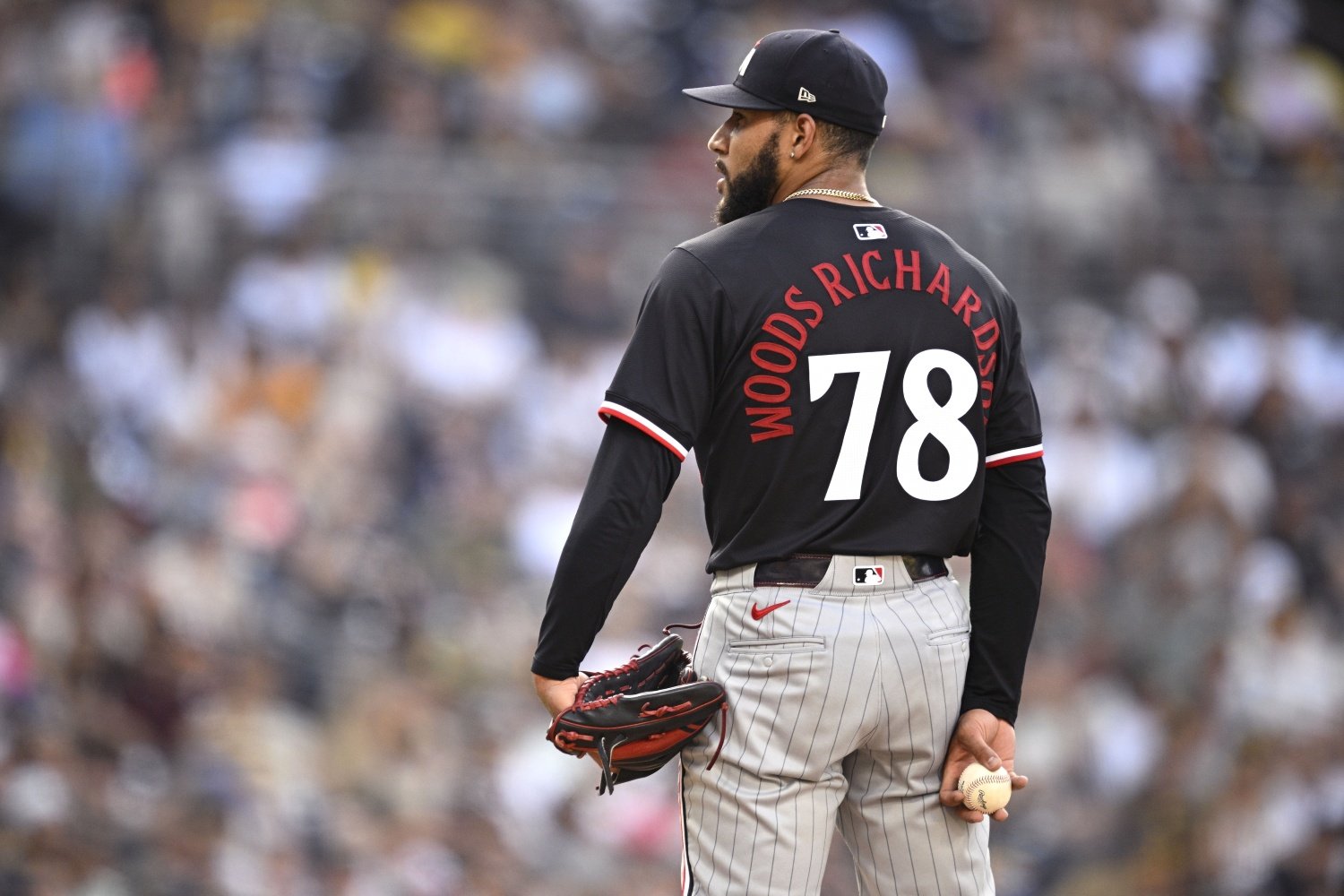 In 2023, Simeon Woods Richardson tumbled down prospect lists—both national and Twins-specific—due to a drop in already underwhelming velocity. He was getting shelled even at Triple-A St. Paul. Entering 2024, Woods Richardson had a lot to prove in order to get his career back on track. The good news? He rose to the occasion. He had one of the largest year-over-year upticks in velocity of any player in baseball, averaging 93 and hitting 97 on his heater after struggling to average even 90 the year before. He worked on his curveball, and blew past his career high in innings. Cody Christie wrote a great piece in June, breaking down the mechanical tweaks that led to this breakout. Based on these improvements, for two-thirds of the season, Woods Richardson put up mid-rotation results, with a 3.69 ERA through his first 22 starts, even if the underlying metrics weren’t quite so favorable. But, he threw his five-ish innings every fifth day, continued to prove his detractors wrong, and occasionally flashed brilliance on the bump. Then, the bottom fell out down the stretch. Over the final six weeks of the season, the rookie’s velocity was way down, and he just seemed tired. And he probably was! When Joe Ryan went down for the season, Woods Richardson was thrust into the unenviable position of being a third starter for a playoff-caliber team desperately clinging to hopes of a deep postseason run, and doing it when the Twins weren’t scoring many runs due to having several impact bats on the shelf with a variety of injuries. Ultimately, Woods Richardson probably has a ceiling in the role he was put into too early: a good third starter on a playoff team. What will it take for him to get there? The good news for him (and for the Twins) is that there are several paths to that reality: conditioning to help him stay stronger down the stretch, adding additional velocity to help his fastball play up, tweaking his pitch mix to increase his strikeout rate, or establishing better command with his changeup, to turn it into a reliable out pitch. The even better news? If he can do two of those things (asking a lot, I know), he could cement himself into the conversation to become a true rotational building block. This piece won’t dive deeply into all of these possibilities, as much ink has been spilled by other Twins Daily writers over the past several months. So, read those for more info if you are curious. I’ll link to to all of them inline. Conditioning This one is pretty straightforward. Woods Richardson is 6-foot-3, with a lanky frame. Adding a bit of muscle may help him avoid tiring as the season progresses. Simply finding the fuel to be consistent over a 162-game season will be a difference-maker. That alone would have him likely putting up an ERA in the high 3s. That’s mid-rotation stuff, and will keep him in the rotation long-term. Adding Velocity Look, this may be easier said than done. On the heels of a substantial uptick in velocity, it may not be realistic to expect the same in a second consecutive offseason. But, the Twins coaching staff has done it before with Bailey Ober and Joe Ryan. Both have seen steady and significant increases in their velo, which has helped both transform themselves into borderline frontline starters. In 2024, Woods Richardson's fastball Stuff+ was a less-than-ideal 71. If he can add even a couple more ticks to his fastball, his 34th-percentile heater velocity would approach average, and his above-average extension could even make this a plus pitch. Locating His Changeup Matt Lenz recently put up a nice video piece on Woods Richardson's command, and specifically, his ability to locate his changeup. In it, Lenz points out that Woods Richardson gets good horizontal movement on the change, and that his Stuff+ on the pitch is above average, but he gets clobbered due to poor location, too often hitting the heart of the plate. If he is able to hit his spots low and away, this has the potential to be a truly plus pitch that can befuddle opposing hitters. Pitch Mix Matt Braun did some analysis showing that Woods Richardson would benefit from tweaking his pitch mix to throw his changeup more, since it has the potential to be his best pitch. As mentioned above, this is predicated upon being able to locate. Matt also identified that Woods Richardson should use his curve more when he’s in 1-0 counts. When he does, he gets great results. Overall, these are relatively straightforward options that could help Simeon Woods Richardson not just repeat his breakout 2024 season, but instead, become the next significant pitching success story for the Twins, and one that can help the Twins contend for the next several years. The real question might be just what he’s capable of. What do you think?
 -
What Does History Tell Us About Pitchers Returning From Joe Ryan's Injury?
Eric Blonigen posted an article in Twins
 On Aug. 7, the Twins were playing the Cubs at Wrigley Field. Coming into the game, the Twins seemed to have the second Wild Card spot all but locked up. Joe Ryan was on the mound. At that point, he was having a great season, accumulating over 3 fWAR with almost two months to play. After he threw his 33rd pitch of the outing, however, he immediately motioned for the trainer to come out to the mound. He was diagnosed with a grade-2 teres major strain, ending his season and (eventually) dashing the Twins’ playoff hopes. When Ryan is healthy, he can look the part of an ace for long stretches. With the Twins' self-inflicted financial limitations preventing them from making a wholehearted effort to complete the roster (or, you know, make any real signings at all), Ryan will need to pitch like the best version of himself for the team to have a real chance to contend in 2025. Is that a realistic expectation, given an injury that cost him two full months? Turns out, I’m not a doctor, and I don’t even play one on TV. So, I did some research to better understand what we, as fans, are in for this season. Finding perfect comparisons proved harder than I expected. A teres major strain isn’t a particularly common injury among pitchers. In fact, just 17 pitchers have suffered documented ones, dating back to 2019, including future Hall of Famers Max Max Scherzer and Justin Verlander. We probably shouldn’t look at them as comps, as they are both hopelessly old—not real-life old, but baseball old, at least. Both were at least a decade older than Ryan is when they suffered their strains. That said, there are a handful of players whom we can, perhaps, glean something from: José Leclerc, Taylor Clarke, Freddy Peralta, and John Schreiber. All were within two years of Ryan’s age at the time of their injury. Let’s look at each. José Leclerc Coming off of a 2019 campaign in which he had a 3.59 FIP and struck out 33.4% of opposing batters, Leclerc hit the IL in the shortened 2020 season. The Rangers closer was shelved for all of August and September. He was 26 at the time, and actually missed all of 2021 due to blowing out his pitching arm, requiring Tommy John surgery. However, once he returned in 2022, he was a very similar pitcher to who he was prior to the injuries. His results were slightly worse, but it’s probably safer to attribute that to his more severe elbow trouble than to the shoulder issue. Taylor Clarke Clarke was a mediocre reliever with the Diamondbacks when he suffered his teres major strain in 2021 at 28 years old, the same age as Ryan. He spent close to two months on the IL. After his return, he wasn’t sharp over the last couple months of the 2021 season, and the Diamondbacks non-tendered him. He latched on with the Kansas City Royals, and in his first full season after returning from injury, his FIP dropped from 3.54 to 3.30. His K-BB% increased from 12.9% to 19.7%. It’s safe to say that he didn’t suffer any lingering effects of the injury. Freddy Peralta In 2021, Peralta had a career year, worth 4.0 fWAR after putting up a 2.81 ERA (3.12 FIP). In 2022, he missed two months in the middle of his age-26 season. The Brewers starter returned after 72 days on the IL, and like Clarke, wasn’t super sharp for the remainder of the season. In the second half, he had an uncharacteristically low strikeout rate and an elevated walk rate. Also like Clarke, he was good the following season, when he put up 3.0 fWAR in his first full season back. John Schreiber Schreiber had a breakout season in 2022, when the reliever threw 65 innings of 2.22-ERA ball (2.55 FIP). He strained his teres major while pitching for the Red Sox in May 2023, when he was 29. He missed 70 days. Stop me if you’ve heard this before, but, he was rough for the rest of the season. The Red Sox traded him to the Royals for a non-prospect minor-league starting pitcher. Once again, in his first full season back, he was mostly himself, with a 3.03 FIP. However, he was missing a few ticks on his pitches and was striking fewer guys out. It’s possible he’s the exception in this group, or perhaps something else is going on. That's four pitchers of similar ages, and four fairly positive results. Based on that alone, I’m glad to say that based on the player comps, it’s probably safe to assume that Ryan will be all the way back after a normal offseason. He’s reportedly ahead of schedule in his rehab, and will be ready when pitchers and catchers report next month. It sure seems like the only aftereffects from which hurlers suffered came within a season, when it's always harder to return from an injury at full strength. The timing of Ryan's strain appears to leave minimal risk that he'll have trouble pitching like himself in 2025. Still not convinced? You want to hear from actual experts? Hey, you do you. The good news is that according to the NIH, between 2002 and 2008, 94% of professional pitchers who suffered a teres major strain returned to pitch at the same level or better. In other words, the injury is only about a third as likely as Tommy John surgery to derail a career—and we've all gotten pretty comfortable with the idea that Tommy John is just a bump in the road of pitching life. Now that we have all that out of the way, since the Twins should be able to count on Ryan, they just need to figure out a way to get one more plus bat, a good lefty reliever, and maybe some good Byron Buxton insurance, and they should be competing to make a deep playoff run. It's almost time for baseball. What do you think? Are you feeling confident that Joe Ryan will return to form in 2025?


