Eric Blonigen
-
Posts
377 -
Joined
-
Last visited
-
Days Won
1
Content Type
Profiles
News
Minnesota Twins Videos
2026 Minnesota Twins Top Prospects Ranking
2022 Minnesota Twins Draft Picks
Minnesota Twins Free Agent & Trade Rumors, Notes, & Tidbits
Guides & Resources
2023 Minnesota Twins Draft Picks
The Minnesota Twins Players Project
2024 Minnesota Twins Draft Picks
2025 Minnesota Twins Draft Pick Tracker
2026 Minnesota Twins Draft Tracker: Picks & Bonuses
Forums
Blogs
Events
Store
Downloads
Gallery
Everything posted by Eric Blonigen
-

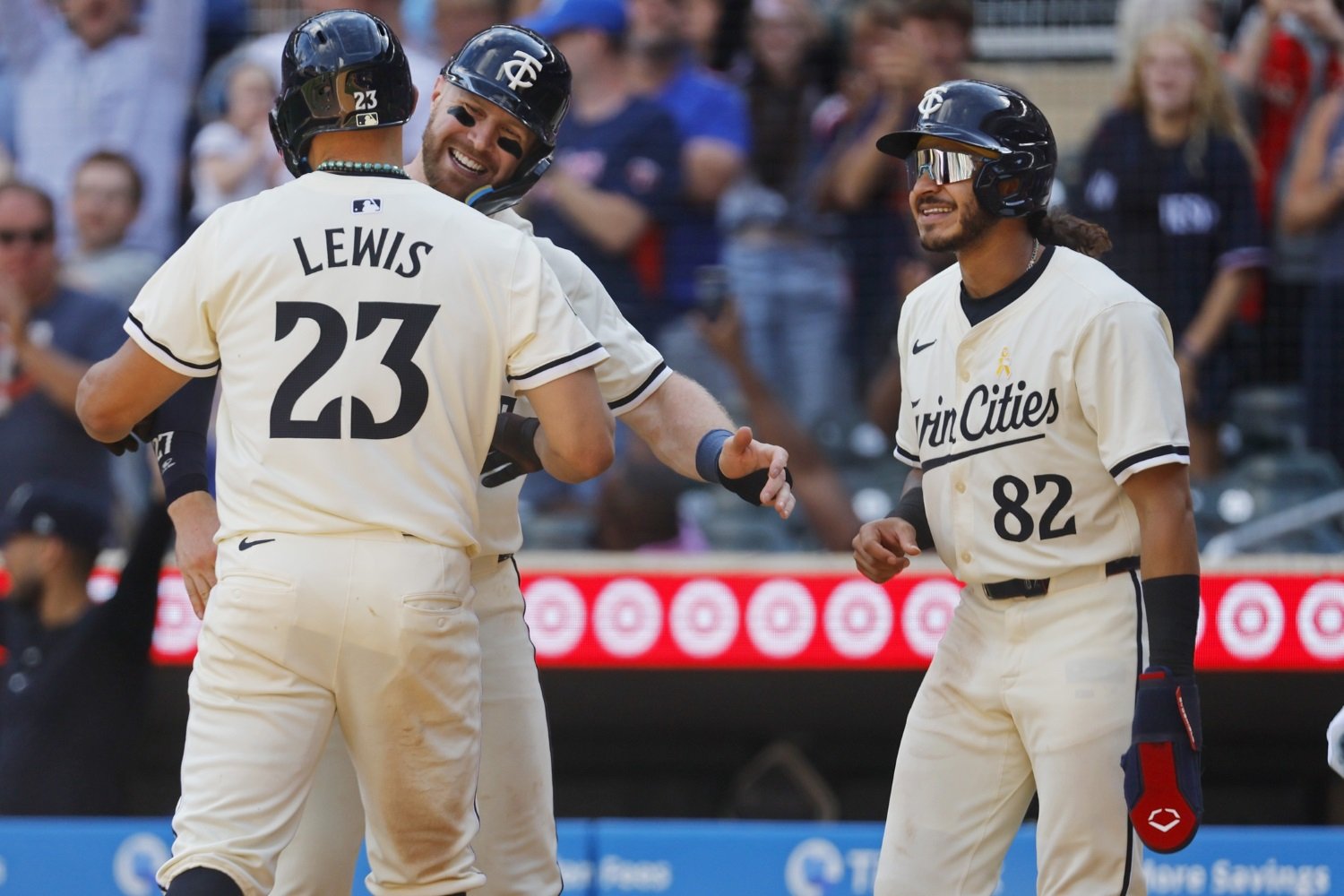 Through seven innings, Twins hitters were 0-5 with runners in scoring position, continuing a brutal trend. To eke out their single run to that point in the game, the team required a walk, a fielder’s choice, an error, and the contact play working on a groundout. That’s a lot of labor for one run. Then, in the eighth inning, the Blue Jays brought out their closer, Chad Green. He entered the game with a sterling 1.61 ERA and a 0.85 WHIP on the season. After he retired Matt Wallner on a pop-up, Ryan Jeffers and Austin Martin linked together back-to-back singles with one out. Royce Lewis stepped to the plate. Green has been death to righties this season, holding them to a .169 batting average. Luckily, Lewis has even platoon splits, and he was able to rise to the occasion. What followed was an eight-pitch at bat that contained multitudes. Green is a two-pitch pitcher, throwing a plus four-seam fastball that sits 96 MPH, and a hard but average slider. He throws both in any situation, and looking at his wOBA heat map, he is successful in seven of nine zones. He has both good control and command, and uses this to generate a whiff rate in the 75th percentile. Every at-bat is a battle of adjustments, with the pitcher changing the look, location, and speed of pitches in an effort to throw the hitter off their timing. Facing a power hitter of Lewis’s caliber, Green’s strategy was to nibble the edges of the zone; to locate in Lewis’s cold zones; and to not repeat locations within the at-bat. Comparing Royce’s xBA by zone, you can see that Green was successful in hitting his spots with his first seven pitches. To begin the at-bat, Green threw Lewis a pair of sliders, both well outside the zone. Despite some recent scuffles, Lewis recognized that neither were competitive pitches, and wisely laid off. Thus began the battle, at 2-0. Green threw a third consecutive slider middle-outside, which Lewis fouled off to take the count to 2-1. Fouling was likely the best-case scenario for a pitch in that location, as Royce has a negative launch angle and a ~.200 wOBA in that zone. Often, that pitch induces a double-play grounder. For his fourth pitch, Green changed the look by throwing a heater several inches high and over the inner part of the plate. Lewis swung through it to even the count 2-2. This was, again, likely the best outcome, aside from laying off, as any contact would likely have been a weak pop fly. The fifth pitch was another four-seamer, this time high and away. Most hitters are hard-pressed to make contact in this location, but Lewis extended his swing, reaching to fight it off and stay alive. For Green’s next pitch, he went back to the slider, high in the zone. Once again, Lewis made contact. His wOBA is .000 in that zone this season, and he did well just to foul it off. Having seen the fastball on each side of the plate, that slider in that spot could easily have locked him up or caught him too far in front. The penultimate pitch of the at-bat was a slider that just caught the plate, middle and away. Lewis battled to stay alive, with yet another pitch in a challenging location. In this zone, Lewis has a roughly neutral batter run value, and the likely best-case outcome would be a single poked the other way. Royce wasn't in the right mode to deliver that type of hit, but he made just the right sort of contact to send the ball foul. Finally, on his eighth pitch, Green made a mistake and gave Lewis something to crush. He left a slider middle-middle, and Royce had his pitch. It wasn’t his best swing, as his exit velocity was just 91.1 MPH, and his launch angle was a little high at 31 degrees. It proved to be just enough, though, as the ball landed in the left field flowerpots. This hit put the Twins ahead for good, and was Lewis’s first homer since Aug. 12. This at-bat was typical of one you might expect to see from a crafty veteran hitter. To cover the fastball and slider away, and still to avoid wasting the mistake when it comes, takes a special hitter. Even not quite at his best, that’s what Lewis is. The homer proved that. It also carried one of the highest win-probability swings of any hit this season, singlehandedly improving the Twins’ odds of winning from 24.4% to 85.8%. Finally, the Twins handed an opponent a brutal loss similar to those they have been on the receiving end of over the past couple weeks, and it’s all thanks to Lewis out-battling a very good pitcher.
 -
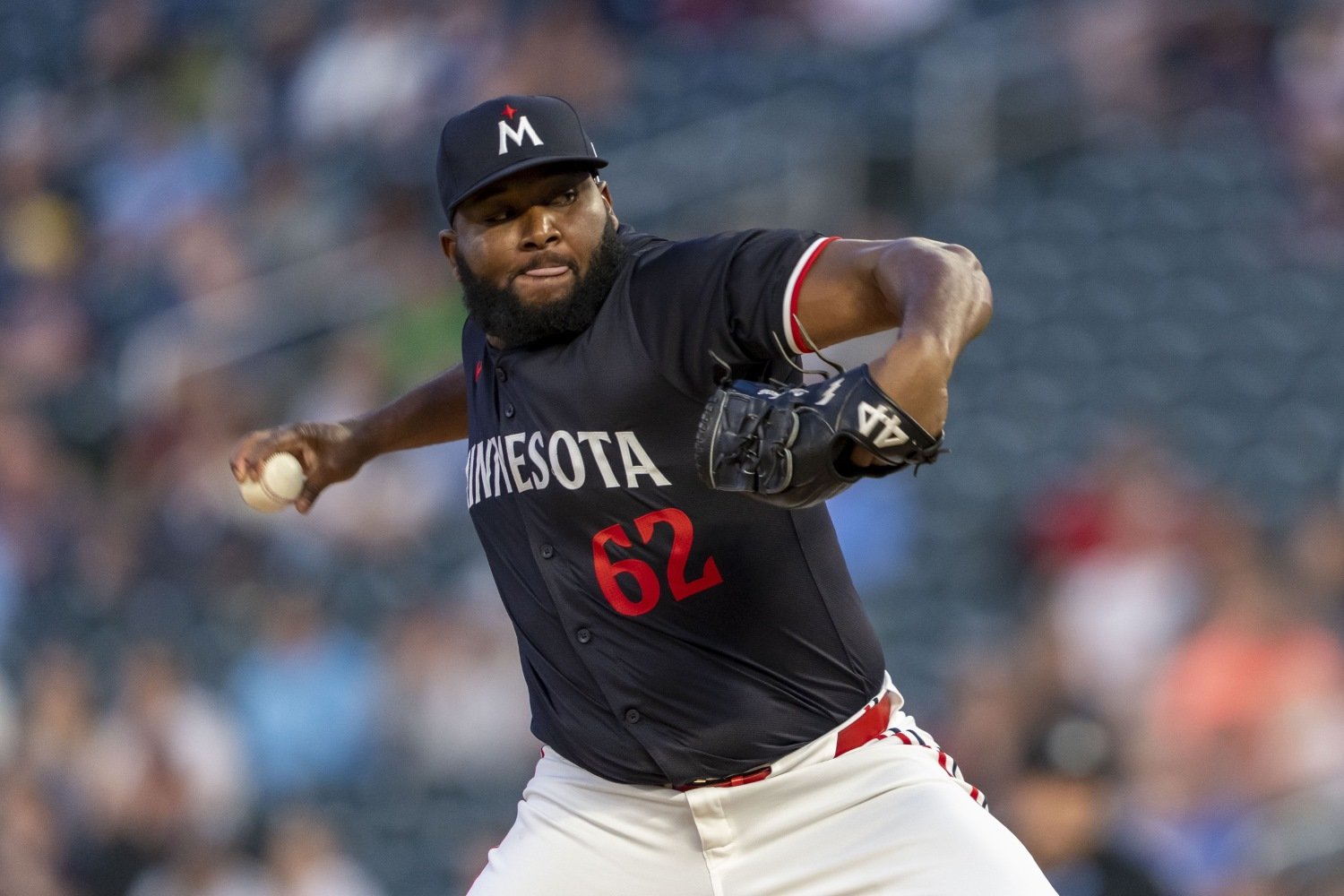 With the calendar flipping to September, it’s time for expanded rosters. Historically, teams were able to call up any players on their 40-man roster. However, beginning in 2020, teams have been limited to expanding rosters by just two players - one pitcher and one hitter. So how are the Twins adding three players? It’s coming at the expense of Manuel Margot, who’s hitting the IL with a groin strain suffered in last night’s drubbing by the Blue Jays. Brooks Lee Fans will likely be happy to see the return of Lee, after he completed his rehab assignment with the Saints. He got off to a hot start in his initial call-up, collecting eight hits in his first week, with power and plate discipline. His production suffered mightily thereafter, though, as he attempted to play through a shoulder injury. Eventually, he landed on the IL on Aug. 8. With his return, the Twins regain some much-needed roster flexibility. He will likely split time between shortstop, second base, and third base. With news that Royce Lewis has been taking reps at second, it’s possible that Lee will spend the bulk of his time at third if and when Carlos Correa returns from his bout of plantar fasciitis. Lee’s plus defense will help the struggling pitching staff prevent runs. Offensively, it’s tough to say exactly what to expect from him. Will he produce at close to the level he did prior to his injury? If so, the Twins just got a lot better. Diego Castillo Journeyman pitcher Diego Castillo had a brief stint with the Twins earlier this season, and threw seven innings across five appearances. Despite pitching to a 2.57 ERA, he had a 5.32 FIP, due to a too-high walk rate of 9.0 per 9 innings. Over the past three seasons, he’s also struck guys out at a worse than average clip. This season with the Saints, his WHIP is 1.64. If this doesn’t sound promising, it probably shouldn’t. The very fact he’s getting a call-up is an indictment of the current state of the Twins bullpen, after losing all of Brock Stewart, Justin Topa, Steven Okert, Jay Jackson, Josh Staumont, and Trevor Richards to injury or ineffectiveness. Castillo will likely pitch primarily in low-leverage situations. While the Twins' greatest bullpen need is for pitchers who can throw in late and close situations, there aren’t many options in the system, aside from taking chances with converting a starter to relief, or hoping that Topa or Chris Paddack can return this season. The latter migrating to the 60-day injured list as part of this cluster of moves isn't necessarily cause for new concern; he was already sure to be out a total of over 60 days. Michael Helman Drafted in the 11th round in 2018, Helman is getting his first cup of coffee in the bigs. At 28 years old, he’s old for a prospect. In 63 games with the Saints this season, he’s put up an .876 OPS while playing several defensive positions, logging at least 10 games at shortstop, center field, and third base. He’s also capable of playing second and left field. He brings speed, with 10 steals in less than half a season. He takes some walks, but also strikes out just over once a game. He gives the Twins another right-handed bat with some pop, and defensive flexibility. He’s likely to take a utility role, and will make Rocco Baldelli’s job a bit easier when it comes to optimizing lineups and making in-game moves. With Byron Buxton (hopefully) returning soon, it’s unclear whether these additions are short-term, or if they will have the full month (and beyond?) to attempt to impress. How do you feel about these additions? Will they help the Twins reach the playoffs? Comment below!
- 50 comments
-
- 9
-

-
- michael helman
- diego castillo
- (and 3 more)
-
This morning, the Twins announced the call-up of three players - Brooks Lee, Michael Helman, and Diego Castillo (the pitcher). What can fans expect regarding their likely roles, and how will they improve the team? Image courtesy of © Jesse Johnson-USA TODAY Sports This morning, the Twins announced the call-up of three players - Brooks Lee, Michael Helman, and Diego Castillo (the pitcher). What can fans expect regarding their likely roles, and how will they improve the team? With the calendar flipping to September, it’s time for expanded rosters. Historically, teams were able to call up any players on their 40-man roster. However, beginning in 2020, teams have been limited to expanding rosters by just two players - one pitcher and one hitter. So how are the Twins adding three players? It’s coming at the expense of Manuel Margot, who’s hitting the IL with a groin strain suffered in last night’s drubbing by the Blue Jays. Brooks Lee Fans will likely be happy to see the return of Lee, after he completed his rehab assignment with the Saints. He got off to a hot start in his initial call-up, collecting eight hits in his first week, with power and plate discipline. His production suffered mightily thereafter, though, as he attempted to play through a shoulder injury. Eventually, he landed on the IL on Aug. 8. With his return, the Twins regain some much-needed roster flexibility. He will likely split time between shortstop, second base, and third base. With news that Royce Lewis has been taking reps at second, it’s possible that Lee will spend the bulk of his time at third if and when Carlos Correa returns from his bout of plantar fasciitis. Lee’s plus defense will help the struggling pitching staff prevent runs. Offensively, it’s tough to say exactly what to expect from him. Will he produce at close to the level he did prior to his injury? If so, the Twins just got a lot better. Diego Castillo Journeyman pitcher Diego Castillo had a brief stint with the Twins earlier this season, and threw seven innings across five appearances. Despite pitching to a 2.57 ERA, he had a 5.32 FIP, due to a too-high walk rate of 9.0 per 9 innings. Over the past three seasons, he’s also struck guys out at a worse than average clip. This season with the Saints, his WHIP is 1.64. If this doesn’t sound promising, it probably shouldn’t. The very fact he’s getting a call-up is an indictment of the current state of the Twins bullpen, after losing all of Brock Stewart, Justin Topa, Steven Okert, Jay Jackson, Josh Staumont, and Trevor Richards to injury or ineffectiveness. Castillo will likely pitch primarily in low-leverage situations. While the Twins' greatest bullpen need is for pitchers who can throw in late and close situations, there aren’t many options in the system, aside from taking chances with converting a starter to relief, or hoping that Topa or Chris Paddack can return this season. The latter migrating to the 60-day injured list as part of this cluster of moves isn't necessarily cause for new concern; he was already sure to be out a total of over 60 days. Michael Helman Drafted in the 11th round in 2018, Helman is getting his first cup of coffee in the bigs. At 28 years old, he’s old for a prospect. In 63 games with the Saints this season, he’s put up an .876 OPS while playing several defensive positions, logging at least 10 games at shortstop, center field, and third base. He’s also capable of playing second and left field. He brings speed, with 10 steals in less than half a season. He takes some walks, but also strikes out just over once a game. He gives the Twins another right-handed bat with some pop, and defensive flexibility. He’s likely to take a utility role, and will make Rocco Baldelli’s job a bit easier when it comes to optimizing lineups and making in-game moves. With Byron Buxton (hopefully) returning soon, it’s unclear whether these additions are short-term, or if they will have the full month (and beyond?) to attempt to impress. How do you feel about these additions? Will they help the Twins reach the playoffs? Comment below! View full article
-
The Twins should be winning the division, and it’s not close. Whether looking at new statistical model, or more traditional data, it’s clear that these Twins are a very good team. Image courtesy of © Jordan Johnson-USA TODAY Sports The Twins should be winning the division, and it’s not close. Whether looking at new statistical model, or more traditional data, it’s clear that these Twins are a very good team. In the previous entry, we explored the MLB Deserve-To-Win-O-Meter and concluded that the Twins, removing "luck" from the equation, deserve to be winning the AL Central. While fun and instructive, the MLB Deserve-To-Win-O-Meter is just one model. Now, let’s look at some actual data that backs this luck factor up. One-Run and Extra-Inning Games The situational nature of the Guardians' success can be easily seen by comparing the Twins' and Guardians records in extra-innings games and 1-run games. The Guardians are 23-15 in 1-run games, and 8-3 in extra-innings games. The Twins are 19-15 in 1-run games, and 2-3 in extras. Luck favors the Guardians. The Pitching Let’s start by looking at actual game results. The Twins pitching staff is exactly average, with a 4.10 ERA (3.86 FIP). The Guardians are better than average, with a 3.79 ERA (4.14 FIP). Digging into underlying metrics suggests that the FIP numbers are pretty close to what we should expect. The Twins have allowed the fifth-lowest average exit velocity across baseball; the Guardians have the second-highest. The Twins allow the second-lowest walk rate compared to the Guardians being in the bottom third. The Twins pitchers strike more guys out. Twins pitchers allow the 5th-lowest OPS, compared to the Guardians, who are league average. Despite all of these things, the Twins allow more runs per game than the Guardians. A lot of this comes down to situational fortune, as the Guardians' pitching staff has allowed the fourth-lowest BABIP in baseball. Luck. Looking at WPA, on the pitching side, the Guardians have accumulated 8.7 on the season, compared to just 3.1 for the Twins, indicating the Guardians have less of a leaky bullpen in high-leverage situations. Overall, the Twins pitching staff should have better results than Cleveland. Hitting On the hitting side, it’s more of the same. The Guardians are below-average in batting average, OBP, and slugging. The Guardians don’t hit well overall. However, their left on base rate is fourth-best in baseball, leading to Cleveland scoring an above-average number of runs per game due to hit clustering and luck. The Twins have had 1,480 baserunners, notably more than the 1,374 for the Guardians. Out of that additional 106 baserunners, the Twins have stranded 87 more runners than the Guardians, so they're not getting as much out of their greater on-base skills as they could be. The Twins are well above average in each of the triple-slash categories, but are only scoring 0.3 runs a game more than Cleveland. Looking at wOBA, the Twins are sixth in baseball, at .326, compared to the Guardians' below-average .304. Bad luck for the Twins. Conclusions So, here we are. The underlying pitching and hitting metrics both greatly favor the Twins, and since most of those metrics are predictive, there are two important things of which to be mindful. First, this Twins team is very good, and deserves to be leading the division based on team play. Their pitching is good, their hitting is good, and they outmatch the Guardians in most facets. Second, the Twins have a chance to catch the Guardians and win the division. As the calendar flips to September, anything is possible, but with a little luck, the Twins can work their way into an AL Central title. What do you think about the role luck has played this season? Comment below! View full article
-
This Twins Team is Better Than You Think, Part Two: The Underlying Data
Eric Blonigen posted an article in Twins
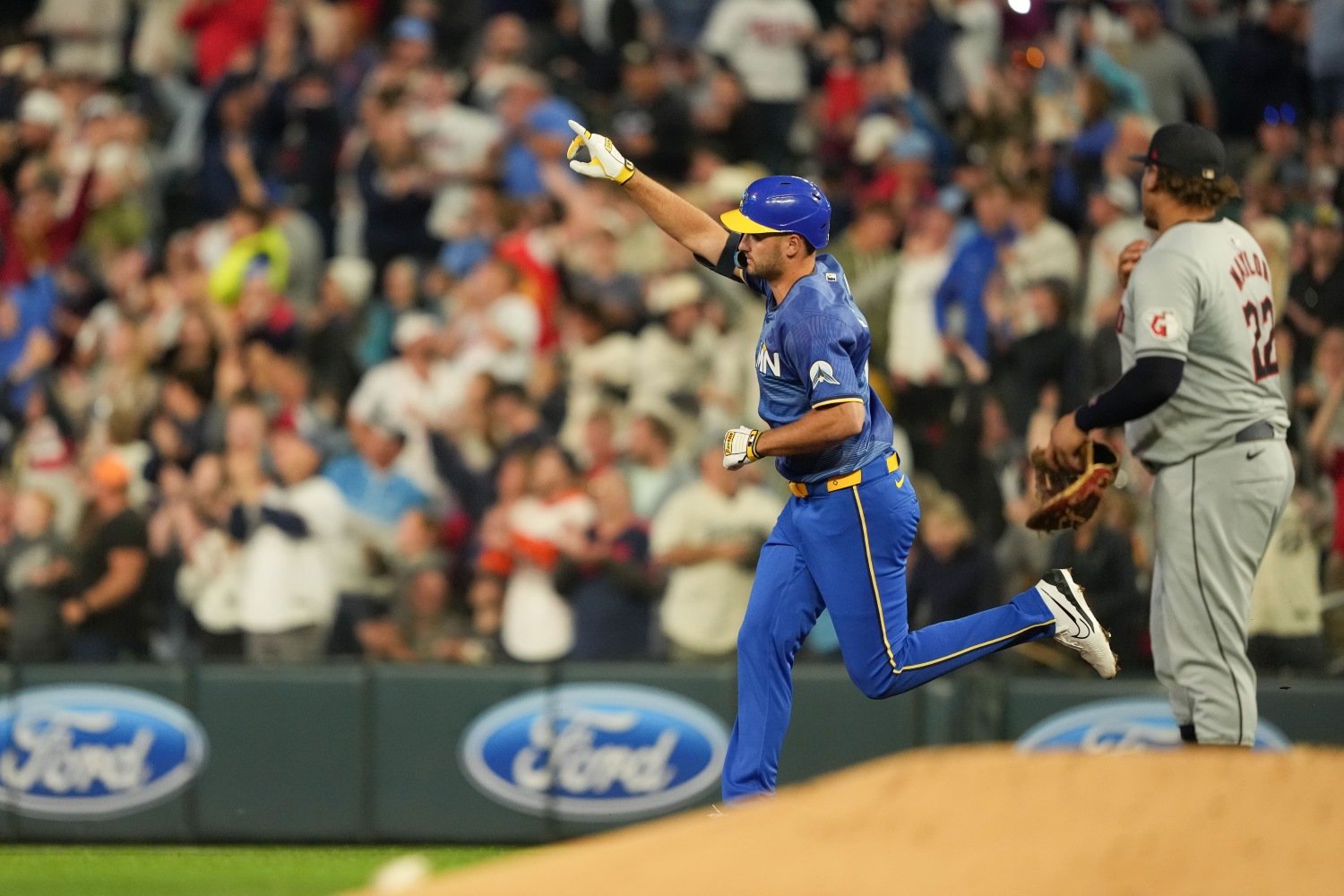 In the previous entry, we explored the MLB Deserve-To-Win-O-Meter and concluded that the Twins, removing "luck" from the equation, deserve to be winning the AL Central. While fun and instructive, the MLB Deserve-To-Win-O-Meter is just one model. Now, let’s look at some actual data that backs this luck factor up. One-Run and Extra-Inning Games The situational nature of the Guardians' success can be easily seen by comparing the Twins' and Guardians records in extra-innings games and 1-run games. The Guardians are 23-15 in 1-run games, and 8-3 in extra-innings games. The Twins are 19-15 in 1-run games, and 2-3 in extras. Luck favors the Guardians. The Pitching Let’s start by looking at actual game results. The Twins pitching staff is exactly average, with a 4.10 ERA (3.86 FIP). The Guardians are better than average, with a 3.79 ERA (4.14 FIP). Digging into underlying metrics suggests that the FIP numbers are pretty close to what we should expect. The Twins have allowed the fifth-lowest average exit velocity across baseball; the Guardians have the second-highest. The Twins allow the second-lowest walk rate compared to the Guardians being in the bottom third. The Twins pitchers strike more guys out. Twins pitchers allow the 5th-lowest OPS, compared to the Guardians, who are league average. Despite all of these things, the Twins allow more runs per game than the Guardians. A lot of this comes down to situational fortune, as the Guardians' pitching staff has allowed the fourth-lowest BABIP in baseball. Luck. Looking at WPA, on the pitching side, the Guardians have accumulated 8.7 on the season, compared to just 3.1 for the Twins, indicating the Guardians have less of a leaky bullpen in high-leverage situations. Overall, the Twins pitching staff should have better results than Cleveland. Hitting On the hitting side, it’s more of the same. The Guardians are below-average in batting average, OBP, and slugging. The Guardians don’t hit well overall. However, their left on base rate is fourth-best in baseball, leading to Cleveland scoring an above-average number of runs per game due to hit clustering and luck. The Twins have had 1,480 baserunners, notably more than the 1,374 for the Guardians. Out of that additional 106 baserunners, the Twins have stranded 87 more runners than the Guardians, so they're not getting as much out of their greater on-base skills as they could be. The Twins are well above average in each of the triple-slash categories, but are only scoring 0.3 runs a game more than Cleveland. Looking at wOBA, the Twins are sixth in baseball, at .326, compared to the Guardians' below-average .304. Bad luck for the Twins. Conclusions So, here we are. The underlying pitching and hitting metrics both greatly favor the Twins, and since most of those metrics are predictive, there are two important things of which to be mindful. First, this Twins team is very good, and deserves to be leading the division based on team play. Their pitching is good, their hitting is good, and they outmatch the Guardians in most facets. Second, the Twins have a chance to catch the Guardians and win the division. As the calendar flips to September, anything is possible, but with a little luck, the Twins can work their way into an AL Central title. What do you think about the role luck has played this season? Comment below!
 -
This Twins team is better than you think they are, and they deserve to be winning the division. Since starting the season horribly, they have been the best team in baseball for the past four months. But, even beyond the actual record, the Twins have been unlucky--and the Guardians have been quite lucky. Image courtesy of © Jordan Johnson-USA TODAY Sports This Twins team is better than you think they are, and they deserve to be winning the division. Since starting the season horribly, they have been the best team in baseball for the past four months. But, even beyond the actual record, the Twins have been unlucky--and the Guardians have been quite lucky. There’s a project called MLB Deserve-To-Win-O-Meter that uses hit dispersal and batted ball data — launch angle, ballpark factors, and exit velocity — to determine expected outcomes for each game. A month and a half ago, Sports Illustrated posted a piece arguing that the Twins should overtake the Guardians atop the division, based on this project. At that time, the Twins were 4.5 games back. Since then, they have narrowed the gap to just two games, with a couple of recent bullpen blowups being the difference between that and being tied. Fast-forward to this week, and the folks at the Deserve-To-Win-O-Meter posted a season-to-date update. It tells an interesting story. As you can see, the project looks at both "lucky wins" (where a few bloop hits dropping in with low xBA led to eking out a victory), and "unlucky losses" (where hard-hit balls with high xBA found fielders gloves consistently). The Twins have been one of the unluckiest teams in baseball; the Royals have had neutral luck; and the Guardians have been luck merchants all season. In 2024, the Guardians have had lucky outcomes in 39 more games than the Twins. That’s astounding, but tells a pretty compelling story. It suggests that, if anything, the Twins should be several games up on the division. Let’s dig in. The Guardians have nearly 40 wins that are considered "lucky" by this model, most in baseball by a double-digit margin. They are consistently getting the key hits when they matter most, piranha-style. They are also not finding "unlucky" losses, with just eight on the season, the fewest in baseball. This is against all odds, and suggests serious regression that should have already occurred, but the "luck" keeps happening. The Twins, on the other hand, have 23 "unlucky" losses, where their results with runners in scoring position are inexplicably bad despite hitting well overall, and where guys like Trevor Larnach scorch the ball all game and walk away 0-fer. The Twins also have just 14 "lucky" wins. Both of these are among the worst in baseball. Here’s one example of an unlucky loss for the Twins. In the Aug. 19 game against the Padres, the Twins lost by two, but based on batted-ball data, the Padres only would have won 17% of the time. In this game, Edouard Julien came to the plate with two on and hit a ball with an .800 xBA that was a likely home run; it found a glove. Had it landed as the odds suggested, the Twins would have won. In the same game, Julien hit another ball with a .730 xBA for an out, and Max Kepler lost a hit with a .720 xBA. Now, here’s an example of a lucky win for the Guardians on Aug. 14. In this case, the Guardians won 6-1, but they should only have won 36% of the time, based on the game’s batted-ball data. In this game, Cody Bellinger batted with two on. The ball left the bat at 98 MPH on a line-drive launch angle. The ball had an .880 xBA and could have scored two, had the expected outcome occurred. Across the game, the Guardians had 10 batted balls on which luck favored them, against just five for the Cubs. These are just two of many examples of probabilities suggesting different outcomes, and to the Twins detriment. Overall, the Deserve-To-Win-O-Meter model says the Twins should be comfortably leading the division with just over a month to play. Perhaps they should be on pace for 100 wins. While it’s easy to focus on the negative, it’s important to be clear-eyed when the results suggest that positivity is deserved. Now, for a few needed caveats. First, "luck" goes by a lot of other names in baseball. What we call "luck" here can also be called "clutch hitting," skeptical though we all might be about the existence of that as a sustainable skill. We might be calling Emmanuel Clase "luck" here; he's a difference-making closer, and just the brightest symbol of a difference-making bullpen that is simply better than the Twins'. Great defense (and especially great defensive positioning, even in the post-shift era) might also be labeled "luck" here; the Guardians play superb defense. Finally, "luck" as seen by this model can really be "using the big part of the field," or whatever other cliché you favor as code for the ability to hit the ball away from defenders or use speed to reach or advance, rather than using power to do so. Exit velocity has become the favored currency for hitting in the modern game, but lighting up Statcast is not the only way to be a good hitter. You might love the Deserve-to-Win-o-Meter. Then again, you might be disinclined to believe in a new data toy. Check back for the second part as we dig into hard data to see if it draws the same conclusion. What do you think about the role luck has played this season? Comment below! View full article
-
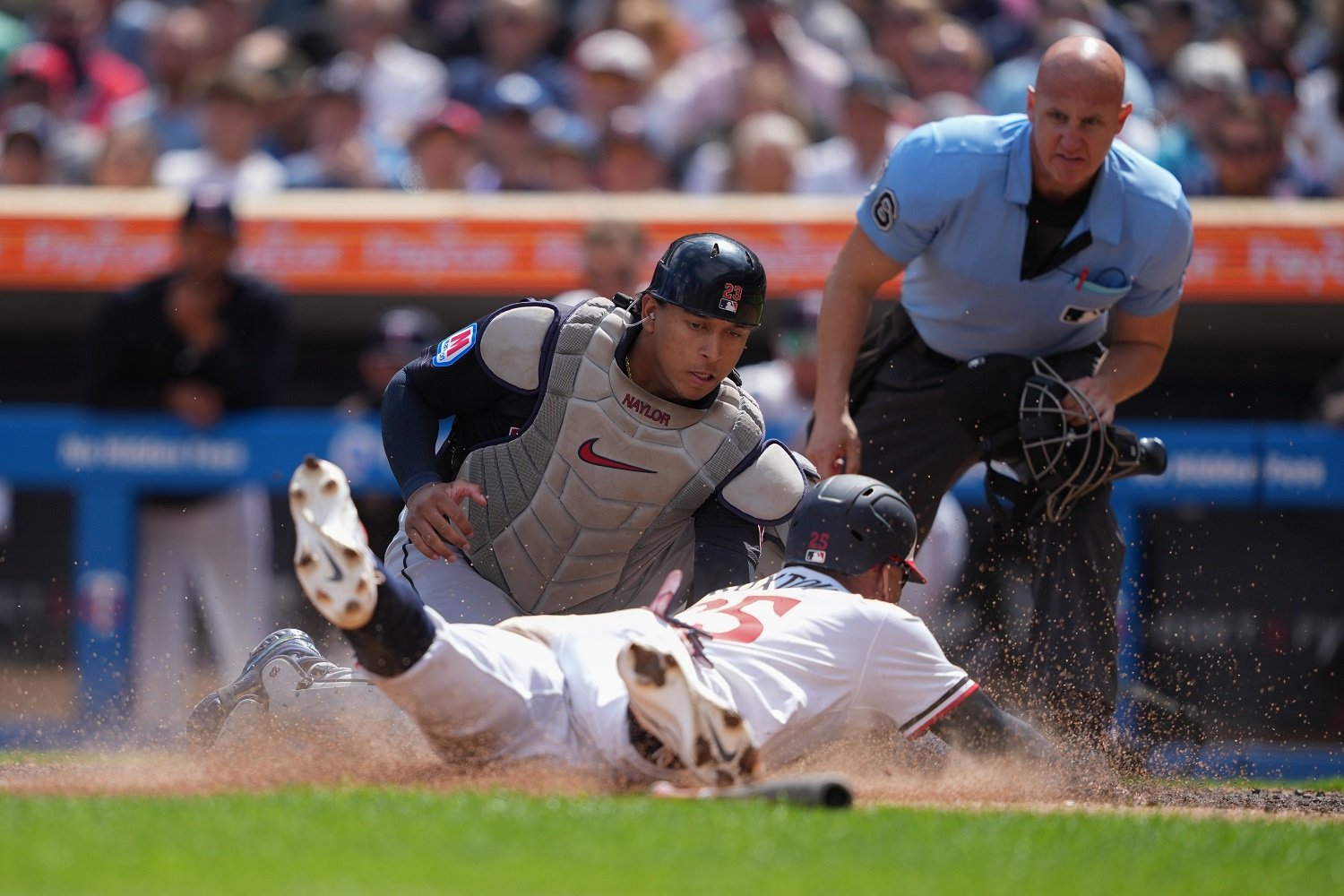 There’s a project called MLB Deserve-To-Win-O-Meter that uses hit dispersal and batted ball data — launch angle, ballpark factors, and exit velocity — to determine expected outcomes for each game. A month and a half ago, Sports Illustrated posted a piece arguing that the Twins should overtake the Guardians atop the division, based on this project. At that time, the Twins were 4.5 games back. Since then, they have narrowed the gap to just two games, with a couple of recent bullpen blowups being the difference between that and being tied. Fast-forward to this week, and the folks at the Deserve-To-Win-O-Meter posted a season-to-date update. It tells an interesting story. As you can see, the project looks at both "lucky wins" (where a few bloop hits dropping in with low xBA led to eking out a victory), and "unlucky losses" (where hard-hit balls with high xBA found fielders gloves consistently). The Twins have been one of the unluckiest teams in baseball; the Royals have had neutral luck; and the Guardians have been luck merchants all season. In 2024, the Guardians have had lucky outcomes in 39 more games than the Twins. That’s astounding, but tells a pretty compelling story. It suggests that, if anything, the Twins should be several games up on the division. Let’s dig in. The Guardians have nearly 40 wins that are considered "lucky" by this model, most in baseball by a double-digit margin. They are consistently getting the key hits when they matter most, piranha-style. They are also not finding "unlucky" losses, with just eight on the season, the fewest in baseball. This is against all odds, and suggests serious regression that should have already occurred, but the "luck" keeps happening. The Twins, on the other hand, have 23 "unlucky" losses, where their results with runners in scoring position are inexplicably bad despite hitting well overall, and where guys like Trevor Larnach scorch the ball all game and walk away 0-fer. The Twins also have just 14 "lucky" wins. Both of these are among the worst in baseball. Here’s one example of an unlucky loss for the Twins. In the Aug. 19 game against the Padres, the Twins lost by two, but based on batted-ball data, the Padres only would have won 17% of the time. In this game, Edouard Julien came to the plate with two on and hit a ball with an .800 xBA that was a likely home run; it found a glove. Had it landed as the odds suggested, the Twins would have won. In the same game, Julien hit another ball with a .730 xBA for an out, and Max Kepler lost a hit with a .720 xBA. Now, here’s an example of a lucky win for the Guardians on Aug. 14. In this case, the Guardians won 6-1, but they should only have won 36% of the time, based on the game’s batted-ball data. In this game, Cody Bellinger batted with two on. The ball left the bat at 98 MPH on a line-drive launch angle. The ball had an .880 xBA and could have scored two, had the expected outcome occurred. Across the game, the Guardians had 10 batted balls on which luck favored them, against just five for the Cubs. These are just two of many examples of probabilities suggesting different outcomes, and to the Twins detriment. Overall, the Deserve-To-Win-O-Meter model says the Twins should be comfortably leading the division with just over a month to play. Perhaps they should be on pace for 100 wins. While it’s easy to focus on the negative, it’s important to be clear-eyed when the results suggest that positivity is deserved. Now, for a few needed caveats. First, "luck" goes by a lot of other names in baseball. What we call "luck" here can also be called "clutch hitting," skeptical though we all might be about the existence of that as a sustainable skill. We might be calling Emmanuel Clase "luck" here; he's a difference-making closer, and just the brightest symbol of a difference-making bullpen that is simply better than the Twins'. Great defense (and especially great defensive positioning, even in the post-shift era) might also be labeled "luck" here; the Guardians play superb defense. Finally, "luck" as seen by this model can really be "using the big part of the field," or whatever other cliché you favor as code for the ability to hit the ball away from defenders or use speed to reach or advance, rather than using power to do so. Exit velocity has become the favored currency for hitting in the modern game, but lighting up Statcast is not the only way to be a good hitter. You might love the Deserve-to-Win-o-Meter. Then again, you might be disinclined to believe in a new data toy. Check back for the second part as we dig into hard data to see if it draws the same conclusion. What do you think about the role luck has played this season? Comment below!
 -
This isn't where anyone expected Simeon Woods Richardson to be, six months ago. All that matters now, though, is what he does over the next two. Image courtesy of © Ed Szczepanski-USA TODAY Sports This isn't where anyone expected Simeon Woods Richardson to be, six months ago. All that matters now, though, is what he does over the next two. Simeon Woods Richardson began the season as the Twins’ likely seventh starter, behind Pablo López, Joe Ryan, Bailey Ober, Chris Paddack, Anthony DeSclafani, and Louie Varland. Fast-forward past some injuries and ineffectiveness, though, and Woods Richardson is now the Twins' third starter. He likely lines up to start at least one playoff game, as long as the team plays further than Game 2 of a Wild Card Series. How did we get to this point, and what should fans expect from him the rest of the way? Woods Richardson has had an unconventional start to his career, to be sure. Drafted in the second round in 2018, he was traded twice, promoted very aggressively by multiple teams, and ascended to become a global top-100 prospect. He was an Olympian. Then, he lost velocity and was mediocre with the Saints and Twins in 2022 and 2023, to the point of being largely written off as part of the Twins’ future plans. Still just 23, he highlights the non-linear nature of player development. During the 2023-2024 offseason, Woods Richardson worked on changed mechanics and a new pitch mix. As a result of this work, he’s now throwing almost three miles an hour faster on his fastball, and has added a tick to his breaking and offspeed pitches. This is likely tied to adjustments he made to his arm slot, lowering it slightly, and also improving his extension. He’s been throwing his fastball less frequently, and has reintroduced his curveball, which he didn’t throw for the Twins last season. These changes have paid off in a big way. So far this year, he’s made 22 starts. Over that stretch, he has averaged just over five innings per start and has generally exceeded expectations. Over the past month, he has been able to go deeper in starts, as he gains both experience and his manager's trust. Looking at his underlying metrics, what story does that tell around what the Twins should expect from him going forward? The Good Woods Richardson has a 3.77 ERA, with a shiny 1.17 WHIP. His expected numbers tell a similar story, with a 3.91 FIP. His walk rate is a bit better than average (7.4% vs. 7.9% MLB average). His fastball has been a good pitch, despite not having elite velocity, in part due to his increased extension. He has also shown consistency from start to start, and hasn’t had many blowup innings, demonstrating the sort of mental resilience necessary to be a playoff starter (or even a solid mid-rotation guy going forward). And, it’s important to note once again that he's only 23. If he’s able to take even another small step forward, he could end up a solid mid-rotation starter for years to come. The Less-Good To start, take a look at all the blue on his Baseball Savant page. His BABIP is low, at .265, and his xFIP sits at 4.37, suggesting that a few more batted balls are likely to go for hits moving forward. He has been shielded by conservative usage, rarely facing a lineup for the third time. He also doesn’t strike a ton of guys out (20.6%, vs. 22.6% MLB average). Finally, his changeup has been a bad pitch, and he throws it 20% of the time. The Verdict All of that suggests that Woods Richardson is an average, approaching-good pitcher, rather than a very good or great one. To take his game forward, he will need to either strike guys out at a better clip or improve his changeup. Or, he could find still more velocity. All of these things are possible with the Twins’ pitching development capabilities. Most likely, though, he’s a fourth starter on a team with good pitching, and will likely pitch to something like a 4.00 ERA moving forward, while continuing to be slightly shielded against deep starts and third time through a lineup. That's unsexy, but it's very tolerable in Game 3 of a playoff series--as long as your first two starters took care of business. Moving Forward Now that all that’s out of the way, let’s be real for a minute: The Twins would be better off if Joe Ryan were one of their top three this fall, instead of Woods Richardson. It would have been great if the Twins had traded for a playoff-caliber starter at the deadline, or signed one in the offseason. However, those things didn’t happen, and we can’t change that. Fortunately for fans (and the Twins' playoff odds), Woods Richardson has been solid this season, and the Twins could do worse than having someone of his caliber take the mound every fifth day after losing four other starters. In fact, probably 27 other teams in baseball would be thrilled to be in this position today. So. Assuming Fangraphs, Baseball Reference, and Baseball Prospectus are all correct, and the Twins make the playoffs, Simeon Woods Richardson is likely the Game 3 starter. A year ago, Joe Ryan and Bailey Ober were in similar positions, and Ryan’s usage may be instructive. The most likely outcome is that Richardson would get a start, but Rocco Baldelli would have a very quick hook and remove him at the first sign of trouble--or after he's gone twice through the order, whichever comes first. He’s probably not a pitcher who will be lights-out on the mound when it matters most, but he could provide four solid innings with a couple runs allowed against a playoff lineup. There are worse outcomes, to be sure. To go from a near-afterthought to a playoff-caliber starter in less than a season is a remarkable development, and is another example of the Twins helping young pitchers maximize their talents. With a little luck and health, Simeon Woods Richardson can be a big part of a deep playoff run. Wednesday evening will present a good test for him, against the very much playoff-caliber Padres batting order. How do you feel about SWR being a playoff starter? Comment below! View full article
-
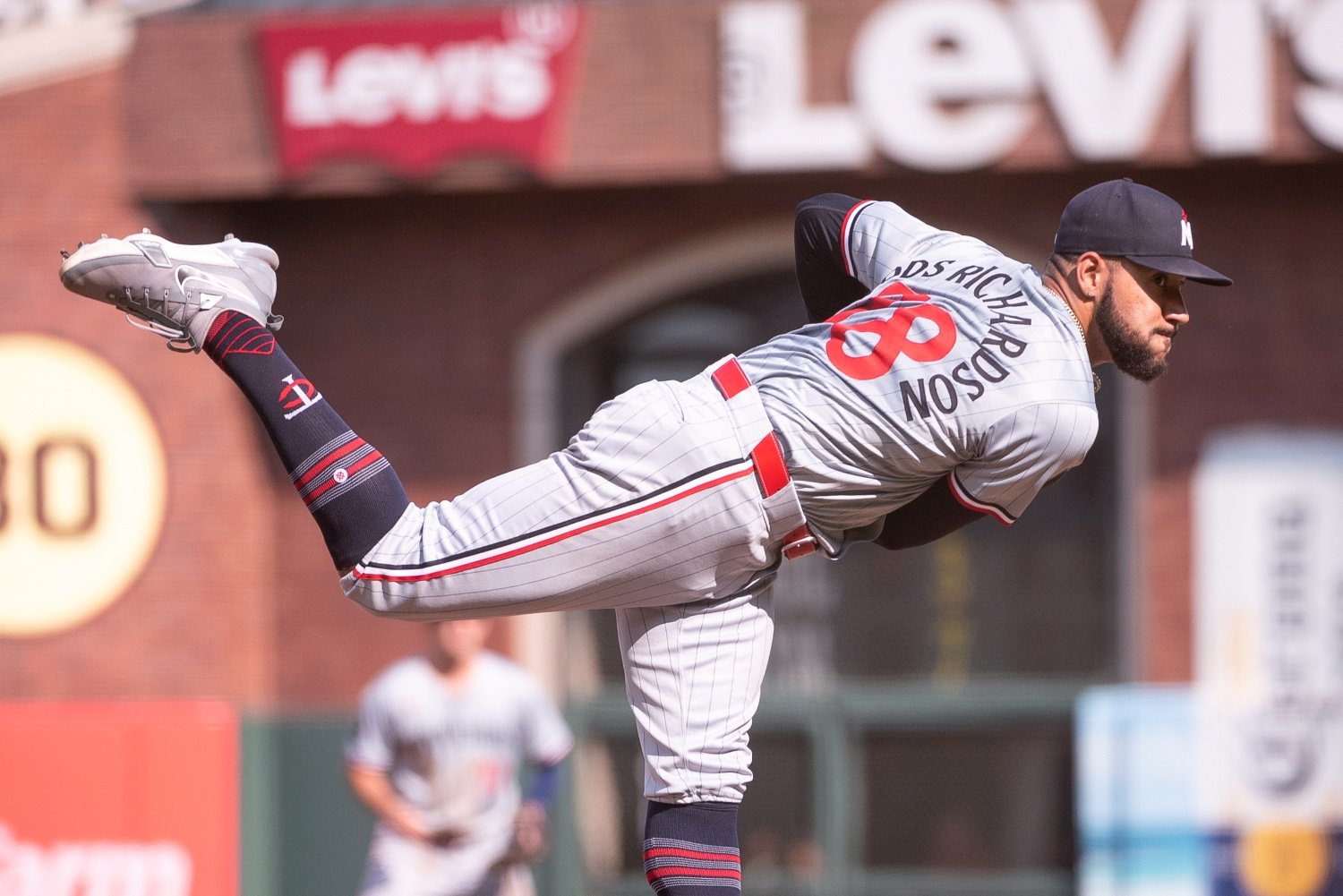 Simeon Woods Richardson began the season as the Twins’ likely seventh starter, behind Pablo López, Joe Ryan, Bailey Ober, Chris Paddack, Anthony DeSclafani, and Louie Varland. Fast-forward past some injuries and ineffectiveness, though, and Woods Richardson is now the Twins' third starter. He likely lines up to start at least one playoff game, as long as the team plays further than Game 2 of a Wild Card Series. How did we get to this point, and what should fans expect from him the rest of the way? Woods Richardson has had an unconventional start to his career, to be sure. Drafted in the second round in 2018, he was traded twice, promoted very aggressively by multiple teams, and ascended to become a global top-100 prospect. He was an Olympian. Then, he lost velocity and was mediocre with the Saints and Twins in 2022 and 2023, to the point of being largely written off as part of the Twins’ future plans. Still just 23, he highlights the non-linear nature of player development. During the 2023-2024 offseason, Woods Richardson worked on changed mechanics and a new pitch mix. As a result of this work, he’s now throwing almost three miles an hour faster on his fastball, and has added a tick to his breaking and offspeed pitches. This is likely tied to adjustments he made to his arm slot, lowering it slightly, and also improving his extension. He’s been throwing his fastball less frequently, and has reintroduced his curveball, which he didn’t throw for the Twins last season. These changes have paid off in a big way. So far this year, he’s made 22 starts. Over that stretch, he has averaged just over five innings per start and has generally exceeded expectations. Over the past month, he has been able to go deeper in starts, as he gains both experience and his manager's trust. Looking at his underlying metrics, what story does that tell around what the Twins should expect from him going forward? The Good Woods Richardson has a 3.77 ERA, with a shiny 1.17 WHIP. His expected numbers tell a similar story, with a 3.91 FIP. His walk rate is a bit better than average (7.4% vs. 7.9% MLB average). His fastball has been a good pitch, despite not having elite velocity, in part due to his increased extension. He has also shown consistency from start to start, and hasn’t had many blowup innings, demonstrating the sort of mental resilience necessary to be a playoff starter (or even a solid mid-rotation guy going forward). And, it’s important to note once again that he's only 23. If he’s able to take even another small step forward, he could end up a solid mid-rotation starter for years to come. The Less-Good To start, take a look at all the blue on his Baseball Savant page. His BABIP is low, at .265, and his xFIP sits at 4.37, suggesting that a few more batted balls are likely to go for hits moving forward. He has been shielded by conservative usage, rarely facing a lineup for the third time. He also doesn’t strike a ton of guys out (20.6%, vs. 22.6% MLB average). Finally, his changeup has been a bad pitch, and he throws it 20% of the time. The Verdict All of that suggests that Woods Richardson is an average, approaching-good pitcher, rather than a very good or great one. To take his game forward, he will need to either strike guys out at a better clip or improve his changeup. Or, he could find still more velocity. All of these things are possible with the Twins’ pitching development capabilities. Most likely, though, he’s a fourth starter on a team with good pitching, and will likely pitch to something like a 4.00 ERA moving forward, while continuing to be slightly shielded against deep starts and third time through a lineup. That's unsexy, but it's very tolerable in Game 3 of a playoff series--as long as your first two starters took care of business. Moving Forward Now that all that’s out of the way, let’s be real for a minute: The Twins would be better off if Joe Ryan were one of their top three this fall, instead of Woods Richardson. It would have been great if the Twins had traded for a playoff-caliber starter at the deadline, or signed one in the offseason. However, those things didn’t happen, and we can’t change that. Fortunately for fans (and the Twins' playoff odds), Woods Richardson has been solid this season, and the Twins could do worse than having someone of his caliber take the mound every fifth day after losing four other starters. In fact, probably 27 other teams in baseball would be thrilled to be in this position today. So. Assuming Fangraphs, Baseball Reference, and Baseball Prospectus are all correct, and the Twins make the playoffs, Simeon Woods Richardson is likely the Game 3 starter. A year ago, Joe Ryan and Bailey Ober were in similar positions, and Ryan’s usage may be instructive. The most likely outcome is that Richardson would get a start, but Rocco Baldelli would have a very quick hook and remove him at the first sign of trouble--or after he's gone twice through the order, whichever comes first. He’s probably not a pitcher who will be lights-out on the mound when it matters most, but he could provide four solid innings with a couple runs allowed against a playoff lineup. There are worse outcomes, to be sure. To go from a near-afterthought to a playoff-caliber starter in less than a season is a remarkable development, and is another example of the Twins helping young pitchers maximize their talents. With a little luck and health, Simeon Woods Richardson can be a big part of a deep playoff run. Wednesday evening will present a good test for him, against the very much playoff-caliber Padres batting order. How do you feel about SWR being a playoff starter? Comment below!
 -
Under normal payroll circumstances, I would completely agree that he’s cheap and give him one more chance. But, if there’s a mandate to cut payroll again, and it comes down to either: 1) keeping Kirilloff and Paddack, but non-tendering or trading Willi Castro 2) non-tendering or trading Kirilloff and trading Paddack, then keeping Castro and paying him the ~$9M he’s likely worth through arbitration? which would you choose? There’s at least a chance this is the sort of calculus the front office will be faced with this offseason.
-
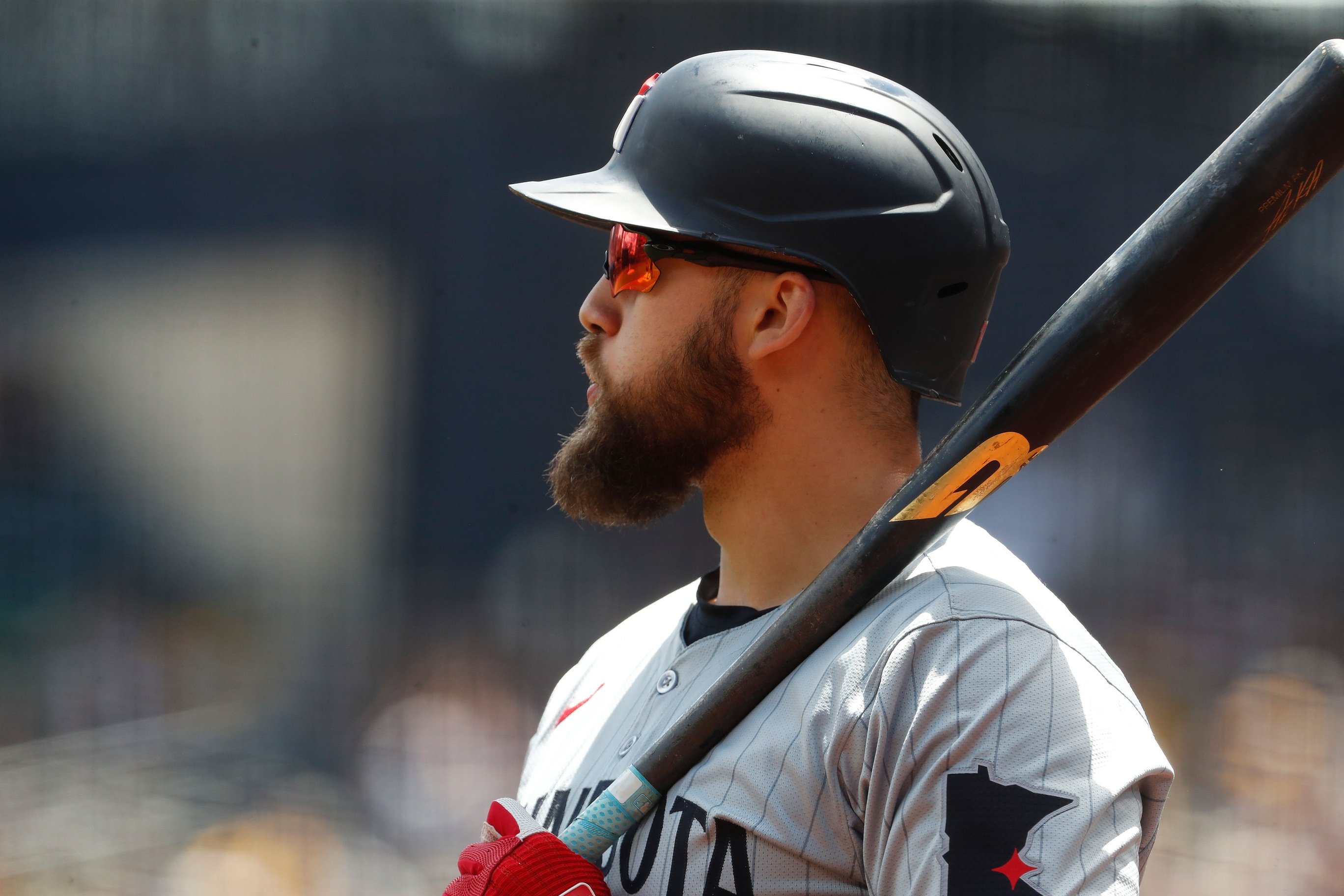 Alex Kirilloff was the Twins’ first-round pick in the 2016 draft, and quickly rose up the prospect rankings, topping out as the number nine prospect in baseball. In 2018, he led all of the minors with 71 extra base hits. His first cup of coffee came in the 2020 playoffs, where he was the first player in team history to debut in the postseason. As he worked his way through the minors, he was continually praised for having a sweet swing, and the assumption was he may hit around .280 with 20-homer power. Since his debut, he has played in 249 games across parts of four seasons. Over that span, he has been exactly a replacement-level player, worth 0.0 fWAR, with brief periods of excellence punctuated by longer stretches of mediocrity, or worse. His tenure, should it be concluding, is marred by injuries, poor communication, and questions about what could have been. When fully healthy, he has raked. But, he has rarely been healthy enough to do so for more than 50 ABs at a time. Let’s examine the factors at play when considering his future with the Twins. Injuries Kirilloff has been snake bit throughout his career. He lost his first full season in 2017 to Tommy John surgery. In 2019, he missed roughly half a season due to a wrist injury. He lost significant time in 2021 and 2022 because of wrist injuries, first enduring a torn ligament in his wrist, then eventually having his ulnar shaved to reduce bone-on-bone contact. In 2023, he underwent surgery again after the season to repair a torn labrum in his shoulder. Fast forward to 2024, and he was demoted due to poor performance, then announced afterwards that he was actually injured. His option was reversed and he was placed on the IL, not to be heard from since despite receiving a cortisone shot in his back nearly two months ago. Ineffectiveness There’s just no way to sugarcoat this: Kirilloff hasn’t been a good hitter for more than a couple weeks at a time in his four-year major-league career. Were he a shortstop, center fielder, or catcher, a pedestrian bat would still play. However, his defense is suspect – even at first base or in the corner outfield. Looking at FanGraphs’ OAA, Kirilloff has never been better than average at any defensive position, save a 20 game stretch at 1B in 2021. Thus far in his career, he’s been worth -23 OAA across the defensive spectrum. Since defense declines with age, it’s fair to say that his best position is DH. Unfortunately for him, he doesn’t hit well enough for that to be a reasonable possibility. Communication It’s tough to pinpoint how the Twins front office feels about the communication issues from Kirilloff. While it’s certainly not unheard of for a young player to hide an injury (see Joe Ryan, 2023), it’s not a good look to struggle for weeks on end and get sent down, only to disclose an injury afterward. Has he burned bridges? Tough to say. However, best case scenario, he’s likely lost some trust and will be on a short leash going forward. Pay The Twins have stated they are likely to cut payroll further next season. As a super-2 player going through arbitration for the second time, Kirilloff is likely due for a raise to around $2M despite his performance. In a world where that’s significant money for ownership, the salary may be considered a luxury when it could be spent instead on a functional reliever, or go towards a veteran starting pitcher to challenge Simeon Woods Richardson, David Festa and Zebby Matthews for the 4th and 5th spots in the rotation. 40-man crunch and depth chart With the second-ranked farm system in baseball, and the wealth of major league caliber hitters at their disposal, there’s no reason to hold onto hope for someone who’s upside may be a 110 OPS+ player while also being is also a defensive liability. There are a number of players likely ahead of Kirilloff in the 1B/DH/LF mix. It’s safe to assume that each of Matt Wallner, Eddie Julien, Trevor Larnach and Jose Miranda will take priority for at bats, with Yunior Severino and Emmanuel Rodriguez waiting in the wings. This offseason, a number of players will need to be at least considered for additions to the 40-man roster ahead of the rule 5 draft: Ricardo Olivar, Marco Raya, and Christian MacLeod are virtual locks, one of Patrick Winkel or Noah Cardenas could be added, and even Aaron Sabato, Kyler Fedko, and Rubel Cespedes are possibilities if the Twins believe they have a future with the big league club. The Twins will also need to re-add Brock Stewart and Justin Topa at season’s end when their 60-day IL stints end. While the Twins will have several players dropping off due to free agency (Kyle Farmer, Carlos Santana, Manny Margot, Caleb Thielbar, Max Kepler, Trevor Richards), there will be some tough decisions to make, and Kirilloff could find himself the odd man out if the Twins are no longer confident in his abilities. Due to these factors, it seems increasingly likely that Alex Kirilloff, once among the top prospects in baseball, may be traded this offseason in a low-impact swap of freezer-burned players, or non-tendered in favor of a player who has a better chance at holding down a spot on a competitive roster. What do you think? Is Kirilloff’s time with the Twins coming to an end? Comment below with your thoughts!
 -
This weekend, the Twins shared health updates for nearly every player on the injured list – except Alex Kirilloff. That’s likely telling, and may signal the end of Kirilloff’s tenure with the Twins after yet another season lost to injury and underwhelming performance. Image courtesy of Charles LeClaire-USA TODAY Sports This weekend, the Twins shared health updates for nearly every player on the injured list – except Alex Kirilloff. That’s likely telling, and may signal the end of Kirilloff’s tenure with the Twins after yet another season lost to injury and underwhelming performance. Alex Kirilloff was the Twins’ first-round pick in the 2016 draft, and quickly rose up the prospect rankings, topping out as the number nine prospect in baseball. In 2018, he led all of the minors with 71 extra base hits. His first cup of coffee came in the 2020 playoffs, where he was the first player in team history to debut in the postseason. As he worked his way through the minors, he was continually praised for having a sweet swing, and the assumption was he may hit around .280 with 20-homer power. Since his debut, he has played in 249 games across parts of four seasons. Over that span, he has been exactly a replacement-level player, worth 0.0 fWAR, with brief periods of excellence punctuated by longer stretches of mediocrity, or worse. His tenure, should it be concluding, is marred by injuries, poor communication, and questions about what could have been. When fully healthy, he has raked. But, he has rarely been healthy enough to do so for more than 50 ABs at a time. Let’s examine the factors at play when considering his future with the Twins. Injuries Kirilloff has been snake bit throughout his career. He lost his first full season in 2017 to Tommy John surgery. In 2019, he missed roughly half a season due to a wrist injury. He lost significant time in 2021 and 2022 because of wrist injuries, first enduring a torn ligament in his wrist, then eventually having his ulnar shaved to reduce bone-on-bone contact. In 2023, he underwent surgery again after the season to repair a torn labrum in his shoulder. Fast forward to 2024, and he was demoted due to poor performance, then announced afterwards that he was actually injured. His option was reversed and he was placed on the IL, not to be heard from since despite receiving a cortisone shot in his back nearly two months ago. Ineffectiveness There’s just no way to sugarcoat this: Kirilloff hasn’t been a good hitter for more than a couple weeks at a time in his four-year major-league career. Were he a shortstop, center fielder, or catcher, a pedestrian bat would still play. However, his defense is suspect – even at first base or in the corner outfield. Looking at FanGraphs’ OAA, Kirilloff has never been better than average at any defensive position, save a 20 game stretch at 1B in 2021. Thus far in his career, he’s been worth -23 OAA across the defensive spectrum. Since defense declines with age, it’s fair to say that his best position is DH. Unfortunately for him, he doesn’t hit well enough for that to be a reasonable possibility. Communication It’s tough to pinpoint how the Twins front office feels about the communication issues from Kirilloff. While it’s certainly not unheard of for a young player to hide an injury (see Joe Ryan, 2023), it’s not a good look to struggle for weeks on end and get sent down, only to disclose an injury afterward. Has he burned bridges? Tough to say. However, best case scenario, he’s likely lost some trust and will be on a short leash going forward. Pay The Twins have stated they are likely to cut payroll further next season. As a super-2 player going through arbitration for the second time, Kirilloff is likely due for a raise to around $2M despite his performance. In a world where that’s significant money for ownership, the salary may be considered a luxury when it could be spent instead on a functional reliever, or go towards a veteran starting pitcher to challenge Simeon Woods Richardson, David Festa and Zebby Matthews for the 4th and 5th spots in the rotation. 40-man crunch and depth chart With the second-ranked farm system in baseball, and the wealth of major league caliber hitters at their disposal, there’s no reason to hold onto hope for someone who’s upside may be a 110 OPS+ player while also being is also a defensive liability. There are a number of players likely ahead of Kirilloff in the 1B/DH/LF mix. It’s safe to assume that each of Matt Wallner, Eddie Julien, Trevor Larnach and Jose Miranda will take priority for at bats, with Yunior Severino and Emmanuel Rodriguez waiting in the wings. This offseason, a number of players will need to be at least considered for additions to the 40-man roster ahead of the rule 5 draft: Ricardo Olivar, Marco Raya, and Christian MacLeod are virtual locks, one of Patrick Winkel or Noah Cardenas could be added, and even Aaron Sabato, Kyler Fedko, and Rubel Cespedes are possibilities if the Twins believe they have a future with the big league club. The Twins will also need to re-add Brock Stewart and Justin Topa at season’s end when their 60-day IL stints end. While the Twins will have several players dropping off due to free agency (Kyle Farmer, Carlos Santana, Manny Margot, Caleb Thielbar, Max Kepler, Trevor Richards), there will be some tough decisions to make, and Kirilloff could find himself the odd man out if the Twins are no longer confident in his abilities. Due to these factors, it seems increasingly likely that Alex Kirilloff, once among the top prospects in baseball, may be traded this offseason in a low-impact swap of freezer-burned players, or non-tendered in favor of a player who has a better chance at holding down a spot on a competitive roster. What do you think? Is Kirilloff’s time with the Twins coming to an end? Comment below with your thoughts! View full article
-
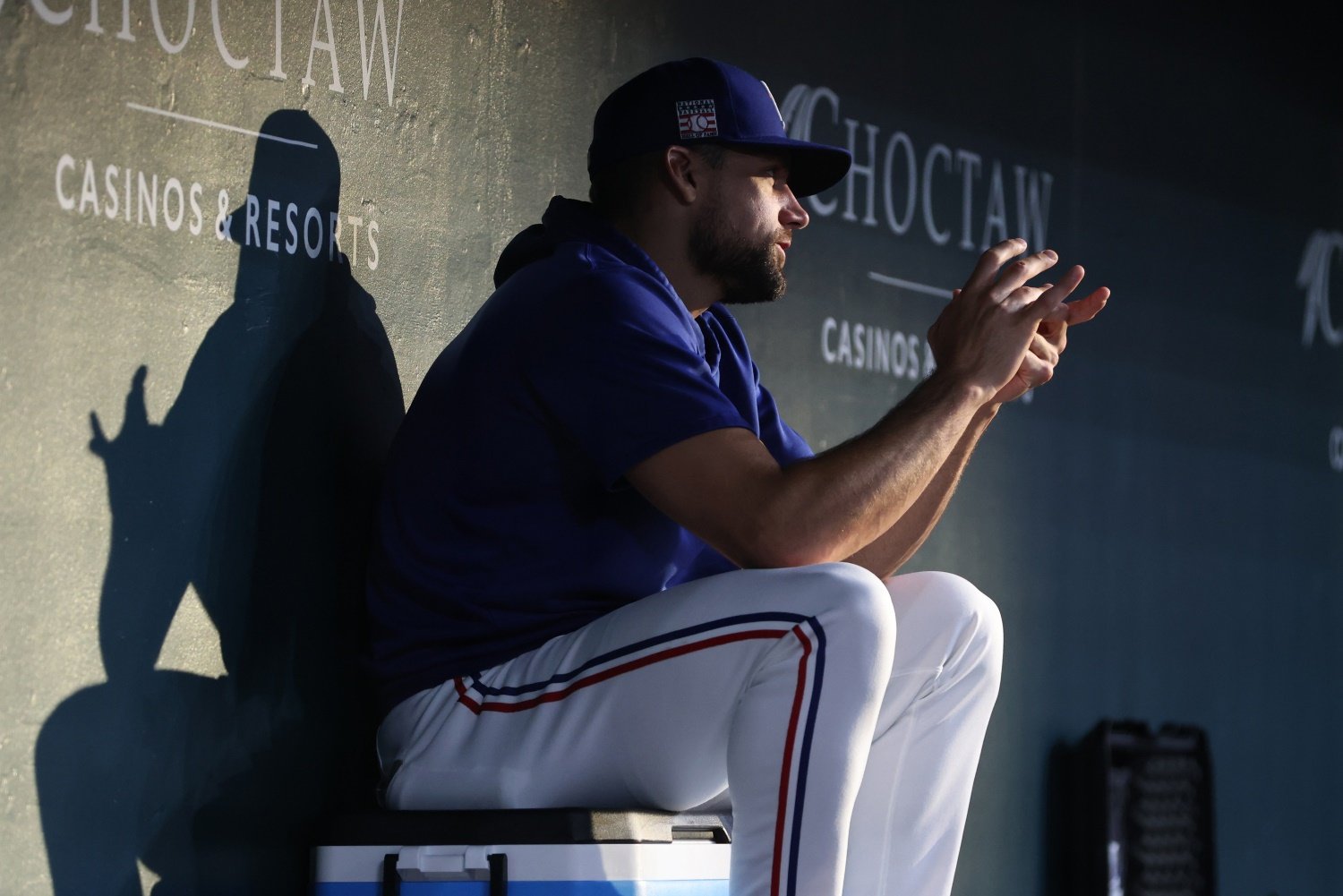 Leading up to the trade deadline, Texas was rumored to be shopping several pitchers on expiring deals. As the deadline approached, the Rangers’ fortunes were trending up, and they kept everyone but Michael Lorenzen. However, they are now nine games out of playoff position and all but out of contention, leading to the possibility of dumping everyone they can. The Angels did this in 2023, and it led to the Guardians claiming multiple players in an (unsuccessful) attempt to make the playoffs. Could the Twins do the same this season, with better results? Let’s start by looking at the players who could be waived, and their salaries for the rest of the season. Based on the Twins’ needs, we will only look at pitchers. Below are their remaining salaries and 2024 fWAR. SP2 Nathan Eovaldi - $2.6M - 1.8 fWAR SP2 Max Scherzer - $2.1M - 0.7 fWAR SP3 Andrew Heaney - $2M - 1.9 fWAR RHRP David Robertson - $2M - 1.6 fWAR RHRP José Léclerc - $1M - 0.3 fWAR LHRP Kirby Yates - $0.7M - 1.6 fWAR LHRP Andrew Chafin - $0.7M - 0.3 fWAR All seven of these pitchers would immediately upgrade the Twins’ pitching staff. Kirby Yates would slot in alongside Griffin Jax and Jhoan Durán at the back end of the bullpen, as would David Robertson. José Léclerc and Andrew Chafin would be more secondary setup men, but they would supplant guys like Steven Okert, Caleb Thielbar, or Trevor Richards. On the starting pitching front, Nathan Eovaldi, Max Scherzer, and Andrew Heaney would all slot in as playoff-caliber pitchers who could step into Joe Ryan’s spot in the rotation, taking the pressure off of Simeon Woods Richardson, David Festa, and Zebby Matthews to immediately perform, and allow them the normal peaks and valleys of player development. Of these players, Scherzer has a full no-trade clause, but it’s possible he would waive this to pitch for a World Series contender. Eovaldi has a vesting option for more than the Twins would be comfortable paying, but it’s a dice toss whether he will accumulate enough innings, and the Twins could certainly trade him should his option vest. Robertson has a $7 million mutual option with a $1.5 million buyout, which the Twins would likely decline should the opportunity present itself. Chafin also has a $6.5 million club option with a $500,000 buyout, which the Twins would certainly decline. The other pitchers are free agents at season’s end. Were the Rangers to take a page out of the 2023 Angels playbook and waive them all, the Twins would likely be lucky to claim one of the above pitchers, as claims happen in reverse order of the standings, and if you haven’t noticed, these Twins are pretty good. Here are the teams in contention with a worse record than the Twins. Royals - currently have the third AL Wild Card. Red Sox - one game back of the third AL Wild Card. Astros - currently leading the AL West and their window of contention may be closing. Mariners - 1.5 games back in the AL West, 2 games back of the third Wild Card. Braves - holding onto the third NL Wild Card. Mets - one game back of the third NL Wild Card. Cardinals - 3 games back of the third NL Wild Card. Diamondbacks - tied for the first NL Wild Card. Padres - tied for the first NL Wild Card. Giants - 2.5 games back of the third NL Wild Card As you can see, there are as many as 10 teams who may see themselves as one pitcher away from ekeing into the postseason and who would have waiver priority over the Twins. However, the Red Sox, Giants and Padres have both been cutting payroll this season, and it’s possible that neither would want to take on additional salary. Similarly, the Diamondback are broadcast through MLB and have taken a revenue hit. Then, we have the teams who have great pitching already - I’m looking at the Mariners (3.52 staff ERA), and the Braves (3.74 staff ERA). The Astros have a top-10 pitching staff as well, so it’s possible they wouldn’t see a real need to add. However, the Diamondbacks, Giants, and Mets all have bottom-10 pitching staffs, so it’s likely they would submit multiple waiver claims, should the opportunity present itself. All of that says that there are four likely teams with ample budget space and the need with waiver claims ahead of the Twins - the Royals, Mets, and Cardinals. Any of those teams could place multiple claims, while the other teams would likely either stand pat, or make one claim. Realistically, even if the Rangers were to waive the entirety of their good pitchers on expiring deals, the Twins might not get a chance to claim one, and that’s if the Pohlads were willing to spend another $2-4 million, which (rumor has it) they were unwilling to do at the deadline. However, the potentially season-ending injuries to Ryan and Justin Topa, and the season-ending surgery for Brock Stewart may convince them that a small capital outlay would move the team forward and buy fan goodwill, particularly as game attendance is on the rise. If things work in the Twins’ favor, they just may find the pitching upgrades they needed at the deadline, and need more today. Nathan Eovaldi, David Robertson, or Kirby Yates would go a long way toward improving the Twins pitching staff come October. What do you think? Would you be interested in any of these players if the Rangers waive them? And if the Rangers do, do you think the Twins have a realistic shot? Comment below to start the discussion!
- 49 comments
-
- 7
-
-
- nathan eovaldi
- joe ryan
- (and 3 more)
-
This week, The Athletic’s Ken Rosenthal reported that the Rangers could be in position to attempt to dump some salary to get under the luxury-tax threshold. There are several players they could waive, and time is of the essence. Are any of their waiver candidates good fits for the Twins? Image courtesy of © Tim Heitman-USA TODAY Sports This week, The Athletic’s Ken Rosenthal reported that the Rangers could be in position to attempt to dump some salary to get under the luxury-tax threshold. There are several players they could waive, and time is of the essence. Are any of their waiver candidates good fits for the Twins? Leading up to the trade deadline, Texas was rumored to be shopping several pitchers on expiring deals. As the deadline approached, the Rangers’ fortunes were trending up, and they kept everyone but Michael Lorenzen. However, they are now nine games out of playoff position and all but out of contention, leading to the possibility of dumping everyone they can. The Angels did this in 2023, and it led to the Guardians claiming multiple players in an (unsuccessful) attempt to make the playoffs. Could the Twins do the same this season, with better results? Let’s start by looking at the players who could be waived, and their salaries for the rest of the season. Based on the Twins’ needs, we will only look at pitchers. Below are their remaining salaries and 2024 fWAR. SP2 Nathan Eovaldi - $2.6M - 1.8 fWAR SP2 Max Scherzer - $2.1M - 0.7 fWAR SP3 Andrew Heaney - $2M - 1.9 fWAR RHRP David Robertson - $2M - 1.6 fWAR RHRP José Léclerc - $1M - 0.3 fWAR LHRP Kirby Yates - $0.7M - 1.6 fWAR LHRP Andrew Chafin - $0.7M - 0.3 fWAR All seven of these pitchers would immediately upgrade the Twins’ pitching staff. Kirby Yates would slot in alongside Griffin Jax and Jhoan Durán at the back end of the bullpen, as would David Robertson. José Léclerc and Andrew Chafin would be more secondary setup men, but they would supplant guys like Steven Okert, Caleb Thielbar, or Trevor Richards. On the starting pitching front, Nathan Eovaldi, Max Scherzer, and Andrew Heaney would all slot in as playoff-caliber pitchers who could step into Joe Ryan’s spot in the rotation, taking the pressure off of Simeon Woods Richardson, David Festa, and Zebby Matthews to immediately perform, and allow them the normal peaks and valleys of player development. Of these players, Scherzer has a full no-trade clause, but it’s possible he would waive this to pitch for a World Series contender. Eovaldi has a vesting option for more than the Twins would be comfortable paying, but it’s a dice toss whether he will accumulate enough innings, and the Twins could certainly trade him should his option vest. Robertson has a $7 million mutual option with a $1.5 million buyout, which the Twins would likely decline should the opportunity present itself. Chafin also has a $6.5 million club option with a $500,000 buyout, which the Twins would certainly decline. The other pitchers are free agents at season’s end. Were the Rangers to take a page out of the 2023 Angels playbook and waive them all, the Twins would likely be lucky to claim one of the above pitchers, as claims happen in reverse order of the standings, and if you haven’t noticed, these Twins are pretty good. Here are the teams in contention with a worse record than the Twins. Royals - currently have the third AL Wild Card. Red Sox - one game back of the third AL Wild Card. Astros - currently leading the AL West and their window of contention may be closing. Mariners - 1.5 games back in the AL West, 2 games back of the third Wild Card. Braves - holding onto the third NL Wild Card. Mets - one game back of the third NL Wild Card. Cardinals - 3 games back of the third NL Wild Card. Diamondbacks - tied for the first NL Wild Card. Padres - tied for the first NL Wild Card. Giants - 2.5 games back of the third NL Wild Card As you can see, there are as many as 10 teams who may see themselves as one pitcher away from ekeing into the postseason and who would have waiver priority over the Twins. However, the Red Sox, Giants and Padres have both been cutting payroll this season, and it’s possible that neither would want to take on additional salary. Similarly, the Diamondback are broadcast through MLB and have taken a revenue hit. Then, we have the teams who have great pitching already - I’m looking at the Mariners (3.52 staff ERA), and the Braves (3.74 staff ERA). The Astros have a top-10 pitching staff as well, so it’s possible they wouldn’t see a real need to add. However, the Diamondbacks, Giants, and Mets all have bottom-10 pitching staffs, so it’s likely they would submit multiple waiver claims, should the opportunity present itself. All of that says that there are four likely teams with ample budget space and the need with waiver claims ahead of the Twins - the Royals, Mets, and Cardinals. Any of those teams could place multiple claims, while the other teams would likely either stand pat, or make one claim. Realistically, even if the Rangers were to waive the entirety of their good pitchers on expiring deals, the Twins might not get a chance to claim one, and that’s if the Pohlads were willing to spend another $2-4 million, which (rumor has it) they were unwilling to do at the deadline. However, the potentially season-ending injuries to Ryan and Justin Topa, and the season-ending surgery for Brock Stewart may convince them that a small capital outlay would move the team forward and buy fan goodwill, particularly as game attendance is on the rise. If things work in the Twins’ favor, they just may find the pitching upgrades they needed at the deadline, and need more today. Nathan Eovaldi, David Robertson, or Kirby Yates would go a long way toward improving the Twins pitching staff come October. What do you think? Would you be interested in any of these players if the Rangers waive them? And if the Rangers do, do you think the Twins have a realistic shot? Comment below to start the discussion! View full article
-
FDG - you have given me some great ideas to work with!
-
See? He’s a burner!
-
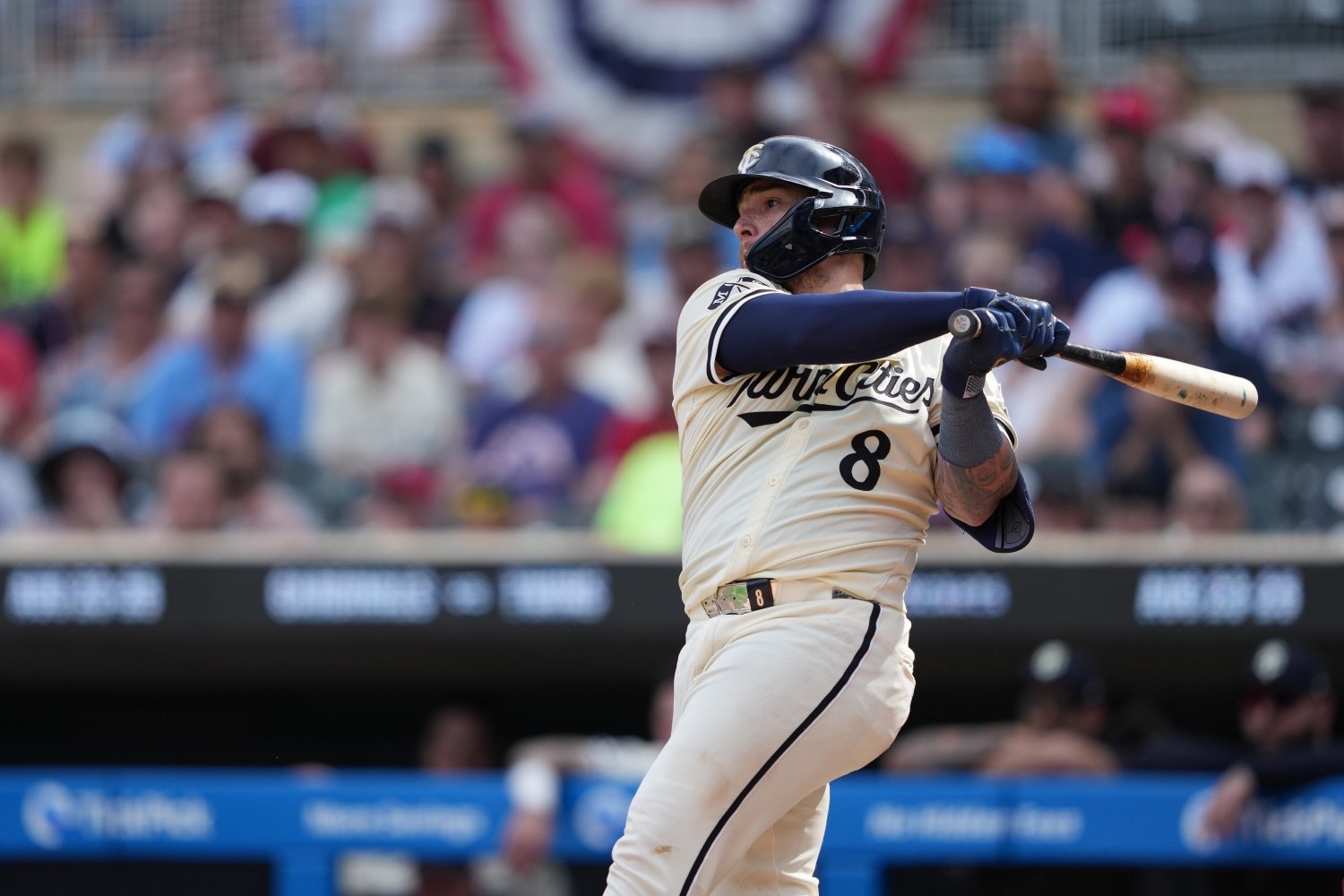 Overall, Christian Vázquez has not been the hitter the Twins hoped for when signing him to a three-year, $30 million deal prior to the 2023 season. In 2023, he was 35% worse than league-average as a hitter. This season, he has been marginally better, just 31% worse than average. This has led to bitterness among the fanbase, and there have been calls to trade or DFA him for a season and a half. These calls may be premature, however, as in one key situation, Vázquez has been an above-average hitter. The key? Leading off an inning. So far this season, Vázquez has come to the dish with the bases empty 119 times. During those plate appearances, he has a .728 OPS. He has struck out just 18% of the time, walked 4%, and has a .257 batting average, even with a tepid .279 BABIP. All of that is good for a 104 wRC+. So, Christian Vázquez has been a better-than-average hitter, with the bases empty. Are you surprised? In low-leverage situations, even beyond hitting leadoff, 33% of Vázquez’s contact is classified as hard-hit. Some 44% of the time, he hits the ball up the middle. When he hits the ball well, he uses the whole field. Let’s compare this to other situations. When Vázquez bats with at least one runner on, his OPS craters to .475, with a batting average of just .190. He strikes out more frequently, 22% of the time. With a wRC+ of just 30, he’s been basically unusable with men on base. With runners in scoring position, his results are even worse, to the tune of a .153 batting average, a 25% strikeout rate, and a wRC+ of 4. Just terrible. In medium-leverage situations, his hard-hit rate falls slightly, to 28%, and in high-leverage spots, this drops to just 13.6%. Looking at his spray charts by leverage, in high leverage, he’s going the other way 41% of the time. The quality of this oppo contact has been quite poor - when he goes the other way, he either tops the ball or hits it softly. So, something about the pressure of the moment alters his timing, approach, and results--or it changes how opposing pitchers approach him, and he's not able to succeed against the different set of things he sees in those spots. Basically, when it matters most, he loses the ability to make valuable contact with the ball. Before you play the small-sample-size card, there are two things to consider. Last season, his batting average with runners on was .192 and his OPS was .539 — good for a 52 wRC+, and similar results to this year. So, this is at least a two-season problem. Over this span, his cumulative WPA is -4.1. Second, yes, his BABIP is lower when runners are on, at .234 and lower still with runners in scoring position at .191, suggesting that some positive regression is in order. However, due to his approach with men on, he won’t regress as much as one would expect. Overall, the story this data tells is that Christian Vázquez is likely trying to do too much when it matters most, and the problem may be mental. The solution? Take the pressure off. Let him hit leadoff, against lefties. Late in games, if they're trailing and need offense, they can always pinch-hit for Vázquez. Ryan Jeffers, to name the obvious candidate for such duty, is hitting .245/.318/.42 with runners on base, and he owns an .812 OPS in high-leverage situations. If Vázquez is capable of being a solid hitter in at least some situations, the Twins would be well-served to maximize his (limited) hitting prowess. Slotting him in atop the order needn't mean that he gets the most plate appearances on a given night; it can just mean putting him in the best possible position to succeed. They (and you) just might be surprised at the results. What do you think? Will hitting Vázquez leadoff maximize his hitting ability? Will it lead to positive outcomes for the Twins? Comment below to start the discussion!
 -
As the Twins navigate the dog days of summer, they have been beset by injuries, and Rocco Baldelli has needed to get creative with roster management. With just over 40 games to play, it's important to find strategic tweaks that can increase the odds of winning even slightly. With this in mind, I present to you: Christian Vázquez, leadoff hitter. Image courtesy of © Jordan Johnson-USA TODAY Sports As the Twins navigate the dog days of summer, they have been beset by injuries, and Rocco Baldelli has needed to get creative with roster management. With just over 40 games to play, it's important to find strategic tweaks that can increase the odds of winning even slightly. With this in mind, I present to you: Christian Vázquez, leadoff hitter. Overall, Christian Vázquez has not been the hitter the Twins hoped for when signing him to a three-year, $30 million deal prior to the 2023 season. In 2023, he was 35% worse than league-average as a hitter. This season, he has been marginally better, just 31% worse than average. This has led to bitterness among the fanbase, and there have been calls to trade or DFA him for a season and a half. These calls may be premature, however, as in one key situation, Vázquez has been an above-average hitter. The key? Leading off an inning. So far this season, Vázquez has come to the dish with the bases empty 119 times. During those plate appearances, he has a .728 OPS. He has struck out just 18% of the time, walked 4%, and has a .257 batting average, even with a tepid .279 BABIP. All of that is good for a 104 wRC+. So, Christian Vázquez has been a better-than-average hitter, with the bases empty. Are you surprised? In low-leverage situations, even beyond hitting leadoff, 33% of Vázquez’s contact is classified as hard-hit. Some 44% of the time, he hits the ball up the middle. When he hits the ball well, he uses the whole field. Let’s compare this to other situations. When Vázquez bats with at least one runner on, his OPS craters to .475, with a batting average of just .190. He strikes out more frequently, 22% of the time. With a wRC+ of just 30, he’s been basically unusable with men on base. With runners in scoring position, his results are even worse, to the tune of a .153 batting average, a 25% strikeout rate, and a wRC+ of 4. Just terrible. In medium-leverage situations, his hard-hit rate falls slightly, to 28%, and in high-leverage spots, this drops to just 13.6%. Looking at his spray charts by leverage, in high leverage, he’s going the other way 41% of the time. The quality of this oppo contact has been quite poor - when he goes the other way, he either tops the ball or hits it softly. So, something about the pressure of the moment alters his timing, approach, and results--or it changes how opposing pitchers approach him, and he's not able to succeed against the different set of things he sees in those spots. Basically, when it matters most, he loses the ability to make valuable contact with the ball. Before you play the small-sample-size card, there are two things to consider. Last season, his batting average with runners on was .192 and his OPS was .539 — good for a 52 wRC+, and similar results to this year. So, this is at least a two-season problem. Over this span, his cumulative WPA is -4.1. Second, yes, his BABIP is lower when runners are on, at .234 and lower still with runners in scoring position at .191, suggesting that some positive regression is in order. However, due to his approach with men on, he won’t regress as much as one would expect. Overall, the story this data tells is that Christian Vázquez is likely trying to do too much when it matters most, and the problem may be mental. The solution? Take the pressure off. Let him hit leadoff, against lefties. Late in games, if they're trailing and need offense, they can always pinch-hit for Vázquez. Ryan Jeffers, to name the obvious candidate for such duty, is hitting .245/.318/.42 with runners on base, and he owns an .812 OPS in high-leverage situations. If Vázquez is capable of being a solid hitter in at least some situations, the Twins would be well-served to maximize his (limited) hitting prowess. Slotting him in atop the order needn't mean that he gets the most plate appearances on a given night; it can just mean putting him in the best possible position to succeed. They (and you) just might be surprised at the results. What do you think? Will hitting Vázquez leadoff maximize his hitting ability? Will it lead to positive outcomes for the Twins? Comment below to start the discussion! View full article
-
This is an interesting idea. I would be especially on board if we could get a complete game from the pairing and get a day off from the bullpen. I might be inclined to do this with SWR and Varland. It could also be interesting if we could find a lefty/righty pairing to piggyback to give a very different look to teams.
-
 Varland began the season as the presumptive fifth starter. However, he was ineffective and was optioned to AAA after allowing 17 earned runs in 16 2/3 innings over his first four starts. Varland's performance wasn't just a case of bad luck, either, as his OPS against was a shocking 1.086, turning every hitter into Aaron Judge or Royce Lewis. His struggles continued for his first nearly two months at St Paul, as he pitched to an ugly 7.33 ERA (albeit with a better, but not good, 4.94 FIP). His struggles can be traced to his fastball, as he allowed a .320 BAA and, worse, a .440 wOBA across over 300 pitches between his four-seam and cut fastball. A significant cause of this was location, as he left too many pitches over the heart of the plate. Take a look at his location chart. However, starting in late June, he has begun to turn things around. Over his past six starts with the Saints, Varland has allowed just five earned runs across 30 1/3 innings while striking out almost 12.0 per nine. He's held his WHIP to a manageable 1.15. His allowed BABIP has been relatively low at .254, suggesting his 4.08 FIP is probably closer to what we should expect from him. Still, as a fifth starter, that's perfectly serviceable. How has Varland tweaked his approach to generate these improved results? Primarily, he has been targeting the top of the zone with his fastball. This adjustment has led to much less hard contact on his heater. Since then, he's allowed just a .233 OPS against his fastball and is locating up much more frequently (over half the time). In a pair of spot starts in June, he pitched to a 1.93 ERA with a similar FIP of around 2.30 and held opponents to a .181 wOBA, albeit while facing the hapless Rockies and As. Can we expect this to continue at the big-league level? Can he put up an ERA in the 4s the rest of the way? The Twins had better hope so, or else this season may end similarly to how it began. What do you think? Has Varland figured it out? Will his recent stretch of solid results continue? Comment below to start the discussion!
 -
There have been calls recently for Louie Varland to rejoin the Twins as a late-inning reliever; however, with the news that Joe Ryan will miss significant time with a grade 2 Teres Major strain, typically carrying an eight-week-plus recovery time. Since the Twins didn't make a trade for a starting pitcher at the deadline, this likely pushes Varland into the rotation for the remainder of the season. What can the Twins expect from him this time around? Can he fill Ryan's big shoes? Image courtesy of © Bruce Kluckhohn-USA TODAY Sports There have been calls recently for Louie Varland to rejoin the Twins as a late-inning reliever; however, with the news that Joe Ryan will miss significant time with a grade 2 Teres Major strain, typically carrying an eight-week-plus recovery time. Since the Twins didn't make a trade for a starting pitcher at the deadline, this likely pushes Varland into the rotation for the remainder of the season. What can the Twins expect from him this time around? Can he fill Ryan's big shoes? Varland began the season as the presumptive fifth starter. However, he was ineffective and was optioned to AAA after allowing 17 earned runs in 16 2/3 innings over his first four starts. Varland's performance wasn't just a case of bad luck, either, as his OPS against was a shocking 1.086, turning every hitter into Aaron Judge or Royce Lewis. His struggles continued for his first nearly two months at St Paul, as he pitched to an ugly 7.33 ERA (albeit with a better, but not good, 4.94 FIP). His struggles can be traced to his fastball, as he allowed a .320 BAA and, worse, a .440 wOBA across over 300 pitches between his four-seam and cut fastball. A significant cause of this was location, as he left too many pitches over the heart of the plate. Take a look at his location chart. However, starting in late June, he has begun to turn things around. Over his past six starts with the Saints, Varland has allowed just five earned runs across 30 1/3 innings while striking out almost 12.0 per nine. He's held his WHIP to a manageable 1.15. His allowed BABIP has been relatively low at .254, suggesting his 4.08 FIP is probably closer to what we should expect from him. Still, as a fifth starter, that's perfectly serviceable. How has Varland tweaked his approach to generate these improved results? Primarily, he has been targeting the top of the zone with his fastball. This adjustment has led to much less hard contact on his heater. Since then, he's allowed just a .233 OPS against his fastball and is locating up much more frequently (over half the time). In a pair of spot starts in June, he pitched to a 1.93 ERA with a similar FIP of around 2.30 and held opponents to a .181 wOBA, albeit while facing the hapless Rockies and As. Can we expect this to continue at the big-league level? Can he put up an ERA in the 4s the rest of the way? The Twins had better hope so, or else this season may end similarly to how it began. What do you think? Has Varland figured it out? Will his recent stretch of solid results continue? Comment below to start the discussion! View full article
-
He can’t possibly walk five guys in back to back games, right?
-
Ok, great point. Admittedly I looked at his full season stats, not his starter/reliever splits. He would totally slot in in the late innings along Duran and Jax.
- 33 replies
-
- 3
-
-
- trevor richards
- justin topa
- (and 2 more)
-
Don’t get me wrong, he’s been great, but he hasn’t tasted AAA yet and has just 11 starts at Wichita. Personally, I can’t see a scenario where he would get the call. So many guys would need to be injured for that to happen this season, and at that point, the season is over anyway. I do think he has a real chance to be a solid starter for the Twins at some point, but I think 2025 is the earliest that could happen.
- 33 replies
-
- 4
-
-
- trevor richards
- justin topa
- (and 2 more)
-
I appreciate that!