



Eric Blonigen
-
Posts
377 -
Joined
-
Last visited
-
Days Won
1
Content Type
Profiles
News
Minnesota Twins Videos
2026 Minnesota Twins Top Prospects Ranking
2022 Minnesota Twins Draft Picks
Minnesota Twins Free Agent & Trade Rumors, Notes, & Tidbits
Guides & Resources
2023 Minnesota Twins Draft Picks
The Minnesota Twins Players Project
2024 Minnesota Twins Draft Picks
2025 Minnesota Twins Draft Pick Tracker
2026 Minnesota Twins Draft Tracker: Picks & Bonuses
Forums
Blogs
Events
Store
Downloads
Gallery
Everything posted by Eric Blonigen
-
 Objects in your rearview mirror may be closer than they appear. Image courtesy of © David Richard-USA TODAY Sports Objects in your rearview mirror may be closer than they appear. With 61 games left in the season and four days remaining before the trade deadline, the Twins currently have a one-game lead for the second wild card spot and the 17th-easiest remaining schedule. On paper, that’s a good place to be. However, as the trade market heats up, there are a number of factors that could conspire to make their standing precarious and could cause the team to miss the playoffs entirely. Looking at the playoff landscape, the Yankees and Orioles seem to have the AL East crown and first Wild Card spots locked up. Were the season to end today, the Twins would have the second wild card, and the Royals would earn the third. There are a number of teams in the hunt, such as the Red Sox, Mariners, and Rangers, who all have the talent for a deep playoff run and could beat out the Twins for a wild-card berth if things don’t break right for the team, or if the front office isn’t smart about maximizing their position. Three factors can actively help the Twins' competitors. All three are outside the Twins' control. Competitors Being Aggressive Overnight, news broke that the Rays had traded Randy Arozarena to the Mariners. Over the past two months, he’s sporting a .919 OPS and immediately upgrades their lineup. He has averaged 3.4 bWAR per season and will give them a boost in their playoff push. One team the Twins hoped were selling is clearly not. The Rangers are set to get Jacob deGrom and Tyler Mahle back from the IL, and just saw the return of Max Scherzer. Their front office says they hope to be buyers. There are more. The Astros have been linked to Isaac Paredes and Eric Fedde, and are expected to get Justin Verlander back soon. The Orioles are talking with the Tigers about Tarik Skubal. The Red Sox are on the record as looking for impact starting pitching and right-handed bats. While the Royals haven’t been publicly linked to any big names, they spent big this offseason and appear to be all-in this year. Any of these teams could easily land Garrett Crochet, and any team making a big deadline move could earn a couple surplus wins over their current roster construction. If the Twins do not trade for at least one impact player, that would put them at a distinct disadvantage. Reallocation of CBT Funds On Wednesday, MLB and the MLBPA announced a renegotiation of the Competitive Balance Tax disbursement, agreeing to redirect funds to teams whose RSN broadcast fees have negatively impacted their ability to field a quality team. This is likely to shake up contending teams’ perception of their finances and resulting willingness to take on additional salary. While we don’t know how these funds will end up being allocated, we do know that teams are eligible to receive up to $15M based on their TV revenue losses. The Mariners, Astros, Guardians, Rangers, and Twins are among the American League teams who may be among the recipients of these funds. However, the payout is expected to be capped at $75M league wide, and will likely be proportionately doled out in relation to financial losses, so we could see any of those other teams receive more cash than the Twins and attempt to outbid the Twins for similar players. Strength of Schedule With the 17th-easiest strength of schedule, the Twins should be able to play better than .500 ball the rest of the way as they get healthier. However, many of the other teams in the playoff hunt have even easier schedules to play. Here are the AL competitors' remaining schedule strength, from easiest to hardest. Yankees 1st Rangers 2nd Mariners 4th Orioles 5th Tigers 7th Twins 8th Astros 9th Royals 11th Red Sox 13th Guardians 14th Rays 15th As you can see, looking at playoff contenders, the Twins are in the middle of the pack, with the Yankees, Rangers, Mariners, and Orioles likely to pick up a game or two over the Twins on schedule strength alone. Overall, when looking at all of the above factors, a few teams stand out as being the biggest threats to the Twins' playoff chances. The Mariners have been aggressive on the trade market, have additional CBT funds, and have an easy schedule. The Rangers haven’t yet been aggressive with trades but have said they hope to be buyers, will also receive CBT funds, and have a very easy schedule. The Yankees are the Yankees, and not making a big splash would be a bigger surprise than if they do. Based on these factors, it’s clear that if the Twins hope to control their destiny, there should be a significant sense of urgency to trade for an impact player and to do it soon. If the Twins don’t, it’s possible they will find themselves squeezed out of the playoff picture entirely by a couple of teams that aren't afraid to be aggressive. What do you think? Should the Twins make a big splash, even if it means losing some valuable prospects? Who would you like them to trade for? Comment below to get the discussion started! View full article
 -
Three Uncontrollable Factors Are Helping the Twins' Competitors
Eric Blonigen posted an article in Twins
 With 61 games left in the season and four days remaining before the trade deadline, the Twins currently have a one-game lead for the second wild card spot and the 17th-easiest remaining schedule. On paper, that’s a good place to be. However, as the trade market heats up, there are a number of factors that could conspire to make their standing precarious and could cause the team to miss the playoffs entirely. Looking at the playoff landscape, the Yankees and Orioles seem to have the AL East crown and first Wild Card spots locked up. Were the season to end today, the Twins would have the second wild card, and the Royals would earn the third. There are a number of teams in the hunt, such as the Red Sox, Mariners, and Rangers, who all have the talent for a deep playoff run and could beat out the Twins for a wild-card berth if things don’t break right for the team, or if the front office isn’t smart about maximizing their position. Three factors can actively help the Twins' competitors. All three are outside the Twins' control. Competitors Being Aggressive Overnight, news broke that the Rays had traded Randy Arozarena to the Mariners. Over the past two months, he’s sporting a .919 OPS and immediately upgrades their lineup. He has averaged 3.4 bWAR per season and will give them a boost in their playoff push. One team the Twins hoped were selling is clearly not. The Rangers are set to get Jacob deGrom and Tyler Mahle back from the IL, and just saw the return of Max Scherzer. Their front office says they hope to be buyers. There are more. The Astros have been linked to Isaac Paredes and Eric Fedde, and are expected to get Justin Verlander back soon. The Orioles are talking with the Tigers about Tarik Skubal. The Red Sox are on the record as looking for impact starting pitching and right-handed bats. While the Royals haven’t been publicly linked to any big names, they spent big this offseason and appear to be all-in this year. Any of these teams could easily land Garrett Crochet, and any team making a big deadline move could earn a couple surplus wins over their current roster construction. If the Twins do not trade for at least one impact player, that would put them at a distinct disadvantage. Reallocation of CBT Funds On Wednesday, MLB and the MLBPA announced a renegotiation of the Competitive Balance Tax disbursement, agreeing to redirect funds to teams whose RSN broadcast fees have negatively impacted their ability to field a quality team. This is likely to shake up contending teams’ perception of their finances and resulting willingness to take on additional salary. While we don’t know how these funds will end up being allocated, we do know that teams are eligible to receive up to $15M based on their TV revenue losses. The Mariners, Astros, Guardians, Rangers, and Twins are among the American League teams who may be among the recipients of these funds. However, the payout is expected to be capped at $75M league wide, and will likely be proportionately doled out in relation to financial losses, so we could see any of those other teams receive more cash than the Twins and attempt to outbid the Twins for similar players. Strength of Schedule With the 17th-easiest strength of schedule, the Twins should be able to play better than .500 ball the rest of the way as they get healthier. However, many of the other teams in the playoff hunt have even easier schedules to play. Here are the AL competitors' remaining schedule strength, from easiest to hardest. Yankees 1st Rangers 2nd Mariners 4th Orioles 5th Tigers 7th Twins 8th Astros 9th Royals 11th Red Sox 13th Guardians 14th Rays 15th As you can see, looking at playoff contenders, the Twins are in the middle of the pack, with the Yankees, Rangers, Mariners, and Orioles likely to pick up a game or two over the Twins on schedule strength alone. Overall, when looking at all of the above factors, a few teams stand out as being the biggest threats to the Twins' playoff chances. The Mariners have been aggressive on the trade market, have additional CBT funds, and have an easy schedule. The Rangers haven’t yet been aggressive with trades but have said they hope to be buyers, will also receive CBT funds, and have a very easy schedule. The Yankees are the Yankees, and not making a big splash would be a bigger surprise than if they do. Based on these factors, it’s clear that if the Twins hope to control their destiny, there should be a significant sense of urgency to trade for an impact player and to do it soon. If the Twins don’t, it’s possible they will find themselves squeezed out of the playoff picture entirely by a couple of teams that aren't afraid to be aggressive. What do you think? Should the Twins make a big splash, even if it means losing some valuable prospects? Who would you like them to trade for? Comment below to get the discussion started!
 -
You are correct that if the Twins were willing to trade Walker Jenkins, they should be able to get a controllable starter. However, if they were willing to do that, it would be counterproductive to trade Pablo. Keep him too and the rotation is set for the next four years.
-
That’s an interesting idea - include a PTBNL either way and it’s either a lottery ticket, or a mid-level guy. That could work.
-
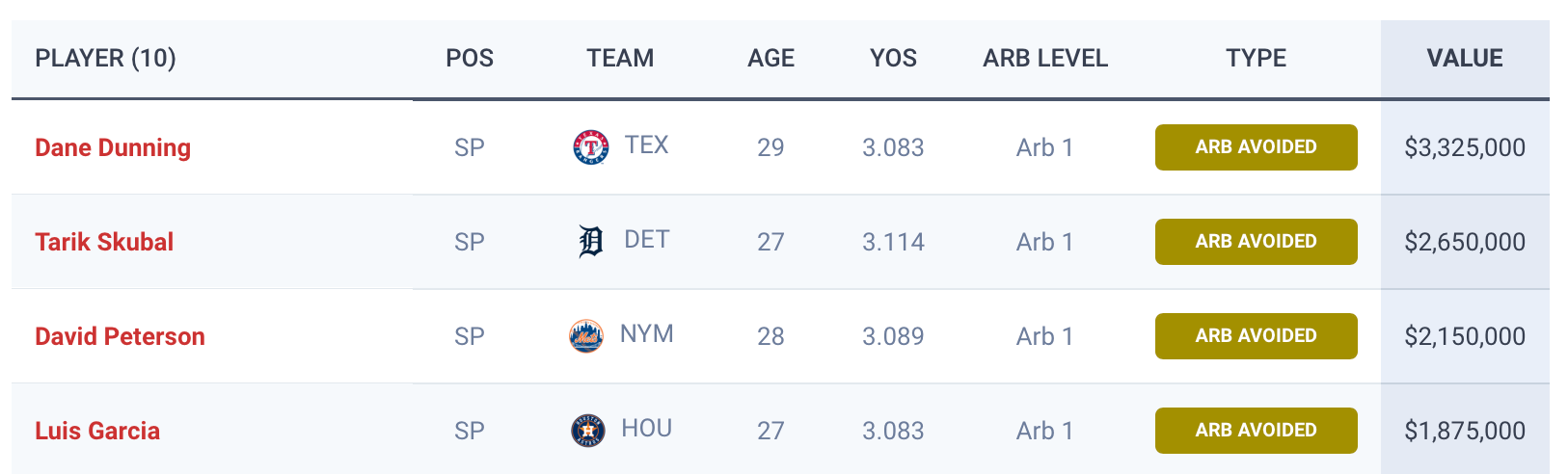
I originally had him and Ryan both making a couple million more than I estimated, but looking at 2024 agreements for Arb-1 pitchers, here are the top four starters. I can't imagine Ober gets more than Skubal did this year.
- 42 replies
-
- 1
-

-
- nathan eovaldi
- christian vazquez
- (and 2 more)
-
I considered making that recommendation, but I think he provides so much surplus value at $8M. His positional flexibility and bat provide a safety net against injuries and make days off more feasible for other guys. Of course, he could be a very attractive trade target for all those same reasons. However, I assume they keep him unless they are blown away at an offer.
- 42 replies
-
- 3
-
-
- nathan eovaldi
- christian vazquez
- (and 2 more)
-
For me, if I were the owner of a team, yes. Will the Pohlads feel the same? Who knows, but probably not. Maybe with a deep run. I'm operating under an assumption they push for $125-130M.
- 42 replies
-
- 1
-
-
- nathan eovaldi
- christian vazquez
- (and 2 more)
-
Agreed. If he ends up with an option remaining, I assume they keep him for one more year to see if he can prove it. If not, I think he's traded.
-
I have to assume he's available. The Rangers are seven back for the third wild card, BBRef has them at 6% to make the playoffs based on roster performance and schedule. Fangraphs is slightly higher at 18%, but they factor in prior year performance. The question will be price, but for a year and a half, I would pay it assuming it doesn't require Jenkins, Emma, Zebby, the rookies, or our core guys.
-
 Their current payroll is around $130 million, and ownership has hinted that it may decrease slightly next season--despite several players due for healthy raises. However, the Twins’ competitive window is wide open, and the time is right to make a big splash that will allow for a deep playoff run not just this year, but beyond. Will a trade for a pitcher like Nathan Eovaldi (and his $20 million vesting option for 2025) be possible? Next season, Pablo López will start making the real money in the four-year contract extension that technically began this year. Players like Joe Ryan, Bailey Ober, Jhoan Durán, Griffin Jax, Brock Stewart, Royce Lewis, and Trevor Larnach will hit arbitration for the first time. Willi Castro is likely due for a bit of a payday, as he enters his third and final arbitration year on the heels of a breakout season. Let’s take a look at their likely payroll commitments for the 2025 season, and consider options that may make a trade for a frontline starter possible. Roughly $30 million in salary will come off the books this fall, as Max Kepler, Anthony DeSclafani, Manuel Margot, Kyle Farmer, Carlos Santana, Caleb Thielbar, and Jay Jackson are all free agents. However, that savings will likely be almost perfectly offset by raises to the players who are due for one. So, if the Twins trade for a pitcher who is controlled in 2025 or beyond, they'll need to shed additional payroll. Below, we have the Twins' 40-man roster; the committed salaries (according to Cot’s Baseball Contracts); and approximate arbitration values, based on 2024 comps from Spotrac. Arbitration agreements are largely based off of the player’s performance for the previous season. However, historical performance can play a part. This will come into effect for my estimates for players like Durán, who is having a down year. While this won’t be exact, it at least gives a starting point to estimate the Twins’ payroll commitments for 2025, and will inform the options likely available to the team. Starting Pitchers This is a good, solid group. They are inexpensive, have upside, and would look even better if Ober were the No. 4 and Simeon Woods Richardson the No. 5. Player Contract Status Salary (real or projected) Lopez Contract $21.75 Ryan Arb-1 $2.5 Ober Arb-1 $1.5 Woods Richardson Pre-arb $0.76 Paddack Contract $7.5 Total $34.01 Relief Pitchers Another very, very good group of guys, assuming health. Luckily, even with arbitration increases, they are inexpensive. Player Contract Status Salary (real or projected) Durán Arb-1 $2.0 Jax Arb-1 $1.25 Stewart Arb-1 $1.25 Alcalá Club Option $1.5 Varland Pre-arb $0.76 Topa Arb-2 $1.75 Staumont Arb-3 $2.0 Sands Pre-arb $0.76 Okert Arb-2 $1.25 Total $11.27 Hitters This might be one of the best lineups in baseball, and the core is young and controllable, with ample depth in the minors. Player Position Contract Status Salary (real or projected) Correa SS Contract $33.3 Buxton CF Contract $15.143 Vázquez C Contract $10.0 Castro UTIL Arb-3 $8.0 Jeffers C Arb-2 $2.7 Lewis 3B Arb-1 $3.0 Lee 2B Pre-arb $0.76 Wallner RF Pre-arb $0.76 Miranda DH Pre-arb $0.77 Julien 1B Pre-arb $0.76 Larnach LF Arb-1 $1.5 Martin OF Pre-arb $0.76 Total $77.45 Remaining 40-Man Members A good mixture of depth and upside, at worst, these guys are solid injury fill-ins. A few of them are likely much more than that. Player Position Contract Status Salary (real or projected) Kirilloff Depth 1B/DH/OF Arb-2 $1.3 Camargo Depth C Pre-arb $0.124 Rodríguez Depth OF Minors $0.06 Festa SP Depth Minors $0.124 Canterino RP Depth Minors $0.06 Henriquez RP Depth Pre-arb $0.124 Funderburk RP Depth Pre-arb $0.124 Winder RP Depth Pre-arb $0.124 Total $2.1 2025 Projected Salary by Position Group Category Salary Starting Pitching $34.01 Relief Pitching $11.27 Hitters $77.45 40-Man Depth $2.1 Randy Dobnak Dead Money $3.0 Total $127.83 As you can see, before a move is made in the offseason, the 2025 payroll is only $2.5 million lower than this year's, despite losing seven players to free agency. Luckily, the team as listed above doesn’t have many holes. Assuming some semblance of health, they should have a great bullpen, a great lineup, and great depth in the minors, with high-end prospects that are close to the majors. There are no holes in the roster construction that will inhibit them from being a playoff-caliber team. However, adding another frontline starter to pair with López and Ryan should make them a legitimate World Series contender. Any player of Ryan’s caliber or better in their final year of team control is likely to cost around $20 million, or slightly more. So, cutting between $20 million and $25 million from their 2025 projected roster seems to be the target that allows for the acquisition. That's a lot of fat to trim. Let’s look at how we can get there by evaluating some cost-cutting options. There are four players it may make sense to move on from, due to their salary or value to the team. Player Recommendation Salary Vázquez Trade $10.0 Okert Non-tender or trade $1.75 Paddack Trade $7.5 Kirilloff Trade $2.5 First, we have Christian Vázquez. While solid defensively, he has been an offensive liability. It will be tough to find someone to take his entire contract, but there would certainly be teams interested in acquiring him. The Twins would probably need to give up a prospect in the 15-20 range in their system to trade him without eating his salary, but that will save $10 million on its own. Next, the team can non-tender Steven Okert. He has been a replacement-level reliever, and paying a likely $1.75 million for his services is not money well spent at this point. Third, we could see the team try to trade Chris Paddack and his $7.5 million contract. Despite his inconsistency, which is to be expected in a player returning from a second Tommy John surgery, he has been a serviceable back-of-the-rotation starter. In the offseason, it shouldn’t be difficult to find a taker for him. Depending on health and his performance for the rest of the season, Derek Falvey and company may need to include a low-level prospect in the deal in exchange for the salary relief. Finally, we have Alex Kirilloff. I project him at around $2.5 million as a Boras-repped Super-2 going through arbitration a second time. It’s unlikely they would non-tender him, but finding a trade partner interested in unlocking his potential could net a prospect in the 10-20 range from another team. If the front office made each of these moves, the net result would be a savings of $21.75 million, which would allow them to pay for one additional season of someone like Nathan Eovaldi--someone you would feel comfortable starting in Game Three of a deep playoff series, and who would give the Twins both a wealth of high-end starters and high-end prospects in the minors to supplement. It would also allow Ober to move to long relief in the playoffs in some situations. If further salary relief is necessary, the Twins could also increase what they're willing to surrender in whatever trade may occur, in exchange for a few million toward next year’s salary. Were the Twins to do something like this, it wouldn’t leave space for other offseason signings, but that may not be necessary anyway due to the team’s depth and the caliber of their young core. What do you think? Is this realistic? Would you make the moves listed above? Are there other contracts you would prefer to get out from under? Are these arbitration values close? Comment below with your thoughts!
- 42 comments
-
- 6
-
-
- nathan eovaldi
- christian vazquez
- (and 2 more)
-
As we approach the 2024 trade deadline, we know a few things to be true: The Twins will be buyers; they need a playoff-caliber starting pitcher; and they face self-imposed payroll constraints. At least two of those facts are going to run into each other head-on, very soon. Image courtesy of © Tim Heitman-USA TODAY Sports As we approach the 2024 trade deadline, we know a few things to be true: The Twins will be buyers; they need a playoff-caliber starting pitcher; and they face self-imposed payroll constraints. At least two of those facts are going to run into each other head-on, very soon. Their current payroll is around $130 million, and ownership has hinted that it may decrease slightly next season--despite several players due for healthy raises. However, the Twins’ competitive window is wide open, and the time is right to make a big splash that will allow for a deep playoff run not just this year, but beyond. Will a trade for a pitcher like Nathan Eovaldi (and his $20 million vesting option for 2025) be possible? Next season, Pablo López will start making the real money in the four-year contract extension that technically began this year. Players like Joe Ryan, Bailey Ober, Jhoan Durán, Griffin Jax, Brock Stewart, Royce Lewis, and Trevor Larnach will hit arbitration for the first time. Willi Castro is likely due for a bit of a payday, as he enters his third and final arbitration year on the heels of a breakout season. Let’s take a look at their likely payroll commitments for the 2025 season, and consider options that may make a trade for a frontline starter possible. Roughly $30 million in salary will come off the books this fall, as Max Kepler, Anthony DeSclafani, Manuel Margot, Kyle Farmer, Carlos Santana, Caleb Thielbar, and Jay Jackson are all free agents. However, that savings will likely be almost perfectly offset by raises to the players who are due for one. So, if the Twins trade for a pitcher who is controlled in 2025 or beyond, they'll need to shed additional payroll. Below, we have the Twins' 40-man roster; the committed salaries (according to Cot’s Baseball Contracts); and approximate arbitration values, based on 2024 comps from Spotrac. Arbitration agreements are largely based off of the player’s performance for the previous season. However, historical performance can play a part. This will come into effect for my estimates for players like Durán, who is having a down year. While this won’t be exact, it at least gives a starting point to estimate the Twins’ payroll commitments for 2025, and will inform the options likely available to the team. Starting Pitchers This is a good, solid group. They are inexpensive, have upside, and would look even better if Ober were the No. 4 and Simeon Woods Richardson the No. 5. Player Contract Status Salary (real or projected) Lopez Contract $21.75 Ryan Arb-1 $2.5 Ober Arb-1 $1.5 Woods Richardson Pre-arb $0.76 Paddack Contract $7.5 Total $34.01 Relief Pitchers Another very, very good group of guys, assuming health. Luckily, even with arbitration increases, they are inexpensive. Player Contract Status Salary (real or projected) Durán Arb-1 $2.0 Jax Arb-1 $1.25 Stewart Arb-1 $1.25 Alcalá Club Option $1.5 Varland Pre-arb $0.76 Topa Arb-2 $1.75 Staumont Arb-3 $2.0 Sands Pre-arb $0.76 Okert Arb-2 $1.25 Total $11.27 Hitters This might be one of the best lineups in baseball, and the core is young and controllable, with ample depth in the minors. Player Position Contract Status Salary (real or projected) Correa SS Contract $33.3 Buxton CF Contract $15.143 Vázquez C Contract $10.0 Castro UTIL Arb-3 $8.0 Jeffers C Arb-2 $2.7 Lewis 3B Arb-1 $3.0 Lee 2B Pre-arb $0.76 Wallner RF Pre-arb $0.76 Miranda DH Pre-arb $0.77 Julien 1B Pre-arb $0.76 Larnach LF Arb-1 $1.5 Martin OF Pre-arb $0.76 Total $77.45 Remaining 40-Man Members A good mixture of depth and upside, at worst, these guys are solid injury fill-ins. A few of them are likely much more than that. Player Position Contract Status Salary (real or projected) Kirilloff Depth 1B/DH/OF Arb-2 $1.3 Camargo Depth C Pre-arb $0.124 Rodríguez Depth OF Minors $0.06 Festa SP Depth Minors $0.124 Canterino RP Depth Minors $0.06 Henriquez RP Depth Pre-arb $0.124 Funderburk RP Depth Pre-arb $0.124 Winder RP Depth Pre-arb $0.124 Total $2.1 2025 Projected Salary by Position Group Category Salary Starting Pitching $34.01 Relief Pitching $11.27 Hitters $77.45 40-Man Depth $2.1 Randy Dobnak Dead Money $3.0 Total $127.83 As you can see, before a move is made in the offseason, the 2025 payroll is only $2.5 million lower than this year's, despite losing seven players to free agency. Luckily, the team as listed above doesn’t have many holes. Assuming some semblance of health, they should have a great bullpen, a great lineup, and great depth in the minors, with high-end prospects that are close to the majors. There are no holes in the roster construction that will inhibit them from being a playoff-caliber team. However, adding another frontline starter to pair with López and Ryan should make them a legitimate World Series contender. Any player of Ryan’s caliber or better in their final year of team control is likely to cost around $20 million, or slightly more. So, cutting between $20 million and $25 million from their 2025 projected roster seems to be the target that allows for the acquisition. That's a lot of fat to trim. Let’s look at how we can get there by evaluating some cost-cutting options. There are four players it may make sense to move on from, due to their salary or value to the team. Player Recommendation Salary Vázquez Trade $10.0 Okert Non-tender or trade $1.75 Paddack Trade $7.5 Kirilloff Trade $2.5 First, we have Christian Vázquez. While solid defensively, he has been an offensive liability. It will be tough to find someone to take his entire contract, but there would certainly be teams interested in acquiring him. The Twins would probably need to give up a prospect in the 15-20 range in their system to trade him without eating his salary, but that will save $10 million on its own. Next, the team can non-tender Steven Okert. He has been a replacement-level reliever, and paying a likely $1.75 million for his services is not money well spent at this point. Third, we could see the team try to trade Chris Paddack and his $7.5 million contract. Despite his inconsistency, which is to be expected in a player returning from a second Tommy John surgery, he has been a serviceable back-of-the-rotation starter. In the offseason, it shouldn’t be difficult to find a taker for him. Depending on health and his performance for the rest of the season, Derek Falvey and company may need to include a low-level prospect in the deal in exchange for the salary relief. Finally, we have Alex Kirilloff. I project him at around $2.5 million as a Boras-repped Super-2 going through arbitration a second time. It’s unlikely they would non-tender him, but finding a trade partner interested in unlocking his potential could net a prospect in the 10-20 range from another team. If the front office made each of these moves, the net result would be a savings of $21.75 million, which would allow them to pay for one additional season of someone like Nathan Eovaldi--someone you would feel comfortable starting in Game Three of a deep playoff series, and who would give the Twins both a wealth of high-end starters and high-end prospects in the minors to supplement. It would also allow Ober to move to long relief in the playoffs in some situations. If further salary relief is necessary, the Twins could also increase what they're willing to surrender in whatever trade may occur, in exchange for a few million toward next year’s salary. Were the Twins to do something like this, it wouldn’t leave space for other offseason signings, but that may not be necessary anyway due to the team’s depth and the caliber of their young core. What do you think? Is this realistic? Would you make the moves listed above? Are there other contracts you would prefer to get out from under? Are these arbitration values close? Comment below with your thoughts! View full article
-
A weekend in Cooperstown - Joe Mauer’s HOF induction
Eric Blonigen posted a blog entry in Eric’s deep dive corner
Over the past few days, there have been some great articles written about Mauer’s accomplishments - the batting titles, the MVP season, the records, and the magic he brought to life on a near-daily basis for 15 years. Today, he was deservingly enshrined in the Baseball Hall of Fame alongside Todd Helton, Adrian Beltré, and Manager Jim Leyland in Cooperstown, New York. I was fortunate enough to be present for it. Being there was an amazing experience. That is likely true for a number of other members of Twins Territory as well. Anecdotally, close to half of the fans in attendance wearing jerseys, team shirts, or other memorabilia were repping Mauer. The whole weekend was a celebration of baseball legends, with a parade on Saturday, the induction today, and a speaker’s series taking place tomorrow with a Q&A panel with this year’s inductees. Walking through the picturesque small-town downtown area, there were over a dozen cash-only vendors selling hot dogs and burgers they were grilling along the sidewalks. Children were operating lemonade stands and selling water from portable coolers. You couldn’t walk more that 10 feet without someone going the other direction saying “Hey! Joe Mauer!” Former players such as Fergie Jenkins were signing autographs. There were half a dozen baseball card shops selling memorabilia of the greats, from game-used gloves and bats, to autographed jerseys, to baseball movie-inspired gear. The induction itself took place in a large field a mile or so outside of town, as Cooperstown only has around 2000 residents outside of HOF-weekend, and tens of thousands descend from near and far to celebrate the game most of us have loved since we were children. At the ceremony, prior to the new inductees being introduced, some 45 other HOFers were brought to the stage and their accomplishments were celebrated briefly. The Twins were well-represented, with Tony O, Rod Carew, Dave Winfield, Jack Morris, Jim Kaat, Paul Molitor, David Ortiz, and Jim Thome all present. These players received some of the loudest standing ovations from the crowd. Rob Manfred and Bud Selig were also introduced, and they were the only people to be booed by the audience, which…seems right. Helton’s speech was the funniest, telling stories about his superstitions and his facial hair. Leyland’s was the most emotional, as the crusty baseball lifer got choked up multiple times as he reflected on the game. Beltre celebrated the teammates he loved to play with. Mauer’s speech was the most…Mauer. Joe’s humility was striking. Unlike the others, he did not share baseball anecdotes. He didn’t crack jokes. He instead focused on thanking everyone else - from the scouts, to his family, his high school coaches, and medical staff, Mayo Clinic doctors, and trainers that believed in him throughout his career. He built in pauses for people to applaud those others, and when the cheering wasn’t to his liking, he implored the audience to cheer louder and longer for those who see important to him. He even claimed his mom was the best athlete in the family. In typical Mauer fashion, he chose to stay out of the spotlight - even on a day honoring him. It will likely be at least 15 years before we see another player enter the hall as a member of the Twins, and that’s if a lot of things break right. It’ll likely be even longer waiting for another player as special as Mauer to come along. Even if you don’t have a chance to see one of your favorite players being inducted, Cooperstown is still well-worth a visit, as the museum can entertain for hours, with every turn presenting another artifact that brings back baseball memories. Abner Doubleday field is also just a block or so away from the Baseball Hall. This field over 100 years old, and is on the spot where he (apocryphally) invented the game of baseball. Comment below if you were at the induction today, or if you have a favorite Mauer memory you want to share! -
The Twins All-Star All Decade Teams - Part 7 - The 2020s
Eric Blonigen posted a blog entry in Eric’s deep dive corner
Ok. We did it. On to the 2020s. This has been an interesting decade. We started with the pandemic-shortened season and empty stadiums. We have seen the introduction of larger bases, pitch clocks, shift limitations, and the Manfred Man. We have also had some pretty good teams, including one that broke our playoff losing streak. As I mentioned in the first article in this series, we need to get a little creative here since the decade is only half over. As a result, I will double the WAR total for this all-decade team. Is it scientific? Nope. Will it tell an accurate story? Maybe. Read on and find out. Let's take a look at the 2020s all-decade team, so far. Starting Pitching SP1 - Sonny Gray - 2023. Sonny Gray has a rule. He will be an All-Star every four seasons. 2015, 2019, and 2023. With the Twins, he pitched to a 2.79 ERA, and that was bolstered by a 2.83 FIP. He led the league in home run rate (in a positive way), allowing just .4 HR/9. His pitching was good for a 154 ERA+, and he struck out roughly a batter per inning. While he often argued against being pulled from the game, it’s tough to argue with the results. SP2 - Pablo Lopez - 2023. In the 2023 offseason, the Twins traded Luis Arraez, fresh off his batting title, for their hopeful ace pitcher. They taught Pablo a sweeper, and he was great in his first season with the team, making his first All-Star team. He cut his walk rate and attacked the zone, ending the season with just shy of 11 K/9. Relief Pitching CL - Taylor Rogers - 2021. Rogers was the latest in a long line of failed starters being converted to the bullpen, then becoming lights-out relievers. In 2021, he had a 2.13 FIP and over 13 K/9. He gave up less than 1 HR/9, and walked just 8 guys all season in 40 games. He was great, until he wasn’t. Lineup 1B - Luis Arraez - 2022. El Regador sprayed singles all over the field on his way to his first batting title. He demonstrated a savant-like understanding of the strike zone, and hit 28% better than league average. He was fun to watch, as he would shake his head at pitches outside of the zone. He walked a decent amount, and rarely struck out. In 2022, he walked more than he struck out. Defensively, he was neutral at first base, which is impressive in itself based on his size. Stylistically, he was a throwback player who may have looked more at home on some of the 1960s and 70s teams. He also had great intangibles, offering up fun (and funny) interviews postgame. 2B - Willi Castro - 2024. Cast off from the Tigers in his first arb-eligible season, he has been a revelation for the Twins. Last year, he was one of their best 3-4 position players. This year, he has been even better, and has done so while playing at least 20 games at 5 different positions by the halfway point - the first player in history to accomplish that feat. Castro has played passable defense everywhere he has played, and has been an iron man, playing if every game this season. He’s on pace for 5 WAR, and is under team control. From a hitting standpoint, he has been 21% better than average. He is also one of the only guys on the team who has wheels, with 10 SB in the first half a season. SS - Carlos Correa - 2024. Correa is having his best season in a Twins uniform, and it would be close to MVP caliber if not for Gunnar Henderson and Bobby Witt. In half a season, C4 has a 151 OPS+, and has made more than a handful of slick fielding plays that someone without his instincts just wouldn’t make. He’s hitting .308 at the halfway point, and is on pace for almost 80 XBH. OF - Byron Buxton - 2022. This was (another) injury-shortened season for Buck. Despite being limited to 92 games, Buxton clubbed 28 HRs. That’s a 49-HR pace, which for a strong defensive center fielder is pretty dang good. He hit 33% better than league average, and made his presence felt in nearly every game he played. The healthy version of Buck is one of the most fun players I have watched in my 35+ years of fandom. DH - Nelson Cruz - 2021. The Boomstick brought the boom, hitting 32 homers in his age-40 season. He was 29% better than average as a hitter, and that’s after his decline upon being traded to the Rays for Joe Ryan. Having a 93 MPH average exit velocity, and slugging .497 as a 40-year-old is impressive, and a feat that very few others have done before him. Must have been the naps. To date, the 2020s all-decade team has accumulated 25.7 WAR. Doubling that for rough parity, they may be worth 51.4 WAR. With the 52 replacement wins, that may put them at 103.4 wins. Very, very good. However, they are still outpaced by the 1960s team. There is still lots of time, and the remainder of this decade should see All-Star appearances by guys like Royce Lewis, Brooks Lee, Jose Miranda, Joe Ryan, and hopefully guys like Walker Jenkins, Eddie Julien, Emmanuel Rodriguez, and Matt Wallner. The future is bright. We currently have a TON of young, talented, and controllable guys. Will the next 5 years cement an all-time-great decade? We will have to watch and see. Are you surprised that the 1960s won? Do you think the 2020s have a real chance to overtake them? Did you like this activity? Comment below your thoughts. -
The Twins All-Star All Decade Teams - Part 6 - The 2010s
Eric Blonigen posted a blog entry in Eric’s deep dive corner
Welcome to part six of this series, in which we look at the all-decade teams comprised of only guys selected to an All-Star team in that decade. You can refer to part 1 for the full methodology. Without further ado, let’s dig into the 2010s. The 1960s are still reigning supreme. Can the 2010s all-decade team be the one to take the 60s down? The 2010s Twins Teams We are almost there! The 2010s featured the tail end of the Mauer/Morneau/Cuddyer core, and the introduction of the Dozier/Berrios/Sano/Polanco/Kepler core. The middle part of the decade also featured some pretty terrible teams, and the “total system failure” that led to jettisoning the Terry Ryan front office and bringing in Falvey and Levine. It also saw them cycle through managers, moving from Gardy, to Paul Molitor, to Rocco Baldelli. The Twins spent the entire decade at their new home, as Target Field opened to the public for the 2010 season. We also saw the Bomba Squad set the all-time HR record in 2019 (although they were helped by the juiced ball). But what about their All-Stars? How was the 2010s all-decade team? Did it stand a chance against the powerhouses from the 1960s and 1970s? Read on to find out. Starting Pitching SP1 - Jose Berrios - 2019. This was Berrios’ second straight All-Star nod. He was a workhorse, throwing 200 innings. He struck out 195, and ended the season with a 3.68 ERA and similar 3.85 FIP. He also fielded his position well. Prior to the season, he had focused on improving his changeup. He also worked on his pitch mix. Those tweaks helped him to very solid results. SP2 - Jake Odorizzi - 2019. Odorizzi made his lone All-Star team in 2019. It was a career year for him after spending the winter at the Florida Baseball Ranch working on his mechanics. His velocity was up and he struck out 10.1/9, gave up just .9 HR/9, and finished with a 3.51 ERA and even better 3.3 FIP. In the juiced ball year, this is especially impressive since offensive numbers were way up. SP3 - Ervin Santana - 2017. Did you know that Ervin is just a name he made up? True story. His real name is Johan. But, since there was already a pretty good player by that name, he changed it to avoid confusion. Maybe one of the players named Diego Castillo in our system should consider something similar. Name aside, Santana had a good season in 2017, although it was bolstered a bit by luck, and by his defense. He had a 3.28 ERA, but his FIP was more than a full run higher, at 4.46. He was helped by a .247 BABIP, but he did wind up being 35% better than average. He didn’t strike a ton of guys out, at 7.1/9. He did go deep in ballgames, with 5 complete games and 3 shutouts. Overall, this was one of the best pitching seasons since Johan left. Relief Pitchers CL - Glen Perkins - 2013. Perkins was a great closer for a long time, but 2013 was the best of the best. He finished with a 178 ERA+, saved 36 games, and pitched to a 2.3 ERA. He struck out 11.1/9, and his WHIP was fantastic at .926. He also had some of the best entrance music in baseball, with Johnny Cash’s “God’s Gonna Cut You Down” likely filling opposing hitters with dread. His career - stop me if you’ve heard this before - was cut short by injuries, as he tried to recover from labrum surgery. Luckily, we still get to experience Perk on broadcasts (if you are fortunate enough to be able to watch. Sorry, everyone else). SU - Brandon Kintzler - 2017. Kintzler became the de facto closer after Perkins was injured in 2016. The Twins were enamored with his results, never mind that the underlying peripherals said he wasn’t that great. In 2017, the sinkerballer pitched to a 3.03 ERA despite only striking out 4.9/9. He didn’t walk a ton of guys though, and his depressed BABIP and 77% strand rate helped as well. Kintzler was the last of the “pitch to contact” closers for the Twins. Lineup C - Joe Mauer - 2013. Another year, another great Mauer season. He had his typical upper-.800s OPS, batting .324/.404/.476/.880, 42% better than league average. He won his 5th and final Silver Slugger in his final season behind the dish, in which he had yet another concussion. After the season, he became strictly a first baseman and DH. I know I said this in part 5, but Mauer was truly a special player. 1B - Justin Morneau - 2010. Morny was at the peak of his power in 2010 - literally. He finished the season with a 1.055 OPS, 87% better than league average. He walked almost as much as he struck out. Unfortunately, a concussion ended his season at the midway point after a head-first collision at second base, and that brain injury ended his peak and began his inexorable decline. He had accounted for 4.7 WAR in 81 games, and in addition to the best offensive output of his career, he was also playing his best defense at 1B. His WOBA also suggested he should have been performing about 10 points better than he was. Just incredible. Had he kept it up, he likely would have won his second MVP. He’s another player about whom you have to wonder what if. 2B - Brian Dozier - 2015. Bull Dozier had a nice little career, but 2015 was his only All-Star nod, despite it being far from his best season. In fact, it was his 4th best season as a member of the Twins. The following year he put up a 6-WAR season but wasn’t selected. The season before he accumulated 5.5 WAR and wasn’t selected. Regardless of those things, 2015 was still solid. He finished the year with a 104 OPS+, clubbed 28 HRs, added 39 doubles, and drew 61 walks. He also played a slightly-better-than-average defense at 2B. His xWOBA suggests that he was a little bit lucky. Dozier’s four-year peak was fun to watch, as it seemed like the first inning was must-watch baseball due to the number of pulled leadoff homers he hit. 3B - Miguel Sano - 2017. Sanó was likely one of the most polarizing players in recent team history. He had a couple of good seasons in 2015, 2017, and 2019, but his inability to field a position competently, and his inability to catch up to pitches consistently left fans wanting. There aren’t that many players that have documentaries about their lives, and Sanó is one of those few. Pelotero is a fun movie if you haven’t seen it. There also aren’t that many players with the sort of prodigious power that Sanó had. In the past 20 years, it’s Thome, Cruz, Gallo, and Wallner. In 2017, he put up an .859 OPS at the hot corner, good for 26% above league average. His defense wasn’t great, and his hitting was fueled by considerable luck, as he ended the season with a .375 BABIP, which is remarkable for someone of his size and speed. His xWOBA says he should have performed worse, and he also posted the second lowest average exit velocity of his career. SS - Jorge Polanco - 2019. Polo was another fun player, and 2019 was his best season. During Spring Training that season, he signed a team-friendly 5-year extension along with Kepler. He responded by playing out of his mind all year. He received down ballot MVP votes for putting up an .841 OPS at short. He was a part of the Bomba Squad, hitting 22 HR and finishing the year with a .485 slugging. He was a plus baserunner, and struck out at a 16.5% clip, much better than league average. The switch-hitter started the season with a bang, hitting for the first cycle of 2019 on April 5. Selected in the same international draft as Kepler and Sanó, Polanco was seen by many as the lifeblood of the team for at least a few years. OF - Michael Cuddyer - 2011. Cuddyer was a magician. Literally. I also ran into him once in a mall. Also literally. Not paying attention, I was looking at my phone and crashed into him in the Southdale mall. Not related to baseball, but he was very nice about it. He was a solidly above average player. Not a superstar, but he could be counted on to be solid year in and year out. At 2.3 WAR in 2011, he probably wasn’t worthy of an All-Star nod, but I’m not gonna take that away from him. With a 120 OPS+, he was above-average, but didn’t have any standout stats. He did, however, demonstrate positional flexibility, playing 77 games in RF, 17 at 2B, 46 at 1B, and also pitched an inning. He was also seen as a clubhouse leader, finding ways to lighten the mood and help younger players grow. Following the season, he signed a two-year deal with the Rockies (and won a batting title for them in 2013). Overall, the 2010s team accumulated 38.6 WAR. With the 52 replacement wins, that gives them 90.6 overall. Not good, not terrible, but just squeaking by into the playoffs. That describes a lot of Twins teams throughout the past 20 years. The 1960s are still the decade to beat. Comment below with your thoughts and memories from these players and seasons. Do you think the 2020s stand a chance at defeating the 1960s team? -
The Twins All-Star All Decade Teams - Part 5 - The 2000s
Eric Blonigen posted a blog entry in Eric’s deep dive corner
Welcome to part five of this series, in which we look at the all-decade teams comprised of only guys selected to an All-Star team in that decade. You can refer to part 1 for the full methodology. Without further ado, let’s dig into the 2000s. Will they be the team to finally overthrow the 1960s all-decade team? The 2000s Twins Teams At the turn of the century, the Twins were facing contraction. Rumors flew regarding plans to move the team. The Metrodome was one of the worst ballparks in the league, and the Pohlads weren’t interested in investing in significant upgrades or building a new stadium on their dime. Contraction would have meant a $250M payout for ownership. Owners collectively voted 28-2 in favor of contraction, and plans were only halted when a judge ruled that the team was contractually obligated to finish their lease. Then, the team started to play well, and public funding was approved for a new ballpark - Target Field. The 2000s brought some very fun players, including one being inducted to the Hall of Fame this weekend. It also saw us non-tender players like David Ortiz, who went on to have a HOF career. How do these teams stack up against the earlier decades? Read on to find out! Starting Pitchers SP1 - Johan Santana - In 2006, Johan went 19-6. He led the league with a 2.77 ERA, led the league in strikeouts (245), ERA+ (162), WHIP (.997), Wins (19), and strikeout rate (9.4). He won his second (should have been third) Cy Young, and was utterly dominant throughout the entire season. He only lost one game in his final 11 of the season. He won the pitching triple crown that year. By WAR, he was the most valuable player in the American League that season, and it wasn’t close. His WPA was an incredible 4, and he held hitters to a collective .618 OPS. That’s Manny Margot territory. He was truly special. What’s wild is that he was the second-best pitcher on the team for half that season. Check out SP3 for more info on that one. Unfortunately for the Twins, Johan’s dominant peak meant they would not be willing to extend him, and they traded him away a year later. Post-trade, he was middling, and injuries ended his HOF-trajectory career too soon. Sound familiar, Twins fans? SP2 - Joe Mays - in 2001, Mays had his one great season, where he was worth 6.6 WAR, 2nd best in the AL. He also finished first in ERA+He pitched to a 3.16 ERA (although his FIP was a full run higher). He didn’t really strike anyone out, with just 4.7 K/9. But, this was still the steroids era, and this kind of output was well above average. What got him selected as an All-Star was his first-half output. He had 11 wins, a 3.02 ERA, and a FIP that more closely resembled his actual ERA. After this season, Mays went on to be the mediocre pitcher he had been before 2001 and was out of the sport at 30. SP 3 - Francisco Liriano - in 2006, Liriano showed Twins fans what a healthy super-prospect is capable of. He also showed Twins fans the crushing disappointment of injuries derailing said prospects’ careers. In this case, Liriano began the season with maybe the most impressive first half of a rookie season as I’ve ever seen. I remember watching his first start and being utterly blown away by his fastball/slider combo, and watching hitter make embarrassing swings was a highlight of Liriano days. In just 16 starts, he went 12-3, with a 2.16 ERA. In the steroids era. He struck out 10.7/9. His ERA+ was 208. His FIP was just 1.0. His numbers were that of the best relievers in the game - as a starter. He was on track to the the Cy Young favorite over Johan. If not for blowing out his elbow, he may have been the true ace we have not seen since Johan was traded to the Mets. He is also a key part of maybe the best trade the Twins have ever made, receiving Liriano, Joe Nathan, and Boof Bonser for a year of AJ Pierzynski. Relief Pitchers Joe Nathan - in 2004, Joe Nathan was a dominant closer. He earned 44 saves, with a 1.62 ERA. His ERA+ was 294. That might be the highest I’ve seen. He let the AL in WPA that season, with a remarkable 5.8 WPA, the definition of clutch. And again, I want to remind you this was the steroid era. Watching Nathan’s quirks on the mound was one of my favorite parts of the late innings, with his head-shaking and neighing being truly unique. He went on to save more games than any other closer in team history Eddie Guardado - 2002 - Everyday Eddie was not a good starting pitcher. However, after he was converted to the bullpen, he was pretty good. It was sometimes an experience, but he made back-to-back All-Star teams. In 2002, he led the league in saves (45), striking out over a batter per inning. He received MVP votes as a relief pitcher, which is uncommon to say the least. He was instrumental in the Twins’ postseason run, in which they took down the Moneyball As. In his career overall, he appeared in 908 games, 22nd-most all time. He eventually joined the Twins HOF. Lineup C - Joe Mauer - 2009 - Mauer’s 2009 season was incredible. Despite missing the first month of the season with an injury, he led the league in most offensive categories, winning his third batting title, MVP, Silver Slugger, and Gold Glove. He led the league in batting average (.365), OBP (.444), SLG (.587), and OPS+. He was 71% better than an average hitter, and he did it while playing great defense and the most physically-demanding position. The 2009 season was also Mauer’s only season with significant power. Overall, he posted the 5th highest WAR total for any catcher in baseball histroy. Back in 2009, I was not yet well-versed in analytics and advanced metrics, and unfortunately, I didn’t fully appreciate how special he was in those early seasons. Luckily, he’s being rewarded for a legendary career by being indicated into Cooperstown this weekend. 1B - Justin Morneau - 2008. We can’t have an all-decade team without BOTH of the M&M boys being represented, so it’s nice that that storyline fit into this methodology as well. Morneau is a great example of an incredibly talented player’s career being diminished by injuries. If not for his concussions, he may have been joining Mauer in the Hall of Fame. Instead, he burned bright and faded a bit. In 2008, Morneau played in all 163 games. He took almost as many walks (76) as strikeouts (85). He hit 23 homers and another 47 doubles. He hit .300, with a .499 slugging, good for an OPS+ of 134. He won a Silver Slugger at 1B for his efforts, and was runner-up for his second MVP. Oh, and he won the Home Run Derby, beating Josh Hamilton in the finals. Of note, he became the only Canadian to win the HRD. SS - Cristian Guzman - 2001. Coming to the Twins as part of the Knoblach trade that also brought Eric Milton and Brian Buchanon to the team, Guzman had two very good seasons, and one occurred in his All-Star season with the Twins. En route to accumulating 4.8 WAR, Guzman was very good on both sides of his game. He led the league in triples (14), stole 24 bases, had a .302 BA, walked more than he struck out, and was good for a 111 OPS+ at a premium defensive position. The best memory of that season for him was his inside-the-park home run on a bunt. To be fair, a three-base throwing error was involved as well, but still, four bases on a bunt requires some wheels. OF - Matt Lawton - in 2000, Matt Lawton made an All-Star team for the Twins. Did he play well enough to deserve it? Not really. He was fine, rather than great. But, he fills a spot in our lineup. Offensively, he was fine. Lawton finished the year with a 116 OPS+, hit .305, and got on base at a .405 clip. He had more gap power than homer power, but did hit 44 doubles. However, he was a bit of a butcher in the field, costing the team 11 runs compared to an average fielder. OF - Torii Hunter - 2007. Hunter was one of my favorite players in the 2000s. His speed, enthusiasm, and sense of fun made him really stand out. He also had a propensity to ground out to short in key spots (this showed up in his WPA pretty frequently, as over his 18-year career, he accumulated just 3.8 WPA). So, it was a bit of a love/hate situation. However, he was very good overall, and ended up having a borderline HOF career. In 2007, he made his second of five All-Star appearances. While playing Gold Glove caliber defense, he also hit to an .839 OPS, 23% better than average. He received down ballot MVP votes as well. Following the season, he signed a 6-year deal with the Angels. The 2000s all-decade team accumulated 45.7 WAR. With the 52 replacement wins, this decade was good for 97.7 wins overall. Not bad, but still not as good as the 60s or 70s. Stay tuned for tomorrow’s look at the 2010s. And, comment below your thoughts on this all-decade team! -
The Twins All-Star All Decade Teams - Part 4 - The 1990s
Eric Blonigen posted a blog entry in Eric’s deep dive corner
Welcome to part four of this series, in which we look at the all-decade teams comprised of only guys selected to an All-Star team in that decade. You can refer to part 1 for the full methodology. Without further ado, let’s dig into the 1990s. Can they overthrow the 1960s all-decade team? The 1990s Twins Teams The 1990s! The start of my baseball memories. As a child, I recall staying up late each night during the 1991 World Series, and I fervently collected every Twins baseball card I could find. There were some interesting feats throughout the decade. In 1990, the team turned two triple plays in the same game, which had never been done before. Dave Winfield and Paul Molitor both had their swan songs with the 1990s teams, both crossing 3000 hits for the Twins. 1994 was strike-shortened. Terry Ryan became GM. Kirby Puckett developed glaucoma and had to retire too soon. But, how were the teams? Largely terrible, with seven straight losing seasons to close out the decade. However, many guys then went on to become the core of the early 2000s teams debuted. Let’s look at the all-decade team. Starting Pitchers In the 90s, we are back to having a solid top-3 SP. SP1 - Brad Radke - 1998 in his only All-Star nod. That’s a little shocking for a player who amassed over 45 career WAR and should have received more HOF attention than he got. Pitching in the steroid era was tough, as evidenced by his 5.2 WAR despite pitching to a 4.3 ERA. Even that was 11% better than league average. His FIP was a half-run lower, and his command was excellent, allowing just 1.8 BB/9. Radke served as the face of the franchise to close out the century, while most other veterans were traded away for prospects and spare parts. My favorite memory of Radke came several seasons later, when it was revealed that he had been pitching with a torn labrum, and could barely raise his arm between starts. Despite that, he gritted out a couple final, solid seasons. SP2 - Scott Erickson - 1991. In his first full season, he was runner-up for Cy Young behind Roger Clemens, pitching to a 135 ERA+ and a 3.18 ERA. He won 20 games, finishing 5 of them with 3 shutouts. He was part of the ’91 WS team, pitching to two no-decisions in the series. He was the first player in almost 40 years to win 20 games in his first full season. After the season, he went on to struggle for a few years and was eventually traded to Baltimore. Later in life, he was charged with reckless driving, and hit and killed a couple kids. Not great. SP3 - Blackjack Morris - 1991. In his only season with the Twins, he was worth 4.3 WAR, with a 3.4 ERA and similar FIP, good for 25% better than average. As the workhorse he was, he pitched three games in the ’91 World Series, going 2-0, allowing just 3 runs in 23 innings. His Game 7, 10-inning complete game shutout while pitching against another great in John Smoltz was a masterclass in pitching and winning through sheer determination. TK went to pull him after the 9th and Morris blew him off, demanding to finish the game. Morris was part of three different World Series winning teams. Interestingly, Morris was the recipient of the first Major League contract featuring a player option or opt-out, receiving a 3/$9M deal. Of course, he opted out after that one great season. Relievers CL - Rick Aguilera - 1991, as our bullpen ace, he accumulated 2.4 WAR as a reliever, which is slightly challenging to do. It helps when you can put up a 183 OPS+. He struck out 8/9IP which is somewhat monumental for the era. He put up 41 saves that season, and received MVP votes, finishing 18th in balloting. In the ALCS that year, he collected three saves while being almost perfect. He got saves in the first two games of the World Series, but lost game 3. Lineup The lineup is…pretty thin. Just three positions were filled with All-Star nods over an entire decade. 1B - Rob Coomer - 1999. To be clear, Coom Dawg shouldn’t have been an All-Star. As a FIRST BASEMAN, he hit to an 82 OPS+. Ron Coomer is the downside to every team needing an All-Star, as he was barely above replacement level on the season. Hey, at least he was good on broadcasts in the 2000s and 2010s… 2B - Chuck Knoblach - 1996. To be clear, he SHOULD have been an All-Star, posting 8.7 WAR. On the season, his contributions trailed just Barry Bond, A-Rod, and The Kid. He led the league in triples (14), and finished the season with a .965 OPS while playing good defense at second. He walked MORE than he struck out, and also swiped 45 bags. He signed a new deal mid-season, becoming the highest-paid 2nd baseman in baseball - well-earned for the former Rookie of the Year. Before the anger-management issues, the trade, the yips, and the hot dog incident, Knoblach was a truly special player. OF - Kirby Puckett - 1992. He was great. He did a little bit of everything, stealing 17 bases, hitting .329, hitting 19 homers while leading the league in hits, winning his 4th batting title while playing a solid CF. At the end of the season, he signed the second-largest contract extension in baseball history - a 5/$30M deal which solidified that he would be a member of the Twins for life. The 90s team finished in a similar place to the 80s team, accumulating 32.9 WAR. With the 52 replacement wins, that puts them at 84.9 wins, once again just above .500. The 1960s all-decade team still reigns supreme. Stay tuned til tomorrow, when we will look at the all-decade team of the 2000s. What do you think? Does it get better from here? Do they have a chance at taking the lead against the 60s team? Comment below! -
The Twins All-Star All Decade Teams - Part 3 - The 1980s
Eric Blonigen posted a blog entry in Eric’s deep dive corner
Welcome to part three of this series, in which we look at the all-decade teams comprised of only guys selected to an All-Star team in that decade. You can refer to part 1 for the full methodology. Without further ado, let’s dig into the 1980s. Can they overthrow the 1960s all-decade team? The 1980s Twins Teams Oh, the 80s. We saw the introductions of franchise greats like Kirby Puckett, Kent Hrbek, and others. In 1988, the Twins set a league record for making the fewest errors in a season. They also won the World Series in ’87. Aside from those few bright spots, it was not the Twins’ finest decade. We saw the opening of the Metrodome, in all it’s astroturf and bathroom trough glory. 1984 saw the Pohlads attempt to take advantage of an attendance clause in their lease that said if they didn’t draw enough fans, they could vacate the lease and move the team. Sound like the plot of Major League? Yeah, I thought so too. The decade also featured several pretty bad seasons. How did the all-decade team stack up? To this point, the 1960s all-decade team is pacing every other decade’s team. Can the few 80s superstars get it done? Let’s dig in. Starting Pitchers SP1 - Frank Viola - 1988. He was the ace. Fresh off his epic 1987 World Series run, Sweet Music went 24-7 en route to his only All-Star selection as a member of the Twins. He had a 2.64 ERA and a 154 ERA+, a 1.1 WHIP, and a minuscule 1.8 BB/9. He won the Cy Young for his efforts. In the midst of a four-year peak, he won more games as a lefty than anyone else in baseball, and the third most overall behind Doc Gooden and Jack Morris. Over that stretch, he won 19 straight home games. Not too shabby. He had a contract dispute and was traded midway through the season in a blockbuster with the Mets that brought three players, includingRick Aguilera and Kevin Tapani, who would go on to be members of the '91 World Series team. Unfortunately, after Viola, there were no other SP selected for an All-Star nod. The ace stands alone. Relief Pitchers CL - Jeff Reardon - 1988. The ‘80s did bring a bullpen ace into the mix as The Terminator found his way into 63 games, pitching to a 2.47 ERA. He was 65% better than league average, and received down-ballot MVP votes as a reliever. He had an 80-54 SO/BB ratio. That year, he was featured on the cover of Street & Smith’s annual Baseball Yearbook. A few years later, he would eventually become the all-time saves leader, although he didn’t remain on top for long. In 1988, he was also the first pitcher to record 40-save seasons in both leagues. Lineup Here we saw a number of mainstays that were also on the ’91 WS team. C - Tim Laudner - 1988. This was his only All-Star nod, and even in this season, he was just sort of mediocre. Despite only accumulating 3.2 career WAR and just 1.1 in his All-Star year, he’s the only catcher selected to an AS team that decade. He was a league-average hitter, but performed poorly when it mattered, finishing the season with a -1.2 WPA. There was nothing notable about this season, or about him as a player. Sorry Tim. He was fine on broadcasts and did go to my High School, so there’s that. 1B - Kent Hrbek - 1982 in his lone selection. Notably, he told MLB not to pick him moving forward. However, in 1982, along with finishing 2nd in the Rookie of the Year voting, he was an All-Star. As a 22-year-old, he hit 28% better than league average, hitting .301 on the year. He also swiped three bags. 3B - Gary Gaetti, “The Rat” - 1988. A member of the ’87 World Series team, he won a Gold Glove in the 1988 season, the third consecutive season in which he accomplished that. He also had a .905 OPS, hit over .300 for the only season in his career, and clubbed 28 homers. He was known for being the energy-bringer to the clubhouse. After the season, Sports Illustrated ran an article in which they surveyed all AL Managers who they thought the best third baseman in the league was, and 10 of them said Gaetti. Fun fact, he recording his final major league hit off of Johan Santana. OF - Kirby Pickett - 1988, his third time making the team. It was a great season for him as he led the league in hits (234), total bases (358), hit .356 (the best RH batting average since Joe DiMaggio in 1941), hit 24 home runs, and won the Gold Glove in centerfield. He also won the Silver Slugger, and finished 3rd in MVP balloting in his 7.8 WAR campaign. He notched his 1000th hit in ’88, in just his 5th season. He was the 4th player in history to reach that accomplishment. And, maybe most importantly, I ran into Kirby in 1988 at a Red Owl grocery store. That was the highlight of my 5-year-old life to that point, as I got his autograph on a napkin. He was a lot of fun to watch, and to meet. As Twins fans know all-too-well, he was yet another Twins superstar whose career was cut short by injuries. OF - Gary Ward - 1983. While he didn’t put up any standout metrics, he was solid across the board offensively and defensively, above average everywhere you look. With Puckett’s emergence, Ward was traded after the season for a couple of starting pitchers that didn’t do much other than eat innings. OF - Tom Brunansky - 1985. Similar to Laudner, Bruno didn’t really deserve to be an All-Star. His lone AS season featured slightly above average hitting with decent power at a 104 OPS+, but well-below-average defense. He finished with 1.4 WAR, below the threshold of being an everyday player. He did participate in the first-ever Home Run Derby, finishing sexond. He had two claims to fame, but neither fell in this All-Star season. First, he was a part of the ’87 World Series team. Second, he once hit an inside-the-park grand slam. On the whole, the 1980s all-decade team finished with just 32.5 WAR, with half of that belonging to Puckett and Viola. With the 52 replacement-level wins, the all-decade team finished at 84.5 wins, just above .500. Advantage: 1960s. Before looking at the remaining decades, do you think the 80s all-decade team was the worst? Comment below, and stay tuned for tomorrow’s look at the 1990s. -
The Twins All-Star All Decade Teams - Part 2 - The 1970s
Eric Blonigen posted a blog entry in Eric’s deep dive corner
Welcome to part two of this series, in which we look at the all-decade teams comprised of only guys selected to an All-Star team in that decade. You can refer to part 1 for the full methodology. Without further ado, let’s dig into the 1970s. Can they overthrow the 1960s all-decade team? The 1970s Twins Teams In the 1970s, we saw the tail ends of the careers of storied greats like Killebrew, Oliva, and Carew. The team swung trades for Butch Wynegar, Roy Smalley, and Larry Hisle. The 1970s featured some great new players as well, with John Castino winning Rookie of the Year. Gene Mauch became the Manager. But, the 70s also featured more vacancies on it’s all-decade roster. Let’s take a look at the team. Starting Pitchers SP1 - Bert Blyleven - 1973 - He was the ace of the all-decade team. In 1973, he made his lone All-Star appearance for the team. He put up a remarkable 9.7 WAR, pitching 25 complete games, including 9 shutouts. He threw 325 innings at a 2.52 ERA and an even better 2.32 FIP. He led the league in ERA+, pitching 56% better than the typical pitcher. He was second in strikeouts. Shockingly, he finished just 7th in Cy Young voting despite generating 2 WAR more than the next best pitcher. Circle him. SP2 - Jim Perry - 1970. season led him to the #2 starter position on the 70s all-decade team. He led the league in starts and wins, pitched 278 innings of 3.04 ERA ball, and pitched 13 complete games. He finished the season with 3.2 WPA. As a hitter, he posted a better OPS than Christian Vasquez and Kyle Farmer. He also won the Cy Young that year. His brother Gaylord also won a Cy Young two years later, making Jim part of baseball history for multiple reasons, as this is the only time brothers have each won a Cy Young. There were no other pitchers - starters or relievers - selected for an All-Star team in the 70s. Let’s look at the lineup. Lineup C - Butch Wynegar - 1977. He put up a 96 OPS+ as a catcher and put up good defense, accumulating 1.5 WAR on the fielding side of things. He took more walks than strikeouts, and caught 144 games. Not bad for a second-year player. 1B - Rod Carew - 1977. What a season. Carew won MVP, finished with a 1.019 OPS, and led the league in hits (239), runs (128), triples (16), batting average (.388), OBP (.449), and intentional walks (15). His .388 BA was the highest since Ted Williams 20 years earlier. At mid-season, he was hitting above the .400 mark. He was also a slightly better than average defender. 1977 was also Carew’s third time leading the league in WAR. He was truly his era’s Mike Trout. 2B - Rod Carew - 1975. Another season, another position, another All-Star nod. This was his second season leading the league in WAR. He also led the league in hits (218), winning his 5th batting title. He was snubbed for MVP, finishing 9th. Did you know that Rod was born on a train, and delivered by a doctor named Rodney Cline? And his mom named him Rodney Cline Carew after the doctor? I didn’t either. SS - Roy Smalley - 1979. It was his lone All-Star selection. He played all 162 games, and led the league in plate appearances. He had the same number of strikeouts and walks (80), and hit 10% better than league average. He had a .959 OPS at the All-Star break, and was the odds-on favorite for MVP, but regressed during the second half. In an era where most shortstops were slap hitters, Smalley had 55 extra base hits, and was a good fielder as well. He also offered team leadership, mentoring others. A fan of the weight room, he helped Wynegar bulk up, which improved his hitting as well. He helped pitchers with their mechanics and positioning. Supposedly, he felt like he needed to prove his worth as he was Manager Gene Mauch’s nephew, and he was traded to the Twins at Mauch’s request. OF - Tony Oliva - 1970. He finished runner-up for MVP while leading the league in hits (204), doubles (36), and hitting 37% better than league average. This was his last healthy season, as he wrecked his knee on a diving play the following season, requiring 8 operations to attempt to resolve the damage. However, his career would never be the same. Sound familiar, Twins fans? OF - Larry Hisle - 1977. He had a great season, hitting .302 with a .902 OPS. He led the league in RBIs, stole 21 bases, and hit 44% better than average, receiving MVP votes. This was the middle year of a three-year peak where he averaged 5 WAR a season. While he hit great, he was not a strong fielder, and finished the season with 5.2 WAR. He became a free agent following the season after having contract disputes with the Pohlads. He went from making around $40K to receiving a $3M contract with the Brewers where he played 5 additional seasons. The other positions were filled by replacement players. Overall, the 70s all-decade team took a step back from the 60s. They put up 50.9 WAR, and with the 52 replacement wins, finished the decade with 102.9 wins overall. Advantage: 1960s. Stay tuned for tomorrow, when we will look at the 1980s all-decade team. Comment below if you remember these 70s teams, and what you think of this exercise. -
The Twins All-Star All Decade Teams - Part 1 - The 1960s
Eric Blonigen posted a blog entry in Eric’s deep dive corner
With the All-Star break upon us, and no meaningful baseball for almost a week, I thought it could be a fun exercise to look at Twins All-Stars through the years (and decades). More than that, I was curious to see which decade has produced the best players. So, over the next several days, I will be writing a series of articles about these all-decade teams, and then looking at which team is the best. For methodology, I will be looking at all Twins that made an All-Star team. Then, I will attempt to construct a roster with just those players. I will be calling these all-decade teams. If an all-decade team cannot fill a full roster, I will look at just the positions they could fill, and the openings would be filled by replacement players. If a player played multiple positions, I will only use the position they made the All-Star team at. If they were an All-Star at multiple positions in different seasons, they are fair game to be used twice - once at each position. If their career spanned multiple decades, they can be on multiple all-decade teams. I will limit SP to three, RP to three, and for OF positions, I will use them interchangeably. Finally, I will will look at the bWAR for each of those players’ best All-Star season in that decade and determine that all-decade team’s win total. For the 2020s, I’ll have to get a little unconventional. Since we are only halfway through this decade and cannot come close to filling out a full roster, I’ll double their bWAR to try to get close to parity. By the end of this series, we will see which decade had the best win total through this completely arbitrary methodology. Each article will look at one decade, from the team’s move to Minnesota in the 60s through today. Which team will come out on top? Today, we will looking at the 1960s, with another decade being featured each day. Without further ado, let’s dig in! The 1960s Twins Teams 1960 saw the Washington Senators move from Washington DC to Minnesota, changing their name to the Twins. Coming from DC, they came pre-loaded with guys like Harmon Killebrew, Jim Kaat, and Bob Allison. They also developed guys like Jimmie Hall, Tony Oliva, and Rod Carew, and traded for guys like Dean Chance and Cesar Tovar. The ‘60s Twins teams had a veritable who’s who of All-Stars, and a number of players in the Twins (and Baseball) Hall of Fame. They made it to the World Series in 1965 before losing to the Dodgers. They made it to the ALCS again in 1969 with Billy Martin as Manager. These teams were well before my time, but my dad talks all the time about these guys, and how how much he loved them as a kid. But how was the all-decade team? Let’s look at the roster. Starting Pitchers For starting pitchers, we have the 1963 version of Camilo Pascual, the 1962 version of Jim Kaat, and the 1967 season for Dean Chance. SP1 - Camilo Pascual - 1963. Pascual threw 267 innings with 14 complete games and struck out 7.2/9, which in those days was pretty good. In fact, it led the league! The curveball specialist pitched back to back shutouts three times that season, and 1963 also ended his 6-year run of having the highest collective pitching WAR in baseball. After he retired, he became a scout and signed Jose Conseco and Alex Cora. SP2 - Jim Kaat - 1962. Kitty Kaat threw 16 complete games and 5 shutouts in 1962, with a 3.13 ERA and was 30% better than league average. The dominant lefty went on to become the all-time Twins leader in Wins and Ks, won 16 Gold Glove awards, was a part of the ’65 team that went to the World Series, and was eventually elected to the Baseball Hall of Fame in 2022. SP3 - Dean Chance - 1967. He was a horse in 1967, leading the league in starts, complete games (18), innings pitched (283), and a 2.73 ERA bolstered by a 2.56 FIP. He there a no-hitter on 8/25/67, and a rain-shortened perfect game on 8/6. Imagine that level of performance, twice in a month. Must have been magical to see. Relief Pitchers There were no relief pitchers selected, but of course, relief pitchers weren’t really a thing in the 60s. Lineup The lineup was even more impressive than the starting pitching. C - Earl Battey - 1963. This was Earl’s second of four All-Star appearances. He put up an .845 OPS and was 34% better than an average hitter. He took almost as many walks as strikeouts, and was solid behind the dish, winning a gold glove. He hit 26 HR as a catcher, and shockingly, that was just 4th best on the team that year. Have I mentioned the 60s had some great teams and even better players? Battey also gathered down ballot MVP votes, and eventually went on to play in the ’65 World Series-losing team. 1B - Harmon Killebrew - 1965. It was actually sort of a down year for him, but it was still very good. He slugged .501, finished with a 145 OPS+, and took 72 walks. When I was a kid, I was always very excited to bike to a gas station and see they had Killebrew root beer for sale. Turns out he was incredible at hitting, and the Killer was the best slugger in baseball for much of his tenure. 2B - Rod Carew - 1969. In his age-23 season, he won his first batting title, put up an .853 OPS, and received down-ballot MVP votes. Oh, and he stole home seven times. Not a misprint, just incredible. Five times, he did it in the first inning. And, he did it by mid-July. He was a key reason the Twins won the AL West title that season. Sadly, Carew began the Twins trend of suffering a debilitating injury the following season, shredding his knee in a collision at 2nd base. 3B - Harmon Killebrew - 1961. In 1961, Hammerin’ Harmon Killebrew was incredible manning the hot corner. He finished with an OPS over 1.000, took 107 walks, launched 46 HR, and knocked in 122. He even stole a base. His WRC+ was 160. SS - Zoila Versailles - 1965. In his MVP-winning 1965 season, he led the league in WAR (7.2), plate appearances (728), runs (126), doubles (45), triples (12), and total bases (308). He hit to a 115 OPS+ as a slick-fielding shortstop, and he won his second Gold Glove that season as well. In the World Series, he led the team with 8 hits, including a three-run bomb. He was also the first latin-born player to win the MVP. He suffered a back injury and declined shortly after this season, but that year, he was great. OF - Harmon Killebrew - 1964. The 60s all-decade team benefits greatly from the incredible slugger’s positional flexibility (or moving down the defensive spectrum). He makes his third appearance on this team playing the outfield. In 1964, he took the home run crown, finished with a .924 OPS, took 93 walks, and also led the league in HBP. OF - Jimmie Hall -1965. He had an .810 OPS, had a 79/51 K/BB ratio, and played solid defense. As part of the ’65 World Series team, he received 7 ABs and struck out in 5 of them. He was beaned and declined after the season, turning into a role player. Yet another promising player derailed by injuries. OF - Tony Oliva - 1964. He led the league in hits (217), runs (109), doubles (43), batting average (.323), and total bases. He also won Rookie of the Year, and came in 4th in MVP voting. Tough to beat. This all-decade team accumulated 62.3 WAR. As replacement-level teams win approximately 52 games according to BBRef, the 1960s all-decade team would have come through with 114.3 wins. Did the 60s have the best Twins players of all time? Can another decade top 114.3 wins? Check back tomorrow to see how the 70s showed up! And, comment below to share your thoughts on this activity. -
The Ideal Trade Deadline Strategy - Go Big
Eric Blonigen posted a blog entry in Eric’s deep dive corner
We are currently less than three weeks away from the trade deadline. Fangraphs has the Twins with the second-best chance in the AL of making the playoffs, at 85%. With that in mind, I’m going to share what I believe to be the best strategy with a deep playoff run as the focus. To be realistic, I’m going to assume we won’t take on more than maybe $5M in additional salary. I also won’t decimate the farm system, or assume that we can swindle other teams. First, let’s look at the current state of the team, and likely needs. Rotation - we will need three playoff-caliber starters. We may or may not have them. Pablo is at the top. While his results haven’t been great this year, his peripherals suggest he should be doing DRAMATICALLY better, with a 3.22 xFIP. Will his results regress towards expectations? Hopefully. Even if they don’t get all the way there, he’s still a playoff starter. Joe Ryan has been our best starter so far this season, and is deserving of an All-Star nod, with the 4th best WHIP in the AL, and the 7th most strikeouts. He’s also top-15 in most other pitching categories such as wins, BAA, innings pitched, you name it. He has a history of a second-half decline, but his stuff this year is beyond nasty. Barring an epic drop-off, he’s a playoff starter as well. Bailey Ober has been solid, and has a career of strong results. However, he would likely be one of the worst #3 starters in a deep playoff run unless he can eliminate the odd blowup where he allows 6 runs. It also might be nice to use him as a piggyback in a playoff game in the event of a short start from someone else. Lineup - this is our towering strength as a team and we likely are set here - and not just for this year. Catcher - Ryan Jeffers is a top-3 catcher in the AL. Vasquez can’t hit a lick, but has been fine defensively and great at pitch framing. He’s a fine backup catcher and we won’t move on from his contract 1B - Carlos Santana is on pace for a 3+ WAR season, and we have many other options to spell him, from Miranda to Julien and Kirilloff should they make their way back to the majors. It would be tough to make a sizable upgrade, and wouldn’t be worth the cost for the incremental improvement. 2B - We are set here too. For now, we have Castro, Farmer, and when Lewis comes back, we have Lee. 3B - Lewis when he’s back, Miranda, Castro - we are good SS - Correa, having his second-best season ever, Lee, Castro, and Farmer in an emergency. Good here too. LF - The good version of Matt Wallner, Trevor Larnach who can his off speed stuff now and who’s xWOBA says his OPS should be in the mid-.800s, and Castro when Lewis comes back. CF - Byron Buxton. He’s been pretty healthy, and pretty good. By WAR, he’s been a top-3 CF in the AL. RF - Max Kepler, and Wallner, Larnach, and Castro can all back him up if need be. This is our weakest position, and it’s still above average. The good news about all those guys but Santana is they are under team control for multiple years. This also gives us some flexibility from a prospect depth standpoint. Bullpen - we likely need six good relievers for a deep run. There are four I trust Duran - Yes, his velocity is down. Yes, he’s getting hit harder. However, he has been playing up and may be fixing his mechanical issues from earlier this season. Jax - He’s been one of our best relievers. The stuff is great and he consistently gets it done. Stewart - He’s close to returning, and has been our best reliever when healthy. Alcala - He’s been nails this season. His velocity is through the roof, and he’s gotten his walk rate under control. Staumont/Sands/Thielbar/Okert/Funderburk - These guys are fine, but will cause some agita if they are coming out of the pen in a tie game in the 5th in the ALCS. All that leaves us with two clear opportunities for upgrade - a starting pitcher, and two relievers. However, if we signed a good enough pitcher, we could convert both Varland and Paddack to the bullpen down the stretch, and they would both slot ahead of at least everyone under Alcala. That would fix the bullpen. So, a great starting pitcher fixes everything. But who do we have to give up? Thinking about our farm system, I’m going to have Jenkins and Emma Rodriguez as untouchable with superstar potential. However, I’ll have most other guys available. I assume the players that most other teams would be interested are the same that we would hate to give up - Festa, Keaschall, and Zebby Matthews. With all this in mind, I’m looking to swing for the fences by trading for an ace that can slot in at or above the Lopez Level. The solution? Kevin Gausman. This makes sense for a few reasons. First, he’s been a frontline starter for the past 5 seasons. Second, he would slot in alongside Lopez, or ahead of him. Third, it allows the bullpen conversions mentioned above. Fourth, he’s under control for the next two seasons as well. That would mean that we have a playoff-caliber team for the next two seasons with a clear World Series window. Yes, Gausman’s owed $23M each of the next two seasons. This would likely be a problem for the Twins due to self-imposed budgetary constraints. However, there might be a way to make this work. First, the Jays reportedly want to cut salary to get below the luxury tax threshold. They have said they are willing to trade all rentals. So, they may be willing to get creative for the right deal. Perhaps we could trade two of Festa, Keaschall, and Matthews, plus one of Andrew Morris or Gabby Gonzalez, plus a couple rookie ball lottery tickets. That would be quite an overpay for Gausman, but maybe it would be enough for the Jays to cover at least half of his remaining contract, if not all of it. If they do, that only increases our payroll by around $5M for this season. If even that would be a problem, we could also trade Max Kepler for a prospect and recoup about the same. For next season, we would then not need to sign any free agents. This would cut a lot of high-end prospects out of our system, which I'm generally not a fan of. However, we have so many guys that are solid or better, and a ton of positional flexibility that we may be able to absorb the hit. On the pitching side, we would be set for the next few years as well. If the team could pull something like this off, we should win several more playoff series' over the next few years. What do you think? Do you agree with my assessment of the team? Do you think a trade like this would earn us a solid chance at the World Series over the next few years? Comment below! -
How many wins has Rocco cost the Twins in 2024?
Eric Blonigen commented on ashbury's blog entry in Left Coast Bias
The Twins are on pace for 93 wins and have been one of the best hitting teams in baseball for the past two months. On the season, they have the 2nd highest OPS in the American League. Just stating facts here, but I’m curious what your expectations for a manager are if you are convinced that Rocco is costing the team a chance to win in every game. Do I think his decisions have been perfect? Of course not. Every person who makes decisions is going to get it flat-out wrong sometimes, and I’m not going to claim I understand sticking with Manny Margot as a platoon sub, but overall, the team has outperformed expectations, and that’s despite the terrible first few weeks when nobody was hitting AND not having access to arguably our best hitter for most of the season.- 43 comments
-
- 11
-
-
His walk rates are pretty high, and he’s really only been good for a couple months of his career, at 31 years old. If we could get him for a low-A lottery ticket outside our top-30 prospects, then sure, why not. However, once we get Stewart and (hopefully) Topa back, I don’t know if he would even be on the roster. He would be clearly behind Duran/Stewart/Jax/Topa/Alcala. Probably behind Staumont. They aren’t likely to cut bait with Thielbar unless he REALLY starts to struggle. Is he clearly better than Funderburk, Okert, and Sands? If he’s not a significant upgrade over them, then I would rather save all trade capital (and roster spots) for a frontline starting pitcher.
-
What went wrong for David Festa?
Eric Blonigen commented on Eric Blonigen's blog entry in Eric’s deep dive corner
Yeah, I noticed the massive k% drop off for lefties as well. I think you are right that he will be starting for us in the future, but there are clearly some approach and / or mechanical things he will need to solve for first in order to be effective. -
What went wrong for David Festa?
Eric Blonigen commented on Eric Blonigen's blog entry in Eric’s deep dive corner
Awesome additions - thanks! -
Lee looks like a major leaguer. He has made some pretty slick fielding plays and his approach at the plate has seemed pretty mature. Agree with @Squirrel that he looks to be here to stay. Perhaps that convinces the FO to trade Farmer. While he hasn’t been good, he is a clubhouse guy and provides veteran leadership. Maybe we could eat the rest of his salary in order to get a reliever or something.
