Eric Blonigen
-
Posts
377 -
Joined
-
Last visited
-
Days Won
1
Content Type
Profiles
News
Minnesota Twins Videos
2026 Minnesota Twins Top Prospects Ranking
2022 Minnesota Twins Draft Picks
Minnesota Twins Free Agent & Trade Rumors, Notes, & Tidbits
Guides & Resources
2023 Minnesota Twins Draft Picks
The Minnesota Twins Players Project
2024 Minnesota Twins Draft Picks
2025 Minnesota Twins Draft Pick Tracker
2026 Minnesota Twins Draft Tracker: Picks & Bonuses
Forums
Blogs
Events
Store
Downloads
Gallery
Everything posted by Eric Blonigen
-

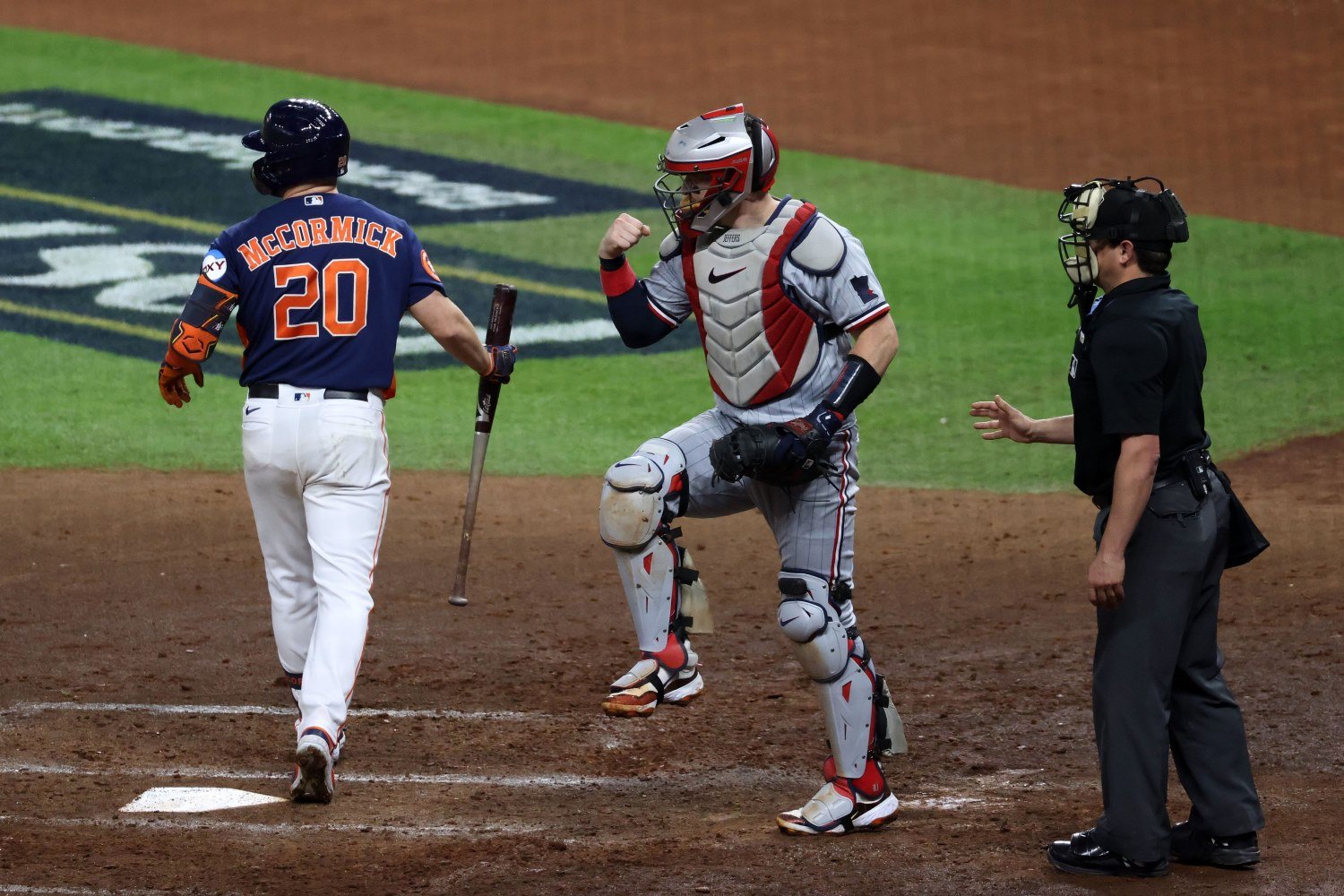 [Ed. note: In a spasm of optimism, we're kicking off Tuesday with a pair of pieces examining the two most likely candidates to host the Twins in a Wild Card series, should they get there. Check back later this morning to read Matthew Taylor's perspective on why the Orioles would be the more suitable matchup. Here's Eric on why he believes it's Houston.] Look, there’s no guarantee the Twins make the playoffs. The last five weeks have been frustrating to watch. However, it's still a coin toss, and it makes sense to evaluate their competition. As of now, the likely opponent will either be the Orioles or the Astros. While the Orioles haven’t been playing great baseball recently, either (three straight losing months!), they are a fundamentally better team than the Astros. Should the Twins line up against Houston for a three-game series, they actually stack up well, based on results, health, and pitching matchups. We will look at each individually. Results The Twins have done well against the Astros this year, winning four of six tilts while outscoring them 36-27. In the 2023 regular season, the Twins again won four of six, before losing three of four in the ALDS. Including the playoffs, that's a 9-7 record over the past two seasons. Using that small sample size, the Twins have put up a .788 OPS in the regular season, compared to a .689 OPS for the Astros. The Twins had some stinkers in the ALDS last season, but the Astros are not world-beaters offensively, with Kyle Tucker still feeling his way back in the wake of a long absence from the lineup. This season, looking at overall results, even with the Twins' recent offensive collapse, the Astros have a team OPS just .013 better than the Twins, at .743. If you look at Astros Twitter, you will see posts about a lack of clutch hitting that make Twins Twitter look happy by comparison. Advantage: it’s close, but if even a couple Twins hitters start pulling the ball again, I would give the advantage to the Twins. Health While the Twins are not a picture of health, they are not missing marquee players, aside from Joe Ryan and Brock Stewart. They do have a number of players--like Royce Lewis, Trevor Larnach, Carlos Correa, and Byron Buxton--who are banged up, but all are available. The Astros, on the other hand, have lost a number of players for the season, and others may be joining them. Yordan Alvarez is getting imaging on his knee. Outfielder Ben Gamel fractured his fibula last week and will likely be out for the postseason. Outfielder Chas McCormick also hit the IL with a broken hand last week. Reliever Tayler Scott hit the IL on Saturday with a thoracic spine injury. He’s pitched the third-most innings of any Astros reliever and has put up great results for them, with a 2.33 ERA over 68 innings. Justin Verlander is just back from a two-month stint on the IL and hasn’t performed well, to the point where even he doesn’t think he’s going to be a playoff starter this season. Relievers Penn Murfee, Kendall Graveman, and Oliver Ortega are all on the 60-day IL and are done for the season, as are starters JP France, Luis Garcia, Lance McCullers, Cristian Javier, and José Urquidy. This is not the deep, fearsome pitching staff you remember from Houston's several recent runs deep into the playoffs. All of that leaves them a bit short of starting pitching and outfielders. Advantage: Twins. Pitchers The Astros' likely three starters in a best-of-three Wild Card Series would be Framber Valdez, Yusei Kikuchi, and Hunter Brown. How have they fared against the Twins over the past two seasons? Well, sort of mediocre. Their ace, Valdez, has pitched to a 5.34 ERA with a 9:5 strikeout to walk ratio across 11 1/3 innings. Brown has been equally bad, throwing 25 2/3 innings of 5.35 ERA ball with a 30:7 strikeout to walk ratio against Minnesota. Kikuchi has been better, with a 3.41 ERA and a 7:2 strikeout to walk throughout 14 2/3 innings, but that's not many missed bats. Twins hitters have done well against two of their three likely pitching opponents. How have the Twins’ likely starting pitchers performed against the Astros? Pablo López had his shutdown outing against the Astros in Game 2 of the ALDS, and is sitting on 19 strikeouts and four walks across 19 innings of 3.68 ERA ball against them since the start of last year. Bailey Ober’s only appearances against the Astros came in relief during the ALDS, a role Ober isn’t particularly suited to. His results were terrible, with a 12.46 ERA and four homers allowed across 13 outs. Since Ober has taken a step forward this season, however, we can't take much from that. Neither David Festa nor Simeon Woods Richardson, the likely options for a third starter, have faced the Astros in their young careers. This would give them a bit of a leg up, as the Astros would have to rely on reports and video rather than internal comfortability. Based on these factors, the Twins would likely have an edge on the pitching side of things. Advantage: Twins, as long as Ober isn't needed to save the season Sunday. Of course, none of this matters if the Twins don't start hitting over the final handful of games, and if their bullpen can’t protect a lead. Baseball is about hope, so here’s hoping the team can find their midseason form. If they can, and if they match up against the Astros, they have a real chance. Then, all they would have to do is (gulp) beat the Guardians.
 -
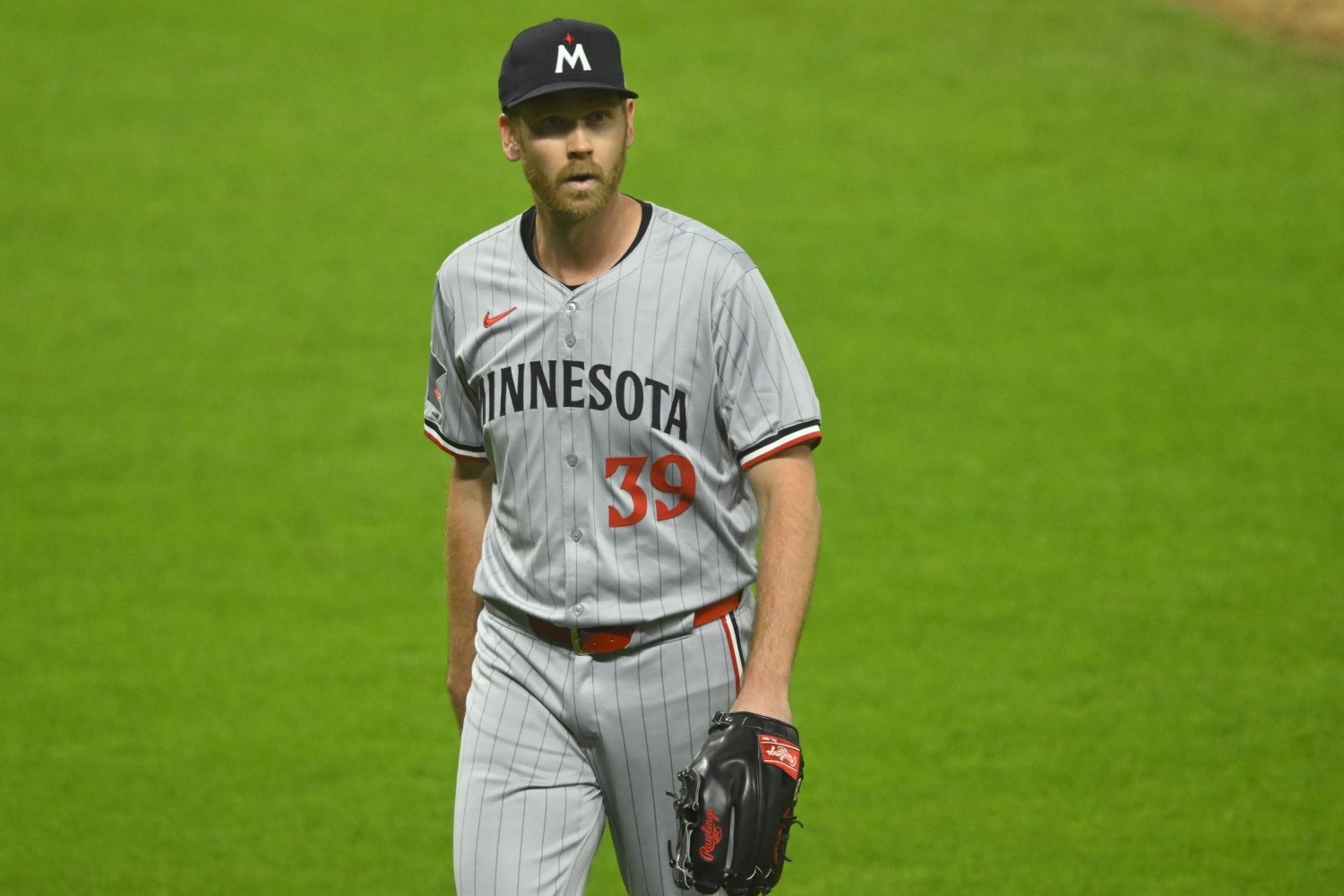 Their bullpen has collapsed, most of the hitters aren’t hitting, and the Twins have seen bloop hit after bloop hit land against them. Coin-flip calls are consistently going against them. They are recording outs on the basepaths at an alarming rate. After Wednesday’s games, the Twins are now hanging onto the final Wild Card spot by just a half-game over the Tigers, with the Mariners nipping at their heels. Is this really going to fall apart? Since Aug. 17, the Twins have gone 10-19. Over that same stretch, the Tigers have gone 17-8. The culprits? Every hitter not named Matt Wallner, Kyle Farmer, Trevor Larnach, and to a lesser extent Carlos Santana; every pitcher not named Bailey Ober, Pablo López, or Cole Sands; and every opposing team playing like they want to win more than the Twins. Let’s dig in. The Unfortunate Losses As mentioned above, the Twins have blown five likely wins. Aug. 18: The Twins were winning 4-0 for much of the game, thanks to a López gem. Jorge Alcalá pitched the seventh inning in relief, and gave up five earned runs while recording just two outs. The Twins came back and tied it up at 5-5 in the 9th inning, forcing extra innings. They had a chance to score in the 10th, but fell victim to a play at the plate going against them. In the bottom of the frame, the Rangers scored on a José Miranda error. At one point, the Twins were 94.7% likely to win the game. Aug. 20: Just two days later, the Twins were up 5-3 heading into the bottom of the eighth. They were 86.4% likely to win... and, smash cut to Steven Okert giving up four runs while recording just one out, and the Twins lost another winnable game. Aug. 25: Another heartbreaker. The Twins were winning 2-1 headed into the 9th inning, and had a 91.3% chance to win. Naturally, they turned to their shutdown closer, who… wasn’t up to the shutdown. He gave up the lead and the game. Sept. 16: Against the Guardians, the Twins were up 3-1 in the seventh inning, after another strong López start. They had an 88.8% chance to win the game at that point--then, Griffin Jax, who’s been their best pitcher all season, gave up two runs and the lead. The Twins, of course, lost. Sept. 18: Bailey Ober shoved. He set a new career high in strikeouts, and his only mistakes were two solo homers to Josh Naylor. In this case, the offense couldn’t hit in key spots, going just 4-14 with runners in scoring position. With the game headed into extra innings, the Twins scored two in the top of the frame, then went with Ronny Henriquez over Cole Sands for the bottom of the 10th. It didn’t go well. Three Guardians scored, to walk it off. After the top of the 10th, the Twins had an 86.2% chance to win. This, of course, does not factor in other unfortunate losses, like the Aug. 31 Zebby Matthews start against the Blue Jays where the game was over five minutes in, or the Sept. 14 drubbing at the hands of the Reds. This Twins team can find all sorts of ways to lose. The Hitters In September, the Twins have a .664 OPS. That’s not great for a team with playoff aspirations, as it’s solidly below average. Many individual players have performed worse. All-Star Willi Castro has a .634 over that span. Royce Lewis is sitting at .505. Brooks Lee is even worse, at .469. José Miranda is at .564. Christian Vázquez is at .475. Edouard Julien is another member of the sub-.600 OPS club, at .593 this month. It’s tough to win when that many hitters just aren’t hitting consistently. Oh, and the defense has been bad, too. That ties directly into the pitchers blowing leads. The Pitchers Some ink has been spilled around the rookie trio of Simeon Woods Richardson, David Festa, and Zebby Matthews running out of gas, as they eclipse their professional innings thrown highs for single seasons. However, it bears remembering that those three pitchers have not consistently performed well, and are also not going deep into games, forcing extra work on an already shaky bullpen. Speaking of which: Did you know that the Twins relievers are allowing inherited runners to score at a historic rate? True story. Bert Blyleven always used to say “Walks will Haunt” on broadcasts. Perhaps that should be updated for the 2024 season - something like “baserunners of any kind will haunt if a relief pitcher is coming into the game”. Doesn’t have quite the same ring to it though. Jhoan Durán carries a 6.75 ERA over the past month, despite encouraging peripherals. Jax has given up runs in three of his past seven outings. So has Caleb Thielbar. For Alcalá, it’s five of his past nine. Louie Varland has gotten shelled both as a starter and as a reliever. Michael Tonkin has allowed runs in half of his past eight games. This, of course, does not factor in all of the relievers the Twins have jettisoned already this season, including Jay Jackson, Josh Staumont, Steven Okert, Trevor Richards, and a couple others. If you have only two starters you can trust, and a bullpen that’s seemingly overmatched on a nightly basis, that’s a recipe for disaster. In addition to the bad luck, the mediocre pitching, and the lack of clutch hitting, let’s not forget the questionable send calls leading to so many outs at the plate; the strange roster moves; and of course, the Pohlads' unwillingness to spend an even remotely acceptable amount at the trade deadline. Overall, the dog days of the 2024 season have provided a true comedy of errors. With just 10 games left, based on the caliber of play, the results of this season feel inevitable as the Twins keep finding new ways to lose. Will Twins fans turn to the written-off, but unexpectedly 2-0 Vikings? The Timberwolves season starts soon as well. Unfortunately, if so, this will likely give the Pohlads cover to not spend this offseason, because “if only fans were interested…”. People often say it’s the journey, not the destination. Well, the journey over the past month has not been a good one. If the Twins have any hope of playing into October, they need to start playing better. The ideal time was a month ago. The next-best time is starting now. What do you think? Are you still hopeful? Do you have faith the Twins can turn it around?
 -
As recently as an August 17th, the Twins had a 92.4% chance to make the playoffs. Since then, they have lost no fewer than five games in which they had better than an 85% chance of winning the game. So in a way, we're just getting daily practice in disappointment, gearing up for the big one. Image courtesy of © David Richard-Imagn Images As recently as an August 17th, the Twins had a 92.4% chance to make the playoffs. Since then, they have lost no fewer than five games in which they had better than an 85% chance of winning the game. So in a way, we're just getting daily practice in disappointment, gearing up for the big one. Their bullpen has collapsed, most of the hitters aren’t hitting, and the Twins have seen bloop hit after bloop hit land against them. Coin-flip calls are consistently going against them. They are recording outs on the basepaths at an alarming rate. After Wednesday’s games, the Twins are now hanging onto the final Wild Card spot by just a half-game over the Tigers, with the Mariners nipping at their heels. Is this really going to fall apart? Since Aug. 17, the Twins have gone 10-19. Over that same stretch, the Tigers have gone 17-8. The culprits? Every hitter not named Matt Wallner, Kyle Farmer, Trevor Larnach, and to a lesser extent Carlos Santana; every pitcher not named Bailey Ober, Pablo López, or Cole Sands; and every opposing team playing like they want to win more than the Twins. Let’s dig in. The Unfortunate Losses As mentioned above, the Twins have blown five likely wins. Aug. 18: The Twins were winning 4-0 for much of the game, thanks to a López gem. Jorge Alcalá pitched the seventh inning in relief, and gave up five earned runs while recording just two outs. The Twins came back and tied it up at 5-5 in the 9th inning, forcing extra innings. They had a chance to score in the 10th, but fell victim to a play at the plate going against them. In the bottom of the frame, the Rangers scored on a José Miranda error. At one point, the Twins were 94.7% likely to win the game. Aug. 20: Just two days later, the Twins were up 5-3 heading into the bottom of the eighth. They were 86.4% likely to win... and, smash cut to Steven Okert giving up four runs while recording just one out, and the Twins lost another winnable game. Aug. 25: Another heartbreaker. The Twins were winning 2-1 headed into the 9th inning, and had a 91.3% chance to win. Naturally, they turned to their shutdown closer, who… wasn’t up to the shutdown. He gave up the lead and the game. Sept. 16: Against the Guardians, the Twins were up 3-1 in the seventh inning, after another strong López start. They had an 88.8% chance to win the game at that point--then, Griffin Jax, who’s been their best pitcher all season, gave up two runs and the lead. The Twins, of course, lost. Sept. 18: Bailey Ober shoved. He set a new career high in strikeouts, and his only mistakes were two solo homers to Josh Naylor. In this case, the offense couldn’t hit in key spots, going just 4-14 with runners in scoring position. With the game headed into extra innings, the Twins scored two in the top of the frame, then went with Ronny Henriquez over Cole Sands for the bottom of the 10th. It didn’t go well. Three Guardians scored, to walk it off. After the top of the 10th, the Twins had an 86.2% chance to win. This, of course, does not factor in other unfortunate losses, like the Aug. 31 Zebby Matthews start against the Blue Jays where the game was over five minutes in, or the Sept. 14 drubbing at the hands of the Reds. This Twins team can find all sorts of ways to lose. The Hitters In September, the Twins have a .664 OPS. That’s not great for a team with playoff aspirations, as it’s solidly below average. Many individual players have performed worse. All-Star Willi Castro has a .634 over that span. Royce Lewis is sitting at .505. Brooks Lee is even worse, at .469. José Miranda is at .564. Christian Vázquez is at .475. Edouard Julien is another member of the sub-.600 OPS club, at .593 this month. It’s tough to win when that many hitters just aren’t hitting consistently. Oh, and the defense has been bad, too. That ties directly into the pitchers blowing leads. The Pitchers Some ink has been spilled around the rookie trio of Simeon Woods Richardson, David Festa, and Zebby Matthews running out of gas, as they eclipse their professional innings thrown highs for single seasons. However, it bears remembering that those three pitchers have not consistently performed well, and are also not going deep into games, forcing extra work on an already shaky bullpen. Speaking of which: Did you know that the Twins relievers are allowing inherited runners to score at a historic rate? True story. Bert Blyleven always used to say “Walks will Haunt” on broadcasts. Perhaps that should be updated for the 2024 season - something like “baserunners of any kind will haunt if a relief pitcher is coming into the game”. Doesn’t have quite the same ring to it though. Jhoan Durán carries a 6.75 ERA over the past month, despite encouraging peripherals. Jax has given up runs in three of his past seven outings. So has Caleb Thielbar. For Alcalá, it’s five of his past nine. Louie Varland has gotten shelled both as a starter and as a reliever. Michael Tonkin has allowed runs in half of his past eight games. This, of course, does not factor in all of the relievers the Twins have jettisoned already this season, including Jay Jackson, Josh Staumont, Steven Okert, Trevor Richards, and a couple others. If you have only two starters you can trust, and a bullpen that’s seemingly overmatched on a nightly basis, that’s a recipe for disaster. In addition to the bad luck, the mediocre pitching, and the lack of clutch hitting, let’s not forget the questionable send calls leading to so many outs at the plate; the strange roster moves; and of course, the Pohlads' unwillingness to spend an even remotely acceptable amount at the trade deadline. Overall, the dog days of the 2024 season have provided a true comedy of errors. With just 10 games left, based on the caliber of play, the results of this season feel inevitable as the Twins keep finding new ways to lose. Will Twins fans turn to the written-off, but unexpectedly 2-0 Vikings? The Timberwolves season starts soon as well. Unfortunately, if so, this will likely give the Pohlads cover to not spend this offseason, because “if only fans were interested…”. People often say it’s the journey, not the destination. Well, the journey over the past month has not been a good one. If the Twins have any hope of playing into October, they need to start playing better. The ideal time was a month ago. The next-best time is starting now. What do you think? Are you still hopeful? Do you have faith the Twins can turn it around? View full article
-
Kyle Farmer is a lot of things: clubhouse glue; actor; sausage purveyor; realist; and suddenly, a good hitter. What’s been behind his offensive surge, and can he keep it up? Image courtesy of © Jesse Johnson-Imagn Images Kyle Farmer is a lot of things: clubhouse glue; actor; sausage purveyor; realist; and suddenly, a good hitter. What’s been behind his offensive surge, and can he keep it up? In 2023, Kyle Farmer was decent. He hit for a very average .725 OPS across 369 plate appearances. He played all over the diamond, and was roughly average as a fielder. By all accounts, Farmer was incredibly well-liked in the clubhouse, and the combination of adequate performance and likability led to him remaining with the Twins this season. Having a role player who’s still essentially an average player is a luxury. Entering last offseason, given the Twins’ payroll inflexibility, many assumed that Farmer would be a prime non-tender candidate. His projected arbitration-determined salary would consume a significant part of their budget, and could be better used elsewhere. However, the Twins either overvalued his skillset or his charisma, or overestimated his trade market. They tendered him a deal, eventually agreeing to terms outside arbitration, and at the time, even Farmer expressed surprise at his situation for the year. For most of this campaign, Farmer has been a slightly worse version of the 2023 iteration. He wasn’t hitting, putting up a .557 OPS as he slumped through the first half of the season. His sprint speed was a little worse. By midseason, fans were calling for the Twins to trade him or designate him for assignment, as he hit like a backup catcher for half a season. Then, the Twins announced that Farmer had been dealing with an injury for much of the year. He hit the IL, spent a month there, and upon his return, showed fans something unexpected. Since Aug. 9, Farmer has 64 plate appearances. Over that span, he has hit .305, while slugging a ridiculous .627. He’s also cut down his strikeout rate to an impressive 17.2% over this stretch. In these 27 games, his .955 OPS is highest of anyone on the team not named Byron Buxton, and over a much larger sample than Buxton, who's just getting back from his own IL stint. Where did this offensive breakout come from, and is it sustainable? To begin, let’s look at a direct side-by-side comparison, and see what we can glean. Pre IL Stint Post Return OPS .557 .955 Slugging .265 .627 wOBA .256 .394 Barrel Rate 3% 14% Average Launch Angle 16.1 22.3 Average EV 85.6 91.4 Hard Hit 22.8% 44% K% 20.5% 17.9% BABIP .248 .289 So, a stark contrast, right? What’s been driving it? For starters, to state the obvious, he’s seeing the ball much better, and producing at a higher level across the board. What's behind this? Pitch Mix Farmer has done well against changeups all season. Post-return, he’s been crushing them, with a 5.2 run value on that pitch type. The scouting reports seem to have not caught up to that fact, though, as he’s seen proportionally more of them since his IL stint. Pitchers are also pumping more fastballs at him. Historically, that’s been a bit of a problem for him, as Farmer does not have elite bat speed. His swing averages around three miles per hour slower than league average. More telling, his fast swing rate (characterized as any swing faster than 75 miles per hour) sits at just 1.3% on the season, compared to the league average of 22.5%. While his results against four-seam fastballs are the worst of any pitch, since his return, he’s been better at catching up to them, just a bit worse than average. Hitting for Average So, he’s seeing the ball better and crushing changeups. Can he sustain it? BABIP is usually a good predictor for regression. In this case, Farmer’s BABIP since returning from the IL is actually aligned with his results, at .289. This is a sign that good times should continue. Hitting for Power In the first half, Farmer wasn’t squaring up, with just three barrels across 101 batted-ball events for a 3% barrel rate. Since his return, he’s had six barrels across roughly 40 batted balls. According to Baseball Savant, of the five home runs he’s hit since his return, two were no-doubters, and he’s also had four balls that would be out in most ballparks. He's also been pulling the ball 44% of the time, compared to 34% prior to his IL stint. Pulling the ball is generally the right approach to hit for power, and he has committed to this approach. It's how he found success last year. All that said, this is the one piece that’s likely to be unsustainable for Farmer. He’s almost certainly not going to slug .600 long-term. But, can he do it for another month? Maybe. Based on these things, it’s fair to conclude that yes, Farmer’s improvements at the plate are for real. And, it’s about the best possible time for him to turn it on. With two weeks left in the regular season, and a fairly thin margin for error to reach the postseason, the Twins need all the hitting they can muster. If Farmer does keep it up, he could also be setting himself up for a decent deal this offseason — it just probably won’t be with the Twins. Minnesota holds a $6.25-million mutual option, which will almost certainly be declined, and Farmer will test his fortunes as a 34-year-old utility infielder on the open market. But, his time with the Twins will forever be remembered for the Home Run Sausage. That memory will be a bit moldy if the team misses the playoffs, but if they make it and have another strong October, it'll be a piquant and poignant legacy. View full article
-
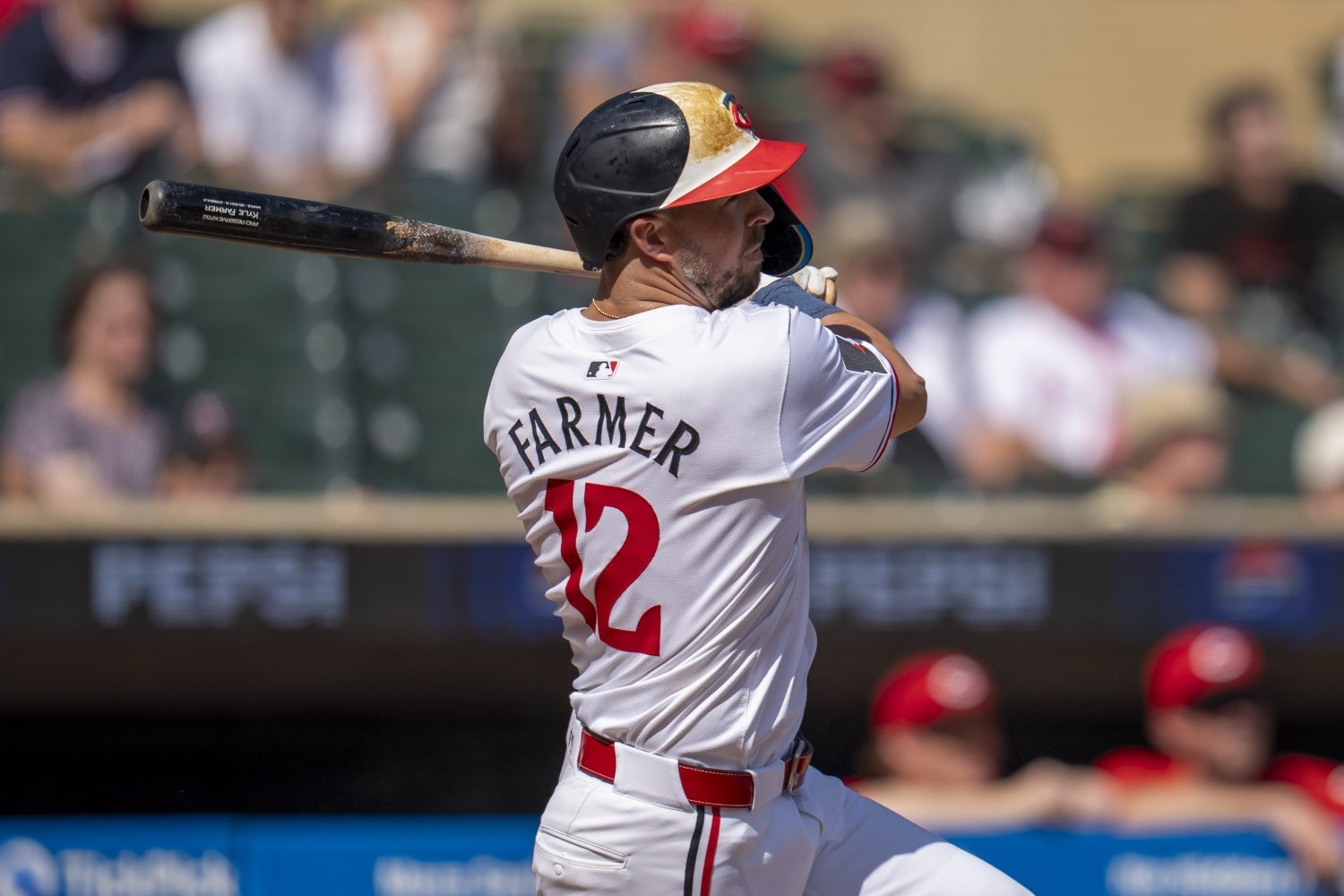 In 2023, Kyle Farmer was decent. He hit for a very average .725 OPS across 369 plate appearances. He played all over the diamond, and was roughly average as a fielder. By all accounts, Farmer was incredibly well-liked in the clubhouse, and the combination of adequate performance and likability led to him remaining with the Twins this season. Having a role player who’s still essentially an average player is a luxury. Entering last offseason, given the Twins’ payroll inflexibility, many assumed that Farmer would be a prime non-tender candidate. His projected arbitration-determined salary would consume a significant part of their budget, and could be better used elsewhere. However, the Twins either overvalued his skillset or his charisma, or overestimated his trade market. They tendered him a deal, eventually agreeing to terms outside arbitration, and at the time, even Farmer expressed surprise at his situation for the year. For most of this campaign, Farmer has been a slightly worse version of the 2023 iteration. He wasn’t hitting, putting up a .557 OPS as he slumped through the first half of the season. His sprint speed was a little worse. By midseason, fans were calling for the Twins to trade him or designate him for assignment, as he hit like a backup catcher for half a season. Then, the Twins announced that Farmer had been dealing with an injury for much of the year. He hit the IL, spent a month there, and upon his return, showed fans something unexpected. Since Aug. 9, Farmer has 64 plate appearances. Over that span, he has hit .305, while slugging a ridiculous .627. He’s also cut down his strikeout rate to an impressive 17.2% over this stretch. In these 27 games, his .955 OPS is highest of anyone on the team not named Byron Buxton, and over a much larger sample than Buxton, who's just getting back from his own IL stint. Where did this offensive breakout come from, and is it sustainable? To begin, let’s look at a direct side-by-side comparison, and see what we can glean. Pre IL Stint Post Return OPS .557 .955 Slugging .265 .627 wOBA .256 .394 Barrel Rate 3% 14% Average Launch Angle 16.1 22.3 Average EV 85.6 91.4 Hard Hit 22.8% 44% K% 20.5% 17.9% BABIP .248 .289 So, a stark contrast, right? What’s been driving it? For starters, to state the obvious, he’s seeing the ball much better, and producing at a higher level across the board. What's behind this? Pitch Mix Farmer has done well against changeups all season. Post-return, he’s been crushing them, with a 5.2 run value on that pitch type. The scouting reports seem to have not caught up to that fact, though, as he’s seen proportionally more of them since his IL stint. Pitchers are also pumping more fastballs at him. Historically, that’s been a bit of a problem for him, as Farmer does not have elite bat speed. His swing averages around three miles per hour slower than league average. More telling, his fast swing rate (characterized as any swing faster than 75 miles per hour) sits at just 1.3% on the season, compared to the league average of 22.5%. While his results against four-seam fastballs are the worst of any pitch, since his return, he’s been better at catching up to them, just a bit worse than average. Hitting for Average So, he’s seeing the ball better and crushing changeups. Can he sustain it? BABIP is usually a good predictor for regression. In this case, Farmer’s BABIP since returning from the IL is actually aligned with his results, at .289. This is a sign that good times should continue. Hitting for Power In the first half, Farmer wasn’t squaring up, with just three barrels across 101 batted-ball events for a 3% barrel rate. Since his return, he’s had six barrels across roughly 40 batted balls. According to Baseball Savant, of the five home runs he’s hit since his return, two were no-doubters, and he’s also had four balls that would be out in most ballparks. He's also been pulling the ball 44% of the time, compared to 34% prior to his IL stint. Pulling the ball is generally the right approach to hit for power, and he has committed to this approach. It's how he found success last year. All that said, this is the one piece that’s likely to be unsustainable for Farmer. He’s almost certainly not going to slug .600 long-term. But, can he do it for another month? Maybe. Based on these things, it’s fair to conclude that yes, Farmer’s improvements at the plate are for real. And, it’s about the best possible time for him to turn it on. With two weeks left in the regular season, and a fairly thin margin for error to reach the postseason, the Twins need all the hitting they can muster. If Farmer does keep it up, he could also be setting himself up for a decent deal this offseason — it just probably won’t be with the Twins. Minnesota holds a $6.25-million mutual option, which will almost certainly be declined, and Farmer will test his fortunes as a 34-year-old utility infielder on the open market. But, his time with the Twins will forever be remembered for the Home Run Sausage. That memory will be a bit moldy if the team misses the playoffs, but if they make it and have another strong October, it'll be a piquant and poignant legacy.
 -
Over the past month, the Twins bullpen has proven to be quite leaky, leading to several heart-wrenching late-inning losses. With their trio of rookie starters wearing down, the Twins have relied on their bullpen heavily. As they claimed lefty starter Cole Irvin from the Orioles, someone had to be sent down. Somewhat inexplicably, that person was Jorge Alcalá, the Twins’ fourth-best reliever. Why do the Twins hate Alcalá, and what do they see that the average fan doesn’t? Image courtesy of © Jay Biggerstaff-Imagn Images Over the past month, the Twins bullpen has proven to be quite leaky, leading to several heart-wrenching late-inning losses. With their trio of rookie starters wearing down, the Twins have relied on their bullpen heavily. As they claimed lefty starter Cole Irvin from the Orioles, someone had to be sent down. Somewhat inexplicably, that person was Jorge Alcalá, the Twins’ fourth-best reliever. Why do the Twins hate Alcalá, and what do they see that the average fan doesn’t? The news hit the wire with a thwack: the roster casualty for the arrival of lefty swingman Cole Irvin Tuesday will be erstwhile setup man Jorge Alcalá, rather than any of the struggling youngsters or fungible veterans who populate the roster. Throughout his career, Alcalá has been generally good, when healthy. The problem is that he has rarely been healthy for protracted stretches. This season marks the first time since 2021 he’s been able to pitch a full season. He’s responded by producing a 3.46 ERA across 54 innings. While his peripherals are a mixed bag (3.28 xERA, 4.38 FIP, 23.3 K%, 8.5 BB%), Alcalá has gotten the job done the majority of the time, and has been used in high-leverage spots for much of the season. Despite this, the Twins have handled Alcalá curiously for someone with his background and potential. In some ways, his usage has been similar to a waiver pickup or minor-league signing. This is seen in a couple of ways: his volume, and his optioning. Workload As mentioned above, Alcalá has had arm problems throughout his career. In 2022 and 2023, he was limited to just 19 2/3 big-league innings combined. Rather than being brought back slowly this spring, however, he was used aggressively. In April and May, he threw two innings in appearances on five different occasions. In June, he threw on back-to-back days no fewer than five times, despite eclipsing his innings total since 2021 by the middle of that month. Including his innings in the minors, he’s at 63 1/3--the highest he's posted since moving to the bullpen in 2020--with (hopefully) six weeks left in the season. Shuttled Despite his reasonably strong results, Alcalá has repeatedly been one of the first arms sent down when a roster spot is needed. Yesterday’s news marks the third time Alcalá has been sent down this season. He was also optioned on Apr. 14 and on May 8. You might assume this was due to poor performance. You would be wrong. His stat line when he was first sent down included a 0.00 ERA, a 2.67 FIP, and two strikeouts in two innings. The Twins just decided they needed the roster spot. After being called up on May 4, he pitched in two more games. The second was an implosion, and he was sent back down. On May 26, he was called up to the Twins again, where he remained until yesterday. Yes, his results have suffered over the past few weeks, with a 1.43 WHIP. Yes, he has allowed runs in five of his last eight appearances. That’s not good. He’s probably still more reliable than pitchers like Scott Blewett, Caleb Thielbar, and Michael Tonkin, and he obviously has much better raw stuff. In 2021, he was similarly inconsistent, but spent the whole season with the big-league team. What has changed? Why do they seem not to view him as sometimes a secondary setup man and other times a low-leverage fill-in, but rather, as either that setup-caliber arm or something less than a big-league hurler? The Saints' season is over at the end of this week. Is this move to give Alcalá rest? Given his health concerns, this could be wise, particularly if they don’t want him to throw but don't want to put him on the injured list. Or, does this signal something else? A desire to move one of Zebby Matthews or David Festa to the bullpen? Is it possible that Jorge Alcalá is no longer in the Twins' future plans? A lot may be revealed by Cole Irvin’s early usage and performance, and the decisions that follow. Because he was not on the roster prior to Sept. 1, Irvin will not be eligible for a potential playoff roster. It Alcalá rejoins the Twins for the Wild Card Series, it’s safe to assume this is a rest for him and a tryout for someone else. The next two weeks will be telling. View full article
-
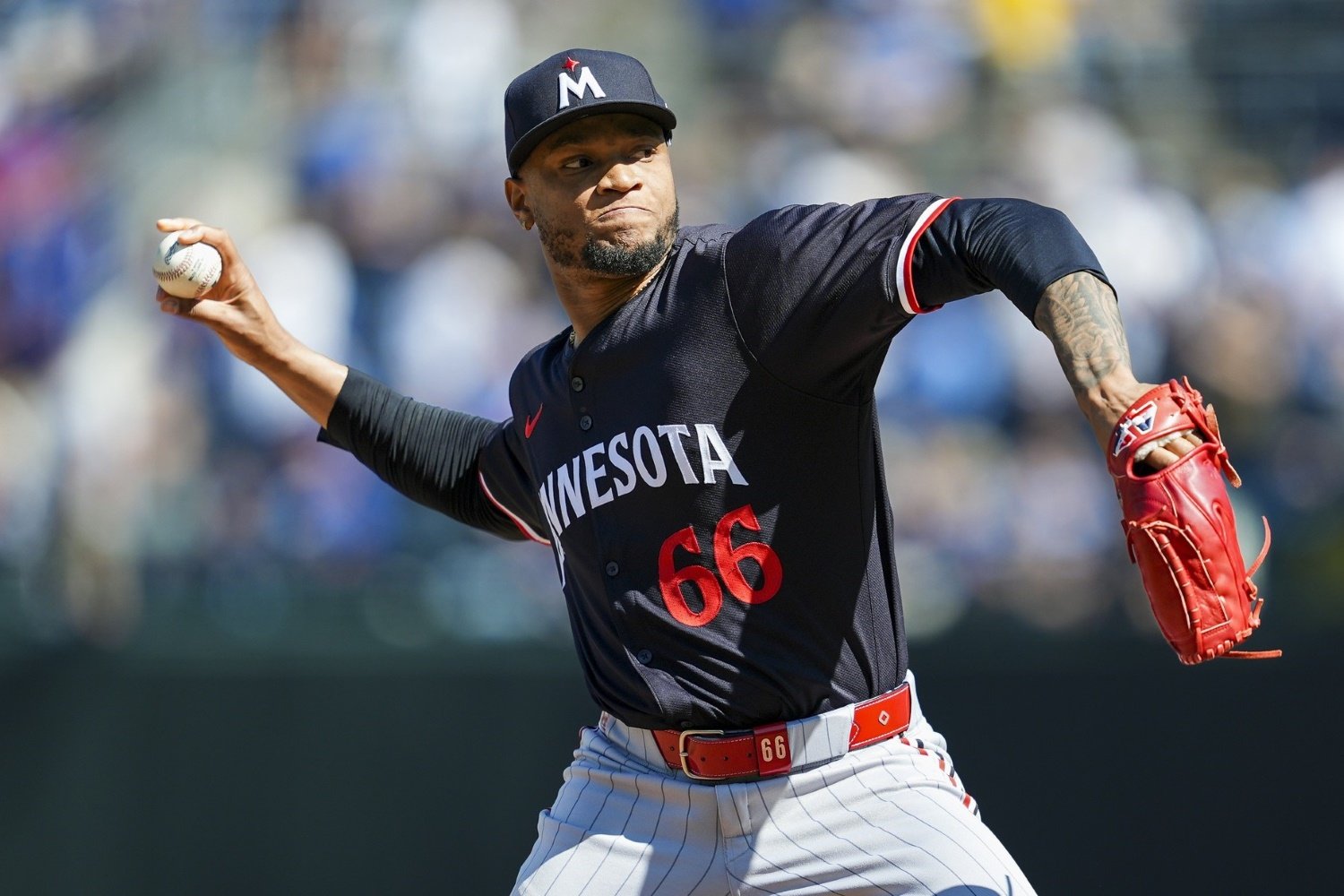 The news hit the wire with a thwack: the roster casualty for the arrival of lefty swingman Cole Irvin Tuesday will be erstwhile setup man Jorge Alcalá, rather than any of the struggling youngsters or fungible veterans who populate the roster. Throughout his career, Alcalá has been generally good, when healthy. The problem is that he has rarely been healthy for protracted stretches. This season marks the first time since 2021 he’s been able to pitch a full season. He’s responded by producing a 3.46 ERA across 54 innings. While his peripherals are a mixed bag (3.28 xERA, 4.38 FIP, 23.3 K%, 8.5 BB%), Alcalá has gotten the job done the majority of the time, and has been used in high-leverage spots for much of the season. Despite this, the Twins have handled Alcalá curiously for someone with his background and potential. In some ways, his usage has been similar to a waiver pickup or minor-league signing. This is seen in a couple of ways: his volume, and his optioning. Workload As mentioned above, Alcalá has had arm problems throughout his career. In 2022 and 2023, he was limited to just 19 2/3 big-league innings combined. Rather than being brought back slowly this spring, however, he was used aggressively. In April and May, he threw two innings in appearances on five different occasions. In June, he threw on back-to-back days no fewer than five times, despite eclipsing his innings total since 2021 by the middle of that month. Including his innings in the minors, he’s at 63 1/3--the highest he's posted since moving to the bullpen in 2020--with (hopefully) six weeks left in the season. Shuttled Despite his reasonably strong results, Alcalá has repeatedly been one of the first arms sent down when a roster spot is needed. Yesterday’s news marks the third time Alcalá has been sent down this season. He was also optioned on Apr. 14 and on May 8. You might assume this was due to poor performance. You would be wrong. His stat line when he was first sent down included a 0.00 ERA, a 2.67 FIP, and two strikeouts in two innings. The Twins just decided they needed the roster spot. After being called up on May 4, he pitched in two more games. The second was an implosion, and he was sent back down. On May 26, he was called up to the Twins again, where he remained until yesterday. Yes, his results have suffered over the past few weeks, with a 1.43 WHIP. Yes, he has allowed runs in five of his last eight appearances. That’s not good. He’s probably still more reliable than pitchers like Scott Blewett, Caleb Thielbar, and Michael Tonkin, and he obviously has much better raw stuff. In 2021, he was similarly inconsistent, but spent the whole season with the big-league team. What has changed? Why do they seem not to view him as sometimes a secondary setup man and other times a low-leverage fill-in, but rather, as either that setup-caliber arm or something less than a big-league hurler? The Saints' season is over at the end of this week. Is this move to give Alcalá rest? Given his health concerns, this could be wise, particularly if they don’t want him to throw but don't want to put him on the injured list. Or, does this signal something else? A desire to move one of Zebby Matthews or David Festa to the bullpen? Is it possible that Jorge Alcalá is no longer in the Twins' future plans? A lot may be revealed by Cole Irvin’s early usage and performance, and the decisions that follow. Because he was not on the roster prior to Sept. 1, Irvin will not be eligible for a potential playoff roster. It Alcalá rejoins the Twins for the Wild Card Series, it’s safe to assume this is a rest for him and a tryout for someone else. The next two weeks will be telling.
- 68 comments
-
- 8
-

-
- jorge alcala
- cole irvin
- (and 2 more)
-
The Twins are beset by problems on all sides. Their two best hitters? Injured. Their best defenders up the middle? Injured. The rest of the lineup? Mostly not hitting. The defense? Not defending. Their most consistent pitcher? Injured. Their stud closer? Missing velocity, and not bats. Most of the rest of the bullpen? Leaky. Offseason pickups? Mostly not working out. The lone trade deadline acquisition? Terrible, even at Triple-A. The manager? Big mad. Teams like the Red Sox, Tigers, and Mariners? Catching up. With fewer than 20 games left, the Twins have 99 problems--but Cole Sands ain’t one. Image courtesy of © Raymond Carlin III-Imagn Images The Twins are beset by problems on all sides. Their two best hitters? Injured. Their best defenders up the middle? Injured. The rest of the lineup? Mostly not hitting. The defense? Not defending. Their most consistent pitcher? Injured. Their stud closer? Missing velocity, and not bats. Most of the rest of the bullpen? Leaky. Offseason pickups? Mostly not working out. The lone trade deadline acquisition? Terrible, even at Triple-A. The manager? Big mad. Teams like the Red Sox, Tigers, and Mariners? Catching up. With fewer than 20 games left, the Twins have 99 problems--but Cole Sands ain’t one. With the Twins in the doldrums as they desperately try to cling to a postseason that’s slipping away from them, most fans are justifiably somewhere on the continuum between frustrated and apathetic. The baseball season is a grind, with significant peaks and valleys, and we are currently witnessing a deep valley. However, if the season ended today, the Twins would still make the playoffs. While things feel grim on a daily basis, let’s not get lost in despair. Instead, let’s find the joy in an unexpected player turning into a key bullpen arm for the next few seasons. Let’s take a minute to appreciate how great Cole Sands has been, and the impact he has made for the Twins. Given the sheer number of relievers the Twins were expecting to contribute this season who have either been injured or ineffective, Sands’s emergence as a dominant late-inning arm may have almost single-handedly salvaged the bullpen this season. So far in 2024, despite making the team as a mop-up arm, Sands has pitched 63 innings of 2.98 ERA ball across 51 appearances. His FIP is an even shinier 2.88, suggesting that there’s little smoke-and-mirrors behind his results. He’s been consistently good, to the point that he’s pitched his way into a late-inning role and may be the second-most reliable reliever currently on the roster. He’s striking out about 10 guys per nine innings, and has discovered elite command and control, to the point that he’s walking just 1.14 per nine innings. Looking at his Savant page, check out all that sweet, sweet red. Prior to this season, he had given fans little reason for optimism. Debuting as a starter in 2022, Sands gave up 13 earned runs in 12 1/3 innings across three starts. Hitters posted a .951 OPS against him, and he had a WHIP over 2.00. The Twins had seen enough, and converted him to relief. He was a little better, but not noteworthy. With a 3.44 ERA but an xFIP of 4.70, he didn’t strike many out and walked a few too many. In 2023, the Twins had him raise his arm slot, but despite that tweak, he was downright bad, nearly pitching himself out of the future plans. In 22 innings, he walked an untenable 14% of batters and finished the season with a 5.53 xFIP. You saw his 2024 savant page, now here’s his 2023 page for contrast. How did he get to this point? It comes down to velocity, location, and pitch mix. Matt Trueblood wrote an excellent caretaker article last month digging into specifics. If you haven’t signed up yet, now’s a great time to do so. In conjunction with the Twins' coaching and analytics departments, Sands has learned how to be a major-league pitcher. He's for real, and his performance is likely sustainable. In short, it sure looks like he’s a setup-caliber reliever moving forward. One of the best parts of baseball fandom is when guys who have been nearly written off go on to perform well enough to write themselves into the team’s future. Whatever happens with the Twins over the next three weeks, Cole Sands joins Simeon Woods Richardson as unexpected 2024 success stories. Counting on him to be part of a 2025 bullpen that features Griffin Jax, Jhoan Durán, Brock Stewart, Jorge Alcalá, Louie Varland, Justin Topa, and perhaps Jovani Morán (yeah, that dude still exists!) gives reason for bullpen optimism next season and beyond. Good for Sands for putting in the work, and for giving fans someone to root for even in a tough stretch. Should the Twins make the playoffs — and as of right now, they still have better than a 75% chance to do so — a playoff pen of Jax, Sands, Durán, Varland, and Alcalá should get the job done. While this isn’t necessarily the bullpen the Twins expected to begin the season, it’s still likely to be one of the top playoff relief groups among the teams the Twins could face. Without Sands, and the progress he has made, the Twins might be in a completely different situation and on the outside looking in at the playoff race. What do you think? Have you been pleasantly surprised by Cole Sands turning into a setup man? Think he keeps it up? Comment below! View full article
-
At a Moment of Stormy Seas, the Twins Can Feel Safe With Cole Sands
Eric Blonigen posted an article in Twins
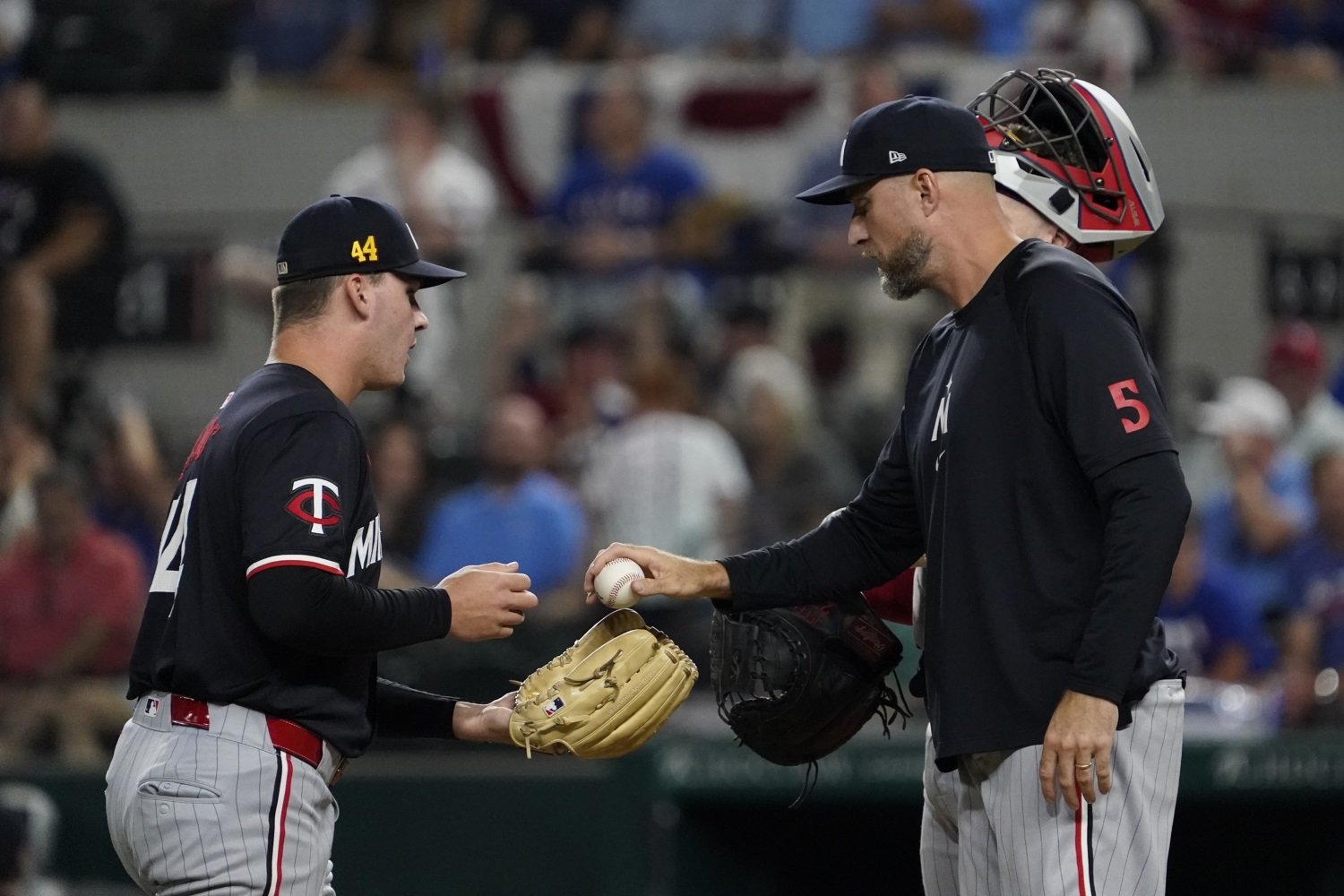 With the Twins in the doldrums as they desperately try to cling to a postseason that’s slipping away from them, most fans are justifiably somewhere on the continuum between frustrated and apathetic. The baseball season is a grind, with significant peaks and valleys, and we are currently witnessing a deep valley. However, if the season ended today, the Twins would still make the playoffs. While things feel grim on a daily basis, let’s not get lost in despair. Instead, let’s find the joy in an unexpected player turning into a key bullpen arm for the next few seasons. Let’s take a minute to appreciate how great Cole Sands has been, and the impact he has made for the Twins. Given the sheer number of relievers the Twins were expecting to contribute this season who have either been injured or ineffective, Sands’s emergence as a dominant late-inning arm may have almost single-handedly salvaged the bullpen this season. So far in 2024, despite making the team as a mop-up arm, Sands has pitched 63 innings of 2.98 ERA ball across 51 appearances. His FIP is an even shinier 2.88, suggesting that there’s little smoke-and-mirrors behind his results. He’s been consistently good, to the point that he’s pitched his way into a late-inning role and may be the second-most reliable reliever currently on the roster. He’s striking out about 10 guys per nine innings, and has discovered elite command and control, to the point that he’s walking just 1.14 per nine innings. Looking at his Savant page, check out all that sweet, sweet red. Prior to this season, he had given fans little reason for optimism. Debuting as a starter in 2022, Sands gave up 13 earned runs in 12 1/3 innings across three starts. Hitters posted a .951 OPS against him, and he had a WHIP over 2.00. The Twins had seen enough, and converted him to relief. He was a little better, but not noteworthy. With a 3.44 ERA but an xFIP of 4.70, he didn’t strike many out and walked a few too many. In 2023, the Twins had him raise his arm slot, but despite that tweak, he was downright bad, nearly pitching himself out of the future plans. In 22 innings, he walked an untenable 14% of batters and finished the season with a 5.53 xFIP. You saw his 2024 savant page, now here’s his 2023 page for contrast. How did he get to this point? It comes down to velocity, location, and pitch mix. Matt Trueblood wrote an excellent caretaker article last month digging into specifics. If you haven’t signed up yet, now’s a great time to do so. In conjunction with the Twins' coaching and analytics departments, Sands has learned how to be a major-league pitcher. He's for real, and his performance is likely sustainable. In short, it sure looks like he’s a setup-caliber reliever moving forward. One of the best parts of baseball fandom is when guys who have been nearly written off go on to perform well enough to write themselves into the team’s future. Whatever happens with the Twins over the next three weeks, Cole Sands joins Simeon Woods Richardson as unexpected 2024 success stories. Counting on him to be part of a 2025 bullpen that features Griffin Jax, Jhoan Durán, Brock Stewart, Jorge Alcalá, Louie Varland, Justin Topa, and perhaps Jovani Morán (yeah, that dude still exists!) gives reason for bullpen optimism next season and beyond. Good for Sands for putting in the work, and for giving fans someone to root for even in a tough stretch. Should the Twins make the playoffs — and as of right now, they still have better than a 75% chance to do so — a playoff pen of Jax, Sands, Durán, Varland, and Alcalá should get the job done. While this isn’t necessarily the bullpen the Twins expected to begin the season, it’s still likely to be one of the top playoff relief groups among the teams the Twins could face. Without Sands, and the progress he has made, the Twins might be in a completely different situation and on the outside looking in at the playoff race. What do you think? Have you been pleasantly surprised by Cole Sands turning into a setup man? Think he keeps it up? Comment below!
 -
In Sunday’s must-win game against the Royals, Tommy Watkins made a questionable send call that led to an out at home in the top of the first inning. The Twins went on to be shut out. In a vacuum, this sort of play happens. However, this is the fifth time in the past 15 games that Watkins has made a questionable decision that cost the Twins. It’s fair to ask: do the Twins need a different third-base coach? Image courtesy of © Denny Medley-Imagn Images In Sunday’s must-win game against the Royals, Tommy Watkins made a questionable send call that led to an out at home in the top of the first inning. The Twins went on to be shut out. In a vacuum, this sort of play happens. However, this is the fifth time in the past 15 games that Watkins has made a questionable decision that cost the Twins. It’s fair to ask: do the Twins need a different third-base coach? To be clear, coaches are a lot like umpires: you only really notice them when they do something you disagree with. Coaching is a thankless job, with thousands of fans judging every decision harshly. If you were to ask every fan base their opinions of their team’s third-base coach, you would probably learn that all 30 of them are inept. Spoiler: they aren’t. Coaching is also a difficult job. A third-base coach, among their other duties, need to weigh all of the following in real time: the ball’s exit velocity and trajectory; the runner’s location, general speed capabilities, current pace, health and injury status; the fielder’s arm, angle, and likelihood of hitting a cutoff man; and game flow and the urgency to score. If that sounds like a lot, that’s because it is. Adding to the challenge is the fact that all those factors must be calculated in just a couple seconds, and a decision to send or hold needs to be clearly communicated by the time the runner is approaching third base. All that said, let’s look at a few examples of questionable sends over the past 15 games and see what conclusions we can draw. 9/8/24 In the top of the 1st inning, Trevor Larnach batted, with José Miranda on first and one out. Larnach smacked a double off the right-field wall, and Miranda took off. Tommy Watkins sent him home, and a superb relay from Hunter Renfroe and Maikel García had Miranda out at home by several feet. 9/6/24 Almost the same situation, also against the Royals. This time, in the top of the fourth with the Twins down 1-0, Kyle Farmer was on first when Austin Martin ripped a two-out double into left field. Farmer was off with contact, but Tommy Pham hit his cutoff man, Bobby Witt Jr., who made a good throw. Farmer was out at the plate. Again, the Twins would fail to score, and would lose the game. 8/28/24 In this game against the Braves, in the 6th inning, Manuel Margot hit a leadoff double with the Twins down 1-0. Ryan Jeffers singled to right fielder Jorge Soler. Watkins sent Margot, who was out at home on the throw. The send carried a -10.4% WPA, given the way it played out, and the Twins lost 5-1. 8/27/24 In the 4th inning, down two runs to Atlanta, Max Kepler was on first with one out. Carlos Santana doubled to right field and as Kepler approached third, Watkins sent Kepler, then held him, then sent him again, only to hold him for a final time. In this situation, Watkins observed how slowly Kepler was running, and the final hold was the right call. However, the unclear communication (combined with Kepler's failures of hustle and/or health) eliminated any chance of the run scoring. The Twins went on to lose 8-6. 8/20/24 Here, Royce Lewis batted with the bases loaded, nobody out, and with a 2-1 lead over the Padres. He hit a sac fly, scoring Kepler. Jurickson Profar threw off-target to Manny Machado at third, and the ball skipped nearly to the catcher. Despite this, Watkins sent Austin Martin, as well, and he was out by 15 feet. This changed the complexion of the inning, as Carlos Santana batted with one on and two outs instead of two on and one out. Again, the Twins would go on to lose, 7-5. Look, any one of these examples typify the sorts of 50-50 plays every team will be on the losing end of multiple times throughout any season. There were mitigating circumstances in a few of them. The play above was right in front of Martin, too; players don't always need a third-base coach at all when deciding whether to head home. However, five instances of questionable send calls over 15 games suggest there may be an actual problem. The Twins are not a fast team, so is it possible that Watkins is overestimating players' sprint speeds? Is he scuffling just like the players, trying too hard to scratch across a single run? Is Rocco Baldelli providing a direction to be overly aggressive with send calls? Has the coin landed on tails in each of these attempts, and bad luck is to blame? Is something else the culprit? Is this stretch of bad overall play casting undue focus on Watkins's send decisions? Or, is he legitimately struggling to execute this part of his role? There aren’t any publicly available statistics on the impact of send or hold calls, and it’s possible that different decisions wouldn’t have changed the outcome of these games. However, this late in the season, every variable that can lead to wins must be examined--even if it's shaking up the coaching staff. What do you think? Should the Twins consider a coaching change this offseason or even sooner? Or is this much ado about nothing? Comment below to start the discussion! View full article
-
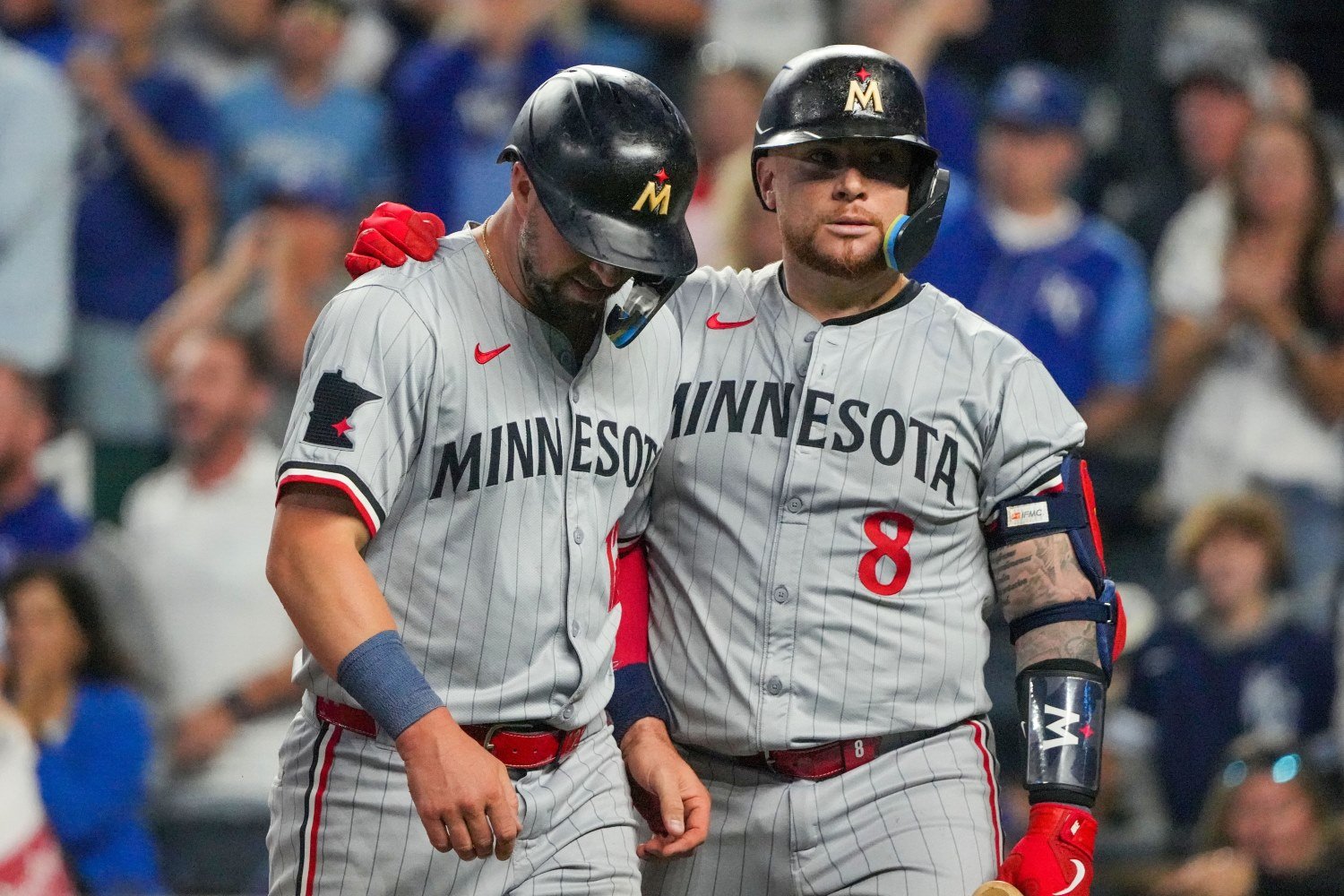 To be clear, coaches are a lot like umpires: you only really notice them when they do something you disagree with. Coaching is a thankless job, with thousands of fans judging every decision harshly. If you were to ask every fan base their opinions of their team’s third-base coach, you would probably learn that all 30 of them are inept. Spoiler: they aren’t. Coaching is also a difficult job. A third-base coach, among their other duties, need to weigh all of the following in real time: the ball’s exit velocity and trajectory; the runner’s location, general speed capabilities, current pace, health and injury status; the fielder’s arm, angle, and likelihood of hitting a cutoff man; and game flow and the urgency to score. If that sounds like a lot, that’s because it is. Adding to the challenge is the fact that all those factors must be calculated in just a couple seconds, and a decision to send or hold needs to be clearly communicated by the time the runner is approaching third base. All that said, let’s look at a few examples of questionable sends over the past 15 games and see what conclusions we can draw. 9/8/24 In the top of the 1st inning, Trevor Larnach batted, with José Miranda on first and one out. Larnach smacked a double off the right-field wall, and Miranda took off. Tommy Watkins sent him home, and a superb relay from Hunter Renfroe and Maikel García had Miranda out at home by several feet. 9/6/24 Almost the same situation, also against the Royals. This time, in the top of the fourth with the Twins down 1-0, Kyle Farmer was on first when Austin Martin ripped a two-out double into left field. Farmer was off with contact, but Tommy Pham hit his cutoff man, Bobby Witt Jr., who made a good throw. Farmer was out at the plate. Again, the Twins would fail to score, and would lose the game. 8/28/24 In this game against the Braves, in the 6th inning, Manuel Margot hit a leadoff double with the Twins down 1-0. Ryan Jeffers singled to right fielder Jorge Soler. Watkins sent Margot, who was out at home on the throw. The send carried a -10.4% WPA, given the way it played out, and the Twins lost 5-1. 8/27/24 In the 4th inning, down two runs to Atlanta, Max Kepler was on first with one out. Carlos Santana doubled to right field and as Kepler approached third, Watkins sent Kepler, then held him, then sent him again, only to hold him for a final time. In this situation, Watkins observed how slowly Kepler was running, and the final hold was the right call. However, the unclear communication (combined with Kepler's failures of hustle and/or health) eliminated any chance of the run scoring. The Twins went on to lose 8-6. 8/20/24 Here, Royce Lewis batted with the bases loaded, nobody out, and with a 2-1 lead over the Padres. He hit a sac fly, scoring Kepler. Jurickson Profar threw off-target to Manny Machado at third, and the ball skipped nearly to the catcher. Despite this, Watkins sent Austin Martin, as well, and he was out by 15 feet. This changed the complexion of the inning, as Carlos Santana batted with one on and two outs instead of two on and one out. Again, the Twins would go on to lose, 7-5. Look, any one of these examples typify the sorts of 50-50 plays every team will be on the losing end of multiple times throughout any season. There were mitigating circumstances in a few of them. The play above was right in front of Martin, too; players don't always need a third-base coach at all when deciding whether to head home. However, five instances of questionable send calls over 15 games suggest there may be an actual problem. The Twins are not a fast team, so is it possible that Watkins is overestimating players' sprint speeds? Is he scuffling just like the players, trying too hard to scratch across a single run? Is Rocco Baldelli providing a direction to be overly aggressive with send calls? Has the coin landed on tails in each of these attempts, and bad luck is to blame? Is something else the culprit? Is this stretch of bad overall play casting undue focus on Watkins's send decisions? Or, is he legitimately struggling to execute this part of his role? There aren’t any publicly available statistics on the impact of send or hold calls, and it’s possible that different decisions wouldn’t have changed the outcome of these games. However, this late in the season, every variable that can lead to wins must be examined--even if it's shaking up the coaching staff. What do you think? Should the Twins consider a coaching change this offseason or even sooner? Or is this much ado about nothing? Comment below to start the discussion!
 -
They can’t trade Byron Buxton - he has a no-trade clause. They also likely don’t want to trade him due to the surplus value he brings when healthy. In 90 games this year, just over half the season, he’s been worth 3.3 fWAR, which is valued at around $26M. He’s making $15M. While it’s inconvenient when he’s injured, he’s still one of the three best hitters on the team, and one of the three best defenders as well.
-
But Keirsey has 70 points of OPS over team average, and at a premium defensive position. Without looking it up, I would guess it’s 120+ compared to the average AAA CF.
-
If anything, the fact that he’s a lefty bat should increase his playing time, comparatively. ~75% of starting pitchers are righties and the Twins may want to stick with him once opponents go to the bullpen due to his defense. They do need to actually start him though.
-
That’s the hope - stylistically they are different, but could he provide similar value through the extra points of BA and OBP? There’s a decent chance of that.
-
Exactly. He can prevent at least many of the dinks and dunks that fall for hits if he’s playing.
-
With Byron Buxton suffering a recurrence of hip pain during his a rehab assignment with the Saints, it’s now fair to question whether a return this season is in the cards. While Buxton has excelled both offensively and defensively, the Twins are fortunate to have DaShawn Keirsey Jr. as a possible everyday replacement down the stretch. Image courtesy of Rob Thompson, St. Paul Saints With Byron Buxton suffering a recurrence of hip pain during his a rehab assignment with the Saints, it’s now fair to question whether a return this season is in the cards. While Buxton has excelled both offensively and defensively, the Twins are fortunate to have DaShawn Keirsey Jr. as a possible everyday replacement down the stretch. Twins fans are no strangers to this scenario – their star center fielder on the shelf when it matters most. In past seasons, the Twins have needed to rely on players like Jake Cave, Kyle Garlick, Gilberto Celestino, and Mark Contreras in Buxton’s absence. It hasn’t gone well. Looking at those players' wRC+ production, none were even average, and in each case their defense was suspect as well. In short, all were incomplete players best suited to bench roles but were pressed into regular MLB duty out of desperation. However, this time may well be different. The drop-off to Buxton’s replacement may not be as severe as in years past. DaShawn Keirsey Jr. offers more on all sides of the ball than those other players. He was drafted in the fourth round, much earlier than the guys mentioned above. He’s got multiple plus tools, rather than one at best like the others. At 27, he's too old to be considered a prospect, but that doesn't mean he can't be an every day major-league player. He has improved offensively as he hits his age-based peak and has worked hard to get to this point. Let’s examine the reasons why his production is likely to pleasantly surprise. Defense Byron Buxton is a great defensive center fielder, that much is known. In roughly half a season in center, he’s been worth 4 defensive runs saved. The other hitters that have played in center this season have not acquitted themselves well, with Willi Castro (-5 DRS), Manny Margot (-1 DRS) and Austin Martin (-8 DRS) all playing sub-par defense. Collectively, they have cost the team about 1.5 wins in about 70 games. In short, those three are not major league center fielders, despite being able to play there in a pinch. Keirsey is legitimate, and his range in center will limit the negative defensive impact of both Trevor Larnach and Matt Wallner. He will get to balls that Margot, Castro, Martin, and the guys of past seasons just couldn’t. His defense will save runs. If Buxton is able to return, Keirsey could provide elite defense in the corners as a fourth outfielder. Offense Keirsey has good offensive skills, particularly for a center fielder. Despite having some game power, Keirsey uses all fields well, actually going the other way more than he pulls. He’s got good plate discipline, taking 45 walks on the season. He’s hit to a 116 wRC+, fourth among all Triple-A center fielders this season. Knowing there’s a real drop off in performance from AAA to the bigs, it’s reasonable to expect just a bit less from him. However, a 100 wRC+ is within reach. That will play, and is above the level Martin or Margot has hit at. The Twins have struggled this season with runners in scoring position, and a hitter like Keirsey will bring a professional approach with runners on. Speed Among all Triple-A center fielders, Keirsey has the fourth-best sprint speed. He’s a burner, one of the fastest in the organization. This has translated to 36 stolen bases, and Keirsey is a skilled baserunner as well, going first-to-third and taking the extra base when a well-hit ball allows for it. This adds a similar dynamic to Buxton, and is a substantial improvement over all non-Castro options in center. Optimizing the lineup With Keirsey in play as the most-days center fielder down the stretch, this allows for Rocco Baldelli to field the most competitive lineup, allowing Castro to focus on playing shortstop, third, and second. This also allows for Larnach and Wallner to play the corners on a daily basis, and for Michael Helman to be a super-utility player. Will Keirsey be a star? Well…no, probably not. He can be a positive in every aspect of the game though, and that’s more than can be said for Buxton’s previous backups. The Twins will need to thread a bit of a needle if they hope to keep their playoff aspirations alive, and have a deep October run. In short, Keirsey allows the team to field their best defensive lineup on a daily basis. After the rough showing over the past few weeks, Keirsey’s fielding gives fans something to look forward to, and he should impact the game offensively and on the base paths as well. It's been quite a while since the Twins had a legitimate Buxton backup, now it's on Kiersey to make the most of the opportunity and carve out a major league career. What do you think? Are you feeling optimistic about DaShawn Keirsey? Comment below! View full article
-
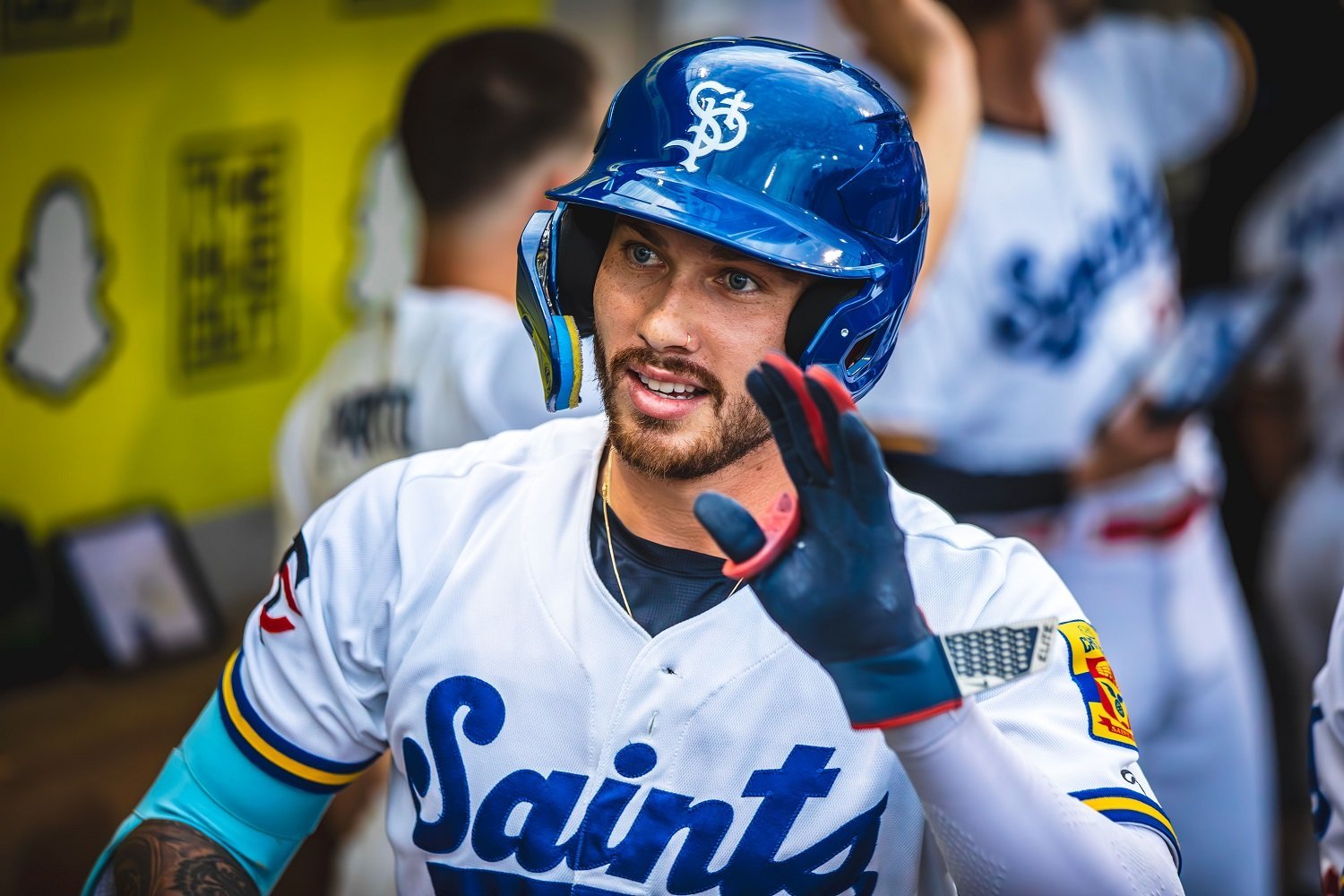 Twins fans are no strangers to this scenario – their star center fielder on the shelf when it matters most. In past seasons, the Twins have needed to rely on players like Jake Cave, Kyle Garlick, Gilberto Celestino, and Mark Contreras in Buxton’s absence. It hasn’t gone well. Looking at those players' wRC+ production, none were even average, and in each case their defense was suspect as well. In short, all were incomplete players best suited to bench roles but were pressed into regular MLB duty out of desperation. However, this time may well be different. The drop-off to Buxton’s replacement may not be as severe as in years past. DaShawn Keirsey Jr. offers more on all sides of the ball than those other players. He was drafted in the fourth round, much earlier than the guys mentioned above. He’s got multiple plus tools, rather than one at best like the others. At 27, he's too old to be considered a prospect, but that doesn't mean he can't be an every day major-league player. He has improved offensively as he hits his age-based peak and has worked hard to get to this point. Let’s examine the reasons why his production is likely to pleasantly surprise. Defense Byron Buxton is a great defensive center fielder, that much is known. In roughly half a season in center, he’s been worth 4 defensive runs saved. The other hitters that have played in center this season have not acquitted themselves well, with Willi Castro (-5 DRS), Manny Margot (-1 DRS) and Austin Martin (-8 DRS) all playing sub-par defense. Collectively, they have cost the team about 1.5 wins in about 70 games. In short, those three are not major league center fielders, despite being able to play there in a pinch. Keirsey is legitimate, and his range in center will limit the negative defensive impact of both Trevor Larnach and Matt Wallner. He will get to balls that Margot, Castro, Martin, and the guys of past seasons just couldn’t. His defense will save runs. If Buxton is able to return, Keirsey could provide elite defense in the corners as a fourth outfielder. Offense Keirsey has good offensive skills, particularly for a center fielder. Despite having some game power, Keirsey uses all fields well, actually going the other way more than he pulls. He’s got good plate discipline, taking 45 walks on the season. He’s hit to a 116 wRC+, fourth among all Triple-A center fielders this season. Knowing there’s a real drop off in performance from AAA to the bigs, it’s reasonable to expect just a bit less from him. However, a 100 wRC+ is within reach. That will play, and is above the level Martin or Margot has hit at. The Twins have struggled this season with runners in scoring position, and a hitter like Keirsey will bring a professional approach with runners on. Speed Among all Triple-A center fielders, Keirsey has the fourth-best sprint speed. He’s a burner, one of the fastest in the organization. This has translated to 36 stolen bases, and Keirsey is a skilled baserunner as well, going first-to-third and taking the extra base when a well-hit ball allows for it. This adds a similar dynamic to Buxton, and is a substantial improvement over all non-Castro options in center. Optimizing the lineup With Keirsey in play as the most-days center fielder down the stretch, this allows for Rocco Baldelli to field the most competitive lineup, allowing Castro to focus on playing shortstop, third, and second. This also allows for Larnach and Wallner to play the corners on a daily basis, and for Michael Helman to be a super-utility player. Will Keirsey be a star? Well…no, probably not. He can be a positive in every aspect of the game though, and that’s more than can be said for Buxton’s previous backups. The Twins will need to thread a bit of a needle if they hope to keep their playoff aspirations alive, and have a deep October run. In short, Keirsey allows the team to field their best defensive lineup on a daily basis. After the rough showing over the past few weeks, Keirsey’s fielding gives fans something to look forward to, and he should impact the game offensively and on the base paths as well. It's been quite a while since the Twins had a legitimate Buxton backup, now it's on Kiersey to make the most of the opportunity and carve out a major league career. What do you think? Are you feeling optimistic about DaShawn Keirsey? Comment below!
 -
With the Cedar Rapids Kernels season ending today, Walker Jenkins was called up to Double-A Wichita for a taste of upper minors competition for the last week of the season. This is noteworthy for three key reasons. Read on to learn why. Image courtesy of David Malamut (@MWLArchives on X) With the Cedar Rapids Kernels season ending today, Walker Jenkins was called up to Double-A Wichita for a taste of upper minors competition for the last week of the season. This is noteworthy for three key reasons. Read on to learn why. Walker Jenkins was drafted out of South Brunswick High School in North Carolina just over a year ago in the 2023 amateur draft. With the Twins picking fifth due to a stroke of good fortune in the first year of the current draft lottery system, the draft class was loaded with five elite prospects, any of whom would likely have gone first overall in other years. With their first pick, the Twins lucked into drafting a potential future face of the franchise. Jenkins is a true five-tool player, plays a solid center field, and all he has done since being drafted is hit. His promotion speaks volumes about his level of talent, his approach at the plate, and his ability to impact the parent club sooner than anyone expected. His situation is reason for hope for three reasons: performance, age, and offseason flexibility. Performance Since being drafted, Jenkins has played in 101 games across three levels of competition. He’s put up a .902 OPS, and has hit roughly the .300/.400/.500 triple slash of an elite hitter. He strikes out less than he walks, and has enough speed to steal 10 or so bases a year. About a third of his hits go for extra bases, and he’s been a doubles machine. While having a solid pull-power stroke, he’s also quite capable of using all fields. During his stint at High-A Cedar Rapids, he’s been 48% better than the competition with an .869 OPS. His walk rate was elite, at 10.9%. So was his 15% strikeout rate. His overall numbers are even more impressive when considering it takes time to adjust to the competition at a new level, and once he has hit his stride, he’s put up video game results. Age and trajectory The best part? He’s done all this while playing against guys that average three years older than him. By finishing the season at AA Wichita, Jenkins is now set up to possibly begin next season there as well. Should he continue his trajectory, that puts him in line for a promotion to Triple-A Saint Paul at some point next season, and being called up next September is a real possibility, assuming performance and need. Should that occur, he would be the youngest player to debut for the Twins in over a decade, when Jorge Polanco got a cup of coffee in 2014, also at 20. It’s now reasonable to expect that Jenkins can be an everyday big-league player by 2026. For someone drafted out of high school, that developmental speed is stunning. What he means for the team this offseason His advancement — and that of Emmanuel Rodriguez — also likely changes some perceived offseason needs. Much ink has been spilled over Byron Buxton and his propensity for injuries, and having high-end center field prospects in the upper minors reduces the urgency to sign a major-league backup in the offseason. Knowing there is limited payroll flexibility, Jenkins’ ascent gives the front office the ability to spend what they do have — money or prospect capital — in the areas of greatest need rather than on a backup. Imagining a 2026 outfield of Jenkins, Rodriguez, and Buxton is something to dream on, and today’s news brings that future one step closer to reality. Over the past few weeks, it’s felt like not much has gone right for the Twins, but this bit of good news provides a silver lining to the clouds surrounding this weekend sweep at the hands of the Royals. How do you feel about this news? Do you think it’s realistic for Jenkins to be called up next season? Comment below! View full article
-
And Now For Some Good News: Walker Jenkins Promoted to Double-A Wichita
Eric Blonigen posted an article in Twins
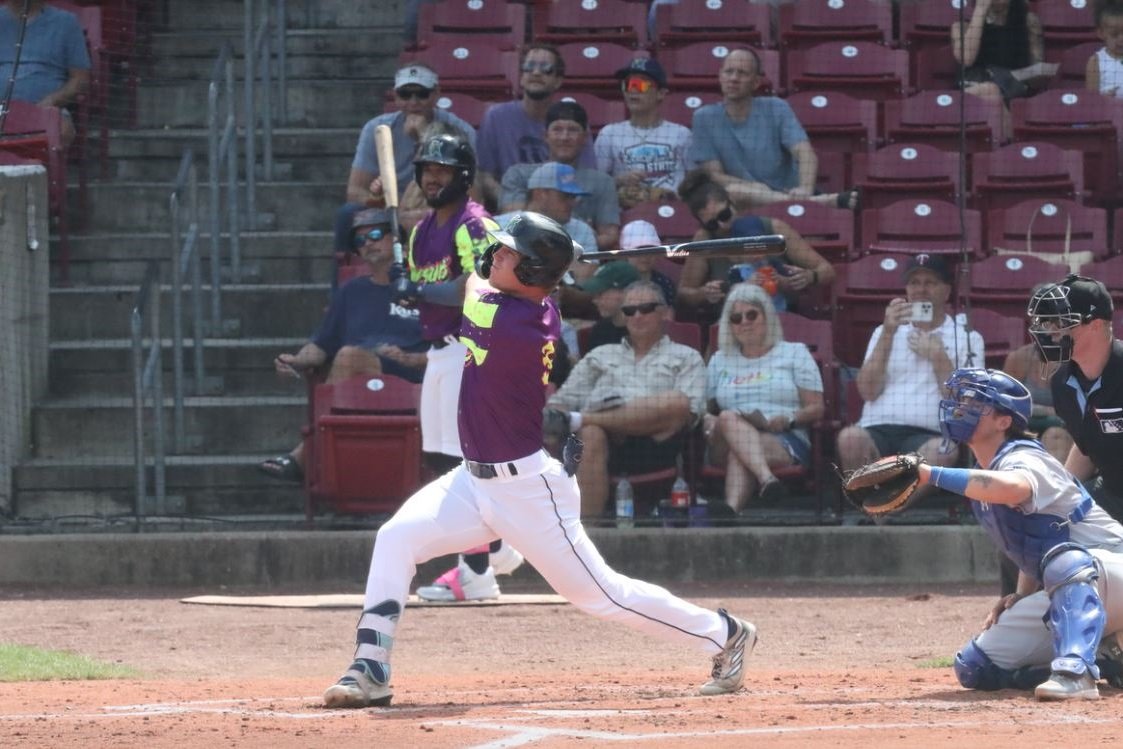 Walker Jenkins was drafted out of South Brunswick High School in North Carolina just over a year ago in the 2023 amateur draft. With the Twins picking fifth due to a stroke of good fortune in the first year of the current draft lottery system, the draft class was loaded with five elite prospects, any of whom would likely have gone first overall in other years. With their first pick, the Twins lucked into drafting a potential future face of the franchise. Jenkins is a true five-tool player, plays a solid center field, and all he has done since being drafted is hit. His promotion speaks volumes about his level of talent, his approach at the plate, and his ability to impact the parent club sooner than anyone expected. His situation is reason for hope for three reasons: performance, age, and offseason flexibility. Performance Since being drafted, Jenkins has played in 101 games across three levels of competition. He’s put up a .902 OPS, and has hit roughly the .300/.400/.500 triple slash of an elite hitter. He strikes out less than he walks, and has enough speed to steal 10 or so bases a year. About a third of his hits go for extra bases, and he’s been a doubles machine. While having a solid pull-power stroke, he’s also quite capable of using all fields. During his stint at High-A Cedar Rapids, he’s been 48% better than the competition with an .869 OPS. His walk rate was elite, at 10.9%. So was his 15% strikeout rate. His overall numbers are even more impressive when considering it takes time to adjust to the competition at a new level, and once he has hit his stride, he’s put up video game results. Age and trajectory The best part? He’s done all this while playing against guys that average three years older than him. By finishing the season at AA Wichita, Jenkins is now set up to possibly begin next season there as well. Should he continue his trajectory, that puts him in line for a promotion to Triple-A Saint Paul at some point next season, and being called up next September is a real possibility, assuming performance and need. Should that occur, he would be the youngest player to debut for the Twins in over a decade, when Jorge Polanco got a cup of coffee in 2014, also at 20. It’s now reasonable to expect that Jenkins can be an everyday big-league player by 2026. For someone drafted out of high school, that developmental speed is stunning. What he means for the team this offseason His advancement — and that of Emmanuel Rodriguez — also likely changes some perceived offseason needs. Much ink has been spilled over Byron Buxton and his propensity for injuries, and having high-end center field prospects in the upper minors reduces the urgency to sign a major-league backup in the offseason. Knowing there is limited payroll flexibility, Jenkins’ ascent gives the front office the ability to spend what they do have — money or prospect capital — in the areas of greatest need rather than on a backup. Imagining a 2026 outfield of Jenkins, Rodriguez, and Buxton is something to dream on, and today’s news brings that future one step closer to reality. Over the past few weeks, it’s felt like not much has gone right for the Twins, but this bit of good news provides a silver lining to the clouds surrounding this weekend sweep at the hands of the Royals. How do you feel about this news? Do you think it’s realistic for Jenkins to be called up next season? Comment below!
 -
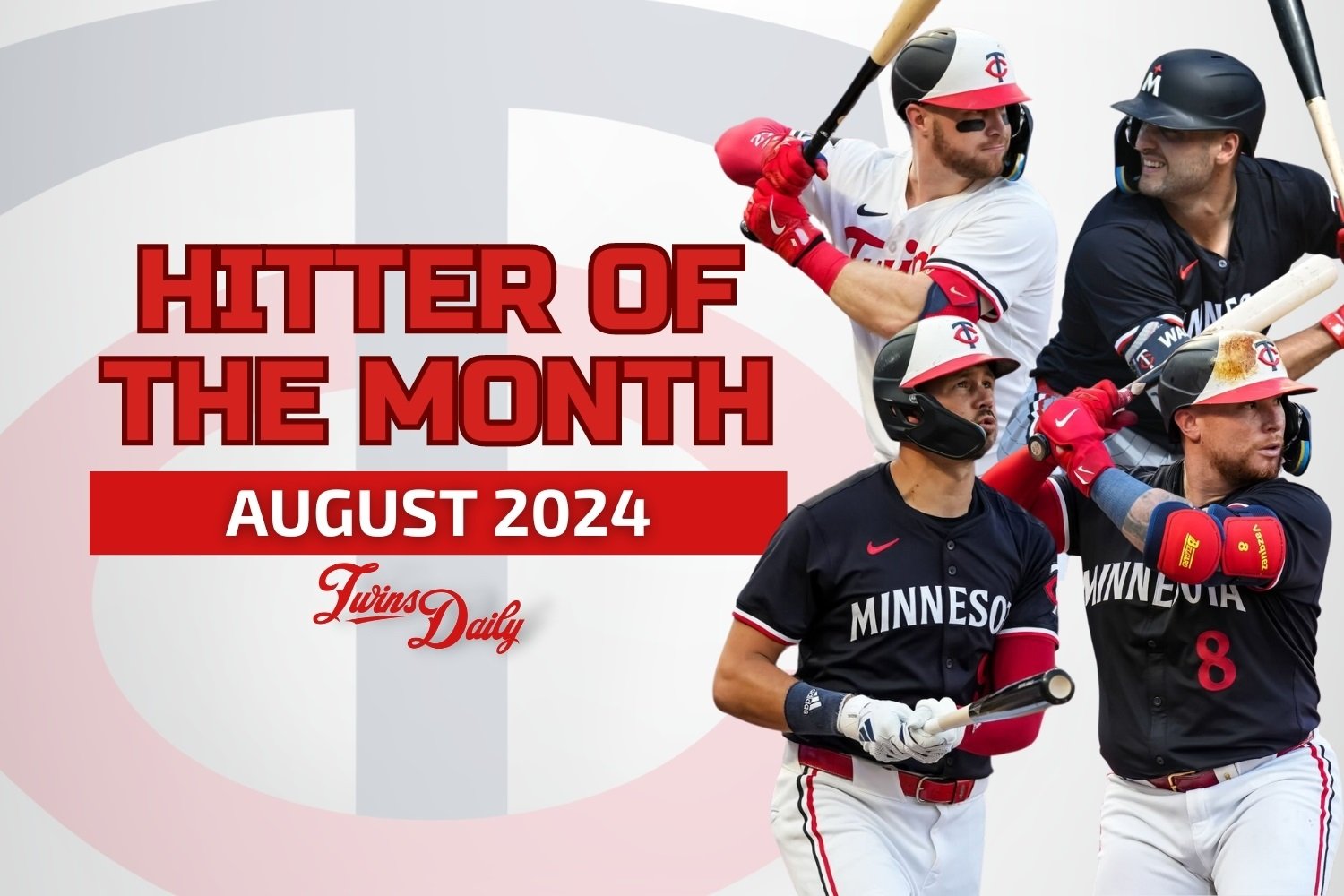 Honorable Mention - Byron Buxton - .250/.357/.708/1.065, 4 BB, 5 K, 3 HR Byron Buxton began the month on a Judgian trajectory before a hip flareup forced him out of the lineup and to the IL. In just eight games, he logged five extra base hits, while playing his typical brand of great center field defense. Had he played even half the month, he likely would have taken home hitter of the month honors. Alas, it was not meant to be. With news Buxton is ready to begin a short rehab assignment, perhaps September will be his month if he can pick up where he left off. #4 - Trevor Larnach - .284/.338/.473 .811 OPS, 3 HR, 1 SB, 11 RBI, 21 K, 6 BB Trevor Larnach spend the first part of April on the IL and was optioned to St Paul until Matt Wallner’s early-season struggles created an opportunity for Trevor Larnach to attempt to carve out a role for himself. He spent May and June as an underlying metrics darling. Despite having a pedestrian OPS, his hard-hit rate and xwOBA indicated some positive regression was likely. Fast-forward a bit, and since Carlos Correa went on the IL with plantar fasciitis, Trevor Larnach has slotted in as the #2 hitter more often than not. While some have questioned this approach, it has paid dividends. In addition to the expected regression occurring, Larnach has learned how to crush cutters. Across the month of August, we have seen perhaps his 75% percentile outcome as more of his contact landed for hits. He has also had a couple key moments that directly led to Twins wins. On 8/24, he took old friend Sonny Gray deep twice for his first ever multi-homer game and knocked in four of the Twins’ six runs in a victory. On 8/21, he recorded his first-ever four hit game. On 8/27 against the Braves, Larnach was a part of a comeback in the 8th inning, knocking in Willi Castro to tie the game. Over his past 100 swings, Larnach has the 7th-highest hard-hit rate in baseball, just below Yordan Alvarez, Corbin Carroll, and Vlad Guerrero Jr. Good company to be in, and his performance led to accumulating 0.5 fWAR across the month. #3 - Christian Vasquez - .302/.321/.472 .793 OPS, 2 HR, 9 RBI, 9 K, 2 BB Christian Vasquez takes the #3 slot here not because he was the Twins’ third best hitter for the month (5th by OPS), but because his resurgence has come at the most crucial time of his Twins career so far. With Byron Buxton, Carlos Correa, and Brooks Lee all on the IL, getting better-than-solid production from the catcher slot has been key, and Vasquez has shined on both sides of the plate. Parker Hageman wrote about the in-season tweaks behind the Vasquez resurgence, and the results over the past month and change have been revelatory. With an OPS better than .800 as a great defensive catcher, some have even advocated for the Twins to bat him leadoff. August saw Vasquez celebrate crossing the 10-year service time threshold, a rare accomplishment in this day and age. On 8/11 against the Guardians, he had a clutch single with two on in the 9th inning. If not for Kepler holding at third, the Twins may have won the game. Vazquez nearly had a game-winning moment again on 8/20, as he knocked in two to take the lead against the Padres, while pinch hitting. Unfortunately, the leaky bullpen erased his efforts that day. This month, Vasquez has been worth 0.5 fWAR. #2 - Ryan Jeffers - .278/.333/.593 .926 OPS, 5 HR, 1 SB, 9 RBI, 11 K, 4 BB Ryan Jeffers began the season at a world-beating pace but cooled considerably mid-season. By early August, many were calling for Vasquez to become the everyday catcher. However, Jeffers found his form and went on a heater, accumulating 0.6 fWAR on the month while putting up a .396 wOBA and a 162 wRC+, justifying the continued platooning of one of the most solid catching duos in baseball. On August 16, Jeffers hit a two-run moonshot while swinging a giant pencil bat. Four days later, he became just the fourth catcher in Twins history to hit 20 home runs in a season. Throughout the month, he was fairly clutch, contributing to some wins and some (almost) wins, finishing with a solid monthly WPA (0.36+). While Jeffers is unlikely to top Mitch Garver’s 30 homer season, if he hits four more in September, he will surpass Joe Mauer to have the second-best home run season for a catcher in team history. Hitter of the Month - Matt “Cement Bones” Wallner - .273/.398/.558 .956 OPS, 4 HR, 3 SB, 14 RBI, 30 K, 10 BB, 6 HBP Let’s be clear about something - Matt Wallner crushes baseballs. Since rediscovering his swing and his timing during his interlude with the Saints, Wallner has put up an OPS that rivals Aaron Judge. His .399 xwOBA suggests that his results are mostly legitimate and he just may be one of the best power hitters in baseball. He is also pacing the league in being hit by pitches - six times in August. Let’s examine a few data points. This season, Wallner is finding the launch angle sweet spot a remarkable 44% of the time. Combined with his nearly 100th-percentile average exit velocity, he put up his second straight month with an OPS around 1.000, and he’s been even better with runners on base, hitting .311 with men on. Among all batters with at least 75 batted ball events, Wallner has the 5th-highest average exit velocity and 3rd-highest hard-hit% in all of baseball. Across August, 13 of his 21 hits went for extra bases. Despite being a slugger, he also stole three bases. He’s had his share of big moments, too. On September 9th, his three-run bomb tied a key game against the Guardians that the Twins eventually won. On the 14th against the Rangers, the game was tied 2-2 in the 9th. Wallner walked, stole second, and eventually scored on a sac fly to win the game. Overall, just this month, Wallner has been worth 1.0 fWAR, leading the team. As the season winds down and the Minnesota Twins fight to hold onto a playoff spot, it’s a testament to this team’s grittiness and depth that three players who have been largely written off at various points this season have been three of their best hitters down the stretch. If this level of production can continue, up and down the lineup, this is a team that can go head to head with any other team in baseball (at least on the hitting front). What do you think? Do you agree with these hitters making the biggest impact in August?
- 2 comments
-
- 4
-
-
- ryan jeffers
- trevor larnach
- (and 3 more)
-
Over the past month, the Twins have solidified their playoff odds while picking up three games over the Guardians. This has occurred despite injuries to star players and bullpen shakiness. With August in the books, it’s time to reflect on the Twins hitters that have helped the team accomplish this progress, and their performance over the past month. A few guys in particular stand out as carrying the team. Over the past month, the Twins have solidified their playoff odds while picking up three games over the Guardians. This has occurred despite injuries to star players and bullpen shakiness. With August in the books, it’s time to reflect on the Twins hitters that have helped the team accomplish this progress, and their performance over the past month. A few guys in particular stand out as carrying the team. Honorable Mention - Byron Buxton - .250/.357/.708/1.065, 4 BB, 5 K, 3 HR Byron Buxton began the month on a Judgian trajectory before a hip flareup forced him out of the lineup and to the IL. In just eight games, he logged five extra base hits, while playing his typical brand of great center field defense. Had he played even half the month, he likely would have taken home hitter of the month honors. Alas, it was not meant to be. With news Buxton is ready to begin a short rehab assignment, perhaps September will be his month if he can pick up where he left off. #4 - Trevor Larnach - .284/.338/.473 .811 OPS, 3 HR, 1 SB, 11 RBI, 21 K, 6 BB Trevor Larnach spend the first part of April on the IL and was optioned to St Paul until Matt Wallner’s early-season struggles created an opportunity for Trevor Larnach to attempt to carve out a role for himself. He spent May and June as an underlying metrics darling. Despite having a pedestrian OPS, his hard-hit rate and xwOBA indicated some positive regression was likely. Fast-forward a bit, and since Carlos Correa went on the IL with plantar fasciitis, Trevor Larnach has slotted in as the #2 hitter more often than not. While some have questioned this approach, it has paid dividends. In addition to the expected regression occurring, Larnach has learned how to crush cutters. Across the month of August, we have seen perhaps his 75% percentile outcome as more of his contact landed for hits. He has also had a couple key moments that directly led to Twins wins. On 8/24, he took old friend Sonny Gray deep twice for his first ever multi-homer game and knocked in four of the Twins’ six runs in a victory. On 8/21, he recorded his first-ever four hit game. On 8/27 against the Braves, Larnach was a part of a comeback in the 8th inning, knocking in Willi Castro to tie the game. Over his past 100 swings, Larnach has the 7th-highest hard-hit rate in baseball, just below Yordan Alvarez, Corbin Carroll, and Vlad Guerrero Jr. Good company to be in, and his performance led to accumulating 0.5 fWAR across the month. #3 - Christian Vasquez - .302/.321/.472 .793 OPS, 2 HR, 9 RBI, 9 K, 2 BB Christian Vasquez takes the #3 slot here not because he was the Twins’ third best hitter for the month (5th by OPS), but because his resurgence has come at the most crucial time of his Twins career so far. With Byron Buxton, Carlos Correa, and Brooks Lee all on the IL, getting better-than-solid production from the catcher slot has been key, and Vasquez has shined on both sides of the plate. Parker Hageman wrote about the in-season tweaks behind the Vasquez resurgence, and the results over the past month and change have been revelatory. With an OPS better than .800 as a great defensive catcher, some have even advocated for the Twins to bat him leadoff. August saw Vasquez celebrate crossing the 10-year service time threshold, a rare accomplishment in this day and age. On 8/11 against the Guardians, he had a clutch single with two on in the 9th inning. If not for Kepler holding at third, the Twins may have won the game. Vazquez nearly had a game-winning moment again on 8/20, as he knocked in two to take the lead against the Padres, while pinch hitting. Unfortunately, the leaky bullpen erased his efforts that day. This month, Vasquez has been worth 0.5 fWAR. #2 - Ryan Jeffers - .278/.333/.593 .926 OPS, 5 HR, 1 SB, 9 RBI, 11 K, 4 BB Ryan Jeffers began the season at a world-beating pace but cooled considerably mid-season. By early August, many were calling for Vasquez to become the everyday catcher. However, Jeffers found his form and went on a heater, accumulating 0.6 fWAR on the month while putting up a .396 wOBA and a 162 wRC+, justifying the continued platooning of one of the most solid catching duos in baseball. On August 16, Jeffers hit a two-run moonshot while swinging a giant pencil bat. Four days later, he became just the fourth catcher in Twins history to hit 20 home runs in a season. Throughout the month, he was fairly clutch, contributing to some wins and some (almost) wins, finishing with a solid monthly WPA (0.36+). While Jeffers is unlikely to top Mitch Garver’s 30 homer season, if he hits four more in September, he will surpass Joe Mauer to have the second-best home run season for a catcher in team history. Hitter of the Month - Matt “Cement Bones” Wallner - .273/.398/.558 .956 OPS, 4 HR, 3 SB, 14 RBI, 30 K, 10 BB, 6 HBP Let’s be clear about something - Matt Wallner crushes baseballs. Since rediscovering his swing and his timing during his interlude with the Saints, Wallner has put up an OPS that rivals Aaron Judge. His .399 xwOBA suggests that his results are mostly legitimate and he just may be one of the best power hitters in baseball. He is also pacing the league in being hit by pitches - six times in August. Let’s examine a few data points. This season, Wallner is finding the launch angle sweet spot a remarkable 44% of the time. Combined with his nearly 100th-percentile average exit velocity, he put up his second straight month with an OPS around 1.000, and he’s been even better with runners on base, hitting .311 with men on. Among all batters with at least 75 batted ball events, Wallner has the 5th-highest average exit velocity and 3rd-highest hard-hit% in all of baseball. Across August, 13 of his 21 hits went for extra bases. Despite being a slugger, he also stole three bases. He’s had his share of big moments, too. On September 9th, his three-run bomb tied a key game against the Guardians that the Twins eventually won. On the 14th against the Rangers, the game was tied 2-2 in the 9th. Wallner walked, stole second, and eventually scored on a sac fly to win the game. Overall, just this month, Wallner has been worth 1.0 fWAR, leading the team. As the season winds down and the Minnesota Twins fight to hold onto a playoff spot, it’s a testament to this team’s grittiness and depth that three players who have been largely written off at various points this season have been three of their best hitters down the stretch. If this level of production can continue, up and down the lineup, this is a team that can go head to head with any other team in baseball (at least on the hitting front). What do you think? Do you agree with these hitters making the biggest impact in August? View full article
-
“Post-gum Violet Beauregarde…classic!
-
100% agree - I was trying to say you might see this approach from a crafty veteran, not a guy who’s played less than 150 career game. I probably could have worded that a little better though - thanks!
-
For a fortnight now, the Twins have been spiraling downward. No aspect of the game has been working, with shaky starts, a leaky bullpen, and a lack of clutch hitting costing the team multiple winnable games. It looked as though Sunday would be more of the same, with another great Bailey Ober start overshadowed by a lack of hitting. The team needed a hero. Image courtesy of © Bruce Kluckhohn-USA TODAY Sports For a fortnight now, the Twins have been spiraling downward. No aspect of the game has been working, with shaky starts, a leaky bullpen, and a lack of clutch hitting costing the team multiple winnable games. It looked as though Sunday would be more of the same, with another great Bailey Ober start overshadowed by a lack of hitting. The team needed a hero. Through seven innings, Twins hitters were 0-5 with runners in scoring position, continuing a brutal trend. To eke out their single run to that point in the game, the team required a walk, a fielder’s choice, an error, and the contact play working on a groundout. That’s a lot of labor for one run. Then, in the eighth inning, the Blue Jays brought out their closer, Chad Green. He entered the game with a sterling 1.61 ERA and a 0.85 WHIP on the season. After he retired Matt Wallner on a pop-up, Ryan Jeffers and Austin Martin linked together back-to-back singles with one out. Royce Lewis stepped to the plate. Green has been death to righties this season, holding them to a .169 batting average. Luckily, Lewis has even platoon splits, and he was able to rise to the occasion. What followed was an eight-pitch at bat that contained multitudes. Green is a two-pitch pitcher, throwing a plus four-seam fastball that sits 96 MPH, and a hard but average slider. He throws both in any situation, and looking at his wOBA heat map, he is successful in seven of nine zones. He has both good control and command, and uses this to generate a whiff rate in the 75th percentile. Every at-bat is a battle of adjustments, with the pitcher changing the look, location, and speed of pitches in an effort to throw the hitter off their timing. Facing a power hitter of Lewis’s caliber, Green’s strategy was to nibble the edges of the zone; to locate in Lewis’s cold zones; and to not repeat locations within the at-bat. Comparing Royce’s xBA by zone, you can see that Green was successful in hitting his spots with his first seven pitches. To begin the at-bat, Green threw Lewis a pair of sliders, both well outside the zone. Despite some recent scuffles, Lewis recognized that neither were competitive pitches, and wisely laid off. Thus began the battle, at 2-0. Green threw a third consecutive slider middle-outside, which Lewis fouled off to take the count to 2-1. Fouling was likely the best-case scenario for a pitch in that location, as Royce has a negative launch angle and a ~.200 wOBA in that zone. Often, that pitch induces a double-play grounder. For his fourth pitch, Green changed the look by throwing a heater several inches high and over the inner part of the plate. Lewis swung through it to even the count 2-2. This was, again, likely the best outcome, aside from laying off, as any contact would likely have been a weak pop fly. The fifth pitch was another four-seamer, this time high and away. Most hitters are hard-pressed to make contact in this location, but Lewis extended his swing, reaching to fight it off and stay alive. For Green’s next pitch, he went back to the slider, high in the zone. Once again, Lewis made contact. His wOBA is .000 in that zone this season, and he did well just to foul it off. Having seen the fastball on each side of the plate, that slider in that spot could easily have locked him up or caught him too far in front. The penultimate pitch of the at-bat was a slider that just caught the plate, middle and away. Lewis battled to stay alive, with yet another pitch in a challenging location. In this zone, Lewis has a roughly neutral batter run value, and the likely best-case outcome would be a single poked the other way. Royce wasn't in the right mode to deliver that type of hit, but he made just the right sort of contact to send the ball foul. Finally, on his eighth pitch, Green made a mistake and gave Lewis something to crush. He left a slider middle-middle, and Royce had his pitch. It wasn’t his best swing, as his exit velocity was just 91.1 MPH, and his launch angle was a little high at 31 degrees. It proved to be just enough, though, as the ball landed in the left field flowerpots. This hit put the Twins ahead for good, and was Lewis’s first homer since Aug. 12. This at-bat was typical of one you might expect to see from a crafty veteran hitter. To cover the fastball and slider away, and still to avoid wasting the mistake when it comes, takes a special hitter. Even not quite at his best, that’s what Lewis is. The homer proved that. It also carried one of the highest win-probability swings of any hit this season, singlehandedly improving the Twins’ odds of winning from 24.4% to 85.8%. Finally, the Twins handed an opponent a brutal loss similar to those they have been on the receiving end of over the past couple weeks, and it’s all thanks to Lewis out-battling a very good pitcher. View full article