



Eric Blonigen
-
Posts
377 -
Joined
-
Last visited
-
Days Won
1
Content Type
Profiles
News
Minnesota Twins Videos
2026 Minnesota Twins Top Prospects Ranking
2022 Minnesota Twins Draft Picks
Minnesota Twins Free Agent & Trade Rumors, Notes, & Tidbits
Guides & Resources
2023 Minnesota Twins Draft Picks
The Minnesota Twins Players Project
2024 Minnesota Twins Draft Picks
2025 Minnesota Twins Draft Pick Tracker
2026 Minnesota Twins Draft Tracker: Picks & Bonuses
Forums
Blogs
Events
Store
Downloads
Gallery
Everything posted by Eric Blonigen
-
 One early-season misfortune is set to correct itself, not a moment too soon—or, it seems, a moment later than allowed. Image courtesy of © Jeff Curry-Imagn Images One early-season misfortune is set to correct itself, not a moment too soon—or, it seems, a moment later than allowed. The Twins got a rare bit of good news Tuesday. Pablo López will be activated from the injured list after something very close to a minimum, 15-day stay. In his postgame press conference Tuesday night, Rocco Baldelli announced that Chris Paddack will make the start Thursday, which means López is most likely to come back Friday night against Anaheim. This is welcome, not because David Festa has done a poor job filling in for him, but because López’s cerebral, veteran presence—not to mention his stellar stuff—will be a stabilizing force at the top of the rotation. Through his first three starts, López has averaged more than five and one-third innings per start. He’s sporting a shiny 1.62 ERA, with his typically strong peripherals. You know his game: not walking many, getting a ton of chase, and coaxing a ton of grounders. López left his last start, on April 8, after Carlos Correa noticed him grabbing the back of his leg. Correa called for the training staff, and moments later, López’s day was done. The next day, he hit the injured list for the first time since 2021. The early diagnosis was a mild hamstring strain, and at the time, the Twins were hopeful that his time on the shelf would be kept to the minimum allowed stint, 15 days. These hopes seem poised to be (more or less) realized, as Lopez took around a week off, then made one rehab start with Triple-A Saint Paul. In his rehab start, Lopez threw 63 pitches, and completed 4 2/3 innings. He struck out four, didn’t walk anyone, and gave up one run on three hits. On Tuesday, he threw a bullpen session, and the training staff felt that both went according to plan. Between the rehab start and the bullpen session, López got some workouts in with kettlebells and resistance bands in a ballpark hallway, as minor leaguers do, and didn’t feel any discomfort. “I think he’s in a really good spot to return to the big leagues, not have to make another rehab start," Rocco Baldelli told reporters Tuesday. "All positive.” López himself feels the same confidence. “I’m feeling good, but also I got to the point where I’m still working … on sequences, hitting my spots and seeing what the training staff tells me, but everything’s moving well, feeling natural, feeling normal,” he said. There was still one final test that López needed to pass. He completed his rehab assignment by treating the Saints players to breakfast sushi in Iowa (true story). When medical staff determined that López was still among the living after that questionable culinary decision (which, in fairness to him, he, too, expressed some doubts about), they judged that he was ready to join the parent club. The Twins are desperately clinging to the hope for relevance. The best version of the 2025 Minnesota Twins features López in a prominent role at the front of the rotation. While it may be getting late early for the team, his return should hearten his teammates and fans alike, and will give the Twins a slightly better chance to win every fifth day. The bigger question (the answer to which I won’t speculate on) is what the corresponding move will be when López is called up. Will it be a like-for-like swap with his replacement? Or will someone from the current rotation slide into the bullpen, pushing a fringe relief arm out of the picture? Regardless of whom he replaces, López will give the middle-of-the-road pitching staff a shot in the arm. Will López’s activation be enough to help the floundering Twins right the ship of their season, or is it too little, too late? Who do you think will be sent down? And who should be sent down? Weigh in below! View full article
 -
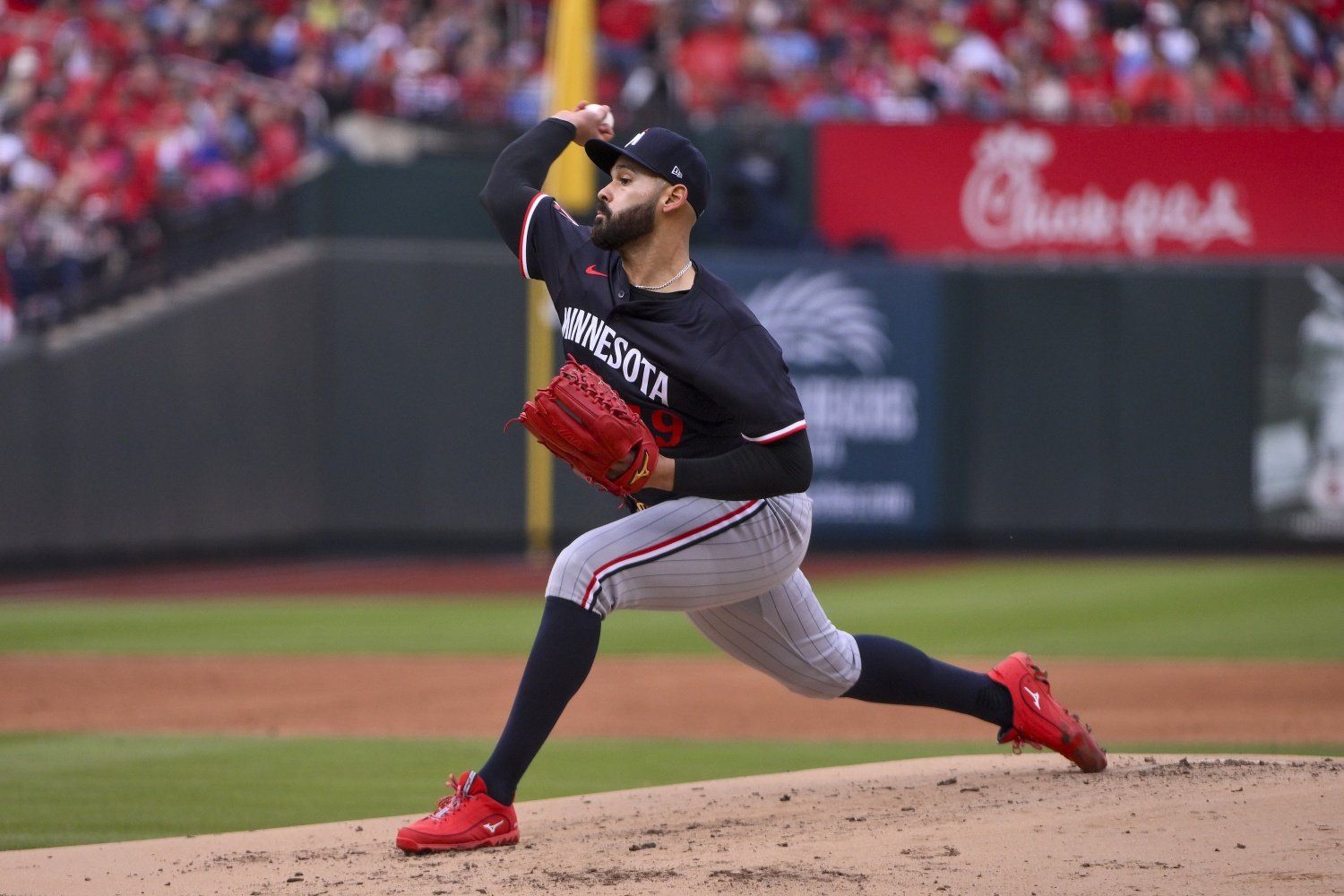 The Twins got a rare bit of good news Tuesday. Pablo López will be activated from the injured list after something very close to a minimum, 15-day stay. In his postgame press conference Tuesday night, Rocco Baldelli announced that Chris Paddack will make the start Thursday, which means López is most likely to come back Friday night against Anaheim. This is welcome, not because David Festa has done a poor job filling in for him, but because López’s cerebral, veteran presence—not to mention his stellar stuff—will be a stabilizing force at the top of the rotation. Through his first three starts, López has averaged more than five and one-third innings per start. He’s sporting a shiny 1.62 ERA, with his typically strong peripherals. You know his game: not walking many, getting a ton of chase, and coaxing a ton of grounders. López left his last start, on April 8, after Carlos Correa noticed him grabbing the back of his leg. Correa called for the training staff, and moments later, López’s day was done. The next day, he hit the injured list for the first time since 2021. The early diagnosis was a mild hamstring strain, and at the time, the Twins were hopeful that his time on the shelf would be kept to the minimum allowed stint, 15 days. These hopes seem poised to be (more or less) realized, as Lopez took around a week off, then made one rehab start with Triple-A Saint Paul. In his rehab start, Lopez threw 63 pitches, and completed 4 2/3 innings. He struck out four, didn’t walk anyone, and gave up one run on three hits. On Tuesday, he threw a bullpen session, and the training staff felt that both went according to plan. Between the rehab start and the bullpen session, López got some workouts in with kettlebells and resistance bands in a ballpark hallway, as minor leaguers do, and didn’t feel any discomfort. “I think he’s in a really good spot to return to the big leagues, not have to make another rehab start," Rocco Baldelli told reporters Tuesday. "All positive.” López himself feels the same confidence. “I’m feeling good, but also I got to the point where I’m still working … on sequences, hitting my spots and seeing what the training staff tells me, but everything’s moving well, feeling natural, feeling normal,” he said. There was still one final test that López needed to pass. He completed his rehab assignment by treating the Saints players to breakfast sushi in Iowa (true story). When medical staff determined that López was still among the living after that questionable culinary decision (which, in fairness to him, he, too, expressed some doubts about), they judged that he was ready to join the parent club. The Twins are desperately clinging to the hope for relevance. The best version of the 2025 Minnesota Twins features López in a prominent role at the front of the rotation. While it may be getting late early for the team, his return should hearten his teammates and fans alike, and will give the Twins a slightly better chance to win every fifth day. The bigger question (the answer to which I won’t speculate on) is what the corresponding move will be when López is called up. Will it be a like-for-like swap with his replacement? Or will someone from the current rotation slide into the bullpen, pushing a fringe relief arm out of the picture? Regardless of whom he replaces, López will give the middle-of-the-road pitching staff a shot in the arm. Will López’s activation be enough to help the floundering Twins right the ship of their season, or is it too little, too late? Who do you think will be sent down? And who should be sent down? Weigh in below!
 -
they do set the payroll and make high-level business decisions, so some focus is necessary to properly evaluate why the product on the field is the way it is.
-
Sure seems like a missed opportunity, doesn’t it?
-
Sure seems like a missed opportunity, doesn’t it?
-
 For those paying attention at home, over the past 18 months, the Pohlad family ownership group has run the Minnesota Twins fanbase's morale into the ground, in a number of ways. Recently, Twins Daily introduced a polling feature into the site, and you all have weighed in on a number of topics. One of those poll topics is “Do you approve of Twins' ownership?” The fans have spoken. Since this particular poll went live on March 27th, 718 of you have shared your opinion. The results? Just 7% of you have said you think they are doing a good job. The other 665 of you said no. This chart shows the raw number of votes in each direction on each day since polling began. For the 53 of you who said you support Twins ownership over the last three weeks, I have some questions. (For instance: What's your last name? Because I have one very specific guess.) For the rest of you, I have some thoughts on potential reasons why. Now, I’m going to run through a far-from-exhaustive list of the actions they have taken that I suspect have rubbed you the wrong way, and led to you giving a thumbs-down. “Right-Sizing the Payroll” In 2023, the Minnesota Twins broke their 19-year, 0-18 playoff curse. They beat the Blue Jays in four games and advanced to the ALDS. They won one of their games against the Astros in the ALDS, too. Shortly thereafter, though, ownership threw a large bucket of cold water all over the excitement of fans, announcing that it was time to “right-size” the payroll. While the stated reasons were tied to declining TV revenue and the collapse of the RSN model, it was still a gut punch of epic proportions. I suspect some fans immediately lost interest at that point. Failing to provide an appropriate budget This is an easy gripe to make, and it generally applies to every year other than 2023. The Twin Cities are the 15th-largest media market in the country. In 2024, they had the 20th-largest payroll, despite being in a clear window of contention. Failing to spend at the deadline last season almost certainly cost the Twins a playoff berth, and cost the team some fans in the process. Coming into 2025, the Pohlads had an opportunity to compensate for the tough finish. Instead, the sense for most of the offseason was that the Twins would need to shed one or more contracts in order to add anyone of note. Just three weeks into the season, it’s painfully apparent that one more big bat could have made a difference in the standings. Most fans aren’t asking for a top-10 budget. Getting to 15th—commensurate with their market size—would net the Twins an additional $20 million to spend. That would have been the difference between Mickey Gasper being on the roster, and signing (say) Pete Alonso, or trading for Dylan Cease. Creating leveraged debt, mortgaging the Twins' future Remember when the Pohlads were presumed to be close to selling the team to Justin Ishbia, the league did their diligence, and when it came time to looking at the books, he backed out? Remember when details dropped a couple days later that the Twins have at least $425 million in debt accumulated over the past few years, despite the fact that the Twins receive roughly enough to cover payroll through TV, revenue sharing, and national media deals? Yeah. It seems overwhelmingly likely that the Pohlads have borrowed liberally against the team to gain cash to fund their other (money-losing) enterprises. As a result, their asking price is higher than their valuation, according to Forbes. How much more difficult will that make it to sell the team? How likely is it that a purchaser will be willing to absorb that level of debt? And how likely is it that if they can’t find a buyer who will overpay, they will instead cry poor and fail to give the front office a payroll that’s workable, especially when more players hit their second and third years of arbitration? Yikes. Prioritizing profits over allowing fans to watch games This is another biggie. Do you know the two best ways to grow a fanbase? First, win. Second, make it easy to watch games. Turns out, when you don’t do either, you just push your fans away. Going into the 2024 season, the Twins and Bally had broken up. The Twins were committed to making games accessible to fans, to the point that brand new TV play-by-play man Cory Provus went on record saying there would be no more blackouts. Just a few short months later, the Twins were back on Bally (with blackouts), and there was a carriage dispute with many TV providers that further limited access. Now, this may have been directly under Dave St. Peter's purview, but the bottom-line focus (at the very least) was directed by the Pohlads. Does it really seem like a good idea to re-up with a bankrupt entity that you already know has done you dirty? Probably not. Bonus: trying to contract the franchise Yeah, I know I said I was talking about recent things. You know what, though? This one still cuts deep for me, even though it was over 20 years ago. Sports teams are something that inspire such passion, such loyalty, that trying to get rid of a team to pocket a few bucks is just Cruella de Vil-level profiteering and villainy. I wouldn’t be shocked if this still looms large for many. Some argue that the apparent flirtation with contraction was just a ploy to secure other concessions, and perhaps to shake loose some money at the state and municipal level to build Target Field. Even if it's true, though, that really doesn't make them seem less cartoonishly callous. Playing chicken with a public good of which you are steward as much as true owner is almost as gross as trying to actually destroy it. It's undeniable that some combination of these factors have led to declining team interest, and attendance as well. I mentioned above that this list is far from exhaustive, and it is. But now, I want to hear from you. Which of these have most demoralized you? Or is there a big topic that I’m missing? Join the discussion below, and let’s commiserate together. To the 7%: I want to hear from you too! What is everyone else missing?
 -
Common sense suggests that Twins fans aren’t in love with the Pohlads' (lack of) commitment to fielding a winning team, but who knew it was this bad? Image courtesy of © Bruce Kluckhohn-Imagn Images Common sense suggests that Twins fans aren’t in love with the Pohlads' (lack of) commitment to fielding a winning team, but who knew it was this bad? For those paying attention at home, over the past 18 months, the Pohlad family ownership group has run the Minnesota Twins fanbase's morale into the ground, in a number of ways. Recently, Twins Daily introduced a polling feature into the site, and you all have weighed in on a number of topics. One of those poll topics is “Do you approve of Twins' ownership?” The fans have spoken. Since this particular poll went live on March 27th, 718 of you have shared your opinion. The results? Just 7% of you have said you think they are doing a good job. The other 665 of you said no. This chart shows the raw number of votes in each direction on each day since polling began. For the 53 of you who said you support Twins ownership over the last three weeks, I have some questions. (For instance: What's your last name? Because I have one very specific guess.) For the rest of you, I have some thoughts on potential reasons why. Now, I’m going to run through a far-from-exhaustive list of the actions they have taken that I suspect have rubbed you the wrong way, and led to you giving a thumbs-down. “Right-Sizing the Payroll” In 2023, the Minnesota Twins broke their 19-year, 0-18 playoff curse. They beat the Blue Jays in four games and advanced to the ALDS. They won one of their games against the Astros in the ALDS, too. Shortly thereafter, though, ownership threw a large bucket of cold water all over the excitement of fans, announcing that it was time to “right-size” the payroll. While the stated reasons were tied to declining TV revenue and the collapse of the RSN model, it was still a gut punch of epic proportions. I suspect some fans immediately lost interest at that point. Failing to provide an appropriate budget This is an easy gripe to make, and it generally applies to every year other than 2023. The Twin Cities are the 15th-largest media market in the country. In 2024, they had the 20th-largest payroll, despite being in a clear window of contention. Failing to spend at the deadline last season almost certainly cost the Twins a playoff berth, and cost the team some fans in the process. Coming into 2025, the Pohlads had an opportunity to compensate for the tough finish. Instead, the sense for most of the offseason was that the Twins would need to shed one or more contracts in order to add anyone of note. Just three weeks into the season, it’s painfully apparent that one more big bat could have made a difference in the standings. Most fans aren’t asking for a top-10 budget. Getting to 15th—commensurate with their market size—would net the Twins an additional $20 million to spend. That would have been the difference between Mickey Gasper being on the roster, and signing (say) Pete Alonso, or trading for Dylan Cease. Creating leveraged debt, mortgaging the Twins' future Remember when the Pohlads were presumed to be close to selling the team to Justin Ishbia, the league did their diligence, and when it came time to looking at the books, he backed out? Remember when details dropped a couple days later that the Twins have at least $425 million in debt accumulated over the past few years, despite the fact that the Twins receive roughly enough to cover payroll through TV, revenue sharing, and national media deals? Yeah. It seems overwhelmingly likely that the Pohlads have borrowed liberally against the team to gain cash to fund their other (money-losing) enterprises. As a result, their asking price is higher than their valuation, according to Forbes. How much more difficult will that make it to sell the team? How likely is it that a purchaser will be willing to absorb that level of debt? And how likely is it that if they can’t find a buyer who will overpay, they will instead cry poor and fail to give the front office a payroll that’s workable, especially when more players hit their second and third years of arbitration? Yikes. Prioritizing profits over allowing fans to watch games This is another biggie. Do you know the two best ways to grow a fanbase? First, win. Second, make it easy to watch games. Turns out, when you don’t do either, you just push your fans away. Going into the 2024 season, the Twins and Bally had broken up. The Twins were committed to making games accessible to fans, to the point that brand new TV play-by-play man Cory Provus went on record saying there would be no more blackouts. Just a few short months later, the Twins were back on Bally (with blackouts), and there was a carriage dispute with many TV providers that further limited access. Now, this may have been directly under Dave St. Peter's purview, but the bottom-line focus (at the very least) was directed by the Pohlads. Does it really seem like a good idea to re-up with a bankrupt entity that you already know has done you dirty? Probably not. Bonus: trying to contract the franchise Yeah, I know I said I was talking about recent things. You know what, though? This one still cuts deep for me, even though it was over 20 years ago. Sports teams are something that inspire such passion, such loyalty, that trying to get rid of a team to pocket a few bucks is just Cruella de Vil-level profiteering and villainy. I wouldn’t be shocked if this still looms large for many. Some argue that the apparent flirtation with contraction was just a ploy to secure other concessions, and perhaps to shake loose some money at the state and municipal level to build Target Field. Even if it's true, though, that really doesn't make them seem less cartoonishly callous. Playing chicken with a public good of which you are steward as much as true owner is almost as gross as trying to actually destroy it. It's undeniable that some combination of these factors have led to declining team interest, and attendance as well. I mentioned above that this list is far from exhaustive, and it is. But now, I want to hear from you. Which of these have most demoralized you? Or is there a big topic that I’m missing? Join the discussion below, and let’s commiserate together. To the 7%: I want to hear from you too! What is everyone else missing? View full article
-
Can’t come soon enough.
-
Buxton has actually been a league-average hitter so far, with a 100 wRC+.
-
Yeah! They are fun, for sure. I’m sure it’s just a matter of time.
-
Topa is going to be an opener; Woods Richardson will be the bulk guy. May help get an extra inning or so out of him.
-
Three Reasons to Still Be Excited About the 2025 Minnesota Twins
Eric Blonigen posted an article in Twins
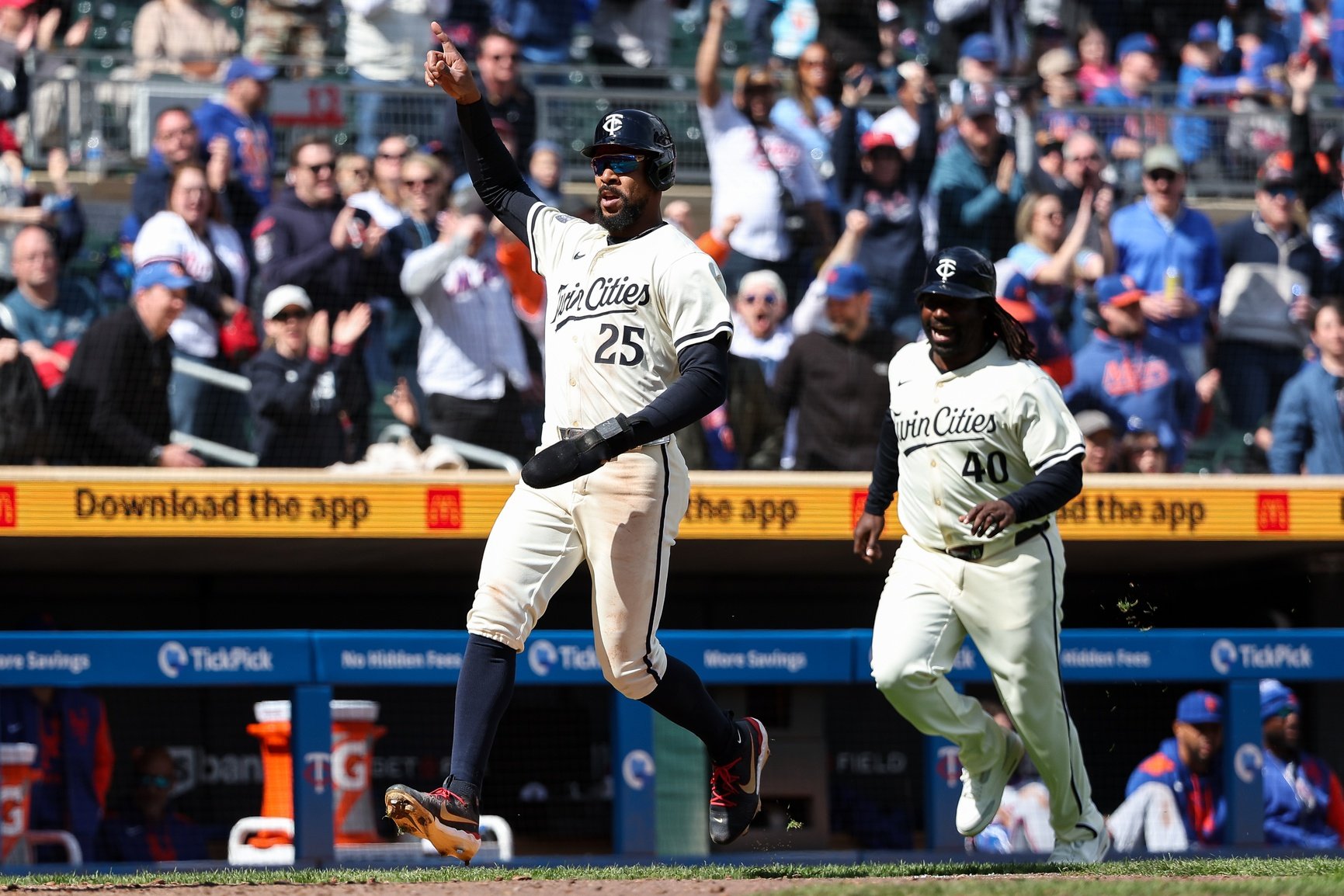 Look, the 2025 season has not begun according to plan, and I’m not going to pretend otherwise. The pitching staff has forgotten how to throw to first (or second, apparently). A lot of the hitters aren’t hitting. Don’t even get me started on all. the. injuries. And yet, the season is still young. There are more than 140 games still to play. The Twins are five back in the winnable AL Central division headed into Saturday’s game against Atlanta. And, there are a few bright spots that should give us hope as well as reasons to continue to watch. Byron Buxton is back When Byron Buxton is right, he’s so much fun to watch. This offseason, I wrote that he might be ready to run again. Through 18 games, it sure seems like I was right. He has stolen four bases in four attempts. He’s also made several aggressive base running moves that have helped the team. In Wednesday’s game alone, he took second on a bloop single that barely left the infield. Then, in the 10th inning, while on second as the Manfred Man, he scored the winning run on a similarly-hit single from Ty France. Players not named Buxton just can’t do these things. Oh, and he’s played his typical caliber of defense in center. Coming into the season, there were thoughts that he might begin a legitimate decline phase. While his bat speed is down slightly, he’s shown signs of truly waking up at the plate. In the past seven games, he has put up an .800 OPS. He looks healthier than he has in years, and if he keeps it up, his return to form could be a fun storyline all summer. The free agent signing are actually…good? Was I excited about either Harrison Bader or Ty France when the Twins signed them? Not at all. They seemed like low-wattage additions to a team desperately in need of at least one more big bat. You know what though? Early signs say I was wrong. France has looked better than expected at first, and has hit better than he has over the past couple seasons. He was even the AL Player of the Week last week. In fact, those two hitters have been the best on the active roster by fWAR. Both are on pace for close to 5.0 fWAR on the season if they keep their pace up. Will they? Probably not. Let’s not be hasty. It is a small sample size, after all. But, early signs suggest that even with regression, both are shaping up to at least merit being everyday regulars. That portends good things once some of the other hitters get healthy (looking at you, Royce Lewis, Carlos Correa, and Matt Wallner). On the pitching front, Danny Coulombe was the sole addition to the bullpen, and he has looked good as well. Sporting a shiny 0.00 ERA across nine games, his peripherals are good too. His strikeouts are down just a bit, but he’s only given up two hits and a walk in 6-2/3 innings pitched. In all, those are some impressive results for less than $11 million, combined. The depth is basically ready The Triple-A roster is loaded – even after injuries and call ups. On the hitting side, Luke Keaschall got his first call up, less than two years after being drafted. To be clear, it’s probably just a bit premature as Keaschall has all of 14 games played at Triple-A, but it’s a great sign, and he looked really good in his first game with the Twins. Emmanuel Rodriguez may not be far behind, particularly if Castro spends time on the shelf or if Wallner’s IL stint is much longer than the minimum. Carson McCusker could be a reinforcement as a big bat. On the pitching side, David Festa has acquitted himself well in his first two starts of the year with the Twins. Beyond Festa, Zebby Matthews has looked electric, flirting with 100 MPH on his heater while retaining his signature command. Andrew Morris, Travis Adams, and Marco Raya aren’t far behind, and could play a role if needed. It’s been such a long time since the Twins had even one strong starting candidate across town that now having five is a legitimate luxury. For many teams, losing a pitcher of Pablo Lopez’ caliber would cause a significant challenge for the rotation; for the Twins, it’s still unfortunate, but not devastating. So, here’s my reminder to all Twins fans. While the team can be frustrating to follow, there’s still a lot to be excited about. And it’s baseball season! We wait for this all winter — why not enjoy it while we can?
 -
Yes, this team has been frustrating to watch, and yes, we all expected more. But, the sky is not falling. Image courtesy of Matt Krohn-Imagn Images Yes, this team has been frustrating to watch, and yes, we all expected more. But, the sky is not falling. Look, the 2025 season has not begun according to plan, and I’m not going to pretend otherwise. The pitching staff has forgotten how to throw to first (or second, apparently). A lot of the hitters aren’t hitting. Don’t even get me started on all. the. injuries. And yet, the season is still young. There are more than 140 games still to play. The Twins are five back in the winnable AL Central division headed into Saturday’s game against Atlanta. And, there are a few bright spots that should give us hope as well as reasons to continue to watch. Byron Buxton is back When Byron Buxton is right, he’s so much fun to watch. This offseason, I wrote that he might be ready to run again. Through 18 games, it sure seems like I was right. He has stolen four bases in four attempts. He’s also made several aggressive base running moves that have helped the team. In Wednesday’s game alone, he took second on a bloop single that barely left the infield. Then, in the 10th inning, while on second as the Manfred Man, he scored the winning run on a similarly-hit single from Ty France. Players not named Buxton just can’t do these things. Oh, and he’s played his typical caliber of defense in center. Coming into the season, there were thoughts that he might begin a legitimate decline phase. While his bat speed is down slightly, he’s shown signs of truly waking up at the plate. In the past seven games, he has put up an .800 OPS. He looks healthier than he has in years, and if he keeps it up, his return to form could be a fun storyline all summer. The free agent signing are actually…good? Was I excited about either Harrison Bader or Ty France when the Twins signed them? Not at all. They seemed like low-wattage additions to a team desperately in need of at least one more big bat. You know what though? Early signs say I was wrong. France has looked better than expected at first, and has hit better than he has over the past couple seasons. He was even the AL Player of the Week last week. In fact, those two hitters have been the best on the active roster by fWAR. Both are on pace for close to 5.0 fWAR on the season if they keep their pace up. Will they? Probably not. Let’s not be hasty. It is a small sample size, after all. But, early signs suggest that even with regression, both are shaping up to at least merit being everyday regulars. That portends good things once some of the other hitters get healthy (looking at you, Royce Lewis, Carlos Correa, and Matt Wallner). On the pitching front, Danny Coulombe was the sole addition to the bullpen, and he has looked good as well. Sporting a shiny 0.00 ERA across nine games, his peripherals are good too. His strikeouts are down just a bit, but he’s only given up two hits and a walk in 6-2/3 innings pitched. In all, those are some impressive results for less than $11 million, combined. The depth is basically ready The Triple-A roster is loaded – even after injuries and call ups. On the hitting side, Luke Keaschall got his first call up, less than two years after being drafted. To be clear, it’s probably just a bit premature as Keaschall has all of 14 games played at Triple-A, but it’s a great sign, and he looked really good in his first game with the Twins. Emmanuel Rodriguez may not be far behind, particularly if Castro spends time on the shelf or if Wallner’s IL stint is much longer than the minimum. Carson McCusker could be a reinforcement as a big bat. On the pitching side, David Festa has acquitted himself well in his first two starts of the year with the Twins. Beyond Festa, Zebby Matthews has looked electric, flirting with 100 MPH on his heater while retaining his signature command. Andrew Morris, Travis Adams, and Marco Raya aren’t far behind, and could play a role if needed. It’s been such a long time since the Twins had even one strong starting candidate across town that now having five is a legitimate luxury. For many teams, losing a pitcher of Pablo Lopez’ caliber would cause a significant challenge for the rotation; for the Twins, it’s still unfortunate, but not devastating. So, here’s my reminder to all Twins fans. While the team can be frustrating to follow, there’s still a lot to be excited about. And it’s baseball season! We wait for this all winter — why not enjoy it while we can? View full article
-
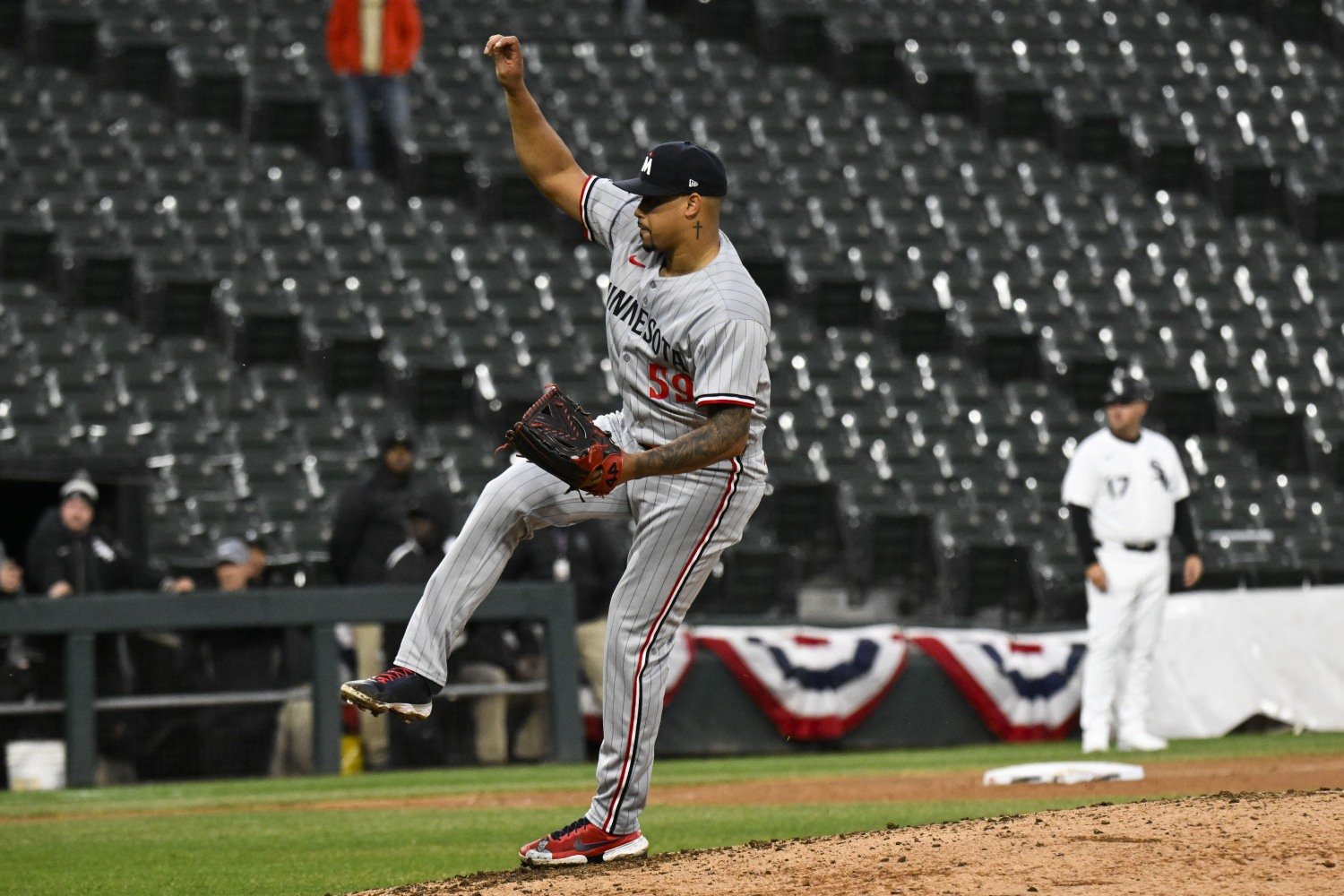 The Twins are just two games into a run of 12 straight without an off day. The remainder of that stretch includes seven in a row against division rivals and three more against a strong Mets team. Currently two games back from the division lead, the Twins are in position to create some separation in the standings. There’s only one problem: the bullpen isn’t exactly fresh, after back-to-back short starts from Bailey Ober and Chris Paddack, and an extra-innings game on Sunday. Monday’s starter, Simeon Woods Richardson, isn’t exactly known for length at this point in his young career. He hasn't completed five innings in a start since last Aug. 27, even counting spring training, and he last pitched into the sixth on Aug. 10. Cole Sands, Jhoan Duran, Louis Varland and Justin Topa will all be down after pitching back-to-back days. That leaves the team with just Danny Coulombe, Darren McCaughan, Jorge Alcala and Griffin Jax available for the first game against the Royals, among players who have been active with the team this week. The season is still incredibly young, but after two turns through the rotation, only Pablo López is averaging more than five innings per start. In fact, in five of the nine contests, the team's starter has failed to get an out in the fifth. Luckily, the relief corps is pretty deep at the major-league level, but reinforcements will almost certainly be needed over the next few days. McCaughan, a journeyman with a career 5.93 ERA across parts of four seasons, is likely the odd man out. It would be surprising if he isn’t designated for assignment Monday, in favor of a fresher—and hopefully better—arm. But where will this arm come from? There are two pretty realistic possibilities, and a third that I believe makes a ton of sense. Calling Up a Triple-A Reliever This is the most straightforward option, and there are two guys who could make sense. Kody Funderburk is on the 40-man roster, and could easily be a like-for-like replacement for McCaughan. He’s been a bit underwhelming in brief stints with the Twins, but has the stuff to be a medium-leverage arm. He has also been great so far with the Saints this season, with five strikeouts in 3 2/3 innings and a 0.82 WHIP. However, because the season isn't yet 15 days old, Funderburk's option can't be reversed unless the team places a pitcher on the injured list. Scott Blewett is another realistic option. He did well for the Twins in 2024, and aside from the unfortunate last name, he belongs on a big-league club. However, he’s not on the 40-man roster. Calling him up would probably result in the Twins losing him when Brock Stewart or Michael Tonkin are ready for action, and we know they prefer to preserve legitimate depth whenever possible. Waiver Claims Claiming another team’s castoff is the second likely option. Similar to the Blewett situation, the Twins would likely lose anyone they claim within a couple of weeks. Derek Falvey has shown a willingness to quickly part ways with waiver pickups. The downside here is twofold. First, it isn’t clear that guys who aren’t good enough for another team’s bullpen would actually improve the Twins'. The second challenge is that this process may be slower than what’s convenient to shore up the bullpen at the beginning of this stretch of games. There has been a fair bit of roster churn across baseball, even this early in the season. There have been a half-dozen guys who have been designated by their teams recently, but most are the same sort of fungible relievers as McCaughan. Padres lefty Tom Cosgrove and Mariners righty Hagen Danner are both currently in DFA limbo, but neither even made those teams' rosters to open the season. This probably doesn't make too much sense. Free-Agent Signings There are a number of free agents whom the Twins could pursue, should they be interested (and have the ability to free up some cash, which there’s no indication they will do). Drew Smyly, Joe Kelly, Matt Barnes, and Brooks Raley are all unsigned. So is the real prize, David Robertson. Yes, this is his age-40 season, but he’s still really good. He could slot in at the back of the bullpen, deepening an already enviable group. He declined a mutual option with the Rangers this offseason, taking a $1.5 million buyout. It’s not clear what his services would cost, but this sort of move would certainly boost fan morale and could be worth the expense. After all, what’s another $7 million in debt, when you're $425 million in the hole? This would be worth it. Now, these options make some sense in terms of bullpen quality, but neither solves the need to eat some innings immediately. Even Robertson will, presumably, need onboarding and a bullpen session or two to demonstrate readiness before he can help anyone. So, let’s look at the next couple of options. Converting Marco Raya If the Twins want a long reliever, Marco Raya could also be an option. Thus far in his career, he has rarely gone more than four innings in a start. Many evaluators believe he may end up in the bullpen, anyway, and they could decide that trying him for a few innings at a time with the big-league club makes sense. Of course, the Twins have been slowly stretching him out with the intention of a full starter’s workload, so this would only make sense if they, too, secretly believe he will end up a reliever. His stuff will almost certainly play, and he’s no higher than ninth on their starter depth chart. Still, this would be a sudden pivot. The Unconventional Option If the Twins wanted to get a tiny bit creative, they could decide to do something they really haven’t done much of before: call up a starter from the Saints and plan to piggyback Woods Richardson with, say, Zebby Matthews for the next couple of turns through the rotation. They could plan on four or five innings from each and give the bullpen a full day off on the piggyback days. As luck would have it, Matthews is set to start on Tuesday, but if he was a bulk guy on Monday, that would be five days' rest for him. In this scenario, no players would be lost due to 40-man churn (assuming they feel comfortable optioning someone like Topa or Varland to St. Paul), and the Twins would add a high-caliber arm to the bullpen. With how Matthews’s stuff has been playing up so far in 2025, this almost makes too much sense to not at least try it, and it gets my vote. It feels far-fetched, though. In all likelihood, we're about to see Blewett join the pen. What's less clear is whether that will be enough to help the team survive this difficult early stretch. How do you feel about these options? Would you like to see a reliever call-up? Converting Marco Raya? Claiming someone off waivers? A piggyback situation? Or, do you think this is all unnecessary? Let’s chat below!
- 56 comments
-
- 5
-

-
- chris paddack
- bailey ober
- (and 5 more)
-
Nine games into the season, the Twins' bullpen is already a bit stretched. What are the options to bolster the relief corps and mitigate this early-season swoon? Image courtesy of © Matt Marton-Imagn Images Nine games into the season, the Twins' bullpen is already a bit stretched. What are the options to bolster the relief corps and mitigate this early-season swoon? The Twins are just two games into a run of 12 straight without an off day. The remainder of that stretch includes seven in a row against division rivals and three more against a strong Mets team. Currently two games back from the division lead, the Twins are in position to create some separation in the standings. There’s only one problem: the bullpen isn’t exactly fresh, after back-to-back short starts from Bailey Ober and Chris Paddack, and an extra-innings game on Sunday. Monday’s starter, Simeon Woods Richardson, isn’t exactly known for length at this point in his young career. He hasn't completed five innings in a start since last Aug. 27, even counting spring training, and he last pitched into the sixth on Aug. 10. Cole Sands, Jhoan Duran, Louis Varland and Justin Topa will all be down after pitching back-to-back days. That leaves the team with just Danny Coulombe, Darren McCaughan, Jorge Alcala and Griffin Jax available for the first game against the Royals, among players who have been active with the team this week. The season is still incredibly young, but after two turns through the rotation, only Pablo López is averaging more than five innings per start. In fact, in five of the nine contests, the team's starter has failed to get an out in the fifth. Luckily, the relief corps is pretty deep at the major-league level, but reinforcements will almost certainly be needed over the next few days. McCaughan, a journeyman with a career 5.93 ERA across parts of four seasons, is likely the odd man out. It would be surprising if he isn’t designated for assignment Monday, in favor of a fresher—and hopefully better—arm. But where will this arm come from? There are two pretty realistic possibilities, and a third that I believe makes a ton of sense. Calling Up a Triple-A Reliever This is the most straightforward option, and there are two guys who could make sense. Kody Funderburk is on the 40-man roster, and could easily be a like-for-like replacement for McCaughan. He’s been a bit underwhelming in brief stints with the Twins, but has the stuff to be a medium-leverage arm. He has also been great so far with the Saints this season, with five strikeouts in 3 2/3 innings and a 0.82 WHIP. However, because the season isn't yet 15 days old, Funderburk's option can't be reversed unless the team places a pitcher on the injured list. Scott Blewett is another realistic option. He did well for the Twins in 2024, and aside from the unfortunate last name, he belongs on a big-league club. However, he’s not on the 40-man roster. Calling him up would probably result in the Twins losing him when Brock Stewart or Michael Tonkin are ready for action, and we know they prefer to preserve legitimate depth whenever possible. Waiver Claims Claiming another team’s castoff is the second likely option. Similar to the Blewett situation, the Twins would likely lose anyone they claim within a couple of weeks. Derek Falvey has shown a willingness to quickly part ways with waiver pickups. The downside here is twofold. First, it isn’t clear that guys who aren’t good enough for another team’s bullpen would actually improve the Twins'. The second challenge is that this process may be slower than what’s convenient to shore up the bullpen at the beginning of this stretch of games. There has been a fair bit of roster churn across baseball, even this early in the season. There have been a half-dozen guys who have been designated by their teams recently, but most are the same sort of fungible relievers as McCaughan. Padres lefty Tom Cosgrove and Mariners righty Hagen Danner are both currently in DFA limbo, but neither even made those teams' rosters to open the season. This probably doesn't make too much sense. Free-Agent Signings There are a number of free agents whom the Twins could pursue, should they be interested (and have the ability to free up some cash, which there’s no indication they will do). Drew Smyly, Joe Kelly, Matt Barnes, and Brooks Raley are all unsigned. So is the real prize, David Robertson. Yes, this is his age-40 season, but he’s still really good. He could slot in at the back of the bullpen, deepening an already enviable group. He declined a mutual option with the Rangers this offseason, taking a $1.5 million buyout. It’s not clear what his services would cost, but this sort of move would certainly boost fan morale and could be worth the expense. After all, what’s another $7 million in debt, when you're $425 million in the hole? This would be worth it. Now, these options make some sense in terms of bullpen quality, but neither solves the need to eat some innings immediately. Even Robertson will, presumably, need onboarding and a bullpen session or two to demonstrate readiness before he can help anyone. So, let’s look at the next couple of options. Converting Marco Raya If the Twins want a long reliever, Marco Raya could also be an option. Thus far in his career, he has rarely gone more than four innings in a start. Many evaluators believe he may end up in the bullpen, anyway, and they could decide that trying him for a few innings at a time with the big-league club makes sense. Of course, the Twins have been slowly stretching him out with the intention of a full starter’s workload, so this would only make sense if they, too, secretly believe he will end up a reliever. His stuff will almost certainly play, and he’s no higher than ninth on their starter depth chart. Still, this would be a sudden pivot. The Unconventional Option If the Twins wanted to get a tiny bit creative, they could decide to do something they really haven’t done much of before: call up a starter from the Saints and plan to piggyback Woods Richardson with, say, Zebby Matthews for the next couple of turns through the rotation. They could plan on four or five innings from each and give the bullpen a full day off on the piggyback days. As luck would have it, Matthews is set to start on Tuesday, but if he was a bulk guy on Monday, that would be five days' rest for him. In this scenario, no players would be lost due to 40-man churn (assuming they feel comfortable optioning someone like Topa or Varland to St. Paul), and the Twins would add a high-caliber arm to the bullpen. With how Matthews’s stuff has been playing up so far in 2025, this almost makes too much sense to not at least try it, and it gets my vote. It feels far-fetched, though. In all likelihood, we're about to see Blewett join the pen. What's less clear is whether that will be enough to help the team survive this difficult early stretch. How do you feel about these options? Would you like to see a reliever call-up? Converting Marco Raya? Claiming someone off waivers? A piggyback situation? Or, do you think this is all unnecessary? Let’s chat below! View full article
-
What's Wrong with the Minnesota Twins' Approach at the Plate?
Eric Blonigen posted an article in Twins
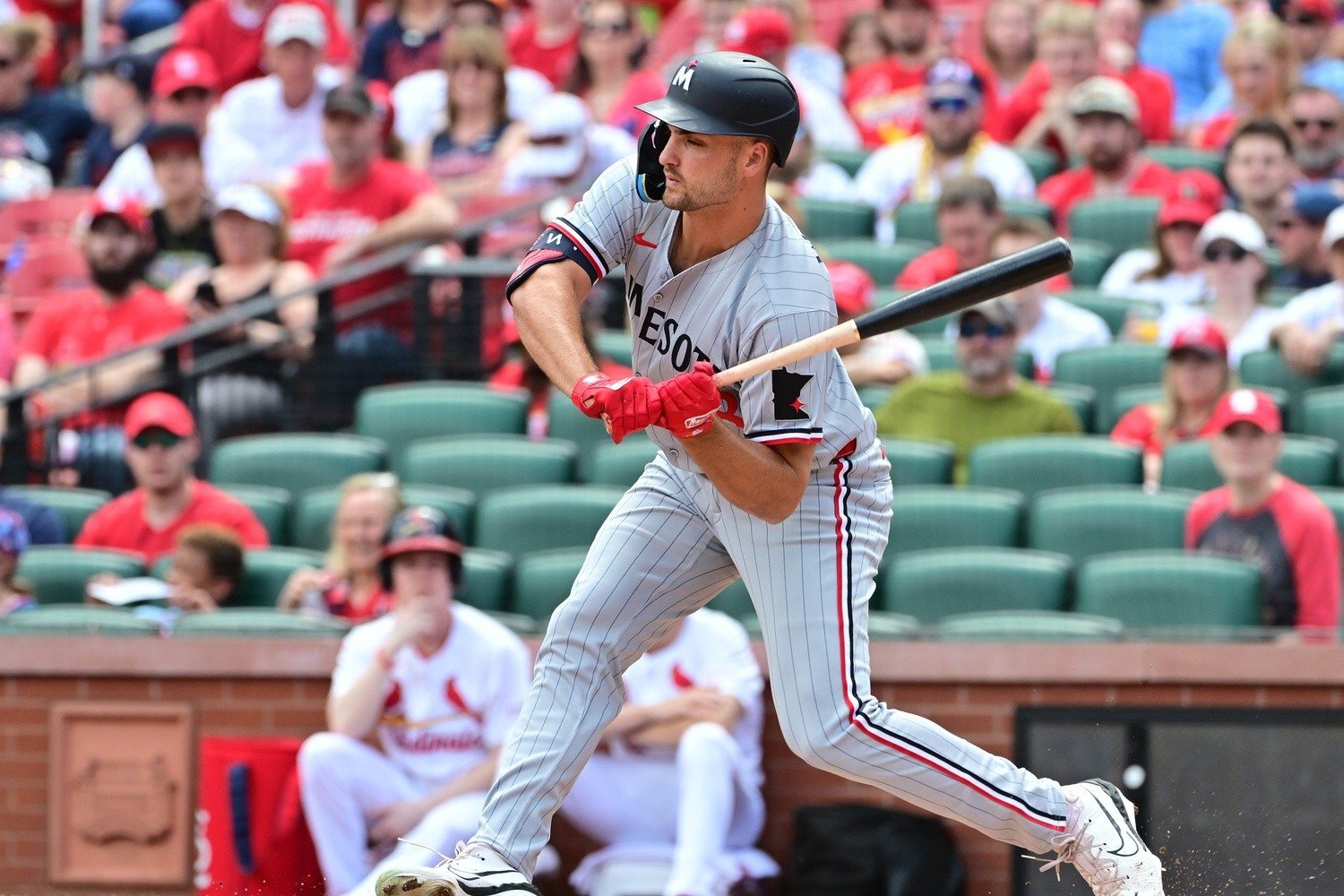 I know, I know: you hate strikeouts. When they come in bunches, they can be frustrating. Swords? Forget about it. Ugly. A strikeout looking with a runner on? Brutal. What if all the strikeouts aren’t the problem, though? Through five games, the 2025 Twins have taken a measured, old-school approach, emphasizing putting the ball in play. The result? Eight runs scored across their first four games, and just one rally to salvage the game in the latest one. Even after Tuesday's miniature slump-buster, the Twins have the fourth-lowest batting average in the majors, at .174. Their slugging is also fourth-worst, at .267. Even more predictive metrics like hard-hit rate, launch angle, and barrels are all middle of the pack. This is despite being the beneficiaries of the fourth-highest meatball rate in baseball. With the current Twins approach, they might as well just swing away and take the K, ‘cuz this is no way to live. Before you tell me “hold on, the Twins have just faced some great pitchers. It’ll be ok,” let’s be real: They have faced a diminished Sonny Gray; the solid but unspectacular duo of Erick Fedde and Andre Pallante; and the husk of Martín Pérez. When they got a look at a rookie who has proved nothing, it was they (rather than he) who looked outmatched. So what’s behind this frigid start at the plate? A main culprit is that the Twins have hit the ball on the ground nearly 48% of the time, and topped over 35% of the balls they make contact with. In fact, they have the lowest launch angle sweet spot rate in baseball, 10 percentage points worse than the average team. When they're not over the ball, they're under it; no team has hit fewer line drives this year. They also aren’t walking even a little bit (aside from Matt Wallner, who seems to be picking up right where he left off in 2024). In fact, before Tuesday’s game, the Twins had just 10 2-0 counts to start a plate appearance, by far the lowest in baseball. Making up for lost time, they reached five 2-0 counts Tuesday and drew six walks—and they still have the fewest hitter-friendly counts in baseball so far. I want to reiterate: that’s no way to live. All of this has led to a .520 team OPS. For perspective, last year, the league hit a collective .222/.280/.337 from the ninth spot in the order. The worst hitter in your average lineup last season was about 100 points ahead of the Twins in OPS. Common baseball wisdom suggests that hitters typically see one pitch per plate appearance they can crush. Their job is to make sure the at-bat is still alive when they get it, and to take advantage when they do. What we have seen throughout the first handful of games is not dissimilar from what we saw in the collapse down the stretch last season: a lot of mediocre swings at non-competitive pitches. This has led to a lot of weak choppers and lazy pop-ups that are gobbled up for outs. But why is this happening? A fair amount of this can be attributed to a combination of aggression on non-competitive pitches, passivity on good pitches, and perhaps even a hint of desperation to avoid strikeouts. Let’s look at this theory through two separate plate appearance case studies. Neither of these instances were moments in which the game was on the line, per se, but each could have led to runs with a different approach and outcome. For both of these examples, there have been several others I also could have chosen. So, there’s a theme, for sure. Aggression on Non-Competitive Pitches In Sunday’s finale against the Cardinals, Byron Buxton was up with two on and one out, facing Pallante. He struck out on six pitches. The kicker? Not one was in the zone. To be fair, Buxton is a free-swinger and strikeouts are a big part of his game. However, this is extreme even for him. Is it a case of trying to do too much, to jumpstart the sluggish offense? We saw that down the stretch last year, and it seems to be continuing. Passivity on Good Pitches Here, in Monday’s game against the White Sox, José Miranda came to the plate in the top of the fourth inning. Facing Martín Pérez, there were two outs and runners on first and second. Now, the game was well out of hand, with the Twins down 9-0. But, there was an opportunity to put a run on the board. In his first pitch, he guessed fastball middle-middle, the bottom dropped out, and he had a swinging strike. With the third pitch, Miranda fouled off a pitch that he didn’t need to swing at, as it was in no way crushable and could have missed the zone entirely. Then, in the sixth pitch of the at-bat, Miranda watched a cutter that was over the heart of the plate go by without a swing. That was his pitch, and he could have pulled it hard. Carlos Correa’s Timing Ok. This one deserves a category of its own. We know Carlos Correa is typically a slow starter. We know he had a rough spring at the plate. But did you know that Correa has averaged just 2.56 pitches per plate appearance? And did you know that the MLB average plate appearance length so far this season is 3.92 pitches? Well, Correa has jumped on the first pitch quite frequently so far, and as often as not, the approach hasn’t worked, even a little bit. For example, in Tuesday’s game facing White Sox Rule 5 pickup Shane Smith, Correa swung at the first pitch. He hit it hard, he hit it into the ground, he hit it 12 feet. Inning-ending double play. Overall, Tuesday’s game showed a better approach. The hitters were a little more patient, but not passive. They waited for their pitches. Correa had two different lengthy at-bats. And the Twins put up eight runs, en route to their first victory of 2025. Will this showing reverse their early-season trend, or is this an outlier? One thing should be clear, based on roughly the past 40 games the Twins have played: New pitching coach Matt Borgschulte has his work cut out for him.
- 15 comments
-
- 4
-
-

-
- matt wallner
- carlos correa
- (and 2 more)
-
This 2025 Twins team isn’t swinging for the fences, and they're avoiding strikeouts. That doesn’t mean their approach at the plate will work, though. Image courtesy of © Tim Vizer-Imagn Images This 2025 Twins team isn’t swinging for the fences, and they're avoiding strikeouts. That doesn’t mean their approach at the plate will work, though. I know, I know: you hate strikeouts. When they come in bunches, they can be frustrating. Swords? Forget about it. Ugly. A strikeout looking with a runner on? Brutal. What if all the strikeouts aren’t the problem, though? Through five games, the 2025 Twins have taken a measured, old-school approach, emphasizing putting the ball in play. The result? Eight runs scored across their first four games, and just one rally to salvage the game in the latest one. Even after Tuesday's miniature slump-buster, the Twins have the fourth-lowest batting average in the majors, at .174. Their slugging is also fourth-worst, at .267. Even more predictive metrics like hard-hit rate, launch angle, and barrels are all middle of the pack. This is despite being the beneficiaries of the fourth-highest meatball rate in baseball. With the current Twins approach, they might as well just swing away and take the K, ‘cuz this is no way to live. Before you tell me “hold on, the Twins have just faced some great pitchers. It’ll be ok,” let’s be real: They have faced a diminished Sonny Gray; the solid but unspectacular duo of Erick Fedde and Andre Pallante; and the husk of Martín Pérez. When they got a look at a rookie who has proved nothing, it was they (rather than he) who looked outmatched. So what’s behind this frigid start at the plate? A main culprit is that the Twins have hit the ball on the ground nearly 48% of the time, and topped over 35% of the balls they make contact with. In fact, they have the lowest launch angle sweet spot rate in baseball, 10 percentage points worse than the average team. When they're not over the ball, they're under it; no team has hit fewer line drives this year. They also aren’t walking even a little bit (aside from Matt Wallner, who seems to be picking up right where he left off in 2024). In fact, before Tuesday’s game, the Twins had just 10 2-0 counts to start a plate appearance, by far the lowest in baseball. Making up for lost time, they reached five 2-0 counts Tuesday and drew six walks—and they still have the fewest hitter-friendly counts in baseball so far. I want to reiterate: that’s no way to live. All of this has led to a .520 team OPS. For perspective, last year, the league hit a collective .222/.280/.337 from the ninth spot in the order. The worst hitter in your average lineup last season was about 100 points ahead of the Twins in OPS. Common baseball wisdom suggests that hitters typically see one pitch per plate appearance they can crush. Their job is to make sure the at-bat is still alive when they get it, and to take advantage when they do. What we have seen throughout the first handful of games is not dissimilar from what we saw in the collapse down the stretch last season: a lot of mediocre swings at non-competitive pitches. This has led to a lot of weak choppers and lazy pop-ups that are gobbled up for outs. But why is this happening? A fair amount of this can be attributed to a combination of aggression on non-competitive pitches, passivity on good pitches, and perhaps even a hint of desperation to avoid strikeouts. Let’s look at this theory through two separate plate appearance case studies. Neither of these instances were moments in which the game was on the line, per se, but each could have led to runs with a different approach and outcome. For both of these examples, there have been several others I also could have chosen. So, there’s a theme, for sure. Aggression on Non-Competitive Pitches In Sunday’s finale against the Cardinals, Byron Buxton was up with two on and one out, facing Pallante. He struck out on six pitches. The kicker? Not one was in the zone. To be fair, Buxton is a free-swinger and strikeouts are a big part of his game. However, this is extreme even for him. Is it a case of trying to do too much, to jumpstart the sluggish offense? We saw that down the stretch last year, and it seems to be continuing. Passivity on Good Pitches Here, in Monday’s game against the White Sox, José Miranda came to the plate in the top of the fourth inning. Facing Martín Pérez, there were two outs and runners on first and second. Now, the game was well out of hand, with the Twins down 9-0. But, there was an opportunity to put a run on the board. In his first pitch, he guessed fastball middle-middle, the bottom dropped out, and he had a swinging strike. With the third pitch, Miranda fouled off a pitch that he didn’t need to swing at, as it was in no way crushable and could have missed the zone entirely. Then, in the sixth pitch of the at-bat, Miranda watched a cutter that was over the heart of the plate go by without a swing. That was his pitch, and he could have pulled it hard. Carlos Correa’s Timing Ok. This one deserves a category of its own. We know Carlos Correa is typically a slow starter. We know he had a rough spring at the plate. But did you know that Correa has averaged just 2.56 pitches per plate appearance? And did you know that the MLB average plate appearance length so far this season is 3.92 pitches? Well, Correa has jumped on the first pitch quite frequently so far, and as often as not, the approach hasn’t worked, even a little bit. For example, in Tuesday’s game facing White Sox Rule 5 pickup Shane Smith, Correa swung at the first pitch. He hit it hard, he hit it into the ground, he hit it 12 feet. Inning-ending double play. Overall, Tuesday’s game showed a better approach. The hitters were a little more patient, but not passive. They waited for their pitches. Correa had two different lengthy at-bats. And the Twins put up eight runs, en route to their first victory of 2025. Will this showing reverse their early-season trend, or is this an outlier? One thing should be clear, based on roughly the past 40 games the Twins have played: New pitching coach Matt Borgschulte has his work cut out for him. View full article
- 15 replies
-
- 1
-
-
- matt wallner
- carlos correa
- (and 2 more)
-
Good addition to the discussion!
-
Yep. This is exactly the sort of clunker start I referenced. Similar to his first two starts against the royals last season. I stand by the premise, although the timing is unfortunate.
-
I’d be curious about what you think a good pitcher is, if Bailey Over isn’t one. He was a top-40 pitcher in baseball last season.
-
What do Tarik Skubal, Gerrit Cole, Justin Verlander, Robbie Ray, Shane Bieber, Blake Snell, Corey Kluber, Rick Porcello, and Dallas Keuchel have in common? Does Bailey Ober belong in that company? Image courtesy of © Matt Krohn-Imagn Images What do Tarik Skubal, Gerrit Cole, Justin Verlander, Robbie Ray, Shane Bieber, Blake Snell, Corey Kluber, Rick Porcello, and Dallas Keuchel have in common? Does Bailey Ober belong in that company? The Athletic staff recently predicted who they believe will win the major baseball awards this season. Grant Brisbee, the Giants’ beat writer for The Athletic, opined that Bailey Ober will win the 2025 AL Cy Young award. None of the other nine panelists agreed with his pick. Is there something there, and could Ober take that kind of a step forward? Before you tell me that’s just homerism, what if I told you that MLB.com also listed Ober as a dark horse candidate for the award? Maybe it’s actually a little bit credible. We know Ober has elite extension, great control and command, strikes a ton of guys out, and has a great presence on the mound. We know he’s a very good pitcher. But is he elite? And can he get there? There's certainly a lot of red on his Savant page. What’s the Target? To know whether this is even remotely realistic, it’s important to establish what type of results typically get a hurler the top spot from the BBWAA writers. Let’s start by looking at the past ten seasons’ winners. If you create the average Cy Young winner, you are looking for a season of roughly the following: 6.32 bWAR, 220 strikeouts, a 2.36 ERA, and 208 innings pitched. That seems like a good target. What have Ober’s best seasons looked like in each of those categories so far? Ober’s 2023 season was best by bWAR, at 3.1. That’s about halfway there. In 2024, he struck out 191 which isn’t too far off of the 220 strikeout goal. In 2022, he finished the season with a 3.21 ERA. In 2024, his expected ERA was a nearly-identical 3.22. That’s good, but that’s still almost a full run worse than an average Cy Young winner. 2024 was also his high-water mark in innings pitched, with 178-2/3 logged. That’s not super far off from the average award winner. Ok, with all that in mind, we are looking for Ober to find about 30 strikeouts across 30 extra innings, to avoid clunker starts, and to reduce his ERA by a full run over his strongest seasons. That…seems like a lot. But it’s certainly not impossible. What would have to go right for Ober to take a big enough step forward to show legit dominance? Pitch Mix and Sequencing To begin with (and honestly, maybe this alone would do it), he needs to improve his results against righties. For his career, Ober allows roughly 50 additional points of slugging to same-sided hitters. This is not uncommon for pitchers that throw a great changeup, and Ober’s is certainly that. In fact, it’s his best pitch by far, worth 16 runs in 2024. It’s a true out pitch. When he pairs it with his middling but effective fastball while mixing in a curveball and slider, he’s death to lefties; he had a .592 OPS against them last season. But, he can’t throw this combo to righties or he gets downright average results, to the tune of a .703 OPS in 2024. Luckily, his second-best pitch, his slider, can be thrown to right-handed hitters to get outs. But, he needs a quality offering to set that up, and his fastball/change combo doesn’t get it done. The shape of those pitches is too dissimilar from the slider, and hitters have an easier time of recognizing what’s coming to them and can sit fastball to do damage. If only Ober threw a pitch that could potentially trick lefty batters until it was too late to use their A swing. A sinker maybe. What if I told you that Ober has been using a new sinker throughout spring training this year? And what if I told you the movement characteristics of that pitch pair somewhat nicely with his slider? That’s an interesting development, to be certain. Now, pitchers experiment with new pitches all the time in the spring. Often, it’s just tinkering, and the new offerings are abandoned in the Florida or Arizona heat. In this case, though, it could certainly be deliberate. If he throws even a few of these sinkers in his start on Sunday, then this could be a very interesting season for him. The last piece around pitch mix and sequencing: Ober allows an elite batting average against. In fact, it’s virtually identical to Dylan Cease and Tarik Skubal. You know, Cy Young-caliber pitchers. But, a few too many of Ober’s hits go yard. In fact, his Pull AIR% is fifth-worst among starting pitchers that faced at least 500 batters last season. If Ober can cut down on pitches that can easily be pulled up, he’s instantly one of the best pitchers in baseball. Avoiding Clunker Starts Look, when you are 6’9”, sometimes your mechanics are going to be a bit off. Honestly, there’s not a ton that can be done about that. And, Ober doesn't have more blowups than other Twins starters. However, there may be one type of clunker start that can be solved for. Over the past two seasons, three of Ober’s four worst starts have come against the Royals, to the tune of 20 runs across 10-1/3 innings. It’s possible that’s just weird, small sample size noise. More likely, the Royals have something on him. That is for the coaching staff to figure out. But, that alone could help make progress in all of those target categories above. Putting this all together, we are talking about tweaks rather than wholesale changes: add a usable setup pitch for righties, figure out what the Royals have on him, and cut down on the homers if possible. While all of these are easier said than done, they are all feasible adjustments. If even a couple of these go right, it does seem like Ober has a legitimate path to receiving some Cy Young votes. But, he will still face some tough competition. View full article
-
 The Athletic staff recently predicted who they believe will win the major baseball awards this season. Grant Brisbee, the Giants’ beat writer for The Athletic, opined that Bailey Ober will win the 2025 AL Cy Young award. None of the other nine panelists agreed with his pick. Is there something there, and could Ober take that kind of a step forward? Before you tell me that’s just homerism, what if I told you that MLB.com also listed Ober as a dark horse candidate for the award? Maybe it’s actually a little bit credible. We know Ober has elite extension, great control and command, strikes a ton of guys out, and has a great presence on the mound. We know he’s a very good pitcher. But is he elite? And can he get there? There's certainly a lot of red on his Savant page. What’s the Target? To know whether this is even remotely realistic, it’s important to establish what type of results typically get a hurler the top spot from the BBWAA writers. Let’s start by looking at the past ten seasons’ winners. If you create the average Cy Young winner, you are looking for a season of roughly the following: 6.32 bWAR, 220 strikeouts, a 2.36 ERA, and 208 innings pitched. That seems like a good target. What have Ober’s best seasons looked like in each of those categories so far? Ober’s 2023 season was best by bWAR, at 3.1. That’s about halfway there. In 2024, he struck out 191 which isn’t too far off of the 220 strikeout goal. In 2022, he finished the season with a 3.21 ERA. In 2024, his expected ERA was a nearly-identical 3.22. That’s good, but that’s still almost a full run worse than an average Cy Young winner. 2024 was also his high-water mark in innings pitched, with 178-2/3 logged. That’s not super far off from the average award winner. Ok, with all that in mind, we are looking for Ober to find about 30 strikeouts across 30 extra innings, to avoid clunker starts, and to reduce his ERA by a full run over his strongest seasons. That…seems like a lot. But it’s certainly not impossible. What would have to go right for Ober to take a big enough step forward to show legit dominance? Pitch Mix and Sequencing To begin with (and honestly, maybe this alone would do it), he needs to improve his results against righties. For his career, Ober allows roughly 50 additional points of slugging to same-sided hitters. This is not uncommon for pitchers that throw a great changeup, and Ober’s is certainly that. In fact, it’s his best pitch by far, worth 16 runs in 2024. It’s a true out pitch. When he pairs it with his middling but effective fastball while mixing in a curveball and slider, he’s death to lefties; he had a .592 OPS against them last season. But, he can’t throw this combo to righties or he gets downright average results, to the tune of a .703 OPS in 2024. Luckily, his second-best pitch, his slider, can be thrown to right-handed hitters to get outs. But, he needs a quality offering to set that up, and his fastball/change combo doesn’t get it done. The shape of those pitches is too dissimilar from the slider, and hitters have an easier time of recognizing what’s coming to them and can sit fastball to do damage. If only Ober threw a pitch that could potentially trick lefty batters until it was too late to use their A swing. A sinker maybe. What if I told you that Ober has been using a new sinker throughout spring training this year? And what if I told you the movement characteristics of that pitch pair somewhat nicely with his slider? That’s an interesting development, to be certain. Now, pitchers experiment with new pitches all the time in the spring. Often, it’s just tinkering, and the new offerings are abandoned in the Florida or Arizona heat. In this case, though, it could certainly be deliberate. If he throws even a few of these sinkers in his start on Sunday, then this could be a very interesting season for him. The last piece around pitch mix and sequencing: Ober allows an elite batting average against. In fact, it’s virtually identical to Dylan Cease and Tarik Skubal. You know, Cy Young-caliber pitchers. But, a few too many of Ober’s hits go yard. In fact, his Pull AIR% is fifth-worst among starting pitchers that faced at least 500 batters last season. If Ober can cut down on pitches that can easily be pulled up, he’s instantly one of the best pitchers in baseball. Avoiding Clunker Starts Look, when you are 6’9”, sometimes your mechanics are going to be a bit off. Honestly, there’s not a ton that can be done about that. And, Ober doesn't have more blowups than other Twins starters. However, there may be one type of clunker start that can be solved for. Over the past two seasons, three of Ober’s four worst starts have come against the Royals, to the tune of 20 runs across 10-1/3 innings. It’s possible that’s just weird, small sample size noise. More likely, the Royals have something on him. That is for the coaching staff to figure out. But, that alone could help make progress in all of those target categories above. Putting this all together, we are talking about tweaks rather than wholesale changes: add a usable setup pitch for righties, figure out what the Royals have on him, and cut down on the homers if possible. While all of these are easier said than done, they are all feasible adjustments. If even a couple of these go right, it does seem like Ober has a legitimate path to receiving some Cy Young votes. But, he will still face some tough competition.
 -
Look. As someone who has claimed to be six feet tall on the nose for my adult life, I understand embiggening yourself. Round numbers sound better, and can give a bit of an emotional boost. These Minnesota Twins though? Turns out they are just like us, and should not be trusted when it comes to their height. Image courtesy of Jonathan Dyer-Imagn Images Look. As someone who has claimed to be six feet tall on the nose for my adult life, I understand embiggening yourself. Round numbers sound better, and can give a bit of an emotional boost. These Minnesota Twins though? Turns out they are just like us, and should not be trusted when it comes to their height. Okay, I should level with you. The Minnesota Twins are not short kings. The overwhelming majority of them are pretty big dudes. But, most of them are actually shorter than their listed heights. Many have been claiming for years to be taller than they are. Why now are they recanting, and losing inches en masse? What drove the coaching staff to get out their measuring tools, and forcing every hitter to submit to the yoke of forced shortening? Could it be that Rocco Baldelli is forcing his hitters to acknowledge that he towers over them with his 6'4" stature? No, it's not that. It’s ABS. Any serious baseball fan is probably aware that MLB is testing out an Automated Ball-Strike System throughout spring training this season. Similar systems have been tested in independent and affiliated baseball dating back to 2019. It’s all but certain that at some point in time — maybe 2026, maybe later — some version of ABS will be coming to Major League Baseball. Perhaps it’ll be a fully-automated robo-ump situation, similar to what the Saint Paul Saints have used over the past couple seasons. There are, of course, labor relations issues that may come into play with a system like that. The MLB Umpires Association is sure to contest the elimination of union jobs. More likely, fans will experience some form of the challenge system where hitters, pitchers, or catchers can challenge a ball or strike call in real time. Either way, a more accurate understanding of the strike zone as it’s intended in the rulebook will be important for all involved to make the right swing decisions situationally. Any form of ABS will key the strike zone to players actual heights to determine each player’s relative strike zone. MLB has decided this will be a zone width of 17 inches and height spanning the length between 27% of a batter’s height to 53.5% of a batter’s height. Well, in order to get this right, it’s important to get each hitter’s height right. Interestingly, just five Twins hitters actual height matches that listed on their baseball cards, their FanGraphs page, or media broadcasts. Who are these beacons of truth? There are three young guys fighting for roster spots and perhaps perceive that bodily veracity could be a differentiator in whether they make the 26-man roster: Austin Martin, who both claims to be and is five-foot-eleven Edouard Julien, measuring in at his supposed six-feet height Brooks Lee, the veritable monster of the trio, who wasn’t lying when he said he’s six-one. Then, you have two additional guys who let their performance speak for themselves, bringing their real height to the public discourse. Matt Wallner is, as Twins Daily’s Gregg Masterson said in a recent episode of the Twins Off Daily Podcast, a big dude who dings dongs. He is truly the 6'4" he claims to be. You can also get aboard the Buck Truck, ‘cuz Byron Buxton wears his heart on his sleeve and lists his height in the annals of truth. Everyone else though, don’t believe a word they say. At least, don’t if it’s related to their height. In most cases (all but one, really), players’ real heights are exactly one inch shorter than their listed heights. If a person if feeling charitable, that can be attributed to a simple rounding error. I’m a hair over 5'11", and yeah; that rounds up to six feet. I’ll never begrudge a person for simply applying math best practices, even if they are stretching just a bit. A tippy-toed six feet is still six feet. Ish. Anyway, without further ado, here are all the guys guilty of declaring themselves the beneficiaries of rounding errors, or physical hubris. Christian Vazquez is listed at 5'9". He’s not. He’s 5'8", and that might legitimately be rounding up. Let’s call him five-seven and change. Sorry Vazqy. I still like you. Jose Miranda is 6'1", not 6'2". It feels wrong to nitpick a player who set a baseball record for consecutive hits, but facts are facts. Willi Castro? Not 6'1". Six flat. But six is good! It’s the number of non-pitcher positions he played in 2024. Own that! Carlos Correa. C4, not six-four. He’s actually 6'3". But, he’s still an incredible shortstop, hitter; and team leader, so I’ll give him a pass. Ryan Jeffers, similar to Correa, falsely portrayed himself at 6'4" despite being an inch shorter. Let’s call that height framing! He’s stealing an inch from some random umpire. Finally, Trevor Larnach. Let’s see…Trevor has six letters, and…you know what? It doesn’t matter. He’s actually 6'3", just like Correa and Jeffers. Still a big dude. So I teased the fact earlier that one player is a wholly-unreliable height narrator. If you’ve been following along, you probably know just who’s left. That’s right. It’s my guy Royce Lewis. Turns out, 62 is the number of bombs he could hit in a fully-healthy, 162 game season. His actual height, however, is six feet, not 6'2". Even at that relatively diminutive baseball slugger stature, he’s still immensely talented, fun to watch, and capable of carrying a lineup for stretches. So. We covered why these guys may have demonstrated some self-love by confidently overstating their height. Even though they are mostly a bit shorter than they were last season, it’s okay. Every other team is dealing with the same thing. And in fact, there’s one thing the Twins are wholeheartedly better than the Dodgers at: being more honest about their height. What do you think? Are you ready for an ABS systems when it eventually arrives? View full article
-
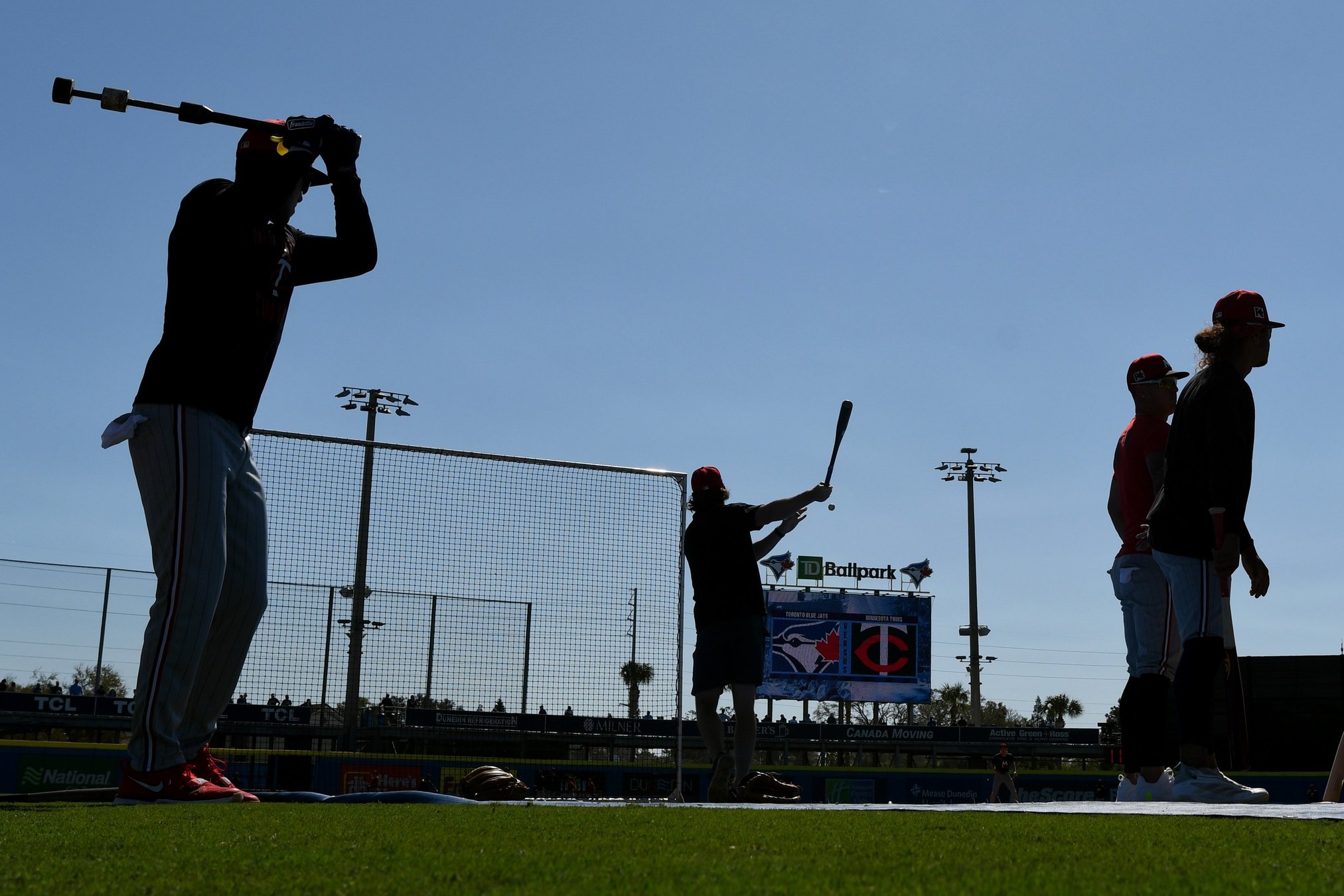 Okay, I should level with you. The Minnesota Twins are not short kings. The overwhelming majority of them are pretty big dudes. But, most of them are actually shorter than their listed heights. Many have been claiming for years to be taller than they are. Why now are they recanting, and losing inches en masse? What drove the coaching staff to get out their measuring tools, and forcing every hitter to submit to the yoke of forced shortening? Could it be that Rocco Baldelli is forcing his hitters to acknowledge that he towers over them with his 6'4" stature? No, it's not that. It’s ABS. Any serious baseball fan is probably aware that MLB is testing out an Automated Ball-Strike System throughout spring training this season. Similar systems have been tested in independent and affiliated baseball dating back to 2019. It’s all but certain that at some point in time — maybe 2026, maybe later — some version of ABS will be coming to Major League Baseball. Perhaps it’ll be a fully-automated robo-ump situation, similar to what the Saint Paul Saints have used over the past couple seasons. There are, of course, labor relations issues that may come into play with a system like that. The MLB Umpires Association is sure to contest the elimination of union jobs. More likely, fans will experience some form of the challenge system where hitters, pitchers, or catchers can challenge a ball or strike call in real time. Either way, a more accurate understanding of the strike zone as it’s intended in the rulebook will be important for all involved to make the right swing decisions situationally. Any form of ABS will key the strike zone to players actual heights to determine each player’s relative strike zone. MLB has decided this will be a zone width of 17 inches and height spanning the length between 27% of a batter’s height to 53.5% of a batter’s height. Well, in order to get this right, it’s important to get each hitter’s height right. Interestingly, just five Twins hitters actual height matches that listed on their baseball cards, their FanGraphs page, or media broadcasts. Who are these beacons of truth? There are three young guys fighting for roster spots and perhaps perceive that bodily veracity could be a differentiator in whether they make the 26-man roster: Austin Martin, who both claims to be and is five-foot-eleven Edouard Julien, measuring in at his supposed six-feet height Brooks Lee, the veritable monster of the trio, who wasn’t lying when he said he’s six-one. Then, you have two additional guys who let their performance speak for themselves, bringing their real height to the public discourse. Matt Wallner is, as Twins Daily’s Gregg Masterson said in a recent episode of the Twins Off Daily Podcast, a big dude who dings dongs. He is truly the 6'4" he claims to be. You can also get aboard the Buck Truck, ‘cuz Byron Buxton wears his heart on his sleeve and lists his height in the annals of truth. Everyone else though, don’t believe a word they say. At least, don’t if it’s related to their height. In most cases (all but one, really), players’ real heights are exactly one inch shorter than their listed heights. If a person if feeling charitable, that can be attributed to a simple rounding error. I’m a hair over 5'11", and yeah; that rounds up to six feet. I’ll never begrudge a person for simply applying math best practices, even if they are stretching just a bit. A tippy-toed six feet is still six feet. Ish. Anyway, without further ado, here are all the guys guilty of declaring themselves the beneficiaries of rounding errors, or physical hubris. Christian Vazquez is listed at 5'9". He’s not. He’s 5'8", and that might legitimately be rounding up. Let’s call him five-seven and change. Sorry Vazqy. I still like you. Jose Miranda is 6'1", not 6'2". It feels wrong to nitpick a player who set a baseball record for consecutive hits, but facts are facts. Willi Castro? Not 6'1". Six flat. But six is good! It’s the number of non-pitcher positions he played in 2024. Own that! Carlos Correa. C4, not six-four. He’s actually 6'3". But, he’s still an incredible shortstop, hitter; and team leader, so I’ll give him a pass. Ryan Jeffers, similar to Correa, falsely portrayed himself at 6'4" despite being an inch shorter. Let’s call that height framing! He’s stealing an inch from some random umpire. Finally, Trevor Larnach. Let’s see…Trevor has six letters, and…you know what? It doesn’t matter. He’s actually 6'3", just like Correa and Jeffers. Still a big dude. So I teased the fact earlier that one player is a wholly-unreliable height narrator. If you’ve been following along, you probably know just who’s left. That’s right. It’s my guy Royce Lewis. Turns out, 62 is the number of bombs he could hit in a fully-healthy, 162 game season. His actual height, however, is six feet, not 6'2". Even at that relatively diminutive baseball slugger stature, he’s still immensely talented, fun to watch, and capable of carrying a lineup for stretches. So. We covered why these guys may have demonstrated some self-love by confidently overstating their height. Even though they are mostly a bit shorter than they were last season, it’s okay. Every other team is dealing with the same thing. And in fact, there’s one thing the Twins are wholeheartedly better than the Dodgers at: being more honest about their height. What do you think? Are you ready for an ABS systems when it eventually arrives?
 -
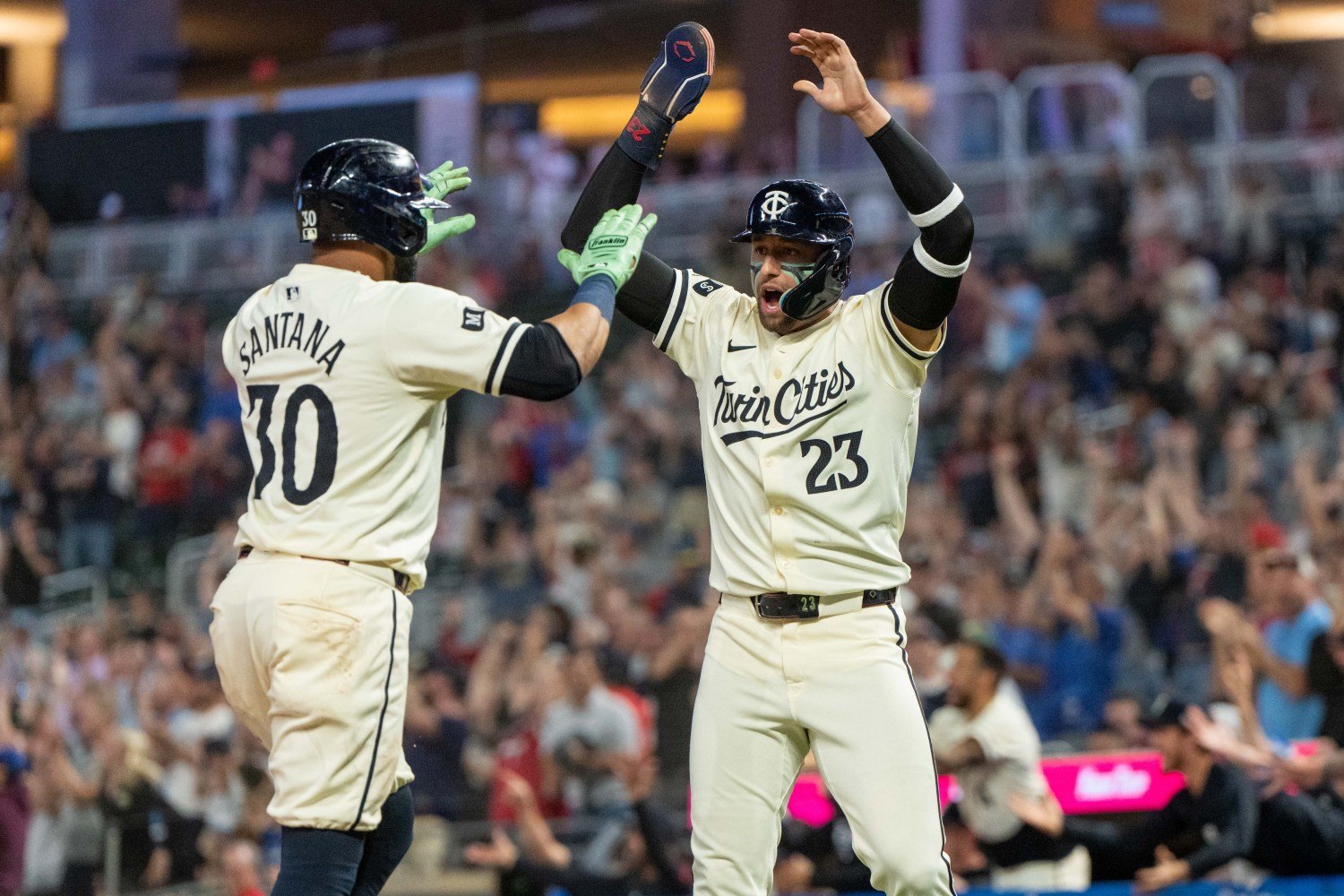 It’s common baseball knowledge that balls hit hard in the air to the pull side generate the best outcomes. Recently, Baseball Savant introduced a new metric to the public—a stat called AIR%—that quantifies how often players and teams make that kind of contact. From their Batted-Ball Profile leaderboard page: “From 2022-24, while only 17.5% of batted balls were “pulled airballs,” that subset was responsible for 66% of all home runs. Pulled airballs in that time produced a .547 average, 1.227 slugging percentage and .733 wOBA, making them an extremely valuable outcome.” Ok. Makes sense, right? A new stat is really only useful when you start to dig under the hood a bit. Let’s start by looking at what the AIR% actually measures. Basically, this looks at batted-ball data by direction and trajectory, and groups batted balls by whether they were pulled, hit straight, or hit oppo, and whether they were on the ground or in the air. This leads to six different categories of batted-ball events. AIR% combines line drives, fly balls, and popups, without measuring which direction a ball was hit. The true utility comes when breaking this down a bit further, and looking at the aforementioned six classifications of contact. Pull AIR% measures the the rate at which balls are hit in the air to the pull side, which delivers the best outcomes (home runs, doubles off the wall, etc). Straight AIR% is, as it sounds, the rate at which balls are hit in the air up the middle. This can lead to bloop singles, which are fine, but typically, a guy has to really get ahold of one to hit it out to straightaway center. Oppo AIR% is the rate at which a player hits the ball the other way. Again, this can lead to some bloop singles, but unless a guy is in the Miguel Sanó-Joey Gallo-Matt Wallner power club, the ball isn’t going out much at all. Pull GB% measures the worst category of contact, which typically leads to easy groundouts to second base for left-handed hitters. Right-handed hitters fare slightly better on pulled grounders, but it’s still not a great outcome. Across baseball in 2024, hitters put up a .208 batting average when pulling grounders. Straight GB% is better than a pulled grounder, by a wide margin. Grounding up the middle will lead to some hits, but depending on the defensive alignment, this will still lead to a lot of outs. In fact, the only grounders that get consistently good results are those that go the other way, which Baseball Savant classifies as Oppo GB%. These are often the “excuse-me” swings where a hitter’s timing is off, or the ball connects with the end of the bat. These go for hits pretty frequently, but are hard to hit on purpose. So, who are the standouts (and laggards) in some of these categories? Pull AIR% Leaderboard The Twins have two hitters who were top-10 in baseball in Pull Air% last season: Byron Buxton (30.2%) and Royce Lewis (29.1%). This makes sense, as both have 40-homer power in a 162-game season. Wallner, had he qualified for the leaderboard based on plate appearances, would have been top-10 as well, at 29.4%. Carlos Santana was 17th, at 27.4%. Having four guys in the top 20 is a little wild, but it portends good things that three of them are a part of the team again in 2025. In full, the Twins had eight hitters who were above-average in pulling the ball while hitting it in the air. Manuel Margot On the other side of the spectrum, you had Manuel Margot, at 258th overall, with a paltry 11.7 Pull AIR%. Does that surprise you? It shouldn’t. In 2024, Margot was almost completely devoid of pop and looked cooked. When he did pull the ball while elevating it, it rarely left the park. Edouard Julien It’s well-documented that Julien’s 2024 season was a mess, and this new data paints quite the picture. With an 11.6% Pull AIR%, he was 260th of 288 qualified hitters. Unfortunately, looking at the Pull GB% leaderboard, among left-handed hitters, he had the 14th-highest rate, at 24.4%. Finally, his Oppo AIR% was 7th-highest in baseball, at 26.8%. Combining these three data points, one can begin to see part of the problem he faced with his swing in 2024. The quality of his contact was generally not conducive to favorable outcomes, and led to a lot of weak flyouts the opposite way and infield choppers, not to mention all those strikeouts. Trevor Larnach Larnach had the 19th-highest Pull GB% amongst lefties, but he balanced this by having a better-than-average 18.7% Pull AIR rate, and a solid Oppo GB%. Because he hits the ball hard (average exit velocity in the 90th percentile) and squares it up frequently, he was still able to maximize the quality of his Pull AIR% to hit some bombs, and got a decent number of grounder singles the other way. Looking at his spray chart, we can see this in action. Knowing that he was making adjustments to his approach to breaking balls in real time, and that he saw a lower fastball percentage than most, he’s a hitter who could take another step forward in 2025. How do the new Twins hitters profile here, and what might it mean for them this season? Harrison Bader His Pull AIR% is a very healthy 23.6%, and his Oppo GB% is also better than average at 7.0%. You might be getting excited about this. Don’t, as there is another factor at play here, and that’s Bader’s power numbers. Remember what I said about pulling the ball hard in the air? Unfortunately, his swing would lead to good things if his batting profile didn’t look like this. You probably already knew Bader won’t be an offensive force for the Twins. How about the other newcomer? Ty France France is a little tough to pinpoint, coming off two down years. Last season can largely be attributed to a heel injury that lingered, impacting him at the plate. If we look at 2023, we might get a hint of his true current talent level, and it shows him with a solidly above-average 20.6 Pull AIR%, and a slightly above-average Oppo GB%, at 5.7%. His launch angle sweet spot was in the 76th percentile across baseball, so it’s likely safe to count on 15 homers. If the coaching staff can work on his approach even slightly, he could return to form as an above-average bat that can do damage at the plate. They say that what can be measured can be improved. This new data, while likely not new to teams themselves, helps teams, players, writers, and fans better understand the tweaks necessary to optimize the damage hitters can do at the plate. While data can be tortured to tell some interesting stories, this data (combined with hard hit-rates and launch angle statistics) can help explain all the factors at play every time a hitter steps to the plate. As fans, let’s hope that a couple more Twins hitters can find the sweet spot of Pull AIR%, launch angle, and hard-hit rates. If so, the offense could be better than people expect.

