



Eric Blonigen
-
Posts
377 -
Joined
-
Last visited
-
Days Won
1
Content Type
Profiles
News
Minnesota Twins Videos
2026 Minnesota Twins Top Prospects Ranking
2022 Minnesota Twins Draft Picks
Minnesota Twins Free Agent & Trade Rumors, Notes, & Tidbits
Guides & Resources
2023 Minnesota Twins Draft Picks
The Minnesota Twins Players Project
2024 Minnesota Twins Draft Picks
2025 Minnesota Twins Draft Pick Tracker
2026 Minnesota Twins Draft Tracker: Picks & Bonuses
Forums
Blogs
Events
Store
Downloads
Gallery
Everything posted by Eric Blonigen
-
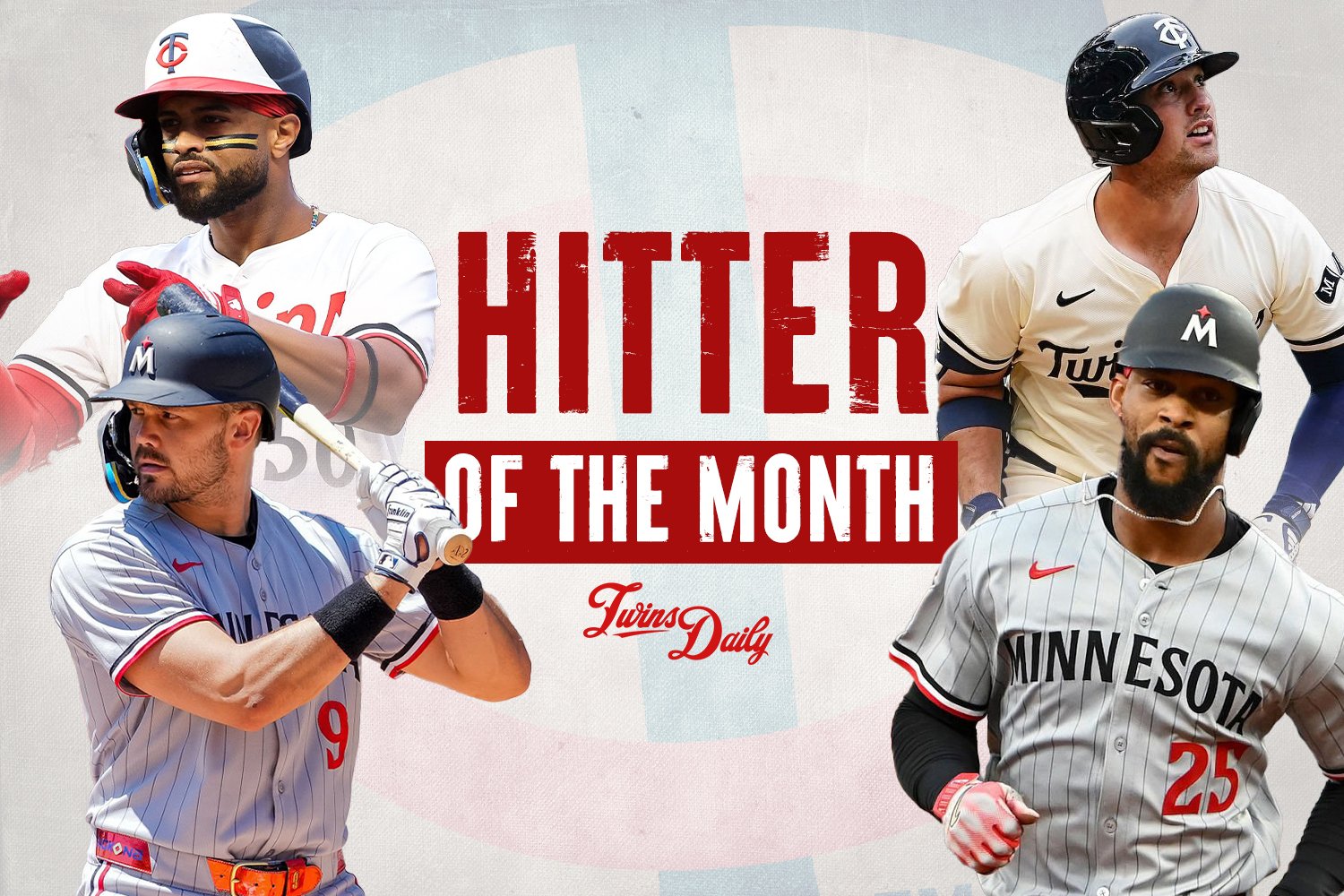 June was…not an enjoyable month to watch Twins games as the incredibly streaky Twins team took a downturn, going just 9-18 in the month. The pitching staff, beset by injuries to Pablo Lopez, Zebby Matthews, and maybe Bailey Ober had one of their worst months in franchise history, and that’s really saying something. The Twins played their way from a strong playoff position to being outsiders looking way up at the Wild Card pack, with just four AL teams behind them in the standings. Despite the current state of the team, there were some hitters worth celebrating for their prowess at the plate, and one in particular who produced with the best in the game. Who is this paragon with the stick? Read on to find out! Honorable Mention - Royce Lewis .348/.375/.533/.908, 1 HR, 6 RBI, 6 R, 11 H, 5 BB, 184 wRC+ Lewis’ miserable start after returning from his IL stint was well-documented. Less reported on was just how much he was heating up in his first 10 games in June prior to landing on the IL year again. In that brief span - just 35 plate appearances - Lewis put up a 185 wRC+. He walked more and struck out less, and seemed like he just might be figuring things back out at the plate. As he wraps up his rehab stint with the Saints post-injury, he offers some tantalizing promise for a lineup struggling to produce at the plate. If he can pick up where he left off, we just might be seeing him featured more prominently in July’s hitter of the month awards. #4 - Trevor Larnach .348/.375/.533/.908, 4 HR, 16 RBI, 12 R, 21 H, 8 BB, 118 wRC+ Larnach had more of a good month than a great one, and it speaks volumes that the Twins fourth-best hitter was just slightly better than average. Solid has often been the case with Larnach, so this might be more about celebrating the consistency he has found at the plate. His peripherals were good, with strikeout and walk rates better than average. Not flashy, in the background a bit, but reliable. And, he’s done it despite not really being shielded against lefties. You know what? That’ll play. #3 - Willi Castro .286/.375/.452/.827, 3 HR, 10 RBI, 15 R, 24 H, 10 BB, 1 SB, 137 wRC+ Willi Castro has continued to be a lifesaver for the Twins, building on his two-plus year stretch of defensive versatility and good hitting. Castro started the year quite slowly, but has incorporated some pitching machine work, and has found his form over the past couple months. In June, he struck out a bit too much, but made up for it by walking at a healthy clip. His signature moment for the month came on June 3, when he launched two of his three homers for the month. #2 - Brooks Lee .348/.375/.533/.908, 4 HR, 16 RBI, 12 R, 32 H, 3 BB, 1 SB, 157 wRC+ As recently as May 27th, Brooks Lee had a .622 OPS and a 74 wRC+. He just wasn’t hitting well and often looked a little lost at the plate. Despite that, Twins Manager Rocco Baldelli was effusive in his praise for Lee talking about the caliber of his hitting in a way that seemed at least a little disconnected with reality. Turns out, Baldelli had caught on just a little earlier than the rest of us. Immediately afterwards, starting on May 28, Lee began living up to his draft-status potential. He began a 19 game hitting streak, went hitless on June 21, then collected hits in six more games in a row before Tarik Skubal did his thing to close out the month. Looking under the hood a bit, he did have an unsustainable batting average on balls in play, at .431. So, it’s fair to temper expectations just a bit moving forward, but regardless, this was a great month for an important part of the Twins future plans. Hitter of the Month - Byron Buxton .310/.408/.678/1.086, 9 HR, 21 RBI, 17 R, 27 H, 14 BB, 6 SB, 198 wRC+ Yeah, that’s right. Who else could possibly be deserving of the Twins Daily Hitter of the Month award than Byron Buxton? Since the calendar has flipped to June, he has been on an MVP-caliber tear, amassing 1.8 fWAR over just one month. He’s done everything: hitting a ton of bombs, stealing bases, playing excellent defense, walking more than average, and striking out much less then average. The wild part? If anything, Buxton was a bit unlucky in June, with just a .281 batting average on balls in play. On June 11, he hit the second-longest home run of 2025 off of Rangers starter Jack Vierling. It was the fifth-longest bomb in Target Field history. Perhaps most importably, he has been so fun to watch during a stretch of otherwise rough baseball. As fans, we have seen this version of Buxton before, during his unfortunately rare healthy stretches. Now, halfway through 2025, we are seeing the best possible version of a player who has always given his all every day he shows up the park, pushing his body past it’s natural limits. If Buxton stays healthy, there’s no reason to think he can’t continue his torrid run. if he can keep this up, he just might win some hardware once the season wraps. In a league with Aaron Judge, Bobby Witt, and maybe the best season ever for a catcher in Cal Raleigh, it won’t be MVP. But Silver Slugger? That would be incredibly rewarding for a guy like Buxton. So there you have it: an oft-injured slugger heating up, a player who’s been consistent for a season and a half, a young cornerstone figuring it out, and one of the best players in Twins history. What will July bring? Can one of the other hitters force their way onto this list, living up to potential? And even more importantly, can Buxton take the top spot again?
 -
 June was…not an enjoyable month to watch Twins games as the incredibly streaky Twins team took a downturn, going just 9-18 in the month. The pitching staff, beset by injuries to Pablo Lopez, Zebby Matthews, and maybe Bailey Ober had one of their worst months in franchise history, and that’s really saying something. The Twins played their way from a strong playoff position to being outsiders looking way up at the Wild Card pack, with just four AL teams behind them in the standings. Despite the current state of the team, there were some hitters worth celebrating for their prowess at the plate, and one in particular who produced with the best in the game. Who is this paragon with the stick? Read on to find out! Honorable Mention - Royce Lewis .348/.375/.533/.908, 1 HR, 6 RBI, 6 R, 11 H, 5 BB, 184 wRC+ Lewis’ miserable start after returning from his IL stint was well-documented. Less reported on was just how much he was heating up in his first 10 games in June prior to landing on the IL year again. In that brief span - just 35 plate appearances - Lewis put up a 185 wRC+. He walked more and struck out less, and seemed like he just might be figuring things back out at the plate. As he wraps up his rehab stint with the Saints post-injury, he offers some tantalizing promise for a lineup struggling to produce at the plate. If he can pick up where he left off, we just might be seeing him featured more prominently in July’s hitter of the month awards. #4 - Trevor Larnach .348/.375/.533/.908, 4 HR, 16 RBI, 12 R, 21 H, 8 BB, 118 wRC+ Larnach had more of a good month than a great one, and it speaks volumes that the Twins fourth-best hitter was just slightly better than average. Solid has often been the case with Larnach, so this might be more about celebrating the consistency he has found at the plate. His peripherals were good, with strikeout and walk rates better than average. Not flashy, in the background a bit, but reliable. And, he’s done it despite not really being shielded against lefties. You know what? That’ll play. #3 - Willi Castro .286/.375/.452/.827, 3 HR, 10 RBI, 15 R, 24 H, 10 BB, 1 SB, 137 wRC+ Willi Castro has continued to be a lifesaver for the Twins, building on his two-plus year stretch of defensive versatility and good hitting. Castro started the year quite slowly, but has incorporated some pitching machine work, and has found his form over the past couple months. In June, he struck out a bit too much, but made up for it by walking at a healthy clip. His signature moment for the month came on June 3, when he launched two of his three homers for the month. #2 - Brooks Lee .348/.375/.533/.908, 4 HR, 16 RBI, 12 R, 32 H, 3 BB, 1 SB, 157 wRC+ As recently as May 27th, Brooks Lee had a .622 OPS and a 74 wRC+. He just wasn’t hitting well and often looked a little lost at the plate. Despite that, Twins Manager Rocco Baldelli was effusive in his praise for Lee talking about the caliber of his hitting in a way that seemed at least a little disconnected with reality. Turns out, Baldelli had caught on just a little earlier than the rest of us. Immediately afterwards, starting on May 28, Lee began living up to his draft-status potential. He began a 19 game hitting streak, went hitless on June 21, then collected hits in six more games in a row before Tarik Skubal did his thing to close out the month. Looking under the hood a bit, he did have an unsustainable batting average on balls in play, at .431. So, it’s fair to temper expectations just a bit moving forward, but regardless, this was a great month for an important part of the Twins future plans. Hitter of the Month - Byron Buxton .310/.408/.678/1.086, 9 HR, 21 RBI, 17 R, 27 H, 14 BB, 6 SB, 198 wRC+ Yeah, that’s right. Who else could possibly be deserving of the Twins Daily Hitter of the Month award than Byron Buxton? Since the calendar has flipped to June, he has been on an MVP-caliber tear, amassing 1.8 fWAR over just one month. He’s done everything: hitting a ton of bombs, stealing bases, playing excellent defense, walking more than average, and striking out much less then average. The wild part? If anything, Buxton was a bit unlucky in June, with just a .281 batting average on balls in play. On June 11, he hit the second-longest home run of 2025 off of Rangers starter Jack Vierling. It was the fifth-longest bomb in Target Field history. Perhaps most importably, he has been so fun to watch during a stretch of otherwise rough baseball. As fans, we have seen this version of Buxton before, during his unfortunately rare healthy stretches. Now, halfway through 2025, we are seeing the best possible version of a player who has always given his all every day he shows up the park, pushing his body past it’s natural limits. If Buxton stays healthy, there’s no reason to think he can’t continue his torrid run. if he can keep this up, he just might win some hardware once the season wraps. In a league with Aaron Judge, Bobby Witt, and maybe the best season ever for a catcher in Cal Raleigh, it won’t be MVP. But Silver Slugger? That would be incredibly rewarding for a guy like Buxton. So there you have it: an oft-injured slugger heating up, a player who’s been consistent for a season and a half, a young cornerstone figuring it out, and one of the best players in Twins history. What will July bring? Can one of the other hitters force their way onto this list, living up to potential? And even more importantly, can Buxton take the top spot again? View full article
 -
Image courtesy of © Sam Greene/The Enquirer / USA TODAY NETWORK via Imagn Images Less than two weeks ago, I wrote that the Twins should pursue a trade for a big bat to bolster the offense. Since then, the complexion has changed a bit, as the team continues to look lost. On Monday, Matt Braun looked at the possibility of a 2018-style retool. However, if the slide continues, fans may face the real possibility that the Twins could go even further: to reach the conclusion that the current core is unlikely to win consistently, and to sell everyone with less than a few years of control remaining. To be clear, this is not a path I would advocate for, as a true tear down is far from certain to actually work, and would almost certainly lead to a long stretch of unwatchable baseball. That said, the Twins do have a number of players that are likely to fetch legitimate assets in return. In some cases, this can lead to a a restock of the system. Look at everyone the Twins traded in 2022 for a solid starter, a solid reliever, Jorge López, and a depth catcher. So, who are the guys who could be dangled if things continue to go poorly, and what might they fetch? Let’s dig in! The Rentals This group is pretty straightforward. They all are on expiring contracts, and all have positive trade value. As Braun noted, they are likely to move even in a roster retool. Willi Castro, Braun pointed out, is sort of similar to what the Twins had in Eduardo Escobar. He’s been an above-average hitter since signing with the Twins, and offers defensive flexibility. The Twins got the prospect version of Jhoan Duran for Escobar, and Castro could fetch a similar return. Harrison Bader has experienced a renaissance in his age-31 season. Long known for his defensive prowess and speed on the bases, he has been better than expected offensively as well. On pace for around 2.5 fWAR and with $3 million remaining, teams in need of right-handed outfield help might fetch a borderline top-100 guy. The Twins got Joe Ryan for Nelson Cruz, and while they aren’t similar stylistically, the return could be. Ty France has been an enigma since signing with the Twins. Known as a weak defender but solid bat, he has flipped the script, not hitting much at all for a first baseman (except when he’s batted with runners on; then he’s been great). Making basically the league minimum, the Twins would have no trouble moving him, although the return would be a lottery ticket prospect. Chris Paddack, the oft-injured starter, has been perfectly fine for the Twins, as long as you don’t look too hard under the hood. At this point, trading him would probably be mostly a salary dump, with a middling prospect coming back if a team really likes him. Danny Coulombe has been great for the Twins as a secondary setup man at an affordable price. Owed about $1.5 million for the rest of the season, he would improve any contender’s bullpen. The Twins traded Sawyer Gipson-Long, a promising starting pitching prospect, for Michael Fulmer three seasons ago, and could expect a similar return for Coulombe. Guys With Two-Plus Years of Control Jhoan Duran is a “proven closer”, and we all know his stuff is filthy. Any contender would love to slot Duran into the back of their bullpen. He would fetch multiple good prospects, or a pre-arbitration regular that could immediately slot into the roster. As hard as it would be to lose Duran, the haul would be impressive. Griffin Jax, while he doesn’t have the track record of closing, would probably fetch a return a half-step less than Duran. In short, multiple good prospects. Trevor Larnach is an above-average hitter and a sub-par defender in the outfield. For a team looking at a corner lefty bat, they could do worse. I would guess the return wouldn’t be enough to seriously consider moving him, particularly since the Twins have been struggling offensively. The Ones That Would Hurt This group consists of players who have two-plus years of control remaining, and who the Twins will probably only move if they are offered the world. Yes, the guys who don’t have guaranteed deals will start getting expensive, but at the same time, they won’t be that expensive for a team lacking the self-imposed budgetary constraints the Twins have. Pablo Lopez, the Twins staff ace, is signed to a deal that half the teams in the league would love. He likely has somewhere between $5-8 million in surplus value on an annual basis. He’s worth every penny the Twins are paying him. But, he’s accounting for something like one-sixth of the Twins' payroll. He would fetch at least one top-100 prospect, plus some additional pieces. Joe Ryan might be the player opposing teams would be most interested in. 2026 will represent his second trip through arbitration-eligibility and will probably make something in the range of $6-8 million next year, and perhaps $12-15 million in 2027. He would fetch a haul as a pitcher who’s not quite a frontline starter, but he’s close. Jose Berrios brought back Simeon Woods Richardson and Austin Martin, both of whom were top-100 prospects at the time. Ryan is better than Berrios was, and has an extra year of team control. Were the Twins to trade Ryan, they could just about name their price. Multiple top-100 guys, including at least one elite prospect with real potential to be an All-Star. Bailey Ober would have fetched a very similar haul to Ryan, if not for the past few months of mediocre pitching, potentially stemming from a mechanical issue or a nagging hip issue. But, he’s got the track record of excellence and two-plus years of control. In 2022, the Twins traded Spencer Steer, Steven Hajjar, and Christian Encarnacion-Strand for Tyler Mahle. At the time, that was a fringe top-100 guy in Steer, and Ober has one more year of control, and has been better than Mahle was. Even in a down year, it would be a haul. The Guys Who Aren’t Going Anywhere Finally, we have some guys that it just won’t make sense to trade, or that the Twins will be unable to find a deal that makes sense. Carlos Correa has a full no-trade clause and likes Minnesota. Plus, the Twins are underwater on his contract, as typically happens a few years into any multi-year deal. Even if the Twins would like to get out from under that deal (and there’s no sense this is the case) they would need to include salary relief, include significant prospects, or both. Not happening. Byron Buxton is in a similar situation, sort of. His $15 million annual salary has been a steal for the Twins, so it’s not a situation the Twins would likely want to extricate from. He also has a full no-trade clause and has loudly stated his desire to retire a member of the Twins. Many teams would covet Ryan Jeffers, but the Twins almost certainly won’t move him for one simple reason: they don’t have any other catchers in the system that would be ready to be anything more than a backup in 2026. Royce Lewis is a currently-distressed asset, and also has tremendous upside still. With three full seasons of control after this year, I can’t imagine the Twins shopping him. The pre-arbitration guys: David Festa, Zebby Matthews, Brooks Lee, Matt Wallner, Louie Varland, Luke Keaschall, and the guys who have yet to debut. If the problem is the current core, there’s no reason to deal from the next core. Looking through this somewhat extensive list of assets, it’s clear the Twins could quickly turn their farm system into the best in baseball should the become sellers at the deadline. I, for one, hope it doesn’t come to that. View full article
-
 Less than two weeks ago, I wrote that the Twins should pursue a trade for a big bat to bolster the offense. Since then, the complexion has changed a bit, as the team continues to look lost. On Monday, Matt Braun looked at the possibility of a 2018-style retool. However, if the slide continues, fans may face the real possibility that the Twins could go even further: to reach the conclusion that the current core is unlikely to win consistently, and to sell everyone with less than a few years of control remaining. To be clear, this is not a path I would advocate for, as a true tear down is far from certain to actually work, and would almost certainly lead to a long stretch of unwatchable baseball. That said, the Twins do have a number of players that are likely to fetch legitimate assets in return. In some cases, this can lead to a a restock of the system. Look at everyone the Twins traded in 2022 for a solid starter, a solid reliever, Jorge López, and a depth catcher. So, who are the guys who could be dangled if things continue to go poorly, and what might they fetch? Let’s dig in! The Rentals This group is pretty straightforward. They all are on expiring contracts, and all have positive trade value. As Braun noted, they are likely to move even in a roster retool. Willi Castro, Braun pointed out, is sort of similar to what the Twins had in Eduardo Escobar. He’s been an above-average hitter since signing with the Twins, and offers defensive flexibility. The Twins got the prospect version of Jhoan Duran for Escobar, and Castro could fetch a similar return. Harrison Bader has experienced a renaissance in his age-31 season. Long known for his defensive prowess and speed on the bases, he has been better than expected offensively as well. On pace for around 2.5 fWAR and with $3 million remaining, teams in need of right-handed outfield help might fetch a borderline top-100 guy. The Twins got Joe Ryan for Nelson Cruz, and while they aren’t similar stylistically, the return could be. Ty France has been an enigma since signing with the Twins. Known as a weak defender but solid bat, he has flipped the script, not hitting much at all for a first baseman (except when he’s batted with runners on; then he’s been great). Making basically the league minimum, the Twins would have no trouble moving him, although the return would be a lottery ticket prospect. Chris Paddack, the oft-injured starter, has been perfectly fine for the Twins, as long as you don’t look too hard under the hood. At this point, trading him would probably be mostly a salary dump, with a middling prospect coming back if a team really likes him. Danny Coulombe has been great for the Twins as a secondary setup man at an affordable price. Owed about $1.5 million for the rest of the season, he would improve any contender’s bullpen. The Twins traded Sawyer Gipson-Long, a promising starting pitching prospect, for Michael Fulmer three seasons ago, and could expect a similar return for Coulombe. Guys With Two-Plus Years of Control Jhoan Duran is a “proven closer”, and we all know his stuff is filthy. Any contender would love to slot Duran into the back of their bullpen. He would fetch multiple good prospects, or a pre-arbitration regular that could immediately slot into the roster. As hard as it would be to lose Duran, the haul would be impressive. Griffin Jax, while he doesn’t have the track record of closing, would probably fetch a return a half-step less than Duran. In short, multiple good prospects. Trevor Larnach is an above-average hitter and a sub-par defender in the outfield. For a team looking at a corner lefty bat, they could do worse. I would guess the return wouldn’t be enough to seriously consider moving him, particularly since the Twins have been struggling offensively. The Ones That Would Hurt This group consists of players who have two-plus years of control remaining, and who the Twins will probably only move if they are offered the world. Yes, the guys who don’t have guaranteed deals will start getting expensive, but at the same time, they won’t be that expensive for a team lacking the self-imposed budgetary constraints the Twins have. Pablo Lopez, the Twins staff ace, is signed to a deal that half the teams in the league would love. He likely has somewhere between $5-8 million in surplus value on an annual basis. He’s worth every penny the Twins are paying him. But, he’s accounting for something like one-sixth of the Twins' payroll. He would fetch at least one top-100 prospect, plus some additional pieces. Joe Ryan might be the player opposing teams would be most interested in. 2026 will represent his second trip through arbitration-eligibility and will probably make something in the range of $6-8 million next year, and perhaps $12-15 million in 2027. He would fetch a haul as a pitcher who’s not quite a frontline starter, but he’s close. Jose Berrios brought back Simeon Woods Richardson and Austin Martin, both of whom were top-100 prospects at the time. Ryan is better than Berrios was, and has an extra year of team control. Were the Twins to trade Ryan, they could just about name their price. Multiple top-100 guys, including at least one elite prospect with real potential to be an All-Star. Bailey Ober would have fetched a very similar haul to Ryan, if not for the past few months of mediocre pitching, potentially stemming from a mechanical issue or a nagging hip issue. But, he’s got the track record of excellence and two-plus years of control. In 2022, the Twins traded Spencer Steer, Steven Hajjar, and Christian Encarnacion-Strand for Tyler Mahle. At the time, that was a fringe top-100 guy in Steer, and Ober has one more year of control, and has been better than Mahle was. Even in a down year, it would be a haul. The Guys Who Aren’t Going Anywhere Finally, we have some guys that it just won’t make sense to trade, or that the Twins will be unable to find a deal that makes sense. Carlos Correa has a full no-trade clause and likes Minnesota. Plus, the Twins are underwater on his contract, as typically happens a few years into any multi-year deal. Even if the Twins would like to get out from under that deal (and there’s no sense this is the case) they would need to include salary relief, include significant prospects, or both. Not happening. Byron Buxton is in a similar situation, sort of. His $15 million annual salary has been a steal for the Twins, so it’s not a situation the Twins would likely want to extricate from. He also has a full no-trade clause and has loudly stated his desire to retire a member of the Twins. Many teams would covet Ryan Jeffers, but the Twins almost certainly won’t move him for one simple reason: they don’t have any other catchers in the system that would be ready to be anything more than a backup in 2026. Royce Lewis is a currently-distressed asset, and also has tremendous upside still. With three full seasons of control after this year, I can’t imagine the Twins shopping him. The pre-arbitration guys: David Festa, Zebby Matthews, Brooks Lee, Matt Wallner, Louie Varland, Luke Keaschall, and the guys who have yet to debut. If the problem is the current core, there’s no reason to deal from the next core. Looking through this somewhat extensive list of assets, it’s clear the Twins could quickly turn their farm system into the best in baseball should the become sellers at the deadline. I, for one, hope it doesn’t come to that.
- 75 comments
-
- 5
-

-

-
- willi castro
- harrison bader
- (and 5 more)
-
Image courtesy of © William Glasheen / USA TODAY NETWORK via Imagn Images It’s no secret that the Twins offense has been on life support recently. The lineup took another hit Friday night, when Royce Lewis pulled up lame running to first. With the pitching regressing and two of their top six starters out for at least the next several weeks, the Twins simply must do something to ensure they are playing competitive baseball on a nightly basis. The fact that Jonah Bride, Kody Clemens, and DaShawn Keirsey Jr. are all on the Twins roster says it all: internal reinforcements are not on the way. Matthew Taylor broke down the hitters’ struggles and advocated for calling up Mickey Gasper. This community wasn’t a fan of that, and I get it: he has struggled during limited action in the majors. Here’s the thing, though: the cupboards are bare when it comes to impact hitting, as most promising options (such as Luke Keaschall and Emmanuel Rodriguez) are on the shelf with injuries, and won’t be realistic options in the short term. Edouard Julien and Jose Miranda continue to languish in St. Paul, where they have continued to struggle at the plate even in a hitting-friendly league. The Twins don’t seem interested in giving Carson McCusker a legitimate shot at regular playing time. With that in mind, Gasper is probably the best internal option. So, the offense can really only be bolstered by trade. While it’s still a few weeks early for the sort of significant swaps the Twins may need, the Red Sox's surprising trade of Rafael Devers to the Giants has broken the seal. Matthew Lenz did a nice job breaking down some potential targets, so I will explore which trade assets could bring a slugger back. The Top Prospects Despite graduating a number of top prospects over the past season, the Twins' farm system is still stocked with high-end talent, featuring Walker Jenkins, Rodriguez, and Kaelen Culpepper all on Keith Law’s top-50 list. Connor Prielipp just missed the cutoff, and Keaschall is a top-100 guy. Now, the Twins probably aren’t going to trade the injured guys, as their market would almost certainly be depressed, but Culpepper and Prielipp could be real options. Culpepper has seen his prospect status rise tremendously, based on his defense being better than expected. The Twins' first-round pick in 2024, he’s about ready for a promotion to Double-A Wichita. On pace for a 25-homer, 40-steal season, he’s shown a well-rounded approach that could get him to the majors late next season, if he continues to thrive in the high minors. He could be the headliner in a deal for a legit hitter. Prielipp has been a bit of an enigma. Limited to 21 total games since being drafted in 2022, he’s got elite swing-and-miss stuff. Both his walk and strikeout rates portend a bright future. The question, really, is whether he will stay healthy enough to be a starter. The Twins have limited his pitch count as he has worked to recover from arm injuries. His worst-case scenario is becoming a back-of-the-bullpen weapon, but he could also be at least a mid-rotation starter if health allows it. It’s tough to project how other teams might see his value, but at least some teams may see him as a prize. The Intriguing Fast Risers Guys like Dasan Hill or Kyle DeBarge could be intriguing secondary pieces for a selling team, depending on what they might prioritize. Hill, a lefty starting pitcher, boasts great stuff, and the Twins have (as usual) found ways to increase his velocity. Through nine starts with Fort Myers in 2025, he has struck out nearly 15 guys per nine innings and has a shiny 1.65 ERA and a 1.02 WHIP. He’s about due for a callup to High-A Cedar Rapids, and it wouldn’t be shocking if he’s a top-100 guy headed into 2026. Selling teams could dream on the possibility of an elite lefty fronting their rotation a few years from now. Jamie Cameron did a nice writeup of him if you want to learn more. DeBarge, the Twins' compensatory pick for losing Sonny Gray, was picked in the 2024 draft. He’s a middle infielder who plays a decent shortstop, but can also play second or third. He does a bit of everything, having stolen 35 bags, walked 45 times, and added 21 extra-base hits through his first 57 games of the 2025 season with Cedar Rapids. A year from now, he could be knocking on the door of the bigs and projects to be at least a utility infielder, with the possibility of being a good regular. Here’s Jamie’s writeup on DeBarge. The Major-Leaguers On the major-league side of things, they could also look at shopping Jhoan Duran or Griffin Jax. This would be a bit counterproductive, as moving either would undoubtedly make the back of the bullpen weaker. But, both guys would have significant trade value, and would be appealing to other buying teams, which could broaden the trade market. So, it’s possible some sort of challenge trade could come to fruition, with a team that has a blocked top hitting prospect, or a surplus of hitting in general. It’s also quite likely the Twins front office is cash-strapped, so trading away at least a bit of 2025 salary may be necessary. It’s also probable the Twins would need a selling team to absorb the salaries of any hitters coming the Twins' way. The key, whichever option the Twins may choose, is to move quickly to add a piece that can prevent the 2025 season from repeating the freefall of 2024. View full article
-
 It’s no secret that the Twins offense has been on life support recently. The lineup took another hit Friday night, when Royce Lewis pulled up lame running to first. With the pitching regressing and two of their top six starters out for at least the next several weeks, the Twins simply must do something to ensure they are playing competitive baseball on a nightly basis. The fact that Jonah Bride, Kody Clemens, and DaShawn Keirsey Jr. are all on the Twins roster says it all: internal reinforcements are not on the way. Matthew Taylor broke down the hitters’ struggles and advocated for calling up Mickey Gasper. This community wasn’t a fan of that, and I get it: he has struggled during limited action in the majors. Here’s the thing, though: the cupboards are bare when it comes to impact hitting, as most promising options (such as Luke Keaschall and Emmanuel Rodriguez) are on the shelf with injuries, and won’t be realistic options in the short term. Edouard Julien and Jose Miranda continue to languish in St. Paul, where they have continued to struggle at the plate even in a hitting-friendly league. The Twins don’t seem interested in giving Carson McCusker a legitimate shot at regular playing time. With that in mind, Gasper is probably the best internal option. So, the offense can really only be bolstered by trade. While it’s still a few weeks early for the sort of significant swaps the Twins may need, the Red Sox's surprising trade of Rafael Devers to the Giants has broken the seal. Matthew Lenz did a nice job breaking down some potential targets, so I will explore which trade assets could bring a slugger back. The Top Prospects Despite graduating a number of top prospects over the past season, the Twins' farm system is still stocked with high-end talent, featuring Walker Jenkins, Rodriguez, and Kaelen Culpepper all on Keith Law’s top-50 list. Connor Prielipp just missed the cutoff, and Keaschall is a top-100 guy. Now, the Twins probably aren’t going to trade the injured guys, as their market would almost certainly be depressed, but Culpepper and Prielipp could be real options. Culpepper has seen his prospect status rise tremendously, based on his defense being better than expected. The Twins' first-round pick in 2024, he’s about ready for a promotion to Double-A Wichita. On pace for a 25-homer, 40-steal season, he’s shown a well-rounded approach that could get him to the majors late next season, if he continues to thrive in the high minors. He could be the headliner in a deal for a legit hitter. Prielipp has been a bit of an enigma. Limited to 21 total games since being drafted in 2022, he’s got elite swing-and-miss stuff. Both his walk and strikeout rates portend a bright future. The question, really, is whether he will stay healthy enough to be a starter. The Twins have limited his pitch count as he has worked to recover from arm injuries. His worst-case scenario is becoming a back-of-the-bullpen weapon, but he could also be at least a mid-rotation starter if health allows it. It’s tough to project how other teams might see his value, but at least some teams may see him as a prize. The Intriguing Fast Risers Guys like Dasan Hill or Kyle DeBarge could be intriguing secondary pieces for a selling team, depending on what they might prioritize. Hill, a lefty starting pitcher, boasts great stuff, and the Twins have (as usual) found ways to increase his velocity. Through nine starts with Fort Myers in 2025, he has struck out nearly 15 guys per nine innings and has a shiny 1.65 ERA and a 1.02 WHIP. He’s about due for a callup to High-A Cedar Rapids, and it wouldn’t be shocking if he’s a top-100 guy headed into 2026. Selling teams could dream on the possibility of an elite lefty fronting their rotation a few years from now. Jamie Cameron did a nice writeup of him if you want to learn more. DeBarge, the Twins' compensatory pick for losing Sonny Gray, was picked in the 2024 draft. He’s a middle infielder who plays a decent shortstop, but can also play second or third. He does a bit of everything, having stolen 35 bags, walked 45 times, and added 21 extra-base hits through his first 57 games of the 2025 season with Cedar Rapids. A year from now, he could be knocking on the door of the bigs and projects to be at least a utility infielder, with the possibility of being a good regular. Here’s Jamie’s writeup on DeBarge. The Major-Leaguers On the major-league side of things, they could also look at shopping Jhoan Duran or Griffin Jax. This would be a bit counterproductive, as moving either would undoubtedly make the back of the bullpen weaker. But, both guys would have significant trade value, and would be appealing to other buying teams, which could broaden the trade market. So, it’s possible some sort of challenge trade could come to fruition, with a team that has a blocked top hitting prospect, or a surplus of hitting in general. It’s also quite likely the Twins front office is cash-strapped, so trading away at least a bit of 2025 salary may be necessary. It’s also probable the Twins would need a selling team to absorb the salaries of any hitters coming the Twins' way. The key, whichever option the Twins may choose, is to move quickly to add a piece that can prevent the 2025 season from repeating the freefall of 2024.
 -
Image courtesy of © Ed Szczepanski-Imagn Images In each of the past three seasons, the Minnesota Twins have signed a fourth outfielder to a one-year deal. They have needed Byron Buxton insurance in center field, and having a starting-caliber center fielder on the bench has allowed for defensive flexibility late in games. It's also allowed for giving regular rest days to the starters. This has proven to be a shrewd strategy. In 2023, Michael A. Taylor was a valuable asset. Buxton was limited to 85 games (all at DH), and Taylor found his way into 129 games, accruing 2.0 fWAR while playing great defense. In 2024, Manuel Margot was not a good get, looking cooked while providing negative value across 129 games of his own. But, the fact that Margot saw that much action despite not being good shows how necessary the fourth outfielder has been, even in a season of relative health from Buxton. Fast-forward to this season, and Harrison Bader has been great. He has contributed on both sides of the ball and has been the second-most valuable Twins position player by WAR, trailing only Buxton. He has gotten there by doing things like this. He has also played nearly every day (57 of the first 65 games), due not to absences from Buxton, but to Matt Wallner missing a month and a half with a hamstring injury. Despite this, Bader’s playing time may be about to decrease—not because of a failure on his part, but because the Twins have a lot of mouths to feed in the outfield, and a crowded mix for the DH rotation. Matt Wallner has been one of the Twins' best hitters since making his debut in 2023. He’s a nearly everyday player, sitting only against some tough lefties, and can only play the corner outfield spots or serve as the DH. Trevor Larnach? Not quite the prodigious masher that Wallner is, but he has also earned his regular playing time, and he, too, is limited to the same positions. Willi Castro, while able to play pretty much everywhere, is a subpar defender everywhere but the corner outfield spots at this stage of his career. Even in the corners, he is average, worth zero Outs Above Average. Kody Clemens, for as long as he remains part of the Twins' plans, will also get a fair number of innings in the outfield. Add Buxton and Bader to the mix, and you have six guys for four positions, including DH. Further complicating the lineup card for the Twins is the pressing need to score more runs. With injuries to the starting rotation, the Twins are unlikely to get quite the level of performance they have from their starters, and will need to win in different ways. Through Monday’s off-day, the Twins have averaged just 4.25 runs per game, and that total is buoyed by their offensive outburst over the past week, which has taken them from 24th in baseball up to 15th. While Bader has hit well thus far in 2025, he has been solidly glove-first in each of the past three seasons, and his expected numbers this year suggest he has been a bit lucky. The Twins' best-hitting lineup against right-handed pitchers will have Bader on the bench in favor of Buxton, Wallner, Larnach, Castro, and Clemens. Look, Bader will still get plenty of at-bats, and log plenty of innings in the outfield; he just isn’t likely to be an everyday player the rest of the way, unless the injury bug strikes again. Until it does, fans may expect to see him start perhaps two or three times a week, to give the starters a day off or to have a DH day, and then to come into close games late another couple times a week. This may well keep Bader healthy, as well, since he has a lengthy injury history of his own. The rest of the time, be on the lookout for Castro and either Wallner or Larnach in the corners; the other at DH; and Buxton roaming center. That’s a sign of health, and of the roster construction working the way it was intended heading into the 2025 season. With any luck, that’s how the rest of the season will play out, and it will lead to meaningful games being played in September and into October. View full article
-
 In each of the past three seasons, the Minnesota Twins have signed a fourth outfielder to a one-year deal. They have needed Byron Buxton insurance in center field, and having a starting-caliber center fielder on the bench has allowed for defensive flexibility late in games. It's also allowed for giving regular rest days to the starters. This has proven to be a shrewd strategy. In 2023, Michael A. Taylor was a valuable asset. Buxton was limited to 85 games (all at DH), and Taylor found his way into 129 games, accruing 2.0 fWAR while playing great defense. In 2024, Manuel Margot was not a good get, looking cooked while providing negative value across 129 games of his own. But, the fact that Margot saw that much action despite not being good shows how necessary the fourth outfielder has been, even in a season of relative health from Buxton. Fast-forward to this season, and Harrison Bader has been great. He has contributed on both sides of the ball and has been the second-most valuable Twins position player by WAR, trailing only Buxton. He has gotten there by doing things like this. He has also played nearly every day (57 of the first 65 games), due not to absences from Buxton, but to Matt Wallner missing a month and a half with a hamstring injury. Despite this, Bader’s playing time may be about to decrease—not because of a failure on his part, but because the Twins have a lot of mouths to feed in the outfield, and a crowded mix for the DH rotation. Matt Wallner has been one of the Twins' best hitters since making his debut in 2023. He’s a nearly everyday player, sitting only against some tough lefties, and can only play the corner outfield spots or serve as the DH. Trevor Larnach? Not quite the prodigious masher that Wallner is, but he has also earned his regular playing time, and he, too, is limited to the same positions. Willi Castro, while able to play pretty much everywhere, is a subpar defender everywhere but the corner outfield spots at this stage of his career. Even in the corners, he is average, worth zero Outs Above Average. Kody Clemens, for as long as he remains part of the Twins' plans, will also get a fair number of innings in the outfield. Add Buxton and Bader to the mix, and you have six guys for four positions, including DH. Further complicating the lineup card for the Twins is the pressing need to score more runs. With injuries to the starting rotation, the Twins are unlikely to get quite the level of performance they have from their starters, and will need to win in different ways. Through Monday’s off-day, the Twins have averaged just 4.25 runs per game, and that total is buoyed by their offensive outburst over the past week, which has taken them from 24th in baseball up to 15th. While Bader has hit well thus far in 2025, he has been solidly glove-first in each of the past three seasons, and his expected numbers this year suggest he has been a bit lucky. The Twins' best-hitting lineup against right-handed pitchers will have Bader on the bench in favor of Buxton, Wallner, Larnach, Castro, and Clemens. Look, Bader will still get plenty of at-bats, and log plenty of innings in the outfield; he just isn’t likely to be an everyday player the rest of the way, unless the injury bug strikes again. Until it does, fans may expect to see him start perhaps two or three times a week, to give the starters a day off or to have a DH day, and then to come into close games late another couple times a week. This may well keep Bader healthy, as well, since he has a lengthy injury history of his own. The rest of the time, be on the lookout for Castro and either Wallner or Larnach in the corners; the other at DH; and Buxton roaming center. That’s a sign of health, and of the roster construction working the way it was intended heading into the 2025 season. With any luck, that’s how the rest of the season will play out, and it will lead to meaningful games being played in September and into October.
 -
What's Behind Twins Slugger Royce Lewis's Struggles at the Plate?
Eric Blonigen posted an article in Twins
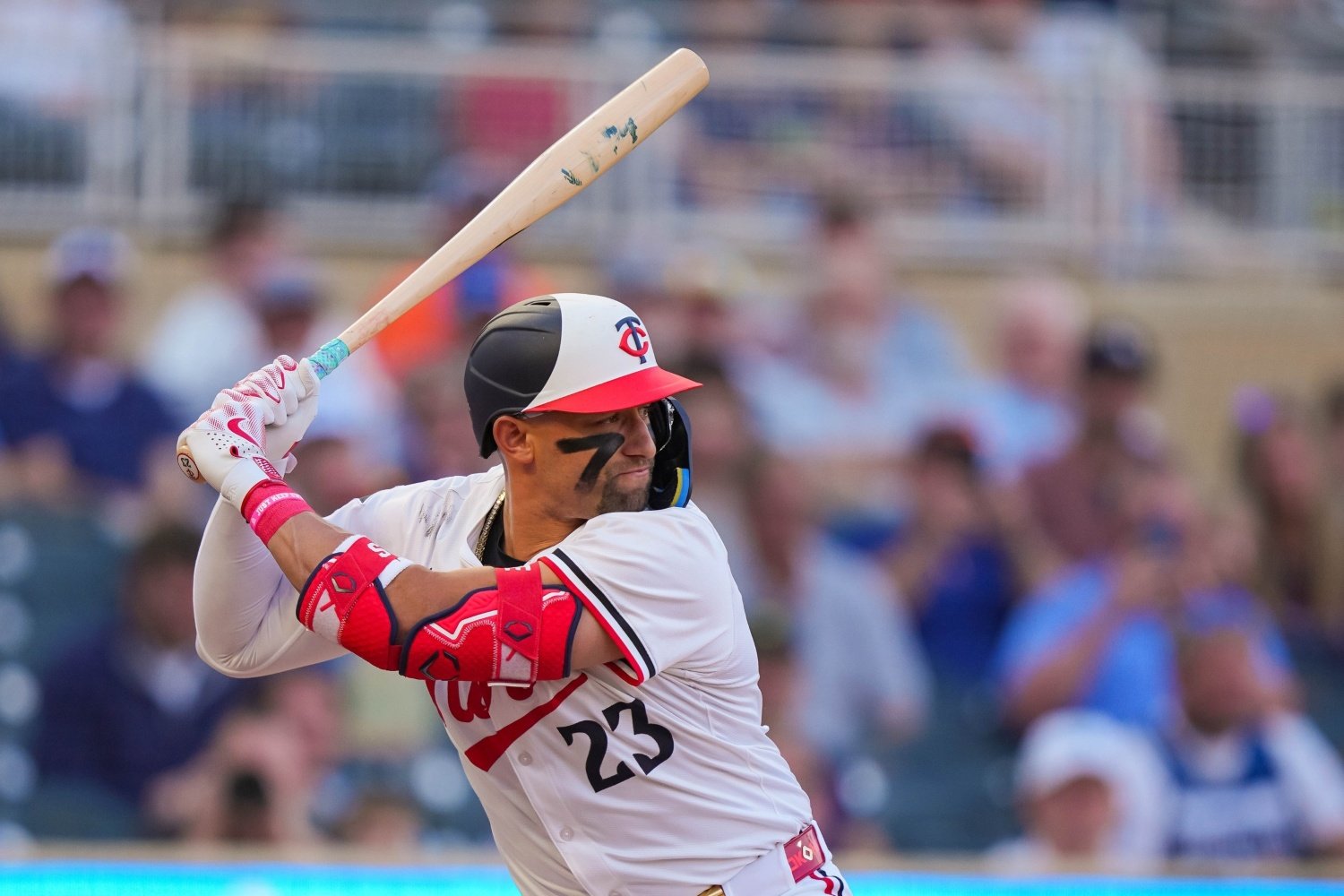 It’s no secret that Royce Lewis hasn’t looked like himself at the plate this season. Through May 28, Lewis is hitting just .138, with a ..415 OPS. His OPS+, which is adjusted for park, is sitting at a brutal 25, meaning that Lewis has been about 75% worse than an average hitter. After Wednesday's finale against the Rays, he told Bobby Nightingale of the Star Tribune: "I'm at a point where the hope is gone. I just do my job the best I can. If I keep hitting the ball hard, they say it's going to find a hole, but I haven't seen it yet." Oof. That’s not great, for a player expected to be a cornerstone of the Twins lineup, and to hit in the middle of the order. Is this a case of Lewis doing the whole slump thing? Or perhaps he’s still rusty and finding his stroke, since he missed the last portion of spring training? Maybe he has just been unlucky. Or, it could be a combination of factors impacting his results. Let’s dig in and see what we find out. Luck Let’s start here, because this is absolutely part of the equation. You probably remember the homer that Jackson Chourio robbed to end the 13-game winning streak. Unlucky, for sure. There have been a few other high-expected batting average plays that unfortunately found a fielder’s glove. In the past four games alone, Lewis has hit four different balls with an expected batting average of at least .500. All of them were outs. Aside from the eye test, what do advanced metrics tell us about Lewis’s luck so far in 2025? Well, Lewis is whiffing less than last year. His 90th-percentile exit velocity is up almost two miles per hour, compared to 2024. He’s cut his strikeout rate from a solid 22.8% last year to a shiny 15.2% in 2025. Through May 28, Lewis has seen 138 fastballs, and put 30 of them into play. The results are a middling .205 batting average and a .333 slugging percentage. His expected numbers, however, look a fair bit better. His expected batting average is .246. That’s a sizable difference. The difference between his actual and expected slugging percentage on heaters is even more pronounced: Ignoring defense, he should be slugging .457. Sure, you might be thinking that almost all hitters should be able to tee off on fastballs. What if I told you that he’s been even less lucky on breaking balls? It’s true. On 16 batted-ball events in this category, Lewis has both hit and slugged .063. Putrid. His expected numbers, though? He "should" have a .228 batting average and .382 slugging. Not incredible, but just fine. He’s gone hitless on five balls in play against offspeed stuff. Expected? .078 average and .092 slugging. That’s still brutal, but slightly less so, I suppose. This tells us that with luck aside, Lewis has been better than his results would indicate. Overall, this paints the picture that were the dice to come up a bit differently, he would be an average-ish hitter this season. The thing is, though, Lewis shouldn't be an average hitter. When he's right, he is far better than that. So, what else is going on that's holding him back at the plate? Approach at the Plate As you can see, last year, Lewis did real damage low and middle-in, and he excelled at pulling the ball in the air. He covered the shadow of the zone pretty well, doing damage low as well as high and outside. He did this by optimizing his launch angle everywhere except the top third of the zone. This year, he’s making the type of contact where the best-case scenario to the pull side is a bloop hit. See his pulled hits? A couple have been bloops between shortstop and third, and a couple have been right over the third baseman’s head. So why is this? It turns out he's skying the ball inside, and beating it into the ground when it's low and away. For an example of typical results with this approach, Thursday’s game against the Rays ended with a ball in play thrown to this exact inner third. Lewis hit the ball hard (99.2 mph), but hit it at 46 degrees, and it landed harmlessly in Chandler Simpson’s glove. Why? Here’s where things get a little interesting. Through May 28, Lewis has pulled just 7.8% of his balls in the air. That’s less than half the major-league average, and it’s no way to live for a power hitter. Now, Lewis is still elevating the ball with power, but the majority of this has been up the middle or oppo, where most of these fly balls are just long outs. Here's his contact heat map for 2025. Now, compare this to last season, and you will see a completely different style of spray chart. What has caused Lewis to become a different hitter? Likely, it can be attributed to his stance at the plate, his swing path, and timing. Pull hitters tend to swing just a bit earlier and/or faster than guys who use all fields to maximize the amount of barrel that can make contact with the ball in a way that generates the most favorable outcomes for them. The simple fact that Lewis is not pulling much suggests that his timing is off. That's pretty straightforward. Now, let’s look at his stance at the plate. Here’s 2024. His stance is pretty neutral: square, centered on the plate. Next, let’s look at 2025. As you can see, he’s widened his stance a bit, with his feet a couple inches farther apart than last year, and his back foot is farther behind the plate and tilted toward the catcher. As he meets the ball, his front foot extends a couple inches less past the plate than his aggregate swing from a year ago, and his back foot straightens and tilts very slightly toward the pitcher. Positioning back slightly will give him an extra split-second to recognize his pitch, but the wider stance is likely making it tougher for him to truly square up. Further complicating things is that, ideally, there’s some strong followthrough in the stride to help a hitter’s body weight drive the ball farther. In 2025, Lewis has a bit less of a stride than in 2024. Lewis's stance is just different, not in a good way, and the changes have resulted in him not only pulling the ball less, but also generally being less effective to all fields. For a hitter with more raw power (think Aaron Judge or Oneil Cruz), sacrificing some pull power in favor of using all fields more may work. For Lewis, with his good-but-not-elite power, the tradeoff doesn't seem worth it. So, we have established that Lewis has gotten pretty unlucky through his limited action in 2025. This will regress positively as the season progresses. However, this regression will likely lead to Lewis being an average hitter, rather than a great one. To reclaim his true upside, he will need to adjust his stance, swing path, and overall approach at the plate. Lewis has shown himself capable of and willing to make real adjustments to his game throughout his career. The question is how long it will take for him to do so. If he can get his swing right sooner, rather than later, all of a sudden this lineup can look pretty formidable.
 -
Image courtesy of © Brad Rempel-Imagn Images It’s no secret that Royce Lewis hasn’t looked like himself at the plate this season. Through May 28, Lewis is hitting just .138, with a ..415 OPS. His OPS+, which is adjusted for park, is sitting at a brutal 25, meaning that Lewis has been about 75% worse than an average hitter. After Wednesday's finale against the Rays, he told Bobby Nightingale of the Star Tribune: "I'm at a point where the hope is gone. I just do my job the best I can. If I keep hitting the ball hard, they say it's going to find a hole, but I haven't seen it yet." Oof. That’s not great, for a player expected to be a cornerstone of the Twins lineup, and to hit in the middle of the order. Is this a case of Lewis doing the whole slump thing? Or perhaps he’s still rusty and finding his stroke, since he missed the last portion of spring training? Maybe he has just been unlucky. Or, it could be a combination of factors impacting his results. Let’s dig in and see what we find out. Luck Let’s start here, because this is absolutely part of the equation. You probably remember the homer that Jackson Chourio robbed to end the 13-game winning streak. Unlucky, for sure. There have been a few other high-expected batting average plays that unfortunately found a fielder’s glove. In the past four games alone, Lewis has hit four different balls with an expected batting average of at least .500. All of them were outs. Aside from the eye test, what do advanced metrics tell us about Lewis’s luck so far in 2025? Well, Lewis is whiffing less than last year. His 90th-percentile exit velocity is up almost two miles per hour, compared to 2024. He’s cut his strikeout rate from a solid 22.8% last year to a shiny 15.2% in 2025. Through May 28, Lewis has seen 138 fastballs, and put 30 of them into play. The results are a middling .205 batting average and a .333 slugging percentage. His expected numbers, however, look a fair bit better. His expected batting average is .246. That’s a sizable difference. The difference between his actual and expected slugging percentage on heaters is even more pronounced: Ignoring defense, he should be slugging .457. Sure, you might be thinking that almost all hitters should be able to tee off on fastballs. What if I told you that he’s been even less lucky on breaking balls? It’s true. On 16 batted-ball events in this category, Lewis has both hit and slugged .063. Putrid. His expected numbers, though? He "should" have a .228 batting average and .382 slugging. Not incredible, but just fine. He’s gone hitless on five balls in play against offspeed stuff. Expected? .078 average and .092 slugging. That’s still brutal, but slightly less so, I suppose. This tells us that with luck aside, Lewis has been better than his results would indicate. Overall, this paints the picture that were the dice to come up a bit differently, he would be an average-ish hitter this season. The thing is, though, Lewis shouldn't be an average hitter. When he's right, he is far better than that. So, what else is going on that's holding him back at the plate? Approach at the Plate As you can see, last year, Lewis did real damage low and middle-in, and he excelled at pulling the ball in the air. He covered the shadow of the zone pretty well, doing damage low as well as high and outside. He did this by optimizing his launch angle everywhere except the top third of the zone. This year, he’s making the type of contact where the best-case scenario to the pull side is a bloop hit. See his pulled hits? A couple have been bloops between shortstop and third, and a couple have been right over the third baseman’s head. So why is this? It turns out he's skying the ball inside, and beating it into the ground when it's low and away. For an example of typical results with this approach, Thursday’s game against the Rays ended with a ball in play thrown to this exact inner third. Lewis hit the ball hard (99.2 mph), but hit it at 46 degrees, and it landed harmlessly in Chandler Simpson’s glove. Why? Here’s where things get a little interesting. Through May 28, Lewis has pulled just 7.8% of his balls in the air. That’s less than half the major-league average, and it’s no way to live for a power hitter. Now, Lewis is still elevating the ball with power, but the majority of this has been up the middle or oppo, where most of these fly balls are just long outs. Here's his contact heat map for 2025. Now, compare this to last season, and you will see a completely different style of spray chart. What has caused Lewis to become a different hitter? Likely, it can be attributed to his stance at the plate, his swing path, and timing. Pull hitters tend to swing just a bit earlier and/or faster than guys who use all fields to maximize the amount of barrel that can make contact with the ball in a way that generates the most favorable outcomes for them. The simple fact that Lewis is not pulling much suggests that his timing is off. That's pretty straightforward. Now, let’s look at his stance at the plate. Here’s 2024. His stance is pretty neutral: square, centered on the plate. Next, let’s look at 2025. As you can see, he’s widened his stance a bit, with his feet a couple inches farther apart than last year, and his back foot is farther behind the plate and tilted toward the catcher. As he meets the ball, his front foot extends a couple inches less past the plate than his aggregate swing from a year ago, and his back foot straightens and tilts very slightly toward the pitcher. Positioning back slightly will give him an extra split-second to recognize his pitch, but the wider stance is likely making it tougher for him to truly square up. Further complicating things is that, ideally, there’s some strong followthrough in the stride to help a hitter’s body weight drive the ball farther. In 2025, Lewis has a bit less of a stride than in 2024. Lewis's stance is just different, not in a good way, and the changes have resulted in him not only pulling the ball less, but also generally being less effective to all fields. For a hitter with more raw power (think Aaron Judge or Oneil Cruz), sacrificing some pull power in favor of using all fields more may work. For Lewis, with his good-but-not-elite power, the tradeoff doesn't seem worth it. So, we have established that Lewis has gotten pretty unlucky through his limited action in 2025. This will regress positively as the season progresses. However, this regression will likely lead to Lewis being an average hitter, rather than a great one. To reclaim his true upside, he will need to adjust his stance, swing path, and overall approach at the plate. Lewis has shown himself capable of and willing to make real adjustments to his game throughout his career. The question is how long it will take for him to do so. If he can get his swing right sooner, rather than later, all of a sudden this lineup can look pretty formidable. View full article
-
Image courtesy of Bruce Kluckhohn-Imagn Images Look, we all know the 2024 Twins season was an emotional rollercoaster ride. A rough start, a 12-game winning streak that led to an exciting four month stretch with the Twins playing elite baseball, and an ending that left fans bitter. 2025 was shaping up much like the last month and a half of the 2024 season, with tough losses, blown leads, and uninspiring offense. Many wrote the team off, leading to declining interest and attendance. Then, a winning streak began that changed the narrative. Here in mid-May, we have seen a brutal start to the season where it appeared to be getting late early, followed by another 12-game winning streak, which extended to 13 on Saturday night. This marks the first time in Twins history (12th in MLB history) where a team has gone back-to-back seasons with a 12-game winning streak or longer, and this streak is tied with the second longest in team history. Quite impressive in it’s own right, but it begs with question: are we truly just watching last season on repeat, or is this year different? What can fans glean from the respective streaks? April 22 – May 4, 2024 Let’s look at last year's 12-game winning streak. You know, the one fueled by the rally sausage; that nitrate-packed log of questionable provenance. (I know Kyle Farmer brought it, but you know, before that. Was it filled with ground-up hope?) For a two-week stretch, the Twins put up seven wins against the hapless White Sox and three more against the always-underperforming Angels. Just in case you have forgotten, that White Sox team was the worst of all time, and the Angels have been bad for the duration of Mike Trout’s career, and he’s in his 15th season with them. Then the Twins won the first two against the Red Sox, who at the time were a solid-but-unspectacular 18-14, before dropping the finale. There’s plenty of evidence that during the 2024 winning streak, the hitting corps was punching above their weight class. They had the best OPS in baseball at .894, although it was fueled by an unsustainable .362 BABIP. The Twins hit .308, also unsustainable. The scored a full seven runs per game, with three games of 10 or more runs scored. They were middle of the pack in hard-hit rate, further suggesting a bit of a mirage. And, we saw the streaky nature of the hitters throughout the season, so this was a case of everyone clicking at the same time. Willi Castro had an OPS over 1.100 in this stretch, which…you know. The pitching was good, but not elite. They had a 3.08 ERA, good for 10th in baseball. This was backed up by a 3.11 FIP which was 4th in the majors. Chris Paddack threw 13 innings without allowing a run! May 3 - May 16, 2025 The 2025 streak has felt a bit different, particularly since it’s not fueled by magical cold cuts. Sure, the hitters have adopted a home run Centurion helmet, but this streak hasn’t been driven by bombs, or even the offense as a whole. Most impressively, rather than notching wins against the dregs of the league, the 2025 Twins have earned victories against mostly playoff-caliber teams, and a couple that were predicted to be prior to the season. They began by taking the final two against the Red Sox. The Sox were two games over .500 headed into the first win, and were at .500 following the second. During this stretch, the Twins swept two series against the Orioles. Now, you might quibble at this, pointing out their underperformance thus far in 2025. Sure. I’ll give you that. But, they were widely expected to make the playoffs headed into the season, and they are loaded with talent. Then, the Twins also swept a series against the Giants, who were 24-14 headed into their series against the Twins. Finally, they won the first two games against the Brewers. While not world-beaters, they are a roughly .500 team who has underperformed to expectations. During this stretch, through Friday, the Twins had collectively put up a .745 OPS, good for 7th in the American League. That’s probably about right, given the uneven nature of the hitting group, even during a hot streak. In contrast to the streak of a year ago, the hitters have scored 5.08 runs per game. While this is a high total compared to the season as a whole, it’s not outrageous, and it doesn’t suggest a large regression is in the works. The pitching through? So, so good. As a staff, they have allowed just a 2.23 ERA (best in baseball) with a slightly worse but still great 2.76 FIP (also best in baseball). They have allowed the second-fewest walks in baseball, trailing just the Royals. They have allowed a WHIP of just 0.98, again, second best in baseball. Chris Paddack threw 14 ⅓ innings while allowing just one run! Conclusions So. We know that the 2025 version of the Twins has faced better competition, has pitched significantly better, but has hit worse (but in a more sustainable way). This improved play, then, just might be sustainable. Obviously they won’t win every game. Luck will go against them. They probably won’t continue to be the literal best team in baseball for too much longer. You know what though? This version of the Twins more closely resembles the one baseball analysts were predicting prior to the season than what we saw for the first month of the season – elite pitching and middle of the pack hitting. And, theoretically, replacing Simeon Woods Richardson with Zebby Matthews should make the pitching staff even better. Let’s not forget: it’s just a matter of time before Matt Wallner and Luke Keaschall are ready to return from the IL, Royce Lewis will probably find his swing again, and then the hitting could even take a step forward from middle of the pack to downright good. The depth is better this season, too. Maybe this streak is the start of something magical. View full article
-
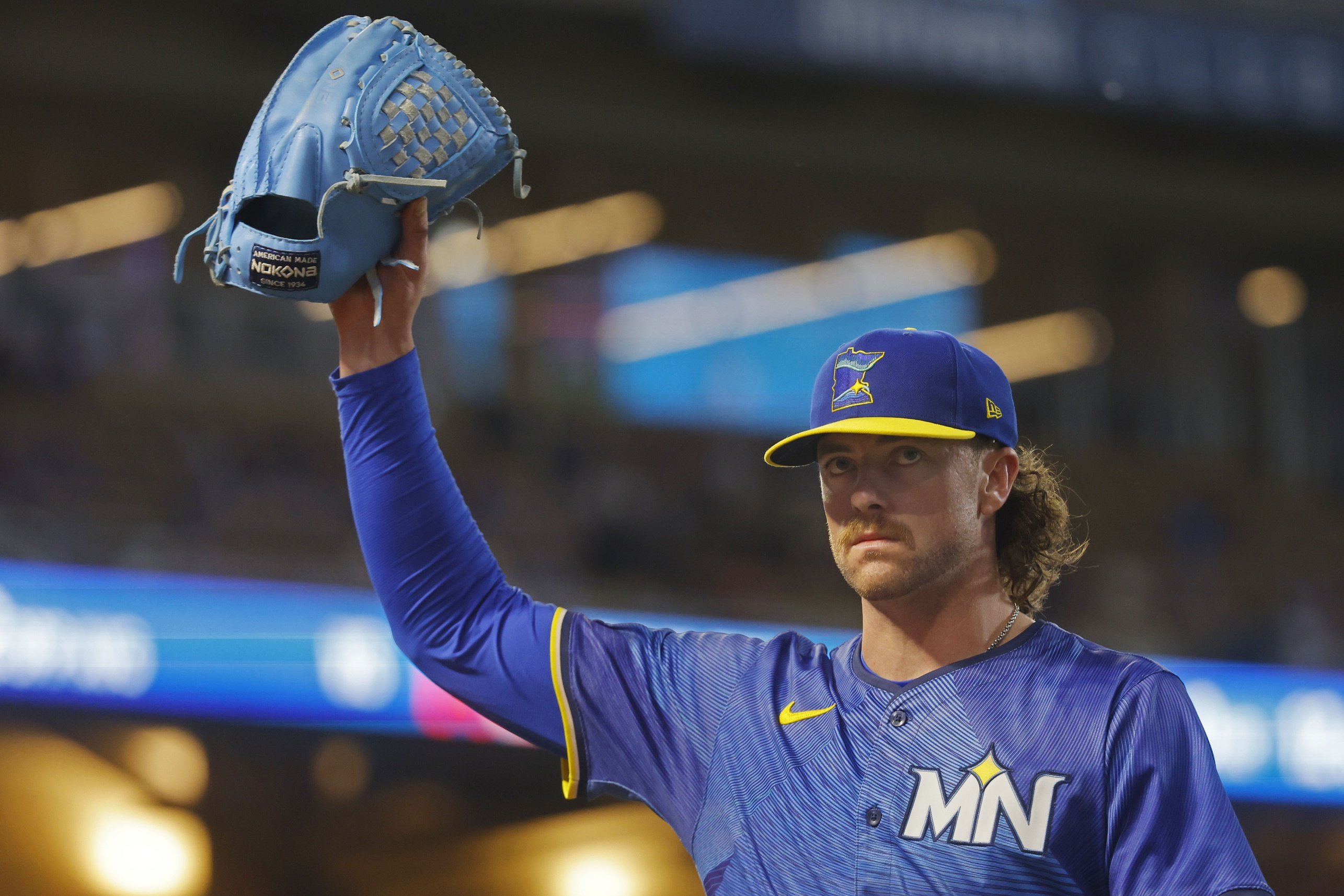 Look, we all know the 2024 Twins season was an emotional rollercoaster ride. A rough start, a 12-game winning streak that led to an exciting four month stretch with the Twins playing elite baseball, and an ending that left fans bitter. 2025 was shaping up much like the last month and a half of the 2024 season, with tough losses, blown leads, and uninspiring offense. Many wrote the team off, leading to declining interest and attendance. Then, a winning streak began that changed the narrative. Here in mid-May, we have seen a brutal start to the season where it appeared to be getting late early, followed by another 12-game winning streak, which extended to 13 on Saturday night. This marks the first time in Twins history (12th in MLB history) where a team has gone back-to-back seasons with a 12-game winning streak or longer, and this streak is tied with the second longest in team history. Quite impressive in it’s own right, but it begs with question: are we truly just watching last season on repeat, or is this year different? What can fans glean from the respective streaks? April 22 – May 4, 2024 Let’s look at last year's 12-game winning streak. You know, the one fueled by the rally sausage; that nitrate-packed log of questionable provenance. (I know Kyle Farmer brought it, but you know, before that. Was it filled with ground-up hope?) For a two-week stretch, the Twins put up seven wins against the hapless White Sox and three more against the always-underperforming Angels. Just in case you have forgotten, that White Sox team was the worst of all time, and the Angels have been bad for the duration of Mike Trout’s career, and he’s in his 15th season with them. Then the Twins won the first two against the Red Sox, who at the time were a solid-but-unspectacular 18-14, before dropping the finale. There’s plenty of evidence that during the 2024 winning streak, the hitting corps was punching above their weight class. They had the best OPS in baseball at .894, although it was fueled by an unsustainable .362 BABIP. The Twins hit .308, also unsustainable. The scored a full seven runs per game, with three games of 10 or more runs scored. They were middle of the pack in hard-hit rate, further suggesting a bit of a mirage. And, we saw the streaky nature of the hitters throughout the season, so this was a case of everyone clicking at the same time. Willi Castro had an OPS over 1.100 in this stretch, which…you know. The pitching was good, but not elite. They had a 3.08 ERA, good for 10th in baseball. This was backed up by a 3.11 FIP which was 4th in the majors. Chris Paddack threw 13 innings without allowing a run! May 3 - May 16, 2025 The 2025 streak has felt a bit different, particularly since it’s not fueled by magical cold cuts. Sure, the hitters have adopted a home run Centurion helmet, but this streak hasn’t been driven by bombs, or even the offense as a whole. Most impressively, rather than notching wins against the dregs of the league, the 2025 Twins have earned victories against mostly playoff-caliber teams, and a couple that were predicted to be prior to the season. They began by taking the final two against the Red Sox. The Sox were two games over .500 headed into the first win, and were at .500 following the second. During this stretch, the Twins swept two series against the Orioles. Now, you might quibble at this, pointing out their underperformance thus far in 2025. Sure. I’ll give you that. But, they were widely expected to make the playoffs headed into the season, and they are loaded with talent. Then, the Twins also swept a series against the Giants, who were 24-14 headed into their series against the Twins. Finally, they won the first two games against the Brewers. While not world-beaters, they are a roughly .500 team who has underperformed to expectations. During this stretch, through Friday, the Twins had collectively put up a .745 OPS, good for 7th in the American League. That’s probably about right, given the uneven nature of the hitting group, even during a hot streak. In contrast to the streak of a year ago, the hitters have scored 5.08 runs per game. While this is a high total compared to the season as a whole, it’s not outrageous, and it doesn’t suggest a large regression is in the works. The pitching through? So, so good. As a staff, they have allowed just a 2.23 ERA (best in baseball) with a slightly worse but still great 2.76 FIP (also best in baseball). They have allowed the second-fewest walks in baseball, trailing just the Royals. They have allowed a WHIP of just 0.98, again, second best in baseball. Chris Paddack threw 14 ⅓ innings while allowing just one run! Conclusions So. We know that the 2025 version of the Twins has faced better competition, has pitched significantly better, but has hit worse (but in a more sustainable way). This improved play, then, just might be sustainable. Obviously they won’t win every game. Luck will go against them. They probably won’t continue to be the literal best team in baseball for too much longer. You know what though? This version of the Twins more closely resembles the one baseball analysts were predicting prior to the season than what we saw for the first month of the season – elite pitching and middle of the pack hitting. And, theoretically, replacing Simeon Woods Richardson with Zebby Matthews should make the pitching staff even better. Let’s not forget: it’s just a matter of time before Matt Wallner and Luke Keaschall are ready to return from the IL, Royce Lewis will probably find his swing again, and then the hitting could even take a step forward from middle of the pack to downright good. The depth is better this season, too. Maybe this streak is the start of something magical.
 -
Why Zebby Matthews Is Getting The Call To The Twins, And What To Expect
Eric Blonigen posted an article in Twins
.jpg.faab6c694f107ccc1012c7b9e3dd37bb.jpg) Zebby Matthews is back. Although the Twins haven't officially announced a starter for Sunday's game, it's already been publicly reported that 24-year-old right-hander is line to make his 2025 MLB debut against the Brewers. As we await his highly anticipated return to the big leagues, let's examine why this decision was made and what to expect. The Twins pitching pipeline has succeeded, to the point of having two and a half legitimate high-upside options waiting in the wings in Saint Paul. Making this more impressive is the fact that they aren’t waiting to replace a crusty veteran scrap heap signing who has struggled, but rather, a struggling pitcher who is actually still young and projectable. This isn’t news to anyone, but it’s still worth celebrating for a moment. The true choice for this callup was Mattews or David Festa. Andrew Morris doesn’t have quite the shine or the upside of either Festa or Matthews, but he is a legitimate prospect who has moved quickly through the farm system. He profiles more as a mid-to-back of the rotation starter. But, he realistically wasn’t an option for a call up, based on his 2025 performance to date. He hasn’t been missing many bats, and has gotten middling results. But why Zebby, when Festa has generally been the better pitcher, especially with the Twins? The David Festa situation Fans have seen plenty of Festa over the past couple seasons. The Slim Reaper has acquitted himself well, showing tantalizing flashes of a potential future as a frontline starter. In three starts with the Twins, replacing Pablo López while he was dealing with a minor hamstring injury, Festa threw to a 1.38 ERA and 2.41 FIP. However, he averaged just 4 ⅓ innings per start, and walked 8.9% of the batters he faced. To avoid bullpen burnout, the Twins would prefer a starter who can be counted on to average at least five innings per turn. Festa also hasn’t pitched since May 5th, skipping a start due to arm fatigue. Hopefully this is just a proactive measure to get him rest, but it certainly raises potential questions around his health. He is expected to start this weekend, so fingers crossed. There’s also one more factor at play, aside from health. Service time implications Matthews being called up over Festa is probably at least partially a business decision. A player accumulating 172 days of service time uses their first year of team control, and begins the countdown to free agency. Those first 172 days can come across multiple seasons. Basically, teams have an incentive to keep good prospects in the minors until they are needed to maximize team control. Applying this to the Festa and Matthews situation, a couple things stand out There are 134 days in potential service time remaining, beginning on Sunday. By my math, Festa was in the majors for 80 days in 2024, and added another 14 covering for Lopez. This means that for the Twins to gain an additional year of team control for Festa, he will need to spend at least 57 days in the minors this season. Matthews got called up on August 13th last season when Joe Ryan went down. He accrued 47 days through the end of the season. This gives him a bit more wiggle room compared to Festa: he needs to spend just 10 days in the minors to prevent accruing a full season. Because of this, it’s likely that there’s some shuffling that happens at some point in 2025, and Matthews probably won’t be up for the entirety of the remaining season. Festa will still be needed, due to injury, ineffectiveness, or to give a fresh look to the rotation. What to expect from Zebby What do spring training and his 2025 start with the Saints tell us? Let's start with a look back. Matthews got his first call-up last season after starting the season at High-A Cedar Rapids. He wasn’t impressive in his first taste of the majors, pitching to a 6.69 ERA and a 5.72 FIP. Struggling a bit is to be expected from a guy lacking seasoning and pushed into duty a full season earlier than expected. Through his nine starts, Matthews gave up too much hard contact, and allowed home runs at an unworkable rate — 2.63 bombs allowed per nine innings pitched. Despite having an arsenal of pitches, he allowed hard contact on all them but his slider. On his four-seam, his expected slugging was .595. The cutter was somehow worse, at .660. His curve got shelled too, with a .563 expected slugging rate. It was clear that he had some things to work through. Lauded for his control, Zebby posted video game walk rates all through the minors. His command, however? A real work in progress. With good-but-not-elite velocity and average-ish movement, he left too many pitches where hitters could do damage. In some ways, he resembled a Terry Ryan-style pitch to contact machine, albeit with better stuff. Fast forward to 2025. During Spring Training, Matthews showed the unexpected — elite velocity for a starting pitcher. In his early starts in Saint Paul, he was touching 99 on his heater. He has scaled back a bit since then, but is still up a full tick compared to 2024. And, he kept his signature control despite the added velocity. Through seven Triple-A starts, he has held opposing hitters to a .611 OPS. He’s striking out more than 10 guys per nine innings. Now, Triple-A is a different level of competition, to be sure. But, Matthews has limited his damage to a single homer across 32 innings pitched. He has pitched to a sparkling 1.93 ERA, with a 2.38 FIP that suggests his results haven’t been a mirage. How did he get here? As The Athletic's Aaron Gleeman identified in his top-40 prospect analysis headed into this season: Good news. By Stuff+, all five of his pitches are now plus offerings, and his slider and cutter have become his best pitches. By making an adjustment in his pitch mix, he’s lowered his hard-hit rate by 10% year over year, driven by significantly better results on his changeup. This is also great news, as he told Fangraphs that he was working on building confidence in his off speed weapon heading into the season. Looking at Thomas Nestico's profile of Zebby's 2025 season, we see a few additional things. He’s giving up less contact in the zone with a 5.1% reduction compared to last year, suggesting that he’s gotten better at hitting his spots. He’s coaxing a few more ground balls as well, with a 1% increase year over year. His weighted on-base average is down a remarkable .99 points since 2024. That's the difference between a fifth starter and someone who could start playoff games. So. Better secondary stuff. More velocity. Less hard contact. Better results in the zone. All of this suggests that Matthews may have solved his propensity for giving up the longball, and may be ready to take his next step forward. If his adjustments carry over to the Twins, the already-elite starting pitching corps just might get even better. Buckle up!
Zebby Matthews is back. Although the Twins haven't officially announced a starter for Sunday's game, it's already been publicly reported that 24-year-old right-hander is line to make his 2025 MLB debut against the Brewers. As we await his highly anticipated return to the big leagues, let's examine why this decision was made and what to expect. The Twins pitching pipeline has succeeded, to the point of having two and a half legitimate high-upside options waiting in the wings in Saint Paul. Making this more impressive is the fact that they aren’t waiting to replace a crusty veteran scrap heap signing who has struggled, but rather, a struggling pitcher who is actually still young and projectable. This isn’t news to anyone, but it’s still worth celebrating for a moment. The true choice for this callup was Mattews or David Festa. Andrew Morris doesn’t have quite the shine or the upside of either Festa or Matthews, but he is a legitimate prospect who has moved quickly through the farm system. He profiles more as a mid-to-back of the rotation starter. But, he realistically wasn’t an option for a call up, based on his 2025 performance to date. He hasn’t been missing many bats, and has gotten middling results. But why Zebby, when Festa has generally been the better pitcher, especially with the Twins? The David Festa situation Fans have seen plenty of Festa over the past couple seasons. The Slim Reaper has acquitted himself well, showing tantalizing flashes of a potential future as a frontline starter. In three starts with the Twins, replacing Pablo López while he was dealing with a minor hamstring injury, Festa threw to a 1.38 ERA and 2.41 FIP. However, he averaged just 4 ⅓ innings per start, and walked 8.9% of the batters he faced. To avoid bullpen burnout, the Twins would prefer a starter who can be counted on to average at least five innings per turn. Festa also hasn’t pitched since May 5th, skipping a start due to arm fatigue. Hopefully this is just a proactive measure to get him rest, but it certainly raises potential questions around his health. He is expected to start this weekend, so fingers crossed. There’s also one more factor at play, aside from health. Service time implications Matthews being called up over Festa is probably at least partially a business decision. A player accumulating 172 days of service time uses their first year of team control, and begins the countdown to free agency. Those first 172 days can come across multiple seasons. Basically, teams have an incentive to keep good prospects in the minors until they are needed to maximize team control. Applying this to the Festa and Matthews situation, a couple things stand out There are 134 days in potential service time remaining, beginning on Sunday. By my math, Festa was in the majors for 80 days in 2024, and added another 14 covering for Lopez. This means that for the Twins to gain an additional year of team control for Festa, he will need to spend at least 57 days in the minors this season. Matthews got called up on August 13th last season when Joe Ryan went down. He accrued 47 days through the end of the season. This gives him a bit more wiggle room compared to Festa: he needs to spend just 10 days in the minors to prevent accruing a full season. Because of this, it’s likely that there’s some shuffling that happens at some point in 2025, and Matthews probably won’t be up for the entirety of the remaining season. Festa will still be needed, due to injury, ineffectiveness, or to give a fresh look to the rotation. What to expect from Zebby What do spring training and his 2025 start with the Saints tell us? Let's start with a look back. Matthews got his first call-up last season after starting the season at High-A Cedar Rapids. He wasn’t impressive in his first taste of the majors, pitching to a 6.69 ERA and a 5.72 FIP. Struggling a bit is to be expected from a guy lacking seasoning and pushed into duty a full season earlier than expected. Through his nine starts, Matthews gave up too much hard contact, and allowed home runs at an unworkable rate — 2.63 bombs allowed per nine innings pitched. Despite having an arsenal of pitches, he allowed hard contact on all them but his slider. On his four-seam, his expected slugging was .595. The cutter was somehow worse, at .660. His curve got shelled too, with a .563 expected slugging rate. It was clear that he had some things to work through. Lauded for his control, Zebby posted video game walk rates all through the minors. His command, however? A real work in progress. With good-but-not-elite velocity and average-ish movement, he left too many pitches where hitters could do damage. In some ways, he resembled a Terry Ryan-style pitch to contact machine, albeit with better stuff. Fast forward to 2025. During Spring Training, Matthews showed the unexpected — elite velocity for a starting pitcher. In his early starts in Saint Paul, he was touching 99 on his heater. He has scaled back a bit since then, but is still up a full tick compared to 2024. And, he kept his signature control despite the added velocity. Through seven Triple-A starts, he has held opposing hitters to a .611 OPS. He’s striking out more than 10 guys per nine innings. Now, Triple-A is a different level of competition, to be sure. But, Matthews has limited his damage to a single homer across 32 innings pitched. He has pitched to a sparkling 1.93 ERA, with a 2.38 FIP that suggests his results haven’t been a mirage. How did he get here? As The Athletic's Aaron Gleeman identified in his top-40 prospect analysis headed into this season: Good news. By Stuff+, all five of his pitches are now plus offerings, and his slider and cutter have become his best pitches. By making an adjustment in his pitch mix, he’s lowered his hard-hit rate by 10% year over year, driven by significantly better results on his changeup. This is also great news, as he told Fangraphs that he was working on building confidence in his off speed weapon heading into the season. Looking at Thomas Nestico's profile of Zebby's 2025 season, we see a few additional things. He’s giving up less contact in the zone with a 5.1% reduction compared to last year, suggesting that he’s gotten better at hitting his spots. He’s coaxing a few more ground balls as well, with a 1% increase year over year. His weighted on-base average is down a remarkable .99 points since 2024. That's the difference between a fifth starter and someone who could start playoff games. So. Better secondary stuff. More velocity. Less hard contact. Better results in the zone. All of this suggests that Matthews may have solved his propensity for giving up the longball, and may be ready to take his next step forward. If his adjustments carry over to the Twins, the already-elite starting pitching corps just might get even better. Buckle up! -
Image courtesy of Dave Nelson-Imagn Images Zebby Matthews is back. Although the Twins haven't officially announced a starter for Sunday's game, it's already been publicly reported that 24-year-old right-hander is line to make his 2025 MLB debut against the Brewers. As we await his highly anticipated return to the big leagues, let's examine why this decision was made and what to expect. The Twins pitching pipeline has succeeded, to the point of having two and a half legitimate high-upside options waiting in the wings in Saint Paul. Making this more impressive is the fact that they aren’t waiting to replace a crusty veteran scrap heap signing who has struggled, but rather, a struggling pitcher who is actually still young and projectable. This isn’t news to anyone, but it’s still worth celebrating for a moment. The true choice for this callup was Mattews or David Festa. Andrew Morris doesn’t have quite the shine or the upside of either Festa or Matthews, but he is a legitimate prospect who has moved quickly through the farm system. He profiles more as a mid-to-back of the rotation starter. But, he realistically wasn’t an option for a call up, based on his 2025 performance to date. He hasn’t been missing many bats, and has gotten middling results. But why Zebby, when Festa has generally been the better pitcher, especially with the Twins? The David Festa situation Fans have seen plenty of Festa over the past couple seasons. The Slim Reaper has acquitted himself well, showing tantalizing flashes of a potential future as a frontline starter. In three starts with the Twins, replacing Pablo López while he was dealing with a minor hamstring injury, Festa threw to a 1.38 ERA and 2.41 FIP. However, he averaged just 4 ⅓ innings per start, and walked 8.9% of the batters he faced. To avoid bullpen burnout, the Twins would prefer a starter who can be counted on to average at least five innings per turn. Festa also hasn’t pitched since May 5th, skipping a start due to arm fatigue. Hopefully this is just a proactive measure to get him rest, but it certainly raises potential questions around his health. He is expected to start this weekend, so fingers crossed. There’s also one more factor at play, aside from health. Service time implications Matthews being called up over Festa is probably at least partially a business decision. A player accumulating 172 days of service time uses their first year of team control, and begins the countdown to free agency. Those first 172 days can come across multiple seasons. Basically, teams have an incentive to keep good prospects in the minors until they are needed to maximize team control. Applying this to the Festa and Matthews situation, a couple things stand out There are 134 days in potential service time remaining, beginning on Sunday. By my math, Festa was in the majors for 80 days in 2024, and added another 14 covering for Lopez. This means that for the Twins to gain an additional year of team control for Festa, he will need to spend at least 57 days in the minors this season. Matthews got called up on August 13th last season when Joe Ryan went down. He accrued 47 days through the end of the season. This gives him a bit more wiggle room compared to Festa: he needs to spend just 10 days in the minors to prevent accruing a full season. Because of this, it’s likely that there’s some shuffling that happens at some point in 2025, and Matthews probably won’t be up for the entirety of the remaining season. Festa will still be needed, due to injury, ineffectiveness, or to give a fresh look to the rotation. What to expect from Zebby What do spring training and his 2025 start with the Saints tell us? Let's start with a look back. Matthews got his first call-up last season after starting the season at High-A Cedar Rapids. He wasn’t impressive in his first taste of the majors, pitching to a 6.69 ERA and a 5.72 FIP. Struggling a bit is to be expected from a guy lacking seasoning and pushed into duty a full season earlier than expected. Through his nine starts, Matthews gave up too much hard contact, and allowed home runs at an unworkable rate — 2.63 bombs allowed per nine innings pitched. Despite having an arsenal of pitches, he allowed hard contact on all them but his slider. On his four-seam, his expected slugging was .595. The cutter was somehow worse, at .660. His curve got shelled too, with a .563 expected slugging rate. It was clear that he had some things to work through. Lauded for his control, Zebby posted video game walk rates all through the minors. His command, however? A real work in progress. With good-but-not-elite velocity and average-ish movement, he left too many pitches where hitters could do damage. In some ways, he resembled a Terry Ryan-style pitch to contact machine, albeit with better stuff. Fast forward to 2025. During Spring Training, Matthews showed the unexpected — elite velocity for a starting pitcher. In his early starts in Saint Paul, he was touching 99 on his heater. He has scaled back a bit since then, but is still up a full tick compared to 2024. And, he kept his signature control despite the added velocity. Through seven Triple-A starts, he has held opposing hitters to a .611 OPS. He’s striking out more than 10 guys per nine innings. Now, Triple-A is a different level of competition, to be sure. But, Matthews has limited his damage to a single homer across 32 innings pitched. He has pitched to a sparkling 1.93 ERA, with a 2.38 FIP that suggests his results haven’t been a mirage. How did he get here? As The Athletic's Aaron Gleeman identified in his top-40 prospect analysis headed into this season: Good news. By Stuff+, all five of his pitches are now plus offerings, and his slider and cutter have become his best pitches. By making an adjustment in his pitch mix, he’s lowered his hard-hit rate by 10% year over year, driven by significantly better results on his changeup. This is also great news, as he told Fangraphs that he was working on building confidence in his off speed weapon heading into the season. Looking at Thomas Nestico's profile of Zebby's 2025 season, we see a few additional things. He’s giving up less contact in the zone with a 5.1% reduction compared to last year, suggesting that he’s gotten better at hitting his spots. He’s coaxing a few more ground balls as well, with a 1% increase year over year. His weighted on-base average is down a remarkable .99 points since 2024. That's the difference between a fifth starter and someone who could start playoff games. So. Better secondary stuff. More velocity. Less hard contact. Better results in the zone. All of this suggests that Matthews may have solved his propensity for giving up the longball, and may be ready to take his next step forward. If his adjustments carry over to the Twins, the already-elite starting pitching corps just might get even better. Buckle up! View full article
-
Image courtesy of © Matt Blewett-Imagn Images Coming into the 2025 season, the Twins were the odds-on favorite to win the division. Since then... Look, it’s been a weird start to the season. Remember just a couple of weeks ago, when it appeared the season was all but over for the good guys? On April 27, yours truly wrote a piece detailing how statistically unlikely it would be for the Twins to make the playoffs. Well, it appears I may have been hasty, historical precedents aside. Since then, the Twins have reversed their fortunes. Winning eight games in a row will do that, as will nearly an entire pitching staff showing dominance, and hitters remembering how to hit. In fact, according to FanGraphs, the Twins now have a 49.6% chance to make the postseason, and are (almost) right back to where they started. For those of you who have tuned out at home due to frustrations with ownership or early-season travails, now just might be a good time to tune back in. There’s some fun baseball happening on a nearly nightly basis. Dating back 30 days to April 13, the Twins have gone on a 14-2 run at home. Generally, they look like a fairly complete team once again, capable of being relevant in September—and maybe beyond. Every team will go through rough patches and others that drive fan elation. The Twins are no exception. They aren’t as good as they have looked over their last couple weeks, and they are almost certainly better than they looked for the first couple weeks of the season (or during their September swoon last season). You know what, though? They are proving worth watching on a nightly basis. Baseball is a game of averages, adjustments, and more than a fair bit of luck. Anything is possible, and the fun is in the journey. Can the positive trend of the past few weeks continue, and what should fans expect the rest of the way? Let’s look at a few positives that can inform the future. Expected Wins and Losses Despite an impressive stretch of play, relative to teams projected to make the playoffs headed into the season, the Twins have struggled to gain ground. Unfortunately, the other three AL Central teams who are trying to win have all gone on torrid runs of their own. Over the past 10 games, despite going 8-2, the Twins kept pace with the Royals, gained just a single game over the Tigers, and picked up two over the Guardians. But, here’s the good news. By expected results from runs scored and allowed, the Twins should be 23-18 headed into Tuesday’s road opener against the Orioles. That’s the fifth-best expected win-loss rate in the American League, and it’s better than the Royals and Guardians, both of whom have gotten a bit lucky so far. Cleveland even has a negative run differential, despite being six games over .500. As it stands, comparing the Twins to the rest of the Central, the Twins have the best pitching by fWAR, and only the Tigers are getting more hitter fWAR than the Twins. While past results aren’t necessarily predictive of future performance, this is still a great sign. Pitching Staff Speaking of pitching, this is an easy place to celebrate success. After a rocky first turn through the rotation, the Twins' starting staff has been lights out. Dating back to April 2, among all American League teams, the Twins pitching staff ranks: first in fWAR (6.9), first in FIP (3.25), third in ERA (2.93), third in strikeouts per nine innings (9.3). They have the best walk rate (2.3) and the lowest WHIP (1.11). Folks, that’s officially elite. Headed into the season, national publications had the Twins among the league leaders in both starting and relief pitching, and despite fans turning this into a punchline on this site and social media, it turns out the prognosticators were correct. The pitching has been a real strength, and there’s no reason to suspect it will implode anytime soon. Pablo López, Bailey Ober, and Joe Ryan have been a formidable three-headed monster, Chris Paddack has put up a sub-3.00 ERA (although secondary results haven’t been as pretty) and Simeon Woods Richardson has been just fine as a fifth starter. For relievers, Jhoan Duran and Danny Coulombe have been nails, Justin Topa and Louis Varland has been solid, and Brock Stewart and Griffin Jax almost certainly won’t pitch as poorly as they have so far this season. Hitters This aspect of the Twins has been (and may continue to be) enigmatic. Similar to the pitching staff, Twins hitters (aside from Harrison Bader and Ty France) began their season ice-cold. Dating back to that same April 2 cutoff we looked at for the pitching staff, though, the hitters have been decidedly average. Which, for those of you paying attention headed into the season, that's also where national publications had the hitters performing. More recently, looking at just the past month, the Twins have no fewer than six hitters with an .800 OPS or better. Matt Wallner will be back before too long, and it’s probably fair to assume he will pick up where he left off: mashing baseballs. Byron Buxton has looked like a guy who will receive MVP votes this season. Harrison Bader looks like an All-Star, offensively and defensively. Carlos Correa has shown signs of heating up after the worst start of his professional career. Luke Keaschall looked like he belonged, prior to his injury. Plus, the Twins just got Royce Lewis back—a slugger who, when he’s right, is capable of carrying the team for a week or two at a time. While the results have been inconsistent, the talent level is high, and should be trending up. Depth Beyond the guys getting it done with the big-league club, depth is still an exciting part of what fans can look forward to later in the year. On the pitching side, Zebby Matthews and David Festa continue to wait their turn for a chance, whether it’s injury or performance that creates it. Andrew Morris and Travis Adams are behind them should things get truly desperate, or should a swingman or long reliever be needed on the big-league roster. For hitters, Carson McCusker keeps making opposing pitching pay by crushing longballs and making hard contact to all fields. Keaschall will be back at some point, and we saw what he makes possible on the base paths and at the plate. And, Emmanuel Rodriguez hasn’t shown great results so far this season at Saint Paul, but he’s shown his hitting prowess at each level, so it’s likely a matter of him getting time to find his stroke. He’s been heating up a bit, and could be a realistic option in the second half, assuming health. Compared to the other AL Central contenders, the Twins have enviable, high-end depth that should help them weather the injuries that will inevitably befall the team. Their pitching should continue to lead the league, and the hitting should be better than they started. This combination of factors, especially assuming continued solid play, should give fans a reason to keep watching all throughout the summer. It's only a coin-flip that they'll reach October—but we'd all gladly have flipped that coin not long ago. View full article
-
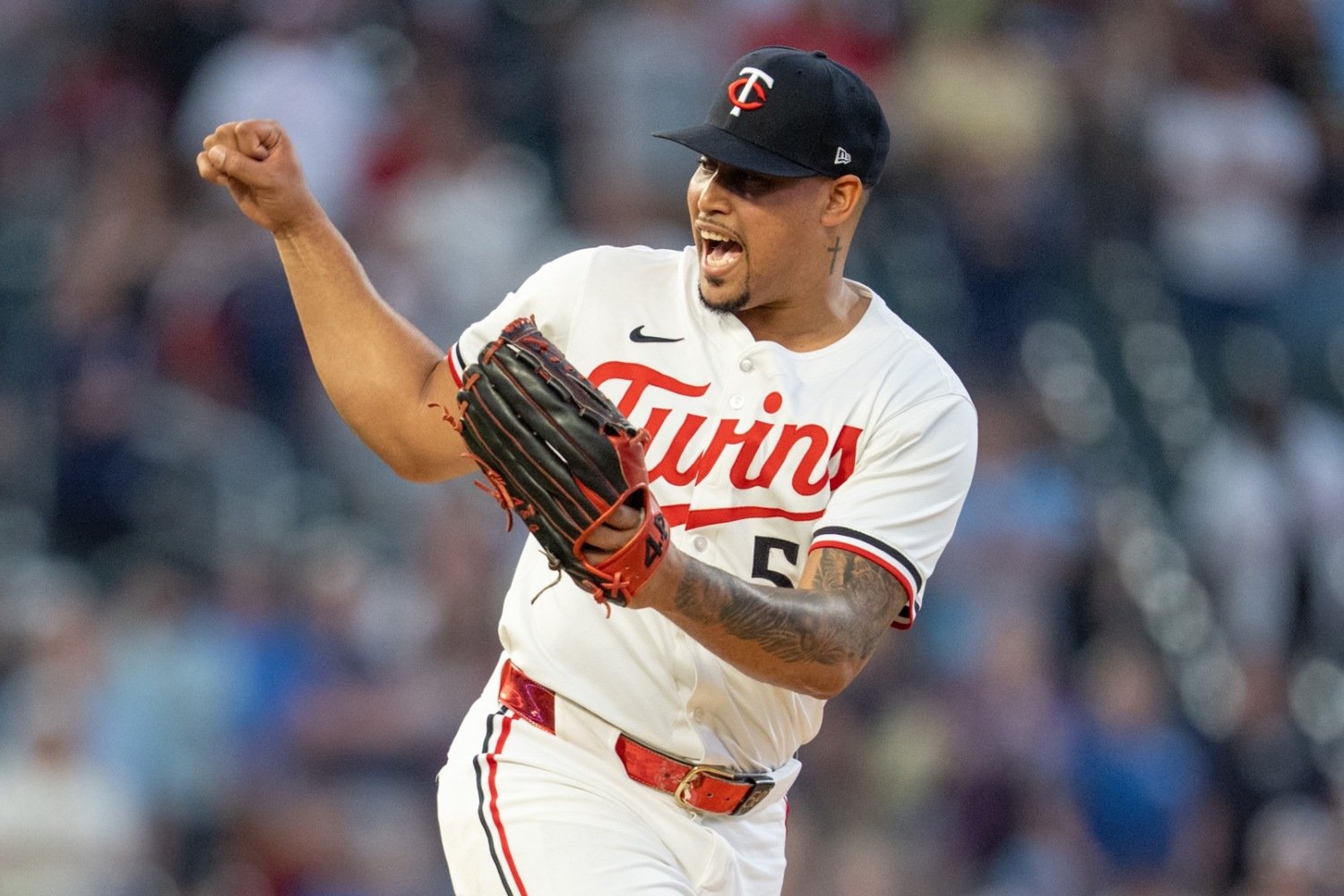 Coming into the 2025 season, the Twins were the odds-on favorite to win the division. Since then... Look, it’s been a weird start to the season. Remember just a couple of weeks ago, when it appeared the season was all but over for the good guys? On April 27, yours truly wrote a piece detailing how statistically unlikely it would be for the Twins to make the playoffs. Well, it appears I may have been hasty, historical precedents aside. Since then, the Twins have reversed their fortunes. Winning eight games in a row will do that, as will nearly an entire pitching staff showing dominance, and hitters remembering how to hit. In fact, according to FanGraphs, the Twins now have a 49.6% chance to make the postseason, and are (almost) right back to where they started. For those of you who have tuned out at home due to frustrations with ownership or early-season travails, now just might be a good time to tune back in. There’s some fun baseball happening on a nearly nightly basis. Dating back 30 days to April 13, the Twins have gone on a 14-2 run at home. Generally, they look like a fairly complete team once again, capable of being relevant in September—and maybe beyond. Every team will go through rough patches and others that drive fan elation. The Twins are no exception. They aren’t as good as they have looked over their last couple weeks, and they are almost certainly better than they looked for the first couple weeks of the season (or during their September swoon last season). You know what, though? They are proving worth watching on a nightly basis. Baseball is a game of averages, adjustments, and more than a fair bit of luck. Anything is possible, and the fun is in the journey. Can the positive trend of the past few weeks continue, and what should fans expect the rest of the way? Let’s look at a few positives that can inform the future. Expected Wins and Losses Despite an impressive stretch of play, relative to teams projected to make the playoffs headed into the season, the Twins have struggled to gain ground. Unfortunately, the other three AL Central teams who are trying to win have all gone on torrid runs of their own. Over the past 10 games, despite going 8-2, the Twins kept pace with the Royals, gained just a single game over the Tigers, and picked up two over the Guardians. But, here’s the good news. By expected results from runs scored and allowed, the Twins should be 23-18 headed into Tuesday’s road opener against the Orioles. That’s the fifth-best expected win-loss rate in the American League, and it’s better than the Royals and Guardians, both of whom have gotten a bit lucky so far. Cleveland even has a negative run differential, despite being six games over .500. As it stands, comparing the Twins to the rest of the Central, the Twins have the best pitching by fWAR, and only the Tigers are getting more hitter fWAR than the Twins. While past results aren’t necessarily predictive of future performance, this is still a great sign. Pitching Staff Speaking of pitching, this is an easy place to celebrate success. After a rocky first turn through the rotation, the Twins' starting staff has been lights out. Dating back to April 2, among all American League teams, the Twins pitching staff ranks: first in fWAR (6.9), first in FIP (3.25), third in ERA (2.93), third in strikeouts per nine innings (9.3). They have the best walk rate (2.3) and the lowest WHIP (1.11). Folks, that’s officially elite. Headed into the season, national publications had the Twins among the league leaders in both starting and relief pitching, and despite fans turning this into a punchline on this site and social media, it turns out the prognosticators were correct. The pitching has been a real strength, and there’s no reason to suspect it will implode anytime soon. Pablo López, Bailey Ober, and Joe Ryan have been a formidable three-headed monster, Chris Paddack has put up a sub-3.00 ERA (although secondary results haven’t been as pretty) and Simeon Woods Richardson has been just fine as a fifth starter. For relievers, Jhoan Duran and Danny Coulombe have been nails, Justin Topa and Louis Varland has been solid, and Brock Stewart and Griffin Jax almost certainly won’t pitch as poorly as they have so far this season. Hitters This aspect of the Twins has been (and may continue to be) enigmatic. Similar to the pitching staff, Twins hitters (aside from Harrison Bader and Ty France) began their season ice-cold. Dating back to that same April 2 cutoff we looked at for the pitching staff, though, the hitters have been decidedly average. Which, for those of you paying attention headed into the season, that's also where national publications had the hitters performing. More recently, looking at just the past month, the Twins have no fewer than six hitters with an .800 OPS or better. Matt Wallner will be back before too long, and it’s probably fair to assume he will pick up where he left off: mashing baseballs. Byron Buxton has looked like a guy who will receive MVP votes this season. Harrison Bader looks like an All-Star, offensively and defensively. Carlos Correa has shown signs of heating up after the worst start of his professional career. Luke Keaschall looked like he belonged, prior to his injury. Plus, the Twins just got Royce Lewis back—a slugger who, when he’s right, is capable of carrying the team for a week or two at a time. While the results have been inconsistent, the talent level is high, and should be trending up. Depth Beyond the guys getting it done with the big-league club, depth is still an exciting part of what fans can look forward to later in the year. On the pitching side, Zebby Matthews and David Festa continue to wait their turn for a chance, whether it’s injury or performance that creates it. Andrew Morris and Travis Adams are behind them should things get truly desperate, or should a swingman or long reliever be needed on the big-league roster. For hitters, Carson McCusker keeps making opposing pitching pay by crushing longballs and making hard contact to all fields. Keaschall will be back at some point, and we saw what he makes possible on the base paths and at the plate. And, Emmanuel Rodriguez hasn’t shown great results so far this season at Saint Paul, but he’s shown his hitting prowess at each level, so it’s likely a matter of him getting time to find his stroke. He’s been heating up a bit, and could be a realistic option in the second half, assuming health. Compared to the other AL Central contenders, the Twins have enviable, high-end depth that should help them weather the injuries that will inevitably befall the team. Their pitching should continue to lead the league, and the hitting should be better than they started. This combination of factors, especially assuming continued solid play, should give fans a reason to keep watching all throughout the summer. It's only a coin-flip that they'll reach October—but we'd all gladly have flipped that coin not long ago.
- 16 comments
-
- 5
-
-
- pablo lopez
- jhoan duran
- (and 2 more)
-
How Twins' Jhoan Duran Has Adjusted to Lower Velocity to Remain Elite
Eric Blonigen posted an article in Twins
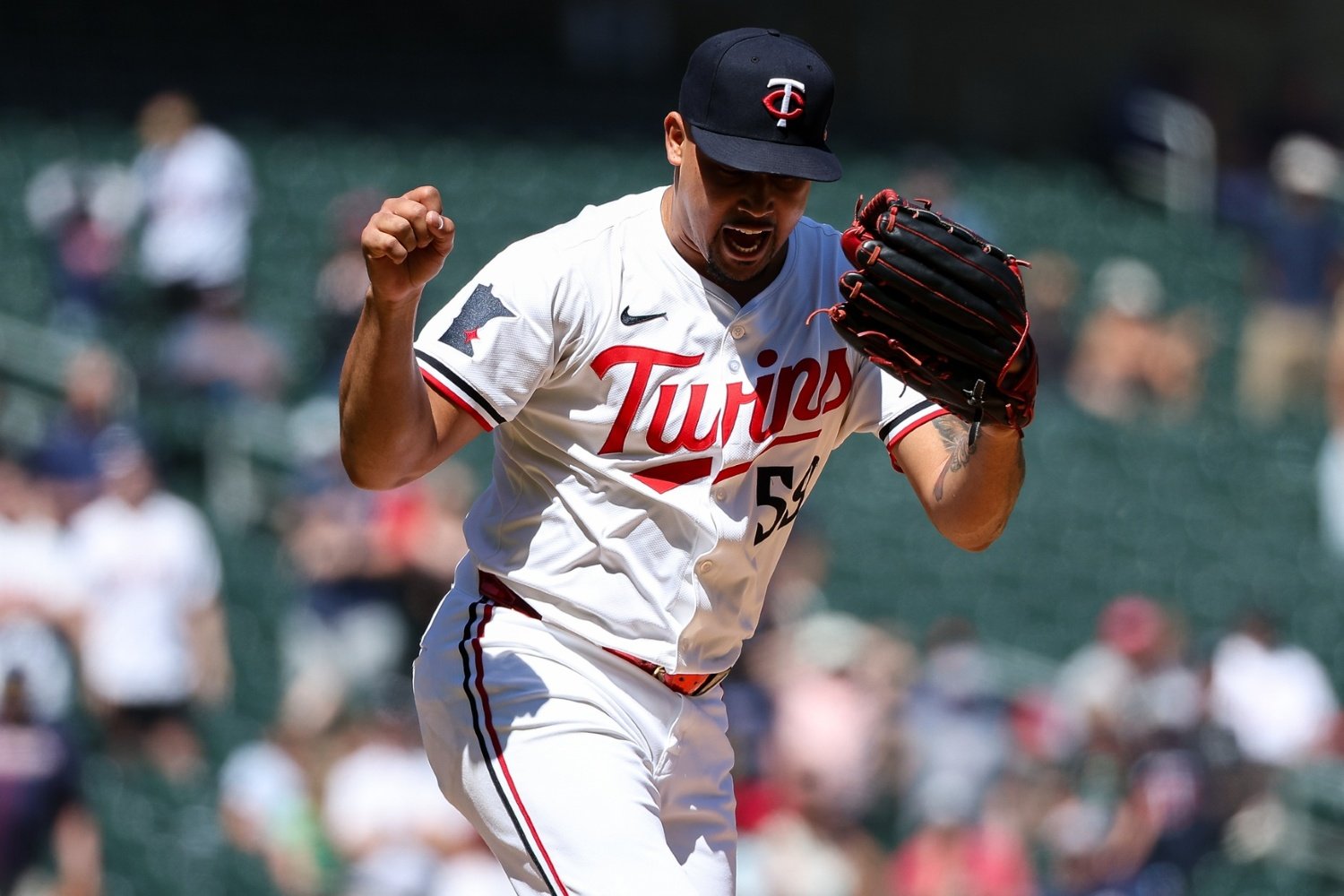 An interesting thing happened in Sunday’s game against the Red Sox. Jhoan Duran came into the game for a save opportunity with a one-run lead on the line. He threw nine pitches, closed out the game, and didn’t throw a single four-seam fastball. What should we make of this, and what does it tell us about his evolution? Over the past couple of years, there’s been a lot of hand-wringing surrounding Jhoan Duran’s decreased velocity. Despite this, he’s found ways to be an elite pitcher. But how has he compensated for throwing just 100 miles per hour? Has the burly hurler become more of a pitcher and less of a thrower? I’d buy that. Has he become a (gasp) soft-tossing, crafty junkballer? Ok, ok, no, that’s a bridge too far. Clearly, though, he’s made some real changes to his approach on the mound. And it’s working! Let’s talk results. So far in 2025, Duran has the lowest barrel rate, batting average, and slugging percentage, and the best launch angle sweet spot and whiff rates of his career. Further, Duran has not allowed a pulled batted ball in the air (you know, those pesky shots that have a chance to go yard). Not one! Is that good? That seems good. I hear you yelling at the screen, “But how! How has he done this!?” I get it. You are tired of the exposition. Fine. Let’s dig in. There are three major tweaks to Duran’s game over the past 180 games or so, which come into sharp focus so far in 2025: the shape of his fastball, the addition of the sweeper, and the overall change in his pitch mix. These changes have led to the development of a true, four-pitch arsenal that would make the best starters in baseball blush with all that movement. The Shape of His Fastball The average fan might look at a guy who throws well over 100 on his heater and assume that his four-seamer is his best pitch. For Duran, it’s not. It’s probably his third- or even fourth-best pitch. While it has 100th percentile velocity, it has much less spin than an average fastball. The saving grace is that it moves more than average. Under the right circumstances (throwing 104 miles per hour), this can make it harder for hitters to square up, and can produce some gaudy strikeout numbers. In 2023, hitters put up a 103 wRC+ against the pitch. With decreased velocity as well as pitch predictability, however, this has led to his fastball being easier to spot and track, and in the past, hitters have done some damage against the pitch. In 2024, Duran allowed a wRC+ of 135. It was clear that it could no longer be the primary pitch for him. Duran has made some adjustments that have helped the pitch be a bit more effective at reducing hard contact in the air. In 2023, Duran’s arm slot came in at 39 degrees. Last season, he dropped his slot to 34 degrees, getting just slightly closer to a sidearm angle. The result of this change was to reduce his heater’s vertical movement (and resulting whiffs), but also to increase the amount of horizontal run (and weak contact). In 2025, there have been no further changes to Duran’s arm slot. However, he has found a way to coax an extra inch or so of horizontal run, further weakening the quality of contact hitters can make. Thus far, hitters have been held to a paltry 25 wRC+ on the heater. The Addition of the Sweeper This one is potentially huge, as a good sweeper, thrown by a good righty, is absolute death to same-sided hitters. In 2024, against righties, Duran’s pitch mix was a roughly even split of four-seamers, splinkers, and big curves. This worked out… ok, as he put up a .719 OPS against the weaker platoon side. Basically, in the aggregate, righties collectively produced average corner outfielder results against him. They didn't bash him, but nor did he dominate them. In 2025, though? Righties are producing to the tune of just a .614 OPS. That’s what you might expect from, say, a backup catcher. While he hasn’t thrown the sweeper a ton—just 5% of his pitches so far this season—he has gotten tremendous results, with a ridiculous 60% whiff rate on the pitch. That tells us that hitters really aren’t expecting it, or its full 12 inches of break to the glove side. Duran does a nice job of pitch tunneling and release point matching, and all of his pitches look almost identical at first. The curve and the sweeper have similar velocity, but move completely differently at the end, and the same is true of his heater and his splinker. So, even if hitters are discerning enough to gather that an incoming pitch isn’t a four-seamer or splinker based on velocity, they are probably expecting the curve, since he throws it so much more frequently—and thus, they are fooled by the sweeper. Since this is a newer pitch for him, what remains to be seen is whether he will start to throw it more to righties, and if so, will they guess correctly more often? Even if he keeps it an infrequent weapon, it sure looks as though it’ll help him get outs against righties. The Change in His Pitch Mix This is also sort of a big deal. When Duran debuted in 2022, he was throwing his heater nearly 50% of the time; the splinker accounted for 16%; and the rest of the arsenal was his curve. Fast-forward to 2025, and you see a mix that looks like this. Interestingly, his splinker has gone from 16% usage all the way to 38%. By decreasing his heater percentage, Duran is better able to keep hitters guessing. With the addition of a fourth pitch (at least to righties), he is able to prevent hitters from sitting fastball, which makes them ever more defensive. And, his splinker and curve are coaxing hitters to beat the ball into the ground: both pitches have a negative average launch angle on the season. Against lefties, Duran has always had a strong complement of weapons. This season, he’s allowing a minuscule .252 OPS against them. That’s probably not sustainable. But, an OPS against in the high .500s probably is. With the sweeper, Duran can now strive to do the same against righties. Honestly, if there’s one flaw in Duran’s game at this point, it’s that he’s walking too many guys. Part of this can be attributed to an increased reliance on pitches designed to live in the shadow of the zone, or to start near the black and move into chase space, coaxing whiffs out of the zone. He’s walking guys with the splinker at roughly double his career rate. That could just be the still-small sample, or it could be that hitters are being more patient with that pitch, knowing they can’t do much against it. Could he be tipping it slightly? The curious part is that his zone rate is statistically similar to every other year of his career. If he can decrease his walk rate even a bit toward his career norms, Duran will once again be one of the best handful of pitchers in the world, even while throwing "just" 101. We are watching an evolution happening in real time. Should Duran lose a little more velocity but continue tinkering as a pitcher, there’s no reason to think he can’t be elite for at least the next handful of years. This is a great development, and one that is sure to help the Twins bullpen weather the challenges typical of a 162-game season. Kudos to Duran and the Twins coaching staff for finding ways to continue to improve.
 -
Image courtesy of © Matt Krohn-Imagn Images An interesting thing happened in Sunday’s game against the Red Sox. Jhoan Duran came into the game for a save opportunity with a one-run lead on the line. He threw nine pitches, closed out the game, and didn’t throw a single four-seam fastball. What should we make of this, and what does it tell us about his evolution? Over the past couple of years, there’s been a lot of hand-wringing surrounding Jhoan Duran’s decreased velocity. Despite this, he’s found ways to be an elite pitcher. But how has he compensated for throwing just 100 miles per hour? Has the burly hurler become more of a pitcher and less of a thrower? I’d buy that. Has he become a (gasp) soft-tossing, crafty junkballer? Ok, ok, no, that’s a bridge too far. Clearly, though, he’s made some real changes to his approach on the mound. And it’s working! Let’s talk results. So far in 2025, Duran has the lowest barrel rate, batting average, and slugging percentage, and the best launch angle sweet spot and whiff rates of his career. Further, Duran has not allowed a pulled batted ball in the air (you know, those pesky shots that have a chance to go yard). Not one! Is that good? That seems good. I hear you yelling at the screen, “But how! How has he done this!?” I get it. You are tired of the exposition. Fine. Let’s dig in. There are three major tweaks to Duran’s game over the past 180 games or so, which come into sharp focus so far in 2025: the shape of his fastball, the addition of the sweeper, and the overall change in his pitch mix. These changes have led to the development of a true, four-pitch arsenal that would make the best starters in baseball blush with all that movement. The Shape of His Fastball The average fan might look at a guy who throws well over 100 on his heater and assume that his four-seamer is his best pitch. For Duran, it’s not. It’s probably his third- or even fourth-best pitch. While it has 100th percentile velocity, it has much less spin than an average fastball. The saving grace is that it moves more than average. Under the right circumstances (throwing 104 miles per hour), this can make it harder for hitters to square up, and can produce some gaudy strikeout numbers. In 2023, hitters put up a 103 wRC+ against the pitch. With decreased velocity as well as pitch predictability, however, this has led to his fastball being easier to spot and track, and in the past, hitters have done some damage against the pitch. In 2024, Duran allowed a wRC+ of 135. It was clear that it could no longer be the primary pitch for him. Duran has made some adjustments that have helped the pitch be a bit more effective at reducing hard contact in the air. In 2023, Duran’s arm slot came in at 39 degrees. Last season, he dropped his slot to 34 degrees, getting just slightly closer to a sidearm angle. The result of this change was to reduce his heater’s vertical movement (and resulting whiffs), but also to increase the amount of horizontal run (and weak contact). In 2025, there have been no further changes to Duran’s arm slot. However, he has found a way to coax an extra inch or so of horizontal run, further weakening the quality of contact hitters can make. Thus far, hitters have been held to a paltry 25 wRC+ on the heater. The Addition of the Sweeper This one is potentially huge, as a good sweeper, thrown by a good righty, is absolute death to same-sided hitters. In 2024, against righties, Duran’s pitch mix was a roughly even split of four-seamers, splinkers, and big curves. This worked out… ok, as he put up a .719 OPS against the weaker platoon side. Basically, in the aggregate, righties collectively produced average corner outfielder results against him. They didn't bash him, but nor did he dominate them. In 2025, though? Righties are producing to the tune of just a .614 OPS. That’s what you might expect from, say, a backup catcher. While he hasn’t thrown the sweeper a ton—just 5% of his pitches so far this season—he has gotten tremendous results, with a ridiculous 60% whiff rate on the pitch. That tells us that hitters really aren’t expecting it, or its full 12 inches of break to the glove side. Duran does a nice job of pitch tunneling and release point matching, and all of his pitches look almost identical at first. The curve and the sweeper have similar velocity, but move completely differently at the end, and the same is true of his heater and his splinker. So, even if hitters are discerning enough to gather that an incoming pitch isn’t a four-seamer or splinker based on velocity, they are probably expecting the curve, since he throws it so much more frequently—and thus, they are fooled by the sweeper. Since this is a newer pitch for him, what remains to be seen is whether he will start to throw it more to righties, and if so, will they guess correctly more often? Even if he keeps it an infrequent weapon, it sure looks as though it’ll help him get outs against righties. The Change in His Pitch Mix This is also sort of a big deal. When Duran debuted in 2022, he was throwing his heater nearly 50% of the time; the splinker accounted for 16%; and the rest of the arsenal was his curve. Fast-forward to 2025, and you see a mix that looks like this. Interestingly, his splinker has gone from 16% usage all the way to 38%. By decreasing his heater percentage, Duran is better able to keep hitters guessing. With the addition of a fourth pitch (at least to righties), he is able to prevent hitters from sitting fastball, which makes them ever more defensive. And, his splinker and curve are coaxing hitters to beat the ball into the ground: both pitches have a negative average launch angle on the season. Against lefties, Duran has always had a strong complement of weapons. This season, he’s allowing a minuscule .252 OPS against them. That’s probably not sustainable. But, an OPS against in the high .500s probably is. With the sweeper, Duran can now strive to do the same against righties. Honestly, if there’s one flaw in Duran’s game at this point, it’s that he’s walking too many guys. Part of this can be attributed to an increased reliance on pitches designed to live in the shadow of the zone, or to start near the black and move into chase space, coaxing whiffs out of the zone. He’s walking guys with the splinker at roughly double his career rate. That could just be the still-small sample, or it could be that hitters are being more patient with that pitch, knowing they can’t do much against it. Could he be tipping it slightly? The curious part is that his zone rate is statistically similar to every other year of his career. If he can decrease his walk rate even a bit toward his career norms, Duran will once again be one of the best handful of pitchers in the world, even while throwing "just" 101. We are watching an evolution happening in real time. Should Duran lose a little more velocity but continue tinkering as a pitcher, there’s no reason to think he can’t be elite for at least the next handful of years. This is a great development, and one that is sure to help the Twins bullpen weather the challenges typical of a 162-game season. Kudos to Duran and the Twins coaching staff for finding ways to continue to improve. View full article
-
Image courtesy of © Jim Krajewski/RGJ / USA TODAY NETWORK via Imagn Images There have been many impressive performances over the first four or five weeks of the season. Honestly, it was a little tough celebrating just five guys. So, I didn't. I picked six. We'll start with an honorable mention, as we work toward the most impressive start to the minor-league season. Honorable mention: Anthony Prato - 2 HR, 1 2B, 6 RBI, 6R, 4 SB, .333/.429/.500, 11:4 K:BB Anthony Prato is more of an organizational depth guy than someone who factors into the Twins' future plans, spending his third season at Triple-A St. Paul. He put up great results in 2023. No call-up. Last season was more moderate production, but still solid, and no call-up. Despite the Twins needing infielders so desperately that they currently have Mickey Gasper, Kole Clemens and Jonah Bride on the 26-man roster, Prato still hasn’t received the call. He can play short, second, and third, and for the first month of the season, has been outproducing anyone’s expectations. Will it result in a call-up? Probably not. Hopefully, he’s able to at least get a cup of coffee at some point; he has certainly been an organizational soldier. 5): Ryan Fitzgerald - 2 HR, 6 2B, 14 RBI, 13 R, 2 SB, .316/.439/.494, 17:15 K:BB Ok. He’s old. Like, too old to be a prospect. Like, he’s at an age where he should be hitting big-league free agency. He’s in his fifth season at the Triple-A level, and with his third affiliated organization, following years in the Red Sox system and a single year in Omaha, with the Royals' Triple-A affiliate. At 31 years old, he’s not much more than a break-glass-in-case-of-emergency option for the Twins, and is more likely to be organizational depth. But, he plays shortstop, and the Twins are famously thin at the position. Could he make the Twins this season? Absolutely. He almost has to be called up in the event of an injury to Carlos Correa, or if Brooks Lee were to struggle for an extended stretch. 4) Nate Baez - 1 HR, 3 2B, 8 RBI, 12 R, 1 SB, .341/.463/.477, 6:7 K:BB Hey, a catcher! The Twins are gonna need some of these over the next couple of seasons. And, you know, always. Nate Baez is another hitter who’s old for his level. Repeating High A in his age-24 season, Baez catches, and can field both first and second. He was drafted in the 12th round of the 2022 MLB Draft out of Arizona, and suffered a hamate injury that limited him immensely in 2023. Now, I said he’s a catcher, and he is. But it’s in the same way that Mickey Gasper is a catcher. So, adjust your expectations accordingly. He’s been on fire in the early going, so it makes sense to keep an eye on him to see if he can keep it up. 3) Jay Thomason - 6 HR, 3 2B, 9 RBI, 15 R, 5 SB, .213/.422/.557, 20:19 K:BB One of the best things about writing about the Twins is that there’s always something new to learn. For me, this week, it was learning about Jay Thomason, whom I was admittedly unfamiliar with due to his low draft status and lack of pedigree. He was the Twins’ 17th-round pick in 2024, out of the Air Force Academy, and Thomason is almost two years older than average for Low-A players. But, through the first 21 games of his first full season, he’s been turning heads. With a 20:19 strikeout-to-walk ratio, Thomason is putting up a .979 OPS despite hitting just .213. He has launched six home runs and added three doubles on just 13 hits, and splits time evenly between first, second, and third bases. While he doesn’t appear on any organizational top prospect lists, he is the sort of guy who could rise through the system quickly if his early season performance is for real. 2) Kyler Fedko - 5 HR, 4 2B, 12 RBI, 16 R, 1 SB, .311/.440/.623, 17:14 K:BB Yeah, he’s old for Double-A, at 25. (This note about age is becoming a pattern.) No, he’s not on any top prospect lists. Sure, his OPS is a full .300 points higher in the early going of the 2025 season than any of his four prior years. You know what, though? It doesn’t matter. Through the first month of the season, he has been on one. He’s walked almost as much as he’s struck out, and has shown some pop by hitting four homers in 15 games. Drafted in the 12th round of the 2021 Draft, he projects as someone who may or may not get a cup of coffee… unless he keeps this up. Could he? Maybe. Will he? Who knows. Either way, he’s making opposing pitchers look silly, and making a bit of a name for himself. And the Twins Daily Minor League Hitter of the Month for March and April is: 1) Carson McCusker - 7 HR, 6 2B, 23 RBI, 17 R, .325/.398/.651, 29:8 K:BB So, McCusker technically has a lower OPS than Fedko, but I don’t care. I’m rating him higher, based on likely upside and proximity to the majors. The Twins have a bit of a knack for finding players other organizations miss out on. Whether it’s their late-round tall college pitchers from unheralded schools (like Bailey Ober) or guys making things happen in indy ball (like Payton Eeles and McCusker), the provenance matters less than what the players do with their opportunity. So what has McCusker done to warrant inclusion on this list? Only punish baseballs like they personally offended him. Through the first month and change of the season, McCusker has shown that he might be the next man up when the Twins need another slugging outfielder. In his age-27 season, he’s not quite a prospect, but he’s roughly level with the average Triple-A hitter. He has real power, and if not for his propensity to strike out at a Joey Gallo clip, fans might be a bit more excited about him. As it stands, he’s exactly the sort of player who may just need an opportunity with some extended runway, and he could carve out a nice big-league career as a corner outfielder. Brent Rooker, anyone? So there you have it. Congrats to this slew of hitters who have had a great month at the plate. Will any of them show up on the list again next month? Stay tuned! View full article
-
Twins Minor League Hitter of the Month: March/April 2025
Eric Blonigen posted an article in Minor Leagues
 There have been many impressive performances over the first four or five weeks of the season. Honestly, it was a little tough celebrating just five guys. So, I didn't. I picked six. We'll start with an honorable mention, as we work toward the most impressive start to the minor-league season. Honorable mention: Anthony Prato - 2 HR, 1 2B, 6 RBI, 6R, 4 SB, .333/.429/.500, 11:4 K:BB Anthony Prato is more of an organizational depth guy than someone who factors into the Twins' future plans, spending his third season at Triple-A St. Paul. He put up great results in 2023. No call-up. Last season was more moderate production, but still solid, and no call-up. Despite the Twins needing infielders so desperately that they currently have Mickey Gasper, Kole Clemens and Jonah Bride on the 26-man roster, Prato still hasn’t received the call. He can play short, second, and third, and for the first month of the season, has been outproducing anyone’s expectations. Will it result in a call-up? Probably not. Hopefully, he’s able to at least get a cup of coffee at some point; he has certainly been an organizational soldier. 5): Ryan Fitzgerald - 2 HR, 6 2B, 14 RBI, 13 R, 2 SB, .316/.439/.494, 17:15 K:BB Ok. He’s old. Like, too old to be a prospect. Like, he’s at an age where he should be hitting big-league free agency. He’s in his fifth season at the Triple-A level, and with his third affiliated organization, following years in the Red Sox system and a single year in Omaha, with the Royals' Triple-A affiliate. At 31 years old, he’s not much more than a break-glass-in-case-of-emergency option for the Twins, and is more likely to be organizational depth. But, he plays shortstop, and the Twins are famously thin at the position. Could he make the Twins this season? Absolutely. He almost has to be called up in the event of an injury to Carlos Correa, or if Brooks Lee were to struggle for an extended stretch. 4) Nate Baez - 1 HR, 3 2B, 8 RBI, 12 R, 1 SB, .341/.463/.477, 6:7 K:BB Hey, a catcher! The Twins are gonna need some of these over the next couple of seasons. And, you know, always. Nate Baez is another hitter who’s old for his level. Repeating High A in his age-24 season, Baez catches, and can field both first and second. He was drafted in the 12th round of the 2022 MLB Draft out of Arizona, and suffered a hamate injury that limited him immensely in 2023. Now, I said he’s a catcher, and he is. But it’s in the same way that Mickey Gasper is a catcher. So, adjust your expectations accordingly. He’s been on fire in the early going, so it makes sense to keep an eye on him to see if he can keep it up. 3) Jay Thomason - 6 HR, 3 2B, 9 RBI, 15 R, 5 SB, .213/.422/.557, 20:19 K:BB One of the best things about writing about the Twins is that there’s always something new to learn. For me, this week, it was learning about Jay Thomason, whom I was admittedly unfamiliar with due to his low draft status and lack of pedigree. He was the Twins’ 17th-round pick in 2024, out of the Air Force Academy, and Thomason is almost two years older than average for Low-A players. But, through the first 21 games of his first full season, he’s been turning heads. With a 20:19 strikeout-to-walk ratio, Thomason is putting up a .979 OPS despite hitting just .213. He has launched six home runs and added three doubles on just 13 hits, and splits time evenly between first, second, and third bases. While he doesn’t appear on any organizational top prospect lists, he is the sort of guy who could rise through the system quickly if his early season performance is for real. 2) Kyler Fedko - 5 HR, 4 2B, 12 RBI, 16 R, 1 SB, .311/.440/.623, 17:14 K:BB Yeah, he’s old for Double-A, at 25. (This note about age is becoming a pattern.) No, he’s not on any top prospect lists. Sure, his OPS is a full .300 points higher in the early going of the 2025 season than any of his four prior years. You know what, though? It doesn’t matter. Through the first month of the season, he has been on one. He’s walked almost as much as he’s struck out, and has shown some pop by hitting four homers in 15 games. Drafted in the 12th round of the 2021 Draft, he projects as someone who may or may not get a cup of coffee… unless he keeps this up. Could he? Maybe. Will he? Who knows. Either way, he’s making opposing pitchers look silly, and making a bit of a name for himself. And the Twins Daily Minor League Hitter of the Month for March and April is: 1) Carson McCusker - 7 HR, 6 2B, 23 RBI, 17 R, .325/.398/.651, 29:8 K:BB So, McCusker technically has a lower OPS than Fedko, but I don’t care. I’m rating him higher, based on likely upside and proximity to the majors. The Twins have a bit of a knack for finding players other organizations miss out on. Whether it’s their late-round tall college pitchers from unheralded schools (like Bailey Ober) or guys making things happen in indy ball (like Payton Eeles and McCusker), the provenance matters less than what the players do with their opportunity. So what has McCusker done to warrant inclusion on this list? Only punish baseballs like they personally offended him. Through the first month and change of the season, McCusker has shown that he might be the next man up when the Twins need another slugging outfielder. In his age-27 season, he’s not quite a prospect, but he’s roughly level with the average Triple-A hitter. He has real power, and if not for his propensity to strike out at a Joey Gallo clip, fans might be a bit more excited about him. As it stands, he’s exactly the sort of player who may just need an opportunity with some extended runway, and he could carve out a nice big-league career as a corner outfielder. Brent Rooker, anyone? So there you have it. Congrats to this slew of hitters who have had a great month at the plate. Will any of them show up on the list again next month? Stay tuned!
- 8 comments
-
- 3
-
-
- carson mccusker
- ryan fitzgerald
- (and 4 more)
-
It’s still early, but man, it’s getting late. Through their first 25 games, the 2025 Minnesota Twins were sitting on a rough 9-16 record. What’s the historical precedent for teams with similar records making the playoffs? Image courtesy of © John Rieger-Imagn Images It’s still early, but man, it’s getting late. Through their first 25 games, the 2025 Minnesota Twins were sitting on a rough 9-16 record. What’s the historical precedent for teams with similar records making the playoffs? A few days ago, Twins Daily’s Matthew Lenz set the tone that the Twins were entering a do-or-die homestand against the White Sox and Angels. Five games (and four wins) later, one thing is clear: the Twins still face very long odds of making the playoffs. Over the course of the Wild Card era (dating back to 1995), just four teams with the same record as the Twins or worse through 25 games made it to the postseason. So, who were these four teams? What can we learn from them? And do the Twins stand a chance at making it five times in 30 years that a team who gets off to a rough start can right the ship and make it to October baseball? Let’s dig in. The Division Winners Funnily enough, the 2006 Twins were one of the four historical comps, starting with the same 9-16 record as the 2025 Twins. You might remember them. Peak Johan Santana, rookie Francisco Liriano, the shambling remains of Brad Radke, and the ascendant Justin Morneau, Joe Mauer, and Joe Nathan, not to mention the entire school of piranhas. Now, this is an interesting comp, because there are some similarities to the 2025 Twins team. The 2006 squad started slow, but was bolstered by youth: Liriano’s promotion in May; Pat Neshek was called up in June, and gave the team another late-inning arm out of the pen; and midway through the season, Nick Punto and Jason Bartlett replaced Juan Castro and Tony Batista. Offseason signing Dennys Reyes impressed, and vastly outperformed expectations. The youth movement perfectly intersected the peaks of some talented veterans, and for much of the year, the 2006 Twins looked like a team of destiny. Santana won the pitcher’s Triple Crown. Morneau was MVP. Liriano finished third in Rookie of the Year balloting. Mauer, Santana, and Nathan all received MVP votes as well. Alas, things didn’t quite work out after Liriano’s devastating arm injury, but this team shows what’s possible when hope is alive, things break right, and there’s talent on the farm. Also starting 9-16 was the 2015 Texas Rangers team. This was a classic worst-to-first fairytale season, the likes of which have led to World Series rings for a Twins team of yore. They finished with 88 wins, off the backs of old friends Joey Gallo, Chris Gimenez, Chi Chi Gonzalez, and Sam Dyson. Oh, and actually good players like Adrian Beltre, Mike Napoli, Prince Fielder, Shin-Soo Choo, and Josh Hamilton. They had four different players who received major awards votes, with Beltre and Fielder getting MVP votes, Shawn Tolleson getting down-ballot Cy Young votes, and Delino DeShields in the running for Rookie of the Year. At the deadline, the Rangers swung big and traded for Cole Hamels and Jake Diekman, and both helped them down the stretch. This team featured several players who had underperformed the year before taking significant steps forward, savvy trade additions, and clutch play down the stretch. They won the division on the final day of the season. You might be saying to yourself “there’s no way any team worse than the 2025 Twins made the playoffs”. You would be incorrect. Just last season, the Houston Astros started 7-18 before defeating mediocrity to obtain yet another division crown. The 2024 Astros team was loaded with talent, featuring Jose Altuve, Alex Bregman, Kyle Tucker, Yordan Alvarez, Framber Valdez, Hunter Brown, and Ronel Blanco. They began the season pretty injured, missing pitching mainstays Justin Verlander, Kendall Graveman, and Lance McCullers. They did get healthier as the season progressed, and also played to their actual talent level for the final three quarters of the season. This team featured a cycle, a no-hitter, and a Silver Slugger award. Ultimately, this was a case of a good-not-great team making a strong trade deadline push, acquiring the help they needed to shore up their weaknesses in Yusei Kikuchi, and reliever Jake Ferguson, and getting high-end production from those receiving awards votes: Valdez, Alvarez, Kikuchi, and Altuve. The Wild Card Team There’s just one example of a team starting poorly and making the playoffs, despite not being the best team in their division. Here’s the wild part. After going 7-18 through the first 25 games, the 2001 Oakland Athletics went 95-42 the rest of the way, en route to a 102-win season. You might remember this team as well, as the book (and movie) Moneyball began with the impetus for the A's to replace Johnny Damon, Jason Giambi, and Jason Isringhausen after all became free agents after the 2001 season. This team was loaded, though, as it also featured Miguel Tejada, Jermaine Dye, Barry Zito, Tim Hudson, and Mark Mulder. They played better than .750 ball for the second half of the season, and by all rights should have been division winners had it not been for the record-setting Seattle Mariners, who won 116 games. Giambi won a Silver Slugger and came in second in MVP voting. Mulder and Hudson both finished in the top-6 of Cy Young voting in their first full season with the A's. Takeaways Now, having just four examples in 30 years of a team off to a rough start making the playoffs is not ideal. But, four is not zero. I’m not going to tell you that hope is dead; it’s not — baseball fandom is about hope. But, the head of the needle the Twins need to thread is shrinking, and rapidly. What will the Twins need to have a realistic chance? There are a few key pieces that are true for all of the above teams. First, they were pretty loaded with talent at the top of their roster, guys who can carry a team for stretches and when at their best, get award votes. The 2025 Twins have the potential to check this box. Second, they all made savvy additions that bolstered the club. For the offseason signings, the Twins have checked this box, but in a low-wattage, minimum viable product sort of way. Will they continue to do so heading into the trade deadline? Will they actually part with some pitching depth in favor of a big bat to pair with Byron Buxton, Carlos Correa, Royce Lewis, and Matt Wallner? That remains to be seen, but will probably be required should the Twins look like contenders on, say, June 15th. Third, they all had the ability to supplement their roster with talented additions from the farm. For the 2025 Twins, they have some top-tier talent capable of energizing the team in guys like Luke Keaschall (now injured), Zebby Matthews, Emmanuel Rodriguez, and David Festa. The building blocks are there for the Twins to become the fifth team in 30 years to play to their potential, hit their stride, and prove the doubters wrong. But can they execute? And maybe even more importantly, can they get healthy? Weigh in below. View full article
-
Before the Calendar Turns to May, are the Twins’ Playoff Hopes Dead?
Eric Blonigen posted an article in Twins
 A few days ago, Twins Daily’s Matthew Lenz set the tone that the Twins were entering a do-or-die homestand against the White Sox and Angels. Five games (and four wins) later, one thing is clear: the Twins still face very long odds of making the playoffs. Over the course of the Wild Card era (dating back to 1995), just four teams with the same record as the Twins or worse through 25 games made it to the postseason. So, who were these four teams? What can we learn from them? And do the Twins stand a chance at making it five times in 30 years that a team who gets off to a rough start can right the ship and make it to October baseball? Let’s dig in. The Division Winners Funnily enough, the 2006 Twins were one of the four historical comps, starting with the same 9-16 record as the 2025 Twins. You might remember them. Peak Johan Santana, rookie Francisco Liriano, the shambling remains of Brad Radke, and the ascendant Justin Morneau, Joe Mauer, and Joe Nathan, not to mention the entire school of piranhas. Now, this is an interesting comp, because there are some similarities to the 2025 Twins team. The 2006 squad started slow, but was bolstered by youth: Liriano’s promotion in May; Pat Neshek was called up in June, and gave the team another late-inning arm out of the pen; and midway through the season, Nick Punto and Jason Bartlett replaced Juan Castro and Tony Batista. Offseason signing Dennys Reyes impressed, and vastly outperformed expectations. The youth movement perfectly intersected the peaks of some talented veterans, and for much of the year, the 2006 Twins looked like a team of destiny. Santana won the pitcher’s Triple Crown. Morneau was MVP. Liriano finished third in Rookie of the Year balloting. Mauer, Santana, and Nathan all received MVP votes as well. Alas, things didn’t quite work out after Liriano’s devastating arm injury, but this team shows what’s possible when hope is alive, things break right, and there’s talent on the farm. Also starting 9-16 was the 2015 Texas Rangers team. This was a classic worst-to-first fairytale season, the likes of which have led to World Series rings for a Twins team of yore. They finished with 88 wins, off the backs of old friends Joey Gallo, Chris Gimenez, Chi Chi Gonzalez, and Sam Dyson. Oh, and actually good players like Adrian Beltre, Mike Napoli, Prince Fielder, Shin-Soo Choo, and Josh Hamilton. They had four different players who received major awards votes, with Beltre and Fielder getting MVP votes, Shawn Tolleson getting down-ballot Cy Young votes, and Delino DeShields in the running for Rookie of the Year. At the deadline, the Rangers swung big and traded for Cole Hamels and Jake Diekman, and both helped them down the stretch. This team featured several players who had underperformed the year before taking significant steps forward, savvy trade additions, and clutch play down the stretch. They won the division on the final day of the season. You might be saying to yourself “there’s no way any team worse than the 2025 Twins made the playoffs”. You would be incorrect. Just last season, the Houston Astros started 7-18 before defeating mediocrity to obtain yet another division crown. The 2024 Astros team was loaded with talent, featuring Jose Altuve, Alex Bregman, Kyle Tucker, Yordan Alvarez, Framber Valdez, Hunter Brown, and Ronel Blanco. They began the season pretty injured, missing pitching mainstays Justin Verlander, Kendall Graveman, and Lance McCullers. They did get healthier as the season progressed, and also played to their actual talent level for the final three quarters of the season. This team featured a cycle, a no-hitter, and a Silver Slugger award. Ultimately, this was a case of a good-not-great team making a strong trade deadline push, acquiring the help they needed to shore up their weaknesses in Yusei Kikuchi, and reliever Jake Ferguson, and getting high-end production from those receiving awards votes: Valdez, Alvarez, Kikuchi, and Altuve. The Wild Card Team There’s just one example of a team starting poorly and making the playoffs, despite not being the best team in their division. Here’s the wild part. After going 7-18 through the first 25 games, the 2001 Oakland Athletics went 95-42 the rest of the way, en route to a 102-win season. You might remember this team as well, as the book (and movie) Moneyball began with the impetus for the A's to replace Johnny Damon, Jason Giambi, and Jason Isringhausen after all became free agents after the 2001 season. This team was loaded, though, as it also featured Miguel Tejada, Jermaine Dye, Barry Zito, Tim Hudson, and Mark Mulder. They played better than .750 ball for the second half of the season, and by all rights should have been division winners had it not been for the record-setting Seattle Mariners, who won 116 games. Giambi won a Silver Slugger and came in second in MVP voting. Mulder and Hudson both finished in the top-6 of Cy Young voting in their first full season with the A's. Takeaways Now, having just four examples in 30 years of a team off to a rough start making the playoffs is not ideal. But, four is not zero. I’m not going to tell you that hope is dead; it’s not — baseball fandom is about hope. But, the head of the needle the Twins need to thread is shrinking, and rapidly. What will the Twins need to have a realistic chance? There are a few key pieces that are true for all of the above teams. First, they were pretty loaded with talent at the top of their roster, guys who can carry a team for stretches and when at their best, get award votes. The 2025 Twins have the potential to check this box. Second, they all made savvy additions that bolstered the club. For the offseason signings, the Twins have checked this box, but in a low-wattage, minimum viable product sort of way. Will they continue to do so heading into the trade deadline? Will they actually part with some pitching depth in favor of a big bat to pair with Byron Buxton, Carlos Correa, Royce Lewis, and Matt Wallner? That remains to be seen, but will probably be required should the Twins look like contenders on, say, June 15th. Third, they all had the ability to supplement their roster with talented additions from the farm. For the 2025 Twins, they have some top-tier talent capable of energizing the team in guys like Luke Keaschall (now injured), Zebby Matthews, Emmanuel Rodriguez, and David Festa. The building blocks are there for the Twins to become the fifth team in 30 years to play to their potential, hit their stride, and prove the doubters wrong. But can they execute? And maybe even more importantly, can they get healthy? Weigh in below.
- 18 comments
-
- 4
-
-
- byron buxton
- matt wallner
- (and 5 more)
-
Sure, Witt plays in Kauffman and Lewis plays at Target Field. Good point!
-
 I gotta be honest with you all: I didn’t think it was even allowed for the snakebitten 2025 Twins to get multiple pieces of good news in the same week. But, here we are; it happened. And you know what? I’ll take it. Over the past few days, hope and excitement around Royce Lewis, erstwhile top prospect and current oft-injured superstar-in-waiting, has grown. The first real sign that his return may be imminent came before the Tuesday night game against the White Sox, when Lewis was spotted doing sprints. Then during the game broadcast, Audra Martin hinted that Lewis could begin a rehab assignment soon. Early Wednesday, we learned that Lewis had run the bases for the third consecutive day and reported no discomfort or limitations. The inclusion of sliding is usually the last box that needs to be checked before a rehab assignment can begin, Lewis said. Then, in the Wednesday pregame interviews, Lewis himself shared some thoughts, and the often-overconfident slugger demonstrated a more measured, realistic view of his path ahead. Among other things, he shared: “I’m just trying to get to, you know, a point where I’m being myself out there. I’m never thinking about, like, 'Oh, I’m just going to go slower,' unless they tell me to." He added: “I do know that everyone’s got my best interests in mind, and they’re thinking about the long term, not just the short term.” When might he be back with the Twins? So, gaming this out a bit, based on Matthew Leach’s reporting, we might assume that Lewis begins a rehab assignment as early as this Friday. These assignments can be up to 20 days for hitters, but the goal is usually to personalize this length depending on what a player’s situation is. In Lewis’s case, he’s been on the shelf since mid-March, so it’s probably safe to assume that he will need significant reps against live pitching before rejoining the Twins. If all goes well, I could speculate that fans might be eyeing a return by May 5th—maybe even a bit sooner. To be clear, this is not a timeline based on insider info from the Twins' trainers, medical staff, or other team officials. It's just an educated guess. Typically, in a situation like this with a soft-tissue injury, there are some milestones to clear. First, he will probably play a game, then get a day off to test how his body responds. Then, he will need to be able to play in back-to-back games without adverse effects. He will need to have the opportunity to stretch, dive, and sprint. Those hurdles could be cleared in a day, or they could take several. Then, aside from the physical hurdles, there’s also the matter of ensuring his swing is ready, as he didn’t get a full spring ramp-up. To build his confidence and ease him in, it’s possible that he visits multiple different levels. A lot will depend on how he looks as he progresses through his rehab assignment, as well as how coaches have felt his swing looks in the cage and during live batting practice. Here’s where Lewis’s supreme confidence comes to the forefront and instills hope for a speedy return, as he also added in Wednesday’s interview: “I can hit on one leg and still be great. I just trust in my baseball ability, you know. God gave me some great gifts.” So, if Lewis hits a grand slam in his first plate appearance with the Triple-A Saints, well, maybe he will be back sooner than we think. What will the impact be for the rest of the roster? This is a little trickier, because there are a lot of moving pieces. It’s tough to predict who will be healthy—or hitting—a week from now, let alone two or three weeks out. Among infielders, Luke Keaschall has looked like the real deal, putting up an OPS that would make Aaron Judge blush, while stealing bases like Elly De La Cruz. Brooks Lee is part of the future core, even if his entré into the Twins lineup hasn’t quite gone according to plan. Carlos Correa, if healthy, will be playing every day. Ty France is entrenched at first base, and has mostly acquitted himself well there. Willi Castro is going to get his at-bats. Will the new-look infield consist of those guys, plus Lewis? Or will his return lead to a demotion of one of the other young hitters? Perhaps the Twins decide to make Lewis an everyday DH at first, in an attempt to keep him healthy. If so, that might spell trouble for Trevor Larnach once Matt Wallner is back from his own injury. It would also prevent the sort of roster flexibility that’s been a hallmark of Baldelli’s tenure as manager, and Larnach's bat is heating up. Either way, assuming health (never a safe bet with the Twins organization), a roster crunch is likely right around the corner. But, Lewis’s return will certainly elevate a roster that’s struggled to do damage at the plate. Another thing that’s certain is Lewis’s return (and Keaschall’s ascendance) bring a greater meritocracy to the lineup, and will prevent some of the 'tweener hitters like Edouard Julien and Jose Miranda from hoovering up plate appearance that they haven’t (strictly speaking) earned. Julien has picked it up quite a bit at the plate recently, so it's no one's first instinct to demote him, but if enough hamstrings and obliques remain intact, someone will have to be sent down. Like I said at the top, it’s rare for the Twins to legitimately be the beneficiaries of some decent fortune. When this team goes on a five-game winning streak, we will all know that anything is possible and hope is still alive for the 2025 season. What do you think about Lewis’s likely return? Who should be sent down to make room for him? I’d love to hear from you.
- 60 comments
-
- 4
-
-
- royce lewis
- brooks lee
- (and 2 more)
-
Another star coming back? In this economy? Image courtesy of © Chris Tilley-Imagn Images Another star coming back? In this economy? I gotta be honest with you all: I didn’t think it was even allowed for the snakebitten 2025 Twins to get multiple pieces of good news in the same week. But, here we are; it happened. And you know what? I’ll take it. Over the past few days, hope and excitement around Royce Lewis, erstwhile top prospect and current oft-injured superstar-in-waiting, has grown. The first real sign that his return may be imminent came before the Tuesday night game against the White Sox, when Lewis was spotted doing sprints. Then during the game broadcast, Audra Martin hinted that Lewis could begin a rehab assignment soon. Early Wednesday, we learned that Lewis had run the bases for the third consecutive day and reported no discomfort or limitations. The inclusion of sliding is usually the last box that needs to be checked before a rehab assignment can begin, Lewis said. Then, in the Wednesday pregame interviews, Lewis himself shared some thoughts, and the often-overconfident slugger demonstrated a more measured, realistic view of his path ahead. Among other things, he shared: “I’m just trying to get to, you know, a point where I’m being myself out there. I’m never thinking about, like, 'Oh, I’m just going to go slower,' unless they tell me to." He added: “I do know that everyone’s got my best interests in mind, and they’re thinking about the long term, not just the short term.” When might he be back with the Twins? So, gaming this out a bit, based on Matthew Leach’s reporting, we might assume that Lewis begins a rehab assignment as early as this Friday. These assignments can be up to 20 days for hitters, but the goal is usually to personalize this length depending on what a player’s situation is. In Lewis’s case, he’s been on the shelf since mid-March, so it’s probably safe to assume that he will need significant reps against live pitching before rejoining the Twins. If all goes well, I could speculate that fans might be eyeing a return by May 5th—maybe even a bit sooner. To be clear, this is not a timeline based on insider info from the Twins' trainers, medical staff, or other team officials. It's just an educated guess. Typically, in a situation like this with a soft-tissue injury, there are some milestones to clear. First, he will probably play a game, then get a day off to test how his body responds. Then, he will need to be able to play in back-to-back games without adverse effects. He will need to have the opportunity to stretch, dive, and sprint. Those hurdles could be cleared in a day, or they could take several. Then, aside from the physical hurdles, there’s also the matter of ensuring his swing is ready, as he didn’t get a full spring ramp-up. To build his confidence and ease him in, it’s possible that he visits multiple different levels. A lot will depend on how he looks as he progresses through his rehab assignment, as well as how coaches have felt his swing looks in the cage and during live batting practice. Here’s where Lewis’s supreme confidence comes to the forefront and instills hope for a speedy return, as he also added in Wednesday’s interview: “I can hit on one leg and still be great. I just trust in my baseball ability, you know. God gave me some great gifts.” So, if Lewis hits a grand slam in his first plate appearance with the Triple-A Saints, well, maybe he will be back sooner than we think. What will the impact be for the rest of the roster? This is a little trickier, because there are a lot of moving pieces. It’s tough to predict who will be healthy—or hitting—a week from now, let alone two or three weeks out. Among infielders, Luke Keaschall has looked like the real deal, putting up an OPS that would make Aaron Judge blush, while stealing bases like Elly De La Cruz. Brooks Lee is part of the future core, even if his entré into the Twins lineup hasn’t quite gone according to plan. Carlos Correa, if healthy, will be playing every day. Ty France is entrenched at first base, and has mostly acquitted himself well there. Willi Castro is going to get his at-bats. Will the new-look infield consist of those guys, plus Lewis? Or will his return lead to a demotion of one of the other young hitters? Perhaps the Twins decide to make Lewis an everyday DH at first, in an attempt to keep him healthy. If so, that might spell trouble for Trevor Larnach once Matt Wallner is back from his own injury. It would also prevent the sort of roster flexibility that’s been a hallmark of Baldelli’s tenure as manager, and Larnach's bat is heating up. Either way, assuming health (never a safe bet with the Twins organization), a roster crunch is likely right around the corner. But, Lewis’s return will certainly elevate a roster that’s struggled to do damage at the plate. Another thing that’s certain is Lewis’s return (and Keaschall’s ascendance) bring a greater meritocracy to the lineup, and will prevent some of the 'tweener hitters like Edouard Julien and Jose Miranda from hoovering up plate appearance that they haven’t (strictly speaking) earned. Julien has picked it up quite a bit at the plate recently, so it's no one's first instinct to demote him, but if enough hamstrings and obliques remain intact, someone will have to be sent down. Like I said at the top, it’s rare for the Twins to legitimately be the beneficiaries of some decent fortune. When this team goes on a five-game winning streak, we will all know that anything is possible and hope is still alive for the 2025 season. What do you think about Lewis’s likely return? Who should be sent down to make room for him? I’d love to hear from you. View full article

.jpg.faab6c694f107ccc1012c7b9e3dd37bb.jpg)
