



Eric Blonigen
-
Posts
377 -
Joined
-
Last visited
-
Days Won
1
Content Type
Profiles
News
Minnesota Twins Videos
2026 Minnesota Twins Top Prospects Ranking
2022 Minnesota Twins Draft Picks
Minnesota Twins Free Agent & Trade Rumors, Notes, & Tidbits
Guides & Resources
2023 Minnesota Twins Draft Picks
The Minnesota Twins Players Project
2024 Minnesota Twins Draft Picks
2025 Minnesota Twins Draft Pick Tracker
2026 Minnesota Twins Draft Tracker: Picks & Bonuses
Forums
Blogs
Events
Store
Downloads
Gallery
Everything posted by Eric Blonigen
-
 Joe Ryan, when healthy, just might be the Twins' best starting pitcher. Coming off an injury, can he return to that form in 2025, or will this be a lost season for him? Image courtesy of © Brian Bradshaw Sevald-Imagn Images Joe Ryan, when healthy, just might be the Twins' best starting pitcher. Coming off an injury, can he return to that form in 2025, or will this be a lost season for him? On Aug. 7, the Twins were playing the Cubs at Wrigley Field. Coming into the game, the Twins seemed to have the second Wild Card spot all but locked up. Joe Ryan was on the mound. At that point, he was having a great season, accumulating over 3 fWAR with almost two months to play. After he threw his 33rd pitch of the outing, however, he immediately motioned for the trainer to come out to the mound. He was diagnosed with a grade-2 teres major strain, ending his season and (eventually) dashing the Twins’ playoff hopes. When Ryan is healthy, he can look the part of an ace for long stretches. With the Twins' self-inflicted financial limitations preventing them from making a wholehearted effort to complete the roster (or, you know, make any real signings at all), Ryan will need to pitch like the best version of himself for the team to have a real chance to contend in 2025. Is that a realistic expectation, given an injury that cost him two full months? Turns out, I’m not a doctor, and I don’t even play one on TV. So, I did some research to better understand what we, as fans, are in for this season. Finding perfect comparisons proved harder than I expected. A teres major strain isn’t a particularly common injury among pitchers. In fact, just 17 pitchers have suffered documented ones, dating back to 2019, including future Hall of Famers Max Max Scherzer and Justin Verlander. We probably shouldn’t look at them as comps, as they are both hopelessly old—not real-life old, but baseball old, at least. Both were at least a decade older than Ryan is when they suffered their strains. That said, there are a handful of players whom we can, perhaps, glean something from: José Leclerc, Taylor Clarke, Freddy Peralta, and John Schreiber. All were within two years of Ryan’s age at the time of their injury. Let’s look at each. José Leclerc Coming off of a 2019 campaign in which he had a 3.59 FIP and struck out 33.4% of opposing batters, Leclerc hit the IL in the shortened 2020 season. The Rangers closer was shelved for all of August and September. He was 26 at the time, and actually missed all of 2021 due to blowing out his pitching arm, requiring Tommy John surgery. However, once he returned in 2022, he was a very similar pitcher to who he was prior to the injuries. His results were slightly worse, but it’s probably safer to attribute that to his more severe elbow trouble than to the shoulder issue. Taylor Clarke Clarke was a mediocre reliever with the Diamondbacks when he suffered his teres major strain in 2021 at 28 years old, the same age as Ryan. He spent close to two months on the IL. After his return, he wasn’t sharp over the last couple months of the 2021 season, and the Diamondbacks non-tendered him. He latched on with the Kansas City Royals, and in his first full season after returning from injury, his FIP dropped from 3.54 to 3.30. His K-BB% increased from 12.9% to 19.7%. It’s safe to say that he didn’t suffer any lingering effects of the injury. Freddy Peralta In 2021, Peralta had a career year, worth 4.0 fWAR after putting up a 2.81 ERA (3.12 FIP). In 2022, he missed two months in the middle of his age-26 season. The Brewers starter returned after 72 days on the IL, and like Clarke, wasn’t super sharp for the remainder of the season. In the second half, he had an uncharacteristically low strikeout rate and an elevated walk rate. Also like Clarke, he was good the following season, when he put up 3.0 fWAR in his first full season back. John Schreiber Schreiber had a breakout season in 2022, when the reliever threw 65 innings of 2.22-ERA ball (2.55 FIP). He strained his teres major while pitching for the Red Sox in May 2023, when he was 29. He missed 70 days. Stop me if you’ve heard this before, but, he was rough for the rest of the season. The Red Sox traded him to the Royals for a non-prospect minor-league starting pitcher. Once again, in his first full season back, he was mostly himself, with a 3.03 FIP. However, he was missing a few ticks on his pitches and was striking fewer guys out. It’s possible he’s the exception in this group, or perhaps something else is going on. That's four pitchers of similar ages, and four fairly positive results. Based on that alone, I’m glad to say that based on the player comps, it’s probably safe to assume that Ryan will be all the way back after a normal offseason. He’s reportedly ahead of schedule in his rehab, and will be ready when pitchers and catchers report next month. It sure seems like the only aftereffects from which hurlers suffered came within a season, when it's always harder to return from an injury at full strength. The timing of Ryan's strain appears to leave minimal risk that he'll have trouble pitching like himself in 2025. Still not convinced? You want to hear from actual experts? Hey, you do you. The good news is that according to the NIH, between 2002 and 2008, 94% of professional pitchers who suffered a teres major strain returned to pitch at the same level or better. In other words, the injury is only about a third as likely as Tommy John surgery to derail a career—and we've all gotten pretty comfortable with the idea that Tommy John is just a bump in the road of pitching life. Now that we have all that out of the way, since the Twins should be able to count on Ryan, they just need to figure out a way to get one more plus bat, a good lefty reliever, and maybe some good Byron Buxton insurance, and they should be competing to make a deep playoff run. It's almost time for baseball. What do you think? Are you feeling confident that Joe Ryan will return to form in 2025? View full article
 -
Mat Ishbia, Potential Twins Co-Buyer, Clearly Understands The Assignment
Eric Blonigen posted an article in Twins
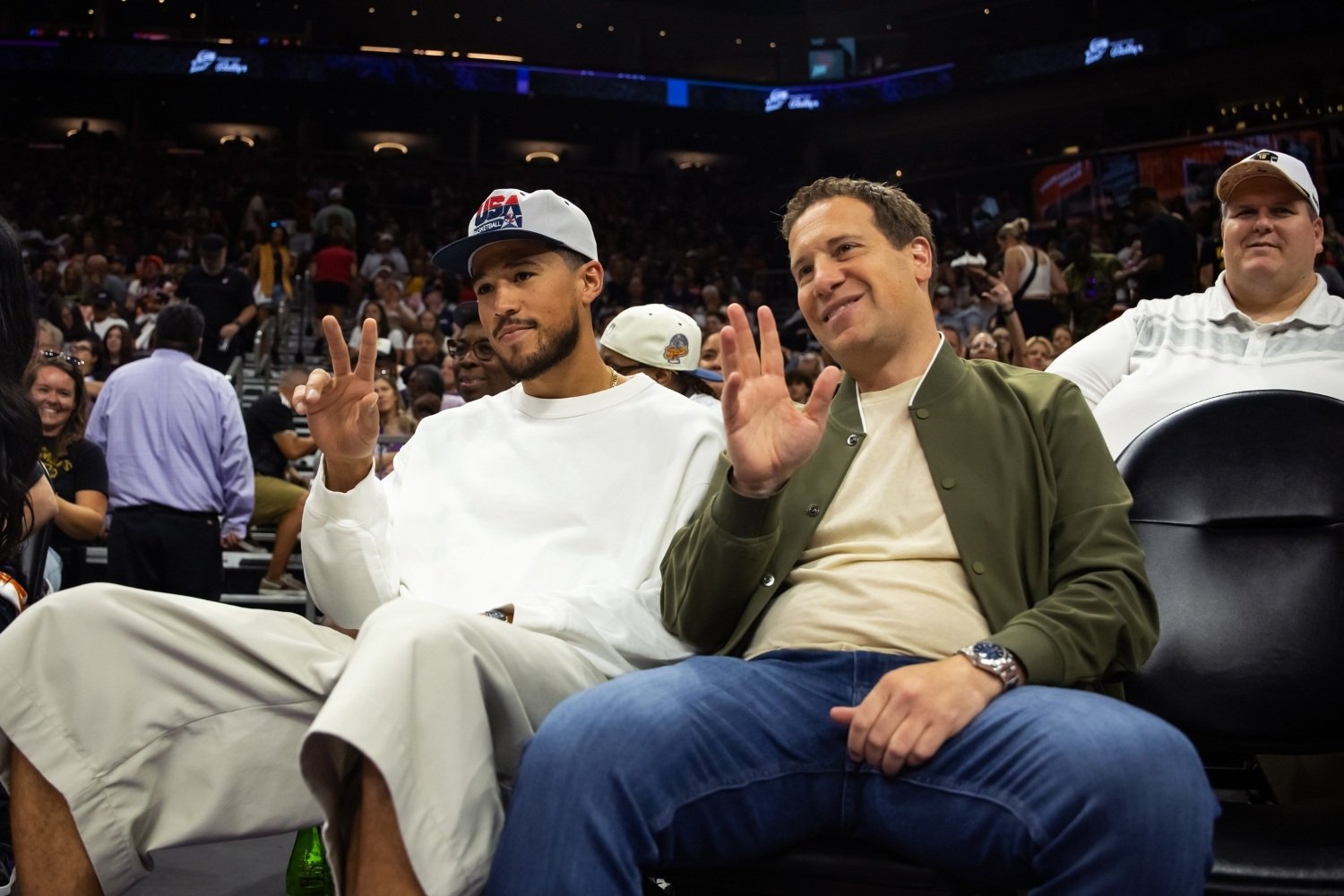 Recently, I wrote a piece imploring Twins ownership and business operations to look at fan engagement, and suggested the place to start is by “taking their hands out of our wallets”. It seems like Mat Ishbia is on board with that premise. Today, he tweeted this: He followed that up by saying, “A family of 4 used to spend $98 on hot dogs/water/popcorn. Now they can enjoy that same meal for $24. Our fans and community are the foundation of what we do, and we will continue to invest in making this the best organization in all of basketball, on and off the court.” This message tells fans in no uncertain terms that ownership understands it’s expensive to come to a game, and they want to make it more appealing and affordable for fans to spend many evenings watching Kevin Durant and Devin Booker work their magic. As a lifelong Twins fan, this approach is incredibly exciting, and leads to some wish-casting about the future. Before you compare this concessions, er, concession (sorry) to the Target Field family sections, the Phoenix Suns appear to be doing this on a much larger scale, and will include more options. And they're not the first sports team to do so. The Atlanta Falcons and Hawks have done similar price reductions, and reported an increase in overall sales as a result. The Utah Jazz are also jumping on the bandwagon. Simply put, Ishbia’s decision and general mentality show an understanding of market forces, and a desire to grow the customer (fan) base. Compare that with the current ownership and business operations group's milquetoast attempts to feign interest in doing the same, and it’s easy to draw the conclusion that the Ishbia brothers a new breed. I won’t rehash Cody Christie’s great breakdown of the Ishbia brothers and their approach to other sports-related challenges. You can read here how they handled TV carriage disputes and local blackouts. Spoiler? Anti-Pohlad. Seriously, check it out. Look, this piece isn’t meant to be an anti-Pohlad screed. There’s some sense they haven’t been super interested in running the team for a while now. In some ways, that even makes a little sense. Jim Pohlad didn’t buy the team. Neither did his nephew Joe. The Twins are one of their many businesses, and they may view owning the Twins as a bit of an albatross, a chain around their neck—preventing them from investing in and managing their other businesses in the way they would like. In fact, it’s fair to recognize that the Pohlad family has shown themselves to be great at a few things, at least as it pertains to sports franchise ownership. Unfortunately, those things are more than offset by the way they prioritize the short-term bottom line, alienating fans, and taking a tone-deaf approach in their statements to the media. The Ishbia brothers, on the other hand, have shown that (at least when it comes to running a sports franchise) they see things differently. Their experience in running very successful businesses that generate immense profits seems to have helped them build expertise in scaling companies up and increasing valuations. Sometimes. that includes reducing the short-term profit margin to increase the long-term one. So far, they have been treating their professional sports teams the way multi-billionaire owners probably should—with a farsighted approach that prioritizes winning and fan engagement. They have made big signings and trades, invested heavily, and taken short-term losses to engage fans and build a winner that the community is proud of. Mat is on record saying about the Suns: "We're not focused on money, we're focused on winning." If you don’t try to win in sports, what’s the point? Could that approach be any more anti-Pohlad? It’s obviously impossible to predict the future, and it’s entirely possible that the Pohlads sell the Twins to a different group, or don’t sell at all. It’s also important to recognize that lowering concessions costs, spending big on free agents, and broadcasting games free of charge may not be the Ishbia approach to driving attendance for Twins games, even if they do buy the team. The NBA is run differently than MLB, and Justin, the likely primary buyer, is not Mat. He may run things differently. However, if Twins fans squint just a bit, they can see some potential changes ahead, should a sale go through to a group fronted by the anti-Pohlad Ishbias. If we're lucky, perhaps a year from now, this long-suffering fanbase may once again feel like their love of the Twins is reciprocated and that ownership is legitimately trying to drive attendance and engagement. Invest in the team, commensurate with market size; bring fans back to the ballpark; go all-in to win when it makes sense. That’s the assignment, for any anti-Pohlad ownership group, and the Ishbias seem to reflect an understanding of it. Let's make a deal!
- 34 comments
-
- 7
-

-
- mat ishbia
- justin ishbia
- (and 2 more)
-
Mat Ishbia just might be the anti-Pohlad. I don’t mean that he’s showing up to Phoenix Suns games with signs that say “Defund the Pohlads”. That wouldn’t make sense, since he’s part of a potential buyer’s group. He just seems to do things differently. Intrigued? Great. Let’s dig in. Image courtesy of © Mark J. Rebilas-Imagn Images Mat Ishbia just might be the anti-Pohlad. I don’t mean that he’s showing up to Phoenix Suns games with signs that say “Defund the Pohlads”. That wouldn’t make sense, since he’s part of a potential buyer’s group. He just seems to do things differently. Intrigued? Great. Let’s dig in. Recently, I wrote a piece imploring Twins ownership and business operations to look at fan engagement, and suggested the place to start is by “taking their hands out of our wallets”. It seems like Mat Ishbia is on board with that premise. Today, he tweeted this: He followed that up by saying, “A family of 4 used to spend $98 on hot dogs/water/popcorn. Now they can enjoy that same meal for $24. Our fans and community are the foundation of what we do, and we will continue to invest in making this the best organization in all of basketball, on and off the court.” This message tells fans in no uncertain terms that ownership understands it’s expensive to come to a game, and they want to make it more appealing and affordable for fans to spend many evenings watching Kevin Durant and Devin Booker work their magic. As a lifelong Twins fan, this approach is incredibly exciting, and leads to some wish-casting about the future. Before you compare this concessions, er, concession (sorry) to the Target Field family sections, the Phoenix Suns appear to be doing this on a much larger scale, and will include more options. And they're not the first sports team to do so. The Atlanta Falcons and Hawks have done similar price reductions, and reported an increase in overall sales as a result. The Utah Jazz are also jumping on the bandwagon. Simply put, Ishbia’s decision and general mentality show an understanding of market forces, and a desire to grow the customer (fan) base. Compare that with the current ownership and business operations group's milquetoast attempts to feign interest in doing the same, and it’s easy to draw the conclusion that the Ishbia brothers a new breed. I won’t rehash Cody Christie’s great breakdown of the Ishbia brothers and their approach to other sports-related challenges. You can read here how they handled TV carriage disputes and local blackouts. Spoiler? Anti-Pohlad. Seriously, check it out. Look, this piece isn’t meant to be an anti-Pohlad screed. There’s some sense they haven’t been super interested in running the team for a while now. In some ways, that even makes a little sense. Jim Pohlad didn’t buy the team. Neither did his nephew Joe. The Twins are one of their many businesses, and they may view owning the Twins as a bit of an albatross, a chain around their neck—preventing them from investing in and managing their other businesses in the way they would like. In fact, it’s fair to recognize that the Pohlad family has shown themselves to be great at a few things, at least as it pertains to sports franchise ownership. Unfortunately, those things are more than offset by the way they prioritize the short-term bottom line, alienating fans, and taking a tone-deaf approach in their statements to the media. The Ishbia brothers, on the other hand, have shown that (at least when it comes to running a sports franchise) they see things differently. Their experience in running very successful businesses that generate immense profits seems to have helped them build expertise in scaling companies up and increasing valuations. Sometimes. that includes reducing the short-term profit margin to increase the long-term one. So far, they have been treating their professional sports teams the way multi-billionaire owners probably should—with a farsighted approach that prioritizes winning and fan engagement. They have made big signings and trades, invested heavily, and taken short-term losses to engage fans and build a winner that the community is proud of. Mat is on record saying about the Suns: "We're not focused on money, we're focused on winning." If you don’t try to win in sports, what’s the point? Could that approach be any more anti-Pohlad? It’s obviously impossible to predict the future, and it’s entirely possible that the Pohlads sell the Twins to a different group, or don’t sell at all. It’s also important to recognize that lowering concessions costs, spending big on free agents, and broadcasting games free of charge may not be the Ishbia approach to driving attendance for Twins games, even if they do buy the team. The NBA is run differently than MLB, and Justin, the likely primary buyer, is not Mat. He may run things differently. However, if Twins fans squint just a bit, they can see some potential changes ahead, should a sale go through to a group fronted by the anti-Pohlad Ishbias. If we're lucky, perhaps a year from now, this long-suffering fanbase may once again feel like their love of the Twins is reciprocated and that ownership is legitimately trying to drive attendance and engagement. Invest in the team, commensurate with market size; bring fans back to the ballpark; go all-in to win when it makes sense. That’s the assignment, for any anti-Pohlad ownership group, and the Ishbias seem to reflect an understanding of it. Let's make a deal! View full article
- 34 replies
-
- 1
-
-
- mat ishbia
- justin ishbia
- (and 2 more)
-
Early in the 2023 season, the Twins signed Pablo López to a three-year extension, buying out his first two years of free agency. At the time, López had just turned 27 years old and had plenty of projectability left. Without that extension, he would be a free agent for the first time this offseason. Looking at some of the contracts teams have handed to free-agent starting pitchers over the past month, it’s clear that the Twins made a great decision, and it keeps looking better. Should that change the Twins' plans this offseason? Image courtesy of © Matt Krohn-Imagn Images Early in the 2023 season, the Twins signed Pablo López to a three-year extension, buying out his first two years of free agency. At the time, López had just turned 27 years old and had plenty of projectability left. Without that extension, he would be a free agent for the first time this offseason. Looking at some of the contracts teams have handed to free-agent starting pitchers over the past month, it’s clear that the Twins made a great decision, and it keeps looking better. Should that change the Twins' plans this offseason? Pablo López may not quite be an ace, but he’s more than capable of looking like one for long stretches of time. He’s a cerebral pitcher who works tirelessly to hone his craft, and when he’s at his best, he gives echoes of Johan Santana. Over the past three seasons, he’s put up very strong results, and has been (by modern standards) a workhorse. Here’s his stat line since the start of 2022: 10.8 fWAR, 559 1/3 innings, a 20.1 K-BB%, 3.83 ERA, 3.56 FIP. That's great, and it shows Derek Falvey's prescience in targeting him via trade—and then quickly extending him. This offseason, teams have signed guys in their 30s—many without the track record of performance López has—to some surprising deals. This makes the López contract look even more reasonable than it would in a vacuum, and causes one to wonder how other teams would truly value his services. Let’s look at some examples, and discuss what Lopez would have likely gotten on the free market this winter, had he made it that far. For the results listed for each of these pitchers, I’m also looking at the last three seasons. Luis Severino: 3.1 fWAR / 373-1/3 IP / 14.4 K-BB% / 4.36 ERA / 4.53 FIP The West Sacramento Athletics signed Luis Severino to a three-year, $67-million deal. This is a puzzling move for so many reasons, not least among them that Severino just had his first strong, healthy season since 2018. He’s making López money to (probably) pitch like a fourth starter in a minor-league ballpark for the next three years. It’s likely the A's face an MLBPA grievance unless they get their payroll above $105 million this season, but it seems there would have been better ways of getting there. Matthew Boyd: 1.9 fWAR / 124.0 IP / 16.5 K-BB% / 4.14 ERA / 3.89 FIP The Chicago Cubs gave Matthew Boyd $29 million across two seasons. Over his 10-year career, he’s produced one season worth 3.0 fWAR or more, and it was way back in 2019. He’s generally shown flashes, but has been injured more than healthy. Frankie Montas: 3.4 fWAR / 296-1/3 IP / 14.2 K-BB% / 4.43 ERA / 4.25 FIP Where Frankie? There, Frankie. There, payday. The New York Mets inked oft-injured (and honestly, sort of mediocre) Frankie Montas to a two-year, $34-million contract. Throughout his nine-year career, he’s had two seasons of mid-rotation performance and has not looked like a frontline guy ever since running into injury trouble after being traded to the Yankees in 2022. Yusei Kikuchi: 5.0 fWAR / 444 IP / 19.1 K-BB% / 4.24 ERA / 4.20 FIP The Angels, for some reason, gave Kikuchi a $63-million contract for the next three seasons. This is almost identical AAV to what the Twins are paying López for the rest of his contract, and Kikuchi isn’t really a reliably playoff-caliber starter (not that the Angels will need to worry about a playoff rotation). Michael Wacha: 7.5 fWAR / 373-1/3 IP / 14.4 K-BB% / 3.3 ERA / 3.87 FIP The Royals re-signed Michael Wacha to a $51-million three-year deal. If you are just looking at Wacha’s past three seasons, this seems like a great deal. However, he has had as many middling seasons as good ones over his career, and is probably best viewed as a good third starter with the ability to pitch a rung up when things are going well. Nathan Eovaldi: 6.1 fWAR / 424 IP / 16.8 K-BB% / 3.76 ERA / 3.97 FIP Eovaldi is a good pitcher, but he's just the third in the past decade to get a three-year deal at 35 or older. The Rangers just extended him for $75 million, blowing past expectations. So. We have seen countless examples of clearly worse and older pitchers getting López-sized contracts this offseason. Blake Snell and Max Fried also recently signed, and they may give us an approximation of López's true value on the open market. While the Twins righty is not quite at their level, he is younger and has been a workhouse, something Snell can't claim, and Fried has been bitten by the injury bug as well. Let's see what they received. Blake Snell: 10.9 fWAR / 412 IP / 21 K-BB% / 2.82 ERA / 2.98 FIP The Dodgers gave him $182 million to pitch for five more seasons. At 32, it’s certainly possible that he doesn’t noticeably decline while pitching for them, but they will actually be paying him deferred money through 2046. You know, when Snell will be 54 years old. Max Fried: 10.2 fWAR / 437-1/3 IP / 17.6 K-BB% / 2.80 ERA / 3.03 FIP Fried is a lefty ace. The Yankees just Yankeed, signing him to the biggest contract in history for a lefty pitcher: $218 million over eight years. Fried is similar to López in a number of results, including value over the past three seasons. He pitches to a better ERA and FIP than López, but doesn't strike out as many guys. Based on all of the above, if López were a free agent himself, based on his age, approach, and upside, it seems likely he would be getting something like $200 million. With three years and $64.5 million remaining on his extension, Lopez has something like $25 million in surplus value for those three years alone. There are still one and a half playoff-caliber starting pitchers remaining on the market: Corbin Burnes will be a get for anyone willing to pay through the nose. Walker Buehler is an ace when healthy and right, but he's had as many injury-filled seasons as good ones. The drop-off among available pitchers after those two (and arguably Jack Flaherty) is quite steep. Were López a free agent this offseason, he would probably be the third- or fourth-best starting pitcher available, behind Burnes, Snell, and Fried. López is younger than all of them, by several years in some cases. He’s been more reliable and consistent than most of the guys listed above. The fourth-best starter available in any off-season is incredibly valuable, and if López were a free agent, the Twins could not afford him. To be clear, before I make my final point, I’m not advocating the Twins seek to trade Pablo López. He’s a great pitcher, a great clubhouse presence, and a great asset to the organization and community. He was nails in the 2023 playoffs. The Twins want him on the team, and I do, too. That said, it’s possible that other teams will come to the same conclusion laid out above, and could blow the front office away with an offer. In that case, it makes sense to listen. If a team is willing to drastically overpay, and the return is at least one other similarly impactful player that improves the Twins’ chances at a deep playoff run in 2025 and 2026, it’s worth entertaining. Either way, as fans, we can appreciate the savvy move Derek Falvey made in extending López, and we can feel grateful for López fronting a strong rotation. Let's hope we have more Pablo Days ahead. If not, it seems certain it'll be worth it. View full article
-
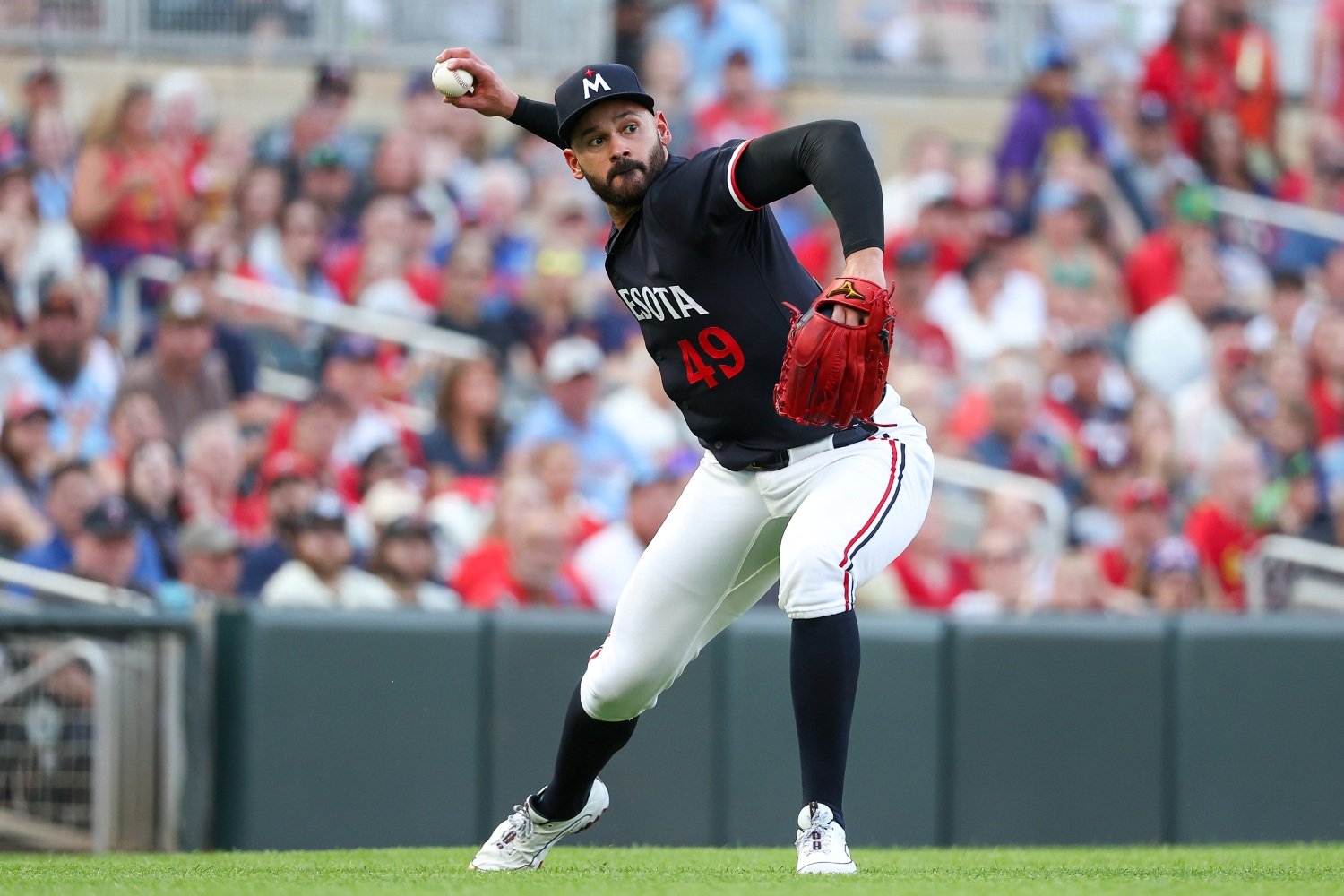 Pablo López may not quite be an ace, but he’s more than capable of looking like one for long stretches of time. He’s a cerebral pitcher who works tirelessly to hone his craft, and when he’s at his best, he gives echoes of Johan Santana. Over the past three seasons, he’s put up very strong results, and has been (by modern standards) a workhorse. Here’s his stat line since the start of 2022: 10.8 fWAR, 559 1/3 innings, a 20.1 K-BB%, 3.83 ERA, 3.56 FIP. That's great, and it shows Derek Falvey's prescience in targeting him via trade—and then quickly extending him. This offseason, teams have signed guys in their 30s—many without the track record of performance López has—to some surprising deals. This makes the López contract look even more reasonable than it would in a vacuum, and causes one to wonder how other teams would truly value his services. Let’s look at some examples, and discuss what Lopez would have likely gotten on the free market this winter, had he made it that far. For the results listed for each of these pitchers, I’m also looking at the last three seasons. Luis Severino: 3.1 fWAR / 373-1/3 IP / 14.4 K-BB% / 4.36 ERA / 4.53 FIP The West Sacramento Athletics signed Luis Severino to a three-year, $67-million deal. This is a puzzling move for so many reasons, not least among them that Severino just had his first strong, healthy season since 2018. He’s making López money to (probably) pitch like a fourth starter in a minor-league ballpark for the next three years. It’s likely the A's face an MLBPA grievance unless they get their payroll above $105 million this season, but it seems there would have been better ways of getting there. Matthew Boyd: 1.9 fWAR / 124.0 IP / 16.5 K-BB% / 4.14 ERA / 3.89 FIP The Chicago Cubs gave Matthew Boyd $29 million across two seasons. Over his 10-year career, he’s produced one season worth 3.0 fWAR or more, and it was way back in 2019. He’s generally shown flashes, but has been injured more than healthy. Frankie Montas: 3.4 fWAR / 296-1/3 IP / 14.2 K-BB% / 4.43 ERA / 4.25 FIP Where Frankie? There, Frankie. There, payday. The New York Mets inked oft-injured (and honestly, sort of mediocre) Frankie Montas to a two-year, $34-million contract. Throughout his nine-year career, he’s had two seasons of mid-rotation performance and has not looked like a frontline guy ever since running into injury trouble after being traded to the Yankees in 2022. Yusei Kikuchi: 5.0 fWAR / 444 IP / 19.1 K-BB% / 4.24 ERA / 4.20 FIP The Angels, for some reason, gave Kikuchi a $63-million contract for the next three seasons. This is almost identical AAV to what the Twins are paying López for the rest of his contract, and Kikuchi isn’t really a reliably playoff-caliber starter (not that the Angels will need to worry about a playoff rotation). Michael Wacha: 7.5 fWAR / 373-1/3 IP / 14.4 K-BB% / 3.3 ERA / 3.87 FIP The Royals re-signed Michael Wacha to a $51-million three-year deal. If you are just looking at Wacha’s past three seasons, this seems like a great deal. However, he has had as many middling seasons as good ones over his career, and is probably best viewed as a good third starter with the ability to pitch a rung up when things are going well. Nathan Eovaldi: 6.1 fWAR / 424 IP / 16.8 K-BB% / 3.76 ERA / 3.97 FIP Eovaldi is a good pitcher, but he's just the third in the past decade to get a three-year deal at 35 or older. The Rangers just extended him for $75 million, blowing past expectations. So. We have seen countless examples of clearly worse and older pitchers getting López-sized contracts this offseason. Blake Snell and Max Fried also recently signed, and they may give us an approximation of López's true value on the open market. While the Twins righty is not quite at their level, he is younger and has been a workhouse, something Snell can't claim, and Fried has been bitten by the injury bug as well. Let's see what they received. Blake Snell: 10.9 fWAR / 412 IP / 21 K-BB% / 2.82 ERA / 2.98 FIP The Dodgers gave him $182 million to pitch for five more seasons. At 32, it’s certainly possible that he doesn’t noticeably decline while pitching for them, but they will actually be paying him deferred money through 2046. You know, when Snell will be 54 years old. Max Fried: 10.2 fWAR / 437-1/3 IP / 17.6 K-BB% / 2.80 ERA / 3.03 FIP Fried is a lefty ace. The Yankees just Yankeed, signing him to the biggest contract in history for a lefty pitcher: $218 million over eight years. Fried is similar to López in a number of results, including value over the past three seasons. He pitches to a better ERA and FIP than López, but doesn't strike out as many guys. Based on all of the above, if López were a free agent himself, based on his age, approach, and upside, it seems likely he would be getting something like $200 million. With three years and $64.5 million remaining on his extension, Lopez has something like $25 million in surplus value for those three years alone. There are still one and a half playoff-caliber starting pitchers remaining on the market: Corbin Burnes will be a get for anyone willing to pay through the nose. Walker Buehler is an ace when healthy and right, but he's had as many injury-filled seasons as good ones. The drop-off among available pitchers after those two (and arguably Jack Flaherty) is quite steep. Were López a free agent this offseason, he would probably be the third- or fourth-best starting pitcher available, behind Burnes, Snell, and Fried. López is younger than all of them, by several years in some cases. He’s been more reliable and consistent than most of the guys listed above. The fourth-best starter available in any off-season is incredibly valuable, and if López were a free agent, the Twins could not afford him. To be clear, before I make my final point, I’m not advocating the Twins seek to trade Pablo López. He’s a great pitcher, a great clubhouse presence, and a great asset to the organization and community. He was nails in the 2023 playoffs. The Twins want him on the team, and I do, too. That said, it’s possible that other teams will come to the same conclusion laid out above, and could blow the front office away with an offer. In that case, it makes sense to listen. If a team is willing to drastically overpay, and the return is at least one other similarly impactful player that improves the Twins’ chances at a deep playoff run in 2025 and 2026, it’s worth entertaining. Either way, as fans, we can appreciate the savvy move Derek Falvey made in extending López, and we can feel grateful for López fronting a strong rotation. Let's hope we have more Pablo Days ahead. If not, it seems certain it'll be worth it.
 -
What’s the best way to create a baseball fan for life? Bring a kid to the ballpark a few times a year, so they can see their favorite players do something special. What’s the best way to blow past a budget? Paying for concessions at those games. It’s time for the Twins to address bloated concessions costs in an effort to win back fans. Image courtesy of © Bruce Kluckhohn-Imagn Images What’s the best way to create a baseball fan for life? Bring a kid to the ballpark a few times a year, so they can see their favorite players do something special. What’s the best way to blow past a budget? Paying for concessions at those games. It’s time for the Twins to address bloated concessions costs in an effort to win back fans. In Major League: Back to the Minors, the manager of the Twins' Triple-A affiliate orders a couple of hot dogs and sodas at a game. The total was four dollars. Adjusted for inflation, that 1998 total would cost $7.75 today. Not bad. Figure a buck for raw costs, a couple bucks for labor, and then a couple bucks each for the vendor and the ball club toward operating expenses and profit. Reasonable, right? How much do you suppose that same order would cost at Target Field today? Between $20 and $25, if you keep the sodas small. Like beer? A large craft beer will set you back around $20, after tip. (God forbid you forget the tip; they're not paying the workers helping you anything to speak of.) Want a kosher hot dog? Eight bucks, plus tax. For a hot dog. A decent brat will run you $11 after tax. Adult meal-sized food options range from $15-20, and some options go even higher. For a family of four, it’s not uncommon for the concessions bill alone to sit in the $150 range for a single game. Adding in ticket costs (which have also increased a fair bit over the past handful of years), you're looking at maybe $300 a game to sit in mid-range seats and have a meal. That’s a lot, and it limits the number of games a casual fan will attend each season. For fans who have been unable to watch games on TV, going to the ballpark may be the only option they have to watch the game, and if it’s cost-prohibitive to do so, many of them just won't go. Fandoms are dying in their cribs, all over Twins Territory. Concessions prices have steadily increased at Target Field since it opened. That’s to be expected. But, the degree to which they have increased is excessive, to the point of price gouging. Now, the Twins aren’t alone in this scenario. I go to half a dozen games at Kauffman Stadium each year, and their prices have gone through the roof, too. But, there’s one dynamic that’s markedly different between the Twins and some of the other teams across the league, and that’s fan sentiment. Reading through Twins Twitter, it’s clear that at least a portion of the Twins fan base feels alienated by many of the business decisions over the past couple of years: the heavy slashing of payroll immediately following a 2023 playoff series win, the tone-deaf comments blaming fans for declining payroll due to declining attendance, the re-upping with DSG preventing many fans from watching games on TV, failure to allow moves to supplement a talented-but-flawed 2024 roster at the trade deadline—the list goes on and on. For fans feeling some level of apathy or even disgust toward ownership and the business side of the Minnesota Twins, it’s clear that something needs to change. Since the offseason began, there has been an effort to address some of these concerns. Ownership went on record saying payroll wouldn’t be cut (you know, again) going into 2025. The Twins signed on with MLB for streaming distribution, ending local blackouts so fans can watch on TV (if they're willing to pay "Target Field chicken tenders meal" dollars each month for the privilege). Dave St. Peter has given much of his portfolio to Derek Falvey. The Pohlads are selling the team! Now, it’s up to the Twins to keep making decisions that can bring some wary fans back into the fold. One of the easiest solutions would be to decide to profit slightly less off concessions at the ballpark. By lowering concessions costs even slightly, the organization would send a message that it hears fans’ concerns, and wants to take action to bring fans back to the ballpark. Yes, the Twins have done a few things to make concessions more affordable over the past few years (under certain, limited parameters), but there’s room to do more. There’s Dollar Dog Night, but that often sells out shortly after the game starts. There are family sections with budget-friendly options, but those are limited to pretty mediocre offerings, and they really only bring the prices down to what they should be throughout the park—and maybe not even that far. There are simple tweaks that could demonstrate they are interested in meeting fans where they are: they could double the number of dollar dogs, and increase the number of days those are offered. They could also add a couple slightly more premium options in the family sections, say in the $7-8 range, or spread family-targeted meal deal options to all stands throughout the park. The ballpark group could look to get creative as well. Perhaps they could do something like offering concessions promo codes — for every ten game tickets you buy, you get a single-day promo code for 40% off all concessions. Or, a concessions promo code for anyone who orders tickets for at least three games before the season starts. Or, they could do “deal of the day” type promotions where each game could feature a different vendor offering a discount for the day. There could be theme days throughout the season, similar to Dollar Dog Nights, but for burgers, pizza, or beer — you name it. The possibilities are endless, if the team is willing to look beyond their short-term bottom line. It seems likely that for every dollar the team would lose in their concessions take, they would earn at least double that in the medium term through increased ticket sales, and probably also increased TV subscriptions. This fan engagement will also make it easier to get top dollar from the eventual buyers of the Twins. Longer-term, fans attending more games will lead to an increase in fan goodwill, and will give the Twins a chance to create more fans for life. The window to re-engage fans is open, but closes a little more with each passing tone-deaf season. The time is now to show fans that the team wants them to care. View full article
-
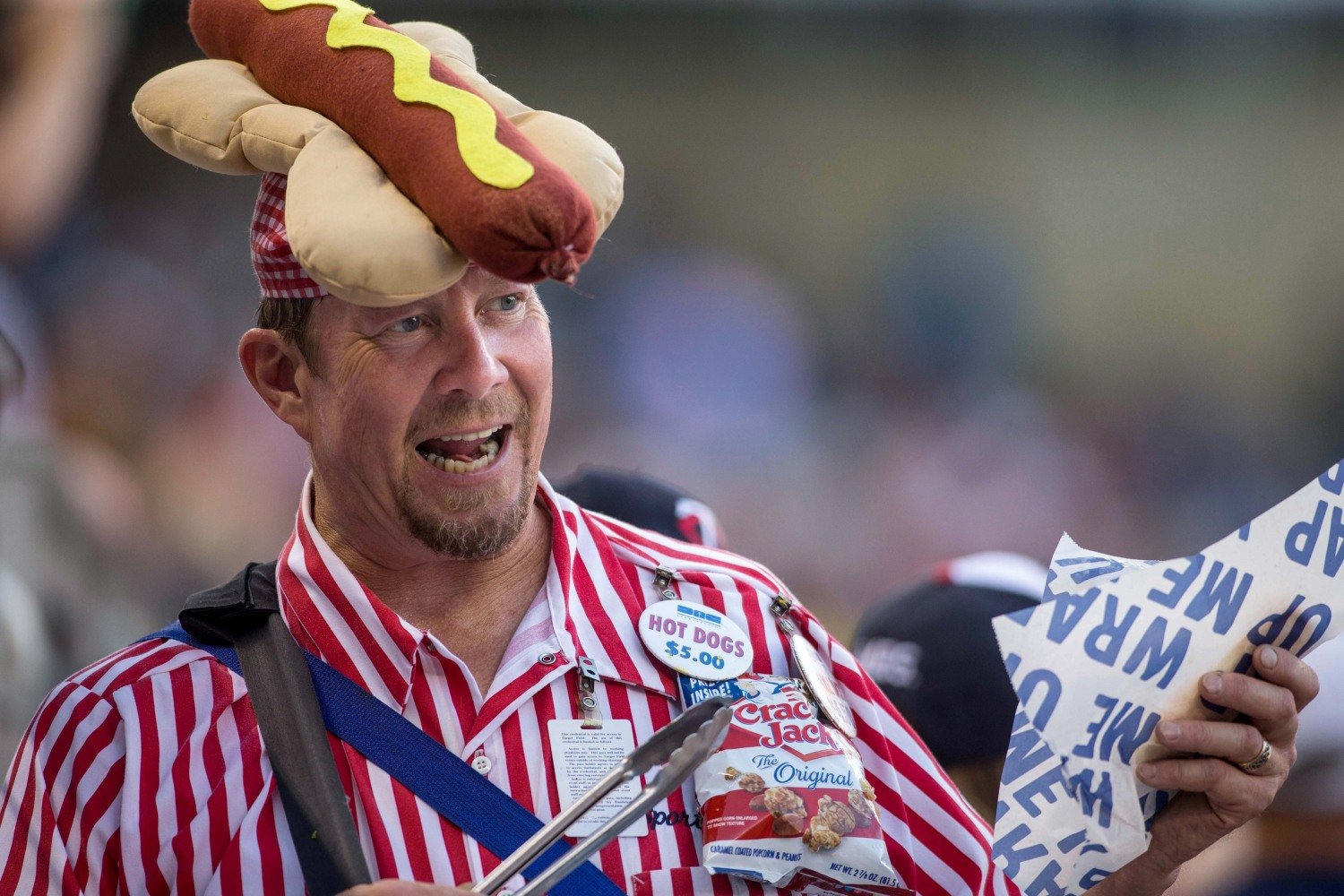 In Major League: Back to the Minors, the manager of the Twins' Triple-A affiliate orders a couple of hot dogs and sodas at a game. The total was four dollars. Adjusted for inflation, that 1998 total would cost $7.75 today. Not bad. Figure a buck for raw costs, a couple bucks for labor, and then a couple bucks each for the vendor and the ball club toward operating expenses and profit. Reasonable, right? How much do you suppose that same order would cost at Target Field today? Between $20 and $25, if you keep the sodas small. Like beer? A large craft beer will set you back around $20, after tip. (God forbid you forget the tip; they're not paying the workers helping you anything to speak of.) Want a kosher hot dog? Eight bucks, plus tax. For a hot dog. A decent brat will run you $11 after tax. Adult meal-sized food options range from $15-20, and some options go even higher. For a family of four, it’s not uncommon for the concessions bill alone to sit in the $150 range for a single game. Adding in ticket costs (which have also increased a fair bit over the past handful of years), you're looking at maybe $300 a game to sit in mid-range seats and have a meal. That’s a lot, and it limits the number of games a casual fan will attend each season. For fans who have been unable to watch games on TV, going to the ballpark may be the only option they have to watch the game, and if it’s cost-prohibitive to do so, many of them just won't go. Fandoms are dying in their cribs, all over Twins Territory. Concessions prices have steadily increased at Target Field since it opened. That’s to be expected. But, the degree to which they have increased is excessive, to the point of price gouging. Now, the Twins aren’t alone in this scenario. I go to half a dozen games at Kauffman Stadium each year, and their prices have gone through the roof, too. But, there’s one dynamic that’s markedly different between the Twins and some of the other teams across the league, and that’s fan sentiment. Reading through Twins Twitter, it’s clear that at least a portion of the Twins fan base feels alienated by many of the business decisions over the past couple of years: the heavy slashing of payroll immediately following a 2023 playoff series win, the tone-deaf comments blaming fans for declining payroll due to declining attendance, the re-upping with DSG preventing many fans from watching games on TV, failure to allow moves to supplement a talented-but-flawed 2024 roster at the trade deadline—the list goes on and on. For fans feeling some level of apathy or even disgust toward ownership and the business side of the Minnesota Twins, it’s clear that something needs to change. Since the offseason began, there has been an effort to address some of these concerns. Ownership went on record saying payroll wouldn’t be cut (you know, again) going into 2025. The Twins signed on with MLB for streaming distribution, ending local blackouts so fans can watch on TV (if they're willing to pay "Target Field chicken tenders meal" dollars each month for the privilege). Dave St. Peter has given much of his portfolio to Derek Falvey. The Pohlads are selling the team! Now, it’s up to the Twins to keep making decisions that can bring some wary fans back into the fold. One of the easiest solutions would be to decide to profit slightly less off concessions at the ballpark. By lowering concessions costs even slightly, the organization would send a message that it hears fans’ concerns, and wants to take action to bring fans back to the ballpark. Yes, the Twins have done a few things to make concessions more affordable over the past few years (under certain, limited parameters), but there’s room to do more. There’s Dollar Dog Night, but that often sells out shortly after the game starts. There are family sections with budget-friendly options, but those are limited to pretty mediocre offerings, and they really only bring the prices down to what they should be throughout the park—and maybe not even that far. There are simple tweaks that could demonstrate they are interested in meeting fans where they are: they could double the number of dollar dogs, and increase the number of days those are offered. They could also add a couple slightly more premium options in the family sections, say in the $7-8 range, or spread family-targeted meal deal options to all stands throughout the park. The ballpark group could look to get creative as well. Perhaps they could do something like offering concessions promo codes — for every ten game tickets you buy, you get a single-day promo code for 40% off all concessions. Or, a concessions promo code for anyone who orders tickets for at least three games before the season starts. Or, they could do “deal of the day” type promotions where each game could feature a different vendor offering a discount for the day. There could be theme days throughout the season, similar to Dollar Dog Nights, but for burgers, pizza, or beer — you name it. The possibilities are endless, if the team is willing to look beyond their short-term bottom line. It seems likely that for every dollar the team would lose in their concessions take, they would earn at least double that in the medium term through increased ticket sales, and probably also increased TV subscriptions. This fan engagement will also make it easier to get top dollar from the eventual buyers of the Twins. Longer-term, fans attending more games will lead to an increase in fan goodwill, and will give the Twins a chance to create more fans for life. The window to re-engage fans is open, but closes a little more with each passing tone-deaf season. The time is now to show fans that the team wants them to care.
 -
For once, the Twins have enough pitching. They also need to get out from under a couple contracts to have the flexibility to complete the roster. The Cubs are looking for pitching and catching help and are making middle-of-the-order bat Seiya Suzuki available. Can Derek Falvey pull off a challenge trade that makes both teams better? Image courtesy of © Kamil Krzaczynski-Imagn Images For once, the Twins have enough pitching. They also need to get out from under a couple contracts to have the flexibility to complete the roster. The Cubs are looking for pitching and catching help and are making middle-of-the-order bat Seiya Suzuki available. Can Derek Falvey pull off a challenge trade that makes both teams better? Joel Sherman of the New York Post reported yesterday that the Chicago Cubs are “desperate” to trade at least one of Cody Bellinger and Seiya Suzuki. Their intention is to use their salary for catching and pitching help, and to create space for some of their top prospects and young players to get more playing time. While Bellinger’s $27.5 million salary (and $5 million buyout should Bellinger opt out of the final year of his deal) is almost certainly unworkable for the Twins, trading for Seiya Suzuki may be more workable. Let’s talk specifics, and discuss what it might cost to pry his bat away from the Northside of Chicago. Seiya Suzuki is a right-handed corner outfielder who may be best suited to designated hitter. He was a five-time All-Star in the NPB, where he played for the Hiroshima Tokyo Carp. He’s under contract through 2026, making $18 million each of the next two seasons. When he enters free agency, he will have just turned 32 years old, so he’s got plenty left in the tank. What’s to like? Honestly, a lot. He has averaged just shy of 3.0 fWAR across his three major league seasons. He has neutral platoon splits across his career, and should be an everyday player. He would give the Twins another plus bat, and allow the Twins to hedge against the need for Jose Miranda or Edouard Julien to reach their potential (although if they do take a step forward, all the better). From a results standpoint, all Suzuki does is hit, draws walks, and hit for power. He’s got an .824 career OPS, and the past two seasons have been even better. He strikes out more than average, but makes up for it with a strong walk rate. His K-BB% for his MLB career is 14.8%. While he’s not a great baserunner, he does have a plus sprint speed, so he wouldn’t clog the basepaths. Still not sold? Check out his Baseball Savant page. Despite being defensively limited, he is serviceable in right field, and Suzuki could still give the Twins a more complete roster. When the Twins face tough lefties, one of Larnach or Wallner could sit, and Suzuki could play right field. When facing righties, Suzuki could be the primary DH, and his bat is good enough to justify losing the flexibility to rotate guys through when they need a partial day off. While he hasn’t logged even a single inning as a first baseman with the Cubs, Suzuki could also potentially be part of a first base committee. There’s no guarantee that part would work, but it’s worth exploring. He would give the Twins additional outfield depth in the event of an injury to one of the corner guys, and would allow the front office to let Emmanuel Rodriguez continue to develop in the minors until he forces their hand. His defense wouldn't always be pretty, but he's not a butcher either. Overall, Suzuki would check a lot of boxes for the Twins, and would make them immediately better. What would he cost? Here’s the thing. Seiya Suzuki would help almost every club, so there will be some competition. However, knowing the Cubs want both pitching and catching, the Twins could be a better fit than most. As current rosters stand, the Twins have the fourth-best rotation and the best bullpen in baseball, according to Fangraphs. The Cubs rank 18th in both rotation and bullpen. Suzuki has some surplus value compared to his contract, but not an outlandish amount across the two seasons. The Twins will need to drop around $20 million in salary to take on his pay. So, I’m looking to get slightly creative here. The package I would lead with, out of necessity, is Christian Vasquez and his $10 million salary, and Chris Paddack and the $7.5 million he’s owed in 2025. That makes the deal salary-neutral so far. The Cubs would appreciate Vasquez’ defensive chops. They may not be terribly interested in Chris Paddack as they just signed Matt Boyd to round out their rotation, but perhaps they could see their way to using him as a swingman, injury replacement, or potential impact reliever. Then, the Twins would need to add at least one impact player of their own to entice the Cubs. Giving the Cubs the option to choose between Jhoan Duran and Griffin Jax could possibly be enough to get it done. It’s possible a prospect would need to change hands to balance the ledger, but it shouldn’t be a top prospect either way. In this scenario, both teams get better, and accomplish clear goals each has for the offseason. The Twins subtract a couple million dollars in payroll, and also don’t lose anyone they can’t live without. It would hurt not having one of Duran or Jax at the back of the bullpen, but again, it’s a position of strength, and it’s likely worth it. What do you think? Would you be excited about this trade? Do you think it’s realistic? Comment below! View full article
-
Could The Twins Pull Off A Challenge Trade for a Big Cubs Bat?
Eric Blonigen posted an article in Twins
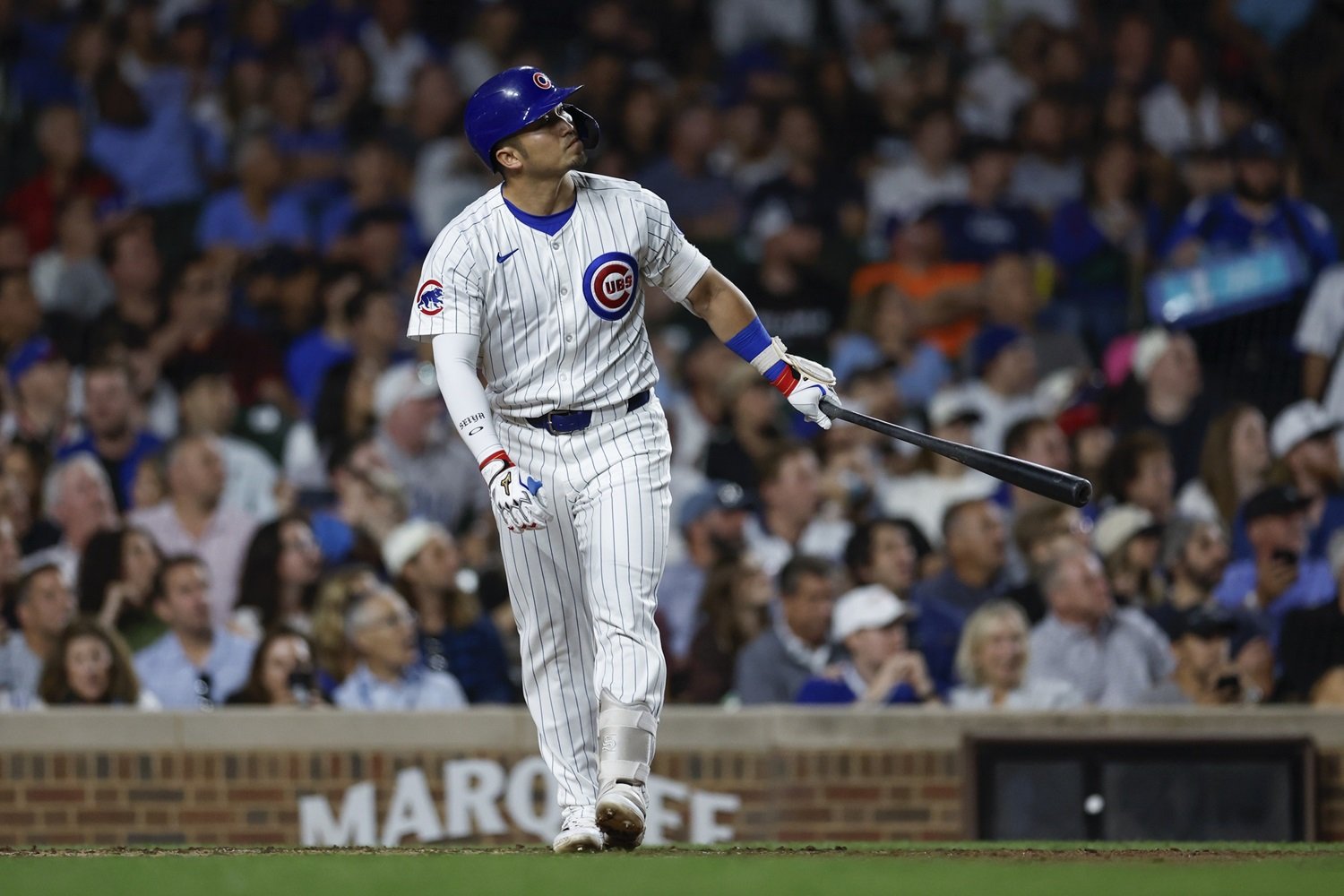 Joel Sherman of the New York Post reported yesterday that the Chicago Cubs are “desperate” to trade at least one of Cody Bellinger and Seiya Suzuki. Their intention is to use their salary for catching and pitching help, and to create space for some of their top prospects and young players to get more playing time. While Bellinger’s $27.5 million salary (and $5 million buyout should Bellinger opt out of the final year of his deal) is almost certainly unworkable for the Twins, trading for Seiya Suzuki may be more workable. Let’s talk specifics, and discuss what it might cost to pry his bat away from the Northside of Chicago. Seiya Suzuki is a right-handed corner outfielder who may be best suited to designated hitter. He was a five-time All-Star in the NPB, where he played for the Hiroshima Tokyo Carp. He’s under contract through 2026, making $18 million each of the next two seasons. When he enters free agency, he will have just turned 32 years old, so he’s got plenty left in the tank. What’s to like? Honestly, a lot. He has averaged just shy of 3.0 fWAR across his three major league seasons. He has neutral platoon splits across his career, and should be an everyday player. He would give the Twins another plus bat, and allow the Twins to hedge against the need for Jose Miranda or Edouard Julien to reach their potential (although if they do take a step forward, all the better). From a results standpoint, all Suzuki does is hit, draws walks, and hit for power. He’s got an .824 career OPS, and the past two seasons have been even better. He strikes out more than average, but makes up for it with a strong walk rate. His K-BB% for his MLB career is 14.8%. While he’s not a great baserunner, he does have a plus sprint speed, so he wouldn’t clog the basepaths. Still not sold? Check out his Baseball Savant page. Despite being defensively limited, he is serviceable in right field, and Suzuki could still give the Twins a more complete roster. When the Twins face tough lefties, one of Larnach or Wallner could sit, and Suzuki could play right field. When facing righties, Suzuki could be the primary DH, and his bat is good enough to justify losing the flexibility to rotate guys through when they need a partial day off. While he hasn’t logged even a single inning as a first baseman with the Cubs, Suzuki could also potentially be part of a first base committee. There’s no guarantee that part would work, but it’s worth exploring. He would give the Twins additional outfield depth in the event of an injury to one of the corner guys, and would allow the front office to let Emmanuel Rodriguez continue to develop in the minors until he forces their hand. His defense wouldn't always be pretty, but he's not a butcher either. Overall, Suzuki would check a lot of boxes for the Twins, and would make them immediately better. What would he cost? Here’s the thing. Seiya Suzuki would help almost every club, so there will be some competition. However, knowing the Cubs want both pitching and catching, the Twins could be a better fit than most. As current rosters stand, the Twins have the fourth-best rotation and the best bullpen in baseball, according to Fangraphs. The Cubs rank 18th in both rotation and bullpen. Suzuki has some surplus value compared to his contract, but not an outlandish amount across the two seasons. The Twins will need to drop around $20 million in salary to take on his pay. So, I’m looking to get slightly creative here. The package I would lead with, out of necessity, is Christian Vasquez and his $10 million salary, and Chris Paddack and the $7.5 million he’s owed in 2025. That makes the deal salary-neutral so far. The Cubs would appreciate Vasquez’ defensive chops. They may not be terribly interested in Chris Paddack as they just signed Matt Boyd to round out their rotation, but perhaps they could see their way to using him as a swingman, injury replacement, or potential impact reliever. Then, the Twins would need to add at least one impact player of their own to entice the Cubs. Giving the Cubs the option to choose between Jhoan Duran and Griffin Jax could possibly be enough to get it done. It’s possible a prospect would need to change hands to balance the ledger, but it shouldn’t be a top prospect either way. In this scenario, both teams get better, and accomplish clear goals each has for the offseason. The Twins subtract a couple million dollars in payroll, and also don’t lose anyone they can’t live without. It would hurt not having one of Duran or Jax at the back of the bullpen, but again, it’s a position of strength, and it’s likely worth it. What do you think? Would you be excited about this trade? Do you think it’s realistic? Comment below!
 -
The 2025 Minnesota Twins have a few clear prospective needs: a right-handed corner outfielder; a first baseman to replace Carlos Santana; and a veteran leader to help Carlos Correa mentor the many young players on the team. One free agent might do all that and more. Image courtesy of © Stephen Brashear-USA TODAY Sport The 2025 Minnesota Twins have a few clear prospective needs: a right-handed corner outfielder; a first baseman to replace Carlos Santana; and a veteran leader to help Carlos Correa mentor the many young players on the team. One free agent might do all that and more. The 2025 Twins figure to be a little bit unusual, in that there aren't huge holes on the roster, but there's also little (or no) money to address the minor gaps that do exist. The front office will likely need to be creative, and set their sights lower than the big splash moves they have made in recent offseasons. A player like Mark Canha, while not a big name, could absolutely provide a lot of value both on and off the field, and would fit the team dynamic nicely, as well. What does Canha bring to the table? Mark Canha does a few things really well. He draws a ton of walks (and gets hit by pitches a ton), is clutch, and is reportedly a great clubhouse presence. Getting on base If you have seen Moneyball, you probably remember Billy Beane’s refrain to explain why he liked the players he targeted: "he gets on base." One of Mark Canha’s biggest strengths is just that: he gets on base. A lot. From 2020 through 2023, his OBP is 32nd in baseball. It's not a coincidence that, a decade ago, he got his break by being picked in the Rule 5 Draft and traded for by the A's. Adding an on-base machine to the lineup would absolutely lead to scoring more runs. Getting Plunked Dating back to 2018, Canha has gotten hit by pitches 123 times. Only Anthony Rizzo has gotten plunked more over that span. Back in 2023, Rocco Baldelli talked about Matt Wallner having cement bones due to his ability to get hit over and over and be none the worse for wear. In 2024, Willi Castro took the brunt of the painful free bases. Were the Twins to sign Canha, they would have four of the 20 most frequently hit batters in baseball. That’s just wild, but it’s a way to score runs. Maybe the Twins can turn that into the next market inefficiency. Defense and flexibility Canha is an acceptable defender, roughly average last season in left field, right field, and at first base. He’s not going to win a Gold Glove, but he’s not a butcher and will make the plays he’s supposed to make. His (slight) defensive flexibility would give the opportunity to be the primary first baseman, but to spell Trevor Larnach and Matt Wallner in the corners against tough lefties. Clutch hitting Canha has been clutch throughout his career, with an .862 OPS in high-leverage spots, compared with .732 in medium-leverage situations and .768 in low leverage. Clutch hitting is not really a skill, nor is it particularly predictive. But, when a guy is clutch year after year, as Canha has been? He might just be an outlier. And, as it turns out, the Twins would benefit greatly from some clutch hitting; the 2024 team was historically bad when it mattered most down the stretch. Clubhouse presence and mentoring With the Tigers in 2024, teammates Riley Greene, Parker Meadows, and Colt Keith all sang the praises of Canha. They spoke to his preparation, care, and demeanor. Greene said “I’ve watched him do his early work and his attention to detail in the cage is really, really good. He is locked in. He’s trying to be perfect in the cage.” Setting that example for some of the younger players could be invaluable for their growth. While with the San Francisco Giants, Manager Bob Melvin said “He’s a pretty tenacious player. He’s the kind of guy you don’t particularly care for on the other side, and you love him when he’s on your team.” Canha also maintains an Instagram account centered on his explorations of local food in big-league cities. He's one of the most likable players in baseball. Mark Canha (@bigleaguefoodie) • Instagram photos and videos WWW.INSTAGRAM.COM 3,957 likes, 36 comments - bigleaguefoodie on November 19, 2024: "Amazing experience at @lazozzona in Scottsdale last night! Chef @richardblais and his team rolled out the red carpet... The Concerns Canha had a down season in 2024, as you can see from the Baseball Savant page above. All that blue represents a big step back compared to the few years before it. Over his decade-long career, Canha has virtually identical platoon splits, but 2024 was an outlier for him there, too. His OPS against righties was .118 lower than lefties. He barreled the ball at a career-low rate, and had a nasty habit of topping pitches, but it’s probably safer to attribute that to a lingering hip injury that he attempted to play through, rather than to a significant and irreversible decline. That said, 2025 will be Canha’s age-36 season, and the end comes quickly for some players. Canha also doesn’t have a ton of home run power, probably slotting in at between 10-15 across a full, healthy season. With other sluggers on the team, that’s not a dealbreaker, as his approach could actually provide more balance than the current lineup does. Aside from those things, there’s not a ton to dislike. So, what would it take to sign him? It’s tough to nail down. He’s coming off a two-year, $26.5 million deal. With the down year, he was worth 0.5 bWAR and 1 fWAR, putting his value at somewhere between $4-8 million. A year older, and certainly in the decline phase, it’s possible he could sign for as little as $3 million to prove his health and capability, with the intention of signing for a little more in 2026. I could also see a scenario where he and his agent hold out for something closer to $10 million. In that case, he’s less likely to fit into the budget, but somewhere, the team does have to spend a little to meet those noteworthy needs. Would you pay, say $4 million for the flexibility, clutchness, and mentoring Canha can provide? I would. I think the Twins would be well-served to make that move. View full article
-
The Twins' Next Carlos Santana Could Be Free Agent Mark Canha
Eric Blonigen posted an article in Twins
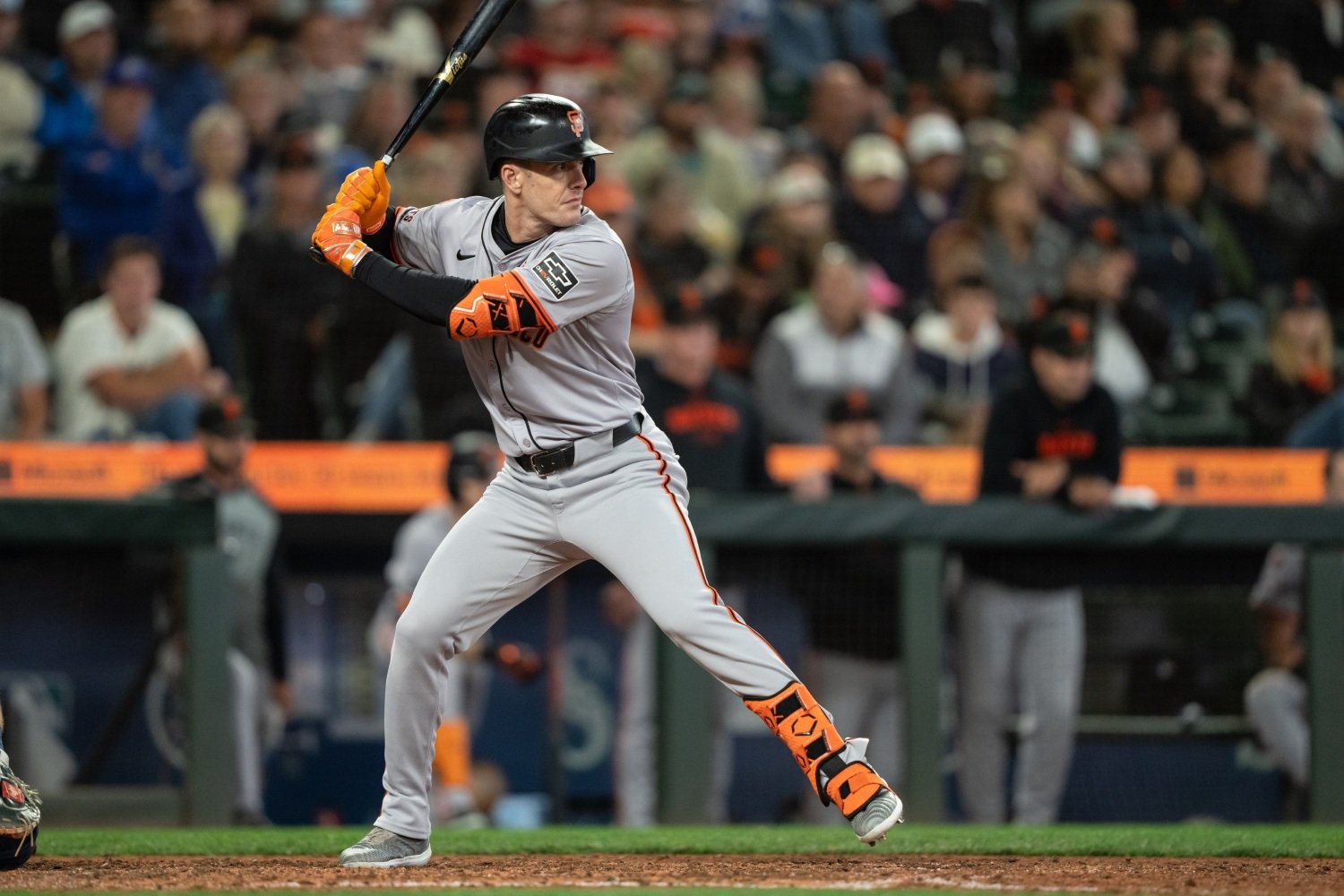 The 2025 Twins figure to be a little bit unusual, in that there aren't huge holes on the roster, but there's also little (or no) money to address the minor gaps that do exist. The front office will likely need to be creative, and set their sights lower than the big splash moves they have made in recent offseasons. A player like Mark Canha, while not a big name, could absolutely provide a lot of value both on and off the field, and would fit the team dynamic nicely, as well. What does Canha bring to the table? Mark Canha does a few things really well. He draws a ton of walks (and gets hit by pitches a ton), is clutch, and is reportedly a great clubhouse presence. Getting on base If you have seen Moneyball, you probably remember Billy Beane’s refrain to explain why he liked the players he targeted: "he gets on base." One of Mark Canha’s biggest strengths is just that: he gets on base. A lot. From 2020 through 2023, his OBP is 32nd in baseball. It's not a coincidence that, a decade ago, he got his break by being picked in the Rule 5 Draft and traded for by the A's. Adding an on-base machine to the lineup would absolutely lead to scoring more runs. Getting Plunked Dating back to 2018, Canha has gotten hit by pitches 123 times. Only Anthony Rizzo has gotten plunked more over that span. Back in 2023, Rocco Baldelli talked about Matt Wallner having cement bones due to his ability to get hit over and over and be none the worse for wear. In 2024, Willi Castro took the brunt of the painful free bases. Were the Twins to sign Canha, they would have four of the 20 most frequently hit batters in baseball. That’s just wild, but it’s a way to score runs. Maybe the Twins can turn that into the next market inefficiency. Defense and flexibility Canha is an acceptable defender, roughly average last season in left field, right field, and at first base. He’s not going to win a Gold Glove, but he’s not a butcher and will make the plays he’s supposed to make. His (slight) defensive flexibility would give the opportunity to be the primary first baseman, but to spell Trevor Larnach and Matt Wallner in the corners against tough lefties. Clutch hitting Canha has been clutch throughout his career, with an .862 OPS in high-leverage spots, compared with .732 in medium-leverage situations and .768 in low leverage. Clutch hitting is not really a skill, nor is it particularly predictive. But, when a guy is clutch year after year, as Canha has been? He might just be an outlier. And, as it turns out, the Twins would benefit greatly from some clutch hitting; the 2024 team was historically bad when it mattered most down the stretch. Clubhouse presence and mentoring With the Tigers in 2024, teammates Riley Greene, Parker Meadows, and Colt Keith all sang the praises of Canha. They spoke to his preparation, care, and demeanor. Greene said “I’ve watched him do his early work and his attention to detail in the cage is really, really good. He is locked in. He’s trying to be perfect in the cage.” Setting that example for some of the younger players could be invaluable for their growth. While with the San Francisco Giants, Manager Bob Melvin said “He’s a pretty tenacious player. He’s the kind of guy you don’t particularly care for on the other side, and you love him when he’s on your team.” Canha also maintains an Instagram account centered on his explorations of local food in big-league cities. He's one of the most likable players in baseball. Mark Canha (@bigleaguefoodie) • Instagram photos and videos WWW.INSTAGRAM.COM 3,957 likes, 36 comments - bigleaguefoodie on November 19, 2024: "Amazing experience at @lazozzona in Scottsdale last night! Chef @richardblais and his team rolled out the red carpet... The Concerns Canha had a down season in 2024, as you can see from the Baseball Savant page above. All that blue represents a big step back compared to the few years before it. Over his decade-long career, Canha has virtually identical platoon splits, but 2024 was an outlier for him there, too. His OPS against righties was .118 lower than lefties. He barreled the ball at a career-low rate, and had a nasty habit of topping pitches, but it’s probably safer to attribute that to a lingering hip injury that he attempted to play through, rather than to a significant and irreversible decline. That said, 2025 will be Canha’s age-36 season, and the end comes quickly for some players. Canha also doesn’t have a ton of home run power, probably slotting in at between 10-15 across a full, healthy season. With other sluggers on the team, that’s not a dealbreaker, as his approach could actually provide more balance than the current lineup does. Aside from those things, there’s not a ton to dislike. So, what would it take to sign him? It’s tough to nail down. He’s coming off a two-year, $26.5 million deal. With the down year, he was worth 0.5 bWAR and 1 fWAR, putting his value at somewhere between $4-8 million. A year older, and certainly in the decline phase, it’s possible he could sign for as little as $3 million to prove his health and capability, with the intention of signing for a little more in 2026. I could also see a scenario where he and his agent hold out for something closer to $10 million. In that case, he’s less likely to fit into the budget, but somewhere, the team does have to spend a little to meet those noteworthy needs. Would you pay, say $4 million for the flexibility, clutchness, and mentoring Canha can provide? I would. I think the Twins would be well-served to make that move.
 -
Would This Non-Tendered Pitcher Be a Good Fit For The Minnesota Twins?
Eric Blonigen posted an article in Twins
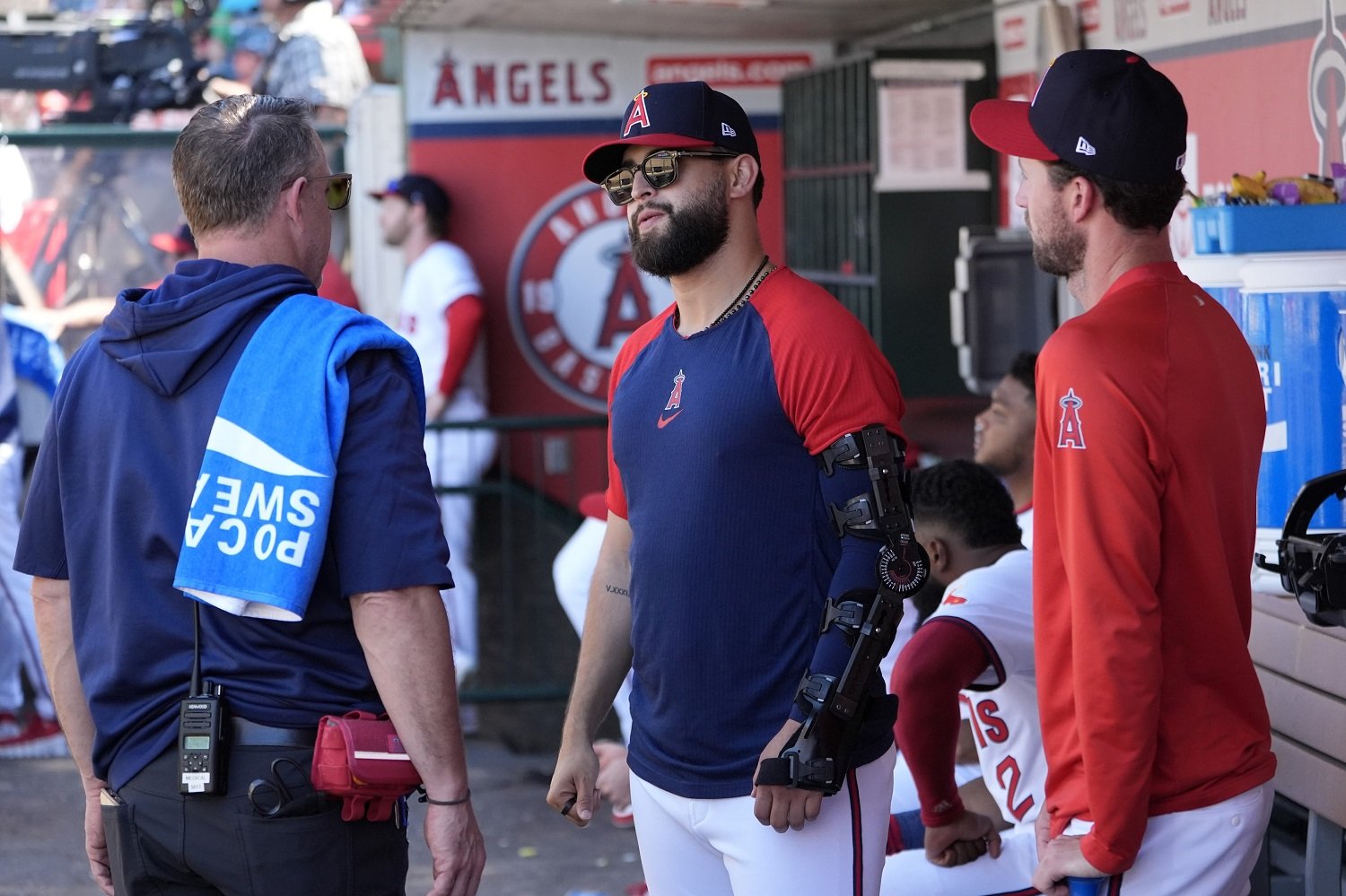 Last week, teams tendered contracts to arbitration-eligible players they wanted to keep, and non-tendered guys they perceived to he fringy, too expensive, or not possessing excessive value compared to their internal projections. Each season, some surprising names are non-tendered and become free agents. Two years ago, the Tigers’ poor self-scouting landed the Twins 2024 All-Star Willi Castro. Should the Twins pursue Patrick Sandoval, they could similarly benefit from another front office’s mistake—although not quite as immediately. Let’s dig in! The Situation The reason Sandoval’s non-tender was surprising is that he’s probably a fourth starter on a playoff-caliber team, and has two years of team control remaining. He was likely cut due to his late June Tommy John surgery. He also suffered a flexor tear, and is expected to be out until at least the second half of the season, and perhaps all year. He was projected to earn $11.8 million over the next two seasons, according to MLB Trade Rumors. Sandoval throws a deep six-pitch mix, with good off-speed and breaking pitches. He’s death on lefties, and it’s been a hot minute since the Twins have had a good lefty starter (sorry Devin Smeltzer, Rich Hill, et al). The Upside There are a few things that make Sandoval an intriguing fit for the Twins. First, he’s legitimately a mid-rotation arm when healthy. Prior to his injury, Steve Adams compared Sandoval to the Marlins’ Jesus Luzardo and speculated he would be moved at the deadline. Over the past three seasons, Sandoval has put up a 3.66 FIP and struck out 8.7 batters per nine innings, and he's still just 28 years old. He’s been worth 7.2 fWAR in 81 starts over the past three seasons. Compare that to 7.6 fWAR for Joe Ryan and 6.7 for Bailey Ober over those same spans, and you can see what Sandoval brings to the table. Second, it’s somewhat reasonable to expect additional upside in the Twins system compared to the Angels, who don’t have a particularly strong track record of developing pitchers (bottom third in baseball in homegrown pitching ERA and bottom quartile in innings pitched since 2012). By adjusting his pitch mix, changing the characteristics of his fastball, or making some other mechanical tweaks, there's a lot of ways to unlock a new level. Third, having Sandoval slotted into the middle of the rotation for 2026 would give the Twins the flexibility to trade one of Pablo Lopez, Ryan, or Ober prior to the 2026 season and recoup maximum value, while they have two years of team control remaining. This could help them address other needs right as their young core starts to get expensive. The Downside Look, it’s a bit of a dice toss as to whether Sandoval pitches in 2025. After missing a year or more as he rehabs, he will need time to ramp up his workload. It’s also common for command to suffer, at least initially, post-Tommy John. So, even if he does pitch in 2025, it would be safest to look at him as a mid- or late-season bullpen addition. His fastball also gets hit hard, and he walks too many guys, but those issues may be fixable. Aside from those minor quibbles, there's really very little downside. Can the Twins Afford Sandoval? With the Twins ownership’s self-imposed budget restraints, they surely aren’t interested in paying him $5.6 million in 2025 to potentially pitch some innings down the stretch. However, perhaps there’s an opportunity to get creative. I’m looking at something similar to the two-year, $10 million deal the Twins signed with Michael Pineda prior to the 2018 season. The premise of that was to spend the first season rehabbing with the team, and fully contribute during the second season. That deal worked out well for both sides, to the point the Twins re-signed Pineda for an additional two years. Is there any reason they couldn't strike a similar bargain with Sandoval? Probably not. Heck, throw in a little deferred money if need be. Why Would Sandoval Be Interested in Signing with the Twins? Sandoval has made $10 million over his career, including $5 million in 2024. So, he might be open to taking a cut for 2025, as long as his overall remaining arbitration-eligible pay stays in line with projections. He may also be interested in Minnesota, as the Twins have a recent reputation for maximizing upside for many pitchers (see: all of the Twins' current starters). He could envision a scenario where he recovers, has a career year in 2026, and hits his big payday at 30 years old. If I’m Derek Falvey (or Jeremy Zoll), I’m making a call to Sandoval’s agent, like, yesterday, and seeing what I can work out. How about you?
 -
With the Minnesota Twins likely shopping in the scratch-and-dent aisle of the free agent market once again this offseason, it’ll be important for them to look for value in unexpected places. Could southpaw starting pitcher Patrick Sandoval end up with the Twins after the Angels non-tendered him? Image courtesy of © Kiyoshi Mio-Imagn Images With the Minnesota Twins likely shopping in the scratch-and-dent aisle of the free agent market once again this offseason, it’ll be important for them to look for value in unexpected places. Could southpaw starting pitcher Patrick Sandoval end up with the Twins after the Angels non-tendered him? Last week, teams tendered contracts to arbitration-eligible players they wanted to keep, and non-tendered guys they perceived to he fringy, too expensive, or not possessing excessive value compared to their internal projections. Each season, some surprising names are non-tendered and become free agents. Two years ago, the Tigers’ poor self-scouting landed the Twins 2024 All-Star Willi Castro. Should the Twins pursue Patrick Sandoval, they could similarly benefit from another front office’s mistake—although not quite as immediately. Let’s dig in! The Situation The reason Sandoval’s non-tender was surprising is that he’s probably a fourth starter on a playoff-caliber team, and has two years of team control remaining. He was likely cut due to his late June Tommy John surgery. He also suffered a flexor tear, and is expected to be out until at least the second half of the season, and perhaps all year. He was projected to earn $11.8 million over the next two seasons, according to MLB Trade Rumors. Sandoval throws a deep six-pitch mix, with good off-speed and breaking pitches. He’s death on lefties, and it’s been a hot minute since the Twins have had a good lefty starter (sorry Devin Smeltzer, Rich Hill, et al). The Upside There are a few things that make Sandoval an intriguing fit for the Twins. First, he’s legitimately a mid-rotation arm when healthy. Prior to his injury, Steve Adams compared Sandoval to the Marlins’ Jesus Luzardo and speculated he would be moved at the deadline. Over the past three seasons, Sandoval has put up a 3.66 FIP and struck out 8.7 batters per nine innings, and he's still just 28 years old. He’s been worth 7.2 fWAR in 81 starts over the past three seasons. Compare that to 7.6 fWAR for Joe Ryan and 6.7 for Bailey Ober over those same spans, and you can see what Sandoval brings to the table. Second, it’s somewhat reasonable to expect additional upside in the Twins system compared to the Angels, who don’t have a particularly strong track record of developing pitchers (bottom third in baseball in homegrown pitching ERA and bottom quartile in innings pitched since 2012). By adjusting his pitch mix, changing the characteristics of his fastball, or making some other mechanical tweaks, there's a lot of ways to unlock a new level. Third, having Sandoval slotted into the middle of the rotation for 2026 would give the Twins the flexibility to trade one of Pablo Lopez, Ryan, or Ober prior to the 2026 season and recoup maximum value, while they have two years of team control remaining. This could help them address other needs right as their young core starts to get expensive. The Downside Look, it’s a bit of a dice toss as to whether Sandoval pitches in 2025. After missing a year or more as he rehabs, he will need time to ramp up his workload. It’s also common for command to suffer, at least initially, post-Tommy John. So, even if he does pitch in 2025, it would be safest to look at him as a mid- or late-season bullpen addition. His fastball also gets hit hard, and he walks too many guys, but those issues may be fixable. Aside from those minor quibbles, there's really very little downside. Can the Twins Afford Sandoval? With the Twins ownership’s self-imposed budget restraints, they surely aren’t interested in paying him $5.6 million in 2025 to potentially pitch some innings down the stretch. However, perhaps there’s an opportunity to get creative. I’m looking at something similar to the two-year, $10 million deal the Twins signed with Michael Pineda prior to the 2018 season. The premise of that was to spend the first season rehabbing with the team, and fully contribute during the second season. That deal worked out well for both sides, to the point the Twins re-signed Pineda for an additional two years. Is there any reason they couldn't strike a similar bargain with Sandoval? Probably not. Heck, throw in a little deferred money if need be. Why Would Sandoval Be Interested in Signing with the Twins? Sandoval has made $10 million over his career, including $5 million in 2024. So, he might be open to taking a cut for 2025, as long as his overall remaining arbitration-eligible pay stays in line with projections. He may also be interested in Minnesota, as the Twins have a recent reputation for maximizing upside for many pitchers (see: all of the Twins' current starters). He could envision a scenario where he recovers, has a career year in 2026, and hits his big payday at 30 years old. If I’m Derek Falvey (or Jeremy Zoll), I’m making a call to Sandoval’s agent, like, yesterday, and seeing what I can work out. How about you? View full article
-
Welcome to the next installment of the 2024-2025 Twins Daily Top 20 Prospects countdown. Today, we'll highlight Charlee Soto, a prep pitcher with tremendous upside and a lot to work on. Image courtesy of William Parmeter Welcome to the next installment of the 2024-2025 Twins Daily Top 20 Prospects countdown. Today, we'll highlight Charlee Soto, a prep pitcher with tremendous upside and a lot to work on. Similar to the incredibly strong 2022 draft, the Twins landed a bevy of high-upside guys. Taking Walker Jenkins fifth overall and Luke Keaschall in the second round, the Twins drafted Charlee Soto 34th overall and signed him for a full-slot $2.48 million bonus. At the time, Soto had not yet turned 18. Perfect Game said of him: “Outgrew shortstop, now a full-time RHP, works in the mid-90’s, top 98, with a plus change up and improving slider, very projectable, fresh arm.” At the time, he was ranked as having the second-best stuff of any prep pitcher. He spoke to being influenced by both Gerrit Cole and Roy Halladay. He debuted in 2024 with Low-A Fort Myers and had a positive season. What’s to like? At 6’5”, Soto has a starter’s frame. He’s got great stuff, with three pitches that are average or better. His fastball approaches triple digits, his slider sits in the upper 90s, and his circle change approaches 90. His FIP is similar against both lefties and righties. He’s a ground ball pitcher. And, he has added a cutter and a sinker, giving him a full five-pitch mix. His heater gets about 18 inches of carry. He uses both his four-seamer and his changeup as out pitches. How was his 2024 season? In short, Soto learned that professional baseball is more challenging than facing high school hitters. Across 21 games (20 starts), he went 1-7 with a 5.23 ERA which was inflated by a .365 BABIP and an unlucky 11.5% home run / fly ball rate. His FIP was much better, at 3.88 on the season, and he struck out 87 in 74 innings which is quite strong for a starting pitcher. At the same time, he walked way too many - 4.01 per nine innings. Soto struggled with consistency, and his splits by month are kind of wild. April was good, with Soto giving up just three runs over four starts. Then, in his nine starts in May and June, he pitched to an 8.77 ERA and went less than three innings per start. In the second half, he was again strong, going almost five innings per start with a 3.15 FIP. In July, he picked up Minor League Pitcher of the Month honors. For an 18-year-old, a lack of consistency is almost expected. Overall, his expected numbers were strong despite being 3.9 years younger than average for the level. He accomplished what he needed to, and demonstrated legit prospect bona fides. What does Soto need to work on as he enters his age-19 season? In short, command and control are the biggest opportunity. Fangraphs has his command rated at 20 on the 20-80 scale. That was borne out with his 10% walk rate in 2024. In particular, Soto will want to work on locating his fastball as he gave up over seven walks per nine innings on that pitch. He may want to work on his setup and release mechanics. Averaging just 5’8” of extension on his release, his velocity actually plays down a bit. Since he has plus velocity currently, extension is not an issue for him yet. But, as he ages, it will become more important. If the Twins are able to help him improve his extension now, he should see better results throughout his career. He also needs to work on repeatability with both his slider and his cutter, as the characteristics of them were a bit all over the place. While the slider was still effective, the cutter was less so, yielding a 5.18 FIP. Realistically, even small improvements in these things could help Soto mature into a legit frontline starting pitching prospect. What’s next for him? It seems likely that Soto will play most of the 2025 season at High-A Cedar Rapids. Given his age, I wouldn’t be surprised if he started the season back in Fort Myers for a month or so to build confidence. One can hope that the Twins pitching development team can work their magic over the next couple seasons. If so, fans may see him at Target Field in 2027 or 2028 - hopefully at the front of the rotation. View full article
-
 Similar to the incredibly strong 2022 draft, the Twins landed a bevy of high-upside guys. Taking Walker Jenkins fifth overall and Luke Keaschall in the second round, the Twins drafted Charlee Soto 34th overall and signed him for a full-slot $2.48 million bonus. At the time, Soto had not yet turned 18. Perfect Game said of him: “Outgrew shortstop, now a full-time RHP, works in the mid-90’s, top 98, with a plus change up and improving slider, very projectable, fresh arm.” At the time, he was ranked as having the second-best stuff of any prep pitcher. He spoke to being influenced by both Gerrit Cole and Roy Halladay. He debuted in 2024 with Low-A Fort Myers and had a positive season. What’s to like? At 6’5”, Soto has a starter’s frame. He’s got great stuff, with three pitches that are average or better. His fastball approaches triple digits, his slider sits in the upper 90s, and his circle change approaches 90. His FIP is similar against both lefties and righties. He’s a ground ball pitcher. And, he has added a cutter and a sinker, giving him a full five-pitch mix. His heater gets about 18 inches of carry. He uses both his four-seamer and his changeup as out pitches. How was his 2024 season? In short, Soto learned that professional baseball is more challenging than facing high school hitters. Across 21 games (20 starts), he went 1-7 with a 5.23 ERA which was inflated by a .365 BABIP and an unlucky 11.5% home run / fly ball rate. His FIP was much better, at 3.88 on the season, and he struck out 87 in 74 innings which is quite strong for a starting pitcher. At the same time, he walked way too many - 4.01 per nine innings. Soto struggled with consistency, and his splits by month are kind of wild. April was good, with Soto giving up just three runs over four starts. Then, in his nine starts in May and June, he pitched to an 8.77 ERA and went less than three innings per start. In the second half, he was again strong, going almost five innings per start with a 3.15 FIP. In July, he picked up Minor League Pitcher of the Month honors. For an 18-year-old, a lack of consistency is almost expected. Overall, his expected numbers were strong despite being 3.9 years younger than average for the level. He accomplished what he needed to, and demonstrated legit prospect bona fides. What does Soto need to work on as he enters his age-19 season? In short, command and control are the biggest opportunity. Fangraphs has his command rated at 20 on the 20-80 scale. That was borne out with his 10% walk rate in 2024. In particular, Soto will want to work on locating his fastball as he gave up over seven walks per nine innings on that pitch. He may want to work on his setup and release mechanics. Averaging just 5’8” of extension on his release, his velocity actually plays down a bit. Since he has plus velocity currently, extension is not an issue for him yet. But, as he ages, it will become more important. If the Twins are able to help him improve his extension now, he should see better results throughout his career. He also needs to work on repeatability with both his slider and his cutter, as the characteristics of them were a bit all over the place. While the slider was still effective, the cutter was less so, yielding a 5.18 FIP. Realistically, even small improvements in these things could help Soto mature into a legit frontline starting pitching prospect. What’s next for him? It seems likely that Soto will play most of the 2025 season at High-A Cedar Rapids. Given his age, I wouldn’t be surprised if he started the season back in Fort Myers for a month or so to build confidence. One can hope that the Twins pitching development team can work their magic over the next couple seasons. If so, fans may see him at Target Field in 2027 or 2028 - hopefully at the front of the rotation.
 -
I don’t know about you, but this is about the time of year I start looking forward to another season of Twins baseball. With something like 85 days until pitchers and catchers report to spring training, many fans have a baseball-sized void in their nightly entertainment. How better to cope than watching a movie featuring the Twins? Image courtesy of © Kim Klement-Imagn Images I don’t know about you, but this is about the time of year I start looking forward to another season of Twins baseball. With something like 85 days until pitchers and catchers report to spring training, many fans have a baseball-sized void in their nightly entertainment. How better to cope than watching a movie featuring the Twins? As it turns out, the Twins (and former Twins players) are featured a lot in popular media—sort of a surprising amount, really. One might expect teams like the Yankees, Dodgers, Cubs, and Red Sox to be the main subjects of baseball-related movies, and they are. But, the Twins just might be the most frequent team, after those major-market clubs. Why is this? Who knows! We won't even attempt to figure that out. Instead, here’s a rundown, in no particular order, of some of the films and shows that stand out. Little Big League This was one of my favorites as a kid. At 11, the premise of inheriting a baseball team (the Twins, no less) was something I dreamed on. What would I do as owner? Whom would I sign? For whom would I trade? I thought a lot about how great the Twins would be if they could add Ken Griffey Jr. or Randy Johnson to their roster. Admittedly, adult me doesn’t think this is quite as good as 11-year-old me did, but it’s still worth a watch every few years. Suspending disbelief is certainly required. There are few things that make me even a little bit nostalgic for the Metrodome, but this film is one of them. Moneyball If you’ve seen the movie, you know it’s really about the Sacramento Las Vegas Oakland Athletics, and their adoption of analytics. In the 2002 Moneyball season, the A’s set the all-time record for longest winning streak, and took their $40 million payroll filled with on-base machines (and ace pitchers and sluggers who didn’t feature in the movie) to the ALDS. But, the Twins feature prominently in a few ways. First, Billy Beane played for the Twins in 1986 and 1987. The Twins defeated the A’s to end their winning streak, and beat them to advance to the ALCS, ending the A’s run. Also, Moneyball author Michael Lewis had approached the Twins first about being the subject of the book, but the Twins weren’t interested. There are two great documentaries featuring former and future Twins players, and both came out in 2012 — Ballplayer: Pelotero, and Knuckleball!. Ballplayer: Pelotero This one chronicles the international signing process out of baseball academies in the Dominican Republic. One of the main storylines in this documentary is the controversy surrounding Miguel Sanó’s age, as he was preparing to sign as a 16-year-old. This uncertainty led to Sanó dropping his signing price from around $6 million to the $3.25 million the Twins signed him at. This film shines a light on a part of the baseball business that isn’t widely covered by many. And, it’s narrated by John Leguizamo. Knuckleball! Remember when the Twins had a future Cy Young winning knuckleballer? They signed R.A. Dickey twice to minor-league deals, in 2007 and 2009. He wasn’t great for them, but went on to become a very solid pitcher, winning the Cy Young award in 2012 with the Mets. Knuckleball! features Dickey and Tim Wakefield, as well as others in the small knuckleball fraternity. If you are feeling a baseball-sized void in your life this time of year, it’s worth a watch. Major League: Back to the Minors This is a film that’s not objectively good. It’s the worst of the Major League movies, but it is fun, and it features the Twins. Corbin Bernsen returns as Roger Dorn, who now owns the Twins. Scott Bakula plays a pitcher for the Fort Myers Miracle who becomes the manager of the Portland Buzz (at the time, the Twins’ Triple-A affiliate). He challenges the Twins’ manager to an exhibition game, and it’s played at the Metrodome. Many of the characters from Major League and Major League II return. Plus, there’s a young Walton Goggins, who always elevates anything he’s in. There are a couple of other films that tangentially feature former Twins. Fever Pitch featured the 2004 Red Sox team that broke the “Curse of the Bambino”. Of course, David Ortiz was on that team. Torii Hunter was an executive producer on a movie called Chokehold. Finally, there are a handful of former Twins who have acted in movies and shows. Kyle Farmer played an unnamed quarterback in The Blind Side, and Paul Molitor played “jogging cop” in a TV movie called Falling for You. Rod Carew was in an episode of George Lopez. Tony Oliva was in two movies: Thérèse, and Going the Distance. Harmon Killebrew was in Pastime; an episode of Step by Step; and an episode of Mr. Belvedere. I’m probably still missing some. If you can think of any others, comment below. And, next time you are finding yourself missing the Twins, maybe you can watch the next best thing — a movie involving the Twins. View full article
-
 As it turns out, the Twins (and former Twins players) are featured a lot in popular media—sort of a surprising amount, really. One might expect teams like the Yankees, Dodgers, Cubs, and Red Sox to be the main subjects of baseball-related movies, and they are. But, the Twins just might be the most frequent team, after those major-market clubs. Why is this? Who knows! We won't even attempt to figure that out. Instead, here’s a rundown, in no particular order, of some of the films and shows that stand out. Little Big League This was one of my favorites as a kid. At 11, the premise of inheriting a baseball team (the Twins, no less) was something I dreamed on. What would I do as owner? Whom would I sign? For whom would I trade? I thought a lot about how great the Twins would be if they could add Ken Griffey Jr. or Randy Johnson to their roster. Admittedly, adult me doesn’t think this is quite as good as 11-year-old me did, but it’s still worth a watch every few years. Suspending disbelief is certainly required. There are few things that make me even a little bit nostalgic for the Metrodome, but this film is one of them. Moneyball If you’ve seen the movie, you know it’s really about the Sacramento Las Vegas Oakland Athletics, and their adoption of analytics. In the 2002 Moneyball season, the A’s set the all-time record for longest winning streak, and took their $40 million payroll filled with on-base machines (and ace pitchers and sluggers who didn’t feature in the movie) to the ALDS. But, the Twins feature prominently in a few ways. First, Billy Beane played for the Twins in 1986 and 1987. The Twins defeated the A’s to end their winning streak, and beat them to advance to the ALCS, ending the A’s run. Also, Moneyball author Michael Lewis had approached the Twins first about being the subject of the book, but the Twins weren’t interested. There are two great documentaries featuring former and future Twins players, and both came out in 2012 — Ballplayer: Pelotero, and Knuckleball!. Ballplayer: Pelotero This one chronicles the international signing process out of baseball academies in the Dominican Republic. One of the main storylines in this documentary is the controversy surrounding Miguel Sanó’s age, as he was preparing to sign as a 16-year-old. This uncertainty led to Sanó dropping his signing price from around $6 million to the $3.25 million the Twins signed him at. This film shines a light on a part of the baseball business that isn’t widely covered by many. And, it’s narrated by John Leguizamo. Knuckleball! Remember when the Twins had a future Cy Young winning knuckleballer? They signed R.A. Dickey twice to minor-league deals, in 2007 and 2009. He wasn’t great for them, but went on to become a very solid pitcher, winning the Cy Young award in 2012 with the Mets. Knuckleball! features Dickey and Tim Wakefield, as well as others in the small knuckleball fraternity. If you are feeling a baseball-sized void in your life this time of year, it’s worth a watch. Major League: Back to the Minors This is a film that’s not objectively good. It’s the worst of the Major League movies, but it is fun, and it features the Twins. Corbin Bernsen returns as Roger Dorn, who now owns the Twins. Scott Bakula plays a pitcher for the Fort Myers Miracle who becomes the manager of the Portland Buzz (at the time, the Twins’ Triple-A affiliate). He challenges the Twins’ manager to an exhibition game, and it’s played at the Metrodome. Many of the characters from Major League and Major League II return. Plus, there’s a young Walton Goggins, who always elevates anything he’s in. There are a couple of other films that tangentially feature former Twins. Fever Pitch featured the 2004 Red Sox team that broke the “Curse of the Bambino”. Of course, David Ortiz was on that team. Torii Hunter was an executive producer on a movie called Chokehold. Finally, there are a handful of former Twins who have acted in movies and shows. Kyle Farmer played an unnamed quarterback in The Blind Side, and Paul Molitor played “jogging cop” in a TV movie called Falling for You. Rod Carew was in an episode of George Lopez. Tony Oliva was in two movies: Thérèse, and Going the Distance. Harmon Killebrew was in Pastime; an episode of Step by Step; and an episode of Mr. Belvedere. I’m probably still missing some. If you can think of any others, comment below. And, next time you are finding yourself missing the Twins, maybe you can watch the next best thing — a movie involving the Twins.
 -
As GM for the offseason, my broad strategy would be to improve the Twins for this season and next, and it'll take a flurry of moves to make it happen. I will try to not remove key pieces from the roster, and I’m hoping to make at least one decent splash on an impact bat. Image courtesy of Joe Camporeale-Imagn Images (Christian Walker) As GM for the offseason, my broad strategy would be to improve the Twins for this season and next, and it'll take a flurry of moves to make it happen. I will try to not remove key pieces from the roster, and I’m hoping to make at least one decent splash on an impact bat. This series of articles is a primer on the release of our new "You're The Twins GM!" tool where you play the role of Derek Falvey and build your own Twins offseason. Please visit the tool here and join in on the fun! For the purposes of this article, I’m going to make a few assumptions. First, I’m assuming that the Pohlads have not yet completed the sale of the Twins by the time the season starts. Completing a billion and a half dollar transaction takes time, and any ownership group will want to do their due diligence. It’ll be in the Pohlads' best interest to keep fans engaged. Second, I’m assuming payroll will not increase by more than $5 million. While any increase may a stretch, my goal would be to convince ownership that this (quite modest) outlay will lead to a happier fanbase if fans perceive the team is headed in the right direction. If the Pohlads are still chasing suitors or even working through terms with a likely buyer, they could likely be convinced. So, I’ll be working with about $135 million. Third, I will assume that only teams expecting to be competitive will be interested in trading for the guys I will lay out. Fourth, I’ll be using MLB Trade Rumors estimates for arbitration figures and expected free agent contracts to calculate where the payroll is sitting. Finally, I’m assuming that the sale will have been completed by next offseason, that new ownership will want to compete, that the baseball media landscape will have improved slightly, and that a payroll back around $160 million will be doable. With all that established, let’s dig in. To begin with, there are a couple clear needs. The Twins need better defense, they need a legit first baseman, would benefit from at least one other solid bat either as a right-handed fourth outfielder or DH, and likely need an additional catching option. They could also use a good left-handed reliever. I will attempt to meet all these needs without crossing $130 million, without giving up key prospects, and still leaving some decent depth in place. However, I will be adopting a bit of a stars and scrubs approach. Trades I’m finding a buyer for Christian Vasquez and I’ll include a C-type prospect or two to not have to eat any salary. Potential fits include the Tampa Bay Rays and the Cincinnati Reds. This move saves $10 million. I’m trading Chris Paddack for a lottery ticket. I’m targeting a pre-hype Bailey Ober or David Festa type from the lower levels of another team’s system. I’m looking for tall, funky delivery, or an interesting pitch. Some combination of those would be even better. Here, I’ll take the best offer I can get that doesn’t involve paying any of his salary down, saving his $7.5 million. I’ll trade Willi Castro and Jhoan Duran to the Dodgers for Dalton Rushing and Alex Vesia. Rushing would be the backup catcher to Ryan Jeffers (and hopefully the catcher of the future). Vesia is a good lefty reliever with two years of arbitration-eligible control remaining. He’s set to make around $2.2 million in 2025. If I can get another prospect in the deal, even better. Free Agents I'm signing Christian Walker to a 3/$60 million deal to play first base. This is pricy, but he’s been worth an average of 3.6 fWAR over the past three seasons and can hold the position down during the current core’s window. Signing him will also send a message to fans that the Twins are still investing and want to win. I'll sign Randal Grichuk and his .913 OPS against lefties to a 2/$11 million deal to be a right-handed fourth outfielder. He can still play all three outfield spots (but isn’t pretty in center) and hits well enough to DH when needed. Non-Tender Michael Tonkin. Sorry. I move Royce Lewis to second base, and give Brooks Lee third base. This series of moves upgrades the offense at first base and catcher, improves the defense, gives the Twins a true platoon at catcher, and doesn’t remove any key players from the roster. We then end up with the following roster, which I’ll break out by segment. Lineup ($82.4 million) C - Ryan Jeffers ($4.7 million) 1B - Christian Walker ($20 million) 2B - Royce Lewis ($2.3 million) SS - Carlos Correa ($36 million) 3B - Brooks Lee ($0.76 million) LF - Trevor Larnach ($2.1 million) CF - Byron Buxton ($15 million) RF - Matt Wallner ($0.76 million) DH - Jose Miranda ($0.76 million) Look, the lineup has some guys that faded down the stretch last year. Miranda, Lee, and Lewis were all brutal over the final six weeks of the 2024 season. Better times are ahead. Larnach has come into his own, and Wallner keeps putting up monster power despite some worrying strikeout numbers. Adding three good bats will help smooth out the inconsistencies that go along with your players. Including the bench, this lineup features 11 guys that should be average or better at the plate. And, the lineup should take a step forward defensively which will also help the pitching. Bench ($7.28 million) C - Dalton Rushing ($0.76 million) UTIL IF - Michael Helman ($0.76 million) UTIL OF - Randal Grichuk ($5 million) Buxton insurance/late inning defensive replacement/pinch runner - DaShawn Keirsey ($0.76 million) Keirsey takes Manny Margot’s spot as theoretical Buxton insurance and provides elite defense. I give Helman the utility infield spot, and plan on Luke Keaschall as becoming a high-end utility option by mid-May if Helman gets off to a slow start. That does mean that Austin Martin begins the season back at Triple-A, and I’m okay with that. I’m hoping that he can figure out how to take better defensive routes in order to earn a way back. Jeffers becoming the backup to a catcher that can hit even better is a luxury most teams don’t have. Grichuk is a decent fielder in the corner outfield spots and is a great platoon bat. Plus, Emmanuel Rodriguez and Eddie Julien are both waiting in the wings in Saint Paul. Overall, Helman and Keirsey may not be high-end options, but giving them a little run to see what they are capable with makes sense until other, higher-upside players force the issue. Rotation ($31.1 million) Pablo Lopez ($21.5 million) Joe Ryan ($3.8 million) Bailey Ober ($4.3 million) David Festa ($0.76 million) Simeon Woods Richardson ($0.76 million) Assuming health, this has the makings of a very good rotation. While lacking a true ace, all of Lopez, Ryan, and Ober can play the part for stretches, and all are absolutely playoff-caliber starters. Assuming both Festa and Woods Richardson take even a small step forward, the entire rotation is average or better. Bullpen ($10.4 million) Griffin Jax (R) ($2.6 million) Cole Sands (R) ($0.76 million) Brock Stewart (R) ($0.80 million) Louie Varland (R) ($0.76 million) Justin Topa (R) ($0.76 million) Jorge Alcala (R) ($1.5 million) Alex Vesia (L) ($1.9 million) Jovani Moran (L) ($0.76 million) So, there are some additional things to call out about this bullpen. Losing Duran will hurt, but it is potentially the last opportunity to sell high. With the Twins getting Justin Topa and Jovani Moran back healthy, they add two impact arms. The trade for Vesia adds another high-leverage lefty. This should be a very good bullpen, assuming even average health. 40-man, Triple-A St. Paul Ronny Henriquez Brent Headrick Zebby Matthews Emmanuel Rodriguez Austin Martin Marco Raya Matt Canterino Kody Funderburk Jair Camargo Edouard Julien Luke Keaschall There are a number of depth guys ready for the call in Saint Paul. There’s depth for both starting and relief pitchers (including high-end options in Canterino, Raya, and Matthews), a potentially elite outfielder in Rodriguez, another fourth outfielder in Martin, and a high-end infield prospect in Keaschall. As non-40-man guys they have Payton Eeles as another utility infield option who’s capable of playing shortstop if need be. Daniel Duarte signed another minor league deal with the Twins after being outrighted, and he adds one more bullpen option. Overall, this is a good, solid group of guys able to make an impact. 40-man, Double-A Wichita Ricardo Olivar Kala’i Rosario Then, there’s a little bit of dead money ($3.45 million) Randy Dobnak ($3 million) Jay Jackson buyout ($0.2 million) Kyle Farmer buyout ($0.25 million) So, after all those trades and signings, I came in just under $135 million, and aside from guys getting more expensive in 2026, did not sacrifice the future. Again, I will hope that new ownership is good with a $160 million payroll to keep the team whole in the future. I’m feeling great about the lineup, rotation, and bullpen. I’m a little nervous about a couple of the back-of-the-bench options, but trust that with the high-end depth remaining in the upper minors, I can weather the unexpected. What do you think? Did I earn the job? I hope so, ‘cuz this team is gonna win the whole thing. What do you think of this offseason plan? Do you think you can do better? Then build your own Twins roster and hit the button below! Start Your Payroll Blueprint Now View full article
-
You're The Minnesota Twins GM! Plotting My Offseason: A Flurry of Moves
Eric Blonigen posted an article in Twins
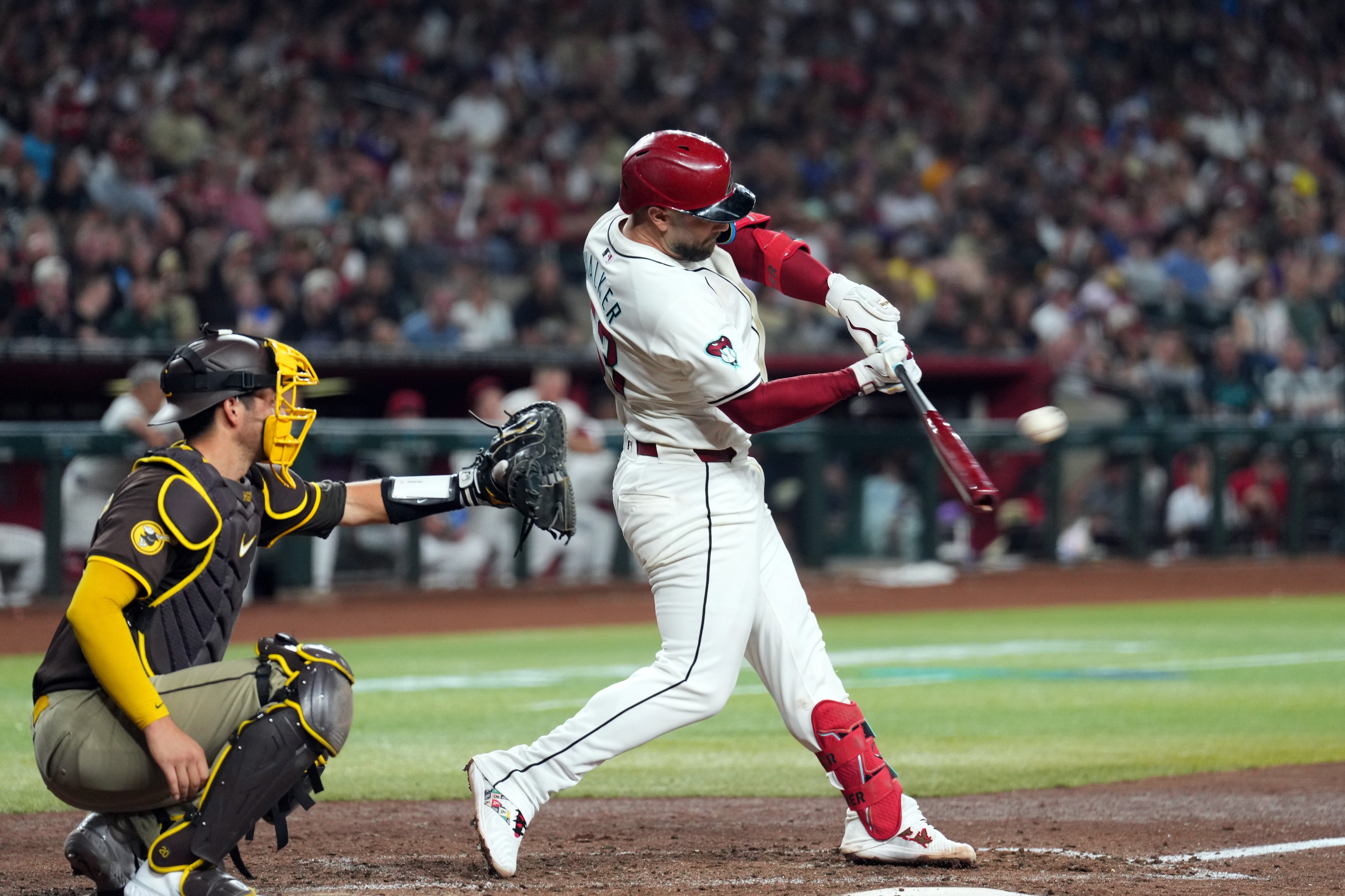 This series of articles is a primer on the release of our new "You're The Twins GM!" tool where you play the role of Derek Falvey and build your own Twins offseason. Please visit the tool here and join in on the fun! For the purposes of this article, I’m going to make a few assumptions. First, I’m assuming that the Pohlads have not yet completed the sale of the Twins by the time the season starts. Completing a billion and a half dollar transaction takes time, and any ownership group will want to do their due diligence. It’ll be in the Pohlads' best interest to keep fans engaged. Second, I’m assuming payroll will not increase by more than $5 million. While any increase may a stretch, my goal would be to convince ownership that this (quite modest) outlay will lead to a happier fanbase if fans perceive the team is headed in the right direction. If the Pohlads are still chasing suitors or even working through terms with a likely buyer, they could likely be convinced. So, I’ll be working with about $135 million. Third, I will assume that only teams expecting to be competitive will be interested in trading for the guys I will lay out. Fourth, I’ll be using MLB Trade Rumors estimates for arbitration figures and expected free agent contracts to calculate where the payroll is sitting. Finally, I’m assuming that the sale will have been completed by next offseason, that new ownership will want to compete, that the baseball media landscape will have improved slightly, and that a payroll back around $160 million will be doable. With all that established, let’s dig in. To begin with, there are a couple clear needs. The Twins need better defense, they need a legit first baseman, would benefit from at least one other solid bat either as a right-handed fourth outfielder or DH, and likely need an additional catching option. They could also use a good left-handed reliever. I will attempt to meet all these needs without crossing $130 million, without giving up key prospects, and still leaving some decent depth in place. However, I will be adopting a bit of a stars and scrubs approach. Trades I’m finding a buyer for Christian Vasquez and I’ll include a C-type prospect or two to not have to eat any salary. Potential fits include the Tampa Bay Rays and the Cincinnati Reds. This move saves $10 million. I’m trading Chris Paddack for a lottery ticket. I’m targeting a pre-hype Bailey Ober or David Festa type from the lower levels of another team’s system. I’m looking for tall, funky delivery, or an interesting pitch. Some combination of those would be even better. Here, I’ll take the best offer I can get that doesn’t involve paying any of his salary down, saving his $7.5 million. I’ll trade Willi Castro and Jhoan Duran to the Dodgers for Dalton Rushing and Alex Vesia. Rushing would be the backup catcher to Ryan Jeffers (and hopefully the catcher of the future). Vesia is a good lefty reliever with two years of arbitration-eligible control remaining. He’s set to make around $2.2 million in 2025. If I can get another prospect in the deal, even better. Free Agents I'm signing Christian Walker to a 3/$60 million deal to play first base. This is pricy, but he’s been worth an average of 3.6 fWAR over the past three seasons and can hold the position down during the current core’s window. Signing him will also send a message to fans that the Twins are still investing and want to win. I'll sign Randal Grichuk and his .913 OPS against lefties to a 2/$11 million deal to be a right-handed fourth outfielder. He can still play all three outfield spots (but isn’t pretty in center) and hits well enough to DH when needed. Non-Tender Michael Tonkin. Sorry. I move Royce Lewis to second base, and give Brooks Lee third base. This series of moves upgrades the offense at first base and catcher, improves the defense, gives the Twins a true platoon at catcher, and doesn’t remove any key players from the roster. We then end up with the following roster, which I’ll break out by segment. Lineup ($82.4 million) C - Ryan Jeffers ($4.7 million) 1B - Christian Walker ($20 million) 2B - Royce Lewis ($2.3 million) SS - Carlos Correa ($36 million) 3B - Brooks Lee ($0.76 million) LF - Trevor Larnach ($2.1 million) CF - Byron Buxton ($15 million) RF - Matt Wallner ($0.76 million) DH - Jose Miranda ($0.76 million) Look, the lineup has some guys that faded down the stretch last year. Miranda, Lee, and Lewis were all brutal over the final six weeks of the 2024 season. Better times are ahead. Larnach has come into his own, and Wallner keeps putting up monster power despite some worrying strikeout numbers. Adding three good bats will help smooth out the inconsistencies that go along with your players. Including the bench, this lineup features 11 guys that should be average or better at the plate. And, the lineup should take a step forward defensively which will also help the pitching. Bench ($7.28 million) C - Dalton Rushing ($0.76 million) UTIL IF - Michael Helman ($0.76 million) UTIL OF - Randal Grichuk ($5 million) Buxton insurance/late inning defensive replacement/pinch runner - DaShawn Keirsey ($0.76 million) Keirsey takes Manny Margot’s spot as theoretical Buxton insurance and provides elite defense. I give Helman the utility infield spot, and plan on Luke Keaschall as becoming a high-end utility option by mid-May if Helman gets off to a slow start. That does mean that Austin Martin begins the season back at Triple-A, and I’m okay with that. I’m hoping that he can figure out how to take better defensive routes in order to earn a way back. Jeffers becoming the backup to a catcher that can hit even better is a luxury most teams don’t have. Grichuk is a decent fielder in the corner outfield spots and is a great platoon bat. Plus, Emmanuel Rodriguez and Eddie Julien are both waiting in the wings in Saint Paul. Overall, Helman and Keirsey may not be high-end options, but giving them a little run to see what they are capable with makes sense until other, higher-upside players force the issue. Rotation ($31.1 million) Pablo Lopez ($21.5 million) Joe Ryan ($3.8 million) Bailey Ober ($4.3 million) David Festa ($0.76 million) Simeon Woods Richardson ($0.76 million) Assuming health, this has the makings of a very good rotation. While lacking a true ace, all of Lopez, Ryan, and Ober can play the part for stretches, and all are absolutely playoff-caliber starters. Assuming both Festa and Woods Richardson take even a small step forward, the entire rotation is average or better. Bullpen ($10.4 million) Griffin Jax (R) ($2.6 million) Cole Sands (R) ($0.76 million) Brock Stewart (R) ($0.80 million) Louie Varland (R) ($0.76 million) Justin Topa (R) ($0.76 million) Jorge Alcala (R) ($1.5 million) Alex Vesia (L) ($1.9 million) Jovani Moran (L) ($0.76 million) So, there are some additional things to call out about this bullpen. Losing Duran will hurt, but it is potentially the last opportunity to sell high. With the Twins getting Justin Topa and Jovani Moran back healthy, they add two impact arms. The trade for Vesia adds another high-leverage lefty. This should be a very good bullpen, assuming even average health. 40-man, Triple-A St. Paul Ronny Henriquez Brent Headrick Zebby Matthews Emmanuel Rodriguez Austin Martin Marco Raya Matt Canterino Kody Funderburk Jair Camargo Edouard Julien Luke Keaschall There are a number of depth guys ready for the call in Saint Paul. There’s depth for both starting and relief pitchers (including high-end options in Canterino, Raya, and Matthews), a potentially elite outfielder in Rodriguez, another fourth outfielder in Martin, and a high-end infield prospect in Keaschall. As non-40-man guys they have Payton Eeles as another utility infield option who’s capable of playing shortstop if need be. Daniel Duarte signed another minor league deal with the Twins after being outrighted, and he adds one more bullpen option. Overall, this is a good, solid group of guys able to make an impact. 40-man, Double-A Wichita Ricardo Olivar Kala’i Rosario Then, there’s a little bit of dead money ($3.45 million) Randy Dobnak ($3 million) Jay Jackson buyout ($0.2 million) Kyle Farmer buyout ($0.25 million) So, after all those trades and signings, I came in just under $135 million, and aside from guys getting more expensive in 2026, did not sacrifice the future. Again, I will hope that new ownership is good with a $160 million payroll to keep the team whole in the future. I’m feeling great about the lineup, rotation, and bullpen. I’m a little nervous about a couple of the back-of-the-bench options, but trust that with the high-end depth remaining in the upper minors, I can weather the unexpected. What do you think? Did I earn the job? I hope so, ‘cuz this team is gonna win the whole thing. What do you think of this offseason plan? Do you think you can do better? Then build your own Twins roster and hit the button below! Start Your Payroll Blueprint Now
 -
 What's Up with Joe Ryan For the second consecutive season, Ryan spent a large portion of the second half on the IL, this time with a teres major strain. When healthy, he has been quite good—at times looking like an ace. He doesn’t walk anyone, is in the 80th percentile for strikeout rate, and in 2024, was worth 3.1 fWAR despite missing almost two months. He’s arbitration eligible for the first time, and MLB Trade Rumors has him set to earn $3.8 million. The Case for Trading Joe Ryan Look, trading Ryan would hurt. He will carry major surplus value throughout his three arbitration seasons, as he’s been worth 8.2 fWAR in his three full seasons and is still improving as a pitcher. Losing him would leave a large hole in the rotation, but the Twins are fortunate to have a number of playoff-caliber starters and an enviable amount of high-end pitching depth developing in the minors. The main reason to consider trading him is that he would net a haul. In a challenge trade, he would likely bring back a star player. If traded for prospects, he would probably bring back an organization’s best prospect. Comparable Trades of the Past It’s tough to find perfect trade comparisons, because it’s rare for a playoff-caliber pitcher to be moved with three years of team control. That said, there are a few imperfect comparisons to calibrate against. The first is the Padres’ trade for Dylan Cease prior to the 2024 season. While Cease is a better pitcher, he came with two years of team control rather than three, so the return could be similar. The Padres gave up their 5th, 7th, and 8th best prospects, and a Major League relief pitcher. Pitcher Drew Thorpe was the headliner, a top-100 prospect with frontline starter potential. The second imperfect comp is the 2018 Chris Archer deadline trade from the Tampa Bay Rays to the Pittsburgh Pirates. Archer came with three additional seasons of control and was owed $34M in today’s dollars. The Rays netted Tyler Glasnow who was a top-50 prospect at the time, rookie outfielder Austin Meadows who was also a top-50 prospect entering the season, and a player to be named later. The third imperfect comp is the Twins’ trade for Pablo López. López had produced similar results at the time of the trade as Ryan has for the Twins. For two seasons of team control, the Twins gave the Marlins the reigning batting champ and fan favorite, Luis Arraez. They also received outfield prospect Byron Chourio and infield prospect José Salas. If López had come with a third season of team control, the deal may have been a one for one swap. Potential Trade Partners One of baseball’s truisms is that a team can never have enough pitching, and Ryan would be a valuable asset to nearly every team. That said, there are a few contenders that may be especially inclined to try to add Ryan to their rotation - we will start with the Braves, Astros, Orioles, and Padres. It's tough to pinpoint exactly how deals will shake out, so with all proposals, figure that additional prospects may need to be included on one side or the other to balance the scales. Atlanta Braves The Braves lost Charlie Morton and Max Fried to free agency. Spencer Strider missed most of 2024 after surgery to install an internal brace in his throwing arm and won’t be ready to return for the start of the season. They still have Chris Sale, Reynaldo Lopez, and Spencer Schwallenbach at the top of their rotation, but after that there’s quite a drop-off to Griffin Canning and Ian Anderson. Joe Ryan would probably be their #2 starter until Strider’s return. Here, I would look to get both right-handed starting pitcher Hurston Waldrep and catcher Drake Baldwin. Hurston started 2024 at Double-A and made it to Atlanta for two starts. He’s got a plus splitter and fastball, but his control is work in progress. He’s got frontline starter upside, with the downside of a bullpen ace. Baldwin put up an .891 OPS at Triple-A Gwinnett last season, and is expected to be at least a solid backup catcher with upside to be a good regular. Houston Astros After losing Justin Verlander and Yusei Kikuchi to free agency, Luis Garcia projects to be the Astros’ fifth starter as he returns from Tommy John surgery. Alex Bregman is a free agent, Jose Altuve is aging, but they have a great core still and seem likely to continue to be all-in. Adding Joe Ryan would give them one of the best rotations in baseball while also allowing them to use their free agent dollars on hitting, their biggest need. My ask would be Yainer Diaz, the Astros’ young catcher. He won’t be arbitration eligible until 2026 which would add a few million in payroll flexibility to put towards a right-handed platoon outfielder or to sign a good lefty reliever. With four years of team control remaining, Diaz would make it easy to trade Christian Vasquez, Ryan Jeffers, or both. His bat is also strong enough to slot in at DH when he’s not catching. I’m assuming the Twins would need to add a prospect to balance this deal out, but it’s likely worth it for a long-term solution at catcher. Baltimore Orioles The Orioles lost their ace Corbin Burnes to free agency, and Kyle Bradish could miss most or all of the season as he recovers from Tommy John surgery he had in June. Tyler Wells will also likely begin the season on the IL after having UCL surgery last June. Their best healthy starters are Zach Eflin and Grayson Rodriguez. Eflin was great in 2023, but has otherwise been a mid-rotation arm. Ryan would probably become the Orioles staff ace. The Orioles lineup is stacked and they have a great farm system, so there are some interesting options here. I might see if I could convince the Orioles to trade Samuel Basallo, the #13 prospect in baseball. He’s a 6’4” catcher and first baseman currently at Triple-A, is ready to join the Orioles, but is blocked by Adley Rutschman and Ryan Mountcastle. There are some questions around his ability to stick behind the dish, but he has improved his receiving and his bat is good enough to be a regular at first base. Since the Twins would benefit from improving at both positions, this seems like a natural fit. Again, the Twins may need to add a prospect to even the swap. San Diego Padres Joe Musgrove will miss all of 2025 and Yu Darvish is near the end of the line. The Padres lost old friend Martín Pérez to free agency. President of Baseball Operations A.J. Preller is on record as wanting to win the World Series in 2025, and payroll may be a factor. Their payroll is close to the competitive balance threshold and the team may be focused on adding impact players that are also cost-controlled. Joe Ryan would slot in behind Dylan Cease and Michael King and would give the Padres a devastating top of the rotation. It’s tough to line up a return that makes sense for the Twins given they likely want guys ready to contribute now, and the Padres’ top prospects are largely in the lower minors. The Twins also are unlikely to take on additional salary in this trade, so most of the Padres' established guys may not make sense. If I'm moving Ryan for a prospect, I would push for Ethan Salas, who is a catcher, and the Padres’ top prospect. He had among the most helium of any international prospect signed in 2023, but his stock has dropped just a bit after putting up a .599 OPS at High-A in 2024. At just 18, he will be a project, but may be gettable and would have a real chance at becoming the Twins catcher of the future. The Twins have his brother Jose in the system as an added bonus. Conclusions It would be a little surprising should the Twins decide to trade Joe Ryan. But, there are several scenarios where doing so could extend the Twins competitive window. If they feel confident that Simeon Woods Richardson, David Festa, and Zebby Matthews can all take a step forward, it may be in their best interest to take advantage of a good pitcher’s sky-high value.
 -
Joe Ryan is among the players most likely to be shopped around this offseason, as the Twins front office seeks to clear the books and reload for another competitive season. There are a few clear needs, and Ryan is likely to be in demand. Will the Twins actually trade him? What could Minnesota realistically get back in a swap? Joe Ryan is among the players most likely to be shopped around this offseason, as the Twins front office seeks to clear the books and reload for another competitive season. There are a few clear needs, and Ryan is likely to be in demand. Will the Twins actually trade him? What could Minnesota realistically get back in a swap? What's Up with Joe Ryan For the second consecutive season, Ryan spent a large portion of the second half on the IL, this time with a teres major strain. When healthy, he has been quite good—at times looking like an ace. He doesn’t walk anyone, is in the 80th percentile for strikeout rate, and in 2024, was worth 3.1 fWAR despite missing almost two months. He’s arbitration eligible for the first time, and MLB Trade Rumors has him set to earn $3.8 million. The Case for Trading Joe Ryan Look, trading Ryan would hurt. He will carry major surplus value throughout his three arbitration seasons, as he’s been worth 8.2 fWAR in his three full seasons and is still improving as a pitcher. Losing him would leave a large hole in the rotation, but the Twins are fortunate to have a number of playoff-caliber starters and an enviable amount of high-end pitching depth developing in the minors. The main reason to consider trading him is that he would net a haul. In a challenge trade, he would likely bring back a star player. If traded for prospects, he would probably bring back an organization’s best prospect. Comparable Trades of the Past It’s tough to find perfect trade comparisons, because it’s rare for a playoff-caliber pitcher to be moved with three years of team control. That said, there are a few imperfect comparisons to calibrate against. The first is the Padres’ trade for Dylan Cease prior to the 2024 season. While Cease is a better pitcher, he came with two years of team control rather than three, so the return could be similar. The Padres gave up their 5th, 7th, and 8th best prospects, and a Major League relief pitcher. Pitcher Drew Thorpe was the headliner, a top-100 prospect with frontline starter potential. The second imperfect comp is the 2018 Chris Archer deadline trade from the Tampa Bay Rays to the Pittsburgh Pirates. Archer came with three additional seasons of control and was owed $34M in today’s dollars. The Rays netted Tyler Glasnow who was a top-50 prospect at the time, rookie outfielder Austin Meadows who was also a top-50 prospect entering the season, and a player to be named later. The third imperfect comp is the Twins’ trade for Pablo López. López had produced similar results at the time of the trade as Ryan has for the Twins. For two seasons of team control, the Twins gave the Marlins the reigning batting champ and fan favorite, Luis Arraez. They also received outfield prospect Byron Chourio and infield prospect José Salas. If López had come with a third season of team control, the deal may have been a one for one swap. Potential Trade Partners One of baseball’s truisms is that a team can never have enough pitching, and Ryan would be a valuable asset to nearly every team. That said, there are a few contenders that may be especially inclined to try to add Ryan to their rotation - we will start with the Braves, Astros, Orioles, and Padres. It's tough to pinpoint exactly how deals will shake out, so with all proposals, figure that additional prospects may need to be included on one side or the other to balance the scales. Atlanta Braves The Braves lost Charlie Morton and Max Fried to free agency. Spencer Strider missed most of 2024 after surgery to install an internal brace in his throwing arm and won’t be ready to return for the start of the season. They still have Chris Sale, Reynaldo Lopez, and Spencer Schwallenbach at the top of their rotation, but after that there’s quite a drop-off to Griffin Canning and Ian Anderson. Joe Ryan would probably be their #2 starter until Strider’s return. Here, I would look to get both right-handed starting pitcher Hurston Waldrep and catcher Drake Baldwin. Hurston started 2024 at Double-A and made it to Atlanta for two starts. He’s got a plus splitter and fastball, but his control is work in progress. He’s got frontline starter upside, with the downside of a bullpen ace. Baldwin put up an .891 OPS at Triple-A Gwinnett last season, and is expected to be at least a solid backup catcher with upside to be a good regular. Houston Astros After losing Justin Verlander and Yusei Kikuchi to free agency, Luis Garcia projects to be the Astros’ fifth starter as he returns from Tommy John surgery. Alex Bregman is a free agent, Jose Altuve is aging, but they have a great core still and seem likely to continue to be all-in. Adding Joe Ryan would give them one of the best rotations in baseball while also allowing them to use their free agent dollars on hitting, their biggest need. My ask would be Yainer Diaz, the Astros’ young catcher. He won’t be arbitration eligible until 2026 which would add a few million in payroll flexibility to put towards a right-handed platoon outfielder or to sign a good lefty reliever. With four years of team control remaining, Diaz would make it easy to trade Christian Vasquez, Ryan Jeffers, or both. His bat is also strong enough to slot in at DH when he’s not catching. I’m assuming the Twins would need to add a prospect to balance this deal out, but it’s likely worth it for a long-term solution at catcher. Baltimore Orioles The Orioles lost their ace Corbin Burnes to free agency, and Kyle Bradish could miss most or all of the season as he recovers from Tommy John surgery he had in June. Tyler Wells will also likely begin the season on the IL after having UCL surgery last June. Their best healthy starters are Zach Eflin and Grayson Rodriguez. Eflin was great in 2023, but has otherwise been a mid-rotation arm. Ryan would probably become the Orioles staff ace. The Orioles lineup is stacked and they have a great farm system, so there are some interesting options here. I might see if I could convince the Orioles to trade Samuel Basallo, the #13 prospect in baseball. He’s a 6’4” catcher and first baseman currently at Triple-A, is ready to join the Orioles, but is blocked by Adley Rutschman and Ryan Mountcastle. There are some questions around his ability to stick behind the dish, but he has improved his receiving and his bat is good enough to be a regular at first base. Since the Twins would benefit from improving at both positions, this seems like a natural fit. Again, the Twins may need to add a prospect to even the swap. San Diego Padres Joe Musgrove will miss all of 2025 and Yu Darvish is near the end of the line. The Padres lost old friend Martín Pérez to free agency. President of Baseball Operations A.J. Preller is on record as wanting to win the World Series in 2025, and payroll may be a factor. Their payroll is close to the competitive balance threshold and the team may be focused on adding impact players that are also cost-controlled. Joe Ryan would slot in behind Dylan Cease and Michael King and would give the Padres a devastating top of the rotation. It’s tough to line up a return that makes sense for the Twins given they likely want guys ready to contribute now, and the Padres’ top prospects are largely in the lower minors. The Twins also are unlikely to take on additional salary in this trade, so most of the Padres' established guys may not make sense. If I'm moving Ryan for a prospect, I would push for Ethan Salas, who is a catcher, and the Padres’ top prospect. He had among the most helium of any international prospect signed in 2023, but his stock has dropped just a bit after putting up a .599 OPS at High-A in 2024. At just 18, he will be a project, but may be gettable and would have a real chance at becoming the Twins catcher of the future. The Twins have his brother Jose in the system as an added bonus. Conclusions It would be a little surprising should the Twins decide to trade Joe Ryan. But, there are several scenarios where doing so could extend the Twins competitive window. If they feel confident that Simeon Woods Richardson, David Festa, and Zebby Matthews can all take a step forward, it may be in their best interest to take advantage of a good pitcher’s sky-high value. View full article
-
 Will they actually trade an elite closer with three years remaining of team control? Which teams might be most interested? What sort of return could the Minnesota Twins expect, and would it be enough to offset his loss? Let's dig in! What's Up with Jhoan Duran? 2024 was an interesting season for Duran. He started the season on the IL with an oblique injury and never seemed to quite find his 2022-2023 form with his fastball. Despite that, he was still pumping gas, and his 2.70 xFIP was almost a full run better than his ERA. His BABIP was inflated, and his K rate was down slightly, but he was also walking fewer guys than in 2023 and giving up fewer homers. He blew just two saves in 25 opportunities. Simply put, he was still quite good while he didn’t live up to the otherworldly, top-five reliever in baseball hype. Duran is entering his first season of arbitration eligibility, and MLB Trade Rumors pegs him to make $3.7 million in his first turn. Throughout his first three seasons in the majors, he has pitched to 2.59 ERA and an even better 2.5 xFIP over 184 innings, picking up 58 saves in the process. Even after losing a couple ticks of velocity, he still has elite stuff, and is one of the Twins' most dominant relievers. The Case for Trading Jhoan Duran There are two main reasons to consider trading Duran. The first is pay-related. $3.7M is not a lot for an elite reliever, and most teams would be happy to pay that. However, in years two and three of arbitration, he will likely be due for sizable raises based on his performance and status as a closer. Will the Twins want to pay him, say, $10M in 2026? At that point, he may be a non-tender candidate for them as his value would likely be neutral. Additionally, knowing the self-imposed payroll constraints the Twins front office is dealing with, almost $4M could go relatively far towards an impact player in another area of need. Plus, Duran himself would likely net a sizable haul. An elite closer is often worth $15M a season on the open market, and with three years of control remaining, that’s a lot of surplus value. The Twins could likely choose their own adventure when it comes to their ideal return. The second reason the Twins may want to trade Duran is if they believe his velocity loss is not due to a mechanical or health issue, and instead, is the harbinger of further decline. There were multiple appearances in 2024 where Duran failed to break 100 on any pitch. Can he still be effective if his heater comes in at, say, 98? It’s at least possible that this offseason is the final chance to get maximum value for Duran. Finally, nearly every team would likely be interested in Duran. Elite relievers are in short supply and are key for any contender. Comparable Trades of the Past It’s not super common for elite closers with three years of team control to be traded, so finding very similar comps is tricky. The first comp is the As’ trade of Lucas Erceg to the Royals this past deadline. Duran has better stuff, better results, and a much longer track record of consistency, but Erceg had five and a half years of team control remaining. The A’s netted a pitching prospect with mid-rotation upside, another prospect ready to be a reliever in the majors, and an outfield prospect who was more of a lottery ticket. Another imperfect comp is the Twins trade of Ryan Pressly to the Astros for Jorge Alcalá and Gilberto Celestino. Not perfect because Pressley was not quite elite, and was traded at the deadline with a year and a half of control. That said, Celestino was a borderline top-100 prospect at the time, and Alcala was seen as a decent starting prospect with mid-rotation upside, who would be elite in the bullpen should he need to convert. Duran has been consistently better, and for longer, so one would assume the payoff would be higher. Potential Trade Partners To be clear, as many as a dozen teams could inquire into Duran’s availability - every contending team would love a reliever of Duran’s caliber. Perhaps the most likely trade partners are the teams whose contention window is wide open, and who lost other key relievers to injury or free agency. The Rangers, Red Sox, Orioles, and Phillies all check those boxes, so we will focus on those four teams. Because most contenders are unlikely to give up key roster pieces, we will look at high-end prospects in the upper minors that are basically ready now. I'm also going to focus on prospects that fill positions of need. Texas Rangers They lost Jose Leclerc, Kirby Yates, David Robertson, and Andrew Chafin. They also lost starters Andrew Heaney, Nathan Eovaldi, and swingman Jose Ureña. That’s a lot of innings to replace. Their front office has talked about wanting to make it back to the World Series in 2025, and they will need to aggressively pursue elite pitching to make that happen. What would they be interested in trading? Their top prospect, Sebastian Walcott, is an 18-year-old out of the Bahamas. He’s a middle infielder at Double-A but may move to a corner position, and is likely blocked for the foreseeable future by Marcus Semien, Corey Seager, and Josh Jung. While it seems sort of unlikely for the Twins to trade Duran for a prospect who’s not quite ready, Walcott would bring more high-end talent to the Twins system. Boston Red Sox They lost Kenley Jansen (54 IP), Chris Martin (44 IP), Luis Garcia (59 IP), and Lucas Sims (49 IP). Both Jansen and Martin were well above average, and that’s a lot of innings to replace. Duran would instantly become their best reliever, supplanting Liam Hendricks as the closer, and would push Greg Weissert to middle relief. Competing in the AL East isn’t easy, and Boston is likely interested in upgrading their bullpen as much as possible. Kyle Teel might be the play here. Drafted in the first round in 2023, the lefty catcher had plus speed for the position, is athletic, has a plus arm, is skilled at pitch framing, and is a pure hitter. The Red Sox have Connor Wong as their primary catcher, and he’s taken a step forward, worth 1.1 fWAR in 2024. Id the Twins were able to land Teel, his left-handed bat would naturally complement Jeffers. Teel’s defense would also make Vasquez more expendable, allowing the Twins to get out from under Vasquez’ $10M salary. It’s possible that the Red Sox would ask for more than Duran for Teel, and it may be worth it. Baltimore Orioles The Orioles are a little starved for good relief pitching. They lost Danny Coulombe, who was great for them. However, they just spent $10M to pick up the club options on Seranthony Domínguez and Cionel Pérez who combined for 140 innings of very mediocre, ~4.5 ERA ball. Their window is wide open, and Duran would slot in alongside Félix Bautista to form a lethal duo at the back of the bullpen. Competing for a divisional playoff berth in a loaded division is tough, and locking down games close and late could give them an edge. The Orioles have a deep farm system, and the Twins may actually match up best here based on players who are somewhat blocked. Coby Mayo is the Orioles best prospect. He’s a corner infielder with a career .922 OPS in the minors, including a ~.960 OPS in the upper minors, and is perceived to be ready for the bigs. He had a brief stint in the majors in 2024, which didn’t go well, but that’s true for most prospects getting their first taste. With the dearth of first base options for the Twins, attempting to acquire a legit first basemen under control for six full seasons could be in their best interest. Again, the Orioles may ask for more than a direct swap, and depending on the ask, it could improve the Twins roster to do so. Philadelphia Phillies They lost (brief) old friend Jeff Hoffman and Carlos Estévez to free agency. Both were late-inning options for them and were worth a combined 4.1 bWAR across 87 innings. Those are big shoes to fill, and the Phillies contention window is wide open. Duran would go a long way toward making the 2025 Phillies a complete team. The Phillies surplus is mainly in the minors, and the majority of their top prospects won’t be ready for a couple seasons. The best option that’s basically ready is right-handed starting pitcher Andrew Painter. Drafted as a prep pitcher in 2021, he’s been out since mid 2023 after getting Tommy John surgery. He has a four-pitch mix, his heater touches 99, and at 6’7”, he has good extension. The Twins would almost certainly need to give more than Duran to get him, but it would be worth it for his frontline starter upside. Conclusions When it comes to trading Duran, the big question is really what sort of return teams will offer, and will those offerings improve the 2025 roster enough to justify the tough loss of a key reliever. He’s probably not the most likely player to be traded, but he just might hit the sweet spot of being the least critical player to the 2025 team who will also net a sizable return. The market will undoubtedly be there, and if trading him at peak value makes the Twins better, it may be worth it.
 -
With the Twins’ payroll constraints, Jhoan Duran is among the players most likely to be shopped around this offseason as the Twins front office attempts to free up salary and improve the 2025 roster at the same time. With the Twins’ payroll constraints, Jhoan Duran is among the players most likely to be shopped around this offseason as the Twins front office attempts to free up salary and improve the 2025 roster at the same time. Will they actually trade an elite closer with three years remaining of team control? Which teams might be most interested? What sort of return could the Minnesota Twins expect, and would it be enough to offset his loss? Let's dig in! What's Up with Jhoan Duran? 2024 was an interesting season for Duran. He started the season on the IL with an oblique injury and never seemed to quite find his 2022-2023 form with his fastball. Despite that, he was still pumping gas, and his 2.70 xFIP was almost a full run better than his ERA. His BABIP was inflated, and his K rate was down slightly, but he was also walking fewer guys than in 2023 and giving up fewer homers. He blew just two saves in 25 opportunities. Simply put, he was still quite good while he didn’t live up to the otherworldly, top-five reliever in baseball hype. Duran is entering his first season of arbitration eligibility, and MLB Trade Rumors pegs him to make $3.7 million in his first turn. Throughout his first three seasons in the majors, he has pitched to 2.59 ERA and an even better 2.5 xFIP over 184 innings, picking up 58 saves in the process. Even after losing a couple ticks of velocity, he still has elite stuff, and is one of the Twins' most dominant relievers. The Case for Trading Jhoan Duran There are two main reasons to consider trading Duran. The first is pay-related. $3.7M is not a lot for an elite reliever, and most teams would be happy to pay that. However, in years two and three of arbitration, he will likely be due for sizable raises based on his performance and status as a closer. Will the Twins want to pay him, say, $10M in 2026? At that point, he may be a non-tender candidate for them as his value would likely be neutral. Additionally, knowing the self-imposed payroll constraints the Twins front office is dealing with, almost $4M could go relatively far towards an impact player in another area of need. Plus, Duran himself would likely net a sizable haul. An elite closer is often worth $15M a season on the open market, and with three years of control remaining, that’s a lot of surplus value. The Twins could likely choose their own adventure when it comes to their ideal return. The second reason the Twins may want to trade Duran is if they believe his velocity loss is not due to a mechanical or health issue, and instead, is the harbinger of further decline. There were multiple appearances in 2024 where Duran failed to break 100 on any pitch. Can he still be effective if his heater comes in at, say, 98? It’s at least possible that this offseason is the final chance to get maximum value for Duran. Finally, nearly every team would likely be interested in Duran. Elite relievers are in short supply and are key for any contender. Comparable Trades of the Past It’s not super common for elite closers with three years of team control to be traded, so finding very similar comps is tricky. The first comp is the As’ trade of Lucas Erceg to the Royals this past deadline. Duran has better stuff, better results, and a much longer track record of consistency, but Erceg had five and a half years of team control remaining. The A’s netted a pitching prospect with mid-rotation upside, another prospect ready to be a reliever in the majors, and an outfield prospect who was more of a lottery ticket. Another imperfect comp is the Twins trade of Ryan Pressly to the Astros for Jorge Alcalá and Gilberto Celestino. Not perfect because Pressley was not quite elite, and was traded at the deadline with a year and a half of control. That said, Celestino was a borderline top-100 prospect at the time, and Alcala was seen as a decent starting prospect with mid-rotation upside, who would be elite in the bullpen should he need to convert. Duran has been consistently better, and for longer, so one would assume the payoff would be higher. Potential Trade Partners To be clear, as many as a dozen teams could inquire into Duran’s availability - every contending team would love a reliever of Duran’s caliber. Perhaps the most likely trade partners are the teams whose contention window is wide open, and who lost other key relievers to injury or free agency. The Rangers, Red Sox, Orioles, and Phillies all check those boxes, so we will focus on those four teams. Because most contenders are unlikely to give up key roster pieces, we will look at high-end prospects in the upper minors that are basically ready now. I'm also going to focus on prospects that fill positions of need. Texas Rangers They lost Jose Leclerc, Kirby Yates, David Robertson, and Andrew Chafin. They also lost starters Andrew Heaney, Nathan Eovaldi, and swingman Jose Ureña. That’s a lot of innings to replace. Their front office has talked about wanting to make it back to the World Series in 2025, and they will need to aggressively pursue elite pitching to make that happen. What would they be interested in trading? Their top prospect, Sebastian Walcott, is an 18-year-old out of the Bahamas. He’s a middle infielder at Double-A but may move to a corner position, and is likely blocked for the foreseeable future by Marcus Semien, Corey Seager, and Josh Jung. While it seems sort of unlikely for the Twins to trade Duran for a prospect who’s not quite ready, Walcott would bring more high-end talent to the Twins system. Boston Red Sox They lost Kenley Jansen (54 IP), Chris Martin (44 IP), Luis Garcia (59 IP), and Lucas Sims (49 IP). Both Jansen and Martin were well above average, and that’s a lot of innings to replace. Duran would instantly become their best reliever, supplanting Liam Hendricks as the closer, and would push Greg Weissert to middle relief. Competing in the AL East isn’t easy, and Boston is likely interested in upgrading their bullpen as much as possible. Kyle Teel might be the play here. Drafted in the first round in 2023, the lefty catcher had plus speed for the position, is athletic, has a plus arm, is skilled at pitch framing, and is a pure hitter. The Red Sox have Connor Wong as their primary catcher, and he’s taken a step forward, worth 1.1 fWAR in 2024. Id the Twins were able to land Teel, his left-handed bat would naturally complement Jeffers. Teel’s defense would also make Vasquez more expendable, allowing the Twins to get out from under Vasquez’ $10M salary. It’s possible that the Red Sox would ask for more than Duran for Teel, and it may be worth it. Baltimore Orioles The Orioles are a little starved for good relief pitching. They lost Danny Coulombe, who was great for them. However, they just spent $10M to pick up the club options on Seranthony Domínguez and Cionel Pérez who combined for 140 innings of very mediocre, ~4.5 ERA ball. Their window is wide open, and Duran would slot in alongside Félix Bautista to form a lethal duo at the back of the bullpen. Competing for a divisional playoff berth in a loaded division is tough, and locking down games close and late could give them an edge. The Orioles have a deep farm system, and the Twins may actually match up best here based on players who are somewhat blocked. Coby Mayo is the Orioles best prospect. He’s a corner infielder with a career .922 OPS in the minors, including a ~.960 OPS in the upper minors, and is perceived to be ready for the bigs. He had a brief stint in the majors in 2024, which didn’t go well, but that’s true for most prospects getting their first taste. With the dearth of first base options for the Twins, attempting to acquire a legit first basemen under control for six full seasons could be in their best interest. Again, the Orioles may ask for more than a direct swap, and depending on the ask, it could improve the Twins roster to do so. Philadelphia Phillies They lost (brief) old friend Jeff Hoffman and Carlos Estévez to free agency. Both were late-inning options for them and were worth a combined 4.1 bWAR across 87 innings. Those are big shoes to fill, and the Phillies contention window is wide open. Duran would go a long way toward making the 2025 Phillies a complete team. The Phillies surplus is mainly in the minors, and the majority of their top prospects won’t be ready for a couple seasons. The best option that’s basically ready is right-handed starting pitcher Andrew Painter. Drafted as a prep pitcher in 2021, he’s been out since mid 2023 after getting Tommy John surgery. He has a four-pitch mix, his heater touches 99, and at 6’7”, he has good extension. The Twins would almost certainly need to give more than Duran to get him, but it would be worth it for his frontline starter upside. Conclusions When it comes to trading Duran, the big question is really what sort of return teams will offer, and will those offerings improve the 2025 roster enough to justify the tough loss of a key reliever. He’s probably not the most likely player to be traded, but he just might hit the sweet spot of being the least critical player to the 2025 team who will also net a sizable return. The market will undoubtedly be there, and if trading him at peak value makes the Twins better, it may be worth it. View full article
-
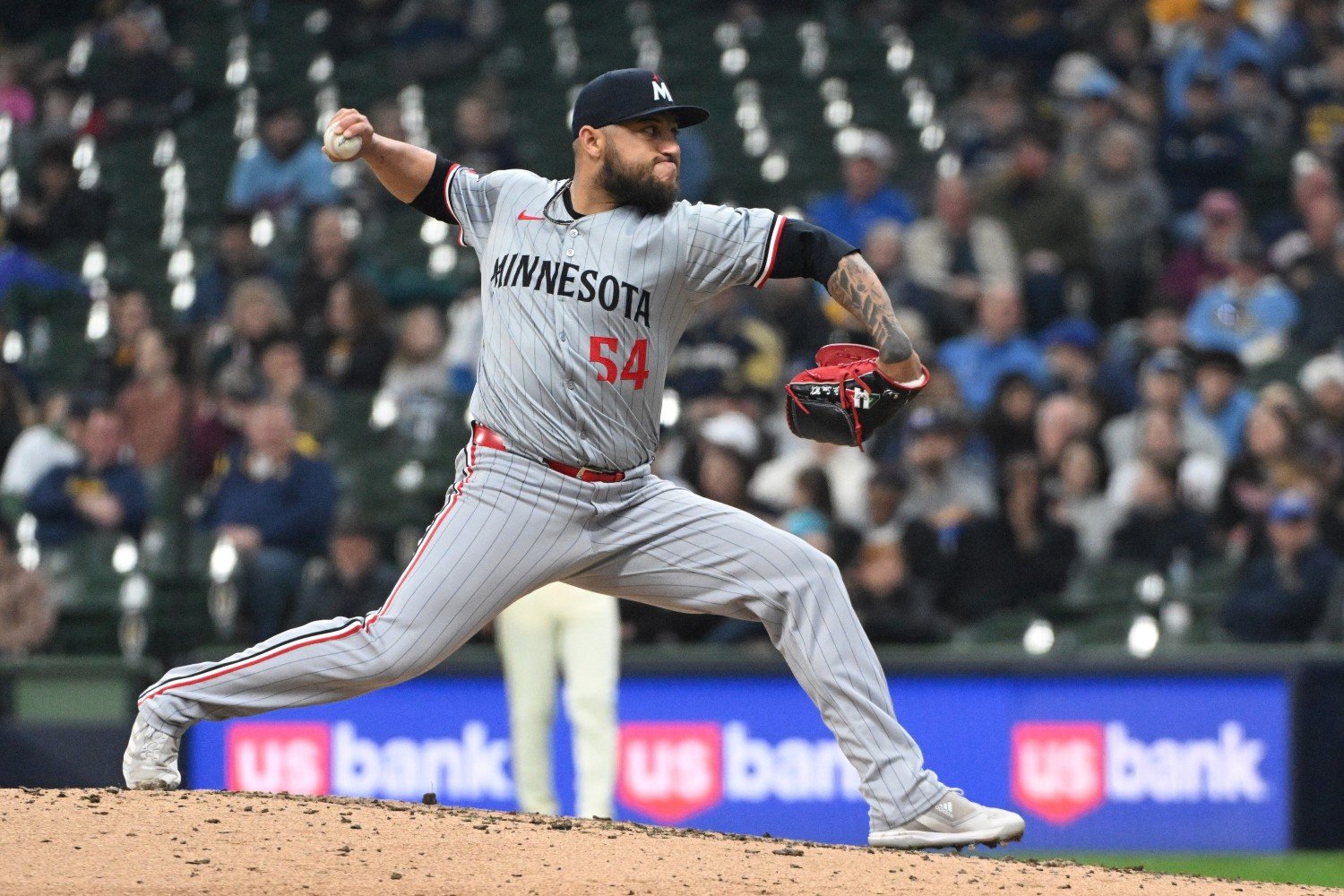 Today, the Twins announced that the following players have been outrighted off the 40-man roster and assigned to Triple-A St. Paul: Randy Dobnak, Josh Winder, Scott Blewett, Yunior Severino, and Daniel Duarte. A couple of these, Scott Blewett and Daniel Duarte, are sort of no-brainers. Duarte was a waiver claim from the Rangers this past offseason. He blew out his arm almost immediately and underwent Tommy John surgery. Despite being a league-minimum pitcher who won’t be eligible for arbitration until 2026 and who looked promising for just a moment in the soring, he’s a fringy guy, and the Twins chose not to rely on him coming off surgery. Scott Blewett is also fringy and underwhelmed during his time with both St. Paul and the Twins. Despite a solid ERA across 20 innings with the Twins this season, his peripherals tell a different tale, with a low strikeout rate and an xFIP over 4—not what you want to see from a reliever. As players who have previously been outrighted, both will likely elect free agency over the coming days and will try to catch on elsewhere. Then, there’s Randy Dobnak. Due to his contract and the fact that he has not found sustainable success since 2020 due to multiple finger injuries and middling stuff, this move is almost certainly a formality. He has pitched to an ERA higher than 7.00 and an xFIP higher than 4.50 over the past two seasons. The Twins would likely love to be out from under his $3-million contract for 2025 (and his $1-million buyout for 2026), but he will return to St. Paul to begin the 2025 season. While Dobnak is and has been a fun human-interest story, with the Twins’ pitching depth, it’s somewhat unlikely he finds his way back to the Twins. Only the fact that he has to stick around to keep getting that money and the fact that the Twins owe him such a sizable chunk will keep him a part of the organization for another year. Severino is, perhaps, the biggest surprise. Part of the 2016 international signing class, he struck a deal with the Atlanta Braves. In late 2017, the Commissioner’s office stripped the Braves of a number of prospects due to repeatedly intentionally skirting international signing rules. The Twins signed him for $2.5 million as a free agent, when he was a switch-hitting second baseman. He grew and slid down the defensive spectrum, to the point of being a middling corner bat or DH type. Unfortunately, he hasn’t put up quite the offensive profile you would hope to see from one of those positions, with a .775 OPS this past season. He’s still technically a prospect, making it to Triple-A as a 24-year-old. At this point, it’s evident the Twins don’t see him as part of their plans, even at the depleted first base. Finally, we have Josh Winder. Winder is another in a long line of Twins players whose career stalled due to injuries. He has pitched in just 38 games dating back to 2022. Winder debuted as a starting pitching prospect, produced middling results, then converted to the bullpen in 2023. As a reliever, he has pitched to an xFIP of almost 5.00. Given some health and an extended leash, Winder may have the ability to be at least a middle reliever. However, that will likely be with another team as well, as he will be able to declare free agency similar to Severino as players who have been outrighted after being in the organization for at least six years. While some of these moves will disappoint fans, hopefully players more likely to positively impact the 2025 team will replace them. Best of luck to Winder, Severino, Blewett, and Duarte as they continue the next legs of their baseball journeys.
- 54 comments
-
- 10
-
-

-

-
- daniel duarte
- josh winder
- (and 3 more)
-
Starting Dec. 8, MLB team executives will meet in Dallas to kickoff the Winter Meetings. A key part of these meetings is conducting the Rule 5 draft. Today, the Twins made their first set of roster moves to get ready to protect this year’s crop of prospects. As a result, they have removed five players from their 40-man roster, including a couple of surprises. Image courtesy of © Michael McLoone-Imagn Images Starting Dec. 8, MLB team executives will meet in Dallas to kickoff the Winter Meetings. A key part of these meetings is conducting the Rule 5 draft. Today, the Twins made their first set of roster moves to get ready to protect this year’s crop of prospects. As a result, they have removed five players from their 40-man roster, including a couple of surprises. Today, the Twins announced that the following players have been outrighted off the 40-man roster and assigned to Triple-A St. Paul: Randy Dobnak, Josh Winder, Scott Blewett, Yunior Severino, and Daniel Duarte. A couple of these, Scott Blewett and Daniel Duarte, are sort of no-brainers. Duarte was a waiver claim from the Rangers this past offseason. He blew out his arm almost immediately and underwent Tommy John surgery. Despite being a league-minimum pitcher who won’t be eligible for arbitration until 2026 and who looked promising for just a moment in the soring, he’s a fringy guy, and the Twins chose not to rely on him coming off surgery. Scott Blewett is also fringy and underwhelmed during his time with both St. Paul and the Twins. Despite a solid ERA across 20 innings with the Twins this season, his peripherals tell a different tale, with a low strikeout rate and an xFIP over 4—not what you want to see from a reliever. As players who have previously been outrighted, both will likely elect free agency over the coming days and will try to catch on elsewhere. Then, there’s Randy Dobnak. Due to his contract and the fact that he has not found sustainable success since 2020 due to multiple finger injuries and middling stuff, this move is almost certainly a formality. He has pitched to an ERA higher than 7.00 and an xFIP higher than 4.50 over the past two seasons. The Twins would likely love to be out from under his $3-million contract for 2025 (and his $1-million buyout for 2026), but he will return to St. Paul to begin the 2025 season. While Dobnak is and has been a fun human-interest story, with the Twins’ pitching depth, it’s somewhat unlikely he finds his way back to the Twins. Only the fact that he has to stick around to keep getting that money and the fact that the Twins owe him such a sizable chunk will keep him a part of the organization for another year. Severino is, perhaps, the biggest surprise. Part of the 2016 international signing class, he struck a deal with the Atlanta Braves. In late 2017, the Commissioner’s office stripped the Braves of a number of prospects due to repeatedly intentionally skirting international signing rules. The Twins signed him for $2.5 million as a free agent, when he was a switch-hitting second baseman. He grew and slid down the defensive spectrum, to the point of being a middling corner bat or DH type. Unfortunately, he hasn’t put up quite the offensive profile you would hope to see from one of those positions, with a .775 OPS this past season. He’s still technically a prospect, making it to Triple-A as a 24-year-old. At this point, it’s evident the Twins don’t see him as part of their plans, even at the depleted first base. Finally, we have Josh Winder. Winder is another in a long line of Twins players whose career stalled due to injuries. He has pitched in just 38 games dating back to 2022. Winder debuted as a starting pitching prospect, produced middling results, then converted to the bullpen in 2023. As a reliever, he has pitched to an xFIP of almost 5.00. Given some health and an extended leash, Winder may have the ability to be at least a middle reliever. However, that will likely be with another team as well, as he will be able to declare free agency similar to Severino as players who have been outrighted after being in the organization for at least six years. While some of these moves will disappoint fans, hopefully players more likely to positively impact the 2025 team will replace them. Best of luck to Winder, Severino, Blewett, and Duarte as they continue the next legs of their baseball journeys. View full article

