



Cody Christie
-
Posts
7,515 -
Joined
-
Last visited
-
Days Won
5
Content Type
Profiles
News
Minnesota Twins Videos
2026 Minnesota Twins Top Prospects Ranking
2022 Minnesota Twins Draft Picks
Minnesota Twins Free Agent & Trade Rumors, Notes, & Tidbits
Guides & Resources
2023 Minnesota Twins Draft Picks
The Minnesota Twins Players Project
2024 Minnesota Twins Draft Picks
2025 Minnesota Twins Draft Pick Tracker
2026 Minnesota Twins Draft Tracker: Picks & Bonuses
Forums
Blogs
Events
Store
Downloads
Gallery
Everything posted by Cody Christie
-

Twins Minor League Relief Pitcher of the Month: June 2023
Cody Christie posted an article in Minor Leagues
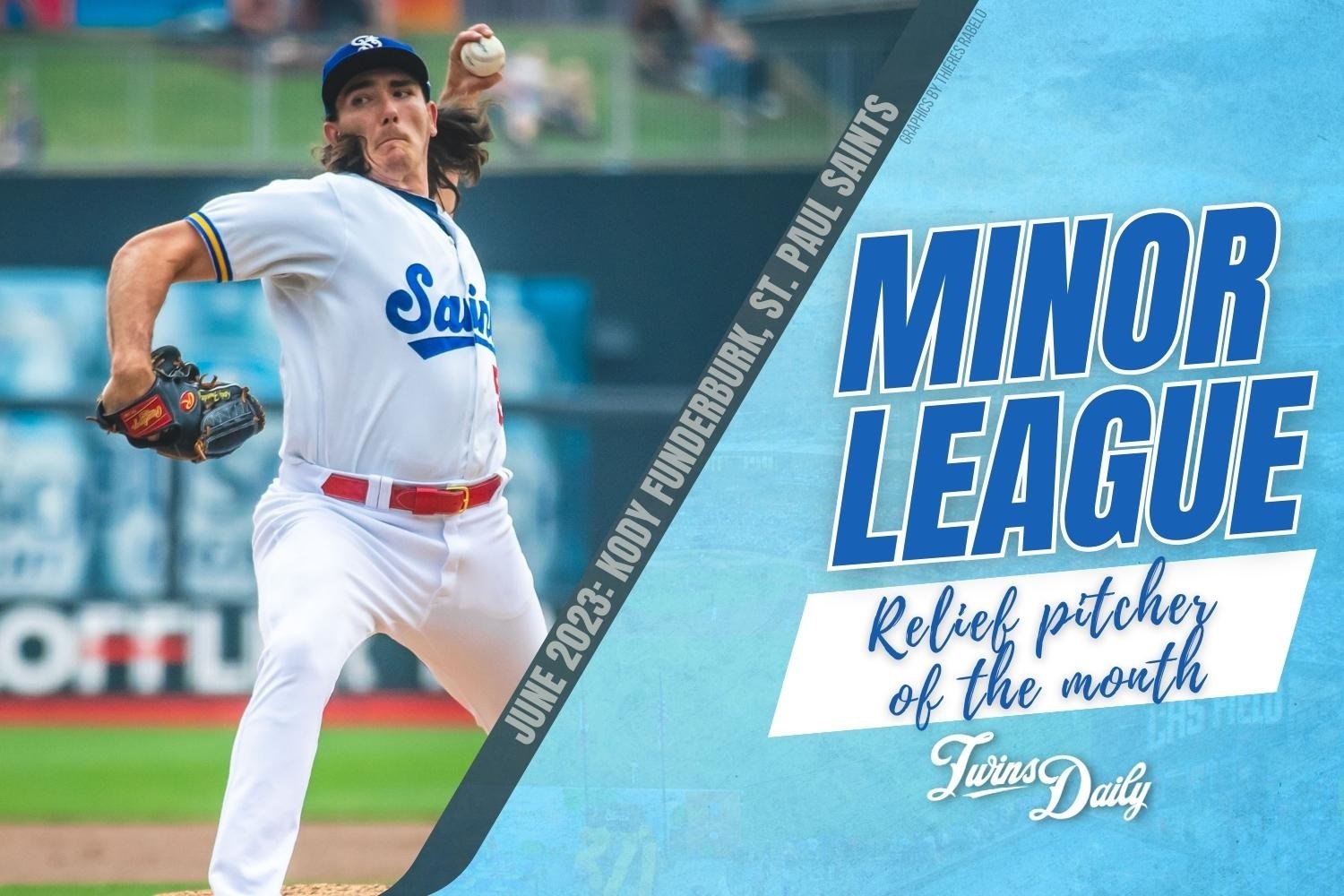 One appearance can wreak havoc on a reliever's numbers for any given month. In the Twins system, some relievers continue to appear on the monthly award list—those players with the potential to have a long-term impact on the big-league club. Let's dive into some honorable mentions before we reveal this month's winner. RHP Oliver Ortega, St. Paul Saints Ortega joined the big-league club to end the month, but he compiled some strong numbers to start the month at Triple-A. He allowed four earned runs in six appearances (10 IP) and posted a 15-to-2 strikeout-to-walk ratio. RHP, Alex Scherff, Wichita Wind Surge Scherff made appearances in June for the organization's two highest affiliates. He posted a 2.84 ERA with a 1.50 WHIP with 17 strikeouts and ten walks in 12 2/3 innings. RHP Miguel Rodriguez, Cedar Rapids Kernels Batters went 5-for-29 (.172 BA) with seven strikeouts against Rodriguez in June. He didn't allow an earned run in eight innings and was credited with four saves. His innings were limited compared to others on this list. Now onto the top five: 5. RHP Alejandro Hidalgo, High-A Cedar Rapids Kernels, 10 1/3 IP, 28.6 K%, 2.61 ERA, 0.97 WHIP The Twins acquired Hidalgo from the Angels for Gio Urshela this winter. He began the season as a starter at Cedar Rapids, but the club has moved him into a bullpen role, where he has been more successful. He pitched two innings or more in every appearance for the month and allowed one earned run or fewer in three of his four outings. Hidalgo had a dominant relief appearance on June 8th when he struck out six of the 11 batters he faced over three innings. He's faced older batters in all but seven plate appearances this year, so there is time for him to continue to build off his successful month. 4. RHP Eduardo Soriano, DSL Twins- 15 1/3 IP, 30.8 K%, 2.35 ERA, 1.24 WHIP Soriano is in his third summer in the DSL, so he is over a year older than the average age of the competition at his level. He has yet to start a game but is pitching a starter's workload with three innings or more in every appearance. In his first three appearances (11 IP), he limited batters to one earned run on seven hits while striking out 19 batters. As part of this strong stretch, he pitched five shutout innings with 11 strikeouts. His final appearance of the month was his most challenging as he struggled with his command and allowed a season-high four walks. Will the Twins bring Soriano to the FCL Twins if he continues to pitch well? 3. RHP John Stankiewicz, Cedar Rapids Kernels- 13 1/3 IP, 25.0 K%, 2.03 ERA, 1.05 WHIP Following a poor month of April, Stankiewicz has been one of the best relievers in the Twins organization, including winning the TD Minor League Relief Pitcher of the Month in May. His June numbers looked even better before allowing three earned runs over his final five innings. He pitched two innings or more in all but one June appearance. In his first four appearances during the month, he pitched 8 1/3 scoreless with 12 strikeouts and one walk. On June 10th, he started a game for Cedar Rapids and pitched into the fourth inning without allowing a hit and striking out six. It's his first full season as a reliever, so it will be interesting to see if the Twins promote him in the second half. 2. RHP A.J. Labas, Fort Myers Mighty Mussels/Cedar Rapids Kernels- 13 IP, 36.2 K%, 2.08 ERA, 0.69 WHIP Labas entered June with a 6.62 ERA for the season after allowing 13 earned runs in his first 17 2/3 innings. He reeled off eight straight scoreless appearances to start the month, including three saves. His last appearance in Fort Myers was his worst, as he allowed three earned runs on three hits in 2/3rds of an inning while taking the loss. The Twins felt his overall stretch of strong appearances still warranted a promotion, and he made his first High-A appearance to end the month. With his college experience, Labas has been older than the average age of the competition at every professional level. Now fans can watch his performance and hope his recent hot stretch is a sign of good things to come. 1. LHP Kody Funderburk, St. Paul Saints - 12 1/3 IP, 38.5 K%, 2.92 ERA, 1.14 WHIP Funderburk ended the month of June on a high note at Triple-A. In his final seven appearances, he allowed one earned run on five hits over 8 1/3 innings. He posted a 14-to-2 strikeout-to-walk ratio during that stretch while holding batters to a .167/.242/.300 (.542) slash line. He pitched more than one inning in five consecutive appearances and even made a start as part of a bullpen game earlier in the month. For the season, he has posted a 13.6 K/9 between Double- and Triple-A. Funderburk has been a successful reliever in the upper minors over the last two seasons, and his big-league opportunity is on the horizon. What are your thoughts on the relief pitching performances in the Twins' minor leagues in June? How would you rank these pitchers? Leave a COMMENT and start the discussion.
- 2 comments
-
- 3
-

-
- kody funderburk
- alejandro hidalgo
- (and 3 more)
-
In recent weeks, many of the Twins' minor league affiliates passed the midway point in their season. Let's look back at the best starting pitching performances down on the farm during June. Image courtesy of Jean Pfiefer (aka, go4twinkies on Instagram) It was a rough pitching month for starters in the upper levels of the Twins system. Minnesota has needed to dig into Triple-A depth which can impact other levels too. However, some players are compiling numbers that will put them in the conversation to start showing up on top-30 prospect lists for the Twins. Let's dive into some honorable mentions before we reveal this month's winner. RHP Kyle Jones, Cedar Rapids Kernels Jones was limited to three starts in June but limited batters to a .216 BA. In 10 innings, he allowed two earned runs on six hits with 14 strikeouts and six walks. He allowed his first two home runs of the year in one June start; otherwise, his numbers would look even better. RHP Jack Noble, FCL Twins Noble is over two years older than the average age of the competition in the FCL, but he compiled some strong numbers in June. He averaged over five innings per start with an 11.5 K/9. Noble held opponents to a .543 OPS with only one extra-base hit against him. He was promoted to Fort Myers at the end of the month. Now onto the top five: 5. LHP Christian MacLeod, High-A Cedar Rapids Kernels, 17 IP, 26.7 K%, 2.12 ERA, 1.47 WHIP MacLeod has fared well since being promoted to High-A at the end of May. In four starts (17 IP), he posted a 2.12 ERA with a 1.47 WHIP and a 20-to-7 strikeout-to-walk ratio. He allowed one earned run in every appearance for the month and never allowed more than five hits. His best appearance for the month was an outing where he didn't start. Marco Raya started the game on June 9th and pitched four innings before giving way to MacLeod. He pitched the final five innings, allowing one earned run on four hits with nine strikeouts. MacLeod is slightly younger than the average age of the competition in the Midwest League, so it will be interesting to see what kind of numbers he can compile as he gets more comfortable at that level. 4. RHP Miguel Cordero, DSL Twins- 11 2/3 IP, 40.4 K%, 2.31 ERA, 1.11 WHIP Cordero is in his age-16 season, but he started strongly in his professional debut. He posted a 2.31 ERA in three starts with a 1.14 WHIP and 19 strikeouts over 11 2/3 innings. His first professional start is where batters did all the damage against him. In 3 2/3 innings, he allowed three earned runs on six hits with five strikeouts. In his other two starts, he has been nearly unhittable. Over eight shutout innings, he surrendered one hit and struck out 14 batters. Opponents are hitting .171/.277/.268 (.545) while striking out over 40% of the time. It's been a dominant start to his professional career, and he might be a player to watch in the coming years. 3. RHP Andrew Morris, Fort Myers Mighty Mussels- 23 1/3 IP, 22.8 K%, 1.93 ERA, 0.90 WHIP The Twins took Morris with their fourth-round pick in the 2022 MLB Draft, and he only pitched one inning during his professional debut. His 2023 season started slowly as he spent time on the IL with right bicep tendonitis and had mixed results on the field. Morris allowed an OPS above .800 in the season's first two months (three appearances) but lowered that to .527 during June. In five starts (23 1/3 innings), he posted a 1.93 ERA with a 21-to-4 strikeout-to-walk ratio. He is over a year younger than the average age of the competition in the FSL but has faced younger batters in over 60% of his plate appearances. Morris would likely have been the top pitcher on this list in other months because of his accumulated numbers. 2. RHP C.J. Culpepper, Fort Myers Mighty Mussels- 20 IP, 32.0 K%, 1.35 ERA, 0.95 WHIP Culpepper was the runner-up for this honor after four tremendous starts in Fort Myers. He's also been among the top-performing starting pitchers in the entire Twins system during the first half. Over 20 innings, he posted a 1.35 ERA with a 0.95 WHIP while averaging six strikeouts per appearance. Batters hit .177/.253/.265 (.518) against him, and he's held opponents to a .523 OPS or lower in every month of the season. Culpepper averaged a 62-game score across his four appearances, including two games with a 70 or higher. Minnesota can leave him in Fort Myers for the entire season, but it wouldn't be surprising for him to get a promotion at some point in the second half. 1. RHP Cory Lewis, Fort Myers Mighty Mussels/Cedar Rapids Kernels - 15 2/3 IP, 33.9 K%, 0.57 ERA, 0.96 WHIP The Twins promoted Lewis from Fort Myers to Cedar Rapids earlier in June, and he had no trouble adjusting to the higher level of competition. In his first start, he pitched five shutout innings with eight strikeouts while limiting Daytona to three hits. Six days later, he continued his strikeout barrage with nine strikeouts over five frames. He had 15 or more swinging strikes in each of those two starts. In his final start of the month, he pitched five innings and allowed no earned runs on three hits. Batters hit .146/.242/.182 (.424) against him for the month, his second straight month with an OPS below .500. He has yet to allow a batting average above .200 in any month, and he has one of the best strikeout-to-walk rates in the farm system. For the season, he has faced younger batters the majority of the time, but that will likely change as he pitches more innings in High-A. What are your thoughts on the starting pitching performances in the Twins' minor leagues in June? How would you rank these pitchers? Leave a COMMENT and start the discussion. View full article
- 9 replies
-
- 1
-

-
- cory lewis
- c.j. culpepper
- (and 3 more)
-
Twins Minor League Starting Pitcher of the Month: June 2023
Cody Christie posted an article in Twins
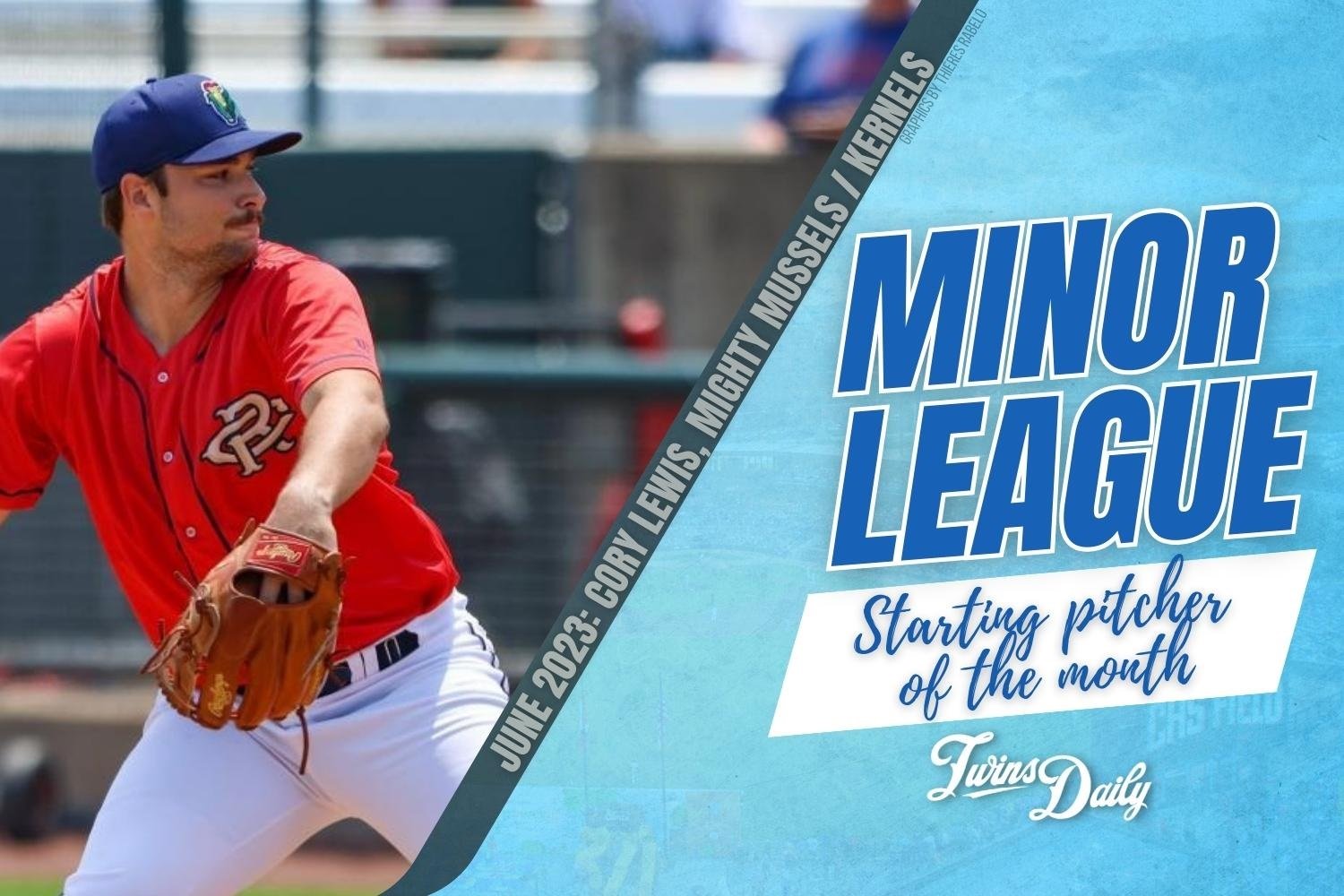 It was a rough pitching month for starters in the upper levels of the Twins system. Minnesota has needed to dig into Triple-A depth which can impact other levels too. However, some players are compiling numbers that will put them in the conversation to start showing up on top-30 prospect lists for the Twins. Let's dive into some honorable mentions before we reveal this month's winner. RHP Kyle Jones, Cedar Rapids Kernels Jones was limited to three starts in June but limited batters to a .216 BA. In 10 innings, he allowed two earned runs on six hits with 14 strikeouts and six walks. He allowed his first two home runs of the year in one June start; otherwise, his numbers would look even better. RHP Jack Noble, FCL Twins Noble is over two years older than the average age of the competition in the FCL, but he compiled some strong numbers in June. He averaged over five innings per start with an 11.5 K/9. Noble held opponents to a .543 OPS with only one extra-base hit against him. He was promoted to Fort Myers at the end of the month. Now onto the top five: 5. LHP Christian MacLeod, High-A Cedar Rapids Kernels, 17 IP, 26.7 K%, 2.12 ERA, 1.47 WHIP MacLeod has fared well since being promoted to High-A at the end of May. In four starts (17 IP), he posted a 2.12 ERA with a 1.47 WHIP and a 20-to-7 strikeout-to-walk ratio. He allowed one earned run in every appearance for the month and never allowed more than five hits. His best appearance for the month was an outing where he didn't start. Marco Raya started the game on June 9th and pitched four innings before giving way to MacLeod. He pitched the final five innings, allowing one earned run on four hits with nine strikeouts. MacLeod is slightly younger than the average age of the competition in the Midwest League, so it will be interesting to see what kind of numbers he can compile as he gets more comfortable at that level. 4. RHP Miguel Cordero, DSL Twins- 11 2/3 IP, 40.4 K%, 2.31 ERA, 1.11 WHIP Cordero is in his age-16 season, but he started strongly in his professional debut. He posted a 2.31 ERA in three starts with a 1.14 WHIP and 19 strikeouts over 11 2/3 innings. His first professional start is where batters did all the damage against him. In 3 2/3 innings, he allowed three earned runs on six hits with five strikeouts. In his other two starts, he has been nearly unhittable. Over eight shutout innings, he surrendered one hit and struck out 14 batters. Opponents are hitting .171/.277/.268 (.545) while striking out over 40% of the time. It's been a dominant start to his professional career, and he might be a player to watch in the coming years. 3. RHP Andrew Morris, Fort Myers Mighty Mussels- 23 1/3 IP, 22.8 K%, 1.93 ERA, 0.90 WHIP The Twins took Morris with their fourth-round pick in the 2022 MLB Draft, and he only pitched one inning during his professional debut. His 2023 season started slowly as he spent time on the IL with right bicep tendonitis and had mixed results on the field. Morris allowed an OPS above .800 in the season's first two months (three appearances) but lowered that to .527 during June. In five starts (23 1/3 innings), he posted a 1.93 ERA with a 21-to-4 strikeout-to-walk ratio. He is over a year younger than the average age of the competition in the FSL but has faced younger batters in over 60% of his plate appearances. Morris would likely have been the top pitcher on this list in other months because of his accumulated numbers. 2. RHP C.J. Culpepper, Fort Myers Mighty Mussels- 20 IP, 32.0 K%, 1.35 ERA, 0.95 WHIP Culpepper was the runner-up for this honor after four tremendous starts in Fort Myers. He's also been among the top-performing starting pitchers in the entire Twins system during the first half. Over 20 innings, he posted a 1.35 ERA with a 0.95 WHIP while averaging six strikeouts per appearance. Batters hit .177/.253/.265 (.518) against him, and he's held opponents to a .523 OPS or lower in every month of the season. Culpepper averaged a 62-game score across his four appearances, including two games with a 70 or higher. Minnesota can leave him in Fort Myers for the entire season, but it wouldn't be surprising for him to get a promotion at some point in the second half. 1. RHP Cory Lewis, Fort Myers Mighty Mussels/Cedar Rapids Kernels - 15 2/3 IP, 33.9 K%, 0.57 ERA, 0.96 WHIP The Twins promoted Lewis from Fort Myers to Cedar Rapids earlier in June, and he had no trouble adjusting to the higher level of competition. In his first start, he pitched five shutout innings with eight strikeouts while limiting Daytona to three hits. Six days later, he continued his strikeout barrage with nine strikeouts over five frames. He had 15 or more swinging strikes in each of those two starts. In his final start of the month, he pitched five innings and allowed no earned runs on three hits. Batters hit .146/.242/.182 (.424) against him for the month, his second straight month with an OPS below .500. He has yet to allow a batting average above .200 in any month, and he has one of the best strikeout-to-walk rates in the farm system. For the season, he has faced younger batters the majority of the time, but that will likely change as he pitches more innings in High-A. What are your thoughts on the starting pitching performances in the Twins' minor leagues in June? How would you rank these pitchers? Leave a COMMENT and start the discussion.
- 9 comments
-
- 4
-
-
- cory lewis
- c.j. culpepper
- (and 3 more)
-
365 Days of Byron Buxton: From All-Star Highs to Injury Lows
Cody Christie posted an article in Twins
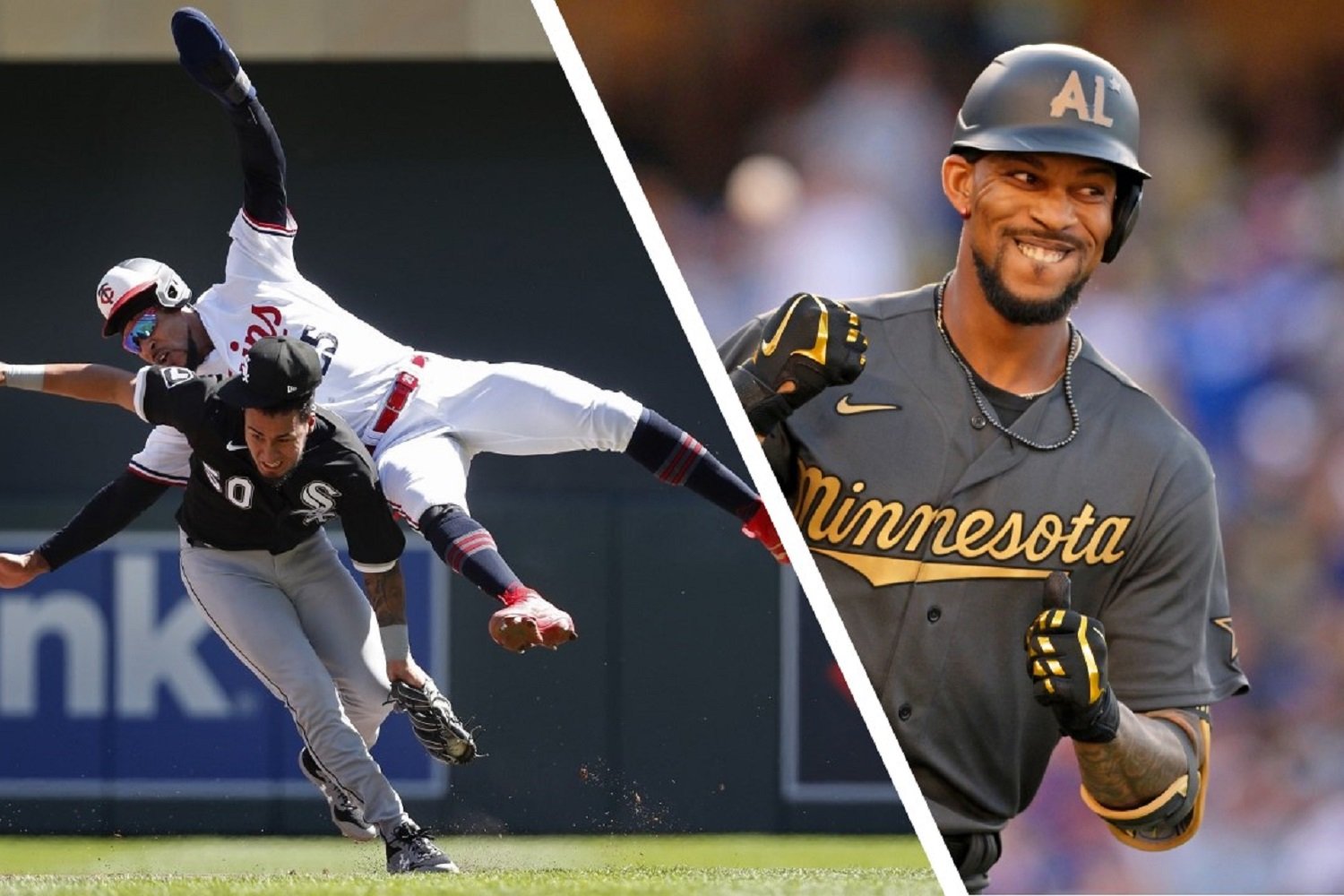 Byron Buxton must have been riding high entering the 2022 season after signing a seven-year, $100 million contract extension with the Twins. He knew that the Twin Cities would be his home for most of his professional career, and his family could establish roots in the community. Buxton was comfortable with the organization, and a healthy start to the year proved how valuable he could be to the Twins. Buxton compiled strong first-half numbers to put himself in the conversation for making his first All-Star Game. In 73 games, he hit .216/.293/.531 (.824) with 11 doubles, three triples, and 23 home runs. Some ups and downs were mixed into that performance, but he headed to Los Angeles for the Midsummer Classic. Eventually, he was named a starter because Los Angeles Angels outfielder Mike Trout was scratched with a back injury. Buxton hit a go-ahead home run for the American League, and it seemed like Buxton was at a high point in his career. Buxton's second half didn't go nearly as well as his first half. A knee injury that started bothering him in the first half continued to be a problem and limited his playing time. He only played 19 more games after the All-Star break, and his season ended in August. His 92 games played tied for the second-most in his career, but it's hard not to look at his second half with some disappointment. Buxton wasn't the only player hit by the injury bug, but the Twins lost the division lead in the second half and ended the season on a sour note. Buxton had season-ending arthroscopic surgery on his right knee in September to clean up an issue that had bothered him for most of the 2022 campaign. Derek Falvey told reporters that expectations for his recovery time to be only a few weeks and that he should be ready for the start of spring training. Unfortunately, Buxton's knee still wasn't 100% as spring training opened, so the Twins had to adjust their plans for the 2023 season. There has been plenty of discussion about the team's decision to move Buxton to full-time DH. During spring training, the club made the move to ensure Buxton could play on a more regular basis. There was likely hope that Buxton could return to center field later in the season, but there were no guarantees. In the season's first month, it looked like the strategy worked as Buxton hit .258/.324/.557 (.881) with six doubles, one triple, and seven home runs. Much like the 2022 season, it was a hot start that injuries would impact later in the year. Since the calendar turned to May, Buxton has been in an offensive slump while dealing with knee issues, back soreness, and missed time when a pitch hit him in the ribs. In 39 games, he has hit .172/.289/.373 (.662) with 13 extra-base hits and a 48-to-19 strikeout-to-walk ratio. Twins manager Rocco Baldelli and Buxton both spoke candidly during the last homestand about Buxton's injury concerns this season. Some fans have pushed for Buxton to be playing center field, but the team doesn't believe his body would hold up to the daily grind associated with one of baseball's most demanding defensive positions. They hope he can play center field again, but it seems unlikely in the short term. The last year has been rough for Buxton, and much of the Twins' on-field success ties to his high performance. Injuries will continue to be a part of the equation with Buxton, so the team will continue to adjust their plan for keeping him on the field. Here's hoping the next 365 days go better for Buxton. What are your thoughts on Byron Buxton's last 365 days? Will he play center field again? Leave a COMMENT and start the discussion.
 -
Nearly one year ago, Byron Buxton was the starting center fielder for the American League in the All-Star Game. A lot has changed in the last 365 days for Minnesota's superstar player. Image courtesy of Jayne Kamin-Oncea and Bruce Kluckhohn-USA TODAY Sports Byron Buxton must have been riding high entering the 2022 season after signing a seven-year, $100 million contract extension with the Twins. He knew that the Twin Cities would be his home for most of his professional career, and his family could establish roots in the community. Buxton was comfortable with the organization, and a healthy start to the year proved how valuable he could be to the Twins. Buxton compiled strong first-half numbers to put himself in the conversation for making his first All-Star Game. In 73 games, he hit .216/.293/.531 (.824) with 11 doubles, three triples, and 23 home runs. Some ups and downs were mixed into that performance, but he headed to Los Angeles for the Midsummer Classic. Eventually, he was named a starter because Los Angeles Angels outfielder Mike Trout was scratched with a back injury. Buxton hit a go-ahead home run for the American League, and it seemed like Buxton was at a high point in his career. Buxton's second half didn't go nearly as well as his first half. A knee injury that started bothering him in the first half continued to be a problem and limited his playing time. He only played 19 more games after the All-Star break, and his season ended in August. His 92 games played tied for the second-most in his career, but it's hard not to look at his second half with some disappointment. Buxton wasn't the only player hit by the injury bug, but the Twins lost the division lead in the second half and ended the season on a sour note. Buxton had season-ending arthroscopic surgery on his right knee in September to clean up an issue that had bothered him for most of the 2022 campaign. Derek Falvey told reporters that expectations for his recovery time to be only a few weeks and that he should be ready for the start of spring training. Unfortunately, Buxton's knee still wasn't 100% as spring training opened, so the Twins had to adjust their plans for the 2023 season. There has been plenty of discussion about the team's decision to move Buxton to full-time DH. During spring training, the club made the move to ensure Buxton could play on a more regular basis. There was likely hope that Buxton could return to center field later in the season, but there were no guarantees. In the season's first month, it looked like the strategy worked as Buxton hit .258/.324/.557 (.881) with six doubles, one triple, and seven home runs. Much like the 2022 season, it was a hot start that injuries would impact later in the year. Since the calendar turned to May, Buxton has been in an offensive slump while dealing with knee issues, back soreness, and missed time when a pitch hit him in the ribs. In 39 games, he has hit .172/.289/.373 (.662) with 13 extra-base hits and a 48-to-19 strikeout-to-walk ratio. Twins manager Rocco Baldelli and Buxton both spoke candidly during the last homestand about Buxton's injury concerns this season. Some fans have pushed for Buxton to be playing center field, but the team doesn't believe his body would hold up to the daily grind associated with one of baseball's most demanding defensive positions. They hope he can play center field again, but it seems unlikely in the short term. The last year has been rough for Buxton, and much of the Twins' on-field success ties to his high performance. Injuries will continue to be a part of the equation with Buxton, so the team will continue to adjust their plan for keeping him on the field. Here's hoping the next 365 days go better for Buxton. What are your thoughts on Byron Buxton's last 365 days? Will he play center field again? Leave a COMMENT and start the discussion. View full article
-
Marco Raya had a breakout season in 2022 at Low-A and ranked among the top pitching prospects in the Twins organization. Now in his age-20 season, he is looking to redefine himself as he climbs the organizational ladder. Image courtesy of McKenzie Short, Cedar Rapids Kernels The Twins drafted Marco Raya in the fourth round of the 2020 MLB Draft out of high school in Texas. It was a strange draft year with limited rounds and no ability to scout players in the weeks leading into the draft. A player like Raya might have gained more steam with a strong spring season, but the Twins were happy to have him still available with the club’s penultimate pick. Drafting and developing high school pitchers can take patience, but the Twins might have a potential top-of-the-rotation pitcher in Raya. Minnesota pushed back Raya’s professional debut until the 2022 season because of a shoulder strain. Minnesota was still aggressive with him by sending him to Low-A, where he was three years younger than the average age of the competition in the FSL. It was also important to limit his innings because of the previous year’s shoulder issues, but he showed plenty of upside in his 65 innings. In 19 appearances (17 starts), he posted a 3.05 ERA with a 1.08 WHIP and a 76-to-23 strikeout-to-walk ratio. He faced older batters in 82.5% of his plate appearances and solidified himself as one of the team’s top starting pitching prospects. Following the season, Raya’s prospect stock was rising. Baseball Prospectus was the only national outlet to rank Raya among baseball’s Top 100 prospects, ranking him 53rd overall. At Twins Daily, he ranked as the fourth-best Twins prospect, ranking higher than any other pitcher. It was a meteoric rise for a player with fewer than 70 innings pitched in his professional career, but there were reasons to be excited about Raya entering the 2023 campaign. There were a few hiccups in Raya’s first two starts of the season. He allowed five earned runs on four hits over 5 2/3 innings, with opponents posting a .939 OPS against him. Raya ran off seven straight starts from there, allowing one earned run or less. In 22 innings, he posted a 1.23 ERA with a 27-to-1 strikeout-to-walk ratio. The Twins continue to limit his innings as he has yet to pitch more than four innings or throw more than 54 pitches. Raya continues to improve his whiff rate and strikeout percentage. Raya’s elite-level spin rates on his two best pitches have helped him miss a lot of bats to this point in his career. His fastball can reach the upper-90s, and the high spin rate makes it a tough pitch for batters to make consistent contact. His slider sits in the low-80s and is his best secondary pitch. He typically features a four-pitch mix, but he continues to develop his curveball and changeup. Raya can throw all four pitches for strikes and is at his best when he pounds the strike zone and avoids walks. Marco Raya is an undersized player who MiLB.com lists at 6-foot-1 and 170 pounds. There is also some concern because the Twins have limited his workload because of his early career injury concerns. Minnesota has seen success from undersized pitchers, including Jose Berrios pitching at an All-Star level for multiple seasons. Raya’s future as a starting pitcher is tied to his ability to improve secondary pitches and increase his workload. He doesn’t turn 21 until August, so he has plenty of time to continue developing in the Twins system. According to MLB.com, the front office has “fielded plenty of calls from other teams asking about Raya.” That might be one of the team’s best signs to keep him long-term. How do you view Raya’s start to the season? What is his ceiling? Leave a COMMENT and start the discussion. View full article
-
Marco Raya Is Refining His Repertoire in Cedar Rapids
Cody Christie posted an article in Minor Leagues
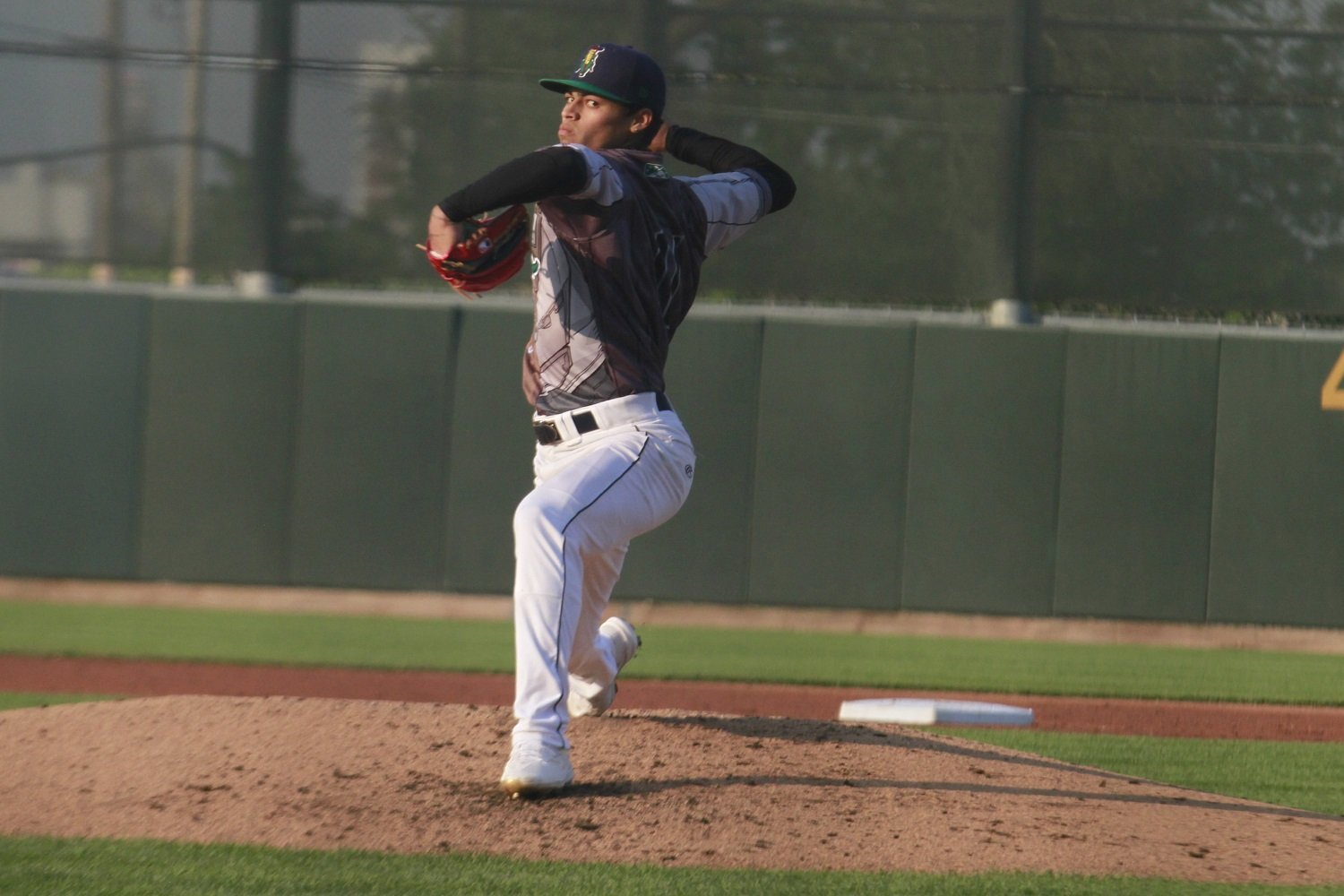 The Twins drafted Marco Raya in the fourth round of the 2020 MLB Draft out of high school in Texas. It was a strange draft year with limited rounds and no ability to scout players in the weeks leading into the draft. A player like Raya might have gained more steam with a strong spring season, but the Twins were happy to have him still available with the club’s penultimate pick. Drafting and developing high school pitchers can take patience, but the Twins might have a potential top-of-the-rotation pitcher in Raya. Minnesota pushed back Raya’s professional debut until the 2022 season because of a shoulder strain. Minnesota was still aggressive with him by sending him to Low-A, where he was three years younger than the average age of the competition in the FSL. It was also important to limit his innings because of the previous year’s shoulder issues, but he showed plenty of upside in his 65 innings. In 19 appearances (17 starts), he posted a 3.05 ERA with a 1.08 WHIP and a 76-to-23 strikeout-to-walk ratio. He faced older batters in 82.5% of his plate appearances and solidified himself as one of the team’s top starting pitching prospects. Following the season, Raya’s prospect stock was rising. Baseball Prospectus was the only national outlet to rank Raya among baseball’s Top 100 prospects, ranking him 53rd overall. At Twins Daily, he ranked as the fourth-best Twins prospect, ranking higher than any other pitcher. It was a meteoric rise for a player with fewer than 70 innings pitched in his professional career, but there were reasons to be excited about Raya entering the 2023 campaign. There were a few hiccups in Raya’s first two starts of the season. He allowed five earned runs on four hits over 5 2/3 innings, with opponents posting a .939 OPS against him. Raya ran off seven straight starts from there, allowing one earned run or less. In 22 innings, he posted a 1.23 ERA with a 27-to-1 strikeout-to-walk ratio. The Twins continue to limit his innings as he has yet to pitch more than four innings or throw more than 54 pitches. Raya continues to improve his whiff rate and strikeout percentage. Raya’s elite-level spin rates on his two best pitches have helped him miss a lot of bats to this point in his career. His fastball can reach the upper-90s, and the high spin rate makes it a tough pitch for batters to make consistent contact. His slider sits in the low-80s and is his best secondary pitch. He typically features a four-pitch mix, but he continues to develop his curveball and changeup. Raya can throw all four pitches for strikes and is at his best when he pounds the strike zone and avoids walks. Marco Raya is an undersized player who MiLB.com lists at 6-foot-1 and 170 pounds. There is also some concern because the Twins have limited his workload because of his early career injury concerns. Minnesota has seen success from undersized pitchers, including Jose Berrios pitching at an All-Star level for multiple seasons. Raya’s future as a starting pitcher is tied to his ability to improve secondary pitches and increase his workload. He doesn’t turn 21 until August, so he has plenty of time to continue developing in the Twins system. According to MLB.com, the front office has “fielded plenty of calls from other teams asking about Raya.” That might be one of the team’s best signs to keep him long-term. How do you view Raya’s start to the season? What is his ceiling? Leave a COMMENT and start the discussion.
 -
Ranking the Top 5 Worst Trades Under Derek Falvey and Thad Levine
Cody Christie posted an article in Twins
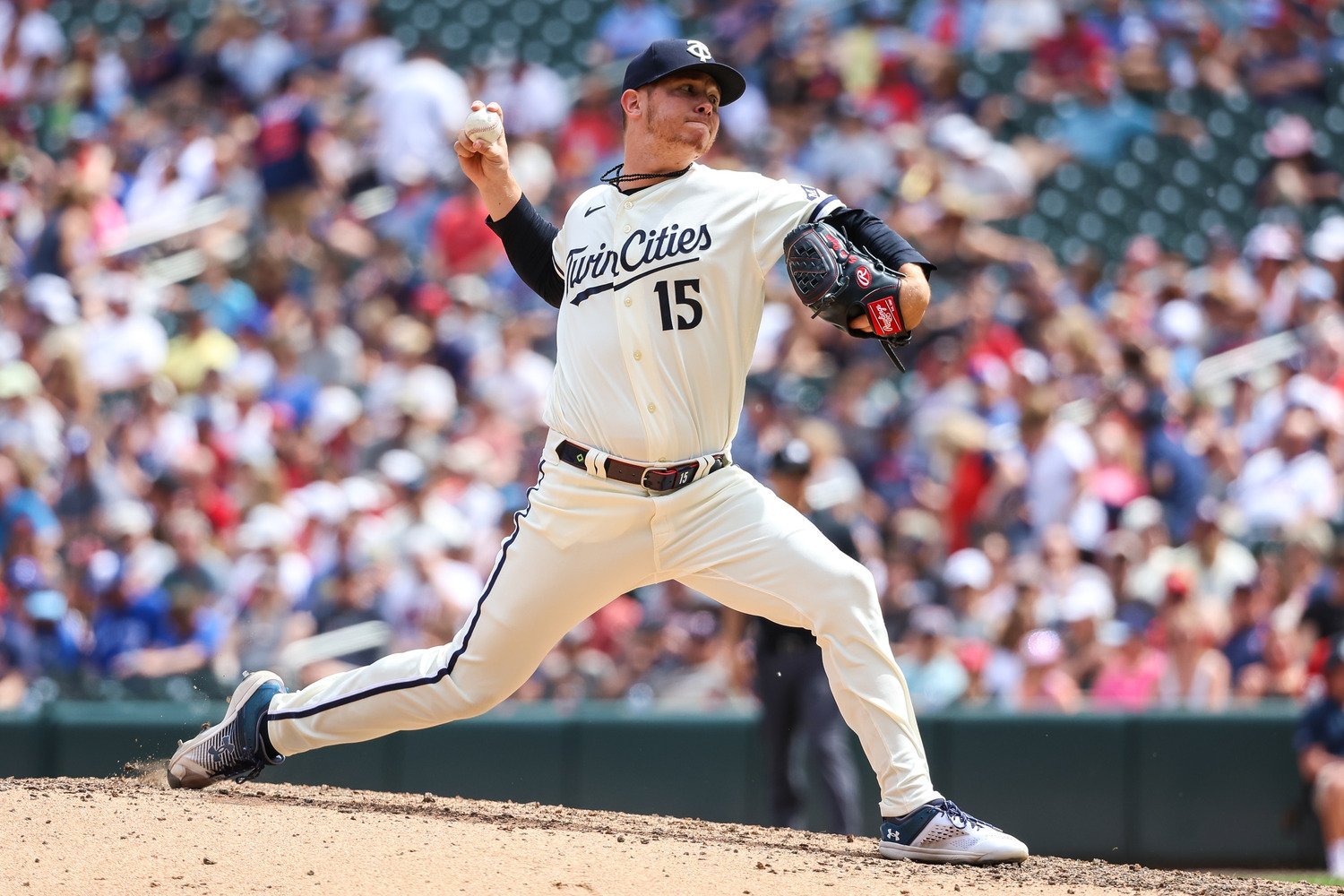 MLB’s 2023 Trade Deadline is scheduled for August 1st, and the Twins will likely need to add pieces to keep themselves in contention. Before the deadline, looking at previous years and how this front office has approached the trading process is critical. This series will look at some of the best and worst trades made by the current front office. 5. Luis Arraez for Pablo Lopez, Jose Salas, and Byron Chourio Trade Date: January 20th, 2023 Many fans may view the Arraez for Lopez swap as a bad deal because of Arraez’s start to his Marlins tenure. However, the Twins wanted more starting pitching depth, and the Marlins wanted a hitter. Salas was the top prospect acquired by the Twins, and he started slowly in 2023. There is still time for the Twins to gain value from the Lopez-Arraez swap, but it’s hard not to imagine what Arraez could mean to Minnesota’s offense, which has struggled to make consistent contact. 4. Prelander Berroa, Kai-Wei Teng, and Jaylin Davis for Sam Dyson Trade Date: July 31st, 2019 Dyson was Minnesota’s key bullpen acquisition at the 2019 trade deadline, but poor performance and injury marred his Twins tenure. In 12 appearances (11 1/3 innings), he allowed nine earned runs with a 1.77 WHIP and 2.4 HR/9. Dyson eventually revealed that he had been pitching with some discomfort, and the Twins investigated what the Giants knew about the injury before the trade. There was no evidence that San Francisco had any knowledge of an injury. Dyson hasn’t pitched since his last appearance for the Twins, and MLB suspended him for the entire 2021 season for violating the league’s domestic violence policy. Overall, it was a bad trade from start to finish for the Twins. 3. Juan Nunez, Cade Povich, Juan Rojas, and Yennier Cano for Jorge Lopez Trade Date: August 2, 2022 Last season, Lopez was an All-Star in his first year as a reliever, and he was supposed to be the missing piece from the Twins’ bullpen. Following the trade, he posted a 4.37 ERA with a 1.63 WHIP and an 18-to-14 strikeout-to-walk ratio in 22 2/3 innings. His 2023 season started strongly as he didn’t allow an earned run in the first month, but his on-field performance declined in recent weeks, and the team put him on the IL to work on his mental health. Yennier Cano has been one of the AL’s best relievers this season, while Cade Povich has pitched well and is on the cusp of making his big-league debut. This trade has looked bad so far and might only look worse in the future. 2. Taylor Rogers and Brent Rooker for Chris Paddack, Emilio Pagan, and Brayan Medina Trade Date: April 7th, 2022 The timing of this trade will always be questionable. On the eve of Opening Day, the Twins shipped out their best late-inning reliever to the Padres in a five-person trade. Rogers was entering his final year of team control, and there was some value in the return package. Chris Paddack pitched well in five starts for the Twins, but he eventually needed Tommy John surgery. Emilio Pagan has been one of baseball’s worst relievers since the trade while posting a -1.60 WPA. Rogers and Rooker provided little value to the Padres, but it will always seem odd that the club made this move close to Opening Day. 1. Spencer Steer, Christian Encarnacion-Strand, and Steve Hajjar for Tyler Mahle Trade Date: August 2nd, 2022 Interestingly, one of Minnesota’s best trades has been with the Reds organization, and their worst trade has been with the same club. Evaluating players is tough, and the Twins knew they were surrendering significant value to acquire a top-of-the-rotation starting pitcher. Mahle struggled to stay healthy and was limited to nine starts with the Twins. He underwent Tommy John surgery earlier this summer. Spencer Steer started slowly for the Reds but has turned a corner and looks like an above-average big leaguer. Christian Encarnacion-Strand has been dominating Triple-A pitching and is on pace to make his debut later this season. This trade will only look worse in the coming years. Check out the Twins Daily forums for more trade discussion from the current front office. How would you rank the above-listed trades? Would you have different trades on the list? Leave a COMMENT and start the discussion.
- 34 comments
-
- 1
-
-
- tyler mahle
- jorge lopez
- (and 3 more)
-
Every team makes bad trades, but some trades look even worse in retrospect. Here is a ranking of the five worst trades made by the current front office. Image courtesy of Matt Krohn-USA TODAY Sports MLB’s 2023 Trade Deadline is scheduled for August 1st, and the Twins will likely need to add pieces to keep themselves in contention. Before the deadline, looking at previous years and how this front office has approached the trading process is critical. This series will look at some of the best and worst trades made by the current front office. 5. Luis Arraez for Pablo Lopez, Jose Salas, and Byron Chourio Trade Date: January 20th, 2023 Many fans may view the Arraez for Lopez swap as a bad deal because of Arraez’s start to his Marlins tenure. However, the Twins wanted more starting pitching depth, and the Marlins wanted a hitter. Salas was the top prospect acquired by the Twins, and he started slowly in 2023. There is still time for the Twins to gain value from the Lopez-Arraez swap, but it’s hard not to imagine what Arraez could mean to Minnesota’s offense, which has struggled to make consistent contact. 4. Prelander Berroa, Kai-Wei Teng, and Jaylin Davis for Sam Dyson Trade Date: July 31st, 2019 Dyson was Minnesota’s key bullpen acquisition at the 2019 trade deadline, but poor performance and injury marred his Twins tenure. In 12 appearances (11 1/3 innings), he allowed nine earned runs with a 1.77 WHIP and 2.4 HR/9. Dyson eventually revealed that he had been pitching with some discomfort, and the Twins investigated what the Giants knew about the injury before the trade. There was no evidence that San Francisco had any knowledge of an injury. Dyson hasn’t pitched since his last appearance for the Twins, and MLB suspended him for the entire 2021 season for violating the league’s domestic violence policy. Overall, it was a bad trade from start to finish for the Twins. 3. Juan Nunez, Cade Povich, Juan Rojas, and Yennier Cano for Jorge Lopez Trade Date: August 2, 2022 Last season, Lopez was an All-Star in his first year as a reliever, and he was supposed to be the missing piece from the Twins’ bullpen. Following the trade, he posted a 4.37 ERA with a 1.63 WHIP and an 18-to-14 strikeout-to-walk ratio in 22 2/3 innings. His 2023 season started strongly as he didn’t allow an earned run in the first month, but his on-field performance declined in recent weeks, and the team put him on the IL to work on his mental health. Yennier Cano has been one of the AL’s best relievers this season, while Cade Povich has pitched well and is on the cusp of making his big-league debut. This trade has looked bad so far and might only look worse in the future. 2. Taylor Rogers and Brent Rooker for Chris Paddack, Emilio Pagan, and Brayan Medina Trade Date: April 7th, 2022 The timing of this trade will always be questionable. On the eve of Opening Day, the Twins shipped out their best late-inning reliever to the Padres in a five-person trade. Rogers was entering his final year of team control, and there was some value in the return package. Chris Paddack pitched well in five starts for the Twins, but he eventually needed Tommy John surgery. Emilio Pagan has been one of baseball’s worst relievers since the trade while posting a -1.60 WPA. Rogers and Rooker provided little value to the Padres, but it will always seem odd that the club made this move close to Opening Day. 1. Spencer Steer, Christian Encarnacion-Strand, and Steve Hajjar for Tyler Mahle Trade Date: August 2nd, 2022 Interestingly, one of Minnesota’s best trades has been with the Reds organization, and their worst trade has been with the same club. Evaluating players is tough, and the Twins knew they were surrendering significant value to acquire a top-of-the-rotation starting pitcher. Mahle struggled to stay healthy and was limited to nine starts with the Twins. He underwent Tommy John surgery earlier this summer. Spencer Steer started slowly for the Reds but has turned a corner and looks like an above-average big leaguer. Christian Encarnacion-Strand has been dominating Triple-A pitching and is on pace to make his debut later this season. This trade will only look worse in the coming years. Check out the Twins Daily forums for more trade discussion from the current front office. How would you rank the above-listed trades? Would you have different trades on the list? Leave a COMMENT and start the discussion. View full article
-
Ranking the Top 5 Best Trades Under Derek Falvey and Thad Levine
Cody Christie posted an article in Twins
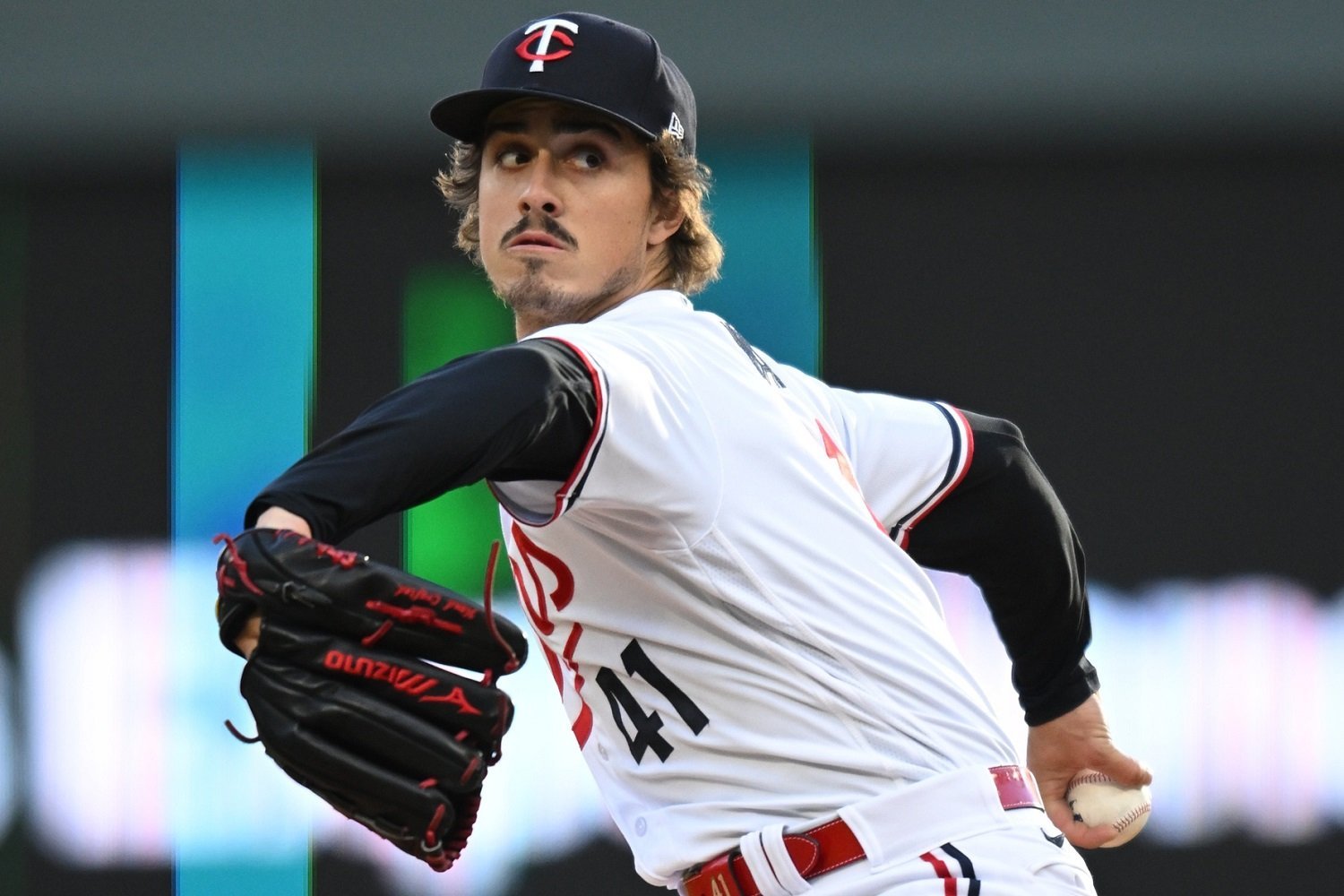 MLB's 2023 Trade Deadline is scheduled for August 1, and the Twins will likely need to add pieces to keep themselves in contention. Before the deadline, looking at previous years and how this front office has approached the trading process is critical. This series will look at some of the best and worst trades made by the current front office. 5. Josh Donaldson, Isiah Kiner-Falefa , and Ben Rortvedt for Gary Sanchez and Gio Urshela Trade Date: March 13, 2022 The Twins didn't gain significant value from this trade, but it might have been more about what the team could dump. Minnesota was ready to move on from Donaldson after two seasons, and the front office was lucky to find an organization willing to take on his salary. Urshela was a solid contributor in his lone Twins season, with Sanchez also providing minimal value. Dumping Donaldson gave the Twins financial flexibility to make other moves leading into the last two seasons. 4. Jermaine Palacios for Jake Odorizzi Trade Date: February 17, 2018 Only a few teams win trades with the Tampa Bay Rays, but the Twins have been successful in recent years. Tampa is known for having limited payroll resources, and Odorizzi was getting expensive through the arbitration process. After the trade, he posted a 4.01 ERA with a 1.28 WHIP and a 110 ERA+ from 2018-19. He was an All-Star during the 2019 season, and the Twins extended him the qualifying offer leading into the 2020 season. Odorizzi struggled during the pandemic-shortened 2020 campaign by allowing ten earned runs in 13 2/3 innings. Palacios never made it to the big leagues with the Rays, so it was a clear win for the Twins. 3. Chase Petty for Sonny Gray and Francis Peguero Trade Date: March 13, 2022 It's tough to trade a recent first-round pick, but the Twins might have found a way to maximize a player's value. The Twins took Petty with the 26th overall selection in the 2021 MLB Draft, but high school pitchers are one of the most challenging player types to draft and develop. Minnesota got two strong years from a veteran starting pitcher by trading Petty for Gray. Following the 2023 season, the Twins can extend a qualifying offer to Gray. The Twins receive draft pick compensation if he declines the offer and signs with another team. It's an opportunity for the Twins to replace Petty in their system with another high draft pick. Peguero is still in the Twins organization and pitching out of the bullpen at Double-A. Petty might develop into a strong starting pitcher, but the trade still looks good from the Twins' perspective. 2. Eduardo Escobar for Jhoan Duran, Gabriel Maciel, and Ernie De La Trinidad Trade Date: July 27, 2018 Escobar was a fan favorite during his time in Minnesota, so it was tough to see him traded away. However, he was on an expiring contract, and the Twins received three prospects in return. Duran has become one of the game's top relievers, and the Twins have him under team control through the 2027 season. Maciel and De La Trinidad are no longer in the Twins organization, but Duran has provided more WAR for the Twins than Escobar did in the final months of the 2018 season. Duran is arguably one of the team's top-5 most valuable players, and that's why this trade gets ranked so high. 1. Nelson Cruz and Calvin Faucher for Joe Ryan and Drew Strotman Trade Date: July 22, 2021 There have been some strong trades in the Twins' history, but this has the potential to be one of the best. Cruz had been the heart and soul of the Twins line-up for multiple seasons, but he was on an expiring contract, and the club wasn't in contention. The Rays had been interested in Cruz for multiple seasons but couldn't make a deal. Ryan was a highly-ranked pitching prospect in the Rays organization, but many evaluators believed his ceiling was limited because he relied on his fastball. He has continued developing his secondary pitches and is a borderline All-Star in 2023. That's not too bad of a swap for two months of an aging Cruz. Check out the Twins Daily forums for more trade discussions from the current front office. How would you rank the above-listed trades? Would you have different trades on the list? Leave a COMMENT and start the discussion.
- 8 comments
-
- 2
-
-
- joe ryan
- jhoan duran
- (and 3 more)
-
Fans will quickly point out trades that end poorly, but the Twins' current front office has seen some good deals during their tenure. Here are the top five trades made by Derek Falvey and Thad Levine. Image courtesy of Jeffrey Becker-USA TODAY Sports MLB's 2023 Trade Deadline is scheduled for August 1, and the Twins will likely need to add pieces to keep themselves in contention. Before the deadline, looking at previous years and how this front office has approached the trading process is critical. This series will look at some of the best and worst trades made by the current front office. 5. Josh Donaldson, Isiah Kiner-Falefa , and Ben Rortvedt for Gary Sanchez and Gio Urshela Trade Date: March 13, 2022 The Twins didn't gain significant value from this trade, but it might have been more about what the team could dump. Minnesota was ready to move on from Donaldson after two seasons, and the front office was lucky to find an organization willing to take on his salary. Urshela was a solid contributor in his lone Twins season, with Sanchez also providing minimal value. Dumping Donaldson gave the Twins financial flexibility to make other moves leading into the last two seasons. 4. Jermaine Palacios for Jake Odorizzi Trade Date: February 17, 2018 Only a few teams win trades with the Tampa Bay Rays, but the Twins have been successful in recent years. Tampa is known for having limited payroll resources, and Odorizzi was getting expensive through the arbitration process. After the trade, he posted a 4.01 ERA with a 1.28 WHIP and a 110 ERA+ from 2018-19. He was an All-Star during the 2019 season, and the Twins extended him the qualifying offer leading into the 2020 season. Odorizzi struggled during the pandemic-shortened 2020 campaign by allowing ten earned runs in 13 2/3 innings. Palacios never made it to the big leagues with the Rays, so it was a clear win for the Twins. 3. Chase Petty for Sonny Gray and Francis Peguero Trade Date: March 13, 2022 It's tough to trade a recent first-round pick, but the Twins might have found a way to maximize a player's value. The Twins took Petty with the 26th overall selection in the 2021 MLB Draft, but high school pitchers are one of the most challenging player types to draft and develop. Minnesota got two strong years from a veteran starting pitcher by trading Petty for Gray. Following the 2023 season, the Twins can extend a qualifying offer to Gray. The Twins receive draft pick compensation if he declines the offer and signs with another team. It's an opportunity for the Twins to replace Petty in their system with another high draft pick. Peguero is still in the Twins organization and pitching out of the bullpen at Double-A. Petty might develop into a strong starting pitcher, but the trade still looks good from the Twins' perspective. 2. Eduardo Escobar for Jhoan Duran, Gabriel Maciel, and Ernie De La Trinidad Trade Date: July 27, 2018 Escobar was a fan favorite during his time in Minnesota, so it was tough to see him traded away. However, he was on an expiring contract, and the Twins received three prospects in return. Duran has become one of the game's top relievers, and the Twins have him under team control through the 2027 season. Maciel and De La Trinidad are no longer in the Twins organization, but Duran has provided more WAR for the Twins than Escobar did in the final months of the 2018 season. Duran is arguably one of the team's top-5 most valuable players, and that's why this trade gets ranked so high. 1. Nelson Cruz and Calvin Faucher for Joe Ryan and Drew Strotman Trade Date: July 22, 2021 There have been some strong trades in the Twins' history, but this has the potential to be one of the best. Cruz had been the heart and soul of the Twins line-up for multiple seasons, but he was on an expiring contract, and the club wasn't in contention. The Rays had been interested in Cruz for multiple seasons but couldn't make a deal. Ryan was a highly-ranked pitching prospect in the Rays organization, but many evaluators believed his ceiling was limited because he relied on his fastball. He has continued developing his secondary pitches and is a borderline All-Star in 2023. That's not too bad of a swap for two months of an aging Cruz. Check out the Twins Daily forums for more trade discussions from the current front office. How would you rank the above-listed trades? Would you have different trades on the list? Leave a COMMENT and start the discussion. View full article
-
Entering the 2023 season, the Twins signed Joey Gallo to attempt to rediscover his All-Star form. There have been brief glimpses, but the reclamation project has been a failure. Image courtesy of Nathan Ray Seebeck-USA TODAY Sports The Twins signed Joey Gallo to a one-year, $12 million deal because of his defensive versatility and offensive potential. He won Gold Gloves at two different outfield positions, and the Twins knew they might have a need at first base while Alex Kirilloff ramped up for the season. Twins bench coach Jayce Tingler worked with Gallo in Texas and believed in Gallo’s ability. The team hoped Gallo could put the 2023 season behind him and return to his All-Star-level form at the plate. For Gallo, the 2022 season was an unmitigated disaster. He began the year with the Yankees and hit .159/.282/.339 (.621) with four doubles, 12 home runs, and 106 strikeouts in 82 games. New York can be a harsh environment for players to find success, especially players struggling at the plate. The Yankees traded him to the Dodgers at the deadline, and his OPS increased by 50 points, but it was still over 120 points lower than his career average. It was a disastrous season from start to finish, and Gallo was looking for a new opportunity this winter. The Twins provided him with that opportunity while also having coaching and front-office connections to the Rangers, where Gallo had the most success. Minnesota liked that he could shift between multiple outfield positions and fill in at first base while the team waited for Kirilloff. During spring training, the Twins also experimented with him being a leadoff hitter as the team tried to find the best fit at the top of the line-up. Few would look at Gallo as a leadoff batter, but he has shown solid on-base skills and takes a lot of pitches during his at-bats. The Twins entered the season with high hopes for Gallo, and there were some positive early returns. Gallo was one of the team’s best hitters in the season’s first month. In 19 games, he hit .236/.354/.709 (1.063) with three doubles, one triple, and seven home runs. His 22 strikeouts were high, but any team will take them if it comes with a slugging percentage above .700. He also ranked among the league leaders at first base according to SABR’s Defensive Index. Gallo provided critical hits in the first month and helped the team sit atop the AL Central. It looked like the Twins had solved Gallo’s offensive woes and had him back on track. Unfortunately, it doesn’t appear that Gallo’s hot start indicates a significant overhaul to his offensive profile. He has struggled mightily since the season’s first month by hitting .157/.284/.306 (.590) with four doubles and four home runs in 36 games. That’s a lower OPS than he had during the 2022 season. Strikeouts have always been an issue for him, but his recent stretch has been even worse than his career totals. He has 51 strikeouts in 108 at-bats since May 2. If the power doesn’t accompany his strikeouts, there’s little reason to continue penciling him into the line-up. Gallo’s hot start masks his overall season numbers. Many fans have been calling for Max Kepler to be designated for assignment, but Gallo has been equally as bad in recent weeks. He isn’t the root of the team’s offensive woes but is quickly becoming the poster child for what’s wrong with the team in 2023. Strikeouts continue to be an issue, and Gallo is an aging veteran that looks past his prime. Tough decisions are on the horizon for the Twins, and the team might have to consider moving on from Gallo. Has Gallo’s Twins tenure been a failure? Should the team move on from him? Leave a COMMENT and start the discussion. View full article
-
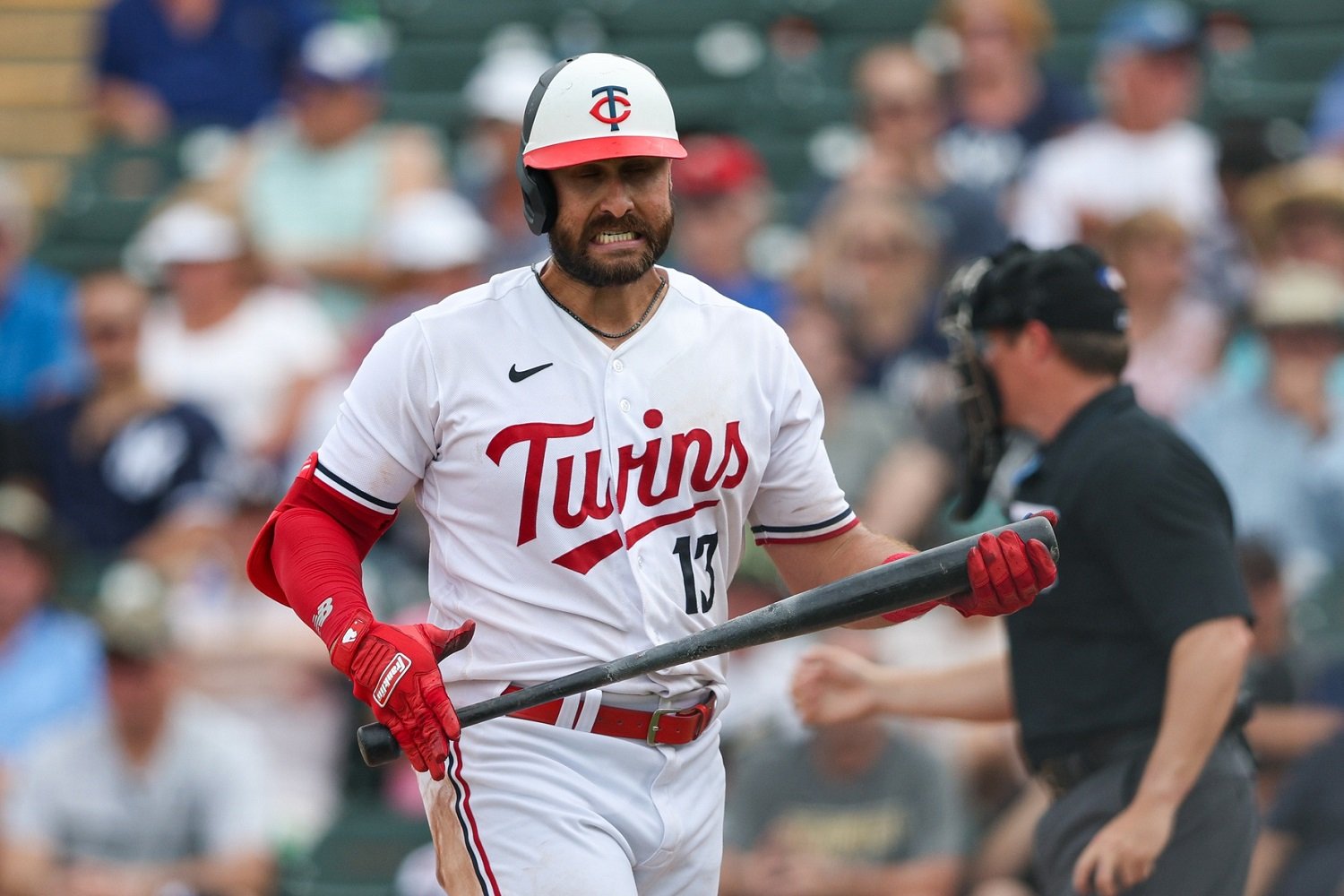 The Twins signed Joey Gallo to a one-year, $12 million deal because of his defensive versatility and offensive potential. He won Gold Gloves at two different outfield positions, and the Twins knew they might have a need at first base while Alex Kirilloff ramped up for the season. Twins bench coach Jayce Tingler worked with Gallo in Texas and believed in Gallo’s ability. The team hoped Gallo could put the 2023 season behind him and return to his All-Star-level form at the plate. For Gallo, the 2022 season was an unmitigated disaster. He began the year with the Yankees and hit .159/.282/.339 (.621) with four doubles, 12 home runs, and 106 strikeouts in 82 games. New York can be a harsh environment for players to find success, especially players struggling at the plate. The Yankees traded him to the Dodgers at the deadline, and his OPS increased by 50 points, but it was still over 120 points lower than his career average. It was a disastrous season from start to finish, and Gallo was looking for a new opportunity this winter. The Twins provided him with that opportunity while also having coaching and front-office connections to the Rangers, where Gallo had the most success. Minnesota liked that he could shift between multiple outfield positions and fill in at first base while the team waited for Kirilloff. During spring training, the Twins also experimented with him being a leadoff hitter as the team tried to find the best fit at the top of the line-up. Few would look at Gallo as a leadoff batter, but he has shown solid on-base skills and takes a lot of pitches during his at-bats. The Twins entered the season with high hopes for Gallo, and there were some positive early returns. Gallo was one of the team’s best hitters in the season’s first month. In 19 games, he hit .236/.354/.709 (1.063) with three doubles, one triple, and seven home runs. His 22 strikeouts were high, but any team will take them if it comes with a slugging percentage above .700. He also ranked among the league leaders at first base according to SABR’s Defensive Index. Gallo provided critical hits in the first month and helped the team sit atop the AL Central. It looked like the Twins had solved Gallo’s offensive woes and had him back on track. Unfortunately, it doesn’t appear that Gallo’s hot start indicates a significant overhaul to his offensive profile. He has struggled mightily since the season’s first month by hitting .157/.284/.306 (.590) with four doubles and four home runs in 36 games. That’s a lower OPS than he had during the 2022 season. Strikeouts have always been an issue for him, but his recent stretch has been even worse than his career totals. He has 51 strikeouts in 108 at-bats since May 2. If the power doesn’t accompany his strikeouts, there’s little reason to continue penciling him into the line-up. Gallo’s hot start masks his overall season numbers. Many fans have been calling for Max Kepler to be designated for assignment, but Gallo has been equally as bad in recent weeks. He isn’t the root of the team’s offensive woes but is quickly becoming the poster child for what’s wrong with the team in 2023. Strikeouts continue to be an issue, and Gallo is an aging veteran that looks past his prime. Tough decisions are on the horizon for the Twins, and the team might have to consider moving on from Gallo. Has Gallo’s Twins tenure been a failure? Should the team move on from him? Leave a COMMENT and start the discussion.
 -
The Twins have made nine first-round picks since Derek Falvey and Thad Levine took over at the top of the organization. How do those players rank at this point in their careers? Image courtesy of William Parmeter MLB draft analysis from one year to the next can be challenging because franchises rarely draft in the same position from one year to the next. Also, some draft classes are stronger than others, and teams can try to save money with their first-round pick to use in later rounds. Derek Falvey and Thad Levine have tended to prefer specific player types with their first-round picks, and some of those players have fared better than others to this point in their professional careers. There is a hierarchy in the Twins front office that might cloud who is responsible for drafting players. Falvey is ultimately responsible for everything in the organization. Still, his role in the draft is minimal, other than setting the team's focus on what they look for as an organization. The men at the organization's top can get the credit or blame for drafts while having minimal to do with the process. The team's scouting director Sean Johnson has the ultimate say on who they take in the draft, and the credit/blame should reside with him. 9. Keoni Cavaco, IF 13th Overall Pick in 2019 Evaluators viewed Cavaco as a reach when the Twins picked him, and the club's faith in him has yet to be rewarded. He began his career as a shortstop, moved to third base in 2022, and has only played first base this season. He's been slightly below the average age of the competition at each level, but he has never put it together on either side of the ball. In over 220 minor-league games, he has hit .217/.273/.338 (.610) with a 318-to-55 strikeout-to-walk ratio. Earlier this week he was placed on the developmental list. 8. Aaron Sabato, 1B/DH 27th Overall Pick in 2020 The pandemic greatly impacted the 2020 MLB Draft, with clubs unable to scout players in the months leading into the draft. Minnesota took Sabato because his power was seen as a superior tool, with a .698 SLG in college. Sabato has posted a .776 OPS in three professional seasons with over 140 strikeouts per season while never hitting more than 22 home runs. He provides little to no defensive value and has been inconsistent at the plate. This pick looks like a swing and a miss by the Twins. 7. Brent Rooker, DH 35th Overall Pick in 2017 Rooker looked like a big-league bust before a hot start in Oakland this year. In 64 games, he is hitting .255/.356/.491 (.846) with 12 doubles, 13 home runs, and a 142 OPS+. Minnesota included Rooker with Taylor Rogers in the trade for Chris Paddack, Emilio Pagan, and Brayan Medina. The Padres dealt him to the Royals last season, and the A's claimed him off waivers this winter. Now in his age-28 season, he's getting an extended look at the big-league level for the first time in his career. Following his hot start, he has cooled off significantly in recent weeks. 6. Noah Miller, SS 36th Overall Pick in 2021 Miller is still very early in his professional career, so there is time for him to move up this list eventually. The Twins took Miller with their second pick in the 2021 MLB Draft out of high school in Wisconsin. In three professional seasons, Miller has been more than two years younger than the average age of the competition at his level. He's been used almost exclusively at shortstop with a half dozen appearances at second base. Across 186 games, he has hit .212/.323/.288 (.612) with 33 extra-base hits. During the 2023 season, Miller has faced older pitchers in all but two plate appearances. The Twins have faith that he will eventually be able to hold his own against older competition. 5. Chase Petty, SP 26th Overall Pick in 2021 Petty made two appearances in the Twins organization before the team traded him to the Reds for Sonny Gray. In 2023, Petty is pitching at High-A, where he is over three years younger than the average age. He has allowed four earned runs (1.50 ERA) through six starts with a 26-to-5 strikeout-to-walk ratio. He's a long way from the big leagues, and a lot can go wrong with a pitching prospect before their debut. The Reds have seen some success stories in developing hard-throwing high school pitchers, and they hope Petty can join this group. 4. Trevor Larnach, OF 20th Overall Pick in 2018 The Twins drafted Larnach after he was one of the critical hitters on a powerhouse Oregon State team that won the College World Series. He posted tremendous numbers during his first full professional season between High-A and Double-A on his way to being named the Twins Minor League Player of the Year. In 126 games, he hit .309/.384/.458 (.842) with 30 doubles and 13 home runs. He was a consensus top-100 prospect entering the 2020 and 2021 seasons, but he hasn't put it all together at the big-league level, with a .690 OPS in 177 games. He crushes fastballs but struggles with breaking pitches, so he's struggled to stick with the Twins. 3. Matt Wallner, OF 39th Overall Pick in 2019 Wallner fits the type of player this front office typically targets in the draft with college experience and strong power potential. He is the team's reigning Minor League Player of the Year after posting a .953 OPS between Double-A and Triple-A last season. During the 2023 season, the Twins have left him in the minors despite solid numbers with the Saints. In 49 games, he is hitting .298/.414/.547 (.961) with 17 doubles, two triples, and eight home runs. Wallner's offensive profile has a lot of swing and miss, but when he makes solid contact, the ball travels a long way. Minnesota must make room for him at the big-league level at some point in 2023. 2. Royce Lewis, SS/3B 1st Overall Pick in 2017 Lewis can provide the most value out of any player on this list, especially now that he is finally healthy. He's missed parts of the last two seasons due to ACL surgery. Since returning, he has provided some critical hits for the Twins while also learning a new defensive position. In 16 games, he went 16-for-57 (.281 BA) with a .709 OPS and 20 strikeouts. It will be interesting to see how the Twins utilize Lewis in the coming years. Carlos Correa will likely get most of the reps at shortstop, and Lewis prefers to play infield. Is second base his eventual home if the team moves on from Jorge Polanco? 1. Brooks Lee, SS 8th Overall Pick in 2022 Lee entered the season as a consensus top-50 prospect after a pro debut where he posted an .839 OPS in 31 games. During the 2023 season, the Twins sent him back to Double-A, the level he finished at last season. He's hit .270/.348/.425 (.773) with 23 doubles, four home runs, and a 48-to-27 strikeout-to-walk ratio through 57 games. He seems unlikely to play shortstop at the big-league level, but he continues to play there in Double-A. Even with a slow start, Lee still has the potential to be a middle-of-the-order bat for the Twins for a long time. How would you rank the team's first-round picks since 2017? Leave a COMMENT and start the discussion. View full article
-
Ranking the Twins' First-Round Picks In the Falvey-Levine Era
Cody Christie posted an article in Minor Leagues
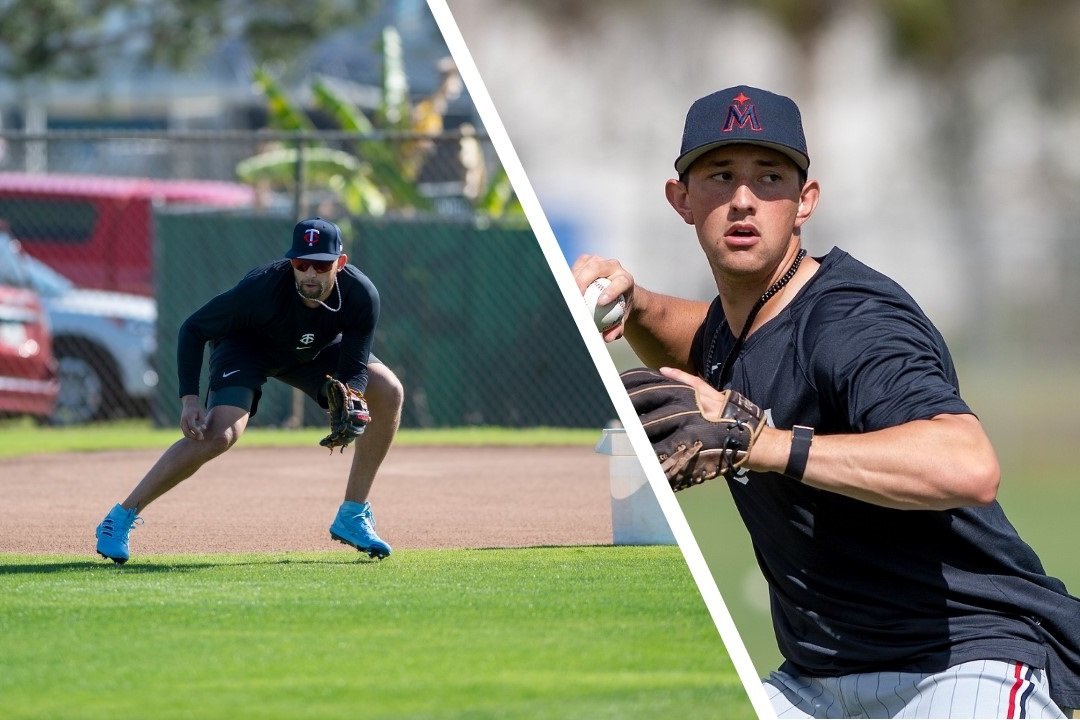 MLB draft analysis from one year to the next can be challenging because franchises rarely draft in the same position from one year to the next. Also, some draft classes are stronger than others, and teams can try to save money with their first-round pick to use in later rounds. Derek Falvey and Thad Levine have tended to prefer specific player types with their first-round picks, and some of those players have fared better than others to this point in their professional careers. There is a hierarchy in the Twins front office that might cloud who is responsible for drafting players. Falvey is ultimately responsible for everything in the organization. Still, his role in the draft is minimal, other than setting the team's focus on what they look for as an organization. The men at the organization's top can get the credit or blame for drafts while having minimal to do with the process. The team's scouting director Sean Johnson has the ultimate say on who they take in the draft, and the credit/blame should reside with him. 9. Keoni Cavaco, IF 13th Overall Pick in 2019 Evaluators viewed Cavaco as a reach when the Twins picked him, and the club's faith in him has yet to be rewarded. He began his career as a shortstop, moved to third base in 2022, and has only played first base this season. He's been slightly below the average age of the competition at each level, but he has never put it together on either side of the ball. In over 220 minor-league games, he has hit .217/.273/.338 (.610) with a 318-to-55 strikeout-to-walk ratio. Earlier this week he was placed on the developmental list. 8. Aaron Sabato, 1B/DH 27th Overall Pick in 2020 The pandemic greatly impacted the 2020 MLB Draft, with clubs unable to scout players in the months leading into the draft. Minnesota took Sabato because his power was seen as a superior tool, with a .698 SLG in college. Sabato has posted a .776 OPS in three professional seasons with over 140 strikeouts per season while never hitting more than 22 home runs. He provides little to no defensive value and has been inconsistent at the plate. This pick looks like a swing and a miss by the Twins. 7. Brent Rooker, DH 35th Overall Pick in 2017 Rooker looked like a big-league bust before a hot start in Oakland this year. In 64 games, he is hitting .255/.356/.491 (.846) with 12 doubles, 13 home runs, and a 142 OPS+. Minnesota included Rooker with Taylor Rogers in the trade for Chris Paddack, Emilio Pagan, and Brayan Medina. The Padres dealt him to the Royals last season, and the A's claimed him off waivers this winter. Now in his age-28 season, he's getting an extended look at the big-league level for the first time in his career. Following his hot start, he has cooled off significantly in recent weeks. 6. Noah Miller, SS 36th Overall Pick in 2021 Miller is still very early in his professional career, so there is time for him to move up this list eventually. The Twins took Miller with their second pick in the 2021 MLB Draft out of high school in Wisconsin. In three professional seasons, Miller has been more than two years younger than the average age of the competition at his level. He's been used almost exclusively at shortstop with a half dozen appearances at second base. Across 186 games, he has hit .212/.323/.288 (.612) with 33 extra-base hits. During the 2023 season, Miller has faced older pitchers in all but two plate appearances. The Twins have faith that he will eventually be able to hold his own against older competition. 5. Chase Petty, SP 26th Overall Pick in 2021 Petty made two appearances in the Twins organization before the team traded him to the Reds for Sonny Gray. In 2023, Petty is pitching at High-A, where he is over three years younger than the average age. He has allowed four earned runs (1.50 ERA) through six starts with a 26-to-5 strikeout-to-walk ratio. He's a long way from the big leagues, and a lot can go wrong with a pitching prospect before their debut. The Reds have seen some success stories in developing hard-throwing high school pitchers, and they hope Petty can join this group. 4. Trevor Larnach, OF 20th Overall Pick in 2018 The Twins drafted Larnach after he was one of the critical hitters on a powerhouse Oregon State team that won the College World Series. He posted tremendous numbers during his first full professional season between High-A and Double-A on his way to being named the Twins Minor League Player of the Year. In 126 games, he hit .309/.384/.458 (.842) with 30 doubles and 13 home runs. He was a consensus top-100 prospect entering the 2020 and 2021 seasons, but he hasn't put it all together at the big-league level, with a .690 OPS in 177 games. He crushes fastballs but struggles with breaking pitches, so he's struggled to stick with the Twins. 3. Matt Wallner, OF 39th Overall Pick in 2019 Wallner fits the type of player this front office typically targets in the draft with college experience and strong power potential. He is the team's reigning Minor League Player of the Year after posting a .953 OPS between Double-A and Triple-A last season. During the 2023 season, the Twins have left him in the minors despite solid numbers with the Saints. In 49 games, he is hitting .298/.414/.547 (.961) with 17 doubles, two triples, and eight home runs. Wallner's offensive profile has a lot of swing and miss, but when he makes solid contact, the ball travels a long way. Minnesota must make room for him at the big-league level at some point in 2023. 2. Royce Lewis, SS/3B 1st Overall Pick in 2017 Lewis can provide the most value out of any player on this list, especially now that he is finally healthy. He's missed parts of the last two seasons due to ACL surgery. Since returning, he has provided some critical hits for the Twins while also learning a new defensive position. In 16 games, he went 16-for-57 (.281 BA) with a .709 OPS and 20 strikeouts. It will be interesting to see how the Twins utilize Lewis in the coming years. Carlos Correa will likely get most of the reps at shortstop, and Lewis prefers to play infield. Is second base his eventual home if the team moves on from Jorge Polanco? 1. Brooks Lee, SS 8th Overall Pick in 2022 Lee entered the season as a consensus top-50 prospect after a pro debut where he posted an .839 OPS in 31 games. During the 2023 season, the Twins sent him back to Double-A, the level he finished at last season. He's hit .270/.348/.425 (.773) with 23 doubles, four home runs, and a 48-to-27 strikeout-to-walk ratio through 57 games. He seems unlikely to play shortstop at the big-league level, but he continues to play there in Double-A. Even with a slow start, Lee still has the potential to be a middle-of-the-order bat for the Twins for a long time. How would you rank the team's first-round picks since 2017? Leave a COMMENT and start the discussion.
- 31 comments
-
- 5
-
-
- royce lewis
- brooks lee
- (and 3 more)
-
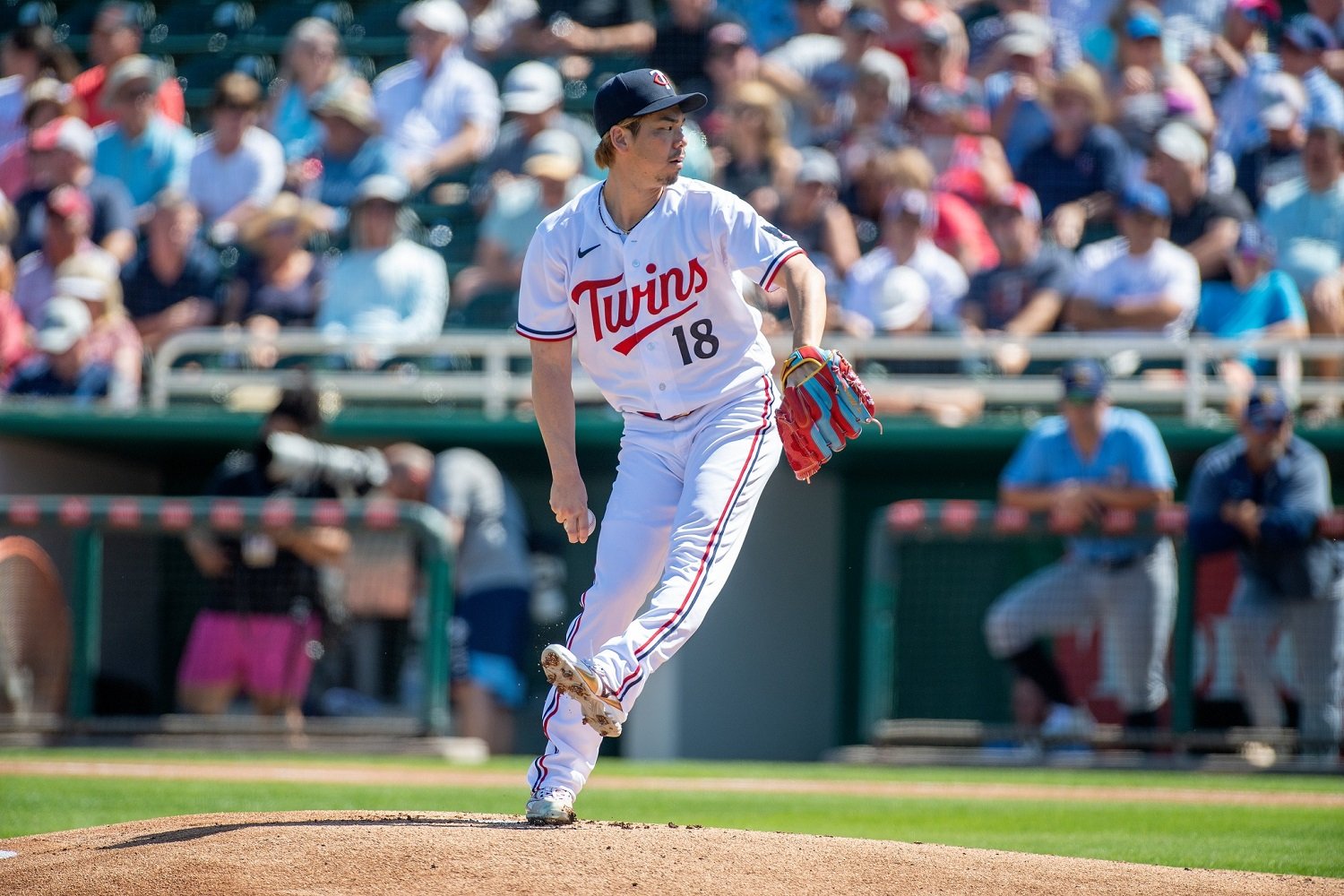 The Twins expect Kenta Maeda to rejoin the club this week after missing nearly two months with a right triceps strain. He is in his age-35 season while also in his first year back from Tommy John surgery. Maeda is among a group of veteran players without ties to the Twins beyond this season. The team plans to continue to use him as a starter, but they may cut ties with him if his performance dictates an alternate direction. Maeda's rehab appearances at Triple-A have been a mixed bag. In his first starts, he pitched two scoreless innings while striking out four and walking one. He tossed three innings in his next appearance and allowed two runs on five hits with four strikeouts. His third appearance was his best, with four shutout innings, including five strikeouts. On Friday, he started and pitched into the fifth frame (4 1/3 innings) and was charged with one earned run. However, he struggled with control and walked four batters while topping out in the low-90s with his fastball. Maeda's performance isn't screaming that he's ready to face big-league pitching, but his rehab window is quickly closing. Since spring training, the Twins have discussed the possibility of moving to a six-man rotation. In camp, the Twins had Maeda, Sonny Gray, Pablo Lopez, Joe Ryan, Tyler Mahle, and Bailey Ober fighting for five spots. The Twins made it clear to Ober that he'd head to Triple-A to begin the season if the other five pitchers made it out of camp healthy. However, Ober dominated during spring action, opening the possibility of a six-man rotation. Minnesota decided to send Ober to St. Paul for various reasons, but there was a possibility of reevaluating the rotation later in the season. Injuries have impacted the Twins roster, making a six-man rotation slightly more intriguing. There are some benefits to adding another starter to the current group. This move would allow the Twins to give their starters an extra day of rest between appearances. It also allows the club to leave starters in the game longer because their arm is fresher. Minnesota's rotation was among baseball's best in the season's early weeks, but the performance of the team's starters has regressed in recent weeks. There is certainly no guarantee of better performance from the starters when switching to a six-man rotation. There are also bullpen ramifications when adding another starter to the mix. Twins fans have witnessed the club's reliance on the bullpen this year, and that was with eight available arms. Pitchers at the back end of the bullpen have been shuttled between St. Paul and Minneapolis, while other arms have struggled in late-inning situations. Moving to a six-man rotation would limit the Twins to seven arms in the bullpen, which might be something other than what the club wants to do now. As we learned on Tuesday, Louie Varland is headed to Triple-A and Maeda will make a start soon. In his first seven starts (41 innings), Varland posted a 3.51 ERA with a 39-to-8 strikeout-to-walk ratio. He has struggled in his last three appearances, allowing 17 earned runs in 15 innings. His biggest issue has been his tendency to give up home runs, which might be one reason the Twins want him to get more time at Triple-A. It would be a tough decision to demote Varland with his early season production, but recent starts make that decision a little easier for the front office. A six-man rotation is undoubtedly something the Twins can consider but now isn't the best time. Minnesota needs arms in the bullpen, especially since there is no guarantee of starters pitching longer, even with more rest. Varland seems to be the odd man out, but his future is still bright, even with a return trip to St. Paul. Should the Twins consider a six-man rotation? How long of a leash does Maeda get when he returns? Leave a COMMENT and start the discussion.
 -
Kenta Maeda's 30-day rehab window is closing, and the Twins have a few options to add him back to the rotation. Switching to a six-man rotation is possible, but it's unclear if that would be the team's best course of action. Image courtesy of William Parmeter The Twins expect Kenta Maeda to rejoin the club this week after missing nearly two months with a right triceps strain. He is in his age-35 season while also in his first year back from Tommy John surgery. Maeda is among a group of veteran players without ties to the Twins beyond this season. The team plans to continue to use him as a starter, but they may cut ties with him if his performance dictates an alternate direction. Maeda's rehab appearances at Triple-A have been a mixed bag. In his first starts, he pitched two scoreless innings while striking out four and walking one. He tossed three innings in his next appearance and allowed two runs on five hits with four strikeouts. His third appearance was his best, with four shutout innings, including five strikeouts. On Friday, he started and pitched into the fifth frame (4 1/3 innings) and was charged with one earned run. However, he struggled with control and walked four batters while topping out in the low-90s with his fastball. Maeda's performance isn't screaming that he's ready to face big-league pitching, but his rehab window is quickly closing. Since spring training, the Twins have discussed the possibility of moving to a six-man rotation. In camp, the Twins had Maeda, Sonny Gray, Pablo Lopez, Joe Ryan, Tyler Mahle, and Bailey Ober fighting for five spots. The Twins made it clear to Ober that he'd head to Triple-A to begin the season if the other five pitchers made it out of camp healthy. However, Ober dominated during spring action, opening the possibility of a six-man rotation. Minnesota decided to send Ober to St. Paul for various reasons, but there was a possibility of reevaluating the rotation later in the season. Injuries have impacted the Twins roster, making a six-man rotation slightly more intriguing. There are some benefits to adding another starter to the current group. This move would allow the Twins to give their starters an extra day of rest between appearances. It also allows the club to leave starters in the game longer because their arm is fresher. Minnesota's rotation was among baseball's best in the season's early weeks, but the performance of the team's starters has regressed in recent weeks. There is certainly no guarantee of better performance from the starters when switching to a six-man rotation. There are also bullpen ramifications when adding another starter to the mix. Twins fans have witnessed the club's reliance on the bullpen this year, and that was with eight available arms. Pitchers at the back end of the bullpen have been shuttled between St. Paul and Minneapolis, while other arms have struggled in late-inning situations. Moving to a six-man rotation would limit the Twins to seven arms in the bullpen, which might be something other than what the club wants to do now. As we learned on Tuesday, Louie Varland is headed to Triple-A and Maeda will make a start soon. In his first seven starts (41 innings), Varland posted a 3.51 ERA with a 39-to-8 strikeout-to-walk ratio. He has struggled in his last three appearances, allowing 17 earned runs in 15 innings. His biggest issue has been his tendency to give up home runs, which might be one reason the Twins want him to get more time at Triple-A. It would be a tough decision to demote Varland with his early season production, but recent starts make that decision a little easier for the front office. A six-man rotation is undoubtedly something the Twins can consider but now isn't the best time. Minnesota needs arms in the bullpen, especially since there is no guarantee of starters pitching longer, even with more rest. Varland seems to be the odd man out, but his future is still bright, even with a return trip to St. Paul. Should the Twins consider a six-man rotation? How long of a leash does Maeda get when he returns? Leave a COMMENT and start the discussion. View full article
-
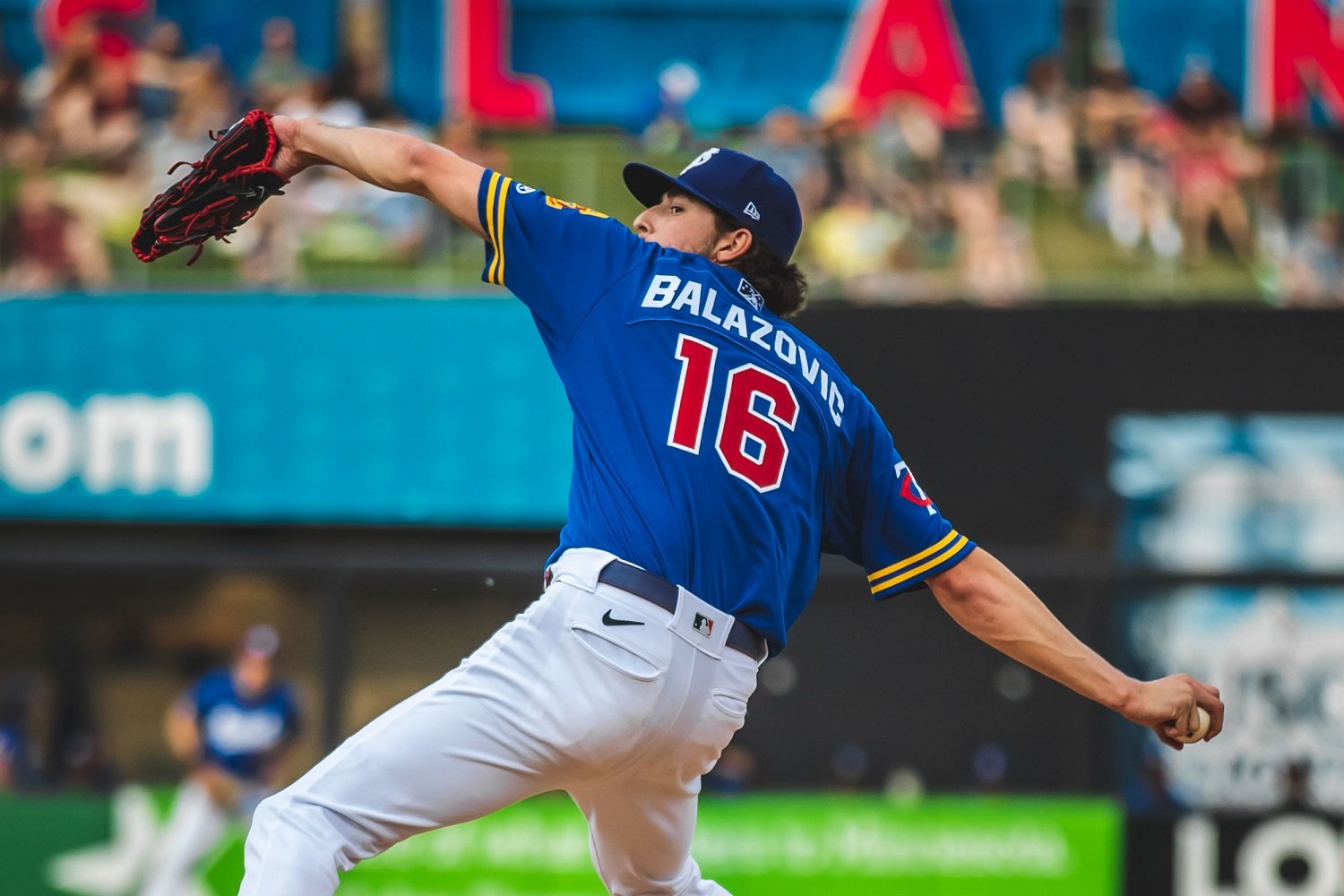 The Twins drafted Jordan Balazovic in the fifth round of the 2016 MLB Draft out of secondary school in Canada. Minnesota identified plenty of big-league talent in that draft, and Balazovic is the latest from that class to make his debut. Balazovic was seen as a projectable starter at the time of the draft because of his body type and pitch mix. Scouting high school players from cold weather climates can be challenging, but the Twins saw enough in Balazovic to sign him for $515,000. He spent his first two professional seasons pitching for the GCL Twins, making 18 appearances (72 1/3 innings). He posted a 3.61 ERA with a 1.36 WHIP and a 45-to-25 strikeout-to-walk ratio. During the 2016 season, he never faced a batter younger than himself, and he faced older batters in 80% of his plate appearances in 2017. While his numbers don’t stand out, he added strength to his frame to help him move up the organizational ladder. Balazovic got his first taste of full-season ball during the 2018 season when the Twins assigned him to Cedar Rapids, the organization’s Low-A affiliate at the time. He made 12 appearances (11 starts) and posted a 3.94 ERA with a 1.17 WHIP in 61 2/3 innings. His most significant improvement was in his strikeout rate. He posted a 5.6 K/9 in the rookie leagues, but that total jumped to 11.4 K/9 in his first season with the Kernels. He also continued to be young for the level, as he was 2.4 years younger than the average age of the competition in the Midwest League. In the 2019 season, Balazovic put himself on the prospect map, including being named the Twins’ representative in the Futures Game. He began the year in Cedar Rapids and dominated hitters by limiting them to five earned runs in 20 2/3 innings with 14.4 K/9. He continued his strong pitching performance after being promoted to High-A. In Fort Myers, he posted a 2.84 ERA with a 1.00 WHIP and 11.8 K/9 in 73 innings. Following the season, Baseball America and MLB Pipeline included him in the backend of their top-100 prospect lists. After the pandemic, the Twins added Balazovic to the 40-man roster and sent him to Double-A. His start to the 2021 season was delayed until June because of a back issue. Across 20 starts (97 innings), he combined for a 3.62 ERA with a 1.40 WHIP and 9.5 K/9. He allowed more hits per nine (9.1 H/9), his highest rate since rookie ball, but he was still young for his level, with nearly 82% of his plate appearances coming versus older batters. His fastball averaged 96 mph, and there was hope he’d still develop into a middle-of-the-rotation starter at the big-league level. Balazovic struggled with his on-field performance for the first time in his career during the 2022 season. A knee injury during the spring kept him from pitching until May. He never seemed to put it all together after the injury, but the team continued to use him regularly. With the Saints, he pitched 70 2/3 innings while allowing 58 earned runs (7.39 ERA) with a 1.94 WHIP. His average fastball velocity also dipped to 94 mph. During September, Balazovic had his best month of the season. He posted a 3.43 ERA in five starts with 30 strikeouts and ten walks in 21 innings. The Twins hoped it was a sign of bigger things to come for Balazovic in 2023. Entering this season, Balazovic reported early to Twins camp to get work in before the scheduled reporting date. However, his early arrival led to an altercation. On the evening before the players reported, he went to a local bar, and someone punched him in the face. He broke his jaw, requiring surgery and an overnight hospital stay. In interviews, he told reporters that he didn’t know the person and he didn’t throw a punch of his own. It was shaping up to be an important spring for Balazovic, and this incident put him behind at the season’s start. The Twins were clearly frustrated with the Balazovic situation, making him the first cut during spring training. At Triple-A, he began the year as a reliever, with the team using him sparingly as a spot starter. In 35 2/3 innings, he posted a 4.79 ERA with a 1.60 WHIP and a 5.3 K/9. His performance wasn’t pushing him to the big-league level, but he was on the 40-man roster, and the Twins needed a reliever. Balazovic’s MLB debut showcased what he can do out of the bullpen with 3 2/3 scoreless innings while throwing a lot of strikes. It will be interesting to see how Balazovic adjusts to a bullpen role. He used his fastball and curveball over 32% of the time in his debut. His slider is another option, but he didn’t get a lot of swings and misses. It might be best for him to focus on those three pitches and ditch his changeup since that pitch gets hit the hardest. Few pitchers follow a linear development path, and Balazovic has dealt with some issues on the way to his debut. However, he can provide future value for the Twins. How do you view Balazovic at this point in his career? What is his ceiling? Leave a COMMENT and start the discussion.
 -
Jordan Balazovic’s path to the big leagues included some tumultuous moments, and now he can showcase his skills at baseball’s highest level. Let’s review his professional career, including the ups and downs. Image courtesy of Rob Thompson, St. Paul Saints The Twins drafted Jordan Balazovic in the fifth round of the 2016 MLB Draft out of secondary school in Canada. Minnesota identified plenty of big-league talent in that draft, and Balazovic is the latest from that class to make his debut. Balazovic was seen as a projectable starter at the time of the draft because of his body type and pitch mix. Scouting high school players from cold weather climates can be challenging, but the Twins saw enough in Balazovic to sign him for $515,000. He spent his first two professional seasons pitching for the GCL Twins, making 18 appearances (72 1/3 innings). He posted a 3.61 ERA with a 1.36 WHIP and a 45-to-25 strikeout-to-walk ratio. During the 2016 season, he never faced a batter younger than himself, and he faced older batters in 80% of his plate appearances in 2017. While his numbers don’t stand out, he added strength to his frame to help him move up the organizational ladder. Balazovic got his first taste of full-season ball during the 2018 season when the Twins assigned him to Cedar Rapids, the organization’s Low-A affiliate at the time. He made 12 appearances (11 starts) and posted a 3.94 ERA with a 1.17 WHIP in 61 2/3 innings. His most significant improvement was in his strikeout rate. He posted a 5.6 K/9 in the rookie leagues, but that total jumped to 11.4 K/9 in his first season with the Kernels. He also continued to be young for the level, as he was 2.4 years younger than the average age of the competition in the Midwest League. In the 2019 season, Balazovic put himself on the prospect map, including being named the Twins’ representative in the Futures Game. He began the year in Cedar Rapids and dominated hitters by limiting them to five earned runs in 20 2/3 innings with 14.4 K/9. He continued his strong pitching performance after being promoted to High-A. In Fort Myers, he posted a 2.84 ERA with a 1.00 WHIP and 11.8 K/9 in 73 innings. Following the season, Baseball America and MLB Pipeline included him in the backend of their top-100 prospect lists. After the pandemic, the Twins added Balazovic to the 40-man roster and sent him to Double-A. His start to the 2021 season was delayed until June because of a back issue. Across 20 starts (97 innings), he combined for a 3.62 ERA with a 1.40 WHIP and 9.5 K/9. He allowed more hits per nine (9.1 H/9), his highest rate since rookie ball, but he was still young for his level, with nearly 82% of his plate appearances coming versus older batters. His fastball averaged 96 mph, and there was hope he’d still develop into a middle-of-the-rotation starter at the big-league level. Balazovic struggled with his on-field performance for the first time in his career during the 2022 season. A knee injury during the spring kept him from pitching until May. He never seemed to put it all together after the injury, but the team continued to use him regularly. With the Saints, he pitched 70 2/3 innings while allowing 58 earned runs (7.39 ERA) with a 1.94 WHIP. His average fastball velocity also dipped to 94 mph. During September, Balazovic had his best month of the season. He posted a 3.43 ERA in five starts with 30 strikeouts and ten walks in 21 innings. The Twins hoped it was a sign of bigger things to come for Balazovic in 2023. Entering this season, Balazovic reported early to Twins camp to get work in before the scheduled reporting date. However, his early arrival led to an altercation. On the evening before the players reported, he went to a local bar, and someone punched him in the face. He broke his jaw, requiring surgery and an overnight hospital stay. In interviews, he told reporters that he didn’t know the person and he didn’t throw a punch of his own. It was shaping up to be an important spring for Balazovic, and this incident put him behind at the season’s start. The Twins were clearly frustrated with the Balazovic situation, making him the first cut during spring training. At Triple-A, he began the year as a reliever, with the team using him sparingly as a spot starter. In 35 2/3 innings, he posted a 4.79 ERA with a 1.60 WHIP and a 5.3 K/9. His performance wasn’t pushing him to the big-league level, but he was on the 40-man roster, and the Twins needed a reliever. Balazovic’s MLB debut showcased what he can do out of the bullpen with 3 2/3 scoreless innings while throwing a lot of strikes. It will be interesting to see how Balazovic adjusts to a bullpen role. He used his fastball and curveball over 32% of the time in his debut. His slider is another option, but he didn’t get a lot of swings and misses. It might be best for him to focus on those three pitches and ditch his changeup since that pitch gets hit the hardest. Few pitchers follow a linear development path, and Balazovic has dealt with some issues on the way to his debut. However, he can provide future value for the Twins. How do you view Balazovic at this point in his career? What is his ceiling? Leave a COMMENT and start the discussion. View full article
-
Minnesota Twins 2022 Draft Retrospective: Promising Early Results
Cody Christie posted an article in Minor Leagues
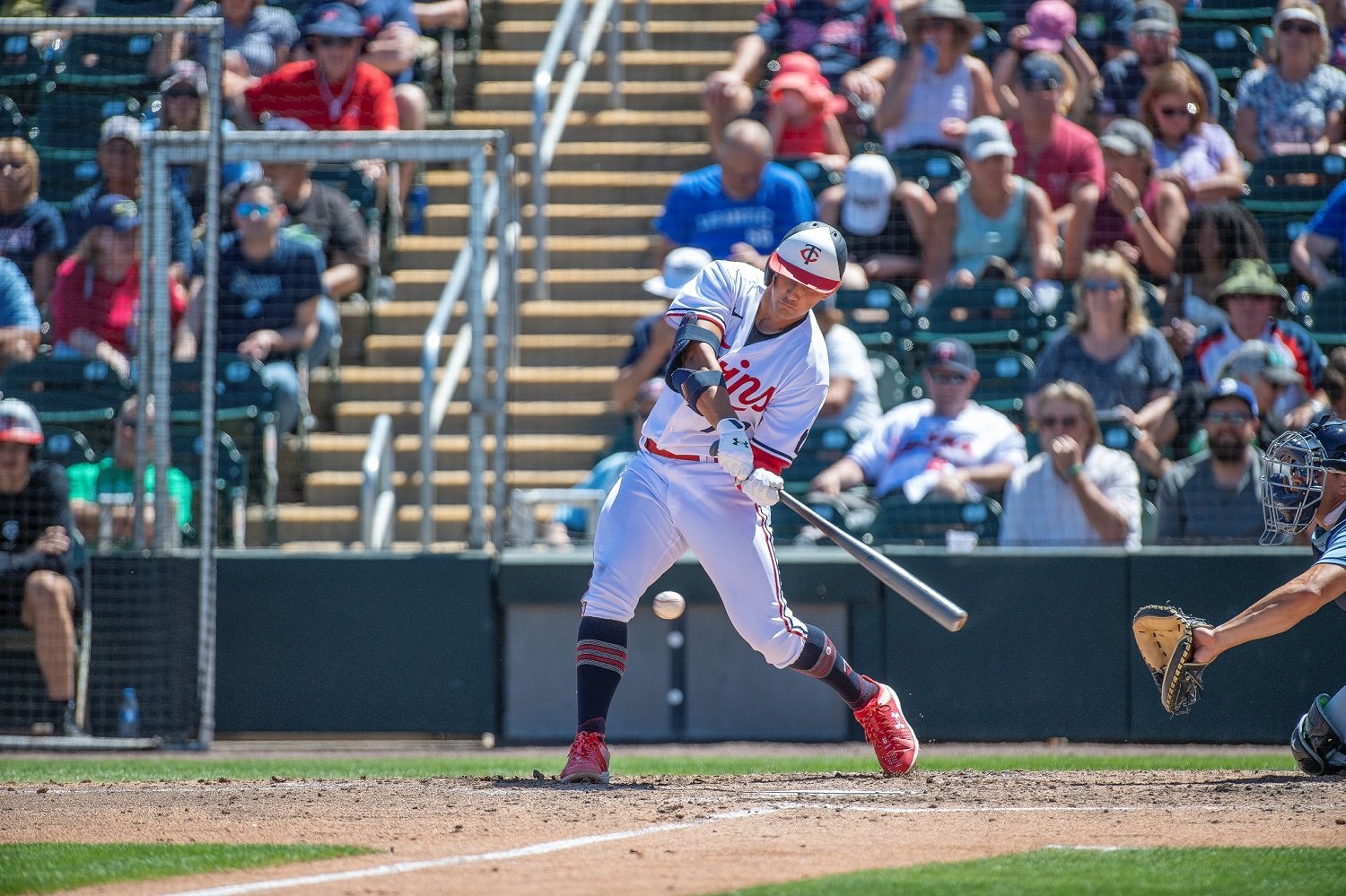 Major League Baseball's 2023 Draft is scheduled to start on July 9, 2023. Each team prepares for the draft with a specific plan, and sometimes those plans play out better than others. To prepare fans for the upcoming draft, this series will examine recent Twins drafts and how those players have performed so far in their professional careers. First Round: Brooks Lee The Twins were ecstatic that Lee fell to them with the eighth overall selection, especially since many pre-draft prognostications had him off the board before their pick. Evaluators viewed Lee as the most advanced college bat in the draft, and the Twins were aggressive with him during his professional debut. In 31 games, he hit .303/.389/.451 (.839) with six doubles and four home runs while splitting time between three levels. He finished the season as a starter in the Double-A line-up, including helping Wichita in the Texas League Championship Series. The Twins sent Lee back to Double-A for the 2023 season, where he has posted a .773 OPS including 23 doubles and four home runs through 57 games. He was a consensus top 50 prospect entering the season, so it will be interesting to see how he can improve in the second half. Second Round: Connor Prielipp, Tanner Schobel Prielipp was in the conversation for the first overall pick before suffering an elbow injury in college and having Tommy John surgery. Minnesota delayed his professional debut until the 2023 season. During spring, his pitching arm had some inflammation and soreness, so the Twins were taking it slow with him. Unfortunately, he's been limited to two professional starts after being diagnosed with a forearm strain. The plan is to have him start a throwing program at the team's facilities in Fort Myers before beginning rehab outings with the organization's rookie league teams. Prielipp might have the highest ceiling of any pitching prospect in the organization, but he needs to be healthy to move up the ladder. Schobel played collegiately in the ACC, so the Twins weren't afraid to be aggressive with him during his pro debut. He got his feet wet in the FCL (four games) before finishing the season on the Fort Myers roster. In 32 games, he hit .237/.353/.298 (.651) with five extra-base hits and a 26-to-19 strikeout-to-walk ratio. His first full season started in the Midwest League, where he is slightly younger than the average age of the competition. He's splitting time between second and third base while posting a .749 OPS with 16 extra-base hits through 58 games. The Twins didn't have a third-round pick in 2022 because the team had to forfeit their selection after signing Carlos Correa. Houston received a compensatory pick in the 2022 draft since they tendered the qualifying offer to Correa following the 2021 campaign. Minnesota's first three picks were protected, so they surrendered their fourth pick. Fourth Round: Andrew Morris Morris entered college as a 17-year-old and pitched his first three seasons at Division II Mesa State in Colorado. In 2022, he transferred to Texas Tech, where he posted a 4.58 ERA with a 1.22 WHIP and 91 strikeouts in 88 1/3 innings. Last season, Minnesota only had him make one FCL appearance after signing with the organization. He also made an appearance for the Mighty Mussels in the playoffs. In 2023, he's made six appearances (five starts) for the Mighty Mussels while allowing 12 earned runs on 26 hits with a 10.4 K/9 in 26 innings. Other Prospects Still in the Organization Ben Ross (5th Round): Ross posted a .817 OPS in 24 Low-A games during his professional debut. He's played the 2023 season in Cedar Rapids, hitting .239/.307/.424 (.732). Defensively, he's played six different positions. Jorel Ortega (6th Round): Saw limited action (3 games) after signing last season due to breaking his wrist in his first Mussels at-bat. In 2023, he's posted an .876 OPS at Low-A while splitting time between third base and shortstop. Kyle Jones (7th Round): He made two scoreless appearances near the end of the 2022 season. Minnesota sent him to Cedar Rapids for the 2023 campaign. He has a 4.47 ERA with a 1.27 WHIP and a 43-to-13 strikeout-to-walk ratio in 11 appearances. Zebby Matthews (8th Round): Matthews posted a 2.56 ERA with a 0.93 WHIP and 12.3 K/9 in eight Low-A appearances to begin 2023. The Twins promoted him to High-A at the beginning of June, where he had one bad start (8 ER) and two starts of six innings while allowing one earned run or fewer. Cory Lewis (9th Round): Lewis has been outstanding during his professional debut. In his first 11 starts (39 1/3 innings), he has limited batters to a .174 BA and a 72-to-18 strikeout-to-walk ratio. People want to talk about his knuckleball but he has a full repertoire of pitches to keep batters off balance. Lewis is over a year younger than the average age of the competition in the Midwest League since his most recent promotion. Dalton Shuffield (10th Round): He played parts of five college seasons because of the extra eligibility due to the pandemic. Because of that, when there was a roster need, Shuffield played quite a bit in Triple-A in his pro debut and posted a .917 OPS across three levels. In 2023, he's combined for a .786 OPS in Fort Myers. Andrew Cossetti (11th Round): Cossetti has split time between Low-A and High-A during the 2023 season. He's played catcher and first base while combining for a .986 OPS in 50 games. Nate Baez (12th Round): Baez hit .279/.338/.508 (.846) in 19 games after signing last season. He is currently on the IL with a broken hamate bone. C.J. Culpepper (13th Round): Culpepper shares some similarities to Joe Ryan, and the Twins hope he can follow a similar development path. In 10 starts (40 1/3 innings), he's posted a 2.68 ERA with a 1.14 WHIP and 10.7 K/9. Omari Daniel (14th Round): The Twins drafted him out of high school and held off on his pro debut until 2023 since he was still rehabbing from Tommy John surgery. With the FCL Twins, he started the year 2-for-12 (.167 BA) with more walks (five) than strikeouts (four). Ben Ethridge (15th Round): Ethridge moved to a bullpen role in his senior season at Southern Mississippi, and the Twins have continued that role with Fort Myers. In 14 appearances (28 1/3 innings), he has a 2.86 ERA with an 8.6 K/9. Jankel Ortiz (16th Round): He went 3-for-12 (.250 BA) with four walks and a double in his pro debut. Ortiz made nine appearances in the Puerto Rican Winter League and posted a .978 OPS. He recently came off the IL and has cone 0-for-6 in his first two games in 2023. Alec Sayre (17th Round): Sayre has played all three outfield positions at Low-A in 2023. He's hitting .224/.364/.321 (.685) with seven extra-base hits in his first 44 games this season. Zach Veen (18th Round): Veen has pitched out of the Fort Myers bullpen during the 2023 campaign. In 18 appearances (28 innings), he has posted a 3.21 ERA with a 1.25 WHIP and a 9.0 K/9. OTHER POSTS IN THE SERIES -2021 Draft Retrospective -2020 Draft Retrospective -2019 Draft Retrospective -2018 Draft Retrospective -2017 Draft Retrospective -2016 Draft Retrospective What are your early impressions of the 2022 draft class? Leave a COMMENT and start the discussion.
- 6 comments
-
- 2
-
-
- brooks lee
- connor prielipp
- (and 3 more)
-
The 2022 MLB Draft was less than 12 months ago, meaning the drafted players have only begun their professional careers. Are there any standouts among last year's draft? Image courtesy of William Parmeter Major League Baseball's 2023 Draft is scheduled to start on July 9, 2023. Each team prepares for the draft with a specific plan, and sometimes those plans play out better than others. To prepare fans for the upcoming draft, this series will examine recent Twins drafts and how those players have performed so far in their professional careers. First Round: Brooks Lee The Twins were ecstatic that Lee fell to them with the eighth overall selection, especially since many pre-draft prognostications had him off the board before their pick. Evaluators viewed Lee as the most advanced college bat in the draft, and the Twins were aggressive with him during his professional debut. In 31 games, he hit .303/.389/.451 (.839) with six doubles and four home runs while splitting time between three levels. He finished the season as a starter in the Double-A line-up, including helping Wichita in the Texas League Championship Series. The Twins sent Lee back to Double-A for the 2023 season, where he has posted a .773 OPS including 23 doubles and four home runs through 57 games. He was a consensus top 50 prospect entering the season, so it will be interesting to see how he can improve in the second half. Second Round: Connor Prielipp, Tanner Schobel Prielipp was in the conversation for the first overall pick before suffering an elbow injury in college and having Tommy John surgery. Minnesota delayed his professional debut until the 2023 season. During spring, his pitching arm had some inflammation and soreness, so the Twins were taking it slow with him. Unfortunately, he's been limited to two professional starts after being diagnosed with a forearm strain. The plan is to have him start a throwing program at the team's facilities in Fort Myers before beginning rehab outings with the organization's rookie league teams. Prielipp might have the highest ceiling of any pitching prospect in the organization, but he needs to be healthy to move up the ladder. Schobel played collegiately in the ACC, so the Twins weren't afraid to be aggressive with him during his pro debut. He got his feet wet in the FCL (four games) before finishing the season on the Fort Myers roster. In 32 games, he hit .237/.353/.298 (.651) with five extra-base hits and a 26-to-19 strikeout-to-walk ratio. His first full season started in the Midwest League, where he is slightly younger than the average age of the competition. He's splitting time between second and third base while posting a .749 OPS with 16 extra-base hits through 58 games. The Twins didn't have a third-round pick in 2022 because the team had to forfeit their selection after signing Carlos Correa. Houston received a compensatory pick in the 2022 draft since they tendered the qualifying offer to Correa following the 2021 campaign. Minnesota's first three picks were protected, so they surrendered their fourth pick. Fourth Round: Andrew Morris Morris entered college as a 17-year-old and pitched his first three seasons at Division II Mesa State in Colorado. In 2022, he transferred to Texas Tech, where he posted a 4.58 ERA with a 1.22 WHIP and 91 strikeouts in 88 1/3 innings. Last season, Minnesota only had him make one FCL appearance after signing with the organization. He also made an appearance for the Mighty Mussels in the playoffs. In 2023, he's made six appearances (five starts) for the Mighty Mussels while allowing 12 earned runs on 26 hits with a 10.4 K/9 in 26 innings. Other Prospects Still in the Organization Ben Ross (5th Round): Ross posted a .817 OPS in 24 Low-A games during his professional debut. He's played the 2023 season in Cedar Rapids, hitting .239/.307/.424 (.732). Defensively, he's played six different positions. Jorel Ortega (6th Round): Saw limited action (3 games) after signing last season due to breaking his wrist in his first Mussels at-bat. In 2023, he's posted an .876 OPS at Low-A while splitting time between third base and shortstop. Kyle Jones (7th Round): He made two scoreless appearances near the end of the 2022 season. Minnesota sent him to Cedar Rapids for the 2023 campaign. He has a 4.47 ERA with a 1.27 WHIP and a 43-to-13 strikeout-to-walk ratio in 11 appearances. Zebby Matthews (8th Round): Matthews posted a 2.56 ERA with a 0.93 WHIP and 12.3 K/9 in eight Low-A appearances to begin 2023. The Twins promoted him to High-A at the beginning of June, where he had one bad start (8 ER) and two starts of six innings while allowing one earned run or fewer. Cory Lewis (9th Round): Lewis has been outstanding during his professional debut. In his first 11 starts (39 1/3 innings), he has limited batters to a .174 BA and a 72-to-18 strikeout-to-walk ratio. People want to talk about his knuckleball but he has a full repertoire of pitches to keep batters off balance. Lewis is over a year younger than the average age of the competition in the Midwest League since his most recent promotion. Dalton Shuffield (10th Round): He played parts of five college seasons because of the extra eligibility due to the pandemic. Because of that, when there was a roster need, Shuffield played quite a bit in Triple-A in his pro debut and posted a .917 OPS across three levels. In 2023, he's combined for a .786 OPS in Fort Myers. Andrew Cossetti (11th Round): Cossetti has split time between Low-A and High-A during the 2023 season. He's played catcher and first base while combining for a .986 OPS in 50 games. Nate Baez (12th Round): Baez hit .279/.338/.508 (.846) in 19 games after signing last season. He is currently on the IL with a broken hamate bone. C.J. Culpepper (13th Round): Culpepper shares some similarities to Joe Ryan, and the Twins hope he can follow a similar development path. In 10 starts (40 1/3 innings), he's posted a 2.68 ERA with a 1.14 WHIP and 10.7 K/9. Omari Daniel (14th Round): The Twins drafted him out of high school and held off on his pro debut until 2023 since he was still rehabbing from Tommy John surgery. With the FCL Twins, he started the year 2-for-12 (.167 BA) with more walks (five) than strikeouts (four). Ben Ethridge (15th Round): Ethridge moved to a bullpen role in his senior season at Southern Mississippi, and the Twins have continued that role with Fort Myers. In 14 appearances (28 1/3 innings), he has a 2.86 ERA with an 8.6 K/9. Jankel Ortiz (16th Round): He went 3-for-12 (.250 BA) with four walks and a double in his pro debut. Ortiz made nine appearances in the Puerto Rican Winter League and posted a .978 OPS. He recently came off the IL and has cone 0-for-6 in his first two games in 2023. Alec Sayre (17th Round): Sayre has played all three outfield positions at Low-A in 2023. He's hitting .224/.364/.321 (.685) with seven extra-base hits in his first 44 games this season. Zach Veen (18th Round): Veen has pitched out of the Fort Myers bullpen during the 2023 campaign. In 18 appearances (28 innings), he has posted a 3.21 ERA with a 1.25 WHIP and a 9.0 K/9. OTHER POSTS IN THE SERIES -2021 Draft Retrospective -2020 Draft Retrospective -2019 Draft Retrospective -2018 Draft Retrospective -2017 Draft Retrospective -2016 Draft Retrospective What are your early impressions of the 2022 draft class? Leave a COMMENT and start the discussion. View full article
-
Has Minnesota's Veteran Core Met Their Prospect Expectations?
Cody Christie posted an article in Twins
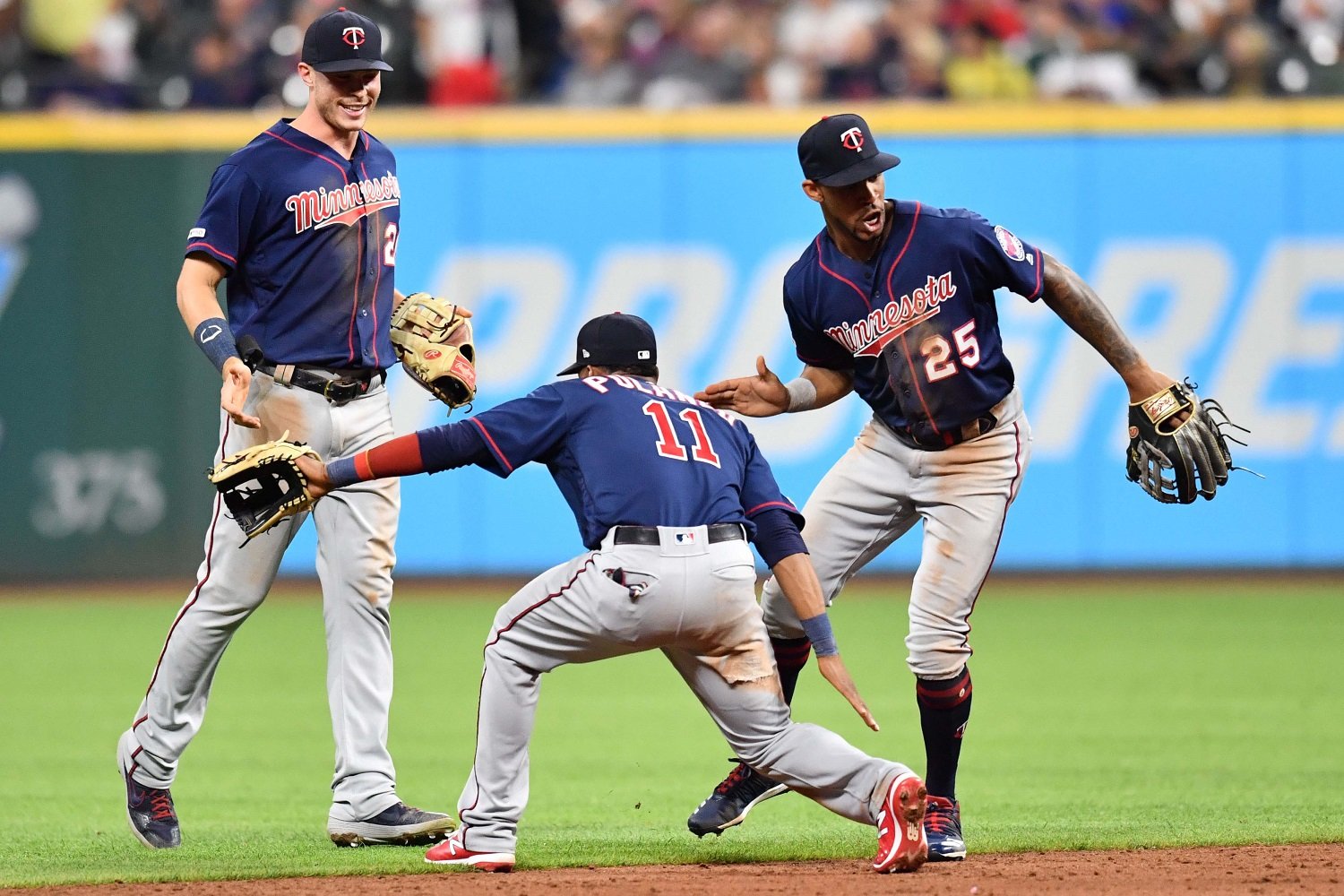 Baseball is a challenging game, and only some players can reach their highest level and succeed consistently. Three veteran Twins players were signed as teenagers and developed in the organization. Each player has accumulated over nine seasons in a Twins uniform, but have they met their expectations from their days as a prospect? Byron Buxton Career Stats (9 Seasons): .242/.303/.470 (.773), 108 OPS+, 21.1 WAR, 1 All-Star Appearance Prospect Hype: Over the last decade, few prospects reached the major leagues with the amount of hype that surrounded Buxton. He was the second overall pick in the 2012 MLB Draft, but many evaluators ranked him as the top available player. Buxton's potential five-tool talent was unmatched in the minors, and it looked like he was on pace to be a superstar. Entering the 2014 season, all three national prospect rankings had him as the number one or two prospect on their top 100 lists. He'd stay at the top of those lists for three consecutive seasons while hitting .301/.376/.507 (.884) in the minors. MLB Career: Few players can live up to the hype that surrounded Buxton. There have been flashes of the five-tool player that he was in the minors, but injuries have severely hampered his big-league career. In his early career, Minnesota's coaches encouraged Buxton to use his speed as a weapon to try and beat out base hits. Thankfully, Buxton changed course later in his career to focus on hitting for power. He was an All-Star for the first time in 2022 after a solid first half. Moving forward, there are questions about whether Buxton will play defensively in center field. He's accumulated the highest WAR total among these three players, and his extension means he will be with the Twins for the majority of his career. Some fans will be disappointed in Buxton's overall outcome, but he continues to provide tremendous value when he is healthy. Met Expectations: No, but few players can live up to being ranked as baseball's top prospect. Max Kepler Career Stats (9 Seasons): .230/.315/.424 (.739), 100 OPS+, 17.1 WAR Prospect Hype: Most of Kepler's prospect hype was based on his 2015 season when the Southern League named him MVP. In 118 games that season, he hit .318/.410/.520 (.930) with 34 doubles, 13 triples, and nine home runs. Before the 2016 season, he was a consensus top-60 prospect, and Baseball America ranked him as baseball's 30th-best prospect. His 2015 totals were outliers compared to the rest of his minor league career. In 460 games, he hit .280/.361/.444 (.805) while only hitting double-digit home runs in one season. Kepler had many intangibles an organization would want from a top prospect, so there was hope he'd put it all together as he continued to develop. Career Totals: Kepler has been a league-average hitter at the big-league level according to OPS+, but his monster 2019 season skews his totals. In 134 games, he hit .252/.336/.519 (.855) with 32 doubles and 36 home runs. Baseballs were flying out of ballparks at a record rate that season, and Kepler has never hit more than 19 home runs in any season since 2019. Defensively, he is among baseball's best right fielders and provides tremendous value to the club on that side of the ball. Recency bias can cloud a fan's view of a player when Kepler has struggled offensively for multiple seasons. No matter how his Twins tenure ends, Kepler ranks among the top outfielders in team history because of his longevity on the roster. He's provided the Twins with value, but most of it comes from his longevity on the club and not from his overarching production. Met Expectations: No, he has yet to become a consistent MLB hitter. Jorge Polanco Career Stats (10 Seasons): .270/.333/.445 (.778), 111 OPS+, 15.8 WAR, 1 All-Star Appearance Prospect Hype: Polanco never ranked among baseball's top 100 prospects, so little national hype surrounded him before a unique big-league debut. During the 2014 season, injury concerns impacted the Twins, and they needed an extra infielder at the MLB level. Polanco was among the few healthy infielders on the 40-man roster, so the Twins called him up from High-A to make his big-league debut. Few prospects make that kind of jump, but Minnesota had confidence in the young shortstop even without experience in the upper minors. In over 600 minor league games, he hit .287/.348/.412 (.760) before becoming an even more powerful hitter with the Twins. Career Totals: Polanco might have lacked the hype compared to Buxton and Kepler, but he has provided tremendous value during his MLB career. He played shortstop at an All-Star level during the first half of his career before ankle injuries forced him to move to a less demanding defensive position. His career totals might also look different if he weren't suspended 80 games entering the 2018 season for testing positive for a performance-enhancing substance. Throughout his career, he has been an underrated core member of the Twins while consistently ranking among the team leaders in multiple offensive categories. His rWAR is behind Buxton and Kepler, but he has a higher OPS+ than both players. Met Expectations: Yes, he exceeded his prospect expectations. Which of these players has met your expectations? Leave a COMMENT and start the discussion.
- 27 comments
-
- 1
-
-
- byron buxton
- max kepler
- (and 1 more)
-
Fans can have unreasonable expectations for highly-touted prospects after they reach the big-league level. Let's look at three veteran Twins players and how their professional careers have transpired. Image courtesy of Ken Blaze-USA TODAY Sports Baseball is a challenging game, and only some players can reach their highest level and succeed consistently. Three veteran Twins players were signed as teenagers and developed in the organization. Each player has accumulated over nine seasons in a Twins uniform, but have they met their expectations from their days as a prospect? Byron Buxton Career Stats (9 Seasons): .242/.303/.470 (.773), 108 OPS+, 21.1 WAR, 1 All-Star Appearance Prospect Hype: Over the last decade, few prospects reached the major leagues with the amount of hype that surrounded Buxton. He was the second overall pick in the 2012 MLB Draft, but many evaluators ranked him as the top available player. Buxton's potential five-tool talent was unmatched in the minors, and it looked like he was on pace to be a superstar. Entering the 2014 season, all three national prospect rankings had him as the number one or two prospect on their top 100 lists. He'd stay at the top of those lists for three consecutive seasons while hitting .301/.376/.507 (.884) in the minors. MLB Career: Few players can live up to the hype that surrounded Buxton. There have been flashes of the five-tool player that he was in the minors, but injuries have severely hampered his big-league career. In his early career, Minnesota's coaches encouraged Buxton to use his speed as a weapon to try and beat out base hits. Thankfully, Buxton changed course later in his career to focus on hitting for power. He was an All-Star for the first time in 2022 after a solid first half. Moving forward, there are questions about whether Buxton will play defensively in center field. He's accumulated the highest WAR total among these three players, and his extension means he will be with the Twins for the majority of his career. Some fans will be disappointed in Buxton's overall outcome, but he continues to provide tremendous value when he is healthy. Met Expectations: No, but few players can live up to being ranked as baseball's top prospect. Max Kepler Career Stats (9 Seasons): .230/.315/.424 (.739), 100 OPS+, 17.1 WAR Prospect Hype: Most of Kepler's prospect hype was based on his 2015 season when the Southern League named him MVP. In 118 games that season, he hit .318/.410/.520 (.930) with 34 doubles, 13 triples, and nine home runs. Before the 2016 season, he was a consensus top-60 prospect, and Baseball America ranked him as baseball's 30th-best prospect. His 2015 totals were outliers compared to the rest of his minor league career. In 460 games, he hit .280/.361/.444 (.805) while only hitting double-digit home runs in one season. Kepler had many intangibles an organization would want from a top prospect, so there was hope he'd put it all together as he continued to develop. Career Totals: Kepler has been a league-average hitter at the big-league level according to OPS+, but his monster 2019 season skews his totals. In 134 games, he hit .252/.336/.519 (.855) with 32 doubles and 36 home runs. Baseballs were flying out of ballparks at a record rate that season, and Kepler has never hit more than 19 home runs in any season since 2019. Defensively, he is among baseball's best right fielders and provides tremendous value to the club on that side of the ball. Recency bias can cloud a fan's view of a player when Kepler has struggled offensively for multiple seasons. No matter how his Twins tenure ends, Kepler ranks among the top outfielders in team history because of his longevity on the roster. He's provided the Twins with value, but most of it comes from his longevity on the club and not from his overarching production. Met Expectations: No, he has yet to become a consistent MLB hitter. Jorge Polanco Career Stats (10 Seasons): .270/.333/.445 (.778), 111 OPS+, 15.8 WAR, 1 All-Star Appearance Prospect Hype: Polanco never ranked among baseball's top 100 prospects, so little national hype surrounded him before a unique big-league debut. During the 2014 season, injury concerns impacted the Twins, and they needed an extra infielder at the MLB level. Polanco was among the few healthy infielders on the 40-man roster, so the Twins called him up from High-A to make his big-league debut. Few prospects make that kind of jump, but Minnesota had confidence in the young shortstop even without experience in the upper minors. In over 600 minor league games, he hit .287/.348/.412 (.760) before becoming an even more powerful hitter with the Twins. Career Totals: Polanco might have lacked the hype compared to Buxton and Kepler, but he has provided tremendous value during his MLB career. He played shortstop at an All-Star level during the first half of his career before ankle injuries forced him to move to a less demanding defensive position. His career totals might also look different if he weren't suspended 80 games entering the 2018 season for testing positive for a performance-enhancing substance. Throughout his career, he has been an underrated core member of the Twins while consistently ranking among the team leaders in multiple offensive categories. His rWAR is behind Buxton and Kepler, but he has a higher OPS+ than both players. Met Expectations: Yes, he exceeded his prospect expectations. Which of these players has met your expectations? Leave a COMMENT and start the discussion. View full article
- 27 replies
-
- 1
-
-
- byron buxton
- max kepler
- (and 1 more)
-
Have the Twins Improved Defensively in 2023?
Cody Christie replied to Cody Christie's topic in Twins Daily Front Page News
No, it's Michael A. Taylor in the picture since he was one of the players acquired this winter with a strong defensive resume.- 14 replies
-
- 1
-
-
- carlos correa
- michael a taylor
- (and 3 more)
-
Chris Williams had an epic three-home run game earlier this week for the Saints. The next morning, he hit two more. There are few prospect lists where his name appears, so who is he, and what value can he provide to the Twins? Image courtesy of Rob Thompson, St. Paul Saints The Twins drafted Chris Williams in the eighth round of the 2018 MLB Draft from Clemson University. In three collegiate seasons, he hit .264/.360/.519 (.879) with 72 extra-base hits in 169 games. During his first season at Clemson, he played 12 games or more at catcher, third base, and first base. By his final season, the team used him primarily at first base. College players that play primarily at first base need to hit for a lot of power to move through an organization. However, the Twins weren’t necessarily relegating him to one position. Shortly after signing, Williams made his professional debut with the Elizabethton Twins. In 62 games, he hit .252/.372/.500 (.872) with six doubles, one triple, and 15 home runs. All his defensive innings came at first base, but it was hard to ignore his offensive output. He had dealt with shoulder injuries in college, and the Twins wanted to get him into the system so they could work on his catching skills. Twins Daily named him the 2018 Short-Season Hitter of the Year after leading the Appalachian League in home runs and finishing in the top 10 for RBI, slugging percentage, and OPS. Williams split the 2019 season between Low-A and High-A. With Cedar Rapids, the Low-A affiliate at the time, he hit .218/.356/.473 (.830) with 12 doubles, three triples, and ten home runs. His batting average remained low, but he continued to get on base due to a 57-to-42 strikeout-to-walk ratio. Near the end of July, the Twins promoted Williams to Fort Myers, where he was younger than the average age of the competition for the first time in his career. Offensively, he struggled with the transition by going 3-for-41 with one home run and 20 strikeouts in 15 games. All but eight of his defensive appearances came at catcher, where he threw out 13-of-71 runners (18% CS%) at both levels. The Twins sent Williams to High-A coming out of the pandemic even though he was 1.5 years older than the average age of the competition at that level. Through 17 games, he went 5-for-50 (.100 BA) with three doubles and 27 strikeouts. Minnesota promoted him to Double-A at the end of June, and his offensive performance improved with the jump in competition. He posted a .725 OPS with nine extra-base hits in 28 games. Also, Williams continued to see most of his defensive starts at catcher, where he posted a career-best 34% CS%. Last season, Williams split time between the two highest levels in the farm system while making over 77% of his defensive appearances at first base. His powerful swing reemerged after getting out from behind the plate. At Double-A, he hit .277/.372/.542 (.915) with 16 doubles, one triple, and 18 home runs in 75 games. His OPS slipped a little after being promoted to Triple-A, but he continued to hit for power. In 42 games, he had a .714 OPS with five doubles and ten home runs. His 28 home runs led the entire system, even beating out Matt Wallner, the organization’s Minor League Player of the Year. Williams has struggled with midseason transitions to new minor league levels, but he seems to find his approach after repeating a level. The Twins sent him back to Triple-A this season, and that trend has continued to be true. His OPS has improved by over 250 points, and he is among the team leaders in multiple statistical categories. Through 42 games, he is hitting .290/.394/.621 (1.015) with seven doubles, one triple, and 13 home runs. Since the start of last season, Williams has hit 41 home runs in 159 games. Defensively, he spends minimal time behind the plate, with most of his starts coming at first base. It will likely take an injury for Williams to make his big-league debut during the 2023 season. The Twins have multiple first base options, and Byron Buxton has been getting the majority of playing time at DH. However, it’s easy to see why some might overlook Williams and the value he can provide an organization. Twins fans will see Williams over the next two seasons, and they can hope his powerful swing follows him from St. Paul to Minneapolis. What stands out to you about Williams’ professional career? What role can he play at the big-league level? Leave a COMMENT and start the discussion. View full article
