



Cody Christie
-
Posts
7,820 -
Joined
-
Last visited
-
Days Won
5
Content Type
Profiles
News
Minnesota Twins Videos
2026 Minnesota Twins Top Prospects Ranking
2022 Minnesota Twins Draft Picks
Minnesota Twins Free Agent & Trade Rumors, Notes, & Tidbits
Guides & Resources
2023 Minnesota Twins Draft Picks
The Minnesota Twins Players Project
2024 Minnesota Twins Draft Picks
2025 Minnesota Twins Draft Pick Tracker
2026 Minnesota Twins Draft Tracker: Picks & Bonuses
Forums
Blogs
Events
Store
Downloads
Gallery
Everything posted by Cody Christie
-
 First-round picks in the NFL and NBA can immediately impact teams, but the same can’t be said for MLB draftees. It takes time and developmental work for a player to reach the big-league level. Here is a look back at the last decade of first-round picks by the Twins. Image courtesy of Jordan Johnson, Jeffrey Becker, Dave Nelson–USA TODAY Sports First-round picks in the NFL and NBA can immediately impact teams, but the same can’t be said for MLB draftees. It takes time and developmental work for a player to reach the big-league level. Here is a look back at the last decade of first-round picks by the Twins. Derek Falvey and Thad Levine have focused on certain player types with their first-round picks, as the Twins have remained relevant in the AL Central. Strong organizations need to hit on their first-round picks and turn them into regulars at the big-league level. Let’s look back at the last decade to see how the team’s first-round picks have fared in their professional careers. 2023: Walker Jenkins (5th overall) The Twins benefited greatly by receiving a top-five pick in the inaugural MLB Draft Lottery. Last season’s draft had five tremendous players, and Minnesota was lucky to have Walker Jenkins still on the board with their pick. After signing, Jenkins split time between the FCL Twins and Fort Myers, hitting .362/.417/.571 with 12 extra-base hits in 26 games. He is widely considered the Twins’ top-ranked prospect, and there is a chance for him to be ranked as baseball’s number-one prospect at this time next year. 2022: Brooks Lee (8th overall) Minnesota’s 2021 season was disappointing, but a poor season meant the team received a high pick. Lee was considered one of the top collegiate bats in his draft class, and the Twins have seen those skills during the early stages of his professional career. Lee finished last season in St. Paul and hit .275/.347/.461, with 39 doubles, three triples, and 16 home runs in 125 games. He continues to see time at shortstop, but his long-term home might be at another infield position. He is considered one of baseball’s top 50 prospects and is expected to debut in 2024. 2021: Chase Petty (26th overall) The Twins traded Petty to the Reds for Sonny Gray leading into the 2022 season. It turned out to be an intelligent move by Minnesota’s front office, because they got two All-Star-caliber seasons from Gray and a draft pick at the end of the first round, after he declined the team’s qualifying offer. Petty pitched at High A and Double A last season in the Reds organization. In 18 games (68 innings), he posted a 1.72 ERA, with a 1.15 WHIP and a 66-to-15 strikeout-to-walk ratio. At the beginning of 2023, he missed time with an elbow injury that wasn’t considered serious. Petty was a high price to pay, but high-school pitchers have a challenging road to the big leagues. 2020: Aaron Sabato (27th overall) The 2020 MLB Draft will be remembered for many different reasons, since the pandemic limited the team’s ability to scout players. Minnesota took Sabato after he posted a 1.158 OPS in 83 collegiate games. Some evaluators questioned the pick, because Sabato was considered a first baseman or designated hitter, meaning he would need to hit at a very high level to make a real impact in the big leagues. In 2023, he played 77 games at Double A and posted a .759 OPS, with 32 extra-base hits and 103 strikeouts. Following the season, Minnesota sent him to the Arizona Fall League, where he hit seven homers and three doubles in 18 games. Sabato doesn’t seem to fit into the team’s long-term plans at this point, but he has the potential to surprise in 2024. 2019: Keoni Cavaco (13th overall) Cavaco gained a lot of steam in the weeks leading into the draft, so Minnesota selected him with the 13th pick in hopes that he could develop into a five-tool talent. His professional career has been a disappointment to this point, with a .610 OPS across four seasons. Last year, he dealt with some injuries and was limited to 63 games. At High A (59 games), he hit .193/.266/.287, with four doubles, five home runs, and an 88-to-18 strikeout-to-walk ratio. Originally drafted as a shortstop, he has continued to move down the defensive spectrum, sliding to third base before playing last season at first base. 2018: Trevor Larnach (20th overall) Twins fans have seen a lot of Larnach over the last three seasons, but it’s unclear what his long-term role with the big-league club can be. Since his rookie season, his OPS has risen by over 50 points, but his 98 OPS+ last season was still below league average. At Triple A, Larnach fared much better, hitting .271/.384/.504 with 30 extra-base hits in 72 games. However, his biggest flaw is hitting breaking pitches, and the level of competition is easier at Triple A. The 2024 season will be the make-or-break moment for Larnach to establish himself at the big-league level. 2017: Royce Lewis (1st overall) Minnesota’s first draft under Falvey and Levine came with high expectations and the first overall pick. There were multiple options for the top spot, but the Twins decided on Lewis, and he immediately became one of baseball’s top prospects. Torn ACLs in back-to-back seasons slowed down his progress, but he was a spark plug for the 2023 Twins, on the way to a division title. In 58 games, he posted a 150 OPS+, with seven doubles and 15 home runs. His home run heroics carried over into the postseason, where he helped Minnesota win its first playoff series in two decades. Lewis is on track to be the face of the franchise for the next decade. 2016: Alex Kirilloff (15th overall) Kirilloff was among the best high-school hitting prospects in his draft class, and he quickly moved into national top-100 lists. Baseball America and MLB.com ranked him in their top 15 prospects leading into the 2019 campaign. Injuries have slowed down his professional career, including Tommy John surgery, multiple wrist surgeries, and a shoulder procedure. He has flashed brief signs of being the hitter he was in the minors (including a 117 OPS+ last season), but he has yet to play more than 88 games in one big-league season. Minnesota hopes Kirilloff can begin to meet his expectations with a healthy season next year. 2015: Tyler Jay (6th overall) Jay was used as a relief pitcher in college, but the Twins felt like he had the tools to transition to a starting pitching role. He pitched five seasons in the Twins organization and topped out at Double A. Since leaving the Twins, he has pitched for two other organizations (Reds and Mets) and in the independent leagues. Last season, he started the year pitching for Joliet in the Frontier League and posted a 4.26 ERA (with a 1.18 WHIP) in 57 innings. The Mets organization added him at the end of August, and he made six relief appearances (6 IP) while allowing four earned runs. His time in the Twins organization had some good moments, but it was a failed experiment. 2014: Nick Gordon (5th overall) Gordon comes from a family of baseball players, and the Twins felt confident in taking him with a top-five pick back in 2014. He worked his way slowly through the farm system, before bursting onto the scene in 2022 with a 111 OPS+ in 136 games. Twins fans expected big things from him last season, but he struggled out of the gate (35 OPS+) before fracturing his right shin when he fouled a pitch off his leg. Minnesota offered him arbitration, and he will be in the outfield mix for 2024. Which players will have the most significant impact on the 2024 roster? Which player was the biggest disappointment? Leave a COMMENT and start the discussion. View full article
- 29 replies
-
- 1
-

-
- royce lewis
- walker jenkins
- (and 5 more)
-
3 Reasons Matt Wallner Is Not the Next Joey Gallo or Miguel Sano
Cody Christie posted an article in Twins
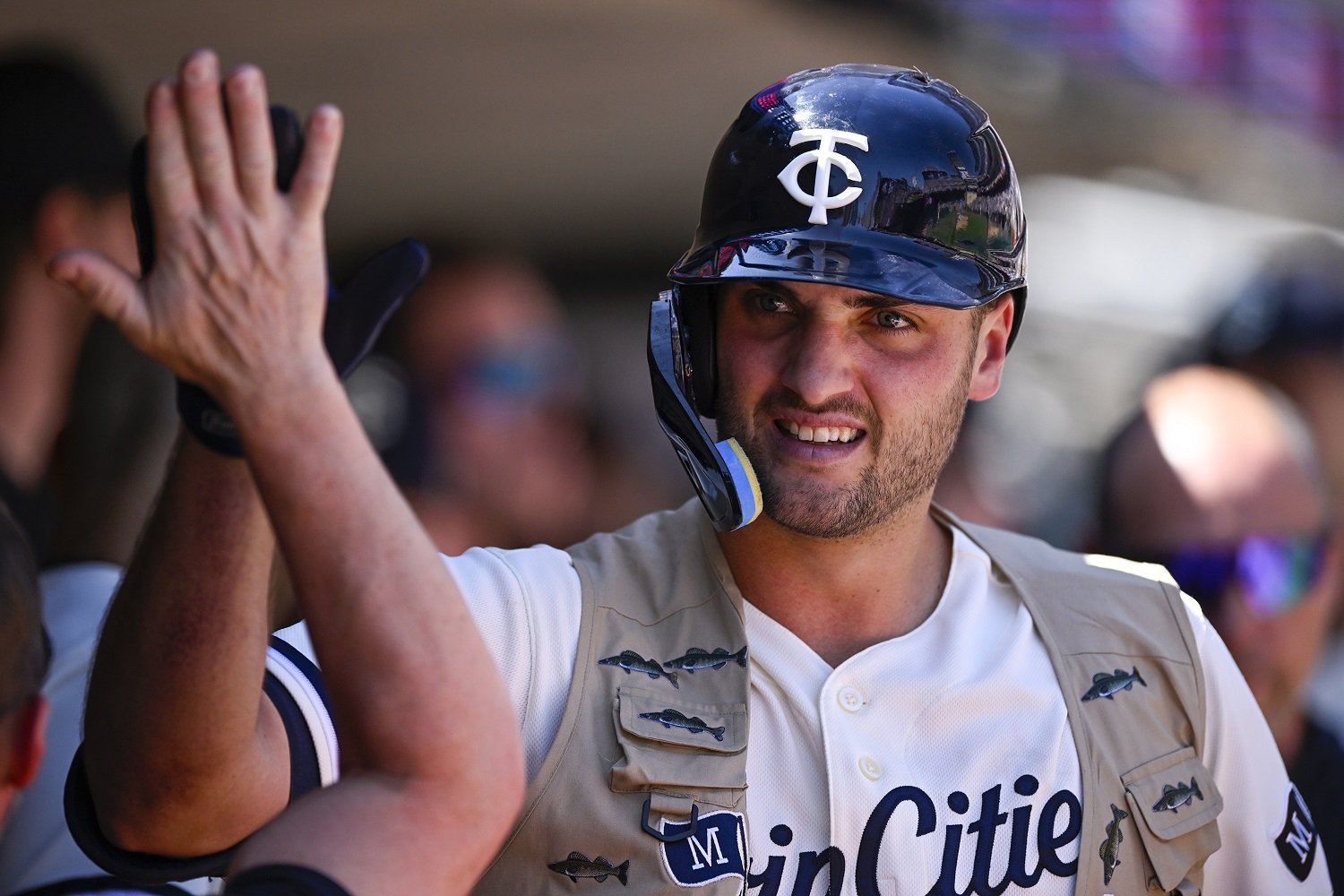 Last season, the Twins attempted to turn Joey Gallo into a reclamation project after a disastrous 2022 season. Gallo came out of the gate strongly with a 1.063 OPS in the season’s first month, including 11 extra-base hits (seven home runs) in 55 at-bats. Things took a turn for the worse from there as he hit .177/.301/.440 (.741) with a 142-to-48 strikeout-to-walk ratio in 111 games. Gallo’s big-league career will likely end unless he is willing to sign a minor-league deal and prove he can continue to provide value. Some fans were a little trepidatious about the team investing $11 million in Gallo after just parting ways with Miguel Sano. Gallo and Sano are similar player types who are low-contact sluggers who strike out at a high rate. In the StatCast era, they have the two highest strikeout rates, but they can both destroy a baseball when squaring up a home run. Strikeouts and low contact are never aesthetically pleasing to fans, but teams can value these traits if they are found in the right player. Earlier this week, Pitcher List’s John Foley wrote an article called “Applying the Lessons of Joey Gallo as 2024 Risk Indicators.” He wrote about Gallo’s in-zone contract rate being the lowest in the majors by 1.3 points while still posting above-average offensive totals (104 wRC+) with a solid slugging percentage and decent walk rate. Foley goes on to talk about multiple players who fit the same mold as Gallo, including Matt Wallner. There are reasons to be concerned about Wallner’s long-term player profile, but here are three reasons he won’t turn into the next Gallo or Sano. 1. Wallner Can Continue Unlocking More Power Wallner finished his rookie season hitting .249/.370/.507 (.877) with 11 doubles, one triple, and 14 home runs. While those numbers are reasonable, there might be signs that he can unlock more power. Wallner posted a .517 xSLG, higher than Gallo has posted in any season since 2019. Sano had two seasons with an xSLG above .500, his rookie season (2015) and the team's record-breaking home run season (2019). Wallner also showed power to all fields during his rookie campaign, while Gallo and Sano have been known as pull hitters. There are other adjustments Wallner needs to make, but he has the potential to showcase more power over the course of an entire season. 2. Wallner Had a Higher Walk Rate in the Minors Gallo and Sano were known as patient hitters, even if they did strike out at the highest rates in the Statcast Era. Both batters knew how to work a count and take a walk when necessary. Wallner has shown some of the same ability, especially during his time in the minors. In 2022, he posted an 18.1 BB% at Double-A and a 15.3 BB% after being promoted to Triple-A. Last season in St. Paul, his walk rate was nearly 13%, but that dipped a couple of points at the big-league level. Sano had an 11.6 BB% for his career, while Gallo has walked in 14.8% of his plate appearances. With more MLB experience, Wallner’s walk rate should continue to improve and be closer to the totals he showcased in the minors. 3. Wallner Can Avoid Pitches Higher in the Zone Wallner whiffed on pitches up in the zone regularly last season. However, he has a good eye, so he has shown the ability to lay off those pitches. Wallner is a taller player, and pitching up in the zone can be enticing for a player with his skillset because they are balls he could hit out of the park in the minors. There is room for him to continue avoiding pitches higher in the zone to make pitchers throw him better balls to hit. By doing this, he will help his walk rate and his power numbers. Can Wallner continue to improve and avoid comparisons to Gallo and Sano? Leave a COMMENT and start the discussion.
- 29 comments
-
- 8
-
-

-
- matt wallner
- miguel sano
- (and 1 more)
-
Twins fans have seen this story play out before with low-contact sluggers. Just mentioning Miguel Sano or Joey Gallo conjures up images of high strikeout totals and low batting averages. Here are three reasons Matt Wallner won’t join this duo. Image courtesy of Nick Wosika-USA TODAY Sports Twins fans have seen this story play out before with low-contact sluggers. Just mentioning Miguel Sano or Joey Gallo conjures up images of high strikeout totals and low batting averages. Here are three reasons Matt Wallner won’t join this duo. Last season, the Twins attempted to turn Joey Gallo into a reclamation project after a disastrous 2022 season. Gallo came out of the gate strongly with a 1.063 OPS in the season’s first month, including 11 extra-base hits (seven home runs) in 55 at-bats. Things took a turn for the worse from there as he hit .177/.301/.440 (.741) with a 142-to-48 strikeout-to-walk ratio in 111 games. Gallo’s big-league career will likely end unless he is willing to sign a minor-league deal and prove he can continue to provide value. Some fans were a little trepidatious about the team investing $11 million in Gallo after just parting ways with Miguel Sano. Gallo and Sano are similar player types who are low-contact sluggers who strike out at a high rate. In the StatCast era, they have the two highest strikeout rates, but they can both destroy a baseball when squaring up a home run. Strikeouts and low contact are never aesthetically pleasing to fans, but teams can value these traits if they are found in the right player. Earlier this week, Pitcher List’s John Foley wrote an article called “Applying the Lessons of Joey Gallo as 2024 Risk Indicators.” He wrote about Gallo’s in-zone contract rate being the lowest in the majors by 1.3 points while still posting above-average offensive totals (104 wRC+) with a solid slugging percentage and decent walk rate. Foley goes on to talk about multiple players who fit the same mold as Gallo, including Matt Wallner. There are reasons to be concerned about Wallner’s long-term player profile, but here are three reasons he won’t turn into the next Gallo or Sano. 1. Wallner Can Continue Unlocking More Power Wallner finished his rookie season hitting .249/.370/.507 (.877) with 11 doubles, one triple, and 14 home runs. While those numbers are reasonable, there might be signs that he can unlock more power. Wallner posted a .517 xSLG, higher than Gallo has posted in any season since 2019. Sano had two seasons with an xSLG above .500, his rookie season (2015) and the team's record-breaking home run season (2019). Wallner also showed power to all fields during his rookie campaign, while Gallo and Sano have been known as pull hitters. There are other adjustments Wallner needs to make, but he has the potential to showcase more power over the course of an entire season. 2. Wallner Had a Higher Walk Rate in the Minors Gallo and Sano were known as patient hitters, even if they did strike out at the highest rates in the Statcast Era. Both batters knew how to work a count and take a walk when necessary. Wallner has shown some of the same ability, especially during his time in the minors. In 2022, he posted an 18.1 BB% at Double-A and a 15.3 BB% after being promoted to Triple-A. Last season in St. Paul, his walk rate was nearly 13%, but that dipped a couple of points at the big-league level. Sano had an 11.6 BB% for his career, while Gallo has walked in 14.8% of his plate appearances. With more MLB experience, Wallner’s walk rate should continue to improve and be closer to the totals he showcased in the minors. 3. Wallner Can Avoid Pitches Higher in the Zone Wallner whiffed on pitches up in the zone regularly last season. However, he has a good eye, so he has shown the ability to lay off those pitches. Wallner is a taller player, and pitching up in the zone can be enticing for a player with his skillset because they are balls he could hit out of the park in the minors. There is room for him to continue avoiding pitches higher in the zone to make pitchers throw him better balls to hit. By doing this, he will help his walk rate and his power numbers. Can Wallner continue to improve and avoid comparisons to Gallo and Sano? Leave a COMMENT and start the discussion. View full article
-
FanSided's Robert Murray is reporting that Michael A. Taylor is drawing interest from the Angels, Padres, and Pirates. Two other veteran center fielders have already signed (Kevin Kiermaier and Harrison Bader) so this leaves Taylor as one of the only legitimate centerfielders on the open market outside of Cody Bellinger. Kiermaier and Bader each signed one-year deals for $10.5 million. Murray also suggests that the Red Sox and Twins might be interested in Taylor. Where do you think Taylor signs? View full rumor
-
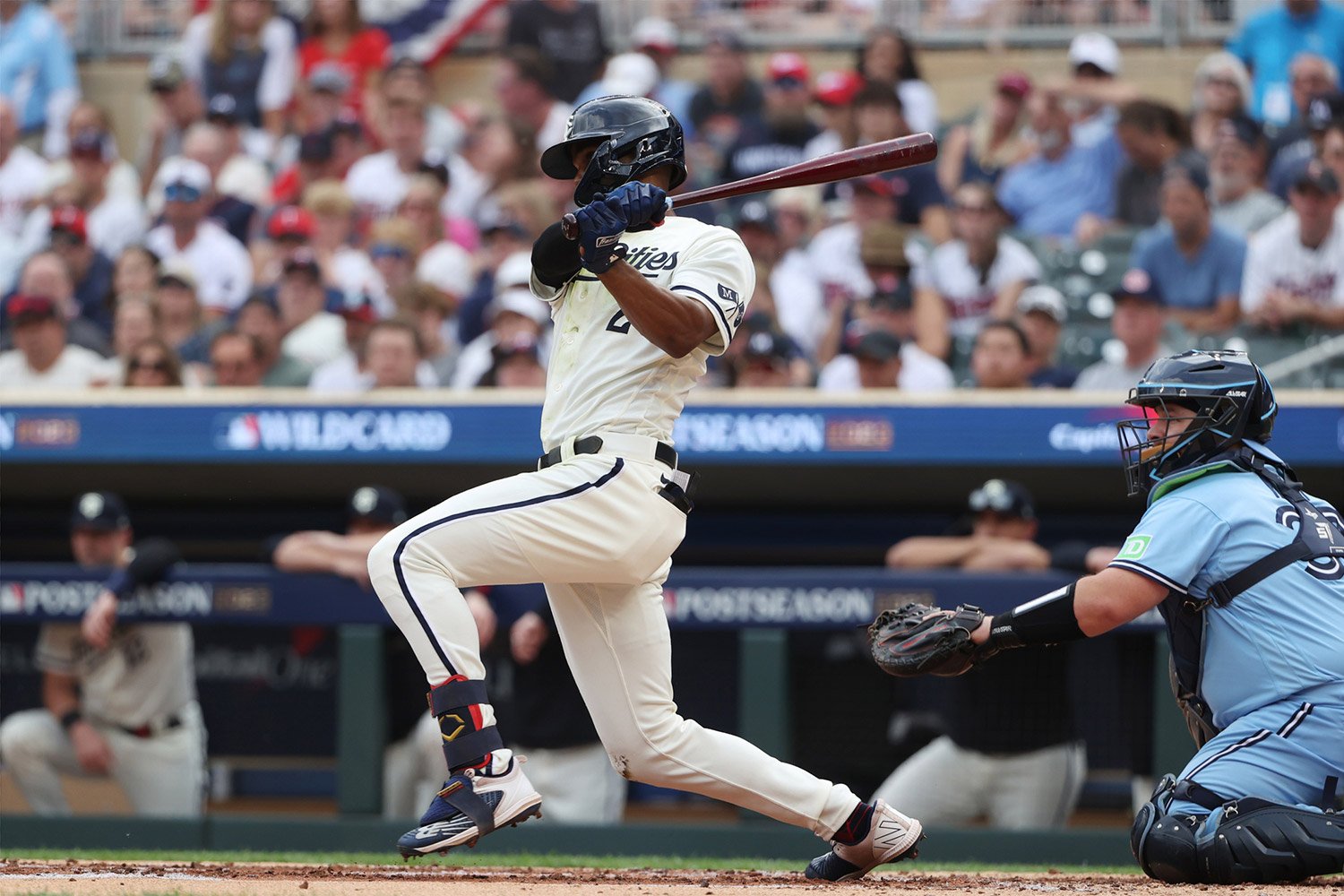 FanSided's Robert Murray is reporting that Michael A. Taylor is drawing interest from the Angels, Padres, and Pirates. Two other veteran center fielders have already signed (Kevin Kiermaier and Harrison Bader) so this leaves Taylor as one of the only legitimate centerfielders on the open market outside of Cody Bellinger. Kiermaier and Bader each signed one-year deals for $10.5 million. Murray also suggests that the Red Sox and Twins might be interested in Taylor. Where do you think Taylor signs?
 -
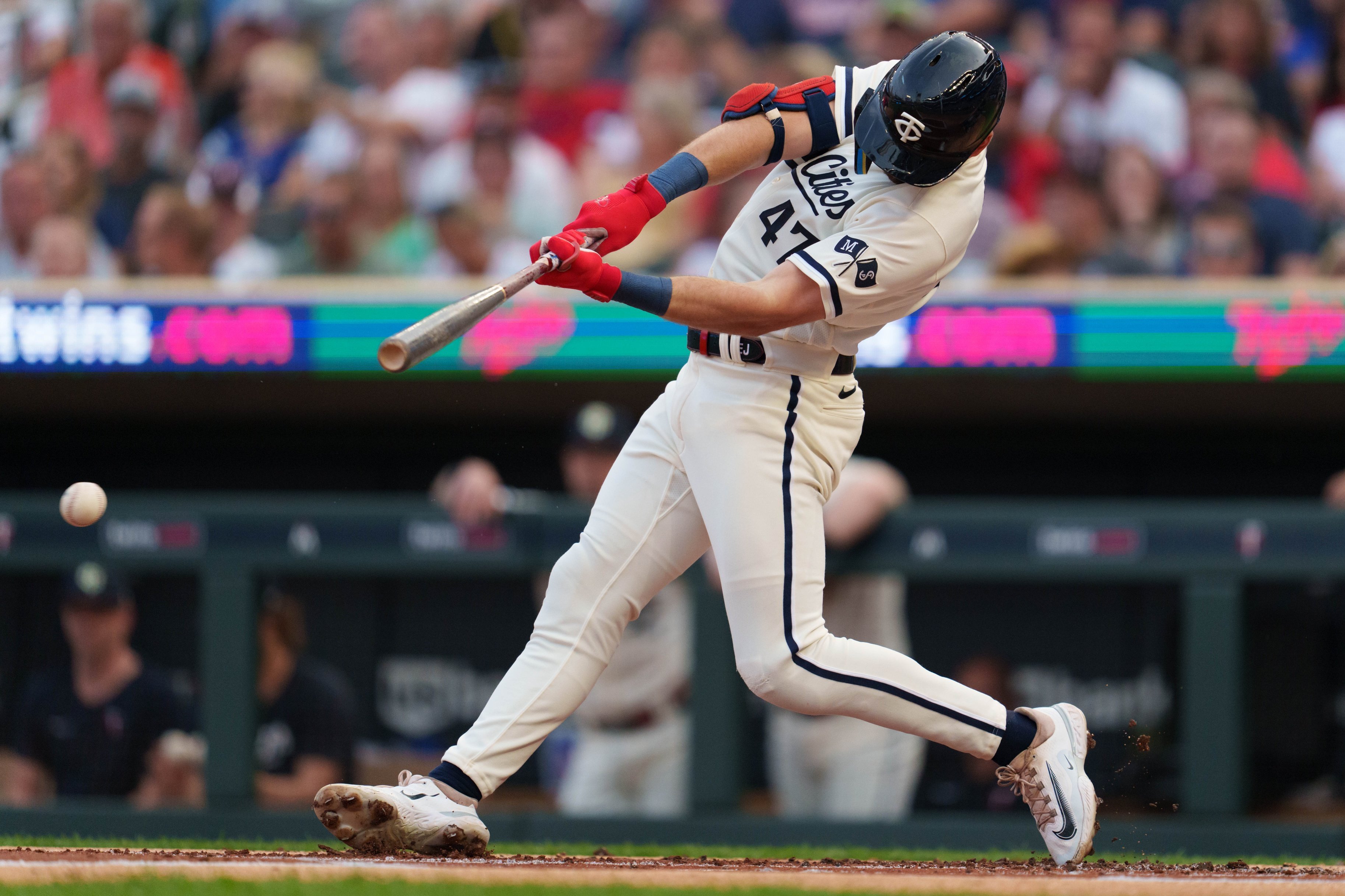 There's a famous scene in the 2011 movie Moneyball, in which Brad Pitt's and Jonah Hill’s characters try to convince Oakland’s scouting staff of ways the team can replace the good players they are losing in free agency. It’s a back-and-forth conversation, but the basic premise is that the scout says, “Why do you like him?” And the front office duo responds, “He gets on base.” This scene oversimplifies sabermetric ideas at the time, but the concept holds true. Working a count and getting on base are tremendously valuable skills, and Edouard Julien seems to have mastered them. Julien’s baseball journey has been anything but typical. A native of Quebec, he showed up at Auburn University as a teenager who spoke little English. He drew 38 walks in 251 plate appearances during his freshman season, and posted a .398 OBP. In 2019, he walked at an even higher rate, with 46 free passes in 294 plate appearances. Based on his collegiate performance, the Twins selected Julien in the 18th round of the 2019 MLB Draft. Julien wasn’t a highly-ranked player coming out of high school, and his college career didn’t elevate his draft stock to elite levels. It only garnered enough attention to net him a $493,000 bonus as a late-round pick by the Twins. He’s had to prove himself every step of the way, including his time after signing that deal. His professional debut came in 2021, and he continued to show an exceptional eye at the plate. In 112 games, he coaxed 110 walks and posted a .434 OBP between Low A and High A. Minnesota sent him to Double A in 2022, where he was over a year younger than the average age of the competition. He drew 98 walks in 113 games and posted a .441 OBP. Julien didn’t make any national top-100 lists, but he rose on Twins lists, including being Twins Daily’s fifth-ranked prospect. It seemed as though he was on the cusp of impacting the big-league roster. During the World Baseball Classic, Julien announced himself to the baseball world. He destroyed the ball for Team Canada, including a 1.821 OPS, the highest total by any hitter in the tournament. Minnesota sent Julien to Triple-A St. Paul to start the year, and he posted a .435 OBP with 32 walks in 38 games. The Twins called him up in the middle of April for his first taste of the big leagues, and he’d move back and forth between Triple-A during the season’s early months. On June 10th, he rejoined the Twins and stayed at the big-league level for the balance of the campaign. During his rookie season, Julien hit .263/.381/.459, with 16 doubles and 16 home runs. Most notably, he continued to draw walks at an incredible rate. Julien’s walk rate was fifth-best among big-league hitters with 400 or more plate appearances. The players ahead of him on the list were Aaron Judge, Juan Soto, Kyle Schwarber, and Andrew McCutchen. Those are some of the most patient hitters in the game. Julien also had the lowest out-of-zone swing rate of any player in the league (see below). When a player works ahead in the count, they have a better chance to get a pitch they can hit for power. Julien posted a .529 OBP and a .987 OPS when he was ahead. It’s exciting to see the company Julien has already joined and to project what he might be able to accomplish in his sophomore season. Projection models can be fickle, especially for players with a specific skill set like Julien’s. Baseball Reference projects Julien will hit .267/.370/.462, with 55 walks in 404 PA. If I were a betting man, I’d take the over on his walks and OBP. Yet, there is also a chance that the league will catch up to Julien next season and not allow him to draw as many walks. He will need to continue to make adjustments, and there may be times of the year when he must be aggressive at the plate. One adjustment facing Julien next season is his approach with two strikes. Last season, he was very passive in two-strike counts, which led to him taking a lot of called third strikes. Among MLB hitters, he had the lowest swing rate (42.7%) of any hitter with two strikes, ranking 3.3% lower than the next-most selective guys (Juan Soto and Matt Wallner). With two strikes, Julien hit .147/.298/.199 (.497), with 128 strikeouts in 235 plate appearances. He must be more aggressive in two-strike counts, to keep pitchers honest and moderate his high strikeout totals. Julien is a different style of hitter than the Twins have had in quite some time. He was a late-round steal in the draft and is quickly developing into the Canadian God of Walks. Why do the Twins like him? He gets on base, which could make for an exciting 2024 season. What are your expectations for Julien in 2024? Leave a COMMENT and start the discussion.
 -
Former Red Sox great Kevin Youkilis was known as the Greek God of Walks for his ability to work the count and get on base. Now, the Twins may have a player following in his footsteps. Image courtesy of Matt Blewett-USA TODAY Sports Former Red Sox great Kevin Youkilis was known as the Greek God of Walks for his ability to work the count and get on base. Now, the Twins may have a player following in his footsteps. There's a famous scene in the 2011 movie Moneyball, in which Brad Pitt's and Jonah Hill’s characters try to convince Oakland’s scouting staff of ways the team can replace the good players they are losing in free agency. It’s a back-and-forth conversation, but the basic premise is that the scout says, “Why do you like him?” And the front office duo responds, “He gets on base.” This scene oversimplifies sabermetric ideas at the time, but the concept holds true. Working a count and getting on base are tremendously valuable skills, and Edouard Julien seems to have mastered them. Julien’s baseball journey has been anything but typical. A native of Quebec, he showed up at Auburn University as a teenager who spoke little English. He drew 38 walks in 251 plate appearances during his freshman season, and posted a .398 OBP. In 2019, he walked at an even higher rate, with 46 free passes in 294 plate appearances. Based on his collegiate performance, the Twins selected Julien in the 18th round of the 2019 MLB Draft. Julien wasn’t a highly-ranked player coming out of high school, and his college career didn’t elevate his draft stock to elite levels. It only garnered enough attention to net him a $493,000 bonus as a late-round pick by the Twins. He’s had to prove himself every step of the way, including his time after signing that deal. His professional debut came in 2021, and he continued to show an exceptional eye at the plate. In 112 games, he coaxed 110 walks and posted a .434 OBP between Low A and High A. Minnesota sent him to Double A in 2022, where he was over a year younger than the average age of the competition. He drew 98 walks in 113 games and posted a .441 OBP. Julien didn’t make any national top-100 lists, but he rose on Twins lists, including being Twins Daily’s fifth-ranked prospect. It seemed as though he was on the cusp of impacting the big-league roster. During the World Baseball Classic, Julien announced himself to the baseball world. He destroyed the ball for Team Canada, including a 1.821 OPS, the highest total by any hitter in the tournament. Minnesota sent Julien to Triple-A St. Paul to start the year, and he posted a .435 OBP with 32 walks in 38 games. The Twins called him up in the middle of April for his first taste of the big leagues, and he’d move back and forth between Triple-A during the season’s early months. On June 10th, he rejoined the Twins and stayed at the big-league level for the balance of the campaign. During his rookie season, Julien hit .263/.381/.459, with 16 doubles and 16 home runs. Most notably, he continued to draw walks at an incredible rate. Julien’s walk rate was fifth-best among big-league hitters with 400 or more plate appearances. The players ahead of him on the list were Aaron Judge, Juan Soto, Kyle Schwarber, and Andrew McCutchen. Those are some of the most patient hitters in the game. Julien also had the lowest out-of-zone swing rate of any player in the league (see below). When a player works ahead in the count, they have a better chance to get a pitch they can hit for power. Julien posted a .529 OBP and a .987 OPS when he was ahead. It’s exciting to see the company Julien has already joined and to project what he might be able to accomplish in his sophomore season. Projection models can be fickle, especially for players with a specific skill set like Julien’s. Baseball Reference projects Julien will hit .267/.370/.462, with 55 walks in 404 PA. If I were a betting man, I’d take the over on his walks and OBP. Yet, there is also a chance that the league will catch up to Julien next season and not allow him to draw as many walks. He will need to continue to make adjustments, and there may be times of the year when he must be aggressive at the plate. One adjustment facing Julien next season is his approach with two strikes. Last season, he was very passive in two-strike counts, which led to him taking a lot of called third strikes. Among MLB hitters, he had the lowest swing rate (42.7%) of any hitter with two strikes, ranking 3.3% lower than the next-most selective guys (Juan Soto and Matt Wallner). With two strikes, Julien hit .147/.298/.199 (.497), with 128 strikeouts in 235 plate appearances. He must be more aggressive in two-strike counts, to keep pitchers honest and moderate his high strikeout totals. Julien is a different style of hitter than the Twins have had in quite some time. He was a late-round steal in the draft and is quickly developing into the Canadian God of Walks. Why do the Twins like him? He gets on base, which could make for an exciting 2024 season. What are your expectations for Julien in 2024? Leave a COMMENT and start the discussion. View full article
-
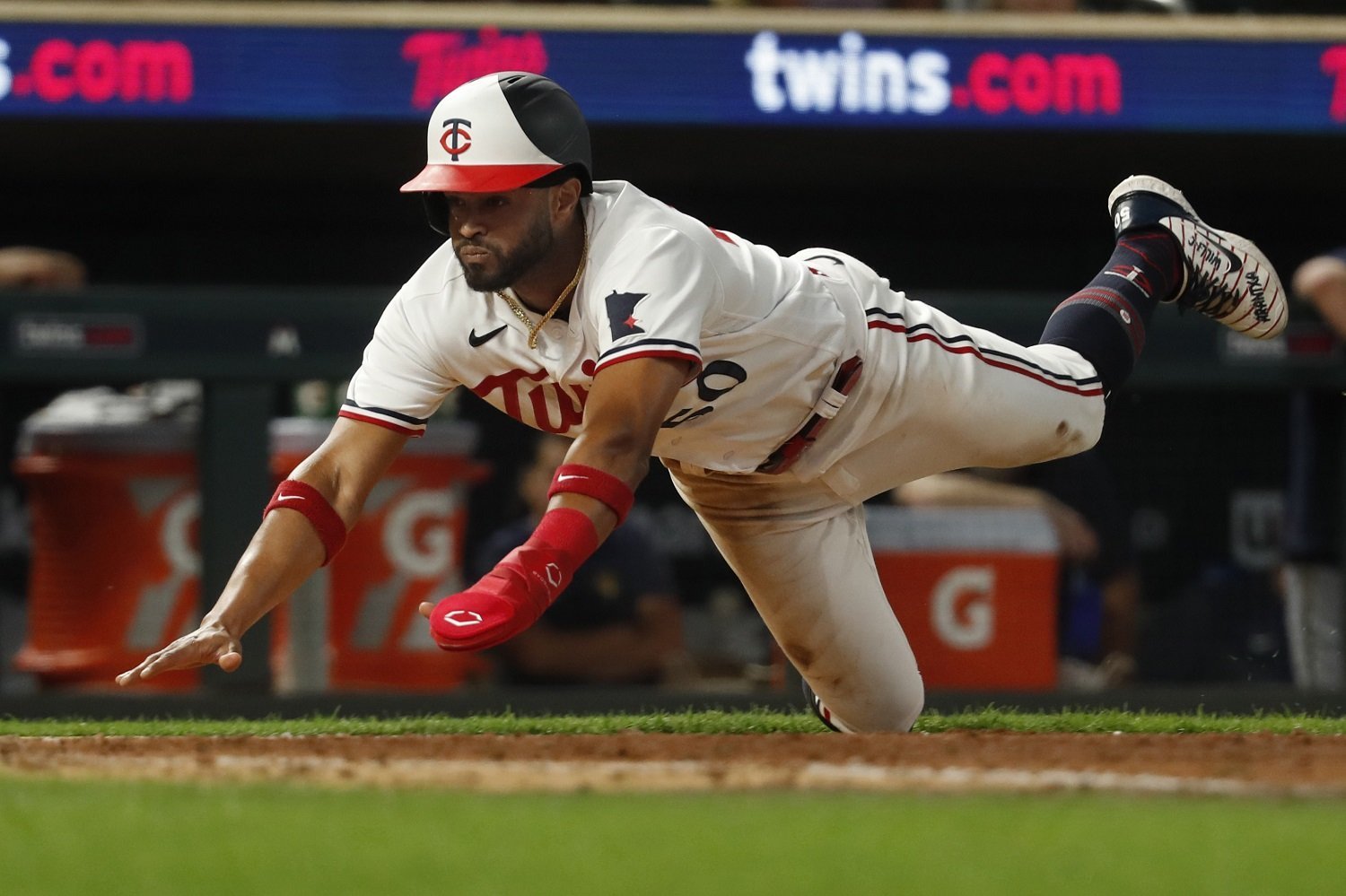 Regression impacts even the greatest players in baseball history. Age is an obvious and essentially universal factor in projecting changes in player performance over time, but other factors, like injuries, can have an impact, too. Last year, the Twins saw Carlos Correa have arguably his worst big-league season because he battled plantar fasciitis for most of the season. Minnesota hopes Correa is back to full strength in 2024, but who are some players that the regression bug might bite? 4. Max Kepler, OF Kepler struggled out of the gate in 2023, hitting .207/.279/.409 with five doubles and 12 home runs in the first half. Some fans called for the Twins to cut ties with Kepler, because it seemed like the team had other, better options than their long-time right fielder. In the second half, though, Kepler played at a level he had rarely attained previously. He hit .306/.377/.549, with 17 doubles, two triples, and 12 home runs in 66 games after the All-Star break. His offense helped carry the Twins to a division title, but his performance was clearly an outlier from the rest of his nine-year track record. Baseball Reference projects Kepler to post a .746 OPS in 2024, while FanGraphs has him pegged for a .779. In his career, Kepler has only posted OPS totals higher than those projections in 2019 and 2023. Minnesota is also looking to trade veteran players to create salary space to reinforce the starting pitching. Kepler’s value might be at an all-time high, so his regression might be another team’s problem. 3. Ryan Jeffers, C Jeffers surprised many during his rookie year, by posting a 119 OPS+ in the shortened 2020 season. He failed to reproduce those numbers in 2021 and 2022, with an 84 OPS+, forcing the Twins to add catching depth in the person of Christian Vazquez last winter. Jeffers responded with his best professional season, hitting .276/.369/.490 with a 134 OPS+ and 31 extra-base hits in 96 games. He led all catchers (minimum 250 at-bats) in OPS+, and finished seventh in WAR at the position. It was a breakout season, which has made the Twins more comfortable shopping Vázquez and other veterans this winter. Baseball Reference projects Jeffers to hit .246/.326/.438 with 17 doubles and 15 home runs next season. FanGraphs forecasts a .743 OPS, with a 105 wRC+ and a 1.7 WAR. Both projection systems have him with a higher OPS than his career average, but a lower one than what he posted last season. His 2.7 WAR last season was three times more than he has contributed in any other season. Jeffers is locked into the team’s catcher role for the foreseeable future, and it would be nice for him to continue building off last year’s performance. 2. Brock Stewart, RP Stewart dominated during his first season in a Twins uniform, but an elbow injury limited him to fewer than 28 innings pitched. He provided Minnesota with 0.9 fWAR and 1.6 rWAR, which is remarkable considering the lack of sheer innings. His 0.65 ERA was immaculate, but his FIP was 2.21, so there might have been some luck associated with his overall numbers. Stewart posted a 35.8 K%, over 14 points higher than his previous career average. For his career, he has never pitched more than 34 1/3 innings at the big-league level, so the Twins hope he can top that mark next season in a setup role. Baseball Reference projects Stewart to post a 3.46 ERA with a 1.28 WHIP and a 41-to-14 strikeout-to-walk ratio over 39 innings in 2024. Those totals are certainly adequate, but it’s a steep drop from the 12.7 strikeouts per nine frames he posted in 2023. FanGraphs estimates that Stewart will post a 3.48 ERA with a 30.1 K% in 63 innings. It’s hard to imagine that he would get to 63 innings with his lengthy injury history, but relievers can be inconsistent from one season to the next. Overall, Stewart’s numbers must regress next season, because he was so good in 2023. 1. Willi Castro, UTIL Castro surprised many with his performance last season, hitting .257/.339/.411 with 32 extra-base hits and 33 steals. During his four seasons in Detroit, Castro averaged a .673 OPS (87 OPS+), so his 106 OPS+ last year didn’t match his career totals. He gave the Twins tremendous value, especially since the team was comfortable using him at multiple defensive positions. Castro was one of the team’s most valuable offensive players, which is crazy to think about since he wasn’t guaranteed to make the team coming out of spring training. Baseball Reference projects Castro’s OPS to drop 40 points next season, which is 16 points higher than his career average. FanGraphs believes he will have a .705 OPS, with a 1.0 WAR, a 1.5-win drop from 2023. There is a reason why Castro was available on waivers last winter, and other teams didn’t claim him. The 2023 season might have been his peak, which only points to his performance declining in 2024. Do you agree with the above rankings? Would you add other players to the list? Leave a COMMENT and start the discussion.
- 15 comments
-
- 5
-
-
- willi castro
- max kepler
- (and 2 more)
-
Every year, some players outperform their earned expectations, and others fail to live up to their previous year’s performance. Here are four Twins players who might be headed for regression in 2024. Image courtesy of Bruce Kluckhohn-USA TODAY Sports Every year, some players outperform their earned expectations, and others fail to live up to their previous year’s performance. Here are four Twins players who might be headed for regression in 2024. Regression impacts even the greatest players in baseball history. Age is an obvious and essentially universal factor in projecting changes in player performance over time, but other factors, like injuries, can have an impact, too. Last year, the Twins saw Carlos Correa have arguably his worst big-league season because he battled plantar fasciitis for most of the season. Minnesota hopes Correa is back to full strength in 2024, but who are some players that the regression bug might bite? 4. Max Kepler, OF Kepler struggled out of the gate in 2023, hitting .207/.279/.409 with five doubles and 12 home runs in the first half. Some fans called for the Twins to cut ties with Kepler, because it seemed like the team had other, better options than their long-time right fielder. In the second half, though, Kepler played at a level he had rarely attained previously. He hit .306/.377/.549, with 17 doubles, two triples, and 12 home runs in 66 games after the All-Star break. His offense helped carry the Twins to a division title, but his performance was clearly an outlier from the rest of his nine-year track record. Baseball Reference projects Kepler to post a .746 OPS in 2024, while FanGraphs has him pegged for a .779. In his career, Kepler has only posted OPS totals higher than those projections in 2019 and 2023. Minnesota is also looking to trade veteran players to create salary space to reinforce the starting pitching. Kepler’s value might be at an all-time high, so his regression might be another team’s problem. 3. Ryan Jeffers, C Jeffers surprised many during his rookie year, by posting a 119 OPS+ in the shortened 2020 season. He failed to reproduce those numbers in 2021 and 2022, with an 84 OPS+, forcing the Twins to add catching depth in the person of Christian Vazquez last winter. Jeffers responded with his best professional season, hitting .276/.369/.490 with a 134 OPS+ and 31 extra-base hits in 96 games. He led all catchers (minimum 250 at-bats) in OPS+, and finished seventh in WAR at the position. It was a breakout season, which has made the Twins more comfortable shopping Vázquez and other veterans this winter. Baseball Reference projects Jeffers to hit .246/.326/.438 with 17 doubles and 15 home runs next season. FanGraphs forecasts a .743 OPS, with a 105 wRC+ and a 1.7 WAR. Both projection systems have him with a higher OPS than his career average, but a lower one than what he posted last season. His 2.7 WAR last season was three times more than he has contributed in any other season. Jeffers is locked into the team’s catcher role for the foreseeable future, and it would be nice for him to continue building off last year’s performance. 2. Brock Stewart, RP Stewart dominated during his first season in a Twins uniform, but an elbow injury limited him to fewer than 28 innings pitched. He provided Minnesota with 0.9 fWAR and 1.6 rWAR, which is remarkable considering the lack of sheer innings. His 0.65 ERA was immaculate, but his FIP was 2.21, so there might have been some luck associated with his overall numbers. Stewart posted a 35.8 K%, over 14 points higher than his previous career average. For his career, he has never pitched more than 34 1/3 innings at the big-league level, so the Twins hope he can top that mark next season in a setup role. Baseball Reference projects Stewart to post a 3.46 ERA with a 1.28 WHIP and a 41-to-14 strikeout-to-walk ratio over 39 innings in 2024. Those totals are certainly adequate, but it’s a steep drop from the 12.7 strikeouts per nine frames he posted in 2023. FanGraphs estimates that Stewart will post a 3.48 ERA with a 30.1 K% in 63 innings. It’s hard to imagine that he would get to 63 innings with his lengthy injury history, but relievers can be inconsistent from one season to the next. Overall, Stewart’s numbers must regress next season, because he was so good in 2023. 1. Willi Castro, UTIL Castro surprised many with his performance last season, hitting .257/.339/.411 with 32 extra-base hits and 33 steals. During his four seasons in Detroit, Castro averaged a .673 OPS (87 OPS+), so his 106 OPS+ last year didn’t match his career totals. He gave the Twins tremendous value, especially since the team was comfortable using him at multiple defensive positions. Castro was one of the team’s most valuable offensive players, which is crazy to think about since he wasn’t guaranteed to make the team coming out of spring training. Baseball Reference projects Castro’s OPS to drop 40 points next season, which is 16 points higher than his career average. FanGraphs believes he will have a .705 OPS, with a 1.0 WAR, a 1.5-win drop from 2023. There is a reason why Castro was available on waivers last winter, and other teams didn’t claim him. The 2023 season might have been his peak, which only points to his performance declining in 2024. Do you agree with the above rankings? Would you add other players to the list? Leave a COMMENT and start the discussion. View full article
-
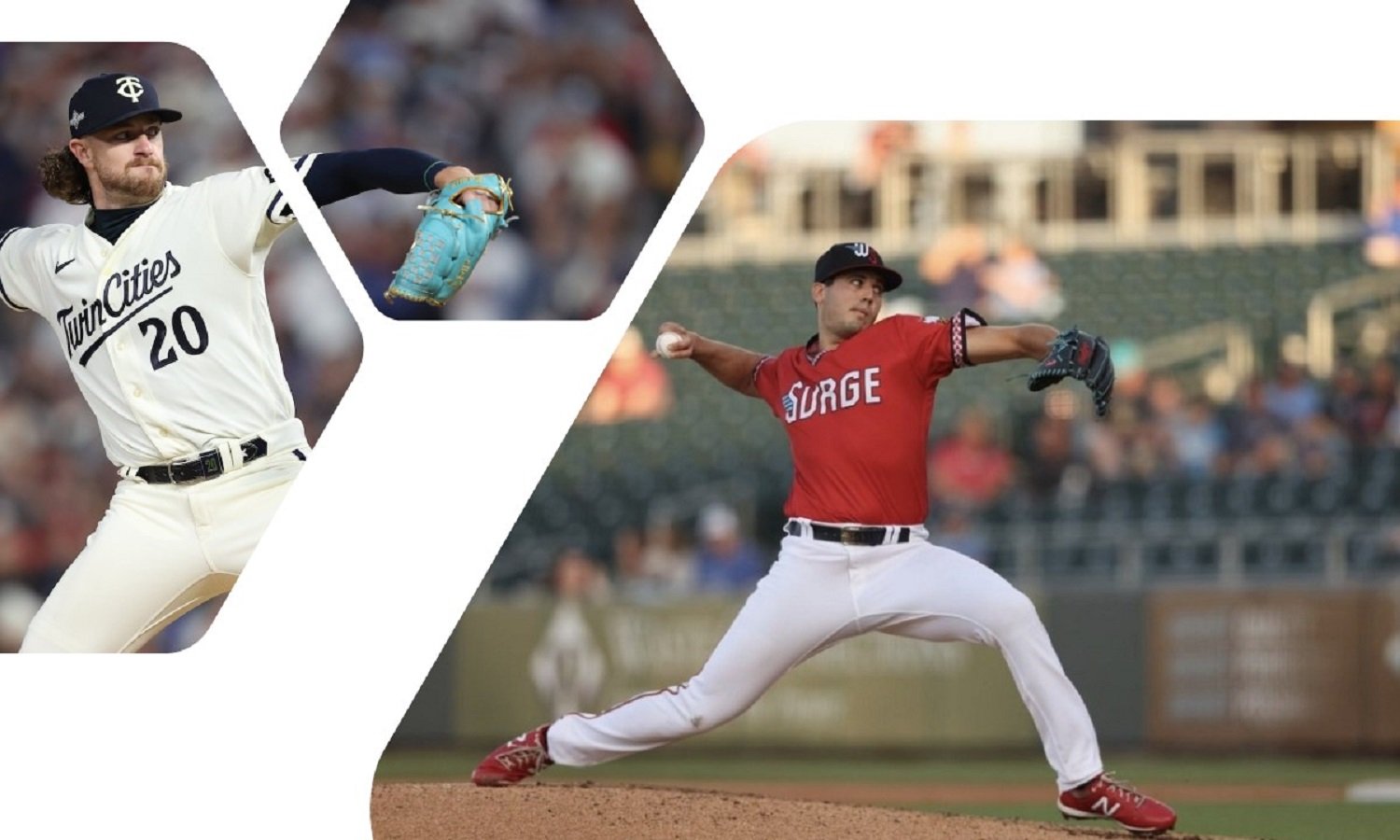 Tommy John surgery has become more commonplace in the baseball world, but that doesn’t mean the rehabilitation process is any easier for players who undergo it. Pitchers who have been throwing on a regular basis suddenly have to stop, and eventually start over from Square One. It takes time for the elbow to heal, and even more time for pitchers to teach their bodies how to throw with velocity and command the ball. Recovering from an injury can make a player feel like they are on an island, but two Twins players were able to help each other get to the rehab finish line. Chris Paddack and Matt Canterino had Tommy John surgery within weeks of each other in 2022. For Paddack, it was the second time he’d had the operation in his career, which lengthened the recovery timeline. Canterino has been ranked among the team’s top pitching prospects (he's currently Twins Daily's 20th-ranked prospect) since the Twins took him with their second-round pick in 2019, from Rice University. Pitchers from that school throw a lot of collegiate innings, and many end up needing elbow surgery. Paddack and Canterino found each other in Fort Myers and were able to build a relationship. Recently, Canterino talked with MLB.com’s Do-Hyoung Park about how he and Paddack were able to work together. “We got to pick each other's brains a little bit, talk about what we wanted to work on and how we wanted to make sure that we were using this time to get better, not just trying to get back to where we were,” Canterino said. Canterino’s professional career has been marred by injuries. He’s been limited to 85 innings across three seasons, but when he’s been on the mound, he's been dominant: a 1.48 ERA, a 0.86 WHIP, and 13.8 K/9. Those video game-type numbers are impossible to sustain, but Canterino is showing signs that what he worked on with Paddack might be paying off in the long term. Canterino also offered some insight into his thought process for next season. “Obviously, I'm shaking off some of the rust and everything in terms of command and maybe some of the pitch metrics and everything like that, but I was throwing my slider harder than it was in ’22,” Canterino said. “I got plenty of swing and miss on my changeup, which was one of my best strikeout pitches whenever I pitched in Double A.” Canterino got to witness the success of his Tommy John buddy at the end of 2022. Paddack made two relief appearances in the Houston playoff series, while tossing 3 2/3 scoreless innings with six strikeouts and no walks. His velocity saw a noticeable uptick in shortened outings. Minnesota plans to have Paddack return to a starting role in 2024, and there is potential for him to step into the role vacated by Kenta Maeda. Last season, Maeda was returning from his own Tommy John surgery and pitched 104 1/3 innings, with a 4.23 ERA. Those totals are reasonable expectations for Paddack this season, mainly since he will likely be limited in the amount of innings he can pitch in his first full season back from injury. “I would say it was more joy for Chris than anything," Canterino told Twins Daily's Seth Stohs. "I saw his process. I saw how hard he worked every day. And I saw how much he got to know some of the minor leaguers and formed relationships with people that he didn’t have to in Fort Myers. It was a lot of joy for him, knowing it was a culmination of everything he’s been working on.” Canterino is on the Twins’ 40-man roster, so there is a good chance he will make his big-league debut next season if he is fully healthy. His role isn’t as straightforward as Paddack's, but his doctor told him 125 innings are not out of the question in 2024. Minnesota might also decide to move Canterino to a bullpen role to better manage his innings, especially since the lines continue to blur between the roles of starters and multi-inning relievers. Canterino could be a frontline starter if he can stay healthy. However, he seems more likely to succeed in a bullpen role, where his stuff can reach another level. What roles will Paddack and Canterino fill on the 2024 Twins? Can both pitchers be impact players on a contending team? Leave a COMMENT and start the discussion.
 -
Chris Paddack and Matt Canterino both suffered terrible elbow injuries, but thankfully, they had each other to rely on during the rehab process. Now healthy, what can each add to Minnesota’s pitching staff next season? Image courtesy of Jesse Johnson - USA TODAY Sports, Ed Bailey, Wichita Wind Surge Chris Paddack and Matt Canterino both suffered terrible elbow injuries, but thankfully, they had each other to rely on during the rehab process. Now healthy, what can each add to Minnesota’s pitching staff next season? Tommy John surgery has become more commonplace in the baseball world, but that doesn’t mean the rehabilitation process is any easier for players who undergo it. Pitchers who have been throwing on a regular basis suddenly have to stop, and eventually start over from Square One. It takes time for the elbow to heal, and even more time for pitchers to teach their bodies how to throw with velocity and command the ball. Recovering from an injury can make a player feel like they are on an island, but two Twins players were able to help each other get to the rehab finish line. Chris Paddack and Matt Canterino had Tommy John surgery within weeks of each other in 2022. For Paddack, it was the second time he’d had the operation in his career, which lengthened the recovery timeline. Canterino has been ranked among the team’s top pitching prospects (he's currently Twins Daily's 20th-ranked prospect) since the Twins took him with their second-round pick in 2019, from Rice University. Pitchers from that school throw a lot of collegiate innings, and many end up needing elbow surgery. Paddack and Canterino found each other in Fort Myers and were able to build a relationship. Recently, Canterino talked with MLB.com’s Do-Hyoung Park about how he and Paddack were able to work together. “We got to pick each other's brains a little bit, talk about what we wanted to work on and how we wanted to make sure that we were using this time to get better, not just trying to get back to where we were,” Canterino said. Canterino’s professional career has been marred by injuries. He’s been limited to 85 innings across three seasons, but when he’s been on the mound, he's been dominant: a 1.48 ERA, a 0.86 WHIP, and 13.8 K/9. Those video game-type numbers are impossible to sustain, but Canterino is showing signs that what he worked on with Paddack might be paying off in the long term. Canterino also offered some insight into his thought process for next season. “Obviously, I'm shaking off some of the rust and everything in terms of command and maybe some of the pitch metrics and everything like that, but I was throwing my slider harder than it was in ’22,” Canterino said. “I got plenty of swing and miss on my changeup, which was one of my best strikeout pitches whenever I pitched in Double A.” Canterino got to witness the success of his Tommy John buddy at the end of 2022. Paddack made two relief appearances in the Houston playoff series, while tossing 3 2/3 scoreless innings with six strikeouts and no walks. His velocity saw a noticeable uptick in shortened outings. Minnesota plans to have Paddack return to a starting role in 2024, and there is potential for him to step into the role vacated by Kenta Maeda. Last season, Maeda was returning from his own Tommy John surgery and pitched 104 1/3 innings, with a 4.23 ERA. Those totals are reasonable expectations for Paddack this season, mainly since he will likely be limited in the amount of innings he can pitch in his first full season back from injury. “I would say it was more joy for Chris than anything," Canterino told Twins Daily's Seth Stohs. "I saw his process. I saw how hard he worked every day. And I saw how much he got to know some of the minor leaguers and formed relationships with people that he didn’t have to in Fort Myers. It was a lot of joy for him, knowing it was a culmination of everything he’s been working on.” Canterino is on the Twins’ 40-man roster, so there is a good chance he will make his big-league debut next season if he is fully healthy. His role isn’t as straightforward as Paddack's, but his doctor told him 125 innings are not out of the question in 2024. Minnesota might also decide to move Canterino to a bullpen role to better manage his innings, especially since the lines continue to blur between the roles of starters and multi-inning relievers. Canterino could be a frontline starter if he can stay healthy. However, he seems more likely to succeed in a bullpen role, where his stuff can reach another level. What roles will Paddack and Canterino fill on the 2024 Twins? Can both pitchers be impact players on a contending team? Leave a COMMENT and start the discussion. View full article
-
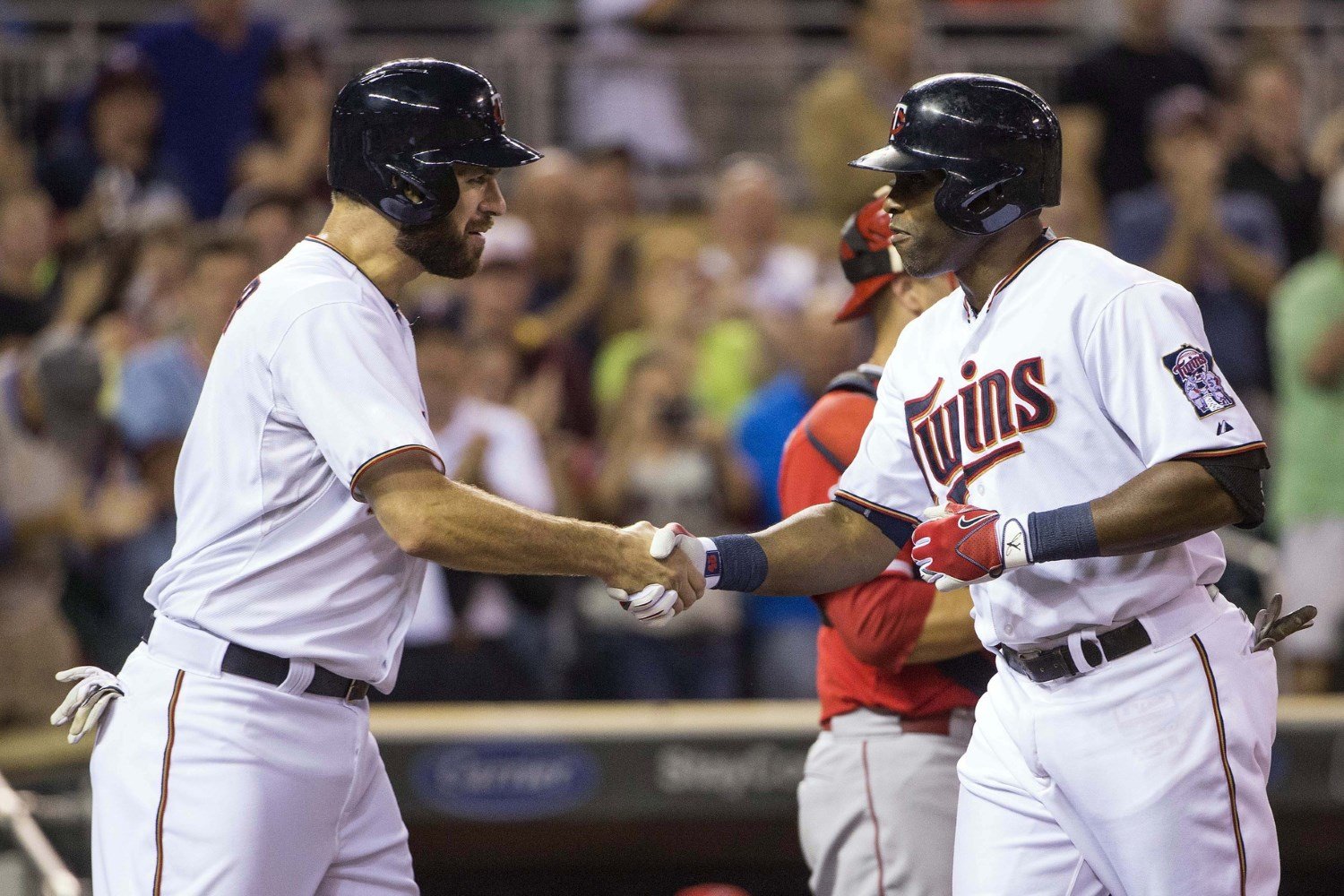 Every year, there is plenty to debate when it comes to baseball's highest honor. Who should (or shouldn’t) be elected to Cooperstown’s hallowed halls? Last year, Scott Rolen was the lone player elected by the BBWAA, with Todd Helton falling 11 votes shy of induction. This year’s ballot is full of question marks, and there is a chance for multiple players to be elected when results are announced in the coming days. As a reminder, the National Baseball Hall of Fame specifies that “[o]nly active and honorary members of the Baseball Writers’ Association of America, who have been active baseball writers for at least ten (10) years, shall be eligible to vote.” In order to receive a vote, a writer must have been a member of the BBWAA for at least a decade. Voters can select up to 10 players per ballot, making it difficult if a voter feels there are more than that many worthy candidates up for election. Below are my predictions for the 2024 Hall of Fame ballot, broken into three categories, including the Class of 2024, Future Inductees, and May Never Get In (But Still On My Ballot). Class of 2024 Adrian Beltre (1st Ballot) Beltré is a lock to be elected on his first ballot and has a chance (however remote) to be the second player elected unanimously, after Mariano Rivera. He is a five-time Gold Glove winner, and finished his career with 477 home runs and 3,166 hits. There were six seasons in which he finished in the top six for MVP voting, and he ranks second all-time in WAR runs above average from fielding, behind Brooks Robinson. Jay Jaffe's Jaffe Average WAR Score (JAWS) is a way to measure a player’s Hall of Fame worthiness. It averages their career WAR and their seven-year peak WAR. Beltré ranks fourth all-time among third basemen, and the top 11 are enshrined in Cooperstown. Billy Wagner (2023 Results: 68.1%) Relief pitchers are an underrepresented group in Cooperstown, with only eight Hall of Famers at the position. According to JAWS, the top five relievers have been elected, and Wagner ranks sixth. He collected 422 saves, while racking up 1,196 strikeouts with a 2.31 ERA. He was selected to seven All-Star Games and played on seven playoff teams. In the Live Ball Era, only Rivera has a lower ERA with a minimum of 705 innings pitched. Wagner is in his ninth year on the ballot, so he must be elected over the subsequent two voting cycles, or he'll fall off the ballot. Todd Helton is also on track to be inducted this year, but I wouldn’t include him on my ballot because of his off-field issues. He has been arrested multiple times for DUI, where his blood alcohol level was dangerously high. Other voters will select him, though, and he will get his moment in Cooperstown later this summer. Future Inductees Carlos Beltran (2023 Results: 46.5%) Beltrán wasn't elected on his first chance last winter, partially because of his ties to the 2017 Astros’ cheating scandal. He was a nine-time All-Star, a three-time Gold Glove winner, and won the AL Rookie of the Year Award in 1999. In 20 seasons, he hit .279/.350/.486 with 435 home runs and 1,587 RBI. He’s among 38 players in AL/NL history to have more than 1,500 runs scored and runs batted in, and 29 of other 37 have been enshrined in the Hall of Fame. He is also one of five players with 500 doubles, 400 home runs, and 300 stolen bases. It will take time for the writers to forgive him for leading the sign-stealing scandal, but he will be inducted on a future ballot. Joe Mauer (1st Ballot) Twins Daily has had plenty of discussion regarding Mauer’s candidacy for the Hall of Fame. For his career, he hit .306/.388/.439 with a 124 OPS+, on his way to winning three batting titles and five Silver Sluggers. He was the first American League catcher to win a batting title and the only backstop since the great Josh Gibson to win three. Defensively, he won three consecutive Gold Gloves from 2008-10 and was elected to six All-Star Games. His 2009 MVP season is arguably the best offensive season from a catcher in baseball history. Mauer finished the season hitting .365/.444/.587 with a 171 OPS+. He set a major-league record for highest batting average by a catcher and became the first repeat batting champion in nearly a decade. Mauer will likely finish short of induction in his first year on the ballot, before being inducted next season. Chase Utley (1st Ballot) Utley joins Mauer and Beltré in a solid class of first-ballot names to consider. Utley ranks 12th all-time among second basemen in JAWS, with nine of the 11 names ahead of him already inducted. He was a six-time All-Star, and helped the Phillies win the 2008 World Series. Utley provided value in all parts of the game, with a career 117 OPS+ and terrific defense at second base. He collected 154 stolen bases, and his 87.5% success rate is the best of all time in MLB, with a minimum of 100 swipes. Voters will support him, but it likely takes multiple appearances on the ballot to be elected. Andruw Jones has slowly been gaining support on recent ballots, and he is on pace to finish with more than 60% of the vote in the current voting cycle. However, in 2012, he was arrested for a graphic domestic assault on his former wife. He will likely get in on a future vote, but I am not including him on my ballot. May Never Get In (But Still On My Ballot) Torii Hunter (2023 Results: 6.9%) Hunter has survived on the ballot, despite receiving less than 7% percent of the vote in his first three voting cycles. (Any player who receives less than 5 percent of votes cast is removed from future ballots.) He won nine consecutive Gold Gloves from 2001-09, and was selected to five All-Star teams. He posted a career .793 OPS at the plate, earning two Silver Slugger Awards. He was an elite defender in the first half of his career who redeveloped himself into a strong hitter and fine corner outfielder later. Hunter holds a special place in the hearts of Twins fans, so he’d get my vote, even if he won’t be elected. Gary Sheffield (2023 Results: 55%) Sheffield is in his 10th and final year of eligibility. He hit 509 career home runs, including 30 homers in eight different seasons. He was a nine-time All-Star, a five-time Silver Slugger, and a batting champion. He finished with an OPS+ of at least 130 in 14 different seasons. His support has been lacking in previous votes because his name appeared in the Mitchell report, and because he spent one winter working out with Barry Bonds. Also, his defense was atrocious. Still, few players of the era could match him for sheer offensive danger. Final Ballot (in alphabetical order) 1. Carlos Beltrán 2. Adrian Beltré 3. Torii Hunter 4. Joe Mauer 5. Gary Sheffield 6. Billy Wagner 7. Chase Utley To see the complete 2024 BBWAA Hall of Fame Ballot, CLICK HERE. On Jan. 23, the BBWAA will announce the 2024 Hall of Fame balloting results. Any players chosen will be inducted during Hall of Fame Weekend from July 19-22, 2024. Who makes your Hall of Fame ballot? Leave a COMMENT and start the discussion.
- 22 comments
-
- 3
-
-

-
- joe mauer
- billy wagner
- (and 4 more)
-
Joe Mauer is in his first year of eligibility for the National Baseball Hall of Fame and joins a crowded ballot. Who makes the cut for the Class of 2024? Image courtesy of © Jesse Johnson-USA TODAY Sports Joe Mauer is in his first year of eligibility for the National Baseball Hall of Fame and joins a crowded ballot. Who makes the cut for the Class of 2024? Every year, there is plenty to debate when it comes to baseball's highest honor. Who should (or shouldn’t) be elected to Cooperstown’s hallowed halls? Last year, Scott Rolen was the lone player elected by the BBWAA, with Todd Helton falling 11 votes shy of induction. This year’s ballot is full of question marks, and there is a chance for multiple players to be elected when results are announced in the coming days. As a reminder, the National Baseball Hall of Fame specifies that “[o]nly active and honorary members of the Baseball Writers’ Association of America, who have been active baseball writers for at least ten (10) years, shall be eligible to vote.” In order to receive a vote, a writer must have been a member of the BBWAA for at least a decade. Voters can select up to 10 players per ballot, making it difficult if a voter feels there are more than that many worthy candidates up for election. Below are my predictions for the 2024 Hall of Fame ballot, broken into three categories, including the Class of 2024, Future Inductees, and May Never Get In (But Still On My Ballot). Class of 2024 Adrian Beltre (1st Ballot) Beltré is a lock to be elected on his first ballot and has a chance (however remote) to be the second player elected unanimously, after Mariano Rivera. He is a five-time Gold Glove winner, and finished his career with 477 home runs and 3,166 hits. There were six seasons in which he finished in the top six for MVP voting, and he ranks second all-time in WAR runs above average from fielding, behind Brooks Robinson. Jay Jaffe's Jaffe Average WAR Score (JAWS) is a way to measure a player’s Hall of Fame worthiness. It averages their career WAR and their seven-year peak WAR. Beltré ranks fourth all-time among third basemen, and the top 11 are enshrined in Cooperstown. Billy Wagner (2023 Results: 68.1%) Relief pitchers are an underrepresented group in Cooperstown, with only eight Hall of Famers at the position. According to JAWS, the top five relievers have been elected, and Wagner ranks sixth. He collected 422 saves, while racking up 1,196 strikeouts with a 2.31 ERA. He was selected to seven All-Star Games and played on seven playoff teams. In the Live Ball Era, only Rivera has a lower ERA with a minimum of 705 innings pitched. Wagner is in his ninth year on the ballot, so he must be elected over the subsequent two voting cycles, or he'll fall off the ballot. Todd Helton is also on track to be inducted this year, but I wouldn’t include him on my ballot because of his off-field issues. He has been arrested multiple times for DUI, where his blood alcohol level was dangerously high. Other voters will select him, though, and he will get his moment in Cooperstown later this summer. Future Inductees Carlos Beltran (2023 Results: 46.5%) Beltrán wasn't elected on his first chance last winter, partially because of his ties to the 2017 Astros’ cheating scandal. He was a nine-time All-Star, a three-time Gold Glove winner, and won the AL Rookie of the Year Award in 1999. In 20 seasons, he hit .279/.350/.486 with 435 home runs and 1,587 RBI. He’s among 38 players in AL/NL history to have more than 1,500 runs scored and runs batted in, and 29 of other 37 have been enshrined in the Hall of Fame. He is also one of five players with 500 doubles, 400 home runs, and 300 stolen bases. It will take time for the writers to forgive him for leading the sign-stealing scandal, but he will be inducted on a future ballot. Joe Mauer (1st Ballot) Twins Daily has had plenty of discussion regarding Mauer’s candidacy for the Hall of Fame. For his career, he hit .306/.388/.439 with a 124 OPS+, on his way to winning three batting titles and five Silver Sluggers. He was the first American League catcher to win a batting title and the only backstop since the great Josh Gibson to win three. Defensively, he won three consecutive Gold Gloves from 2008-10 and was elected to six All-Star Games. His 2009 MVP season is arguably the best offensive season from a catcher in baseball history. Mauer finished the season hitting .365/.444/.587 with a 171 OPS+. He set a major-league record for highest batting average by a catcher and became the first repeat batting champion in nearly a decade. Mauer will likely finish short of induction in his first year on the ballot, before being inducted next season. Chase Utley (1st Ballot) Utley joins Mauer and Beltré in a solid class of first-ballot names to consider. Utley ranks 12th all-time among second basemen in JAWS, with nine of the 11 names ahead of him already inducted. He was a six-time All-Star, and helped the Phillies win the 2008 World Series. Utley provided value in all parts of the game, with a career 117 OPS+ and terrific defense at second base. He collected 154 stolen bases, and his 87.5% success rate is the best of all time in MLB, with a minimum of 100 swipes. Voters will support him, but it likely takes multiple appearances on the ballot to be elected. Andruw Jones has slowly been gaining support on recent ballots, and he is on pace to finish with more than 60% of the vote in the current voting cycle. However, in 2012, he was arrested for a graphic domestic assault on his former wife. He will likely get in on a future vote, but I am not including him on my ballot. May Never Get In (But Still On My Ballot) Torii Hunter (2023 Results: 6.9%) Hunter has survived on the ballot, despite receiving less than 7% percent of the vote in his first three voting cycles. (Any player who receives less than 5 percent of votes cast is removed from future ballots.) He won nine consecutive Gold Gloves from 2001-09, and was selected to five All-Star teams. He posted a career .793 OPS at the plate, earning two Silver Slugger Awards. He was an elite defender in the first half of his career who redeveloped himself into a strong hitter and fine corner outfielder later. Hunter holds a special place in the hearts of Twins fans, so he’d get my vote, even if he won’t be elected. Gary Sheffield (2023 Results: 55%) Sheffield is in his 10th and final year of eligibility. He hit 509 career home runs, including 30 homers in eight different seasons. He was a nine-time All-Star, a five-time Silver Slugger, and a batting champion. He finished with an OPS+ of at least 130 in 14 different seasons. His support has been lacking in previous votes because his name appeared in the Mitchell report, and because he spent one winter working out with Barry Bonds. Also, his defense was atrocious. Still, few players of the era could match him for sheer offensive danger. Final Ballot (in alphabetical order) 1. Carlos Beltrán 2. Adrian Beltré 3. Torii Hunter 4. Joe Mauer 5. Gary Sheffield 6. Billy Wagner 7. Chase Utley To see the complete 2024 BBWAA Hall of Fame Ballot, CLICK HERE. On Jan. 23, the BBWAA will announce the 2024 Hall of Fame balloting results. Any players chosen will be inducted during Hall of Fame Weekend from July 19-22, 2024. Who makes your Hall of Fame ballot? Leave a COMMENT and start the discussion. View full article
- 22 replies
-
- 1
-
-
- joe mauer
- billy wagner
- (and 4 more)
-
Joe Mauer is trending in the right direction to be a first-ballot Baseball Hall of Famer. One of the biggest reasons he is on that track is because his case fits both new- and old-school voting styles. Image courtesy of © Jake Roth-USA TODAY Sports Joe Mauer is trending in the right direction to be a first-ballot Baseball Hall of Famer. One of the biggest reasons he is on that track is because his case fits both new- and old-school voting styles. Voting for the National Baseball Hall of Fame is not an exact science. It's rarely treated as a science at all, by those who participate in it. Some voters take an old-school approach and value traditional statistics, like batting average, All-Star appearances, MVPs, and so on. Other voters take a more new-school approach, and consider items like JAWS, WAR, and other 21st-century metrics. There is no perfect answer for who should or shouldn’t be elected; that’s why there can be debate among fans and writers. In order to be elected, players need 75 percent of eligible BBWAA writers to check their name on the ballot. Joe Mauer has garnered more than enough support to be elected on the ballots that have been revealed so far, but that doesn’t mean he will stay above the threshold. Some candidates see their percentage drop when non-public ballots are counted, so Mauer needs to build up a cushion before ballots are due at the end of the year. Mauer’s greatness has been debated among Twins fans for various reasons. On a national level, many view Mauer as a surefire Hall of Famer, even if he doesn’t get elected on the first ballot. His résumé includes old- and new-school traits that will appeal to all voters. Old-School Résumé 1. Batting Titles: Old-school voters love nothing more than a good ol’ batting champ. Batting average is an easy statistic to understand, and the prestige of the batting crown stretches back well over 100 years. Mauer won three batting titles, and did so in record-breaking fashion. He won three batting titles and hit .306/.388/.439 for his career. Mauer was the first AL catcher to win a batting title. Three NL catchers have won batting titles, but only Josh Gibson of the 1930s Negro National League matched Mauer’s trio. His second batting title in 2009 made him the first repeat batting champion in nearly a decade. From 2004-2013, he had baseball’s second-best batting average, behind Miguel Cabrera. 2. MVP season: Johnny Bench is the gold standard at catcher, and his 1972 season might be the best ever at the position. Mauer’s 2009 MVP is not far behind. In 138 games, he hit .365/.444/.587 with 30 doubles and 28 home runs. He set the MLB record for highest average by a catcher since World War II. Mauer fell one vote shy of being unanimous, so he got support from both sides of the aisle. 3. Other Hardware and Old-School Stats: Mauer’s résumé includes multiple other honors outside of his MVP. He was a six-time All-Star, winning three Gold Gloves and five Silver Sluggers. He finished in the top eight for MVP in four different seasons. Mauer was the 10th player in MLB history who started at least half of his games as a catcher to collect 2,000 hits. Only 14 players have more than Mauer’s three batting titles. Overall, he was a No. 1 pick in the draft who played his entire career for his hometown team, and that storyline should help his candidacy. New-School Résumé 1. JAWS: Jay Jaffe’s JAWS attempts to rank players based on their worthiness for the Hall of Fame. According to Baseball Reference, a player’s JAWS is their career WAR averaged with their seven-year peak WAR. Mauer has the seventh-highest JAWS among catchers, and is the only player in the top 11 who has yet to be enshrined in Cooperstown. His seven-year peak WAR ranks as the fifth-best in MLB history, ahead of current Hall of Famers like Yogi Berra and Carlton Fisk. Mauer is among the best catchers of all time, and it’s not particularly close. 2. MVP Season: Mauer led the AL in multiple statistical areas that appeal to those with a primarily new-school thought process. Mauer finished first in Offensive WAR (7.7), OBP (.444), SLG (.587), OPS (1.031), Adjusted OPS+ (171), Runs Created (138), Adjusted Batting Runs (58), Adjusted Batting Wins (5.3), and Offensive Win % (.791). He was the first AL player to top the league in BA, OBP, and SLG (the rate stat Triple Crown) since George Brett in 1980. 3. Other Numbers and New-School Stats: Only four catchers in MLB history had a higher WAR for their first ten seasons, including Bench, Mike Piazza, Gary Carter, and Mickey Cochrane. He was considered an above-average pitch framer, and had the seventh-best fielding percentage for all catchers. Among the 20 players who played at least 50 percent of their non-pinch-hitting games behind the plate and accumulated at least 7,000 PA in the AL and NL, Mauer ranks sixth with a 124 OPS+. Jaffe wrote about Mauer’s candidacy at FanGraphs and included this fitting quote from one of baseball’s best broadcasters. Former White Sox’s play-by-play announcer Jason Benetti, offered these words on the occasion of Mauer's beautiful final appearance at catcher in 2018: “None of us gets to choose how we’re remembered on this planet. But in the game of baseball, every once in a while, a player so special to a town gets to choose how he walks off the field for a final time. If this is it for Joe Mauer, a fitting, touching, and warm send-off on a chilly day in the Twin Cities.” Only two catchers were elected on the first ballot: Bench (1989) and Iván Rodríguez (2017). Will Mauer join them? Do you take a new- or old-school approach to looking at Mauer’s HOF candidacy? Will his candidacy be helped because of voters from both voting styles? Leave a COMMENT and start the discussion. View full article
-
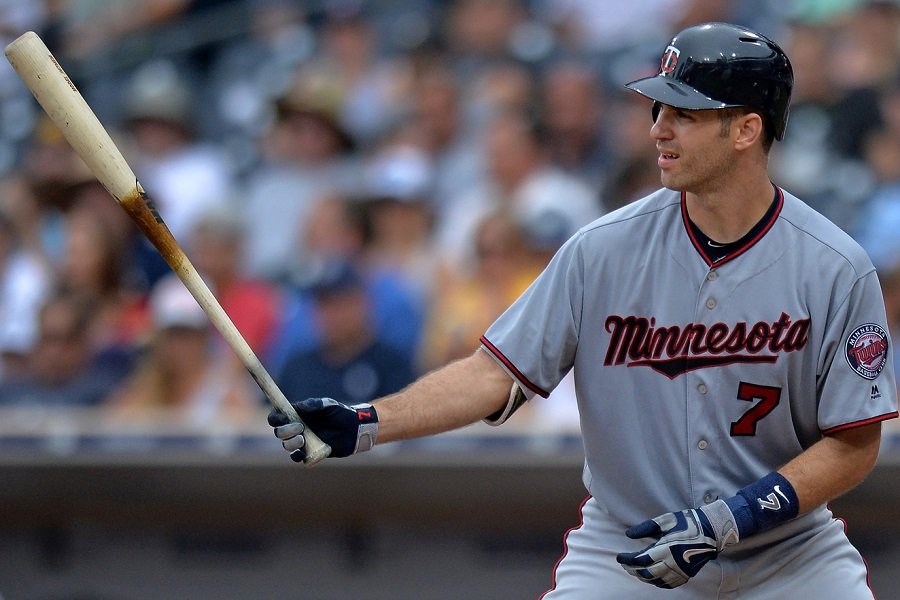 Voting for the National Baseball Hall of Fame is not an exact science. It's rarely treated as a science at all, by those who participate in it. Some voters take an old-school approach and value traditional statistics, like batting average, All-Star appearances, MVPs, and so on. Other voters take a more new-school approach, and consider items like JAWS, WAR, and other 21st-century metrics. There is no perfect answer for who should or shouldn’t be elected; that’s why there can be debate among fans and writers. In order to be elected, players need 75 percent of eligible BBWAA writers to check their name on the ballot. Joe Mauer has garnered more than enough support to be elected on the ballots that have been revealed so far, but that doesn’t mean he will stay above the threshold. Some candidates see their percentage drop when non-public ballots are counted, so Mauer needs to build up a cushion before ballots are due at the end of the year. Mauer’s greatness has been debated among Twins fans for various reasons. On a national level, many view Mauer as a surefire Hall of Famer, even if he doesn’t get elected on the first ballot. His résumé includes old- and new-school traits that will appeal to all voters. Old-School Résumé 1. Batting Titles: Old-school voters love nothing more than a good ol’ batting champ. Batting average is an easy statistic to understand, and the prestige of the batting crown stretches back well over 100 years. Mauer won three batting titles, and did so in record-breaking fashion. He won three batting titles and hit .306/.388/.439 for his career. Mauer was the first AL catcher to win a batting title. Three NL catchers have won batting titles, but only Josh Gibson of the 1930s Negro National League matched Mauer’s trio. His second batting title in 2009 made him the first repeat batting champion in nearly a decade. From 2004-2013, he had baseball’s second-best batting average, behind Miguel Cabrera. 2. MVP season: Johnny Bench is the gold standard at catcher, and his 1972 season might be the best ever at the position. Mauer’s 2009 MVP is not far behind. In 138 games, he hit .365/.444/.587 with 30 doubles and 28 home runs. He set the MLB record for highest average by a catcher since World War II. Mauer fell one vote shy of being unanimous, so he got support from both sides of the aisle. 3. Other Hardware and Old-School Stats: Mauer’s résumé includes multiple other honors outside of his MVP. He was a six-time All-Star, winning three Gold Gloves and five Silver Sluggers. He finished in the top eight for MVP in four different seasons. Mauer was the 10th player in MLB history who started at least half of his games as a catcher to collect 2,000 hits. Only 14 players have more than Mauer’s three batting titles. Overall, he was a No. 1 pick in the draft who played his entire career for his hometown team, and that storyline should help his candidacy. New-School Résumé 1. JAWS: Jay Jaffe’s JAWS attempts to rank players based on their worthiness for the Hall of Fame. According to Baseball Reference, a player’s JAWS is their career WAR averaged with their seven-year peak WAR. Mauer has the seventh-highest JAWS among catchers, and is the only player in the top 11 who has yet to be enshrined in Cooperstown. His seven-year peak WAR ranks as the fifth-best in MLB history, ahead of current Hall of Famers like Yogi Berra and Carlton Fisk. Mauer is among the best catchers of all time, and it’s not particularly close. 2. MVP Season: Mauer led the AL in multiple statistical areas that appeal to those with a primarily new-school thought process. Mauer finished first in Offensive WAR (7.7), OBP (.444), SLG (.587), OPS (1.031), Adjusted OPS+ (171), Runs Created (138), Adjusted Batting Runs (58), Adjusted Batting Wins (5.3), and Offensive Win % (.791). He was the first AL player to top the league in BA, OBP, and SLG (the rate stat Triple Crown) since George Brett in 1980. 3. Other Numbers and New-School Stats: Only four catchers in MLB history had a higher WAR for their first ten seasons, including Bench, Mike Piazza, Gary Carter, and Mickey Cochrane. He was considered an above-average pitch framer, and had the seventh-best fielding percentage for all catchers. Among the 20 players who played at least 50 percent of their non-pinch-hitting games behind the plate and accumulated at least 7,000 PA in the AL and NL, Mauer ranks sixth with a 124 OPS+. Jaffe wrote about Mauer’s candidacy at FanGraphs and included this fitting quote from one of baseball’s best broadcasters. Former White Sox’s play-by-play announcer Jason Benetti, offered these words on the occasion of Mauer's beautiful final appearance at catcher in 2018: “None of us gets to choose how we’re remembered on this planet. But in the game of baseball, every once in a while, a player so special to a town gets to choose how he walks off the field for a final time. If this is it for Joe Mauer, a fitting, touching, and warm send-off on a chilly day in the Twin Cities.” Only two catchers were elected on the first ballot: Bench (1989) and Iván Rodríguez (2017). Will Mauer join them? Do you take a new- or old-school approach to looking at Mauer’s HOF candidacy? Will his candidacy be helped because of voters from both voting styles? Leave a COMMENT and start the discussion.
 -
Was the Tyler Mahle Trade the Worst Trade In Twins History?
Cody Christie posted an article in Twins
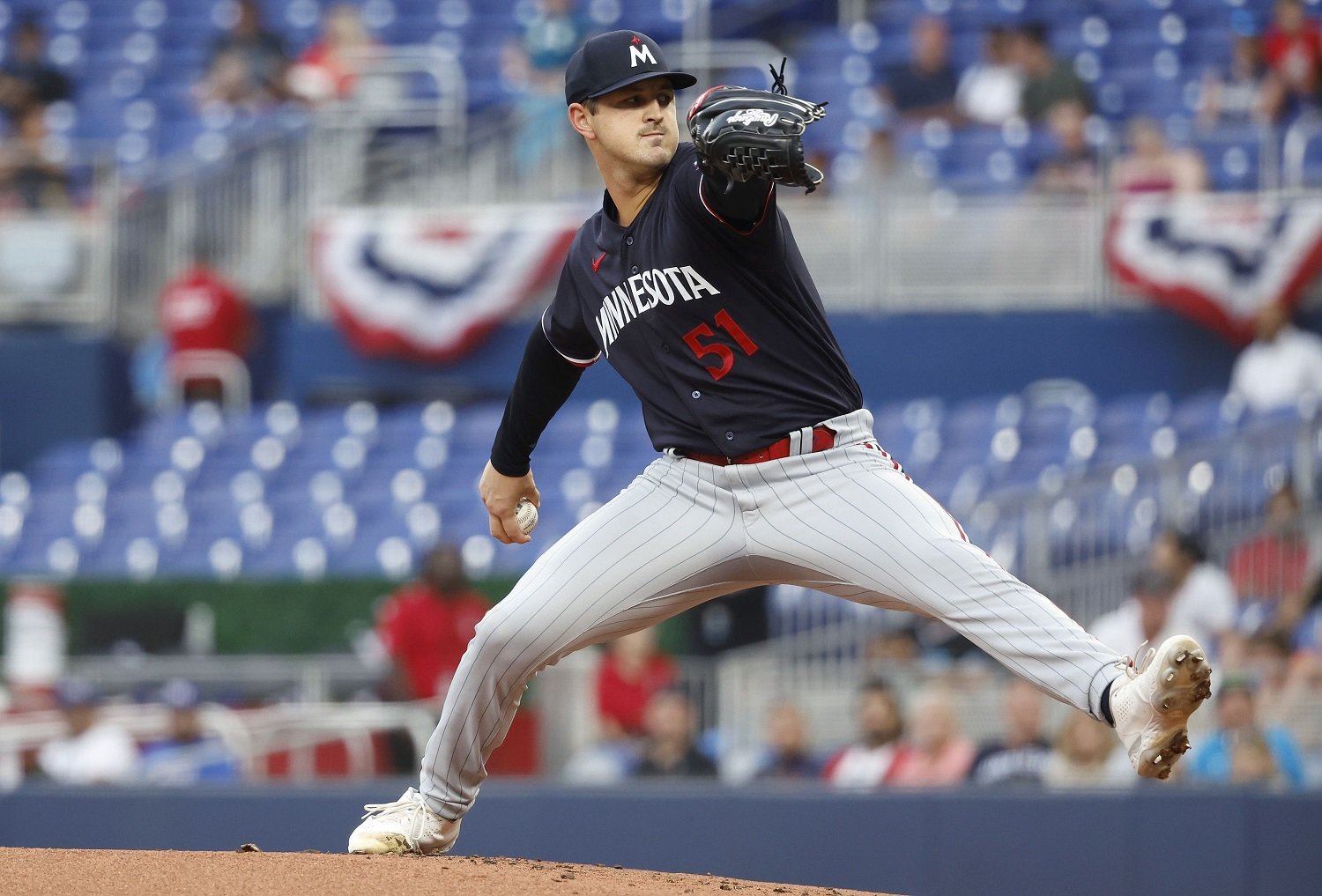 On Dec. 14, Tyler Mahle signed a two-year contract with the Texas Rangers for $22 million. He’ll miss the start of the 2024 season as he completes his rehab from Tommy John surgery. Expectations are for him to be able to return around the All-Star break, which is near the time the Rangers expect Jacob deGrom to return, as well. With the deal, Mahle can prove he is healthy and reach free agency again for his age-31 season. The Twins traded for Mahle because the club was in contention and needed a frontline starter. Things couldn’t have gone much worse, with injuries impacting his entire Twins tenure. He made three starts before landing on the IL with shoulder inflammation. Mahle returned for one more appearance, but left early. He missed the final four weeks, as Minnesota fell out of contention. The Twins hoped Mahle could return in 2023 and help the rotation. Unfortunately, he was limited to five starts before suffering the elbow injury that led to surgery. Overall, he made nine starts and provided the Twins with 0.6 WAR. Minnesota traded away Spencer Steer, Christian Encarnacion-Strand, and Steve Hajjar, whom the Reds subsequently flipped to the Guardians as part of a trade for Will Benson. Steer has played 184 big-league games since the trade and posted a 113 OPS+, while providing the Reds with 3.0 WAR. Encarnacion-Strand began last season at Triple-A before making his debut. In 63 games, he posted a 113 OPS+, with 0.6 WAR. Both players have promising futures and have shown the ability to be successful at the big-league level. Each is under team control for the foreseeable future. The trade will look worse as both players establish themselves as everyday players and accumulate more WAR. So, what are some of the other bad trades in team history, and where does the Mahle trade rank? 2007 Twins Acquire: Brendan Harris (-0.6 WAR), Jason Pridie (-0.2 WAR), Delmon Young (1.0 WAR) Rays Acquire: Eddie Morlan (0.0 WAR), Jason Bartlett (10.4 WAR), Matt Garza (8.5 WAR) Trade Result: -19.4 WAR Recently, Gregg Masterson wrote about the Young trade and how it continues to haunt the Twins 17 years later. At the time, the Twins wanted a right-handed slugger to hit between Joe Mauer and Justin Morneau, so the team was willing to trade multiple young pieces. Bartlett became an All-Star in Tampa, and Garza won ALCS MVP in 2008. Young never developed into the player the Twins hoped he’d be in the middle of the lineup. His OPS+ was only above 100 in one season with the Twins, and his defense was an adventure in right field. The Mahle trade hasn’t reached this level yet, but there is still time. 2010 Twins Acquire: Brett Jacobson (0.0 WAR), Jim Hoey (-0.8 WAR) Orioles Acquire: JJ Hardy (15.7 WAR), Brendan Harris (0.0 WAR) Trade Result: -16.5 WAR The Twins traded Carlos Gomez for Hardy to take over shortstop for 2010, but his time was limited in Minnesota. He suffered multiple injuries and hit .268/.320/.394, with 28 extra-base hits in 101 games. Minnesota dealt Hardy and Harris away for two relievers to make room on the roster for Tsuyoshi Nishioka, who compiled -2.3 WAR with the Twins. While Nishioka struggled, Hardy became an All-Star in Baltimore, winning three Gold Gloves and a Silver Slugger. Jacobson never made the big leagues, and Hoey didn’t make another appearance after leaving the Twins. 1995 Twins Acquire: Kimera Bartee (0.0 WAR), Scott Klingenbeck (-1.6 WAR) Orioles Acquire: Scott Erickson (13.1 WAR) Trade Result: -14.7 WAR Erickson had helped the Twins win the 1991 World Series and finished runner-up for the Cy Young, but he struggled from 1993-95, with an ERA north of 5.00. Minnesota sent Erickson to Baltimore, where he reinvented himself and averaged over 230 innings per season in a four-year stretch. Injuries impacted the end of his career, but the Twins got negative value back in return, including Klingenbeck, who struggled mightily during his time in Minnesota. Will the Mahle trade surpass the Delmon Young trade in lost WAR? Would you rank any other trades as the worst in team history? Leave a COMMENT and start the discussion.
- 70 comments
-
- 3
-
-
- tyler mahle
- spencer steer
- (and 4 more)
-
Every team makes poor trades, and sometimes, it takes years for a front office to know the total value lost or gained in a transaction. Tyler Mahle’s time is done in Minnesota, and it's a tenure that fans will remember for all the wrong reasons. Image courtesy of Rhona Wise-USA TODAY Sports Every team makes poor trades, and sometimes, it takes years for a front office to know the total value lost or gained in a transaction. Tyler Mahle’s time is done in Minnesota, and it's a tenure that fans will remember for all the wrong reasons. On Dec. 14, Tyler Mahle signed a two-year contract with the Texas Rangers for $22 million. He’ll miss the start of the 2024 season as he completes his rehab from Tommy John surgery. Expectations are for him to be able to return around the All-Star break, which is near the time the Rangers expect Jacob deGrom to return, as well. With the deal, Mahle can prove he is healthy and reach free agency again for his age-31 season. The Twins traded for Mahle because the club was in contention and needed a frontline starter. Things couldn’t have gone much worse, with injuries impacting his entire Twins tenure. He made three starts before landing on the IL with shoulder inflammation. Mahle returned for one more appearance, but left early. He missed the final four weeks, as Minnesota fell out of contention. The Twins hoped Mahle could return in 2023 and help the rotation. Unfortunately, he was limited to five starts before suffering the elbow injury that led to surgery. Overall, he made nine starts and provided the Twins with 0.6 WAR. Minnesota traded away Spencer Steer, Christian Encarnacion-Strand, and Steve Hajjar, whom the Reds subsequently flipped to the Guardians as part of a trade for Will Benson. Steer has played 184 big-league games since the trade and posted a 113 OPS+, while providing the Reds with 3.0 WAR. Encarnacion-Strand began last season at Triple-A before making his debut. In 63 games, he posted a 113 OPS+, with 0.6 WAR. Both players have promising futures and have shown the ability to be successful at the big-league level. Each is under team control for the foreseeable future. The trade will look worse as both players establish themselves as everyday players and accumulate more WAR. So, what are some of the other bad trades in team history, and where does the Mahle trade rank? 2007 Twins Acquire: Brendan Harris (-0.6 WAR), Jason Pridie (-0.2 WAR), Delmon Young (1.0 WAR) Rays Acquire: Eddie Morlan (0.0 WAR), Jason Bartlett (10.4 WAR), Matt Garza (8.5 WAR) Trade Result: -19.4 WAR Recently, Gregg Masterson wrote about the Young trade and how it continues to haunt the Twins 17 years later. At the time, the Twins wanted a right-handed slugger to hit between Joe Mauer and Justin Morneau, so the team was willing to trade multiple young pieces. Bartlett became an All-Star in Tampa, and Garza won ALCS MVP in 2008. Young never developed into the player the Twins hoped he’d be in the middle of the lineup. His OPS+ was only above 100 in one season with the Twins, and his defense was an adventure in right field. The Mahle trade hasn’t reached this level yet, but there is still time. 2010 Twins Acquire: Brett Jacobson (0.0 WAR), Jim Hoey (-0.8 WAR) Orioles Acquire: JJ Hardy (15.7 WAR), Brendan Harris (0.0 WAR) Trade Result: -16.5 WAR The Twins traded Carlos Gomez for Hardy to take over shortstop for 2010, but his time was limited in Minnesota. He suffered multiple injuries and hit .268/.320/.394, with 28 extra-base hits in 101 games. Minnesota dealt Hardy and Harris away for two relievers to make room on the roster for Tsuyoshi Nishioka, who compiled -2.3 WAR with the Twins. While Nishioka struggled, Hardy became an All-Star in Baltimore, winning three Gold Gloves and a Silver Slugger. Jacobson never made the big leagues, and Hoey didn’t make another appearance after leaving the Twins. 1995 Twins Acquire: Kimera Bartee (0.0 WAR), Scott Klingenbeck (-1.6 WAR) Orioles Acquire: Scott Erickson (13.1 WAR) Trade Result: -14.7 WAR Erickson had helped the Twins win the 1991 World Series and finished runner-up for the Cy Young, but he struggled from 1993-95, with an ERA north of 5.00. Minnesota sent Erickson to Baltimore, where he reinvented himself and averaged over 230 innings per season in a four-year stretch. Injuries impacted the end of his career, but the Twins got negative value back in return, including Klingenbeck, who struggled mightily during his time in Minnesota. Will the Mahle trade surpass the Delmon Young trade in lost WAR? Would you rank any other trades as the worst in team history? Leave a COMMENT and start the discussion. View full article
-
The Twins and Mariners are each in the midst of a winning window, and they have the potential to match up in trades that help both rosters. What are each team’s needs, and what deals between them could make sense? Image courtesy of © Gregory Fisher-USA TODAY Sports The Twins and Mariners are each in the midst of a winning window, and they have the potential to match up in trades that help both rosters. What are each team’s needs, and what deals between them could make sense? After making the playoffs for the first time since 2001, the Mariners entered 2023 with high expectations. Alas, Seattle lost six of their final 10 games and finished one game behind Toronto for the final Wild Card spot. It was a disappointing end for a team that many considered ascendent, with young stars like Julio Rodriguez and George Kirby. As with any offseason, the Mariners will try to find ways to supplement their roster, but they face financial uncertainty. Like Minnesota, Seattle is dealing with their own fallout from the nationwide collapse of regional sports networks. Last season, the Mariners’ payroll sat around $140 million, and the front office hopes to increase that total for 2024. Seattle now owns all of ROOT Sports Northwest, their regional sports network, and the network was attached to a price increase with the largest cable distributor in the Mariners’ region. Seattle has already been active on the trade market, dealing away pieces with contracts that might not fit their current roster. In November, the Mariners traded Eugenio Suarez ($11.3 million) to Arizona for Carlos Vargas and Seby Zavala, who are not yet arbitration eligible. At the Winter Meetings, they packaged Jarred Kelenic ($750,000), Marco Gonzalez ($12.25 million), and Evan White ($7 million) for two other cheap, cost-controlled players, Jackson Kowar and Cole Phillips. It’s clear that Seattle needs to find ways to improve, and cutting these salaries was only the first step. Seattle’s most significant needs are in the lineup, and they have room to add righties and lefties. After the Kelenic trade, president of baseball operations Jerry Dipoto told reporters that the club wanted to add two or three bats. Still, they are reluctant to deal away starting pitching, one of baseball’s most valuable commodities. Potential trade chips include Logan Gilbert, George Kirby, Bryce Miller, or Bryan Woo. So, what are some potential trades between these two clubs? All trade values are from Baseball Trade Values, based on the concept of surplus value (number in parentheses) above what the player is being paid and the years of team control. Potential Trade 1 Twins Receive: Bryan Woo (28.2) Mariners Receive: Max Kepler (8.3), Matt Wallner (23.1) Woo made his big-league debut last season and posted a 4.21 ERA with a 1.21 WHIP across 16 starts. In 87 2/3 innings, he had a 93-to-31 strikeout-to-walk ratio, but he allowed 13 home runs (1.3 HR/9). Seattle had Woo jump from Double A to the big leagues after he dominated that level with a 2.05 ERA, a 0.89 WHIP, and 12.1 K/9. Wallner and Kepler have similar skill sets, but the Mariners want to upgrade their offense and both would be better than their incumbents. Kepler’s 121 OPS+ last season would have ranked third on the Mariners, behind J.P. Crawford and Rodríguez. Wallner only got 254 plate appearances in the big leagues, but his 139 OPS+ would have been eight points higher than Rodríguez's. Potential Trade 2 Mariners Receive: Jorge Polanco (9.4), Emmanuel Rodriguez (17.1) Twins Receive: Bryce Miller (25.9) Miller, like Woo, debuted in 2023. In 25 games, he had a 4.32 ERA with a 1.14 WHIP and 8.2 K/9. His 3.98 FIP was lower than his ERA, so there may be room for statistical (as well as actual) improvement. For Seattle, Polanco and Rodríguez might offer the best combination of present and future value. Polanco is under team control for two more seasons and has some defensive flexibility to fit into the Mariners lineup. Rodríguez has one of the highest ceilings of any prospect in the Twins organization and is projected to spend next season at Double A. Last season, Rodríguez posted an .863 OPS with 38 extra-base hits in 99 games. Potential Trade 3 Mariners Receive: Edouard Julien (34.5), Brooks Lee (33.5) Twins Receive: Logan Gilbert (65.9) The Twins might want to trade for a pitcher with a more established track record than the less-experienced Woo or Miller. Gilbert has pitched nearly 500 innings at the big-league level and is in his first year of arbitration eligibility as a Super 2 player. In 2023, he tossed 190 2/3 innings with a 3.73 ERA, a 1.08 WHIP, and 8.9 K/9. Julien and Lee would be a tough combo to lose at this early juncture in their careers, but frontline starting pitching comes at a high price. Julien posted a 130 OPS+ in 109 games last season, while Lee combined for an .808 OPS between Double and Triple A. Which trade is the best fit for both teams? Which starting pitcher is the right one for the Twins? Leave a COMMENT and start the discussion. View full article
-
Which Mariners Starting Pitcher Could the Twins Acquire in Trade?
Cody Christie posted an article in Twins
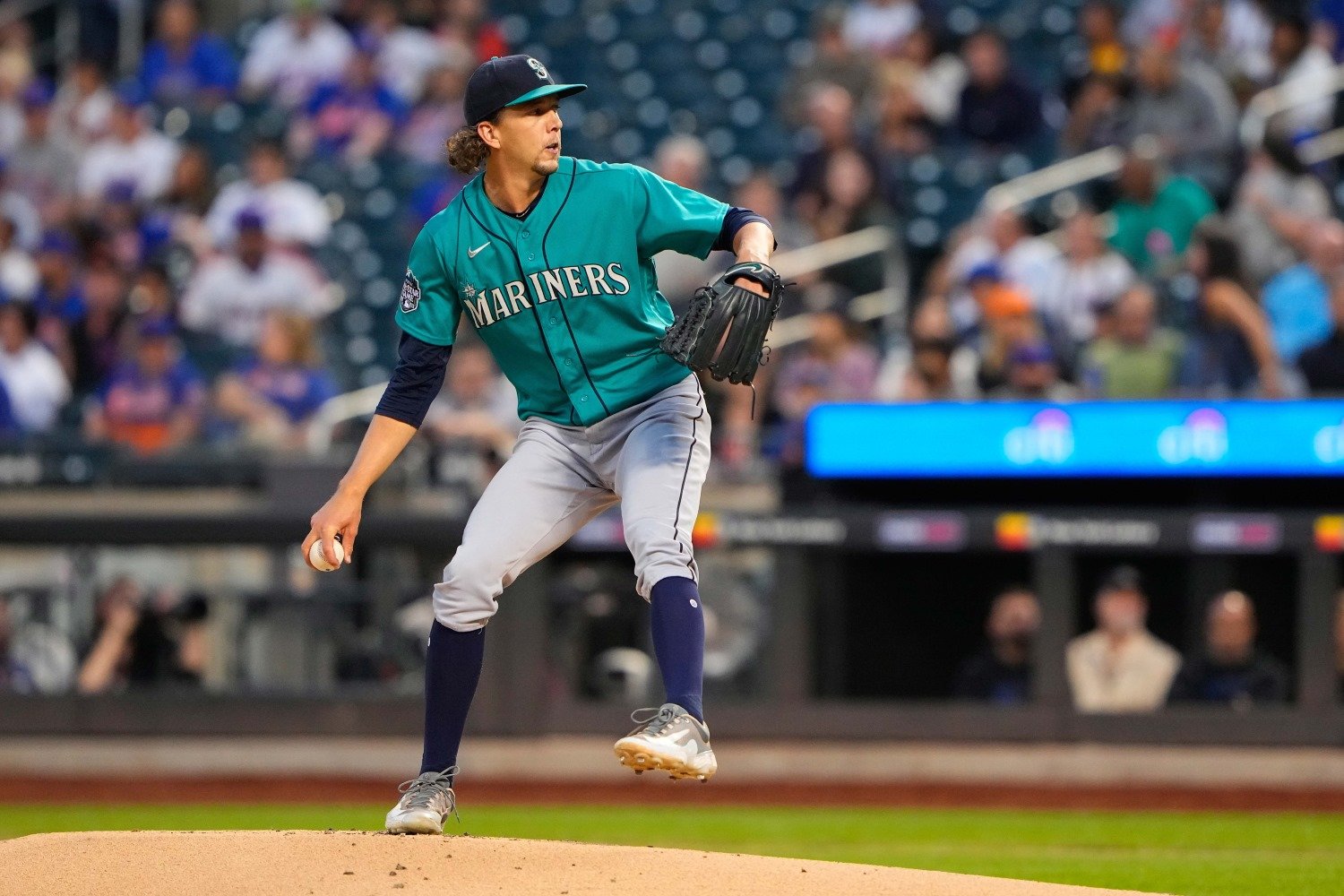 After making the playoffs for the first time since 2001, the Mariners entered 2023 with high expectations. Alas, Seattle lost six of their final 10 games and finished one game behind Toronto for the final Wild Card spot. It was a disappointing end for a team that many considered ascendent, with young stars like Julio Rodriguez and George Kirby. As with any offseason, the Mariners will try to find ways to supplement their roster, but they face financial uncertainty. Like Minnesota, Seattle is dealing with their own fallout from the nationwide collapse of regional sports networks. Last season, the Mariners’ payroll sat around $140 million, and the front office hopes to increase that total for 2024. Seattle now owns all of ROOT Sports Northwest, their regional sports network, and the network was attached to a price increase with the largest cable distributor in the Mariners’ region. Seattle has already been active on the trade market, dealing away pieces with contracts that might not fit their current roster. In November, the Mariners traded Eugenio Suarez ($11.3 million) to Arizona for Carlos Vargas and Seby Zavala, who are not yet arbitration eligible. At the Winter Meetings, they packaged Jarred Kelenic ($750,000), Marco Gonzalez ($12.25 million), and Evan White ($7 million) for two other cheap, cost-controlled players, Jackson Kowar and Cole Phillips. It’s clear that Seattle needs to find ways to improve, and cutting these salaries was only the first step. Seattle’s most significant needs are in the lineup, and they have room to add righties and lefties. After the Kelenic trade, president of baseball operations Jerry Dipoto told reporters that the club wanted to add two or three bats. Still, they are reluctant to deal away starting pitching, one of baseball’s most valuable commodities. Potential trade chips include Logan Gilbert, George Kirby, Bryce Miller, or Bryan Woo. So, what are some potential trades between these two clubs? All trade values are from Baseball Trade Values, based on the concept of surplus value (number in parentheses) above what the player is being paid and the years of team control. Potential Trade 1 Twins Receive: Bryan Woo (28.2) Mariners Receive: Max Kepler (8.3), Matt Wallner (23.1) Woo made his big-league debut last season and posted a 4.21 ERA with a 1.21 WHIP across 16 starts. In 87 2/3 innings, he had a 93-to-31 strikeout-to-walk ratio, but he allowed 13 home runs (1.3 HR/9). Seattle had Woo jump from Double A to the big leagues after he dominated that level with a 2.05 ERA, a 0.89 WHIP, and 12.1 K/9. Wallner and Kepler have similar skill sets, but the Mariners want to upgrade their offense and both would be better than their incumbents. Kepler’s 121 OPS+ last season would have ranked third on the Mariners, behind J.P. Crawford and Rodríguez. Wallner only got 254 plate appearances in the big leagues, but his 139 OPS+ would have been eight points higher than Rodríguez's. Potential Trade 2 Mariners Receive: Jorge Polanco (9.4), Emmanuel Rodriguez (17.1) Twins Receive: Bryce Miller (25.9) Miller, like Woo, debuted in 2023. In 25 games, he had a 4.32 ERA with a 1.14 WHIP and 8.2 K/9. His 3.98 FIP was lower than his ERA, so there may be room for statistical (as well as actual) improvement. For Seattle, Polanco and Rodríguez might offer the best combination of present and future value. Polanco is under team control for two more seasons and has some defensive flexibility to fit into the Mariners lineup. Rodríguez has one of the highest ceilings of any prospect in the Twins organization and is projected to spend next season at Double A. Last season, Rodríguez posted an .863 OPS with 38 extra-base hits in 99 games. Potential Trade 3 Mariners Receive: Edouard Julien (34.5), Brooks Lee (33.5) Twins Receive: Logan Gilbert (65.9) The Twins might want to trade for a pitcher with a more established track record than the less-experienced Woo or Miller. Gilbert has pitched nearly 500 innings at the big-league level and is in his first year of arbitration eligibility as a Super 2 player. In 2023, he tossed 190 2/3 innings with a 3.73 ERA, a 1.08 WHIP, and 8.9 K/9. Julien and Lee would be a tough combo to lose at this early juncture in their careers, but frontline starting pitching comes at a high price. Julien posted a 130 OPS+ in 109 games last season, while Lee combined for an .808 OPS between Double and Triple A. Which trade is the best fit for both teams? Which starting pitcher is the right one for the Twins? Leave a COMMENT and start the discussion.
- 45 comments
-
- 1
-
-
- bryan woo
- logan gilbert
- (and 5 more)
-
Last winter, the Twins worked out a trade with the Marlins that benefited both clubs. Can the two teams agree on another deal that sends a starting pitcher to Minnesota? Image courtesy of Brad Penner-USA TODAY Sports Last winter, the Twins worked out a trade with the Marlins that benefited both clubs. Can the two teams agree on another deal that sends a starting pitcher to Minnesota? Entering the 2023 season, the Twins’ rotation was composed entirely of players acquired via trade. Pablo López, Sonny Gray, Kenta Maeda, Joe Ryan, and Tyler Mahle were the team’s five starters on Opening Day. Bailey Ober was the only homegrown option, but he started the year in St. Paul. Derek Falvey has shown a keen ability in both Cleveland and Minnesota to trade for impact starting pitchers. Minnesota is likely to follow a similar path this winter, especially with the financial uncertainty surrounding the team's television contract. The Twins and Marlins were in a unique position last winter. Both teams sought to contend in 2023, but there were holes on both rosters. The Twins acquired López and a pair of minor leaguers for Luis Arraez. López developed into the frontline starter the Twins needed, and Arraez took home the NL batting title, while helping Miami to the playoffs. It was a win for both clubs. The Marlins are in a similar position this winter, needing to upgrade their lineup while having a number of team-controlled starting pitchers. Over the weekend, Jesús Luzardo’s name came up in trade rumors, because the Royals were interested in him before moving on to free-agent alternatives. Ken Rosenthal reported that Miami and Kansas City discussed a trade that included the southpaw being traded for first baseman Vinnie Pasquantino, who is under team control for five more seasons. Luzardo is an intriguing name with some potential upside, meaning the Twins might be able to follow a path similar to last year's approach with López. Luzardo is a first-year arbitration-eligible player, so he is under team control through the 2026 season. Over the last two seasons, he posted a 3.52 ERA with a 1.15 WHIP and 10.6 K/9 in 279 innings. His four-seam fastball usage went from 29.3% in 2022 to 46% last season, with his sinker usage dropping by over 14 percentage points. The Twins were able to help López add a sweeper after he joined the club, and Luzardo has a solid slider. Could the Twins reshape that pitch, too, to make it even more of a weapon? All trades below include the player's surplus value according to Baseball Trade Values. Potential Trade 1 Marlins Receive: Matt Wallner (23.1 surplus value), Brooks Lee (33.5), and a low-level minor leaguer Twins Receive: Luzardo (63.3) Wallner and Lee are the last two winners of the team’s Minor League Player of the Year award. Lee finished last season at Triple A and is on the cusp of making his big-league debut. In 125 games, he hit .275/.347/.461, with 39 doubles, 3 triples, and 16 home runs. He is widely considered the team’s second-ranked prospect, behind Walker Jenkins. Wallner, meanwhile, was part of a trio of Twins rookies who posted OPS+ figures north of 125. As with most power hitters, he has some swing-and-miss to his offensive profile, but he can connect for massive home runs. From Miami’s perspective, this trade gives the club two MLB-ready bats and another prospect that can be a wild card to add to their organizational depth. Potential Trade 2 Marlins Receive: Edouard Julien (34.5), Emmanuel Rodriguez (17.1), and Max Kepler (8.3) Twins Receive: Luzardo (63.3) Woof. This is a lot to give up for Luzardo, but starting pitching comes at a premium. Julien established himself at the big-league level last season, with a 130 OPS+ in 109 games. Minnesota wants him to be part of the team’s future, but the same could have been said for Arraez last season. Rodriguez helped the Cedar Rapids Kernels win the Midwest League Championship last season after posting an .863 OPS with 38 extra-base hits in 99 games. Kepler’s trade value might be at an all-time high, after a tremendous second half in 2023. He only has one year of team control remaining, which takes away some surplus value. In this deal, the Marlins get two bats for now and one who can help the club in the future. Potential Trade 3 Marlins Receive: Ryan Jeffers (28.5), Jorge Polanco (9.4), Trevor Larnach (3.6), and Round B Competitive Balance Pick Twins Receive: Luzardo (63.3) Luzardo’s value is so high that this deal might not be enough to get it done. The Twins have been shopping veteran players like Christian Vazquez, so it’s interesting to consider the team dealing Jeffers, who has more trade value, instead. Polanco has two years of team control left, and his switch-hitting ability adds value. The Marlins already have Arraez at second base, so they need to make some defensive adjustments to fit both players in the lineup, but they've made a habit of building their rosters out of second basemen. Larnach currently doesn’t have a place with the Twins, and a change of scenery might help him to unlock his full potential. Do any of these trades work for both teams? Would you include other players? Leave a COMMENT and start the discussion. View full article
-
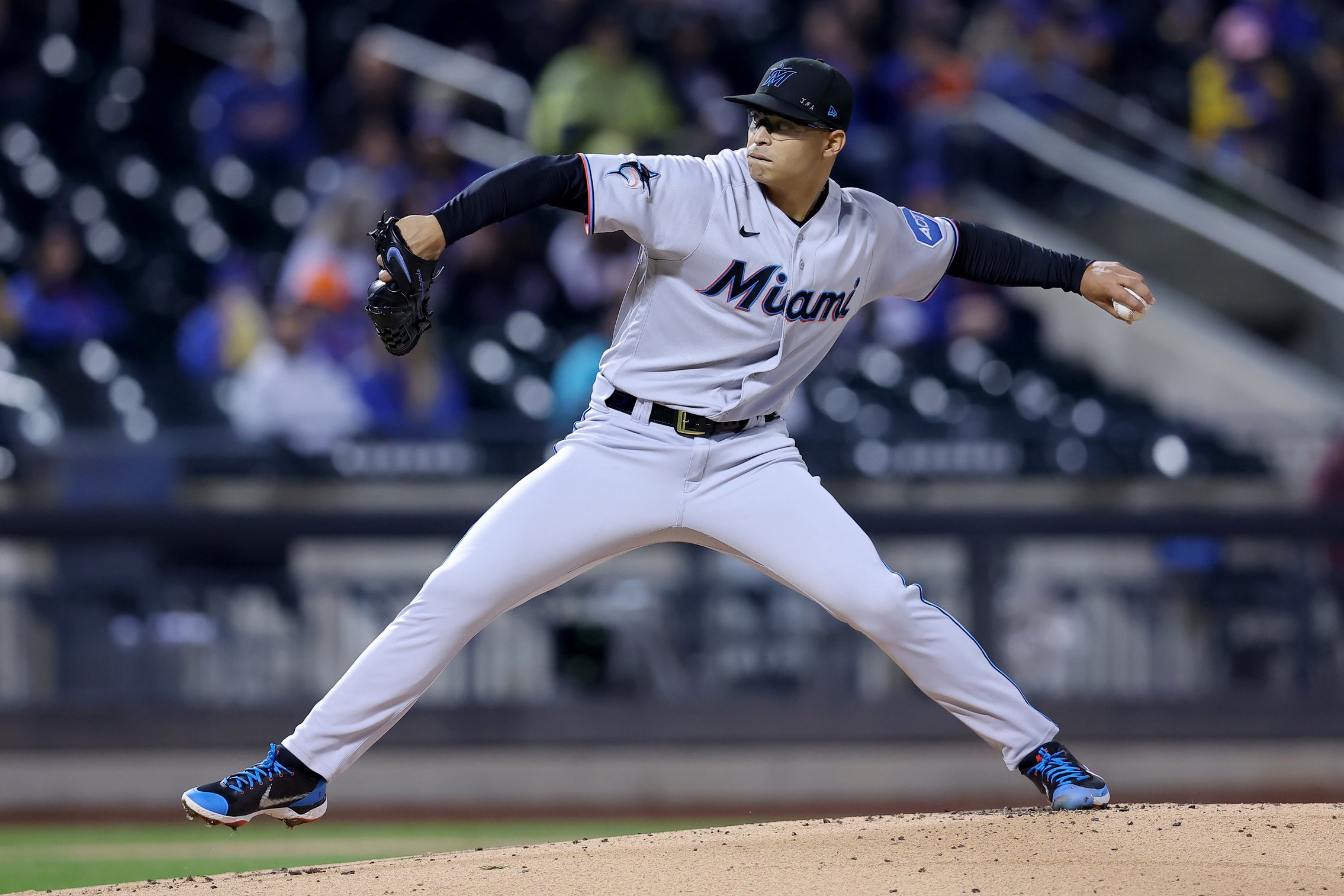 Entering the 2023 season, the Twins’ rotation was composed entirely of players acquired via trade. Pablo López, Sonny Gray, Kenta Maeda, Joe Ryan, and Tyler Mahle were the team’s five starters on Opening Day. Bailey Ober was the only homegrown option, but he started the year in St. Paul. Derek Falvey has shown a keen ability in both Cleveland and Minnesota to trade for impact starting pitchers. Minnesota is likely to follow a similar path this winter, especially with the financial uncertainty surrounding the team's television contract. The Twins and Marlins were in a unique position last winter. Both teams sought to contend in 2023, but there were holes on both rosters. The Twins acquired López and a pair of minor leaguers for Luis Arraez. López developed into the frontline starter the Twins needed, and Arraez took home the NL batting title, while helping Miami to the playoffs. It was a win for both clubs. The Marlins are in a similar position this winter, needing to upgrade their lineup while having a number of team-controlled starting pitchers. Over the weekend, Jesús Luzardo’s name came up in trade rumors, because the Royals were interested in him before moving on to free-agent alternatives. Ken Rosenthal reported that Miami and Kansas City discussed a trade that included the southpaw being traded for first baseman Vinnie Pasquantino, who is under team control for five more seasons. Luzardo is an intriguing name with some potential upside, meaning the Twins might be able to follow a path similar to last year's approach with López. Luzardo is a first-year arbitration-eligible player, so he is under team control through the 2026 season. Over the last two seasons, he posted a 3.52 ERA with a 1.15 WHIP and 10.6 K/9 in 279 innings. His four-seam fastball usage went from 29.3% in 2022 to 46% last season, with his sinker usage dropping by over 14 percentage points. The Twins were able to help López add a sweeper after he joined the club, and Luzardo has a solid slider. Could the Twins reshape that pitch, too, to make it even more of a weapon? All trades below include the player's surplus value according to Baseball Trade Values. Potential Trade 1 Marlins Receive: Matt Wallner (23.1 surplus value), Brooks Lee (33.5), and a low-level minor leaguer Twins Receive: Luzardo (63.3) Wallner and Lee are the last two winners of the team’s Minor League Player of the Year award. Lee finished last season at Triple A and is on the cusp of making his big-league debut. In 125 games, he hit .275/.347/.461, with 39 doubles, 3 triples, and 16 home runs. He is widely considered the team’s second-ranked prospect, behind Walker Jenkins. Wallner, meanwhile, was part of a trio of Twins rookies who posted OPS+ figures north of 125. As with most power hitters, he has some swing-and-miss to his offensive profile, but he can connect for massive home runs. From Miami’s perspective, this trade gives the club two MLB-ready bats and another prospect that can be a wild card to add to their organizational depth. Potential Trade 2 Marlins Receive: Edouard Julien (34.5), Emmanuel Rodriguez (17.1), and Max Kepler (8.3) Twins Receive: Luzardo (63.3) Woof. This is a lot to give up for Luzardo, but starting pitching comes at a premium. Julien established himself at the big-league level last season, with a 130 OPS+ in 109 games. Minnesota wants him to be part of the team’s future, but the same could have been said for Arraez last season. Rodriguez helped the Cedar Rapids Kernels win the Midwest League Championship last season after posting an .863 OPS with 38 extra-base hits in 99 games. Kepler’s trade value might be at an all-time high, after a tremendous second half in 2023. He only has one year of team control remaining, which takes away some surplus value. In this deal, the Marlins get two bats for now and one who can help the club in the future. Potential Trade 3 Marlins Receive: Ryan Jeffers (28.5), Jorge Polanco (9.4), Trevor Larnach (3.6), and Round B Competitive Balance Pick Twins Receive: Luzardo (63.3) Luzardo’s value is so high that this deal might not be enough to get it done. The Twins have been shopping veteran players like Christian Vazquez, so it’s interesting to consider the team dealing Jeffers, who has more trade value, instead. Polanco has two years of team control left, and his switch-hitting ability adds value. The Marlins already have Arraez at second base, so they need to make some defensive adjustments to fit both players in the lineup, but they've made a habit of building their rosters out of second basemen. Larnach currently doesn’t have a place with the Twins, and a change of scenery might help him to unlock his full potential. Do any of these trades work for both teams? Would you include other players? Leave a COMMENT and start the discussion.
- 75 comments
-
- 8
-
-
-
- jesus luzardo
- brooks lee
- (and 3 more)
-
The Twins’ future looks brighter, after they won their first playoff series in two decades. A new wave of impact players are getting closer to the big leagues, and here is what Minnesota’s starting lineup might look like in four years. Image courtesy of Kamil Krzaczynski, USA TODAY Sports The Twins’ future looks brighter, after they won their first playoff series in two decades. A new wave of impact players are getting closer to the big leagues, and here is what Minnesota’s starting lineup might look like in four years. A lot has changed for the Twins over the last calendar year, which impacts who projects to be in the team’s lineup in four years. The Twins traded away Luis Arraez, even though he looked like a core piece of the lineup for years to come. Minnesota also handed out the largest free-agent contract in team history, a move that will have long-term ramifications. Below, you will see Minnesota’s projected lineup and each player’s age during the 2027 campaign. Catcher: Ryan Jeffers (30) Entering last season, Jeffers’s stock was low enough for the Twins to sign veteran catcher Christian Vazquez. Jeffers responded in a big way, leading AL catchers in wRC+, and the Twins have been shopping Vázquez, along with other veteran players. In previous seasons, Jeffers was known as a strong pitch-framer with positive run totals. His framing was worth -3 runs and ranked in the 25th percentile in 2023, though. The Twins also added Jair Camargo to the 40-man roster after a strong season at Triple A. By 2027, he has an excellent chance to serve in a regular backup catching role. It will be interesting to see if Jeffers can continue to build off his solid offensive season and take on more of a full-time catching role. First Base: Edouard Julien (28) The Twins have an influx of young infielders at multiple positions, which will force the team to make several decisions about players' future defensive homes. Julien has been a second baseman for most of his professional career, and he made strides on the defensive side of the ball throughout his rookie turn in MLB. However, he will continue to be a below-average defender, so the Twins will start playing him more regularly at first. In last year’s projection, Alex Kirilloff appeared to be part of the team’s long-term plan at first base, but his injury history makes it harder to include him in the 2027 lineup. Second Base: Royce Lewis (28) Minnesota will have an interesting defensive decision with the following three names in this lineup. All three have played shortstop for the majority of their professional careers, but age and injury history will eventually force them to move around. Lewis will enter the 2024 season as the team’s primary third baseman, after shifting to that position last year. In 416 2/3 innings at third, Lewis was worth 2 DRS and 2 OAA. He has a strong enough arm and is very athletic, so that he can shift to another defensive position later in his career. Shortstop: Carlos Correa (32) Correa was a Gold Glove finalist in 2023, even while battling plantar fasciitis. His OAA ranked in the 62nd percentile, and his arm strength ranked in the 74th percentile. According to SDI, Correa was the AL’s ninth-best shortstop with a -2.7 SDI in 2023. Will a 32-year-old Correa continue to be a viable option at the infield's most demanding position? Minnesota will have other, younger options to take his place at shortstop, but there is no perfect fit if age pushes Correa to third base. He will want to stay at a premium position for as long as possible, but his days as a shortstop will be coming to an end by 2027. Third Base: Brooks Lee (26) Lee is considered Minnesota’s second-ranked prospect, after finishing last season at Triple A. All three national top-100 lists ranked him in their top 45 entering last season, and he projects to rank higher entering 2024. He posted an .808 OPS with 39 doubles and 16 home runs in 125 games last season. Mostly, he’s played shortstop so far in his professional career, but many expect him to move to third base as he adds to his frame. Lee is on pace to make his big-league debut in 2024, and the Twins hope he is part of the team’s long-term core. Left Field: Emmanuel Rodriguez (24) In many organizations, Rodríguez would be the top-ranked prospect, because of his ability to impact the game on both sides of the ball. The Twins added him to the 40-man roster this winter, which puts him one step closer to making his big-league debut. He spent all of 2023 at High A, where he hit .240/.400/.463 with 38 extra-base hits and 92 walks in 99 games. Rodríguez has one of the highest ceilings of any prospect in the organization. Center Field: Walker Jenkins (22) The Twins selected Jenkins with the fifth overall pick in the 2023 MLB Draft, and he’s already considered one of baseball’s best prospects after a memorable pro debut. He hit .362/.417/.571, with 12 extra-base hits and six stolen bases in 26 games. There is some question about whether or not Jenkins can stick in center field, as he has slowed a bit while adding more muscle to his frame. Earlier this winter, I projected that Jenkins is on the fast track to the big leagues, with the potential to debut during the 2026 season. Right Field: Matt Wallner (29) Wallner is a prototypical right fielder, with a powerful left-handed swing and a cannon for an arm. Max Kepler has occupied right field for the Twins for seven years, but Wallner can take over right away if Kepler is traded this winter. The Forest Lake native showcased some strong offensive skills during his rookie season with a 139 OPS+, striking out 80 times in 76 games. Minnesota has depth in their corner outfield spots, so it will be interesting to see if the team includes Wallner or Rodríguez in a trade for starting pitching. Designated Hitter: Byron Buxton (33) The Twins are hopeful that Buxton’s most recent knee surgery puts him back on track to appear in the outfield. However, his lengthy injury history will make him a full-time DH in 2027. Last season, injuries limited him to DH duties, and he posted an OPS+ below 115 for the first time since 2018. Buxton is under contract through the 2028 season, so the Twins need to find a way for him to provide value to the club. Who do you think fits into the team’s 2027 lineup? Leave a COMMENT and start the discussion. PREVIOUS YEAR’S PREDICTIONS — 2024 Lineup — 2025 Lineup — 2026 Lineup View full article
-
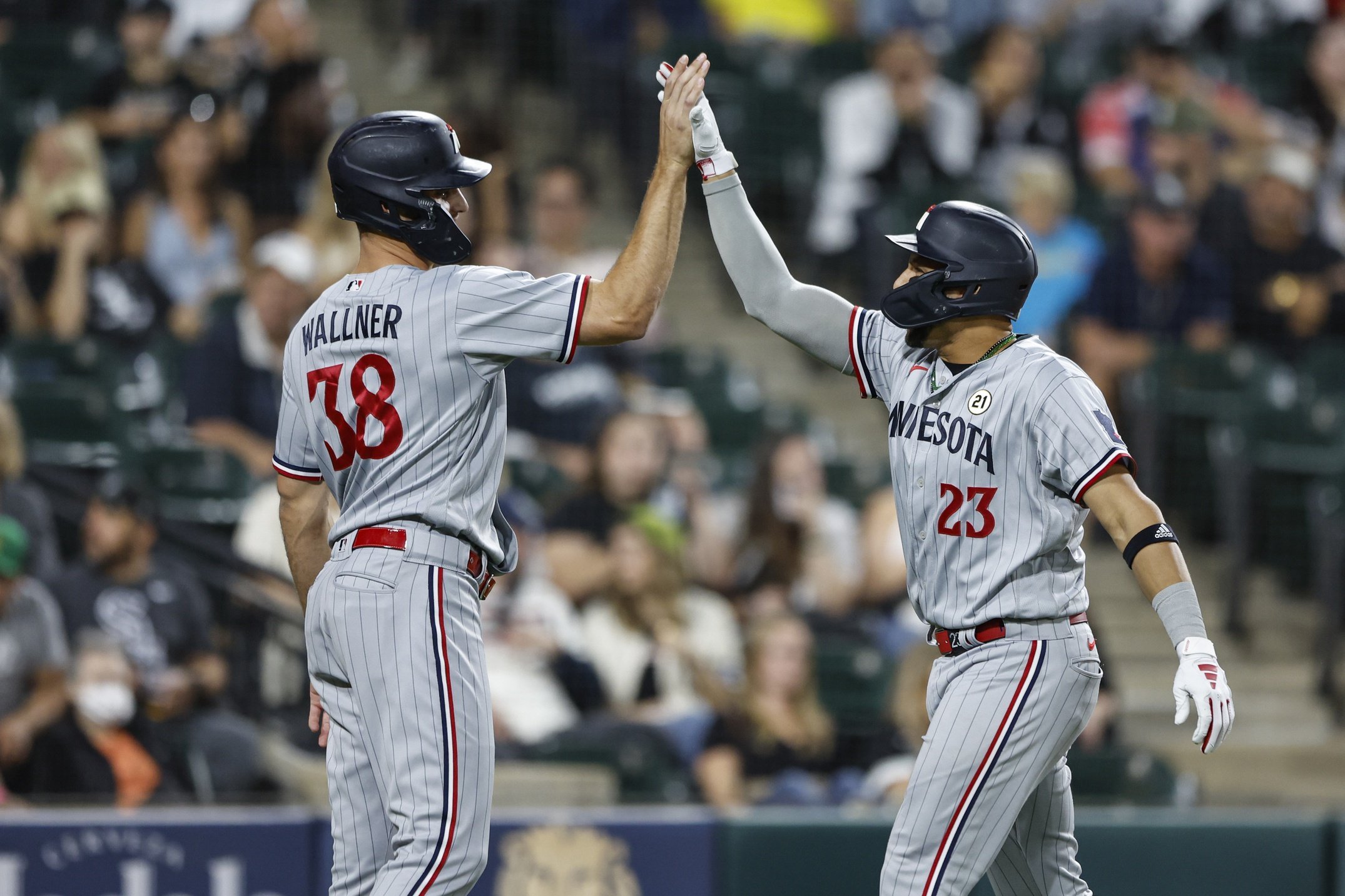 A lot has changed for the Twins over the last calendar year, which impacts who projects to be in the team’s lineup in four years. The Twins traded away Luis Arraez, even though he looked like a core piece of the lineup for years to come. Minnesota also handed out the largest free-agent contract in team history, a move that will have long-term ramifications. Below, you will see Minnesota’s projected lineup and each player’s age during the 2027 campaign. Catcher: Ryan Jeffers (30) Entering last season, Jeffers’s stock was low enough for the Twins to sign veteran catcher Christian Vazquez. Jeffers responded in a big way, leading AL catchers in wRC+, and the Twins have been shopping Vázquez, along with other veteran players. In previous seasons, Jeffers was known as a strong pitch-framer with positive run totals. His framing was worth -3 runs and ranked in the 25th percentile in 2023, though. The Twins also added Jair Camargo to the 40-man roster after a strong season at Triple A. By 2027, he has an excellent chance to serve in a regular backup catching role. It will be interesting to see if Jeffers can continue to build off his solid offensive season and take on more of a full-time catching role. First Base: Edouard Julien (28) The Twins have an influx of young infielders at multiple positions, which will force the team to make several decisions about players' future defensive homes. Julien has been a second baseman for most of his professional career, and he made strides on the defensive side of the ball throughout his rookie turn in MLB. However, he will continue to be a below-average defender, so the Twins will start playing him more regularly at first. In last year’s projection, Alex Kirilloff appeared to be part of the team’s long-term plan at first base, but his injury history makes it harder to include him in the 2027 lineup. Second Base: Royce Lewis (28) Minnesota will have an interesting defensive decision with the following three names in this lineup. All three have played shortstop for the majority of their professional careers, but age and injury history will eventually force them to move around. Lewis will enter the 2024 season as the team’s primary third baseman, after shifting to that position last year. In 416 2/3 innings at third, Lewis was worth 2 DRS and 2 OAA. He has a strong enough arm and is very athletic, so that he can shift to another defensive position later in his career. Shortstop: Carlos Correa (32) Correa was a Gold Glove finalist in 2023, even while battling plantar fasciitis. His OAA ranked in the 62nd percentile, and his arm strength ranked in the 74th percentile. According to SDI, Correa was the AL’s ninth-best shortstop with a -2.7 SDI in 2023. Will a 32-year-old Correa continue to be a viable option at the infield's most demanding position? Minnesota will have other, younger options to take his place at shortstop, but there is no perfect fit if age pushes Correa to third base. He will want to stay at a premium position for as long as possible, but his days as a shortstop will be coming to an end by 2027. Third Base: Brooks Lee (26) Lee is considered Minnesota’s second-ranked prospect, after finishing last season at Triple A. All three national top-100 lists ranked him in their top 45 entering last season, and he projects to rank higher entering 2024. He posted an .808 OPS with 39 doubles and 16 home runs in 125 games last season. Mostly, he’s played shortstop so far in his professional career, but many expect him to move to third base as he adds to his frame. Lee is on pace to make his big-league debut in 2024, and the Twins hope he is part of the team’s long-term core. Left Field: Emmanuel Rodriguez (24) In many organizations, Rodríguez would be the top-ranked prospect, because of his ability to impact the game on both sides of the ball. The Twins added him to the 40-man roster this winter, which puts him one step closer to making his big-league debut. He spent all of 2023 at High A, where he hit .240/.400/.463 with 38 extra-base hits and 92 walks in 99 games. Rodríguez has one of the highest ceilings of any prospect in the organization. Center Field: Walker Jenkins (22) The Twins selected Jenkins with the fifth overall pick in the 2023 MLB Draft, and he’s already considered one of baseball’s best prospects after a memorable pro debut. He hit .362/.417/.571, with 12 extra-base hits and six stolen bases in 26 games. There is some question about whether or not Jenkins can stick in center field, as he has slowed a bit while adding more muscle to his frame. Earlier this winter, I projected that Jenkins is on the fast track to the big leagues, with the potential to debut during the 2026 season. Right Field: Matt Wallner (29) Wallner is a prototypical right fielder, with a powerful left-handed swing and a cannon for an arm. Max Kepler has occupied right field for the Twins for seven years, but Wallner can take over right away if Kepler is traded this winter. The Forest Lake native showcased some strong offensive skills during his rookie season with a 139 OPS+, striking out 80 times in 76 games. Minnesota has depth in their corner outfield spots, so it will be interesting to see if the team includes Wallner or Rodríguez in a trade for starting pitching. Designated Hitter: Byron Buxton (33) The Twins are hopeful that Buxton’s most recent knee surgery puts him back on track to appear in the outfield. However, his lengthy injury history will make him a full-time DH in 2027. Last season, injuries limited him to DH duties, and he posted an OPS+ below 115 for the first time since 2018. Buxton is under contract through the 2028 season, so the Twins need to find a way for him to provide value to the club. Who do you think fits into the team’s 2027 lineup? Leave a COMMENT and start the discussion. PREVIOUS YEAR’S PREDICTIONS — 2024 Lineup — 2025 Lineup — 2026 Lineup
- 53 comments
-
- 4
-
-
- ryan jeffers
- brooks lee
- (and 5 more)
-
Aaron Judge and Juan Soto are teaming up in New York to form one of the best duos in baseball history. Can the Twins' top duo be considered among baseball’s best next season, too? Image courtesy of Troy Taormina-USA TODAY Sports Aaron Judge and Juan Soto are teaming up in New York to form one of the best duos in baseball history. Can the Twins' top duo be considered among baseball’s best next season, too? Last week, the Yankees acquired Juan Soto in a blockbuster trade that will have long-term ramifications across the baseball landscape--even though Soto is only making a short-term home in the Bronx. Soto is one of baseball’s best young hitters and a future Hall of Famer. He is an on-base machine, and it’s scary to think what he will be able to do with Aaron Judge batting behind him. If both players stay healthy, they should be baseball’s best lineup duo, but there are other contenders. MLB.com ranked the top 10 lineup duos for the 2024 season, and the Twins didn’t crack their list or their honorable mentions, which stretched the ranking to the top 12. Outside the Yankees duo, other top pairs include Los Angeles’s Mookie Betts and Freddie Freeman (and now Shohei Ohtani); Atlanta’s Ronald Acuna, Jr. and Matt Olson; and Houston’s Yordan Alvarez and Kyle Tucker. Minnesota’s offense struggled through the first half of last season, but the team took positive strides in the season’s final months. So, who would be included in Minnesota’s best lineup duo, and how can they crack baseball’s top 10? Carlos Correa Correa is the most obvious pick to be included in the team’s top pairing. He’s coming off his worst statistical season, as his 94 OPS+ was 30 points below his career average. At the Winter Meetings, the Twins had positive reports about Correa’s progress with the plantar fasciitis that impacted him throughout the 2023 campaign. No surgery was required to address the injury, and Derek Falvey told reporters that Correa is “tracking really well” and “felt like he’s really turned a corner.” Rest and treatment can be sufficient to ameliorate this condition, and the Twins hope Correa returns to his previous form. He has been a dominant offensive player for multiple seasons in his career, with an OPS+ of 124 or higher in six of his nine seasons. In his first season with the Twins, Correa hit .291/.366/.467 with 24 doubles and 22 home runs. When fully healthy, he’s one of baseball’s best hitters. Bryon Buxton There were also positive reports at the Winter Meetings regarding Buxton and his recovery from offseason knee surgery. The star center fielder (?) is ready to start baseball activities, and is already further along than he was at the start of spring training last year. He has shown the ability to be an elite hitter in his career, but even those stretches have been marred by injury. In 2021, Buxton posted a 171 OPS+, including 19 home runs in 61 games. He started the 2022 All-Star Game in center field, after hitting 23 homers and posting an .834 OPS in the first half. There were multiple months during the 2022 season in which he had an OPS north of 1.000. Buxton has played fewer than 100 games in all but one season in his career, so it’s tough to include him in the team’s top tier. Royce Lewis Lewis returned from his second major knee surgery last season and was a spark plug for the Twins lineup. In 58 games, he hit .309/.372/.548, with seven doubles and 15 home runs. He set the team record with four grand slams in a single season, and he was the fastest player in MLB history to reach five career grand slams. It’s exciting to think of what he can mean to the middle of the team’s lineup, especially with the club’s struggles against left-handed pitching. Many evaluators doubted Lewis throughout his professional career, and now he will get a full season to continue to prove them wrong. Other Candidates A handful of other candidates could be included in the team’s top lineup double threat. Max Kepler posted a .926 OPS with 17 doubles, three triples, and 12 home runs in the second half. Minnesota is considering trading Kepler this winter, since he has just one remaining season of team control, so he probably doesn’t fit into this conversation. Edouard Julien was an on-base machine (.381 OBP) during his rookie campaign, adding 33 extra-base hits in 109 games to his healthy walk total. Does he have a chance to reach another offensive level? Alex Kirilloff and Jose Miranda were among the best hitting prospects to come through the Twins organization over the last decade. If they can stay healthy, both can be offensive threats. Many projection systems will pair Correa and Lewis as the Twins' top lineup duo for 2024. This pair probably won’t rank with the big names mentioned above, but they can stand among baseball’s top 10. The Twins must pass tandems like San Diego’s Manny Machado and Fernando Tatis Jr., New York’s Pete Alonso and Francisco Lindor, or Toronto’s Vladimir Guerrero, Jr. and Bo Bichette. Those pairs are potent, but the Twins’ dynamic duo can catch them. Who do you think will be Minnesota’s best two hitters next season? Can the Twins have a top-10-ranked duo? Leave a COMMENT and start the discussion. View full article
-
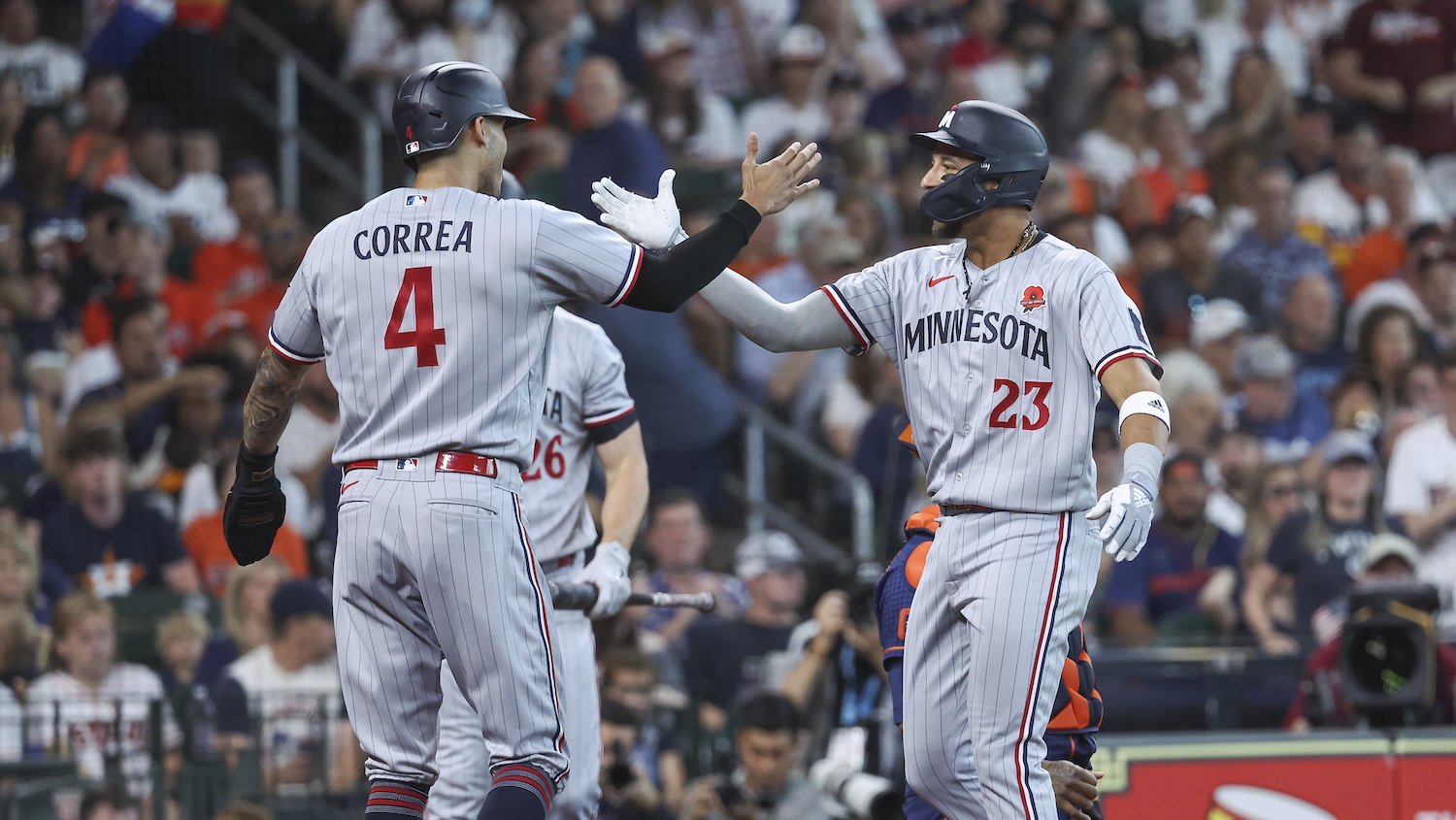 Last week, the Yankees acquired Juan Soto in a blockbuster trade that will have long-term ramifications across the baseball landscape--even though Soto is only making a short-term home in the Bronx. Soto is one of baseball’s best young hitters and a future Hall of Famer. He is an on-base machine, and it’s scary to think what he will be able to do with Aaron Judge batting behind him. If both players stay healthy, they should be baseball’s best lineup duo, but there are other contenders. MLB.com ranked the top 10 lineup duos for the 2024 season, and the Twins didn’t crack their list or their honorable mentions, which stretched the ranking to the top 12. Outside the Yankees duo, other top pairs include Los Angeles’s Mookie Betts and Freddie Freeman (and now Shohei Ohtani); Atlanta’s Ronald Acuna, Jr. and Matt Olson; and Houston’s Yordan Alvarez and Kyle Tucker. Minnesota’s offense struggled through the first half of last season, but the team took positive strides in the season’s final months. So, who would be included in Minnesota’s best lineup duo, and how can they crack baseball’s top 10? Carlos Correa Correa is the most obvious pick to be included in the team’s top pairing. He’s coming off his worst statistical season, as his 94 OPS+ was 30 points below his career average. At the Winter Meetings, the Twins had positive reports about Correa’s progress with the plantar fasciitis that impacted him throughout the 2023 campaign. No surgery was required to address the injury, and Derek Falvey told reporters that Correa is “tracking really well” and “felt like he’s really turned a corner.” Rest and treatment can be sufficient to ameliorate this condition, and the Twins hope Correa returns to his previous form. He has been a dominant offensive player for multiple seasons in his career, with an OPS+ of 124 or higher in six of his nine seasons. In his first season with the Twins, Correa hit .291/.366/.467 with 24 doubles and 22 home runs. When fully healthy, he’s one of baseball’s best hitters. Bryon Buxton There were also positive reports at the Winter Meetings regarding Buxton and his recovery from offseason knee surgery. The star center fielder (?) is ready to start baseball activities, and is already further along than he was at the start of spring training last year. He has shown the ability to be an elite hitter in his career, but even those stretches have been marred by injury. In 2021, Buxton posted a 171 OPS+, including 19 home runs in 61 games. He started the 2022 All-Star Game in center field, after hitting 23 homers and posting an .834 OPS in the first half. There were multiple months during the 2022 season in which he had an OPS north of 1.000. Buxton has played fewer than 100 games in all but one season in his career, so it’s tough to include him in the team’s top tier. Royce Lewis Lewis returned from his second major knee surgery last season and was a spark plug for the Twins lineup. In 58 games, he hit .309/.372/.548, with seven doubles and 15 home runs. He set the team record with four grand slams in a single season, and he was the fastest player in MLB history to reach five career grand slams. It’s exciting to think of what he can mean to the middle of the team’s lineup, especially with the club’s struggles against left-handed pitching. Many evaluators doubted Lewis throughout his professional career, and now he will get a full season to continue to prove them wrong. Other Candidates A handful of other candidates could be included in the team’s top lineup double threat. Max Kepler posted a .926 OPS with 17 doubles, three triples, and 12 home runs in the second half. Minnesota is considering trading Kepler this winter, since he has just one remaining season of team control, so he probably doesn’t fit into this conversation. Edouard Julien was an on-base machine (.381 OBP) during his rookie campaign, adding 33 extra-base hits in 109 games to his healthy walk total. Does he have a chance to reach another offensive level? Alex Kirilloff and Jose Miranda were among the best hitting prospects to come through the Twins organization over the last decade. If they can stay healthy, both can be offensive threats. Many projection systems will pair Correa and Lewis as the Twins' top lineup duo for 2024. This pair probably won’t rank with the big names mentioned above, but they can stand among baseball’s top 10. The Twins must pass tandems like San Diego’s Manny Machado and Fernando Tatis Jr., New York’s Pete Alonso and Francisco Lindor, or Toronto’s Vladimir Guerrero, Jr. and Bo Bichette. Those pairs are potent, but the Twins’ dynamic duo can catch them. Who do you think will be Minnesota’s best two hitters next season? Can the Twins have a top-10-ranked duo? Leave a COMMENT and start the discussion.
- 20 comments
-
- 3
-
-
- carlos correa
- byron buxton
- (and 3 more)

