



Greggory Masterson
-
Posts
819 -
Joined
-
Last visited
-
Days Won
2
Content Type
Profiles
News
Minnesota Twins Videos
2026 Minnesota Twins Top Prospects Ranking
2022 Minnesota Twins Draft Picks
Minnesota Twins Free Agent & Trade Rumors, Notes, & Tidbits
Guides & Resources
2023 Minnesota Twins Draft Picks
The Minnesota Twins Players Project
2024 Minnesota Twins Draft Picks
2025 Minnesota Twins Draft Pick Tracker
2026 Minnesota Twins Draft Tracker: Picks & Bonuses
Forums
Blogs
Events
Store
Downloads
Gallery
Everything posted by Greggory Masterson
-
 We're gonna (have) win Twins, we're gonna (did) score. Let's talk about this off-day! Sweet Lou Hennessy, Cody Schoenmann, and Greggory Masterson are joined by the pride of Twins Daily Nick Nelson to go over the Twins recent 7-3 stretch. They also react to and analyze Edouard Julien's demotion, and Gregg bemoans the institution of interleague play. Listen using Apple Podcasts: https://podcasts.apple.com/us/podcast/the-twins-off-daily-podcast/id1741266056 Listen using Spotify: https://open.spotify.com/show/4tb78XlurcPTYYSsARdbD7 View full article
 -
Kyle Farmer’s Duties Are Dwindling, and the Clock is Ticking
Greggory Masterson posted an article in Twins
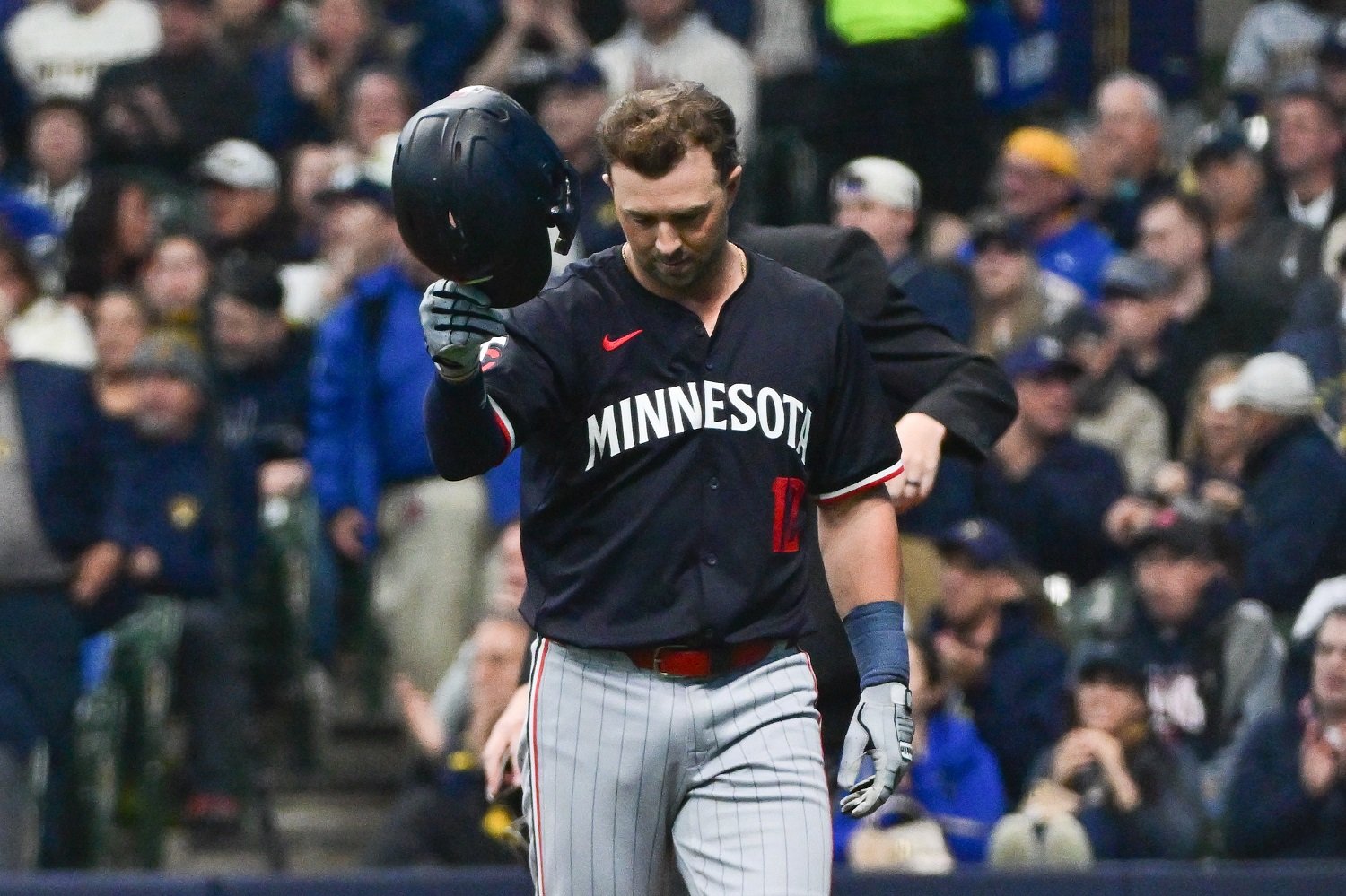 Kyle Farmer had the best year of his career in 2023. As the primary backup infielder, he was a league-average hitter who filled in at shortstop, second base, and third base for prolonged stretches. He was also the other half of rookie Edouard Julien, subbing for him against lefties and ending games as a defensive replacement—both facets of the game Julien struggled with. Twins brass was hopeful that he’d fill a similar role in 2024, as they signed him to a contract with a mutual option for 2025 that guaranteed him $6.5 million this year. Unfortunately, no part of the run-it-back plan has worked out. In 2023, Farmer had three distinct duties that made up his role: Be the top reserve at second base, third base, and shortstop; Platoon with Julien (or Nick Gordon) as a starter or pinch-hitter; and Be a late-inning defensive replacement at second. Over the first third of this season, that role has slowly been reduced. The first indication came after Royce Lewis’s Opening Day injury. With third base open, the Twins turned to Willi Castro over Farmer. Farmer didn’t start a game at third base until the fifth game of the season and started only two games at third in the team's first 10 games. Then, Carlos Correa was placed on the injured list in mid-April. Farmer—traded for to be the starting shortstop ahead of 2023—was forced into everyday action at... third base. The Twins slid Castro over to shortstop, a position at which many question Castro’s efficacy. During Correa’s 16-game absence, Farmer started 10 games—seven at third, two at second, and just one at shortstop. Castro getting the nod over him at third made some sense—Castro has the better bat, and a team can reasonably opt for more offense, especially when trying to fill the hole left by Lewis. But when both third base and shortstop were vacant, and Farmer primarily slotted in at third, that seemed to speak to how the Twins view his glove. But surely they still trust him over notorious butcher Julien at second? Not so fast, partner. Julien must have spent his winter working with Ozzie Smith, because he’s improved his defense by leaps and bounds. The former surefire candidate for a move to either first base or DH is grading out pretty well by the eye test and elite by the statistics (4 Outs Above Average, though with a weak arm). So, the Twins have ceased using Farmer as a second-base defensive substitution. He has not come in as a straight defensive substitution a single time this season. He has pinch-hit and finished the game at second base 10 times—but that’s more related to platoon matchups than to his defensive prowess. It should be noted that he has retained his role as the top reserve at second. The only other player to play second base this season (other than Julien) is Austin Martin, who was moved there mid-game once and is currently in the minor leagues. Farmer still appears to be the first alternate at the spot, which counts for something. Farmer resumed his role as a defensive replacement, for a stretch, but at third base. The primary third baseman over the past month, José Miranda, is not lauded for his defense at the hot corner. Seven times this season, Farmer’s entered the game as a straight defensive substitution for Miranda in the late innings. However, even that role also seems to be on its way out, as Manuel Margot has entered the game twice in the last week to bump Castro from the outfield to third base. It’s only happened a couple of times, but that pattern would seem to suggest a preference for Castro’s defense at third (to disastrous results, on Monday against Kansas City). At this point, Farmer has been relegated to merely being Julien's top backup second baseman and platoon partner. He’s only started 24 of the team’s first 55 games—12 at second (all against lefties), 11 at third (filling in for Lewis and Correa), and one at short (filling in for Correa). At this point, he’s effectively 2019 Jonathan Schoop—a right-handed reserve second baseman—without the luxury of Luis Arráez’s flexibility, as Julien is almost exclusively a second baseman. But Schoop also had an advantage over Farmer: he was hitting in 2019. After 55 team games and 101 plate appearances, Farmer has a .514 OPS (50OPS+). His underlying metrics are in the cellar. And he isn’t doing the one thing he’s being counted on for—hitting lefties. He’s even worse against lefties than overall, with a .505 OPS in 46 plate appearances. Admittedly, this is a small sample, but such is the nature of these discussions. Farmer has carved out a career for himself, but the ceiling was never high. Now, his role has been whittled away, and he hasn’t succeeded in the only real responsibility he has left. For a Rocco Baldelli team, that might be a problem. The skipper loves having flexibility and distinct roles for everyone on the team, making use of their abilities, but Farmer isn’t showing those traits this year. Furthermore, Royce Lewis is bound to return any day, and global top-100 prospect Brooks Lee is also nearing major-league readiness. The infield is getting crowded, and Farmer’s utility has diminished considerably. There have been many questions about what the move to accommodate the reinstatement of Lewis will be, but maybe the Twins have been telegraphing it to us the whole time. Without Farmer, they would need to figure out who Julien’s backup is (Castro, Lee, Martin, etc.), but many other options have more utility now. Farmer is well-respected in the clubhouse, but it really seems like he’s being squeezed out of a role right now.
- 47 comments
-
- 5
-

-
- kyle farmer
- willi castro
- (and 4 more)
-
As Kyle Farmer’s struggles have dragged on, he’s being asked to do less and less. It doesn’t bode well for the veteran infielder, with younger and more promising infielders nearing a return to the roster. Image courtesy of © Benny Sieu-USA TODAY Sports Kyle Farmer had the best year of his career in 2023. As the primary backup infielder, he was a league-average hitter who filled in at shortstop, second base, and third base for prolonged stretches. He was also the other half of rookie Edouard Julien, subbing for him against lefties and ending games as a defensive replacement—both facets of the game Julien struggled with. Twins brass was hopeful that he’d fill a similar role in 2024, as they signed him to a contract with a mutual option for 2025 that guaranteed him $6.5 million this year. Unfortunately, no part of the run-it-back plan has worked out. In 2023, Farmer had three distinct duties that made up his role: Be the top reserve at second base, third base, and shortstop; Platoon with Julien (or Nick Gordon) as a starter or pinch-hitter; and Be a late-inning defensive replacement at second. Over the first third of this season, that role has slowly been reduced. The first indication came after Royce Lewis’s Opening Day injury. With third base open, the Twins turned to Willi Castro over Farmer. Farmer didn’t start a game at third base until the fifth game of the season and started only two games at third in the team's first 10 games. Then, Carlos Correa was placed on the injured list in mid-April. Farmer—traded for to be the starting shortstop ahead of 2023—was forced into everyday action at... third base. The Twins slid Castro over to shortstop, a position at which many question Castro’s efficacy. During Correa’s 16-game absence, Farmer started 10 games—seven at third, two at second, and just one at shortstop. Castro getting the nod over him at third made some sense—Castro has the better bat, and a team can reasonably opt for more offense, especially when trying to fill the hole left by Lewis. But when both third base and shortstop were vacant, and Farmer primarily slotted in at third, that seemed to speak to how the Twins view his glove. But surely they still trust him over notorious butcher Julien at second? Not so fast, partner. Julien must have spent his winter working with Ozzie Smith, because he’s improved his defense by leaps and bounds. The former surefire candidate for a move to either first base or DH is grading out pretty well by the eye test and elite by the statistics (4 Outs Above Average, though with a weak arm). So, the Twins have ceased using Farmer as a second-base defensive substitution. He has not come in as a straight defensive substitution a single time this season. He has pinch-hit and finished the game at second base 10 times—but that’s more related to platoon matchups than to his defensive prowess. It should be noted that he has retained his role as the top reserve at second. The only other player to play second base this season (other than Julien) is Austin Martin, who was moved there mid-game once and is currently in the minor leagues. Farmer still appears to be the first alternate at the spot, which counts for something. Farmer resumed his role as a defensive replacement, for a stretch, but at third base. The primary third baseman over the past month, José Miranda, is not lauded for his defense at the hot corner. Seven times this season, Farmer’s entered the game as a straight defensive substitution for Miranda in the late innings. However, even that role also seems to be on its way out, as Manuel Margot has entered the game twice in the last week to bump Castro from the outfield to third base. It’s only happened a couple of times, but that pattern would seem to suggest a preference for Castro’s defense at third (to disastrous results, on Monday against Kansas City). At this point, Farmer has been relegated to merely being Julien's top backup second baseman and platoon partner. He’s only started 24 of the team’s first 55 games—12 at second (all against lefties), 11 at third (filling in for Lewis and Correa), and one at short (filling in for Correa). At this point, he’s effectively 2019 Jonathan Schoop—a right-handed reserve second baseman—without the luxury of Luis Arráez’s flexibility, as Julien is almost exclusively a second baseman. But Schoop also had an advantage over Farmer: he was hitting in 2019. After 55 team games and 101 plate appearances, Farmer has a .514 OPS (50OPS+). His underlying metrics are in the cellar. And he isn’t doing the one thing he’s being counted on for—hitting lefties. He’s even worse against lefties than overall, with a .505 OPS in 46 plate appearances. Admittedly, this is a small sample, but such is the nature of these discussions. Farmer has carved out a career for himself, but the ceiling was never high. Now, his role has been whittled away, and he hasn’t succeeded in the only real responsibility he has left. For a Rocco Baldelli team, that might be a problem. The skipper loves having flexibility and distinct roles for everyone on the team, making use of their abilities, but Farmer isn’t showing those traits this year. Furthermore, Royce Lewis is bound to return any day, and global top-100 prospect Brooks Lee is also nearing major-league readiness. The infield is getting crowded, and Farmer’s utility has diminished considerably. There have been many questions about what the move to accommodate the reinstatement of Lewis will be, but maybe the Twins have been telegraphing it to us the whole time. Without Farmer, they would need to figure out who Julien’s backup is (Castro, Lee, Martin, etc.), but many other options have more utility now. Farmer is well-respected in the clubhouse, but it really seems like he’s being squeezed out of a role right now. View full article
- 47 replies
-
- 1
-
-
- kyle farmer
- willi castro
- (and 4 more)
-
At this time last year, it would be unthinkable. You’d be laughed out of the room for even suggesting such an idea. But Max Kepler is making a case for a qualifying offer from the Twins this offseason. Image courtesy of © Nick Wosika-USA TODAY Sports Max Kepler's OPS is 100 points above the anemic league average, and he’s playing his standard plus defense in right field. Kepler has continued the hot stretch that started in the second half of 2023, and there’s an argument that he should receive an offer from the Twins of over $20 million to play right field next year. Let’s break down that argument, in four parts. What is a Qualifying Offer? Let’s start with the technical mumbo-jumbo. A qualifying offer (QO) is a measure put in place to give teams a bit of a cushion when a top player is hitting free agency. Any team about to lose a player who has been on the team for a full year can extend a QO to the player on the way out, as long as he has not previously received one. The amount of that offer is set each year as the average of the top 125 salaries the previous year. It’d be safe to assume that this fall's number would be around $21 million. If an impending free agent is offered a QO, they have a decision: accept it—and return to the team for one year—or decline it and hit free agency. However, there’s a catch. If they do hit free agency, there will be compensation attached to them. The signing team will lose a draft pick, at minimum. The former team receives a compensatory draft pick after the first, second, or fourth rounds. Sonny Gray rejected the QO this offseason, and the Twins have the 33rd pick in the draft to show for it. How Well Does Kepler Need to Play to Earn a Qualifying Offer? That’s the (20-)million-dollar question. Kepler is playing at an All-Star level—and has been since July of last year. However, he’s been a slightly above-average bat at an offense-heavy position, with borderline Gold Glove defense for his career. That doesn’t scream star—more of a solid regular. He’s had two very good seasons—2019 and 2023—and he’s off to a promising start in 2024. It's hard to justify $21 million to a player for that. On the other hand, though, he’s playing the best baseball of his 10-year career right now, and that should be considered, given that it’s not a long-term deal; it’d just be for 2025. So, let’s consider some comparable recent cases. Cody Bellinger, coming off two miserable seasons, rebounded with the Cubs in 2023 and earned himself a QO. He has hit about 15% worse than Kepler has, but he plays a good center field. Bellinger also has a better pedigree (as a former MVP), and he’s 28—three years younger than Kepler. Bellinger is the kind of player you’d expect to earn a QO. However, Joc Pederson (2023), Brandon Nimmo (2022), and Michael Conforto (2021), each non-elite outfielders, received QOs. None had an OPS+ as high as Kepler’s has been over his last 100 games, though Nimmo (.800 OPS, 130 OPS+ in 2022) was a center fielder at that time. The best match is probably Pederson—a largely platooned lefty corner outfielder with an .874 OPS (146 OPS+) in 2022 for the Giants. Kepler has an .834 OPS (130 OPS+) over the past two seasons combined, but that includes his awful start to the 2023 season (a .688 OPS in the first half). If Kepler continues to hit like he has this season (.912 OPS, 158 OPS+), he would outpace Pederson considerably—but he could always regress, as well. There’s also the matter of team need. It’s why the Twins extended Jake Odorizzi the QO in 2019—they needed to solidify the rotation and were willing to overpay for a one-year deal. The Twins certainly have possible in-house Kepler replacements, like Matt Wallner, Trevor Larnach, Alex Kirilloff, and Emmanuel Rodríguez. However, the first three have yet to prove themselves over the past several years, and Rodriguez is still in Double-A. The Twins may need one more year of Kepler. Would Kepler Accept the Qualifying Offer? Here’s the second step. There are a few things at work with this one. Kepler is heading into his age-32 season next year. Because he signed an ownership-friendly deal in 2019, he’s played for the Twins for 10 seasons. He might be focused on maximizing his own dollars this time around. A QO stands in the way of that. There’s a lot of time between accepting the QO and hitting free agency unfettered--an entire year of knowing you have to stay healthy and that each slump could be a $10-million problem. He is around the point that he could be looking for his last contract. A 33-year-old commands less money; his best years are already behind him. It might not seem like a lot, but the difference between hitting the market at 32 and 33 is significant. A player in Kepler’s shoes may prefer even Andrew Benintendi’s five-year, $75 million ($15 million per year) deal over the richer 2025 and the subsequent stress of finding the long-term deal next year. However, he may also value that money now. He might be confident that he can command more money next year without the attached draft pick compensation. He might like Minnesota. Who knows? The truth is, though, few players ever accept the QO. Only 13 of the 131 players who received the QO since 2012 have accepted it. Notably, Kepler’s best recent comp—Joc Pederson—did accept his. Can the Twins Afford It? Yeah, okay, here’s the elephant in the room. Maybe “Can they?” isn’t the right question—it’s more like “Will they?” Heading into 2024, the Twins cut $30 million in payroll. Given comments from ownership (and using the term “rightsizing”), fans probably shouldn’t expect a significant increase going into next season. I didn’t say that’s a good thing—it’s the reality. Payroll is already poised to be a problem, even without a $20-million right fielder. Check out Peter Labuza’s discussion of next year’s payroll. The short version is that players like Carlos Correa and Pablo López are hitting the high points of their contracts, while prominent players like Royce Lewis, Joe Ryan, and Ryan Jeffers will see raises in arbitration. Payroll may be higher next season than this season, before the first addition is even made. That doesn’t include Kepler’s return, at $21 million. A Kepler-accepted QO may make a considerable dent in the Twin's plans. Teams never (at least on record) offer the QO in the hopes that the player declines. And Kepler isn’t a no-doubt decline candidate, unlike Shohei Ohtani (2023) or Aaron Judge (2022). If they offer it, they accept the possibility that he’s back, and for the big bucks. You may be thinking to yourself that Kepler could then become trade bait. However, that’s not an option, either (I think). Under the 2012-2016 collective bargaining agreement, players who accepted the QO could not be traded until after June 15, and there were limits on the amount of cash that could go back to the team—essentially preventing a team from trading a player they did not anticipate accepting the offer. In updates to the system under the 2017 collective bargaining agreement, alterations to that trade timeframe are not mentioned. In line with this, only two players who accepted the QO were ever traded. Jeremy Hellickson (July 28, 2017) and Neil Walker (August 12, 2017) were both traded after June 15 in the year they accepted the offer. Trading Kepler after the fact, then, is really not an option. Kepler can only get the QO if the team is actually ready to spend the money it represents. So, will the Twins be allowed to spend the money associated with Kepler returning? Well… View full article
-
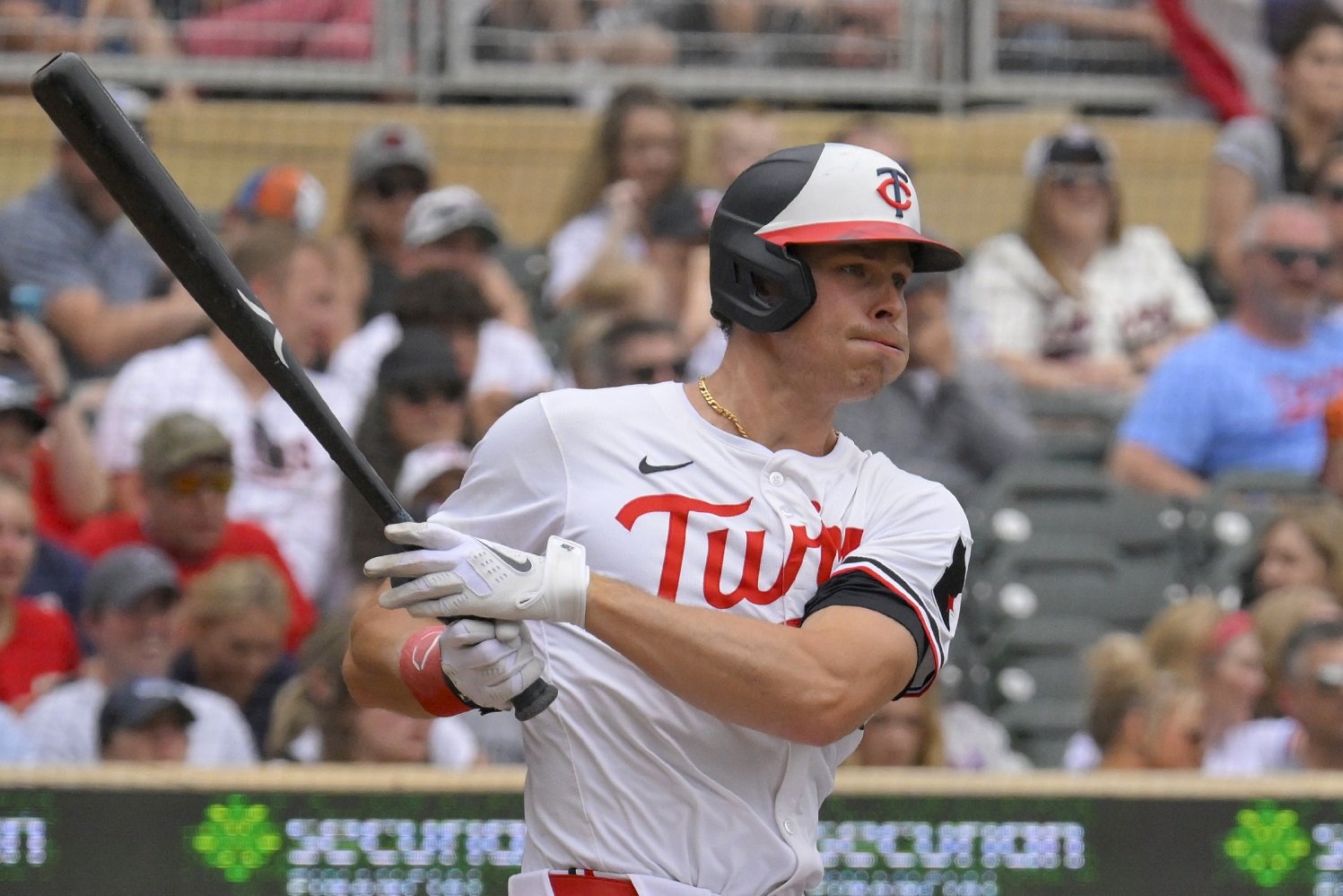 Max Kepler's OPS is 100 points above the anemic league average, and he’s playing his standard plus defense in right field. Kepler has continued the hot stretch that started in the second half of 2023, and there’s an argument that he should receive an offer from the Twins of over $20 million to play right field next year. Let’s break down that argument, in four parts. What is a Qualifying Offer? Let’s start with the technical mumbo-jumbo. A qualifying offer (QO) is a measure put in place to give teams a bit of a cushion when a top player is hitting free agency. Any team about to lose a player who has been on the team for a full year can extend a QO to the player on the way out, as long as he has not previously received one. The amount of that offer is set each year as the average of the top 125 salaries the previous year. It’d be safe to assume that this fall's number would be around $21 million. If an impending free agent is offered a QO, they have a decision: accept it—and return to the team for one year—or decline it and hit free agency. However, there’s a catch. If they do hit free agency, there will be compensation attached to them. The signing team will lose a draft pick, at minimum. The former team receives a compensatory draft pick after the first, second, or fourth rounds. Sonny Gray rejected the QO this offseason, and the Twins have the 33rd pick in the draft to show for it. How Well Does Kepler Need to Play to Earn a Qualifying Offer? That’s the (20-)million-dollar question. Kepler is playing at an All-Star level—and has been since July of last year. However, he’s been a slightly above-average bat at an offense-heavy position, with borderline Gold Glove defense for his career. That doesn’t scream star—more of a solid regular. He’s had two very good seasons—2019 and 2023—and he’s off to a promising start in 2024. It's hard to justify $21 million to a player for that. On the other hand, though, he’s playing the best baseball of his 10-year career right now, and that should be considered, given that it’s not a long-term deal; it’d just be for 2025. So, let’s consider some comparable recent cases. Cody Bellinger, coming off two miserable seasons, rebounded with the Cubs in 2023 and earned himself a QO. He has hit about 15% worse than Kepler has, but he plays a good center field. Bellinger also has a better pedigree (as a former MVP), and he’s 28—three years younger than Kepler. Bellinger is the kind of player you’d expect to earn a QO. However, Joc Pederson (2023), Brandon Nimmo (2022), and Michael Conforto (2021), each non-elite outfielders, received QOs. None had an OPS+ as high as Kepler’s has been over his last 100 games, though Nimmo (.800 OPS, 130 OPS+ in 2022) was a center fielder at that time. The best match is probably Pederson—a largely platooned lefty corner outfielder with an .874 OPS (146 OPS+) in 2022 for the Giants. Kepler has an .834 OPS (130 OPS+) over the past two seasons combined, but that includes his awful start to the 2023 season (a .688 OPS in the first half). If Kepler continues to hit like he has this season (.912 OPS, 158 OPS+), he would outpace Pederson considerably—but he could always regress, as well. There’s also the matter of team need. It’s why the Twins extended Jake Odorizzi the QO in 2019—they needed to solidify the rotation and were willing to overpay for a one-year deal. The Twins certainly have possible in-house Kepler replacements, like Matt Wallner, Trevor Larnach, Alex Kirilloff, and Emmanuel Rodríguez. However, the first three have yet to prove themselves over the past several years, and Rodriguez is still in Double-A. The Twins may need one more year of Kepler. Would Kepler Accept the Qualifying Offer? Here’s the second step. There are a few things at work with this one. Kepler is heading into his age-32 season next year. Because he signed an ownership-friendly deal in 2019, he’s played for the Twins for 10 seasons. He might be focused on maximizing his own dollars this time around. A QO stands in the way of that. There’s a lot of time between accepting the QO and hitting free agency unfettered--an entire year of knowing you have to stay healthy and that each slump could be a $10-million problem. He is around the point that he could be looking for his last contract. A 33-year-old commands less money; his best years are already behind him. It might not seem like a lot, but the difference between hitting the market at 32 and 33 is significant. A player in Kepler’s shoes may prefer even Andrew Benintendi’s five-year, $75 million ($15 million per year) deal over the richer 2025 and the subsequent stress of finding the long-term deal next year. However, he may also value that money now. He might be confident that he can command more money next year without the attached draft pick compensation. He might like Minnesota. Who knows? The truth is, though, few players ever accept the QO. Only 13 of the 131 players who received the QO since 2012 have accepted it. Notably, Kepler’s best recent comp—Joc Pederson—did accept his. Can the Twins Afford It? Yeah, okay, here’s the elephant in the room. Maybe “Can they?” isn’t the right question—it’s more like “Will they?” Heading into 2024, the Twins cut $30 million in payroll. Given comments from ownership (and using the term “rightsizing”), fans probably shouldn’t expect a significant increase going into next season. I didn’t say that’s a good thing—it’s the reality. Payroll is already poised to be a problem, even without a $20-million right fielder. Check out Peter Labuza’s discussion of next year’s payroll. The short version is that players like Carlos Correa and Pablo López are hitting the high points of their contracts, while prominent players like Royce Lewis, Joe Ryan, and Ryan Jeffers will see raises in arbitration. Payroll may be higher next season than this season, before the first addition is even made. That doesn’t include Kepler’s return, at $21 million. A Kepler-accepted QO may make a considerable dent in the Twin's plans. Teams never (at least on record) offer the QO in the hopes that the player declines. And Kepler isn’t a no-doubt decline candidate, unlike Shohei Ohtani (2023) or Aaron Judge (2022). If they offer it, they accept the possibility that he’s back, and for the big bucks. You may be thinking to yourself that Kepler could then become trade bait. However, that’s not an option, either (I think). Under the 2012-2016 collective bargaining agreement, players who accepted the QO could not be traded until after June 15, and there were limits on the amount of cash that could go back to the team—essentially preventing a team from trading a player they did not anticipate accepting the offer. In updates to the system under the 2017 collective bargaining agreement, alterations to that trade timeframe are not mentioned. In line with this, only two players who accepted the QO were ever traded. Jeremy Hellickson (July 28, 2017) and Neil Walker (August 12, 2017) were both traded after June 15 in the year they accepted the offer. Trading Kepler after the fact, then, is really not an option. Kepler can only get the QO if the team is actually ready to spend the money it represents. So, will the Twins be allowed to spend the money associated with Kepler returning? Well…
- 83 comments
-
- 7
-
-
- max kepler
- jake odorizzi
- (and 1 more)
-
Well this is all I can hope for. Thank you.
-
The sausage went missing. The team lost. The sausage was found. The team won. Does sausage lead to winning? Science says … maybe? Image courtesy of © Geoff Burke-USA TODAY Sports Many are sick of talking about the sausage. Many rejoiced when it was lost, but that loss coincided with a loss of games. Its return coincided with getting back in the win column. So, what can we make of it? If you’ve been living under a rock, the Twins have a lucky summer sausage they keep in the dugout during games. It all started when the Twins started touching a summer sausage during a slow night in Chicago, and their bats woke up. To many peoples’ chagrin, catching the sausage is a home run celebration. It’s a whole big thing. It was lost (I’m running with that as the official story, but it might have been misplaced on purpose) before the Twins left for Cleveland for a weekend series in which they were swept. They then lost to the Nationals, and the sausage was overnighted. Boom. They won. As a professed non-believer in witchcraft, I’m wary of saying that the sausage imbues the Twins with mythical powers. Unless you see the mind as magic. Maybe you’ve heard of the placebo effect. It’s born out of medical studies where participants will believe that they received some sort of medical treatment in the form of a pill, and, due to that belief, begin to heal, even if the pill contained no medication and was mere hardened sugar. We can see that effect in all walks of life. It’s especially relevant to baseball, as many positive effects of superstitions like wearing the same dirty socks or pregame rituals can be attributed to a placebo effect. As long as they think it makes them better, it will. If you’ve seen Space Jam, you might recognize Michael’s Secret Stuff, the sink water Michael Jordan used to convince the Loony Tunes that they could play like Mike. However, the placebo effect is not what this story is about. But it does illustrate a point. Even if you don’t believe that frivolous things like pregame rituals and clubhouse chemistry can raise players to performance levels they are otherwise incapable of, hopefully you can admit that those external factors can detract from their abilities. Just like you might be worse at your job when a sick family member occupies your mind, baseball players can see the same decreased performance when things aren’t going well, even off the field. A successful organization removes as many barriers to performance as possible. Sometimes, those barriers can be removed with a lucky Cloverdale Original Tangy Summer Sausage. Let’s move beyond the individual and focus on the team. Although baseball is largely an individual sport masquerading as a team game, having the team work together is key. Things like properly converting a double-play, relaying a throw from the outfield, or working with your pitcher as a catcher to execute a game plan are all team-based activities. One might call teams that consistently execute those team aspects cohesive. However, when we study teams, there’s more than one way to be cohesive. Working together and executing on the field is what’s termed task cohesion. It’s the proverbial well-oiled machine. The right hand knows what the left hand is doing. Task cohesion, across contexts spanning sport and industry, is one of the best predictors of team performance. It makes sense. A team that works together performs better. But there are other types of cohesion. Social cohesion refers to how people work together as humans. Do they get along well, do they communicate on and off the field, or have they formed bonds with each other? Naturally, the link between social cohesion and performance is less direct and weaker than for task cohesion. However, it can, again, be a factor that gives a team a slight edge, because it can remove barriers to performance. For example, would it be easier to perform well if you had a teammate who owed you money after a card game or had no such teammate occupying your thoughts? Sure, you might cite your impeccable mental toughness, but, in reality, it can distract you in your preparation. It can make you more likely to react poorly to his performance. It can interrupt your flow state. Keeping the guys together matters. And so the sausage comes in. Ryan Jeffers himself—the leader of the sausage movement—admitted, "It’s the idea of the sausage – it’s the meaning behind the sausage.” It’s a blatantly silly idea, but if the guys buy into it, who’s going to stop them? A couple of ideas from organizational research come to mind here. One is the idea of cultural artifacts. Just like nations have unique cultures that inform members of that culture on how to act and what is valued, organizations have the same. Each organization is different, prioritizes different things, and even has different ways of interacting amongst itself. Not only do those cultural factors inform members on how to be members, but they also set them apart. Cultures have heroes. The Twins have the likes of Kirby Puckett, Harmon Killebrew, and Joe Mauer, who serve as examples of model Twins—at least on the field. Likewise, their uniforms and logos carry some essence of the team and literally set them apart from every other team in the league. And they have a sausage. Right now, at least, the sausage is an artifact of the team’s culture. It’s something that the team is using as a unifying measure to rally behind and say “This is our team. This is who we are. This is what we do.” It’s a tangible aspect of their culture and the mission that they are all supposed to buy into, and it’s an idea they can point to. Which leads me to a second topic. This one’s a big word—anthropomorphization. When we, as humans, try to make sense of the world surrounding us, we tend to assign human characteristics to anything. The Yankees are evil. We all know this. The same as the Guardians and White Sox. Just bad. But what does that mean? These are just organizations. They’re made of people, but you can’t reach out and touch “the Yankees.” So why do we know that someone in a Yankees jersey is the embodiment of villainy? Because we’ve anthropomorphized the Yankees. We’ve given the organization human characteristics. In a similar way, the rally sausage is the physical embodiment of the team. You can’t see the team. Being a team is an emergent property of a group. It’s a word that categorizes people. One way that we can actually put a face to that group of people is through a logo, a nickname, or a catchphrase, but we still can’t touch any of those ideas. We can touch sausage, though, and that’s what makes it real. No. I am not saying the team will live and die by the sausage. Jeffers himself stated that he was open to swapping out the sausage for something else. I’m not saying that the sausage unlocks new powers for the Twins. None of that. What I am saying is that it’s important for a team to find their sausage, whatever that is. If it’s something that draws the team together, represents who they are, and keeps things flowing in a social, relational, and interpersonal way, well, you better keep slingin’ sausage. View full article
-
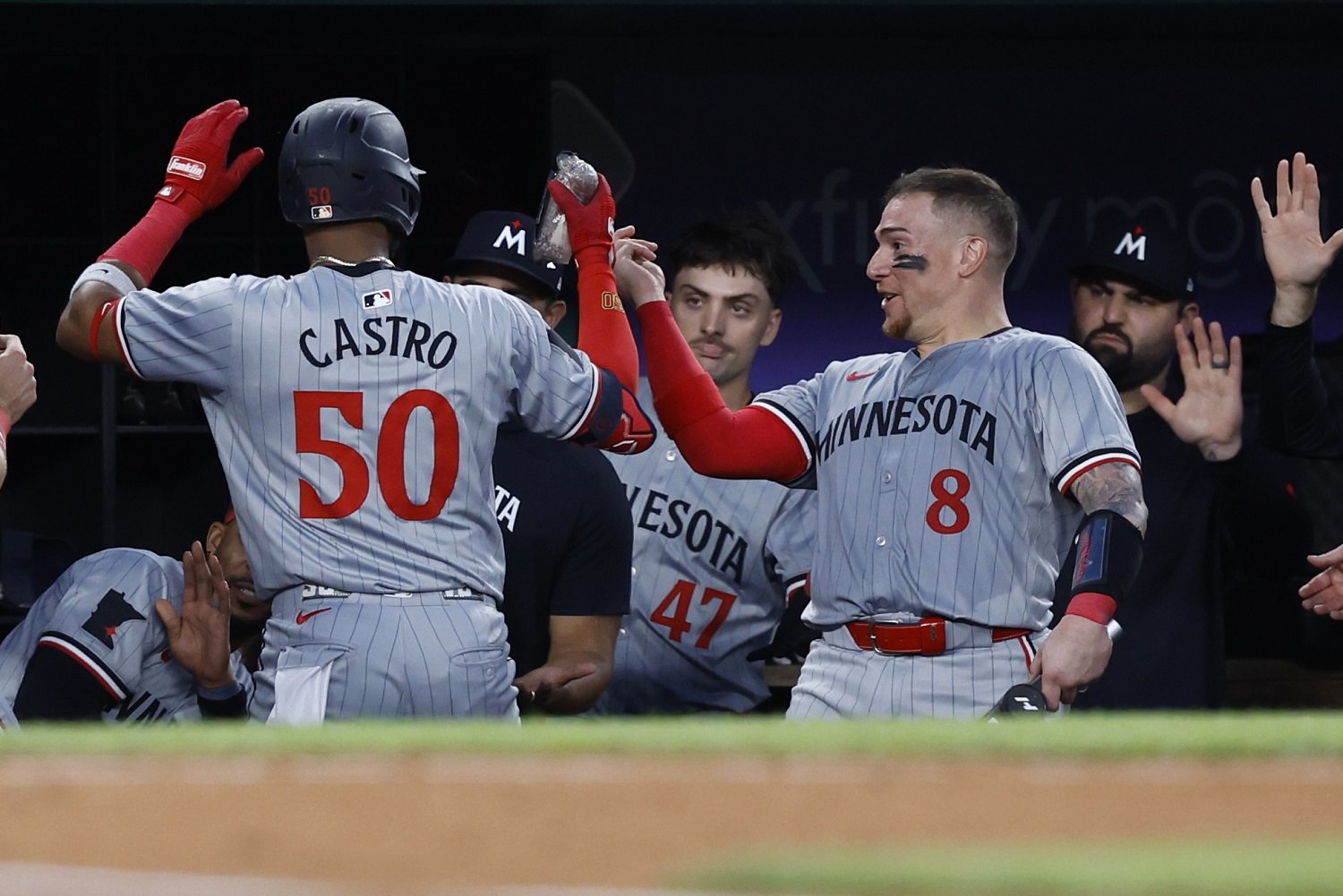 Many are sick of talking about the sausage. Many rejoiced when it was lost, but that loss coincided with a loss of games. Its return coincided with getting back in the win column. So, what can we make of it? If you’ve been living under a rock, the Twins have a lucky summer sausage they keep in the dugout during games. It all started when the Twins started touching a summer sausage during a slow night in Chicago, and their bats woke up. To many peoples’ chagrin, catching the sausage is a home run celebration. It’s a whole big thing. It was lost (I’m running with that as the official story, but it might have been misplaced on purpose) before the Twins left for Cleveland for a weekend series in which they were swept. They then lost to the Nationals, and the sausage was overnighted. Boom. They won. As a professed non-believer in witchcraft, I’m wary of saying that the sausage imbues the Twins with mythical powers. Unless you see the mind as magic. Maybe you’ve heard of the placebo effect. It’s born out of medical studies where participants will believe that they received some sort of medical treatment in the form of a pill, and, due to that belief, begin to heal, even if the pill contained no medication and was mere hardened sugar. We can see that effect in all walks of life. It’s especially relevant to baseball, as many positive effects of superstitions like wearing the same dirty socks or pregame rituals can be attributed to a placebo effect. As long as they think it makes them better, it will. If you’ve seen Space Jam, you might recognize Michael’s Secret Stuff, the sink water Michael Jordan used to convince the Loony Tunes that they could play like Mike. However, the placebo effect is not what this story is about. But it does illustrate a point. Even if you don’t believe that frivolous things like pregame rituals and clubhouse chemistry can raise players to performance levels they are otherwise incapable of, hopefully you can admit that those external factors can detract from their abilities. Just like you might be worse at your job when a sick family member occupies your mind, baseball players can see the same decreased performance when things aren’t going well, even off the field. A successful organization removes as many barriers to performance as possible. Sometimes, those barriers can be removed with a lucky Cloverdale Original Tangy Summer Sausage. Let’s move beyond the individual and focus on the team. Although baseball is largely an individual sport masquerading as a team game, having the team work together is key. Things like properly converting a double-play, relaying a throw from the outfield, or working with your pitcher as a catcher to execute a game plan are all team-based activities. One might call teams that consistently execute those team aspects cohesive. However, when we study teams, there’s more than one way to be cohesive. Working together and executing on the field is what’s termed task cohesion. It’s the proverbial well-oiled machine. The right hand knows what the left hand is doing. Task cohesion, across contexts spanning sport and industry, is one of the best predictors of team performance. It makes sense. A team that works together performs better. But there are other types of cohesion. Social cohesion refers to how people work together as humans. Do they get along well, do they communicate on and off the field, or have they formed bonds with each other? Naturally, the link between social cohesion and performance is less direct and weaker than for task cohesion. However, it can, again, be a factor that gives a team a slight edge, because it can remove barriers to performance. For example, would it be easier to perform well if you had a teammate who owed you money after a card game or had no such teammate occupying your thoughts? Sure, you might cite your impeccable mental toughness, but, in reality, it can distract you in your preparation. It can make you more likely to react poorly to his performance. It can interrupt your flow state. Keeping the guys together matters. And so the sausage comes in. Ryan Jeffers himself—the leader of the sausage movement—admitted, "It’s the idea of the sausage – it’s the meaning behind the sausage.” It’s a blatantly silly idea, but if the guys buy into it, who’s going to stop them? A couple of ideas from organizational research come to mind here. One is the idea of cultural artifacts. Just like nations have unique cultures that inform members of that culture on how to act and what is valued, organizations have the same. Each organization is different, prioritizes different things, and even has different ways of interacting amongst itself. Not only do those cultural factors inform members on how to be members, but they also set them apart. Cultures have heroes. The Twins have the likes of Kirby Puckett, Harmon Killebrew, and Joe Mauer, who serve as examples of model Twins—at least on the field. Likewise, their uniforms and logos carry some essence of the team and literally set them apart from every other team in the league. And they have a sausage. Right now, at least, the sausage is an artifact of the team’s culture. It’s something that the team is using as a unifying measure to rally behind and say “This is our team. This is who we are. This is what we do.” It’s a tangible aspect of their culture and the mission that they are all supposed to buy into, and it’s an idea they can point to. Which leads me to a second topic. This one’s a big word—anthropomorphization. When we, as humans, try to make sense of the world surrounding us, we tend to assign human characteristics to anything. The Yankees are evil. We all know this. The same as the Guardians and White Sox. Just bad. But what does that mean? These are just organizations. They’re made of people, but you can’t reach out and touch “the Yankees.” So why do we know that someone in a Yankees jersey is the embodiment of villainy? Because we’ve anthropomorphized the Yankees. We’ve given the organization human characteristics. In a similar way, the rally sausage is the physical embodiment of the team. You can’t see the team. Being a team is an emergent property of a group. It’s a word that categorizes people. One way that we can actually put a face to that group of people is through a logo, a nickname, or a catchphrase, but we still can’t touch any of those ideas. We can touch sausage, though, and that’s what makes it real. No. I am not saying the team will live and die by the sausage. Jeffers himself stated that he was open to swapping out the sausage for something else. I’m not saying that the sausage unlocks new powers for the Twins. None of that. What I am saying is that it’s important for a team to find their sausage, whatever that is. If it’s something that draws the team together, represents who they are, and keeps things flowing in a social, relational, and interpersonal way, well, you better keep slingin’ sausage.
 -
Episode 4: Naz Reid Rosin Bag
Greggory Masterson replied to Greggory Masterson's topic in Twins Daily Front Page News
We appreciate the listen, Doc! I thought about Castro as my pick as well, but a few shows ago I picked him to eat the most hot dogs, and I wanted to give someone else some shine -
It's a podcast. About the Minnesota Twins. Sweet Lou Hennessy, Cody Schoenmann, Sherry Cerny, and Greggory Masterson recap the Twins' 2-7 skid and look ahead to Texas, Kansas City, and Houston. They also propose strategies for putting butts in seats at Target Field and rave about acrobatic dads, but that's beside the point Listen using Apple Podcasts: https://podcasts.apple.com/us/podcast/the-twins-off-daily-podcast/id1741266056 Listen using Spotify: https://open.spotify.com/show/4tb78XlurcPTYYSsARdbD7 View full article
-
 Sweet Lou Hennessy, Cody Schoenmann, Sherry Cerny, and Greggory Masterson recap the Twins' 2-7 skid and look ahead to Texas, Kansas City, and Houston. They also propose strategies for putting butts in seats at Target Field and rave about acrobatic dads, but that's beside the point Listen using Apple Podcasts: https://podcasts.apple.com/us/podcast/the-twins-off-daily-podcast/id1741266056 Listen using Spotify: https://open.spotify.com/show/4tb78XlurcPTYYSsARdbD7
 -
Episode three of the Off-Daily Podcast comes at you... on an off-day. Sweet Lou Hennessy, Cody Schoenmann, Matt Braun, and Greggory Masterson recap three series wins against the Red Sox, Mariners, and Blue Jays. This one right here goes out to all the baby's mamas, mamas, mamas mamas, baby mamas mamas. Listen using Apple Podcasts: https://podcasts.apple.com/us/podcast/the-twins-off-daily-podcast/id1741266056 Listen using Spotify: https://open.spotify.com/show/4tb78XlurcPTYYSsARdbD7 View full article
-
 Sweet Lou Hennessy, Cody Schoenmann, Matt Braun, and Greggory Masterson recap three series wins against the Red Sox, Mariners, and Blue Jays. This one right here goes out to all the baby's mamas, mamas, mamas mamas, baby mamas mamas. Listen using Apple Podcasts: https://podcasts.apple.com/us/podcast/the-twins-off-daily-podcast/id1741266056 Listen using Spotify: https://open.spotify.com/show/4tb78XlurcPTYYSsARdbD7
 -
 Lou Hennessy, Greggory Masterson, and Theo Tollefson get together to recap the Twins 11-2 stretch, including 10 wins in a row against the White Sox and Angels. Listen using Apple Podcasts: https://podcasts.apple.com/us/podcast/the-twins-off-daily-podcast/id1741266056 Listen using Spotify: https://open.spotify.com/show/4tb78XlurcPTYYSsARdbD7
 -
The Twins are on a lengthy winning streak as they enter an off-day. Let's talk about it! Lou Hennessy, Greggory Masterson, and Theo Tollefson get together to recap the Twins 11-2 stretch, including 10 wins in a row against the White Sox and Angels. Listen using Apple Podcasts: https://podcasts.apple.com/us/podcast/the-twins-off-daily-podcast/id1741266056 Listen using Spotify: https://open.spotify.com/show/4tb78XlurcPTYYSsARdbD7 View full article
-
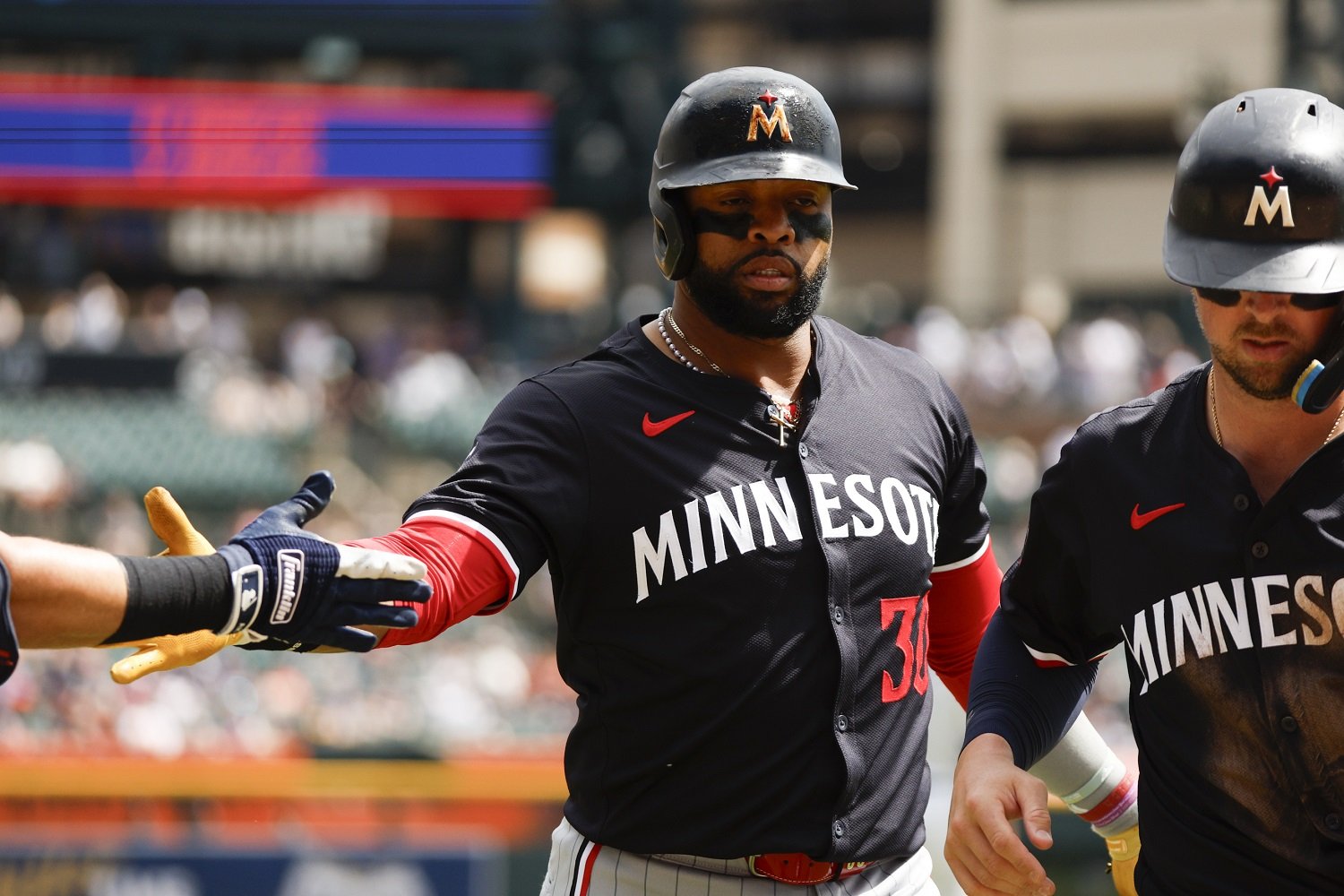 One of the holes the Minnesota Twins were expected to fill over the offseason was the role of a right-handed hitter to pair with corner players like Alex Kirilloff, Max Kepler, Matt Wallner, and Trevor Larnach. The Twins opted to sign Carlos Santana to a smooth $5.25-million contract for his age-38 season. They also turned the starting first baseman's mitt over to the former All-Star and Silver Slugger. Being the everyday first baseman was a larger role than many fans had anticipated for the aging player. Over the first 10 years of his career (2010-2019), he was a hitter 21 percent above average by OPS+. From 2020 to 2023, he was 6 percent below average (94 OPS+), hitting just .218. Even then, though, he drew walks and hit with a little pop. Last year was a bit of a renaissance, as he had his first season since 2019 with an OPS+ above average (104), though that’s still not what a team hopes for out of a bat-first position. His elite defense offset this deficiency, as he led MLB first basemen in 2023 with 11 Defensive Runs Saved. It’s not an ideal everyday first baseman, especially as Santana has not hit right-handed pitching well in several years, but if he’s on the roster, he will play. Unfortunately, the Twins' confidence in him being an everyday contributor has not been rewarded. Through Sunday, April 21, Santana had played 17 of the Twins’ first 20 games, slashing an abysmal .133/.224/.150 as a first baseman and designated hitter, the two most bat-forward positions on the field. He’s also not getting any younger. He’s also striking out at a career-worst 21 percent clip. No matter how good a player was in his 20s, Father Time comes for everyone, and Santana just turned 38 two weeks ago, far past the expiration date for most MLB players. So, what’s the outlook for a player like this? What are the odds that a player at this age can turn his season around? It’s still early, right? He has plenty of time to find his groove. The turnaround I’m describing here has rarely happened in recent baseball history. I dug up the 50 worst 17-game starts (10% of a season) to a season for players 37 and older by OPS since 1995. I threw some out if they didn’t regularly play (e.g., backup catchers, like 1999 Charlie O'Brien, 2014 José Molina, 2012 Henry Blanco, 2019 Erik Kratz, and 2004 Pat Borders; or those affected by injuries--like 2014 Jason Giambi, who played 17 games between April and September), leaving me with 36 players. Among those players, Santana is off to the fifth-worst start in the last 30 years (even including the non-everyday players, he’s seventh-worst). The list has many aging corner outfielders, first basemen, and designated hitters, a few catchers—not known for their batting—and a sprinkling of center fielders and infielders. Of the 36, 16 were beginning their last season in the majors. Eighteen played another year (though Gary Gaetti and So Taguchi only played 5 and 6 games, respectively, in their following seasons before retiring). Two—Santana and José Abreu (whose 2024 is the worst start on the list) are currently playing. Of course, many players do retire after their age-37 season, even if it was moderately successful, so those numbers aren’t surprising. However, it’s worth checking to see how many players managed to turn their seasons around after their disastrous starts. What hope do Twins fans or Santana have for a turnaround? Only five of the 34 players we have final results for ended the season with a league-average OPS or better (2015 Marlon Byrd, 100; 2015 Carlos Beltrán, 119; 2007 Gary Sheffield, 119; 2022 Justin Turner, 120; 2013 Raúl Ibañez, 123). A few also reached an OPS+ in the 90s: 2009 Gregg Zaun, 2006 Bernie Williams, 2021 Miguel Cabrera, 2002 Julio Franco, and 2017 Chase Utley. Santana getting to a 90 OPS+ would be a victory. Perhaps I buried the lede a bit here: as of Sunday, he had a 13 OPS+ at .374. It’s hard to dig out of an early pit. Some of the above players—Byrd, Utley, and Cabrera—started in that range, so it could be possible. However, most players were unable to dig themselves out. Half (17) ended their seasons with an OPS+ below 80, which is a complete impediment at first base. Eleven of those 17 retired (plus Gaetti and Taguchi, who were essentially done, which makes it 13). Among those players are Harold Baines, Hideki Matsui, Otis Nixon, Brady Anderson, Johnny Damon, and Wally Joyner. Some of those players were coming off good years, too; aging is inevitable. Brian Giles went from an OPS+ of 138 to 52 from 2008 to 2009, then retired. Gaetti went from 121 in 1998 to 52 in 1999. Magglio Ordóñez fell from 129 in 2010 to 73 in 2011. Santana doesn’t have so lofty a starting point to lean on—it’s hard for fans to hope he regains his form when his form last season was four percent above average. And so, how much time does he have? It partially depends on the context. Kirilloff is off to a good start this season, and José Miranda is showing a bit of life. But beyond that, the Twins’ other internal options at first base are players like Yunior Severino, Chris Williams, or Alex Isola--aging minor leaguers with no MLB experience. Upon a player like Carlos Correa or Royce Lewis returning from injury, a roster crunch could threaten Santana’s job. There’s little precedent for a player rebounding from a start like this at his age, but the Twins have also been slow in recent years to move on from veteran depth. How much space to bounce back will he get? Only time will tell, but it’s not looking pretty for the player on the wrong side of 35.
 -
It’s still early in the season, but it is also getting late for Carlos Santana amid an early-season funk. Image courtesy of © Brian Bradshaw Sevald-USA TODAY Sports One of the holes the Minnesota Twins were expected to fill over the offseason was the role of a right-handed hitter to pair with corner players like Alex Kirilloff, Max Kepler, Matt Wallner, and Trevor Larnach. The Twins opted to sign Carlos Santana to a smooth $5.25-million contract for his age-38 season. They also turned the starting first baseman's mitt over to the former All-Star and Silver Slugger. Being the everyday first baseman was a larger role than many fans had anticipated for the aging player. Over the first 10 years of his career (2010-2019), he was a hitter 21 percent above average by OPS+. From 2020 to 2023, he was 6 percent below average (94 OPS+), hitting just .218. Even then, though, he drew walks and hit with a little pop. Last year was a bit of a renaissance, as he had his first season since 2019 with an OPS+ above average (104), though that’s still not what a team hopes for out of a bat-first position. His elite defense offset this deficiency, as he led MLB first basemen in 2023 with 11 Defensive Runs Saved. It’s not an ideal everyday first baseman, especially as Santana has not hit right-handed pitching well in several years, but if he’s on the roster, he will play. Unfortunately, the Twins' confidence in him being an everyday contributor has not been rewarded. Through Sunday, April 21, Santana had played 17 of the Twins’ first 20 games, slashing an abysmal .133/.224/.150 as a first baseman and designated hitter, the two most bat-forward positions on the field. He’s also not getting any younger. He’s also striking out at a career-worst 21 percent clip. No matter how good a player was in his 20s, Father Time comes for everyone, and Santana just turned 38 two weeks ago, far past the expiration date for most MLB players. So, what’s the outlook for a player like this? What are the odds that a player at this age can turn his season around? It’s still early, right? He has plenty of time to find his groove. The turnaround I’m describing here has rarely happened in recent baseball history. I dug up the 50 worst 17-game starts (10% of a season) to a season for players 37 and older by OPS since 1995. I threw some out if they didn’t regularly play (e.g., backup catchers, like 1999 Charlie O'Brien, 2014 José Molina, 2012 Henry Blanco, 2019 Erik Kratz, and 2004 Pat Borders; or those affected by injuries--like 2014 Jason Giambi, who played 17 games between April and September), leaving me with 36 players. Among those players, Santana is off to the fifth-worst start in the last 30 years (even including the non-everyday players, he’s seventh-worst). The list has many aging corner outfielders, first basemen, and designated hitters, a few catchers—not known for their batting—and a sprinkling of center fielders and infielders. Of the 36, 16 were beginning their last season in the majors. Eighteen played another year (though Gary Gaetti and So Taguchi only played 5 and 6 games, respectively, in their following seasons before retiring). Two—Santana and José Abreu (whose 2024 is the worst start on the list) are currently playing. Of course, many players do retire after their age-37 season, even if it was moderately successful, so those numbers aren’t surprising. However, it’s worth checking to see how many players managed to turn their seasons around after their disastrous starts. What hope do Twins fans or Santana have for a turnaround? Only five of the 34 players we have final results for ended the season with a league-average OPS or better (2015 Marlon Byrd, 100; 2015 Carlos Beltrán, 119; 2007 Gary Sheffield, 119; 2022 Justin Turner, 120; 2013 Raúl Ibañez, 123). A few also reached an OPS+ in the 90s: 2009 Gregg Zaun, 2006 Bernie Williams, 2021 Miguel Cabrera, 2002 Julio Franco, and 2017 Chase Utley. Santana getting to a 90 OPS+ would be a victory. Perhaps I buried the lede a bit here: as of Sunday, he had a 13 OPS+ at .374. It’s hard to dig out of an early pit. Some of the above players—Byrd, Utley, and Cabrera—started in that range, so it could be possible. However, most players were unable to dig themselves out. Half (17) ended their seasons with an OPS+ below 80, which is a complete impediment at first base. Eleven of those 17 retired (plus Gaetti and Taguchi, who were essentially done, which makes it 13). Among those players are Harold Baines, Hideki Matsui, Otis Nixon, Brady Anderson, Johnny Damon, and Wally Joyner. Some of those players were coming off good years, too; aging is inevitable. Brian Giles went from an OPS+ of 138 to 52 from 2008 to 2009, then retired. Gaetti went from 121 in 1998 to 52 in 1999. Magglio Ordóñez fell from 129 in 2010 to 73 in 2011. Santana doesn’t have so lofty a starting point to lean on—it’s hard for fans to hope he regains his form when his form last season was four percent above average. And so, how much time does he have? It partially depends on the context. Kirilloff is off to a good start this season, and José Miranda is showing a bit of life. But beyond that, the Twins’ other internal options at first base are players like Yunior Severino, Chris Williams, or Alex Isola--aging minor leaguers with no MLB experience. Upon a player like Carlos Correa or Royce Lewis returning from injury, a roster crunch could threaten Santana’s job. There’s little precedent for a player rebounding from a start like this at his age, but the Twins have also been slow in recent years to move on from veteran depth. How much space to bounce back will he get? Only time will tell, but it’s not looking pretty for the player on the wrong side of 35. View full article
-
It's the first episode of the Twins Off-Daily Podcast! And yes, we realize today is not an off-day. Image courtesy of Brock Beauchamp Greggory Masterson, Sweet Lou Hennessy, Cody Schoenmann, and Matt Braun of Twins Daily get together for the pilot episode of the Twins Off-Daily Podcast to break down the Twins-Tigers series and look ahead to the Twins' trip to Baltimore. This is a trial run of the podcast and it is not yet available on your favorite podcast apps. The first "real" episode should be available on Spotify and Apple Podcasts when it releases later in the week. If you'd like to request the addition of another podcast app, please request it in the comments. Listen using Apple Podcasts: https://podcasts.apple.com/us/podcast/the-twins-off-daily-podcast/id1741266056 Listen using Spotify: https://open.spotify.com/show/4tb78XlurcPTYYSsARdbD7 View full article
-
 Greggory Masterson, Sweet Lou Hennessy, Cody Schoenmann, and Matt Braun of Twins Daily get together for the pilot episode of the Twins Off-Daily Podcast to break down the Twins-Tigers series and look ahead to the Twins' trip to Baltimore. This is a trial run of the podcast and it is not yet available on your favorite podcast apps. The first "real" episode should be available on Spotify and Apple Podcasts when it releases later in the week. If you'd like to request the addition of another podcast app, please request it in the comments. Listen using Apple Podcasts: https://podcasts.apple.com/us/podcast/the-twins-off-daily-podcast/id1741266056 Listen using Spotify: https://open.spotify.com/show/4tb78XlurcPTYYSsARdbD7
 -
That was an error my end:the team can only send him back down by using one of his options (if he has any) or exposing him to waivers.
- 9 replies
-
- 1
-
-
- jay jackson
- steven okert
- (and 1 more)
-
Great question—nope, he keeps all his option years. If he was on the 40 at the beginning of the year, or if he was sent back down, that would be an option. But because he was only added to the 40 when he was called up and he stuck around in MLB, he’d retain all his options.
- 9 replies
-
- 2
-
-
- jay jackson
- steven okert
- (and 1 more)
-
That frustrating roster move might make more sense than you think. Image courtesy of © Jay Biggerstaff-USA TODAY Sports It’s been less than two weeks, and the Twins have already started digging into their minor league depth, so it’s probably good for a discerning fan to know which players have minor league options. Head-scratching decisions often make more sense when considering the option information, so let’s overview the system. First, let’s touch on some rules. They’re a bit complicated but graspable with some patience. If you already know the rules, skip to the player lists. Minor League Options Defined To be eligible for an MLB active (26-man) roster, a player must be on that team’s expanded 40-man roster. A player on the 40-man roster can be in the majors or minors, but only players on the 40-man can be on the MLB active roster. Therefore, any player not on the 40-man roster must be added to both the 40-man and active rosters to be eligible to play. If there is no room on the 40-man, a current member needs to be removed, generally by exposing him to outright waivers or by transferring them to the 60-day injured list. If exposed to outright waivers, any other team in the league willing to take on the player’s salary and place him on their active roster (or expose him to waivers again) can claim him. Naturally, a player would need to be injured for the 60-day option to be available. To send a player to the minors while also on the team’s 40-man roster, they need to have option years remaining. If the player has no option years remaining, they must be exposed to waivers before being sent down. Number of Options When a player is added to a 40-man roster for the first time in his career, he has three option years. Option years are used when the player spends time in the minor leagues, whether it’s a full season or a few weeks spread over months. A player can be sent down once or several times in that year, and it will still count as a single option year, assuming that he meets the 20 day threshold. Players who do not play in the minor leagues in a given year retain their option years. If a player uses an option year in 2024, he will have two remaining. If he then spends all of 2025 on an MLB roster, he still has two. If he then gets sent down in 2026, he will have one. If he’s sent down again in 2027, he will have no options left, and if the team wants to send him to the minors in 2028, he would need to be waived first. Nuances There are some nuances to these rules to be aware of. First, if a player is in the minor leagues but is not on the 40-man roster, the team is not using one of his options. However, if he is called up to the major league team, and thus added to the 40-man roster, the team can only send him back down by using one of his options (if he has any) or exposing him to waivers. As of 2022, a player can only be sent to the minor leagues five times in one season, which includes starting the season in the minors. After the fifth time, the subsequent demotion requires the player to be waived. They will still have any future option years, though. Occasionally the years are malleable, and additional option years for a player may be added by the league. More specifically, the player must fit the criteria of having used all three options before getting 5 years of professional service (full season baseball). For example, Lewis Thorpe had four option years for this reason. In fact, a few Twins have. Gilberto Celestino had one option remaining in 2022 and was demoted mid-season. However, he was recalled within days after an injury to an active roster player, and because his demotion was so short, he did not use an option year. It needs to be over 20 days to count as an option year. Players with at least five years of service time (time on an MLB active roster) can refuse a demotion, even if they still have options remaining. You will rarely see a 35-year-old sent to AAA, even if he has an option remaining, because he can simply say no, forcing the team to either release him or send someone else down. The Twins Roster Let’s look at the Twins players’ situations with all that out of the way. It should be noted that even if a player is listed with options remaining, that doesn’t mean we think they will be sent down or are even likely to. (Things would have to go really bad for Jhoan Duran to be sent to St. Paul). This information is from FanGraphs’s Roster Resource. MLB Players who can Refuse Demotion As discussed, these players have enough service time to refuse demotion. In rare cases, if the player and team agree that some time in the minor leagues would be beneficial, and he still has at least one option year remaining, it could happen. However, it’s rare enough that you shouldn’t hope that Kyle Farmer agrees to spend time in St. Paul this season. Byron Buxton, Carlos Correa, Anthony DeSclafani, Kyle Farmer, Max Kepler, Pablo López, Manuel Margot, Chris Paddack, Carlos Santana, Caleb Thielbar, Christian Vázquez MLB Players Out of Options These players can be sent down, but they would need to be exposed to waivers first. Jay Jackson, Steven Okert, Brock Stewart Note: Okert is a good example of how options can impact teams' rosters and players' careers. Okert was going to be battling for a spot in the Marlins' crowded bullpen, but without an option, he needed to win a spot or the team would risk losing him on waivers. Likewise, the Twins were in a similar situation with fitting utilityman Nick Gordon into a crowded bench, also out of options .The Twins had bullpen room, and the Marlins needed a utility player, so the players were traded for each other, and both teams avoided making a tough decision. MLB Players with One Option Remaining These players are currently on the active roster (or injured list) and can still be sent down this year. However, if they are sent down and use an option year, they will have no options in 2025. The team could be a little more hesitant to use that final year than they would otherwise. Willi Castro, Daniel Duarte, Jhoan Duran, Alex Kirilloff, Bailey Ober, Cole Sands, Josh Staumont, Josh Winder 40-Man Players in the Minor Leagues with One Option Remaining These players are currently in the minors (as of 4/6), and if they hit the 20-day threshold it’s their last year. Come 2025, they would have no options remaining. Trevor Larnach, Jose Miranda 40-Man Players with Multiple Option Years Remaining If necessary, any of these players can be sent back and forth with little concern. Jorge Alcala, Jair Camargo, Matt Canterino, Kody Funderburk, Brent Headrick, Griffin Jax, Ryan Jeffers, Edouard Julien, Royce Lewis, Austin Martin, Emmanuel Rodriguez, Joe Ryan, Yunior Severino, Justin Topa, Louie Varland, Matt Wallner, Zack Weiss, Simeon Woods Richardson Notable Minor League Veterans without Options and/or Sufficient Service Time There are a handful of minor league veterans that are not on the MLB roster. If these veterans are called up, they either have no options remaining (*) or can refuse the demotion due to service time (®), so sending them back down would be complicated. Prepare to lose them if you see them. A.J. Alexy*, Jordan Balazovic*, Matt Bowman*, Scott Blewett* Notable Minor League Veterans with One Option Remaining If these veterans are called up, they still have one option remaining, so they can be kept in the system and demoted, but this would be the last year, without exposing them to waivers. Jeff Brigham, Beau Burrows, Diego Castillo (UTIL), Ronny Henriquez, Jovani Moran, Jared Solomon Notable Minor League Veterans with Multiple Options Remaining With this group, if they’re called up, they can be demoted with very little option year consideration. Caleb Boushley, Diego Castillo (RP), Randy Dobnak, Hobie Harris, Ryan Jensen Thanks for input from John Bonnes, Jeremy Nygaard, and Jack Goin over the last year on this writeup, correcting many of the errors that I made. View full article
-
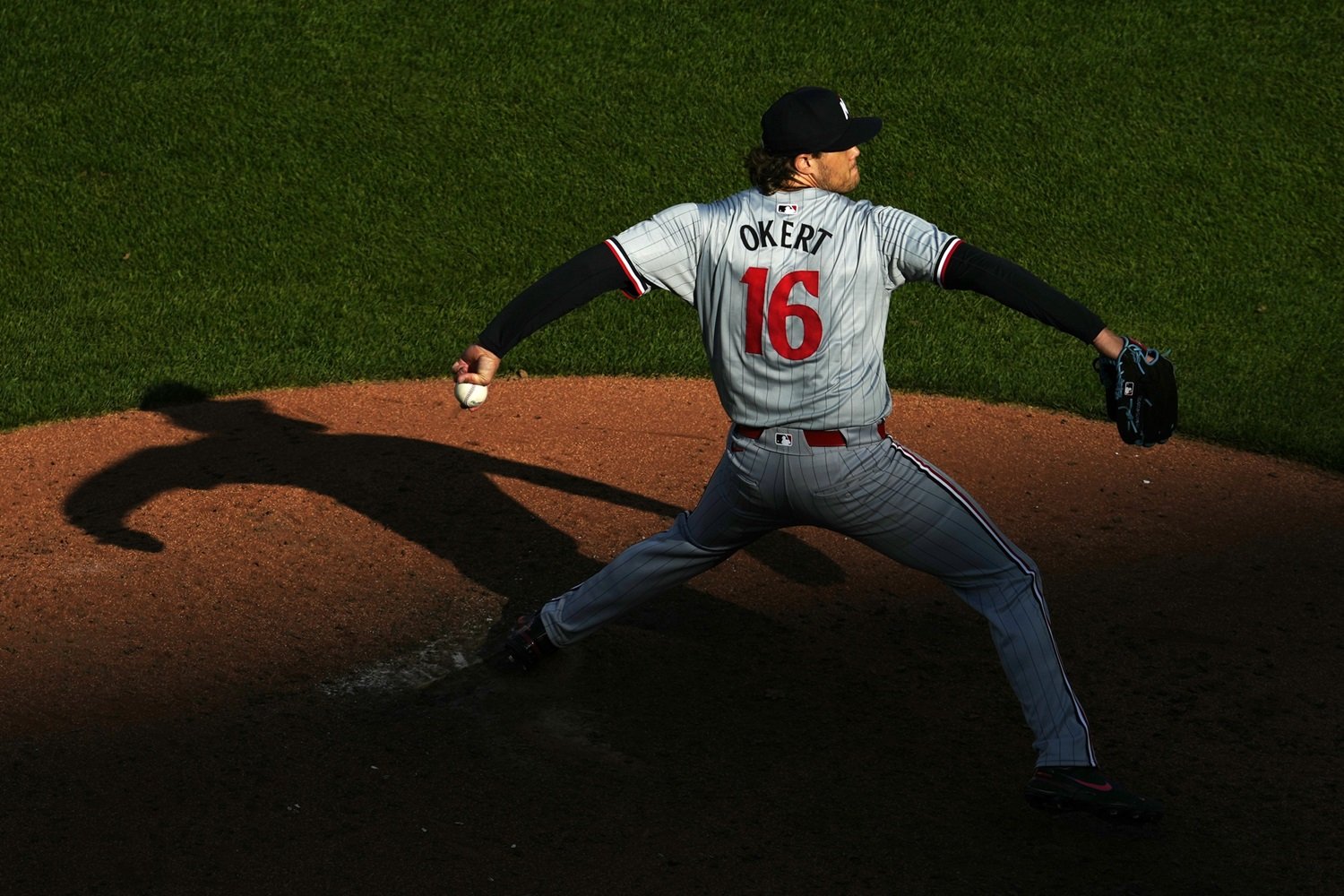 It’s been less than two weeks, and the Twins have already started digging into their minor league depth, so it’s probably good for a discerning fan to know which players have minor league options. Head-scratching decisions often make more sense when considering the option information, so let’s overview the system. First, let’s touch on some rules. They’re a bit complicated but graspable with some patience. If you already know the rules, skip to the player lists. Minor League Options Defined To be eligible for an MLB active (26-man) roster, a player must be on that team’s expanded 40-man roster. A player on the 40-man roster can be in the majors or minors, but only players on the 40-man can be on the MLB active roster. Therefore, any player not on the 40-man roster must be added to both the 40-man and active rosters to be eligible to play. If there is no room on the 40-man, a current member needs to be removed, generally by exposing him to outright waivers or by transferring them to the 60-day injured list. If exposed to outright waivers, any other team in the league willing to take on the player’s salary and place him on their active roster (or expose him to waivers again) can claim him. Naturally, a player would need to be injured for the 60-day option to be available. To send a player to the minors while also on the team’s 40-man roster, they need to have option years remaining. If the player has no option years remaining, they must be exposed to waivers before being sent down. Number of Options When a player is added to a 40-man roster for the first time in his career, he has three option years. Option years are used when the player spends time in the minor leagues, whether it’s a full season or a few weeks spread over months. A player can be sent down once or several times in that year, and it will still count as a single option year, assuming that he meets the 20 day threshold. Players who do not play in the minor leagues in a given year retain their option years. If a player uses an option year in 2024, he will have two remaining. If he then spends all of 2025 on an MLB roster, he still has two. If he then gets sent down in 2026, he will have one. If he’s sent down again in 2027, he will have no options left, and if the team wants to send him to the minors in 2028, he would need to be waived first. Nuances There are some nuances to these rules to be aware of. First, if a player is in the minor leagues but is not on the 40-man roster, the team is not using one of his options. However, if he is called up to the major league team, and thus added to the 40-man roster, the team can only send him back down by using one of his options (if he has any) or exposing him to waivers. As of 2022, a player can only be sent to the minor leagues five times in one season, which includes starting the season in the minors. After the fifth time, the subsequent demotion requires the player to be waived. They will still have any future option years, though. Occasionally the years are malleable, and additional option years for a player may be added by the league. More specifically, the player must fit the criteria of having used all three options before getting 5 years of professional service (full season baseball). For example, Lewis Thorpe had four option years for this reason. In fact, a few Twins have. Gilberto Celestino had one option remaining in 2022 and was demoted mid-season. However, he was recalled within days after an injury to an active roster player, and because his demotion was so short, he did not use an option year. It needs to be over 20 days to count as an option year. Players with at least five years of service time (time on an MLB active roster) can refuse a demotion, even if they still have options remaining. You will rarely see a 35-year-old sent to AAA, even if he has an option remaining, because he can simply say no, forcing the team to either release him or send someone else down. The Twins Roster Let’s look at the Twins players’ situations with all that out of the way. It should be noted that even if a player is listed with options remaining, that doesn’t mean we think they will be sent down or are even likely to. (Things would have to go really bad for Jhoan Duran to be sent to St. Paul). This information is from FanGraphs’s Roster Resource. MLB Players who can Refuse Demotion As discussed, these players have enough service time to refuse demotion. In rare cases, if the player and team agree that some time in the minor leagues would be beneficial, and he still has at least one option year remaining, it could happen. However, it’s rare enough that you shouldn’t hope that Kyle Farmer agrees to spend time in St. Paul this season. Byron Buxton, Carlos Correa, Anthony DeSclafani, Kyle Farmer, Max Kepler, Pablo López, Manuel Margot, Chris Paddack, Carlos Santana, Caleb Thielbar, Christian Vázquez MLB Players Out of Options These players can be sent down, but they would need to be exposed to waivers first. Jay Jackson, Steven Okert, Brock Stewart Note: Okert is a good example of how options can impact teams' rosters and players' careers. Okert was going to be battling for a spot in the Marlins' crowded bullpen, but without an option, he needed to win a spot or the team would risk losing him on waivers. Likewise, the Twins were in a similar situation with fitting utilityman Nick Gordon into a crowded bench, also out of options .The Twins had bullpen room, and the Marlins needed a utility player, so the players were traded for each other, and both teams avoided making a tough decision. MLB Players with One Option Remaining These players are currently on the active roster (or injured list) and can still be sent down this year. However, if they are sent down and use an option year, they will have no options in 2025. The team could be a little more hesitant to use that final year than they would otherwise. Willi Castro, Daniel Duarte, Jhoan Duran, Alex Kirilloff, Bailey Ober, Cole Sands, Josh Staumont, Josh Winder 40-Man Players in the Minor Leagues with One Option Remaining These players are currently in the minors (as of 4/6), and if they hit the 20-day threshold it’s their last year. Come 2025, they would have no options remaining. Trevor Larnach, Jose Miranda 40-Man Players with Multiple Option Years Remaining If necessary, any of these players can be sent back and forth with little concern. Jorge Alcala, Jair Camargo, Matt Canterino, Kody Funderburk, Brent Headrick, Griffin Jax, Ryan Jeffers, Edouard Julien, Royce Lewis, Austin Martin, Emmanuel Rodriguez, Joe Ryan, Yunior Severino, Justin Topa, Louie Varland, Matt Wallner, Zack Weiss, Simeon Woods Richardson Notable Minor League Veterans without Options and/or Sufficient Service Time There are a handful of minor league veterans that are not on the MLB roster. If these veterans are called up, they either have no options remaining (*) or can refuse the demotion due to service time (®), so sending them back down would be complicated. Prepare to lose them if you see them. A.J. Alexy*, Jordan Balazovic*, Matt Bowman*, Scott Blewett* Notable Minor League Veterans with One Option Remaining If these veterans are called up, they still have one option remaining, so they can be kept in the system and demoted, but this would be the last year, without exposing them to waivers. Jeff Brigham, Beau Burrows, Diego Castillo (UTIL), Ronny Henriquez, Jovani Moran, Jared Solomon Notable Minor League Veterans with Multiple Options Remaining With this group, if they’re called up, they can be demoted with very little option year consideration. Caleb Boushley, Diego Castillo (RP), Randy Dobnak, Hobie Harris, Ryan Jensen Thanks for input from John Bonnes, Jeremy Nygaard, and Jack Goin over the last year on this writeup, correcting many of the errors that I made.
- 9 comments
-
- 12
-
-

-
- jay jackson
- steven okert
- (and 1 more)
-
2024 Golden Grapefruits: Our Favorite Spring Training Clichés
Greggory Masterson posted an article in Twins
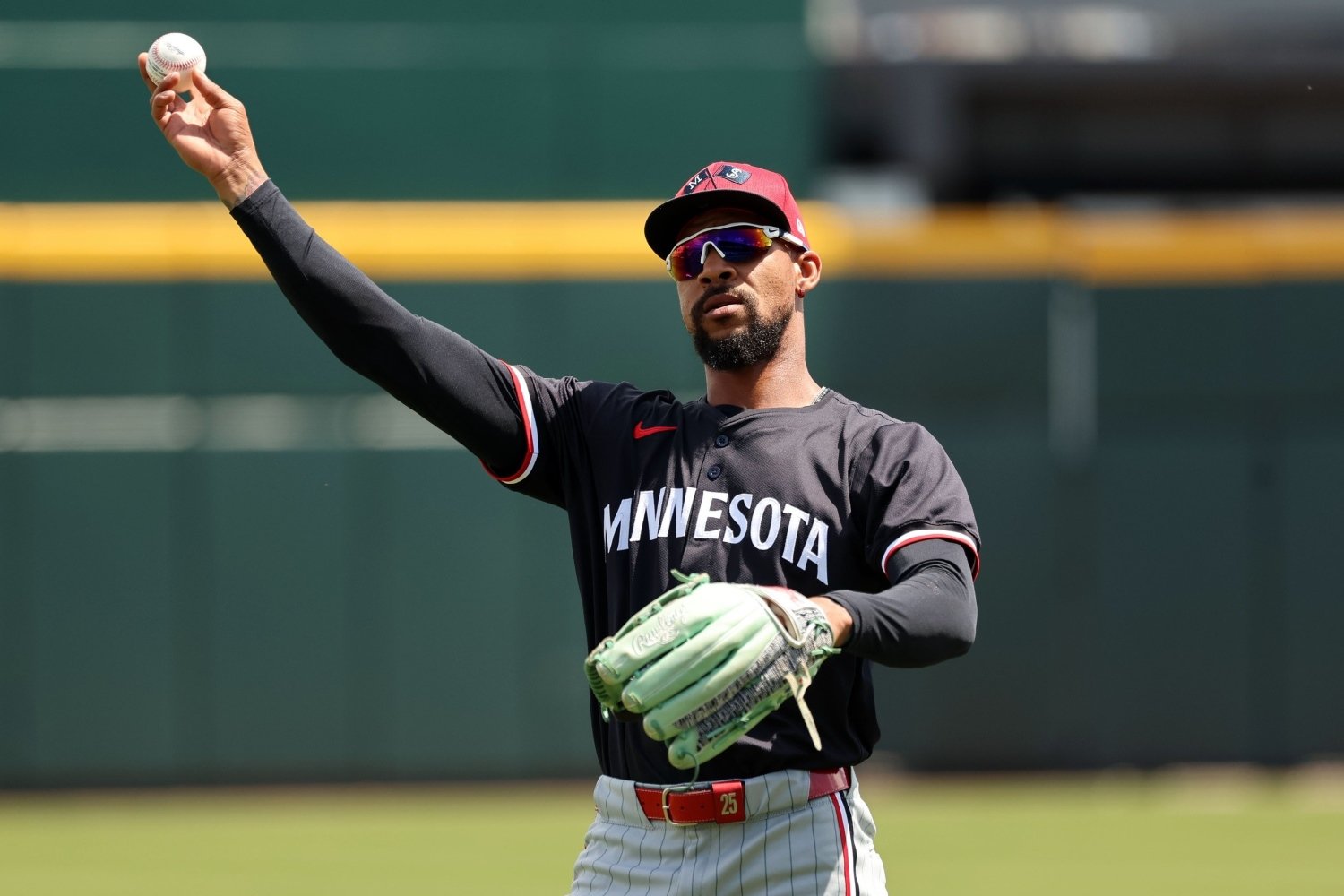 Welcome, welcome, everyone to the second annual Golden Grapefruit Awards show. We’ve finally made it through another spring training, so let’s take a moment to look back at some memorable moments and hand out some spring training awards. Every year, the same storylines tend to pop up, and fans consume them like animals. We had a great showing this year. Every predicted cliché had at least one qualifier, and many award winners shone magnificently, going above and beyond what the academy (Greggory and his cats) was looking for. Let’s get started! Miguel Sanó Memorial "Best Shape of his Life" Award: Byron Buxton We start our awards with a classic. Each year, someone in every camp shows up in what they or someone else can describe as “the best shape of his life.” Sometimes, several people show up in such a state. Some people show up in such a state several times. There was no runaway winner this year, although Sanó himself showed up to Angels camp having lost 60 pounds and made the team out of spring training. It was tempting to give the award to him, but those days are past us. Instead, the two candidates this year were Christian Vázquez, who allegedly lost eight pounds, and Byron Buxton, who showed up feeling younger than he had in years following plica surgery over the offseason. We’d all love to be in the shape we were in a few years ago, so this award will go to Buxton. Congrats Byron! Previous winners: José Miranda (2023) "Newest Pitch" Award: Joe Ryan There was a crowded field for this award, with at least four players showing up to camp with what could be called a “new pitch.” None of these pitchers may still be throwing their new pitches come September, but spring training is built on hope and optimism. Early in spring training, several pitchers showed up with an additional offering or a tweak. Pablo López introduced a fifth pitch that many were calling a cutter to pair with his fastball, changeup, sweeper, and curveball. Chris Paddack also added a cutter, while Louie Varland and Joe Ryan were working on sinkers or two-seamers. Frustratingly, it was unclear which of these pitches was the newest in camp, especially given that many of them were revamped versions of pitches they already threw, but then it happened. During the last weekend of camp, a new pitch popped up for Ryan, sitting around 90 with glove-side movement. He’s throwing a cutter, it would appear, and it was introduced days before Opening Day. If that’s not the newest pitch, I don’t know what is. Congrats on your repeat win, Joe Cool! Previous winners: Griffin Jax, Joe Ryan (2023) "Most Revamped Swing" Award: Brooks Lee Most years, this award would go to the player who spent the offseason working with a guru to fix a glaring hole in their swing, refine their mechanics, or build consistent timing. It’s often a little difficult to figure out who revamped their swing the most, as they’re always tinkering. This season, Brooks Lee, the Twins’ second-ranked prospect, showed up to camp understanding his own shortcomings: he’s struggled to hit lefties as a right-hander. Switch-hitting isn’t valuable if you still can’t hit lefties. His swings have never looked exactly the same, so this season, he has worked to make his righty swing match the lefty one better. Mr. Lee, good luck with the overhaul, and we’ll see you soon. Previous winners: Max Kepler (2023) "Weirdest Injury" Award: Pete Maki Although not a cliché, it seems that every year there is an inexplicable injury that can only be chalked up to spring training. Recall 2021, when Byron Buxton missed a few weeks due to a root canal after chipping his tooth while eating steak. Although Justin Topa hurting his knee covering the plate or Josh Staumont landing awkwardly in the bullpen are certainly odd ways to get injured, the award is going to pitching coach Pete Maki, who ruptured his bicep doing pullups. It's not every day a coach gets injured, so that’s definitely a weird one. Hopefully, he received our Get Well Soon balloon. Previous winners: Jordan Balazovic "Honey, Grab My Program" Award: Chris Williams Spring training, especially early in the year and late in games, features a rotating cast of characters more extensive than The Simpsons'. Non-roster invitees, prospects, and career minor leaguers are each given their turns in the Florida sun. Every year, a few prospects get their number called more than others, consistently sending fans scrambling to look up who No. 89 is. Only players who have never appeared in MLB and are not on the 40-man roster qualify for this award. Two candidates emerged: top prospect Brooks Lee, who led qualified players in at-bats (45); and Chris Williams, who was tied for the lead in games played (19) among all players in the organization. Most people know who Lee is, so we’ll give the award to Williams, who had 24 at-bats in 19 games. Previous winners: Andrew Bechtold (2023) "First Cliché Statement" Award: Carlos Correa This probably isn’t an upset. If you had to bet who would show up to spring training ready to fire off some clichés about loving the guys in the room and working hard, you'd have bet on Correa. Some might even say his ability to spout clichés is part of the reason he got his big contract. Last season, he provided a lecture about the importance of keeping in shape, and pointed out that the players can party when they’re 40. [Ed. note: I turn 35 this weekend. No, they absolutely can not. At least not the same way.] This year, Correa took a more reserved approach, with comments including “I do keep up with the videos that I get sent and see how guys are progressing and doing and you know, I could really tell that everybody was hungry and putting in the work to show up you're better this year, which will make us a better team.” Never change Carlos; we’ll see you next year. Previous winners: Carlos Correa (2023) "Grainiest Video" Award: Dan Hayes Finally, my favorite award—the media can’t help themselves, and we, as fans, will eat up whatever they give us. When baseball’s back, we need proof. Grainy videos taken through a fence at the beginning of camp are a spring training staple. Do-Hyoung Park won the award last year, but there have been rumblings that he has been chasing the award and intentionally taking poor videos (see below). We at the Golden Grapefruits disavow such behavior. Previous winners: Do-Hyoung Park That's our show. We were unable, again, to book any celebrities to present any of the awards. Maybe next year. We really should try actually asking them. We just figured they'd reach out. If you have John Mulaney's phone number, please drop it in the comments.
-
- 2
-
-

-
- joe ryan
- byron buxton
- (and 4 more)
-
They say that war never changes. WAR does change, as it’s a context-dependent stat, but baseball itself doesn't change much, either. Year in and year out, the same storylines surface in every spring training, as sunburnt media members struggle to produce material. Previous winners: Do-Hyoung Park That's our show. We were unable, again, to book any celebrities to present any of the awards. Maybe next year. We really should try actually asking them. We just figured they'd reach out. If you have John Mulaney's phone number, please drop it in the comments. View full article
