



Nick Nelson
-
Posts
8,327 -
Joined
-
Last visited
-
Days Won
56
Content Type
Profiles
News
Minnesota Twins Videos
2026 Minnesota Twins Top Prospects Ranking
2022 Minnesota Twins Draft Picks
Minnesota Twins Free Agent & Trade Rumors, Notes, & Tidbits
Guides & Resources
2023 Minnesota Twins Draft Picks
The Minnesota Twins Players Project
2024 Minnesota Twins Draft Picks
2025 Minnesota Twins Draft Pick Tracker
2026 Minnesota Twins Draft Tracker: Picks & Bonuses
Forums
Blogs
Events
Store
Downloads
Gallery
Everything posted by Nick Nelson
-

The Show Must Go On: Over the Hill
Nick Nelson replied to Nick Nelson's topic in Twins Daily Front Page News
Hmm, that's strange. Here's what you should see if you're logged in on desktop: I don't know that it shows up on the mobile version, which is an unfortunate bug. But for anyone who doesn't see the "Like This" button, feel free to submit your choice as a comment and it'll be counted equally! -
The Show Must Go On: Over the Hill
Nick Nelson replied to Nick Nelson's topic in Twins Daily Front Page News
Poor Chacin. Is anyone even gonna give him a pity vote? -
The Show Must Go On: Over the Hill
Nick Nelson replied to Nick Nelson's topic in Twins Daily Front Page News
OOTP is highly recommended for those seeking a more realistic simulation experience! That aspect kinda went out the window for us here when we signed Jordan Balazovic as a free agent before the season started haha -
The Show Must Go On: Over the Hill
Nick Nelson replied to Nick Nelson's topic in Twins Daily Front Page News
The game doesn't account for his rehab and delayed start, so he was available out of the gates. Although, in light of his performance, maybe they were accounting for it? If he was pitching with an only partially healed UCL then I feel a bit bad about my decision... but I stand by it. -
The Show Must Go On: Over the Hill
Nick Nelson replied to Nick Nelson's topic in Twins Daily Front Page News
Option 3: Press "Like This" on this comment if you want us to replace Rich Hill as fifth starter with Jhoulys Chacin, who's been merely okay at Triple-A but has a 69 rating. -
The Show Must Go On: Over the Hill
Nick Nelson replied to Nick Nelson's topic in Twins Daily Front Page News
Option 2: Press "Like This" on this comment if you want us to replace Rich Hill as fifth starter with Devin Smeltzer, who's 3-0 with a 2.86 ERA at Triple-A. -
The Show Must Go On: Over the Hill
Nick Nelson replied to Nick Nelson's topic in Twins Daily Front Page News
Option 1: Press "Like This" on this comment if you want us to replace Rich Hill as fifth starter with Randy Dobnak, who's rocking a 1.65 ERA as a long reliever for the Twins.- 17 replies
-
- 19
-

-
My friends, the time has come to pull the plug on a veteran starter in our rotation. This is a decision I must make unilaterally out of pure exasperation, but if you're willing, I will enlist your help in selecting a replacement. The latest update on our interactive 2020 Twins season, now reaching the end of April, lies ahead.To get caught up on what we're doing here, you can check out the introductory post in the series for an explanation of the premise and setup. But the quick version is this: We're playing a progressive simulated Twins season on MLB The Show 20 on PS4, and y'all are helping guide the ship. In each installment I'll update you on what's happened since the last, and put at least one key decision up for vote. Date In Game: 4/29/20 Team Record: 17-13 Leading OPS: Josh Donaldson (1.003 in 123 AB) Leading ERA (SP): Jake Odorizzi (2.95 in 35.2 IP) Leading ERA (RP): Zack Littell (0.00 in 11.0 IP) RESULTS Gm 21 vs DET: L 9-4 (Berrios 1.1 IP, 5 ER, L) Gm 22 vs DET: L 4-3 (Donaldson 3-for-5, HR) Gm 23 vs SEA: W 6-5 (Maeda 7 IP, 2 ER, W) Gm 24 vs SEA: W 6-1 (Arraez 3-for-4, 2 R) Gm 25 vs SEA: L 7-6 (Garver 2 HR, 5 RBI) Gm 26 vs SEA: W 6-0 (Berrios CG SO) Gm 27 vs BOS: L 2-0 (Odorizzi 7.1 IP, 1 ER, L) Gm 28 vs BOS: W 8-1 (Donaldson 3-for-4, HR, 3 RBI) Gm 29 vs BOS: W 9-5 (Cruz GS) Gm 30 vs LAD: W 5-3 (Berrios 7 IP, 3 ER) AL CENTRAL STANDINGS Download attachment: alcstandings42920.jpeg THE RUNDOWN I gotta say, I'm a little surprised. And maybe a little disappointed? In our last edition, I proposed a change on the bench as we looked to replace Ehire Adrianza's redundant presence with a speedy outfield backup. The options were to sign a free agent (Rajai Davis being the favorite), or promote an internal option from Triple-A. And by more than a 3-to-1 margin, you guys picked... internal promotion. Typical cheap Pohlads. In all seriousness, I applaud the very rational decision. We promoted Jimmy Kerrigan, who seemed the best fit as a righty-swinging outfielder with good speed. The 26-year-old made his MLB debut on the day he was called up, filling in for a scuffling Byron Buxton in center and finishing 1-for-4 as the No. 9 hitter in a 9-4 loss to Detroit. Kerrigan – who becomes the first Twin since Augie Ojeda in 2004 to sport No. 4 on his uniform – will continue to serve as a late-inning bench option, and very sporadic starter. Download attachment: kerriganprofile.jpeg Our last 10 games brought a winning record, with plenty of ups and downs. Jose Berrios started the slate off with a thud, coughing up five earned runs before we had to give him the hook with one out in the second. For whatever reason, our rotation-fronter just seemed off. In his 1 1/3 innings, he allowed five hits and a walk without a strikeout. Luckily, Berrios would bounce back in a big way five days later, tossing a complete game shutout against the Mariners to seal a 3-1 series victory. The righty actually made three starts in these 10 games, adding seven innings of three-run ball against Los Angeles in the final contest we simmed. That's because I made the executive decision to skip Rich Hill's latest start. We'll get to that later. Through 30 games, the Twins are 17-13, still chasing the Cleveland Indians and their sizable division lead, which is buoyed by an 11-0 start to the season. When I next check in, we'll be about one-quarter of the way through the season, so at that point I'll give you all a full statistical breakdown across the roster. But for now, here are the notable performers. WHO'S HOT Josh Donaldson is officially going ham. He leads the Twins in home runs with 11, well ahead of second-place Miguel Sano (7). Among AL hitters, only J.D. Martinez (15) and Eloy Jimenez (13) have more long balls. Donaldson is slashing .309/.393/.610 with 24 walks and 16 strikeouts in 140 PA. The newly signed slugger is a standout, but basically the entire offense is scorching. Nelson Cruz is slashing .304/.380/.500 with a team-leading 25 RBIs. Miguel Sano is mashing to the tune of .314/.408/.569 with seven homers and 23 RBIs. Leadoff man Max Kepler is rocking a .933 OPS, and his 25 runs scored rank second to only Francisco Lindor (28) in the AL. Luis Arraez is batting .310 with an even 11-to-11 K/BB ratio, which probably doesn't surprise anyone, but how about this: he already has four homers in 87 at-bats, and is slugging .529. Juiced ball? Who needs it? In the rotation, Berrios's overall numbers (4.69 ERA, 1.49 WHIP in 40.1 IP) have suffered from a of couple clunkers, but he has five quality starts in seven turns. Meanwhile, Jake Odorizzi has looked every bit an ace, turning in a 2.95 ERA, 1.03 WHIP and 42-to-9 K/BB ratio in 39 2/3 IP. Kenta Maeda joins him as a sturdy fixture, with a shiny 4-0 record to go along with his 3.03 ERA in 35 2/3 IP. Taylor Rogers is leading the bullpen with a 1.13 ERA, 0.94 WHIP and 16-to-3 K/BB ratio through 16 frames. He's 7-for-8 on save chances. Zack Littell still hasn't allowed a run through 11 innings. Tyler Clippard (1.64 ERA) and Tyler Duffey (2.25) are getting 'er done as well. WHO'S NOT Byron Buxton, sadly, continues to struggle immensely. Through 106 PAs, he's slashing .183/.260/.237 with zero homers, five RBIs, and nine runs scored. The production looks especially bad when compared to his peers in the Minnesota lineup, but it's lackluster from any angle. On the bright side, I've chosen to take an aggressive approach with his 99-rated speed on the bases, where his nine steals (on 12 attempts) lead the American League. While the bullpen's mostly been good, two key late-inning cogs have had their issues. Trevor May (5.23 ERA and 1.94 WHIP in 10.1 IP) has been plagued by control issues, with six walks to go along with his 12 Ks. Meanwhile, Sergio Romo's control has been impeccable (7-to-0 K/BB in 10 IP) but he's been haunted by the long ball, with four homers allowed and a 5.23 ERA. And then there is Rich Hill. As you may recall, I put his removal from the rotation up for vote after 10 games, because his first two starts were so brutally bad. In responsible fashion, you all shot down that notion overwhelmingly, opting to show patience with the reputed southpaw. Sure enough, he showed a bit of improvement over the following couples starts. But in his latest turn... the wheels came off entirely. Hill's fifth start opened up like this: hit, home run, hit, error, home run. With five runs and zero outs on the board, I had no chance but to yank him and make it a bullpen game. This egregiously poor performance ballooned his ERA to 9.78 and his WHIP to 1.97, with eight homers allowed in 19 1/3 innings. What's really frustrating is that the offense came to play in this game – led by Mitch Garver homering twice and driving in five – to nearly pull out a victory, but we lost 7-6 in 10 innings. With any kind of competent effort from the starting pitcher, we probably win that game and sweep Seattle. Hill's sixth start was scheduled to open the Los Angeles Dodgers series, which most recently got underway, but I couldn't bear the thought of sending Hill into Chavez Ravine to face his stacked former team. Since the series followed on off day, I skipped Hill's start and turned the rotation over instead. And I'm sorry to say, but that's it for Hill. Can't do it anymore. As a 40-year-old on a one-year deal, and with several viable replacement options available, I just can't see a compelling reason to hang on anymore. DECISION TIME: WHO SHOULD REPLACE RICH HILL AS FIFTH STARTER? My first instinct would be to say let's give top prospect Jordan Balazovic, who's been working in a long relief role out of the bullpen, a shot to find some traction in the MLB rotation at age 21, cuz that'd be fun. He actually does have the highest overall rating (74) of anyone we'll discuss here. But his performance (7.31 ERA and 2.00 WHIP in 16 innings) doesn't remotely justify a promotion. So we'll consider three worthy options, and y'all can vote for your preferred choice in the comments. Candidate #1: Randy Dobnak, RHP While he and Balazovic are both operating as long relievers out of our bullpen, Dobnak's been the higher-leverage option, and he has been absolutely tremendous. The 25-year-old has picked up right where he left off in 2019, posting a 1.65 ERA through 16 1/3 innings. However, that shiny number does conspicuously come attached to a 7-to-8 K/BB ratio and 4.53 FIP. Download attachment: dobnakprofile.jpeg Candidate #2: Devin Smeltzer, LHP Smeltzer would've been pitching alongside Dobnak in the MLB bullpen, but got bumped to Triple-A before Opening Day when we decided to sign Balazovic (who was oddly available in free agency). The left-hander has been Rochester's ace, with a 3-0 record, 2.86 ERA and 19-to-4 K/BB ratio through 22 innings in four starts. Download attachment: smeltzerprofile.jpeg Candidate #3: Jhoulys Chacin, RHP His case isn't especially great on the surface, as he's 0-3 with a 3.60 ERA and 1.65 WHIP at Triple-A. But the argument for him is this: he's an established veteran who's mostly been effective (ERA was 2.25 before he gave up 4 ER in 4 IP in his last start), he has a higher overall rating than Smeltzer (69 vs. 68), and his stamina rating is significantly superior to Dobnak (75 vs. 66) so he'd likely put less burden on the bullpen. Download attachment: chacinprofile.jpeg Scroll down to the comments and make your pick! COMING UP 4/29: @ LAD 5/1: @ LAA 5/2: @ LAA 5/3: @ LAA 5/4: vs. SF 5/5: vs. SF 5/6: vs. SF PREVIOUS INSTALLMENTS Part 1: We Can Build This Thing Together (0-0) Part 2: 10 Games In, 6 Games Back (4-6) Part 3: Roaring Back (11-9) MORE FROM TWINS DAILY — Latest Twins coverage from our writers — Recent Twins discussion in our forums — Follow Twins Daily via Twitter, Facebook or email Click here to view the article
-
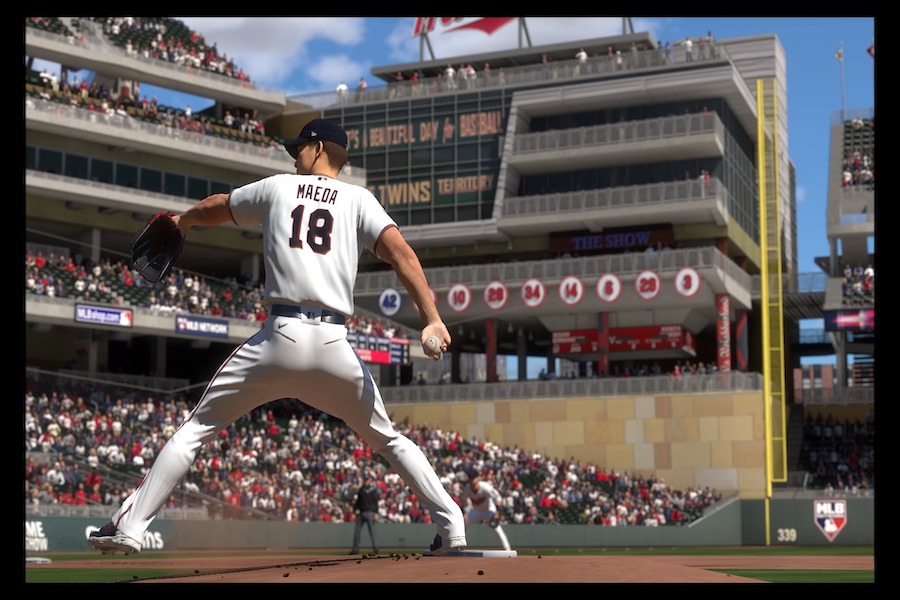 To get caught up on what we're doing here, you can check out the introductory post in the series for an explanation of the premise and setup. But the quick version is this: We're playing a progressive simulated Twins season on MLB The Show 20 on PS4, and y'all are helping guide the ship. In each installment I'll update you on what's happened since the last, and put at least one key decision up for vote. Date In Game: 4/29/20 Team Record: 17-13 Leading OPS: Josh Donaldson (1.003 in 123 AB) Leading ERA (SP): Jake Odorizzi (2.95 in 35.2 IP) Leading ERA (RP): Zack Littell (0.00 in 11.0 IP) RESULTS Gm 21 vs DET: L 9-4 (Berrios 1.1 IP, 5 ER, L) Gm 22 vs DET: L 4-3 (Donaldson 3-for-5, HR) Gm 23 vs SEA: W 6-5 (Maeda 7 IP, 2 ER, W) Gm 24 vs SEA: W 6-1 (Arraez 3-for-4, 2 R) Gm 25 vs SEA: L 7-6 (Garver 2 HR, 5 RBI) Gm 26 vs SEA: W 6-0 (Berrios CG SO) Gm 27 vs BOS: L 2-0 (Odorizzi 7.1 IP, 1 ER, L) Gm 28 vs BOS: W 8-1 (Donaldson 3-for-4, HR, 3 RBI) Gm 29 vs BOS: W 9-5 (Cruz GS) Gm 30 vs LAD: W 5-3 (Berrios 7 IP, 3 ER) AL CENTRAL STANDINGS THE RUNDOWN I gotta say, I'm a little surprised. And maybe a little disappointed? In our last edition, I proposed a change on the bench as we looked to replace Ehire Adrianza's redundant presence with a speedy outfield backup. The options were to sign a free agent (Rajai Davis being the favorite), or promote an internal option from Triple-A. And by more than a 3-to-1 margin, you guys picked... internal promotion. Typical cheap Pohlads. In all seriousness, I applaud the very rational decision. We promoted Jimmy Kerrigan, who seemed the best fit as a righty-swinging outfielder with good speed. The 26-year-old made his MLB debut on the day he was called up, filling in for a scuffling Byron Buxton in center and finishing 1-for-4 as the No. 9 hitter in a 9-4 loss to Detroit. Kerrigan – who becomes the first Twin since Augie Ojeda in 2004 to sport No. 4 on his uniform – will continue to serve as a late-inning bench option, and very sporadic starter. Our last 10 games brought a winning record, with plenty of ups and downs. Jose Berrios started the slate off with a thud, coughing up five earned runs before we had to give him the hook with one out in the second. For whatever reason, our rotation-fronter just seemed off. In his 1 1/3 innings, he allowed five hits and a walk without a strikeout. Luckily, Berrios would bounce back in a big way five days later, tossing a complete game shutout against the Mariners to seal a 3-1 series victory. The righty actually made three starts in these 10 games, adding seven innings of three-run ball against Los Angeles in the final contest we simmed. That's because I made the executive decision to skip Rich Hill's latest start. We'll get to that later. Through 30 games, the Twins are 17-13, still chasing the Cleveland Indians and their sizable division lead, which is buoyed by an 11-0 start to the season. When I next check in, we'll be about one-quarter of the way through the season, so at that point I'll give you all a full statistical breakdown across the roster. But for now, here are the notable performers. WHO'S HOT Josh Donaldson is officially going ham. He leads the Twins in home runs with 11, well ahead of second-place Miguel Sano (7). Among AL hitters, only J.D. Martinez (15) and Eloy Jimenez (13) have more long balls. Donaldson is slashing .309/.393/.610 with 24 walks and 16 strikeouts in 140 PA. The newly signed slugger is a standout, but basically the entire offense is scorching. Nelson Cruz is slashing .304/.380/.500 with a team-leading 25 RBIs. Miguel Sano is mashing to the tune of .314/.408/.569 with seven homers and 23 RBIs. Leadoff man Max Kepler is rocking a .933 OPS, and his 25 runs scored rank second to only Francisco Lindor (28) in the AL. Luis Arraez is batting .310 with an even 11-to-11 K/BB ratio, which probably doesn't surprise anyone, but how about this: he already has four homers in 87 at-bats, and is slugging .529. Juiced ball? Who needs it? In the rotation, Berrios's overall numbers (4.69 ERA, 1.49 WHIP in 40.1 IP) have suffered from a of couple clunkers, but he has five quality starts in seven turns. Meanwhile, Jake Odorizzi has looked every bit an ace, turning in a 2.95 ERA, 1.03 WHIP and 42-to-9 K/BB ratio in 39 2/3 IP. Kenta Maeda joins him as a sturdy fixture, with a shiny 4-0 record to go along with his 3.03 ERA in 35 2/3 IP. Taylor Rogers is leading the bullpen with a 1.13 ERA, 0.94 WHIP and 16-to-3 K/BB ratio through 16 frames. He's 7-for-8 on save chances. Zack Littell still hasn't allowed a run through 11 innings. Tyler Clippard (1.64 ERA) and Tyler Duffey (2.25) are getting 'er done as well. WHO'S NOT Byron Buxton, sadly, continues to struggle immensely. Through 106 PAs, he's slashing .183/.260/.237 with zero homers, five RBIs, and nine runs scored. The production looks especially bad when compared to his peers in the Minnesota lineup, but it's lackluster from any angle. On the bright side, I've chosen to take an aggressive approach with his 99-rated speed on the bases, where his nine steals (on 12 attempts) lead the American League. While the bullpen's mostly been good, two key late-inning cogs have had their issues. Trevor May (5.23 ERA and 1.94 WHIP in 10.1 IP) has been plagued by control issues, with six walks to go along with his 12 Ks. Meanwhile, Sergio Romo's control has been impeccable (7-to-0 K/BB in 10 IP) but he's been haunted by the long ball, with four homers allowed and a 5.23 ERA. And then there is Rich Hill. As you may recall, I put his removal from the rotation up for vote after 10 games, because his first two starts were so brutally bad. In responsible fashion, you all shot down that notion overwhelmingly, opting to show patience with the reputed southpaw. Sure enough, he showed a bit of improvement over the following couples starts. But in his latest turn... the wheels came off entirely. Hill's fifth start opened up like this: hit, home run, hit, error, home run. With five runs and zero outs on the board, I had no chance but to yank him and make it a bullpen game. This egregiously poor performance ballooned his ERA to 9.78 and his WHIP to 1.97, with eight homers allowed in 19 1/3 innings. What's really frustrating is that the offense came to play in this game – led by Mitch Garver homering twice and driving in five – to nearly pull out a victory, but we lost 7-6 in 10 innings. With any kind of competent effort from the starting pitcher, we probably win that game and sweep Seattle. Hill's sixth start was scheduled to open the Los Angeles Dodgers series, which most recently got underway, but I couldn't bear the thought of sending Hill into Chavez Ravine to face his stacked former team. Since the series followed on off day, I skipped Hill's start and turned the rotation over instead. And I'm sorry to say, but that's it for Hill. Can't do it anymore. As a 40-year-old on a one-year deal, and with several viable replacement options available, I just can't see a compelling reason to hang on anymore. DECISION TIME: WHO SHOULD REPLACE RICH HILL AS FIFTH STARTER? My first instinct would be to say let's give top prospect Jordan Balazovic, who's been working in a long relief role out of the bullpen, a shot to find some traction in the MLB rotation at age 21, cuz that'd be fun. He actually does have the highest overall rating (74) of anyone we'll discuss here. But his performance (7.31 ERA and 2.00 WHIP in 16 innings) doesn't remotely justify a promotion. So we'll consider three worthy options, and y'all can vote for your preferred choice in the comments. Candidate #1: Randy Dobnak, RHP While he and Balazovic are both operating as long relievers out of our bullpen, Dobnak's been the higher-leverage option, and he has been absolutely tremendous. The 25-year-old has picked up right where he left off in 2019, posting a 1.65 ERA through 16 1/3 innings. However, that shiny number does conspicuously come attached to a 7-to-8 K/BB ratio and 4.53 FIP. Candidate #2: Devin Smeltzer, LHP Smeltzer would've been pitching alongside Dobnak in the MLB bullpen, but got bumped to Triple-A before Opening Day when we decided to sign Balazovic (who was oddly available in free agency). The left-hander has been Rochester's ace, with a 3-0 record, 2.86 ERA and 19-to-4 K/BB ratio through 22 innings in four starts. Candidate #3: Jhoulys Chacin, RHP His case isn't especially great on the surface, as he's 0-3 with a 3.60 ERA and 1.65 WHIP at Triple-A. But the argument for him is this: he's an established veteran who's mostly been effective (ERA was 2.25 before he gave up 4 ER in 4 IP in his last start), he has a higher overall rating than Smeltzer (69 vs. 68), and his stamina rating is significantly superior to Dobnak (75 vs. 66) so he'd likely put less burden on the bullpen. Scroll down to the comments and make your pick! COMING UP 4/29: @ LAD 5/1: @ LAA 5/2: @ LAA 5/3: @ LAA 5/4: vs. SF 5/5: vs. SF 5/6: vs. SF PREVIOUS INSTALLMENTS Part 1: We Can Build This Thing Together (0-0) Part 2: 10 Games In, 6 Games Back (4-6) Part 3: Roaring Back (11-9) MORE FROM TWINS DAILY — Latest Twins coverage from our writers — Recent Twins discussion in our forums — Follow Twins Daily via Twitter, Facebook or email
 -
The Twins are loaded on offense and in the bullpen. These are clear areas of strength. The rotation stands out as a pivotal factor in determining whether this is a division-winning team or a championship-caliber team. So let's dissect this unit from front to back.Projected Rotation: Jose Berrios, Jake Odorizzi, Kenta Maeda, Homer Bailey, Jhoulys Chacin Depth: Michael Pineda, Rich Hill, Randy Dobnak, Devin Smeltzer, Lewis Thorpe Prospects: Jordan Balazovic, Jhoan Duran, Blayne Enlow THE GOOD The Twins will be at least three-deep with upper-tier starters out of the gates. Jose Berrios and Jake Odorizzi were All-Stars last year and both ranked among MLB's top 20 starting pitchers in fWAR. Kenta Maeda has a track record as one of the game's premium strikeout pitchers, and was a longtime cog for the always-dominant Dodgers. These are thoroughbreds, and Minnesota's sophisticated coaching infrastructure increases the likelihood of optimal output. As much as folks want to treat last year's rotation as a crippling weak point that doomed the Twins in October, their starters were collectively respectable in 2019. They ranked seventh among MLB teams in fWAR, 11th in ERA, and eighth in FIP. Those numbers were dragged down significantly by Martin Perez and his 4.99 ERA in 29 starts. He's gone, and it's tough to imagine any replacement coming close to his level of ineffectiveness. Kyle Gibson too was a liability down the stretch, diminished by his physical ailment, and he also has moved on. Tentatively slated to replace them in the back half of the rotation are veteran free agent signings Homer Bailey and Jhoulys Chacin. Each one brings a certain element of intrigue: Bailey made major strides late last year with a weaponized splitter, and Chacin has a better career ERA+ than Berrios, Odorizzi and Maeda. That said, the Twins are not beholden to either back-end option, least of all Chacin with his non-guaranteed contract. There are plenty of capable arms vying to take their places, not counting the eventual arrivals of front-end talents in Michael Pineda and Rich Hill. Randy Dobnak pitched exceedingly well as a rookie during the stretch run last year, and made a start in the playoffs. Devin Smeltzer posted a 3.86 ERA over 49 innings, looking very much up to the task as a fill-in. Lewis Thorpe offers the most upside of the three and flashed big strikeout stuff during a bumpy debut. Then you've got top prospects Jordan Balazovic and Jhoan Duran, who are both nearing the point of a potential call-up. I can't ever remember a time where the Twins were this deep on quality options. Even back in the glory days, when boasting one of the league's top overall rotations led by Johan Santana, Minnesota always seemed to have blatant weakness on the back end, with a lack of high-caliber reinforcements to step in. Obviously nothing is guaranteed with the likes of Bailey, or Chacin, or the various mostly-untested minor leaguers, but there are a lot of quality options in this mix, providing the Twins with plentiful contingencies in the inevitability of health and performance setbacks. THE BAD The Twins might now have more depth than those classic Santana-led rotations, but they what they don't have is a Santana. Minnesota has won two of its 21 postseason contests dating back to 2003, and both of those games were started by Johan, underscoring the vital importance of a shutdown No. 1 starter. It's not clear the Twins have one. It's also not clear they don't; Berrios and Odorizzi both bordered on that designation in 2019, and neither has turned 30 yet. Maeda has frequently been dominant on the big stage, and has qualities that put him into the potential ace discussion. Hill has put up stellar numbers when on the mound. Berrios in particular is interesting. He's still only 25. He and the team are fully focused on making the transition from excellent to elite, which would require a sturdier second half. One wonders how a shortened season might affect a pitcher who owned a 2.80 ERA through the end of July last year. But, unless and until such a fortuitous development takes place, the Twins are plainly lacking a prototypical ace to match their contending counterparts in New York and Houston. This may not greatly hinder them in their goal of winning the division, but it's certainly a hurdle for getting over the hump in October (November, December... what have you). THE BOTTOM LINE The Twins have put themselves in very good position with starting pitching. They brought back key pieces from last year's group by re-signing Odorizzi and Pineda, added veteran depth with Bailey and Chacin, placed an exciting wild card in the deck with Hill, and found their impact pitching in the form of Maeda. This plan might not live up to the hopes of those who clamored for the acquisition of a clear-cut No. 1 via trade or free agency, but such assets are in short supply, and Minnesota's front office did a helluva job improvising. This is the deepest Twins starting pitching corps I can ever remember, complete with legitimate upside and high-caliber reinforcements. It's well crafted to support an elite offense and propel the team where it needs to go – especially if the rotation's burden is lessened by a robust bullpen that carries much of the load. ~~~ Twins 2020 Position Analysis: Catcher Twins 2020 Position Analysis: First Base Twins 2020 Position Analysis: Second Base Twins 2020 Position Analysis: Third Base Twins 2020 Position Analysis: Shortstop Twins 2020 Position Analysis: Left Field Twins 2020 Position Analysis: Center Field Twins 2020 Position Analysis: Right Field Twins 2020 Position Analysis: Designated Hitter MORE FROM TWINS DAILY — Latest Twins coverage from our writers — Recent Twins discussion in our forums — Follow Twins Daily via Twitter, Facebook or email Click here to view the article
- 5 replies
-
- 1
-
-
- jose berrios
- jake odorizzi
- (and 1 more)
-
 Projected Rotation: Jose Berrios, Jake Odorizzi, Kenta Maeda, Homer Bailey, Jhoulys Chacin Depth: Michael Pineda, Rich Hill, Randy Dobnak, Devin Smeltzer, Lewis Thorpe Prospects: Jordan Balazovic, Jhoan Duran, Blayne Enlow THE GOOD The Twins will be at least three-deep with upper-tier starters out of the gates. Jose Berrios and Jake Odorizzi were All-Stars last year and both ranked among MLB's top 20 starting pitchers in fWAR. Kenta Maeda has a track record as one of the game's premium strikeout pitchers, and was a longtime cog for the always-dominant Dodgers. These are thoroughbreds, and Minnesota's sophisticated coaching infrastructure increases the likelihood of optimal output. As much as folks want to treat last year's rotation as a crippling weak point that doomed the Twins in October, their starters were collectively respectable in 2019. They ranked seventh among MLB teams in fWAR, 11th in ERA, and eighth in FIP. Those numbers were dragged down significantly by Martin Perez and his 4.99 ERA in 29 starts. He's gone, and it's tough to imagine any replacement coming close to his level of ineffectiveness. Kyle Gibson too was a liability down the stretch, diminished by his physical ailment, and he also has moved on. Tentatively slated to replace them in the back half of the rotation are veteran free agent signings Homer Bailey and Jhoulys Chacin. Each one brings a certain element of intrigue: Bailey made major strides late last year with a weaponized splitter, and Chacin has a better career ERA+ than Berrios, Odorizzi and Maeda. That said, the Twins are not beholden to either back-end option, least of all Chacin with his non-guaranteed contract. There are plenty of capable arms vying to take their places, not counting the eventual arrivals of front-end talents in Michael Pineda and Rich Hill. Randy Dobnak pitched exceedingly well as a rookie during the stretch run last year, and made a start in the playoffs. Devin Smeltzer posted a 3.86 ERA over 49 innings, looking very much up to the task as a fill-in. Lewis Thorpe offers the most upside of the three and flashed big strikeout stuff during a bumpy debut. Then you've got top prospects Jordan Balazovic and Jhoan Duran, who are both nearing the point of a potential call-up. I can't ever remember a time where the Twins were this deep on quality options. Even back in the glory days, when boasting one of the league's top overall rotations led by Johan Santana, Minnesota always seemed to have blatant weakness on the back end, with a lack of high-caliber reinforcements to step in. Obviously nothing is guaranteed with the likes of Bailey, or Chacin, or the various mostly-untested minor leaguers, but there are a lot of quality options in this mix, providing the Twins with plentiful contingencies in the inevitability of health and performance setbacks. THE BAD The Twins might now have more depth than those classic Santana-led rotations, but they what they don't have is a Santana. Minnesota has won two of its 21 postseason contests dating back to 2003, and both of those games were started by Johan, underscoring the vital importance of a shutdown No. 1 starter. It's not clear the Twins have one. It's also not clear they don't; Berrios and Odorizzi both bordered on that designation in 2019, and neither has turned 30 yet. Maeda has frequently been dominant on the big stage, and has qualities that put him into the potential ace discussion. Hill has put up stellar numbers when on the mound. Berrios in particular is interesting. He's still only 25. He and the team are fully focused on making the transition from excellent to elite, which would require a sturdier second half. One wonders how a shortened season might affect a pitcher who owned a 2.80 ERA through the end of July last year. But, unless and until such a fortuitous development takes place, the Twins are plainly lacking a prototypical ace to match their contending counterparts in New York and Houston. This may not greatly hinder them in their goal of winning the division, but it's certainly a hurdle for getting over the hump in October (November, December... what have you). THE BOTTOM LINE The Twins have put themselves in very good position with starting pitching. They brought back key pieces from last year's group by re-signing Odorizzi and Pineda, added veteran depth with Bailey and Chacin, placed an exciting wild card in the deck with Hill, and found their impact pitching in the form of Maeda. This plan might not live up to the hopes of those who clamored for the acquisition of a clear-cut No. 1 via trade or free agency, but such assets are in short supply, and Minnesota's front office did a helluva job improvising. This is the deepest Twins starting pitching corps I can ever remember, complete with legitimate upside and high-caliber reinforcements. It's well crafted to support an elite offense and propel the team where it needs to go – especially if the rotation's burden is lessened by a robust bullpen that carries much of the load. ~~~ Twins 2020 Position Analysis: Catcher Twins 2020 Position Analysis: First Base Twins 2020 Position Analysis: Second Base Twins 2020 Position Analysis: Third Base Twins 2020 Position Analysis: Shortstop Twins 2020 Position Analysis: Left Field Twins 2020 Position Analysis: Center Field Twins 2020 Position Analysis: Right Field Twins 2020 Position Analysis: Designated Hitter MORE FROM TWINS DAILY — Latest Twins coverage from our writers — Recent Twins discussion in our forums — Follow Twins Daily via Twitter, Facebook or email
 -
The Show Must Go On: Roaring Back
Nick Nelson replied to Nick Nelson's topic in Twins Daily Front Page News
Couldn't agree more. Don't even get me started on EA Sports destroying the NFL 2K franchise and leaving us with crappy Madden as our only football VG option. Sore subject haha -
The Show Must Go On: Roaring Back
Nick Nelson replied to Nick Nelson's topic in Twins Daily Front Page News
I run through them in "Quick Manage" mode, which basically means every AB is simmed but I control substitutions and bullpen moves. It seems to give us fairly reasonable results, and takes my (lack of) skills out of the equation. Yeah, I've seen some funky glitches in the gameplay itself. But for the most part I think Sony does a nice job with the game. -
The Show Must Go On: Roaring Back
Nick Nelson replied to Nick Nelson's topic in Twins Daily Front Page News
I've been thinking on an easy way to present them. Could just take screenshots of the stat screens in the game but they turn out so fuzzy and hard to read. Perhaps for the next edition I'll just take the time to get them all typed out, since it'll be a good 1/5th of the season checkpoint at ~30 games in the book. -
The Show Must Go On: Roaring Back
Nick Nelson replied to Nick Nelson's topic in Twins Daily Front Page News
Ha, I had the same thought. If they're made-up players we might as well make up their backstories. I envision Jacob Barone as the grown-up son of "Everybody Loves Raymond" sportswriter Ray Barone -
The Show Must Go On: Roaring Back
Nick Nelson replied to Nick Nelson's topic in Twins Daily Front Page News
Option 2: Press "Like This" on this comment if you want us to replace Ehire Adrianza with a free agent from the open market. Rajai Davis stands out as the best fit to me, though Peter Bourjos also is interesting. Feel free to name your specific choice below. -
The Show Must Go On: Roaring Back
Nick Nelson replied to Nick Nelson's topic in Twins Daily Front Page News
Option 1: Press "Like This" on this comment if you want us to replace Ehire Adrianza on the bench with an internal option from Triple-A. I lean toward Joe Kerrigan or LaMonte Wade, Jr., but will listen on other ideas.- 12 replies
-
- 13
-
-
With another 10 games knocked out in our interactive simulated 2020 Twins season, the boys shook off a slow start to surge back above .500, chipping away at their early deficit in the Central standings. Read on to learn what's happened since our last update, and to weigh in on our next move.To get caught up on what we're doing here, you can check out the first introductory post in the series for an explanation of the premise and setup. But the quick version is this: We're playing a progressive simulated Twins season on MLB The Show 20 on PS4, and y'all are helping guide the ship. In each installment I'll update you on what's happened since the last, and put at least one key decision up for vote. Date In Game: 4/18/20 Team Record: 11-9 Leading OPS: Max Kepler (.972 in 40 AB) Leading ERA (SP): Jake Odorizzi (2.73 in 26.1 IP) Leading ERA (RP): Zack Littell (0.00 in 6.2 IP) RESULTS Gm 11 vs CLE: L 8-7 (Berrios 3.0 IP, 7 ER, L) Gm 12 vs CLE: W 4-1 (Odorizzi 8.2 IP, 1 ER, 9 K, W) Gm 13: vs CLE: W 8-5 (Sano 2-for-4, HR, 3 RBI) Gm 14: @ CWS: L 11-10 (Cruz and Garver 2 HR each) Gm 15: @ CWS: W 7-2 (Sano 2-for-3, HR, 2 RBI) Gm 16: @ CWS: W 13-4 (Rosario 3-for-5, HR, 5 RBI) Gm 17: @ TOR: W 1-0 (Odorizzi 7.0 IP, 0 ER, 7 K, W) Gm 18: @ TOR: W 6-3 (Avila 3-for-4, 2 HR, 4 RBI) Gm 19: @ TOR: L 6-3 (Romo 0.1 IP, 2 HR allowed, L) Gm 20: vs DET: W 8-7 (Polanco walk-off 2-R HR) AL CENTRAL STANDINGS Download attachment: alcstandings41820.jpeg THE RUNDOWN First, and foremost: we managed to slow down Cleveland a bit. When last we checked in, the Twins found themselves in a big early hole. Their 4-6 start was countered by a perfect 10-0 from the top division rivals, who were just arriving in town for a three-game set. Cleveland's red-hot season-opening run extended to 11-0 with an 8-7 win in the first tilt at Target Field, which saw Jose Berrios labor through three innings (9 H, 4 BB, 7 ER) in his worst start of the young season. By now the Indians were halfway to matching their 22-game streak from 2017, right off the bat. Yeesh. Luckily, the Twins were finally ready to get hot. They took the last two against Cleveland at home, a pair of three-run victories. Jake Odorizzi led the way in the first, flirting with a complete game but settling for 8 2/3 innings and a W. Then it was off to Guaranteed Rate Field in Chicago, where the offense flourished, pushing across 30 runs in three games to take the series. In our last installment, readers were decisive in voting their preference to stick with starter Rich Hill despite his sluggish start. That decision paid dividends in his next turn; Hill put forth six innings of two-run ball against the White Sox, picking up his first win. The Twins followed up by taking two of three from the Blue Jays in Toronto. Once again Odorizzi was spectacular here, tossing seven scoreless frames before giving way to Taylor Rogers for a two-inning save for a 1-0 victory in the series clincher. That was perhaps the team's most impressive effort of the season up until the final one we simulated in this batch. Returning home to face the Tigers and looking to stay above .500, Hill was building upon his turnaround. He'd navigated four shutout innings before everything collapsed in the fifth, where he was charged with five earned runs, putting his club in 5-1 hole. But our Twins weren't gonna go quietly. They rallied for three runs in the sixth and added two more in the seventh to take the lead. Detroit battled back with a run apiece against Tyler Duffey and Taylor Rogers in the eighth and ninth, putting Minnesota's back up against the wall, down 7-6 heading into the last half-inning. Luckily, Jorge Polanco was up for the challenge. His fourth hit of the day was a walk-off, two-run homer against Detroit closer Joe Jimenez. The Twins sit at 11-9 after winning seven of 10 in this slate, and we've picked up 1.5 games on the Indians, who cooled down with a 5-5 showing. WHO'S HOT Odorizzi looks right now much like he did during that untouchable stretch in the early portion of 2019. Across his two latest starts, he allowed one run over 15 2/3 innings, with a 16-to-4 K/BB ratio. Take out the clunker in his second outing of the season, at Seattle (3.2 IP, 6 ER), and his 2.73 overall ERA drops to 0.74. In the bullpen, Zack Littell has yet to allow a run through 6 2/3 innings. Randy Dobnak is getting the job done in long relief, with a 1.59 ERA in 11 1/3 frames (conspicuously accompanied by a 3-to-5 K/BB ratio). Taylor Rogers has been leaned on heavily, appearing 11 times through 20 games, and he has come through with a 0.82 ERA, 1.00 WHIP, and five saves. The offense has also been very good, as hoped. Eight of the nine regulars currently have an OPS above .800, with Max Kepler's .962 (.333/.398/.564) from the leadoff spot pacing the lineup. Josh Donaldson's seven home runs tie him with Randal Grichuk for sixth in the AL. The hottest hitter during this latest stretch, though, was Miguel Sano, who went 15-for-32 with two homers, two doubles, and seven RBIs in his eight starts. Sano's 17 RBIs lead the team and rank seventh in the AL. WHO'S NOT Byron Buxton is the lone laggard in a lineup that's otherwise been incredibly productive. He's been unable to find his rhythm and is slashing just .172/.250/.250 with 18 strikeouts and six walks in 64 at-bats. He does have five steals. I'm thinking we'll just keep playing him at the bottom of the order, and hope he and hitting coach Edgar Varela can conjure a breakthrough. After rebounding from his lackluster early performance with a win against the White Sox, Hill once again looked terrible at home versus Detroit, allowing five runs (two earned) on three hits and six walks in 4 2/3 innings. His ERA sits at 7.91 through four starts and he's handed out 13 free passes (with 23 K) through 19 1/3 innings. Not great, but the voting results on last week's Hill decision were emphatic enough that we'll keep the leash extended for now. That said, I'll be keeping a close eye on him. Same goes for Homer Bailey, who unsurprisingly hurdled back to Earth after leading the rotation in ERA through 10 games. His last two starts saw him cough up eight earned runs in 6 1/3 innings, raising his ERA to 4.43... which I guess is about what we expected. No rotation changes are on the table at this moment, but I'll note that Devin Smeltzer (1.50 ERA) and Jhoulys Chacin (1.64) are making their cases early on at Rochester. DECISION TIME: HOW CAN WE ADD MORE SPEED TO THE BENCH? While pulling the strings during these simulated games, the one thing I really find myself wishing for is some speed off the bench. On a typical day, we've got Alex Avila (Speed Rating: 10 out of 100), Ehire Adrianza (39), Marwin Gonzalez (29), and Willians Astudillo (6) available to pinch-run. In particular, Adrianza feels like a bit of an unnecessary piece; he's functionally redundant with the superior Gonzalez, and has mustered a team-low 20 ABs as a result, slashing .150/.227/.150. I'm thinking we swap out Adrianza for someone who can offer more speed. Here are the most suitable internal options at Triple-A: Jimmy Kerrigan, OF (Speed Rating: 79 out of 100)Drew Maggi, OF (68)Zander Wiel, OF (67)LaMonte Wade, Jr., OF (65)Nick Gordon, SS (64)Jake Cave, OF (58)Worth noting: Kerrigan is pegged as a center fielder, so he could potentially slot in for Buxton on occasion and provide him some extra breaks. Cave, whose speed seems to be underrated a bit in the game, is slashing .444/.500/.556 through seven contests at Rochester. There's also free agency, if we want to go that route. The top speedsters on the open market: Rajai Davis, OF (Speed Rating: 83 out of 100)Peter Bourjous, OF (78)Pablo Varela, SS (75)Jacob Barone, 2B (68)Yasiel Puig, OF (66)Addison Russell, SS (58)Mixed in with a couple of fictional players (Varela and Barone, who are 22 and 23) are a couple of real names that raise some intrigue. In particular, I'm looking at Rajai Davis, who's 39 years old with a 66 overall rating. His speed is the highest of anyone we've looked at, and his base-stealing ability rates at a maximum 99. Signing another free agent will force us to do some roster juggling, but Davis – at his requested one-year, $530K contract – could be a great veteran pickup to round out the bench. Download attachment: rajaiFA.jpeg So the choice I need help with before moving forward: Should we tap free agency or our own internal pipeline to address this need? You can vote in the comments section below. COMING UP 4/18: vs DET 4/19 vs DET 4/20 vs SEA 4/21 vs SEA 4/22 vs SEA 4/23 vs SEA 4/24 vs BOS 4/25 vs BOS 4/26 vs BOS PREVIOUS INSTALLMENTS Part 1: We Can Build This Thing TogetherPart 2: 10 Games In, 6 Games BackMORE FROM TWINS DAILY — Latest Twins coverage from our writers — Recent Twins discussion in our forums — Follow Twins Daily via Twitter, Facebook or email Click here to view the article
-
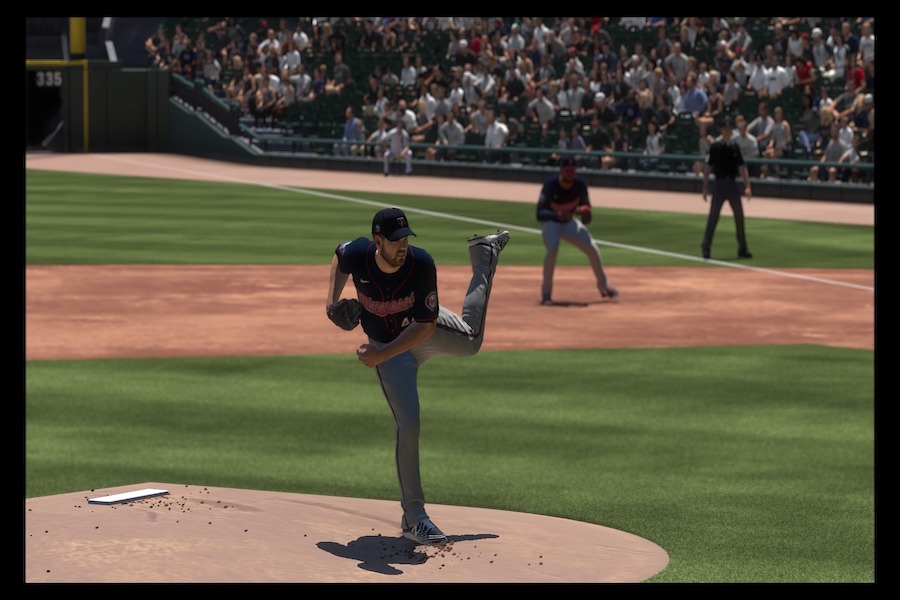 To get caught up on what we're doing here, you can check out the first introductory post in the series for an explanation of the premise and setup. But the quick version is this: We're playing a progressive simulated Twins season on MLB The Show 20 on PS4, and y'all are helping guide the ship. In each installment I'll update you on what's happened since the last, and put at least one key decision up for vote. Date In Game: 4/18/20 Team Record: 11-9 Leading OPS: Max Kepler (.972 in 40 AB) Leading ERA (SP): Jake Odorizzi (2.73 in 26.1 IP) Leading ERA (RP): Zack Littell (0.00 in 6.2 IP) RESULTS Gm 11 vs CLE: L 8-7 (Berrios 3.0 IP, 7 ER, L) Gm 12 vs CLE: W 4-1 (Odorizzi 8.2 IP, 1 ER, 9 K, W) Gm 13: vs CLE: W 8-5 (Sano 2-for-4, HR, 3 RBI) Gm 14: @ CWS: L 11-10 (Cruz and Garver 2 HR each) Gm 15: @ CWS: W 7-2 (Sano 2-for-3, HR, 2 RBI) Gm 16: @ CWS: W 13-4 (Rosario 3-for-5, HR, 5 RBI) Gm 17: @ TOR: W 1-0 (Odorizzi 7.0 IP, 0 ER, 7 K, W) Gm 18: @ TOR: W 6-3 (Avila 3-for-4, 2 HR, 4 RBI) Gm 19: @ TOR: L 6-3 (Romo 0.1 IP, 2 HR allowed, L) Gm 20: vs DET: W 8-7 (Polanco walk-off 2-R HR) AL CENTRAL STANDINGS THE RUNDOWN First, and foremost: we managed to slow down Cleveland a bit. When last we checked in, the Twins found themselves in a big early hole. Their 4-6 start was countered by a perfect 10-0 from the top division rivals, who were just arriving in town for a three-game set. Cleveland's red-hot season-opening run extended to 11-0 with an 8-7 win in the first tilt at Target Field, which saw Jose Berrios labor through three innings (9 H, 4 BB, 7 ER) in his worst start of the young season. By now the Indians were halfway to matching their 22-game streak from 2017, right off the bat. Yeesh. Luckily, the Twins were finally ready to get hot. They took the last two against Cleveland at home, a pair of three-run victories. Jake Odorizzi led the way in the first, flirting with a complete game but settling for 8 2/3 innings and a W. Then it was off to Guaranteed Rate Field in Chicago, where the offense flourished, pushing across 30 runs in three games to take the series. In our last installment, readers were decisive in voting their preference to stick with starter Rich Hill despite his sluggish start. That decision paid dividends in his next turn; Hill put forth six innings of two-run ball against the White Sox, picking up his first win. The Twins followed up by taking two of three from the Blue Jays in Toronto. Once again Odorizzi was spectacular here, tossing seven scoreless frames before giving way to Taylor Rogers for a two-inning save for a 1-0 victory in the series clincher. That was perhaps the team's most impressive effort of the season up until the final one we simulated in this batch. Returning home to face the Tigers and looking to stay above .500, Hill was building upon his turnaround. He'd navigated four shutout innings before everything collapsed in the fifth, where he was charged with five earned runs, putting his club in 5-1 hole. But our Twins weren't gonna go quietly. They rallied for three runs in the sixth and added two more in the seventh to take the lead. Detroit battled back with a run apiece against Tyler Duffey and Taylor Rogers in the eighth and ninth, putting Minnesota's back up against the wall, down 7-6 heading into the last half-inning. Luckily, Jorge Polanco was up for the challenge. His fourth hit of the day was a walk-off, two-run homer against Detroit closer Joe Jimenez. The Twins sit at 11-9 after winning seven of 10 in this slate, and we've picked up 1.5 games on the Indians, who cooled down with a 5-5 showing. WHO'S HOT Odorizzi looks right now much like he did during that untouchable stretch in the early portion of 2019. Across his two latest starts, he allowed one run over 15 2/3 innings, with a 16-to-4 K/BB ratio. Take out the clunker in his second outing of the season, at Seattle (3.2 IP, 6 ER), and his 2.73 overall ERA drops to 0.74. In the bullpen, Zack Littell has yet to allow a run through 6 2/3 innings. Randy Dobnak is getting the job done in long relief, with a 1.59 ERA in 11 1/3 frames (conspicuously accompanied by a 3-to-5 K/BB ratio). Taylor Rogers has been leaned on heavily, appearing 11 times through 20 games, and he has come through with a 0.82 ERA, 1.00 WHIP, and five saves. The offense has also been very good, as hoped. Eight of the nine regulars currently have an OPS above .800, with Max Kepler's .962 (.333/.398/.564) from the leadoff spot pacing the lineup. Josh Donaldson's seven home runs tie him with Randal Grichuk for sixth in the AL. The hottest hitter during this latest stretch, though, was Miguel Sano, who went 15-for-32 with two homers, two doubles, and seven RBIs in his eight starts. Sano's 17 RBIs lead the team and rank seventh in the AL. WHO'S NOT Byron Buxton is the lone laggard in a lineup that's otherwise been incredibly productive. He's been unable to find his rhythm and is slashing just .172/.250/.250 with 18 strikeouts and six walks in 64 at-bats. He does have five steals. I'm thinking we'll just keep playing him at the bottom of the order, and hope he and hitting coach Edgar Varela can conjure a breakthrough. After rebounding from his lackluster early performance with a win against the White Sox, Hill once again looked terrible at home versus Detroit, allowing five runs (two earned) on three hits and six walks in 4 2/3 innings. His ERA sits at 7.91 through four starts and he's handed out 13 free passes (with 23 K) through 19 1/3 innings. Not great, but the voting results on last week's Hill decision were emphatic enough that we'll keep the leash extended for now. That said, I'll be keeping a close eye on him. Same goes for Homer Bailey, who unsurprisingly hurdled back to Earth after leading the rotation in ERA through 10 games. His last two starts saw him cough up eight earned runs in 6 1/3 innings, raising his ERA to 4.43... which I guess is about what we expected. No rotation changes are on the table at this moment, but I'll note that Devin Smeltzer (1.50 ERA) and Jhoulys Chacin (1.64) are making their cases early on at Rochester. DECISION TIME: HOW CAN WE ADD MORE SPEED TO THE BENCH? While pulling the strings during these simulated games, the one thing I really find myself wishing for is some speed off the bench. On a typical day, we've got Alex Avila (Speed Rating: 10 out of 100), Ehire Adrianza (39), Marwin Gonzalez (29), and Willians Astudillo (6) available to pinch-run. In particular, Adrianza feels like a bit of an unnecessary piece; he's functionally redundant with the superior Gonzalez, and has mustered a team-low 20 ABs as a result, slashing .150/.227/.150. I'm thinking we swap out Adrianza for someone who can offer more speed. Here are the most suitable internal options at Triple-A: Jimmy Kerrigan, OF (Speed Rating: 79 out of 100) Drew Maggi, OF (68) Zander Wiel, OF (67) LaMonte Wade, Jr., OF (65) Nick Gordon, SS (64) Jake Cave, OF (58) Worth noting: Kerrigan is pegged as a center fielder, so he could potentially slot in for Buxton on occasion and provide him some extra breaks. Cave, whose speed seems to be underrated a bit in the game, is slashing .444/.500/.556 through seven contests at Rochester. There's also free agency, if we want to go that route. The top speedsters on the open market: Rajai Davis, OF (Speed Rating: 83 out of 100) Peter Bourjous, OF (78) Pablo Varela, SS (75) Jacob Barone, 2B (68) Yasiel Puig, OF (66) Addison Russell, SS (58) Mixed in with a couple of fictional players (Varela and Barone, who are 22 and 23) are a couple of real names that raise some intrigue. In particular, I'm looking at Rajai Davis, who's 39 years old with a 66 overall rating. His speed is the highest of anyone we've looked at, and his base-stealing ability rates at a maximum 99. Signing another free agent will force us to do some roster juggling, but Davis – at his requested one-year, $530K contract – could be a great veteran pickup to round out the bench. So the choice I need help with before moving forward: Should we tap free agency or our own internal pipeline to address this need? You can vote in the comments section below. COMING UP 4/18: vs DET 4/19 vs DET 4/20 vs SEA 4/21 vs SEA 4/22 vs SEA 4/23 vs SEA 4/24 vs BOS 4/25 vs BOS 4/26 vs BOS PREVIOUS INSTALLMENTS Part 1: We Can Build This Thing Together Part 2: 10 Games In, 6 Games Back MORE FROM TWINS DAILY — Latest Twins coverage from our writers — Recent Twins discussion in our forums — Follow Twins Daily via Twitter, Facebook or email
 -
Nice. I took a shot at doing something similar a couple years back. Landed on some similar choices: http://twinsdaily.com/_/minnesota-twins-news/minnesota-twins/introducing-the-minnesota-twins-2011-2018-all-star-team-r7348
-
The Show Must Go On: 10 Games In, 6 Games Back
Nick Nelson replied to Nick Nelson's topic in Twins Daily Front Page News
In my unbiased opinion, the management has been exceptional. It is the players who are blowing it! -
The Show Must Go On: 10 Games In, 6 Games Back
Nick Nelson replied to Nick Nelson's topic in Twins Daily Front Page News
Option 2: Press "Like This" on this comment if you want us to bump Rich Hill. Who's got time for this. We'll move him to long relief and replace him with another option (feel free to name your choice below). -
The Show Must Go On: 10 Games In, 6 Games Back
Nick Nelson replied to Nick Nelson's topic in Twins Daily Front Page News
Option 1: Press "Like This" on this comment if you want us to stick with Rich Hill in the rotation. It's early. He's finding his rhythm.- 11 replies
-
- 11
-
-
We've gone through two turns of the rotation in our interactive simulated Twins season on MLB The Show 20. The club has been okay through 10 games, but it's a scorching hot start from the top division rival that has us on our heels out of the gate. Read on for updates, and more decisions to be made.To get caught up on what we're doing here, you can check out the first post from Monday for an explanation of the premise and setup. But the quick version is this: We're playing a progressive simulated Twins season on MLB The Show 20 on PS4, and y'all are helping guide the ship. In each installment I'll update you on what's happened since the last, and put at least one key decision up for vote. Date In Game: 4/6/20 Team Record: 4-6 Leading OPS: Max Kepler (1.030 in 40 AB) Leading ERA: Homer Bailey (1.29 in 14 IP) RESULTS Gm 1, @ OAK: L 1-0 (Berrios 8 IP, 1 ER, L) Gm 2, @ OAK: W 4-2 (Cruz solo HR) Gm 3: @ OAK: W 6-1 (Odorizzi 7 IP, 1 ER, 12 K, W) Gm 4: @ OAK L 8-5 (Hill 5.1 IP, 6 ER, L) Gm 5: @ SEA W 16-2 (Donaldson 2 HR, 6 RBI) Gm 6: @ SEA L 4-3 (Rogers BS) Gm 7: @ SEA L 6-1 (Odorizzi 3.2 IP, 6 ER, L) Gm 8: vs OAK L 4-3 (Duffey 1 IP, 2 ER, L) Gm 9: vs OAK W 5-4 (Bailey 8 IP, 1 ER) Gm 10: vs OAK L 10-4 (Hill 3.1 IP, 7 ER, L) THE RUNDOWN The vote was unanimous on our first group decision of the year. Oddly-available free agent Jordan Balazovic was signed to a one-year contract, replacing Devin Smeltzer as a long reliever in the Twins' bullpen. The 21-year-old rookie joined an Opening Day roster that kicked things off in Oakland on March 26th, against Sean Manaea and the Athletics. The opener was a hard-fought battle. Manaea struck out Mitch Garver in the season's first at-bat, then exited with an injury. He was replaced by Mike Fiers, and the Twins offense had no answer for him, nor Yusmeiro Petit or Liam Hendriks. In a clash of contrasting strengths, the Oakland arms managed to shut out Minnesota's potent lineup on Opening Day. Max Kepler had Minnesota's only extra-base hit, a double. Download attachment: od_box_offense.jpeg For his part, Jose Berrios was outstanding, going toe to toe with the A's staff through seven innings. Unfortunately, a solo homer by Khris Davis in the eighth proved decisive, and Berrios was tagged with a complete-game loss. He basically got the other end of what happened to Corey Kluber on Opening Day 2019. Download attachment: od_box_pitching.jpeg Our Twins bounced back with victories in the next two contests. Jake Odorizzi was dazzling in his first start of the year, fanning 12 over seven innings of one-run ball in Game 3. But we dropped the fourth to split the series in Oakland. Then, it was off to Seattle, where the first game was quite reminiscent of last year's trip to T-Mobile Park. Minnesota teed off for 16 runs against an overwhelmed Mariners staff, with the top of the lineup leading the charge. Kepler delivered four hits and five RBIs, while Josh Donaldson followed him with two homers and six RBIs. The Twins piled up 14 hits and nine walks. With a huge lead, Balazovic got his debut in this one, tossing two innings with one run allowed. Unfortunately, Minnesota seemed to use up all its magic. The next night, Taylor Rogers blew a save in the ninth and Sergio Romo gave up a walk-off in the 10th. The offense again failed to show up in the series finale, a 6-1 loss. We struggled in our home-opening series at Target Field, dropping two of three against the A's and narrowly avoiding a sweep with an 11th-inning walk-off. So, through 10 games, we're 4-6. Okay. Not where we wanted to be, but certainly not disastrous. So why am I alarmed? Well, I don't wanna blow this out of proportion, but... THE CLEVELAND INDIANS ARE OFF TO A 10-0 START. 10-0! Granted, they opened with an extremely soft schedule (DET, CWS, DET), but the Indians took full advantage by winning every single game. Jose Ramirez is hitting .419 with 13 RBIs. Francisco Lindor has a 1.143 OPS. Mike Clevinger's 3.46 ERA is the rotation's highest. Whew. That puts the Twins in a six-game hole already. Luckily, we'll have a chance to ding their early momentum and make some fast inroads, as a home series against Cleveland awaits on the docket. Let's run through who's hot and who's not, then we'll hash out our next group decision ahead of this critical early showdown. WHO'S HOT? The Bringer of Rain is delivering thus far as a Twin. In nine games Donaldson is sporting an .842 OPS with three homers and nine RBIs. Kepler's batting .375/.405/.625 through 40 ABs. The rotation has mostly been strong: Berrios (1.93 ERA) and Maeda (1.46) are doing their thing, and Bailey (1.29) has been the early talk of the town. Willians Astudillo's only been able to find 6 at-bats so far, but he's got four hits in them for a .667 average. I'd ask you guys if we should play him more but I assume that's a given. WHO'S NOT? Miguel Sano has 10 RBIs through nine games, in part because one of his two homers was a grand slam, but he's slashing .184/.238/.368 with only three walks. Byron Buxton is batting .200 with seven hits, though naturally five have been doubles. The most conspicuous poor performer thus far is Hill, who has been battered for 13 earned runs and four homers through 8 2/3 innings. He's 0-2 with a 13.50 ERA and 2.19 WHIP through two turns. Which brings us to... DECISION TIME: SHOULD WE DEMOTE RICH HILL FROM THE ROTATION? Look, it's still very early and I'm not trying to overreact. Then again, why not? The fact is that Hill's doing nothing for us right now. He's been the worst pitcher on the team by a country mile and at his age it's tough to be too lenient. We've got Randy Dobnak and even Balazovic waiting for a shot on the big-league roster. Not to mention Smeltzer, Michael Pineda and Lewis Thorpe in the minors. Then again, maybe Hill just needs a bit of time to get going. He does have 12 strikeouts in his 8 2/3 innings, for what it's worth. And he's rated higher than Bailey, who's been immaculate. I'll let you all make the call by voting in the comments section. COMING UP 4/6: vs. CLE 4/7: vs. CLE 4/8: vs. CLE 4/10: @ CWS 4/11: @ CWS 4/12 @ CWS Click here to view the article
-
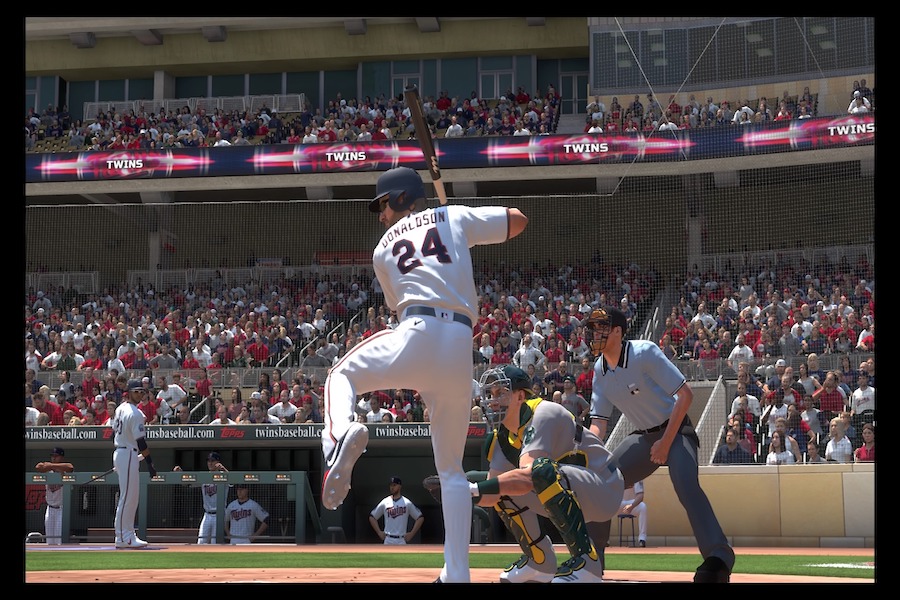 To get caught up on what we're doing here, you can check out the first post from Monday for an explanation of the premise and setup. But the quick version is this: We're playing a progressive simulated Twins season on MLB The Show 20 on PS4, and y'all are helping guide the ship. In each installment I'll update you on what's happened since the last, and put at least one key decision up for vote. Date In Game: 4/6/20 Team Record: 4-6 Leading OPS: Max Kepler (1.030 in 40 AB) Leading ERA: Homer Bailey (1.29 in 14 IP) RESULTS Gm 1, @ OAK: L 1-0 (Berrios 8 IP, 1 ER, L) Gm 2, @ OAK: W 4-2 (Cruz solo HR) Gm 3: @ OAK: W 6-1 (Odorizzi 7 IP, 1 ER, 12 K, W) Gm 4: @ OAK L 8-5 (Hill 5.1 IP, 6 ER, L) Gm 5: @ SEA W 16-2 (Donaldson 2 HR, 6 RBI) Gm 6: @ SEA L 4-3 (Rogers BS) Gm 7: @ SEA L 6-1 (Odorizzi 3.2 IP, 6 ER, L) Gm 8: vs OAK L 4-3 (Duffey 1 IP, 2 ER, L) Gm 9: vs OAK W 5-4 (Bailey 8 IP, 1 ER) Gm 10: vs OAK L 10-4 (Hill 3.1 IP, 7 ER, L) THE RUNDOWN The vote was unanimous on our first group decision of the year. Oddly-available free agent Jordan Balazovic was signed to a one-year contract, replacing Devin Smeltzer as a long reliever in the Twins' bullpen. The 21-year-old rookie joined an Opening Day roster that kicked things off in Oakland on March 26th, against Sean Manaea and the Athletics. The opener was a hard-fought battle. Manaea struck out Mitch Garver in the season's first at-bat, then exited with an injury. He was replaced by Mike Fiers, and the Twins offense had no answer for him, nor Yusmeiro Petit or Liam Hendriks. In a clash of contrasting strengths, the Oakland arms managed to shut out Minnesota's potent lineup on Opening Day. Max Kepler had Minnesota's only extra-base hit, a double. For his part, Jose Berrios was outstanding, going toe to toe with the A's staff through seven innings. Unfortunately, a solo homer by Khris Davis in the eighth proved decisive, and Berrios was tagged with a complete-game loss. He basically got the other end of what happened to Corey Kluber on Opening Day 2019. Our Twins bounced back with victories in the next two contests. Jake Odorizzi was dazzling in his first start of the year, fanning 12 over seven innings of one-run ball in Game 3. But we dropped the fourth to split the series in Oakland. Then, it was off to Seattle, where the first game was quite reminiscent of last year's trip to T-Mobile Park. Minnesota teed off for 16 runs against an overwhelmed Mariners staff, with the top of the lineup leading the charge. Kepler delivered four hits and five RBIs, while Josh Donaldson followed him with two homers and six RBIs. The Twins piled up 14 hits and nine walks. With a huge lead, Balazovic got his debut in this one, tossing two innings with one run allowed. Unfortunately, Minnesota seemed to use up all its magic. The next night, Taylor Rogers blew a save in the ninth and Sergio Romo gave up a walk-off in the 10th. The offense again failed to show up in the series finale, a 6-1 loss. We struggled in our home-opening series at Target Field, dropping two of three against the A's and narrowly avoiding a sweep with an 11th-inning walk-off. So, through 10 games, we're 4-6. Okay. Not where we wanted to be, but certainly not disastrous. So why am I alarmed? Well, I don't wanna blow this out of proportion, but... THE CLEVELAND INDIANS ARE OFF TO A 10-0 START. 10-0! Granted, they opened with an extremely soft schedule (DET, CWS, DET), but the Indians took full advantage by winning every single game. Jose Ramirez is hitting .419 with 13 RBIs. Francisco Lindor has a 1.143 OPS. Mike Clevinger's 3.46 ERA is the rotation's highest. Whew. That puts the Twins in a six-game hole already. Luckily, we'll have a chance to ding their early momentum and make some fast inroads, as a home series against Cleveland awaits on the docket. Let's run through who's hot and who's not, then we'll hash out our next group decision ahead of this critical early showdown. WHO'S HOT? The Bringer of Rain is delivering thus far as a Twin. In nine games Donaldson is sporting an .842 OPS with three homers and nine RBIs. Kepler's batting .375/.405/.625 through 40 ABs. The rotation has mostly been strong: Berrios (1.93 ERA) and Maeda (1.46) are doing their thing, and Bailey (1.29) has been the early talk of the town. Willians Astudillo's only been able to find 6 at-bats so far, but he's got four hits in them for a .667 average. I'd ask you guys if we should play him more but I assume that's a given. WHO'S NOT? Miguel Sano has 10 RBIs through nine games, in part because one of his two homers was a grand slam, but he's slashing .184/.238/.368 with only three walks. Byron Buxton is batting .200 with seven hits, though naturally five have been doubles. The most conspicuous poor performer thus far is Hill, who has been battered for 13 earned runs and four homers through 8 2/3 innings. He's 0-2 with a 13.50 ERA and 2.19 WHIP through two turns. Which brings us to... DECISION TIME: SHOULD WE DEMOTE RICH HILL FROM THE ROTATION? Look, it's still very early and I'm not trying to overreact. Then again, why not? The fact is that Hill's doing nothing for us right now. He's been the worst pitcher on the team by a country mile and at his age it's tough to be too lenient. We've got Randy Dobnak and even Balazovic waiting for a shot on the big-league roster. Not to mention Smeltzer, Michael Pineda and Lewis Thorpe in the minors. Then again, maybe Hill just needs a bit of time to get going. He does have 12 strikeouts in his 8 2/3 innings, for what it's worth. And he's rated higher than Bailey, who's been immaculate. I'll let you all make the call by voting in the comments section. COMING UP 4/6: vs. CLE 4/7: vs. CLE 4/8: vs. CLE 4/10: @ CWS 4/11: @ CWS 4/12 @ CWS
