



Nick Nelson
-
Posts
8,327 -
Joined
-
Last visited
-
Days Won
56
Content Type
Profiles
News
Minnesota Twins Videos
2026 Minnesota Twins Top Prospects Ranking
2022 Minnesota Twins Draft Picks
Minnesota Twins Free Agent & Trade Rumors, Notes, & Tidbits
Guides & Resources
2023 Minnesota Twins Draft Picks
The Minnesota Twins Players Project
2024 Minnesota Twins Draft Picks
2025 Minnesota Twins Draft Pick Tracker
2026 Minnesota Twins Draft Tracker: Picks & Bonuses
Forums
Blogs
Events
Store
Downloads
Gallery
Everything posted by Nick Nelson
-

Max Kepler and the Cost of Silence
Nick Nelson replied to Nick Nelson's topic in Twins Daily Front Page News
I believe they are all very understanding of what's happening. They continue to say so. You been watching the news? Tonight the MPLS chief of police Medaria Arradondo expressly stated that all four officers present at George Floyd's death were culpable. That's been a recurring chant at protests. Your comment was pretty rude but I understand it's a touchy subject. I ask: rather than dwelling on the source, do you disagree with Mr. Cuomo's statement? That this is a humanity issue rather than a political one? Do you see signs at these protests talking about Democrats and Republicans? -
Our community is broken. Our country is broken. To not speak up is to be complicit. To shy away from this conversation is to contribute to the widespread apathy and complacency that has brought us to this tragic state. That's why Max Kepler's actions on social media over the weekend are so bitterly disappointing to me.Our city, and many cities around the nation, have been thrown into turmoil. Long-brewing tensions are at a boiling point in the aftermath of George Floyd's murder, less than five miles away from Target Field. I was heartened to see Twins manager Rocco Baldelli speak up immediately, tweeting last Wednesday, "George Floyd should be breathing right now. We have a lot of progress to make. A lot. Remember his name. Remember what happened." Over the weekend, Twins center fielder Byron Buxton shared a heartfelt message on Instagram, accompanied by the image of a memorial for George Floyd. "It’s unbearable to even think about what’s happening in our city and throughout the country, but things have to CHANGE," Buxton pleaded. "African Americans have been slaughtered left and right for nothing more than the color of our skin. That is reality and it has been ignored far too long." Download attachment: buxtoninstagram.png I can't help but wonder how Buxton feels about seeing the comparatively tone-deaf remarks from Kepler, who has long played alongside him in the Twins outfield. To recap the events that went down: On Thursday, Kepler shared a picture on Instagram of himself wearing a "Blue Lives Matter" face mask he'd received from some company. Evidently, he got a rush of negative feedback because he quickly deleted the post, adding a follow-up: "wasn't aware of what the mask supported. still not into politics," along with a peace sign emoji. Download attachment: keplerinstagrammask.jpg Download attachment: keplerinstagramfollow.jpeg Now, let me preface what I'm going to say here by being as clear as possible: I don't think Kepler had any malicious intent. Based on every interaction I've had with him, and every story I've heard from others, he's a genuinely good-hearted person. I can certainly believe he was unaware of what the mask represented, given the cultural disconnect from growing up in Germany. And I believe he means what he wrote in a later message: "Racism has no place in our world and I do not in any way support the actions that we all witnessed that led to George Floyd’s passing.” But Max being a good person and actively choosing to stay silent is exactly the problem. What really grinds on me is that first follow-up message. "Not into politics [peace sign]." This is the attitude that has gotten our society to this point: comfortable white people choosing to excuse themselves from the conversation, because it doesn't affect them personally. While I know he didn't intend it as such, Kepler's comments come as a slap in the face to a grieving and enraged community where he's supposed to be a leader. To paraphrase CNN's Chris Cuomo, what's happening right now isn't a political issue. It's a humanity issue. People like Buxton don't have the luxury of categorizing systemic injustice as "politics" and that's why Kepler's remarks, shared while the city of Minneapolis literally burned, landed with a total lack of empathy. If Kepler wants to stand on the sidelines, defining himself simply as a ballplayer while rejecting any personal stake in the situation, that is his prerogative. But it's precisely what perpetuates a lack of change that is destroying us. We live in a world now where the lines are blurred; Kepler and the Twins aren't playing baseball due to a global health crisis that has sadly been framed as "political" by some, but is much more fundamental to our civilization and society in general. What we now face here in Minnesota, and across America, is much the same. I don't know if Kepler will receive this message. But I know, based on the demographics, that our site's audience is predominately white, and relatively affluent. We are the voices needed most in this fight. I say this not to be judgmental, or to point fingers – I myself recognize a serious need to be more outspoken and active in my support and advocacy. Writing this article, despite the backlash it will inevitably receive, is a small step toward that end. Max: if you want the peace sign you included in your message to be anything more than a meaningless platitude, copping out with a "not into politics" comment is not an option. This isn't politics. This is life. This is the city YOU represent. Take a cue from your manager, who is again showing himself to be a true leader. We need to confront these issues seriously, not obscure them behind images of a dog fetching a tennis ball. These aren't happy or carefree times. Acting like they are will only make your fanbase lose touch with you. This is coming from one fan who already feels like he has. We're leaving the comments open on this post. We welcome a respectful and productive conversation around this vital topic. But we also need to look out for our overburdened moderators. If people can't keep things respectful, comments will be shut down. Thanks for hearing me out y'all. Click here to view the article
-
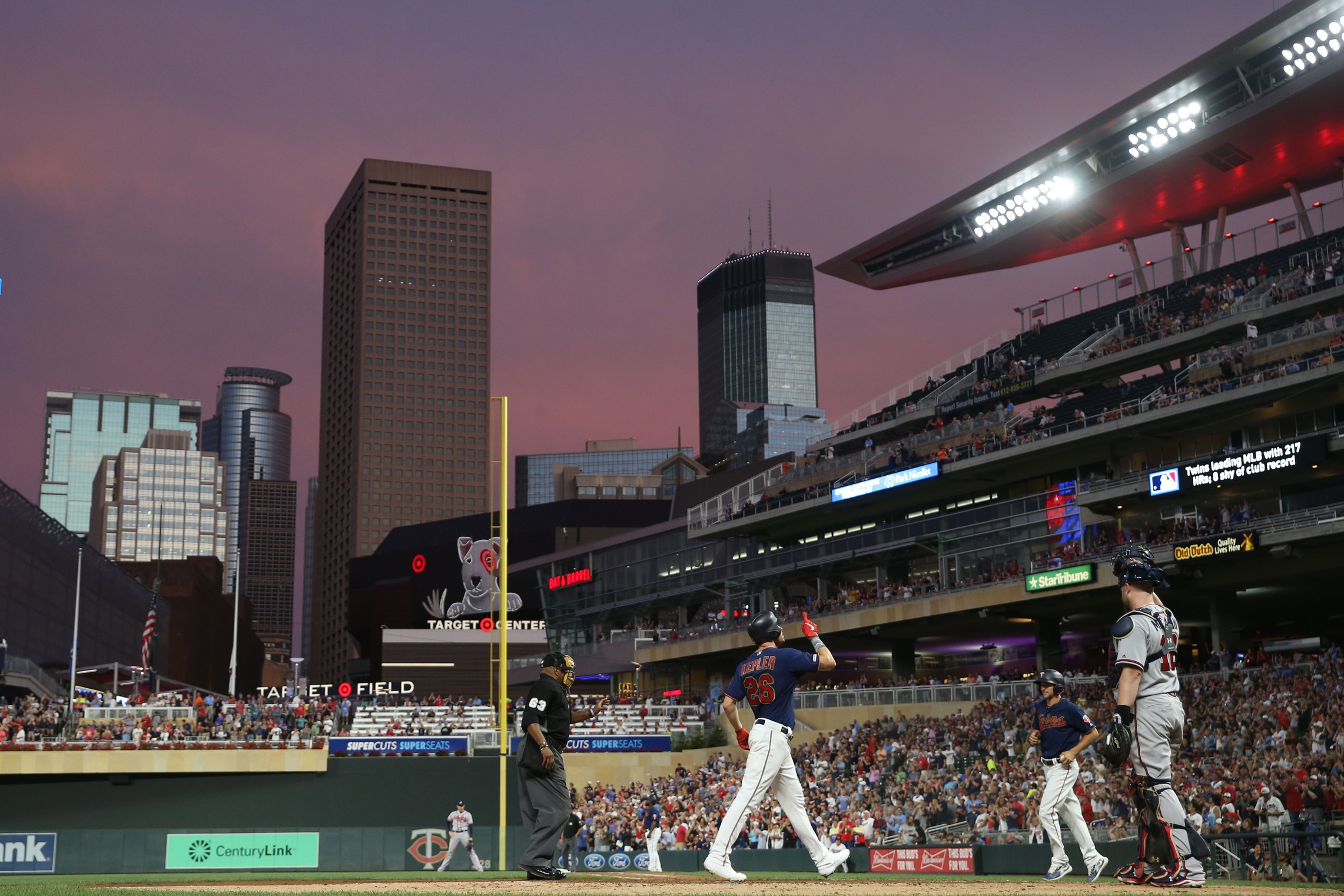 Our city, and many cities around the nation, have been thrown into turmoil. Long-brewing tensions are at a boiling point in the aftermath of George Floyd's murder, less than five miles away from Target Field. I was heartened to see Twins manager Rocco Baldelli speak up immediately, tweeting last Wednesday, "George Floyd should be breathing right now. We have a lot of progress to make. A lot. Remember his name. Remember what happened." https://twitter.com/roccodbaldelli/status/1265519568321228800 Over the weekend, Twins center fielder Byron Buxton shared a heartfelt message on Instagram, accompanied by the image of a memorial for George Floyd. "It’s unbearable to even think about what’s happening in our city and throughout the country, but things have to CHANGE," Buxton pleaded. "African Americans have been slaughtered left and right for nothing more than the color of our skin. That is reality and it has been ignored far too long." I can't help but wonder how Buxton feels about seeing the comparatively tone-deaf remarks from Kepler, who has long played alongside him in the Twins outfield. To recap the events that went down: On Thursday, Kepler shared a picture on Instagram of himself wearing a "Blue Lives Matter" face mask he'd received from some company. Evidently, he got a rush of negative feedback because he quickly deleted the post, adding a follow-up: "wasn't aware of what the mask supported. still not into politics," along with a peace sign emoji. Now, let me preface what I'm going to say here by being as clear as possible: I don't think Kepler had any malicious intent. Based on every interaction I've had with him, and every story I've heard from others, he's a genuinely good-hearted person. I can certainly believe he was unaware of what the mask represented, given the cultural disconnect from growing up in Germany. And I believe he means what he wrote in a later message: "Racism has no place in our world and I do not in any way support the actions that we all witnessed that led to George Floyd’s passing.” But Max being a good person and actively choosing to stay silent is exactly the problem. What really grinds on me is that first follow-up message. "Not into politics [peace sign]." This is the attitude that has gotten our society to this point: comfortable white people choosing to excuse themselves from the conversation, because it doesn't affect them personally. While I know he didn't intend it as such, Kepler's comments come as a slap in the face to a grieving and enraged community where he's supposed to be a leader. To paraphrase CNN's Chris Cuomo, what's happening right now isn't a political issue. It's a humanity issue. People like Buxton don't have the luxury of categorizing systemic injustice as "politics" and that's why Kepler's remarks, shared while the city of Minneapolis literally burned, landed with a total lack of empathy. If Kepler wants to stand on the sidelines, defining himself simply as a ballplayer while rejecting any personal stake in the situation, that is his prerogative. But it's precisely what perpetuates a lack of change that is destroying us. We live in a world now where the lines are blurred; Kepler and the Twins aren't playing baseball due to a global health crisis that has sadly been framed as "political" by some, but is much more fundamental to our civilization and society in general. What we now face here in Minnesota, and across America, is much the same. I don't know if Kepler will receive this message. But I know, based on the demographics, that our site's audience is predominately white, and relatively affluent. We are the voices needed most in this fight. I say this not to be judgmental, or to point fingers – I myself recognize a serious need to be more outspoken and active in my support and advocacy. Writing this article, despite the backlash it will inevitably receive, is a small step toward that end. Max: if you want the peace sign you included in your message to be anything more than a meaningless platitude, copping out with a "not into politics" comment is not an option. This isn't politics. This is life. This is the city YOU represent. Take a cue from your manager, who is again showing himself to be a true leader. We need to confront these issues seriously, not obscure them behind images of a dog fetching a tennis ball. These aren't happy or carefree times. Acting like they are will only make your fanbase lose touch with you. This is coming from one fan who already feels like he has. We're leaving the comments open on this post. We welcome a respectful and productive conversation around this vital topic. But we also need to look out for our overburdened moderators. If people can't keep things respectful, comments will be shut down. Thanks for hearing me out y'all.
 -
As the Metrodome era came to an end, the 2009 season featured a good but flawed team, which barely squeaked into the playoffs out of a ho-hum division. But it also featured one of the greatest individual campaigns, and one of the greatest single games, in franchise history.We're running a 20-part series in which we look back at each Minnesota Twins season of the 2000s. A rotation of different writers will highlight key moments, unearth forgotten details, and share nostalgic tales from the past two decades leading up to the present. This installment covers the 2009 season. Team Record: 87-76 Finish: 1st Place in AL Central All-Stars: Joe Mauer ( C ), Justin Morneau (1B), Joe Nathan (RP) Awards: Joe Mauer (AL MVP; Gold Glove & Silver Slugger, C) Playoffs: Lost to NYY 3-0 in ALDS Season Overview The Joe Mauer season. Minnesota's 2009 campaign was a memorable and historically significant one for many reasons, but this is how it will always be remembered: a former first-round pick and hometown kid fully realizing his potential, and taking over the game for five spectacular months. A less charitable recollection might frame the 2009 season more as one in which the management above Mauer, and talent around him, failed to aptly support his absurdly dominant performance. The Twins required a fierce late surge and intense tiebreaker to win a fairly weak division and skim into the postseason, where they were quickly sent packing. But as the St. Paul native and childhood Twins fan said goodbye to the only Twins stadium he'd ever known – the Metrodome opened almost exactly one year before he was born – he sent it out with a bang. After missing all of April due to back pain caused by inflammation in his pelvic sacroiliac joint, Mauer played his first game on May 1st, homering on his first swing of the season and setting the tone for one of the most ridiculous months in Twins history: .414/.500/.838 with 11 home runs, eight doubles, 32 RBIs, and 19 walks in 28 games (122 PA). And yet the Twins, who entered May at .500, finished the month two games below. This was the story for much of the summer: Mauer delivering Herculean efforts while the team around him failed to elevate. This wasn't as true on the offensive end; the 2009 Twins scored the fourth-most runs in the American League and posted the fifth-highest OPS. Mauer got help from: Denard Span, now the entrenched leadoff hitter and a natural fit for it with his patience (.392 OBP and 70 walks) and speed (23 steals and 10 triples).First baseman Justin Morneau and designated hitter Jason Kubel, who delivered prodigious power production from the left side, combining for 58 home runs and 203 RBIs. This would be the last time two Twins teammates drove in 100-plus runs until 2019.Michael Cuddyer rebounded from an injury-marred 2008 and rounded back into the prime form he showed in '06, slashing .276/.342/.520 with 32 homers and 94 RBIs as a critical righty-swinging complement to the lefty sluggers above.Sure, there were some laggards. Delmon Young once again combined mediocre offense with horrendous defense for a subpar overall package. Alexi Casilla had a major backslide from his solid 2008, putting up a dreadful 45 OPS+ in 80 games. Carlos Gómez flailed to a .623 OPS, with his ferocious home-run cut producing just three long balls. Free agent third baseman Joe Crede slashed .225/.289/.414 with 15 homers in 90 games but couldn't keep chronic back problems at bay, playing sparsely in the second half and retiring after the season. Shortstop became such a pit, handled by Nick Punto and Brendan Harris, that general manager Bill Smith traded on deadline day for veteran Athletics shortstop Orlando Cabrera, who proved to be a clear improvement down the stretch. This wasn't the only in-season move Smith would make to energize a ballclub struggling to keep pace with the frontrunning Tigers. Minnesota's pitching staff was much more needy. This group, outside of closer Joe Nathan – who made his fourth All-Star team and saved a franchise-record 47 games with a 2.10 ERA – was just not very good. Opening Day starter Francisco Liriano was a complete mess, rarely showing flashes of his pre-surgery dominance and mixing in plenty of erratic clunkers en route to a 5-13 record and career-worst 5.80 ERA. Questions about conditioning plagued the 25-year-old as his fastball velocity lingered around 90. Meanwhile, fellow young lefty Glen Perkins also fell off a cliff, failing to back up his promising 2008 showing with a 5.89 ERA in 18 appearances (17 starts). Rookie Anthony Swarzak was lit up for a 6.25 ERA while going 3-7 over 12 starts. Kevin Slowey pitched to a 4.86 ERA in 15 starts before requiring season-ending wrist surgery in early July. Scott Baker and Nick Blackburn were once again the rotation's steadiest contributors, each tossing 200 innings with a roughly average ERA, but the lack of quality behind them, coupled with Nathan getting little help in the bullpen, meant Minnesota's outstanding offense was being outscored too often. Three moves by Smith in August helped turn the tides, providing crucial stability down the stretch: Starter Carl Pavano was acquired from Cleveland on August 7th in exchange for prospect Yohan Pino. Pavano pitched decently for the Twins, with a 4.64 ERA over 73 2/3 innings, but he provided length and the Twins went 8-4 in his starts. His biggest impact was yet to come.On August 22nd, rookie left-hander Brian Duensing moved to the rotation full-time after 14 of his first 15 big-league appearances came in relief. Duensing went 5-1 with a 2.68 ERA in eight starts.On August 28th, reliever Jon Rauch was acquired from Arizona for prospect Kevin Mulvey. Rauch stepped up in a leaky bullpen, holding opponents scoreless in 16 of 17 appearances for a 1.72 ERA while being credited with five wins.These developments, along with Mauer's continued excellence, helped the Twins surge to a 20-11 record in September and October, erasing a big deficit in the standings and winning four straight at the schedule's end to force a second straight AL Central tiebreaker. This time it was against the Tigers, at home. And this time, Minnesota would come out on top of a thrilling nailbiter, capturing the division with a walk-off single in the bottom of the 12th. Following a relentless charge to an unlikely postseason berth in the final weeks, the Twins were out of gas once they got there. With little time to celebrate a draining victory, they packed up and headed to New York, where Ron Gardenhire had little choice but to start the rookie Duensing in Game 1. He struggled and the Twins lost, setting the stage for their first (but certainly not last) time being swept out of October by the Yankees. Mauer was robbed of a key double in Game 2 by umpire Phil Cuzzi's bogus foul call, but still batted .417 (5-for-12) in the three ALDS games, capping a season for the ages. As the Twins prepared to open a new chapter with the arrival of Target Field, they were going to need to open the checkbook and pay handsomely to lock up the handsome face of their franchise. Team MVP: Joe Mauer ( C ) Other Contenders: Denard Span (CF), Justin Morneau (1B), Jason Kubel (DH), Nick Blackburn (SP) Duh. Despite missing a full month, Mauer's 7.9 bWAR in 2009 ties Kirby Puckett's 1988 mark for fourth in Minnesota Twins history. The only superior seasons according Baseball Reference came from Rod Carew (1975 & '77) and Chuck Knoblauch (1996). Mauer won the "Sabermetric Triple Crown" by leading the league in all three AVG/OBP/SLG slash categories (.365/.444/.587). He was the first catcher ever to do so, and the first American Leaguer since George Brett in 1980. Not only were his rate stats tremendous, but Mauer also filled up the volume columns: 28 homers, 30 doubles, 96 RBIs, 94 runs scored. He was an All-Star, MVP, Gold Glover, Silver Slugger. Arguably the best season ever by a Twin. 3 Most Pivotal Games May 1st: Won vs. Kansas City Royals, 7-5 Mauer's delayed start was hotly anticipated, and he did not disappoint. His first swing against the dreaded Sidney Ponson sent a baseball over the left field wall, signaling the prodigal son's arrival. Mauer added a double and walk, scoring three times as Morneau chipped in a homer and three RBIs. The relief trio that followed Slowey's five innings – Matt Guerrier, José Mijares, Nathan – would become Minnesota's bullpen bedrock throughout the year. This game perfectly exemplified the 2009 team's formula for winning. September 13th: Won vs. Oakland Athletics, 8-0 Even with Mauer leading a strong offense, the Twins just kept hanging at or below the .500 mark. By this point in mid-September, they were underwater, trailing Detroit by 5 1/2 with only 20 games left to play. Things were looking dire. But on this date, they dominated the A's and springed in to some serious momentum. Duensing threw seven shutout innings. Mauer went 3-for-4 with a homer. The victory set off an 11-1 stretch that moved the Twins within two games of the Tigers, a gap they'd close in the final weekend. October 6th: Won vs. Detroit Tigers, 6-5 Without question the greatest Twins game since 2000, and perhaps the greatest Major League Baseball game of the past 20 years period. Minnesota's race against Detroit came down to the wire, as the two teams faced off in a decisive Game 163 at the Metrodome. The Twins sent their best starter to the mound in Baker, and he delivered a low-grade quality start with six innings and three earned runs. Tigers rookie Rick Porcello countered with a strong outing of his own. The teams battled to a tie through nine. In the top of the 10th, Brandon Inge's RBI double put Detroit ahead, but Cuddyer countered with a leadoff triple, scoring on Matt Tolbert's game-tying single. In the bottom of the 12th, with closer Fernando Rodney pitching for the Tigers, Gómez opened with a base hit, moving to second on Young's one-out walk. Up came the embattled Casilla, who tapped a seeing-eye single up the middle. Gómez rounded third, slid in headfirst with the winning run, and the Metrodome went crazy. For the last time, it would turn out. Unforgettable Highlights Jason Kubel Caps Cycle with Grand Slam The Twins have had three players hit for the cycle since the turn of the century, and two happened within five weeks of one another in 2009. While Cuddyer's feat on May 22nd was cool to see, it couldn't hold a candle to the dramatics of Kubel's on April 17th. Coming to the plate with bases loaded against the Angels in the bottom of the eighth, Twins trailing 9-7, Kubel needed a home run to complete the cycle. Wait a minute ... a go-ahead grand slam to complete the cycle? Too good to be true, right? Nope. Kubel took a hanger from Angels reliever Jason Bulger deep to right. The Twins won and Kubel was on his way to a career year. Twins Bring in Pivotal International Class After the international signing period opened up on July 2nd, the Twins made perhaps their most impactful splash ever in this market. Over a span of four months, they signed teenagers Max Kepler out of Germany, and Miguel Sanó and Jorge Polanco out of the Dominican Republic. It should be looked back upon as the most critical contribution of Smith's short tenure as GM, and a worthy one at that. Ten years later, these three would become key figures in the most explosive offense in franchise history. Joe Nathan Breaks Twins Single-Season Save Record Set at 45 by Eddie Guardado seven years earlier, Nathan nabbed the title by saving 47 games on 52 tries. He rattled off 12 straight in September as the Twins closed the gap on Detroit. Sadly, Nathan's historic season ended on a sour note; his blown save in Game 2 of the ALDS, on Álex Rodríguez's two-run homer in the ninth, was a gut-punch the team couldn't recover from. I'm not sure they have since? Saying Goodbye to the Metrodome The final Twins game ever played in the Dome followed that Game 2 letdown, a 4-1 snoozer that ushered Minnesota out of the playoffs. It was a bummer. But the ballpark's final days will forever be tied to that incredible Game 163, and the raucous applause that rang throughout the Metrodome's silo-esque interior as Gómez slid across home, harkening back to the glory Octobers of 1987 and '91. One Detail You Probably Forgot In December of 2008, the Twins had taken interest in a mid-30s knuckleballer by the name of R.A. Dickey, signing him to a minor-league contract. They gave him a shot in 2009, as Dickey made 35 appearances including one start, but he wasn't too impressive with a 4.62 ERA and 1.62 WHIP. The team cut ties. Turns out they were just a little too early on the late bloomer. The next year Dickey signed with the New York Mets and posted a 2.84 ERA over 174 1/3 innings, in a rotation that also featured Johan Santana and Mike Pelfrey. In 2012, Dickey would win the NL Cy Young at age 37. Fun Fact Phil Cuzzi sucks. ~~~ Previous Installments: The 2000 SeasonThe 2001 SeasonThe 2002 SeasonThe 2003 SeasonThe 2004 SeasonThe 2005 SeasonThe 2006 SeasonThe 2007 SeasonThe 2008 Season Click here to view the article
-
 We're running a 20-part series in which we look back at each Minnesota Twins season of the 2000s. A rotation of different writers will highlight key moments, unearth forgotten details, and share nostalgic tales from the past two decades leading up to the present. This installment covers the 2009 season. Team Record: 87-76 Finish: 1st Place in AL Central All-Stars: Joe Mauer ( C ), Justin Morneau (1B), Joe Nathan (RP) Awards: Joe Mauer (AL MVP; Gold Glove & Silver Slugger, C) Playoffs: Lost to NYY 3-0 in ALDS Season Overview The Joe Mauer season. Minnesota's 2009 campaign was a memorable and historically significant one for many reasons, but this is how it will always be remembered: a former first-round pick and hometown kid fully realizing his potential, and taking over the game for five spectacular months. A less charitable recollection might frame the 2009 season more as one in which the management above Mauer, and talent around him, failed to aptly support his absurdly dominant performance. The Twins required a fierce late surge and intense tiebreaker to win a fairly weak division and skim into the postseason, where they were quickly sent packing. But as the St. Paul native and childhood Twins fan said goodbye to the only Twins stadium he'd ever known – the Metrodome opened almost exactly one year before he was born – he sent it out with a bang. After missing all of April due to back pain caused by inflammation in his pelvic sacroiliac joint, Mauer played his first game on May 1st, homering on his first swing of the season and setting the tone for one of the most ridiculous months in Twins history: .414/.500/.838 with 11 home runs, eight doubles, 32 RBIs, and 19 walks in 28 games (122 PA). And yet the Twins, who entered May at .500, finished the month two games below. This was the story for much of the summer: Mauer delivering Herculean efforts while the team around him failed to elevate. This wasn't as true on the offensive end; the 2009 Twins scored the fourth-most runs in the American League and posted the fifth-highest OPS. Mauer got help from: Denard Span, now the entrenched leadoff hitter and a natural fit for it with his patience (.392 OBP and 70 walks) and speed (23 steals and 10 triples). First baseman Justin Morneau and designated hitter Jason Kubel, who delivered prodigious power production from the left side, combining for 58 home runs and 203 RBIs. This would be the last time two Twins teammates drove in 100-plus runs until 2019. Michael Cuddyer rebounded from an injury-marred 2008 and rounded back into the prime form he showed in '06, slashing .276/.342/.520 with 32 homers and 94 RBIs as a critical righty-swinging complement to the lefty sluggers above. Sure, there were some laggards. Delmon Young once again combined mediocre offense with horrendous defense for a subpar overall package. Alexi Casilla had a major backslide from his solid 2008, putting up a dreadful 45 OPS+ in 80 games. Carlos Gómez flailed to a .623 OPS, with his ferocious home-run cut producing just three long balls. Free agent third baseman Joe Crede slashed .225/.289/.414 with 15 homers in 90 games but couldn't keep chronic back problems at bay, playing sparsely in the second half and retiring after the season. Shortstop became such a pit, handled by Nick Punto and Brendan Harris, that general manager Bill Smith traded on deadline day for veteran Athletics shortstop Orlando Cabrera, who proved to be a clear improvement down the stretch. This wasn't the only in-season move Smith would make to energize a ballclub struggling to keep pace with the frontrunning Tigers. Minnesota's pitching staff was much more needy. This group, outside of closer Joe Nathan – who made his fourth All-Star team and saved a franchise-record 47 games with a 2.10 ERA – was just not very good. Opening Day starter Francisco Liriano was a complete mess, rarely showing flashes of his pre-surgery dominance and mixing in plenty of erratic clunkers en route to a 5-13 record and career-worst 5.80 ERA. Questions about conditioning plagued the 25-year-old as his fastball velocity lingered around 90. Meanwhile, fellow young lefty Glen Perkins also fell off a cliff, failing to back up his promising 2008 showing with a 5.89 ERA in 18 appearances (17 starts). Rookie Anthony Swarzak was lit up for a 6.25 ERA while going 3-7 over 12 starts. Kevin Slowey pitched to a 4.86 ERA in 15 starts before requiring season-ending wrist surgery in early July. Scott Baker and Nick Blackburn were once again the rotation's steadiest contributors, each tossing 200 innings with a roughly average ERA, but the lack of quality behind them, coupled with Nathan getting little help in the bullpen, meant Minnesota's outstanding offense was being outscored too often. Three moves by Smith in August helped turn the tides, providing crucial stability down the stretch: Starter Carl Pavano was acquired from Cleveland on August 7th in exchange for prospect Yohan Pino. Pavano pitched decently for the Twins, with a 4.64 ERA over 73 2/3 innings, but he provided length and the Twins went 8-4 in his starts. His biggest impact was yet to come. On August 22nd, rookie left-hander Brian Duensing moved to the rotation full-time after 14 of his first 15 big-league appearances came in relief. Duensing went 5-1 with a 2.68 ERA in eight starts. On August 28th, reliever Jon Rauch was acquired from Arizona for prospect Kevin Mulvey. Rauch stepped up in a leaky bullpen, holding opponents scoreless in 16 of 17 appearances for a 1.72 ERA while being credited with five wins. These developments, along with Mauer's continued excellence, helped the Twins surge to a 20-11 record in September and October, erasing a big deficit in the standings and winning four straight at the schedule's end to force a second straight AL Central tiebreaker. This time it was against the Tigers, at home. And this time, Minnesota would come out on top of a thrilling nailbiter, capturing the division with a walk-off single in the bottom of the 12th. Following a relentless charge to an unlikely postseason berth in the final weeks, the Twins were out of gas once they got there. With little time to celebrate a draining victory, they packed up and headed to New York, where Ron Gardenhire had little choice but to start the rookie Duensing in Game 1. He struggled and the Twins lost, setting the stage for their first (but certainly not last) time being swept out of October by the Yankees. Mauer was robbed of a key double in Game 2 by umpire Phil Cuzzi's bogus foul call, but still batted .417 (5-for-12) in the three ALDS games, capping a season for the ages. As the Twins prepared to open a new chapter with the arrival of Target Field, they were going to need to open the checkbook and pay handsomely to lock up the handsome face of their franchise. Team MVP: Joe Mauer ( C ) Other Contenders: Denard Span (CF), Justin Morneau (1B), Jason Kubel (DH), Nick Blackburn (SP) Duh. Despite missing a full month, Mauer's 7.9 bWAR in 2009 ties Kirby Puckett's 1988 mark for fourth in Minnesota Twins history. The only superior seasons according Baseball Reference came from Rod Carew (1975 & '77) and Chuck Knoblauch (1996). Mauer won the "Sabermetric Triple Crown" by leading the league in all three AVG/OBP/SLG slash categories (.365/.444/.587). He was the first catcher ever to do so, and the first American Leaguer since George Brett in 1980. Not only were his rate stats tremendous, but Mauer also filled up the volume columns: 28 homers, 30 doubles, 96 RBIs, 94 runs scored. He was an All-Star, MVP, Gold Glover, Silver Slugger. Arguably the best season ever by a Twin. 3 Most Pivotal Games May 1st: Won vs. Kansas City Royals, 7-5 Mauer's delayed start was hotly anticipated, and he did not disappoint. His first swing against the dreaded Sidney Ponson sent a baseball over the left field wall, signaling the prodigal son's arrival. Mauer added a double and walk, scoring three times as Morneau chipped in a homer and three RBIs. The relief trio that followed Slowey's five innings – Matt Guerrier, José Mijares, Nathan – would become Minnesota's bullpen bedrock throughout the year. This game perfectly exemplified the 2009 team's formula for winning. September 13th: Won vs. Oakland Athletics, 8-0 Even with Mauer leading a strong offense, the Twins just kept hanging at or below the .500 mark. By this point in mid-September, they were underwater, trailing Detroit by 5 1/2 with only 20 games left to play. Things were looking dire. But on this date, they dominated the A's and springed in to some serious momentum. Duensing threw seven shutout innings. Mauer went 3-for-4 with a homer. The victory set off an 11-1 stretch that moved the Twins within two games of the Tigers, a gap they'd close in the final weekend. October 6th: Won vs. Detroit Tigers, 6-5 Without question the greatest Twins game since 2000, and perhaps the greatest Major League Baseball game of the past 20 years period. Minnesota's race against Detroit came down to the wire, as the two teams faced off in a decisive Game 163 at the Metrodome. The Twins sent their best starter to the mound in Baker, and he delivered a low-grade quality start with six innings and three earned runs. Tigers rookie Rick Porcello countered with a strong outing of his own. The teams battled to a tie through nine. In the top of the 10th, Brandon Inge's RBI double put Detroit ahead, but Cuddyer countered with a leadoff triple, scoring on Matt Tolbert's game-tying single. In the bottom of the 12th, with closer Fernando Rodney pitching for the Tigers, Gómez opened with a base hit, moving to second on Young's one-out walk. Up came the embattled Casilla, who tapped a seeing-eye single up the middle. Gómez rounded third, slid in headfirst with the winning run, and the Metrodome went crazy. For the last time, it would turn out. Unforgettable Highlights Jason Kubel Caps Cycle with Grand Slam The Twins have had three players hit for the cycle since the turn of the century, and two happened within five weeks of one another in 2009. While Cuddyer's feat on May 22nd was cool to see, it couldn't hold a candle to the dramatics of Kubel's on April 17th. Coming to the plate with bases loaded against the Angels in the bottom of the eighth, Twins trailing 9-7, Kubel needed a home run to complete the cycle. Wait a minute ... a go-ahead grand slam to complete the cycle? Too good to be true, right? Nope. Kubel took a hanger from Angels reliever Jason Bulger deep to right. The Twins won and Kubel was on his way to a career year. Twins Bring in Pivotal International Class After the international signing period opened up on July 2nd, the Twins made perhaps their most impactful splash ever in this market. Over a span of four months, they signed teenagers Max Kepler out of Germany, and Miguel Sanó and Jorge Polanco out of the Dominican Republic. It should be looked back upon as the most critical contribution of Smith's short tenure as GM, and a worthy one at that. Ten years later, these three would become key figures in the most explosive offense in franchise history. Joe Nathan Breaks Twins Single-Season Save Record Set at 45 by Eddie Guardado seven years earlier, Nathan nabbed the title by saving 47 games on 52 tries. He rattled off 12 straight in September as the Twins closed the gap on Detroit. Sadly, Nathan's historic season ended on a sour note; his blown save in Game 2 of the ALDS, on Álex Rodríguez's two-run homer in the ninth, was a gut-punch the team couldn't recover from. I'm not sure they have since? Saying Goodbye to the Metrodome The final Twins game ever played in the Dome followed that Game 2 letdown, a 4-1 snoozer that ushered Minnesota out of the playoffs. It was a bummer. But the ballpark's final days will forever be tied to that incredible Game 163, and the raucous applause that rang throughout the Metrodome's silo-esque interior as Gómez slid across home, harkening back to the glory Octobers of 1987 and '91. One Detail You Probably Forgot In December of 2008, the Twins had taken interest in a mid-30s knuckleballer by the name of R.A. Dickey, signing him to a minor-league contract. They gave him a shot in 2009, as Dickey made 35 appearances including one start, but he wasn't too impressive with a 4.62 ERA and 1.62 WHIP. The team cut ties. Turns out they were just a little too early on the late bloomer. The next year Dickey signed with the New York Mets and posted a 2.84 ERA over 174 1/3 innings, in a rotation that also featured Johan Santana and Mike Pelfrey. In 2012, Dickey would win the NL Cy Young at age 37. Fun Fact Phil Cuzzi sucks. ~~~ Previous Installments: The 2000 Season The 2001 Season The 2002 Season The 2003 Season The 2004 Season The 2005 Season The 2006 Season The 2007 Season The 2008 Season
 -
With a new general manager and new faces across the roster, the Minnesota Twins were rebooting in 2008. But they were still very much contenders in the AL Central, and would battle for it down to the season's last day.We're running a 20-part series in which we look back at each Minnesota Twins season of the 2000s. A rotation of different writers will highlight key moments, unearth forgotten details, and share nostalgic tales from the past two decades leading up to the present. This installment covers the 2008 season. Team Record: 88-75 Finish: 2nd Place in AL Central All-Stars: Joe Mauer ©, Justin Morneau (1B), Joe Nathan (RP) Awards: Joe Mauer (Gold Glove & Silver Slugger, C), Justin Morneau (Silver Slugger, 1B) Playoffs: N/A Season Overview As the 2008 season arrived, everything felt NEW. Though Ron Gardenhire's coaching staff remained intact, a new general manager was running the show, with Bill Smith taking over following Terry Ryan's resignation the previous September. And Smith's first roster was full of new faces, a stark departure from the culture of continuity and homegrown talent he'd inherited. Gardenhire's Opening Day lineup at the Metrodome featured: Center fielder and leadoff man Carlos Gómez, prize of the offseason's Johan Santana trade. Despite a raw and unrefined game, the athletic 22-year-old was thrust into action straightaway, with hopes that his exhilarating speed and energy could reignite a fanbase feeling gutted by the loss of its elite ace starter. While he definitely had his moments, Gómez's inexperience showed often, and with his sub-.300 OBP he was badly miscast as a leadoff man (a role he thankfully lost to rookie Denard Span in the second half).Left fielder Delmon Young, prize of the offseason blockbuster that sent Matt Garza and Jason Bartlett to Tampa. The Twins envisioned Young, a first overall draft pick turned No. 1 overall prospect turned Rookie of the Year runner-up, as a long-term solution to their offensive shortcomings, and also a crucial lineup infusion with one of the team's main power threats (Torii Hunter) departing via free agency. In what would become a trend, the free-swinging Young showed little progression or growth from his rookie year, mixing in ugly defense to become a net-negative.Designated hitter Craig Monroe, a veteran brought in to platoon at the position with Jason Kubel as the DH carousel kept spinning. Monroe lasted only 58 games as a Twin, before Kubel (finally) took a firm grasp of the DH role.Second baseman Brendan Harris. The Twins had soured on Alexi Casilla after he sputtered to a .516 OPS in 2007, so the 27-year-old Harris, acquired alongside Young in the Rays trade, got the nod at second. Casilla would soon re-stake his claim as Harris shifted into more of an infield utility role.A left side of the infield comprising Adam Everett (shortstop) and Mike Lamb (third base). Both were veteran free agents, signed to cheap short-term deals, and both flamed out rather quickly. In many regards, the new GM Smith was showing a lot of functional similarity to his predecessor. As another example...Starting pitcher Liván Hernández. Coming off a season in Arizona where he posted a 4.93 ERA and led the league in hits allowed, Hernández signed a one-year, $5 million deal with the Twins in February. Then, he was named Opening Day starter, as Gardenhire decided to go with his most experienced option in the absence of the only two Opening Day starters he'd ever known: Santana and Brad Radke. Hernández and his 5.48 ERA were traded in July.The new additions were pretty much roundly disappointing, as Smith's initial efforts to augment the roster fell flat. But luckily, his incumbent talent was good enough to make this team a pesky postseason contender. Joe Mauer won another batting title, along with a Gold Glove and Silver Slugger, finishing fourth in the AL MVP voting. Justin Morneau played in all 163 of the team's games, batting .300 with 129 RBIs and a franchise-record 47 doubles. He finished as MVP runner-up behind Boston's Dustin Pedroia. The M&M Boys were driving the bus. As the aforementioned rundown alluded, many passengers were still searching for their seats. But several did settle in over the course of the campaign. Michael Cuddyer battled injuries, but his absence opened the door for Span to debut in spectacular fashion, slashing .294/.387/.432 and quickly entrenching himself as leadoff hitter with his stunningly advanced plate approach. Kubel mashed 20 homers with an .805 OPS to solidify his DH hold. Casilla came to fit Gardenhire's beloved prototype as a bat-handling middle-infielder in the lineup's second spot. He bunted like crazy and led the league in sacrifice hits. While uneven, the offensive unit was – on balance – a solid one. And the same can be said for a reworked rotation, where young arms were coming together to fill Santana's void. Scott Baker led the way, posting a 3.45 ERA in 28 starts as suddenly the team's longest-tenured starter. Kevin Slowey and Glen Perkins both won 12 games in their first full seasons. Nick Blackburn grabbed the torch from departed Carlos Silva as an efficient, strike-throwing, pitch-to-contact righty. Unfortunately, Francisco Liriano opened the season in the minors and totaled only 76 innings with the Twins as he dealt with reduced velocity and wavering command in his return from Tommy John surgery. The bullpen generally took a step back, outside of the ever-reliable Joe Nathan, who saved 39 games with a 1.33 ERA fresh off signing a four-year contract extension in March. Altogether, this was a good young team still searching for greatness. They raced in lockstep with the Chicago White Sox atop the Central for most of the season, culminating in identical records after 162 games. The two clubs faced off in a tiebreaker at U.S. Cellular Field, where Jim Thome's solo homer against Blackburn proving decisive as Chicago took the division title with a 1-0 win. It was a fitting end for a group that was almost, but not quite, ready to push back into contention. Fate would tilt in their favor soon enough. Team MVP: Joe Mauer © Other Contenders: Justin Morneau (1B), Denard Span (CF), Scott Baker (SP), Joe Nathan (RP) After a bit of a down year in 2007, Mauer came back strong in '08, winning his second batting title in three years with a .328 average to go along with his .864 OPS. Playing in 146 games, including a career-high 135 starts at catcher, Mauer scored 98 runs, drove in 85, and walked 34 more times than he struck out. He also won his first of three straight Gold Gloves at catcher. His 6.4 fWAR led all Twins – nearly doubling Morneau's 3.3 – and tied Mauer with the AL MVP Pedroia for 12th in the majors. 3 Most Pivotal Games July 26th: Won @ Cleveland Indians, 11-4 As the All-Star break approached, the Twins had fallen into a slump. Tied for first place five days earlier, they'd suffered a sweep at Yankee Stadium, and then followed by dropping their first tilt in Cleveland. Suddenly three back, and seeking to snap a five-game losing streak, the Twins sent their best starter Baker to the mound. Big Spot Scott did his part, and the offense came through in a well-rounded effort where everyone in the lineup had at least one hit. Third baseman Brian Buscher led the way with three knocks and five RBIs. The Twins would win the series at Cleveland, and then take three of four from the White Sox at home, setting up a dramatic final two months. September 25th: Won vs. Chicago White Sox, 7-6 Throughout August and September, the Twins and White Sox jockeyed for the top spot, with the division lead changing hands several times and never growing beyond a few games. In late September, though, it looked like Chicago might take the thing. Up 2 1/2 with six games left, the White Sox were coming to Minnesota for a three-gamer, the Twins desperately needed a sweep. They took the first two behind Baker and Blackburn, then clinched the finale on Casilla's walk-off RBI single against Bobby Jenks in the bottom of the 10th. The Twins had overtaken first with three games left. September 30th: Lost @ Chicago White Sox, 1-0 Unfortunately Minnesota couldn't close the deal by winning a home series against the Royals, dropping two of three while the White Sox went 2-2 to force the first division tiebreaker game in either franchise's history. A coin flip determined it would be played in Chicago – the last time this method was used. An epic pitcher's duel ensued between Blackburn and John Danks, with Thome's solo homer the only disruption to a crisply pitched and defended ballgame. Minnesota's best chance to score, in the fifth inning, was thwarted when Cuddyer was thrown out at home by Ken Griffey, Jr. trying to score on a sac fly. Catcher A.J. Pierzynski held onto the ball at home plate as Cuddyer lowered his shoulder and railed into him. Unforgettable Highlights Go-Go Goes for the Cycle On May 7th, Gómez hit for the cycle against the White Sox at U.S. Cellular Field, becoming the first Twins player to accomplish the feat since Kirby Puckett in 1986. Gómez was also the third-youngest big-leaguer ever to hit for the cycle. The sequence of Gómez's hits (home run, triple, double, single) is known as the reverse cycle or "unnatural" cycle. He's one of only 10 players to do it. Kevin Slowey Skewers Brewers Slowey was easily one of the most enigmatic pitchers on the 2008 staff. A 24-year-old known for his stellar numbers in the minors and his pinpoint command, Slowey was inconsistent in his acclimation to the majors. But when he was on, he was ON. That was definitely the case on June 29th, when he outdueled Ben Sheets in a complete game shutout against Milwaukee, allowing three hits and no walks with eight strikeouts. One month earlier he'd given up one run in a complete game win against Kansas City; a month later he would spin another shutout in Chicago. Slowey led the team in complete games (3) and shutouts (2); he would achieve neither feat again after '08. "Jason" Morneau Wins Home Run Derby In 2008, Morneau participated in his second straight All-Star Game and also his second straight Home Run Derby. While this contest is best remembered for Josh Hamilton's ridiculous first round, in which he launched a staggering 28 home runs, it was Morneau who eventually won, out-homering a fatigued Hamilton 5-3 in the finals. After coming out on top, there was a common (and silly) sentiment that he'd "ruined" Hamilton's big night by having the gall to win the contest. ESPN's presenter infamously referred to him as "Jason Morneau" during an interview after the event – a reflection of the Twins' relative anonymity on the big stage, even when repped by an MVP winner. Glen Perkins Slays the Dragon The "Big Bad Yankees" narrative was only getting started – 10 straight playoff losses were still ahead – but the dread was already underway. So when Perkins threw an absolute gem against New York at the Metrodome on August 11th, holding them scoreless on four hits over eight innings in a 4-0 victory, it was a big deal. And Perkins, it seemed, might also become a big deal, as the former first-round pick was rattling off wins during his first opportunity in the rotation (he went 10-1 in June, July and August). Perkins would indeed become a big deal. Just not in the rotation. One Detail You Probably Forgot After emerging as one of the game's top closers in 2002 and 2003, earning All-Star nodes both years, Eddie Guardado signed with Seattle as a free agent and delivered a couple more outstanding seasons. But by 2008, he was 37 and had been through some injuries, diminishing his abilities. Still, he was having a decent enough season with the Rangers, and the Twins needed some help in the bullpen, so they traded pitching prospect (and St. Paul native) Mark Hamburger to Texas for him on August 25th. The move didn't pan. Guardado posted a 7.71 ERA in nine appearances with Minnesota. He gave it one more go with Texas in 2009, then retired, later rejoining the Twins as bullpen coach. Fun Fact Comparing Mauer's workload in 2008 to Mitch Garver's in 2019 is an eye-opening exercise in the evolution of catcher management. Mauer started 135 of Minnesota's 163 games at catcher, mixing in four starts at DH to total 139. On 13 separate occasions, he started at least six consecutive games behind the plate. At one point in June he caught 15 out of 16 games over 18 days. In 2019. Garver – an MVP-caliber offensive producer in his own right – started 75 games at catcher and never once started more than four in a row behind the plate. ~~~ Previous Installments: The 2000 SeasonThe 2001 SeasonThe 2002 SeasonThe 2003 SeasonThe 2004 SeasonThe 2005 SeasonThe 2006 SeasonThe 2007 Season Click here to view the article
-
 We're running a 20-part series in which we look back at each Minnesota Twins season of the 2000s. A rotation of different writers will highlight key moments, unearth forgotten details, and share nostalgic tales from the past two decades leading up to the present. This installment covers the 2008 season. Team Record: 88-75 Finish: 2nd Place in AL Central All-Stars: Joe Mauer ©, Justin Morneau (1B), Joe Nathan (RP) Awards: Joe Mauer (Gold Glove & Silver Slugger, C), Justin Morneau (Silver Slugger, 1B) Playoffs: N/A Season Overview As the 2008 season arrived, everything felt NEW. Though Ron Gardenhire's coaching staff remained intact, a new general manager was running the show, with Bill Smith taking over following Terry Ryan's resignation the previous September. And Smith's first roster was full of new faces, a stark departure from the culture of continuity and homegrown talent he'd inherited. Gardenhire's Opening Day lineup at the Metrodome featured: Center fielder and leadoff man Carlos Gómez, prize of the offseason's Johan Santana trade. Despite a raw and unrefined game, the athletic 22-year-old was thrust into action straightaway, with hopes that his exhilarating speed and energy could reignite a fanbase feeling gutted by the loss of its elite ace starter. While he definitely had his moments, Gómez's inexperience showed often, and with his sub-.300 OBP he was badly miscast as a leadoff man (a role he thankfully lost to rookie Denard Span in the second half). Left fielder Delmon Young, prize of the offseason blockbuster that sent Matt Garza and Jason Bartlett to Tampa. The Twins envisioned Young, a first overall draft pick turned No. 1 overall prospect turned Rookie of the Year runner-up, as a long-term solution to their offensive shortcomings, and also a crucial lineup infusion with one of the team's main power threats (Torii Hunter) departing via free agency. In what would become a trend, the free-swinging Young showed little progression or growth from his rookie year, mixing in ugly defense to become a net-negative. Designated hitter Craig Monroe, a veteran brought in to platoon at the position with Jason Kubel as the DH carousel kept spinning. Monroe lasted only 58 games as a Twin, before Kubel (finally) took a firm grasp of the DH role. Second baseman Brendan Harris. The Twins had soured on Alexi Casilla after he sputtered to a .516 OPS in 2007, so the 27-year-old Harris, acquired alongside Young in the Rays trade, got the nod at second. Casilla would soon re-stake his claim as Harris shifted into more of an infield utility role. A left side of the infield comprising Adam Everett (shortstop) and Mike Lamb (third base). Both were veteran free agents, signed to cheap short-term deals, and both flamed out rather quickly. In many regards, the new GM Smith was showing a lot of functional similarity to his predecessor. As another example... Starting pitcher Liván Hernández. Coming off a season in Arizona where he posted a 4.93 ERA and led the league in hits allowed, Hernández signed a one-year, $5 million deal with the Twins in February. Then, he was named Opening Day starter, as Gardenhire decided to go with his most experienced option in the absence of the only two Opening Day starters he'd ever known: Santana and Brad Radke. Hernández and his 5.48 ERA were traded in July. The new additions were pretty much roundly disappointing, as Smith's initial efforts to augment the roster fell flat. But luckily, his incumbent talent was good enough to make this team a pesky postseason contender. Joe Mauer won another batting title, along with a Gold Glove and Silver Slugger, finishing fourth in the AL MVP voting. Justin Morneau played in all 163 of the team's games, batting .300 with 129 RBIs and a franchise-record 47 doubles. He finished as MVP runner-up behind Boston's Dustin Pedroia. The M&M Boys were driving the bus. As the aforementioned rundown alluded, many passengers were still searching for their seats. But several did settle in over the course of the campaign. Michael Cuddyer battled injuries, but his absence opened the door for Span to debut in spectacular fashion, slashing .294/.387/.432 and quickly entrenching himself as leadoff hitter with his stunningly advanced plate approach. Kubel mashed 20 homers with an .805 OPS to solidify his DH hold. Casilla came to fit Gardenhire's beloved prototype as a bat-handling middle-infielder in the lineup's second spot. He bunted like crazy and led the league in sacrifice hits. While uneven, the offensive unit was – on balance – a solid one. And the same can be said for a reworked rotation, where young arms were coming together to fill Santana's void. Scott Baker led the way, posting a 3.45 ERA in 28 starts as suddenly the team's longest-tenured starter. Kevin Slowey and Glen Perkins both won 12 games in their first full seasons. Nick Blackburn grabbed the torch from departed Carlos Silva as an efficient, strike-throwing, pitch-to-contact righty. Unfortunately, Francisco Liriano opened the season in the minors and totaled only 76 innings with the Twins as he dealt with reduced velocity and wavering command in his return from Tommy John surgery. The bullpen generally took a step back, outside of the ever-reliable Joe Nathan, who saved 39 games with a 1.33 ERA fresh off signing a four-year contract extension in March. Altogether, this was a good young team still searching for greatness. They raced in lockstep with the Chicago White Sox atop the Central for most of the season, culminating in identical records after 162 games. The two clubs faced off in a tiebreaker at U.S. Cellular Field, where Jim Thome's solo homer against Blackburn proving decisive as Chicago took the division title with a 1-0 win. It was a fitting end for a group that was almost, but not quite, ready to push back into contention. Fate would tilt in their favor soon enough. Team MVP: Joe Mauer © Other Contenders: Justin Morneau (1B), Denard Span (CF), Scott Baker (SP), Joe Nathan (RP) After a bit of a down year in 2007, Mauer came back strong in '08, winning his second batting title in three years with a .328 average to go along with his .864 OPS. Playing in 146 games, including a career-high 135 starts at catcher, Mauer scored 98 runs, drove in 85, and walked 34 more times than he struck out. He also won his first of three straight Gold Gloves at catcher. His 6.4 fWAR led all Twins – nearly doubling Morneau's 3.3 – and tied Mauer with the AL MVP Pedroia for 12th in the majors. 3 Most Pivotal Games July 26th: Won @ Cleveland Indians, 11-4 As the All-Star break approached, the Twins had fallen into a slump. Tied for first place five days earlier, they'd suffered a sweep at Yankee Stadium, and then followed by dropping their first tilt in Cleveland. Suddenly three back, and seeking to snap a five-game losing streak, the Twins sent their best starter Baker to the mound. Big Spot Scott did his part, and the offense came through in a well-rounded effort where everyone in the lineup had at least one hit. Third baseman Brian Buscher led the way with three knocks and five RBIs. The Twins would win the series at Cleveland, and then take three of four from the White Sox at home, setting up a dramatic final two months. September 25th: Won vs. Chicago White Sox, 7-6 Throughout August and September, the Twins and White Sox jockeyed for the top spot, with the division lead changing hands several times and never growing beyond a few games. In late September, though, it looked like Chicago might take the thing. Up 2 1/2 with six games left, the White Sox were coming to Minnesota for a three-gamer, the Twins desperately needed a sweep. They took the first two behind Baker and Blackburn, then clinched the finale on Casilla's walk-off RBI single against Bobby Jenks in the bottom of the 10th. The Twins had overtaken first with three games left. September 30th: Lost @ Chicago White Sox, 1-0 Unfortunately Minnesota couldn't close the deal by winning a home series against the Royals, dropping two of three while the White Sox went 2-2 to force the first division tiebreaker game in either franchise's history. A coin flip determined it would be played in Chicago – the last time this method was used. An epic pitcher's duel ensued between Blackburn and John Danks, with Thome's solo homer the only disruption to a crisply pitched and defended ballgame. Minnesota's best chance to score, in the fifth inning, was thwarted when Cuddyer was thrown out at home by Ken Griffey, Jr. trying to score on a sac fly. Catcher A.J. Pierzynski held onto the ball at home plate as Cuddyer lowered his shoulder and railed into him. Unforgettable Highlights Go-Go Goes for the Cycle On May 7th, Gómez hit for the cycle against the White Sox at U.S. Cellular Field, becoming the first Twins player to accomplish the feat since Kirby Puckett in 1986. Gómez was also the third-youngest big-leaguer ever to hit for the cycle. The sequence of Gómez's hits (home run, triple, double, single) is known as the reverse cycle or "unnatural" cycle. He's one of only 10 players to do it. Kevin Slowey Skewers Brewers Slowey was easily one of the most enigmatic pitchers on the 2008 staff. A 24-year-old known for his stellar numbers in the minors and his pinpoint command, Slowey was inconsistent in his acclimation to the majors. But when he was on, he was ON. That was definitely the case on June 29th, when he outdueled Ben Sheets in a complete game shutout against Milwaukee, allowing three hits and no walks with eight strikeouts. One month earlier he'd given up one run in a complete game win against Kansas City; a month later he would spin another shutout in Chicago. Slowey led the team in complete games (3) and shutouts (2); he would achieve neither feat again after '08. "Jason" Morneau Wins Home Run Derby In 2008, Morneau participated in his second straight All-Star Game and also his second straight Home Run Derby. While this contest is best remembered for Josh Hamilton's ridiculous first round, in which he launched a staggering 28 home runs, it was Morneau who eventually won, out-homering a fatigued Hamilton 5-3 in the finals. After coming out on top, there was a common (and silly) sentiment that he'd "ruined" Hamilton's big night by having the gall to win the contest. ESPN's presenter infamously referred to him as "Jason Morneau" during an interview after the event – a reflection of the Twins' relative anonymity on the big stage, even when repped by an MVP winner. Glen Perkins Slays the Dragon The "Big Bad Yankees" narrative was only getting started – 10 straight playoff losses were still ahead – but the dread was already underway. So when Perkins threw an absolute gem against New York at the Metrodome on August 11th, holding them scoreless on four hits over eight innings in a 4-0 victory, it was a big deal. And Perkins, it seemed, might also become a big deal, as the former first-round pick was rattling off wins during his first opportunity in the rotation (he went 10-1 in June, July and August). Perkins would indeed become a big deal. Just not in the rotation. One Detail You Probably Forgot After emerging as one of the game's top closers in 2002 and 2003, earning All-Star nodes both years, Eddie Guardado signed with Seattle as a free agent and delivered a couple more outstanding seasons. But by 2008, he was 37 and had been through some injuries, diminishing his abilities. Still, he was having a decent enough season with the Rangers, and the Twins needed some help in the bullpen, so they traded pitching prospect (and St. Paul native) Mark Hamburger to Texas for him on August 25th. The move didn't pan. Guardado posted a 7.71 ERA in nine appearances with Minnesota. He gave it one more go with Texas in 2009, then retired, later rejoining the Twins as bullpen coach. Fun Fact Comparing Mauer's workload in 2008 to Mitch Garver's in 2019 is an eye-opening exercise in the evolution of catcher management. Mauer started 135 of Minnesota's 163 games at catcher, mixing in four starts at DH to total 139. On 13 separate occasions, he started at least six consecutive games behind the plate. At one point in June he caught 15 out of 16 games over 18 days. In 2019. Garver – an MVP-caliber offensive producer in his own right – started 75 games at catcher and never once started more than four in a row behind the plate. ~~~ Previous Installments: The 2000 Season The 2001 Season The 2002 Season The 2003 Season The 2004 Season The 2005 Season The 2006 Season The 2007 Season
 -
MLB Proposal Seeks Bigger Cuts From Premier Players
Nick Nelson replied to Ted Schwerzler 's topic in Twins Daily Front Page News
I tend to side more with the players but this comparison doesn't do much for me. If I was making vastly more money than the "intern" (who is doing the exact same job) and we were amidst a massive crisis, I'd probably be okay with taking the larger cut. Isn't that pretty much what we're asking the owners to do? Make a bigger sacrifice because they're in far more comfortable position? It is common for companies to be instituting deeper salary cuts for senior management and higher-paid positions in efforts to stay above water right now. https://www.nytimes.com/2020/05/24/business/economy/coronavirus-pay-cuts.html -
In the wake of a thrilling division title run in 2006, a changing of the guard was afoot for the Minnesota Twins. The clock was counting down on veteran leaders in the lineup and rotation – and also, it turns out, on their long-tenured general manager.We're running a 20-part series in which we look back at each Minnesota Twins season of the 2000s. A rotation of different writers will highlight key moments, unearth forgotten details, and share nostalgic tales from the past two decades leading up to the present. This installment covers the 2007 season. Team Record: 79-83 Finish: 3rd Place in AL Central All-Stars: Johan Santana (SP), Justin Morneau (1B), Torii Hunter (CF) Awards: Torii Hunter (Gold Glove, CF), Johan Santana (Gold Glove, P) Playoffs: N/A Season Overview Coming off one of the best regular seasons in franchise history (and one of the most deflating postseasons), the Minnesota Twins faced a future of change and uncertainty. Torii Hunter was entering his final season under contract, while Johan Santana's own upcoming free agency (after 2008) forced the low-budget Twins to start weighing the possibility of trading their superstar pitcher. Beyond big-picture considerations, general manager Terry Ryan also had plenty of short-term concerns to address – most pressingly, absences in the starting rotation created by Brad Radke's retirement and Francisco Liriano's recovery from Tommy John surgery. In painfully typical TR fashion, the GM signed two low-cost veteran mediocrities to complement a roster with valid World Series aspirations. Ramón Ortiz (5.14 ERA) and Sidney Ponson (6.93 ERA) were both disastrous, and neither made it through May in the rotation. The Twins went 6-11 in 17 combined starts from these two before Ortiz was demoted to the bullpen and Ponson was released. Their spots were soon claimed by two young hurlers who would become staples in the post-Radke (and soon-to-be post-Santana) rotation: Scott Baker and Kevin Slowey. Another right-hander named Nick Blackburn debuted and got his feet wet as a reliever in September. Meanwhile, pitching prospect Matt Garza found his first MLB success at age 23 with a 3.69 ERA in 16 appearances (15 starts). Thanks to solid efforts from newcomers, another excellent season from Santana, a bounce-back year from Carlos Silva, and reliable work from Joe Nathan, Matt Guerrier and Pat Neshek at the back end of the bullpen, this was a quality staff. The Twins ranked fourth among AL teams in runs allowed, ERA and WHIP while leading the league in K/BB ratio. But much like 2005, a lackluster offense and an inspired run from a division opponent spelled doom for Minnesota's chances of repeating as division champs. Joe Mauer and Justin Morneau took steps back after producing MVP-caliber results the prior year, but both were still plenty good, with Mauer registering a 118 OPS+ and Morneau checking in at 122 to go along with 31 homers and 111 RBIs. Hunter was stellar in his walk year, building a strong case for free agency with 28 homers, 45 doubles, 107 RBIs, and his seventh straight Gold Glove. But elsewhere, weaknesses were evident: Second baseman Luis Castillo batted .304 but it was an empty average, as he drew just 29 walks and collected only 14 extra-base hits in 384 plate appearances. At age 31 his signature speed was fading. The Twins traded him to the Mets in July to make way for prospect Alexi Casilla.Following his impressive showing at third base after replacing Tony Batista in 2006, Nick Punto dove (head-first) back into the dumpster offensively, slashing a hideous .210/.291/.271 while drawing the fifth-most plate appearances (536) on the team.The designated hitter spot was a mess as Ryan's perpetual inability to find a capable bat for the position persisted. Among players to draw more than a dozen starts at DH for the Twins in '07: Jeff Cirillo, Mike Redmond, Jason Tyner, Rondell White, Garrett Jones. None finished the year with an OPS above .700. Meanwhile David Ortiz mashed his way to a fifth straight top-five MVP finish in Boston, not to mention a second championship.Hurting their chances significantly, the Twins went 4-14 against a Cleveland Indians team that won 96 games and the division, coming within a game of the World Series. CC Sabathia won the Cy Young Award, ending what should've been a three-year run by Santana. In the only sub-.500 season of their decade-long run from 2001 through 2010, the Twins were stuck in transition, with several notable tenures coming to an end. Staring down the unenviable task of moving on from multiple cherished franchise mainstays in the coming offseason, Ryan stepped aside as GM in September. Replacing him would be his longtime assistant Bill Smith. There never seemed to be much substantive momentum toward Hunter re-signing with the Twins. He inked a five-year contract with the Angels around Thanksgiving. A week later, Smith struck his first big trade, sending Garza and Jason Bartlett to the Rays in exchange for 2007 Rookie of the Year runner-up Delmon Young. Shortly after the calendar flipped to 2008, Santana would be traded to the Mets in exchange for a package of four prospects. With construction officially getting underway on their new downtown outdoor ballpark, the Twins were restructuring for a very different type of future, eliminating the last vestiges of an early-decade core that ushered success back into the Metrodome. This was going to be Mauer and Morneau's team now. Who would join them in taking the lead? Team MVP: Johan Santana (SP) Other Contenders: Jason Barlett (SS), Joe Mauer ( C ), Torii Hunter (CF), Joe Nathan (RP) Santana's final year as a Twin was another excellent one, though undoubtedly his worst since becoming a full-time starter in 2004. Actually, "worst" is too harsh. Let's say "least amazing." While his ERA (3.33), FIP (3.82), and WHIP (1.07) were all the highest in four years, as was his league-leading total of 33 homers allowed, Santana still topped the team in fWAR (4.0) and bWAR (5.0). He was an All-Star for a third straight time, finished fifth in the Cy Young voting, and was awarded his first and only Gold Glove. By now the 28-year-old left-hander was firmly established as one of the very best pitchers in baseball. For him to pitch this well even in a down year almost reinforced just how good he was. The Twins carried some leverage into offseason trade talks as a result, though it was tempered by his one remaining year of control, and a looming monster long-term contract. 3 Most Pivotal Games April 23rd: Lost vs. Cleveland Indians, 7-3 The Indians came to town on April 23rd trailing Minnesota by 1 1/2 games in the standings, and looking to overtake sole possession of first place in a two-game series. They did just that. In the first game they scored four runs against Jesse Crain – who'd soon be shelved for the rest of the season due to shoulder issues – in the 14th inning to close within a half-game. Veteran reliever Roberto Hernández was credited with the win for Cleveland. The next day, the Indians completed a two-game sweep at the Dome, with a different Roberto Hernández picking up the W. Except at that point, he was known as Fausto Carmona. The Twins would never again see first place. August 5th: Won vs. Cleveland Indians, 1-0 To their credit, the Twins did hang around in the AL Central, balancing out losing spells with winning streaks to stay within range of .500 and on the fringe of a race playing out between Cleveland and Detroit ahead of them. Heading into the third of a four-game home series against the Indians in early August, Minnesota had won five of its past seven – including three against Cleveland – on the strength of great pitching, whittling their deficit in the Central from nine games to 5 1/2. On this date, Baker hurled eight shutout innings and Nathan slammed the door as the Twins won to move back within five games of first. The three-way race was on. August 29th: Lost @ Cleveland Indians, 4-3 Or was it? Unfortunately the Twins followed that triumphant victory by dropping seven of eight, and when late August rolled around they'd failed to gain any more ground. Still, when the Twins headed to Cleveland for a series against the frontrunners, they were 5 1/2 games behind with a chance to move within striking distance. Instead, they dropped the first two games behind Silva and Boof Bonser. And in the finale, as they sent their ace Santana against the eventual Cy Young winner Sabathia to try and avoid a sweep, the Twins were sunk by a four-run first inning from Cleveland. This left Minnesota 8 1/2 behind. They'd finish 17 games out after an 11-16 September. Unforgettable Highlights Doubleheader Derby By this point the rivalry between the Twins and White Sox was white-hot. So it was extra-satisfying when Minnesota enjoyed one of the greatest doubleheaders ever on July 6th, scoring 32 runs across the day-night twin bill in front of Chicago's home fans. In the first game, a 20-14 win, the Twins pounded out 21 hits with Jason Kubel driving in seven runs and Mauer five. The nightcap was a 12-0 laugher, fueled by six shutout innings from Garza and three home runs from Morneau. Jason Tyner Finally Goes Yard As he stepped to the plate for his first at-bat of the day in Cleveland on July 28th – the 1,319th of his major-league career – Tyner still had yet to hit his first MLB home run. The dry spell became a bit of a running joke among Twins fandom (and in the clubhouse, I'm sure). But on this fateful day, Tyner finally got his first one, a meager 352-foot shot against Jake Westbrook. The slap-hitting outfielder's baton for longest home-run drought was handed to his teammate (for a couple more days at least), the second baseman Castillo. Johan Santana Sets Twins Single-Game Strikeout Record While this season wasn't Santana's best as a Twin, it did feature his most dominant performance. On August 19th, facing the Texas Rangers at Target Field, Santana was at the height of his effectiveness, logging an astounding 17 strikeouts over eight shutout innings. That's a Twins franchise record, as is the 19 totaled in the nine-inning contest, with Nathan adding two in his save. Making this outing all the more impressive is that Texas was always within one swing of tying or taking the lead, as Minnesota scored once in the second and never provided further run support. Target Field Breaks Ground In the midst of an ongoing land dispute, a ceremonial groundbreaking was held at the site for Minnesota's then-unnamed new pro baseball stadium on August 30th. Located across downtown from the Metrodome, this new facility was to be built upon a strikingly small patch of land. Plenty of creative planning and architecture would be required in bringing its bold vision to life. While Target Field would become a marvel of modern engineering, its groundbreaking – originally scheduled for August 2nd – had been delayed by a haunting failure of engineering one day prior, when the Interstate 35W bridge collapsed just blocks away from the Metrodome. Baker Flirts with Perfection Postponed along with the Target Field groundbreaking on August 2nd was the Twins' home game scheduled for the same day, against Kansas City. It was instead played on August 31st, as part of a doubleheader. In the second billing that day, Baker pitched the best game of his career and one of the best in Twins history, carrying a perfect game into the ninth inning before John Buck drew a leadoff walk and Mike Sweeney snapped the no-hitter with a one-out single. Since the 1980s, only two Minnesota pitchers have posted a higher Game Score than Baker's 93 in this start: Eric Milton in his 1999 no-hitter, and Santana in his 17-strikeout game 12 days earlier. One Detail You Probably Forgot Tommy Watkins is familiar to current Twins fans as Rocco Baldelli's affable first base coach, but he did have a very brief and successful career as a major-league player. A 38th-round draft pick in 1998, Watkins worked his way through the minors for nearly a decade – more a likable organizational soldier than a legitimate prospect. In August of 2007, he received his first big-league promotion at age 27, much to the delight of people throughout the organization. In 28 at-bats, Watkins collected 10 hits (all singles) before suffering an abdominal injury late in the month. He wouldn't appear again in the majors, retiring with a .357 batting average, but his impact on the organization was far from over. Fun Fact When he dropped a force-out throw from Bartlett in the first inning of a June 6th contest against the Angels, Castillo snapped a streak of 143 straight games without an error. It was an MLB record for a second baseman, although Detroit's Placido Polanco was already in the midst of surpassing him with a 186-game streak that lasted into 2008. Castillo was a streaky guy in general; his 35-game hitting streak with Florida in 2002 also set an MLB record for second basemen, later tied by Chase Utley. ~~~ Previous Installments: The 2000 SeasonThe 2001 SeasonThe 2002 SeasonThe 2003 SeasonThe 2004 SeasonThe 2005 SeasonThe 2006 Season Click here to view the article
-
 We're running a 20-part series in which we look back at each Minnesota Twins season of the 2000s. A rotation of different writers will highlight key moments, unearth forgotten details, and share nostalgic tales from the past two decades leading up to the present. This installment covers the 2007 season. Team Record: 79-83 Finish: 3rd Place in AL Central All-Stars: Johan Santana (SP), Justin Morneau (1B), Torii Hunter (CF) Awards: Torii Hunter (Gold Glove, CF), Johan Santana (Gold Glove, P) Playoffs: N/A Season Overview Coming off one of the best regular seasons in franchise history (and one of the most deflating postseasons), the Minnesota Twins faced a future of change and uncertainty. Torii Hunter was entering his final season under contract, while Johan Santana's own upcoming free agency (after 2008) forced the low-budget Twins to start weighing the possibility of trading their superstar pitcher. Beyond big-picture considerations, general manager Terry Ryan also had plenty of short-term concerns to address – most pressingly, absences in the starting rotation created by Brad Radke's retirement and Francisco Liriano's recovery from Tommy John surgery. In painfully typical TR fashion, the GM signed two low-cost veteran mediocrities to complement a roster with valid World Series aspirations. Ramón Ortiz (5.14 ERA) and Sidney Ponson (6.93 ERA) were both disastrous, and neither made it through May in the rotation. The Twins went 6-11 in 17 combined starts from these two before Ortiz was demoted to the bullpen and Ponson was released. Their spots were soon claimed by two young hurlers who would become staples in the post-Radke (and soon-to-be post-Santana) rotation: Scott Baker and Kevin Slowey. Another right-hander named Nick Blackburn debuted and got his feet wet as a reliever in September. Meanwhile, pitching prospect Matt Garza found his first MLB success at age 23 with a 3.69 ERA in 16 appearances (15 starts). Thanks to solid efforts from newcomers, another excellent season from Santana, a bounce-back year from Carlos Silva, and reliable work from Joe Nathan, Matt Guerrier and Pat Neshek at the back end of the bullpen, this was a quality staff. The Twins ranked fourth among AL teams in runs allowed, ERA and WHIP while leading the league in K/BB ratio. But much like 2005, a lackluster offense and an inspired run from a division opponent spelled doom for Minnesota's chances of repeating as division champs. Joe Mauer and Justin Morneau took steps back after producing MVP-caliber results the prior year, but both were still plenty good, with Mauer registering a 118 OPS+ and Morneau checking in at 122 to go along with 31 homers and 111 RBIs. Hunter was stellar in his walk year, building a strong case for free agency with 28 homers, 45 doubles, 107 RBIs, and his seventh straight Gold Glove. But elsewhere, weaknesses were evident: Second baseman Luis Castillo batted .304 but it was an empty average, as he drew just 29 walks and collected only 14 extra-base hits in 384 plate appearances. At age 31 his signature speed was fading. The Twins traded him to the Mets in July to make way for prospect Alexi Casilla. Following his impressive showing at third base after replacing Tony Batista in 2006, Nick Punto dove (head-first) back into the dumpster offensively, slashing a hideous .210/.291/.271 while drawing the fifth-most plate appearances (536) on the team. The designated hitter spot was a mess as Ryan's perpetual inability to find a capable bat for the position persisted. Among players to draw more than a dozen starts at DH for the Twins in '07: Jeff Cirillo, Mike Redmond, Jason Tyner, Rondell White, Garrett Jones. None finished the year with an OPS above .700. Meanwhile David Ortiz mashed his way to a fifth straight top-five MVP finish in Boston, not to mention a second championship. Hurting their chances significantly, the Twins went 4-14 against a Cleveland Indians team that won 96 games and the division, coming within a game of the World Series. CC Sabathia won the Cy Young Award, ending what should've been a three-year run by Santana. In the only sub-.500 season of their decade-long run from 2001 through 2010, the Twins were stuck in transition, with several notable tenures coming to an end. Staring down the unenviable task of moving on from multiple cherished franchise mainstays in the coming offseason, Ryan stepped aside as GM in September. Replacing him would be his longtime assistant Bill Smith. There never seemed to be much substantive momentum toward Hunter re-signing with the Twins. He inked a five-year contract with the Angels around Thanksgiving. A week later, Smith struck his first big trade, sending Garza and Jason Bartlett to the Rays in exchange for 2007 Rookie of the Year runner-up Delmon Young. Shortly after the calendar flipped to 2008, Santana would be traded to the Mets in exchange for a package of four prospects. With construction officially getting underway on their new downtown outdoor ballpark, the Twins were restructuring for a very different type of future, eliminating the last vestiges of an early-decade core that ushered success back into the Metrodome. This was going to be Mauer and Morneau's team now. Who would join them in taking the lead? Team MVP: Johan Santana (SP) Other Contenders: Jason Barlett (SS), Joe Mauer ( C ), Torii Hunter (CF), Joe Nathan (RP) Santana's final year as a Twin was another excellent one, though undoubtedly his worst since becoming a full-time starter in 2004. Actually, "worst" is too harsh. Let's say "least amazing." While his ERA (3.33), FIP (3.82), and WHIP (1.07) were all the highest in four years, as was his league-leading total of 33 homers allowed, Santana still topped the team in fWAR (4.0) and bWAR (5.0). He was an All-Star for a third straight time, finished fifth in the Cy Young voting, and was awarded his first and only Gold Glove. By now the 28-year-old left-hander was firmly established as one of the very best pitchers in baseball. For him to pitch this well even in a down year almost reinforced just how good he was. The Twins carried some leverage into offseason trade talks as a result, though it was tempered by his one remaining year of control, and a looming monster long-term contract. 3 Most Pivotal Games April 23rd: Lost vs. Cleveland Indians, 7-3 The Indians came to town on April 23rd trailing Minnesota by 1 1/2 games in the standings, and looking to overtake sole possession of first place in a two-game series. They did just that. In the first game they scored four runs against Jesse Crain – who'd soon be shelved for the rest of the season due to shoulder issues – in the 14th inning to close within a half-game. Veteran reliever Roberto Hernández was credited with the win for Cleveland. The next day, the Indians completed a two-game sweep at the Dome, with a different Roberto Hernández picking up the W. Except at that point, he was known as Fausto Carmona. The Twins would never again see first place. August 5th: Won vs. Cleveland Indians, 1-0 To their credit, the Twins did hang around in the AL Central, balancing out losing spells with winning streaks to stay within range of .500 and on the fringe of a race playing out between Cleveland and Detroit ahead of them. Heading into the third of a four-game home series against the Indians in early August, Minnesota had won five of its past seven – including three against Cleveland – on the strength of great pitching, whittling their deficit in the Central from nine games to 5 1/2. On this date, Baker hurled eight shutout innings and Nathan slammed the door as the Twins won to move back within five games of first. The three-way race was on. August 29th: Lost @ Cleveland Indians, 4-3 Or was it? Unfortunately the Twins followed that triumphant victory by dropping seven of eight, and when late August rolled around they'd failed to gain any more ground. Still, when the Twins headed to Cleveland for a series against the frontrunners, they were 5 1/2 games behind with a chance to move within striking distance. Instead, they dropped the first two games behind Silva and Boof Bonser. And in the finale, as they sent their ace Santana against the eventual Cy Young winner Sabathia to try and avoid a sweep, the Twins were sunk by a four-run first inning from Cleveland. This left Minnesota 8 1/2 behind. They'd finish 17 games out after an 11-16 September. Unforgettable Highlights Doubleheader Derby By this point the rivalry between the Twins and White Sox was white-hot. So it was extra-satisfying when Minnesota enjoyed one of the greatest doubleheaders ever on July 6th, scoring 32 runs across the day-night twin bill in front of Chicago's home fans. In the first game, a 20-14 win, the Twins pounded out 21 hits with Jason Kubel driving in seven runs and Mauer five. The nightcap was a 12-0 laugher, fueled by six shutout innings from Garza and three home runs from Morneau. Jason Tyner Finally Goes Yard As he stepped to the plate for his first at-bat of the day in Cleveland on July 28th – the 1,319th of his major-league career – Tyner still had yet to hit his first MLB home run. The dry spell became a bit of a running joke among Twins fandom (and in the clubhouse, I'm sure). But on this fateful day, Tyner finally got his first one, a meager 352-foot shot against Jake Westbrook. The slap-hitting outfielder's baton for longest home-run drought was handed to his teammate (for a couple more days at least), the second baseman Castillo. Johan Santana Sets Twins Single-Game Strikeout Record While this season wasn't Santana's best as a Twin, it did feature his most dominant performance. On August 19th, facing the Texas Rangers at Target Field, Santana was at the height of his effectiveness, logging an astounding 17 strikeouts over eight shutout innings. That's a Twins franchise record, as is the 19 totaled in the nine-inning contest, with Nathan adding two in his save. Making this outing all the more impressive is that Texas was always within one swing of tying or taking the lead, as Minnesota scored once in the second and never provided further run support. Target Field Breaks Ground In the midst of an ongoing land dispute, a ceremonial groundbreaking was held at the site for Minnesota's then-unnamed new pro baseball stadium on August 30th. Located across downtown from the Metrodome, this new facility was to be built upon a strikingly small patch of land. Plenty of creative planning and architecture would be required in bringing its bold vision to life. While Target Field would become a marvel of modern engineering, its groundbreaking – originally scheduled for August 2nd – had been delayed by a haunting failure of engineering one day prior, when the Interstate 35W bridge collapsed just blocks away from the Metrodome. Baker Flirts with Perfection Postponed along with the Target Field groundbreaking on August 2nd was the Twins' home game scheduled for the same day, against Kansas City. It was instead played on August 31st, as part of a doubleheader. In the second billing that day, Baker pitched the best game of his career and one of the best in Twins history, carrying a perfect game into the ninth inning before John Buck drew a leadoff walk and Mike Sweeney snapped the no-hitter with a one-out single. Since the 1980s, only two Minnesota pitchers have posted a higher Game Score than Baker's 93 in this start: Eric Milton in his 1999 no-hitter, and Santana in his 17-strikeout game 12 days earlier. One Detail You Probably Forgot Tommy Watkins is familiar to current Twins fans as Rocco Baldelli's affable first base coach, but he did have a very brief and successful career as a major-league player. A 38th-round draft pick in 1998, Watkins worked his way through the minors for nearly a decade – more a likable organizational soldier than a legitimate prospect. In August of 2007, he received his first big-league promotion at age 27, much to the delight of people throughout the organization. In 28 at-bats, Watkins collected 10 hits (all singles) before suffering an abdominal injury late in the month. He wouldn't appear again in the majors, retiring with a .357 batting average, but his impact on the organization was far from over. Fun Fact When he dropped a force-out throw from Bartlett in the first inning of a June 6th contest against the Angels, Castillo snapped a streak of 143 straight games without an error. It was an MLB record for a second baseman, although Detroit's Placido Polanco was already in the midst of surpassing him with a 186-game streak that lasted into 2008. Castillo was a streaky guy in general; his 35-game hitting streak with Florida in 2002 also set an MLB record for second basemen, later tied by Chase Utley. ~~~ Previous Installments: The 2000 Season The 2001 Season The 2002 Season The 2003 Season The 2004 Season The 2005 Season The 2006 Season
 -
Twins in the 2000s: The 2006 Season
Nick Nelson replied to Matthew Taylor's topic in Twins Daily Front Page News
I would add Morneau's home run off a 100 MPH heater from Joel Zumaya to the list of unforgettable highlights. That was the one moment that sticks in my memory above all others from his four-month MVP run full of huge hits. -
Option 3: Press "Like This" on this comment (or voice your support below) if you want us to switch to this regular batting order: 1. Luis Arraez, 2B 2. Byron Buxton, CF 3. Max Kepler, RF 4. Miguel Sano, 1B 5. Josh Donaldson, 3B 6. Jake Cave, LF 7. Mitch Garver, C 8. Nelson Cruz, DH 9. Jorge Polanco, SS
-
Option 2: Press "Like This" on this comment (or voice your support below) if you want us to switch to this regular batting order: 1. Luis Arraez, 2B 2. Jorge Polanco, SS 3. Mitch Garver, C 4. Miguel Sano, 1B 5. Josh Donaldson, 3B 6. Max Kepler, RF 7. Nelson Cruz, DH 8. Jake Cave, LF 9. Byron Buxton, CF
- 4 replies
-
- 10
-

-
Option 1: Press "Like This" on this comment (or voice your support below) if you want us to stick with this regular batting order: 1. Luis Arraez, 2B 2. Josh Donaldson, 3B 3. Miguel Sano, 1B 4. Max Kepler, RF 5. Mitch Garver, C 6. Jorge Polanco, SS 7. Nelson Cruz, DH 8. Jake Cave, LF 9. Byron Buxton, CF
-
As our interactive simulated 2020 season marches into late August, the Twins are failing to put a run together, and losing ground in the AL Central race as a result. We've fallen 3 1/2 games behind Cleveland with 34 left to play. Can we take the division with a late push, or is it time to turn focus toward a wild-card berth?To get caught up on what we're doing here, you can check out the introductory post in the series for an explanation of the premise and setup. But the quick version is this: We're playing a progressive simulated Twins season on MLB The Show 20 on PS4, and y'all are helping guide the ship. In each installment I'll update you on what's happened since the last, and put at least one key decision up for vote. Date In Game: 8/19 Team Record: 71-57 Leading OPS: Luis Arraez (.929 in 395 AB) Leading ERA (SP): Alex Wood (2.62 in 137.1 IP) Leading ERA (RP): Tyler Duffey (2.04 in 57.1 IP) LATEST RESULTS (5-5) Gm 119 @ KC: W 6-4 (Berrios 7.1 IP, 3 ER, W) Gm 120 @ KC: W 7-2 (Sano 2-5, HR, 2 RBI) Gm 121 @ BOS: L 7-6 (Maeda 4 IP, 5 ER) Gm 122 @ BOS: L 4-0 (Wood 6.1 IP, 0 ER, 11 K) Gm 123 @ BOS: W 11-4 (Rooker 3-5, 2 HR, 6 RBI) Gm 124 @ BOS: W 8-7 (Cruz 3-4, HR, 5 RBI) Gm 125 vs KC: W 3-2 (Arraez walk-off RBI single in 13th) Gm 126 vs KC: L 7-6 (Rogers 1 IP, 3 ER, L) Gm 127 vs KC: L 4-1 (Cruz 3-5, RBI) Gm 128 vs CWS: L 9-2 (Snell 4 IP, 4 ER, L) AL CENTRAL STANDINGS Download attachment: alcstandings819.jpeg THE RUNDOWN Per last week's lopsided vote, we decided to send down Zack Littell and replace him in the bullpen with Cody Stashak, who'd been pitching brilliantly in Triple-A. Things... did not go well in Stashak's initial run with the Twins. He has thrown four innings over four appearances, allowing seven earned runs on 10 hits and two homers, for a 15.75 ERA and 2.50 WHIP. That's not quite "Let's reverse the decision and send him back down" territory, but it's pretty close. While Stashak arrived with a thud, it was another reliever whose failure turned the tides on a promising run. We were 5-2 through our first seven games of the latest stretch, seemingly headed toward 6-2 as we entered the top of the ninth of a home game against Kansas City leading by two. In came All-Star closer Taylor Rogers, who was knocked around for three earned runs on four hits, blowing the lead and the game. Our Twins lost the next two without putting up much of a fight, getting outscored by the Royals and White Sox 13-3. As recently as late July, we were tied with the Indians for first place. But a 7-9 record so far in August, along with Cleveland playing consistently good ball, puts us 3 1/2 games out as September approaches. A string of games starting at the end of August where we play Cleveland seven times in 10 games looms very large. Failing to succeed there could potentially doom us, and that's if we keep pace up until then. The good news, I guess, is that we are still in playoff position, holding the second wild-card spot behind Texas (71-55), but leading Houston (69-57) by only one game. Download attachment: wildcardstandings819.jpeg We need to buckle down and rattle off some wins if we want to avoid missing the playoffs. It's discouraging that our biggest deadline acquisition has thus far been a bust (as I'll cover shortly) while big bats are failing to step up. But there's still time left. WHO'S HOT Brent Rooker has been hitting very well since being recalled after the Eddie Rosario trade. He balled out in our 11-4 victory at Fenway, homering twice and doubling while driving in six runs. Since being recalled in late July, Rooker is hitting .283 with three home runs and nine RBIs in 13 games. Jake Cave is also performing very well, with a .308/.394/.495 slash line in 27 total games on the season, so the platoon is thus far minimizing the impact of Rosario's absence. Meanwhile, leadoff man Luis Arraez keeps on collecting hits. His .339 batting average trails only Mike Trout (.344) in the AL batting race. In the rotation, Alex Wood's rough debut in a Twins uniform (4.1 IP, 6 ER vs. HOU) has since given way to three strong efforts: 8/6 vs. KC: 6.0 IP, 2 ER, 6 K, 1 BB8/11 @ BOS: 6.1 IP, 0 ER, 11 K, 3 BB8/16 vs KC: 7 IP, 4 R, 0 ER, 7 K, 2 BBHe's still searching for his first win in a Twins uniform due to a lack of support from – alternatively – the offense, bullpen, and defense. But he's been a hell of a lot better than his fellow deadline rotation pickup. Download attachment: alexwoodtwins.jpeg WHO'S NOT Blake Snell has made four starts since we traded Rosario and Jordan Balazovic to Tampa for him. The results: 8/2 vs HOU: 5.1 IP, 5 ER, 5 K, 1 BB8/7 vs KC: 6 IP, 4 ER, 5 K, 7 BB8/12 @ BOS: 5.1 IP, 4 ER, 7 K, 4 BB8/18 vs CWS: 4 IP, 4 ER, 5 K, 3 BBZero quality starts in four attempts. Routinely erratic control. Failure to capitalize on soft home match-ups. He's got time to make good (especially since we have him for three more years after 2020), but Snell's 7.40 ERA through four starts is definitely instilling some buyer's remorse. Offensively, the once-potent lineup has been lagging at times, and Max Kepler's drop-off is a prime culprit. When he started in right field at the All-Star Game, he was slashing .289/.373/.462 with 13 home runs and 57 RBIs. A month later, his overall line has dropped to .267/.365/.426, and he has added only two homers and 13 RBIs in 29 games. This is especially problematic since Kepler has stepped into the cleanup spot left vacant by Rosario. Which brings us to this weekend's decision up for vote. DECISION TIME: SHAKING UP THE BATTING ORDER We made big rotation additions at the deadline, and we've been pretty active with promoting and demoting relievers. I'm not sure what else we can do to right this wayward ship, other than something as straw-graspy as moving people around in the batting order. While the once-leading Twins still rank second in the majors in runs scored – albeit distantly, behind the Angels (679 to 639) – our offense has clearly tailed off in recent weeks. With hindering issues, such as Kepler slumping in a key spot, maybe a major shakeup will make a real difference. Here's the core lineup I've been running out against righties: Luis Arraez, 2B (.339/.438/.491, 11 HR, 62 RBI)Josh Donaldson, 3B (.261/.364/.471, 29 HR, 79 RBI)Miguel Sano, 1B (.268/.368/.513, 30 HR, 85 RBI)Max Kepler, RF (.267/.365/.426, 15 HR, 68 RBI)Mitch Garver, C (.281/.375/.470, 16 HR, 39 RBI)Jorge Polanco, SS (.262/.347/.402, 12 HR, 39 RBI)Nelson Cruz, DH (.269/.342/.480, 25 HR, 79 RBI)Jake Cave, LF (.308/.394/.495, 4 HR, 10 RBI)Byron Buxton, CF (.216/.284/.309, 3 HR, 17 RBI)Against lefties, I usually swap in Rooker for Cave and move Cruz up a spot. And of course, there are backups routinely rotating through. But this is the A1 order. One thing we won't consider here is moving Arraez out of the leadoff spot; he was voted into it by readers ahead of the All-Star break, and has been phenomenal in that role with his .438 OBP (second only to Trout in the majors). But I'm otherwise open to pretty much anything. Here's one re-shuffling we could try, which moves the struggling Kepler and underwhelming Donaldson down a bit while elevating Polanco and Garver: Luis Arraez, 2B (.339/.438/.491, 11 HR, 62 RBI)Jorge Polanco, SS (.262/.347/.402, 12 HR, 39 RBI)Mitch Garver, C (.281/.375/.470, 16 HR, 39 RBI)Miguel Sano, 1B (.268/.368/.513, 30 HR, 85 RBI)Josh Donaldson, 3B (.261/.364/.471, 29 HR, 79 RBI)Max Kepler, RF (.267/.365/.426, 15 HR, 68 RBI)Nelson Cruz, DH (.269/.342/.480, 25 HR, 79 RBI)Jake Cave, LF (.308/.394/.495, 4 HR, 10 RBI)Byron Buxton, CF (.216/.284/.309, 3 HR, 17 RBI)Or... here's another thought. Buxton's been fighting it at the plate all season long. He started slow and has simply never been able to get going. In that respect, having him at the bottom of the lineup has been logical and beneficial. But maybe a change of routine could jumpstart his game. Getting Buxton going at the plate would be such a catalyst for this offense. So here's a more radical reconfiguration we could try:Luis Arraez, 2B (.339/.438/.491, 11 HR, 62 RBI)Byron Buxton, CF (.216/.284/.309, 3 HR, 17 RBI)Max Kepler, RF (.267/.365/.426, 15 HR, 68 RBI)Miguel Sano, 1B (.268/.368/.513, 30 HR, 85 RBI)Josh Donaldson, 3B (.261/.364/.471, 29 HR, 79 RBI)Jake Cave, LF (.308/.394/.495, 4 HR, 10 RBI)Nelson Cruz, DH (.269/.342/.480, 25 HR, 79 RBI)Mitch Garver, C (.281/.375/.470, 16 HR, 39 RBI)Jorge Polanco, SS (.262/.347/.402, 12 HR, 39 RBI)The risk is that Kepler and Buxton keep slumping, and our run-scoring issues worsen. But I think they're gonna heat up soon. It's not like they have bad player ratings in the game, far from it. If anyone has any other ideas, I'm all ears. Feel free to share them, ask questions, or vote for your favorite lineup in the comments COMING UP 8/19 vs CWS 8/21 vs DET 8/22 vs DET 8/23 vs DET 8/25 @ MIL 8/26 @ MIL 8/28 @ TB 8/29 @ TB 8/30 @ TB PREVIOUS INSTALLMENTS Part 1: We Can Build This Thing Together (0-0) Part 2: 10 Games In, 6 Games Back (4-6) Part 3: Roaring Back (11-9) Part 4: Over the Hill (17-13) Part 5: Checking In at the Quarter Point (23-17) Part 6: Rising Power (30-20) Part 7: First Place! (Barely) (34-26) Part 8: Drafting and Dropping (38-32) Part 9: Cruz Control (45-35) Part 10: Pulling Ahead (52-38) Part 11: Bashing into the All-Star Break (58-40) Part 12: Deadline Decisions (62-46) Part 13: Inauspicious Debuts (66-52) MORE FROM TWINS DAILY — Latest Twins coverage from our writers — Recent Twins discussion in our forums — Follow Twins Daily via Twitter, Facebook or email Click here to view the article
-
 To get caught up on what we're doing here, you can check out the introductory post in the series for an explanation of the premise and setup. But the quick version is this: We're playing a progressive simulated Twins season on MLB The Show 20 on PS4, and y'all are helping guide the ship. In each installment I'll update you on what's happened since the last, and put at least one key decision up for vote. Date In Game: 8/19 Team Record: 71-57 Leading OPS: Luis Arraez (.929 in 395 AB) Leading ERA (SP): Alex Wood (2.62 in 137.1 IP) Leading ERA (RP): Tyler Duffey (2.04 in 57.1 IP) LATEST RESULTS (5-5) Gm 119 @ KC: W 6-4 (Berrios 7.1 IP, 3 ER, W) Gm 120 @ KC: W 7-2 (Sano 2-5, HR, 2 RBI) Gm 121 @ BOS: L 7-6 (Maeda 4 IP, 5 ER) Gm 122 @ BOS: L 4-0 (Wood 6.1 IP, 0 ER, 11 K) Gm 123 @ BOS: W 11-4 (Rooker 3-5, 2 HR, 6 RBI) Gm 124 @ BOS: W 8-7 (Cruz 3-4, HR, 5 RBI) Gm 125 vs KC: W 3-2 (Arraez walk-off RBI single in 13th) Gm 126 vs KC: L 7-6 (Rogers 1 IP, 3 ER, L) Gm 127 vs KC: L 4-1 (Cruz 3-5, RBI) Gm 128 vs CWS: L 9-2 (Snell 4 IP, 4 ER, L) AL CENTRAL STANDINGS THE RUNDOWN Per last week's lopsided vote, we decided to send down Zack Littell and replace him in the bullpen with Cody Stashak, who'd been pitching brilliantly in Triple-A. Things... did not go well in Stashak's initial run with the Twins. He has thrown four innings over four appearances, allowing seven earned runs on 10 hits and two homers, for a 15.75 ERA and 2.50 WHIP. That's not quite "Let's reverse the decision and send him back down" territory, but it's pretty close. While Stashak arrived with a thud, it was another reliever whose failure turned the tides on a promising run. We were 5-2 through our first seven games of the latest stretch, seemingly headed toward 6-2 as we entered the top of the ninth of a home game against Kansas City leading by two. In came All-Star closer Taylor Rogers, who was knocked around for three earned runs on four hits, blowing the lead and the game. Our Twins lost the next two without putting up much of a fight, getting outscored by the Royals and White Sox 13-3. As recently as late July, we were tied with the Indians for first place. But a 7-9 record so far in August, along with Cleveland playing consistently good ball, puts us 3 1/2 games out as September approaches. A string of games starting at the end of August where we play Cleveland seven times in 10 games looms very large. Failing to succeed there could potentially doom us, and that's if we keep pace up until then. The good news, I guess, is that we are still in playoff position, holding the second wild-card spot behind Texas (71-55), but leading Houston (69-57) by only one game. We need to buckle down and rattle off some wins if we want to avoid missing the playoffs. It's discouraging that our biggest deadline acquisition has thus far been a bust (as I'll cover shortly) while big bats are failing to step up. But there's still time left. WHO'S HOT Brent Rooker has been hitting very well since being recalled after the Eddie Rosario trade. He balled out in our 11-4 victory at Fenway, homering twice and doubling while driving in six runs. Since being recalled in late July, Rooker is hitting .283 with three home runs and nine RBIs in 13 games. Jake Cave is also performing very well, with a .308/.394/.495 slash line in 27 total games on the season, so the platoon is thus far minimizing the impact of Rosario's absence. Meanwhile, leadoff man Luis Arraez keeps on collecting hits. His .339 batting average trails only Mike Trout (.344) in the AL batting race. In the rotation, Alex Wood's rough debut in a Twins uniform (4.1 IP, 6 ER vs. HOU) has since given way to three strong efforts: 8/6 vs. KC: 6.0 IP, 2 ER, 6 K, 1 BB 8/11 @ BOS: 6.1 IP, 0 ER, 11 K, 3 BB 8/16 vs KC: 7 IP, 4 R, 0 ER, 7 K, 2 BB He's still searching for his first win in a Twins uniform due to a lack of support from – alternatively – the offense, bullpen, and defense. But he's been a hell of a lot better than his fellow deadline rotation pickup. WHO'S NOT Blake Snell has made four starts since we traded Rosario and Jordan Balazovic to Tampa for him. The results: 8/2 vs HOU: 5.1 IP, 5 ER, 5 K, 1 BB 8/7 vs KC: 6 IP, 4 ER, 5 K, 7 BB 8/12 @ BOS: 5.1 IP, 4 ER, 7 K, 4 BB 8/18 vs CWS: 4 IP, 4 ER, 5 K, 3 BB Zero quality starts in four attempts. Routinely erratic control. Failure to capitalize on soft home match-ups. He's got time to make good (especially since we have him for three more years after 2020), but Snell's 7.40 ERA through four starts is definitely instilling some buyer's remorse. Offensively, the once-potent lineup has been lagging at times, and Max Kepler's drop-off is a prime culprit. When he started in right field at the All-Star Game, he was slashing .289/.373/.462 with 13 home runs and 57 RBIs. A month later, his overall line has dropped to .267/.365/.426, and he has added only two homers and 13 RBIs in 29 games. This is especially problematic since Kepler has stepped into the cleanup spot left vacant by Rosario. Which brings us to this weekend's decision up for vote. DECISION TIME: SHAKING UP THE BATTING ORDER We made big rotation additions at the deadline, and we've been pretty active with promoting and demoting relievers. I'm not sure what else we can do to right this wayward ship, other than something as straw-graspy as moving people around in the batting order. While the once-leading Twins still rank second in the majors in runs scored – albeit distantly, behind the Angels (679 to 639) – our offense has clearly tailed off in recent weeks. With hindering issues, such as Kepler slumping in a key spot, maybe a major shakeup will make a real difference. Here's the core lineup I've been running out against righties: Luis Arraez, 2B (.339/.438/.491, 11 HR, 62 RBI) Josh Donaldson, 3B (.261/.364/.471, 29 HR, 79 RBI) Miguel Sano, 1B (.268/.368/.513, 30 HR, 85 RBI) Max Kepler, RF (.267/.365/.426, 15 HR, 68 RBI) Mitch Garver, C (.281/.375/.470, 16 HR, 39 RBI) Jorge Polanco, SS (.262/.347/.402, 12 HR, 39 RBI) Nelson Cruz, DH (.269/.342/.480, 25 HR, 79 RBI) Jake Cave, LF (.308/.394/.495, 4 HR, 10 RBI) Byron Buxton, CF (.216/.284/.309, 3 HR, 17 RBI) Against lefties, I usually swap in Rooker for Cave and move Cruz up a spot. And of course, there are backups routinely rotating through. But this is the A1 order. One thing we won't consider here is moving Arraez out of the leadoff spot; he was voted into it by readers ahead of the All-Star break, and has been phenomenal in that role with his .438 OBP (second only to Trout in the majors). But I'm otherwise open to pretty much anything. Here's one re-shuffling we could try, which moves the struggling Kepler and underwhelming Donaldson down a bit while elevating Polanco and Garver: Luis Arraez, 2B (.339/.438/.491, 11 HR, 62 RBI) Jorge Polanco, SS (.262/.347/.402, 12 HR, 39 RBI) Mitch Garver, C (.281/.375/.470, 16 HR, 39 RBI) Miguel Sano, 1B (.268/.368/.513, 30 HR, 85 RBI) Josh Donaldson, 3B (.261/.364/.471, 29 HR, 79 RBI) Max Kepler, RF (.267/.365/.426, 15 HR, 68 RBI) Nelson Cruz, DH (.269/.342/.480, 25 HR, 79 RBI) Jake Cave, LF (.308/.394/.495, 4 HR, 10 RBI) Byron Buxton, CF (.216/.284/.309, 3 HR, 17 RBI) Or... here's another thought. Buxton's been fighting it at the plate all season long. He started slow and has simply never been able to get going. In that respect, having him at the bottom of the lineup has been logical and beneficial. But maybe a change of routine could jumpstart his game. Getting Buxton going at the plate would be such a catalyst for this offense. So here's a more radical reconfiguration we could try: Luis Arraez, 2B (.339/.438/.491, 11 HR, 62 RBI) Byron Buxton, CF (.216/.284/.309, 3 HR, 17 RBI) Max Kepler, RF (.267/.365/.426, 15 HR, 68 RBI) Miguel Sano, 1B (.268/.368/.513, 30 HR, 85 RBI) Josh Donaldson, 3B (.261/.364/.471, 29 HR, 79 RBI) Jake Cave, LF (.308/.394/.495, 4 HR, 10 RBI) Nelson Cruz, DH (.269/.342/.480, 25 HR, 79 RBI) Mitch Garver, C (.281/.375/.470, 16 HR, 39 RBI) Jorge Polanco, SS (.262/.347/.402, 12 HR, 39 RBI) The risk is that Kepler and Buxton keep slumping, and our run-scoring issues worsen. But I think they're gonna heat up soon. It's not like they have bad player ratings in the game, far from it. If anyone has any other ideas, I'm all ears. Feel free to share them, ask questions, or vote for your favorite lineup in the comments COMING UP 8/19 vs CWS 8/21 vs DET 8/22 vs DET 8/23 vs DET 8/25 @ MIL 8/26 @ MIL 8/28 @ TB 8/29 @ TB 8/30 @ TB PREVIOUS INSTALLMENTS Part 1: We Can Build This Thing Together (0-0) Part 2: 10 Games In, 6 Games Back (4-6) Part 3: Roaring Back (11-9) Part 4: Over the Hill (17-13) Part 5: Checking In at the Quarter Point (23-17) Part 6: Rising Power (30-20) Part 7: First Place! (Barely) (34-26) Part 8: Drafting and Dropping (38-32) Part 9: Cruz Control (45-35) Part 10: Pulling Ahead (52-38) Part 11: Bashing into the All-Star Break (58-40) Part 12: Deadline Decisions (62-46) Part 13: Inauspicious Debuts (66-52) MORE FROM TWINS DAILY — Latest Twins coverage from our writers — Recent Twins discussion in our forums — Follow Twins Daily via Twitter, Facebook or email
 -
Aiming for their fourth consecutive division title, the 2005 Twins fell short in a transitional season that saw the lineup endure growing pains (and actual pains). It was a year fraught with frustrations, but one bearing the fruits of a promising future.We're running a 20-part series in which we look back at each Minnesota Twins season of the 2000s. A rotation of different writers will highlight key moments, unearth forgotten details, and share nostalgic tales from the past two decades leading up to the present. This installment covers the 2005 season. Team Record: 83-79 Finish: 3rd Place in AL Central All-Stars: Johan Santana (SP), Joe Nathan (RP) Awards: Torii Hunter (Gold Glove, CF) Playoffs: N/A Season Overview On July 28th of 2005, Torii Hunter chased a ball into the deepest corner of Fenway Park's strange outfield contour, breaking his ankle against the wall and ending his season. Six weeks later, Kyle Lohse would break manager Ron Gardenhire's office door with a baseball bat. But for all intents and purposes, Minnesota's hopes for a fourth straight division title had been shattered long before either of these events, in a season where several Twins hitters endured downswings and a division rival rose far above the field. Let's start with what went right for the 2005 Twins: pitching. The staff ranked fifth among AL teams in ERA, second in ERA+, second in WHIP, first in BB/9 and 10th in K/9 rate as the perfect embodiment of pitching coach Rick Anderson's "pitch to contact" philosophy in successful practice. Fresh off his breakout Cy Young campaign, Johan Santana earned his first All-Star nod, maintaining his status as the American League's best starting pitcher even if the postseason award voters failed to validate it (more on that later, ugh). Brad Radke did his usual thing with 200 innings of above-average work. Carlos Silva had a season for the history books, issuing only nine walks in 188 1/3 innings for a 0.4 BB/9 rate that ranks seventh in baseball history. (Everyone else in the Top 25 on that leaderboard accomplished the feat before 1900.) As good as the rotation was, the bullpen might've been better, led by the enduring dominance of Joe Nathan in the closer role. Making his second straight All-Star team, he notched 43 saves on 48 tries, with a 2.70 ERA and 94-to-22 K/BB ratio over 70 innings. Joining him as a lights-out back-end reliever was 23-year-old Jesse Crain, who enjoyed one of the stranger statistical seasons in memory – he posted a 2.71 ERA and 1.13 WHIP in 79 2/3 innings despite issuing more walks (29) than strikeouts (25). He was also credited with 12 wins despite never making a start; a vulture after the heart of Tony Fiore's (an inferior but similarly lucky reliever who "earned" 10 wins in 2002). Juan Rincón, J.C. Romero and Matt Guerrier joined them as oft-used and ultra-reliable weapons in Gardenhire's bullpen. Not only was this staff effective, but also remarkably healthy. Five different starters made 26-plus starts. Minnesota used only 15 total pitchers all year, fewest of any Twins team in the 2000s (or 1990s, for that matter). Unfortunately, this steady and reliable pitching corps was doomed to lose a whole lot of low-scoring games, as fledgling young hitters and fading veterans throughout the lineup took their lumps. A tour through the doldrums: Joe Mauer returned after an injury-ruined rookie year and delivered a solid first full season, albeit one that scratched the surface of his true potential. Learning the MLB ropes at age 22, and still seemingly somewhat hampered by his surgically repaired knee, Mauer slashed .294/.372/.411 with nine homers and 55 RBIs. This qualifies as a major highlight of the offense.Justin Morneau, handed the reins with Doug Mientkiewicz gone, batted .239 with a .741 OPS and 22 homers in 141 games. Viewed as one of the best prospects in the game before his arrival in '04, Morneau's luster started to wear off.After FINALLY giving up on Luis Rivas, who put up a .580 OPS in the first half before the team cut bait, Gardenhire found his new muse: light-hitting Nick Punto, who would start 63 games at second in his first of many seasons as a safety blanket for the skipper. The entire second base unit was brutal enough that Terry Ryan traded for a washed-up Bret Boone in July. Boone went .170/.241/.170 in 58 plate appearances as a Twin, then retired.Miscast as a third baseman, Michael Cuddyer struggled defensively and slashed a mediocre .263/.330/.422 with 12 homers at age 26. Now with 1,000 big-league PAs under his belt and little progress to show for it, doubts swirled around the touted talent's true upside.Matt LeCroy plodded to a .798 OPS with 17 homers as a defensive zero, and after the season, Ryan finally cut bait on his former first-round pick. By now, the gravity of the GM's misstep in hitching his wagon to LeCroy as DH in 2002, when David Ortiz was released, was coming into full focus. In 2005, Ortiz drove in 148 runs for the Red Sox and finished as MVP runner-up.Hunter went down midway through the season and the outfield crumbled around him. Lew Ford fell off a cliff after his otherworldly 2004. Jacque Jones and Shannon Stewart were unexceptional, winding down their tenures with the team.Plagued by poor offensive performances, which led to hitting coach Scott Ullger being moved out of his role after the season, the Twins finished last in the AL in runs scored with 688. Maybe it's just as well, since even a stellar campaign likely wouldn't have propelled them past the divinely endowed Chicago White Sox, who won 99 games in the regular season and then went 13-1 in the playoffs en route to a bewilderingly snag-free World Series title. The true tragedy of Minnesota's offensive ineptitude in 2005 is the way it screwed over Santana. He was the AL's best pitcher by almost any reasonable measure, but missed out on the Cy Young because oblivious voters fancied the lesser Bartolo Colon's 21 wins to Johan's 16. Does three Cy Young Awards, as opposed to two, change the Hall of Fame argument for Santana, who fell off the ballot after his first year of eligibility? Who knows, but I'll always have a bitter taste in my mouth from this season for that atrocity alone, despite its many charms. Team MVP: Johan Santana (SP) Other Contenders: Joe Mauer ( C ), Joe Nathan (RP), Torii Hunter (CF), Brad Radke (SP) There's really no competition for Santana here. No other Twins player was on his level in 2005. He was the league's best pitcher, Cy Young debacle be damned, leading the AL in ERA+ (155) and WHIP (0.97), while pacing the majors in strikeouts (238) and FIP (2.80). The Twins went 24-9 in his 33 starts. Santana was good in the first half but found another gear after the All-Star break, pitching to a 9-2 record and 1.59 ERA in 15 starts while holding opponents to a .192/.231/.292 slash line. 3 Most Pivotal Games May 1st: Lost vs. Los Angeles Angels, 2-1 Despite a strong month of April in which they went 15-8, the Twins found themselves trailing the White Sox, who'd jumped out to a 17-7 start. Seeking a series sweep against the Angels at home, Minnesota sent out its ace Santana, who was 4-0. Despite throwing eight innings of two-run ball, Santana took the loss as his offense managed just one run on four hits against Colon and relievers Scot Shields and Francisco Rodríguez. The Twins fell to 3 1/2 games out of first place, which is as close as they'd be for the rest of the year. June 16th: Lost vs. San Francisco Giants, 14-7 In mid-June, the Twins were trying to hang in the division race, trailing the White Sox by five games. Seeking a win in the rubber match against San Francisco, the Twins raced to a 4-0 lead in the first thanks to Mauer (two-run HR) and Morneau (two-run single) but Joe Mays frittered it away. Eventually the Twins and Giants entered the ninth in a 7-7 tie, but Nathan uncharacteristically melted down in a top of the ninth where Minnesota gave up seven runs. From an early big lead, to a tight game, to a blowout loss. Five days later the Twins were 10 games out of first. July 5th: Lost @ Los Angeles Angels, 2-1 Another 2-1 loss to the Angels with a guy named Santana on the mound. Except this time it was Ervin Santana starting for the Halos and combining with three relievers to shut down the unimpressive Twins offense, which never scored after Mauer's one-out RBI single in the first. This loss pushed Minnesota 10 1/2 games back, and it was only downhill from there. Another noteworthy aspect of this game is that a rookie pitcher named Scott Baker made his first MLB start for the Twins, allowing two runs over five innings. Unforgettable Highlights Silva Oozes Efficiency His complete-game victory against the Milwaukee Brewers on May 20th really epitomized Silva's successful '05 formula: throw strikes, let hitters get themselves out, and call it a night. He needed only 74 pitches to get through nine innings, holding the Brew Crew to one run on five hits. Silva induced only three swinging strikes in the game, but of course issued zero walks. The entire contest took less than two and a half fours, despite the Twins scoring seven runs and Milwaukee using five pitchers. Glenn Williams Makes His Mark Mention his name around any fan who followed the Twins around this era, and you'll instantly see their eyes light up. Glenn Williams, a 27-year-old Australian native and fairly anonymous minor-leaguer, came up for a short stint in June and collected hits in each of his first 13 games, going 17-for-40 (.425) before injuring his shoulder on a slide late in the month. He went on the disabled list and never played again in the majors. To date, he remains the all-time MLB leader in career batting average ... among players with at least 40 plate appearances. Lohse Loses His Cool On September 6th, Gardenhire pulled Lohse after two innings in a start against the Rangers where the hurler had surrendered five earned runs. Apparently displeased, Lohse took a baseball bat to the manager's office door, busting off the doorknob and injuring his finger in the process. Liriano Debuts The month of September was mostly a bummer for the Twins, marred by the aforementioned dramatics and a whole bunch of a losing from a defeated team. But one big highlight was the arrival of an exciting pitching prospect who'd been acquired from San Francisco two years earlier alongside Nathan in the A.J. Pierzynski trade. Francisco Liriano joined the Twins as a September call-up, making six appearances (four starts) at age 21. Though he posted a 5.70 ERA in the limited sample, Liriano's nastiness was evident as he held opponents to a .221 average and struck out 33 in 23 2/3 innings, with an 18% whiff rate. The fun was only beginning. One Detail You Probably Forgot It's easy to forget how tremendous of a baserunner Mauer was, especially in his youth. Despite coming off knee surgery and playing a defensive position that punished his legs, Mauer went 13-for-14 on stolen base attempts in 2005. He'd never reach double digits again. Fun Fact In early May, the Twins were informed that their standout reliever Rincón had tested positive for a banned PED. He was suspended for ... 10 days, and came back to post a 2.45 ERA over 63 appearances thereafter. It was a different time. ~~~ Previous Installments: The 2000 SeasonThe 2001 SeasonThe 2002 SeasonThe 2003 SeasonThe 2004 Season Click here to view the article
-
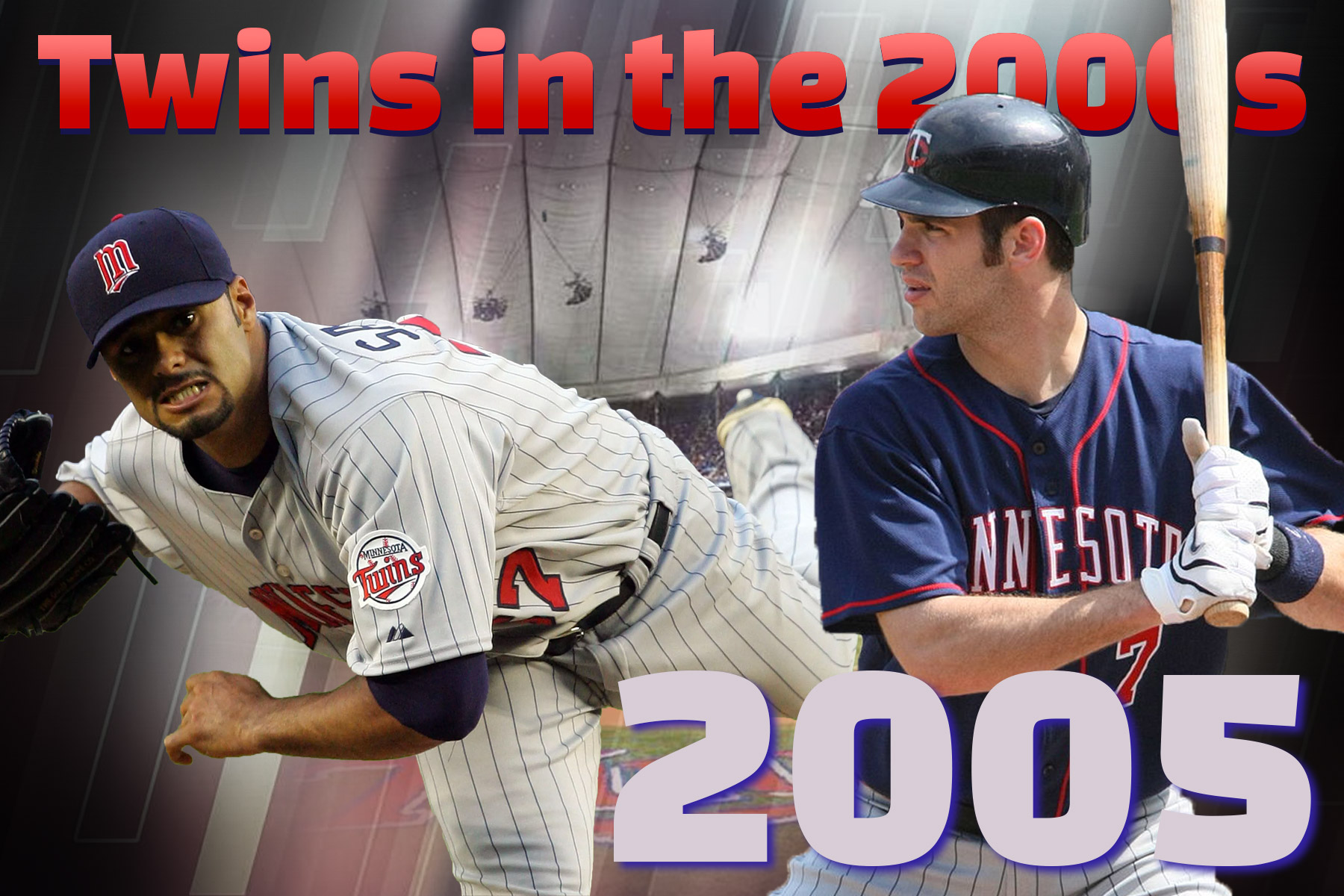 We're running a 20-part series in which we look back at each Minnesota Twins season of the 2000s. A rotation of different writers will highlight key moments, unearth forgotten details, and share nostalgic tales from the past two decades leading up to the present. This installment covers the 2005 season. Team Record: 83-79 Finish: 3rd Place in AL Central All-Stars: Johan Santana (SP), Joe Nathan (RP) Awards: Torii Hunter (Gold Glove, CF) Playoffs: N/A Season Overview On July 28th of 2005, Torii Hunter chased a ball into the deepest corner of Fenway Park's strange outfield contour, breaking his ankle against the wall and ending his season. Six weeks later, Kyle Lohse would break manager Ron Gardenhire's office door with a baseball bat. But for all intents and purposes, Minnesota's hopes for a fourth straight division title had been shattered long before either of these events, in a season where several Twins hitters endured downswings and a division rival rose far above the field. Let's start with what went right for the 2005 Twins: pitching. The staff ranked fifth among AL teams in ERA, second in ERA+, second in WHIP, first in BB/9 and 10th in K/9 rate as the perfect embodiment of pitching coach Rick Anderson's "pitch to contact" philosophy in successful practice. Fresh off his breakout Cy Young campaign, Johan Santana earned his first All-Star nod, maintaining his status as the American League's best starting pitcher even if the postseason award voters failed to validate it (more on that later, ugh). Brad Radke did his usual thing with 200 innings of above-average work. Carlos Silva had a season for the history books, issuing only nine walks in 188 1/3 innings for a 0.4 BB/9 rate that ranks seventh in baseball history. (Everyone else in the Top 25 on that leaderboard accomplished the feat before 1900.) As good as the rotation was, the bullpen might've been better, led by the enduring dominance of Joe Nathan in the closer role. Making his second straight All-Star team, he notched 43 saves on 48 tries, with a 2.70 ERA and 94-to-22 K/BB ratio over 70 innings. Joining him as a lights-out back-end reliever was 23-year-old Jesse Crain, who enjoyed one of the stranger statistical seasons in memory – he posted a 2.71 ERA and 1.13 WHIP in 79 2/3 innings despite issuing more walks (29) than strikeouts (25). He was also credited with 12 wins despite never making a start; a vulture after the heart of Tony Fiore's (an inferior but similarly lucky reliever who "earned" 10 wins in 2002). Juan Rincón, J.C. Romero and Matt Guerrier joined them as oft-used and ultra-reliable weapons in Gardenhire's bullpen. Not only was this staff effective, but also remarkably healthy. Five different starters made 26-plus starts. Minnesota used only 15 total pitchers all year, fewest of any Twins team in the 2000s (or 1990s, for that matter). Unfortunately, this steady and reliable pitching corps was doomed to lose a whole lot of low-scoring games, as fledgling young hitters and fading veterans throughout the lineup took their lumps. A tour through the doldrums: Joe Mauer returned after an injury-ruined rookie year and delivered a solid first full season, albeit one that scratched the surface of his true potential. Learning the MLB ropes at age 22, and still seemingly somewhat hampered by his surgically repaired knee, Mauer slashed .294/.372/.411 with nine homers and 55 RBIs. This qualifies as a major highlight of the offense. Justin Morneau, handed the reins with Doug Mientkiewicz gone, batted .239 with a .741 OPS and 22 homers in 141 games. Viewed as one of the best prospects in the game before his arrival in '04, Morneau's luster started to wear off. After FINALLY giving up on Luis Rivas, who put up a .580 OPS in the first half before the team cut bait, Gardenhire found his new muse: light-hitting Nick Punto, who would start 63 games at second in his first of many seasons as a safety blanket for the skipper. The entire second base unit was brutal enough that Terry Ryan traded for a washed-up Bret Boone in July. Boone went .170/.241/.170 in 58 plate appearances as a Twin, then retired. Miscast as a third baseman, Michael Cuddyer struggled defensively and slashed a mediocre .263/.330/.422 with 12 homers at age 26. Now with 1,000 big-league PAs under his belt and little progress to show for it, doubts swirled around the touted talent's true upside. Matt LeCroy plodded to a .798 OPS with 17 homers as a defensive zero, and after the season, Ryan finally cut bait on his former first-round pick. By now, the gravity of the GM's misstep in hitching his wagon to LeCroy as DH in 2002, when David Ortiz was released, was coming into full focus. In 2005, Ortiz drove in 148 runs for the Red Sox and finished as MVP runner-up. Hunter went down midway through the season and the outfield crumbled around him. Lew Ford fell off a cliff after his otherworldly 2004. Jacque Jones and Shannon Stewart were unexceptional, winding down their tenures with the team. Plagued by poor offensive performances, which led to hitting coach Scott Ullger being moved out of his role after the season, the Twins finished last in the AL in runs scored with 688. Maybe it's just as well, since even a stellar campaign likely wouldn't have propelled them past the divinely endowed Chicago White Sox, who won 99 games in the regular season and then went 13-1 in the playoffs en route to a bewilderingly snag-free World Series title. The true tragedy of Minnesota's offensive ineptitude in 2005 is the way it screwed over Santana. He was the AL's best pitcher by almost any reasonable measure, but missed out on the Cy Young because oblivious voters fancied the lesser Bartolo Colon's 21 wins to Johan's 16. Does three Cy Young Awards, as opposed to two, change the Hall of Fame argument for Santana, who fell off the ballot after his first year of eligibility? Who knows, but I'll always have a bitter taste in my mouth from this season for that atrocity alone, despite its many charms. Team MVP: Johan Santana (SP) Other Contenders: Joe Mauer ( C ), Joe Nathan (RP), Torii Hunter (CF), Brad Radke (SP) There's really no competition for Santana here. No other Twins player was on his level in 2005. He was the league's best pitcher, Cy Young debacle be damned, leading the AL in ERA+ (155) and WHIP (0.97), while pacing the majors in strikeouts (238) and FIP (2.80). The Twins went 24-9 in his 33 starts. Santana was good in the first half but found another gear after the All-Star break, pitching to a 9-2 record and 1.59 ERA in 15 starts while holding opponents to a .192/.231/.292 slash line. 3 Most Pivotal Games May 1st: Lost vs. Los Angeles Angels, 2-1 Despite a strong month of April in which they went 15-8, the Twins found themselves trailing the White Sox, who'd jumped out to a 17-7 start. Seeking a series sweep against the Angels at home, Minnesota sent out its ace Santana, who was 4-0. Despite throwing eight innings of two-run ball, Santana took the loss as his offense managed just one run on four hits against Colon and relievers Scot Shields and Francisco Rodríguez. The Twins fell to 3 1/2 games out of first place, which is as close as they'd be for the rest of the year. June 16th: Lost vs. San Francisco Giants, 14-7 In mid-June, the Twins were trying to hang in the division race, trailing the White Sox by five games. Seeking a win in the rubber match against San Francisco, the Twins raced to a 4-0 lead in the first thanks to Mauer (two-run HR) and Morneau (two-run single) but Joe Mays frittered it away. Eventually the Twins and Giants entered the ninth in a 7-7 tie, but Nathan uncharacteristically melted down in a top of the ninth where Minnesota gave up seven runs. From an early big lead, to a tight game, to a blowout loss. Five days later the Twins were 10 games out of first. July 5th: Lost @ Los Angeles Angels, 2-1 Another 2-1 loss to the Angels with a guy named Santana on the mound. Except this time it was Ervin Santana starting for the Halos and combining with three relievers to shut down the unimpressive Twins offense, which never scored after Mauer's one-out RBI single in the first. This loss pushed Minnesota 10 1/2 games back, and it was only downhill from there. Another noteworthy aspect of this game is that a rookie pitcher named Scott Baker made his first MLB start for the Twins, allowing two runs over five innings. Unforgettable Highlights Silva Oozes Efficiency His complete-game victory against the Milwaukee Brewers on May 20th really epitomized Silva's successful '05 formula: throw strikes, let hitters get themselves out, and call it a night. He needed only 74 pitches to get through nine innings, holding the Brew Crew to one run on five hits. Silva induced only three swinging strikes in the game, but of course issued zero walks. The entire contest took less than two and a half fours, despite the Twins scoring seven runs and Milwaukee using five pitchers. Glenn Williams Makes His Mark Mention his name around any fan who followed the Twins around this era, and you'll instantly see their eyes light up. Glenn Williams, a 27-year-old Australian native and fairly anonymous minor-leaguer, came up for a short stint in June and collected hits in each of his first 13 games, going 17-for-40 (.425) before injuring his shoulder on a slide late in the month. He went on the disabled list and never played again in the majors. To date, he remains the all-time MLB leader in career batting average ... among players with at least 40 plate appearances. Lohse Loses His Cool On September 6th, Gardenhire pulled Lohse after two innings in a start against the Rangers where the hurler had surrendered five earned runs. Apparently displeased, Lohse took a baseball bat to the manager's office door, busting off the doorknob and injuring his finger in the process. Liriano Debuts The month of September was mostly a bummer for the Twins, marred by the aforementioned dramatics and a whole bunch of a losing from a defeated team. But one big highlight was the arrival of an exciting pitching prospect who'd been acquired from San Francisco two years earlier alongside Nathan in the A.J. Pierzynski trade. Francisco Liriano joined the Twins as a September call-up, making six appearances (four starts) at age 21. Though he posted a 5.70 ERA in the limited sample, Liriano's nastiness was evident as he held opponents to a .221 average and struck out 33 in 23 2/3 innings, with an 18% whiff rate. The fun was only beginning. One Detail You Probably Forgot It's easy to forget how tremendous of a baserunner Mauer was, especially in his youth. Despite coming off knee surgery and playing a defensive position that punished his legs, Mauer went 13-for-14 on stolen base attempts in 2005. He'd never reach double digits again. Fun Fact In early May, the Twins were informed that their standout reliever Rincón had tested positive for a banned PED. He was suspended for ... 10 days, and came back to post a 2.45 ERA over 63 appearances thereafter. It was a different time. ~~~ Previous Installments: The 2000 Season The 2001 Season The 2002 Season The 2003 Season The 2004 Season
 -
Twins in the 2000s: The 2004 Season
Nick Nelson replied to Matthew Lenz's topic in Twins Daily Front Page News
Nope, that was 2009. Mauer actually didn't play in these playoffs. But all the awful breaks against the Yankees sorta blur together, don't they? -
The Show Must Go On: Inauspicious Debuts
Nick Nelson replied to Nick Nelson's topic in Twins Daily Front Page News
It has indeed been implemented in the game. That's my leaning as well. -
The Show Must Go On: Inauspicious Debuts
Nick Nelson replied to Nick Nelson's topic in Twins Daily Front Page News
Option 3: Press "Like This" on this comment (or voice your support below) if you want us to stick with Zack Littell, who's been an altogether respectable last reliever in the bullpen. -
The Show Must Go On: Inauspicious Debuts
Nick Nelson replied to Nick Nelson's topic in Twins Daily Front Page News
Option 2: Press "Like This" on this comment (or voice your support below) if you want us to call up Blaine Hardy -
The Show Must Go On: Inauspicious Debuts
Nick Nelson replied to Nick Nelson's topic in Twins Daily Front Page News
Option 1: Press "Like This" on this comment (or voice your support below) if you want us to call up Cody Stashak- 6 replies
-
- 13
-
-
As our interactive simulated 2020 season eclipses the trade deadline and moves into August, we've pulled the trigger on two major deals to add starting pitching. Unfortunately, the new guys didn't make great first impressions, and the Twins now find themselves once again looking up at Cleveland in the standings.To get caught up on what we're doing here, you can check out the introductory post in the series for an explanation of the premise and setup. But the quick version is this: We're playing a progressive simulated Twins season on MLB The Show 20 on PS4, and y'all are helping guide the ship. In each installment I'll update you on what's happened since the last, and put at least one key decision up for vote. Date In Game: 8/8 Team Record: 66-52 Leading OPS: Luis Arraez (.935 in 365 AB) Leading ERA (SP): Jose Berrios (3.24 in 155.1 IP) Leading ERA (RP): Tyler Duffey (2.18 in 53.2 IP) LATEST RESULTS (4-6) Gm 109 vs LAD: W 2-0 (Berrios 8.1 IP, 0 ER, W) Gm 110 vs LAD: L 6-4 (May 0.2 IP, 2 ER, 3 BB, L) Gm 111 vs HOU: W 6-5 (Cave 3-4, 2 R) Gm 112 vs HOU: L 5-4 (Wood 4.1, 6 ER, L) Gm 113 vs HOU: L 11-1 (Arraez 4-5, 4 RBI) Gm 114 vs CLE: W 8-5 (Gonzalez 3-4, 5 RBI) Gm 115 vs CLE: L 4-1 (Donaldson/Sano/Kepler 0-11, 5 K) Gm 116 vs CLE: L 6-4 (Odorizzi 1.1 IP, 6 ER) Gm 117 @ KC: L 6-4 (Wood 6 IP, 2 ER) Gm 118 @ KC: W 8-4 (Avila 2-4, HR, 4 RBI) AL CENTRAL STANDINGS Download attachment: alcstandings88.jpeg THE RUNDOWN In our last edition, with the trade deadline bearing down, I proposed four different deals I felt we could pull off. Options No. 1 and 4 tied for the most votes, so I went ahead and made both. On July 27th we struck two trades to bolster the rotation: Traded LF Eddie Rosario and RHP Jordan Balazovic to Rays for LHP Blake SnellTraded SS Nick Gordon and RHP Tyler Wells to Dodgers for LHP Alex WoodWith the two new starters coming aboard, Homer Bailey was designated for assignment. Michael Pineda was bumped to a long reliever role. Adapting to the loss of a key lineup fixture in Rosario, we recalled Brent Rooker, and we're more or less platooning him with Jake Cave in left. Both players have performed well in the elevated roles; Cave went 9-for-23 with two home runs and four RBIs in six games, Rooker went 7-for-21 with a homer and three RBIs in six games. The team overall, though, hasn't fared as well. We went 4-6 in the last 10 while Cleveland went 7-3, leaving us three games behind the division lead. Both of our newly acquired starters made had rough debuts with the new team. Here's a quick recap of the latest stretch of games, broken down by series: Split home series vs Dodgers, 1-1 We won the first game behind a tremendous effort from Jose Berrios, who took a shutout into the ninth before giving way to Taylor Rogers and a two-out save. We lost the second game, with All-Star starter Kenta Maeda unable to get through five, and Trevor May taking the loss in an erratic relief appearance. Lost home series vs Houston, 2-1 Like the last series, we won the first game, this time scoring five runs in a second inning highlighted by Miguel Sano's three-run double. Fending off an Astros comeback, the Twins held on 6-5. The second game saw newly acquired Alex Wood make his Twins debut. Bringing in a 2.53 ERA from his first four months with the Dodgers, Wood was hit early and often by the Astros, giving up six earned runs in 4 1/3 innings of work. We lost 6-4. (Of note: Pineda – now in a long relief role, tossed 2 2/3 scoreless innings after replacing Wood ... who just supplanted him in the rotation.) In the third game, Snell made his first start in a Twins uniform, opposite the reigning Cy Young winner (and recent All-Star Game starter) Justin Verlander. It wasn't a great night for either pitcher, as they posted identical results: 5.1 IP, 5 ER. But Houston's bullpen bested Minnesota's. And... okay. Check this out. Tyler Duffey came into this game with a 1.45 ERA. He's been the best reliever on the team and one of the best in the league. On this day against the Astros, he entered the eighth inning of a tie game. His line: 0.1 IP, 3 H, 2 BB, 5 ER. He got one out, put five runners on, and they all scored. In his three other appearances over the past batch, he allowed zero runs while striking out seven. It says a lot that, even after a week marred by that disastrous outing, Duffey still leads this excellent bullpen in ERA at 2.18. I'm not trying to say the Astros are still banging garbage cans and this video game is accounting for it, but. Actually that is what I'm saying. Only possible explanation. Damn you Houston. Lost home series vs Cleveland, 2-1 This one was painful. We had a big opportunity at home against the team we're battling for first place and ... we fell flat. Once again the Twins took Game 1, this time keyed by a five-RBI effort from Marwin Gonzalez. But Cleveland took the next two, with Jake Odorizzi completely imploding in the third: 1.1 IP, 6 ER, 6 H, 1 BB, 0 K. (Of note: Pineda relieved him and gave us 4 2/3 scoreless innings, lowering his ERA to 3.68.) Split first two of four on road vs. Kansas City, 1-1 In the first game, Wood took the ball again and looked much better, holding the Royals to two runs over six innings, striking out six. But Rogers gave up a one-run lead in the ninth, and Hunter Dozier launched a walk-off homer against Zack Littell in the 12th. The second game saw another rough effort from Snell, who allowed four earned runs and seven walks over six innings. Luckily the rest of the team lifted him up. Nelson Cruz and Alex Avila each homered, combining for seven RBIs. Sergio Romo and Duffey combined for three scoreless frames in an 8-4 win. And that's where we are at. Since our rundown was quite extensive, I'll skip the hot/cold trends for this week. Let's talk bullpen upgrades. DECISION TIME: CALL UP A RELIEVER FROM AAA? While we made two major rotation additions at the trade deadline, we elected not to upgrade the bullpen. And that's justifiable, because the unit has generally been really damn good. But we might want to think about replacing Littell. His numbers are okay: through 46 2/3 innings, he has a 4.44 ERA, 1.52 WHIP, and 33-to-15 K/BB ratio. But he has allowed eight home runs – most in the bullpen – and that includes the aforementioned walk-off shot in Kansas City. He just hasn't been very reliable, and in terms of overall rating in the video game, his 68 is worst on the current 26-man roster. Download attachment: lowestratedtwins.jpeg We've got two relievers performing extremely well in Triple-A. I propose that we call up one of them to replace Littell. Option 1: Cody Stashak, RHP. In 28 innings of work for Rochester, he has a 27-to-8 K/BB ratio, 0.96 ERA, and a 0.82 WHIP. As we know, he's already had some big-league success. Option 2: Blaine Hardy, LHP. Though sidelined in real life by Tommy John surgery, Hardy is still healthy in the virtual realm, and throwing well. He's got a 2.08 ERA and 1.07 WHIP through 34 2/3 innings, with a 23-to-7 K/BB ratio. He would give us a lefty option in the bullpen, which we currently lack outside the closer Rogers. The other option is to stick with Littell. Feel free to state your preference in the comments. COMING UP 8/8 @ KC 8/9 @ KC 8/10 @ BOS 8/11 @ BOS 8/12 @ BOS 8/13 @ BOS 8/14 vs KC 8/15 vs KC 8/16 vs KC PREVIOUS INSTALLMENTS Part 1: We Can Build This Thing Together (0-0) Part 2: 10 Games In, 6 Games Back (4-6) Part 3: Roaring Back (11-9) Part 4: Over the Hill (17-13) Part 5: Checking In at the Quarter Point (23-17) Part 6: Rising Power (30-20) Part 7: First Place! (Barely) (34-26) Part 8: Drafting and Dropping (38-32) Part 9: Cruz Control (45-35) Part 10: Pulling Ahead (52-38) Part 11: Bashing into the All-Star Break (58-40) Part 12: Deadline Decisions (62-46) MORE FROM TWINS DAILY — Latest Twins coverage from our writers — Recent Twins discussion in our forums — Follow Twins Daily via Twitter, Facebook or email Click here to view the article
-
 To get caught up on what we're doing here, you can check out the introductory post in the series for an explanation of the premise and setup. But the quick version is this: We're playing a progressive simulated Twins season on MLB The Show 20 on PS4, and y'all are helping guide the ship. In each installment I'll update you on what's happened since the last, and put at least one key decision up for vote. Date In Game: 8/8 Team Record: 66-52 Leading OPS: Luis Arraez (.935 in 365 AB) Leading ERA (SP): Jose Berrios (3.24 in 155.1 IP) Leading ERA (RP): Tyler Duffey (2.18 in 53.2 IP) LATEST RESULTS (4-6) Gm 109 vs LAD: W 2-0 (Berrios 8.1 IP, 0 ER, W) Gm 110 vs LAD: L 6-4 (May 0.2 IP, 2 ER, 3 BB, L) Gm 111 vs HOU: W 6-5 (Cave 3-4, 2 R) Gm 112 vs HOU: L 5-4 (Wood 4.1, 6 ER, L) Gm 113 vs HOU: L 11-1 (Arraez 4-5, 4 RBI) Gm 114 vs CLE: W 8-5 (Gonzalez 3-4, 5 RBI) Gm 115 vs CLE: L 4-1 (Donaldson/Sano/Kepler 0-11, 5 K) Gm 116 vs CLE: L 6-4 (Odorizzi 1.1 IP, 6 ER) Gm 117 @ KC: L 6-4 (Wood 6 IP, 2 ER) Gm 118 @ KC: W 8-4 (Avila 2-4, HR, 4 RBI) AL CENTRAL STANDINGS THE RUNDOWN In our last edition, with the trade deadline bearing down, I proposed four different deals I felt we could pull off. Options No. 1 and 4 tied for the most votes, so I went ahead and made both. On July 27th we struck two trades to bolster the rotation: Traded LF Eddie Rosario and RHP Jordan Balazovic to Rays for LHP Blake Snell Traded SS Nick Gordon and RHP Tyler Wells to Dodgers for LHP Alex Wood With the two new starters coming aboard, Homer Bailey was designated for assignment. Michael Pineda was bumped to a long reliever role. Adapting to the loss of a key lineup fixture in Rosario, we recalled Brent Rooker, and we're more or less platooning him with Jake Cave in left. Both players have performed well in the elevated roles; Cave went 9-for-23 with two home runs and four RBIs in six games, Rooker went 7-for-21 with a homer and three RBIs in six games. The team overall, though, hasn't fared as well. We went 4-6 in the last 10 while Cleveland went 7-3, leaving us three games behind the division lead. Both of our newly acquired starters made had rough debuts with the new team. Here's a quick recap of the latest stretch of games, broken down by series: Split home series vs Dodgers, 1-1 We won the first game behind a tremendous effort from Jose Berrios, who took a shutout into the ninth before giving way to Taylor Rogers and a two-out save. We lost the second game, with All-Star starter Kenta Maeda unable to get through five, and Trevor May taking the loss in an erratic relief appearance. Lost home series vs Houston, 2-1 Like the last series, we won the first game, this time scoring five runs in a second inning highlighted by Miguel Sano's three-run double. Fending off an Astros comeback, the Twins held on 6-5. The second game saw newly acquired Alex Wood make his Twins debut. Bringing in a 2.53 ERA from his first four months with the Dodgers, Wood was hit early and often by the Astros, giving up six earned runs in 4 1/3 innings of work. We lost 6-4. (Of note: Pineda – now in a long relief role, tossed 2 2/3 scoreless innings after replacing Wood ... who just supplanted him in the rotation.) In the third game, Snell made his first start in a Twins uniform, opposite the reigning Cy Young winner (and recent All-Star Game starter) Justin Verlander. It wasn't a great night for either pitcher, as they posted identical results: 5.1 IP, 5 ER. But Houston's bullpen bested Minnesota's. And... okay. Check this out. Tyler Duffey came into this game with a 1.45 ERA. He's been the best reliever on the team and one of the best in the league. On this day against the Astros, he entered the eighth inning of a tie game. His line: 0.1 IP, 3 H, 2 BB, 5 ER. He got one out, put five runners on, and they all scored. In his three other appearances over the past batch, he allowed zero runs while striking out seven. It says a lot that, even after a week marred by that disastrous outing, Duffey still leads this excellent bullpen in ERA at 2.18. I'm not trying to say the Astros are still banging garbage cans and this video game is accounting for it, but. Actually that is what I'm saying. Only possible explanation. Damn you Houston. Lost home series vs Cleveland, 2-1 This one was painful. We had a big opportunity at home against the team we're battling for first place and ... we fell flat. Once again the Twins took Game 1, this time keyed by a five-RBI effort from Marwin Gonzalez. But Cleveland took the next two, with Jake Odorizzi completely imploding in the third: 1.1 IP, 6 ER, 6 H, 1 BB, 0 K. (Of note: Pineda relieved him and gave us 4 2/3 scoreless innings, lowering his ERA to 3.68.) Split first two of four on road vs. Kansas City, 1-1 In the first game, Wood took the ball again and looked much better, holding the Royals to two runs over six innings, striking out six. But Rogers gave up a one-run lead in the ninth, and Hunter Dozier launched a walk-off homer against Zack Littell in the 12th. The second game saw another rough effort from Snell, who allowed four earned runs and seven walks over six innings. Luckily the rest of the team lifted him up. Nelson Cruz and Alex Avila each homered, combining for seven RBIs. Sergio Romo and Duffey combined for three scoreless frames in an 8-4 win. And that's where we are at. Since our rundown was quite extensive, I'll skip the hot/cold trends for this week. Let's talk bullpen upgrades. DECISION TIME: CALL UP A RELIEVER FROM AAA? While we made two major rotation additions at the trade deadline, we elected not to upgrade the bullpen. And that's justifiable, because the unit has generally been really damn good. But we might want to think about replacing Littell. His numbers are okay: through 46 2/3 innings, he has a 4.44 ERA, 1.52 WHIP, and 33-to-15 K/BB ratio. But he has allowed eight home runs – most in the bullpen – and that includes the aforementioned walk-off shot in Kansas City. He just hasn't been very reliable, and in terms of overall rating in the video game, his 68 is worst on the current 26-man roster. We've got two relievers performing extremely well in Triple-A. I propose that we call up one of them to replace Littell. Option 1: Cody Stashak, RHP. In 28 innings of work for Rochester, he has a 27-to-8 K/BB ratio, 0.96 ERA, and a 0.82 WHIP. As we know, he's already had some big-league success. Option 2: Blaine Hardy, LHP. Though sidelined in real life by Tommy John surgery, Hardy is still healthy in the virtual realm, and throwing well. He's got a 2.08 ERA and 1.07 WHIP through 34 2/3 innings, with a 23-to-7 K/BB ratio. He would give us a lefty option in the bullpen, which we currently lack outside the closer Rogers. The other option is to stick with Littell. Feel free to state your preference in the comments. COMING UP 8/8 @ KC 8/9 @ KC 8/10 @ BOS 8/11 @ BOS 8/12 @ BOS 8/13 @ BOS 8/14 vs KC 8/15 vs KC 8/16 vs KC PREVIOUS INSTALLMENTS Part 1: We Can Build This Thing Together (0-0) Part 2: 10 Games In, 6 Games Back (4-6) Part 3: Roaring Back (11-9) Part 4: Over the Hill (17-13) Part 5: Checking In at the Quarter Point (23-17) Part 6: Rising Power (30-20) Part 7: First Place! (Barely) (34-26) Part 8: Drafting and Dropping (38-32) Part 9: Cruz Control (45-35) Part 10: Pulling Ahead (52-38) Part 11: Bashing into the All-Star Break (58-40) Part 12: Deadline Decisions (62-46) MORE FROM TWINS DAILY — Latest Twins coverage from our writers — Recent Twins discussion in our forums — Follow Twins Daily via Twitter, Facebook or email
