



Nick Nelson
-
Posts
8,327 -
Joined
-
Last visited
-
Days Won
56
Content Type
Profiles
News
Minnesota Twins Videos
2026 Minnesota Twins Top Prospects Ranking
2022 Minnesota Twins Draft Picks
Minnesota Twins Free Agent & Trade Rumors, Notes, & Tidbits
Guides & Resources
2023 Minnesota Twins Draft Picks
The Minnesota Twins Players Project
2024 Minnesota Twins Draft Picks
2025 Minnesota Twins Draft Pick Tracker
2026 Minnesota Twins Draft Tracker: Picks & Bonuses
Forums
Blogs
Events
Store
Downloads
Gallery
Everything posted by Nick Nelson
-
 In the last edition, with our team struggling and losing ground in the division at a critical time, commenters voted to shake up the batting order. That move paid off in a big way, and now our 2020 Twins find themselves back in the thick of the race with a pivotal stretch ahead, and September call-ups on the way.To get caught up on what we're doing here, you can check out the introductory post in the series for an explanation of the premise and setup. But the quick version is this: We're playing a progressive simulated Twins season on MLB The Show 20 on PS4, and y'all are helping guide the ship. In each installment I'll update you on what's happened since the last, and put at least one key decision up for vote. Date In Game: 8/31 Team Record: 78-59 Leading OPS: Luis Arraez (.926 in 436 AB) Leading ERA (SP): Alex Wood (2.42 in 152.1 IP) Leading ERA (RP): Tyler Duffey (1.99 in 58.2 IP) LATEST RESULTS (7-2) Gm 129 vs CWS: W 9-1 (Berrios CG, W) Gm 130 vs DET: W 5-3 (Cruz 2-4, HR, 3 RBI) Gm 131 vs DET: W 6-2 (Polanco 4-5, 3 RBI) Gm 132 vs DET: W 7-2 (Kepler 3-4, 4 RBI) Gm 133 @ MIL: W 6-1 (Sano 2-4, 2 HR, 3 RBI) Gm 134 @ MIL: W 13-5 (Donaldson 3-5, HR, 5 RBI) Gm 135 @ TB: L 5-1 (Arraez 2-4) Gm 136 @ TB: L 8-7 (Buxton 2-4, HR, 2 RBI) Gm 137 @ TB: W 5-2 (Wood 8 IP, 0 R, W) AL CENTRAL STANDINGS Download attachment: alcstandings831.jpeg THE RUNDOWN The decision up for group vote last time was whether we should rearrange the batting order, and voters overwhelmingly said yes. The majority opted for a relatively minor shake-up, which involved moving Jorge Polanco and Mitch Garver up, while sliding Max Kepler and Josh Donaldson down. Miguel Sano went from the No. 3 spot to cleanup. I can't say if these changes were directly responsible, but the lineup absolutely TOOK OFF immediately after we implemented them. We rattled off a six-game winning streak while averaging 7.8 runs per game. We then dropped a couple in Tampa, but avoided a sweep by closing that series with a win. That's where I stopped simming. We went through just nine games instead of the standard 10 during this batch. Why? Because an absolutely vital stretch lies ahead and I want your help setting us up for it. But first, let's run back what has happened over these past nine games, and how we drew back within a game and a half of first place. First, we finished our two-game series against Chicago with a blowout victory, riding Jose Berrios' complete game – along with five RBIs from Josh Donaldson and two bombs from Nelson Cruz – to a 9-1 result. Then we rolled over Detroit in a home sweep, outscoring the Tigers 18-7 in three games. Various members of the lineup delivered big results, and most importantly we faced up against our old nemesis in Game 3 and roasted him: Download attachment: woodvnelson.jpeg Crummy ol' Nick Nelson dropped his record to 1-8 in this one. He lasted only 4 1/3 innings, allowing six earned runs on eight hits. Meanwhile, Alex Wood cruised through seven innings of one-run ball and Max Kepler went 3-for-4 with a homer and four RBIs. At long last, our Twins were feasting on the soft part of the schedule – a difficulty sometimes, if you've been following – and it carried over into Milwaukee. The Brewers are basically out of contention (7.5 out from a wild-card spot) and we ran over them, piling up 19 runs in two games. Blake Snell finally delivered his first quality start as a Twin in the first contest, tossing six innings of one-run ball while Miguel Sano's two homers carried the offense. Game 2 was a 13-run clinic – Donaldson drove in five again, Luis Arraez had four hits, Berrios picked up his 17th win. Then it was off to Tampa, where we hit a speed bump. Yonny Chirinos and the Rays bullpen shut us down in Game 1, a 5-1 loss. Game 2 saw Jake Odorizzi go up against Brendan McKay, and in this close match, the tides were turned by Tampa's five-run sixth – keyed by a three-run homer from *gulp* cleanup hitter Eddie Rosario. We rebounded to take the series finale, with Wood hurling eight scoreless frames (what a pickup!) and Byron Buxton producing from the bottom of the lineup (3-for-4, HR). And that's where we now stand. Next up: four games at home versus Cleveland, followed by three games at home against the White Sox. Then, it's an off day, followed by a three-game series in Cleveland. I don't wanna say the division is on the line here, because there are still 15 games left after that second Indians series ... but this stretch is HUGE. And with the date in our sim being August 31st, it's time to expand the roster and bring in some reinforcements. We'll get there shortly. First, to recognize the standouts and stragglers. WHO'S HOT I mentioned Alex Wood's work in the section above but let's just recap: Two starts over this latest stretch, 15 innings, one run, 11 hits, nine strikeouts, one walk. Blake Snell also got on track against Milwaukee as I mentioned, and he is set to kick off our upcoming three-gamer against Cleveland, followed by Berrios and Maeda. The offense is also stepping up its impact, as indicated by the consistent scoring over these past nine games – we tallied five or more runs in all but one. Arraez has his average up to .344, but he's struggling to keep pace in the batting race with Mike Trout (hitting .350 with a cool 1.134 OPS for the 88-49 Angels). Sano is fifth in the AL in home runs, with his 34 trailing only Eloy Jimenez (44), J.D. Martinez (44), Gleyber Torres (39) and Giancarlo Stanton (35). Sano is also eighth in RBIs at 92, followed closely by Donaldson (91, ninth). Our offense hasn't been clicking as consistently as it did in 2019, but it's still been an impressive unit all-around, and lately has been rounding into form. Hopefully we can maintain that momentum for the last month and into the playoffs. WHO'S NOT There have been some suspect performances in the bullpen. Cody Stashak gave up a couple more runs this week and his ERA stands at 9.72 in 8 1/3 innings since being called up. Trevor May also took some lumps and his ERA is up to 3.88; he has the bullpen's highest strikeout rate (12.0 K/9) but also its highest walk rate (6.4 BB/9). Sergio Romo sits with a 4.15 ERA after putting up the following line in three appearances: 4 IP, 3 ER, 5 H, 3 BB, 3 K. DECISION TIME: SEPTEMBER CALL-UPS With September upon us and rosters set to expand, we have one finally opportunity to infuse more talent for the final sprint to October. However, this isn't like September roster scenarios of the past. A rule change that was supposed to go into effect in MLB this year called for roster sizes increasing by only two spots (from 26 to 28) after August 31st, as opposed to the unrestricted additions that teams previously enjoyed. That rule is implemented in MLB The Show 20, meaning we'll need to be very thoughtful about whom we select. Here are the viable options, as I see them. After we go over them, I'll present a few two-player packages of varying sorts. Players who are in bold are already on the 40-man. Players who are not would need to be added. Pitchers Randy Dobnak, RHP (AAA): 65 IP, 3.46 ERA, 1.18 WHIP, 6.7 K/9, 2.1 BB/9 Devin Smeltzer, LHP (AAA): 138.2 IP, 3.05 ERA, 7.0 K/9, 2.2 BB/9 Rich Hill, LHP (AAA): 128.2 IP, 2.58 ERA, 0.98 WHIP, 8.0 K/9, 2.0 BB/9 Matt Wisler, RHP (AAA): 58.2 IP, 1.69 ERA, 1.09 WHIP, 8.6 K/9, 2.0 BB/9 Zack Littell, RHP (AAA): 7 IP, 0.00 ERA, 0.43 WHIP, 7.7 K/9, 1.3 BB/9 Lewis Thorpe, LHP (AA): 65.2 IP, 5.62 ERA, 1.80 WHIP, 6.7 K/9, 5.0 BB/9 Jhoan Duran, RHP (AA): 141.1 IP, 3.63 ERA, 1.42 WHIP, 8.5 K/9, 4.4 BB/9 Position Players Ehire Adrianza, UTIL (AAA): 96 G, .270/.348/.391, 11 HR, 49 RBI Alex Kirilloff, OF (AAA): 104 G, .273/.350/.470, 19 HR, 63 RBI Trevor Larnach, OF (AAA): 97 G, .245/.319/.396, 13 HR, 49 RBI Royce Lewis, SS (AA): 90 G, .234/.299/.365, 9 HR, 40 RBI Now, there are a few different strategic approaches we can take here. Should the call-ups be designed to directly impact our team and address areas of need (i.e., the bullpen)? Should they be more geared toward adding depth, so we can better rest up our regulars after five months of grinding? Or should we be aiming to bring top prospects into the fold, giving them a taste of big-league action? Most likely it'll be some combination of these things, but again, having only two roster openings leaves us somewhat limited in the choices we can make. Here are a few of my thoughts: The bullpen could use some help, so calling up at least one pitcher is basically a given. Wisler has been tremendous all year and he's on the 40-man. Littell was pitching decently for the Twins before we swapped him with Stashak a couple weeks ago; I'm more inclined to just reverse that decision than use a call-up spot on Littell.Rich Hill is of course super interesting. Those who've been following may recall that he struggled a ton early on in the Twins rotation, and we DFA'ed him, but he accepted a demotion to Triple-A. He's been flat-out dominant there. Should he be chosem as the pitcher we call up in September – a veteran lefty bullpen weapon (complementing Taylor Rogers) with the potential to step in and start? We would need to re-add him to the 40-man roster, but making room shouldn't be too hard; for example, we have Jhoulys Chacin occupying a spot and pitching in Double-A.I'd love to bring one of our top prospects into the fold. Lewis might be fun with his speed and upside but he hasn't looked great overall in Triple-A (he did bat .308 with 21 RBIs in August). Kirilloff has been playing well for Rochester all year. He was the organization's lone Triple-A All-Star, and he ranks third among International League hitters with 19 homers (trailing Daniel Palka and Matt Adams). Kirilloff could see a lot of playing time in September, joining the Rosario-less left field mix (which currently includes Jake Cave, Brent Rooker, and Marwin Gonzalez). He'd also be auditioning for a potential Opening Day spot in 2021. These things are true of Larnach too, but he simply hasn't performed as well.Download attachment: kiriloffrochester.jpeg With all these thoughts in mind, here are the options I propose. You can vote or share your vision for a different combo in the comments. The Low-Friction Practicality Play: Matt Wisler (RP) and Ehire Adrianza (UTIL)The Lightning-in-a-Bottle Cocktail: Royce Lewis (SS) and Jhoan Duran (SP)The High-Impact Infusion: Rich Hill (SP) and Alex Kirilloff (OF)COMING UP 8/31 vs CLE 9/1 vs CLE 9/2 vs CLE 9/3 vs CLE 9/4 vs CWS 9/5 vs CWS 9/6 vs CWS 9/8 @ CLE 9/9 @ CLE 9/10 @ CLE PREVIOUS INSTALLMENTS Part 1: We Can Build This Thing Together (0-0) Part 2: 10 Games In, 6 Games Back (4-6) Part 3: Roaring Back (11-9) Part 4: Over the Hill (17-13) Part 5: Checking In at the Quarter Point (23-17) Part 6: Rising Power (30-20) Part 7: First Place! (Barely) (34-26) Part 8: Drafting and Dropping (38-32) Part 9: Cruz Control (45-35) Part 10: Pulling Ahead (52-38) Part 11: Bashing into the All-Star Break (58-40) Part 12: Deadline Decisions (62-46) Part 13: Inauspicious Debuts (66-52) Part 14: Treading Water as the Clock Ticks (71-57) MORE FROM TWINS DAILY — Latest Twins coverage from our writers — Recent Twins discussion in our forums — Follow Twins Daily via Twitter, Facebook or email Click here to view the article
 -
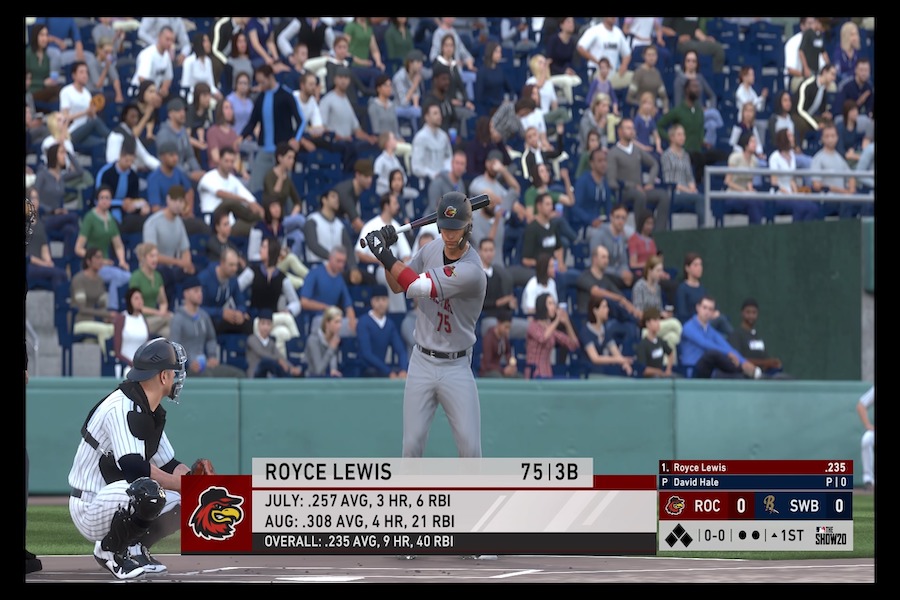 To get caught up on what we're doing here, you can check out the introductory post in the series for an explanation of the premise and setup. But the quick version is this: We're playing a progressive simulated Twins season on MLB The Show 20 on PS4, and y'all are helping guide the ship. In each installment I'll update you on what's happened since the last, and put at least one key decision up for vote. Date In Game: 8/31 Team Record: 78-59 Leading OPS: Luis Arraez (.926 in 436 AB) Leading ERA (SP): Alex Wood (2.42 in 152.1 IP) Leading ERA (RP): Tyler Duffey (1.99 in 58.2 IP) LATEST RESULTS (7-2) Gm 129 vs CWS: W 9-1 (Berrios CG, W) Gm 130 vs DET: W 5-3 (Cruz 2-4, HR, 3 RBI) Gm 131 vs DET: W 6-2 (Polanco 4-5, 3 RBI) Gm 132 vs DET: W 7-2 (Kepler 3-4, 4 RBI) Gm 133 @ MIL: W 6-1 (Sano 2-4, 2 HR, 3 RBI) Gm 134 @ MIL: W 13-5 (Donaldson 3-5, HR, 5 RBI) Gm 135 @ TB: L 5-1 (Arraez 2-4) Gm 136 @ TB: L 8-7 (Buxton 2-4, HR, 2 RBI) Gm 137 @ TB: W 5-2 (Wood 8 IP, 0 R, W) AL CENTRAL STANDINGS THE RUNDOWN The decision up for group vote last time was whether we should rearrange the batting order, and voters overwhelmingly said yes. The majority opted for a relatively minor shake-up, which involved moving Jorge Polanco and Mitch Garver up, while sliding Max Kepler and Josh Donaldson down. Miguel Sano went from the No. 3 spot to cleanup. I can't say if these changes were directly responsible, but the lineup absolutely TOOK OFF immediately after we implemented them. We rattled off a six-game winning streak while averaging 7.8 runs per game. We then dropped a couple in Tampa, but avoided a sweep by closing that series with a win. That's where I stopped simming. We went through just nine games instead of the standard 10 during this batch. Why? Because an absolutely vital stretch lies ahead and I want your help setting us up for it. But first, let's run back what has happened over these past nine games, and how we drew back within a game and a half of first place. First, we finished our two-game series against Chicago with a blowout victory, riding Jose Berrios' complete game – along with five RBIs from Josh Donaldson and two bombs from Nelson Cruz – to a 9-1 result. Then we rolled over Detroit in a home sweep, outscoring the Tigers 18-7 in three games. Various members of the lineup delivered big results, and most importantly we faced up against our old nemesis in Game 3 and roasted him: Crummy ol' Nick Nelson dropped his record to 1-8 in this one. He lasted only 4 1/3 innings, allowing six earned runs on eight hits. Meanwhile, Alex Wood cruised through seven innings of one-run ball and Max Kepler went 3-for-4 with a homer and four RBIs. At long last, our Twins were feasting on the soft part of the schedule – a difficulty sometimes, if you've been following – and it carried over into Milwaukee. The Brewers are basically out of contention (7.5 out from a wild-card spot) and we ran over them, piling up 19 runs in two games. Blake Snell finally delivered his first quality start as a Twin in the first contest, tossing six innings of one-run ball while Miguel Sano's two homers carried the offense. Game 2 was a 13-run clinic – Donaldson drove in five again, Luis Arraez had four hits, Berrios picked up his 17th win. Then it was off to Tampa, where we hit a speed bump. Yonny Chirinos and the Rays bullpen shut us down in Game 1, a 5-1 loss. Game 2 saw Jake Odorizzi go up against Brendan McKay, and in this close match, the tides were turned by Tampa's five-run sixth – keyed by a three-run homer from *gulp* cleanup hitter Eddie Rosario. We rebounded to take the series finale, with Wood hurling eight scoreless frames (what a pickup!) and Byron Buxton producing from the bottom of the lineup (3-for-4, HR). And that's where we now stand. Next up: four games at home versus Cleveland, followed by three games at home against the White Sox. Then, it's an off day, followed by a three-game series in Cleveland. I don't wanna say the division is on the line here, because there are still 15 games left after that second Indians series ... but this stretch is HUGE. And with the date in our sim being August 31st, it's time to expand the roster and bring in some reinforcements. We'll get there shortly. First, to recognize the standouts and stragglers. WHO'S HOT I mentioned Alex Wood's work in the section above but let's just recap: Two starts over this latest stretch, 15 innings, one run, 11 hits, nine strikeouts, one walk. Blake Snell also got on track against Milwaukee as I mentioned, and he is set to kick off our upcoming three-gamer against Cleveland, followed by Berrios and Maeda. The offense is also stepping up its impact, as indicated by the consistent scoring over these past nine games – we tallied five or more runs in all but one. Arraez has his average up to .344, but he's struggling to keep pace in the batting race with Mike Trout (hitting .350 with a cool 1.134 OPS for the 88-49 Angels). Sano is fifth in the AL in home runs, with his 34 trailing only Eloy Jimenez (44), J.D. Martinez (44), Gleyber Torres (39) and Giancarlo Stanton (35). Sano is also eighth in RBIs at 92, followed closely by Donaldson (91, ninth). Our offense hasn't been clicking as consistently as it did in 2019, but it's still been an impressive unit all-around, and lately has been rounding into form. Hopefully we can maintain that momentum for the last month and into the playoffs. WHO'S NOT There have been some suspect performances in the bullpen. Cody Stashak gave up a couple more runs this week and his ERA stands at 9.72 in 8 1/3 innings since being called up. Trevor May also took some lumps and his ERA is up to 3.88; he has the bullpen's highest strikeout rate (12.0 K/9) but also its highest walk rate (6.4 BB/9). Sergio Romo sits with a 4.15 ERA after putting up the following line in three appearances: 4 IP, 3 ER, 5 H, 3 BB, 3 K. DECISION TIME: SEPTEMBER CALL-UPS With September upon us and rosters set to expand, we have one finally opportunity to infuse more talent for the final sprint to October. However, this isn't like September roster scenarios of the past. A rule change that was supposed to go into effect in MLB this year called for roster sizes increasing by only two spots (from 26 to 28) after August 31st, as opposed to the unrestricted additions that teams previously enjoyed. That rule is implemented in MLB The Show 20, meaning we'll need to be very thoughtful about whom we select. Here are the viable options, as I see them. After we go over them, I'll present a few two-player packages of varying sorts. Players who are in bold are already on the 40-man. Players who are not would need to be added. Pitchers Randy Dobnak, RHP (AAA): 65 IP, 3.46 ERA, 1.18 WHIP, 6.7 K/9, 2.1 BB/9 Devin Smeltzer, LHP (AAA): 138.2 IP, 3.05 ERA, 7.0 K/9, 2.2 BB/9 Rich Hill, LHP (AAA): 128.2 IP, 2.58 ERA, 0.98 WHIP, 8.0 K/9, 2.0 BB/9 Matt Wisler, RHP (AAA): 58.2 IP, 1.69 ERA, 1.09 WHIP, 8.6 K/9, 2.0 BB/9 Zack Littell, RHP (AAA): 7 IP, 0.00 ERA, 0.43 WHIP, 7.7 K/9, 1.3 BB/9 Lewis Thorpe, LHP (AA): 65.2 IP, 5.62 ERA, 1.80 WHIP, 6.7 K/9, 5.0 BB/9 Jhoan Duran, RHP (AA): 141.1 IP, 3.63 ERA, 1.42 WHIP, 8.5 K/9, 4.4 BB/9 Position Players Ehire Adrianza, UTIL (AAA): 96 G, .270/.348/.391, 11 HR, 49 RBI Alex Kirilloff, OF (AAA): 104 G, .273/.350/.470, 19 HR, 63 RBI Trevor Larnach, OF (AAA): 97 G, .245/.319/.396, 13 HR, 49 RBI Royce Lewis, SS (AA): 90 G, .234/.299/.365, 9 HR, 40 RBI Now, there are a few different strategic approaches we can take here. Should the call-ups be designed to directly impact our team and address areas of need (i.e., the bullpen)? Should they be more geared toward adding depth, so we can better rest up our regulars after five months of grinding? Or should we be aiming to bring top prospects into the fold, giving them a taste of big-league action? Most likely it'll be some combination of these things, but again, having only two roster openings leaves us somewhat limited in the choices we can make. Here are a few of my thoughts: The bullpen could use some help, so calling up at least one pitcher is basically a given. Wisler has been tremendous all year and he's on the 40-man. Littell was pitching decently for the Twins before we swapped him with Stashak a couple weeks ago; I'm more inclined to just reverse that decision than use a call-up spot on Littell. Rich Hill is of course super interesting. Those who've been following may recall that he struggled a ton early on in the Twins rotation, and we DFA'ed him, but he accepted a demotion to Triple-A. He's been flat-out dominant there. Should he be chosem as the pitcher we call up in September – a veteran lefty bullpen weapon (complementing Taylor Rogers) with the potential to step in and start? We would need to re-add him to the 40-man roster, but making room shouldn't be too hard; for example, we have Jhoulys Chacin occupying a spot and pitching in Double-A. I'd love to bring one of our top prospects into the fold. Lewis might be fun with his speed and upside but he hasn't looked great overall in Triple-A (he did bat .308 with 21 RBIs in August). Kirilloff has been playing well for Rochester all year. He was the organization's lone Triple-A All-Star, and he ranks third among International League hitters with 19 homers (trailing Daniel Palka and Matt Adams). Kirilloff could see a lot of playing time in September, joining the Rosario-less left field mix (which currently includes Jake Cave, Brent Rooker, and Marwin Gonzalez). He'd also be auditioning for a potential Opening Day spot in 2021. These things are true of Larnach too, but he simply hasn't performed as well. With all these thoughts in mind, here are the options I propose. You can vote or share your vision for a different combo in the comments. The Low-Friction Practicality Play: Matt Wisler (RP) and Ehire Adrianza (UTIL) The Lightning-in-a-Bottle Cocktail: Royce Lewis (SS) and Jhoan Duran (SP) The High-Impact Infusion: Rich Hill (SP) and Alex Kirilloff (OF) COMING UP 8/31 vs CLE 9/1 vs CLE 9/2 vs CLE 9/3 vs CLE 9/4 vs CWS 9/5 vs CWS 9/6 vs CWS 9/8 @ CLE 9/9 @ CLE 9/10 @ CLE PREVIOUS INSTALLMENTS Part 1: We Can Build This Thing Together (0-0) Part 2: 10 Games In, 6 Games Back (4-6) Part 3: Roaring Back (11-9) Part 4: Over the Hill (17-13) Part 5: Checking In at the Quarter Point (23-17) Part 6: Rising Power (30-20) Part 7: First Place! (Barely) (34-26) Part 8: Drafting and Dropping (38-32) Part 9: Cruz Control (45-35) Part 10: Pulling Ahead (52-38) Part 11: Bashing into the All-Star Break (58-40) Part 12: Deadline Decisions (62-46) Part 13: Inauspicious Debuts (66-52) Part 14: Treading Water as the Clock Ticks (71-57) MORE FROM TWINS DAILY — Latest Twins coverage from our writers — Recent Twins discussion in our forums — Follow Twins Daily via Twitter, Facebook or email
 -
Why Doesn't Baseball Love Us Back?
Nick Nelson replied to Nash Walker's topic in Twins Daily Front Page News
That's false, even according to the league itself. Per USA Today: "MLB said 2019 revenue was 39% local gate and other in-park sources, followed by 25% central revenue, 22% local media, 11% sponsorship and 4% other." So, in-game revenue already accounted for solidly under half of the total. It is all but certain that those revenue streams outside of in-game would increase with heightened TV viewership, more streaming subscriptions, etc. When you start by basically arguing "I know this is true regardless of contrary evidence" I'm not sure how to address the rest of your comment. -
What's wrong with Nick's column
Nick Nelson commented on the_brute_squad's blog entry in the_brute_squad's Blog
Thanks for sharing your perspective. Just to quickly address a few things: - I don't think it's controversial to say the country is broken. Almost every major city has been embroiled in ongoing protests, amidst a global pandemic. There's been widespread rioting on a level rarely seen in my lifetime. Divisiveness and despair are at sky-high levels. To sit here and act like everything's hunky-dory in this country conveys the same sort of apathetic detachment that rubbed me the wrong way in Max's post. - You talked a whole lot about politics in this post. I was very clear about this: I don't consider it a political issue. It needs to be addressed in the political realm, yes, but justice and equality are basic parts of our society's fabric. Our way of life can't sustain without them. I'm sorry you and others have a visceral reaction to seeing Chris Cuomo's name but acting like the quote "This isn't political" has a partisan slant -- regardless of the source -- is absurd.- 28 comments
-
- 1
-

-
- nick nelson
- max kepler
- (and 1 more)
-
Our Voices Need To Be Heard, Part 1
Nick Nelson commented on TwinsFan268's blog entry in You Shouldn't Have Lost
Thanks for writing this. I think you echo the feelings of a lot of fans. Personally, I do want to see a baseball season but I have hard time seeing a solution. The players and league are just too far apart. The logistics are so tough. The timeline is starting to crunch. I continue to feel that the best bet is some sort of specialized tournament (a la WBC). Players who want to opt in are able to, others can opt out but still earn something. Maybe they even draft new teams depending on how much participation there is. Use the opportunity to test new technologies, innovations and rule changes. Ump-less games with electronic strike zones? Why not, it's safer. Interactive broadcasts, players mic'ed up in-game... there are a lot of things MLB could try out, many of which might be premium features they could use to drive more revenue.- 7 comments
-
- 3
-
-
- coronavirus
- mlb restart
- (and 1 more)
-
Twins in the 2000s: The 2014 Season
Nick Nelson replied to Nick Nelson's topic in Twins Daily Front Page News
Yep, he went 27-for-33 in 2001 -- our installment in this series on that season named him team MVP. I was definitely taken by surprise when going back through those early-2000s seasons at how frequently he ran. Double-digit steals in each of the following two seasons as well. I think they were referring to the fact that Hughes was given a chance to pitch again in the final weekend and earn the bonus, but declined. He actually needed only one more out, not a few more innings. "I just didn't think it was right," he said at the time. "If I were fighting for a playoff spot, I'd 100 percent be available. But given the circumstances, I don't think it's the right thing to do." -
Why Doesn't Baseball Love Us Back?
Nick Nelson replied to Nash Walker's topic in Twins Daily Front Page News
Thank you writing this piece Nash. It's fantastic. What do you mean "they are the ones trying to get a season going"? Players have pushed openly to return to play, made their own proposals, and made numerous concessions. Here's a plain and simple question for the "I'm with the owners" crowd: why don't they just open their books? We know exactly how much the players make which is what makes it so easy to paint them as bad guys. There are a number of PR elements at play designed to shape perceptions like the one you express here. -
In 2014, the All-Star Game came to Minneapolis. Seeing the game's finest players in action at Target Field was a welcome respite for fans amidst a fourth straight losing season – one which would spell the end for their longtime skipper.We're running a 20-part series in which we look back at each Minnesota Twins season of the 2000s. A rotation of different writers will highlight key moments, unearth forgotten details, and share nostalgic tales from the past two decades leading up to the present. This installment covers the 2014 season. Team Record: 70-92 Finish: 5th Place in AL Central All-Stars: Glen Perkins (RP), Kurt Suzuki ( C ) Awards: N/A Playoffs: N/A Season Overview After a scary concussion ended his 2013 season, Joe Mauer and the Twins made the tough decision to hang up his catcher's gear. In 2014, with first base opened up by the absence of longtime tenant (and M&M counterpart) Justin Morneau, Mauer settled in at his new home. Taking over at catcher was free agent Kurt Suzuki, who joined Mauer and a newly solidifying core on Opening Day: Brian Dozier at second base, Trevor Plouffe at third, Aaron Hicks in center field, Oswaldo Arcia in right. Sure, there were some leaky plugs, like shortstop Pedro Florimón and a DH spot being held down by longshot Chris Colabello. There were also some very strained efforts by Terry Ryan at recapturing nostalgia, with non-roster signings Jason Bartlett and Jason Kubel inexplicably making the bench out of camp. (Both predictably struggled, and then were done as big-leaguers. Bartlett actually announced his retirement in April.) But it was easy enough to see Ryan's vision for this team as he laid groundwork for the arrival of top prospects Byron Buxton and Miguel Sanó, ranked ahead of the season by Baseball America as the No. 1 and No. 6 prospects in the game. Unfortunately, things would not go as planned for either of these premier young talents in 2014. Sanó tore his UCL in spring training and required Tommy John surgery, forcing him to miss the season. Buxton was struck by a barrage of injuries – including a scary outfield collision in August that left him momentarily unconscious – and played only 31 games total. As their rising cornerstones stalled out, so too did the Twins in a rebuild largely framed around them. The team managed to hang around .500 through much for the first half, but started to slide as June transitioned to July, and by the break they were 10 1/2 games out of first. A picture-perfect All-Star Game at Target Field, featuring Suzuki and Glen Perkins, was a moment for Twins fans to savor, but there wouldn't be many afterward as Minnesota went 26-42 in the second half, completely fading from relevance. The offense, mostly, did its part. This required some tinkering and rejiggering from its initial state, and not every experiment took (the midseason signing of veteran free agent DH Kendrys Morales serving as one failed gamble), but others did. For instance: After Hicks struggled out of the gates in center (again), he was replaced by rookie Danny Santana, a natural shortstop who took well to the defensive relocation and slashed .319/.353/.472 in 101 games.Once the Twins finally grew tired of Florimón's totally inadequate bat, they turned to Eduardo Escobar as their regular shortstop in the second half and the light-hitting utilityman responded with a breakthrough offensive season, posting a .721 OPS with 35 doubles.On August 1st, slugger Kennys Vargas made his MLB debut, starting at first base and batting sixth. He doubled and drove in two. Over the final two months, Vargas would take over as primary DH, hitting .274/.316/.456 with nine home runs and 38 RBIs in 58 games.Even with Mauer becoming a mere shadow of his former self (.277/.361/.371), he was still reasonably effective. And the strength of this offense was in its balance – 11 different players made 100-plus plate appearances and posted an OPS+ of 100 or better. This was a stark contrast from one year earlier, when they had only three such players. Thanks to these varied contributions, the 2014 Twins finished fifth among AL teams in both runs scored and OPS. A big departure from 2013 (13th in runs, 12th in OPS) and 2012 (10th in both). The pitching staff wasn't such a departure from the status quo, ranking last in ERA and strikeout rate while allowing the most hits of any team in baseball for a third time in four years (they allowed the second-most in 2012). The internal pitching pipeline was providing very little, as evidenced by a season-opening rotation that featured four free agents (Ricky Nolasco and Phil Hughes from the latest offseason; Kevin Correia and Mike Pelfrey from the one prior) alongside Kyle Gibson. Hughes proved to be a phenomenal find, delivering an historic first season as a Twin, and Gibson was decent in his first full campaign. But that was the extent of positives for the rotation. Nolasco's first season was a disaster as he went 6-12 with a 5.38 ERA. Correia was bad before the Twins unloaded him to the Dodgers in August. Pelfrey battled injuries and made five starts, with a 7.99 ERA. Yohan Pino, Trevor May, Logan Darnell, Tommy Milone all got crushed in their rotation opportunities. In the bullpen, Perkins had another great year generally, but it was marred by a brutal September in which he allowed eight earned runs in 5 1/3 innings with one strikeout before being shut down with forearm soreness, inflating his final ERA to 3.65. Injuries were beginning to impact Minnesota's All-Star closer, who was already nearing the end of a brief-but-brilliant peak. As Perkins cratered down the stretch, so too did the Twins, stumbling to another last-place finish. This was enough for Ron Gardenhire to run out his leash. The second-longest tenured manager in the major leagues (behind Mike Scoscia of the Angels) was fired after the season ended. His endurance of this brutal stretch is a testament to the organization's unparalleled loyalty: Gardenhire became the fourth manager in MLB history to preside over four consecutive 90-loss seasons with the same team. One of the others was his predecessor, Tom Kelly. The other two examples are old enough that the teams managed were the Philadelphia Athletics and the St. Louis Browns. Team MVP: Phil Hughes (SP) Other Contenders: Brian Dozier (2B), Danny Santana (CF), Trevor Plouffe (3B), Kyle Gibson (SP) On the one hand, it's tough to award team MVP to a pitcher on a staff that was clearly the club's downfall. Dozier, Santana, Plouffe and others were all big factors in a lineup that was this team's only saving grace. On the other hand, none of those players were truly extraordinary. Hughes transcended in 2014, and he was basically the only thing preventing this rotation from all-out ruin. In a career-high 209 2/3 innings, he struck out 186 batters and walked only 16. His 0.7 BB/9 rate was the best in the majors, and his 11.63 K/BB ratio was the best in major-league history, topping Bret Saberhagen's record from 30 years prior. Hughes went 16-10 with a 3.52 ERA, 2.65 FIP, and 1.13 WHIP. His 6.3 fWAR led the team with ease, and represents the highest valuation FanGraphs has assigned a Twins pitcher since Johan Santana's Cy Young season in 2006. 3 Most Pivotal Games May 15th: Won vs. Boston Red Sox, 4-3 This game was notable for a few reasons. First and foremost, it was a walk-off win that clinched a series against a formidable foe, and part of a 7-2 stretch that pushed the Twins above .500 in late May. They won behind their newfound ace Hughes, who struck out eight and walked none over six innings of one-run ball, and a walk-off single from the embattled Hicks, who began to find himself at the plate a bit after this big moment. June 18th: Lost @ Boston Red Sox, 2-1 A month earlier, the Twins had won two walk-offs at home against Boston (including the one above) as they seemingly asserted their viability in the American League. Their rematch against the Red Sox at Fenway in mid-June, capped by this sweep-clinching walk-off loss, reflected how much things had changed. The Twins managed to score just two runs in three games, including a sleepy four-hit effort in the finale that wasted Gibson's seven shutout innings. Most painfully, the Twins took a 1-0 lead on Chris Parmelee's home run in the 10th, only to have David Ortiz and Mike Napoli tie and win it on back-to-back solo homers in the bottom half. By now Minnesota was six games below .500, and right in the middle of a 10-game road losing streak. By July 4th they'd be 11 games out of first. August 26th: Lost @ Kansas City Royals, 2-1 The Twins were hopelessly out of contention and spiraling toward the finish line. They went through five different four-game losing streaks in August and September, and were amidst one of them when Kansas City delivered this morale-crusher on August 26th. Nolasco provided a rare good start, firing seven shutout innings, before handing it off to Burton for a scoreless eighth. In came Perkins to protect a one-run lead. Alcides Escobar led off with a single, and Alex Gordon followed with a walk-off homer. Ballgame. It was the first sign of an unraveling to come for Perkins, who posted an 11.37 ERA the rest of the way, striking out two of his final 30 hitters before being shut down. Unforgettable Highlights Jorge Polanco Debuts Five years earlier, Bill Smith had signed a class of international talents that would eventually become transformative. In 2014, Jorge Polanco beat out Sanó and Max Kepler to a big-league debut, appearing mostly out of logistical necessity when the Twins needed an extra man for stretches in late June and July. He appeared for Minnesota only five times – four coming as a late-game replacement – and went 2-for-6 at the plate. Polanco didn't make much impact in 2014, but he became the second-youngest Twins player to debut in the 2000s (behind only Mauer, who was four days younger on Opening Day 2004). His impact would be plentiful down the line. Perkins and Suzuki Close Out All-Star Game In a storybook moment, Perkins was set up for a two-run save in the ninth inning of the All-Star Game at Target Field on July 15th. The hometown success story got a chance to throw to Minnesota's other 2014 All-Star, the catcher Suzuki, and together these Twins worked a 1-2-3 inning to close out the win. Dozier Joins 20/20 Club By notching his 20th stolen base on August 20th, to go along with his 20 home runs, Dozier became the fifth Twin to reach the 20/20 club. Torii Hunter did it twice (2002 and 2004), while Corey Koskie (2001), Marty Cordova (1995), Kirby Puckett (1986) and Larry Hisle (1977) are the other members. Hughes Gets His Phil of Strikeouts That headline might've made you groan, but I bet not as much as this fact: When Hughes struck out 11 White Sox in his September 13th start, it was the first time in 380 games that a Twins starter reached double-digit Ks. In a related note, longtime pitching coach Rick Anderson was ousted after the season alongside his main man Gardenhire. One Detail You Probably Forgot In the first decade of the 2000s, Matt Guerrier enjoyed the best years of his career, and was frequently an essential bullpen fixture. He led the AL in appearances in two consecutive seasons, 2008 and 2009, and was a top-notch setup man more often than not. By 2014, at age 35, he was nearing the end. He signed a minor-league deal with the Twins, was called up in May, and posted a 12-to-10 K/BB ratio in 28 innings through late July before the team moved on. Like fellow throwback signings Kubel and Bartlett, Guerrier walked off into the sunset after a final ride with the team – and manager – that brought him into the big leagues. In retrospect I suppose there's a poetic beauty to it, although I gotta say, at the time it was infuriating because these guys were clearly cooked. Fun Fact Per his contract, Hughes was in line for a $500,000 bonus if he reached 210 innings pitched in 2014 – no small sum for a guy earning $8 million in salary. Seemingly on a mission to reach it, he threw seven-plus innings in nine straight starts to end the year. In his last outing Hughes was through eight frames of one-run ball before a rain delay forced him out, with his season total sitting at 209 2/3 innings. Gardenhire offered him a chance to pinch once more in the final weekend and earn the bonus, but Hughes declined. ~~~ Previous Installments: The 2000 SeasonThe 2001 SeasonThe 2002 SeasonThe 2003 SeasonThe 2004 SeasonThe 2005 SeasonThe 2006 SeasonThe 2007 SeasonThe 2008 SeasonThe 2009 SeasonThe 2010 SeasonThe 2011 SeasonThe 2012 SeasonThe 2013 Season Click here to view the article
-
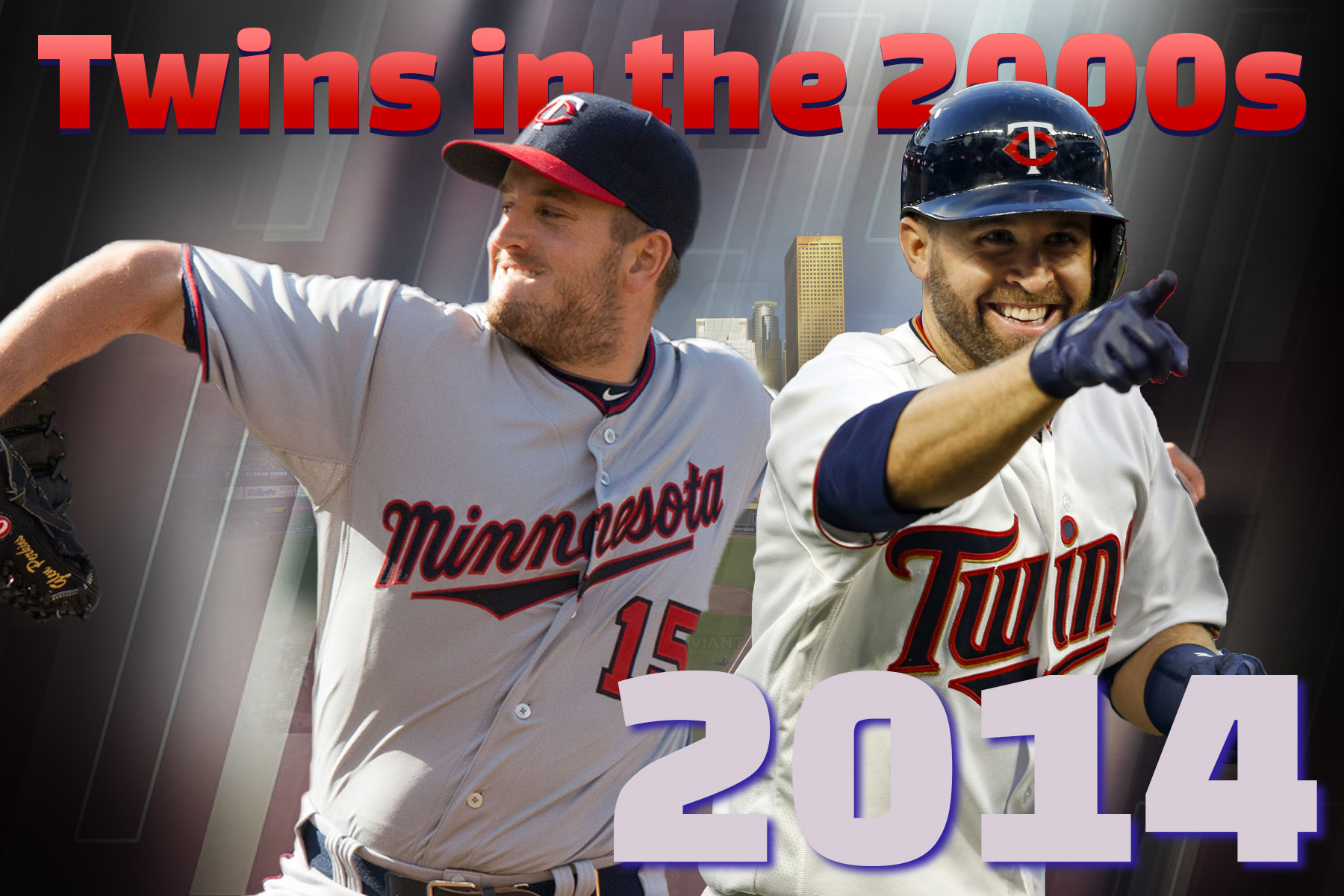 We're running a 20-part series in which we look back at each Minnesota Twins season of the 2000s. A rotation of different writers will highlight key moments, unearth forgotten details, and share nostalgic tales from the past two decades leading up to the present. This installment covers the 2014 season. Team Record: 70-92 Finish: 5th Place in AL Central All-Stars: Glen Perkins (RP), Kurt Suzuki ( C ) Awards: N/A Playoffs: N/A Season Overview After a scary concussion ended his 2013 season, Joe Mauer and the Twins made the tough decision to hang up his catcher's gear. In 2014, with first base opened up by the absence of longtime tenant (and M&M counterpart) Justin Morneau, Mauer settled in at his new home. Taking over at catcher was free agent Kurt Suzuki, who joined Mauer and a newly solidifying core on Opening Day: Brian Dozier at second base, Trevor Plouffe at third, Aaron Hicks in center field, Oswaldo Arcia in right. Sure, there were some leaky plugs, like shortstop Pedro Florimón and a DH spot being held down by longshot Chris Colabello. There were also some very strained efforts by Terry Ryan at recapturing nostalgia, with non-roster signings Jason Bartlett and Jason Kubel inexplicably making the bench out of camp. (Both predictably struggled, and then were done as big-leaguers. Bartlett actually announced his retirement in April.) But it was easy enough to see Ryan's vision for this team as he laid groundwork for the arrival of top prospects Byron Buxton and Miguel Sanó, ranked ahead of the season by Baseball America as the No. 1 and No. 6 prospects in the game. Unfortunately, things would not go as planned for either of these premier young talents in 2014. Sanó tore his UCL in spring training and required Tommy John surgery, forcing him to miss the season. Buxton was struck by a barrage of injuries – including a scary outfield collision in August that left him momentarily unconscious – and played only 31 games total. As their rising cornerstones stalled out, so too did the Twins in a rebuild largely framed around them. The team managed to hang around .500 through much for the first half, but started to slide as June transitioned to July, and by the break they were 10 1/2 games out of first. A picture-perfect All-Star Game at Target Field, featuring Suzuki and Glen Perkins, was a moment for Twins fans to savor, but there wouldn't be many afterward as Minnesota went 26-42 in the second half, completely fading from relevance. The offense, mostly, did its part. This required some tinkering and rejiggering from its initial state, and not every experiment took (the midseason signing of veteran free agent DH Kendrys Morales serving as one failed gamble), but others did. For instance: After Hicks struggled out of the gates in center (again), he was replaced by rookie Danny Santana, a natural shortstop who took well to the defensive relocation and slashed .319/.353/.472 in 101 games. Once the Twins finally grew tired of Florimón's totally inadequate bat, they turned to Eduardo Escobar as their regular shortstop in the second half and the light-hitting utilityman responded with a breakthrough offensive season, posting a .721 OPS with 35 doubles. On August 1st, slugger Kennys Vargas made his MLB debut, starting at first base and batting sixth. He doubled and drove in two. Over the final two months, Vargas would take over as primary DH, hitting .274/.316/.456 with nine home runs and 38 RBIs in 58 games. Even with Mauer becoming a mere shadow of his former self (.277/.361/.371), he was still reasonably effective. And the strength of this offense was in its balance – 11 different players made 100-plus plate appearances and posted an OPS+ of 100 or better. This was a stark contrast from one year earlier, when they had only three such players. Thanks to these varied contributions, the 2014 Twins finished fifth among AL teams in both runs scored and OPS. A big departure from 2013 (13th in runs, 12th in OPS) and 2012 (10th in both). The pitching staff wasn't such a departure from the status quo, ranking last in ERA and strikeout rate while allowing the most hits of any team in baseball for a third time in four years (they allowed the second-most in 2012). The internal pitching pipeline was providing very little, as evidenced by a season-opening rotation that featured four free agents (Ricky Nolasco and Phil Hughes from the latest offseason; Kevin Correia and Mike Pelfrey from the one prior) alongside Kyle Gibson. Hughes proved to be a phenomenal find, delivering an historic first season as a Twin, and Gibson was decent in his first full campaign. But that was the extent of positives for the rotation. Nolasco's first season was a disaster as he went 6-12 with a 5.38 ERA. Correia was bad before the Twins unloaded him to the Dodgers in August. Pelfrey battled injuries and made five starts, with a 7.99 ERA. Yohan Pino, Trevor May, Logan Darnell, Tommy Milone all got crushed in their rotation opportunities. In the bullpen, Perkins had another great year generally, but it was marred by a brutal September in which he allowed eight earned runs in 5 1/3 innings with one strikeout before being shut down with forearm soreness, inflating his final ERA to 3.65. Injuries were beginning to impact Minnesota's All-Star closer, who was already nearing the end of a brief-but-brilliant peak. As Perkins cratered down the stretch, so too did the Twins, stumbling to another last-place finish. This was enough for Ron Gardenhire to run out his leash. The second-longest tenured manager in the major leagues (behind Mike Scoscia of the Angels) was fired after the season ended. His endurance of this brutal stretch is a testament to the organization's unparalleled loyalty: Gardenhire became the fourth manager in MLB history to preside over four consecutive 90-loss seasons with the same team. One of the others was his predecessor, Tom Kelly. The other two examples are old enough that the teams managed were the Philadelphia Athletics and the St. Louis Browns. Team MVP: Phil Hughes (SP) Other Contenders: Brian Dozier (2B), Danny Santana (CF), Trevor Plouffe (3B), Kyle Gibson (SP) On the one hand, it's tough to award team MVP to a pitcher on a staff that was clearly the club's downfall. Dozier, Santana, Plouffe and others were all big factors in a lineup that was this team's only saving grace. On the other hand, none of those players were truly extraordinary. Hughes transcended in 2014, and he was basically the only thing preventing this rotation from all-out ruin. In a career-high 209 2/3 innings, he struck out 186 batters and walked only 16. His 0.7 BB/9 rate was the best in the majors, and his 11.63 K/BB ratio was the best in major-league history, topping Bret Saberhagen's record from 30 years prior. Hughes went 16-10 with a 3.52 ERA, 2.65 FIP, and 1.13 WHIP. His 6.3 fWAR led the team with ease, and represents the highest valuation FanGraphs has assigned a Twins pitcher since Johan Santana's Cy Young season in 2006. 3 Most Pivotal Games May 15th: Won vs. Boston Red Sox, 4-3 This game was notable for a few reasons. First and foremost, it was a walk-off win that clinched a series against a formidable foe, and part of a 7-2 stretch that pushed the Twins above .500 in late May. They won behind their newfound ace Hughes, who struck out eight and walked none over six innings of one-run ball, and a walk-off single from the embattled Hicks, who began to find himself at the plate a bit after this big moment. June 18th: Lost @ Boston Red Sox, 2-1 A month earlier, the Twins had won two walk-offs at home against Boston (including the one above) as they seemingly asserted their viability in the American League. Their rematch against the Red Sox at Fenway in mid-June, capped by this sweep-clinching walk-off loss, reflected how much things had changed. The Twins managed to score just two runs in three games, including a sleepy four-hit effort in the finale that wasted Gibson's seven shutout innings. Most painfully, the Twins took a 1-0 lead on Chris Parmelee's home run in the 10th, only to have David Ortiz and Mike Napoli tie and win it on back-to-back solo homers in the bottom half. By now Minnesota was six games below .500, and right in the middle of a 10-game road losing streak. By July 4th they'd be 11 games out of first. August 26th: Lost @ Kansas City Royals, 2-1 The Twins were hopelessly out of contention and spiraling toward the finish line. They went through five different four-game losing streaks in August and September, and were amidst one of them when Kansas City delivered this morale-crusher on August 26th. Nolasco provided a rare good start, firing seven shutout innings, before handing it off to Burton for a scoreless eighth. In came Perkins to protect a one-run lead. Alcides Escobar led off with a single, and Alex Gordon followed with a walk-off homer. Ballgame. It was the first sign of an unraveling to come for Perkins, who posted an 11.37 ERA the rest of the way, striking out two of his final 30 hitters before being shut down. Unforgettable Highlights Jorge Polanco Debuts Five years earlier, Bill Smith had signed a class of international talents that would eventually become transformative. In 2014, Jorge Polanco beat out Sanó and Max Kepler to a big-league debut, appearing mostly out of logistical necessity when the Twins needed an extra man for stretches in late June and July. He appeared for Minnesota only five times – four coming as a late-game replacement – and went 2-for-6 at the plate. Polanco didn't make much impact in 2014, but he became the second-youngest Twins player to debut in the 2000s (behind only Mauer, who was four days younger on Opening Day 2004). His impact would be plentiful down the line. Perkins and Suzuki Close Out All-Star Game In a storybook moment, Perkins was set up for a two-run save in the ninth inning of the All-Star Game at Target Field on July 15th. The hometown success story got a chance to throw to Minnesota's other 2014 All-Star, the catcher Suzuki, and together these Twins worked a 1-2-3 inning to close out the win. Dozier Joins 20/20 Club By notching his 20th stolen base on August 20th, to go along with his 20 home runs, Dozier became the fifth Twin to reach the 20/20 club. Torii Hunter did it twice (2002 and 2004), while Corey Koskie (2001), Marty Cordova (1995), Kirby Puckett (1986) and Larry Hisle (1977) are the other members. Hughes Gets His Phil of Strikeouts That headline might've made you groan, but I bet not as much as this fact: When Hughes struck out 11 White Sox in his September 13th start, it was the first time in 380 games that a Twins starter reached double-digit Ks. In a related note, longtime pitching coach Rick Anderson was ousted after the season alongside his main man Gardenhire. One Detail You Probably Forgot In the first decade of the 2000s, Matt Guerrier enjoyed the best years of his career, and was frequently an essential bullpen fixture. He led the AL in appearances in two consecutive seasons, 2008 and 2009, and was a top-notch setup man more often than not. By 2014, at age 35, he was nearing the end. He signed a minor-league deal with the Twins, was called up in May, and posted a 12-to-10 K/BB ratio in 28 innings through late July before the team moved on. Like fellow throwback signings Kubel and Bartlett, Guerrier walked off into the sunset after a final ride with the team – and manager – that brought him into the big leagues. In retrospect I suppose there's a poetic beauty to it, although I gotta say, at the time it was infuriating because these guys were clearly cooked. Fun Fact Per his contract, Hughes was in line for a $500,000 bonus if he reached 210 innings pitched in 2014 – no small sum for a guy earning $8 million in salary. Seemingly on a mission to reach it, he threw seven-plus innings in nine straight starts to end the year. In his last outing Hughes was through eight frames of one-run ball before a rain delay forced him out, with his season total sitting at 209 2/3 innings. Gardenhire offered him a chance to pinch once more in the final weekend and earn the bonus, but Hughes declined. ~~~ Previous Installments: The 2000 Season The 2001 Season The 2002 Season The 2003 Season The 2004 Season The 2005 Season The 2006 Season The 2007 Season The 2008 Season The 2009 Season The 2010 Season The 2011 Season The 2012 Season The 2013 Season
 -
Max Kepler and the Cost of Silence
Nick Nelson replied to Nick Nelson's topic in Twins Daily Front Page News
Jim: This was addressed in the article and is a lot more simple than you are making it out to be. The demographic I'm talking about is and relatively affluent white people who are less affected by the issues at hand. There is a tendency for individuals in this position to tune out because it's not something that impacts them personally. To me, that is what Kepler's message represented. In neither case do I think it's malicious or reflective of immorality; in fact I think it's often subconscious. For that reason I wanted to create some awareness on the issue. -
Max Kepler and the Cost of Silence
Nick Nelson replied to Nick Nelson's topic in Twins Daily Front Page News
We did a survey to gain insight on our readership demographics for advertisers. Granted it was several years back, but I have no reason to believe it has changed significantly, especially given the general demographics of Twins fandom. You want me to go back and dig up the actual statistics (which I'm pretty sure we made public) or is this satisfactory to take back your call of shenanigans? With respect, you don't come off as "well reasoned" when you claim an article is "based on flimsy information" because we don't know how Kepler feels. This isn't about how he feels. It's about what he did (or more accurately, what he didn't do). That's literally stated in the title. Here's the "flimsy information" this article was based on: I was sitting on my couch, watching images of the city of Minneapolis burning on my TV, when I happened upon a carefree Instagram post from Kepler saying he's "Not into politics," and then I started working backwards. I'm writing about my reaction to that experience as a fan and a Minnesota resident, who pays considerable money to watch the man play baseball. He might have done all the right things afterward. He might have had all the good intentions in the world. But what he did in that moment is reflective of what far too many people have been doing for many years. "Not my problem, peace." There are plenty of comfortable white men across this state and country who are every bit as oblivious to the severity of this issue as a millionaire 27-year-old from Germany (who should've known better). And that's why I wrote this. There's no flimsy information. It's all in front of us, Linus. -
Max Kepler and the Cost of Silence
Nick Nelson replied to Nick Nelson's topic in Twins Daily Front Page News
Lack of awareness is not an excuse. Plain and simple. Kepler has lived in the United States for more than a decade and is a 27-year-old adult. No one's asking him to fully understand the intricate historical context of racism and police brutality in America -- Kepler played at Target Field the night Philando Castile was murdered miles away in 2016. It's been one of our nation's foremost social issues for the duration of the time he's lived here and frankly its relevance extends beyond the United States, if you look at the widespread protests taking place across the world (including Germany). And again, no one is accusing him of having any racist feelings. The issue here is apathy and dismissiveness toward a crisis gripping our city and country. If we don't start calling it out, it won't change. -
Max Kepler and the Cost of Silence
Nick Nelson replied to Nick Nelson's topic in Twins Daily Front Page News
I can say that myself and other owners of the site have already made donations in amounts that vastly outweigh the relatively small money that will be made from ads on this article. But to answer your question directly, I do expect our site will make more formal donations to causes that need it, and will aim to do so on a continual basis because this issue isn't going away after this week. To answer your latter question, Tom shared a list of organizations you can donate to earlier on the thread but it understandably got buried. Here's the link again. Thank you for asking. https://docs.google.com/document/u/1/d/1jy_Y714oFhb7APUOk4Y4gEPzWpyxswzHa_sylQLVmJ8/mobilebasic -
Max Kepler and the Cost of Silence
Nick Nelson replied to Nick Nelson's topic in Twins Daily Front Page News
Have you turned on the news in the past week? Protests and riots have broken out in almost every major city across the country, and many across the world. This isn't about TD responding to what happened, it's about humanity responding. Kepler's insensitive remark didn't hit me in a bad way because I was upset about the situation, it hit me in bad way because the city he plays in was on fire and tearing itself apart in anguish when he made it. If you think what's happening right now is solely about George Floyd, I'm afraid you are the one showing a one-dimensional viewpoint. This has been building up for a long time. This is about so much more. I thought that was beyond obvious, personally. -
After having the bottom fall out a year earlier, the Minnesota Twins were trying to find their footing again in 2012, with hopes that another front office shakeup might set things in the right direction. Unfortunately, despite some genuine highlights, the halfway-rebuilding Twins were only headed straight back to the bottom.We're running a 20-part series in which we look back at each Minnesota Twins season of the 2000s. A rotation of different writers will highlight key moments, unearth forgotten details, and share nostalgic tales from the past two decades leading up to the present. This installment covers the 2012 season. Team Record: 66-96 Finish: 5th Place in AL Central All-Star: Joe Mauer ( C ) Awards: Josh Willingham (Silver Slugger, LF) Playoffs: N/A Season Overview Coming off the disaster that was 2011, Ron Gardenhire and the Twins were looking to right the ship. Soon after the prior season ended, ownership decided to change course, dismissing Bill Smith as general manager and reinstating Terry Ryan. The front office's elder statesman returned to the helm and... well, he made some typical Ryan moves. Some of them worked out splendidly. For instance, there were the signings of relievers Jared Burton and Casey Fien to minor-league deals. Both righties emerged as key contributors in the bullpen, with Burton posting a 2.18 ERA in 62 innings and Fien 2.06 in 35. There was also the addition of free agent Ryan Doumit, who slashed .275/.320/.461 as a versatile and valuable piece on offense. Best of all, there was the signing of left fielder Josh Willingham, a veritable blockbuster by Twins standards at three years and $21 million. Willingham's lukewarm market and ultra-reasonable deal were a bit surprising, given his consistent track record as a righty slugger. He made Ryan look good by putting forth a career year, bashing 35 home runs with 110 RBIs and an .890 OPS. But these quality additions wouldn't be nearly enough to overcome an abundance of flaws on this mishmashed roster. Ultimately, the 2012 season's narrative is defined by fading mainstays and previous failed moves running their course. In the latter category, you had the likes of Tsuyoshi Nishioka (spent most the year in Triple-A before returning to Japan afterward) and Matt Capps (replaced at closer by Glen Perkins in July, didn't pitch again in the majors). In the former category: Francisco Liriano went 3-10 with a 5.31 ERA before being traded to Chicago in July. He wasn't done as an effective pitcher though, as he'd re-emerge as a standout in Pittsburgh the following year.Carl Pavano, on the other hand, was done. The 36-year-old was Opening Day starter, but made it through only 11 starts and 60 innings (with a 6.00 ERA) before injuries ended his season. He retired afterward.Nick Blackburn fully unraveled with a 7.39 ERA in 98 2/3 innings. Only 30 at season's end, he wouldn't pitch again in the majors.Scott Baker underwent Tommy John surgery in April and missed the season, ending his Twins career.Alexi Casilla posted an abysmal .603 OPS in 326 PA, and the team moved on after the season.Justin Morneau's season wasn't terrible (he slashed .267/.333/.440 with 19 homers and 77 RBIs while staying mostly healthy) and he wasn't quite at the end of the line with Minnesota – he'd be traded midway through 2013. But by now his diminished ability was all too clear.With three members of the starting rotation (Pavano, Liriano, Blackburn) flaming out, Minnesota's starting pitching depth was tested. And it quickly became evident that Ryan had not equipped the unit for such a scenario. His washed-up veteran signing characteristically fizzled, as Jason Marquis put up an 8.47 ERA in seven starts before his late-May release. Young righties Anthony Swarzak and Liam Hendriks, who would eventually find success as relievers, took pummelings in their miscast starting roles. Minor-league journeymen P.J. Walters and Sam Deduno combined for 27 starts (and a 4.99 ERA). Only one pitcher who made a start for the 2012 Twins registered an ERA+ above 100, although his season was rather remarkable. Scott Diamond, the team's Rule 5 pick a year earlier, stepped into the rotation with back-to-back scoreless seven-inning starts in May. He rode the hot start to a 12-9 record and 3.54 ERA 173 innings, leading the American League in BB/9 rate (1.6). Despite Diamond's efforts, and Perkins beginning his spectacular run in the closer role, this staff was awful. They allowed the most hits in the league, and the second-most runs, while striking out the fewest batters. The offense, while decent, was not up to the task of keeping pace with all this scoring from the opposition. Willingham was fantastic and Joe Mauer put forth a vintage effort, slashing .319/.416/.446 while making his fourth All-Star team, but no one else in the lineup was much above-average. Like in the rotation, poor depth here was exposed as Gardenhire gave a ton of at-bats to really bad hitters. While most of them would never amount to much, one would: Brian Dozier, who hit .234/.271/.332 while struggling defensively at shortstop. It was an inauspicious debut for a player destined to help lead the Twins out of the cellar. Not yet, though. For a second consecutive season, Minnesota finished last in the Central. As they did in 2011, the Twins quickly removed themselves from the contention discussion with an ugly start, losing seven of their first nine games and falling 15 games below .500 by mid-May. In 2012, losing turned from outlier to trend for the Minnesota Twins. And it's one that wouldn't change soon as the initial wave of enthusiasm for Target Field began to gradually wear off, with uninspired decision-making and poorly executed baseball becoming the norm. Team MVP: Joe Mauer ( C ) Other Contenders: Josh Willingham (LF), Denard Span (CF), Scott Diamond (SP), Glen Perkins (RP) Following a weird 2011 season marred by the "bilateral leg weakness" fiasco and disappointing production, Mauer carried the weight of hefty expectations. Now in the second year of his $184 million contract, he found himself under heavy scrutiny. Mauer responded in a big way. His .319 average wasn't enough to get him a fourth batting title, but it ranked third in the AL and was only 11 points behind the leader Miguel Cabrera. Mauer did lead the league in OBP at .416, drawing a career-high 90 walks. But it wasn't just the production that made a statement, it was the workload. Starting 42 times at DH as Gardenhire took it easy on his legs, Mauer still put in a full complement behind the plate and finished with a career-high 641 plate appearances. Some would argue that Willingham earned team MVP with his phenomenal power production. There's a good case to be made, but for me, the gap in defensive value gives Mauer a clear edge. FanGraphs' WAR metric agrees, pegging Mauer at 4.6 and Willingham at 3.7. 3 Most Pivotal Games April 13th: Lost vs. Texas Rangers, 4-1 After opening the schedule with four straight losses, the Twins rebounded with back-to-back victories, beating the Angels 6-5 and 10-9 to win their second series. But these scores were illustrative: in order to narrowly win games, the offense needed to show up in a big way. Too often, they didn't, like in this sleepy series opener at home against Texas. Minnesota managed just two extra-base hits and went 0-for-5 with runners in scoring position. The Twins allowed fewer than four runs only twice in 24 April contests, but scored fewer than four 12 times. That's how you lose 16 games in a month, and 96 in a season. July 5th: Lost @ Detroit Tigers, 7-3 Trying to rebound from a July 4th thumping at the hands of Justin Verlander, the Twins were still within 12 games of .500 and nine games of first place, with a chance to take the series in Detroit. Despite getting seven innings of two-run ball from Diamond, and 15 hits from the lineup, the Twins fell handily. Fourteen of the offense's 15 hits were singles, and they drew only one walk. Diamond's seven strong frames were followed by the bullpen trio of Alex Burnett, Tyler Robertson and Swarzak giving up five runs while recording three outs. The Twins fell 10 games out of first, and were never again within single digits. July 31st: Lost @ Chicago White Sox, 4-3 By the deadline, Minnesota was already hopelessly out of contention, but this game was pretty representative of how things were going. Liriano, who was clobbered by the White Sox eight days earlier, had since been traded TO the White Sox. His first start came against the team that just dumped him, and naturally, Liriano struck out eight Twins over six innings of two-run ball. The Twins managed zero extra-base hits in the game. Blackburn actually had his best start of the year for Minnesota, allowing two runs over eight innings, but it lowered his ERA to 7.43. In this one it was reliever Jeff Gray who took the loss – one of many marginal players whose MLB careers came to an end with the 2012 Twins. Unforgettable Highlights Twins Daily Launches Pardon the moment of self-promotion, but from this fan's view, one of the most inspiring developments of the 2000s for the Minnesota Twins was the cultivation of a bustling, creative, prolific independent writing community that has deeply enriched the team's coverage. It started up around 2002 with forerunning bloggers like John Bonnes and Aaron Gleeman building audiences, and then progressively blossomed over the following decade. I like to think of the official launch of Twins Daily in spring training of 2012 as an inflection point in the quality, volume, and diversity of content available to hungry fans. Glen Perkins Takes His Perch as Closer A rare positive takeaway from 2011 was Perkins coming into his own as a late-inning reliever. In spring training of 2012 the Twins rewarded his turnaround with a three-year contract extension, but as the season got underway, Capps remained in the closer role. When he got injured midway through, Perkins – owner of two career saves – took over the gig. The left-hander notched his first save of the season on June 20th, protecting a one-run lead in the 11th to seal a victory over Kansas City. From there he converted 15 of 17 attempts with a 2.21 ERA and 40-to-3 K/BB ratio in 40 2/3 innings. He'd go on to make the All-Star Game three years straight. El Caballo Comes Aboard Looking back on it now, the trade on July 28th that sent Liriano to Chicago was a bittersweet moment. In one respect, it crushed whatever remnants existed of the dream the Liriano might round back into form as a Twin (he'd instead do it the following year, as a Pirate). But it did bring a player into the organization who would become a fan favorite and one of the decade's best stories. Acquired alongside pitcher Pedro Hernández, Eduardo Escobar was a 23-year-old utilityman known for his glove, with little in the way of established offensive upside. He made 44 plate appearances for the Twins after the trade and batted .227 with zero extra-base hits. But over the next five-and-a-half seasons with Minnesota, he'd collect 219 XBHs as a versatile defender and cheerful clubhouse fixture. Tom Kelly's Number Retired Ten years after Tom Kelly passed the torch to Gardenhire as Twins manager, TK's No. 10 was officially retired in a ceremony at Target Field on September 8th. Run Revere Run In what would turn out to be his last season in Minnesota – he was traded to Philadelphia for Vance Worley and Trevor May in the offseason – Revere's limitations came into full focus. Despite a strong .294 batting average, he posted a sub par .675 OPS thanks to his shortcomings in the patience and power departments. But his strengths also came into greater focus – particularly his blazing speed. On October 1st, in the season's third-to-last game, Revere stole his 40th base, becoming the first Twin to hit this milestone since Chuck Knoblauch in 1997. One Detail You Probably Forgot In 2013, Clete Thomas would become a glaring symbol of this era's fierce commitment to ineptitude, receiving 322 plate appearances while slashing .214/.290/.307. But he actually first arrived in 2012, claimed off waivers from Detroit in mid-April. Thomas hit a two-run homer in his first game as a Twin, but three weeks later the Twins sent him to Triple-A with a .458 OPS. Fun Fact In 2012, Revere and second baseman Jamey Caroll combined for 1,090 plate appearances and ... one home run. That's almost at the level of Jason Tyner, who put in 1,318 major-league plate appearances before homering for the first time with the Twins in 2007. ~~~ Previous Installments: The 2000 SeasonThe 2001 SeasonThe 2002 SeasonThe 2003 SeasonThe 2004 SeasonThe 2005 SeasonThe 2006 SeasonThe 2007 SeasonThe 2008 SeasonThe 2009 SeasonThe 2010 SeasonThe 2011 Season Click here to view the article
-
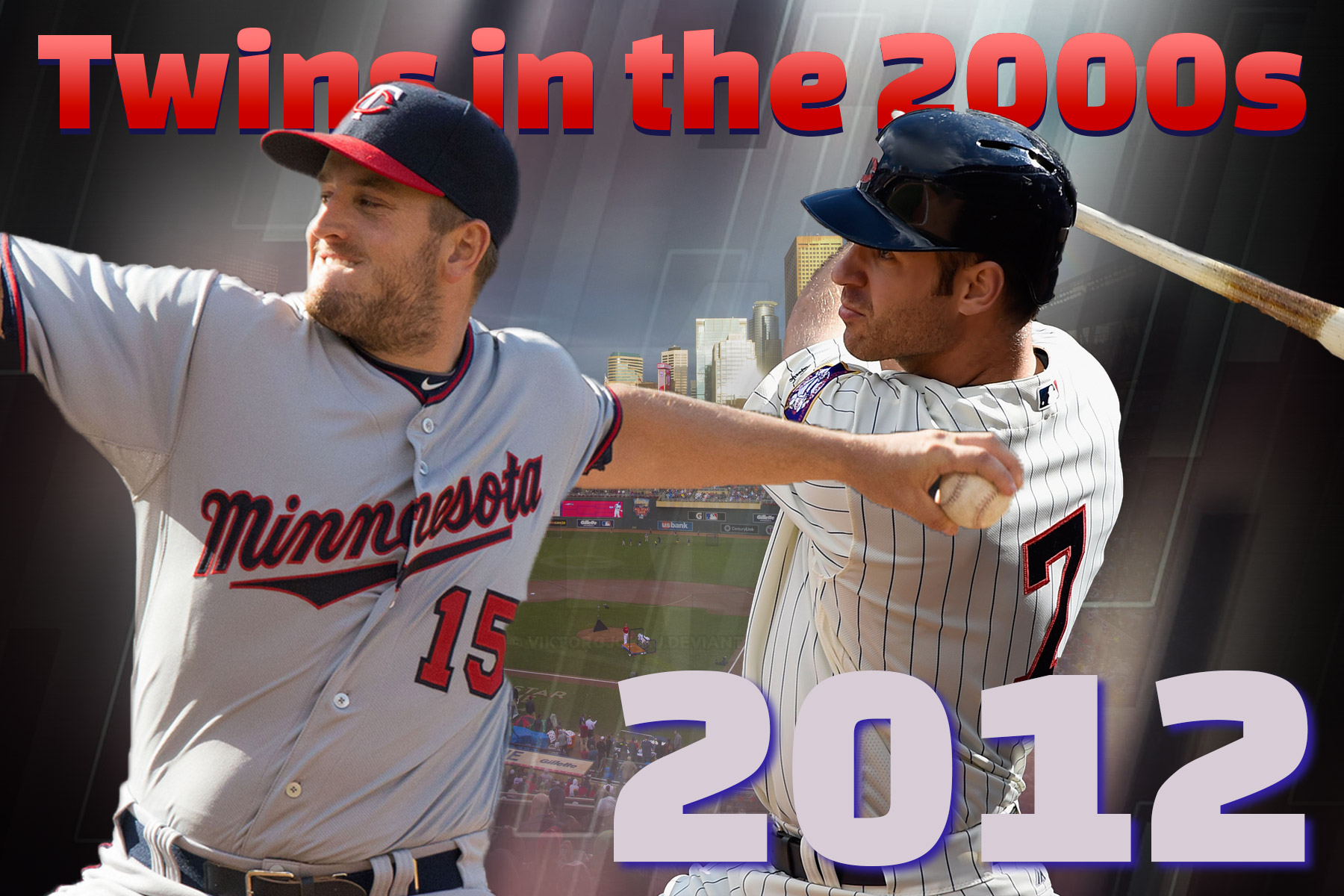 We're running a 20-part series in which we look back at each Minnesota Twins season of the 2000s. A rotation of different writers will highlight key moments, unearth forgotten details, and share nostalgic tales from the past two decades leading up to the present. This installment covers the 2012 season. Team Record: 66-96 Finish: 5th Place in AL Central All-Star: Joe Mauer ( C ) Awards: Josh Willingham (Silver Slugger, LF) Playoffs: N/A Season Overview Coming off the disaster that was 2011, Ron Gardenhire and the Twins were looking to right the ship. Soon after the prior season ended, ownership decided to change course, dismissing Bill Smith as general manager and reinstating Terry Ryan. The front office's elder statesman returned to the helm and... well, he made some typical Ryan moves. Some of them worked out splendidly. For instance, there were the signings of relievers Jared Burton and Casey Fien to minor-league deals. Both righties emerged as key contributors in the bullpen, with Burton posting a 2.18 ERA in 62 innings and Fien 2.06 in 35. There was also the addition of free agent Ryan Doumit, who slashed .275/.320/.461 as a versatile and valuable piece on offense. Best of all, there was the signing of left fielder Josh Willingham, a veritable blockbuster by Twins standards at three years and $21 million. Willingham's lukewarm market and ultra-reasonable deal were a bit surprising, given his consistent track record as a righty slugger. He made Ryan look good by putting forth a career year, bashing 35 home runs with 110 RBIs and an .890 OPS. But these quality additions wouldn't be nearly enough to overcome an abundance of flaws on this mishmashed roster. Ultimately, the 2012 season's narrative is defined by fading mainstays and previous failed moves running their course. In the latter category, you had the likes of Tsuyoshi Nishioka (spent most the year in Triple-A before returning to Japan afterward) and Matt Capps (replaced at closer by Glen Perkins in July, didn't pitch again in the majors). In the former category: Francisco Liriano went 3-10 with a 5.31 ERA before being traded to Chicago in July. He wasn't done as an effective pitcher though, as he'd re-emerge as a standout in Pittsburgh the following year. Carl Pavano, on the other hand, was done. The 36-year-old was Opening Day starter, but made it through only 11 starts and 60 innings (with a 6.00 ERA) before injuries ended his season. He retired afterward. Nick Blackburn fully unraveled with a 7.39 ERA in 98 2/3 innings. Only 30 at season's end, he wouldn't pitch again in the majors. Scott Baker underwent Tommy John surgery in April and missed the season, ending his Twins career. Alexi Casilla posted an abysmal .603 OPS in 326 PA, and the team moved on after the season. Justin Morneau's season wasn't terrible (he slashed .267/.333/.440 with 19 homers and 77 RBIs while staying mostly healthy) and he wasn't quite at the end of the line with Minnesota – he'd be traded midway through 2013. But by now his diminished ability was all too clear. With three members of the starting rotation (Pavano, Liriano, Blackburn) flaming out, Minnesota's starting pitching depth was tested. And it quickly became evident that Ryan had not equipped the unit for such a scenario. His washed-up veteran signing characteristically fizzled, as Jason Marquis put up an 8.47 ERA in seven starts before his late-May release. Young righties Anthony Swarzak and Liam Hendriks, who would eventually find success as relievers, took pummelings in their miscast starting roles. Minor-league journeymen P.J. Walters and Sam Deduno combined for 27 starts (and a 4.99 ERA). Only one pitcher who made a start for the 2012 Twins registered an ERA+ above 100, although his season was rather remarkable. Scott Diamond, the team's Rule 5 pick a year earlier, stepped into the rotation with back-to-back scoreless seven-inning starts in May. He rode the hot start to a 12-9 record and 3.54 ERA 173 innings, leading the American League in BB/9 rate (1.6). Despite Diamond's efforts, and Perkins beginning his spectacular run in the closer role, this staff was awful. They allowed the most hits in the league, and the second-most runs, while striking out the fewest batters. The offense, while decent, was not up to the task of keeping pace with all this scoring from the opposition. Willingham was fantastic and Joe Mauer put forth a vintage effort, slashing .319/.416/.446 while making his fourth All-Star team, but no one else in the lineup was much above-average. Like in the rotation, poor depth here was exposed as Gardenhire gave a ton of at-bats to really bad hitters. While most of them would never amount to much, one would: Brian Dozier, who hit .234/.271/.332 while struggling defensively at shortstop. It was an inauspicious debut for a player destined to help lead the Twins out of the cellar. Not yet, though. For a second consecutive season, Minnesota finished last in the Central. As they did in 2011, the Twins quickly removed themselves from the contention discussion with an ugly start, losing seven of their first nine games and falling 15 games below .500 by mid-May. In 2012, losing turned from outlier to trend for the Minnesota Twins. And it's one that wouldn't change soon as the initial wave of enthusiasm for Target Field began to gradually wear off, with uninspired decision-making and poorly executed baseball becoming the norm. Team MVP: Joe Mauer ( C ) Other Contenders: Josh Willingham (LF), Denard Span (CF), Scott Diamond (SP), Glen Perkins (RP) Following a weird 2011 season marred by the "bilateral leg weakness" fiasco and disappointing production, Mauer carried the weight of hefty expectations. Now in the second year of his $184 million contract, he found himself under heavy scrutiny. Mauer responded in a big way. His .319 average wasn't enough to get him a fourth batting title, but it ranked third in the AL and was only 11 points behind the leader Miguel Cabrera. Mauer did lead the league in OBP at .416, drawing a career-high 90 walks. But it wasn't just the production that made a statement, it was the workload. Starting 42 times at DH as Gardenhire took it easy on his legs, Mauer still put in a full complement behind the plate and finished with a career-high 641 plate appearances. Some would argue that Willingham earned team MVP with his phenomenal power production. There's a good case to be made, but for me, the gap in defensive value gives Mauer a clear edge. FanGraphs' WAR metric agrees, pegging Mauer at 4.6 and Willingham at 3.7. 3 Most Pivotal Games April 13th: Lost vs. Texas Rangers, 4-1 After opening the schedule with four straight losses, the Twins rebounded with back-to-back victories, beating the Angels 6-5 and 10-9 to win their second series. But these scores were illustrative: in order to narrowly win games, the offense needed to show up in a big way. Too often, they didn't, like in this sleepy series opener at home against Texas. Minnesota managed just two extra-base hits and went 0-for-5 with runners in scoring position. The Twins allowed fewer than four runs only twice in 24 April contests, but scored fewer than four 12 times. That's how you lose 16 games in a month, and 96 in a season. July 5th: Lost @ Detroit Tigers, 7-3 Trying to rebound from a July 4th thumping at the hands of Justin Verlander, the Twins were still within 12 games of .500 and nine games of first place, with a chance to take the series in Detroit. Despite getting seven innings of two-run ball from Diamond, and 15 hits from the lineup, the Twins fell handily. Fourteen of the offense's 15 hits were singles, and they drew only one walk. Diamond's seven strong frames were followed by the bullpen trio of Alex Burnett, Tyler Robertson and Swarzak giving up five runs while recording three outs. The Twins fell 10 games out of first, and were never again within single digits. July 31st: Lost @ Chicago White Sox, 4-3 By the deadline, Minnesota was already hopelessly out of contention, but this game was pretty representative of how things were going. Liriano, who was clobbered by the White Sox eight days earlier, had since been traded TO the White Sox. His first start came against the team that just dumped him, and naturally, Liriano struck out eight Twins over six innings of two-run ball. The Twins managed zero extra-base hits in the game. Blackburn actually had his best start of the year for Minnesota, allowing two runs over eight innings, but it lowered his ERA to 7.43. In this one it was reliever Jeff Gray who took the loss – one of many marginal players whose MLB careers came to an end with the 2012 Twins. Unforgettable Highlights Twins Daily Launches Pardon the moment of self-promotion, but from this fan's view, one of the most inspiring developments of the 2000s for the Minnesota Twins was the cultivation of a bustling, creative, prolific independent writing community that has deeply enriched the team's coverage. It started up around 2002 with forerunning bloggers like John Bonnes and Aaron Gleeman building audiences, and then progressively blossomed over the following decade. I like to think of the official launch of Twins Daily in spring training of 2012 as an inflection point in the quality, volume, and diversity of content available to hungry fans. Glen Perkins Takes His Perch as Closer A rare positive takeaway from 2011 was Perkins coming into his own as a late-inning reliever. In spring training of 2012 the Twins rewarded his turnaround with a three-year contract extension, but as the season got underway, Capps remained in the closer role. When he got injured midway through, Perkins – owner of two career saves – took over the gig. The left-hander notched his first save of the season on June 20th, protecting a one-run lead in the 11th to seal a victory over Kansas City. From there he converted 15 of 17 attempts with a 2.21 ERA and 40-to-3 K/BB ratio in 40 2/3 innings. He'd go on to make the All-Star Game three years straight. El Caballo Comes Aboard Looking back on it now, the trade on July 28th that sent Liriano to Chicago was a bittersweet moment. In one respect, it crushed whatever remnants existed of the dream the Liriano might round back into form as a Twin (he'd instead do it the following year, as a Pirate). But it did bring a player into the organization who would become a fan favorite and one of the decade's best stories. Acquired alongside pitcher Pedro Hernández, Eduardo Escobar was a 23-year-old utilityman known for his glove, with little in the way of established offensive upside. He made 44 plate appearances for the Twins after the trade and batted .227 with zero extra-base hits. But over the next five-and-a-half seasons with Minnesota, he'd collect 219 XBHs as a versatile defender and cheerful clubhouse fixture. Tom Kelly's Number Retired Ten years after Tom Kelly passed the torch to Gardenhire as Twins manager, TK's No. 10 was officially retired in a ceremony at Target Field on September 8th. Run Revere Run In what would turn out to be his last season in Minnesota – he was traded to Philadelphia for Vance Worley and Trevor May in the offseason – Revere's limitations came into full focus. Despite a strong .294 batting average, he posted a sub par .675 OPS thanks to his shortcomings in the patience and power departments. But his strengths also came into greater focus – particularly his blazing speed. On October 1st, in the season's third-to-last game, Revere stole his 40th base, becoming the first Twin to hit this milestone since Chuck Knoblauch in 1997. One Detail You Probably Forgot In 2013, Clete Thomas would become a glaring symbol of this era's fierce commitment to ineptitude, receiving 322 plate appearances while slashing .214/.290/.307. But he actually first arrived in 2012, claimed off waivers from Detroit in mid-April. Thomas hit a two-run homer in his first game as a Twin, but three weeks later the Twins sent him to Triple-A with a .458 OPS. Fun Fact In 2012, Revere and second baseman Jamey Caroll combined for 1,090 plate appearances and ... one home run. That's almost at the level of Jason Tyner, who put in 1,318 major-league plate appearances before homering for the first time with the Twins in 2007. ~~~ Previous Installments: The 2000 Season The 2001 Season The 2002 Season The 2003 Season The 2004 Season The 2005 Season The 2006 Season The 2007 Season The 2008 Season The 2009 Season The 2010 Season The 2011 Season
 -
Max Kepler and the Cost of Silence
Nick Nelson replied to Nick Nelson's topic in Twins Daily Front Page News
Ash, this is a great point and one that I could've addressed more directly in the OP. The reason I was especially sensitive to, and put off by, Kepler's post is because I was already dispirited by the lack of vocal advocacy coming out of the Twins organization. I hoped to see a number of people follow Baldelli's lead, but as you pointed out, the remarks have been pretty sparse. I see Karl Anthony Towns standing with others for a rally at City Hall. I see Vikings players speaking out emphatically. In other baseball markets I see statements of true conviction (the Rays for instance). The Twins just haven't stepped up in that kind of way, from what I've seen. Their actions generally seem timid and reactive. This makes me acutely sad, both because I want the Twins to be an integral part of our community and I rue the sport's larger struggles to connect with African Americans. So the Kepler thing is just a microcosm of my general disappointment, but it was a clear and newsworthy example to center on. This is just where we fundamentally disagree. It's not about me wanting players to be heroes, it's about me recognizing that someone like Kepler DOES have a large platform and IS influential in this community. Young people look up to him. Fans pay attention to him. He has 67K followers on Instagram. In my opinion the $35 million commitment the team made to him last year calls for more than playing baseball. It calls for being a representative of the franchise and city. Does that mean he needs to be an activist? No. I'm not asking him to. But in my opinion it does entail a certain level of social responsibility, like understanding and empathizing with a humanitarian crisis in the city where you play. -
Max Kepler and the Cost of Silence
Nick Nelson replied to Nick Nelson's topic in Twins Daily Front Page News
Kepler wrote "Not into politics" with a peace sign as the city of Minneapolis was literally on fire and in crisis. That is a bad move from any angle. Given the timing, it was one of the most tone-deaf things I've ever seen from a Twins player on social media. I'm not assuming Kepler's indifference -- a message of indifference was CLEARLY broadcasted to his fans. By him. Max Kepler is a prominent Major League Baseball player with a platform. These optics matter. How he feels inside isn't the point. He has a platform and he's entrusted to be a representative leader in this city where he is known and admired. It comes with the territory. I'm not trying to say what he should've done except that it's not that. I'm not trying to tell anyone how to act, I'm simply urging them to ACT. Think deeply about the role you can play personally in helping us get to a better place. There's no one way to go about it. But sitting on the sidelines silently and wishing people well does nothing other than fortify the status quo. Almost every person I've spoken to who is impacted by these issues continually tells me this is the single biggest problem holding us back. (Having said all that scottz, your comment was super thoughtful and I appreciate the perspective.) -
Max Kepler and the Cost of Silence
Nick Nelson replied to Nick Nelson's topic in Twins Daily Front Page News
You don't need to read my mind, you only need to read the post. On that note, I feel compelled based on responses to reiterate this for the ~1,000th time: My issue is not with the Blue Lives Matter mask. Here is all I said about that: "On Thursday, Kepler shared a picture on Instagram of himself wearing a "Blue Lives Matter" face mask he'd received from some company. Evidently, he got a rush of negative feedback because he quickly deleted the post." That's it. This post isn't about that image. If the controversy was around Kepler posting that picture I wouldn't have written about it. It's about what came after. It's about the indifference and apathy he expressed. (Prior to posting a canned PR apology.) The fact that so many commenters can't grasp that tells me either they have poor reading comprehension or they simply don't care about the actual issue being addressed and want to grind their own axes. -
Max Kepler and the Cost of Silence
Nick Nelson replied to Nick Nelson's topic in Twins Daily Front Page News
I just want to say that while clearly this person disagrees with me, and the premise of this article, on every level ... they stated their disagreement and differing viewpoints in civil terms without crossing over to disrespect. Thank you for that. I know everyone would rather be reading about baseball. Believe me, I'd rather be writing about it. Right now I don't feel up to it. Saying my piece on this felt important. I appreciate everyone who has taken the time to read it with an open mind. I appreciate the majority of comments, including the one above. -
Max Kepler and the Cost of Silence
Nick Nelson replied to Nick Nelson's topic in Twins Daily Front Page News
Where did I insult anyone in the post? Every perceived slight is based on some ridiculous inference. I am urging people to speak up and advocate because their voices matter. It's as simple as that. -
Max Kepler and the Cost of Silence
Nick Nelson replied to Nick Nelson's topic in Twins Daily Front Page News
Thanks for the charitable assessment, doc. As a point of fact, I happen to know that much of this site's readership falls into a category that is able to make a difference but rarely does. Much like Kepler. If I can get through with that message to but a few people, I will have accomplished something. If the money I've contributed to various causes in recent days makes any difference in supporting their essential work, I will have accomplished something. If my presence alongside thousands of other peaceful protesters on the 35W bridge yesterday -- as pandemonium broke loose -- contributed at all to a sense of solidarity and unified purpose, I will have accomplished something. Go ahead and call it "virtue signaling" if you want. It is less cynically labeled raising awareness and spreading advocacy. It's how every movement in history has taken shape. You might be shocked to hear this, but some people are actually open-minded! Since you're so quick to judge and criticize, what are you doing? How are you helping to improve the situation? Other than anonymously spewing insults at people you know nothing about on the internet, that is. -
Max Kepler and the Cost of Silence
Nick Nelson replied to Nick Nelson's topic in Twins Daily Front Page News
Alright Darius. Let's address this comment since it reflects a lot of the negative response I'm seeing throughout this thread. (You presented it in a more constructive and less personal way than some, which I appreciate.) Everyone, let’s virtue signal and dox everyone around us as possible racists and supporters of the police (anything but that!). Very productive right now. Incredible misreading of the point here. I didn't use Kepler as an example because I think he's a bad guy, or racist. Exactly the opposite. I think he's a good and well-meaning person but his silence is deafening. This is pervasively true in our society, and changing that attitude WILL be productive despite your claims otherwise. And yes, its been politicized. You’re parading around a symbol of support for the police that’s been around for years as some sort of symbols of hatred? It’s a clear political statement. What message do you think you’re sending that’s productive in that sense? I didn't criticize him for supporting police. Other people got mad about the mask and prompted him to delete his picture, not me. I didn't manufacture that as a story, it was covered by numerous outlets. I don't know why commenters keep focusing on that part as if it was remotely the point. My disappointment is with the reaction it prompted: him saying he's "Not into politics" and dismissing a humanitarian crisis that is ravaging our city and country. It's not about his stance, it's about his declining to take one. Worse yet, he trivialized the situation. I dunno why that's hard for you to see. He's a star ballplayer and role model, his words and actions matter. Honestly, from my point of view there are very few people out there who aren’t agreeing on the issues right now. Who is arguing what happened to this man at the hands of a potential sociopath was/is acceptable? It was absolutely horrific, and absolutely needs to be addressed. Who is arguing peaceful demonstrations are unacceptable? Anyone with a shred common human decency agrees (which is 95% of the population) Here's the problem: it's not enough for people to just agree that something is wrong. The comfortable masses remaining silent in the face of injustice is what prevents change. You say 95% of people agree what happened to George Floyd is wrong and unacceptable. Someone else above said 99%. Great. So why does it keep happening, over and over again? Because too many of those people just sit there doing nothing, saying nothing, and complaining when someone writes about it on a baseball blog, distracting from a non-existent season. It's not enough. It's just not. Voices everywhere need to rise up and say they're not going to put up with it anymore -- the comfortable and unafflicted most of all. I'm sorry you don't like hearing that message but it's being shouted by thousands of protesters across the entire country, not just me. It needs to be heard. Do with it what you want, but please, at least hear the message. -
Max Kepler and the Cost of Silence
Nick Nelson replied to Nick Nelson's topic in Twins Daily Front Page News
Each time. I've lost hundreds in the past couple weeks alone. I never suggested it was a steep price and your snark is entirely unwarranted. I'm simply refuting the notion that there's some underlying benefit in taking these stances. It's false. -
Max Kepler and the Cost of Silence
Nick Nelson replied to Nick Nelson's topic in Twins Daily Front Page News
This is a pretty incredible statement when I specifically stated in the article that I'm not judging or pointing fingers, and I recognize my own need to do better. This isn't about YOU (the reader). This is about US (a society). Maybe there were times in the past where I would've prioritized the growth of my "personal brand" over using my platform to do what I think is right. Publishing this piece is part of my own effort to improve in that regard. The idea being suggested by some here that I wrote this article as "click-bait" or to increase readership is sorely misguided. We will lose readers for publishing this. I lose dozens of followers on twitter whenever I talk about anything vaguely political. And I'm perfectly at peace with those things, as well as the vitriol being directed at me in this comment section. As the old bland and pointless saying goes: it is what it is.
