



Nick Nelson
-
Posts
8,327 -
Joined
-
Last visited
-
Days Won
56
Content Type
Profiles
News
Minnesota Twins Videos
2026 Minnesota Twins Top Prospects Ranking
2022 Minnesota Twins Draft Picks
Minnesota Twins Free Agent & Trade Rumors, Notes, & Tidbits
Guides & Resources
2023 Minnesota Twins Draft Picks
The Minnesota Twins Players Project
2024 Minnesota Twins Draft Picks
2025 Minnesota Twins Draft Pick Tracker
2026 Minnesota Twins Draft Tracker: Picks & Bonuses
Forums
Blogs
Events
Store
Downloads
Gallery
Everything posted by Nick Nelson
-
 Oops forgot the voting options! Option 1: Press "Like This" on this comment (or voice your support below) if you want us to focus our efforts at the trade deadline on upgrading the rotation.
 -
We have arrived at the All-Star break in our interactive simulated 2020 season on MLB The Show. I am pleased to report that, thanks to your help, our Minnesota Twins are in first place with the third-best record in baseball. We sent five players to the All-Star Game, and one prospect to the Futures Game. Read all about it below.To get caught up on what we're doing here, you can check out the introductory post in the series for an explanation of the premise and setup. But the quick version is this: We're playing a progressive simulated Twins season on MLB The Show 20 on PS4, and y'all are helping guide the ship. In each installment I'll update you on what's happened since the last, and put at least one key decision up for vote. Date In Game: 7/17 Team Record: 58-40 Leading OPS: Luis Arraez (.926 in 293 AB) Leading ERA (SP): Kenta Maeda (3.23 in 117 IP) Leading ERA (RP): Tyler Duffey (1.43 in 44 IP) LATEST RESULTS (6-2) Gm 91 @ CLE: W 8-5 (Sano 4-5, 3 HR, 5 RBI) Gm 92 vs KC: W 3-1 (Bailey 7 IP, 1 ER, W) Gm 93 vs KC: W 5-2 (Pineda 6 IP, 0 R, W) Gm 94 vs KC: W 2-0 (Berrios 8 IP, 0 R, W) Gm 95 vs TOR: L 10-9 (Sano 2-2, HR, 3 BB, 2 RBI) Gm 96 vs TOR: W 6-2 (Donaldson HR, 2 RBI) Gm 97 vs TOR: L 6-2 (Bailey 2.2 IP, 6 ER, L) Gm 98 vs TOR: W 12-4 (Donaldson 3-5, HR, 4 RBI) AL CENTRAL STANDINGS Download attachment: alcstandings727.jpeg THE RUNDOWN In our last edition, commenters voted unanimously in favor of moving Luis Arraez to the leadoff spot. So I did just that, and in eight games since, the Twins have gone 6-2 while averaging nearly six runs per game. Arraez certainly did his part at the top, going 8-for-27 (.296) with six walks and eight runs scored. Here at the break, Arraez is tied with Mike Trout for the AL lead in batting average at .334. But his tremendous first half wasn't enough to earn Arraez a trip to Los Angeles for the All-Star Game at second base, where Gleyber Torres and Jose Altuve got the nods. Our Twins did, however, send five players to the Midsummer Classic at Dodger Stadium: Mitch Garver (.300/.392/.517 with 15 home runs through 71 games) was the AL's starting catcher.Max Kepler (.289/.373/.462 with 13 homers through 87 games) was the AL's starting right fielder.Eddie Rosario (.284/.324/.494 with 15 homers through 83 games) got in as a backup outfielder.Kenta Maeda (12-4 with a 3.23 ERA and 9.8 K/9 rate through 117 innings) made the team as a starting pitcher.Taylor Rogers (26 saves, 2.58 ERA, 1.19 WHIP as Twins closer) made the team as a reliever.Here was the American League's starting lineup, with Houston ace and reigning Cy Young winner Justin Verlander getting the starting nod: Jose Ramirez (CLE), SSTommy La Stella (LAA), 3BMike Trout (LAA), CFJ.D. Martinez (BOS), DHGleyber Torres (NYY), 2BMatt Olson (OAK), 3BEloy Jimenez (CWS), LFMitch Garver (MIN), CMax Kepler (MIN), RFNo, I am not sure why Cleveland's third baseman Ramirez was able to start at shortstop, nor what's gotten into the All-Star team's actual third baseman La Stella, who already has career highs in almost every offensive category at the break. But for the most part, this All-Star lineup felt reasonable. It was a fairly eventful night for our hometown Twins in a 6-3 loss for the American League. Garver grounded into a double-play in his first at-bat, then delivered a two-run homer against Stephen Strasburg in his second, putting the AL on top 3-2 at the time. Download attachment: garverASGhomer.jpeg Kepler went 1-for-2 with a single. Maeda threw a perfect fourth inning, and Rogers allowed one run on one hit in his single inning of work, with two strikeouts. Rosario didn't make it into the game, due to a bench deep on outfielders. Meanwhile, Alex Kirilloff represented Minnesota in the Futures Game, though he was sadly our lone rep. He started in right field and batted cleanup for the AL team. Kirilloff delivered an RBI single in his first at-bat of the game and finished 1-for-3. Download attachment: kirilloff_futuresgame.jpeg Getting back to the bigger picture, as our Twins now put the first half behind them and gear up for a contested stretch run, here's a quick overview of where things stand at the break. Anchored by All-Stars Maeda and Rogers, along with several others who could've been in the conversation (Berrios, Odorizzi, Duffey), Minnesota's pitching has been very good. But the lineup was this team's calling card in the first half, as the Twins are leading MLB in runs scored with 512. Repeating 2019's recipe, they've been productive up and down the lineup, with no MVP-caliber standout. Seven regulars are sporting an OPS above .800 (through none higher than Arraez's .926). That doesn't include Jorge Polanco, whose .796 mark is four points short, but he's slashing .282/.369/.427 and that qualifies as plenty good. The only hitter who's struggled is Byron Buxton, sitting at .231/.309/.331 through 79 games, but even he's been coming on a bit lately, and he's got 23 steals. A well-rounded effort places the Twins in the driver's seat, with their 58-40 record ranking as the third-best in the majors, behind both Los Angeles teams. Yes, while the Dodgers are predictably leading baseball in wins, the Angels have been 2020's big surprise, jumping to a 62-34 start in the AL West despite Shohei Ohtani tearing his labrum in his first start. The Halos have gotten it done behind an offense powered by Trout (1.108 OPS), Andrelton Simmons (20 HR), and Justin Upton (.326 AVG). Our Twins still have plenty to worry about as we turn our attention to trade deadline season. Cleveland lurks only 2 1/2 games out of first. We'll have Berrios (11-5, 3.45 ERA) lined up to open the second half in Texas against Jordan Lyles and the Rangers. WHO'S HOT After a bit of a contagious dry spell, our power bats are getting their juice back. Sano homered three times with five RBIs in the series-clinching win at Cleveland. Later on, the final game fo the first half saw Sano, Donaldson and Cruz all go deep in a 12-4 win against Toronto. Those three reach at the break on pace to finish with 40, 38, and 31 home runs, respectively. Michael Pineda is settling nicely into his rotation spot. He went 2-0 in his two starts over the past eight games, allowing four runs in 12 1/3 innings with seven strikeouts and no walks. And while he didn't make the All-Star Game alongside the closer Rogers, Duffey continues to shine. He made three more scoreless appearances during the latest stretch, lowering his ERA to 1.43. WHO'S NOT Homer Bailey ended his first half on a sour note, allowing six earned runs on seven hits in 2 2/3 innings against Toronto to push his ERA up to 5.01. But in his prior start against Kansas City he threw seven innings of one-run ball, and he's 10-4 on the season. For the most part, this entire team is clicking right now. That doesn't mean we don't have clear areas for improvement as we turn our attention to the upcoming trade deadline, which brings us to... DECISION TIME: WHERE TO FOCUS AT THE DEADLINE? I'm confident in saying we don't need to further supplement the offense, unless a big injury pops up over the next two weeks. There isn't a single spot in the starting lineup that sticks out as a weakness (accounting for Buxton's defense and speed), and even our bench guys have been productive. Much like at 2019's deadline, pitching appears to be the make-or-break factor in a potential championship run. As we start sizing up opportunities, I'll follow the crowd's guidance. Three options, as I see them: Upgrade the rotation. I'm feeling good about our top three (Berrios, Maeda, Odorizzi) but Bailey is no more than a placeholder, and while Pineda's pitched well in three starts since joining the team, he's hardly locked in. Not that we're limited to these options, but here are some SP names listed on the trading block: Jameson Taillon (PIT), Alex Wood (LAD), Steven Matz (NYM). I'd probably lean toward aiming higherUpgrade the bullpen. Here too we are strong at the top (Rogers, Duffey, May, Clippard) but there are some soft spots below in the form of Zack Littell (4.03 ERA, 1.63 WHIP) and Fernando Romero (5.06 ERA, 1.58 WHIP). Among RP names listed on the trading block: Oliver Drake (TB), Jake Diekman (OAK), Craig Stammen (SD), Adam Ottavino (NYY).Upgrade both.I won't make any big moves without the blessing of our collective braintrust, but the direction you all provide will shape my exploratory inquiries ahead of the next edition, at which point we will dictate our deadline splash(es). Vote your preference by sounding off in the comments. COMING UP 7/17: @ TEX 7/18: @ TEX 7/19: @ TEX 7/20: @ ARI 7/21: @ ARI 7/22: @ ARI 7/23: @ CWS 7/24: @ CWS 7/25: @ CWS 7/26: @ CWS PREVIOUS INSTALLMENTS Part 1: We Can Build This Thing Together (0-0) Part 2: 10 Games In, 6 Games Back (4-6) Part 3: Roaring Back (11-9) Part 4: Over the Hill (17-13) Part 5: Checking In at the Quarter Point (23-17) Part 6: Rising Power (30-20) Part 7: First Place! (Barely) (34-26) Part 8: Drafting and Dropping (38-32) Part 9: Cruz Control (45-35) Part 10: Pulling Ahead (52-38) MORE FROM TWINS DAILY — Latest Twins coverage from our writers — Recent Twins discussion in our forums — Follow Twins Daily via Twitter, Facebook or email Click here to view the article
-
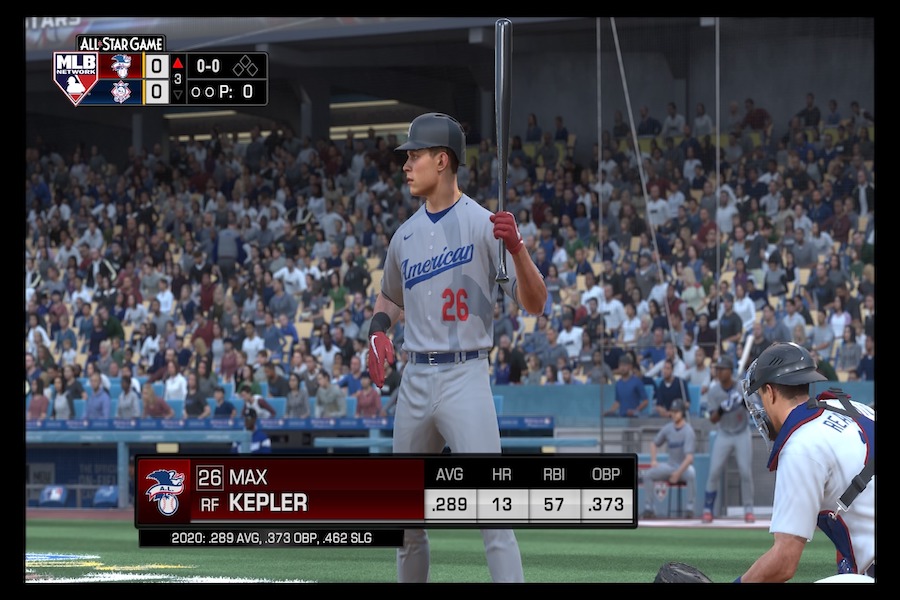 To get caught up on what we're doing here, you can check out the introductory post in the series for an explanation of the premise and setup. But the quick version is this: We're playing a progressive simulated Twins season on MLB The Show 20 on PS4, and y'all are helping guide the ship. In each installment I'll update you on what's happened since the last, and put at least one key decision up for vote. Date In Game: 7/17 Team Record: 58-40 Leading OPS: Luis Arraez (.926 in 293 AB) Leading ERA (SP): Kenta Maeda (3.23 in 117 IP) Leading ERA (RP): Tyler Duffey (1.43 in 44 IP) LATEST RESULTS (6-2) Gm 91 @ CLE: W 8-5 (Sano 4-5, 3 HR, 5 RBI) Gm 92 vs KC: W 3-1 (Bailey 7 IP, 1 ER, W) Gm 93 vs KC: W 5-2 (Pineda 6 IP, 0 R, W) Gm 94 vs KC: W 2-0 (Berrios 8 IP, 0 R, W) Gm 95 vs TOR: L 10-9 (Sano 2-2, HR, 3 BB, 2 RBI) Gm 96 vs TOR: W 6-2 (Donaldson HR, 2 RBI) Gm 97 vs TOR: L 6-2 (Bailey 2.2 IP, 6 ER, L) Gm 98 vs TOR: W 12-4 (Donaldson 3-5, HR, 4 RBI) AL CENTRAL STANDINGS THE RUNDOWN In our last edition, commenters voted unanimously in favor of moving Luis Arraez to the leadoff spot. So I did just that, and in eight games since, the Twins have gone 6-2 while averaging nearly six runs per game. Arraez certainly did his part at the top, going 8-for-27 (.296) with six walks and eight runs scored. Here at the break, Arraez is tied with Mike Trout for the AL lead in batting average at .334. But his tremendous first half wasn't enough to earn Arraez a trip to Los Angeles for the All-Star Game at second base, where Gleyber Torres and Jose Altuve got the nods. Our Twins did, however, send five players to the Midsummer Classic at Dodger Stadium: Mitch Garver (.300/.392/.517 with 15 home runs through 71 games) was the AL's starting catcher. Max Kepler (.289/.373/.462 with 13 homers through 87 games) was the AL's starting right fielder. Eddie Rosario (.284/.324/.494 with 15 homers through 83 games) got in as a backup outfielder. Kenta Maeda (12-4 with a 3.23 ERA and 9.8 K/9 rate through 117 innings) made the team as a starting pitcher. Taylor Rogers (26 saves, 2.58 ERA, 1.19 WHIP as Twins closer) made the team as a reliever. Here was the American League's starting lineup, with Houston ace and reigning Cy Young winner Justin Verlander getting the starting nod: Jose Ramirez (CLE), SS Tommy La Stella (LAA), 3B Mike Trout (LAA), CF J.D. Martinez (BOS), DH Gleyber Torres (NYY), 2B Matt Olson (OAK), 3B Eloy Jimenez (CWS), LF Mitch Garver (MIN), C Max Kepler (MIN), RF No, I am not sure why Cleveland's third baseman Ramirez was able to start at shortstop, nor what's gotten into the All-Star team's actual third baseman La Stella, who already has career highs in almost every offensive category at the break. But for the most part, this All-Star lineup felt reasonable. It was a fairly eventful night for our hometown Twins in a 6-3 loss for the American League. Garver grounded into a double-play in his first at-bat, then delivered a two-run homer against Stephen Strasburg in his second, putting the AL on top 3-2 at the time. Kepler went 1-for-2 with a single. Maeda threw a perfect fourth inning, and Rogers allowed one run on one hit in his single inning of work, with two strikeouts. Rosario didn't make it into the game, due to a bench deep on outfielders. Meanwhile, Alex Kirilloff represented Minnesota in the Futures Game, though he was sadly our lone rep. He started in right field and batted cleanup for the AL team. Kirilloff delivered an RBI single in his first at-bat of the game and finished 1-for-3. Getting back to the bigger picture, as our Twins now put the first half behind them and gear up for a contested stretch run, here's a quick overview of where things stand at the break. Anchored by All-Stars Maeda and Rogers, along with several others who could've been in the conversation (Berrios, Odorizzi, Duffey), Minnesota's pitching has been very good. But the lineup was this team's calling card in the first half, as the Twins are leading MLB in runs scored with 512. Repeating 2019's recipe, they've been productive up and down the lineup, with no MVP-caliber standout. Seven regulars are sporting an OPS above .800 (through none higher than Arraez's .926). That doesn't include Jorge Polanco, whose .796 mark is four points short, but he's slashing .282/.369/.427 and that qualifies as plenty good. The only hitter who's struggled is Byron Buxton, sitting at .231/.309/.331 through 79 games, but even he's been coming on a bit lately, and he's got 23 steals. A well-rounded effort places the Twins in the driver's seat, with their 58-40 record ranking as the third-best in the majors, behind both Los Angeles teams. Yes, while the Dodgers are predictably leading baseball in wins, the Angels have been 2020's big surprise, jumping to a 62-34 start in the AL West despite Shohei Ohtani tearing his labrum in his first start. The Halos have gotten it done behind an offense powered by Trout (1.108 OPS), Andrelton Simmons (20 HR), and Justin Upton (.326 AVG). Our Twins still have plenty to worry about as we turn our attention to trade deadline season. Cleveland lurks only 2 1/2 games out of first. We'll have Berrios (11-5, 3.45 ERA) lined up to open the second half in Texas against Jordan Lyles and the Rangers. WHO'S HOT After a bit of a contagious dry spell, our power bats are getting their juice back. Sano homered three times with five RBIs in the series-clinching win at Cleveland. Later on, the final game fo the first half saw Sano, Donaldson and Cruz all go deep in a 12-4 win against Toronto. Those three reach at the break on pace to finish with 40, 38, and 31 home runs, respectively. Michael Pineda is settling nicely into his rotation spot. He went 2-0 in his two starts over the past eight games, allowing four runs in 12 1/3 innings with seven strikeouts and no walks. And while he didn't make the All-Star Game alongside the closer Rogers, Duffey continues to shine. He made three more scoreless appearances during the latest stretch, lowering his ERA to 1.43. WHO'S NOT Homer Bailey ended his first half on a sour note, allowing six earned runs on seven hits in 2 2/3 innings against Toronto to push his ERA up to 5.01. But in his prior start against Kansas City he threw seven innings of one-run ball, and he's 10-4 on the season. For the most part, this entire team is clicking right now. That doesn't mean we don't have clear areas for improvement as we turn our attention to the upcoming trade deadline, which brings us to... DECISION TIME: WHERE TO FOCUS AT THE DEADLINE? I'm confident in saying we don't need to further supplement the offense, unless a big injury pops up over the next two weeks. There isn't a single spot in the starting lineup that sticks out as a weakness (accounting for Buxton's defense and speed), and even our bench guys have been productive. Much like at 2019's deadline, pitching appears to be the make-or-break factor in a potential championship run. As we start sizing up opportunities, I'll follow the crowd's guidance. Three options, as I see them: Upgrade the rotation. I'm feeling good about our top three (Berrios, Maeda, Odorizzi) but Bailey is no more than a placeholder, and while Pineda's pitched well in three starts since joining the team, he's hardly locked in. Not that we're limited to these options, but here are some SP names listed on the trading block: Jameson Taillon (PIT), Alex Wood (LAD), Steven Matz (NYM). I'd probably lean toward aiming higher Upgrade the bullpen. Here too we are strong at the top (Rogers, Duffey, May, Clippard) but there are some soft spots below in the form of Zack Littell (4.03 ERA, 1.63 WHIP) and Fernando Romero (5.06 ERA, 1.58 WHIP). Among RP names listed on the trading block: Oliver Drake (TB), Jake Diekman (OAK), Craig Stammen (SD), Adam Ottavino (NYY). Upgrade both. I won't make any big moves without the blessing of our collective braintrust, but the direction you all provide will shape my exploratory inquiries ahead of the next edition, at which point we will dictate our deadline splash(es). Vote your preference by sounding off in the comments. COMING UP 7/17: @ TEX 7/18: @ TEX 7/19: @ TEX 7/20: @ ARI 7/21: @ ARI 7/22: @ ARI 7/23: @ CWS 7/24: @ CWS 7/25: @ CWS 7/26: @ CWS PREVIOUS INSTALLMENTS Part 1: We Can Build This Thing Together (0-0) Part 2: 10 Games In, 6 Games Back (4-6) Part 3: Roaring Back (11-9) Part 4: Over the Hill (17-13) Part 5: Checking In at the Quarter Point (23-17) Part 6: Rising Power (30-20) Part 7: First Place! (Barely) (34-26) Part 8: Drafting and Dropping (38-32) Part 9: Cruz Control (45-35) Part 10: Pulling Ahead (52-38) MORE FROM TWINS DAILY — Latest Twins coverage from our writers — Recent Twins discussion in our forums — Follow Twins Daily via Twitter, Facebook or email
 -
Via Rosenthal: "MLB revenue-sharing plan is a non-starter for the Players Association" https://theathletic.com/1806964/2020/05/11/mlb-revenue-sharing-plan-is-a-nonstarter-for-the-players-association/
-
The Twins have claimed to operate on a model that calls for investing 51% of revenue into payroll. We all know that wasn't happening from 2012 through 2016 or so (at the very least). You tell me where that money is going. I dunno. I would assume back into the Pohalds' pockets. To my knowledge it didn't go to employees or charity. And no, I would not say it is the same thing as what you laid out, since MLB owners are billionaires by rule (restaurant and small business owners not so much) and baseball teams by nature have extremely variable spending patterns. The Twins for example were slated to spend about $60M (70%) more on payroll in 2020 than they did in 2014. Do you think they were planning on 70% more revenue? In any case, I don't think it's appropriate to treat this situation like business as usual. To be frank, I believe that ultra-rich people and billionaires should be making sacrifices in all phases of society right now. I understand that baseball players are also generally quite rich, but much less so, and they are assuming ALL OF THE RISK in this scenario. If you disagree with my basic philosophy here that's fine, but it's how I feel.
-
How many times in the past did the Twins (along with basically every other team) pocket extra revenue amidst a "rebuilding" year, without ever reinvesting that money into future teams? Why can't it swing the other way for a change? I'm dubious of whether teams are actually going to lose money by paying full salaries (there's a lot of distributed national media money you're not accounting for) but even if they do I'm not all that sympathetic.
-
It's now been about one month since I wrote here that I was giving up on the viability of a 2020 MLB season of record (and John disagreed.) Since then, some things have changed, and others have not. Given the flurry of recent developments and revelations, this feels like a good time to reassess the situation.Last week, former Twin (and 2020 Winter Meltdown guest) Trevor Plouffe tweeted that baseball was working toward a spring training reboot on June 10th, with a target of July 1st for Opening Day. Surprisingly, he indicated games would be played at teams' home parks. Plouffe later added that players in six different organizations had relayed this information to him. Then, over the past weekend, Ken Rosenthal filed a story for The Athletic detailing MLB's plan to return. Here's the framework he shared: An ~80 game season beginning in early July.Regionalized schedule, with games being played only against teams from the same division (or same interleague division).Expanded playoffs, with seven instead of five entrants from each league.Teams opening in "as many home parks as possible," with those that are unable relocating to spring training parks or other MLB stadiums.In other words, Plouffe's scoop has been more or less verified by the top baseball reporter in the country. Good on ya, Trevor. But Rosenthal was careful to caution that these plans are far from solidified. He opened his article by stating "Nothing is official," and ended it by calling this arrangement "a preferred blueprint." Significant hurdles remain, including testing capacity, full endorsement from medical communities, relaxing of regional restrictions, and creation of a feasible protocol in response to a positive test. Still, the gears now in motion support John's counterpoint stance from last month: a 2020 baseball season is going to happen, because there's too much money at stake for it not to happen. In a twist of irony, however, it turns out one of John's core premises in the article – "This is not a negotiation between the MLB and MLBPA" – may have been a bit overly optimistic. And therein lies a new and problematic sticking point. One of the provisions cited by Rosenthal was that, given a lack of ticket revenue, "the players would be asked to accept a further reduction in pay." Subsequent reports (along with common sense) suggest this request will not be met warmly. NBC Sports indicated the proposed stipulation is "sitting terribly with players," who felt they already had a good-faith agreement in place. One source opined that there is "going to be a war" if MLB demands further pay cuts. I can see both sides of this, but lean far more toward the players' grievance: they're going above and beyond to do their jobs, while assuming all the risk, and would hardly be sucking dry the coffers of billionaire owners receiving huge TV revenues. Why should they have to make this concession? But it doesn't matter what I think, or anyone else on the outside for that matter. If owners don't see a clearly beneficial bottom-line calculation, they aren't going to keep pushing. And the same goes for players, who conversely have many other implications to factor in beyond finances. Whereas money was supposed to be the mighty uniter and motivator in this scenario, it may be driving an immovable wedge at a crucial moment, preventing the league from even being able to even seriously explore the extreme logistical barriers that would be confronted following an agreement. My position has never been that baseball will not be played in 2020, but rather that it doesn't make sense to push for a season of record. My reasoning has been based on two fundamental issues (beyond all the practical pitfalls in simply making it happen): If we're playing a shortened schedule in eerily quiet spring training stadiums, with reconfigured divisions, is it even worth trying to compete toward an official result in MLB's annals?If a considerable portion of players are opting out of this arrangement, is it even fair to try and hold a season as normal, with rosters unevenly affected and huge stars potentially absent?The new proposal hinted by Plouffe and elaborated upon by Rosenthal does serve to alleviate my first concern; I could get down with an 80-game season, with an altered schedule that still remains generally true to the existing divisional structures. But rising tensions around pay cuts only further accentuate the second concern; if MLB owners remain deadset on this demand, I have to assume that – at best – they'll get partial participation. In that scenario, baseball can still happen. And I'd be giddy to see it, provided they find a way that's safe and responsible. But should an official MLB season be played, in the guise of naming a 2020 champion and staying true to the game's historical legacy? I still say no. Regardless, it's definitely encouraging to see orchestrated efforts underway and formal plans taking shape. We should have a clearer picture of the path ahead by midweek, as Rosenthal's timeline called for a formal proposal being presented to players on Tuesday. MORE FROM TWINS DAILY — Latest Twins coverage from our writers — Recent Twins discussion in our forums — Follow Twins Daily via Twitter, Facebook or email Click here to view the article
-
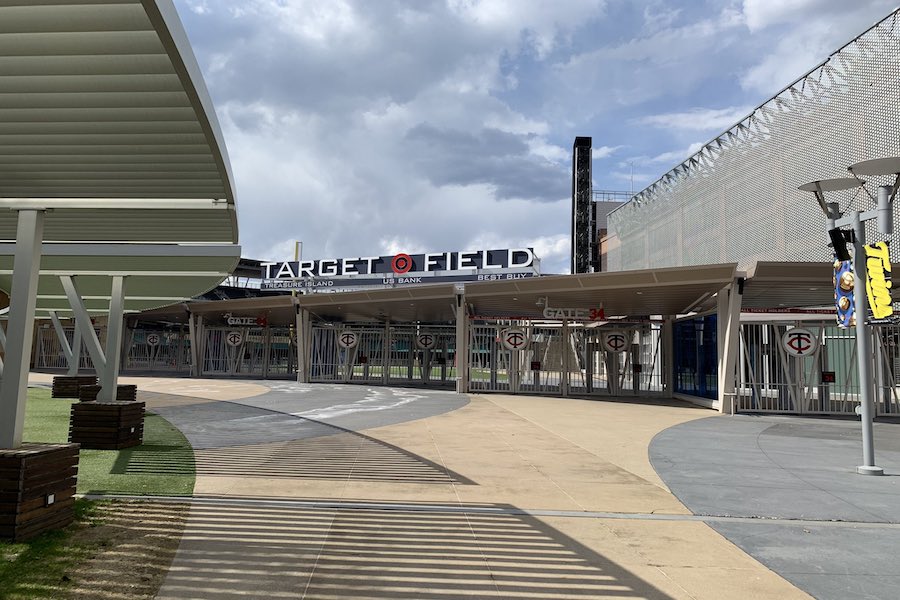 Last week, former Twin (and 2020 Winter Meltdown guest) Trevor Plouffe tweeted that baseball was working toward a spring training reboot on June 10th, with a target of July 1st for Opening Day. Surprisingly, he indicated games would be played at teams' home parks. https://twitter.com/trevorplouffe/status/1257422311772360706 Plouffe later added that players in six different organizations had relayed this information to him. Then, over the past weekend, Ken Rosenthal filed a story for The Athletic detailing MLB's plan to return. Here's the framework he shared: An ~80 game season beginning in early July. Regionalized schedule, with games being played only against teams from the same division (or same interleague division). Expanded playoffs, with seven instead of five entrants from each league. Teams opening in "as many home parks as possible," with those that are unable relocating to spring training parks or other MLB stadiums. In other words, Plouffe's scoop has been more or less verified by the top baseball reporter in the country. Good on ya, Trevor. But Rosenthal was careful to caution that these plans are far from solidified. He opened his article by stating "Nothing is official," and ended it by calling this arrangement "a preferred blueprint." Significant hurdles remain, including testing capacity, full endorsement from medical communities, relaxing of regional restrictions, and creation of a feasible protocol in response to a positive test. Still, the gears now in motion support John's counterpoint stance from last month: a 2020 baseball season is going to happen, because there's too much money at stake for it not to happen. In a twist of irony, however, it turns out one of John's core premises in the article – "This is not a negotiation between the MLB and MLBPA" – may have been a bit overly optimistic. And therein lies a new and problematic sticking point. One of the provisions cited by Rosenthal was that, given a lack of ticket revenue, "the players would be asked to accept a further reduction in pay." Subsequent reports (along with common sense) suggest this request will not be met warmly. NBC Sports indicated the proposed stipulation is "sitting terribly with players," who felt they already had a good-faith agreement in place. One source opined that there is "going to be a war" if MLB demands further pay cuts. I can see both sides of this, but lean far more toward the players' grievance: they're going above and beyond to do their jobs, while assuming all the risk, and would hardly be sucking dry the coffers of billionaire owners receiving huge TV revenues. Why should they have to make this concession? But it doesn't matter what I think, or anyone else on the outside for that matter. If owners don't see a clearly beneficial bottom-line calculation, they aren't going to keep pushing. And the same goes for players, who conversely have many other implications to factor in beyond finances. Whereas money was supposed to be the mighty uniter and motivator in this scenario, it may be driving an immovable wedge at a crucial moment, preventing the league from even being able to even seriously explore the extreme logistical barriers that would be confronted following an agreement. My position has never been that baseball will not be played in 2020, but rather that it doesn't make sense to push for a season of record. My reasoning has been based on two fundamental issues (beyond all the practical pitfalls in simply making it happen): If we're playing a shortened schedule in eerily quiet spring training stadiums, with reconfigured divisions, is it even worth trying to compete toward an official result in MLB's annals? If a considerable portion of players are opting out of this arrangement, is it even fair to try and hold a season as normal, with rosters unevenly affected and huge stars potentially absent? The new proposal hinted by Plouffe and elaborated upon by Rosenthal does serve to alleviate my first concern; I could get down with an 80-game season, with an altered schedule that still remains generally true to the existing divisional structures. But rising tensions around pay cuts only further accentuate the second concern; if MLB owners remain deadset on this demand, I have to assume that – at best – they'll get partial participation. In that scenario, baseball can still happen. And I'd be giddy to see it, provided they find a way that's safe and responsible. But should an official MLB season be played, in the guise of naming a 2020 champion and staying true to the game's historical legacy? I still say no. Regardless, it's definitely encouraging to see orchestrated efforts underway and formal plans taking shape. We should have a clearer picture of the path ahead by midweek, as Rosenthal's timeline called for a formal proposal being presented to players on Tuesday. MORE FROM TWINS DAILY — Latest Twins coverage from our writers — Recent Twins discussion in our forums — Follow Twins Daily via Twitter, Facebook or email
 -
The Show Must Go On: Pulling Ahead
Nick Nelson replied to Nick Nelson's topic in Twins Daily Front Page News
Option 2: Press "Like This" on this comment (or voice your support below) if you want us to stick with what's working and leave Arraez near the bottom of the lineup while the heavy hitters stay stacked at the top. -
The Show Must Go On: Pulling Ahead
Nick Nelson replied to Nick Nelson's topic in Twins Daily Front Page News
Option 1: Press "Like This" on this comment (or voice your support below) if you want us to move Luis Arraez, who leads the league in AVG and ranks third in OBP, into the leadoff spot.- 4 replies
-
- 15
-

-
As the All-Star break approaches, our Minnesota Twins have pulled into first place with another strong run of results. Catch up on the latest in our simulated 2020 season, and weigh in on the next audience-guided key decision.To get caught up on what we're doing here, you can check out the introductory post in the series for an explanation of the premise and setup. But the quick version is this: We're playing a progressive simulated Twins season on MLB The Show 20 on PS4, and y'all are helping guide the ship. In each installment I'll update you on what's happened since the last, and put at least one key decision up for vote. Date In Game: 7/5 Team Record: 52-38 Leading OPS: Luis Arraez (.935 in 266 AB) Leading ERA (SP): Kenta Maeda (3.33 in 105.1 IP) Leading ERA (RP): Tyler Duffey (1.54 in 41 IP) LATEST RESULTS (7-3) Gm 81 @ HOU: L 7-3 (Odorizzi 4 IP, 5 ER, L) Gm 82 @ HOU: W 5-0 (Maeda 6 IP, 0 ER, 8 K, W) Gm 83 vs COL: W 9-5 (Donaldson 2-5, HR, 4 RBI) Gm 84 vs COL: L 8-6 (Rogers 1 IP, 4 ER, L) Gm 85 vs COL: W (Berrios 8 IP, 1 ER, 8 K, W) Gm 86 @ DET: W 15-11 (Kepler 4-5, 3 runs) Gm 87 @ DET: W 11-0 (Maeda CG SO) Gm 88 @ DET: W 4-1 (Bailey 6 IP, 1 ER) Gm 89 @ CLE: W 7-5 (Gonzalez grand slam) Gm 90 @ CLE: L 5-4 (Arraez 3-5) AL CENTRAL STANDINGS Download attachment: alcstandings75.jpeg THE RUNDOWN Before we dive into the team's recent positive developments, here's an update on roster moves that commenters helped guide last time around. The decision up for vote was whether we should: A) Send struggling rookie Brent Rooker down to the minors and recall a different outfielder for the bench, or B ) Send struggling rookie Jordan Balazovic down to the minors and recall a different fifth starter. Although the rotation change won out, there were quite a few votes for each, and multiple commenters basically said, "Well why can't we just do both?" Which, yeah, good point! Both moves made sense, so I went ahead and pulled the trigger on both. Except... We can't send Balazovic down. I guess I kinda knew this before, but had forgotten. Since he was (for some reason) available as a free agent before we added him on an MLB deal at the start of the season, he has no options. I figured y'all wouldn't be cool with exposing our best pitching prospect to waivers, so I moved him to the bullpen, optioned Randy Dobnak, and called up Michael Pineda. In adding Pineda to the 40-man roster, we waived our lowest-rated player, Sean Poppen, who was claimed by Baltimore. Pineda was solid in his first MLB start of the season, allowing four runs in six innings against Colorado. I skipped his second start, because we had an off day ahead of a crucial series in Cleveland and I had a chance to bring our top three starters at them. Cave, meanwhile, is off to a great start. He went 3-for-4 with a homer in his season debut against Houston and is slashing .381/.519/.524 through 27 plate appearances. Cave is contributing to an offense that has taken off. Disappointing efforts were routine in recent updates, but here as the calendar flips to July, the bats are heating up. In the past 10 games we scored 67 runs. The highlight (for the hitters anyway) was a 15-11 victory in the series opener at Detroit, in which the Twins collected 21 hits and four homers. They opened the game by jumping all over some bum starting pitcher for seven runs on eight hits in 1 1/3 innings. Going by his name, I assumed the guy was a joke and his performance followed suit. Download attachment: odorizzivsnelson.jpeg Fueled by this strong offensive output, our Twins went 7-3 for a second consecutive session, moving past the Indians (who went 4-6) for sole possession of first place. At this moment in the sim, we're through 90 games, and we have split the first two games of a series in Cleveland, with Marwin Gonzalez's eighth-inning grand slam turning the tides in a 7-5 Game 1 victory. We'll send 10-4 Kenta Maeda to the hill against 10-5 Shane Bieber for the rubber match, with a chance to go ahead by three games in the Central. Our season is now eight games away from the All-Star break. I'll update next after those eight, rather than the usual 10, so we can have a nice clean ASG checkpoint. Let's hit the season's unofficial halfway mark on a high note. I'll be calling on your help for a lineup decision that could tilt the odds in our favor in this final pre-break sample. First, here's a look at some trending players. WHO'S HOT Luis Arraez isn't rated all that highly in MLB The Show 20 – his 79 overall rating ranks 14th on our roster – but the game seems to recognize his scrappy overachieving nature. This past 10-game stretch was probably his best of the season, as he delivered two three-hit games and two four-hit games on the way to going 17-for-34 (.500) overall. He now finds himself leading the AL in batting average at .338. Marcell Ozuna is the MLB leader at .360. It's a good thing we've got Maeda taking the hill for our critical next game against Cleveland, because the man is HOT. His first start of the last batch saw him hold Houston scoreless over six innings of one-hit ball, striking out eight with one walk. In his second he coasted to a complete-game shutout against Detroit, allowing five hits with 10 strikeouts and three walks while the offense scored 11 runs. That's 15 innings with zero runs and an 18-to-4 K/BB ratio, bringing his ERA down to 3.33. With the All-Star Game nine days away, Maeda has an outside shot at getting in, although Verlander, Kluber, Sale, and Ryu are among the starters with clearly superior cases. The Twins do have a few guys in line to be selected: Mitch Garver is leading all catchers in votes, with his .906 OPS and 14 homers putting him ahead of Salvador Perez and Gary Sanchez.Max Kepler (.841 OPS, 12 HR, 50 RBI) is holding down the lead in right field as his performance plateaus, although Jorge Soler and Aaron Judge are closing in.Eddie Rosario, third among left fielders, is the only other position player with a real shot to get in.Taylor Rogers and Tyler Duffey could be in the All-Star bullpen mix. WHO'S NOT Rogers has been mostly fantastic in the closer role, but he hurt his All-Star case a bit with an uncharacteristic disaster outing in the second game of the Colorado series. The Twins had rallied for four runs in the bottom of the eighth to take a 6-4 lead, and so we turned to our usually reliable closer. But the Rockies jumped on Rogers for four runs on six hits in one inning, winning 8-6. To his credit, the resilient lefty bounced back with a scoreless ninth and save the following day, and he added two more saves with clean frames against Detroit and Houston. Meanwhile, Odorizzi is riding the rotation seesaw. While Maeda has quickly switched gears from ice-cold to red-hot (he was in this section last time), Odo did the opposite. He entered the latest 10-game stretch with a team-leading 2.86 ERA, and made three starts, on account of the decision to skip Pineda's second turn. Here are the numbers in those three starts for Odorizzi: 9 IP, 13 ER. Covered up by Minnesota's explosive offense in a 15-11 win over Detroit was Odorizzi's hideous start (1 IP, 6 ER), and he lasted only four innings apiece in his other two. Odorizzi's ERA has jumped to 3.62, which – in fairness – was probably a fair expectation for him coming in. His pattern in the game of going on a crazy run and then offsetting it with a few normalizing clunkers seems true enough to real life. Hopefully he can get into another groove for the second half. DECISION TIME: MOVE ARRAEZ TO LEADOFF? My attitude with the lineup has generally been hands-off up to this point. But Arraez's continuing success is causing me to question his spot near the bottom of the order, I've been pretty steadfast in running out this 1-through-5 order regularly: Versus RHP: Kepler, Donaldson, Sano, Rosario, Cruz Versus LHP: Garver, Donaldson, Sano, Kepler, Cruz And these guys have all been quite good. None are necessarily deserving of a demotion, but at the same time, Arraez is sorta forcing the issue. Not only does he lead the American League in batting average, but he's third in OBP at .431, trailing only Trout (.442) and Xander Bogaerts (.433). Download attachment: obpleaders.jpeg So my question for today, as we march toward the All-Star break: Should we make Arraez our full-time leadoff hitter? Or should we stick with the lineup philosophies that have gotten us to this point? You can voice your opinion in the comments section. COMING UP 7/5: @ CLE 7/6: vs KC 7/7: vs KC 7/8: vs KC 7/9: vs TOR 7/10: vs TOR 7/11: vs TOR 7/12: vs TOR 7/12: Home Run Derby 7/13: MLB All-Star Game PREVIOUS INSTALLMENTS Part 1: We Can Build This Thing Together (0-0) Part 2: 10 Games In, 6 Games Back (4-6) Part 3: Roaring Back (11-9) Part 4: Over the Hill (17-13) Part 5: Checking In at the Quarter Point (23-17) Part 6: Rising Power (30-20) Part 7: First Place! (Barely) (34-26) Part 8: Drafting and Dropping (38-32) Part 9: Cruz Control (45-35) MORE FROM TWINS DAILY — Latest Twins coverage from our writers — Recent Twins discussion in our forums — Follow Twins Daily via Twitter, Facebook or email Click here to view the article
-
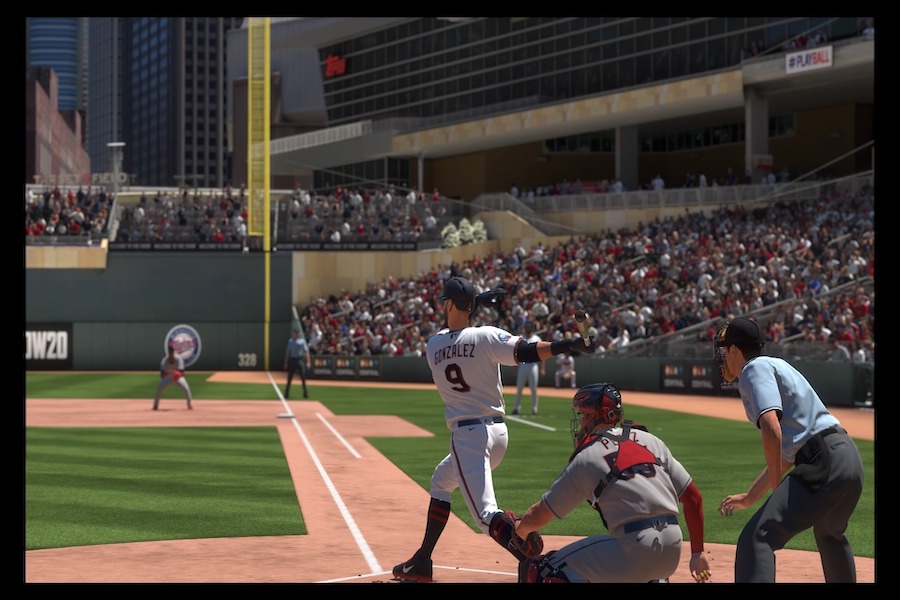 To get caught up on what we're doing here, you can check out the introductory post in the series for an explanation of the premise and setup. But the quick version is this: We're playing a progressive simulated Twins season on MLB The Show 20 on PS4, and y'all are helping guide the ship. In each installment I'll update you on what's happened since the last, and put at least one key decision up for vote. Date In Game: 7/5 Team Record: 52-38 Leading OPS: Luis Arraez (.935 in 266 AB) Leading ERA (SP): Kenta Maeda (3.33 in 105.1 IP) Leading ERA (RP): Tyler Duffey (1.54 in 41 IP) LATEST RESULTS (7-3) Gm 81 @ HOU: L 7-3 (Odorizzi 4 IP, 5 ER, L) Gm 82 @ HOU: W 5-0 (Maeda 6 IP, 0 ER, 8 K, W) Gm 83 vs COL: W 9-5 (Donaldson 2-5, HR, 4 RBI) Gm 84 vs COL: L 8-6 (Rogers 1 IP, 4 ER, L) Gm 85 vs COL: W (Berrios 8 IP, 1 ER, 8 K, W) Gm 86 @ DET: W 15-11 (Kepler 4-5, 3 runs) Gm 87 @ DET: W 11-0 (Maeda CG SO) Gm 88 @ DET: W 4-1 (Bailey 6 IP, 1 ER) Gm 89 @ CLE: W 7-5 (Gonzalez grand slam) Gm 90 @ CLE: L 5-4 (Arraez 3-5) AL CENTRAL STANDINGS THE RUNDOWN Before we dive into the team's recent positive developments, here's an update on roster moves that commenters helped guide last time around. The decision up for vote was whether we should: A) Send struggling rookie Brent Rooker down to the minors and recall a different outfielder for the bench, or B ) Send struggling rookie Jordan Balazovic down to the minors and recall a different fifth starter. Although the rotation change won out, there were quite a few votes for each, and multiple commenters basically said, "Well why can't we just do both?" Which, yeah, good point! Both moves made sense, so I went ahead and pulled the trigger on both. Except... We can't send Balazovic down. I guess I kinda knew this before, but had forgotten. Since he was (for some reason) available as a free agent before we added him on an MLB deal at the start of the season, he has no options. I figured y'all wouldn't be cool with exposing our best pitching prospect to waivers, so I moved him to the bullpen, optioned Randy Dobnak, and called up Michael Pineda. In adding Pineda to the 40-man roster, we waived our lowest-rated player, Sean Poppen, who was claimed by Baltimore. Pineda was solid in his first MLB start of the season, allowing four runs in six innings against Colorado. I skipped his second start, because we had an off day ahead of a crucial series in Cleveland and I had a chance to bring our top three starters at them. Cave, meanwhile, is off to a great start. He went 3-for-4 with a homer in his season debut against Houston and is slashing .381/.519/.524 through 27 plate appearances. Cave is contributing to an offense that has taken off. Disappointing efforts were routine in recent updates, but here as the calendar flips to July, the bats are heating up. In the past 10 games we scored 67 runs. The highlight (for the hitters anyway) was a 15-11 victory in the series opener at Detroit, in which the Twins collected 21 hits and four homers. They opened the game by jumping all over some bum starting pitcher for seven runs on eight hits in 1 1/3 innings. Going by his name, I assumed the guy was a joke and his performance followed suit. Fueled by this strong offensive output, our Twins went 7-3 for a second consecutive session, moving past the Indians (who went 4-6) for sole possession of first place. At this moment in the sim, we're through 90 games, and we have split the first two games of a series in Cleveland, with Marwin Gonzalez's eighth-inning grand slam turning the tides in a 7-5 Game 1 victory. We'll send 10-4 Kenta Maeda to the hill against 10-5 Shane Bieber for the rubber match, with a chance to go ahead by three games in the Central. Our season is now eight games away from the All-Star break. I'll update next after those eight, rather than the usual 10, so we can have a nice clean ASG checkpoint. Let's hit the season's unofficial halfway mark on a high note. I'll be calling on your help for a lineup decision that could tilt the odds in our favor in this final pre-break sample. First, here's a look at some trending players. WHO'S HOT Luis Arraez isn't rated all that highly in MLB The Show 20 – his 79 overall rating ranks 14th on our roster – but the game seems to recognize his scrappy overachieving nature. This past 10-game stretch was probably his best of the season, as he delivered two three-hit games and two four-hit games on the way to going 17-for-34 (.500) overall. He now finds himself leading the AL in batting average at .338. Marcell Ozuna is the MLB leader at .360. It's a good thing we've got Maeda taking the hill for our critical next game against Cleveland, because the man is HOT. His first start of the last batch saw him hold Houston scoreless over six innings of one-hit ball, striking out eight with one walk. In his second he coasted to a complete-game shutout against Detroit, allowing five hits with 10 strikeouts and three walks while the offense scored 11 runs. That's 15 innings with zero runs and an 18-to-4 K/BB ratio, bringing his ERA down to 3.33. With the All-Star Game nine days away, Maeda has an outside shot at getting in, although Verlander, Kluber, Sale, and Ryu are among the starters with clearly superior cases. The Twins do have a few guys in line to be selected: Mitch Garver is leading all catchers in votes, with his .906 OPS and 14 homers putting him ahead of Salvador Perez and Gary Sanchez. Max Kepler (.841 OPS, 12 HR, 50 RBI) is holding down the lead in right field as his performance plateaus, although Jorge Soler and Aaron Judge are closing in. Eddie Rosario, third among left fielders, is the only other position player with a real shot to get in. Taylor Rogers and Tyler Duffey could be in the All-Star bullpen mix. WHO'S NOT Rogers has been mostly fantastic in the closer role, but he hurt his All-Star case a bit with an uncharacteristic disaster outing in the second game of the Colorado series. The Twins had rallied for four runs in the bottom of the eighth to take a 6-4 lead, and so we turned to our usually reliable closer. But the Rockies jumped on Rogers for four runs on six hits in one inning, winning 8-6. To his credit, the resilient lefty bounced back with a scoreless ninth and save the following day, and he added two more saves with clean frames against Detroit and Houston. Meanwhile, Odorizzi is riding the rotation seesaw. While Maeda has quickly switched gears from ice-cold to red-hot (he was in this section last time), Odo did the opposite. He entered the latest 10-game stretch with a team-leading 2.86 ERA, and made three starts, on account of the decision to skip Pineda's second turn. Here are the numbers in those three starts for Odorizzi: 9 IP, 13 ER. Covered up by Minnesota's explosive offense in a 15-11 win over Detroit was Odorizzi's hideous start (1 IP, 6 ER), and he lasted only four innings apiece in his other two. Odorizzi's ERA has jumped to 3.62, which – in fairness – was probably a fair expectation for him coming in. His pattern in the game of going on a crazy run and then offsetting it with a few normalizing clunkers seems true enough to real life. Hopefully he can get into another groove for the second half. DECISION TIME: MOVE ARRAEZ TO LEADOFF? My attitude with the lineup has generally been hands-off up to this point. But Arraez's continuing success is causing me to question his spot near the bottom of the order, I've been pretty steadfast in running out this 1-through-5 order regularly: Versus RHP: Kepler, Donaldson, Sano, Rosario, Cruz Versus LHP: Garver, Donaldson, Sano, Kepler, CruzAnd these guys have all been quite good. None are necessarily deserving of a demotion, but at the same time, Arraez is sorta forcing the issue. Not only does he lead the American League in batting average, but he's third in OBP at .431, trailing only Trout (.442) and Xander Bogaerts (.433). So my question for today, as we march toward the All-Star break: Should we make Arraez our full-time leadoff hitter? Or should we stick with the lineup philosophies that have gotten us to this point? You can voice your opinion in the comments section. COMING UP 7/5: @ CLE 7/6: vs KC 7/7: vs KC 7/8: vs KC 7/9: vs TOR 7/10: vs TOR 7/11: vs TOR 7/12: vs TOR 7/12: Home Run Derby 7/13: MLB All-Star Game PREVIOUS INSTALLMENTS Part 1: We Can Build This Thing Together (0-0) Part 2: 10 Games In, 6 Games Back (4-6) Part 3: Roaring Back (11-9) Part 4: Over the Hill (17-13) Part 5: Checking In at the Quarter Point (23-17) Part 6: Rising Power (30-20) Part 7: First Place! (Barely) (34-26) Part 8: Drafting and Dropping (38-32) Part 9: Cruz Control (45-35) MORE FROM TWINS DAILY — Latest Twins coverage from our writers — Recent Twins discussion in our forums — Follow Twins Daily via Twitter, Facebook or email
 -
The Show Must Go On: Cruz Control
Nick Nelson replied to Nick Nelson's topic in Twins Daily Front Page News
Hill got removed because we DFA'ed him when we removed him from the rotation earlier this season. Pineda was not on the 40-man in the game (presumably as a way to reflect him being suspended?) and is also direly underrated in it. -
The Show Must Go On: Cruz Control
Nick Nelson replied to Nick Nelson's topic in Twins Daily Front Page News
Option 2: Press "Like This" on this comment (or voice your support below) if you want us to send down Jordan Balazovic to find his groove in Triple-A, while promoting one of the several worthy performers in Triple-A – Rich Hill, Devin Smeltzer, Michael Pineda or Reid McMahon – to take over the fifth spot in the rotation. (Feel free to specify your preference, otherwise I'll likely to go with Smeltzer since he's on the 40-man.) -
The Show Must Go On: Cruz Control
Nick Nelson replied to Nick Nelson's topic in Twins Daily Front Page News
Option 1: Press "Like This" on this comment (or voice your support below) if you want us to send down Brent Rooker and let him regain his confidence, while promoting Jake Cave or Alex Kirilloff to take his place on the bench. (Feel free to specify your preference, otherwise I'll likely to go with Cave.) -
As we reach the halfway point in our interactive simulated 2020 season, the Minnesota Twins are neck-and-neck with the Cleveland Indians atop the AL Central. The latest stretch saw the resurgence and redemption of an embattled vet, along with some thrilling down-to-the-wire finishes. Oh, and the Southern League All-Star Game has arrived! The Pensacola Blue Wahoos are sending five representatives.To get caught up on what we're doing here, you can check out the introductory post in the series for an explanation of the premise and setup. But the quick version is this: We're playing a progressive simulated Twins season on MLB The Show 20 on PS4, and y'all are helping guide the ship. In each installment I'll update you on what's happened since the last, and put at least one key decision up for vote. Date In Game: 6/23 Team Record: 45-35 Leading OPS: Luis Arraez (.906 in 232 AB) Leading ERA (SP): Jake Odorizzi (2.86 in 103.2 IP) Leading ERA (RP): Tyler Duffey (1.69 in 37.1 IP) LATEST RESULTS (7-3) Gm 71 @ KC: W 10-3 (Arraez 2-3, 3 RBI) Gm 72 @ KC: L 5-1 (Maeda 3 IP, 5 R, 2 ER, L) Gm 73 @ KC: W 11-1 (Rosario 3-4, 2 HR, 4 RBI) Gm 74 vs MIL: W 5-3 (Cruz 3-4, 3 HR, 5 RBI) Gm 75 vs MIL: L 4-3 (Cruz 0-5, 4 K) Gm 76 vs NYY: W 8-7 (Sano 1-3, HR, 3 RBI) Gm 77 vs NYY: W 6-4 (Cruz 3-4, HR, 3 RBI) Gm 78 vs NYY: W 9-8 (Garver PH walk-off single) Gm 79 vs NYY: L 13-1 (Balazovic 4 IP, 5 ER, L) Gm 80 @ HOU: W 7-0 (Berrios 7 IP, 0 R, W) AL CENTRAL STANDINGS Download attachment: alcsstandings623.jpeg THE RUNDOWN If I were running an actual MLB team, I would adhere to the type of patient, big-picture approach I tend to advocate as a writer and fan. Baseball's season is a long haul, and overreacting to small-sample struggles (or successes) within it is a recipe for mismanagement and self-sabotage. But when running a fictional team, as in our current ongoing exercise, I like to abandon any pretense of rationality or restraint. I'm all about shaking things up constantly. Bench people. Make trades. Stir the pot. Why not?! So I'll admit, when I presented a decision here in our last installment – To bench or not to bench the scuffling Nelson Cruz? – I was kinda hoping the voters would feed into my chaotic appetite. You didn't. Commenters showed a clear preference to stick with the veteran slugging DH. And here's what happened: Cruz went 12-for-31 (.375) over the next 10 games with five home runs and 10 RBIs. In a 5-3 win over Milwaukee, he hit three home runs and drove in ALL FIVE RUNS. Days later, his three-run homer against the Yankees proved decisive in a 6-4 win. Cruz did have one ugly clunker mixed in – an 0-for-5 golden sombrero following the three-homer binge – but he has quickly re-emerged as an offensive force, raising his OPS by 60 points in the process. So uh, yeah, good call on that one. With Cruz leading the charge, our Twins went 7-3 over the past 10 to pull back within two games of Cleveland for first. With almost exactly one-half of the season (80 games) in the books, the Twins are on pace for 91 wins, but that likely won't be enough to edge a very good Cleveland squad, led by MVP contender Jose Ramirez. The big highlight of our latest stretch, outside of Cruz's takeover, was of course winning three out of four against the Yankees. New York is actually kind of lying in the weeds, four games back in the AL East with a .500 record, and we took advantage with a trio of tight victories. The wildest of these came in the third game, in which Minnesota was down 8-1 entering the bottom of the seventh, and 8-4 entering the bottom of the ninth. Here's what went down at that point: RHP Tommy Kahnle enters to pitch for NYY.Jorge Polanco hits a leadoff HR. 8-5.Josh Donaldson reaches on an infield single.Miguel Sano walks, Donaldson to second.LHP Aroldis Chapman replaces Kahnle for NYY. (Aaron Boone sweating.)Max Kepler grounds to third, Gio Urshela throws to second to get Sano but Kepler beats the relay at first. Donaldson to third. Runners on the corners, one out.Nelson Cruz walks. Kepler to second. Bases loaded.Marwin Gonzalez strikes out swinging. Two outs.Eddie Rosario singles to right. Donaldson scores and so does Kepler, beating Aaron Judge's throw to the plate. Cruz to third.Byron Buxton reaches on an error by first baseman Luis Voit. Cruz scores, Rosario to second. Tie ballgame.Mitch Garver pinch-hits for Willians Astudillo.Garver singles to center. With no chance to get Rosario at home, Aaron Hicks tries nailing Buxton at third, but to no avail. Eddie scores and the Twins complete their stunning comeback, walking off against Chapman.I know, it's just a fake simulation through a video game. But watching these events play out in rapid fashion, as I oversaw the action in Quick Manage mode, generated a genuine buzz of energy for me with its vibes of authenticity – Chapman battling with command, Rosario coming up clutch, Buxton beating the defense with his speed – and there's a certain joy in beating the damn Yankees no matter what the context or medium. Baseball, I miss you so much. One final note before we move on: As of today (in the game's calendar), the Southern League (AA) All-Star Game is upon us. I am pleased to share that five Twins prospects, playing for the Pensacola Blue Wahoos, made the roster: Ben Rortvedt is the starter at catcher, standing out with his solid offense (.243/.330/.373, 6 HR, 19 RBI) and excellent defense.Shortstop Wander Javier (.311/.379/.429 in 49 games) and third baseman Jose Miranda (.286/.355/.411 in 53 games) both made it as bench players.Right-hander Edwar Colina gets in as a starting pitcher. He's 8-2 with a 2.33 ERA and 72-to-25 K/BB ratio through 14 starts.Lefty reliever Sam Clay rounds out the bullpen, somewhat oddly as he has only thrown 15 1/3 innings, although he does own a 2.93 ERA and 0.91 WHIP.WHO'S HOT Cruz, obviously. Outside of the slugger, Luis Arraez continues to rake, and now leads the team in OPS, with his .315/.415/.491 slash line reflecting a real-life best case scenario for the scrappy second baseman. Arraez is seventh among AL hitters in average and fourth in the All-Star voting at second, behind Gleyber Torres, Jose Altuve and Cesar Hernandez. Meanwhile, Rosario keeps coming through with big knocks and has his RBI total up to 53, leading the team and tying him for seventh in the AL. On the pitching side, Jose Berrios stayed hot with two more quality starts. In the most recent game we simmed, a series opener in Houston, Berrios had one of his finest efforts yet with seven innings of shutout ball, allowing three hits and two walks with six strikeouts as the Twins rolled 7-0. The trashcan-less Astros are 37-40 in our sim season. WHO'S NOT Kenta Maeda was once 7-0, and the last starting pitcher in MLB to be tagged with a loss. He has since gone 1-4. The performance across his last two starts (8 IP, 5 ER, 11 H, 7 K, 5 BB) is reflective of Maeda's new norm, as his ERA has risen to 3.89. Homer Bailey's latest sample epitomizes the up-and-down nature of his season. First, he spins 8 1/3 innings of one-run ball against Kansas City, allowing four hits. Then he lasts only three innings against the Yankees, allowing five earned runs and walking four. With an 8-3 record, 4.96 ERA and 1.46 WHIP, Bailey is what he is: an adequate back-of-rotation piece that we should probably be looking to upgrade as the deadline gets closer. On offense, Josh Donaldson and Miguel Sano are still in the dumps, but after the lessons learned from Cruz's ordeal, I'm not going to dwell on it one bit. With that said, there are two rookies whose performances (and possibly miscast roles) compel action. Which brings us to this week's decision. DECISION TIME: CALL UP AN OUTFIELDER OR A STARTING PITCHER? Several weeks back, we called up Brent Rooker, with hopes he could help boost the offense coming off a strong opening run at Triple-A. While he's had his moments since joining the team, Rooker has generally looked overmatched, slashing .241/.305/.315 with 17 strikeouts and four walks in 59 PA. We could swap him out for Jake Cave, who leads the Rochester Red Wings in OPS (.808) and offers the ability to play center. Or... we could call up Alex Kirilloff, trailing Cave by just four points in OPS (.280/.359/.445) and riding a hot streak. But can we get him the playing time to justify it? Alternatively, we could turn our attention to the rotation. Jordan Balazovic, who you may recall was a free agent for some reason at the start of the season, has shown some nice signs since being acquired and thrust into a big-league role, averaging a strikeout per inning, but he hasn't fared much better as a starter than he did as a reliever. Through 15 appearances (six starts) he has a 6.12 ERA and 1.73 WHIP. We've tried bringing along our top young pitching talent through aggressive means. Maybe it's time to take a step back and send him to Triple-A for recalibration. Several pitchers in Rochester have intriguing cases to take his job: Rich Hill, who accepted a demotion after we DFA'ed him and he went unclaimed, is 6-1 with a 2.68 ERA in nine starts.Devin Smeltzer has a 2.52 ERA and 1.17 WHIP through 11 starts, although he did struggle during a brief long-relief stint with the Twins earlier this year.Michael Pineda has a 70-to-15 K/BB ratio, 3.45 ERA and 1.10 WHIP in 13 starts.And a fictional 19-year-old left-hander named Reid McMahon, who opened the season in Single-A but has risen on the strength of his performance, now has a 1.70 ERA in his nine starts since joining the Red Wings. He also has a 5.9 K/9 rate, but the pitch-to-contact technique is working for him.We're either going to make a move in the fifth starter spot or at the end of our bench. I will leave the decision up to you. Make your preference known in the comments section below. PREVIOUS INSTALLMENTS Part 1: We Can Build This Thing Together (0-0) Part 2: 10 Games In, 6 Games Back (4-6) Part 3: Roaring Back (11-9) Part 4: Over the Hill (17-13) Part 5: Checking In at the Quarter Point (23-17) Part 6: Rising Power (30-20) Part 7: First Place! (Barely) (34-26) Part 8: Drafting and Dropping (38-32) MORE FROM TWINS DAILY — Latest Twins coverage from our writers — Recent Twins discussion in our forums — Follow Twins Daily via Twitter, Facebook or email Click here to view the article
-
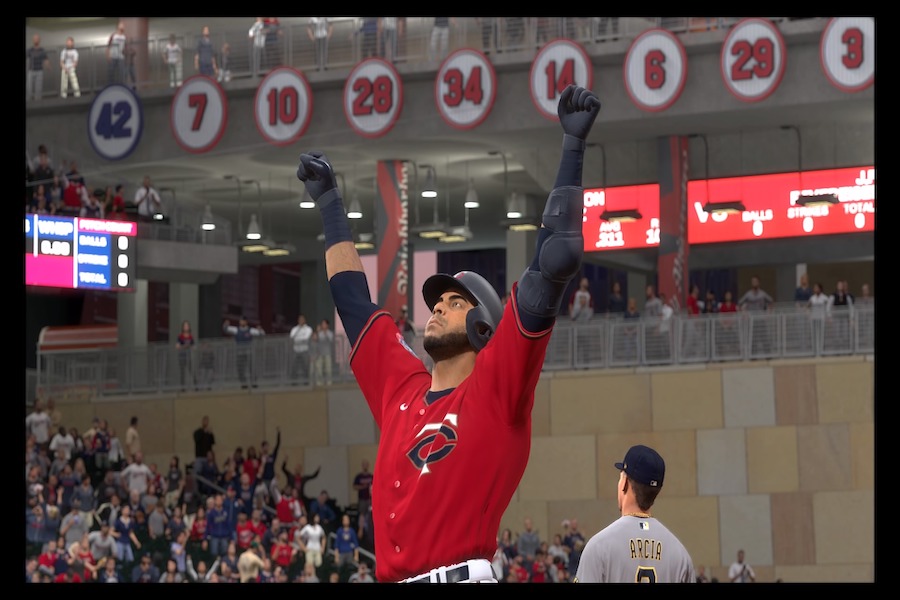 To get caught up on what we're doing here, you can check out the introductory post in the series for an explanation of the premise and setup. But the quick version is this: We're playing a progressive simulated Twins season on MLB The Show 20 on PS4, and y'all are helping guide the ship. In each installment I'll update you on what's happened since the last, and put at least one key decision up for vote. Date In Game: 6/23 Team Record: 45-35 Leading OPS: Luis Arraez (.906 in 232 AB) Leading ERA (SP): Jake Odorizzi (2.86 in 103.2 IP) Leading ERA (RP): Tyler Duffey (1.69 in 37.1 IP) LATEST RESULTS (7-3) Gm 71 @ KC: W 10-3 (Arraez 2-3, 3 RBI) Gm 72 @ KC: L 5-1 (Maeda 3 IP, 5 R, 2 ER, L) Gm 73 @ KC: W 11-1 (Rosario 3-4, 2 HR, 4 RBI) Gm 74 vs MIL: W 5-3 (Cruz 3-4, 3 HR, 5 RBI) Gm 75 vs MIL: L 4-3 (Cruz 0-5, 4 K) Gm 76 vs NYY: W 8-7 (Sano 1-3, HR, 3 RBI) Gm 77 vs NYY: W 6-4 (Cruz 3-4, HR, 3 RBI) Gm 78 vs NYY: W 9-8 (Garver PH walk-off single) Gm 79 vs NYY: L 13-1 (Balazovic 4 IP, 5 ER, L) Gm 80 @ HOU: W 7-0 (Berrios 7 IP, 0 R, W) AL CENTRAL STANDINGS THE RUNDOWN If I were running an actual MLB team, I would adhere to the type of patient, big-picture approach I tend to advocate as a writer and fan. Baseball's season is a long haul, and overreacting to small-sample struggles (or successes) within it is a recipe for mismanagement and self-sabotage. But when running a fictional team, as in our current ongoing exercise, I like to abandon any pretense of rationality or restraint. I'm all about shaking things up constantly. Bench people. Make trades. Stir the pot. Why not?! So I'll admit, when I presented a decision here in our last installment – To bench or not to bench the scuffling Nelson Cruz? – I was kinda hoping the voters would feed into my chaotic appetite. You didn't. Commenters showed a clear preference to stick with the veteran slugging DH. And here's what happened: Cruz went 12-for-31 (.375) over the next 10 games with five home runs and 10 RBIs. In a 5-3 win over Milwaukee, he hit three home runs and drove in ALL FIVE RUNS. Days later, his three-run homer against the Yankees proved decisive in a 6-4 win. Cruz did have one ugly clunker mixed in – an 0-for-5 golden sombrero following the three-homer binge – but he has quickly re-emerged as an offensive force, raising his OPS by 60 points in the process. So uh, yeah, good call on that one. With Cruz leading the charge, our Twins went 7-3 over the past 10 to pull back within two games of Cleveland for first. With almost exactly one-half of the season (80 games) in the books, the Twins are on pace for 91 wins, but that likely won't be enough to edge a very good Cleveland squad, led by MVP contender Jose Ramirez. The big highlight of our latest stretch, outside of Cruz's takeover, was of course winning three out of four against the Yankees. New York is actually kind of lying in the weeds, four games back in the AL East with a .500 record, and we took advantage with a trio of tight victories. The wildest of these came in the third game, in which Minnesota was down 8-1 entering the bottom of the seventh, and 8-4 entering the bottom of the ninth. Here's what went down at that point: RHP Tommy Kahnle enters to pitch for NYY. Jorge Polanco hits a leadoff HR. 8-5. Josh Donaldson reaches on an infield single. Miguel Sano walks, Donaldson to second. LHP Aroldis Chapman replaces Kahnle for NYY. (Aaron Boone sweating.) Max Kepler grounds to third, Gio Urshela throws to second to get Sano but Kepler beats the relay at first. Donaldson to third. Runners on the corners, one out. Nelson Cruz walks. Kepler to second. Bases loaded. Marwin Gonzalez strikes out swinging. Two outs. Eddie Rosario singles to right. Donaldson scores and so does Kepler, beating Aaron Judge's throw to the plate. Cruz to third. Byron Buxton reaches on an error by first baseman Luis Voit. Cruz scores, Rosario to second. Tie ballgame. Mitch Garver pinch-hits for Willians Astudillo. Garver singles to center. With no chance to get Rosario at home, Aaron Hicks tries nailing Buxton at third, but to no avail. Eddie scores and the Twins complete their stunning comeback, walking off against Chapman. I know, it's just a fake simulation through a video game. But watching these events play out in rapid fashion, as I oversaw the action in Quick Manage mode, generated a genuine buzz of energy for me with its vibes of authenticity – Chapman battling with command, Rosario coming up clutch, Buxton beating the defense with his speed – and there's a certain joy in beating the damn Yankees no matter what the context or medium. Baseball, I miss you so much. One final note before we move on: As of today (in the game's calendar), the Southern League (AA) All-Star Game is upon us. I am pleased to share that five Twins prospects, playing for the Pensacola Blue Wahoos, made the roster: Ben Rortvedt is the starter at catcher, standing out with his solid offense (.243/.330/.373, 6 HR, 19 RBI) and excellent defense. Shortstop Wander Javier (.311/.379/.429 in 49 games) and third baseman Jose Miranda (.286/.355/.411 in 53 games) both made it as bench players. Right-hander Edwar Colina gets in as a starting pitcher. He's 8-2 with a 2.33 ERA and 72-to-25 K/BB ratio through 14 starts. Lefty reliever Sam Clay rounds out the bullpen, somewhat oddly as he has only thrown 15 1/3 innings, although he does own a 2.93 ERA and 0.91 WHIP. WHO'S HOT Cruz, obviously. Outside of the slugger, Luis Arraez continues to rake, and now leads the team in OPS, with his .315/.415/.491 slash line reflecting a real-life best case scenario for the scrappy second baseman. Arraez is seventh among AL hitters in average and fourth in the All-Star voting at second, behind Gleyber Torres, Jose Altuve and Cesar Hernandez. Meanwhile, Rosario keeps coming through with big knocks and has his RBI total up to 53, leading the team and tying him for seventh in the AL. On the pitching side, Jose Berrios stayed hot with two more quality starts. In the most recent game we simmed, a series opener in Houston, Berrios had one of his finest efforts yet with seven innings of shutout ball, allowing three hits and two walks with six strikeouts as the Twins rolled 7-0. The trashcan-less Astros are 37-40 in our sim season. WHO'S NOT Kenta Maeda was once 7-0, and the last starting pitcher in MLB to be tagged with a loss. He has since gone 1-4. The performance across his last two starts (8 IP, 5 ER, 11 H, 7 K, 5 BB) is reflective of Maeda's new norm, as his ERA has risen to 3.89. Homer Bailey's latest sample epitomizes the up-and-down nature of his season. First, he spins 8 1/3 innings of one-run ball against Kansas City, allowing four hits. Then he lasts only three innings against the Yankees, allowing five earned runs and walking four. With an 8-3 record, 4.96 ERA and 1.46 WHIP, Bailey is what he is: an adequate back-of-rotation piece that we should probably be looking to upgrade as the deadline gets closer. On offense, Josh Donaldson and Miguel Sano are still in the dumps, but after the lessons learned from Cruz's ordeal, I'm not going to dwell on it one bit. With that said, there are two rookies whose performances (and possibly miscast roles) compel action. Which brings us to this week's decision. DECISION TIME: CALL UP AN OUTFIELDER OR A STARTING PITCHER? Several weeks back, we called up Brent Rooker, with hopes he could help boost the offense coming off a strong opening run at Triple-A. While he's had his moments since joining the team, Rooker has generally looked overmatched, slashing .241/.305/.315 with 17 strikeouts and four walks in 59 PA. We could swap him out for Jake Cave, who leads the Rochester Red Wings in OPS (.808) and offers the ability to play center. Or... we could call up Alex Kirilloff, trailing Cave by just four points in OPS (.280/.359/.445) and riding a hot streak. But can we get him the playing time to justify it? Alternatively, we could turn our attention to the rotation. Jordan Balazovic, who you may recall was a free agent for some reason at the start of the season, has shown some nice signs since being acquired and thrust into a big-league role, averaging a strikeout per inning, but he hasn't fared much better as a starter than he did as a reliever. Through 15 appearances (six starts) he has a 6.12 ERA and 1.73 WHIP. We've tried bringing along our top young pitching talent through aggressive means. Maybe it's time to take a step back and send him to Triple-A for recalibration. Several pitchers in Rochester have intriguing cases to take his job: Rich Hill, who accepted a demotion after we DFA'ed him and he went unclaimed, is 6-1 with a 2.68 ERA in nine starts. Devin Smeltzer has a 2.52 ERA and 1.17 WHIP through 11 starts, although he did struggle during a brief long-relief stint with the Twins earlier this year. Michael Pineda has a 70-to-15 K/BB ratio, 3.45 ERA and 1.10 WHIP in 13 starts. And a fictional 19-year-old left-hander named Reid McMahon, who opened the season in Single-A but has risen on the strength of his performance, now has a 1.70 ERA in his nine starts since joining the Red Wings. He also has a 5.9 K/9 rate, but the pitch-to-contact technique is working for him. We're either going to make a move in the fifth starter spot or at the end of our bench. I will leave the decision up to you. Make your preference known in the comments section below. PREVIOUS INSTALLMENTS Part 1: We Can Build This Thing Together (0-0) Part 2: 10 Games In, 6 Games Back (4-6) Part 3: Roaring Back (11-9) Part 4: Over the Hill (17-13) Part 5: Checking In at the Quarter Point (23-17) Part 6: Rising Power (30-20) Part 7: First Place! (Barely) (34-26) Part 8: Drafting and Dropping (38-32) MORE FROM TWINS DAILY — Latest Twins coverage from our writers — Recent Twins discussion in our forums — Follow Twins Daily via Twitter, Facebook or email
 -
The Show Must Go On: Drafting and Dropping
Nick Nelson replied to Nick Nelson's topic in Twins Daily Front Page News
Option 2: Press "Like This" on this comment (or voice your support below) if you want us to reduce Cruz to 1 or 2 starts per week at DH, in turn helping keep other regulars fresher and giving Brent Rooker more opportunity to establish himself. -
The Show Must Go On: Drafting and Dropping
Nick Nelson replied to Nick Nelson's topic in Twins Daily Front Page News
Option 1: Press "Like This" on this comment (or voice your support below) if you want us to stick with Nelson Cruz as a regular, hoping he can break out of his prolonged offensive slump and help rejuvenate the sagging lineup. -
The Show Must Go On: Drafting and Dropping
Nick Nelson posted a topic in Twins Daily Front Page News
As our interactive simulated marches into mid-June, we've acquired an exciting new talent in the draft but the big-league team is falling as its offense slumps. Persisting struggles from a veteran lineup fixture prompt a difficult decision, and I need your help making it.To get caught up on what we're doing here, you can check out the introductory post in the series for an explanation of the premise and setup. But the quick version is this: We're playing a progressive simulated Twins season on MLB The Show 20 on PS4, and y'all are helping guide the ship. In each installment I'll update you on what's happened since the last, and put at least one key decision up for vote. Date In Game: 6/12 Team Record: 38-32 Leading OPS: Mitch Garver (.918 in 187 AB) Leading ERA (SP): Jake Odorizzi (2.60 in 93.1 IP) Leading ERA (RP): Tyler Duffey (1.69 in 32.0 IP) LATEST RESULTS (4-6) Gm 61 vs TB: L 5-1 (Cruz/Sano/Garver 0-for-10) Gm 62 vs TB: L 5-0 (Maeda 5 IP, 5 ER, L) Gm 63 vs TB: L 7-5 (Bailey 3 ER, 5 R, 1 ER, L) Gm 64 vs LAA: L 3-0 (MIN offense: 5 singles) Gm 65 vs LAA: W 6-4 (Kepler 2-4, HR, 3B, 3 RBI) Gm 66 vs LAA: W 5-4 (Buxton 3-4, 2 2B, SB) Gm 67 vs LAA: L 5-4 (Maeda, 5.2 IP, 5 ER, L) Gm 68 @ BAL: W 4-3 (Bailey 8 IP, 2 ER, W) Gm 69 @ BAL: L 6-5 (Kepler 5-7, HR) Gm 70 @ BAL: W 6-2 (Berrios 8.2 IP, 2 ER, W) AL CENTRAL STANDINGS Download attachment: alcstandings6_12.jpeg THE RUNDOWN We have drafted! When the 27th pick came up in the first round and it was our turn to select, several appealing names were available. We could've gone with Elvis Bernstein, the well rounded 22-year-old right fielder out of Kansas. Or with John Ludwick, the 21-year-old strong-armed catcher out of Wisconsin. But with the directive to aim for young upside (per last edition's vote), we instead selected Jose Lopez, a 19-year-old center fielder born in the Dominican Republic (but presumably now living in the U.S., unless MLB The Show has unilaterally decided to allow international players into the Rule 4 draft, which I wouldn't hate). At 6'1" and 197 lbs, Lopez has elite speed and strong baserunning skills. Our scouts seem to believe he's going to grow offensively from his current limited profile. Download attachment: lopezprofile.jpeg We'll keep tabs on Lopez as he acclimates to the pros. Exciting stuff. Less exciting was our team's latest 10-game stretch, which saw the Twins drop from a first-place tie in the Central to 3 1/2 out, as we went 4-6 while Cleveland bounced back from its slump with a 7-3 run. We opened by getting swept at home by the Rays, in a series where the bats went totally silent. The first two contests saw Minnesota outscored 10-1 while grounding into five double plays. A pair of errors by Miguel Sano in the third game proved costly, with four unearned runs crossing against starter Homer Bailey. The Rays were followed into town by the Angels, who themselves bulldozed Twins hitters in the series opener, winning 3-0 behind Jaime Barria. We did finally manage to get on track a little at this point, taking four of the next six against Los Angeles and Baltimore. With the All-Star break about a month away, and the Indians finding their groove again, our Twins need to start getting on a roll. That might mean shaking things up in the suddenly sluggish lineup. We'll discuss shortly. WHO'S HOT It's been nice to see Jose Berrios finally shake off the early-season struggles and look like the guy we expected. He came up big in his latest two starts, both victories, allowing two earned runs over 16 1/3 innings. In the first he played stopper, helping the team end a four-game losing streak while pitching into the eighth. In his second start Berrios nearly completed a shutout in Baltimore, but I had to pull him after he gave up two solo shots in the ninth. Download attachment: berrioscloseup.jpeg As manager, it's been tough not to turn to the bullpen whenever signs of trouble surface for the starters, because the relievers are so damn good. These five are consistently getting the job done: Taylor Rogers - 1.89 ERA, 1.20 WHIP, 8.6 K/9Tyler Duffey - 1.69 ERA, 1.25 WHIP, 9.8 K/9Tyler Clippard - 2.63 ERA, 1.21 WHIP, 6.6 K/9Trevor May - 2.73 ERA, 1.65 WHIP, 12.1 K/9Sergio Romo - 3.07 ERA, 1.13 WHIP, 8.6 K/9Meanwhile, Zack Littell (4.13 ERA) and Randy Dobnak (4.60 ERA) have been serviceable. Fernando Romero (5.25 ERA) hasn't been too effective since his call-up, but he's only thrown 12 innings. Offensively, Mitch Garver continues to bring the sauce, batting .323 in the latest slate. With a .918 OPS and 11 homers through 50 games, Garver's second in the All-Star voting at catcher behind Kansas City's Salvador Perez. Max Kepler, now slashing .313/.389/.512 after a 13-for-37 stretch, leads all AL right fielders. WHO'S NOT Pretty much everyone on the offense other than Garver and Kepler. Our once-mighty lineup now finds itself sputtering more often than not. Josh Donaldson, Miguel Sano and Nelson Cruz, who were driving forces early on, went a combined 15-for-92 (.163) with one home run (by Donaldson) over the past 10 games. Cruz in particular is worrisome. He's been cited in this section three straight weeks now, as his cold spell lingers indefinitely. He's now slashing just .260/.344/.439 on the season, with a .783 OPS that ranks eighth among Twins hitters. So... DECISION TIME: SHOULD WE BENCH NELSON CRUZ? He saw a reduction in playing time over the past 10 games, starting only six, but still looked meager at the plate with four singles in 22 at-bats. Something is clearly amiss with the aging slugger and it's taking a toll on our team's production. A benching would entail the relegation of Cruz to a role of pinch-hitter and occasional starter. To replace his reps we could rotate various other starters through the DH spot – with Marwin Gonzalez filling in defensively – while also giving more playing time to young Brent Rooker, slashing just .217/.280/.283 over 50 plate appearances in sporadic action. Vote your choice in the comments section below. COMING UP 6/12: @ KC 6/13: @ KC 6/14: @ KC 6/16: vs MIL 6/17: vs MIL 6/18: vs NYY 6/19: vs NYY 6/20: vs NYY 6/21: vs NYY PREVIOUS INSTALLMENTS Part 1: We Can Build This Thing Together (0-0) Part 2: 10 Games In, 6 Games Back (4-6) Part 3: Roaring Back (11-9) Part 4: Over the Hill (17-13) Part 5: Checking In at the Quarter Point (23-17) Part 6: Rising Power (30-20) Part 7: First Place! (Barely) (36-24) MORE FROM TWINS DAILY — Latest Twins coverage from our writers — Recent Twins discussion in our forums — Follow Twins Daily via Twitter, Facebook or email Click here to view the article -
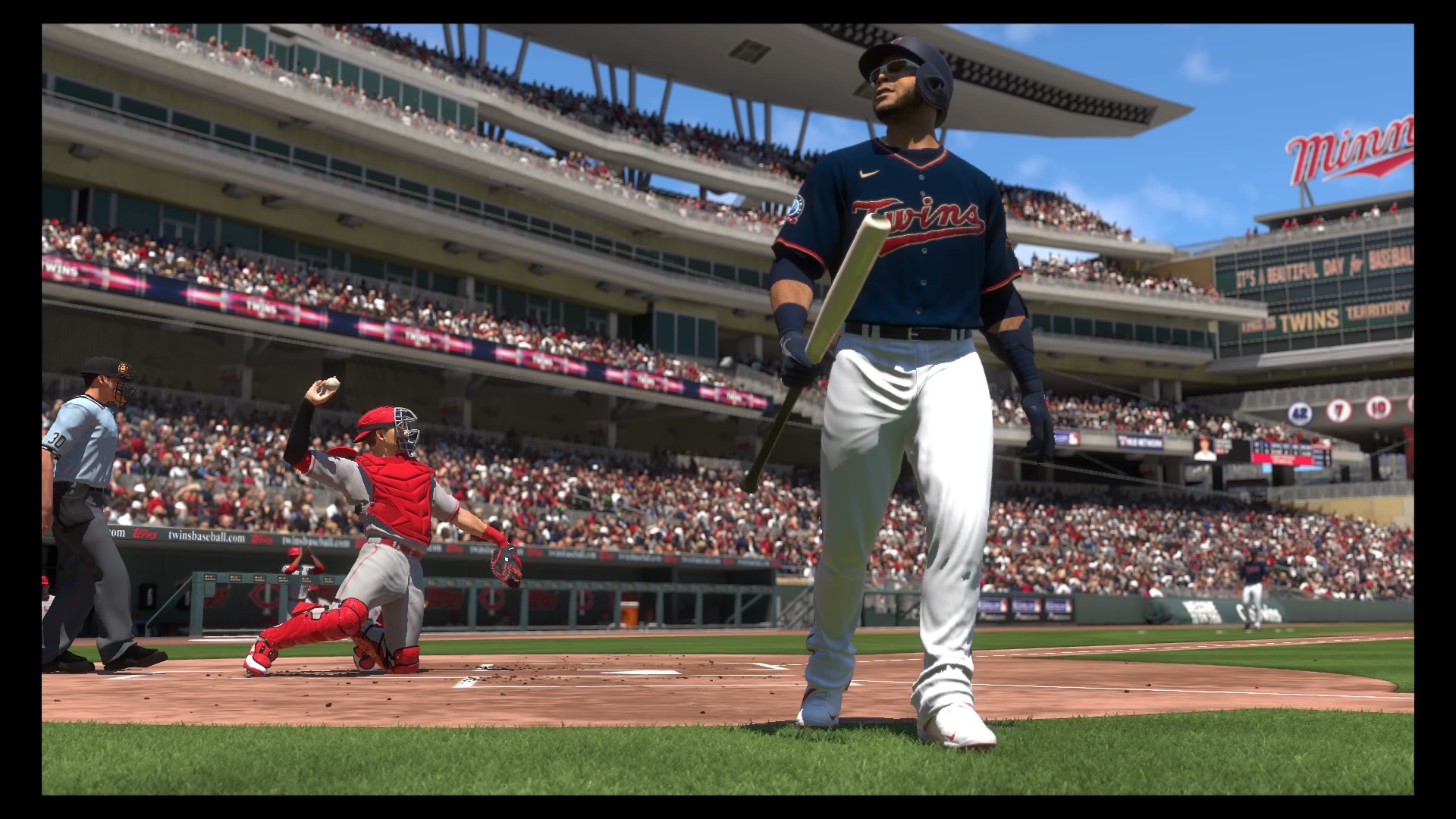 To get caught up on what we're doing here, you can check out the introductory post in the series for an explanation of the premise and setup. But the quick version is this: We're playing a progressive simulated Twins season on MLB The Show 20 on PS4, and y'all are helping guide the ship. In each installment I'll update you on what's happened since the last, and put at least one key decision up for vote. Date In Game: 6/12 Team Record: 38-32 Leading OPS: Mitch Garver (.918 in 187 AB) Leading ERA (SP): Jake Odorizzi (2.60 in 93.1 IP) Leading ERA (RP): Tyler Duffey (1.69 in 32.0 IP) LATEST RESULTS (4-6) Gm 61 vs TB: L 5-1 (Cruz/Sano/Garver 0-for-10) Gm 62 vs TB: L 5-0 (Maeda 5 IP, 5 ER, L) Gm 63 vs TB: L 7-5 (Bailey 3 ER, 5 R, 1 ER, L) Gm 64 vs LAA: L 3-0 (MIN offense: 5 singles) Gm 65 vs LAA: W 6-4 (Kepler 2-4, HR, 3B, 3 RBI) Gm 66 vs LAA: W 5-4 (Buxton 3-4, 2 2B, SB) Gm 67 vs LAA: L 5-4 (Maeda, 5.2 IP, 5 ER, L) Gm 68 @ BAL: W 4-3 (Bailey 8 IP, 2 ER, W) Gm 69 @ BAL: L 6-5 (Kepler 5-7, HR) Gm 70 @ BAL: W 6-2 (Berrios 8.2 IP, 2 ER, W) AL CENTRAL STANDINGS THE RUNDOWN We have drafted! When the 27th pick came up in the first round and it was our turn to select, several appealing names were available. We could've gone with Elvis Bernstein, the well rounded 22-year-old right fielder out of Kansas. Or with John Ludwick, the 21-year-old strong-armed catcher out of Wisconsin. But with the directive to aim for young upside (per last edition's vote), we instead selected Jose Lopez, a 19-year-old center fielder born in the Dominican Republic (but presumably now living in the U.S., unless MLB The Show has unilaterally decided to allow international players into the Rule 4 draft, which I wouldn't hate). At 6'1" and 197 lbs, Lopez has elite speed and strong baserunning skills. Our scouts seem to believe he's going to grow offensively from his current limited profile. We'll keep tabs on Lopez as he acclimates to the pros. Exciting stuff. Less exciting was our team's latest 10-game stretch, which saw the Twins drop from a first-place tie in the Central to 3 1/2 out, as we went 4-6 while Cleveland bounced back from its slump with a 7-3 run. We opened by getting swept at home by the Rays, in a series where the bats went totally silent. The first two contests saw Minnesota outscored 10-1 while grounding into five double plays. A pair of errors by Miguel Sano in the third game proved costly, with four unearned runs crossing against starter Homer Bailey. The Rays were followed into town by the Angels, who themselves bulldozed Twins hitters in the series opener, winning 3-0 behind Jaime Barria. We did finally manage to get on track a little at this point, taking four of the next six against Los Angeles and Baltimore. With the All-Star break about a month away, and the Indians finding their groove again, our Twins need to start getting on a roll. That might mean shaking things up in the suddenly sluggish lineup. We'll discuss shortly. WHO'S HOT It's been nice to see Jose Berrios finally shake off the early-season struggles and look like the guy we expected. He came up big in his latest two starts, both victories, allowing two earned runs over 16 1/3 innings. In the first he played stopper, helping the team end a four-game losing streak while pitching into the eighth. In his second start Berrios nearly completed a shutout in Baltimore, but I had to pull him after he gave up two solo shots in the ninth. As manager, it's been tough not to turn to the bullpen whenever signs of trouble surface for the starters, because the relievers are so damn good. These five are consistently getting the job done: Taylor Rogers - 1.89 ERA, 1.20 WHIP, 8.6 K/9 Tyler Duffey - 1.69 ERA, 1.25 WHIP, 9.8 K/9 Tyler Clippard - 2.63 ERA, 1.21 WHIP, 6.6 K/9 Trevor May - 2.73 ERA, 1.65 WHIP, 12.1 K/9 Sergio Romo - 3.07 ERA, 1.13 WHIP, 8.6 K/9 Meanwhile, Zack Littell (4.13 ERA) and Randy Dobnak (4.60 ERA) have been serviceable. Fernando Romero (5.25 ERA) hasn't been too effective since his call-up, but he's only thrown 12 innings. Offensively, Mitch Garver continues to bring the sauce, batting .323 in the latest slate. With a .918 OPS and 11 homers through 50 games, Garver's second in the All-Star voting at catcher behind Kansas City's Salvador Perez. Max Kepler, now slashing .313/.389/.512 after a 13-for-37 stretch, leads all AL right fielders. WHO'S NOT Pretty much everyone on the offense other than Garver and Kepler. Our once-mighty lineup now finds itself sputtering more often than not. Josh Donaldson, Miguel Sano and Nelson Cruz, who were driving forces early on, went a combined 15-for-92 (.163) with one home run (by Donaldson) over the past 10 games. Cruz in particular is worrisome. He's been cited in this section three straight weeks now, as his cold spell lingers indefinitely. He's now slashing just .260/.344/.439 on the season, with a .783 OPS that ranks eighth among Twins hitters. So... DECISION TIME: SHOULD WE BENCH NELSON CRUZ? He saw a reduction in playing time over the past 10 games, starting only six, but still looked meager at the plate with four singles in 22 at-bats. Something is clearly amiss with the aging slugger and it's taking a toll on our team's production. A benching would entail the relegation of Cruz to a role of pinch-hitter and occasional starter. To replace his reps we could rotate various other starters through the DH spot – with Marwin Gonzalez filling in defensively – while also giving more playing time to young Brent Rooker, slashing just .217/.280/.283 over 50 plate appearances in sporadic action. Vote your choice in the comments section below. COMING UP 6/12: @ KC 6/13: @ KC 6/14: @ KC 6/16: vs MIL 6/17: vs MIL 6/18: vs NYY 6/19: vs NYY 6/20: vs NYY 6/21: vs NYY PREVIOUS INSTALLMENTS Part 1: We Can Build This Thing Together (0-0) Part 2: 10 Games In, 6 Games Back (4-6) Part 3: Roaring Back (11-9) Part 4: Over the Hill (17-13) Part 5: Checking In at the Quarter Point (23-17) Part 6: Rising Power (30-20) Part 7: First Place! (Barely) (36-24) MORE FROM TWINS DAILY — Latest Twins coverage from our writers — Recent Twins discussion in our forums — Follow Twins Daily via Twitter, Facebook or email
 -
Our hope was to be watching a division race between the Twins and Indians unfolding in earnest right now. We're not, so instead I have dictated this fictional contest between the Twins team from the movie Little Big League (1994) and the Indians team from Major League (1989), as called by radio play-by-play man Wally Holland (John Gordon's character in LBL). This is either my greatest or dumbest idea yet. Likely both.First a few notes. Yes, I re-watched both films and meticulously scouted all the players in preparation for writing this. If you're at all a fan of either classic baseball flick, I think you'll enjoy. There are some liberties taken with timelines, but the idea is that this game takes place in late August in the mid-90s, following the seasons depicted in each film. Without further ado... ~~~ From the Metrodome in the Twin Cities, hello again everyone! This is Wally Holland, excited to bring you tonight's game between the Minnesota Twins and Cleveland Indians. This series, much like this season, has brought us a lot of drama between two teams jockeying for playoff position. It's a medley of great stories under the teflon roof tonight, with 13-year-old manager Billy Heywood trying to lead his first-place Twins to the playoffs after they came oh-so-close a year ago. His club is working hard to fend off a determined Indians team under the far more battle-tested Lou Brown. This has been a trying year for Heywood, who's missed time due to multiple groundings from his mother. The challenges of algebra class have become challenges for the Twins, but luckily they've been able to weather the storm, with Heywood's pitching coach and right-hand man Mac MacNally filling in as needed. The Twins take the field, and heading to the mound it's Mike McGrevey, the feisty veteran rotation fixture. McGrevey re-signed with Minnesota as a free agent during the offseason, which was an unexpected turn of events given his initial friction with Heywood as the manager. Sure enough, McGrevey's been the kid's most reliable starter for much the season. He's done with his warmup and we're ready to get underway here in the Dome, as Cleveland's leadoff hitter steps into the batter's box. It is of course Willie "Mays" Hayes, the speedy center fielder for the Indians. Hayes enjoying another strong season with a .294 average to go along with 47 steals. This is a guy you do not want on base. First pitch from McGrevey in there for a called strike. The veteran right-hander brings a solid fastball to go along with a sweeping curve, and will mix in a changeup now and then. He has worked to a 12-8 record and 3.89 ERA so far in the campaign. The righty's second offering misses the outside corner to even the count at 1-1. Sizable crowd here in Minneapolis tonight – a welcome change from what were accustomed to last year around the time. It's been great to see the fans come out for this winning team, and you know that seeing the wunderkind skipper is a big part of the attraction. Reports suggest that the rousing curtain-call ovation Heywood received after the Twins fell short against Seattle in last year's Game 163 tiebreaker inspired a change of heart on Billy's initial decision to step aside. McGrevey winds up and delivers. Hayes swings and pops it up. A lazy fly to shallow right, and Kain has it measured it for the first out. Lou Brown can't be happy to see Hayes get under another one, as the raspy manager has been working tirelessly with the speedster to get the ball on the ground consistently. Here now comes the shortstop Reyna, who flicks away McGrevey's first offering right of first base. Collins jogs over a look, and watches it land five rows back. Count is 0-1. McGrevey receives it back from the catcher Hodges and he's back at it, working quickly. Gets the sign and here's the pitch. Reyna turns on it and drives the ball to left field. Charging toward the line is Lonnie Ritter and he ... MAKES the catch! A nice running grab by Lonnie to retire the shortstop, and that'll bring up Roger Dorn with two outs. Dorn a veteran staple for the Indians, better known for his bat than his glove. He's been fighting it a bit of late, but some good news for the Tribe ... [receives note] ... On Friday night games in August, played indoors when the outside temperature is higher than 73 degrees, Dorn is batting .385 for the year. McGrevey's first pitch is low, and Dorn holds off. One-and-nothing the count. Plenty of experience in this matchup, as both McGrevey and Dorn have been around for quite a while. Each formed a reputation for being brash and a bit contentious in the clubhouse last season, but tensions have simmered this summer. For that you've gotta give their managers a lot of credit – Brown and Heywood both take a no-nonsense approach with their mercurial vets. Second pitch from McGrevey misses again, and now he's behind Dorn 2-0. The Twins starter will want to be careful here with the dangerous cleanup hitter Pedro Cerrano on deck. McGrevey has the sign and here's the delivery ... JUST high, and now he's at risk of putting a runner on base for one of the league's top sluggers. Cerrano currently ranking second in the American League in home runs behind New York's Clu Haywood. That is of course no relation to Billy Heywood, who is peering peering out from the dugout here as McGrevey takes a brief stroll around the mound. Dorn staring down to third and receiving a sign, but he ... appears to be shaking it off. The windup, and here's the 3-0 pitch ... Dorn swings, and hits it straight up in the air! The catcher Hodges is underneath it and makes the easy catch for out number three. Boy, it sure looked like Dorn ignored a take call there and chased outside the zone. Lou Brown does NOT look happy in the Indians dugout. Nonetheless, Cleveland is down in order and now the Twins will come up to bat. We'll bring you the bottom of the first after a word from our sponsors! [Hey everyone. It's me, Nick. Hope you're enjoying. If you haven't recently, I highly recommend a Little Big League viewing. As mentioned, I watched it ahead of writing this and it brought back some memories. The movie didn't so much make me nostalgic for baseball as it made me nostalgic for the Metrodome. For those who spent a lot of time there in the '90s, seeing all of its quirks and crannies represented on-screen is a treat. I miss that place. Anyway, we're returning from break.] Welcome back to the Metrodome, where the Twins are getting ready to come to bat. On the mound tonight for Cleveland it's the ageless Eddie Harris, who continues to get it done as he approaches 40. The crafty right-hander can't reach the 90s with his heater anymore, but his guile has proven enough to get him by as he keeps soaking up innings for the Indians. Harris has been their steadiest starter since hard-throwing Rick Vaughn moved to the bullpen. Stepping to the plate, it's second baseman Mickey Scales, Minnesota's own lightning-quick leadoff man. He can't quite match the speed of Willie Mays Hayes, but then again, who can? Scales is nonetheless enjoying himself a nice second season in the majors after struggling to find his way at times as a rookie. Harris lobs in a breaking ball that floats over the plate for strike one as Scales watches. The second baseman has made major strides since Billy Heywood took over as manager, seeming to benefit from a more laid-back style of instruction as opposed to the red-ass technique of George O'Farrell, who was dismissed from his post in part because of Heywood's disagreement with that approach. Here comes the second pitch from Harris. Scales swings and hits a chopper to short. Reyna gloves it and fires to Metcalf at first ... GOT HIM by a hair! Scales ran hard down the line there but a nice play by the Cleveland shortstop retires him for out number one. Next up, a player who needs no introduction. Twins fans have come to cherish seeing his number 34 out in center field at the Metrodome. Yes, of course I'm talking about Spencer Hamilton. He's ready, and takes a ball inside from Harris. Previously known for his glove, Hamilton has had a bit of an offensive breakthrough working with hitting coach Jerry Johnson, who as recently as last year was playing alongside Hamilton in the Twins outfield. Swing and a miss at the slow breaking ball from Harris, and the count is even at one. Boy, that pitch really had some spin on it. Might've been one that Harris amusingly refers to as a "Vaseline Ball." The savvy righty is still finding ways to keep batters guessing after all these years, and we all remember that magnificent effort in the AL West tiebreaker game against the Yankees last year, where Harris hurled 8 2/3 innings of two-run ball, setting up Jake Taylor's walk-off bunt single. Here comes the 1-1 to Hamilton ... it bounces in front of the plate for ball two as Taylor smothers it. Maybe a little too much vaseline on that one! Circling back to Jerry Johnson, the Twins' hitting instructor is still adapting and adjusting to a new role. Johnson opened last season as Minnesota's right fielder, but the former star was showing his age, and he was running on fumes by the time Billy Heywood made the hard choice to release him. Hamilton checks his swing on an offspeed pitch away, and it's 3-1. There were some hard feelings initially when Johnson was let go, but Heywood later brought him back in as hitting coach, and Johnson has made a big impact with developing young players like Scales and Hamilton. Harris looking slightly frazzled on the mound as he tries to come back and get the Twins' center fielder, reaching to the bill of his cap repeatedly. He winds up and delivers ... Hamilton swings and smashes toward third, past a reaching Dorn! It skips down the turf and rattles around near the bullpen mounds. Tomlinson gathers it in an d throws to the infield, but he won't be in time to get Hamilton, who pulls into second with a double. Heywood is up on the top step of the dugout clapping. That'll bring up the first baseman Lou Collins with a man in scoring position. Ever the fan favorite, Collins receives a nice ovation as he steps into the left-handed batter's box. This matchup with Harris bodes well for him since ... [receives note] ... Collins is batting .355 in home games against right-handed pitchers born in even-numbered years. Here's the first pitch from Harris ... Collins jumps on it and drives a liner to straightaway center. Charging in is Hayes, and he scoops it up as Hamilton rounds third with Jerry Johnson waving him home. Throw to the plate is ... OFF LINE and Taylor can't get back in time to apply the tag. Twins take a 1-0 lead here in the first! Collins with an aggressive approach in that AB, jumping on the get-me-over fastball from Harris to drive in the game's first run. Of course, Collins isn't known for wasting time, as he famously proposed to Billy Heywood's mother last fall, following just a few shorts months of courtship. They're set to be wed this winter, and the engagement seems to be doing his numbers some good, as Collins leads the Twins in RBIs and is among the league leaders. Stepping to the plate now is Minnesota's best pure slugger, the designated hitter Leon Alexander. He and Collins have provided a powerful 1-2 lefty punch in the heart of Heywood's batting order. Harris checks the runner and comes set. First pitch to Alexander is swung on and missed for strike one. The big man Alexander has gone from getting occasional work at first base to fully-time DH duties, with Collins starting every single at first since returning from his late-season benching by Heywood last year. The position seems to suit Leon well, as he leads the Twins in homers, making a habit of sending them over the big blue baggy in right. The 0-1 coming from Harris and Alexander swings. Ground ball to second base, it's right at Larson. Throws to Reyna and the relay is IN TIME to get Alexander at first. A twin killing, and Minnesota's down here in the first, but not before staking an early lead on the bat of Lou Collins. Twins one, Indians nothing! We'll be back for the second inning shortly. [Actually, that's all for today's installment but I will be back with a follow-up soon, which fast-forwards to the ninth inning as a thrilling finish unfolds. Stay tuned to Twins Daily for that one, because things are gonna get... wild (insert wink emoji)] MORE FROM TWINS DAILY — Latest Twins coverage from our writers — Recent Twins discussion in our forums — Follow Twins Daily via Twitter, Facebook or email Click here to view the article
-
'Little Big League' Twins vs. 'Major League' Indians: Play Ball
Nick Nelson posted an article in Twins
 First a few notes. Yes, I re-watched both films and meticulously scouted all the players in preparation for writing this. If you're at all a fan of either classic baseball flick, I think you'll enjoy. There are some liberties taken with timelines, but the idea is that this game takes place in late August in the mid-90s, following the seasons depicted in each film. Without further ado... ~~~ From the Metrodome in the Twin Cities, hello again everyone! This is Wally Holland, excited to bring you tonight's game between the Minnesota Twins and Cleveland Indians. This series, much like this season, has brought us a lot of drama between two teams jockeying for playoff position. It's a medley of great stories under the teflon roof tonight, with 13-year-old manager Billy Heywood trying to lead his first-place Twins to the playoffs after they came oh-so-close a year ago. His club is working hard to fend off a determined Indians team under the far more battle-tested Lou Brown. This has been a trying year for Heywood, who's missed time due to multiple groundings from his mother. The challenges of algebra class have become challenges for the Twins, but luckily they've been able to weather the storm, with Heywood's pitching coach and right-hand man Mac MacNally filling in as needed. The Twins take the field, and heading to the mound it's Mike McGrevey, the feisty veteran rotation fixture. McGrevey re-signed with Minnesota as a free agent during the offseason, which was an unexpected turn of events given his initial friction with Heywood as the manager. Sure enough, McGrevey's been the kid's most reliable starter for much the season. He's done with his warmup and we're ready to get underway here in the Dome, as Cleveland's leadoff hitter steps into the batter's box. It is of course Willie "Mays" Hayes, the speedy center fielder for the Indians. Hayes enjoying another strong season with a .294 average to go along with 47 steals. This is a guy you do not want on base. First pitch from McGrevey in there for a called strike. The veteran right-hander brings a solid fastball to go along with a sweeping curve, and will mix in a changeup now and then. He has worked to a 12-8 record and 3.89 ERA so far in the campaign. The righty's second offering misses the outside corner to even the count at 1-1. Sizable crowd here in Minneapolis tonight – a welcome change from what were accustomed to last year around the time. It's been great to see the fans come out for this winning team, and you know that seeing the wunderkind skipper is a big part of the attraction. Reports suggest that the rousing curtain-call ovation Heywood received after the Twins fell short against Seattle in last year's Game 163 tiebreaker inspired a change of heart on Billy's initial decision to step aside. McGrevey winds up and delivers. Hayes swings and pops it up. A lazy fly to shallow right, and Kain has it measured it for the first out. Lou Brown can't be happy to see Hayes get under another one, as the raspy manager has been working tirelessly with the speedster to get the ball on the ground consistently. Here now comes the shortstop Reyna, who flicks away McGrevey's first offering right of first base. Collins jogs over a look, and watches it land five rows back. Count is 0-1. McGrevey receives it back from the catcher Hodges and he's back at it, working quickly. Gets the sign and here's the pitch. Reyna turns on it and drives the ball to left field. Charging toward the line is Lonnie Ritter and he ... MAKES the catch! A nice running grab by Lonnie to retire the shortstop, and that'll bring up Roger Dorn with two outs. Dorn a veteran staple for the Indians, better known for his bat than his glove. He's been fighting it a bit of late, but some good news for the Tribe ... [receives note] ... On Friday night games in August, played indoors when the outside temperature is higher than 73 degrees, Dorn is batting .385 for the year. McGrevey's first pitch is low, and Dorn holds off. One-and-nothing the count. Plenty of experience in this matchup, as both McGrevey and Dorn have been around for quite a while. Each formed a reputation for being brash and a bit contentious in the clubhouse last season, but tensions have simmered this summer. For that you've gotta give their managers a lot of credit – Brown and Heywood both take a no-nonsense approach with their mercurial vets. Second pitch from McGrevey misses again, and now he's behind Dorn 2-0. The Twins starter will want to be careful here with the dangerous cleanup hitter Pedro Cerrano on deck. McGrevey has the sign and here's the delivery ... JUST high, and now he's at risk of putting a runner on base for one of the league's top sluggers. Cerrano currently ranking second in the American League in home runs behind New York's Clu Haywood. That is of course no relation to Billy Heywood, who is peering peering out from the dugout here as McGrevey takes a brief stroll around the mound. Dorn staring down to third and receiving a sign, but he ... appears to be shaking it off. The windup, and here's the 3-0 pitch ... Dorn swings, and hits it straight up in the air! The catcher Hodges is underneath it and makes the easy catch for out number three. Boy, it sure looked like Dorn ignored a take call there and chased outside the zone. Lou Brown does NOT look happy in the Indians dugout. Nonetheless, Cleveland is down in order and now the Twins will come up to bat. We'll bring you the bottom of the first after a word from our sponsors! [Hey everyone. It's me, Nick. Hope you're enjoying. If you haven't recently, I highly recommend a Little Big League viewing. As mentioned, I watched it ahead of writing this and it brought back some memories. The movie didn't so much make me nostalgic for baseball as it made me nostalgic for the Metrodome. For those who spent a lot of time there in the '90s, seeing all of its quirks and crannies represented on-screen is a treat. I miss that place. Anyway, we're returning from break.] Welcome back to the Metrodome, where the Twins are getting ready to come to bat. On the mound tonight for Cleveland it's the ageless Eddie Harris, who continues to get it done as he approaches 40. The crafty right-hander can't reach the 90s with his heater anymore, but his guile has proven enough to get him by as he keeps soaking up innings for the Indians. Harris has been their steadiest starter since hard-throwing Rick Vaughn moved to the bullpen. Stepping to the plate, it's second baseman Mickey Scales, Minnesota's own lightning-quick leadoff man. He can't quite match the speed of Willie Mays Hayes, but then again, who can? Scales is nonetheless enjoying himself a nice second season in the majors after struggling to find his way at times as a rookie. Harris lobs in a breaking ball that floats over the plate for strike one as Scales watches. The second baseman has made major strides since Billy Heywood took over as manager, seeming to benefit from a more laid-back style of instruction as opposed to the red-ass technique of George O'Farrell, who was dismissed from his post in part because of Heywood's disagreement with that approach. Here comes the second pitch from Harris. Scales swings and hits a chopper to short. Reyna gloves it and fires to Metcalf at first ... GOT HIM by a hair! Scales ran hard down the line there but a nice play by the Cleveland shortstop retires him for out number one. Next up, a player who needs no introduction. Twins fans have come to cherish seeing his number 34 out in center field at the Metrodome. Yes, of course I'm talking about Spencer Hamilton. He's ready, and takes a ball inside from Harris. Previously known for his glove, Hamilton has had a bit of an offensive breakthrough working with hitting coach Jerry Johnson, who as recently as last year was playing alongside Hamilton in the Twins outfield. Swing and a miss at the slow breaking ball from Harris, and the count is even at one. Boy, that pitch really had some spin on it. Might've been one that Harris amusingly refers to as a "Vaseline Ball." The savvy righty is still finding ways to keep batters guessing after all these years, and we all remember that magnificent effort in the AL West tiebreaker game against the Yankees last year, where Harris hurled 8 2/3 innings of two-run ball, setting up Jake Taylor's walk-off bunt single. Here comes the 1-1 to Hamilton ... it bounces in front of the plate for ball two as Taylor smothers it. Maybe a little too much vaseline on that one! Circling back to Jerry Johnson, the Twins' hitting instructor is still adapting and adjusting to a new role. Johnson opened last season as Minnesota's right fielder, but the former star was showing his age, and he was running on fumes by the time Billy Heywood made the hard choice to release him. Hamilton checks his swing on an offspeed pitch away, and it's 3-1. There were some hard feelings initially when Johnson was let go, but Heywood later brought him back in as hitting coach, and Johnson has made a big impact with developing young players like Scales and Hamilton. Harris looking slightly frazzled on the mound as he tries to come back and get the Twins' center fielder, reaching to the bill of his cap repeatedly. He winds up and delivers ... Hamilton swings and smashes toward third, past a reaching Dorn! It skips down the turf and rattles around near the bullpen mounds. Tomlinson gathers it in an d throws to the infield, but he won't be in time to get Hamilton, who pulls into second with a double. Heywood is up on the top step of the dugout clapping. That'll bring up the first baseman Lou Collins with a man in scoring position. Ever the fan favorite, Collins receives a nice ovation as he steps into the left-handed batter's box. This matchup with Harris bodes well for him since ... [receives note] ... Collins is batting .355 in home games against right-handed pitchers born in even-numbered years. Here's the first pitch from Harris ... Collins jumps on it and drives a liner to straightaway center. Charging in is Hayes, and he scoops it up as Hamilton rounds third with Jerry Johnson waving him home. Throw to the plate is ... OFF LINE and Taylor can't get back in time to apply the tag. Twins take a 1-0 lead here in the first! Collins with an aggressive approach in that AB, jumping on the get-me-over fastball from Harris to drive in the game's first run. Of course, Collins isn't known for wasting time, as he famously proposed to Billy Heywood's mother last fall, following just a few shorts months of courtship. They're set to be wed this winter, and the engagement seems to be doing his numbers some good, as Collins leads the Twins in RBIs and is among the league leaders. Stepping to the plate now is Minnesota's best pure slugger, the designated hitter Leon Alexander. He and Collins have provided a powerful 1-2 lefty punch in the heart of Heywood's batting order. Harris checks the runner and comes set. First pitch to Alexander is swung on and missed for strike one. The big man Alexander has gone from getting occasional work at first base to fully-time DH duties, with Collins starting every single at first since returning from his late-season benching by Heywood last year. The position seems to suit Leon well, as he leads the Twins in homers, making a habit of sending them over the big blue baggy in right. The 0-1 coming from Harris and Alexander swings. Ground ball to second base, it's right at Larson. Throws to Reyna and the relay is IN TIME to get Alexander at first. A twin killing, and Minnesota's down here in the first, but not before staking an early lead on the bat of Lou Collins. Twins one, Indians nothing! We'll be back for the second inning shortly. [Actually, that's all for today's installment but I will be back with a follow-up soon, which fast-forwards to the ninth inning as a thrilling finish unfolds. Stay tuned to Twins Daily for that one, because things are gonna get... wild (insert wink emoji)] MORE FROM TWINS DAILY — Latest Twins coverage from our writers — Recent Twins discussion in our forums — Follow Twins Daily via Twitter, Facebook or email
 -
The Show Must Go On: First Place! (Barely)
Nick Nelson replied to Nick Nelson's topic in Twins Daily Front Page News
I'm sure he'd take the mixup as a high compliment! -
The Show Must Go On: First Place! (Barely)
Nick Nelson replied to Nick Nelson's topic in Twins Daily Front Page News
Option 2: Press "Like This" on this comment (or voice your support below) if you want us to use our first-round draft pick on a younger high school player who may offer more upside but will also likely take more time to develop.
