



Nick Nelson
-
Posts
8,327 -
Joined
-
Last visited
-
Days Won
56
Content Type
Profiles
News
Minnesota Twins Videos
2026 Minnesota Twins Top Prospects Ranking
2022 Minnesota Twins Draft Picks
Minnesota Twins Free Agent & Trade Rumors, Notes, & Tidbits
Guides & Resources
2023 Minnesota Twins Draft Picks
The Minnesota Twins Players Project
2024 Minnesota Twins Draft Picks
2025 Minnesota Twins Draft Pick Tracker
2026 Minnesota Twins Draft Tracker: Picks & Bonuses
Forums
Blogs
Events
Store
Downloads
Gallery
Everything posted by Nick Nelson
-
 The Twins didn't have a 'need' for Trevor Larnach in the first round of the 2018 draft. The big-league team was brimming with young outfielders at the time, while Brent Rooker was quickly establishing himself in the minors alongside breakout prospect star Alex Kirilloff. None of that mattered. Because in the MLB Draft, you don't select based on need. Larnach's a perfect example of why.Position: RF Age: 22 (DOB: 2/26/1997) 2019 Stats (A+/AA): 542 PA, .309/.384/.458, 13 HR, 66 RBI ETA: 2021 2019 Ranking: 4 National Top 100 Rankings BA: 45 | MLB: 81 | ATH: 82 | BP: 85 What's To Like Larnach was one of the hottest collegiate players in the country when Minnesota drafted him, wrapping up a monster season at Oregon State with a beastly performance in the College World Series. After slashing .303/.421/.429 with three home runs in 60 games as a sophomore for the Beavers, the outfielder's power fully blossomed as a junior: 68 games, .348/.463/.652, 19 HR. That helium factor contributed to Minnesota overlooking its stockpile of bat-first corner guys in the system, snagging Larnach with their first 2018 pick at No. 20 overall. Good call. Larnach is a refreshingly complete hitter. Many power bats come out of the college ranks with huge holes in their swings and gaudy strikeout totals (see: Rooker) but Larnach achieves excellent strike zone coverage and can drive the ball to all fields. He has struck out in only 21% of his pro plate appearances while batting ~.300 or better at every stop dating back to his sophomore year at Oregon State. Among qualified hitters in the Florida State League, where Larnach spent much of 2019 before a mid-July promotion to Double-A, his .316 average ranked No. 1 (the second-best mark was .298, which tells you something about the challenging FSL hitting environment), as did his OPS, wOBA, wRC+, and any other hitting metric you might invoke. He was simply transcendent. He didn't slow down much after heading to Pensacola. In the Southern League, Larnach posted an identical .842 OPS overall, gradually finding his groove after a slow start and slashing .324/.417/.479 in his final 20 games. For the season, Larnach led all Twins minor leaguers in hits, appropriately earning himself Minor League Hitter of the Year honors from both Twins Daily and the Twins themselves. At 6-foot-4 and 220 lbs, the strong-armed lefty swinger has all the attributes of a prototypical brawny right field staple. What's Left To Work On A major power surge in his junior year is what solidified Larnach's status as a first-round pick, but that pronounced pop hasn't yet carried over to the pros. Don't get me wrong, a .468 slugging percentage through 169 minor-league games is nothing to scoff at, but a .149 ISO and 18 total home runs are lower than you'd expect from a guy with his size, scouting grades, and overall production. His trouble? Turning on the ball. Last June, even as he tore up the FSL, Larnach told the Star Tribune's LaVelle E. Neal III: "Since the offseason I’ve been doing everything I can to get this inside pitch down, and I’m getting better at it." But he added, “I’m not where I want to be." A look at his XBH spray chart below (courtesy MiLB.com) reflects a hitter who is extremely adept at launching to the opposite field and to straightaway center, but is less forceful on the pull side. Indeed, MiLB.com's Sam Dykstra notes that Larnach's 41.2% pull rate in 2019 was fifth-lowest among qualified Minnesota minor leaguers. Download attachment: larnachspray.jpg To be clear, this offensive profile is not a negative. Some of the greatest batsmen in the game are defined by their ability to hit a pitch where it's thrown. But as any Joe Mauer cynic will tell you, power output can suffer when one isn't able to aggressively punish those mistakes on the inner half. Larnach's overall mastery at the plate overshadowed any shortcomings in the XBH column, but when it comes to bat-handling and discipline, Joe Mauer he is not. He's also a pure corner guy in the field, so the same thing I wrote about our No. 9 prospect Rooker applies here: lower defensive value necessitates higher offensive value. If Larnach is to pan out as the upper-tier MLB outfielder we hope, standout power will be a necessary ingredient in the equation. He fared well in his first turn at Double-A, but from here on out, pitchers will only become more and more prone to attack his weaknesses. Can Larnach get where he wants to be with that down-and-in pitch? What's Next? This spring, Larnach is officially in Twins camp as a non-roster invite. A year ago, he was called over from the minor-league side for a Grapefruit League game at Hammond Stadium, and I'm pleased to say I was sitting right next to Seth Stohs in the press box when he caught this moment on film: It's fair to presume Larnach will make a fine impression in his more extended action this spring. But regardless, he is billed to open in the minors – probably back at Pensacola. With a strong start, he can earn a promotion to Rochester where he'd be reunited with his Cedar Rapids manager Toby Gardenhire. Then, it becomes a matter of a spot opening up for him at the big-league level. Nothing awaits in the immediate offing, but Larnach may well prove to be the type of player worth making room for, even if they don't have a "need" for him. Twins Daily 2020 Top 20 Prospects Honorable Mentions 20. Jose Miranda, 3B/2B 19. Cole Sands, RHP 18. Travis Blankenhorn, 2B/LF 17. Misael Urbina, OF 16. Edwar Colina, RP 15. Matt Canterino, RHP 14. Matt Wallner, OF 13. Wander Javier, SS 12. Gilberto Celestino, OF 11. Lewis Thorpe, LHP 10. Blayne Enlow, RHP 9. Brent Rooker, OF 8. Keoni Cavaco, SS 7. Ryan Jeffers, C 6. Jhoan Duran, RHP 5. Jordan Balazovic, RHP 4. Brusdar Graterol, RHP 3. Trevor Larnach, OF Check back tomorrow for #2! MORE FROM TWINS DAILY — Latest Twins coverage from our writers — Recent Twins discussion in our forums — Follow Twins Daily via Twitter, Facebook or email Click here to view the article
 -
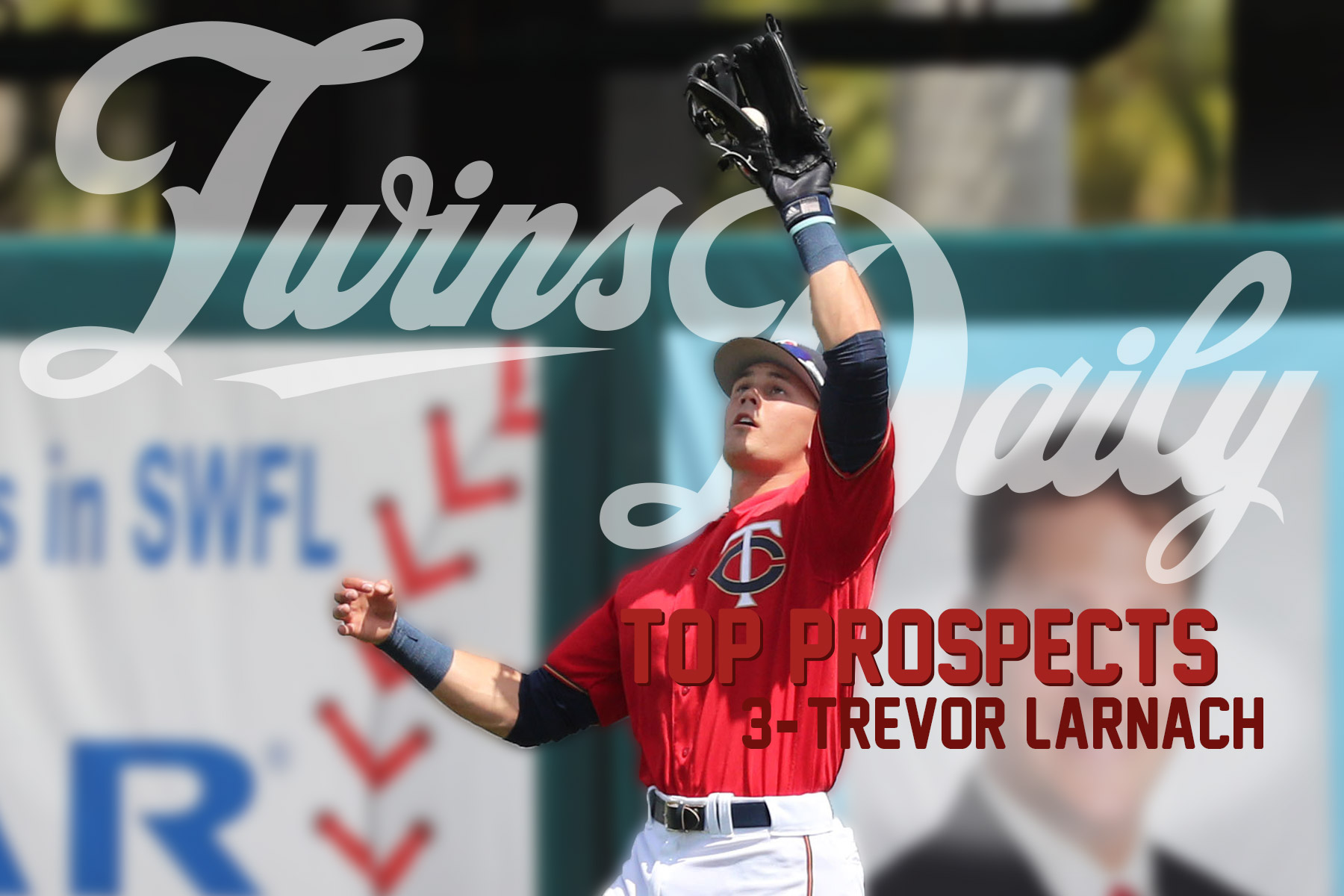 Position: RF Age: 22 (DOB: 2/26/1997) 2019 Stats (A+/AA): 542 PA, .309/.384/.458, 13 HR, 66 RBI ETA: 2021 2019 Ranking: 4 National Top 100 Rankings BA: 45 | MLB: 81 | ATH: 82 | BP: 85 What's To Like Larnach was one of the hottest collegiate players in the country when Minnesota drafted him, wrapping up a monster season at Oregon State with a beastly performance in the College World Series. After slashing .303/.421/.429 with three home runs in 60 games as a sophomore for the Beavers, the outfielder's power fully blossomed as a junior: 68 games, .348/.463/.652, 19 HR. That helium factor contributed to Minnesota overlooking its stockpile of bat-first corner guys in the system, snagging Larnach with their first 2018 pick at No. 20 overall. Good call. Larnach is a refreshingly complete hitter. Many power bats come out of the college ranks with huge holes in their swings and gaudy strikeout totals (see: Rooker) but Larnach achieves excellent strike zone coverage and can drive the ball to all fields. He has struck out in only 21% of his pro plate appearances while batting ~.300 or better at every stop dating back to his sophomore year at Oregon State. Among qualified hitters in the Florida State League, where Larnach spent much of 2019 before a mid-July promotion to Double-A, his .316 average ranked No. 1 (the second-best mark was .298, which tells you something about the challenging FSL hitting environment), as did his OPS, wOBA, wRC+, and any other hitting metric you might invoke. He was simply transcendent. He didn't slow down much after heading to Pensacola. In the Southern League, Larnach posted an identical .842 OPS overall, gradually finding his groove after a slow start and slashing .324/.417/.479 in his final 20 games. For the season, Larnach led all Twins minor leaguers in hits, appropriately earning himself Minor League Hitter of the Year honors from both Twins Daily and the Twins themselves. At 6-foot-4 and 220 lbs, the strong-armed lefty swinger has all the attributes of a prototypical brawny right field staple. What's Left To Work On A major power surge in his junior year is what solidified Larnach's status as a first-round pick, but that pronounced pop hasn't yet carried over to the pros. Don't get me wrong, a .468 slugging percentage through 169 minor-league games is nothing to scoff at, but a .149 ISO and 18 total home runs are lower than you'd expect from a guy with his size, scouting grades, and overall production. His trouble? Turning on the ball. Last June, even as he tore up the FSL, Larnach told the Star Tribune's LaVelle E. Neal III: "Since the offseason I’ve been doing everything I can to get this inside pitch down, and I’m getting better at it." But he added, “I’m not where I want to be." A look at his XBH spray chart below (courtesy MiLB.com) reflects a hitter who is extremely adept at launching to the opposite field and to straightaway center, but is less forceful on the pull side. Indeed, MiLB.com's Sam Dykstra notes that Larnach's 41.2% pull rate in 2019 was fifth-lowest among qualified Minnesota minor leaguers. To be clear, this offensive profile is not a negative. Some of the greatest batsmen in the game are defined by their ability to hit a pitch where it's thrown. But as any Joe Mauer cynic will tell you, power output can suffer when one isn't able to aggressively punish those mistakes on the inner half. Larnach's overall mastery at the plate overshadowed any shortcomings in the XBH column, but when it comes to bat-handling and discipline, Joe Mauer he is not. He's also a pure corner guy in the field, so the same thing I wrote about our No. 9 prospect Rooker applies here: lower defensive value necessitates higher offensive value. If Larnach is to pan out as the upper-tier MLB outfielder we hope, standout power will be a necessary ingredient in the equation. He fared well in his first turn at Double-A, but from here on out, pitchers will only become more and more prone to attack his weaknesses. Can Larnach get where he wants to be with that down-and-in pitch? What's Next? This spring, Larnach is officially in Twins camp as a non-roster invite. A year ago, he was called over from the minor-league side for a Grapefruit League game at Hammond Stadium, and I'm pleased to say I was sitting right next to Seth Stohs in the press box when he caught this moment on film: https://twitter.com/SethTweets/status/1106278951784235008 It's fair to presume Larnach will make a fine impression in his more extended action this spring. But regardless, he is billed to open in the minors – probably back at Pensacola. With a strong start, he can earn a promotion to Rochester where he'd be reunited with his Cedar Rapids manager Toby Gardenhire. Then, it becomes a matter of a spot opening up for him at the big-league level. Nothing awaits in the immediate offing, but Larnach may well prove to be the type of player worth making room for, even if they don't have a "need" for him. Twins Daily 2020 Top 20 Prospects Honorable Mentions 20. Jose Miranda, 3B/2B 19. Cole Sands, RHP 18. Travis Blankenhorn, 2B/LF 17. Misael Urbina, OF 16. Edwar Colina, RP 15. Matt Canterino, RHP 14. Matt Wallner, OF 13. Wander Javier, SS 12. Gilberto Celestino, OF 11. Lewis Thorpe, LHP 10. Blayne Enlow, RHP 9. Brent Rooker, OF 8. Keoni Cavaco, SS 7. Ryan Jeffers, C 6. Jhoan Duran, RHP 5. Jordan Balazovic, RHP 4. Brusdar Graterol, RHP 3. Trevor Larnach, OF Check back tomorrow for #2! MORE FROM TWINS DAILY — Latest Twins coverage from our writers — Recent Twins discussion in our forums — Follow Twins Daily via Twitter, Facebook or email
 -
Whew. What a Hot Stove home stretch. You can't rule anything out, but the Twins appear to have completed their offseason, with a late surge of activity crystallizing the front office's championship resolve. Let's get up to speed with a final rundown as spring training officially gets underway.One month ago, when we last checked in, the winter was dragging in a ho-hum direction. A recent Miguel Sano contract extension and some roster additions around the fringes were encouraging enough developments, but the big splash wasn't materializing. No marquee addition. No deviation from the narrative that long-term flexibility and internal pipeline matter above all else. Since then, the Twins have signed Josh Donaldson to a record-breaking contract and traded the organization's top pitching prospect for a veteran impact starter in Kenta Maeda. In doing so, the front office emphatically addressed multiple remaining areas of uncertainty, albeit at the cost of Brusdar Graterol, two top-100 picks in the coming draft, and around $100 million. Here's the roster and payroll projection with new details added: Donaldson's $21M salary, Maeda's $3.125 M (packaged with the rehabbing Hill, for the purposes of this table), and Jose Berrios's now-finalized figure after losing his arbitration case. Download attachment: roster29.png A HEIGHTENED PAYROLL CEILING The $138 million payroll projected above is already easily a new franchise record for the Twins. But the final tab for ownership could end up being significantly higher. Maeda has many incentives and escalators built into his base salary (via Spotrac): Innings Pitched Bonus: $250,000 each for 90, 100, 110, 120, 130, 140, 150, 160, 170, 180, 190, 200Games Started Bonus: $1M each for 15, 20l; $1.5M each for 25, 30, 32Hill, meanwhile, has plenty of kickers on top of his $3 million guarantee (also via Spotrac):$1 million for 5 games started or 25 innings$1M for 7 starts/35 innings$1M for 9 starts/45 innings$1.5M for 11 starts/55 innings$2M for 13 starts/65 innings$3M for 15 starts/75 inningsToss in reachable incentives for other players (including Donaldson), as well as the $1.6 million guarantee that NRI Jhoulys Chacin will trigger if (when?) he makes the team, and payroll could very well soar beyond $150 million. Last year, that would've ranked 11th in baseball. Even accounting for the $10 million they got back in the Maeda trade, the Twins are stepping up financially. It's officially time to kill the "Cheap Pohlads" narrative. BERRIOS TAKES A RARE 'L' As mentioned earlier, Berrios lost his arbitration case, so he'll make $4.025 million this year rather than the $4.4 million he sought. These hearings have been known to cause friction between players and teams in the past, but by all accounts Berrios was pushing for a higher number more out of precedent, as opposed to feeling offended by Minnesota's offer (which, according to an objective ruling, was fair). The possibility of an extension before Opening Day remains on the table, and I'm not sure this turn of events really affects that much one way or another. RELOADING THE SYSTEM There haven't been any further changes to the MLB coaching staff, which was rounded out by the addition of bench coach Mike Bell, but here again is the final group: Manager: Rocco BaldelliHitting Coach: Edgar VarelaHitting Coach: Rudy HernandezPitching Coach: Wes JohnsonBullpen Coach: Bob McClureBench Coach: Mike BellMLB Coach: Bill EversThe front office underwent some reconfiguration over the winter as well. Daniel Adler and Jeremy Zoll were both promoted to Assistant GM roles, Alex Hassan was named Director of Player Development (you can get to know him in Seth's profile), and Jeremy Raadt became Director of Baseball Systems. Several new minor-league instructors entered the fold – many plucked from forward-thinking college programs, much like Twins pitching coach Wes Johnson was a year ago. The value of having a two-headed monster in Derek Falvey and Thad Levine came into full focus over the winter, as the club filled numerous important roles throughout the baseball ops department while also executing the most ambitious and active offseason roster supplementation in franchise history. The infrastructure they continue to build together is nothing short of amazing. So it's a very good thing that both Falvey and Levine were extended through 2024 in November. GRADING THE OFFSEASON Honestly, how can you not mark them in the 'A' range? I might go with an A- because neither Donaldson nor Maeda is quite a slam-dunk fit, but in tandem the duo is arguably superior to signing Zack Wheeler, who offered the most plausible big-splash scenario for this team coming into the winter. By re-signing Jake Odorizzi and Michael Pineda, the Twins retained two key pieces of a 101-win division champ, and by adding Donaldson and Maeda they built significantly upon that base. Meanwhile, the front office also made some nice additions at the fringes: Homer Bailey, Rich Hill and Jhoulys Chacin bring varying levels of low-stakes veteran intrigue to the rotation; Sergio Romo and Tyler Clippard do the same in a well-stocked bullpen. This was a balanced, measured, aggressive offseason in which the Twins rolled with the punches, pivoted when Plan A failed, and hung tough in negotiations to get the deals they wanted. The team sent a message to the fanbase, and the league, by rocketing to new payroll heights and trading their top pitching prospect. Meanwhile, the Twins filled numerous openings throughout the coaching and baseball ops ranks, and established some long-term continuity both at the executive (Falvey and Levine) and player levels. Sano joins Max Kepler and Jorge Polanco with extensions; add in the four-year contracts for Donaldson and Maeda, and in the space of 12 months, the Twins have gone from zero multi-year commitments to having five players locked in through at least 2022. The Twins followed one of the most successful seasons ever with one of their most successful offseasons ever. What's next? MORE FROM TWINS DAILY — Latest Twins coverage from our writers — Recent Twins discussion in our forums — Follow Twins Daily via Twitter, Facebook or email Click here to view the article
-
 One month ago, when we last checked in, the winter was dragging in a ho-hum direction. A recent Miguel Sano contract extension and some roster additions around the fringes were encouraging enough developments, but the big splash wasn't materializing. No marquee addition. No deviation from the narrative that long-term flexibility and internal pipeline matter above all else. Since then, the Twins have signed Josh Donaldson to a record-breaking contract and traded the organization's top pitching prospect for a veteran impact starter in Kenta Maeda. In doing so, the front office emphatically addressed multiple remaining areas of uncertainty, albeit at the cost of Brusdar Graterol, two top-100 picks in the coming draft, and around $100 million. Here's the roster and payroll projection with new details added: Donaldson's $21M salary, Maeda's $3.125 M (packaged with the rehabbing Hill, for the purposes of this table), and Jose Berrios's now-finalized figure after losing his arbitration case. A HEIGHTENED PAYROLL CEILING The $138 million payroll projected above is already easily a new franchise record for the Twins. But the final tab for ownership could end up being significantly higher. Maeda has many incentives and escalators built into his base salary (via Spotrac): Innings Pitched Bonus: $250,000 each for 90, 100, 110, 120, 130, 140, 150, 160, 170, 180, 190, 200 Games Started Bonus: $1M each for 15, 20l; $1.5M each for 25, 30, 32 Hill, meanwhile, has plenty of kickers on top of his $3 million guarantee (also via Spotrac): $1 million for 5 games started or 25 innings $1M for 7 starts/35 innings $1M for 9 starts/45 innings $1.5M for 11 starts/55 innings $2M for 13 starts/65 innings $3M for 15 starts/75 innings Toss in reachable incentives for other players (including Donaldson), as well as the $1.6 million guarantee that NRI Jhoulys Chacin will trigger if (when?) he makes the team, and payroll could very well soar beyond $150 million. Last year, that would've ranked 11th in baseball. Even accounting for the $10 million they got back in the Maeda trade, the Twins are stepping up financially. It's officially time to kill the "Cheap Pohlads" narrative. BERRIOS TAKES A RARE 'L' As mentioned earlier, Berrios lost his arbitration case, so he'll make $4.025 million this year rather than the $4.4 million he sought. These hearings have been known to cause friction between players and teams in the past, but by all accounts Berrios was pushing for a higher number more out of precedent, as opposed to feeling offended by Minnesota's offer (which, according to an objective ruling, was fair). The possibility of an extension before Opening Day remains on the table, and I'm not sure this turn of events really affects that much one way or another. RELOADING THE SYSTEM There haven't been any further changes to the MLB coaching staff, which was rounded out by the addition of bench coach Mike Bell, but here again is the final group: Manager: Rocco Baldelli Hitting Coach: Edgar Varela Hitting Coach: Rudy Hernandez Pitching Coach: Wes Johnson Bullpen Coach: Bob McClure Bench Coach: Mike Bell MLB Coach: Bill Evers The front office underwent some reconfiguration over the winter as well. Daniel Adler and Jeremy Zoll were both promoted to Assistant GM roles, Alex Hassan was named Director of Player Development (you can get to know him in Seth's profile), and Jeremy Raadt became Director of Baseball Systems. Several new minor-league instructors entered the fold – many plucked from forward-thinking college programs, much like Twins pitching coach Wes Johnson was a year ago. The value of having a two-headed monster in Derek Falvey and Thad Levine came into full focus over the winter, as the club filled numerous important roles throughout the baseball ops department while also executing the most ambitious and active offseason roster supplementation in franchise history. The infrastructure they continue to build together is nothing short of amazing. So it's a very good thing that both Falvey and Levine were extended through 2024 in November. GRADING THE OFFSEASON Honestly, how can you not mark them in the 'A' range? I might go with an A- because neither Donaldson nor Maeda is quite a slam-dunk fit, but in tandem the duo is arguably superior to signing Zack Wheeler, who offered the most plausible big-splash scenario for this team coming into the winter. By re-signing Jake Odorizzi and Michael Pineda, the Twins retained two key pieces of a 101-win division champ, and by adding Donaldson and Maeda they built significantly upon that base. Meanwhile, the front office also made some nice additions at the fringes: Homer Bailey, Rich Hill and Jhoulys Chacin bring varying levels of low-stakes veteran intrigue to the rotation; Sergio Romo and Tyler Clippard do the same in a well-stocked bullpen. This was a balanced, measured, aggressive offseason in which the Twins rolled with the punches, pivoted when Plan A failed, and hung tough in negotiations to get the deals they wanted. The team sent a message to the fanbase, and the league, by rocketing to new payroll heights and trading their top pitching prospect. Meanwhile, the Twins filled numerous openings throughout the coaching and baseball ops ranks, and established some long-term continuity both at the executive (Falvey and Levine) and player levels. Sano joins Max Kepler and Jorge Polanco with extensions; add in the four-year contracts for Donaldson and Maeda, and in the space of 12 months, the Twins have gone from zero multi-year commitments to having five players locked in through at least 2022. The Twins followed one of the most successful seasons ever with one of their most successful offseasons ever. What's next? MORE FROM TWINS DAILY — Latest Twins coverage from our writers — Recent Twins discussion in our forums — Follow Twins Daily via Twitter, Facebook or email
 -
Who is the best pitching prospect in the Twins system? That answer has changed several times over the past few years as promising arms have jockeyed for top billing on this list and others. From Jose Berrios to Fernando Romero to Brusdar Graterol... Now, a new contender emerges.Position: RHP Age: 21 (DOB: 9/17/1998) 2019 Stats (A/A+): 93.2 IP, 2.69 ERA, 0.98 WHIP, 12.4 K/9, 2.4 BB/9 ETA: 2022 2019 Ranking: NA National Top 100 Rankings BA: 95 | MLB: 86 | ATH: 61 | BP: NA What's To Like The numbers speak for themselves. You can see above, his sterling results from 2019, adding to a pro career in which Balazovic has compiled a 3.32 ERA, 1.15 WHIP, 10.0 K/9, and 2.7 BB/9 rate with 16 homers allowed in 227.2 IP. Those are immaculate numbers for a guy who turned 21 last September and has always been young for his level. He dominates in the most straightforward and reliable of fashions: attacking the zone and making hitters miss. Among players to throw 20+ innings in the Midwest League, Balazovic's 39.8% K-rate in four starts there ranked third (the two higher numbers were from players three and four years older). After a very quick promotion to the Florida State League, Balazovic's K-rate dropped a bit to 32.8%, but that was good for third among pitchers with 50+ IP. He achieves this level of domination in the most straightforward and reliable of fashions: commanding a mid-90s fastball and mixing it expertly with the offspeeds. Balazovic is a technician, riding a consistent delivery and deep release point to keep opponents from finding any kind of rhythm. His slider and developing changeup aren't viewed as especially great pitches on their own, but the 6-foot-5 righty plays them up significantly with his power fastball and tunneling technique. In , Twins Daily's Tom Froemming shares highlights from one of Balazovic's better 2019 performances – a four-frame outing fresh off his appearance in the Futures Game – and Tom breaks down his deceptive pitch sequences in action. While this outing came in relief, due to a disruption in his normal schedule, all but three of the former fifth-rounder's 31 appearances since reaching full-season ball have been starts. And this is a key factor that differentiates Balazovic from other big arms like Jhoan Duran at the top end our prospect list: he seems more likely than any other to remain a starting pitcher long-term. It's apparent enough from his build: a big and sturdy guy with broad shoulders and smooth mechanics. His changeup is coming along well enough to project as a viable MLB offering. For these reasons and more, Patrick Reusse recently wrote in a Star Tribune profile that Balazovic "has starter written all over him." Starter with colossal upside. A crucial asset indeed. What's Left To Work On A huge year lies ahead for Balazovic. While all signs have mostly been good since he joined the organization as a 17-year-old out of high school in 2016, he's got a couple big hurdles left to clear. First, there's the high minors. According to Reusse's column, the Twins are gearing up to start Balazovic at Class-AA Pensacola this season, and he'll find the competition there much stiffer after mowing down Single-A batters last summer. Sharpening his breaking-ball command and refining the changeup will be essential to maintaining his results in the upper tiers. Secondly, there's proving his durability. While he possesses the aforementioned qualities of a starting pitcher, Balazovic needs to make good on the field. He missed time in 2018 due to nerve irritation in his elbow, limiting him to 62 innings at Cedar Rapids, and in 2019 he totaled just 94 innings as his workload was stringently managed. (After May 25th, Balazovic had only one start where he pitched into the sixth or threw even 90 pitches.) For comparison, Berrios threw 103 and 140 innings in his first two full pro seasons, at the same ages. It's smart to be cautious with such a critical young arm, but at some point – probably this year – the Twins are going to need to loosen the reins and stretch Balavovic out, with deeper outings and a program that puts him on track for 150 innings at least. What's Next If Reusse's projection is accurate, Balazovic will open in Double-A at age 21, which is a fairly aggressive but well-warranted assignment. Last year only four pitchers 21 or younger logged 100+ innings in the Southern League, which is the realistic aspiration for Balazovic. His workload baseline doesn't really set up for him to be pitching past August, so the idea of Balazovic impacting the big-league club down the stretch may not be feasible, barring a scenario like Graterol's last year where early missed time leaves Balazovic with innings left to throw toward the end. Of course, that'd hardly be ideal, in the sense that his durability remains an open question. The best-case scenario for Balazovic this year would seem to be a fully healthy, productive, and convincing summer in the Pensacola rotation, perhaps punctuated by a late promotion to Triple-A cementing his readiness to contend for an MLB job in 2021. Twins Daily 2020 Top 20 Prospects Honorable Mentions 20. Jose Miranda, 3B/2B 19. Cole Sands, RHP 18. Travis Blankenhorn, 2B/LF 17. Misael Urbina, OF 16. Edwar Colina, RP 15. Matt Canterino, RHP 14. Matt Wallner, OF 13. Wander Javier, SS 12. Gilberto Celestino, OF 11. Lewis Thorpe, LHP 10. Blayne Enlow, RHP 9. Brent Rooker, OF 8. Keoni Cavaco, SS 7. Ryan Jeffers, C 6. Jhoan Duran, RHP 5. Jordan Balazovic, RHP Check back tomorrow for #4! MORE FROM TWINS DAILY — Latest Twins coverage from our writers — Recent Twins discussion in our forums — Follow Twins Daily via Twitter, Facebook or email Click here to view the article
-
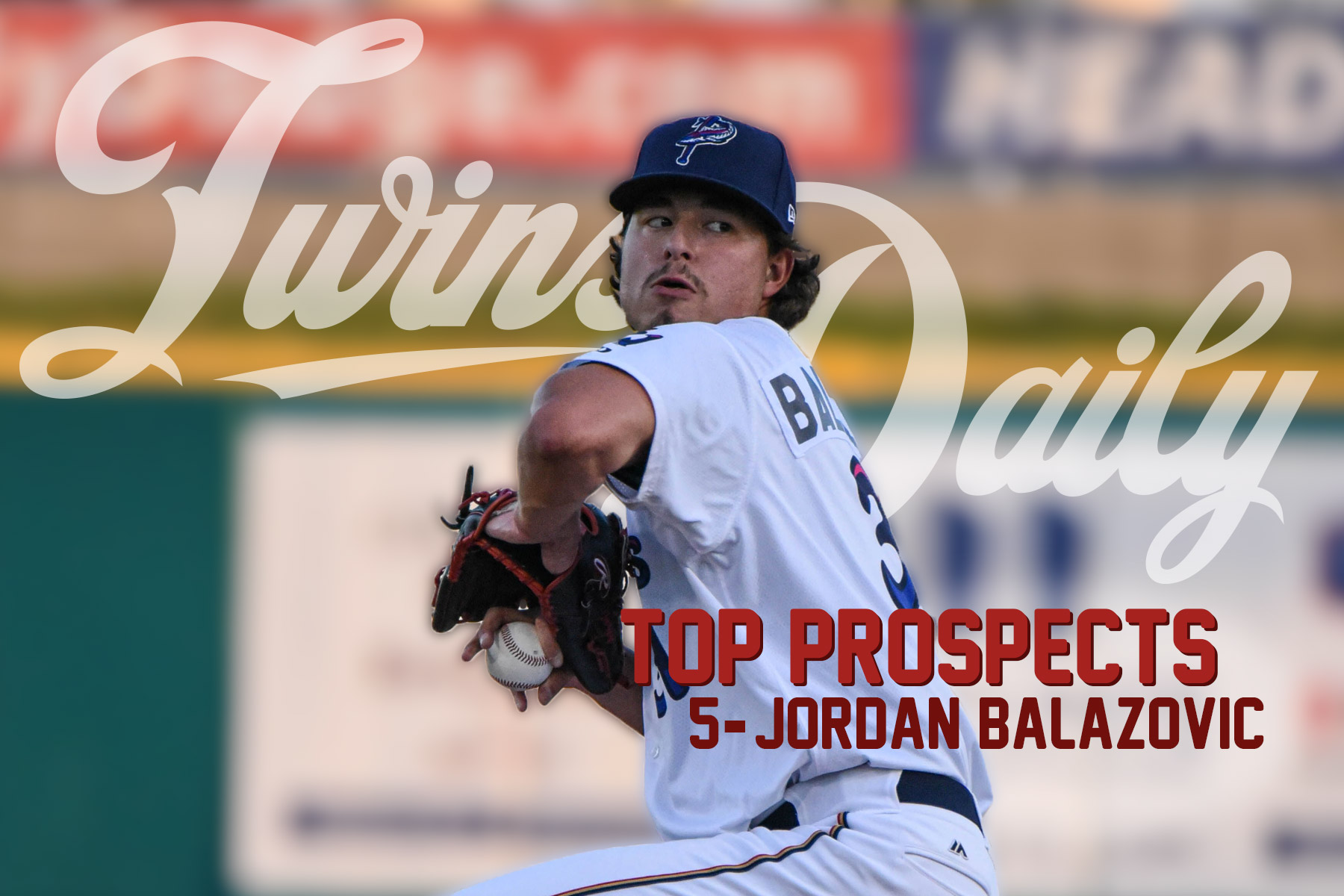 Position: RHP Age: 21 (DOB: 9/17/1998) 2019 Stats (A/A+): 93.2 IP, 2.69 ERA, 0.98 WHIP, 12.4 K/9, 2.4 BB/9 ETA: 2022 2019 Ranking: NA National Top 100 Rankings BA: 95 | MLB: 86 | ATH: 61 | BP: NA What's To Like The numbers speak for themselves. You can see above, his sterling results from 2019, adding to a pro career in which Balazovic has compiled a 3.32 ERA, 1.15 WHIP, 10.0 K/9, and 2.7 BB/9 rate with 16 homers allowed in 227.2 IP. Those are immaculate numbers for a guy who turned 21 last September and has always been young for his level. He dominates in the most straightforward and reliable of fashions: attacking the zone and making hitters miss. Among players to throw 20+ innings in the Midwest League, Balazovic's 39.8% K-rate in four starts there ranked third (the two higher numbers were from players three and four years older). After a very quick promotion to the Florida State League, Balazovic's K-rate dropped a bit to 32.8%, but that was good for third among pitchers with 50+ IP. He achieves this level of domination in the most straightforward and reliable of fashions: commanding a mid-90s fastball and mixing it expertly with the offspeeds. Balazovic is a technician, riding a consistent delivery and deep release point to keep opponents from finding any kind of rhythm. His slider and developing changeup aren't viewed as especially great pitches on their own, but the 6-foot-5 righty plays them up significantly with his power fastball and tunneling technique. In , Twins Daily's Tom Froemming shares highlights from one of Balazovic's better 2019 performances – a four-frame outing fresh off his appearance in the Futures Game – and Tom breaks down his deceptive pitch sequences in action. While this outing came in relief, due to a disruption in his normal schedule, all but three of the former fifth-rounder's 31 appearances since reaching full-season ball have been starts. And this is a key factor that differentiates Balazovic from other big arms like Jhoan Duran at the top end our prospect list: he seems more likely than any other to remain a starting pitcher long-term. It's apparent enough from his build: a big and sturdy guy with broad shoulders and smooth mechanics. His changeup is coming along well enough to project as a viable MLB offering. For these reasons and more, Patrick Reusse recently wrote in a Star Tribune profile that Balazovic "has starter written all over him." Starter with colossal upside. A crucial asset indeed. What's Left To Work On A huge year lies ahead for Balazovic. While all signs have mostly been good since he joined the organization as a 17-year-old out of high school in 2016, he's got a couple big hurdles left to clear. First, there's the high minors. According to Reusse's column, the Twins are gearing up to start Balazovic at Class-AA Pensacola this season, and he'll find the competition there much stiffer after mowing down Single-A batters last summer. Sharpening his breaking-ball command and refining the changeup will be essential to maintaining his results in the upper tiers. Secondly, there's proving his durability. While he possesses the aforementioned qualities of a starting pitcher, Balazovic needs to make good on the field. He missed time in 2018 due to nerve irritation in his elbow, limiting him to 62 innings at Cedar Rapids, and in 2019 he totaled just 94 innings as his workload was stringently managed. (After May 25th, Balazovic had only one start where he pitched into the sixth or threw even 90 pitches.) For comparison, Berrios threw 103 and 140 innings in his first two full pro seasons, at the same ages. It's smart to be cautious with such a critical young arm, but at some point – probably this year – the Twins are going to need to loosen the reins and stretch Balavovic out, with deeper outings and a program that puts him on track for 150 innings at least. What's Next If Reusse's projection is accurate, Balazovic will open in Double-A at age 21, which is a fairly aggressive but well-warranted assignment. Last year only four pitchers 21 or younger logged 100+ innings in the Southern League, which is the realistic aspiration for Balazovic. His workload baseline doesn't really set up for him to be pitching past August, so the idea of Balazovic impacting the big-league club down the stretch may not be feasible, barring a scenario like Graterol's last year where early missed time leaves Balazovic with innings left to throw toward the end. Of course, that'd hardly be ideal, in the sense that his durability remains an open question. The best-case scenario for Balazovic this year would seem to be a fully healthy, productive, and convincing summer in the Pensacola rotation, perhaps punctuated by a late promotion to Triple-A cementing his readiness to contend for an MLB job in 2021. Twins Daily 2020 Top 20 Prospects Honorable Mentions 20. Jose Miranda, 3B/2B 19. Cole Sands, RHP 18. Travis Blankenhorn, 2B/LF 17. Misael Urbina, OF 16. Edwar Colina, RP 15. Matt Canterino, RHP 14. Matt Wallner, OF 13. Wander Javier, SS 12. Gilberto Celestino, OF 11. Lewis Thorpe, LHP 10. Blayne Enlow, RHP 9. Brent Rooker, OF 8. Keoni Cavaco, SS 7. Ryan Jeffers, C 6. Jhoan Duran, RHP 5. Jordan Balazovic, RHP Check back tomorrow for #4! MORE FROM TWINS DAILY — Latest Twins coverage from our writers — Recent Twins discussion in our forums — Follow Twins Daily via Twitter, Facebook or email
 -
Twins Daily 2020 Top Prospects: #7 Ryan Jeffers
Nick Nelson replied to Nick Nelson's topic in Twins Daily Front Page News
Spoiler: Graterol will still be on our list, which started rolling out before the trade was announced. So that might help a bit with the math. Another spoiler: Rortvedt finished #21 in our rankings. So if you remove Graterol now that he's gone, BR is in the Top 20. -
Ryan Jeffers epitomizes the depth of Minnesota's system. To have a player of this caliber – a two-way standout at catcher who's done nothing but perform as a pro, reaching Double-A within two years of being drafted – ranked seventh?! Well, it's much more a credit to the guys above him than a knock on Jeffers, who beams with promise at a premium position.Position: C Age: 22 (DOB: 6/3/1997) 2019 Stats (A+/AA): 414 PA, .264/.341/.421, 14 HR, 49 RBI ETA: 2021 2019 Ranking: 13 National Top 100 Rankings BA: NA | MLB: NA | ATH: NA | BP: NA What's To Like The bat. It was considered his primary strength coming out of college in 2018, when the Twins selected him in the second round. The North Carolina native put up spectacular offensive numbers in three years at UNC Wilmington, culminating with .315/.460/.635, 16 homers, and 51 walks in 62 games his junior year. With numbers like that, as a catcher, you might ask why Jeffers fell to 59th overall and signed below slot, after ranking even farther back on most pre-draft projections. In short, there were some serious doubts about his slugging prowess translating away from aluminum bats, and his defense remaining viable behind home plate. The Twins evidently were none too bothered by such concerns, and their faith has since been rewarded. Two months after the draft, Mike Berardino of the Pioneer Press wrote that Jeffers was laying quick claim to Twins 'catcher of the future.' "Yeah, I was swinging a different bat, but baseball is baseball," Jeffers said at the time, fresh off an aggressive promotion to Cedar Rapids after dominating Elizabethton. "I didn’t change too much.” Nor did the numbers. He finished with a .344/.444/.502 slash line between two levels, and found himself at Fort Myers to open the 2019 campaign. In the pitcher-friendly Florida State League, he wasn't quite as potent (.732 OPS and 10 homers in 79 games) but still impressed enough to earn a late-July promotion to Double-A, where he enjoyed an unforgettable first day and finished with an .856 OPS in 27 games. MLB Pipeline recently named him the best defensive prospect in the Twins system, noting that Jeffers has shed his offense-first rep and "improved by leaps and bounds, with an above-average arm to go along with outstanding receiving and blocking skills." What's Left to Work On He's just got to keep proving it. Jeffers hasn't yet gained steam on national lists because, while his performance has been impeccable, it's not out of the ordinary for a premier college talent storming the lower levels of the minors. Catcher, in particular, is a position where the difficulty level rises sharply with each rung of the ladder. Jeffers is clearly coming along nicely but he'll really be tested once he reaches Triple-A and especially the majors. One area for improvement is controlling the run game; at Rochester last year, opponents stole 63 bases in his 74 starts at a 74% success rate. At 6-foot-4 and 230 lbs., Jeffers is a bit of a lumbering fellow who doesn't spring quickly from the crouch, and also doesn't move too well, which greatly limits his defensive options in the event catching doesn't work out. Luckily, there's no reason to believe that'll be the case. What's Next Jeffers is among the Twins' non-roster spring training invites, reporting with the rest of the pitchers and catchers this week. The team has (intentionally, I suspect) preserved flexibility at catcher by signing Alex Avila to a one-year deal, so the door is open for Jeffers to join Mitch Garver in the majors after 2020 if can make his case. Speaking of the current Twins starting backstop, it was noted in the aforementioned Berardino profile that Jeffers was drawing "a lot of internal comparisons" to Garver, who at the time was just finding his way as a solid yet unspectacular rookie in the majors. “I’ve heard that and I take it as a compliment,” Jeffers said then. “I’m trying to get to where Mitch has gotten.” He's about to have his chance. Twins Daily 2020 Top 20 Prospects Honorable Mentions 20. Jose Miranda, 3B/2B 19. Cole Sands, RHP 18. Travis Blankenhorn, 2B/LF 17. Misael Urbina, OF 16. Edwar Colina, RP 15. Matt Canterino, RHP 14. Matt Wallner, OF 13. Wander Javier, SS 12. Gilberto Celestino, OF 11. Lewis Thorpe, LHP 10. Blayne Enlow, RHP 9. Brent Rooker, OF 8. Keoni Cavaco, SS 7. Ryan Jeffers, C Check back tomorrow for #6! MORE FROM TWINS DAILY — Latest Twins coverage from our writers — Recent Twins discussion in our forums — Follow Twins Daily via Twitter, Facebook or email Click here to view the article
-
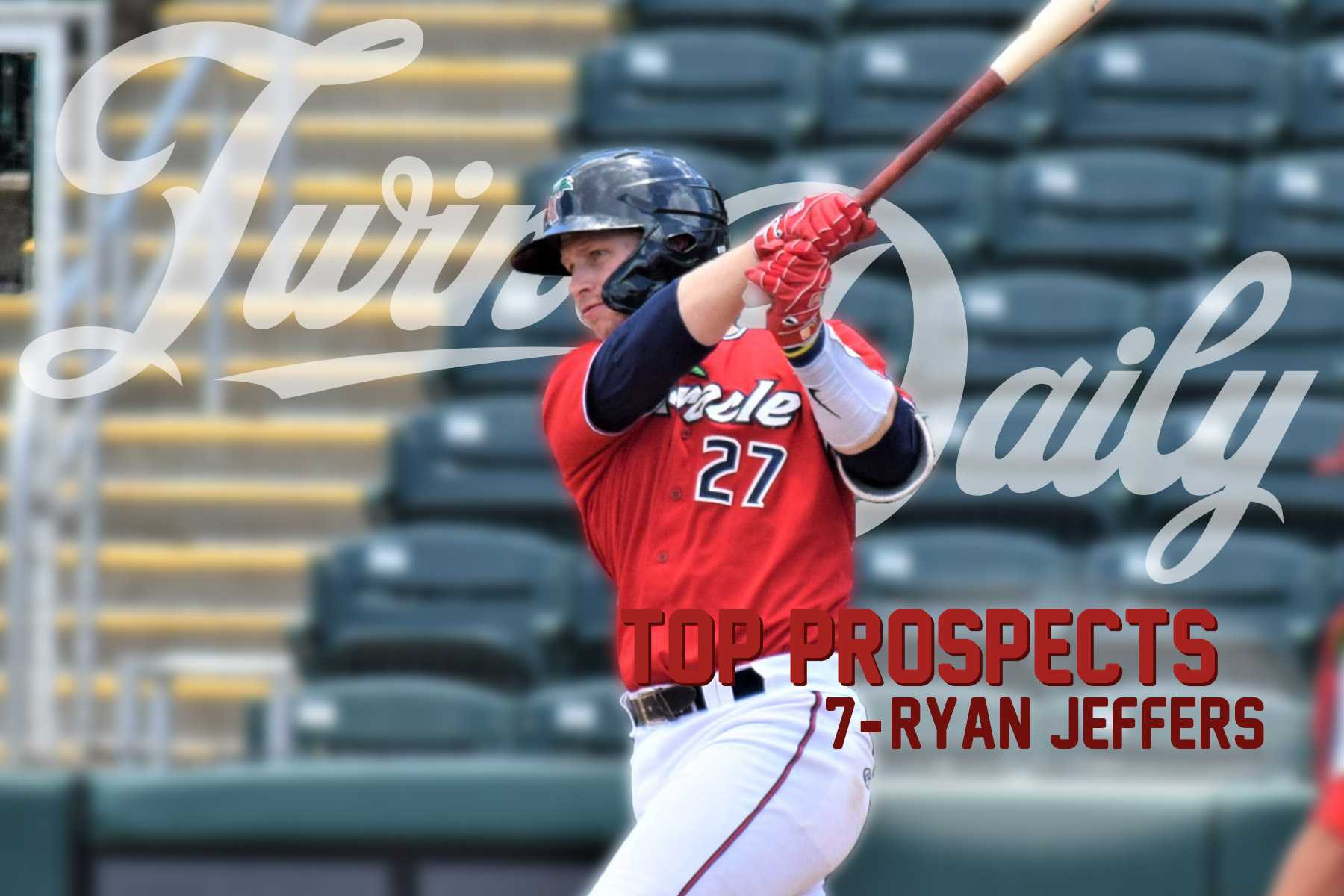 Position: C Age: 22 (DOB: 6/3/1997) 2019 Stats (A+/AA): 414 PA, .264/.341/.421, 14 HR, 49 RBI ETA: 2021 2019 Ranking: 13 National Top 100 Rankings BA: NA | MLB: NA | ATH: NA | BP: NA What's To Like The bat. It was considered his primary strength coming out of college in 2018, when the Twins selected him in the second round. The North Carolina native put up spectacular offensive numbers in three years at UNC Wilmington, culminating with .315/.460/.635, 16 homers, and 51 walks in 62 games his junior year. With numbers like that, as a catcher, you might ask why Jeffers fell to 59th overall and signed below slot, after ranking even farther back on most pre-draft projections. In short, there were some serious doubts about his slugging prowess translating away from aluminum bats, and his defense remaining viable behind home plate. The Twins evidently were none too bothered by such concerns, and their faith has since been rewarded. Two months after the draft, Mike Berardino of the Pioneer Press wrote that Jeffers was laying quick claim to Twins 'catcher of the future.' "Yeah, I was swinging a different bat, but baseball is baseball," Jeffers said at the time, fresh off an aggressive promotion to Cedar Rapids after dominating Elizabethton. "I didn’t change too much.” Nor did the numbers. He finished with a .344/.444/.502 slash line between two levels, and found himself at Fort Myers to open the 2019 campaign. In the pitcher-friendly Florida State League, he wasn't quite as potent (.732 OPS and 10 homers in 79 games) but still impressed enough to earn a late-July promotion to Double-A, where he enjoyed an unforgettable first day and finished with an .856 OPS in 27 games. https://twitter.com/BlueWahoosBBall/status/1154599156989792256 It's the defense, though, that has really begun to separate Jeffers. After the 2018 season, Dan Hayes of The Athletic wrote about Minnesota's efforts to refine his receiving chops, and how aptly the malleable student was taking to it. One year later, Hayes wrote in our Offseason Handbook that Jeffers' pitch-framing skills were deemed by some folks within the organization to be "among the top 15 in pro ball right now." https://twitter.com/TFTwins/status/1060226568885321728 MLB Pipeline recently named him the best defensive prospect in the Twins system, noting that Jeffers has shed his offense-first rep and "improved by leaps and bounds, with an above-average arm to go along with outstanding receiving and blocking skills." What's Left to Work On He's just got to keep proving it. Jeffers hasn't yet gained steam on national lists because, while his performance has been impeccable, it's not out of the ordinary for a premier college talent storming the lower levels of the minors. Catcher, in particular, is a position where the difficulty level rises sharply with each rung of the ladder. Jeffers is clearly coming along nicely but he'll really be tested once he reaches Triple-A and especially the majors. One area for improvement is controlling the run game; at Rochester last year, opponents stole 63 bases in his 74 starts at a 74% success rate. At 6-foot-4 and 230 lbs., Jeffers is a bit of a lumbering fellow who doesn't spring quickly from the crouch, and also doesn't move too well, which greatly limits his defensive options in the event catching doesn't work out. Luckily, there's no reason to believe that'll be the case. What's Next Jeffers is among the Twins' non-roster spring training invites, reporting with the rest of the pitchers and catchers this week. The team has (intentionally, I suspect) preserved flexibility at catcher by signing Alex Avila to a one-year deal, so the door is open for Jeffers to join Mitch Garver in the majors after 2020 if can make his case. Speaking of the current Twins starting backstop, it was noted in the aforementioned Berardino profile that Jeffers was drawing "a lot of internal comparisons" to Garver, who at the time was just finding his way as a solid yet unspectacular rookie in the majors. “I’ve heard that and I take it as a compliment,” Jeffers said then. “I’m trying to get to where Mitch has gotten.” He's about to have his chance. Twins Daily 2020 Top 20 Prospects Honorable Mentions 20. Jose Miranda, 3B/2B 19. Cole Sands, RHP 18. Travis Blankenhorn, 2B/LF 17. Misael Urbina, OF 16. Edwar Colina, RP 15. Matt Canterino, RHP 14. Matt Wallner, OF 13. Wander Javier, SS 12. Gilberto Celestino, OF 11. Lewis Thorpe, LHP 10. Blayne Enlow, RHP 9. Brent Rooker, OF 8. Keoni Cavaco, SS 7. Ryan Jeffers, C Check back tomorrow for #6! MORE FROM TWINS DAILY — Latest Twins coverage from our writers — Recent Twins discussion in our forums — Follow Twins Daily via Twitter, Facebook or email
 -
The Yankees went 17-2 against Baltimore so let's not act like they didn't have their own similar advantage. The notion that Minnesota lost to the Yankees in the ALDS because NYY's pitching was wildly better is not really supported by any evidence.
-
First we thought he was gone. Then, we weren't so sure. At one point it looked like he definitely was going to stay. But once the dust had settled at the end of the weekend, Brusdar Graterol was indeed shipped out, sent to Los Angeles in a trade for veteran right-hander Kenta Maeda. (Obligatory: Pending physicals.) So what have we learned from this whole ordeal, and what is the fallout?Graterol was freshly of legal drinking age when he joined the Twins last season, so it's only fitting he brought the Fireballs. His average fastball velocity of 99.0 MPH registered as fifth-highest for anyone who threw in the majors. Watching Graterol establish himself at the highest level, flashing boyish enthusiasm while pumping heaters past big-league stars, was a pure delight. The Red Sox apparently reached a similar conclusion upon closer review of his medicals. They are entitled to their opinion, and while it really sucks this all got aired publicly, I'm not sure Boston's new GM Chaim Bloom is deserving of animosity. With an edict from on high to trade Betts, he's trying to make the best of an ugly situation. The idea that this was a PR-driven course correction doesn't hold water to me. By opting out on Graterol, the Red Sox instead ended up subbing in shortstop Jeter Downs as the second talent received behind centerpiece Alex Verdugo. Downs is, according to most lists, a moderately better prospect than Graterol, but ... enough to meaningfully move the needle on fan sentiment? He's barely played above Single-A. There's no such thing as a satisfactory return when trading a Mookie Betts, but Graterol is hardly unexciting. Red Sox fans just watched him blow away Yankees hitters in the playoffs at age 21 a few months ago. They weren't being asked to dream on some fanciful long-term project. So, Boston got spooked on Graterol's medicals. Okay. And while the Dodgers were clearly less spooked, they weren't willing to make the same one-on-one swap that was originally planned. Los Angeles added in $10 million (meaningless to them) and a low-level prospect to extract more value from Minnesota, in the form of outfield prospect Luke Raley and (more critically) the 67th pick in this year's draft. Based on what we can ascertain from the outside, Graterol alone would've been a fair return for Maeda, if not a bit of a heavy give by Minnesota. The Red Sox initially reached that conclusion. After seeing more files and records, their valuation changed, and LA also needed a bit extra to make it happen. I think we can conclude, based on all of this, that there is a more valid basis for concern about Graterol's arm holding up than before this whole fiasco started. But you know what? The human body is an unpredictable construct. David Price, also heading to the Dodgers as part of a (now separate) trade with Boston, seems a relevant example to cite; he's been skirting Tommy John surgery for his entire career thanks to his "very unique" elbow. Sometimes red flags just flap in the wind endlessly. There's a perfectly good chance Graterol goes on to enjoy a healthy career with no abnormal incidence of arm issues. But one thing does crystal-clear: he won't be doing it as a starter. WHAT NOW FOR THE TWINS BULLPEN? Graterol was a dynamic weapon and his absence is a negative for the bullpen picture. Duh. Then again, we hadn't been definitively planning around him as a reliever up until a couple weeks ago, and the Twins looked plenty strong on that front beforehand. Even without Graterol, Minnesota still has proven late-inning firepower in Taylor Rogers, Tyler Duffey, and Trevor May. There's steady veteran support from Sergio Romo and Tyler Clippard. A promising project in Matt Wisler. Ready young contributors in Zack Littell and Cody Stashak. This unit is not hurting for options, who have earned their chances. And in Fernando Romero, the Twins still have a forgotten flamethrower on hand whose raw stuff is nearly as formidable as Graterol's. That Minnesota possessed the depth to part with a talent of Graterol's caliber speaks to the job this front office has done building a robust bullpen and pitching pipeline. (Don't be shocked if hard-throwing righty Jhoan Duran becomes this year's version of the 2019 Brusdar.) None of this changes the fact that losing Graterol hurts, and the pain will likely resonate over the years as the phenom gets chances to shine on the biggest stage – probably while exhibiting the same boyish grin we came to love during our short time with him. But those are the sacrifices the Twins needed to make in the same pursuit. There's a decent chance, I think, that the 2020 journeys of Graterol and the Twins will ultimately converge at the same place: a World Series in late October. Both teams involved in this trade are counting on it. Click here to view the article
-
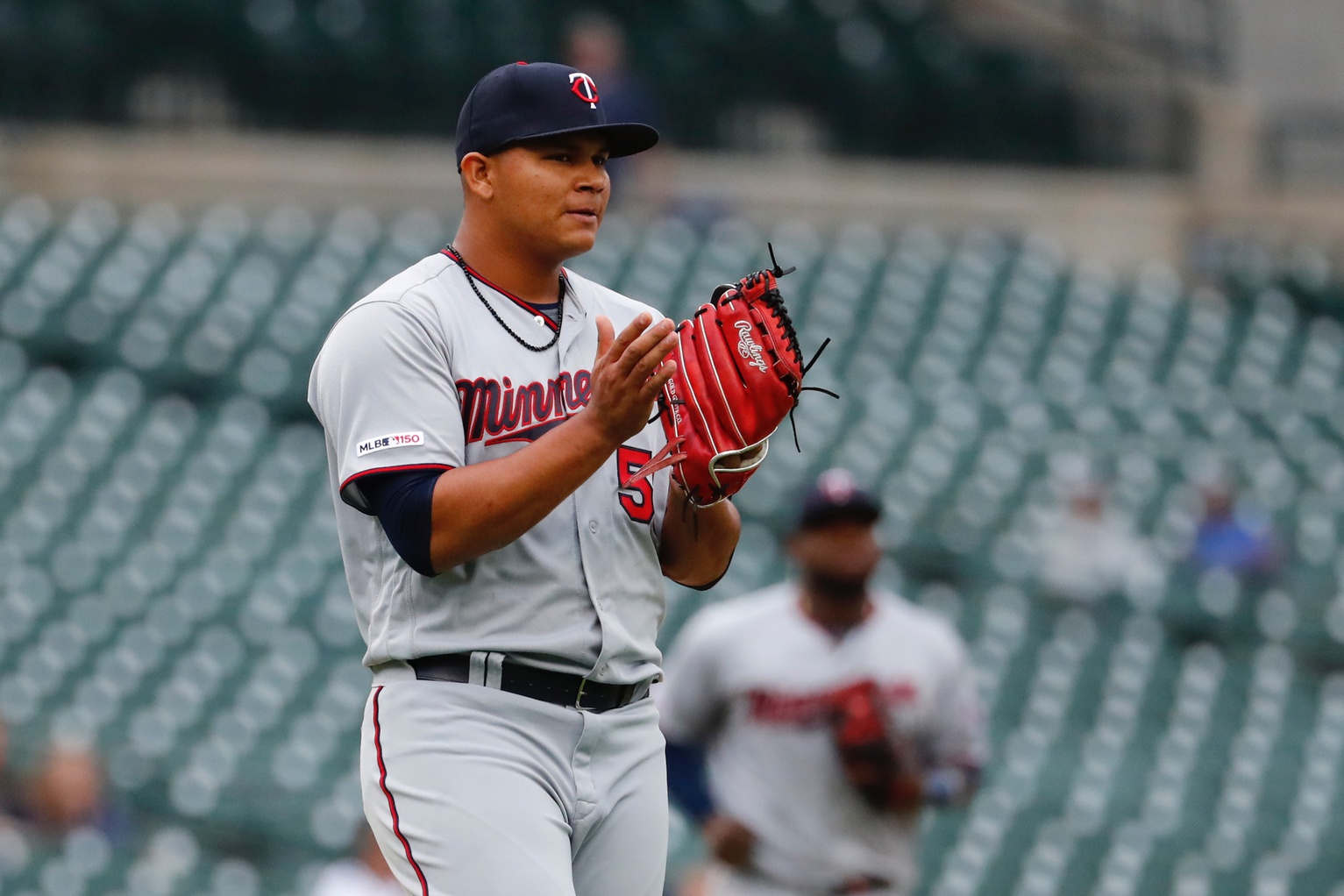 Graterol was freshly of legal drinking age when he joined the Twins last season, so it's only fitting he brought the Fireballs. His average fastball velocity of 99.0 MPH registered as fifth-highest for anyone who threw in the majors. Watching Graterol establish himself at the highest level, flashing boyish enthusiasm while pumping heaters past big-league stars, was a pure delight. https://twitter.com/PitchingNinja/status/1226646422264655873 Naturally, I was very eager to see Graterol work his rare magic once again this year, potentially over an entire season (and deeper playoff run). That's why I supported the decision to keep him in the bullpen – it was a win-now move, which this franchise has historically shied away from. Ironically, Graterol has now been dealt in an even bolder win-now move. With Maeda, the Twins get an established quantity, whose impact on the 2020 team far exceeds what could've realistically been expected from Graterol as a 60-inning reliever. But in making this swap, the Twins are losing a very unique player and special person whose story is yet to be written. So while I'm excited about Maeda, I do find myself rueing Graterol's loss as the reality of his exit hits. THE GOLDEN ARM Los Angeles seems a great fit for Graterol. The Dodgers are a storied franchise, and among the top two or three 2020 World Series favorites – especially with Mookie Betts in the fold. But their bullpen could use a boost. Formerly elite closer Kenley Jansen has seen a bit of a slide in recent years and is 32. Hard-throwing hothead Joe Kelly, signed to a big deal last offseason, was a disappointment in Year 1. Graterol joins Julio Urias as premium young arms infusing this staff with exhilarating upside. Jansen is under contract through 2021, so the Dodgers closer gig figures to be up for grabs then if not sooner. That's a prestigious (and, as Jansen has shown, lucrative) title. It's also possible the Dodgers could try moving Graterol back into a starting role. But that's not happening this year, and now seems unlikely in general. VALIDITY OF INJURY CONCERNS? Under the original agreement, Graterol would've been heading to Boston, which itself wasn't a bad fit. As to why the Red Sox soured on the deal and reneged at the last moment, we don't know, and may never know. Some have insinuated it was fueled partially by negative public backlash, but the official account holds that a final review of the pitcher's medicals convinced Boston he's destined to stay in the bullpen, thus altering their asset valuation. It's really unfortunate that Graterol's health – perfectly fine from all outward signs – came under scrutiny in this process. He battled hard to come back from shoulder soreness last summer, delivering in a huge way into October and finishing on a high note. So, to now have his outlook downplayed by subjective evaluations from Boston's staff has gotta be frustrating. Then again, from the moment it came to light that Minnesota was willing to trade the top pitching prospect in any kind of deal, implications regarding their own assessments of Graterol were plain to see. https://twitter.com/NickNelsonMN/status/1224916635921846272 The Red Sox apparently reached a similar conclusion upon closer review of his medicals. They are entitled to their opinion, and while it really sucks this all got aired publicly, I'm not sure Boston's new GM Chaim Bloom is deserving of animosity. With an edict from on high to trade Betts, he's trying to make the best of an ugly situation. The idea that this was a PR-driven course correction doesn't hold water to me. By opting out on Graterol, the Red Sox instead ended up subbing in shortstop Jeter Downs as the second talent received behind centerpiece Alex Verdugo. Downs is, according to most lists, a moderately better prospect than Graterol, but ... enough to meaningfully move the needle on fan sentiment? He's barely played above Single-A. There's no such thing as a satisfactory return when trading a Mookie Betts, but Graterol is hardly unexciting. Red Sox fans just watched him blow away Yankees hitters in the playoffs at age 21 a few months ago. They weren't being asked to dream on some fanciful long-term project. So, Boston got spooked on Graterol's medicals. Okay. And while the Dodgers were clearly less spooked, they weren't willing to make the same one-on-one swap that was originally planned. Los Angeles added in $10 million (meaningless to them) and a low-level prospect to extract more value from Minnesota, in the form of outfield prospect Luke Raley and (more critically) the 67th pick in this year's draft. Based on what we can ascertain from the outside, Graterol alone would've been a fair return for Maeda, if not a bit of a heavy give by Minnesota. The Red Sox initially reached that conclusion. After seeing more files and records, their valuation changed, and LA also needed a bit extra to make it happen. I think we can conclude, based on all of this, that there is a more valid basis for concern about Graterol's arm holding up than before this whole fiasco started. But you know what? The human body is an unpredictable construct. David Price, also heading to the Dodgers as part of a (now separate) trade with Boston, seems a relevant example to cite; he's been skirting Tommy John surgery for his entire career thanks to his "very unique" elbow. Sometimes red flags just flap in the wind endlessly. There's a perfectly good chance Graterol goes on to enjoy a healthy career with no abnormal incidence of arm issues. But one thing does crystal-clear: he won't be doing it as a starter. WHAT NOW FOR THE TWINS BULLPEN? Graterol was a dynamic weapon and his absence is a negative for the bullpen picture. Duh. Then again, we hadn't been definitively planning around him as a reliever up until a couple weeks ago, and the Twins looked plenty strong on that front beforehand. Even without Graterol, Minnesota still has proven late-inning firepower in Taylor Rogers, Tyler Duffey, and Trevor May. There's steady veteran support from Sergio Romo and Tyler Clippard. A promising project in Matt Wisler. Ready young contributors in Zack Littell and Cody Stashak. This unit is not hurting for options, who have earned their chances. And in Fernando Romero, the Twins still have a forgotten flamethrower on hand whose raw stuff is nearly as formidable as Graterol's. That Minnesota possessed the depth to part with a talent of Graterol's caliber speaks to the job this front office has done building a robust bullpen and pitching pipeline. (Don't be shocked if hard-throwing righty Jhoan Duran becomes this year's version of the 2019 Brusdar.) None of this changes the fact that losing Graterol hurts, and the pain will likely resonate over the years as the phenom gets chances to shine on the biggest stage – probably while exhibiting the same boyish grin we came to love during our short time with him. But those are the sacrifices the Twins needed to make in the same pursuit. There's a decent chance, I think, that the 2020 journeys of Graterol and the Twins will ultimately converge at the same place: a World Series in late October. Both teams involved in this trade are counting on it.
 -
There's been plenty of drama since an agreement first came to light last week on a blockbuster trade that would send Brusdar Graterol to Boston (via Los Angeles) and bring right-hander Kenta Maeda to the Twins. Once very much in doubt, a deal is now confirmed (pending medicals!), albeit with some alterations from its original form. Graterol, outfielder Luke Raley, and a 2020 Comp B draft pick (67th overall) are headed to the Dodgers in a deal fo Maeda, a low-level prospect, and cash.To bring everyone up to speed: The Twins emerged last Wednesday as the third team in a massive trade between the Red Sox and Dodgers, which would've sent Mookie Betts and David Price to LA in exchange for prospect Alex Verdugo and Graterol, whom the Dodgers were to acquire from Minnesota in exchange for Maeda. The following night, it was reported that Boston was backing off amidst concerns in Graterol's medical files (and/or cold feet from ownership in the face of public backlash, depending on which accounts you want to believe). By Saturday, the Twins were said to be ready to drop the whole thing and move on. But it bears noting they took a similar hardline stance with Josh Donaldson, as the team signaled it was ready to bow out before ultimately getting its desired deal. With the way both these situations have played out, there's no knocking the front office's steadfast resolve. In this case, the Twins and Dodgers simply shut out the wayward Red Sox and made a deal on their own, with Graterol, Raley, and a fairly valuable draft pick going to Los Angeles in exchange for Maeda, an as-yet unnamed prospect, and $10 million to cover a portion of his already affordable contract. Minnesota gave a little more and got a little more. At the end of the day, it's still from my view a very good move for all the reasons I laid out here. The Red Sox made a separate deal with the Dodgers, sending Mookie Betts and David Price, along some money, to LA in exchange for prospects OF Alex Verdugo and SS Jeter Downs. We'll update this article with more information as it becomes available, but for now, how are you feeling about the deal – finally – getting done? MORE FROM TWINS DAILY — Latest Twins coverage from our writers — Recent Twins discussion in our forums — Follow Twins Daily via Twitter, Facebook or email Click here to view the article
-
Take Two: Pending Physicals, Twins and Dodgers Agree to Trade
Nick Nelson posted an article in Twins
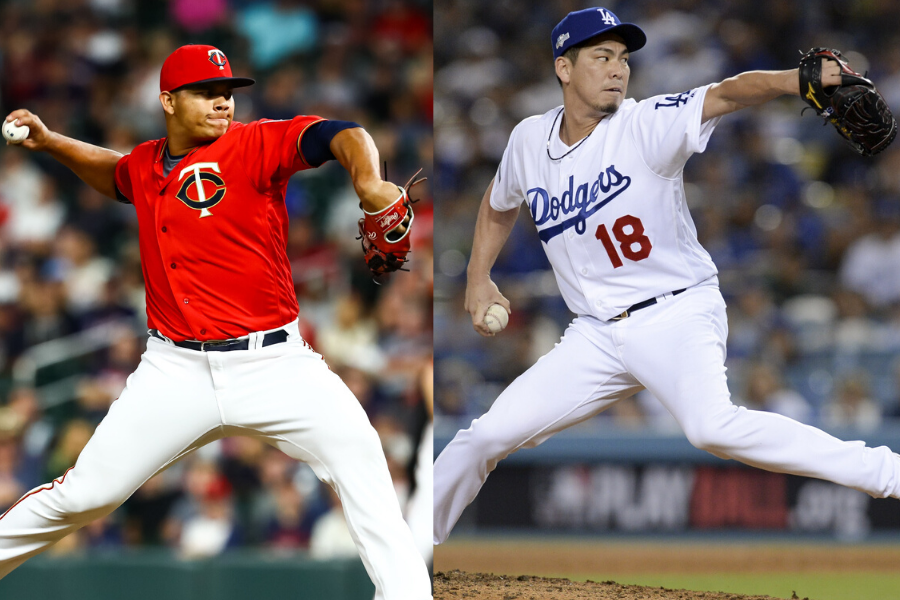 To bring everyone up to speed: The Twins emerged last Wednesday as the third team in a massive trade between the Red Sox and Dodgers, which would've sent Mookie Betts and David Price to LA in exchange for prospect Alex Verdugo and Graterol, whom the Dodgers were to acquire from Minnesota in exchange for Maeda. The following night, it was reported that Boston was backing off amidst concerns in Graterol's medical files (and/or cold feet from ownership in the face of public backlash, depending on which accounts you want to believe). By Saturday, the Twins were said to be ready to drop the whole thing and move on. But it bears noting they took a similar hardline stance with Josh Donaldson, as the team signaled it was ready to bow out before ultimately getting its desired deal. With the way both these situations have played out, there's no knocking the front office's steadfast resolve. In this case, the Twins and Dodgers simply shut out the wayward Red Sox and made a deal on their own, with Graterol, Raley, and a fairly valuable draft pick going to Los Angeles in exchange for Maeda, an as-yet unnamed prospect, and $10 million to cover a portion of his already affordable contract. Minnesota gave a little more and got a little more. At the end of the day, it's still from my view a very good move for all the reasons I laid out here. https://twitter.com/Ken_Rosenthal/status/1226638132218679296 https://twitter.com/Ken_Rosenthal/status/1226644982225870857 https://twitter.com/Ken_Rosenthal/status/1226643432820682759 The Red Sox made a separate deal with the Dodgers, sending Mookie Betts and David Price, along some money, to LA in exchange for prospects OF Alex Verdugo and SS Jeter Downs. We'll update this article with more information as it becomes available, but for now, how are you feeling about the deal – finally – getting done? MORE FROM TWINS DAILY — Latest Twins coverage from our writers — Recent Twins discussion in our forums — Follow Twins Daily via Twitter, Facebook or email
 -
The Minnesota Twins are not short on slugging talents presently, but that doesn't negate the excitement of having a truly prodigious power hitter, fresh off crushing at the highest level of the minors, ready to join the big-league ranks. Brent Rooker has left little doubt that he can hit. All he needs now is an opportunity.Position: LF Age: 25 (DOB: 11/1/1995) 2019 Stats (AAA): 274 PA, .281/.398/.535, 14 HR, 47 RBI ETA: 2020 2019 Ranking: 6 National Top 100 Rankings BA: NA | MLB: NA | ATH: NA | BP: NA What's To Like Power-hitting has been commoditized to a large degree in the modern MLB environment. Players who can straight-up mash, but don't excel in any defensive capacity, are not the coveted assets they once were. But that's not to say they aren't valued: Just take a look at Miguel Sano and his freshly minted $30 million contract extension. And what Rooker can do is MASH. The Mississippi State product was widely considered one of the best hitters in the country when taken 35th overall by Minnesota in the 2017 draft, becoming the second player drafted under the Falvine Regime after they went with Royce Lewis No. 1 overall. Rooker has backed up his prestigious offensive rep since entering pro ball, slashing .267/.357/.505 with 54 home runs through 259 total games. In 2019 he put up a .928 OPS at Triple-A, with a jaw-dropping .319/.463/.572 line in 41 games after June 1st. Sounds like a guy who's about major-league ready. In fact, he might've gotten there last summer if a groin injury hadn't derailed him in mid-July. When he was on-stage as a guest at the recent Twins Daily Winter Meltdown, Kent Hrbek made an interesting a comment about the ferocity of uppercut swings that are now commonplace: "There's a lot of [retired] guys that talk about that nowadays, that there could've been a lot more home runs hit if you just sit and try to launch all day long. I mean you take a swing like they take swings off of guys now, you'd get the ball on the side of the head the next time up." Rooker pretty much epitomizes what Hrbek was describing. He swings very hard and aims to put it in the air. His immense power is legitimately eye-catching; the ball just rockets off his bat, and tends to go very far, very fast. While the continuance of his slugging success was a positive last year, the most promising development was his sharpening patience at the plate. Rooker walked 12.8% of the time, enabling him to reach base at a nearly .400 clip in Triple-A. He made enormous improvements with his discipline over the course of the year. What's Left To Work On The tough thing with Rooker's profile is that it leaves so little margin for error. He needs to maintain as an offensive force at the highest level to be a long-term regular in the majors. Defensively he's rather limited, whether in left field or at first base, and his best future fit seems to be as a designated hitter. That's all well and good if he keeps on producing like he has, since Minnesota's DH spot is presently unspoken for after this year, but there is reason to wonder if he can translate his dominance to the highest level. Namely, it's the strikeouts. As a result of his relentlessly aggressive cuts, Rooker whiffs quite a bit. His 34.7% K-rate last year was ninth-highest in the International League (min. 200 PA), and would've been seventh-highest in the majors (two spots behind the previously mentioned Sano, another notorious hard-swinger). Rooker's .281 batting average for the Red Wings in 2019 was buoyed by a blatantly unsustainable .417 BABIP. The lack of contact, if it continues, could make it tough for Rooker to find stable footing in the big leagues. Sano is one of the few productive hitters in that realm, though Joey Gallo is another notable example. But, again, Rooker's studious nature and proven adaptiveness offer valid reason to hope he can cut down the strikeouts. He did lower his K-rate to 29% in his final 25 games for Rochester last year, after posting an egregious 38% rate his first 40. What's Next The Twins have been very successful – so far – with their top draft picks in recent years. Rooker is sort of a victim to this success. He's basically been the player they hoped he would be, but Minnesota also looks to have struck gold on fellow first-rounders and corner guys Alex Kirilloff (2016) and Trevor Larnach (2018), who project as more well-rounded big-leaguers and have fewer question marks. Rooker is a step ahead of the others in development, having conquered Triple-A, but that doesn't help him much now, with nothing currently resembling a short-term opening on the MLB radar. That can of course change in a hurry when the current DH occupant is a 39-year-old with a balky wrist, and indeed, a Nelson Cruz absence is probably the most likely avenue for Rooker to reach the majors in short order. An injury to Sano or Eddie Rosario could also create an opening, to the extent the Twins are willing to tolerate Rooker's defense. Until such an opportunity presents itself, Rooker will head back to Triple-A, where he will likely keep on mashing. Twins Daily 2020 Top 20 Prospects Honorable Mentions 20. Jose Miranda, 3B/2B 19. Cole Sands, RHP 18. Travis Blankenhorn, 2B/LF 17. Misael Urbina, OF 16. Edwar Colina, RP 15. Matt Canterino, RHP 14. Matt Wallner, OF 13. Wander Javier, SS 12. Gilberto Celestino, OF 11. Lewis Thorpe, LHP 10. Blayne Enlow, RHP 9. Brent Rooker, OF Stop by Monday for prospect #8! MORE FROM TWINS DAILY — Latest Twins coverage from our writers — Recent Twins discussion in our forums — Follow Twins Daily via Twitter, Facebook or email Click here to view the article
-
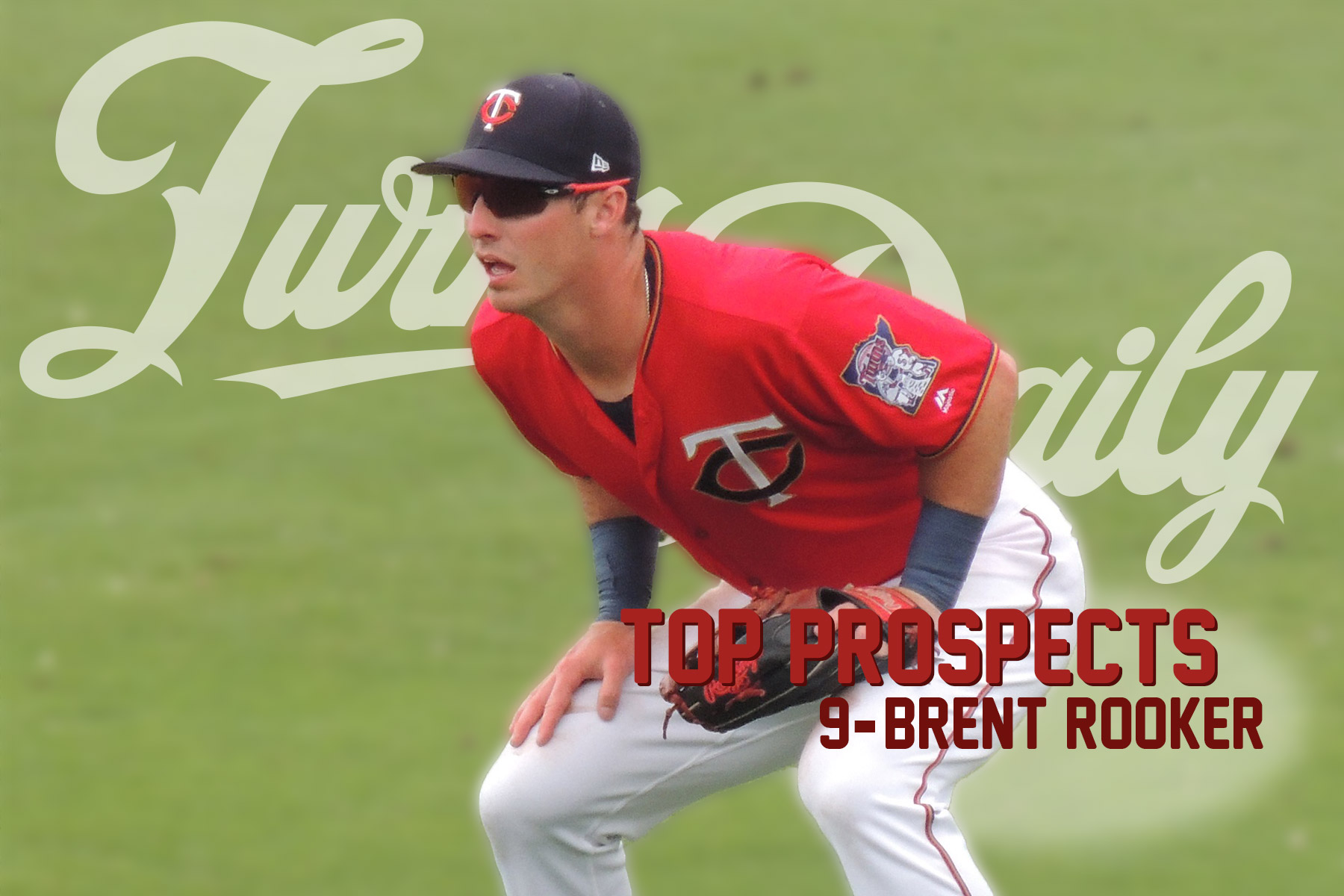 Position: LF Age: 25 (DOB: 11/1/1995) 2019 Stats (AAA): 274 PA, .281/.398/.535, 14 HR, 47 RBI ETA: 2020 2019 Ranking: 6 National Top 100 Rankings BA: NA | MLB: NA | ATH: NA | BP: NA What's To Like Power-hitting has been commoditized to a large degree in the modern MLB environment. Players who can straight-up mash, but don't excel in any defensive capacity, are not the coveted assets they once were. But that's not to say they aren't valued: Just take a look at Miguel Sano and his freshly minted $30 million contract extension. And what Rooker can do is MASH. The Mississippi State product was widely considered one of the best hitters in the country when taken 35th overall by Minnesota in the 2017 draft, becoming the second player drafted under the Falvine Regime after they went with Royce Lewis No. 1 overall. Rooker has backed up his prestigious offensive rep since entering pro ball, slashing .267/.357/.505 with 54 home runs through 259 total games. In 2019 he put up a .928 OPS at Triple-A, with a jaw-dropping .319/.463/.572 line in 41 games after June 1st. Sounds like a guy who's about major-league ready. In fact, he might've gotten there last summer if a groin injury hadn't derailed him in mid-July. When he was on-stage as a guest at the recent Twins Daily Winter Meltdown, Kent Hrbek made an interesting a comment about the ferocity of uppercut swings that are now commonplace: "There's a lot of [retired] guys that talk about that nowadays, that there could've been a lot more home runs hit if you just sit and try to launch all day long. I mean you take a swing like they take swings off of guys now, you'd get the ball on the side of the head the next time up." Rooker pretty much epitomizes what Hrbek was describing. He swings very hard and aims to put it in the air. His immense power is legitimately eye-catching; the ball just rockets off his bat, and tends to go very far, very fast. While the continuance of his slugging success was a positive last year, the most promising development was his sharpening patience at the plate. Rooker walked 12.8% of the time, enabling him to reach base at a nearly .400 clip in Triple-A. He made enormous improvements with his discipline over the course of the year. What's Left To Work On The tough thing with Rooker's profile is that it leaves so little margin for error. He needs to maintain as an offensive force at the highest level to be a long-term regular in the majors. Defensively he's rather limited, whether in left field or at first base, and his best future fit seems to be as a designated hitter. That's all well and good if he keeps on producing like he has, since Minnesota's DH spot is presently unspoken for after this year, but there is reason to wonder if he can translate his dominance to the highest level. Namely, it's the strikeouts. As a result of his relentlessly aggressive cuts, Rooker whiffs quite a bit. His 34.7% K-rate last year was ninth-highest in the International League (min. 200 PA), and would've been seventh-highest in the majors (two spots behind the previously mentioned Sano, another notorious hard-swinger). Rooker's .281 batting average for the Red Wings in 2019 was buoyed by a blatantly unsustainable .417 BABIP. The lack of contact, if it continues, could make it tough for Rooker to find stable footing in the big leagues. Sano is one of the few productive hitters in that realm, though Joey Gallo is another notable example. But, again, Rooker's studious nature and proven adaptiveness offer valid reason to hope he can cut down the strikeouts. He did lower his K-rate to 29% in his final 25 games for Rochester last year, after posting an egregious 38% rate his first 40. What's Next The Twins have been very successful – so far – with their top draft picks in recent years. Rooker is sort of a victim to this success. He's basically been the player they hoped he would be, but Minnesota also looks to have struck gold on fellow first-rounders and corner guys Alex Kirilloff (2016) and Trevor Larnach (2018), who project as more well-rounded big-leaguers and have fewer question marks. Rooker is a step ahead of the others in development, having conquered Triple-A, but that doesn't help him much now, with nothing currently resembling a short-term opening on the MLB radar. That can of course change in a hurry when the current DH occupant is a 39-year-old with a balky wrist, and indeed, a Nelson Cruz absence is probably the most likely avenue for Rooker to reach the majors in short order. An injury to Sano or Eddie Rosario could also create an opening, to the extent the Twins are willing to tolerate Rooker's defense. Until such an opportunity presents itself, Rooker will head back to Triple-A, where he will likely keep on mashing. Twins Daily 2020 Top 20 Prospects Honorable Mentions 20. Jose Miranda, 3B/2B 19. Cole Sands, RHP 18. Travis Blankenhorn, 2B/LF 17. Misael Urbina, OF 16. Edwar Colina, RP 15. Matt Canterino, RHP 14. Matt Wallner, OF 13. Wander Javier, SS 12. Gilberto Celestino, OF 11. Lewis Thorpe, LHP 10. Blayne Enlow, RHP 9. Brent Rooker, OF Stop by Monday for prospect #8! MORE FROM TWINS DAILY — Latest Twins coverage from our writers — Recent Twins discussion in our forums — Follow Twins Daily via Twitter, Facebook or email
 -
The Minnesota Twins seemingly entered the offseason intent on signing Zack Wheeler. The right-hander possessed the kind of premium ability and upside the front office sought, motivating them to make an historic bid for his services. It wasn't to be. And now, as the dust settles on a thrilling late-winter surge, maybe that's just as well.According to reports, the Twins offered somewhere around $100 million to open their bidding for Wheeler, but were informed early on that Minnesota wasn't a strong consideration. Wheeler ended up signing with the Phillies for five years and $118 million, spurning the White Sox and their bigger offer (rumor has it Chicago was upwards of $120 million). So, to even have a chance, the Twins would've needed to commit to Wheeler – who's never been an All-Star, never thrown 200 innings, never had an ERA+ better than 112 – at least $25 million annually, over at least five years. They missed on Wheeler, and as every top free agent starter came off the board, it became apparent this wasn't going to be Minnesota's avenue for making a splash. In fact, as the inaction dragged into mid-January, with Homer Bailey and Rich Hill slotted in as rotation solutions, it appeared the team might make not make any splash at all. A few weeks later, they have turned the $25 million they would've spent on Wheeler (if he'd have even taken it) into Josh Donaldson and Kenta Maeda, who are both locked in as long-term fixtures for a franchise steamrolling into its window of championship contention. That's an top-tier hitter and defender, along with a starting pitcher who – in a lot of ways – is pretty similar to Wheeler. Their career ERAs are nearly identical, their career FIPs are identical, and Maeda has an (often substantial) advantage in several other categories: WHIP, K/9, K/BB, opponents' batting average and OPS, to name a few. Statistical profiles paint a similar picture, but stylistically, the two are wildly different. Wheeler is a 6-foot-4 athletic specimen who leans heavily on a 95 MPH fastball, while Maeda stands several inches shorter and tops out in the low 90s, craftily relying on a spin-heavy offspeed mix to induce tons of whiffs. Matthew Trueblood wrote a great piece here Tuesday explaining the righty's recipe for success. Although the numbers make a case for it, I'm not going to say Maeda is the better pitcher. Wheeler is two years younger, trending better, and capable of pitching deeper into games. (He's thrown 100 more innings over the past two seasons than Maeda, who served in a swingman role for Los Angeles.) If all things were equal and I had my choice, I'd easily opt for Wheeler. But, all things are not equal. Maeda costs about $100 million less, which allows the Twins to pair him with a borderline MVP-caliber third baseman. And Maeda does bring something Wheeler doesn't: experience in the heat of high stakes. The Mets have been mostly terrible during his career, and Wheeler's never appeared in the postseason. Maeda, since coming to the States in 2016, has been – according to fWAR – the fourth-best, third-best, sixth-best, and third-best pitcher on Dodgers teams that have averaged 98 wins, won the NL West four times, and gone to the World Series twice. He has pitched 24 times in the playoffs and he has pitched WELL, with a 3.31 ERA, 1.19 WHIP and 10.7 K/9 rate. Like Sergio Romo, Tyler Clippard, and Rich Hill before him, Maeda brings October seasoning to an emerging young group that showed its greenness against the Yankees last year. And his arrival causes a big ripple effect. The Twins are no longer totally desperate for both Jose Berrios and Jake Odorizzi to repeat their All-Star campaigns, having added a roughly equivalent pitcher. Bailey and Hill become backup plans and back-of-rotation parts. Randy Dobnak and Devin Smeltzer are conveniently distant depth. Lewis Thorpe is a true wild-card, with opportunity but no major pressure. The Twins didn't need to make this move. They did it because, as Thad Levine once assertively declared, they wanted to put their foot on someone's throat. While some fans will bemoan the enduring lack of an "ace," Maeda is an impact pitcher whose arrival alongside Donaldson dramatically improves an almost fully intact team, fresh off 101 wins and a home run title. It does cost the Twins a very good prospect in Brusdar Graterol (editor's note: we think?), which is the unspoken pitfall in this discussion. He's an exciting, nerve-racking, high-upside, risk-addled rarity of a talent whose departure the team could very well come to rue. But these are the bold gambits a team takes when aiming high. It's the all-in type move that never came during the 2000s, while Terry Ryan's clubs continually fell short. Yeah, signing Zack Wheeler back in November and calling it a day would've been cool. But instead, Twins fans have been treated to a spectacular, narrative-crushing turn of events in the offseason's home stretch that leaves no doubt as to the resolve of this front office and ownership. It's go time. Can spring training get here already? Click here to view the article
-
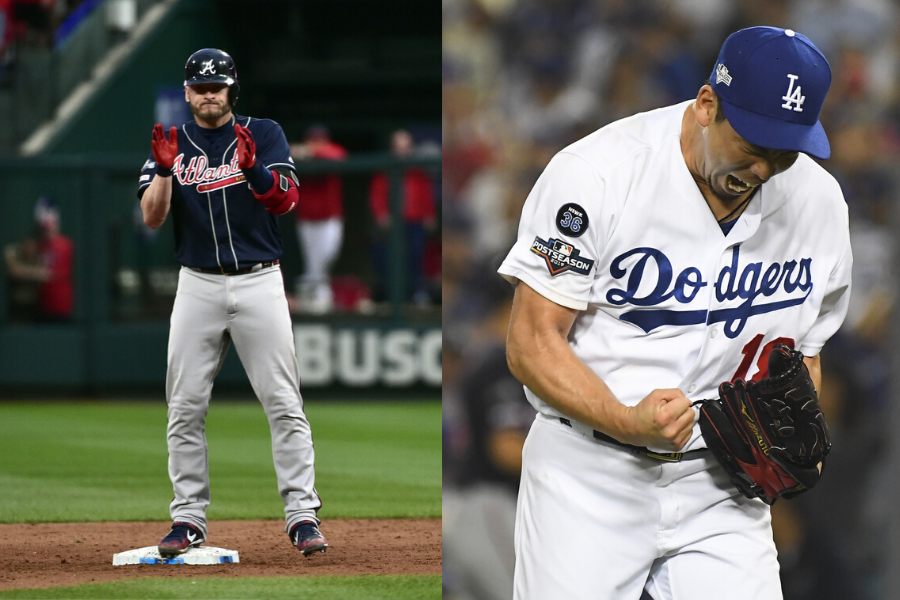 According to reports, the Twins offered somewhere around $100 million to open their bidding for Wheeler, but were informed early on that Minnesota wasn't a strong consideration. Wheeler ended up signing with the Phillies for five years and $118 million, spurning the White Sox and their bigger offer (rumor has it Chicago was upwards of $120 million). So, to even have a chance, the Twins would've needed to commit to Wheeler – who's never been an All-Star, never thrown 200 innings, never had an ERA+ better than 112 – at least $25 million annually, over at least five years. They missed on Wheeler, and as every top free agent starter came off the board, it became apparent this wasn't going to be Minnesota's avenue for making a splash. In fact, as the inaction dragged into mid-January, with Homer Bailey and Rich Hill slotted in as rotation solutions, it appeared the team might make not make any splash at all. A few weeks later, they have turned the $25 million they would've spent on Wheeler (if he'd have even taken it) into Josh Donaldson and Kenta Maeda, who are both locked in as long-term fixtures for a franchise steamrolling into its window of championship contention. That's an top-tier hitter and defender, along with a starting pitcher who – in a lot of ways – is pretty similar to Wheeler. https://twitter.com/NickNelsonMN/status/1225075138309259264 Their career ERAs are nearly identical, their career FIPs are identical, and Maeda has an (often substantial) advantage in several other categories: WHIP, K/9, K/BB, opponents' batting average and OPS, to name a few. Statistical profiles paint a similar picture, but stylistically, the two are wildly different. Wheeler is a 6-foot-4 athletic specimen who leans heavily on a 95 MPH fastball, while Maeda stands several inches shorter and tops out in the low 90s, craftily relying on a spin-heavy offspeed mix to induce tons of whiffs. Matthew Trueblood wrote a great piece here Tuesday explaining the righty's recipe for success. Although the numbers make a case for it, I'm not going to say Maeda is the better pitcher. Wheeler is two years younger, trending better, and capable of pitching deeper into games. (He's thrown 100 more innings over the past two seasons than Maeda, who served in a swingman role for Los Angeles.) If all things were equal and I had my choice, I'd easily opt for Wheeler. But, all things are not equal. Maeda costs about $100 million less, which allows the Twins to pair him with a borderline MVP-caliber third baseman. And Maeda does bring something Wheeler doesn't: experience in the heat of high stakes. The Mets have been mostly terrible during his career, and Wheeler's never appeared in the postseason. Maeda, since coming to the States in 2016, has been – according to fWAR – the fourth-best, third-best, sixth-best, and third-best pitcher on Dodgers teams that have averaged 98 wins, won the NL West four times, and gone to the World Series twice. He has pitched 24 times in the playoffs and he has pitched WELL, with a 3.31 ERA, 1.19 WHIP and 10.7 K/9 rate. Like Sergio Romo, Tyler Clippard, and Rich Hill before him, Maeda brings October seasoning to an emerging young group that showed its greenness against the Yankees last year. And his arrival causes a big ripple effect. The Twins are no longer totally desperate for both Jose Berrios and Jake Odorizzi to repeat their All-Star campaigns, having added a roughly equivalent pitcher. Bailey and Hill become backup plans and back-of-rotation parts. Randy Dobnak and Devin Smeltzer are conveniently distant depth. Lewis Thorpe is a true wild-card, with opportunity but no major pressure. The Twins didn't need to make this move. They did it because, as Thad Levine once assertively declared, they wanted to put their foot on someone's throat. While some fans will bemoan the enduring lack of an "ace," Maeda is an impact pitcher whose arrival alongside Donaldson dramatically improves an almost fully intact team, fresh off 101 wins and a home run title. It does cost the Twins a very good prospect in Brusdar Graterol (editor's note: we think?), which is the unspoken pitfall in this discussion. He's an exciting, nerve-racking, high-upside, risk-addled rarity of a talent whose departure the team could very well come to rue. But these are the bold gambits a team takes when aiming high. It's the all-in type move that never came during the 2000s, while Terry Ryan's clubs continually fell short. Yeah, signing Zack Wheeler back in November and calling it a day would've been cool. But instead, Twins fans have been treated to a spectacular, narrative-crushing turn of events in the offseason's home stretch that leaves no doubt as to the resolve of this front office and ownership. It's go time. Can spring training get here already?
 -
Fresh draft picks and international signings rule over this next segment of our 2020 Minnesota Twins top prospect rankings, which are brimming with dynamic talents of all kinds.Find more on these five Minnesota Twins prospects and much more in the 2020 Minnesota Twins Prospect Handbook. It’s available in paperback and as an ebook. 15. Matt Canterino, RHP Age: 22 (DOB: 12/14/1997) 2019 Stats (Rookie/A): 25 IP, 1.44 ERA, 0.64 WHIP, 11.2 K/9, 2.9 BB/9 ETA: 2021 2019 Ranking: NR Of the many things this rebuilt front office has done well, drafting ranks near the top. And while it's early, the returns thus far on their third pick from last summer have been exceedingly good. After an outstanding collegiate career at Rice University (alma mater of current Twins reliever Tyler Duffey), Canterino went to Minnesota in the second round, with the 54th overall pick. He quickly got to work against pro hitters, posting the marks you see above against overwhelmed – and generally younger – competition. 11. Lewis Thorpe, LHP Age: 24 (DOB: 11/23/95) 2019 Stats (AA/AAA): 129.2 IP, 3.54 ERA, 1.24 WHIP, 10.9 K/9, 2.5 BB/9 ETA: 2020 2018 Ranking: 8 Here's the way prospect analysis and the minor leagues almost inevitably tend to work: Uber-talented young ballplayers garner heavy praise and underground notoriety by dominating the lower tiers of the profession. Then, as they rise and the competition elevates, reality sets in. Their numbers come down to Earth. Their rankings slide. For example, it isn't like Nick Gordon's failures last year caused him to fall from No. 11 in 2019 to outside the top 20 in this year's rankings – he had a fine season at Triple-A – but the limitations of his skill set became clearer than ever at the highest level. And at age 24, the upside is getting harder to see. The same cannot be said for Thorpe. No, his surface numbers at Triple-A were not spectacular, much less his 6.18 ERA in a brief big-league run. But he was also a 23-year-old whose early development was derailed by health issues, and amidst the unspectacular results, his proclivity for missing bats was relentless. In 450 innings between the minors and majors, Thorpe has compiled 542 strikeouts, equating to a 10.8 K/9 rate, and he's done so while generally staying in the strike zone and keeping the ball in the park. That's the right recipe. A critical year lies ahead of him, standing at the front of the line for opportunities to impact a championship-caliber team. Twins Daily 2020 Top 20 Prospects Honorable Mentions 20. Jose Miranda, 3B/2B 19. Cole Sands, RHP 18. Travis Blankenhorn, 2B/LF 17. Misael Urbina, OF 16. Edwar Colina, RP 15. Matt Canterino, RHP 14. Matt Wallner, OF 13. Wander Javier, SS 12. Gilberto Celestino, OF 11. Lewis Thorpe, LHP Stop by tomorrow for prospect #10! MORE FROM TWINS DAILY — Latest Twins coverage from our writers — Recent Twins discussion in our forums — Follow Twins Daily via Twitter, Facebook or email Click here to view the article
-
 Find more on these five Minnesota Twins prospects and much more in the 2020 Minnesota Twins Prospect Handbook. It’s available in paperback and as an ebook. 15. Matt Canterino, RHP Age: 22 (DOB: 12/14/1997) 2019 Stats (Rookie/A): 25 IP, 1.44 ERA, 0.64 WHIP, 11.2 K/9, 2.9 BB/9 ETA: 2021 2019 Ranking: NR Of the many things this rebuilt front office has done well, drafting ranks near the top. And while it's early, the returns thus far on their third pick from last summer have been exceedingly good. After an outstanding collegiate career at Rice University (alma mater of current Twins reliever Tyler Duffey), Canterino went to Minnesota in the second round, with the 54th overall pick. He quickly got to work against pro hitters, posting the marks you see above against overwhelmed – and generally younger – competition. https://twitter.com/TFTwins/status/1223263416631980033 The right-hander was as dominant as can be in his first minor-league stint, which was kept in check at 25 innings after he totaled nearly 100 during the college season. Such a small sample is hardly decisive, but we can at least lean positive on his pre-draft scouting reports; per Baseball America, he was "one of the funkier pitchers in this year’s draft class," and also "one of the better high-floor options among the college arms." So far, so good. https://twitter.com/BaseballAmerica/status/1135752137886130176 14. Matt Wallner, OF Age: 22 (DOB: 12/12/97) 2018 Stats (Rookie/A): 291 PA, .258/.357/.452, 8 HR, 34 RBI ETA: 2022 2019 Ranking: NR Did I mention the Twins have drafted well lately? Wallner's contiguity to Canterino doesn't stop with landing next to him in these rankings; they were born two days apart, and drafted within 15 picks of one another last June, both out of southern colleges in the same conference. But unlike the Texas-native Canterino, Wallner is a local product, born and raised in Forest Lake. As a high schooler he was anointed Minnesota's Mr. Baseball in 2016. https://twitter.com/TwinsPics/status/1135747586290311169? After passing up the Twins as a 32nd-round pick that year, opting instead for Southern Miss, Wallner straight-up raked over three years in Conference USA. He amassed a .337/.461/.652 slash line over 189 games, earning his way up to the 39th overall pick in 2019. And unlike Canterino, Wallner wasn't held back by the constraints of a pitching workload post-draft. He got in a healthy 291 plate appearances as a pro at age 21. The results weren't necessarily amazing, but they're almost eerily similar to those Alex Kirilloff put up in his own Elizabethton debut, as a first-round pick in 2016. I think we all recall what followed in the (delayed) encore. 13. Wander Javier, SS Age: 21 (DOB: 12/29/98) 2019 Stats (A): 342 PA .177/.278/.323, 11 HR, 37 RBI ETA: 2023 2019 Ranking: 5 There's no positive spin to be placed on Javier's 2019 season. After losing his entire 2018 to shoulder surgery, the highly touted shortstop returned with a thud, posting a .601 OPS in Low-A ball while striking out at a hideous 34% rate. Most distressingly, there was no real showing of improvement throughout of the year – he was bad at the start, bad in the middle, bad at the end. He was such a complete void the plate that his somewhat refined work in the field barely registered. But Javier did not rank fifth on this list a year ago, even coming off a lost season, for no reason. His $4 million signing bonus from the Twins in 2015 remains the largest they've ever doled out for an international prospect. His performance as a teenager in 2017 and 2018 reinforced the investment. And for all he's been through, Javier is still only 21 – almost exactly a year younger than Wallner, who has followed such a very different path. Javier is still a young and raw player, whose immense talents and abilities are not negated by one undeniably futile season at age 20 in the unfamiliar American Midwest. Patience is warranted and luckily the Twins can afford it. 12. Gilberto Celestino, OF Age: 20 (DOB: 2/13/99) 2019 Stats (A/A+): 536 PA, 277/.349/.410, 10 HR, 54 RBI ETA: 2022 2019 Ranking: 16 Celestino came at a cost. The Twins also received a hard-throwing, volatile reliever named Jorge Alcala when they sent Ryan Pressly to the Astros in 2018, but there was always a sense Celestino was the centerpiece. Minnesota's front office clearly saw something in the teenage center fielder out of the Dominican Republic. Good on 'em. In the 2015 international signing period, Celestino was ranked by MLB Pipeline as the No. 11 talent, exactly one spot ahead of fellow Dominican Wander Javier. (The kismet in this section of the rankings is something, ain't it?) He signed with Houston for $2.5 million, and was coming along nicely when the Twins plucked him away at the trade deadline. His 2019 campaign got off to a brutal start, as Celestino hit .219/.299/.290 through the end of May at Cedar Rapids. Then, as summer set in, he took flight. From June 1st onward, the 20-year-old slashed .313/.380/.485, including a successful closing stint at High-A. With excellent plate discipline, he produced consistently, doing so as an athletic and rangy center fielder. The Twins might just have a gem on their hands here. Also he once did this, which was awesome: https://twitter.com/WBSC/status/1055987197814308864 11. Lewis Thorpe, LHP Age: 24 (DOB: 11/23/95) 2019 Stats (AA/AAA): 129.2 IP, 3.54 ERA, 1.24 WHIP, 10.9 K/9, 2.5 BB/9 ETA: 2020 2018 Ranking: 8 Here's the way prospect analysis and the minor leagues almost inevitably tend to work: Uber-talented young ballplayers garner heavy praise and underground notoriety by dominating the lower tiers of the profession. Then, as they rise and the competition elevates, reality sets in. Their numbers come down to Earth. Their rankings slide. For example, it isn't like Nick Gordon's failures last year caused him to fall from No. 11 in 2019 to outside the top 20 in this year's rankings – he had a fine season at Triple-A – but the limitations of his skill set became clearer than ever at the highest level. And at age 24, the upside is getting harder to see. The same cannot be said for Thorpe. No, his surface numbers at Triple-A were not spectacular, much less his 6.18 ERA in a brief big-league run. But he was also a 23-year-old whose early development was derailed by health issues, and amidst the unspectacular results, his proclivity for missing bats was relentless. In 450 innings between the minors and majors, Thorpe has compiled 542 strikeouts, equating to a 10.8 K/9 rate, and he's done so while generally staying in the strike zone and keeping the ball in the park. That's the right recipe. A critical year lies ahead of him, standing at the front of the line for opportunities to impact a championship-caliber team. Twins Daily 2020 Top 20 Prospects Honorable Mentions 20. Jose Miranda, 3B/2B 19. Cole Sands, RHP 18. Travis Blankenhorn, 2B/LF 17. Misael Urbina, OF 16. Edwar Colina, RP 15. Matt Canterino, RHP 14. Matt Wallner, OF 13. Wander Javier, SS 12. Gilberto Celestino, OF 11. Lewis Thorpe, LHP Stop by tomorrow for prospect #10! MORE FROM TWINS DAILY — Latest Twins coverage from our writers — Recent Twins discussion in our forums — Follow Twins Daily via Twitter, Facebook or email
 -
Fernando Romero: The Forgotten Flamethrower
Nick Nelson replied to Nick Nelson's topic in Twins Daily Front Page News
I'm not gonna say it's an entirely substantive sample, but Graterol showed me enough out of the bullpen last year to be confident in him. Held opponents to a .217/.295/.333 slash with a 21/6 K/BB ratio in 20 IP last year between AAA/MLB. Big difference between Graterol and Romero (+ many other young fireballers) is that Brusdar can keep it in the zone. Never been a big issue for him. -
The hype train is in full gear for the Minnesota Twins 2020 relief corps. Last Thursday night at the Diamond Awards, manager Rocco Baldelli opined that it's the best bullpen in baseball right now – a perfectly defensible claim. Bolstered by Brusdar Graterol's now-confirmed inclusion, this unit is loaded with emerging high-powered arms and proven veteran performers. One major wild-card, however, tends to get left out of the conversation.Fernando Romero's 2019 season was a disaster by any measure. It wasn't just his horrific 7.07 ERA in major-league 14 innings. Even more so, it was the totally uninspiring results he put forth while spending a majority of his campaign at Triple-A: 57.2 IP, 4.37 ERA, 1.42 WHIP, 4.5 BB/9, 12 wild pitches. The lasting memory in the minds of most fans is likely Romero's lone MLB appearance in June, when he was briefly recalled following a May demotion. With the Twins leading the Mariners 10-1 at Target Field, Romero was called upon to pitch the eighth inning in basically the lowest-stress situation imaginable. His sequence: walk, single, double, run-scoring wild pitch, walk. Romero was removed, sent back down, and didn't see the major-league mound again until September, when he served in essentially a mop-up role for the Twins. Now that we've got all that unpleasantness out of the way, let's circle back to the positives attached to the big right-hander, which are hardly erased by one bad season, no matter how discouraging: He's still only 25. Younger than – say – Corey Kluber was before he even joined the Cleveland rotation. Kluber seems a noteworthy comp because he was also struggling with his control around the same age. Romero's fastball is in a rare class. He averaged 97 MPH last year, which ranked 35th out of 646 MLB pitchers to throw 10+ innings, or in the 95th percentile. Among Twins pitchers, only Graterol can bring it harder. He can dominate with the slider. Buzzing in at 87 MPH, it's a very good pitch. Despite his struggles with the Twins in 2019, opponents batted just .154 and slugged .269 against the slide-piece, with an astounding 64.7% whiff rate (per Baseball Savant). He keeps the ball in the park. This aspect of his game curiously went amiss at the beginning of last season, as he gave up five home runs in his first six appearances between Triple-A and the majors, but the rest of the way he surrendered just two homers in 59 1/3 frames. This aligns with his broader track record – in 450 minor-league innings, Romero allowed only 18 long balls. He is a specimen. At 6-feet and 215 lbs, Romero is an intimidating force on the mound with the attitude to match. The qualities that gave him appeal as a late-inning weapon when the Twins switched his role last spring are still there. Now, Romero of course has some things working against him, the main one being command. As good as his stuff is, he rarely had any idea where it was going last year and that really cost him. But incumbent pitching coach Wes Johnson and newcomer Bob McClure have plenty to work with here. Will he be able to sync up with them from the start of the season? Or will he open back in Triple-A? Will the Twins continue to try making it work in the bullpen, or will they give him another shot at starting, with their bullpen depth so much stronger now than it was a year ago? In the late stages of last season, I expressed concern over the right-hander's status for 2020, noting that he'd burned three options and the Twins could be looking ahead to a tough decision this spring. But it was brought to my attention, via Jeremy Nygaard, that Romero likely qualifies for a fourth option. With this being the case, I'm thinking the best course of action might be to transition him back into a starting role at Rochester. The Twins' needs have shifted back in that direction, and in all the clamor to find an ace for the rotation, the team would be remiss to overlook an internal candidate with so many of the requisite attributes. If he can emerge again as a starting option, that would be a potentially huge boost. And if the move doesn't take, a relief fallback remains in place. Should Romero look good in spring training, perhaps the Twins will strike a happy medium by bringing him north out of camp, and using him in a long-relief or piggybacking type of capacity, while finding ways to fill innings until Michael Pineda is available. He could stay stretched without needing to be thrust back into a starter's regimen after pitching exclusively as a reliever in 2019. Perhaps more importantly, this plan would allow Romero to work closely with Johnson and McClure from the jump. Questions and decisions like these will rise to the forefront as Romero and the rest of the team's pitchers get ready to report to Fort Myers in two weeks. How would you prefer to see the team handle him moving forward? MORE FROM TWINS DAILY — Latest Twins coverage from our writers — Recent Twins discussion in our forums — Follow Twins Daily via Twitter, Facebook or email Click here to view the article
-
 Fernando Romero's 2019 season was a disaster by any measure. It wasn't just his horrific 7.07 ERA in major-league 14 innings. Even more so, it was the totally uninspiring results he put forth while spending a majority of his campaign at Triple-A: 57.2 IP, 4.37 ERA, 1.42 WHIP, 4.5 BB/9, 12 wild pitches. The lasting memory in the minds of most fans is likely Romero's lone MLB appearance in June, when he was briefly recalled following a May demotion. With the Twins leading the Mariners 10-1 at Target Field, Romero was called upon to pitch the eighth inning in basically the lowest-stress situation imaginable. His sequence: walk, single, double, run-scoring wild pitch, walk. Romero was removed, sent back down, and didn't see the major-league mound again until September, when he served in essentially a mop-up role for the Twins. Now that we've got all that unpleasantness out of the way, let's circle back to the positives attached to the big right-hander, which are hardly erased by one bad season, no matter how discouraging: He's still only 25. Younger than – say – Corey Kluber was before he even joined the Cleveland rotation. Kluber seems a noteworthy comp because he was also struggling with his control around the same age. Romero's fastball is in a rare class. He averaged 97 MPH last year, which ranked 35th out of 646 MLB pitchers to throw 10+ innings, or in the 95th percentile. Among Twins pitchers, only Graterol can bring it harder. He can dominate with the slider. Buzzing in at 87 MPH, it's a very good pitch. Despite his struggles with the Twins in 2019, opponents batted just .154 and slugged .269 against the slide-piece, with an astounding 64.7% whiff rate (per Baseball Savant). He keeps the ball in the park. This aspect of his game curiously went amiss at the beginning of last season, as he gave up five home runs in his first six appearances between Triple-A and the majors, but the rest of the way he surrendered just two homers in 59 1/3 frames. This aligns with his broader track record – in 450 minor-league innings, Romero allowed only 18 long balls. He is a specimen. At 6-feet and 215 lbs, Romero is an intimidating force on the mound with the attitude to match. The qualities that gave him appeal as a late-inning weapon when the Twins switched his role last spring are still there. Now, Romero of course has some things working against him, the main one being command. As good as his stuff is, he rarely had any idea where it was going last year and that really cost him. But incumbent pitching coach Wes Johnson and newcomer Bob McClure have plenty to work with here. Will he be able to sync up with them from the start of the season? Or will he open back in Triple-A? Will the Twins continue to try making it work in the bullpen, or will they give him another shot at starting, with their bullpen depth so much stronger now than it was a year ago? In the late stages of last season, I expressed concern over the right-hander's status for 2020, noting that he'd burned three options and the Twins could be looking ahead to a tough decision this spring. But it was brought to my attention, via Jeremy Nygaard, that Romero likely qualifies for a fourth option. With this being the case, I'm thinking the best course of action might be to transition him back into a starting role at Rochester. The Twins' needs have shifted back in that direction, and in all the clamor to find an ace for the rotation, the team would be remiss to overlook an internal candidate with so many of the requisite attributes. If he can emerge again as a starting option, that would be a potentially huge boost. And if the move doesn't take, a relief fallback remains in place. Should Romero look good in spring training, perhaps the Twins will strike a happy medium by bringing him north out of camp, and using him in a long-relief or piggybacking type of capacity, while finding ways to fill innings until Michael Pineda is available. He could stay stretched without needing to be thrust back into a starter's regimen after pitching exclusively as a reliever in 2019. Perhaps more importantly, this plan would allow Romero to work closely with Johnson and McClure from the jump. Questions and decisions like these will rise to the forefront as Romero and the rest of the team's pitchers get ready to report to Fort Myers in two weeks. How would you prefer to see the team handle him moving forward? MORE FROM TWINS DAILY — Latest Twins coverage from our writers — Recent Twins discussion in our forums — Follow Twins Daily via Twitter, Facebook or email
 -
Ranking the Remaining Free Agent Starters
Nick Nelson replied to Nick Nelson's topic in Twins Daily Front Page News
Does any team realistically view him a starter anymore? 85 of his 93 appearances over the past 2 years have come in relief. Having said that, it's a good thought given his age and history of starting make him a worthy candidate to discuss. -
Ranking the Remaining Free Agent Starters
Nick Nelson replied to Nick Nelson's topic in Twins Daily Front Page News
Neither had a slightly older Michael Pineda, for what it's worth. Re: improvements over Dobnak/Thorpe... they don't need to be. It's about creating more options and contingencies. With the exception of Taijuan, I can't see any of these guys commanding a guaranteed deal, so there's not much downside in bringing one or more into camp for a look. The Twins should basically have their pick. Where else are these guys gonna get a better opportunity?

