



Nick Nelson
-
Posts
8,327 -
Joined
-
Last visited
-
Days Won
56
Content Type
Profiles
News
Minnesota Twins Videos
2026 Minnesota Twins Top Prospects Ranking
2022 Minnesota Twins Draft Picks
Minnesota Twins Free Agent & Trade Rumors, Notes, & Tidbits
Guides & Resources
2023 Minnesota Twins Draft Picks
The Minnesota Twins Players Project
2024 Minnesota Twins Draft Picks
2025 Minnesota Twins Draft Pick Tracker
2026 Minnesota Twins Draft Tracker: Picks & Bonuses
Forums
Blogs
Events
Store
Downloads
Gallery
Everything posted by Nick Nelson
-
 After covering Nos. 11 through 20 in Part 1 and Part 2 of these rankings, we're now venturing into the Top 10. These are foundational pieces in what the Twins are trying to accomplish; ranking these players against one another wasn't easy. Read on to see how it shook out.First, to reiterate the parameters and stipulations: Things that are factored into these rankings: production, age, upside, pedigree, health, length of team control, favorability of contract, positional scarcity (within the system, and generally).Players are people. Their value to the organization, and its fans, goes well beyond the strictly business-like scope we're using here. But for the purposes of this list, we're analyzing solely in terms of asset evaluation. Intangible qualities and popularity are not factors. (Sorry Willians.)The idea is to assess their importance to the future of the Minnesota Twins. In this regard, it's not exactly a ranking in terms of trade value, because that's dependent on another team's situation and needs. (For instance, Jake Cave and LaMonte Wade, Jr. would be more valuable to many other teams than they are to the Twins, who are rich with short-term and long-term corner outfield depth.)This is a snapshot in time. Rankings are heavily influenced by recent trends and where things stood as of the end of 2019.Current major-leaguers and prospects are all eligible. The ultimate goal here to answer this question: Which current players in the organization are most indispensable to fulfilling the vision of building a champion?Any questions or quibbles, holler in the comments. Let's continue the countdown. TOP 20 MINNESOTA TWINS ASSETS OF 2020 (6-10) 10. Luis Arraez, 2B 2019 Ranking: NR Last offseason, the Twins briefly considered exposing Arraez to the Rule 5 draft but thought better of it, adding him to the 40-man roster one day after doing the same for Nick Gordon and LaMonte Wade, Jr. It was a wise decision to say the least. The scrappy and perpetually overlooked Arraez raked everywhere in 2019. He batted .342 at Double-A, .348 at Triple-A, and most impressively, .342 during a 92-game major-league debut that saw him finish sixth for AL Rookie of the Year. At age 22, Arraez was a disciplined OBP force, bringing balance to an aggressive and power-laden lineup. He showed solid defense at second and even looked capable in left. The upward trend with his power – he hit four homers with the Twins after totaling six in 367 minor-league games – hints toward offensive upside yet to be tapped. 9. Alex Kirilloff, OF 2019 Ranking: 4 Kirilloff didn't have a bad year in 2019. Taking on Double-A as a 21-year-old, he batted .283 with a .756 OPS in 94 games. Perfectly solid numbers given the context. But he didn't nearly match the excellence of his breakout 2018 campaign, and lost extensive time to a wrist injury, which is a tough developmental blow for a young player who missed all of 2017 due to Tommy John. Kirilloff remains the best pure hitting prospect in the organization, but the luster has worn off slightly and his indispensability has diminished somewhat with the continued rise of Trevor Larnach and others. This explains why Kirilloff ranks as a Top 10 asset rather than a Top 5 asset this time around, but he's still plenty valuable and exciting. 8. Jordan Balazovic, RHP 2019 Ranking: NR The same thought process that led to Jhoan Duran ranking 13th applies here: "Pitching prospects with high ceilings that are close to the major leagues are valuable to every franchise, and especially to the Twins in this moment." Balazovic is a bit further from the majors than Duran, having finished at High-A in 2019, but he's on a higher prospect tier. In fact, Balazovic is the best pitching prospect in the system who has yet to reach the majors. Duran has great stuff, but he lacks the consistent results to back it up. This is where Balazovic separates. Since joining the organization as a fifth-round pick in 2016, the right-hander has simply performed, registering a 3.32 ERA, 1.15 WHIP, and 10.0 K/9 rate through his first 228 innings as a pro. At 6'5" and 214 lbs, he's a big sturdy athlete with a mid-90s fastball and advanced command. He was absolutely sensational in 2019, with a 2.69 ERA, 0.99 WHIP and 12.4 K/9 rate between two levels of A-ball at age 20, so his stock is riding high. Can he build upon it? 7. Byron Buxton, OF 2019 Ranking: 3 A healthy Buxton can be one of the most impactful difference-makers in Major League Baseball. This was the premise for ranking him No. 1 two years ago, and No. 3 last year. It was reinforced in 2019 when he was on the field, as the center fielder accrued 2.7 fWAR in just 87 games with an .827 OPS, 44 extra-base hits, 14 steals, and almost unparalleled defensive value. Alas, the overriding story of Buxton's season was, once again, injury. And it's one that spills over into 2020, as the 26-year-old is currently in the process of rehabbing from significant shoulder surgery. He's opened four different seasons with the Twins and played 100 games in only one of them. The mounting physical uncertainties make it impossible to trust his reliability going forward, making him feel like more of a bonus factor than centerpiece crux. And while free agency is still three years away, it's no longer a tiny blip on the horizon. With that said, if he can find a way to make it happen, a full healthy and productive season from Buxton will be more pivotal to Minnesota's championship hopes than any ace pitcher the Twins could sign or trade for. I firmly believe that. 6. Mitch Garver, C 2019 Ranking: 11 Is Garver the best catcher in baseball? Is he one of the best offensive backstops in MLB history? Will he be an MVP contender for years to come? Based entirely on the sample of his 2019 season, the answer to all those questions would be "yes," and he'd be No. 1 in these rankings with a bullet. But that sample amounts to only 93 games, and is so wildly out of line with his previous track record that it's tough to know exactly how to weight it. Garver has shown a knack for improving himself and disproving doubters, transforming from ninth-round draft pick to fringy catching prospect to bona fide big-league starter, but the leap last year was drastic by any standard. Thirty-one homers and a .995 OPS in 93 games, from a CATCHER (one with noticeably improved defense), is nuts. But it remains to be seen whether Garver was playing out of his mind for six months with a juiced ball, or setting a new norm. It bears noting that he turns 29 next week, making him the oldest player in this Top 10 by a sizable margin, and the only one who's not on the front end of his physical prime. Regardless, Garver has clearly established himself as a long-term building block, with four years of team control remaining. RECAPPING THE RANKINGS SO FAR: 20. Ryan Jeffers, C 19. Eddie Rosario, OF 18. Michael Pineda, RHP 17. Nelson Cruz, DH 16. Tyler Duffey, RHP 15. Jake Odorizzi, RHP 14. Trevor Larnach, OF 13. Jhoan Duran, RHP 12. Taylor Rogers, LHP 11. Miguel Sano, 3B 10. Luis Arraez, 2B 9. Alex Kirilloff, OF 8. Jordan Balazovic, RHP 7. Byron Buxton OF 6. Mitch Garver, C Check back in tomorrow for Part 4. MORE FROM TWINS DAILY — Latest Twins coverage from our writers — Recent Twins discussion in our forums — Follow Twins Daily via Twitter, Facebook or email Click here to view the article
- 23 replies
-
- 2
-

-
- luis arraez
- alex kirilloff
- (and 3 more)
-
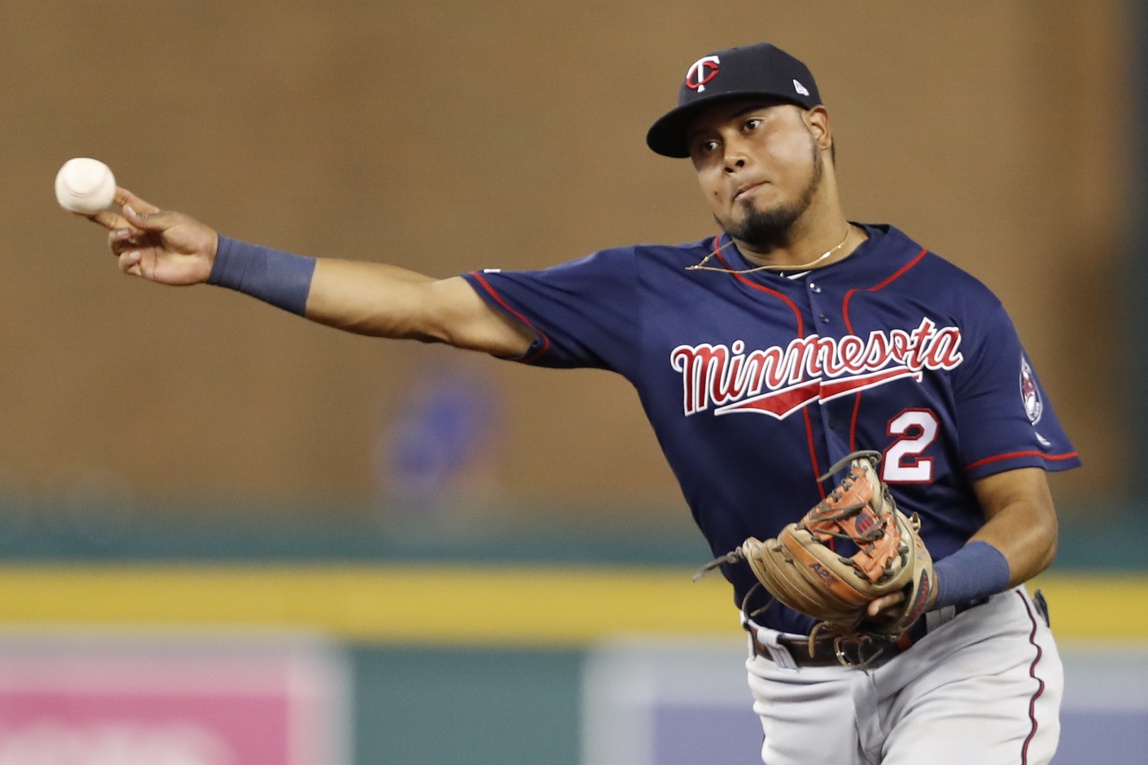 First, to reiterate the parameters and stipulations: Things that are factored into these rankings: production, age, upside, pedigree, health, length of team control, favorability of contract, positional scarcity (within the system, and generally). Players are people. Their value to the organization, and its fans, goes well beyond the strictly business-like scope we're using here. But for the purposes of this list, we're analyzing solely in terms of asset evaluation. Intangible qualities and popularity are not factors. (Sorry Willians.) The idea is to assess their importance to the future of the Minnesota Twins. In this regard, it's not exactly a ranking in terms of trade value, because that's dependent on another team's situation and needs. (For instance, Jake Cave and LaMonte Wade, Jr. would be more valuable to many other teams than they are to the Twins, who are rich with short-term and long-term corner outfield depth.) This is a snapshot in time. Rankings are heavily influenced by recent trends and where things stood as of the end of 2019. Current major-leaguers and prospects are all eligible. The ultimate goal here to answer this question: Which current players in the organization are most indispensable to fulfilling the vision of building a champion? Any questions or quibbles, holler in the comments. Let's continue the countdown. TOP 20 MINNESOTA TWINS ASSETS OF 2020 (6-10) 10. Luis Arraez, 2B 2019 Ranking: NR Last offseason, the Twins briefly considered exposing Arraez to the Rule 5 draft but thought better of it, adding him to the 40-man roster one day after doing the same for Nick Gordon and LaMonte Wade, Jr. It was a wise decision to say the least. The scrappy and perpetually overlooked Arraez raked everywhere in 2019. He batted .342 at Double-A, .348 at Triple-A, and most impressively, .342 during a 92-game major-league debut that saw him finish sixth for AL Rookie of the Year. At age 22, Arraez was a disciplined OBP force, bringing balance to an aggressive and power-laden lineup. He showed solid defense at second and even looked capable in left. The upward trend with his power – he hit four homers with the Twins after totaling six in 367 minor-league games – hints toward offensive upside yet to be tapped. 9. Alex Kirilloff, OF 2019 Ranking: 4 Kirilloff didn't have a bad year in 2019. Taking on Double-A as a 21-year-old, he batted .283 with a .756 OPS in 94 games. Perfectly solid numbers given the context. But he didn't nearly match the excellence of his breakout 2018 campaign, and lost extensive time to a wrist injury, which is a tough developmental blow for a young player who missed all of 2017 due to Tommy John. Kirilloff remains the best pure hitting prospect in the organization, but the luster has worn off slightly and his indispensability has diminished somewhat with the continued rise of Trevor Larnach and others. This explains why Kirilloff ranks as a Top 10 asset rather than a Top 5 asset this time around, but he's still plenty valuable and exciting. 8. Jordan Balazovic, RHP 2019 Ranking: NR The same thought process that led to Jhoan Duran ranking 13th applies here: "Pitching prospects with high ceilings that are close to the major leagues are valuable to every franchise, and especially to the Twins in this moment." Balazovic is a bit further from the majors than Duran, having finished at High-A in 2019, but he's on a higher prospect tier. In fact, Balazovic is the best pitching prospect in the system who has yet to reach the majors. Duran has great stuff, but he lacks the consistent results to back it up. This is where Balazovic separates. Since joining the organization as a fifth-round pick in 2016, the right-hander has simply performed, registering a 3.32 ERA, 1.15 WHIP, and 10.0 K/9 rate through his first 228 innings as a pro. At 6'5" and 214 lbs, he's a big sturdy athlete with a mid-90s fastball and advanced command. He was absolutely sensational in 2019, with a 2.69 ERA, 0.99 WHIP and 12.4 K/9 rate between two levels of A-ball at age 20, so his stock is riding high. Can he build upon it? 7. Byron Buxton, OF 2019 Ranking: 3 A healthy Buxton can be one of the most impactful difference-makers in Major League Baseball. This was the premise for ranking him No. 1 two years ago, and No. 3 last year. It was reinforced in 2019 when he was on the field, as the center fielder accrued 2.7 fWAR in just 87 games with an .827 OPS, 44 extra-base hits, 14 steals, and almost unparalleled defensive value. Alas, the overriding story of Buxton's season was, once again, injury. And it's one that spills over into 2020, as the 26-year-old is currently in the process of rehabbing from significant shoulder surgery. He's opened four different seasons with the Twins and played 100 games in only one of them. The mounting physical uncertainties make it impossible to trust his reliability going forward, making him feel like more of a bonus factor than centerpiece crux. And while free agency is still three years away, it's no longer a tiny blip on the horizon. With that said, if he can find a way to make it happen, a full healthy and productive season from Buxton will be more pivotal to Minnesota's championship hopes than any ace pitcher the Twins could sign or trade for. I firmly believe that. 6. Mitch Garver, C 2019 Ranking: 11 Is Garver the best catcher in baseball? Is he one of the best offensive backstops in MLB history? Will he be an MVP contender for years to come? Based entirely on the sample of his 2019 season, the answer to all those questions would be "yes," and he'd be No. 1 in these rankings with a bullet. But that sample amounts to only 93 games, and is so wildly out of line with his previous track record that it's tough to know exactly how to weight it. Garver has shown a knack for improving himself and disproving doubters, transforming from ninth-round draft pick to fringy catching prospect to bona fide big-league starter, but the leap last year was drastic by any standard. Thirty-one homers and a .995 OPS in 93 games, from a CATCHER (one with noticeably improved defense), is nuts. But it remains to be seen whether Garver was playing out of his mind for six months with a juiced ball, or setting a new norm. It bears noting that he turns 29 next week, making him the oldest player in this Top 10 by a sizable margin, and the only one who's not on the front end of his physical prime. Regardless, Garver has clearly established himself as a long-term building block, with four years of team control remaining. RECAPPING THE RANKINGS SO FAR: 20. Ryan Jeffers, C 19. Eddie Rosario, OF 18. Michael Pineda, RHP 17. Nelson Cruz, DH 16. Tyler Duffey, RHP 15. Jake Odorizzi, RHP 14. Trevor Larnach, OF 13. Jhoan Duran, RHP 12. Taylor Rogers, LHP 11. Miguel Sano, 3B 10. Luis Arraez, 2B 9. Alex Kirilloff, OF 8. Jordan Balazovic, RHP 7. Byron Buxton OF 6. Mitch Garver, C Check back in tomorrow for Part 4. MORE FROM TWINS DAILY — Latest Twins coverage from our writers — Recent Twins discussion in our forums — Follow Twins Daily via Twitter, Facebook or email
 -
This is a debate perhaps better saved for the installment Arraez appears in, but a few points to make regarding Sano vs. Arraez: 2 years of team control vs 5 yearsCorner IF vs middle IF26 years old vs 22 years old$15m+ over the next two years vs ~$1m over the next two yearsHealth/durability I think Arraez would return more in a trade right now personally, but zeroing in on the scope of this discussion, I think he's more important to the Twins because his OBP/discipline are more scarce to the team than Sano's aggressive power. But it's close (as you'll see) and a valid argument.
- 14 replies
-
- 1
-
-
- jake odorizzi
- taylor rogers
- (and 3 more)
-
It's hard for a straight-up reliever to crack the top 10 on a list like this. Rogers did last year only because the team's scarcity of capable bullpen options meant he was basically the only thing separating them from a disastrous relief unit. (Could you imagine the first few months last year without him?) Now, with guys like Duffey, May, Romo, Clippard and Littell in place, they aren't quite as dependent on him. That's the thinking, basically.
- 14 replies
-
- 10
-
-
- jake odorizzi
- taylor rogers
- (and 3 more)
-
The next portion of these rankings will introduce some difficult questions. For example, who's more important to the Twins' future: an established All-Star starter under control for one year, or a high-upside pitching prospect who has yet to debut? (Catch up on Part 1 here.)First, to reiterate the parameters and stipulations: Things that are factored into these rankings: production, age, upside, pedigree, health, length of team control, favorability of contract, positional scarcity (within the system, and generally).Players are people. Their value to the organization, and its fans, goes well beyond the strictly business-like scope we're using here. But for the purposes of this list, we're analyzing solely in terms of asset evaluation. Intangible qualities and popularity are not factors. (Sorry Willians.)The idea is to assess their importance to the future of the Minnesota Twins. In this regard, it's not exactly a ranking in terms of trade value, because that's dependent on another team's situation and needs. (For instance, Jake Cave and LaMonte Wade, Jr. would be more valuable to many other teams than they are to the Twins, who are rich with short-term and long-term corner outfield depth.)This is a snapshot in time. Rankings are heavily influenced by recent trends and where things stood as of the end of 2019.Current major-leaguers and prospects are all eligible. The ultimate goal here to answer this question: Which current players in the organization are most indispensable to fulfilling the vision of building a champion?Any questions or quibbles, holler in the comments. Let's continue the countdown. TOP 20 MINNESOTA TWINS ASSETS OF 2020 (11 through 15) 15. Jake Odorizzi, RHP 2019 Ranking: NR Odorizzi is a challenging guy to rank. His situation is similar to that of Nelson Cruz, who I had two spots lower at No. 17. Both players are under contract for only one more year, which limits their asset value. But both are absolutely key to the 2020 outlook, and I would argue Odorizzi even more so given the relative depth of power-hitting, and lack of high-end pitching. And unlike Cruz, who will turn 40 next year with a balky wrist, Odorizzi turns 30 in March with a fully clean bill of health. In 2019, he was an All-Star, ranked eighth among AL starters in fWAR, and held his own in an ALDS matchup against the Yankees. 14. Trevor Larnach, OF 2019 Ranking: NR As a bat-first prospect who can't play a premium position, it's tough to climb up a list like this. Larnach was on the fringe last year as a first-round draft pick who impressed in his debut, but putting up numbers in rookie ball and Low-A is no rare feat for a slugger fresh out of college. In 2019, Larnach raised his distinction considerably. He opened up in the pitcher-friendly Florida State League, where his .316 average and .842 OPS in 84 games led all players. Then he moved up to Double-A and hardly missed a beat, finishing with a .295/.387/.455 slash line as a 22-year-old at Pensacola. As a result of the monster campaign, he earned Twins Minor League Player of the Year honors and figures to make big jumps in 2020 preseason top prospect lists. As of right now, he's probably most valuable to Minnesota as trade collateral, but his imminent impact potential can help the team breathe easier about its uncertainty at first base. 13. Jhoan Duran, RHP 2019 Ranking: NR Pitching prospects with high ceilings that are close to the major leagues are valuable to every franchise, and especially to the Twins in this moment. In 2019, Duran reached Double-A as a 21-year-old, becoming one of the youngest pitchers to throw in the league. Despite his youth, he overpowered hitters with a 16% swinging strike rate yielding a 41-to-9 K/BB ratio in 37 innings. This after he put up a 3.23 ERA and 11.0 K/9 in 78 innings at High-A. Entering his age 22 season, Duran has already established himself in the high minors and built a strong workload baseline, with 100 and 115 innings pitched the last two years. His odds of sticking as a starter seem higher than most electric arms at his stage, which gives him a big boost here. As ever, though, the TNSTAAPP caveat applies. 12. Taylor Rogers, LHP 2019 Ranking: 10 With yet another phenomenal season out of the bullpen, Rogers further solidified himself as Minnesota's relief rock. In some ways, he was more essential than ever, serving as the safety valve in an oft-beleaguered unit and recording six-plus outs on nine different occasions. He ranked fifth among MLB relievers in Win Probability Added, fifth in fWAR, and second in K/BB ratio. He doesn't feel quite as indispensable as he did a year ago, only because a few other trustworthy high-leverage options have emerged for the Twins, but no one can match what the lefty brings. He's durable, consistent, and matchup-proof. Best of all, he's still under team control for three more years (though his cost could rise quickly in arbitration if he keeps accumulating saves). 11. Miguel Sano, 3B 2019 Ranking: 14 No player roused more debate and disagreement in the last rankings than Sano. One year ago, he was shrouded in mystery, coming off an ugly season that included a "reset" demotion to Single-A and further issues with a surgically repaired leg. His run of mishaps carried over into the spring of 2019, when a questionably treated heel laceration cost him a quarter of the season, but upon returning Sano made his presence felt and restored his status as a deeply feared hitter. In just 105 games, Sano hit 34 home runs with 79 RBIs. His .579 slugging percentage ranked 11th among big-leaguers with 400+ plate appearances. His average exit velocity and barrels per plate appearance % were both fifth-highest in baseball. In Cleveland, late in the season, Sano delivered the fatal blow in the AL Central race with a devastating grand slam. He narrowly misses the Top 10 because of defensive shortcomings at third, and because durability concerns will persist until they don't (he still hasn't played more than 116 games in an MLB season). The Twins are down to two years of team control remaining. RECAPPING THE RANKINGS SO FAR: 20. Ryan Jeffers, C 19. Eddie Rosario, OF 18. Michael Pineda, RHP 17. Nelson Cruz, DH 16. Tyler Duffey, RHP 15. Jake Odorizzi, RHP 14. Trevor Larnach, OF 13. Jhoan Duran, RHP 12. Taylor Rogers, LHP 11. Miguel Sano, 3B Check back in tomorrow for Part 3. MORE FROM TWINS DAILY — Latest Twins coverage from our writers — Recent Twins discussion in our forums — Follow Twins Daily via Twitter, Facebook or email Click here to view the article
-
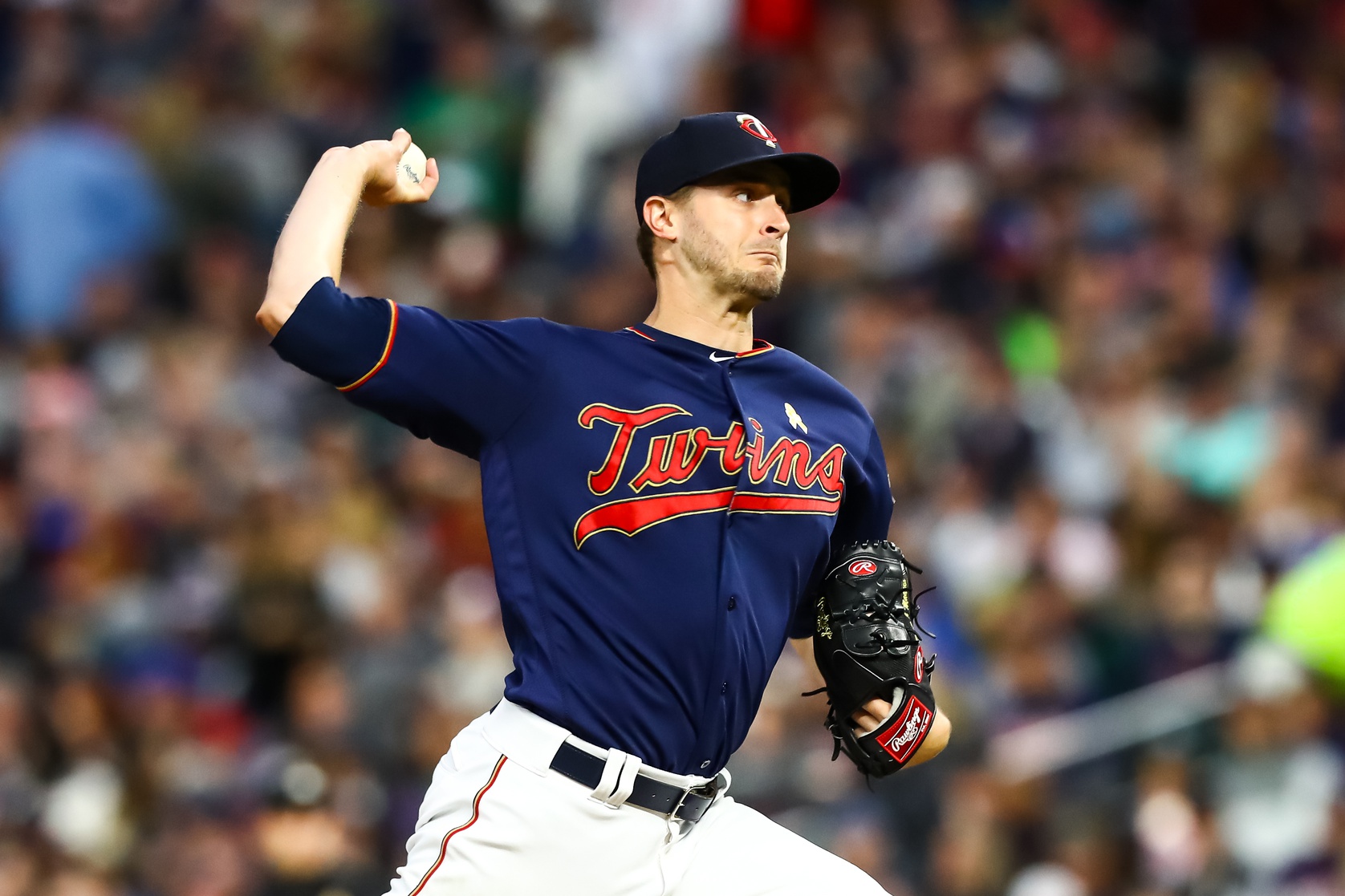 First, to reiterate the parameters and stipulations: Things that are factored into these rankings: production, age, upside, pedigree, health, length of team control, favorability of contract, positional scarcity (within the system, and generally). Players are people. Their value to the organization, and its fans, goes well beyond the strictly business-like scope we're using here. But for the purposes of this list, we're analyzing solely in terms of asset evaluation. Intangible qualities and popularity are not factors. (Sorry Willians.) The idea is to assess their importance to the future of the Minnesota Twins. In this regard, it's not exactly a ranking in terms of trade value, because that's dependent on another team's situation and needs. (For instance, Jake Cave and LaMonte Wade, Jr. would be more valuable to many other teams than they are to the Twins, who are rich with short-term and long-term corner outfield depth.) This is a snapshot in time. Rankings are heavily influenced by recent trends and where things stood as of the end of 2019. Current major-leaguers and prospects are all eligible. The ultimate goal here to answer this question: Which current players in the organization are most indispensable to fulfilling the vision of building a champion? Any questions or quibbles, holler in the comments. Let's continue the countdown. TOP 20 MINNESOTA TWINS ASSETS OF 2020 (11 through 15) 15. Jake Odorizzi, RHP 2019 Ranking: NR Odorizzi is a challenging guy to rank. His situation is similar to that of Nelson Cruz, who I had two spots lower at No. 17. Both players are under contract for only one more year, which limits their asset value. But both are absolutely key to the 2020 outlook, and I would argue Odorizzi even more so given the relative depth of power-hitting, and lack of high-end pitching. And unlike Cruz, who will turn 40 next year with a balky wrist, Odorizzi turns 30 in March with a fully clean bill of health. In 2019, he was an All-Star, ranked eighth among AL starters in fWAR, and held his own in an ALDS matchup against the Yankees. 14. Trevor Larnach, OF 2019 Ranking: NR As a bat-first prospect who can't play a premium position, it's tough to climb up a list like this. Larnach was on the fringe last year as a first-round draft pick who impressed in his debut, but putting up numbers in rookie ball and Low-A is no rare feat for a slugger fresh out of college. In 2019, Larnach raised his distinction considerably. He opened up in the pitcher-friendly Florida State League, where his .316 average and .842 OPS in 84 games led all players. Then he moved up to Double-A and hardly missed a beat, finishing with a .295/.387/.455 slash line as a 22-year-old at Pensacola. As a result of the monster campaign, he earned Twins Minor League Player of the Year honors and figures to make big jumps in 2020 preseason top prospect lists. As of right now, he's probably most valuable to Minnesota as trade collateral, but his imminent impact potential can help the team breathe easier about its uncertainty at first base. 13. Jhoan Duran, RHP 2019 Ranking: NR Pitching prospects with high ceilings that are close to the major leagues are valuable to every franchise, and especially to the Twins in this moment. In 2019, Duran reached Double-A as a 21-year-old, becoming one of the youngest pitchers to throw in the league. Despite his youth, he overpowered hitters with a 16% swinging strike rate yielding a 41-to-9 K/BB ratio in 37 innings. This after he put up a 3.23 ERA and 11.0 K/9 in 78 innings at High-A. Entering his age 22 season, Duran has already established himself in the high minors and built a strong workload baseline, with 100 and 115 innings pitched the last two years. His odds of sticking as a starter seem higher than most electric arms at his stage, which gives him a big boost here. As ever, though, the TNSTAAPP caveat applies. 12. Taylor Rogers, LHP 2019 Ranking: 10 With yet another phenomenal season out of the bullpen, Rogers further solidified himself as Minnesota's relief rock. In some ways, he was more essential than ever, serving as the safety valve in an oft-beleaguered unit and recording six-plus outs on nine different occasions. He ranked fifth among MLB relievers in Win Probability Added, fifth in fWAR, and second in K/BB ratio. He doesn't feel quite as indispensable as he did a year ago, only because a few other trustworthy high-leverage options have emerged for the Twins, but no one can match what the lefty brings. He's durable, consistent, and matchup-proof. Best of all, he's still under team control for three more years (though his cost could rise quickly in arbitration if he keeps accumulating saves). 11. Miguel Sano, 3B 2019 Ranking: 14 No player roused more debate and disagreement in the last rankings than Sano. One year ago, he was shrouded in mystery, coming off an ugly season that included a "reset" demotion to Single-A and further issues with a surgically repaired leg. His run of mishaps carried over into the spring of 2019, when a questionably treated heel laceration cost him a quarter of the season, but upon returning Sano made his presence felt and restored his status as a deeply feared hitter. In just 105 games, Sano hit 34 home runs with 79 RBIs. His .579 slugging percentage ranked 11th among big-leaguers with 400+ plate appearances. His average exit velocity and barrels per plate appearance % were both fifth-highest in baseball. In Cleveland, late in the season, Sano delivered the fatal blow in the AL Central race with a devastating grand slam. He narrowly misses the Top 10 because of defensive shortcomings at third, and because durability concerns will persist until they don't (he still hasn't played more than 116 games in an MLB season). The Twins are down to two years of team control remaining. RECAPPING THE RANKINGS SO FAR: 20. Ryan Jeffers, C 19. Eddie Rosario, OF 18. Michael Pineda, RHP 17. Nelson Cruz, DH 16. Tyler Duffey, RHP 15. Jake Odorizzi, RHP 14. Trevor Larnach, OF 13. Jhoan Duran, RHP 12. Taylor Rogers, LHP 11. Miguel Sano, 3B Check back in tomorrow for Part 3. MORE FROM TWINS DAILY — Latest Twins coverage from our writers — Recent Twins discussion in our forums — Follow Twins Daily via Twitter, Facebook or email
 -
I appreciate that! But I definitely was looking back at last year's and cringing at some of the inclusions (Adalberto Mejia wtf). I honestly feel some of the convos that played out in the comments on those pieces helped refine my thinking, and this year's will turn out a lot better. But of course the volatility will never change...
- 24 replies
-
- 2
-
-
- ryan jeffers
- eddie rosario
- (and 3 more)
-
If Jeffers emerges in the next couple years as they hope, it's going to create a nice lil situation for the Twins. One thing I haven't really heard anyone talk about this offseason is Garver's trade value. Which makes sense, cuz, why would they move him right now. But if he has a remotely similar year, his appeal is gonna be off the charts – a bona fide MVP-caliber catcher with three years of control. We're talking Realmuto type trade value if not more. If the Twins are feeling pretty good about Jeffers at that point, what kinda pitcher could Garver net them...? (Not to shift the convo to Garver too much because of course he'll be featured in an upcoming installment.)
- 24 replies
-
- 1
-
-
- ryan jeffers
- eddie rosario
- (and 3 more)
-
In each of the past two winters, right around the turn of a new year, I've put together series of lists ranking the top 20 Minnesota Twins players and prospects in terms of their specific asset value to the organization. (See: 2018 and 2019.) It's a fun exercise and prompts some interesting discussions, so let's do it again as 2020 gets underway.First, here are the parameters and stipulations: Things that are factored into these rankings: production, age, upside, pedigree, health, length of team control, favorability of contract, positional scarcity (within the system, and generally).Players are people. Their value to the organization, and its fans, goes well beyond the strictly business-like scope we're using here. But for the purposes of this list, we're analyzing solely in terms of asset evaluation. Intangible qualities and popularity are not factors. (Sorry Willians.)The idea is to assess their importance to the future of the Minnesota Twins. In this respect, it's not exactly a ranking in terms of trade value, because that's dependent on another team's situation and needs. (For instance, Jake Cave and LaMonte Wade, Jr. would be more valuable to many other teams than they are to the Twins, who are rich with short-term and long-term corner outfield depth.)This is a snapshot in time. Rankings are heavily influenced by recent trends and where things stood as of the end of 2019.Current major-leaguers and prospects are all eligible. The ultimate goal here to answer this question: Which current players in the organization are most indispensable to fulfilling the vision of building a champion?Any questions or quibbles, holler in the comments. Let's start the countdown. TOP 20 MINNESOTA TWINS ASSETS OF 2020 (16-20) 20. Ryan Jeffers, C 2019 Ranking: NR An early example of positional scarcity playing a role in these rankings. There are better Twins prospects than Jeffers who will not appear on this list, but his presence in the system is especially vital. The 2018 second-round draft pick is a 22-year-old catcher who has already reached Double-A, hitting at every level. Folks in the know rave about his defensive skills, and pitch-framing especially. Thus far Jeffers has done nothing but validate the team's belief in him. A catcher who shines both ways is among the game's most coveted assets. Luckily, the Twins already have one of those in place at the major-league level, which is one of the only reasons Jeffers is even this low. (Spoiler: Fellow high-grade catching prospect Ben Rortvedt didn't make the Top 20, but is a short step behind Jeffers and is definitely an honorable mention.) 19. Eddie Rosario, OF 2019 Ranking: 8 I found Rosario's 2019 campaign a tad disappointing, despite the precedent-shattering HR and RBI totals, and I know I'm not alone. But we shouldn't be totally consumed by recency bias in evaluating him. The prior two years he was the team's second-most valuable player behind Brian Dozier (per fWAR) and I hope we can all agree his practical impact in 2019 was greater than OBP/defense-hampered metrics suggest. (To what extent is debatable.) The fact remains: Rosario has yet to put together a completely transcendent season, and he's now 28 with two years of team control remaining. His expected salary via arbitration in 2020 (~$7-9 million) is reasonable – hardly a bargain. Rosario absolutely a guy you like to have around, but with all the corner outfield depth, and crystallizing deficiencies to accompany his almost unparalleled "unstoppable when hot" dynamic, he slides down in this ranking. 18. Michael Pineda, RHP 2019 Ranking: NR Two years of team control at an extremely reasonable cost. When signed, I estimated that Pineda's newly minted contract will be looked back at as the best one executed by Minnesota's front office this offseason, and that's why he ranks here despite the evident drawbacks. Yes, he'll miss ~12% of those two years due to suspension. But this might actually be beneficial in terms of workload management, and Pineda's established high-end performance level in the rotation is critical for the Twins. His injury history can't be ignored, but the mix of ability, recent health record, and contract appeal make him an essential short-term fixture. 17. Nelson Cruz, DH 2019 Ranking: NR Cruz has some major things working against him on a list like this. He's 39. Offers zero defensive value. Nagging wrist problem lingers as a concern. Only under contract for one more year. As you zoom out to the big-picture view, the designated hitter's significance diminishes. But when it comes to 2020 – a critical year brimming with opportunity – few figures on the roster loom larger. Cruz was one of the best hitters in the American League this year. The two players ahead of him in wOBA were Mike Trout and Alex Bregman, who finished 1-2 in the AL MVP voting. Even with his circumstantial detriments, Cruz's elite hitting ability and elder statesmanship – in a clubhouse where he's older than the manager – are irreplaceable at this moment. 16. Tyler Duffey, RHP 2019 Ranking: NR There are a lot of players on this year's list who were not on last year's. (This speaks to both the volatility of pro baseball and my general ineptitude in such endeavors.) I don't think any newcomer would've ranked lower last year than Duffey, a 28-year-old failed starter who was failing to catch on as a reliever, and nearly out of options. In 2019, he completely flipped the narrative. Suddenly, the tantalizing upside that long intrigued onlookers surfaced. Armed with a 94 MPH fastball and a harder, sharper version of his ever-impressive breaking ball, Duffey became an overpowering force in the late innings. Over 57 2/3 innings with the Twins, he posted a 2.50 ERA, 1.01 WHIP, and 12.8 K/9 rate while holding opponents to a .201 average. His 5.86 K/BB ratio ranked 14th among MLB relievers. Duffey is entering his first turn at arbitration and has three years of team control remaining. This puts him solidly ahead of the similarly impactful Trevor May, who is one year from free agency and a narrow miss in the Top 20. Check back in tomorrow for Part 2 of these rankings. MORE FROM TWINS DAILY — Latest Twins coverage from our writers — Recent Twins discussion in our forums — Follow Twins Daily via Twitter, Facebook or email Click here to view the article
- 24 replies
-
- 1
-
-
- ryan jeffers
- eddie rosario
- (and 3 more)
-
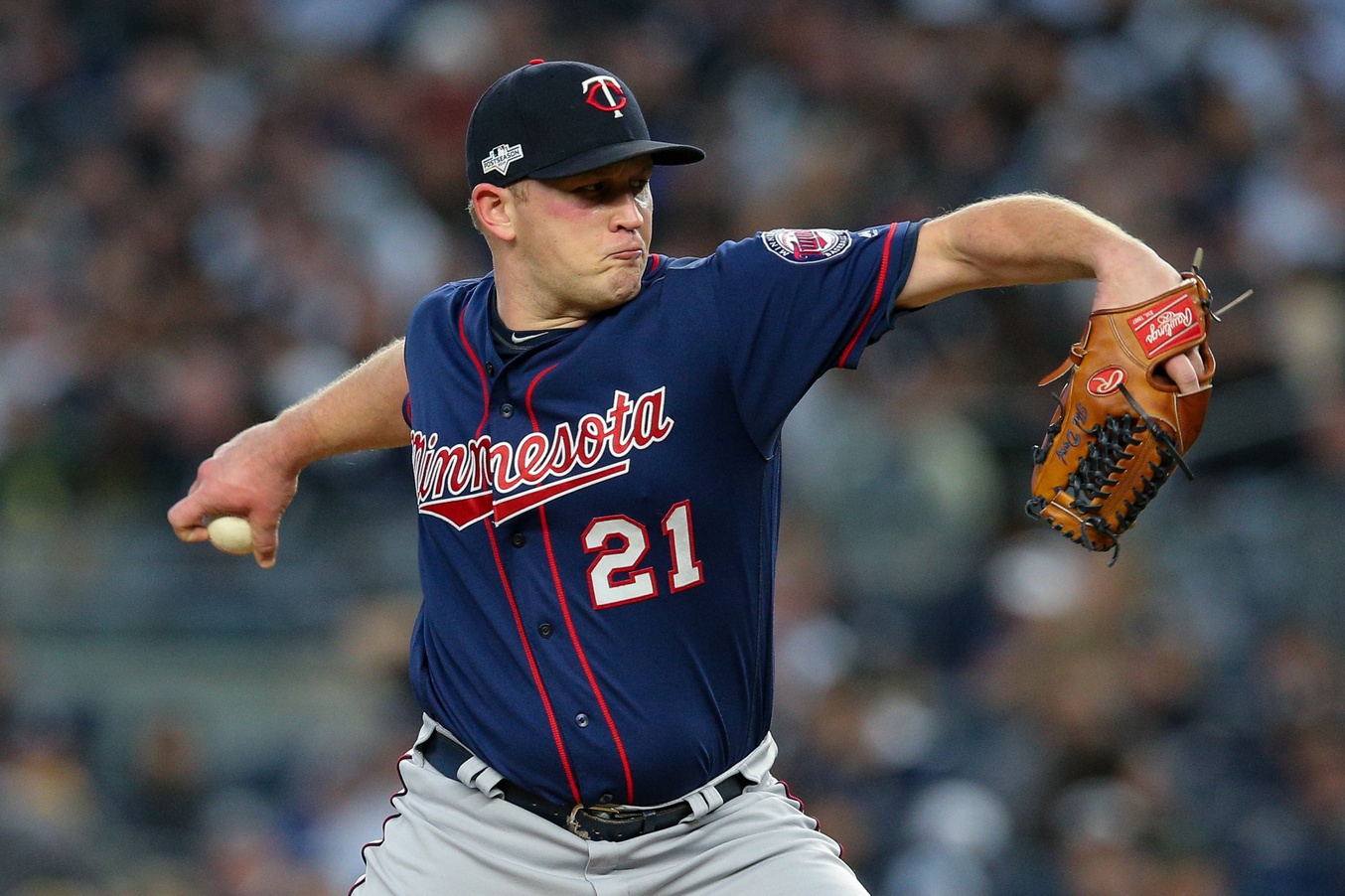 First, here are the parameters and stipulations: Things that are factored into these rankings: production, age, upside, pedigree, health, length of team control, favorability of contract, positional scarcity (within the system, and generally). Players are people. Their value to the organization, and its fans, goes well beyond the strictly business-like scope we're using here. But for the purposes of this list, we're analyzing solely in terms of asset evaluation. Intangible qualities and popularity are not factors. (Sorry Willians.) The idea is to assess their importance to the future of the Minnesota Twins. In this respect, it's not exactly a ranking in terms of trade value, because that's dependent on another team's situation and needs. (For instance, Jake Cave and LaMonte Wade, Jr. would be more valuable to many other teams than they are to the Twins, who are rich with short-term and long-term corner outfield depth.) This is a snapshot in time. Rankings are heavily influenced by recent trends and where things stood as of the end of 2019. Current major-leaguers and prospects are all eligible. The ultimate goal here to answer this question: Which current players in the organization are most indispensable to fulfilling the vision of building a champion? Any questions or quibbles, holler in the comments. Let's start the countdown. TOP 20 MINNESOTA TWINS ASSETS OF 2020 (16-20) 20. Ryan Jeffers, C 2019 Ranking: NR An early example of positional scarcity playing a role in these rankings. There are better Twins prospects than Jeffers who will not appear on this list, but his presence in the system is especially vital. The 2018 second-round draft pick is a 22-year-old catcher who has already reached Double-A, hitting at every level. Folks in the know rave about his defensive skills, and pitch-framing especially. Thus far Jeffers has done nothing but validate the team's belief in him. A catcher who shines both ways is among the game's most coveted assets. Luckily, the Twins already have one of those in place at the major-league level, which is one of the only reasons Jeffers is even this low. (Spoiler: Fellow high-grade catching prospect Ben Rortvedt didn't make the Top 20, but is a short step behind Jeffers and is definitely an honorable mention.) 19. Eddie Rosario, OF 2019 Ranking: 8 I found Rosario's 2019 campaign a tad disappointing, despite the precedent-shattering HR and RBI totals, and I know I'm not alone. But we shouldn't be totally consumed by recency bias in evaluating him. The prior two years he was the team's second-most valuable player behind Brian Dozier (per fWAR) and I hope we can all agree his practical impact in 2019 was greater than OBP/defense-hampered metrics suggest. (To what extent is debatable.) The fact remains: Rosario has yet to put together a completely transcendent season, and he's now 28 with two years of team control remaining. His expected salary via arbitration in 2020 (~$7-9 million) is reasonable – hardly a bargain. Rosario absolutely a guy you like to have around, but with all the corner outfield depth, and crystallizing deficiencies to accompany his almost unparalleled "unstoppable when hot" dynamic, he slides down in this ranking. 18. Michael Pineda, RHP 2019 Ranking: NR Two years of team control at an extremely reasonable cost. When signed, I estimated that Pineda's newly minted contract will be looked back at as the best one executed by Minnesota's front office this offseason, and that's why he ranks here despite the evident drawbacks. Yes, he'll miss ~12% of those two years due to suspension. But this might actually be beneficial in terms of workload management, and Pineda's established high-end performance level in the rotation is critical for the Twins. His injury history can't be ignored, but the mix of ability, recent health record, and contract appeal make him an essential short-term fixture. 17. Nelson Cruz, DH 2019 Ranking: NR Cruz has some major things working against him on a list like this. He's 39. Offers zero defensive value. Nagging wrist problem lingers as a concern. Only under contract for one more year. As you zoom out to the big-picture view, the designated hitter's significance diminishes. But when it comes to 2020 – a critical year brimming with opportunity – few figures on the roster loom larger. Cruz was one of the best hitters in the American League this year. The two players ahead of him in wOBA were Mike Trout and Alex Bregman, who finished 1-2 in the AL MVP voting. Even with his circumstantial detriments, Cruz's elite hitting ability and elder statesmanship – in a clubhouse where he's older than the manager – are irreplaceable at this moment. 16. Tyler Duffey, RHP 2019 Ranking: NR There are a lot of players on this year's list who were not on last year's. (This speaks to both the volatility of pro baseball and my general ineptitude in such endeavors.) I don't think any newcomer would've ranked lower last year than Duffey, a 28-year-old failed starter who was failing to catch on as a reliever, and nearly out of options. In 2019, he completely flipped the narrative. Suddenly, the tantalizing upside that long intrigued onlookers surfaced. Armed with a 94 MPH fastball and a harder, sharper version of his ever-impressive breaking ball, Duffey became an overpowering force in the late innings. Over 57 2/3 innings with the Twins, he posted a 2.50 ERA, 1.01 WHIP, and 12.8 K/9 rate while holding opponents to a .201 average. His 5.86 K/BB ratio ranked 14th among MLB relievers. Duffey is entering his first turn at arbitration and has three years of team control remaining. This puts him solidly ahead of the similarly impactful Trevor May, who is one year from free agency and a narrow miss in the Top 20. Check back in tomorrow for Part 2 of these rankings. MORE FROM TWINS DAILY — Latest Twins coverage from our writers — Recent Twins discussion in our forums — Follow Twins Daily via Twitter, Facebook or email
 -
With two starting pitchers now in the mix who will not be available until well after the season starts, it's increasingly likely the Twins will open with at least one young internal option in the rotation. Among MLB-ready arms, Lewis Thorpe might be most intriguing.He's presently a decent contender to make the 26-man roster out spring training. Even if the Twins add another starter and push him to Triple-A, a healthy Thorpe is almost certain to play a role over the course of the season, and perhaps a significant one. Named the organization's Minor League Pitcher of the Year in 2018, Thorpe headed into this 2019 campaign with a head of steam. Twins Daily ranked him as the organization's eighth-best prospect coming in, noting that his less-than-dominant results seemed to belie the quality of his stuff, as reflected by an outstanding K/BB ratio and whiff rate. Thorpe's paradoxical profile played out once again in 2019, except to an even greater degree, and this time Twins fans got to see it first-hand. In 124 total innings between Triple-A (96.1 IP) and the majors (27.2 IP), the left-hander piled up 150 strikeouts. As Thieres Rabelo pointed out here last month: "Among the 73 pitchers who logged 90 or more innings in Triple-A last season, Thorpe had the highest K/9 (11.12), swinging strike rate (14.5) and was second in K% (29.5)." Not half-bad for a 23-year-old with four games of experience above Double-A entering the year. And during his fairly brief time in the majors, hitters kept missing on his pitches. In 12 appearances (two starts), Thorpe averaged 10.1 K/9 and his 11.8% swinging strike rate was higher than – among others – Taylor Rogers, Jose Berrios, and Brusdar Graterol. And yet, the results just weren't there for Thorpe. Despite his terrific 28% K-rate between the two levels, he also allowed 68 earned runs in his 124 total innings of work (4.94 ERA). That includes a 6.18 ERA during his MLB debut. It's not like his whiffs were paired with poor control – he issued only 35 walks to go along with the 150 strikeouts – but once again the strong K/BB ratio didn't translate to shutdown production. There are a few ways to look at this. The pessimistic view is that Thorpe is doomed to this disconnect – capable of attacking the zone and running up the strikeout rate, but lacking the ability to get outs on a consistent basis. Do the strikeout and whiff numbers exaggerate his arsenal's true quality? He'd hardly be the first. Thorpe's limited Statcast data would seem to support this notion. Download attachment: thorpestatcast.png The more optimistic, and I think more fair, view is that Thorpe's results are still catching up to his stuff. He's finding his consistency. It's important to remember: he lost two full seasons (2015 and 2016) to health issues. Since returning, he's been fast-tracked, making relatively brief stops at High-A, Double-A, and Triple-A on his way to the majors. While he hasn't been amazing everywhere, he has shown the capacity to overpower hitters everywhere. The Twins should probably plan on starting him back at Triple-A in 2020, but the 24-year-old could be poised for a big step forward and a sizable impact on the big-league club. MORE FROM TWINS DAILY — Latest Twins coverage from our writers — Recent Twins discussion in our forums — Follow Twins Daily via Twitter, Facebook or email Click here to view the article
-
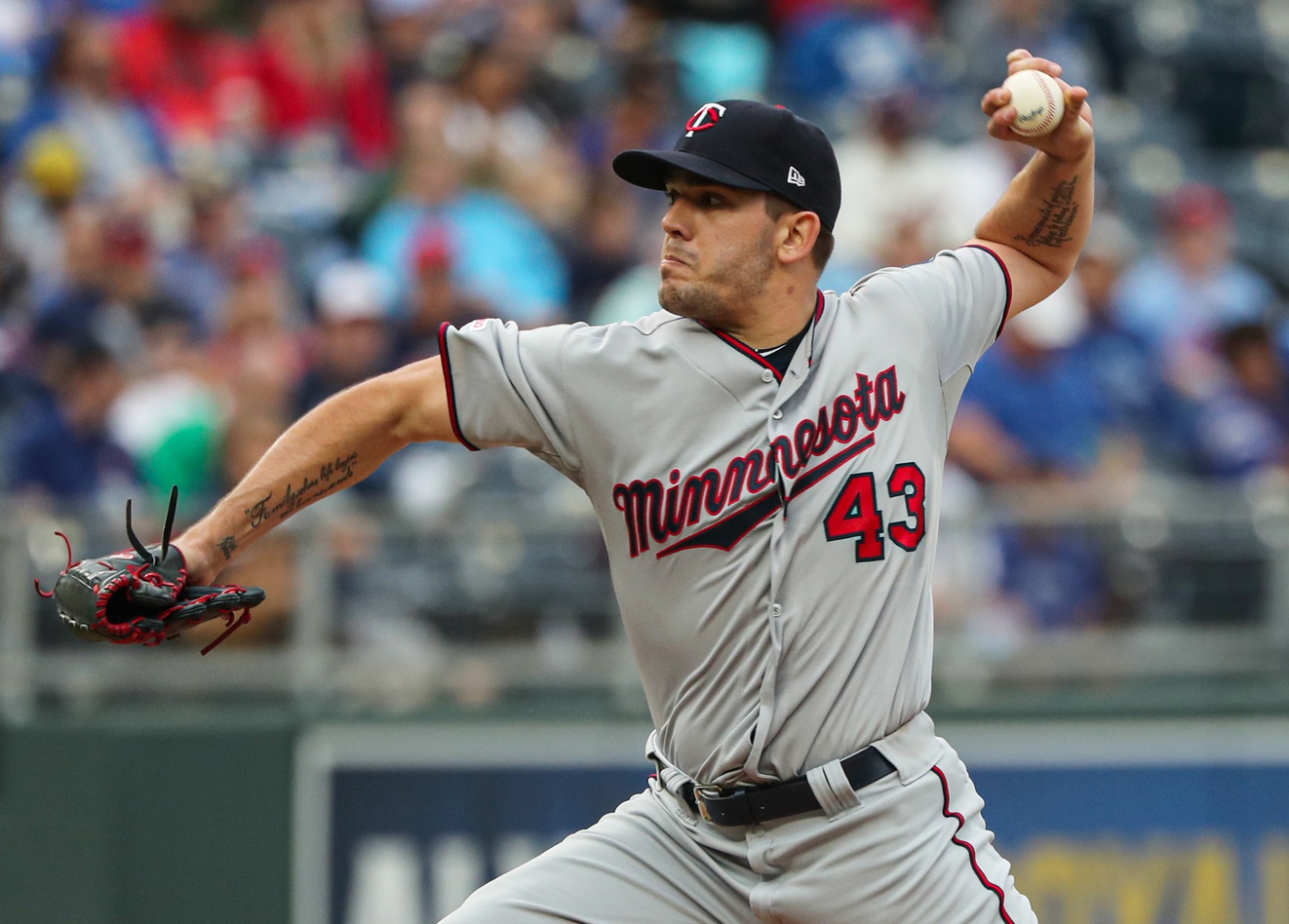 He's presently a decent contender to make the 26-man roster out spring training. Even if the Twins add another starter and push him to Triple-A, a healthy Thorpe is almost certain to play a role over the course of the season, and perhaps a significant one. Named the organization's Minor League Pitcher of the Year in 2018, Thorpe headed into this 2019 campaign with a head of steam. Twins Daily ranked him as the organization's eighth-best prospect coming in, noting that his less-than-dominant results seemed to belie the quality of his stuff, as reflected by an outstanding K/BB ratio and whiff rate. Thorpe's paradoxical profile played out once again in 2019, except to an even greater degree, and this time Twins fans got to see it first-hand. In 124 total innings between Triple-A (96.1 IP) and the majors (27.2 IP), the left-hander piled up 150 strikeouts. As Thieres Rabelo pointed out here last month: "Among the 73 pitchers who logged 90 or more innings in Triple-A last season, Thorpe had the highest K/9 (11.12), swinging strike rate (14.5) and was second in K% (29.5)." Not half-bad for a 23-year-old with four games of experience above Double-A entering the year. And during his fairly brief time in the majors, hitters kept missing on his pitches. In 12 appearances (two starts), Thorpe averaged 10.1 K/9 and his 11.8% swinging strike rate was higher than – among others – Taylor Rogers, Jose Berrios, and Brusdar Graterol. And yet, the results just weren't there for Thorpe. Despite his terrific 28% K-rate between the two levels, he also allowed 68 earned runs in his 124 total innings of work (4.94 ERA). That includes a 6.18 ERA during his MLB debut. It's not like his whiffs were paired with poor control – he issued only 35 walks to go along with the 150 strikeouts – but once again the strong K/BB ratio didn't translate to shutdown production. There are a few ways to look at this. The pessimistic view is that Thorpe is doomed to this disconnect – capable of attacking the zone and running up the strikeout rate, but lacking the ability to get outs on a consistent basis. Do the strikeout and whiff numbers exaggerate his arsenal's true quality? He'd hardly be the first. Thorpe's limited Statcast data would seem to support this notion. The more optimistic, and I think more fair, view is that Thorpe's results are still catching up to his stuff. He's finding his consistency. It's important to remember: he lost two full seasons (2015 and 2016) to health issues. Since returning, he's been fast-tracked, making relatively brief stops at High-A, Double-A, and Triple-A on his way to the majors. While he hasn't been amazing everywhere, he has shown the capacity to overpower hitters everywhere. The Twins should probably plan on starting him back at Triple-A in 2020, but the 24-year-old could be poised for a big step forward and a sizable impact on the big-league club. MORE FROM TWINS DAILY — Latest Twins coverage from our writers — Recent Twins discussion in our forums — Follow Twins Daily via Twitter, Facebook or email
 -
Front Page: Is Homer Bailey the Next Martin Perez?
Nick Nelson replied to Nick Nelson's topic in Twins Daily Front Page News
You can never have too much pitching of course, but it's worth noting that right now he wouldn't be among their top five or six starters, which says more about the quality of their rotation mix than him. A's are stacked. -
Front Page: Is Homer Bailey the Next Martin Perez?
Nick Nelson replied to Nick Nelson's topic in Twins Daily Front Page News
The title was not intended to be aspirational. It's more about, can he avoid being the next Martin Perez? -
For a few glorious weeks, it appeared the Twins had struck gold with Martin Perez, an under-the-radar free agent signing that initially seemed to validate the front office's questionable rotation gamble. Then, it all fell apart. Newly signed right-hander Homer Bailey is a similar specimen in many ways. Can he sustain as a success story for Minnesota?The Perez experiment is considered a failure in the eyes of many fans, but I'm not sure that's entirely fair. I was as skeptical as anyone of the value-driven acquisition at first, until I got down to spring training and saw the lefty with my own two eyes. All the talk about a mid-90s fastball and newly weaponized cutter... it was legit. He looked fantastic. That carried over into the regular season. Through his first handful of turns in the rotation, Perez looked almost unhittable. The fastball/cutter combo was playing exactly to plan, and it appeared Minnesota's front office had unearthed an absolute gem. Things turned ugly from there, but Perez still wasn't a crippling liability; the Twins went 11-10 in his starts after June 1st, even as he posted a 5.93 ERA. He did what he needed as a fifth starter on a phenomenal offensive team. (And his appeal didn't totally wear off, since Chaim Bloom and the Red Sox quickly snatched him up for almost twice what Minnesota paid a year ago.) But obviously, the Twins needed to aim higher with his replacement in efforts to upgrade the rotation. The similarities with Bailey aren't hard to see. Both were former top prospects who'd shown only flashes of excellence in the majors. Both went on intriguing late runs to finish the prior season – Perez showing gas out of the Rangers bullpen in late 2018, and Bailey looking brilliant down the stretch for Oakland in 2019. And in both cases, the Twins saw specific things they felt they could activate or tweak to improve results. The quotes from Derek Falvey after both signings ring quite similar. Perez's upside was always theoretical, founded on a brief bullpen stint and a lot of projection, unlike Bailey's fairly convincing stretch run which included impressive showings against the Yankees (twice) and Astros. Plus, Twins pitching coach Wes Johnson now has a year of experience under his belt, whereas last year he was finding his way as a first-time MLB coach straight out of college. So there's more palpable reason for enthusiasm in Bailey's case. Still, one thing I can't get past is the lack of demand for either player on the open market. It wasn't terribly surprising that Perez got only one year and $3.5 million guaranteed, given his ugly 2018 season and the leap of faith being taken by Minnesota's front office in his case. But Bailey's late-season dominance in 2019 was on display for all to see. That splitter is no secret. He still couldn't get more than $7 million guaranteed, at a time where the hunger for quality starting pitching is ravenous? That's conspicuous. It doesn't mean the Twins are wrong to believe in Bailey, but clearly they're bigger believers than others – including the Athletics, who saw his prowess first-hand and didn't seemingly push too hard to retain him. After seeing Minnesota's ostensible "bargain" deals for Lance Lynn and Logan Morrison in 2018 prove to be anything but, there's a warranted wariness that comes along with these low-dollar one-year pacts. That sort of drives back to a general frustration with the team's continued lack of spending to address needs. It's not the money that matters, but what it represents: a willingness to aggressively pursue assets that are generating market demand. The signing announced in tandem with Bailey – Rich Hill for $3 million plus incentives – falls into the exact same basket. It wouldn't shock me in the least if Bailey turns into a quality mid-rotation starter for Minnesota, joining the stable that is already in place. He's likely to be an upgrade over Perez, but right now, that isn't the guy he's replacing. It's Kyle Gibson, who signed with Texas for $30 million, for three years, early in the offseason. (Market demand.) It's Gibson's spot the Twins should now be seeking to upgrade, and hopefully in a very significant way. As enticing a proposition for late-season impact as Hill might be, the 40-year-old shouldn't be viewed as more than a wild-card factor. There's still work left to do, and if the flexibility preserved by these budget-friendly signings is put to good use, the Bailey and Hill moves will look all the better in hindsight. MORE FROM TWINS DAILY — Latest Twins coverage from our writers — Recent Twins discussion in our forums — Follow Twins Daily via Twitter, Facebook or email Click here to view the article
-
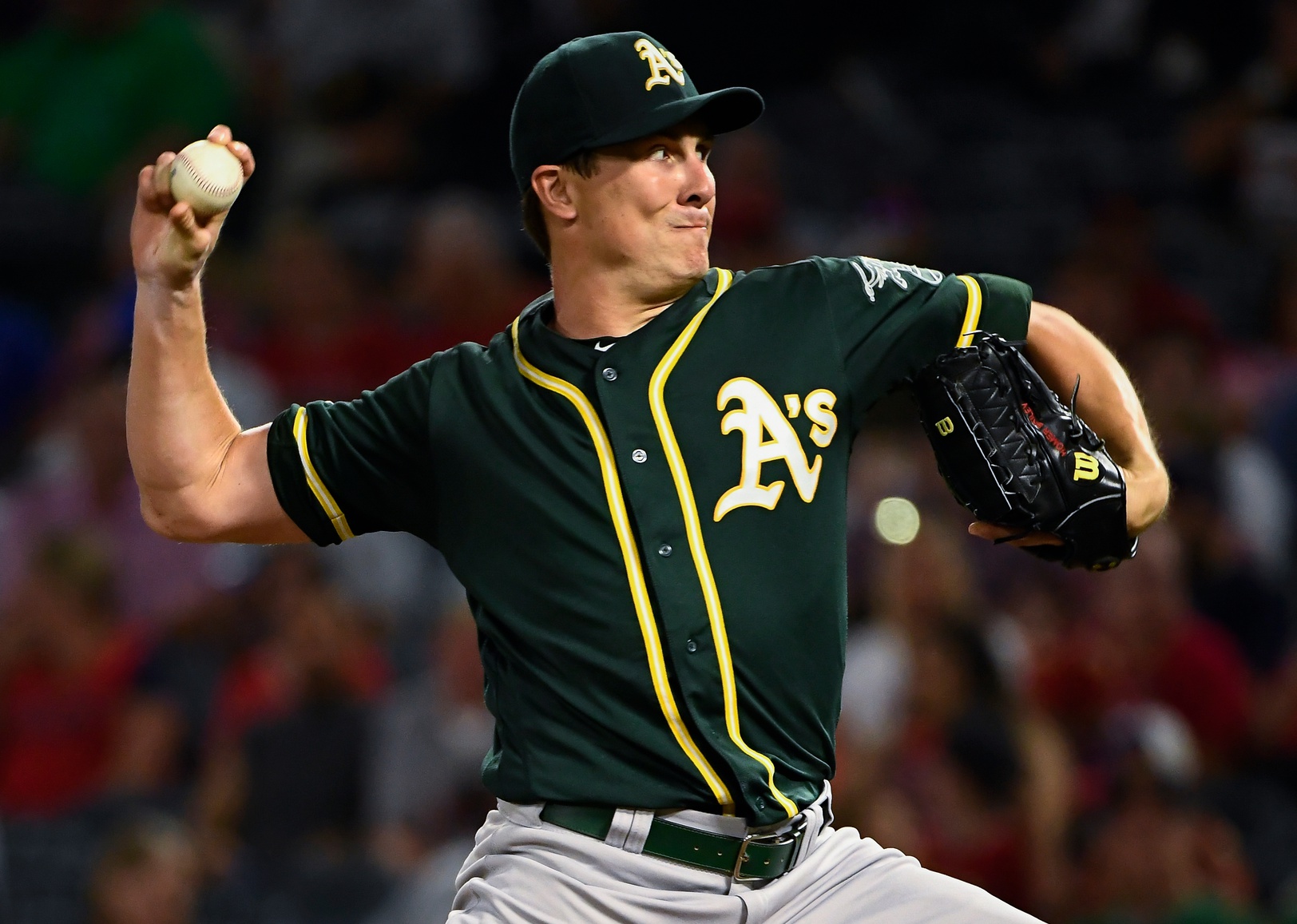 The Perez experiment is considered a failure in the eyes of many fans, but I'm not sure that's entirely fair. I was as skeptical as anyone of the value-driven acquisition at first, until I got down to spring training and saw the lefty with my own two eyes. All the talk about a mid-90s fastball and newly weaponized cutter... it was legit. He looked fantastic. That carried over into the regular season. Through his first handful of turns in the rotation, Perez looked almost unhittable. The fastball/cutter combo was playing exactly to plan, and it appeared Minnesota's front office had unearthed an absolute gem. Things turned ugly from there, but Perez still wasn't a crippling liability; the Twins went 11-10 in his starts after June 1st, even as he posted a 5.93 ERA. He did what he needed as a fifth starter on a phenomenal offensive team. (And his appeal didn't totally wear off, since Chaim Bloom and the Red Sox quickly snatched him up for almost twice what Minnesota paid a year ago.) But obviously, the Twins needed to aim higher with his replacement in efforts to upgrade the rotation. The similarities with Bailey aren't hard to see. Both were former top prospects who'd shown only flashes of excellence in the majors. Both went on intriguing late runs to finish the prior season – Perez showing gas out of the Rangers bullpen in late 2018, and Bailey looking brilliant down the stretch for Oakland in 2019. And in both cases, the Twins saw specific things they felt they could activate or tweak to improve results. The quotes from Derek Falvey after both signings ring quite similar. https://twitter.com/SKORNorth/status/1100844737102299137 https://twitter.com/betsyhelfand/status/1212109208012951552 The key distinction, however, is that Bailey has already actualized his revival to some degree, riding his adjustments to a 2.25 ERA and 48-to-7 K/BB ratio in his final eight starts with the A's. The splitter he began unleashing with devastating efficacy is surely at the heart of Minnesota's assessment. https://twitter.com/DanHayesMLB/status/1212124592732622854 https://twitter.com/AlexFast8/status/1212060314180739072 Perez's upside was always theoretical, founded on a brief bullpen stint and a lot of projection, unlike Bailey's fairly convincing stretch run which included impressive showings against the Yankees (twice) and Astros. Plus, Twins pitching coach Wes Johnson now has a year of experience under his belt, whereas last year he was finding his way as a first-time MLB coach straight out of college. So there's more palpable reason for enthusiasm in Bailey's case. Still, one thing I can't get past is the lack of demand for either player on the open market. It wasn't terribly surprising that Perez got only one year and $3.5 million guaranteed, given his ugly 2018 season and the leap of faith being taken by Minnesota's front office in his case. But Bailey's late-season dominance in 2019 was on display for all to see. That splitter is no secret. He still couldn't get more than $7 million guaranteed, at a time where the hunger for quality starting pitching is ravenous? That's conspicuous. It doesn't mean the Twins are wrong to believe in Bailey, but clearly they're bigger believers than others – including the Athletics, who saw his prowess first-hand and didn't seemingly push too hard to retain him. After seeing Minnesota's ostensible "bargain" deals for Lance Lynn and Logan Morrison in 2018 prove to be anything but, there's a warranted wariness that comes along with these low-dollar one-year pacts. That sort of drives back to a general frustration with the team's continued lack of spending to address needs. It's not the money that matters, but what it represents: a willingness to aggressively pursue assets that are generating market demand. The signing announced in tandem with Bailey – Rich Hill for $3 million plus incentives – falls into the exact same basket. It wouldn't shock me in the least if Bailey turns into a quality mid-rotation starter for Minnesota, joining the stable that is already in place. He's likely to be an upgrade over Perez, but right now, that isn't the guy he's replacing. It's Kyle Gibson, who signed with Texas for $30 million, for three years, early in the offseason. (Market demand.) It's Gibson's spot the Twins should now be seeking to upgrade, and hopefully in a very significant way. As enticing a proposition for late-season impact as Hill might be, the 40-year-old shouldn't be viewed as more than a wild-card factor. There's still work left to do, and if the flexibility preserved by these budget-friendly signings is put to good use, the Bailey and Hill moves will look all the better in hindsight. MORE FROM TWINS DAILY — Latest Twins coverage from our writers — Recent Twins discussion in our forums — Follow Twins Daily via Twitter, Facebook or email
 -
With the Twins now forced to fully turn their focus toward the trade market in the quest for impact starting pitching, David Price is a name that looms large. For multiple reasons, he makes sense as a target for Minnesota, and his availability is no secret. Let's catch up on the latest to try and get a read on where things stand.Here's a quick rundown of the expository facts: In December of 2015, Boston signed David Price to what was – at the time – the largest free agent contract for a pitcher in MLB history (7 years, $217M). The return on their investment through four years has been iffy; he has averaged fewer than 150 innings per season, with a 3.84 ERA and 3.74 FIP. Now, with ownership compelling the front office to get below the luxury tax threshold (they're currently around $20 million above), Price is an obvious candidate to move, though Boston doesn't have much leverage. At this point, Price is no one's idea of a slam-dunk rotation booster. He's 34 and his previously impeccable durability has vanished over the past three years – to say nothing of the unspectacular results when he's been on the mound. But prior to his underwhelming run with the Red Sox, Price was consistently one of the most reliably dominant starters in baseball. After seeing Justin Verlander revitalize in Houston following a temporary drop-off around age 30, no one can rule out a similar scenario with Price, who was teammates with Verlander in Detroit for a spell during JV's lull. The question is, how much does it make sense for the Twins – or any team – to stake on that gamble? In Minnesota's case, he likely represents the last chance to acquire a player with any real "ace" bona fides for anything less than a painful prospect haul, by taking advantage of the extensive payroll flexibility the Twins have preserved. Even in his diminished state, Price would still likely rank among Minnesota's top two or three three starters when healthy, adding valuable swagger and experience. It bears noting that in 2018 he was a significant factor in Boston's championship with two gems against Los Angeles in the World Series (many believe he should've been WS MVP). And in 2019 he was 7-2 with a 3.24 ERA at the All-Star Break, after which injuries derailed him. Don't sleep on the impact potential. With all that covered, let's get up to speed on the suitors and market movement. December 10th: Ken Rosenthal of The Athletic tweets that there is "no progress" in trade discussions, although he mentions San Diego's pursuit, and the dangling of Wil Myers (a similar but less severe salary dump). Since then, news and updates have been scant over the holiday period. Reading the tea leaves, I think it's safe to say that: 1) The Red Sox are actively peddling Price to a number of pitching-needy teams, with the amount of remaining salary covered by Boston a sticking point, and 2) Newly hired front office leader Chaim Bloom is playing things cautiously so as to avoid a costly misstep right out of the gates. Trading him for almost nothing, eating a bunch of salary, and then watching Price resurrect himself elsewhere would not exactly be a great first impression. The Twins are well positioned to make a move on Price if they trust his "unique elbow" to hold up – they have ample room to add payroll this year and during the next few, with the conclusion of Price's contract after 2022 coinciding with the point where core players like Jose Berrios, Byron Buxton and Miguel Sano are hitting free agency. If they really wanted to, Minnesota could take on a huge portion or even all of Price's remaining commitment, though obviously it'd inhibit their flexibility in the short-term. Another wrinkle: If the White Sox are indeed after Price, and there's a belief he can get back to where he was, that's another motivator for the Twins to get something done. Chicago is quickly emerging as Minnesota's top threat in the division moving forward. Stay tuned to Twins Daily for the latest rumors on Price and other offseason pursuits. MORE FROM TWINS DAILY — Cody Christie detailed Price's fit as a Twins trade target more extensively earlier this month. — Latest Twins coverage from our writers — Recent Twins discussion in our forums — Follow Twins Daily via Twitter, Facebook or email Click here to view the article
-
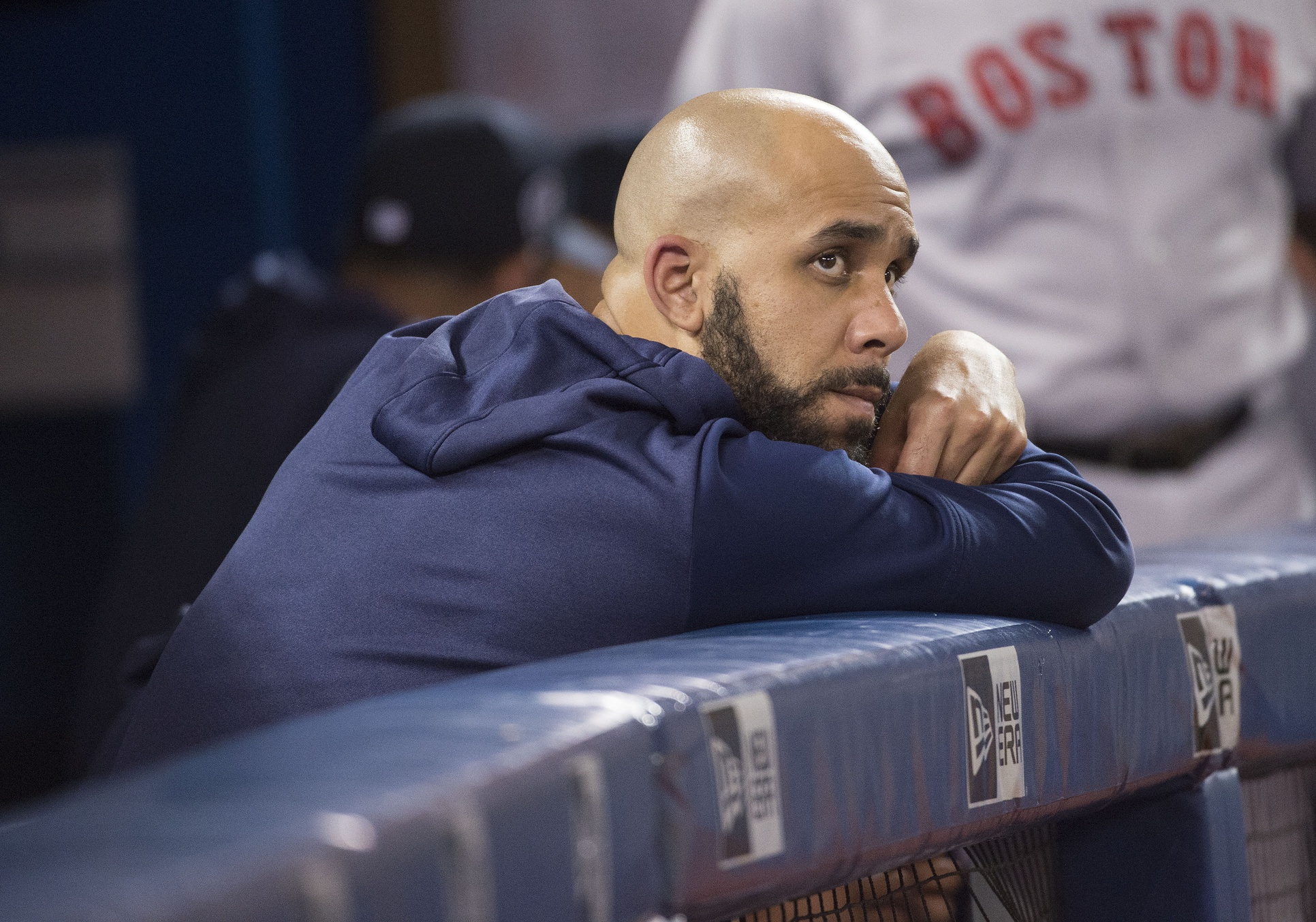 Here's a quick rundown of the expository facts: In December of 2015, Boston signed David Price to what was – at the time – the largest free agent contract for a pitcher in MLB history (7 years, $217M). The return on their investment through four years has been iffy; he has averaged fewer than 150 innings per season, with a 3.84 ERA and 3.74 FIP. Now, with ownership compelling the front office to get below the luxury tax threshold (they're currently around $20 million above), Price is an obvious candidate to move, though Boston doesn't have much leverage. At this point, Price is no one's idea of a slam-dunk rotation booster. He's 34 and his previously impeccable durability has vanished over the past three years – to say nothing of the unspectacular results when he's been on the mound. But prior to his underwhelming run with the Red Sox, Price was consistently one of the most reliably dominant starters in baseball. After seeing Justin Verlander revitalize in Houston following a temporary drop-off around age 30, no one can rule out a similar scenario with Price, who was teammates with Verlander in Detroit for a spell during JV's lull. The question is, how much does it make sense for the Twins – or any team – to stake on that gamble? In Minnesota's case, he likely represents the last chance to acquire a player with any real "ace" bona fides for anything less than a painful prospect haul, by taking advantage of the extensive payroll flexibility the Twins have preserved. Even in his diminished state, Price would still likely rank among Minnesota's top two or three three starters when healthy, adding valuable swagger and experience. It bears noting that in 2018 he was a significant factor in Boston's championship with two gems against Los Angeles in the World Series (many believe he should've been WS MVP). And in 2019 he was 7-2 with a 3.24 ERA at the All-Star Break, after which injuries derailed him. Don't sleep on the impact potential. With all that covered, let's get up to speed on the suitors and market movement. December 10th: Ken Rosenthal of The Athletic tweets that there is "no progress" in trade discussions, although he mentions San Diego's pursuit, and the dangling of Wil Myers (a similar but less severe salary dump). https://twitter.com/Ken_Rosenthal/status/1204620360563351552 December 16th: Mark Feinsand of MLB.com reports that at least five teams have shown interest in Price, including the Padres, Cardinals, White Sox, Reds, and Angels. December 22nd: Rosenthal adds Toronto to the list, writing that "the team also is talking to the Red Sox about a trade for Price." Later that day, news breaks via Jon Heyman that Ryu is signing with the Jays. Soon after, Bob Nightengale of USA Today tweets the obvious (Jays out on Price) but adds that the Red Sox "continue to shop David Price to teams, including two from the AL Central." Similarly obvious: those teams are the White Sox and Twins. https://twitter.com/BNightengale/status/1208968707973627904 Since then, news and updates have been scant over the holiday period. Reading the tea leaves, I think it's safe to say that: 1) The Red Sox are actively peddling Price to a number of pitching-needy teams, with the amount of remaining salary covered by Boston a sticking point, and 2) Newly hired front office leader Chaim Bloom is playing things cautiously so as to avoid a costly misstep right out of the gates. Trading him for almost nothing, eating a bunch of salary, and then watching Price resurrect himself elsewhere would not exactly be a great first impression. The Twins are well positioned to make a move on Price if they trust his "unique elbow" to hold up – they have ample room to add payroll this year and during the next few, with the conclusion of Price's contract after 2022 coinciding with the point where core players like Jose Berrios, Byron Buxton and Miguel Sano are hitting free agency. If they really wanted to, Minnesota could take on a huge portion or even all of Price's remaining commitment, though obviously it'd inhibit their flexibility in the short-term. Another wrinkle: If the White Sox are indeed after Price, and there's a belief he can get back to where he was, that's another motivator for the Twins to get something done. Chicago is quickly emerging as Minnesota's top threat in the division moving forward. Stay tuned to Twins Daily for the latest rumors on Price and other offseason pursuits. MORE FROM TWINS DAILY — Cody Christie detailed Price's fit as a Twins trade target more extensively earlier this month. — Latest Twins coverage from our writers — Recent Twins discussion in our forums — Follow Twins Daily via Twitter, Facebook or email
 -
Much has changed over the past 10 years. The fact really hits home when you consider that, heading into this decade, Target Field had not yet opened its gates. As we turn the page on the 2010s, I thought it might be fun to reflect on some of the best and most memorable moments through 10 years at The Bullseye.10: Outdoor baseball returns to Minnesota (4/12/10) On April 12th, 2010, the Twins christened their new ballpark, hosting the Red Sox on a cloudy and cool Monday afternoon. It wasn't the team's first game at Target Field (a pair of exhibitions against the Cards had been played there 10 days earlier) but this one made it official. For the first time in almost 30 years, Twins fans were able to watch meaningful baseball at home under blue skies rather than a Teflon roof. It was a crisply played 5-2 victory for Minnesota, keyed by Carl Pavano's six strong innings along with three-hit games from Jason Kubel and reigning MVP Joe Mauer. The Twins went on to win their first four series at Target Field and finished 53-28 (.654) at home in the new stadium's inaugural season. 9: Byron Buxton races for record-setting inside-the-park home run (8/18/17) As with many of the moments on this list, I picked this one because it is emblematic of the man behind it. Buxton has had plenty of amazing moments at Target Field since debuting there in 2015, but his inside-the-parker against Arizona in August of 2017 epitomizes the electricity and incredible athleticism that make him such a tremendous joy to watch. Blazing around the bases in 13.85 seconds after his towering drive caromed off the wall in right-center, Buxton set a new Statcast record for the feat, breaking... his own. (Of course.) 6: Eddie Rosario homers on first MLB pitch (5/6/15) From the Department of Can't-Make-This-Stuff-Up: Rosario's big-league debut. Stepping up for his first major-league at-bat in 2015, with his family watching from the Target Field stands, Eddie offered at the first pitch he saw from A's lefty Scott Kazmir and sent it over the left-field wall. For fans, it was the perfect introduction to Rosario, conveying his confidence, aggressive approach, and flare for theatrics. 5: Brian Dozier caps epic comeback against Tigers (7/10/15) Two months after his splashy arrival, Rosario played a role in one of the most exhilarating victories of the decade, setting the stage for Dozier's heroics. The Twins, flirting with contention for the first time in years, were looking to finish out the first half strong with a series against Detroit heading into the break. They'd fallen in the first game and were at risk of another setback, with a 6-1 deficit entering the bottom of the ninth. Rosario delivered an RBI single to bring Minnesota within four. A bases-loaded HBP from Kurt Suzuki and two-run single from Danny Santana trimmed the Tigers' lead to one. Then the lineup turned over and up came Dozier – days away from his first All-Star Game – with two on and one out. Joakim Soria hung a breaking ball, and he paid for it. Any "Best Twins Player of the Decade" discussion should probably start with Dozier. He was the beating heart of those upstart, fringy playoff teams in 2015 and 2017. His 42-homer outburst in 2016 was one of the sole positives in a trainwreck campaign. Twins Daily named Dozier team MVP three straight times. That walk-off shot was perhaps the most transcendent moment in a career full of special ones. 4: Johan Santana is elected to Twins Hall of Fame (8/4/18) While it's fun reminiscing about the last 10 years, and thinking back to the days of Ben Revere catching a Vladimir Guerrero drive off of Carl Pavano, it does emphasize just how LONG ago that was. As we head into the 2020s, distance grows from a bygone era of Twins baseball filled with so many great players, moments, and memories. Johan's Hall of Fame induction in August of 2018 was a big highlight of this decade for me, because it channeled so much of the franchise's past into Target Field – if for one fleeting ceremony. Santana will forever be one of the great success stories in Twins history, and to see him celebrated alongside many of those cherished fellow fixtures from the late Metrodome run – Brad Radke, Torii Hunter, Michael Cuddyer, Eddie Guardado – was cool. Especially on a day where Jose Berrios, who is striving to inherit Santana's mantle (an ace that can ACTUALLY beat the Yankees in October), was Minnesota's starting pitcher. 3: Glen Perkins closes out the 2014 All-Star Game (7/15/14) When he retired after the 2017 season, I wrote that if a Twins Daily Hall of Fame were ever established, Perkins would be the first inductee. He was one of the team's best players throughout the site's early years of existence. He once bought a round of beers from the bullpen for TD Pub Crawl attendees. He's an amazing homegrown success story. Oh, and in his post-playing days he's now being described as "Minnesota's Ron Swanson." Sadly, Perk's career peak aligned directly with the grimmest part of the decade for the club. He was an elite closer on a terrible team, and his shoulder gave out just as the Twins began to finally emerge from the struggle. Perkins flat-out deserved to have things play out exactly as they did when the All-Star Game came to Minneapolis in 2014 and shined a national spotlight on Target Field. Trailing early, the American League came back to take a two-run lead, setting up a save opportunity for Minnesota's shutdown closer. Perkins trotted out to his mound, with Twins batterymate and fellow All-Star Kurt Suzuki on the other end, and retired the side in order to seal a win for the AL. You could have hardly scripted a better sequence for his All-Star appearance in front of the home crowd. 2: Jim Thome blasts first Target Field walk-off HR against White Sox (8/17/10) Choosing just one Thome moment (Thoment?) for inclusion on this list was a challenge. In his brief but spectacular Target Field tenure to start the decade, the Hall of Famer gave us plenty of lasting memories, which would largely come to define the ballpark's early legacy. There was the against the Royals in September of 2010. There was his the next summer, estimated at the time as the longest in the stadium's short history at 490 feet. There were his two jacks against Tampa Bay in July of 2010 to tie and then surpass Harmon Killebrew on the all-time home run list. But for me, nothing can beat the clutch tater that Thome thumped against the White Sox in August of 2010. With the Twins down by a run in the bottom of the 10th, the slugger launched a majestic two-run bomb into the plaza, notching the first walk-off home run in Target Field history. That legendary blast sealed a key division win for a team just three games up in the standings, and led to one of the best photos in Twins history. It's a tough moment for any other to top. More than eight years would pass before it finally happened. 1: Joe Mauer dons catcher's gear for one last time (9/30/18) A lot of things needed to go right, and an array of carefully crafted plans had to reach fruition, for Mauer's farewell to play out as it did. Dan Hayes meticulously detailed the story for The Athletic, and it's one of my favorite things he's written. When everything fell into place on the final day of the 2018 season, pure magic was the result. Mauer hadn't explicitly confirmed he was playing his last game as a big-leaguer, but that , and became crystal-clear in the bottom of the ninth inning. With the Twins leading 5-4, Mauer stepped onto the diamond in catcher's gear for the first time in more than five years. He tearfully saluted fans during a lengthy ovation, received one pitch from Matt Belisle, and then walked off Target Field into the proverbial sunset, leaving behind an extraordinary 15-year career.
- 21 replies
-
- 3
-
-
- joe mauer
- eddie rosario
- (and 3 more)
-
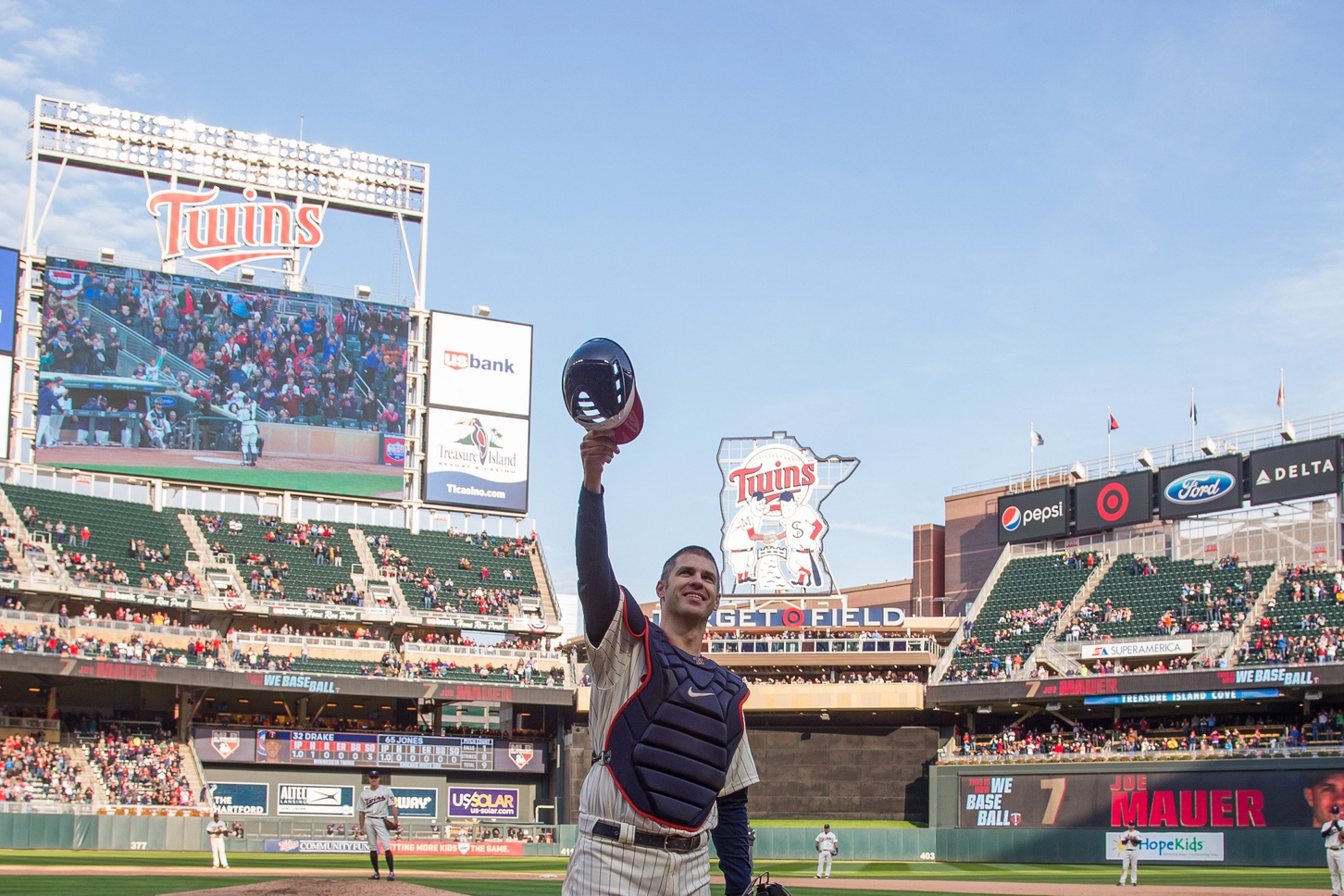 10: Outdoor baseball returns to Minnesota (4/12/10) On April 12th, 2010, the Twins christened their new ballpark, hosting the Red Sox on a cloudy and cool Monday afternoon. It wasn't the team's first game at Target Field (a pair of exhibitions against the Cards had been played there 10 days earlier) but this one made it official. For the first time in almost 30 years, Twins fans were able to watch meaningful baseball at home under blue skies rather than a Teflon roof. It was a crisply played 5-2 victory for Minnesota, keyed by Carl Pavano's six strong innings along with three-hit games from Jason Kubel and reigning MVP Joe Mauer. The Twins went on to win their first four series at Target Field and finished 53-28 (.654) at home in the new stadium's inaugural season. 9: Byron Buxton races for record-setting inside-the-park home run (8/18/17) As with many of the moments on this list, I picked this one because it is emblematic of the man behind it. Buxton has had plenty of amazing moments at Target Field since debuting there in 2015, but his inside-the-parker against Arizona in August of 2017 epitomizes the electricity and incredible athleticism that make him such a tremendous joy to watch. Blazing around the bases in 13.85 seconds after his towering drive caromed off the wall in right-center, Buxton set a new Statcast record for the feat, breaking... his own. (Of course.) https://twitter.com/statcast/status/898722220096212992 8: Ben Revere channels Willie Mays in center field (8/22/11) Target Field has seen its share of phenomenal defensive plays, and Mr. Buxton has been responsible for quite a few of them. In my humble opinion, however, none can top this dazzling catch from Revere, which to me is one of those "You remember where you were and who were you with when you saw it" kinds of moments. Defensive play of the decade for Minnesota, from my view. 7: The Rally Squirrel becomes legendary (8/21/19) The beauty of outdoor baseball is that it brings so many variables into play: wind, weather, and the occasional wildlife. In the first year at Target Field, there was the famous moth-eating falcon, which came to be known as Kirby the Kestrel. But the most beloved unticketed visitor waited nearly until the end of the decade to make its appearance: The Rally Squirrel. https://twitter.com/cjzero/status/1163990505140752385 He (or a cohort) had scampered out the previous night, during a losing effort, but this time the squirrel's appearance coincided with a big comeback and flurry of runs for the Twins, who rallied to blow out the White Sox and earn the newly minted mascot its nickname. https://twitter.com/fsnorth/status/1164018758052007937 6: Eddie Rosario homers on first MLB pitch (5/6/15) From the Department of Can't-Make-This-Stuff-Up: Rosario's big-league debut. Stepping up for his first major-league at-bat in 2015, with his family watching from the Target Field stands, Eddie offered at the first pitch he saw from A's lefty Scott Kazmir and sent it over the left-field wall. For fans, it was the perfect introduction to Rosario, conveying his confidence, aggressive approach, and flare for theatrics. 5: Brian Dozier caps epic comeback against Tigers (7/10/15) Two months after his splashy arrival, Rosario played a role in one of the most exhilarating victories of the decade, setting the stage for Dozier's heroics. The Twins, flirting with contention for the first time in years, were looking to finish out the first half strong with a series against Detroit heading into the break. They'd fallen in the first game and were at risk of another setback, with a 6-1 deficit entering the bottom of the ninth. Rosario delivered an RBI single to bring Minnesota within four. A bases-loaded HBP from Kurt Suzuki and two-run single from Danny Santana trimmed the Tigers' lead to one. Then the lineup turned over and up came Dozier – days away from his first All-Star Game – with two on and one out. Joakim Soria hung a breaking ball, and he paid for it. Any "Best Twins Player of the Decade" discussion should probably start with Dozier. He was the beating heart of those upstart, fringy playoff teams in 2015 and 2017. His 42-homer outburst in 2016 was one of the sole positives in a trainwreck campaign. Twins Daily named Dozier team MVP three straight times. That walk-off shot was perhaps the most transcendent moment in a career full of special ones. 4: Johan Santana is elected to Twins Hall of Fame (8/4/18) While it's fun reminiscing about the last 10 years, and thinking back to the days of Ben Revere catching a Vladimir Guerrero drive off of Carl Pavano, it does emphasize just how LONG ago that was. As we head into the 2020s, distance grows from a bygone era of Twins baseball filled with so many great players, moments, and memories. Johan's Hall of Fame induction in August of 2018 was a big highlight of this decade for me, because it channeled so much of the franchise's past into Target Field – if for one fleeting ceremony. Santana will forever be one of the great success stories in Twins history, and to see him celebrated alongside many of those cherished fellow fixtures from the late Metrodome run – Brad Radke, Torii Hunter, Michael Cuddyer, Eddie Guardado – was cool. Especially on a day where Jose Berrios, who is striving to inherit Santana's mantle (an ace that can ACTUALLY beat the Yankees in October), was Minnesota's starting pitcher. 3: Glen Perkins closes out the 2014 All-Star Game (7/15/14) When he retired after the 2017 season, I wrote that if a Twins Daily Hall of Fame were ever established, Perkins would be the first inductee. He was one of the team's best players throughout the site's early years of existence. He once bought a round of beers from the bullpen for TD Pub Crawl attendees. He's an amazing homegrown success story. Oh, and in his post-playing days he's now being described as "Minnesota's Ron Swanson." Sadly, Perk's career peak aligned directly with the grimmest part of the decade for the club. He was an elite closer on a terrible team, and his shoulder gave out just as the Twins began to finally emerge from the struggle. Perkins flat-out deserved to have things play out exactly as they did when the All-Star Game came to Minneapolis in 2014 and shined a national spotlight on Target Field. Trailing early, the American League came back to take a two-run lead, setting up a save opportunity for Minnesota's shutdown closer. Perkins trotted out to his mound, with Twins batterymate and fellow All-Star Kurt Suzuki on the other end, and retired the side in order to seal a win for the AL. You could have hardly scripted a better sequence for his All-Star appearance in front of the home crowd. 2: Jim Thome blasts first Target Field walk-off HR against White Sox (8/17/10) Choosing just one Thome moment (Thoment?) for inclusion on this list was a challenge. In his brief but spectacular Target Field tenure to start the decade, the Hall of Famer gave us plenty of lasting memories, which would largely come to define the ballpark's early legacy. There was the against the Royals in September of 2010. There was his the next summer, estimated at the time as the longest in the stadium's short history at 490 feet. There were his two jacks against Tampa Bay in July of 2010 to tie and then surpass Harmon Killebrew on the all-time home run list. But for me, nothing can beat the clutch tater that Thome thumped against the White Sox in August of 2010. With the Twins down by a run in the bottom of the 10th, the slugger launched a majestic two-run bomb into the plaza, notching the first walk-off home run in Target Field history. That legendary blast sealed a key division win for a team just three games up in the standings, and led to one of the best photos in Twins history. It's a tough moment for any other to top. More than eight years would pass before it finally happened. 1: Joe Mauer dons catcher's gear for one last time (9/30/18) A lot of things needed to go right, and an array of carefully crafted plans had to reach fruition, for Mauer's farewell to play out as it did. Dan Hayes meticulously detailed the story for The Athletic, and it's one of my favorite things he's written. When everything fell into place on the final day of the 2018 season, pure magic was the result. Mauer hadn't explicitly confirmed he was playing his last game as a big-leaguer, but that , and became crystal-clear in the bottom of the ninth inning. With the Twins leading 5-4, Mauer stepped onto the diamond in catcher's gear for the first time in more than five years. He tearfully saluted fans during a lengthy ovation, received one pitch from Matt Belisle, and then walked off Target Field into the proverbial sunset, leaving behind an extraordinary 15-year career. https://twitter.com/fsnorth/status/1046519774287552512 Mauer's best days came in the Metrodome, no doubt. When Target Field was built, he was widely viewed as the best player in the AL, if not in all of baseball, a distinction he wouldn't hold onto for long. In the eyes of many, the portion of his career spent in Target Field will always be associated more with bilateral leg weakness and concussions and production that failed to live up to his mega-contract, signed a month before the park opened. But don't overlook the many moments he left his mark on Target Field. There was the in May of 2017. The ridiculous catch behind the foul net in 2010. The in 2018 – a seeing-eye single up the middle, naturally.It's only right that from 2020 forward, no Twins player will ever wear No. 7 again. Joe was one-of-a-kind, up until his last day and heartfelt final moments in the uniform. ~~~ I'd love to hear you all sound off. Did I miss any of your favorite moments? Would you change the order? Let's think back to our most cherished summer days as we experience the full brunt of Minnesota's winter.
 -
Then you have leverage to negotiate a long-term deal, or you get a draft pick. I'm just saying, I don't see the one year of control as a bad thing for someone who is something of a wild-card rebound candidate. Obviously the acquisition cost should be reflective though.
-
If the Twins find themselves in the same situation one year from now as they did with Odorizzi this offseason, is that such a bad thing? QO will be in play, which means another year or leverage for a long-term deal.
-
With most top free agents off the board, and Minnesota's pursuit of Hyun-Jin Ryu feeling somewhat hopeless, the front office will likely need to make a trade to add the requisite impact starter this offseason. Provided they are ready to pony up, the Twins could almost certainly acquire one of these two crowded-out left-handers.Robbie Ray of the Diamondbacks was already being speculated upon as a trade candidate, even prior to the team's signing of Madison Bumgarner. Now, the rumors are ramping up, and with good reason: Ray has one remaining season under contract, and figures to make more than $10 million in his last turn at arbitration. This past season, Ray was above-average but not great, posting a 4.34 ERA and 1.34 WHIP in 174 innings. In the two years prior, his ERA+ was 134. He is an absolute strikeout machine, with the third-highest K/9 rate among MLB starters since 2017 (trailing only Chris Sale and Max Scherzer), and even during a relative down year in 2019 he still held opponents to a .234 average. He also, incidentally, has plenty of familiarity with Minnesota's new part-time catcher – Alex Avila spent the last two years in Arizona. To some, Ray wouldn't satisfy the threshold for rotation impact, given that he's been unable to pull everything together and pitch like an ace outside of 2017. But for me, he brings the upside and proven performance to be a transformative addition. There's no doubting his frontline capability. That argument might be a tougher sell with the other guy I'll mention here. Steven Matz doesn't offer the same clearly visible promise as Ray. In fact, he hasn't been very good since breaking onto the scene with a 3.16 ERA over his first 28 starts for the Mets in 2015 and 2016. But that ability is still in there, and he's only 28, with a fastball from the left side that sits in the mid-90s. Even with Zack Wheeler gone, the Mets have a more obvious rotation crunch than Arizona. New York has signed two free agent starters, Michael Wacha and Rick Porcello, to join a unit that already features Jacob deGrom, Noah Syndergard, and Marcus Stroman. That leaves Matz – set to earn more than $5 million in arbitration coming off an underwhelming season, and two years away from free agency – as the evident odd man out. It'd be nice if the Twins could pry loose Syndergaard or even deGrom, but the Mets are unlikely to move one of their top dogs as they seem intent on making a push this year. Trading Matz, who currently appears to be their sixth starter, wouldn't inhibit that goal. It would also probably cost Minnesota significantly less in prospect capital than Ray. On that front, the good news is that New York's front office has plenty of familiarity with Minnesota's system, having scouted it thoroughly during Syndergaard trade talks last July. This could help facilitate a deal. Ray would be preferable to Matz, but either starter would add a left-hander with legit stuff to a rotation mix that is currently all right-handed with Jose Berrios, Jake Odorizzi, Michael Pineda, and Randy Dobnak. And in either case, it's pretty clear the Twins could make a trade happen tomorrow if they're motivated. And at this point... they should be motivated. MORE FROM TWINS DAILY — Latest Twins coverage from our writers — Recent Twins discussion in our forums — Follow Twins Daily via Twitter, Facebook or email Click here to view the article
-
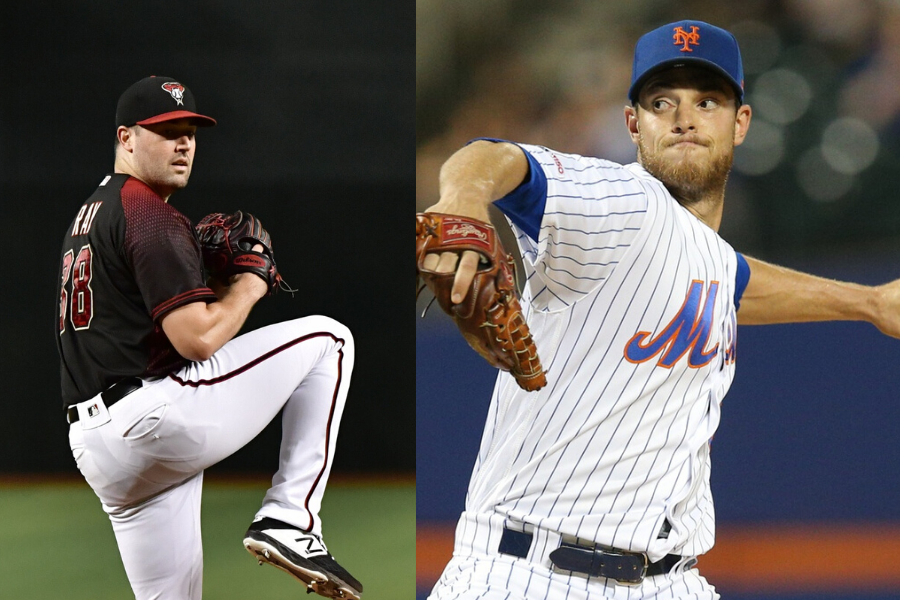 Robbie Ray of the Diamondbacks was already being speculated upon as a trade candidate, even prior to the team's signing of Madison Bumgarner. Now, the rumors are ramping up, and with good reason: Ray has one remaining season under contract, and figures to make more than $10 million in his last turn at arbitration. This past season, Ray was above-average but not great, posting a 4.34 ERA and 1.34 WHIP in 174 innings. In the two years prior, his ERA+ was 134. He is an absolute strikeout machine, with the third-highest K/9 rate among MLB starters since 2017 (trailing only Chris Sale and Max Scherzer), and even during a relative down year in 2019 he still held opponents to a .234 average. He also, incidentally, has plenty of familiarity with Minnesota's new part-time catcher – Alex Avila spent the last two years in Arizona. To some, Ray wouldn't satisfy the threshold for rotation impact, given that he's been unable to pull everything together and pitch like an ace outside of 2017. But for me, he brings the upside and proven performance to be a transformative addition. There's no doubting his frontline capability. That argument might be a tougher sell with the other guy I'll mention here. Steven Matz doesn't offer the same clearly visible promise as Ray. In fact, he hasn't been very good since breaking onto the scene with a 3.16 ERA over his first 28 starts for the Mets in 2015 and 2016. But that ability is still in there, and he's only 28, with a fastball from the left side that sits in the mid-90s. Even with Zack Wheeler gone, the Mets have a more obvious rotation crunch than Arizona. New York has signed two free agent starters, Michael Wacha and Rick Porcello, to join a unit that already features Jacob deGrom, Noah Syndergard, and Marcus Stroman. That leaves Matz – set to earn more than $5 million in arbitration coming off an underwhelming season, and two years away from free agency – as the evident odd man out. It'd be nice if the Twins could pry loose Syndergaard or even deGrom, but the Mets are unlikely to move one of their top dogs as they seem intent on making a push this year. Trading Matz, who currently appears to be their sixth starter, wouldn't inhibit that goal. It would also probably cost Minnesota significantly less in prospect capital than Ray. On that front, the good news is that New York's front office has plenty of familiarity with Minnesota's system, having scouted it thoroughly during Syndergaard trade talks last July. This could help facilitate a deal. Ray would be preferable to Matz, but either starter would add a left-hander with legit stuff to a rotation mix that is currently all right-handed with Jose Berrios, Jake Odorizzi, Michael Pineda, and Randy Dobnak. And in either case, it's pretty clear the Twins could make a trade happen tomorrow if they're motivated. And at this point... they should be motivated. MORE FROM TWINS DAILY — Latest Twins coverage from our writers — Recent Twins discussion in our forums — Follow Twins Daily via Twitter, Facebook or email
