



Nick Nelson
-
Posts
8,327 -
Joined
-
Last visited
-
Days Won
56
Content Type
Profiles
News
Minnesota Twins Videos
2026 Minnesota Twins Top Prospects Ranking
2022 Minnesota Twins Draft Picks
Minnesota Twins Free Agent & Trade Rumors, Notes, & Tidbits
Guides & Resources
2023 Minnesota Twins Draft Picks
The Minnesota Twins Players Project
2024 Minnesota Twins Draft Picks
2025 Minnesota Twins Draft Pick Tracker
2026 Minnesota Twins Draft Tracker: Picks & Bonuses
Forums
Blogs
Events
Store
Downloads
Gallery
Everything posted by Nick Nelson
-
 The 2019 Twins were propelled to 101 victories by a wide range of contributions, and that dynamic was reflected in our polling for team MVP, which brought out a crazy amount of variance from our esteemed panel. You can scroll down to see the individual tallies, but here's the rub: Across 18 ballots, six different players were selected at No. 1. And you know what? You can make a valid case for any of them, depending on your perspective.Here's a rundown of all the Twins players who received at least one first-place vote in our balloting: Taylor Rogers, ranked at the top of one ballot, was the glue that held a shaky bullpen together in the first half, and he remained steady down the stretch. He led all Twins pitchers in Win Probability Added and ranked second among American League relievers.Byron Buxton, also ranked at the top of one ballot, was arguably the biggest difference-maker for the Twins whenever he was on the field. They were a vastly better team with him out there, going 62-25 (.713) in games he played, compared to 39-36 (.520) without him – not including a playoff sweep where his absence was deeply felt.Mitch Garver, ranked No. 1 on two ballots, almost certainly delivered the most qualitative value, mashing 31 home runs and producing 3.9 fWAR in just 93 games as the Twins carefully managed his workload behind the plate. The combination of offensive and defensive impact he brought to the field was transformative for the Twins.Jorge Polanco, also ranked atop a pair of ballots, led the team in bWAR (5.7) and recorded the highest mark for a Twin by Baseball Reference's metric since Brian Dozier in 2016. FanGraphs wasn't quite so accepting of his defensive shortcomings (4.0 fWAR) but from any perspective, Polanco was adequate at shortstop and was the team's iron man, playing in 153 games and making 100 more plate appearances than the next-highest player.Nelson Cruz, picked as Twins MVP on three ballots, was a dominating force at the plate like we've rarely seen before. Overcoming a wrist injury that plagued him for much of the summer, he still bashed 41 homers with 108 RBIs while registering a career-high 1.031 OPS. He provided zero defensive value but the sheer offensive production and leadership were more than enough to offset it.Like I said, the Twins received vital contributions from across the board, and it's hard to single out one most essential player. However, the guy that ultimately rose to the top – and the only remote source of consensus for our panel, landing No. 1 on nine ballots and among the top two in all but one – is Max Kepler. Whether due to stylistic adjustments, changes in the baseball, or simply the developmental emergence of a 26-year-old with three seasons of experience under his belt – possibly all three – Kepler turned the corner in a big way: OPS+ 2016: 96 2017: 95 2018: 97 2019: 122 HR 2016: 17 2017: 19 2018: 20 2019: 36 fWAR 2016: 1.3 2017: 1.5 2018: 2.7 2019: 4.4 That fWAR led all Twins players, and was influenced heavily by his strong defensive ratings: Kepler posted a career-high 12.7 Ultimate Zone Rating (UZR) and was credited with 10 Defensive Runs Saved (DRS), leading the team in both categories. He was exceptional in right field (third-best in baseball, according to UZR/150) and, crucially, also proved capable as fill-in center fielder – a role made necessary by Buxton's frequent unavailability. If the Twins don't have Kepler ready to step in for 53 starts and 459 innings at the position, Buxton's injuries take a much greater toll on the team. Speaking personally, this played a big part in my placing Kepler atop the ballot. But even when you take away that contextual wrinkle, Kepler was just a tremendously productive player all year long, setting the tone as unconventional leadoff hitter for one of the league's best lineups. He amassed 32 doubles in addition to 36 homers, drove in 90 runs, scored 98 times, and had the second-highest WPA among Twins hitters (behind Cruz). Unfortunately he succumbed late to a shoulder issue that had plagued him for much of the year, costing him the last two weeks of the regular season and seemingly turning him into a nonfactor in the ALDS, but the inauspicious finish doesn't offset the outstanding production Kepler delivered throughout the majority of a true breakout campaign. THE CANDIDATES It's an impressive bunch. Cruz, who finished second in our balloting, was officially named team MVP earlier this week and it's tough to knock that choice. Ultimately, Kepler's huge advantage in defensive value gave him an edge in our vote. Meanwhile, Polanco's defensive struggles likely dinged him in the eyes of many, even though he delivered high-caliber offensive output at a premium position – albeit output that tailed off in the second half. Garver, Buxton and Miguel Sano were bona fide stars when on the field, but a lack of volume detracted from the ultimate value provided. Jake Odorizzi and Jose Berrios got some love as leaders in a resurgent rotation, as did Rogers and Tyler Duffey in the bullpen. One nugget of the final tallies I found surprising, yet telling: Eddie Rosario, last year's Twins Daily MVP recipient, received only one sixth-place vote, despite putting up 32 home runs and 109 RBIs. The misleading nature of his raw totals didn't fool our panel, and unfortunately, probably won't fool potential trade partners this winter. THE BALLOTS Here’s a look at the ballots from our 18 voters. Seth Stohs: 1) Jorge Polanco, 2) Max Kepler, 3) Nelson Cruz Nick Nelson: 1) Max Kepler, 2) Jorge Polanco, 3) Nelson Cruz John Bonnes: 1) Max Kepler, 2) Nelson Cruz, 3) Taylor Rogers Tom Froemming: 1) Max Kepler, 2) Nelson Cruz, 3) Jorge Polanco Cody Christie: 1) Max Kepler, 2) Jorge Polanco, 3) Nelson Cruz Ted Schwerzler: 1) Max Kepler, 2) Nelson Cruz, 3) Mitch Garver Steve Lein: 1) Nelson Cruz, 2) Max Kepler, 3) Jorge Polanco S.D. Buhr: 1) Mitch Garver, 2) Max Kepler, 3) Nelson Cruz Matt Braun: 1) Byron Buxton, 2) Max Kepler, 3) Nelson Cruz Cooper Carlson: 1) Nelson Cruz, 2) Max Kepler, 3) Miguel Sano Andrew Thares: 1) Max Kepler, 2) Nelson Cruz, 3) Mitch Garver JD Cameron: 1) Max Kepler, 2) Jorge Polanco, 3) Mitch Garver AJ Condon: 1) Max Kepler, 2) Jorge Polanco, 3) Taylor Rogers Matt Lenz: 1) Mitch Garver, 2) Max Kepler, 3) Jorge Polanco Nash Walker: 1) Jorge Polanco, 2) Max Kepler, 3) Nelson Cruz Patrick Wozniak: 1) Nelson Cruz, 2) Max Kepler, 3) Jorge Polanco Thieres Rabelo: 1) Taylor Rogers, 2) Nelson Cruz, 3) Jose Berrios Sabir Aden: 1) Max Kepler, 2) Mitch Garver, 3) Jorge Polanco POINTS Max Kepler: 96 Nelson Cruz: 78 Jorge Polanco: 65 Mitch Garver: 51 Taylor Rogers: 31 Jose Berrios: 21 Miguel Sano: 18 Byron Buxton: 7 Jake Odorizzi: 5 Luis Arraez: 3 Tyler Duffey: 2 Eddie Rosario: 1 Previous Twins Daily MVP Winners 2015: Brian Dozier 2016: Brian Dozier 2017: Brian Dozier 2018: Eddie Rosario Click here to view the article
 -
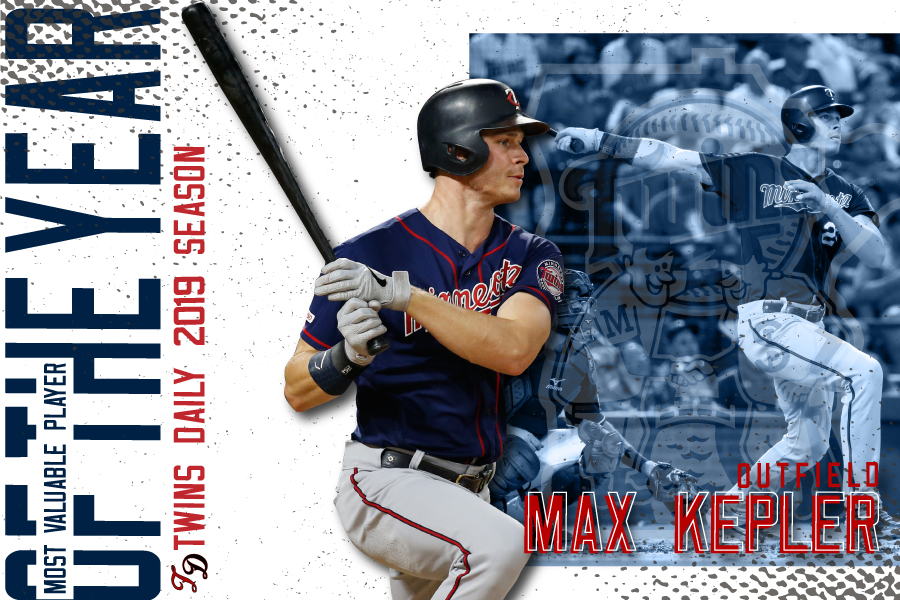 Here's a rundown of all the Twins players who received at least one first-place vote in our balloting: Taylor Rogers, ranked at the top of one ballot, was the glue that held a shaky bullpen together in the first half, and he remained steady down the stretch. He led all Twins pitchers in Win Probability Added and ranked second among American League relievers. Byron Buxton, also ranked at the top of one ballot, was arguably the biggest difference-maker for the Twins whenever he was on the field. They were a vastly better team with him out there, going 62-25 (.713) in games he played, compared to 39-36 (.520) without him – not including a playoff sweep where his absence was deeply felt. Mitch Garver, ranked No. 1 on two ballots, almost certainly delivered the most qualitative value, mashing 31 home runs and producing 3.9 fWAR in just 93 games as the Twins carefully managed his workload behind the plate. The combination of offensive and defensive impact he brought to the field was transformative for the Twins. Jorge Polanco, also ranked atop a pair of ballots, led the team in bWAR (5.7) and recorded the highest mark for a Twin by Baseball Reference's metric since Brian Dozier in 2016. FanGraphs wasn't quite so accepting of his defensive shortcomings (4.0 fWAR) but from any perspective, Polanco was adequate at shortstop and was the team's iron man, playing in 153 games and making 100 more plate appearances than the next-highest player. Nelson Cruz, picked as Twins MVP on three ballots, was a dominating force at the plate like we've rarely seen before. Overcoming a wrist injury that plagued him for much of the summer, he still bashed 41 homers with 108 RBIs while registering a career-high 1.031 OPS. He provided zero defensive value but the sheer offensive production and leadership were more than enough to offset it. Like I said, the Twins received vital contributions from across the board, and it's hard to single out one most essential player. However, the guy that ultimately rose to the top – and the only remote source of consensus for our panel, landing No. 1 on nine ballots and among the top two in all but one – is Max Kepler. Whether due to stylistic adjustments, changes in the baseball, or simply the developmental emergence of a 26-year-old with three seasons of experience under his belt – possibly all three – Kepler turned the corner in a big way: OPS+ 2016: 96 2017: 95 2018: 97 2019: 122 HR 2016: 17 2017: 19 2018: 20 2019: 36 fWAR 2016: 1.3 2017: 1.5 2018: 2.7 2019: 4.4 That fWAR led all Twins players, and was influenced heavily by his strong defensive ratings: Kepler posted a career-high 12.7 Ultimate Zone Rating (UZR) and was credited with 10 Defensive Runs Saved (DRS), leading the team in both categories. He was exceptional in right field (third-best in baseball, according to UZR/150) and, crucially, also proved capable as fill-in center fielder – a role made necessary by Buxton's frequent unavailability. If the Twins don't have Kepler ready to step in for 53 starts and 459 innings at the position, Buxton's injuries take a much greater toll on the team. Speaking personally, this played a big part in my placing Kepler atop the ballot. But even when you take away that contextual wrinkle, Kepler was just a tremendously productive player all year long, setting the tone as unconventional leadoff hitter for one of the league's best lineups. He amassed 32 doubles in addition to 36 homers, drove in 90 runs, scored 98 times, and had the second-highest WPA among Twins hitters (behind Cruz). Unfortunately he succumbed late to a shoulder issue that had plagued him for much of the year, costing him the last two weeks of the regular season and seemingly turning him into a nonfactor in the ALDS, but the inauspicious finish doesn't offset the outstanding production Kepler delivered throughout the majority of a true breakout campaign. THE CANDIDATES It's an impressive bunch. Cruz, who finished second in our balloting, was officially named team MVP earlier this week and it's tough to knock that choice. Ultimately, Kepler's huge advantage in defensive value gave him an edge in our vote. Meanwhile, Polanco's defensive struggles likely dinged him in the eyes of many, even though he delivered high-caliber offensive output at a premium position – albeit output that tailed off in the second half. Garver, Buxton and Miguel Sano were bona fide stars when on the field, but a lack of volume detracted from the ultimate value provided. Jake Odorizzi and Jose Berrios got some love as leaders in a resurgent rotation, as did Rogers and Tyler Duffey in the bullpen. One nugget of the final tallies I found surprising, yet telling: Eddie Rosario, last year's Twins Daily MVP recipient, received only one sixth-place vote, despite putting up 32 home runs and 109 RBIs. The misleading nature of his raw totals didn't fool our panel, and unfortunately, probably won't fool potential trade partners this winter. THE BALLOTS Here’s a look at the ballots from our 18 voters. Seth Stohs: 1) Jorge Polanco, 2) Max Kepler, 3) Nelson Cruz Nick Nelson: 1) Max Kepler, 2) Jorge Polanco, 3) Nelson Cruz John Bonnes: 1) Max Kepler, 2) Nelson Cruz, 3) Taylor Rogers Tom Froemming: 1) Max Kepler, 2) Nelson Cruz, 3) Jorge Polanco Cody Christie: 1) Max Kepler, 2) Jorge Polanco, 3) Nelson Cruz Ted Schwerzler: 1) Max Kepler, 2) Nelson Cruz, 3) Mitch Garver Steve Lein: 1) Nelson Cruz, 2) Max Kepler, 3) Jorge Polanco S.D. Buhr: 1) Mitch Garver, 2) Max Kepler, 3) Nelson Cruz Matt Braun: 1) Byron Buxton, 2) Max Kepler, 3) Nelson Cruz Cooper Carlson: 1) Nelson Cruz, 2) Max Kepler, 3) Miguel Sano Andrew Thares: 1) Max Kepler, 2) Nelson Cruz, 3) Mitch Garver JD Cameron: 1) Max Kepler, 2) Jorge Polanco, 3) Mitch Garver AJ Condon: 1) Max Kepler, 2) Jorge Polanco, 3) Taylor Rogers Matt Lenz: 1) Mitch Garver, 2) Max Kepler, 3) Jorge Polanco Nash Walker: 1) Jorge Polanco, 2) Max Kepler, 3) Nelson Cruz Patrick Wozniak: 1) Nelson Cruz, 2) Max Kepler, 3) Jorge Polanco Thieres Rabelo: 1) Taylor Rogers, 2) Nelson Cruz, 3) Jose Berrios Sabir Aden: 1) Max Kepler, 2) Mitch Garver, 3) Jorge Polanco POINTS Max Kepler: 96 Nelson Cruz: 78 Jorge Polanco: 65 Mitch Garver: 51 Taylor Rogers: 31 Jose Berrios: 21 Miguel Sano: 18 Byron Buxton: 7 Jake Odorizzi: 5 Luis Arraez: 3 Tyler Duffey: 2 Eddie Rosario: 1 Previous Twins Daily MVP Winners 2015: Brian Dozier 2016: Brian Dozier 2017: Brian Dozier 2018: Eddie Rosario
 -
In many ways, the Twins have changed radically under this front office regime. Derek Falvey and Thad Levine ushered an era of historically elite slugging and high-velo power pitching. The team has also been noticeably splashier on the offseason market, but one thing that remains – and will always remain – constant for Minnesota is a foremost reliance on internal pipeline to fuel sustained success. Players like Luis Arraez are the lifeblood of this model. And if he follows in the footsteps of past TD Rookie of the Year winners, Arraez is destined to play a major role in the Twins' story for years to come.Since our site started handing out awards five years ago, the picks for top rookie have been Miguel Sano (2015), Max Kepler (2016), Trevor Hildenberger (2017), and Mitch Garver (2018). While Hildenberger has faded, the other three were key contributors to a 101-win team this year, with each ranking among Minnesota's top five position players in WAR. Arraez was just behind that pack, at No. 7. Sano, Kepler, and Garver are now foundational building blocks for the Twins going forward, and now the latest TD Rookie of the Year is poised to join this esteemed core. PROVING IT ON THE FIELD In some ways, Arraez is similar to our pick from a year ago. Not in terms of being a late bloomer – Garver was 27 by the time he broke through as a full-time big-leaguer, while Arraez is now firmly entrenched as a 22-year-old – but in terms of being slept on. Both players were somewhat overlooked on the prospect scene, due to ostensible limitations that capped their ceilings. For Garver, it was defensive shortcomings behind the plate, and middling potential with the bat. He dented this narrative as a rookie, and fully obliterated it as a sophomore. For Arraez, it's always been a lack of power and prototypical physical tools overshadowing his undeniably impressive production at every level. Following a spectacular debut in the big leagues, there's no more doubting the viability of Arraez's game. A DISCIPLINED HITTING MACHINE He's always been tough to peg. In our preseason prospect rankings, Arraez didn't make the Top 20 cut, falling into the Honorable Mentions; as Seth put it: "Luis Arraez gets his own category. While he isn’t a great athlete, doesn’t have great speed or power and profiles as maybe a second baseman, Arraez can flat-out hit. He has hit at every level." We weren't alone in our uncertainty on Arraez. He never appeared in a prominent national ranking, even after batting well above .300 at almost every stop in the minors. While Arraez's bat-to-ball skills and advanced discipline were always plain to see, the diminutive 5-foot-7 infielder packed little punch with the bat. Typically what you see with such players is pitchers at the highest levels attacking them and accentuating their weaknesses. Nevertheless, the intrigue was clear, and it prompted Minnesota to add him to the 40-man roster last winter rather than expose him to the Rule 5 draft. And from the moment Arraez arrived in Minnesota in mid-May, after batting .344 through 41 games at Double-A and Triple-A, it was clear he's no novelty act. Bringing keen discipline to an aggressive slugging lineup full of established big-leaguers, the rookie second baseman quickly carved out his niche, immediately dazzling with his tremendous strike zone control and ability to spray line drives everywhere. He batted .375 with five walks and one strikeout through 10 games, went back to Rochester at the start of June in a roster crunch, and then was back for good two weeks later. Arraez returned with an eight-game hitting streak out of the gates, including a four-knock effort in Kansas City, and that was that. He was an everyday player the rest of the way, supplanting Jonathan Schoop at second base in a season where Schoop hit 23 homers. Among players with 300+ plate appearances, Arraez finished first on the Twins in batting average (.344) and on-base percentage (.399). In fact, he ranked third and ninth among all MLB players with 300+ PA in those categories, respectively. As a 22-year-old. Among Twins hitters, Arraez swung at the third-fewest pitches outside the zone, but made the highest percentage of contact on non-strikes. In the rare instances where he chased, he got the bat on it. His astonishing 2.8% whiff rate was the lowest on the team (beating even La Tortuga), and in all the majors. GRITTY FINISH Betraying the notions of pitcher adjustments and regression to the mean, Arraez just kept on raking. He batted .438 in June, .321 in July, .293 in August, and .340 in September. He kept chugging all the way up until suffering a scary ankle injury in the season's second-to-last game, when he went down in a heap after colliding with Astudillo on an infield fly ball. Seeing Arraez carted off the field, tears in his eyes, was uniquely traumatizing to watch because he had ingratiated himself to the fan base so deeply with his infectious energy, amusing quirks, and consistently outstanding play. At that moment, there seemed to be almost zero chance he would be able to aid the club's postseason run, but in borderline miraculous fashion, Arraez got right enough in one week to start all three ALDS games. Granted, like many of his teammates, the second baseman appeared hobbled and at far less than 100%, but simply making it back onto the field is one of those things that strengthens the budding bonds of comradery. FUTURE FIT Rocco Baldelli mostly stuck with this plan of leading off Kepler and Garver this year, but Arraez sure has the look of a No. 1 hitter in the lineup. It seems likely he'll be there and starting at second base on Opening Day next year. It's also conceivable he could shift to third base, where he made 15 starts as a rookie, with Sano sliding across the diamond – if not next year then at some point. But one thing is for sure: Arraez is locked in. OTHER CANDIDATES As you can see by checking out the individual ballots below, Arraez was a unanimous No. 1 selection. Zack Littell was the clear-cut second choice with his 2.68 ERA in 29 appearances, including 0.88 in his last 27. Ryne Harper's inspiring first-half placed him third. Other deserving recipients of votes included Devin Smeltzer, Cody Stashak and Randy Dobnak, who all had encouraging showings on the pitching staff but didn't amass large enough samples. THE BALLOTS Here’s a look at the ballots from our 18 voters. Seth Stohs: 1) Luis Arraez, 2) Zack Littell, 3) Randy Dobnak Nick Nelson: 1) Luis Arraez, 2) Zack Littell, 3) Devin Smeltzer John Bonnes: 1) Luis Arraez, 2) Zack Littell, 3) Devin Smeltzer Tom Froemming: 1) Luis Arraez, 2) Ryne Harper, 3) Zack Littell Cody Christie: 1) Luis Arraez, 2) Ryne Harper, 3) Zack Littell Ted Schwerzler: 1) Luis Arraez, 2) Devin Smeltzer, 3) Randy Dobnak Steve Lein: 1) Luis Arraez, 2) Devin Smeltzer, 3) Randy Dobnak S.D. Buhr: 1) Luis Arraez, 2) Zack Littell, 3) Randy Dobnak Matt Braun: 1) Luis Arraez, 2) Cody Stashak, 3) Zack Littell Cooper Carlson: 1) Luis Arraez, 2) Zack Littell, 3) Cody Stashak Andrew Thares: 1) Luis Arraez, 2) Ryne Harper, 3) Randy Dobnak JD Cameron: 1) Luis Arraez, 2) Devin Smeltzer, 3) Cody Stashak Matt Lenz: 1) Luis Arraez, 2) Zack Littell, 3) Ryne Harper Nash Walker: 1) Luis Arraez, 2) Devin Smeltzer, 3) Cody Stashak Patrick Wozniak: 1) Luis Arraez, 2) Zack Littell, 3) Ryne Harper Thieres Rabelo: 1) Luis Arraez, 2) Ryne Harper, 3) Willians Astudillo Sabir Aden: 1) Luis Arraez, 2) Willians Astudillo, 3) Ryne Harper AJ Condon: 1) Luis Arraez, 2) Randy Dobnak, 3) Cody Stashak POINTS Luis Arraez: 54 Zack Littell: 17 Ryne Harper: 12 Devin Smeltzer: 10 Cody Stashak: 6 Randy Dobnak: 6 Willians Astudillo: 3 How would your ballot look? Leave a comment and make your case. Previous Twins Daily Rookie of the Year Winners 2015: Miguel Sano 2016: Max Kepler 2017: Trevor Hildenberger 2018: Mitch Garver Click here to view the article
-
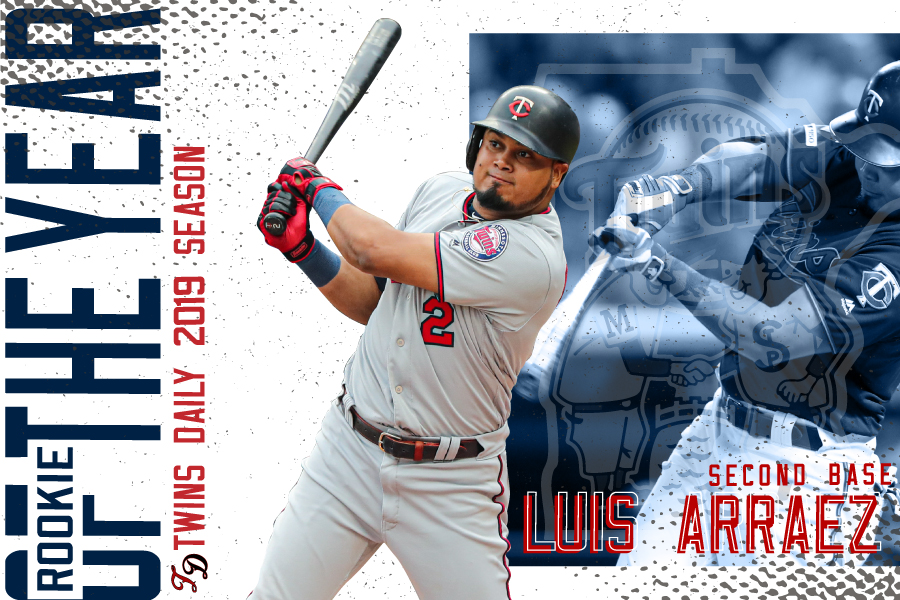 Since our site started handing out awards five years ago, the picks for top rookie have been Miguel Sano (2015), Max Kepler (2016), Trevor Hildenberger (2017), and Mitch Garver (2018). While Hildenberger has faded, the other three were key contributors to a 101-win team this year, with each ranking among Minnesota's top five position players in WAR. Arraez was just behind that pack, at No. 7. Sano, Kepler, and Garver are now foundational building blocks for the Twins going forward, and now the latest TD Rookie of the Year is poised to join this esteemed core. PROVING IT ON THE FIELD In some ways, Arraez is similar to our pick from a year ago. Not in terms of being a late bloomer – Garver was 27 by the time he broke through as a full-time big-leaguer, while Arraez is now firmly entrenched as a 22-year-old – but in terms of being slept on. Both players were somewhat overlooked on the prospect scene, due to ostensible limitations that capped their ceilings. For Garver, it was defensive shortcomings behind the plate, and middling potential with the bat. He dented this narrative as a rookie, and fully obliterated it as a sophomore. For Arraez, it's always been a lack of power and prototypical physical tools overshadowing his undeniably impressive production at every level. Following a spectacular debut in the big leagues, there's no more doubting the viability of Arraez's game. A DISCIPLINED HITTING MACHINE He's always been tough to peg. In our preseason prospect rankings, Arraez didn't make the Top 20 cut, falling into the Honorable Mentions; as Seth put it: "Luis Arraez gets his own category. While he isn’t a great athlete, doesn’t have great speed or power and profiles as maybe a second baseman, Arraez can flat-out hit. He has hit at every level." We weren't alone in our uncertainty on Arraez. He never appeared in a prominent national ranking, even after batting well above .300 at almost every stop in the minors. While Arraez's bat-to-ball skills and advanced discipline were always plain to see, the diminutive 5-foot-7 infielder packed little punch with the bat. Typically what you see with such players is pitchers at the highest levels attacking them and accentuating their weaknesses. Nevertheless, the intrigue was clear, and it prompted Minnesota to add him to the 40-man roster last winter rather than expose him to the Rule 5 draft. And from the moment Arraez arrived in Minnesota in mid-May, after batting .344 through 41 games at Double-A and Triple-A, it was clear he's no novelty act. Bringing keen discipline to an aggressive slugging lineup full of established big-leaguers, the rookie second baseman quickly carved out his niche, immediately dazzling with his tremendous strike zone control and ability to spray line drives everywhere. He batted .375 with five walks and one strikeout through 10 games, went back to Rochester at the start of June in a roster crunch, and then was back for good two weeks later. Arraez returned with an eight-game hitting streak out of the gates, including a four-knock effort in Kansas City, and that was that. He was an everyday player the rest of the way, supplanting Jonathan Schoop at second base in a season where Schoop hit 23 homers. Among players with 300+ plate appearances, Arraez finished first on the Twins in batting average (.344) and on-base percentage (.399). In fact, he ranked third and ninth among all MLB players with 300+ PA in those categories, respectively. As a 22-year-old. Among Twins hitters, Arraez swung at the third-fewest pitches outside the zone, but made the highest percentage of contact on non-strikes. In the rare instances where he chased, he got the bat on it. His astonishing 2.8% whiff rate was the lowest on the team (beating even La Tortuga), and in all the majors. GRITTY FINISH Betraying the notions of pitcher adjustments and regression to the mean, Arraez just kept on raking. He batted .438 in June, .321 in July, .293 in August, and .340 in September. He kept chugging all the way up until suffering a scary ankle injury in the season's second-to-last game, when he went down in a heap after colliding with Astudillo on an infield fly ball. Seeing Arraez carted off the field, tears in his eyes, was uniquely traumatizing to watch because he had ingratiated himself to the fan base so deeply with his infectious energy, amusing quirks, and consistently outstanding play. At that moment, there seemed to be almost zero chance he would be able to aid the club's postseason run, but in borderline miraculous fashion, Arraez got right enough in one week to start all three ALDS games. Granted, like many of his teammates, the second baseman appeared hobbled and at far less than 100%, but simply making it back onto the field is one of those things that strengthens the budding bonds of comradery. FUTURE FIT Rocco Baldelli mostly stuck with this plan of leading off Kepler and Garver this year, but Arraez sure has the look of a No. 1 hitter in the lineup. It seems likely he'll be there and starting at second base on Opening Day next year. It's also conceivable he could shift to third base, where he made 15 starts as a rookie, with Sano sliding across the diamond – if not next year then at some point. But one thing is for sure: Arraez is locked in. OTHER CANDIDATES As you can see by checking out the individual ballots below, Arraez was a unanimous No. 1 selection. Zack Littell was the clear-cut second choice with his 2.68 ERA in 29 appearances, including 0.88 in his last 27. Ryne Harper's inspiring first-half placed him third. Other deserving recipients of votes included Devin Smeltzer, Cody Stashak and Randy Dobnak, who all had encouraging showings on the pitching staff but didn't amass large enough samples. THE BALLOTS Here’s a look at the ballots from our 18 voters. Seth Stohs: 1) Luis Arraez, 2) Zack Littell, 3) Randy Dobnak Nick Nelson: 1) Luis Arraez, 2) Zack Littell, 3) Devin Smeltzer John Bonnes: 1) Luis Arraez, 2) Zack Littell, 3) Devin Smeltzer Tom Froemming: 1) Luis Arraez, 2) Ryne Harper, 3) Zack Littell Cody Christie: 1) Luis Arraez, 2) Ryne Harper, 3) Zack Littell Ted Schwerzler: 1) Luis Arraez, 2) Devin Smeltzer, 3) Randy Dobnak Steve Lein: 1) Luis Arraez, 2) Devin Smeltzer, 3) Randy Dobnak S.D. Buhr: 1) Luis Arraez, 2) Zack Littell, 3) Randy Dobnak Matt Braun: 1) Luis Arraez, 2) Cody Stashak, 3) Zack Littell Cooper Carlson: 1) Luis Arraez, 2) Zack Littell, 3) Cody Stashak Andrew Thares: 1) Luis Arraez, 2) Ryne Harper, 3) Randy Dobnak JD Cameron: 1) Luis Arraez, 2) Devin Smeltzer, 3) Cody Stashak Matt Lenz: 1) Luis Arraez, 2) Zack Littell, 3) Ryne Harper Nash Walker: 1) Luis Arraez, 2) Devin Smeltzer, 3) Cody Stashak Patrick Wozniak: 1) Luis Arraez, 2) Zack Littell, 3) Ryne Harper Thieres Rabelo: 1) Luis Arraez, 2) Ryne Harper, 3) Willians Astudillo Sabir Aden: 1) Luis Arraez, 2) Willians Astudillo, 3) Ryne Harper AJ Condon: 1) Luis Arraez, 2) Randy Dobnak, 3) Cody Stashak POINTS Luis Arraez: 54 Zack Littell: 17 Ryne Harper: 12 Devin Smeltzer: 10 Cody Stashak: 6 Randy Dobnak: 6 Willians Astudillo: 3 How would your ballot look? Leave a comment and make your case. Previous Twins Daily Rookie of the Year Winners 2015: Miguel Sano 2016: Max Kepler 2017: Trevor Hildenberger 2018: Mitch Garver
 -
Your generosity is appreciated more than you know! We can't wait to get it to you.
-
Get busy livin or get busy dyin. Thanks for this post Matthew, I greatly enjoyed. HIGHLY relevant to my interests!
-
Good call. I added that detail, thank you!
-
It's a hard truth: The 2019 Twins season is over. It ended in a way none of us wanted. But here's the good news: This team's contention window has been thrust open, and now, one of the most intriguing offseasons in team history lies ahead. Your definitive guide awaits. The 2020 Offseason Handbook is now available for preorder, and we've got some fun surprises on the way. [uPDATE: This product is now available for immediate download!]After once again succumbing to the Evil Empire, the Twins now must set out to avenge this defeat, as the front office seeks to build a roster capable of advancing past the Yankees and reaching the World Series. And... the clock is ticking, with Nelson Cruz set to turn 40 next year and several core players approaching free agency. (Mr. Stark, I don't feel so good...) Luckily, clean books and a deep system mean plentiful resources are available, and a wealth of options will be in play via free agency or trade this offseason. You'll be able to get a detailed look at all of them in the Offseason Handbook, which puts you in the role of general manager tasked with building a championship roster (within certain constraints). By preordering it now, you can get your copy of this digital ebook early. * NOTE: THIS IS A DIGITAL-ONLY PRODUCT! (But you can print it!) * If you have questions, you will likely find an answer by consulting the Offseason Handbook FAQ, but here's a quick rundown of pertinent details. COST: Name-your-price ($10 minimum for preorders, then after the official release, no minimum)RELEASE DATE: Around the end of the World Series (preorders will get theirs before it's officially made available to the public)CONTRIBUTORS: John, Parker, Seth, Tom, myself, and an esteemed stable of guest writers to be unveiled soon (you're gonna love 'em)WHAT'S INSIDE: Payroll and arbitration analysis. Blurbs on every relevant free agent. Copious trade scenarios. Breakdowns of organizational depth at every position. In-depth features on a variety of key topics. And more. Check out last year's edition for a rough idea of what to expect.Assemble your Twins Avengers. Unlock a comprehensive overview of the offseason landscape. And support the writers who work tirelessly year-round to serve up awesome free content here at Twins Daily. Preorder the 2020 Offseason Handbook today. Click here to view the article
-
 After once again succumbing to the Evil Empire, the Twins now must set out to avenge this defeat, as the front office seeks to build a roster capable of advancing past the Yankees and reaching the World Series. And... the clock is ticking, with Nelson Cruz set to turn 40 next year and several core players approaching free agency. (Mr. Stark, I don't feel so good...) Luckily, clean books and a deep system mean plentiful resources are available, and a wealth of options will be in play via free agency or trade this offseason. You'll be able to get a detailed look at all of them in the Offseason Handbook, which puts you in the role of general manager tasked with building a championship roster (within certain constraints). By preordering it now, you can get your copy of this digital ebook early. * NOTE: THIS IS A DIGITAL-ONLY PRODUCT! (But you can print it!) * If you have questions, you will likely find an answer by consulting the Offseason Handbook FAQ, but here's a quick rundown of pertinent details. COST: Name-your-price ($10 minimum for preorders, then after the official release, no minimum) RELEASE DATE: Around the end of the World Series (preorders will get theirs before it's officially made available to the public) CONTRIBUTORS: John, Parker, Seth, Tom, myself, and an esteemed stable of guest writers to be unveiled soon (you're gonna love 'em) WHAT'S INSIDE: Payroll and arbitration analysis. Blurbs on every relevant free agent. Copious trade scenarios. Breakdowns of organizational depth at every position. In-depth features on a variety of key topics. And more. Check out last year's edition for a rough idea of what to expect. Assemble your Twins Avengers. Unlock a comprehensive overview of the offseason landscape. And support the writers who work tirelessly year-round to serve up awesome free content here at Twins Daily. Preorder the 2020 Offseason Handbook today.
 -
Agreed. I'm going to Target Field tomorrow and will feel very much at peace if they can just get that one W in the series.
-
This was going to be different. So insisted everyone involved with these 2019 Twins, who entered the postseason looking to upend an October narrative that's haunted the franchise for 15 years. So far, they're right. It has been different. It's been worse.Losing against the Yankees in the playoffs is a painfully familiar experience for Twins fans, but this is as bad as we've seen it. While Minnesota entered this ALDS on a 13-game postseason losing streak, none of those losses were as lopsided or all-around uninspiring as the two duds we just witnessed in the Bronx. None of the Twins' 13 consecutive playoff losses dating back to 2004 were by a margin of more than five runs. Each of the first two drubbings in this ALDS have been by six. The Yankees have dismantled, outsmarted, and dominated at almost every turn. Few observers truly expected the Twins to win this series but for the club to be so woefully uncompetitive is beyond disheartening. It starts with the pitching staff, of course. In two games at Yankee Stadium, the Twins gave up 18 runs on 18 hits and 16 walks. Previously reliable arms imploded. No one had any answers for the patience and power of New York's lineup. Multiple defensive mistakes contributed to the meltdown. Bafflingly, the Twins allowed all of this damage without three of their best relievers even taking the mound. Trevor May and Sergio Romo didn't appear until Game 2 was already well out of hand. Taylor Rogers, Minnesota's most valuable reliever all year long, still hasn't pitched. Meanwhile, the Yankees have gone to their top guys in every important spot and it has paid off; their bullpen – which was arguably at a slight disadvantage on paper – has allowed only two runs on four hits over 8 1/3 innings. And while it's always easy to second-guess managerial bullpen moves in retrospect, that's the nature of a playoff series, and rookie skipper Rocco Baldelli has made some especially questionable calls that have gone about as poorly as possible. He pulled strings as if operating in regular-season mode, saving bullets for late-game opportunities that never materialized. Why was Zack Littell the first man out of the bullpen on Friday night, in the fifth inning of a 3-3 tie? As effective as Littell has been, he's a rookie who rarely threw in high-leverage spots all year. And on Saturday, why was Tyler Duffey called into an intensely stressful situation, one day after throwing 25 pitches in Game 1? Rogers, May and Romo were all completely fresh. Duffey had a 7.45 ERA and 1.56 WHIP when pitching on zero days rest this season, and he never once made such an appearance after throwing as many pitches as he did on Friday. Baldelli has had a commendable first year at the helm but his decision-making in this series – and particularly those choices, with their utterly disastrous results – will be rightfully scrutinized for some time. At the end of the day, though, the biggest letdown for the Twins in this heralded slugging showdown has been their largely absent offense. Six runs on 13 hits in 18 innings, against a vulnerable pitching staff in one of baseball's most hitter-friendly yards. Completely inadequate and underwhelming. Now, the Twins return home with their backs against the wall. Win or it's over. Given the total breakdowns we've seen in every phase thus far, there's not much cause for confidence, but Monday is a new day, in a new ballpark, in front of a packed home crowd. This team is almost out of chances to not just put an end to the longest stretch of postseason futility against a single opponent in MLB history, but to avoid imprinting 2019 as the new low point in this languishing legacy of losing when it matters most. Coming home, down 0-2, with elimination feeling almost like a forgone conclusion. We've been here before. Will this time be different? Click here to view the article
-
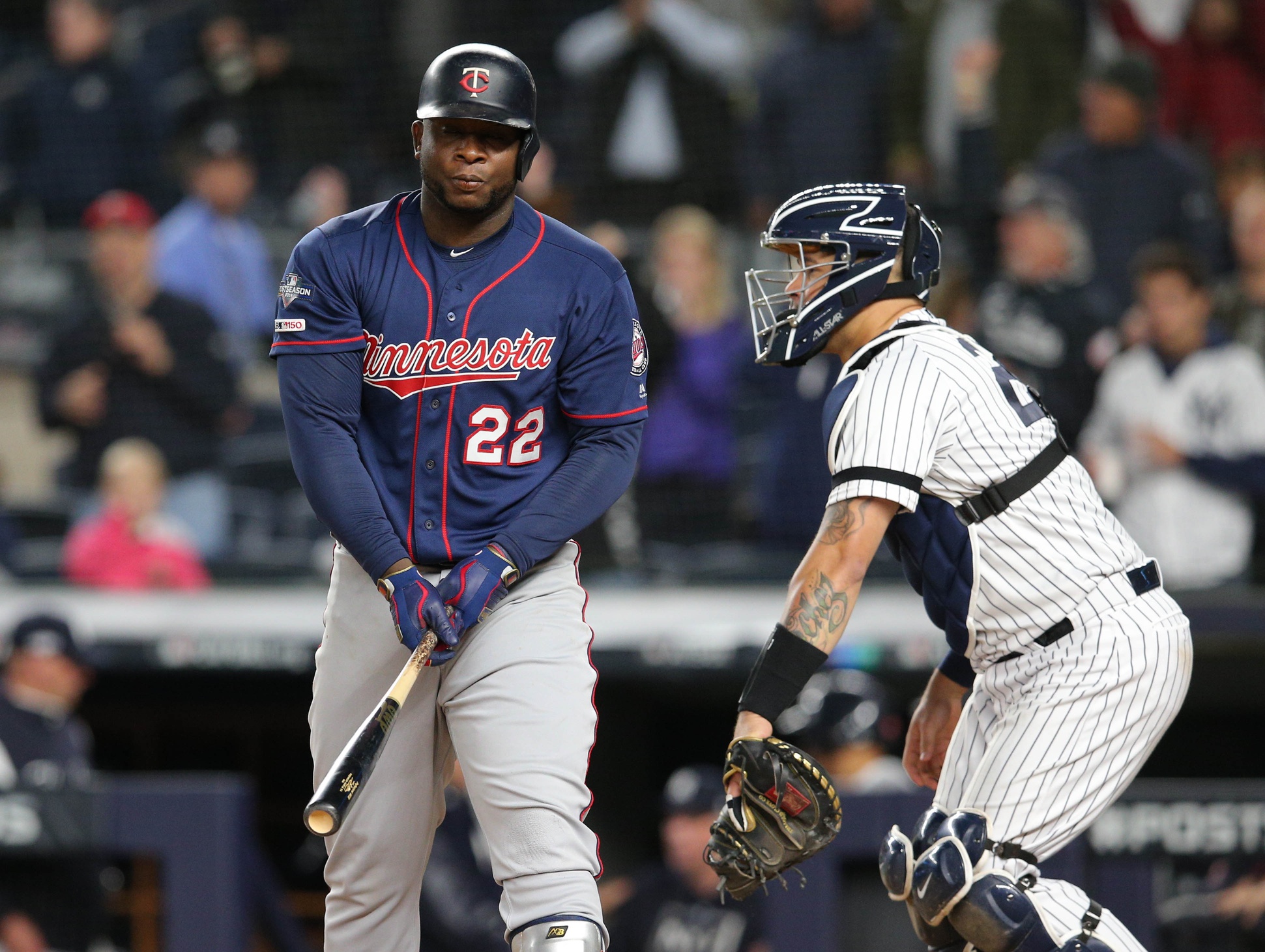 Losing against the Yankees in the playoffs is a painfully familiar experience for Twins fans, but this is as bad as we've seen it. While Minnesota entered this ALDS on a 13-game postseason losing streak, none of those losses were as lopsided or all-around uninspiring as the two duds we just witnessed in the Bronx. None of the Twins' 13 consecutive playoff losses dating back to 2004 were by a margin of more than five runs. Each of the first two drubbings in this ALDS have been by six. The Yankees have dismantled, outsmarted, and dominated at almost every turn. Few observers truly expected the Twins to win this series but for the club to be so woefully uncompetitive is beyond disheartening. It starts with the pitching staff, of course. In two games at Yankee Stadium, the Twins gave up 18 runs on 18 hits and 16 walks. Previously reliable arms imploded. No one had any answers for the patience and power of New York's lineup. Multiple defensive mistakes contributed to the meltdown. Bafflingly, the Twins allowed all of this damage without three of their best relievers even taking the mound. Trevor May and Sergio Romo didn't appear until Game 2 was already well out of hand. Taylor Rogers, Minnesota's most valuable reliever all year long, still hasn't pitched. Meanwhile, the Yankees have gone to their top guys in every important spot and it has paid off; their bullpen – which was arguably at a slight disadvantage on paper – has allowed only two runs on four hits over 8 1/3 innings. And while it's always easy to second-guess managerial bullpen moves in retrospect, that's the nature of a playoff series, and rookie skipper Rocco Baldelli has made some especially questionable calls that have gone about as poorly as possible. He pulled strings as if operating in regular-season mode, saving bullets for late-game opportunities that never materialized. Why was Zack Littell the first man out of the bullpen on Friday night, in the fifth inning of a 3-3 tie? As effective as Littell has been, he's a rookie who rarely threw in high-leverage spots all year. And on Saturday, why was Tyler Duffey called into an intensely stressful situation, one day after throwing 25 pitches in Game 1? Rogers, May and Romo were all completely fresh. Duffey had a 7.45 ERA and 1.56 WHIP when pitching on zero days rest this season, and he never once made such an appearance after throwing as many pitches as he did on Friday. Baldelli has had a commendable first year at the helm but his decision-making in this series – and particularly those choices, with their utterly disastrous results – will be rightfully scrutinized for some time. At the end of the day, though, the biggest letdown for the Twins in this heralded slugging showdown has been their largely absent offense. Six runs on 13 hits in 18 innings, against a vulnerable pitching staff in one of baseball's most hitter-friendly yards. Completely inadequate and underwhelming. Now, the Twins return home with their backs against the wall. Win or it's over. Given the total breakdowns we've seen in every phase thus far, there's not much cause for confidence, but Monday is a new day, in a new ballpark, in front of a packed home crowd. This team is almost out of chances to not just put an end to the longest stretch of postseason futility against a single opponent in MLB history, but to avoid imprinting 2019 as the new low point in this languishing legacy of losing when it matters most. Coming home, down 0-2, with elimination feeling almost like a forgone conclusion. We've been here before. Will this time be different?
 -
Hello darkness, my old friend. I've come to talk to you again. Fifteen years of futility follow the Minnesota Twins into this showdown against familiar foes. But as Rocco Baldelli insistently reminds us, the past has no bearing on today. This is a fresh slate. And this ain't your father's Twins lineup.ALDS Game 1 Minnesota Twins (101-61) @ New York Yankees (104-58) Series: 0-0 Start Time: 7:07 PM ET / 6:07 PM CT Forecast: High 50s and clear skies Pitching Matchup: Jose Berrios, RHP vs. James Paxton, LHP Lineups: Download attachment: Lineups1004.png THE LOWDOWN In this first round, Game 1 is monumental. Time Magazine noted two years ago that "ever since Major League Baseball instituted the best-of-five division series in 1995, 63 of the 88 contests have gone to whichever team won the first game." That's over 70 percent. Since then, seven out of eight Division Series have gone to the winner of Game 1. (It's worth noting that the Twins came out on the short side twice during that span, winning Game 1 but losing the ALDS to New York in both 2003 and 2004, but – channeling Baldelli – NO BEARING!) This isn't the same level of single-game magnitude as the last time these two met in the postseason – a winner-takes-all Wild Card faceoff in 2017 – but it isn't too terribly far off, either. The pressure is on New York, really. They will be in their element at Yankee Stadium, where they played .700 ball this season. They're throwing their hottest starter in Paxton, who went 10-0 with a 2.51 ERA in August and September. They expect to win this game and they probably should. But the Twins have a few distinct things working in their favor as they look to disrupt New York's flow and flip the script. 1: They thrived on the road this year, with their .679 winning percentage nearly matching New York's at home. The Twins haven't lost a series opener on the road since the first week of July. 2: THEY. CAN. MASH. Yankee Stadium is a hitter's haven and that has generally favored New York in these match-ups over the years. But this record-shattering Bomba Squad is another story. They're every bit as good as their counterparts and have been especially effective against left-handers, against whom the Twins are collectively raking to the tune of .285/.351/.521. Speaking of which, let's break down the pitching matchup. BERRIOS VS. THE YANKEES Season Numbers (Overall): 200.1 IP, 14-8, 3.68 ERA, 3.85 FIP, 1.22 WHIP, 8.8 K/9, 2.2 BB/9 Season Numbers (vs. NYY): N/A This will be Berrios's second postseason appearance. The first, of course, came against the same team in the same stadium. Berrios enetered in relief of Ervin Santana during the 2017 Wild Card Game and pitched three innings, allowing three runs on five hits while taking the loss. It wasn't a strong performance. But since then, Berrios has been a two-time All-Star while logging nearly 400 quality innings. He has risen to the occasion in big spots. One instance that comes to mind was his much-hyped start last year in Puerto Rico, where he faced division rival Cleveland and hurled seven shutout innings. He was masterful against that same Indians team on Opening Day this year, blanking them over 7 2/3 frames. But this kind of early-season dominance has become par for the course, and helps explain his pair of All-Star nods. What makes it a little harder to feel confident in the October version of Berrios is the way he's faded down the stretch in each of the past two seasons. This year, after posting a 3.00 ERA and holding opponents to a .238/.283/.388 before the break, the righty dropped to 4.64 and .268/.328/.428 in the second half. Luckily, Berrios saw his velocity and whiffs normalize near the end of the year. This trend, in addition to the extra rest (he's gone six days between starts), offers reason to believe. Download attachment: Screen Shot 2019-10-03 at 5.19.47 PM.png A full-strength Berrios is capable of keeping this high-powered Yankees lineup in check. Anything less is liable to put a lot of pressure on the Twins hitters and bullpen. PAXTON VS. THE TWINS Season Numbers (Overall): 150.2 IP, 15-6, 3.82 ERA, 3.86 FIP, 1.28 WHIP, 11.1 K/9, 3.3 BB/9 Season Numbers (vs. MIN): 1 GS, 3.0 IP, 2 H, 1 R (0 ER), 1 K, 3 BB Paxton was New York's marquee offseason addition, acquired via trade from Seattle in exchange for a package of prospects headlined by pitchers Justus Sheffield and Erik Swanson. The 30-year-old left-hander was very uneven in the first half for New York. He missed almost all of May with left knee inflammation, which cropped up during a shortened May 3rd start against Minnesota. As we alluded earlier, though, Paxton pulled it together after the break, leading the Yankees to an 11-0 record in his August and September starts. He was borderline unhittable for much of the second half. This will be Paxton's first time pitching in the playoffs, as Seattle failed to qualify in any of his six seasons there. But given that he notoriously kept his cool when a bald eagle landed on his back at Target Field in April of 2018, it seems safe to say he'll be unfazed by the moment. One thing to watch: Paxton left his last start of the season, against Texas on September 27th, after one shaky inning due to tightness in his left glute. An MRI revealed only "a little nerve irritation," and obviously the southpaw has been cleared to take the hill one week later, but there's a possibility he won't quite be at 100%. Another thing to watch: Paxton has allowed 23 home runs this year, and 21 have been hit by righties. That seems to bear noting as Nelson Cruz, Miguel Sano, and Mitch Garver roll into town. THE TIME IS NOW We look forward to seeing many of you at the viewing party for tonight's game at Brother's in Downtown Minneapolis. It's gonna be wild. It's gonna be intense. It's gonna be loud. But here's hoping that when it's all said and done on Friday night, Yankee Stadium is filled only with the sound of silence. As always, Twins Daily has a live game thread for tonight's game where you can chat and follow along with other users. You can find that thread here. Click here to view the article
-
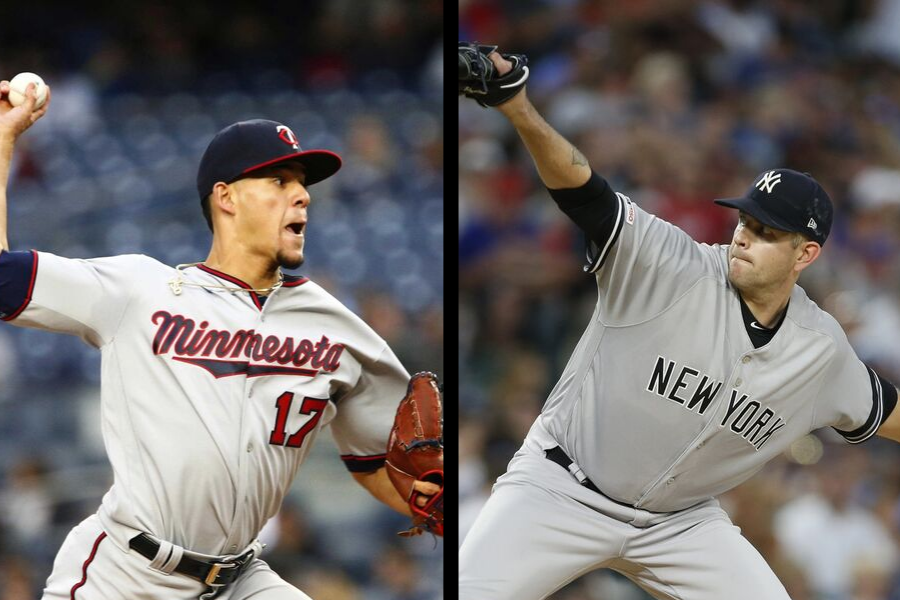 ALDS Game 1 Minnesota Twins (101-61) @ New York Yankees (104-58) Series: 0-0 Start Time: 7:07 PM ET / 6:07 PM CT Forecast: High 50s and clear skies Pitching Matchup: Jose Berrios, RHP vs. James Paxton, LHP Lineups: THE LOWDOWN In this first round, Game 1 is monumental. Time Magazine noted two years ago that "ever since Major League Baseball instituted the best-of-five division series in 1995, 63 of the 88 contests have gone to whichever team won the first game." That's over 70 percent. Since then, seven out of eight Division Series have gone to the winner of Game 1. (It's worth noting that the Twins came out on the short side twice during that span, winning Game 1 but losing the ALDS to New York in both 2003 and 2004, but – channeling Baldelli – NO BEARING!) This isn't the same level of single-game magnitude as the last time these two met in the postseason – a winner-takes-all Wild Card faceoff in 2017 – but it isn't too terribly far off, either. The pressure is on New York, really. They will be in their element at Yankee Stadium, where they played .700 ball this season. They're throwing their hottest starter in Paxton, who went 10-0 with a 2.51 ERA in August and September. They expect to win this game and they probably should. But the Twins have a few distinct things working in their favor as they look to disrupt New York's flow and flip the script. 1: They thrived on the road this year, with their .679 winning percentage nearly matching New York's at home. The Twins haven't lost a series opener on the road since the first week of July. 2: THEY. CAN. MASH. Yankee Stadium is a hitter's haven and that has generally favored New York in these match-ups over the years. But this record-shattering Bomba Squad is another story. They're every bit as good as their counterparts and have been especially effective against left-handers, against whom the Twins are collectively raking to the tune of .285/.351/.521. Speaking of which, let's break down the pitching matchup. BERRIOS VS. THE YANKEES Season Numbers (Overall): 200.1 IP, 14-8, 3.68 ERA, 3.85 FIP, 1.22 WHIP, 8.8 K/9, 2.2 BB/9 Season Numbers (vs. NYY): N/A This will be Berrios's second postseason appearance. The first, of course, came against the same team in the same stadium. Berrios enetered in relief of Ervin Santana during the 2017 Wild Card Game and pitched three innings, allowing three runs on five hits while taking the loss. It wasn't a strong performance. But since then, Berrios has been a two-time All-Star while logging nearly 400 quality innings. He has risen to the occasion in big spots. One instance that comes to mind was his much-hyped start last year in Puerto Rico, where he faced division rival Cleveland and hurled seven shutout innings. He was masterful against that same Indians team on Opening Day this year, blanking them over 7 2/3 frames. But this kind of early-season dominance has become par for the course, and helps explain his pair of All-Star nods. What makes it a little harder to feel confident in the October version of Berrios is the way he's faded down the stretch in each of the past two seasons. This year, after posting a 3.00 ERA and holding opponents to a .238/.283/.388 before the break, the righty dropped to 4.64 and .268/.328/.428 in the second half. Luckily, Berrios saw his velocity and whiffs normalize near the end of the year. This trend, in addition to the extra rest (he's gone six days between starts), offers reason to believe. A full-strength Berrios is capable of keeping this high-powered Yankees lineup in check. Anything less is liable to put a lot of pressure on the Twins hitters and bullpen. PAXTON VS. THE TWINS Season Numbers (Overall): 150.2 IP, 15-6, 3.82 ERA, 3.86 FIP, 1.28 WHIP, 11.1 K/9, 3.3 BB/9 Season Numbers (vs. MIN): 1 GS, 3.0 IP, 2 H, 1 R (0 ER), 1 K, 3 BB Paxton was New York's marquee offseason addition, acquired via trade from Seattle in exchange for a package of prospects headlined by pitchers Justus Sheffield and Erik Swanson. The 30-year-old left-hander was very uneven in the first half for New York. He missed almost all of May with left knee inflammation, which cropped up during a shortened May 3rd start against Minnesota. As we alluded earlier, though, Paxton pulled it together after the break, leading the Yankees to an 11-0 record in his August and September starts. He was borderline unhittable for much of the second half. This will be Paxton's first time pitching in the playoffs, as Seattle failed to qualify in any of his six seasons there. But given that he notoriously kept his cool when a bald eagle landed on his back at Target Field in April of 2018, it seems safe to say he'll be unfazed by the moment. One thing to watch: Paxton left his last start of the season, against Texas on September 27th, after one shaky inning due to tightness in his left glute. An MRI revealed only "a little nerve irritation," and obviously the southpaw has been cleared to take the hill one week later, but there's a possibility he won't quite be at 100%. Another thing to watch: Paxton has allowed 23 home runs this year, and 21 have been hit by righties. That seems to bear noting as Nelson Cruz, Miguel Sano, and Mitch Garver roll into town. THE TIME IS NOW We look forward to seeing many of you at the viewing party for tonight's game at Brother's in Downtown Minneapolis. It's gonna be wild. It's gonna be intense. It's gonna be loud. But here's hoping that when it's all said and done on Friday night, Yankee Stadium is filled only with the sound of silence. As always, Twins Daily has a live game thread for tonight's game where you can chat and follow along with other users. You can find that thread here.
 -
It's about stamina and length. Dobnak threw 135 (dominant) innings in the minors this year in addition to his 28 with MIN. Severino has literally thrown 13 innings all year, total, and he hasn't been stretched out past 80 pitches in an outing.
- 39 replies
-
- 4
-

-
- jose berrios
- jake odorizzi
- (and 3 more)
-
The two highest-scoring offenses in baseball will be squaring off when Minnesota meets New York in the ALDS later this week. When it comes to offensive prowess, it's nearly impossible to appoint an advantage between these evenly-matched bunches of sluggers. But the Twins do have a clear edge in one area – one which appeared at the outset of the season (and even two months ago) to be their greatest weakness: pitching.STARTING PITCHING The Twins have question marks in the rotation, yes, but the Yankees even more so. Minnesota ranks 11th among MLB teams in starting pitching ERA, and seventh in WAR. New York ranks 11th and 17th, respectively. While the Twins may lack a prototypical ace, their top two starters have easily outperformed their Bronx counterparts: Jose Berrios: 200.1 IP, 3.68 ERA, 124 ERA+, 3.68 FIP, 1.22 WHIP Jake Odorizzi: 159 IP, 3.51 ERA, 131 ERA+, 3.35 FIP, 1.21 WHIP Here's take a look at New York's top two starters this year: James Paxton: 150.2 IP, 3.82 ERA, 116 ERA+, 3.86 FIP, 1.28 WHIP Masahiro Tanaka: 182 IP, 4.45 ERA, 100 ERA+, 4.27 FIP, 1.24 WHIP The caveat here is that New York also has Luis Severino, who's likely their best starter on talent alone. But Severino missed almost the entire season with a shoulder injury, coming back to make three appearances in September. He pitched well in those appearances (1.50 ERA with 17 strikeouts in 12 innings) but still... he's barely pitched. CC Sabathia is no more than a mediocre long reliever at this point, and J.A. Happ has had a crummy season though he did finish it strong. Interestingly, both rotations are without key third pieces due to self-created messes. The Twins are obviously missing Michael Pineda, who received a PED suspension in early September. Meanwhile, Yankees right-hander Domingo German was 18-4 with a 4.03 ERA, 1.15 WHIP and 153-to-39 K/BB ratio before being placed on administrative leave in mid-September due to domestic violence allegations. Depending on your level of belief in Randy Dobnak, the Twins have either a slight or considerable advantage in starting pitching in the first round – a chasmic difference from a scenario where they would've drawn Houston. RELIEF PITCHING The Yankees spent big to build a power bullpen, and to an extent it has paid off. The $39 million trio of Aroldis Chapman, Zack Britton and Adam Ottavino has been phenomenal. New York has a couple of other rock-solid relief arms in Chad Green and Tommy Kahnle. But they're without an essential fixture in Dellin Betances, who suffered a partial Achilles tear and is done for the year. Minnesota's top three bullpen arms – Taylor Rogers, Tyler Duffey and Trevor May – are roughly equivalent to New York's prime trio, at about 10% of the cost. But the next wave of depth is where the Twins start to pull away: Zack Littell, Cody Stashak, Sergio Romo, and the electric wild-card that is Brusdar Graterol... these guys have the performance and stuff to inspire confidence. The absence of deadline dud Sam Dyson barely even seems to factor – certainly not the extent of Betances for New York. In terms of season numbers, these two clubs are very comparable. New York ranks second in bullpen WAR at 7.5, while Minnesota is third at 7.3. New York ranks ninth in bullpen ERA at 4.08, Minnesota ranks 10th at 4.17. Minnesota ranks first in bullpen FIP at 3.92, New York ranks ninth 4.15. You could argue that the Yankees are equal or even superior in this department on some of those counts, but in present terms, overall numbers overstate the impact of Betances for New York, and understate the impact of guys like Duffey and Stashak for Minnesota. Since the All-Star break, the Twins edge the Yankees in basically every measure. In fact, since the All-Star break, Minnesota's bullpen is conquering the world according to certain metrics. For example... Top Second-Half Bullpen WAR: 1. MIN - 4.8 2. TB - 3.7 3. NYY - 3.7 4. SD - 3.4 5. BOS - 2.7 That's some gap at the top. Rocco Baldelli told media on Tuesday, "Right now I think we have one of the best bullpens I've ever seen." And really, it's not a ridiculous statement. This unit is a strength unrivaled by any other team in this postseason mix. Given the immense relief struggles the Twins were facing around the deadline, and the total fizzling of their marquee addition at that time, this is a borderline miraculous development. It may be the story of the season in a year where the Twins sent two starters to the All-Star Game and set the MLB home run record. Amidst all the talk of these two powerful lineups clashing, not enough attention is being paid to Minnesota's elite, spectacular bullpen. That depth will come heavily into play as Baldelli attempts to navigate this series with a shorthanded rotation. In all likelihood, neither of these imposing lineups are getting silenced. In a series like this, it's about damage control. That happens to be Minnesota's primary advantage on paper. Click here to view the article
- 39 replies
-
- 5
-
-
- jose berrios
- jake odorizzi
- (and 3 more)
-
Damage Control: Pitching is Minnesota's Primary Advantage in ALDS
Nick Nelson posted an article in Twins
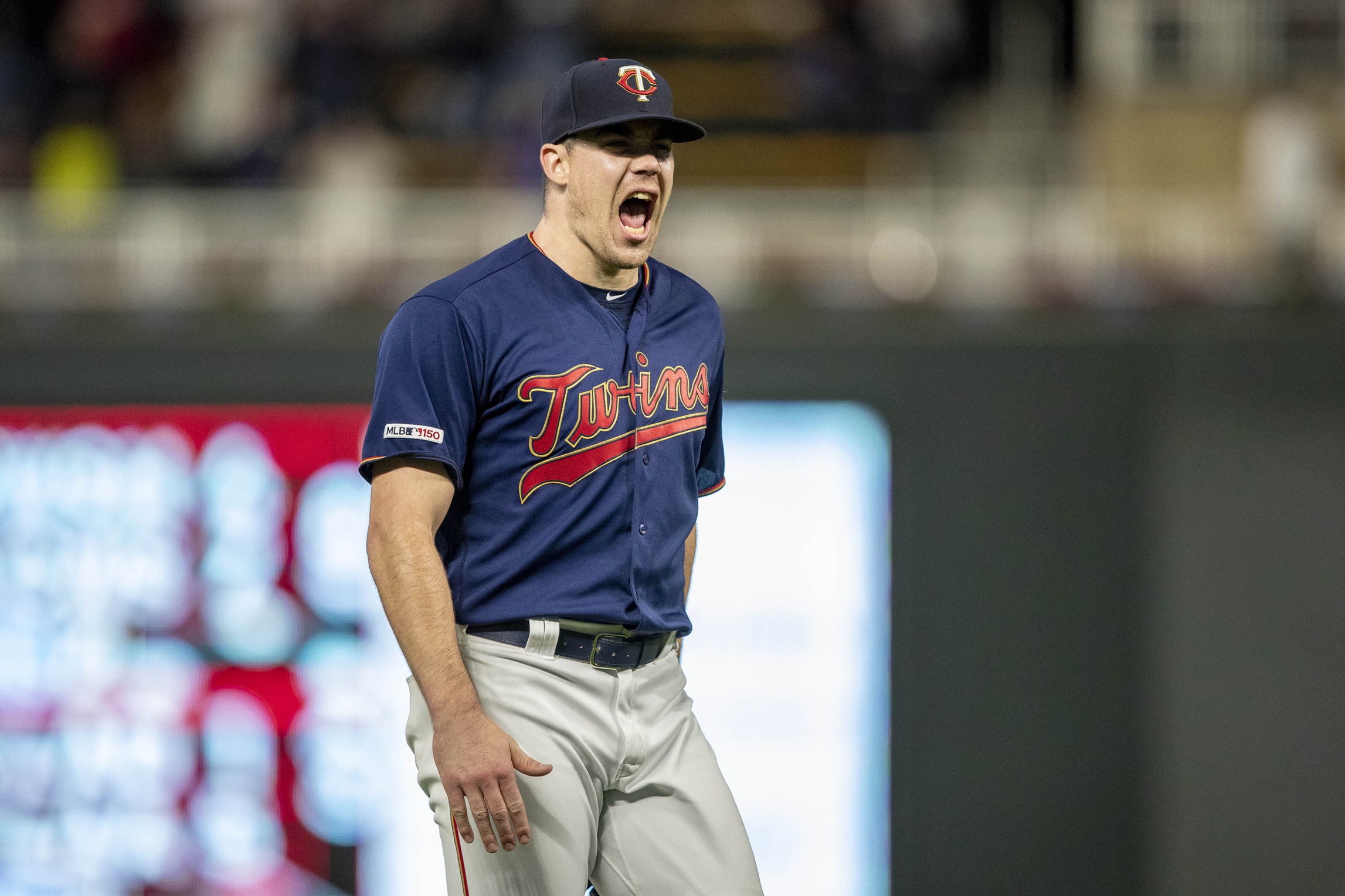 STARTING PITCHING The Twins have question marks in the rotation, yes, but the Yankees even more so. Minnesota ranks 11th among MLB teams in starting pitching ERA, and seventh in WAR. New York ranks 11th and 17th, respectively. While the Twins may lack a prototypical ace, their top two starters have easily outperformed their Bronx counterparts: Jose Berrios: 200.1 IP, 3.68 ERA, 124 ERA+, 3.68 FIP, 1.22 WHIP Jake Odorizzi: 159 IP, 3.51 ERA, 131 ERA+, 3.35 FIP, 1.21 WHIP Here's take a look at New York's top two starters this year: James Paxton: 150.2 IP, 3.82 ERA, 116 ERA+, 3.86 FIP, 1.28 WHIP Masahiro Tanaka: 182 IP, 4.45 ERA, 100 ERA+, 4.27 FIP, 1.24 WHIP The caveat here is that New York also has Luis Severino, who's likely their best starter on talent alone. But Severino missed almost the entire season with a shoulder injury, coming back to make three appearances in September. He pitched well in those appearances (1.50 ERA with 17 strikeouts in 12 innings) but still... he's barely pitched. CC Sabathia is no more than a mediocre long reliever at this point, and J.A. Happ has had a crummy season though he did finish it strong. Interestingly, both rotations are without key third pieces due to self-created messes. The Twins are obviously missing Michael Pineda, who received a PED suspension in early September. Meanwhile, Yankees right-hander Domingo German was 18-4 with a 4.03 ERA, 1.15 WHIP and 153-to-39 K/BB ratio before being placed on administrative leave in mid-September due to domestic violence allegations. Depending on your level of belief in Randy Dobnak, the Twins have either a slight or considerable advantage in starting pitching in the first round – a chasmic difference from a scenario where they would've drawn Houston. RELIEF PITCHING The Yankees spent big to build a power bullpen, and to an extent it has paid off. The $39 million trio of Aroldis Chapman, Zack Britton and Adam Ottavino has been phenomenal. New York has a couple of other rock-solid relief arms in Chad Green and Tommy Kahnle. But they're without an essential fixture in Dellin Betances, who suffered a partial Achilles tear and is done for the year. Minnesota's top three bullpen arms – Taylor Rogers, Tyler Duffey and Trevor May – are roughly equivalent to New York's prime trio, at about 10% of the cost. But the next wave of depth is where the Twins start to pull away: Zack Littell, Cody Stashak, Sergio Romo, and the electric wild-card that is Brusdar Graterol... these guys have the performance and stuff to inspire confidence. The absence of deadline dud Sam Dyson barely even seems to factor – certainly not the extent of Betances for New York. In terms of season numbers, these two clubs are very comparable. New York ranks second in bullpen WAR at 7.5, while Minnesota is third at 7.3. New York ranks ninth in bullpen ERA at 4.08, Minnesota ranks 10th at 4.17. Minnesota ranks first in bullpen FIP at 3.92, New York ranks ninth 4.15. You could argue that the Yankees are equal or even superior in this department on some of those counts, but in present terms, overall numbers overstate the impact of Betances for New York, and understate the impact of guys like Duffey and Stashak for Minnesota. Since the All-Star break, the Twins edge the Yankees in basically every measure. In fact, since the All-Star break, Minnesota's bullpen is conquering the world according to certain metrics. For example... Top Second-Half Bullpen WAR: 1. MIN - 4.8 2. TB - 3.7 3. NYY - 3.7 4. SD - 3.4 5. BOS - 2.7 That's some gap at the top. Rocco Baldelli told media on Tuesday, "Right now I think we have one of the best bullpens I've ever seen." And really, it's not a ridiculous statement. This unit is a strength unrivaled by any other team in this postseason mix. Given the immense relief struggles the Twins were facing around the deadline, and the total fizzling of their marquee addition at that time, this is a borderline miraculous development. It may be the story of the season in a year where the Twins sent two starters to the All-Star Game and set the MLB home run record. Amidst all the talk of these two powerful lineups clashing, not enough attention is being paid to Minnesota's elite, spectacular bullpen. That depth will come heavily into play as Baldelli attempts to navigate this series with a shorthanded rotation. In all likelihood, neither of these imposing lineups are getting silenced. In a series like this, it's about damage control. That happens to be Minnesota's primary advantage on paper.
 -
We don't know how Minnesota will fare against New York in the ALDS. But for now, the 2019 Twins can take great pride in finishing strong in one of the best regular seasons in franchise history. They punctuated this historical campaign over the past week by clinching the division, edging New York for the all-time MLB home run record, and winning five of their last six games to reach triple digits. Let's run it back in the season's final Week in Review. Weekly Snapshot: Mon, 9/23 through Sun, 9/29 *** Record Last Week: 5-1 (Overall: 101-61) Run Differential Last Week: +16 (Overall: +185) Standing: 1st Place in AL Central (7.0 GA) Magic Number: 0 101 wins. 307 home runs, a new MLB record. The first AL Central title since 2010. It's been a magical year for the Twins and they closed it out in style, taking care of business against the dregs of the division and even scoring a lopsided win with their "hangover lineup" following Wednesday night's official clincher. The final week of the regular season did not, unfortunately, see much tangible progress on the player health front. In fact, the Twins suffered yet another blow when Luis Arraez went down in Minnesota's meaningless second-to-last game. The rookie infielder collided with Willian Astudillo as the two converged under a pop-up to the mound, and Arraez twisted his ankle before crumpling to the ground in a heap. He was carted off the field in obvious pain, but got relatively good news with his diagnosis: a Grade 1 ankle sprain (the least severe type). Arraez's status for the ALDS is very much in doubt, but there's still a possibility he could return, which seemed out of the question as he tearfully left the field. Meanwhile, Max Kepler still has not swung in a game since the Cleveland doubleheader more than two weeks ago. Marwin Gonzalez also did not play all week after being scratched with oblique tightness ahead of Tuesday's game. But Rocco Baldelli expressed confidence that both will be ready to go by Friday's Game 1 tilt in New York. On another note: What's up with Baseball America souring on Royce Lewis? He's performing extremely well in the Arizona Fall League; last week we featured his offensive and defensive highlights right out of the gate, and he's hitting .364 with a 1.287 OPS with three homers and 10 RBIs through six games, but in BA's newly released league-by-league top prospect rankings, Lewis is all the way down at No. 18 in the Southern League. That's solidly behind Brusdar Graterol (9), Larnach (11), Alex Kirilloff (12) and even former Twins prospect Lewin Diaz (13). I gotta be honest: I'm not exactly sure what BA is going for with these rankings. Are they meant to be an isolated snapshot in time? Because that's the only scenario in which I could remotely understand a list that puts Lewis five spots behind Diaz. I mean – two months ago, one was traded for Sergio Romo while the other was being bandied as a centerpiece for Noah Syndergaard. Yes, Lewis had a quiet season offensively, but he also started it as a teenager and finished it in Double-A. If the negativity was centered on Royce's glove, that might make a little more sense, but BA's Matt Eddy calls him "a strong defensive shortstop with confident hands and a terrific arm." (Notable because ESPN's Keith Law recently offered up the exact opposite take: "Lewis can’t play SS. He has to move somewhere and CF makes the best use of his skills.") Eddy also states that Lewis "plays with flair, and he rubbed multiple observers the wrong way with confidence that borders on arrogance." This really hits me oddly because I've almost always seen the 20-year-old's character and makeup portrayed as an immense strength. If little incidents like bat flips or (which was in fact intended to chide himself) are starting to materially affect his perception, and even seeping into his coverage at reputable prospect websites like Baseball America, that's a damn shame. In any event, it'll be very interesting to see where Lewis lands across major offseason lists, given the obvious variance of opinion around him. LOOKING AHEAD The American League Division Series is on tap! Action gets underway on Friday. You can expect all kinds of previews and breakdowns here at Twins Daily, so stay tuned. FRIDAY, 10/4: TWINS @ YANKEES SATURDAY, 10/5: TWINS @ YANKEES MONDAY, 10/7: YANKEES @ TWINS TUESDAY, 10/8 (if necessary): YANKEES @ TWINS THURSDAY, 10/10 (if necessary): TWINS @ YANKEES Catch Up On Twins Daily Game Recaps Game 157 | MIN 4, DET 2: Odorizzi's Gem Cuts the Twins Magic Number to 2Game 158 | MIN 5, DET 3: Dobnak the Wedding Ringer Deals in DetroitGame 159 | MIN 10, DET 4: Hangover Lineup Propels Minnesota to Win Number 99Game 160 | MIN 6, KC 2: Twins Cruise Past Royals to Earn 100th WinGame 161 | MIN 4, KC 3: Cruz Homers, Arraez Injured, Twins Top KC 4-3Game 162 | KC 5, MIN 4: Twins Lose Finale, Win Home Run RaceAs a final note, I want to thank everyone who has read this column regularly over the course of the season, and especially those who interacted or offered positive feedback. I hear a lot of nice things about this running series, which is cool because I enjoy putting them together. Week in Review will be back next season, but in the meantime I'll have plenty to say about the upcoming playoff run and all that comes after. Speaking of which, the 2020 Offseason Handbook isn't too far off... Click here to view the article
- 16 replies
-
- 3
-
-
- jose berrios
- randy dobnak
- (and 1 more)
-
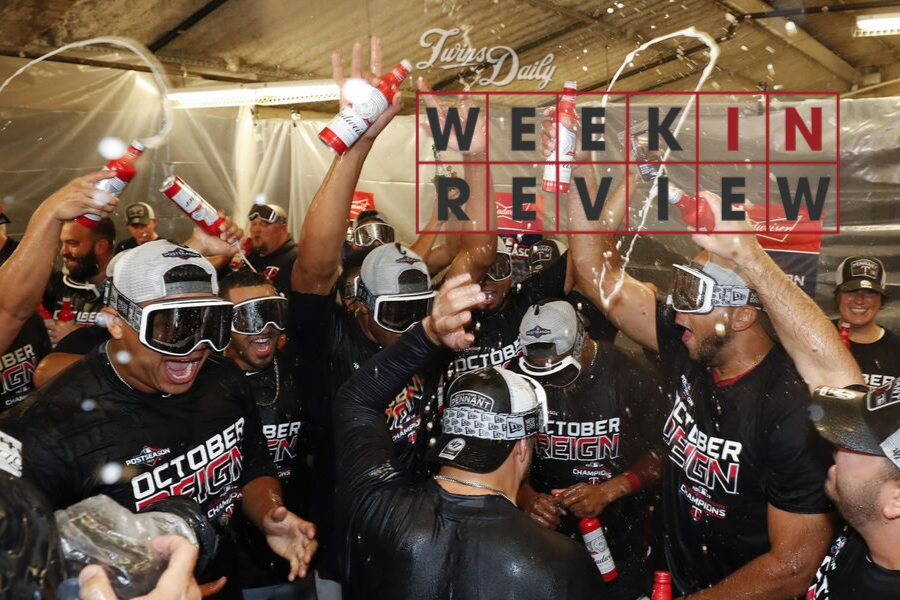 Weekly Snapshot: Mon, 9/23 through Sun, 9/29 *** Record Last Week: 5-1 (Overall: 101-61) Run Differential Last Week: +16 (Overall: +185) Standing: 1st Place in AL Central (7.0 GA) Magic Number: 0 101 wins. 307 home runs, a new MLB record. The first AL Central title since 2010. It's been a magical year for the Twins and they closed it out in style, taking care of business against the dregs of the division and even scoring a lopsided win with their "hangover lineup" following Wednesday night's official clincher. The final week of the regular season did not, unfortunately, see much tangible progress on the player health front. In fact, the Twins suffered yet another blow when Luis Arraez went down in Minnesota's meaningless second-to-last game. The rookie infielder collided with Willian Astudillo as the two converged under a pop-up to the mound, and Arraez twisted his ankle before crumpling to the ground in a heap. He was carted off the field in obvious pain, but got relatively good news with his diagnosis: a Grade 1 ankle sprain (the least severe type). Arraez's status for the ALDS is very much in doubt, but there's still a possibility he could return, which seemed out of the question as he tearfully left the field. Meanwhile, Max Kepler still has not swung in a game since the Cleveland doubleheader more than two weeks ago. Marwin Gonzalez also did not play all week after being scratched with oblique tightness ahead of Tuesday's game. But Rocco Baldelli expressed confidence that both will be ready to go by Friday's Game 1 tilt in New York. https://twitter.com/DanHayesMLB/status/1178075435323842561 Ehire Adrianza, who hasn't played since tweaking his own oblique on September 12th, seems much more questionable. The lack of recent in-game reps, plus the likelihood of being less than 100%, cast serious doubt on his viability for the first-round playoff roster. The number of injury concerns heading into the postseason is quite troubling for a club that's already certain to be without Byron Buxton (shoulder surgery), Sam Dyson (shoulder surgery), and Michael Pineda (suspension). But alas, they now have four days to get as healthy as they can. HIGHLIGHTS Jose Berrios is a goal-setter. It's one trait that has helped drive him to such impressive success in his young career. This season, he had his sights set on 200 innings, and in his final start he achieved it. By tossing six innings of two-run ball in Friday night's rain-shortened victory over Kansas City, Berrios crossed this targeted threshold, becoming the fourth Twins pitcher to do so in the past 10 years. https://twitter.com/MillerStrib/status/1177769034126938113 Berrios finishes the season with numbers that are altogether pretty similar to 2018: 14-8, 200.1 IP, 3.68 ERA, 3.86 FIP, 1.22 WHIP, 8.8 K/9, 2.3 BB/9. Even the pattern of his performance mirrored the previous campaign: a stellar first half leading to an All-Star appearance, a sluggish drop-off in the latter part of the summer, and a rebound in late September. The difference, of course, is that this time around he'll get an opportunity to extend his season. Berrios is expected to take the mound for Game 1 at Yankee Stadium on Friday in the biggest challenge of his career to date. In this regard, his aforementioned resurgence offers some reassurance. After uncharacteristically completing six innings just three times in nine starts after the start of August, Berrios did so five of his last six turns, posting a solid-yet-unspectacular 4.34 ERA during that span. In his final starts, the righty saw his whiff rate and velocity both return to comfortable levels. In the surprise twist of the season, it's looking likely that Randy Dobnak will get the ball for Game 2. This would allow an extra day of rest for the bullpen ahead of Game 3, in the event of a short outing from Dobnak, while also moving Jake Odorizzi's start away from Yankee Stadium, which can be treacherous for fly ball pitchers. Dobnak's improbable postseason nod is well-earned, as he put up a 1.59 ERA and 1.13 WHIP as a rookie and delivered his finest effort yet on Wednesday, when he fired six innings against the Tigers while allowing just one unearned run on one hit. It might feel natural to dismiss Dobnak as a mere heartwarming story and overperformer being thrust into this situation out of necessity. To an extent, that's accurate. But his outstanding MLB debut does not carry the indicators of an unsustainable fluke. He's hammering the strike zone with heavy sinking stuff that's inducing grounders at an elite rate, while also missing more bats than Berrios or Odorizzi. In his final start against the Tigers he generated 15 whiffs on 78 pitches, which is fairly remarkable even in light of Detroit's ineptitude. If these are Minnesota's three starters for the playoffs, set to be combined with a heavy dosage of relief work, then the Twins can be feeling a little better about their chances of keeping a potent New York lineup somewhat in check. Of course, their fortunes in the ALDS are likely to hinge on their bats. It was an uneven week on that front, as the offense went through some perturbing quiet spells even before the rollout of backup-heavy post-clinch lineups. There were some positive signs though, like Astudillo putting together a late burst (7-for-18 with a homer and six RBIs after hitting .231 through the first three weeks of September), C.J. Cron hitting his hardest homer of the season in the final game, and Jonathan Schoop finishing on a high note (6-for-19 with a homer and three RBIs). Schoop will obviously be thrust into a far more prominent role in the playoffs if Arraez can't go. LOWLIGHTS The Twins keep trying with Kyle Gibson. They clearly want to find a way to justify a postseason roster for their long-tenured clubhouse leader, but Gibson just isn't giving them much to work with. He appeared in relief three times last week, allowing five hits and two walks over 3 1/3 innings. This amounted to only one run, and to his credit the swing-and-miss stuff has still been there -- he struck out seven and induced 17% swinging strikes in those appearances -- but with these kinds of erratic showcases against bottom-tier offenses, how can you feel any confidence? How can he? In five outings since shifting to a relief role, Gibson has a 7.50 ERA and 2.83 WHIP, with opponents reaching base at nearly a .500 clip. I just don't see how you can credibly run him out against the Yankees in any situation. And it pains me to say that because I'd love to see him be part of this so much. Then again, given how hittable Martin Perez has been, maybe loyalty wins out as the deciding factor. The final spot on the pitching staff could very well come down to those two. Neither has made a very inspiring case in the final weeks. Health is going to be the key for Minnesota's lineup heading into the playoffs. It's entirely possible the Twins could trot out a lineup on Friday that is missing Kepler, Gonzalez, and Arraez -- three essential lefty-swinging catalysts with righty Luis Severino the likely opposing starter. And the probable absence of Adrianza inhibits their ability to supplement via depth. Needless to say, the Twins need their remaining healthy horses to carry the load. There's mounting urgency for Eddie Rosario to rise to the occasion. The final week of 2019 for Rosario epitomized his season as a whole. He had some loud knocks -- a homer and a double, with five RBIs -- but that production covered up a general lack of effectiveness. In 16 plate appearances he had only one other hit and one walk, good for a .250 on-base percentage with one run scored. For the season, Rosario finishes with some nice counting numbers (32 HR, 109 RBI) but he also posted his lowest OPS in three years with a significant defensive downturn. By WAR, Rosario was the 11th-most valuable position player on the Twins this year. But we all know he can step up and become one of their most valuable in a hurry. Next week he'll have his chance to change the lasting narrative in what's been a roundly disappointing campaign. TRENDING STORYLINE There's only one storyline now: October baseball. The Twins have until 10:00 am on Friday to lock in their ALDS roster, and some of their decisions might come down to the wire. Can Arraez heal fast enough to be an option? What about Adrianza? Will the internal optimism around Kepler and Gonzalez prove valid? DOWN ON THE FARM The Twins announced their official Minor League Player and Pitcher of the Year on Sunday: Trevor Larnach and Dobnak, respectively. These choices matched our top hitter and starting pitcher selections at Twins Daily, so clearly, we agree! Cheers to these two on their tremendous accomplishments this year. It's likely one and perhaps both will play a significant role for the Twins next year. https://twitter.com/Twins/status/1178375943443898369 On another note: What's up with Baseball America souring on Royce Lewis? He's performing extremely well in the Arizona Fall League; last week we featured his offensive and defensive highlights right out of the gate, and he's hitting .364 with a 1.287 OPS with three homers and 10 RBIs through six games, but in BA's newly released league-by-league top prospect rankings, Lewis is all the way down at No. 18 in the Southern League. That's solidly behind Brusdar Graterol (9), Larnach (11), Alex Kirilloff (12) and even former Twins prospect Lewin Diaz (13). I gotta be honest: I'm not exactly sure what BA is going for with these rankings. Are they meant to be an isolated snapshot in time? Because that's the only scenario in which I could remotely understand a list that puts Lewis five spots behind Diaz. I mean – two months ago, one was traded for Sergio Romo while the other was being bandied as a centerpiece for Noah Syndergaard. Yes, Lewis had a quiet season offensively, but he also started it as a teenager and finished it in Double-A. If the negativity was centered on Royce's glove, that might make a little more sense, but BA's Matt Eddy calls him "a strong defensive shortstop with confident hands and a terrific arm." (Notable because ESPN's Keith Law recently offered up the exact opposite take: "Lewis can’t play SS. He has to move somewhere and CF makes the best use of his skills.") Eddy also states that Lewis "plays with flair, and he rubbed multiple observers the wrong way with confidence that borders on arrogance." This really hits me oddly because I've almost always seen the 20-year-old's character and makeup portrayed as an immense strength. If little incidents like bat flips or (which was in fact intended to chide himself) are starting to materially affect his perception, and even seeping into his coverage at reputable prospect websites like Baseball America, that's a damn shame.In any event, it'll be very interesting to see where Lewis lands across major offseason lists, given the obvious variance of opinion around him. LOOKING AHEAD The American League Division Series is on tap! Action gets underway on Friday. You can expect all kinds of previews and breakdowns here at Twins Daily, so stay tuned. FRIDAY, 10/4: TWINS @ YANKEES SATURDAY, 10/5: TWINS @ YANKEES MONDAY, 10/7: YANKEES @ TWINS TUESDAY, 10/8 (if necessary): YANKEES @ TWINS THURSDAY, 10/10 (if necessary): TWINS @ YANKEES Catch Up On Twins Daily Game Recaps Game 157 | MIN 4, DET 2: Odorizzi's Gem Cuts the Twins Magic Number to 2 Game 158 | MIN 5, DET 3: Dobnak the Wedding Ringer Deals in Detroit Game 159 | MIN 10, DET 4: Hangover Lineup Propels Minnesota to Win Number 99 Game 160 | MIN 6, KC 2: Twins Cruise Past Royals to Earn 100th Win Game 161 | MIN 4, KC 3: Cruz Homers, Arraez Injured, Twins Top KC 4-3 Game 162 | KC 5, MIN 4: Twins Lose Finale, Win Home Run Race As a final note, I want to thank everyone who has read this column regularly over the course of the season, and especially those who interacted or offered positive feedback. I hear a lot of nice things about this running series, which is cool because I enjoy putting them together. Week in Review will be back next season, but in the meantime I'll have plenty to say about the upcoming playoff run and all that comes after. Speaking of which, the 2020 Offseason Handbook isn't too far off...
 -
If you've followed baseball for a while, then like me, you've probably come to appreciate a good story. In the endless procession of innings, games, and seasons, there are invariable cycles of ups and downs, wins and losses, thrills and disappointments. But it's those compelling human narratives — tales of perseverance, redemption, and improbable triumph — that stick with you. Randy Dobnak's story is undoubtedly one of the most striking we've seen here in Minnesota. But to cast him narrowly in that frame is to undersell what is an extremely impressive and encouraging rookie performance from any perspective.It's always fun to see an underdog rise to the major leagues in a Twins uniform — especially when they experience an unlikely wave of initial success. Willians Astudillo and Ryne Harper come to mind as recent examples. Fans may recall that Andrew Albers reached the big leagues in 2013, a few years after fizzling out of affiliated ball, and fired 17 1/3 scoreless innings in his first two starts. Looking back a little further, there was Australian third baseman Glenn Williams, who reached the majors in 2005 after nearly a decade toiling in the minors and batted .425 in his first (and only) 40 MLB at-bats. Fun stories, but nothing more. It was fairly evident at the time that these were flash-in-the-pan moments, lacking a sustainable formula to turn them into anything more. Dobnak's backstory is as good as any before him, if not better. As I wrote in the latest Week in Review column, "In a season full of a good stories, Randy Dobnak might have 'em all beat." Here we have a guy who went undrafted out of Division II Alderson-Broaddus College in West Virginia, but kept chasing his dream in independent ball as pitcher for the Utica Unicorns in Michigan. The Twins, somehow, took notice of the right-hander and signed him. After a stunning two-year ascent through the minors that saw him post an ERA of 3.14 or better at every stop, the 24-year-old who famously boasted of his 4.99/5.00 rating as an Uber driver was called up the major leagues and made his debut on August 9th, hurling four shutout innings in a critical game against Cleveland. He has since continued to turn in consistently sterling results, and on Wednesday he added yet another chapter to his inspirational tale, logging his finest start yet as a Twin (6 IP, 1 H, 0 ER) and picking up the win in Minnesota's division-clinching victory. Soon after, he was off to Maryland for a wedding this weekend, which was only planned with such poor timing because when he got engaged two years ago, this was not a conceivable possibility in his (or anyone else's) mind. Dobnak's journey has been unreal up to this point and it's only gonna get crazier when he all but certainly takes the mound as a starter for one of Minnesota's upcoming playoff games against the Yankees. But unlike so many short-lived sensations before him, there's legitimate reason to believe that Dobnak's story is only beginning. It's not just his 1.59 ERA through nine appearances with the Twins (seventh-best among AL pitchers with 20+ IP since the start of August) -- it's the way he's achieved it. Consider these secondary numbers: Dobnak has a 52.9% ground ball rate. That would rank sixth among qualified MLB starters. Dobnak has a 12.9% swinging strike rate. That would rank 15th among qualified MLB starters. Dobnak has thrown 68% strikes, and owns a 4.2% walk rate. That would rank fourth among MLB starters. So, to recap, Dobnak has gotten grounders, missed bats, and attacked the zone at either a borderline elite (or just flat-out elite) rate. That is essentially a failsafe recipe for success as a pitcher. There are zero qualified starters in the league with equal or superior marks in all three categories. This is not a guy getting fat off crappy opponents. (In fact, five of his nine appearances have come against Cleveland, Washington, or Boston.) Nor is it a guy who's simply taking advantage of scouting reports that have not yet caught up. I mean, that might be the case to an extent, but Dobnak is not floating on a smoke-and-mirrors type fluke. This is real. That's why he's got a better chance to hold his own against New York in the ALDS than you might expect. And it's why he has rapidly turned into a substantive factor in the team's future rotation planning. Pretty damn cool to see. Uber-cool, one might say. Click here to view the article
-
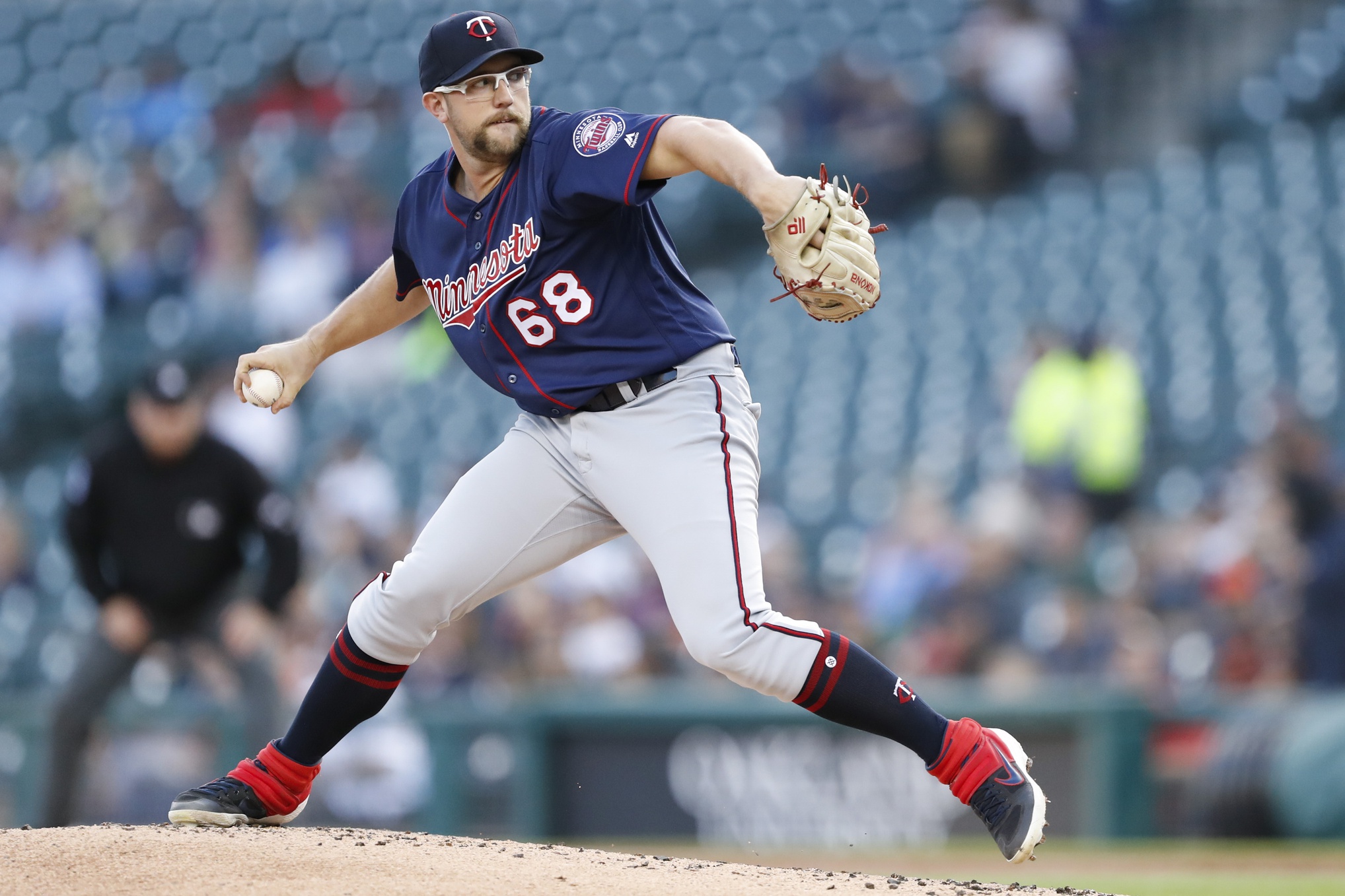 It's always fun to see an underdog rise to the major leagues in a Twins uniform — especially when they experience an unlikely wave of initial success. Willians Astudillo and Ryne Harper come to mind as recent examples. Fans may recall that Andrew Albers reached the big leagues in 2013, a few years after fizzling out of affiliated ball, and fired 17 1/3 scoreless innings in his first two starts. Looking back a little further, there was Australian third baseman Glenn Williams, who reached the majors in 2005 after nearly a decade toiling in the minors and batted .425 in his first (and only) 40 MLB at-bats. Fun stories, but nothing more. It was fairly evident at the time that these were flash-in-the-pan moments, lacking a sustainable formula to turn them into anything more. Dobnak's backstory is as good as any before him, if not better. As I wrote in the latest Week in Review column, "In a season full of a good stories, Randy Dobnak might have 'em all beat." Here we have a guy who went undrafted out of Division II Alderson-Broaddus College in West Virginia, but kept chasing his dream in independent ball as pitcher for the Utica Unicorns in Michigan. The Twins, somehow, took notice of the right-hander and signed him. After a stunning two-year ascent through the minors that saw him post an ERA of 3.14 or better at every stop, the 24-year-old who famously boasted of his 4.99/5.00 rating as an Uber driver was called up the major leagues and made his debut on August 9th, hurling four shutout innings in a critical game against Cleveland. He has since continued to turn in consistently sterling results, and on Wednesday he added yet another chapter to his inspirational tale, logging his finest start yet as a Twin (6 IP, 1 H, 0 ER) and picking up the win in Minnesota's division-clinching victory. Soon after, he was off to Maryland for a wedding this weekend, which was only planned with such poor timing because when he got engaged two years ago, this was not a conceivable possibility in his (or anyone else's) mind. Dobnak's journey has been unreal up to this point and it's only gonna get crazier when he all but certainly takes the mound as a starter for one of Minnesota's upcoming playoff games against the Yankees. But unlike so many short-lived sensations before him, there's legitimate reason to believe that Dobnak's story is only beginning. It's not just his 1.59 ERA through nine appearances with the Twins (seventh-best among AL pitchers with 20+ IP since the start of August) -- it's the way he's achieved it. Consider these secondary numbers: Dobnak has a 52.9% ground ball rate. That would rank sixth among qualified MLB starters. Dobnak has a 12.9% swinging strike rate. That would rank 15th among qualified MLB starters. Dobnak has thrown 68% strikes, and owns a 4.2% walk rate. That would rank fourth among MLB starters. So, to recap, Dobnak has gotten grounders, missed bats, and attacked the zone at either a borderline elite (or just flat-out elite) rate. That is essentially a failsafe recipe for success as a pitcher. There are zero qualified starters in the league with equal or superior marks in all three categories. This is not a guy getting fat off crappy opponents. (In fact, five of his nine appearances have come against Cleveland, Washington, or Boston.) Nor is it a guy who's simply taking advantage of scouting reports that have not yet caught up. I mean, that might be the case to an extent, but Dobnak is not floating on a smoke-and-mirrors type fluke. This is real. That's why he's got a better chance to hold his own against New York in the ALDS than you might expect. And it's why he has rapidly turned into a substantive factor in the team's future rotation planning. Pretty damn cool to see. Uber-cool, one might say.
 -
On Opening Day, the Minnesota Twins defeated Corey Kluber and the Cleveland Indians 2-0 at Target Field. In this thoroughly impressive silencing of the reigning four-time division champs, the Twins began to make a statement. Six months later, they've finished it. For the first time since 2010, the Twins are division champs. It's been quite a ride.On October 6th, 2010, a 29-year-old Rocco Baldelli went 0-for-3 against Texas as DH for the Rays in Game 1 of the ALDS. This is noteworthy both because they were the final at-bats of Baldelli's major-league career, and also because – about 1,000 miles north of Tampa on that same day – the Twins were opening a series against the Yankees. Of course, Minnesota was swept by New York (again). And they haven't won the AL Central or returned to the ALDS since. That is to say, they hadn't. Until now. Nine years later, Baldelli is rookie manager for the upstart club that ended Cleveland's division dynasty and shocked the baseball world. His team's 52nd road win of the year in Detroit (!), combined with a Cleveland loss to the White Sox, shaved the Magic Number down to zero. Not so long ago, Minnesota was a league-wide punchline when it came to power hitting and power pitching. But here in the instantly legendary year of 2019, they have broken the franchise record for strikeouts and the major-league record for home runs. And in the process they've restored their long-forfeited status among MLB's premier class. Baldelli coming in as a 37-year-old with zero managerial experience, and overseeing one of the best finishes in Twins history (with a division clinch on his BIRTHDAY, no less) is an amazing story easily lost in the shuffle of a season absolutely brimming with them. And it's not over. With 98 wins in the books, this is already the second-winningest team in Twins history and they have four games left to match the record of 102 from 1965. Then, it's time to bring one of the most powerful and imposing lineups in MLB history into New York, as clear yet capable underdogs. Their first-round foes will be all too familiar, but this Minnesota squad is not. With power throughout the lineup and a deep, daunting bullpen, the Twins are not to be discounted. You know we'll be covering it all exhaustively from every angle at Twins Daily. For the first time in this site's history, the Minnesota Twins are preparing for a postseason series. We can't wait to share the journey with all of you. But for now, soak it in. Pour a glass of champagne. After nearly a decade in the dumps, the Twins have retaken the American League Central. Click here to view the article
-
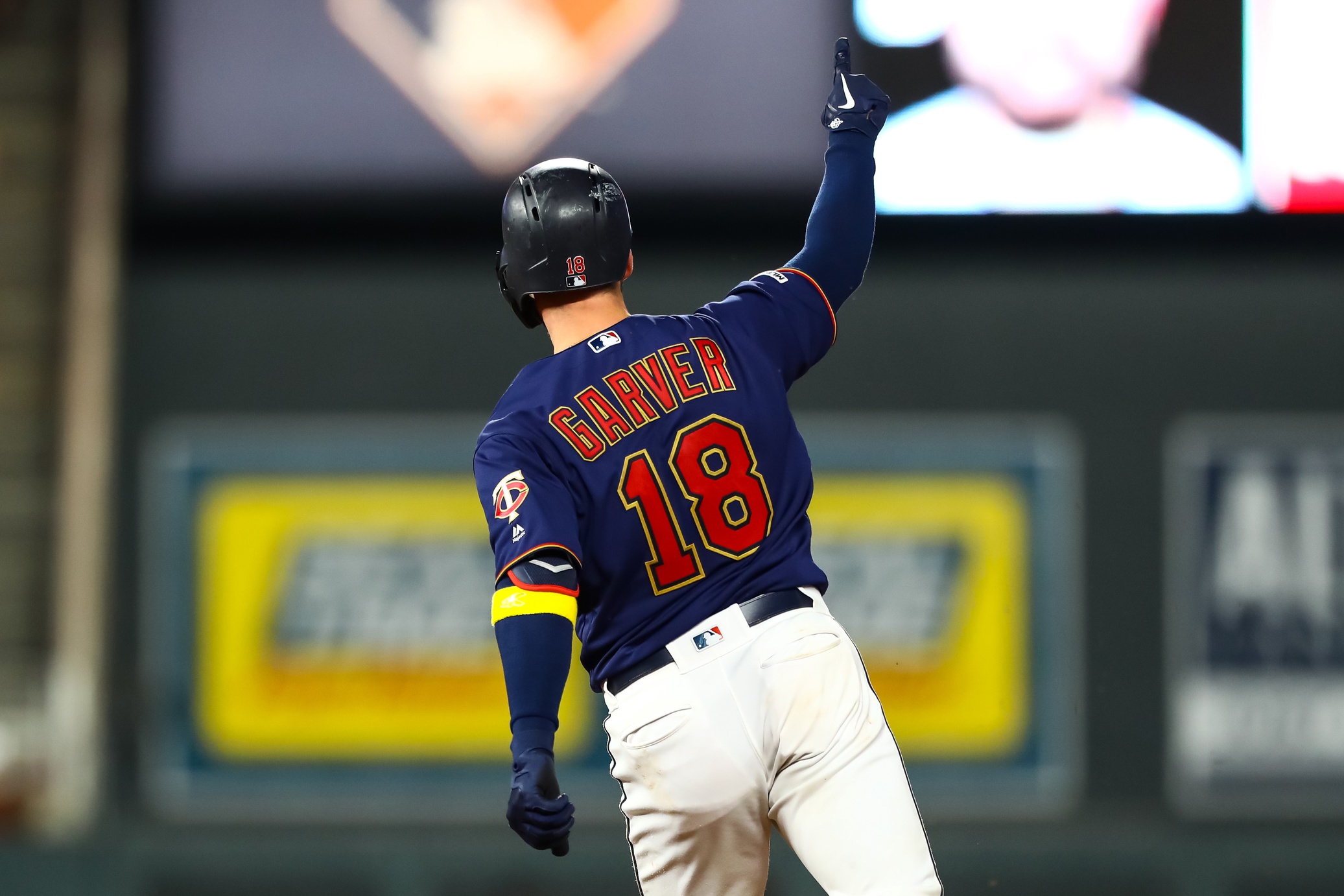 On October 6th, 2010, a 29-year-old Rocco Baldelli went 0-for-3 against Texas as DH for the Rays in Game 1 of the ALDS. This is noteworthy both because they were the final at-bats of Baldelli's major-league career, and also because – about 1,000 miles north of Tampa on that same day – the Twins were opening a series against the Yankees. Of course, Minnesota was swept by New York (again). And they haven't won the AL Central or returned to the ALDS since. That is to say, they hadn't. Until now. Nine years later, Baldelli is rookie manager for the upstart club that ended Cleveland's division dynasty and shocked the baseball world. His team's 52nd road win of the year in Detroit (!), combined with a Cleveland loss to the White Sox, shaved the Magic Number down to zero. Not so long ago, Minnesota was a league-wide punchline when it came to power hitting and power pitching. But here in the instantly legendary year of 2019, they have broken the franchise record for strikeouts and the major-league record for home runs. And in the process they've restored their long-forfeited status among MLB's premier class. Baldelli coming in as a 37-year-old with zero managerial experience, and overseeing one of the best finishes in Twins history (with a division clinch on his BIRTHDAY, no less) is an amazing story easily lost in the shuffle of a season absolutely brimming with them. And it's not over. With 98 wins in the books, this is already the second-winningest team in Twins history and they have four games left to match the record of 102 from 1965. Then, it's time to bring one of the most powerful and imposing lineups in MLB history into New York, as clear yet capable underdogs. Their first-round foes will be all too familiar, but this Minnesota squad is not. With power throughout the lineup and a deep, daunting bullpen, the Twins are not to be discounted. You know we'll be covering it all exhaustively from every angle at Twins Daily. For the first time in this site's history, the Minnesota Twins are preparing for a postseason series. We can't wait to share the journey with all of you. But for now, soak it in. Pour a glass of champagne. After nearly a decade in the dumps, the Twins have retaken the American League Central.
 -
A lotta steam in favor of Thorpe in these comments. I gotta say -- I don't get it. Thorpe in 4 September appearances: 8.35 ERA with 16 hits and 7 BB in 12 IP. Opponents hitting .327/.404/.531. Granted, Perez has also been bad in September, but not quite as bad, and he has the LHB advantage, more experience, etc. I get that people are really down on Perez but I'm not sure we're recognizing how poorly Thorpe's pitched since his first handful of outings.
- 46 replies
-
- 10
-
-
- cody stashak
- zack littell
- (and 1 more)
-
LHB vs Taylor Rogers: .277/.338/.338 LHB vs Devin Smeltzer: .316/.395/.474 LHB vs Martin Perez: .233/.292/.301 That alone makes the case for his usefulness. He's their best weapon against Gregorius or Brantley or Alvarez. But, I'd be mortified if he started a game.
- 46 replies
-
- 20
-
-
- cody stashak
- zack littell
- (and 1 more)
