



Nick Nelson
-
Posts
8,327 -
Joined
-
Last visited
-
Days Won
56
Content Type
Profiles
News
Minnesota Twins Videos
2026 Minnesota Twins Top Prospects Ranking
2022 Minnesota Twins Draft Picks
Minnesota Twins Free Agent & Trade Rumors, Notes, & Tidbits
Guides & Resources
2023 Minnesota Twins Draft Picks
The Minnesota Twins Players Project
2024 Minnesota Twins Draft Picks
2025 Minnesota Twins Draft Pick Tracker
2026 Minnesota Twins Draft Tracker: Picks & Bonuses
Forums
Blogs
Events
Store
Downloads
Gallery
Everything posted by Nick Nelson
-
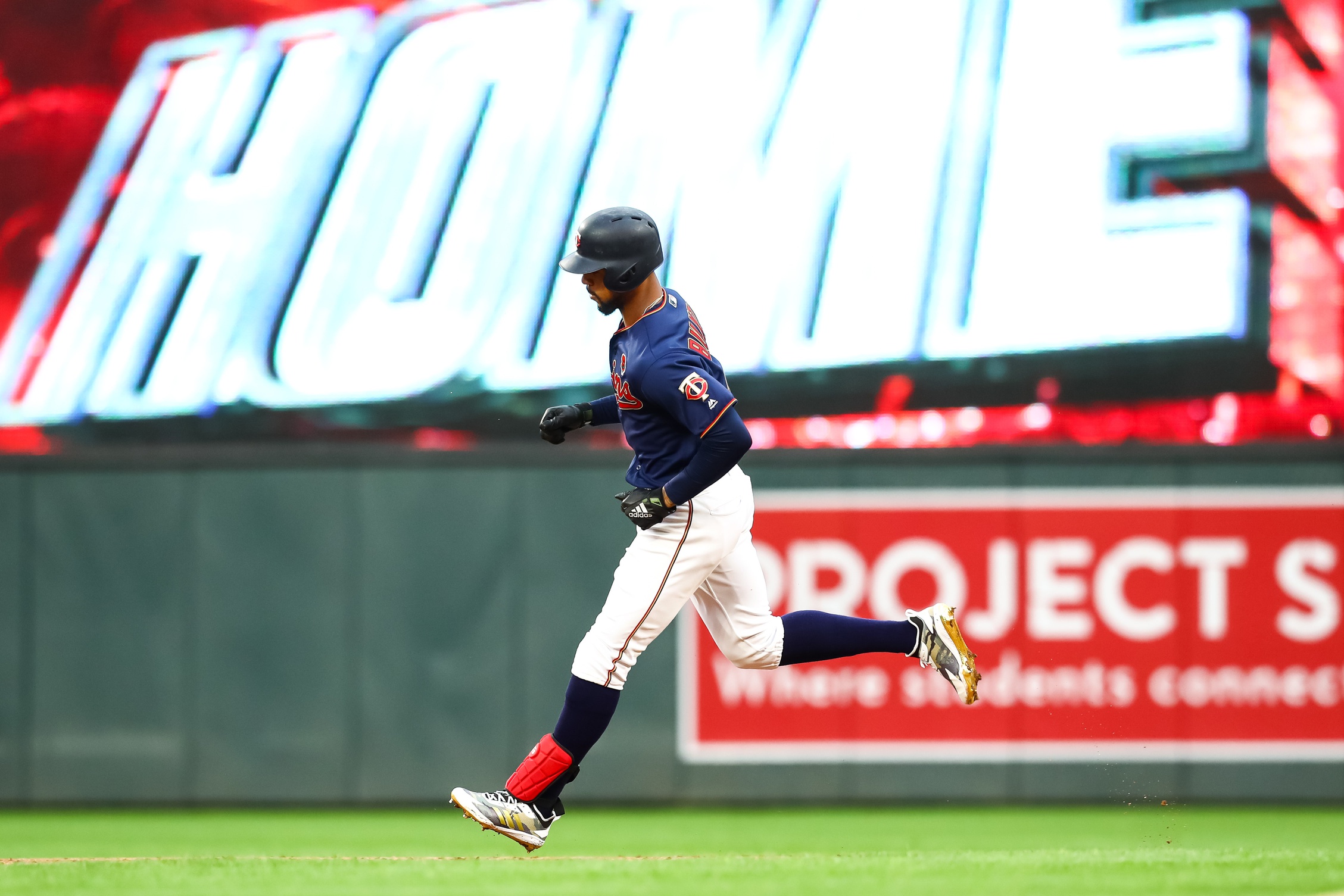 In January, I wrote a piece here remarking about how drastically the Twins transformed their identity in just a five-year span, and how jarring this felt for an organization so steeped in stability. My primary focus there was the pitching staff, which has evolved from a group of contact-heavy soft-tossers to an amalgamation of stuff, velocity, and whiffs. But I also made note that in 2013, Minnesota had zero players hit 20 home runs. It was par for the course; the previous year they hit the fewest homers in the league, and for almost the entirety of Terry Ryan's tenure as GM, they were always reliably in the bottom half. This is team that went from 1988 through 2005 without seeing a single 30-HR season. Whether it wasn't a priority or they just didn't know how to teach it (likely a combination of both), the Twins never featured power as a true strength. The new front office signaled early on their intent to alter this distinction. With an analytical new-age mindset, Derek Falvey and Thad Levine started populating the org's ranks with analytical thinkers and Ivy League degrees. The new braintrust studied league-wide trends deeply, and slowly began to optimize the roster for what it saw as the future. “The uppercut swing is like the three-point shot in the NBA,” director of baseball operations Daniel Adler told Adam Platt of Twin Cities Business ahead of the 2018 season. "When they go in, you get 50 percent more points. Fly-ball-based hits become home runs, which justify [a swing that gives up the opportunity for] ground-ball-based hits.” Makes sense! But of course, deciding you want to hit a lot of home runs isn't the same as actualizing such a plan. Efforts to translate these beliefs to the field obviously came up short last year, sabotaged by Logan Morrison flaming out and various mishaps afflicting the team's core. Here in 2019, it's all coming together. Through 52 games, the Twins are on pace to shatter the league's precedent for home runs in a season. Last year the Yankees set a new MLB benchmark with 267 bombs, topping the long-standing record of 264 set by the 1997 Mariners. At their current rate, the Twins will finish this year with 324. With those previous standard-bearers, you could look at the rosters beforehand and envision historical home run totals. The '97 M's featured Ken Griffey Jr., Jay Buhner, Edgar Martinez, Alex Rodriguez. Last year's Yanks had Giancarlo Stanton, Aaron Judge, Gary Sanchez, Didi Gregorius. But the 2019 Twins? I mean sure, many of us contended this group could challenge the franchise home run record. But to suggest they might blow past that number by 100? It was inconceivable. It still feels inconceivable, even as I watch it play out before my very eyes – the scrappy little Twins outbombing the Bombers. Such a scenario would require almost every hitter on on the roster to either max out or redefine his slugging prowess and, well, that's exactly what is happening. Nearly each Twins regular is on track for a career-high in homers. Some cases are flat-out stunning, like Mitch Garver (already at nine after totaling seven as a rookie) and Eddie Rosario (presently on pace for 50). Others are more or less culminations of best-case scenarios – we all plausibly hoped that Jorge Polanco, Max Kepler and Byron Buxton could sometime join the ranks of top sluggers at their respective positions – but to see it all happen at once? While C.J. Cron brings in a 40-HR pace and Jonathan Schoop recaptures his prime production? Like I said, inconceivable. I keep using that word, and I'm starting to think it doesn't mean what I think it means. Because this is happening. The Twins just keep bombing away, night after night, with a lineup that shows no relent. They have seven or eight different position players who could plausibly garner All-Star consideration. Such a confluence of outstanding results requires a medley of contributions. So many factors have played a role, from the unseen to the more obvious, like coaches who get through and talented players who execute. But ultimately, it all ties back to a front office that had a vision and saw it through. They put data analysts and instructors in place who could materially elevate performance. They inherited a roster and customized it to their own specifications, removing final traces of the previous regime's imprint when Joe Mauer and Brian Dozier completed their contracts last year. This front office's influence has even made an impact on those purportedly uncontrollable variables – namely, health. It's been a key driver of the offense's success, and while luck obviously plays a big part in that, the new leadership has totally retooled Minnesota's training and medical staffs. Worth noting as we see Garver preparing to return in about half of his estimated timeline. Meanwhile, it's not entirely coincidental we've seen so few players go down to begin with. Rocco Baldelli makes a point of giving his players ample rest, and has championed the idea of rotating three catchers to keep all their legs fresh. The conservative approaches to bringing Sano and Nelson Cruz back from their ailments have been emblematic. Then there are the subtler things, like Buxton being asked to play a little further back in center field, lessening the frequency of blindsidings from the wall. I've been a vocal fan of this front office since very early on, and they continually reaffirm my faith. Falvey and Levine have built a cutting-edge baseball operation where useful data guides the ship, and advantages are sought in every element, from every corner. It's impossible for an outsider to even divvy up credit amongst Falvey, Levine, Adler, Baldelli, and the many others involved. This has truly become a collaborative administration, as promised – one that's reinventing the Twins as a modern championship contender, out-slugging every club to come before it. To try and keep this article somewhat focused, I haven't even mentioned the organization's pitching turnaround, which is arguably even more impressive. For those of us who spent years lamenting the Twins' relative antiquation and insularity, begging for an increased emphasis on analytics, this is especially rewarding to watch. Much credit belongs to Jim Pohlad, Dave St. Peter, and other top executives who embraced this thinking and orchestrated a miraculous transition: from lagging behind the pack to leading it in just a few short years. Plenty of baseball clubs have looked admiringly at teams like the Astros, hoping to replicate their success, but no one's done it this well. The good vibes ringing out around the Twins right now are well deserved. And the folks who set this machine into motion, by putting their faith in the right people and providing the necessary resources, will themselves be richly rewarded as fans pour into Target Field this summer. What we saw this past weekend was only the beginning. These 2019 Minnesota Twins aren't assured anything with two-thirds of the season left to go. But by now we can safely label them a power to be reckoned with, risen from a prolonged era of perpetual irrelevance.
 -

Article: Week in Review: No Letting Up
Nick Nelson replied to Nick Nelson's topic in Twins Daily Front Page News
Ahh, thank you, I missed that detail during a busy weekend. So now they have a 40-man spot sitting vacant, eh? Interesting... -
As a Minnesota Twins follower, and a baseball fan in general, I've long been conditioned to wait for the other shoe to drop. The MLB season is one of ebbs and flows, ups and downs, hills and valleys. One-third of the way through this 2019 campaign, we're still waiting for the Twins to come down. Their season-long hot streak reached new heights last week as they ran roughshod over two utterly overwhelmed opponents. Weekly Snapshot: Mon, 5/20 through Sun, 5/26 *** Record Last Week: 6-0 (Overall: 36-16) Run Differential Last Week: +37 (Overall: +111) Standing: 1st Place in AL Central (10.0 GA) Willians Watch: 3-for-15 last week (Season AVG: .264) After sweeping both the Angels and White Sox, the Twins are now, absurdly, 20 games above .500 with a 10-game lead in the AL Central. There really doesn't seem to be anything that can slow this team down. Injuries to top sluggers Mitch Garver and Nelson Cruz have had no ill effect on the offense's output. A controversial cancellation in Anaheim on Wednesday night didn't throw the Twins off; instead they came out and bashed the Halos 16-7 on Thursday. And when it seemed like maybe the repercussions of that lost travel day were being felt, as the Twins fell behind 4-1 early on Friday night thanks to some uncharacteristic defensive miscues, they came back to score 10 runs unanswered. There was one notable roster move last week: Austin Adams was designated for assignment, with Zack Littell called up to replace him in the bullpen. More on that in the (very sparse) Lowlights section. HIGHLIGHTS Once again, it was a pick-your-poison week for the unstoppable Twins offense, which has now added a locked-in Miguel Sano to this mix. For six weeks, as this lineup piled up accolades, we all mused about how ridiculous it would be to infuse Sano at any semblance of his former prowess. We're finding out. His arrival has only accelerated the outrageous production of a lineup that just became the second ever to hit 100 home runs through its first 50 games. The Twins launched 17 long balls in six games last week, and four of 'em came from Sano. His two dingers on Thursday were among Minnesota's eight total in a laugher against the Angels, but the most important from Miggy was his first – a two-run, tie-breaking blast in the eighth inning of Monday night's game that lifted Minnesota to a 3-1 victory. That game epitomized what makes this team so incredibly dangerous and slump-proof. Even on a night where the bats are generally quiet, there are so many guys who can come through with a big game-changing hit. This helps explain why we're still waiting for the first three-game losing streak. Of course, most often needing the big hit hasn't been an issue, because the Twins have been routinely pulling off lopsided victories. This was the nature of their other five wins, which came by an average margin of seven runs. Once again everyone was clicking, with these guys leading the way: Eddie Rosario went 12-for-27 with three home runs and 10 RBIs. Since a 15-game slump that saw him bat .316 from April 21st through May 7th, Rosario has surged back with a .394/.405/.606 line in his past 17. That's Eddie for ya. He leads the American League in RBIs at 45, and is one behind an injured George Springer in home runs, at 16.Jorge Polanco went 6-fo-22 with a homer and two doubles. He's second in the AL in batting average (.335) and tied with Mike Trout for the lead in WAR (3.4). If you're handicapping the MVP race at this moment Polanco is likely in the Top 5 along with Rosario. Pitchers are seemingly becoming less inclined to throw him strikes, and Polanco's adjusting beautifully; he drew six walks and reached base at a .429 clip in his six games.Max Kepler went 12-for-21 with three homers, four doubles, and 10 RBIs. He's batting .471 on his current eight-game hitting streak and has raised his season average from .231 to .276.C.J. Cron notched five hits on Thursday, including his eighth home run of May. He's got 13 jacks already; his predecessor Joe Mauer never hit more than 11 as a first baseman.In total, the offense posted a .304/.381/.617 line for the week. Not that they need to do much, but the pitchers were also excellent all week. Leading the pack was Jake Odorizzi, whose strong work in tandem with the bullpen on Monday enabled the Twins to squeak out a rare low-scoring win. Odorizzi followed with 5 1/3 shutout innings on Sunday. His week: 10.1 IP, 0 ER, 4 H (all singles), 15 K, 3 BB. His 2.16 ERA leads the AL. Michael Pineda rebounded from some early issues on Tuesday to record his third consecutive quality start. Jose Berrios worked around defensive miscues on Friday to get through 6 2/3 frames, with three of his four runs unearned. Kyle Gibson delivered a dominant gem on Saturday, holding the White Sox to one run over seven innings with nine strikeouts and 21 swinging strikes. LOWLIGHTS Umm. Uhh. One of the few hiccups of the entire week was Adams' relief appearance on Thursday. It wasn't impactful, since he entered with a 14-run lead, but Adams was dreadful, coughing up five runs on three hits and three walks while recording only two outs. To their credit, the Twins were fast to send him out, replacing Adams in the bullpen with Littell, who looked very good in his two scoreless innings on Friday. I wrote last week that the bullpen is the one looming weakness in an otherwise sturdy championship formula for Minnesota. I don't think the implosion from Adams will be the last time we see an over-performing reliever who was fished out of Triple-A come hurtling back to Earth. The Twins must prepare for this eventuality and their minor-league cupboard is largely bare, especially with some of the unfortunate developments you'll read below. But Littell, from my view, has the chance to be a real impact arm out of the pen. He was averaging more than a strikeout per inning as a starter at Rochester with a solid repertoire that, at first blush, seems to play up in relief. Littell seems like the perfect candidate for Wes Johnson and Jeremy Hefner to work their magic on, and I'm pleased to see the Twins wasting no time in firing up the experiment. TRENDING STORYLINE Rookie call-up Luis Arraez arrived with a bang, going 5-for-14 with a home run in his first full week as a a big-leaguer. He's struck out only once through 23 plate appearances with the Twins, and is batting .389. It's been tough for Rocco Baldelli to keep his name out of the lineup, but for now there just aren't any regular openings for Arraez to fill. Although he's shown some versatility, appearing at second, third and short, he's not going to stick around as a backup drawing sporadic playing time, so I suspect he'll return to the minors once Cruz returns. When's that going to happen? Anyone's guess. The Twins were tentatively planning to activate him on Friday but that didn't happen. As Cruz himself notes, wrists can be tricky and there's no need to rush this process, especially with Arraez bringing so much joy in his stead. The same sadly cannot be said for #10 prospect Akil Baddoo, who's headed for Tommy John surgery and will miss the rest of the season. The outfielder joins Sano and Alex Kirilloff as highly-ranked Twins position player prospects to require reconstructive elbow surgery – just a tremendous run of bad fortune. On the bright side, Baddoo was ahead of schedule as a 20-year-old in High-A, so hopefully he'll be able to return and get right back on track next year. It wasn't all bad news for Twins prospects. Nick Gordon returned from a brief IL stint in Rochester, going 6-for-20 in five games, and – more notably – Wander Javier is back! The shortstop was activated at Cedar Rapids over the weekend, and on Saturday made his first official game appearance since 2017, finishing 0-for-4 with an HBP and two strikeouts. It'd be nice to see the organization's #5 prospect get rolling quickly and rejuvenate a lagging top end of Minnesota's talent pipeline. LOOKING AHEAD The Twins more than took care of business during a 20-game stretch against sub-.500 teams, finishing at 14-6. Now the difficulty level turns up as they welcome Christian Yelich and the Brewers to Target Field for two games, then travel to Tampa for four-games against the Rays. Expect to see Tampa come out with openers and a bunch of weird pitching configurations as they seek to disrupt the groove of this Twins offense. MONDAY, 5/27: BREWERS @ TWINS – LHP Gio Gonzalez v. RHP Michael Pineda TUESDAY, 5/28: BREWERS @ TWINS – RHP Zach Davies v. LHP Martin Perez THURSDAY, 5/30: TWINS @ RAYS – RHP Jose Berrios v. RHP Charlie Morton FRIDAY, 5/31: TWINS @ RAYS – RHP Kyle Gibson v. RHP Ryne Stanek SATURDAY, 6/1: TWINS @ RAYS – RHP Jake Odorizzi v. TBD SUNDAY, 6/2: TWINS @ RAYS – RHP Michael Pineda v. TBD Catch Up On Twins Daily Game Recaps Game 47 | MIN 3, LAA 1: Pitching Great, Sano Homers LateGame 48 | MIN 8, LAA 3: Bats Break Loose LateGame 49 | MIN 16, LAA 7: Twins Slug 8 More Home Runs, Sweep AngelsGame 50 | MIN 11, CWS 4: Twins Make Home Run HistoryGame 51 | MIN 8, CHW 1: Gibby Sizzles Over 7 Solid InningsGame 52 | MIN 7, CHW 0: Twins, Fans Flex Their Muscles in Weekend Sweep Click here to view the article
- 7 replies
-
- 1
-

-
- miguel sano
- eddie rosario
- (and 3 more)
-
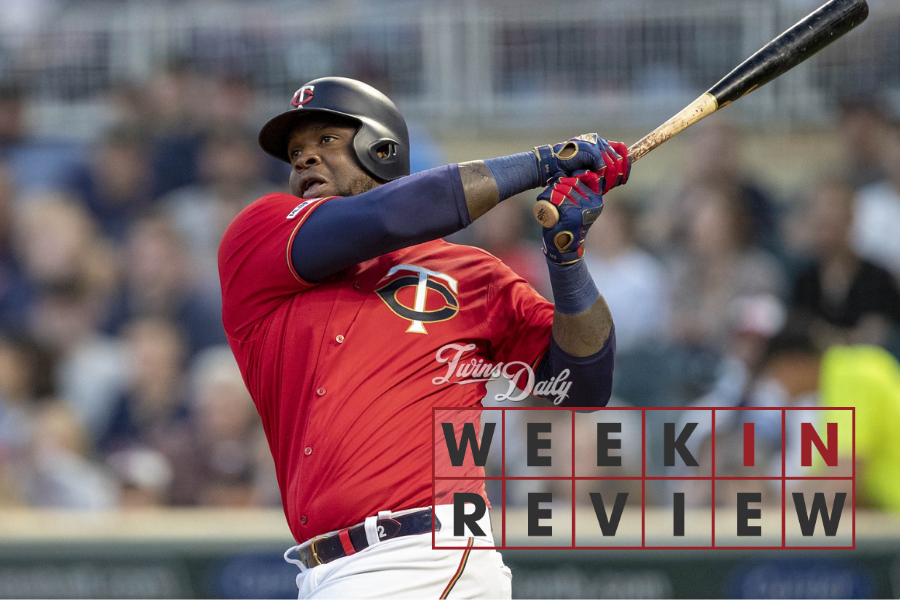 Weekly Snapshot: Mon, 5/20 through Sun, 5/26 *** Record Last Week: 6-0 (Overall: 36-16) Run Differential Last Week: +37 (Overall: +111) Standing: 1st Place in AL Central (10.0 GA) Willians Watch: 3-for-15 last week (Season AVG: .264) After sweeping both the Angels and White Sox, the Twins are now, absurdly, 20 games above .500 with a 10-game lead in the AL Central. There really doesn't seem to be anything that can slow this team down. Injuries to top sluggers Mitch Garver and Nelson Cruz have had no ill effect on the offense's output. A controversial cancellation in Anaheim on Wednesday night didn't throw the Twins off; instead they came out and bashed the Halos 16-7 on Thursday. And when it seemed like maybe the repercussions of that lost travel day were being felt, as the Twins fell behind 4-1 early on Friday night thanks to some uncharacteristic defensive miscues, they came back to score 10 runs unanswered. There was one notable roster move last week: Austin Adams was designated for assignment, with Zack Littell called up to replace him in the bullpen. More on that in the (very sparse) Lowlights section. HIGHLIGHTS Once again, it was a pick-your-poison week for the unstoppable Twins offense, which has now added a locked-in Miguel Sano to this mix. For six weeks, as this lineup piled up accolades, we all mused about how ridiculous it would be to infuse Sano at any semblance of his former prowess. We're finding out. His arrival has only accelerated the outrageous production of a lineup that just became the second ever to hit 100 home runs through its first 50 games. The Twins launched 17 long balls in six games last week, and four of 'em came from Sano. His two dingers on Thursday were among Minnesota's eight total in a laugher against the Angels, but the most important from Miggy was his first – a two-run, tie-breaking blast in the eighth inning of Monday night's game that lifted Minnesota to a 3-1 victory. That game epitomized what makes this team so incredibly dangerous and slump-proof. Even on a night where the bats are generally quiet, there are so many guys who can come through with a big game-changing hit. This helps explain why we're still waiting for the first three-game losing streak. Of course, most often needing the big hit hasn't been an issue, because the Twins have been routinely pulling off lopsided victories. This was the nature of their other five wins, which came by an average margin of seven runs. Once again everyone was clicking, with these guys leading the way: Eddie Rosario went 12-for-27 with three home runs and 10 RBIs. Since a 15-game slump that saw him bat .316 from April 21st through May 7th, Rosario has surged back with a .394/.405/.606 line in his past 17. That's Eddie for ya. He leads the American League in RBIs at 45, and is one behind an injured George Springer in home runs, at 16. Jorge Polanco went 6-fo-22 with a homer and two doubles. He's second in the AL in batting average (.335) and tied with Mike Trout for the lead in WAR (3.4). If you're handicapping the MVP race at this moment Polanco is likely in the Top 5 along with Rosario. Pitchers are seemingly becoming less inclined to throw him strikes, and Polanco's adjusting beautifully; he drew six walks and reached base at a .429 clip in his six games. Max Kepler went 12-for-21 with three homers, four doubles, and 10 RBIs. He's batting .471 on his current eight-game hitting streak and has raised his season average from .231 to .276. C.J. Cron notched five hits on Thursday, including his eighth home run of May. He's got 13 jacks already; his predecessor Joe Mauer never hit more than 11 as a first baseman. In total, the offense posted a .304/.381/.617 line for the week. Not that they need to do much, but the pitchers were also excellent all week. Leading the pack was Jake Odorizzi, whose strong work in tandem with the bullpen on Monday enabled the Twins to squeak out a rare low-scoring win. Odorizzi followed with 5 1/3 shutout innings on Sunday. His week: 10.1 IP, 0 ER, 4 H (all singles), 15 K, 3 BB. His 2.16 ERA leads the AL. Michael Pineda rebounded from some early issues on Tuesday to record his third consecutive quality start. Jose Berrios worked around defensive miscues on Friday to get through 6 2/3 frames, with three of his four runs unearned. Kyle Gibson delivered a dominant gem on Saturday, holding the White Sox to one run over seven innings with nine strikeouts and 21 swinging strikes. LOWLIGHTS Umm. Uhh. One of the few hiccups of the entire week was Adams' relief appearance on Thursday. It wasn't impactful, since he entered with a 14-run lead, but Adams was dreadful, coughing up five runs on three hits and three walks while recording only two outs. To their credit, the Twins were fast to send him out, replacing Adams in the bullpen with Littell, who looked very good in his two scoreless innings on Friday. I wrote last week that the bullpen is the one looming weakness in an otherwise sturdy championship formula for Minnesota. I don't think the implosion from Adams will be the last time we see an over-performing reliever who was fished out of Triple-A come hurtling back to Earth. The Twins must prepare for this eventuality and their minor-league cupboard is largely bare, especially with some of the unfortunate developments you'll read below. But Littell, from my view, has the chance to be a real impact arm out of the pen. He was averaging more than a strikeout per inning as a starter at Rochester with a solid repertoire that, at first blush, seems to play up in relief. Littell seems like the perfect candidate for Wes Johnson and Jeremy Hefner to work their magic on, and I'm pleased to see the Twins wasting no time in firing up the experiment. TRENDING STORYLINE Rookie call-up Luis Arraez arrived with a bang, going 5-for-14 with a home run in his first full week as a a big-leaguer. He's struck out only once through 23 plate appearances with the Twins, and is batting .389. It's been tough for Rocco Baldelli to keep his name out of the lineup, but for now there just aren't any regular openings for Arraez to fill. Although he's shown some versatility, appearing at second, third and short, he's not going to stick around as a backup drawing sporadic playing time, so I suspect he'll return to the minors once Cruz returns. When's that going to happen? Anyone's guess. The Twins were tentatively planning to activate him on Friday but that didn't happen. As Cruz himself notes, wrists can be tricky and there's no need to rush this process, especially with Arraez bringing so much joy in his stead. https://twitter.com/DanHayesMLB/status/1132330296102277120 DOWN ON THE FARM As well as things went for the big-league club last week, the minor-league front wasn't nearly so peachy. A mysterious visit to Minneapolis from #3 prospect Brusdar Graterol generated considerable excitement and buzz, as fans pondered a possible call-up (which would arguably be warranted). Instead, it turns out he was here to have his shoulder examined, and on Saturday the Twins announced he's being shut down with an impingement, with more testing to come. Oof. Graterol had a 1.89 ERA in nine starts at Double-A, where he held opponents to a .188 batting average. He was the most promising potential late-season bullpen reinforcement within the system, and while that remains a possibility, shoulder woes are obviously very concerning for a 20-year-old throwing as hard as he does. We'll keep an eye on his status and keep you updated on any developments. Another of the team's pitching prospects, Stephen Gonsalves, has also been shut down (again). After an intriguing MLB debut last year, he missed the first six months of this season with an elbow strain before finally taking the mound on last Tuesday in Rochester. He lasted just two innings and issued five walks, throwing 23 of 51 pitches for strikes. Evidently the elbow was still barking, and Gonsalves has now been diagnosed with a "stress reaction in his left elbow-forearm area," although La Velle E. Neal III reports that his UCL is sound. https://twitter.com/LaVelleNeal/status/1132356445108887557 The same sadly cannot be said for #10 prospect Akil Baddoo, who's headed for Tommy John surgery and will miss the rest of the season. The outfielder joins Sano and Alex Kirilloff as highly-ranked Twins position player prospects to require reconstructive elbow surgery – just a tremendous run of bad fortune. On the bright side, Baddoo was ahead of schedule as a 20-year-old in High-A, so hopefully he'll be able to return and get right back on track next year. It wasn't all bad news for Twins prospects. Nick Gordon returned from a brief IL stint in Rochester, going 6-for-20 in five games, and – more notably – Wander Javier is back! The shortstop was activated at Cedar Rapids over the weekend, and on Saturday made his first official game appearance since 2017, finishing 0-for-4 with an HBP and two strikeouts. It'd be nice to see the organization's #5 prospect get rolling quickly and rejuvenate a lagging top end of Minnesota's talent pipeline. LOOKING AHEAD The Twins more than took care of business during a 20-game stretch against sub-.500 teams, finishing at 14-6. Now the difficulty level turns up as they welcome Christian Yelich and the Brewers to Target Field for two games, then travel to Tampa for four-games against the Rays. Expect to see Tampa come out with openers and a bunch of weird pitching configurations as they seek to disrupt the groove of this Twins offense. MONDAY, 5/27: BREWERS @ TWINS – LHP Gio Gonzalez v. RHP Michael Pineda TUESDAY, 5/28: BREWERS @ TWINS – RHP Zach Davies v. LHP Martin Perez THURSDAY, 5/30: TWINS @ RAYS – RHP Jose Berrios v. RHP Charlie Morton FRIDAY, 5/31: TWINS @ RAYS – RHP Kyle Gibson v. RHP Ryne Stanek SATURDAY, 6/1: TWINS @ RAYS – RHP Jake Odorizzi v. TBD SUNDAY, 6/2: TWINS @ RAYS – RHP Michael Pineda v. TBD Catch Up On Twins Daily Game Recaps Game 47 | MIN 3, LAA 1: Pitching Great, Sano Homers Late Game 48 | MIN 8, LAA 3: Bats Break Loose Late Game 49 | MIN 16, LAA 7: Twins Slug 8 More Home Runs, Sweep Angels Game 50 | MIN 11, CWS 4: Twins Make Home Run History Game 51 | MIN 8, CHW 1: Gibby Sizzles Over 7 Solid Innings Game 52 | MIN 7, CHW 0: Twins, Fans Flex Their Muscles in Weekend Sweep
 -
By the end of next week, the Minnesota Twins will be more than a third of the way through their 2019 schedule. After completing a dominant sweep in Anaheim, they have the best record and second-best run differential in baseball. Their lead in the AL Central has ballooned to eight games. We're still a week away from June, but it is not by any means too early to start thinking big.It's been a long time since Twins fans last had the luxury of contemplating things like pennant races and playoff rotations and jockeying for home field advantage. I can't remember ever having any such thoughts before the end of May. But we're at a point where talking about the Twins as likely postseason entrants and World Series contenders is not fanciful. It's almost obligatory. Throughout the entirety of a drawn-out rebuilding process that began with a 99-loss season in 2011, Minnesota has been future-focused. At their best (in 2015 and '17), they straddled the line, scrapping for an unlikely postseason berth while keeping their eyes trained on a championship window to come. Here in 2019, if perhaps slightly ahead of schedule, the window has been thrust open. The future is now. There is nothing fluky or superficial about the stunning success of this Twins team. Finding weaknesses is tough. The lineup continues to reaffirm that its unparalleled 1-through-9 power and run-scoring prowess are for real. The rotation has no blatant holes. (Michael Pineda gets some flack, but all his numbers outside of a bloated HR rate – and correspondingly high ERA – are quite good for a fifth starter.) And the bullpen has, thus far, been beyond respectable. As Matt Braun concluded in a blog entry here on Thursday, "These guys have actually been pretty good, so lay off them for now." He makes many fair points, noting that the unit rates well in key categories like FIP and leverage metrics. There's no doubt Twins relievers have performed extraordinarily well thus far. But as I view the Twins through this new, unfamiliar lens – sudden division favorites with legitimate championship aspirations – the bullpen does weigh on me. It's almost inconceivable at this point, given how absurdly consistent they've been since Day 1, but eventually this team will hit some turbulence. The bats will go through some quieter periods, and the starters will experience downspells or injuries. In the dog days of the summer, we will really see this bullpen tested. As much as this team has surpassed my every expectation, even the most optimistic side of me can't see it grading out too well in those moments. And when it comes to matching up against the other kingpins in the American League? Houston, New York and Boston have deep pens custom-built for October. Tampa Bay, as usual, has a vast assortment of incredibly effective relievers that no one's ever heard of – in fact, they have the game's best bullpen ERA. I guess you could put the Twins in the same boat as the Rays, a club they seemingly modeled their approach after. Like Minnesota, Tampa has opportunistically traded away good relievers, filling the vacancies through internal pipeline or low-wattage additions. Both teams have mostly eschewed free agency; as you watch Addison Reed get cut loose with his millions in dead money, while Blake Parker and Ryne Harper continually deliver, it grows a lot tougher to question that strategy. The Twins are finding ways to extract the most out of their talent. Pitching coaches Wes Johnson and Jeremy Hefner are clearly getting through with good info. Rocco Baldelli's decision-making and usage patterns have been strong, from my view, and he places a clear focus on taking care of his players. All these factors help elevate a group toward its true potential. Still, unless some sort of supernatural enchantment is at play (and it's getting a little harder to rule that out with each passing day), no objective onlooker can view this bullpen with great confidence going forward. Taylor Rogers is clearly awesome. I'm willing to buy into Parker, although his 1.10/3.87 split in ERA/FIP points to a clear luck element to his ridiculously good results thus far. After those two, the Twins have: Trevor May. Sadly not anywhere near the same guy he was last year. His swinging strike rate is down to single digits (from an elite 15.4% last year), because his stuff isn't compelling people to swing outside the zone, which is also leading to too many walks. May's throwing as hard as ever and it isn't hard to envision him turning that corner, but so far he hasn't.Ryne Harper. There's no knocking his splendid performance up to this point. But he's a 30-year-old MLB rookie whose fastball sits in the high-80s. He's going to need to keep doing it for quite a while longer before lifting all shrouds of doubt.Matt Magill. The Twins were believers. They had him in their bullpen plans before an injury sidelined him to start the year, and since joining the team in late April, Magill has validated their faith. He might be one of the least intimidating-looking pitchers in baseball but his spectacular velocity – 95 and 88 on average with the fastball and slider – belie his aesthetic. He has ridden that stuff to copious strikeouts and a 1.80 ERA. This is clearly a higher-caliber pitcher than we saw last year, but everyone recalls the way his hot start turned ice cold in 2018.Mike Morin. He has thrown strikes and gotten people out. (8.1 IP, 6 H, 0 BB, 1 ER). What more could you ask? But it's only nine appearances. He's also a 28-year-old who has thrown 24 MLB innings over the past two years, and owns a 3.99 career ERA in Triple-A.Austin Adams. Can't help but be impressed by his arm out of the gates. He throws even harder than Magill, and looked dominant in two outings before getting blown up by the Angels on Thursday. His nightmare outing in Anaheim (0.2 IP, 3 H, 3 BB, 5 ER) will set his numbers back for a while. And it served as a reminder: As good as some of these relievers look at times, and as much as the Twins might be optimizing their repertoires and usage, these are still pitchers signed to minor-league contracts, drawing zero demand from the league at large. Him, Magill, Morin, Harper. And the next guy can more or less be placed in the same group.Tyler Duffey. He almost certainly would've been waived from the 40-man roster during the offseason, if not for holding an option that allowed the Twins to stash him at Triple-A. Now he's in the Minnesota bullpen and looking very much like the dominant reliever we all dreamed he could be. Duffey is finally showing some bite on his heater, and in combination with his ever-vexing curveball, it's piling up strikeouts.So after Parker and Rogers, you have May and then five guys that are more or less veteran Triple-A pitchers thrust into MLB action. With the exception of Adams' implosion, they've all handled it beautifully. All are awesome individual stories, and given the substance behind each of these performances, it isn't that hard to see any one of them sustaining. But... all of them? That feels like too tall an ask, even in this possibly enchanted season. Depth is of the essence. And that's where the pressing concerns emerge. The front office was planning around Trevor Hildenberger and Fernando Romero (and maybe Reed) as key late-inning contributors, but at present both are struggling as part of a GHASTLY bullpen at Rochester: The Triple-A rotation hasn't been so hot either. There's no credible help at the highest level of the minors. Double-A is a little more interesting, and on Thursday, Brusdar Graterol's presence in Minneapolis raised considerable intrigue among the fan base. It sounds like Graterol was here for evaluation, but the idea of a call-up wasn't that far-fetched, which says quite a lot for 20-year-old pitcher (and for the Twins' underlying need). He's been absurdly dominant in Double-A. Alas, the right-hander recently dealt with a trapezius issue and the Twins will smartly place his welfare ahead of the team's. With that in mind, who's going to help this bullpen? The internal reinforcement slate at present is not inspiring. The MLB Draft is suddenly less than two weeks away, meaning that Craig Kimbrel is about to be freed from his burdensome compensation pick tether. That'll fire up the discussions around him again, which is fair. But I maintain that the trade market is a superior avenue. That's how the Astros acquired the best reliever in baseball (from the Twins, unfortunately) and it's a big part of how Tampa constructed its bullpen. The Twins are sneakily well positioned. Their relief corps has performed well, so no trade partner is going to be able to leverage it as an urgent weakness against them. At the same time, the Twins are more motivated to be proactive than other big-market contenders, who are largely flush with high-paid, established options. Will this press them to make a hard push for Kimbrel on the other side of the draft? Or to be aggressive early in the trade market and snatch a big arm? I'll be interested to find out. Most of all, I'm just giddy to be be in a position to think about such things. Click here to view the article
- 37 replies
-
- 4
-
-
- taylor rogers
- blake parker
- (and 2 more)
-
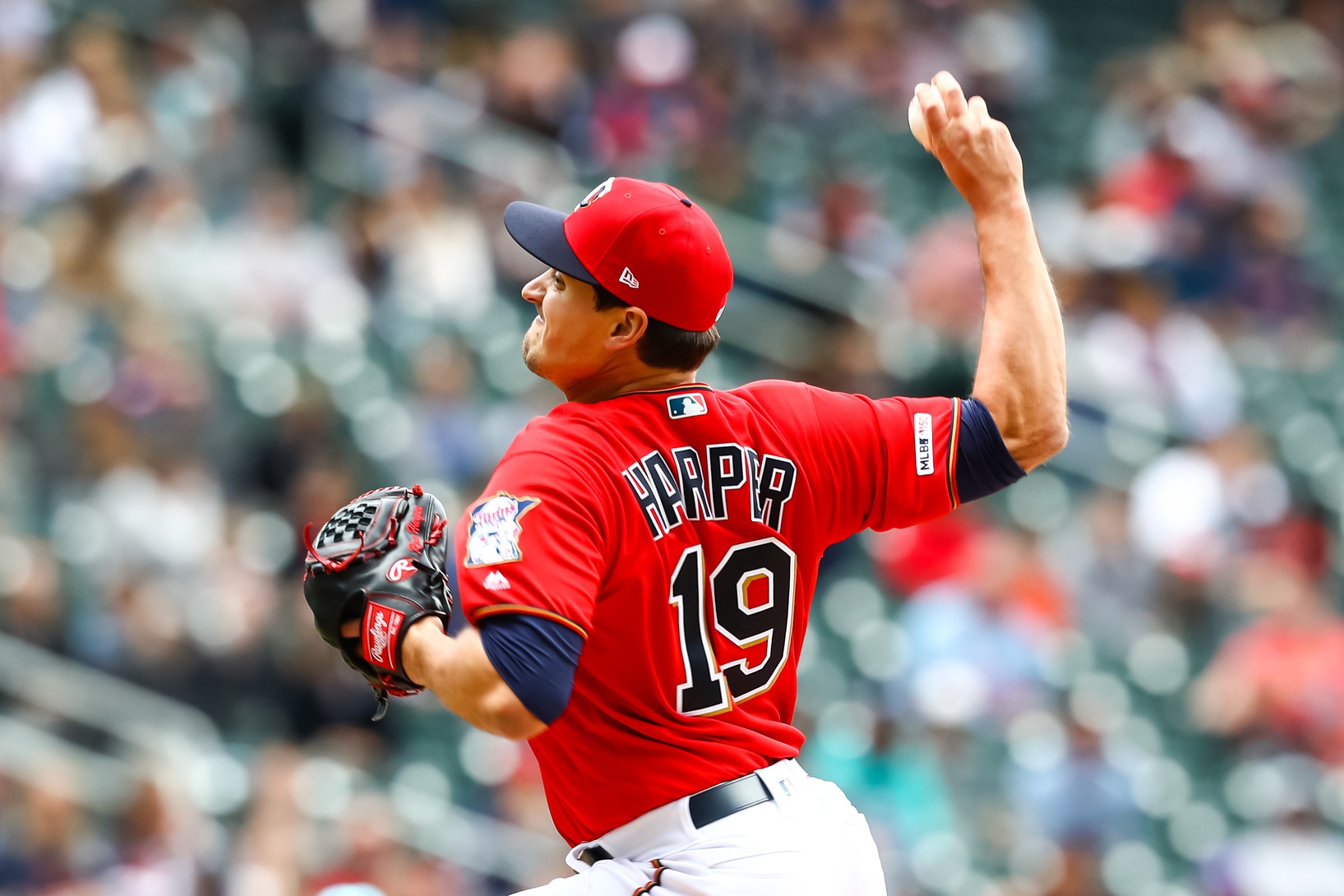 It's been a long time since Twins fans last had the luxury of contemplating things like pennant races and playoff rotations and jockeying for home field advantage. I can't remember ever having any such thoughts before the end of May. But we're at a point where talking about the Twins as likely postseason entrants and World Series contenders is not fanciful. It's almost obligatory. Throughout the entirety of a drawn-out rebuilding process that began with a 99-loss season in 2011, Minnesota has been future-focused. At their best (in 2015 and '17), they straddled the line, scrapping for an unlikely postseason berth while keeping their eyes trained on a championship window to come. Here in 2019, if perhaps slightly ahead of schedule, the window has been thrust open. The future is now. There is nothing fluky or superficial about the stunning success of this Twins team. Finding weaknesses is tough. The lineup continues to reaffirm that its unparalleled 1-through-9 power and run-scoring prowess are for real. The rotation has no blatant holes. (Michael Pineda gets some flack, but all his numbers outside of a bloated HR rate – and correspondingly high ERA – are quite good for a fifth starter.) And the bullpen has, thus far, been beyond respectable. As Matt Braun concluded in a blog entry here on Thursday, "These guys have actually been pretty good, so lay off them for now." He makes many fair points, noting that the unit rates well in key categories like FIP and leverage metrics. There's no doubt Twins relievers have performed extraordinarily well thus far. But as I view the Twins through this new, unfamiliar lens – sudden division favorites with legitimate championship aspirations – the bullpen does weigh on me. It's almost inconceivable at this point, given how absurdly consistent they've been since Day 1, but eventually this team will hit some turbulence. The bats will go through some quieter periods, and the starters will experience downspells or injuries. In the dog days of the summer, we will really see this bullpen tested. As much as this team has surpassed my every expectation, even the most optimistic side of me can't see it grading out too well in those moments. And when it comes to matching up against the other kingpins in the American League? Houston, New York and Boston have deep pens custom-built for October. Tampa Bay, as usual, has a vast assortment of incredibly effective relievers that no one's ever heard of – in fact, they have the game's best bullpen ERA. I guess you could put the Twins in the same boat as the Rays, a club they seemingly modeled their approach after. Like Minnesota, Tampa has opportunistically traded away good relievers, filling the vacancies through internal pipeline or low-wattage additions. Both teams have mostly eschewed free agency; as you watch Addison Reed get cut loose with his millions in dead money, while Blake Parker and Ryne Harper continually deliver, it grows a lot tougher to question that strategy. The Twins are finding ways to extract the most out of their talent. Pitching coaches Wes Johnson and Jeremy Hefner are clearly getting through with good info. Rocco Baldelli's decision-making and usage patterns have been strong, from my view, and he places a clear focus on taking care of his players. All these factors help elevate a group toward its true potential. Still, unless some sort of supernatural enchantment is at play (and it's getting a little harder to rule that out with each passing day), no objective onlooker can view this bullpen with great confidence going forward. Taylor Rogers is clearly awesome. I'm willing to buy into Parker, although his 1.10/3.87 split in ERA/FIP points to a clear luck element to his ridiculously good results thus far. After those two, the Twins have: Trevor May. Sadly not anywhere near the same guy he was last year. His swinging strike rate is down to single digits (from an elite 15.4% last year), because his stuff isn't compelling people to swing outside the zone, which is also leading to too many walks. May's throwing as hard as ever and it isn't hard to envision him turning that corner, but so far he hasn't. Ryne Harper. There's no knocking his splendid performance up to this point. But he's a 30-year-old MLB rookie whose fastball sits in the high-80s. He's going to need to keep doing it for quite a while longer before lifting all shrouds of doubt. Matt Magill. The Twins were believers. They had him in their bullpen plans before an injury sidelined him to start the year, and since joining the team in late April, Magill has validated their faith. He might be one of the least intimidating-looking pitchers in baseball but his spectacular velocity – 95 and 88 on average with the fastball and slider – belie his aesthetic. He has ridden that stuff to copious strikeouts and a 1.80 ERA. This is clearly a higher-caliber pitcher than we saw last year, but everyone recalls the way his hot start turned ice cold in 2018. Mike Morin. He has thrown strikes and gotten people out. (8.1 IP, 6 H, 0 BB, 1 ER). What more could you ask? But it's only nine appearances. He's also a 28-year-old who has thrown 24 MLB innings over the past two years, and owns a 3.99 career ERA in Triple-A. Austin Adams. Can't help but be impressed by his arm out of the gates. He throws even harder than Magill, and looked dominant in two outings before getting blown up by the Angels on Thursday. His nightmare outing in Anaheim (0.2 IP, 3 H, 3 BB, 5 ER) will set his numbers back for a while. And it served as a reminder: As good as some of these relievers look at times, and as much as the Twins might be optimizing their repertoires and usage, these are still pitchers signed to minor-league contracts, drawing zero demand from the league at large. Him, Magill, Morin, Harper. And the next guy can more or less be placed in the same group. Tyler Duffey. He almost certainly would've been waived from the 40-man roster during the offseason, if not for holding an option that allowed the Twins to stash him at Triple-A. Now he's in the Minnesota bullpen and looking very much like the dominant reliever we all dreamed he could be. Duffey is finally showing some bite on his heater, and in combination with his ever-vexing curveball, it's piling up strikeouts. So after Parker and Rogers, you have May and then five guys that are more or less veteran Triple-A pitchers thrust into MLB action. With the exception of Adams' implosion, they've all handled it beautifully. All are awesome individual stories, and given the substance behind each of these performances, it isn't that hard to see any one of them sustaining. But... all of them? That feels like too tall an ask, even in this possibly enchanted season. Depth is of the essence. And that's where the pressing concerns emerge. The front office was planning around Trevor Hildenberger and Fernando Romero (and maybe Reed) as key late-inning contributors, but at present both are struggling as part of a GHASTLY bullpen at Rochester: https://twitter.com/NickNelsonMN/status/1130269630042451968 The Triple-A rotation hasn't been so hot either. There's no credible help at the highest level of the minors. Double-A is a little more interesting, and on Thursday, Brusdar Graterol's presence in Minneapolis raised considerable intrigue among the fan base. It sounds like Graterol was here for evaluation, but the idea of a call-up wasn't that far-fetched, which says quite a lot for 20-year-old pitcher (and for the Twins' underlying need). He's been absurdly dominant in Double-A. Alas, the right-hander recently dealt with a trapezius issue and the Twins will smartly place his welfare ahead of the team's. With that in mind, who's going to help this bullpen? The internal reinforcement slate at present is not inspiring. The MLB Draft is suddenly less than two weeks away, meaning that Craig Kimbrel is about to be freed from his burdensome compensation pick tether. That'll fire up the discussions around him again, which is fair. But I maintain that the trade market is a superior avenue. That's how the Astros acquired the best reliever in baseball (from the Twins, unfortunately) and it's a big part of how Tampa constructed its bullpen. The Twins are sneakily well positioned. Their relief corps has performed well, so no trade partner is going to be able to leverage it as an urgent weakness against them. At the same time, the Twins are more motivated to be proactive than other big-market contenders, who are largely flush with high-paid, established options. Will this press them to make a hard push for Kimbrel on the other side of the draft? Or to be aggressive early in the trade market and snatch a big arm? I'll be interested to find out. Most of all, I'm just giddy to be be in a position to think about such things.
 -
The Twins have the best offense in baseball. They're on pace to be one of the greatest slugging teams in MLB history. And their prowess was on full display over the past week. If what we saw in 2016 was a Total System Failure, then what we're seeing now is All Systems Go. Read on for our recap of a busy, boisterous and beautiful week for the #SotaPop boys. Weekly Snapshot: Mon, 5/13 through Sun, 5/19 *** Record Last Week: 5-2 (Overall: 30-16) Run Differential Last Week: +23 (Overall: +74) Standing: 1st Place in AL Central (4.5 GA) Willians Watch: 3-for-18 last week (Season AVG: .278) Quite a few roster moves to recap from the past week, so here's a rundown: The Twins wanted to keep Tyler Duffey around as an extra reliever, so at the beginning of the week they optioned Jake Cave and recalled him.Mitch Garver made a game-saving play on Tuesday night, blocking the plate beautifully to prevent Shohei Ohtani from scoring with the tying run, but the collision at home took a toll. Luckily, it sounds like Garver and the Twins dodged a bullet – his scary-looking leg injury was diagnosed as a high ankle sprain instead of something more serious – but he was placed on IL and will miss a few weeks at least.Called up to take his place was Miguel Sano, who made his season debut on Thursday night in Seattle and started all four games against the Mariners.Meanwhile, Trevor Hildenberger finally ran out of chances. After allowing multiple runs for the sixth time in eight appearances on Wednesday, nearly costing the Twins a game they should have comfortably won, he was demoted to Rochester. Taking his place is right-hander Austin Adams, a minor-league signing from the winter who'd posted a 28-to-6 K/BB ratio in Triple-A while flinging mid-90s heat.To make room on the 40-man roster, Minnesota designated Addison Reed for assignment. While rehabbing in the minors, Reed had continued to look terrible, so the Twins had little choice but to pull the plug on their free agent bust and eat his remaining salary. It's a real shame because the team could really use Reed at some semblance of his full capacity right now.With Nelson Cruz's wrist healing more slowly than expected, the Twins elected to place him on IL and called up infielder Luis Arraez.Whew. Okay, on to dissecting another highly successful week for your Minnesota Twins: HIGHLIGHTS I don't even know where to start. I truly don't. The Twins have played great baseball all season but they took it to another level against the Mariners, with a comprehensive clobbering that featured contributions from just about everyone. No Garver? No Cruz? No problem. Minnesota still blew up for 40 runs on 11 homers over four games at T-Mobile Field, in one of the most astounding offensive series I've ever seen from a Twins team. C.J. Cron was among those leading the way. After a quiet series against the Angels at Target Field (1-for-10), he went wild in Seattle, where he was 8-for-18 with three home runs and six RBIs in four games. Not long ago, Cron was one of the few laggards in this lineup, entering May with an OPS barely north of .700, but he's raised that mark by 150 points with a prodigious power outburst this month. Also aiding in the bash-fest was Byron Buxton, who went 7-for-26 on the week with three bombs, including a grand slam on Saturday night. The #9 hitter drove in 11 runs over the course of seven games. His presence at the bottom of Minnesota's order is one major element in its intimidation factor. The 19-year-old shortstop is still slashing just .236/.311/.342 overall, but he's picking it up after a slow start. His teammate Jordan Balazovic, has no such slow start to shake off. The right-hander was masterful in four starts at Cedar Rapids before moving up to Fort Myers, where he has been annihilating the competition. In two starts last week (Monday and Sunday) he struck out 20 batters over 10 innings, pushing his K/BB ratio to 30-to-4 in 17 innings with the Miracle. In our preseason Twins prospect rankings, I noted that "Balazovic was an honorable mention for us, failing to make our Top 20 cut, but I'm wondering if that'll look silly a year from now." Turns out it only took about six weeks. From my view, he's currently the organization's second-best pitching prospect behind Brusdar Graterol, who has a 1.93 ERA through nine starts at Double-A. LOOKING AHEAD The Twins are 5-2 in their current run against AL West opponents, and they'll look to finish strong with another three-gamer against the Angels, this time in Anaheim. (More late night baseball for ya!) After a well-deserved day off on Thursday, Minnesota returns home to face the White Sox for the first time this year. The pitching matchups for that series look quite tantalizing on paper. MONDAY, 5/20: TWINS @ ANGELS – RHP Jake Odorizzi v. TBD TUESDAY, 5/21: TWINS @ ANGELS – RHP Michael Pineda v. RHP Trevor Cahill WEDNESDAY, 5/22: TWINS @ ANGELS – LHP Martin Perez v. RHP Matt Harvey FRIDAY, 5/24: WHITE SOX @ TWINS – RHP Reynaldo Lopez v. RHP Jose Berrios SATURDAY, 5/25: WHITE SOX @ TWINS – LHP Manny Banuelos v. RHP Kyle Gibson SUNDAY, 5/26: WHITE SOX @ TWINS – RHP Dylan Covey v. RHP Jake Odorizzi Catch Up On Twins Daily Game Recaps Game 40 | LAA 5, MIN 4: More Missed OpportunitiesGame 41 | MIN 4, LAA 3: Throw DownGame 42 | MIN 8, LAA 7: Twins Squeak Out VictoryGame 43 | MIN 11, SEA 6: Total System Failure (for the Other Guys)Game 44 | MIN 7, SEA 1: Venezuelan Night in SeattleGame 45 | MIN 18, SEA 4: Sharks Eat MarinersGame 46 | SEA 7, MIN 4:Sweepless in Seattle Click here to view the article
- 21 replies
-
- 1
-
-
- cj cron
- byron buxton
- (and 3 more)
-
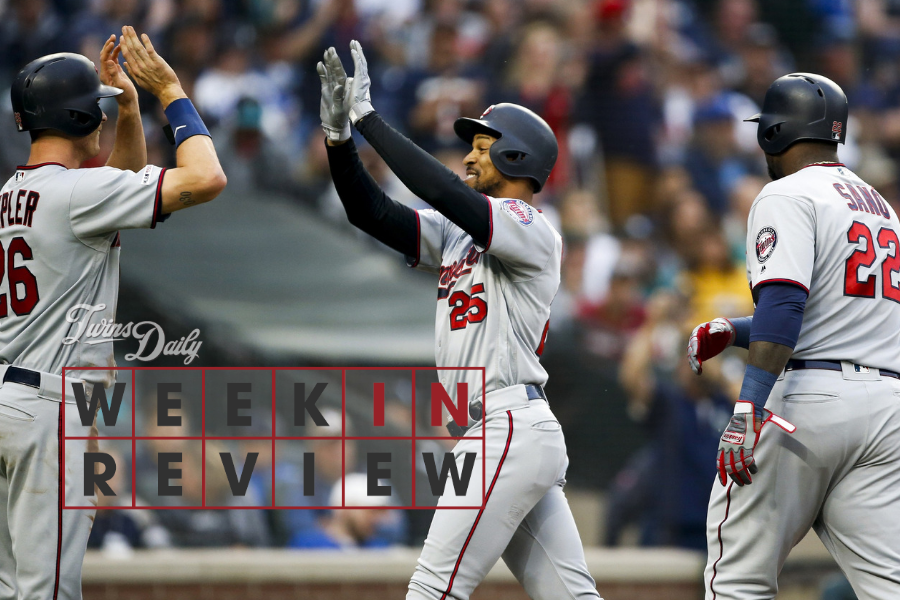 Weekly Snapshot: Mon, 5/13 through Sun, 5/19 *** Record Last Week: 5-2 (Overall: 30-16) Run Differential Last Week: +23 (Overall: +74) Standing: 1st Place in AL Central (4.5 GA) Willians Watch: 3-for-18 last week (Season AVG: .278) Quite a few roster moves to recap from the past week, so here's a rundown: The Twins wanted to keep Tyler Duffey around as an extra reliever, so at the beginning of the week they optioned Jake Cave and recalled him. Mitch Garver made a game-saving play on Tuesday night, blocking the plate beautifully to prevent Shohei Ohtani from scoring with the tying run, but the collision at home took a toll. Luckily, it sounds like Garver and the Twins dodged a bullet – his scary-looking leg injury was diagnosed as a high ankle sprain instead of something more serious – but he was placed on IL and will miss a few weeks at least. Called up to take his place was Miguel Sano, who made his season debut on Thursday night in Seattle and started all four games against the Mariners. Meanwhile, Trevor Hildenberger finally ran out of chances. After allowing multiple runs for the sixth time in eight appearances on Wednesday, nearly costing the Twins a game they should have comfortably won, he was demoted to Rochester. Taking his place is right-hander Austin Adams, a minor-league signing from the winter who'd posted a 28-to-6 K/BB ratio in Triple-A while flinging mid-90s heat. To make room on the 40-man roster, Minnesota designated Addison Reed for assignment. While rehabbing in the minors, Reed had continued to look terrible, so the Twins had little choice but to pull the plug on their free agent bust and eat his remaining salary. It's a real shame because the team could really use Reed at some semblance of his full capacity right now. With Nelson Cruz's wrist healing more slowly than expected, the Twins elected to place him on IL and called up infielder Luis Arraez. Whew. Okay, on to dissecting another highly successful week for your Minnesota Twins: HIGHLIGHTS I don't even know where to start. I truly don't. The Twins have played great baseball all season but they took it to another level against the Mariners, with a comprehensive clobbering that featured contributions from just about everyone. No Garver? No Cruz? No problem. Minnesota still blew up for 40 runs on 11 homers over four games at T-Mobile Field, in one of the most astounding offensive series I've ever seen from a Twins team. C.J. Cron was among those leading the way. After a quiet series against the Angels at Target Field (1-for-10), he went wild in Seattle, where he was 8-for-18 with three home runs and six RBIs in four games. Not long ago, Cron was one of the few laggards in this lineup, entering May with an OPS barely north of .700, but he's raised that mark by 150 points with a prodigious power outburst this month. Also aiding in the bash-fest was Byron Buxton, who went 7-for-26 on the week with three bombs, including a grand slam on Saturday night. The #9 hitter drove in 11 runs over the course of seven games. His presence at the bottom of Minnesota's order is one major element in its intimidation factor. https://twitter.com/Twins/status/1130110864676278288 There's just nowhere for opposing pitchers to find cover from the onslaught. Marwin Gonzalez was a reliable soft spot early on, but he's completely turned it around in May, where he's slashing .355/.429/.500. Last week, Gonzalez went 8-for-23 (.348) while playing four different positions. Jason Castro launched two more homers and has now gone deep in five of his eight May starts. Jonathan Schoop sent two over the fence on Saturday night and is rocking an .823 OPS overall. Eddie Rosario has slowed down his feverish HR pace a bit, but is back in rake-mode nonetheless, going 10-for-26 over the past week. And now, the Twins have Sano again. He tallied a pair of doubles in his season debut on Thursday, then picked up his first home run on Saturday night. It's far too soon to say the slugger is "back" – he struck out eight times with one walk against the M's, and had a few very ugly ABs – but with almost everyone else on the offense clicking, the Twins can afford to be patient. LOWLIGHTS It was, quietly, a less stellar week for the rotation, with a few starters beginning slipping up a bit. Most notable among that group is Jose Berrios, who coughed up five runs on 12 hits against the Angels on Monday, and then couldn't get through five frames in Minnesota's blowout over the M's on Saturday. I'm not too worried yet; he's still throwing strikes and was rattling off qualities starts before this rough patch. Jake Odorizzi and Kyle Gibson were unspectacular, though far from terrible. Overall, Twins starters posted a 5.05 ERA over the course of the week, and, well, a couple things: 1. It says a lot about the relative quality of this group that we can view their week as a noticeable negative. Last year Twins starters had a 4.50 ERA for the season. 2. Minnesota still went 5-2 even with the lack of standout work from starters. This team was built to win games on the strength of its offense and that's just what they did. Pretty much the only position player not to join the hitting parade was Willians Astudillo. He went 3-for-18 in five games, extending a slump that's seen him bat .222 in 67 PA since his huge first three games of the season. This visual shared by Ted does a good job illustrating the core problem plaguing La Tortuga at the plate – he's playing right into the hands of opposing pitchers: https://twitter.com/tlschwerz/status/1130182897061761024 I love his aggressiveness as a general trait, but Astudillo has gotta start finding some better pitches to hit. He's too often going after offerings that are nearly impossible to drive, and as a result his hard-hit percentage is (by far) the lowest among Twins hitters at 22.9%. TRENDING STORYLINE It's pretty easy to hide bullpen question marks when you're launching six home runs and taking 10-run leads after a few innings, but that won't keep happening forever. Right now, the Twins' relief corps is crowded with minor-league journeymen. Ryne Harper, Mike Morin, Matt Magill and the newly promoted Adams all came to Minnesota on non-guaranteed contracts. To their credit, these guys have all pitched pretty well – especially Harper, who continues to confound MLB hitters with his slow, bending curveballs. Duffey is another guy who looked like an also-ran at the outset of the season but is making his case as an asset. With a pumped-up fastball in the mid-90s, he's been nasty at times, though the long ball proneness remains troubling. As well as these relievers are throwing, the bullpen still has the feel of a ticking time bomb. The absence of Hildenberger, who was an essential fireman in April, will be felt, and sadly it doesn't look likely he'll be back soon. In his first appearance at Triple-A on Friday, he coughed up four runs in one inning, so there are clearly some serious issues to work through. Fernando Romero is pitching in Rochester alongside Hildenberger, and hasn't been very sharp in his three appearances since heading back down. The indefinite absence of those two, along with the release of Reed, removes three key pieces from Minnesota's planned late-inning mix. It's just really hard to imagine the Twins can get by filling that void with unestablished minor-league vets all summer long, even if it's been working out to this point. The question is whether they'll be proactive in addressing the issue, or wait until leaks start to spring. DOWN ON THE FARM You've gotta feel for Nick Gordon. This is a huge year for him as he seeks to rebound from a brutal 2018 campaign that tanked his stock. He missed the first month due to a stomach issue, then came back at the start of May and raked over eight games, batting .353 with an .889 OPS, but last week he found himself back on IL with a left adductor strain. Hopefully he can make it back soon and continue his redemption tour. Meanwhile, it was an interesting week for Minnesota's #1 prospect. On Thursday, Royce Lewis lined a drive off the top of the wall in a game against Bradenton, and chided himself by pulling into second base with a few push-ups. The Marauders were not too pleased. They threw at him in his next AB, and multiple ejections followed: https://twitter.com/MLBPipeline/status/1129420094940045312 A few things stand out to be me in this footage. I'm very impressed by how the umpire handled it, standing tough as Bradenton's manager berated him with an embarrassing temper tantrum. I'm also impressed by how Lewis composed himself, standing quietly in the batter's box throughout the ordeal, waiting for his next pitch. Impressed, but not surprised. Lewis is one of the highest-character guys you'll come across on a ball field, which is why it's so bizarre to me that anyone would perceive his playful antics as anything malicious. Anyway, Royce came out the next night and belted his first home run of the season in his first AB: https://twitter.com/MiracleBaseball/status/1129517743051628544 The 19-year-old shortstop is still slashing just .236/.311/.342 overall, but he's picking it up after a slow start. His teammate Jordan Balazovic, has no such slow start to shake off. The right-hander was masterful in four starts at Cedar Rapids before moving up to Fort Myers, where he has been annihilating the competition. In two starts last week (Monday and Sunday) he struck out 20 batters over 10 innings, pushing his K/BB ratio to 30-to-4 in 17 innings with the Miracle. In our preseason Twins prospect rankings, I noted that "Balazovic was an honorable mention for us, failing to make our Top 20 cut, but I'm wondering if that'll look silly a year from now." Turns out it only took about six weeks. From my view, he's currently the organization's second-best pitching prospect behind Brusdar Graterol, who has a 1.93 ERA through nine starts at Double-A. LOOKING AHEAD The Twins are 5-2 in their current run against AL West opponents, and they'll look to finish strong with another three-gamer against the Angels, this time in Anaheim. (More late night baseball for ya!) After a well-deserved day off on Thursday, Minnesota returns home to face the White Sox for the first time this year. The pitching matchups for that series look quite tantalizing on paper. MONDAY, 5/20: TWINS @ ANGELS – RHP Jake Odorizzi v. TBD TUESDAY, 5/21: TWINS @ ANGELS – RHP Michael Pineda v. RHP Trevor Cahill WEDNESDAY, 5/22: TWINS @ ANGELS – LHP Martin Perez v. RHP Matt Harvey FRIDAY, 5/24: WHITE SOX @ TWINS – RHP Reynaldo Lopez v. RHP Jose Berrios SATURDAY, 5/25: WHITE SOX @ TWINS – LHP Manny Banuelos v. RHP Kyle Gibson SUNDAY, 5/26: WHITE SOX @ TWINS – RHP Dylan Covey v. RHP Jake Odorizzi Catch Up On Twins Daily Game Recaps Game 40 | LAA 5, MIN 4: More Missed Opportunities Game 41 | MIN 4, LAA 3: Throw Down Game 42 | MIN 8, LAA 7: Twins Squeak Out Victory Game 43 | MIN 11, SEA 6: Total System Failure (for the Other Guys) Game 44 | MIN 7, SEA 1: Venezuelan Night in Seattle Game 45 | MIN 18, SEA 4: Sharks Eat Mariners Game 46 | SEA 7, MIN 4: Sweepless in Seattle
 -
Article: Week in Review: Firing On All Cylinders
Nick Nelson replied to Nick Nelson's topic in Twins Daily Front Page News
It's a fair point. Tom's recap on Sunday was eye-opening in this regard. But I still can't quite bring myself to the point of being worried about this club's run-scoring capability. -
With a sweep in Toronto and a split at home against Detroit, the Twins delivered another winning week and built upon their lead in the AL Central. Below the fold, we'll unpack another week filled with strong hitting and pitching performances. Weekly Snapshot: Mon, 5/6 through Sun, 5/12 *** Record Last Week: 5-2 (Overall: 25-14) Run Differential Last Week: +26 (Overall: +51) Standing: 1st Place in AL Central (4.0 GA) Willians Watch: 1-for-5 last week (Season AVG: .315) Willians Astudillo is back! He was activated from the disabled list on Sunday and batted leadoff in his return. Meanwhile, Tyler Duffey (called up for Saturday's doubleheader) and Fernando Romero were sent back to Triple-A over the weekend. It's unfortunate because both have shown some nice signs (especially Romero, firing four scoreless innings with a 15% swinging strike rate in his past four appearances), but both will see more chances soon enough. HIGHLIGHTS As we reach the quarterpole in the MLB season, Minnesota has two players creating legitimate noise as MVP candidates. The case for Jorge Polanco thus far is easy to see. After another stellar week (11-for-26 with two home runs and three doubles), Polanco is hitting .324/.393/.607 ranks second only to Mike Trout in the AL with 2.1 WAR. Polanco's K/BB ratio is among the best in the league and he's hitting for incredible power. Best of all, he's doing it as a SHORTSTOP who holds his own defensively. It's a little tougher to make an MVP-pace argument for Mitch Garver, mainly because his playing time doesn't quite stack up. Splitting reps in a three-way catcher committee, Garver has fewer than half the plate appearances of Polanco. Yet in that time, he has produced more home runs (8 to 7) and nearly the same RBI total (16 to 17). We keep waiting for his seemingly unsustainable start to slow down, but week after week, Garver stays on fire. This last one was no exception: he went 6-for-13 with two more homers and six walks. Among American League players with 75+ PA, no one has a higher OPS than Garver (1.214). Assuming this optimism proves valid, it looks like the Twins dodged a bullet with their top pitching prospect, who has held opponents to a .168 average through his first 38 innings at Double-A. LOOKING AHEAD Another seven-game week lies ahead, with the Twins first hosting Trout and the Angels, then traveling to Seattle for four games against the Mariners. MONDAY, 5/13: ANGELS @ TWINS – LHP Tyler Skaggs v. RHP Jose Berrios TUESDAY, 5/14: ANGELS @ TWINS – TBD v. RHP Kyle Gibson WEDNESDAY, 5/15: ANGELS @ TWINS – RHP Trevor Cahill v. RHP Jake Odorizzi THURSDAY, 5/16: TWINS @ MARINERS – RHP Michael Pineda v. RHP Erik Swanson FRIDAY, 5/17: TWINS @ MARINERS – LHP Martin Perez v. RHP Felix Hernandez SATURDAY, 5/18: TWINS @ MARINERS – RHP Jose Berrios v. LHP Marco Gonzales SUNDAY, 5/19: TWINS @ MARINERS – RHP Kyle Gibson v. LHP Yusei Kikuchi Catch Up On Twins Daily Game Recaps Game 33 | MIN 8, TOR 0: Perez Impresses, Bats Bounce Stroman EarlyGame 34 | MIN 3, TOR 0: Berrios Hurls Gem, Twins Get Second Straight ShutoutGame 35 | MIN 9, TOR 1: Twins Steamroll TorontoGame 36 | MIN 6, DET 0: Odorizzi Deals (Again), Twins Win Fourth in a RowGame 37 | DET 5, MIN 3: Tigers Out-Tater Twins, Gardy Gets TossedGame 38 | MIN 8, DET 3: Now Witness the FirepowerGame 39 | DET 5, MIN 3: We Have a Problem Click here to view the article
- 16 replies
-
- 1
-
-
- jorge polanco
- mitch garver
- (and 3 more)
-
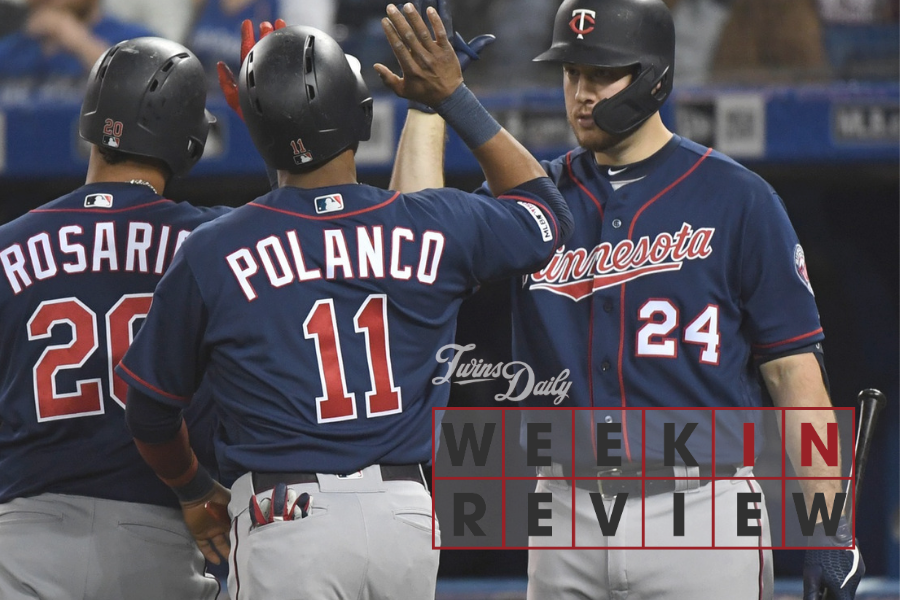 Weekly Snapshot: Mon, 5/6 through Sun, 5/12 *** Record Last Week: 5-2 (Overall: 25-14) Run Differential Last Week: +26 (Overall: +51) Standing: 1st Place in AL Central (4.0 GA) Willians Watch: 1-for-5 last week (Season AVG: .315) Willians Astudillo is back! He was activated from the disabled list on Sunday and batted leadoff in his return. Meanwhile, Tyler Duffey (called up for Saturday's doubleheader) and Fernando Romero were sent back to Triple-A over the weekend. It's unfortunate because both have shown some nice signs (especially Romero, firing four scoreless innings with a 15% swinging strike rate in his past four appearances), but both will see more chances soon enough. HIGHLIGHTS As we reach the quarterpole in the MLB season, Minnesota has two players creating legitimate noise as MVP candidates. The case for Jorge Polanco thus far is easy to see. After another stellar week (11-for-26 with two home runs and three doubles), Polanco is hitting .324/.393/.607 ranks second only to Mike Trout in the AL with 2.1 WAR. Polanco's K/BB ratio is among the best in the league and he's hitting for incredible power. Best of all, he's doing it as a SHORTSTOP who holds his own defensively. It's a little tougher to make an MVP-pace argument for Mitch Garver, mainly because his playing time doesn't quite stack up. Splitting reps in a three-way catcher committee, Garver has fewer than half the plate appearances of Polanco. Yet in that time, he has produced more home runs (8 to 7) and nearly the same RBI total (16 to 17). We keep waiting for his seemingly unsustainable start to slow down, but week after week, Garver stays on fire. This last one was no exception: he went 6-for-13 with two more homers and six walks. Among American League players with 75+ PA, no one has a higher OPS than Garver (1.214). https://twitter.com/Twins/status/1127020004589830149 There's little doubt the catcher is going to cool off at some point – maybe in a big way – but that's no knock against him. There's just no credible reason to believe he can keep up this Barry Bonds impression for long. But Garver has erased any semblance of doubt surrounding the legitimacy of his bat, while showing clear improvement behind the plate as well. And it's nice to know that should he fall into a slump, the Twins have Jason Castro (4-for-7 with two home runs last week, and slugging 1.000 in his past nine games) and Astudillo bringing his .870 OPS off the Injured List on Sunday. If you could lump all of Minnesota's catchers into one player (Masians Castrudiller?), he'd be the runaway MVP frontrunner without question. Those backstops continue linking up with Twins starting pitchers to produce amazing results. On Tuesday, Jose Berrios fired seven shutout innings in Toronto to pick up his sixth win and seventh quality start in eight turns. He's completed six or more innings in every outing. Fresh off earning Player of the Week honors, Jake Odorizzi extended his scoreless streak to 20 innings on Friday with seven near-perfect frames against the Tigers. Martin Perez was excellent in his first turn (7 IP, 0 R vs. TOR) and solid in his second (5 IP, 3 R vs. DET). He has a 2.13 ERA in six starts for the Twins. Even the previous rotation laggards are starting to join the fun. Kyle Gibson struck out 11 and notched 19 swinging strikes in a dominant showing versus Toronto on Wednesday. Suddenly he's got a 2.25 ERA and 28-to-3 K/BB ratio over 24 innings in his past four starts, resembling the overpowering force he was for much of last year. Michael Pineda still doesn't look all that sharp, but he logged a quality start on Saturday with three runs allowed over six innings. In 39 frames, Pineda has struck out 35 and walked nine. Egregious home run rate aside, there's plenty of underlying positivity in his early output coming off Tommy John surgery. A couple other strong performances from the past week worth highlighting: C.J. Cron, who'd been one of the lineup's weakest producers, turned that around in a big way with a pair of four-hit games and three homers. He now has nine bombs in the books, which is more than his predecessor at first base (Joe Mauer) managed in either of the past two seasons. Ryne Harper chipped in three more clean outings, allowing only one hit in 3 2/3 with a walk and four strikeouts. The 30-year-old rookie has made 15 appearances this year, and 14 have been scoreless. What a wonderful story. LOWLIGHTS Last week in this space, I expressed some concern over Trevor Hildenberger and his sudden vulnerability, noting that his usage had dissipated as his results had taken a downward turn. Seven days later, those concerns are only louder. He coughed up two runs on three hits in one inning against Detroit on Saturday, and then did the same on Sunday, this time with a more costly impact (his two runs allowed were the difference in the game). Throughout most of April, Hildenberger appeared to have re-established himself as one of Minnesota's most reliable late-inning arms, but now he has fallen right back into the rut that plagued his second half in 2018. In his past seven appearances Hildy has surrendered 10 earned runs on 14 hits in six frames. He's a complete mess, and the Twins can't afford to stick with him much longer at this rate. The 28-year-old does have options left, so a move to Triple-A is in play. On the bright side, there really aren't any other poor performances worth calling out from the past week – a huge credit to the comprehensively high-quality play we continue to see from this roster. TRENDING STORYLINE For a third straight week, Miguel Sano is grabbing out attention. First he was preparing to start his rehab stint, then it was officially underway, and now he's on the verge of wrapping it up. Sano moved up to Class-AAA Rochester over the weekend after a brief stay at Pensacola. He went 0-for-4 with three strikeouts in his first game for the Red Wings, but bounced back with a 2-for-4 effort (plus a walk) on Sunday. Barring any setbacks, I suspect we'll see Sano recalled during the coming week. It'll be interesting to see who's moved to make room. The likeliest candidate seems to be Ehire Adrianza, who's been woefully unproductive. Then again, maybe the issue takes care of itself, as Nelson Cruz could be headed for the shelf with a wrist injury that knocked him out of Sunday's game. At this moment, I'm even more curious about another Triple-A rehab stint. Reliever Addison Reed is on the road back after missing the first month with a "left thumb injury," and has looked utterly terrible in Triple-A, just as he did in spring training, and just as he did for much of last summer. In three appearances for Rochester, he has coughed up four runs on eight hits over three innings of work, striking out two of 17 batters faced. Where to go from here? There's no way the Twins can add Reed back to the roster. Stashing him on IL for a month with a vague non-throwing hand issue was already a bit of a stretch, but now they're running out of places to hide him. It's unfortunate, because a peak-level Reed would be such a huge difference-maker for this Minnesota bullpen, but that player is clearly long gone. At this point I think the Twins have no choice but to cut their losses and designate him for assignment, eating millions in remaining salary. For now, Reed still has a couple weeks left in his rehab window. DOWN ON THE FARM On July 31st of last year, the Twins traded longtime stalwart Brian Dozier to the Dodgers, in exchange for what appeared to be a modest return. Dozier was trudging through a disappointing season, slashing just .227/.307/.405 for Minnesota, and was just two months from free agency. The Twins had no hope of prying any top prospects, but they procured a couple of intriguing pieces from LA in outfielder Luke Raley and left-hander Devin Smeltzer. Well, Dozier's struggles only worsened down the stretch as he batted .182/.300/.350 over 47 games and barely saw any time in the postseason. Over the winter, he signed a one-year deal with the Nationals, but in Washington it's been much of the same: Dozier's slash line sits at .197/.301/.331 through 38 games. (His Twins replacement at second, Jonathan Schoop, is at .276/.324/.504.) Meanwhile, Raley is mashing at Rochester, where he's 14-for-33 in the month of May and sporting a .299/.364/.542 line overall. He's still not going to sprout up on any top prospect lists but the 24-year-old lefty swinger is solidifying himself as viable MLB-ready depth. In Triple-A, he's mostly played right field with a little center mixed in. Smeltzer is an even more compelling case. There was no significant buzz around him as a middling southpaw coming out of the Dodgers system, but ever since joining the Twins organization he has been completely lights-out. In 42 innings at Double-A, between the end of last year and the start of this one, he posted a 1.29 ERA and 49-to-5 K/BB ratio. He moved up Rochester at the beginning of May and has somehow gotten better, hurling 15 shutout innings with only seven hits allowed. I'm not sure what to make of him. You watch the guy pitch and you aren't wowed by his velocity or stuff, but the superlative results are eye-popping, and he's doing it consistently at the highest levels of the minors. Smeltzer, 23, isn't currently on the 40-man roster, but is putting himself in line to get a chance when the need arises. One more pitching note from the minors: Brusdar Graterol was in the middle of another stellar outing on Wednesday, with 5 1/3 scoreless innings logged, when he was pulled from the game due to an apparent injury. This understandably caused instant panic to sweep through Twins Territory, but Darren Wolfson of KSTP swooped in quickly with a relieving report: https://twitter.com/DWolfsonKSTP/status/1126181293824278528 Assuming this optimism proves valid, it looks like the Twins dodged a bullet with their top pitching prospect, who has held opponents to a .168 average through his first 38 innings at Double-A. LOOKING AHEAD Another seven-game week lies ahead, with the Twins first hosting Trout and the Angels, then traveling to Seattle for four games against the Mariners. MONDAY, 5/13: ANGELS @ TWINS – LHP Tyler Skaggs v. RHP Jose Berrios TUESDAY, 5/14: ANGELS @ TWINS – TBD v. RHP Kyle Gibson WEDNESDAY, 5/15: ANGELS @ TWINS – RHP Trevor Cahill v. RHP Jake Odorizzi THURSDAY, 5/16: TWINS @ MARINERS – RHP Michael Pineda v. RHP Erik Swanson FRIDAY, 5/17: TWINS @ MARINERS – LHP Martin Perez v. RHP Felix Hernandez SATURDAY, 5/18: TWINS @ MARINERS – RHP Jose Berrios v. LHP Marco Gonzales SUNDAY, 5/19: TWINS @ MARINERS – RHP Kyle Gibson v. LHP Yusei Kikuchi Catch Up On Twins Daily Game Recaps Game 33 | MIN 8, TOR 0: Perez Impresses, Bats Bounce Stroman Early Game 34 | MIN 3, TOR 0: Berrios Hurls Gem, Twins Get Second Straight Shutout Game 35 | MIN 9, TOR 1: Twins Steamroll Toronto Game 36 | MIN 6, DET 0: Odorizzi Deals (Again), Twins Win Fourth in a Row Game 37 | DET 5, MIN 3: Tigers Out-Tater Twins, Gardy Gets Tossed Game 38 | MIN 8, DET 3: Now Witness the Firepower Game 39 | DET 5, MIN 3: We Have a Problem
 -
Article: Week in Review: Battery Power
Nick Nelson replied to Nick Nelson's topic in Twins Daily Front Page News
He got hurt in the second half. -
Article: Week in Review: Battery Power
Nick Nelson replied to Nick Nelson's topic in Twins Daily Front Page News
I dunno. When you still have an 800+ OPS coming off an 0-for-28 stretch it says a lot about how hot you were beforehand. And his cold streak hasn't been very "convincing" to me, as it's included a 3-to-2 K/BB ratio and plenty of bad-luck hard-hit balls. Personally I think Rosario's overall production by the end of the year will vastly overshadow any previous benchmarks.- 13 replies
-
- 2
-
-
- jason castro
- mitch garver
- (and 3 more)
-
Pitchers and catchers led the way as Minnesota tackled a challenging slate with gusto, winning three of four from the Astros at home and even managing to take a game at Yankee Stadium. Another winning week serves as further evidence the Twins are very much legit contenders in the American League. Let's dig into the details. Weekly Snapshot: Mon, 4/29 through Sun, 5/5 *** Record Last Week: 4-3 (Overall: 20-12) Run Differential Last Week: +0 (Overall: +25) Standing: 1st Place in AL Central (2.0 GA) Willians Watch: DNP last week :-( Quick housekeeping: Adalberto Mejia was placed on IL with a calf injury following a brutal outing in Tuesday's loss. Replacing him (and newly added to the 40-man roster) is Mike Morin, who looked solid in his Twins debut at Yankee Stadium on Friday, allowing one run on a solo homer in two innings but striking out three. Meanwhile, our guy Willians Astudillo remains sidelined, but he's eligible to return this week! HIGHLIGHTS Last year, Twins catchers posted a collective .675 OPS, which sounds pretty bad but actually ranked right in the middle of the MLB pack, tied for 15th. One just can't expect much offensive production from the position. Right? Don't tell that to Jason Castro and Mitch Garver, who've been lighting things up through the first month. The duo has helped vault Minnesota to the top of this year's AL ranks for catcher OPS, at an astonishing 1.084, and both were instrumental in the team's success this past week. Castro played a big role in Thursday's series-clinching win against Houston, putting Minnesota on the board with a home run in his first at-bat amidst a four-RBI day. The previous week he'd also homered against his former team. On Saturday in New York, it was Garver opening up the scoring with a two-run blast – his sixth of the season already. Last year when he was named Twins Daily's top rookie, mostly because of his impressive work with the bat, he hit seven home runs in 335 plate appearances. It's easy to get lost in the shuffle of so many strong offensive starts, but Garver's early improvements on both sides have been astounding. Speaking of astounding improvements, the ones we're seeing from Martin Perez have potential to be transformative for the Twins rotation. Following three impressive performances out of the gate as a starter, the lefty took it to another level on Wednesday, firing eight shutout innings against an Astros offense that ranks among the league's best. He now has a 2.08 ERA through four turns in the rotation. Perez's newfound superlativeness owes to several factors: better health, a pumped-up fastball buzzing in at 94 MPH on average, vastly superior control (he's throwing 67% strikes and averaging 1.7 BB/9 as a starter; last year those figures were at 62% and 3.8). But the biggest driver may be a cutter that's replaced his slider and become a HEAVILY utilized (35%) offering: Obviously, it's foolish to draw any substantive conclusions about a tiny sample from a 25-year-old in the minors. Sano has played only four games. But in those games, he has already blasted two home runs, which matches his total from a 23-game, 94-PA, five-week stretch in Fort Myers and Rochester last summer. He slugged .410 over the course of that midseason demotion. His lack of dominance against younger, less experienced minor-league pitchers was another clear sign that Sano just was not right, and so it was unsurprising he continued to look underwhelming upon being recalled. This year, no one could describe his early showing as a "lack of dominance." Very encouraging to see. Bringing his bat into the mix for a club that already leads baseball in slugging feels like an almost ridiculous proposition. Sano figures to replace Marwin Gonzalez, who is the only Twins regular slugging below .433. DOWN ON THE FARM Even beyond Sano, it was a week of big returns in the minors. On Thursday, Twins Daily's #2 prospect Alex Kirilloff finally joined the Pensacola lineup after missing the first month with a wrist injury. He's 4-for-13 through his first four games. On the same day, #11 prospect Nick Gordon made his season debut for Rochester, collecting three hits and then adding three doubles in his next two games. If the mission is to quickly put that nightmarish 2018 campaign behind him, so far so good. Getting back these two heralded prospects will hopefully provide a jolt for a position-player group in the system that's been surprisingly quiet thus far. Here's what the hitters among Twins Daily's preseason Top 10, other than Kirilloff, have been able to accomplish through one month: Royce Lewis (#1): Hitting .227/.323/.273 with zero home runs at Fort Myers after hitting 14 last yearTrevor Larnach (#4): HItting .279/.325/.369 with zero home runs 28 games at Fort Myers, belying his power profileWander Javier (#5): Still in extended spring trainingBrent Rooker (#6): Hitting .210/.269/.484 with five home runs in Rochester, but striking out in 45% (!) of PAsAkil Baddoo (#1): Hitting .208/.292/.416 at Fort MyersOn the flipside, we continue to see plenty of positive developments on the pitching prospect front. Brusdar Graterol has a 2.23 ERA and .177 opponents' batting average at Pensacola. Devin Smeltzer, who'd been dominating alongside him in the Blue Wahoos rotation, moved up to Rochester last week and hurled seven shutout innings in his Red Wings debut on Friday. Jordan Balazovic, himself freshly promoted from Low-A to High-A, spun seven perfect innings with 10 strikeouts in his Miracle debut on Sunday. LOOKING AHEAD As a testament to their consistent play this year, the Twins have lost only four series so far this season. And only one of those can you definitively say they *should have* won. It was their four-gamer against Toronto at home back in mid-April. Now they'll have a chance to go on the road and avenge it, in another ballpark where they haven't fared particularly well. Then, the Twins return home for a weekend series against the Tigers, including a makeup doubleheader on Saturday. MONDAY, 5/6: TWINS @ BLUE JAYS – LHP Martin Perez v. RHP Marcus Stroman TUESDAY, 5/7: TWINS @ BLUE JAYS – RHP Jose Berrios v. RHP Aaron Sanchez WEDNESDAY, 5/8: TWINS @ BLUE JAYS – RHP Kyle Gibson v. RHP Trent Thornton FRIDAY, 5/10: TIGERS @ TWINS – RHP Spencer Turnbull v. RHP Jake Odorizzi SATURDAY, 5/11 (1): TIGERS @ TWINS – TBD v. RHP Michael Pineda SATURDAY, 5/11 (2): TIGERS @ TWINS – TBD v. LHP Martin Perez SUNDAY, 5/12: TIGERS @ TWINS – LHP Daniel Norris v. RHP Jose Berrios Catch Up On Twins Daily Game Recaps Game 26 | MIN 1, HOU 0: Let’s Go CrazyGame 27 | HOU 11, MIN 0: Completely DominatedGame 28 | MIN 6, HOU 2: MARTIN! MARTIN! MARTIN!Game 29 | MIN 8, HOU 2: Twins Win! Take Season Series vs Astros!Game 30 | NYY 6, MIN 3: All Too Familiar at Yankee StadiumGame 31 | MIN 7, NYY 3: Curse ThisGame 32 | NYY 4, MIN 1: Twins Fizzle, Bronx Drizzles Click here to view the article
- 13 replies
-
- 2
-
-
- jason castro
- mitch garver
- (and 3 more)
-
 Weekly Snapshot: Mon, 4/29 through Sun, 5/5 *** Record Last Week: 4-3 (Overall: 20-12) Run Differential Last Week: +0 (Overall: +25) Standing: 1st Place in AL Central (2.0 GA) Willians Watch: DNP last week :-( Quick housekeeping: Adalberto Mejia was placed on IL with a calf injury following a brutal outing in Tuesday's loss. Replacing him (and newly added to the 40-man roster) is Mike Morin, who looked solid in his Twins debut at Yankee Stadium on Friday, allowing one run on a solo homer in two innings but striking out three. Meanwhile, our guy Willians Astudillo remains sidelined, but he's eligible to return this week! HIGHLIGHTS Last year, Twins catchers posted a collective .675 OPS, which sounds pretty bad but actually ranked right in the middle of the MLB pack, tied for 15th. One just can't expect much offensive production from the position. Right? Don't tell that to Jason Castro and Mitch Garver, who've been lighting things up through the first month. The duo has helped vault Minnesota to the top of this year's AL ranks for catcher OPS, at an astonishing 1.084, and both were instrumental in the team's success this past week. Castro played a big role in Thursday's series-clinching win against Houston, putting Minnesota on the board with a home run in his first at-bat amidst a four-RBI day. The previous week he'd also homered against his former team. On Saturday in New York, it was Garver opening up the scoring with a two-run blast – his sixth of the season already. Last year when he was named Twins Daily's top rookie, mostly because of his impressive work with the bat, he hit seven home runs in 335 plate appearances. It's easy to get lost in the shuffle of so many strong offensive starts, but Garver's early improvements on both sides have been astounding. Speaking of astounding improvements, the ones we're seeing from Martin Perez have potential to be transformative for the Twins rotation. Following three impressive performances out of the gate as a starter, the lefty took it to another level on Wednesday, firing eight shutout innings against an Astros offense that ranks among the league's best. He now has a 2.08 ERA through four turns in the rotation. Perez's newfound superlativeness owes to several factors: better health, a pumped-up fastball buzzing in at 94 MPH on average, vastly superior control (he's throwing 67% strikes and averaging 1.7 BB/9 as a starter; last year those figures were at 62% and 3.8). But the biggest driver may be a cutter that's replaced his slider and become a HEAVILY utilized (35%) offering: https://twitter.com/ParkerHageman/status/1124000680677715972 The Twins took a chance on a guy who posted a 6.22 ERA while yielding a 329/.389/.527 hitting line in Texas last year, and it's paying off bigtime. Especially when you keep in mind that he's only 28 and his contract includes a $7.5 million club option for 2019. Perez isn't the only pitcher who has Minnesota's front office looking savvy. Jake Odorizzi turned in two stellar performances against top-tier offenses last week, holding the Astros and Yankees scoreless on six hits over 13 innings and improving his ERA to a team-leading 2.78 in the process. Odorizzi is averaging a strikeout per inning with a 13% whiff rate, and what's been most remarkable is the way he's completely flipped his greatest weakness upside-down. By the end of his tenure in Tampa, Odorizzi was obscenely homer-prone – part of the reason the Rays traded him for minimal return. In 2017 he surrendered 30 bombs in 143 innings, and that carried over last year to Minnesota where he coughed up 14 through 63 innings in April and May. At that very point in time, a switch just flipped. He allowed no home runs in June, and only six total the rest of the way. This year, he has given up two long balls in seven starts, despite facing the Phillies, the Astros (twice) and the Yankees. I mean, look at this ridiculous split: Odorizzi, start of 2017 through May 2018: 40 GS, 206 IP, 44 HR (1.9 HR/9) Odorizzi, June 2018 through present: 27 GS, 136 IP, 8 HR (0.5 HR/9) It seems unfathomable he could continue to avoid home runs at an elite rate as a fly ball pitcher who throws so many high fastballs, but he just keeps on doing it. In case you were wondering about the prospect they traded to Tampa for him, Jermaine Palacios is slashing .160/.236/.200 at Class-AA Montgomery after posting a .575 OPS between Single-A and Double-A last year. Like I said, the front office is lookin' pretty good these days. LOWLIGHTS From red-hot to ice-cold: Eddie Rosario has been slumping badly of late, with a hitless stretch extending to 28 plate appearances before he finally snapped it on Saturday. So it goes for the streaky slugger, who had registered an OPS north of 1.200 in 15 games prior to the outage. As I shared in one of the first Week in Review columns this year when discussing Rosario's mini-slump to open the season: "I've come to learn that any drought in production for Eddie is usually the precedent for a scorching hot streak." He followed by hitting eight home runs in his next 10 games. Take that as you will. While Perez and Odorizzi have emerged alongside Jose Berrios atop the Twins rotation, Kyle Gibson and Michael Pineda have had a harder time distinguishing themselves. Gibson took the L in New York on Friday, although poor defense played a big part. Three of the five runs he allowed in five innings were unearned. But the fact remains: Gibby has yet to deliver a quality start against a non-Baltimore opponent. At least Gibson feels headed in the right direction. The struggles of Pineda are more troubling. Since opening the season with a trio of strong efforts, the big right-hander has been totally ineffective, with an 8.53 ERA over 19 innings in four starts. He hasn't completed six innings in any of those outings, with his control eroding and gopherballs piling up. On the bright side, Pineda did notch eight strikeouts and 18 swinging strikes against the Yankees on Sunday – both season highs. The quality of his stuff, along with the circumstance of re-acclimating to the major-league mound after 17 months away from it, makes me inclined to show continued patience. In the bullpen, Trevor Hildenberger had a really rough week. He made two appearances and allowed two runs on three hits in each, though thankfully the Twins had large leads in both cases. Rocco Baldelli has noticeably eased up on Hildy's usage, with only three appearances in the last 12 days after calling upon him a dozen times through Minnesota's first 21 games. TRENDING STORYLINE Miguel Sano's comeback is officially in motion. He got his rehab stint underway on Tuesday in Fort Myers, though he didn't stay there long; after going 4-for-4 with a home run in his second game for the Miracle, he was quickly moved up to Double-A. Sano wasted no time getting acclimated in Pensacola, where he launched a prodigious three-run bomb in his first at-bat on Sunday: https://twitter.com/BlueWahoosBBall/status/1125116147538509827 Obviously, it's foolish to draw any substantive conclusions about a tiny sample from a 25-year-old in the minors. Sano has played only four games. But in those games, he has already blasted two home runs, which matches his total from a 23-game, 94-PA, five-week stretch in Fort Myers and Rochester last summer. He slugged .410 over the course of that midseason demotion. His lack of dominance against younger, less experienced minor-league pitchers was another clear sign that Sano just was not right, and so it was unsurprising he continued to look underwhelming upon being recalled. This year, no one could describe his early showing as a "lack of dominance." Very encouraging to see. Bringing his bat into the mix for a club that already leads baseball in slugging feels like an almost ridiculous proposition. Sano figures to replace Marwin Gonzalez, who is the only Twins regular slugging below .433. DOWN ON THE FARM Even beyond Sano, it was a week of big returns in the minors. On Thursday, Twins Daily's #2 prospect Alex Kirilloff finally joined the Pensacola lineup after missing the first month with a wrist injury. He's 4-for-13 through his first four games. On the same day, #11 prospect Nick Gordon made his season debut for Rochester, collecting three hits and then adding three doubles in his next two games. If the mission is to quickly put that nightmarish 2018 campaign behind him, so far so good. Getting back these two heralded prospects will hopefully provide a jolt for a position-player group in the system that's been surprisingly quiet thus far. Here's what the hitters among Twins Daily's preseason Top 10, other than Kirilloff, have been able to accomplish through one month: Royce Lewis (#1): Hitting .227/.323/.273 with zero home runs at Fort Myers after hitting 14 last year Trevor Larnach (#4): HItting .279/.325/.369 with zero home runs 28 games at Fort Myers, belying his power profile Wander Javier (#5): Still in extended spring training Brent Rooker (#6): Hitting .210/.269/.484 with five home runs in Rochester, but striking out in 45% (!) of PAs Akil Baddoo (#1): Hitting .208/.292/.416 at Fort Myers On the flipside, we continue to see plenty of positive developments on the pitching prospect front. Brusdar Graterol has a 2.23 ERA and .177 opponents' batting average at Pensacola. Devin Smeltzer, who'd been dominating alongside him in the Blue Wahoos rotation, moved up to Rochester last week and hurled seven shutout innings in his Red Wings debut on Friday. Jordan Balazovic, himself freshly promoted from Low-A to High-A, spun seven perfect innings with 10 strikeouts in his Miracle debut on Sunday. LOOKING AHEAD As a testament to their consistent play this year, the Twins have lost only four series so far this season. And only one of those can you definitively say they *should have* won. It was their four-gamer against Toronto at home back in mid-April. Now they'll have a chance to go on the road and avenge it, in another ballpark where they haven't fared particularly well. Then, the Twins return home for a weekend series against the Tigers, including a makeup doubleheader on Saturday. MONDAY, 5/6: TWINS @ BLUE JAYS – LHP Martin Perez v. RHP Marcus Stroman TUESDAY, 5/7: TWINS @ BLUE JAYS – RHP Jose Berrios v. RHP Aaron Sanchez WEDNESDAY, 5/8: TWINS @ BLUE JAYS – RHP Kyle Gibson v. RHP Trent Thornton FRIDAY, 5/10: TIGERS @ TWINS – RHP Spencer Turnbull v. RHP Jake Odorizzi SATURDAY, 5/11 (1): TIGERS @ TWINS – TBD v. RHP Michael Pineda SATURDAY, 5/11 (2): TIGERS @ TWINS – TBD v. LHP Martin Perez SUNDAY, 5/12: TIGERS @ TWINS – LHP Daniel Norris v. RHP Jose Berrios Catch Up On Twins Daily Game Recaps Game 26 | MIN 1, HOU 0: Let’s Go Crazy Game 27 | HOU 11, MIN 0: Completely Dominated Game 28 | MIN 6, HOU 2: MARTIN! MARTIN! MARTIN! Game 29 | MIN 8, HOU 2: Twins Win! Take Season Series vs Astros! Game 30 | NYY 6, MIN 3: All Too Familiar at Yankee Stadium Game 31 | MIN 7, NYY 3: Curse This Game 32 | NYY 4, MIN 1: Twins Fizzle, Bronx Drizzles
 -
The title of last week's column, Bounceback in Baltimore, could easily apply once again – although this time the Orioles were being swept here in Minneapolis, and the preceding series loss in Houston was less disappointing than the one at home against Toronto. All in all, it was another very encouraging and homer-happy week for the Twins, who find themselves with the second-best record in the American League, one month into the season. Weekly Snapshot: Mon, 4/22 through Sun, 4/28 *** Record Last Week: 4-2 (Overall: 16-9) Run Differential Last Week: +7 (Overall: +27) Standing: 1st Place in AL Central (2.0 GA) Willians Watch: 5-for-21 last week (Season AVG: .295) We'll start with a rare bit of bad news: WILLIANS IS HURT! Our boy was enjoying a lovely week, with three hits in five at-bats, before pulling up with a strained hamstring in Saturday's game. Ths incident landed Astudillo on the injured list, so he'll be gone through the next week at least. Needless to say, we will strive keep you acutely aware of any developments on this vital front. The Twins should be okay without Astudillo for a while, but his absence will be felt in all of our hearts. HIGHLIGHTS Nelson Cruz is doing exactly what the Twins hired him to do: leading a ferocious offensive charge. After a quiet series in Houston, he launched two homers on Friday night at Target Field and added two more hits on Saturday, pushing his season's hitting line to .297/.402/.568 through week's end. Surrounding Cruz in the lineup with Jorge Polanco (7-for-26 with two homers last week) and Eddie Rosario (4-for-23 with two homers), Minnesota boasts a lethal 2-3-4 sequence with each hitter hanging around a 1.000 OPS. Toss in the occasional explosiveness of guys like Max Kepler and C.J. Cron, who combined for six home runs and eight RBIs against Baltimore, and you've got the most powerful lineup in baseball. Watching this group has been a real treat, and while the dynamic has undoubtedly been played up by an inordinate number of games against the punching-bag Orioles, this unit's prowess doesn't seem artificial in any way. Minnesota leads baseball in slugging by a fairly wide margin. There are no breaks in this relentless lineup for opposing pitchers. Just as you think you're escaping the torment, here's Jason Castro launching an upper-deck bomb, or Byron Buxton teeing off on the first pitch. We're seeing the fulfillment of this offense's incredible power-hitting potential, a phenomenon I've dubbed (in hashtag form): #SotaPop. Feel free to wear it out. On the pitching side, Martin Perez has shown well since moving into his customary role as a starter. The lefty allowed one run over six frames on Friday, his third six-inning effort in three tries after joining the rotation. Over those 18 IP, Perez has allowed 19 hits, six earned runs (3.00 ERA) and – most notably – only three walks. He issued nine free passes in three relief appearances prior. If Perez can throw the ball in the zone, he's going to be successful. The same seems to be true for Kyle Gibson, who reined in his command once again during a fantastic outing against Baltimore on Sunday, firing 70 of 105 pitches for strikes in seven innings of one-run ball. He's gotten himself right on track with back-to-back sterling efforts against the O's, notching 12 strikeouts with zero walks over 13 innings in a pair of victories. Meanwhile, it was more of the same from Jose Berrios, who tallied his third straight win on Saturday with his fifth quality start in six turns. Consistency was his goal this year, and so far the right-hander has made it a reality. Through six starts he is 4-1 with a 2.97 ERA and 0.97 WHIP. He entered play on Sunday ranked ninth among all MLB pitchers in WAR, per FanGraphs. LOWLIGHTS When Marwin Gonzalez homered in his fourth at-bat on Saturday, it was his first hit of the week, ending an 0-for-18 slump that has mostly been reflective of his season at large. Outside of that eighth-inning bomb against the Orioles, and a two-run knock on Sunday, the newly signed free agent's production has been scant ever since his big two-run double on Opening Day. Gonzalez has a history of starting slow, but this is new territory. Last year at this time he was already in the process of heating up and shaking off his cold start, which wasn't nearly as cold by comparison. His current .520 OPS is more than 200 points off his career mark. There's a lengthy track record here, and Gonzalez's K/BB rates aren't drastically out of line, so it's too soon to panic. He hasn't looked great, but he's also plagued by an almost impossibly low .192 BABIP. I'm still fairly confident that as the weather heats up and his luck evens out, he'll come around. And it says an awful lot that a player as accomplished as Marwin is really the only hole in the Twins lineup at present. Neither Michael Pineda nor Kohl Stewart fared all that well in Houston, but it's tough to hold against them considering the setting and circumstances. In Stewart's case, the unexceptional effort was almost commendable – he came straight up from Triple-A to face arguably the toughest lineup in the majors, in a bandbox, and lasted through six innings (albeit with five runs allowed). It wasn't pretty but he kept the Twins in the game, outlasting both Pineda and Jake Odorizzi from the previous nights. All in all, there's not much to quibble with among individual performers over the past week. In what is becoming a theme, the Twins did what they needed to, and so did most of their players. TRENDING STORYLINE With Gonzalez scuffling, attention grows around Miguel Sano's return. The Twins had originally projected a May ETA, and in line with that forecast, the slugger is slated to start his rehab assignment on Tuesday. He'll start out in Class-A Fort Myers before moving up to Triple-A Rochester once the Twins feel he's ready. Presumably the Twins will take it slow with the third baseman, who is far removed from being an impactful contributor at the big-league level. We know that capability resides within him, and if Sano can show any semblance of the player he was before things turned south, it goes without saying how scary his addition will be for a lineup that's already out-slugging the league. He has a 20-day rehab window, which the Twins figure to fully utilize. The soonest we're likely to see him in Minnesota is in three weeks or so. DOWN ON THE FARM During spring training, Lewis Thorpe was one pitcher being propped up by Twins officials as a potential difference-maker this summer. The hype was warranted, given his stellar numbers between Double-A and Triple-A last season, but he came out of the gates flat in Rochester, yielding 15 earned runs on 17 hits in in 8 2/3 innings over his first two starts. Whether he made adjustments or simply shook off the rust, Thorpe has been a radically different animal in his last two turns. Following an eight-inning, one run, 12-K masterpiece last Tuesday, he has notched 24 strikeouts with one walk and seven hits allowed in 13 2/3 innings. That includes an incredible 38 swinging strikes on 189 pitches (20%). Thorpe still has a 7.25 ERA overall, owing to his horrendous start, but if he can maintain the form he's been showing of late, he could become a factor for the Twins quickly. Not every top Twins prospect is rallying after a slow start, however – including THE top Twins prospect. At what point should we start worrying about Royce Lewis' season-opening slump as it continues to linger? After going 5-for-31 with no extra-base hits and no walks in Fort Myers last week, the shortstop's overall slash line now sits at .195/.297/.241. He has been a total non-factor offensively, and even on the basepaths his success has diminished, with five converted steal attempts in nine tries. On the bright side, Lewis has committed only one error through 19 games at short, and reports on that front have generally been positive. It seems fair to say his defense is more of a focus than his hitting at this point, so we'll take it. As a reminder, he doesn't turn 20 until June. There's nothing especially worrisome about struggles at High-A in that context, but it certainly throws some cold water on the idea of Lewis rocketing to the big leagues in short order following his outstanding 2018. LOOKING AHEAD It's very possible this is the toughest week the Twins will face all season long. First they'll be welcoming the elite Astros to Target Field for a four-game series, and then it's off to New York for a three-gamer against the dastardly Yanks. If Minnesota can come away from this seven-game gauntlet with three wins, they should be feeling pretty good. Anything more would be a coup. MONDAY, 4/29: ASTROS @ TWINS – RHP Justin Verlander v. RHP Jake Odorizzi TUESDAY, 4/30: ASTROS @ TWINS – RHP Gerrit Cole v. RHP Michael Pineda WEDNESDAY, 5/1: ASTROS @ TWINS – RHP Collin McHugh v. LHP Martin Perez THURSDAY, 5/2: ASTROS @ TWINS – RHP Brad Peacock v. RHP Jose Berrios FRIDAY, 5/3: TWINS @ YANKEES – RHP Kyle Gibson v. LHP James Paxton SATURDAY, 5/4: TWINS @ YANKEES – RHP Jake Odorizzi v. LHP J.A. Happ SUNDAY, 5/5: TWINS @ YANKEES – RHP Michael Pineda v. RHP Domingo German Catch Up On Twins Daily Game Recaps Game 20 | MIN 9, HOU 5: Bats Thrive, Pitching SurvivesGame 21 | HOU 10, MIN 4: Springer and Bregman and Altuve... Oh My!Game 22 | HOU 7, MIN 1: Foregone ConclusionGame 23 | MIN 6, BAL 1: Sticking to the FormulaGame 24 | MIN 9, BAL 2: Quality from Berrios, Quantity from the BatsGame 25 | MIN 4, BAL 1: Kepler Sets Tone, Gibby Brings It Home Click here to view the article
- 15 replies
-
- 1
-
-
- nelosn cruz
- max kepler
- (and 2 more)
-
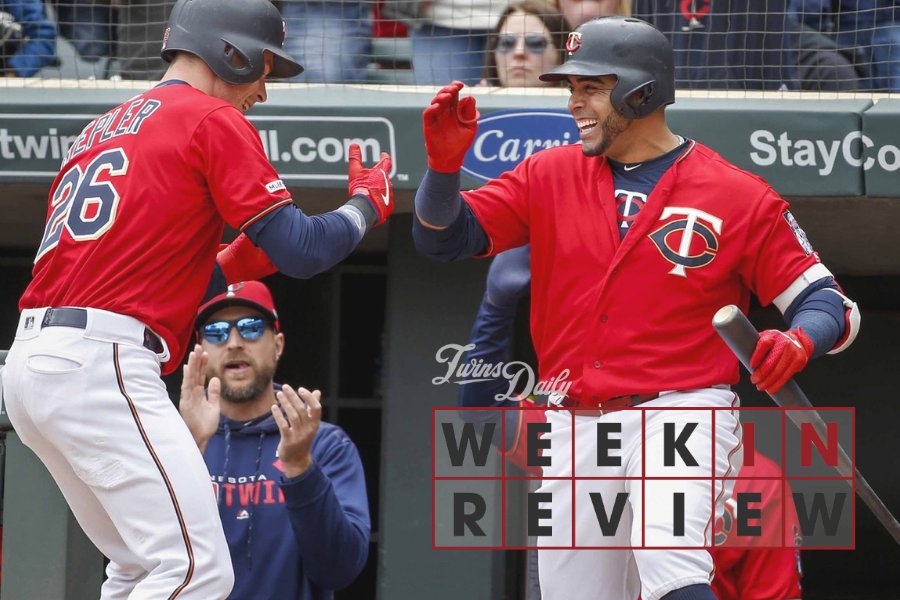 Weekly Snapshot: Mon, 4/22 through Sun, 4/28 *** Record Last Week: 4-2 (Overall: 16-9) Run Differential Last Week: +7 (Overall: +27) Standing: 1st Place in AL Central (2.0 GA) Willians Watch: 5-for-21 last week (Season AVG: .295) We'll start with a rare bit of bad news: WILLIANS IS HURT! Our boy was enjoying a lovely week, with three hits in five at-bats, before pulling up with a strained hamstring in Saturday's game. Ths incident landed Astudillo on the injured list, so he'll be gone through the next week at least. Needless to say, we will strive keep you acutely aware of any developments on this vital front. The Twins should be okay without Astudillo for a while, but his absence will be felt in all of our hearts. HIGHLIGHTS Nelson Cruz is doing exactly what the Twins hired him to do: leading a ferocious offensive charge. After a quiet series in Houston, he launched two homers on Friday night at Target Field and added two more hits on Saturday, pushing his season's hitting line to .297/.402/.568 through week's end. Surrounding Cruz in the lineup with Jorge Polanco (7-for-26 with two homers last week) and Eddie Rosario (4-for-23 with two homers), Minnesota boasts a lethal 2-3-4 sequence with each hitter hanging around a 1.000 OPS. Toss in the occasional explosiveness of guys like Max Kepler and C.J. Cron, who combined for six home runs and eight RBIs against Baltimore, and you've got the most powerful lineup in baseball. Watching this group has been a real treat, and while the dynamic has undoubtedly been played up by an inordinate number of games against the punching-bag Orioles, this unit's prowess doesn't seem artificial in any way. Minnesota leads baseball in slugging by a fairly wide margin. There are no breaks in this relentless lineup for opposing pitchers. Just as you think you're escaping the torment, here's Jason Castro launching an upper-deck bomb, or Byron Buxton teeing off on the first pitch. We're seeing the fulfillment of this offense's incredible power-hitting potential, a phenomenon I've dubbed (in hashtag form): #SotaPop. Feel free to wear it out. On the pitching side, Martin Perez has shown well since moving into his customary role as a starter. The lefty allowed one run over six frames on Friday, his third six-inning effort in three tries after joining the rotation. Over those 18 IP, Perez has allowed 19 hits, six earned runs (3.00 ERA) and – most notably – only three walks. He issued nine free passes in three relief appearances prior. If Perez can throw the ball in the zone, he's going to be successful. The same seems to be true for Kyle Gibson, who reined in his command once again during a fantastic outing against Baltimore on Sunday, firing 70 of 105 pitches for strikes in seven innings of one-run ball. He's gotten himself right on track with back-to-back sterling efforts against the O's, notching 12 strikeouts with zero walks over 13 innings in a pair of victories. Meanwhile, it was more of the same from Jose Berrios, who tallied his third straight win on Saturday with his fifth quality start in six turns. Consistency was his goal this year, and so far the right-hander has made it a reality. Through six starts he is 4-1 with a 2.97 ERA and 0.97 WHIP. He entered play on Sunday ranked ninth among all MLB pitchers in WAR, per FanGraphs. LOWLIGHTS When Marwin Gonzalez homered in his fourth at-bat on Saturday, it was his first hit of the week, ending an 0-for-18 slump that has mostly been reflective of his season at large. Outside of that eighth-inning bomb against the Orioles, and a two-run knock on Sunday, the newly signed free agent's production has been scant ever since his big two-run double on Opening Day. Gonzalez has a history of starting slow, but this is new territory. Last year at this time he was already in the process of heating up and shaking off his cold start, which wasn't nearly as cold by comparison. His current .520 OPS is more than 200 points off his career mark. There's a lengthy track record here, and Gonzalez's K/BB rates aren't drastically out of line, so it's too soon to panic. He hasn't looked great, but he's also plagued by an almost impossibly low .192 BABIP. I'm still fairly confident that as the weather heats up and his luck evens out, he'll come around. And it says an awful lot that a player as accomplished as Marwin is really the only hole in the Twins lineup at present. Neither Michael Pineda nor Kohl Stewart fared all that well in Houston, but it's tough to hold against them considering the setting and circumstances. In Stewart's case, the unexceptional effort was almost commendable – he came straight up from Triple-A to face arguably the toughest lineup in the majors, in a bandbox, and lasted through six innings (albeit with five runs allowed). It wasn't pretty but he kept the Twins in the game, outlasting both Pineda and Jake Odorizzi from the previous nights. All in all, there's not much to quibble with among individual performers over the past week. In what is becoming a theme, the Twins did what they needed to, and so did most of their players. TRENDING STORYLINE With Gonzalez scuffling, attention grows around Miguel Sano's return. The Twins had originally projected a May ETA, and in line with that forecast, the slugger is slated to start his rehab assignment on Tuesday. He'll start out in Class-A Fort Myers before moving up to Triple-A Rochester once the Twins feel he's ready. Presumably the Twins will take it slow with the third baseman, who is far removed from being an impactful contributor at the big-league level. We know that capability resides within him, and if Sano can show any semblance of the player he was before things turned south, it goes without saying how scary his addition will be for a lineup that's already out-slugging the league. He has a 20-day rehab window, which the Twins figure to fully utilize. The soonest we're likely to see him in Minnesota is in three weeks or so. DOWN ON THE FARM During spring training, Lewis Thorpe was one pitcher being propped up by Twins officials as a potential difference-maker this summer. The hype was warranted, given his stellar numbers between Double-A and Triple-A last season, but he came out of the gates flat in Rochester, yielding 15 earned runs on 17 hits in in 8 2/3 innings over his first two starts. Whether he made adjustments or simply shook off the rust, Thorpe has been a radically different animal in his last two turns. Following an eight-inning, one run, 12-K masterpiece last Tuesday, he has notched 24 strikeouts with one walk and seven hits allowed in 13 2/3 innings. That includes an incredible 38 swinging strikes on 189 pitches (20%). Thorpe still has a 7.25 ERA overall, owing to his horrendous start, but if he can maintain the form he's been showing of late, he could become a factor for the Twins quickly. Not every top Twins prospect is rallying after a slow start, however – including THE top Twins prospect. At what point should we start worrying about Royce Lewis' season-opening slump as it continues to linger? After going 5-for-31 with no extra-base hits and no walks in Fort Myers last week, the shortstop's overall slash line now sits at .195/.297/.241. He has been a total non-factor offensively, and even on the basepaths his success has diminished, with five converted steal attempts in nine tries. On the bright side, Lewis has committed only one error through 19 games at short, and reports on that front have generally been positive. It seems fair to say his defense is more of a focus than his hitting at this point, so we'll take it. As a reminder, he doesn't turn 20 until June. There's nothing especially worrisome about struggles at High-A in that context, but it certainly throws some cold water on the idea of Lewis rocketing to the big leagues in short order following his outstanding 2018. LOOKING AHEAD It's very possible this is the toughest week the Twins will face all season long. First they'll be welcoming the elite Astros to Target Field for a four-game series, and then it's off to New York for a three-gamer against the dastardly Yanks. If Minnesota can come away from this seven-game gauntlet with three wins, they should be feeling pretty good. Anything more would be a coup. MONDAY, 4/29: ASTROS @ TWINS – RHP Justin Verlander v. RHP Jake Odorizzi TUESDAY, 4/30: ASTROS @ TWINS – RHP Gerrit Cole v. RHP Michael Pineda WEDNESDAY, 5/1: ASTROS @ TWINS – RHP Collin McHugh v. LHP Martin Perez THURSDAY, 5/2: ASTROS @ TWINS – RHP Brad Peacock v. RHP Jose Berrios FRIDAY, 5/3: TWINS @ YANKEES – RHP Kyle Gibson v. LHP James Paxton SATURDAY, 5/4: TWINS @ YANKEES – RHP Jake Odorizzi v. LHP J.A. Happ SUNDAY, 5/5: TWINS @ YANKEES – RHP Michael Pineda v. RHP Domingo German Catch Up On Twins Daily Game Recaps Game 20 | MIN 9, HOU 5: Bats Thrive, Pitching Survives Game 21 | HOU 10, MIN 4: Springer and Bregman and Altuve... Oh My! Game 22 | HOU 7, MIN 1: Foregone Conclusion Game 23 | MIN 6, BAL 1: Sticking to the Formula Game 24 | MIN 9, BAL 2: Quality from Berrios, Quantity from the Bats Game 25 | MIN 4, BAL 1: Kepler Sets Tone, Gibby Brings It Home
 -
Article: Week in Review: Bounceback in Baltimore
Nick Nelson replied to Nick Nelson's topic in Twins Daily Front Page News
I'll argue it. He wasn't "suddenly" lights out. This is a common misconception among Twins fans. In the 6 weeks leading up to that trade he was a beast for the Twins: 2.76 ERA, 24/7 K/BB, 19% swinging strike rate in 16 IP. He had a .222 opponents AVG even with a .342 BABIP. Yes, Pressly did take a step forward after going to Houston and ramping up the CB usage. But with the exception of a 3-outing stretch in June, he was lights-out for the Twins too. He had turned into the player they envisioned all along, and they dumped him. I'm not really sure what your argument is here. Alcala is like the Twins' #15 prospect so the idea of him becoming a "fringe all-star" seems quite the stretch. What we KNOW currently is that Pressly IS one of the most dominant relief arms in the league, at a time where the Twins could really use such an asset. Instead, he's playing for one of their primary competitors in the AL pennant race.- 30 replies
-
- 2
-
-
- eddie rosario
- jake odorizzi
- (and 2 more)
-
Article: Week in Review: Bounceback in Baltimore
Nick Nelson replied to Nick Nelson's topic in Twins Daily Front Page News
What context am I missing? Obviously it's an unrealistic hypothetical because no one's going to reverse a trade one year later, but the core components remain the same: you're trading a guy who's, right now, one of the most dominant relief pitchers in the league, and controllable beyond the current season, for a couple of long-shot projects. It would've made sense if the Twins were going to be non-factors this year, or got back anything resembling a surefire prospect, or if they were committed to making an offseason addition that might fill Pressly's void, but none of those things were true.- 30 replies
-
- 2
-
-
- eddie rosario
- jake odorizzi
- (and 2 more)
-
Article: Week in Review: Bounceback in Baltimore
Nick Nelson replied to Nick Nelson's topic in Twins Daily Front Page News
Preaching the choir, my friend. I still hear people say it was a good trade. My question: is there any chance you would NOT make the same deal in reverse today? (Sending out Alcala & Celestino for Pressly.) You do it in instant, right? Not a second thought. So how can we really call it a good trade?- 30 replies
-
- 5
-
-
- eddie rosario
- jake odorizzi
- (and 2 more)
-
Article: Week in Review: Bounceback in Baltimore
Nick Nelson replied to Nick Nelson's topic in Twins Daily Front Page News
It's not a reaction to April. You might accuse it of being confirmation bias, but I don't think so. Many people (most?) were questioning this bullpen's ability to stack up as needed since before the season started. What we're seeing is very much expected, and the problem is real. Frankly, they've been bailed out so far by plentiful off-days, and Rogers/Hildy putting out fires. Failing to be proactive, and letting these things spiral without being addressed, is how a season can go off the rails.- 30 replies
-
- 14
-
-
- eddie rosario
- jake odorizzi
- (and 2 more)
-
After being given the business at home by Toronto, the Minnesota Twins hit the road and handled their business, sweeping a bad Orioles team in Baltimore to salvage a winning week. Your full breakdown lies ahead. Weekly Snapshot: Mon, 4/15 through Sun, 4/21 *** Record Last Week: 4-3 (Overall: 12-7) Run Differential Last Week: +8 (Overall: +20) Standing: 1st Place in AL Central (1.0 GA) Willians Watch: 5-for-21 last week (Season AVG: .295) Outscoring their opponents by eight over the past seven days, the Twins now find themselves tied with Houston for the third-best run differential in the American League. Minnesota has spent 12 out of 25 days since the season started in first place. It was a positive week for Willians Watch, as La Tortuga delivered some big hits and – most importantly – saw plenty of playing time. Rocco Baldelli was quite creative in finding spots for the unconventional utilityman, who made appearances at four different positions (C, 1B, 3B, RF). More this, please. HIGHLIGHTS Last summer, as I put together these weekly recaps for Twins Daily, one practice became quite familiar: writing about Eddie Rosario in the "Highlights" section. It was a Sunday night tradition as reliable as pre-workweek dread. And Rosie has wasted no time resetting that routine here in 2019. Following a strong finish to the previous week, Rosario was simply unconscious against the Blue Jays and Orioles, going 8-for-30 with six home runs, a double and nine RBIs. At one point, he launched five homers over a span of 11 plate appearances, and seven over a span of 24. His monstrous performance during the doubleheader on Saturday was part of an 11-homer barrage by the Twins offense. Baltimore's pitching didn't navigate The Minefield very successfully. Through three starts at Pensacola, Graterol has allowed one run on seven hits in 17 1/3 innings. If things keep going this way, there's no telling how quickly he could become a factor in the majors. LOOKING AHEAD Orioles, Astros, Orioles, Astros. A weird quirk in the schedule (which have been plentiful early on) has the Twins alternating between these two opponents exclusively for a two-week period. It'll be interesting to see what they do on Wednesday; Jose Berrios was slated to start, but with Friday's rainout he'll be on three days rest. For the purpose of my probable listings below, I'm assuming the Twins slot in another starter (Mejia?) and push everyone else back a day. MONDAY, 4/22: TWINS @ ASTROS – RHP Jake Odorizzi v. RHP Brad Peacock TUESDAY, 4/23: TWINS @ ASTROS – RHP Michael Pineda v. LHP Wade Miley WEDNESDAY, 4/24: TWINS @ ASTROS – TBD v. RHP Justin Verlander FRIDAY, 4/26: ORIOLES @ TWINS – RHP Dan Straily v. RHP Jose Berrios SATURDAY, 4/27: ORIOLES @ TWINS – RHP Alex Cobb v. LHP Martin Perez SUNDAY, 4/28: ORIOLES @ TWINS – RHP Dylan Bundy v. RHP Kyle Gibson Catch Up On Twins Daily Game Recaps Game 13 | TOR 5, MIN 3: About That Bullpen ...Game 14 | TOR 6, MIN 5: Gut PunchGame 15 | MIN 4, TOR 1: Pitching Staff Redemption NightGame 16 | TOR 7, MIN 4: Rosario Homers Twice as Twins Drop Game, SeriesGame 17 | MIN 6, TOR 5: Super Rosario Stars as Twins Sweep DoubleheaderGame 18 | MIN 16, TOR 7: Super Rosario Stars as Twins Sweep DoubleheaderGame 19 | MIN 4, BAL 3: Gibby Good, Hildy Holds, Rogers Saves the Sweep Click here to view the article
- 30 replies
-
- 2
-
-
- eddie rosario
- jake odorizzi
- (and 2 more)
-
 Weekly Snapshot: Mon, 4/15 through Sun, 4/21 *** Record Last Week: 4-3 (Overall: 12-7) Run Differential Last Week: +8 (Overall: +20) Standing: 1st Place in AL Central (1.0 GA) Willians Watch: 5-for-21 last week (Season AVG: .295) Outscoring their opponents by eight over the past seven days, the Twins now find themselves tied with Houston for the third-best run differential in the American League. Minnesota has spent 12 out of 25 days since the season started in first place. It was a positive week for Willians Watch, as La Tortuga delivered some big hits and – most importantly – saw plenty of playing time. Rocco Baldelli was quite creative in finding spots for the unconventional utilityman, who made appearances at four different positions (C, 1B, 3B, RF). More this, please. HIGHLIGHTS Last summer, as I put together these weekly recaps for Twins Daily, one practice became quite familiar: writing about Eddie Rosario in the "Highlights" section. It was a Sunday night tradition as reliable as pre-workweek dread. And Rosie has wasted no time resetting that routine here in 2019. Following a strong finish to the previous week, Rosario was simply unconscious against the Blue Jays and Orioles, going 8-for-30 with six home runs, a double and nine RBIs. At one point, he launched five homers over a span of 11 plate appearances, and seven over a span of 24. His monstrous performance during the doubleheader on Saturday was part of an 11-homer barrage by the Twins offense. Baltimore's pitching didn't navigate The Minefield very successfully. https://twitter.com/TFTwins/status/1119816467606904838 Others who enjoyed strong offensive weeks: C.J. Cron, who went 7-for-23 with a pair of homers and five RBIs, and has quickly pushed his OPS into the .800 range following a slow start Byron Buxton, who collected six hits, all of them doubles. His total of 12 now leads the majors Mitch Garver, who didn't see a ton of action (just two starts) but made the most of it with a double and two more home runs Jorge Polanco, who went 7-for-22 with a 3-to-5 K/BB ratio and finished the week with the fourth-best batting average in the American League (.362) Nelson Cruz, whose 7-for-24 owed mostly to a four-hit night on Saturday After his victorious outing on Wednesday, Jake Odorizzi gave an in-depth self-assessment to The Athletic's Dan Hayes. "I think I'm a lot more consistent with these first four starts, just from stuff-wise, not results-wise, than any point last year," the right-handed opined. It can be tough to explain away poor outcomes without sounding like you're making excuses, but I think Odorizzi hit the right notes. And his confidence is warranted: Through his first four turns, he has held opponents to a .172 average with a blistering 14% swinging strike rate. Those are outstanding numbers. Odorizzi's disastrous second start, on a cold and rainy night in New York, will inflate his overall numbers for a while. But if you take it away, he's got a 2.76 ERA and 20-to-6 K/BB ratio in 16 1/3 innings. He's generating whiffs at one of the highest rates in the league. If he can keep the bouts with control at bay, there's something special here. Monday's road date with the Astros presents a big test. The most notable performer in the bullpen was actually Ryne Harper, who pitched three times and allowed zero runs on three singles while recording 15 outs. He's fast changing his narrative from "good story" to "good reliever." LOWLIGHTS It was a rough week for the bullpen. The unit's questionable depth came into frontal focus on Monday night, when Adalberto Mejia entered in the eighth inning with Minnesota protecting a two-run lead, and completely bombed. The left-hander allowed four runs before recording his first out, effectively turning a win into a loss. Mejia is ostensibly slotted as more of a low-leverage long man in this pen, but Baldelli's hand was forced by necessity: Blake Parker, Taylor Rogers and Trevor May had all thrown 20-plus pitches the previous day, while Trevor Hildenberger was coming off appearances on consecutive days. But those types of situations are going to arise often, and the Twins need to be ready for them. They can ill afford to have a single reliever on the roster they can't trust. To his credit, Mejia bounced back with a solid scoreless outing two days later. Tuesday night featured another bullpen botching. After Rosario tied the game with an invigorating three-run bomb, May came on for the seventh and just couldn't throw strikes. He gave up a single and walked the bases loaded before giving way to Hildenberger, who's been thrown into some obscene pressure spots early on. This time Hildy couldn't bail the Twins out, as Teoscar Hernandez's two-run single was the difference-maker in another loss. Betraying the high expectations he set with a dazzling showing in 2018, May just hasn't looked right this year. His command seems to go amiss every other outing. Swinging strikes are way down. And to whatever extent body language matters, his hasn't really inspired confidence since the start of spring. Of course, this is a guy who had thrown 25 total innings in the past two years coming into 2019. Hopefully he just needs a little time to settle into his groove. There's no question that he's an absolutely critical factor in a successful turnaround for this relief corps. TRENDING STORYLINE For the foreseeable future, it seems likely the bullpen will be this team's most pressing issue – specifically, what the front office can do to bolster it. Fernando Romero wasn't overly impressive during his brief appearance on Saturday. Tyler Duffey (while intriguing) is probably not the answer for late-game leverage. The current IL members (Matt Magill, Addison Reed, Gabriel Moya) can't be counted on for much. If the Twins want to sustain in the division race, they absolutely must avoid leaning too hard on their top relievers early on, which means infusing more high-quality depth. Naturally, there is a continual fan focus on Craig Kimbrel, given his availability in free agency. I myself favor the idea of pursuing the trade market, where the Twins could procure a prime-aged player with multiple years of control on reasonable financial terms. Through savvy drafting and "sell" moves, Minnesota's front office has built up considerable prospect depth in the minors. If the Twins can acquire an equivalent talent to Ryan Pressly, for an equivalent price that Houston paid, they should be looking to make that move at least once. Granted, it's early for in-season dealing. But the landscape has never been better, with so many teams unabashed in their tanking intent. Indeed, reports are already arising that the hopelessly irrelevant Giants are open for business: https://twitter.com/Ken_Rosenthal/status/1119692807936053252 There are impact arms in that bullpen. Will Smith, Sam Dyson and Nick Vincent, to name a few. And as it happens, the Twins have already swung two trades with San Francisco in the last month (Michael Reed and Tyler Austin). One would hope Thad Levine is already getting on the horn. DOWN ON THE FARM For two members of this system's "Big Three," the 2019 season is off to a low-key start. Alex Kirilloff still hasn't played as he recovers from a wrist ailment, and Royce Lewis is hitting .214/.357/.286 at Fort Myers. But there's been nothing quiet about Brusdar Graterol's arrival at Double-A. The 20-year-old flamethrower was flat-out brilliant on Tuesday night, hurling seven shutout innings with one hit, one walk, and eight strikeouts. Our guy Tom (whose Twitter account is an absolute must-follow for any Twins fan on the platform) has the grisly highlights: https://twitter.com/TFTwins/status/1118680112847826946 Through three starts at Pensacola, Graterol has allowed one run on seven hits in 17 1/3 innings. If things keep going this way, there's no telling how quickly he could become a factor in the majors. LOOKING AHEAD Orioles, Astros, Orioles, Astros. A weird quirk in the schedule (which have been plentiful early on) has the Twins alternating between these two opponents exclusively for a two-week period. It'll be interesting to see what they do on Wednesday; Jose Berrios was slated to start, but with Friday's rainout he'll be on three days rest. For the purpose of my probable listings below, I'm assuming the Twins slot in another starter (Mejia?) and push everyone else back a day. MONDAY, 4/22: TWINS @ ASTROS – RHP Jake Odorizzi v. RHP Brad Peacock TUESDAY, 4/23: TWINS @ ASTROS – RHP Michael Pineda v. LHP Wade Miley WEDNESDAY, 4/24: TWINS @ ASTROS – TBD v. RHP Justin Verlander FRIDAY, 4/26: ORIOLES @ TWINS – RHP Dan Straily v. RHP Jose Berrios SATURDAY, 4/27: ORIOLES @ TWINS – RHP Alex Cobb v. LHP Martin Perez SUNDAY, 4/28: ORIOLES @ TWINS – RHP Dylan Bundy v. RHP Kyle Gibson Catch Up On Twins Daily Game Recaps Game 13 | TOR 5, MIN 3: About That Bullpen ... Game 14 | TOR 6, MIN 5: Gut Punch Game 15 | MIN 4, TOR 1: Pitching Staff Redemption Night Game 16 | TOR 7, MIN 4: Rosario Homers Twice as Twins Drop Game, Series Game 17 | MIN 6, TOR 5: Super Rosario Stars as Twins Sweep Doubleheader Game 18 | MIN 16, TOR 7: Super Rosario Stars as Twins Sweep Doubleheader Game 19 | MIN 4, BAL 3: Gibby Good, Hildy Holds, Rogers Saves the Sweep
 -
Now I'm envisioning a scenario in the movie where Thanos is killing off the entire universe methodically, and Captain America's sitting there staring at the phone like, "Should we call Kimbrel? I dunno... let's wait it out..." "Spider-Man just evaporated into thin air!" "That draft-pick comp tho..."
- 40 replies
-
- 8
-
-
- derek falvey
- nick nelson rap battle
- (and 1 more)
-
That rap battle is gonna be Blazin Hot
- 40 replies
-
- 4
-
-
- derek falvey
- nick nelson rap battle
- (and 1 more)
