



Nick Nelson
-
Posts
8,327 -
Joined
-
Last visited
-
Days Won
56
Content Type
Profiles
News
Minnesota Twins Videos
2026 Minnesota Twins Top Prospects Ranking
2022 Minnesota Twins Draft Picks
Minnesota Twins Free Agent & Trade Rumors, Notes, & Tidbits
Guides & Resources
2023 Minnesota Twins Draft Picks
The Minnesota Twins Players Project
2024 Minnesota Twins Draft Picks
2025 Minnesota Twins Draft Pick Tracker
2026 Minnesota Twins Draft Tracker: Picks & Bonuses
Forums
Blogs
Events
Store
Downloads
Gallery
Everything posted by Nick Nelson
-
Resiliency has been the story for these Minnesota Twins early on. Rough innings for pitchers tend to be answered by big innings from the bats. Players are picking each other up. Each loss has been followed by a win. In another short week that was further shortened by rain, the Twins showed plenty more fight. Weekly Snapshot: Mon, 4/8 through Sun, 4/14 *** Record Last Week: 3-1 (Overall: 8-4) Run Differential Last Week: +6 (Overall: +12) Standing: 1st Place in AL Central (1.5 GA) Willians Watch: 1-for-9 last week (Season AVG: .348) It wasn't a big week for Willians Watch, as our boy collected just one hit in New York and then rode the bench for two games at Target Field, with another righty-swinging backstop stealing his thunder. Still, as of Sunday his .348 batting average ranked 10th among AL hitters with 25+ plate appearances. And it was a strong week for the rest of our trackers above, so let's dig in. HIGHLIGHTS With all the Willians Astudillo buzz, Mitch Garver might have been feeling a little slighted. Here's a guy who splashed onto the scene as a rookie in 2018, adapting quickly to MLB pitching and posting an .823 OPS in the second half of his 102 games. And yet, he found himself as an afterthought in the catching discussion this spring, with everyone going gaga for Tortuga. Through Minnesota's first seven games, Garver had drawn only two starts and 10 plate appearances. He got the nod on Tuesday in New York and made a hell of statement, launching home runs in each of his first two at-bats against the best pitcher in baseball. Jacob deGrom had surrendered only two long balls total in his previous 12 starts before Garver took him deep twice. (Eddie Rosario also chipped in one against the Mets ace amidst a sensational evening for the Twins lineup, and a sensational week for him – he went 7-for-16 with five RBIs.) Finishing the night with four hits, Garver followed on Wednesday with two more, including another home run – this time against elite closer Edwin Diaz. At week's end Garver finds himself with a .500/.522/1.045 slash line. The 28-year-old is just one of those many pieces that makes Minnesota's offensive potential so damn tantalizing. He's got his share of both established ability and ceiling, but is in a spot right now where he has to fight for ABs. There are multiple players on the team (including Mr. Astudillo) in a similar position, and that's a good hell of a good place to be in. After a ho-hum first seven games, Jonathan Schoop turned up the heat in a big way in The Big Apple, launching two home runs in the first game at Citi Field and then adding three hits in the second. We know Schoop is going to have his share of slumps and hacking spells (he went 0-for-7 back at Target Field over the weekend), but his potent presence lurking near the bottom of this order contributes to a minefield dynamic that makes the Twins a nightmare assignment for opposing hurlers. No one exemplifies the lineup's depth better than #9 hitter Byron Buxton, who continues to look very much like the star we've all long dreamed on. Starting all four games for the Twins last week, Buck went 6-for-15 (.400) with three doubles, a triple and another steal. The center fielder has been aggressive and effective, swinging at his pitches and driving them with authority. The tentativeness of 2018 is nowhere to be seen. Through 36 plate appearances on the season, Buxton has only eight strikeouts (22%). Oh, and on Sunday he reminded us he can do stuff like this: The Twins' vaunted minor-league bats have mostly been slow to go. Royce Lewis had his first multi-hit game on Sunday, raising his average at Fort Myers to .206 with a pair of singles, but he has offset his lack of hitting with tremendous discipline. Lewis sports a .404 OBP, thanks to a 12 walks (against only seven strikeouts) in 10 games. . Trevor Larnach's OPS with the Miracle sits at .666 even after he collected three knocks on Sunday. Brent Rooker has a ghastly 18-to-2 K/BB ratio in 40 plate appearances for Rochester. Alex Kirilloff remains sidelined, with little clarity on his return. LOOKING AHEAD The Twins have a full slate ahead next week, and as we've established, that's about to become the norm. They open with a four-game home set against the Blue Jays, who've historically tormented them at Target Field, before swinging out to Baltimore for three games against a very bad Orioles club. MONDAY, 4/15: BLUE JAYS @ TWINS – RHP Matt Shoemaker v. RHP Martin Perez TUESDAY, 4/16: BLUE JAYS @ TWINS – RHP Aaron Sanchez v. RHP Kyle Gibson WEDNESDAY, 4/17: BLUE JAYS @ TWINS – RHP Trent Thornton v. LHP Jake Odorizzi THURSDAY, 4/18: BLUE JAYS @ TWINS – RHP Clay Buchholz v. RHP Michael Pineda FRIDAY, 4/19: TWINS @ ORIOLES – RHP Jose Berrios v. LHP John Means SATURDAY, 4/20: TWINS @ ORIOLES – RHP Martin Perez v. RHP Dan Straily SUNDAY, 4/21: TWINS @ ORIOLES – RHP Kyle Gibson RHP Dylan Bundy Catch Up On Twins Daily Game Recaps Game 9 | MIN 14, NYM 8: Beating the BestGame 10 | NYM 9, MIN 6: Forever of a 5th InningGame 11 | MIN 4, DET 3: Bats Quiet, Bullpen Hangs OnGame 12 | MIN 6, DET 4: Berrios Figures It Out, Bullpen Barely Hangs On Click here to view the article
-
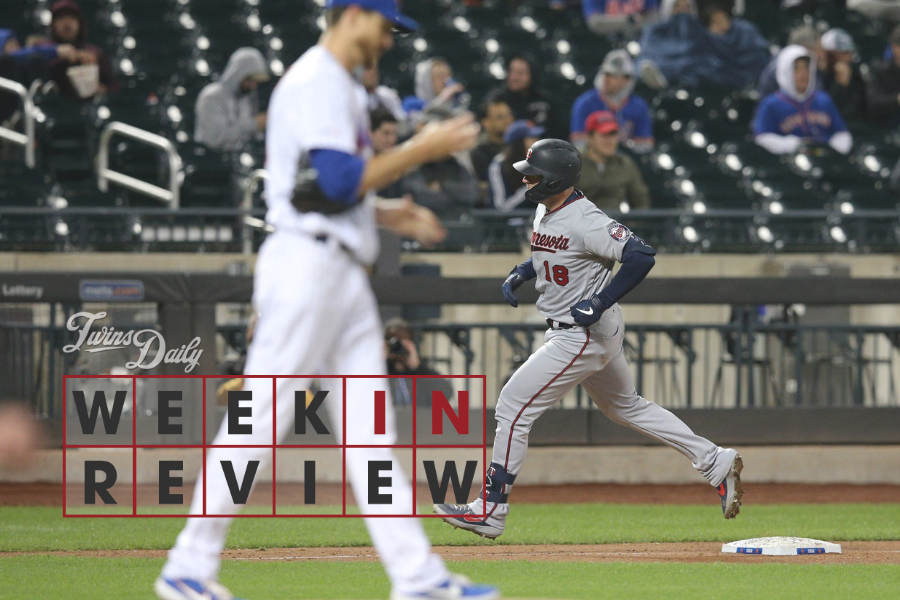 Weekly Snapshot: Mon, 4/8 through Sun, 4/14 *** Record Last Week: 3-1 (Overall: 8-4) Run Differential Last Week: +6 (Overall: +12) Standing: 1st Place in AL Central (1.5 GA) Willians Watch: 1-for-9 last week (Season AVG: .348) It wasn't a big week for Willians Watch, as our boy collected just one hit in New York and then rode the bench for two games at Target Field, with another righty-swinging backstop stealing his thunder. Still, as of Sunday his .348 batting average ranked 10th among AL hitters with 25+ plate appearances. And it was a strong week for the rest of our trackers above, so let's dig in. HIGHLIGHTS With all the Willians Astudillo buzz, Mitch Garver might have been feeling a little slighted. Here's a guy who splashed onto the scene as a rookie in 2018, adapting quickly to MLB pitching and posting an .823 OPS in the second half of his 102 games. And yet, he found himself as an afterthought in the catching discussion this spring, with everyone going gaga for Tortuga. Through Minnesota's first seven games, Garver had drawn only two starts and 10 plate appearances. He got the nod on Tuesday in New York and made a hell of statement, launching home runs in each of his first two at-bats against the best pitcher in baseball. Jacob deGrom had surrendered only two long balls total in his previous 12 starts before Garver took him deep twice. (Eddie Rosario also chipped in one against the Mets ace amidst a sensational evening for the Twins lineup, and a sensational week for him – he went 7-for-16 with five RBIs.) Finishing the night with four hits, Garver followed on Wednesday with two more, including another home run – this time against elite closer Edwin Diaz. At week's end Garver finds himself with a .500/.522/1.045 slash line. The 28-year-old is just one of those many pieces that makes Minnesota's offensive potential so damn tantalizing. He's got his share of both established ability and ceiling, but is in a spot right now where he has to fight for ABs. There are multiple players on the team (including Mr. Astudillo) in a similar position, and that's a good hell of a good place to be in. After a ho-hum first seven games, Jonathan Schoop turned up the heat in a big way in The Big Apple, launching two home runs in the first game at Citi Field and then adding three hits in the second. We know Schoop is going to have his share of slumps and hacking spells (he went 0-for-7 back at Target Field over the weekend), but his potent presence lurking near the bottom of this order contributes to a minefield dynamic that makes the Twins a nightmare assignment for opposing hurlers. No one exemplifies the lineup's depth better than #9 hitter Byron Buxton, who continues to look very much like the star we've all long dreamed on. Starting all four games for the Twins last week, Buck went 6-for-15 (.400) with three doubles, a triple and another steal. The center fielder has been aggressive and effective, swinging at his pitches and driving them with authority. The tentativeness of 2018 is nowhere to be seen. Through 36 plate appearances on the season, Buxton has only eight strikeouts (22%). Oh, and on Sunday he reminded us he can do stuff like this: https://twitter.com/fsnorth/status/1117503923898609664 That one was appreciated by Jose Berrios, who was on his way to picking up win #2 on his fourth quality start in four tries. Berrios has a 28-to-5 K/BB ratio in 27 1/3 innings, and is throwing 68% strikes with a 12% swinging strike rate. He's been sublime. Michael Pineda is a strong pairing atop the rotation, and looked stellar in his victory over Detroit on Saturday, pounding the zone with 76% strikes and generating plenty of weak contact. The star of the bullpen right now is Trevor Hildenberger. After Blake Parker made a mess in the ninth on Sunday, loading the bases with one out to endanger a two-run lead, Hildenberger came in and struck out back-to-back hitters. In 5 1/3 innings this year, he has allowed zero runs on four hits with nine strikeouts and one walk. Hildy is throwing 70% strikes with a 17.5% whiff rate. LOWLIGHTS During the two-game series in New York, two freshly promoted pitchers from nearby Rochester made their 2019 Twins debuts against the Mets. Both were abject disasters. Chase De Jong's meltdown came in the ninth inning of Tuesday's win, where he entered with a 10-run lead and saw it shrink to six before he was finally able to record three outs. In this single low-leverage frame, De Jong threw 46 pitches, allowing four earned runs on three hits and four walks. Luckily, the score gap was already so large that the right-hander's miserable outing didn't do much damage, other than forcing Rocco Baldelli to start warming up Taylor Rogers, which he surely would've preferred to avoid. The next night, Andrew Vasquez arrived with a louder thud that was much more painful for a couple of reasons. First, it changed the course of a game the Twins had a good chance to win; Vasquez entered with two outs in the fifth, his team leading 1-0, and left with a 3-1 deficit that swelled to 6-1 by inning's end. The second reason Vasquez's catastrophe was so dispiriting is that, unlike De Jong, he actually has a chance to be an impact player for the Twins this year. https://twitter.com/NickNelsonMN/status/1116149219860131840 With Rogers serving as more of a matchup-agnostic setup man and Adalberto Mejia still trying to find his way in the relief role, Vasquez might be Minnesota's best bet for a lefty specialist in the pen. But he's going to have to dig his way out of a major hole following an unimaginably poor 2019 intro. In the rotation, the precision of Berrios and Pineda has been sharply contrasted by Jake Odorizzi and Kyle Gibson, who are really struggling to find their command. On Wednesday, Odorizzi hit a wall in the fifth after cruising early (stop me if you've heard that one before) and saw things spiral once the bullpen stepped in. He has issued seven walks over 5 1/3 innings in his last two starts, and is throwing just 58% strikes this year. Gibson, meanwhile, just doesn't quite seem to have all his strength back and hasn't made it through the fifth in either of his first two turns. With Martin Perez now set to join the starting corps after his own uninspiring and erratic run in the bullpen (nine walks and a 7.56 ERA in 8 1/3 frames), it's time for a few of these guys to step up. TRENDING STORYLINE There will be no more hiding weaknesses in the rotation or bullpen going forward. The convenience of a break-filled first two weeks is gone, and the Twins must now face the relentless grind of an all-out gauntlet. With only two off-days scheduled in the next five weeks (and a doubleheader mixed in), Minnesota is looking ahead to 37 games in the next 38 days. It's been a good showing thus far from Baldelli's squad, but he's had the luxury of a constantly refreshed bullpen, a deep bench, and a four-man rotation. Now he'll really start getting tested, especially on the reliever front here he must to identify reliable relief arms Rogers, whom the manager has leaned on heavily with seven appearances (and another warm-up, thanks to De Jong) through 12 games. That kind of usage will be infeasible from now on. DOWN ON THE FARM The most important name to watch right now – especially with pertinence to the struggles of bullpen call-ups mentions above – is Fernando Romero. His week with the Red Wings saw one excellent outing, when he tossed 3 1/3 scoreless innings with four strikeouts on Tuesday and one brutal one, when he yielded four runs on three homers over 1 1/3 innings on Saturday. Romero has managed just a 9% swinging strike rate through his first three appearances in Rochester, which is concerning. The idea was that he'd be dominating in this role. One pitcher who was not on the preseason top-prospect radar but is quickly demanding attention: Devin Smeltzer, the 23-year-old left-hander acquired alongside Luke Raley and Logan Forsythe in last year's Brian Dozier trade. After a masterful second start for Pensacola, he has now thrown 14 total innings with zero runs allowed on five hits (all singles) with 17 strikeouts and two walks. It doesn't get much better than that. Smeltzer is quickly establishing himself as one to watch. https://twitter.com/TFTwins/status/1116906793584812037 The Twins' vaunted minor-league bats have mostly been slow to go. Royce Lewis had his first multi-hit game on Sunday, raising his average at Fort Myers to .206 with a pair of singles, but he has offset his lack of hitting with tremendous discipline. Lewis sports a .404 OBP, thanks to a 12 walks (against only seven strikeouts) in 10 games. . Trevor Larnach's OPS with the Miracle sits at .666 even after he collected three knocks on Sunday. Brent Rooker has a ghastly 18-to-2 K/BB ratio in 40 plate appearances for Rochester. Alex Kirilloff remains sidelined, with little clarity on his return. LOOKING AHEAD The Twins have a full slate ahead next week, and as we've established, that's about to become the norm. They open with a four-game home set against the Blue Jays, who've historically tormented them at Target Field, before swinging out to Baltimore for three games against a very bad Orioles club. MONDAY, 4/15: BLUE JAYS @ TWINS – RHP Matt Shoemaker v. RHP Martin Perez TUESDAY, 4/16: BLUE JAYS @ TWINS – RHP Aaron Sanchez v. RHP Kyle Gibson WEDNESDAY, 4/17: BLUE JAYS @ TWINS – RHP Trent Thornton v. LHP Jake Odorizzi THURSDAY, 4/18: BLUE JAYS @ TWINS – RHP Clay Buchholz v. RHP Michael Pineda FRIDAY, 4/19: TWINS @ ORIOLES – RHP Jose Berrios v. LHP John Means SATURDAY, 4/20: TWINS @ ORIOLES – RHP Martin Perez v. RHP Dan Straily SUNDAY, 4/21: TWINS @ ORIOLES – RHP Kyle Gibson RHP Dylan Bundy Catch Up On Twins Daily Game Recaps Game 9 | MIN 14, NYM 8: Beating the Best Game 10 | NYM 9, MIN 6: Forever of a 5th Inning Game 11 | MIN 4, DET 3: Bats Quiet, Bullpen Hangs On Game 12 | MIN 6, DET 4: Berrios Figures It Out, Bullpen Barely Hangs On
 -
After a successful opening series at home, the Minnesota Twins hit the road and battled hard, posting a winning weekly record with help from multiple comebacks and (mostly) continued excellence from the pitching staff. Read on for a full rundown of the 2019 club's first full week. Weekly Snapshot: Mon, 4/1 through Sun, 4/7 *** Record Last Week: 3-2 (Overall: 5-3) Run Differential Last Week: -1 (Overall: +6) Standing: 3rd Place in AL Central (1 GB) Willians Watch: 4-for-12 last week (Season AVG: .500) Before we get underway with this week's column, a few housekeeping notes. On Saturday, the Twins announced they'd designated first baseman Tyler Austin for assignment, in order to make room for right-hander Chase De Jong, who was re-added to the 40-man roster as an insurance arm. Austin can now be plucked by another team, or if he clears waivers he can elect free agency. It's also possible he remains in the Twins organization, but the odds are slim. More importantly, as you can see, I've added a "Willians Watch" tracker above. I just feel like we need to keep our finger on the pulse of this one regularly. HIGHLIGHTS For the most part, Friday night's game was a concentrated source of the team's lowlights for the week, but Jorge Polanco was a gleaming exception. While his teammates bumbled along, Polanco was a one-man wrecking crew, hitting for the cycle in his first four at-bats, then adding a single in his final turn for good measure. It was the first cycle by a Twin in about a decade. A year ago at this time, Polanco was coming to grips with the reality of watching his squad start the season from afar. Now he's taking full advantage of being here from the get-go. The shortstop is raking, with a team-leading 12 hits (including six XBHs) in 35 plate appearances. Meanwhile, Minnesota's leadoff man has also begun to find his stroke. Max Kepler put a quiet first week behind him, going 8-for-23 with three home runs and six RBIs. On Saturday, with Polanco in the three-hole, it was Willians Astudillo batting behind Kepler atop the order – an honor he has certainly earned. Astudillo is 7-for-14 on the young season, and this sequence on Saturday where he and Kepler went back-to-back was emblematic of their outstanding weeks at large: LOOKING AHEAD While there have been glimpses, Minnesota's offense hasn't been quite as explosive as advertised in the early going. It's tough to see that changing at Citi Field, where they'll have to contend with two of the most dominant starting pitchers in baseball. After that two-game set, sandwiched by the last two off days they'll see in a while, the Twins return home to face a Tigers squad that's played well off the block. Forecasts currently call for highs in the 30s and 40s, with a possible mid-week snow storm looming. TUESDAY, 4/9: TWINS @ METS – RHP Kyle Gibson v. RHP Jacob deGrom WEDNESDAY, 4/10: TWINS @ METS – RHP Jake Odorizzi v. RHP Noah Syndergaard FRIDAY, 4/12: TIGERS @ TWINS – TBD v. RHP Michael Pineda SATURDAY, 4/13: TIGERS @ TWINS – RHP Tyson Ross v. RHP Jose Berrios SUNDAY, 4/14: TIGERS @ TWINS – RHP Jordan Zimmermann v RHP Kyle Gibson Catch Up On Twins Daily Game Recaps Game 4 | MIN 5, KC 4: Cruz Steps UpGame 5 | MIN 7, KC 6: Twins Come Back From 3-Run DeficitGame 6 | PHI 10, MIN 4: Polanco Cycles in the Rain, Rest Is All PainGame 7 | MIN 6, PHI 2: Twins Find Power Stroke, Slug 3 Homers in VictoryGame 8 | PHI 2, MIN 1: Kepler Stays Hot, Hoskins Pops Deciding Homer Click here to view the article
- 40 replies
-
- 3
-

-
- jorge polanco
- max kepler
- (and 1 more)
-
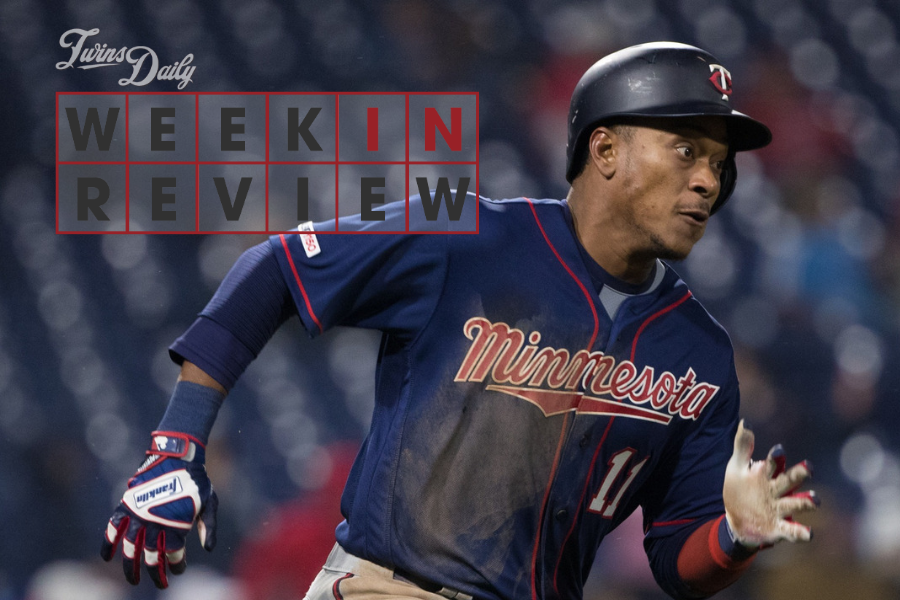 Weekly Snapshot: Mon, 4/1 through Sun, 4/7 *** Record Last Week: 3-2 (Overall: 5-3) Run Differential Last Week: -1 (Overall: +6) Standing: 3rd Place in AL Central (1 GB) Willians Watch: 4-for-12 last week (Season AVG: .500) Before we get underway with this week's column, a few housekeeping notes. On Saturday, the Twins announced they'd designated first baseman Tyler Austin for assignment, in order to make room for right-hander Chase De Jong, who was re-added to the 40-man roster as an insurance arm. Austin can now be plucked by another team, or if he clears waivers he can elect free agency. It's also possible he remains in the Twins organization, but the odds are slim. More importantly, as you can see, I've added a "Willians Watch" tracker above. I just feel like we need to keep our finger on the pulse of this one regularly. HIGHLIGHTS For the most part, Friday night's game was a concentrated source of the team's lowlights for the week, but Jorge Polanco was a gleaming exception. While his teammates bumbled along, Polanco was a one-man wrecking crew, hitting for the cycle in his first four at-bats, then adding a single in his final turn for good measure. It was the first cycle by a Twin in about a decade. A year ago at this time, Polanco was coming to grips with the reality of watching his squad start the season from afar. Now he's taking full advantage of being here from the get-go. The shortstop is raking, with a team-leading 12 hits (including six XBHs) in 35 plate appearances. Meanwhile, Minnesota's leadoff man has also begun to find his stroke. Max Kepler put a quiet first week behind him, going 8-for-23 with three home runs and six RBIs. On Saturday, with Polanco in the three-hole, it was Willians Astudillo batting behind Kepler atop the order – an honor he has certainly earned. Astudillo is 7-for-14 on the young season, and this sequence on Saturday where he and Kepler went back-to-back was emblematic of their outstanding weeks at large: https://twitter.com/TFTwins/status/1114626277930086401 Eddie Rosario hasn't quite found his sustained groove at the plate yet, but he's certainly been clutch. On Tuesday in Kansas City he came through with a game-tying RBI single in the ninth inning that set up a comeback victory. On Wednesday he delivered the decisive blow, a go-ahead RBI single in the ninth that capped another impressive comeback. And on Saturday in Philadelphia, Rosario entered as a pinch-hitter in the ninth, with the Twins nursing a precarious one-run lead, and delivered a three-run blast to seal the win. https://twitter.com/Twins/status/1114630530866274305 The left fielder has only six hits on the season so far, and those are three of them. So, there's something to be said for making 'em count. But overall Rosario has opened his campaign in a slump, which makes me more giddy than concerned. I've come to learn that any drought in production for Eddie is usually the precedent for a scorching hot streak. That he's been able to contribute so much with his bat mostly in Silent Mode portends big things ahead. On the pitching side, Michael Pineda backed up his masterful season debut with a convincing encore. The big righty was excellent against the Phillies on Saturday, allowing two runs on four hits over five innings with five strikeouts, while notching his first win since June of 2017. Jose Berrios followed with a terrific outing on Sunday, although his only damage yielded (a two-run homer by Rhys Hoskins in the sixth) proved to be the difference-maker. Berrios has a 2.18 ERA with 21 strikeouts through his first three starts. And of course we've gotta show some love to the bullpen. This unit continues to outshine expectations. Over the past week, Twins relievers combined to allow just five earned runs in 20 2/3 innings (2.18 ERA) with four of those coming in Friday night's rainy affair. Blake Parker chipped in three hitless outings and picked up two saves. Ryne Harper delivered two scoreless appearances in Philly. Trevor Hildenberger and Trevor May combined to pitch six times without allowing a run. LOWLIGHTS As Marwin Gonzalez struggled through each of his appearances in spring training, it reached a point where I openly wondered about his readiness for regular-season action. The comments on that article mostly consisted of, "Who cares, it's spring training," which probably would've been my response under most circumstances. Hours after I published it, Gonzalez struck out four times against the Orioles, with five days left to go before Opening Day. Still, Rocco Baldelli's sentiments reflected the consensus: Asked by a reporter (not me!) post-game about the third baseman's ugly night, Baldelli blinked a few times and said he wouldn't have even thought twice about it had it not been brought up. On Opening Day, Gonzalez delivered the decisive knock for Minnesota, driving in the game's only two runs with a nice piece of opposite-field hitting. We all chuckled. Spring training stats, amirite? The problem is this: Outside of that crucial double in the opener, Gonzalez has looked pretty much exactly the same as he did in spring training – sloppy, ineffective, and borderline lackadaisical. He's 3-for-22 with three singles otherwise, and hasn't been very sharp in the field. We saw his vaunted defensive versatility tested for the first time on Friday, when he slid to first base, and he committed two errors almost immediately. A review of his 2018 season shows that Gonzalez struggled out of the gates for Houston, and he eventually found his footing on the way to a solid year. In fact, April and May have typically been among his worst months, while his offensive has tended to tick up in June and July. So it may well be that these early struggles aren't related to signing late, or a poor spring, but simply part of his normal pattern. Speaking of strong first 2019 impressions that weren't backed up... Jake Odorizzi. The right-hander twirled a gem in his first start and couldn't get through the first inning in his second. Friday was an all-around mess, played under drizzly and chilly conditions. Odorizzi couldn't find his command, throwing 18 of 36 pitches for strikes before being pulled with just two outs recorded. This forced the Twins to use five different relievers, creating a need for extra help over the weekend and – basically – writing Austin's ticket out of town. Said Odorizzi after the game: "I got out there. It was raining. I warmed up. It was raining. The first inning it was raining. I didn't have a feel for the baseball." It bears mentioning that other pitchers in the game didn't seem to have nearly such a hard time, but given how good Odorizzi looked his first time out, I'm inclined to write this one off. We'll see if he can shake off the ugliness of Friday's game and bounce back strong, as the Twins did on Saturday. TRENDING STORYLINE How hard will Baldelli try to find ABs for Astudillo? Right now, the guy is making an airtight case for regular run in the lineup. Through 114 major-league plate appearances, he's hitting .374/.395/.570, and there's not much in his unorthodox approach – swing at everything, hit everything hard – to suggest it's a mirage. Plus, there's just an undeniable spark he brings when he's in the game. In theory, Astudillo as an everyday player sounds great. In practice, it's not so straightforward. The Twins have two other catchers on the roster; Jason Castro is a steady veteran that pitchers like to work with, and Mitch Garver is a still-developing 28-year-old coming off a strong rookie year. Astudillo can also play third, and started there last Wednesday. But Gonzalez is gonna get his reps there and the eventual return of Miguel Sano (who might start a rehab assignment this week) will further crowd that picture. La Tortuga isn't going to play much outfield. And his pathway at DH is blocked by Nelson Cruz. So where do you get him in? With Jonathan Schoop off to an uninspiring start, I'm eyeing second base as an intriguing possibility. Astudillo made two of his first four MLB starts at second last July, but hasn't played it since. He also logged only 140 innings there in the minors. I'm not sure he has the range or footwork to be a legitimate option at second base, but then again I'm clearly grasping for answers. The Twins need more Tortuga. DOWN ON THE FARM Minor-league affiliates announced their season-opening rosters last week, and Seth had them fully covered here. Go ahead and get the rundowns below: AAA: 2019 Rochester Red Wings AA: 2019 Pensacola Blue Wahoos A+: 2019 Fort Myers Miracle A: 2019 Cedar Rapids Kernels All four teams got their schedules underway, and the Twins received some premier performances from their top pitchers right away. Friday's arms extravaganza saw Brusdar Graterol and Jorge Alcala deliver gems on each end of Pensacola's doubleheader, Jhoan Duran spin a beauty for Fort Myers, and Jordan Balazovic outshined them all in Cedar Rapids. Those first three names all ranked among our preseason Top 20 Twins prospects. But the transcendence from Balazovic, who was an honorable mention, might be most eyebrow-raising. He's been generating real buzz coming into the season, and in his first start for the Kernels we saw why. Over five innings of one run ball, the 6'4" right-hander walked none and struck out nine, including six straight at one point: https://twitter.com/TFTwins/status/1114386192865398790 LOOKING AHEAD While there have been glimpses, Minnesota's offense hasn't been quite as explosive as advertised in the early going. It's tough to see that changing at Citi Field, where they'll have to contend with two of the most dominant starting pitchers in baseball. After that two-game set, sandwiched by the last two off days they'll see in a while, the Twins return home to face a Tigers squad that's played well off the block. Forecasts currently call for highs in the 30s and 40s, with a possible mid-week snow storm looming. TUESDAY, 4/9: TWINS @ METS – RHP Kyle Gibson v. RHP Jacob deGrom WEDNESDAY, 4/10: TWINS @ METS – RHP Jake Odorizzi v. RHP Noah Syndergaard FRIDAY, 4/12: TIGERS @ TWINS – TBD v. RHP Michael Pineda SATURDAY, 4/13: TIGERS @ TWINS – RHP Tyson Ross v. RHP Jose Berrios SUNDAY, 4/14: TIGERS @ TWINS – RHP Jordan Zimmermann v RHP Kyle Gibson Catch Up On Twins Daily Game Recaps Game 4 | MIN 5, KC 4: Cruz Steps Up Game 5 | MIN 7, KC 6: Twins Come Back From 3-Run Deficit Game 6 | PHI 10, MIN 4: Polanco Cycles in the Rain, Rest Is All Pain Game 7 | MIN 6, PHI 2: Twins Find Power Stroke, Slug 3 Homers in Victory Game 8 | PHI 2, MIN 1: Kepler Stays Hot, Hoskins Pops Deciding Homer
 -
Our inclination to inflate the importance of Opening Day is only natural. After a long winter, that date becomes the singular focus of baseball fans everywhere. Opening Day roster, Opening Day lineup, Opening Day outcome. The perceived significance of each is overblown. We all know it. But still, impressions from Minnesota's impressive performance during the season's first weekend, and especially Opening Day, are hard to shake. Weekly Snapshot: Mon, 3/25 through Sun, 3/31 *** Record Last Week: 2-1 (Overall: 2-1) Run Differential Last Week: +7 (Overall: +7) Standing: Tied for 1st Place in AL Central HIGHLIGHTS The powered-up Twins pitching staff is already on display, setting a new franchise record with 39 strikeouts through their first three games. On Thursday and Saturday, Jose Berrios and Jake Odorizzi became the second starting duo in history to open a season with back-to-back double-digit strikeout totals. The feat was only previously accomplished by Arizona's Randy Johnson and Curt Schilling in 2001 – arguably the greatest SP tandem in major-league history. No biggie. On Sunday, Michael Pineda and Martin Perez piggybacked for 11 strikeouts over 7 2/3 combined innings, continuing the run of rotation dominance against a diminished Cleveland lineup (sans Francisco Lindor). You can knock the quality of the opposition, but I would respond with two points: 1) There's nothing misleading about the results this group achieved. Everyone looked fantastic. Berrios unleashed a barrage of filthy breaking balls and mixed in an upgraded changeup. Odorizzi was changing speeds and eye levels expertly. Pineda pounded the zone with heavy stuff. Perez constantly worked inside with the same 95-97 MPH heat he was flashing in spring training. There was no smoke-and-mirrors behind this magic. And, 2) The Indians aren't THAT beat-up. They're missing their best hitter in Lindor, yes, but fellow absentee Jason Kipnis hasn't been a factor in recent years. I mean, the fact that Tyler Naquin and Jake Bauers were Cleveland's #3 hitters in this series is really quite stunning. The qualitative difference between these two offenses was starkly apparent. One of the most interesting aspects of this Twins team coming into the season, from my view, was the legitimately high-powered starting corps, which has come along so far since five years ago. In total, the four starters combined for 47 swinging strikes on 310 pitches, a remarkable 15.1% whiff rate. For context, only three qualified MLB starters induced swinging strikes at a higher percentage in 2018: Max Scherzer, Patrick Corbin, and Carlos Carrasco (who the Twins knocked around in Sunday's series finale). Meanwhile, the bullpen was effective for the most part. Rocco Baldelli rotated through all six of his relievers and got scoreless appearances from five of them, with Taylor Rogers going twice and looking particularly crisp. So, early returns on new pitching coach Wes Johnson and his staff are resoundingly positive. The offense was mostly quiet in the opening series, facing the unenviable assignments of Corey Kluber and Trevor Bauer in the season's first two games. Both enter this campaign as Cy Young frontrunners, and each looked the part in helping hold Minnesota's potent lineup to three runs on six hits through 18 innings. But Nelson Cruz made an impact in all three games as the Twins' new #3 hitter. He set up Marwin Gonzalez' game-winning hit on Thursday with a leadoff single in the seventh against Kluber. He drove in Minnesota's lone run on Saturday with some impressive bat-handling against Bauer. And he keyed the offense's breakout on Sunday by going 3-for-5 with the club's first home run of the year. The other most noteworthy performer was Byron Buxton. Fears of a post-spring drought quickly disappeared as he went 4-for-10 with three doubles and only two strikeouts in his first series. Last year, his third double came on May 12th. In 2017, he didn't get his fourth hit until almost two weeks into the season. It's certainly a modest benchmark but this is easily the best start of Buxton's career. Seeing him fired up and pumping his fists at second on Sunday after delivering a key two-run double – with two outs, on an 0-2 count – was the most invigorating sight for me on a weekend that offered plenty to choose from in that regard. LOWLIGHTS There wasn't a whole lot to dislike in these first three games. The Twins won two of them in fairly convincing fashion, and fell short by one run in the other. The final inning of that loss provides the only real fodder for grievances. Blake Parker was the only Twins pitcher to struggle in the entire series, and it wasn't because he got hit hard. The Arkansas native simply could not find any semblance of control in the chilly weather on Saturday. Carlos Santana singled, then moved from first to third on a pair of wild pitches. Parker walked Hanley Ramirez and fell behind Greg Allen 2-0 before allowing a sacrifice fly to deep center. The outing was uglier to watch than it looks on paper: 1 IP, 1 H, 1 ER, 1 BB. All things considered, if that's your most disastrous pitching performance in a series you can feel pretty good. And the Twins were well positioned to get that run back in the bottom half. Buxton led off against Cleveland closer Brad Hand with a wind-aided "double" to the shallow outfield. Baldelli then curiously elected not to use a pinch-hitter for Max Kepler, despite Hand's record of pure dominance against lefty swingers. Kepler struck out, and the rally went on to fall short. Presumably, Baldelli is just trying to show confidence in his core guys, but turning to a contact machine like Willians Astudillo in that spot – speedy runner on second, no outs, deepest bench the Twins will have all year – seemed like such an obvious call that it was surprising not to see it from the ostensibly analytical thinker. Will loyalty outweigh logic in the future? Something to watch. In general, Kepler is off to a slow start, as is fellow corner outfielder Eddie Rosario (combined 1-for-22), but there's no reason to worry about either. TRENDING STORYLINE There's only one active Twins pitcher we haven't seen yet. It's kind of crazy that the rotation showed such incredible swing-and-miss proficiency in the opening series without its reigning whiff leader. Kyle Gibson spent his spring trying to regain strength and weight following a nasty winter bout with E. coli. He admitted after his last exhibition start – an ugly clunker against the Red Sox – that he still wasn't quite back to where he ideally wanted to be. So it's not surprising to see the Twins giving him as much time as they possibly can; Gibson's first start will come after Berrios takes his second turn on Tuesday in Kansas City. How will he look? Gibson's success last year was fueled by career-high velocity, so any sapped voltage might have a material impact. But if he's mostly back to form, this rotation has a chance to start generating some real enthusiasm in short order. DOWN ON THE FARM Minor-league games haven't started yet, and in fact official rosters for the affiliates haven't even been announced yet. But that will all come this week, with Minor League Opening Day on Thursday. Make sure you stay tuned into Twins Daily for unparalleled coverage of the team's system and prospects. I'll be recapping the most noteworthy developments in this space each Sunday night, but the day-to-day minor-league coverage on this site is beyond robust and comprehensive. Thanks in advance to all of the people who work hard to make it possible: Seth, Cody, Tom, Steve, Ted, Matt... can't wait to read all of your reports this summer. LOOKING AHEAD Following a successful home kickoff, the Twins embark on a seven-game road trip with four off days sprinkled in. Baldelli will have a deep bench and rested bullpen as he tours through two National League parks, starting with Philadelphia next weekend. TUESDAY, 4/2: TWINS @ ROYALS – RHP Jose Berrios v. RHP Brad Keller WEDNESDAY, 4/3: TWINS @ ROYALS – RHP Kyle Gibson v. RHP Homer Bailey FRIDAY, 4/5: TWINS @ PHILLIES – RHP Jake Odorizzi v. RHP Nick Pivetta SATURDAY, 4/6: TWINS @ PHILLIES – RHP Michael Pineda v. RHP Jake Arrieta SUNDAY, 4/7: TWINS @ PHILLIES – RHP Jose Berrios v. RHP Zach Eflin Catch Up On Twins Daily Game Recaps Game 1 | MIN 2, CLE 0: Berrios Dominates, Sets Twins Opening Day Record for KsGame 2 | CLE 2, MIN 1: Odorizzi Strikes Out 11, Wild Parker Surrenders Go-Ahead RunGame 3 | MIN 9, CLE 3: Twins Take Series Behind Pineda, Tortuga Click here to view the article
- 52 replies
-
- 3
-
-
- jose berrios
- jake odorizzi
- (and 3 more)
-
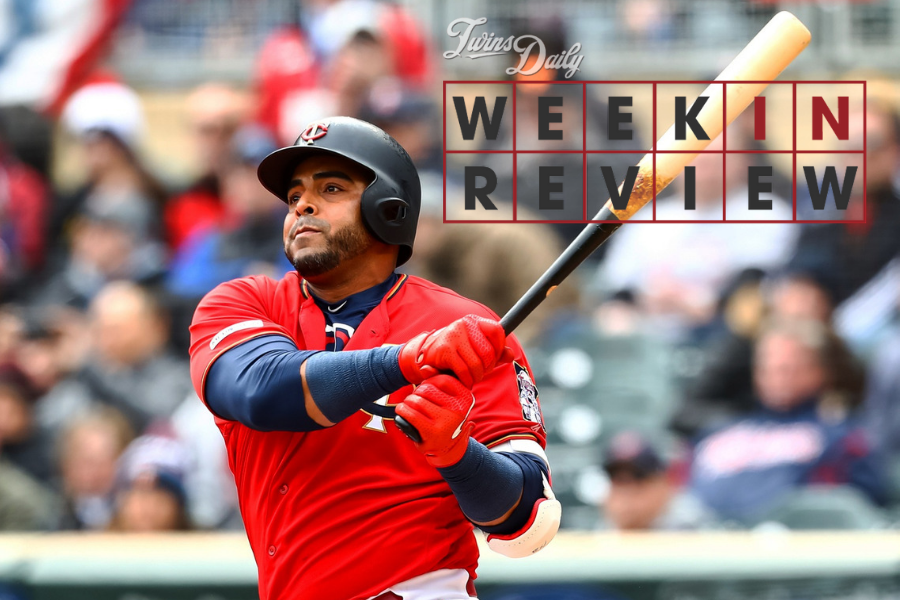 Weekly Snapshot: Mon, 3/25 through Sun, 3/31 *** Record Last Week: 2-1 (Overall: 2-1) Run Differential Last Week: +7 (Overall: +7) Standing: Tied for 1st Place in AL Central HIGHLIGHTS The powered-up Twins pitching staff is already on display, setting a new franchise record with 39 strikeouts through their first three games. On Thursday and Saturday, Jose Berrios and Jake Odorizzi became the second starting duo in history to open a season with back-to-back double-digit strikeout totals. The feat was only previously accomplished by Arizona's Randy Johnson and Curt Schilling in 2001 – arguably the greatest SP tandem in major-league history. No biggie. On Sunday, Michael Pineda and Martin Perez piggybacked for 11 strikeouts over 7 2/3 combined innings, continuing the run of rotation dominance against a diminished Cleveland lineup (sans Francisco Lindor). You can knock the quality of the opposition, but I would respond with two points: 1) There's nothing misleading about the results this group achieved. Everyone looked fantastic. Berrios unleashed a barrage of filthy breaking balls and mixed in an upgraded changeup. Odorizzi was changing speeds and eye levels expertly. Pineda pounded the zone with heavy stuff. Perez constantly worked inside with the same 95-97 MPH heat he was flashing in spring training. There was no smoke-and-mirrors behind this magic. And, 2) The Indians aren't THAT beat-up. They're missing their best hitter in Lindor, yes, but fellow absentee Jason Kipnis hasn't been a factor in recent years. I mean, the fact that Tyler Naquin and Jake Bauers were Cleveland's #3 hitters in this series is really quite stunning. The qualitative difference between these two offenses was starkly apparent. One of the most interesting aspects of this Twins team coming into the season, from my view, was the legitimately high-powered starting corps, which has come along so far since five years ago. In total, the four starters combined for 47 swinging strikes on 310 pitches, a remarkable 15.1% whiff rate. For context, only three qualified MLB starters induced swinging strikes at a higher percentage in 2018: Max Scherzer, Patrick Corbin, and Carlos Carrasco (who the Twins knocked around in Sunday's series finale). Meanwhile, the bullpen was effective for the most part. Rocco Baldelli rotated through all six of his relievers and got scoreless appearances from five of them, with Taylor Rogers going twice and looking particularly crisp. So, early returns on new pitching coach Wes Johnson and his staff are resoundingly positive. The offense was mostly quiet in the opening series, facing the unenviable assignments of Corey Kluber and Trevor Bauer in the season's first two games. Both enter this campaign as Cy Young frontrunners, and each looked the part in helping hold Minnesota's potent lineup to three runs on six hits through 18 innings. But Nelson Cruz made an impact in all three games as the Twins' new #3 hitter. He set up Marwin Gonzalez' game-winning hit on Thursday with a leadoff single in the seventh against Kluber. He drove in Minnesota's lone run on Saturday with some impressive bat-handling against Bauer. And he keyed the offense's breakout on Sunday by going 3-for-5 with the club's first home run of the year. The other most noteworthy performer was Byron Buxton. Fears of a post-spring drought quickly disappeared as he went 4-for-10 with three doubles and only two strikeouts in his first series. Last year, his third double came on May 12th. In 2017, he didn't get his fourth hit until almost two weeks into the season. It's certainly a modest benchmark but this is easily the best start of Buxton's career. Seeing him fired up and pumping his fists at second on Sunday after delivering a key two-run double – with two outs, on an 0-2 count – was the most invigorating sight for me on a weekend that offered plenty to choose from in that regard. LOWLIGHTS There wasn't a whole lot to dislike in these first three games. The Twins won two of them in fairly convincing fashion, and fell short by one run in the other. The final inning of that loss provides the only real fodder for grievances. Blake Parker was the only Twins pitcher to struggle in the entire series, and it wasn't because he got hit hard. The Arkansas native simply could not find any semblance of control in the chilly weather on Saturday. Carlos Santana singled, then moved from first to third on a pair of wild pitches. Parker walked Hanley Ramirez and fell behind Greg Allen 2-0 before allowing a sacrifice fly to deep center. The outing was uglier to watch than it looks on paper: 1 IP, 1 H, 1 ER, 1 BB. All things considered, if that's your most disastrous pitching performance in a series you can feel pretty good. And the Twins were well positioned to get that run back in the bottom half. Buxton led off against Cleveland closer Brad Hand with a wind-aided "double" to the shallow outfield. Baldelli then curiously elected not to use a pinch-hitter for Max Kepler, despite Hand's record of pure dominance against lefty swingers. https://twitter.com/NickNelsonMN/status/1112097886546915329 Kepler struck out, and the rally went on to fall short. Presumably, Baldelli is just trying to show confidence in his core guys, but turning to a contact machine like Willians Astudillo in that spot – speedy runner on second, no outs, deepest bench the Twins will have all year – seemed like such an obvious call that it was surprising not to see it from the ostensibly analytical thinker. Will loyalty outweigh logic in the future? Something to watch. In general, Kepler is off to a slow start, as is fellow corner outfielder Eddie Rosario (combined 1-for-22), but there's no reason to worry about either. TRENDING STORYLINE There's only one active Twins pitcher we haven't seen yet. It's kind of crazy that the rotation showed such incredible swing-and-miss proficiency in the opening series without its reigning whiff leader. Kyle Gibson spent his spring trying to regain strength and weight following a nasty winter bout with E. coli. He admitted after his last exhibition start – an ugly clunker against the Red Sox – that he still wasn't quite back to where he ideally wanted to be. So it's not surprising to see the Twins giving him as much time as they possibly can; Gibson's first start will come after Berrios takes his second turn on Tuesday in Kansas City. How will he look? Gibson's success last year was fueled by career-high velocity, so any sapped voltage might have a material impact. But if he's mostly back to form, this rotation has a chance to start generating some real enthusiasm in short order. DOWN ON THE FARM Minor-league games haven't started yet, and in fact official rosters for the affiliates haven't even been announced yet. But that will all come this week, with Minor League Opening Day on Thursday. Make sure you stay tuned into Twins Daily for unparalleled coverage of the team's system and prospects. I'll be recapping the most noteworthy developments in this space each Sunday night, but the day-to-day minor-league coverage on this site is beyond robust and comprehensive. Thanks in advance to all of the people who work hard to make it possible: Seth, Cody, Tom, Steve, Ted, Matt... can't wait to read all of your reports this summer. LOOKING AHEAD Following a successful home kickoff, the Twins embark on a seven-game road trip with four off days sprinkled in. Baldelli will have a deep bench and rested bullpen as he tours through two National League parks, starting with Philadelphia next weekend. TUESDAY, 4/2: TWINS @ ROYALS – RHP Jose Berrios v. RHP Brad Keller WEDNESDAY, 4/3: TWINS @ ROYALS – RHP Kyle Gibson v. RHP Homer Bailey FRIDAY, 4/5: TWINS @ PHILLIES – RHP Jake Odorizzi v. RHP Nick Pivetta SATURDAY, 4/6: TWINS @ PHILLIES – RHP Michael Pineda v. RHP Jake Arrieta SUNDAY, 4/7: TWINS @ PHILLIES – RHP Jose Berrios v. RHP Zach Eflin Catch Up On Twins Daily Game Recaps Game 1 | MIN 2, CLE 0: Berrios Dominates, Sets Twins Opening Day Record for Ks Game 2 | CLE 2, MIN 1: Odorizzi Strikes Out 11, Wild Parker Surrenders Go-Ahead Run Game 3 | MIN 9, CLE 3: Twins Take Series Behind Pineda, Tortuga
 -
 Minefields represent perilous uncertainty. One wrong step, and BOOM. I can think of no better allegory for these 2019 Minnesota Twins. The dynamic applies in both a positive way, with regard to the offense, and a negative one, with reg to the pitching staff. Whether the Twins or their opponents (and the uncontrollable) trigger more explosions will dictate this potential playoff team's fate.AN EXPLOSIVE OFFENSE Opposing pitchers will feel like they're stepping through a minefield as they attempt to navigate Minnesota's relentless lineup. There is legitimate 20-30 home run potential at every position other than catcher, and even there, the Twins are better equipped offensively than most. This unit offers elite potential, and while it's not too hard to envision them falling short amidst a sea of strikeouts and sinking OBPs, the Twins will at the very least be a formidably powerful bunch. Baseball Prospectus' PECOTA system projects Minnesota to score the sixth-most runs in the American League (739), with nine different players reaching double-digit homers. If things break right in a few places, it's not at all difficult to envision this club setting a modern franchise record for home runs, surpassing the 2017 team's total of 206, and even challenging those historical mid-60s squads led by Harmon Killebrew, Bob Allison and Jimmie Hall (225, in 1963, is the mark to beat). Beyond the massive upside of the offense, what's most tantalizing here is the entertainment value it's poised to deliver. On any particular night at Target Field, attendees could be in for a memorable show. The sheer spectacle of Nelson Cruz uncorking a rocket to the third deck (he consistently ranks among the MLB leaders in exit velocity) or Byron Buxton racing around the bases (he's the single fastest runner in baseball, per Statcast) or Willians Astudillo doing... Willians Astudillo things is worth the price of admission. I think back to those lifeless days last summer when Eddie Rosario and Eduardo Escobar often seemed to be the only pulse in the lineup, and I'm heartened by how far we've come. Granted, injuries are bound to take their tolls, and several hitters – such as Buxton, Jonathan Schoop and Max Kepler – need to prove themselves on varying levels. But there's enough depth here, especially with the late addition of mega-utilityman Marwin Gonzalez, to cover up for quite a few misfires. READ MORE: Breaking Down Rocco Baldelli's Lineup Construction A FOREBODING ROTATION Let's start here: It is not beyond reason that this could be the best, most competitive Twins rotation to come along in quite a while. Jose Berrios and Kyle Gibson were legit upper-echelon pitchers last year. Both have the kinds of bat-missing stuff, plus healthy arms, to warrant confidence. Michael Pineda is a big, gas-throwing force – a former All-Star rookie with a career 3.60 FIP and 1.19 WHIP. Martin Perez has established a firm rep as a stable, perfectly adequate back-end starter – and that outlook now feels almost pessimistic with the way he's thrown this spring. Jake Odorizzi, even if he merely replicates last year's career-worst results, is insanely good for a fifth starter. So, if the Twins are able to prance their way through the minefield with no detonations, they could find themselves looking pristine on the other side. In terms of realistic one-through-five upside, I can't remember a better group. But this landscape, it is riddled with lurking danger. Berrios looks as strong as ever heading into the campaign. But the same can't be said for his counterpart atop the rotation. By his own admission, Gibson hadn't quite gotten back all the weight and strength he wanted by the time he made his final spring start last Friday. He also got absolutely crushed by the Red Sox in said outing. While he's been damn good for the past year-and-a-half, Gibson hardly has the long-term track record to earn unflinching confidence. Even at his best, Pineda has never quite fulfilled his obviously immense potential, and pitchers in their first year off Tommy John have an uninspiring history. Perez, for all the spring buzz, has posted a better-than-average ERA once in the past five seasons, and was a disaster last year. Odorizzi has been trending the wrong direction for a while now, with his ERA+ going from 117 to 108 to 100 to 97. So that's a fair amount of ominous risk even before you account for the inevitability of injuries. Step very carefully. In case of emergency, the reinforcements are ripe with reservations. Stephen Gonsalves and Kohl Stewart both showed glimmers of promise while finishing strong last year, but neither was all that impressive overall. Zack Littell had a roundly rough go in the majors, but he was a 22-year-old second-tier prospect. Lewis Thorpe has yet to get his first shot in the big leagues, but the Twins aren't shy in their ample belief in him, and his minor-league numbers seem to validate it. Some expressed disappointment with Minnesota's offseason approach to the rotation, and I get it. But personally I'm a fan. The only player they added is a 27-year-old with optional control beyond this year, and they've maintained total flexibility going forward, with plenty of capable young arms to sort through in the months ahead. Plus, they've got an innovative new pitching coach on hand whose positive impact is already generating spring buzz. READ MORE: Unlocking Heat: Pitching Coach Wes Johnson and Biomechanics A VOLATILE BULLPEN If you should ever find yourself in an actual minefield, you are advised to get down on your hands and knees, gently probing every inch as you proceed very slowly, and very carefully. Rocco Baldelli might want to master his army crawl for the late innings. The rookie manager's complete lack of experience pulling bullpen strings is compounded by a unit that's direly short on truly safe bets, and even shorter on proven depth. While the Twins can feel good about their bona fide relief ace Taylor Rogers, the lanky lefty is followed by varying degrees of ambiguity. Minnesota's lone offseason addition, Blake Parker, has looked good after drawing minimal interest on the open market. Trevor May has the stuff to dominate at the end of games, but has thrown 68 innings total over the past three seasons. Trevor Hildenberger was Mr. Reliable for his first year's worth of games in a Twins uniform, then a total mess in the 2018 second half. Adalberto Mejia is essentially the sixth starter filling a long-relief role. Ryne Harper is a 30-year-old who's never thrown a pitch in the majors. Opening on the Injured List are Addison Reed, Matt Magill and Gabriel Moya. It says a lot that Reed feels like the least plausible member of that trio to return and make an impact. His unraveling and the (in hindsight) baffling trade of Ryan Pressly last summer have drastically lessened the bullpen's firepower. And in the minors? Fernando Romero is the pivotal figure, of course. The Twins hoped he'd be a weapon out of their bullpen from the get-go, but his spring performance made it apparent he's not ready. Hopefully he'll be able to join up relatively early but it's tough to say how long his acclimation in Rochester might take. Beyond Romero, there are a handful of marginal big-league talents to fall back on, but no savior-type looming. The good news, I suppose, is that it's easier to add in-season help for the bullpen than perhaps any other position. The front office has plenty of financial flexibility and prospect capital to make things happen. At a time where roughly half the league has no real aspiration to contend, the supply/demand ratio should be favorable. But as I look ahead to a season for which I'm mostly giddy with excitement, I can't help but feel apprehension about the spectre of April and May leads evaporating repeatedly, impeding Minnesota's efforts to take advantage of a weakened Cleveland club out of the gates. READ MORE: Closing Time: What is the Pecking Order for Saves in the Twins Bullpen? LOOKING AHEAD It'll be great if the Twins are finally able to leapfrog the Indians in the AL Central and capture their first division title in almost a decade. It's really not all that unlikely an outcome, especially when you factor in Cleveland's early injury woes, and their wavering commitment to firmly retaining their grasp (they were reportedly STILL talking about trading one of their linchpin starters earlier this month). But, realistically, expectations need to be kept in check. This team is led by a 37-year-old manager with zero experience in the role. He is aided by two pitching instructors who've never even been on major-league coaching staffs. Minnesota's outlook is dependent on a variety of breakout and bounceback candidates who mostly lack stable track records. Multiple building-block prospects are still a year or two away. The path ahead is a precarious one. But the Twins will embark upon it with a combination of pure power (both hitting and pitching) and analytical prowess like we've never seen before. One way another, I'm expecting plenty of boom. Hopefully much more of the good kind. *** You can learn about the 2019 team's outlook and depth at every position by perusing the position analysis articles below. And, of course, check back in to Twins Daily each day all season for unparalleled coverage of your favorite team. This is gonna be a fun one. Position-by-Position Analysis for the 2019 Twins Twins 2019 Position Analysis: Catcher Twins 2019 Position Analysis: First Base Twins 2019 Position Analysis: Second Base Twins 2019 Position Analysis: Third Base Twins 2019 Position Analysis: Shortstop Twins 2019 Position Analysis: Left Field Twins 2019 Position Analysis: Center Field Twins 2019 Position Analysis: Right Field Twins 2019 Position Analysis: Designated Hitter Twins 2019 Position Analysis: Starting Pitcher Twins 2019 Position Analysis: Relief Pitcher Click here to view the article
 -
 AN EXPLOSIVE OFFENSE Opposing pitchers will feel like they're stepping through a minefield as they attempt to navigate Minnesota's relentless lineup. There is legitimate 20-30 home run potential at every position other than catcher, and even there, the Twins are better equipped offensively than most. This unit offers elite potential, and while it's not too hard to envision them falling short amidst a sea of strikeouts and sinking OBPs, the Twins will at the very least be a formidably powerful bunch. Baseball Prospectus' PECOTA system projects Minnesota to score the sixth-most runs in the American League (739), with nine different players reaching double-digit homers. If things break right in a few places, it's not at all difficult to envision this club setting a modern franchise record for home runs, surpassing the 2017 team's total of 206, and even challenging those historical mid-60s squads led by Harmon Killebrew, Bob Allison and Jimmie Hall (225, in 1963, is the mark to beat). Beyond the massive upside of the offense, what's most tantalizing here is the entertainment value it's poised to deliver. On any particular night at Target Field, attendees could be in for a memorable show. The sheer spectacle of Nelson Cruz uncorking a rocket to the third deck (he consistently ranks among the MLB leaders in exit velocity) or Byron Buxton racing around the bases (he's the single fastest runner in baseball, per Statcast) or Willians Astudillo doing... Willians Astudillo things is worth the price of admission. I think back to those lifeless days last summer when Eddie Rosario and Eduardo Escobar often seemed to be the only pulse in the lineup, and I'm heartened by how far we've come. Granted, injuries are bound to take their tolls, and several hitters – such as Buxton, Jonathan Schoop and Max Kepler – need to prove themselves on varying levels. But there's enough depth here, especially with the late addition of mega-utilityman Marwin Gonzalez, to cover up for quite a few misfires. READ MORE: Breaking Down Rocco Baldelli's Lineup Construction A FOREBODING ROTATION Let's start here: It is not beyond reason that this could be the best, most competitive Twins rotation to come along in quite a while. Jose Berrios and Kyle Gibson were legit upper-echelon pitchers last year. Both have the kinds of bat-missing stuff, plus healthy arms, to warrant confidence. Michael Pineda is a big, gas-throwing force – a former All-Star rookie with a career 3.60 FIP and 1.19 WHIP. Martin Perez has established a firm rep as a stable, perfectly adequate back-end starter – and that outlook now feels almost pessimistic with the way he's thrown this spring. Jake Odorizzi, even if he merely replicates last year's career-worst results, is insanely good for a fifth starter. So, if the Twins are able to prance their way through the minefield with no detonations, they could find themselves looking pristine on the other side. In terms of realistic one-through-five upside, I can't remember a better group. But this landscape, it is riddled with lurking danger. Berrios looks as strong as ever heading into the campaign. But the same can't be said for his counterpart atop the rotation. By his own admission, Gibson hadn't quite gotten back all the weight and strength he wanted by the time he made his final spring start last Friday. He also got absolutely crushed by the Red Sox in said outing. While he's been damn good for the past year-and-a-half, Gibson hardly has the long-term track record to earn unflinching confidence. Even at his best, Pineda has never quite fulfilled his obviously immense potential, and pitchers in their first year off Tommy John have an uninspiring history. Perez, for all the spring buzz, has posted a better-than-average ERA once in the past five seasons, and was a disaster last year. Odorizzi has been trending the wrong direction for a while now, with his ERA+ going from 117 to 108 to 100 to 97. So that's a fair amount of ominous risk even before you account for the inevitability of injuries. Step very carefully. In case of emergency, the reinforcements are ripe with reservations. Stephen Gonsalves and Kohl Stewart both showed glimmers of promise while finishing strong last year, but neither was all that impressive overall. Zack Littell had a roundly rough go in the majors, but he was a 22-year-old second-tier prospect. Lewis Thorpe has yet to get his first shot in the big leagues, but the Twins aren't shy in their ample belief in him, and his minor-league numbers seem to validate it. Some expressed disappointment with Minnesota's offseason approach to the rotation, and I get it. But personally I'm a fan. The only player they added is a 27-year-old with optional control beyond this year, and they've maintained total flexibility going forward, with plenty of capable young arms to sort through in the months ahead. Plus, they've got an innovative new pitching coach on hand whose positive impact is already generating spring buzz. READ MORE: Unlocking Heat: Pitching Coach Wes Johnson and Biomechanics A VOLATILE BULLPEN If you should ever find yourself in an actual minefield, you are advised to get down on your hands and knees, gently probing every inch as you proceed very slowly, and very carefully. Rocco Baldelli might want to master his army crawl for the late innings. The rookie manager's complete lack of experience pulling bullpen strings is compounded by a unit that's direly short on truly safe bets, and even shorter on proven depth. While the Twins can feel good about their bona fide relief ace Taylor Rogers, the lanky lefty is followed by varying degrees of ambiguity. Minnesota's lone offseason addition, Blake Parker, has looked good after drawing minimal interest on the open market. Trevor May has the stuff to dominate at the end of games, but has thrown 68 innings total over the past three seasons. Trevor Hildenberger was Mr. Reliable for his first year's worth of games in a Twins uniform, then a total mess in the 2018 second half. Adalberto Mejia is essentially the sixth starter filling a long-relief role. Ryne Harper is a 30-year-old who's never thrown a pitch in the majors. Opening on the Injured List are Addison Reed, Matt Magill and Gabriel Moya. It says a lot that Reed feels like the least plausible member of that trio to return and make an impact. His unraveling and the (in hindsight) baffling trade of Ryan Pressly last summer have drastically lessened the bullpen's firepower. And in the minors? Fernando Romero is the pivotal figure, of course. The Twins hoped he'd be a weapon out of their bullpen from the get-go, but his spring performance made it apparent he's not ready. Hopefully he'll be able to join up relatively early but it's tough to say how long his acclimation in Rochester might take. Beyond Romero, there are a handful of marginal big-league talents to fall back on, but no savior-type looming. The good news, I suppose, is that it's easier to add in-season help for the bullpen than perhaps any other position. The front office has plenty of financial flexibility and prospect capital to make things happen. At a time where roughly half the league has no real aspiration to contend, the supply/demand ratio should be favorable. But as I look ahead to a season for which I'm mostly giddy with excitement, I can't help but feel apprehension about the spectre of April and May leads evaporating repeatedly, impeding Minnesota's efforts to take advantage of a weakened Cleveland club out of the gates. READ MORE: Closing Time: What is the Pecking Order for Saves in the Twins Bullpen? LOOKING AHEAD It'll be great if the Twins are finally able to leapfrog the Indians in the AL Central and capture their first division title in almost a decade. It's really not all that unlikely an outcome, especially when you factor in Cleveland's early injury woes, and their wavering commitment to firmly retaining their grasp (they were reportedly STILL talking about trading one of their linchpin starters earlier this month). But, realistically, expectations need to be kept in check. This team is led by a 37-year-old manager with zero experience in the role. He is aided by two pitching instructors who've never even been on major-league coaching staffs. Minnesota's outlook is dependent on a variety of breakout and bounceback candidates who mostly lack stable track records. Multiple building-block prospects are still a year or two away. The path ahead is a precarious one. But the Twins will embark upon it with a combination of pure power (both hitting and pitching) and analytical prowess like we've never seen before. One way another, I'm expecting plenty of boom. Hopefully much more of the good kind. *** You can learn about the 2019 team's outlook and depth at every position by perusing the position analysis articles below. And, of course, check back in to Twins Daily each day all season for unparalleled coverage of your favorite team. This is gonna be a fun one. Position-by-Position Analysis for the 2019 Twins Twins 2019 Position Analysis: Catcher Twins 2019 Position Analysis: First Base Twins 2019 Position Analysis: Second Base Twins 2019 Position Analysis: Third Base Twins 2019 Position Analysis: Shortstop Twins 2019 Position Analysis: Left Field Twins 2019 Position Analysis: Center Field Twins 2019 Position Analysis: Right Field Twins 2019 Position Analysis: Designated Hitter Twins 2019 Position Analysis: Starting Pitcher Twins 2019 Position Analysis: Relief Pitcher
 -
Article: Report From The Fort: Cruz Control
Nick Nelson replied to Nick Nelson's topic in Twins Daily Front Page News
Ha, that would've been quite prescient! To your latter point, I think that's possible if not likely. Here's the full quote I transcribed from Rocco when I asked him about Cruz's base running on Saturday: "It's funny you say that. In the dugout what we were all commenting on and talking about was the way he ran the bases, the way he took his secondary leads when he was out there, he might've taken the biggest healthiest secondary leads really of anyone all spring, and we're talking about a 38 – what is he 38? – 38-year-old guy taking pride in stuff like that. He scored on a base hit where it was actually a very direct example of, he scored because of the types of leads and secondaries, and the way he goes about his business on the bases. It was actually really cool to watch." "He leads by example, he goes out there and does it. At this point in his career, I don't know if every guy that's played that long takes pride in those sorts of things. It's very special when you do get to watch something like that. He does it by showing everyone how to do it, and then he also comes in the dugout, into this clubhouse and talks about these things. So, couldn't ask for anything else." -
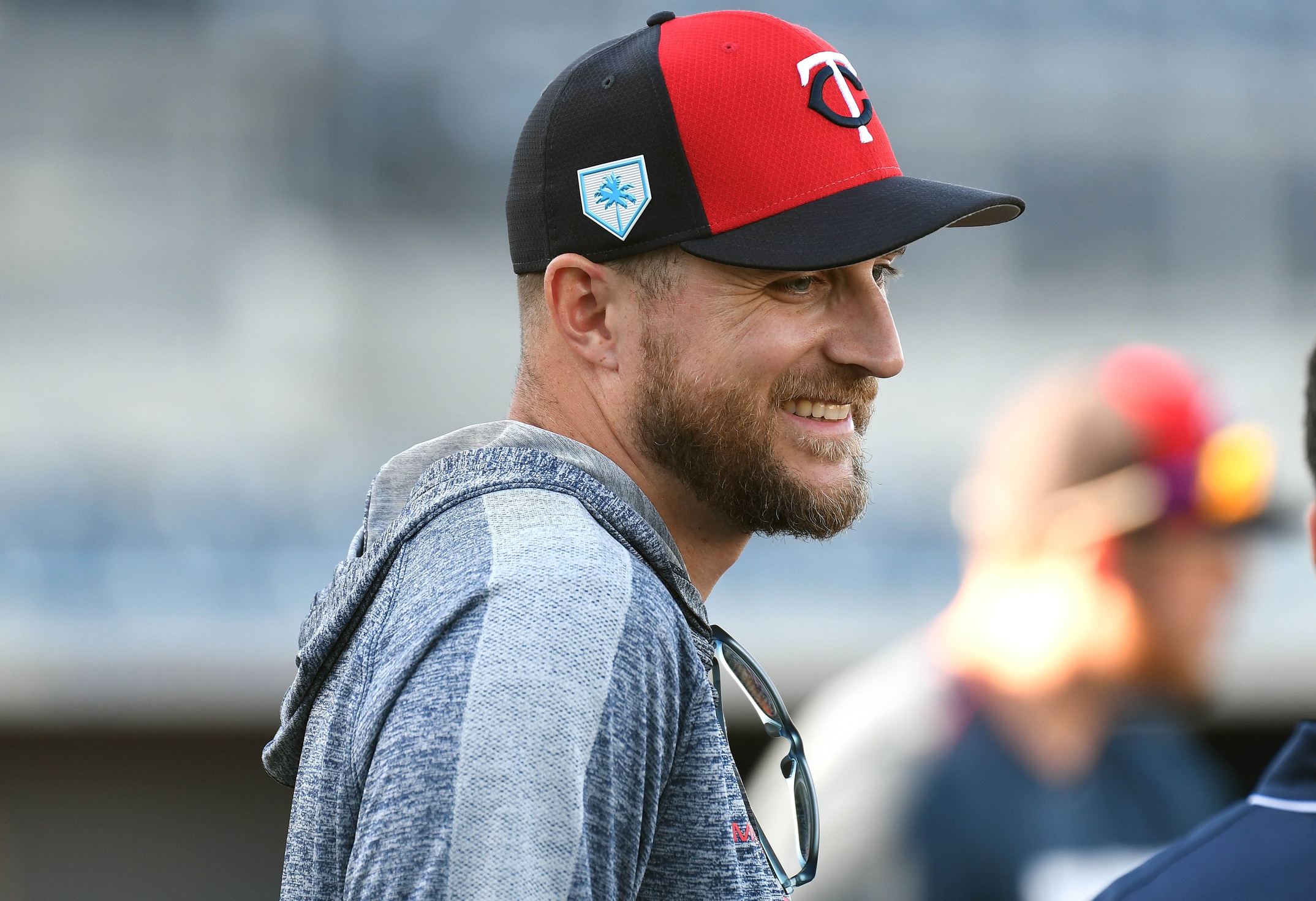
FT. MYERS, FL – During the offseason, the Minnesota Twins signed perhaps the best power hitter in baseball. Not only that, but one of the best hitters period – among all MLB players in the past five years, Cruz ranks 13th in OPS and 15th in wOBA. He's one of the biggest-name free agents this team has ever signed. Twins fans are gearing up for a show the likes of which we've rarely seen.Cruz's power is notable from any perspective, but especially in the context of his new franchise. If the slugger merely matches his lowest home run total from the past five seasons (37, in 2018) it'll be the second-highest mark by a Twins hitter since 1970. Only Brian Dozier's total of 42 in 2016 tops it. But Cruz is more than a power hitter. He brings modest patience to a free-swinging lineup. His leadership draws acclaim from all sources, including a guy who built a nice career for himself around similar traits. MLBPA director Tony Clark was at Hammond Stadium on Friday, making his usual spring rounds. When asked about his position on extending the designated hitter rule across the league, after it was noted that someone like Cruz can find a job much more easily with such a role available, Clark went out of his way to praise the Dominican native. "Nelson is as good as they get," Clark said. "I'm not talking about as a hitter; he's one of those too. But I think it's fantastic that you guys will have an opportunity to spend some time with him and see him, and how his leadership qualities manifest in the clubhouse." Rocco Baldelli, still finding his way as he navigates his first spring as a manager, might be especially appreciative of the 14-year veteran's established cred. "He's a pro in the clubhouse. Once he steps on the field, all the work he does pregame, very helpful as a staff member, manager," Baldelli said. "It's a great luxury to have this guy on a team." Of course, it's not surprising to hear folks lauding Cruz's power and presence. One thing that HAS been a little surprising is his spryness and base running savvy at age 38. On Saturday in Sarasota, he had an impressive sequence where he hit a rocket off the left field wall that got back to Baltimore's Trey Mancini in a hurry. He could've easily settled for a single, but instead lowered his head and sprinted toward second, sliding in with a double. That hustle paid off, because on the following play he scampered home on an Eddie Rosario single to center, offsetting his lack of footspeed (which last year ranked 505th out of 549 qualified big-leaguers) with a huge secondary lead that Baldelli raved about postgame. Earlier in the week, he'd made his spring debut in the outfield, where he also showed better than expected. "Nelson looked pretty good out there and tracked some balls down," Baldelli observed after Monday's game. In particular, the former center fielder was impressed with Cruz's awareness on one play where he aggressively charged in to make a catch with C.J. Cron playing in at first. "If you don't break after that ball immediately, and realize that there's no one there for it, that ball could fall." Cruz showed his playful side in the top of the first when he trotted out to center field and started playing catch with "right fielder" Byron Buxton. This caused a few triple-takes in the press box, and even prompted the second base umpire to walk out and ask what was going on. Buxton and Cruz soon swapped back to their assigned spots. "Everyone was surprised, I don't know why," Cruz said in the locker room afterward with a shrug and a smile. Even if Baldelli was impressed with this defensive showing, it hasn't altered his plan to have Cruz "DH-ing a vast majority of the time." But, as the skipper noted, "It's nice to know it's an option." Ultimately, everyone knows that Cruz's biggest impact will come in the lineup. His prodigious power looms especially large with Miguel Sano set to miss at least the first month. Cruz's baseline production over the past five years – .281/.356/.541 with an average of 41 homers – is pretty much exactly what Twins fans are optimistically envisioning for Sano. In fact, it's noticeably similar to Sano's .276/.368/.538 line at the 2017 All-Star break, at which point he was on pace for 38 bombs. Should Sano return and find that form once again – granted, a dubious proposition at this point – the Twins could feature one of the most intimidating 3-4-5 runs in baseball with Cruz and Rosario preceding him. And either way, Cruz is extremely confident in the group around him... not to mention himself. "Very athletic lineup we have," Cruz opined, adding with a grin, "including myself." After all we've seen this spring, who could argue? Click here to view the article
-
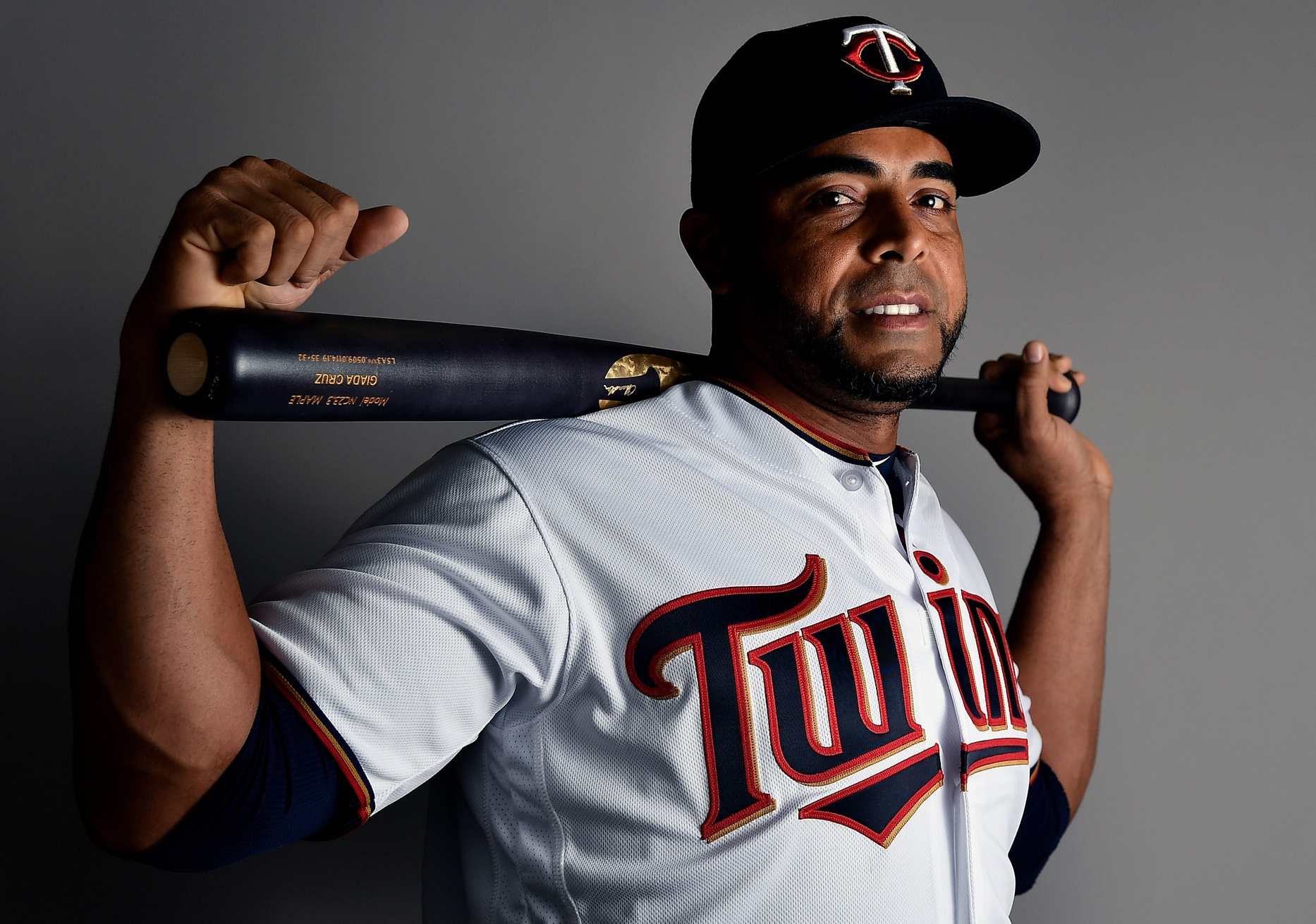 Cruz's power is notable from any perspective, but especially in the context of his new franchise. If the slugger merely matches his lowest home run total from the past five seasons (37, in 2018) it'll be the second-highest mark by a Twins hitter since 1970. Only Brian Dozier's total of 42 in 2016 tops it. But Cruz is more than a power hitter. He brings modest patience to a free-swinging lineup. His leadership draws acclaim from all sources, including a guy who built a nice career for himself around similar traits. MLBPA director Tony Clark was at Hammond Stadium on Friday, making his usual spring rounds. When asked about his position on extending the designated hitter rule across the league, after it was noted that someone like Cruz can find a job much more easily with such a role available, Clark went out of his way to praise the Dominican native. "Nelson is as good as they get," Clark said. "I'm not talking about as a hitter; he's one of those too. But I think it's fantastic that you guys will have an opportunity to spend some time with him and see him, and how his leadership qualities manifest in the clubhouse." Rocco Baldelli, still finding his way as he navigates his first spring as a manager, might be especially appreciative of the 14-year veteran's established cred. "He's a pro in the clubhouse. Once he steps on the field, all the work he does pregame, very helpful as a staff member, manager," Baldelli said. "It's a great luxury to have this guy on a team." Of course, it's not surprising to hear folks lauding Cruz's power and presence. One thing that HAS been a little surprising is his spryness and base running savvy at age 38. On Saturday in Sarasota, he had an impressive sequence where he hit a rocket off the left field wall that got back to Baltimore's Trey Mancini in a hurry. He could've easily settled for a single, but instead lowered his head and sprinted toward second, sliding in with a double. That hustle paid off, because on the following play he scampered home on an Eddie Rosario single to center, offsetting his lack of footspeed (which last year ranked 505th out of 549 qualified big-leaguers) with a huge secondary lead that Baldelli raved about postgame. Earlier in the week, he'd made his spring debut in the outfield, where he also showed better than expected. "Nelson looked pretty good out there and tracked some balls down," Baldelli observed after Monday's game. In particular, the former center fielder was impressed with Cruz's awareness on one play where he aggressively charged in to make a catch with C.J. Cron playing in at first. "If you don't break after that ball immediately, and realize that there's no one there for it, that ball could fall." Cruz showed his playful side in the top of the first when he trotted out to center field and started playing catch with "right fielder" Byron Buxton. This caused a few triple-takes in the press box, and even prompted the second base umpire to walk out and ask what was going on. Buxton and Cruz soon swapped back to their assigned spots. "Everyone was surprised, I don't know why," Cruz said in the locker room afterward with a shrug and a smile. Even if Baldelli was impressed with this defensive showing, it hasn't altered his plan to have Cruz "DH-ing a vast majority of the time." But, as the skipper noted, "It's nice to know it's an option." Ultimately, everyone knows that Cruz's biggest impact will come in the lineup. His prodigious power looms especially large with Miguel Sano set to miss at least the first month. Cruz's baseline production over the past five years – .281/.356/.541 with an average of 41 homers – is pretty much exactly what Twins fans are optimistically envisioning for Sano. In fact, it's noticeably similar to Sano's .276/.368/.538 line at the 2017 All-Star break, at which point he was on pace for 38 bombs. Should Sano return and find that form once again – granted, a dubious proposition at this point – the Twins could feature one of the most intimidating 3-4-5 runs in baseball with Cruz and Rosario preceding him. And either way, Cruz is extremely confident in the group around him... not to mention himself. "Very athletic lineup we have," Cruz opined, adding with a grin, "including myself." After all we've seen this spring, who could argue?
 -
FT. MYERS, FL – Marwin Gonzalez signed with the Minnesota Twins on February 25th, with spring training already underway. Last year, two free agents joined up in similarly late fashion, and as we all know, things didn't work out so well with Lance Lynn or Logan Morrison. With this in mind, should we be concerned about Gonzalez's spring struggles?For his part, Gonzalez says he is starting to feel better at the plate following his late start. "I've been seeing the pitches better and slowing down the game," he said on Wednesday. "That's a good thing." His results offensively haven't necessarily been reflective. Through Friday, Gonzalez had managed three singles and two walks in 24 plate appearances, to go along with nine strikeouts (39%). It'd be nice to see him build some sort of momentum heading into the season, given that the switch hitter figures to play a pivotal role in the middle of the Twins' lineup. For what it's worth, the 30-year-old Gonzalez was slow to get going at the plate last year, posting a .217/.291/.321 in April and May before turning it around with an .805 OPS the rest of the way. The greater concern right now might be his glove. To my eye, Gonzalez has not looked very good at third base. I've only been here to watch a handful of games – and in that time I've seen a lazily bounced throw, a misplayed hot grounder, and an extremely errant throw charged as an error – but people I've spoken to that've been around much longer haven't been particularly impressed either. Asked how he feels about his defense at third relative to other positions, Gonzalez says he doesn't see much difference – "I think I can play in the infield, same level at all four (positions)," he opined – but his defensive metrics don't grade out particularly well with a -6.7 UZR/150 and -1 DRS in 576 career innings at the hot corner. His manager expresses "nothing but full confidence in Marwin’s ability to play just about anywhere on the field." "I don’t make judgments really in spring training at all, but watching the guy get his work in and watching his hands and watching his feet and watching his transfers and things like that, I think it’s easy to feel really good about him," said Rocco Baldelli. Perhaps Baldelli is right. Maybe we shouldn't make anything out of Gonzalez's spring performance. After all, Lynn and Morrison both played quite well last spring after coming aboard. I remember being on hand for his dominant debut against the Orioles last year, when he finished Grapefruit League play with a 10-to-2 K/BB ratio and just one run allowed in seven innings. Morrison, in a more extended sample, hit .290/.353/.419 over 31 AB. Neither of those impressive showings portended any kind of regular-season success with the Twins. So it's just another reminder to take spring results with a grain of salt. Still, Twins fans will be feeling a little more comfortable come Opening Day if Gonzalez shows a little more sharpness here down the final exhibition stretch. Click here to view the article
-
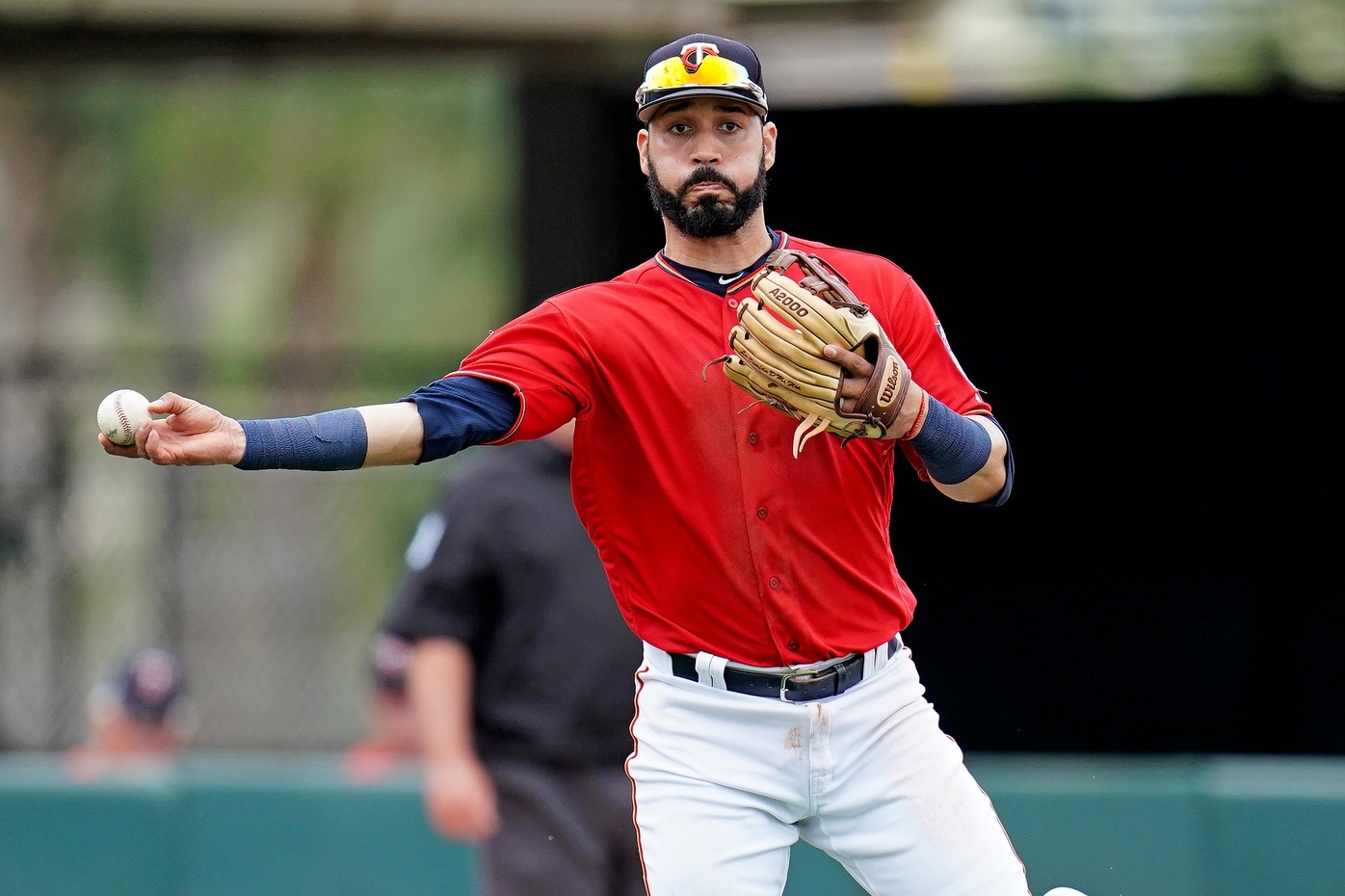 For his part, Gonzalez says he is starting to feel better at the plate following his late start. "I've been seeing the pitches better and slowing down the game," he said on Wednesday. "That's a good thing." His results offensively haven't necessarily been reflective. Through Friday, Gonzalez had managed three singles and two walks in 24 plate appearances, to go along with nine strikeouts (39%). It'd be nice to see him build some sort of momentum heading into the season, given that the switch hitter figures to play a pivotal role in the middle of the Twins' lineup. For what it's worth, the 30-year-old Gonzalez was slow to get going at the plate last year, posting a .217/.291/.321 in April and May before turning it around with an .805 OPS the rest of the way. The greater concern right now might be his glove. To my eye, Gonzalez has not looked very good at third base. I've only been here to watch a handful of games – and in that time I've seen a lazily bounced throw, a misplayed hot grounder, and an extremely errant throw charged as an error – but people I've spoken to that've been around much longer haven't been particularly impressed either. Asked how he feels about his defense at third relative to other positions, Gonzalez says he doesn't see much difference – "I think I can play in the infield, same level at all four (positions)," he opined – but his defensive metrics don't grade out particularly well with a -6.7 UZR/150 and -1 DRS in 576 career innings at the hot corner. His manager expresses "nothing but full confidence in Marwin’s ability to play just about anywhere on the field." "I don’t make judgments really in spring training at all, but watching the guy get his work in and watching his hands and watching his feet and watching his transfers and things like that, I think it’s easy to feel really good about him," said Rocco Baldelli. Perhaps Baldelli is right. Maybe we shouldn't make anything out of Gonzalez's spring performance. After all, Lynn and Morrison both played quite well last spring after coming aboard. I remember being on hand for his dominant debut against the Orioles last year, when he finished Grapefruit League play with a 10-to-2 K/BB ratio and just one run allowed in seven innings. Morrison, in a more extended sample, hit .290/.353/.419 over 31 AB. Neither of those impressive showings portended any kind of regular-season success with the Twins. So it's just another reminder to take spring results with a grain of salt. Still, Twins fans will be feeling a little more comfortable come Opening Day if Gonzalez shows a little more sharpness here down the final exhibition stretch.
 -
Joe Nathan. Jon Rauch. Matt Capps. Glen Perkins. Brandon Kintzler. Fernando Rodney. The names have changed, but without exception, the Twins have opened every season in memory with a designated closer. In 2019, it appears that will change."Knowing where guys slot in a game is helpful, at least generally from a parameter standpoint. Guys knowing what they’re preparing for and what role they generally play," said Derek Falvey on Wednesday. "But I know Rocco (Baldelli) and Wes (Johnson) have already had conversations with our guys around their role and the way they want to go about it." The head Twins front office exec continued: "A few of our guys know they’re going to pitch in the back end of games, and that could eventually evolve into a more set person as we go. But as it stands right today, I don’t think Rocco is ready to name that. I’m comfortable with that if he is." It appears that Baldelli is indeed comfortable with this plan. To see a rookie manager eschew such an entrenched convention of the game is surprising and, frankly, rather refreshing. Many analytical thinkers believe that the save ruined relief pitching, and I am of the same mind. When you reserve your best reliever for the end of the game, you risk letting leads slip away at pivotal moments while he stagnates in the bullpen. Of course, just because Baldelli and the Twins are ready to enter the season without a defined closer doesn't mean it'll stay that way. The point made by Falvey is an undeniable one: relief pitchers like to know their roles, and unpredictability can lead to tension and frustration. As such, it is likely that Minnesota will eventually settle on a primary ninth-inning guy (though hopefully Baldelli will never be overly stringent or rigid in his usage). Let's handicap that race as Opening Day approaches. Here are, in order, the guys I'd expect to accrue saves for the 2019 Twins. 1. Blake Parker With so little clarity among the top candidates, it's pretty tough to pick a true favorite, but Parker is clearly in the back-end mix that Falvey spoke of. He is also an experienced veteran with a 2.90 ERA and 22 saves over the past two seasons. Parker has pitched well this spring with a 10-to-2 K/BB ratio and only four hits allowed in 7 2/3 innings, so his manager has to be feeling confident in what he's seen. 2. Trevor Hildenberger From my view, Hildenberger is the best choice to handle the ninth on a regular basis. He throws strikes and gets grounders, making it tough for opponents to string together rallies and post crooked numbers against him. In his first 73 appearances as a Twin, spanning about one calendar year, Hildenberger allowed multiple runs in an outing only five times. Of course, he then did so 10 times in his final 37 appearances last season, so he's got to regain the team's confidence. If and when he settles back into his groove, I think he's the guy. 3. Trevor May May finished the 2018 season as closer and looked damn good in that role, converting three straight saves in the waning days of September and not allowing so much as a hit in any of them. He's the kind of strike-throwing and bat-missing force that can offer safety with slim leads in the ninth. But there are two issues at play: 1) When he's on his game, he's also the kind of gas-hurling force you want to unleash in the highest-leverage of spots, which aren't always the ninth, and 2) He hasn't been on his game of late, with four walks and five hits allowed in 2 2/3 innings over his past four appearances. He looked noticeably flustered while struggling to find the zone on Wednesday. With a well established guy, you'd make nothing out of a brief ugly stretch late in exhibition play. But May is not that. 4. Taylor Rogers He is Minnesota's best reliever. I don't think there's any question about that. So in a very traditional sense he'd be the logical pick for closer. But it seems telling that, even while he was almost completely untouchable during the second half last year, the Twins never really gave him a look as Rodney's replacement. That's because – more than anyone else in this unit – he's the guy you want to roll out in those most crucial of spots: runners on, big bopper coming up to the plate. Last year Rogers had the ninth-highest Win Probability Added among all MLB relievers, illustrating the way he thrived in leverage. Perhaps most importantly, he is absolute death to left-handers (allowed ZERO extra-base hits against them in 110 PA last year) so the Twins will want to have him available for key matchups. WIth that being said, I expect he'll get a few save chances in situations where two or three lefty hitters are due up in the ninth. That's the beauty of staying open-minded with this role. 5. Fernando Romero Down the line, I believe the Twins envision Romero taking over as their long-term closer. They see him as a big, overpowering, imposing presence with the "bulldog" mentality that teams love at the end of games. Kenley Jansen is one name I've heard thrown around as a (very optimistic) comp. And while that might be a bit of a stretch, Romero does fit all of the aforementioned descriptors, and the idea of his stuff playing up in the late innings caused many (including myself) to think it might happen quickly. Falvey threw some cold water on that hype on Wednesday. "I don't know that we were viewing him as the back-end guy right at the outset," he said. "A lot of people think he had the stuff for it and the ability. I think you grow into those roles." The CBO mentioned Romero's name in the same breath as Adalberto Mejia, so it sounds like a middle-inning longman role might be more likely out of the gate – IF he makes the team. That's now somewhat in doubt, because while Falvey was holding court with media amidst Wednesday's game, Romero was getting torched for a second straight outing. He's suddenly lost his ability to find the zone. And while it's only spring training, the same thing applies as with May; more so, in fact. Romero doesn't have any track record as a reliever, so the Twins could very well send him down to get a little more acclimated. 6. Addison Reed When Falvey was asked whether fans should expect anyone other than Miguel Sano and Gabriel Moya (who's battling shoulder tightness) to open on the Injured List, he mentioned that it's "possible there may be one more in that group," and then grinned conspicuously, which seemed to indicate there will definitely be (at least) one more in that group. Some of us inferred he was talking about Reed, because the guy hasn't looked right all spring after not looking right for most of 2018. If healthy and throwing well, Reed would be at the top of this list, since he's a veteran with an excellent track record and plenty of history closing games (125 career saves). But he's very far from throwing well right now, with 10 earned runs allowed in 5 1/3 innings this spring, and given that an offseason of rest didn't seem to help much, it's tough to imagine what non-surgical solution is going to get him back on track at this point. 7. Ryne Harper The sleeper. Enjoying a great spring, his odds of making the bullpen are greatly bolstered if Reed and Romero (or Matt Magill, who may also be ailing since he hasn't pitched in a week) do not. Harper's buzz isn't entirely a result of his strong work in eight innings this spring (11 strikeouts, zero walks, zero earned runs); he was also quite impressive between Double-A and Triple-A last year, posting an 86-to-10 K/BB ratio with only two homers allowed in 65 innings. Granted, he also turns 30 next Tuesday and hasn't yet pitched in the majors, which is why the sleeper label needs to be strongly emphasized. But if he shows well early, reserving him for those less intense save opportunities (multi-run leads, or bottom part of the order due up) would make plenty of sense, and would enable Baldelli to focus on keeping his most powerful arms available to put out fires. Click here to view the article
-
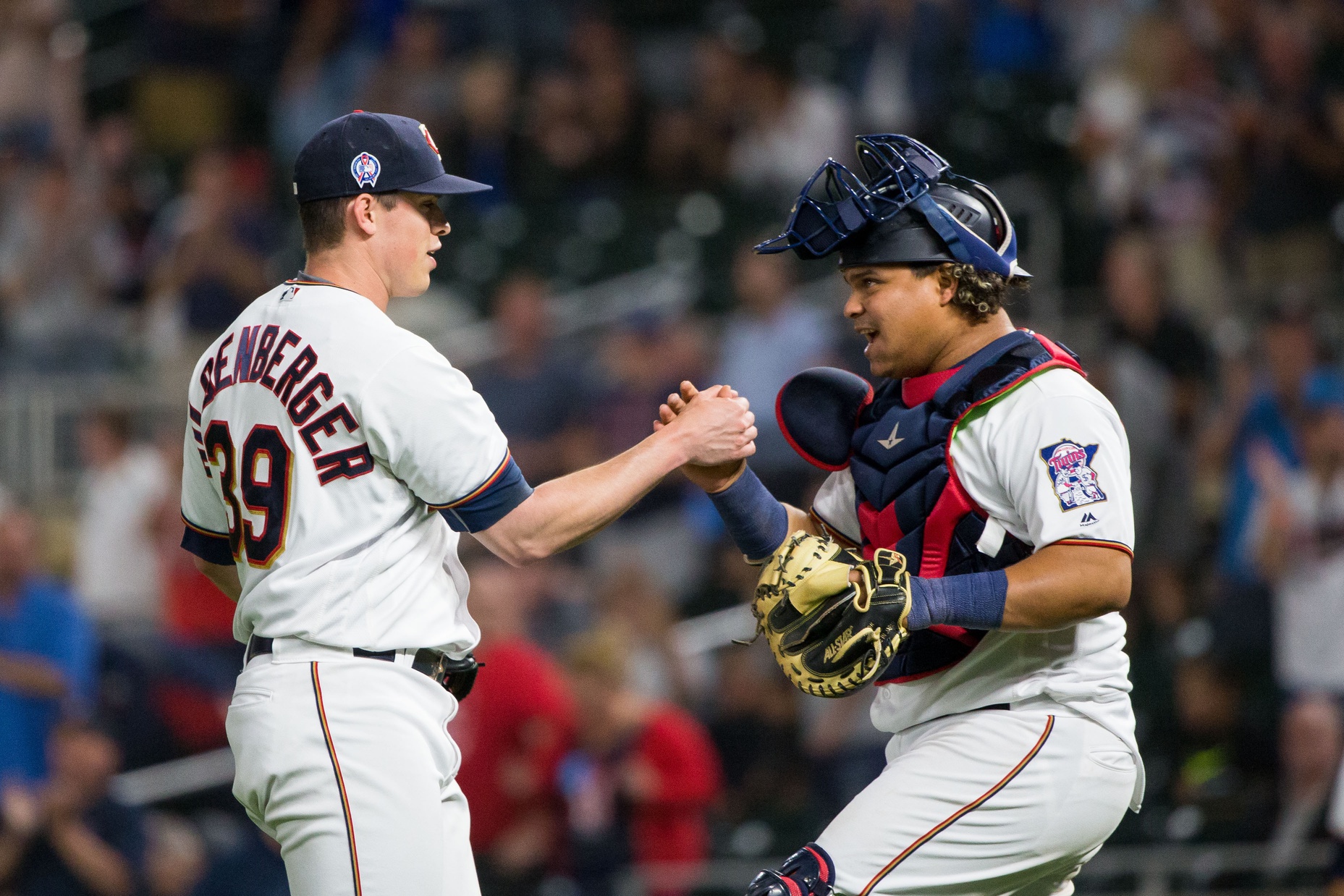 "Knowing where guys slot in a game is helpful, at least generally from a parameter standpoint. Guys knowing what they’re preparing for and what role they generally play," said Derek Falvey on Wednesday. "But I know Rocco (Baldelli) and Wes (Johnson) have already had conversations with our guys around their role and the way they want to go about it." The head Twins front office exec continued: "A few of our guys know they’re going to pitch in the back end of games, and that could eventually evolve into a more set person as we go. But as it stands right today, I don’t think Rocco is ready to name that. I’m comfortable with that if he is." It appears that Baldelli is indeed comfortable with this plan. To see a rookie manager eschew such an entrenched convention of the game is surprising and, frankly, rather refreshing. Many analytical thinkers believe that the save ruined relief pitching, and I am of the same mind. When you reserve your best reliever for the end of the game, you risk letting leads slip away at pivotal moments while he stagnates in the bullpen. Of course, just because Baldelli and the Twins are ready to enter the season without a defined closer doesn't mean it'll stay that way. The point made by Falvey is an undeniable one: relief pitchers like to know their roles, and unpredictability can lead to tension and frustration. As such, it is likely that Minnesota will eventually settle on a primary ninth-inning guy (though hopefully Baldelli will never be overly stringent or rigid in his usage). Let's handicap that race as Opening Day approaches. Here are, in order, the guys I'd expect to accrue saves for the 2019 Twins. 1. Blake Parker With so little clarity among the top candidates, it's pretty tough to pick a true favorite, but Parker is clearly in the back-end mix that Falvey spoke of. He is also an experienced veteran with a 2.90 ERA and 22 saves over the past two seasons. Parker has pitched well this spring with a 10-to-2 K/BB ratio and only four hits allowed in 7 2/3 innings, so his manager has to be feeling confident in what he's seen. 2. Trevor Hildenberger From my view, Hildenberger is the best choice to handle the ninth on a regular basis. He throws strikes and gets grounders, making it tough for opponents to string together rallies and post crooked numbers against him. In his first 73 appearances as a Twin, spanning about one calendar year, Hildenberger allowed multiple runs in an outing only five times. Of course, he then did so 10 times in his final 37 appearances last season, so he's got to regain the team's confidence. If and when he settles back into his groove, I think he's the guy. 3. Trevor May May finished the 2018 season as closer and looked damn good in that role, converting three straight saves in the waning days of September and not allowing so much as a hit in any of them. He's the kind of strike-throwing and bat-missing force that can offer safety with slim leads in the ninth. But there are two issues at play: 1) When he's on his game, he's also the kind of gas-hurling force you want to unleash in the highest-leverage of spots, which aren't always the ninth, and 2) He hasn't been on his game of late, with four walks and five hits allowed in 2 2/3 innings over his past four appearances. He looked noticeably flustered while struggling to find the zone on Wednesday. With a well established guy, you'd make nothing out of a brief ugly stretch late in exhibition play. But May is not that. 4. Taylor Rogers He is Minnesota's best reliever. I don't think there's any question about that. So in a very traditional sense he'd be the logical pick for closer. But it seems telling that, even while he was almost completely untouchable during the second half last year, the Twins never really gave him a look as Rodney's replacement. That's because – more than anyone else in this unit – he's the guy you want to roll out in those most crucial of spots: runners on, big bopper coming up to the plate. Last year Rogers had the ninth-highest Win Probability Added among all MLB relievers, illustrating the way he thrived in leverage. Perhaps most importantly, he is absolute death to left-handers (allowed ZERO extra-base hits against them in 110 PA last year) so the Twins will want to have him available for key matchups. WIth that being said, I expect he'll get a few save chances in situations where two or three lefty hitters are due up in the ninth. That's the beauty of staying open-minded with this role. 5. Fernando Romero Down the line, I believe the Twins envision Romero taking over as their long-term closer. They see him as a big, overpowering, imposing presence with the "bulldog" mentality that teams love at the end of games. Kenley Jansen is one name I've heard thrown around as a (very optimistic) comp. And while that might be a bit of a stretch, Romero does fit all of the aforementioned descriptors, and the idea of his stuff playing up in the late innings caused many (including myself) to think it might happen quickly. Falvey threw some cold water on that hype on Wednesday. "I don't know that we were viewing him as the back-end guy right at the outset," he said. "A lot of people think he had the stuff for it and the ability. I think you grow into those roles." The CBO mentioned Romero's name in the same breath as Adalberto Mejia, so it sounds like a middle-inning longman role might be more likely out of the gate – IF he makes the team. That's now somewhat in doubt, because while Falvey was holding court with media amidst Wednesday's game, Romero was getting torched for a second straight outing. He's suddenly lost his ability to find the zone. And while it's only spring training, the same thing applies as with May; more so, in fact. Romero doesn't have any track record as a reliever, so the Twins could very well send him down to get a little more acclimated. 6. Addison Reed When Falvey was asked whether fans should expect anyone other than Miguel Sano and Gabriel Moya (who's battling shoulder tightness) to open on the Injured List, he mentioned that it's "possible there may be one more in that group," and then grinned conspicuously, which seemed to indicate there will definitely be (at least) one more in that group. Some of us inferred he was talking about Reed, because the guy hasn't looked right all spring after not looking right for most of 2018. If healthy and throwing well, Reed would be at the top of this list, since he's a veteran with an excellent track record and plenty of history closing games (125 career saves). But he's very far from throwing well right now, with 10 earned runs allowed in 5 1/3 innings this spring, and given that an offseason of rest didn't seem to help much, it's tough to imagine what non-surgical solution is going to get him back on track at this point. 7. Ryne Harper The sleeper. Enjoying a great spring, his odds of making the bullpen are greatly bolstered if Reed and Romero (or Matt Magill, who may also be ailing since he hasn't pitched in a week) do not. Harper's buzz isn't entirely a result of his strong work in eight innings this spring (11 strikeouts, zero walks, zero earned runs); he was also quite impressive between Double-A and Triple-A last year, posting an 86-to-10 K/BB ratio with only two homers allowed in 65 innings. Granted, he also turns 30 next Tuesday and hasn't yet pitched in the majors, which is why the sleeper label needs to be strongly emphasized. But if he shows well early, reserving him for those less intense save opportunities (multi-run leads, or bottom part of the order due up) would make plenty of sense, and would enable Baldelli to focus on keeping his most powerful arms available to put out fires.
 -
Report From The Fort: Tyler Austin's Precarious Path To A Roster Spot
Nick Nelson posted an article in Twins
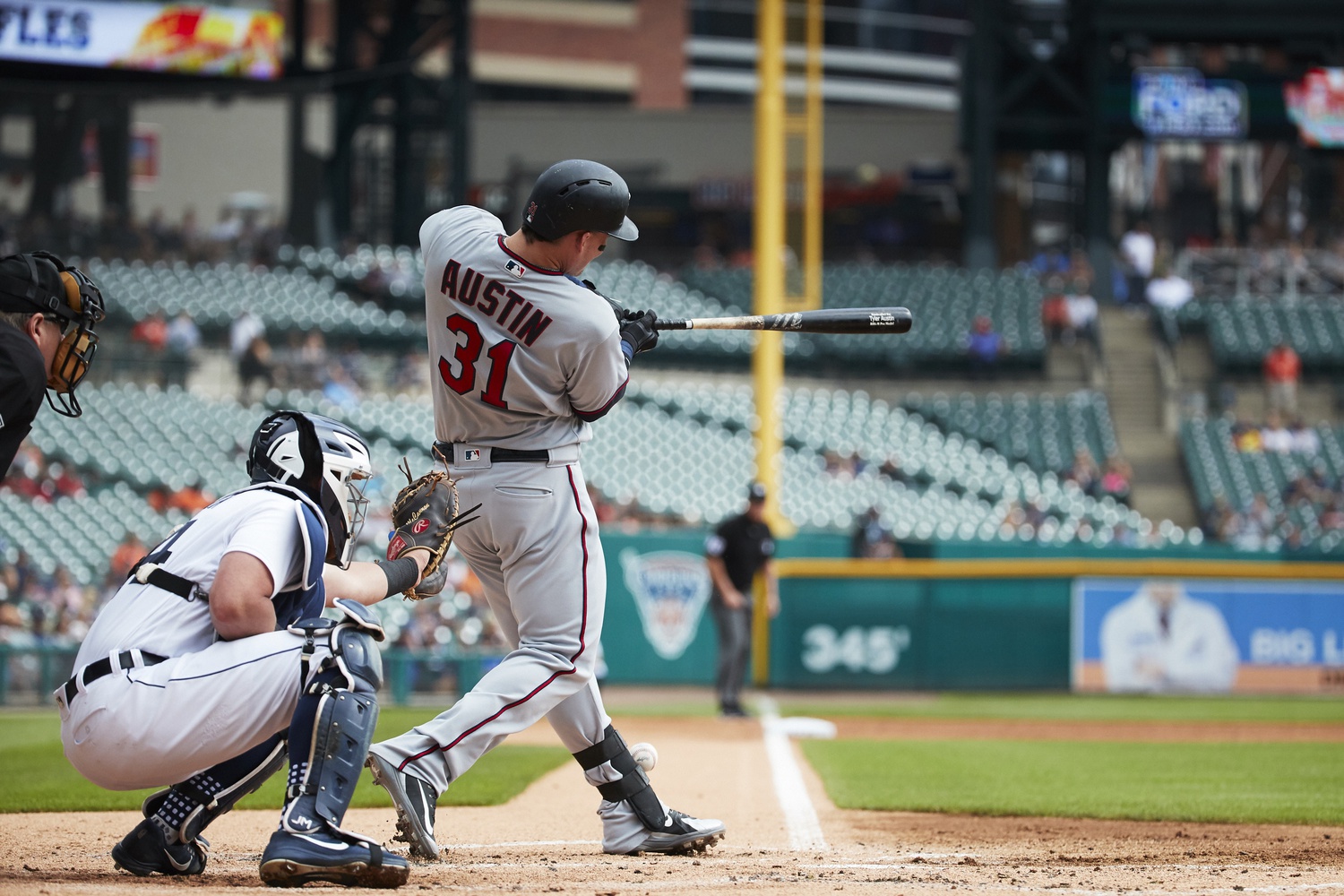 Austin is among the Twins leaders in Grapefruit League plate appearances with 42, and in that sample he's batted .381 with a 1.024 OPS and three home runs. His easy power has been on display once again coming off a season where he launched 17 bombs in just 69 games between New York and Minnesota. Austin is out of options, meaning that he'll need to pass him through waivers in order to stay in the Twins organization if he doesn't make the 25-man roster out of camp. And since he's been outrighted in the past, Austin could elect free agency even if he goes unclaimed. So, if the Twins don't take the 27-year-old north, there seems to be a very good chance they'll lose him. And that's a disconcerting thought, because it's not hard to envision a scenario where he's one of the more intimidating (and affordable) power bats in the league over the next few years. Contemplating this dilemma, I asked two of the guys who will be primarily responsible for shaping the Opening Day roster about it. "Certainly it gets harder as you start kind of adding more people to the group of first base, DH," acknowledged Chief Baseball Officer Derek Falvey. He did note, however, that the flexibility across the rest of Minnesota's bench might make the notion more palatable. "We have a lot of multi-position players among the other bench-types that afford us an opportunity maybe, whereas a traditional bench you have your catcher, then you have your infielder, your outfielder, something like that." This is true. Through a pure roster-building lens, it's not infeasible you could carry Austin – while sending down a player with options remaining, like Jake Cave or Willians Astudillo – and still have all of your needs covered in terms of positional depth. But from a day-to-day operational standpoint? Things get trickier. "Tyler is certainly one of those guys that has put himself in a position where you are looking to find ways to get him in there," said manager Rocco Baldelli. "Because you know if you get him at-bats, that you feel good about him succeeding. So yeah, it's definitely something that I spend a lot of days thinking about, for sure." The caveat of his statement – IF you get him at-bats – reveals the ultimate problem. Here, the answers seem to run out. Where are Austin's at-bats coming from? C.J. Cron and Nelson Cruz are locked in as starters at first base and DH, which are the only positions Austin plays (the Twins clearly have no interest in using him as an outfielder). And both of those players swing from the right side, so you're not gaining any kind of platoon advantage that'd justify rotating him through those spots regularly. At best, Austin's probably starting once a week to spell one of those guys, while pulling in the occasional pinch-hit at-bat. Not only is this a suboptimal use of a roster spot, but it's also completely unfair to Austin. You can't expect a hitter to produce with such sporadic playing time, and this is quite problematic when said player's value is tied solely to his bat. From a logical view, I think we all have to acknowledge that as long as Cron and Cruz stay healthy for the next week, Austin isn't making this team. It's clear that both Falvey and Baldelli would love to keep him around, but neither could offer a specific rationale for doing so given the layout of the roster. And that's because there just isn't one to be found. The manager can keep spending his days thinking about it, but no answers are going magically emerge. So, with one week left to go before Opening Day, it comes down to figuring out what to do with him. Obviously the Twins want to avoid a scenario where they lose a talented player for nothing. But strikeout-prone sluggers with no positional flexibility aren't in demand these days. And perhaps this reality might portend our ideal outcome: Austin slips through waivers because other clubs are facing similar roster crunches, and he accepts the assignment to Triple-A because he recognizes an MLB job is not available at the moment. Minnesota's depth at first base and DH will look a whole lot better if Austin's a phone call away in Rochester.
 -
Pressly was extremely good all year with the exception of a two-week rough stretch in June. He had a 2.15 ERA after 30 appearances. He was a dominant reliever for the Twins. No one is arguing that the Astros didn't make tweaks and seemingly help him improve, but acting like he was some sort of ordinary reliever for the Twins is just blatantly false. Pressly's K-rate and whiff rate were among the best in the league, both before and after the trade.
- 45 replies
-
- 5
-
-
- taylor rogers
- trevor may
- (and 1 more)
-
I'm sure Houston's adjustments helped him achieve those absurd numbers in August & Sept, but we can fairly assume he was gonna have a monster second half no matter where he was. The dude was throwing unbelievably well when the Twins traded him. He had a 0.90 ERA, .523 opponents' OPS and 17% swinging strike rate in 10 July appearances for the Twins before they dealt him. He's one of the nastiest pitchers in baseball, plain and simple. That was evident before he was moved. It just seems so odd to me that they invested all that time and effort into developing him into such a weapon, then just as they were starting to fully reap the benefits, they trade him for another project.
- 45 replies
-
- 6
-
-
- taylor rogers
- trevor may
- (and 1 more)
-
Among all units on the 2019 Twins roster, none are subject to more controversy and skepticism than the bullpen. It was the team's biggest question mark heading into the offseason, and the front office did very little externally to address it. Can this relief corps hold up?Projected Bullpen: Taylor Rogers, Trevor May, Fernando Romero, Blake Parker, Addison Reed, Adalberto Mejia, Matt Magill Depth: Trevor Hildenberger, Tyler Duffey, Gabriel Moya, Andrew Vazquez, Ryne Harper, Tim Collins, Mike Morin Prospects: Jorge Alcala, Jake Reed, Tyler Jay, Jordan Balazovic, Tyler Wells THE GOOD The Twins have no closer. You might be confused reading that sentence under "THE GOOD" banner but to me, it really is a positive. We have no idea what to expect from Rocco Baldelli as a bullpen handler, but at least the rookie manager doesn't seem eager to constrict himself to rigidly defined roles. Despite its analytical awakening, Major League Baseball has lagged behind in terms of relief usage sophistication, plagued by the "save" and its overinflated prestige. If he simply makes a habit of using his best available arms in the highest-leverage spots – a formula that hasn't always taken hold in a game ruled by conventional hierarchies – Baldelli could find himself with an edge over opposing teams that reserve their best reliever until it's too late. And on any given day, the skipper might just find himself with multiple high-caliber arms available. Rogers, May and Romero are poised to form a fearsome trio in the late innings. Granted, only one of the three (Rogers) has already established himself as a top-tier reliever, but both May and Romero show all the ingredients. May flashed overpowering stuff as a full-time reliever in 2016, though he was hampered by back issues and inconsistent results. After losing his following season to Tommy John surgery, he came back last summer like a man on fire, piling up whiffs with mid-90s heat and powered-up secondaries. In 25 1/3 innings, he held opponents to a .221 average with a 36-to-5 K/BB ratio. Romero hasn't officially tried his hand as a reliever, but he has unsurprisingly taken well to the assignment this spring. His ferocious stuff seemed to play down as a starter, so the Twins are wagering it'll yield stronger results in short stints – a reasonable bet. In nine innings this spring, he has held opponents to a .188 average and .219 slugging percentage with heavy sinkers in the high-90s. He could be a hell of a weapon as a multi-inning fireman type, which appears to be the role Baldelli envisions for him. Behind the Big Three, the Twins have a couple of veterans with strong track records in Parker and Addison Reed, though each is coming off a down year. Mejia has been a competent major-league starter and could be a nice asset as a long man out of the pen if his repertoire levels up at all. Magill averaged a strikeout per inning as an out-of-nowhere rookie last year, and has been touching 96 on the radar gun this spring. Hildenberger is the big-time sleeper here. When he's on his game (as he was for his first 70 or so appearances as a Twin), he brings an ultra-reliable mix of grounders, strikeouts and control, but he was not on his game in the second half last year. That might leave him on the outside looking in when the spring training dust settles next week, but don't count him out as an important contributor to this bullpen. It's also possible a non-roster sleeper in camp could find his way into the picture, either at the outset or a short way into the campaign. Harper is the current favorite on that front. Collins, Morin and Jake Reed have also caught some eyes. THE BAD The Twins lost a critical piece of their 2019 bullpen when they traded Ryan Pressly to Houston last July, and they haven't done nearly enough to fill that enormous void. There is one reliever in this group that you can truly feel confident in based on his recent history: Rogers. That's it. Romero and May are full of potential but neither has really proven himself. Addison Reed was a mess last year and has been this spring too. Parker's performance in 2018 was uninspiring enough – despite the 3.26 ERA – that the Angels non-tendered him, and he went unsigned for six weeks until Minnesota inked him to a meager $1.8 million deal. Mejia and Magill? Both are on the fringe of major-league viability. What's worse: the depth isn't really there to plug holes as they emerge. The best hope for an impact prospect infusion is probably Alcala, who came over from Houston in the Pressly trade. The 23-year-old possesses a high-90s fastball and a slider with the makings of an out pitch, but he was underwhelming and injured after joining Minnesota's Double-A affiliate so it's tough to view him as a short-term difference-maker. The relegation of Jay, the club's top draft pick in 2015, to afterthought status looms very large here. This bullpen seems far more likely to turn into an unmitigated disaster than a competitive advantage. All it takes is an injury to one of those key late-inning linchpins, or a couple of critical guys failing to assert themselves, and Baldelli will quickly find himself short on options he can trust. THE BOTTOM LINE Last summer the Twins traded away one of the 10 most valuable relievers in baseball (according to fWAR), whom they still controlled in 2019. They dealt him to Houston, one of the teams they will ostensibly be competing against for the AL pennant this year. The Astros just signed him to a two-year, $17.5 million extension, indicating he'll be a building block for their elite bullpen going forward. And most damningly, the Twins failed to replace Pressly during the offseason with any kind of proven, high-impact asset to bolster the back-end of their pen. Their lone addition was a 33-year-old non-tender whose guaranteed salary was docked by health concerns. Oh, and the guy who will be pulling the strings has zero experience managing a bullpen. Same for both of his rookie pitching coaches. By nature, bullpens are highly volatile and unpredictable. There was nothing Minnesota's front office could've realistically done to establish this unit as any kind of "sure thing," but their efforts to shore it up seem woefully deficient. They are pinning their hopes on a whole lot of gambles playing out right, and Twins fans are too jaded from past trauma to feel much confidence in that outcome. What's most vexing about this situation is that the Twins have otherwise developed a pretty solid roster with legitimate potential. There ain't much more frustrating than building leads and watching them slip away in the latter parts of games. Unfortunately, this club seems destined to make that a routine occurrence if their planned power trio doesn't gel in the late innings, or the various questionable parts surrounding them fall the wrong way. The good news, I suppose, is that it's easier to upgrade relief pitching in-season than just about any other position. *** Twins 2019 Position Analysis: Catcher Twins 2019 Position Analysis: First Base Twins 2019 Position Analysis: Second Base Twins 2019 Position Analysis: Third Base Twins 2019 Position Analysis: Shortstop Twins 2019 Position Analysis: Left Field Twins 2019 Position Analysis: Center Field Twins 2019 Position Analysis: Right Field Twins 2019 Position Analysis: Designated Hitter Twins 2019 Position Analysis: Starting Pitcher Click here to view the article
-
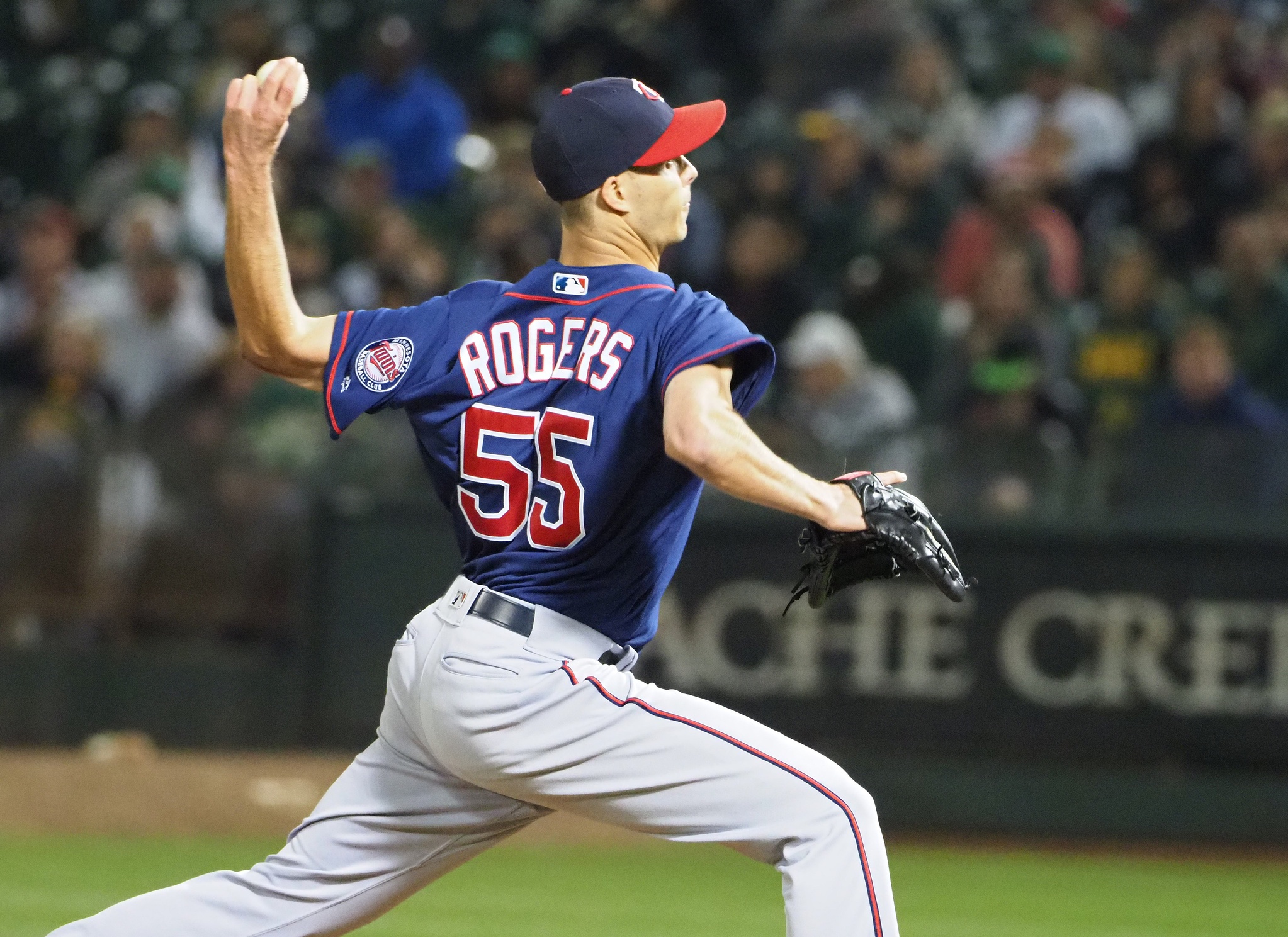 Projected Bullpen: Taylor Rogers, Trevor May, Fernando Romero, Blake Parker, Addison Reed, Adalberto Mejia, Matt Magill Depth: Trevor Hildenberger, Tyler Duffey, Gabriel Moya, Andrew Vazquez, Ryne Harper, Tim Collins, Mike Morin Prospects: Jorge Alcala, Jake Reed, Tyler Jay, Jordan Balazovic, Tyler Wells THE GOOD The Twins have no closer. You might be confused reading that sentence under "THE GOOD" banner but to me, it really is a positive. We have no idea what to expect from Rocco Baldelli as a bullpen handler, but at least the rookie manager doesn't seem eager to constrict himself to rigidly defined roles. Despite its analytical awakening, Major League Baseball has lagged behind in terms of relief usage sophistication, plagued by the "save" and its overinflated prestige. If he simply makes a habit of using his best available arms in the highest-leverage spots – a formula that hasn't always taken hold in a game ruled by conventional hierarchies – Baldelli could find himself with an edge over opposing teams that reserve their best reliever until it's too late. And on any given day, the skipper might just find himself with multiple high-caliber arms available. Rogers, May and Romero are poised to form a fearsome trio in the late innings. Granted, only one of the three (Rogers) has already established himself as a top-tier reliever, but both May and Romero show all the ingredients. May flashed overpowering stuff as a full-time reliever in 2016, though he was hampered by back issues and inconsistent results. After losing his following season to Tommy John surgery, he came back last summer like a man on fire, piling up whiffs with mid-90s heat and powered-up secondaries. In 25 1/3 innings, he held opponents to a .221 average with a 36-to-5 K/BB ratio. Romero hasn't officially tried his hand as a reliever, but he has unsurprisingly taken well to the assignment this spring. His ferocious stuff seemed to play down as a starter, so the Twins are wagering it'll yield stronger results in short stints – a reasonable bet. In nine innings this spring, he has held opponents to a .188 average and .219 slugging percentage with heavy sinkers in the high-90s. He could be a hell of a weapon as a multi-inning fireman type, which appears to be the role Baldelli envisions for him. Behind the Big Three, the Twins have a couple of veterans with strong track records in Parker and Addison Reed, though each is coming off a down year. Mejia has been a competent major-league starter and could be a nice asset as a long man out of the pen if his repertoire levels up at all. Magill averaged a strikeout per inning as an out-of-nowhere rookie last year, and has been touching 96 on the radar gun this spring. Hildenberger is the big-time sleeper here. When he's on his game (as he was for his first 70 or so appearances as a Twin), he brings an ultra-reliable mix of grounders, strikeouts and control, but he was not on his game in the second half last year. That might leave him on the outside looking in when the spring training dust settles next week, but don't count him out as an important contributor to this bullpen. It's also possible a non-roster sleeper in camp could find his way into the picture, either at the outset or a short way into the campaign. Harper is the current favorite on that front. Collins, Morin and Jake Reed have also caught some eyes. THE BAD The Twins lost a critical piece of their 2019 bullpen when they traded Ryan Pressly to Houston last July, and they haven't done nearly enough to fill that enormous void. There is one reliever in this group that you can truly feel confident in based on his recent history: Rogers. That's it. Romero and May are full of potential but neither has really proven himself. Addison Reed was a mess last year and has been this spring too. Parker's performance in 2018 was uninspiring enough – despite the 3.26 ERA – that the Angels non-tendered him, and he went unsigned for six weeks until Minnesota inked him to a meager $1.8 million deal. Mejia and Magill? Both are on the fringe of major-league viability. What's worse: the depth isn't really there to plug holes as they emerge. The best hope for an impact prospect infusion is probably Alcala, who came over from Houston in the Pressly trade. The 23-year-old possesses a high-90s fastball and a slider with the makings of an out pitch, but he was underwhelming and injured after joining Minnesota's Double-A affiliate so it's tough to view him as a short-term difference-maker. The relegation of Jay, the club's top draft pick in 2015, to afterthought status looms very large here. This bullpen seems far more likely to turn into an unmitigated disaster than a competitive advantage. All it takes is an injury to one of those key late-inning linchpins, or a couple of critical guys failing to assert themselves, and Baldelli will quickly find himself short on options he can trust. THE BOTTOM LINE Last summer the Twins traded away one of the 10 most valuable relievers in baseball (according to fWAR), whom they still controlled in 2019. They dealt him to Houston, one of the teams they will ostensibly be competing against for the AL pennant this year. The Astros just signed him to a two-year, $17.5 million extension, indicating he'll be a building block for their elite bullpen going forward. And most damningly, the Twins failed to replace Pressly during the offseason with any kind of proven, high-impact asset to bolster the back-end of their pen. Their lone addition was a 33-year-old non-tender whose guaranteed salary was docked by health concerns. Oh, and the guy who will be pulling the strings has zero experience managing a bullpen. Same for both of his rookie pitching coaches. By nature, bullpens are highly volatile and unpredictable. There was nothing Minnesota's front office could've realistically done to establish this unit as any kind of "sure thing," but their efforts to shore it up seem woefully deficient. They are pinning their hopes on a whole lot of gambles playing out right, and Twins fans are too jaded from past trauma to feel much confidence in that outcome. What's most vexing about this situation is that the Twins have otherwise developed a pretty solid roster with legitimate potential. There ain't much more frustrating than building leads and watching them slip away in the latter parts of games. Unfortunately, this club seems destined to make that a routine occurrence if their planned power trio doesn't gel in the late innings, or the various questionable parts surrounding them fall the wrong way. The good news, I suppose, is that it's easier to upgrade relief pitching in-season than just about any other position. *** Twins 2019 Position Analysis: Catcher Twins 2019 Position Analysis: First Base Twins 2019 Position Analysis: Second Base Twins 2019 Position Analysis: Third Base Twins 2019 Position Analysis: Shortstop Twins 2019 Position Analysis: Left Field Twins 2019 Position Analysis: Center Field Twins 2019 Position Analysis: Right Field Twins 2019 Position Analysis: Designated Hitter Twins 2019 Position Analysis: Starting Pitcher
 -
If you want to go by the numbers (which clearly you do if you're high on Wells), I'm curious why you think Thorpe is overrated. He's a year younger than Wells and was dominating hitters at AA/AAA last year while Tyler spent most of his season at Single-A. The "prospects" listed are based on likelihood of making an impact, not proximity.
- 23 replies
-
- 1
-
-
- jose berrios
- kyle gibson
- (and 3 more)
-
Key thing to note: Even though Kepler's batting average dropped by 20 pts from the previous season, his OBP went up by 4 points. The decline in BA owes to a .224 BABIP that was one of the lowest in the league, and almost 50 points below his previous career mark. If he bats even .250 while maintaining his walk rate, he suddenly has an OBP in the .350 range.
- 45 replies
-
- 6
-
-
- max kepler
- byron buxton
- (and 2 more)
-
FT. MYERS, FL – Was Rocco Baldelli's starting lineup on Monday a preview of the one we'll see at Target Field on Opening Day? The manager played coy when asked postgame about the lede dancing through every reporter's head, but given that Baldelli sent out his A-team against Boston and we're only 10 days away from March 28th, the evidence speaks for itself. Let's examine the merits of each hitter, with respect to his placement in the lineup for Monday's 4-1 win over the Red Sox.Leading Off: Max Kepler Kepler has started 375 major-league games, and he has batted leadoff in a grand total of zero. In fact, it's the only lineup spot where he's never seen his name written in. But this spring he has found himself atop the order frequently. He was there Monday in Fort Myers, and he will be again Tuesday in Sarasota when the Twins face Baltimore. In the past, Kepler has profiled as a poor fit for leadoff duties, so it's easy enough to see why he hasn't been used there. But his progression last year – namely in terms of plate discipline and at-bat quality, with his BB-rate rising dramatically – changes things. So does the lack of natural leadoff options elsewhere on the roster. After the game, Baldelli made it sound like this new assignment might stick. "We saw this as an opportunity to get him into a spot where we could take advantage of some of his strengths," he explained. "He’s taken to it very well, he’s had very positive comments and remarks with all of us on the idea, and I think it’s something that we’re gonna see going forward." Batting Second: Jorge Polanco Polanco is the other most logical leadoff option, but as a switch-hitter with excellent contact skills, he might fit better in the two-hole. At least, this appears to be Baldelli's leaning. Polanco leads all Twins hitters in sacrifice hits over the past two years with 10, which is helpful to the extent his manager wants to use that tactic. Last year at Baseball Prospectus, Aaron Gleeman wrote about the evolving view of #2 hitters around the league, noting that impact bats have replaced the conventional "bat handlers." In a sense, Polanco brings the best of both worlds. He has strong bat control and can lay down a bunt, but he's also a discerning hitter (he led the team in pitches per plate appearance last year, surpassing even Joe Mauer) with some pop. You really couldn't go wrong with either arrangement of Polanco and Kepler in the top two spots, but I can see the wisdom in Baldelli's thinking. Batting Third: Nelson Cruz Pretty simple and straightforward here. Teams usually bat their best hitter and run producer third, where RISP opportunities tend to be most plentiful. Cruz is clearly the Twins' best hitter and run producer, averaging an .873 OPS and 93 RBIs over the past 10 seasons. He still hasn't gone deep yet this spring – his opportunities have been limited as the Twins have eased the 38-year-old into action – but he came very close on Monday, driving a ball to the deepest part of the park in left-center and settling for an RBI double off the wall. Watching the guy take a few rounds of batting practice will leave no doubt that his prodigious power is still very much intact. Batting Fourth: Eddie Rosario Last spring, I noted that Rosario doesn't really fit the physical mold of a cleanup hitter. But Baldelli, like Paul Molitor before him, looks at Rosie and sees one. He might not have the imposing stature of a Cruz or Miguel Sano, but Rosario's incredible power remains undeniable. He led the Twins in home runs with 24 last year and he's tied for the team lead this spring with four. Here's how his first at-bat against Red Sox starter Nathan Eovaldi went on Monday: Pitch 1: Rosario is just early on a fastball and sends an absolute rocket down the right field line, but it twists foul and sails out of play. Pitch 2: Called strike Pitch 3: Rosario drives another one to right, but this one stays fair and travels forever, eventually bouncing off the rooftop of a bar well beyond the fence He's aggressive and highly dangerous. It also bears noting that Rosario grounded into just three double plays in 133 opportunities last year – the lowest percentage (3%) on the team after Robbie Grossman and Tyler Austin. So that's handy when coming up after potentially your three best OBP guys. Batting Fifth: Marwin Gonzalez On the surface, this seems like a somewhat odd choice. Gonzalez isn't the type of pure slugger you often find in the fifth spot in the order, but he does have power – he hit 16 homers last year after launching a career-high 23 in 2017. More importantly, he's a solid all-around switch hitter who's equally effective from both sides (.740 OPS as LHB, .730 as RHB). This creates late-game matchup problems for an opposing manager trying to navigate the middle of Minnesota's lineup. Wanna go with a righty to try and neutralize Cruz? Okay, the reliever will have to deal with lefties Rosario and Gonzalez next. Want to use a righty against Cruz, then swap in a lefty for Rosario? Okay, now you've got righty-swinging Gonzalez due up, followed by two more RH bats. Batting Sixth: C.J. Cron Next up is Cron, who's coming off a 30-HR campaign for Tampa. While Austin has commanded much of the attention this spring, with his towering blasts and precarious roster footing, Cron has actually outperformed him with an extremely well rounded effort; even after Monday's 0-for-3, he is batting .333 with a .981 OPS, and his four walks are second only to Kepler (5) among players likely to make the roster. Last year with the Rays, a majority of Cron's starts came in either the #2 or #4 spots, so if he's hitting sixth for the Twins regularly that's probably a pretty good sign. Last year, the #6 spot in Minnesota's lineup produced a .662 OPS, and in 2017 it was .705. Needless to say, getting a bat like Cron's (.816 OPS in 2018, .772 career) in there regularly could make a big difference. Batting Seventh: Jonathan Schoop In 2017, his best season as a big-leaguer by far, Schoop posted a .338 OBP, buoyed by a .293 average. Those were both career highs by a significant margin, so even if he rebounds, it's probably more realistic to expect something closer to his career .294 OBP. He can be a potent hitter when he's locked in, but generally Schoop makes a ton of outs, meaning it's only sensible to keep him lower in the order. Batting him seventh reduces the impact of all those outs while still enabling his power to shine behind a string of quality bats. Across MLB last year, #7 hitters slashed .240/.307/.390. Schoop seems like a reasonable bet to at least approximate that production. Batting Eighth: Jason Castro This is simple enough. Castro is the least proficient hitter in the Twins lineup (though not terrible by the standards of his position), so you hide him near the bottom of the order. There's a case to be made for batting him ninth but, for the time being, I like the approach Baldelli seems to be taking there... Batting Ninth: Byron Buxton The #9 spot is sometimes referred to as the second leadoff hitter, because he will frequently bat ahead of your finest bats atop the lineup. Buxton showed again on Monday why he's the kind of dynamic player you want on base for guys like Kepler, Polanco and Cruz – he collected two hits, stole two bases, and also tagged up to take third on a fly ball to right. He's an energizing force at the bottom of the order. "He's a really talented guy that can just do so many different things," Baldelli marveled after the game. At some point, he'll hopefully move up to a higher spot. But given Buxton's recent history of struggles and lapses, it makes sense to limit his exposure and pressure out of the gates. And even in a somewhat reduced capacity, Buck can still be the most exciting, riveting, must-watch #9 hitter in all of baseball. Click here to view the article
- 45 replies
-
- 4
-
-
- max kepler
- byron buxton
- (and 2 more)
-
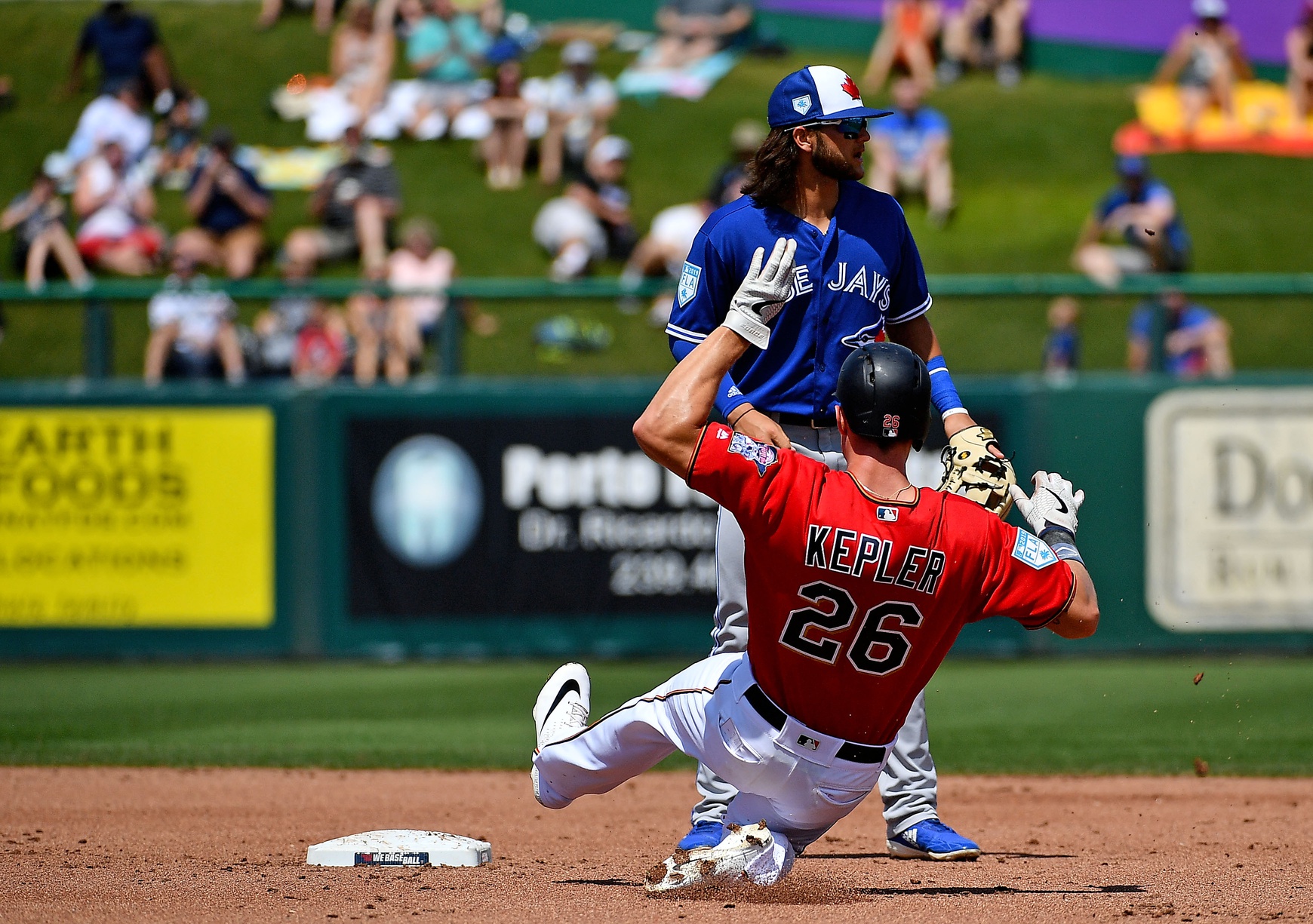 Leading Off: Max Kepler Kepler has started 375 major-league games, and he has batted leadoff in a grand total of zero. In fact, it's the only lineup spot where he's never seen his name written in. But this spring he has found himself atop the order frequently. He was there Monday in Fort Myers, and he will be again Tuesday in Sarasota when the Twins face Baltimore. In the past, Kepler has profiled as a poor fit for leadoff duties, so it's easy enough to see why he hasn't been used there. But his progression last year – namely in terms of plate discipline and at-bat quality, with his BB-rate rising dramatically – changes things. So does the lack of natural leadoff options elsewhere on the roster. After the game, Baldelli made it sound like this new assignment might stick. "We saw this as an opportunity to get him into a spot where we could take advantage of some of his strengths," he explained. "He’s taken to it very well, he’s had very positive comments and remarks with all of us on the idea, and I think it’s something that we’re gonna see going forward." Batting Second: Jorge Polanco Polanco is the other most logical leadoff option, but as a switch-hitter with excellent contact skills, he might fit better in the two-hole. At least, this appears to be Baldelli's leaning. Polanco leads all Twins hitters in sacrifice hits over the past two years with 10, which is helpful to the extent his manager wants to use that tactic. Last year at Baseball Prospectus, Aaron Gleeman wrote about the evolving view of #2 hitters around the league, noting that impact bats have replaced the conventional "bat handlers." In a sense, Polanco brings the best of both worlds. He has strong bat control and can lay down a bunt, but he's also a discerning hitter (he led the team in pitches per plate appearance last year, surpassing even Joe Mauer) with some pop. You really couldn't go wrong with either arrangement of Polanco and Kepler in the top two spots, but I can see the wisdom in Baldelli's thinking. Batting Third: Nelson Cruz Pretty simple and straightforward here. Teams usually bat their best hitter and run producer third, where RISP opportunities tend to be most plentiful. Cruz is clearly the Twins' best hitter and run producer, averaging an .873 OPS and 93 RBIs over the past 10 seasons. He still hasn't gone deep yet this spring – his opportunities have been limited as the Twins have eased the 38-year-old into action – but he came very close on Monday, driving a ball to the deepest part of the park in left-center and settling for an RBI double off the wall. Watching the guy take a few rounds of batting practice will leave no doubt that his prodigious power is still very much intact. Batting Fourth: Eddie Rosario Last spring, I noted that Rosario doesn't really fit the physical mold of a cleanup hitter. But Baldelli, like Paul Molitor before him, looks at Rosie and sees one. He might not have the imposing stature of a Cruz or Miguel Sano, but Rosario's incredible power remains undeniable. He led the Twins in home runs with 24 last year and he's tied for the team lead this spring with four. Here's how his first at-bat against Red Sox starter Nathan Eovaldi went on Monday: Pitch 1: Rosario is just early on a fastball and sends an absolute rocket down the right field line, but it twists foul and sails out of play. Pitch 2: Called strike Pitch 3: Rosario drives another one to right, but this one stays fair and travels forever, eventually bouncing off the rooftop of a bar well beyond the fence He's aggressive and highly dangerous. It also bears noting that Rosario grounded into just three double plays in 133 opportunities last year – the lowest percentage (3%) on the team after Robbie Grossman and Tyler Austin. So that's handy when coming up after potentially your three best OBP guys. Batting Fifth: Marwin Gonzalez On the surface, this seems like a somewhat odd choice. Gonzalez isn't the type of pure slugger you often find in the fifth spot in the order, but he does have power – he hit 16 homers last year after launching a career-high 23 in 2017. More importantly, he's a solid all-around switch hitter who's equally effective from both sides (.740 OPS as LHB, .730 as RHB). This creates late-game matchup problems for an opposing manager trying to navigate the middle of Minnesota's lineup. Wanna go with a righty to try and neutralize Cruz? Okay, the reliever will have to deal with lefties Rosario and Gonzalez next. Want to use a righty against Cruz, then swap in a lefty for Rosario? Okay, now you've got righty-swinging Gonzalez due up, followed by two more RH bats. Batting Sixth: C.J. Cron Next up is Cron, who's coming off a 30-HR campaign for Tampa. While Austin has commanded much of the attention this spring, with his towering blasts and precarious roster footing, Cron has actually outperformed him with an extremely well rounded effort; even after Monday's 0-for-3, he is batting .333 with a .981 OPS, and his four walks are second only to Kepler (5) among players likely to make the roster. Last year with the Rays, a majority of Cron's starts came in either the #2 or #4 spots, so if he's hitting sixth for the Twins regularly that's probably a pretty good sign. Last year, the #6 spot in Minnesota's lineup produced a .662 OPS, and in 2017 it was .705. Needless to say, getting a bat like Cron's (.816 OPS in 2018, .772 career) in there regularly could make a big difference. Batting Seventh: Jonathan Schoop In 2017, his best season as a big-leaguer by far, Schoop posted a .338 OBP, buoyed by a .293 average. Those were both career highs by a significant margin, so even if he rebounds, it's probably more realistic to expect something closer to his career .294 OBP. He can be a potent hitter when he's locked in, but generally Schoop makes a ton of outs, meaning it's only sensible to keep him lower in the order. Batting him seventh reduces the impact of all those outs while still enabling his power to shine behind a string of quality bats. Across MLB last year, #7 hitters slashed .240/.307/.390. Schoop seems like a reasonable bet to at least approximate that production. Batting Eighth: Jason Castro This is simple enough. Castro is the least proficient hitter in the Twins lineup (though not terrible by the standards of his position), so you hide him near the bottom of the order. There's a case to be made for batting him ninth but, for the time being, I like the approach Baldelli seems to be taking there... Batting Ninth: Byron Buxton The #9 spot is sometimes referred to as the second leadoff hitter, because he will frequently bat ahead of your finest bats atop the lineup. Buxton showed again on Monday why he's the kind of dynamic player you want on base for guys like Kepler, Polanco and Cruz – he collected two hits, stole two bases, and also tagged up to take third on a fly ball to right. He's an energizing force at the bottom of the order. "He's a really talented guy that can just do so many different things," Baldelli marveled after the game. At some point, he'll hopefully move up to a higher spot. But given Buxton's recent history of struggles and lapses, it makes sense to limit his exposure and pressure out of the gates. And even in a somewhat reduced capacity, Buck can still be the most exciting, riveting, must-watch #9 hitter in all of baseball.
 -
I don't have a super specific definition, but from my view there are ~30 #1 starters and maybe a dozen aces. I see an "ace" as a guy who I'd be comfortable with in Game 1 of a playoff series. I guess that's the simplest way to put it.
