



Nick Nelson
-
Posts
8,327 -
Joined
-
Last visited
-
Days Won
56
Content Type
Profiles
News
Minnesota Twins Videos
2026 Minnesota Twins Top Prospects Ranking
2022 Minnesota Twins Draft Picks
Minnesota Twins Free Agent & Trade Rumors, Notes, & Tidbits
Guides & Resources
2023 Minnesota Twins Draft Picks
The Minnesota Twins Players Project
2024 Minnesota Twins Draft Picks
2025 Minnesota Twins Draft Pick Tracker
2026 Minnesota Twins Draft Tracker: Picks & Bonuses
Forums
Blogs
Events
Store
Downloads
Gallery
Everything posted by Nick Nelson
-
 What is the risk/downside in signing one or more of these guys to a minors deal? I'll tell you what's risky: going into camp with only what they currently have. In fact it is inexcusably risky. Seven guys with almost zero starting experience between them (or at least almost zero track record of success as a starter). Thorpe and Duffy are not credible contenders for rotation spots.
 -
What if Romero gets hurt in spring training and Mejia doesn't look ready for a starting job after throwing Again, this isn't about pushing the young guys aside or robbing them of opportunities. That's why I'm looking exclusively at non-roster deal candidates.
-
I believe Miley will require a major-league contract to sign. I'm looking for guys that won't require any commitment – no guaranteed deal, no 40-man roster spot required. All upside, no downside. If the Twins aren't getting Keuchel (and let's be honest, they're not), I'm not sure I wanna guarantee anyone else on the market a job over Mejia or Romero. This isn't an alternative to that. It's about having depth and creating competition for jobs. You want these young guys to earn it, right? Mejia did so over Vogelsong in 2017. Similar concept, except I think these players listed all have more legitimate upside than Vogelsong did.
-
As we march into mid-January, with spring training suddenly only weeks away, the Twins' roster is coming into focus. Through various avenues, they've supplemented both the offense and the bullpen. If they are to address the rotation, it's looking less likely they'll do so through a major-league contract. That doesn't necessarily rule out an interesting addition though.The Twins haven't signed a starting pitcher of note this offseason, and haven't really been connected to any via rumors. It's becoming apparent the front office is comfortable with a rotation of Jose Berrios, Kyle Gibson, Jake Odorizzi, Michael Pineda and Adalberto Mejia. That's rational. The first four are clearly viable, and Mejia's out of options. (I wouldn't be surprised if Mejia operated as a "primary pitcher" behind an opener. In fact, it'd surprise me if he didn't.) What's needed now is depth. They've got some with Fernando Romero, Stephen Gonsalves, Chase De Jong and others. But they need experience behind the top five. And the way to get it, without having to commit a 40-man spot or guaranteed salary, is a minor-league contract plus spring training invite. With a sizable pool of free agents remaining, and serious question marks attached to many of them, plenty of starters should be available on non-guaranteed deals. The Twins are in good position to attract such players, offering ample opportunity (Mejia's grip on the fifth job isn't exactly ironclad). Here are six starting pitchers who may end up having to settle for minor-league contracts, and look like potential good fits for the Twins: Clay Buchholz, RHP (34) Buchholz is, to me, exactly the type of pitcher Minnesota should be targeting. He's a talented arm whose only risk point is health. Granted, it's a considerable risk point – he's thrown only 105 total innings over the past two years, and his 2018 ended with a worrisome flexor strain – but before he went down he had a 2.01 ERA and 1.04 WHIP in 16 starts for Arizona, and his career numbers are rock solid. If he comes into camp healthy and looking good, he's probably the team's best fifth starter option. If he proves to be damaged goods, nothing hurt. Marco Estrada, RHP (35) From 2015-16, Estrada was a fantastic pitcher, posting a 3.30 ERA and 1.08 WHIP over 357 innings in the power-packed AL East. In each season he was one of the stingiest starters in the league when it came to allowing hits. He's fallen off over the past two years (5.27 ERA, 1.40 WHIP) and is hitting the market with his stock way down after posting a 7.17 post-break ERA in 2018. While not always healthy, he's been durable enough to throw 128+ innings every year since 2012. Estrada would be nice to have around in the event of a spring training injury in the rotation. Drew Hutchison, RHP (28) Once upon a time, Hutchison was considered a premier young pitching talent in the game, debuting at age 21 for Toronto after rocketing through the minors. The righty has snuffed out most of his own intrigue through many seasons of poor performance and injuries, but preserved enough to get chances with three different teams in 2018. He's only 28 and would be an interesting low-risk camp project for new pitching coach Wes Johnson. Chris Tillman, RHP (30) Similar deal here. Tillman hasn't shown many promising signs over the past two seasons (8.42 ERA in 120 innings) but from 2012 through 2016 he put up a 3.81 ERA for the Orioles while rarely missing a start. He might be cooked, but what if he's not? What if Wes could help him turn it around? Josh Tomlin, RHP (34) Ken Rosenthal reported last week that the Mets were interested in Tomlin on a non-roster deal, but nothing has come to fruition as of yet. If he doesn't go to New York he'd be a logical target for Minnesota, given the Derek Falvey connection (Tomlin has spent the last nine years in Cleveland). The right-hander was brutal last year, and at his best he's merely an average MLB starter, but as a strike-throwing fly ball pitcher he could benefit from the Twins defense. Ervin Santana, RHP (36) Reunion? Red Sox reporter Chris Cotillo relayed a month ago that Santana was "drawing widespread interest" but "more likely to sign when he feels he is fully healthy later in winter." Presumably he'll put on a showcase within the next month, and if he looks good he might get a big-league deal. If not, he'd make sense for Minnesota. His 2018 was a loss, but we saw how good Santana could be during the balance of his time here. He would infuse veteran familiarity. Then again, this bridge might be burnt after sourness emerged toward the front office late last season. There are plenty of other starters on the market who could land on minor-league deals, including Bartolo Colon, Yovani Gallardo, James Shields and Martin Perez. Any of these names interest you? Or do you still feel the club should aim higher on a guaranteed big-league contract? Click here to view the article
-
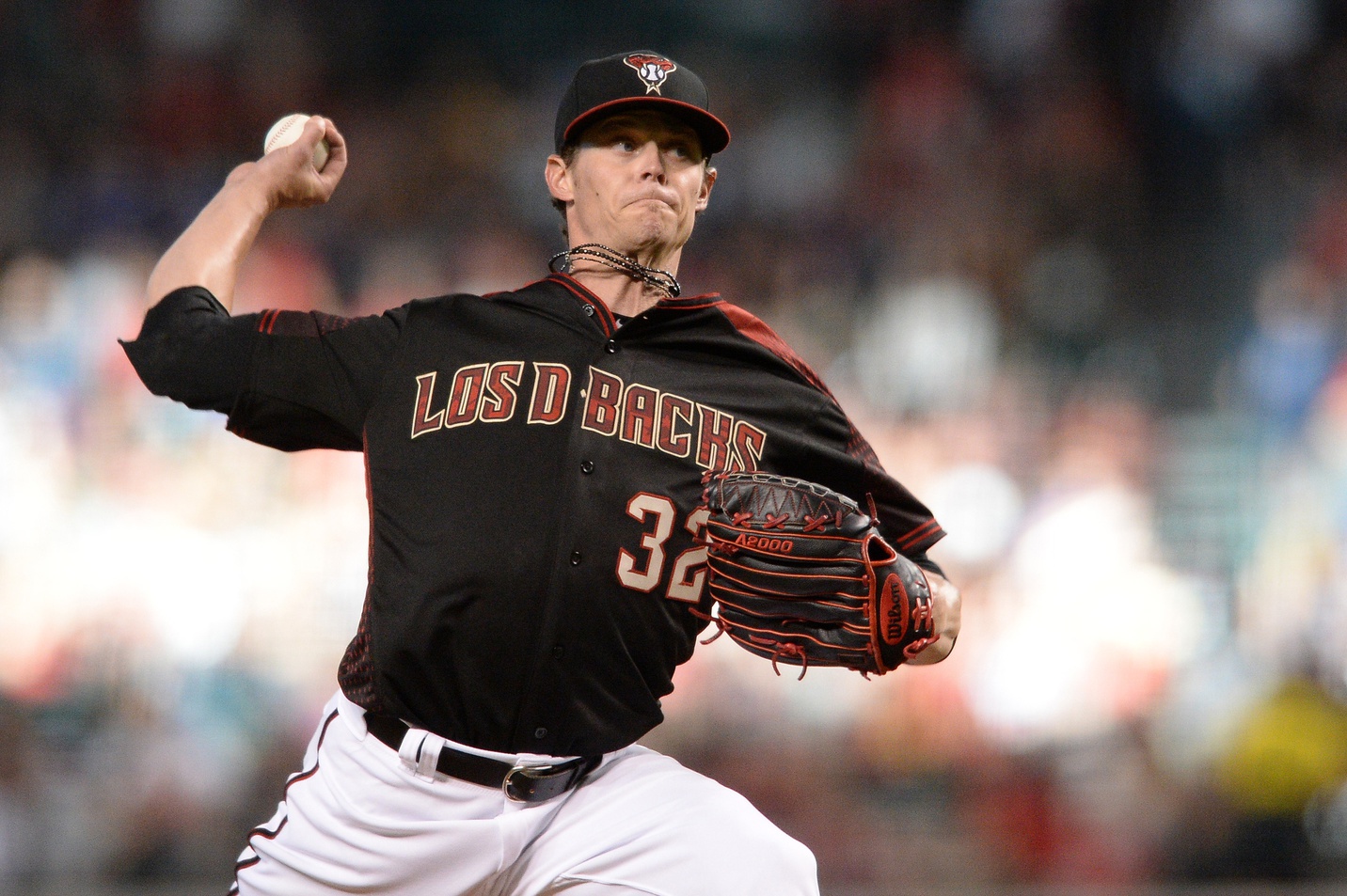 The Twins haven't signed a starting pitcher of note this offseason, and haven't really been connected to any via rumors. It's becoming apparent the front office is comfortable with a rotation of Jose Berrios, Kyle Gibson, Jake Odorizzi, Michael Pineda and Adalberto Mejia. That's rational. The first four are clearly viable, and Mejia's out of options. (I wouldn't be surprised if Mejia operated as a "primary pitcher" behind an opener. In fact, it'd surprise me if he didn't.) What's needed now is depth. They've got some with Fernando Romero, Stephen Gonsalves, Chase De Jong and others. But they need experience behind the top five. And the way to get it, without having to commit a 40-man spot or guaranteed salary, is a minor-league contract plus spring training invite. With a sizable pool of free agents remaining, and serious question marks attached to many of them, plenty of starters should be available on non-guaranteed deals. The Twins are in good position to attract such players, offering ample opportunity (Mejia's grip on the fifth job isn't exactly ironclad). Here are six starting pitchers who may end up having to settle for minor-league contracts, and look like potential good fits for the Twins: Clay Buchholz, RHP (34) Buchholz is, to me, exactly the type of pitcher Minnesota should be targeting. He's a talented arm whose only risk point is health. Granted, it's a considerable risk point – he's thrown only 105 total innings over the past two years, and his 2018 ended with a worrisome flexor strain – but before he went down he had a 2.01 ERA and 1.04 WHIP in 16 starts for Arizona, and his career numbers are rock solid. If he comes into camp healthy and looking good, he's probably the team's best fifth starter option. If he proves to be damaged goods, nothing hurt. Marco Estrada, RHP (35) From 2015-16, Estrada was a fantastic pitcher, posting a 3.30 ERA and 1.08 WHIP over 357 innings in the power-packed AL East. In each season he was one of the stingiest starters in the league when it came to allowing hits. He's fallen off over the past two years (5.27 ERA, 1.40 WHIP) and is hitting the market with his stock way down after posting a 7.17 post-break ERA in 2018. While not always healthy, he's been durable enough to throw 128+ innings every year since 2012. Estrada would be nice to have around in the event of a spring training injury in the rotation. Drew Hutchison, RHP (28) Once upon a time, Hutchison was considered a premier young pitching talent in the game, debuting at age 21 for Toronto after rocketing through the minors. The righty has snuffed out most of his own intrigue through many seasons of poor performance and injuries, but preserved enough to get chances with three different teams in 2018. He's only 28 and would be an interesting low-risk camp project for new pitching coach Wes Johnson. Chris Tillman, RHP (30) Similar deal here. Tillman hasn't shown many promising signs over the past two seasons (8.42 ERA in 120 innings) but from 2012 through 2016 he put up a 3.81 ERA for the Orioles while rarely missing a start. He might be cooked, but what if he's not? What if Wes could help him turn it around? Josh Tomlin, RHP (34) Ken Rosenthal reported last week that the Mets were interested in Tomlin on a non-roster deal, but nothing has come to fruition as of yet. If he doesn't go to New York he'd be a logical target for Minnesota, given the Derek Falvey connection (Tomlin has spent the last nine years in Cleveland). The right-hander was brutal last year, and at his best he's merely an average MLB starter, but as a strike-throwing fly ball pitcher he could benefit from the Twins defense. Ervin Santana, RHP (36) Reunion? Red Sox reporter Chris Cotillo relayed a month ago that Santana was "drawing widespread interest" but "more likely to sign when he feels he is fully healthy later in winter." Presumably he'll put on a showcase within the next month, and if he looks good he might get a big-league deal. If not, he'd make sense for Minnesota. His 2018 was a loss, but we saw how good Santana could be during the balance of his time here. He would infuse veteran familiarity. Then again, this bridge might be burnt after sourness emerged toward the front office late last season. There are plenty of other starters on the market who could land on minor-league deals, including Bartolo Colon, Yovani Gallardo, James Shields and Martin Perez. Any of these names interest you? Or do you still feel the club should aim higher on a guaranteed big-league contract?
 -
I don't see it. By that same token you could use this quote from Derek Falvey -- “He’s our starting center fielder. That’s who Byron Buxton is. That’s clear to us moving forward." -- in the same way. The team claimed they kept Buxton down in the interest of his long-term health/development, and whether you buy it or not, it's not affected by anything they do now. I understand the skepticism about a contract extension at this point in time, but I personally think the risk is worthwhile for the Twins, and I have a hard time seeing how them saying, "We still believe in you, we're ready to make a $50 million commitment and prove that, otherwise we'll be happy to revisit the topic in a year," would somehow be taken as an insult by Buxton and his agent.
-
Article: Solving Stephen Gonsalves
Nick Nelson replied to Nick Nelson's topic in Twins Daily Front Page News
Given that he also had control issues in the minors, where he had zero reason not to trust his stuff, I'm guessing it's mostly the former. As mentioned in the article, that's not all that rare or surprising for a pitcher in his mold. But even marginal improvements in control might make a big difference for Gonsalves. -
Article: Solving Stephen Gonsalves
Nick Nelson replied to Nick Nelson's topic in Twins Daily Front Page News
No one thinks a .098 BAA or 1.46 ERA are sustainable for Gonsalves. The point is that there are underlying elements of his performance during that stretch that seem legit. He doesn't get hit hard and that tends to limit the damage on balls in play. -
When I posted my series ranking the Top 20 Minnesota Twins assets over the past couple of weeks, there were plenty of quibbles and disagreements expressed, serving to me as a good gauge of how TD's community at large is feeling about various players. One asset that many people seem to be down on is Stephen Gonsalves, which isn't too surprising. But to me, he seems like a player worthy of a closer look.In his final three appearances for the Twins in 2018 – all coming in relief of an "opener" – Gonsalves threw 12 1/3 innings, faced 50 batters, and allowed four hits. All singles. That's a .098 batting average and a .098 slugging percentage. While it was a small sample, and more than offset by the .414 AVG and .621 SLG he allowed in his first four starts, this unhittable stretch was still noteworthy. It's noteworthy because it mirrors the formula that brought Gonsalves immense success at every level of the minors. The left-hander has a fairly rare strength working in his favor, and it was on display during an otherwise rough MLB debut: He is very, very hard to square up. And while other aspects of his game may need a lot of work, that's not a bad foundation. *** It's important to keep this in mind: Gonsalves has lots of development ahead of him yet. What we saw in 2018 was (hopefully) not the finished product. He's still only 24 and has two options remaining, so through next year, the Twins can shuttle him to Triple-A as needed to work with Rochester pitching coach Stu Cliburn on the flaws that are holding back his game. In many ways, Gonsalves is the prototype for a pitcher who takes extra time to reach his potential – tall, long and gangly, with inconsistent mechanics that require extensive refinement. I'm not saying that means he will reach his potential, only that he has those makings. Control has been an issue for Gonsalves all along, and his wildness came to roost in Minnesota, where he issued 22 walks in 24 2/3 innings of work. In Triple-A his 13.4% BB-rate was the highest out of 35 pitchers to throw 100+ innings. When Gonsalves is outside of the zone, he doesn't really get people to chase, and when he's in the zone he doesn't really get people to miss. Gonsalves allows quite a bit of contact. But he doesn't allow much loud contact. In 23 outings between Double-A and Triple-A before his call-up in 2018, he held opponents to a .184 average and .283 slugging percentage. He had a six-start stretch from June to July in Rochester where he didn't allow a single extra-base hit. Despite being a heavy fly ball pitcher, he has the same minuscule HR/9 rate in the minors as ground ball specialist extraordinaire Kohl Stewart. Even though he got knocked around in his first exposure to the majors, yielding a 6.57 ERA and 2.03 WHIP in seven total appearances, Gonsalves allowed just two homers and seven total XBHs while facing 122 total batters. His track record tells us there's nothing fluky about that. *** At present, the Twins have an open vacancy in their rotation behind Jose Berrios, Kyle Gibson, Jake Odorizzi and Michael Pineda. There are a number of candidates to fill it, and Gonsalves isn't at the front of the line. He's not as good as Fernando Romero and he doesn't have Adalberto Mejia's out-of-options impetus. So, barring injuries, I'd say Gonsalves' chances of winning a job out of camp are very low, even if the Twins don't sign another starter. But that's just fine. The Twins' mission for the next two seasons – between Wes Johnson, Jeremy Hefner, Cliburn, Mike McCarthy, and the rest of the pitching braintrust – is to iron out the kinks in Gonsalves' game and turning him into a quality option for the back half of the rotation. The southpaw's weaknesses are evident, but don't sleep on the strengths that carried him to a 2.46 ERA and 6.4 H/9 rate in 600 minor-league innings – as well as a stunningly strong finish in his first big-league season. Click here to view the article
-
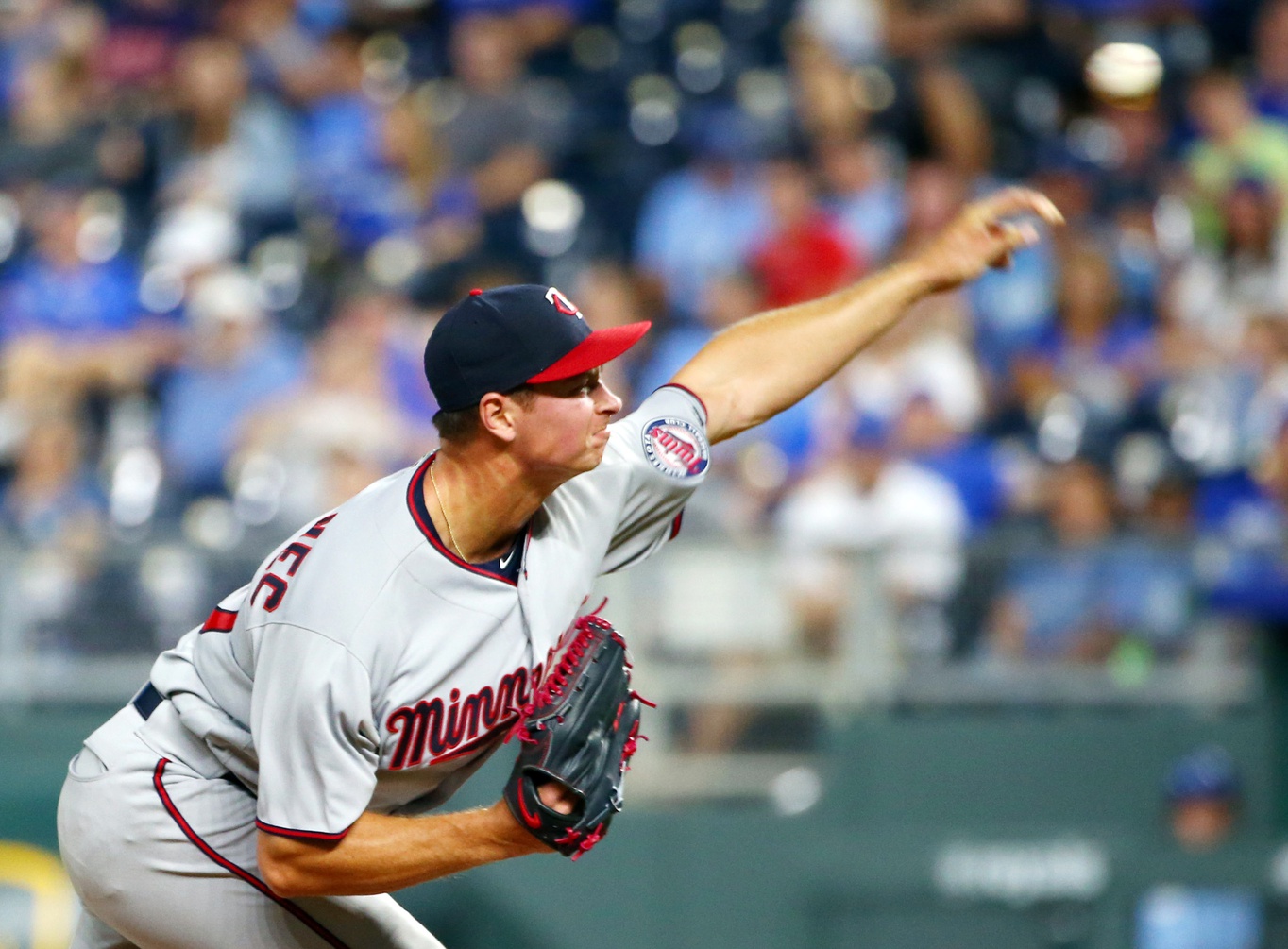 In his final three appearances for the Twins in 2018 – all coming in relief of an "opener" – Gonsalves threw 12 1/3 innings, faced 50 batters, and allowed four hits. All singles. That's a .098 batting average and a .098 slugging percentage. While it was a small sample, and more than offset by the .414 AVG and .621 SLG he allowed in his first four starts, this unhittable stretch was still noteworthy. It's noteworthy because it mirrors the formula that brought Gonsalves immense success at every level of the minors. The left-hander has a fairly rare strength working in his favor, and it was on display during an otherwise rough MLB debut: He is very, very hard to square up. And while other aspects of his game may need a lot of work, that's not a bad foundation. *** It's important to keep this in mind: Gonsalves has lots of development ahead of him yet. What we saw in 2018 was (hopefully) not the finished product. He's still only 24 and has two options remaining, so through next year, the Twins can shuttle him to Triple-A as needed to work with Rochester pitching coach Stu Cliburn on the flaws that are holding back his game. In many ways, Gonsalves is the prototype for a pitcher who takes extra time to reach his potential – tall, long and gangly, with inconsistent mechanics that require extensive refinement. I'm not saying that means he will reach his potential, only that he has those makings. Control has been an issue for Gonsalves all along, and his wildness came to roost in Minnesota, where he issued 22 walks in 24 2/3 innings of work. In Triple-A his 13.4% BB-rate was the highest out of 35 pitchers to throw 100+ innings. When Gonsalves is outside of the zone, he doesn't really get people to chase, and when he's in the zone he doesn't really get people to miss. Gonsalves allows quite a bit of contact. But he doesn't allow much loud contact. In 23 outings between Double-A and Triple-A before his call-up in 2018, he held opponents to a .184 average and .283 slugging percentage. He had a six-start stretch from June to July in Rochester where he didn't allow a single extra-base hit. Despite being a heavy fly ball pitcher, he has the same minuscule HR/9 rate in the minors as ground ball specialist extraordinaire Kohl Stewart. Even though he got knocked around in his first exposure to the majors, yielding a 6.57 ERA and 2.03 WHIP in seven total appearances, Gonsalves allowed just two homers and seven total XBHs while facing 122 total batters. His track record tells us there's nothing fluky about that. *** At present, the Twins have an open vacancy in their rotation behind Jose Berrios, Kyle Gibson, Jake Odorizzi and Michael Pineda. There are a number of candidates to fill it, and Gonsalves isn't at the front of the line. He's not as good as Fernando Romero and he doesn't have Adalberto Mejia's out-of-options impetus. So, barring injuries, I'd say Gonsalves' chances of winning a job out of camp are very low, even if the Twins don't sign another starter. But that's just fine. The Twins' mission for the next two seasons – between Wes Johnson, Jeremy Hefner, Cliburn, Mike McCarthy, and the rest of the pitching braintrust – is to iron out the kinks in Gonsalves' game and turning him into a quality option for the back half of the rotation. The southpaw's weaknesses are evident, but don't sleep on the strengths that carried him to a 2.46 ERA and 6.4 H/9 rate in 600 minor-league innings – as well as a stunningly strong finish in his first big-league season.
 -
Buxton pushed himself back on the field to try and help the team, to his own detriment. I'd think that's the commitment of thing you want to reward. I guarantee you there's not a single person in the Twins system who doubts Buxton's skill, ability or effort. The message sent by keeping Buxton off the September roster to preserve his service time is far more harmful, frankly.
-
The thing to keep in mind is how young Buxton still is. He can sign an extension that buys out two years of free agency and still hit the open market at age 30.
-
Even a league-average swing-and-miss staff would represent huge progress compared to where the Twins were a few short years ago. Also, the aggregate MLB numbers I listed before included relievers as well -- if you take them out of the equation, starters combined for a 10.2% whiff rate last year. All five 2019 Twins starters could easily be above that. And the bullpen has its share of strong whiff rates too (May 15.4%, Hildy 13%, Rogers 11.4%, etc)
-
Herrera comes off the market, going to a rival:
-
Tweeted about this, but these two numbers give me pause with Parker: 1) His outstanding 2017 numbers were aided by a .219 BABIP (.288 career) 2) His decent numbers in 2018 were aided by an 89.4% strand rate (3rd-highest in MLB)
-
He and his agent would be silly to say no if the money is right. Buxton is 4 years away from free agency. Regardless of his feelings toward the team, he's here for a while. And given his history of injuries, financial security is important to him.
-
I don't know that it was really a dig. This is a results-based business. It's noteworthy when a guy gets extended after three straight terrible seasons in terms of W/L. And he was fired a year later.
-
Extensions are usually signed/announced in spring training. So I wouldn't make too much out of that yet. But if the season starts and they don't have at least Berrios locked up long-term, I'll be really disappointed.
-
Looking back, the 2013 season was probably the low point of Minnesota's competitive lull. Not in terms of results – we all know nothing can top 2016 – but in terms of stagnating strategy and vision. That 2013 team epitomized the negative traits that torpedoed the Twins out of contention, and into a lengthy rebuild that continues now. Five years later, it's interesting to take a step back and recognize just how much has changed – and how drastically the Twins have pivoted to adapt in the new era of baseball. Better late than never.The worst thing that happened to the Twins in 2013 was Joe Mauer's concussion. No question. That drastically altered the franchise's course, and couldn't have been avoided. But more broadly, there were a lot of things to hate about that season. The five pitchers to receive the most starts for Minnesota were Kevin Correia, Mike Pelfrey, Scott Diamond, Sam Deduno and Pedro Hernandez. Opening Day starter Vance Worley posted a 7.21 ERA in 10 starts and was gone a year later. A punchless lineup produced only 614 runs, and nobody hit even 20 homers. Chris Parmelee, Pedro Florimon and Clete Thomas (!) all received 300+ PA. It was a terribly built team that performed terribly, getting outscored by 174 runs. And as Twins fans rung in the new year of 2014, they had little concrete reason to hope for better days ahead. Ron Gardenhire had received a two-year extension in November, despite overseeing three straight seasons of 95+ losses. Terry Ryan remained firmly entrenched in the GM's chair. Today, as we head into 2019, all has changed. The Twins have a new manager, new front-office leadership, new personnel everywhere, and a completely new set of guiding philosophies. I think this is reflected best by the dramatic reshaping of the pitching staff. In 2013, the Twins had zero starting pitchers with a swinging strike rate in the double digits. Rookies Kyle Gibson and Cole De Vries (who made two starts) tied for the team lead at 8.2%. The rotation collectively averaged 4.9 K/9. In 2019, the Twins currently have four slotted starters. Here are the SwStr% and K/9 rates from their most recent seasons: Jose Berrios (2018): 11.3%, 9.5 Kyle Gibson (2018): 11.5%, 8.1 Jake Odorizzi (2018): 10.2%, 8.9 Michael Pineda (2017): 12.1%, 8.6 We can throw in Fernando Romero as the fifth starter for now (10.6% swinging strikes, 7.3 K/9), and you've got a full rotation where the lowest whiff and strikeout rates are better than the highest in 2013. Sure, this is reflective of the game's general evolution to some extent (MLB's overall swinging strike rate was up from 9.4% in 2013 to 10.7% in 2018), but it also speaks to the front office's refreshing focus on stuff, velocity and missed bats. At almost every stop, they have sought and elevated pitchers with high-powered arms. Pitch to contact is dead. The Twins now pack much more firepower on the offensive side, too. As mentioned, the 2013 team – a mixture of light-hitting profiles and fading former sluggers – had zero players reach 20 homers. The projected 2019 Twins lineup has six players projected to hit 20+ (per FanGraphs). If Miguel Sano gets healthy and rebounds, you've got two of baseball's hardest-hitting players potentially coming at you back-to-back: Download attachment: hardhitleaders.png Through the additions of Nelson Cruz, Jonathan Schoop and C.J. Cron (not to mention Jake Cave, Tyler Austin, Logan Morrison and others) the Twins have clearly emphasized building a threatening lineup full of aggressive, ferocious swingers. If it means sacrificing some OBP and defense, so be it. It's a bold gambit, but at least it's an assertive one. I don't know if the 2019 Twins will be successful. No one does. But I do know this much: They will be wildly different in terms of fundamental composition than those bland, lackluster teams that sucked the life out of Target Field in the earlier part of the decade. For that, I'm very thankful. And excited. Suddenly, we're only five weeks away from pitchers and catchers reporting to Ft. Myers. Click here to view the article
-
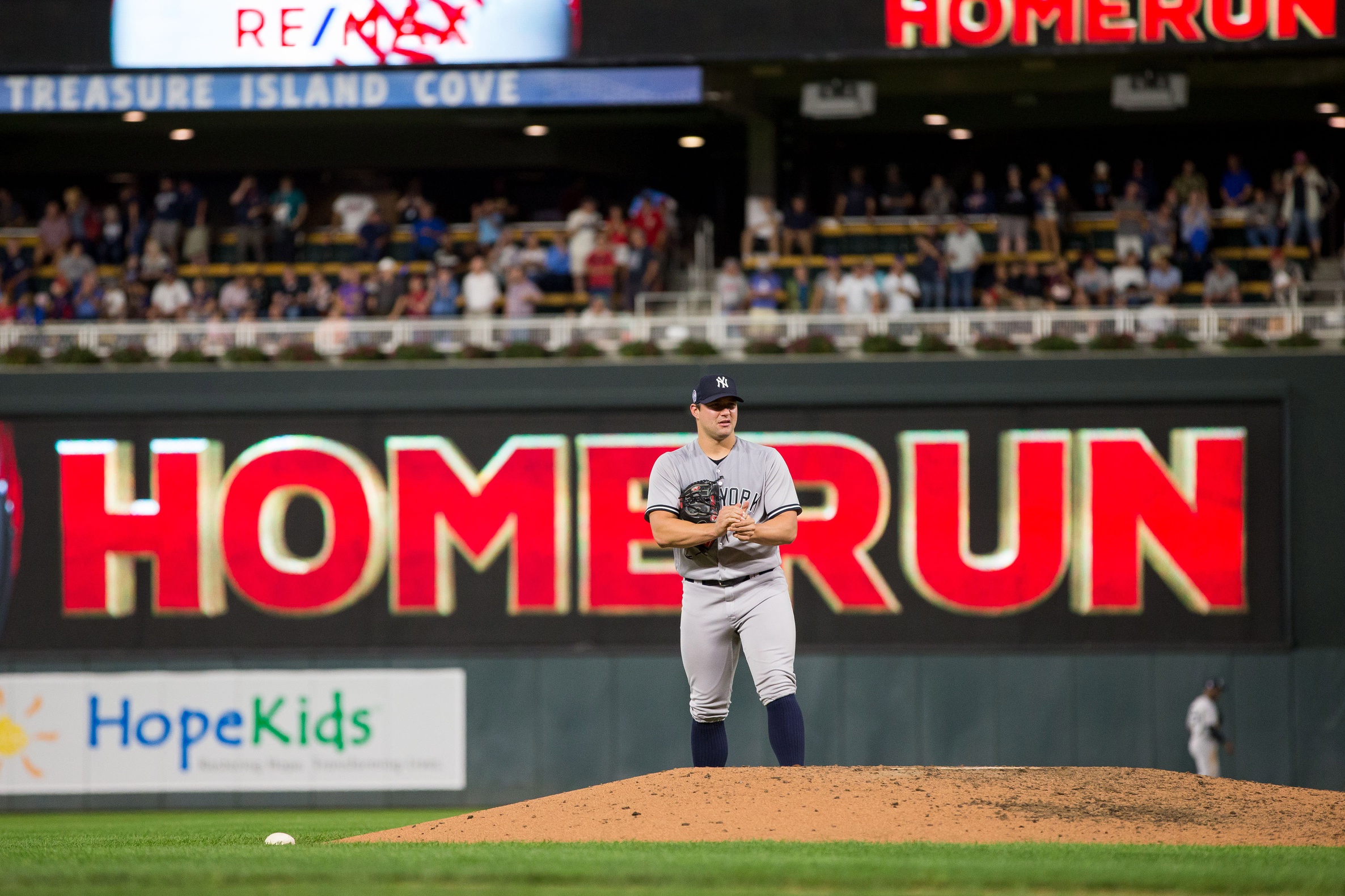 The worst thing that happened to the Twins in 2013 was Joe Mauer's concussion. No question. That drastically altered the franchise's course, and couldn't have been avoided. But more broadly, there were a lot of things to hate about that season. The five pitchers to receive the most starts for Minnesota were Kevin Correia, Mike Pelfrey, Scott Diamond, Sam Deduno and Pedro Hernandez. Opening Day starter Vance Worley posted a 7.21 ERA in 10 starts and was gone a year later. A punchless lineup produced only 614 runs, and nobody hit even 20 homers. Chris Parmelee, Pedro Florimon and Clete Thomas (!) all received 300+ PA. It was a terribly built team that performed terribly, getting outscored by 174 runs. And as Twins fans rung in the new year of 2014, they had little concrete reason to hope for better days ahead. Ron Gardenhire had received a two-year extension in November, despite overseeing three straight seasons of 95+ losses. Terry Ryan remained firmly entrenched in the GM's chair. Today, as we head into 2019, all has changed. The Twins have a new manager, new front-office leadership, new personnel everywhere, and a completely new set of guiding philosophies. I think this is reflected best by the dramatic reshaping of the pitching staff. In 2013, the Twins had zero starting pitchers with a swinging strike rate in the double digits. Rookies Kyle Gibson and Cole De Vries (who made two starts) tied for the team lead at 8.2%. The rotation collectively averaged 4.9 K/9. In 2019, the Twins currently have four slotted starters. Here are the SwStr% and K/9 rates from their most recent seasons: Jose Berrios (2018): 11.3%, 9.5 Kyle Gibson (2018): 11.5%, 8.1 Jake Odorizzi (2018): 10.2%, 8.9 Michael Pineda (2017): 12.1%, 8.6 We can throw in Fernando Romero as the fifth starter for now (10.6% swinging strikes, 7.3 K/9), and you've got a full rotation where the lowest whiff and strikeout rates are better than the highest in 2013. Sure, this is reflective of the game's general evolution to some extent (MLB's overall swinging strike rate was up from 9.4% in 2013 to 10.7% in 2018), but it also speaks to the front office's refreshing focus on stuff, velocity and missed bats. At almost every stop, they have sought and elevated pitchers with high-powered arms. Pitch to contact is dead. The Twins now pack much more firepower on the offensive side, too. As mentioned, the 2013 team – a mixture of light-hitting profiles and fading former sluggers – had zero players reach 20 homers. The projected 2019 Twins lineup has six players projected to hit 20+ (per FanGraphs). If Miguel Sano gets healthy and rebounds, you've got two of baseball's hardest-hitting players potentially coming at you back-to-back: Through the additions of Nelson Cruz, Jonathan Schoop and C.J. Cron (not to mention Jake Cave, Tyler Austin, Logan Morrison and others) the Twins have clearly emphasized building a threatening lineup full of aggressive, ferocious swingers. If it means sacrificing some OBP and defense, so be it. It's a bold gambit, but at least it's an assertive one. I don't know if the 2019 Twins will be successful. No one does. But I do know this much: They will be wildly different in terms of fundamental composition than those bland, lackluster teams that sucked the life out of Target Field in the earlier part of the decade. For that, I'm very thankful. And excited. Suddenly, we're only five weeks away from pitchers and catchers reporting to Ft. Myers.
 -
I wouldn't call it a waste. The first half-season after being drafted is generally about getting a guy acclimated to the pro culture and lifestyle, as opposed to putting them immediately on the fast-track to the majors. If Larnach follows the same path as Rooker next year he could potentially be poised for an early-2020 debut. What's "out of reach" for Buxton? He hit 10 HR in September of 2016 alone. He stole 16 bases on 16 attempts in the second half of 2017. He was also named the most valuable defensive player in baseball that year. It's not like he hasn't shown his ability on the field.
-
You might be right (probably are) but right now all we have to go by is 177 PA in rookie-ball and Low-A. He did what you expect from a first-round bat-first college draft pick, and hasn't been meaningfully challenged yet. If he puts together a quality first full season he'll be on here. He's really smart and sophisticated in his mindset about hitting, and he has an uncommon ability to drive and elevate the ball, which points to sustainably prolific power. This article calls him one of the top breakout candidates in the minors for that reason.
- 49 replies
-
- 2
-

-
- brusdar graterol
- alex kirilloff
- (and 3 more)
-
Pitchers who can throw in the high 90s, miss bats, and potentially stick as starters are always going to be in high demand. You can never have too many. Rosario and Kepler are both very good defensive outfielders – also a generally valuable profile. It's not clear to me that Larnach or Rooker are going to have much of any defensive value, which means they basically HAVE to hit to be valuable. Both show a lot of promise in that department but we just need to see more. When you start your career toward the bottom of the defensive spectrum there's a lot less margin for coming up short of offensive expectations/potential.
- 49 replies
-
- 1
-
-
- brusdar graterol
- alex kirilloff
- (and 3 more)
-
Thorpe was right on the fringe. Might've been #21. But I've just heard/read enough lukewarm reports on him to temper my optimism at this time, despite the undeniably outstanding performance last year. BP has him 8th among Twins prospects and BA doesn't even have him in their top 10.
-
Here's the way I was looking at it, when thinking about prospects compared to presently established big-leaguers: Is this prospect good enough that I could trade them right now and get a majorly impactful player that would considerably alter my short-term fortunes? With Lewis, Kirilloff, and Graterol, I think the answer is yes. With anyone else (at least on their own), I'm not so sure. That's why the true top-tier prospects are separated from the rest in this equation. Nick Gordon would probably bring back more in a trade than, say, C.J. Cron. But you're not getting any huge difference-maker for him. More than likely you're getting an okay MLB asset or a similar minor-league lotto ticket. Also, there's no logic to trading Gordon with his value all the way down so the point is moot.
- 49 replies
-
- 1
-
-
- brusdar graterol
- alex kirilloff
- (and 3 more)
