



Nick Nelson
-
Posts
8,327 -
Joined
-
Last visited
-
Days Won
56
Content Type
Profiles
News
Minnesota Twins Videos
2026 Minnesota Twins Top Prospects Ranking
2022 Minnesota Twins Draft Picks
Minnesota Twins Free Agent & Trade Rumors, Notes, & Tidbits
Guides & Resources
2023 Minnesota Twins Draft Picks
The Minnesota Twins Players Project
2024 Minnesota Twins Draft Picks
2025 Minnesota Twins Draft Pick Tracker
2026 Minnesota Twins Draft Tracker: Picks & Bonuses
Forums
Blogs
Events
Store
Downloads
Gallery
Everything posted by Nick Nelson
-
 Um, Cruz is a MUCH better bet to reach 20 or 40 home runs in either of the next two years than Sano at this point. That's not even debatable. And then Sano has one year of control remaining after that. Sano's age obviously does work in his favor but his trend line has been moving consistently downward for some time and he has established a new floor.
- 80 replies
-
- 3
-

-
- stephen gonsalves
- miguel sano
- (and 3 more)
-
Before, and a good point. Once this list is published completely, I think it'll be interesting to discuss how Cruz's presence may alter some of the other rankings (not to mention where he'd place). A reasonable take, to be sure. Sano's ranking is basically meant to reflect the enormous amount of risk attached to him as an asset now. I don't think he can succeed as a guy who strikes out almost 40% of the time and walks less than 10% of the time but that's become his reality. His health and durability are complete question marks. His defensive value is a mystery. The question isn't whether he'll turn things around and turn into a quality player. The question is whether he'll do it here. Right now he's got a long way to go and as I wrote, the clock is ticking. For the record, I am personally a believer in Sano and I think he'll rejuvenate his status this year. I just don't think that can be counted on. I'm curious to hear why people feel differently. I mean, the Twins just acquired an almost guaranteed 40-HR hitter, who was openly available, for nothing but $14m on a one-year deal. So we really need to ask ourselves how valuable that trait on its own is.
-
Haha, whew. A couple nuggets of food for thought before I go to bed and wake up to a hell storm. Since appearing in the 2017 All Star Game, Miguel Sano has: * Hit .210/.291/.370 in 437 plate appearances * Played in 103 of a possible 236 games for the Twins * Struck out at a 38% rate, with only 9% walks * Suffered two serious injuries to the same leg, each lingering into the offseason * Been optioned straight to Single-A Because these are annually updated rankings, I'm attempting to heavily factor recent track record into the equation. You can argue I'm going too far with that here, and you might be right. But in the last 17 months Sano's stock has been on a steady downward plane.
- 80 replies
-
- 8
-
-
- stephen gonsalves
- miguel sano
- (and 3 more)
-
Just to pre-empt any, "Are you saying Garver would get more back in a trade than Sano??" objections, that's not exactly the point of this exercise. I'm evaluating not in terms of what players would be worth independently, if the team shut it down and sold off all parts. I'm evaluating based on their value to the franchise's current path and vision. Trade value comes into play, but not really in a case like this, because there's no reason to trade Sano at this moment in time. It'd be silly. That said, welcoming all comments/questions/debate!
- 80 replies
-
- 3
-
-
- stephen gonsalves
- miguel sano
- (and 3 more)
-
This is the second in a four-part series ranking the top 20 player assets in the Minnesota Twins organization. The idea is to think solely in terms of commodity valuation, factoring in things like age, cost, control, and risk management in answering the question: which players are most essential to this team's vision? Last week we looked at Nos. 20 through 16. Today we continue the countdown with Nos. 15 through 11.15. Stephen Gonsalves, LHP (24) 2018 Ranking: 10 In some ways, Gonsalves took a big step forward in 2018. He pitched brilliantly over 100 innings at Triple-A, solidifying his supremacy over minor-league hitters. He then received his first promotion to the big leagues, making seven appearances for the Twins in August and September. Gonsalves' MLB debut was a mixed bag. He was brutal in his first four starts (11.68 ERA and 3.00 WHIP in 12 1/3 innings) then excelled in three appearances as a "primary" (1.46 ERA and 1.05 WHIP). The true pitcher lies somewhere in between these two extremes, but there were enough troubling signs during his time with the Twins (shoddy control, untenably low 6% swinging strike rate) to cast serious doubt on his viability as anything more than a back-of-rotation starter. Not that this is without value – especially at a low cost. 14. Miguel Sano, 3B (25) 2018 Ranking: 4 It was a rough, rough year for the third baseman, who saw his stock plummet like a mile-high fly ball hurtling down to Earth. Seemingly never quite right after undergoing major surgery on his leg during the previous offseason, Sano played poorly enough to merit a demotion all the way to Single-A in June. He made his way back six weeks later but didn't look much better, and played only four games in September due to another leg injury. The innate talent that resides within Sano is plainly obvious, but so too is the reality at hand: if he doesn't reverse course, he's on his way to going from promising young slugger to marginal asset – chronically dinged up, obscenely strikeout-prone, defensively inflexible, and generally unproductive. (This is also known as the Oswaldo Arcia Path.) He's got much to prove, and it starts with completing his ambitious offseason conditioning program, which the Twins are monitoring closely. If he comes back in improved shape, with his left leg issues finally behind him, maybe that talent starts to reemerge. Few players can hit or throw the ball as hard. Sano is eligible for arbitration this offseason for the first time, meaning free agency is only three years away. The clock ticks on his turnaround. 13. Kyle Gibson, RHP (31) 2018 Ranking: N/A At long last, things came together for Gibson. For many years, his arsenal showed the potential to overpower big-league hitters, but that didn't really come to fruition. In the latter half of 2017 he seemingly turned a corner, and then he backed it up big-time in 2018. His 11.5% swinging strike rate was easily a career high, edging Jose Berrios (11.3%) to lead the rotation. Gibson's performance wasn't flawless by any means, but he was steady and effective, bringing length to a starting corps that needed it. As long as he stays healthy in 2019 there's little reason to expect a step back. The factors suppressing his ranking on this list are age (turned 31 in October), cost (likely to make around $9 million in 2019), and control (free agent after next season). 12. Trevor May, RHP (29) 2018 Ranking: 19 It's not clear yet how the Twins plan to deploy May going forward. He might be a closer, after looking awfully good in the role down the stretch. He might be a bullpen fireman, called upon in tight spots to unleash his elite swing-and-miss stuff. He might be a multi-inning long reliever, given his historically strong and durable arm. And I still happen to think he could be a pretty good starter. This much is clear: May is an awfully nice piece for the Twins to have around, and a real game-changer for their pitching staff. He is under control for two more years and will remain inexpensive in 2019, since he's spent most of the past two seasons rehabbing. 11. Mitch Garver, C (28) 2018 Ranking: N/A A few weeks ago, I posed an open question: Is Mitch Garver still a catcher? I'm not sure we definitively know the answer, but the general assumption right now seems to be "yes." And if so, he's a borderline Top 10 asset to the organization. This is true because of the scarcity he addresses – Jason Castro is one year away from free agency and the system lacks any high-level catching depth – but also because he's just shown to be a solid player at the position. Garver's rookie production, which progressively improved over the summer, was above-average for a catcher. Reviews on his defense varied but he did show some positive signs of improvement and making adjustments. Turning 28 in a couple weeks, he's not young relative to others in this emerging core, but he's inexpensively controllable for years to come. With that said, concussion concerns will hang over him until he goes a prolonged period without incidents or setbacks. RECAPPING THE RANKINGS: 20. Nick Gordon, SS 19. C.J. Cron, 1B 18. Adalberto Mejia, LHP 17. Jake Cave, OF 16. Wander Javier, SS 15. Stephen Gonsalves, LHP 14. Miguel Sano, 3B 13. Kyle Gibson, RHP 12. Trevor May, RHP 11. Mitch Garver, C Click here to view the article
- 80 replies
-
- 1
-
-
- stephen gonsalves
- miguel sano
- (and 3 more)
-
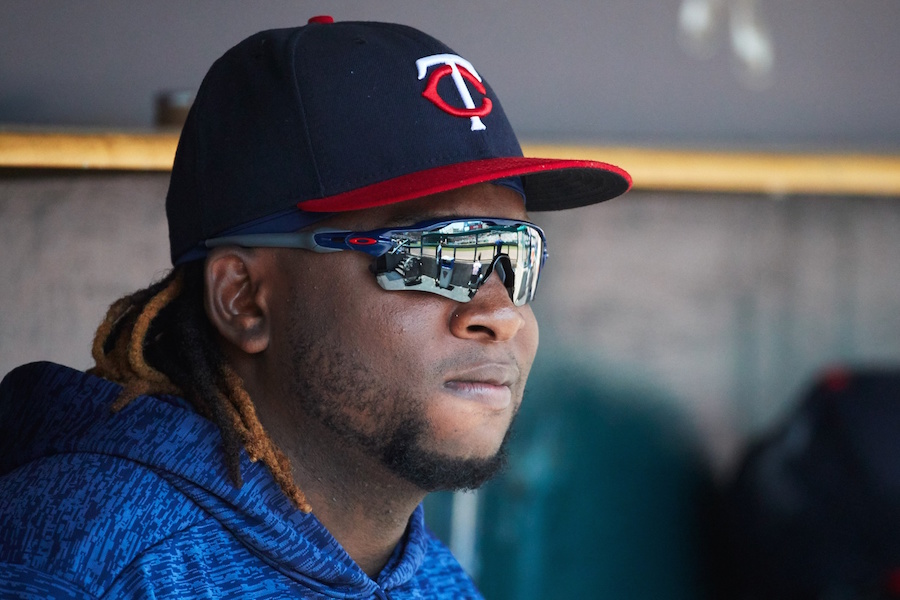 15. Stephen Gonsalves, LHP (24) 2018 Ranking: 10 In some ways, Gonsalves took a big step forward in 2018. He pitched brilliantly over 100 innings at Triple-A, solidifying his supremacy over minor-league hitters. He then received his first promotion to the big leagues, making seven appearances for the Twins in August and September. Gonsalves' MLB debut was a mixed bag. He was brutal in his first four starts (11.68 ERA and 3.00 WHIP in 12 1/3 innings) then excelled in three appearances as a "primary" (1.46 ERA and 1.05 WHIP). The true pitcher lies somewhere in between these two extremes, but there were enough troubling signs during his time with the Twins (shoddy control, untenably low 6% swinging strike rate) to cast serious doubt on his viability as anything more than a back-of-rotation starter. Not that this is without value – especially at a low cost. 14. Miguel Sano, 3B (25) 2018 Ranking: 4 It was a rough, rough year for the third baseman, who saw his stock plummet like a mile-high fly ball hurtling down to Earth. Seemingly never quite right after undergoing major surgery on his leg during the previous offseason, Sano played poorly enough to merit a demotion all the way to Single-A in June. He made his way back six weeks later but didn't look much better, and played only four games in September due to another leg injury. The innate talent that resides within Sano is plainly obvious, but so too is the reality at hand: if he doesn't reverse course, he's on his way to going from promising young slugger to marginal asset – chronically dinged up, obscenely strikeout-prone, defensively inflexible, and generally unproductive. (This is also known as the Oswaldo Arcia Path.) He's got much to prove, and it starts with completing his ambitious offseason conditioning program, which the Twins are monitoring closely. If he comes back in improved shape, with his left leg issues finally behind him, maybe that talent starts to reemerge. Few players can hit or throw the ball as hard. Sano is eligible for arbitration this offseason for the first time, meaning free agency is only three years away. The clock ticks on his turnaround. 13. Kyle Gibson, RHP (31) 2018 Ranking: N/A At long last, things came together for Gibson. For many years, his arsenal showed the potential to overpower big-league hitters, but that didn't really come to fruition. In the latter half of 2017 he seemingly turned a corner, and then he backed it up big-time in 2018. His 11.5% swinging strike rate was easily a career high, edging Jose Berrios (11.3%) to lead the rotation. Gibson's performance wasn't flawless by any means, but he was steady and effective, bringing length to a starting corps that needed it. As long as he stays healthy in 2019 there's little reason to expect a step back. The factors suppressing his ranking on this list are age (turned 31 in October), cost (likely to make around $9 million in 2019), and control (free agent after next season). 12. Trevor May, RHP (29) 2018 Ranking: 19 It's not clear yet how the Twins plan to deploy May going forward. He might be a closer, after looking awfully good in the role down the stretch. He might be a bullpen fireman, called upon in tight spots to unleash his elite swing-and-miss stuff. He might be a multi-inning long reliever, given his historically strong and durable arm. And I still happen to think he could be a pretty good starter. This much is clear: May is an awfully nice piece for the Twins to have around, and a real game-changer for their pitching staff. He is under control for two more years and will remain inexpensive in 2019, since he's spent most of the past two seasons rehabbing. 11. Mitch Garver, C (28) 2018 Ranking: N/A A few weeks ago, I posed an open question: Is Mitch Garver still a catcher? I'm not sure we definitively know the answer, but the general assumption right now seems to be "yes." And if so, he's a borderline Top 10 asset to the organization. This is true because of the scarcity he addresses – Jason Castro is one year away from free agency and the system lacks any high-level catching depth – but also because he's just shown to be a solid player at the position. Garver's rookie production, which progressively improved over the summer, was above-average for a catcher. Reviews on his defense varied but he did show some positive signs of improvement and making adjustments. Turning 28 in a couple weeks, he's not young relative to others in this emerging core, but he's inexpensively controllable for years to come. With that said, concussion concerns will hang over him until he goes a prolonged period without incidents or setbacks. RECAPPING THE RANKINGS: 20. Nick Gordon, SS 19. C.J. Cron, 1B 18. Adalberto Mejia, LHP 17. Jake Cave, OF 16. Wander Javier, SS 15. Stephen Gonsalves, LHP 14. Miguel Sano, 3B 13. Kyle Gibson, RHP 12. Trevor May, RHP 11. Mitch Garver, C
 -
Having rambled all that out, I am hereby retiring from all Cron/Gordon debate. I'm trying my hardest to clearly convey what I'm going for with this series, and I'm glad some folks seem to get it, but I feel I'm just repeating myself now. Rest of the rankings are coming next week (M/W/F). I suspect we'll have less confusion around these comparative valuations as we move away from the fringes and into the top 15.
- 81 replies
-
- 2
-
-
- nick gordon
- adalberto mejia
- (and 3 more)
-
This isn't strictly a ranking of trade value! That's literally been stated multiple times on this thread. I'm sorry to say it man, but if you're getting so vexed maybe it's because you're reading what you want to read instead of what's being written. Teams don't usually make a habit of just trading prospects randomly left and right, so to me, it doesn't make sense to think in those terms. Could they trade Gordon right now? I'm sure they could, though it'd require finding a partner that has a need, and likes his scouting reports more than his track record, and has something to offer that you want (Ohm by the way, you'd be dealing a former first-round pick with his value at the lowest point it's ever been! Sounds unsmart.) When you talk about what a "Gorden-esque prospect" would net in a trade, in some vacuum, you're completely missing the point of this exercise. That's all very theoretical. I'm dealing with the facts at hand, which are these: Cron is the Twins' starting first baseman, and before Cruz he was arguably their best power bat. Nick Gordon is occupying a 40-man roster spot as a total question mark. The hope that he can rebound and take over Schoop's roster spot in 2020 is the reason he's on this list, over several prospects that I actually feel are better.
-
Yeah, I think you've got it right. Cron would slide out of the top 20 now that they have Cruz, who's basically just a much better version – minus the ability to stand at first – controllable for the same timespan.
-
FWIW: Seth, Cody and Tom had Gordon ranked as the 12th/13th/8th best prospect in the Twins system in the Prospect Handbook. Complaining about arguments not supported by facts, while calling Nick Gordon a "borderline top 100 prospect" is odd to me. Numerous prospects that are arguably better than Gordon and didn't make this list at all. Let's just come to grips with this – the methodology here is heavily weighted against non-elite prospect types because they don't offer either of the following: 1) short-term value for a team that's trying to win now/soon, or 2) the proper combination of upside/safety to outweigh #1 with their future value.
-
Twins FO didn't agree with what? I never said they'd be inclined to trade Gordon for Cron, or that I would do so. Cron was not in demand. This is understood. He's not valued as an asset around the league because there's no scarcity of his player type. But these rankings are not about objective value, they are about a player's value specific to the Twins, which is why all these references to what other teams would trade for someone are missing the point. The Twins jumped on Cron because he filled a very large need for them, which is not a large need for most other teams. Nick Gordon, conversely, would be much more valuable to a team that doesn't already have Wander Javier and Jorge Polanco and Royce Lewis and Luis Arraez in the system. Thinking about how these players fit into the context of this organization's makeup and vision going forward is what makes this exercise interesting to me. Ranking players simply as trade assets, in a vacuum, not as much.
- 81 replies
-
- 1
-
-
- nick gordon
- adalberto mejia
- (and 3 more)
-
Replace with what? Which readily available players are out there to replace Cron and Cave – who are important players to this team, right now – at the same age/control/cost? You can talk about trading for theoretical better players but that's all just speculation and I'm trying to assess what's currently on hand. I think it's real debatable whether Gordon has the lofty trade value you imply. Certainly not on the basis of anything other than subjective scouting and hopeful projection.
- 81 replies
-
- 1
-
-
- nick gordon
- adalberto mejia
- (and 3 more)
-
Maybe. But here's the real question that gets to the essence of what these rankings are about: If you were in the Twins' position, and Gordon was in another organization, would you trade Cron or Cave for him right now? You can certainly argue it'd be a reasonable talent swap – even a great buy-low deal – but I don't see how you can argue it'd make sense for the Twins as currently composed.
-
The reason "trade value" doesn't work as a blanket rule is that it's going to inherently undervalue a player type that's not in league-wide demand. As a reliably solid but unspectacular offensive first baseman, Cron might not be hugely enticing to MLB at large but he's valuable to the Twins who don't necessarily have anyone else to fill that role in the next couple seasons (at present). Meanwhile, of course some other team would trade more to acquire Gordon, in hopes of acquiring a middle infielder who does enough to be a quality contributor in a position of scarcity. From the Twins' perspective though, with the depth of young middle-infield talent they already have on hand? I dunno, he just doesn't seem all that essential. Again, it's a snapshot in time. Maybe that helps explain my thought process? Maybe not. Editing to add: Nelson Cruz is a good example of what I'm trying to articulate. He's been the best power hitter in baseball over the past decade yet no one would trade much for him. Hell, barely anyone courted him as a free agent. But would anyone try to argue he's a lesser asset to the team right now than Gordon, or several other prospects that clearly have more long-term value? (Full disclosure: Cruz won't be in these rankings because I already had them all put together and don't wanna screw around with them, but maybe we can try to place him once it's all said and done)
-
I was only talking about trade value in comparison to Gordon, to make the point that Javier being further from the majors and coming off a missed season doesn't make him undesirable. I think plenty of teams out there would love to get their hands on Javier. Gordon might still be a decent prospect but he's not in-demand by any stretch. Again, I admit that my aggressive ranking on Javier is subjective and I have no problem with anyone disagreeing. I am just a huge believer in his talent, and reports I've heard on him convince me that he's going to be a major factor for this organization. It's all about the upside. Gordon lacks that in my eyes.
- 81 replies
-
- 1
-
-
- nick gordon
- adalberto mejia
- (and 3 more)
-
He has enough future value to offset the lack of present value IMO. I'm just a big believer that he's 1) going to stick at SS, and 2) hit. Obviously that's subjective and it does depart a little from the focus on established track record, but there ya go. My sense is that the rest of the league values him highly too. He'd bring back far more than Gordon would in trade. Zero question.
-
As rumors swirled of Minnesota's reported interest in free agent slugger Nelson Cruz, I found myself lukewarm on the notion. But now that this union has actually come to fruition, with Cruz and the Twins agreeing to terms on Thursday, I find my reservations have mostly been lifted. Part of this is because of the deal's unexpectedly team-friendly structure. Part of it is the deeper meaning.Here are three reasons I find myself warming up to Cruz (none of them are that his name is Nelson, although that is very good and important). 1. It's only a one-year guarantee My main hold-up with the idea of signing Cruz was that he's a DH-only player who resides at the bottom end of the defensive spectrum, making him a restrictive presence on the roster. He'll be an everyday fixture, so long as he's healthy, so Rocco Baldelli pretty much totally loses his ability to use the DH spot for any other purposes. Wanna take it easy on Sano's legs early on? If he plays, it's gonna have to be in the field. Wanna play all four of your (arguably) starter-caliber outfielders at the same time? Not really an option now. Wanna call up Brent Rooker because he's clobbering Triple-A, but there's no vacancy at first base or corner OF? Tough luck. Cruz was reportedly seeking a two-year contract, and that just seemed impractical to me for a team in Minnesota's position, taking stock of its own uncertain assets. Especially so when you consider that Cruz is likely to decline, at least to some degree, as he approaches 40 years of age. But at one year, and at a downright reasonable cost of $14 million? With an even more reasonable team option attached? Who could really take issue with it? In the event this team fails to take off, there's a fair chance Cruz will have enough deadline value to return a prospect or two, so the element of long-term upside is still there. And what I'm loving is that the Twins no longer appear to be planning for that event. 2. The Twins are demonstrating they want to win During his August interview with Baseball Prospectus at Target Field, general manager Thad Levine somewhat downplayed free agency as an avenue for additions: "This might not be the perfect time for us to invest in a guy who’s 30 years old and would need to perform today in order for us to realize his true potential. We’re bullish on 2019 for the Twins, and we’re really excited for 2020 and beyond, for a variety of reasons." Between remarks like that, and the Twins quickly filling their two most evident roster holes with a pair of castoffs from other organizations – albeit castoffs with considerable upside – I became resigned to this as a stand-pat offseason for the team, consisting of half-measures and stopgaps. Given the situation, and the number of uncertain (yet intriguing) pieces on hand, it made enough sense. The Twins would hardly be alone in following the "stagnant rebuild" model being employed by about half the league. Cruz is a major pivot away from that path. Levine spoke of avoiding "a guy who's 30 years old and would need to perform today in order for us to realize his true potential," and Cruz is pretty much that, except he's 38. This is a win-now move through and through. On one hand, there's minimal risk in any one-year contract. On the other hand, the Twins are making real sacrifices here, as a team in flux and with various moving parts. Levine and Derek Falvey are undoubtedly aware of the roster-building limitations of a 600-PA designated hitter, which I covered earlier. They are also aware that this move probably costs them Tyler Austin, an interesting slugger who might've figured into the club's plans beyond 2020. Cruz surely won't. But ya know what? He's great enough, and the deal is good enough, that you accept those downsides. Cleveland is supposedly deep in talks to trade Corey Kluber, and this division looks ripe for the taking. With Cruz in their lineup, the Twins are far more legitimate threats on paper. The signing sends a reinvigorating message to the current Twins players. (Don't believe me? Check their Twitter accounts.) And even more importantly... 3. It sends the right message to fans This fan base has taken a beating. The past eight years have included five 90-game losers, including the worst Twins team of all time. Modest glimpses of hope in 2015 and 2017 were each followed by gut-punch backslides. We just had to watch the 2018 squad commit approximately 5 billion gaffes and miscues against the backdrop of "This Is How We Baseball" plastered on Target Field's outfield wall. We needed a jolt. We got it. Once you brush past all the metrics and analysis, Nelson Cruz is simply a big-ticket player who generates tons of excitement, and is tremendously fun to watch. He leads baseball in home runs since 2014. He's been an All-Star five times in the last six years. He routinely ranks among the league leaders in exit velocity This guy is an absolute phenom of the game, with a big and bright personality. That's the kind of infusion this team sorely needed to stir up some genuine enthusiasm. There are other reasons to like the fit, including clubhouse impact (you'd be hard-pressed to argue that a 39-year-old Torii Hunter didn't make an impact beyond his numbers in 2015), but these are the three concrete reasons that have me feeling good about the move. How 'bout you? Click here to view the article
-
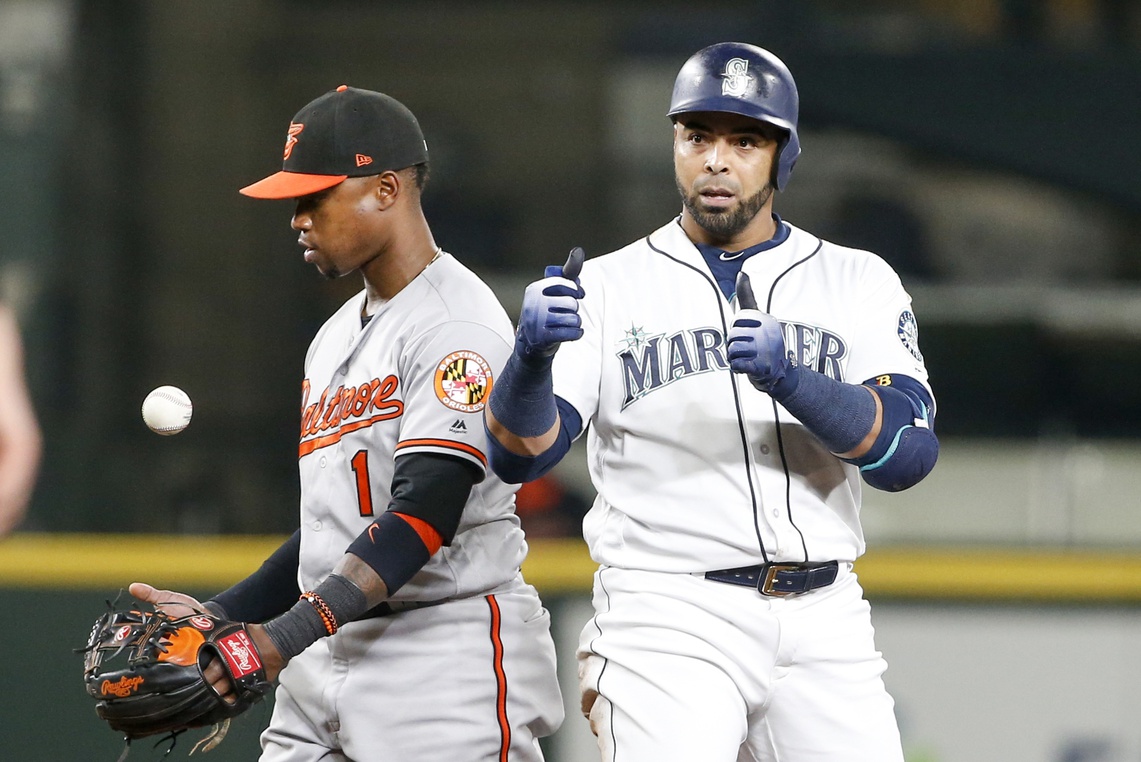 Here are three reasons I find myself warming up to Cruz (none of them are that his name is Nelson, although that is very good and important). 1. It's only a one-year guarantee My main hold-up with the idea of signing Cruz was that he's a DH-only player who resides at the bottom end of the defensive spectrum, making him a restrictive presence on the roster. He'll be an everyday fixture, so long as he's healthy, so Rocco Baldelli pretty much totally loses his ability to use the DH spot for any other purposes. Wanna take it easy on Sano's legs early on? If he plays, it's gonna have to be in the field. Wanna play all four of your (arguably) starter-caliber outfielders at the same time? Not really an option now. Wanna call up Brent Rooker because he's clobbering Triple-A, but there's no vacancy at first base or corner OF? Tough luck. Cruz was reportedly seeking a two-year contract, and that just seemed impractical to me for a team in Minnesota's position, taking stock of its own uncertain assets. Especially so when you consider that Cruz is likely to decline, at least to some degree, as he approaches 40 years of age. But at one year, and at a downright reasonable cost of $14 million? With an even more reasonable team option attached? Who could really take issue with it? In the event this team fails to take off, there's a fair chance Cruz will have enough deadline value to return a prospect or two, so the element of long-term upside is still there. And what I'm loving is that the Twins no longer appear to be planning for that event. 2. The Twins are demonstrating they want to win During his August interview with Baseball Prospectus at Target Field, general manager Thad Levine somewhat downplayed free agency as an avenue for additions: "This might not be the perfect time for us to invest in a guy who’s 30 years old and would need to perform today in order for us to realize his true potential. We’re bullish on 2019 for the Twins, and we’re really excited for 2020 and beyond, for a variety of reasons." Between remarks like that, and the Twins quickly filling their two most evident roster holes with a pair of castoffs from other organizations – albeit castoffs with considerable upside – I became resigned to this as a stand-pat offseason for the team, consisting of half-measures and stopgaps. Given the situation, and the number of uncertain (yet intriguing) pieces on hand, it made enough sense. The Twins would hardly be alone in following the "stagnant rebuild" model being employed by about half the league. Cruz is a major pivot away from that path. Levine spoke of avoiding "a guy who's 30 years old and would need to perform today in order for us to realize his true potential," and Cruz is pretty much that, except he's 38. This is a win-now move through and through. On one hand, there's minimal risk in any one-year contract. On the other hand, the Twins are making real sacrifices here, as a team in flux and with various moving parts. Levine and Derek Falvey are undoubtedly aware of the roster-building limitations of a 600-PA designated hitter, which I covered earlier. They are also aware that this move probably costs them Tyler Austin, an interesting slugger who might've figured into the club's plans beyond 2020. Cruz surely won't. But ya know what? He's great enough, and the deal is good enough, that you accept those downsides. Cleveland is supposedly deep in talks to trade Corey Kluber, and this division looks ripe for the taking. With Cruz in their lineup, the Twins are far more legitimate threats on paper. The signing sends a reinvigorating message to the current Twins players. (Don't believe me? Check their Twitter accounts.) And even more importantly... 3. It sends the right message to fans This fan base has taken a beating. The past eight years have included five 90-game losers, including the worst Twins team of all time. Modest glimpses of hope in 2015 and 2017 were each followed by gut-punch backslides. We just had to watch the 2018 squad commit approximately 5 billion gaffes and miscues against the backdrop of "This Is How We Baseball" plastered on Target Field's outfield wall. We needed a jolt. We got it. Once you brush past all the metrics and analysis, Nelson Cruz is simply a big-ticket player who generates tons of excitement, and is tremendously fun to watch. He leads baseball in home runs since 2014. He's been an All-Star five times in the last six years. He routinely ranks among the league leaders in exit velocity This guy is an absolute phenom of the game, with a big and bright personality. That's the kind of infusion this team sorely needed to stir up some genuine enthusiasm. There are other reasons to like the fit, including clubhouse impact (you'd be hard-pressed to argue that a 39-year-old Torii Hunter didn't make an impact beyond his numbers in 2015), but these are the three concrete reasons that have me feeling good about the move. How 'bout you?
 -
I look forward to your upcoming folk revival album. I hear it's got some bangin fiddle solos. (Also... ahem)
- 81 replies
-
- 2
-
-
- nick gordon
- adalberto mejia
- (and 3 more)
-
Look, a guy named Nick can absolutely remain fully committed to his day job (or jobs) while also making rap music. I'm living proof! (Couldn't pass up this opportunity to give a shameless plug for my new album, which dropped last Friday)
- 81 replies
-
- 4
-
-
- nick gordon
- adalberto mejia
- (and 3 more)
-
Fair. I guess it just depends on how much you buy into his power emergence and defensive value. A guy who can play center field and post a .200 ISO for several years has a lot of value. And I think he's particularly useful to the Twins at this moment with the uncertainty swirling around Buxton and Kepler. (I'll add that I did not have Cave in my top 20 at first pass, and gradually talked myself into that rank.)
- 81 replies
-
- 1
-
-
- nick gordon
- adalberto mejia
- (and 3 more)
-
That's generally the right way to think about it, but the idea is for these rankings to be less universal and more specific to the Twins at this moment in time. So the calculus here is: Who will be more valuable to the Twins in the near future? Who has the higher floor of production? Cron, pretty clearly, I think. Do Gordon's realistic upside and likely future impact do enough to outweigh this? Not from my view, at this moment in time. He looks like a 700-OPS second baseman. Obviously you'd get more return from trading Gordon than Cron (though I don't think you'd get enough for either to make it worthwhile). That's not exactly the point.
- 81 replies
-
- 1
-
-
- nick gordon
- adalberto mejia
- (and 3 more)
-
Perfectly stated. I was trying to figure out how best to explain this nuance and you laid it out pretty much perfectly. For the purposes of these rankings I weighed the value of established track record and reliability a little more highly. Otherwise it'd basically just turn into a top prospects list.
- 81 replies
-
- 6
-
-
- nick gordon
- adalberto mejia
- (and 3 more)
-
Care to elaborate on your point of contention? It's not exactly easy to compare 29-year-old MLB first basemen with 23-year-old middle infield prospects, but that's the bit here. These rankings represent a snapshot in time; right now, Cron's value is up and Gordon's is down. There is value in reliability, a decent floor and established production.
- 81 replies
-
- 13
-
-
- nick gordon
- adalberto mejia
- (and 3 more)
-
Last year around this time, I took a shot at ranking the top 20 player assets in the Minnesota Twins organization. The idea was to think solely in terms of commodity valuation, factoring in things like age, cost, control, and risk management in answering the question: which players are most essential to this team's vision? Given the tumult of the past 12 months, updating these rankings felt like a worthy exercise. So let's get to it.20. Nick Gordon, SS (23) 2018 Ranking: 13 A year ago, Gordon was already plagued by questions surrounding his viability at shortstop, as well as the legitimacy of his bat coming off a lackluster second half in Chattanooga. These doubts were only magnified during a rough 2018 campaign that saw him fail to gain any offensive traction in Triple-A (.212/.262/.283 in 99 games) while ceding more time to second base. Of course, he was also a 22-year-old in a league where the average player is considerably older. Assessing Gordon's performance is somewhat tough because he's always been relatively young and undeveloped compared to his competition. But now he's catching up, and it's time to show something. Huge year on deck for the former first-round draft pick. 19. C.J. Cron, 1B (29) 2018 Ranking: N/A While I questioned the fit, Cron was undoubtedly a nifty pickup for the Twins when they grabbed him off waivers from Tampa a month ago. It's not every day you can add an affordable and accomplished hitter, under the age of 30, coming off a breakout season, for nothing. Cron has pedigree – formerly a star collegiate slugger who became a first-round draft pick and has hit consistently in the minors and majors. He has upward momentum, having posted 30 home runs and an .817 OPS in his first full season a big-league regular. He's fairly cheap ($4.8 million in 2019), and controllable in 2020 via arbitration as well. 18. Adalberto Mejia, LHP (25) 2018 Ranking: 14 In 2018, Mejia did the same thing he's done almost nonstop since coming over to the Twins at the 2016 trade deadline: he performed. In 118 1/3 innings at Class-AAA Rochester since the trade, he has a 3.27 ERA, and he's held his own during multiple stints in the big leagues, including this year when he turned in a 2.01 ERA over five appearances for Minnesota. He's a big, burly left-hander with some velocity and the ability to miss bats. The only missing ingredient for Mejia has been sustained durability. He totaled less than 130 innings in 2017 and less than 90 in 2018, plagued by wrist and arm ailments down the stretch. Complicating matters is that Mejia's out of options next spring, which forces the Twins' hand in terms of rostering him. But still, this is a proven, capable left-handed starter with five years of team control ahead. There's a ton of potential value here. 17. Jake Cave, OF (26) 2018 Ranking: N/A Last spring the Twins saw an opportunity to add a player they liked and seized it. Cave had been designated for assignment by the Yankees in a roster crunch, so Minnesota flipped them teenage right-hander Luis Gil to acquire Cave before he had a chance to hit waivers. "He made some adjustments that we thought led to the power surge that he had, and we think those will continue going forward," said Derek Falvey at the time. They did indeed. Cave hit 13 home runs and slugged .473 in 91 games for the Twins. He also showed solid range and ability in the outfield. Granted, there were some troubling indicators to be found in his performance – among them, a 5-to-1 K/BB ratio that suggests volatility in the AVG/OBP columns is likely – but the power is legit. Cave was a savvy add by the front office. 16. Wander Javier, SS (20) 2018 Ranking: 18 Javier missed the entire 2018 season after undergoing shoulder labrum surgery. So how does he manage to move up two slots on this list, you ask? Well, it's mainly because folks that were above him a year ago have either backslid or departed, and Javier's tantalizing potential remains even after his setback. He looked like a true shortstop during his time in the Dominican Summer and Appy Leagues, with plenty of range and arm to handle – perhaps even master – the position. That shouldn't change, as the surgery was for his non-throwing arm. He has some lost time to make up for but Javier is expected back fully healthy in spring training and will be poised to take full-season leagues by storm. This has the makings of an Alex Kirilloff-type situation (Kirilloff was 20th in last year's rankings; you'll find out soon where he checks in this year). Click here to view the article
- 81 replies
-
- 2
-
-
- nick gordon
- adalberto mejia
- (and 3 more)
