



Nick Nelson
-
Posts
8,327 -
Joined
-
Last visited
-
Days Won
56
Content Type
Profiles
News
Minnesota Twins Videos
2026 Minnesota Twins Top Prospects Ranking
2022 Minnesota Twins Draft Picks
Minnesota Twins Free Agent & Trade Rumors, Notes, & Tidbits
Guides & Resources
2023 Minnesota Twins Draft Picks
The Minnesota Twins Players Project
2024 Minnesota Twins Draft Picks
2025 Minnesota Twins Draft Pick Tracker
2026 Minnesota Twins Draft Tracker: Picks & Bonuses
Forums
Blogs
Events
Store
Downloads
Gallery
Everything posted by Nick Nelson
-
 Yep. And with that, the Twins restrict themselves from signing someone like Justin Bour, who just became available as a non-tender by Philly. THAT right there is the kind of guy who fits on this roster. Platoon him with Austin at 1B and you could be looking at a 900 OPS from the position, based on their career splits. Plus Bour brings established OBP cred to an offense that is now desperately short on it. Opportunities like this only make it more confounding to me that MN is basically committing to Cron at the outset of the offseason.
 -
Twins and Cron agreed to a deal for $4.8m.
-
You can rearrange and slice up the numbers all you want. The bottom line is that his overall results as a starter don't match up to the quality of his stuff or his perceived upside. You can keep talking about "potential" and what he might do repeating a level, but that's all very theoretical and subjective. I'll add that Romero is gonna be out of options in 2020 (assuming they use one this year). So while I understand what you're saying about his missed time setting him back, they're not working with some infinite clock to bring him along and get him into a workable major-league role.
-
Because... A: This "potential" is not as blatant as you suggest. For all his obvious ability, the fact is that at age 24, Romero still has yet to dominate any higher level. He has an 8.6 K/9 & 1.35 WHIP at Double-A, and a 6.8 K/9 & 1.29 WHIP at Triple-A. He excelled for his first three starts in the majors and then he got shelled. He had a 9% swinging strike rate in the second half of his outings (Triple-A included). NINE PERCENT! With his stuff! That's lower than Tyler Duffey. I love Romero too but we can't stay blinded by his theoretical upside and ignore what's in front of us. B: This is his quickest path to making an impact in the majors. The Twins can't really count on him for a rotation spot with the way he looked in the second half. C: It's not permanent. In the Jesse Chavez comparison I pointed to, Passan envisioned a 100-120 IP multi-inning fireman role. That would keep Romero's arm conditioned for a return to starting. Heck, Adam Wainwright threw 75 innings as a shutdown reliever at age 24 and then threw 200 innings over 32 starts the following year.
-
And despite this aggressive workload management, he has STILL pretty evidently worn down in each of the past two seasons. Take a look at what happened to his numbers in August both years. That's kinda the point here.
-
Good point that's being downplayed here. Neither Cron nor Austin are very good defensively. So while you might lose a bit in the outfield on days Kepler plays first, the gains you're likely making in the infield matter -- especially if there's a GB-centric pitcher on the mound.
-
He was sidelined for a bit with back issues (for the first time) but still made 48 total appearances that season. Prior to the Twins trying him in the bullpen he'd pretty much never missed a start in his pro career (I think he had a minor calf injury in like 2014). So the previous comment about a "career of breakdowns" seems quite off-the-mark to me. I'm not sure everyone fully understands just how durable May has been in his career outside of those two (arguably fluky) injuries. And he looked as strong as ever by the end of this year. They're not mutually exclusive ideas. I would hardly say the Twins are "flush" at 1B.
-
? May had literally never missed time with an arm injury before the UCL tear.
-
With the offseason underway, there is naturally a widespread focus on signings and trades to bring in new talent. But I think we all fundamentally understand that, in order for the Twins to turn things around and reach their potential in short order, it'll need to be driven by drastic internal improvements.Byron Buxton and Miguel Sano are the headliners in that discussion, with good reason. Who knows what the future holds for those two. But elsewhere, I see four opportunities for the Twins to work with what they have, get a little creative, and maybe shore up some key areas of uncertainty. 1: Have Max Kepler split time between between the outfield and first base One of the Dodgers' most valuable players during their run to the World Series this year was Cody Bellinger, whose versatility and strong bat made him a key asset. During the regular season, Bellinger played in every single game, making 85 starts at first base and 50 in center field. That's a combination you rarely see, because few players possess the skill set to make it work. Bellinger does, and so does Kepler. Although the latter has played first base sparsely in the majors (just 4 1/3 total innings), he made a few dozen starts there as a minor-leaguer. Given his athleticism and coordination, it stands to reason he'd be solid at least and perhaps outstanding. We already know what he can do in the outfield. Kepler's become one of the league's best defensive right fielders and he's shown quite well during his 500 career innings in center as well. Having him split time between the first base and right field, while occasionally spelling Buxton against righties in center, would enable the Twins to extract big value of from Kepler, even if his offensive production remains somewhat modest. And if he takes the step forward we're all hoping for with his bat? Well, a season closely mirroring Bellinger's 2018 (.260/.343/.470, 25 HR, 3.6 WAR) is hardly out of the question. Committing to this arrangement would give the front office much more flexibility in attacking the offseason. With Kepler adding some much-needed left-handed balance to a first base mix that now includes CJ Cron and Tyler Austin, Minnesota can feel better about rostering both (should they desire). And with a bunch of playing time opening up in right field, the Twins can go out and add another RF/DH type who can thump. 2: Use Fernando Romero out of the bullpen I'm the biggest Fernando Romero advocate you're gonna find. I've been steadfast in my belief he's got the makings of a workhorse, front-of-rotation starter. And I could still see it. But at this point, even I can't deny the obvious logic in activating the righty out of the bullpen. In a way it feels wasteful to limit Romero to short stints, with his big frame and ability to maintain high-90s heat late into games. But despite having the build and sustainable velocity of a 200-IP starter, he hasn't held up. Romero lost two consecutive years of his development to recurring injuries, and since returning he's been susceptible to late-season breakdowns. He might just be better suited for a relief role. Luckily, that's not the same diminishment it was once was. As relievers become more and more impactful, a high-powered arm capable of throwing multiple innings is an advantageous weapon indeed. I'd love to see Romero open the season with the Twins and fill a role similar to the one Jeff Passan envisions here for newly signed Jesse Chavez of the Rangers: 3: Unleash Trevor May as a starter (or "primary") On the flip side, we have here a current reliever who might be a better fit for the rotation. Trevor May of course finished the 2018 season at closer, and he looked downright phenomenal. I know some might be asking, why mess with a good thing? That's fair, but I'm just not ready to give up on May as a starter. He was shaping up nicely in that capacity during spring of 2017 before requiring Tommy John surgery. Unlike Romero, he's mostly been very durable and his arm has fared well under a starter's workload (last year notwithstanding). Also: With at least four quality pitches, May absolutely has the repertoire depth to take on lineups multiple times. Use him as a traditional starter, or as a primary following an opener, as you please. I think May has what it takes to be an effective pitcher over 150 innings. If it doesn't take, they can send him back to the bullpen; it's much easier to make that transition in-season than the reverse. And it feels like if Minnesota keeps May in the bullpen next spring, then it becomes permanent. That's not necessarily a bad thing given what we saw in the second half. But still, give him one more shot. 4: Give Willians Astudillo 500 at-bats Yes, I yearn for the sheer joy of watching Astudillo play everyday. Who doesn't? But there's also a solid case to be made for turning the scrappy 27-year-old into a fixture and seeing what he can do. All he's done lately is hit. In 2017 he batted .342 with a .928 OPS at Class-AAA Reno in Arizona's system, and then he batted .319 in the Venezuelan Winter League. The Twins signed him and watched him post a .782 OPS at Triple-A before finishing with a 22-game stretch in the majors that saw him hit .378/.397/.554 with two strikeouts in 78 plate appearances. Accounting for his first stint with the Twins, Astudillo appeared at five different positions (C, 2B, 3B, LF, CF) while posting an .887 OPS as a rookie. Now, he's back in Venezuela, batting .353 for Caribes with one strikeout in 156 PAs. When you look at Astudillo and his long-term track record, it's tempting to dismiss his run of success as a fluke. But when a guy literally almost never whiffs, and consistently makes good contact (his soft-hit rate in 2018 was lowest of all Twins other than Jake Cave and Joe Mauer), it's a decent formula for high averages. As we're seeing. Plus, Astudillo can plug in at catcher, third base, DH and elsewhere when needed. By rotating him around and finding a place for him most days, the Twins can keep other starters fresh and rested – perhaps most importantly, Sano and Mitch Garver. Meanwhile, Rocco Baldelli keeps a pesky spark plug in his lineup regularly. Astudillo is beloved by teammates, cherished by fans, and admired by not-traditionally-athletic types everywhere. His all-out effort and hustle set a great example. There is of course risk in counting on Astudillo, signed as a minor-league free agent almost exactly one year ago, for such a prominent role. But the Twins are in position to take some risks and this feels like one worth taking. That's all I've got for now. What say you all? Like these ideas? Hate 'em? Got an outside-the-box notion of your own? Let's hear it in the comments. Click here to view the article
-
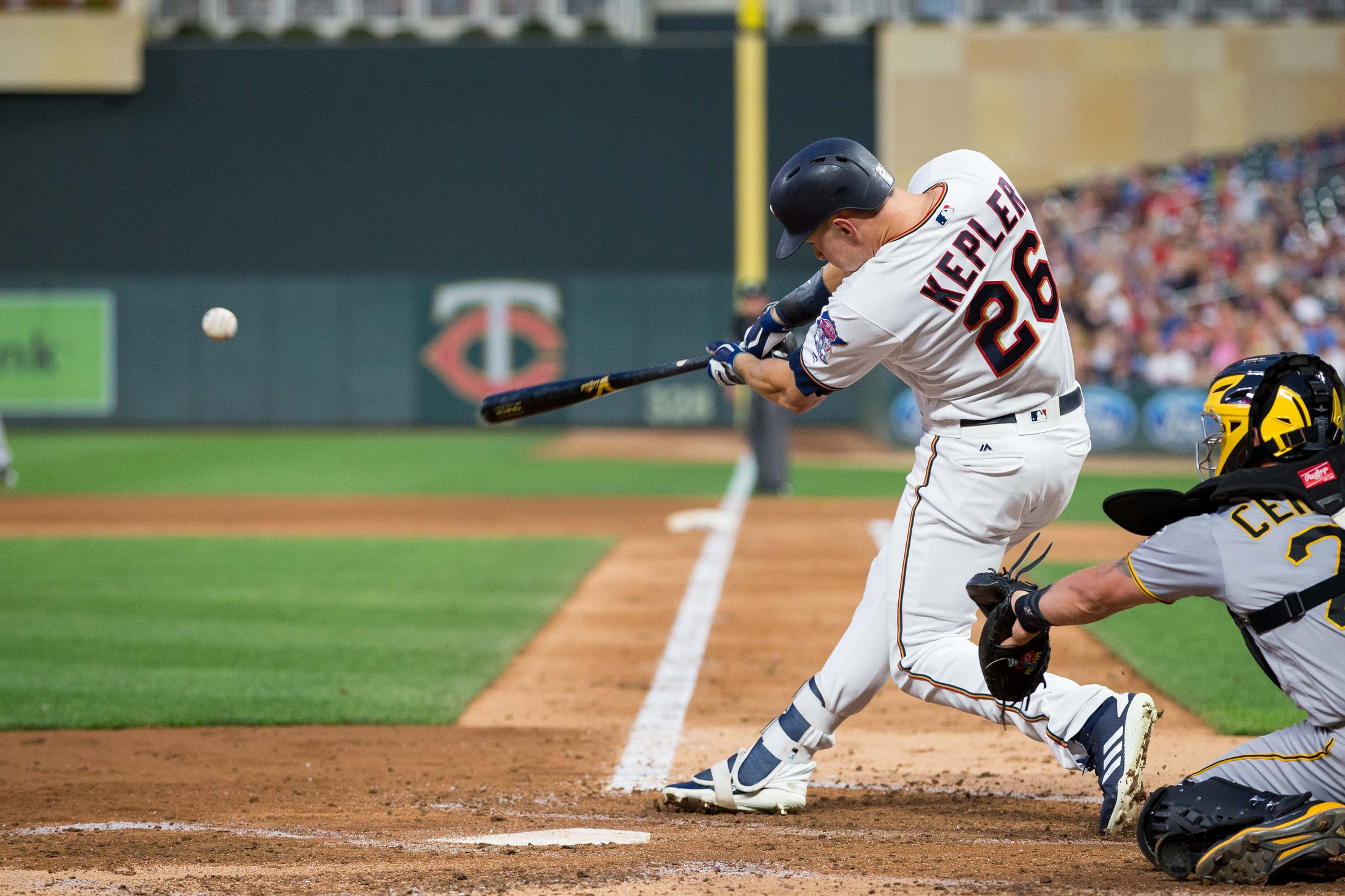 Byron Buxton and Miguel Sano are the headliners in that discussion, with good reason. Who knows what the future holds for those two. But elsewhere, I see four opportunities for the Twins to work with what they have, get a little creative, and maybe shore up some key areas of uncertainty. 1: Have Max Kepler split time between between the outfield and first base One of the Dodgers' most valuable players during their run to the World Series this year was Cody Bellinger, whose versatility and strong bat made him a key asset. During the regular season, Bellinger played in every single game, making 85 starts at first base and 50 in center field. That's a combination you rarely see, because few players possess the skill set to make it work. Bellinger does, and so does Kepler. Although the latter has played first base sparsely in the majors (just 4 1/3 total innings), he made a few dozen starts there as a minor-leaguer. Given his athleticism and coordination, it stands to reason he'd be solid at least and perhaps outstanding. We already know what he can do in the outfield. Kepler's become one of the league's best defensive right fielders and he's shown quite well during his 500 career innings in center as well. Having him split time between the first base and right field, while occasionally spelling Buxton against righties in center, would enable the Twins to extract big value of from Kepler, even if his offensive production remains somewhat modest. And if he takes the step forward we're all hoping for with his bat? Well, a season closely mirroring Bellinger's 2018 (.260/.343/.470, 25 HR, 3.6 WAR) is hardly out of the question. Committing to this arrangement would give the front office much more flexibility in attacking the offseason. With Kepler adding some much-needed left-handed balance to a first base mix that now includes CJ Cron and Tyler Austin, Minnesota can feel better about rostering both (should they desire). And with a bunch of playing time opening up in right field, the Twins can go out and add another RF/DH type who can thump. 2: Use Fernando Romero out of the bullpen I'm the biggest Fernando Romero advocate you're gonna find. I've been steadfast in my belief he's got the makings of a workhorse, front-of-rotation starter. And I could still see it. But at this point, even I can't deny the obvious logic in activating the righty out of the bullpen. In a way it feels wasteful to limit Romero to short stints, with his big frame and ability to maintain high-90s heat late into games. But despite having the build and sustainable velocity of a 200-IP starter, he hasn't held up. Romero lost two consecutive years of his development to recurring injuries, and since returning he's been susceptible to late-season breakdowns. He might just be better suited for a relief role. Luckily, that's not the same diminishment it was once was. As relievers become more and more impactful, a high-powered arm capable of throwing multiple innings is an advantageous weapon indeed. I'd love to see Romero open the season with the Twins and fill a role similar to the one Jeff Passan envisions here for newly signed Jesse Chavez of the Rangers: https://twitter.com/JeffPassan/status/1067492543959654401 3: Unleash Trevor May as a starter (or "primary") On the flip side, we have here a current reliever who might be a better fit for the rotation. Trevor May of course finished the 2018 season at closer, and he looked downright phenomenal. I know some might be asking, why mess with a good thing? That's fair, but I'm just not ready to give up on May as a starter. He was shaping up nicely in that capacity during spring of 2017 before requiring Tommy John surgery. Unlike Romero, he's mostly been very durable and his arm has fared well under a starter's workload (last year notwithstanding). Also: With at least four quality pitches, May absolutely has the repertoire depth to take on lineups multiple times. Use him as a traditional starter, or as a primary following an opener, as you please. I think May has what it takes to be an effective pitcher over 150 innings. If it doesn't take, they can send him back to the bullpen; it's much easier to make that transition in-season than the reverse. And it feels like if Minnesota keeps May in the bullpen next spring, then it becomes permanent. That's not necessarily a bad thing given what we saw in the second half. But still, give him one more shot. 4: Give Willians Astudillo 500 at-bats Yes, I yearn for the sheer joy of watching Astudillo play everyday. Who doesn't? But there's also a solid case to be made for turning the scrappy 27-year-old into a fixture and seeing what he can do. All he's done lately is hit. In 2017 he batted .342 with a .928 OPS at Class-AAA Reno in Arizona's system, and then he batted .319 in the Venezuelan Winter League. The Twins signed him and watched him post a .782 OPS at Triple-A before finishing with a 22-game stretch in the majors that saw him hit .378/.397/.554 with two strikeouts in 78 plate appearances. Accounting for his first stint with the Twins, Astudillo appeared at five different positions (C, 2B, 3B, LF, CF) while posting an .887 OPS as a rookie. Now, he's back in Venezuela, batting .353 for Caribes with one strikeout in 156 PAs. When you look at Astudillo and his long-term track record, it's tempting to dismiss his run of success as a fluke. But when a guy literally almost never whiffs, and consistently makes good contact (his soft-hit rate in 2018 was lowest of all Twins other than Jake Cave and Joe Mauer), it's a decent formula for high averages. As we're seeing. Plus, Astudillo can plug in at catcher, third base, DH and elsewhere when needed. By rotating him around and finding a place for him most days, the Twins can keep other starters fresh and rested – perhaps most importantly, Sano and Mitch Garver. Meanwhile, Rocco Baldelli keeps a pesky spark plug in his lineup regularly. Astudillo is beloved by teammates, cherished by fans, and admired by not-traditionally-athletic types everywhere. His all-out effort and hustle set a great example. There is of course risk in counting on Astudillo, signed as a minor-league free agent almost exactly one year ago, for such a prominent role. But the Twins are in position to take some risks and this feels like one worth taking. That's all I've got for now. What say you all? Like these ideas? Hate 'em? Got an outside-the-box notion of your own? Let's hear it in the comments.
 -
I mean yeah, if you wanna make decisions on the basis of one year while ignoring track record and projection, sure. Carlos Santana is neither ancient (he's 32) nor injury-ravaged (he's never made fewer than 600 PAs in a season). The implication that he's breaking down is not supported by evidence. He had a bad month of April this year and then he was his normal self (.808 OPS).
-
Carlos Santana's WAR in 2017: 2.9 Robbie Grossman's career WAR: 2.6 C'mon
-
Santana would've ranked first or second among Twins regulars in OBP in each of the last 6 years. He's also been extremely durable and extremely consistent. With Mauer departing, he's the kinda player MN badly needs. Another free-swinger with mediocre on-base skills and some power? Meh. They got that in spades.
-
Austin (age 26): .232/.290/.469 (.758) Cron (through age 26): .267/.308/.453 (.760) I'll grant that Cron is better right now but from my view Austin has same/equal upside, and with where this team's at I'm not sure Cron's a better fit by any means.
-
"Shows to be a better hitter" in what? Four weeks of spring training games? Do you think this FO is making decisions on that basis? Do you want them to?
-
Did the Twins create customized "Welcome to MN" graphics when they claimed Michael Reed? I get what you're saying -- this move isn't permanent by any stretch -- but suggesting it's the equivalent to claiming some random AAAA waiver-wire fodder is inaccurate. I feel quite confident that the Twins are planning on carrying Cron in 2019 unless something else comes up.
-
Yeah I'm confused by why Cron's ability to hit LHP is a positive, since that's easily Austin's biggest skill and he's way better at it. You're only reinforcing the redundancy (very good post otherwise tho, Pseudo). Ha, there were pros in there (2018 stats, strong hitting pedigree, fewer weaknesses than Austin)! I just didn't lay them out as distinctly as the crons.
-
The downside is that he goes back to being baseline Cron – good enough to run with for awhile, but a one-dimensional, 1 WAR player – and things don't work out with Austin or Sano, and suddenly the Twins have treaded water on trying to find a real solution at first base. It just wouldn't be an especially imaginative or high-upside splash at one of the team's key areas of opportunity for adding offense. There's a world of possibilities out there. But again, I understand that it's very early and nothing is final.
-
On Monday, the Minnesota Twins announced that they'd claimed first baseman C.J. Cron off waivers, which is great news because it provided me an opportunity to use the terrible title pun you see above. (Yes, I'm aware Cron's last name isn't actually pronounced like 'con' but LEMME HAVE MY FUN.) Is Cron's addition good news for other, more legitimate reasons? Let's take a look-see.Cron was available on waivers after the Tampa Bay Rays surprisingly designated him for assignment last week. They were clearing room to load up their 40-man roster with younger talent, and shaving off some 2019 payroll as well. Cron is expected to earn around $5 million in arbitration next year, and is under team control in 2020 as well. Let's start with the positives: He's coming off a breakout age-28 season in which he slashed .253/.323/.493 with 30 home runs and 74 RBIs. His 2.1 WAR would've ranked fourth among Twins position players. Although Cron took his game to a new level in 2018, it's not like it came out of nowhere. He was once an elite college slugger, putting up a 1.300 OPS in both his sophomore and junior years at Utah before the Angels selected him 17th overall in 2011. He was the top first baseman selected. He has an .836 career OPS in the minors and has also been a consistently solid hitter in the big leagues. Although his 108 OPS+ heading into 2018 was unspectacular for someone with minimal defensive value, he notably hasn't tanked at any point; in parts of five MLB seasons Cron has never finished with an OPS below .739. Of course, the fact that he's a formerly fringey player coming off a career-best slugging performance with the Rays means Cron is bound to draw unfavorable associations with Logan Morrison, who fizzled in Minnesota after joining up under similar circumstances last year. In a way, such comparisons are clearly misguided. These are two completely different players, and not all – or even most – who break out in their late 20s experience immediate and drastic regression. With that said, there are some substantive parallels between the two that make this a questionable move, from my view. 1: Cron is redundant on the Twins roster. When they signed Morrison in February, he seemed like a bit of an odd fit – a lefty-swinging first baseman on a team that already had one in Joe Mauer. Of course, finding Morrison ABs wasn't really gonna be an issue if he hit like had the year before, and that's also true enough for Cron, who I find to be an even odder fit. Cron is a righty-swinging 1B/DH added to a roster that already has exactly that in Tyler Austin. Granted, Austin's weaknesses are far more glaring – namely his .290 career OBP, 37% strikeout rate as a big-leaguer, and terrible numbers against righties – but he's also two years younger and about 10% the expected cost. It's kinda hard to see Minnesota carrying both Cron and Austin next year, given their lack of complementary traits. Austin will be out of options in spring training. I'm not saying the Twins should be fully committed to a guy with his flaws, but Cron is an odd choice to push or replace him. Seems like either a more significant upgrade to place in front of Austin, or a lefty swinger to optimize for Austin's platoon splits, would make a lot more sense. In fairness, the Twins aren't committed to Cron – they could cut him before the end of spring training at a negligible cost – but I suspect they wouldn't make this claim if they didn't (at least presently) intend to keep him. 2: Cron's massive power outburst looks like an outlier against his career. By hitting 38 home runs for the Rays in 2017, Morrison obliterated his previous career high (23). The same is true for Cron's 30 in 2018, which nearly doubled his prior peak (16). In each case, the lift in long balls was driven by a suddenly elite barrel percentage – Morrison's 12.8% in 2017 was among the league's top 5% of hitters and Cron's 12.2% this year was in the top 8%. Their breakouts also coincided with new career highs in strikeout rate, with each ranking among the highest 10% of hitters for the first time. So, there are similarities that go beyond "dudes from Tampa who hit a bunch of home runs." But again, none of their shared traits guarantee regression by any means, and who knows how much Morrison's drop-off was influenced by a hip injury that eventually required surgery. This leaves us with little reason to view Cron's emergence with major skepticism. Except for this... 3: Despite coming off a career year, in his prime, Cron drew minimal interest around the league. Ranking seventh in the majors in home runs at age 29, right before hitting the open market, seemingly should've teed up Morrison as a red-hot commodity. Yet, the Rays made no real effort to bring him back, and in fact Morrison waited until the end of February before settling for a one-year, $6.5 million with the Twins. Meanwhile, Cron's availability hasn't been a secret; Rays beat writer Marc Topkin suggested at the beginning of November that a Cron trade "seems likely," and added that Tampa was seeking "more of a feared overall hitter." When they couldn't trade him before last week's roster deadline, the Rays instead designated Cron for assignment. And when they still couldn't find a taker with reduced leverage in DFA limbo, they let him hit waivers, where Cron was passed up by a number of teams before Minnesota took him. That is just awfully conspicious for a guy with Cron's combination of age, upward trajectory, team control, and reasonable salary. My read is that teams largely aren't sold on his evolution as a hitter. And up until 2018 Cron just wasn't a very valuable asset, totalling 2.0 WAR in more than 400 games. His solid OPS figures have always been heavily SLG-driven (arguably less valuable than OBP, especially on a team like the Twins) and his walk rates have always been subpar. In general, modern front offices are trending away from these sorts of inflexible, slow-moving, free-swinging power hitters. And the Twins are now at the forefront of this movement, which makes the claim a puzzling one. This isn't the kind of FO that gets starry-eyed over 30 home runs, nor is it one to downplay the restricting aspects of rostering a player like Cron – especially in addition to an Austin AND Miguel Sano. So, I can only deduce they're really seeing something here. Perhaps the Twins were further compelled to action by new skipper Rocco Baldelli, who became very familiar with Cron as a Rays coach this year. While tempting, given the dearth of other things to discuss, let us not over-inflate the magnitude of this move. We're not even in December. Cron might not be here in February, or January for that matter (this front office isn't averse to switching course when circumstances change – just ask Jaime Garcia or Anibal Sanchez). But at the very least, it's an interesting move. Not interesting in the 'outside the box, forward-thinking, blatantly clever' kinda way I'm hoping to see from the Twins this offseason. But interesting anyway. What say you? Are you more drawn to the pros or Crons... er, cons? Click here to view the article
-
Pros and Crons: Weighing the Merits of Minnesota's Latest Addition
Nick Nelson posted an article in Twins
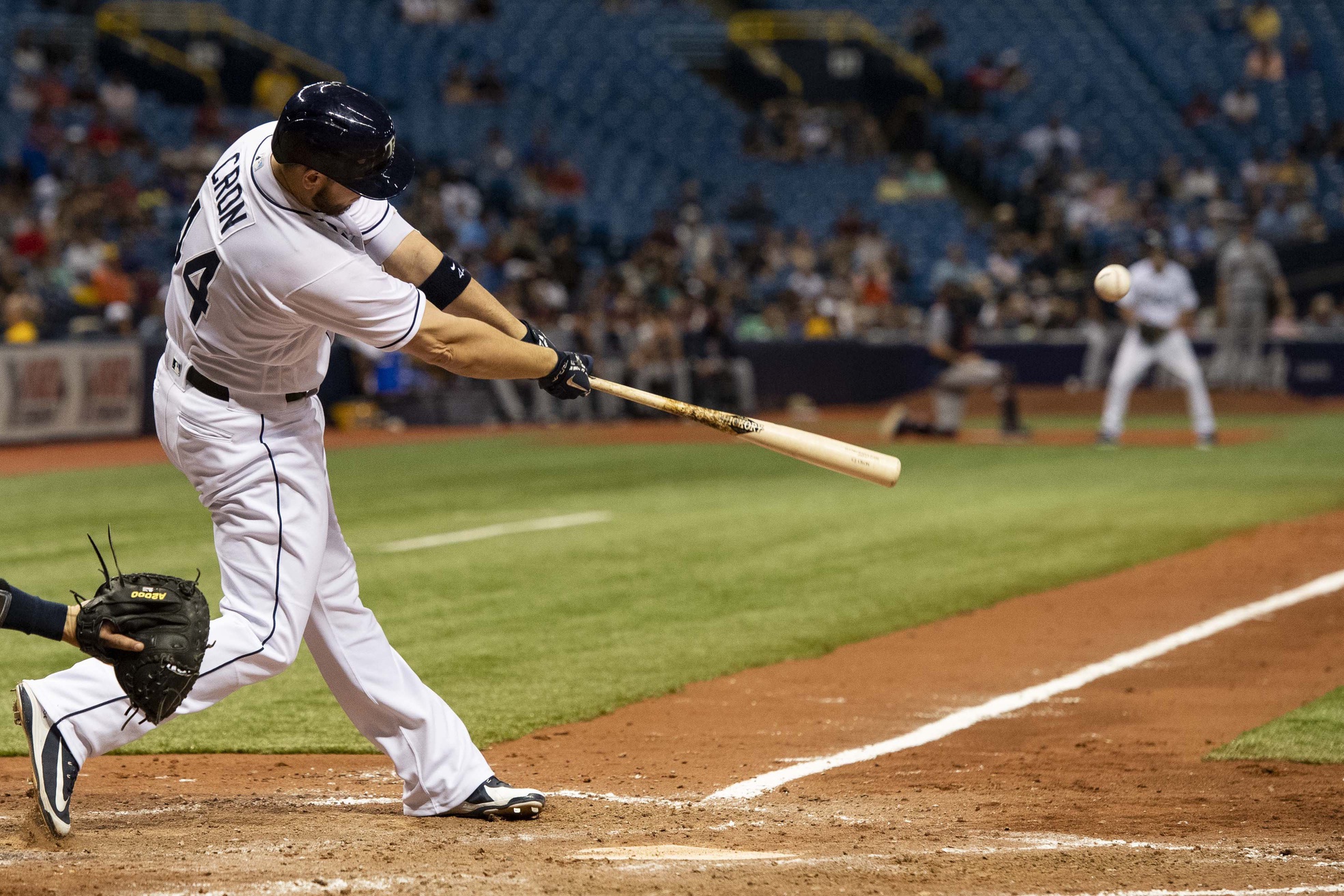 Cron was available on waivers after the Tampa Bay Rays surprisingly designated him for assignment last week. They were clearing room to load up their 40-man roster with younger talent, and shaving off some 2019 payroll as well. Cron is expected to earn around $5 million in arbitration next year, and is under team control in 2020 as well. Let's start with the positives: He's coming off a breakout age-28 season in which he slashed .253/.323/.493 with 30 home runs and 74 RBIs. His 2.1 WAR would've ranked fourth among Twins position players. Although Cron took his game to a new level in 2018, it's not like it came out of nowhere. He was once an elite college slugger, putting up a 1.300 OPS in both his sophomore and junior years at Utah before the Angels selected him 17th overall in 2011. He was the top first baseman selected. He has an .836 career OPS in the minors and has also been a consistently solid hitter in the big leagues. Although his 108 OPS+ heading into 2018 was unspectacular for someone with minimal defensive value, he notably hasn't tanked at any point; in parts of five MLB seasons Cron has never finished with an OPS below .739. Of course, the fact that he's a formerly fringey player coming off a career-best slugging performance with the Rays means Cron is bound to draw unfavorable associations with Logan Morrison, who fizzled in Minnesota after joining up under similar circumstances last year. In a way, such comparisons are clearly misguided. These are two completely different players, and not all – or even most – who break out in their late 20s experience immediate and drastic regression. With that said, there are some substantive parallels between the two that make this a questionable move, from my view. 1: Cron is redundant on the Twins roster. When they signed Morrison in February, he seemed like a bit of an odd fit – a lefty-swinging first baseman on a team that already had one in Joe Mauer. Of course, finding Morrison ABs wasn't really gonna be an issue if he hit like had the year before, and that's also true enough for Cron, who I find to be an even odder fit. Cron is a righty-swinging 1B/DH added to a roster that already has exactly that in Tyler Austin. Granted, Austin's weaknesses are far more glaring – namely his .290 career OBP, 37% strikeout rate as a big-leaguer, and terrible numbers against righties – but he's also two years younger and about 10% the expected cost. It's kinda hard to see Minnesota carrying both Cron and Austin next year, given their lack of complementary traits. Austin will be out of options in spring training. I'm not saying the Twins should be fully committed to a guy with his flaws, but Cron is an odd choice to push or replace him. Seems like either a more significant upgrade to place in front of Austin, or a lefty swinger to optimize for Austin's platoon splits, would make a lot more sense. In fairness, the Twins aren't committed to Cron – they could cut him before the end of spring training at a negligible cost – but I suspect they wouldn't make this claim if they didn't (at least presently) intend to keep him. 2: Cron's massive power outburst looks like an outlier against his career. By hitting 38 home runs for the Rays in 2017, Morrison obliterated his previous career high (23). The same is true for Cron's 30 in 2018, which nearly doubled his prior peak (16). In each case, the lift in long balls was driven by a suddenly elite barrel percentage – Morrison's 12.8% in 2017 was among the league's top 5% of hitters and Cron's 12.2% this year was in the top 8%. Their breakouts also coincided with new career highs in strikeout rate, with each ranking among the highest 10% of hitters for the first time. So, there are similarities that go beyond "dudes from Tampa who hit a bunch of home runs." But again, none of their shared traits guarantee regression by any means, and who knows how much Morrison's drop-off was influenced by a hip injury that eventually required surgery. This leaves us with little reason to view Cron's emergence with major skepticism. Except for this... 3: Despite coming off a career year, in his prime, Cron drew minimal interest around the league. Ranking seventh in the majors in home runs at age 29, right before hitting the open market, seemingly should've teed up Morrison as a red-hot commodity. Yet, the Rays made no real effort to bring him back, and in fact Morrison waited until the end of February before settling for a one-year, $6.5 million with the Twins. Meanwhile, Cron's availability hasn't been a secret; Rays beat writer Marc Topkin suggested at the beginning of November that a Cron trade "seems likely," and added that Tampa was seeking "more of a feared overall hitter." When they couldn't trade him before last week's roster deadline, the Rays instead designated Cron for assignment. And when they still couldn't find a taker with reduced leverage in DFA limbo, they let him hit waivers, where Cron was passed up by a number of teams before Minnesota took him. That is just awfully conspicious for a guy with Cron's combination of age, upward trajectory, team control, and reasonable salary. My read is that teams largely aren't sold on his evolution as a hitter. And up until 2018 Cron just wasn't a very valuable asset, totalling 2.0 WAR in more than 400 games. His solid OPS figures have always been heavily SLG-driven (arguably less valuable than OBP, especially on a team like the Twins) and his walk rates have always been subpar. In general, modern front offices are trending away from these sorts of inflexible, slow-moving, free-swinging power hitters. And the Twins are now at the forefront of this movement, which makes the claim a puzzling one. This isn't the kind of FO that gets starry-eyed over 30 home runs, nor is it one to downplay the restricting aspects of rostering a player like Cron – especially in addition to an Austin AND Miguel Sano. So, I can only deduce they're really seeing something here. Perhaps the Twins were further compelled to action by new skipper Rocco Baldelli, who became very familiar with Cron as a Rays coach this year. While tempting, given the dearth of other things to discuss, let us not over-inflate the magnitude of this move. We're not even in December. Cron might not be here in February, or January for that matter (this front office isn't averse to switching course when circumstances change – just ask Jaime Garcia or Anibal Sanchez). But at the very least, it's an interesting move. Not interesting in the 'outside the box, forward-thinking, blatantly clever' kinda way I'm hoping to see from the Twins this offseason. But interesting anyway. What say you? Are you more drawn to the pros or Crons... er, cons?
 -
The Twins head into this offseason with bullpen upgrades among their most glaring needs. This is largely because their boldest investment to address that unit a year ago has failed to pay dividends. Not only was Addison Reed's first year with Minnesota a disappointment, but his uncertain status going forward creates planning headaches in 2019. The only thing guaranteed with Reed for next year is his hefty salary. Can the Twins find a way to derive value from it?Between 2016 and 2017, no major-league pitcher made more appearances than Reed, who piled up 157 appearances for the Mets and Red Sox. The Twins signed him to a two-year, $16.75 million contract with hopes he'd become a stalwart in their bullpen. Paul Molitor tried to use him as such, deploying the right-hander 40 times through the team's first 84 games, but this time around Reed's arm wasn't up to the task. In his 41st outing, just ahead of the All-Star break, he coughed up three runs in the ninth inning of a loss to the Royals, adding to an extended run of poor performance, and was placed on the disabled list with right triceps tendinitis. The time off didn't cure what ailed him. As you can see in the chart below (via Brooks Baseball), Reed's velocity was at dire levels in the final months of the 2018 season: Download attachment: reed5yearvelo.png His results matched: In 14 appearances after returning from the DL in late July, Reed allowed a .302/.318/.524 slash line, striking out only seven batters in 15 innings with a lowly 8% swinging strike rate. It's about what you'd expect to get from a random minor-league journeyman rounding out the pen, not from your prized offseason upgrade. In 2019, Reed will be back, with his $8.5 million salary making him one of the team's highest-paid players. The hope, of course, is that he'll recapture his previous ability and fill the role originally envisioned for him. But can we realistically expect that? Well, the bad news is that reduced velocity and hittable stuff appeared to be Reed's new realities by the end of his 2018 campaign. While he was healthy enough to pitch late in the season, Molitor used him rarely, and never in close games. Reed often failed to even touch 90 on the gun with his once-potent fastball. In his first 10 appearances off the DL, he induced one or zero swinging strikes in nine of them. Distressing signs from a guy who hasn't yet turned 30. The Twins have to hope this was, more or less, a lengthy bout with dead arm. To my knowledge, Reed hasn't undergone any kind of corrective procedure, so he'll surely spend his offseason resting and strengthening. Sometimes, that does the trick. I can't think of any examples offhand but it does happen. (Maybe readers can think up some names out in the comments?) This isn't the kind of front office that'll fail to turn over any stones in assessing a problem, especially one as impactful to their 2019 planning as Reed and his contract, so I'm not inclined to believe there's any major ligament issue being overlooked, though it does bear noting that tricep injuries are often precursors to Tommy John surgery. The Twins revamped their medical staff last offseason and recently brought in a new strength and conditioning team, so we've gotta have confidence that they are making solid, well-informed decisions on this front. I would imagine that Reed has a very specific program in place for the coming winter. It's also promising that he'll have two new important voices surrounding him. Pitching coach Wes Johnson has long been known as a "velocity guru," who emphasizes lower-body involvement and takes full advantage of available technology to help his pitchers improve. Sounds like exactly the kind of instructor Reed could use. The Twins also have a fresh assistant pitching coach in Jeremy Hefner, who was already in the organization but will now be present in the bullpen to assist Reed more directly. Hefner is reputedly highly-regarded for his ability to break down video, and may form an empathetic connection with Reed, only three years his junior. Hefner is no stranger to elbow problems, having undergone two Tommy John surgeries before retiring a few years ago. I liken it to the dynamic between Rocco Baldelli and Byron Buxton; there's a unique perspective and resonance to be gained from having walked in a player's shoes in the not-too-distant past. Even if the Twins aren't able to juice up Reed's throwing speed again, Hefner may help guide Reed toward effectiveness with a lesser arsenal. This excerpt from a Mike Berardino 2017 profile on Hefner feels relevant now: The fact Hefner was able to hang around as long as he did with an 89-91 mph fastball seems to have smoothed the transition and helped a Twins staff that largely lacks swing-and-miss weapons. “Location is always paramount,” Hefner says. “Ultimately, this thing is about execution. That’s why this stuff speaks to me so well because I had to execute to be successful. If I was still playing and I had this information, it would free me up to not try to be nasty and just go execute.” The nice thing about Reed is that he has excellent control; his 5.1% BB rate since 2016 ranks eighth-best among MLB relievers. While his stuff played down in the second half of this season, he still stayed in the zone, walking only two of 62 batters faced in August and September. He seems like a viable candidate to succeed on execution over stuff. Under ideal circumstances, Reed will show up to camp in the spring with a fastball showing renewed life. It's important to remember how valuable he can be at full strength and effectiveness. In 2016 he ranked sixth among MLB relievers in WAR. Add that guy to the mix with Trevor May, Taylor Rogers and a couple of other offseason additions, and you've got the makings of a bullpen that can square off with the game's best. Sadly, it's tough to count on that happening. So the question is: how can the Twins get the most out of whatever version of Reed they get in 2019? At the very least, I feel good about the people now in charge of answering it. Click here to view the article
-
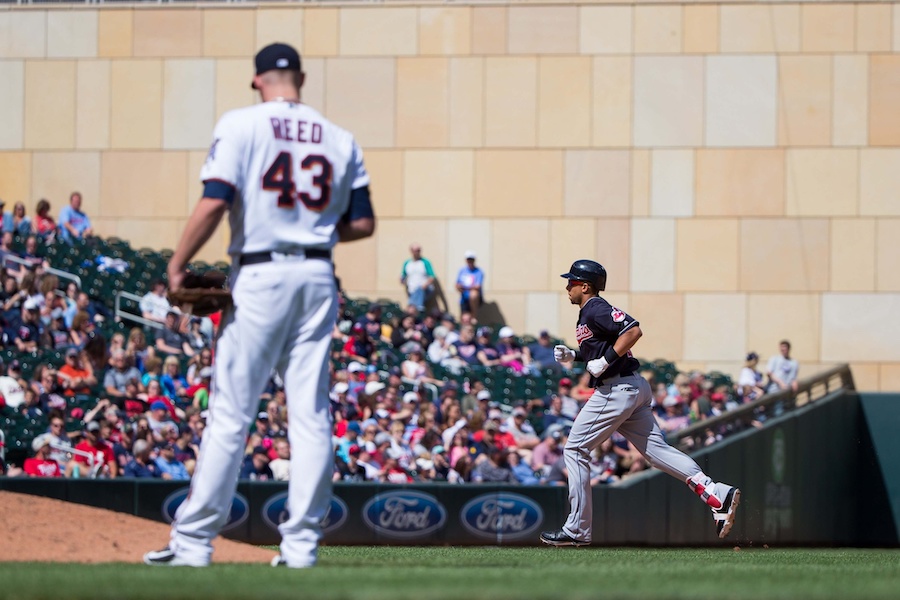 Between 2016 and 2017, no major-league pitcher made more appearances than Reed, who piled up 157 appearances for the Mets and Red Sox. The Twins signed him to a two-year, $16.75 million contract with hopes he'd become a stalwart in their bullpen. Paul Molitor tried to use him as such, deploying the right-hander 40 times through the team's first 84 games, but this time around Reed's arm wasn't up to the task. In his 41st outing, just ahead of the All-Star break, he coughed up three runs in the ninth inning of a loss to the Royals, adding to an extended run of poor performance, and was placed on the disabled list with right triceps tendinitis. The time off didn't cure what ailed him. As you can see in the chart below (via Brooks Baseball), Reed's velocity was at dire levels in the final months of the 2018 season: His results matched: In 14 appearances after returning from the DL in late July, Reed allowed a .302/.318/.524 slash line, striking out only seven batters in 15 innings with a lowly 8% swinging strike rate. It's about what you'd expect to get from a random minor-league journeyman rounding out the pen, not from your prized offseason upgrade. In 2019, Reed will be back, with his $8.5 million salary making him one of the team's highest-paid players. The hope, of course, is that he'll recapture his previous ability and fill the role originally envisioned for him. But can we realistically expect that? Well, the bad news is that reduced velocity and hittable stuff appeared to be Reed's new realities by the end of his 2018 campaign. While he was healthy enough to pitch late in the season, Molitor used him rarely, and never in close games. Reed often failed to even touch 90 on the gun with his once-potent fastball. In his first 10 appearances off the DL, he induced one or zero swinging strikes in nine of them. Distressing signs from a guy who hasn't yet turned 30. The Twins have to hope this was, more or less, a lengthy bout with dead arm. To my knowledge, Reed hasn't undergone any kind of corrective procedure, so he'll surely spend his offseason resting and strengthening. Sometimes, that does the trick. I can't think of any examples offhand but it does happen. (Maybe readers can think up some names out in the comments?) This isn't the kind of front office that'll fail to turn over any stones in assessing a problem, especially one as impactful to their 2019 planning as Reed and his contract, so I'm not inclined to believe there's any major ligament issue being overlooked, though it does bear noting that tricep injuries are often precursors to Tommy John surgery. The Twins revamped their medical staff last offseason and recently brought in a new strength and conditioning team, so we've gotta have confidence that they are making solid, well-informed decisions on this front. I would imagine that Reed has a very specific program in place for the coming winter. It's also promising that he'll have two new important voices surrounding him. Pitching coach Wes Johnson has long been known as a "velocity guru," who emphasizes lower-body involvement and takes full advantage of available technology to help his pitchers improve. Sounds like exactly the kind of instructor Reed could use. The Twins also have a fresh assistant pitching coach in Jeremy Hefner, who was already in the organization but will now be present in the bullpen to assist Reed more directly. Hefner is reputedly highly-regarded for his ability to break down video, and may form an empathetic connection with Reed, only three years his junior. Hefner is no stranger to elbow problems, having undergone two Tommy John surgeries before retiring a few years ago. I liken it to the dynamic between Rocco Baldelli and Byron Buxton; there's a unique perspective and resonance to be gained from having walked in a player's shoes in the not-too-distant past. Even if the Twins aren't able to juice up Reed's throwing speed again, Hefner may help guide Reed toward effectiveness with a lesser arsenal. This excerpt from a Mike Berardino 2017 profile on Hefner feels relevant now: The fact Hefner was able to hang around as long as he did with an 89-91 mph fastball seems to have smoothed the transition and helped a Twins staff that largely lacks swing-and-miss weapons. “Location is always paramount,” Hefner says. “Ultimately, this thing is about execution. That’s why this stuff speaks to me so well because I had to execute to be successful. If I was still playing and I had this information, it would free me up to not try to be nasty and just go execute.”The nice thing about Reed is that he has excellent control; his 5.1% BB rate since 2016 ranks eighth-best among MLB relievers. While his stuff played down in the second half of this season, he still stayed in the zone, walking only two of 62 batters faced in August and September. He seems like a viable candidate to succeed on execution over stuff. Under ideal circumstances, Reed will show up to camp in the spring with a fastball showing renewed life. It's important to remember how valuable he can be at full strength and effectiveness. In 2016 he ranked sixth among MLB relievers in WAR. Add that guy to the mix with Trevor May, Taylor Rogers and a couple of other offseason additions, and you've got the makings of a bullpen that can square off with the game's best. Sadly, it's tough to count on that happening. So the question is: how can the Twins get the most out of whatever version of Reed they get in 2019? At the very least, I feel good about the people now in charge of answering it.
 -
Major League Baseball is changing before our eyes, with its fabric being rewoven in the age of analytics and forward thinking. Against all odds, this Twins franchise has become a poster child for the game's ongoing evolution, and so we find ourselves in a rather extraordinary time as fans. Any rising trend in the game, you can now expect to see on display within Minnesota's philosophically unencumbered baseball operation.In building out their coaching staff, the Twins embraced ultra-modern ideologies at every turn. Every new hiring reflects a recognizable larger shift that's either already underway, or on the verge. Young manager with no experience in the role, known for his sharpness, relatability and communication skills? Check. Rocco Baldelli follows directly in the footsteps of guys like Dave Roberts, Alex Cora and Kevin Cash. Technology-driven pitching coach pulled straight out of the collegiate ranks? Check. Wes Johnson is actually the first to be hired straight from college in this era, but as Baseball America noted last week, there's been budding momentum in that direction. (The Twins also hired Billy Boyer out of Seattle University to become their minor league infield and baserunning coordinator, after adding Duke's Pete Maki as minor-league pitching coordinator a year ago.) Bullpen coach who is more peer than mentor? Check. Jeremy Hefner is 31 and will almost certainly be younger than some of the pitchers he's overseeing next season. The thinking here is similar to Baldelli, with his intelligence and resonance superseding formal experience as an instructor. Hefner represents a different kind of coach: not the seasoned conveyor of anecdotes and sage wisdom, but rather the readily available source of digestible information, eye-opening data and actionable insights. These selections further exemplify the organization's all-in commitment to cutting-edge methods for team-building. I think we can fairly assume the same will translate to their roster construction efforts this offseason, with the flexibility to do pretty much whatever they want in charting a new course. What might that look like? The Twins have all kinds of budget available, but – while the idea of a free-spending offseason is fun to dream on – this front office wasn't brought in to dole out FA mega-contracts. Instead, they're tasked with uncovering hidden values and gaining advantage by outsmarting the pack. I suspect we'll see a team built to the specifications of the modern winner: deep on situational arms and specialized role players. With several needs to fill, I also believe we'll see GM Thad Levine try stretch his dollars as far as he can. Last week Jon Heyman put together a list of under-the-radar free agents that may end up being cost-efficient additions – worth a look if you want to size up some likely Twins targets, especially because it includes a number of middle infielders and relievers. Jed Lowrie and Josh Harrison, the top two names listed, strike me as very plausible matches. During his September Q&A with Baseball Prospectus at Target Field, Levine said the following: "As we sit here today, it’s not to say we’re not going to get aggressive in this free agent market, but we may actually shift our attention to the trade market." Making predictions on this front is tricky business. "The trade market is a mysterious beast," as Tom Froemming astutely put it when patching together a theoretical trade-heavy offseason blueprint last month. Who would've guessed that last winter, the Twins would be able to acquire Jake Odorizzi – who gave them 165 solid innings as a starter and is now penciled in for 2019 – for one fringey Single-A prospect? From a Rays organization they are tailoring themselves after, no less! As I see it, there's a strong chance Minnesota deals away at least one of its "core players" in the coming months, pivoting after the established plan ran awry. Which player they choose, and what they get in return, will tell us a lot about how the "new market" values these assets. If last year's precedent holds, we may not see Hot Stove activity ramp up for a while yet; the Winter Meetings are still three weeks away, and it was long afterward that dominoes really started to click. Then again, if we look back one year further, Falvey and Levine struck quickly on their first big move, signing free agent Jason Castro before Thanksgiving. And while this year's MLB market has yet to see any major movements, there are signs of Hot Stove percolation (for instance, it sounds like a Sonny Gray trade is imminent for the Yankees). We'll be watching with great curiosity around here. And I think the baseball world at large will also take a keen interest in seeing how things unfold with this brazen excursion into (we hope) the future of baseball. Click here to view the article
-
 In building out their coaching staff, the Twins embraced ultra-modern ideologies at every turn. Every new hiring reflects a recognizable larger shift that's either already underway, or on the verge. Young manager with no experience in the role, known for his sharpness, relatability and communication skills? Check. Rocco Baldelli follows directly in the footsteps of guys like Dave Roberts, Alex Cora and Kevin Cash. Technology-driven pitching coach pulled straight out of the collegiate ranks? Check. Wes Johnson is actually the first to be hired straight from college in this era, but as Baseball America noted last week, there's been budding momentum in that direction. (The Twins also hired Billy Boyer out of Seattle University to become their minor league infield and baserunning coordinator, after adding Duke's Pete Maki as minor-league pitching coordinator a year ago.) Bullpen coach who is more peer than mentor? Check. Jeremy Hefner is 31 and will almost certainly be younger than some of the pitchers he's overseeing next season. The thinking here is similar to Baldelli, with his intelligence and resonance superseding formal experience as an instructor. Hefner represents a different kind of coach: not the seasoned conveyor of anecdotes and sage wisdom, but rather the readily available source of digestible information, eye-opening data and actionable insights. These selections further exemplify the organization's all-in commitment to cutting-edge methods for team-building. I think we can fairly assume the same will translate to their roster construction efforts this offseason, with the flexibility to do pretty much whatever they want in charting a new course. What might that look like? The Twins have all kinds of budget available, but – while the idea of a free-spending offseason is fun to dream on – this front office wasn't brought in to dole out FA mega-contracts. Instead, they're tasked with uncovering hidden values and gaining advantage by outsmarting the pack. I suspect we'll see a team built to the specifications of the modern winner: deep on situational arms and specialized role players. With several needs to fill, I also believe we'll see GM Thad Levine try stretch his dollars as far as he can. Last week Jon Heyman put together a list of under-the-radar free agents that may end up being cost-efficient additions – worth a look if you want to size up some likely Twins targets, especially because it includes a number of middle infielders and relievers. Jed Lowrie and Josh Harrison, the top two names listed, strike me as very plausible matches. During his September Q&A with Baseball Prospectus at Target Field, Levine said the following: "As we sit here today, it’s not to say we’re not going to get aggressive in this free agent market, but we may actually shift our attention to the trade market." Making predictions on this front is tricky business. "The trade market is a mysterious beast," as Tom Froemming astutely put it when patching together a theoretical trade-heavy offseason blueprint last month. Who would've guessed that last winter, the Twins would be able to acquire Jake Odorizzi – who gave them 165 solid innings as a starter and is now penciled in for 2019 – for one fringey Single-A prospect? From a Rays organization they are tailoring themselves after, no less! As I see it, there's a strong chance Minnesota deals away at least one of its "core players" in the coming months, pivoting after the established plan ran awry. Which player they choose, and what they get in return, will tell us a lot about how the "new market" values these assets. If last year's precedent holds, we may not see Hot Stove activity ramp up for a while yet; the Winter Meetings are still three weeks away, and it was long afterward that dominoes really started to click. Then again, if we look back one year further, Falvey and Levine struck quickly on their first big move, signing free agent Jason Castro before Thanksgiving. And while this year's MLB market has yet to see any major movements, there are signs of Hot Stove percolation (for instance, it sounds like a Sonny Gray trade is imminent for the Yankees). We'll be watching with great curiosity around here. And I think the baseball world at large will also take a keen interest in seeing how things unfold with this brazen excursion into (we hope) the future of baseball.
 -
Well, the final two hires for the Twins field staff are in, and.... not much more in the way of experience. 3B coach Tony Diaz never played affiliated pro ball, and has only two years experience as an MLB coach. 1B coach Tommy Watkins is 38, and his only experience in the majors was a cup of coffee as a player in 2007. That said, I like these hires. Both appear to bring something very valuable to the table. Diaz, who spent the last two seasons as Colorado's 1B coach, is said to be a great bilingual conduit; Parker notes he "wrote 'Practical English' for Spanish-speaking players to help them adapt to US." Watkins adds some organizational tenure and continuity to a staff that has very little. He's a beloved franchise fixture who's more or less been around continually since the Twins drafted him in 1998. As I wrote a couple weeks ago when mentioning him as a candidate, it seems to say a lot while the vast majority of institutional holdovers have been ushered out under new leadership, Watkins has not only stuck around but kept rising.
- 56 replies
-
- 2
-

-
- rocco baldelli
- wes johnson
- (and 1 more)
