



Nick Nelson
-
Posts
8,327 -
Joined
-
Last visited
-
Days Won
56
Content Type
Profiles
News
Minnesota Twins Videos
2026 Minnesota Twins Top Prospects Ranking
2022 Minnesota Twins Draft Picks
Minnesota Twins Free Agent & Trade Rumors, Notes, & Tidbits
Guides & Resources
2023 Minnesota Twins Draft Picks
The Minnesota Twins Players Project
2024 Minnesota Twins Draft Picks
2025 Minnesota Twins Draft Pick Tracker
2026 Minnesota Twins Draft Tracker: Picks & Bonuses
Forums
Blogs
Events
Store
Downloads
Gallery
Everything posted by Nick Nelson
-
 While toiling in obscurity for eight years since their most recent division title, the Minnesota Twins have had their share of issues, covering all sizes, shapes and forms. But the one persistent flaw plaguing these teams is poor pitching. Minnesota's new hires at pitching coach and bullpen coach, which came to light on Thursday, illustrate just how creative – and daring – they are becoming in the quest to finally overcome their perennial run-prevention problemsIn 2010, Minnesota had the fifth-best ERA in the American League, and allowed the third-fewest runs. Twins pitchers bounced back after a down spell, putting forth their best post-Johan season and seemingly vindicating the staff-building approach of Terry Ryan, Ron Gardenhire and Rick Anderson. Maybe that's why the trio received so much leeway as things went totally awry. In 2011 the Twins allowed the league's second-most runs. Then, they did it again in 2012 and 2013. In 2014 they finally took the AL crown for runs allowed, as an obscenely poor pitching staff doomed what was actually a pretty solid offense. That was it for Gardy and Anderson. Ryan hired Paul Molitor as manager, and sought to offset the new skipper's lack of arms expertise by pairing him with Neil Allen, a minor-league pitching coach snagged out of Tampa's organization. All-out disaster ensued in 2016, leading to Terry Ryan's dismissal. Allen survived the regime change. And in 2017, his Ervin-led staff actually did show considerable improvement, but he was sent packing afterward anyway. The Twins turned to Galvin Alston, another guy with lots of experience instructing pitchers in the minors, and a bit in the majors too. He lasted one year before being ousted in yet another shakeup, which also claimed four-year bullpen coach Eddie Guardado. On Thursday, we found out who will be filling these new vacancies for an organization suddenly characterized by churn. And this time, the Twins are really coloring outside the lines. Wes Johnson, who will be named Minnesota's new pitching coach, becomes the first collegiate coach to jump straight to the majors in nearly four decades. Johnson is a forward thinker who speaks frequently of concepts like spin access and hand tilt, and is a TrackMan evangelist. So, the analytical creds are there, but Johnson's total lack of familiarity with the pro level makes him a wild card, especially when paired with the game's youngest and greenest manager in Rocco Baldelli. With these two in place, you'd think Minnesota's front office might seek out some seasoning at bullpen coach, but... nope. It sounds like they'll be going with Jeremy Hefner for that gig. The 31-year-old, who played in the majors as recently as 2013, will join an on-field MLB coaching staff for the first time after serving in the analytics office for the last two years. His role with the team was described by La Velle E. Neal III as such: "Jeremy Hefner was hired as an advance scout, but not the kind that goes to the opposing team’s games the week before they face the Twins. Hefner travels with the Twins and scouts opponents by video. The combination of what Hefner sees on his screen and statistical analysis provides players with quality intelligence." You might've heard that the Twins are being sued by a former scout for age discrimination. And while that legal action may or may not have merit, it's plain to see that this front office is heavily favoring freshness and youth at almost every turn. Derek Falvey is acting in line with the very mindset that got him hired, which only makes sense I suppose. While this shift has been refreshing, one does wonder if the Twins have veered too far in the other direction. The team's three newest coaching hires carry essentially zero practical experience between them. The Twins organization as a whole is now shockingly short on experience. The ousting of Molitor, a franchise institution and Hall of Famer, symbolize a much larger overhaul. With Joe Mauer announcing his retirement and Brian Dozier unlikely to return, there's no real tenure anywhere in the clubhouse, no reverered figures with storied histories to draw from. Does that matter? We're about to find out. Click here to view the article
- 56 replies
-
- 1
-

-
- rocco baldelli
- wes johnson
- (and 1 more)
-
 In 2010, Minnesota had the fifth-best ERA in the American League, and allowed the third-fewest runs. Twins pitchers bounced back after a down spell, putting forth their best post-Johan season and seemingly vindicating the staff-building approach of Terry Ryan, Ron Gardenhire and Rick Anderson. Maybe that's why the trio received so much leeway as things went totally awry. In 2011 the Twins allowed the league's second-most runs. Then, they did it again in 2012 and 2013. In 2014 they finally took the AL crown for runs allowed, as an obscenely poor pitching staff doomed what was actually a pretty solid offense. That was it for Gardy and Anderson. Ryan hired Paul Molitor as manager, and sought to offset the new skipper's lack of arms expertise by pairing him with Neil Allen, a minor-league pitching coach snagged out of Tampa's organization. All-out disaster ensued in 2016, leading to Terry Ryan's dismissal. Allen survived the regime change. And in 2017, his Ervin-led staff actually did show considerable improvement, but he was sent packing afterward anyway. The Twins turned to Galvin Alston, another guy with lots of experience instructing pitchers in the minors, and a bit in the majors too. He lasted one year before being ousted in yet another shakeup, which also claimed four-year bullpen coach Eddie Guardado. On Thursday, we found out who will be filling these new vacancies for an organization suddenly characterized by churn. And this time, the Twins are really coloring outside the lines. Wes Johnson, who will be named Minnesota's new pitching coach, becomes the first collegiate coach to jump straight to the majors in nearly four decades. Johnson is a forward thinker who speaks frequently of concepts like spin access and hand tilt, and is a TrackMan evangelist. So, the analytical creds are there, but Johnson's total lack of familiarity with the pro level makes him a wild card, especially when paired with the game's youngest and greenest manager in Rocco Baldelli. With these two in place, you'd think Minnesota's front office might seek out some seasoning at bullpen coach, but... nope. It sounds like they'll be going with Jeremy Hefner for that gig. The 31-year-old, who played in the majors as recently as 2013, will join an on-field MLB coaching staff for the first time after serving in the analytics office for the last two years. His role with the team was described by La Velle E. Neal III as such: "Jeremy Hefner was hired as an advance scout, but not the kind that goes to the opposing team’s games the week before they face the Twins. Hefner travels with the Twins and scouts opponents by video. The combination of what Hefner sees on his screen and statistical analysis provides players with quality intelligence." You might've heard that the Twins are being sued by a former scout for age discrimination. And while that legal action may or may not have merit, it's plain to see that this front office is heavily favoring freshness and youth at almost every turn. Derek Falvey is acting in line with the very mindset that got him hired, which only makes sense I suppose. While this shift has been refreshing, one does wonder if the Twins have veered too far in the other direction. The team's three newest coaching hires carry essentially zero practical experience between them. The Twins organization as a whole is now shockingly short on experience. The ousting of Molitor, a franchise institution and Hall of Famer, symbolize a much larger overhaul. With Joe Mauer announcing his retirement and Brian Dozier unlikely to return, there's no real tenure anywhere in the clubhouse, no reverered figures with storied histories to draw from. Does that matter? We're about to find out.
 -
Article: Believe in Byron Buxton
Nick Nelson replied to Nick Nelson's topic in Twins Daily Front Page News
That is not the point I've attempted to make, at any point. He HAS hit enough to be valuable, and these Florimon comparisons are extremely off the mark. In the season you're referencing Florimon was a 1.4 WAR player despite his dWAR; in 2017 Buxton was a 3.5 WAR player. That's a top 30 mark in the American League! You're correct that if Buxton hits like he did in April 2017, or in 90 at-bats this year, his defense won't be enough to make up for it. I just don't think there's any reason to view those stretches as his full-season floor. Not based on precedent, or his talent level, or historical comps. -
Article: Believe in Byron Buxton
Nick Nelson replied to Nick Nelson's topic in Twins Daily Front Page News
Huh? He had a .728 OPS in 2017. You can't just cherrypick portions of the season and ignore the MVP-caliber stretch that balanced out the bad. I could just as easily say he had a .780 OPS over nearly 450 ABS in 2017, removing April from the equation. I haven't seen any real evidence that Buxton's floor as a hitter, when healthy, is anywhere near as low as you're making it out to be. As a whole, if you subtract 94 mostly injury-hampered PAs in the majors this year, Buxton has been a solid hitter in the majors since 2016 and a dominant one in Triple-A. And he still. hasn't. turned. 25. Buxton wasn't on the MLB roster at season's end. I think that's all the meaning there is to be derived from that depth chart, which features only players who ended the year on the active roster (and aren't free agents). -
Congratulations! You've stumbled upon a time machine that allows you to build an All-Star roster out of the best-ever Minnesota Twins players, at their personal peaks! Oh, sorry, there's a slight glitch. It only goes back to 2011, so you're limited to picking from the generally lackluster teams Minnesota has fielded since last winning a division title.The purpose of this exercise is... well, first and foremost, it's to kill time while we wait for the offseason to get underway. But it's also to show that, over these past eight nondescript years, there have been some genuine highlights. And while no singular team has managed to stand out much, if you gather up all the best parts you can put together a pretty damn strong (and nostalgic) squad. Here's my shot at assembling a Twins All-Star team from 2011 through 2018. C: Joe Mauer, v.2013 Mauer's final season at catcher (post-MVP era) was his best, despite being cut short by the concussion that ultimately ended his career as a backstop. In just 113 games, he amassed 5.2 WAR by slashing .324/.404/.476 with 11 homers, 35 doubles and an .880 OPS. The 2012 version of Mauer has an argument here as well, but for my money, Joe was as good in 2013 as any time other than those GOAT seasons of 2006 and '09. 1B: Justin Morneau, v.2012 It's unfortunate we couldn't tap into the pre-2011 Morneau, as we narrowly miss out on one of the best five-year stretches of offense (2006-2010) in Twins history. Stupid weirdly specific time machine. However, despite his 2012 campaign reflecting Morneau's greatly reduced post-concussion capacity (he hit .267/.333/.440 with 19 homers and 77 RBIs in 134 games), it's slim pickings here. Mauer's 2017 would probably be the pick if available, but we can't very well bring back two different Joes and put them on the same field. It'd cause catastrophic rifts in the time-space continuum! (Although I do love the idea of these two different Joe Mauers coming face-to-face, and the conversation that would take place: Mauer #1: Hey, you're-- Mauer #2: Whoa, are you-- Mauer #1: Golly Mauer #2: [chuckling quietly] Sheesh Mauer #1: Well, good luck out there Mauer #2: Yeah, thanks, you too Mauer #1: [walking away] That was pretty neat) 2B: Brian Dozier, v.2016 Dozier's 2016 campaign stands out as the single best in this entire stretch. The second baseman produced 6.2 WAR (most for a Twin since Mauer's MVP season in '09) by slashing .268/.340/.546 with 42 home runs, 99 RBIs, 104 runs scored and 18 steals on 20 attempts. He also played strong defense at second. It's unfortunate his efforts were wasted for a 103-loss team, but now his monstrous production can be put to good use atop this studly lineup. 3B: Miguel Sano, v.2017 The best version of Sano we've seen thus far was probably his rookie year, in 2015, when he broke onto the scene as a 22-year-old and hit .269/.385/.530 with 18 homers in 80 games. But I'm channeling the 2017 version because he played more, and played third base. Despite a second-half drop-off and an eventual leg injury that ended his season in August, Sano was excellent last year and a weapon in the cleanup spot. SS: Jorge Polanco, v.2017 Polanco's 2017 wasn't spotless by any means – in fact, it featured one of the worst calendar months (July) by any big-leaguer in the last decade – but on whole it was solid. His scorching finish left him with roughly average offensive numbers for the position, and his defense was vastly improved over a rocky rookie campaign in 2016. I also considered recruiting the 2014 or 2015 iterations of Eduardo Escobar for this position (not to mention the 2018 version for third base) but I think I'd keep Esco in a versatile utility role. LF: Josh Willingham, v.2012 Talk about delivering. In the first season of a three-year free agent contract, Willingham showed up and set a new career high by launching 35 home runs, the biggest total by a Twins hitter in almost 50 years. His tremendous production at the plate made up for his shortcomings in the outfield (in fact, if I have my druthers I'm probably putting 2018 Eddie Rosario here and Willingham at DH, but we're adhering to original positions). Adding in 31 doubles, 76 walks and 110 RBIs, Hammer put up an .890 OPS in what'd be his last standout MLB season. CF: Danny Santana, v.2014 As I started assembling this list, my presumption was that I'd be landing on 2017 Byron Buxton at this spot, for the same reasons I picked 2017 Polanco at short: an up-and-down season that rose above other uninspiring options. But I had forgotten just how good Danny Santana was when he arrived in 2014. Dispatched to center field with Escobar already holding down short, Santana proved stunningly adept at the new position, playing rock-solid defense while raking to the tune of .319/.353/.472 with 41 extra-base hits and 20 steals in 101 games. That's pretty much exactly the kinda production we'd all LOVE to see from Buxton, but of course in D-San's case it didn't sustain. RF: Michael Cuddyer, v.2011 For all that went horribly, horribly wrong in 2011, Cuddyer did his part. Ending his Twins career on a high note, Cuddy posted a .284/.346/.459 line with 20 homers, making his first All-Star team. Plus, we get magic tricks. DH: Jim Thome, v.2011 Once again we narrowly miss out on one of the most fun seasons in recent Twins history – hoo boy Thome was a bundle of joy in 2010 – but I'll still take the diminished 2011 version over anything else Minnesota has trotted out at DH since. Limited to 71 games by recurring back issues, Thome still managed to drill 12 homers, draw 35 walks, and post an .827 OPS. Ryan Doumit's 2012 (18 HR, .781 OPS in 134 games) was also an option here but he made more starts at catcher than DH. And besides, we need some sloppy taters on this squad. Starting Rotation: #1: Ervin Santana, v.2017 #2: Phil Hughes, v.2014 #3: Jose Berrios, v.2018 #4: Kyle Gibson, v.2018 #5: Scott Diamond, v.2012 The top four were fairly easy choices. Erv's 2017 was probably the best all-around performance by a Twins starter since Johan left town. He's our innings-eating rotation fronter. Hughes, who set the all-time record for K/BB ratio in 2014, is our Radke-esque No. 2 starter. Breakout Berrios brings the filth as third starter, while breakout Gibson is a big asset in the fourth spot. Determining a fifth starter was a bit tough. Scott Baker's 2011 (3.14 ERA and 1.17 WHIP over 134 innings) merits strong consideration but was a tad short on volume. Instead I had to go with that classic flukey 2012 season from Diamond, who rode elite walk and grounder rates to a 3.54 ERA and 1.24 WHIP over 173 innings. An efficient thrower like that seems like a nice fit at the back of the rotation, plus he adds a little left-handed balance. Bullpen: Closer: Glen Perkins, v.2013 Setup: Brandon Kintzler, v.2017 Setup: Taylor Rogers, v.2018 Middle Reliever: Jared Burton, v.2012 Middle Reliever: Casey Fien, v.2013 Middle Reliever: Trevor Hildenberger, v.2017 Long Man: Trevor May v.2015 Perkins had a five-year stretch as one of the best closers in the game, but 2013 was his pinnacle (36 saves, 2.30 ERA, 0.93 WHIP). Behind him I've sprinkled some of the very best reliever seasons during our time frame, adding the 2014 May (16 starts, 32 relief appearances) as my swingman. Thoughts on these choices? Any glaring omissions? Click here to view the article
-
 The purpose of this exercise is... well, first and foremost, it's to kill time while we wait for the offseason to get underway. But it's also to show that, over these past eight nondescript years, there have been some genuine highlights. And while no singular team has managed to stand out much, if you gather up all the best parts you can put together a pretty damn strong (and nostalgic) squad. Here's my shot at assembling a Twins All-Star team from 2011 through 2018. C: Joe Mauer, v.2013 Mauer's final season at catcher (post-MVP era) was his best, despite being cut short by the concussion that ultimately ended his career as a backstop. In just 113 games, he amassed 5.2 WAR by slashing .324/.404/.476 with 11 homers, 35 doubles and an .880 OPS. The 2012 version of Mauer has an argument here as well, but for my money, Joe was as good in 2013 as any time other than those GOAT seasons of 2006 and '09. 1B: Justin Morneau, v.2012 It's unfortunate we couldn't tap into the pre-2011 Morneau, as we narrowly miss out on one of the best five-year stretches of offense (2006-2010) in Twins history. Stupid weirdly specific time machine. However, despite his 2012 campaign reflecting Morneau's greatly reduced post-concussion capacity (he hit .267/.333/.440 with 19 homers and 77 RBIs in 134 games), it's slim pickings here. Mauer's 2017 would probably be the pick if available, but we can't very well bring back two different Joes and put them on the same field. It'd cause catastrophic rifts in the time-space continuum! (Although I do love the idea of these two different Joe Mauers coming face-to-face, and the conversation that would take place: Mauer #1: Hey, you're-- Mauer #2: Whoa, are you-- Mauer #1: Golly Mauer #2: [chuckling quietly] Sheesh Mauer #1: Well, good luck out there Mauer #2: Yeah, thanks, you too Mauer #1: [walking away] That was pretty neat) 2B: Brian Dozier, v.2016 Dozier's 2016 campaign stands out as the single best in this entire stretch. The second baseman produced 6.2 WAR (most for a Twin since Mauer's MVP season in '09) by slashing .268/.340/.546 with 42 home runs, 99 RBIs, 104 runs scored and 18 steals on 20 attempts. He also played strong defense at second. It's unfortunate his efforts were wasted for a 103-loss team, but now his monstrous production can be put to good use atop this studly lineup. 3B: Miguel Sano, v.2017 The best version of Sano we've seen thus far was probably his rookie year, in 2015, when he broke onto the scene as a 22-year-old and hit .269/.385/.530 with 18 homers in 80 games. But I'm channeling the 2017 version because he played more, and played third base. Despite a second-half drop-off and an eventual leg injury that ended his season in August, Sano was excellent last year and a weapon in the cleanup spot. SS: Jorge Polanco, v.2017 Polanco's 2017 wasn't spotless by any means – in fact, it featured one of the worst calendar months (July) by any big-leaguer in the last decade – but on whole it was solid. His scorching finish left him with roughly average offensive numbers for the position, and his defense was vastly improved over a rocky rookie campaign in 2016. I also considered recruiting the 2014 or 2015 iterations of Eduardo Escobar for this position (not to mention the 2018 version for third base) but I think I'd keep Esco in a versatile utility role. LF: Josh Willingham, v.2012 Talk about delivering. In the first season of a three-year free agent contract, Willingham showed up and set a new career high by launching 35 home runs, the biggest total by a Twins hitter in almost 50 years. His tremendous production at the plate made up for his shortcomings in the outfield (in fact, if I have my druthers I'm probably putting 2018 Eddie Rosario here and Willingham at DH, but we're adhering to original positions). Adding in 31 doubles, 76 walks and 110 RBIs, Hammer put up an .890 OPS in what'd be his last standout MLB season. CF: Danny Santana, v.2014 As I started assembling this list, my presumption was that I'd be landing on 2017 Byron Buxton at this spot, for the same reasons I picked 2017 Polanco at short: an up-and-down season that rose above other uninspiring options. But I had forgotten just how good Danny Santana was when he arrived in 2014. Dispatched to center field with Escobar already holding down short, Santana proved stunningly adept at the new position, playing rock-solid defense while raking to the tune of .319/.353/.472 with 41 extra-base hits and 20 steals in 101 games. That's pretty much exactly the kinda production we'd all LOVE to see from Buxton, but of course in D-San's case it didn't sustain. RF: Michael Cuddyer, v.2011 For all that went horribly, horribly wrong in 2011, Cuddyer did his part. Ending his Twins career on a high note, Cuddy posted a .284/.346/.459 line with 20 homers, making his first All-Star team. Plus, we get magic tricks. DH: Jim Thome, v.2011 Once again we narrowly miss out on one of the most fun seasons in recent Twins history – hoo boy Thome was a bundle of joy in 2010 – but I'll still take the diminished 2011 version over anything else Minnesota has trotted out at DH since. Limited to 71 games by recurring back issues, Thome still managed to drill 12 homers, draw 35 walks, and post an .827 OPS. Ryan Doumit's 2012 (18 HR, .781 OPS in 134 games) was also an option here but he made more starts at catcher than DH. And besides, we need some sloppy taters on this squad. Starting Rotation: #1: Ervin Santana, v.2017 #2: Phil Hughes, v.2014 #3: Jose Berrios, v.2018 #4: Kyle Gibson, v.2018 #5: Scott Diamond, v.2012 The top four were fairly easy choices. Erv's 2017 was probably the best all-around performance by a Twins starter since Johan left town. He's our innings-eating rotation fronter. Hughes, who set the all-time record for K/BB ratio in 2014, is our Radke-esque No. 2 starter. Breakout Berrios brings the filth as third starter, while breakout Gibson is a big asset in the fourth spot. Determining a fifth starter was a bit tough. Scott Baker's 2011 (3.14 ERA and 1.17 WHIP over 134 innings) merits strong consideration but was a tad short on volume. Instead I had to go with that classic flukey 2012 season from Diamond, who rode elite walk and grounder rates to a 3.54 ERA and 1.24 WHIP over 173 innings. An efficient thrower like that seems like a nice fit at the back of the rotation, plus he adds a little left-handed balance. Bullpen: Closer: Glen Perkins, v.2013 Setup: Brandon Kintzler, v.2017 Setup: Taylor Rogers, v.2018 Middle Reliever: Jared Burton, v.2012 Middle Reliever: Casey Fien, v.2013 Middle Reliever: Trevor Hildenberger, v.2017 Long Man: Trevor May v.2015 Perkins had a five-year stretch as one of the best closers in the game, but 2013 was his pinnacle (36 saves, 2.30 ERA, 0.93 WHIP). Behind him I've sprinkled some of the very best reliever seasons during our time frame, adding the 2014 May (16 starts, 32 relief appearances) as my swingman. Thoughts on these choices? Any glaring omissions?
 -
What follows is an excerpt from a feature for the 2019 Offseason Handbook, which you can order here on a name-your-price basis and receive it right away. Phil Miller has covered the Twins for the Star Tribune since 2013, and has also covered them for the Pioneer Press. In total, he has more than four decades of experience in sports journalism, and for my money, he's the best writer on the local baseball beat. He's also a tremendously nice guy who's always been incredibly supportive of our independent writing ventures, and was kind enough to contribute to the Handbook by breaking down a crucial topic for this winter: the search for a closer. Read an excerpt below.By Phil Miller: High velocity is a tremendous weapon, and a knee-locking changeup can win a lot of games. But Eddie Guardado, who knows something about relief pitching, believes the best closers possess an attribute that is more important than anything that can be measured by StatCast. “If you’re the closer, you’ve got to have [guts],” Guardado said, though he used more vivid language to make his point. “You can’t be afraid to throw your pitches, no matter the situation. It’s hard for some guys to learn that, because it really comes from inside you.” Guardado should know. In five seasons as a Twins’ closer, he never threw a pitch in the mid-90s, and never had a breaking ball that made a batter flinch. But by changing speeds, moving locations and directions, and especially throwing strikes no matter what, he saved 152 games for a team that won three division titles, including an AL-leading 45 in 2002. Guardado, the Twins’ bullpen coach since 2015 [editor's note: Guardado was dismissed from the gig shortly after the Handbook's release], says he frequently sees closers who don’t have the, um, physical attribute necessary for the job. “You ever see a pitcher put guys on base in the ninth [inning], and he looks like he has no idea what to throw next? That’s how you know he’s not a closer,” Guardado scoffed. “A closer tells himself, ‘you got lucky.’ Even if he loses.” But if it sounds like Guardado recognizes few pitchers with the cojones to preserve wins, the opposite is actually true. Too many teams limit their search for closers to pitchers who do little but throw 96-mph fastballs, the Twins Hall of Famer said. But Minnesota’s recent history illustrates that capable closers — like Everyday Eddie — sometimes come in far different packaging. “Look at Brandon Kintzler — he was a guy who had a really good sinker, and a couple of so-so pitches. Nobody ever gave him a chance to close. He didn’t even make our team out of spring training” in 2016, Guardado said. “But when we needed someone to close games that year, he learned the mentality — slow it down, take your time, trust your stuff. He picked it right up because he wasn’t afraid,” and even made the AL All-Star team in 2017. Kintzler is the best example of the Twins’ recent history of revolving closers. While some teams spend millions on established save leaders — Aroldis Chapman got $86 million over five seasons from the Yankees, Wade Davis was guaranteed $51 million by the Rockies, and Craig Kimbrel, finishing up a $42 million contract with the Red Sox, figures to get even more this offseason — the Twins have mostly filled the job by training non-closers to do it. That’s a history that goes back to Joe Nathan, the best closer in Twins’ history, who was a marginally successful starter and middle reliever for the Giants until being traded to Minnesota. After elbow surgery ended Nathan’s career, the Twins turned to another former starter, Glen Perkins, and watched him become an All-Star, too. An injury also eventually derailed Perkins’ career, and the Twins appointed Kevin Jepsen their closer, then Kintzler, and then Matt Belisle. *** Want to read the rest of this story, and 70 pages of in-depth analysis of the offseason that’s about to get underway? Claim your copy of the 2019 Offseason Handbook, at a price of your choosing, and you’ll receive it right away. Click here to view the article
-
 By Phil Miller: High velocity is a tremendous weapon, and a knee-locking changeup can win a lot of games. But Eddie Guardado, who knows something about relief pitching, believes the best closers possess an attribute that is more important than anything that can be measured by StatCast. “If you’re the closer, you’ve got to have [guts],” Guardado said, though he used more vivid language to make his point. “You can’t be afraid to throw your pitches, no matter the situation. It’s hard for some guys to learn that, because it really comes from inside you.” Guardado should know. In five seasons as a Twins’ closer, he never threw a pitch in the mid-90s, and never had a breaking ball that made a batter flinch. But by changing speeds, moving locations and directions, and especially throwing strikes no matter what, he saved 152 games for a team that won three division titles, including an AL-leading 45 in 2002. Guardado, the Twins’ bullpen coach since 2015 [editor's note: Guardado was dismissed from the gig shortly after the Handbook's release], says he frequently sees closers who don’t have the, um, physical attribute necessary for the job. “You ever see a pitcher put guys on base in the ninth [inning], and he looks like he has no idea what to throw next? That’s how you know he’s not a closer,” Guardado scoffed. “A closer tells himself, ‘you got lucky.’ Even if he loses.” But if it sounds like Guardado recognizes few pitchers with the cojones to preserve wins, the opposite is actually true. Too many teams limit their search for closers to pitchers who do little but throw 96-mph fastballs, the Twins Hall of Famer said. But Minnesota’s recent history illustrates that capable closers — like Everyday Eddie — sometimes come in far different packaging. “Look at Brandon Kintzler — he was a guy who had a really good sinker, and a couple of so-so pitches. Nobody ever gave him a chance to close. He didn’t even make our team out of spring training” in 2016, Guardado said. “But when we needed someone to close games that year, he learned the mentality — slow it down, take your time, trust your stuff. He picked it right up because he wasn’t afraid,” and even made the AL All-Star team in 2017. Kintzler is the best example of the Twins’ recent history of revolving closers. While some teams spend millions on established save leaders — Aroldis Chapman got $86 million over five seasons from the Yankees, Wade Davis was guaranteed $51 million by the Rockies, and Craig Kimbrel, finishing up a $42 million contract with the Red Sox, figures to get even more this offseason — the Twins have mostly filled the job by training non-closers to do it. That’s a history that goes back to Joe Nathan, the best closer in Twins’ history, who was a marginally successful starter and middle reliever for the Giants until being traded to Minnesota. After elbow surgery ended Nathan’s career, the Twins turned to another former starter, Glen Perkins, and watched him become an All-Star, too. An injury also eventually derailed Perkins’ career, and the Twins appointed Kevin Jepsen their closer, then Kintzler, and then Matt Belisle. *** Want to read the rest of this story, and 70 pages of in-depth analysis of the offseason that’s about to get underway? Claim your copy of the 2019 Offseason Handbook, at a price of your choosing, and you’ll receive it right away.
 -
Article: Believe in Byron Buxton
Nick Nelson replied to Nick Nelson's topic in Twins Daily Front Page News
Florimon in his best season with the Twins (age 26) had a .611 OPS. Buxton had a .714 OPS at age 22 and a .728 OPS at age 23. He also has an .874 OPS in the minors, 200 pts higher than Florimon. The two aren't comparable offensively. I think some folks are reeeaallly letting recency bias skew their perception of the realities here. -
Article: Believe in Byron Buxton
Nick Nelson replied to Nick Nelson's topic in Twins Daily Front Page News
How is this backed up by evidence? He was healthy enough to play 140 games in 2017 and this year he missed time because of migraines, a broken toe suffered on a foul ball, and a wrist strain that (to my knowledge) was not caused by any reckless collision. I'm gonna go ahead and say there's zero chance Buxton is out of baseball in five years, barring catastrophic physical issues. He was deemed the most valuable defensive player in the major leagues one year ago! -
Article: Believe in Byron Buxton
Nick Nelson replied to Nick Nelson's topic in Twins Daily Front Page News
And if he doesn't ever break out, a first one won't be waiting for him. I'm sure Buxton believes in himself, and clearly I believe in him too, but he knows all too well that sometimes it's outta your hands. No one can echo that better than his new manager. -
Article: Believe in Byron Buxton
Nick Nelson replied to Nick Nelson's topic in Twins Daily Front Page News
I don't think arbitrarily breaking his entire performance up into equally weighted "months" tells us much. I do know this much: He had an OPS above 700 four out of six months last year, including an .896 OPS over the last three. He showed continual, progressive improvement to the point where he was MVP-caliber the last stretch of the year. The evidence I'm seeing suggests that Buxton is a rhythm player who never got into a rhythm this year because he was constantly hurt. By the end in Triple-A he finally had but it was too late. The idea that we should suddenly expect Buxton to be a baseline sub-600 OPS guy seems crazy to me. -
Article: Believe in Byron Buxton
Nick Nelson replied to Nick Nelson's topic in Twins Daily Front Page News
I usually go by the WAR calculation on FanGraphs, but your mileage may vary. And with your second remark, I think you might be inadvertently making my point for me. And then he was one of the best players in the league. Through ups and downs, it all amounts to 4.6 WAR accrued before the age of 25 (or 6.9) if you prefer BR's version. That's a rare feat in Twins history. I don't mean to keep falling back on WAR as some sort of be-all, end-all because it has its flaws, but I feel like the immense value of Buxton's defense and base running continually gets lost in this discussion. I know it's easy to get caught up in the ugliness of his lows at the plate but Buck has been a net positive contributor, easily. And he was on a clear upward trajectory until this train wreck of a year. This is a resilient dude with all the talent in the world and a good heart. That's someone you bet on. -
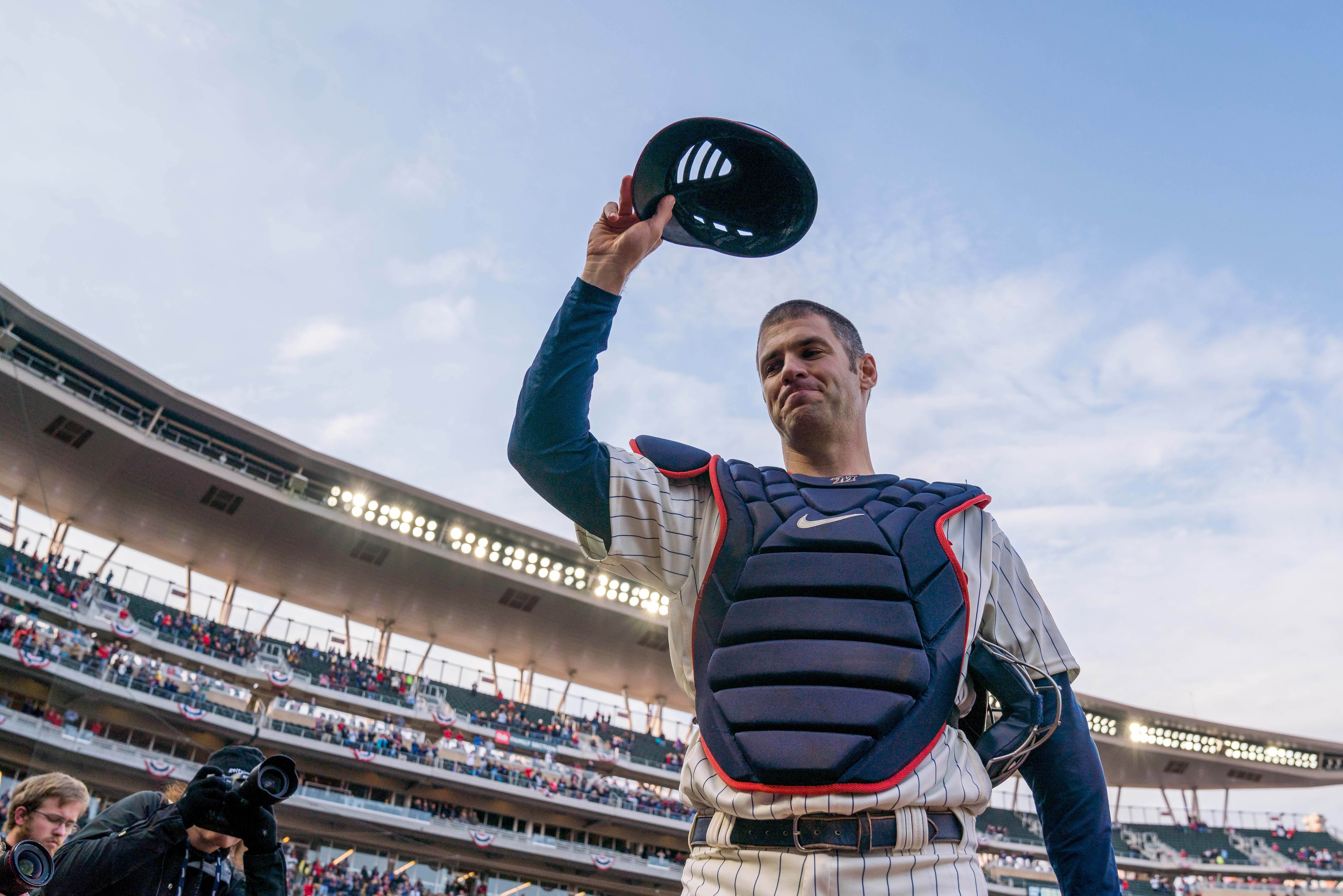
Joe Mauer is hanging up his cleats after 15 years in the major leagues, all spent with his hometown team. On Friday afternoon, the Star Tribune reported that Mauer has taken out a full-page ad in Sunday's edition to announce his decision. The former MVP and six-time All-Star retires with the second-most hits in Minnesota Twins history; his 2,123 trails only Kirby Puckett (2,304).When the Twins selected the local high school star Mauer first overall in 2001, opting for the Cretin Derham Hall star over vaunted USC ace Mark Prior, it was a controversial choice. But it would ultimately be prove to be the correct one. Mauer developed into one of the best-hitting catchers in big-league history, winning three batting titles and batting .323/.405/.468 through 2013. Late in that season, he endured a jarring blow to his mask on a foul tip, and was never the same after. Lingering concussion effects led to a position switch, and Mauer was never the same standout asset as a first baseman. We'll surely be in for some heated Hall of Fame debates five years from now, but for the time being, let us reflect upon one of the greatest careers in this franchise's history. Click here to view the article
-
 When the Twins selected the local high school star Mauer first overall in 2001, opting for the Cretin Derham Hall star over vaunted USC ace Mark Prior, it was a controversial choice. But it would ultimately be prove to be the correct one. Mauer developed into one of the best-hitting catchers in big-league history, winning three batting titles and batting .323/.405/.468 through 2013. Late in that season, he endured a jarring blow to his mask on a foul tip, and was never the same after. Lingering concussion effects led to a position switch, and Mauer was never the same standout asset as a first baseman. We'll surely be in for some heated Hall of Fame debates five years from now, but for the time being, let us reflect upon one of the greatest careers in this franchise's history.
 -
Article: Believe in Byron Buxton
Nick Nelson replied to Nick Nelson's topic in Twins Daily Front Page News
I think we can all agree that any discussion of "floor" goes out the window when you're talking about seasons utterly demolished by injuries. I recognize that Buxton's style of play makes him more injury-prone than others but I don't expect to see him play 28 MLB games in a season often. I laid out a vision in the blueprint linked in the article. Basically it calls for aggressive early raises, while the Twins have financial flexibility, and then reasonable salaries on the back end. -
Article: Believe in Byron Buxton
Nick Nelson replied to Nick Nelson's topic in Twins Daily Front Page News
He tied for the 10th best WAR among AL hitters this year, and led a team that won 100 games. -
Article: Believe in Byron Buxton
Nick Nelson replied to Nick Nelson's topic in Twins Daily Front Page News
This is hard for me to fathom. Buxton's floor is basically a solid regular with elite defensive value and minimal offensive contribution. Sano's floor is... I dunno. Chris Carter? Worse? He has nothing to fall back on if he's not an outstanding hitter. Furthermore, only one of those guys has ever given any reason to question his drive, focus and commitment. -
Article: Believe in Byron Buxton
Nick Nelson replied to Nick Nelson's topic in Twins Daily Front Page News
What do other players have to do with Buxton? His circumstances are special and unique, creating perfect conditions for a deal that makes sense both ways. Very few position players with his ability have as much motivation to lock up financial security at this stage. Also, I don't recall saying anything about signing Buxton into his mid-30s being a "good idea." I said if he hits the market at age 30/31 as a star-caliber player, he'll have no trouble landing another large contract. You're the one talking about market precedent; that happens with numerous players every single offseason. -
Article: Believe in Byron Buxton
Nick Nelson replied to Nick Nelson's topic in Twins Daily Front Page News
Because he's getting ~$50 million in guaranteed money, which is like 7x his lifetime earnings up to this point and will take care of his family no matter what happens. And he can still reach FA in his prime. If he develops as he (and we) hope, he should have no trouble procuring another big contract at age 30/31 or so. Frankly, so long as the Twins come correct with the terms, I think it's pretty much a no-brainer for him. -
On August 17th, 2017, Byron Buxton broke his own Statcast record by sprinting around the bases in 13.85 seconds on an inside-the-park homer. I thought that was fast until I saw how quickly a large contingent of Twins fans somehow turned on the franchise's most vital asset.When I posted my spend-happy offseason blueprint earlier this week, full of far-fangled notions, somehow the suggestion that drew most skepticism was a Buxton extension. I've seen numerous people suggest he's no longer a player you can plan around. On Twitter the other day, some dude tweeted at me "Cave is better than Buxton." It blows my mind that Twins fans, fresh off watching Aaron Hicks achieve superstar status in New York, can make these kinds of comments. Hicks was the original Buxton: He was called up too soon, because his athleticism and minor-league performance were irresistible, and then he endured a long battle with the MLB learning curve. Hicks was so psyched out at one point he briefly gave up switch-hitting. Now, at age 28, he just put up a top-25 WAR in the majors. He's one of the best players on a championship-caliber team. After plenty of ups and downs, Hicks finally figured it all out, at the center of his theoretical "prime." It's hardly a unique scenario. And here's the thing: Buxton is WAY BETTER than Hicks. That's not even debatable. Buxton's age-23 season in 2017 was vastly better than any of Hicks' seasons with the Twins through age 25. Although their paths have been notably similar – from two-way prep stars to first-round draft picks to top prospects to early big-league debuts – Buxton has outpaced Hicks at every step. And yet, now I see people ready to give up on Buxton, as a 24-year-old coming off an undeniably crappy campaign. We've been here before. And we've seen what happens after. Yes, there is a chance that Buxton never quite figures it out, or his injury woes prevent him from ever being a truly productive player. It's a bigger chance than it was a year ago. In his own mind, Buxton needs to account for that reality, and so does his agent. Which is why a long-term extension makes all the sense in the world for both sides right now. A lengthy pact in the $50 million range with an upfront bonus would be more than tenable for the Twins and would seemingly be appealing to Buxton, who could still hit the market around age 30. It would also establish some needed stability in a clubhouse with no long-term commitments, while soothing whatever tension remains after the September snub. From the moment they drafted him second overall 2012, and watched him blossom into the unanimous top prospect in the game, the Twins have envisioned Buxton becoming their franchise centerpiece right about now. To let one wayward season obscure that view would be to ignore a lengthy history of similar cases – not to mention Buxton's blindingly obvious abilities. Believe in Byron Buxton. Pay the man. And slow down with the jabs, because they're gonna look absolutely silly in hindsight. Click here to view the article
-
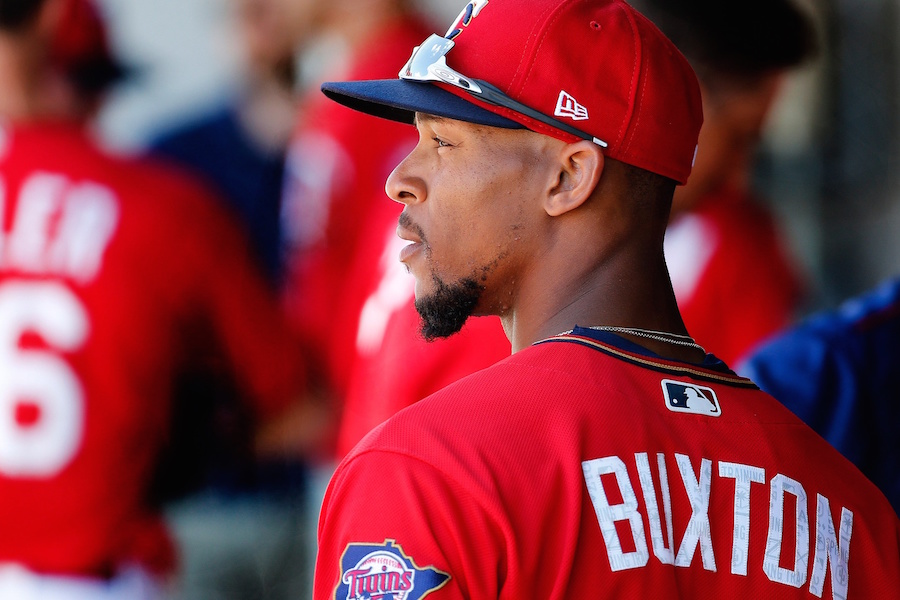 When I posted my spend-happy offseason blueprint earlier this week, full of far-fangled notions, somehow the suggestion that drew most skepticism was a Buxton extension. I've seen numerous people suggest he's no longer a player you can plan around. On Twitter the other day, some dude tweeted at me "Cave is better than Buxton." It blows my mind that Twins fans, fresh off watching Aaron Hicks achieve superstar status in New York, can make these kinds of comments. Hicks was the original Buxton: He was called up too soon, because his athleticism and minor-league performance were irresistible, and then he endured a long battle with the MLB learning curve. Hicks was so psyched out at one point he briefly gave up switch-hitting. Now, at age 28, he just put up a top-25 WAR in the majors. He's one of the best players on a championship-caliber team. After plenty of ups and downs, Hicks finally figured it all out, at the center of his theoretical "prime." It's hardly a unique scenario. And here's the thing: Buxton is WAY BETTER than Hicks. That's not even debatable. Buxton's age-23 season in 2017 was vastly better than any of Hicks' seasons with the Twins through age 25. Although their paths have been notably similar – from two-way prep stars to first-round draft picks to top prospects to early big-league debuts – Buxton has outpaced Hicks at every step. And yet, now I see people ready to give up on Buxton, as a 24-year-old coming off an undeniably crappy campaign. We've been here before. And we've seen what happens after. Yes, there is a chance that Buxton never quite figures it out, or his injury woes prevent him from ever being a truly productive player. It's a bigger chance than it was a year ago. In his own mind, Buxton needs to account for that reality, and so does his agent. Which is why a long-term extension makes all the sense in the world for both sides right now. A lengthy pact in the $50 million range with an upfront bonus would be more than tenable for the Twins and would seemingly be appealing to Buxton, who could still hit the market around age 30. It would also establish some needed stability in a clubhouse with no long-term commitments, while soothing whatever tension remains after the September snub. From the moment they drafted him second overall 2012, and watched him blossom into the unanimous top prospect in the game, the Twins have envisioned Buxton becoming their franchise centerpiece right about now. To let one wayward season obscure that view would be to ignore a lengthy history of similar cases – not to mention Buxton's blindingly obvious abilities. Believe in Byron Buxton. Pay the man. And slow down with the jabs, because they're gonna look absolutely silly in hindsight.
 -
Article: Offseason Blueprint: Hey Big Spenders!
Nick Nelson replied to Nick Nelson's topic in Twins Daily Front Page News
This is a very good point. When you think about it, a lot of this regime's uncharacteristic spending has ultimately been in the name of future investment (i.e., signing useful FAs on flippable one-year deals and eating salary to get prospects in the Jaime Garcia flip). But I do think it's important to get some continuity established, which is why I felt the contract extensions and a couple long-term FA pacts were warranted. Levine more or less admitted in BP's interview that all the one-year deals and uncertain futures were a distraction this year. The FO has now escaped all of its inherited commitments, so they can pick the guys they really wanna build around. -
Article: Offseason Blueprint: Hey Big Spenders!
Nick Nelson replied to Nick Nelson's topic in Twins Daily Front Page News
I think you'll enjoy the next two angles comin' from Parker and John. -
Article: Offseason Blueprint: Hey Big Spenders!
Nick Nelson replied to Nick Nelson's topic in Twins Daily Front Page News
I don't think it's quite that simple. Why didn't every other team's payroll rise accordingly? How come MN's spending didn't spike along with revenues in 2012, after MLB signed a massive new deal with Turner and FOX? If anything, this all just serves to reinforce my final point above: "While $150 million might seem like a huge number through the lens of Twins fans, it's really not that outrageous in the scope of today's MLB. It just isn't."
