



Nick Nelson
-
Posts
8,327 -
Joined
-
Last visited
-
Days Won
56
Content Type
Profiles
News
Minnesota Twins Videos
2026 Minnesota Twins Top Prospects Ranking
2022 Minnesota Twins Draft Picks
Minnesota Twins Free Agent & Trade Rumors, Notes, & Tidbits
Guides & Resources
2023 Minnesota Twins Draft Picks
The Minnesota Twins Players Project
2024 Minnesota Twins Draft Picks
2025 Minnesota Twins Draft Pick Tracker
2026 Minnesota Twins Draft Tracker: Picks & Bonuses
Forums
Blogs
Events
Store
Downloads
Gallery
Everything posted by Nick Nelson
-
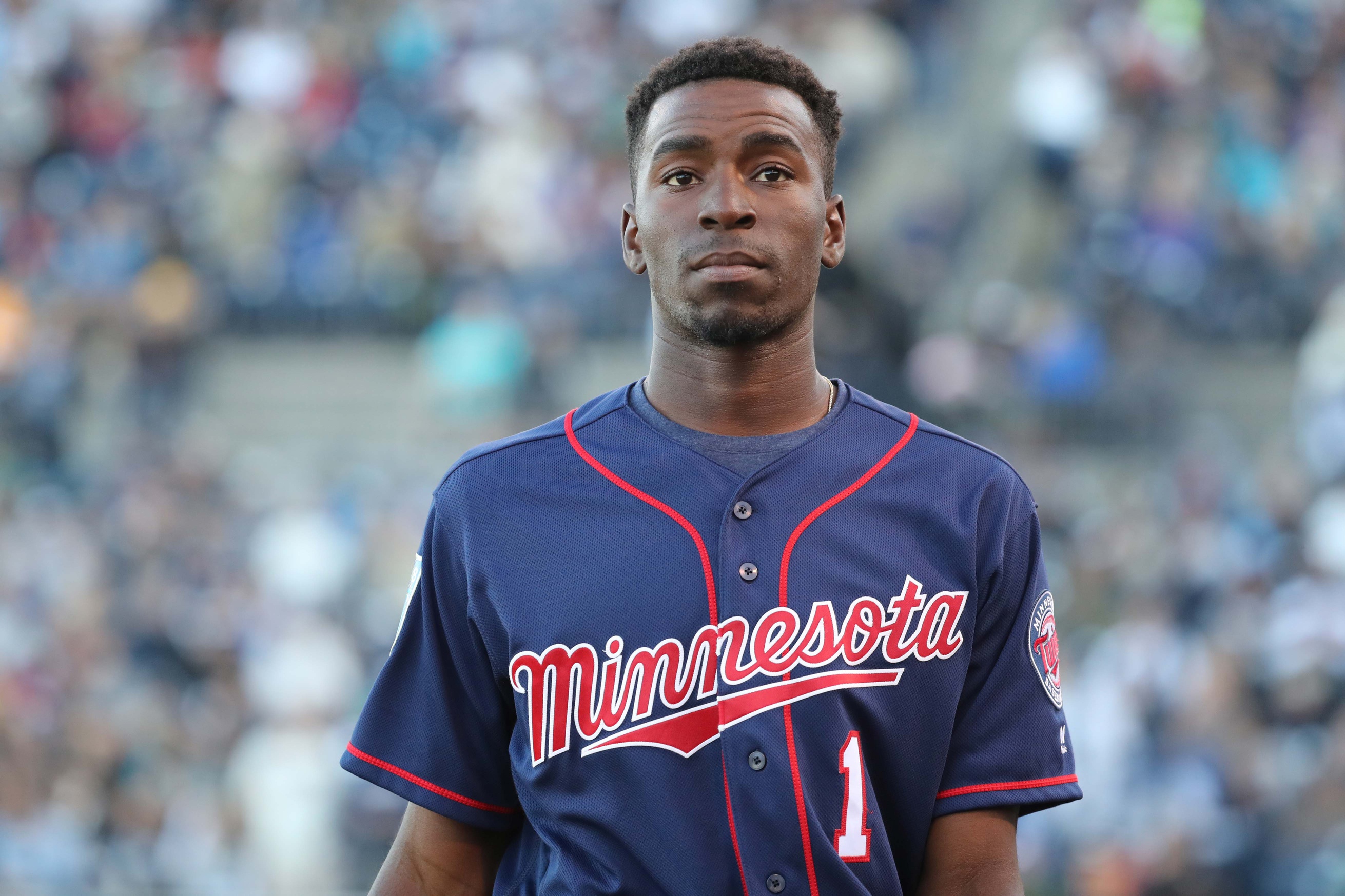 20. Nick Gordon, SS (23) 2018 Ranking: 13 A year ago, Gordon was already plagued by questions surrounding his viability at shortstop, as well as the legitimacy of his bat coming off a lackluster second half in Chattanooga. These doubts were only magnified during a rough 2018 campaign that saw him fail to gain any offensive traction in Triple-A (.212/.262/.283 in 99 games) while ceding more time to second base. Of course, he was also a 22-year-old in a league where the average player is considerably older. Assessing Gordon's performance is somewhat tough because he's always been relatively young and undeveloped compared to his competition. But now he's catching up, and it's time to show something. Huge year on deck for the former first-round draft pick. 19. C.J. Cron, 1B (29) 2018 Ranking: N/A While I questioned the fit, Cron was undoubtedly a nifty pickup for the Twins when they grabbed him off waivers from Tampa a month ago. It's not every day you can add an affordable and accomplished hitter, under the age of 30, coming off a breakout season, for nothing. Cron has pedigree – formerly a star collegiate slugger who became a first-round draft pick and has hit consistently in the minors and majors. He has upward momentum, having posted 30 home runs and an .817 OPS in his first full season a big-league regular. He's fairly cheap ($4.8 million in 2019), and controllable in 2020 via arbitration as well. 18. Adalberto Mejia, LHP (25) 2018 Ranking: 14 In 2018, Mejia did the same thing he's done almost nonstop since coming over to the Twins at the 2016 trade deadline: he performed. In 118 1/3 innings at Class-AAA Rochester since the trade, he has a 3.27 ERA, and he's held his own during multiple stints in the big leagues, including this year when he turned in a 2.01 ERA over five appearances for Minnesota. He's a big, burly left-hander with some velocity and the ability to miss bats. The only missing ingredient for Mejia has been sustained durability. He totaled less than 130 innings in 2017 and less than 90 in 2018, plagued by wrist and arm ailments down the stretch. Complicating matters is that Mejia's out of options next spring, which forces the Twins' hand in terms of rostering him. But still, this is a proven, capable left-handed starter with five years of team control ahead. There's a ton of potential value here. 17. Jake Cave, OF (26) 2018 Ranking: N/A Last spring the Twins saw an opportunity to add a player they liked and seized it. Cave had been designated for assignment by the Yankees in a roster crunch, so Minnesota flipped them teenage right-hander Luis Gil to acquire Cave before he had a chance to hit waivers. "He made some adjustments that we thought led to the power surge that he had, and we think those will continue going forward," said Derek Falvey at the time. They did indeed. Cave hit 13 home runs and slugged .473 in 91 games for the Twins. He also showed solid range and ability in the outfield. Granted, there were some troubling indicators to be found in his performance – among them, a 5-to-1 K/BB ratio that suggests volatility in the AVG/OBP columns is likely – but the power is legit. Cave was a savvy add by the front office. 16. Wander Javier, SS (20) 2018 Ranking: 18 Javier missed the entire 2018 season after undergoing shoulder labrum surgery. So how does he manage to move up two slots on this list, you ask? Well, it's mainly because folks that were above him a year ago have either backslid or departed, and Javier's tantalizing potential remains even after his setback. He looked like a true shortstop during his time in the Dominican Summer and Appy Leagues, with plenty of range and arm to handle – perhaps even master – the position. That shouldn't change, as the surgery was for his non-throwing arm. He has some lost time to make up for but Javier is expected back fully healthy in spring training and will be poised to take full-season leagues by storm. This has the makings of an Alex Kirilloff-type situation (Kirilloff was 20th in last year's rankings; you'll find out soon where he checks in this year).
 -
For a second consecutive offseason, the Minnesota Twins appear legitimately interested in the top available talent from Japan. And for a second consecutive offseason, it seems to be a foregone conclusion that player will wind up elsewhere. But perhaps Minnesota will be luckier with Yusei Kikuchi than they were a year ago with Shohei Ohtani. If they can find a way to land the prized left-hander, it'd be a game-changer in their efforts to bolster the pitching staff.Back in 2009, Kikuchi was a prep phenom for Hanamaki Higashi HS, touching the mid-90s with his fastball as a teenager. As he nearly became the first Japanese player ever to bypass the NPB draft and enter MLB directly out of high school, one of the teams courting him was the Texas Rangers, reportedly offering $7 million. Thad Levine was assistant general manager for the Rangers as they ardently pursued Kikuchi, who opted to remain in Japan at the time. He was also their assistant GM a few years later when they pulled off the landmark Yu Darvish signing. Levine was Minnesota's GM last offseason when Ohtani – a generational two-way talent out of Japan – became available. At the time, Levine made no secret of his desire to land Ohtani, but his Twins didn't make the final cut. Ohtani ended up having a sensational rookie season for the Angels. Now, we turn our attention to Kikuchi. Let's be clear: Ohtani he is not (though they did attend the high school). Kikuchi's upside doesn't approach that of Ohtani as a pitcher, and hitting isn't even part of the equation. But the 27-year-old lefty offers a quality arm that would fit snugly within Minnesota's long-term strategy. "VERY INTERESTED" La Velle E. Neal III of the Star Tribune tweeted on Friday that the Twins "like Kikuchi and have done a deep dive on him." A day later, the perpetually plugged in Darren Wolfson of KSTP added that the team is "very interested," and that Kikuchi has been scouted extensively by some of the organization's top evaluators. It isn't hard to see why Kikuchi would be of great interest to the Twins. First of all, they have plenty of money to spend. Secondly, they could use another starter – ideally a younger one who can pair with Jose Berrios as entrenched rotation fixtures. There is much to like about Kikuchi, who owns a 2.81 ERA and 1.17 WHIP in around 1,000 NPB innings. While it's tempting to draw up glitzy Ohtani comparisons, the more plausible comp is right-hander Miles Mikolas. Mikolas was a former seventh-round draft pick of the Padres who headed to Japan to re-establish himself after washing out of affiliated ball in his mid-20s. During his time with the Yomiuri Giants, he posted numbers that were similar in many ways to Kikuchi with the Saitama Seibu Lions – very strong, but not out-of-this-world overpowering or dominant. Last winter, Mikolas sought to return to the majors at age 28. The Cardinals signed him to a two-year deal worth $15.5 million, and boy has that investment paid off. Mikolas was phenomenal in 2018, finishing 18-4 with a 2.38 ERA and 1.07 WHIP in 200 innings. He finished sixth in the NL Cy Young voting. The two aren't mirror images by any means. Mikolas has superior command, which was his calling card during a stellar reintroduction to the majors. But Kikuchi probably has the better repertoire, highlighted by a swing-and-miss slider. And he's a lefty. Mikolas is an encouraging precedent, both in terms of process and results. The Cards were able to add him cheaply, because of the inherent question marks in translating performance from a foreign league, but he was more than up to the task. Kikuchi will require more to sign than Mikolas, but he'll still be far cheaper than, say, Patrick Corbin (who is incidentally a pretty similar pitcher in the FB/SL southpaw mold). UPHILL BATTLE So the Twins are interested in Kikuchi. Why wouldn't they be? But this brings us to the core issue at hand: so is almost every other team in the majors. And as was the case with Ohtani, the Twins only have so much capacity in their efforts to woo him. Granted, this isn't nearly the same type of scenario that led to Los Angeles committing just $23 million last year to acquire Ohtani, who potential earnings were capped. Changes in the posting system, along with Kikuchi's heightened service time, mean that he'll be an unrestricted free agent in the traditional sense, with the Saitama Seibu Lions receiving a percentage of his eventual contract as a release fee. This actually works to the Twins' benefit. Going against big-market clubs and West Coast teams, they have some built-in disadvantages when it comes to recruiting talent out of Asia, before you even start talking about budget and resources. This ultimately doomed them in their pursuit of Ohtani. But with money being more of a differentiating factor, they have leverage to negotiate. If Minnesota's extensive scouting has created a strong confidence in Kikuchi's outlook, there's no reason the Twins can't hang with any other team in the bidding. They're still about $50 million short of matching their 2018 Opening Day payroll at present. But are they going to be able to outbid and outpitch every other big slugger in this race? The Yankees are known to be interested, and may be motivated after coming up short on Corbin. Kikuchi has been linked to the Padres, Dodgers and Mariners. Giants reporter Henry Schulman reported earlier this month that San Francisco "might be his first choice." Here's one wild card in this whole situation: Kikuchi is represented by Scott Boras. In one sense that's scary, since Boras is a notoriously tough negotiator and is known for brokering some of the biggest contracts in MLB history. But on the other hand, Boras also reps two of Minnesota's most integral long-term pieces: Royce Lewis and Alex Kirilloff. Those two would hopefully slot in alongside Kikuchi within the next few years. Is this advantageous in any way? I have no clue. But it's at least interesting to note. THE CLOCK IS TICKING Kikuchi was posted by the Seibu Lions on December 4th, and his 30-day window for open negotiations will end on January 2nd, so we'll have clarity on the lefty's future within 10 days. La Velle noted, in his tweet on the team's interest, that the Twins "think they won’t be one of the favorites to land him," which is unsurprising. But by all accounts, it looks like they are earnestly trying. If the money is there, and Kikuchi buys into Minnesota's vision of a perennial contender at Target Field fueled by fellow Boras clients Lewis and Kirilloff? Who knows. One thing's for sure: It'd be the kind of splashy addition this fan base could use. Click here to view the article
-
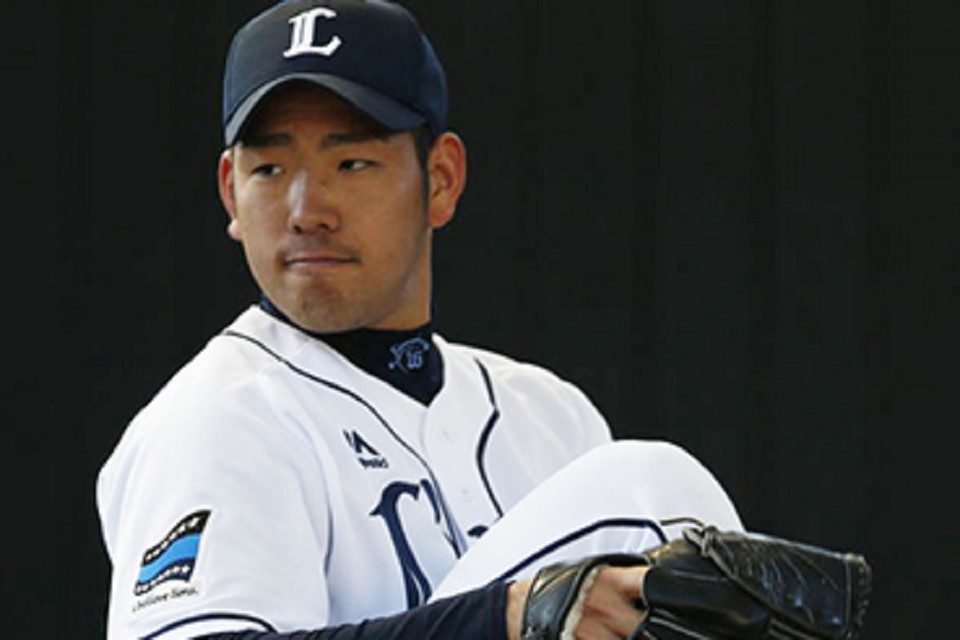 Back in 2009, Kikuchi was a prep phenom for Hanamaki Higashi HS, touching the mid-90s with his fastball as a teenager. As he nearly became the first Japanese player ever to bypass the NPB draft and enter MLB directly out of high school, one of the teams courting him was the Texas Rangers, reportedly offering $7 million. Thad Levine was assistant general manager for the Rangers as they ardently pursued Kikuchi, who opted to remain in Japan at the time. He was also their assistant GM a few years later when they pulled off the landmark Yu Darvish signing. Levine was Minnesota's GM last offseason when Ohtani – a generational two-way talent out of Japan – became available. At the time, Levine made no secret of his desire to land Ohtani, but his Twins didn't make the final cut. Ohtani ended up having a sensational rookie season for the Angels. Now, we turn our attention to Kikuchi. Let's be clear: Ohtani he is not (though they did attend the high school). Kikuchi's upside doesn't approach that of Ohtani as a pitcher, and hitting isn't even part of the equation. But the 27-year-old lefty offers a quality arm that would fit snugly within Minnesota's long-term strategy. "VERY INTERESTED" La Velle E. Neal III of the Star Tribune tweeted on Friday that the Twins "like Kikuchi and have done a deep dive on him." A day later, the perpetually plugged in Darren Wolfson of KSTP added that the team is "very interested," and that Kikuchi has been scouted extensively by some of the organization's top evaluators. It isn't hard to see why Kikuchi would be of great interest to the Twins. First of all, they have plenty of money to spend. Secondly, they could use another starter – ideally a younger one who can pair with Jose Berrios as entrenched rotation fixtures. There is much to like about Kikuchi, who owns a 2.81 ERA and 1.17 WHIP in around 1,000 NPB innings. While it's tempting to draw up glitzy Ohtani comparisons, the more plausible comp is right-hander Miles Mikolas. Mikolas was a former seventh-round draft pick of the Padres who headed to Japan to re-establish himself after washing out of affiliated ball in his mid-20s. During his time with the Yomiuri Giants, he posted numbers that were similar in many ways to Kikuchi with the Saitama Seibu Lions – very strong, but not out-of-this-world overpowering or dominant. Last winter, Mikolas sought to return to the majors at age 28. The Cardinals signed him to a two-year deal worth $15.5 million, and boy has that investment paid off. Mikolas was phenomenal in 2018, finishing 18-4 with a 2.38 ERA and 1.07 WHIP in 200 innings. He finished sixth in the NL Cy Young voting. The two aren't mirror images by any means. Mikolas has superior command, which was his calling card during a stellar reintroduction to the majors. But Kikuchi probably has the better repertoire, highlighted by a swing-and-miss slider. And he's a lefty. Mikolas is an encouraging precedent, both in terms of process and results. The Cards were able to add him cheaply, because of the inherent question marks in translating performance from a foreign league, but he was more than up to the task. Kikuchi will require more to sign than Mikolas, but he'll still be far cheaper than, say, Patrick Corbin (who is incidentally a pretty similar pitcher in the FB/SL southpaw mold). UPHILL BATTLE So the Twins are interested in Kikuchi. Why wouldn't they be? But this brings us to the core issue at hand: so is almost every other team in the majors. And as was the case with Ohtani, the Twins only have so much capacity in their efforts to woo him. Granted, this isn't nearly the same type of scenario that led to Los Angeles committing just $23 million last year to acquire Ohtani, who potential earnings were capped. Changes in the posting system, along with Kikuchi's heightened service time, mean that he'll be an unrestricted free agent in the traditional sense, with the Saitama Seibu Lions receiving a percentage of his eventual contract as a release fee. This actually works to the Twins' benefit. Going against big-market clubs and West Coast teams, they have some built-in disadvantages when it comes to recruiting talent out of Asia, before you even start talking about budget and resources. This ultimately doomed them in their pursuit of Ohtani. But with money being more of a differentiating factor, they have leverage to negotiate. If Minnesota's extensive scouting has created a strong confidence in Kikuchi's outlook, there's no reason the Twins can't hang with any other team in the bidding. They're still about $50 million short of matching their 2018 Opening Day payroll at present. But are they going to be able to outbid and outpitch every other big slugger in this race? The Yankees are known to be interested, and may be motivated after coming up short on Corbin. Kikuchi has been linked to the Padres, Dodgers and Mariners. Giants reporter Henry Schulman reported earlier this month that San Francisco "might be his first choice." https://twitter.com/hankschulman/status/1071938861457059840 Here's one wild card in this whole situation: Kikuchi is represented by Scott Boras. In one sense that's scary, since Boras is a notoriously tough negotiator and is known for brokering some of the biggest contracts in MLB history. But on the other hand, Boras also reps two of Minnesota's most integral long-term pieces: Royce Lewis and Alex Kirilloff. Those two would hopefully slot in alongside Kikuchi within the next few years. Is this advantageous in any way? I have no clue. But it's at least interesting to note. THE CLOCK IS TICKING Kikuchi was posted by the Seibu Lions on December 4th, and his 30-day window for open negotiations will end on January 2nd, so we'll have clarity on the lefty's future within 10 days. La Velle noted, in his tweet on the team's interest, that the Twins "think they won’t be one of the favorites to land him," which is unsurprising. But by all accounts, it looks like they are earnestly trying. If the money is there, and Kikuchi buys into Minnesota's vision of a perennial contender at Target Field fueled by fellow Boras clients Lewis and Kirilloff? Who knows. One thing's for sure: It'd be the kind of splashy addition this fan base could use.
 -

Article: Buxton’s Best Lined Up for Now?
Nick Nelson replied to Ted Schwerzler 's topic in Twins Daily Front Page News
Good stuff Ted. For those interested in diving deeper on this topic, I wrote a while back about the parallels between Baldelli and Buxton and how they might help build rapport. -
You cannot safely make this assumption. Next offseason, those three are all free agents, with 29 other teams able to court and woo. Right now, the Twins have exclusive negotiating rights with each of them, along with some actual leverage. That all disappears a year from now. You are right though: they do have Berrios, Romero, Gonsalves, and Mejia – a quartet with fewer combined MLB innings than Odorizzi (and a MUCH higher combined ERA).
-
Was he? According to most stats other than ERA, their seasons were actually quite similar. He had a 2.8% HR rate this year compared to 3.3% for his career. ¯\_(ツ)_/¯ I don't think it's that unfeasible his HR/FB neutralizes somewhat and is offset by his career-high FB rate coming down a bit. In fact, I expect it. I'll also add that I have confidence in the new instructors/analysts (Johnson and Hefner) to be helpful with an altogether promising specimen like Odorizzi. Especially if they aren't inhibited by him and his agent rebuking experimentation.
-
It was a weird offseason. No one wanted Lance Lynn or Alex Cobb either. But now look at them, both with long-term contracts. I'd hope the Twins aren't making decisions based entirely on group-think.
-
I'm sure you understand the difference between trying to sign someone on the open market, with their value inflated, vs one year away from the open market with their value depressed. I don't agree they SHOULD be trying to replace Odorizzi. There is a place for a reliably 2+ WAR pitcher, on a 12/13-man pitching staff. Always. Particularly when it's an effective fly-ball pitcher who can miss bats on a team with top-tier OF defense. The quest for exclusive ace-type upside seems to be blinding people.
-
How many that have done it in 4 of the last 5 years? And can match Odo's youth + career ERA/WHIP/K-rate? And are willing to sign with the Twins on reasonable terms? It's nice to speculate about how the Twins *could* theoretically do better but they have an opportunity to lock down a quality arm, still in his prime, at a potential bargain.
-
That seems like... over-simplistic analysis. I noted in the piece why I think Odorizzi is capable of reversing his downward trend, and has in fact already begun to do so. I don't think losing 1 MPH over 3 years is all that meaningful. Gibson was also "losing velocity at age 28." These things can ebb and flow. When it comes to outlooks for arms, I'll bet on the guy who's 3 years younger. (Also, guess who had the higher K-rate this year -- and every year -- despite that velo disparity?)
-
Good pitchers don't always want to sign here. The Twins actually have leverage in negotiating with Odorizzi, and don't have to compete with 29 other clubs (unless they wait). I think some folks tend to underrate the difficulty of luring quality players here (which I believe contributed to the fast action on Cron and Schoop). It's not just about being frugal. And in any case, committing $10M to your 4th/5th SP won't prevent you from doing anything on the market.
-
His career ERA is under 4 and he's still only 28 so I'm not sure what reason there would be to NOT expect that, especially if you take some steps to limit instances of letting the lineup roll over twice against him.
-
He's a good arm. The goal is to collect good arms and maximize their positive impact. The flip side of those poor numbers during his third trip through the lineup is that he is extremely good his first two times through. The notion being stated by some here that "pitchers like Odorizzi are available to the Twins every offseason" is wild to me. You've all seen this team's outcome with free agent pitchers... right?
-
Overrating or overvaluing recent trends is the biggest mistake a team can make with long-term decision-making IMO (haven't we learned that by now?). Odorizzi's track record speaks for itself and -- again -- his "two down years" are better than Gibson's career baseline. So you don't really need to contort any stats to make this case, you have just have to be honest and objective in your assessment. The difference between the two careers is that Gibson's successful runs have been outliers, whereas the opposite has been true for Odo. Odorizzi has been worth 2+ WAR in four of the last five years. If you're worried about the Twins being overloaded with internal guys that can match or surpass that in the next 3 seasons... well... I admire your optimism. This team has ZERO starters locked in with guaranteed deals past 2019, and Odorizzi has solid fallback potential as a reliever, so I have zero concern about what you're mentioning here.
-
I think you approach Gibson and make an offer as well, but he's in a better bargaining position. He also knows he's coming up on maybe his one chance to net that big career-making contract.
-
It's a good question. 3/30? Well, you need fourth and fifth starters. And if you're getting a sub-4 ERA from one of those spots, isn't that a good thing? The cost efficiency is just part of the equation but it sure doesn't hurt.
-
It has been noted here and elsewhere that the Twins are facing a rotation exodus one year from now, when three out of their four currently slotted rotation members are set to become free agents. Some have argued that the team should establish some continuity by locking up Kyle Gibson with a long-term deal, fresh off a career year where it all came together for him. I'm here today to offer a different take: It is Jake Odorizzi, not Gibson, the Twins should be seeking to extend.This is not a dismissal of Gibson. Far from it. I'm a believer in his emergence. Finally healthy and harnessing the full potential of his arsenal, he alternated between solid and filthy. His fastball clocked in at a career-high 93 MPH. Both his slider and curveball were among the league's toughest to hit in their respective categories. Gibson has STUFF and SPIN, at a time where those assets are being scrutinized and valued as much as ever. If he follows up with another strong campaign next year, he's gonna be in demand, and he knows it. While I'm sure he'd like to stick with the Twins, I doubt he'll be cutting them any ultra-sweet deal. Meanwhile, Odorizzi is coming off a second straight down year, by his standards anyway. Why extend him over Gibson? I'll give you five good reasons. 1. Gibson is 31. Odorizzi is 28. Odorizzi has thrown fewer career innings and has a strong bill of durability, with 28+ starts every season since 2014. Gibson isn't old, per se, but you could ink Odorizzi to a two-year extension and he'd be the same age when he finishes it as Gibby is now. 2. Odorizzi has a better track record than Gibson. He's got a 3.95 career ERA and 1.24 WHIP, compared to 4.47 and 1.41 for Gibson. What's more, Odorizzi has achieved those superior numbers mostly as a fly-ball pitcher in the AL East. Yes, Odo is coming off a career-worst 4.49 ERA in 2018, but that's nearly identical to Gibson's career mark. It troubles me that even in his big breakout season, Gibby's flaws were still evident as his control wavered and he allowed a fairly steady stream of baserunners, evidenced by an unspectacular 1.30 WHIP (we can't count on him replicating his career-high 75.5% strand rate). 3. Odorizzi might have turned a corner. One could make an argument that this is the perfect time to strike a multi-year pact with Odorizzi. He was quietly very effective in down the stretch, erasing his problematic long-ball vulnerability with only three home runs allowed over 10 starts between August and September. During that span he held opponents to a .203/.292/.318 slash line. Taking it back a step further, he surrendered just six homers in 20 starts after June 1st. Meanwhile, Odorizzi finished with the highest strikeout rate (8.9 K/9) since his rookie year. It sure seemed like the righty figured a few things out around the middle of the summer, and if he can build upon that with new pitching coach Wes Johnson, you've got something. 4. Contract security could make Odorizzi more open-minded about his usage. Odorizzi is a model candidate for the "opener" strategy, as he allowed the highest OPS his third time facing opposing lineups (1.135) of any qualified pitcher in the game this year. This was noted by Parker Hageman in his feature for the Offseason Handbook, but so too was this reality: it's tough to screw around with the usage of a starting pitcher who's staring down free agency and unsure of his future. “Hold on a sec, I’m a starter. I’m going to get paid as a starter,” Twins director of personnel Mike Radcliff empathized in the story, speaking not of Odorizzi specifically but the general conundrum of asking an established veteran to fill an experimental role. With some income certainty for the coming years, the right-hander (or more accurately his agent) may be less inclined to protest such an arrangement, which could benefit the team greatly. 5. Odorizzi will be cheaper. While you can easily find some positives in his numbers and trends (I did so above), the fact remains: Odorizzi is coming off a subpar season, just after the team that watched him blossom into a quality mid-rotation starter traded him for peanuts rather than pay him $6 million. I've gotta think he'd be amenable to a three-year contract on reasonable terms. I get that Gibson is the hot commodity right now. But taking a step back, Odorizzi has consistently shown a much higher floor, and given his reliable domination of opponents in the first meeting of a game (.645 OPS allowed and 24% K-rate, career) he's a good bet to at least excel as a reliever if it comes to that. Oh, and here's the other thing: if Gibson does have a beastly season next year, the Twins can extend a qualifying offer. That seems like a less viable scenario with Odorizzi. So, there you go. Where do you weigh in? Have I convinced you on the merits of an Odorizzi extension? Or do you lean more toward Gibson? Maybe you'd try and extend both? Neither? Let's hear it. Click here to view the article
-
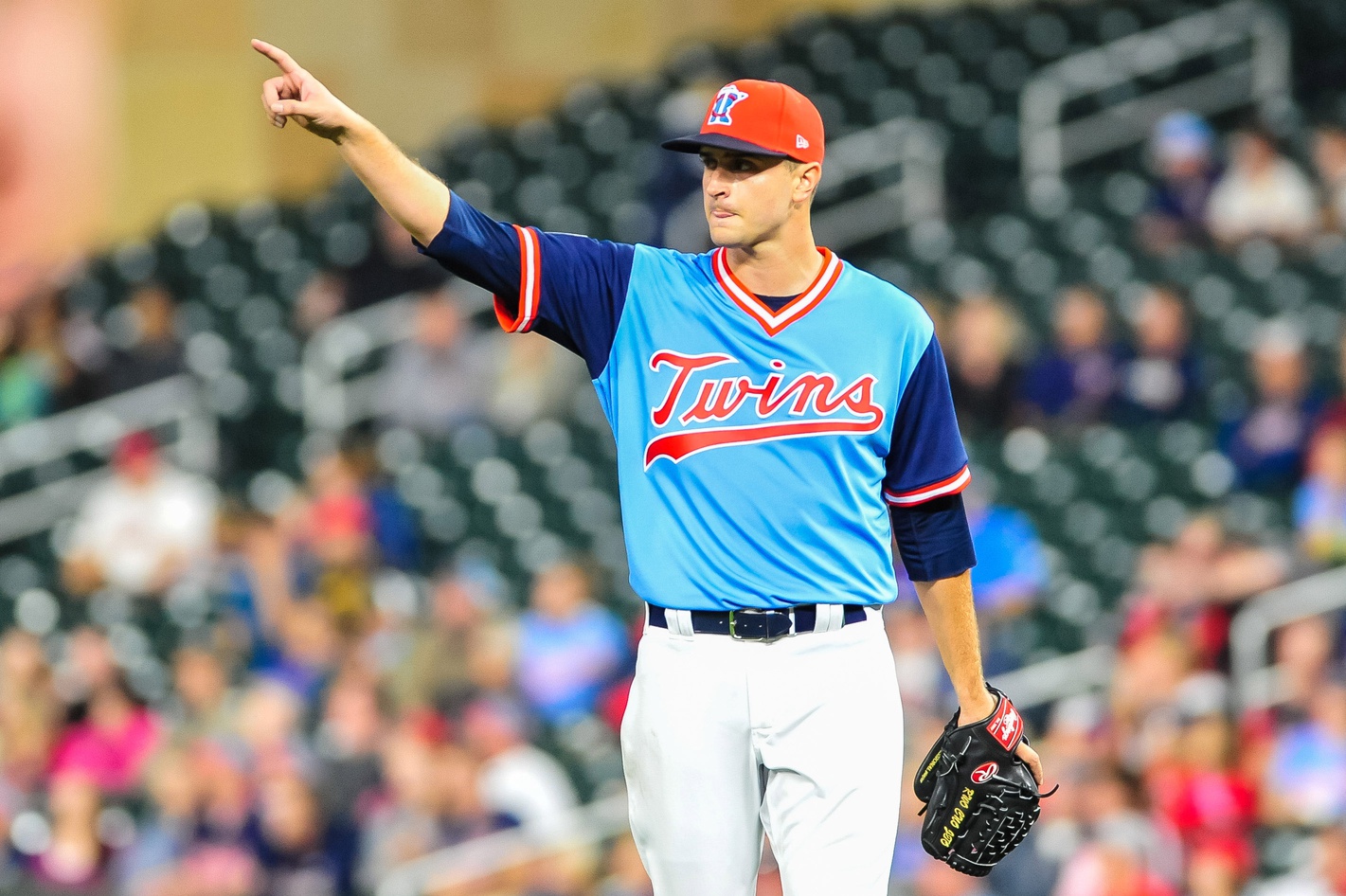 This is not a dismissal of Gibson. Far from it. I'm a believer in his emergence. Finally healthy and harnessing the full potential of his arsenal, he alternated between solid and filthy. His fastball clocked in at a career-high 93 MPH. Both his slider and curveball were among the league's toughest to hit in their respective categories. Gibson has STUFF and SPIN, at a time where those assets are being scrutinized and valued as much as ever. If he follows up with another strong campaign next year, he's gonna be in demand, and he knows it. While I'm sure he'd like to stick with the Twins, I doubt he'll be cutting them any ultra-sweet deal. Meanwhile, Odorizzi is coming off a second straight down year, by his standards anyway. Why extend him over Gibson? I'll give you five good reasons. 1. Gibson is 31. Odorizzi is 28. Odorizzi has thrown fewer career innings and has a strong bill of durability, with 28+ starts every season since 2014. Gibson isn't old, per se, but you could ink Odorizzi to a two-year extension and he'd be the same age when he finishes it as Gibby is now. 2. Odorizzi has a better track record than Gibson. He's got a 3.95 career ERA and 1.24 WHIP, compared to 4.47 and 1.41 for Gibson. What's more, Odorizzi has achieved those superior numbers mostly as a fly-ball pitcher in the AL East. Yes, Odo is coming off a career-worst 4.49 ERA in 2018, but that's nearly identical to Gibson's career mark. It troubles me that even in his big breakout season, Gibby's flaws were still evident as his control wavered and he allowed a fairly steady stream of baserunners, evidenced by an unspectacular 1.30 WHIP (we can't count on him replicating his career-high 75.5% strand rate). 3. Odorizzi might have turned a corner. One could make an argument that this is the perfect time to strike a multi-year pact with Odorizzi. He was quietly very effective in down the stretch, erasing his problematic long-ball vulnerability with only three home runs allowed over 10 starts between August and September. During that span he held opponents to a .203/.292/.318 slash line. Taking it back a step further, he surrendered just six homers in 20 starts after June 1st. Meanwhile, Odorizzi finished with the highest strikeout rate (8.9 K/9) since his rookie year. It sure seemed like the righty figured a few things out around the middle of the summer, and if he can build upon that with new pitching coach Wes Johnson, you've got something. 4. Contract security could make Odorizzi more open-minded about his usage. Odorizzi is a model candidate for the "opener" strategy, as he allowed the highest OPS his third time facing opposing lineups (1.135) of any qualified pitcher in the game this year. This was noted by Parker Hageman in his feature for the Offseason Handbook, but so too was this reality: it's tough to screw around with the usage of a starting pitcher who's staring down free agency and unsure of his future. “Hold on a sec, I’m a starter. I’m going to get paid as a starter,” Twins director of personnel Mike Radcliff empathized in the story, speaking not of Odorizzi specifically but the general conundrum of asking an established veteran to fill an experimental role. With some income certainty for the coming years, the right-hander (or more accurately his agent) may be less inclined to protest such an arrangement, which could benefit the team greatly. 5. Odorizzi will be cheaper. While you can easily find some positives in his numbers and trends (I did so above), the fact remains: Odorizzi is coming off a subpar season, just after the team that watched him blossom into a quality mid-rotation starter traded him for peanuts rather than pay him $6 million. I've gotta think he'd be amenable to a three-year contract on reasonable terms. I get that Gibson is the hot commodity right now. But taking a step back, Odorizzi has consistently shown a much higher floor, and given his reliable domination of opponents in the first meeting of a game (.645 OPS allowed and 24% K-rate, career) he's a good bet to at least excel as a reliever if it comes to that. Oh, and here's the other thing: if Gibson does have a beastly season next year, the Twins can extend a qualifying offer. That seems like a less viable scenario with Odorizzi. So, there you go. Where do you weigh in? Have I convinced you on the merits of an Odorizzi extension? Or do you lean more toward Gibson? Maybe you'd try and extend both? Neither? Let's hear it.
 -
To be clear, I'm talking more of a "stacker" approach with that fifth turn in the rotation as opposed to a bullpen game where you have like 6 guys throw 1-2 innings. Ultimately this can actually help preserve some of the other bullpen arms. What is it that causes you to lack confidence in Mejia? He's pitched really well ever since coming over from San Fran. This year in 86 IP between the majors and Triple-A he had a 2.93 ERA and held opponents to a .226/.295/.320 line with a 12% swinging strike rate. Allowed only 4 HR. It's not too easy to find young left-handed hurlers with those kinds of credentials. His health and mediocre control are concerns, but to me he's shown enough that I'd absolutely be comfortable giving him a 5th starter or long reliever job. There aren't more red flags here than you're gonna find with any reasonably priced FA. And if he proves capable, that's a big boost.
-
Ah, good call folks. I thought I remembered something like this. Will update the article.
-
True, but the Twins now have the ability to customize their personnel for the kind of staff they want to use (or, in other words, they can let the market dictate how the unit comes together). So if — as others have noted — the market for starters isn't all that strong, they might be best off loading up on relief arms and having each fifth day be a "bullpen day" if you will. I like this approach for a team in their position because it helps you manage workloads more closely and gives you the opportunity for extended looks at more arms.
-
The Twins have addressed their two biggest needs on the position-player side, adding C.J. Cron at first base and Jonathan Schoop at second. They are reportedly still monitoring the DH market, and might add another catcher yet, but now the front office is turning its attention to the pitching staff. It's obvious that Minnesota could stand to add multiple impact arms. But circumstances will make this a more complicated undertaking than it appears.Here in mid-December, the Twins have the following pitchers written onto next year's Opening Day roster in ink, more or less: Jose Berrios, Kyle Gibson, Jake Odorizzi, Michael Pineda, Trevor May, Taylor Rogers, Addison Reed. I would consider Trevor Hildenberger close to a lock, so long as he doesn't look like a total mess in spring training. That's eight members of a 12-man (possibly 13-man) staff. So the mission here seems clear, right? Add four more pitchers via free agency or trade – probably one starter and three relievers – and you're all set. It's not quite that simple. While I certainly think the Twins need to add more, and will, there are a few considerations that should be kept in mind as they attack the open market. * The 40-man roster is full. Any new addition on a major-league contract will require the Twins to drop one of their existing players. You might argue that's not the biggest deterrent, considering there are a number candidates for removal on the current roster (I marked nine that I would consider to be "at-risk" below) but it's something to note. Download attachment: 40manatrisk1216.png * Adalberto Mejia is out of options next year. So is Matt Magill, but I don't think the Twins are too concerned about losing him. Mejia is the kind of arm a rebuilding team needs to hold onto. In 2017 he threw fairly well for Minnesota as a rookie, posting a 4.50 ERA in 21 starts (he also put up a 2.83 ERA in six starts at Rochester). This year he was hampered by injuries but still turned in a 2.01 ERA in five outings for the Twins, and 3.27 over 63 innings at Triple-A. The left-hander has consistently performed since coming over to the Twins, with solid stuff to match. He doesn't turn 26 until next June. I'd go so far as to say that Mejia should be assured a spot as much as the "locks" I listed above, and if you're open to using him as a starter (or perhaps more fittingly a primary), then boom, you've got your rotation completed. * Fernando Romero deserves his shot. He isn't out of options yet, but will be in 2020, so the Twins need to get him settled in a big-league role. You could send him back to Triple-A to start the year but it feels kinda pointless – Romero showed he belonged during an MLB debut this year, and offers more upside than almost anyone else in the mix. I've argued that it might be best to bring him along as a multi-inning fireman reliever. * Andrew Vasquez decimates left-handed hitters. You might feel inclined to find a lefty specialist on the open market, with top bullpen southpaw Taylor Rogers serving in more of a matchup-agnostic setup role. But then again, you might already have that piece on hand in Vasquez, who was added to the 40-man roster during the season in advance of his Rule 5 eligibility, getting a taste of the majors in September. In 69 total innings last year Vasquez held left hitters to a .196/.274/.235 line over 114 PA, with a 38% strikeout rate. The prior year, same-sided batters went .200/.297/.200 against him, managing zero extra-base hits in 75 PA. There's always risk in going with a relatively untested and inexperienced option, but Vasquez is the kind of effective, inexpensive role-filler that can really be an asset to a team like the Twins. * Pitching staffs are fundamentally transforming. Like it or not, the rigid designations of "starter" and "reliever" are fading in today's game. Using openers, and piggybacking starters, should both be concepts in play as you assemble the staff – as should flexibility in the ninth inning. This can help guide your strategy. For instance, if you do end up going with a rotation featuring five right-handers, you might want an extra southpaw reliever that you could plug in for the first inning against a lefty-heavy lineup. Or maybe you want to plan on trying to get 3-4 innings apiece from Mejia and Kohl Stewart every fifth day. With an open-minded approach, there are a lot of options and possibilities. * The rotation lacks continuity going forward. Three of Minnesota's expected starters – Gibson, Odorizzi and Pineda, will be free agents after next season. In terms of rotation members that the Twins can comfortably count on past 2019, Berrios pretty much starts and ends the list. So the quest for rotation help this offseason shouldn't necessarily be limited to short-term commitments. A multi-year deal would make a lot of sense... if it's the right guy. Click here to view the article
-
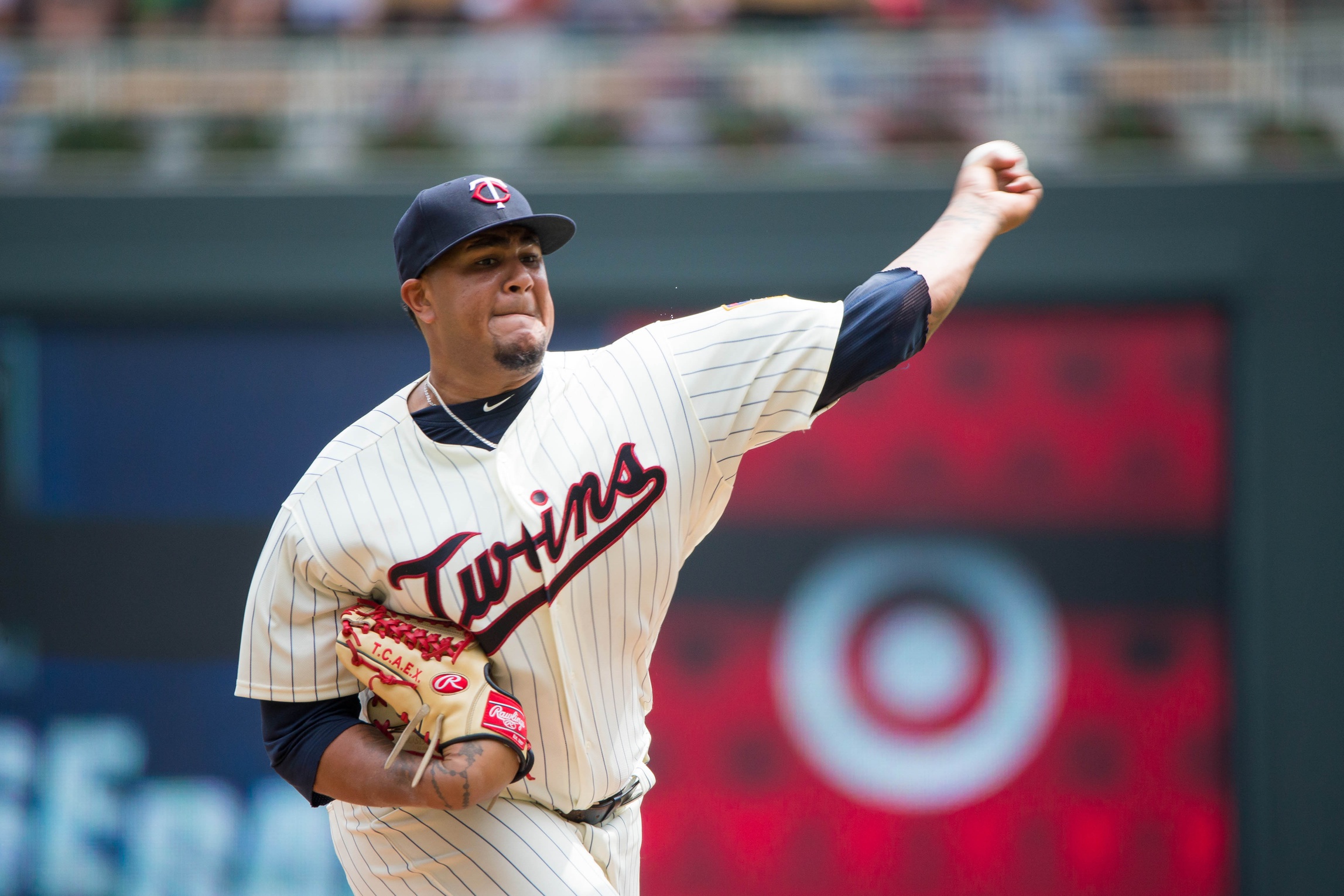 Here in mid-December, the Twins have the following pitchers written onto next year's Opening Day roster in ink, more or less: Jose Berrios, Kyle Gibson, Jake Odorizzi, Michael Pineda, Trevor May, Taylor Rogers, Addison Reed. I would consider Trevor Hildenberger close to a lock, so long as he doesn't look like a total mess in spring training. That's eight members of a 12-man (possibly 13-man) staff. So the mission here seems clear, right? Add four more pitchers via free agency or trade – probably one starter and three relievers – and you're all set. It's not quite that simple. While I certainly think the Twins need to add more, and will, there are a few considerations that should be kept in mind as they attack the open market. * The 40-man roster is full. Any new addition on a major-league contract will require the Twins to drop one of their existing players. You might argue that's not the biggest deterrent, considering there are a number candidates for removal on the current roster (I marked nine that I would consider to be "at-risk" below) but it's something to note. * Adalberto Mejia is out of options next year. So is Matt Magill, but I don't think the Twins are too concerned about losing him. Mejia is the kind of arm a rebuilding team needs to hold onto. In 2017 he threw fairly well for Minnesota as a rookie, posting a 4.50 ERA in 21 starts (he also put up a 2.83 ERA in six starts at Rochester). This year he was hampered by injuries but still turned in a 2.01 ERA in five outings for the Twins, and 3.27 over 63 innings at Triple-A. The left-hander has consistently performed since coming over to the Twins, with solid stuff to match. He doesn't turn 26 until next June. I'd go so far as to say that Mejia should be assured a spot as much as the "locks" I listed above, and if you're open to using him as a starter (or perhaps more fittingly a primary), then boom, you've got your rotation completed. * Fernando Romero deserves his shot. He isn't out of options yet, but will be in 2020, so the Twins need to get him settled in a big-league role. You could send him back to Triple-A to start the year but it feels kinda pointless – Romero showed he belonged during an MLB debut this year, and offers more upside than almost anyone else in the mix. I've argued that it might be best to bring him along as a multi-inning fireman reliever. * Andrew Vasquez decimates left-handed hitters. You might feel inclined to find a lefty specialist on the open market, with top bullpen southpaw Taylor Rogers serving in more of a matchup-agnostic setup role. But then again, you might already have that piece on hand in Vasquez, who was added to the 40-man roster during the season in advance of his Rule 5 eligibility, getting a taste of the majors in September. In 69 total innings last year Vasquez held left hitters to a .196/.274/.235 line over 114 PA, with a 38% strikeout rate. The prior year, same-sided batters went .200/.297/.200 against him, managing zero extra-base hits in 75 PA. There's always risk in going with a relatively untested and inexperienced option, but Vasquez is the kind of effective, inexpensive role-filler that can really be an asset to a team like the Twins. * Pitching staffs are fundamentally transforming. Like it or not, the rigid designations of "starter" and "reliever" are fading in today's game. Using openers, and piggybacking starters, should both be concepts in play as you assemble the staff – as should flexibility in the ninth inning. This can help guide your strategy. For instance, if you do end up going with a rotation featuring five right-handers, you might want an extra southpaw reliever that you could plug in for the first inning against a lefty-heavy lineup. Or maybe you want to plan on trying to get 3-4 innings apiece from Mejia and Kohl Stewart every fifth day. With an open-minded approach, there are a lot of options and possibilities. * The rotation lacks continuity going forward. Three of Minnesota's expected starters – Gibson, Odorizzi and Pineda, will be free agents after next season. In terms of rotation members that the Twins can comfortably count on past 2019, Berrios pretty much starts and ends the list. So the quest for rotation help this offseason shouldn't necessarily be limited to short-term commitments. A multi-year deal would make a lot of sense... if it's the right guy.
 -
Article: Rundown: Cruz, Cahill, Soria and Ramos
Nick Nelson replied to Tom Froemming's topic in Twins Daily Front Page News
Well, Austin managed to get 101 PA against LHP while playing in just 69 games, so... potentially quite useful. He can start against southpaws and pinch-hit for guys like Kepler or Castro against nasty late-inning LH relievers. It's the kind of luxury you can afford when not dedicating a roster spot to someone who is incapable of playing defense anywhere. Nobody's suggesting Austin bat exclusively against LHPs — a 50/50 split sounds about right, with more opportunities against righties if he earns it. I figured the idea with this front office was to identify undervalued or overlooked assets elsewhere and turn them into valuable components of their rebuilding effort — thus the frantic waiver claims and deadline deals for prospects. If we're just going to shove those guys aside when they've shown real success and promise, in favor of a 38-year-old free agent, I'm just not really sure what we're doing here. -
Article: Rundown: Cruz, Cahill, Soria and Ramos
Nick Nelson replied to Tom Froemming's topic in Twins Daily Front Page News
Based on... ? Austin and Cave over the past 2 years have very consistently destroyed opposite-sided arms both in AAA and the majors. And at 26/27 we can reasonably expect them to get better, whereas we can only reasonably expect a 38/39-year-old Cruz will get worse. You can be confident Cruz will outhit them based on his track record, but to say you're "very, very sure" he'll be significantly more productive? Sorry, just no objective basis for that. Additionally, there are matters of depth at play here. Since we can safely assumed Austin will be DFA'd in the event of a Cruz signing, you lose 1B depth in exchange for someone who offers zero positional depth anywhere. Cruz cannot play in the field, anywhere. That's a bigger deal than people are making out to be.- 100 replies
-
- 1
-

-
- nelson cruz
- trevor cahill
- (and 2 more)
