



Nick Nelson
-
Posts
8,327 -
Joined
-
Last visited
-
Days Won
56
Content Type
Profiles
News
Minnesota Twins Videos
2026 Minnesota Twins Top Prospects Ranking
2022 Minnesota Twins Draft Picks
Minnesota Twins Free Agent & Trade Rumors, Notes, & Tidbits
Guides & Resources
2023 Minnesota Twins Draft Picks
The Minnesota Twins Players Project
2024 Minnesota Twins Draft Picks
2025 Minnesota Twins Draft Pick Tracker
2026 Minnesota Twins Draft Tracker: Picks & Bonuses
Forums
Blogs
Events
Store
Downloads
Gallery
Everything posted by Nick Nelson
-
 This is the last of a four-part series ranking the top 20 player assets in the Minnesota Twins organization. The idea is to think solely in terms of commodity valuation, factoring in things like age, cost, control, and risk management in answering the question: which players are most essential to this team's vision? Previously we've looked at Nos. 20 through 16, Nos. 15 through 11 and Nos. 10 through 6. Today we bring it home with my picks for the Top 5.5. Brusdar Graterol, RHP (20) 2018 Ranking: N/A By the time Graterol turned 20, on August 26th, he had already logged 50 innings in the Advanced-A Florida State League, striking out 46 and allowing zero home runs. As one of the youngest players to throw a pitch in the FSL, the hard-throwing righty was experiencing immediate success. This came as no surprise to those who'd watched him obliterate the Midwest League for two months. Powered by a fastball that reaches triple digits and a plus slider, the stocky young right-hander has been climbing national prospect lists. There's a considerable amount of risk here given that he hasn't yet reached the high minors and lacks a bona fide third pitch, but the dazzling upside outweighs it all. This is the kind of prized arm any franchise covets. 4. Alex Kirilloff, OF (21) 2018 Ranking: 20 Kirilloff's 2018 was, simply put, one of the most impressive seasons we've ever seen from a Twins prospect. He led the Midwest League in OPS (.999) during his first half, then ranked third in the Florida State League (.943) after being promoted. The two players ahead of him in the FSL were three and four years older. Between the two levels of A-ball, Kirilloff batted .348 with 44 doubles, 20 homers and 101 RBIs. "It didn’t take Kirilloff long to outgrow Max Kepler comparisons and head straight for Christian Yelich territory," wrote Baseball America in ranking him the organization's second-best prospect. Yelich was of course the 2018 NL MVP. Kirilloff entered the year with only 55 games of pro experience. He ends it as one of the top hitting prospects in the minors, with a sweet lefty swing that generates power to all fields and rarely fails to connect. He projects as a middle-of-the-order bat and could arrive as soon as 2019. 3. Byron Buxton, OF (25) 2018 Ranking: 1 "Buxton impacts games in so many ways, bringing entirely new levels of entertainment and excitement for the viewer. He received MVP votes and a Gold Glove at in his age-23 season, and I'm guessing he'll be getting plenty more of both in the coming seasons. Humble, likable and hardworking, he's a perfect face for the franchise." So I wrote one year ago in naming Buxton the organization's most valuable asset. All of those things are still true, at least in theory, though he needs to be on the field and getting on base in order to entertain and excite anyone. Those things didn't happen in 2018, when he played only 28 games for the Twins and posted a .183 OBP, plagued by injuries, misfortune, and perhaps some self-inflicted aggravation due to overcompensating. It was a lost year, but the Twins didn't lose a year of control, thanks to their controversial decision to snub Buxton in September and delay his free agent eligibility until after 2022. He remains one of the most potentially impactful players in the game. We've already seen his offensive floor (basement, really) and there's nowhere to go but up. But without question, the center fielder needs to show he can stay healthy and sustain some kind of production at the dish. I anticipate a monster year. 2. Jose Berrios, RHP (24) 2018 Ranking: 3 In 1991, the Twins drafted a prep right-hander named Brad Radke. Three years later, a child by the name of Jose Berrios was born in Bayamon, Puerto Rico. Berrios was one year old when Radke debuted in the majors, embarking on a career that would be criminally underappreciated due to coinciding with baseball's steroid-fueled offensive eruption. I'm not here to debate whether Radke could accurately be described as a front-of-the-rotation starter. But I can say with confidence he's the closest the thing this franchise has been able to draft and develop in that mold in the last three decades. At least he was, up until Mr. Berrios arrived. Berrios didn't win 20 games in his age 24 season, as Radke did, but he was an All-Star, backing up his outstanding 2017 with another stellar effort while extending to almost 200 innings. His ascent thus far has been unusually devoid of turbulence – few young pitchers perform as consistently well, and stay as reliably healthy – which seems to validate the hurler's legendary work ethic. He's still got more ceiling above him as he reaches his mid-20s, but already Berrios is a playoff-caliber starter, with four years of control remaining. 1. Royce Lewis, SS (19) 2018 Ranking: 2 Lewis was already challenging Buxton for the top spot on this list a year ago (an amazing feat, considering where Buck was at). Then he went and took Single-A by storm, posting an .803 OPS between Cedar Rapids and Ft. Myers while facing almost exclusively older competition. During his masterful 2018 campaign, Lewis importantly did two things that were by no means a given: he hit for power and he excelled at shortstop. Many scouts assumed Lewis would develop some pop eventually as he filled out, but it was downright stunning to see the skinny teenager bust out for 29 doubles and 14 home runs in his first full season. When he was drafted, scouts also expressed skepticism about his long-term viability at shortstop (center field was viewed as a somewhat likely fallback) but that's fading. "Early returns on his glove suggest he can not only stick at the 6, but be above-average there," wrote Baseball Prospectus recently. A big part of these rankings is factoring in risk, and obviously there is always inherent uncertainty when you're talking about a 19-year-old who hasn't reached the high minors yet. But, while I know it sounds utterly ridiculous to talk about "sure things" as we watch Buxton and Miguel Sano slide down this list... Lewis really does have that vibe. His athleticism is surpassed only by his aptitude, and I've honestly never heard better reviews of a player his age when it comes to makeup, poise and adaptability. The Twins have a superstar-caliber talent in Lewis. They might have four or five of them listed in this article alone. If enough plays out as hoped with the top quintet, and a few things break right elsewhere in the Top 20, you've got a championship nucleus within five years. RECAPPING THE RANKINGS: 20. Nick Gordon, SS 19. C.J. Cron, 1B 18. Adalberto Mejia, LHP 17. Jake Cave, OF 16. Wander Javier, SS 15. Stephen Gonsalves, LHP 14. Miguel Sano, 3B 13. Kyle Gibson, RHP 12. Trevor May, RHP 11. Mitch Garver, C 10. Taylor Rogers, LHP 9. Max Kepler, OF 8. Eddie Rosario, OF 7. Jorge Polanco, SS 6. Fernando Romero, RHP 5. Brusdar Graterol, RHP 4. Alex Kirilloff, OF 3. Byron Buxton, OF 2. Jose Berrios, RHP 1. Royce Lewis, SS A few parting thoughts as we reflect on the whole list... Where are Trevor Larnach and Brent Rooker? I certainly think both these players can be important to the franchise's future, but from my view, the presence of both (and the similar functional profiles) makes each less vital at the moment... if that makes sense. Should Rooker fail to pan out, they have Larnach for essentially the same role, on a similar timeline. And vice versa. Since Rooker was good-not-great in Double-A, and Larnach hasn't played above Low-A, I don't feel we have enough solid data to solidly determine which is the safer bet to make an impact. Toughest calls One thing I like about this exercise is that it forces me to think about things in different ways. For instance, I've never really pondered whether Fernando Romero or Brusdar Graterol is more valuable to the Twins. Both have big upside but Graterol's currently looks quite a bit higher. Romero is already here but Graterol doesn't look that far off. I'm guessing (but not certain) Graterol would bring back more in a trade, though both have appeal. Another tough call was Eddie Rosario versus Max Kepler. Kepler has an extra year of control, and superior defense. Rosario is the more explosive hitter (and all-around player) with his value trending up. I gave Eddie the nod but could've easily gone the other way. Poignant pushback Based on feedback, the most controversial rankings seem to be C.J. Cron, Jake Cave and Mitch Garver (too high), and Miguel Sano and Nick Gordon (too low). Solid arguments were made and if I re-did these rankings I'd probably move several of those guys around a bit. In particular I was likely too hard on Sano, overemphasizing his stock-drop effect. He's an important player to this franchise, no question. Placing Cruz I put this list together a few days before the Twins agreed to terms with Nelson Cruz, which is why he's absent. Given his immense short-term impact and delightfully team-friendly contact, Cruz would certainly factor in somewhere despite his age. I'm thinking maybe around #15? Where would you slot him? Feel free to air any final grievances and pick your bones with the Top 5 below. Thanks to all who read and commented. Click here to view the article
- 49 replies
-
- 6
-

-
- brusdar graterol
- alex kirilloff
- (and 3 more)
-
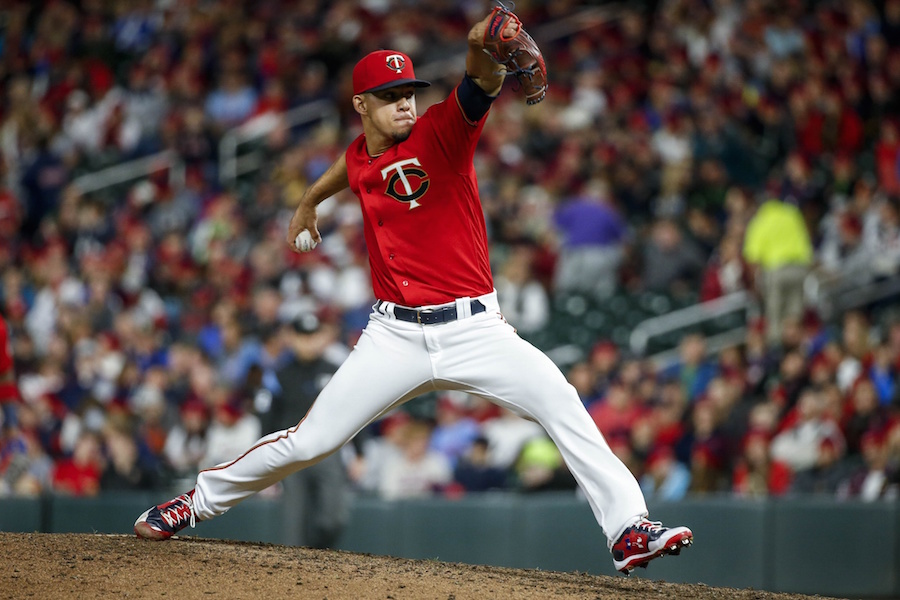 5. Brusdar Graterol, RHP (20) 2018 Ranking: N/A By the time Graterol turned 20, on August 26th, he had already logged 50 innings in the Advanced-A Florida State League, striking out 46 and allowing zero home runs. As one of the youngest players to throw a pitch in the FSL, the hard-throwing righty was experiencing immediate success. This came as no surprise to those who'd watched him obliterate the Midwest League for two months. Powered by a fastball that reaches triple digits and a plus slider, the stocky young right-hander has been climbing national prospect lists. There's a considerable amount of risk here given that he hasn't yet reached the high minors and lacks a bona fide third pitch, but the dazzling upside outweighs it all. This is the kind of prized arm any franchise covets. 4. Alex Kirilloff, OF (21) 2018 Ranking: 20 Kirilloff's 2018 was, simply put, one of the most impressive seasons we've ever seen from a Twins prospect. He led the Midwest League in OPS (.999) during his first half, then ranked third in the Florida State League (.943) after being promoted. The two players ahead of him in the FSL were three and four years older. Between the two levels of A-ball, Kirilloff batted .348 with 44 doubles, 20 homers and 101 RBIs. "It didn’t take Kirilloff long to outgrow Max Kepler comparisons and head straight for Christian Yelich territory," wrote Baseball America in ranking him the organization's second-best prospect. Yelich was of course the 2018 NL MVP. Kirilloff entered the year with only 55 games of pro experience. He ends it as one of the top hitting prospects in the minors, with a sweet lefty swing that generates power to all fields and rarely fails to connect. He projects as a middle-of-the-order bat and could arrive as soon as 2019. 3. Byron Buxton, OF (25) 2018 Ranking: 1 "Buxton impacts games in so many ways, bringing entirely new levels of entertainment and excitement for the viewer. He received MVP votes and a Gold Glove at in his age-23 season, and I'm guessing he'll be getting plenty more of both in the coming seasons. Humble, likable and hardworking, he's a perfect face for the franchise." So I wrote one year ago in naming Buxton the organization's most valuable asset. All of those things are still true, at least in theory, though he needs to be on the field and getting on base in order to entertain and excite anyone. Those things didn't happen in 2018, when he played only 28 games for the Twins and posted a .183 OBP, plagued by injuries, misfortune, and perhaps some self-inflicted aggravation due to overcompensating. It was a lost year, but the Twins didn't lose a year of control, thanks to their controversial decision to snub Buxton in September and delay his free agent eligibility until after 2022. He remains one of the most potentially impactful players in the game. We've already seen his offensive floor (basement, really) and there's nowhere to go but up. But without question, the center fielder needs to show he can stay healthy and sustain some kind of production at the dish. I anticipate a monster year. 2. Jose Berrios, RHP (24) 2018 Ranking: 3 In 1991, the Twins drafted a prep right-hander named Brad Radke. Three years later, a child by the name of Jose Berrios was born in Bayamon, Puerto Rico. Berrios was one year old when Radke debuted in the majors, embarking on a career that would be criminally underappreciated due to coinciding with baseball's steroid-fueled offensive eruption. I'm not here to debate whether Radke could accurately be described as a front-of-the-rotation starter. But I can say with confidence he's the closest the thing this franchise has been able to draft and develop in that mold in the last three decades. At least he was, up until Mr. Berrios arrived. Berrios didn't win 20 games in his age 24 season, as Radke did, but he was an All-Star, backing up his outstanding 2017 with another stellar effort while extending to almost 200 innings. His ascent thus far has been unusually devoid of turbulence – few young pitchers perform as consistently well, and stay as reliably healthy – which seems to validate the hurler's legendary work ethic. He's still got more ceiling above him as he reaches his mid-20s, but already Berrios is a playoff-caliber starter, with four years of control remaining. 1. Royce Lewis, SS (19) 2018 Ranking: 2 Lewis was already challenging Buxton for the top spot on this list a year ago (an amazing feat, considering where Buck was at). Then he went and took Single-A by storm, posting an .803 OPS between Cedar Rapids and Ft. Myers while facing almost exclusively older competition. During his masterful 2018 campaign, Lewis importantly did two things that were by no means a given: he hit for power and he excelled at shortstop. Many scouts assumed Lewis would develop some pop eventually as he filled out, but it was downright stunning to see the skinny teenager bust out for 29 doubles and 14 home runs in his first full season. When he was drafted, scouts also expressed skepticism about his long-term viability at shortstop (center field was viewed as a somewhat likely fallback) but that's fading. "Early returns on his glove suggest he can not only stick at the 6, but be above-average there," wrote Baseball Prospectus recently. A big part of these rankings is factoring in risk, and obviously there is always inherent uncertainty when you're talking about a 19-year-old who hasn't reached the high minors yet. But, while I know it sounds utterly ridiculous to talk about "sure things" as we watch Buxton and Miguel Sano slide down this list... Lewis really does have that vibe. His athleticism is surpassed only by his aptitude, and I've honestly never heard better reviews of a player his age when it comes to makeup, poise and adaptability. The Twins have a superstar-caliber talent in Lewis. They might have four or five of them listed in this article alone. If enough plays out as hoped with the top quintet, and a few things break right elsewhere in the Top 20, you've got a championship nucleus within five years. RECAPPING THE RANKINGS: 20. Nick Gordon, SS 19. C.J. Cron, 1B 18. Adalberto Mejia, LHP 17. Jake Cave, OF 16. Wander Javier, SS 15. Stephen Gonsalves, LHP 14. Miguel Sano, 3B 13. Kyle Gibson, RHP 12. Trevor May, RHP 11. Mitch Garver, C 10. Taylor Rogers, LHP 9. Max Kepler, OF 8. Eddie Rosario, OF 7. Jorge Polanco, SS 6. Fernando Romero, RHP 5. Brusdar Graterol, RHP 4. Alex Kirilloff, OF 3. Byron Buxton, OF 2. Jose Berrios, RHP 1. Royce Lewis, SS A few parting thoughts as we reflect on the whole list... Where are Trevor Larnach and Brent Rooker? I certainly think both these players can be important to the franchise's future, but from my view, the presence of both (and the similar functional profiles) makes each less vital at the moment... if that makes sense. Should Rooker fail to pan out, they have Larnach for essentially the same role, on a similar timeline. And vice versa. Since Rooker was good-not-great in Double-A, and Larnach hasn't played above Low-A, I don't feel we have enough solid data to solidly determine which is the safer bet to make an impact. Toughest calls One thing I like about this exercise is that it forces me to think about things in different ways. For instance, I've never really pondered whether Fernando Romero or Brusdar Graterol is more valuable to the Twins. Both have big upside but Graterol's currently looks quite a bit higher. Romero is already here but Graterol doesn't look that far off. I'm guessing (but not certain) Graterol would bring back more in a trade, though both have appeal. Another tough call was Eddie Rosario versus Max Kepler. Kepler has an extra year of control, and superior defense. Rosario is the more explosive hitter (and all-around player) with his value trending up. I gave Eddie the nod but could've easily gone the other way. Poignant pushback Based on feedback, the most controversial rankings seem to be C.J. Cron, Jake Cave and Mitch Garver (too high), and Miguel Sano and Nick Gordon (too low). Solid arguments were made and if I re-did these rankings I'd probably move several of those guys around a bit. In particular I was likely too hard on Sano, overemphasizing his stock-drop effect. He's an important player to this franchise, no question. Placing Cruz I put this list together a few days before the Twins agreed to terms with Nelson Cruz, which is why he's absent. Given his immense short-term impact and delightfully team-friendly contact, Cruz would certainly factor in somewhere despite his age. I'm thinking maybe around #15? Where would you slot him? Feel free to air any final grievances and pick your bones with the Top 5 below. Thanks to all who read and commented.
 -
Correct. I also suspect Schoop would be an option there if things were to go awry with Sano. The Twins can replace Buxton with a body in CF, yes. They can't replace what he brings to the table though. Not even close.
-
Byron Buxton doesn't need to be a great hitter to be a considerably valuable player. When healthy Buxton is – one can very reasonably argue – THE most valuable defender AND base runner in all of Major League Baseball. The measuring stick with these two is not at all the same. Anyway, the point was not to compare their performances in the minor leagues. The point was that, at the end of the season, Buxton was raking and healthy (then given an extra month to heal up even more). Sano was struggling at the plate, and then he significantly re-injured the leg that had bothered him all year. And that is where we stand at this present moment in time. One guy carried a slump and a worrisome injury into the offseason. The other, who is a fundamentally better player, was healthy and hitting as well as he had all year. This assessment is being made as of the end of the 2018 season. You're welcome to disagree but don't say there's no evidence, because it's there and it's been clearly explained. (Also, ill-gotten as some might think it is, the extra year of team control at age 28 with Buxton is immensely valuable in this discussion.)
- 80 replies
-
- 1
-
-
- stephen gonsalves
- miguel sano
- (and 3 more)
-
Great list! Well reasoned. Can't quibble with it much.
-
In general, yes, I agree. But with Sano I think there's more than natural variation at play. He hasn't been the same hitter since the first half of 2017. Either pitchers have figured out how to beat him, or his approach/swing has fundamentally deteriorated, or the injuries have really been taking a toll. Either way, I don't think you can take for granted that it's going to turn around in short order. (Though, to reiterate: I am optimistic. This ranking is only a reflection of visible trends.)
-
Sano since the 2017 ASB: .210/.291/.370 in 437 PA Adrianza's since 2017: .256/.309/.380 in 552 PA (didn't feel like doing manual calculations for post-break split in '17)
-
Easy enough to find this stuff with a quick search. "May's back problems began last year when he was moved to relief in the second half of the season. He was placed on the 15-day disabled list three times this season with lower-back stiffness, despite his efforts to stay healthy with regular visits to the chiropractor, yoga and pilates." So, no. There is no evidence that he was bothered by this in the minors or at any time before abruptly switching roles. And they eventually diagnosed it as a stress fracture which by all accounts is fully healed.
-
Sure, that's a fine way to put it (although I still contend that 10 years earlier Carter would've had a much easier time finding work based on his HR total alone, whereas other tools wouldn't have carried someone as far). Anyway, the point of this entire discussion is that it's not hard to see Sano becoming a one-tool player if he continues on his current path. And that point still stands.
-
You'll have to find me this interview. As I recall the back issues were new -- attributed to working in an unfamiliar role -- and when I talked to him in ST the following year he was very confident that he'd moved past them, having developed a new back strengthening regimen.
-
For closers it is especially arbitrary/useless. Closers almost never enter a game with runners on base. May held hitters to a .167 avg and .243 OBP with RISP, so I don't think there's much evidence he has issues with stranding runners or pitching from the stretch. I don't hear many people calling him a "failed prospect" but that injury is legitimately very concerning. His left leg has been a persistent problem. He missed a month early in the season with a hamstring issue in the same leg (who knows it it has anything to do with weakness/atrophy/whatever but it's a reasonable speculation). Then in September he went down in a heap after a fairly innocuous slide and missed the final month. Came back for one game, struck out four times, then was shut down again, and as of early October he was still experiencing soreness. Personally, I got nervous every time I watched Sano run last year. That leg never looked right and was in bad shape at season's end. If it continues to impede his hitting, or forces him to move away from third base, it torpedoes his value.
-
I would say Cave getting more starts in CF during Buck's absence speaks more to him being the backup outfielder and Kepler having an established starting position. Cave has a .768 career OPS in the minors. Kepler, who is the same age, has a .730 career OPS in the majors. While I'm fairly optimistic on Cave (thus his presence in these rankings at all) I'd be really careful about drawing definitive conclusions about a 300 PA, especially given the unsustainable K/BB numbers beneath it. Kepler was a top prospect and has established a floor as an average MLB hitter who chips in 20 HR. Cave was a fringy player up until last year and, to an extent, remains one.
- 51 replies
-
- 1
-
-
- taylor rogers
- max kepler
- (and 3 more)
-
Again, this is a snapshot of a moment in time. Here's how their seasons ended: Buxton: Healthy at Triple-A, slashed .316/.369/.537 there after July 1st. Sano: After an altogether underwhelming run in the minors, returned to Twins and hit .195/.294/.390 with 36% K-rate, then re-injured the leg that (ostensibly) was at the root of his issues, causing another delayed start to his offseason preparation. Also, Buxton has an extra year of control, meaning he has more time to figure it out as a Twin. It seems like things are going well with Sano's offseason strengthening/conditioning program, but I have no real insight into that (nor does anyone) so can only go by the way things left off in 2018.
- 51 replies
-
- 2
-
-
- taylor rogers
- max kepler
- (and 3 more)
-
Yeah, Rosario is extremely streaky player. That's been enough of a consistent, unyielding reality for him that I don't really try to get stuck explaining the downswings away with injury/team chemistry explanations anymore (though his quad surely slowed him down to some extent in the second half).
-
A solid-hitting middle IF and corner OF are more replaceable to the Twins than an MLB-ready, 23-year-old power arm who still profiles as a starter (or multi-inning/high-leverage reliever) with 5 6 years of team control remaining (thanks markos). Pretty much comes down to that. Personally I didn't think that ranking would be all that controversial. I was more confused about why I had Romero so low last year, but clearly the durability issues were top-of-mind then.
- 51 replies
-
- 1
-
-
- taylor rogers
- max kepler
- (and 3 more)
-
I don't think that's accurate at all actually. There are enormous differences between the circumstances of those two players. But we can dig into this when Buxton's actually in the article.
- 51 replies
-
- 3
-
-
- taylor rogers
- max kepler
- (and 3 more)
-
How about Chris Carter? Got a tiny one-year deal from the Yankees coming off a 41-HR season, and had averaged 30 bombs in the prior three seasons. Now he's out of the majors. I don't think teams doubt Carter's ability to hit home runs. They just don't find it that valuable on its own. And, sadly, he's probably a much more relevant example with regards to Sano.
- 80 replies
-
- 1
-
-
- stephen gonsalves
- miguel sano
- (and 3 more)
-
This is the third in a four-part series ranking the top 20 player assets in the Minnesota Twins organization. The idea is to think solely in terms of commodity valuation, factoring in things like age, cost, control, and risk management in answering the question: which players are most essential to this team's vision? Already we've looked at Nos. 20 through 16 and Nos. 15 through 11. Today we dive into the top ten.10. Taylor Rogers, LHP (28) 2018 Ranking: 15 In 2017, it looked like Rogers might be starting to emerge as one of the better relief pitchers in all of baseball. In 2018, he hammered that distinction home. While logging career highs in innings (68.1) and appearances (72), the southpaw posted numbers that rivaled some of the game's best, ranking 11th among MLB relievers in WAR (1.9), ninth in FIP (2.33) and 10th in WHIP (0.95). Thanks in part to a curveball that rates statistically as one of the best in the majors, Rogers has become a shutdown force, leaving behind his prior billing as a lefty matchup specialist. The unheralded bullpen hero has quietly developed into one of baseball's most valuable relievers, and the Twins control him for another three years. 9. Max Kepler, OF (26) 2018 Ranking: 7 Kepler has been the subject of exhaustive discussion this offseason, here and elsewhere. He's an interesting specimen, in that he has gone through various phases as a hitter but his production has perpetually stayed in the same average-ish range. He's an exceptional defender in right field, and seemingly a solid one in center, which is helpful for the Twins given Byron Buxton's durability issues. The athleticism, commitment and tools are there. He's shown a reasonably high floor, turns 26 in February, and is still under team control for four more years. These things have value, and will lead to solid offers if the Twins are indeed shopping him this winter. But if Kepler continues to stagnate offensively, the fleeting intrigue further diminishes. 8. Eddie Rosario, OF (27) 2018 Ranking: 5 Although he had huge moments and earned our team MVP honors this year, Rosario was actually a tick worse offensively in 2018 than 2017. His defense improved, making him a more valuable all-around player by most measures, but the outfielder has sorta settled into his norm as a very good – but not great – hitter who has stretches of total dominance (as well as an electric playmaker). Reaching arbitration for the first time this offseason with some strong numbers to build his case, Rosario's window of ultra-low cost is reaching its end, but he's still controlled for three more years. It's not unthinkable he finds another gear, but if this is who Eddie is, he's a good one to have around. 7. Jorge Polanco, SS (25) 2018 Ranking: 6 In late March it was announced that Polanco tested positive for a PEDs, resulting in an 80-game suspension. It was an unfortunate turn of events but he took care of his business, showed up ready to roll in July, and put up rock-solid numbers the rest of the way (.288/.345/.427 in 77 games). Polanco didn't accrue service time during his ban so the Twins still control him through 2022, his age-28 season. His impressive showing on offense this year was offset somewhat by defensive regression, casting further doubt on his future at shortstop, but he remains usable there. And regardless, a switch-hitting middle infielder who's a reliable source of above-average offense is gonna be plenty valuable. 6. Fernando Romero, RHP (24) 2018 Ranking: 12 A year ago, the highly talented Romero was docked in these rankings by one sole factor: durability. In 2017 he wore down in mid-August, hitting the wall shortly after surpassing 100 innings. His lengthy history of injuries cast some doubt on the flamethrower's ability to hold up. This year, he logged 146 innings between Triple-A and the majors, pitching into September for the first time ever. He debuted in the majors at age 23 and showed flashes of dominance, catching the league's attention with his upper-90s heat and 0.54 ERA through three MLB starts. I wouldn't say he totally erased the durability concerns, as he still seemed to lose steam over the course of the summer, but Romero took an important step forward. His powerful arm is destined to play a major role in 2019 and beyond. RECAPPING THE RANKINGS: 20. Nick Gordon, SS 19. C.J. Cron, 1B 18. Adalberto Mejia, LHP 17. Jake Cave, OF 16. Wander Javier, SS 15. Stephen Gonsalves, LHP 14. Miguel Sano, 3B 13. Kyle Gibson, RHP 12. Trevor May, RHP 11. Mitch Garver, C 10. Taylor Rogers, LHP 9. Max Kepler, OF 8. Eddie Rosario, OF 7. Jorge Polanco, SS 6. Fernando Romero, RHP Click here to view the article
- 51 replies
-
- 1
-
-
- taylor rogers
- max kepler
- (and 3 more)
-
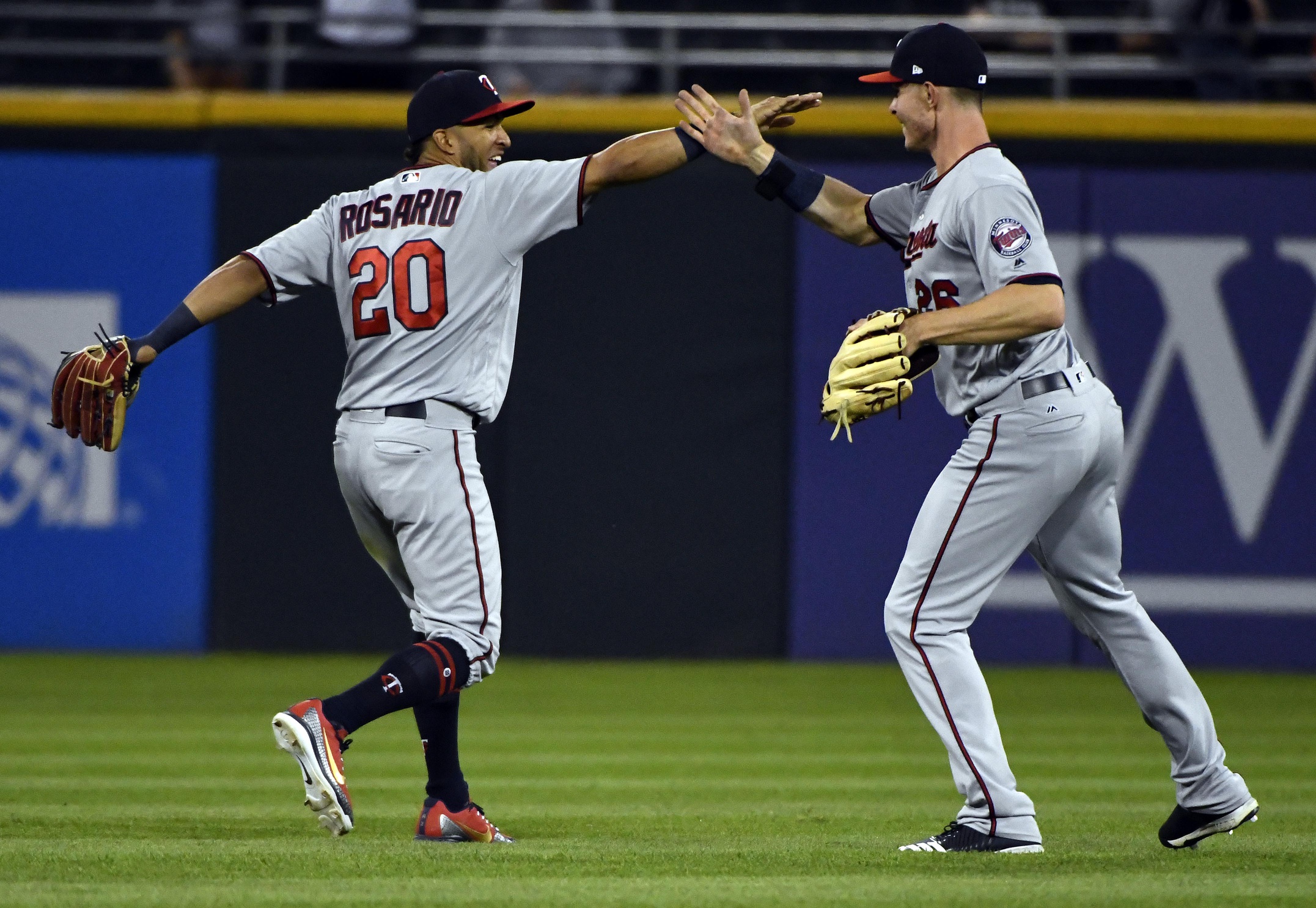 10. Taylor Rogers, LHP (28) 2018 Ranking: 15 In 2017, it looked like Rogers might be starting to emerge as one of the better relief pitchers in all of baseball. In 2018, he hammered that distinction home. While logging career highs in innings (68.1) and appearances (72), the southpaw posted numbers that rivaled some of the game's best, ranking 11th among MLB relievers in WAR (1.9), ninth in FIP (2.33) and 10th in WHIP (0.95). Thanks in part to a curveball that rates statistically as one of the best in the majors, Rogers has become a shutdown force, leaving behind his prior billing as a lefty matchup specialist. The unheralded bullpen hero has quietly developed into one of baseball's most valuable relievers, and the Twins control him for another three years. 9. Max Kepler, OF (26) 2018 Ranking: 7 Kepler has been the subject of exhaustive discussion this offseason, here and elsewhere. He's an interesting specimen, in that he has gone through various phases as a hitter but his production has perpetually stayed in the same average-ish range. He's an exceptional defender in right field, and seemingly a solid one in center, which is helpful for the Twins given Byron Buxton's durability issues. The athleticism, commitment and tools are there. He's shown a reasonably high floor, turns 26 in February, and is still under team control for four more years. These things have value, and will lead to solid offers if the Twins are indeed shopping him this winter. But if Kepler continues to stagnate offensively, the fleeting intrigue further diminishes. 8. Eddie Rosario, OF (27) 2018 Ranking: 5 Although he had huge moments and earned our team MVP honors this year, Rosario was actually a tick worse offensively in 2018 than 2017. His defense improved, making him a more valuable all-around player by most measures, but the outfielder has sorta settled into his norm as a very good – but not great – hitter who has stretches of total dominance (as well as an electric playmaker). Reaching arbitration for the first time this offseason with some strong numbers to build his case, Rosario's window of ultra-low cost is reaching its end, but he's still controlled for three more years. It's not unthinkable he finds another gear, but if this is who Eddie is, he's a good one to have around. 7. Jorge Polanco, SS (25) 2018 Ranking: 6 In late March it was announced that Polanco tested positive for a PEDs, resulting in an 80-game suspension. It was an unfortunate turn of events but he took care of his business, showed up ready to roll in July, and put up rock-solid numbers the rest of the way (.288/.345/.427 in 77 games). Polanco didn't accrue service time during his ban so the Twins still control him through 2022, his age-28 season. His impressive showing on offense this year was offset somewhat by defensive regression, casting further doubt on his future at shortstop, but he remains usable there. And regardless, a switch-hitting middle infielder who's a reliable source of above-average offense is gonna be plenty valuable. 6. Fernando Romero, RHP (24) 2018 Ranking: 12 A year ago, the highly talented Romero was docked in these rankings by one sole factor: durability. In 2017 he wore down in mid-August, hitting the wall shortly after surpassing 100 innings. His lengthy history of injuries cast some doubt on the flamethrower's ability to hold up. This year, he logged 146 innings between Triple-A and the majors, pitching into September for the first time ever. He debuted in the majors at age 23 and showed flashes of dominance, catching the league's attention with his upper-90s heat and 0.54 ERA through three MLB starts. I wouldn't say he totally erased the durability concerns, as he still seemed to lose steam over the course of the summer, but Romero took an important step forward. His powerful arm is destined to play a major role in 2019 and beyond. RECAPPING THE RANKINGS: 20. Nick Gordon, SS 19. C.J. Cron, 1B 18. Adalberto Mejia, LHP 17. Jake Cave, OF 16. Wander Javier, SS 15. Stephen Gonsalves, LHP 14. Miguel Sano, 3B 13. Kyle Gibson, RHP 12. Trevor May, RHP 11. Mitch Garver, C 10. Taylor Rogers, LHP 9. Max Kepler, OF 8. Eddie Rosario, OF 7. Jorge Polanco, SS 6. Fernando Romero, RHP
 -
It seems to me like the Twins have taken steps to account for Sano being less of a factor this year, loading up on additional right-handed power with Cruz, Schoop and Cron – though admittedly they don't have much of a viable backup plan at third unless Schoop can play there. But I have no issue with your reasoning here. In terms of which players CAN make the biggest impact on turning the Twins back into a contender in 2019, Sano is top 5, no doubt. But the risk levels with him are huge and everything was pointing the wrong direction at the end of the 2018 season. It's both, I'm sure. Your point is a fair one, but there's no denying that power hitting has lost some market value, right? Cron being acquired through waivers off a breakout 30-HR campaign is another example.
-
Well, last year the Twins got Logan Morrison coming off a 38 HR campaign for peanuts, so I do think there's plenty of evidence that the ability to hit home runs – without much added defensive value or broader offensive skill – is losing its shine. But I do agree completely with your last paragraph. Sano is plenty capable of being much more than that.
-
Well, if we extend the sample, he has held opponents to a .229/.296/.398 line with a 32% K-rate (12.1 K/9) in 100 career relief innings. You don't just fluke your way into a 15% swinging strike rate against MLB hitters. The guy's stuff is unbelievable out of the pen, and – to me at least – it's quite evident from watching him. It absolutely baffles me that someone can say they watched him throughout September and he merely "worked his way back into the mix." That's not exactly a fair way to look at it, given he was mostly a reliever before the missed time. May ranked second on the team in appearances between 2015/16. He never missed time in the minors. This notion that Trevor May isn't durable is just so weird to me. Undergoing TJ surgery doesn't make you injury-prone, it makes you a typical major-league pitcher.
- 80 replies
-
- 2
-
-
- stephen gonsalves
- miguel sano
- (and 3 more)
-
It's a combination of all those things, weighted in my own (admittedly vague and subjective) manner. When you come to terms with the fact that these rankings are heavily influenced by recent trends and established performance (the idea for me is akin to stocks going up and down) the methodology should become easier to understand. Maybe not. Also, I did these same rankings last year so I dunno why people keep acting like it's a random idea that materialized solely due to the circumstances of this offseason. The objective is taking stock of what's currently on hand and how it figures into the plan going forward. And to try and chart the movement that takes place from year-to-year. People want him to be a starter because he's never really gotten a full shot and has four quality pitches. He came back from TJ surgery throwing 94 MPH with his fastball and inducing a 15% swinging strike rate, which would rank top-15 among qualified MLB relievers. When used as an actual reliever (so, subtracting the one outing as "opener") he had a 1.85 ERA and 2.23 xFIP When you say, "If numbers make him seem good then look at other numbers," then cite a relatively arbitrary one like IR%, it makes it sound like you're the one with the agenda, not everyone else.
- 80 replies
-
- 3
-
-
- stephen gonsalves
- miguel sano
- (and 3 more)
-
Opinion, I guess, based on the fact that Cruz has averaged 40+ HR and been extremely durable the last 5 years while Sano has never hit more than 28 and never played 120 games in an MLB season. Fwiw, FanGraphs projects Cruz to hit 37 next year and Sano to hit 29 (which seems generous to me based on his broken plate approach and injury history). Are you aware of how good he was this year upon returning? His numbers across the board were on par with the game's best relievers. In what way is he overrated?
- 80 replies
-
- 3
-
-
- stephen gonsalves
- miguel sano
- (and 3 more)
