



Nick Nelson
-
Posts
8,327 -
Joined
-
Last visited
-
Days Won
56
Content Type
Profiles
News
Minnesota Twins Videos
2026 Minnesota Twins Top Prospects Ranking
2022 Minnesota Twins Draft Picks
Minnesota Twins Free Agent & Trade Rumors, Notes, & Tidbits
Guides & Resources
2023 Minnesota Twins Draft Picks
The Minnesota Twins Players Project
2024 Minnesota Twins Draft Picks
2025 Minnesota Twins Draft Pick Tracker
2026 Minnesota Twins Draft Tracker: Picks & Bonuses
Forums
Blogs
Events
Store
Downloads
Gallery
Everything posted by Nick Nelson
-
 Nowhere has the reforging of this team's identity over the past half-decade been more apparent than in the starting rotation. Five years ago they sported one of the most extreme contact-heavy units imaginable, and in 2019 they're lining up a parade of strikeout artists. Now, the Twins will seek to establish their new identity behind Wes Johnson, whom they tapped as their big-splash addition in an offseason otherwise quiet on the pitching front.Projected Starters: Jose Berrios, Kyle Gibson, Michael Pineda, Jake Odorizzi, Martin Perez Depth: Adalberto Mejia, Stephen Gonsalves, Kohl Stewart, Zack Littell, Chase De Jong Prospects: Brusdar Graterol, Jhoan Duran, Lewis Thorpe, Blayne Enlow, Gonsalves THE GOOD It's been a long time since the Twins have boasted this kind of quality atop their rotation. Berrios and Gibson each ranked among the top 15 American League starters in WAR last year (per FanGraphs), and both are poised to sustain their excellence on the backing of legitimate high-powered stuff. Their respective bursts of brilliance were balanced by stretches of steady solidness, leading to overall results that were well above average. And each proved admirably durable, answering the call every fifth day and setting new career highs for workload while tossing almost 200 innings apiece. A pair of stallions fronting the rotation is nice obviously, but it's not unprecedented for the modern Twins. Two years ago they had Berrios breaking out alongside Ervin Santana. Going back a little further, to the last playoff team, Carl Pavano and Francisco Liriano presented a memorable pairing. But what the Twins lacked in both those instances was a viable third horse. In Pineda, they might finally have one. After rehabbing him from Tommy John surgery in 2018, the Twins are now looking to cash in on their $10 million investment from a year ago. When healthy, Pineda is a big bad man pumping mid-90s heat from a 6-foot-7 frame, piling up whiffs and strikeouts at rates that overshadow Berrios or Gibson. The back part of the rotation is less distinguished, but not without intrigue. Odorizzi averaged a strikeout per inning last year and was perfectly serviceable in his worst MLB season. He's playing for a contract at age 29. Perez seemed like a low-wattage pickup but is raising eyebrows with mid-90s heat (and strong results) in spring camp. Even when accentuating their positives, we must acknowledge the uncertainty with players like Pineda and Perez, which is why depth looms large. And while you can knock the dearth of established credentials in Minnesota's second starter tier, the reality is that this inexperience is a necessary evil. If calamity strikes the Twins rotation, it's a sign the season is probably not headed anywhere meaningful. In that scenario, the team needs to get extended looks at pitchers like Gonsalves, Stewart, Mejia and Littell. These are all respectable talents with strong minor-league résumés, ready for their MLB shots. While contention is a hopeful aspiration for Minnesota this year, the absolute imperative is to gain more clarity around what they have going forward, especially in a rotation that is almost totally undefined after 2019. And these guys are no scrubs. Each of them offers his own legitimate level of promise, especially with an innovative new pitching coach on hand. Stewart is a former top draft pick with sinking stuff as heavy as any hurler you'll find. Gonsalves has a 2.46 ERA in the minors and is catching eyes with increased velocity this spring. Mejia has looked capable in every MLB stint. Littell pitched his way to a big-league debut at age 22. Thorpe, who has yet to get his first chance in the majors, is another prospect with real upside who's close. I can't remember the Twins ever having this degree of first-level depth. If multiple injuries strike the rotation there is certainly no assurance this starting corps will fare well, but there will at least be value in giving starts to the replacements. THE BAD Unless Berrios or Gibson take a step forward, there's no real ace in this deck. The Twins are lacking compared to pretty much every other contender when it comes to a #1 starter. One of their highest-ceiling options is evidently out of the picture for 2019, with Fernando Romero billed for the bullpen. Even the best-case scenarios for guys like Stewart and Mejia and Gonsalves slate them more as middle-of-rotation guys than frontliners. It wouldn't be stunning to see Berrios or Gibson (or even Pineda) graduate to that top tier of starters, but there's no tangible reason to expect it. And realistically, the Twins probably shouldn't be counting on much from Pineda or Perez, given their recent histories. You might lump Odorizzi into that group also. Their extended mix of starting pitchers is respectable, and very possibly the best Minnesota has carried into a season since the division title days. But it's not flashy or fierce, relative to those clubs the Twins are trying to pass – namely the Indians, who project as vastly superior. THE BOTTOM LINE Among players lined up for the Opening Day rotation, only one (Berrios) is under team control after this year. The Twins have an option on Perez, which could prove sneaky beneficial given that he's only 27 and throwing as well in camp as ever, but we're talking about a guy who posted a 6.22 ERA last year. If none of the expiring contracts (Gibson, Pineda, Odorizzi) prove worth extending, and no one emerges from the crop of borderline Triple-A arms, the Twins will find themselves searching for pitching answers via the free agent and trade markets that they steadfastly eschewed this past winter. So the long-term outlook here is somewhat questionable. But for the immediate future, this team has no shortage of worthwhile arms to trot out for starts. You've gotta really lean toward the bright side to see a unit that's anything more than average, but if the offense holds up its end, maybe that's all the Twins need. *** Twins 2019 Position Analysis: Catcher Twins 2019 Position Analysis: First Base Twins 2019 Position Analysis: Second Base Twins 2019 Position Analysis: Third Base Twins 2019 Position Analysis: Shortstop Twins 2019 Position Analysis: Left Field Twins 2019 Position Analysis: Center Field Twins 2019 Position Analysis: Right Field Twins 2019 Position Analysis: Designated Hitter Click here to view the article
- 23 replies
-
- 1
-

-
- jose berrios
- kyle gibson
- (and 3 more)
-
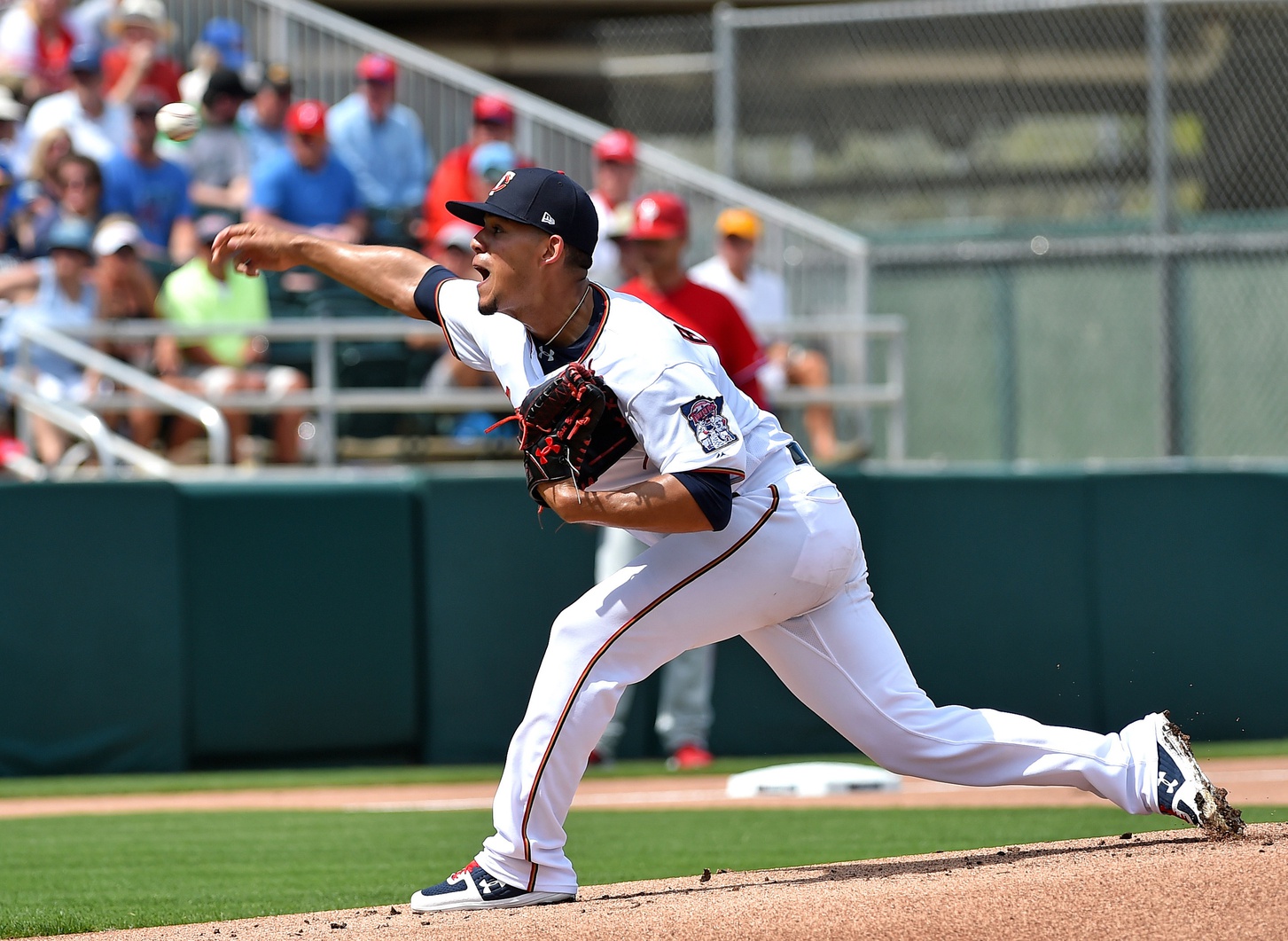 Projected Starters: Jose Berrios, Kyle Gibson, Michael Pineda, Jake Odorizzi, Martin Perez Depth: Adalberto Mejia, Stephen Gonsalves, Kohl Stewart, Zack Littell, Chase De Jong Prospects: Brusdar Graterol, Jhoan Duran, Lewis Thorpe, Blayne Enlow, Gonsalves THE GOOD It's been a long time since the Twins have boasted this kind of quality atop their rotation. Berrios and Gibson each ranked among the top 15 American League starters in WAR last year (per FanGraphs), and both are poised to sustain their excellence on the backing of legitimate high-powered stuff. Their respective bursts of brilliance were balanced by stretches of steady solidness, leading to overall results that were well above average. And each proved admirably durable, answering the call every fifth day and setting new career highs for workload while tossing almost 200 innings apiece. A pair of stallions fronting the rotation is nice obviously, but it's not unprecedented for the modern Twins. Two years ago they had Berrios breaking out alongside Ervin Santana. Going back a little further, to the last playoff team, Carl Pavano and Francisco Liriano presented a memorable pairing. But what the Twins lacked in both those instances was a viable third horse. In Pineda, they might finally have one. After rehabbing him from Tommy John surgery in 2018, the Twins are now looking to cash in on their $10 million investment from a year ago. When healthy, Pineda is a big bad man pumping mid-90s heat from a 6-foot-7 frame, piling up whiffs and strikeouts at rates that overshadow Berrios or Gibson. The back part of the rotation is less distinguished, but not without intrigue. Odorizzi averaged a strikeout per inning last year and was perfectly serviceable in his worst MLB season. He's playing for a contract at age 29. Perez seemed like a low-wattage pickup but is raising eyebrows with mid-90s heat (and strong results) in spring camp. Even when accentuating their positives, we must acknowledge the uncertainty with players like Pineda and Perez, which is why depth looms large. And while you can knock the dearth of established credentials in Minnesota's second starter tier, the reality is that this inexperience is a necessary evil. If calamity strikes the Twins rotation, it's a sign the season is probably not headed anywhere meaningful. In that scenario, the team needs to get extended looks at pitchers like Gonsalves, Stewart, Mejia and Littell. These are all respectable talents with strong minor-league résumés, ready for their MLB shots. While contention is a hopeful aspiration for Minnesota this year, the absolute imperative is to gain more clarity around what they have going forward, especially in a rotation that is almost totally undefined after 2019. And these guys are no scrubs. Each of them offers his own legitimate level of promise, especially with an innovative new pitching coach on hand. Stewart is a former top draft pick with sinking stuff as heavy as any hurler you'll find. Gonsalves has a 2.46 ERA in the minors and is catching eyes with increased velocity this spring. Mejia has looked capable in every MLB stint. Littell pitched his way to a big-league debut at age 22. Thorpe, who has yet to get his first chance in the majors, is another prospect with real upside who's close. I can't remember the Twins ever having this degree of first-level depth. If multiple injuries strike the rotation there is certainly no assurance this starting corps will fare well, but there will at least be value in giving starts to the replacements. THE BAD Unless Berrios or Gibson take a step forward, there's no real ace in this deck. The Twins are lacking compared to pretty much every other contender when it comes to a #1 starter. One of their highest-ceiling options is evidently out of the picture for 2019, with Fernando Romero billed for the bullpen. Even the best-case scenarios for guys like Stewart and Mejia and Gonsalves slate them more as middle-of-rotation guys than frontliners. It wouldn't be stunning to see Berrios or Gibson (or even Pineda) graduate to that top tier of starters, but there's no tangible reason to expect it. And realistically, the Twins probably shouldn't be counting on much from Pineda or Perez, given their recent histories. You might lump Odorizzi into that group also. Their extended mix of starting pitchers is respectable, and very possibly the best Minnesota has carried into a season since the division title days. But it's not flashy or fierce, relative to those clubs the Twins are trying to pass – namely the Indians, who project as vastly superior. THE BOTTOM LINE Among players lined up for the Opening Day rotation, only one (Berrios) is under team control after this year. The Twins have an option on Perez, which could prove sneaky beneficial given that he's only 27 and throwing as well in camp as ever, but we're talking about a guy who posted a 6.22 ERA last year. If none of the expiring contracts (Gibson, Pineda, Odorizzi) prove worth extending, and no one emerges from the crop of borderline Triple-A arms, the Twins will find themselves searching for pitching answers via the free agent and trade markets that they steadfastly eschewed this past winter. So the long-term outlook here is somewhat questionable. But for the immediate future, this team has no shortage of worthwhile arms to trot out for starts. You've gotta really lean toward the bright side to see a unit that's anything more than average, but if the offense holds up its end, maybe that's all the Twins need. *** Twins 2019 Position Analysis: Catcher Twins 2019 Position Analysis: First Base Twins 2019 Position Analysis: Second Base Twins 2019 Position Analysis: Third Base Twins 2019 Position Analysis: Shortstop Twins 2019 Position Analysis: Left Field Twins 2019 Position Analysis: Center Field Twins 2019 Position Analysis: Right Field Twins 2019 Position Analysis: Designated Hitter
 -
Ahhh yes! Molitor totally slipped my mind. Maybe I should've said they've only once signed a more accomplished slugger. I think Cruz is more accomplished than he was.
-
When you're the DH, all you need to do is hit. Which is good news for Nelson Cruz because that's all he does. In the past six years, he's been an All-Star five times, and the one year he missed out, he hit 43 home runs. Only once in my lifetime have the Twins signed a more accomplished hitter as a free agent, and it worked out supremely well. Can Cruz follow in the footsteps of Jim Thome with a legendary late-career pitstop?Projected Starter: Nelson Cruz Likely Backup: Willians Astudillo Depth: Miguel Sano, Tyler Austin, Wilin Rosario Prospects: Alex Kirilloff, Trevor Larnach, Brent Rooker THE GOOD Cruz projects as far-and-away the best hitter in the Minnesota lineup. His production last year alone – 37 home runs, 97 RBIs, .850 OPS – towers over any single season on the résumé of any other Twins hitter, and it was his "worst" of the last five. Even conservative projections foresee monster output from the veteran slugger in 2019. He's 38, so there are naturally questions about how age might factor, but he hasn't shown too many signs of slowing down. His average exit velocity was fifth-highest in the majors last year, and while his batting average did drop off (the result of a career-low .264 BABIP), there were no major changes in whiff rate or push/pull ratio to indicate his swing was falling behind. Additionally, metrics say he's far better suited to his new home at Target Field than Safeco. So, from all appearances, it is go time for one of baseball's most consistently excellent offensive players. The Twins signed him to a stunningly team-friendly pact, so they'll have the option to bring him back for $12 million in 2020. Even if decline sets in rapidly for Cruz, or his sparkling run of durability (144+ games in each of the past five years) comes to an end, the Twins have no shortage of bats waiting in tow. Astudillo is just itching for regular ABs anywhere he can get 'em. If the Twins can find a way to keep Austin, he's a tailor-made slugging DH. Jake Cave, who figures to be a fourth outfielder, could form a semi-platoon as he slashed .287/.335/.509 against righties as a rookie. Marwin Gonzalez will theoretically not have an assigned defensive position after Sano comes back. And Sano himself has always seemed destined for DH duty at some point. Kirilloff and Larnach both loom in the minors. THE BAD The Twins seem to have landed themselves one of the most respected, feared and reliable hitters in the league, at an unbelievable bargain. Which prompts the question: why? Cruz turns 39 in July. While there have been no conspicuous signs of breakdown, he's getting to that age where it can happen in a hurry. This surely played a part in his lukewarm market. So did his inability to play any defensive position, cutting out half of potential bidders. But still, the man leads baseball in home runs over the past half-decade and he was a monster last year. He's been consistently dominant, and has a tremendous clubhouse rep. Not only were the Twins able to get him on their desired one-year guarantee, but they tacked on a team option to make it even more favorable. It might just be a perfect confluence of circumstances, where the market was weird and every other AL team felt good enough about their DH situations to pass. But until we see Cruz get out there and pick up where he left off, we'll have to wonder why the lack of demand. Though the situations are wildly different, it's hard not to see some parallel with Logan Morrison a year ago. THE BOTTOM LINE The Twins have come a long way since the days of grasping for straws at the designated hitter spot. They honestly would've looked pretty decent here without Cruz, but needless to say, injecting one of the league's most respected bats brings the team's DH strength to a whole new level. The farm system is chock full of upcoming quality bats with positions TBD, so even if things don't work out with Cruz, there isn't much reason for concern. *** Twins 2019 Position Analysis: Catcher Twins 2019 Position Analysis: First Base Twins 2019 Position Analysis: Second Base Twins 2019 Position Analysis: Third Base Twins 2019 Position Analysis: Shortstop Twins 2019 Position Analysis: Left Field Twins 2019 Position Analysis: Center Field Twins 2019 Position Analysis: Right Field Click here to view the article
- 36 replies
-
- 1
-
-
- nelson cruz
- willians astudillo
- (and 1 more)
-
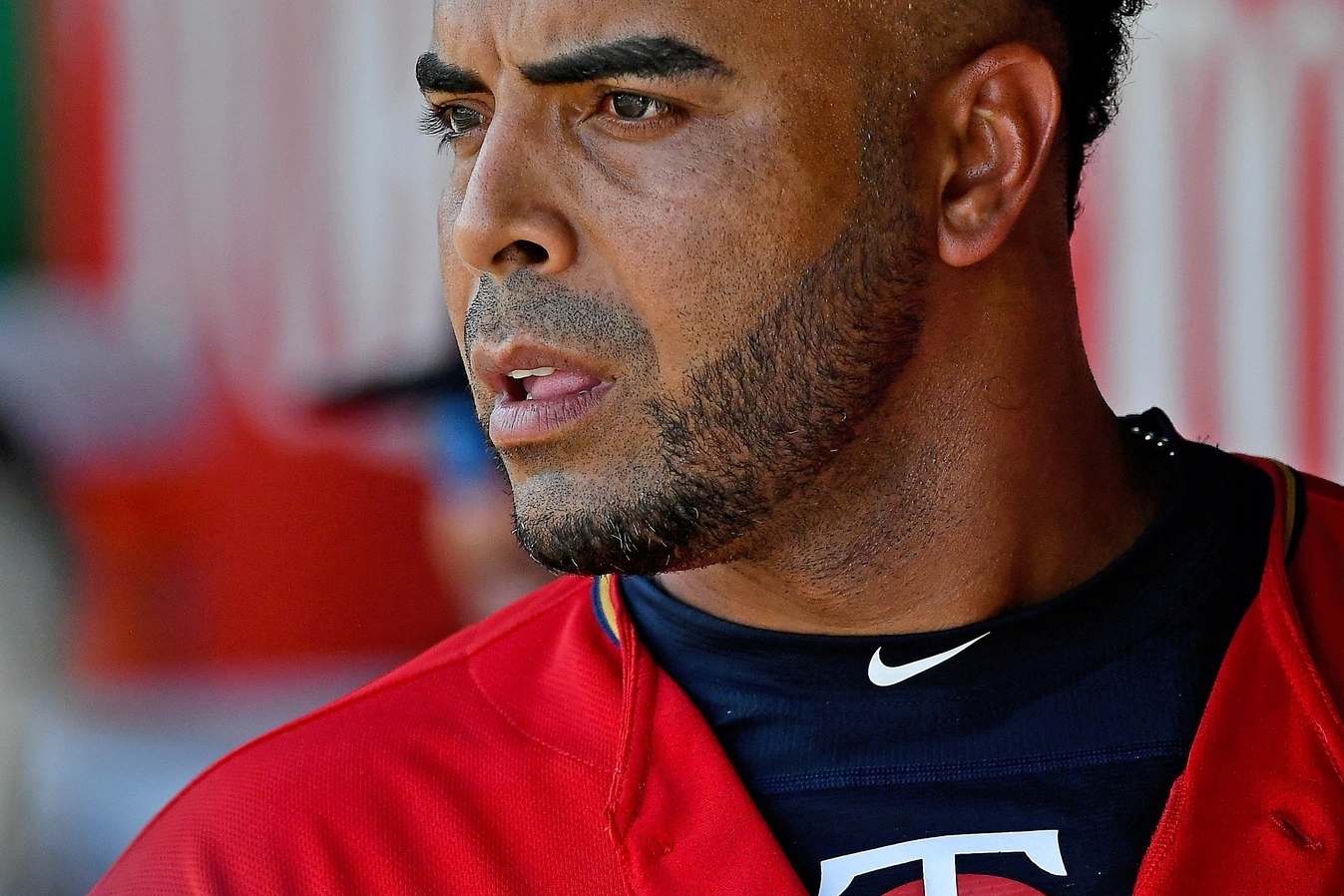 Projected Starter: Nelson Cruz Likely Backup: Willians Astudillo Depth: Miguel Sano, Tyler Austin, Wilin Rosario Prospects: Alex Kirilloff, Trevor Larnach, Brent Rooker THE GOOD Cruz projects as far-and-away the best hitter in the Minnesota lineup. His production last year alone – 37 home runs, 97 RBIs, .850 OPS – towers over any single season on the résumé of any other Twins hitter, and it was his "worst" of the last five. Even conservative projections foresee monster output from the veteran slugger in 2019. He's 38, so there are naturally questions about how age might factor, but he hasn't shown too many signs of slowing down. His average exit velocity was fifth-highest in the majors last year, and while his batting average did drop off (the result of a career-low .264 BABIP), there were no major changes in whiff rate or push/pull ratio to indicate his swing was falling behind. Additionally, metrics say he's far better suited to his new home at Target Field than Safeco. So, from all appearances, it is go time for one of baseball's most consistently excellent offensive players. The Twins signed him to a stunningly team-friendly pact, so they'll have the option to bring him back for $12 million in 2020. Even if decline sets in rapidly for Cruz, or his sparkling run of durability (144+ games in each of the past five years) comes to an end, the Twins have no shortage of bats waiting in tow. Astudillo is just itching for regular ABs anywhere he can get 'em. If the Twins can find a way to keep Austin, he's a tailor-made slugging DH. Jake Cave, who figures to be a fourth outfielder, could form a semi-platoon as he slashed .287/.335/.509 against righties as a rookie. Marwin Gonzalez will theoretically not have an assigned defensive position after Sano comes back. And Sano himself has always seemed destined for DH duty at some point. Kirilloff and Larnach both loom in the minors. THE BAD The Twins seem to have landed themselves one of the most respected, feared and reliable hitters in the league, at an unbelievable bargain. Which prompts the question: why? Cruz turns 39 in July. While there have been no conspicuous signs of breakdown, he's getting to that age where it can happen in a hurry. This surely played a part in his lukewarm market. So did his inability to play any defensive position, cutting out half of potential bidders. But still, the man leads baseball in home runs over the past half-decade and he was a monster last year. He's been consistently dominant, and has a tremendous clubhouse rep. Not only were the Twins able to get him on their desired one-year guarantee, but they tacked on a team option to make it even more favorable. It might just be a perfect confluence of circumstances, where the market was weird and every other AL team felt good enough about their DH situations to pass. But until we see Cruz get out there and pick up where he left off, we'll have to wonder why the lack of demand. Though the situations are wildly different, it's hard not to see some parallel with Logan Morrison a year ago. THE BOTTOM LINE The Twins have come a long way since the days of grasping for straws at the designated hitter spot. They honestly would've looked pretty decent here without Cruz, but needless to say, injecting one of the league's most respected bats brings the team's DH strength to a whole new level. The farm system is chock full of upcoming quality bats with positions TBD, so even if things don't work out with Cruz, there isn't much reason for concern. *** Twins 2019 Position Analysis: Catcher Twins 2019 Position Analysis: First Base Twins 2019 Position Analysis: Second Base Twins 2019 Position Analysis: Third Base Twins 2019 Position Analysis: Shortstop Twins 2019 Position Analysis: Left Field Twins 2019 Position Analysis: Center Field Twins 2019 Position Analysis: Right Field
 -
Article: Twins 2019 Position Analysis: Right Field
Nick Nelson replied to Nick Nelson's topic in Twins Daily Front Page News
That's a good question. I don't really know why I put him there, since he's both a long-term sleeper and not an RF (as of yet). I think he might've spilled over from another section. I'll remove him. I don't think any other player on the Twins roster has the same level of statistical likelihood for an impending breakout.- 25 replies
-
- 4
-
-
- max kepler
- alex kirilloff
- (and 2 more)
-
The Twins have used two of their past three first-round draft picks on right fielders, and both now rank among their top five prospects. Jake Cave returns from a tremendous rookie showing. And Max Kepler is now entrenched with a fresh five-year contract extension. Accounting for both current and future outlook, no position is in better shape for the Twins than right field. Let's dive in.Projected Starter: Max Kepler Likely Backup: Jake Cave Depth: Eddie Rosario, LaMonte Wade Jr., Michael Reed Prospects: Alex Kirilloff, Trevor Larnach, Brent Rooker THE GOOD Kepler is coming off a breakout season. It didn't show up on the offensive stat sheet but by any defensive measurement, the third-year player took a star turn. SABR's Defensive Index ratings (SDI) pegged him as the American League's third-best fielder in right, behind only Gold Glove winner Mookie Betts and runner-up Aaron Judge. FanGraphs' Ultimate Zone Rating had him second behind Betts. At the Minnesota Twins Diamond Awards, Kepler was recognized as the team's defensive player of the year. Not only was Kepler a standout in right field, but he also looked quite sharp during stints in center. Given Byron Buxton's history of injuries, that's a valuable capability, and one that magnifies the importance of depth behind Kepler in right. On that front, the Twins happen to have another guy who was recognized at the Diamond Awards: Jake Cave, most outstanding rookie. When both were on the field last year, it was usually Cave in center and Kepler in right (Paul Molitor loved his continuity), but I suspect roles we be reversed in the event of Buxton's absence this summer. Cave is better suited for right and his powerful bat certainly played there last year as he slashed .269/.316/.481 with 13 homers and 45 RBIs in 91 games. Not a bad backup plan. But of course, we're all hoping Buxton stays in center and Kepler holds down his post in right field, where he offers an interesting mix of steady baseline production and simmering potential. On the surface, Kepler's 2018 season at the plate looked like more of the same. His .727 OPS was nearly identical to his .732 mark coming in. In 611 plate appearances, he hit 20 home runs and 30 doubles – all in line with his career norms. Yet, a deeper look shows us that Kepler drastically increased his launch angle and, as a result, hit way more fly balls than ever before. This didn't manifest in his production, largely because of a career-low .232 BABIP (it was in fact the third-lowest number among all qualified MLB hitters). Luck-based outcomes rise and fall, but the kinds of swing adjustments leading to increased elevation are bound to pay long-term dividends. So too are Kepler's advancements with plate discipline. Last season saw him post career bests in K% and BB% – both by significant margins. His BB/K ratio ranked among the top 10 in the AL, sandwiched between MVP candidates Andrelton Simmons and Jose Altuve. So what we've got here is a pristine athlete, entering his age-26 season, emerging as an elite defensive outfielder and showing every sign of an impending offensive breakout. That's not just my homerish opinion, it's a conclusion of any objective analysis. Which makes it all the more surprising the Twins were able to strike such a team-friendly extension. The outfielder's camp is surely aware of all these indicators, but his words upon signing the deal appear to ring true: "Honestly, I’m the type that would play for the minimum." His long-term entrenchment could quickly create a logjam, with the organization's #1 prospect and 2018 first-rounder rising fast in right field. But the Twins will happily deal with that "dilemma" once they get there. THE BAD Through three seasons and 1,600 plate appearances, Kepler has been an astonishingly consistent hitter. Sure, there have been isolated streaks and slumps, just like for any other player. But from year to year, his OPS has always ultimately fallen within seven points of his career .730 benchmark. So while we can look at the underlying indicators of his 2018 season and forecast improvement (every projection system does), we do have to contend with the reality that Kepler hasn't yet demonstrated he can be more than a slightly below-average hitter for his position. Granted, he also hasn't given us reason to expect any less than that, so the downside here is fairly minimal. Packaged up with his top-notch D and outfield versatility, Kepler's unspectacular standard production still makes him a solid regular. THE BOTTOM LINE I hesitate to use the phrase "embarrassment of riches," but only because it's an overused phrase. It's very accurate here. The Twins are loaded in right field. Their starter is one of the best defenders in the majors, and seemingly verging on an offensive breakthrough at age 26. He's also under ultra-reasonable control through 2023 at least. The backup, Cave, is coming off an excellent rookie year. Kirilloff, Larnach and/or Rooker could legitimately be knocking on the door late this summer. Unless multiple things go awry, the Twins will soon be trying to sort through outstanding bats standing ready at this position. Which brings to mind another overused, yet fitting, adage: Good problem to have. *** Twins 2019 Position Analysis: Catcher Twins 2019 Position Analysis: First Base Twins 2019 Position Analysis: Second Base Twins 2019 Position Analysis: Third Base Twins 2019 Position Analysis: Shortstop Twins 2019 Position Analysis: Left Field Twins 2019 Position Analysis: Center Field Click here to view the article
-
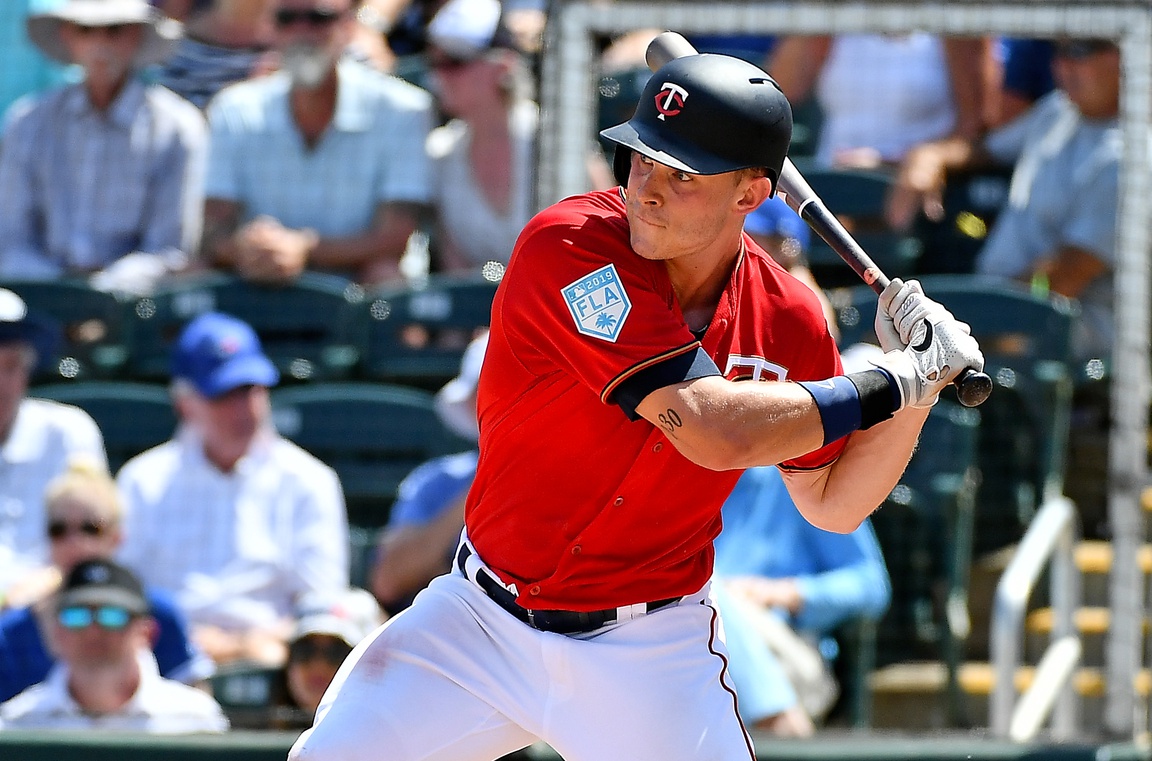 Projected Starter: Max Kepler Likely Backup: Jake Cave Depth: Eddie Rosario, LaMonte Wade Jr., Michael Reed Prospects: Alex Kirilloff, Trevor Larnach, Brent Rooker THE GOOD Kepler is coming off a breakout season. It didn't show up on the offensive stat sheet but by any defensive measurement, the third-year player took a star turn. SABR's Defensive Index ratings (SDI) pegged him as the American League's third-best fielder in right, behind only Gold Glove winner Mookie Betts and runner-up Aaron Judge. FanGraphs' Ultimate Zone Rating had him second behind Betts. At the Minnesota Twins Diamond Awards, Kepler was recognized as the team's defensive player of the year. Not only was Kepler a standout in right field, but he also looked quite sharp during stints in center. Given Byron Buxton's history of injuries, that's a valuable capability, and one that magnifies the importance of depth behind Kepler in right. On that front, the Twins happen to have another guy who was recognized at the Diamond Awards: Jake Cave, most outstanding rookie. When both were on the field last year, it was usually Cave in center and Kepler in right (Paul Molitor loved his continuity), but I suspect roles we be reversed in the event of Buxton's absence this summer. Cave is better suited for right and his powerful bat certainly played there last year as he slashed .269/.316/.481 with 13 homers and 45 RBIs in 91 games. Not a bad backup plan. But of course, we're all hoping Buxton stays in center and Kepler holds down his post in right field, where he offers an interesting mix of steady baseline production and simmering potential. On the surface, Kepler's 2018 season at the plate looked like more of the same. His .727 OPS was nearly identical to his .732 mark coming in. In 611 plate appearances, he hit 20 home runs and 30 doubles – all in line with his career norms. Yet, a deeper look shows us that Kepler drastically increased his launch angle and, as a result, hit way more fly balls than ever before. This didn't manifest in his production, largely because of a career-low .232 BABIP (it was in fact the third-lowest number among all qualified MLB hitters). Luck-based outcomes rise and fall, but the kinds of swing adjustments leading to increased elevation are bound to pay long-term dividends. So too are Kepler's advancements with plate discipline. Last season saw him post career bests in K% and BB% – both by significant margins. His BB/K ratio ranked among the top 10 in the AL, sandwiched between MVP candidates Andrelton Simmons and Jose Altuve. So what we've got here is a pristine athlete, entering his age-26 season, emerging as an elite defensive outfielder and showing every sign of an impending offensive breakout. That's not just my homerish opinion, it's a conclusion of any objective analysis. Which makes it all the more surprising the Twins were able to strike such a team-friendly extension. The outfielder's camp is surely aware of all these indicators, but his words upon signing the deal appear to ring true: "Honestly, I’m the type that would play for the minimum." His long-term entrenchment could quickly create a logjam, with the organization's #1 prospect and 2018 first-rounder rising fast in right field. But the Twins will happily deal with that "dilemma" once they get there. THE BAD Through three seasons and 1,600 plate appearances, Kepler has been an astonishingly consistent hitter. Sure, there have been isolated streaks and slumps, just like for any other player. But from year to year, his OPS has always ultimately fallen within seven points of his career .730 benchmark. So while we can look at the underlying indicators of his 2018 season and forecast improvement (every projection system does), we do have to contend with the reality that Kepler hasn't yet demonstrated he can be more than a slightly below-average hitter for his position. Granted, he also hasn't given us reason to expect any less than that, so the downside here is fairly minimal. Packaged up with his top-notch D and outfield versatility, Kepler's unspectacular standard production still makes him a solid regular. THE BOTTOM LINE I hesitate to use the phrase "embarrassment of riches," but only because it's an overused phrase. It's very accurate here. The Twins are loaded in right field. Their starter is one of the best defenders in the majors, and seemingly verging on an offensive breakthrough at age 26. He's also under ultra-reasonable control through 2023 at least. The backup, Cave, is coming off an excellent rookie year. Kirilloff, Larnach and/or Rooker could legitimately be knocking on the door late this summer. Unless multiple things go awry, the Twins will soon be trying to sort through outstanding bats standing ready at this position. Which brings to mind another overused, yet fitting, adage: Good problem to have. *** Twins 2019 Position Analysis: Catcher Twins 2019 Position Analysis: First Base Twins 2019 Position Analysis: Second Base Twins 2019 Position Analysis: Third Base Twins 2019 Position Analysis: Shortstop Twins 2019 Position Analysis: Left Field Twins 2019 Position Analysis: Center Field
 -
A year ago the outlook was so bright. We were gushing about Byron Buxton's off-the-charts Statcast readings, his grand finish in 2017, and his MVP-level potential for the coming season. But rather than showcasing his almost unrivaled upside, Buxton's 2018 campaign did the opposite. Now we unfortunately must ponder what center field would look like without him. The Twins recently made a key move to protect themselves long-term in this regard.Projected Starter: Byron Buxton Likely Backup: Max Kepler Depth: Jake Cave, Michael Reed, Tanner English Prospects: Gilberto Celestino, Gabriel Maciel, Misael Urbina THE GOOD Buxton looks poised to take the world by storm. It's not just his red-hot start in Grapefruit League play (7-for-20 with three home runs in eight games) after he finished on a scorching streak in Triple-A last year (.365/.400/.596 in 12 August games). These are reflections of what I suspect to be a deeper truth: The 25-year-old has found his focus, after a trying and tumultuous year, and is finally ready to pull it together for good. The stakes are higher than ever for Buxton personally. Everything we've seen from him since last summer – his words, his muscled up physique, his early exhibition performance – has suggested that he is confronting this challenge with all he's got. We've seen glimmers of high-end offensive potential from Buxton, who owns a .310/.364/.537 slash line in 100 games at Triple-A and posted an .893 OPS after the break in 2017, but here's the thing: He doesn't need to be a stud hitter to deliver enormous value. He has a good case as both the game's best defender and base runner. Even if he hits up to his .237/.295/.406 career MLB line entering last season, he'll be a quality regular, and of course there's much room for improvement beyond that. But, in the event that Buxton's pitch recognition issues continue to dog him, or he misses significant time with injury again, the Twins are now insured for the long haul. Kepler was a very fine right fielder last year, but he also showed well during his time in center, and this undoubtedly played into the front office's calculus when locking him up on a five-year extension last month. If Kepler can be at least average defensively in center (and it sure looks that way), his unflinching rate of production – which hasn't wavered much from his career .233/.313/.417 line in three years as a big-leaguer – would look far more appealing. The average American League CF had an OPS 50 pointers lower than the average RF last year. While a scenario with Kepler playing center and Alex Kirilloff taking over right may sound appealing at the moment, any outcome that doesn't involve Buxton as a centerpiece for this team would be a huge letdown. His dynamic capabilities in center field and on the bases are unparalleled in terms of practical impact, as well as entertainment value. One other element worth noting here is that Royce Lewis, the organization's top prospect, still could end up transitioning to center field. That'd create an interesting dilemma if Buxton gets on track, but for now Royce feels like a safer bet to stick at short. THE BAD Hopefully Buxton will be a lot less familiar with the Injured List than he was with the Disabled List. Here's the number of games he's been able to play in (majors and minors combined) each year since his full-season debut in 2013: 2013: 125 games 2014: 31 games 2015: 118 games 2016: 141 games 2017: 143 games 2018: 64 games Last year was obviously a nightmarish medley of health woes: April migraines led to a broken toe on a rehab stint, and later Buck was plagued by left wrist issues. The last part is most worrisome, because his wrist nagged him into the end of the summer, and it's the same one he's had serious problems with in the past. It's silly to suggest a pristine athletic specimen like Buxton is "fragile" (especially now that he's added more bulk to protect himself), but he does have some pre-existing concerns in addition to a reckless and hazardous style of play. So that partially fuels the uncertainty at this position. The more concrete stumbling block is Buxton's plate discipline. This is the one thing other than health that can derail him. The outfielder's approach was egregiously bad last year, and while it can surely be attributed in part to physical impediments, this wasn't exactly new for him. Nothing encapsulates Buxton's outright bafflement at the plate in 2018 better than this stat: after falling behind in the count 1-2 (which happened in more than one-third of his plate appearances for the Twins), he went 0-for-33 with 21 strikeouts. Altogether Buxton struck out 28 times and drew three walks with Minnesota last year, and even in Triple-A where he hit well, his K/BB ratio was 42-to-9. Down the stretch, as he put up a .996 OPS in 55 August plate appearances for the Red Wings, Buxton drew one walk. It has become blindingly clear that Buxton's indiscriminately aggressive attack, so successful in the minors, won't hack it in the big leagues. Pitchers at the highest level have eagerly taken advantage of his habits and tendencies to devastating effect. THE BOTTOM LINE I believe in Byron Buxton. He looks ready to put last year's unthinkable catastrophe behind and firmly establish himself as a star of the game. But setting such optimistic beliefs aside, and accepting the reality of an injury-prone player with a career 32% K-rate and 7% BB-rate, further patience may be warranted. The Twins will live with further growing pains at the plate, given all the value Buck provides elsewhere, and the knowledge that sometimes it just takes a while (see: Hicks, Aaron). But neither team nor player can dictate health outcomes, which have to this point been brutally cruel. Knowing this, it's awfully nice to have a guy like Kepler around, as well as a few exciting talents in the lower levels of the minors. *** Twins 2019 Position Analysis: Catcher Twins 2019 Position Analysis: First Base Twins 2019 Position Analysis: Second Base Twins 2019 Position Analysis: Third Base Twins 2019 Position Analysis: Shortstop Twins 2019 Position Analysis: Left Field Click here to view the article
-
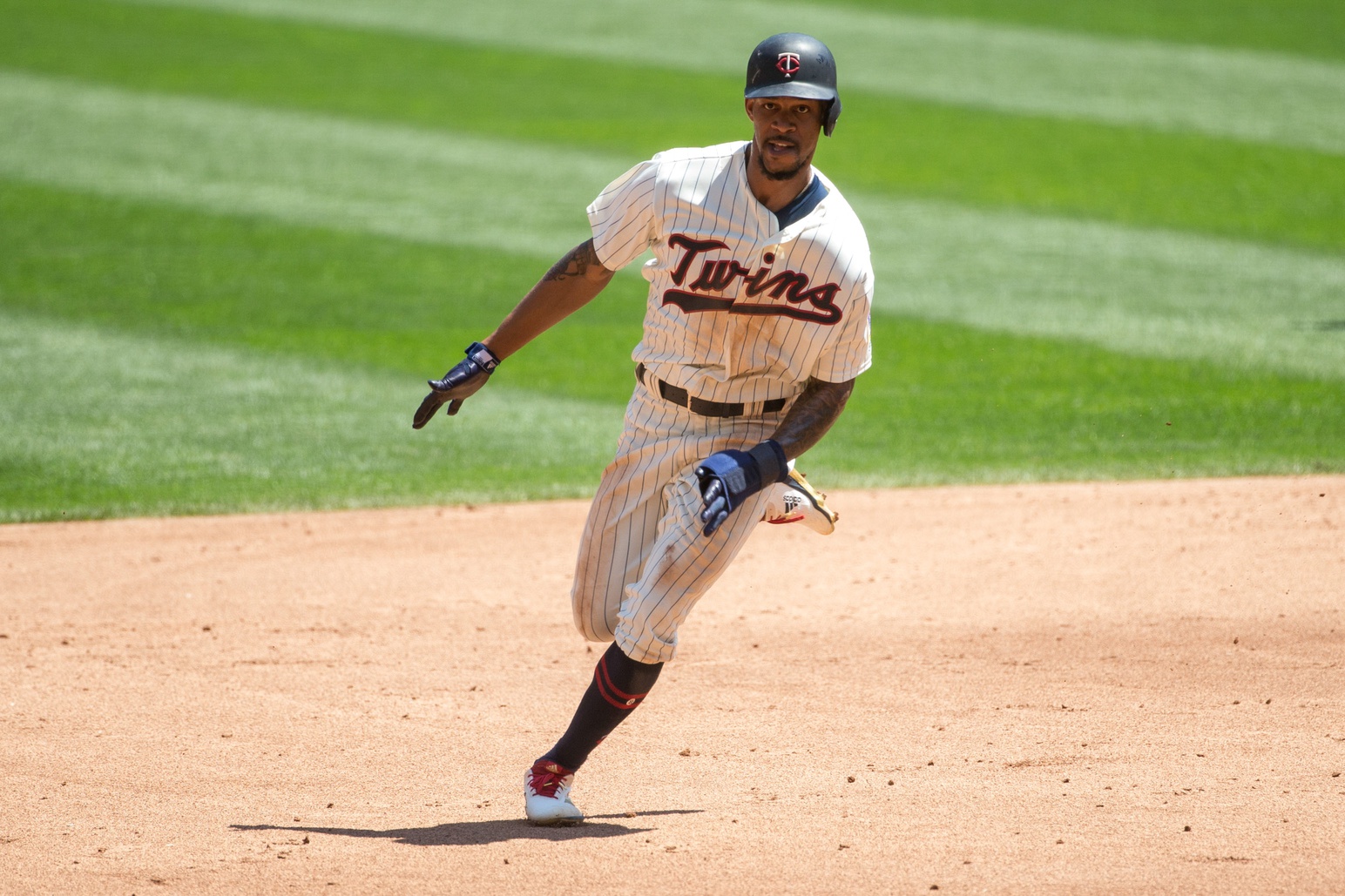 Projected Starter: Byron Buxton Likely Backup: Max Kepler Depth: Jake Cave, Michael Reed, Tanner English Prospects: Gilberto Celestino, Gabriel Maciel, Misael Urbina THE GOOD Buxton looks poised to take the world by storm. It's not just his red-hot start in Grapefruit League play (7-for-20 with three home runs in eight games) after he finished on a scorching streak in Triple-A last year (.365/.400/.596 in 12 August games). These are reflections of what I suspect to be a deeper truth: The 25-year-old has found his focus, after a trying and tumultuous year, and is finally ready to pull it together for good. The stakes are higher than ever for Buxton personally. Everything we've seen from him since last summer – his words, his muscled up physique, his early exhibition performance – has suggested that he is confronting this challenge with all he's got. We've seen glimmers of high-end offensive potential from Buxton, who owns a .310/.364/.537 slash line in 100 games at Triple-A and posted an .893 OPS after the break in 2017, but here's the thing: He doesn't need to be a stud hitter to deliver enormous value. He has a good case as both the game's best defender and base runner. Even if he hits up to his .237/.295/.406 career MLB line entering last season, he'll be a quality regular, and of course there's much room for improvement beyond that. But, in the event that Buxton's pitch recognition issues continue to dog him, or he misses significant time with injury again, the Twins are now insured for the long haul. Kepler was a very fine right fielder last year, but he also showed well during his time in center, and this undoubtedly played into the front office's calculus when locking him up on a five-year extension last month. If Kepler can be at least average defensively in center (and it sure looks that way), his unflinching rate of production – which hasn't wavered much from his career .233/.313/.417 line in three years as a big-leaguer – would look far more appealing. The average American League CF had an OPS 50 pointers lower than the average RF last year. While a scenario with Kepler playing center and Alex Kirilloff taking over right may sound appealing at the moment, any outcome that doesn't involve Buxton as a centerpiece for this team would be a huge letdown. His dynamic capabilities in center field and on the bases are unparalleled in terms of practical impact, as well as entertainment value. One other element worth noting here is that Royce Lewis, the organization's top prospect, still could end up transitioning to center field. That'd create an interesting dilemma if Buxton gets on track, but for now Royce feels like a safer bet to stick at short. THE BAD Hopefully Buxton will be a lot less familiar with the Injured List than he was with the Disabled List. Here's the number of games he's been able to play in (majors and minors combined) each year since his full-season debut in 2013: 2013: 125 games 2014: 31 games 2015: 118 games 2016: 141 games 2017: 143 games 2018: 64 games Last year was obviously a nightmarish medley of health woes: April migraines led to a broken toe on a rehab stint, and later Buck was plagued by left wrist issues. The last part is most worrisome, because his wrist nagged him into the end of the summer, and it's the same one he's had serious problems with in the past. It's silly to suggest a pristine athletic specimen like Buxton is "fragile" (especially now that he's added more bulk to protect himself), but he does have some pre-existing concerns in addition to a reckless and hazardous style of play. So that partially fuels the uncertainty at this position. The more concrete stumbling block is Buxton's plate discipline. This is the one thing other than health that can derail him. The outfielder's approach was egregiously bad last year, and while it can surely be attributed in part to physical impediments, this wasn't exactly new for him. Nothing encapsulates Buxton's outright bafflement at the plate in 2018 better than this stat: after falling behind in the count 1-2 (which happened in more than one-third of his plate appearances for the Twins), he went 0-for-33 with 21 strikeouts. Altogether Buxton struck out 28 times and drew three walks with Minnesota last year, and even in Triple-A where he hit well, his K/BB ratio was 42-to-9. Down the stretch, as he put up a .996 OPS in 55 August plate appearances for the Red Wings, Buxton drew one walk. It has become blindingly clear that Buxton's indiscriminately aggressive attack, so successful in the minors, won't hack it in the big leagues. Pitchers at the highest level have eagerly taken advantage of his habits and tendencies to devastating effect. THE BOTTOM LINE I believe in Byron Buxton. He looks ready to put last year's unthinkable catastrophe behind and firmly establish himself as a star of the game. But setting such optimistic beliefs aside, and accepting the reality of an injury-prone player with a career 32% K-rate and 7% BB-rate, further patience may be warranted. The Twins will live with further growing pains at the plate, given all the value Buck provides elsewhere, and the knowledge that sometimes it just takes a while (see: Hicks, Aaron). But neither team nor player can dictate health outcomes, which have to this point been brutally cruel. Knowing this, it's awfully nice to have a guy like Kepler around, as well as a few exciting talents in the lower levels of the minors. *** Twins 2019 Position Analysis: Catcher Twins 2019 Position Analysis: First Base Twins 2019 Position Analysis: Second Base Twins 2019 Position Analysis: Third Base Twins 2019 Position Analysis: Shortstop Twins 2019 Position Analysis: Left Field
 -
Article: Twins 2019 Position Analysis: Left Field
Nick Nelson replied to Nick Nelson's topic in Twins Daily Front Page News
Rosario was hitting .300 with 19 HR at the end of July last year. Not at all unthinkable he could've gotten there if not for the quad injury.- 19 replies
-
- 1
-
-
- eddie rosario
- jake cave
- (and 2 more)
-
Article: Twins 2019 Position Analysis: Left Field
Nick Nelson replied to Nick Nelson's topic in Twins Daily Front Page News
Indeed. Despite his history of extreme versatility, Gonzalez has notably never started a game in RF. So Rosario will be listed as a backup there and Marwin won't.- 19 replies
-
- 3
-
-
- eddie rosario
- jake cave
- (and 2 more)
-
In 2018, Eddie Rosario cemented himself as one of the best-hitting outfielders in the game. But with all the buzz around Nelson Cruz's arrival, Byron Buxton's big spring, and Miguel Sano's (delayed) redemption tour, Eddie seems to be somewhat of a forgotten factor in the Twins offensive equation. Something tells me he won't stay out of the spotlight for long.Projected Starter: Eddie Rosario Likely Backup: Jake Cave Depth: Marwin Gonzalez, Michael Reed, LaMonte Wade Prospects: Brent Rooker, Akil Baddoo, Wade THE GOOD Rosario is the reigning Twins Daily MVP. He followed up a breakout 2017 campaign with an extremely similar follow-up, albeit one that skidded to a halt before the finish line due to injury. At his peak last summer, Rosario was an unstoppable force, torturing opposing hurlers who had no answer for his relentless attack at the plate. In early May, he hit six home runs over a 10-game stretch. We all remember the three-homer outburst one Sunday in June that culminated with a walk-off against Cleveland. When he's in those zones, Rosario is liable to drive any pitch, anywhere, out of the park. And his competitive confidence also manifests in other ways, from crazy defensive gems to game-changing plays on the bases. The positives of Rosario's brazen aggressiveness have always been counterbalanced, somewhat, by the negatives. But last year, his gambles – at the plate, on the bases, in the outfield – seemed to pay off more than ever. And that's not coincidence. At age 27, with 500 major-league games under his belt, Rosario's at that perfect point where prime athleticism mixes with ample experience and seasoning. With this in mind, it wouldn't be shocking to see Rosario take another step forward. He absolutely has the ability to put up a .300+ average with 30+ home runs. But even if he holds steady he's a quality bat for the middle of the lineup, as well as an energizing spark plug in all phases. Should he miss time, the Twins are set up well with Cave and Gonzalez, who has spent more time in left field than any other position over the last two years. Reed is also in camp also a solid backup candidate, though he's out of options. In the event of a prolonged absence for Rosario, the Twins might want to consider giving Wade and his bountiful OBP a look. THE BAD Tough to find a lot of downside at this position. Rosario has had his bouts with strained muscles, battling a triceps issue last spring and a quad issue in the second half that eventually ended his season. He's not without injury risk, but leads the Twins in plate appearances over the past two years, so... not a huge consideration. And the Twins are well equipped with depth in that event. Rosario is earning $4.19 million this year in his first turn at arbitration. He's under team control through 2021. At that point, if we get there without an extension or trade, any number of promising outfield prospects may have emerged as a logical successor. THE BOTTOM LINE For the present and foreseeable future, left field belongs to Eddie Rosario. The ferocious free-swinger brings palpable excitement along with his valuable contributions at the plate and in the field. Like the last four positions we've covered, Gonzalez's addition provides a crucial depth boost here. But unlike the infield spots, the Twins have no shortage of additional options in the outfield corners, which is helpful since Gonzalez figures to be locked at third for at least the first month. *** Twins 2019 Position Analysis: Catcher Twins 2019 Position Analysis: First Base Twins 2019 Position Analysis: Second Base Twins 2019 Position Analysis: Third Base Twins 2019 Position Analysis: Shortstop Click here to view the article
- 19 replies
-
- 1
-
-
- eddie rosario
- jake cave
- (and 2 more)
-
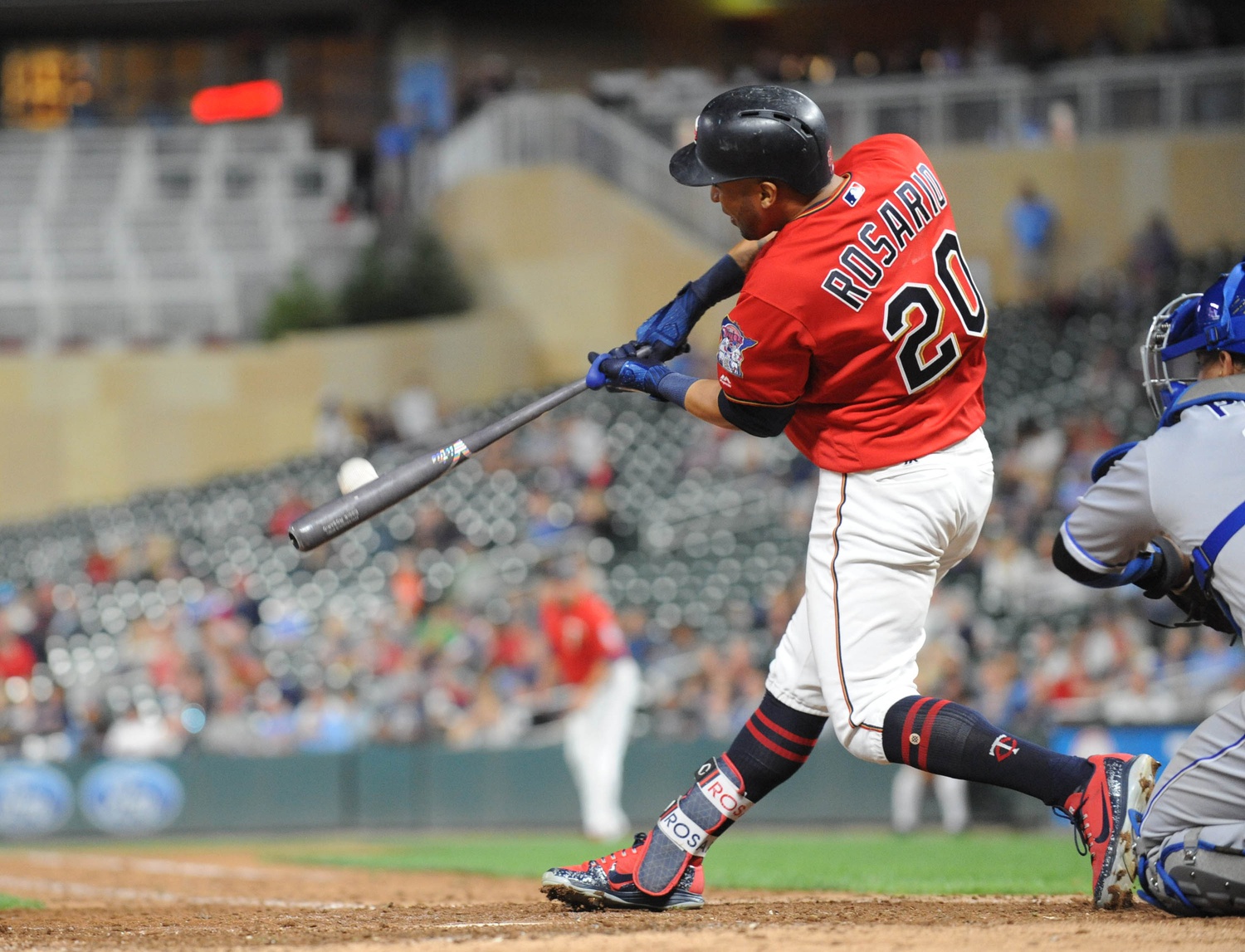 Projected Starter: Eddie Rosario Likely Backup: Jake Cave Depth: Marwin Gonzalez, Michael Reed, LaMonte Wade Prospects: Brent Rooker, Akil Baddoo, Wade THE GOOD Rosario is the reigning Twins Daily MVP. He followed up a breakout 2017 campaign with an extremely similar follow-up, albeit one that skidded to a halt before the finish line due to injury. At his peak last summer, Rosario was an unstoppable force, torturing opposing hurlers who had no answer for his relentless attack at the plate. In early May, he hit six home runs over a 10-game stretch. We all remember the three-homer outburst one Sunday in June that culminated with a walk-off against Cleveland. When he's in those zones, Rosario is liable to drive any pitch, anywhere, out of the park. And his competitive confidence also manifests in other ways, from crazy defensive gems to game-changing plays on the bases. The positives of Rosario's brazen aggressiveness have always been counterbalanced, somewhat, by the negatives. But last year, his gambles – at the plate, on the bases, in the outfield – seemed to pay off more than ever. And that's not coincidence. At age 27, with 500 major-league games under his belt, Rosario's at that perfect point where prime athleticism mixes with ample experience and seasoning. With this in mind, it wouldn't be shocking to see Rosario take another step forward. He absolutely has the ability to put up a .300+ average with 30+ home runs. But even if he holds steady he's a quality bat for the middle of the lineup, as well as an energizing spark plug in all phases. Should he miss time, the Twins are set up well with Cave and Gonzalez, who has spent more time in left field than any other position over the last two years. Reed is also in camp also a solid backup candidate, though he's out of options. In the event of a prolonged absence for Rosario, the Twins might want to consider giving Wade and his bountiful OBP a look. THE BAD Tough to find a lot of downside at this position. Rosario has had his bouts with strained muscles, battling a triceps issue last spring and a quad issue in the second half that eventually ended his season. He's not without injury risk, but leads the Twins in plate appearances over the past two years, so... not a huge consideration. And the Twins are well equipped with depth in that event. Rosario is earning $4.19 million this year in his first turn at arbitration. He's under team control through 2021. At that point, if we get there without an extension or trade, any number of promising outfield prospects may have emerged as a logical successor. THE BOTTOM LINE For the present and foreseeable future, left field belongs to Eddie Rosario. The ferocious free-swinger brings palpable excitement along with his valuable contributions at the plate and in the field. Like the last four positions we've covered, Gonzalez's addition provides a crucial depth boost here. But unlike the infield spots, the Twins have no shortage of additional options in the outfield corners, which is helpful since Gonzalez figures to be locked at third for at least the first month. *** Twins 2019 Position Analysis: Catcher Twins 2019 Position Analysis: First Base Twins 2019 Position Analysis: Second Base Twins 2019 Position Analysis: Third Base Twins 2019 Position Analysis: Shortstop
 -
Article: Twins 2019 Position Analysis: Shortstop
Nick Nelson replied to Nick Nelson's topic in Twins Daily Front Page News
I know things never work out this way, but imagining a scenario in a couple years where the Twins are trying to sort through Polanco, Lewis, Javier, Gordon, Kirilloff, Kepler, Rosario, Cave, Larnach, Rooker, and others between the IF and corner OF spots (plus DH) makes me kinda giddy. They've put themselves in great position, even with the inevitability that at least a few will fizzle out.- 43 replies
-
- 6
-
-
- jorge polanco
- royce lewis
- (and 2 more)
-
Article: Twins 2019 Position Analysis: Shortstop
Nick Nelson replied to Nick Nelson's topic in Twins Daily Front Page News
Yep. Same reason Jake Cave mostly played CF last year with Buxton out and Kepler stayed in RF, despite being clearly superior to Cave in center.- 43 replies
-
- 6
-
-
- jorge polanco
- royce lewis
- (and 2 more)
-
This position has lived up to its name over the past 15 years, with the Twins fielding 12 different starters on Opening Day. Jorge Polanco might be making his own short stop there on the way to second base, but for now he profiles as an above-average contributor, waiting to be supplanted by one of the best prospects in baseball.Projected Starter: Jorge Polanco Likely Backup: Ehire Adrianza Depth: Marwin Gonzalez, Ronald Torreyes, Nick Gordon Prospects: Royce Lewis, Wander Javier, Gordon THE GOOD Lewis is already in Twins camp this spring, at age 19. You don't often see a teenager with a stall in the big-league clubhouse, but then, you don't often see a player like Royce Lewis. The top prospect and top asset in the organization is now well on his way, and has been a central attraction in Fort Myers, even if he's been unable to get rolling due to an oblique strain. His fantastic 2018 campaign, which vaulted him to consensus Top 10 status on national prospect lists, featured an impressive showing at the plate, but perhaps more importantly it convinced just about everyone Lewis can stick at shortstop. He represents the franchise's best hope of halting the SS carousel and stabilizing the position for many years, but we'll have to wait a bit longer before the young phenom can realistically step in. Until then, Polanco is here and he's not a half-bad placeholder. It's been quite a ride for him up to this point – from an MLB cup of coffee at age 20, to a strong rookie showing in the second half of 2016, to the Jekyll-and-Hyde season that followed, and then a PED suspension last spring. But through it all, he's shown enough to convince the Twins he's a piece worth building around. His 50-game ban was a low point, but when he came back in July, Polanco looked like his usual self, producing from both sides of the plate. He finished strong with a .310/.361/.460 line in September, bolstering confidence that his bat will remain an asset even if (when) he has to move off short at some point. Dating back to September of 2017, almost 80% of Polanco's starts have seen him slotted into the second, third or fourth spots in the batting order. This year he projects as the de facto leadoff man, which – like playing shortstop – isn't an ideal fit, but a workable one. Polanco hasn't shown especially strong patience or on-base skills, but he's a switch-hitter who puts the ball in play with enough speed and pop to be dangerous. Minnesota's farm system is rich in quality depth at short. Lewis could arrive by next year, and Javier isn't far behind him. The 20-year-old is coming back after a lost year, and has the premier talent to rise quickly. Gordon still hasn't ruled himself out at the position either. In a couple of years, the Twins might face some decisions. The good kind. THE BAD Depending on which metrics or measures you want to trust, Polanco is either below-average defensively, or one of the very worst in the league at fielding the position. Out of 42 shortstops who have made 1000+ plate appearances since 2016, Polanco ranks 34th in Defensive Runs Saved (-10) and dead last in Ultimate Zone Rating (-18.5). Although he alleviated some of the concerns surrounding his glove in 2017, they came rushing back to the surface last year, when his shaky defense blemished an otherwise fine performance. Polanco committed 13 errors in just 76 games at short, and his penchant for bouncing throws to first may bite him more often with Joe Mauer gone. Shortstop is one of the toughest positions to harbor a subpar defender, because it is the essential crux of your defense. If Polanco goes the wrong way at all, it becomes a major issue. The Twins are already looking questionable in the run prevention department. But unless things are rearranged elsewhere, there's not much to be done. Gonzalez can play short, but he's probably no better than Polanco there. Adrianza and Torreyes are improvements, but not to the extent you're gonna replace Polanco's vastly superior bat with either. So for now, the plan is just to hope Polanco can get better. That's hardly unthinkable; he's only 25 and is said to have been heavily focused on his D. But if not, the Twins will have to deal with frequent misplays at a key spot until Lewis is ready. THE BOTTOM LINE The health of the shortstop position in general for this franchise is excellent. Lewis is the second-best shortstop prospect in the game according to MLB Pipeline, and many believe Javier will be mentioned in the same conversation a year from now. Polanco wants to be a shortstop. For now, he is one. If he can make a few defensive strides, it'll allow the Twins to wait more comfortably as their prized young talents develop. Then again, it would also surprise no one if Lewis is forcing the issue sooner rather than later. *** Twins 2019 Position Analysis: Catcher Twins 2019 Position Analysis: First Base Twins 2019 Position Analysis: Second Base Twins 2019 Position Analysis: Third Base Click here to view the article
- 43 replies
-
- 2
-
-
- jorge polanco
- royce lewis
- (and 2 more)
-
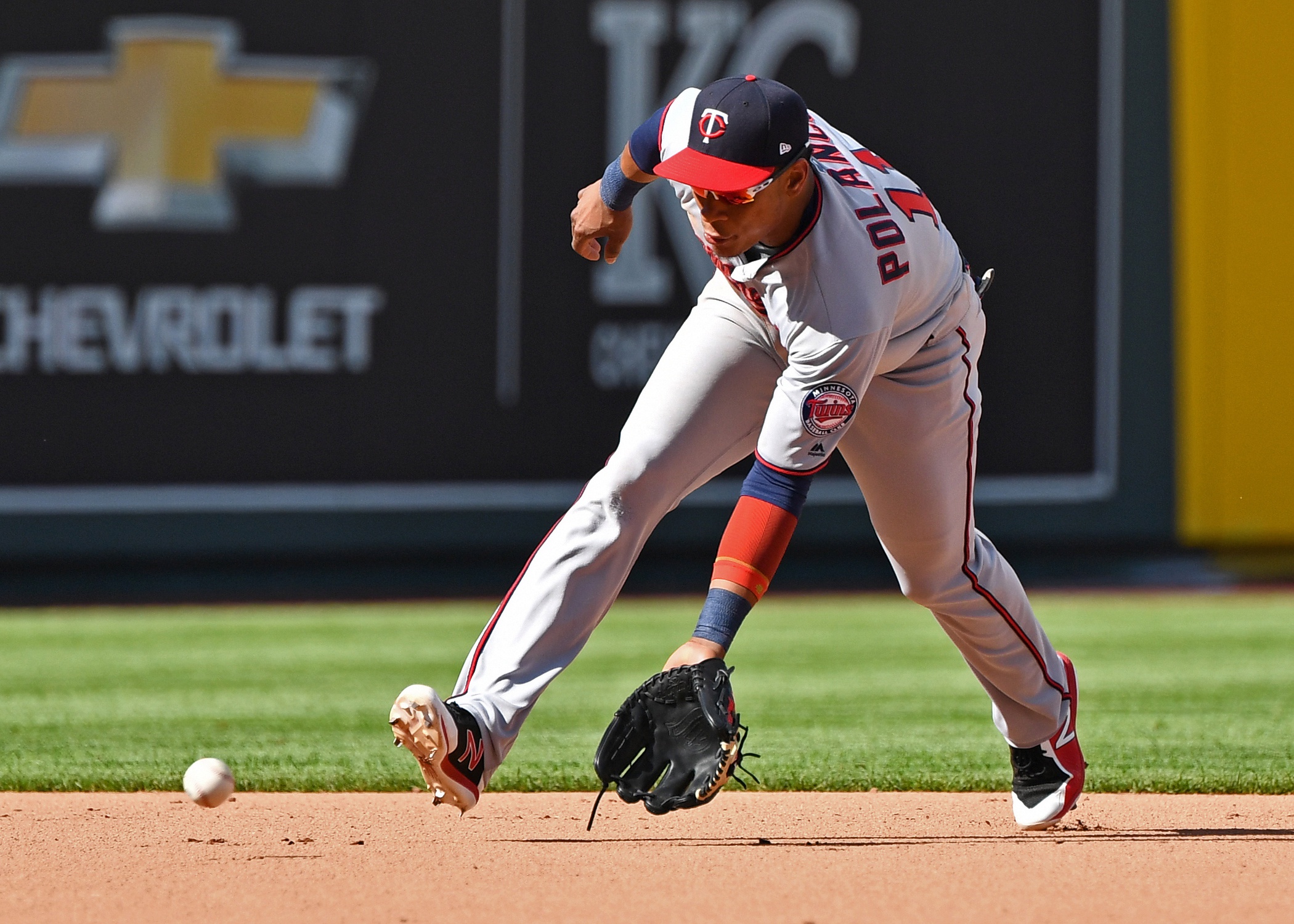 Projected Starter: Jorge Polanco Likely Backup: Ehire Adrianza Depth: Marwin Gonzalez, Ronald Torreyes, Nick Gordon Prospects: Royce Lewis, Wander Javier, Gordon THE GOOD Lewis is already in Twins camp this spring, at age 19. You don't often see a teenager with a stall in the big-league clubhouse, but then, you don't often see a player like Royce Lewis. The top prospect and top asset in the organization is now well on his way, and has been a central attraction in Fort Myers, even if he's been unable to get rolling due to an oblique strain. His fantastic 2018 campaign, which vaulted him to consensus Top 10 status on national prospect lists, featured an impressive showing at the plate, but perhaps more importantly it convinced just about everyone Lewis can stick at shortstop. He represents the franchise's best hope of halting the SS carousel and stabilizing the position for many years, but we'll have to wait a bit longer before the young phenom can realistically step in. Until then, Polanco is here and he's not a half-bad placeholder. It's been quite a ride for him up to this point – from an MLB cup of coffee at age 20, to a strong rookie showing in the second half of 2016, to the Jekyll-and-Hyde season that followed, and then a PED suspension last spring. But through it all, he's shown enough to convince the Twins he's a piece worth building around. His 50-game ban was a low point, but when he came back in July, Polanco looked like his usual self, producing from both sides of the plate. He finished strong with a .310/.361/.460 line in September, bolstering confidence that his bat will remain an asset even if (when) he has to move off short at some point. Dating back to September of 2017, almost 80% of Polanco's starts have seen him slotted into the second, third or fourth spots in the batting order. This year he projects as the de facto leadoff man, which – like playing shortstop – isn't an ideal fit, but a workable one. Polanco hasn't shown especially strong patience or on-base skills, but he's a switch-hitter who puts the ball in play with enough speed and pop to be dangerous. Minnesota's farm system is rich in quality depth at short. Lewis could arrive by next year, and Javier isn't far behind him. The 20-year-old is coming back after a lost year, and has the premier talent to rise quickly. Gordon still hasn't ruled himself out at the position either. In a couple of years, the Twins might face some decisions. The good kind. THE BAD Depending on which metrics or measures you want to trust, Polanco is either below-average defensively, or one of the very worst in the league at fielding the position. Out of 42 shortstops who have made 1000+ plate appearances since 2016, Polanco ranks 34th in Defensive Runs Saved (-10) and dead last in Ultimate Zone Rating (-18.5). Although he alleviated some of the concerns surrounding his glove in 2017, they came rushing back to the surface last year, when his shaky defense blemished an otherwise fine performance. Polanco committed 13 errors in just 76 games at short, and his penchant for bouncing throws to first may bite him more often with Joe Mauer gone. Shortstop is one of the toughest positions to harbor a subpar defender, because it is the essential crux of your defense. If Polanco goes the wrong way at all, it becomes a major issue. The Twins are already looking questionable in the run prevention department. But unless things are rearranged elsewhere, there's not much to be done. Gonzalez can play short, but he's probably no better than Polanco there. Adrianza and Torreyes are improvements, but not to the extent you're gonna replace Polanco's vastly superior bat with either. So for now, the plan is just to hope Polanco can get better. That's hardly unthinkable; he's only 25 and is said to have been heavily focused on his D. But if not, the Twins will have to deal with frequent misplays at a key spot until Lewis is ready. THE BOTTOM LINE The health of the shortstop position in general for this franchise is excellent. Lewis is the second-best shortstop prospect in the game according to MLB Pipeline, and many believe Javier will be mentioned in the same conversation a year from now. Polanco wants to be a shortstop. For now, he is one. If he can make a few defensive strides, it'll allow the Twins to wait more comfortably as their prized young talents develop. Then again, it would also surprise no one if Lewis is forcing the issue sooner rather than later. *** Twins 2019 Position Analysis: Catcher Twins 2019 Position Analysis: First Base Twins 2019 Position Analysis: Second Base Twins 2019 Position Analysis: Third Base
 -
Article: Twins 2019 Position Analysis: Third Base
Nick Nelson replied to Nick Nelson's topic in Twins Daily Front Page News
No it doesn't! Buxton was healthy at the end of last year! He's healthy now! He's flying all over the outfield and driving the ball everywhere while Sano is hobbling around in a boot because he cut his heel 5 weeks ago and it (rather astoundingly) still hasn't healed. I know you'll want to downplay these things because it's spring training, but we're 3 weeks from Opening Day so it actually does matter. Again, acting like Buxton's and Sano's situations are "100%" similar just completely ignores the realities at play. I promise you that if Sano ended last year hitting well (either in the majors or minors) rather than slumping into another serious/mysterious injury, and/or if he showed up this spring raking like Buxton has, the tone here would be different. You can treat this as my super-subjective opinion if you want but I assure you that most people around the team in Ft. Myers right now are viewing their relative situations similarly. -
Article: Twins 2019 Position Analysis: Third Base
Nick Nelson replied to Nick Nelson's topic in Twins Daily Front Page News
Miguel Sano, month-by-month OPS since his rookie year: April 2016: .745 May 2016: .849 July 2016: .749 August 2016: .754 September 2016: .810 April 2017: 1.267 May 2017: .868 June 2017: .761 July 2017: .782 August 2017: .843 April 2018: .739 May 2018: .757 June 2018: .468 July 2018: .718 August 2018: .736 So in the last 15 months where he's gotten any decent number of MLB at-bats, a player whose value is tied primarily to his bat has produced an OPS over .800 five times, and over .850 twice. I'm not sure how people can be saying his plate approach during that span is not something to worry about. Sano won't be an asset if he doesn't significantly improve his patience. Period. -
Article: Twins 2019 Position Analysis: Third Base
Nick Nelson replied to Nick Nelson's topic in Twins Daily Front Page News
Look, I don't want to get lost in the weeds here but it's not just about BB%. As I said, that stat is symptomatic of larger discipline trends. His plate approach in general has deteriorated drastically since he was a rookie. There are any number of stats that illustrate this — not just his propensity for getting into certain counts, but what he does when he gets there. Glaring weaknesses in the strike zone. Pitcher adjustments that haven't been counteracted. And while it's convenient to brush off last year's struggles as the result of health problems, the convenience fades when you recognize we have no proof those serious, structural problems are behind him. Sano was evidently never healthy last year, and for a second straight season he finished hurt. We still haven't seen him on the field yet this spring to alleviate any such concerns. (Also I'm not sure why Sano's age-22 season in AA has become his baseline/ceiling for patience; his walk rate in the minors was only slightly lower than Joey Votto's. One hopes to see a player of this ilk evolve, not devolve.) -
Great notes Parker! The fact that Reed isn't cracking 90 on the same gun that's flashing Gonsalves at 92 and Perez at 97 is... really unsettling.
- 41 replies
-
- 15
-
-
- kyle gibson
- jose berrios
- (and 2 more)
-
Article: Twins 2019 Position Analysis: Third Base
Nick Nelson replied to Nick Nelson's topic in Twins Daily Front Page News
Byron Buxton, when healthy (as he clearly is now), is the best defensive player and fastest runner in Major League Baseball. You can make wisecracks about WAR all you want but there is real & substantial value to robbing extra-base hits routinely, and stealing bases at a 90% rate, that vastly overshadows anything Sano does outside of the batter's box. One is held to a much higher offensive standard and so it's a much greater focus in the analysis. Treating their comparison as a taste-test of the same pop is the disconnect here. They're very different people and situations. -
Article: Twins 2019 Position Analysis: Third Base
Nick Nelson replied to Nick Nelson's topic in Twins Daily Front Page News
We've all staked our perception of his upside on that rookie showing. Since then Sano has a .787 OPS in 300 games which isn't anywhere near star-level for a so-so defensive third baseman. (He had a 12.7% BB-rate at the 2017 All-Star break fwiw.) When he isn't drawing walks, it not only hurts his OBP ceiling but is also emblematic of deeper issues that suppress his production. Also, I'm not sure you can downplay a 3% increase in K-rate for someone who is already living at the absolute highest extreme of all major-league hitters throughout history.
