



Nick Nelson
-
Posts
8,327 -
Joined
-
Last visited
-
Days Won
56
Content Type
Profiles
News
Minnesota Twins Videos
2026 Minnesota Twins Top Prospects Ranking
2022 Minnesota Twins Draft Picks
Minnesota Twins Free Agent & Trade Rumors, Notes, & Tidbits
Guides & Resources
2023 Minnesota Twins Draft Picks
The Minnesota Twins Players Project
2024 Minnesota Twins Draft Picks
2025 Minnesota Twins Draft Pick Tracker
2026 Minnesota Twins Draft Tracker: Picks & Bonuses
Forums
Blogs
Events
Store
Downloads
Gallery
Everything posted by Nick Nelson
-
Article: Twins 2019 Position Analysis: Third Base
Nick Nelson replied to Nick Nelson's topic in Twins Daily Front Page News
Buxton can be valuable without raking so they're fundamentally different scenarios. -
Article: Twins 2019 Position Analysis: Third Base
Nick Nelson replied to Nick Nelson's topic in Twins Daily Front Page News
It actually is necessary because part of the story here is that we can't pin Sano's deteriorating plate discipline entirely on his injury. In 2017, from June 1st until he suffered his leg injury, he had a 7% (non-intentional) BB rate in 65 games. When he was a rookie two years earlier, that figure stood at 16%. Last year with the Twins his walk rate was slightly better, at 10%, but his K-rate was also way up because he was still chasing everything. Patience is a vital aspect of Sano's game that had gone amiss before he hurt his leg. I think it's fair to say his demotion to the minors was about improving pitch recognition as well as working on his conditioning. -
Article: Twins 2019 Position Analysis: Third Base
Nick Nelson replied to Nick Nelson's topic in Twins Daily Front Page News
They're all in the same mix. Cabbage made zero starts at third last year, Blankenhorn played more 2B than 3B, and Bechtold reeeally struggled to hit. I listed Mack mainly because he's the shiny new object. But the three you mentioned are all parts of the reason depth at this position is so shaky at present. -
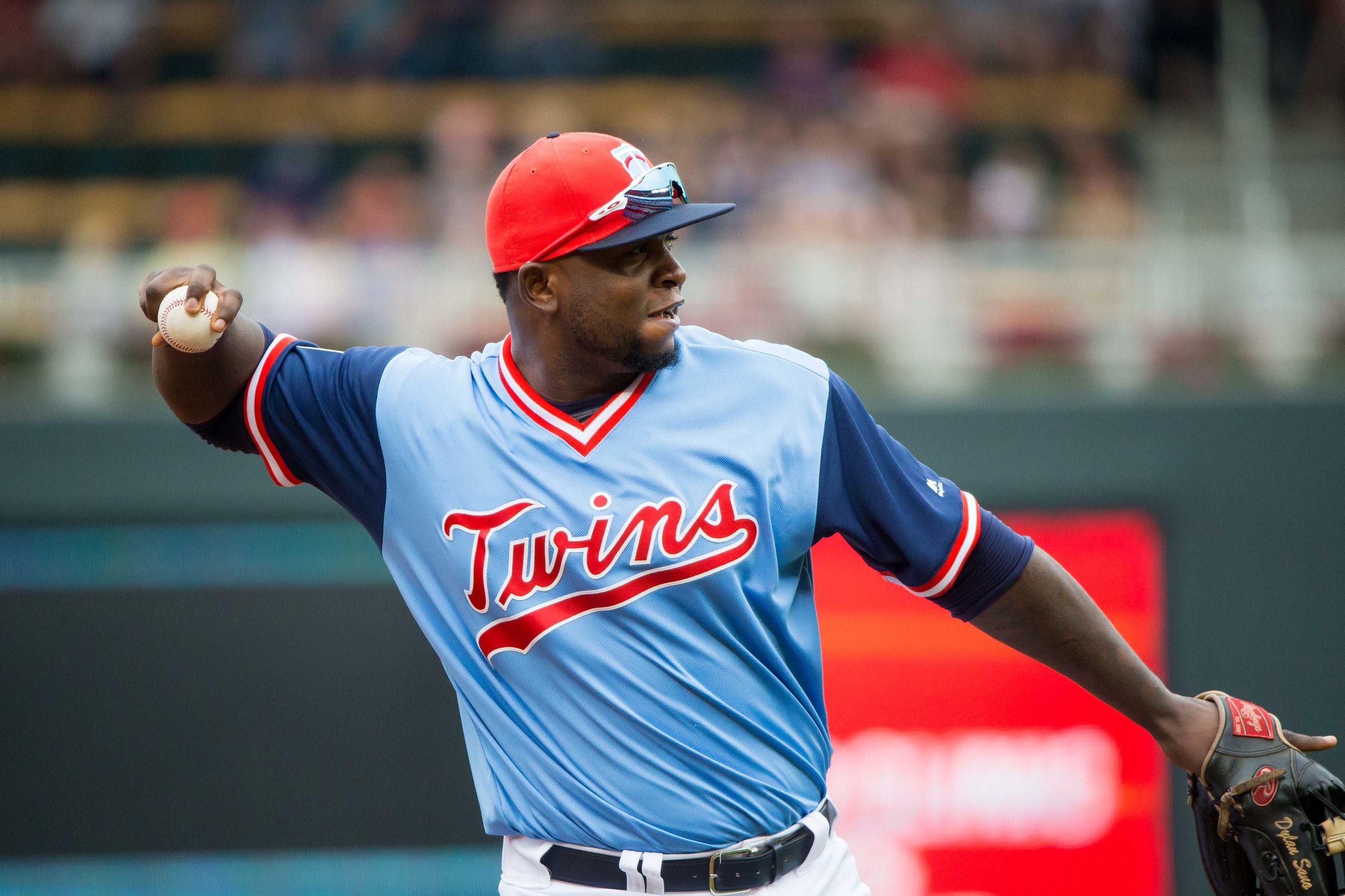
The heat is on at the hot corner. Miguel Sano is entering a pivotal season in his career, and perhaps a decisive one as his future with the Twins is concerned. Despite his precarious outlook, the front office appeared ready to move forward without much of a contingency plan at third base. Then Marwin Gonzalez came along.Projected Starter: Miguel Sano Likely Backup: Marwin Gonzalez Depth: Willians Astudillo, Ehire Adrianza, Ronald Torreyes Prospects: Jose Miranda, Yunior Severino, Charles Mack THE GOOD From 2015 through 2017, Sano slashed .254/.348/.496 with 71 home runs and 195 RBIs for the Twins – all before turning 25 years old. Last year he totally collapsed, the cumulative result of mounting bad health breaks, worsening habits at the plate, and perhaps some general lapses in personal commitment. He needed to put that season behind him and start fresh. It's very early, but signs are positive on this front. The bad health breaks haven't ceased (he's getting a late start this spring after lacerating his heel in January) but the heightened commitment is evident to those who've seen him at camp, where he showed up in his best shape since 2015. Sano is very accomplished, and still on the young end of "primeness" at 25. This is a point where many great hitters throughout history have made the jump from experiencing success in spurts, to pulling it all together. One example is Justin Morneau, who turned 25 and then launched a five-year reign of dominance that included four All-Star nods and one MVP. The same game-changing offensive ability resides within Sano, whose .276/.368/.538 line at the 2017 All-Star break was eerily similar to Morneau's .298/.372/.528 from 2006 through 2010. And while Sano may be destined to move across the diamond at some point, for now he's the man at third, giving Minnesota the luxury of 30-HR power at both corners. Prior to Gonzalez's arrival, it wasn't clear exactly what the Twins would do if Sano was hurt or out of sorts. Theoretically Astudillo was an option, though his defensive chops at third are dubious. Some speculated that Schoop could slide over there, given his arm strength, but he hasn't played third base in four years. Adrianza and Torreyes would be woefully inadequate offensively. So bringing Gonzalez aboard is a big difference-maker here, even bigger than at second base. He has made 93 career starts at third in the majors – more than Astudillo, Schoop, Adrianza and Torreyes combined. He's also probably a better hitter than the lot of them. Obviously we're all hoping to see the pre-2018 version of Sano, because that's the kind of development that would instantly legitimize the Twins as a contender. But luckily, with Gonzalez around, they won't be sabotaged if Sano doesn't quickly return to form. THE BAD The lost weight and leaner physique are good to see, but it's discipline at another dish that will dictate Sano's value. By the end of 2018, his once-admirable plate approach had deteriorated to the point of ruin. After returning from his mid-season minor-league banishment, Sano was barely an improvement over the whiffing mess that had earned a demotion. He was mired in a September slump when he inflamed his surgically repaired left leg on a slide in Houston. He sat out two weeks, then played one game, striking out four times, and didn't play again. "Little bit of a puzzle we haven’t been able to solve yet," said a befuddled Paul Molitor after another set of MRIs came back clean on the hobbled third baseman near season's end. His leg has been a recurring source of mystery for the Twins, who also dubbed him fit to play at the end of 2017 (then too, it was quickly apparent he wasn't). That's all a bit ominous. Granted, the Twins mostly overhauled their medical staff, but this leg ailment is a tricky animal for any trainer to contend with. Both team and player have seemingly underestimated its severity time and again, leading to repeated setbacks. And we all know that if a hitter doesn't have his lower half, he doesn't have much, which is how a guy with Miguel Sano's ability puts up a .228/.320/.417 slash line in 99 games between the majors and Triple-A in his age-25 season. The same thing we said about Schoop at second, though, applies here as well: The rebounding-after-injury narrative is a tidy one, but it doesn't always play out that way. And in this case, that narrative ignores the fact that we haven't seen sustained dominance from Sano since the early weeks of the 2017 campaign, which is suddenly a long time ago. His need for a recalibration at the plate precedes and supersedes his leg ailment. The unpleasant fact is that pitchers have increasingly found ways to defuse this explosive threat. And our hopes that a slimmer Sano, with renewed focus, will blow up once again are just that. Now, his lacerated heel delays the process of getting back up to speed in time for March 28th, potentially setting him up to open on the Injured List. So, thank goodness for Marwin. But the real issues at third base emerge as you look down the line. There's no position in the Twins system with less depth at present. The top prospects I've listed (Miranda and Severino) are raw and very far away. In fact the teenaged Severino hasn't even played any third base yet, though it's believed he'll outgrow the middle infield and that seems a logical destination. Even if things go well with Sano, he'll probably have to move off third at some point. Who will succeed him – beyond Gonzalez in a near-term scenario – is anyone's guess at this point. THE BOTTOM LINE All eyes are on Sano. It's been a long time since we've seen him on top of his game but he's certainly young enough – and seemingly driven enough – to find that gear once again. And if he can, there's MVP-caliber potential in that strong, sturdy, incredibly powerful frame. The Twins are very much invested in him being that player again, or some semblance, because depth at the position is less than stellar. Gonzalez provides an interstitial backup plan, but the franchise lacks a substantive roadmap beyond those two. Maybe a year from now it won't seem like so much of a problem. *** Twins 2019 Position Analysis: Catcher Twins 2019 Position Analysis: First Base Twins 2019 Position Analysis: Second Base Click here to view the article
-
 Projected Starter: Miguel Sano Likely Backup: Marwin Gonzalez Depth: Willians Astudillo, Ehire Adrianza, Ronald Torreyes Prospects: Jose Miranda, Yunior Severino, Charles Mack THE GOOD From 2015 through 2017, Sano slashed .254/.348/.496 with 71 home runs and 195 RBIs for the Twins – all before turning 25 years old. Last year he totally collapsed, the cumulative result of mounting bad health breaks, worsening habits at the plate, and perhaps some general lapses in personal commitment. He needed to put that season behind him and start fresh. It's very early, but signs are positive on this front. The bad health breaks haven't ceased (he's getting a late start this spring after lacerating his heel in January) but the heightened commitment is evident to those who've seen him at camp, where he showed up in his best shape since 2015. Sano is very accomplished, and still on the young end of "primeness" at 25. This is a point where many great hitters throughout history have made the jump from experiencing success in spurts, to pulling it all together. One example is Justin Morneau, who turned 25 and then launched a five-year reign of dominance that included four All-Star nods and one MVP. The same game-changing offensive ability resides within Sano, whose .276/.368/.538 line at the 2017 All-Star break was eerily similar to Morneau's .298/.372/.528 from 2006 through 2010. And while Sano may be destined to move across the diamond at some point, for now he's the man at third, giving Minnesota the luxury of 30-HR power at both corners. Prior to Gonzalez's arrival, it wasn't clear exactly what the Twins would do if Sano was hurt or out of sorts. Theoretically Astudillo was an option, though his defensive chops at third are dubious. Some speculated that Schoop could slide over there, given his arm strength, but he hasn't played third base in four years. Adrianza and Torreyes would be woefully inadequate offensively. So bringing Gonzalez aboard is a big difference-maker here, even bigger than at second base. He has made 93 career starts at third in the majors – more than Astudillo, Schoop, Adrianza and Torreyes combined. He's also probably a better hitter than the lot of them. Obviously we're all hoping to see the pre-2018 version of Sano, because that's the kind of development that would instantly legitimize the Twins as a contender. But luckily, with Gonzalez around, they won't be sabotaged if Sano doesn't quickly return to form. THE BAD The lost weight and leaner physique are good to see, but it's discipline at another dish that will dictate Sano's value. By the end of 2018, his once-admirable plate approach had deteriorated to the point of ruin. After returning from his mid-season minor-league banishment, Sano was barely an improvement over the whiffing mess that had earned a demotion. He was mired in a September slump when he inflamed his surgically repaired left leg on a slide in Houston. He sat out two weeks, then played one game, striking out four times, and didn't play again. "Little bit of a puzzle we haven’t been able to solve yet," said a befuddled Paul Molitor after another set of MRIs came back clean on the hobbled third baseman near season's end. His leg has been a recurring source of mystery for the Twins, who also dubbed him fit to play at the end of 2017 (then too, it was quickly apparent he wasn't). That's all a bit ominous. Granted, the Twins mostly overhauled their medical staff, but this leg ailment is a tricky animal for any trainer to contend with. Both team and player have seemingly underestimated its severity time and again, leading to repeated setbacks. And we all know that if a hitter doesn't have his lower half, he doesn't have much, which is how a guy with Miguel Sano's ability puts up a .228/.320/.417 slash line in 99 games between the majors and Triple-A in his age-25 season. The same thing we said about Schoop at second, though, applies here as well: The rebounding-after-injury narrative is a tidy one, but it doesn't always play out that way. And in this case, that narrative ignores the fact that we haven't seen sustained dominance from Sano since the early weeks of the 2017 campaign, which is suddenly a long time ago. His need for a recalibration at the plate precedes and supersedes his leg ailment. The unpleasant fact is that pitchers have increasingly found ways to defuse this explosive threat. And our hopes that a slimmer Sano, with renewed focus, will blow up once again are just that. Now, his lacerated heel delays the process of getting back up to speed in time for March 28th, potentially setting him up to open on the Injured List. So, thank goodness for Marwin. But the real issues at third base emerge as you look down the line. There's no position in the Twins system with less depth at present. The top prospects I've listed (Miranda and Severino) are raw and very far away. In fact the teenaged Severino hasn't even played any third base yet, though it's believed he'll outgrow the middle infield and that seems a logical destination. Even if things go well with Sano, he'll probably have to move off third at some point. Who will succeed him – beyond Gonzalez in a near-term scenario – is anyone's guess at this point. THE BOTTOM LINE All eyes are on Sano. It's been a long time since we've seen him on top of his game but he's certainly young enough – and seemingly driven enough – to find that gear once again. And if he can, there's MVP-caliber potential in that strong, sturdy, incredibly powerful frame. The Twins are very much invested in him being that player again, or some semblance, because depth at the position is less than stellar. Gonzalez provides an interstitial backup plan, but the franchise lacks a substantive roadmap beyond those two. Maybe a year from now it won't seem like so much of a problem. *** Twins 2019 Position Analysis: Catcher Twins 2019 Position Analysis: First Base Twins 2019 Position Analysis: Second Base
 -
Article: Twins 2019 Position Analysis: Second Base
Nick Nelson replied to Nick Nelson's topic in Twins Daily Front Page News
I wouldn't say he's slow, but no one would confuse him for being fast. He strikes me as the cut-off for where speed could be considered an asset. Anyway, Schoop has attempted 10 steals in 680 career games, which probably says a lot more.- 27 replies
-
- 1
-

-
- jonathan schoop
- marwin gonzalez
- (and 2 more)
-
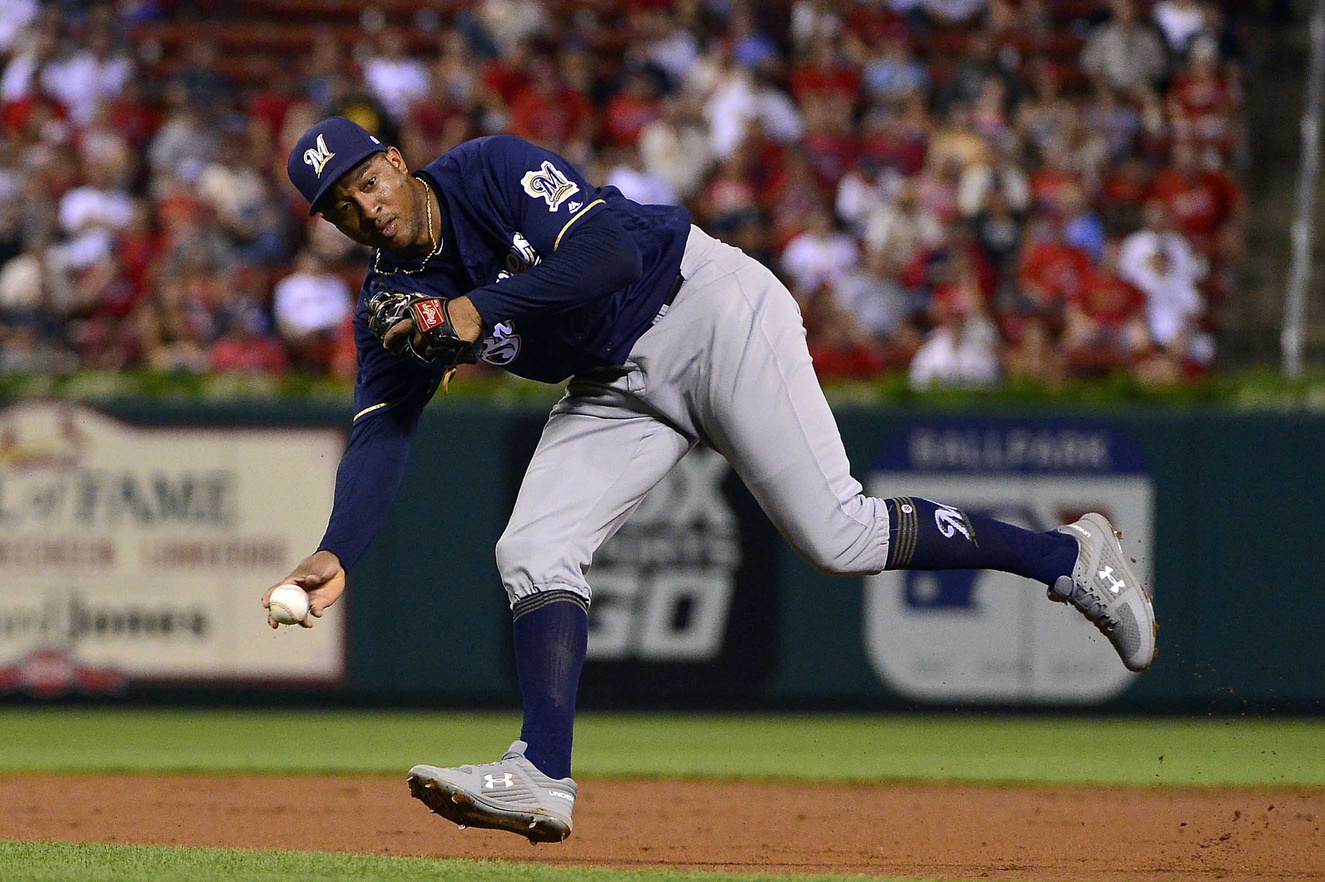
Like at first base, the Twins are charting a new course at second after saying goodbye to an institutional fixture during the offseason. And like first base, Minnesota is keeping a short-term mindset here while looking ahead to an uncertain future. But that doesn't mean the position isn't high on potential, both now and going forward.Projected Starter: Jonathan Schoop Likely Backup: Marwin Gonzalez Depth: Ehire Adrianza, Ronald Torreyes, Jordany Valdespin Prospects: Nick Gordon, Luis Arraez, Travis Blankenhorn THE GOOD Although he's coming off his worst season since learning the ropes as a rookie in 2014, Schoop has every ingredient for a bounceback. He's young, having turned 27 in October. He's hungry, with free agency bearing down at year's end. He's feeling scorned, after being traded and non-tendered in 2018. He's got a new hitting coach who has had some success with free-swinging power hitters (James Rowson's work with Eddie Rosario comes to mind). And most importantly, Schoop is working to iron out an ostensibly correctable issue. He was hampered early last year by an oblique injury that, from the view of both the second baseman and his new team, caused him to compensate and alter his swing. Now healthy and highly motivated, the Twins hope to see a return of the player who posted an aggregate .280/.316/.479 line from 2015 to 2017. Whether or not he can fully rebound, Schoop is at the very least a good bet to bring the boom. He has hit 15 or more home runs in every season as a big-leaguer, and managed 21 last year while batting just .233 in 131 games for the Orioles and Brewers. That total would've ranked second on the Twins behind Rosario. From 2014 to 2018, only one major-league second baseman hit more home runs than Schoop (109). It was Brian Dozier with 148. So in that sense, the Twins have found themselves a very fitting replacement, and Schoop is a better defender than Dozier was – at least toward the end of his Twins tenure. Schoop is renowned for his strong arm and lightning-quick double-play turns. The addition of Gonzalez provides a crucial depth boost at several positions, and second base is near the top of the list. Minnesota's depth behind Schoop was rather scant, with Adrianza figuring to be the top backup. He can play second but has done so rarely, and made only three starts there for the Twins last year. Gonzalez, meanwhile, has plenty of experience at the position, and logged 183 innings there for the Astros in 2018. His bat is also much more likely to play than that of Adrianza or Torreyes. It's hard to overstate just how much this free agent signing bolsters the outlook at second base by mitigating the risk around Schoop. THE BAD Schoop is a risk, of course. The rebounding-after-injury narrative is a tidy one, but it doesn't always play out that way. Even if he gets back on top of his game, he offers zero patience (drew 17 unintentional walks in 501 PA last year) and minimal running ability (slower sprint speed than Robbie Grossman, per Statcast). Schoop's nonexistent plate discipline tends to hurt his batting average (.258 career), so you are looking at a fairly one-dimensional offensive player here. That's not necessarily the worst thing, because extra-base hits are always good, but it does reduce Schoop's margin for error. When you never walk it's pretty easy to become a drain on the lineup unless you're consistently hitting. As we saw last year. Long-term, the big sticking point at second base is Gordon. Minnesota's first-round draft pick in 2014 was on a steady ascent toward the majors up until hitting a wall at Triple-A last summer. Gordon has played mostly shortstop in the system but projects as a second baseman in the majors, and – having been added to the 40-man roster in November – the clock is now ticking on him to stake his claim. We should have a much better idea by the end of this year about the "when" and "if" where Gordon is concerned. There's also the fact that Jorge Polanco, newly signed to a five-year extension, profiles better at second than short, and has a few top prospects (Royce Lewis and Wander Javier) coming up beneath him. THE BOTTOM LINE Just like at first base, the future outlook at second for Minnesota is fluid, which is why a one-year gamble like Schoop makes sense. It's quite rare you can find a player with his track record, at his age, on a one-year deal so Minnesota seems to have done well here, even if his high-power/low-OBP profile is redundant in their lineup. By adding Gonzalez to the roster, the Twins made their somewhat risky play on Schoop much more palatable. Marwin's two-year deal also provides some buffer in the event that the next mainstay – be it Gordon, or Polanco, or Arraez (added to the 40-man alongside Gordon) – takes a little longer to reach fruition. *** Twins 2019 Position Analysis: Catcher Twins 2019 Position Analysis: First Base Click here to view the article
- 27 replies
-
- 2
-
-
- jonathan schoop
- marwin gonzalez
- (and 2 more)
-
 Projected Starter: Jonathan Schoop Likely Backup: Marwin Gonzalez Depth: Ehire Adrianza, Ronald Torreyes, Jordany Valdespin Prospects: Nick Gordon, Luis Arraez, Travis Blankenhorn THE GOOD Although he's coming off his worst season since learning the ropes as a rookie in 2014, Schoop has every ingredient for a bounceback. He's young, having turned 27 in October. He's hungry, with free agency bearing down at year's end. He's feeling scorned, after being traded and non-tendered in 2018. He's got a new hitting coach who has had some success with free-swinging power hitters (James Rowson's work with Eddie Rosario comes to mind). And most importantly, Schoop is working to iron out an ostensibly correctable issue. He was hampered early last year by an oblique injury that, from the view of both the second baseman and his new team, caused him to compensate and alter his swing. Now healthy and highly motivated, the Twins hope to see a return of the player who posted an aggregate .280/.316/.479 line from 2015 to 2017. Whether or not he can fully rebound, Schoop is at the very least a good bet to bring the boom. He has hit 15 or more home runs in every season as a big-leaguer, and managed 21 last year while batting just .233 in 131 games for the Orioles and Brewers. That total would've ranked second on the Twins behind Rosario. From 2014 to 2018, only one major-league second baseman hit more home runs than Schoop (109). It was Brian Dozier with 148. So in that sense, the Twins have found themselves a very fitting replacement, and Schoop is a better defender than Dozier was – at least toward the end of his Twins tenure. Schoop is renowned for his strong arm and lightning-quick double-play turns. The addition of Gonzalez provides a crucial depth boost at several positions, and second base is near the top of the list. Minnesota's depth behind Schoop was rather scant, with Adrianza figuring to be the top backup. He can play second but has done so rarely, and made only three starts there for the Twins last year. Gonzalez, meanwhile, has plenty of experience at the position, and logged 183 innings there for the Astros in 2018. His bat is also much more likely to play than that of Adrianza or Torreyes. It's hard to overstate just how much this free agent signing bolsters the outlook at second base by mitigating the risk around Schoop. THE BAD Schoop is a risk, of course. The rebounding-after-injury narrative is a tidy one, but it doesn't always play out that way. Even if he gets back on top of his game, he offers zero patience (drew 17 unintentional walks in 501 PA last year) and minimal running ability (slower sprint speed than Robbie Grossman, per Statcast). Schoop's nonexistent plate discipline tends to hurt his batting average (.258 career), so you are looking at a fairly one-dimensional offensive player here. That's not necessarily the worst thing, because extra-base hits are always good, but it does reduce Schoop's margin for error. When you never walk it's pretty easy to become a drain on the lineup unless you're consistently hitting. As we saw last year. Long-term, the big sticking point at second base is Gordon. Minnesota's first-round draft pick in 2014 was on a steady ascent toward the majors up until hitting a wall at Triple-A last summer. Gordon has played mostly shortstop in the system but projects as a second baseman in the majors, and – having been added to the 40-man roster in November – the clock is now ticking on him to stake his claim. We should have a much better idea by the end of this year about the "when" and "if" where Gordon is concerned. There's also the fact that Jorge Polanco, newly signed to a five-year extension, profiles better at second than short, and has a few top prospects (Royce Lewis and Wander Javier) coming up beneath him. THE BOTTOM LINE Just like at first base, the future outlook at second for Minnesota is fluid, which is why a one-year gamble like Schoop makes sense. It's quite rare you can find a player with his track record, at his age, on a one-year deal so Minnesota seems to have done well here, even if his high-power/low-OBP profile is redundant in their lineup. By adding Gonzalez to the roster, the Twins made their somewhat risky play on Schoop much more palatable. Marwin's two-year deal also provides some buffer in the event that the next mainstay – be it Gordon, or Polanco, or Arraez (added to the 40-man alongside Gordon) – takes a little longer to reach fruition. *** Twins 2019 Position Analysis: Catcher Twins 2019 Position Analysis: First Base
 -
Article: Twins 2019 Position Analysis: First Base
Nick Nelson replied to Nick Nelson's topic in Twins Daily Front Page News
Everything you said here is correct, but I guess it comes down to this: If Cave does manage to build on his rookie campaign, and is a guy you want in the lineup against righties over Cron (not hard to envision), you're probably gonna want to play the guy at first who has experience and comfort there. Cave's not as good as Kepler in the OF but the drop-off isn't catastrophic for a game here and there. Another thing to consider is that Morrison was likely hurt. He had hip surgery in August which suggests a pretty serious issue. Who knows how long and how much it affected him, but he said at the time that he'd "just been grinding through it." So, ya know, extenuating circumstances. When the Twins added Cron I wasn't terribly enthused, but I've definitely warmed up to it with further thought. The guy has just produced really consistently, at every step. Yeah he could drop off a cliff but there isn't any rational reason to expect it.- 47 replies
-
- 3
-
-
- cj cron
- tyler austin
- (and 2 more)
-
Article: Twins 2019 Position Analysis: First Base
Nick Nelson replied to Nick Nelson's topic in Twins Daily Front Page News
Gonzalez has played 1200 innings at first base in the majors. Sano, Garver and Kepler have played about 180 combined. Austin probably won't be on the roster.- 47 replies
-
- 4
-
-
- cj cron
- tyler austin
- (and 2 more)
-
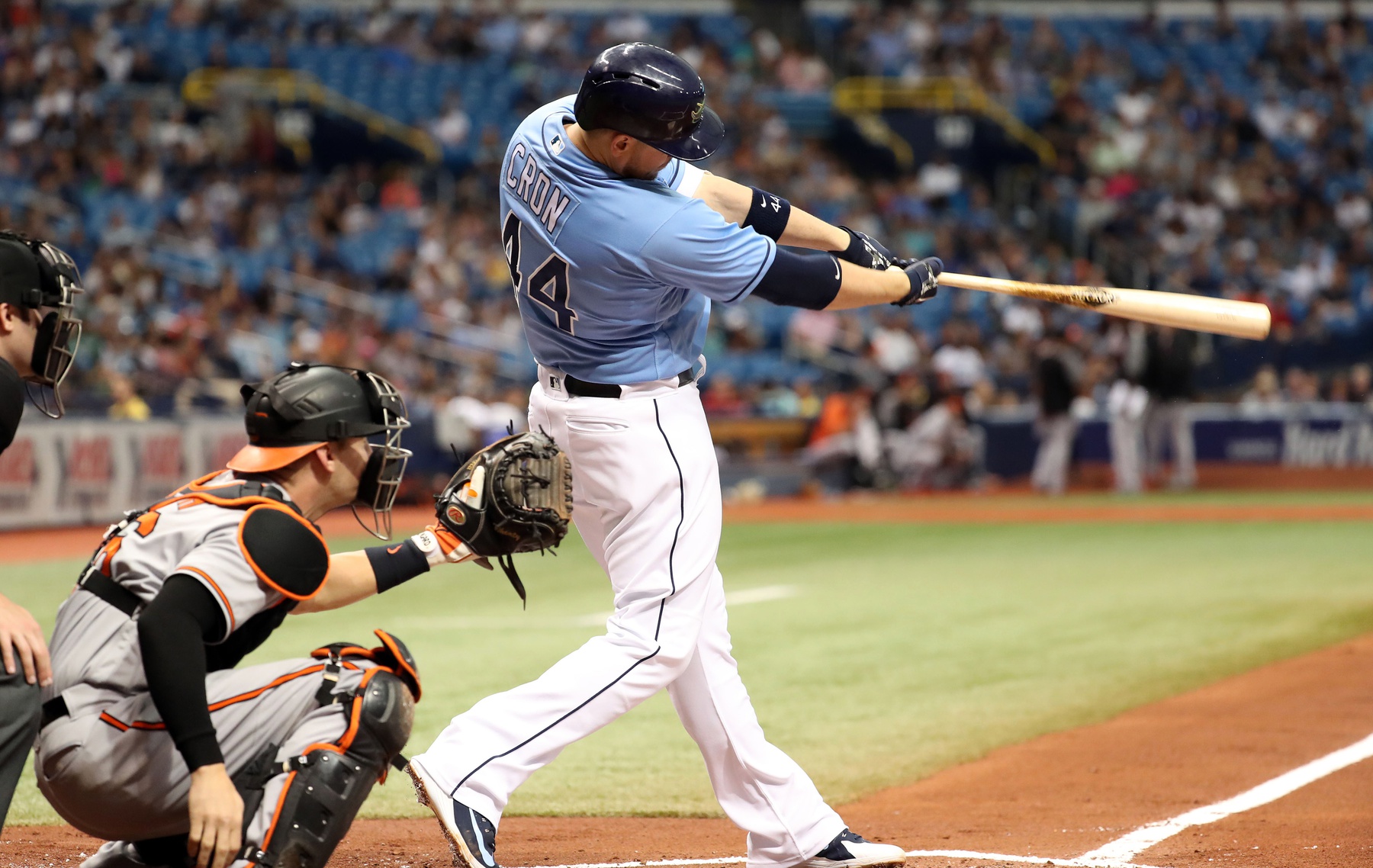
It's been a long time since the Twins had a primary first baseman not named Mauer or Morneau (save for some short-term fill-ins). Fourteen years, in fact. Now, as they venture into a new era at the right corner of the diamond, the team is taking a frugal yet creative approach to filling the position, seemingly biding time for a more permanent solution.Projected Starter: C.J. Cron Likely Backup: Marwin Gonzalez Depth: Miguel Sano, Tyler Austin, Lucas Duda Prospects: Alex Kirilloff, Brent Rooker, Zander Wiel THE GOOD Tasked with finding a replacement for Joe Mauer at first base, the front office decided to gather up a collection of intriguing low-cost parts rather than invest in a bona fide solution. Those hoping for a Paul Goldschmidt type splash were surely disappointed with the approach this past winter, but the Twins did well in patching together some viable options. Already the front office had acquired Austin from New York, in last July's Lance Lynn trade. The lefty-mashing slugger seemed to profile perfectly as half of a platoon with someone like – say – Duda, whom they added on a minor-league deal just ahead of spring training. Proceeding with those two would've been a sound short-term strategy, and perhaps Minnesota had plans along those lines heading into the offseason. But plans quickly changed when Cron became available on waivers in late November. Seeing a late-20s first baseman, with a solid track record, coming off a career year and available for nothing, was too much for the Twins to pass up at one of their clearest areas of need. Cron seems to offer a reasonably high floor along with a limited ceiling. The first part of that equation is valuable and sets him apart from the alternatives. Owner of a .289/.336/.500 line in the minors, he never posted an OPS below .739 in four MLB seasons prior to breaking out with an .816 mark and 30 home runs last year in Tampa. So even if he regresses a little, he probably won't fall too far. As a reference point, Mauer posted a .746 OPS overall in his five seasons as a first baseman. The Twins have lacked a reliable power bat at first base since Morneau suffered his concussion in 2010, so Cron looks like a breath of fresh air in that regard. And if something should go amiss with the projected starter during spring training, Minnesota is well equipped to absorb the blow. Austin and Duda have become fallback plans, and they're good ones at that. Austin is a muscle-bound, intimidating beast in the batter's box, and he put on a convincing power display after coming over from the Yankees last summer, blasting nine home runs in 35 games as a Twin. In 120 career big-league games, the 27-year-old has 24 jacks and a .469 slugging percentage. Duda has a lengthier track record of hitting with 152 home runs in 919 MLB games. He wasn't great last year between Kansas City and Atlanta, slashing .241/.313/.418, but that's respectable and the prior year he launched 30 homers with an .818 OPS. The 33-year-old has a career OPS+ of 118. One other creative addition from the offseason was Wilin Rosario, signed to play in Rochester after a three-year stint in Korea. Rosario was a quality bat for the Rockies before heading to Asia, and was a monster hitter for two years in the KBO (.961 and 1.060 OPS marks) before taking a step back in 2018. He's a longshot to make any impact but the Twins aren't counting on him for much – only to replace the departed Kennys Vargas as a readily available option in Triple-A. On the prospect front, 1B/OF hybrid Rooker is the most immediate possibility and could be up with Minnesota this summer if things break right for him. Trevor Larnach is more or less in the same boat, though he played only right field after being drafted last year. Sano might stop at first for awhile on his way to inevitably ending up at DH. But I believe the long-term vision is for Kirilloff to take over. He's got the bat, and while he has played outfield exclusively up to this point, he is not considered a special defender out there. With current Twins right fielder Max Kepler now locked up long-term, I expect we'll see the rapidly rising Kirilloff start to break in a first baseman's mitt this year. THE BAD Well, let's start here: The admirable present depth at first base is likely to evaporate by the end of spring training, because Austin is out of options (likely to be claimed on waivers) and Duda will undoubtedly opt out if he doesn't make the team, which he won't unless Cron or Nelson Cruz gets hurt. So then you're down to Cron and Sano probably sharing duties at first. I'd like to see Kepler play there too against the occasional tough right-hander, but that remains to be seen. Gonzalez's presence is helpful in the event of a Cron injury/implosion, as he can either fill in at first, or (more likely) at third with Sano sliding over. But none of these players are the kind of well rounded, dominant sluggers you ideally envision at first base. (Sano could be, but hasn't shown it since early 2017.) The Twins will gain more power at the position with Mauer gone, but they'll also lose two critical strengths – top-tier defensive prowess and strong on-base skills. No one is suited to match #7 in those traits, which are especially valuable on a team that features an iffy left side of the infield defensively, and a lineup already heavy on pop and light on OBP. Yeah, these guys the Twins have brought in can all hit the ball hard. But evidence suggests this isn't widely perceived as being all that valuable on its own. That's why Minnesota was able to get Cron on waivers, Austin as a trade toss-in, Duda on a minors deal, Rosario from Korea. THE BOTTOM LINE As far as stopgaps go, the Twins have done pretty well for themselves. Cron is a serviceable – albeit bland – starting option while Austin and Duda provide quality spring depth. There are also a number of players on Minnesota's roster (namely Sano and Gonzalez) who could become frequent plugs at the position, and possibly even regulars. That's the beauty of first base: it's on the far end of the defensive spectrum, meaning almost any capable hitter can end up there. So while there are no great "first base prospects" in the Twins' system right now, per se, there are plenty who could eventually take on that function as big-leaguers, with Kirilloff leading the pack in my mind. While the future at first is uncertain, it's hardly ominous, and the Twins have set themselves up for comfortable stability in the short-term. *** Twins 2019 Position Analysis: Catcher Click here to view the article
- 47 replies
-
- 3
-
-
- cj cron
- tyler austin
- (and 2 more)
-
 Projected Starter: C.J. Cron Likely Backup: Marwin Gonzalez Depth: Miguel Sano, Tyler Austin, Lucas Duda Prospects: Alex Kirilloff, Brent Rooker, Zander Wiel THE GOOD Tasked with finding a replacement for Joe Mauer at first base, the front office decided to gather up a collection of intriguing low-cost parts rather than invest in a bona fide solution. Those hoping for a Paul Goldschmidt type splash were surely disappointed with the approach this past winter, but the Twins did well in patching together some viable options. Already the front office had acquired Austin from New York, in last July's Lance Lynn trade. The lefty-mashing slugger seemed to profile perfectly as half of a platoon with someone like – say – Duda, whom they added on a minor-league deal just ahead of spring training. Proceeding with those two would've been a sound short-term strategy, and perhaps Minnesota had plans along those lines heading into the offseason. But plans quickly changed when Cron became available on waivers in late November. Seeing a late-20s first baseman, with a solid track record, coming off a career year and available for nothing, was too much for the Twins to pass up at one of their clearest areas of need. Cron seems to offer a reasonably high floor along with a limited ceiling. The first part of that equation is valuable and sets him apart from the alternatives. Owner of a .289/.336/.500 line in the minors, he never posted an OPS below .739 in four MLB seasons prior to breaking out with an .816 mark and 30 home runs last year in Tampa. So even if he regresses a little, he probably won't fall too far. As a reference point, Mauer posted a .746 OPS overall in his five seasons as a first baseman. The Twins have lacked a reliable power bat at first base since Morneau suffered his concussion in 2010, so Cron looks like a breath of fresh air in that regard. And if something should go amiss with the projected starter during spring training, Minnesota is well equipped to absorb the blow. Austin and Duda have become fallback plans, and they're good ones at that. Austin is a muscle-bound, intimidating beast in the batter's box, and he put on a convincing power display after coming over from the Yankees last summer, blasting nine home runs in 35 games as a Twin. In 120 career big-league games, the 27-year-old has 24 jacks and a .469 slugging percentage. Duda has a lengthier track record of hitting with 152 home runs in 919 MLB games. He wasn't great last year between Kansas City and Atlanta, slashing .241/.313/.418, but that's respectable and the prior year he launched 30 homers with an .818 OPS. The 33-year-old has a career OPS+ of 118. One other creative addition from the offseason was Wilin Rosario, signed to play in Rochester after a three-year stint in Korea. Rosario was a quality bat for the Rockies before heading to Asia, and was a monster hitter for two years in the KBO (.961 and 1.060 OPS marks) before taking a step back in 2018. He's a longshot to make any impact but the Twins aren't counting on him for much – only to replace the departed Kennys Vargas as a readily available option in Triple-A. On the prospect front, 1B/OF hybrid Rooker is the most immediate possibility and could be up with Minnesota this summer if things break right for him. Trevor Larnach is more or less in the same boat, though he played only right field after being drafted last year. Sano might stop at first for awhile on his way to inevitably ending up at DH. But I believe the long-term vision is for Kirilloff to take over. He's got the bat, and while he has played outfield exclusively up to this point, he is not considered a special defender out there. With current Twins right fielder Max Kepler now locked up long-term, I expect we'll see the rapidly rising Kirilloff start to break in a first baseman's mitt this year. THE BAD Well, let's start here: The admirable present depth at first base is likely to evaporate by the end of spring training, because Austin is out of options (likely to be claimed on waivers) and Duda will undoubtedly opt out if he doesn't make the team, which he won't unless Cron or Nelson Cruz gets hurt. So then you're down to Cron and Sano probably sharing duties at first. I'd like to see Kepler play there too against the occasional tough right-hander, but that remains to be seen. Gonzalez's presence is helpful in the event of a Cron injury/implosion, as he can either fill in at first, or (more likely) at third with Sano sliding over. But none of these players are the kind of well rounded, dominant sluggers you ideally envision at first base. (Sano could be, but hasn't shown it since early 2017.) The Twins will gain more power at the position with Mauer gone, but they'll also lose two critical strengths – top-tier defensive prowess and strong on-base skills. No one is suited to match #7 in those traits, which are especially valuable on a team that features an iffy left side of the infield defensively, and a lineup already heavy on pop and light on OBP. Yeah, these guys the Twins have brought in can all hit the ball hard. But evidence suggests this isn't widely perceived as being all that valuable on its own. That's why Minnesota was able to get Cron on waivers, Austin as a trade toss-in, Duda on a minors deal, Rosario from Korea. THE BOTTOM LINE As far as stopgaps go, the Twins have done pretty well for themselves. Cron is a serviceable – albeit bland – starting option while Austin and Duda provide quality spring depth. There are also a number of players on Minnesota's roster (namely Sano and Gonzalez) who could become frequent plugs at the position, and possibly even regulars. That's the beauty of first base: it's on the far end of the defensive spectrum, meaning almost any capable hitter can end up there. So while there are no great "first base prospects" in the Twins' system right now, per se, there are plenty who could eventually take on that function as big-leaguers, with Kirilloff leading the pack in my mind. While the future at first is uncertain, it's hardly ominous, and the Twins have set themselves up for comfortable stability in the short-term. *** Twins 2019 Position Analysis: Catcher
 -
Article: Twins 2019 Position Analysis: Catcher
Nick Nelson replied to Nick Nelson's topic in Twins Daily Front Page News
I was intrigued when they acquired him last year, but yeah, a .545 OPS and 77-to-10 K/BB ratio as a 21-year-old in Low-A is pretty irredeemable. Hopefully he bounces back in a big way but right now I don't see him as part of the picture.- 67 replies
-
- 3
-
-
- jason castro
- mitch garver
- (and 1 more)
-
According to reports, the Twins took a run at no fewer than two prominent free agent catchers this offseason (Robinson Chirinos and Yasmani Grandal) but came up short in their pursuits. So it appears they'll roll into the 2019 season with what they've got: a collection of question marks (albeit promising question marks) behind the plate.Projected Starter: Jason Castro Likely Backup: Mitch Garver Depth: Willians Astudillo, Tomas Telis, Brian Navarreto Prospects: Ryan Jeffers, Ben Rortvedt THE GOOD Castro's back. He was a solid presence in his first year with the Twins, combining a reasonably productive bat with quality defense and an air of veteran assuredness. That final part is important, and went awry after Castro suffered a season-ending knee injury last May. Garver and Bobby Wilson were left to shoulder the load, and rapport with the staff had to be built on the fly. The upside of all this is Garver got more time behind the plate than expected, and showed noticeable defensive improvement in the later months. His OPS also ranked 10th among MLB catchers with 300+ plate appearances. Garver showed signs of being a starter-caliber player, which is handy to have around with Castro returning from knee surgery. And third on the depth chart, the Twins have an enigmatic wild card whose utter uniqueness makes him extremely difficult to analyze. When Astudillo showed up to camp, he wasted no time putting on a show, immediately blasting a leisurely bomb against the team's best pitcher. He arrives after hitting .316 in the Venezuelan Winter League, where he made headlines with his theatrics. Last year with the Twins he batted .355 in 29 games. The previous winter he'd hit .319 in the VWL, after batting .342 in Triple-A for the Diamondbacks in 2017. In total, over the last two years between the minors, majors and winter league, Astudillo has a .311 average in 915 at-bats. Now, of course this sample includes varying degrees of competition – most of it not MLB-caliber – but that's a lengthy run of almost nonstop hitting. Much of this owes to the fact that he almost literally never strikes out. But that's always been the case, throughout the 27-year-old's lengthy run as a minor-league journeyman and also-ran. What's new is the power. Last year between Rochester and Minnesota, Astudillo launched 15 home runs in 108 games. In his entire eight-year minor-league career leading up to that point, he'd hit 14. Total. And now he's fresh off going deep eight times in 55 games for Caribes in Venezuela. The intrigue of his bat is undeniable. Were he to accumulate enough starts at catcher, he'd likely rank among the league's best hitters at the position. Along with the emerging Garver and the steady Castro, Astudillo gives the Twins cause for cautious optimism at the catcher position. THE BAD We're gonna have to put an emphasis on the cautious in cautious optimism, because there are a lot of cautionary signs at play here. Castro is 31 and coming back from some fairly significant work on his knee. He also didn't look very good before going down last year, with a .143/.257/.238 line in 74 plate appearances. And his highest WAR in the past five years is 1.6, so you're not looking at a whole lot of upside even if he's back to form. Garver is in prove-it territory after a good rookie season at age 27. Plenty of late-bloomer types have shown up with a strong first impression and then faded into obscurity (Lew Ford comes to mind). But that's not really my concern. Garver has all but solidified his status as a capable hitter. The bigger concern is his head. If he comes up dazed after another hard foul-tip to the mask, it's gonna be a thing. It needs to be a thing. That specter will loom over him for a while at least. And Astudillo? Well, like I said, he's hard to analyze. It's not entirely clear how much the Twins trust him at catcher. He does cool wacky things like but when it comes to receiving, and framing, and spryness? Hard to judge, and we don't have a ton of data. It does seem fair to say that if Astudillo was considered a strong defender behind the plate, he'd have gotten a look in the majors before age 26, or a few more starts last year before Garver went down and left Paul Molitor with little other option. THE BOTTOM LINE Given the alleged extension of a rare multi-year offer to Grandal, it's safe say Minnesota's front office isn't totally sold on the existing situation. Then again, they certainly had the means to make it happen with Grandal, or any number of other upgrades, so clearly they weren't feeling too much urgency. Entering his final season under contract, Castro is a nice steady force to complement Garver and Astudillo, each of whom is exciting for his own reasons. After that trio, the depth is pretty rough, and the top prospects haven't played above A-ball. If health issues strike early, the Twins will find themselves in a precarious scenario. Click here to view the article
- 67 replies
-
- 2
-
-
- jason castro
- mitch garver
- (and 1 more)
-
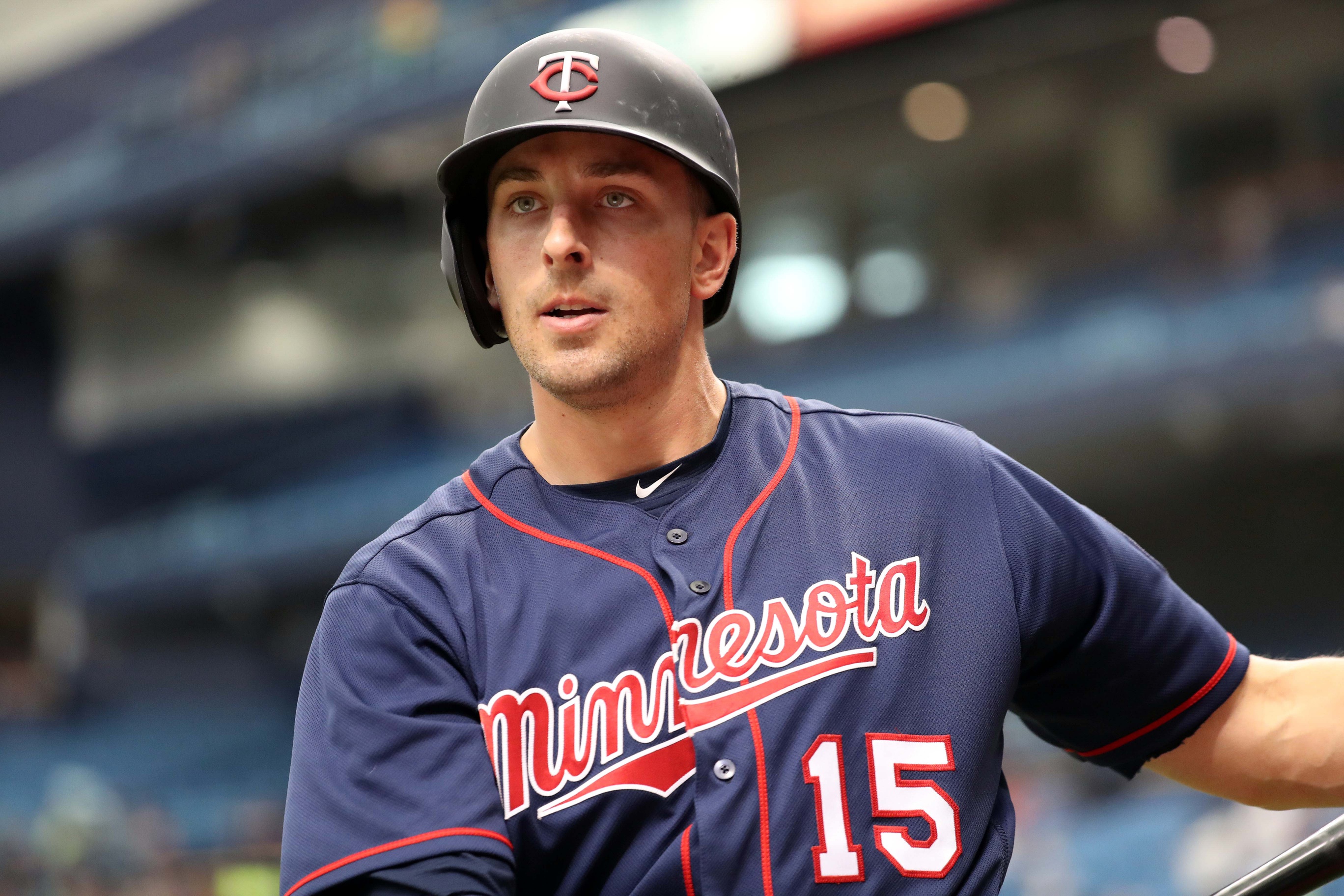 Projected Starter: Jason Castro Likely Backup: Mitch Garver Depth: Willians Astudillo, Tomas Telis, Brian Navarreto Prospects: Ryan Jeffers, Ben Rortvedt THE GOOD Castro's back. He was a solid presence in his first year with the Twins, combining a reasonably productive bat with quality defense and an air of veteran assuredness. That final part is important, and went awry after Castro suffered a season-ending knee injury last May. Garver and Bobby Wilson were left to shoulder the load, and rapport with the staff had to be built on the fly. The upside of all this is Garver got more time behind the plate than expected, and showed noticeable defensive improvement in the later months. His OPS also ranked 10th among MLB catchers with 300+ plate appearances. Garver showed signs of being a starter-caliber player, which is handy to have around with Castro returning from knee surgery. And third on the depth chart, the Twins have an enigmatic wild card whose utter uniqueness makes him extremely difficult to analyze. When Astudillo showed up to camp, he wasted no time putting on a show, immediately blasting a leisurely bomb against the team's best pitcher. He arrives after hitting .316 in the Venezuelan Winter League, where he made headlines with his theatrics. Last year with the Twins he batted .355 in 29 games. The previous winter he'd hit .319 in the VWL, after batting .342 in Triple-A for the Diamondbacks in 2017. In total, over the last two years between the minors, majors and winter league, Astudillo has a .311 average in 915 at-bats. Now, of course this sample includes varying degrees of competition – most of it not MLB-caliber – but that's a lengthy run of almost nonstop hitting. Much of this owes to the fact that he almost literally never strikes out. But that's always been the case, throughout the 27-year-old's lengthy run as a minor-league journeyman and also-ran. What's new is the power. Last year between Rochester and Minnesota, Astudillo launched 15 home runs in 108 games. In his entire eight-year minor-league career leading up to that point, he'd hit 14. Total. And now he's fresh off going deep eight times in 55 games for Caribes in Venezuela. The intrigue of his bat is undeniable. Were he to accumulate enough starts at catcher, he'd likely rank among the league's best hitters at the position. Along with the emerging Garver and the steady Castro, Astudillo gives the Twins cause for cautious optimism at the catcher position. THE BAD We're gonna have to put an emphasis on the cautious in cautious optimism, because there are a lot of cautionary signs at play here. Castro is 31 and coming back from some fairly significant work on his knee. He also didn't look very good before going down last year, with a .143/.257/.238 line in 74 plate appearances. And his highest WAR in the past five years is 1.6, so you're not looking at a whole lot of upside even if he's back to form. Garver is in prove-it territory after a good rookie season at age 27. Plenty of late-bloomer types have shown up with a strong first impression and then faded into obscurity (Lew Ford comes to mind). But that's not really my concern. Garver has all but solidified his status as a capable hitter. The bigger concern is his head. If he comes up dazed after another hard foul-tip to the mask, it's gonna be a thing. It needs to be a thing. That specter will loom over him for a while at least. And Astudillo? Well, like I said, he's hard to analyze. It's not entirely clear how much the Twins trust him at catcher. He does cool wacky things like but when it comes to receiving, and framing, and spryness? Hard to judge, and we don't have a ton of data. It does seem fair to say that if Astudillo was considered a strong defender behind the plate, he'd have gotten a look in the majors before age 26, or a few more starts last year before Garver went down and left Paul Molitor with little other option.THE BOTTOM LINE Given the alleged extension of a rare multi-year offer to Grandal, it's safe say Minnesota's front office isn't totally sold on the existing situation. Then again, they certainly had the means to make it happen with Grandal, or any number of other upgrades, so clearly they weren't feeling too much urgency. Entering his final season under contract, Castro is a nice steady force to complement Garver and Astudillo, each of whom is exciting for his own reasons. After that trio, the depth is pretty rough, and the top prospects haven't played above A-ball. If health issues strike early, the Twins will find themselves in a precarious scenario.
 -
The new Twins front office is making a name for itself with late-offseason (er, early spring training) free agency splashes. This time around it's Marwin Gonzalez, the defensively flexible veteran who has reportedly agreed to a two-year, $21 million contract.Gonzalez, who turns 30 next month, has spent all seven of his big-league seasons with the Houston Astros, winning a World Series in 2017. He's mostly been a solid, above-average hitter throughout his career, and had his best season in 2017 with a .907 OPS and 23 homers, but is best known for his ability to play all over the field. Gonzalez has logged at least 90 career starts at: 1B, 2B, SS, 3B, LF. He played all five of those positions in Houston last year, and while he spent the least time at third base (only two starts), his ability to handle the hot corner might’ve been a key reason Minnesota pulled the trigger. Miguel Sano is coming off a disaster season, with major question marks swirling around his surgically repaired leg. Now, he’s limping into camp with a heel laceration. The depth behind was basically Ehire Adrianza, with little help in the high minors. So locking up Gonzalez for two years is a huge help in that regard. The beauty of his versatility is that if Sano does rebound and return to form, as we’re all hoping, Gonzalez can still be plenty useful to the Twins. They are bound need help throughout the season at multiple positions he can play. Even if everyone’s healthy, Gonzalez will hardly be treated as a backup utilityman type. The Twins envision him getting 500 plate appearances while playing everywhere, keeping the starters fresh and helping Rocco Baldelli build optimal lineups with his platoon-neutral switch-hitting splits. Gonzalez is a veteran with postseason experience (he won a World Series with the Astros in 2017) and a great clubhouse reputation. Like most moves we’ve seen from the Falvine Regime, it’s tough to find much downside in this one. Cruise through the comments below to see what our community is saying about the move. Click here to view the article
-
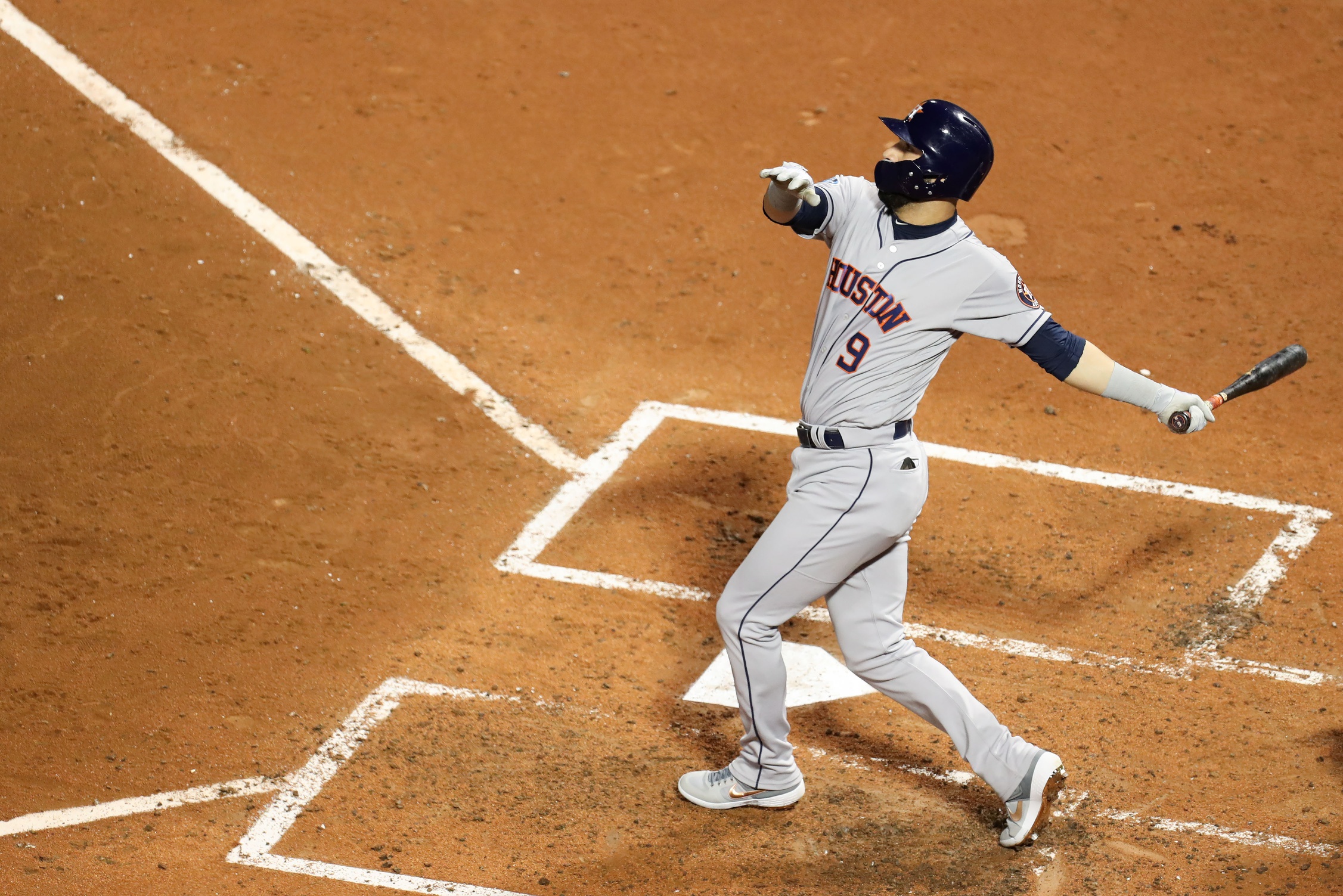 Gonzalez, who turns 30 next month, has spent all seven of his big-league seasons with the Houston Astros, winning a World Series in 2017. He's mostly been a solid, above-average hitter throughout his career, and had his best season in 2017 with a .907 OPS and 23 homers, but is best known for his ability to play all over the field. Gonzalez has logged at least 90 career starts at: 1B, 2B, SS, 3B, LF. He played all five of those positions in Houston last year, and while he spent the least time at third base (only two starts), his ability to handle the hot corner might’ve been a key reason Minnesota pulled the trigger. Miguel Sano is coming off a disaster season, with major question marks swirling around his surgically repaired leg. Now, he’s limping into camp with a heel laceration. The depth behind was basically Ehire Adrianza, with little help in the high minors. So locking up Gonzalez for two years is a huge help in that regard. The beauty of his versatility is that if Sano does rebound and return to form, as we’re all hoping, Gonzalez can still be plenty useful to the Twins. They are bound need help throughout the season at multiple positions he can play. Even if everyone’s healthy, Gonzalez will hardly be treated as a backup utilityman type. The Twins envision him getting 500 plate appearances while playing everywhere, keeping the starters fresh and helping Rocco Baldelli build optimal lineups with his platoon-neutral switch-hitting splits. Gonzalez is a veteran with postseason experience (he won a World Series with the Astros in 2017) and a great clubhouse reputation. Like most moves we’ve seen from the Falvine Regime, it’s tough to find much downside in this one. Cruise through the comments below to see what our community is saying about the move.
 -
Excellent Craig Kilborn reference. An underrated Minnesota legend!
- 32 replies
-
- 5
-
-
- marwin gonzalez
- bryce harper
- (and 3 more)
-
The Minnesota Twins have made it clear: they're relying on their own internal pipeline, rather than transformative outside additions, to turn things around. Fortunately, their system is widely viewed as one of the best in the game. We've been counting down our rankings of the Top 20 Twins prospects over the past few weeks, and today we'll recap the full list, zeroing in on trends and key takeaways.Twins Daily's Top 20 Twins Prospects of 2019 20. Jose Miranda, 2B/3B: Versatile infielder shows offensive promise with contact/power combo 19. Jorge Alcala, RHP: Big arm acquired in Ryan Pressly trade plagued by question marks 18. LaMonte Wade, OF: OBP machine is almost MLB-ready, profiles as rotation guy in corner OF 17. Zack Littell, RHP: Back-of-rotation type with higher potential if he adds velo or goes to bullpen 16. Gilberto Celestino, OF: Speedy CF with a bit of pop and solid plate approach, lofty ceiling 15. Yunior Severino, 2B: Teenage infielder is still developing physically, projects as slugging 3B 14. Ben Rortvedt, C: Took a step forward with bat in 2018, and reinforced strong defensive rep 13. Ryan Jeffers, C: Blasted onto scene in pro debut, providing critical boost to the system at C 12. Stephen Gonsalves, LHP: Flaws were magnified in rocky intro to MLB, but intrigue remains 11. Nick Gordon, SS: Highly skilled middle infielder looks to rebound after falling flat in Triple-A 10. Akil Baddoo, OF: Rare blend of power, patience, speed commingle in uber-athletic package 9. Blayne Enlow, RHP: Riding signature CB, held his own against advanced competition at 19 8. Lewis Thorpe, LHP: Aussie southpaw has performed everywhere in minors, awaits MLB shot 7. Jhoan Duran, RHP: Biggest surprise from deadline deals dominated with legit stuff after arrival 6. Brent Rooker, 1B/OF: Flashed prodigious power while spending first full pro season in Double-A 5. Wander Javier, SS: Prized international talent is back after losing 2018 to shoulder surgery 4. Trevor Larnach, OF: Last summer's first-round pick mashed in pro debut, could reach MLB quickly 3. Brusdar Graterol, RHP: Among the hardest throwers around, complements FB with filthy slider 2. Alex Kirilloff, OF: Can drive any pitch anywhere, with hit tool ranking among best in minors 1. Royce Lewis, SS: Elite skill and athleticism surpassed only by uncommon maturity and makeup POSITIONAL BREAKDOWN C: 2 IF: 5 OF: 6 RHP: 5 LHP: 2 The breakdown here hasn't changed a ton from last year. At that time, I called out catching depth as the biggest area of concern, but things look much brighter on that front now. We still only have two backstops on our list, but that's partially because Mitch Garver graduated with a strong rookie year for the Twins. Meanwhile, he was replaced by a promising talent in second-round pick Jeffers, and Rortvedt took a step forward. Overall, there's not a glaring weakness (maybe 3B), but the clear area of abundance is outfielders. WHERE THEY STAND This system is very highly regarded, and there seems to be consensus that it's on the rise. Keith Law of ESPN ranks Minnesota fourth among all organizations, up from 10th last year. Baseball America, which also pegged the Twins' system 10th last year, now has them up to #7. Few teams can match a 1-2 punch like Lewis and Kirilloff, and there's plenty of functional depth here as well. "A parade of unfamous names who project to at least some tangible big league value," as Law puts it. In terms of pure upside, I doubt any other farm system can stack up. Therein lies the rub – Minnesota's pipeline is delightfully high on potential, but frightfully low on assurance. None of their top three prospects have played above A-ball, and in fact only two members of their top 10 have done so. It's a boom-or-bust minefield but the skills, athleticism and projectibility of this group are undeniably tantalizing. It's not hard to envision a toolbox like Baddoo, Javier, Celestino or Severino suddenly emerging as a nationally recognized top-tier talent; it's also not hard to envision any of them bogging down upon reaching the upper levels. When Minnesota's front office talks about biding its time, and waiting to develop further clarity before charting a decisive course, they aren't just talking about the big-league club. We're going to learn a ton about the farm system this summer. CREAM OF THE CROP, RISING TO THE TOP Minnesota's system is on the rise largely because of its two shining stars. Last year, Lewis was the highest Twins prospect to appear on any of the four national lists we track – MLB.com had him at #20. This year, all four have him among their top 10s, with MLB.com placing him highest at #5. Meanwhile, Kirilloff has come out of nowhere to rank in everyone's top 40, with ESPN and MLB.com both placing him among their top dozen overall. Not since Byron Buxton and Miguel Sano were eligible have the Twins held this kind of national prestige in the prospect arena. I realize that sentence probably made some of you groan, but – FOLKS, you gotta believe me on this – the past does not dictate the future. Everyone should be very, very excited about these two phenomenal incoming talents. THE NEW WAVE Derek Falvey and Thad Levine inherited Kirilloff, and had the luxury of a #1 overall pick to procure Lewis, so they can't take TOO much credit for the very top end of this system. But there is zero question they've followed through on a stated mission to thoroughly bolster the minor-league ranks. Half of our Top 20 now consists of players acquired by the new regime (Lewis, Larnach, Rooker, Duran, Enlow, Jeffers, Severino, Celestino, Littell, Alcala). From the current view, Falvey and Levine have hit on numerous draft picks (notably Larnach and Rooker), and they've gotten solid returns when trading away veterans. In particular, Duran – acquired in the Eduardo Escobar deal and already at #7 on our list – looks like a real find. HUMBLE BEGINNINGS Sizing up this system's estimable top five, you see a lot of high-stakes investments paying off. Lewis was obviously a #1 overall pick. Kirilloff and Larnach were also first-rounders. Javier was the most expensive international free agent in franchise history. And then we have Graterol, who signed out of Venezuela for a mere $150,000 in 2014. He wasn't a big name, or a flashy addition. When he first arrived, the right-hander was throwing in the upper-80s. After logging just 11 innings in the Dominican Summer League at age 16, he tore his UCL and underwent Tommy John surgery. During the time off, Graterol focused on building strength, and he came back a radically different player, firing in the upper-90s. These are the kinds of development stories that set apart the best organizations; it's important to hit frequently on those crucial top draft picks and high-profile international splashes, but the biggest differentiator is when you can pan this kind of gold from your lesser investments. UNDER THE RADAR Speaking of lesser investments, let's talk about the Twins' 2016 fifth-round pick, Jordan Balazovic. He was named by both ESPN's Law and The Athletic's John Sickels as a player who narrowly missed their Top 100s; in fact, Law shockingly had Balazovic (#102) ranked ahead of Graterol (#108). Balazovic was an honorable mention for us, failing to make our Top 20 cut, but I'm wondering if that'll look silly a year from now. The Canadian right-hander was impressive at Cedar Rapids last year, posting a 78-to-18 K/BB ratio in 61 innings as a 19-year-old, but has totaled only 134 frames since being drafted in 2016. FINDING FLAMETHROWERS Where there's smoke, there's fire, and the Twins system has plumes rising from its stellar collection of young arms. It wasn't so long ago that Minnesota had a dire shortage of high-end velo in its minor-league ranks, but now this trait has become a hallmark. Graterol is of course one of the hardest-throwers out there – a rare starter capable of reaching 100 MPH and maintaining above 95. Duran throws in the upper-90s. Alcala has been known to touch triple digits. And there are a number of other power arms (like Balazovic) that didn't quite crack our list. MORE PROSPECT COVERAGE If you want to read up on all of these prospects and many more, I recommend ordering a copy of the 2019 Twins Prospect Handbook (paperback or eBook), which Seth, Cody and Tom worked tirelessly to put together. And of course, you'll wanna stay tuned into Twins Daily, where we'll have on-site reports from camp during spring training, and daily minor-league recaps all season long. There's no better place to follow the next wave of Minnesota Twins talent. PAST TWINS DAILY TOP PROSPECT LISTS TD 2018 Minnesota Twins Top Prospects TD 2017 Minnesota Twins Top Prospects TD 2016 Minnesota Twins Top Prospects TD 2015 Minnesota Twins Top Prospects Click here to view the article
-
 Twins Daily's Top 20 Twins Prospects of 2019 20. Jose Miranda, 2B/3B: Versatile infielder shows offensive promise with contact/power combo 19. Jorge Alcala, RHP: Big arm acquired in Ryan Pressly trade plagued by question marks 18. LaMonte Wade, OF: OBP machine is almost MLB-ready, profiles as rotation guy in corner OF 17. Zack Littell, RHP: Back-of-rotation type with higher potential if he adds velo or goes to bullpen 16. Gilberto Celestino, OF: Speedy CF with a bit of pop and solid plate approach, lofty ceiling 15. Yunior Severino, 2B: Teenage infielder is still developing physically, projects as slugging 3B 14. Ben Rortvedt, C: Took a step forward with bat in 2018, and reinforced strong defensive rep 13. Ryan Jeffers, C: Blasted onto scene in pro debut, providing critical boost to the system at C 12. Stephen Gonsalves, LHP: Flaws were magnified in rocky intro to MLB, but intrigue remains 11. Nick Gordon, SS: Highly skilled middle infielder looks to rebound after falling flat in Triple-A 10. Akil Baddoo, OF: Rare blend of power, patience, speed commingle in uber-athletic package 9. Blayne Enlow, RHP: Riding signature CB, held his own against advanced competition at 19 8. Lewis Thorpe, LHP: Aussie southpaw has performed everywhere in minors, awaits MLB shot 7. Jhoan Duran, RHP: Biggest surprise from deadline deals dominated with legit stuff after arrival 6. Brent Rooker, 1B/OF: Flashed prodigious power while spending first full pro season in Double-A 5. Wander Javier, SS: Prized international talent is back after losing 2018 to shoulder surgery 4. Trevor Larnach, OF: Last summer's first-round pick mashed in pro debut, could reach MLB quickly 3. Brusdar Graterol, RHP: Among the hardest throwers around, complements FB with filthy slider 2. Alex Kirilloff, OF: Can drive any pitch anywhere, with hit tool ranking among best in minors 1. Royce Lewis, SS: Elite skill and athleticism surpassed only by uncommon maturity and makeup POSITIONAL BREAKDOWN C: 2 IF: 5 OF: 6 RHP: 5 LHP: 2 The breakdown here hasn't changed a ton from last year. At that time, I called out catching depth as the biggest area of concern, but things look much brighter on that front now. We still only have two backstops on our list, but that's partially because Mitch Garver graduated with a strong rookie year for the Twins. Meanwhile, he was replaced by a promising talent in second-round pick Jeffers, and Rortvedt took a step forward. Overall, there's not a glaring weakness (maybe 3B), but the clear area of abundance is outfielders. WHERE THEY STAND This system is very highly regarded, and there seems to be consensus that it's on the rise. Keith Law of ESPN ranks Minnesota fourth among all organizations, up from 10th last year. Baseball America, which also pegged the Twins' system 10th last year, now has them up to #7. Few teams can match a 1-2 punch like Lewis and Kirilloff, and there's plenty of functional depth here as well. "A parade of unfamous names who project to at least some tangible big league value," as Law puts it. In terms of pure upside, I doubt any other farm system can stack up. Therein lies the rub – Minnesota's pipeline is delightfully high on potential, but frightfully low on assurance. None of their top three prospects have played above A-ball, and in fact only two members of their top 10 have done so. It's a boom-or-bust minefield but the skills, athleticism and projectibility of this group are undeniably tantalizing. It's not hard to envision a toolbox like Baddoo, Javier, Celestino or Severino suddenly emerging as a nationally recognized top-tier talent; it's also not hard to envision any of them bogging down upon reaching the upper levels. When Minnesota's front office talks about biding its time, and waiting to develop further clarity before charting a decisive course, they aren't just talking about the big-league club. We're going to learn a ton about the farm system this summer. CREAM OF THE CROP, RISING TO THE TOP Minnesota's system is on the rise largely because of its two shining stars. Last year, Lewis was the highest Twins prospect to appear on any of the four national lists we track – MLB.com had him at #20. This year, all four have him among their top 10s, with MLB.com placing him highest at #5. Meanwhile, Kirilloff has come out of nowhere to rank in everyone's top 40, with ESPN and MLB.com both placing him among their top dozen overall. Not since Byron Buxton and Miguel Sano were eligible have the Twins held this kind of national prestige in the prospect arena. I realize that sentence probably made some of you groan, but – FOLKS, you gotta believe me on this – the past does not dictate the future. Everyone should be very, very excited about these two phenomenal incoming talents. THE NEW WAVE Derek Falvey and Thad Levine inherited Kirilloff, and had the luxury of a #1 overall pick to procure Lewis, so they can't take TOO much credit for the very top end of this system. But there is zero question they've followed through on a stated mission to thoroughly bolster the minor-league ranks. Half of our Top 20 now consists of players acquired by the new regime (Lewis, Larnach, Rooker, Duran, Enlow, Jeffers, Severino, Celestino, Littell, Alcala). From the current view, Falvey and Levine have hit on numerous draft picks (notably Larnach and Rooker), and they've gotten solid returns when trading away veterans. In particular, Duran – acquired in the Eduardo Escobar deal and already at #7 on our list – looks like a real find. HUMBLE BEGINNINGS Sizing up this system's estimable top five, you see a lot of high-stakes investments paying off. Lewis was obviously a #1 overall pick. Kirilloff and Larnach were also first-rounders. Javier was the most expensive international free agent in franchise history. And then we have Graterol, who signed out of Venezuela for a mere $150,000 in 2014. He wasn't a big name, or a flashy addition. When he first arrived, the right-hander was throwing in the upper-80s. After logging just 11 innings in the Dominican Summer League at age 16, he tore his UCL and underwent Tommy John surgery. During the time off, Graterol focused on building strength, and he came back a radically different player, firing in the upper-90s. These are the kinds of development stories that set apart the best organizations; it's important to hit frequently on those crucial top draft picks and high-profile international splashes, but the biggest differentiator is when you can pan this kind of gold from your lesser investments. UNDER THE RADAR Speaking of lesser investments, let's talk about the Twins' 2016 fifth-round pick, Jordan Balazovic. He was named by both ESPN's Law and The Athletic's John Sickels as a player who narrowly missed their Top 100s; in fact, Law shockingly had Balazovic (#102) ranked ahead of Graterol (#108). Balazovic was an honorable mention for us, failing to make our Top 20 cut, but I'm wondering if that'll look silly a year from now. The Canadian right-hander was impressive at Cedar Rapids last year, posting a 78-to-18 K/BB ratio in 61 innings as a 19-year-old, but has totaled only 134 frames since being drafted in 2016. FINDING FLAMETHROWERS Where there's smoke, there's fire, and the Twins system has plumes rising from its stellar collection of young arms. It wasn't so long ago that Minnesota had a dire shortage of high-end velo in its minor-league ranks, but now this trait has become a hallmark. Graterol is of course one of the hardest-throwers out there – a rare starter capable of reaching 100 MPH and maintaining above 95. Duran throws in the upper-90s. Alcala has been known to touch triple digits. And there are a number of other power arms (like Balazovic) that didn't quite crack our list. MORE PROSPECT COVERAGE If you want to read up on all of these prospects and many more, I recommend ordering a copy of the 2019 Twins Prospect Handbook (paperback or eBook), which Seth, Cody and Tom worked tirelessly to put together. And of course, you'll wanna stay tuned into Twins Daily, where we'll have on-site reports from camp during spring training, and daily minor-league recaps all season long. There's no better place to follow the next wave of Minnesota Twins talent. PAST TWINS DAILY TOP PROSPECT LISTS TD 2018 Minnesota Twins Top Prospects TD 2017 Minnesota Twins Top Prospects TD 2016 Minnesota Twins Top Prospects TD 2015 Minnesota Twins Top Prospects
 -
Buxton's K-rate in the minors was 22%. I really think his extreme contact issues in the majors have stemmed from a harsh learning curve, whereas Sano just has a swing & approach that are conducive to strikeouts. That's not to say Buxton won't strike out a lot. I made clear in item #1 that I think he will. Long-term, I don't see him as an historic whiff machine like Sano.
-
I guess the difference is that I expect Buxton to eventually lower his baseline K-rate. He struck out at a 27% rate from June-Sept in 2017 and I think he'll eventually sustain around there. Sano might bring his K-rate down a little but I don't think he'll ever be below the mid-30s. It's just who he is.
-
Spring is here! You wouldn't know it from looking out a window in Minnesota, but fortunately, beat reporters and Twins writers who have arrived on the scene in Fort Myers (including our own John Bonnes, who lands on Friday) are serving as our windows to warmth and workouts in sunny southwest Florida. As spring training gets underway, I've got nine red-hot (or at least moderately warm) takes on the 2019 season.Some of these prognostications are positive, others are negative. Some represent my heartfelt beliefs, others are just plausible scenarios I wanted to put forth. The idea is to spark conversation and get your minds churning about the possibilities of this year's Twins team. Let's get to it. 1: Byron Buxton will be an All-Star despite a sub-.250 average at the break. Contact issues and sub par plate discipline continue to suppress his batting average, but a fired-up Buxton comes back swinging and running harder than ever. His regular presence on defensive highlight reels, plus a gaudy SB total and double-digit homers by the break, help earn him his first (but not last) All-Star appearance. 2: Miguel Sano will strike out 200 times. The only thing making this a hot take is Sano getting enough plate appearances to reach the mark. If he strikes out at his typical 36% rate, the slugger will need about 550 plate appearances to eclipse 200 Ks, a feat achieved only 13 times in MLB history. Up to this point Sano hasn't accrued even 500 PAs for the Twins in a season, but I think his offseason commitment pays off and keeps him on the field, where his profile as an all-or-nothing hitter becomes more pronounced. 3: Fernando Romero will end the year with an iron grip on the closer role. He won't be awarded the gig from the start, as his manager leans toward more experienced options out of camp, but Romero's ferocious stuff and demeanor out of the bullpen help him quickly emerge in the late innings. After a few others scuffle in the ninth, Romero gets his shot and develops a rep as a lights-out bulldog. 4: Lewis Thorpe will make 10-plus starts (or "primaries") for the Twins. Shifting Romero and Adalberto Mejia to the bullpen leaves the Twins short on rotation depth. That leads to guys like Kohl Stewart, Stephen Gonsalves and Zack Littell getting overexposed, but Thorpe is the one who keeps earning more chances, in large part because he comes in and pounds the zone. 5: Jake Cave will endure a nightmarish sophomore slump. I think Cave has a nice career ahead of him, but he looks like the classic regression candidate coming off an outstanding rookie campaign. His performance was propped up by a .363 BABIP, and nearly one out of four fly balls clearing the fence. In 2019, pitchers adjust and Cave's contact problems (33% K-rate in 2018) come to a head. He spends more time in Rochester than Minnesota. But as a silver lining, this creates opportunity for LaMonte Wade or Michael Reed. 6: Rocco Baldelli will be a top three finisher for AL Manager of the Year. In his first year at the helm, Baldelli sees the Twins add several wins, contending with Cleveland in the division up until the very end. The team's improved morale and looser play under the first-year skipper creates plenty of buzz, while his sharpness and engaging manner endear him to the ball writers that vote on MOTY. 7: The soft underbelly of the bullpen will be a crippling weakness early on. Although the unit's back-end proves strong with a high-powered trio of Romero, Trevor May and Taylor Rogers, the rest of the relief corps struggles routinely. Injuries and lingering performance issues lead to turmoil in the middle innings for much of the first half. 8: The Twins will acquire two significant arms during the course of the season. Despite the bullpen stumbles, Minnesota hangs around .500 for the first few months, keeping pace with a slow-starting Cleveland team in the Central. Having preserved trade capital and financial flexibility during a quiet offseason, the front office strikes aggressively to acquire a big-name reliever well ahead of the deadline. Then, in late July, they acquire a high-caliber starter with multiple years of control. 9: Alex Kirilloff will debut for the Twins in September. He spends most of his summer tearing it up in Double-A, and in the final month, Kirilloff joins the Twins – not just for the experience, a la Max Kepler in 2015, but to help out. The 21-year-old appears frequently throughout the final month as the Twins push fiercely to overcome the Indians but ultimately come up a bit short. ~~~ There you have it. If you feel like I've spoiled any surprises for the coming season, take heart in knowing that my predictions are pretty much always wrong. Though I'd bet good money that several of these things do in fact happen. To close out, I'll leave you with some of my favorite fan-submitted takes from Twitter. Chime in with your own in the comments section! Click here to view the article
- 33 replies
-
- 5
-
-
- byron buxton
- miguel sano
- (and 2 more)
-
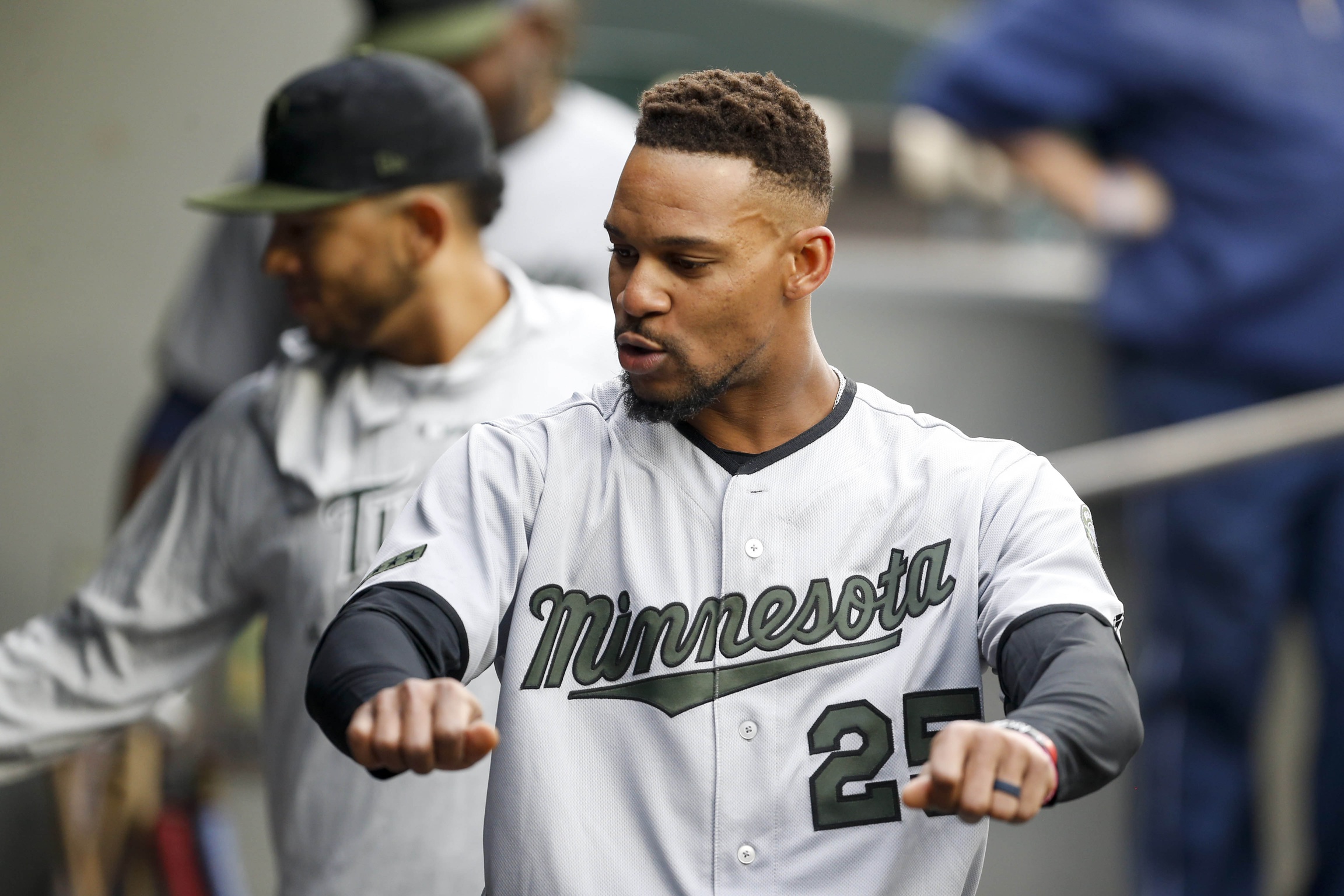 Some of these prognostications are positive, others are negative. Some represent my heartfelt beliefs, others are just plausible scenarios I wanted to put forth. The idea is to spark conversation and get your minds churning about the possibilities of this year's Twins team. Let's get to it. 1: Byron Buxton will be an All-Star despite a sub-.250 average at the break. Contact issues and sub par plate discipline continue to suppress his batting average, but a fired-up Buxton comes back swinging and running harder than ever. His regular presence on defensive highlight reels, plus a gaudy SB total and double-digit homers by the break, help earn him his first (but not last) All-Star appearance. 2: Miguel Sano will strike out 200 times. The only thing making this a hot take is Sano getting enough plate appearances to reach the mark. If he strikes out at his typical 36% rate, the slugger will need about 550 plate appearances to eclipse 200 Ks, a feat achieved only 13 times in MLB history. Up to this point Sano hasn't accrued even 500 PAs for the Twins in a season, but I think his offseason commitment pays off and keeps him on the field, where his profile as an all-or-nothing hitter becomes more pronounced. 3: Fernando Romero will end the year with an iron grip on the closer role. He won't be awarded the gig from the start, as his manager leans toward more experienced options out of camp, but Romero's ferocious stuff and demeanor out of the bullpen help him quickly emerge in the late innings. After a few others scuffle in the ninth, Romero gets his shot and develops a rep as a lights-out bulldog. 4: Lewis Thorpe will make 10-plus starts (or "primaries") for the Twins. Shifting Romero and Adalberto Mejia to the bullpen leaves the Twins short on rotation depth. That leads to guys like Kohl Stewart, Stephen Gonsalves and Zack Littell getting overexposed, but Thorpe is the one who keeps earning more chances, in large part because he comes in and pounds the zone. 5: Jake Cave will endure a nightmarish sophomore slump. I think Cave has a nice career ahead of him, but he looks like the classic regression candidate coming off an outstanding rookie campaign. His performance was propped up by a .363 BABIP, and nearly one out of four fly balls clearing the fence. In 2019, pitchers adjust and Cave's contact problems (33% K-rate in 2018) come to a head. He spends more time in Rochester than Minnesota. But as a silver lining, this creates opportunity for LaMonte Wade or Michael Reed. 6: Rocco Baldelli will be a top three finisher for AL Manager of the Year. In his first year at the helm, Baldelli sees the Twins add several wins, contending with Cleveland in the division up until the very end. The team's improved morale and looser play under the first-year skipper creates plenty of buzz, while his sharpness and engaging manner endear him to the ball writers that vote on MOTY. 7: The soft underbelly of the bullpen will be a crippling weakness early on. Although the unit's back-end proves strong with a high-powered trio of Romero, Trevor May and Taylor Rogers, the rest of the relief corps struggles routinely. Injuries and lingering performance issues lead to turmoil in the middle innings for much of the first half. 8: The Twins will acquire two significant arms during the course of the season. Despite the bullpen stumbles, Minnesota hangs around .500 for the first few months, keeping pace with a slow-starting Cleveland team in the Central. Having preserved trade capital and financial flexibility during a quiet offseason, the front office strikes aggressively to acquire a big-name reliever well ahead of the deadline. Then, in late July, they acquire a high-caliber starter with multiple years of control. 9: Alex Kirilloff will debut for the Twins in September. He spends most of his summer tearing it up in Double-A, and in the final month, Kirilloff joins the Twins – not just for the experience, a la Max Kepler in 2015, but to help out. The 21-year-old appears frequently throughout the final month as the Twins push fiercely to overcome the Indians but ultimately come up a bit short. ~~~ There you have it. If you feel like I've spoiled any surprises for the coming season, take heart in knowing that my predictions are pretty much always wrong. Though I'd bet good money that several of these things do in fact happen. To close out, I'll leave you with some of my favorite fan-submitted takes from Twitter. Chime in with your own in the comments section! https://twitter.com/LukeRietjens/status/1094695516489895937
 -
Article: Report: Twins, Kepler Finalizing Extension
Nick Nelson replied to Seth Stohs's topic in Twins Daily Front Page News
Sounds like the Twins enticed Kepler to sign with a big up-front salary boost. IMO that's exactly the right approach -- take advantage of your present spending flexibility to front-load extensions and maintain cost control down the line. Those first few years of FA could turn out to be a crazy bargain.
