



Nick Nelson
-
Posts
8,327 -
Joined
-
Last visited
-
Days Won
56
Content Type
Profiles
News
Minnesota Twins Videos
2026 Minnesota Twins Top Prospects Ranking
2022 Minnesota Twins Draft Picks
Minnesota Twins Free Agent & Trade Rumors, Notes, & Tidbits
Guides & Resources
2023 Minnesota Twins Draft Picks
The Minnesota Twins Players Project
2024 Minnesota Twins Draft Picks
2025 Minnesota Twins Draft Pick Tracker
2026 Minnesota Twins Draft Tracker: Picks & Bonuses
Forums
Blogs
Events
Store
Downloads
Gallery
Everything posted by Nick Nelson
-
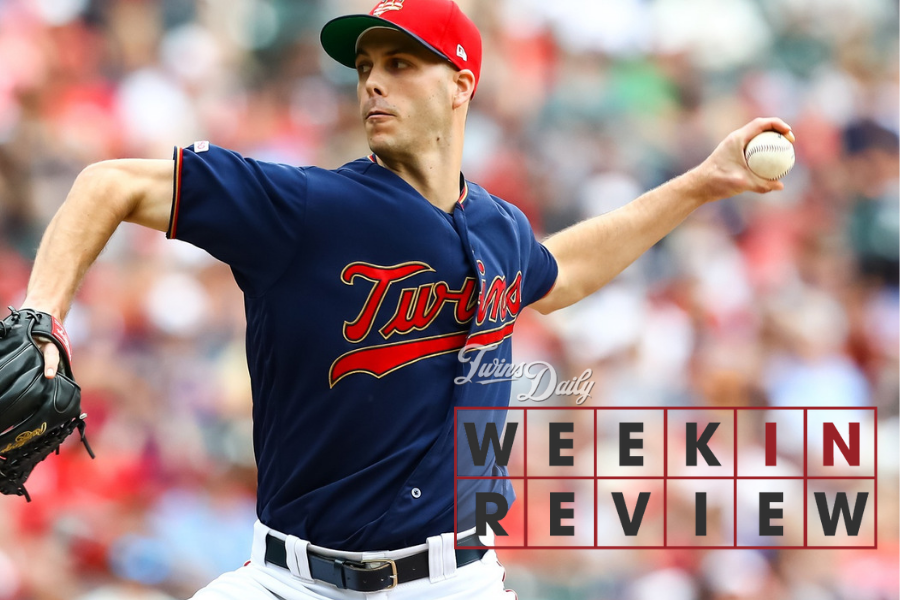 Weekly Snapshot: Mon, 7/1 through Sun, 7/7 *** Record Last Week: 3-3 (Overall: 56-33) Run Differential Last Week: +3 (Overall: +116) Standing: 1st Place in AL Central (5.5 GA) Willians Watch: Out Indefinitely Here's a rundown of roster moves from the past week to get you caught up: Lewis Thorpe was optioned to Triple-A on Monday following his exceptional start the previous day. Meanwhile, the Twins outrighted infielder Ronald Torreyes from the 40-man roster to make room for Adalberto Mejia's return from the 60-day Injured List. Andrew Vasquez was also outrighted from the 60-man three days later, but as of now it's unclear why. His spot remains vacant. Jake Odorizzi went on the IL after his Tuesday start in Oakland, having developed a blister on his right middle finger, and Zack Littell was recalled to replace him. Odorrizi's injury made room for Jose Berrios on the American League All-Star roster, his second consecutive nod. The Twins placed Blake Parker on paternity list Friday and called up Kohl Stewart, who tossed 1 1/3 spotless innings of relief that night and was sent back down on Sunday, replaced by Devin Smeltzer. LaMonte Wade Jr. had another very short stay with the Twins himself, called up to fill C.J. Cron's spot (right thumb inflammation) and then injuring his own thumb in the outfield on Saturday. Wade was replaced by Jake Cave, whose stay will also likely be very short, with Eddie Rosario due to return after the break. HIGHLIGHTS In a surprising twist, the Twins have completely flip-flopped their strengths over the past few weeks. While the offense and rotation have taken steps backward, the bullpen has emerged as a considerable positive. This development hasn't gained a ton of notice because of the team's generally pedestrian results of late – the value of a strong bullpen is negated to a degree when those other units aren't clicking – but Twins relievers deserve praise. Their impressive showings bode well for when the rest of the team hopefully gets back on track. Taylor Rogers, of course, continues to lead the way. He delivered his finest outing of the season on Saturday, striking out five in a spotless seven-out save, but the dominance was business-as-usual for Minnesota's bullpen ace. On the season Rogers now has a 1.82 ERA, 0.98 WHIP, and 51-to-7 K/BB ratio over 39 2/3 innings. He ranks fourth among all MLB relievers in Win Probability Added at 2.56 (trade target Will Smith of the Giants leads at 3.20). While he's been good all year long, Rogers has really kicked things up a notch in recent weeks. Since the start of June, he has a 1.23 ERA and is holding opponents to a .104/.140/.188 slash line. Although he won't be on the American League's roster for the All-Star Game on Tuesday, he easily could be and arguably should be. Rogers is one of the best in the game and continues to erase any shreds of doubt. Our guy Tom put together this awesome visual recapping his phenomenal outing against Texas: https://twitter.com/TFTwins/status/1147868293044330496 Several of Rogers' cohorts in the bullpen have been quietly putting together nice runs of their own, albeit not quite on the same level. Ryne Harper went through a rough patch in June but allowed only one run in three appearances to start July, and heads into the break on a high note after striking out four in 1 2/3 perfect innings Sunday. He holds a 2.92 ERA and 1.05 WHIP. Trevor May chipped in three scoreless frames with six strikeouts last week, and owns a 1.88 ERA over his past 15 appearances. Much has been made of May's control struggles this year, which is fair (he has issued seven walks in 14 innings even during the aforementioned stretch of excellence), but we might not be talking enough about how well he's limiting damage otherwise. On the season, opponents are hitting .204 with a .602 OPS against him, and he's allowed only two home runs. His soft contact % is highest among all Twins relievers with 15+ IP. Conversely, proneness to homers remains the biggest flaw in Tyler Duffey's game, and bit him hard on Saturday when he gave up a two-run blast to Willie Calhoun, briefly bringing Texas within one run. But he too has generally been an underrated contributor in the pen. Prior to that outing Duffey had a 2.57 ERA in 14 innings dating back to the start of June. Overall, opponents are batting .239 with a .288 OBP against him, and his 35-to-6 K/BB ratio in 28 1/3 innings is outstanding. He's not going to be a reliable setup man but he's a damn solid middle reliever. The same can be said for Matt Magill. He was in a bad way a month ago, but has gotten himself back on track admirably. Magill did struggle in Oakland last week, walking two and giving up a homer on Tuesday, but he's got a 2.25 ERA and .171 BAA in his past nine appearances. Littell, who's been shuttling back and forth between Triple-A and the majors, continues to make a very good impression during his opportunities with the Twins. Last week he made three scoreless appearances, and in fact he hasn't allowed a run in any of his seven MLB appearances outside of the eight-run clunker against Tampa in May that continues to plague his ERA. Smeltzer, who technically appeared as a reliever on Sunday when following opener Kyle Gibson in the second, delivered another very fine effort, tossing 4 1/3 innings of one-run ball with five strikeouts. In contrast with Mejia, who later gave up the game-losing homer amidst another ugly and erratic relief outing, Smeltzer's making a pretty strong case to stick around in that second lefty role. On offense, the best story right now without question is Miguel Sano, whose complete turnaround at the plate has been nothing short of astounding. Last week he picked up eight knocks – including two doubles, a triple, and a homer – but the most impressive aspect of his game continues to be the dramatically improved plate discipline. Sano struck out seven times in 25 plate appearances while drawing three walks. Dating back to the start of the White Sox series at the end of June, he's got an 8-to-5 K/BB ratio in eight games with one multi-strikeout performances (coming in Sunday's extra-inning contest). In the four series prior, he had eight multi-strikeout games and a 52% K-rate. With Mitch Garver also on top of his game (6-for-15 with a homer and double in three starts last week) and Jonathan Schoop finding himself again after a poor month of June (8-for-21 with two doubles and a MONSTER bomb), the Twins are boasting some real potency from the right side at the moment. Meanwhile, Luis Arraez continues to provide plenty of juice from the left. He went 10-for-28 and found himself in the starting lineup for every game. LOWLIGHTS The Twins offense, so hot over the first 10 weeks, has gone into a serious cooldown period over the past three. It was nice to see them seemingly break out of it with powerful showings on Friday and Saturday against Texas, but they went right back into their slumber on Sunday, scoring just once in 11 innings against a smattering of Rangers relievers. In the five series preceding this last one, Minnesota slashed just .252/.306/.408 over 16 games and averaged only 4.3 runs – a number that's worse than it seems when you consider there were two 18-inning games and another 12-inning affair mixed in. The Twins ranked 24th among MLB teams in both OPS and wOBA during that span. Friday's offensive outburst, one of the biggest all season was very refreshing. Still, a number of hitters will carry slumps (and/or injuries) into the midseason hiatus. Cron's recent struggles was most conspicuous; he was 2-for-13 last week, and hitting .156/.191/.200 in his past 10 games, before going on the IL with right thumb inflammation on Saturday. Twins coaches said they noticed the ailment affecting his swing, so it might have something to do with the downturn. Leadoff man Max Kepler went 6-for-29 last week, and his decreased output has been kinda setting the tone for Minnesota's suppressed offense. Since the start of the Boston series in mid-June, he's batting just .212 with a .271 OBP over 18 games. Of course, in the 10 games prior to that sample, he was slugging 1.000, so we know what's lurking within him. Hopefully a few days off can get Kepler back into his zone at the plate. Another player who was key in driving the lineup's success over the first half, Jorge Polanco, has also been noticeably quieter of late. He's still finding plenty of ways to contribute – hitting two home runs last week and making a CRAZY tag on a stolen base Sunday – but he hasn't been piling up the hits like he was earlier and has fallen back several spots in the AL batting race. Polanco's last three-hit game came nearly a month ago, on June 11th, and since then his average has dropped from .341 to .312. Aside from his two jacks last week, he managed only four singles in 27 plate appearances, with no runs scored or RBIs. Hopefully his starting nod in Tuesday's All-Star Game will reinvigorate Polanco and get him rolling again, because he's a crucial cog. Speaking of the All-Star Game, we already knew Odorizzi probably wasn't going to pitch – he was due to pitch on Sunday, which would've made him unavailable – but now it's official because he was placed on the Injured List after his latest start, which ended in a grand slam that might've had something to do with the blister he was pitching through. It'd be nice if we could attribute the totality of Odorizzi's recent struggles – he has a 7.85 ERA with six home runs allowed in his past four turns – to the finger issue, but more likely we're seeing some simple regression to the mean. The right-hander's minuscule home run rate was never going to be sustainable with the number of fly balls he allows, and the increased comfort level of opposing hitters suggests scouting reports have caught up to him a bit. Odorizzi figures to return as soon as his 10-day IL requirement is satisfied, meaning he'll ultimately miss just one start. Here's hoping the midsummer respite does him some good. TRENDING STORYLINE Cleveland is poised to make its stand. Staring up from 11 games out of first place as recently as June 15th, they've taken advantage of Minnesota's lapses to gain 5 1/2 games in the standings. Next, they'll host the Twins for a three-game series coming out of the break, and they follow with easy assignments against Detroit, Kansas City (twice), and Toronto leading up the trade deadline. Meanwhile, the Twins face a much tougher slate over the same span. After leaving Cleveland, they'll get a string of nine games versus the Mets, Athletics and Yankees before things ease up again. Can they maintain a solid buffer in the AL Central over the latter half of July, or will the Indians thrust themselves right back into the thick of this race? With the deadline bearing down, this is an absolutely critical period. DOWN ON THE FARM His true offensive upside was in question after a brutal introduction to Triple-A last year, but Nick Gordon is reaffirming his top prospect status in the 2019 follow-up for Rochester. He collected at least one hit in all seven of his games last week, finishing 12-for-29 (.413) with five doubles, a triple, and eight RBIs. Overall, the 23-year-old is sporting a .792 OPS with 21 doubles and 12 steals on 15 attempts through 49 games. Interestingly, Gordon has been splitting time evenly between second and shortstop recently after playing predominantly at short in the early going. He's getting close to big-league ready, but it's hard to see how he'll figure into the club's plans with Arraez emerging to stake a strong claim on Minnesota's future at second base. Aside from Gordon's standout play, and a few other strong performances in the minors, the biggest news for the Twins system last week was a high-profile addition: outfielder Emmanuel Rodriguez, a 16-year-old out of the Dominican Republic inked to a $2.5 million contract on Tuesday. Jesse Sanchez of MLB.com opines that the lefty swinger, who ranks eighth in the website's ranking of international prospects, could be "the next Eddie Rosario." LOOKING AHEAD On Tuesday, Polanco will start for the AL at shortstop in the All-Star Game and Berrios will probably make an appearance. The rest of the Twins will enjoy their four-day respite before heading to Cleveland for a critical series. Buckle up for a thrilling second half. TUESDAY 7/8 THROUGH THURSDAY 7/11: All-Star Break FRIDAY, 7/12: TWINS @ INDIANS SATURDAY, 7/13: TWINS @ INDIANS SUNDAY, 7/14: TWINS @ INDIANS Catch Up On Twins Daily Game Recaps Game 84 | OAK 8, MIN 6: Former Twins Have A Grand Night for Oakland Game 85 | MIN 4, OAK 3: Twins Refuse to Lose Three in a Row Game 86 | OAK 7, MIN 2: Twins Drop Independence Day Rubber Match in Oakland Game 87 | MIN 15, TEX 6: Offense Erupts and Perez Faces Former Team Game 89 | MIN 7, TEX 4: Pineda, Rogers Lead Twins Over Rangers Game 90 | TEX 4, MIN 1: Quiet Bats Can’t Back Up Great Pitching
 -
 While the first half of the season has gone swimmingly for Minnesota's big-league club, things were less rosy in the minors. The highest end of the prospect pool has been plagued by injuries, stagnation, and regression. How much do you weigh these developments, spanning only a few months? And conversely, how much do you let impressive short-term showings from some players lower on the list bolster their rankings? There was significant dissent around these matters on the ol' Twins Daily prospect editorial board, which manifested in our midseason rankings over the past couple weeks. But the aggregated list you'll find below is, I think, a reasonable snapshot of where things stand heading into the second half.Twins Daily's Midseason 2019 Top 40 Prospects: 40. Sean Poppen, RHP 39. Zander Wiel, OF 38. Bailey Ober, RHP 37. Kohl Stewart, RHP 36. Gabriel Maciel, OF 35. Jaylin Davis, OF 34. Cole Sands, RHP 33. Tyler Wells, RHP 32. Griffin Jax, RHP 31. LaMonte Wade Jr., OF 30. Lewin Diaz, 1B 29. Devin Smeltzer, LHP 28. Matt Canterino, LHP 27. Luke Raley, OF 26. Gilberto Celestino, OF 25. Yunior Severino, IF 24. Edwar Colina, RHP 23. Jose Miranda, IF 22. Zack Littell, RHP 21. Stephen Gonsalves, LHP 20. Travis Blankenhorn, IF 19. Misael Urbina, OF 18. Jorge Alcala, RHP 17. Akil Baddoo, OF 16. Ben Rortvedt, C 15. Matt Wallner, OF 14. Luis Arraez, IF 13. Ryan Jeffers, C 12. Nick Gordon, SS 11. Lewis Thorpe, LHP 10. Blayne Enlow, RHP 9. Jhoan Duran, RHP 8. Brent Rooker, OF 7. Keoni Cavaco, IF 6. Jordan Balazovic, RHP 5. Wander Javier, SS 4. Trevor Larnach, OF 3. Brusdar Graterol, RHP 2. Alex Kirilloff, OF 1. Royce Lewis, SS TOP 3 LOCKED IN Let's be honest, it hasn't been an especially encouraging first half for any of Minnesota's vaunted top three prospects. Royce Lewis has struggled to find any kind of offensive rhythm at the plate, plagued by long slumps and major lapses in plate discipline. Alex Kirilloff has been bothered by lingering wrist issues, and (perhaps not unrelated) his bat has been far less potent. Kirilloff has managed just two home runs through 41 games with a .749 OPS at Pensacola (though he has been heating up lately). Brusdar Graterol was off to a spectacular start in Double-A, but hasn't pitched in six weeks due to a shoulder impingement, and his return doesn't appear imminent. Having said all that, none of these three budged from our preseason rankings, for multiple reasons: 1: They had all built up enough equity through past performance that their positions are quite solid. 2: All three are VERY young for their respective levels, facing much older and more experienced competition. (As for Graterol, who dominated his elevated competition, there's no particular reason to panic about this one injury, although it's obviously concerning.) 3: No one behind them quite made a strong enough case to leapfrog into the top three, although – as we'll now cover – there are plenty of up-and-comers in the system. GOING UP Florida is more than just a steamy summer wedding destination. It's also where the mercury's rising in the Twins' system. The biggest upward movement in our rankings was Jordan Balazovic, who was unranked in our preseason top 20 and now lands in the No. 6 spot. I noted back then we might end up looking silly for not having the big Fort Myers righty on our list, and now we sure do. We've corrected our error by vaulting Balazovic to his rightful place as the organization's second-best pitching prospect. The former fifth-round draft pick has been divine at two levels of A-ball this year, posting an incredible 91-to-19 K/BB ratio in 66 innings as a 20-year-old. Travis Blankenhorn (No. 20) and Lewin Diaz (No. 30) also caught fire in southwest Florida before graduating to Pensacola, where both continue to rake. Blankenhorn and Diaz were former fixtures in the TD top prospect rankings before fading in recent years. Their resurgences are good reminders not to give up on young talent. Speaking of underrated young talent, Luis Arraez jumped into the Top 20 (at No. 14) after failing to make the preseason cut. He appeared as an honorable mention, labeled a "hit machine." GOING DOWN For the most part, our Top 20 remained intact with little movement, aside from a few guys bumped by new arrivals. One significant dropoff came from Akil Baddoo, who slid from No. 10 to No. 17. The athletic outfielder slashed .214/.290/.393 with a decline in his signature walk rate over 29 games at Fort Myers before succumbing to Tommy John surgery, which will keep him out into next year. We still have plenty of hope for the 20-year-old, but it's impossible to deny the toll this takes on his outlook and timeline. Yunior Severino is down 10 spots from No. 15 to No. 25, as a broken thumb has prevented him from being able to show anything. LaMonte Wade Jr. dropped from No. 18 to No. 31 while failing to show any pop at Triple-A. Stephen Gonsalves fell from No. 12 to No. 21, limited by arm problems to two total innings. Gilberto Celestino dropped 10 spots from his placement at No. 16 in our preseason rankings. The toolsy young center fielder hasn't adjusted well to competition in full-season ball, posting a .631 OPS thus far at Cedar Rapids. His lack of emergence hurts in combination with the languishing Jorge Alcala, who curiously moved up a spot to No. 18 despite posting a 5.81 ERA and 1.51 WHIP for Pensacola. Clearly, there's still belief in that big arm. The Twins would love to see some progress from him and/or Celestino in the second half, as they watch Ryan Pressly – whom they traded him for the duo last summer – tear it up in the Astros bullpen. Pressly was named to the All-Star team over the weekend. STRONG RETURNS The Pressly deal isn't looking great right now. No two ways about it. However, the Twins appear to have done well in their other sell moves at the 2018 deadline. Jhoan Duran, acquired in the Eduardo Escobar trade, finds himself at No. 9 and has been untouchable for Florida State League hitters in his last five starts (30 IP, 1.80 ERA, 45-12 K/BB). He's keeping opponents off the board like a goaltender in soccer. Gabriel Maciel, who came over alongside Duran, is at No. 36, having batted .305 with a .392 OBP between two levels of A-ball. Luke Raley and Devin Smeltzer, who came over from the Dodgers in exchange for three crummy months of Brian Dozier, both made the Top 30, and Smeltzer of course had a very nice MLB debut in May. NEWCOMERS Minnesota's top three selections in last month's draft all made entry. Highest, of course, is first-rounder Keoni Cavaco, whose massive upside compelled us to slot him No. 7, above the excelling Brent Rooker and Duran. Outfielder (and local product) Matt Wallner slides in at No. 15, and right-hander Matt Canterino – the Rice University right-hander who became the team's first pitcher selected – claims a spot at No. 28. DAZZLING DEBUTS We saw two members of this Top 20 debut in the first half: Lewis Thorpe (No. 11) fired five innings of two-run ball on Sunday, and Arraez (No. 14) is batting .411 as a rookie in the big leagues. Smeltzer (No. 29) also had an excellent debut. Wade Jr. (No. 31) and Sean Poppen (No. 40) made brief Twins appearances as well. It's promising to see so many players from outside the Top 10 transitioning smoothly to the big leagues, and speaks well to the development system in place. The best is yet to come. On that note, who will be the next player from this Top 40 list to make his major-league debut? I welcome your guesses in the comments. Smart money right now is on Rooker, who is mashing to the tune of a .980 OPS at Triple-A (.350/.511/.641 since the start of June), and unleashed this ridiculous bomb the other night: He'll fit right in. Click here to view the article
- 50 replies
-
- 5
-

-
- royce lewis
- alex kirilloff
- (and 3 more)
-
 Twins Daily's Midseason 2019 Top 40 Prospects: 40. Sean Poppen, RHP 39. Zander Wiel, OF 38. Bailey Ober, RHP 37. Kohl Stewart, RHP 36. Gabriel Maciel, OF 35. Jaylin Davis, OF 34. Cole Sands, RHP 33. Tyler Wells, RHP 32. Griffin Jax, RHP 31. LaMonte Wade Jr., OF 30. Lewin Diaz, 1B 29. Devin Smeltzer, LHP 28. Matt Canterino, LHP 27. Luke Raley, OF 26. Gilberto Celestino, OF 25. Yunior Severino, IF 24. Edwar Colina, RHP 23. Jose Miranda, IF 22. Zack Littell, RHP 21. Stephen Gonsalves, LHP 20. Travis Blankenhorn, IF 19. Misael Urbina, OF 18. Jorge Alcala, RHP 17. Akil Baddoo, OF 16. Ben Rortvedt, C 15. Matt Wallner, OF 14. Luis Arraez, IF 13. Ryan Jeffers, C 12. Nick Gordon, SS 11. Lewis Thorpe, LHP 10. Blayne Enlow, RHP 9. Jhoan Duran, RHP 8. Brent Rooker, OF 7. Keoni Cavaco, IF 6. Jordan Balazovic, RHP 5. Wander Javier, SS 4. Trevor Larnach, OF 3. Brusdar Graterol, RHP 2. Alex Kirilloff, OF 1. Royce Lewis, SS TOP 3 LOCKED IN Let's be honest, it hasn't been an especially encouraging first half for any of Minnesota's vaunted top three prospects. Royce Lewis has struggled to find any kind of offensive rhythm at the plate, plagued by long slumps and major lapses in plate discipline. Alex Kirilloff has been bothered by lingering wrist issues, and (perhaps not unrelated) his bat has been far less potent. Kirilloff has managed just two home runs through 41 games with a .749 OPS at Pensacola (though he has been heating up lately). Brusdar Graterol was off to a spectacular start in Double-A, but hasn't pitched in six weeks due to a shoulder impingement, and his return doesn't appear imminent. Having said all that, none of these three budged from our preseason rankings, for multiple reasons: 1: They had all built up enough equity through past performance that their positions are quite solid. 2: All three are VERY young for their respective levels, facing much older and more experienced competition. (As for Graterol, who dominated his elevated competition, there's no particular reason to panic about this one injury, although it's obviously concerning.) 3: No one behind them quite made a strong enough case to leapfrog into the top three, although – as we'll now cover – there are plenty of up-and-comers in the system. GOING UP Florida is more than just a steamy summer wedding destination. It's also where the mercury's rising in the Twins' system. The biggest upward movement in our rankings was Jordan Balazovic, who was unranked in our preseason top 20 and now lands in the No. 6 spot. I noted back then we might end up looking silly for not having the big Fort Myers righty on our list, and now we sure do. We've corrected our error by vaulting Balazovic to his rightful place as the organization's second-best pitching prospect. The former fifth-round draft pick has been divine at two levels of A-ball this year, posting an incredible 91-to-19 K/BB ratio in 66 innings as a 20-year-old. Travis Blankenhorn (No. 20) and Lewin Diaz (No. 30) also caught fire in southwest Florida before graduating to Pensacola, where both continue to rake. Blankenhorn and Diaz were former fixtures in the TD top prospect rankings before fading in recent years. Their resurgences are good reminders not to give up on young talent. Speaking of underrated young talent, Luis Arraez jumped into the Top 20 (at No. 14) after failing to make the preseason cut. He appeared as an honorable mention, labeled a "hit machine." GOING DOWN For the most part, our Top 20 remained intact with little movement, aside from a few guys bumped by new arrivals. One significant dropoff came from Akil Baddoo, who slid from No. 10 to No. 17. The athletic outfielder slashed .214/.290/.393 with a decline in his signature walk rate over 29 games at Fort Myers before succumbing to Tommy John surgery, which will keep him out into next year. We still have plenty of hope for the 20-year-old, but it's impossible to deny the toll this takes on his outlook and timeline. Yunior Severino is down 10 spots from No. 15 to No. 25, as a broken thumb has prevented him from being able to show anything. LaMonte Wade Jr. dropped from No. 18 to No. 31 while failing to show any pop at Triple-A. Stephen Gonsalves fell from No. 12 to No. 21, limited by arm problems to two total innings. Gilberto Celestino dropped 10 spots from his placement at No. 16 in our preseason rankings. The toolsy young center fielder hasn't adjusted well to competition in full-season ball, posting a .631 OPS thus far at Cedar Rapids. His lack of emergence hurts in combination with the languishing Jorge Alcala, who curiously moved up a spot to No. 18 despite posting a 5.81 ERA and 1.51 WHIP for Pensacola. Clearly, there's still belief in that big arm. The Twins would love to see some progress from him and/or Celestino in the second half, as they watch Ryan Pressly – whom they traded him for the duo last summer – tear it up in the Astros bullpen. Pressly was named to the All-Star team over the weekend. STRONG RETURNS The Pressly deal isn't looking great right now. No two ways about it. However, the Twins appear to have done well in their other sell moves at the 2018 deadline. Jhoan Duran, acquired in the Eduardo Escobar trade, finds himself at No. 9 and has been untouchable for Florida State League hitters in his last five starts (30 IP, 1.80 ERA, 45-12 K/BB). He's keeping opponents off the board like a goaltender in soccer. Gabriel Maciel, who came over alongside Duran, is at No. 36, having batted .305 with a .392 OBP between two levels of A-ball. Luke Raley and Devin Smeltzer, who came over from the Dodgers in exchange for three crummy months of Brian Dozier, both made the Top 30, and Smeltzer of course had a very nice MLB debut in May. NEWCOMERS Minnesota's top three selections in last month's draft all made entry. Highest, of course, is first-rounder Keoni Cavaco, whose massive upside compelled us to slot him No. 7, above the excelling Brent Rooker and Duran. Outfielder (and local product) Matt Wallner slides in at No. 15, and right-hander Matt Canterino – the Rice University right-hander who became the team's first pitcher selected – claims a spot at No. 28. DAZZLING DEBUTS We saw two members of this Top 20 debut in the first half: Lewis Thorpe (No. 11) fired five innings of two-run ball on Sunday, and Arraez (No. 14) is batting .411 as a rookie in the big leagues. Smeltzer (No. 29) also had an excellent debut. Wade Jr. (No. 31) and Sean Poppen (No. 40) made brief Twins appearances as well. It's promising to see so many players from outside the Top 10 transitioning smoothly to the big leagues, and speaks well to the development system in place. The best is yet to come. On that note, who will be the next player from this Top 40 list to make his major-league debut? I welcome your guesses in the comments. Smart money right now is on Rooker, who is mashing to the tune of a .980 OPS at Triple-A (.350/.511/.641 since the start of June), and unleashed this ridiculous bomb the other night: https://twitter.com/RocRedWings/status/1145885067048345600 He'll fit right in.
 -
Exactly one year ago, we were officially writing off the 2018 Twins in this very space: 'Following another week of tremendously uninspiring play,' I wrote, 'one need not look at postseason odds to reach an inescapable conclusion: This ship isn't sinking anymore; it's sunk.' Minnesota was 10 games below .500, eight games out of first place, and hopeless. This year's Twins team, on the other hand, eclipsed the season's halfway point over the weekend on a 104-win pace. So as we review a past week that wasn't exactly spotless, I think it's important to keep in mind how far we've come. Weekly Snapshot: Mon, 6/24 through Sun, 6/30 *** Record Last Week: 3-3 (Overall: 53-30) Run Differential Last Week: +6 (Overall: +113) Standing: 1st Place in AL Central (8.0 GA) Willians Watch: Back on the Injured List Willians Astudillo opened his week with a three-hit game that included this nifty catch in RF foul territory, but his hearty effort on that play proved costly. Astudillo went 0-for-4 the following night and was then placed on IL due to oblique soreness, apparently stemming from his run-in with the wall. The Twins also lost Eddie Rosario, who sprained his left ankle while turning first on Wednesday and will miss at least the next week. It's a shame because he was heating up again – 6-for-7 through his first two games last week – and his visible frustration upon sustaining the injury appeared to reflect this. It wasn't all bad news, though. Rosario is a big loss but it doesn't appear he'll be gone long (in fact, the team hesitated to even place him on the IL). The Twins crucially got back Byron Buxton and Marwin Gonzalez, who were both activated on Saturday, and Ehire Adrianza, activated a day earlier. Some other noteworthy roster moves from last week: LaMonte Wade Jr. was called up briefly in the middle of the week with the Twins needing extra bodies in the outfield, and started on Friday (he reached once in two PAs, on an HBP, before being replaced by a pinch hitter in the seventh), but he was optioned alongside Jake Cave in order to make room for Buxton and Gonzalez.Zack Littell was also optioned back to Triple-A, though not through any fault of his own (he threw four scoreless innings during his latest stint). The Twins simply needed more arms after burning through everyone in an 18-inning marathon loss to Tampa on Thursday. Prospect Lewis Thorpe was called up to replace Littell, and you can read about his sterling MLB debut in the Highlights below.The Twins signed 36-year-old free agent reliever Carlos Torres, who'd recently been designated for assignment by Detroit, to a minor-league deal. He reported to Class-AAA Rochester. They also returned infielder Ronald Torreyes from the restircted list, making room on the 40-man roster by DFA-ing lefty reliever Gabriel Moya, who cleared waivers and returned to Rochester.HIGHLIGHTS On Friday, fan-selected starters for the All-Star teams were officially revealed, and we learned the American League lineup will feature one Twin: Jorge Polanco at shortstop. He won't be alone in representing the Twins, but Polanco's a fitting frontman, leading the team in WAR thanks to his steady work at shortstop and tremendously consistent production atop the lineup. Polanco had a fairly pedestrian week at the plate (7-for-27) but he also drew three walks and scored seven runs. The fact this counts as a down week for him says it all. Joining him on the All-Star roster is Jake Odorizzi, who surrendered two bombs on Wednesday against Tampa and has generally looked shakier in recent starts, but is still pacing the American Leagues with 10 while holding down a shiny 2.73 ERA. That's it for Twins All-Stars, for now. It seems pretty outrageous for a team that leads baseball in scoring and OPS to have only one representative among the AL's starters or reserves, but here we are. The good news is that we'll certainly see a few more players added to the roster, as a result of injuries and withdrawals, and the Twins have plenty of players near the top of the queue: Rosario, Max Kepler, Jose Berrios, and Taylor Rogers, to name a few. Missed time prevented Nelson Cruz and Mitch Garver from getting legitimate consideration as All-Stars, but they've both made strong cases while on the field. Last week was no different; Cruz went 10-for-23 with three home runs and 10 RBIs games, while Garver delivered an impressive three-hit game against Tampa on Tuesday, launching his 12th home run. It was an interesting week for Miguel Sano. In three games at home against Tampa, he went 1-for-13 with six strikeouts, extending a brutal slump that dated back to mid-June. Then, once he arrived in Chicago, he snapped right back into the dominant form we saw initially upon his return, blasting three homers and plating six runs in two starts, then entering with a clutch pinch-hit RBI single on Sunday. He struck out only once in 10 plate appearances, with two walks. Certainly an encouraging rebound, and one that was evidently driven by some mechanical changes involving hand positioning. Parker had written about this very issue last week, at the height of Sano's struggles. Credit goes to Miguel and Minnesota's hitting coaches for actualizing these adjustments; we'll see if they stick. As a final note on the offense, hitting machine Luis Arraez continued to do his thing, collecting six hits in 17 at-bats. The rookie's average stands at .426. On Sunday, Thorpe was able to make his first major-league start, on account of Kyle Gibson throwing a relief inning during Thursday's 18-inning affair, and thus having his scheduled turn pushed back to Wednesday. The young left-hander was absolutely sensational. Over his five innings, he allowed only two runs (both coming on an Yoan Moncada home run) while notching seven strikeouts and 11 swinging strikes. He continually worked ahead in counts and showed a stunning ability to execute while undoubtedly battling some serious nerves. Like Devin Smeltzer before him, Thorpe solidified himself as a quality rookie depth piece for the rotation. Elsewhere in that unit, Michael Pineda took another nice step, hurling six innings of one-run ball against the White Sox on Friday. The big righty struck out eight while walking one. He finishes June with a 25-to-4 K/BB ratio and 3.58 ERA. Most importantly: he quietly allowed just one home run, after coughing up 14 in his first 11 starts. Martin Perez provided his own promising flash from the back half of the starting corps, putting forth his best performance since early May against the Rays on Thursday. In seven innings he allowed just two runs with six strikeouts and one walk. Notably, per Brooks Baseball data, his improved outcome coincided with a return to leaning on the cutter, along with a reduction in sinker usage: Download attachment: perezpitchmovement.png In the bullpen, Taylor Rogers once again starred, appearing twice and retiring all seven batters faced. He wraps June with an 11-to-1 K/BB ratio and only four hits allowed in 11 1/3 innings, continuing to reaffirm himself as one of the game's best relievers. And credit is also due to Matt Magill, who himself tossed five scoreless frames after a serious rough patch. LOWLIGHTS While Garver continues to be an offensive force, his catching counterpart Jason Castro has seen his early-season success dwindle. Last week he managed three singles in 12 at-bats, and for the month of June he slashed just .191/.240/.277 with one homer and one double. He saw his OPS plummet by 150 points as a result. Now, Castro's current mark (.782) remains plenty respectable for a catcher, but his regression has dashed the notion of two elite offensive players sharing time behind the plate for Minnesota. C.J. Cron's All-Star campaign at first base fell short, and meanwhile, his lengthy hot streak faded into a major cooldown. After putting up a .963 OPS with eight home runs in May, Cron followed with stellar production through the first three weeks of June. But last week, while starting every game, he went just 5-for-28 with seven strikeouts, zero walks, and zero extra-base hits. Also finding himself in a bit of a drought is Jonathan Schoop, who went 4-for-24 with eight strikeouts on the week. A few downspells here and there are to be expected. The Twins offense in general has come back to Earth in recent weeks, but remains a powerhouse to be reckoned with. As long as they continue to have multiple guys clicking simultaneously, as they have at all times, Minnesota's going to be okay in the run-scoring department. Blake Parker seems to have his swing-and-miss stuff back, which is a plus – after inducing just six whiffs through his first eight June appearances (4% SwStr), Parker has since induced 10 in his past four appearances (14% SwStr). Last week he tallied four strikeouts in 2 2/3 innings of work, but it still wasn't pretty as he yielded five hits, including his fifth home run of the month. Two years ago, when at his best, Parker allowed only seven home runs total. TRENDING STORYLINE We're still waiting to see how the Twins will address their needy bullpen through high-impact acquisitions (a task that will be harder than many wish to believe), but for now it's about closely tracking how the team's lower-scale additions and internal options are progressing. Torres coughed up a two-run homer in his debut for the Red Wings on Thursday. Cody Allen debuted at Single-A for the Miracle on Saturday, tossing a clean scoreless inning with a strikeout, but he reportedly topped out at 91 MPH. (Two years ago, when he was last an outstanding MLB reliever, Allen averaged 94.3 on his fastball.) Fernando Romero and Trevor Hildenberger are both on IL at Rochester. His may not have the same name recognition as those above, nor is he on the 40-man roster as of yet, but Cody Stashak is really emerging as a name to watch. After he posted a 40-to-5 K/BB ratio in Pensacola over the first two months, Minnesota looked past his 4.76 ERA and promoted the 25-year-old righty to Triple-A and he has responded by decimating the highest level of minor-league competition. After striking out six in 2 2/3 innings last week, he now has a 19-to-1 K/BB ratio and 2.25 ERA through 12 innings with Rochester. I suspect we'll get a look at him in the bigs before the summer's over. DOWN ON THE FARM Acquired from the Yankees during the offseason, Torreyes spent much of the first half away from the team for reasons that weren't made public. He was activated from the restricted list last week and after a brief stint at Fort Myers, returned to Rochester with a bang on Friday, launching two home runs against Pawtucket. Torreyes followed with a three-hit game on Saturday and delivered a two-run single in his AB on Sunday. He adds another piece of credible depth to Minnesota's infield picture, albeit one made less critical by the play of Adrianza and Arraez. LOOKING AHEAD Hate those late-night West Coast games that linger past midnight on weekdays? Then I've got good news for you: the Twins will be playing their last such set in Oakland during the first half of this week. You might find it easier to stay up and watch the second game on Wednesday, with a holiday and afternoon contest coming on Thursday. Afterwards, the Twins finish out the unofficial first half with three home tilts against Texas. TUESDAY, 7/2: TWINS @ ATHLETICS – RHP Jake Odorizzi v. RHP Daniel Mengden WEDNESDAY, 7/3: TWINS @ ATHLETICS – RHP Kyle Gibson v. RHP Tanner Anderson THURSDAY, 7/4: TWINS @ ATHLETICS – LHP Martin Perez v. RHP Mike Fiers FRIDAY, 7/5: RANGERS @ TWINS – RHP Jesse Chavez v. RHP Jose Berrios SATURDAY, 7/6: RANGERS @ TWINS – LHP Mike Minor v. RHP Michael Pineda SUNDAY, 7/7: RANGERS @ TWINS – RHP Ariel Jurado v. RHP Jake Odorizzi Catch Up On Twins Daily Game Recaps Game 78 | MIN 9, TB 4: Twins Shell Blake SnellGame 79 | MIN 6, TB 4: Cruz Bails Out Another Bunting BlunderGame 80 | TB 5, MIN 2: Twins Can’t Complete Sweep in 18-Inning DuelGame 81 | CHW 6, MIN 4: Sanó Homers Twice, Twins Fall Short in ChicagoGame 82 | MIN 10, CHW 3: Twins Hit 5 Homers, Kepler Reaches New Career HighGame 83 | CHW 4, MIN 3: Twins Lose Rubber Match to White Sox After Another Long Day of Baseball Click here to view the article
-
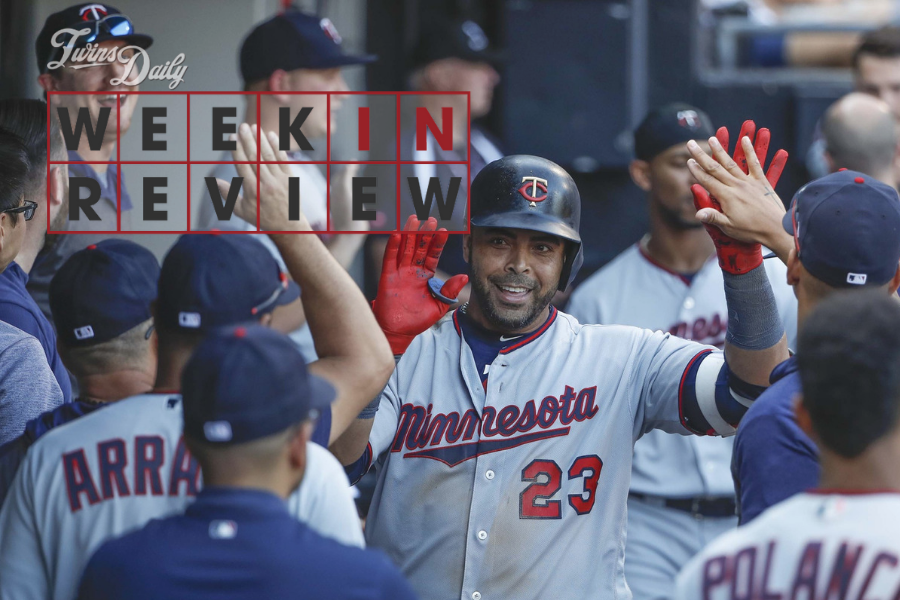 Weekly Snapshot: Mon, 6/24 through Sun, 6/30 *** Record Last Week: 3-3 (Overall: 53-30) Run Differential Last Week: +6 (Overall: +113) Standing: 1st Place in AL Central (8.0 GA) Willians Watch: Back on the Injured List Willians Astudillo opened his week with a three-hit game that included this nifty catch in RF foul territory, but his hearty effort on that play proved costly. Astudillo went 0-for-4 the following night and was then placed on IL due to oblique soreness, apparently stemming from his run-in with the wall. The Twins also lost Eddie Rosario, who sprained his left ankle while turning first on Wednesday and will miss at least the next week. It's a shame because he was heating up again – 6-for-7 through his first two games last week – and his visible frustration upon sustaining the injury appeared to reflect this. It wasn't all bad news, though. Rosario is a big loss but it doesn't appear he'll be gone long (in fact, the team hesitated to even place him on the IL). The Twins crucially got back Byron Buxton and Marwin Gonzalez, who were both activated on Saturday, and Ehire Adrianza, activated a day earlier. Some other noteworthy roster moves from last week: LaMonte Wade Jr. was called up briefly in the middle of the week with the Twins needing extra bodies in the outfield, and started on Friday (he reached once in two PAs, on an HBP, before being replaced by a pinch hitter in the seventh), but he was optioned alongside Jake Cave in order to make room for Buxton and Gonzalez. Zack Littell was also optioned back to Triple-A, though not through any fault of his own (he threw four scoreless innings during his latest stint). The Twins simply needed more arms after burning through everyone in an 18-inning marathon loss to Tampa on Thursday. Prospect Lewis Thorpe was called up to replace Littell, and you can read about his sterling MLB debut in the Highlights below. The Twins signed 36-year-old free agent reliever Carlos Torres, who'd recently been designated for assignment by Detroit, to a minor-league deal. He reported to Class-AAA Rochester. They also returned infielder Ronald Torreyes from the restircted list, making room on the 40-man roster by DFA-ing lefty reliever Gabriel Moya, who cleared waivers and returned to Rochester. HIGHLIGHTS On Friday, fan-selected starters for the All-Star teams were officially revealed, and we learned the American League lineup will feature one Twin: Jorge Polanco at shortstop. He won't be alone in representing the Twins, but Polanco's a fitting frontman, leading the team in WAR thanks to his steady work at shortstop and tremendously consistent production atop the lineup. Polanco had a fairly pedestrian week at the plate (7-for-27) but he also drew three walks and scored seven runs. The fact this counts as a down week for him says it all. Joining him on the All-Star roster is Jake Odorizzi, who surrendered two bombs on Wednesday against Tampa and has generally looked shakier in recent starts, but is still pacing the American Leagues with 10 while holding down a shiny 2.73 ERA. That's it for Twins All-Stars, for now. It seems pretty outrageous for a team that leads baseball in scoring and OPS to have only one representative among the AL's starters or reserves, but here we are. https://twitter.com/MLB/status/1145452241148612614 The good news is that we'll certainly see a few more players added to the roster, as a result of injuries and withdrawals, and the Twins have plenty of players near the top of the queue: Rosario, Max Kepler, Jose Berrios, and Taylor Rogers, to name a few. Missed time prevented Nelson Cruz and Mitch Garver from getting legitimate consideration as All-Stars, but they've both made strong cases while on the field. Last week was no different; Cruz went 10-for-23 with three home runs and 10 RBIs games, while Garver delivered an impressive three-hit game against Tampa on Tuesday, launching his 12th home run. It was an interesting week for Miguel Sano. In three games at home against Tampa, he went 1-for-13 with six strikeouts, extending a brutal slump that dated back to mid-June. Then, once he arrived in Chicago, he snapped right back into the dominant form we saw initially upon his return, blasting three homers and plating six runs in two starts, then entering with a clutch pinch-hit RBI single on Sunday. He struck out only once in 10 plate appearances, with two walks. Certainly an encouraging rebound, and one that was evidently driven by some mechanical changes involving hand positioning. Parker had written about this very issue last week, at the height of Sano's struggles. Credit goes to Miguel and Minnesota's hitting coaches for actualizing these adjustments; we'll see if they stick. As a final note on the offense, hitting machine Luis Arraez continued to do his thing, collecting six hits in 17 at-bats. The rookie's average stands at .426. On Sunday, Thorpe was able to make his first major-league start, on account of Kyle Gibson throwing a relief inning during Thursday's 18-inning affair, and thus having his scheduled turn pushed back to Wednesday. The young left-hander was absolutely sensational. Over his five innings, he allowed only two runs (both coming on an Yoan Moncada home run) while notching seven strikeouts and 11 swinging strikes. He continually worked ahead in counts and showed a stunning ability to execute while undoubtedly battling some serious nerves. Like Devin Smeltzer before him, Thorpe solidified himself as a quality rookie depth piece for the rotation. Elsewhere in that unit, Michael Pineda took another nice step, hurling six innings of one-run ball against the White Sox on Friday. The big righty struck out eight while walking one. He finishes June with a 25-to-4 K/BB ratio and 3.58 ERA. Most importantly: he quietly allowed just one home run, after coughing up 14 in his first 11 starts. Martin Perez provided his own promising flash from the back half of the starting corps, putting forth his best performance since early May against the Rays on Thursday. In seven innings he allowed just two runs with six strikeouts and one walk. Notably, per Brooks Baseball data, his improved outcome coincided with a return to leaning on the cutter, along with a reduction in sinker usage: In the bullpen, Taylor Rogers once again starred, appearing twice and retiring all seven batters faced. He wraps June with an 11-to-1 K/BB ratio and only four hits allowed in 11 1/3 innings, continuing to reaffirm himself as one of the game's best relievers. And credit is also due to Matt Magill, who himself tossed five scoreless frames after a serious rough patch. LOWLIGHTS While Garver continues to be an offensive force, his catching counterpart Jason Castro has seen his early-season success dwindle. Last week he managed three singles in 12 at-bats, and for the month of June he slashed just .191/.240/.277 with one homer and one double. He saw his OPS plummet by 150 points as a result. Now, Castro's current mark (.782) remains plenty respectable for a catcher, but his regression has dashed the notion of two elite offensive players sharing time behind the plate for Minnesota. C.J. Cron's All-Star campaign at first base fell short, and meanwhile, his lengthy hot streak faded into a major cooldown. After putting up a .963 OPS with eight home runs in May, Cron followed with stellar production through the first three weeks of June. But last week, while starting every game, he went just 5-for-28 with seven strikeouts, zero walks, and zero extra-base hits. Also finding himself in a bit of a drought is Jonathan Schoop, who went 4-for-24 with eight strikeouts on the week. A few downspells here and there are to be expected. The Twins offense in general has come back to Earth in recent weeks, but remains a powerhouse to be reckoned with. As long as they continue to have multiple guys clicking simultaneously, as they have at all times, Minnesota's going to be okay in the run-scoring department. Blake Parker seems to have his swing-and-miss stuff back, which is a plus – after inducing just six whiffs through his first eight June appearances (4% SwStr), Parker has since induced 10 in his past four appearances (14% SwStr). Last week he tallied four strikeouts in 2 2/3 innings of work, but it still wasn't pretty as he yielded five hits, including his fifth home run of the month. Two years ago, when at his best, Parker allowed only seven home runs total. TRENDING STORYLINE We're still waiting to see how the Twins will address their needy bullpen through high-impact acquisitions (a task that will be harder than many wish to believe), but for now it's about closely tracking how the team's lower-scale additions and internal options are progressing. Torres coughed up a two-run homer in his debut for the Red Wings on Thursday. Cody Allen debuted at Single-A for the Miracle on Saturday, tossing a clean scoreless inning with a strikeout, but he reportedly topped out at 91 MPH. (Two years ago, when he was last an outstanding MLB reliever, Allen averaged 94.3 on his fastball.) Fernando Romero and Trevor Hildenberger are both on IL at Rochester. His may not have the same name recognition as those above, nor is he on the 40-man roster as of yet, but Cody Stashak is really emerging as a name to watch. After he posted a 40-to-5 K/BB ratio in Pensacola over the first two months, Minnesota looked past his 4.76 ERA and promoted the 25-year-old righty to Triple-A and he has responded by decimating the highest level of minor-league competition. After striking out six in 2 2/3 innings last week, he now has a 19-to-1 K/BB ratio and 2.25 ERA through 12 innings with Rochester. I suspect we'll get a look at him in the bigs before the summer's over. DOWN ON THE FARM Acquired from the Yankees during the offseason, Torreyes spent much of the first half away from the team for reasons that weren't made public. He was activated from the restricted list last week and after a brief stint at Fort Myers, returned to Rochester with a bang on Friday, launching two home runs against Pawtucket. Torreyes followed with a three-hit game on Saturday and delivered a two-run single in his AB on Sunday. He adds another piece of credible depth to Minnesota's infield picture, albeit one made less critical by the play of Adrianza and Arraez. LOOKING AHEAD Hate those late-night West Coast games that linger past midnight on weekdays? Then I've got good news for you: the Twins will be playing their last such set in Oakland during the first half of this week. You might find it easier to stay up and watch the second game on Wednesday, with a holiday and afternoon contest coming on Thursday. Afterwards, the Twins finish out the unofficial first half with three home tilts against Texas. TUESDAY, 7/2: TWINS @ ATHLETICS – RHP Jake Odorizzi v. RHP Daniel Mengden WEDNESDAY, 7/3: TWINS @ ATHLETICS – RHP Kyle Gibson v. RHP Tanner Anderson THURSDAY, 7/4: TWINS @ ATHLETICS – LHP Martin Perez v. RHP Mike Fiers FRIDAY, 7/5: RANGERS @ TWINS – RHP Jesse Chavez v. RHP Jose Berrios SATURDAY, 7/6: RANGERS @ TWINS – LHP Mike Minor v. RHP Michael Pineda SUNDAY, 7/7: RANGERS @ TWINS – RHP Ariel Jurado v. RHP Jake Odorizzi Catch Up On Twins Daily Game Recaps Game 78 | MIN 9, TB 4: Twins Shell Blake Snell Game 79 | MIN 6, TB 4: Cruz Bails Out Another Bunting Blunder Game 80 | TB 5, MIN 2: Twins Can’t Complete Sweep in 18-Inning Duel Game 81 | CHW 6, MIN 4: Sanó Homers Twice, Twins Fall Short in Chicago Game 82 | MIN 10, CHW 3: Twins Hit 5 Homers, Kepler Reaches New Career High Game 83 | CHW 4, MIN 3: Twins Lose Rubber Match to White Sox After Another Long Day of Baseball
 -
I'm about as critical of the Pressly trade as anyone -- I think it's easily the worst move this front office has made, period. But there's a part of me that wonders if they thought he was a really high injury risk, with the high velocity and extreme spin rates. Seems like that's been the logic in moving on from some other seemingly promising bullpen arms who have since been plagued by injury (Nick Burdi comes to mind). Anyway, if that was the motivation they've obviously been wrong about it so far. But I'd be a little more comfortable knowing that was part of their calculation, and they didn't just completely whiff on the player evaluation. As for Alcala, in light of the current discussion, I wonder if it's time to just move him to the bullpen and be done with the starting thing. Relief has always seemed like his eventual role anyway. He hasn't completed 6 innings in a start at AA this year and his results have been really underwhelming.
- 76 replies
-
- 5
-
-
- taylor rogers
- ryne harper
- (and 1 more)
-
Yes, but as mentioned, it took Rogers 3 years to develop into what he would eventually become. It takes some guys even longer. The earlier you can get a jump-start on these things the better. I'm just saying, what if Duffey came up and was immediately placed in full-time relief, preparing as such in spring training, etc? (He and May both were sort of in that weird ambiguous middle ground for a while.) They're all throwing in the upper '90s out of the pen, with the ability to blow people away. I didn't mean to conflate with established all-around dominance. It's just a massive transformation from how they looked as starters (esp Littell and Duffey)
- 76 replies
-
- 2
-
-
- taylor rogers
- ryne harper
- (and 1 more)
-
Are great relievers born? Made? Produced artificially in a laboratory somewhere deep in the Nevadan desert? We don't know the answer. If you think you do, you're probably wrong. Sorry to be so blunt, but that's just the nature of relief pitching. The Twins are living proof of its caprice and volatility. Which is why, as Minnesota embarks on a quest to improve its needy bullpen, they face a mighty challenge.Let's review the facts as they stand. The most intriguing pieces currently in the Twins' bullpen are: Taylor Rogers, formerly an 11th-round pick turned nondescript minor-league starter, who transitioned into relief duty immediately in the majors, and blossomed into a top-tier setup man over three short years.Ryne Harper, a former 37th-round pick who toiled in the minors for nine years before making the Twins out of camp this spring on a minor-league deal. He debuted as a 30-year-old rookie.Blake Parker, the team's biggest offseason bullpen splash. His smallish free agent contract as a castoff from the Angels was whittled down further after his physical. I hesitate to call him "intriguing" at this point, given his trendline, but overall he's gotten it done.Tyler Duffey, Trevor May, Zack Littell: All former middling prospects as starters, finding new gears as MLB relievers. Before you write off any of the three as flashes in the pan, or overachieving mediocrities, go back and read Rogers' blurb again. As I watch Duffey, May and Littell develop into lethal flamethrowers, I do wonder how differently their careers might have gone if the organization had committed to their role changes as quickly and decisively as with Rogers.With all due respect to Matt Magill and Mike Morin, I don't quite put either at the same level of faith as those above, but each one fits the narrative: discarded minor-league pitchers finding surprising success in the majors. Meanwhile, here are the pitchers conspicuously NOT contributing to the current campaign: Addison Reed, who signed the largest free agent reliever deal in franchise history 18 months ago. The Twins ate a good portion of it when they released him last month.Trevor Hildenberger, who was the team's most reliable bullpen arm for about a year before falling apart at the seams midway through 2018. He's currently on the injured list at Triple-A.Fernando Romero, the former top pitching prospect who's flamed out in multiple stints with the Twins this year, and hasn't looked a whole lot better in Triple-A.I know the common refrain on Romero – especially with the benefit of hindsight: "Why mess with him? They shoulda left him as a starter." But that ignores two things: 1) he wasn't throwing or holding up all that well as a starter, and 2) I mean, look at the examples of Duffey/May/Littell. There are certainly downsides to waffling and delaying. With Romero, it's an unaffordable luxury because he'll be out of options next spring. The malfunctions with all three of these players are largely driving the urgency to make improvements. But each of them, and Reed especially, epitomizes the reason that's a much taller order than many clamoring fans would like to believe. Anyone expressing certainty that Craig Kimbrel would've been a decisive upgrade is kidding themselves. Reed, like Kimbrel, generated less free agent demand than expected, given his backend pedigree, but he still had all the makings of a bullpen stud. He was younger and less weathered than Kimbrel. And in the early portion of his contract, Reed looked the part. But his drop-off was both rapid and ruthless. And the thing is, he's not alone. Reed is a somewhat extreme version of an all-too-common outcome. I just checked in on the top RP options listed in the latest Offseason Handbook, and there are vastly more busts than even moderately decent values. Kimbrel still hasn't pitched in the majors. David Robertson's thrown only seven innings due to injury issues. Andrew Miller's been mediocre. Kelvin Herrera, Jeurys Familia and Joe Kelly have been terrible. Cody Allen was so bad he's already been cut by the Angels, and signed by Minnesota to a minors deal. Allen now feels like a long shot to make any kind of meaningful impact; but, as you go through the names above, doesn't that feel true for almost anyone? Granted, some of these guys had their red flags, but all had strong track records, and signed for many millions of dollars. To a man, they've all floundered. Meanwhile, the Twins are finding their most credible help in a 30-year-old journeyman and a bunch of failed minor-league starters. And most of these guys are hitting their own skids at times. What all of this suggests to me: First, it's really hard to be a relief pitcher in the major leagues right now, with stacked lineups of aggressive upper-cut swingers just waiting to feast on premium heat. This is borne out by the numbers: MLB relievers, as a whole, have a 4.50 ERA this year, up from 4.08 last year and higher than their starting counterparts (!). Second, and not unrelatedly: it's going to be very difficult for the Twins to solve this problem. Difficult, and stressful. They aren't short on resources by any means, but that's not the problem. Those onerous contracts plaguing other teams who splurged on the relief market last winter are one thing; when you start giving up valuable prospects, stakes are raised, especially for a team in Minnesota's position. There are a lot of seemingly tantalizing relief options out there on the trade market. We've been covering them in a series of profiles here on the site, so this might be a good time to get caught up: Liam Hendriks, RHP, AthleticsTy Buttrey, RHP, AngelsKen Giles, RHP, Blue JaysSam Dyson, RHP, GiantsBrad Hand, LHP, IndiansOliver Perez, LHP ClevelandRobert Stephenson, RHP, RedsJohn Gant, RHP, CardinalsAlex Colome, RHP, White SoxSeth Lugo, RHP, MetsGreg Holland, RHP, DiamondbacksSean Doolittle, LHP, NationalsKirby Yates, RHP, PadresThere are compelling cases to be made for several of the above, plus some others who haven't yet been covered. I myself am quite high on Raisel Iglesias. But no matter who I might favor, data shows there's an overwhelming chance I'll be wrong. The same is true for you. Again, I apologize for the bluntness. But of course, it doesn't matter if we're right – only the guys leading the front office. What's most important is that they buy into what's to come, rather than what's already gone. If only it were that easy. Click here to view the article
- 76 replies
-
- 8
-
-
- taylor rogers
- ryne harper
- (and 1 more)
-
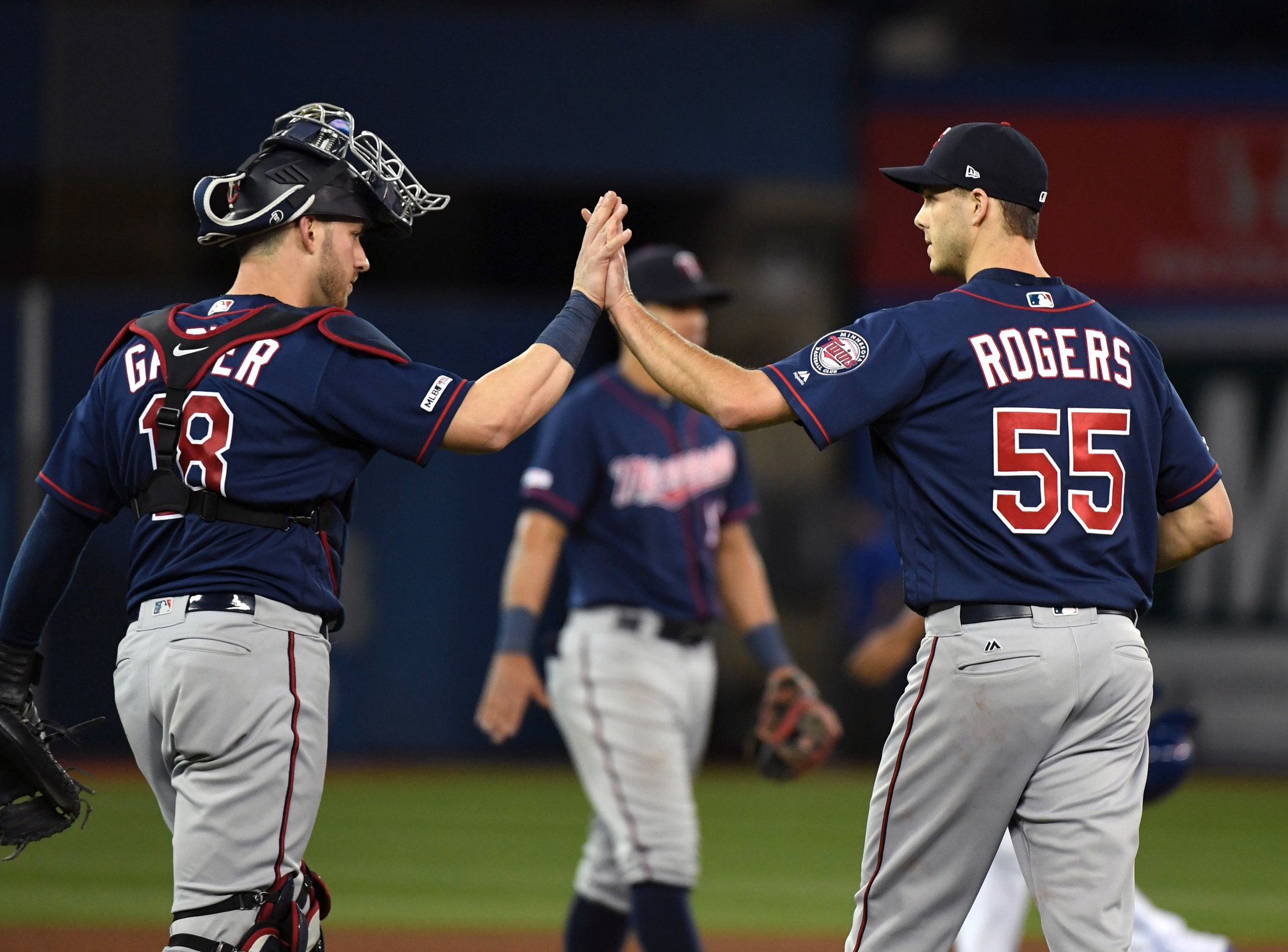 Let's review the facts as they stand. The most intriguing pieces currently in the Twins' bullpen are: Taylor Rogers, formerly an 11th-round pick turned nondescript minor-league starter, who transitioned into relief duty immediately in the majors, and blossomed into a top-tier setup man over three short years. Ryne Harper, a former 37th-round pick who toiled in the minors for nine years before making the Twins out of camp this spring on a minor-league deal. He debuted as a 30-year-old rookie. Blake Parker, the team's biggest offseason bullpen splash. His smallish free agent contract as a castoff from the Angels was whittled down further after his physical. I hesitate to call him "intriguing" at this point, given his trendline, but overall he's gotten it done. Tyler Duffey, Trevor May, Zack Littell: All former middling prospects as starters, finding new gears as MLB relievers. Before you write off any of the three as flashes in the pan, or overachieving mediocrities, go back and read Rogers' blurb again. As I watch Duffey, May and Littell develop into lethal flamethrowers, I do wonder how differently their careers might have gone if the organization had committed to their role changes as quickly and decisively as with Rogers. With all due respect to Matt Magill and Mike Morin, I don't quite put either at the same level of faith as those above, but each one fits the narrative: discarded minor-league pitchers finding surprising success in the majors. Meanwhile, here are the pitchers conspicuously NOT contributing to the current campaign: Addison Reed, who signed the largest free agent reliever deal in franchise history 18 months ago. The Twins ate a good portion of it when they released him last month. Trevor Hildenberger, who was the team's most reliable bullpen arm for about a year before falling apart at the seams midway through 2018. He's currently on the injured list at Triple-A. Fernando Romero, the former top pitching prospect who's flamed out in multiple stints with the Twins this year, and hasn't looked a whole lot better in Triple-A. I know the common refrain on Romero – especially with the benefit of hindsight: "Why mess with him? They shoulda left him as a starter." But that ignores two things: 1) he wasn't throwing or holding up all that well as a starter, and 2) I mean, look at the examples of Duffey/May/Littell. There are certainly downsides to waffling and delaying. With Romero, it's an unaffordable luxury because he'll be out of options next spring. The malfunctions with all three of these players are largely driving the urgency to make improvements. But each of them, and Reed especially, epitomizes the reason that's a much taller order than many clamoring fans would like to believe. Anyone expressing certainty that Craig Kimbrel would've been a decisive upgrade is kidding themselves. Reed, like Kimbrel, generated less free agent demand than expected, given his backend pedigree, but he still had all the makings of a bullpen stud. He was younger and less weathered than Kimbrel. And in the early portion of his contract, Reed looked the part. But his drop-off was both rapid and ruthless. And the thing is, he's not alone. Reed is a somewhat extreme version of an all-too-common outcome. I just checked in on the top RP options listed in the latest Offseason Handbook, and there are vastly more busts than even moderately decent values. Kimbrel still hasn't pitched in the majors. David Robertson's thrown only seven innings due to injury issues. Andrew Miller's been mediocre. Kelvin Herrera, Jeurys Familia and Joe Kelly have been terrible. Cody Allen was so bad he's already been cut by the Angels, and signed by Minnesota to a minors deal. Allen now feels like a long shot to make any kind of meaningful impact; but, as you go through the names above, doesn't that feel true for almost anyone? Granted, some of these guys had their red flags, but all had strong track records, and signed for many millions of dollars. To a man, they've all floundered. Meanwhile, the Twins are finding their most credible help in a 30-year-old journeyman and a bunch of failed minor-league starters. And most of these guys are hitting their own skids at times. What all of this suggests to me: First, it's really hard to be a relief pitcher in the major leagues right now, with stacked lineups of aggressive upper-cut swingers just waiting to feast on premium heat. This is borne out by the numbers: MLB relievers, as a whole, have a 4.50 ERA this year, up from 4.08 last year and higher than their starting counterparts (!). Second, and not unrelatedly: it's going to be very difficult for the Twins to solve this problem. Difficult, and stressful. They aren't short on resources by any means, but that's not the problem. Those onerous contracts plaguing other teams who splurged on the relief market last winter are one thing; when you start giving up valuable prospects, stakes are raised, especially for a team in Minnesota's position. There are a lot of seemingly tantalizing relief options out there on the trade market. We've been covering them in a series of profiles here on the site, so this might be a good time to get caught up: Liam Hendriks, RHP, Athletics Ty Buttrey, RHP, Angels Ken Giles, RHP, Blue Jays Sam Dyson, RHP, Giants Brad Hand, LHP, Indians Oliver Perez, LHP Cleveland Robert Stephenson, RHP, Reds John Gant, RHP, Cardinals Alex Colome, RHP, White Sox Seth Lugo, RHP, Mets Greg Holland, RHP, Diamondbacks Sean Doolittle, LHP, Nationals Kirby Yates, RHP, Padres There are compelling cases to be made for several of the above, plus some others who haven't yet been covered. I myself am quite high on Raisel Iglesias. But no matter who I might favor, data shows there's an overwhelming chance I'll be wrong. The same is true for you. Again, I apologize for the bluntness. But of course, it doesn't matter if we're right – only the guys leading the front office. What's most important is that they buy into what's to come, rather than what's already gone. If only it were that easy.
 -
Article: How Miguel Sano Can Fix His Swing
Nick Nelson replied to Parker Hageman's topic in Twins Daily Front Page News
The photo for this post feels symbolic. Sano's star potential is floating from his grasp, like a helium balloon. Can he reach out and grab it before it escapes to the heavens?- 36 replies
-
- 4
-
-
- miguel sanonelson cruz
- mike trout
- (and 1 more)
-
Article: Week in Review: Home Cooking
Nick Nelson replied to Nick Nelson's topic in Twins Daily Front Page News
Of course, the Tigers also made it to the World Series that year, so... not the most dire comparison- 15 replies
-
- 1
-
-
- kyle gibson
- jose berrios
- (and 3 more)
-
Another successful week in front of packed houses at Target Field. Who could complain? The Twins celebrated a franchise legend over the weekend, retiring Joe Mauer's No. 7, and won four out of six against lesser competition. Your full recap lies ahead. Weekly Snapshot: Mon, 6/10 through Sun, 6/16 *** Record Last Week: 4-2 (Overall: 47-23) Run Differential Last Week: +4 (Overall: +116) Standing: 1st Place in AL Central (10.0 GA) Willians Watch: 12-for-25 with 2 HR last week at Triple-A First of all, I must point out that the "Willians Watch" tracker, which has been a depressing sight for the past many editions, is firing up again. During his first full week back at Triple-A, Willians Astudillo made a pretty strong case that it's beneath him, putting up the absurd numbers you see above. In eight games since his demotion, Astudillo is now hitting .545 with three homers and nine RBIs. He's come right back out of his shell. There wasn't too much activity on the transaction front last week. On Thursday, the Twins sent down reliever Ryan Eades and recalled Fernando Romero, who was himself demoted a day later (for reasons you'll read about in the Lowlights section below). Zack Littell was recalled to replace him following a very successful run in the Rochester bullpen (2.35 ERA, 13/1 K/BB ratio in 7.2 IP). HIGHLIGHTS Like any other week, it'd be appropriate to start out by shoveling praise on the offense. The bats were tremendous once again, averaging nearly six runs while extending their games-with-a-homer streak to 14. We'll cover some top performers in a moment. But first, let's give a shout-out to this team's starting rotation, which continues to amaze. On Wednesday, Jose Berrios was on his game once again, holding a potent Seattle lineup to one run over 6 2/3 innings. It was his fourth straight turn pitching into the seventh inning, a feat he's accomplished in six of eight starts since the beginning of May. He's been a workhorse and a stud. After striking out six with two walks in this latest effort, Berrios is now rocking a 4.94 K/BB ratio, which ranks sixth in the American League. Closing in on Berrios in those rankings is Kyle Gibson, who's now seventh with a 4.53 K/BB after notching six strikeouts and zero walks on Friday night in one of the best outings of his career. Dueling head-to-head with Kansas City's top starter Brad Keller, Gibby fired eight shutout innings, matching Berrios' gem on Opening Day for the highest Game Score by a Twins pitcher this year (84). Slowed by an offseason illness, Gibson was running a little behind in his spring build-up, and it showed early on: In his first three starts, he allowed eight walks and 18 hits over 14 2/3 innings with a 7.36 ERA. In 10 starts since, the right-hander has posted a 2.82 ERA, 1.03 WHIP and 65-to-9 K/BB ratio in 60 2/3 innings. He also has a 14.9% swinging strike rate during this span; that'd rank fifth in all of baseball between Justin Verlander and Stephen Strasburg. Gibson is every bit as good as he was last year, if not better. That's a huge development for this unit. Even Michael Pineda joined the fun this week with his finest start as a Twin. On Thursday, the big righty tossed 5 2/3 innings of one-run ball, allowing just two hits. He left the game with a zero on the board, but reliever Ryne Harper quickly let an inherited run score, depriving Pineda of his first clean outing for Minnesota. Still, it was another positive step forward from the 30-year-old, who's shown a noticeable velocity bump after returning from a two-week stint on the Injured List: Download attachment: pinedavelo.png The reasonable expectation for Pineda was always that he'd improve over the course of the season as he ramped up in the wake of Tommy John surgery. That's exactly what we're seeing, and I really like how the Twins are managing his workload to keep him fresh for the second half. His IL stint was seemingly designed to give him a breather (with no real downside, as Devin Smeltzer pitched well in his stead) and Pineda has yet to throw 100 pitches in a start. Okay, on to that offense. Once again there were plenty of monster performers last week, so let's just run through them in bullet-point fashion: Max Kepler has been on an absolute tear. After collecting four hits in Sunday's series finale against Kansas City, he finished at 9-for-23 on the week with two homers and three doubles. He drew five walks, and is working a free pass in nearly 20% of his June plate appearances.Ehire Adrianza is earning himself regular playing time on merit. The utilityman started four of six games last week, as Rocco Baldelli found him opportunities at third, short, and first. Adrianza responded by continuing to rake, with five hits in 15 at-bats. He's hitting .404 in his last 22 games.Mitch Garver had a magical night on Friday, delivering a dramatic two-run homer that broke a scoreless tie and propelled Minnesota to victory over KC. He was 4-for-15 on the week and has mostly picked up where he left off since coming off the IL, with nine RBIs in 10 games.Marwin Gonzalez continues to be an incredibly value asset. Last week he played in all six games, starting five. He appeared at four different positions while tallying eight hits (including a pair of home runs) in 23 at-bats.Nelson Cruz provided further evidence his wrist is feeling okay as he collected six hits in 20 ABs, including a pair of big homers.Jonathan Schoop rebounded from a quiet week with a 7-for-19, sprinkling in a home run and a double.Jorge Polanco just kept on doing his thing, finishing 8-for-27 with as many walks (3) as strikeouts. It wasn't even really a highlight week by his standards, but that alone seems worthy of calling out.LOWLIGHTS Can anyone fix Romero? As he rose rapidly through the minor-league ranks, the hard-throwing righty gained repute as the system's best power arm in years. He looked decent last year as a rookie for Minnesota, but the decision to shift him into a bullpen role here in 2019 made all the sense in the world, from my view. Unfortunately, it's been pretty much a total disaster. His latest call-up wasn't exactly earned by his performance in the minors (he posted a 6.06 ERA and 1.47 WHIP over a month in Rochester following his early-May demotion), but the Twins evidently wanted to take another look and have their big-league coaches work with him more closely. It took only one appearance to reverse that plan. Romero was unbelievably brutal when called upon to pitch with a nine-run lead on Thursday, allowing all four batters faced to reach on two hits and two walks. He threw just six of 16 pitches for strikes and induced zero swings-and-misses. The good news, I guess, is that Romero's arm appears to be healthy; he was bringing upper-90s heat with movement. Yet he lacked any semblance of command, and hitters were feasting, as they have all year. Getting him on track seems like one of Minnesota's best bets for impactful late-inning bullpen help, but sadly, it now feels like more of a long shot than ever. His absence looms large in a bullpen that showed its problematic lack of depth last week, especially with Taylor Rogers unavailable for a few games due to back tightness. Harper continues to dazzle but the unit is lacking for other trustworthy options. Blake Parker looks so bad right now it's semi-shocking the Twins haven't found an excuse to put him on the shelf; he has coughed up nine earned runs, and five homers, in his last seven appearances. Tyler Duffey is filthy at times, but prone to clunkers like the ugly 10th inning that cost Minnesota Wednesday's game and spoiled Buxton's big moment. Trevor May navigated a precarious save conversion on Tuesday, then struggled through a shaky outing the following night. He's still having a really hard time getting opponents to chase, resulting in prolonged counts and plenty of stress. Matt Magill's been filling the bases with runners all month, including last week when he yielded two hits and three walks in four innings. None of three runs allowed by Mike Morin on Sunday were charged as earned, preserving his misleading 1.17 ERA, but he didn't look good. This bullpen is a problem. We already knew that, but it was resoundingly reaffirmed last week, even against substandard competition. Anxiety is going to run high if any tight late-inning situations develop against the imposing Red Sox lineup in the coming series. Minnesota generally had an ugly week defensively (which is, refreshingly, uncharacteristic). But no one's poor glovework stuck out more than Miguel Sano's. He had a fine week at the plate (4-for-14 with a home run) but Sano butchered a couple of plays at third base, and they were both costly. On Wednesday in extra innings, he mishandled a grounder and then airmailed it to first, allowing two critical runs to score. He was charged with two errors on the play, a rarity. Sano logged a third error for the week when he let a bad hop eat him up on Sunday, allowing yet another key run across. When Sano is able to secure the ball and whip it across the diamond, it's a beautiful thing. His arm strength is unassailable. But overall consistency has been amiss, and to my eye, Sano has missed quite a few plays he should've made. He already has five errors in just 21 games. With Cruz and C.J. Cron entrenched at DH and first, the Twins have little choice but to run Sano out at third base and hope he improves if they want his bat in the lineup. I did find it quite curious that Baldelli put Sano at third and Adrianza at first with Cron sitting on Sunday, though Adrianza did have his own ugly defensive gaffe at the hot corner one night earlier. TRENDING STORYLINE The first domino has fallen, so to speak. On Saturday, the Yankees traded for Seattle's Edwin Encarnacion, adding the American League's leading home run hitter to their lineup (which already features No. 2, Gary Sanchez). The Mariners, apparently, are completely open for business: There are some interesting candidates there from the Twins' perspective (albeit no game-changing bullpen additions). The bigger story is that Buying Season is officially underway. Minnesota isn't compelled to wait until late July to pull the trigger on improvements. Although the Twins don't really need to worry about their division lead – still in double-digits as we head into the second half of June – they do need to be thinking about building for primetime. The aforementioned bullpen issues make clear that there is some work to do. One tidbit to file away: Charley Walters of the Pioneer Press wrote over the weekend that Minnesota is pursuing a deal for San Francisco's Madison Bumgarner... DOWN ON THE FARM As the Twins evaluate internal relief options, Sean Poppen is a name we should probably be paying attention to. He's been fantastic since a promotion to Rochester in late May, working as a starter but showing traits of a guy who might level-up in the pen. On Thursday he struck out nine over six innings of one-run ball; through four starts with the Red Wings, he has a 1.13 ERA and 29-to-9 K/BB ratio over 24 innings. A former 19th-round draft pick out of Harvard, the 25-year-old righty owns a 3.17 career ERA in the minors, averaging a strikeout per inning. Of course, Poppen is likely behind a couple of fellow Rochester starters in line. Smeltzer and Lewis Thorpe are both already on the 40-man roster, and making their own strong cases for consideration. Smeltzer struck out 10 with zero walks over 5 2/3 frames on Sunday, while Thorpe had fired five shutout frames on Wednesday, allowing one hit and striking out nine. The Twins could really use another left-hander in the pen (they had none available when Rogers was sidelined in the early part of last week) so I'd expect to see one of these two get a look soon. Both have the potential to be legitimate difference-makers. LOOKING AHEAD Big test on deck. The Twins have taken care of business thus far in a home stand full of also-rans, winning series against Detroit, Seattle and Kansas City, but now they'll wrap it up with a tough challenge against the Red Sox. Don't be fooled by Boston's third-place standing in the East and pedestrian record. They started 6-13 but have been rolling since with a 33-21 record since, and they head into Minnesota on a five-game winning streak. Can Berrios, Pineda and Gibson back up their latest performances against a far better lineup? Next weekend, the Twins will head down to Kansas City. As will I, along with a large group of rowdy fellows on a big booze-filled bus for my bachelor party. Which is to say, when you read this column next week, it'll be authored by someone else. Hopefully that person will have plenty of happy things to write about. MONDAY, 6/17: RED SOX @ TWINS – RHP Rick Porcello v. RHP Jose Berrios TUESDAY, 6/18: RED SOX @ TWINS – LHP David Price v. RHP Michael Pineda WEDNESDAY, 6/19: RED SOX @ TWINS – LHP Eduardo Rodriguez v. RHP Kyle Gibson THURSDAY, 6/20: TWINS @ ROYALS – RHP Jake Odorizzi v. RHP Glenn Sparkman FRIDAY, 6/21: TWINS @ ROYALS – LHP Martin Perez v. RHP Jakob Junis SATURDAY, 6/22: TWINS @ ROYALS – RHP Jose Berrios v. LHP Danny Duffy SUNDAY, 6/23: TWINS @ ROYALS – RHP Michael Pineda v. RHP Homer Bailey Catch Up On Twins Daily Game Recaps Game 65 | MIN 6, SEA 5: Comeback Victory Capped By Trevor May SaveGame 66 | SEA 9, MIN 6: Bullpen, Errors Spoil Buxton’s Dramatic HomerGame 67 | MIN 10, SEA 5: Another Double-Digit Scoring Effort, Another Bullpen ScareGame 68 | MIN 2, KC 0: Gibson Shines on Night Honoring Mauer, PrinceGame 69 | MIN 5, KC 4: Bats Rally, Bullpen Protects 1-Run LeadGame 70 | KC 8, MIN 6: Struggles With Men on Base, Errors Prove Costly Click here to view the article
- 15 replies
-
- 2
-
-
- kyle gibson
- jose berrios
- (and 3 more)
-
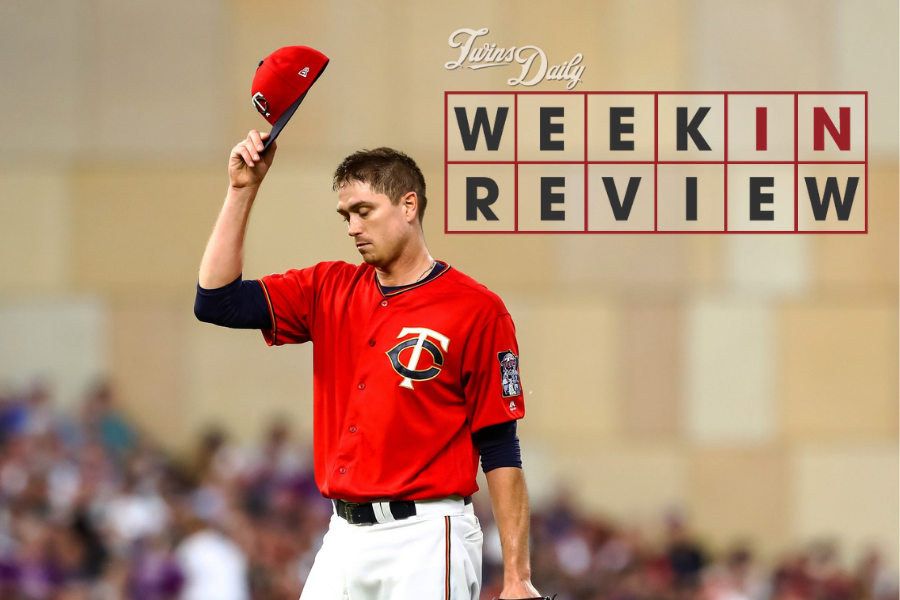 Weekly Snapshot: Mon, 6/10 through Sun, 6/16 *** Record Last Week: 4-2 (Overall: 47-23) Run Differential Last Week: +4 (Overall: +116) Standing: 1st Place in AL Central (10.0 GA) Willians Watch: 12-for-25 with 2 HR last week at Triple-A First of all, I must point out that the "Willians Watch" tracker, which has been a depressing sight for the past many editions, is firing up again. During his first full week back at Triple-A, Willians Astudillo made a pretty strong case that it's beneath him, putting up the absurd numbers you see above. In eight games since his demotion, Astudillo is now hitting .545 with three homers and nine RBIs. He's come right back out of his shell. There wasn't too much activity on the transaction front last week. On Thursday, the Twins sent down reliever Ryan Eades and recalled Fernando Romero, who was himself demoted a day later (for reasons you'll read about in the Lowlights section below). Zack Littell was recalled to replace him following a very successful run in the Rochester bullpen (2.35 ERA, 13/1 K/BB ratio in 7.2 IP). HIGHLIGHTS Like any other week, it'd be appropriate to start out by shoveling praise on the offense. The bats were tremendous once again, averaging nearly six runs while extending their games-with-a-homer streak to 14. We'll cover some top performers in a moment. But first, let's give a shout-out to this team's starting rotation, which continues to amaze. On Wednesday, Jose Berrios was on his game once again, holding a potent Seattle lineup to one run over 6 2/3 innings. It was his fourth straight turn pitching into the seventh inning, a feat he's accomplished in six of eight starts since the beginning of May. He's been a workhorse and a stud. After striking out six with two walks in this latest effort, Berrios is now rocking a 4.94 K/BB ratio, which ranks sixth in the American League. Closing in on Berrios in those rankings is Kyle Gibson, who's now seventh with a 4.53 K/BB after notching six strikeouts and zero walks on Friday night in one of the best outings of his career. Dueling head-to-head with Kansas City's top starter Brad Keller, Gibby fired eight shutout innings, matching Berrios' gem on Opening Day for the highest Game Score by a Twins pitcher this year (84). Slowed by an offseason illness, Gibson was running a little behind in his spring build-up, and it showed early on: In his first three starts, he allowed eight walks and 18 hits over 14 2/3 innings with a 7.36 ERA. In 10 starts since, the right-hander has posted a 2.82 ERA, 1.03 WHIP and 65-to-9 K/BB ratio in 60 2/3 innings. He also has a 14.9% swinging strike rate during this span; that'd rank fifth in all of baseball between Justin Verlander and Stephen Strasburg. Gibson is every bit as good as he was last year, if not better. That's a huge development for this unit. Even Michael Pineda joined the fun this week with his finest start as a Twin. On Thursday, the big righty tossed 5 2/3 innings of one-run ball, allowing just two hits. He left the game with a zero on the board, but reliever Ryne Harper quickly let an inherited run score, depriving Pineda of his first clean outing for Minnesota. Still, it was another positive step forward from the 30-year-old, who's shown a noticeable velocity bump after returning from a two-week stint on the Injured List: The reasonable expectation for Pineda was always that he'd improve over the course of the season as he ramped up in the wake of Tommy John surgery. That's exactly what we're seeing, and I really like how the Twins are managing his workload to keep him fresh for the second half. His IL stint was seemingly designed to give him a breather (with no real downside, as Devin Smeltzer pitched well in his stead) and Pineda has yet to throw 100 pitches in a start. Okay, on to that offense. Once again there were plenty of monster performers last week, so let's just run through them in bullet-point fashion: Max Kepler has been on an absolute tear. After collecting four hits in Sunday's series finale against Kansas City, he finished at 9-for-23 on the week with two homers and three doubles. He drew five walks, and is working a free pass in nearly 20% of his June plate appearances. Ehire Adrianza is earning himself regular playing time on merit. The utilityman started four of six games last week, as Rocco Baldelli found him opportunities at third, short, and first. Adrianza responded by continuing to rake, with five hits in 15 at-bats. He's hitting .404 in his last 22 games. Mitch Garver had a magical night on Friday, delivering a dramatic two-run homer that broke a scoreless tie and propelled Minnesota to victory over KC. He was 4-for-15 on the week and has mostly picked up where he left off since coming off the IL, with nine RBIs in 10 games. Marwin Gonzalez continues to be an incredibly value asset. Last week he played in all six games, starting five. He appeared at four different positions while tallying eight hits (including a pair of home runs) in 23 at-bats. Nelson Cruz provided further evidence his wrist is feeling okay as he collected six hits in 20 ABs, including a pair of big homers. Jonathan Schoop rebounded from a quiet week with a 7-for-19, sprinkling in a home run and a double. Jorge Polanco just kept on doing his thing, finishing 8-for-27 with as many walks (3) as strikeouts. It wasn't even really a highlight week by his standards, but that alone seems worthy of calling out. LOWLIGHTS Can anyone fix Romero? As he rose rapidly through the minor-league ranks, the hard-throwing righty gained repute as the system's best power arm in years. He looked decent last year as a rookie for Minnesota, but the decision to shift him into a bullpen role here in 2019 made all the sense in the world, from my view. Unfortunately, it's been pretty much a total disaster. His latest call-up wasn't exactly earned by his performance in the minors (he posted a 6.06 ERA and 1.47 WHIP over a month in Rochester following his early-May demotion), but the Twins evidently wanted to take another look and have their big-league coaches work with him more closely. It took only one appearance to reverse that plan. Romero was unbelievably brutal when called upon to pitch with a nine-run lead on Thursday, allowing all four batters faced to reach on two hits and two walks. He threw just six of 16 pitches for strikes and induced zero swings-and-misses. The good news, I guess, is that Romero's arm appears to be healthy; he was bringing upper-90s heat with movement. Yet he lacked any semblance of command, and hitters were feasting, as they have all year. Getting him on track seems like one of Minnesota's best bets for impactful late-inning bullpen help, but sadly, it now feels like more of a long shot than ever. His absence looms large in a bullpen that showed its problematic lack of depth last week, especially with Taylor Rogers unavailable for a few games due to back tightness. Harper continues to dazzle but the unit is lacking for other trustworthy options. Blake Parker looks so bad right now it's semi-shocking the Twins haven't found an excuse to put him on the shelf; he has coughed up nine earned runs, and five homers, in his last seven appearances. Tyler Duffey is filthy at times, but prone to clunkers like the ugly 10th inning that cost Minnesota Wednesday's game and spoiled Buxton's big moment. Trevor May navigated a precarious save conversion on Tuesday, then struggled through a shaky outing the following night. He's still having a really hard time getting opponents to chase, resulting in prolonged counts and plenty of stress. Matt Magill's been filling the bases with runners all month, including last week when he yielded two hits and three walks in four innings. None of three runs allowed by Mike Morin on Sunday were charged as earned, preserving his misleading 1.17 ERA, but he didn't look good. This bullpen is a problem. We already knew that, but it was resoundingly reaffirmed last week, even against substandard competition. Anxiety is going to run high if any tight late-inning situations develop against the imposing Red Sox lineup in the coming series. Minnesota generally had an ugly week defensively (which is, refreshingly, uncharacteristic). But no one's poor glovework stuck out more than Miguel Sano's. He had a fine week at the plate (4-for-14 with a home run) but Sano butchered a couple of plays at third base, and they were both costly. On Wednesday in extra innings, he mishandled a grounder and then airmailed it to first, allowing two critical runs to score. He was charged with two errors on the play, a rarity. Sano logged a third error for the week when he let a bad hop eat him up on Sunday, allowing yet another key run across. When Sano is able to secure the ball and whip it across the diamond, it's a beautiful thing. His arm strength is unassailable. But overall consistency has been amiss, and to my eye, Sano has missed quite a few plays he should've made. He already has five errors in just 21 games. With Cruz and C.J. Cron entrenched at DH and first, the Twins have little choice but to run Sano out at third base and hope he improves if they want his bat in the lineup. I did find it quite curious that Baldelli put Sano at third and Adrianza at first with Cron sitting on Sunday, though Adrianza did have his own ugly defensive gaffe at the hot corner one night earlier. TRENDING STORYLINE The first domino has fallen, so to speak. On Saturday, the Yankees traded for Seattle's Edwin Encarnacion, adding the American League's leading home run hitter to their lineup (which already features No. 2, Gary Sanchez). The Mariners, apparently, are completely open for business: https://twitter.com/JonHeyman/status/1134882418345693184 There are some interesting candidates there from the Twins' perspective (albeit no game-changing bullpen additions). The bigger story is that Buying Season is officially underway. Minnesota isn't compelled to wait until late July to pull the trigger on improvements. Although the Twins don't really need to worry about their division lead – still in double-digits as we head into the second half of June – they do need to be thinking about building for primetime. The aforementioned bullpen issues make clear that there is some work to do. One tidbit to file away: Charley Walters of the Pioneer Press wrote over the weekend that Minnesota is pursuing a deal for San Francisco's Madison Bumgarner... DOWN ON THE FARM As the Twins evaluate internal relief options, Sean Poppen is a name we should probably be paying attention to. He's been fantastic since a promotion to Rochester in late May, working as a starter but showing traits of a guy who might level-up in the pen. On Thursday he struck out nine over six innings of one-run ball; through four starts with the Red Wings, he has a 1.13 ERA and 29-to-9 K/BB ratio over 24 innings. A former 19th-round draft pick out of Harvard, the 25-year-old righty owns a 3.17 career ERA in the minors, averaging a strikeout per inning. Of course, Poppen is likely behind a couple of fellow Rochester starters in line. Smeltzer and Lewis Thorpe are both already on the 40-man roster, and making their own strong cases for consideration. Smeltzer struck out 10 with zero walks over 5 2/3 frames on Sunday, while Thorpe had fired five shutout frames on Wednesday, allowing one hit and striking out nine. The Twins could really use another left-hander in the pen (they had none available when Rogers was sidelined in the early part of last week) so I'd expect to see one of these two get a look soon. Both have the potential to be legitimate difference-makers. LOOKING AHEAD Big test on deck. The Twins have taken care of business thus far in a home stand full of also-rans, winning series against Detroit, Seattle and Kansas City, but now they'll wrap it up with a tough challenge against the Red Sox. Don't be fooled by Boston's third-place standing in the East and pedestrian record. They started 6-13 but have been rolling since with a 33-21 record since, and they head into Minnesota on a five-game winning streak. Can Berrios, Pineda and Gibson back up their latest performances against a far better lineup? Next weekend, the Twins will head down to Kansas City. As will I, along with a large group of rowdy fellows on a big booze-filled bus for my bachelor party. Which is to say, when you read this column next week, it'll be authored by someone else. Hopefully that person will have plenty of happy things to write about. MONDAY, 6/17: RED SOX @ TWINS – RHP Rick Porcello v. RHP Jose Berrios TUESDAY, 6/18: RED SOX @ TWINS – LHP David Price v. RHP Michael Pineda WEDNESDAY, 6/19: RED SOX @ TWINS – LHP Eduardo Rodriguez v. RHP Kyle Gibson THURSDAY, 6/20: TWINS @ ROYALS – RHP Jake Odorizzi v. RHP Glenn Sparkman FRIDAY, 6/21: TWINS @ ROYALS – LHP Martin Perez v. RHP Jakob Junis SATURDAY, 6/22: TWINS @ ROYALS – RHP Jose Berrios v. LHP Danny Duffy SUNDAY, 6/23: TWINS @ ROYALS – RHP Michael Pineda v. RHP Homer Bailey Catch Up On Twins Daily Game Recaps Game 65 | MIN 6, SEA 5: Comeback Victory Capped By Trevor May Save Game 66 | SEA 9, MIN 6: Bullpen, Errors Spoil Buxton’s Dramatic Homer Game 67 | MIN 10, SEA 5: Another Double-Digit Scoring Effort, Another Bullpen Scare Game 68 | MIN 2, KC 0: Gibson Shines on Night Honoring Mauer, Prince Game 69 | MIN 5, KC 4: Bats Rally, Bullpen Protects 1-Run Lead Game 70 | KC 8, MIN 6: Struggles With Men on Base, Errors Prove Costly
 -
Every Sunday night, I publish these Week in Review columns. Each of the first 10 editions reported a winning record from the previous seven days, chronicling this club's incredible consistency. Today, that streak finally comes to an end, as the Twins went 3-3 last week on the road. But it still wasn't a losing stretch, and offered plenty of positives amid glimmers of legitimate concern. Weekly Snapshot: Mon, 6/3 through Sun, 6/9 *** Record Last Week: 3-3 (Overall: 43-21) Run Differential Last Week: +3 (Overall: +112) Standing: 1st Place in AL Central (10.5 GA) Willians Watch: So Long, Old Friend :-( We must begin this week's roster rundown on a somber note: Willians Astudillo has been optioned to Triple-A. This isn't necessarily sad from a competitive standpoint – Astudillo's been the weakest hitter on the team for some time now, and his demotion is well justified with an empty .190 average since the start of May – but if you're like me, you enjoy watching the guy play, interact with teammates, and generally go about his business on the field. He probably won't be gone for too long, as he's already raking down in Rochester (he's 6-for-8 through two games).Called up to replace Astudillo on the roster was right-handed reliever Ryan Eades, who made his major-league debut on Saturday and threw very well in two scoreless frames.The Twins also optioned Devin Smeltzer, who impressed during his two starts, and activated Michael Pineda to start Friday night's game in Detroit.HIGHLIGHTS In the wake of a scorching late-May hot streak, Max Kepler went cold as the calendar flipped, coming up hitless in five games. Then, with the Twins facing a sweep on Thursday in Cleveland, he exploded for three home runs, carrying Minnesota to a 5-4 victory while finishing 4-for-4 with a walk. It'll go down as one of the best offensive performances by a big-leaguer this season. This seems to be the M.O. for Minnesota's lineup: sleeping giants who don't stay asleep for long. Mitch Garver was mostly quiet in his first few games off the Injured List, and had a really tough series in Cleveland with seven strikeouts in 10 plate appearances, but he came alive in Detroit, going 4-for-9 with a homer and four RBIs in two games. Nelson Cruz, another recent reentry from IL, went 0-for-4 with three strikeouts in his return on Tuesday, then homered in each of his next four games. Eddie Rosario was 2-for-16 on the week before going 3-for-6 with a mammoth homer on Sunday. This is all to say we probably shouldn't make much of mini-slumps from the likes of Jonathan Schoop (1-for-15 last week and batting .125 in June). He has the luxury of taking a little nap while the rest of the offense powers on, and will almost surely be awakening soon. One guy who doesn't seem to have much let-up in him is Byron Buxton. Every week, and every night, he manages to make a special impact. His past five games brought more of the same: production (6-for-17 with two homers and a double), spectacular defense made to look ordinary, and baserunning prowess that almost defies belief: The Twins leaned on Rogers for a 34-pitch, two-inning save on Thursday, and that's the type of thing they obviously need to avoid. So, the club needs some relief help. And as we've covered, Kimbrel is off the table. What to do? The trade market will become a central focus in the coming weeks, and I do believe there are going to be ample opportunities out there. Unlike with Kimbrel, here the Twins have real leverage: a system filled with intriguing prospects, and a bevy of non-contending teams looking to reload their farms. There's no need to wait until the July 31st deadline to make a move. But here's the thing: Minnesota does have the luxury of a double-digit lead in the standings. Granted, they'll want to win as many games as they can to best position themselves for October, but they aren't fending off anyone in the division. Four of their remaining six series this month are against the Mariners, Royals and White Sox. There's no REAL urgency. As they take a measured approach to the trade market, the Twins can test a few things out internally and work to optimize its existing pieces. The latest to audition is Eades, and he looked promising in his first action (although, to be fair, so did Austin Adams and Zack Littell). Speaking of Littell: After this demotion last week, I opined that he has "a much better chance than the [other Triple-A call-ups who've gotten shelled] of becoming a true bullpen asset. I wonder if the Twins will start letting him develop in that capacity at Rochester." Sure enough, his three appearances since heading down have all been in relief, and he's looked damn good, allowing just one hit (a solo homer) in 5 2/3 innings with one walk and eight strikeouts. It wouldn't stun me if Eades or Littell eventually settles in as a worthy middle relief option. I like that the Twins are experimenting. But it's unfortunate their other internal options are still flailing. Trevor Hildenberger has an 8.44 ERA and 1.88 WHIP in Rochester. Fernando Romero has been woefully underwhelming as well (opponents hitting .310/.388/.500 in 15 innings since he was optioned). Jorge Alcala, the hard-throwing 23-year-old acquired in last year's Ryan Pressly trade, has been wholly unimpressive at Double-A where he sports a 5.25 ERA. If the Twins want to find a difference-maker for their pen from within, it's probably going to take some creativity. Maybe trying out Smeltzer in a relief role? Or how about fellow Triple-A southpaw Lewis Thorpe, who's tacked up a 25-to-3 K/BB ratio in his last four starts, while averaging fewer than five innings per turn? Looks perfectly suited for a shot at relieving. DOWN ON THE FARM The 2019 MLB Draft took place last week, and saw the Twins add a batch of new young talent heavy on college bats. Their three first-day selections: No. 13 Overall: Keoni Cavaco, INF – Fast-rising prep star out of California who was barely on anyone's radar six months ago. Premium athlete with a high-upside bat who's played shortstop but is likely to end up at third base. Ted posted a Q&A with the Cavaco if you'd like to learn more about him.No. 39 Overall: Matt Wallner, OF – Collegiate slugger out of Southern Mississippi. Wallner will be especially easy for locals to root for because he's a Forest Lake native who was named Minnesota's Mr. Baseball in 2016.No. 54 Overall: Matt Canterino, RHP – The 6-foot-3 righty posted gaudy strikeout numbers at Rice University, unleashing an overpowering fastball/curve combo. His delivery and lack of a changeup suggest some reliever risk, but he's poised to rise quickly.You can learn about the full breadth of Minnesota's latest draft class in Andrew's in-depth recap. Elsewhere in the Twins' system last week: Jhoan Duran turned in his third straight gem for Fort Myers, holding Jupiter to one run over seven innings. Acquired from Arizona in the Eduardo Escobar trade last summer, Duran pitched extremely well after coming over, and drew considerable buzz in camp this spring. His first seven starts at High-A weren't stellar but over his past three the numbers are astounding: 20 IP, 10 H, 3 ER, 6 BB, 26 K. The 21-year-old right-hander is starring for the Miracle alongside fellow righty Jordan Balazovic, our Minor League Pitcher of the Month for May who continues to dazzle here in June. In his latest turn on Thursday, he fanned seven over 5 2/3 frames of one-run ball, lowering his ERA to 2.03 in six starts with Fort Myers. Despite Brusdar Graterol's continuing absence (no word on his ailing right shoulder), the Twins have some good things cookin' with arms in the minors. On the hitting side, we covered Trevor Larnach last week and he keeps mashing (10-for-27 last week), but one other guy we need to be paying attention to is Brent Rooker. The 24-year-old shook off his own slow start at Triple-A and has been on a tear since returning from the IL at the beginning of June, batting .433 with 11 RBIs through nine games. Perhaps most importantly, he has an 11-to-8 K/BB ratio during that span, after striking out 43 times with only six walks through his first 97 plate appearances. Rooker has a rep as a smart hitter who handles adversity and makes adjustments. We're seeing that once again, and now he has nowhere else to graduate to but the majors. LOOKING AHEAD Smooth sailing ahead. The Twins have gone a combined 5-1 against Seattle and Kansas City on the road, and now they'll welcome both last-place clubs to Target Field for three games apiece. It'd be disappointing (though hardly panic-inducing) to see Minnesota win fewer than four this next week. TUESDAY, 6/11: MARINERS @ TWINS – RHP Mike Leake v. LHP Martin Perez WEDNESDAY, 6/12: MARINERS @ TWINS – LHP Tommy Milone v. RHP Jose Berrios THURSDAY, 6/13: MARINERS @ TWINS – LHP Marco Gonzales v. RHP Michael Pineda FRIDAY, 6/14: ROYALS @ TWINS – RHP Brad Keller v. RHP Kyle Gibson SATURDAY, 6/15: ROYALS @ TWINS – RHP Glenn Sparkman v. RHP Jake Odorizzi SUNDAY, 6/16: ROYALS @ TWINS – RHP Jakob Junis v. LHP Martin Perez Catch Up On Twins Daily Game Recaps Game 59 | CLE 5, MIN 2: Twins Can’t Figure Out Bieber, Lindor Lifts ClevelandGame 60 | CLE 9, MIN 7: Bullpen Crumbles on Night Kimbrel Signs With CubsGame 61 | MIN 5, CLE 4: Max Power Against BauerGame 62 | MIN 6, DET 3: Offense, Bullpen Come Through Late as Twins Take OpenerGame 63 | DET 9, MIN 3: Third Out Eludes Gibson, Eades DebutsGame 64 | MIN 12, DET 2: No Motown Blues for the Minnesota Twins Click here to view the article
- 45 replies
-
- 1
-
-
- mitch garver
- max kepler
- (and 3 more)
-
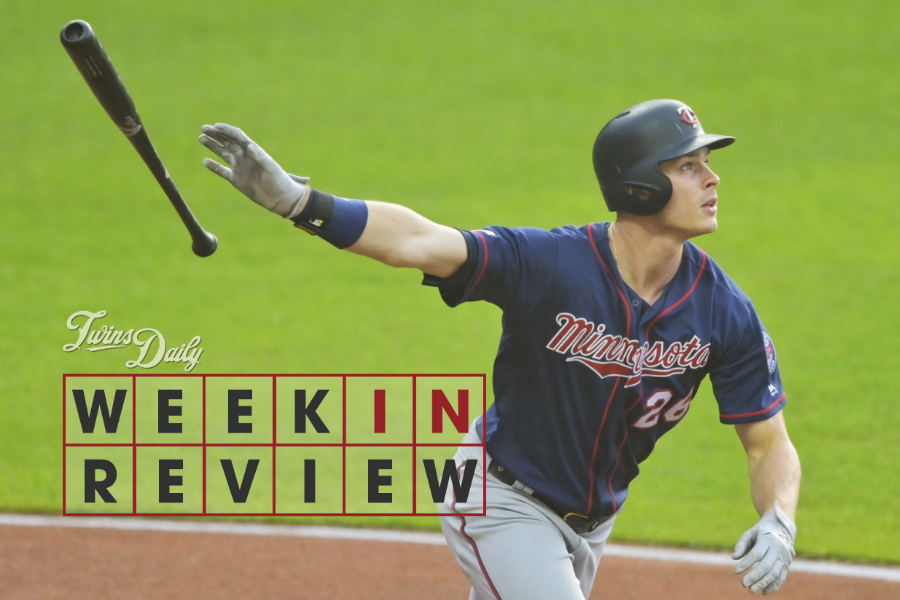 Weekly Snapshot: Mon, 6/3 through Sun, 6/9 *** Record Last Week: 3-3 (Overall: 43-21) Run Differential Last Week: +3 (Overall: +112) Standing: 1st Place in AL Central (10.5 GA) Willians Watch: So Long, Old Friend :-( We must begin this week's roster rundown on a somber note: Willians Astudillo has been optioned to Triple-A. This isn't necessarily sad from a competitive standpoint – Astudillo's been the weakest hitter on the team for some time now, and his demotion is well justified with an empty .190 average since the start of May – but if you're like me, you enjoy watching the guy play, interact with teammates, and generally go about his business on the field. He probably won't be gone for too long, as he's already raking down in Rochester (he's 6-for-8 through two games). Called up to replace Astudillo on the roster was right-handed reliever Ryan Eades, who made his major-league debut on Saturday and threw very well in two scoreless frames. The Twins also optioned Devin Smeltzer, who impressed during his two starts, and activated Michael Pineda to start Friday night's game in Detroit. HIGHLIGHTS In the wake of a scorching late-May hot streak, Max Kepler went cold as the calendar flipped, coming up hitless in five games. Then, with the Twins facing a sweep on Thursday in Cleveland, he exploded for three home runs, carrying Minnesota to a 5-4 victory while finishing 4-for-4 with a walk. It'll go down as one of the best offensive performances by a big-leaguer this season. This seems to be the M.O. for Minnesota's lineup: sleeping giants who don't stay asleep for long. Mitch Garver was mostly quiet in his first few games off the Injured List, and had a really tough series in Cleveland with seven strikeouts in 10 plate appearances, but he came alive in Detroit, going 4-for-9 with a homer and four RBIs in two games. Nelson Cruz, another recent reentry from IL, went 0-for-4 with three strikeouts in his return on Tuesday, then homered in each of his next four games. Eddie Rosario was 2-for-16 on the week before going 3-for-6 with a mammoth homer on Sunday. This is all to say we probably shouldn't make much of mini-slumps from the likes of Jonathan Schoop (1-for-15 last week and batting .125 in June). He has the luxury of taking a little nap while the rest of the offense powers on, and will almost surely be awakening soon. One guy who doesn't seem to have much let-up in him is Byron Buxton. Every week, and every night, he manages to make a special impact. His past five games brought more of the same: production (6-for-17 with two homers and a double), spectacular defense made to look ordinary, and baserunning prowess that almost defies belief: https://twitter.com/Twins/status/1137178212092563456 The Twins currently have two players drawing credible buzz as MVP contenders – Rosario and Jorge Polanco – but I have a strong feeling that by year's end, Buxton will be at the head of the pack. He's only starting to find his next gear. Buxton's success has become so normalized, you probably didn't even notice that the former whiff-machine has struck out only four times in 28 June PAs. His 23% K-rate for the season is down nearly 10 points from his 32% MLB mark prior, and almost exactly at league average. In the rotation, Jake Odorizzi and Jose Berrios have been as good as any 1-2 tandem in the game. On Sunday, Odorizzi was magnificent as usual, spinning six innings of one-run ball. He struck out eight while picking up his ninth consecutive victory and lowering his ERA (slightly) to 1.92. Berrios delivered his own strong outing three days earlier, holding the Indians to two runs over six frames. The Twins are 11-2 with Berrios on the mound and have won 10 straight games started by Odorizzi. LOWLIGHTS On the same day we learned that coveted free agent reliever Craig Kimbrel was signing with the Chicago Cubs, Blake Parker blew up in Cleveland, coughing up three runs to turn a lead into a deficit in one of Minnesota's most crushing losses of the year. The timing was no doubt painful. Though I personally believe the Twins were wise to stick to their guns on Kimbrel, this bullpen needs help. This is not a new sentiment, but it's becoming clearer than ever as Parker's surprisingly spotless start gives way to hardcore regression. Wednesday marked the third time in his past four appearances allowing multiple runs, and then on Friday he navigated an anxiety-inducing save that saw him walk two batters and bring the tying run to the plate. There's no trusting the guy right now. In fact, the bullpen at large has suddenly become rather untrustworthy. Matt Magill has seen his own charmed run of unexpected excellence fly off the rails, almost exactly in unison with Parker. Joining the team late after a season-opening IL stint, Magill was convincingly dominant through 14 appearances, posting a 1.35 ERA and 18-to-5 K/BB ratio in 13.1 IP while unleashing upper-90s fastballs and upper-80s sliders. The coaching staff's belief in the former minor-league journeyman was being richly rewarded. But in his past three outings, the bottom has fallen out. In 1 2/3 innings, he has allowed 10 runs (nine earned) on 10 hits and three walks. In the space of a week, his ERA spiked from 1.35 to 6.60, and just like that, he might be on the brink of a DFA. The problem is that there aren't a ton of options on hand to replace him. We'll chat more about that below in the Trending Storyline section. Trust is also diminishing in starter Martin Perez, whose magic has gone completely amiss. Wednesday's outing wasn't as disastrous as the previous dud, and poor defense played a role, but Perez was not good in Cleveland, allowing five runs (two earned) on six hits and two walks over 4 2/3 innings. The lefty posted season-lows in strikeouts (1) and swinging strikes (4). He has issued multiple walks in seven straight starts and has a 7-to-8 K/BB ratio in his past three. TRENDING STORYLINE The bullpen is a mess. It's starting to unravel at the seams with Parker and Magill melting down. Mike Morin and Tyler Duffey may have similar reckonings awaiting. Trevor May is, for whatever reason, seeing very sporadic usage (he's appeared three times in the past 14 days). Taylor Rogers has pretty much been a one-man band and this tweet from AG sorta sums that up: https://twitter.com/AaronGleeman/status/1137022778819788801 The Twins leaned on Rogers for a 34-pitch, two-inning save on Thursday, and that's the type of thing they obviously need to avoid. So, the club needs some relief help. And as we've covered, Kimbrel is off the table. What to do? The trade market will become a central focus in the coming weeks, and I do believe there are going to be ample opportunities out there. Unlike with Kimbrel, here the Twins have real leverage: a system filled with intriguing prospects, and a bevy of non-contending teams looking to reload their farms. There's no need to wait until the July 31st deadline to make a move. But here's the thing: Minnesota does have the luxury of a double-digit lead in the standings. Granted, they'll want to win as many games as they can to best position themselves for October, but they aren't fending off anyone in the division. Four of their remaining six series this month are against the Mariners, Royals and White Sox. There's no REAL urgency. As they take a measured approach to the trade market, the Twins can test a few things out internally and work to optimize its existing pieces. The latest to audition is Eades, and he looked promising in his first action (although, to be fair, so did Austin Adams and Zack Littell). Speaking of Littell: After this demotion last week, I opined that he has "a much better chance than the [other Triple-A call-ups who've gotten shelled] of becoming a true bullpen asset. I wonder if the Twins will start letting him develop in that capacity at Rochester." Sure enough, his three appearances since heading down have all been in relief, and he's looked damn good, allowing just one hit (a solo homer) in 5 2/3 innings with one walk and eight strikeouts. It wouldn't stun me if Eades or Littell eventually settles in as a worthy middle relief option. I like that the Twins are experimenting. But it's unfortunate their other internal options are still flailing. Trevor Hildenberger has an 8.44 ERA and 1.88 WHIP in Rochester. Fernando Romero has been woefully underwhelming as well (opponents hitting .310/.388/.500 in 15 innings since he was optioned). Jorge Alcala, the hard-throwing 23-year-old acquired in last year's Ryan Pressly trade, has been wholly unimpressive at Double-A where he sports a 5.25 ERA. If the Twins want to find a difference-maker for their pen from within, it's probably going to take some creativity. Maybe trying out Smeltzer in a relief role? Or how about fellow Triple-A southpaw Lewis Thorpe, who's tacked up a 25-to-3 K/BB ratio in his last four starts, while averaging fewer than five innings per turn? Looks perfectly suited for a shot at relieving. DOWN ON THE FARM The 2019 MLB Draft took place last week, and saw the Twins add a batch of new young talent heavy on college bats. Their three first-day selections: No. 13 Overall: Keoni Cavaco, INF – Fast-rising prep star out of California who was barely on anyone's radar six months ago. Premium athlete with a high-upside bat who's played shortstop but is likely to end up at third base. Ted posted a Q&A with the Cavaco if you'd like to learn more about him. No. 39 Overall: Matt Wallner, OF – Collegiate slugger out of Southern Mississippi. Wallner will be especially easy for locals to root for because he's a Forest Lake native who was named Minnesota's Mr. Baseball in 2016. No. 54 Overall: Matt Canterino, RHP – The 6-foot-3 righty posted gaudy strikeout numbers at Rice University, unleashing an overpowering fastball/curve combo. His delivery and lack of a changeup suggest some reliever risk, but he's poised to rise quickly. You can learn about the full breadth of Minnesota's latest draft class in Andrew's in-depth recap. Elsewhere in the Twins' system last week: Jhoan Duran turned in his third straight gem for Fort Myers, holding Jupiter to one run over seven innings. Acquired from Arizona in the Eduardo Escobar trade last summer, Duran pitched extremely well after coming over, and drew considerable buzz in camp this spring. His first seven starts at High-A weren't stellar but over his past three the numbers are astounding: 20 IP, 10 H, 3 ER, 6 BB, 26 K. The 21-year-old right-hander is starring for the Miracle alongside fellow righty Jordan Balazovic, our Minor League Pitcher of the Month for May who continues to dazzle here in June. In his latest turn on Thursday, he fanned seven over 5 2/3 frames of one-run ball, lowering his ERA to 2.03 in six starts with Fort Myers. Despite Brusdar Graterol's continuing absence (no word on his ailing right shoulder), the Twins have some good things cookin' with arms in the minors. On the hitting side, we covered Trevor Larnach last week and he keeps mashing (10-for-27 last week), but one other guy we need to be paying attention to is Brent Rooker. The 24-year-old shook off his own slow start at Triple-A and has been on a tear since returning from the IL at the beginning of June, batting .433 with 11 RBIs through nine games. Perhaps most importantly, he has an 11-to-8 K/BB ratio during that span, after striking out 43 times with only six walks through his first 97 plate appearances. Rooker has a rep as a smart hitter who handles adversity and makes adjustments. We're seeing that once again, and now he has nowhere else to graduate to but the majors. LOOKING AHEAD Smooth sailing ahead. The Twins have gone a combined 5-1 against Seattle and Kansas City on the road, and now they'll welcome both last-place clubs to Target Field for three games apiece. It'd be disappointing (though hardly panic-inducing) to see Minnesota win fewer than four this next week. TUESDAY, 6/11: MARINERS @ TWINS – RHP Mike Leake v. LHP Martin Perez WEDNESDAY, 6/12: MARINERS @ TWINS – LHP Tommy Milone v. RHP Jose Berrios THURSDAY, 6/13: MARINERS @ TWINS – LHP Marco Gonzales v. RHP Michael Pineda FRIDAY, 6/14: ROYALS @ TWINS – RHP Brad Keller v. RHP Kyle Gibson SATURDAY, 6/15: ROYALS @ TWINS – RHP Glenn Sparkman v. RHP Jake Odorizzi SUNDAY, 6/16: ROYALS @ TWINS – RHP Jakob Junis v. LHP Martin Perez Catch Up On Twins Daily Game Recaps Game 59 | CLE 5, MIN 2: Twins Can’t Figure Out Bieber, Lindor Lifts Cleveland Game 60 | CLE 9, MIN 7: Bullpen Crumbles on Night Kimbrel Signs With Cubs Game 61 | MIN 5, CLE 4: Max Power Against Bauer Game 62 | MIN 6, DET 3: Offense, Bullpen Come Through Late as Twins Take Opener Game 63 | DET 9, MIN 3: Third Out Eludes Gibson, Eades Debuts Game 64 | MIN 12, DET 2: No Motown Blues for the Minnesota Twins
 -
Article: Craig Kimbrel and Risk Tolerance
Nick Nelson replied to Nick Nelson's topic in Twins Daily Front Page News
Well, it happens every single year. There will be plenty of good relievers traded in the next two months, and I bet some will outperform Kimbrel the rest of this season. When I say "Pressly types" I'm talking strictly about young-ish relievers with good stuff on the top of their games. It's ideal, not essential, they're controllable past this year. Not sure why people are acting like such commodities no longer exist? -
Article: Craig Kimbrel and Risk Tolerance
Nick Nelson replied to Nick Nelson's topic in Twins Daily Front Page News
Again, the Pressly trade wouldn't have been bad if the Twins didn't transform from also-rans to top contenders in a flash. Many teams have no legitimate hopes of that happening. In that case, the trade wouldn't be bad. If the Twins still sucked I'd much rather have the prospects than Pressly. There is zero purpose in keeping around effective relief pitchers on 90-loss teams when you can swap them for legit high-upside prospects. The Twins have an over-abundance of mid-tier prospect types so it's kinda funny how many fans are suddenly clutching them like pearls.- 148 replies
-
- 12
-
-
Article: Craig Kimbrel and Risk Tolerance
Nick Nelson replied to Nick Nelson's topic in Twins Daily Front Page News
They don't need to acquire the best reliever in baseball. Just a good one or two. Do the descriptors you omitted – "prime-aged relievers, ideally with an untapped strength, under multiple years of control" – seem that unattainable in a sea of ready sellers? These Twins have shown an ability to help some pitchers discover new levels, no? I didn't say they were alone at the forefront. Houston is obviously there too. Believe me, I didn't like the Pressly trade (I consider it this FO's worst move) but I wouldn't really care if the Twins didn't become contenders a year later. There are plenty of teams with no short-term hopes, and those teams have no reason not to deal present value for future value. The Twins are in a very good position. This is a point I think everyone needs to recognize. Tampa made very fair offers. Kimbrel's preferences were no secret. The Twins would've probably had to outbid the Cubs, maybe by a sizable margin, to woo him. But it seems like the attitude of some is "They should've signed him, no matter what it took." That's utterly insane to me.- 148 replies
-
- 17
-
-
The Minnesota Twins came up short on free agent reliever Craig Kimbrel, who signed with the Chicago Cubs on Wednesday to a three-year, $43 million deal. Collectively, Twins fans are MAD. I don't think I've seen so much anger and frustration expressed from the base since Chicago outbid Minnesota for Yu Darvish two winters ago. Which is pretty ironic, when you consider how that one's played out.I know, I know. "But Nick, Kimbrel and Darvish are different people! These are very different situations and shouldn't be viewed through the same lens!" That's true, to an extent. But the circumstances around Kimbrel and Darvish actually have stark similarities. For instance: Each was, arguably, the top player at his position heading into the offseason.Despite this, both players generated far less market demand than anticipated, and took much longer than expected to sign.The Twins (reportedly) made legitimate efforts to sign both, but ultimately refused to meet their contractual length requirements. (Per reports, the Twins offered a five-year deal to Darvish but wouldn't go six, and offered a two-year deal to Kimbrel but wouldn't go three.) That's because...Both pitchers bet against themselves.The last point is key, in my mind. Darvish almost certainly could have gotten a shorter deal with higher annual values, returning to the market after three or four years with a chance to easily outearn what the Cubs guaranteed him in the same timespan. Instead, he wanted security. I don't blame him for this by any means, but it's certainly conspicuous as you look at how poorly Chicago's investment has turned out so far: Darvish threw 40 low-quality innings last year before undergoing season-ending surgery, and now has thrown 66 low-quality innings this year. He's been an erratic, homer-prone mess. In trying to understand why it took Darvish and (especially) Kimbrel so long to sign, we can point to a number of factors. There's the market collusion angle. There's the likelihood that both players (and their agents) carried aggressive expectations and demands, from which they were resistant to backing down. But there's also the fact that both players had clear red flags. I wrote about the ones attached to Darvish right after he signed: The Cubs are now committed to the righty through 2023. He'll be 37 when the pact expires. Although $21 million in annual salary is lower than most expected but it still becomes a hindrance quickly if he underperforms or battles injury. And those are legitimate apprehensions since Darvish is arguably a bigger long-term health risk than many of his peers. Darvish's huge pitch counts in Japan were a much-discussed topic when he initially came over to the States. As recently as last season, writers in Texas were noticing his workload – especially the heavy slider usage – and wondering if it was cause for concern. He was healthy and throwing hard last summer, quieting any serious alarm sirens, but Darvish was pretty clearly wearing down by the time the World Series rolled around. And the fact remains: he hasn't reached 190 innings since 2013. Kimbrel's own risk points have been discussed extensively here and elsewhere. His velocity was down last year. He pitched poorly in the second half and postseason as his control unraveled. Most of his peripherals, in general, were far from elite. He's a 31-year-old who has logged large, high-stress relief workloads every year — and remember, you're paying for his uncertain future, not his undeniably phenomenal past. Collusion accusations aside, front offices are getting smarter and more data-driven across MLB. When I see a guy like Darvish signing late, for less than anyone expected, after receiving surprisingly little interest from the market at large, I'm not chalking that up entirely to nefarious motives. Let's face it: The majority was proved right in the case of Darvish, not to mention Twins-centric examples like Lance Lynn and Logan Morrison. Kimbrel is an all-time great closer. Everyone recognizes this. The Twins are hardly the only contender with bullpen issues. Many of them are large-market clubs with far less financial restraint. How come none of these teams scooped up Kimbrel at any during his last seven months of availability — especially his former team the Red Sox, who saw all that greatness up-close and wouldn't have even had to forfeit a draft pick? The Twins' leadership is at the head of baseball's evolution toward sophistication and analytical evaluation. Their shrewdness when it comes to managing risk has helped them avoid bad free agent deals that could hinder future flexibility. As much as some people want to say, "It's not your money, the Pohlads have endless cash" or "There's no salary cap in baseball," the reality is that committing millions of dollars into future seasons does have an impact, and will limit what the team is able to do going forward. It's easy to say the Twins should've spent more heavily on the bullpen this offseason regardless of the money they'd already sunk into Addison Reed. But if that commitment wasn't already in place, the team would've been more likely to spend it on elsewhere for this year. At least, I believe so. And speaking of Reed, he's a prime example of relief pitcher volatility. He went from durable top-tier bullpen arm to unusable in a flash. If you review all the highest-profile relief signings of the past few years, you'll find a lopsided miss-to-hit ratio. Kimbrel is a class above most others, but still, in a season where the Twins are getting premium performance from a minor-league signing (Ryne Harper) while cutting the cord on Reed and watching their lone FA reliever (Blake Parker) start to fizzle, how can you really knock them for eschewing the highest end of the veteran market? Now, to be clear, I'm not saying the Twins don't need relief help. They do. I've never wavered from that stance. But from my view, they should be seeking to execute the same blueprint that landed Ryan Pressly in Houston last summer: trading mid-tier prospects for prime-aged relievers, ideally with an untapped strength, under multiple years of control. There should be no shortage of such opportunities in the coming weeks, and the Twins have no shortage of prospects do deal with. Acquiring Kimbrel in the middle of the season was a rare opportunity, it's true. And the Twins evidently made an effort to capitalize on it. But their ability to dictate a risk tolerance threshold and stick to it has served them well in the past, and I believe it will again here. Click here to view the article
-
 I know, I know. "But Nick, Kimbrel and Darvish are different people! These are very different situations and shouldn't be viewed through the same lens!" That's true, to an extent. But the circumstances around Kimbrel and Darvish actually have stark similarities. For instance: Each was, arguably, the top player at his position heading into the offseason. Despite this, both players generated far less market demand than anticipated, and took much longer than expected to sign. The Twins (reportedly) made legitimate efforts to sign both, but ultimately refused to meet their contractual length requirements. (Per reports, the Twins offered a five-year deal to Darvish but wouldn't go six, and offered a two-year deal to Kimbrel but wouldn't go three.) That's because... Both pitchers bet against themselves. The last point is key, in my mind. Darvish almost certainly could have gotten a shorter deal with higher annual values, returning to the market after three or four years with a chance to easily outearn what the Cubs guaranteed him in the same timespan. Instead, he wanted security. I don't blame him for this by any means, but it's certainly conspicuous as you look at how poorly Chicago's investment has turned out so far: Darvish threw 40 low-quality innings last year before undergoing season-ending surgery, and now has thrown 66 low-quality innings this year. He's been an erratic, homer-prone mess. In trying to understand why it took Darvish and (especially) Kimbrel so long to sign, we can point to a number of factors. There's the market collusion angle. There's the likelihood that both players (and their agents) carried aggressive expectations and demands, from which they were resistant to backing down. But there's also the fact that both players had clear red flags. I wrote about the ones attached to Darvish right after he signed: The Cubs are now committed to the righty through 2023. He'll be 37 when the pact expires. Although $21 million in annual salary is lower than most expected but it still becomes a hindrance quickly if he underperforms or battles injury. And those are legitimate apprehensions since Darvish is arguably a bigger long-term health risk than many of his peers. Darvish's huge pitch counts in Japan were a much-discussed topic when he initially came over to the States. As recently as last season, writers in Texas were noticing his workload – especially the heavy slider usage – and wondering if it was cause for concern. He was healthy and throwing hard last summer, quieting any serious alarm sirens, but Darvish was pretty clearly wearing down by the time the World Series rolled around. And the fact remains: he hasn't reached 190 innings since 2013. Kimbrel's own risk points have been discussed extensively here and elsewhere. His velocity was down last year. He pitched poorly in the second half and postseason as his control unraveled. Most of his peripherals, in general, were far from elite. He's a 31-year-old who has logged large, high-stress relief workloads every year — and remember, you're paying for his uncertain future, not his undeniably phenomenal past. Collusion accusations aside, front offices are getting smarter and more data-driven across MLB. When I see a guy like Darvish signing late, for less than anyone expected, after receiving surprisingly little interest from the market at large, I'm not chalking that up entirely to nefarious motives. Let's face it: The majority was proved right in the case of Darvish, not to mention Twins-centric examples like Lance Lynn and Logan Morrison. Kimbrel is an all-time great closer. Everyone recognizes this. The Twins are hardly the only contender with bullpen issues. Many of them are large-market clubs with far less financial restraint. How come none of these teams scooped up Kimbrel at any during his last seven months of availability — especially his former team the Red Sox, who saw all that greatness up-close and wouldn't have even had to forfeit a draft pick? The Twins' leadership is at the head of baseball's evolution toward sophistication and analytical evaluation. Their shrewdness when it comes to managing risk has helped them avoid bad free agent deals that could hinder future flexibility. As much as some people want to say, "It's not your money, the Pohlads have endless cash" or "There's no salary cap in baseball," the reality is that committing millions of dollars into future seasons does have an impact, and will limit what the team is able to do going forward. It's easy to say the Twins should've spent more heavily on the bullpen this offseason regardless of the money they'd already sunk into Addison Reed. But if that commitment wasn't already in place, the team would've been more likely to spend it on elsewhere for this year. At least, I believe so. And speaking of Reed, he's a prime example of relief pitcher volatility. He went from durable top-tier bullpen arm to unusable in a flash. If you review all the highest-profile relief signings of the past few years, you'll find a lopsided miss-to-hit ratio. Kimbrel is a class above most others, but still, in a season where the Twins are getting premium performance from a minor-league signing (Ryne Harper) while cutting the cord on Reed and watching their lone FA reliever (Blake Parker) start to fizzle, how can you really knock them for eschewing the highest end of the veteran market? Now, to be clear, I'm not saying the Twins don't need relief help. They do. I've never wavered from that stance. But from my view, they should be seeking to execute the same blueprint that landed Ryan Pressly in Houston last summer: trading mid-tier prospects for prime-aged relievers, ideally with an untapped strength, under multiple years of control. There should be no shortage of such opportunities in the coming weeks, and the Twins have no shortage of prospects do deal with. Acquiring Kimbrel in the middle of the season was a rare opportunity, it's true. And the Twins evidently made an effort to capitalize on it. But their ability to dictate a risk tolerance threshold and stick to it has served them well in the past, and I believe it will again here.
 -
Article: Week in Review: Test Passed in Tampa
Nick Nelson replied to Nick Nelson's topic in Twins Daily Front Page News
Your perception is correct. The Twins have not yet had a three-game losing streak, and are 15-3 following a loss. Amazing resilience.- 28 replies
-
- 2
-
-
- jorge polanco
- byron buxton
- (and 2 more)
-
Article: Week in Review: Test Passed in Tampa
Nick Nelson replied to Nick Nelson's topic in Twins Daily Front Page News
Ah yes. Fixed, thank you! -
After splitting a two-game series at home against Milwaukee, the Twins arrived in Tampa for a tough test against a preeminent American League contender. The showdown at Tropicana started with a thud, but by the end, Minnesota had fully reaffirmed its status as an elite AL powerhouse. Read on for a full weekly rundown on your relentlessly fantastic Twins. Weekly Snapshot: Mon, 5/27 through Sun, 6/2 *** Record Last Week: 4-2 (Overall: 40-18) Run Differential Last Week: -2 (Overall: +109) Standing: 1st Place in AL Central (11.5 GA) Willians Watch: 4-for-17 last week (Season AVG: .260) Before we get started, a few roster updates: On Tuesday, Minnesota placed Michael Pineda on the Injured List with right knee tendinitis and called up Devin Smeltzer from Triple-A. You can read about his stunning debut in the Highlights section below. It sounds like the plan is for Smeltzer to start again on Tuesday in Cleveland, although the Twins could get by with four starters until next weekend, when Pineda's eligible to return.Zack Littell was optioned back to Triple-A on Sunday to make room for Mitch Garver, who surpassed all expectations with a speedy return from his ankle sprain suffered on May 14th and batted leadoff in his first game back.The Twins sent Luis Arraez back to the minors, making room for Nelson Cruz to return on Tuesday after a two-game rehab stint at Fort Myers.HIGHLIGHTS In February, when the Twins signed Jorge Polanco to a contract extension that can keep him in Minnesota through 2025 at controlled costs, it looked like a savvy move to lock up a quality regular for the long haul. Now, he's leading the best team in baseball as an MVP candidate at age 25. Polanco missed Thursday's game with a bout of illness (and the Twins incidentally got routed), but showed no signs of being under the weather while on the field. In five games, he went 8-for-22 with three doubles and four RBIs. It's not just the gaudy overall offensive numbers – a league-leading .338 average and the best OPS among MLB shortstops at .989 – that impress me so about Polanco. It's the smaller things he's bringing to the table, like coming through with sac flies and squeeze bunts in big spots, and showing much more sharpness defensively. He continually solidifies himself as a championship building block. Fellow 25-year-old Byron Buxton is doing the same. His outstanding week (6-for-16 with two homers, a triple and six RBIs) was highlighted by perhaps his best game of the season on Sunday. The finale in Tampa saw Buxton at his most dynamic, impacting and disrupting in so many different ways. He hit, collecting a single and a double in four at-bats. He ran wild, moving from first-to-third on a pickoff attempt gone awry in the fifth, then scoring easily on a three-foot bunt by Polanco. And in center field, he did this: The Twins roll into Progressive Field as prohibitive division favorites, riding high after an invigorating series win, and they have a chance to further crush Cleveland's dwindling hopes. The Indians are limping into this one below .500 after dropping three of four against a White Sox team the Twins thoroughly dismantled last weekend. It's early June, but Cleveland has gotta be in all-out desperation mode. They cannot afford to lose this series. TUESDAY, 6/4: TWINS @ INDIANS – LHP Devin Smeltzer v. RHP Shane Bieber WEDNESDAY, 6/5: TWINS @ INDIANS – LHP Martin Perez v. RHP Carlos Carrasco THURSDAY, 6/6: TWINS @ INDIANS – RHP Jose Berrios v. RHP Trevor Bauer FRIDAY, 6/7: TWINS @ TIGERS – RHP Kyle Gibson v. LHP Matthew Boyd SATURDAY, 6/8: TWINS @ TIGERS – RHP Jake Odorizzi v. TBD SUNDAY, 6/9: TWINS @ TIGERS – TBD v. LHP Ryan Carpenter Catch Up On Twins Daily Game Recaps Game 53 | MIL 5, MIN 4: Hader Closes the Door on the Twins Win StreakGame 54 | MIN 5, MIL 3: Smeltzer Shines in Emotional MLB DebutGame 55 | TB 14, MIN 3: Well … That Just HappenedGame 56 | MIN 5, TB 3: Twins Rally, Top Rays LateGame 57 | MIN 6, TB 2: Marwin Carries May Success Into June, Helps Lead Twins Over RaysGame 58 | MIN 9, TB 7: Odorizzi Shines In Tampa Return Click here to view the article
- 28 replies
-
- 3
-
-
- jorge polanco
- byron buxton
- (and 2 more)
-
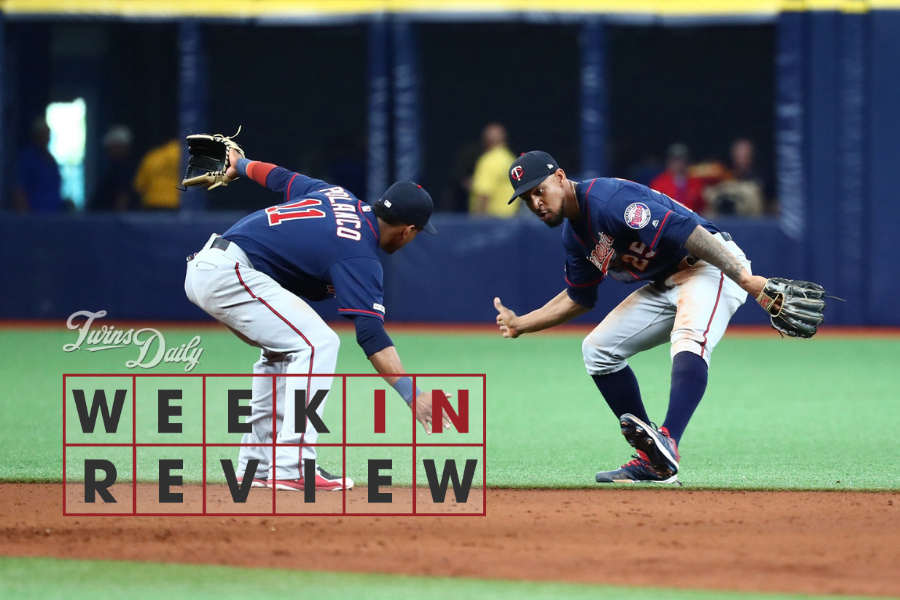 Weekly Snapshot: Mon, 5/27 through Sun, 6/2 *** Record Last Week: 4-2 (Overall: 40-18) Run Differential Last Week: -2 (Overall: +109) Standing: 1st Place in AL Central (11.5 GA) Willians Watch: 4-for-17 last week (Season AVG: .260) Before we get started, a few roster updates: On Tuesday, Minnesota placed Michael Pineda on the Injured List with right knee tendinitis and called up Devin Smeltzer from Triple-A. You can read about his stunning debut in the Highlights section below. It sounds like the plan is for Smeltzer to start again on Tuesday in Cleveland, although the Twins could get by with four starters until next weekend, when Pineda's eligible to return. Zack Littell was optioned back to Triple-A on Sunday to make room for Mitch Garver, who surpassed all expectations with a speedy return from his ankle sprain suffered on May 14th and batted leadoff in his first game back. The Twins sent Luis Arraez back to the minors, making room for Nelson Cruz to return on Tuesday after a two-game rehab stint at Fort Myers. HIGHLIGHTS In February, when the Twins signed Jorge Polanco to a contract extension that can keep him in Minnesota through 2025 at controlled costs, it looked like a savvy move to lock up a quality regular for the long haul. Now, he's leading the best team in baseball as an MVP candidate at age 25. Polanco missed Thursday's game with a bout of illness (and the Twins incidentally got routed), but showed no signs of being under the weather while on the field. In five games, he went 8-for-22 with three doubles and four RBIs. It's not just the gaudy overall offensive numbers – a league-leading .338 average and the best OPS among MLB shortstops at .989 – that impress me so about Polanco. It's the smaller things he's bringing to the table, like coming through with sac flies and squeeze bunts in big spots, and showing much more sharpness defensively. He continually solidifies himself as a championship building block. Fellow 25-year-old Byron Buxton is doing the same. His outstanding week (6-for-16 with two homers, a triple and six RBIs) was highlighted by perhaps his best game of the season on Sunday. The finale in Tampa saw Buxton at his most dynamic, impacting and disrupting in so many different ways. He hit, collecting a single and a double in four at-bats. He ran wild, moving from first-to-third on a pickoff attempt gone awry in the fifth, then scoring easily on a three-foot bunt by Polanco. And in center field, he did this: https://twitter.com/MLB/status/1135249612376301568 When he racked up 18 doubles and just one home run in his first 38 games, it stood to reason that Buxton's ratio would balance out a little as more of his drives started landing over the fence. That's exactly what's happened; since May 15th, he has five homers and just two doubles in 17 games. It all adds up to a hefty .517 slugging percentage for Buck, who entered this season with a .387 career mark. Ehire Adrianza didn't play a ton last week, collecting four hits in his nine plate appearances, but I feel his extended run of offensive production is worth calling out. It isn't as noticeable since he's not a regular, and is always relegated to the bottom of the lineup, but Adrianza has been on fire the past several weeks. Since seeing his batting average drop to .120 after a stretch of 22 hitless plate appearances in early May, the utilityman has batted .432 with a 1191 OPS in his last 16 games. Toss in the turnaround of Marwin Gonzalez, who's batting .302 since the start of May, and the Twins have turned two early laggards into assets. This helps explain why the offense has kept chugging merrily along in the absence of Garver and Cruz. Also on cruise control is Jake Odorizzi, who rattled off six more scoreless innings on Sunday in his finest effort yet. It's now customary for the right-hander to blank his opponents – he's allowed zero runs in six of his past seven starts – but he was especially transcendent against a tough Rays offense on the road. Odorizzi piled up whiffs with a high-octane fastball, touching 95 as late as the sixth inning. In six scoreless innings, he struck out nine and induced 21 swinging strikes (nearly all with the heater). Pure dominance. Through 12 starts, Odorizzi has eight wins and an AL-best 1.96 ERA. He's not just getting fat off easy opponents, either; he's beaten Houston (twice), the Yankees in New York, and now the Rays in Tampa. As we head into June, he is the Cy Young frontrunner. Somehow, Odorizzi's gem on Sunday wasn't the rotation's most memorable moment from last week. That'd have to be Smeltzer's out-of-nowhere dazzling debut on Tuesday. Minnesota's move to place Pineda on the IL and insert the 23-year-old left-hander, who started catching our attention early this year, was unexpected but worked out brilliantly. Smeltzer was masterful, pounding the zone with an incredible 77% strikes and notching seven Ks over six shutout frames. Milwaukee's lineup was totally out of sorts. I can't say for sure if there was an element of gamesmanship involved with the Twins announcing this move so abruptly, but it'd fit their M.O., and the lack of advance scouting on Smeltzer certainly did seem to show. More flexing from a front office that managed to acquire Smeltzer from the Dodgers as a toss-in for two months of Brian Dozier last summer. LOWLIGHTS After showing remarkable consistency through his first eight starts, Martin Perez finally ran into his first dud on Thursday, when the Rays jumped all over him for six runs in a third inning he failed to escape. The left-hander has a history of shaky control, and it's reared its head of late as he's walked 10 hitters over 14 1/3 innings in his past three starts. The Rays were just not biting on his inside cutters, disarming him of what's been a hugely reliable weapon up to this point. Perez's replacement in the game fared no better. Littell, making his second appearance for the Twins this year, was plastered for eight runs on 10 hits, putting the game completely out of reach, but to his credit he gave the team some length by throwing 4 1/3 innings. This preserved the bullpen for tighter contests that followed. We've seen several other pitchers endure complete drubbings shortly after arriving from Triple-A (Chase De Jong, Andrew Vasquez, Austin Adams). Like those before him, Littell was sent out in short order. But I do think we'll see him again sooner rather than later, because he's got a much better chance than the others of becoming a true bullpen asset. I wonder if the Twins will start letting him develop in that capacity at Rochester. All in all, it wasn't an encouraging week for the Minnesota bullpen. A rare lapse from Taylor Rogers cost the Twins in Monday's loss to Milwaukee, with Orlando Arcia's two-run bomb against him proving decisive. Rogers oddly gave up another long home run the following night, but bounced back with two excellent outings in Tampa. Matt Magill struggled badly on Sunday, coughing up five runs (four earned) while recording just two outs as the Rays surged back from a large deficit. Blake Parker gave up four runs and two homers in three appearances, after allowing just two runs and one homer total in the first eight weeks. Trevor May pitched once all week but continued to have a hard time throwing strikes. TRENDING STORYLINE On Monday, the 2019 MLB Draft will get underway. The Twins will select 13th overall. You can learn about names that may be available to them in the first round – as well as all the other top talent in this year's class (including a player at No. 1 who "could be one of the best prospects to enter the draft in the last five years") in the excellent rankings Andrew Thares has put together here at Twins Daily: Twins Daily 2019 MLB Draft Top 50 Prospects: 1-10 Twins Daily 2019 MLB Draft Top 50 Prospect: 11-20 Twins Daily 2019 MLB Draft Top 50 Prospect: 21-30 Twins Daily 2019 MLB Draft Top 50 Prospect: 31-40 Twins Daily 2019 MLB Draft Top 50 Prospect: 41-50 We'll have the most comprehensive Twins draft coverage anywhere, so make sure to check in frequently on Monday, Tuesday and Wednesday as Minnesota adds a fresh wave of prospects to the system. Of course, the passing of the draft also means it's open season on Craig Kimbrel and Dallas Keuchel. Will the Twins strike on either pitcher as their rotation and bullpen show signs of wobbling? DOWN ON THE FARM While Minnesota's top two position-player prospects – Royce Lewis and Alex Kirilloff – have yet to really hit their strides offensively, the team's first-round draft pick from a year ago is heating up. It strangely took Trevor Larnach more than a month to hit his first home run, but he enjoyed a blistering May, slashing .371/.456/.619 with 10 doubles and four bombs. He ended the month with a bang, going 9-for-13 with six RBIs in his final three games, and is off to a nice start in June after launching his fifth home run of the season on Sunday. Over the weekend, we handed out our monthly Twins Daily minor-league awards. Minor League Hitter of the Month: Lewin Diaz. Signed out of the Dominican Republic for $1.3 million in 2013, Diaz oozed power potential with his big, projectable frame. But through his first five years as a pro, the on-field pop just never emerged, and he faded from prospect relevance. His monster month of May (.317/.351/.702 with 10 home runs in 26 games) puts him back squarely on the map as a potential late bloomer. Minor League Pitcher of the Month: Jordan Balazovic. With Brusdar Graterol sidelined by a shoulder problem, Balazovic is the arm to watch in Minnesota's system right now. After moving up from Cedar Rapids to Fort Myers at the beginning of May, he posted a 2.13 ERA and 35-to-5 K/BB ratio in 25 1/3 innings, holding opponents to a .140/.211/.163 line. He could join Graterol as another 20-year-old in the Pensacola rotation before summer's end. LOOKING AHEAD The Twins and Indians haven't faced one another since the first series of the season. Things have... changed a bit since then: https://twitter.com/AaronGleeman/status/1134167399047950337 The Twins roll into Progressive Field as prohibitive division favorites, riding high after an invigorating series win, and they have a chance to further crush Cleveland's dwindling hopes. The Indians are limping into this one below .500 after dropping three of four against a White Sox team the Twins thoroughly dismantled last weekend. It's early June, but Cleveland has gotta be in all-out desperation mode. They cannot afford to lose this series. TUESDAY, 6/4: TWINS @ INDIANS – LHP Devin Smeltzer v. RHP Shane Bieber WEDNESDAY, 6/5: TWINS @ INDIANS – LHP Martin Perez v. RHP Carlos Carrasco THURSDAY, 6/6: TWINS @ INDIANS – RHP Jose Berrios v. RHP Trevor Bauer FRIDAY, 6/7: TWINS @ TIGERS – RHP Kyle Gibson v. LHP Matthew Boyd SATURDAY, 6/8: TWINS @ TIGERS – RHP Jake Odorizzi v. TBD SUNDAY, 6/9: TWINS @ TIGERS – TBD v. LHP Ryan Carpenter Catch Up On Twins Daily Game Recaps Game 53 | MIL 5, MIN 4: Hader Closes the Door on the Twins Win Streak Game 54 | MIN 5, MIL 3: Smeltzer Shines in Emotional MLB Debut Game 55 | TB 14, MIN 3: Well … That Just Happened Game 56 | MIN 5, TB 3: Twins Rally, Top Rays Late Game 57 | MIN 6, TB 2: Marwin Carries May Success Into June, Helps Lead Twins Over Rays Game 58 | MIN 9, TB 7: Odorizzi Shines In Tampa Return
 -
Despite their league-leading record, run differential, and trending results, the Twins – sitting on a double-digit lead in the AL Central – still didn't crack the No. 1 spot on freshly published power rankings at ESPN or CBS on Monday morning. These snubbings being treated as subjects of controversy speaks to how much things have changed in two months for a Minnesota team that entered the year seeking to merely assert its relevance.In January, I wrote a piece here remarking about how drastically the Twins transformed their identity in just a five-year span, and how jarring this felt for an organization so steeped in stability. My primary focus there was the pitching staff, which has evolved from a group of contact-heavy soft-tossers to an amalgamation of stuff, velocity, and whiffs. But I also made note that in 2013, Minnesota had zero players hit 20 home runs. It was par for the course; the previous year they hit the fewest homers in the league, and for almost the entirety of Terry Ryan's tenure as GM, they were always reliably in the bottom half. This is team that went from 1988 through 2005 without seeing a single 30-HR season. Whether it wasn't a priority or they just didn't know how to teach it (likely a combination of both), the Twins never featured power as a true strength. The new front office signaled early on their intent to alter this distinction. With an analytical new-age mindset, Derek Falvey and Thad Levine started populating the org's ranks with analytical thinkers and Ivy League degrees. The new braintrust studied league-wide trends deeply, and slowly began to optimize the roster for what it saw as the future. “The uppercut swing is like the three-point shot in the NBA,” director of baseball operations Daniel Adler told Adam Platt of Twin Cities Business ahead of the 2018 season. "When they go in, you get 50 percent more points. Fly-ball-based hits become home runs, which justify [a swing that gives up the opportunity for] ground-ball-based hits.” Makes sense! But of course, deciding you want to hit a lot of home runs isn't the same as actualizing such a plan. Efforts to translate these beliefs to the field obviously came up short last year, sabotaged by Logan Morrison flaming out and various mishaps afflicting the team's core. Here in 2019, it's all coming together. Through 52 games, the Twins are on pace to shatter the league's precedent for home runs in a season. Last year the Yankees set a new MLB benchmark with 267 bombs, topping the long-standing record of 264 set by the 1997 Mariners. At their current rate, the Twins will finish this year with 324. With those previous standard-bearers, you could look at the rosters beforehand and envision historical home run totals. The '97 M's featured Ken Griffey Jr., Jay Buhner, Edgar Martinez, Alex Rodriguez. Last year's Yanks had Giancarlo Stanton, Aaron Judge, Gary Sanchez, Didi Gregorius. But the 2019 Twins? I mean sure, many of us contended this group could challenge the franchise home run record. But to suggest they might blow past that number by 100? It was inconceivable. It still feels inconceivable, even as I watch it play out before my very eyes – the scrappy little Twins outbombing the Bombers. Such a scenario would require almost every hitter on on the roster to either max out or redefine his slugging prowess and, well, that's exactly what is happening. Nearly each Twins regular is on track for a career-high in homers. Some cases are flat-out stunning, like Mitch Garver (already at nine after totaling seven as a rookie) and Eddie Rosario (presently on pace for 50). Others are more or less culminations of best-case scenarios – we all plausibly hoped that Jorge Polanco, Max Kepler and Byron Buxton could sometime join the ranks of top sluggers at their respective positions – but to see it all happen at once? While C.J. Cron brings in a 40-HR pace and Jonathan Schoop recaptures his prime production? Like I said, inconceivable. I keep using that word, and I'm starting to think it doesn't mean what I think it means. Because this is happening. The Twins just keep bombing away, night after night, with a lineup that shows no relent. They have seven or eight different position players who could plausibly garner All-Star consideration. Such a confluence of outstanding results requires a medley of contributions. So many factors have played a role, from the unseen to the more obvious, like coaches who get through and talented players who execute. But ultimately, it all ties back to a front office that had a vision and saw it through. They put data analysts and instructors in place who could materially elevate performance. They inherited a roster and customized it to their own specifications, removing final traces of the previous regime's imprint when Joe Mauer and Brian Dozier completed their contracts last year. This front office's influence has even made an impact on those purportedly uncontrollable variables – namely, health. It's been a key driver of the offense's success, and while luck obviously plays a big part in that, the new leadership has totally retooled Minnesota's training and medical staffs. Worth noting as we see Garver preparing to return in about half of his estimated timeline. Meanwhile, it's not entirely coincidental we've seen so few players go down to begin with. Rocco Baldelli makes a point of giving his players ample rest, and has championed the idea of rotating three catchers to keep all their legs fresh. The conservative approaches to bringing Sano and Nelson Cruz back from their ailments have been emblematic. Then there are the subtler things, like Buxton being asked to play a little further back in center field, lessening the frequency of blindsidings from the wall. I've been a vocal fan of this front office since very early on, and they continually reaffirm my faith. Falvey and Levine have built a cutting-edge baseball operation where useful data guides the ship, and advantages are sought in every element, from every corner. It's impossible for an outsider to even divvy up credit amongst Falvey, Levine, Adler, Baldelli, and the many others involved. This has truly become a collaborative administration, as promised – one that's reinventing the Twins as a modern championship contender, out-slugging every club to come before it. To try and keep this article somewhat focused, I haven't even mentioned the organization's pitching turnaround, which is arguably even more impressive. For those of us who spent years lamenting the Twins' relative antiquation and insularity, begging for an increased emphasis on analytics, this is especially rewarding to watch. Much credit belongs to Jim Pohlad, Dave St. Peter, and other top executives who embraced this thinking and orchestrated a miraculous transition: from lagging behind the pack to leading it in just a few short years. Plenty of baseball clubs have looked admiringly at teams like the Astros, hoping to replicate their success, but no one's done it this well. The good vibes ringing out around the Twins right now are well deserved. And the folks who set this machine into motion, by putting their faith in the right people and providing the necessary resources, will themselves be richly rewarded as fans pour into Target Field this summer. What we saw this past weekend was only the beginning. These 2019 Minnesota Twins aren't assured anything with two-thirds of the season left to go. But by now we can safely label them a power to be reckoned with, risen from a prolonged era of perpetual irrelevance. Click here to view the article
- 20 replies
-
- 8
-
-
- derek falvey
- thad levine
- (and 1 more)
