



Nick Nelson
-
Posts
8,327 -
Joined
-
Last visited
-
Days Won
56
Content Type
Profiles
News
Minnesota Twins Videos
2026 Minnesota Twins Top Prospects Ranking
2022 Minnesota Twins Draft Picks
Minnesota Twins Free Agent & Trade Rumors, Notes, & Tidbits
Guides & Resources
2023 Minnesota Twins Draft Picks
The Minnesota Twins Players Project
2024 Minnesota Twins Draft Picks
2025 Minnesota Twins Draft Pick Tracker
2026 Minnesota Twins Draft Tracker: Picks & Bonuses
Forums
Blogs
Events
Store
Downloads
Gallery
Everything posted by Nick Nelson
-
With Josh Donaldson aboard and Brusdar Graterol pegged for a relief role, the offense and bullpen both feel complete. (Each with monumental depth and upside.) The starting rotation, however, could still use a finishing touch. Are the Twins really going to open with two rookies in place? Presumably, they're still mining the market for a final addition.Personally, my preference would be to see the Twins put a bow on their offseason by trading for an impact starter who could actually upgrade the rotation. It might still happen. But there's certainly a good case to be made for turning toward the free agent market to address this last need. For one thing, the Twins don't need to give up any talent by going this route. In fact, they likely won't even need to give up a 40-man roster spot, since I suspect every remaining player on the market would settle for a non-guaranteed deal (especially if it came with a strong likelihood of earning a rotation spot out of the gates on Minnesota's stacked team). This matters because the 40-man is already full; as is, someone is going to need to come off to make room for Donaldson (likely on Wednesday). The Twins would rather avoid pruning any more of their talent, and a minor-league signing would allow them to hold off on adding the newly-signed player until March, when they have the ability to shift Rich Hill to the 60-day IL. By my count, there are 23 remaining free agent starters with any level of notoriety. Here I will rank them in terms of how they fit with the Twins. 1. Taijuan Walker (27): Easily the most appealing name left among FA starters. The former top prospect has flashed excellence at times in Seattle and Arizona, and will still be 27 for most of 2020. He missed most of 2019 recovering from Tommy John surgery but returned to make one outing at season's end, so he's seemingly okay healthwise. It's odd and a little concerning he hasn't signed yet. 2. Jhoulys Chacin (32): He was knocked around for a 6.01 ERA in 103 innings with Milwaukee and Boston last year, but put up a 3.69 ERA over 373 frames in the two seasons prior, and even as he struggled in 2019, he managed to strike out a batter per inning. Seems like a very reasonable bounceback candidate. 3. Trevor Cahill (32): Might be generally viewed as a reliever now, after pitching exclusively in that role for the Angels after May last year. But Cahill is still conditioned to start, having thrown 100+ innings in the each of the past two years, and the appeal of a rotation opportunity could draw him to Minnesota. He can still miss some bats. 4. Cody Anderson (29): A bit of an odd case in that he's reaching free agency after throwing just 160 total major-league innings. Injuries gobbled up most of his service time in Cleveland, including last year when he underwent surgery for a torn flexor tendon in his elbow. But he's under 30, will be about nine months removed from the operation when spring training starts, has shown strong ability when on the mound, and is familiar to Derek Falvey. 5. Andrew Cashner (33): Another longtime starter who transitioned to relief amidst struggles last year. Far removed from his glory days in San Diego, with a 4.61 ERA/4.86 FIP since 2016, he's not attractive on the surface. But Cashner still brings it in the mid-90s and it's not crazy to think he could be a few tweaks away from being effective. 6. Danny Salazar (30): He has had about as hard a time staying healthy as any pitcher in the league, making one appearance since 2017 and reaching 30 starts in a season only once before that. But when he's on the hill, Salazar is awesome, averaging 10.5 K/9 with a 3.85 ERA in 591 career innings. He's an extreme longshot but worth bringing in if there's any confidence his arm can hold up. Like Cody Anderson, Falvey knows Salazar well. 7. Jeremy Hellickson (33): Fizzled last year in Washington, but posted a 3.45 ERA in 2018, and a 3.71 mark in 2016. The shoulder strain that cost him most of 2019 is worrisome given his age and declining velocity, but he's had plenty of success in his career and isn't ancient. As a rookie in 2010, Hellickson was a teammate of Rocco Baldelli's in Tampa. 8. Wade LeBlanc (35): Last year was rough for LeBlanc, who coughed up 27 homers with a 5.71 ERA for Seattle, but he'd enjoyed some solid stretches in the years prior, with a 3.91 ERA in 292 innings from 2016 through 2018. If Wes Johnson and the Twins could mitigate his persistent long ball issues, he could be a fairly decent back-of-rotation plug. 9. Marco Estrada (36): Back in 2015 and 2016, his first two years with Toronto, Estrada was sensational, registering a 3.30 ERA while holding opponents to a .203 AVG both years. He has since battled health and performance issues, most recently missing most of 2019 due to back surgery. If he's at all back to normal, the swing-and-miss stuff is intriguing. 10. Jason Vargas (37): Only two seasons removed from winning 18 games as an All-Star for the Royals in 2017. Looked pretty good with the Mets last year before floundering after a deadline trade to Philly. Certainly not much upside here but the lefty might be suitable for consuming some early-season innings. 11. Derek Holland (33): He has finished with an ERA above 6 in two of the last three seasons, which is quite discouraging, but sandwiched a solid season with the Giants in 2018. Compared to most others on this list, Holland's record of durability is immaculate, but control issues have plagued him of late. Thad Levine is plenty familiar from his days in Texas. 12. Matt Harvey (31): The red flags and question marks are almost endless coming off a nightmare campaign with the Angels (7.09 ERA), but Harvey was once a premier young pitcher in the game, and he's not all that old. so the upside hasn't faded entirely. Twins Daily member billyp4444 made a case for Harvey in the blogs section this week. 13. JC Ramirez (31): The Angels gave up on him last August as he failed to show much in his return from Tommy John. He's not very accomplished as a big-leaguer but looked decent in the Halos rotation in 2017 (4.15 ERA in 147 innings) and he was pumping heaters at 95+ prior to TJ surgery. Might be worth a look if he's regained strength with some time off. 14. Chad Bettis (30): His crummy career numbers (5.12 ERA, 1.47 WHIP) need to be contextualized against the reality of pitching at Coors Field. Bettis is not great but some metrics suggest he's about average when healthy, which he seemingly is after recovering from hip surgery. He's a pitch-to-contact guy who gets grounders, which isn't the worst match for the Twins presently. 15. Aaron Sanchez (27): In terms of pure ability and upside, Sanchez would rank near the top of this list. But he's just not a fit for Minnesota's needs, given that he'll miss the start of the 2020 season after undergoing shoulder surgery in September. I'd still take him over any of the washouts below, which is to say that this is about the cutoff where I'd just as soon roll with a rookie. 16. Tommy Milone (33): Has basically one strength, and it's enabled him to keep sticking around: control. He reliably pounds the zone, but it's not enough to make up for the way he gets raked by opposing hitters. There's not enough ceiling here to be interesting. 17. Clay Buchholz (35): He was a disaster in 12 starts for Toronto last year, posting a 6.56 ERA with career-low velocity, but looked considerably better the previous season in Arizona (2.01 ERA in 98 IP). Experience is the selling point here, but there are better options on that front. 18. Shelby Miller (29): His is a name that has intrigued me for some time, because he's still young and was oh-so-good when he first came into the league with Atlanta. But the guy has a 6.89 ERA and 1.75 WHIP dating back to 2016. It would take an especially good report on his health to raise any kind of optimism around him. There's been almost zero buzz on Miller this winter, so any faith in his once-prized arm appears to have evaporated. 19. Ervin Santana (37): A reunion with the pre-Donaldson title-holder for biggest Twins FA signing ever would be kinda fun, especially if there was any chance Santana could recapture a semblance of his previous form with the Twins. He was a borderline ace in 2016 and 2017 before completely unraveling. In eight MLB starts over the past two seasons, Erv has given up an egregious 15 home runs in 38 innings. At his age there's not much reason to expect at turnaround. 20. Clayton Richard (36): He's old and he's been consistently terrible for years, with an utterly hittable repertoire that right-handed hitters feast upon. Ostensibly he's a ground ball specialist but he's lost the ability to limit home runs of late. No appeal here. 21. Hector Santiago (32): From the moment Minnesota acquired him via the Angels in 2016, Santiago's reasonably successful career pretty much fell off a cliff. He has lost all touch with the strike zone (113 walks in 206 innings since 2017), making him essentially unusable. 22. Wei-Yin Chen (34): The Marlins are paying Chen $22 million NOT to pitch for them in 2020, after releasing him and his 6.59 ERA this offseason. That pretty much tells you all you need to know. 23. Edwin Jackson (36): He's amazingly been around since 2003, when he debuted at age 19 for the Dodgers. Since then he's accrued a 4.68 ERA in nearly 2,000 major-league innings. Jackson still wants to pitch, and seeing him join his record 15th different team would be cool, but he looked to have nothing left in the tank last year while dropping a ghastly 9.58 ERA and 2.03 WHIP for Toronto and Detroit. Recognizing that the quality threshold here is low... Any of these names do anything for any of y'all? MORE FROM TWINS DAILY — Latest Twins coverage from our writers — Recent Twins discussion in our forums — Follow Twins Daily via Twitter, Facebook or email Click here to view the article
-
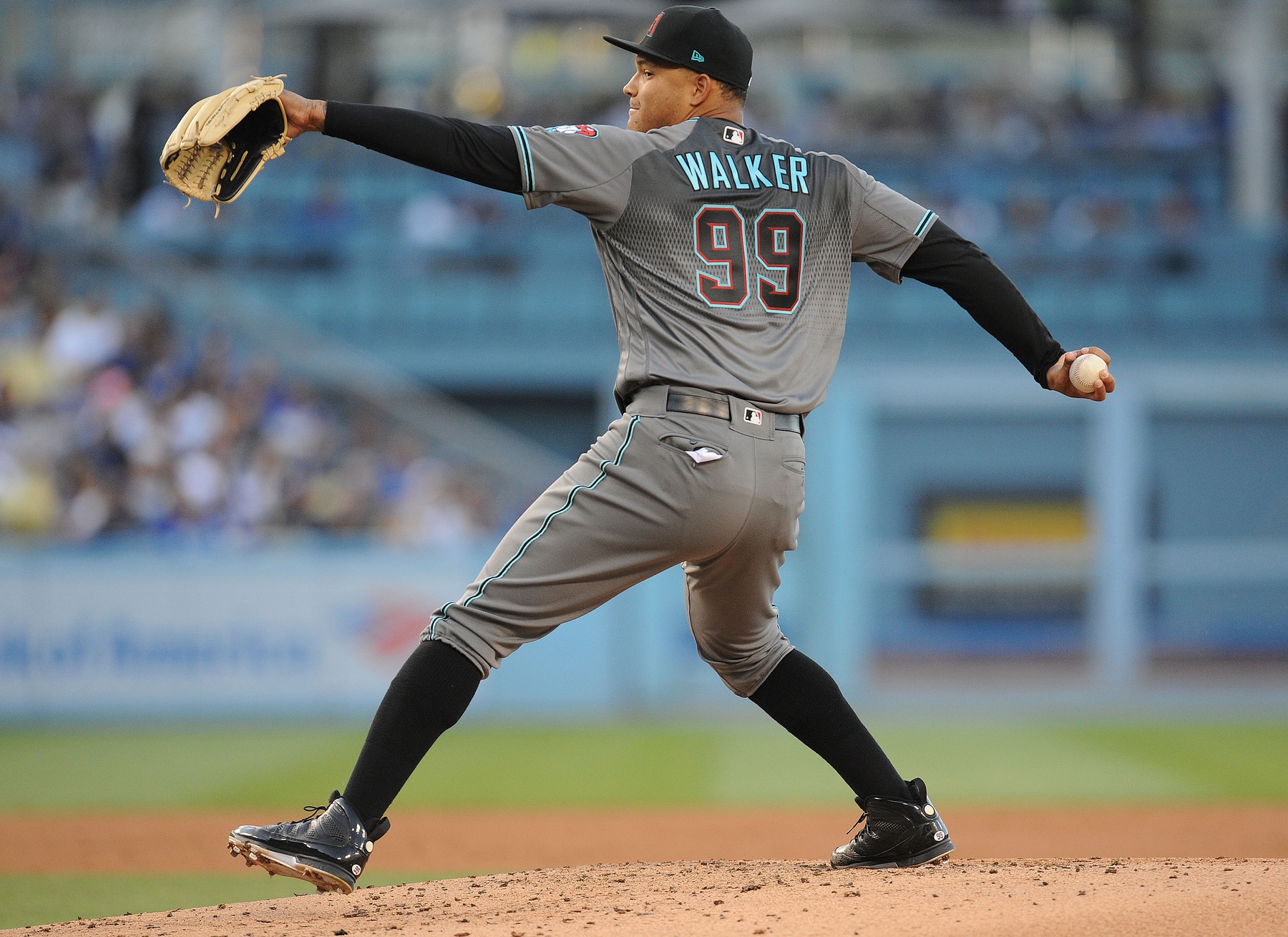 Personally, my preference would be to see the Twins put a bow on their offseason by trading for an impact starter who could actually upgrade the rotation. It might still happen. But there's certainly a good case to be made for turning toward the free agent market to address this last need. For one thing, the Twins don't need to give up any talent by going this route. In fact, they likely won't even need to give up a 40-man roster spot, since I suspect every remaining player on the market would settle for a non-guaranteed deal (especially if it came with a strong likelihood of earning a rotation spot out of the gates on Minnesota's stacked team). This matters because the 40-man is already full; as is, someone is going to need to come off to make room for Donaldson (likely on Wednesday). The Twins would rather avoid pruning any more of their talent, and a minor-league signing would allow them to hold off on adding the newly-signed player until March, when they have the ability to shift Rich Hill to the 60-day IL. By my count, there are 23 remaining free agent starters with any level of notoriety. Here I will rank them in terms of how they fit with the Twins. 1. Taijuan Walker (27): Easily the most appealing name left among FA starters. The former top prospect has flashed excellence at times in Seattle and Arizona, and will still be 27 for most of 2020. He missed most of 2019 recovering from Tommy John surgery but returned to make one outing at season's end, so he's seemingly okay healthwise. It's odd and a little concerning he hasn't signed yet. 2. Jhoulys Chacin (32): He was knocked around for a 6.01 ERA in 103 innings with Milwaukee and Boston last year, but put up a 3.69 ERA over 373 frames in the two seasons prior, and even as he struggled in 2019, he managed to strike out a batter per inning. Seems like a very reasonable bounceback candidate. 3. Trevor Cahill (32): Might be generally viewed as a reliever now, after pitching exclusively in that role for the Angels after May last year. But Cahill is still conditioned to start, having thrown 100+ innings in the each of the past two years, and the appeal of a rotation opportunity could draw him to Minnesota. He can still miss some bats. 4. Cody Anderson (29): A bit of an odd case in that he's reaching free agency after throwing just 160 total major-league innings. Injuries gobbled up most of his service time in Cleveland, including last year when he underwent surgery for a torn flexor tendon in his elbow. But he's under 30, will be about nine months removed from the operation when spring training starts, has shown strong ability when on the mound, and is familiar to Derek Falvey. 5. Andrew Cashner (33): Another longtime starter who transitioned to relief amidst struggles last year. Far removed from his glory days in San Diego, with a 4.61 ERA/4.86 FIP since 2016, he's not attractive on the surface. But Cashner still brings it in the mid-90s and it's not crazy to think he could be a few tweaks away from being effective. 6. Danny Salazar (30): He has had about as hard a time staying healthy as any pitcher in the league, making one appearance since 2017 and reaching 30 starts in a season only once before that. But when he's on the hill, Salazar is awesome, averaging 10.5 K/9 with a 3.85 ERA in 591 career innings. He's an extreme longshot but worth bringing in if there's any confidence his arm can hold up. Like Cody Anderson, Falvey knows Salazar well. 7. Jeremy Hellickson (33): Fizzled last year in Washington, but posted a 3.45 ERA in 2018, and a 3.71 mark in 2016. The shoulder strain that cost him most of 2019 is worrisome given his age and declining velocity, but he's had plenty of success in his career and isn't ancient. As a rookie in 2010, Hellickson was a teammate of Rocco Baldelli's in Tampa. 8. Wade LeBlanc (35): Last year was rough for LeBlanc, who coughed up 27 homers with a 5.71 ERA for Seattle, but he'd enjoyed some solid stretches in the years prior, with a 3.91 ERA in 292 innings from 2016 through 2018. If Wes Johnson and the Twins could mitigate his persistent long ball issues, he could be a fairly decent back-of-rotation plug. 9. Marco Estrada (36): Back in 2015 and 2016, his first two years with Toronto, Estrada was sensational, registering a 3.30 ERA while holding opponents to a .203 AVG both years. He has since battled health and performance issues, most recently missing most of 2019 due to back surgery. If he's at all back to normal, the swing-and-miss stuff is intriguing. 10. Jason Vargas (37): Only two seasons removed from winning 18 games as an All-Star for the Royals in 2017. Looked pretty good with the Mets last year before floundering after a deadline trade to Philly. Certainly not much upside here but the lefty might be suitable for consuming some early-season innings. 11. Derek Holland (33): He has finished with an ERA above 6 in two of the last three seasons, which is quite discouraging, but sandwiched a solid season with the Giants in 2018. Compared to most others on this list, Holland's record of durability is immaculate, but control issues have plagued him of late. Thad Levine is plenty familiar from his days in Texas. 12. Matt Harvey (31): The red flags and question marks are almost endless coming off a nightmare campaign with the Angels (7.09 ERA), but Harvey was once a premier young pitcher in the game, and he's not all that old. so the upside hasn't faded entirely. Twins Daily member billyp4444 made a case for Harvey in the blogs section this week. 13. JC Ramirez (31): The Angels gave up on him last August as he failed to show much in his return from Tommy John. He's not very accomplished as a big-leaguer but looked decent in the Halos rotation in 2017 (4.15 ERA in 147 innings) and he was pumping heaters at 95+ prior to TJ surgery. Might be worth a look if he's regained strength with some time off. 14. Chad Bettis (30): His crummy career numbers (5.12 ERA, 1.47 WHIP) need to be contextualized against the reality of pitching at Coors Field. Bettis is not great but some metrics suggest he's about average when healthy, which he seemingly is after recovering from hip surgery. He's a pitch-to-contact guy who gets grounders, which isn't the worst match for the Twins presently. 15. Aaron Sanchez (27): In terms of pure ability and upside, Sanchez would rank near the top of this list. But he's just not a fit for Minnesota's needs, given that he'll miss the start of the 2020 season after undergoing shoulder surgery in September. I'd still take him over any of the washouts below, which is to say that this is about the cutoff where I'd just as soon roll with a rookie. 16. Tommy Milone (33): Has basically one strength, and it's enabled him to keep sticking around: control. He reliably pounds the zone, but it's not enough to make up for the way he gets raked by opposing hitters. There's not enough ceiling here to be interesting. 17. Clay Buchholz (35): He was a disaster in 12 starts for Toronto last year, posting a 6.56 ERA with career-low velocity, but looked considerably better the previous season in Arizona (2.01 ERA in 98 IP). Experience is the selling point here, but there are better options on that front. 18. Shelby Miller (29): His is a name that has intrigued me for some time, because he's still young and was oh-so-good when he first came into the league with Atlanta. But the guy has a 6.89 ERA and 1.75 WHIP dating back to 2016. It would take an especially good report on his health to raise any kind of optimism around him. There's been almost zero buzz on Miller this winter, so any faith in his once-prized arm appears to have evaporated. 19. Ervin Santana (37): A reunion with the pre-Donaldson title-holder for biggest Twins FA signing ever would be kinda fun, especially if there was any chance Santana could recapture a semblance of his previous form with the Twins. He was a borderline ace in 2016 and 2017 before completely unraveling. In eight MLB starts over the past two seasons, Erv has given up an egregious 15 home runs in 38 innings. At his age there's not much reason to expect at turnaround. 20. Clayton Richard (36): He's old and he's been consistently terrible for years, with an utterly hittable repertoire that right-handed hitters feast upon. Ostensibly he's a ground ball specialist but he's lost the ability to limit home runs of late. No appeal here. 21. Hector Santiago (32): From the moment Minnesota acquired him via the Angels in 2016, Santiago's reasonably successful career pretty much fell off a cliff. He has lost all touch with the strike zone (113 walks in 206 innings since 2017), making him essentially unusable. 22. Wei-Yin Chen (34): The Marlins are paying Chen $22 million NOT to pitch for them in 2020, after releasing him and his 6.59 ERA this offseason. That pretty much tells you all you need to know. 23. Edwin Jackson (36): He's amazingly been around since 2003, when he debuted at age 19 for the Dodgers. Since then he's accrued a 4.68 ERA in nearly 2,000 major-league innings. Jackson still wants to pitch, and seeing him join his record 15th different team would be cool, but he looked to have nothing left in the tank last year while dropping a ghastly 9.58 ERA and 2.03 WHIP for Toronto and Detroit. Recognizing that the quality threshold here is low... Any of these names do anything for any of y'all? MORE FROM TWINS DAILY — Latest Twins coverage from our writers — Recent Twins discussion in our forums — Follow Twins Daily via Twitter, Facebook or email
 -
In Win-Now Mode, Twins Keeping Graterol in Bullpen
Nick Nelson replied to Nick Nelson's topic in Twins Daily Front Page News
I think we need to stop thinking about "reliever" in the traditional sense. Strategies are changing these days. Take a look at how the Rays have used Ryan Yarbrough over the past couple seasons (I think he was referenced earlier in this thread). Last year Yarbrough operated primarily as a reliever in the first half, often throwing multiple innings, and then moved in to the rotation after the AS break. Finished around 140 IP (which is probably Graterol's cap). In 2018, 32 of his 38 appearances came in relief but he still threw 150 innings. There's no reason to assume Graterol will be used strictly as a one-inning reliever. I suspect that (barring another SP addition) the Twins will run a number of bullpen games in the early going to fill the rotation gaps, with multiple guys throwing multiple innings. It's entirely plausible he could throw over 100 IP while being used strictly as a reliever. -
In Win-Now Mode, Twins Keeping Graterol in Bullpen
Nick Nelson replied to Nick Nelson's topic in Twins Daily Front Page News
It's about what the body is conditioned to handle. Wainwright, prior to pitching as a reliever his rookie year, had thrown 160+ IP in the minors three times. "Let the young man throw the ball" is simply not a blueprint the Twins can follow with Graterol. They need to be extremely thoughtful and careful about his usage and strain level. This is a vital asset to their future, no matter his role. -
The Minnesota Twins, having crystallized their intentions to make hay of a momentous opportunity with the landmark signing of Josh Donaldson last week, are in an interesting position regarding their top pitching prospect. There's a case to be made for delaying Brusdar Graterol's arrival by developing him as a starter. It doesn't appear to be the route this team will take.Graterol's role for 2020 has been an open question all offseason. He had worked almost exclusively as a starter in the minors up until last summer, when he returned from a two-month injury hiatus as a shutdown reliever. His dominant debut out of the bullpen included a convincing September stint with the Twins, and a shutdown inning against New York in the ALDS. Obviously, he would offer more ostensible impact out of the rotation, which is why many observers would like to see him further developed in that role. Still only 21 years old, Graterol could easily start the 2020 campaign back at Triple-A, reacclimating to the routine and building up stamina. But, based on pitching coach Wes Johnson's comments at a Winter Caravan stop in St. Cloud this week (via MLB.com writer Do-Hyoung Park), it doesn't look like that's in the cards: 2: Graterol wasn't going to be a factor for the Twins as a starter this year. Even if he avoids injuries entirely, there was no scenario in which he was going to handle a starter's workload all season long, and still be available for October. 3: A relief billing now does not rule out the possibility that Graterol can transition back into a starting role in the future. It's important to remember how young he is. At the same age, Johan Santana was still destined for three more seasons vacillating between rotation and bullpen, before blossoming as a Cy Young starter. Another example I like to cite: Adam Wainwright spent his first year in the majors as a full-time setup man, then threw 200 innings as a starter the following year. For a multitude of reasons, going with Graterol in the bullpen is the right decision at this moment for the Twins. If this were three or four years ago, and the franchise was still gazing toward a future window of contention, I might argue differently. But as I wrote earlier this week, the game has changed. MORE FROM TWINS DAILY — Latest Twins coverage from our writers — Recent Twins discussion in our forums — Follow Twins Daily via Twitter, Facebook or email Click here to view the article
-
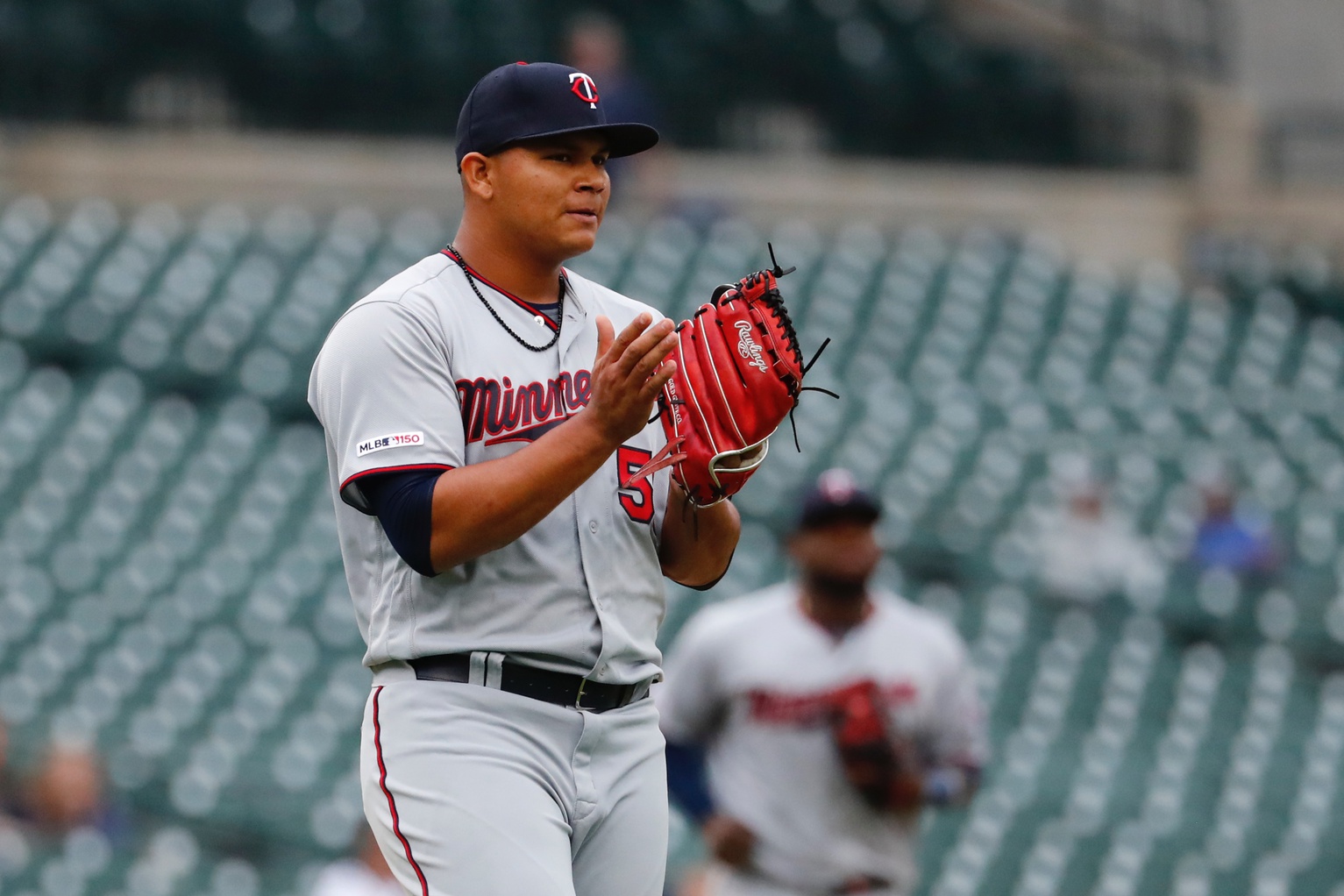 Graterol's role for 2020 has been an open question all offseason. He had worked almost exclusively as a starter in the minors up until last summer, when he returned from a two-month injury hiatus as a shutdown reliever. His dominant debut out of the bullpen included a convincing September stint with the Twins, and a shutdown inning against New York in the ALDS. Obviously, he would offer more ostensible impact out of the rotation, which is why many observers would like to see him further developed in that role. Still only 21 years old, Graterol could easily start the 2020 campaign back at Triple-A, reacclimating to the routine and building up stamina. But, based on pitching coach Wes Johnson's comments at a Winter Caravan stop in St. Cloud this week (via MLB.com writer Do-Hyoung Park), it doesn't look like that's in the cards: https://twitter.com/dohyoungpark/status/1219447335652151296 The key phrase in Park's tweets: "So the balance is finding MLB innings without pushing it." Clearly the Twins want to leverage their high-powered weapon in short order – and why wouldn't they? He was virtually lights-out as a 20-year-old rookie in a pennant race. Graterol has the very real potential to rank among the American League's most valuable relievers right now. In theory, he has also has the ultimate potential to be an ace starter, and he has looked that part at times in the minors. Chasing this upside would be a hazardous gamble for the Twins, however. Firstly, Graterol has never thrown more than 102 innings in a season. Bringing him along as a starter would require stringent workload management throughout the summer, and even then, you have to wonder how comfortable the (hopefully contending!) Twins would be pushing him into uncharted late-season territory under duress. Secondly, the process of building Graterol up toward a 100 pitches/game, 200 IP/year regimen requires using up a whole lot of bullets, even it proves to be a futile exercise. History tells us that guys who throw this hard at age 20 don't do it for long. In terms of raw juice, Graterol's arm is at its peak right now. There's a "diminishing returns" dynamic at play. Combine these natural effects of physiology with the necessary max-effort trade-offs that come a starter's workload, and it's entirely possible that the Graterol we eventually see as a starter is a far cry from the flame-throwing force we witnessed in 2019. And that's all assuming he stays healthy. Because the final point is that – even if you downplay the progressive attrition caused by throwing meaningless innings in the minors – injuries can strike at any time. Graterol is living proof. He signed with the Twins at age 16, threw 11 innings, and then didn't pitch in a game again for two full years due to injury. He seemed to be in the clear after a healthy 2018, but landed on the shelf again last May with a shoulder impingement, which sidelined him for two months. Given his undeniable durability concerns, it behooves both team and player to opt now toward short stints in the majors; Graterol can accrue MLB service time at age 21, while the Twins can fully unleash him at the height of his physical prowess, amidst a full-fledged championship push. If you find yourself feeling a little disappointed by this development, which all but subtracts Graterol as a hypothetical wild-card in Minnesota's currently ace-less 2020 rotation, let me leave you with three things: 1: Graterol can be a massive difference-maker out of the bullpen right away, lessening the burden on the rotation in turn. https://twitter.com/NickNelsonMN/status/1215337548584816641 2: Graterol wasn't going to be a factor for the Twins as a starter this year. Even if he avoids injuries entirely, there was no scenario in which he was going to handle a starter's workload all season long, and still be available for October. 3: A relief billing now does not rule out the possibility that Graterol can transition back into a starting role in the future. It's important to remember how young he is. At the same age, Johan Santana was still destined for three more seasons vacillating between rotation and bullpen, before blossoming as a Cy Young starter. Another example I like to cite: Adam Wainwright spent his first year in the majors as a full-time setup man, then threw 200 innings as a starter the following year. For a multitude of reasons, going with Graterol in the bullpen is the right decision at this moment for the Twins. If this were three or four years ago, and the franchise was still gazing toward a future window of contention, I might argue differently. But as I wrote earlier this week, the game has changed. MORE FROM TWINS DAILY — Latest Twins coverage from our writers — Recent Twins discussion in our forums — Follow Twins Daily via Twitter, Facebook or email
 -
If you view the two options as Jason Tyner or Rondell White, they I guess you can argue it was a "great signing." But that's not the case. The 2006 Twins were a championship-caliber team on the cusp (as illustrated by their 96 wins) and to address one of their biggest weaknesses TR went bargain-hunting as usual. White had a good season in 2005, you're right. But he was a 34-year-old with an iffy track record of production and durability, which is why he was available for $2.5M. I don't think I'm going out on a limb by suggesting that the 2000s for the Twins were characterized by an inability to add external pieces capable of putting a highly talented core over the top. Signings like White, Ponson, Ramon Ortiz, Adam Everett, Mike Lamn, Tony Batista... these were costly half-measures. The Donaldson signing gives me hope that this run will be much different.
-
In both the postseason and offseason, Twins fans have grown accustomed to letdowns. The franchise's historical run of futility in October is exacerbated by (and maybe reinforced by) its routine shortcomings in the months that follow. By snapping one of those trends last week, Minnesota took a huge step toward ending the other.Much has of course been written about the baseball impact of signing Josh Donaldson. A few samplings to check out if you haven't yet: Josh Donaldson, Bringer of Rings by Matthew TruebloodFive Things Josh Donaldson Does Better Than Any of His New Teammates by Matthew TaylorDevil's Advocate: Why the Josh Donaldson Deal Isn't Good for the Twins by Matthew LenzWith Donaldson in the Fold, Can the Twins Afford to Wait Until the Deadline to Trade for Starting Pitching? by Nash WalkerBut today I wanted to zoom out and analyze the broader meaning of this move. What intrigues me is not just the Twins handing out a free agent contract that nearly doubles their previous record, but the way it went down. Over the years, fans have heard so many times that the Twins were "interested in" a top prize that landed elsewhere, or "made a strong offer" that came up short, or "didn't see a fit" for an expensive player who assuredly would've fit... It's understandable how so many came to feel jaded. Add in the history of trade deadline malaise, and the front office has earned its skepticism. However, it bears emphasizing: This ain't the same front office. I do think much of the "Twins are cheap" sentiment is engrained from an era where that claim was undeniably true; in the 2000s Terry Ryan would reliably sign no-upside bargain-bin players like Rondell White and Sidney Ponson to fill key holes on contending teams. The new regime, seemingly empowered from the start to bump spending upward, has proven far more willing to play in the medium-deep waters of free agency, with signings like Nelson Cruz ($24M), Jason Castro, ($24M), Marwin Gonzalez ($18M), and Addison Reed ($16M). Now, they've taken a dive into the deep end. This was a long time coming. Even in their more aggressive state, the Twins had continually come up short on the big fish – an angling pattern that carried over into this offseason, where they were unable to secure their top target in Zack Wheeler. As more pitching names came off the board, a familiar feeling began to set in, especially once reports arose that Minnesota had grown "pessimistic" in its pursuit of Donaldson, the last hope for a noteworthy FA addition. About a week later, the historic deal was done. What happened? The Twins were patient. They made an offer they felt was legit, and then they stood their ground, even as Donaldson and his agent (understandably) tried to leverage Minnesota's bid against the Braves and others. When reports emerged that the free agent would sign on the spot if someone reached his desired threshold ($110 million), the Twins didn't bite. In fact, they took a stand, by signaling via their own media transmissions that they were out on the posturing game. Despite their patience, however... The Twins were persistent. They never gave up. A story by Phil Miller in the Star Tribune details the team's recruiting efforts, which included a pitch from Rocco Baldelli, assurances from the front office about their commitment to winning, a video overture from Miguel Sano, and plenty of lobbying from Twins fan/golf star Mardy Fish. Eventually, the Twins also made a key improvement to their offer; according to Miller's piece, it was the addition of a fifth-year option with an $8 million buyout that jump-started talks and built momentum to close. Minnesota took that step because, at the end of the day... The Twins were serious. They wanted to spend that money. They wanted to make a splash. It wasn't all talk. But the front office wasn't going to spend it indiscriminately, and the relative value propositions (plus generally unfavorable circumstances) steered them away from the pitching market. After all the offseason near-misses and no-thankses, this time the Twins wouldn't be denied. While I'm sure all the aforementioned pitches and perks helped to lure Donaldson, he makes no secret of what swayed him: money. "Ultimately the financials were where they needed to be for my agent and my family and everybody to feel very happy with it," Donaldson said in an interview with Sports Illustrated. He added in an interview with Atlanta's WSB-TV that other offers were "not in the same realm." It is refreshing and almost surreal to hear those quotes about a free agent showdown that the Twins actually WON, isn't it? For them to be throwing around their weight in pursuit of a coveted, elite talent – who was also chased by a regional favorite and the defending champions – completely shatters a long-running narrative. Now, this doesn't erase the team's history, but it's hopefully another signal of the new reality: The Twins are ready to be definitive players in the American League. With the contention window flung open, they're moving to "put their foot on someone's throat," as GM Thad Levine put it. The front office convinced Donaldson of this, and by successfully doing so, they're convincing me and fellow followers of the club. The impacts of this new acquisition on the Twins lineup and on their infield defense are immense, but we shouldn't overlook its corresponding impact on fan morale and confidence. This is a game-changer. MORE FROM TWINS DAILY — Latest Twins coverage from our writers — Recent Twins discussion in our forums — Follow Twins Daily via Twitter, Facebook or email Click here to view the article
-
Last Stand: Twins Finally Win a High-Stakes Offseason Showdown
Nick Nelson posted an article in Twins
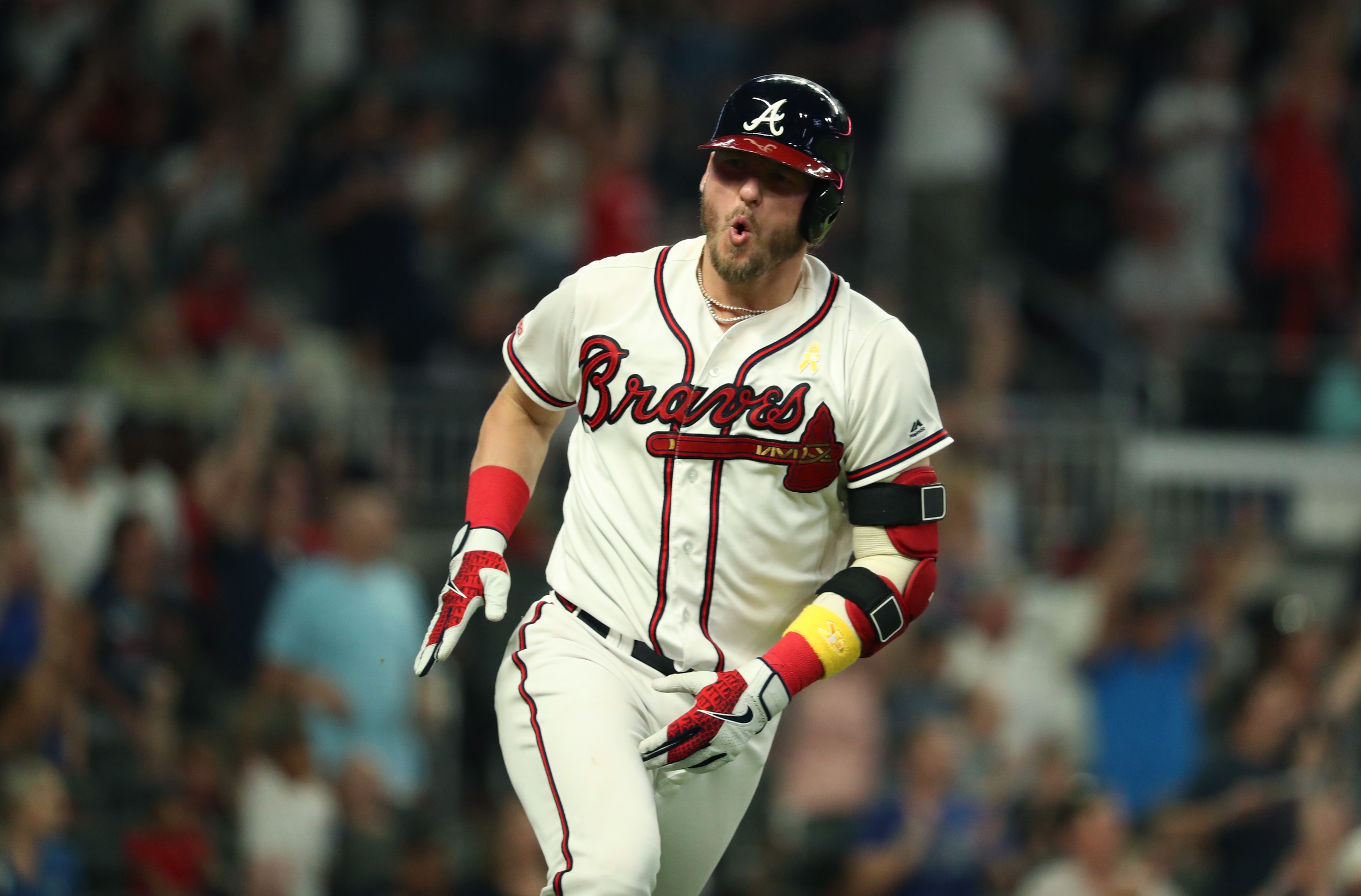 Much has of course been written about the baseball impact of signing Josh Donaldson. A few samplings to check out if you haven't yet: Josh Donaldson, Bringer of Rings by Matthew Trueblood Five Things Josh Donaldson Does Better Than Any of His New Teammates by Matthew Taylor Devil's Advocate: Why the Josh Donaldson Deal Isn't Good for the Twins by Matthew Lenz With Donaldson in the Fold, Can the Twins Afford to Wait Until the Deadline to Trade for Starting Pitching? by Nash Walker But today I wanted to zoom out and analyze the broader meaning of this move. What intrigues me is not just the Twins handing out a free agent contract that nearly doubles their previous record, but the way it went down. Over the years, fans have heard so many times that the Twins were "interested in" a top prize that landed elsewhere, or "made a strong offer" that came up short, or "didn't see a fit" for an expensive player who assuredly would've fit... It's understandable how so many came to feel jaded. Add in the history of trade deadline malaise, and the front office has earned its skepticism. However, it bears emphasizing: This ain't the same front office. I do think much of the "Twins are cheap" sentiment is engrained from an era where that claim was undeniably true; in the 2000s Terry Ryan would reliably sign no-upside bargain-bin players like Rondell White and Sidney Ponson to fill key holes on contending teams. The new regime, seemingly empowered from the start to bump spending upward, has proven far more willing to play in the medium-deep waters of free agency, with signings like Nelson Cruz ($24M), Jason Castro, ($24M), Marwin Gonzalez ($18M), and Addison Reed ($16M). Now, they've taken a dive into the deep end. This was a long time coming. Even in their more aggressive state, the Twins had continually come up short on the big fish – an angling pattern that carried over into this offseason, where they were unable to secure their top target in Zack Wheeler. As more pitching names came off the board, a familiar feeling began to set in, especially once reports arose that Minnesota had grown "pessimistic" in its pursuit of Donaldson, the last hope for a noteworthy FA addition. About a week later, the historic deal was done. What happened? The Twins were patient. They made an offer they felt was legit, and then they stood their ground, even as Donaldson and his agent (understandably) tried to leverage Minnesota's bid against the Braves and others. When reports emerged that the free agent would sign on the spot if someone reached his desired threshold ($110 million), the Twins didn't bite. In fact, they took a stand, by signaling via their own media transmissions that they were out on the posturing game. Despite their patience, however... The Twins were persistent. They never gave up. A story by Phil Miller in the Star Tribune details the team's recruiting efforts, which included a pitch from Rocco Baldelli, assurances from the front office about their commitment to winning, a video overture from Miguel Sano, and plenty of lobbying from Twins fan/golf star Mardy Fish. Eventually, the Twins also made a key improvement to their offer; according to Miller's piece, it was the addition of a fifth-year option with an $8 million buyout that jump-started talks and built momentum to close. Minnesota took that step because, at the end of the day... The Twins were serious. They wanted to spend that money. They wanted to make a splash. It wasn't all talk. But the front office wasn't going to spend it indiscriminately, and the relative value propositions (plus generally unfavorable circumstances) steered them away from the pitching market. After all the offseason near-misses and no-thankses, this time the Twins wouldn't be denied. While I'm sure all the aforementioned pitches and perks helped to lure Donaldson, he makes no secret of what swayed him: money. "Ultimately the financials were where they needed to be for my agent and my family and everybody to feel very happy with it," Donaldson said in an interview with Sports Illustrated. He added in an interview with Atlanta's WSB-TV that other offers were "not in the same realm." It is refreshing and almost surreal to hear those quotes about a free agent showdown that the Twins actually WON, isn't it? For them to be throwing around their weight in pursuit of a coveted, elite talent – who was also chased by a regional favorite and the defending champions – completely shatters a long-running narrative. Now, this doesn't erase the team's history, but it's hopefully another signal of the new reality: The Twins are ready to be definitive players in the American League. With the contention window flung open, they're moving to "put their foot on someone's throat," as GM Thad Levine put it. The front office convinced Donaldson of this, and by successfully doing so, they're convincing me and fellow followers of the club. The impacts of this new acquisition on the Twins lineup and on their infield defense are immense, but we shouldn't overlook its corresponding impact on fan morale and confidence. This is a game-changer. MORE FROM TWINS DAILY — Latest Twins coverage from our writers — Recent Twins discussion in our forums — Follow Twins Daily via Twitter, Facebook or email
 -
The Bringer of Rain is joining the Bomba Squad. According to MLB.com's Mark Feinsand, the Minnesota Twins have agreed with free agent third baseman Josh Donaldson on a four-year contract.Yes folks, it is really happening. The Twins have made a precedent-shattering free agent splash. No, he's not a pitcher. And there are likely still moves to come on that front. But Donaldson does figure to have a positive impact on run prevention. The bat is his featured strength, and rightfully so, but this acquisition helps the pitching staff. Don't overlook that. In general, this is a huge name and a huge get for the Twins. Since 2014, Donaldson ranks third among position players in fWAR (behind only Mike Trout in Mookie Betts). He's a superstar addition to an already loaded lineup, though it's valid to wonder how this contract will age in Years 3 and 4. Donaldson turned 34 in December. We'll update with more details as they come in. How are you feeling about the biggest free agent signing in Twins history? What needs to happen next? MORE FROM TWINS DAILY — Latest Twins coverage from our writers — Recent Twins discussion in our forums — Follow Twins Daily via Twitter, Facebook or email Click here to view the article
-
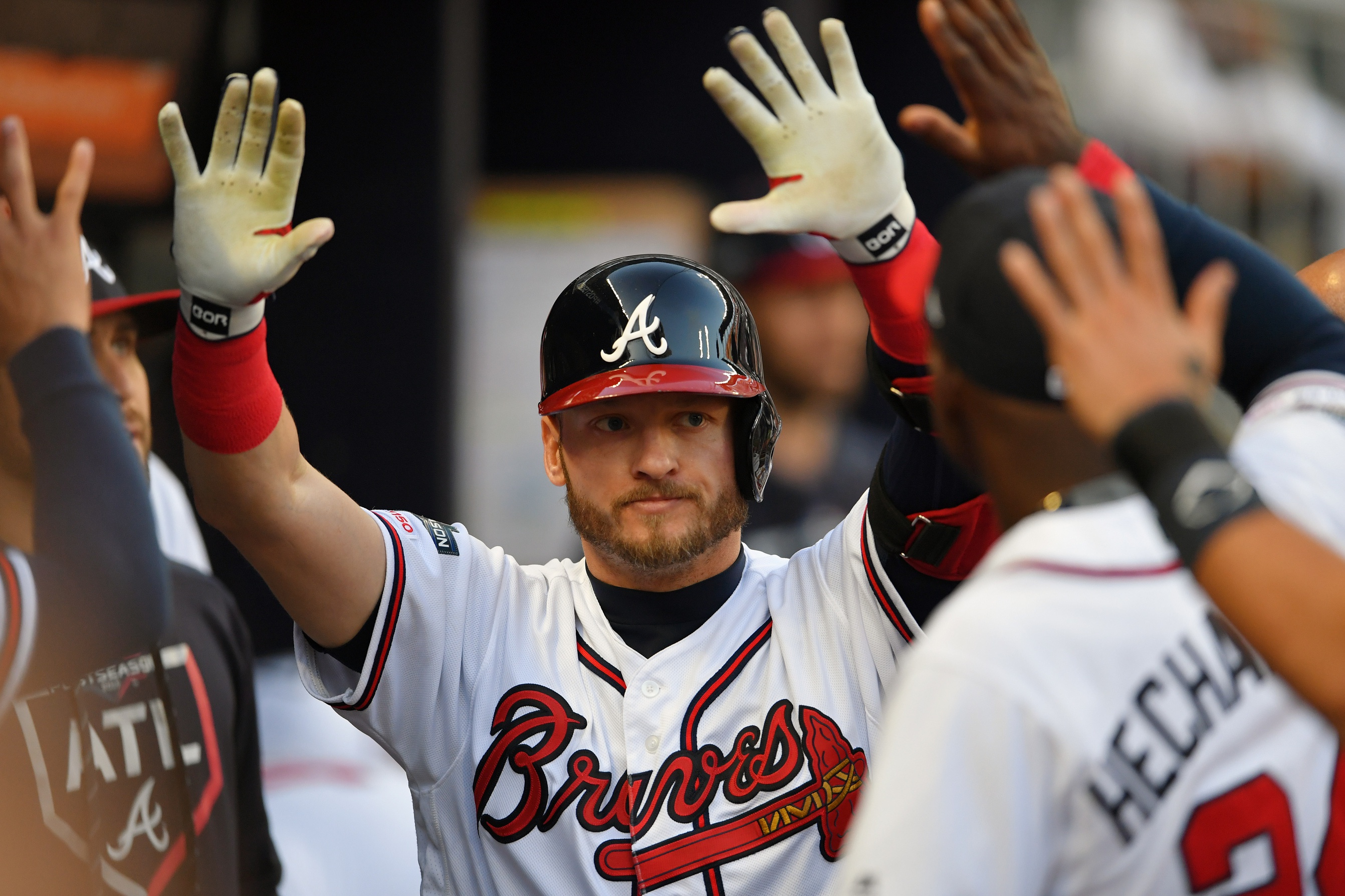 Yes folks, it is really happening. The Twins have made a precedent-shattering free agent splash. https://twitter.com/Feinsand/status/1217247049592209408 The four-year contract is worth $92 million ($23M AAV) with a fifth-year option that could push it to $100 million. https://twitter.com/Feinsand/status/1217251043811168257 The slugging veteran and former MVP — reputed for his bat flips and historical domination of Target Field — upgrades an already potent offense after bashing 37 home runs for Atlanta in 2019. This marked the fourth time in five years he has launched 30+ home runs, excepting only an injury-shortened 2018. Back in 2015, Donaldson earned AL MVP honors with 41 bombs and 123 RBIs. https://twitter.com/FOXSportsSouth/status/1162899693061513216 His arrival will push Miguel Sano across the diamond to first base, and while it's fair to wonder how Sano will fare as a full-timer there for the first time, the move will almost certainly improve Minnesota's infield defense overall. According to Fangraphs, Donaldson ranked 17th out of 32 players to play 500+ innings at third base in UZR/150 (2.1), whereas Sano ranked dead last at -19.9. In defensive runs saved, Donaldson ranked second (15) behind Matt Chapman, while Sano was at 25th (-5). Age is of course a factor, and the length of his deal makes it likely Donaldson will move to first or DH at some point, but for now he's a dramatic defensive upgrade. https://twitter.com/handlit33/status/1169765438831648774 No, he's not a pitcher. And there are likely still moves to come on that front. But Donaldson does figure to have a positive impact on run prevention. The bat is his featured strength, and rightfully so, but this acquisition helps the pitching staff. Don't overlook that. In general, this is a huge name and a huge get for the Twins. Since 2014, Donaldson ranks third among position players in fWAR (behind only Mike Trout in Mookie Betts). He's a superstar addition to an already loaded lineup, though it's valid to wonder how this contract will age in Years 3 and 4. Donaldson turned 34 in December. We'll update with more details as they come in. How are you feeling about the biggest free agent signing in Twins history? What needs to happen next? MORE FROM TWINS DAILY — Latest Twins coverage from our writers — Recent Twins discussion in our forums — Follow Twins Daily via Twitter, Facebook or email
 -
To your point, it is striking to me that Morrison — who has pretty much always played for smaller-market underdog types — named all big-market heavy hitters in his accusations. You can bet that he'll be contacted by MLB investigators in efforts to substantiate his claims though. Who knows what kind of evidence or references he might be able tp provide. LOL. I didn't even notice what his shirt said when I selected that but, yeah, takes on an all-new meaning doesn't it?
-
100%. I have no problem with a guy on second base trying to signal to the guy at home. Part of the game. But using video crosses a line, starkly.
- 133 replies
-
- 18
-

-
On Monday, sanctions came down on the Houston Astros following the revelation of their illegal sign-stealing practices. Soon after, a former Minnesota Twin spoke out and suggested that this issue runs deeper than anyone wants to believe. One wonders if we're just scratching the surface.The penalties levied upon the Astros were fairly severe, especially after the ripple effects played out. Manager A.J. Hinch and general manager Jeff Luhnow received one-year bans from MLB before being promptly fired by owner Jim Crane. Houston also forfeited several high draft picks and received a fine. Alex Cora, who reportedly helped orchestrate the cheating – and, as you may recall, threw a fit last year by falsely accusing Eddie Rosario of breaking the rules on a bunt – is certainly destined for a lengthy ban of his own. That's all well and good, but does little to mollify the concerns of a longtime baseball fan like myself. Ever since this scandal first surfaced – through the exceptional reporting work of Ken Rosenthal and Evan Drelich – I've found myself asking: how deep does this go? It's hard to believe the Astros are an isolated case. Hours after the bombshell, Logan Morrison weighed in on Instagram, adding some perturbing insights of his own. "So many teams are doing this," he wrote. "I know from first hand accounts that the Yankees, Dodgers, Astros, and Red Sox all have used film to steal signs." How credible is this latest allegation? Who knows. But the decisive action by the commissioner against Houston leaves no doubt as to the verified gravity of these offenses for at least one team, and we're only starting to learn the truth. Baseball's player association is a brotherhood, and sometimes the loyalty can manifest in negative ways. It did when the steroid epidemic of the '90s ran rampant, unspoken. Unspoken, that is, until the cracks begin to creep up. By 2003, David Wells was proclaiming that, "As of right now, I'd estimate 25 to 40 percent of all major leaguers are juiced. But that number's fast rising." Are Mike Fiers and Morrison merely the first to shed light on a lurking corruption at the game's core? You might not be inclined to put these transgressions at the level of PEDs, but the benefit of knowing what pitch is coming? Especially when you're a good hitter, in a big spot? That can't be downplayed. Depending on the depth and extent of these activities, it's entirely possible that history was altered in significant ways by foul play. As a fan of the Twins, who have not to my knowledge been referenced in connection with any of these activities? Well, I can't help but think about the 123 runs the Astros have scored in 19 games against Minnesota since 2017, when they won a now-tainted World Series. I can't help but think about the unbelievable hypocrisy of Cora, and the dark cloud that now hovers over Boston's championship in 2018. And given that New York was the first team mentioned by Morrison in his own remarks, I can't help but think about all those times over the years that Yankees hitters seemed to be sitting on the right pitch, at the right time, and dispatching the Twins with almost surreal consistency. Especially in the playoffs. Bitterness? You could say so. And maybe my own favorite team will be implicated at some point. No possibilities can be ruled out at a time where offense and home runs have gone absolutely bananas and the once-scrappy Twins are leading the revolution. But for now, I choose to believe in the integrity of this franchise, and the people running it. Under this belief, the notion that an already disadvantaged team may be having the deck further stacked against it, by rampant and seemingly unrepentant cheating? It's gut-wrenching. Not just as a Twins fan, but as a baseball fan. Rob Manfred faces a crisis. To ignore it would be to dismiss any plausibility of a level playing field, in a sport where that ideal has always been under assault. MORE FROM TWINS DAILY — Latest Twins coverage from our writers — Recent Twins discussion in our forums — Follow Twins Daily via Twitter, Facebook or email Click here to view the article
-
 The penalties levied upon the Astros were fairly severe, especially after the ripple effects played out. Manager A.J. Hinch and general manager Jeff Luhnow received one-year bans from MLB before being promptly fired by owner Jim Crane. Houston also forfeited several high draft picks and received a fine. Alex Cora, who reportedly helped orchestrate the cheating – and, as you may recall, threw a fit last year by falsely accusing Eddie Rosario of breaking the rules on a bunt – is certainly destined for a lengthy ban of his own. That's all well and good, but does little to mollify the concerns of a longtime baseball fan like myself. Ever since this scandal first surfaced – through the exceptional reporting work of Ken Rosenthal and Evan Drelich – I've found myself asking: how deep does this go? It's hard to believe the Astros are an isolated case. Hours after the bombshell, Logan Morrison weighed in on Instagram, adding some perturbing insights of his own. "So many teams are doing this," he wrote. "I know from first hand accounts that the Yankees, Dodgers, Astros, and Red Sox all have used film to steal signs." https://twitter.com/JohnTrupin/status/1216832903080022019 How credible is this latest allegation? Who knows. But the decisive action by the commissioner against Houston leaves no doubt as to the verified gravity of these offenses for at least one team, and we're only starting to learn the truth. Baseball's player association is a brotherhood, and sometimes the loyalty can manifest in negative ways. It did when the steroid epidemic of the '90s ran rampant, unspoken. Unspoken, that is, until the cracks begin to creep up. By 2003, David Wells was proclaiming that, "As of right now, I'd estimate 25 to 40 percent of all major leaguers are juiced. But that number's fast rising." Are Mike Fiers and Morrison merely the first to shed light on a lurking corruption at the game's core? You might not be inclined to put these transgressions at the level of PEDs, but the benefit of knowing what pitch is coming? Especially when you're a good hitter, in a big spot? That can't be downplayed. Depending on the depth and extent of these activities, it's entirely possible that history was altered in significant ways by foul play. As a fan of the Twins, who have not to my knowledge been referenced in connection with any of these activities? Well, I can't help but think about the 123 runs the Astros have scored in 19 games against Minnesota since 2017, when they won a now-tainted World Series. I can't help but think about the unbelievable hypocrisy of Cora, and the dark cloud that now hovers over Boston's championship in 2018. And given that New York was the first team mentioned by Morrison in his own remarks, I can't help but think about all those times over the years that Yankees hitters seemed to be sitting on the right pitch, at the right time, and dispatching the Twins with almost surreal consistency. Especially in the playoffs. Bitterness? You could say so. And maybe my own favorite team will be implicated at some point. No possibilities can be ruled out at a time where offense and home runs have gone absolutely bananas and the once-scrappy Twins are leading the revolution. But for now, I choose to believe in the integrity of this franchise, and the people running it. Under this belief, the notion that an already disadvantaged team may be having the deck further stacked against it, by rampant and seemingly unrepentant cheating? It's gut-wrenching. Not just as a Twins fan, but as a baseball fan. Rob Manfred faces a crisis. To ignore it would be to dismiss any plausibility of a level playing field, in a sport where that ideal has always been under assault. MORE FROM TWINS DAILY — Latest Twins coverage from our writers — Recent Twins discussion in our forums — Follow Twins Daily via Twitter, Facebook or email
 -
I don't think people are bothered by the Twins' initial offer so much as the fact that they wouldn't simply accept Berrios's number and call it a day. I get that the front office finds it important to stand their ground in these cases, to keep precedents in place for the future, but this seems like an instance where it makes sense to deviate from that philosophy. Keeping him happy is just too critical. Having said that, perhaps this is part of a negotiation tactic for hammering out a long-term deal. Now, the Twins can give the appearance that they're "giving" something by pushing JB's salary to $4.4 or higher in the first year. I will note though that the likelihood of an arbitration hearing is much higher than you allude. Teams generally follow the "file and trial" approach now, so unless an extension is reached, it's highly probable his case will go before a panel. And that's just far from ideal.
-
It's been more than a month since we last took stock of the Minnesota Twins' offseason, and while the big splash still hasn't materialized, there's been plenty of activity. Scroll down for an update on the 2020 roster, payroll, coaching staff, and path forward. Pitchers and catchers report to Ft. Myers in one month.With Sergio Romo, Tyler Clippard, Homer Bailey, and Rich Hill now in the mix, here's a projection of the 2020 roster and payroll as of today. (Arbitration-eligible players now mostly have salaries locked in, but there a couple of assumptions highlighted in blue, which I'll discuss shortly.) Download attachment: roster112.png Current payroll commitment checks in around $118 million, putting the Twins almost exactly on par with 2019 ($119.6 million, per Baseball Prospectus). TWINS AND BERRIOS HEADED FOR HEARING? Arguably the most important player up for arbitration this year happens to be the only one Minnesota was unable to reach agreement with. Unless they can work something out within the next month or so, the Twins and Jose Berrios will go before an arbitration panel to decide his 2020 salary. The two sides are currently about a half-million apart, with the Twins submitting an offer of $4.025 million and the pitcher's camp requesting $4.4 million. For what it's worth, Twins Daily's Offseason Handbook projected a $4.5 million salary for Berrios, while MLB Trade Rumors projected considerably higher at $5.4 million. By either of those estimates, the number put forth by Berrios and his agent seems quite fair, although I'm sure the Twins front office arrived at its own figure through a mathematical calculation based on precedent. Nonetheless, the optics here aren't great, especially when considering historical context. Last offseason, the Twins approached Berrios and his agent about a pre-arb extension, but talks fizzled as the offer wasn't deemed up to snuff. Then, in July when Minnesota traded reliever Mike Morin to the Phillies for cash, Berrios posted (and deleted) a tweet that said, "They just want to get money … I wish you the best my man!" It's probably a reach to suggest there's a schism between player and team, but the lack of alignment here is a bit disappointing. Going through the arbitration hearing process can be contentious, so it's hard to imagine that scenario having any sort of positive impact on the relationship. Worth noting: Aaron Nola, whose extension with Philadelphia is often pointed toward as the best precedent for a Berrios contract framework, was at odds with the Phillies on his first arbitration number a year ago; the gap was much wider in that case, as he submitted $6.75 million while the club countered with $4.5 million. One month later, his long-term deal was announced at four years and $45 million. It's hard to imagine why either side would flinch at similar terms in the case of Berrios. For now, the payroll projection above assumes he wins an arbitration hearing and remains year-to-year. SANO EXTENDED While the Twins haven't been able to lock up Berrios, they did get a deal done with another core piece: Miguel Sano signed a three-year, $30 million extension, which includes a $14 million option (and $3 million buyout) for 2023 – his age-30 season. It's yet another very favorable deal for the Twins, who gain cost-efficient control of an elite slugging talent in his prime. I ranked Sano as the organization's 11th-most valuable asset in last week's series, but this contract – doubling his team control from two to four years at friendly rates – would move him up a couple of slots (I'm thinking to No. 9, after Jordan Balazovic and ahead of Alex Kirilloff). I still haven't seen detailed specifics on Sano's annual breakdown. FanGraphs has these numbers listed as a guesstimate in their payroll resource: 2020: $10M2021: $9M2022: $8M2023: $14M option ($3M buyout)That would be a very unusual structure for a deal like this, but it'd certainly make a lot of sense for the Twins given their situation, enabling them to take advantage of their extra spending room this year (while incentivizing Sano by nearly doubling his 2020 salary) and providing extra flexibility in '21 and '22. I went with the $10 million figure for 2020 in the projection, just to estimate on the high end, but I'm guessing we'll ultimately see a more traditionally progressive build-up (something like 7-9-11). An encouraging tidbit from Dan Hayes's writeup on the move at The Athletic: General manager Thad Levine said earlier this week that Sanó has continued with his offseason conditioning and that the slugger’s agent has inundated the front office with videos of Sanó working to improve his fitness. DONALDSON DRAMA DRAGS ON Josh Donaldson still hasn't signed anywhere, and that is fairly stunning given what we (think we) know. For some time, the free agent's market has been portrayed as a three-horse race between Atlanta, Washington, and Minnesota, with a return to the Braves being Donaldon's inherent preference. Well, the Nationals seem to be out of the running, since they've signed multiple infielders to guaranteed deals in recent weeks. Meanwhile, Phil Miller wrote an article for the Star Tribune indicating the Twins were "pessimistic" and "likely out of the running" for Donaldson. So the question is: what's the hold-up? Why hasn't the slugger signed in Atlanta yet? The only explanation I can see (barring at least one "mystery team" in the fray, which is very possible) is that he's still not entirely satisfied with their offer, and continues to try leveraging Minnesota and others. This would explain why the Twins have channeled the narrative publicly that they're moving on, and turning to the trade market. They'll probably need to go that route if they want any kind of legitimate upgrade at the hot corner short of Donaldson. On Sunday, Todd Frazier signed with the Rangers. He's one of the only other free agent infielders I've seen the Twins remotely connected to (not that I'd have considered him much of an impact addition). COACHING STAFF FINALIZED When we last checked in with an update post, the Twins still had two vacancies remaining on their coaching staff: bench coach and second pitching coach (previous occupants Derek Shelton and Jeremy Hefner moved on). Now, those spots have been filled. Mike Bell is the new bench coach, coming over from Arizona where he was vice president of player development. He's highly regarded, coming from "one of baseball's first families," and is viewed as a manager in waiting. By all accounts he looks like a great add as Rocco Baldelli's new right-hand man. More recently, the Twins rounded out their staff with the addition of Bob McClure as bullpen coach. Formerly a pitching coach for the Phillies, Red Sox, and Royals, the 67-year-old brings ample experience to a unit that is largely young and unseasoned. With former assistant hitting coach Rudy Hernandez getting the "assistant" removed from his title, here's how the Twins' 2020 coaching staff figures to shake out: Manager: Rocco Baldelli Hitting Coach: Edgar Varela Hitting Coach: Rudy Hernandez Pitching Coach: Wes Johnson Bullpen Coach: Bob McClure Bench Coach: Mike Bell MLB Coach: Bill Evers How are you feeling at this stage of the offseason? What moves do the Twins need to make for you to consider the winter a success? What's your level of confidence for a turnaround on Donaldson or a big trade? Sound off in the comments. MORE FROM TWINS DAILY — Latest Twins coverage from our writers — Recent Twins discussion in our forums — Follow Twins Daily via Twitter, Facebook or email Click here to view the article
-
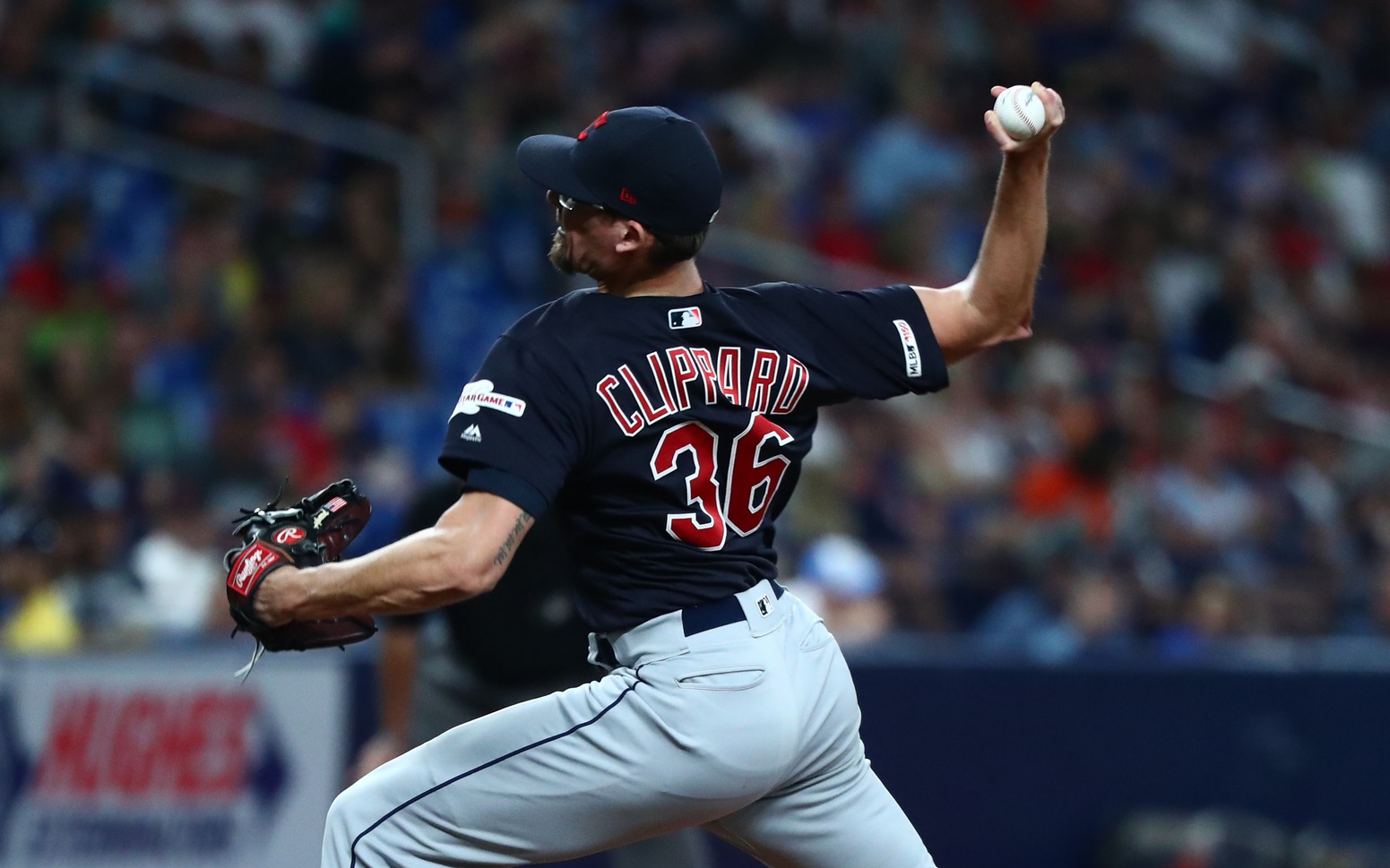 With Sergio Romo, Tyler Clippard, Homer Bailey, and Rich Hill now in the mix, here's a projection of the 2020 roster and payroll as of today. (Arbitration-eligible players now mostly have salaries locked in, but there a couple of assumptions highlighted in blue, which I'll discuss shortly.) Current payroll commitment checks in around $118 million, putting the Twins almost exactly on par with 2019 ($119.6 million, per Baseball Prospectus). TWINS AND BERRIOS HEADED FOR HEARING? Arguably the most important player up for arbitration this year happens to be the only one Minnesota was unable to reach agreement with. Unless they can work something out within the next month or so, the Twins and Jose Berrios will go before an arbitration panel to decide his 2020 salary. The two sides are currently about a half-million apart, with the Twins submitting an offer of $4.025 million and the pitcher's camp requesting $4.4 million. For what it's worth, Twins Daily's Offseason Handbook projected a $4.5 million salary for Berrios, while MLB Trade Rumors projected considerably higher at $5.4 million. By either of those estimates, the number put forth by Berrios and his agent seems quite fair, although I'm sure the Twins front office arrived at its own figure through a mathematical calculation based on precedent. Nonetheless, the optics here aren't great, especially when considering historical context. Last offseason, the Twins approached Berrios and his agent about a pre-arb extension, but talks fizzled as the offer wasn't deemed up to snuff. Then, in July when Minnesota traded reliever Mike Morin to the Phillies for cash, Berrios posted (and deleted) a tweet that said, "They just want to get money … I wish you the best my man!" It's probably a reach to suggest there's a schism between player and team, but the lack of alignment here is a bit disappointing. Going through the arbitration hearing process can be contentious, so it's hard to imagine that scenario having any sort of positive impact on the relationship. Worth noting: Aaron Nola, whose extension with Philadelphia is often pointed toward as the best precedent for a Berrios contract framework, was at odds with the Phillies on his first arbitration number a year ago; the gap was much wider in that case, as he submitted $6.75 million while the club countered with $4.5 million. One month later, his long-term deal was announced at four years and $45 million. It's hard to imagine why either side would flinch at similar terms in the case of Berrios. For now, the payroll projection above assumes he wins an arbitration hearing and remains year-to-year. SANO EXTENDED While the Twins haven't been able to lock up Berrios, they did get a deal done with another core piece: Miguel Sano signed a three-year, $30 million extension, which includes a $14 million option (and $3 million buyout) for 2023 – his age-30 season. It's yet another very favorable deal for the Twins, who gain cost-efficient control of an elite slugging talent in his prime. I ranked Sano as the organization's 11th-most valuable asset in last week's series, but this contract – doubling his team control from two to four years at friendly rates – would move him up a couple of slots (I'm thinking to No. 9, after Jordan Balazovic and ahead of Alex Kirilloff). I still haven't seen detailed specifics on Sano's annual breakdown. FanGraphs has these numbers listed as a guesstimate in their payroll resource: 2020: $10M 2021: $9M 2022: $8M 2023: $14M option ($3M buyout) That would be a very unusual structure for a deal like this, but it'd certainly make a lot of sense for the Twins given their situation, enabling them to take advantage of their extra spending room this year (while incentivizing Sano by nearly doubling his 2020 salary) and providing extra flexibility in '21 and '22. I went with the $10 million figure for 2020 in the projection, just to estimate on the high end, but I'm guessing we'll ultimately see a more traditionally progressive build-up (something like 7-9-11). An encouraging tidbit from Dan Hayes's writeup on the move at The Athletic: General manager Thad Levine said earlier this week that Sanó has continued with his offseason conditioning and that the slugger’s agent has inundated the front office with videos of Sanó working to improve his fitness.DONALDSON DRAMA DRAGS ON Josh Donaldson still hasn't signed anywhere, and that is fairly stunning given what we (think we) know. For some time, the free agent's market has been portrayed as a three-horse race between Atlanta, Washington, and Minnesota, with a return to the Braves being Donaldon's inherent preference. Well, the Nationals seem to be out of the running, since they've signed multiple infielders to guaranteed deals in recent weeks. Meanwhile, Phil Miller wrote an article for the Star Tribune indicating the Twins were "pessimistic" and "likely out of the running" for Donaldson. So the question is: what's the hold-up? Why hasn't the slugger signed in Atlanta yet? The only explanation I can see (barring at least one "mystery team" in the fray, which is very possible) is that he's still not entirely satisfied with their offer, and continues to try leveraging Minnesota and others. This would explain why the Twins have channeled the narrative publicly that they're moving on, and turning to the trade market. They'll probably need to go that route if they want any kind of legitimate upgrade at the hot corner short of Donaldson. On Sunday, Todd Frazier signed with the Rangers. He's one of the only other free agent infielders I've seen the Twins remotely connected to (not that I'd have considered him much of an impact addition). https://twitter.com/Evan_P_Grant/status/1216444076813406208 For what it's worth, Darren Wolfson of KSTP reports that the Twins continue to have "darn near daily dialogues" with Donaldson's reps. https://twitter.com/DWolfsonKSTP/status/1214660158938394625 COACHING STAFF FINALIZED When we last checked in with an update post, the Twins still had two vacancies remaining on their coaching staff: bench coach and second pitching coach (previous occupants Derek Shelton and Jeremy Hefner moved on). Now, those spots have been filled. Mike Bell is the new bench coach, coming over from Arizona where he was vice president of player development. He's highly regarded, coming from "one of baseball's first families," and is viewed as a manager in waiting. By all accounts he looks like a great add as Rocco Baldelli's new right-hand man. More recently, the Twins rounded out their staff with the addition of Bob McClure as bullpen coach. Formerly a pitching coach for the Phillies, Red Sox, and Royals, the 67-year-old brings ample experience to a unit that is largely young and unseasoned. With former assistant hitting coach Rudy Hernandez getting the "assistant" removed from his title, here's how the Twins' 2020 coaching staff figures to shake out: Manager: Rocco Baldelli Hitting Coach: Edgar Varela Hitting Coach: Rudy Hernandez Pitching Coach: Wes Johnson Bullpen Coach: Bob McClure Bench Coach: Mike Bell MLB Coach: Bill EversHow are you feeling at this stage of the offseason? What moves do the Twins need to make for you to consider the winter a success? What's your level of confidence for a turnaround on Donaldson or a big trade? Sound off in the comments. MORE FROM TWINS DAILY — Latest Twins coverage from our writers — Recent Twins discussion in our forums — Follow Twins Daily via Twitter, Facebook or email
 -
Yep, this is what I was getting in the third bullet point at the top, and why it's not exactly accurate to call this exercise a ranking of trade value. Very fair. I thought hard about it. Definitely reasonable to say Berrios is more irreplaceable at this moment. Ultimately, it came down to controlling Polanco and Kepler throughout their entire primes, while Berrios is on track to hit free agency right in the middle of his, at age 28. As things stand, Polanco can literally impact twice as many seasons for the Twins as Berrios. I suspect JB will sign an extension in spring training and the point will become moot.
- 44 replies
-
- 1
-
-
- royce lewis
- brusdar graterol
- (and 3 more)
-
Basically. The simple way I look at it, when comparing any two players, is: who would it hurt more to lose?
-
I'd actually argue that the comprehensive quality of the Twins lineup worked to Rosario's benefit last year. The MVP votes you reference were pretty much entirely due to his RBI total, which was pretty much entirely due to the ridiculous amount of run production opportunities he got. His warts would've been more noticeable if not for everyone around him crushing consistently. Is his offensive bar really that high to clear? Corey Dickerson was a significantly better hitter than Rosario last year, and has been for the past three years (121 OPS+ vs 114 OPS+). He signed with the Marlins as a free agent who wasn't in particularly high demand, and his contract (2 years $17.5M) is about the same as Rosario will make over the same span, if not less.
- 44 replies
-
- 3
-
-
- royce lewis
- brusdar graterol
- (and 3 more)
-
The fact that you have to add an "Even with the injury" caveat ahead of every statement on Buxton pretty much says it all. You don't have to convince me on his relative impact when healthy, but at this point it's all become so theoretical. You casually allude to Kepler's 4.4 fWAR, which is higher than any mark Buxton has posted in a longer career, and is in fact 60% of Buxton's career WAR. With 5 years of remaining control compared to 3 for Buck, Kepler is also likely to produce more fWAR as a Twin going forward. Add in the fact that Buxton is recovering from a significant shoulder surgery and we don't know how that's going to affect his timeline and performance upon returning, and the uncertainty amounts to a very reasonable argument IMO.
- 44 replies
-
- 2
-
-
- royce lewis
- brusdar graterol
- (and 3 more)
-
The fact that Graterol has already reached the majors, and succeeded there, should not be downplayed in this discussion. He's a month older than Balazovic (!), who hasn't pitched above A-ball yet. So yeah, Graterol has to prove he can start in the majors, but JB has a lot more to prove just to REACH the majors.
- 44 replies
-
- 6
-
-
- royce lewis
- brusdar graterol
- (and 3 more)
-
Today we wrap up our series ranking the 20 most critical assets in the Twins organization with a look at the Top 5. (Catch up on 6-through-20 by reading Part 1, Part 2, and Part 3.) From my view, these are the foremost cornerstones around which the front office will build going forward.First, to reiterate the parameters and stipulations: Things that are factored into these rankings: production, age, upside, pedigree, health, length of team control, favorability of contract, positional scarcity (within the system, and generally).Players are people. Their value to the organization, and its fans, goes well beyond the strictly business-like scope we're using here. But for the purposes of this list, we're analyzing solely in terms of asset evaluation. Intangible qualities and popularity are not factors. (Sorry Willians.)The idea is to assess their importance to the future of the Minnesota Twins. In this regard, it's not exactly a ranking in terms of trade value, because that's dependent on another team's situation and needs. (For instance, Jake Cave and LaMonte Wade Jr. would be more valuable to many other teams than they are to the Twins, who are rich with short-term and long-term corner outfield depth.)This is a snapshot in time. Rankings are heavily influenced by recent trends and where things stood as of the end of 2019.Current major-leaguers and prospects are all eligible. The ultimate goal here to answer this question: Which current players in the organization are most indispensable to fulfilling the vision of building a champion?Any questions or quibbles, holler in the comments. Let's continue the countdown. TOP 20 MINNESOTA TWINS ASSETS OF 2020 (1-5) 5. Royce Lewis, SS 2019 Ranking: 1 It was a trying year for Lewis. He slumped frequently and finished with a .236/.290/.371 slash line, striking out three times for every walk. The exaggerated leg lift in his swing came under greater scrutiny as he struggled against higher-level pitching. His defensive work at shortstop caused some analysts to harden in their stances that he's destined to switch positions. Even his trademark confidence was framed as a negative in one postseason Baseball America report. Through all this, the fact remains: He started the year as a 19-year-old and finished it at Double-A, punctuating his pedestrian regular season with an MVP performance in the Arizona Fall League. Lewis's elite physical tools haven't wavered, and most of his present shortcomings seem like the correctable flaws of a raw young talent. He still looks like a star in the making, even if that path is a bit less straight and short than initially hoped. 4. Brusdar Graterol, RHP 2019 Ranking: 5 Health was the big caveat attached to Graterol a year ago, as he vaulted into the national baseball consciousness with his triple-digit heater. His (in)ability to hold up rose to the forefront again this year, as the right-hander missed nearly two months with a shoulder impingement. But upon returning as a reliever in August, he did enough to restore all confidence – and then some. Ticketed for a late-inning impact on a contending club at age 20, Graterol made quick stops at Double-A and Triple-A before joining the Twins in September, where he was extremely impressive as a rookie. The 4.66 ERA is inflated by one poor outing against Cleveland – three earned runs, zero outs recorded – but the righty otherwise allowed two runs in 9 2/3 innings (1.86 ERA) with 10 strikeouts and only one walk. He added a perfect inning of work against New York in the ALDS, with two strikeouts. Durability remains a pre-eminent sticking point, as does the uncertainty around his future role, but the battle-tested Graterol is one of the most valuable arms in the game right now. 3. Jose Berrios, RHP 2019 Ranking: 2 Whereas Graterol is a poster child for the volatile health of pro pitchers, Berrios lives on the opposite end of the spectrum: a model of durability. He hasn't missed a start since joining the Twins rotation, and that's basically been the case ever since he was drafted. The right-hander checked off another accomplishment last year, reaching 200 innings for the first time, but for the most part he was his usual self: steadily excellent, just short of elite. Since being called up for good in May of 2017, Berrios ranks ninth among American League pitchers in fWAR. He's not quite an ace but looks the part at times, and as a 25-year-old he still has plenty of time to find another gear. As the only Twins starting pitcher under control beyond next year, he's the glue of the rotation. But with arbitration now upon him, Berrios is going to start getting expensive quickly and is three years from free agency. A sensible extension would move him to the top of this list. 2. Max Kepler, OF 2019 Ranking: 9 Pretty much the best thing a team can do to increase a player's asset valuation is lock him up with a long-term deal at an established baseline, only to have the player immediately reset that baseline. This is what happened with Kepler, who broke a three-year trend of good-not-great performance by taking a star turn in 2019, fresh off signing a team-friendly five-year contract. Despite missing the final two weeks as a shoulder injury plagued him, Kepler shattered career highs across the board and launched 36 homers. He's a top-shelf defensive right fielder and perfectly capable in center, which is especially valuable to the Twins given Buxton's frequent unavailability. Kepler's new contract, which can keep him under control through 2024 at bargain rates, gives Minnesota plenty of flexibility to continually build around the stud outfielder. 1. Jorge Polanco, SS 2019 Ranking: 7 At the end of the day, these rankings are about the big picture. When you take a step back, which players are most indispensable, when factoring in risk and contract value? As core players that signed favorable extensions just before immediately breaking out and achieving upper-echelon status, Kepler and Polanco naturally rose to the top under this framework. Between the two, I give Polanco a slight edge. First, he plays an extremely valuable defensive position – one that is otherwise not well accounted for in the system, especially with Lewis's question marks. Polanco doesn't play shortstop all that well but he can handle it. Second, he's even cheaper than Kepler with an even more favorable contract; Polanco is controlled through 2023 for just $17 million total, and has an additional two team options. All this, as a switch-hitting 25-year-old All-Star who received MVP votes in 2019. At this point, I see Polanco as he most valuable player to the organization, but he's not a superstar. Nor is Kepler, or Berrios. Getting a true premium player in this spot – whether because one of these three takes another step forward, or Buxton pulls it all together, or someone like Lewis emerges in a big way, OR the Twins swing a trade for a centerpiece-type asset (leveraging some of these assets to do so) – will be instrumental in this franchise turning the corner. They're definitely in good shape and on the right track, just not quite there. RECAPPING THE TOP 20 20. Ryan Jeffers, C 19. Eddie Rosario, OF 18. Michael Pineda, RHP 17. Nelson Cruz, DH 16. Tyler Duffey, RHP 15. Jake Odorizzi, RHP 14. Trevor Larnach, OF 13. Jhoan Duran, RHP 12. Taylor Rogers, LHP 11. Miguel Sano, 3B 10. Luis Arraez, 2B 9. Alex Kirilloff, OF 8. Jordan Balazovic, RHP 7. Byron Buxton OF 6. Mitch Garver, C 5. Royce Lewis, SS 4. Brusdar Graterol, RHP 3. Jose Berrios, RHP 2. Max Kepler, OF 1. Jorge Polanco, SS Click here to view the article
- 44 replies
-
- 2
-
-
- royce lewis
- brusdar graterol
- (and 3 more)
-
 First, to reiterate the parameters and stipulations: Things that are factored into these rankings: production, age, upside, pedigree, health, length of team control, favorability of contract, positional scarcity (within the system, and generally). Players are people. Their value to the organization, and its fans, goes well beyond the strictly business-like scope we're using here. But for the purposes of this list, we're analyzing solely in terms of asset evaluation. Intangible qualities and popularity are not factors. (Sorry Willians.) The idea is to assess their importance to the future of the Minnesota Twins. In this regard, it's not exactly a ranking in terms of trade value, because that's dependent on another team's situation and needs. (For instance, Jake Cave and LaMonte Wade Jr. would be more valuable to many other teams than they are to the Twins, who are rich with short-term and long-term corner outfield depth.) This is a snapshot in time. Rankings are heavily influenced by recent trends and where things stood as of the end of 2019. Current major-leaguers and prospects are all eligible. The ultimate goal here to answer this question: Which current players in the organization are most indispensable to fulfilling the vision of building a champion? Any questions or quibbles, holler in the comments. Let's continue the countdown. TOP 20 MINNESOTA TWINS ASSETS OF 2020 (1-5) 5. Royce Lewis, SS 2019 Ranking: 1 It was a trying year for Lewis. He slumped frequently and finished with a .236/.290/.371 slash line, striking out three times for every walk. The exaggerated leg lift in his swing came under greater scrutiny as he struggled against higher-level pitching. His defensive work at shortstop caused some analysts to harden in their stances that he's destined to switch positions. Even his trademark confidence was framed as a negative in one postseason Baseball America report. Through all this, the fact remains: He started the year as a 19-year-old and finished it at Double-A, punctuating his pedestrian regular season with an MVP performance in the Arizona Fall League. Lewis's elite physical tools haven't wavered, and most of his present shortcomings seem like the correctable flaws of a raw young talent. He still looks like a star in the making, even if that path is a bit less straight and short than initially hoped. 4. Brusdar Graterol, RHP 2019 Ranking: 5 Health was the big caveat attached to Graterol a year ago, as he vaulted into the national baseball consciousness with his triple-digit heater. His (in)ability to hold up rose to the forefront again this year, as the right-hander missed nearly two months with a shoulder impingement. But upon returning as a reliever in August, he did enough to restore all confidence – and then some. Ticketed for a late-inning impact on a contending club at age 20, Graterol made quick stops at Double-A and Triple-A before joining the Twins in September, where he was extremely impressive as a rookie. The 4.66 ERA is inflated by one poor outing against Cleveland – three earned runs, zero outs recorded – but the righty otherwise allowed two runs in 9 2/3 innings (1.86 ERA) with 10 strikeouts and only one walk. He added a perfect inning of work against New York in the ALDS, with two strikeouts. Durability remains a pre-eminent sticking point, as does the uncertainty around his future role, but the battle-tested Graterol is one of the most valuable arms in the game right now. 3. Jose Berrios, RHP 2019 Ranking: 2 Whereas Graterol is a poster child for the volatile health of pro pitchers, Berrios lives on the opposite end of the spectrum: a model of durability. He hasn't missed a start since joining the Twins rotation, and that's basically been the case ever since he was drafted. The right-hander checked off another accomplishment last year, reaching 200 innings for the first time, but for the most part he was his usual self: steadily excellent, just short of elite. Since being called up for good in May of 2017, Berrios ranks ninth among American League pitchers in fWAR. He's not quite an ace but looks the part at times, and as a 25-year-old he still has plenty of time to find another gear. As the only Twins starting pitcher under control beyond next year, he's the glue of the rotation. But with arbitration now upon him, Berrios is going to start getting expensive quickly and is three years from free agency. A sensible extension would move him to the top of this list. 2. Max Kepler, OF 2019 Ranking: 9 Pretty much the best thing a team can do to increase a player's asset valuation is lock him up with a long-term deal at an established baseline, only to have the player immediately reset that baseline. This is what happened with Kepler, who broke a three-year trend of good-not-great performance by taking a star turn in 2019, fresh off signing a team-friendly five-year contract. Despite missing the final two weeks as a shoulder injury plagued him, Kepler shattered career highs across the board and launched 36 homers. He's a top-shelf defensive right fielder and perfectly capable in center, which is especially valuable to the Twins given Buxton's frequent unavailability. Kepler's new contract, which can keep him under control through 2024 at bargain rates, gives Minnesota plenty of flexibility to continually build around the stud outfielder. 1. Jorge Polanco, SS 2019 Ranking: 7 At the end of the day, these rankings are about the big picture. When you take a step back, which players are most indispensable, when factoring in risk and contract value? As core players that signed favorable extensions just before immediately breaking out and achieving upper-echelon status, Kepler and Polanco naturally rose to the top under this framework. Between the two, I give Polanco a slight edge. First, he plays an extremely valuable defensive position – one that is otherwise not well accounted for in the system, especially with Lewis's question marks. Polanco doesn't play shortstop all that well but he can handle it. Second, he's even cheaper than Kepler with an even more favorable contract; Polanco is controlled through 2023 for just $17 million total, and has an additional two team options. All this, as a switch-hitting 25-year-old All-Star who received MVP votes in 2019. At this point, I see Polanco as he most valuable player to the organization, but he's not a superstar. Nor is Kepler, or Berrios. Getting a true premium player in this spot – whether because one of these three takes another step forward, or Buxton pulls it all together, or someone like Lewis emerges in a big way, OR the Twins swing a trade for a centerpiece-type asset (leveraging some of these assets to do so) – will be instrumental in this franchise turning the corner. They're definitely in good shape and on the right track, just not quite there. RECAPPING THE TOP 20 20. Ryan Jeffers, C 19. Eddie Rosario, OF 18. Michael Pineda, RHP 17. Nelson Cruz, DH 16. Tyler Duffey, RHP 15. Jake Odorizzi, RHP 14. Trevor Larnach, OF 13. Jhoan Duran, RHP 12. Taylor Rogers, LHP 11. Miguel Sano, 3B 10. Luis Arraez, 2B 9. Alex Kirilloff, OF 8. Jordan Balazovic, RHP 7. Byron Buxton OF 6. Mitch Garver, C 5. Royce Lewis, SS 4. Brusdar Graterol, RHP 3. Jose Berrios, RHP 2. Max Kepler, OF 1. Jorge Polanco, SS
