



Nick Nelson
-
Posts
8,327 -
Joined
-
Last visited
-
Days Won
56
Content Type
Profiles
News
Minnesota Twins Videos
2026 Minnesota Twins Top Prospects Ranking
2022 Minnesota Twins Draft Picks
Minnesota Twins Free Agent & Trade Rumors, Notes, & Tidbits
Guides & Resources
2023 Minnesota Twins Draft Picks
The Minnesota Twins Players Project
2024 Minnesota Twins Draft Picks
2025 Minnesota Twins Draft Pick Tracker
2026 Minnesota Twins Draft Tracker: Picks & Bonuses
Forums
Blogs
Events
Store
Downloads
Gallery
Everything posted by Nick Nelson
-
 Nelson Cruz has one job, and he did it absurdly well in 2019. Defying the ostensible effects of age, he looked as good as ever at the plate, leading the charge in Minnesota's record-setting power display and earning team MVP honors. Cruz's debut season with the Twins will be a tough act to follow, and once he's gone, the same will be said for him.Projected Starter: Nelson Cruz Likely Backup: Miguel Sano Depth: Jorge Polanco, Willians Astudillo Prospects: Alex Kirilloff, Brent Rooker THE GOOD It's almost impossible to overstate how good Cruz was at hitting last year. Forty-one homers and 108 RBIs would be outstanding production in a full campaign, but he amassed those numbers while limited to just 120 games. Among qualified MLB hitters, Cruz ranked fourth in OPS, behind only Christian Yelich, Mike Trout and Cody Bellinger – two MVPs and a runner-up. His wOBA he was behind Trout, Yelich and Alex Bregman. Same for wRC+. By almost any of today's most trusted offensive measures, Cruz was absolutely elite, placing alongside the very best players in the game. He hit for average (.311, T-4th in the AL) and power (second to Trout in SLG at .639). He got on base at nearly a .400 clip. He was good in the first half (.921 OPS) and absolutely unconscious in the second half (1.147 OPS). He elevated his performance in clutch situations of all types. His Statcast measurements, much like Josh Donaldson's, were nuts. Download attachment: cruzstatcast.png There is really not one single valid thing to nitpick about Cruz's 2019 performance, other than the quantity, which suffered from his bouts with a wrist injury and his inability to play anywhere in the field during interleague play. The Twins are wise to anticipate a similarly partial workload in whatever form of season lies ahead, and in fact they might be wise to plan for it, giving the veteran slugger – who turns 40 in July – plenty of rest and downtime. Their abundance of depth makes it easy to rotate guys like Josh Donaldson, Jorge Polanco and Miguel Sano through the DH spot to keep legs fresh. Let Cruz get his naps in plentifully during the summer, so that he'll be a sleeping beast ready to awaken in October. (And November? December?) THE BAD The parallels between Cruz's first year with the Twins in 2019, and Jim Thome's first year with the Twins in 2010, are unmistakable. Both were legendary sluggers verging on 40 when they signed with Minnesota to provide seasoned power at the DH spot. Both surpassed all expectations on the way to stunningly great seasons, dotted with memorable moments and jaw-dropping dingers. In fact, their OPS figures were almost identical (1.039 versus 1.031). But both also showed the initial signs of wavering durability, with Thome's finicky back limiting him to 108 games and Cruz's nagging wrist limiting him to 120. Neither was much worse for the wear, but Thome came nowhere near the same level during his encore in 2011, dropping to a far more human .243/.351/.476 in 71 games before getting dealt to Cleveland in late August. His back was a constant issue. Not many ballplayers remain productive into their 40s. Once you get to this point, skills can diminish sharply and the body becomes far more prone to breaking down. These are just physiological realities. Aaron Gleeman did some research for The Athletic, and found that Cruz faces long odds to repeat in his age-39 season. "At that age, declines appear suddenly and are often irreversible — a cliff no one saw coming until they’re plummeting down it." Some examples you might recognize: Ted Williams, Ty Cobb, Edgar Martinez. While this is technically supposed to qualify as Cruz's age-39 season, there's a strong likelihood that he'll have celebrated his 40th birthday on July 1st before another meaningful game is played. His ruptured wrist tendon is of course a volatile factor in his outlook. The slugger played through it with remarkable effectiveness last year, posting a 1.023 OPS in 33 games after suffering the injury, but it's tough to count on this sort of superhumanity lasting forever. Easy as it is to believe Cruz is some sort of demigod, he is to my knowledge a mortal man. The good news is that even a fairly significant reduction in output would still make Cruz a valuable designated hitter. And if he reaches the cliff, there's no shortage of quality bats to step in. The Twins could shift Sano to DH and replace him with Marwin Gonzalez, or rotate regulars through the position with backups filling in defensively. They could call up Brent Rooker, whose prodigious bat looked ready in Rochester last summer. Alex Kirilloff and Trevor Larnach are not far behind. THE BOTTOM LINE Cruz is a linchpin in the lineup, but Minnesota is a long way from being scarce on good hitters if he can't keep Father Time at bay. In that respect, there is one other player comp I'd like to close with – one bearing some familiarity. Gleeman's analysis found that "only two players in baseball history have hit as well and played as often at 39 as they did at 38: Barry Bonds and David Ortiz." David Ortiz. Now there's an interesting name. A highly gifted and sturdily built Dominican player who started his career with the Twins and went on to become one of the greatest designated hitters the game has ever seen. He hit 35 homers with an .873 OPS for the Red Sox at age 38, then improved to 37 and .913 at age 39. The real pièce de résistance came at age 40, Ortiz's final season, when he went off for .315/.401/.620 with 48 homers and 127 RBIs as Boston won the AL East. Cruz is a highly gifted and sturdily built Dominican player who's ending his career with the Twins, and has grabbed Ortiz's torch as the game's foremost DH. Wrist issues notwithstanding, he showed no signs of fading last year, and was absolutely cranking in exhibition action before spring training shut down. In 23 at-bats he hit .435 with three home runs. We have every reason to believe Cruz will keep playing at a high level, and the Twins have reportedly even discussed extending him through age 41, so the end isn't necessarily imminent. But needless to say, his time is fleeting. And that's mostly fine, because the organization is deep on bat-first players capable of becoming assets in the DH spot, both now and in the future. ~~~ Twins 2020 Position Analysis: Catcher Twins 2020 Position Analysis: First Base Twins 2020 Position Analysis: Second Base Twins 2020 Position Analysis: Third Base Twins 2020 Position Analysis: Shortstop Twins 2020 Position Analysis: Left Field Twins 2020 Position Analysis: Center Field Twins 2020 Position Analysis: Right Field MORE FROM TWINS DAILY — Latest Twins coverage from our writers — Recent Twins discussion in our forums — Follow Twins Daily via Twitter, Facebook or email Click here to view the article
 -
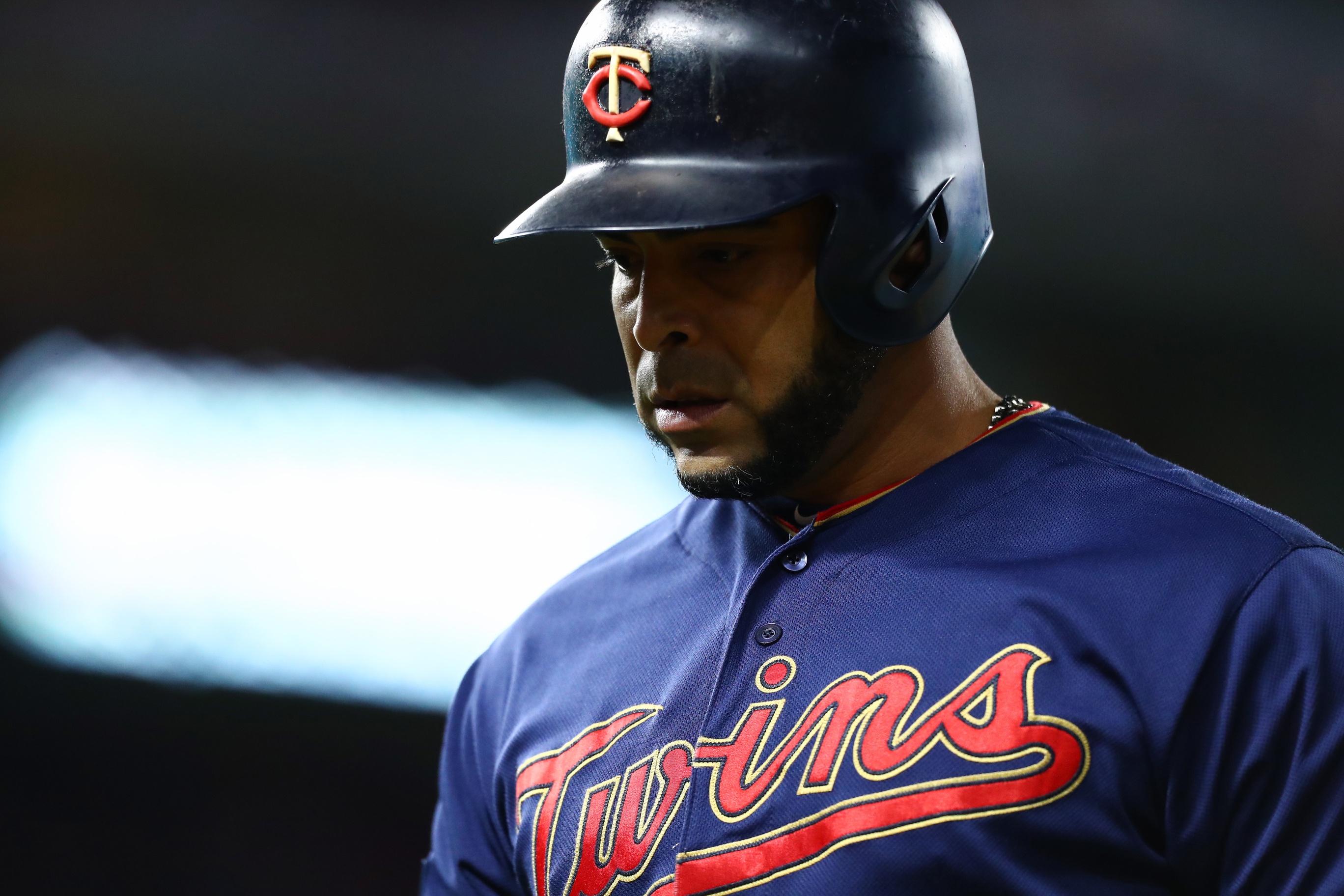 Projected Starter: Nelson Cruz Likely Backup: Miguel Sano Depth: Jorge Polanco, Willians Astudillo Prospects: Alex Kirilloff, Brent Rooker THE GOOD It's almost impossible to overstate how good Cruz was at hitting last year. Forty-one homers and 108 RBIs would be outstanding production in a full campaign, but he amassed those numbers while limited to just 120 games. Among qualified MLB hitters, Cruz ranked fourth in OPS, behind only Christian Yelich, Mike Trout and Cody Bellinger – two MVPs and a runner-up. His wOBA he was behind Trout, Yelich and Alex Bregman. Same for wRC+. By almost any of today's most trusted offensive measures, Cruz was absolutely elite, placing alongside the very best players in the game. He hit for average (.311, T-4th in the AL) and power (second to Trout in SLG at .639). He got on base at nearly a .400 clip. He was good in the first half (.921 OPS) and absolutely unconscious in the second half (1.147 OPS). He elevated his performance in clutch situations of all types. His Statcast measurements, much like Josh Donaldson's, were nuts. There is really not one single valid thing to nitpick about Cruz's 2019 performance, other than the quantity, which suffered from his bouts with a wrist injury and his inability to play anywhere in the field during interleague play. The Twins are wise to anticipate a similarly partial workload in whatever form of season lies ahead, and in fact they might be wise to plan for it, giving the veteran slugger – who turns 40 in July – plenty of rest and downtime. Their abundance of depth makes it easy to rotate guys like Josh Donaldson, Jorge Polanco and Miguel Sano through the DH spot to keep legs fresh. Let Cruz get his naps in plentifully during the summer, so that he'll be a sleeping beast ready to awaken in October. (And November? December?) THE BAD The parallels between Cruz's first year with the Twins in 2019, and Jim Thome's first year with the Twins in 2010, are unmistakable. Both were legendary sluggers verging on 40 when they signed with Minnesota to provide seasoned power at the DH spot. Both surpassed all expectations on the way to stunningly great seasons, dotted with memorable moments and jaw-dropping dingers. In fact, their OPS figures were almost identical (1.039 versus 1.031). But both also showed the initial signs of wavering durability, with Thome's finicky back limiting him to 108 games and Cruz's nagging wrist limiting him to 120. Neither was much worse for the wear, but Thome came nowhere near the same level during his encore in 2011, dropping to a far more human .243/.351/.476 in 71 games before getting dealt to Cleveland in late August. His back was a constant issue. Not many ballplayers remain productive into their 40s. Once you get to this point, skills can diminish sharply and the body becomes far more prone to breaking down. These are just physiological realities. Aaron Gleeman did some research for The Athletic, and found that Cruz faces long odds to repeat in his age-39 season. "At that age, declines appear suddenly and are often irreversible — a cliff no one saw coming until they’re plummeting down it." Some examples you might recognize: Ted Williams, Ty Cobb, Edgar Martinez. While this is technically supposed to qualify as Cruz's age-39 season, there's a strong likelihood that he'll have celebrated his 40th birthday on July 1st before another meaningful game is played. His ruptured wrist tendon is of course a volatile factor in his outlook. The slugger played through it with remarkable effectiveness last year, posting a 1.023 OPS in 33 games after suffering the injury, but it's tough to count on this sort of superhumanity lasting forever. Easy as it is to believe Cruz is some sort of demigod, he is to my knowledge a mortal man. The good news is that even a fairly significant reduction in output would still make Cruz a valuable designated hitter. And if he reaches the cliff, there's no shortage of quality bats to step in. The Twins could shift Sano to DH and replace him with Marwin Gonzalez, or rotate regulars through the position with backups filling in defensively. They could call up Brent Rooker, whose prodigious bat looked ready in Rochester last summer. Alex Kirilloff and Trevor Larnach are not far behind. THE BOTTOM LINE Cruz is a linchpin in the lineup, but Minnesota is a long way from being scarce on good hitters if he can't keep Father Time at bay. In that respect, there is one other player comp I'd like to close with – one bearing some familiarity. Gleeman's analysis found that "only two players in baseball history have hit as well and played as often at 39 as they did at 38: Barry Bonds and David Ortiz." David Ortiz. Now there's an interesting name. A highly gifted and sturdily built Dominican player who started his career with the Twins and went on to become one of the greatest designated hitters the game has ever seen. He hit 35 homers with an .873 OPS for the Red Sox at age 38, then improved to 37 and .913 at age 39. The real pièce de résistance came at age 40, Ortiz's final season, when he went off for .315/.401/.620 with 48 homers and 127 RBIs as Boston won the AL East. Cruz is a highly gifted and sturdily built Dominican player who's ending his career with the Twins, and has grabbed Ortiz's torch as the game's foremost DH. Wrist issues notwithstanding, he showed no signs of fading last year, and was absolutely cranking in exhibition action before spring training shut down. In 23 at-bats he hit .435 with three home runs. We have every reason to believe Cruz will keep playing at a high level, and the Twins have reportedly even discussed extending him through age 41, so the end isn't necessarily imminent. But needless to say, his time is fleeting. And that's mostly fine, because the organization is deep on bat-first players capable of becoming assets in the DH spot, both now and in the future. ~~~ Twins 2020 Position Analysis: Catcher Twins 2020 Position Analysis: First Base Twins 2020 Position Analysis: Second Base Twins 2020 Position Analysis: Third Base Twins 2020 Position Analysis: Shortstop Twins 2020 Position Analysis: Left Field Twins 2020 Position Analysis: Center Field Twins 2020 Position Analysis: Right Field MORE FROM TWINS DAILY — Latest Twins coverage from our writers — Recent Twins discussion in our forums — Follow Twins Daily via Twitter, Facebook or email
 -
This week, with the help of Out of the Park, we’ve simulated the 91/19 World Series, a seven game matchup between the 1991 Twins and the 2019 Twins. Reeling after a stunning blowout loss in Game 1, the 2019 Twins needed to bounce back. Sure enough the resilient bunch did just that in a gritty effort behind Jose Berrios, earning a 9-4 victory to even the series at one.Baseballs have been flying around the Metrodome thus far in this generational showdown. Game 1 saw the two offenses combine for 19 runs, and the bats collectively tacked on another 13 in Game 2's a 20-hit barrage. Presumably in this case the Dome's vents have been blowing outward to favor both lineups, although this paradoxically hurts both pitching staffs. World Series hero Jack Morris didn't have 10 shutout innings in him this time around. He held his own in the early innings, and actually headed into the sixth with a 3-2 lead, but was removed after yielding a one-out double to Max Kepler. Right-hander Steve Bedrosian entered in relief, and retired Miguel Sano on a fly ball to center. That set the stage for Eddie Rosario to step in with the tying run on second and two outs. You can probably guess what happens next. The left fielder watched strike one pop harmlessly into Brian Harper's mitt. He stepped out of the box and adjusted his batting gloves, eyes scanning the Metrodome's packed outfield stands, as if searching for a desired landing spot. Apparently, he found one. Rosario turned on the second pitch from Bedrosian and launched it high over the baggy in right field, pushing his team back in front with a two-run blast. "I just needed to see one, and get a good look at him," said a grinning Rosario of his take on Bedrosian's first offering. "Then I was ready." Evidently his teammates were ready too after watching Rosario turn the tides with a game-breaking bomba. First baseman C.J. Cron followed with an eight-pitch at-bat that ended with a double down the right field line. Then Byron Buxton ambushed Bedrosian on a first-pitch ground ball single that escaped the reach of Greg Gagne at short and scored Cron, who beat left fielder Shane Mack's throw to the plate by a hair. As Rick Aguilera warmed up in the bullpen, Jorge Polanco coaxed a seven-pitch walk, putting runners on first and second for Luis Arraez, who delivered a bloop single to center. Kirby Puckett fielded it, saw Buxton racing around third base, and thought better of even challenging him at home. At this point, Tom Kelly finally made his slow trot to the mound, removing Bedrosian with a fierce pat to the backside and calling in Aguilera, who ended the rally by striking out Nelson Cruz on three pitches. But the damage was done. The '19 Twins had pulled ahead 6-3. "One out," uttered a raspy-voiced Kelly in his postgame briefing. "We get one out there, it's a completely different ballgame. One damn out." Two innings later, the visiting team struck again to push this contest out of reach. Third baseman Mike Pagliarulo's one-out error on a hot grounder off the bat of Cron sparked another rally, culminating three batters later when Arraez came through with a three-run double off Carl Willis. Berrios, who got through five solid innings, combined with three relievers to hold the '91 Twins to four runs on eight hits following the onslaught in Game 1. Rocco Baldelli credited his pitchers for battling against a tough, confident lineup, and also credited his hitters for wearing down the opposition with relentless at-bats. But he made no secret of his opinion as to where the game was won. "That hit from Eddie was everything," said the typically understated '19 Twins skipper. "I know these guys believe in themselves, but when we fell behind in the early innings there, you could definitely sense that 'Here we go again' sinking in." "Felt good to deflate that place a little bit," he added with a laugh. Tied at a game apiece, the two teams will now travel across Downtown Minneapolis and ahead several years, with the series moving to Target Field. Michael Pineda will toe the rubber for the 2019 squad, opposite Denny Neagle for the '91ers. You can find the boxscore and pitch-by-pitch results for Game One attached below. If you would like to learn more about Out of the Park 21, please click on this link. If you would like to try it, you can also download it for 10% off the regular price using the code TWINSDAILY. Download attachment: MLB Box Score, Minnesota 2019 Twins at Minnesota 1991 Twins Game 2 (1).pdf Download attachment: Mnnesota 2019 Twins @ Minnesota 1991 Twins Game Log Game 2.pdf Click here to view the article
-
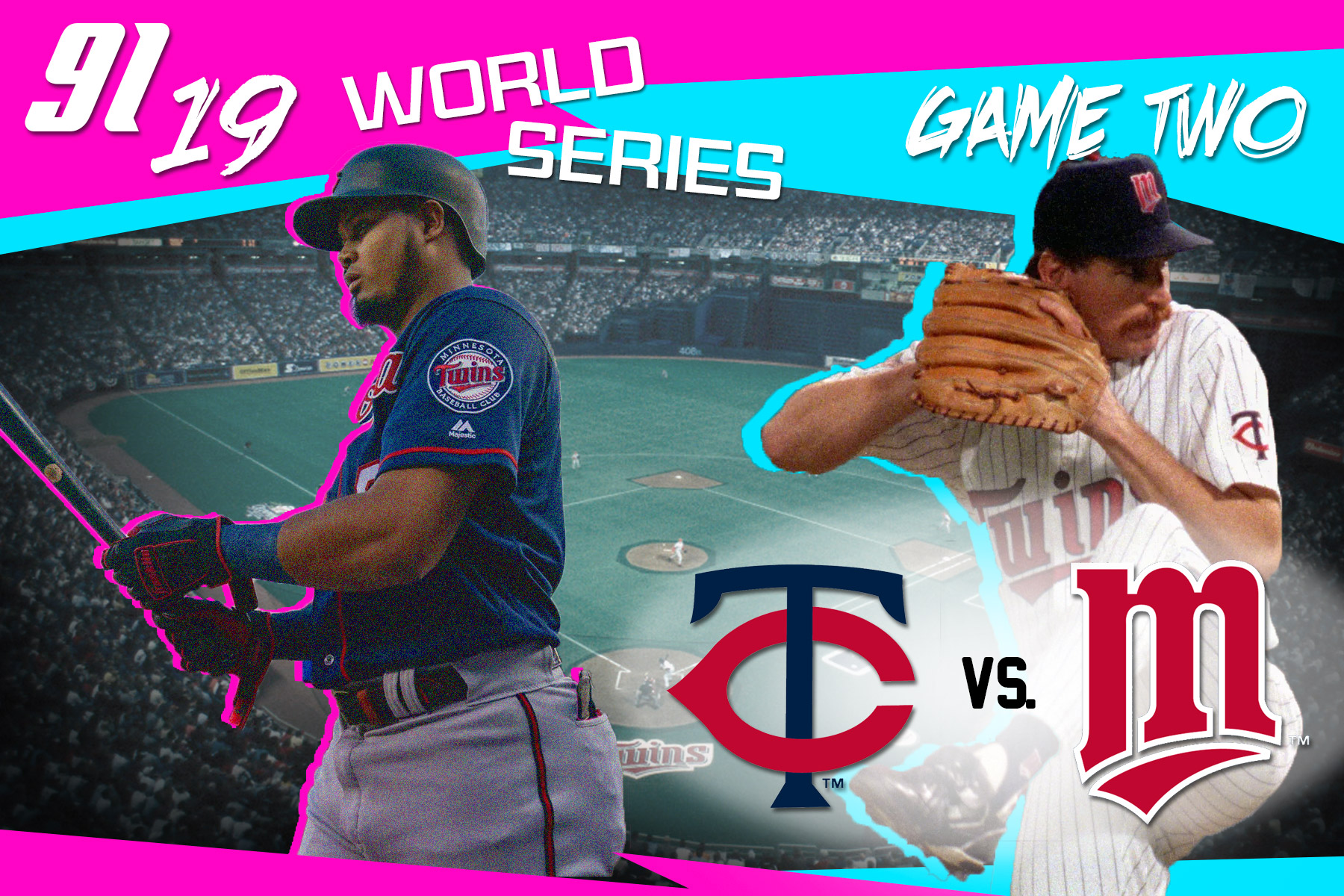 Baseballs have been flying around the Metrodome thus far in this generational showdown. Game 1 saw the two offenses combine for 19 runs, and the bats collectively tacked on another 13 in Game 2's a 20-hit barrage. Presumably in this case the Dome's vents have been blowing outward to favor both lineups, although this paradoxically hurts both pitching staffs. World Series hero Jack Morris didn't have 10 shutout innings in him this time around. He held his own in the early innings, and actually headed into the sixth with a 3-2 lead, but was removed after yielding a one-out double to Max Kepler. Right-hander Steve Bedrosian entered in relief, and retired Miguel Sano on a fly ball to center. That set the stage for Eddie Rosario to step in with the tying run on second and two outs. You can probably guess what happens next. The left fielder watched strike one pop harmlessly into Brian Harper's mitt. He stepped out of the box and adjusted his batting gloves, eyes scanning the Metrodome's packed outfield stands, as if searching for a desired landing spot. Apparently, he found one. Rosario turned on the second pitch from Bedrosian and launched it high over the baggy in right field, pushing his team back in front with a two-run blast. "I just needed to see one, and get a good look at him," said a grinning Rosario of his take on Bedrosian's first offering. "Then I was ready." Evidently his teammates were ready too after watching Rosario turn the tides with a game-breaking bomba. First baseman C.J. Cron followed with an eight-pitch at-bat that ended with a double down the right field line. Then Byron Buxton ambushed Bedrosian on a first-pitch ground ball single that escaped the reach of Greg Gagne at short and scored Cron, who beat left fielder Shane Mack's throw to the plate by a hair. As Rick Aguilera warmed up in the bullpen, Jorge Polanco coaxed a seven-pitch walk, putting runners on first and second for Luis Arraez, who delivered a bloop single to center. Kirby Puckett fielded it, saw Buxton racing around third base, and thought better of even challenging him at home. At this point, Tom Kelly finally made his slow trot to the mound, removing Bedrosian with a fierce pat to the backside and calling in Aguilera, who ended the rally by striking out Nelson Cruz on three pitches. But the damage was done. The '19 Twins had pulled ahead 6-3. "One out," uttered a raspy-voiced Kelly in his postgame briefing. "We get one out there, it's a completely different ballgame. One damn out." Two innings later, the visiting team struck again to push this contest out of reach. Third baseman Mike Pagliarulo's one-out error on a hot grounder off the bat of Cron sparked another rally, culminating three batters later when Arraez came through with a three-run double off Carl Willis. Berrios, who got through five solid innings, combined with three relievers to hold the '91 Twins to four runs on eight hits following the onslaught in Game 1. Rocco Baldelli credited his pitchers for battling against a tough, confident lineup, and also credited his hitters for wearing down the opposition with relentless at-bats. But he made no secret of his opinion as to where the game was won. "That hit from Eddie was everything," said the typically understated '19 Twins skipper. "I know these guys believe in themselves, but when we fell behind in the early innings there, you could definitely sense that 'Here we go again' sinking in." "Felt good to deflate that place a little bit," he added with a laugh. Tied at a game apiece, the two teams will now travel across Downtown Minneapolis and ahead several years, with the series moving to Target Field. Michael Pineda will toe the rubber for the 2019 squad, opposite Denny Neagle for the '91ers. You can find the boxscore and pitch-by-pitch results for Game One attached below. If you would like to learn more about Out of the Park 21, please click on this link. If you would like to try it, you can also download it for 10% off the regular price using the code TWINSDAILY. MLB Box Score, Minnesota 2019 Twins at Minnesota 1991 Twins Game 2 (1).pdf Mnnesota 2019 Twins @ Minnesota 1991 Twins Game Log Game 2.pdf
 -
Rest assured I will deflect all blame.
-
By overwhelming consensus (as I expected), we will be signing Jordan Balazovic for the bullpen. I'll follow with another update later this week after we get through 10 games.
-
My plan is just to sim them a single time and accept that as a result. But that's a good thought. Maybe if the results are wonky on first run-through I'll consider taking that route.
-
Option 2: Press "Like This" on this comment if you want us to leave Balazovic on the open market and enter the season with our roster as is.
-
Option 1: Press "Like This" on this comment if you want us to sign Balazovic. He'd likely join our bullpen and displace one of our long relievers.
- 15 replies
-
- 21
-

-
Alright, so the MLB season won't be starting as planned, and real-life baseball might not be back any time soon. We can either continue to wallow in sadness or we can try to have a little fun. Today I'm kicking off 'The Show Must Go On,' an interactive simulated Twins season where you all get to call the shots.Last week, Sony released MLB The Show 20 for PlayStation 4. This franchise sits among baseball video game royalty (behind the king, MVP Baseball, of course) and the latest installment features up-to-date rosters, rules, AI, etc. While the details and player ratings aren't always spot-on (as we'll learn), the folks behind this game take baseball seriously. In general, The Show's accuracy and authenticity are very respectable. So here's the deal. We're going to start a season as the 2020 Twins and chronicle it here. I won't be actually playing through the games myself, so my (lack of) skills will not be a factor. Instead I'll run through them in "Quick Manage Mode," which basically means every AB is simulated and only in-game decision making is controlled. I shall do my best to channel Rocco Baldelli while guiding the ship from day to day. Incrementally throughout this fictional season, I'll post stories here updating the team's record, trends, notable performances, injuries, rising prospects, and so forth. And each of these updates will include at least one decision up for vote – a promotion, a trade, a signing, a shakeup of the batting order – so readers can shape the journey as it unfolds. I'll also be very open to suggestions of any kind in the comments section. The wackier the better. MLB The Show has budget limits and trade fairness thresholds that'll prevent us from dealing Ehire Adrianza for Mike Trout, but we're not exactly bound to the constraints of reality. With the ground rules laid out, let us begin... THE COUNTDOWN TO OPENING DAY First things first, let's get acclimated to the Twins roster in the context of this video game. Minnesota ranks here as the fifth-best team in the majors, with the following breakdown: Contact: 6thPower: 2ndPitching: 7thDefense 16thSpeed: 27thThe teams ahead of the Twins overall are, in order: Yankees, Astros, Dodgers, Nationals. Sounds about right. As we get our season underway, here's a look at the top 10 highest-rated players in the Twins organization, which will give you a good idea of the game's... wavering accuracy in evaluation: Download attachment: top10players.jpeg Rosario is too high. Berrios is too low. Plenty of quibbles to be had. But for the most part, the ratings are all reasonable enough to resemble actual expectations. One glaring exception further down the list: Michael Pineda has a 68 rating. For context, that is lower than Cody Gearrin (68), Jhoulys Chacin (69), and a fictional 19-year-old A-ball pitcher named Reid McMahon (72). I don't get it. Speaking of Reid McMahon, another point of clarification: MLB The Show 20 does have minor-league teams, and – for the first time – many actual minor-league players! But there are still plenty of computer-generated randos, like our young southpaw McMahon. It would be possible to tailor the entire Twins system to reality, and also to edit Pineda's blatantly underrated attributes, but even in quarantine, that sounds too tedious. Throughout this exercise, the rule shall be: play it as it lies. With this in mind, here's our season-opening pitching staff: Download attachment: openingdaystaff.jpeg In video game land, we get the luxury of having Rich Hill right out of the gates. I did take the liberty of sending Matt Wisler to the minors since I was given the option. With the expanded roster, we're rolling with a 13-man staff, which includes two long relievers. Gotta be prepared for anything (and Dobnak/Smeltzer are higher-rated than alternatives). Our virtual Opening Day takes place on March 26th against the Athletics in Oakland. It'll be Berrios against left-hander Sean Manaea. Here's the lineup I plan to trot out: Download attachment: odlineup.jpeg My thinking: stack righties at the top, and distribute lefties throughout, while bowing somewhat to the game's rating system. I'm very open to altering this approach if anyone has strong opinions. Feel free to share 'em in the comments section – all compelling cases will be considered. Soon enough, I'll proceed with simming through the first slate of games. Then, we'll check back in with an update, and with more decisions to be made. But first, an unexpected one lies before us. DECISION TIME: SHOULD WE SIGN JORDAN BALAZOVIC? So, I mentioned earlier that while MLB The Show generally gets things right, roster-wise, there are invariably hiccups and inexplicable oddities. Here we have a prime example: for some reason, Jordan Balazovic is a free agent. Yes, the top Twins pitching prospect, who is 21 and hasn't pitched above Single-A, is in the video game but is also – inexplicably – at the top of the MLB free agent pool, with a shockingly high 79 rating. That puts him ahead of fellow FAs like Yasiel Puig, Ben Zobrist, Scooter Gennett and Pat Neshek. (It would also tie him with Trevor May for fifth-highest rated pitcher on the Twins pitching staff... right now.) Download attachment: balazovicFA.jpeg Why has this happened? Who knows. But we gotta sign him, right? An initial inquiry tells us he'd likely accept a one-year, $100K deal, which seems strange but hey we're living in strange times. I do assume it would be an MLB contract and we'd have to keep him in the big leagues, which creates some complications. Should we do it? I'll present the two options as comments below this article – whichever gets the most votes is the way. MORE FROM TWINS DAILY Want more MLB The Show content? Cooper Carlson is through May in his more hands-off 2020 season simulation. It's going quite well! Ted Schwerzler wrote about the game's popular Diamond Dynasty mode. Click here to view the article
-
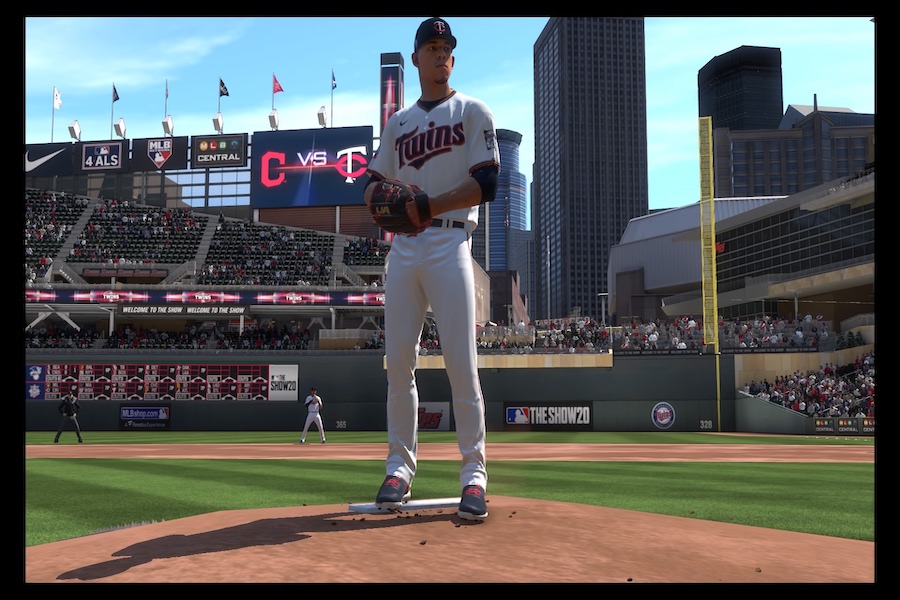 Last week, Sony released MLB The Show 20 for PlayStation 4. This franchise sits among baseball video game royalty (behind the king, MVP Baseball, of course) and the latest installment features up-to-date rosters, rules, AI, etc. While the details and player ratings aren't always spot-on (as we'll learn), the folks behind this game take baseball seriously. In general, The Show's accuracy and authenticity are very respectable. So here's the deal. We're going to start a season as the 2020 Twins and chronicle it here. I won't be actually playing through the games myself, so my (lack of) skills will not be a factor. Instead I'll run through them in "Quick Manage Mode," which basically means every AB is simulated and only in-game decision making is controlled. I shall do my best to channel Rocco Baldelli while guiding the ship from day to day. Incrementally throughout this fictional season, I'll post stories here updating the team's record, trends, notable performances, injuries, rising prospects, and so forth. And each of these updates will include at least one decision up for vote – a promotion, a trade, a signing, a shakeup of the batting order – so readers can shape the journey as it unfolds. I'll also be very open to suggestions of any kind in the comments section. The wackier the better. MLB The Show has budget limits and trade fairness thresholds that'll prevent us from dealing Ehire Adrianza for Mike Trout, but we're not exactly bound to the constraints of reality. With the ground rules laid out, let us begin... THE COUNTDOWN TO OPENING DAY First things first, let's get acclimated to the Twins roster in the context of this video game. Minnesota ranks here as the fifth-best team in the majors, with the following breakdown: Contact: 6th Power: 2nd Pitching: 7th Defense 16th Speed: 27th The teams ahead of the Twins overall are, in order: Yankees, Astros, Dodgers, Nationals. Sounds about right. As we get our season underway, here's a look at the top 10 highest-rated players in the Twins organization, which will give you a good idea of the game's... wavering accuracy in evaluation: Rosario is too high. Berrios is too low. Plenty of quibbles to be had. But for the most part, the ratings are all reasonable enough to resemble actual expectations. One glaring exception further down the list: Michael Pineda has a 68 rating. For context, that is lower than Cody Gearrin (68), Jhoulys Chacin (69), and a fictional 19-year-old A-ball pitcher named Reid McMahon (72). I don't get it. Speaking of Reid McMahon, another point of clarification: MLB The Show 20 does have minor-league teams, and – for the first time – many actual minor-league players! But there are still plenty of computer-generated randos, like our young southpaw McMahon. It would be possible to tailor the entire Twins system to reality, and also to edit Pineda's blatantly underrated attributes, but even in quarantine, that sounds too tedious. Throughout this exercise, the rule shall be: play it as it lies. With this in mind, here's our season-opening pitching staff: In video game land, we get the luxury of having Rich Hill right out of the gates. I did take the liberty of sending Matt Wisler to the minors since I was given the option. With the expanded roster, we're rolling with a 13-man staff, which includes two long relievers. Gotta be prepared for anything (and Dobnak/Smeltzer are higher-rated than alternatives). Our virtual Opening Day takes place on March 26th against the Athletics in Oakland. It'll be Berrios against left-hander Sean Manaea. Here's the lineup I plan to trot out: My thinking: stack righties at the top, and distribute lefties throughout, while bowing somewhat to the game's rating system. I'm very open to altering this approach if anyone has strong opinions. Feel free to share 'em in the comments section – all compelling cases will be considered. Soon enough, I'll proceed with simming through the first slate of games. Then, we'll check back in with an update, and with more decisions to be made. But first, an unexpected one lies before us. DECISION TIME: SHOULD WE SIGN JORDAN BALAZOVIC? So, I mentioned earlier that while MLB The Show generally gets things right, roster-wise, there are invariably hiccups and inexplicable oddities. Here we have a prime example: for some reason, Jordan Balazovic is a free agent. Yes, the top Twins pitching prospect, who is 21 and hasn't pitched above Single-A, is in the video game but is also – inexplicably – at the top of the MLB free agent pool, with a shockingly high 79 rating. That puts him ahead of fellow FAs like Yasiel Puig, Ben Zobrist, Scooter Gennett and Pat Neshek. (It would also tie him with Trevor May for fifth-highest rated pitcher on the Twins pitching staff... right now.) Why has this happened? Who knows. But we gotta sign him, right? An initial inquiry tells us he'd likely accept a one-year, $100K deal, which seems strange but hey we're living in strange times. I do assume it would be an MLB contract and we'd have to keep him in the big leagues, which creates some complications. Should we do it? I'll present the two options as comments below this article – whichever gets the most votes is the way. MORE FROM TWINS DAILY Want more MLB The Show content? Cooper Carlson is through May in his more hands-off 2020 season simulation. It's going quite well! Ted Schwerzler wrote about the game's popular Diamond Dynasty mode.
 -
It goes without saying: The fallout of our global pandemic is far from ideal for anyone, in baseball or beyond. An indefinite delay of the league's 2020 season – one which seems likely to extend into July at least – creates challenging circumstances for each team and player. But as I look up and down the roster, there are five Twins who, based on timing in their careers, stand out as especially unfortunate victims of this season in limbo.I feel for each of these guys, who will be dealing with shutdown disruption at critical junctures. Nelson Cruz, DH The veteran slugger's 40th birthday, July 1st, is a pretty reasonable over-under at this point for Opening Day – if not a tad optimistic. He looked incredibly good last year, giving no warning of imminent decline, but his age puts him up against the clock. This delay will remove a significant portion of the remaining games Cruz has left in the tank. And given how brilliantly he's still playing (including this spring, where he mashed three homers and two doubles in 23 at-bats), that's a shame. Trevor May, RHP It's been a long journey for May. He was a fourth-round pick of the Phillies in 2008, traded to Minnesota in 2012. He debuted in the majors in 2014 as a starter, transitioned fully to relief in 2016, then lost basically two full seasons to Tommy John surgery. Last year, at age 29, May finally broke through, posting a stellar 2.94 ERA and 11.1 K/9 rate as one of the team's highest-leverage relievers. This included a 1.38 ERA in 23 appearances between August and September. May was carrying a full head of steam into the biggest season of his career, with free agency coming at the end. Due to his ill-timed elbow injury and role-switching, the right-hander has burnt through most of his team service time without truly establishing himself, in spite of his immense talent, dedication, and intelligence. That's why he finds himself looking ahead to the open market already, with fewer than 300 total MLB innings. He's yet to earn a salary over $1 million. The 2020 season represented a huge opportunity for May to make his case on a big stage. And yes, that opportunity should still be awaiting him whenever baseball resumes. But I sure would've liked to see him ride all that built-up momentum. After putting it all together at long last, being forced to wait has gotta be especially painful for him. Rich Hill, LHP One might argue that Hill actually stands to be the beneficiary of a suspended season. He wasn't expected back until June at least, so a months-late start could make him available for the Twins from the jump. And should the season get extended later into the year to include more games, it's possible the Twins could get more starts from Hill than they ever expected upon signing him. It's possible. But any theoretical notion of Hill joining the club midseason, in classic form, was always steeped in hopeful optimism. The reason he and his immaculate track record were available to the Twins at such a fine value is that Hill is a longshot. He turned 40 a week ago and is trying to come back from rarely utilized elbow surgery. In a situation like this, you need a lot to go right. Like all players, Hill will have to deal with the auxiliary impacts of a total league shutdown, including the loss of access to his team's world-class trainers, equipment, and rehab regimens. The southpaw will certainly stick to his own program but there's no replacement for the steady, organized ramp-up process with assorted milestones and benchmarks. If the entire season is lost, this could very well be it for Hill's career. Jake Odorizzi, RHP Much like May, Odorizzi is heading into a pivotal year. In accepting Minnesota's qualifying offer, he opted to bypass a multi-year contract in favor of the short-term payday. Coming off an All-Star campaign, he was set to make $17.8 million and then hit the open market. Now, his plan is in flux. In a shortened season, would players receive prorated salaries? It stands to reason. And in such a scenario, Odorizzi's perfectly logical gamble stands to backfire. He wouldn't earn the full 2020 figure that enticed him, and he would end up auditioning for his next contract in a weird, partial campaign. Maybe that's not how it plays out. Hopefully baseball can find a way to ease the relative burdens for players in such tough positions. While these examples all obviously pale in comparison to the thousands of less-wealthy individuals who work at ballparks and fill their stands, there's an unmistakable difference between a player in Josh Donaldson's position of total security, and one in Odorizzi's. Not to mention a fringe player trying to seize what might be his biggest chance. Randy Dobnak, RHP His 2019 season was one of the best real-life underdog stories in memory, and there was more to Dobnak than just a fun narrative. He pitched extremely well, displaying poise and precision beyond his years. From undrafted independent-leaguer to ALDS starter, the right-hander is on a journey like no other. He was set to continue it under favorable circumstances this spring. A spot in the Twins rotation was for the taking, and his case was strong coming off a dazzling debut. But a delayed start shifts those circumstances. Suddenly, the starting corps could become crowded much more quickly, with Hill and even Michael Pineda potentially entering the fold sooner, and no injuries to open up spots. Minnesota's 2020 roster was meticulously built for the rigors of a 162-game season, loaded with depth and contingencies. A shortening of the season wouldn't negate this strength, but it would be costly for players like Dobnak on the fringes. Everyone knows how difficult it is to carve out a niche at the highest level of this game. Hard-working young men who are at the apex of their opportunities will lose time they can't get back. That's just one of many harsh realities rippling from this occurrence. But to look on the bright side, baseball will be back eventually. And when that happens, so many of its players – these five especially – will be poised for inspiring tales of perseverance and success in the face of adversity. I can't wait to write about them. Click here to view the article
- 16 replies
-
- 1
-
-
- nelson cruz
- randy dobnak
- (and 3 more)
-
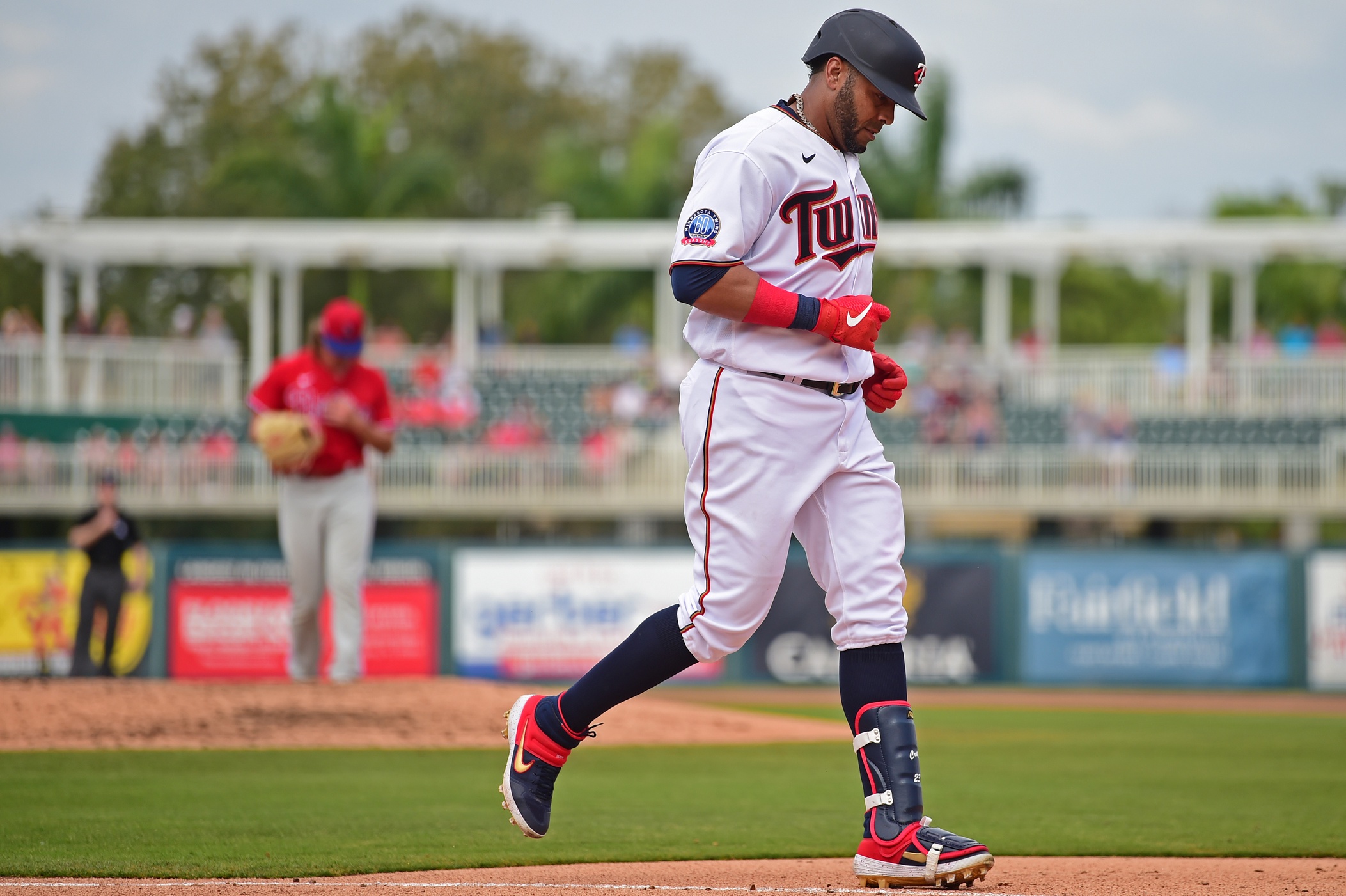 I feel for each of these guys, who will be dealing with shutdown disruption at critical junctures. Nelson Cruz, DH The veteran slugger's 40th birthday, July 1st, is a pretty reasonable over-under at this point for Opening Day – if not a tad optimistic. He looked incredibly good last year, giving no warning of imminent decline, but his age puts him up against the clock. This delay will remove a significant portion of the remaining games Cruz has left in the tank. And given how brilliantly he's still playing (including this spring, where he mashed three homers and two doubles in 23 at-bats), that's a shame. Trevor May, RHP It's been a long journey for May. He was a fourth-round pick of the Phillies in 2008, traded to Minnesota in 2012. He debuted in the majors in 2014 as a starter, transitioned fully to relief in 2016, then lost basically two full seasons to Tommy John surgery. Last year, at age 29, May finally broke through, posting a stellar 2.94 ERA and 11.1 K/9 rate as one of the team's highest-leverage relievers. This included a 1.38 ERA in 23 appearances between August and September. May was carrying a full head of steam into the biggest season of his career, with free agency coming at the end. Due to his ill-timed elbow injury and role-switching, the right-hander has burnt through most of his team service time without truly establishing himself, in spite of his immense talent, dedication, and intelligence. That's why he finds himself looking ahead to the open market already, with fewer than 300 total MLB innings. He's yet to earn a salary over $1 million. The 2020 season represented a huge opportunity for May to make his case on a big stage. And yes, that opportunity should still be awaiting him whenever baseball resumes. But I sure would've liked to see him ride all that built-up momentum. After putting it all together at long last, being forced to wait has gotta be especially painful for him. Rich Hill, LHP One might argue that Hill actually stands to be the beneficiary of a suspended season. He wasn't expected back until June at least, so a months-late start could make him available for the Twins from the jump. And should the season get extended later into the year to include more games, it's possible the Twins could get more starts from Hill than they ever expected upon signing him. It's possible. But any theoretical notion of Hill joining the club midseason, in classic form, was always steeped in hopeful optimism. The reason he and his immaculate track record were available to the Twins at such a fine value is that Hill is a longshot. He turned 40 a week ago and is trying to come back from rarely utilized elbow surgery. In a situation like this, you need a lot to go right. Like all players, Hill will have to deal with the auxiliary impacts of a total league shutdown, including the loss of access to his team's world-class trainers, equipment, and rehab regimens. The southpaw will certainly stick to his own program but there's no replacement for the steady, organized ramp-up process with assorted milestones and benchmarks. If the entire season is lost, this could very well be it for Hill's career. Jake Odorizzi, RHP Much like May, Odorizzi is heading into a pivotal year. In accepting Minnesota's qualifying offer, he opted to bypass a multi-year contract in favor of the short-term payday. Coming off an All-Star campaign, he was set to make $17.8 million and then hit the open market. Now, his plan is in flux. In a shortened season, would players receive prorated salaries? It stands to reason. And in such a scenario, Odorizzi's perfectly logical gamble stands to backfire. He wouldn't earn the full 2020 figure that enticed him, and he would end up auditioning for his next contract in a weird, partial campaign. Maybe that's not how it plays out. Hopefully baseball can find a way to ease the relative burdens for players in such tough positions. While these examples all obviously pale in comparison to the thousands of less-wealthy individuals who work at ballparks and fill their stands, there's an unmistakable difference between a player in Josh Donaldson's position of total security, and one in Odorizzi's. Not to mention a fringe player trying to seize what might be his biggest chance. Randy Dobnak, RHP His 2019 season was one of the best real-life underdog stories in memory, and there was more to Dobnak than just a fun narrative. He pitched extremely well, displaying poise and precision beyond his years. From undrafted independent-leaguer to ALDS starter, the right-hander is on a journey like no other. He was set to continue it under favorable circumstances this spring. A spot in the Twins rotation was for the taking, and his case was strong coming off a dazzling debut. But a delayed start shifts those circumstances. Suddenly, the starting corps could become crowded much more quickly, with Hill and even Michael Pineda potentially entering the fold sooner, and no injuries to open up spots. Minnesota's 2020 roster was meticulously built for the rigors of a 162-game season, loaded with depth and contingencies. A shortening of the season wouldn't negate this strength, but it would be costly for players like Dobnak on the fringes. Everyone knows how difficult it is to carve out a niche at the highest level of this game. Hard-working young men who are at the apex of their opportunities will lose time they can't get back. That's just one of many harsh realities rippling from this occurrence. But to look on the bright side, baseball will be back eventually. And when that happens, so many of its players – these five especially – will be poised for inspiring tales of perseverance and success in the face of adversity. I can't wait to write about them.
 -
Max Kepler has arrived, and he ain't going anywhere. At 27, he's a consummate star right fielder, excelling offensively and defensively as a key lineup fixture. The only thing that might supplant Kepler from his position is a familiar turn of events with the player to this right. But the Twins are rather well equipped for such a scenario.Projected Starter: Max Kepler Likely Backup: Marwin Gonzalez Depth: Jake Cave, LaMonte Wade Jr. Prospects: Alex Kirilloff, Trevor Larnach THE GOOD Reading through the 2019 fWAR leaderboard at right field is a veritable "who's who" of MLB stardom: Christian Yelich, MIL – 7.8 Cody Bellinger, LAD – 7.8 Mookie Betts, BOS – 6.6 George Springer, HOU – 6.5 Aaron Judge, NYY – 4.6 Bryce Harper, PHI – 4.6 Max Kepler, MIN – 4.4 Does Kepler belong in the conversation with the premier class ahead of him? Many signs points to yes. A year ago, Kepler was one of the most obvious breakout candidates in baseball, with an offensive profile that overshadowed his modest track record. Sure enough, after three seasons of consistently mediocre production, the right fielder turned a corner, belting 36 home runs to dwarf his previous watermark of 20. His .855 OPS was a 16% improvement over his previous best. In 134 games, Kepler crossed the plate 98 times, and drove in 90 runs. He thrived offensively as leadoff man for one of the most potent offenses in MLB history. Notably, he performed better against lefties than righties for a second consecutive year, after struggling mightily versus same-siders in the early stage of his career. The German native has worked tirelessly on his game and developed into a tremendously refined ballplayer at the age of 27. He takes good at-bats and rarely strikes out; in fact, the only MLB players to hit 35+ home runs with a lower K-rate than his (16.6%) were Cody Bellinger, Alex Bregman, and Nolan Arenado. He's solidly above average in almost every Statcast measure. Download attachment: keplerstatcast.png And as the above chart shows, his defense was flat-out elite. Kepler brings the range of a solid center fielder to a position that's frequently manned by plodding sluggers, making him a key asset on the field. When he's in right and Byron Buxton's in center, it's awfully tough for baseballs to find landing spots in Minnesota's outfield, which is a strength well suited to the team's fly ball pitching staff. Kepler's ability to capably slide over to center in Buxton's absence is a key value-booster, and one reason why the depth could easily be tested in right field. But if the reigning Twins Daily MVP can stay mostly planted where he's best, there aren't many better. Icing on the cake? He's on the front end of his prime and under team control at favorable rates through 2024. THE BAD One could argue that no Twins player in 2019 was a more obvious beneficiary of the juiced ball than Kepler. He set a very stable baseline for himself in his first three big-league seasons: 17 HR, 19 HR, 20 HR, with slugging percentages that never topped .425. Then, he went out and blasted 36 homers and slugged .519, at a time where power numbers spiked across the league. He was due for some positive regression, given his launch angles and ability to control the zone, but that's a stark jump. And one issue plaguing Kepler did not disappear: Since 2016, he ranks 285th out of 292 MLB hitters in BABIP. Every player behind him on that list is either old, or slow, or both. Kepler's an above-average runner who makes tons of contact, and hits the ball reasonably hard, mostly in the air. But for whatever reason, he is stunningly ineffective at turning batted balls into hits. While his .244 BABIP in 2019 was a slight improvement over 2018's .236 mark, it was still fourth-lowest in baseball and a far cry from the league-wide standard of .300. This is a big deal with material impact on Kepler's value. If he would've hit .280 instead of .252 last year, his overall production would've been dramatically better – especially in the OBP column, where his .336 was rather uninspiring for a leadoff man. An abnormally low BABIP would in most cases be cause for optimism about a hitter's prospects of rebounding, but this has become Kepler's norm. And if it persists while his power numbers come back down to Earth, you've got the recipe for a return to ordinary levels of production. THE BOTTOM LINE Kepler's a great player who has risen to the precipice of superstardom by combining tremendous athletic gifts with a steadfast will to improve. He still has hurdles to get past, but I wouldn't bet against him. Given that he's under guaranteed contract for another four years, and stellar defensively, Kepler is as firmly entrenched at his position as anyone on the roster. Meanwhile, the organization's No. 2 and No. 3 prospects both play that same position. Alex Kirilloff and Trevor Larnach are both verging on major-league readiness, presenting a welcome quandary: What to do with so much high-caliber talent? I'm sure the Twins will find a way deal with it when the time comes. Maybe Buxton's persisting lack of durability answers the question on its own. Or maybe they'll leverage the impending vacancy (?) in left field. ~~~ Twins 2020 Position Analysis: Catcher Twins 2020 Position Analysis: First Base Twins 2020 Position Analysis: Second Base Twins 2020 Position Analysis: Third Base Twins 2020 Position Analysis: Shortstop Twins 2020 Position Analysis: Left Field Twins 2020 Position Analysis: Center Field MORE FROM TWINS DAILY — Latest Twins coverage from our writers — Recent Twins discussion in our forums — Follow Twins Daily via Twitter, Facebook or email Click here to view the article
-
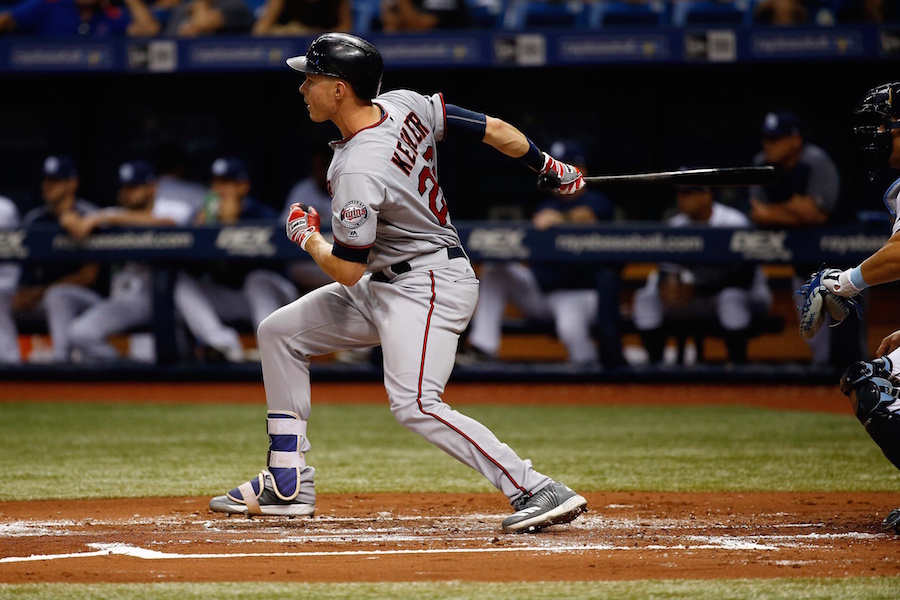 Projected Starter: Max Kepler Likely Backup: Marwin Gonzalez Depth: Jake Cave, LaMonte Wade Jr. Prospects: Alex Kirilloff, Trevor Larnach THE GOOD Reading through the 2019 fWAR leaderboard at right field is a veritable "who's who" of MLB stardom: Christian Yelich, MIL – 7.8 Cody Bellinger, LAD – 7.8 Mookie Betts, BOS – 6.6 George Springer, HOU – 6.5 Aaron Judge, NYY – 4.6 Bryce Harper, PHI – 4.6 Max Kepler, MIN – 4.4Does Kepler belong in the conversation with the premier class ahead of him? Many signs points to yes. A year ago, Kepler was one of the most obvious breakout candidates in baseball, with an offensive profile that overshadowed his modest track record. Sure enough, after three seasons of consistently mediocre production, the right fielder turned a corner, belting 36 home runs to dwarf his previous watermark of 20. His .855 OPS was a 16% improvement over his previous best. In 134 games, Kepler crossed the plate 98 times, and drove in 90 runs. He thrived offensively as leadoff man for one of the most potent offenses in MLB history. Notably, he performed better against lefties than righties for a second consecutive year, after struggling mightily versus same-siders in the early stage of his career. The German native has worked tirelessly on his game and developed into a tremendously refined ballplayer at the age of 27. He takes good at-bats and rarely strikes out; in fact, the only MLB players to hit 35+ home runs with a lower K-rate than his (16.6%) were Cody Bellinger, Alex Bregman, and Nolan Arenado. He's solidly above average in almost every Statcast measure. And as the above chart shows, his defense was flat-out elite. Kepler brings the range of a solid center fielder to a position that's frequently manned by plodding sluggers, making him a key asset on the field. When he's in right and Byron Buxton's in center, it's awfully tough for baseballs to find landing spots in Minnesota's outfield, which is a strength well suited to the team's fly ball pitching staff. Kepler's ability to capably slide over to center in Buxton's absence is a key value-booster, and one reason why the depth could easily be tested in right field. But if the reigning Twins Daily MVP can stay mostly planted where he's best, there aren't many better. Icing on the cake? He's on the front end of his prime and under team control at favorable rates through 2024. THE BAD One could argue that no Twins player in 2019 was a more obvious beneficiary of the juiced ball than Kepler. He set a very stable baseline for himself in his first three big-league seasons: 17 HR, 19 HR, 20 HR, with slugging percentages that never topped .425. Then, he went out and blasted 36 homers and slugged .519, at a time where power numbers spiked across the league. He was due for some positive regression, given his launch angles and ability to control the zone, but that's a stark jump. And one issue plaguing Kepler did not disappear: Since 2016, he ranks 285th out of 292 MLB hitters in BABIP. Every player behind him on that list is either old, or slow, or both. Kepler's an above-average runner who makes tons of contact, and hits the ball reasonably hard, mostly in the air. But for whatever reason, he is stunningly ineffective at turning batted balls into hits. While his .244 BABIP in 2019 was a slight improvement over 2018's .236 mark, it was still fourth-lowest in baseball and a far cry from the league-wide standard of .300. This is a big deal with material impact on Kepler's value. If he would've hit .280 instead of .252 last year, his overall production would've been dramatically better – especially in the OBP column, where his .336 was rather uninspiring for a leadoff man. An abnormally low BABIP would in most cases be cause for optimism about a hitter's prospects of rebounding, but this has become Kepler's norm. And if it persists while his power numbers come back down to Earth, you've got the recipe for a return to ordinary levels of production. THE BOTTOM LINE Kepler's a great player who has risen to the precipice of superstardom by combining tremendous athletic gifts with a steadfast will to improve. He still has hurdles to get past, but I wouldn't bet against him. Given that he's under guaranteed contract for another four years, and stellar defensively, Kepler is as firmly entrenched at his position as anyone on the roster. Meanwhile, the organization's No. 2 and No. 3 prospects both play that same position. Alex Kirilloff and Trevor Larnach are both verging on major-league readiness, presenting a welcome quandary: What to do with so much high-caliber talent? I'm sure the Twins will find a way deal with it when the time comes. Maybe Buxton's persisting lack of durability answers the question on its own. Or maybe they'll leverage the impending vacancy (?) in left field. ~~~ Twins 2020 Position Analysis: Catcher Twins 2020 Position Analysis: First Base Twins 2020 Position Analysis: Second Base Twins 2020 Position Analysis: Third Base Twins 2020 Position Analysis: Shortstop Twins 2020 Position Analysis: Left Field Twins 2020 Position Analysis: Center Field MORE FROM TWINS DAILY — Latest Twins coverage from our writers — Recent Twins discussion in our forums — Follow Twins Daily via Twitter, Facebook or email
 -
There are many things I love about baseball. But high on that list is the routine. The reliability. Training camps mark the passage of winter to spring. Then the season starts and all summer long, there are games to look forward to every night. Sunday afternoons spent watching daytime baseball in a sun-soaked living room are a cherished ritual. So the weeks ahead will be jarring and kinda somber. But it's on us all to make the best of it.Major League Baseball's season will not start as planned. Given the scope and gravity of COVID-19, there's a good chance it'll be a long while before normalcy returns. In the wake of a CDC recommendation that all gatherings of 50-plus people in the next eight weeks be canceled or postponed, any regular-season action prior to June is essentially a pipe dream. I myself have become a creature of routine where the Twins are concerned, not just in terms of viewing and attendance habits but also writing and conversing. As the reality of what lies ahead sets in, I find myself wondering: What am I gonna write about? What will we talk about here on a daily basis? I can promise you this much: we'll find stuff. One thing I know is that we'll be covering every unfolding development, regarding Major League Baseball in general but especially the Twins, throughout the absence of games. Even while the season hangs in hiatus, there will still be news emerging regularly, and we're committed to keeping you all posted in real-time. Beyond that, I'm open-minded. Here are a few ideas we might explore to establish new routines while we await the return of baseball. Playing Our Own Seasons. The top baseball video game, MLB: The Show, drops its new edition for PlayStation 4 on Tuesday. A series of stories chronicling a fictional Twins season, with interactive elements to let readers guide decision-making, could be fun. Computer baseball sims like OOTP offer similar dynamics.Business As Usual. We're not usually short on content and creative angles around here, even during the slowest stretches of the baseball calendar. There are plenty of informative and entertaining pieces already in the pipeline, and I have no doubts regarding the ability of our writers to generate a steady stream of fun ideas. For my part, I'll be forging ahead with my ongoing Position Analysis series (right field coming Monday night!).Historical Retrospectives. There's no shortage of lookback topics worth tackling. For example, I had a lot of fun putting together this list of the top 10 moments in the first 10 years at Target Field. How else might we examine the past and relive classic moments in efforts to scratch our baseball itch? As always, anyone is welcome to submit requests (or try tackling a topic of your choosing in the blogs section).Analyzing the Fallout. What will it mean if half the games are eliminated? How will scheduling be impacted? How will a reshaped season fit into the historical context of Major League Baseball? Would a smaller sample of games diminish the feat of a championship? There will be ample opportunity for analyzing these matters in the moment.Fundraising & Support. People are going to struggle amid efforts to combat the spread of COVID-19. Seasonal employees at Target Field and minor-leaguers are among many examples of folks who may miss out on income they rely on. As John wrote last week, this is a community, and that means looking out for one another. At TD, we hope to create mechanisms for those in our community who are able to support others in need. What exactly this will look like is TBD, but we're very open to ideas and suggestions.Baseball is a grand old game and a grand old distraction. I'm sure I am not alone in saying that tuning out and putting on a game tends be therapeutic for me during stressful times. This makes the unavoidable realities of a global pandemic all the more challenging to grapple with. We are going it without our most beloved diversion. Twins Daily will do its best to fill that void and restore some sense of routine. We hope you'll help dictate the content and conversation by letting us know what you want to read and talk about. Please take care of yourselves, and each other. No one's excited about navigating the uncertainty ahead, but at least we'll be doing it together. Click here to view the article
-
 Major League Baseball's season will not start as planned. Given the scope and gravity of COVID-19, there's a good chance it'll be a long while before normalcy returns. In the wake of a CDC recommendation that all gatherings of 50-plus people in the next eight weeks be canceled or postponed, any regular-season action prior to June is essentially a pipe dream. I myself have become a creature of routine where the Twins are concerned, not just in terms of viewing and attendance habits but also writing and conversing. As the reality of what lies ahead sets in, I find myself wondering: What am I gonna write about? What will we talk about here on a daily basis? I can promise you this much: we'll find stuff. One thing I know is that we'll be covering every unfolding development, regarding Major League Baseball in general but especially the Twins, throughout the absence of games. Even while the season hangs in hiatus, there will still be news emerging regularly, and we're committed to keeping you all posted in real-time. Beyond that, I'm open-minded. Here are a few ideas we might explore to establish new routines while we await the return of baseball. Playing Our Own Seasons. The top baseball video game, MLB: The Show, drops its new edition for PlayStation 4 on Tuesday. A series of stories chronicling a fictional Twins season, with interactive elements to let readers guide decision-making, could be fun. Computer baseball sims like OOTP offer similar dynamics. Business As Usual. We're not usually short on content and creative angles around here, even during the slowest stretches of the baseball calendar. There are plenty of informative and entertaining pieces already in the pipeline, and I have no doubts regarding the ability of our writers to generate a steady stream of fun ideas. For my part, I'll be forging ahead with my ongoing Position Analysis series (right field coming Monday night!). Historical Retrospectives. There's no shortage of lookback topics worth tackling. For example, I had a lot of fun putting together this list of the top 10 moments in the first 10 years at Target Field. How else might we examine the past and relive classic moments in efforts to scratch our baseball itch? As always, anyone is welcome to submit requests (or try tackling a topic of your choosing in the blogs section). Analyzing the Fallout. What will it mean if half the games are eliminated? How will scheduling be impacted? How will a reshaped season fit into the historical context of Major League Baseball? Would a smaller sample of games diminish the feat of a championship? There will be ample opportunity for analyzing these matters in the moment. Fundraising & Support. People are going to struggle amid efforts to combat the spread of COVID-19. Seasonal employees at Target Field and minor-leaguers are among many examples of folks who may miss out on income they rely on. As John wrote last week, this is a community, and that means looking out for one another. At TD, we hope to create mechanisms for those in our community who are able to support others in need. What exactly this will look like is TBD, but we're very open to ideas and suggestions. Baseball is a grand old game and a grand old distraction. I'm sure I am not alone in saying that tuning out and putting on a game tends be therapeutic for me during stressful times. This makes the unavoidable realities of a global pandemic all the more challenging to grapple with. We are going it without our most beloved diversion. Twins Daily will do its best to fill that void and restore some sense of routine. We hope you'll help dictate the content and conversation by letting us know what you want to read and talk about. Please take care of yourselves, and each other. No one's excited about navigating the uncertainty ahead, but at least we'll be doing it together.
 -
Twins 2020 Position Analysis: Center Field
Nick Nelson posted a topic in Twins Daily Front Page News
Whenever the 2020 season starts, center field will take center stage: A position that could provide the Twins with their most decisive advantage, but also could devolve into a revolving door. Can Byron Buxton stay healthy? And if not, who will be ready to take the mantle at Minnesota's most critical defensive position?Projected Starter: Byron Buxton Likely Backup: Max Kepler Depth: LaMonte Wade Jr., Jake Cave Prospects: Royce Lewis, Gilberto Celestino THE GOOD Buxton's ability to rank among the best center fielders in the majors finally changed from theoretical to undeniable last season. When he suffered a (basically) season-ending shoulder injury on August 1st, his 2.7 fWAR was second-best among full-time CFs. There are plenty of excellent and athletic players who spend some time in center, or even a lot of time. This includes guys like Houston's George Springer, Arizona's Ketel Marte, Atlanta's Ronald Acuña, even Minnesota's Max Kepler. But among true, no-doubt center fielders – the guys you wouldn't dream of playing anywhere else on the field – only the eventual MVP Mike Trout was having a better season than Buxton through four months according to Fangraphs' all-encompassing metric. This shouldn't come as a surprise to any Twins fan who had the opportunity to observe Buxton's breakout showing. As usual the speedster was a spectacular force in the outfield, routinely taking away extra-base hits from the opposition and earning affinity from his pitchers. Meanwhile his bat finally emerged, as Buxton slashed .262/.314/.513 with 30 doubles, 14 home runs and four triples in 295 plate appearances. Looking vastly more comfortable at the plate after years of fits and starts, Buxton just played his game. He wasn't patient, but he was aggressive and intentional, reducing his career 32% K-rate to a far more palatable 23%. Because of his lineup depth, Rocco Baldelli was able to use Buxton as No. 9 hitter almost exclusively, keeping pressure off Buck's shoulders and also positioning him as a second leadoff man. Getting the league's fastest player on base as the lineup flips over gives the Twins a dynamic competitive advantage. That's beyond the simple fact of boasting an .827 OPS in the nine-hole, where American League peers averaged a .652 mark. Buxton seems very likely to return to that spot in this year's loaded batting order. Taking into account everything he adds, it's no coincidence Minnesota went 53-25 (.679) in games Buxton started last year, compared to 48-36 (.571) in those he didn't. For context, over a full season, that's the difference between a 110-win team and a 92-win team. Baseball is a game where the impact of individual contributors is inherently limited – what with nine players in the lineup and on the field, and 12-13 different pitchers in the mix at any given time. But when he's got it going like last year, Buxton makes an outsized impact that few others in the league can match. If you could guarantee me he'd be on the field and healthy for a vast majority of the Twins' games (however many they play), I'd pick the 26-year-old Buxton as preseason favorite for team MVP – ahead of Josh Donaldson, Nelson Cruz, Miguel Sano, everyone – without hesitation. Unfortunately, as we all know, this is far from guaranteed. THE BAD Throughout his pro career, dating back to his days in the minors, Buxton has continually been unable to avoid injuries, thanks to a style of play that often puts him in harm's way (plus a healthy dose of bad luck). Jammed thumbs, strained wrists, concussions, a broken toe... the center fielder has seen it all, and as a result he's played in 100 games only once in an MLB season since first arriving in 2015. His collision with the wall in Miami last August was not only another sobering reminder of the hazards incumbent in Buxton's game, but especially worrisome because of what it did to his shoulder. Buxton suffered a subluxation (or dislocation, essentially), and after the rest-and-rehab approach failed to take, he required surgery to repair his labrum. It's a pretty serious procedure, which is why six months later, he still wasn't quite ready to appear in spring training games and the Twins weren't fully committing to his Opening Day readiness. Having said that, all indications suggest things are going smoothly and with the delayed start to the season, he's got a good shot at being out there from the jump. But even if he's available for Game 1, it's gonna be tough for anyone to trust in Buxton's ability to stay consistently available for the balance of the season. As much as injury-prone tends to be a miscast label, it's one of the only things Buxton can't run away from. Life without their star center fielder is something the Twins have sadly grown accustomed to over the years, and they are fairly well equipped for it. Last season Kepler made 53 starts in center while the starter was sidelined, and he was perfectly serviceable there. It's a big part of the reason we named him our 2019 team MVP. Kepler remains an option if Buxton goes down for any length of time, and it wouldn't be entirely surprising to see him in center field on Opening Day. But it sounds as though the Twins would prefer to avoid taking Kepler out of right field, so they may be more inclined to go with LaMonte Wade Jr. or Jake Cave, especially in a shorter-term absence. Each has proven himself capable defensively there – albeit Cave to a lesser extent – and can hit enough to be a viable starter. A true backup center fielder is one of the few things missing on this roster, but I think the Twins are in decent shape make do. In the minors, much hinges on No. 1 prospect Royce Lewis and where he ends up. When he was drafted as a shortstop, many believed he was destined to end up in center, due to his rough edges as an infielder and his blazing speed. Every one of his defensive starts in the minors had come at short until his second-to-last one at Pensacola in September, when he was in center. He then started primarily out there in the Arizona Fall League, where he looked like a natural and was voted MVP. Lewis might be the heir apparent behind Buxton, who's still under team control for three more years. But in order to actualize such a plan, the Twins will need to get their top prospect more outfield reps. For the time being, it looks like they're intent on sticking with him at shortstop, leaving 21-year-old Gilberto Celestino as the most promising center fielder in the system. THE BOTTOM LINE Buxton is the most exciting wild-card factor in play for the 2020 Minnesota Twins. If his surgery takes and he returns to the field without losing anything, he'll be a transformative force for the lineup, defense, and pitching staff. If he can manage to stay out there, he elevates this team in drastic ways. But, if history repeats and he can't stay out there, the Twins are in better shape than most teams would be when losing a cornerstone talent. Kepler makes for a fine fill-in, and opens the door for Minnesota to tap its copious corner outfield depth in right. The Twins will be okay without Buxton. But with him? They might be unstoppable. ~~~ Twins 2020 Position Analysis: Catcher Twins 2020 Position Analysis: First Base Twins 2020 Position Analysis: Second Base Twins 2020 Position Analysis: Third Base Twins 2020 Position Analysis: Shortstop Twins 2020 Position Analysis: Left Field MORE FROM TWINS DAILY — Latest Twins coverage from our writers — Recent Twins discussion in our forums — Follow Twins Daily via Twitter, Facebook or email Click here to view the article -
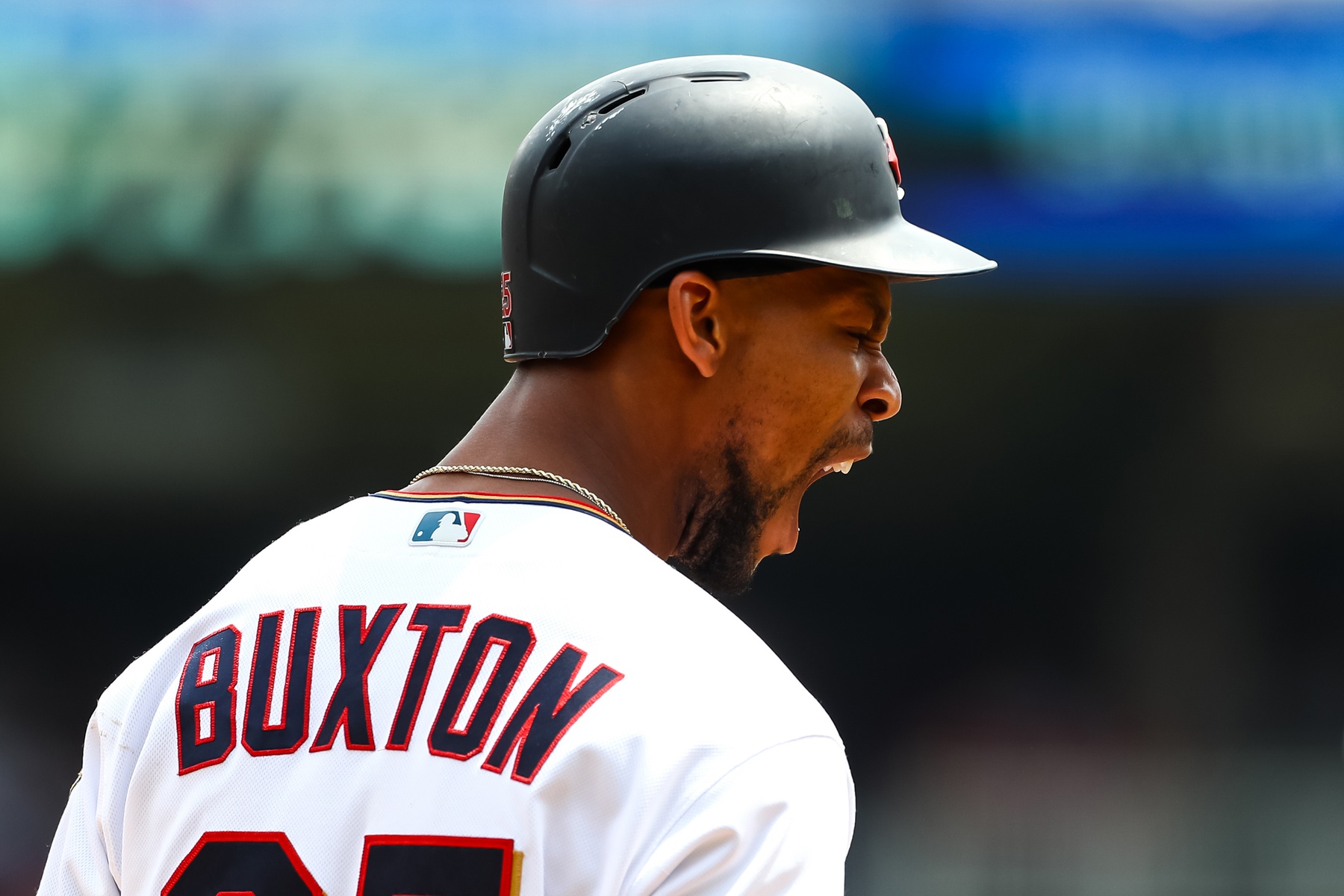 Projected Starter: Byron Buxton Likely Backup: Max Kepler Depth: LaMonte Wade Jr., Jake Cave Prospects: Royce Lewis, Gilberto Celestino THE GOOD Buxton's ability to rank among the best center fielders in the majors finally changed from theoretical to undeniable last season. When he suffered a (basically) season-ending shoulder injury on August 1st, his 2.7 fWAR was second-best among full-time CFs. There are plenty of excellent and athletic players who spend some time in center, or even a lot of time. This includes guys like Houston's George Springer, Arizona's Ketel Marte, Atlanta's Ronald Acuña, even Minnesota's Max Kepler. But among true, no-doubt center fielders – the guys you wouldn't dream of playing anywhere else on the field – only the eventual MVP Mike Trout was having a better season than Buxton through four months according to Fangraphs' all-encompassing metric. This shouldn't come as a surprise to any Twins fan who had the opportunity to observe Buxton's breakout showing. As usual the speedster was a spectacular force in the outfield, routinely taking away extra-base hits from the opposition and earning affinity from his pitchers. Meanwhile his bat finally emerged, as Buxton slashed .262/.314/.513 with 30 doubles, 14 home runs and four triples in 295 plate appearances. Looking vastly more comfortable at the plate after years of fits and starts, Buxton just played his game. He wasn't patient, but he was aggressive and intentional, reducing his career 32% K-rate to a far more palatable 23%. Because of his lineup depth, Rocco Baldelli was able to use Buxton as No. 9 hitter almost exclusively, keeping pressure off Buck's shoulders and also positioning him as a second leadoff man. Getting the league's fastest player on base as the lineup flips over gives the Twins a dynamic competitive advantage. That's beyond the simple fact of boasting an .827 OPS in the nine-hole, where American League peers averaged a .652 mark. Buxton seems very likely to return to that spot in this year's loaded batting order. Taking into account everything he adds, it's no coincidence Minnesota went 53-25 (.679) in games Buxton started last year, compared to 48-36 (.571) in those he didn't. For context, over a full season, that's the difference between a 110-win team and a 92-win team. Baseball is a game where the impact of individual contributors is inherently limited – what with nine players in the lineup and on the field, and 12-13 different pitchers in the mix at any given time. But when he's got it going like last year, Buxton makes an outsized impact that few others in the league can match. If you could guarantee me he'd be on the field and healthy for a vast majority of the Twins' games (however many they play), I'd pick the 26-year-old Buxton as preseason favorite for team MVP – ahead of Josh Donaldson, Nelson Cruz, Miguel Sano, everyone – without hesitation. Unfortunately, as we all know, this is far from guaranteed. THE BAD Throughout his pro career, dating back to his days in the minors, Buxton has continually been unable to avoid injuries, thanks to a style of play that often puts him in harm's way (plus a healthy dose of bad luck). Jammed thumbs, strained wrists, concussions, a broken toe... the center fielder has seen it all, and as a result he's played in 100 games only once in an MLB season since first arriving in 2015. His collision with the wall in Miami last August was not only another sobering reminder of the hazards incumbent in Buxton's game, but especially worrisome because of what it did to his shoulder. Buxton suffered a subluxation (or dislocation, essentially), and after the rest-and-rehab approach failed to take, he required surgery to repair his labrum. It's a pretty serious procedure, which is why six months later, he still wasn't quite ready to appear in spring training games and the Twins weren't fully committing to his Opening Day readiness. Having said that, all indications suggest things are going smoothly and with the delayed start to the season, he's got a good shot at being out there from the jump. But even if he's available for Game 1, it's gonna be tough for anyone to trust in Buxton's ability to stay consistently available for the balance of the season. As much as injury-prone tends to be a miscast label, it's one of the only things Buxton can't run away from. Life without their star center fielder is something the Twins have sadly grown accustomed to over the years, and they are fairly well equipped for it. Last season Kepler made 53 starts in center while the starter was sidelined, and he was perfectly serviceable there. It's a big part of the reason we named him our 2019 team MVP. Kepler remains an option if Buxton goes down for any length of time, and it wouldn't be entirely surprising to see him in center field on Opening Day. But it sounds as though the Twins would prefer to avoid taking Kepler out of right field, so they may be more inclined to go with LaMonte Wade Jr. or Jake Cave, especially in a shorter-term absence. Each has proven himself capable defensively there – albeit Cave to a lesser extent – and can hit enough to be a viable starter. A true backup center fielder is one of the few things missing on this roster, but I think the Twins are in decent shape make do. In the minors, much hinges on No. 1 prospect Royce Lewis and where he ends up. When he was drafted as a shortstop, many believed he was destined to end up in center, due to his rough edges as an infielder and his blazing speed. Every one of his defensive starts in the minors had come at short until his second-to-last one at Pensacola in September, when he was in center. He then started primarily out there in the Arizona Fall League, where he looked like a natural and was voted MVP. https://twitter.com/MLBPipeline/status/1174876859441528832 Lewis might be the heir apparent behind Buxton, who's still under team control for three more years. But in order to actualize such a plan, the Twins will need to get their top prospect more outfield reps. For the time being, it looks like they're intent on sticking with him at shortstop, leaving 21-year-old Gilberto Celestino as the most promising center fielder in the system. THE BOTTOM LINE Buxton is the most exciting wild-card factor in play for the 2020 Minnesota Twins. If his surgery takes and he returns to the field without losing anything, he'll be a transformative force for the lineup, defense, and pitching staff. If he can manage to stay out there, he elevates this team in drastic ways. But, if history repeats and he can't stay out there, the Twins are in better shape than most teams would be when losing a cornerstone talent. Kepler makes for a fine fill-in, and opens the door for Minnesota to tap its copious corner outfield depth in right. The Twins will be okay without Buxton. But with him? They might be unstoppable. ~~~ Twins 2020 Position Analysis: Catcher Twins 2020 Position Analysis: First Base Twins 2020 Position Analysis: Second Base Twins 2020 Position Analysis: Third Base Twins 2020 Position Analysis: Shortstop Twins 2020 Position Analysis: Left Field MORE FROM TWINS DAILY — Latest Twins coverage from our writers — Recent Twins discussion in our forums — Follow Twins Daily via Twitter, Facebook or email
 -
Twins 2020 Position Analysis: Left Field
Nick Nelson replied to Nick Nelson's topic in Twins Daily Front Page News
People aren't giving Eddie heat over his home run total. There's a lot more that goes into being an effective ballplayer. Anyway, as noted in the article, he ranked 61st in SLG last year (and tied for 39th in HR). His best skill wasn't that much of a standout trait. -
The pressure is on for Eddie Rosario. Coming off a substandard season, with free agency inching closer and top prospects pressing upward from beneath, the fiery left field incumbent is on the hot seat. Then again, Rosario does have a historical habit of rising to the occasion.Projected Starter: Eddie Rosario Likely Backup: Marwin Gonzalez Depth: Jake Cave, LaMonte Wade Jr. Prospects: Alex Kirilloff, Trevor Larnach THE GOOD I have ridden the Rosario rollercoaster. After the 2018 season, I wrote an article honoring him as Twins Daily's MVP. A year later, I was openly wondering if his dramatic drop-off in performance might cause a valuation rift with the team. I've seen people say he is the team's most essential player, and I've seen people say he's the team's fourth-best outfielder. Clearly, there are a lot of differing views on Rosario. But I do know of two people who clearly view him very highly: Paul Molitor and Rocco Baldelli. The left fielder was Opening Day cleanup hitter in Molitor's last year as manager, and in Baldelli's first. As a matter of fact, Rosario batted fourth in a whopping 127 of Minnesota's 162 games last year, plus all three in the playoffs. He anchored an offense that scored 939 runs and set the MLB home run record. Yes, this did inflate his gaudy RBI total (109) but still, hitting 32 home runs and slugging .500 in a down year is pretty telling. Baldelli never wavered in making him a central lineup fixture, because Rosario kept rewarding his faith. There was no inherent loyalty influencing the decisions. Eddie simply produced when it counted, slashing .340/.370/.538 with runners in scoring position and a nearly identical .324/.360/.539 in high leverage. Over the two seasons preceding 2019, Rosario was second among Twins players in fWAR, edged slightly by Brian Dozier. His built-up cred and a continuing flair for clutchness kept him high in the manager's esteem, even while Rosario battled through a campaign that was undeniably trying in some ways. There's evidence his lapses may have been injury-impacted. The really good news is this: If Rosario can't buck his downward trend, the Twins are absolutely loaded with outfielders. Jake Cave and LaMonte Wade Jr. are readily available, and could hold their own as big-league starters. In the minor-leagues, Brent Rooker is ready to step in now after mashing as Rochester's left fielder last year. Alex Kirilloff and Trevor Larnach are also top-tier hitting prospects verging on MLB-readiness, and while both have played much more right field than left in the minors, there's little doubt the Twins would be fine rolling either one out to LF if Rosario falters. The organization's corner outfield depth is phenomenal, and will likely come into play here much sooner than in right. One way or another. THE BAD On June 26th, Rosario rolled his ankle while charging around first base in a home game against the Rays. Coming up with a limp, he spiked his helmet into the ground, immediately recognizing the gravity of a season-altering injury. His frustration was understandable. Rosario was in the zone at the time. His OPS sat at .841 and was heading north, thanks to a patented hot streak: In his past 10 games, he had a .413 average. Despite the seemingly serious nature of the injury, he returned to action a mere three weeks later. But he wasn't the same. Rosario slashed .268/.286/.465 the rest of the way, and his already iffy defense completely tanked alongside his sprint speed, as chronicled in an excellent column from Dan Hayes and Aaron Gleeman at The Athletic. Healthy after a winter of rest, Rosario has vowed to recapture his previous form. But his running and defense weren't really strong points beforehand, and late-season dropoffs have now become a trend; in 2018 a first-half .890 OPS gave way to a .622 OPS in the second half. Rosario's 2018 tailspin also carried injury implications – a quad strain he fought through before it ended his season in mid-September – but in both cases, the outfielder's well-intentioned tenacity ended up hurting more than helping. Another flaw in Rosario's 2019 cannot be attributed as cleanly to a limited ankle. He showed zero patience at the plate, giving in to his worst tendencies by chasing a league-high and career-high 46.3% of pitches outside the zone. This surprisingly didn't translate to an avalanche of swings-and-misses (Rosario's whiff rate and K-rate were actually both career lows), but it did result in a TON of weak contact as he constantly offered at pitcher's pitches. The occasional big blasts were enough to keep his slugging numbers afloat, but Rosario finished with a horrendous .300 on-base percentage, seventh-worst among qualified hitters. Modern statisticians generally agree that OBP is more valuable than slugging, and that's all the more true in this power-laden era. Rosario's .500 SLG ranked 61st among qualified hitters last year, whereas great on-base guys are harder to come by. THE BOTTOM LINE If Rosario is making outs at a 70% rate and playing sub par defense in left field, he's really not much an asset, theatrics aside. His 1.2 fWAR in 2019, which ranked 11th among Twins position players, might understate the totality of his impact, but an energetic presence and flare for dramatics won't offset Eddie's negatives if they persist – not with his price rising (he'll make $7.75 million this year), his free agency approaching (he's eligible after next season), and premier talents increasingly pushing from below. I haven't been shy about expressing my disappointment with Rosario's 2019 campaign, but I think it's a mistake to write him off. He's a tremendously skilled player, still only 28 years old, humbled and determined. I like his chances to bounce back, and even if he doesn't, the number of quality fallback options is reassuring. Left field is in good shape for the Minnesota Twins. One way or another. ~~~ Twins 2020 Position Analysis: Catcher Twins 2020 Position Analysis: First Base Twins 2020 Position Analysis: Second Base Twins 2020 Position Analysis: Third Base Twins 2020 Position Analysis: Shortstop MORE FROM TWINS DAILY — Latest Twins coverage from our writers — Recent Twins discussion in our forums — Follow Twins Daily via Twitter, Facebook or email Click here to view the article
-
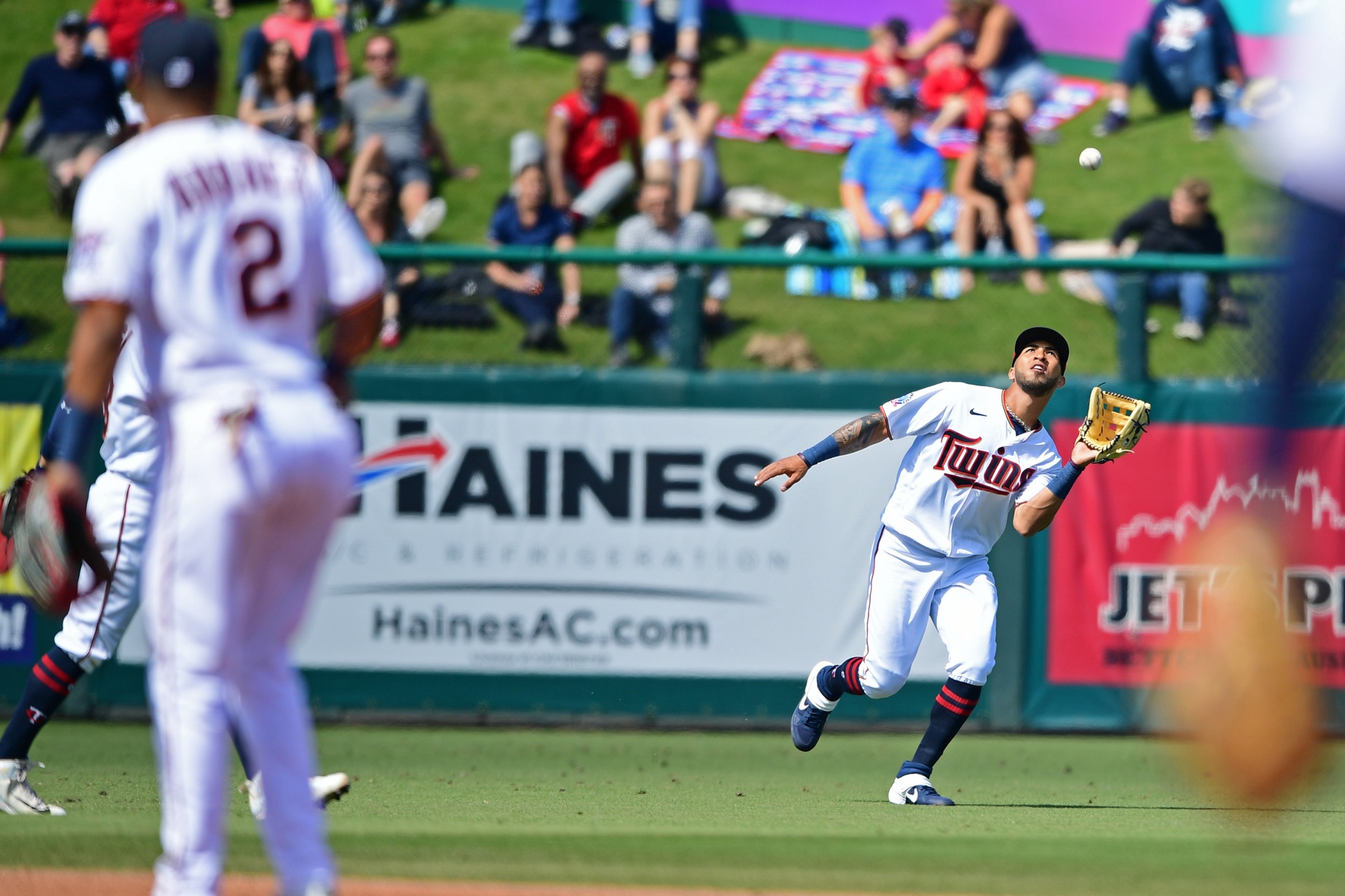 Projected Starter: Eddie Rosario Likely Backup: Marwin Gonzalez Depth: Jake Cave, LaMonte Wade Jr. Prospects: Alex Kirilloff, Trevor Larnach THE GOOD I have ridden the Rosario rollercoaster. After the 2018 season, I wrote an article honoring him as Twins Daily's MVP. A year later, I was openly wondering if his dramatic drop-off in performance might cause a valuation rift with the team. I've seen people say he is the team's most essential player, and I've seen people say he's the team's fourth-best outfielder. Clearly, there are a lot of differing views on Rosario. But I do know of two people who clearly view him very highly: Paul Molitor and Rocco Baldelli. The left fielder was Opening Day cleanup hitter in Molitor's last year as manager, and in Baldelli's first. As a matter of fact, Rosario batted fourth in a whopping 127 of Minnesota's 162 games last year, plus all three in the playoffs. He anchored an offense that scored 939 runs and set the MLB home run record. Yes, this did inflate his gaudy RBI total (109) but still, hitting 32 home runs and slugging .500 in a down year is pretty telling. Baldelli never wavered in making him a central lineup fixture, because Rosario kept rewarding his faith. There was no inherent loyalty influencing the decisions. Eddie simply produced when it counted, slashing .340/.370/.538 with runners in scoring position and a nearly identical .324/.360/.539 in high leverage. Over the two seasons preceding 2019, Rosario was second among Twins players in fWAR, edged slightly by Brian Dozier. His built-up cred and a continuing flair for clutchness kept him high in the manager's esteem, even while Rosario battled through a campaign that was undeniably trying in some ways. There's evidence his lapses may have been injury-impacted. The really good news is this: If Rosario can't buck his downward trend, the Twins are absolutely loaded with outfielders. Jake Cave and LaMonte Wade Jr. are readily available, and could hold their own as big-league starters. In the minor-leagues, Brent Rooker is ready to step in now after mashing as Rochester's left fielder last year. Alex Kirilloff and Trevor Larnach are also top-tier hitting prospects verging on MLB-readiness, and while both have played much more right field than left in the minors, there's little doubt the Twins would be fine rolling either one out to LF if Rosario falters. The organization's corner outfield depth is phenomenal, and will likely come into play here much sooner than in right. One way or another. THE BAD On June 26th, Rosario rolled his ankle while charging around first base in a home game against the Rays. Coming up with a limp, he spiked his helmet into the ground, immediately recognizing the gravity of a season-altering injury. His frustration was understandable. Rosario was in the zone at the time. His OPS sat at .841 and was heading north, thanks to a patented hot streak: In his past 10 games, he had a .413 average. Despite the seemingly serious nature of the injury, he returned to action a mere three weeks later. But he wasn't the same. Rosario slashed .268/.286/.465 the rest of the way, and his already iffy defense completely tanked alongside his sprint speed, as chronicled in an excellent column from Dan Hayes and Aaron Gleeman at The Athletic. Healthy after a winter of rest, Rosario has vowed to recapture his previous form. But his running and defense weren't really strong points beforehand, and late-season dropoffs have now become a trend; in 2018 a first-half .890 OPS gave way to a .622 OPS in the second half. Rosario's 2018 tailspin also carried injury implications – a quad strain he fought through before it ended his season in mid-September – but in both cases, the outfielder's well-intentioned tenacity ended up hurting more than helping. Another flaw in Rosario's 2019 cannot be attributed as cleanly to a limited ankle. He showed zero patience at the plate, giving in to his worst tendencies by chasing a league-high and career-high 46.3% of pitches outside the zone. This surprisingly didn't translate to an avalanche of swings-and-misses (Rosario's whiff rate and K-rate were actually both career lows), but it did result in a TON of weak contact as he constantly offered at pitcher's pitches. The occasional big blasts were enough to keep his slugging numbers afloat, but Rosario finished with a horrendous .300 on-base percentage, seventh-worst among qualified hitters. Modern statisticians generally agree that OBP is more valuable than slugging, and that's all the more true in this power-laden era. Rosario's .500 SLG ranked 61st among qualified hitters last year, whereas great on-base guys are harder to come by. THE BOTTOM LINE If Rosario is making outs at a 70% rate and playing sub par defense in left field, he's really not much an asset, theatrics aside. His 1.2 fWAR in 2019, which ranked 11th among Twins position players, might understate the totality of his impact, but an energetic presence and flare for dramatics won't offset Eddie's negatives if they persist – not with his price rising (he'll make $7.75 million this year), his free agency approaching (he's eligible after next season), and premier talents increasingly pushing from below. I haven't been shy about expressing my disappointment with Rosario's 2019 campaign, but I think it's a mistake to write him off. He's a tremendously skilled player, still only 28 years old, humbled and determined. I like his chances to bounce back, and even if he doesn't, the number of quality fallback options is reassuring. Left field is in good shape for the Minnesota Twins. One way or another. ~~~ Twins 2020 Position Analysis: Catcher Twins 2020 Position Analysis: First Base Twins 2020 Position Analysis: Second Base Twins 2020 Position Analysis: Third Base Twins 2020 Position Analysis: Shortstop MORE FROM TWINS DAILY — Latest Twins coverage from our writers — Recent Twins discussion in our forums — Follow Twins Daily via Twitter, Facebook or email
 -
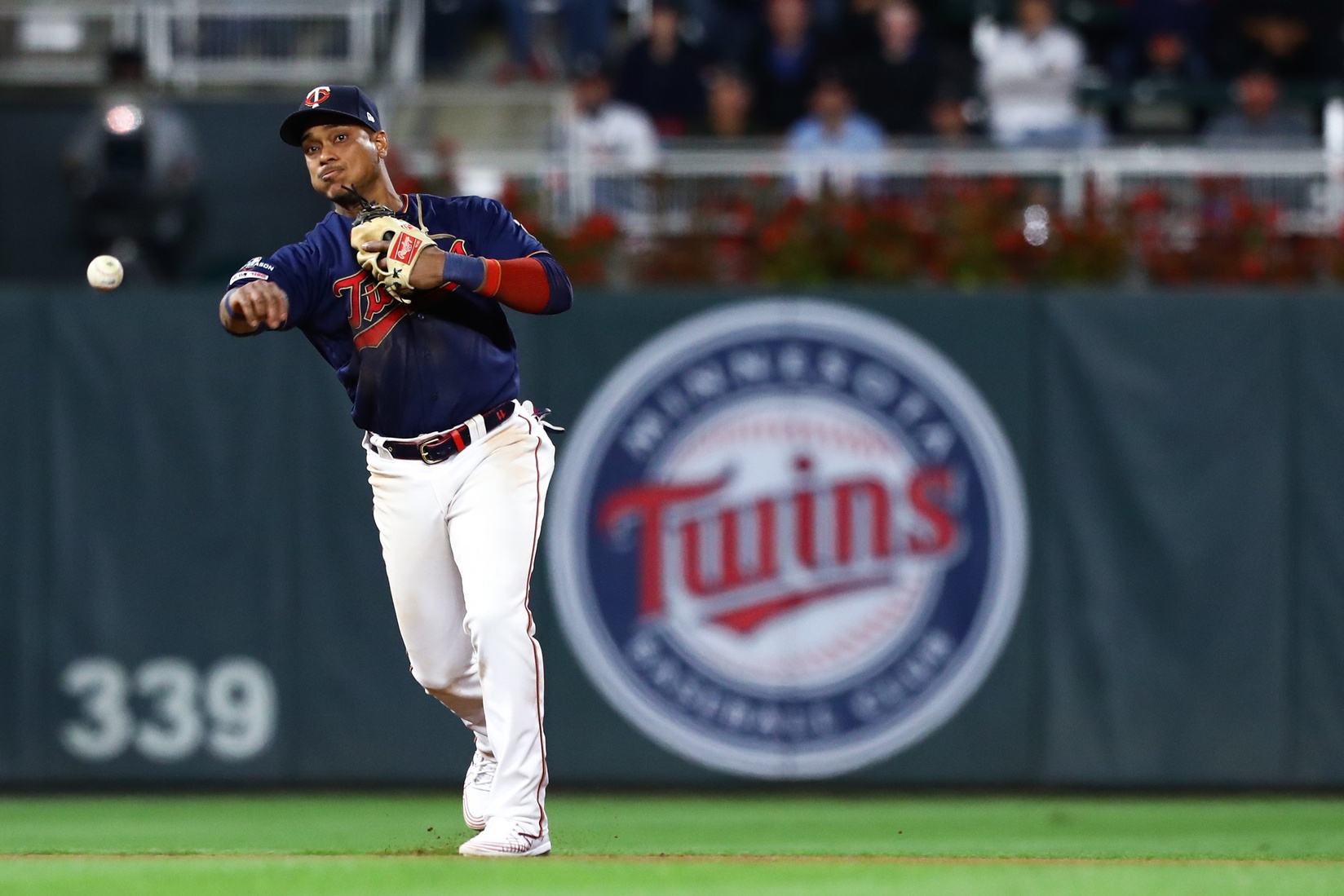 Projected Starter: Jorge Polanco Likely Backup: Ehire Adrianza Depth: Luis Arraez, Marwin Gonzalez Prospects: Royce Lewis, Wander Javier THE GOOD When I counted down the top assets in the Minnesota Twins organization a couple months back, I had Polanco at No. 1, mainly because of that wonderfully favorable contract: The 26-year-old is controlled through 2025 at reasonable rates (around $7 million on average). Fresh off inking his new deal, Polanco burst out of the gates with a ridiculously strong start in 2019. At the end of May his OPS checked in at an even 1.000, and he hung near the top of the AL batting race throughout the first half, earning himself a starting nod on the All-Star team. Even with a second-half cooldown, Polanco still ended up logging excellent numbers across the board. Overall, he slashed .295/.356/.485 with 20 home runs, 44 doubles, seven triples, and 107 runs scored. A reliable everyday fixture, Polanco made 704 plate appearances – 108 more than the next-highest finisher on the team (Max Kepler at 596). Every single one of Polanco's 150 starts came in either the first, second, or third spot in the batting order, reflecting how highly he was regarded by Rocco Baldelli as an offensive factor. Polanco delivered this outstanding production at shortstop, where quality hitters tend to be at a premium. And there's a decent chance he's only getting started. It can be easy to lose sight because he's been around so long now, but Polanco doesn't turn 27 until July. He's still just entering the age range where skills generally peak. In his early-to-mid 20s, he set himself a solid baseline as a big-leaguer, slashing .271/.327/.418 from 2016 through 2018 for a 100 OPS+ that was exactly average. Last year he shattered all previous benchmarks and reached new levels of performance, slashing ropes from both sides while ranking as the team's most valuable player per Baseball Reference's WAR calculation. The Twins have the ability to keep him around through age 31. THE BAD Polanco's red-hot start at the plate in 2019 was offset somewhat by a late decline. After starting in the All-Star Game, he slashed .273/.341/.447 in the second half, gravitating back toward his previous career norms (.272/.329/.420). In September he posted a mere .706 OPS with six walks and eight extra-base hits over 102 plate appearances, though he rallied with a strong showing in the ALDS. Polanco underwent ankle surgery in November "to address a chronic impingement injury stemming from repetitive stress" after taking on an intensive season-long workload, so it's very possible he simply wore down on a bum wheel. Something to watch. Defense is the real concern. Statcast recently unveiled a new metric, Infield Outs Above Average, which seeks to measure the defensive contributions of infielders. The initial rankings for 2019 included 139 players, and pegged Polanco at... 138. The Twins shortstop was in front of only Toronto's Vladimir Guerrero Jr., a bulky 20-year-old rookie third basemen best known for his bat. Granted, it's only one stat, but the IOAA assessment speaks to an undeniable reality: Polanco has mostly been a defensive liability at shortstop, stretched beyond his means with an erratic arm that is constantly manifesting in troublesome ways. Among all MLB players, only White Sox shortstop Tim Anderson (26) committed more errors last year than Polanco, and nobody had more throwing errors. In all likelihood, this problem will be magnified in 2020, because C.J. Cron – who led all American League first basemen in Scoops with 31 in 2019 – is being replaced by the inexperienced Miguel Sano. The Twins smartly do what they can to minimize Polanco's defensive shortcomings, shifting him all around the diamond relentlessly and signing Josh Donaldson to bolster the left side, but he's barely tenable all the same. There's not a simple solution, though. Even if Polanco could be moved elsewhere in the infield (second and third are pretty well spoken for), Minnesota lacks standout gloves that might represent an upgrade at short. Ehire Adrianza, who slots as Polanco's top backup, might be the best defensive shortstop in the organization at present, which isn't saying much because he's just okay there. Marwin Gonzalez is no more than an emergency option, and the same should be true of Luis Arraez, who played a handful of games at short as a rookie. The minors offer nothing approaching a sure thing. Nick Gordon has all but fallen out of the shortstop conversation (always borderline, he was starting primarily at second in Rochester by the time he got hurt last year). Royce Lewis, the organization's top prospect, could stick at short, but the jury is very much out. Wander Javier is probably the best bet among upper-tier prospects to play shortstop long-term, but he's coming off a disastrous season at Low-A. THE BOTTOM LINE Locked in long-term with no obvious place to move, and no one necessarily coming up behind him, Polanco isn't going anywhere soon. So the team will just have to work around his defensive deficiencies, while hoping that his offensive output from the first half of 2019 was no mirage. Given that he's still on the front end of his prime with a sturdy track record, odds of continued improvement or at least sustained excellence are pretty good. Polanco was playing second base exclusively at Rochester before being called up in 2016, and has been worth negative-31 runs as a big-league shortstop (per DRS). His viability at this position is in doubt. The Twins have nevertheless run him out there for nearly 3,500 innings, and they don't seem inclined – or able, really – to change course. If the long-tenured stalwart hits like he's capable of, we can live with a few extra runs sacrificed to the opponent, which is more or less the mantra of this Twins team as a whole. ~~~ Twins 2020 Position Analysis: Catcher Twins 2020 Position Analysis: First Base Twins 2020 Position Analysis: Second Base Twins 2020 Position Analysis: Third Base MORE FROM TWINS DAILY — Latest Twins coverage from our writers — Recent Twins discussion in our forums — Follow Twins Daily via Twitter, Facebook or email
 -
Twins 2020 Position Analysis: Third Base
Nick Nelson replied to Nick Nelson's topic in Twins Daily Front Page News
I can't claim to know the details behind it, but Blankenhorn made a total of 2 starts at 3B last year, including zero at Pensacola, where there wasn't really much high-level competition for reps (Caleb Hamilton and Joe Cronin led the team in 3B starts). On this basis, I have a hard time believing he'd be any kind of short-term option there in the majors. Then again, Jorge Polanco had pretty much fully moved off short in the minors before returning there full-time in MLB. So who knows. -
The biggest free agent splash in Twins history is here to power up a reigning division winner, which likely would've been favored to make the playoffs in 2020 even without him. What is Josh Donaldson's impact at third base, and how big of a difference-maker can he be?Projected Starter: Josh Donaldson Likely Backup: Marwin Gonzalez Depth: Ehire Adrianza, Willians Astudillo Prospects: Jose Miranda, Keoni Cavaco THE GOOD The Twins paid a pretty penny to acquire Donaldson's services, shattering the franchise record in January by inking him to a four-year deal worth $92 million. But their investment is well warranted, given his ability to enhance the roster in a multitude of ways. First, there's his leadership and experience. Donaldson has played in more than 1,000 MLB games, accrued more than 40 fWAR, been named to three All-Star teams, and won an MVP award. Already, young Twins hitters have been flocking to him in camp, and just as he hinted upon signing, the veteran slugger has been eager to offer insight and guidance. But in more tangible respects, Donaldson delivers a clear and decisive upgrade to this Twins club. Offensively, he's another high-octane power hitter joining a lineup full of them; it says a lot that Donaldson's .900 OPS and 37 home runs from 2019 don't especially stand out amongst his new teammates. But of course, adding another high-end bat is always a good thing, and Donaldson has a lengthier track record of production at this level than anyone, except 39-year-old Nelson Cruz. Donaldson's Statcast charts are a sight to behold. (Red means elite. There's a lot of red here.) Download attachment: donaldsonsliders.png Download attachment: donaldsonstats.png Over a very large sample, Donaldson has flat-out clobbered baseballs with regularity. His average exit velocity and barrel rate both ranked among the top 8% of all hitters in four of the past five seasons (excepting only an injury-plagued 2018). If healthy, he's going to mash. Period. There's no one else on the roster we can say this about so confidently. But aside from joining the bomba parade, Donaldson also brings something unique to the Twins lineup: patience. The far-right column in the stat sheet above shows his BB rates, which have ranked in the top 4% of all MLB hitters in each of his last three healthy seasons. Only four qualified American Leaguers – Mike Trout, Alex Bregman, Daniel Vogelbach, Carlos Santana – walked at a higher clip last year than Donaldson, who drew 100 free passes for the Braves. This skill manifests itself both overtly and more subtly. On 100 occasions, the slugger strolled to first base and set up a teammate (often Freddie Freeman) to do damage. But there's an attrition factor too. Donaldson grinds ABs. He rarely chases out of the zone, and averaged more pitches per plate appearance last year than Cruz or Luis Arraez (who were both above the league average). When he's in the box, the distinguished veteran places immense pressure on pitchers, luring them into nerve-racking deep counts and frequently capitalizing. From the very start of an AB, his opponent is under the gun. I think this stat kinda says it all: So clearly, Donaldson is a monumental addition to the lineup. Almost any other year, it'd feel like a transformative one, but given this team's makeup before he joined, Donaldson's biggest impact might actually be felt on defense. A variety of metrics – from Statcast's Outs Above Average (94th percentile) to Fangraphs' Defensive Runs Saved (second among MLB third basemen at plus-15) – ranked him last year among the league's finest at his position. He's replacing a player in Miguel Sano who was in the 8th percentile for OAA, and who cost his team an additional 20 runs defensively compared to Donaldson, according to his negative-5 DRS. THE BAD There's pretty much zero not to like about Donaldson, but when you look past him on the depth chart, and in the pipeline, things get bleak in a hurry. Sizing up the long-term picture at third base, it suddenly becomes much easier to see why the Twins were willing to go four years with the 34-year-old, and why they'll need to hope he can hang at the hot corner for some time. Our recently released Top 20 prospects list featured one part-time third baseman – Jose Miranda, at No. 20. Even the honorable mentions were devoid of players at this position. I listed 2019 first-round draft pick and current shortstop Keoni Cavaco as a future option here, merely because he played third base in high school and there's some thought he will end up there in the long run. But he's 18. The short-term depth also isn't great. Marwin Gonzalez and Ehire Adrianza are fine fill-ins, but either one would probably be stretched as starter over a prolonged period. It would actually be interesting to see what would happen if Donaldson were to go down for a while. Would the Twins move Sano back across the diamond? Would they slide over Arraez, who started 15 games at third as a rookie, and tap into their superior depth at second base? Or would they leave the right side of their infield alone and just let the utilitymen hold it down? Hopefully we won't need to find out. Donaldson played in all but seven games for Atlanta last year, and has generally been an iron man with the exception of 2017 and 2018, when he missed a full season's worth of games due to recurring calf issues. His 2019 was very reassuring, but at 34, nothing can be taken for granted. THE BOTTOM LINE It's Donaldson, then a massive dropoff. Examining the organizational depth at third base behind Minnesota's new corner-infield cornerstone really brings into focus the magnitude of his addition. The Twins will get by without him if need be – they were planning around that possibility, as negotiations dragged throughout the winter and at one point looked bleak – but he lifts both their offense and defense by a full notch. "The Minnesota Twins will never be the same. This is a transformational signing," Matthew Trueblood wrote here the night it went down. As the season approaches, that now feels clearer than ever. ~~~ Twins 2020 Position Analysis: Catcher Twins 2020 Position Analysis: First Base Twins 2020 Position Analysis: Second Base MORE FROM TWINS DAILY — Latest Twins coverage from our writers — Recent Twins discussion in our forums — Follow Twins Daily via Twitter, Facebook or email Click here to view the article
